
South Indian bridal hairstyles have to work harder than most. They carry flowers, gold and sometimes a family heirloom, and they need to look the same at a dawn muhurtham as they do at the evening reception. I’ve grouped twenty of them here, from the full poola jada and the jada billalu braid to sleek buns and pastel reception updos. Under each one I’ve added what it actually takes to build, what kind of hair it needs, and where it tends to struggle, so you can bring a realistic shortlist to your trial.
A Dawn Muhurtham Means Hair Starts in the Dark
Many South Indian ceremonies are set for an auspicious time early in the morning, and that changes everything about hair. Count backwards from the muhurtham. The bride needs to be dressed, draped and photographed before she walks in, and a traditional braid with flowers and gold is rarely under an hour and a half on its own. Add makeup and saree draping, and you may be starting before the sun is up.
I ask brides to wash and fully dry their hair the evening before. Day-old hair holds a braid and pins better than freshly washed hair, and it saves forty minutes of blow-drying when time is tight. Sleep in a loose plait so the hair isn’t kinked at the nape.
- Hair first, while you’re fresh, unless the style is a very simple bun.
- Makeup next, so the flowers don’t get dusted with powder.
- Saree draping after the hair is set, so the pallu doesn’t catch the braid.
- Flowers and jada pieces go on last, close to leaving for the venue.
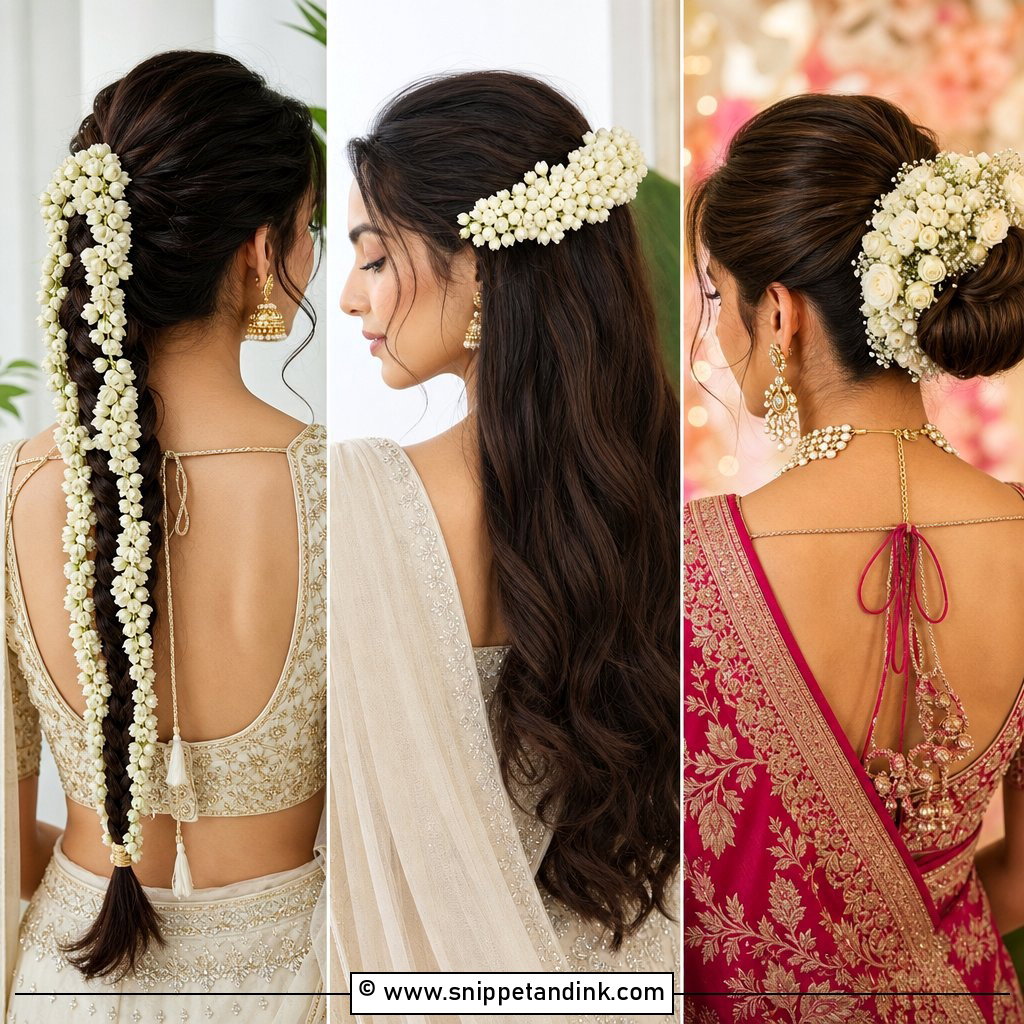
1. Traditional Poola Jada Braid With Fresh Flowers
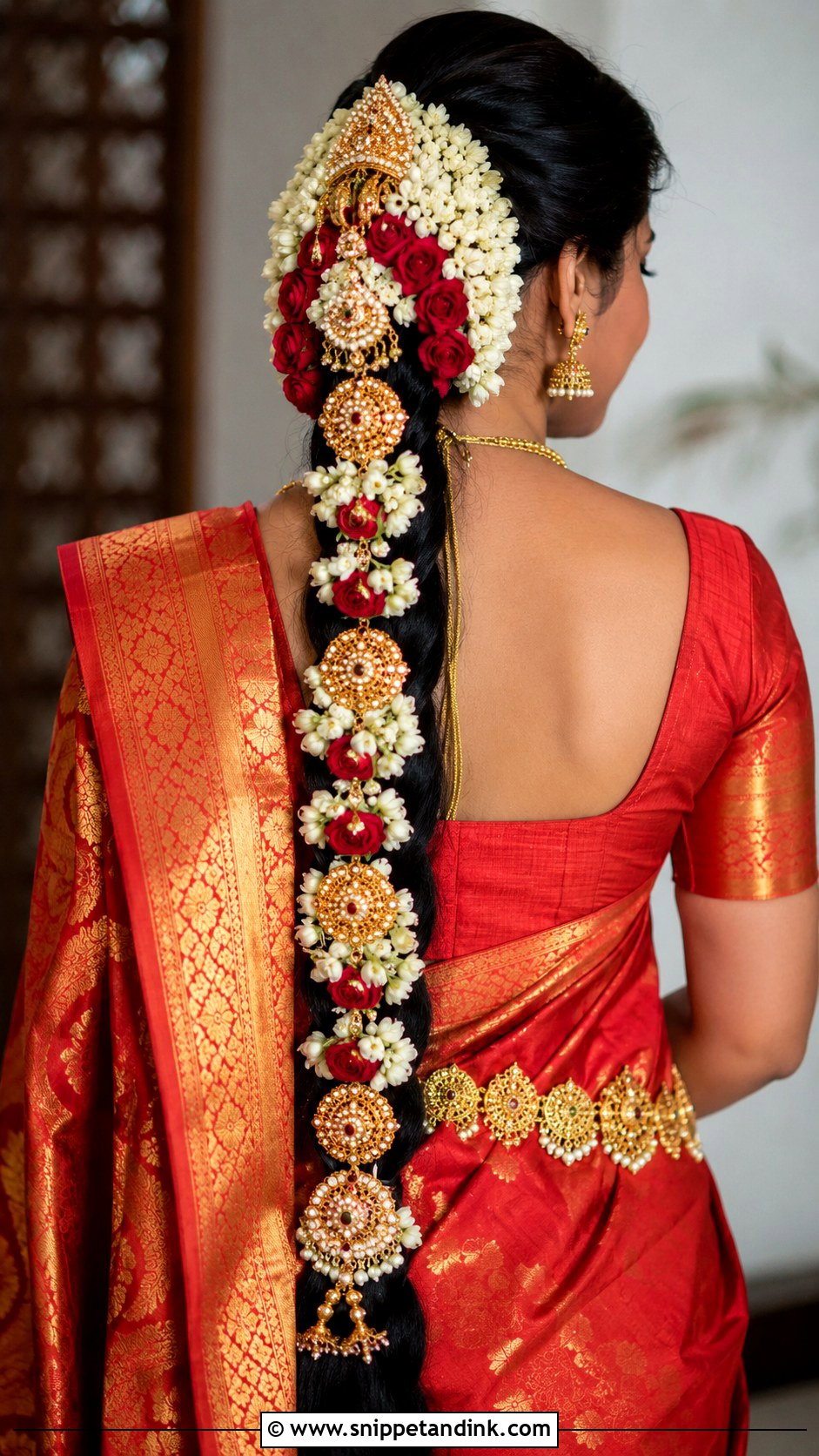
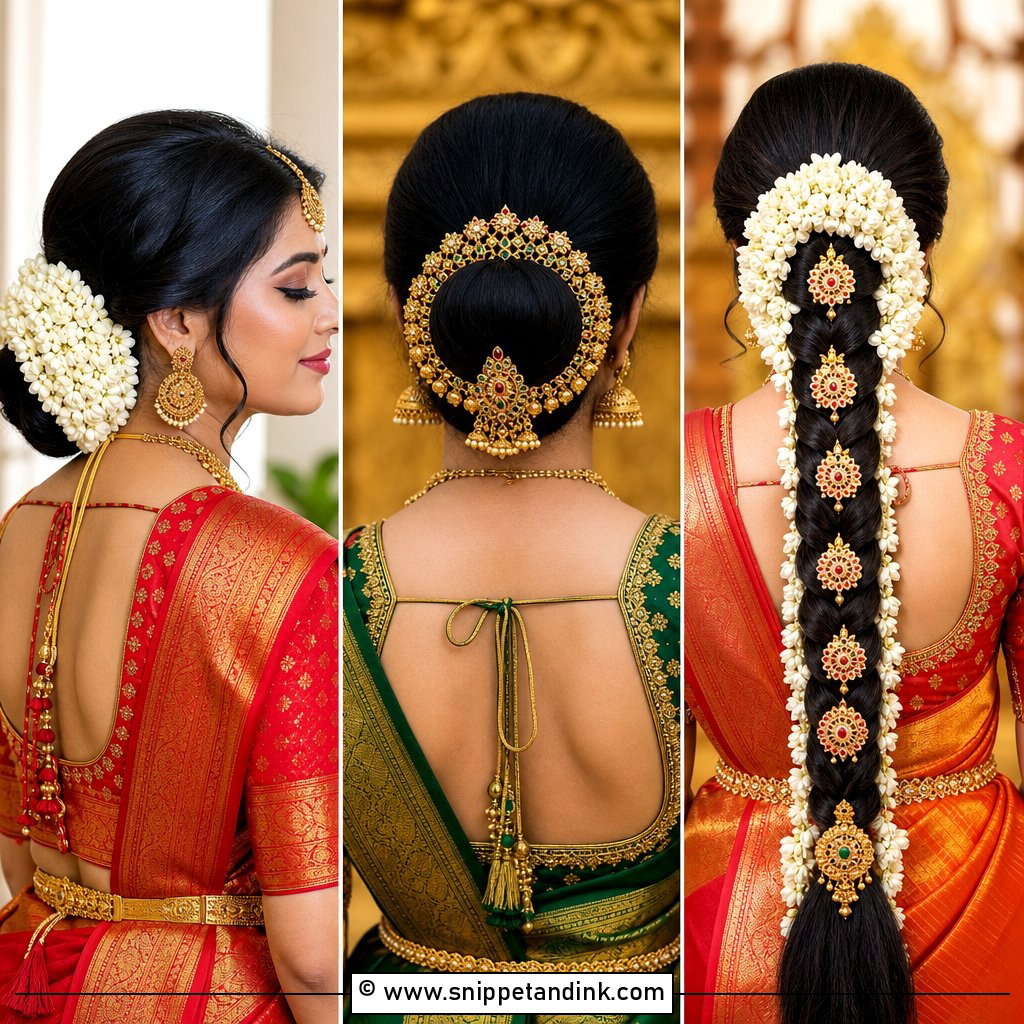
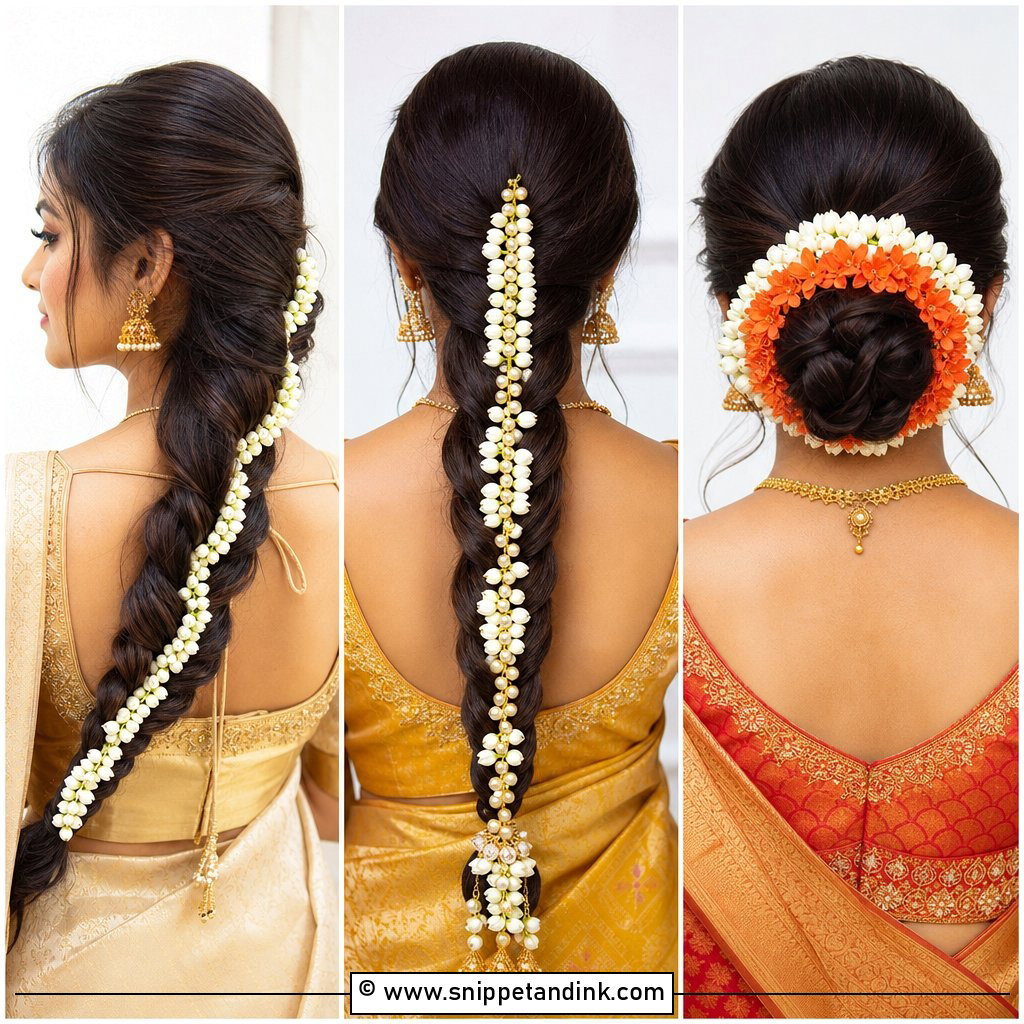
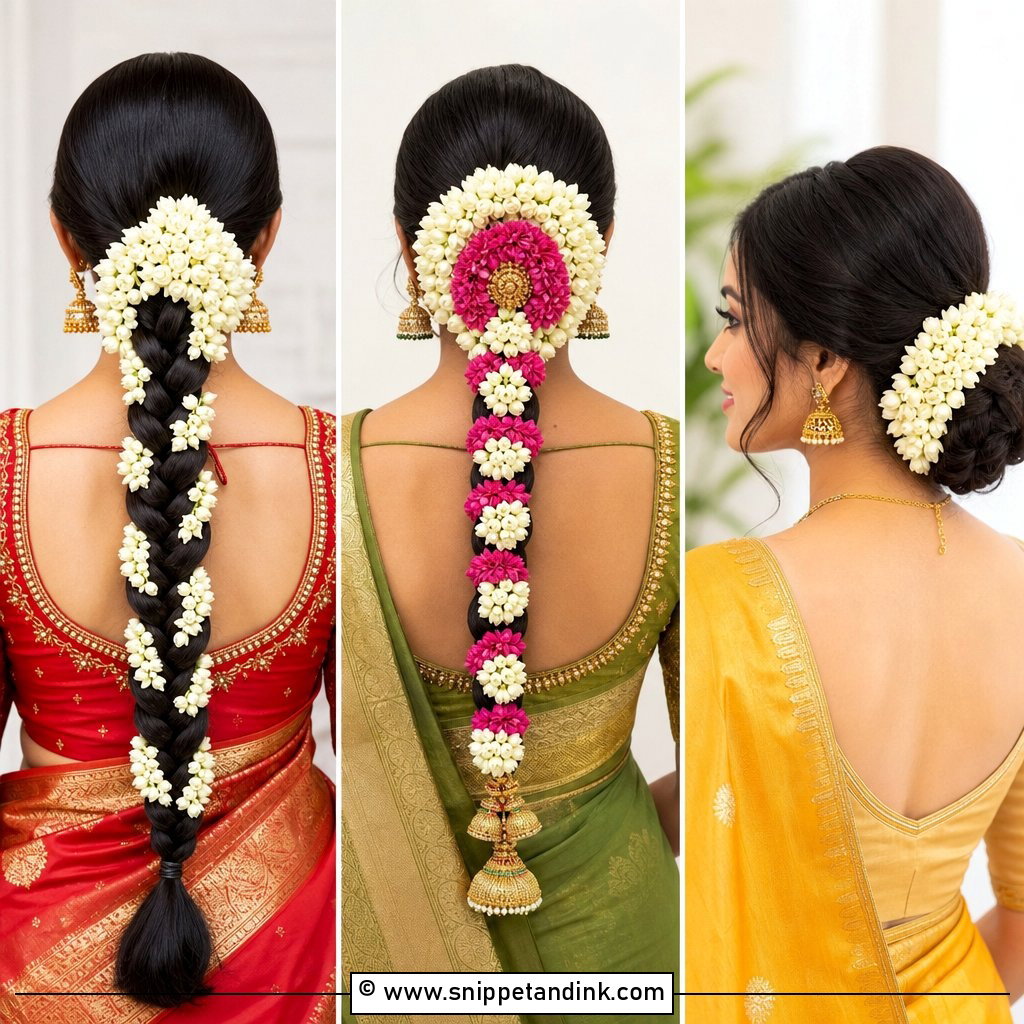
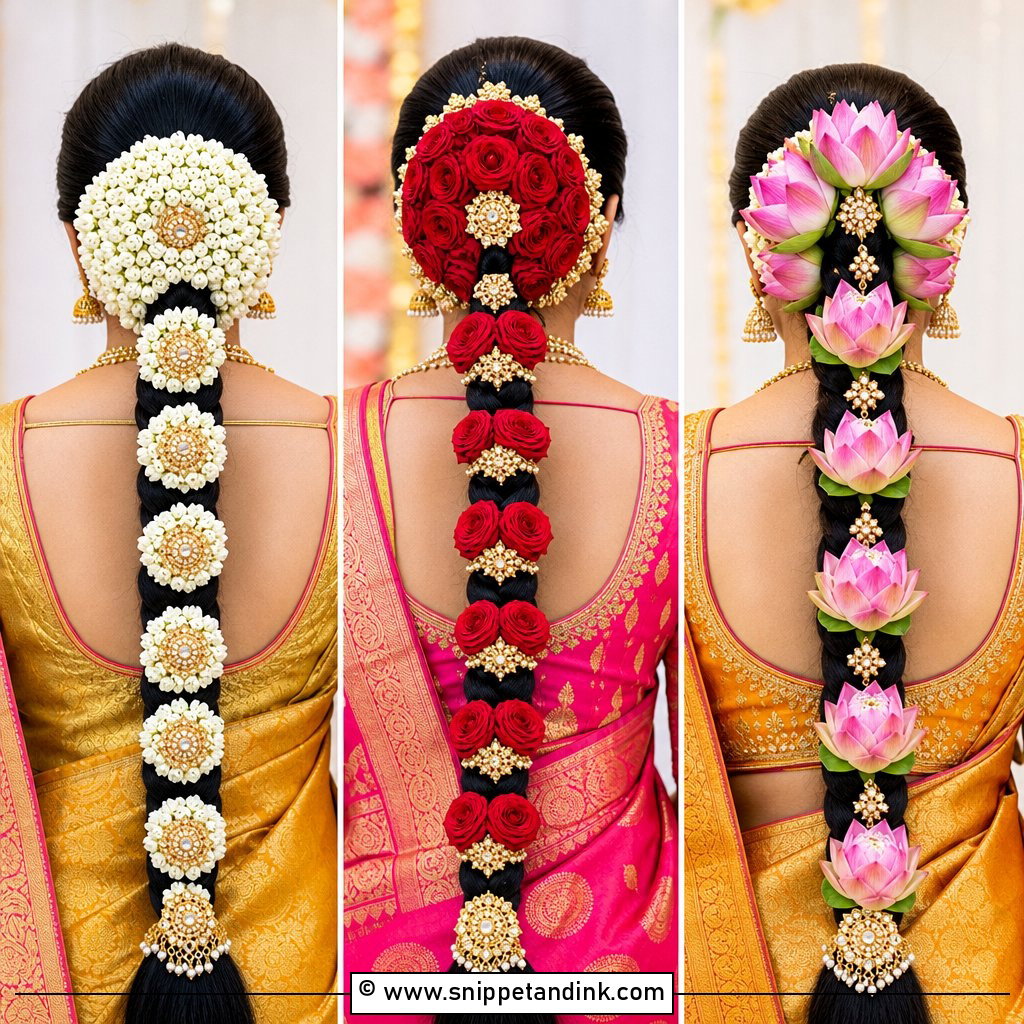
The poola jada is the long, thick braid layered from top to bottom with jasmine, roses and kanakambaram, often with temple-style gold pieces set along it. Jasmine here stands for peace in married life, and the whole look belongs with a heavy Kanjeevaram and temple jewellery. Most poola jadas today are made as a separate floral panel that clips or ties onto the braid. I prefer it that way. The bride’s own braid only has to be firm and straight, and the panel can be lifted off cleanly the moment the rituals are done.
2. Jasmine Wrapped Low Bun
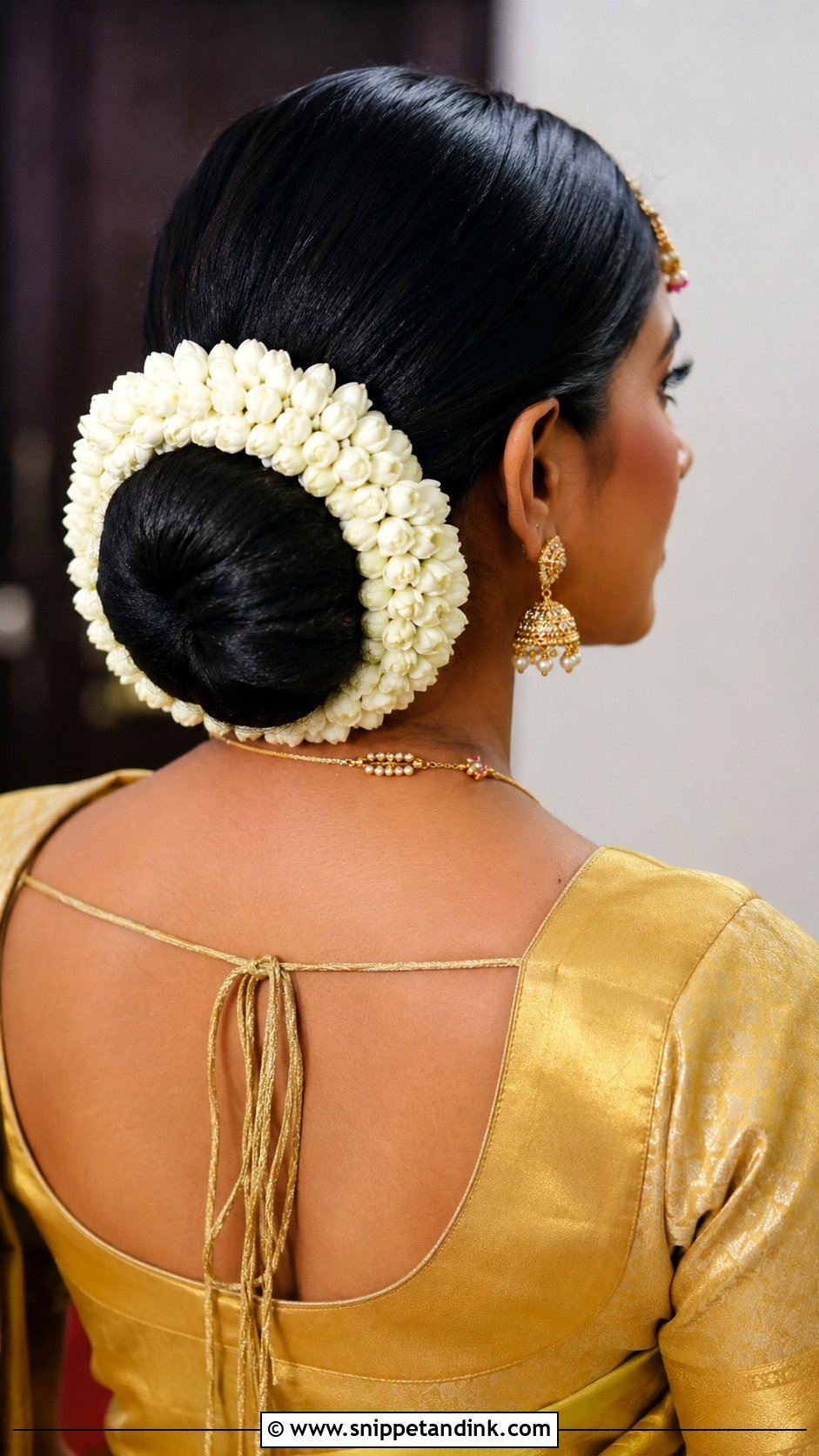
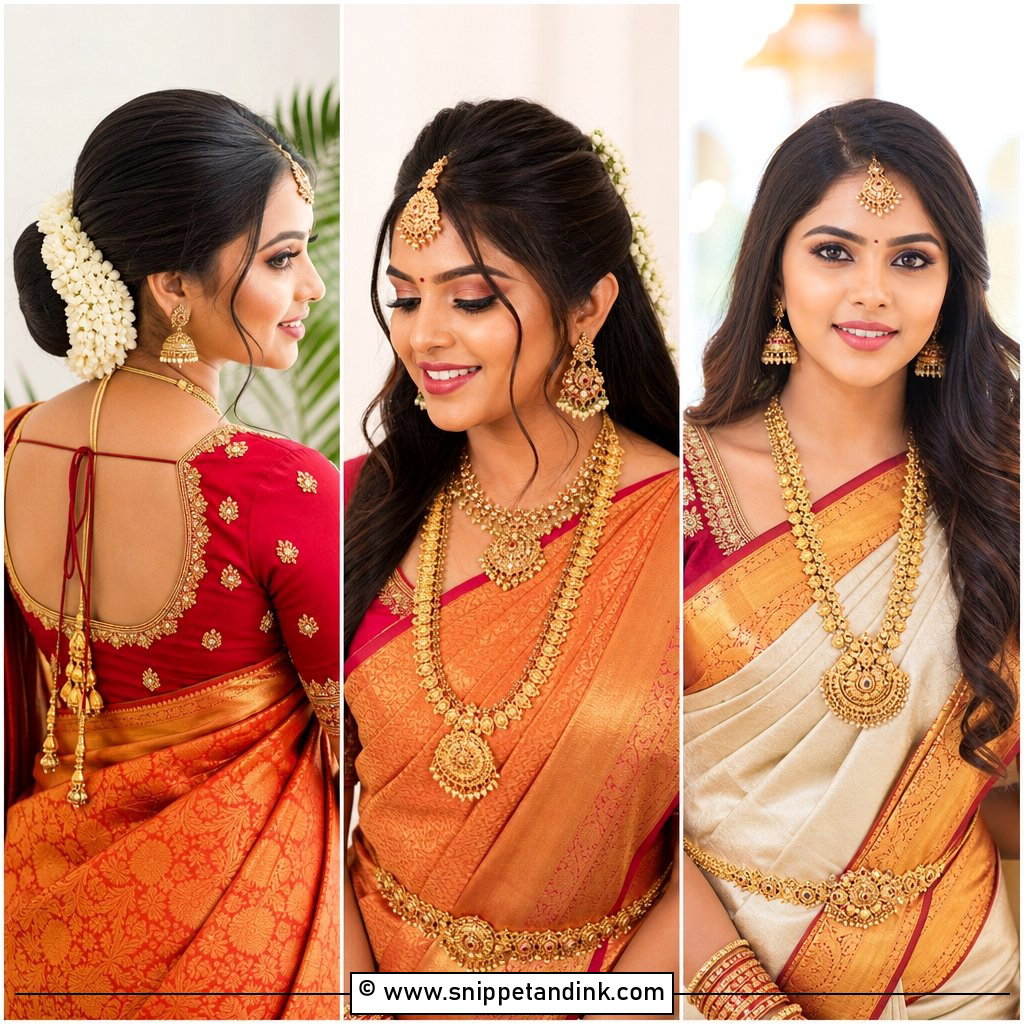
Fresh jasmine wound in a circle around a neat nape bun is the most forgiving traditional look on this list. It recreates easily, it sits comfortably against a chair back through long rituals, and it suits round and oval faces equally. A rose or a second gajra layered on top gives some contrast. Two things make or break it: a firm base and the right pins. I use a small filler for anyone with fine hair and anchor the jasmine with U-pins hooked into the bun itself, not just pushed in from the side.
3. Floral Bun With Gajra And Roses
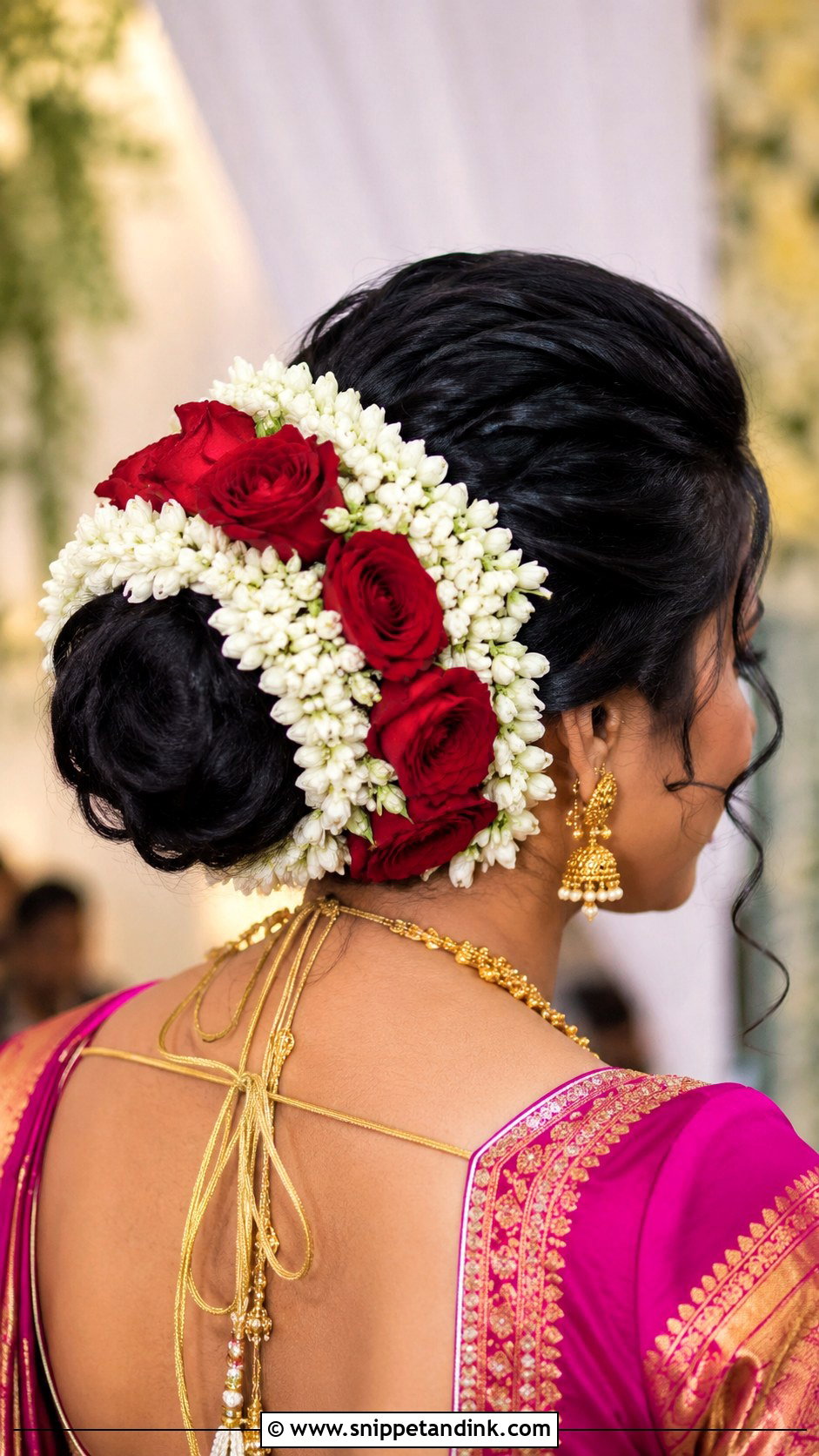
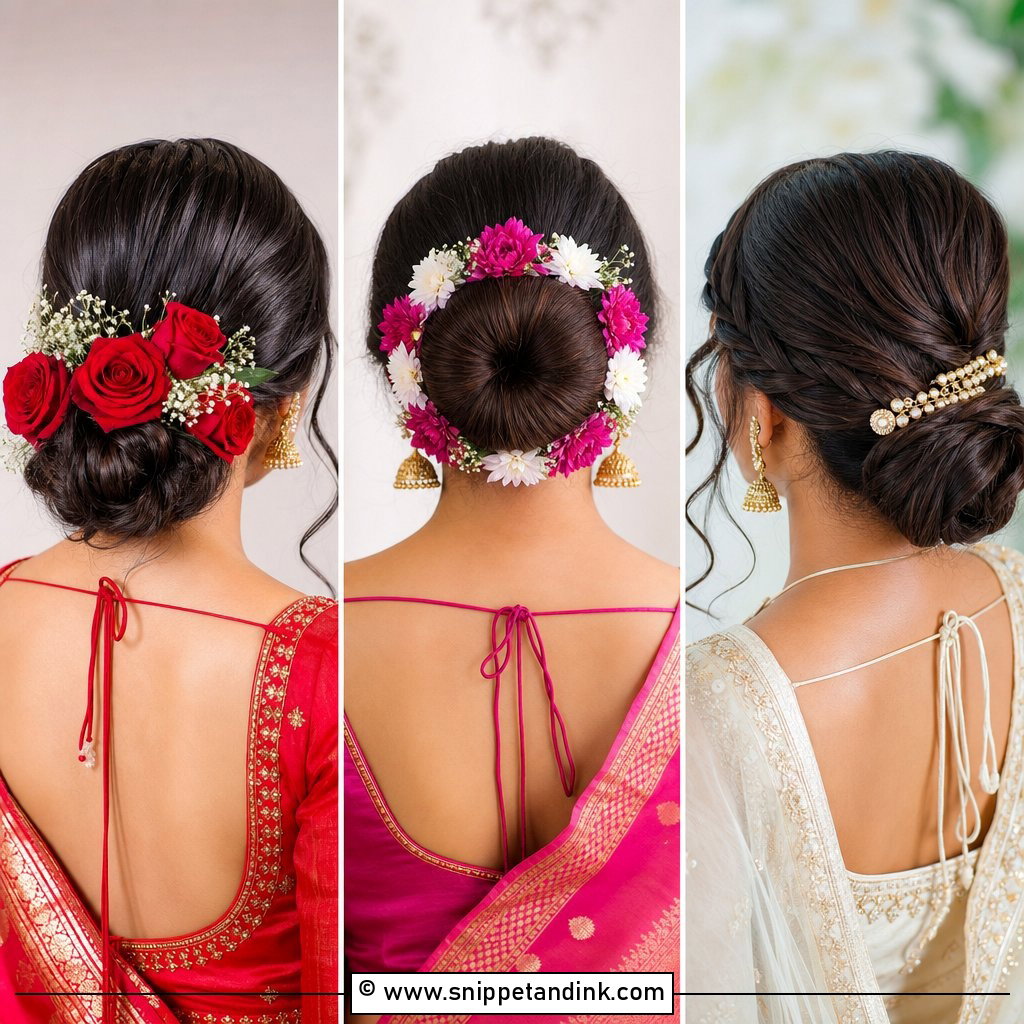
Volume is the point of this one. A generous bun at the crown or nape is surrounded with thick gajra strings and full-bloom roses, so the white and the red or pink sit in strong contrast, with pearl or gold pins tucked between. Brides like it for the muhurtham. Full roses are heavy, though, and a crown bun carrying several of them can tip backwards by afternoon. If you want it high, keep the roses smaller; if you want big blooms, move the bun lower where the neck supports it.
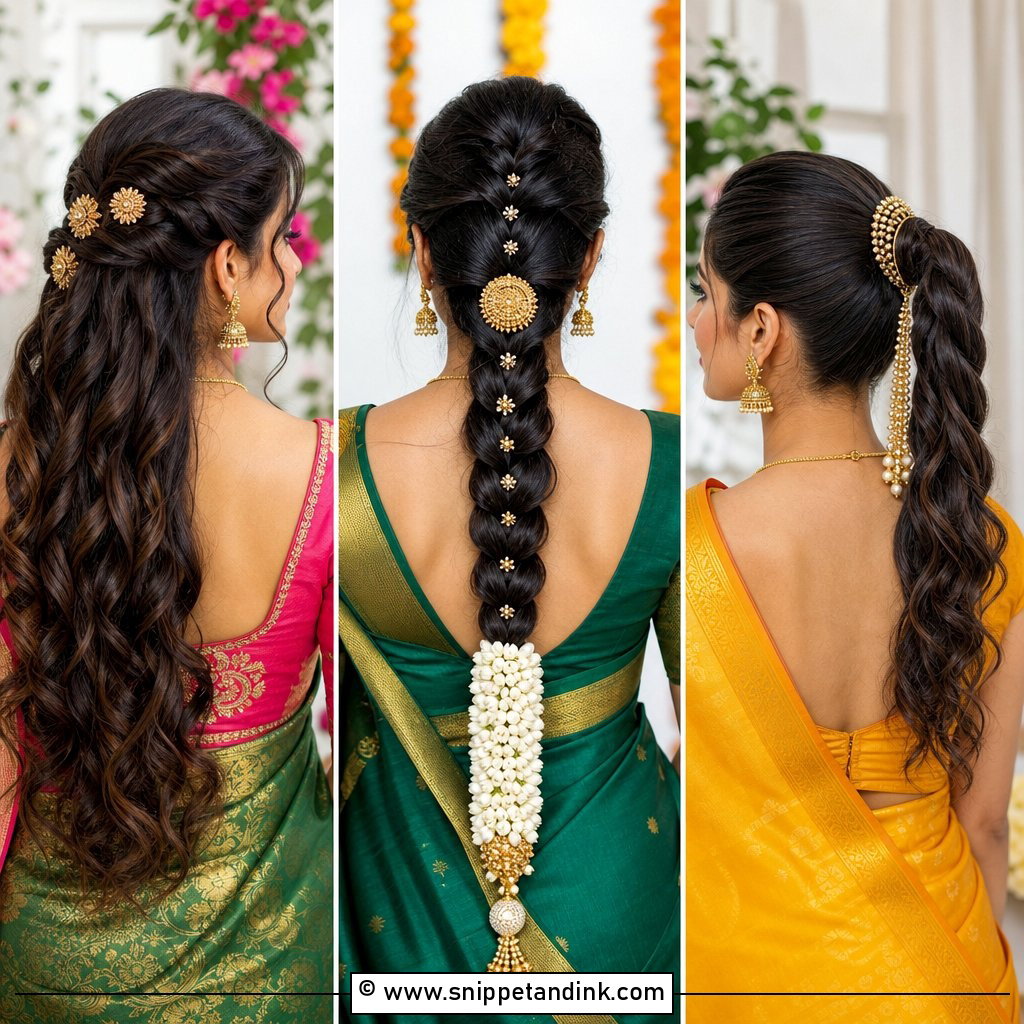
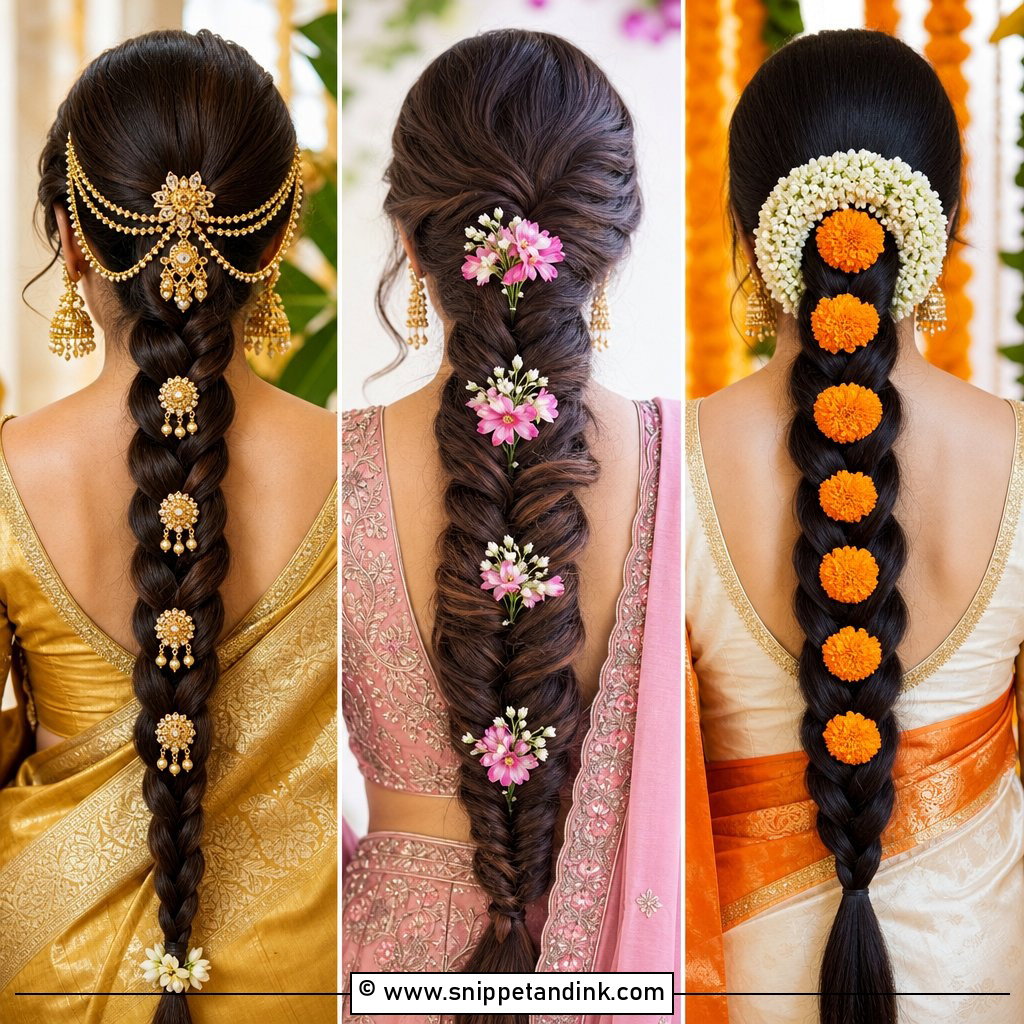
4. Gold Jada Billalu Embellished Braid
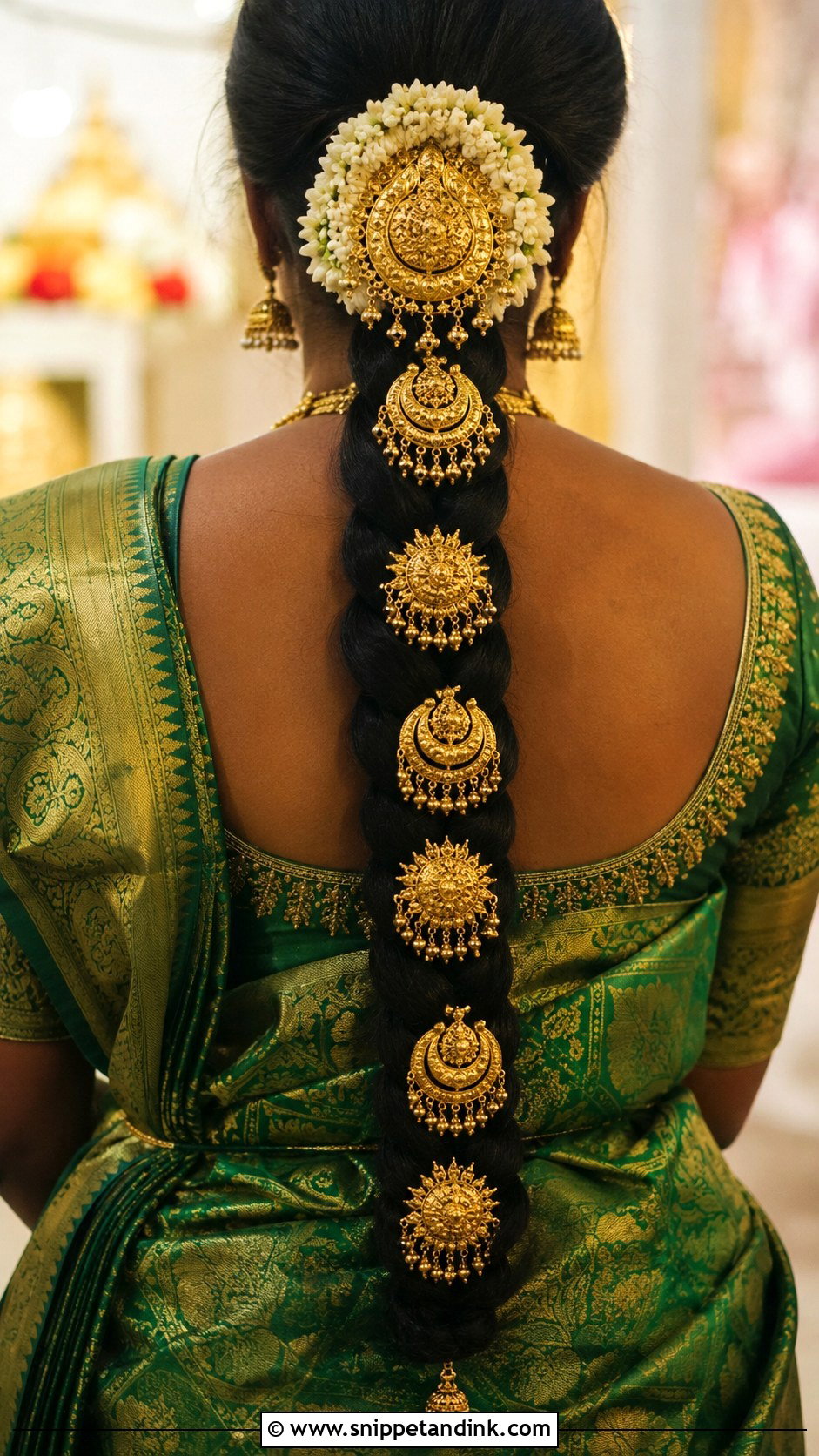
If gold matters more to you than flowers, the jada billalu braid is breathtaking, a run of temple-style gold ornaments, often sun, moon and floral motifs, set from crown to tip. Many sets are passed down in a family, which is why I handle them with the bride’s mother in the room. Each piece is tied or hooked onto the braid at its own point, and the braid underneath must be tight and even, or the ornaments sit at slightly different angles. The weight is real. Expect to feel it at the crown after a few hours, and plan a chair with a low back.
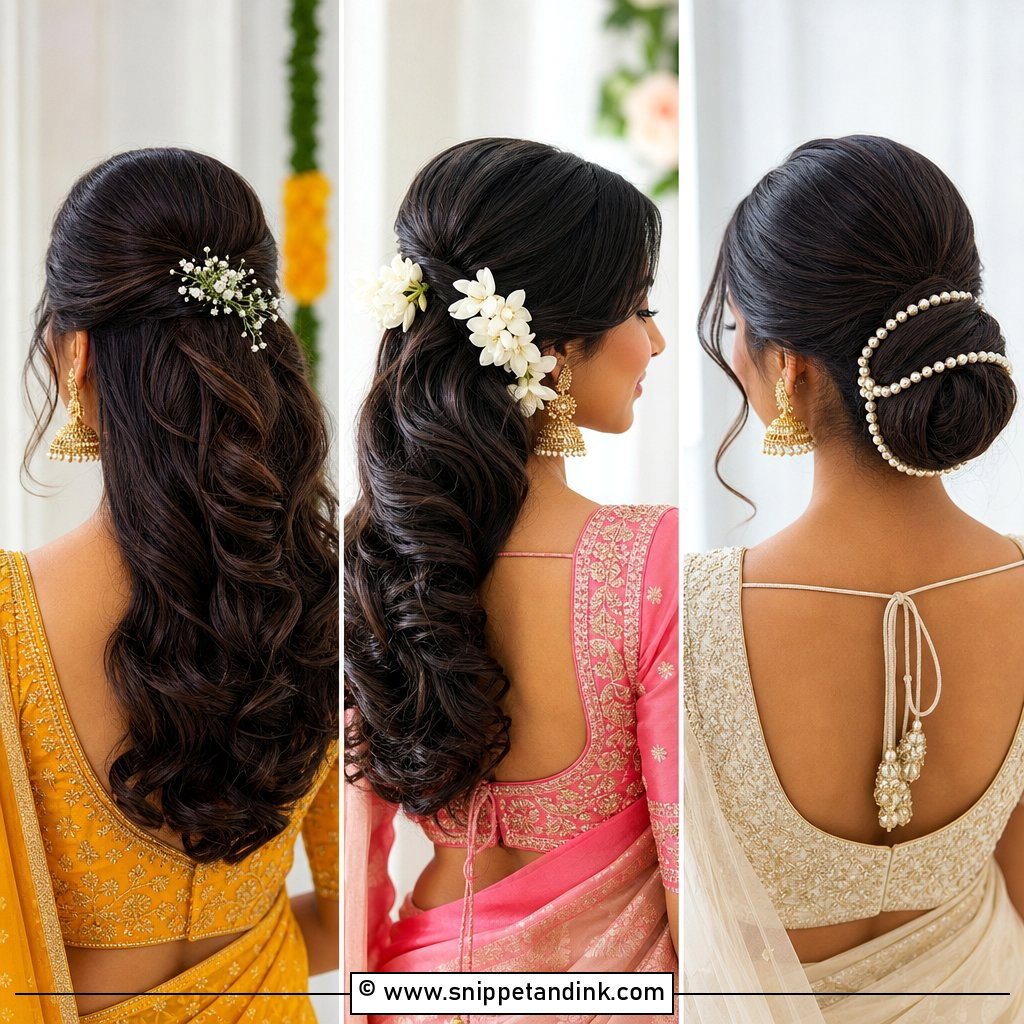
5. Half-Up Half-Down Bridal Hairstyle
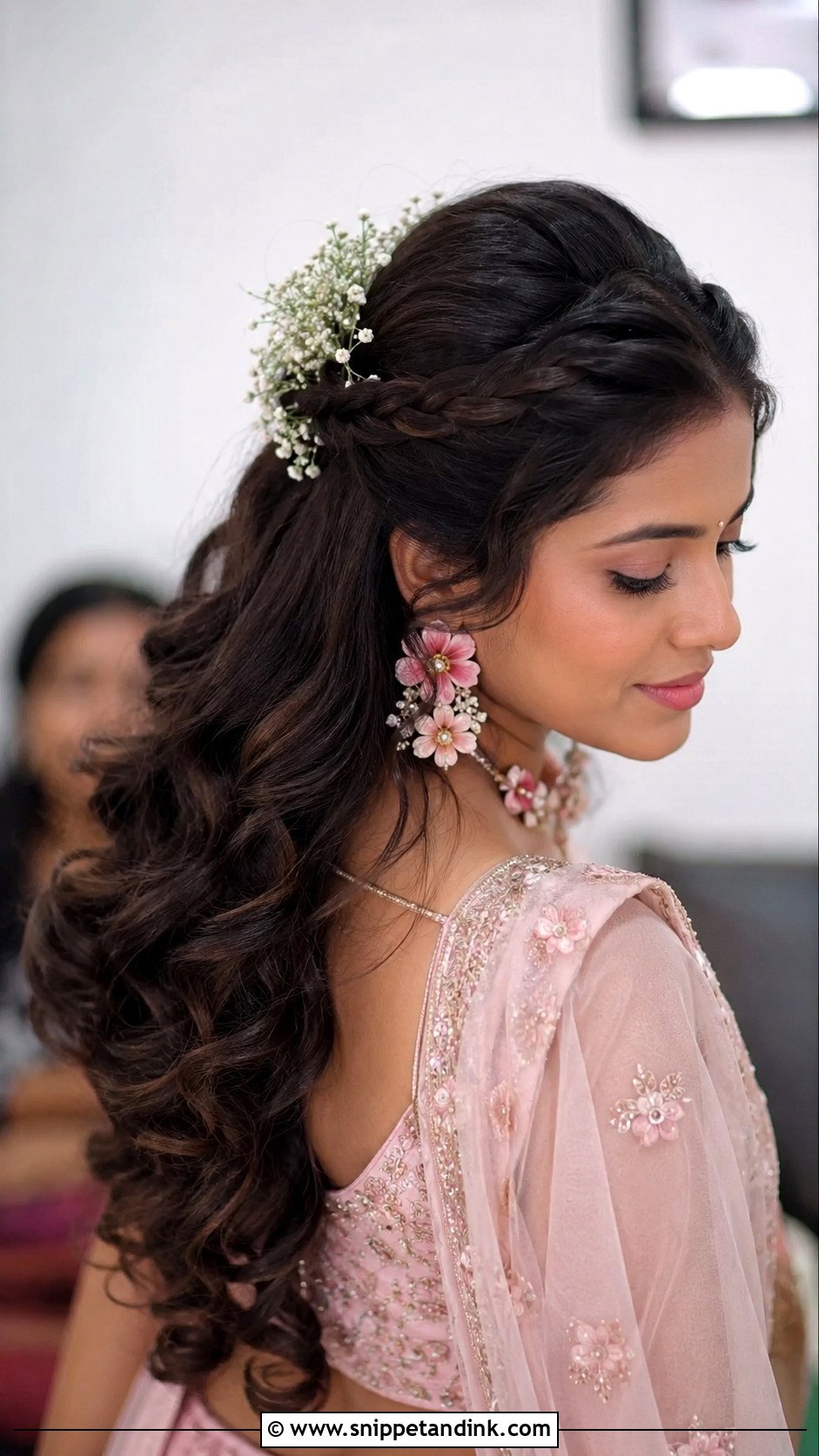
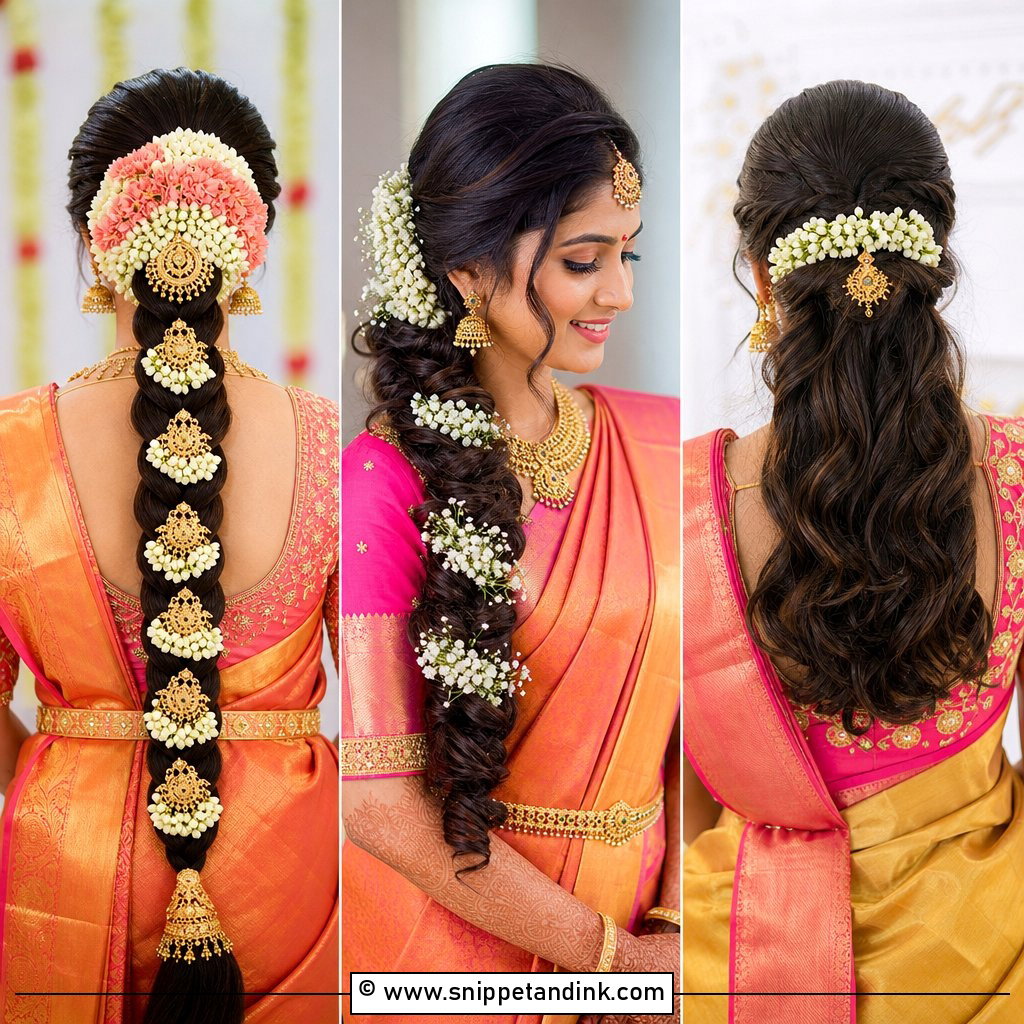
Here the top section goes into a soft braid or twist and the rest falls in loose curls, with baby’s breath, small roses or a slim gold accessory at the crown. It’s at home at engagements and receptions, and it suits lehengas and gowns better than a heavy silk. My honest caution: the loose half is the part that fails. In humid weather I set curls a size tighter than the finished look, so they relax into the right shape instead of falling flat by the first dance.
6. Crown Braid With Loose Curls
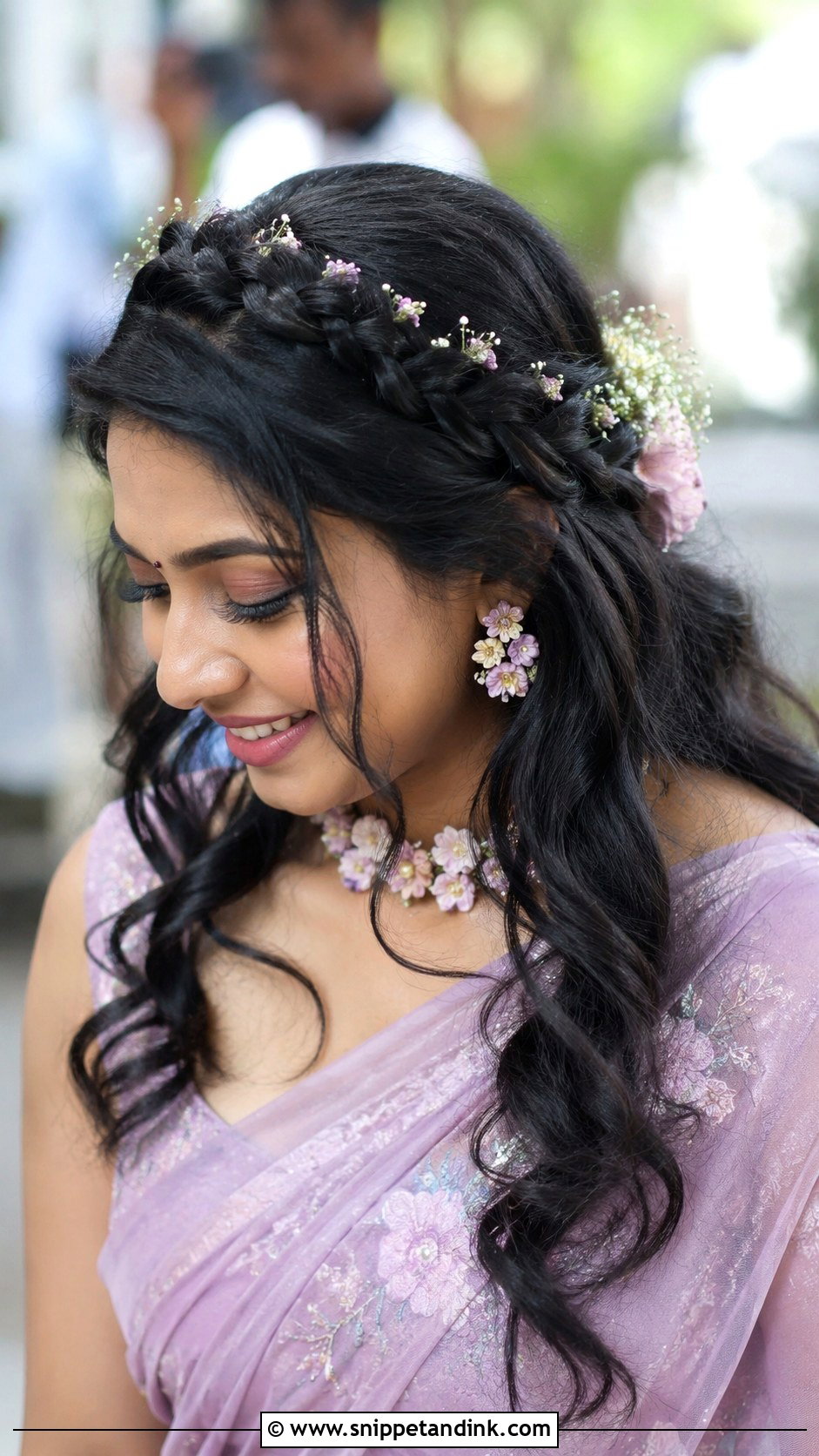
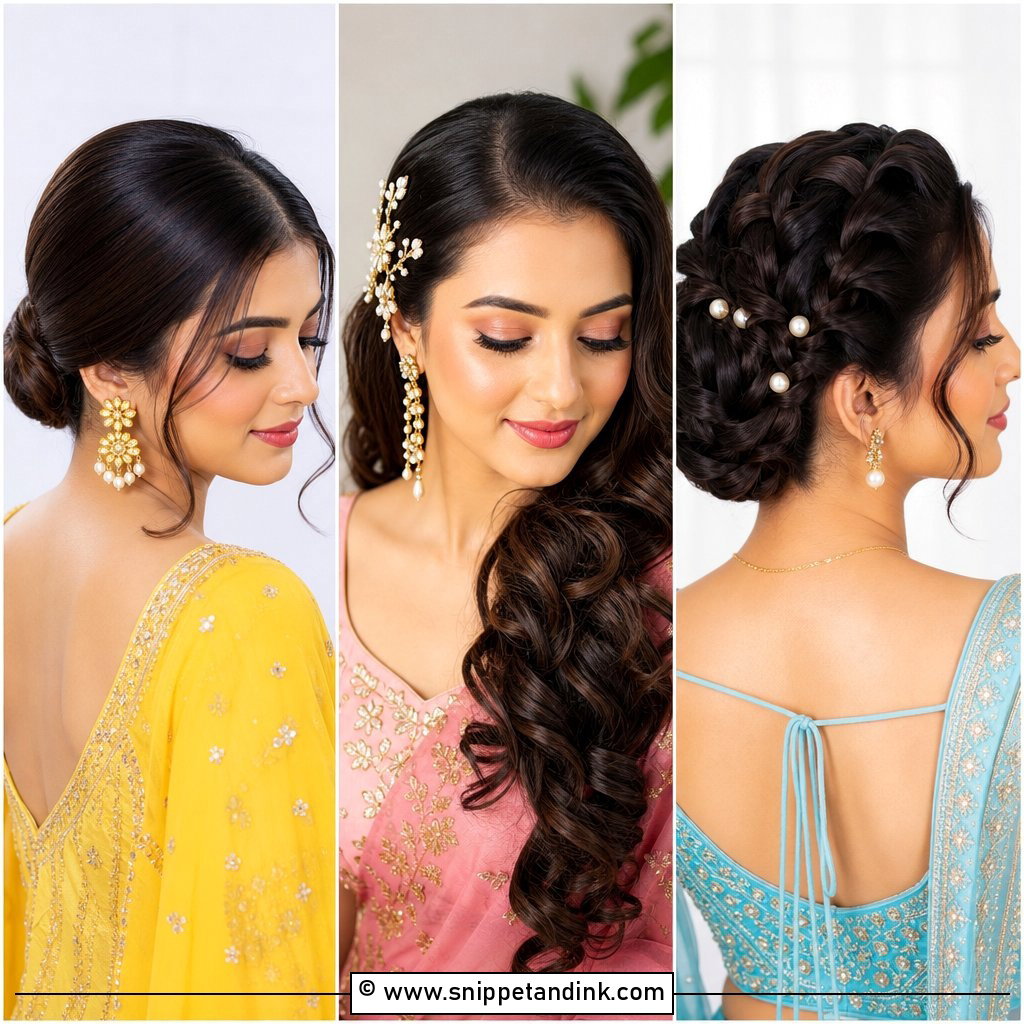
A braid taken across the top of the head and pinned like a crown, with soft curls flowing below and baby’s breath or small pins along it. It keeps the face clear and draws the eye to the maang tikka and earrings. I usually build it as two Dutch braids meeting at the back, which grips better than one long braid wrapped around. It needs decent length, and it pairs well with pastel sarees and lighter floral jewellery.
7. Side Swept Braid With Jasmine
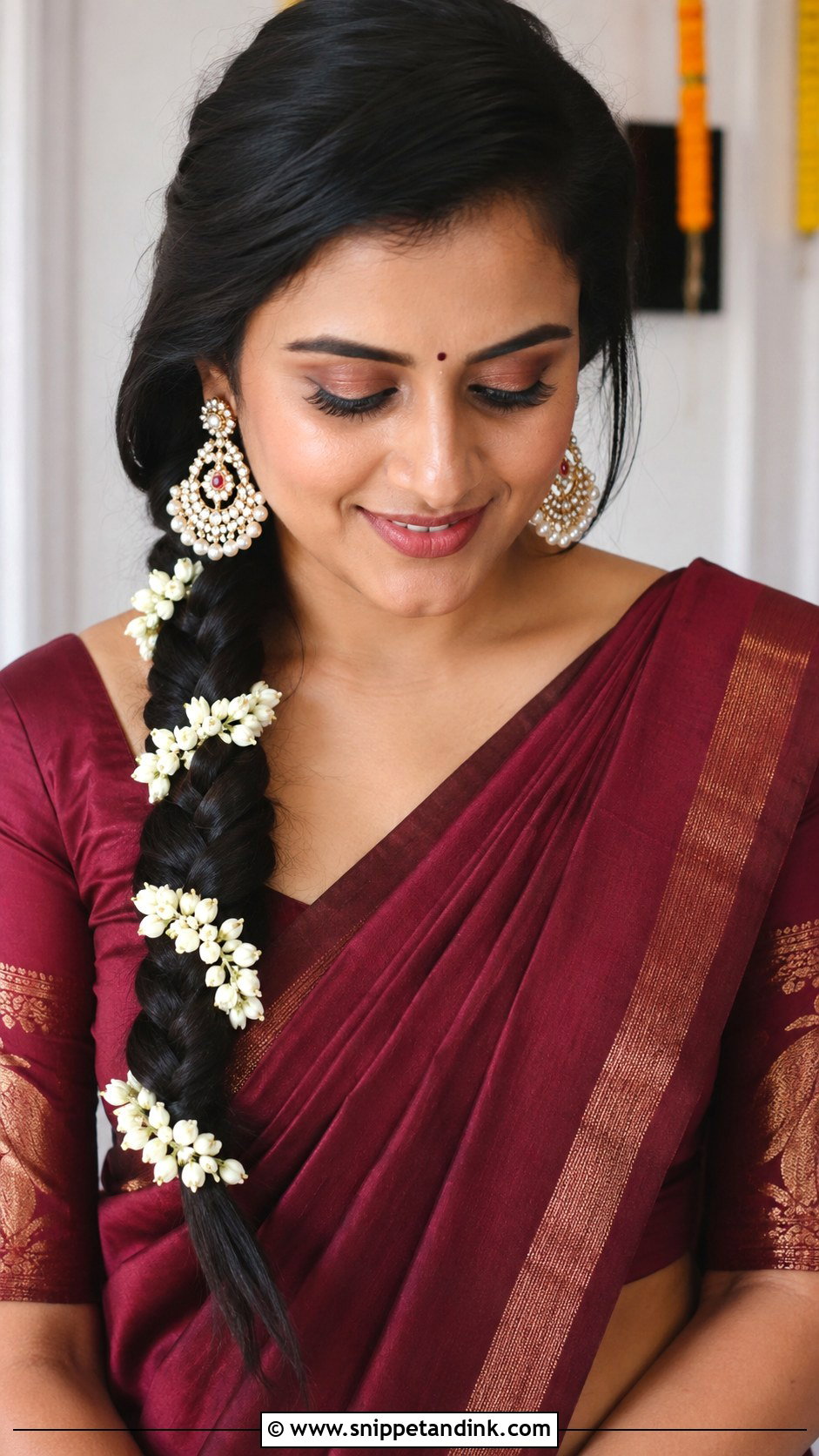
All the hair is swept to one shoulder and braided loosely with jasmine woven through, which leaves the neck and the opposite earring on show. The asymmetry feels a little editorial without leaving tradition behind. Long thick hair gives the fullest result, but a clip-in braid extension blends well here because the join hides under the shoulder. Pin it firmly behind the ear on the far side. Without that anchor, every turn of the head flips it back.
8. Floral Bubble Braid
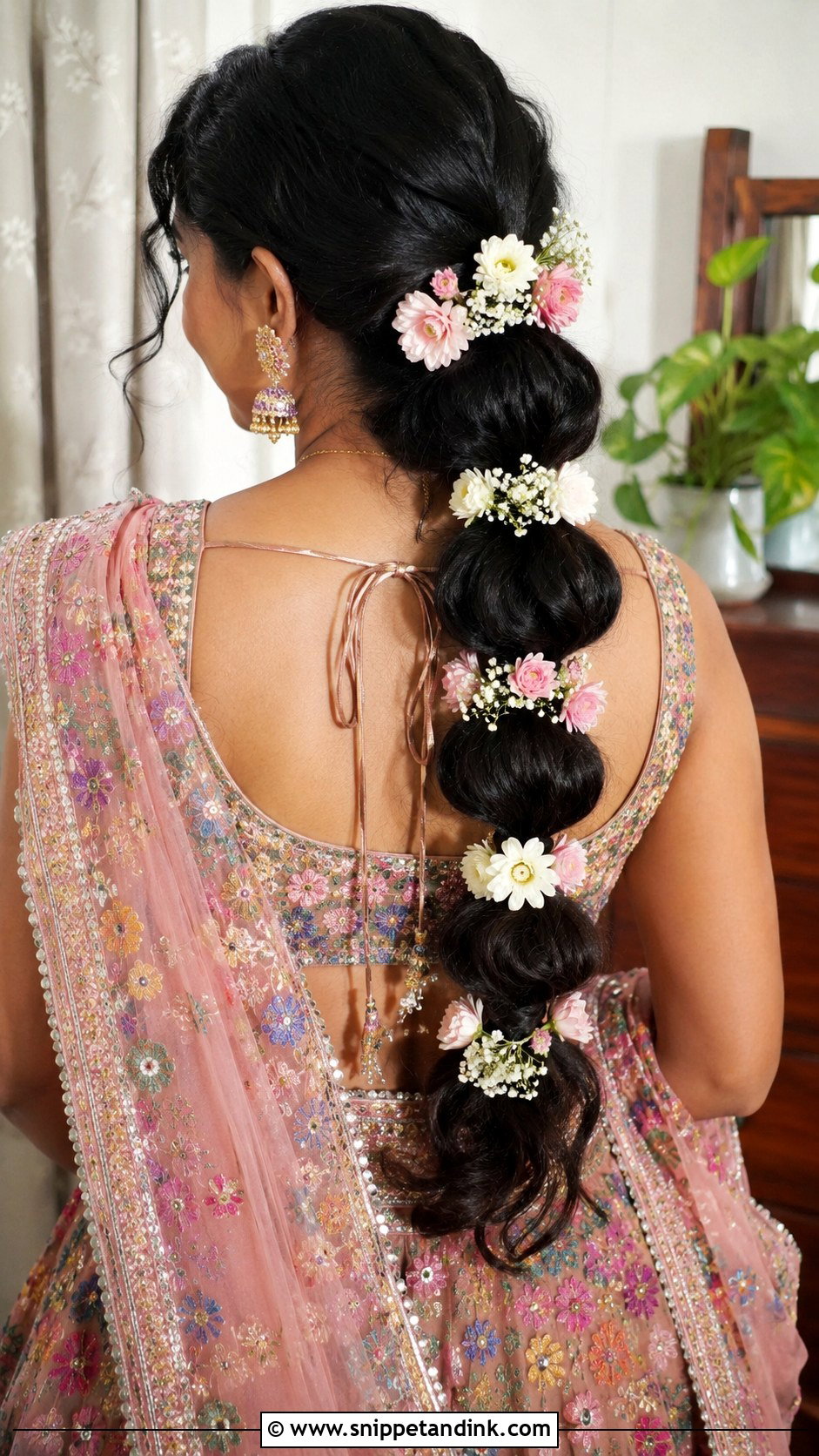
Bubble braids are the playful one: hair divided by elastics into puffed sections, each filled with jasmine, roses or pastel faux blooms. It reads young and festive, and it belongs at sangeet, mehndi and reception events. It works from medium length, and pulling each bubble wide is a good way to fake thickness. Faux flowers are actually useful here. Real roses squeezed into small bubbles bruise quickly, while silk ones keep their shape all night.
9. Maang Tikka Bun With Pearls
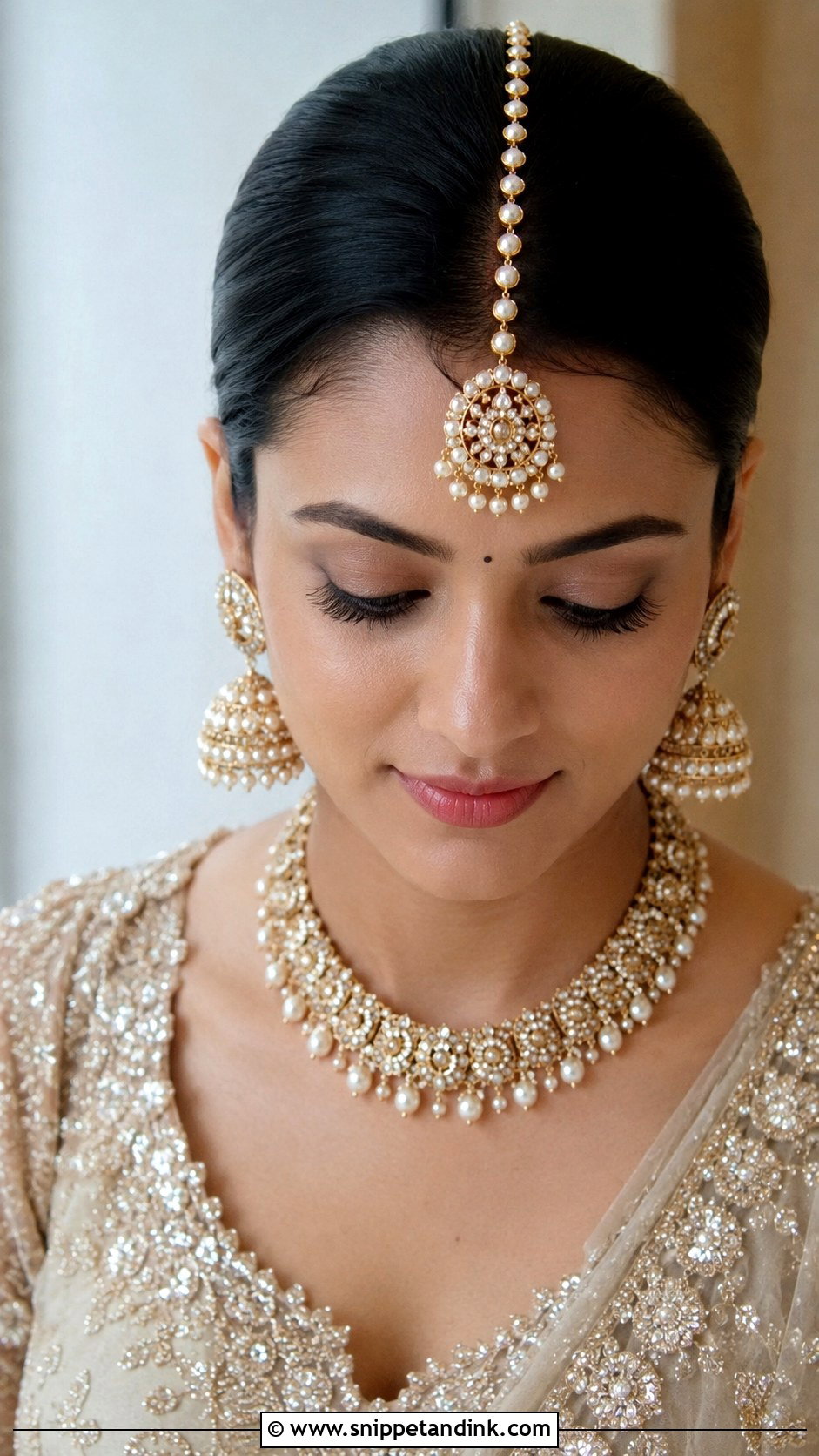
A polished low or mid bun with a dramatic maang tikka down the centre part puts all the attention on the face and the jewellery. Pearl pins and small gold accents dress the bun itself. It suits reception events and embellished sarees or gowns. Sleek styles show every bump, so I blow the hair completely smooth first and work with a fine-tooth comb and a little cream. The tikka chain is pinned into the parting before the bun is made, which keeps it centred.
10. Messy Braid With Baby’s Breath
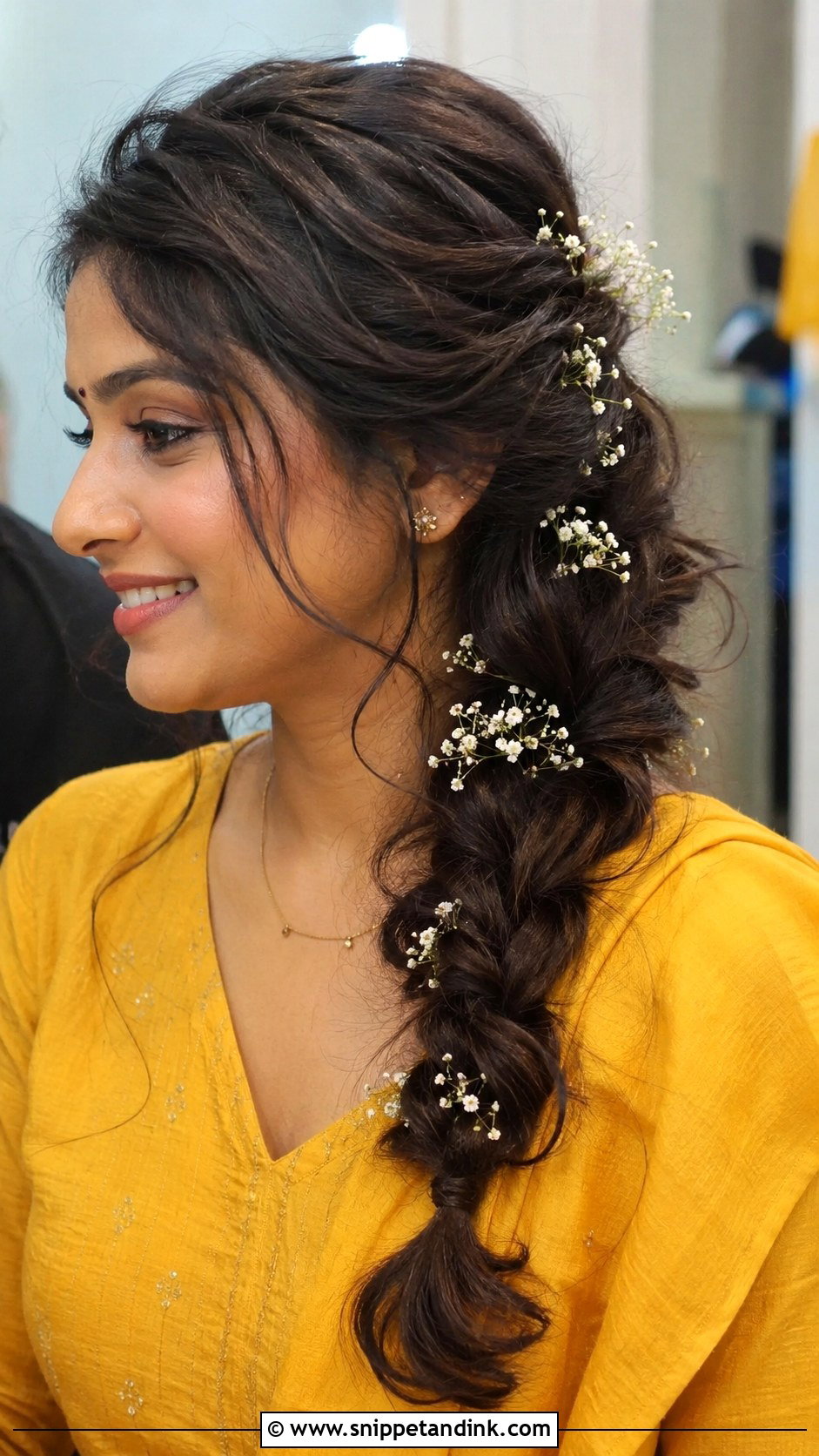
Baby’s breath tucked through a soft, textured braid, with a few face-framing strands left out. It’s the natural, airy option, and it suits haldi, mehndi and smaller ceremonies. The tiny white sprigs show clearly against dark hair. Two cautions from practice. Baby’s breath dries out in a few hours, so a florist should condition it and cut it short before it goes in. And messy braids still need structure; I pancake a firm braid rather than braiding loosely, so it holds its shape.
11. Hybrid Braid With Gold And Flowers
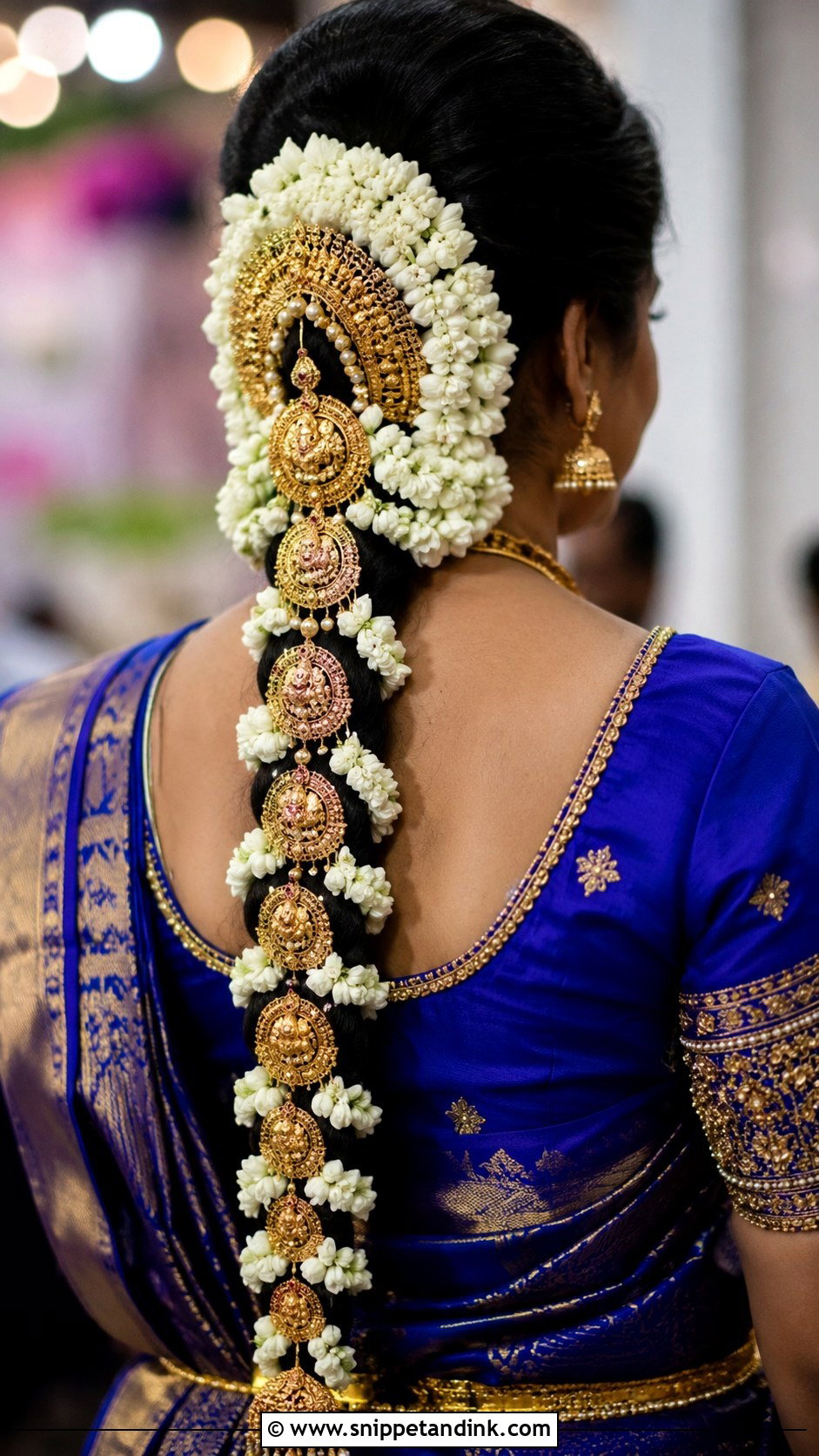
The hybrid puts fresh floral garlands and gold jada ornaments in one elaborate braid, so you get jasmine’s fragrance and temple gold together. It’s the answer for brides who can’t pick between flowers and gold, and it carries heavy silk and full jewellery sets. Balance is the craft here. I alternate gold and flowers rather than grouping them, and I keep the largest ornament nearer the crown, where the braid is thickest and can carry it.
12. Floral Tiara Updo
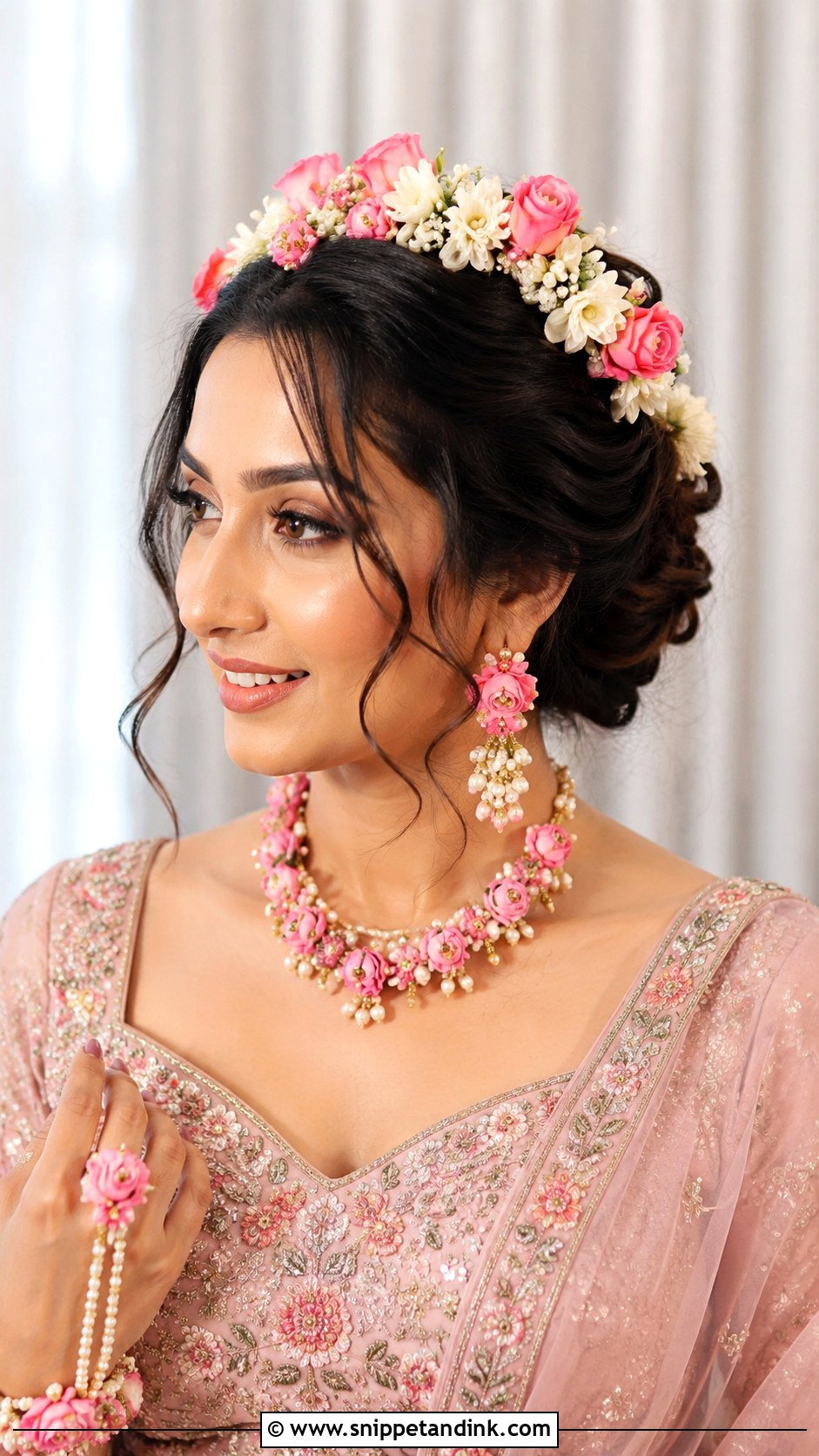
A polished updo crowned at the front with a half circle of jasmine, roses and small buds, set like a tiara. It frames the face and gives you flowers without committing to a full braid. Engagements and receptions suit it, along with lighter lehengas and floral jewellery. I wire the tiara as one piece on a thin band and pin it through the updo. Individually pinned flowers at the hairline tend to shift as soon as you smile for photos.
13. Fishtail Braid With Flowers
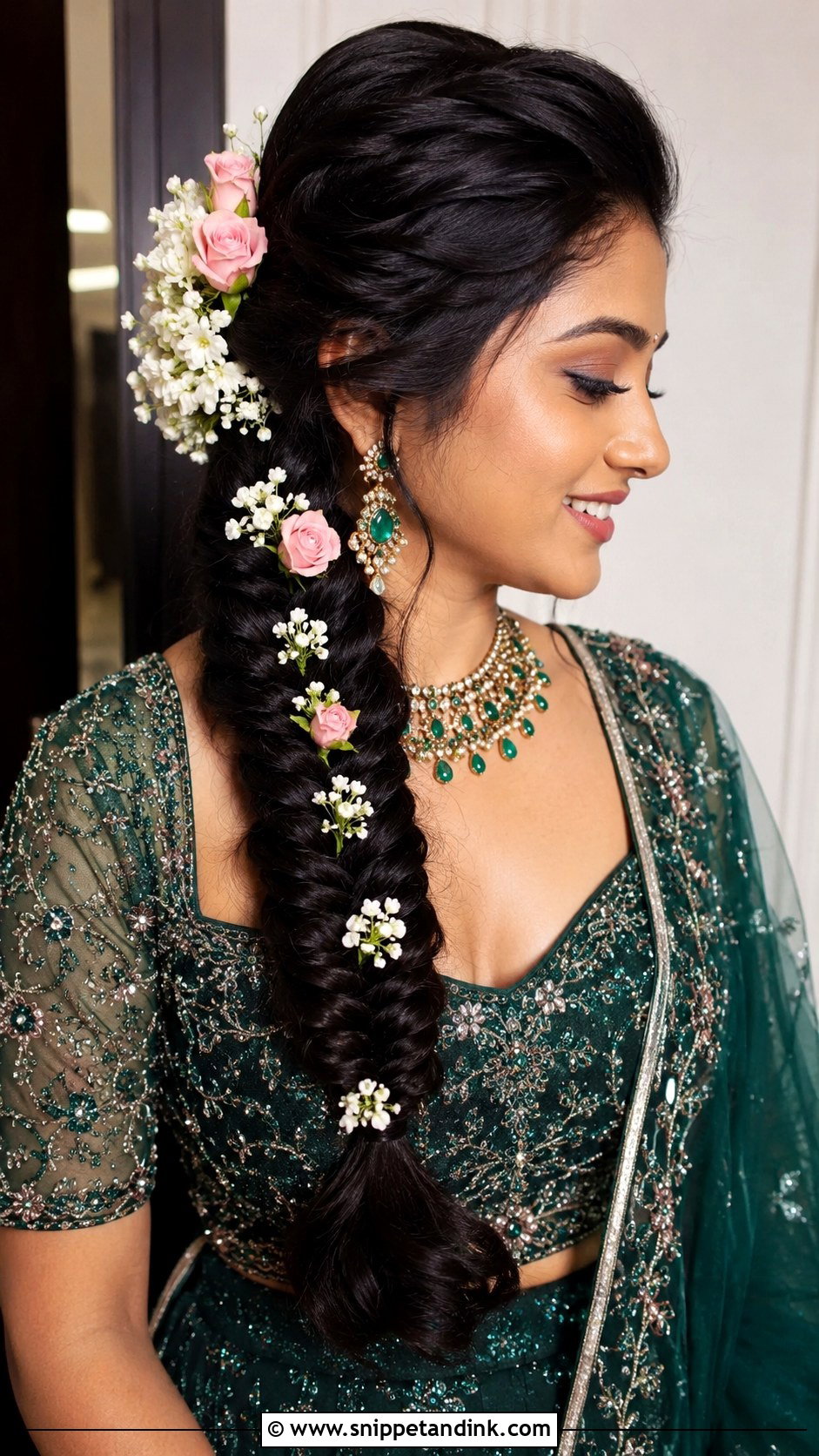
The fishtail’s herringbone weave looks complicated, but it is only two sections with small pieces crossed between them. Small jasmine buds, roses or baby’s breath sit in the weave. Worn to the side it softens, and it suits sangeet and reception looks with pastel or jewel-toned outfits. It shows best on long, thick hair. Layered hair pokes out of a fishtail quickly, so I smooth each crossover piece with a touch of wax as I go.
14. Sleek Low Bun With Temple Jewelry
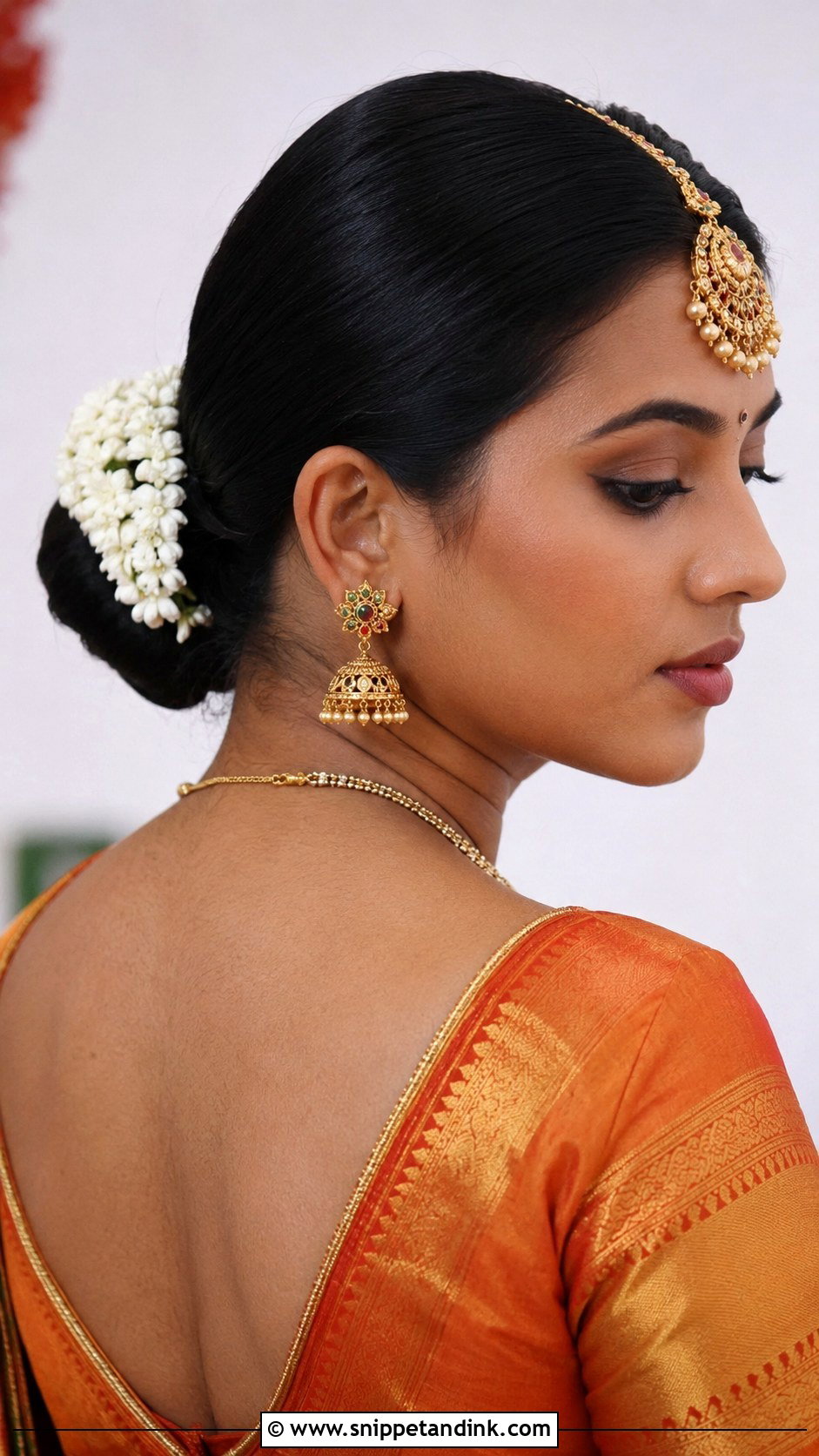
Sometimes the hair should step back. A sleek low bun at the nape lets temple jewellery lead: heavy gold maang tikkas, jhumkas and matha pattis, with perhaps a single jasmine string or one gold accent. It suits all face shapes, stays neat through long ceremonies and pairs naturally with a rich Kanjeevaram. I’d steer anyone with a lot of baby hairs at the hairline toward a slightly softer version, because a fully slicked style makes them stand straight up by noon.
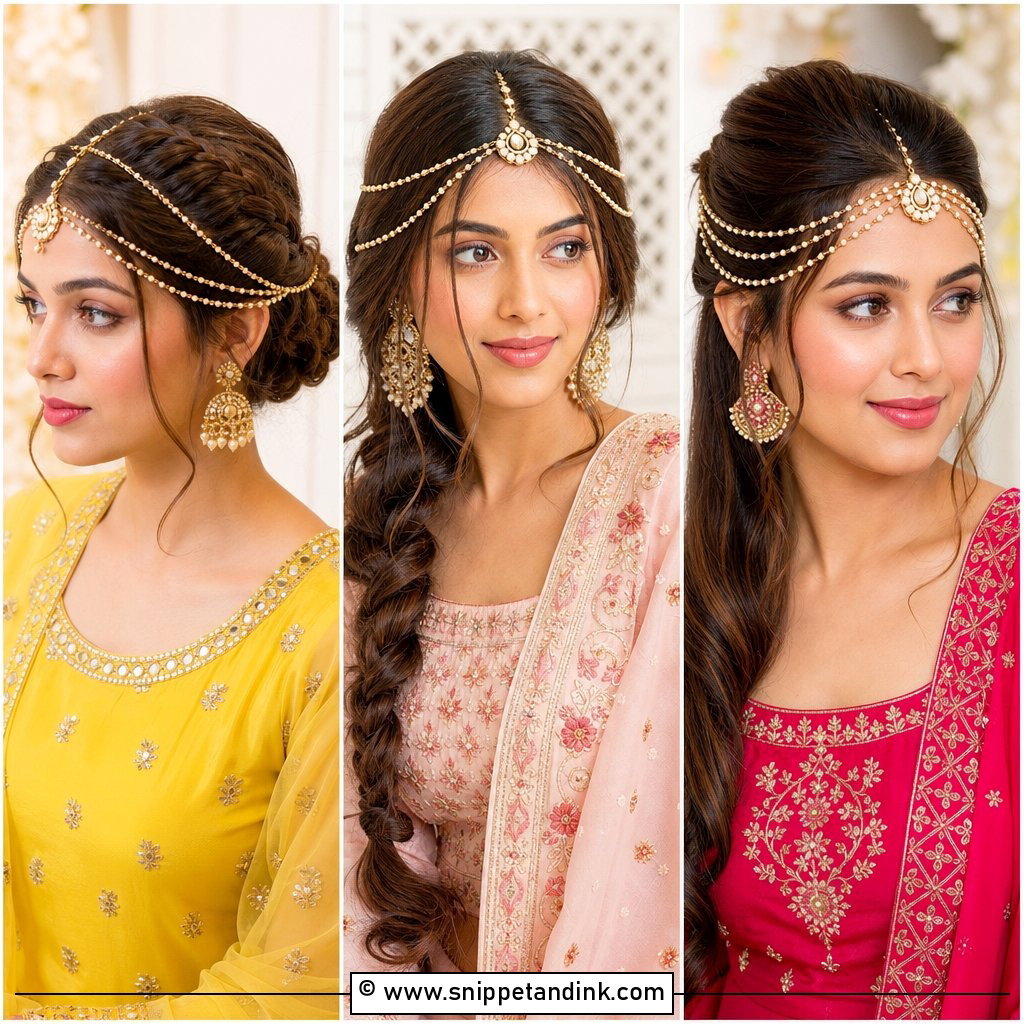
15. Braided Bun With Flowers And Pearls
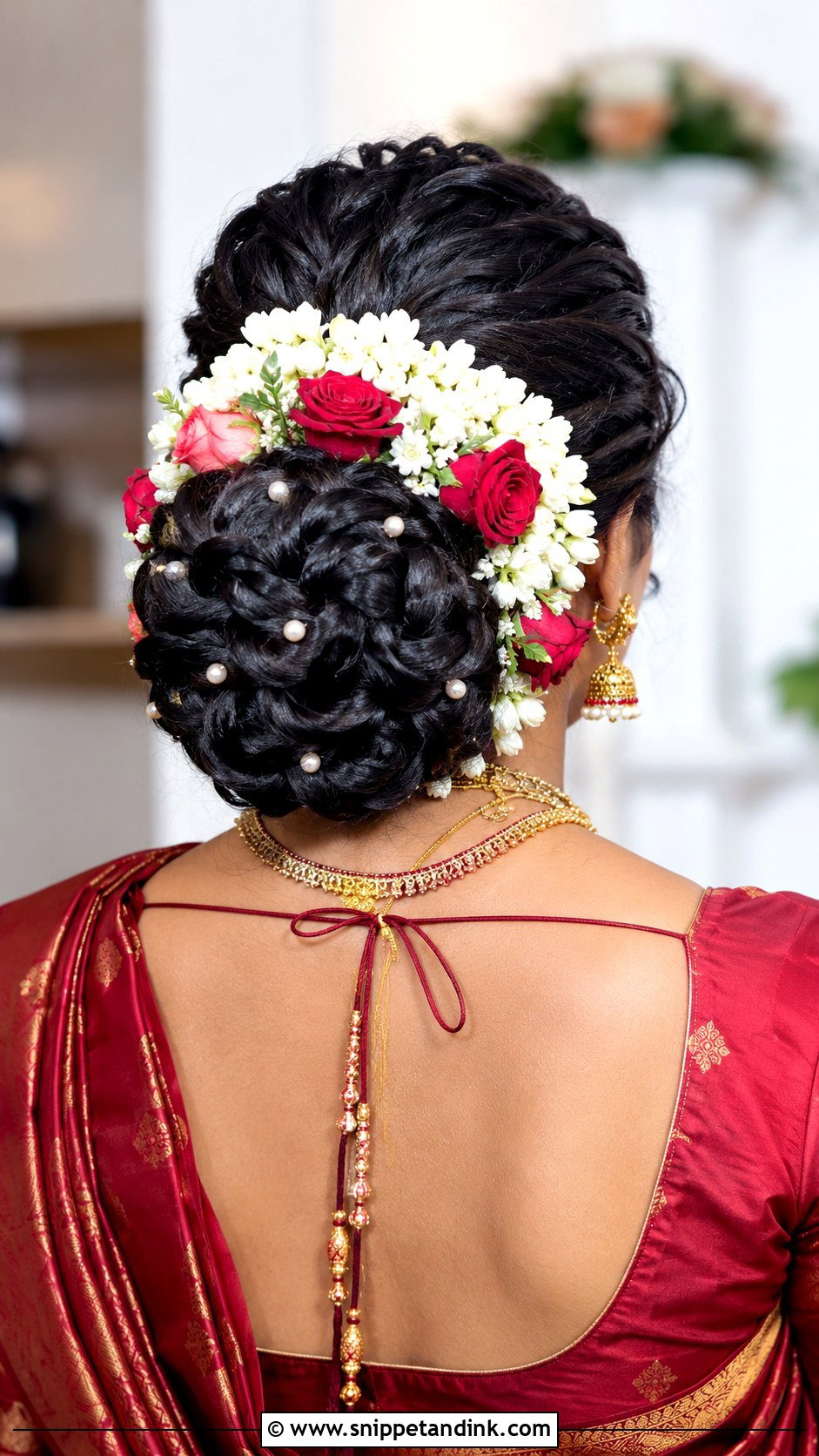
Braided sections coiled into a textured bun, then finished with jasmine, roses and scattered pearl pins, give much more detail than a smooth bun. It works for both the muhurtham and the reception and sits well with silk sarees and heavy jewellery. Interlocked braids hold each other in place, so this is one of the steadiest buns I make. The trade-off is time: give the stylist an extra half hour in the morning schedule.
16. Loose Curls With Floral Pins
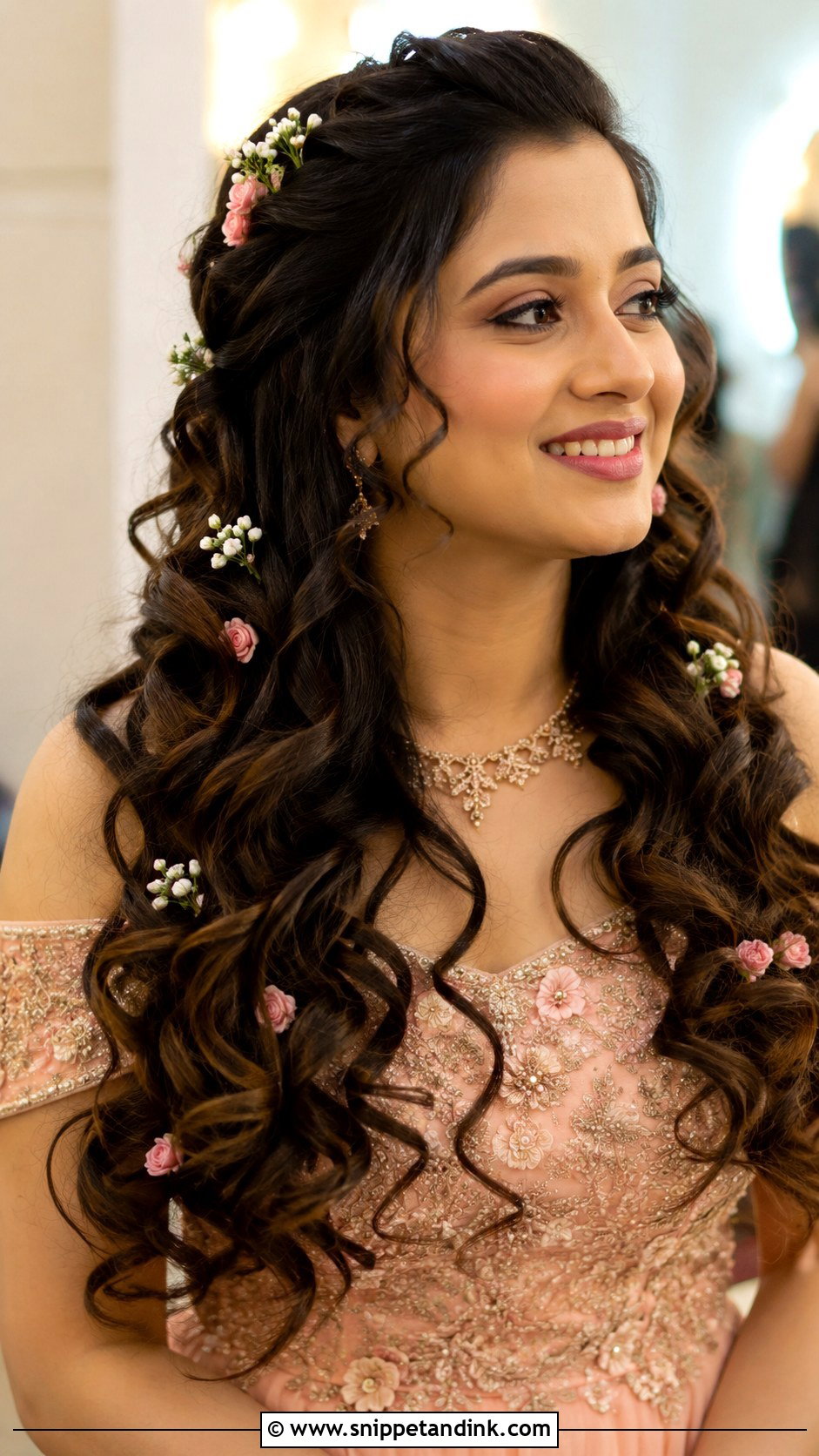
Open hair in loose, full waves with small flower pins dotted through is the modern way to wear South Indian bridal hair down. It shows off length and texture and goes with lighter lehengas, gowns and reception outfits. Jasmine or rose pins add the cultural note without a garland. On straight, silky hair, waves fall quickly, so I prep with a mousse, curl in small sections and pin each curl to cool before brushing out.
17. Double Braid With Jasmine Strings
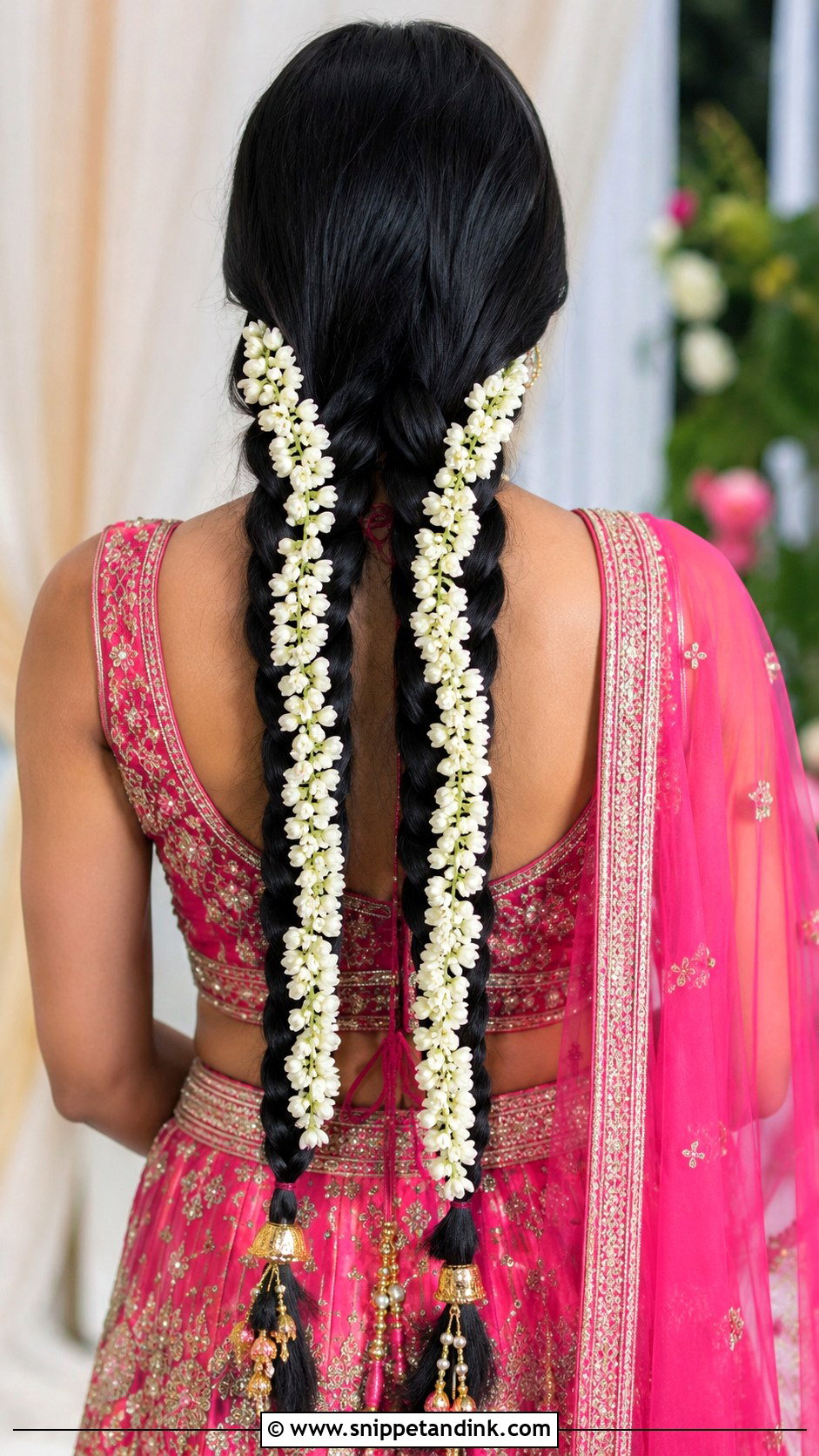
Two braids down the back, each wound with jasmine, make a symmetrical, youthful look that still feels traditional. It suits mehndi, sangeet and daytime ceremonies, and pairs with bright lehengas. The double jasmine braid needs long, thick hair, because splitting hair into two halves halves the volume of each braid. Check the parting at the back in a hand mirror. A wandering line between the two braids is the first thing a photographer catches.
18. Floral Half Bun With Open Hair
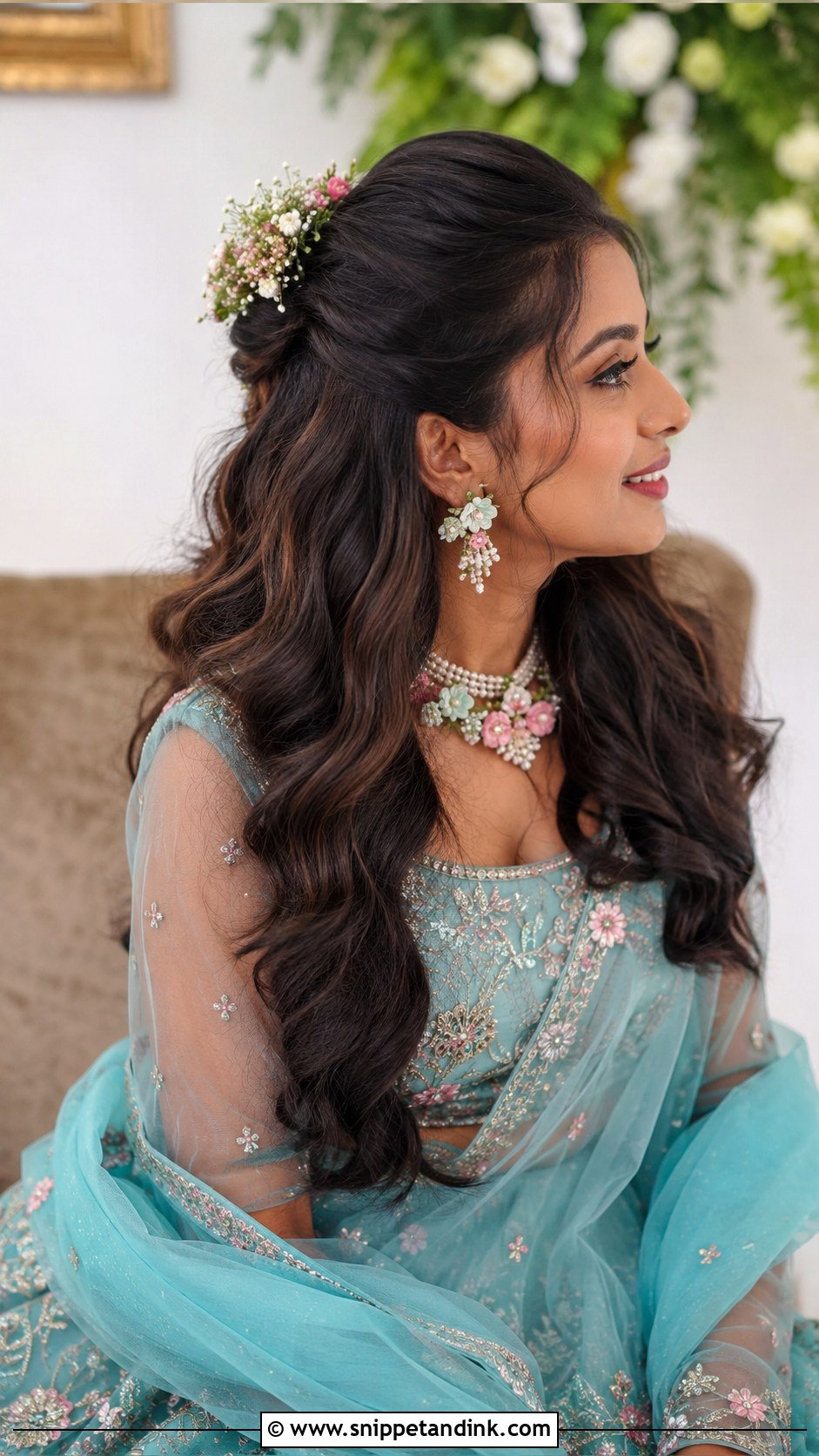
The top half goes up into a small bun decorated with jasmine, roses or baby’s breath, and the rest stays loose. Hair is off the face, length still shows. It’s a good fit for engagement and reception events on medium to long hair. A small half bun has very little hair in it, so I backcomb the base and secure it with a hidden elastic before any flowers go on. Otherwise the flowers pull it sideways.
19. Rose Garland Bun
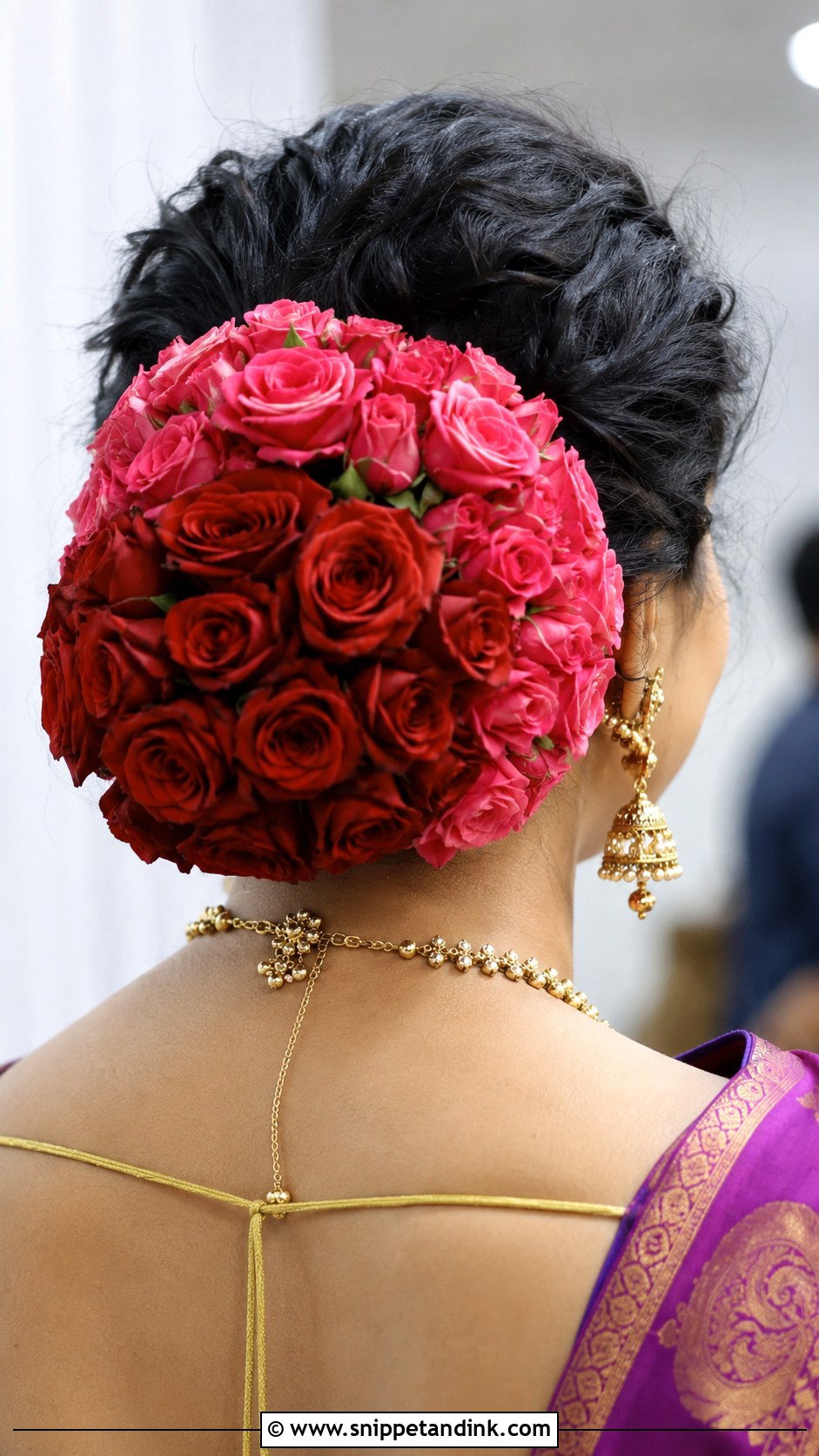
Thick garlands of red, pink or white roses wrapped generously around a full bun at the nape or crown give a flower-led look without a long braid. Heavy silk and statement jewellery suit it. Roses hold up well in heat compared with jasmine, so this is one of the few fresh-flower styles that looks the same at the end of a long day. Ask your florist for garlands strung on fine wire, which bend around a bun much better than thread-strung ones.
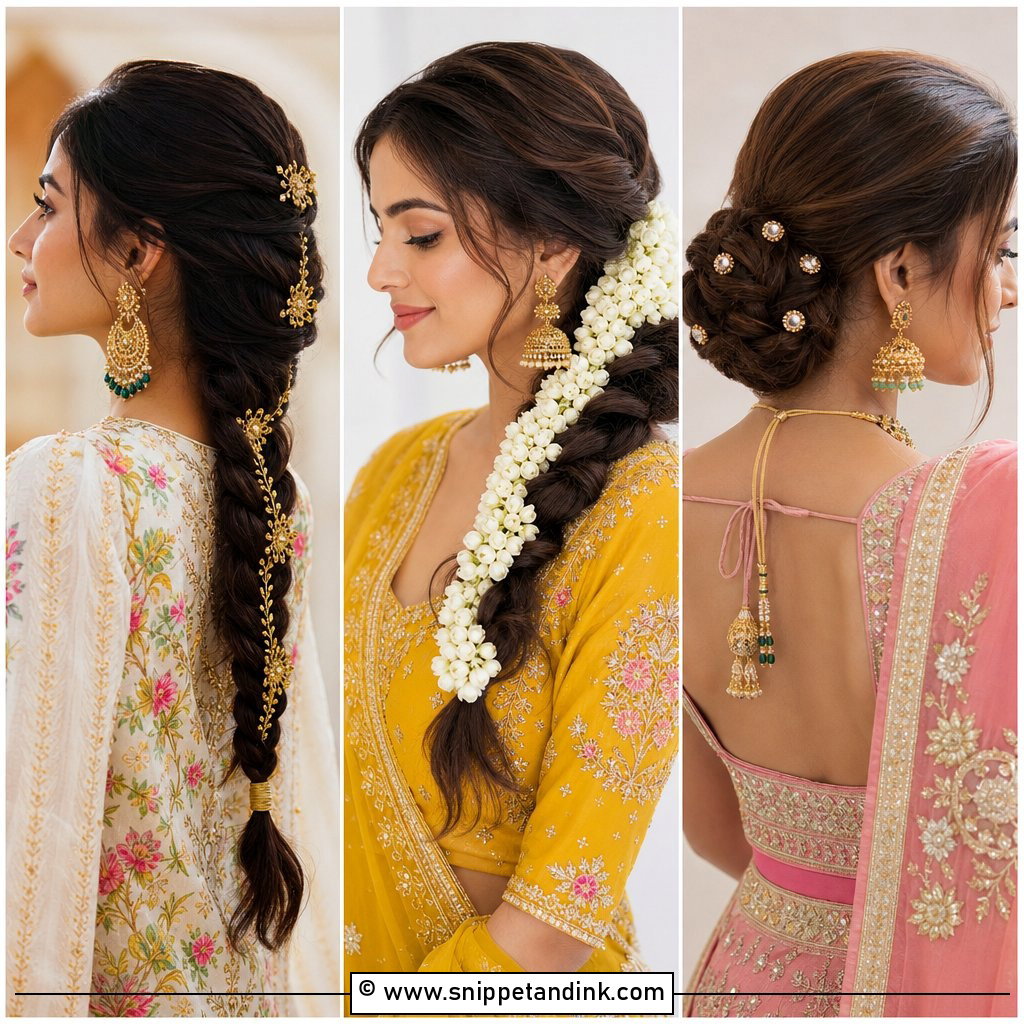
20. Pastel Faux Flower Updo
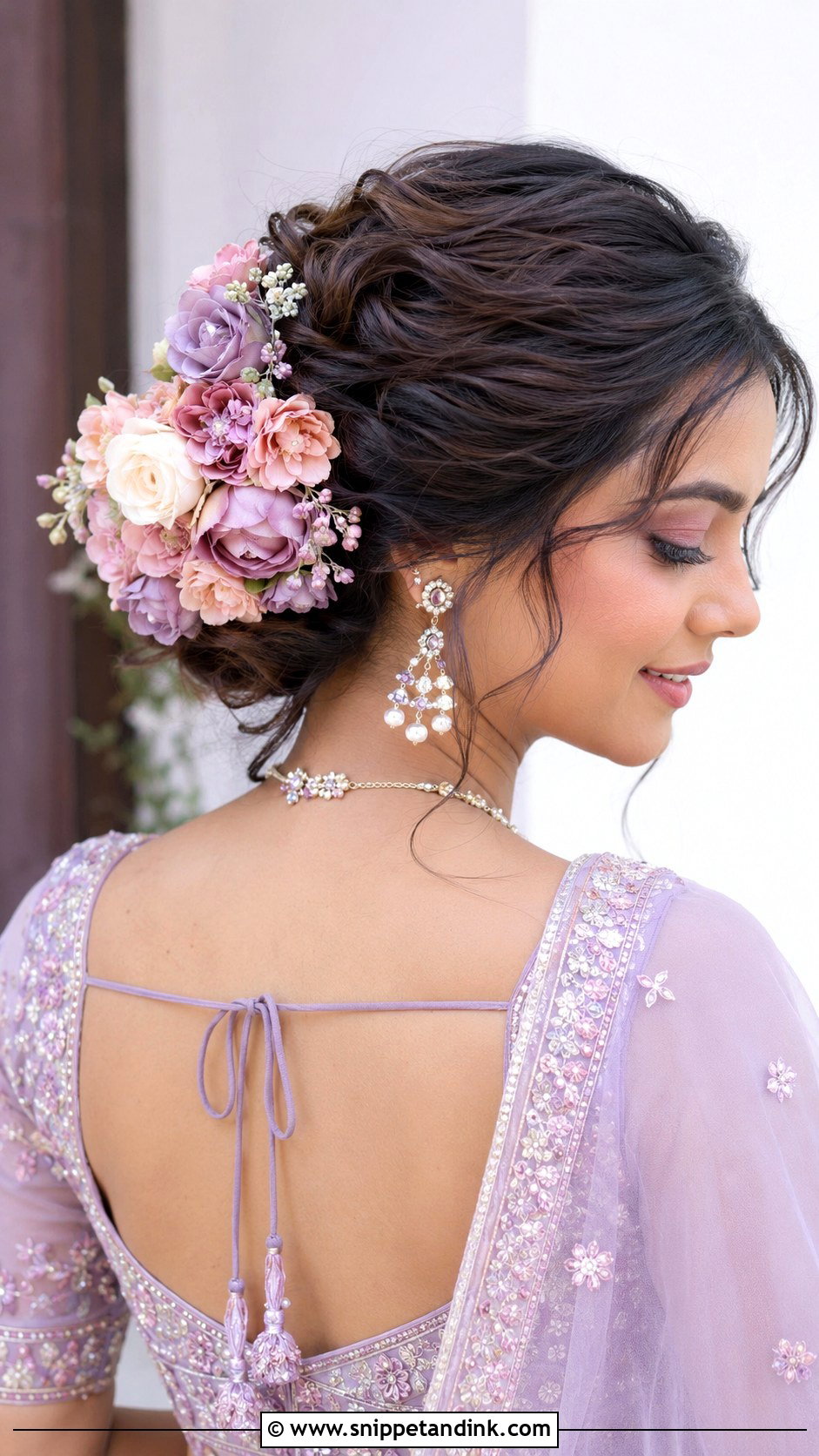
Faux flowers in blush, lavender and cream on a soft updo are a newer choice, often matched to a pastel lehenga. They don’t wilt, they don’t drip water down your back, and they’re useful for anyone allergic to real blooms. Good silk flowers read well on camera. Cheap ones with shiny plastic centres don’t, so look at them under a phone flash before you buy. It’s best at engagement, sangeet and reception events with lighter jewellery.
Heirloom Jada Pieces Need Their Own Plan
A jada billalu set or a rakodi that belonged to a grandmother is precious, and it also tends to be heavier than modern costume pieces. Bring the set to your trial. I check every hook and string, because old threads and loops can be weak, and I’d rather replace a string the week before than lose a piece halfway through the rituals.
On the day, one person should be in charge of the jewellery from the moment it comes out of its box to the moment it goes back in. When pieces come off at the end of the ceremony, wipe them gently with a soft dry cloth to remove hairspray and oil from the flowers, and wrap each piece separately before storing.
Can Faux Flowers Pass for Real Up Close?
Sometimes, and from a few steps away almost always. Jasmine is the hardest to fake, because the real thing has a soft translucence that plastic doesn’t. Roses and pastel blooms are easier. When a bride asks me for reliability and fragrance together, I mix: faux roses holding the shape of the arrangement, with a few real jasmine strings for scent and for close-up photos.
Faux is also the sensible choice for the second and third functions of a long wedding, when sourcing fresh flowers for every event starts to strain both the budget and the schedule.
Take Three Photos to Your Trial, Not Thirty
The styles that last a South Indian wedding day are the ones built for your hair’s length, your ceremony’s length and the weight of what you’ll wear in them. A poola jada, a jada billalu braid and a pastel faux flower updo all have a place, often at different events in the same wedding. Narrow your list to three, one per function if you have several, and show those to your stylist with your saree and jewellery. A trial with the real pieces answers far more than a long board of saved pictures.
You'll Like These Ideas:







Leave a Reply