
A heavily worked sharara is one of the few wedding outfits that looks as grand as a lehenga but lets you sit cross-legged through a long nikah, climb onto a stage and dance at the sangeet without someone holding your skirt. The flared pants carry the movement; the kurta and dupatta carry the formality. I dress brides, sisters and guests in them for that reason. Current sets lean on rich fabrics and handwork: zari, zardozi, sequins, mirror work, velvet, silk and organza, in palettes running from pastels to deep jewel tones. Below are the looks I return to, with notes on fabric weight, which event each suits and the styling choices that make or break them.
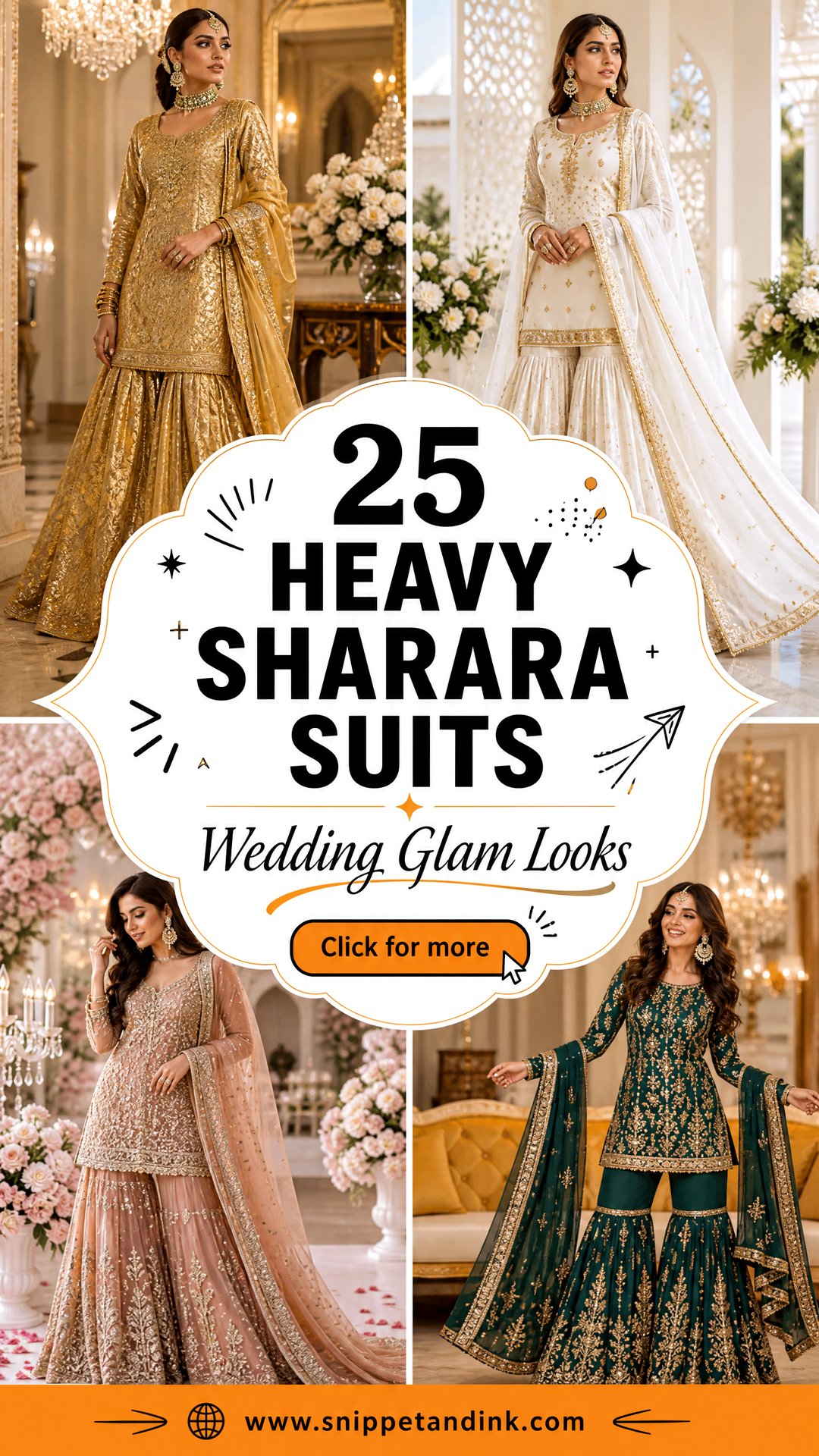
Sharara or Gharara? Check the Cut Before You Order
Shops and online listings mix these two names constantly, and the difference matters for how you’ll move. A sharara is flared through the leg, often from the waist or hip, so it looks like a wide divided skirt. A gharara fits closer to the knee, has a gathered band (the joint) at the knee, and flares out from there.
Before I order, I ask for three details:
- How many panels (kalis) the sharara uses. More panels give more flare but also more fabric weight around the hips.
- How it fastens. A drawstring with a side zip sits flattest under a short kurta; a full elastic waist is comfortable but can roll under heavy embroidery.
- Where the heavy work sits. A border only at the hem is easy to wear; embroidery across the whole sharara can push the total weight up quickly.
Give the length a thought too. A sharara should just brush the top of your shoe. Too long and you’ll step on the hem on stage stairs; too short and the flare looks cropped in photos. Hem it while wearing the exact heels or juttis you’ll use.
1. Red Bridal Sharara Suit
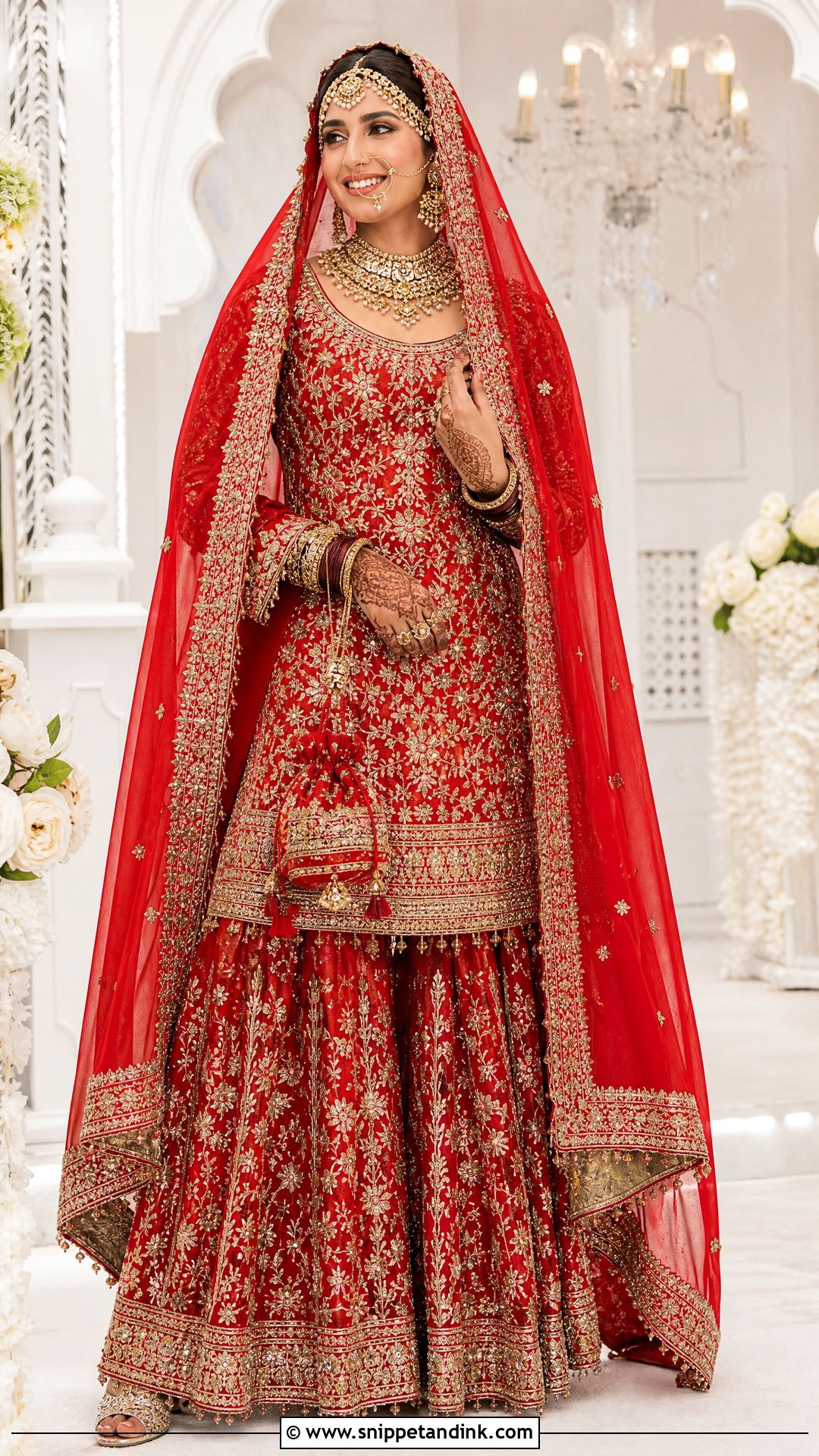
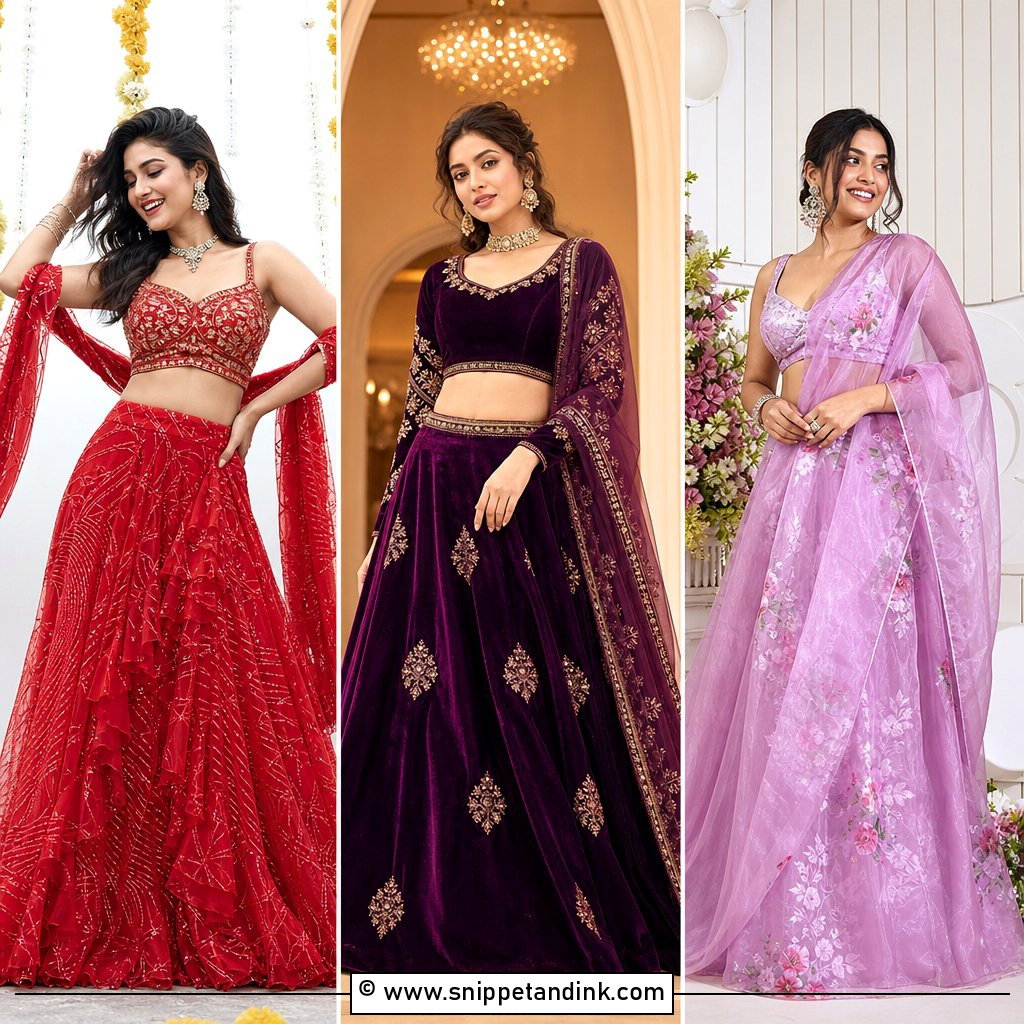
Red is still the color I see most for the main ceremony, and a sharara handles it differently from a lehenga. Keep the kurta short and heavily worked so the full flare of a silk, brocade or velvet sharara shows. Gold zari, zardozi, dabka or sequins give depth on their own; you don’t need extra layers. The dupatta can go over one shoulder or over the head for the rituals, and I pin it at the crown and shoulder so it stays put when you bow. A kundan choker, maang tikka, bangles, a structured potli and embellished heels finish it, with defined eyes and a red or rose lip.
2. Maroon Velvet Sharara Suit
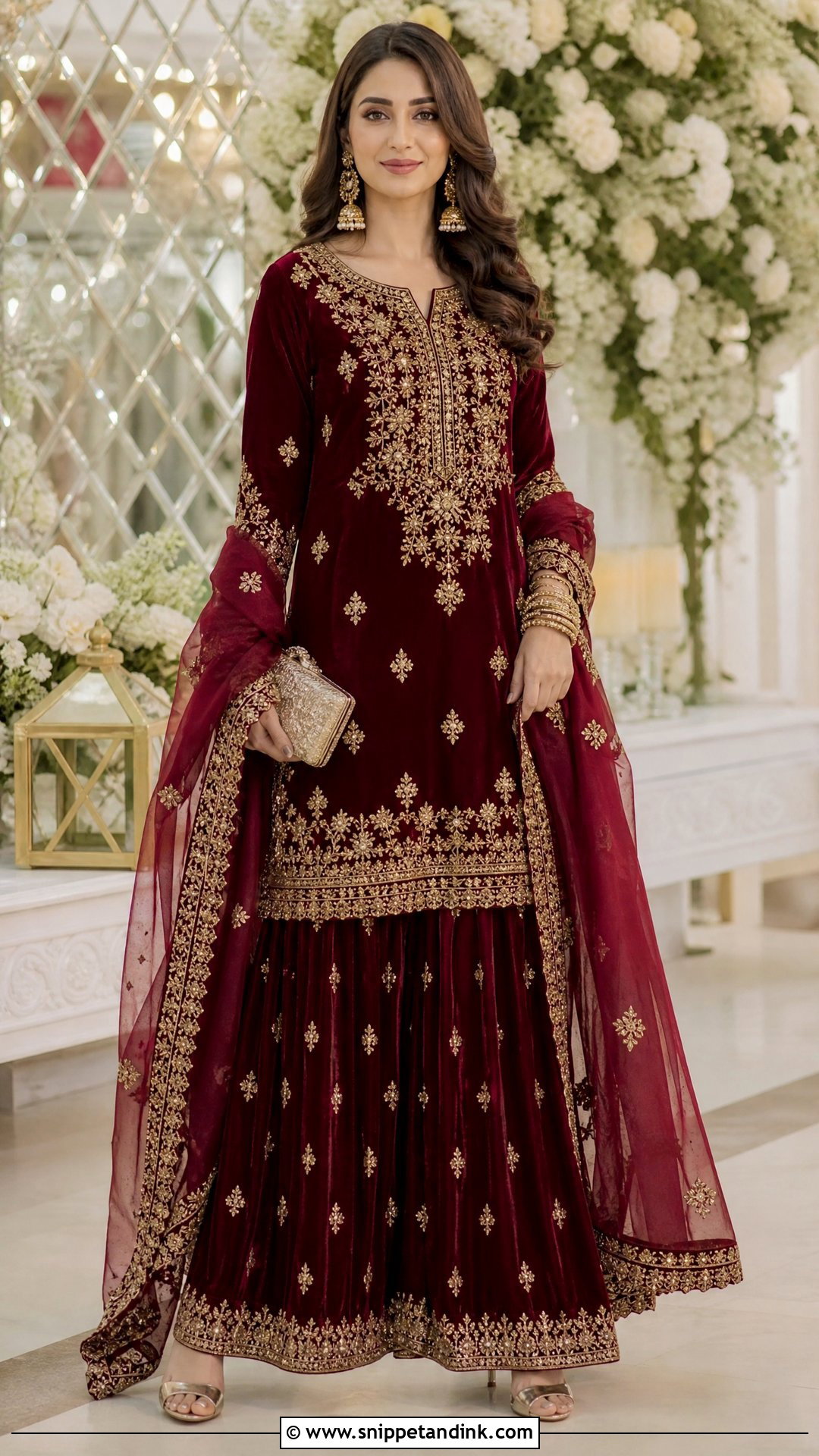
Velvet adds weight and depth instantly, which is why it belongs to winter and evening functions. A maroon velvet kurta with gold embroidery over a flared sharara reads regal without shouting. The one thing to know is that velvet is warm and heavy; in a crowded, heated hall it can be tiring, so I’d keep the sharara itself in a lighter silk or raw silk and let only the kurta be velvet. A longer kurta gives more coverage, a short peplum defines the waist. A sheer net or organza dupatta balances the weight, with gold jhumkas, bangles, pointed heels and a sleek bun.
3. Ivory Zari Sharara Suit
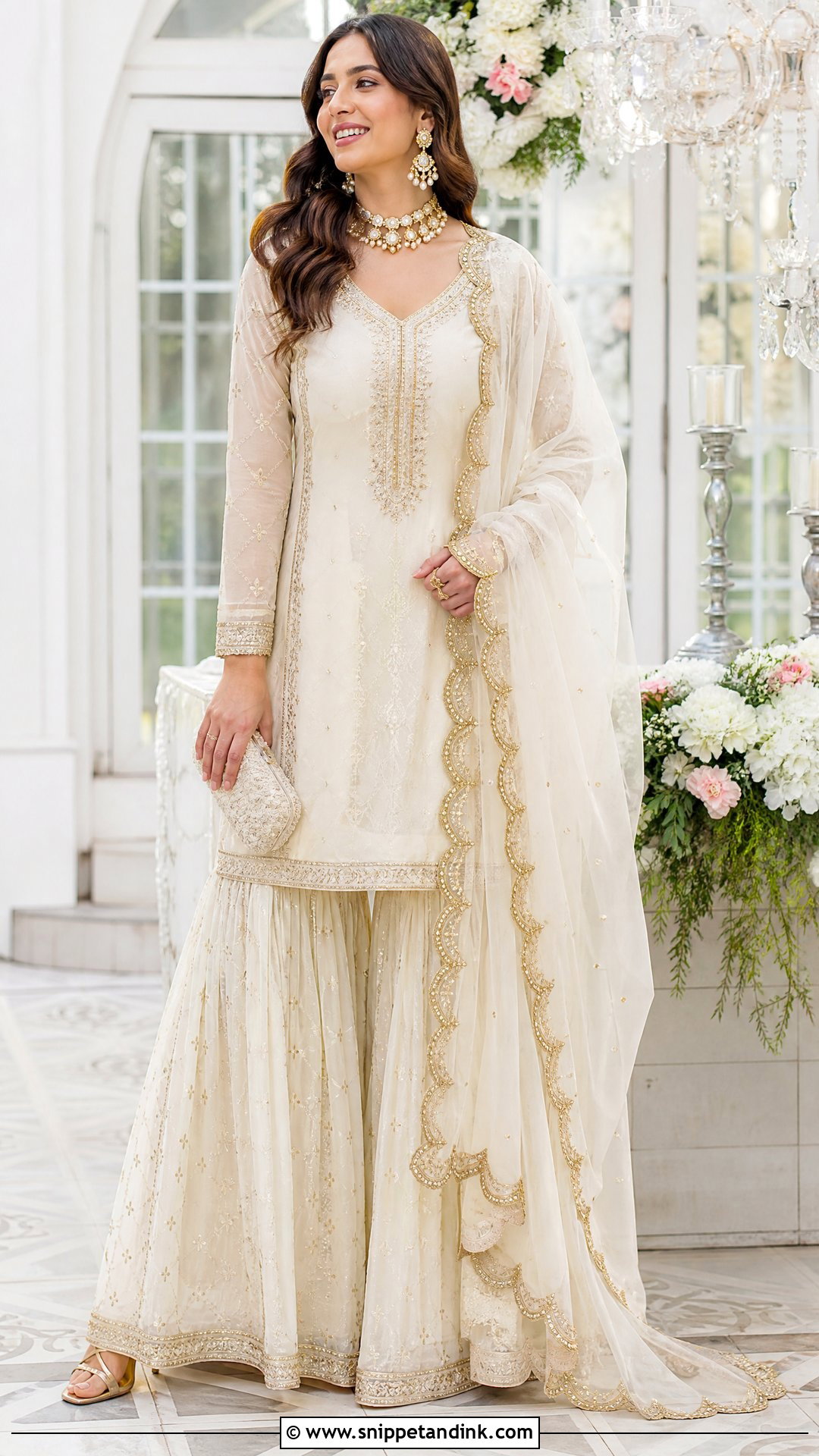
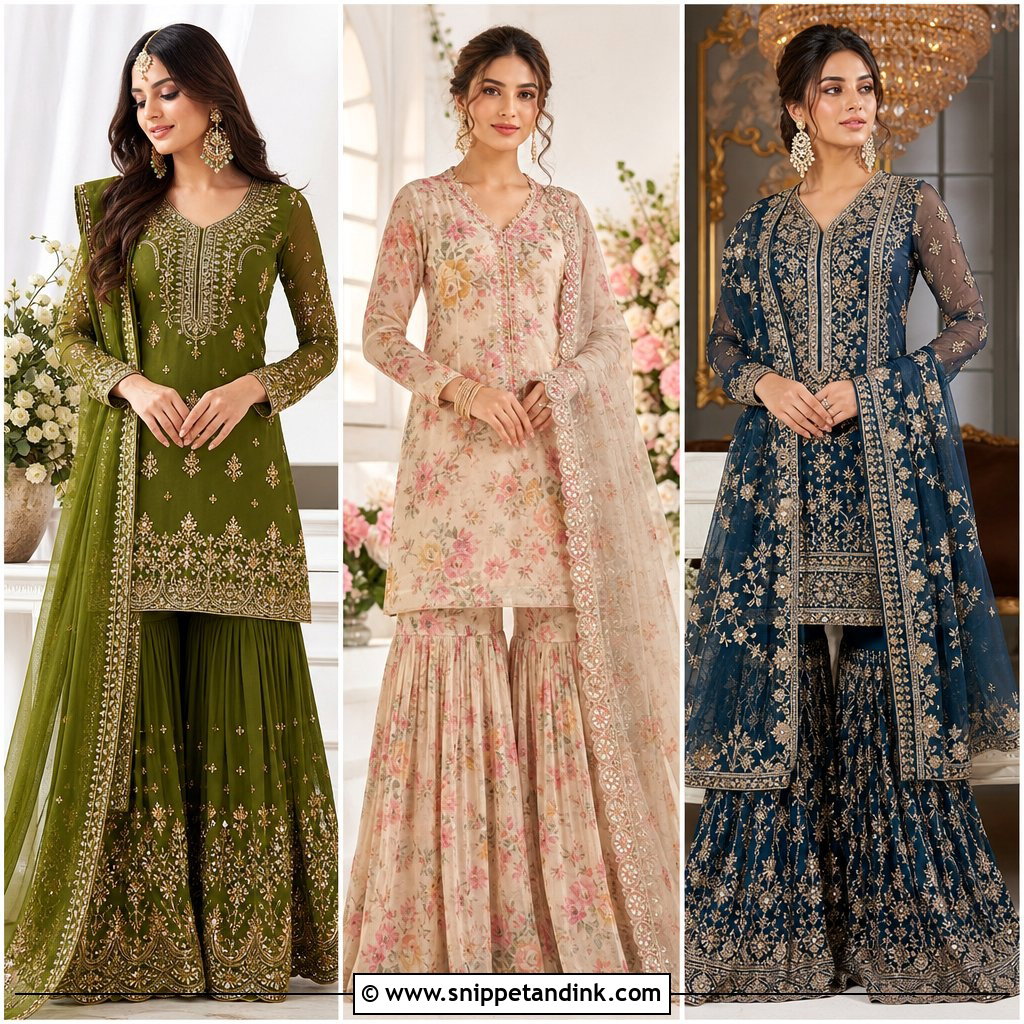
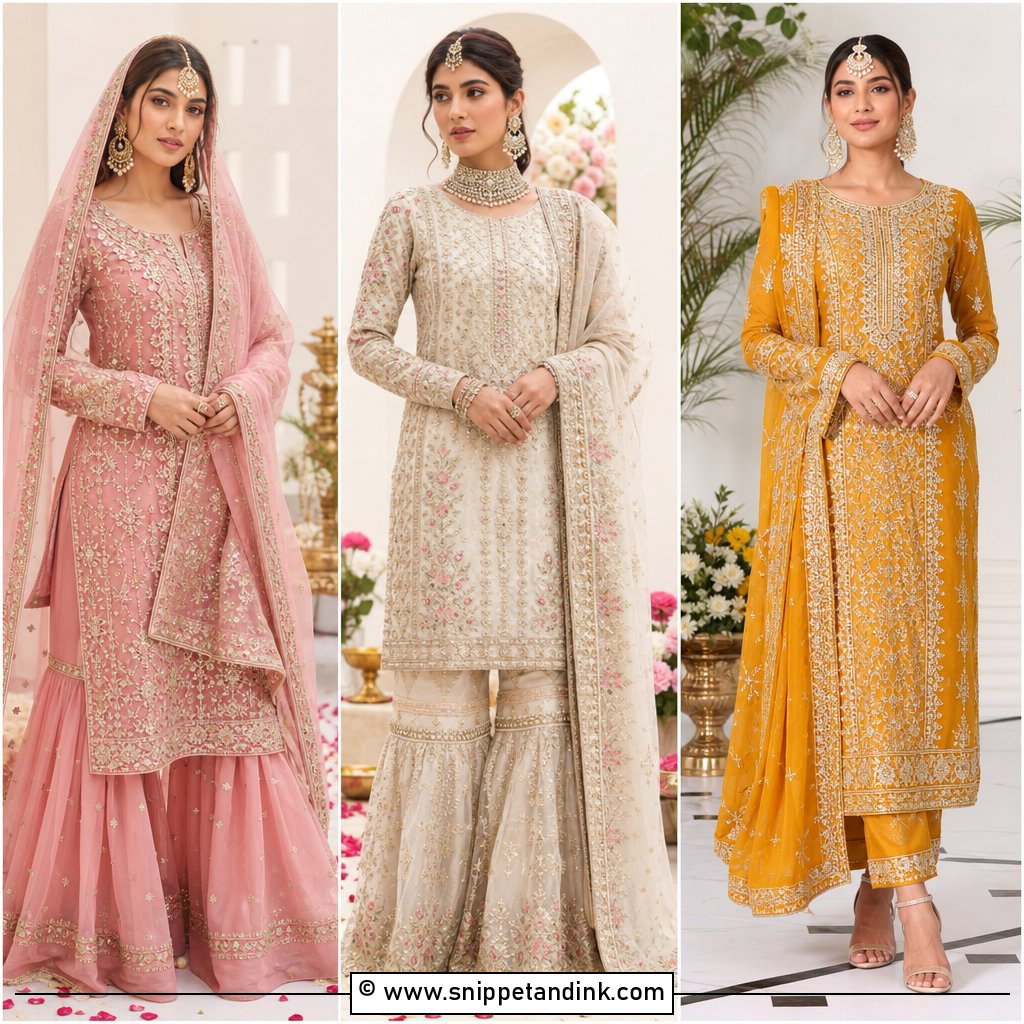
Ivory with zari looks fresh in daylight, which makes it a good choice for an engagement or a morning function. The pale base lets antique gold, silver or champagne threadwork show clearly. A straight or A-line kurta, a full sharara and a scallop-edged dupatta keep it bridal without the red. Ivory washes out on camera when the face is left bare, so I always ask the makeup artist for a little more definition than usual: kohl-lined eyes, warm skin and a neat low bun or soft waves. Pearls or polki, metallic heels and a small clutch suit it.
4. Pink Embroidered Sharara Suit
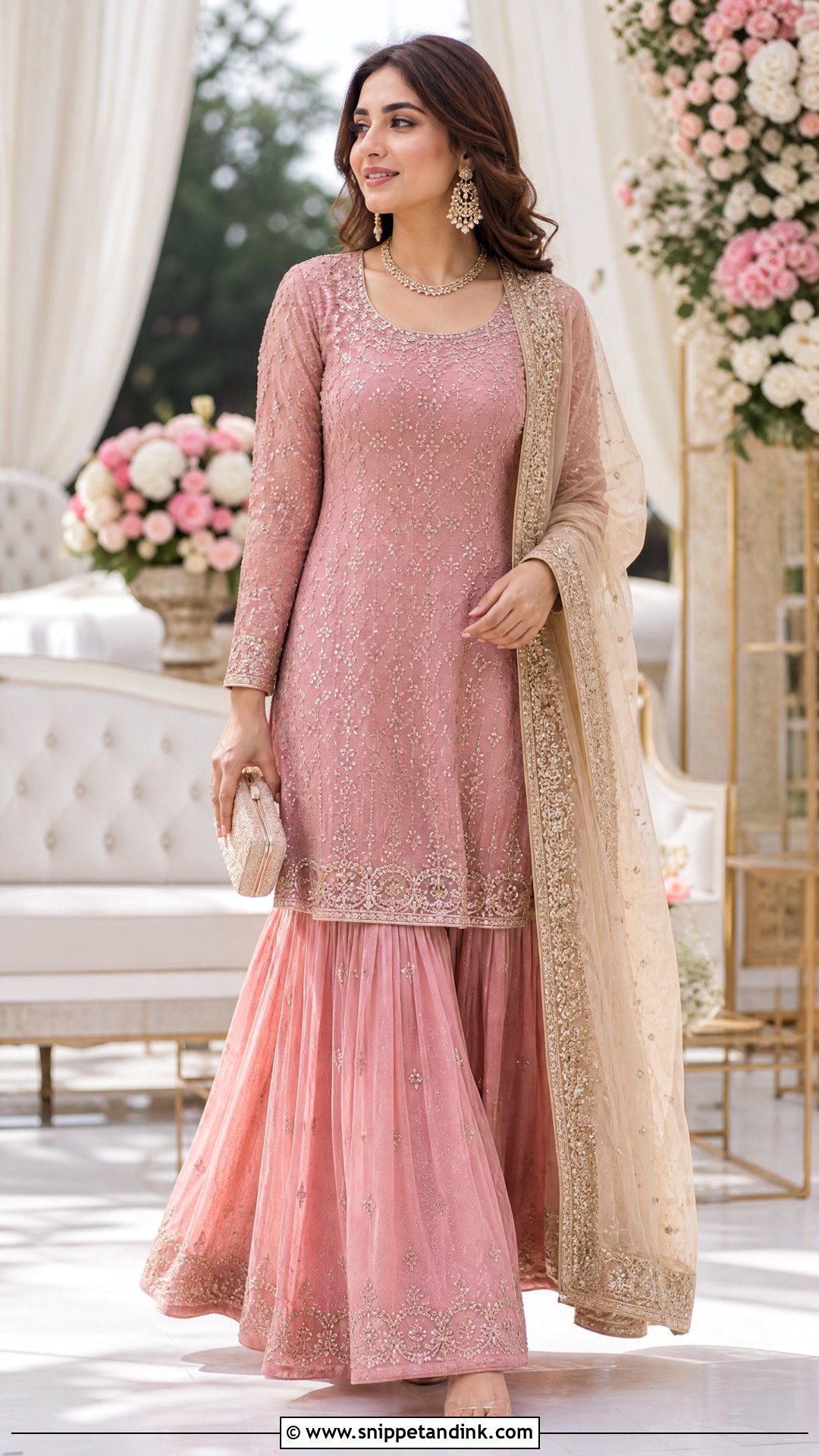
Pink runs a wide range, from blush to rose to rani, and the shade should follow the time of day: pale for an afternoon, rani for the evening. A kurta with sequins, resham or zari over a full sharara is festive yet easy to sit in for hours. A peach, gold or ivory dupatta makes a pleasing contrast. I’d keep the jewelry to kundan earrings, a fine necklace and a statement ring so the embroidery isn’t fighting it. Nude heels or gold sandals suit outdoor and palace venues.
5. Green Mirror Work Sharara Suit
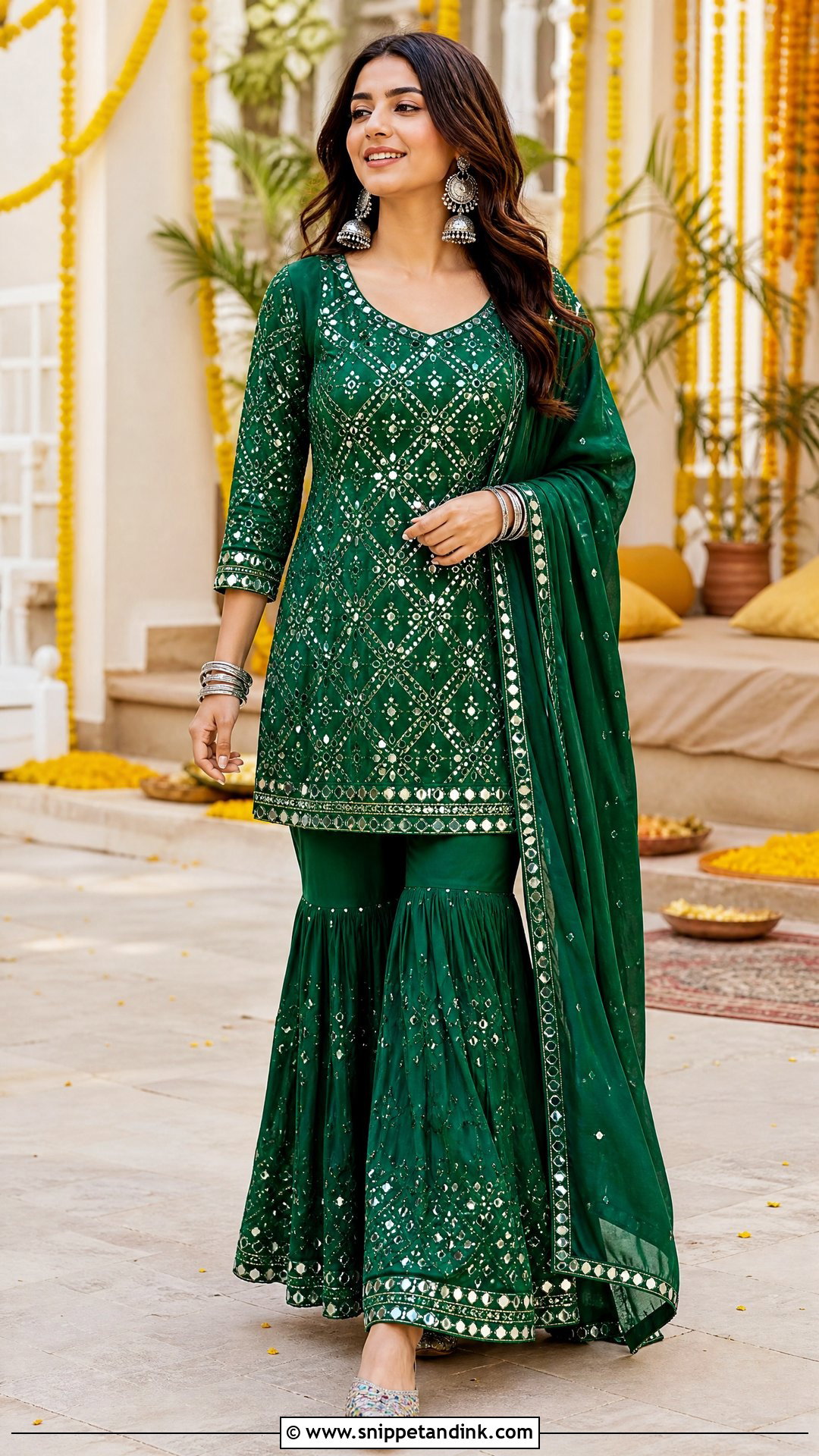
Mirror work is made for the mehndi and sangeet because it throws light back every time you move. Emerald feels royal, bottle green deeper and quieter, mint brighter and younger. A short kurta shows the flare of the sharara best. Mirrors are stitched in with thread, and heavy mirror panels can scratch inner arms, so I check the underside of the sleeves at the fitting. Keep the dupatta light with mirror borders, and pick oxidized silver or gold-toned jewelry to match the embroidery metal. Juttis or block heels if you’re dancing.
6. Royal Blue Sharara Suit
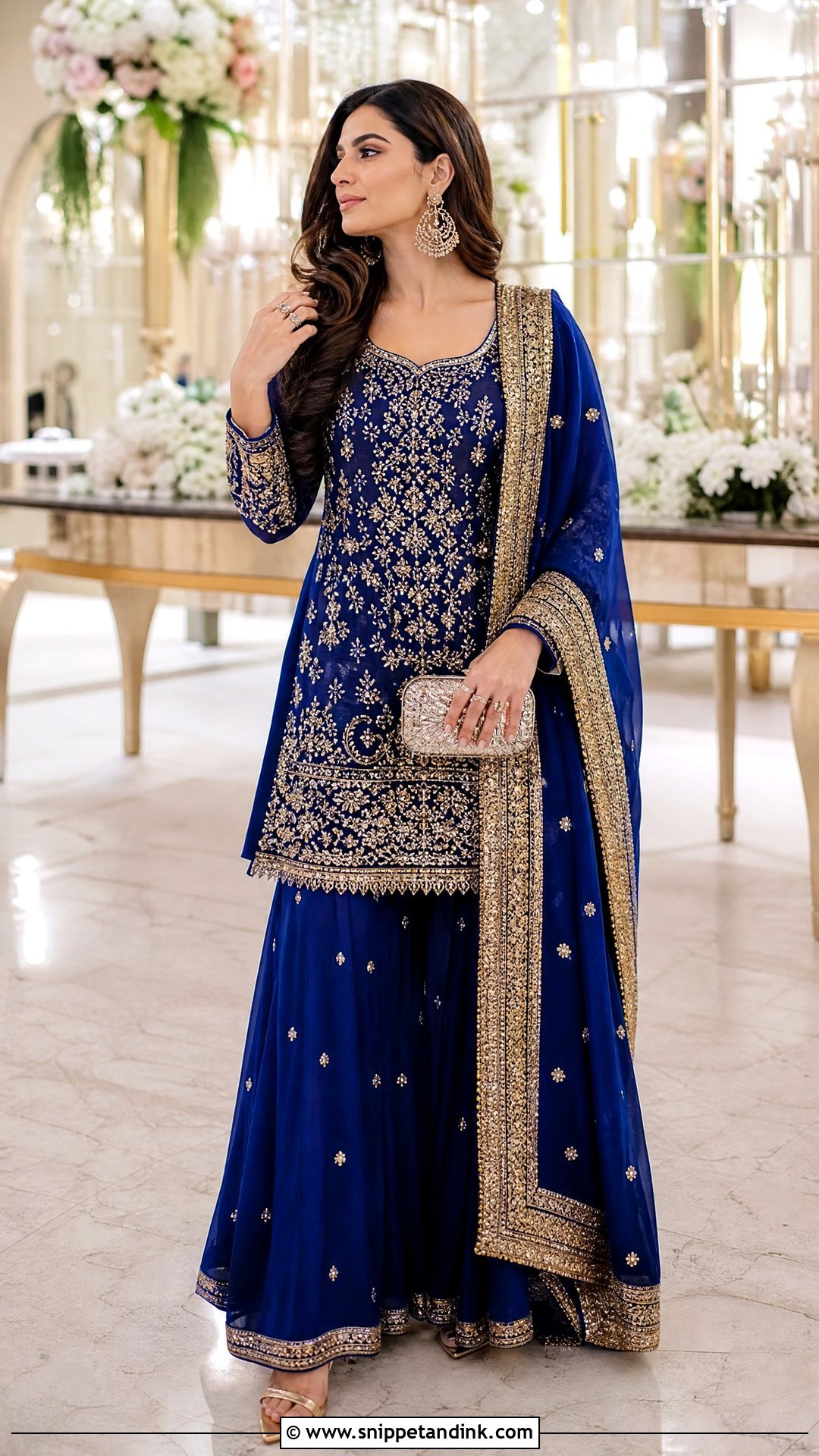
Royal blue holds up under strong evening venue lighting where paler colors can look flat. Gold, silver or crystal embroidery all sit well on it. A worked kurta with a flared sharara in silk, georgette or velvet feels structured but wearable. Give the dupatta a broad embroidered border to frame the photos. Crystal earrings, a bold bracelet, metallic heels and a sleek clutch complete it. Keep the makeup to glowing skin, a little shimmer on the eyes and a neutral lip so the blue stays the focus.
7. Black Sequin Sharara Suit
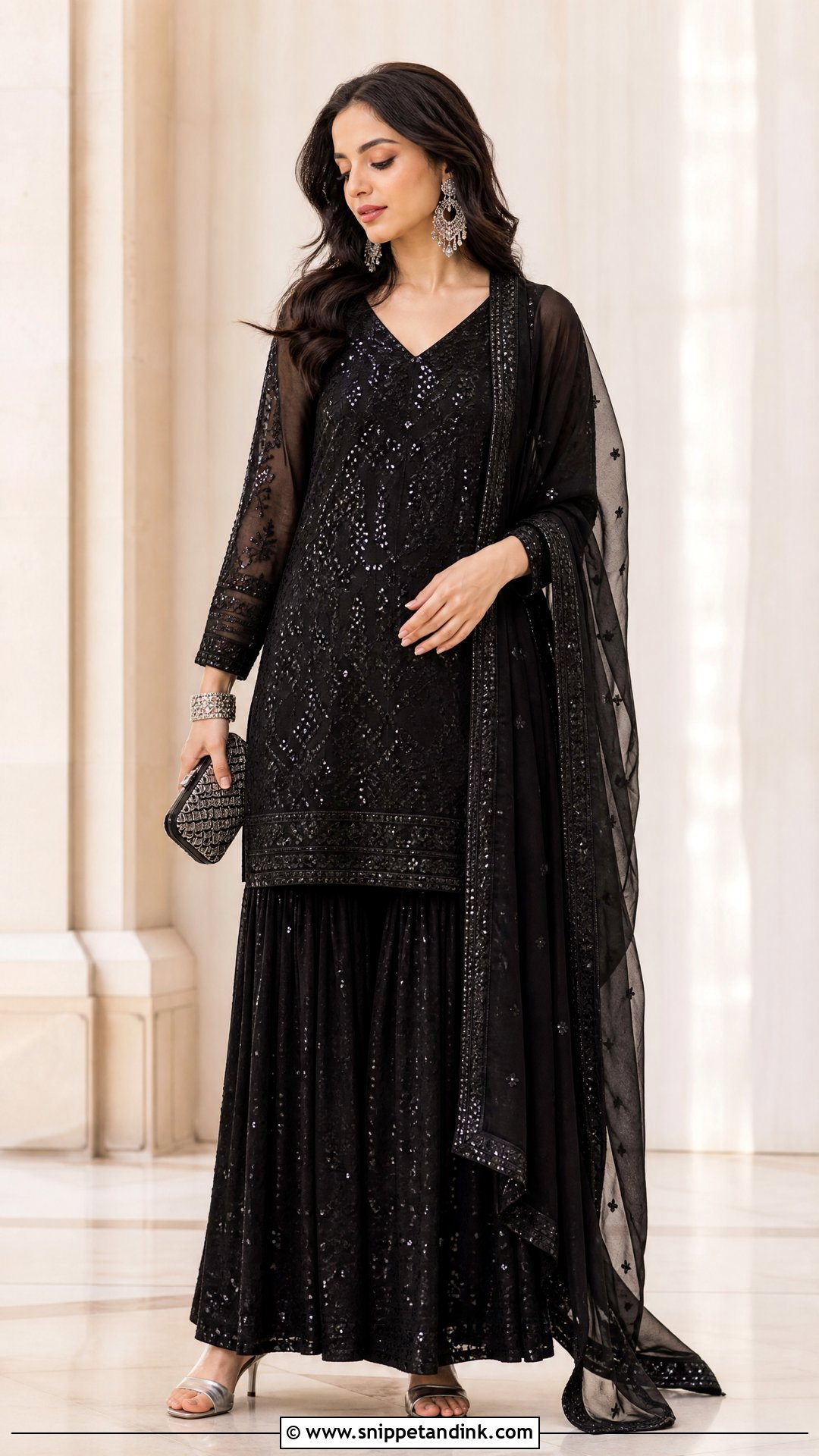
Black works for a reception or a cocktail evening, but I treat it carefully because some families still avoid it at wedding functions. Check before you buy. If it’s welcome, a black kurta with tonal sequins, beading or small gold accents over a flowing sharara looks polished rather than gothic. Keep the silhouette and neckline simple; black plus heavy work plus layered jewelry quickly looks crowded. A sheer dupatta with light border work, statement earrings, a cuff, black or metallic heels and a compact clutch are plenty, with a sleek ponytail or middle-part bun.
8. Gold Brocade Sharara Suit
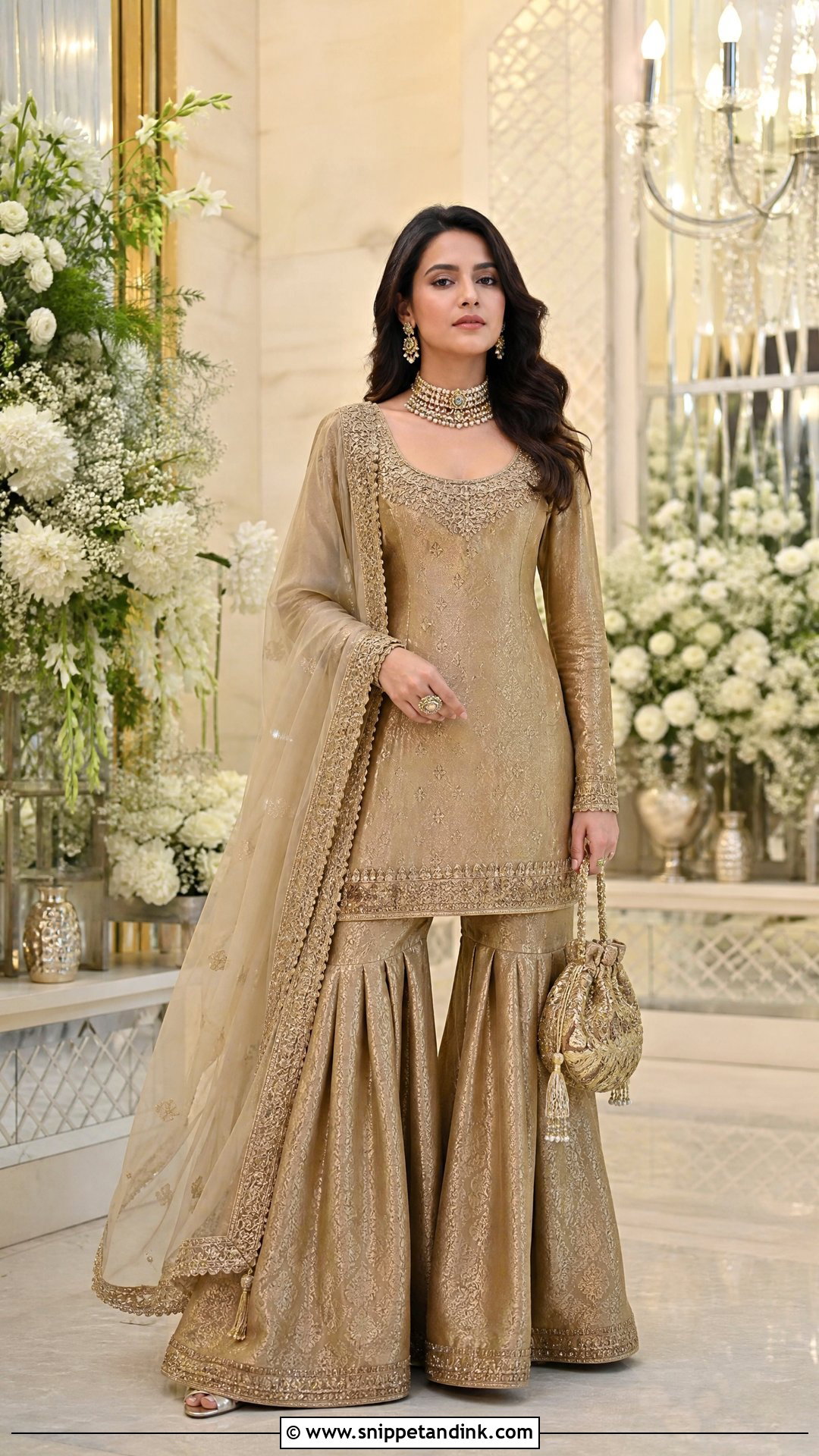
Brocade has its texture woven in, so even a simple cut looks rich. Antique gold or champagne brocade in a structured kurta and flared sharara is grand from every side. It is also stiff and heavy, and I’ve learned to balance it with a plain organza dupatta that has only a border, otherwise the whole outfit becomes a block of gold in photos. It suits receptions, engagements and close-family events. Pearls, polki or kundan depending on taste, metallic heels and a small embroidered potli finish it.
9. Purple Heavy Sharara Suit
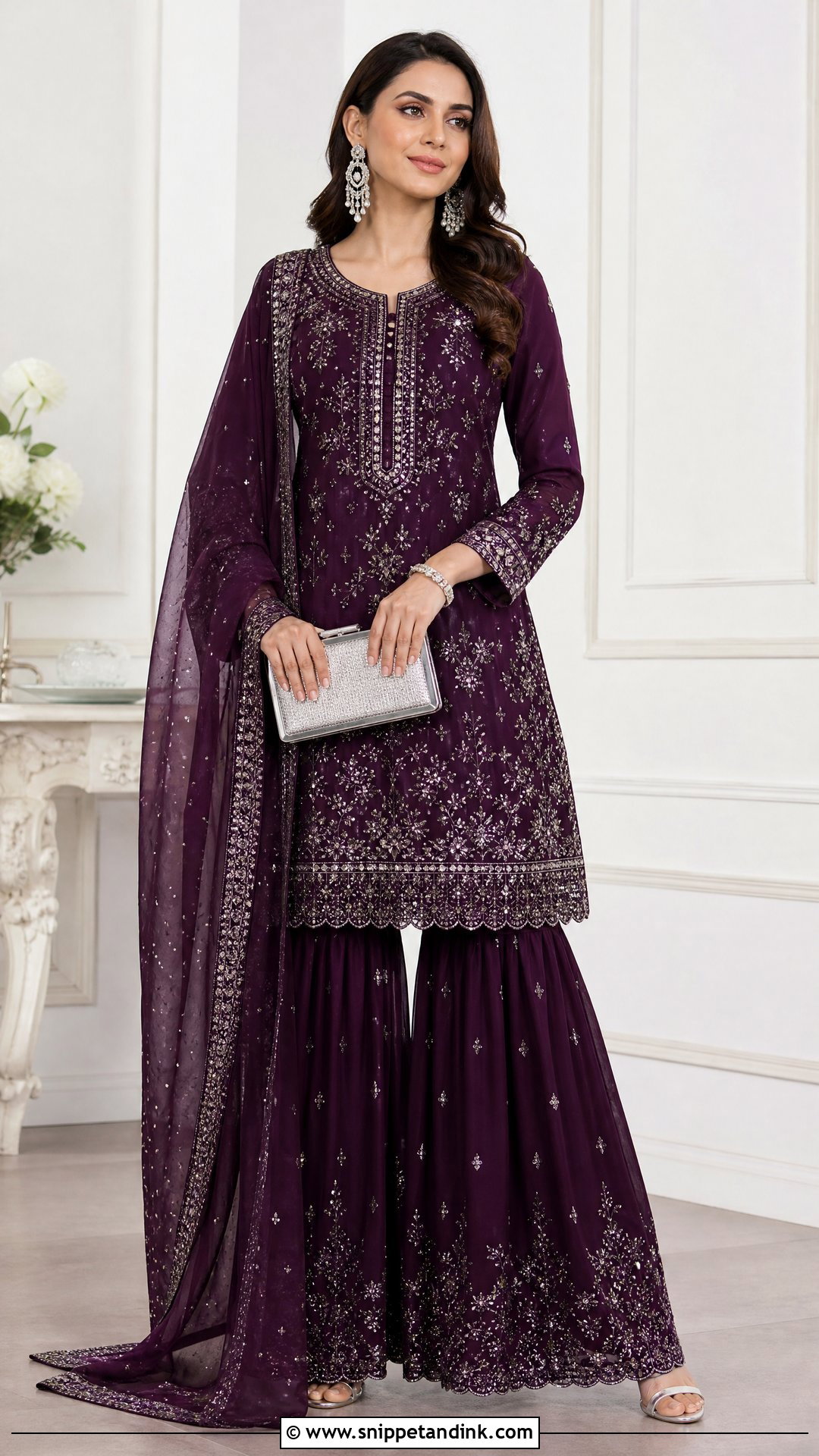
Purple surprises people at weddings and suits a wide range of skin tones, which makes it handy for coordinated bridesmaid or family outfits. Deep plum with zari, sequins or stone work belongs to the evening; lavender with silver embroidery lightens it for daytime. Add a dupatta with a delicate shimmer or broad border. Diamond-style earrings, silver heels and a small clutch suit both versions. With stone work, I check how the stones are set, since glued stones can drop off after a few hours of dancing.
10. Yellow Mehndi Sharara Suit
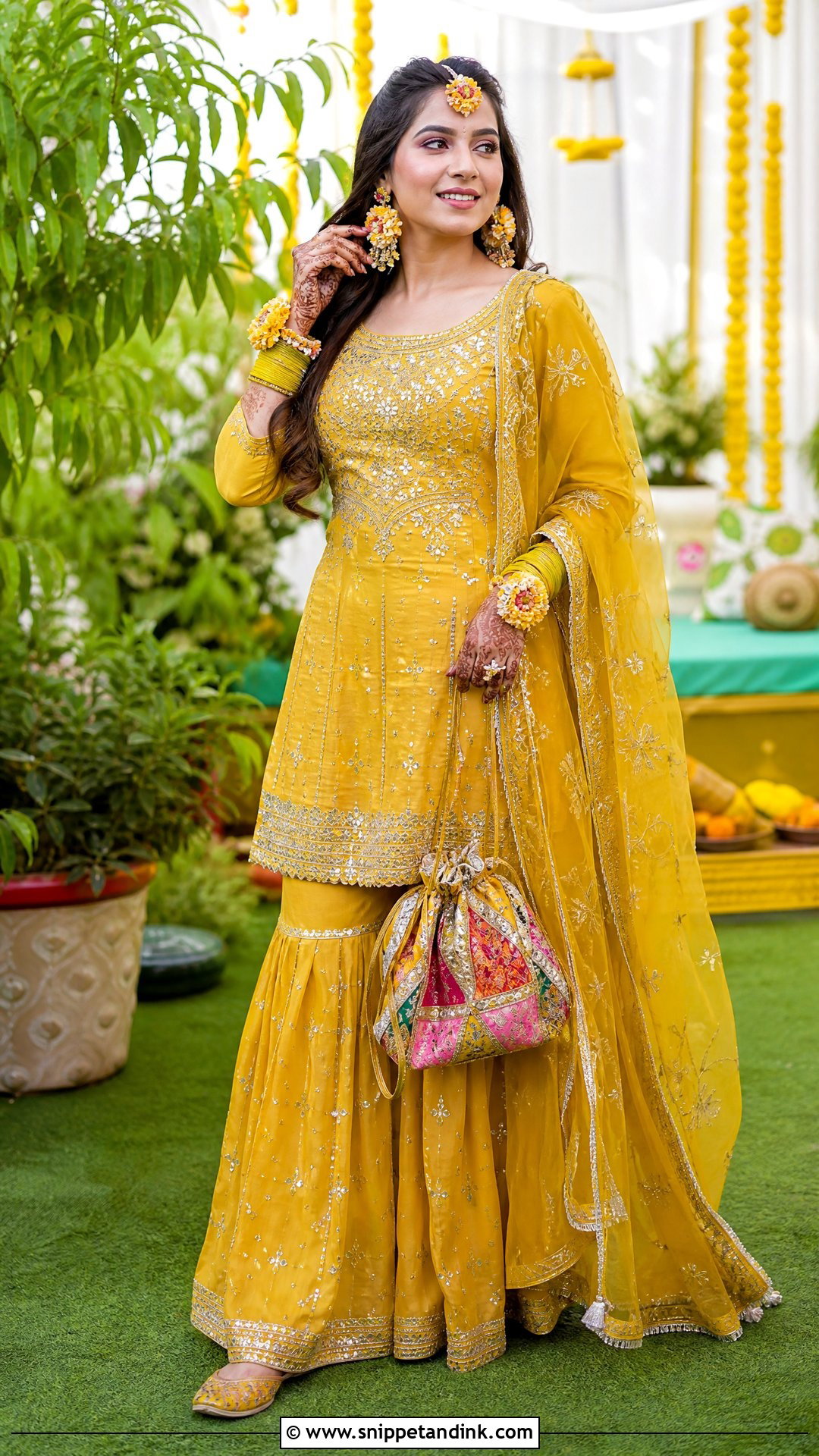
A yellow mehndi sharara suit is about as traditional as the mehndi gets. Mustard flatters deeper skin tones, marigold is the brightest, lemon is softest on fair skin. Gota patti, mirror or thread embroidery gives festivity without stiffness. Short kurtas suit dancing; a longer kurta gives more coverage. Keep the dupatta light, because you’ll have wet henna on your hands and won’t be able to adjust it. Floral jewelry, gold jhumkas, bangles and comfortable juttis are ideal, with fresh, rosy makeup.
11. Orange Sharara Suit
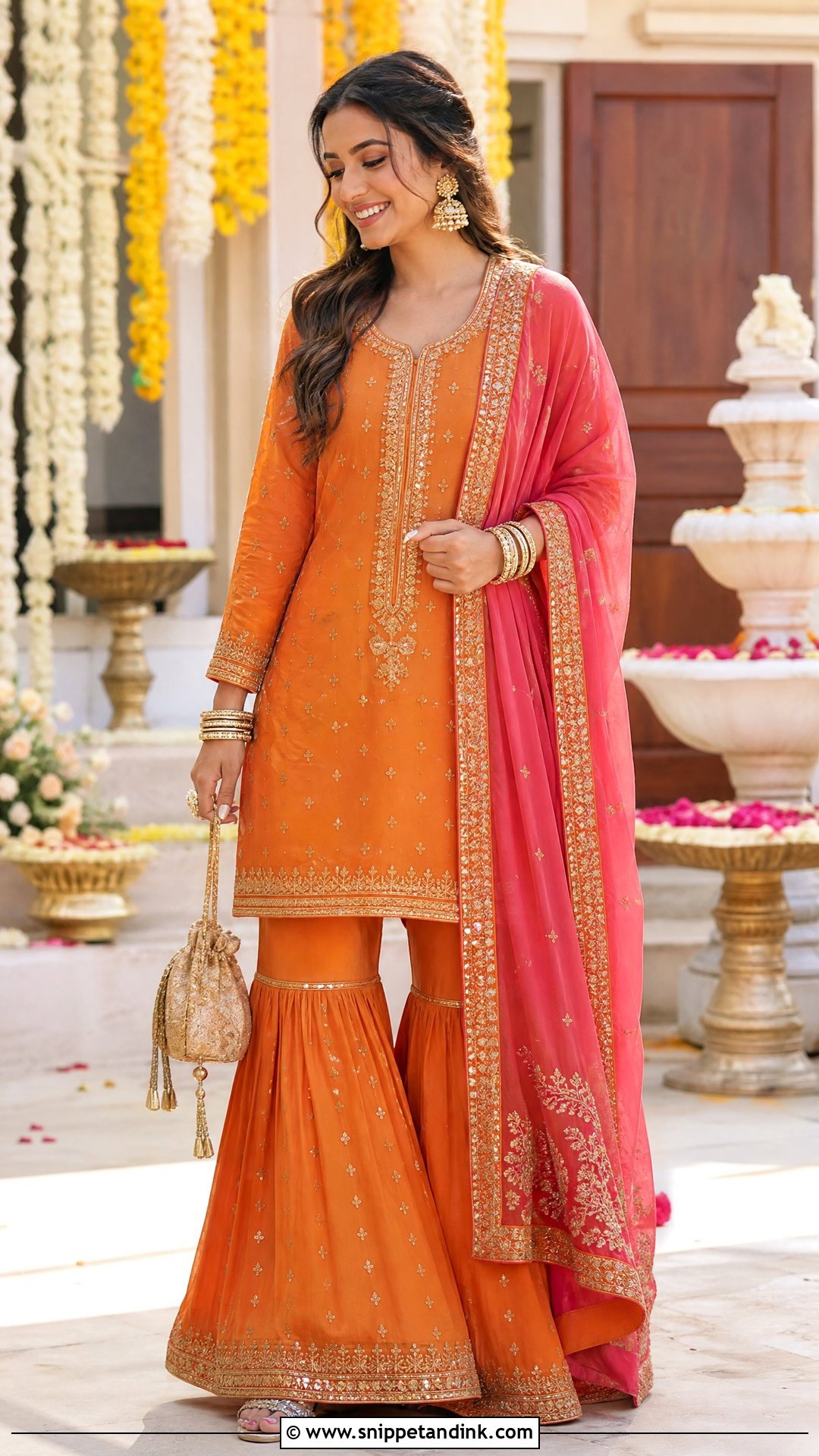
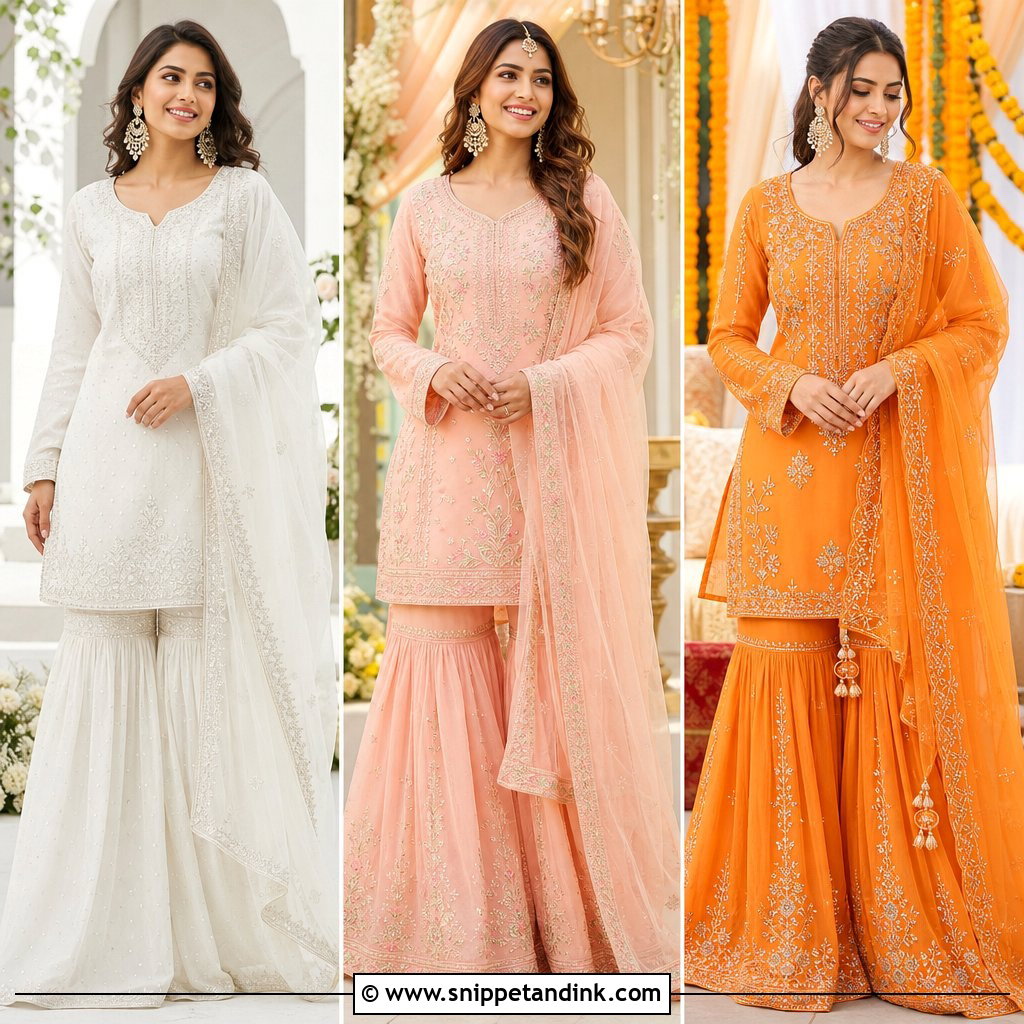
Orange is warm and lively in daylight, which is why I like it for haldi-inspired events and daytime family gatherings. Burnt orange, tangerine and peach-orange all take gold embroidery, mirror accents or gota patti well. A fitted or slightly flared kurta keeps the shape balanced. A matching dupatta is safe; a contrast pink dupatta is more traditional and more fun. For a haldi, wear something you don’t mind being stained, since turmeric does not always wash out of silk. Gold earrings, bangles, embroidered sandals and a potli, with loose curls or a braided half-up style.
12. White And Gold Sharara Suit
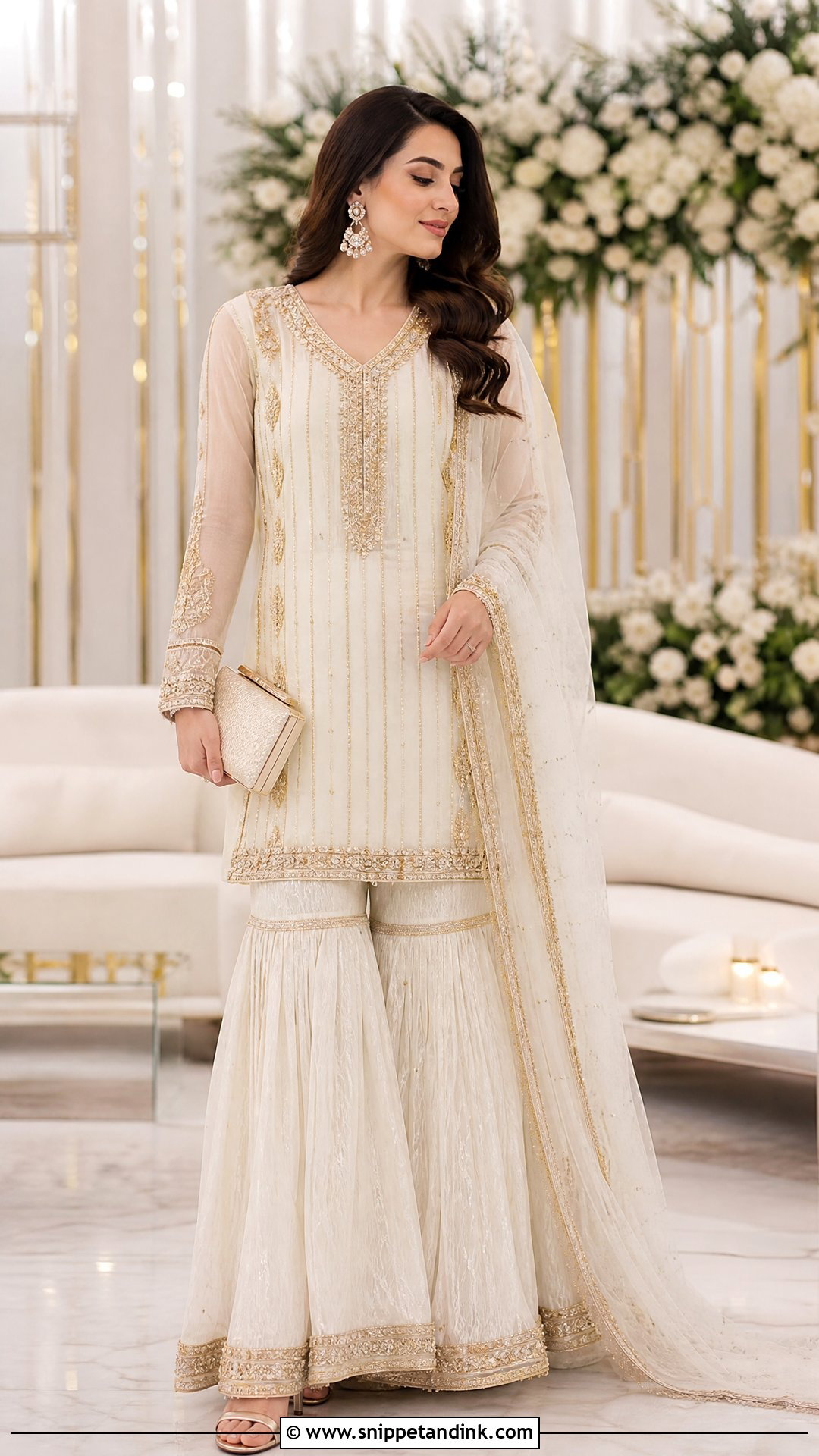
White and gold is the quieter way to look formal. A white kurta with gold zari, sequins, pearls or threadwork, matched to a sharara with a similar border, keeps it festive. A sheer gold-edged dupatta adds movement. It suits engagements, daytime weddings and receptions. Like ivory, white needs a little more makeup than you’d expect: glowing skin, brushed brows and a soft bun. Pearls, gold heels and a clean clutch are enough, and I’d keep anything colorful off the outfit.
13. Peach Sharara Suit
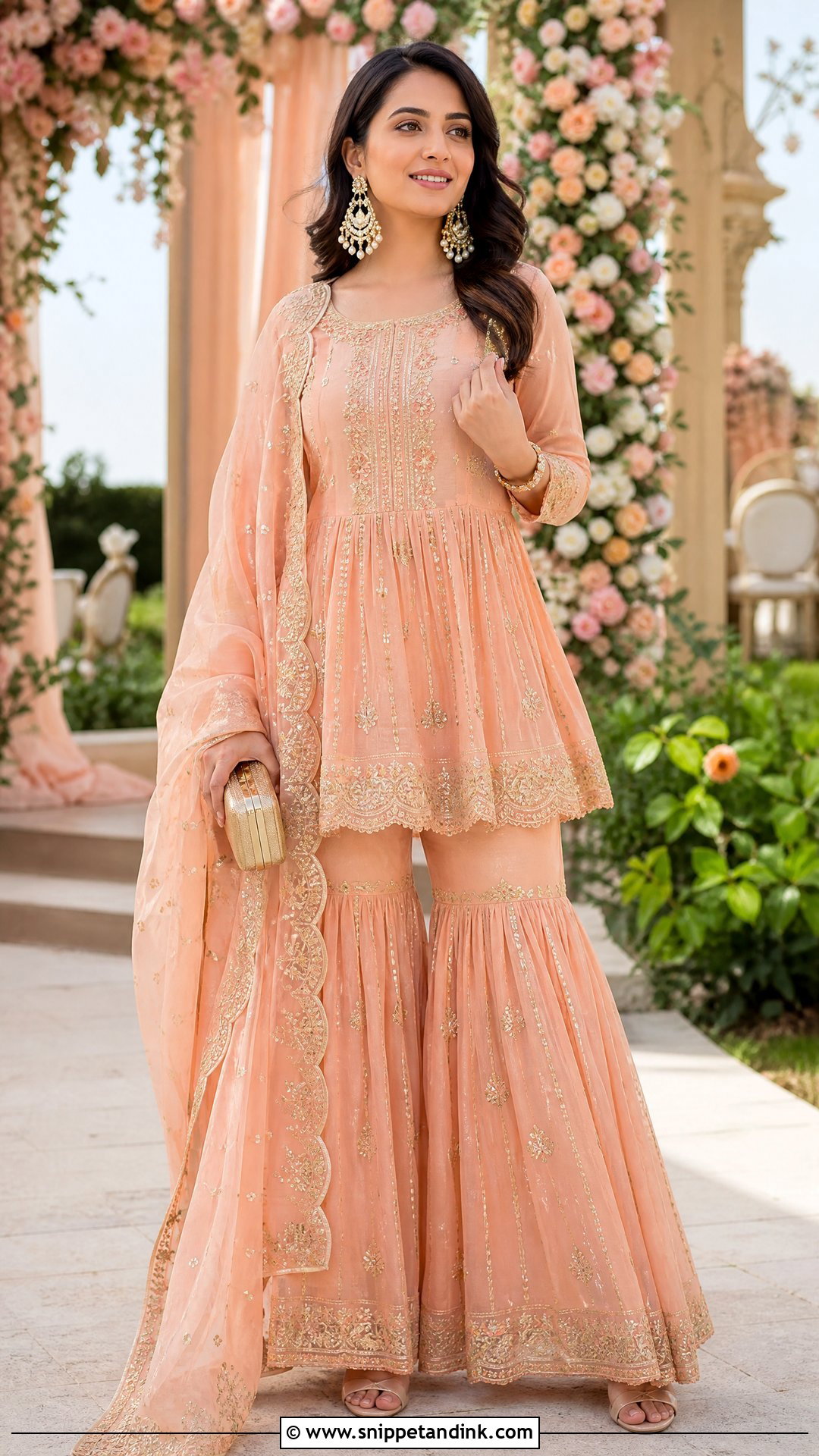
Peach is soft enough for bridesmaids and sisters standing beside a bride in red, and it photographs warmly in garden and daytime settings. Heavy embroidery in gold, ivory or rose thread stops it looking washed out. A peplum kurta defines the waist; a straight kurta reads more classic. A light dupatta with scalloped edging or scattered sequins suits it. Kundan earrings, nude heels and a small clutch, with soft curls and peach-toned makeup, keep everything in the same family.
14. Pastel Sharara Suit
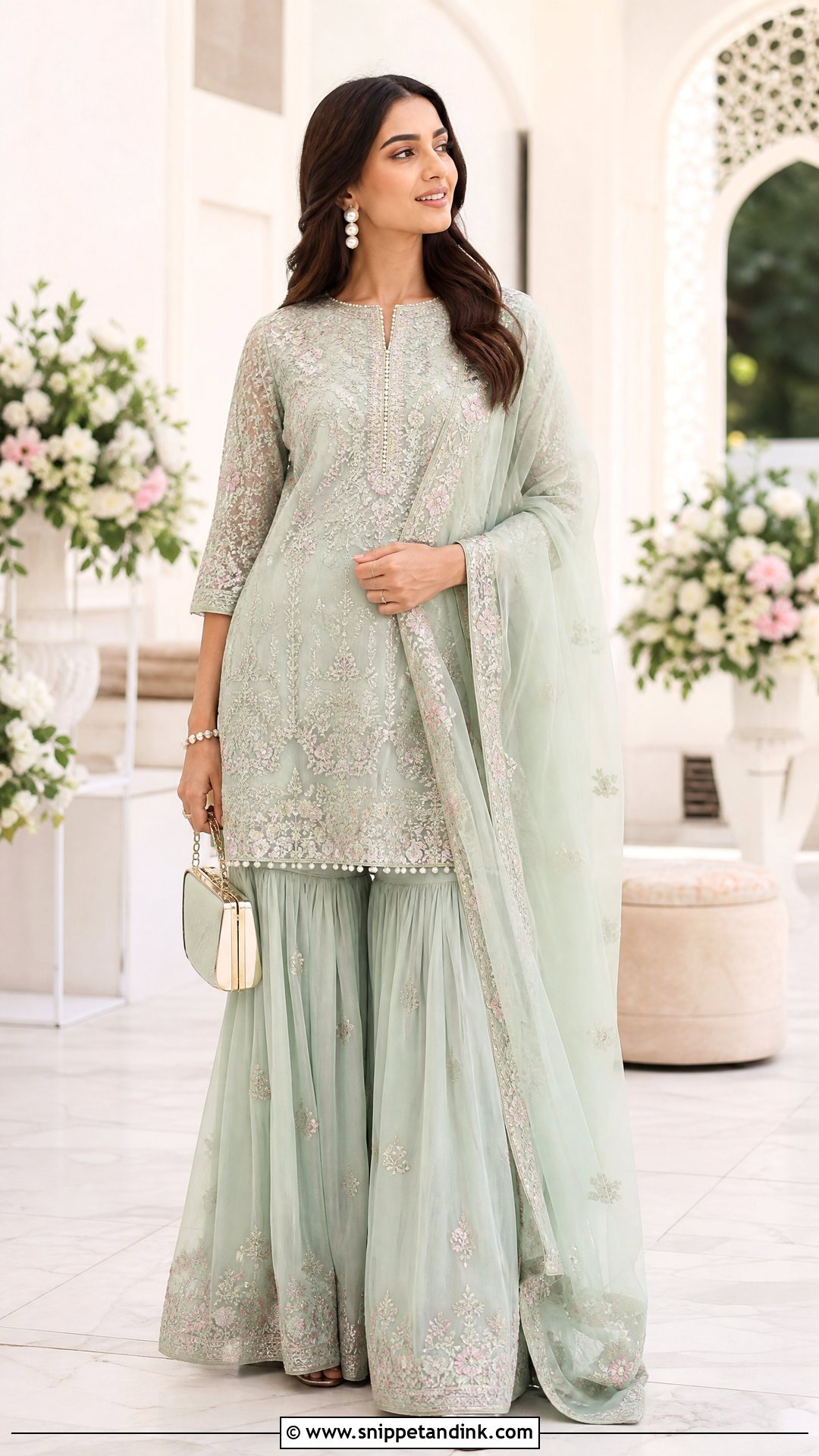
Mint, powder blue, blush, lilac and pistachio are the pastels I see most at daytime and destination weddings. On their own they can look casual, so the work matters: dense embroidery, crystals, pearls, sequins or zari borders make them wedding-ready. A short kurta and wide sharara feel young; a long kurta looks more traditional. A sheer dupatta in the same shade gives a tonal finish. One warning: pale pastels show makeup and turmeric marks easily, so keep a stain pen with you. Delicate but visible accessories, fresh makeup and neat hair suit them.
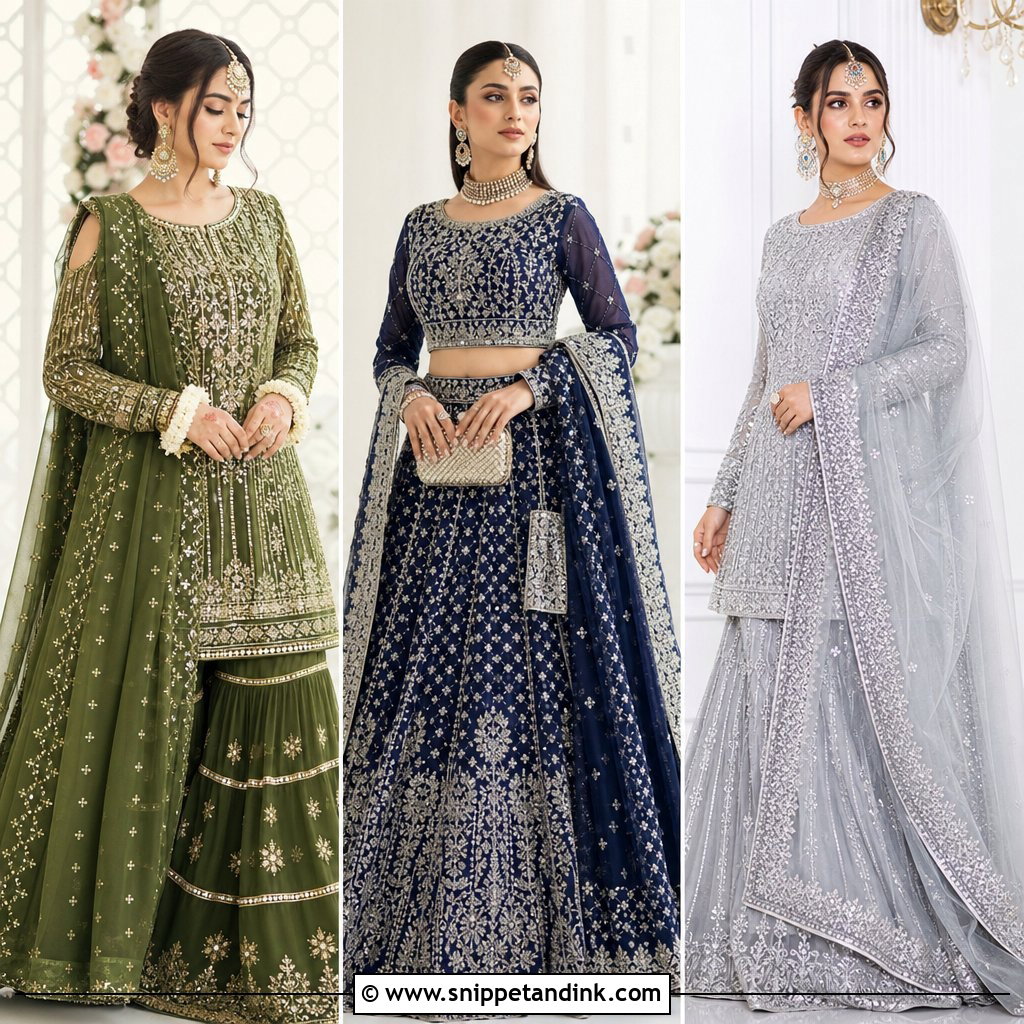
15. Heavy Net Sharara Suit
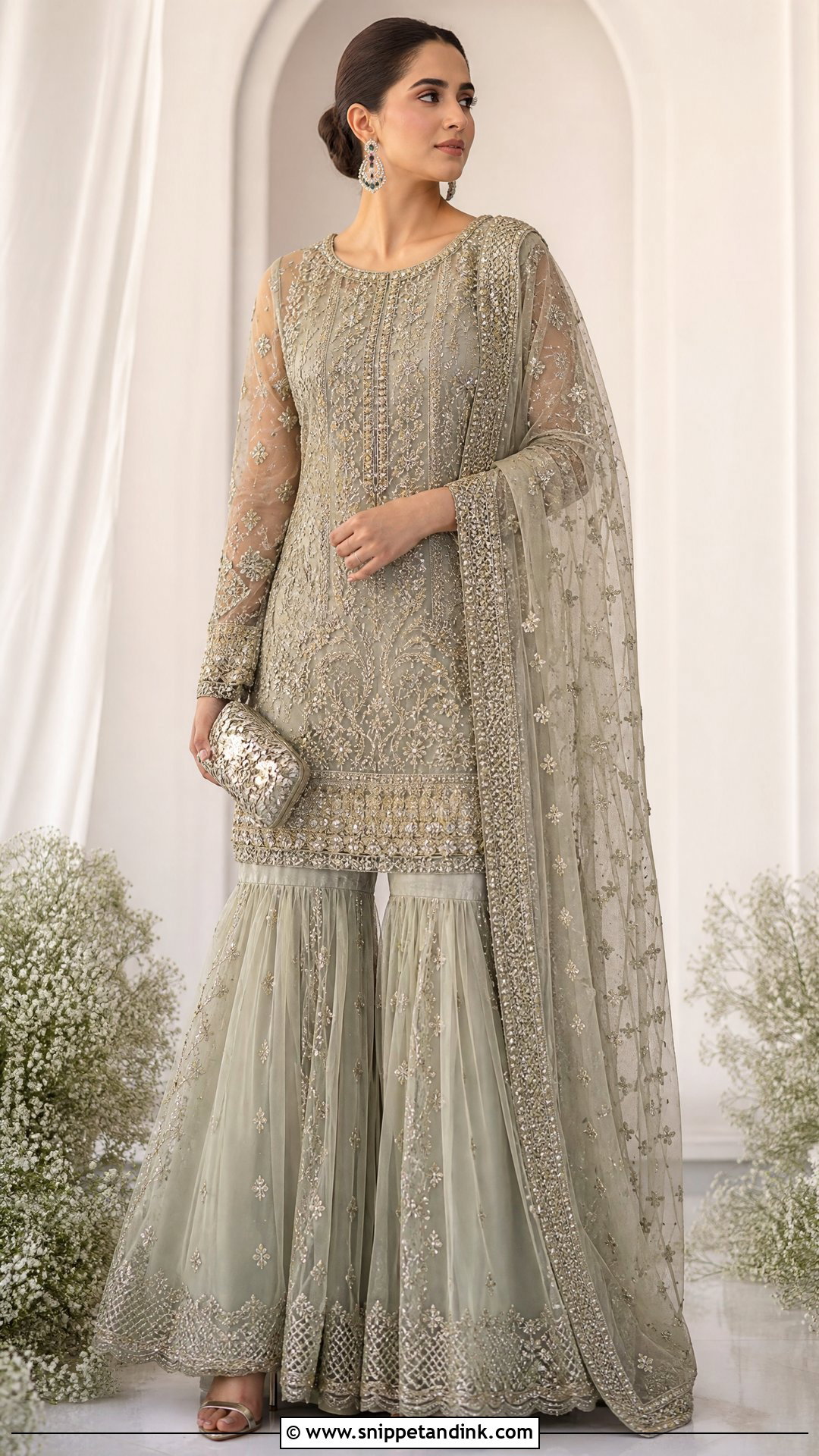
Net gives volume without the weight of velvet or brocade, which is why designers use it for dupattas, sleeves, overlays and sharara panels. The kurta should be lined so the net isn’t scratchy against skin. Sequin, stone or thread embroidery on net looks fine and delicate; a broad bordered dupatta lifts it. Net snags on bangles and rings, so I avoid chunky, sharp-edged jewelry and suggest smooth crystal earrings, metallic heels and a small embellished bag. It suits receptions, engagements and bridesmaid outfits.
16. Silk Sharara Suit
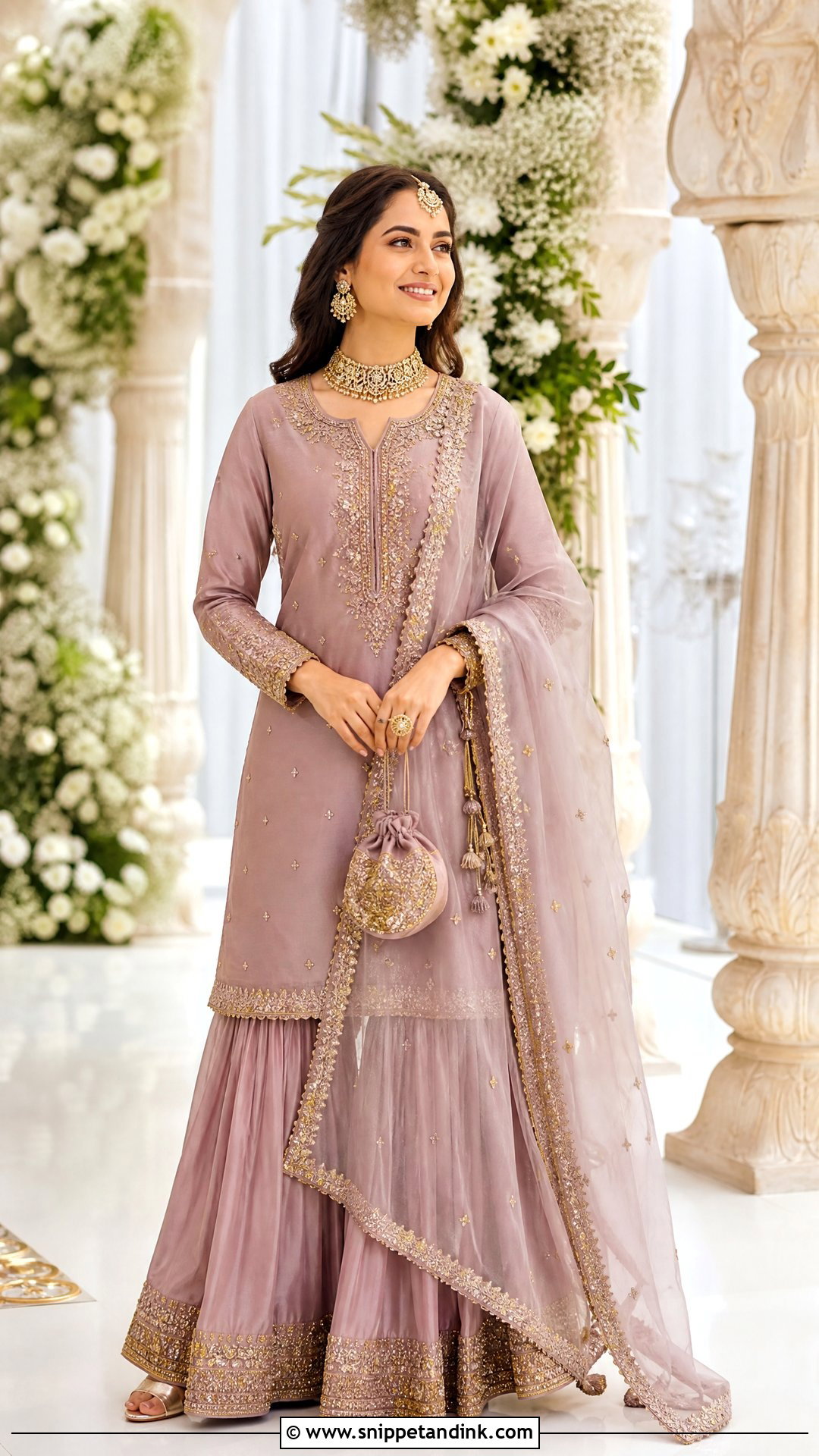
Silk is the fabric I trust most for a heavy set. It holds dye well, has a natural sheen and looks rich with only moderate embroidery. A silk kurta with zari, zardozi or resham work, over a sharara with a worked hem border, suits the main ceremony, rituals and receptions. Your dupatta choice changes the formality: organza feels lighter, silk feels grander. Gold jewelry, embellished heels and a traditional potli, with a sleek bun and hair accessories, give a ceremonial finish.
17. Organza Sharara Suit
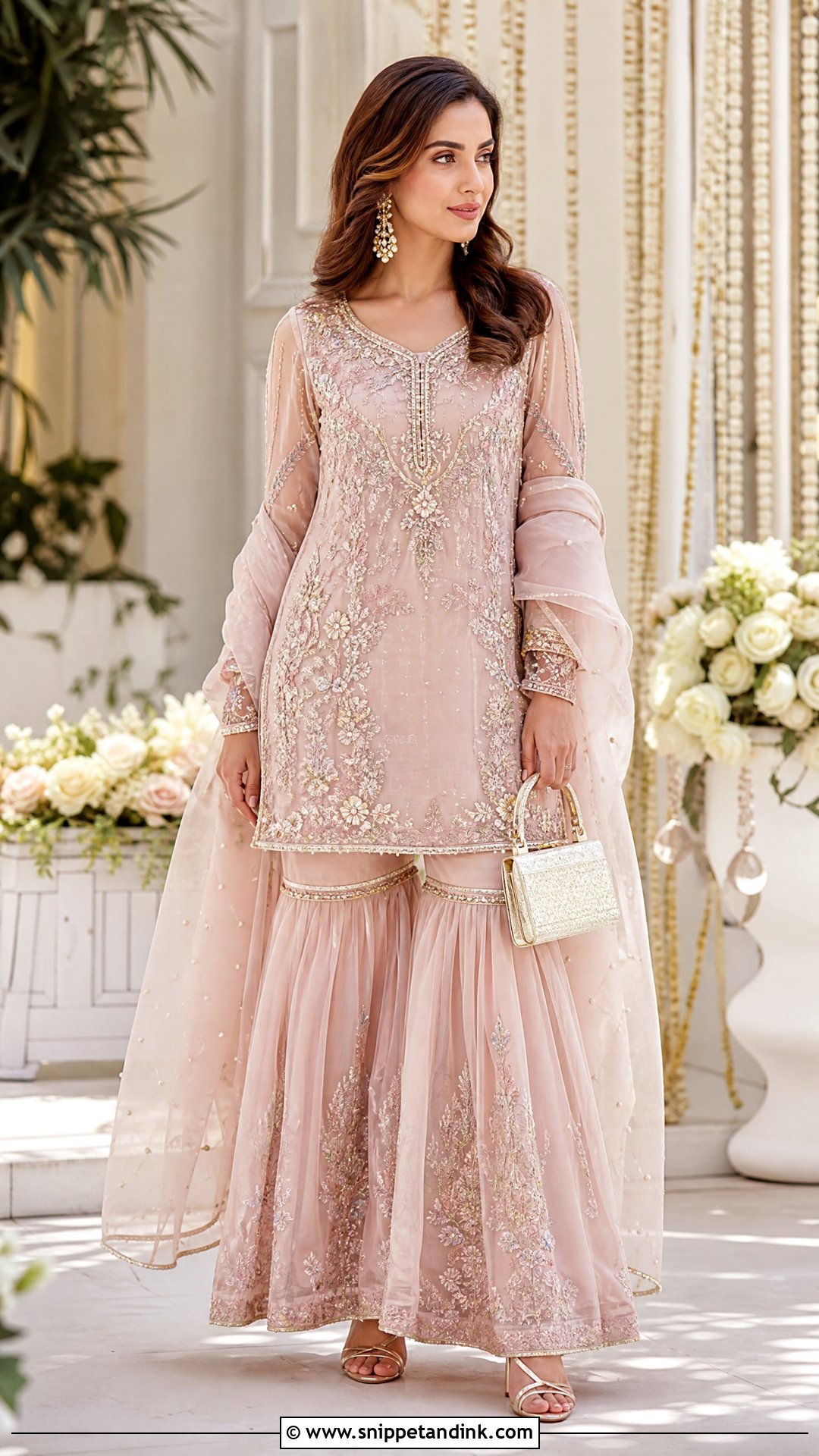
Organza is crisp and light, so it gives volume without weight at a daytime ceremony. It does wrinkle and crush when sat on, which is why I prefer organza for the kurta and dupatta and a lined, softer fabric for the sharara. Blush, ivory, mint and powder blue look fresh in organza; jewel tones feel more dramatic. Pin the dupatta neatly, because organza holds whatever shape you give it, including a messy one. Delicate jewelry, heeled sandals and a structured mini bag finish it.
18. Zardozi Sharara Suit
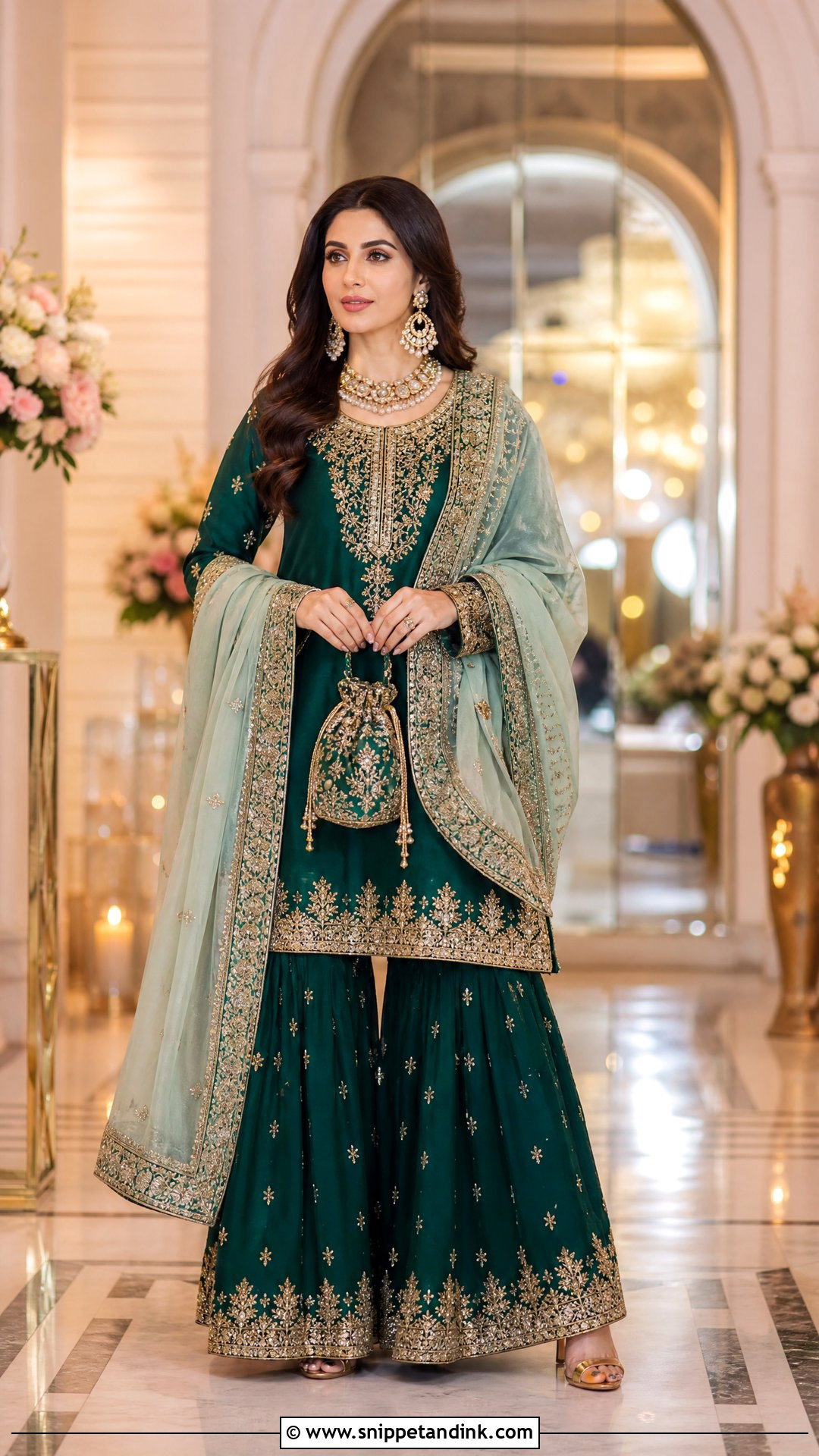
Zardozi is raised metal-thread embroidery, and on a sharara it reads as pure ceremony. Concentrate it at the neckline, sleeves and hem of the kurta, with matching motifs or a heavy border on the sharara. Red, maroon, emerald, navy and antique gold all suit it. Zardozi is heavy, so I always recommend a lighter dupatta, otherwise the shoulders take the strain all evening. Polki jewelry, gold heels and a potli complete it; keep makeup defined but quiet.
19. Gota Patti Sharara Suit
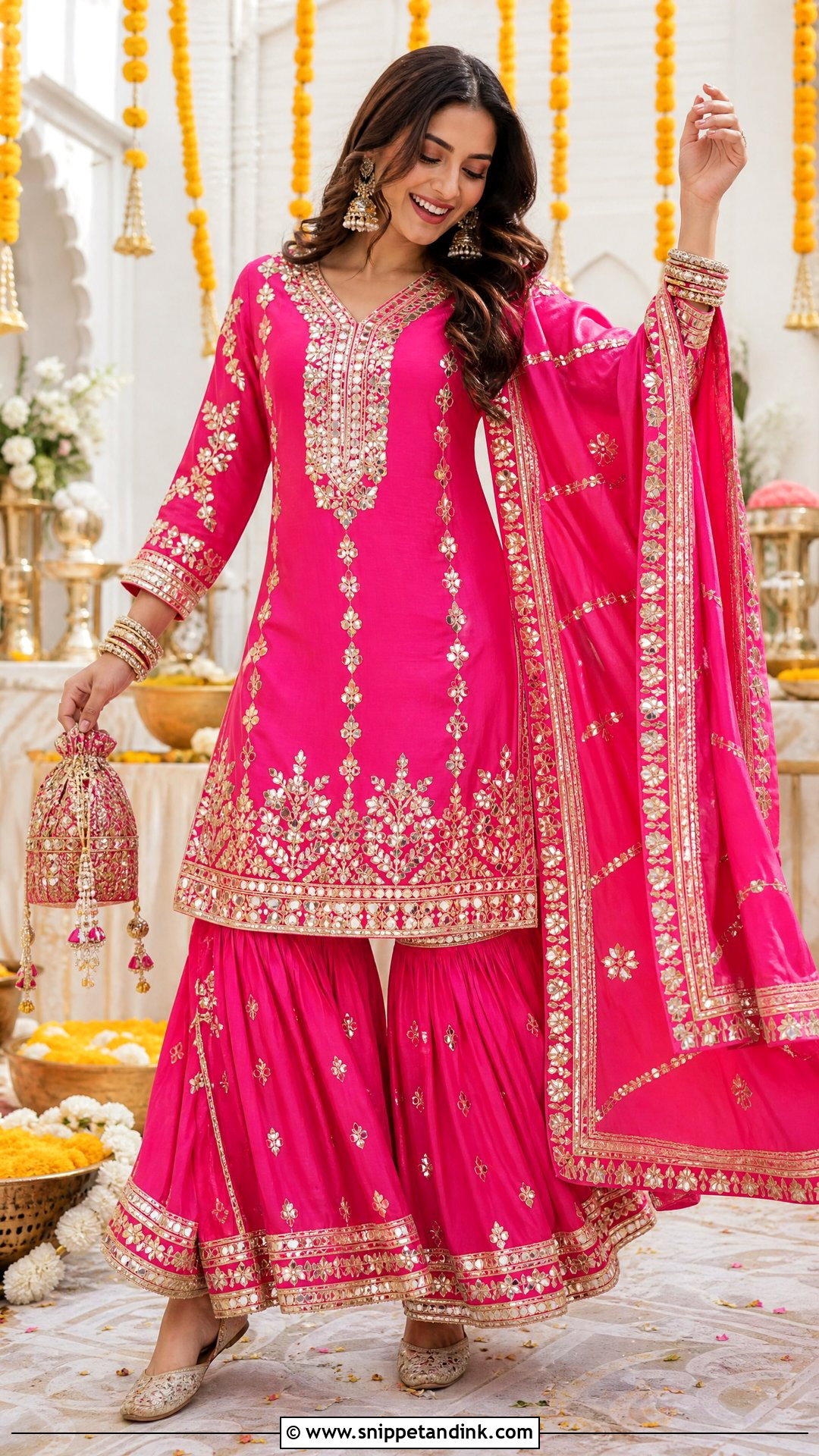
A gota patti sharara suit is my default for mehndi, haldi, sangeet and daytime functions. The metallic ribbon appliqué catches light without the weight of zardozi, so it stays danceable. Yellow, pink, orange, green and turquoise suit its celebratory mood. A short kurta shows the flare. Gota can tarnish if it’s cheaper metallic ribbon, so look at the back for quality. A light dupatta with gota borders, jhumkas, bangles, juttis and a colorful potli are all you need.
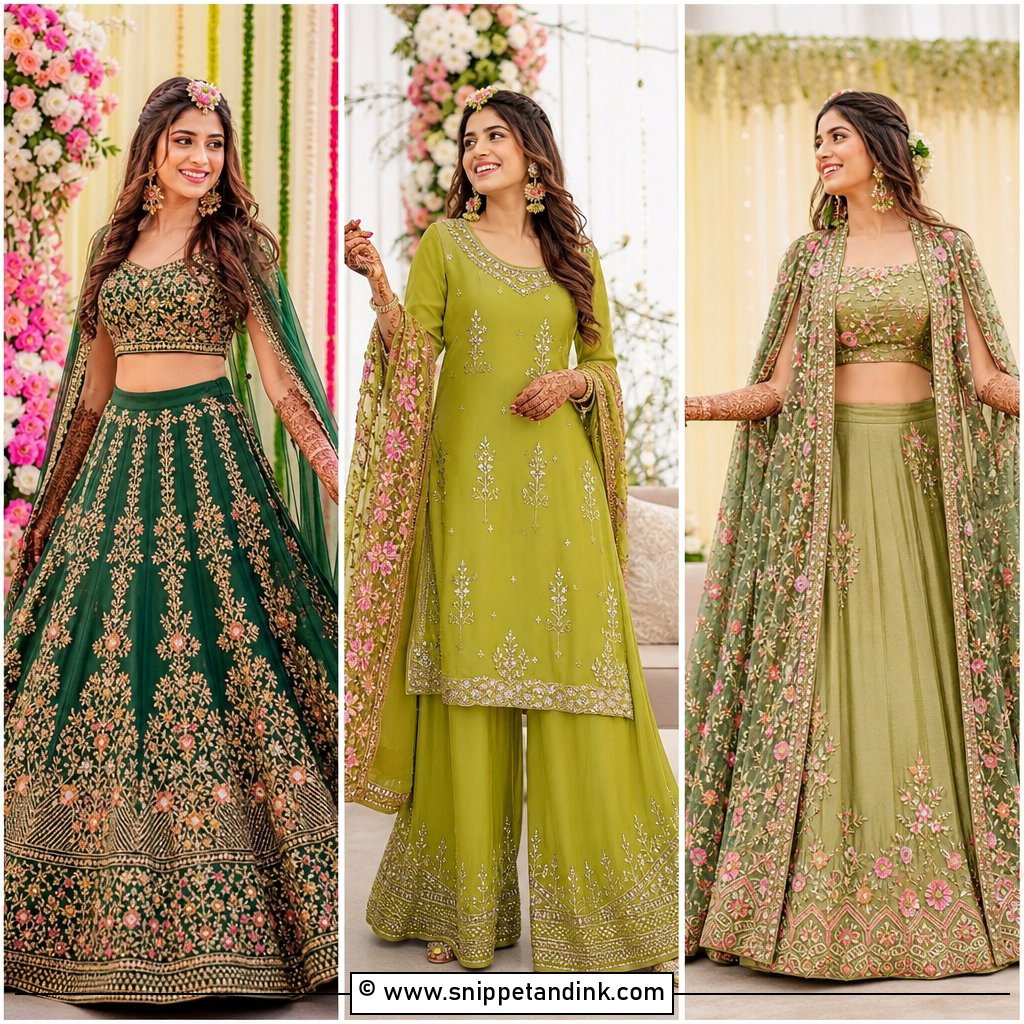
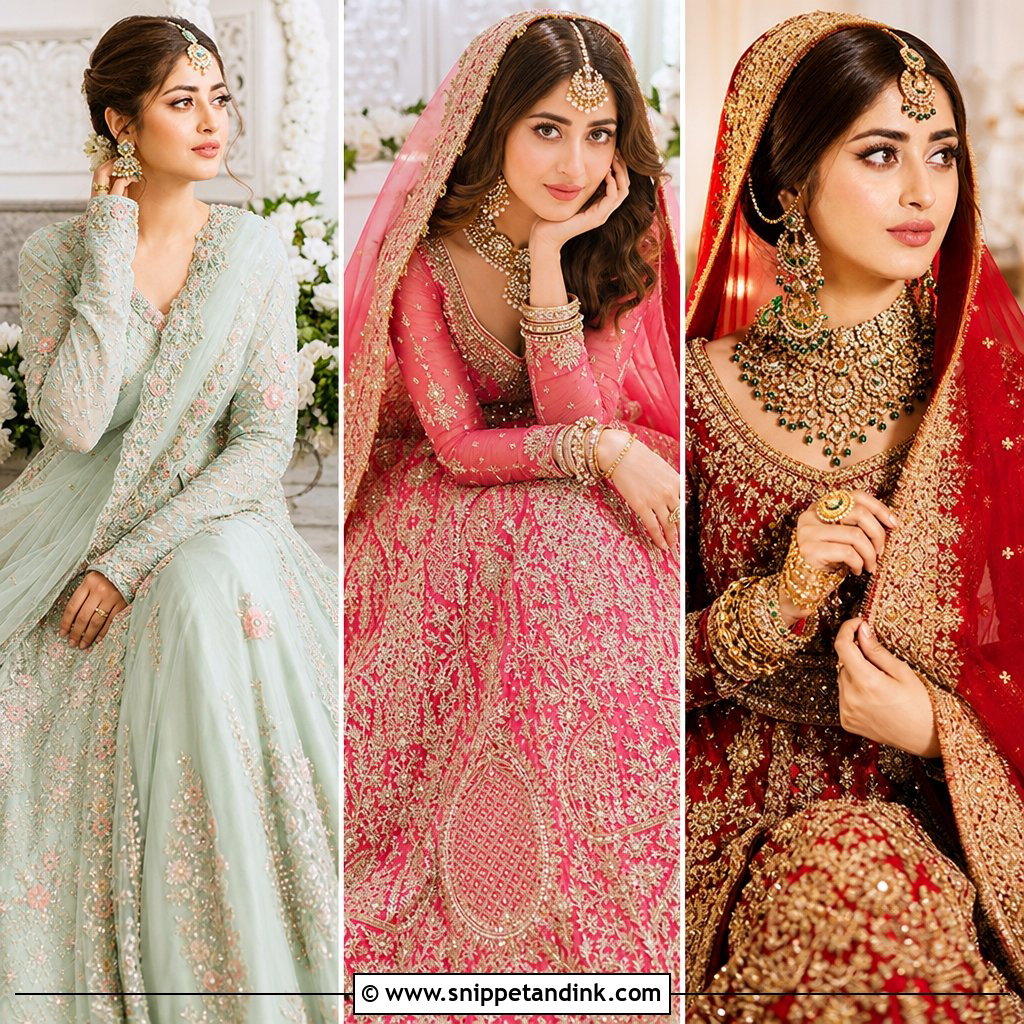
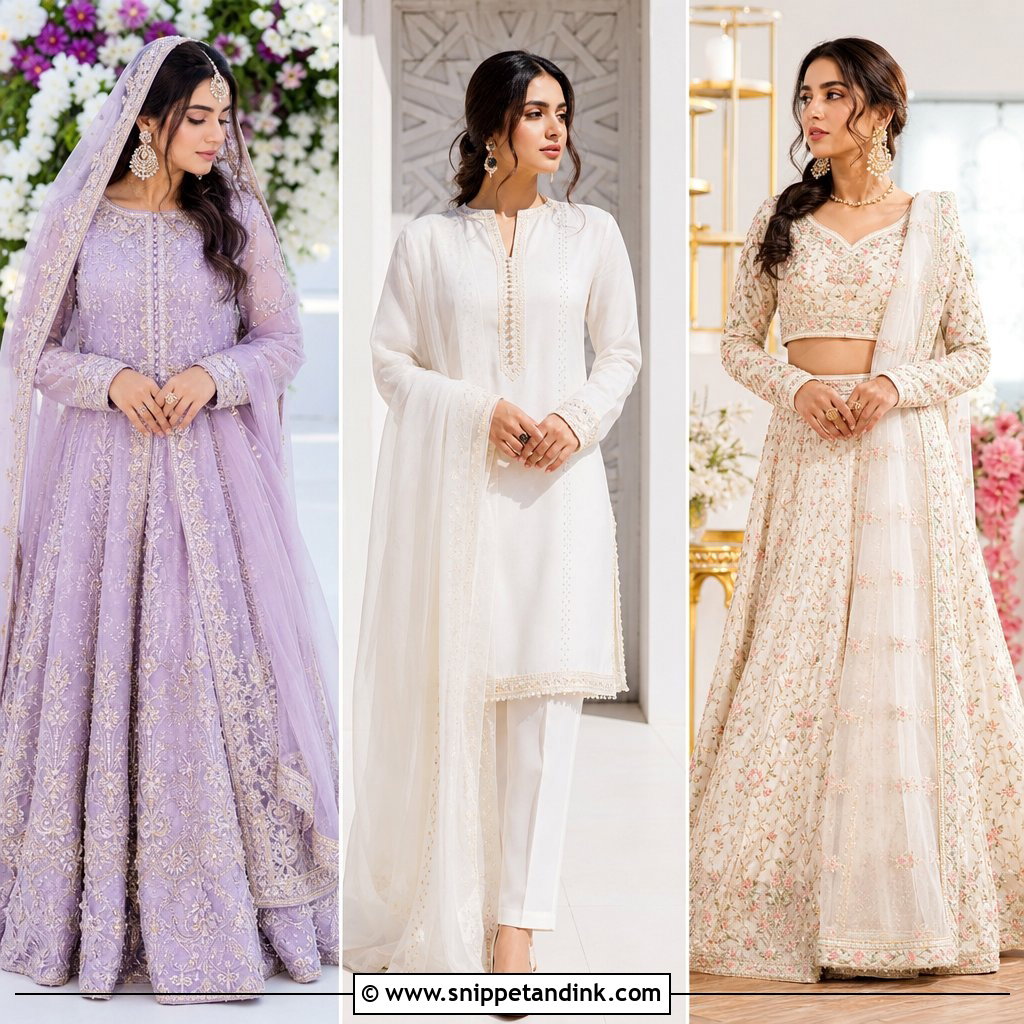


20. Long Kurti Sharara Suit
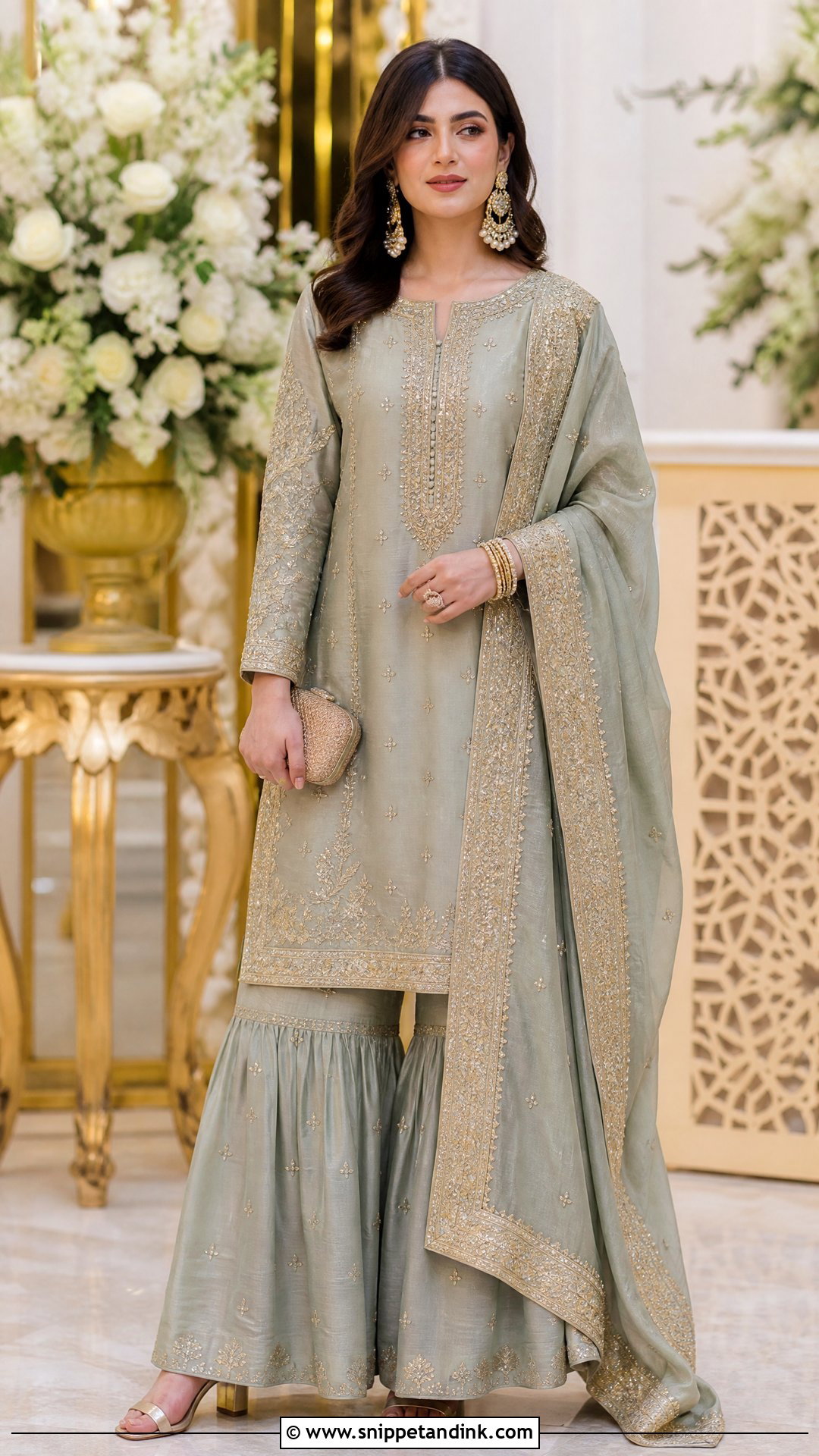
The long kurti draws a vertical line from shoulder to knee, which suits many body types and gives a modest, graceful look. The detail that matters is the side slits: they need to be high enough that the sharara’s flare shows when you walk, otherwise the outfit looks like a long dress. Silk, georgette, velvet and brocade all hold the shape. Drape the dupatta neatly over one shoulder. Statement earrings, bangles and block heels make it easy to stand in. Older relatives and guests who like a refined silhouette often choose it.
21. Short Kurti Sharara Suit
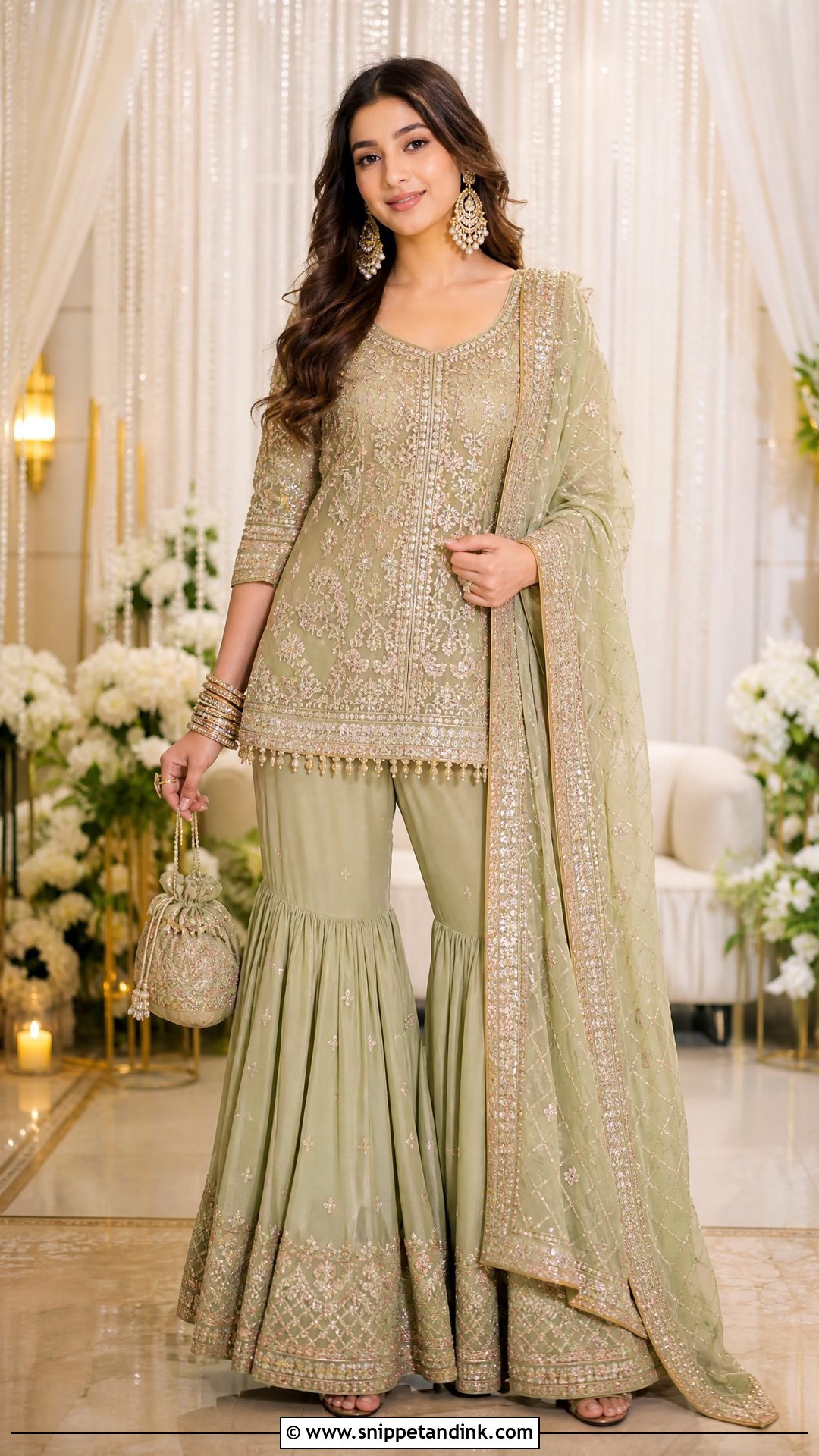
A short kurti sharara suit is the most playful version, made for sangeet nights, mehndi functions and bridesmaids. The cropped top shows the full flare. Choose heavy embroidery, mirrors, sequins or gota patti so it still feels like wedding wear. A high-waisted sharara and heels lengthen the leg. For dancing, I pin the dupatta across the body so you aren’t constantly catching it. Statement earrings, bangles and embellished sandals complete it.
22. Peplum Sharara Suit
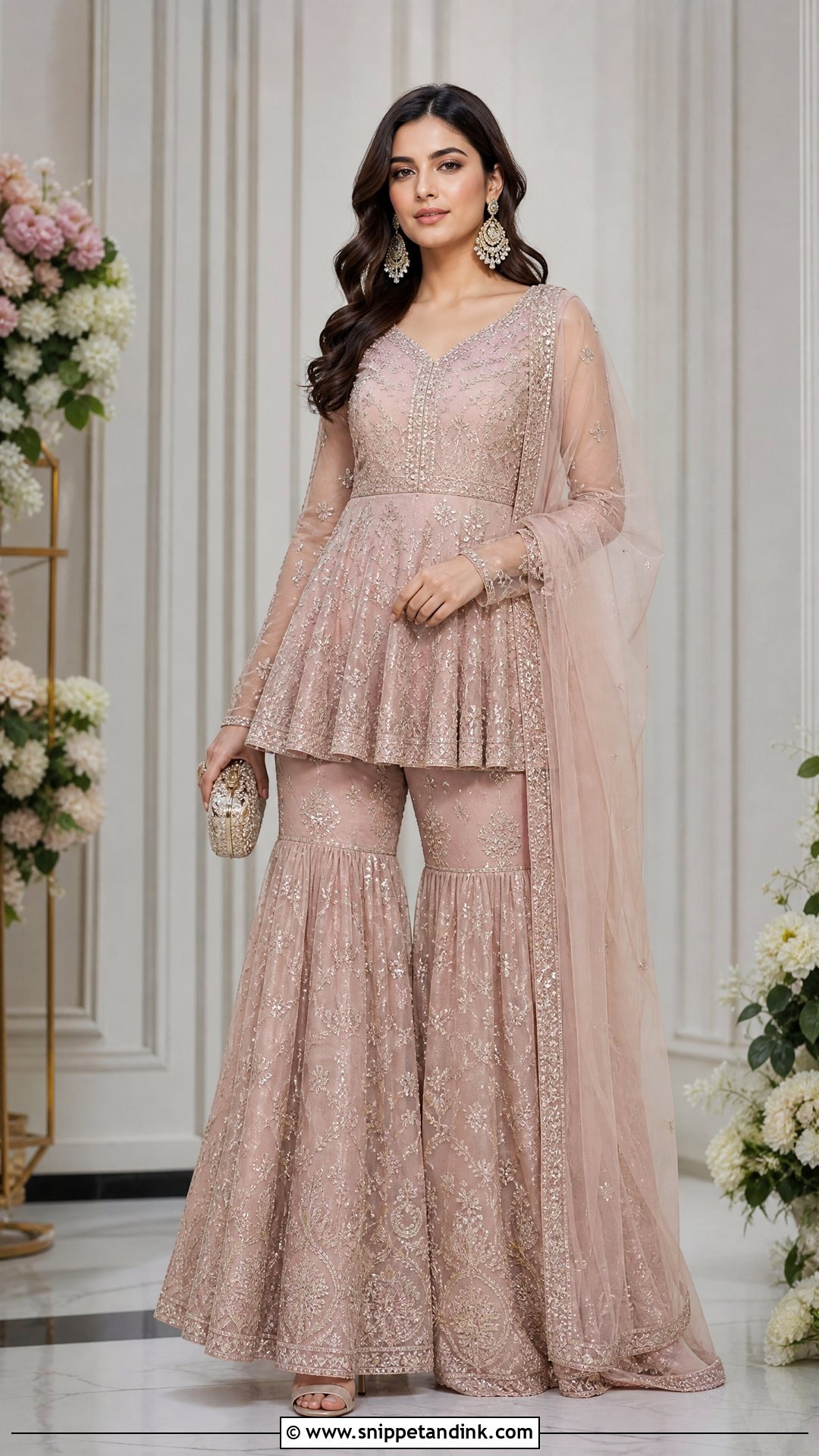
Peplum kurtas give you a defined waist and a flare above the sharara’s flare, which can look smart or cluttered depending on proportion. I keep the peplum ending at the high hip on shorter brides, so the leg line doesn’t get cut in half. Embroidery around the neckline, waist and hem helps define the shape, and a sharara in the same color keeps it clean. Add a sheer dupatta for tradition, or go lighter for a modern evening. Chandelier earrings, heels, a compact clutch and sleek hair make the peplum visible.
23. Jacket Sharara Suit
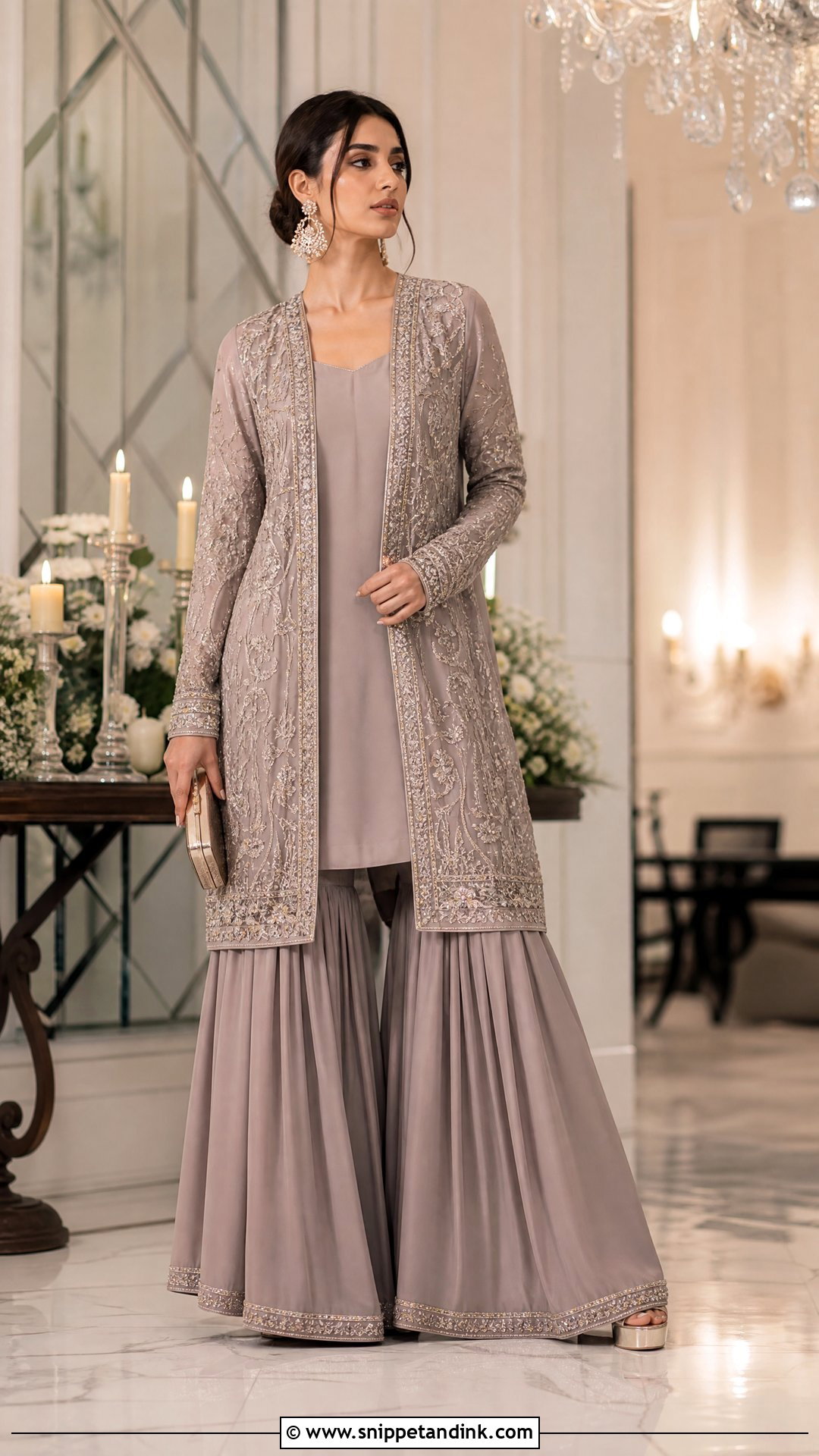
A jacket replaces the dupatta for guests who find draping fiddly, and it’s genuinely warm at winter weddings. A long embroidered jacket looks regal; a cropped one feels contemporary; a sheer jacket gives layering without bulk. Underneath, keep the kurta or blouse simple and the sharara full. Because the jacket brings the detail, I keep the neckline bare of layered necklaces and use statement earrings, metallic heels and a sleek clutch instead.
24. Anarkali Sharara Suit
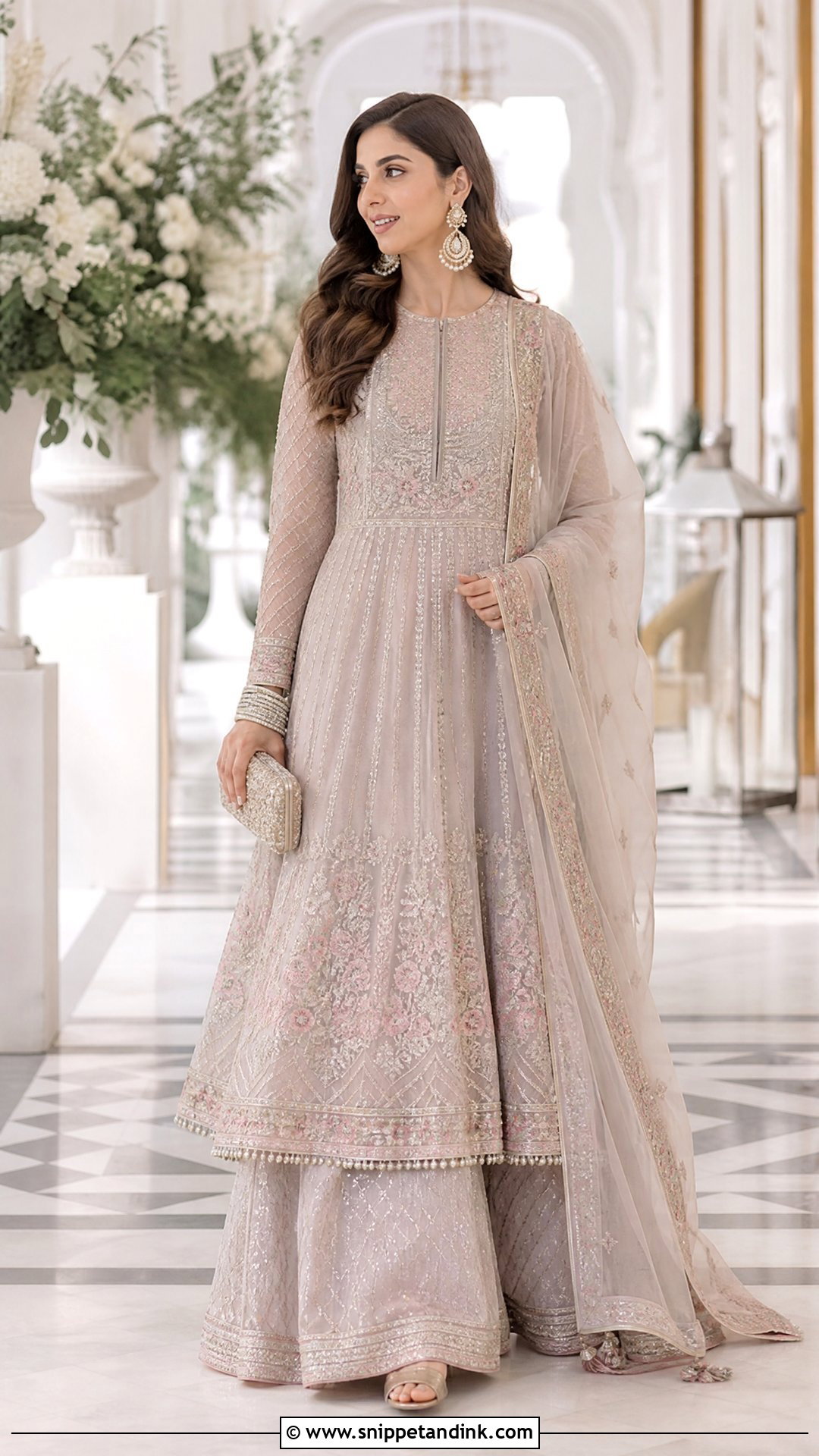
An Anarkali sharara suit gives you a gown-like flare from the kurta and divided flared pants underneath. Embroidery on the bodice, sleeves and hem gives it weight, and the sharara peeks out as you move. Georgette, silk, organza and net drape best. All that fabric adds up, so I check the total weight on the bride before finalizing and lighten the dupatta if the outfit feels heavy at the shoulders. Chandbalis, bangles, heels and soft waves or a low bun finish it.


25. Pakistani Sharara Suit
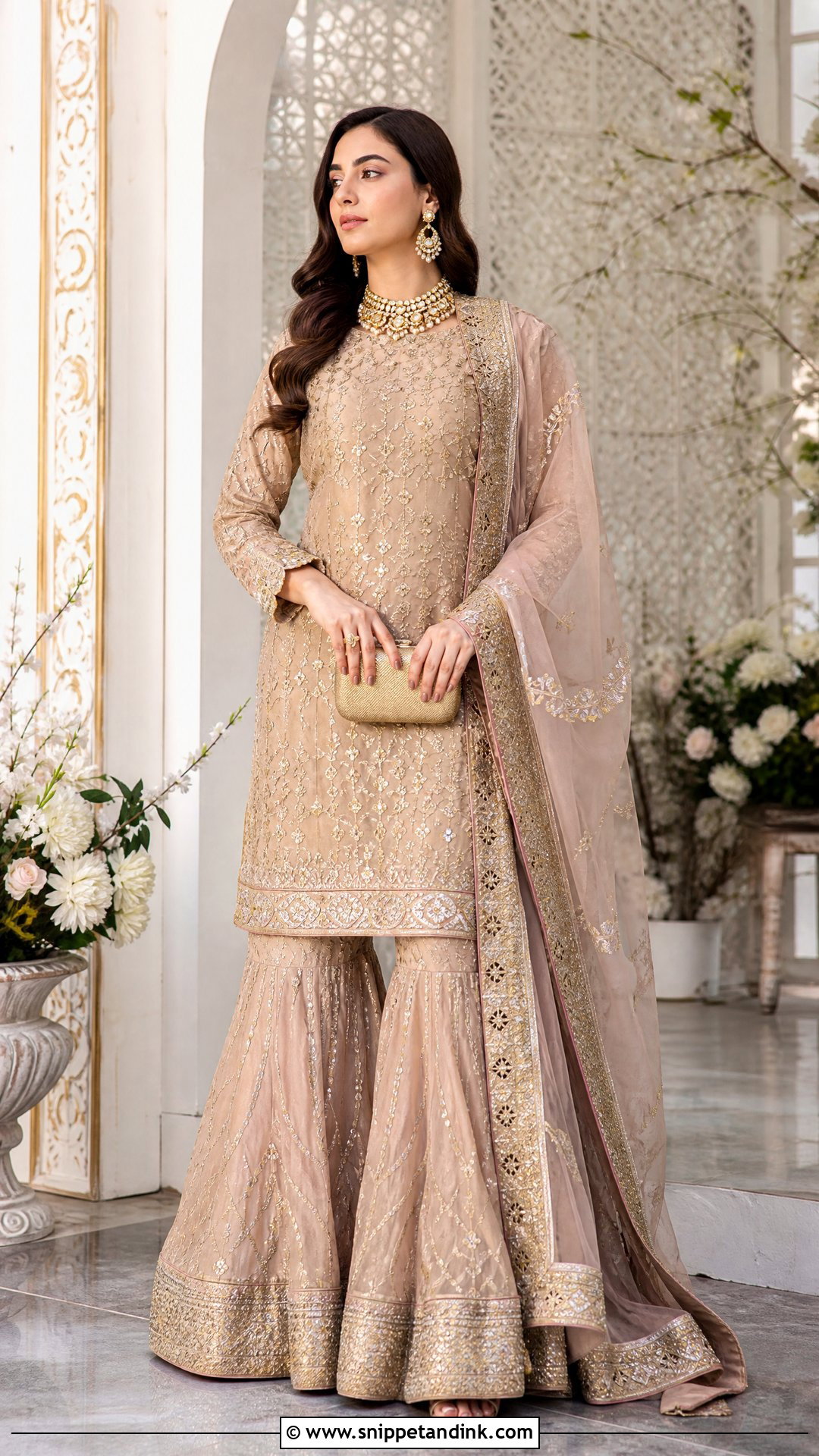
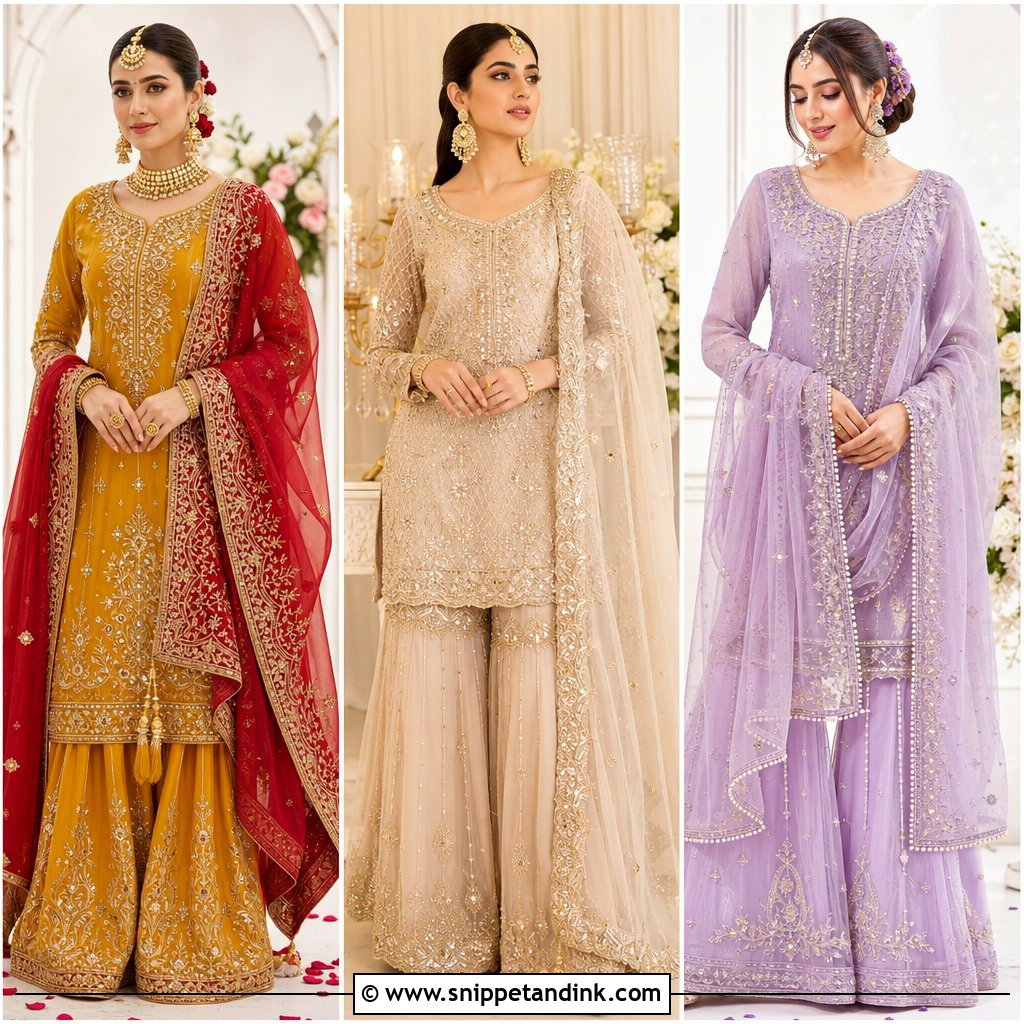
Pakistani-cut sharara suits tend toward intricate threadwork, clean cuts and graceful drape. Look for a straight or slightly flared kurta with threadwork, zari, sequins or stones, and a sharara with volume that still falls smoothly. Pastels, jewel tones, ivory, maroon and gold all suit it. A dupatta with heavy borders or worked corners gives a ceremonial finish. Polki earrings with a matching necklace, heels and a neat clutch complete it, for brides, bridesmaids and guests alike.
How Heavy Handwork Feels by the Rukhsati
Heavy handwork is wonderful in photos and tiring in practice. The weight in a sharara set usually sits in three places: the kurta yoke, the dupatta border and the sharara hem. I’d rather a bride carries the weight on her body than on her head and shoulders, so with a heavily worked kurta I almost always choose a lighter dupatta and secure it with several small pins instead of one large one.
Do a proper wear test at home: put on the full outfit, jewelry included, and sit, stand, climb a few stairs and lift your arms for an hour. Embroidery that rubs under the arms or at the inner wrist will show up, and a tailor can add a soft lining strip in those spots. If you’ll be seated on a low stage, practise getting up gracefully with the dupatta on.
Storing Zari and Zardozi After the Wedding
Metallic threadwork tarnishes and crushes if it’s stored badly, and a heavy outfit can lose its shape on a hanger. These are the habits I recommend:
- Air the outfit for a day after the event before packing it, so sweat and moisture have dried out.
- Send it to a dry cleaner who handles embroidered bridal wear. Don’t spot-clean zari with water at home.
- Fold it rather than hanging it, with acid-free tissue between the folds, and wrap it in soft cotton or muslin instead of plastic.
- Refold along different lines every few months so the metal threads don’t crack along one crease.
- Keep perfume and deodorant off the embroidery on the day; the chemicals can dull the metal over time.
The Dupatta Decides How Heavy the Outfit Feels
A heavy sharara gives you the grandeur of full bridal wear with far more freedom to move, sit and dance. Red embroidery, pastel organza, velvet, mirror work, gota patti, zardozi and jacket sets each have a place, depending on the function and the time of day. Look at the full outfit, not the suit alone: the dupatta, jewelry, shoes, bag, hair and makeup all change its mood. As a rule, I keep lighter fabrics and gota for daytime and save velvet, brocade and zardozi for evenings. Get the weight and the dupatta right, and any of these sets will carry you comfortably through a long celebration.
You'll Like These Ideas:



Leave a Reply