
Fusion clothing earns its place at a wedding when it lets you wear heritage fabric in a cut you can actually live in for a whole day. The 25 outfits below pair Indian textiles, embroidery, and draping with Western tailoring, corsetry and one-piece shapes, from the mehndi right through to the reception. For each one I’ve noted what I’d check at a fitting, who it suits less well, and how I’d finish it with shoes and jewelry. Brides planning a reception change and guests dressing for a long wedding weekend will both find options here.
Ready-to-Wear, Made to Measure or Rented
Where the outfit comes from shapes your timeline more than the design does. Each route has a trade-off, and I talk clients through all three before we look at a single silhouette.
Ready-to-wear
The fastest option, and the one you can try on before paying. Expect to alter almost every piece: blouses and corsets nearly always need taking in or letting out, and hems need setting to your shoes. Leave a few weeks for that, more in wedding season.
Made to measure
Custom embroidery takes time, and designers commonly ask for a few months, so ask for a realistic date at the first meeting rather than assuming. Book at least two fittings. The first sets the structure, and the second, in your wedding shoes and undergarments, fixes the details.
Rented
Renting makes sense for a heavy reception piece you’ll wear once. The catch is limited alteration: most rental pieces can be pinned or tacked but not cut. Try it on early, check the lining and the hooks, and confirm the return date falls after the last function.
1. Cape Lehenga Indowestern Wedding Outfit
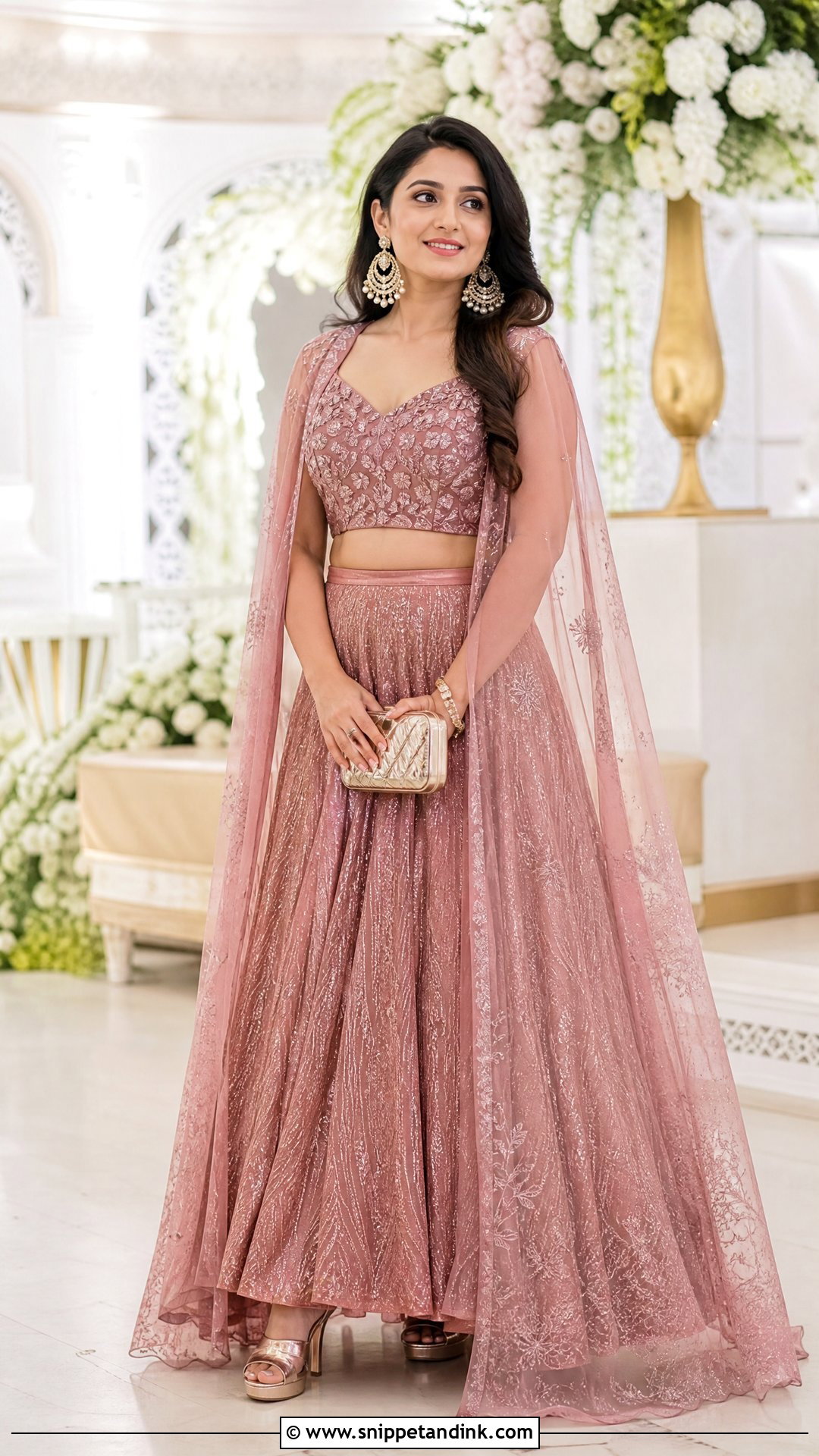
Capes solve the dupatta problem, but length changes everything. A shoulder-length cape is easy to dance in; a floor-length one looks regal and needs someone to straighten it before every photo. Over a georgette, silk or light brocade skirt, I prefer a V-neck or open-front cape, which draws a longer line down the torso than a closed one. Tonal embroidery looks calm, and contrast work carries more drama for a sangeet. Skip the heavy necklace, since cape embroidery and a choker fight for the same space. A low bun keeps the shoulder detail in view.
2. Pre-Draped Saree Gown Indowestern Wedding Outfit
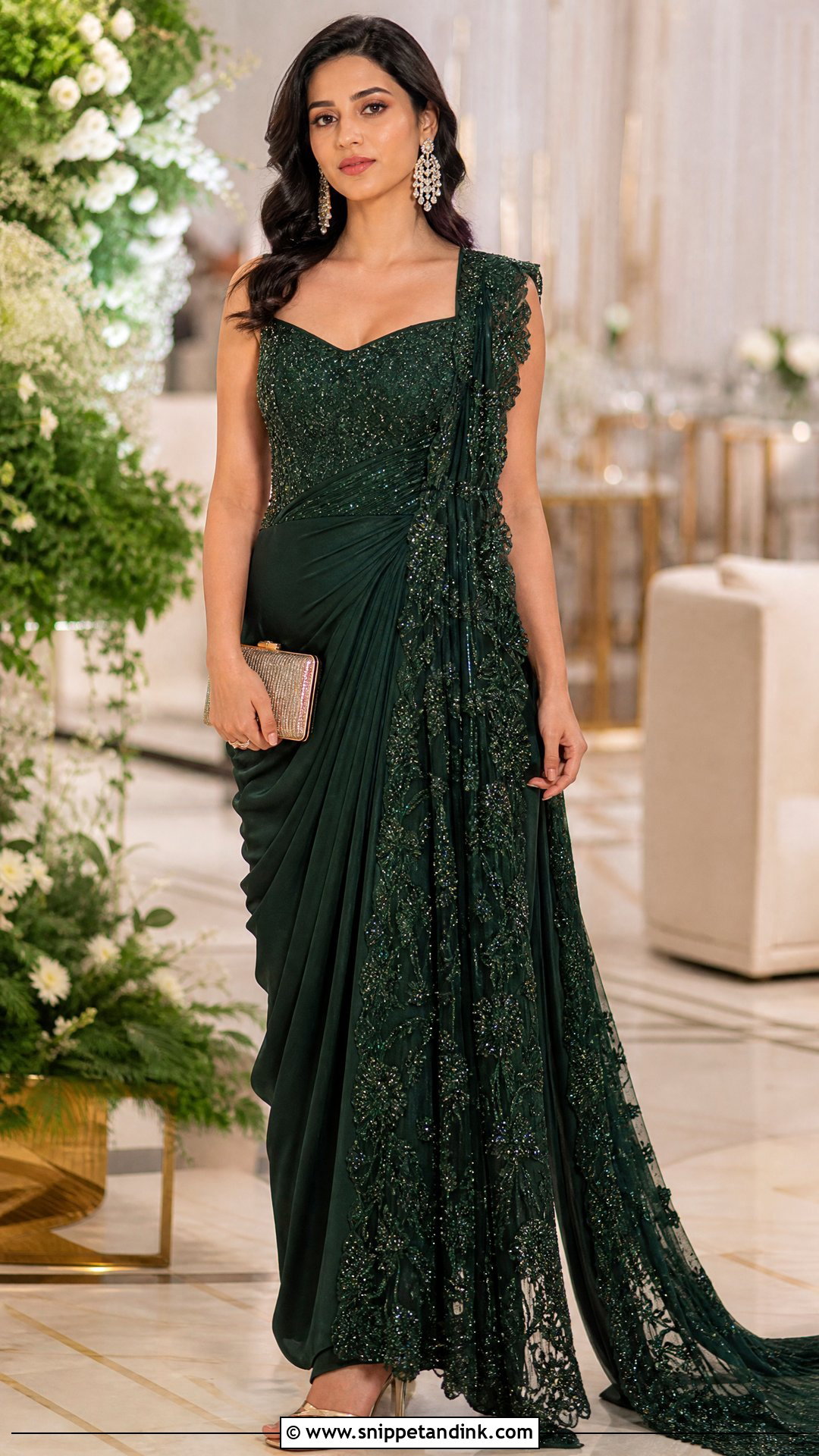
Built-in folds give you a saree’s grace without a single safety pin. A pre-draped saree gown should have a defined waist, a structured blouse section and a pallu panel, and an embellished border or a soft ruffle keeps it recognizably Indian. Before you buy, sit in it. Stitched pleats spread when you sit, and cheaper versions show a gap at the hip seam. Champagne, navy, emerald and dusty rose all suit evening. Metallic strappy heels keep the line long, and one cuff with statement earrings is plenty.
3. Dhoti Pants And Crop Top Indowestern Wedding Outfit
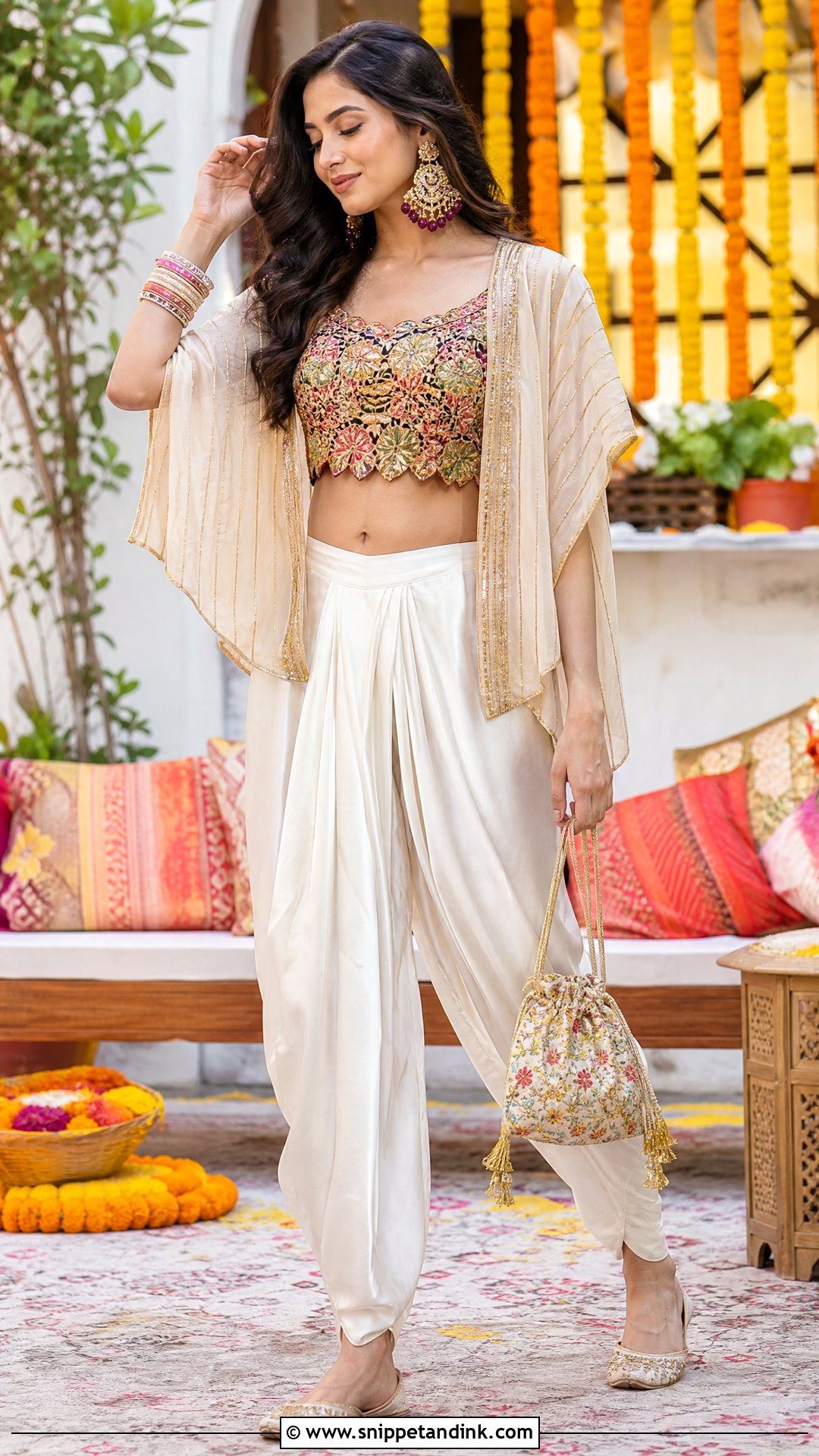
Silk or crepe dhoti pants give soft volume at the hip and taper at the ankle, so they move well at a mehndi or sangeet. The crop top should end close to the waistband, because a wide band of skin breaks the line awkwardly in photos. Height matters with this shape: petite women look better with less fabric in the drape, and taller women can carry deeper pleats and a long overlay. Pointed juttis or low block heels stay visible under the taper. Add a short cape or shrug if you’d rather cover the midriff.
4. Peplum Sharara Indowestern Wedding Outfit
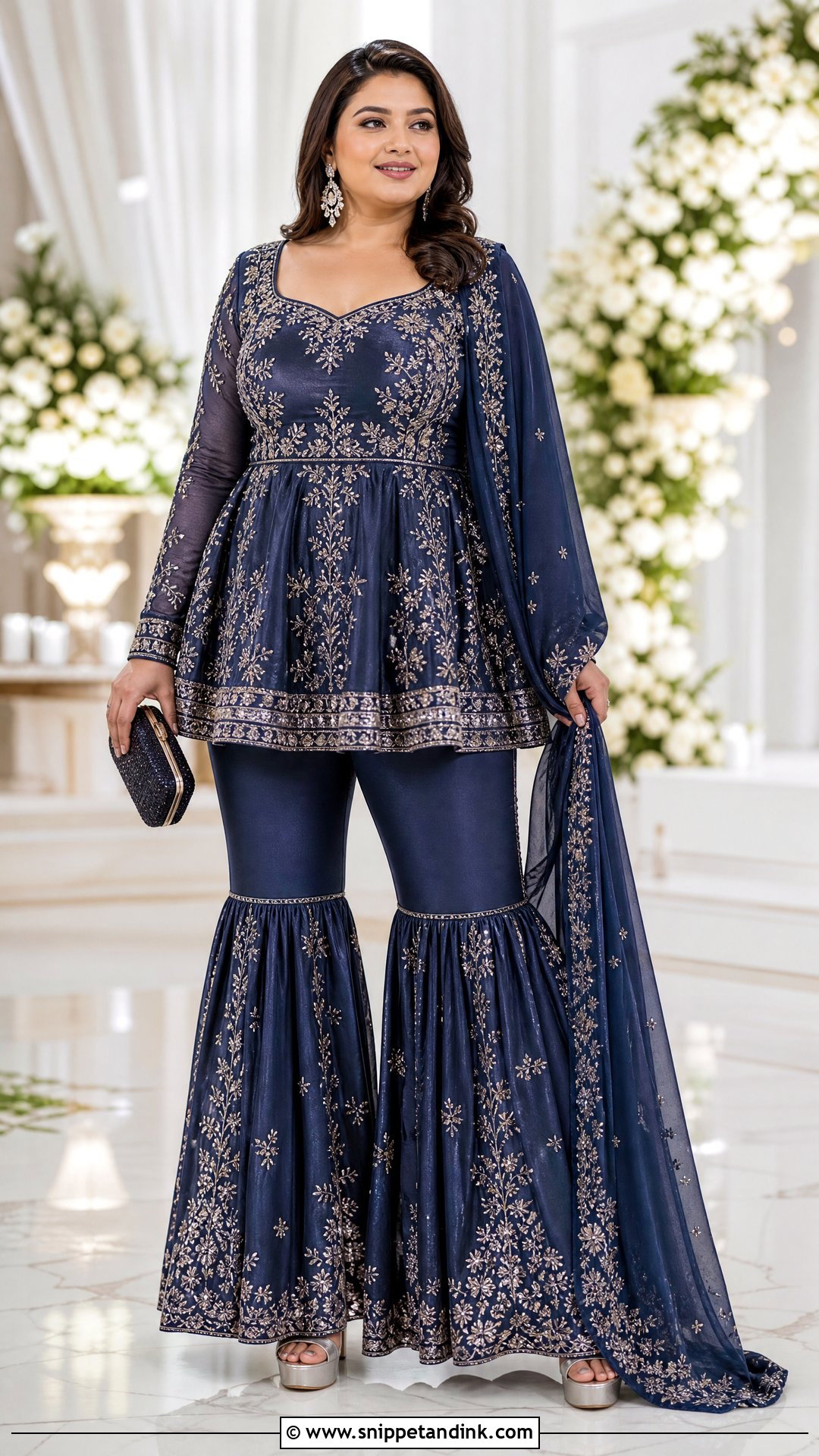
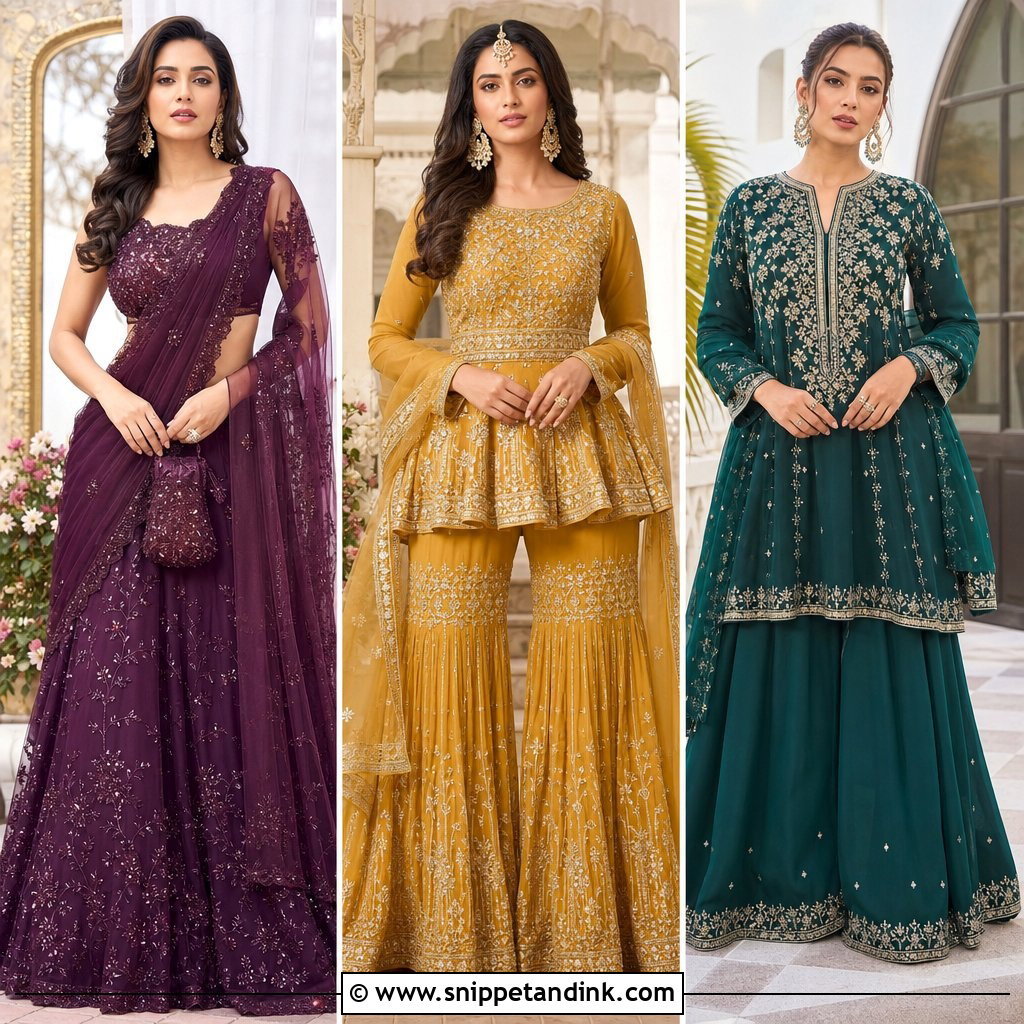
I fit the peplum first and the sharara second. The peplum should define the waist and flare over the hip, and the sharara should widen gradually from the knee rather than ballooning at the thigh, which adds bulk exactly where most people don’t want it. One color from top to bottom keeps the line long. Sage, lavender, coral or powder blue with fine threadwork suit daytime, while jewel tones and metallic embroidery suit evening. When the peplum is detailed, the dupatta becomes optional.
5. Jacket Lehenga Indowestern Wedding Outfit
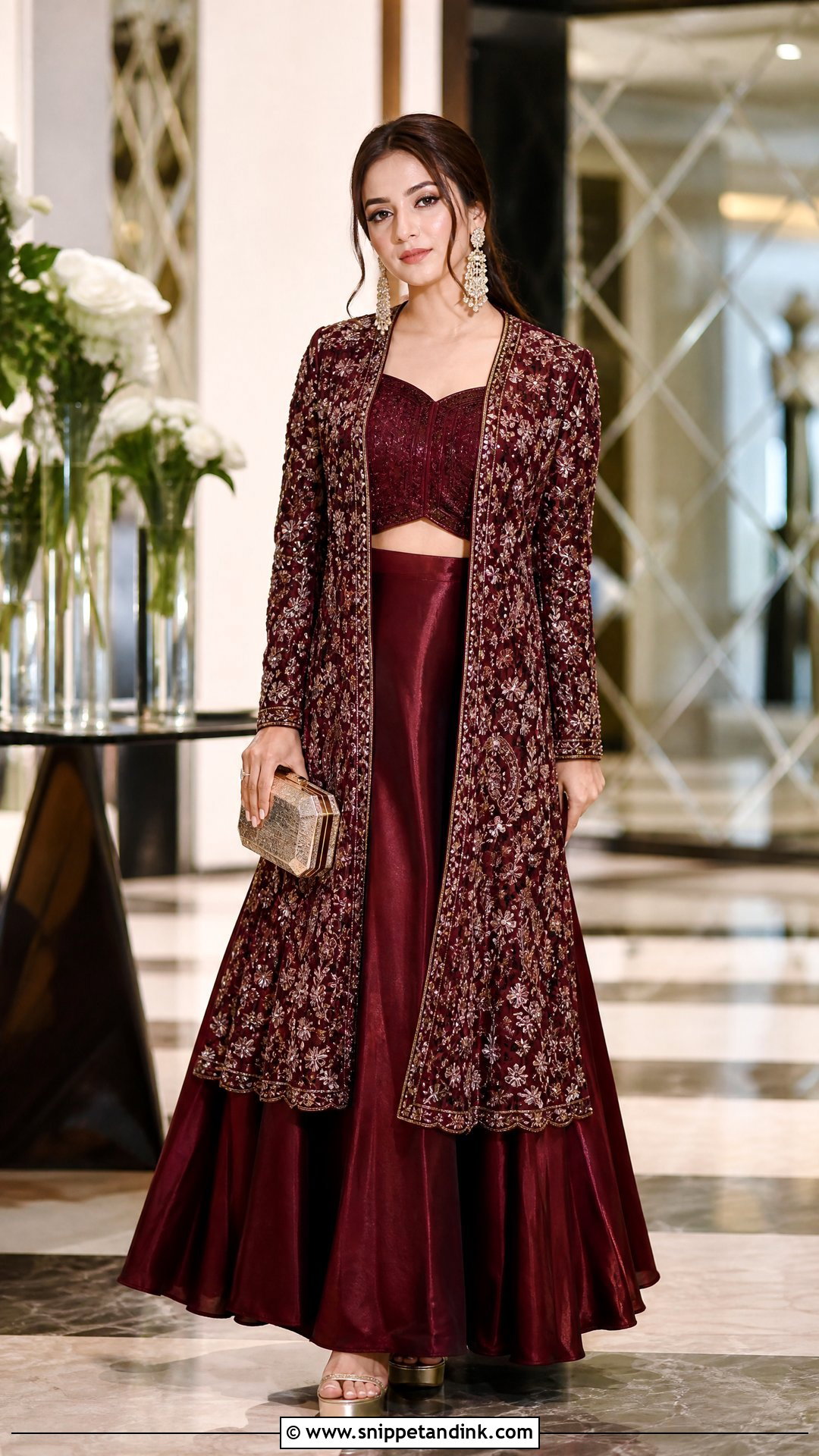
An open-front jacket draws a long vertical line; a closed jacket covers more and can stand in for the blouse altogether. That’s the main decision with a jacket lehenga. If you’ll be dancing, keep the embroidery light, because heavy jackets get hot and pull backwards off the shoulders. Pointed pumps or platform sandals give height without stealing attention from the work. A middle-parted low bun suits the formality, and the outfit is at its best at receptions and in cooler months.
6. Palazzo Pants And Cape Indowestern Wedding Outfit
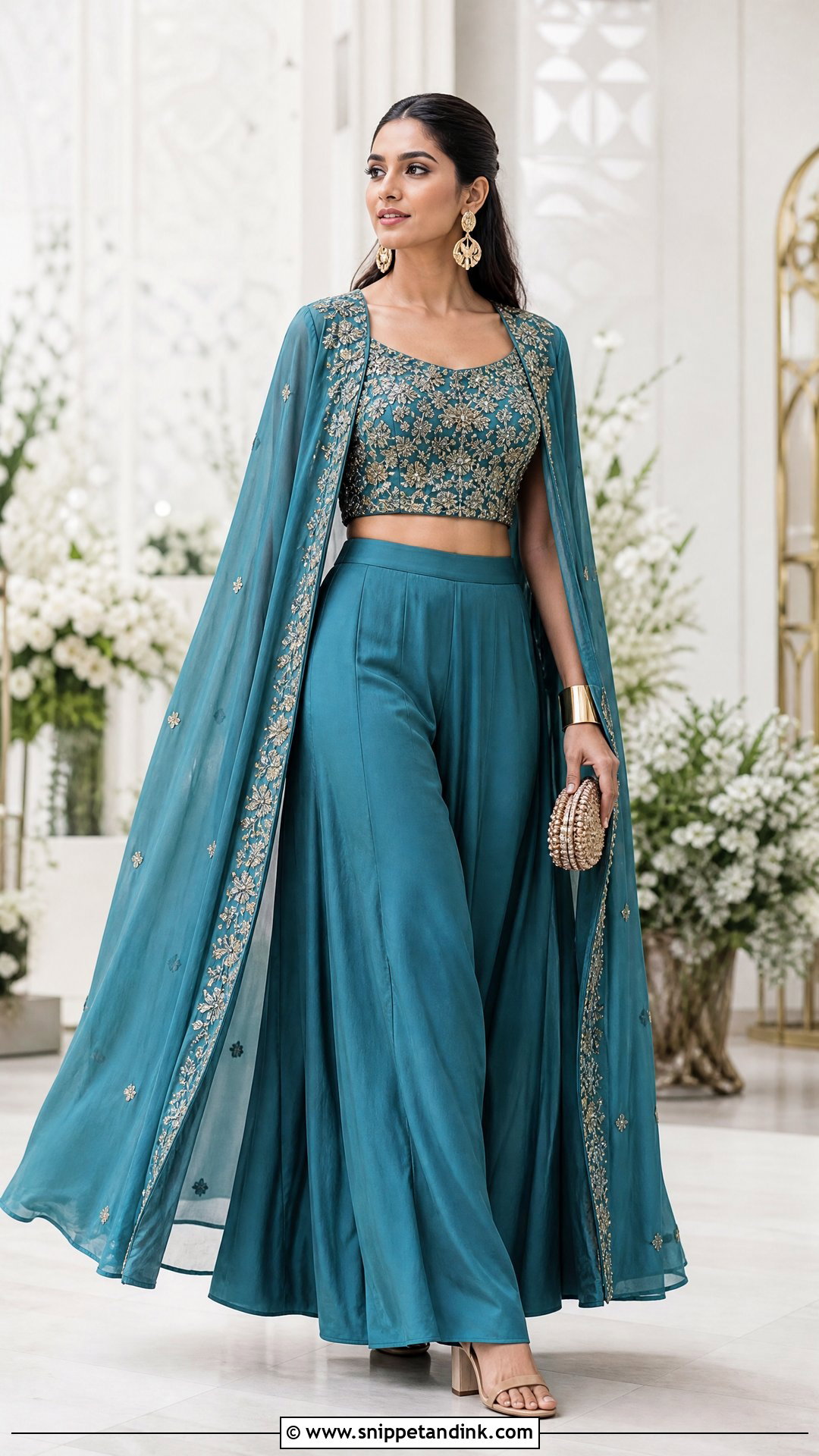
Wide-leg palazzo pants under a floor-length cape is one of the more flattering combinations here for both petite and plus-size women, provided the top underneath is fitted. A loose top, wide pants and a cape together simply add up to too much fabric. Choose high-waisted silk or satin palazzos that nearly skim the floor in your shoes, with block heels or wedges hidden underneath. If the cape is densely worked at the neck, leave out the necklace and let sculptural earrings and a cuff do the job.
7. Saree And Embroidered Blazer Indowestern Wedding Outfit
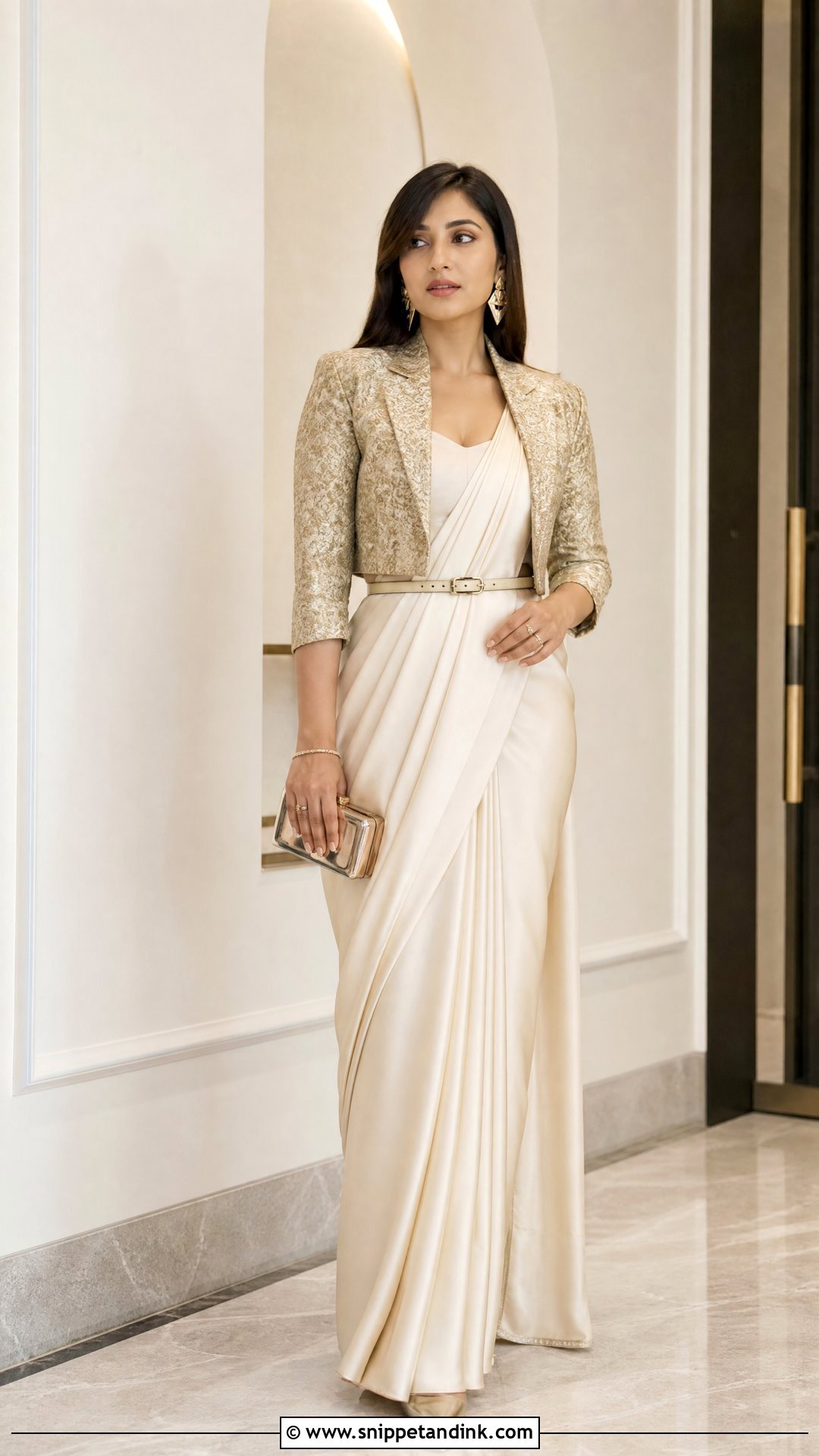
Could a blazer work over a saree? It does, as long as the fabrics talk to each other. Drape a satin, crepe, organza or silk saree cleanly over a fitted blouse, then add a cropped or hip-length embroidered blazer; brocade gives the most texture. The real trick is the pallu. If the blazer is worn open, a narrow belt over it holds the pallu in place all evening. Keep the saree border simple so it doesn’t compete with the jacket, and wear it to a reception or an indoor engagement party.
8. Draped Skirt And Corset Blouse Indowestern Wedding Outfit
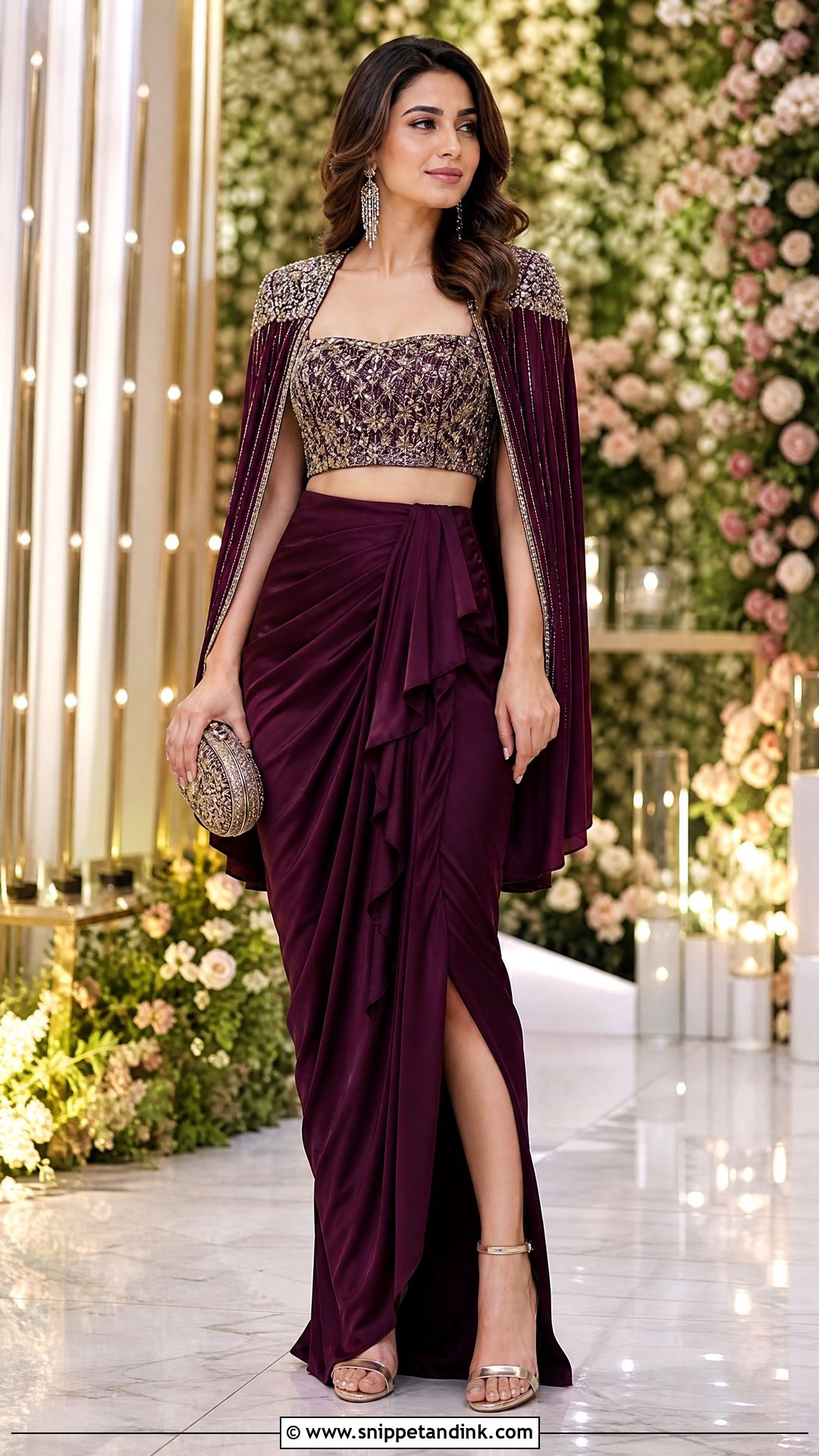
This is an evening look, and the blouse decides whether it works. A corset-style top should feel supportive rather than tight, and I’d want to see it at a fitting with you seated and leaning forward as if to eat. Choose a high-waisted skirt with controlled pleats and an asymmetric drape rather than lots of loose fabric. Add a sheer stole or a one-shoulder cape for coverage. Shoulder-grazing earrings draw attention upward, and one ring or bracelet is all the other jewelry it needs.
9. Embroidered Jumpsuit Indowestern Wedding Outfit
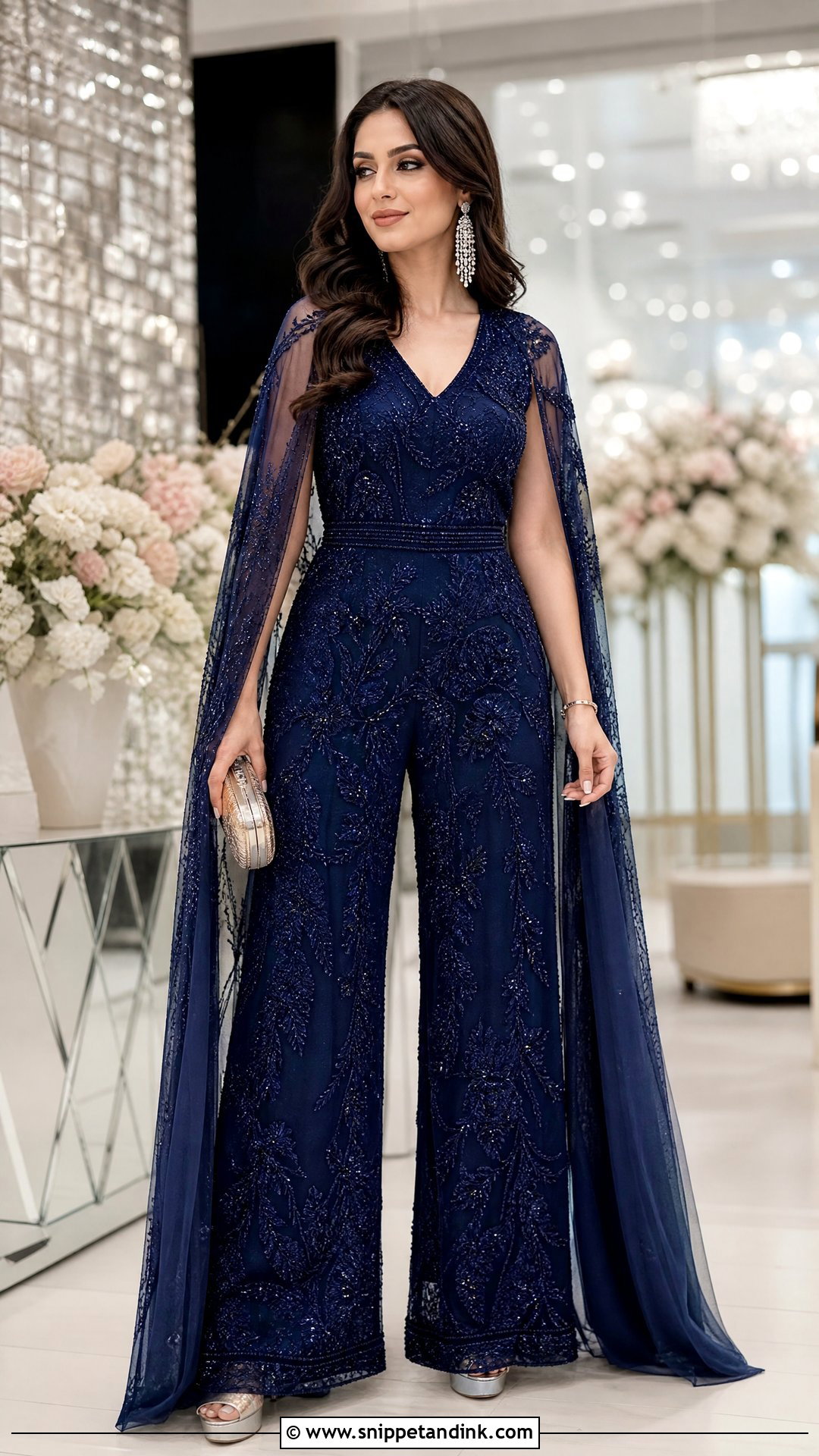
Comfort without looking casual is the jumpsuit’s job. A wide leg with a fitted waist, Indian motifs and an appropriate neckline gets you most of the way, and a detachable cape or sheer shoulder panel makes it ceremonial. Proportions change with height: taller women can carry very wide legs, while petite women look better in a narrower flare with a higher waist. Platform heels stop the hem dragging. Leave the big shoulder bag at home, as a strap across a one-piece cuts the line in half.
10. Belted Anarkali Gown Indowestern Wedding Outfit
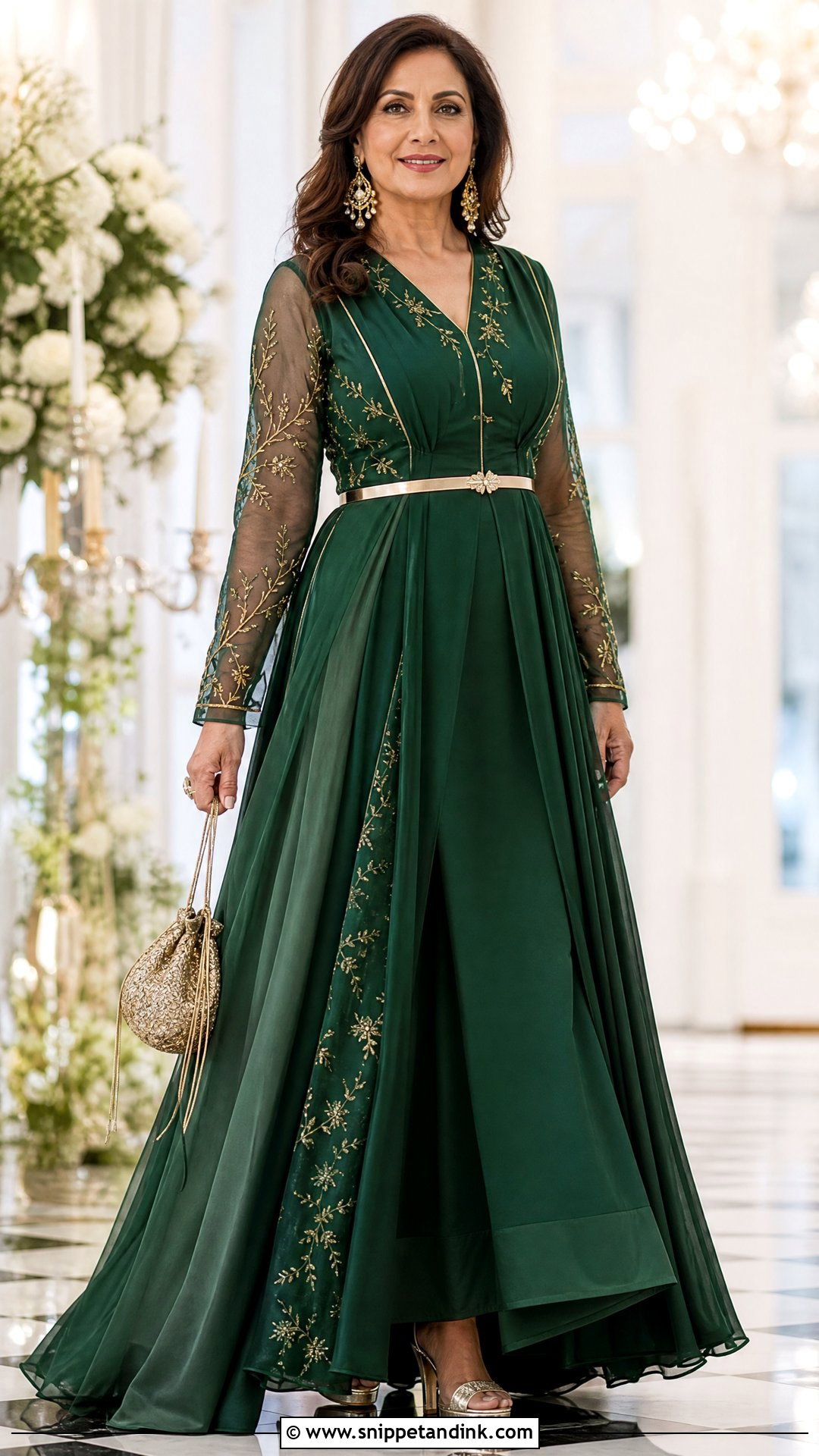
Belting is what turns an Anarkali Indo-Western. Look for paneling, an asymmetric hem, sheer sleeves or a modern neckline, then add a slim embroidered or metallic belt at the natural waist. A belt placed higher, on the yoke seam, flattens the flare instead of shaping it. A high neckline wants earrings rather than a necklace. A potli gives a traditional finish and a structured clutch a modern one. Women who prefer more coverage tend to feel most at ease in this.
11. Lehenga Skirt And White Shirt Indowestern Wedding Outfit
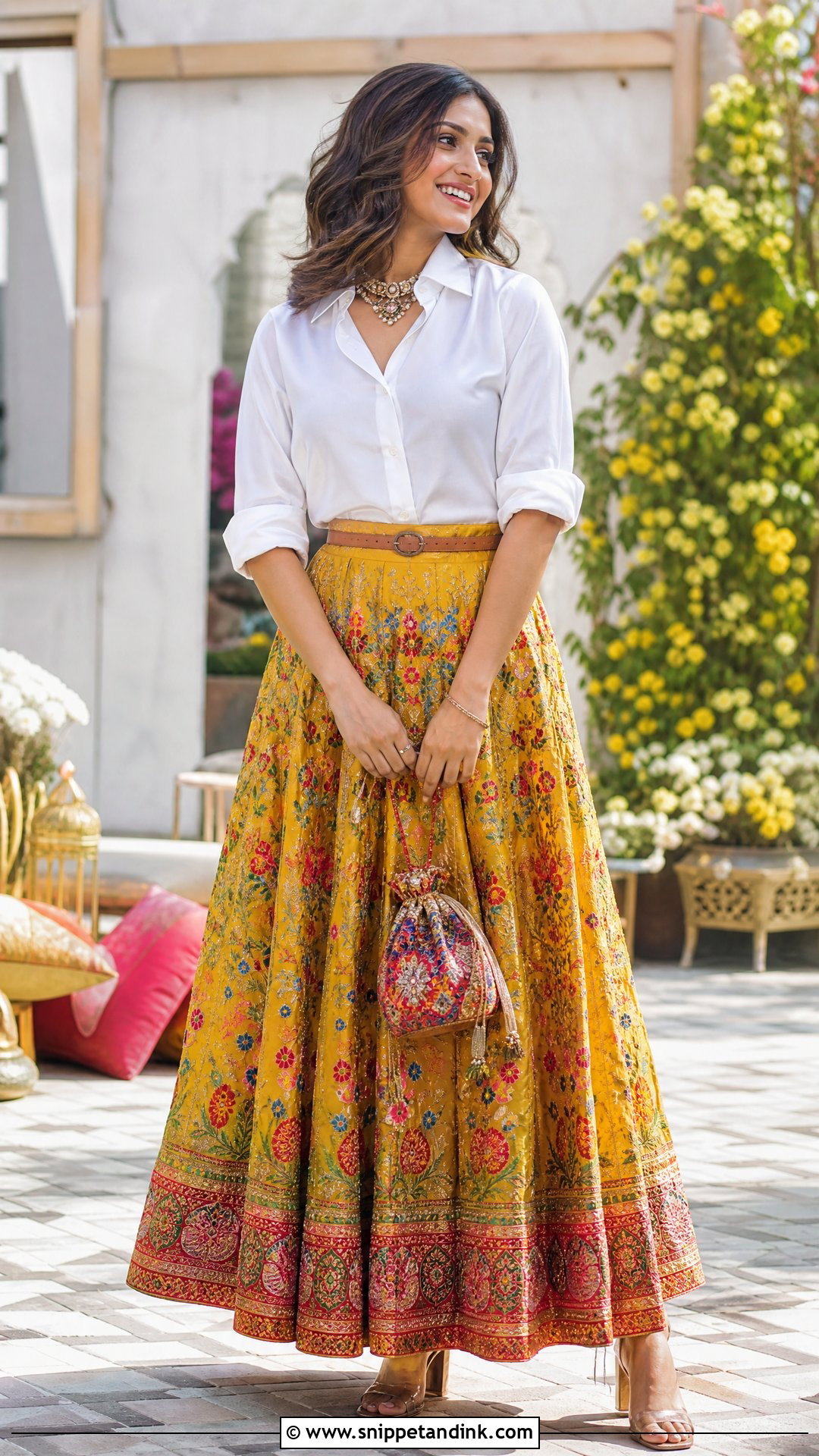
Tucking a crisp white shirt into an ornate lehenga skirt is the most fashion-forward look here, and I’d keep it for daytime. Silk shirts hold up better than cotton poplin, which creases at the waist after an hour of sitting. Roll the sleeves neatly or choose three-quarter sleeves. Then pick one: an open collar with a statement necklace, or buttoned up with dramatic earrings. A slim belt connects the two halves, and juttis with a bright potli keep it playful at a mehndi.
12. Brocade Pants And Peplum Top Indowestern Wedding Outfit
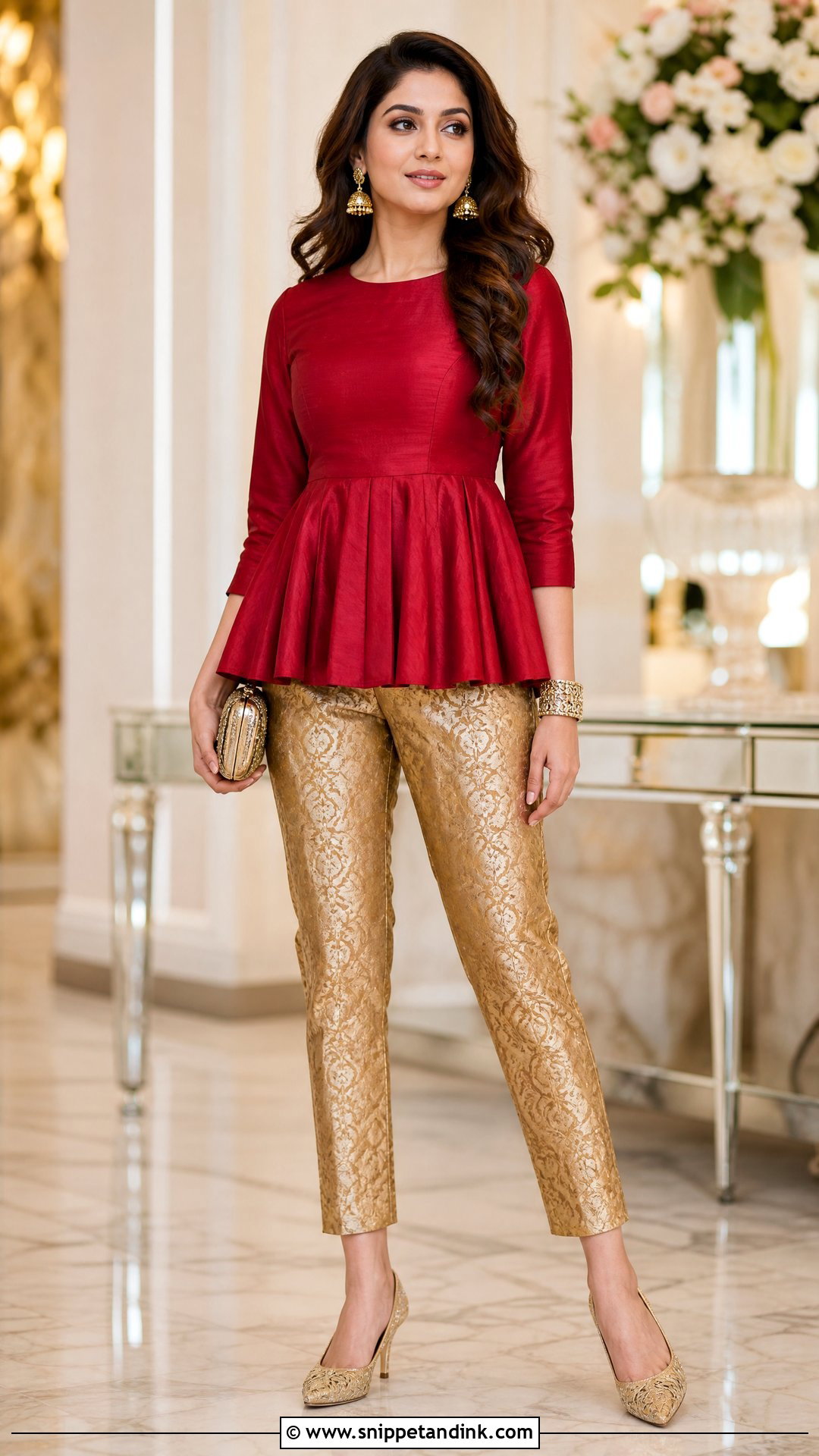
Brocade trousers give you festive texture without a skirt’s volume. Cigarette pants look streamlined, and slightly flared trousers feel softer. Pair them with a plain silk peplum that picks one color out of the brocade pattern. Brocade is stiff and can feel scratchy at the inner thigh, so check that the pants are lined before buying. Pointed mules or heeled juttis keep the ankle clean, and medium jhumkas match the scale of the pattern. I’d wear it to an intimate ceremony or a wedding lunch.
13. Pant Saree Indowestern Wedding Outfit
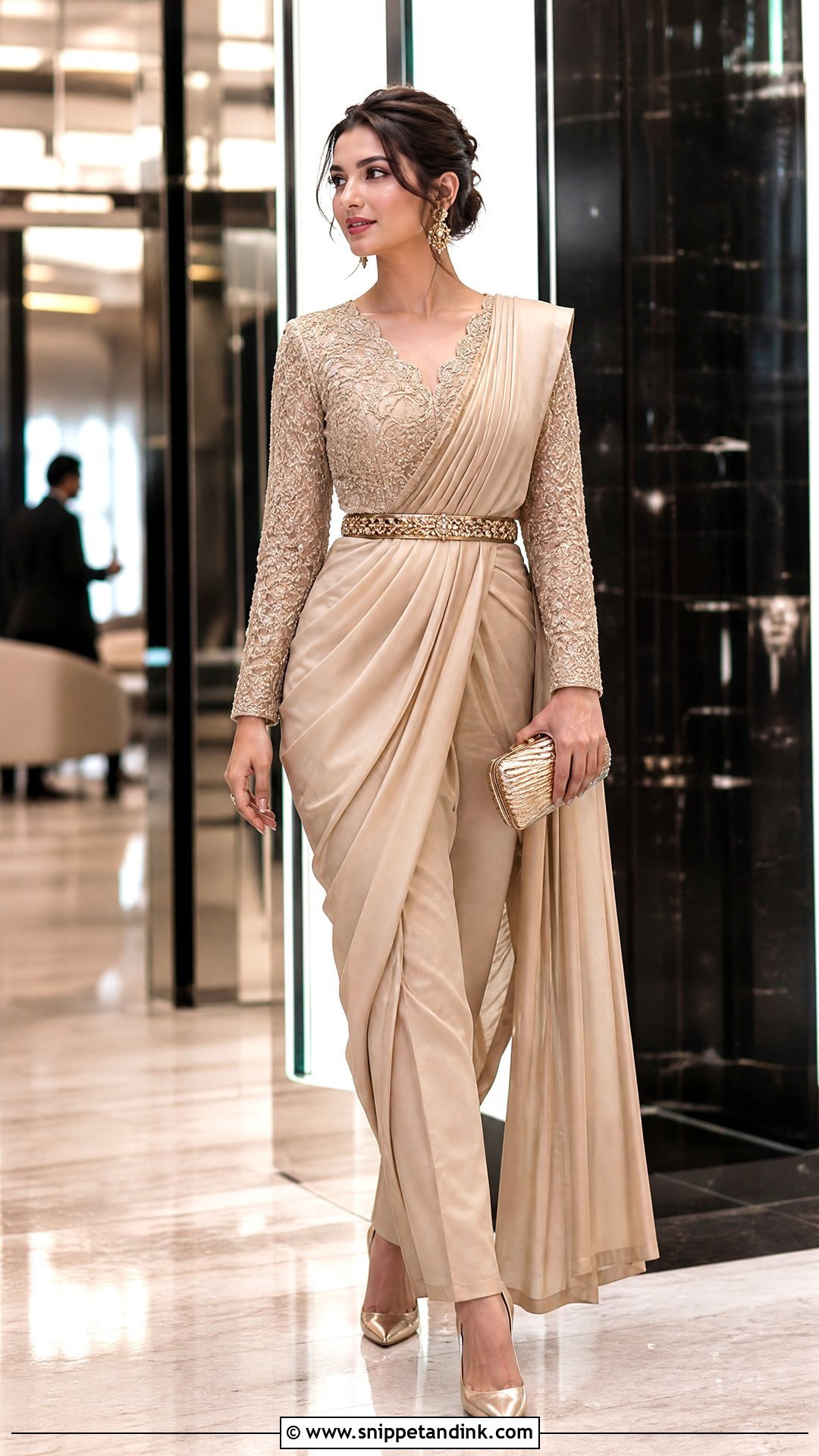
Swapping the petticoat for trousers means you can walk, sit and climb stairs freely while every photo still reads as a saree. Start with a coordinated blouse and high-waisted pants, then drape a saree panel or pre-stitched pallu across the body, secured with discreet pins or a decorative belt. Straight pants look sleek; palazzo pants soften the whole thing. Leave the neckline clear, with shoulder-skimming earrings and one statement ring. It earns its place at receptions and sangeet nights.
14. Belted Kaftan Gown Indowestern Wedding Outfit
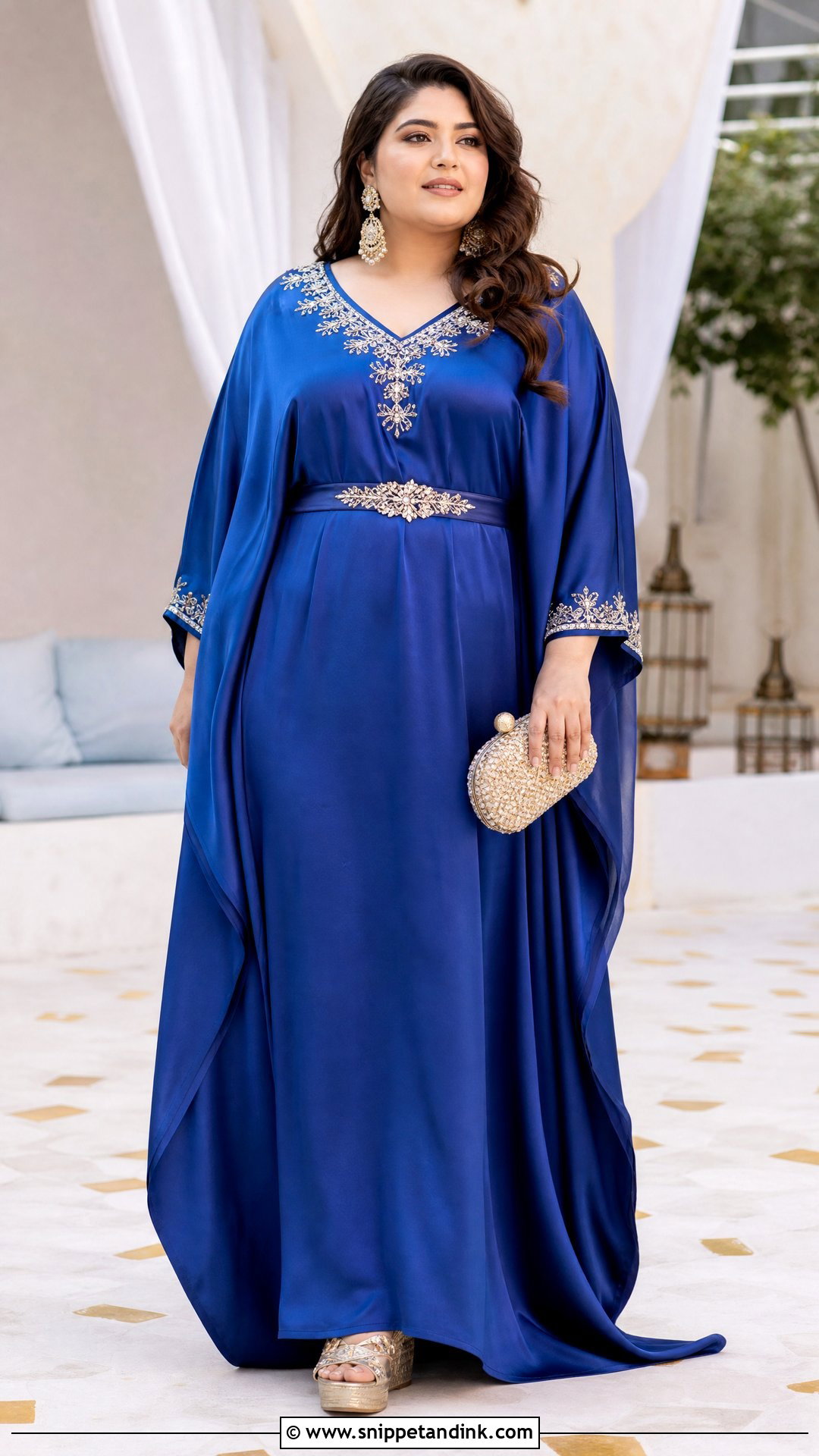
Kaftans forgive. The fit adjusts with a belt rather than depending on a rigid waist, which is why they work across so many sizes and why I like them for the bride’s family at destination weddings. Choose silk, chiffon or georgette with embroidery at the neckline, cuffs or border. Have it hemmed so it skims the floor without pooling; a kaftan that drags looks sloppy rather than relaxed. A matching fabric belt gives gentle shape, and a metallic one reads more evening.

15. Asymmetrical Kurta And Trousers Indowestern Wedding Outfit
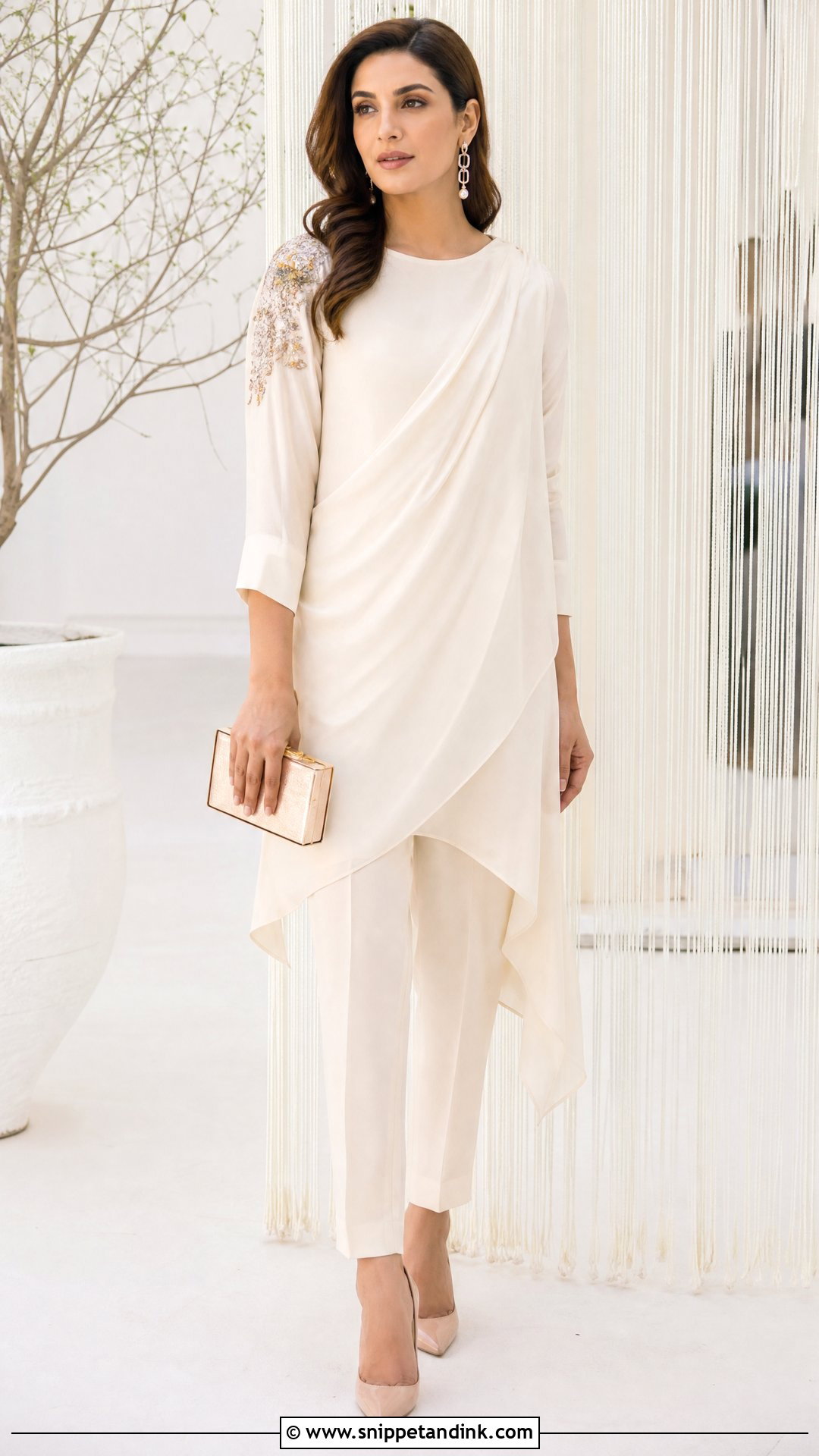
Minimal can still be festive. An asymmetrical kurta with a high-low hem or a single draped side panel, over straight or cigarette pants in the same color, gives a clean architectural shape. Put the embroidery in one place only, such as one shoulder or the hem. What I like most is how easily it moves from day to night: swap understated studs for dramatic drops and change the clutch, and it reads dressier. A sleek hairstyle supports the lines.
16. Kurta Skirt And Long Jacket Indowestern Wedding Outfit
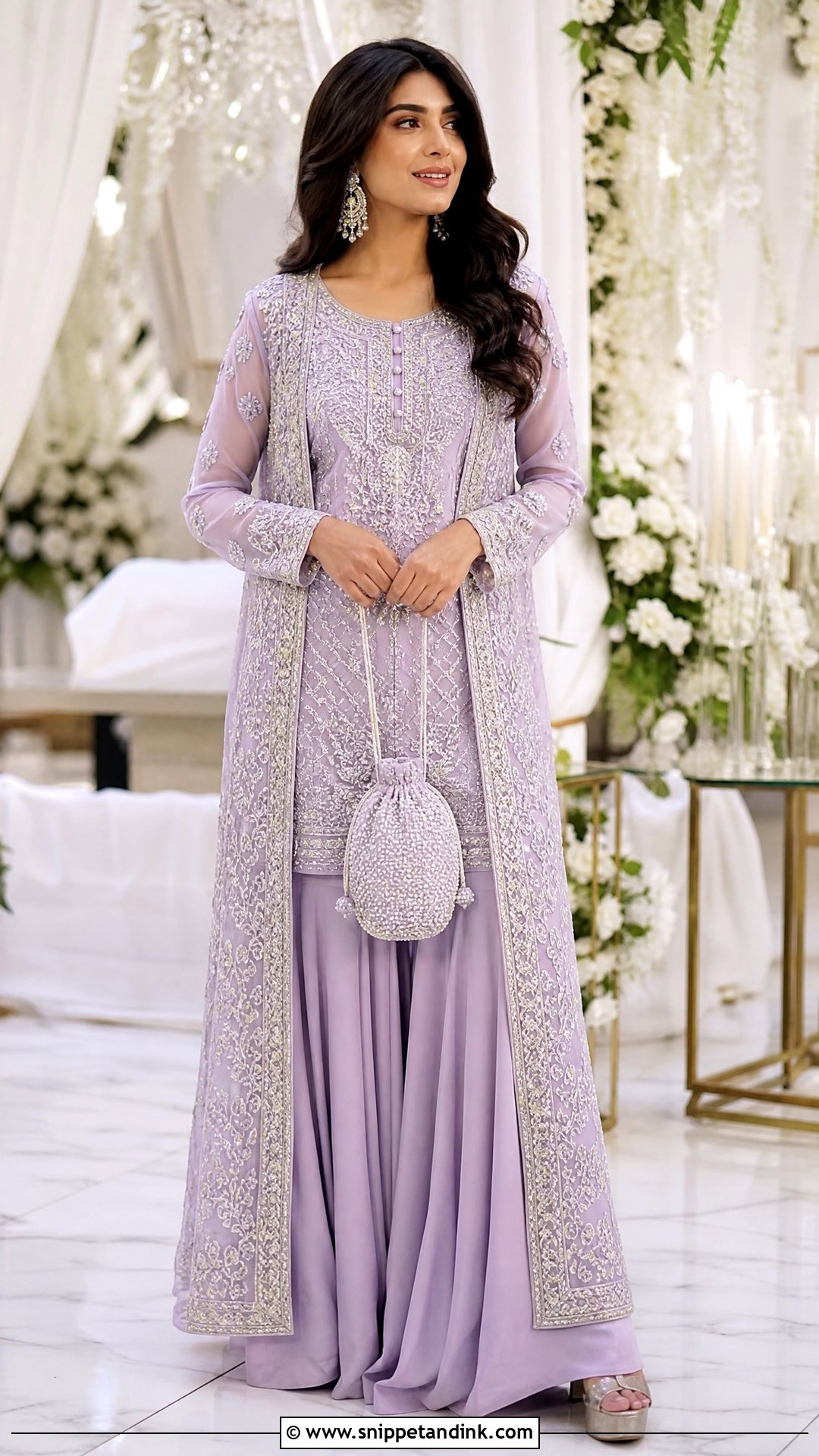
Three layers need careful proportions. A short or knee-length kurta and a flowing skirt in a coordinating shade go under an open-front jacket that reaches below the knee. Keep the inner pieces plain and the jacket detailed, and keep the skirt only moderately flared, or the layers stack into bulk at the hip. In high summer I’d question whether three layers is wise at all. Long earrings echo the jacket’s vertical line, and the result gives graceful coverage at ceremonies.
17. Draped Dhoti Skirt Indowestern Wedding Outfit
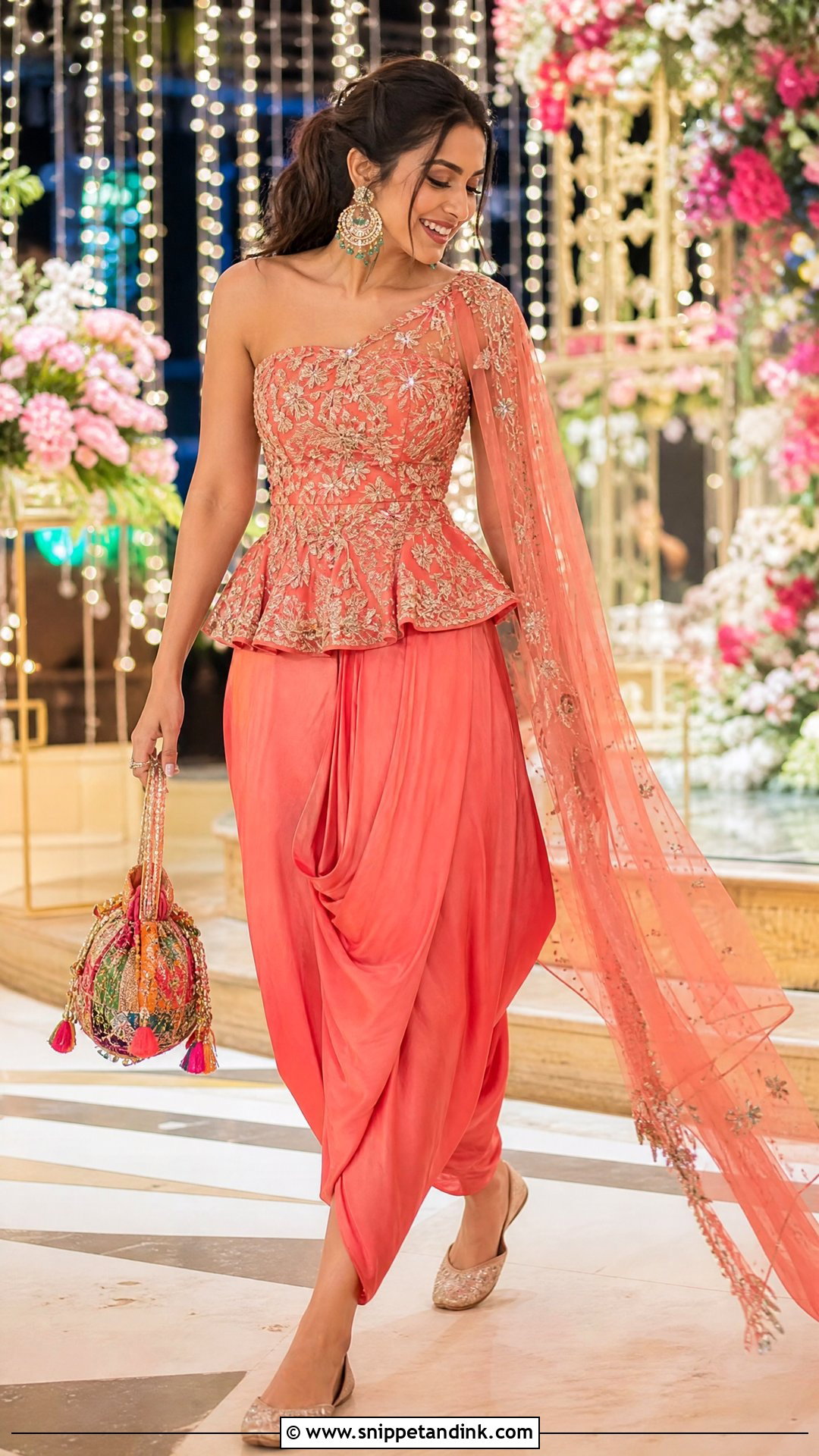
A draped dhoti skirt has a sculptural front that’s softer than tailored pants. Balance the gathered fabric with a fitted blouse, a short kurti or a structured peplum. Solid skirt with an embroidered top, or a patterned skirt with a plain blouse, but never both patterned. The shorter front drape shows your shoes, so choose heeled juttis or ankle-strap sandals you’re happy to have seen. A one-shoulder cape adds movement without hiding the drape at a mehndi or sangeet.
18. Embroidered Blazer And Lehenga Indowestern Wedding Outfit
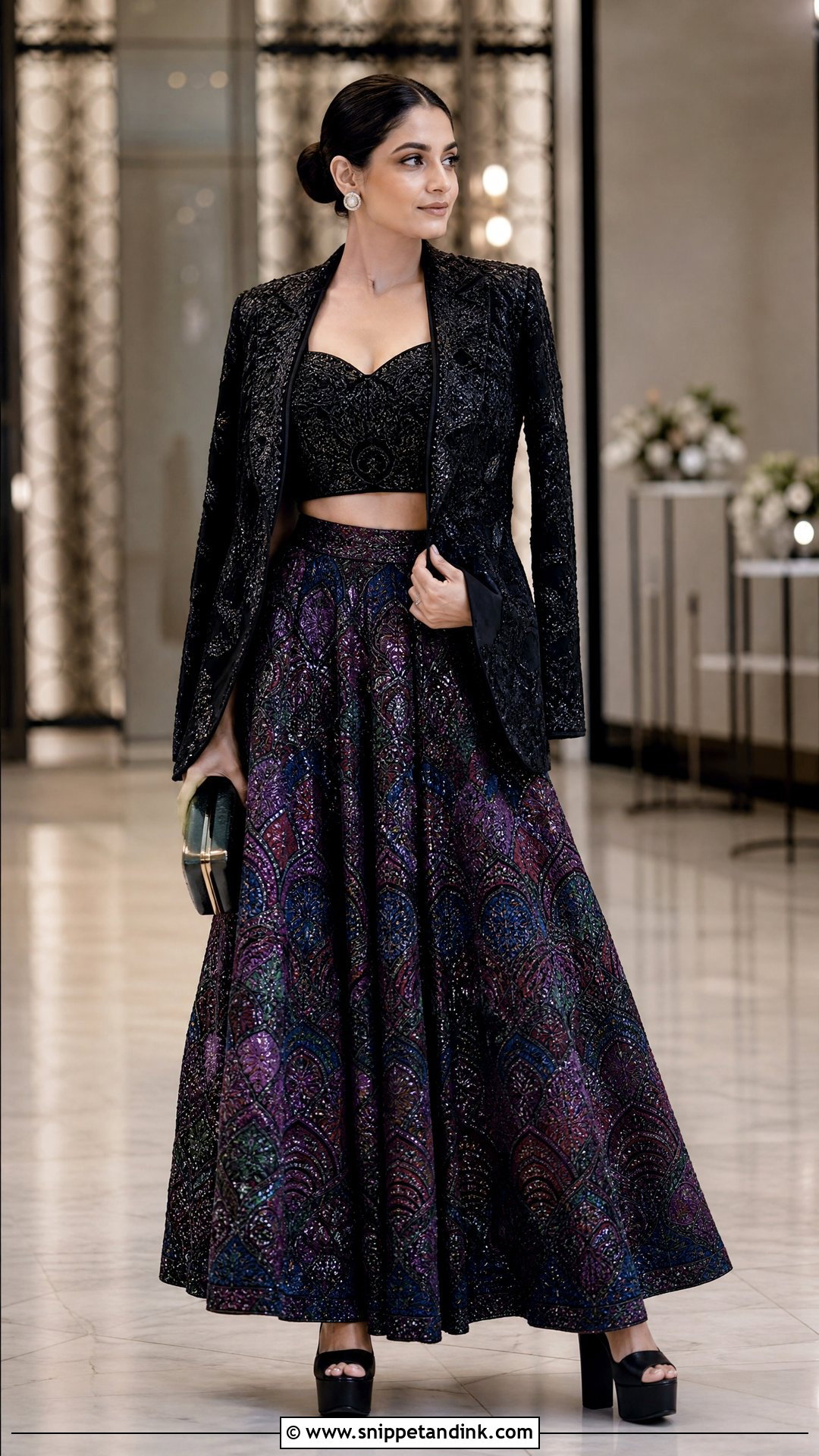
Blazer length makes or breaks this look. Keep it at the waist or upper hip so the lehenga’s flare starts cleanly below, because a longer blazer flattens the skirt. Choose a high-waisted skirt with a controlled flare and a fitted blouse or camisole in a matching color. Buttoned, it reads tailored; open, it shows the blouse detail. Platform pumps and statement studs suit the sharpness, and a sleek bun keeps it from getting busy. Engagements and receptions are where it lands best.
19. Organza Cape Sharara Indowestern Wedding Outfit
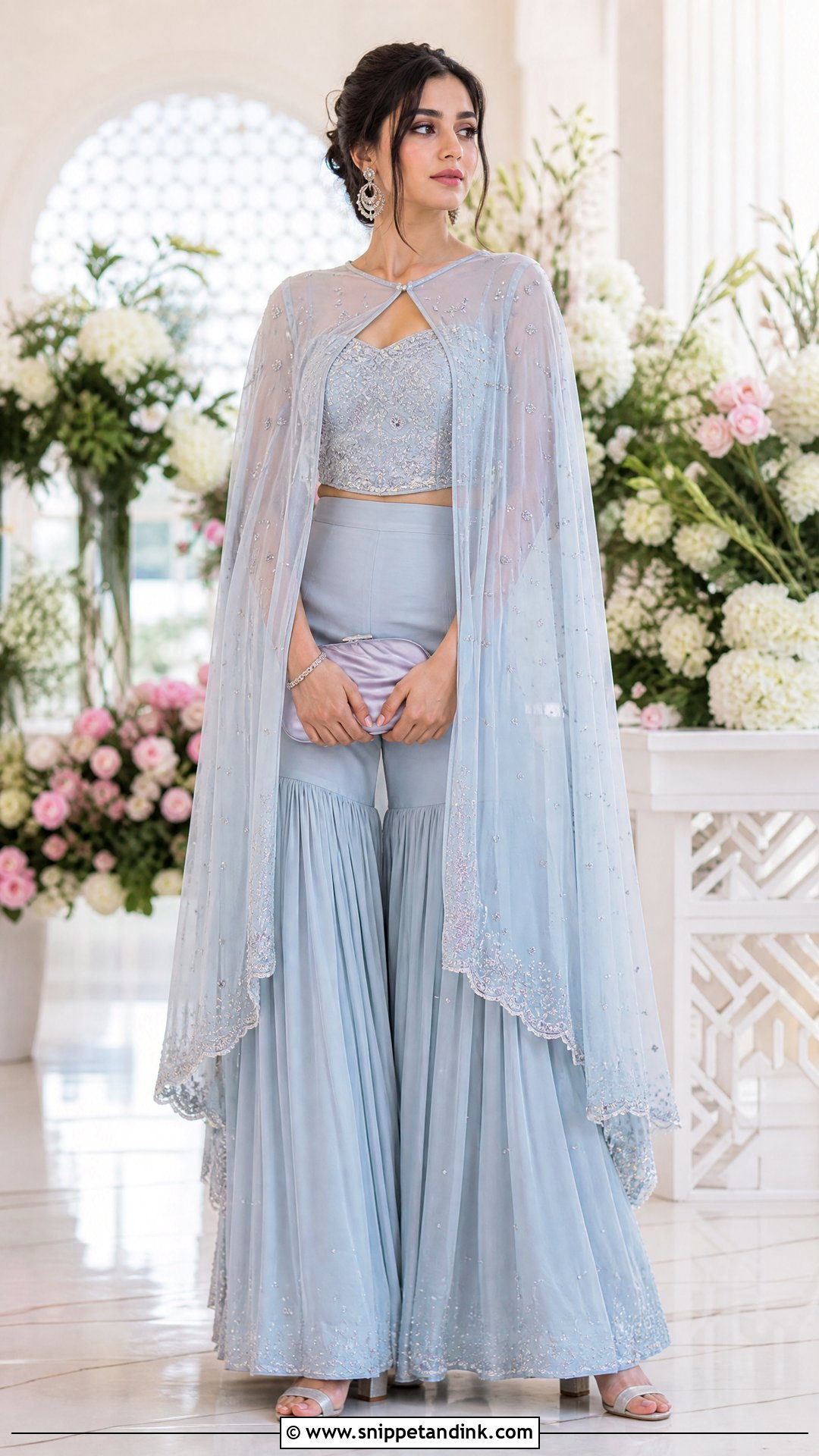
Organza is crisp and sheer, so a cape in it lets the fitted layers show through instead of swamping you. Start with high-waisted sharara pants and a tonal embroidered blouse, then add a cape with a delicate border or scattered beadwork. One fitting note: organza edges can scratch at the neck, so I ask for a soft binding along the neckline. A soft updo stops hair tangling in the cape. It’s lovely for spring and summer weddings, when velvet or heavy brocade would be too warm.
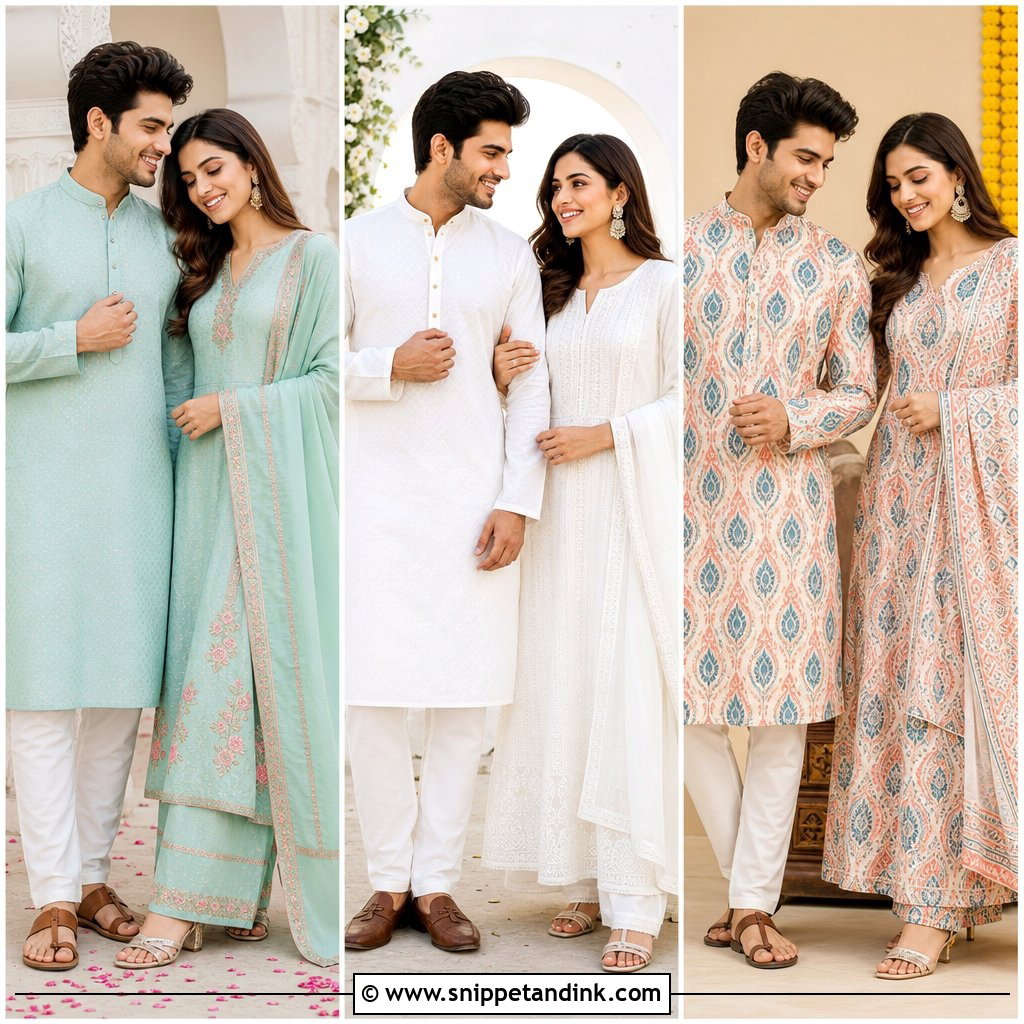

20. High-Low Kurta And Cigarette Pants Indowestern Wedding Outfit
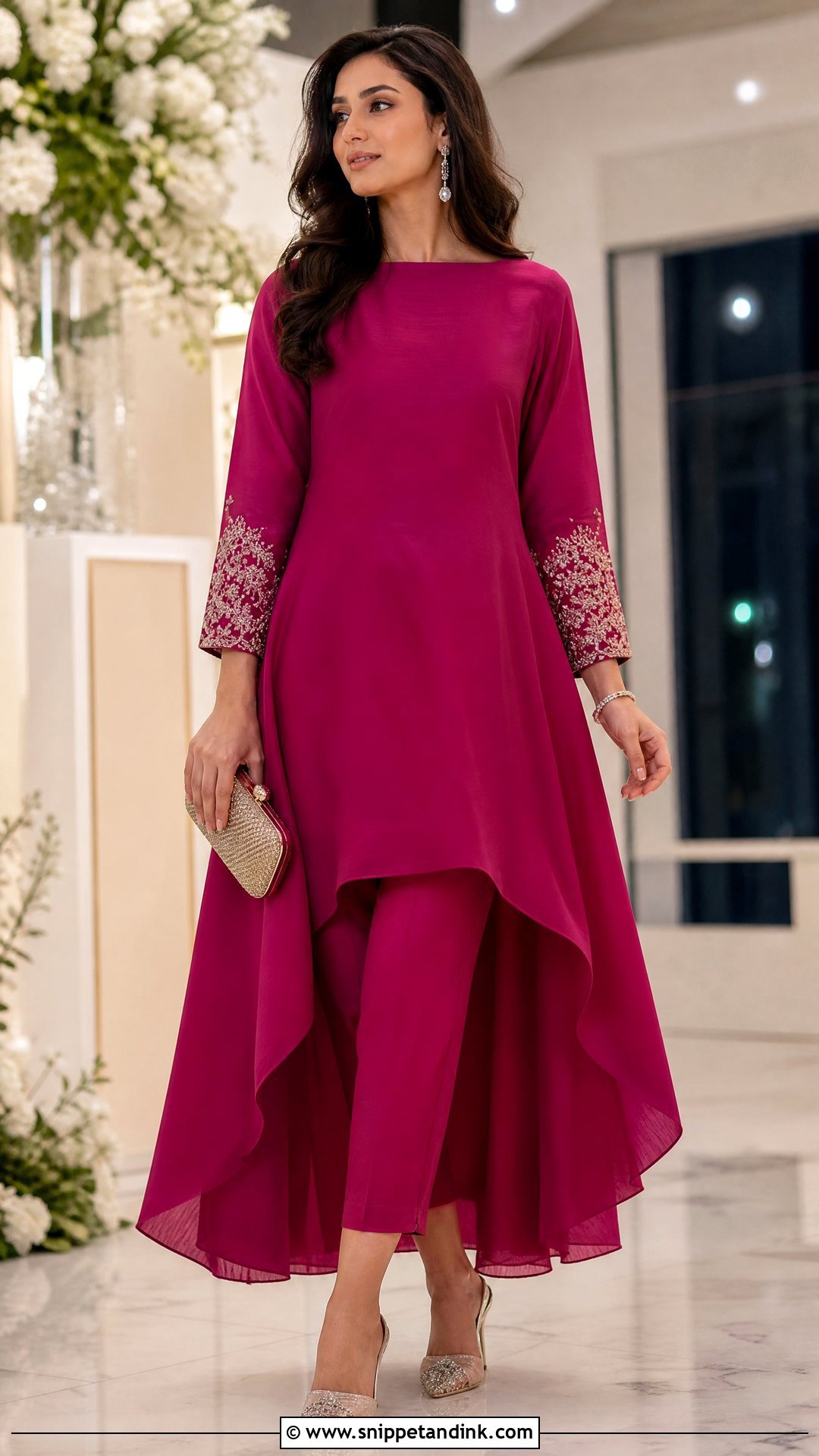
Set the front hem at the knee and the back hem toward the calf or ankle, and the kurta moves like a dress while the pants keep things precise. Fitted cigarette pants keep the focus on the upper layer. Embroidered cuffs, a beaded neckline or a contrast border is enough detail, with no dupatta needed. The open front creates a vertical line that flatters most heights. Pointed pumps keep the shape streamlined for wedding lunches and engagement parties.
21. Ruffle Saree And Belt Indowestern Wedding Outfit
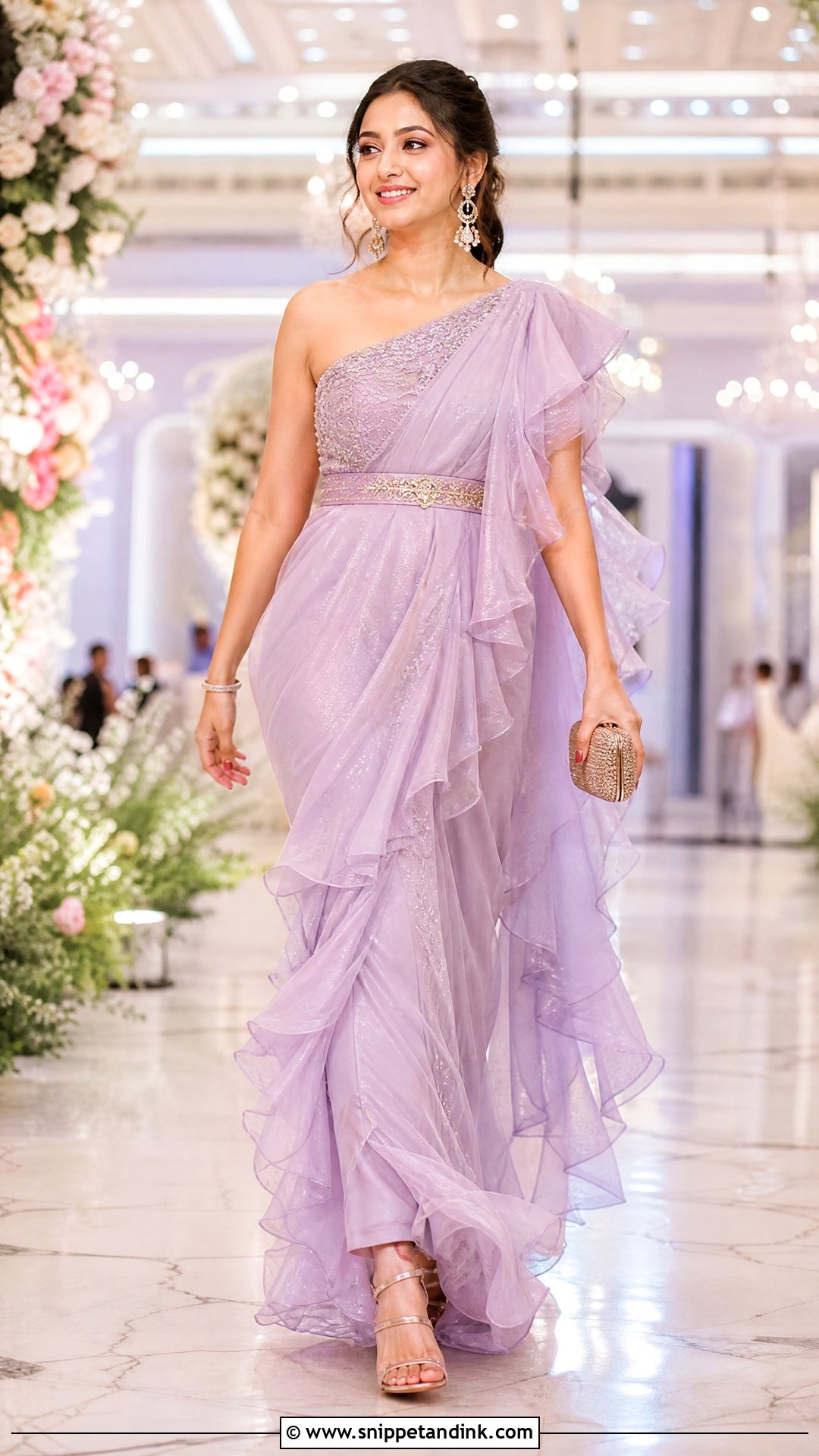
Ruffles belong along the border, not all over. A saree ruffled throughout looks fussy and adds bulk, while a ruffled edge on a light pre-stitched or hand-draped saree just moves. Pair it with a clean fitted blouse in a square, halter or one-shoulder neckline, and a slim embroidered belt that secures the pallu. Keep bracelets minimal and the clutch small. It shines at sangeet nights and receptions, where you’ll be photographed mid-dance.
22. Banarasi Jumpsuit Indowestern Wedding Outfit
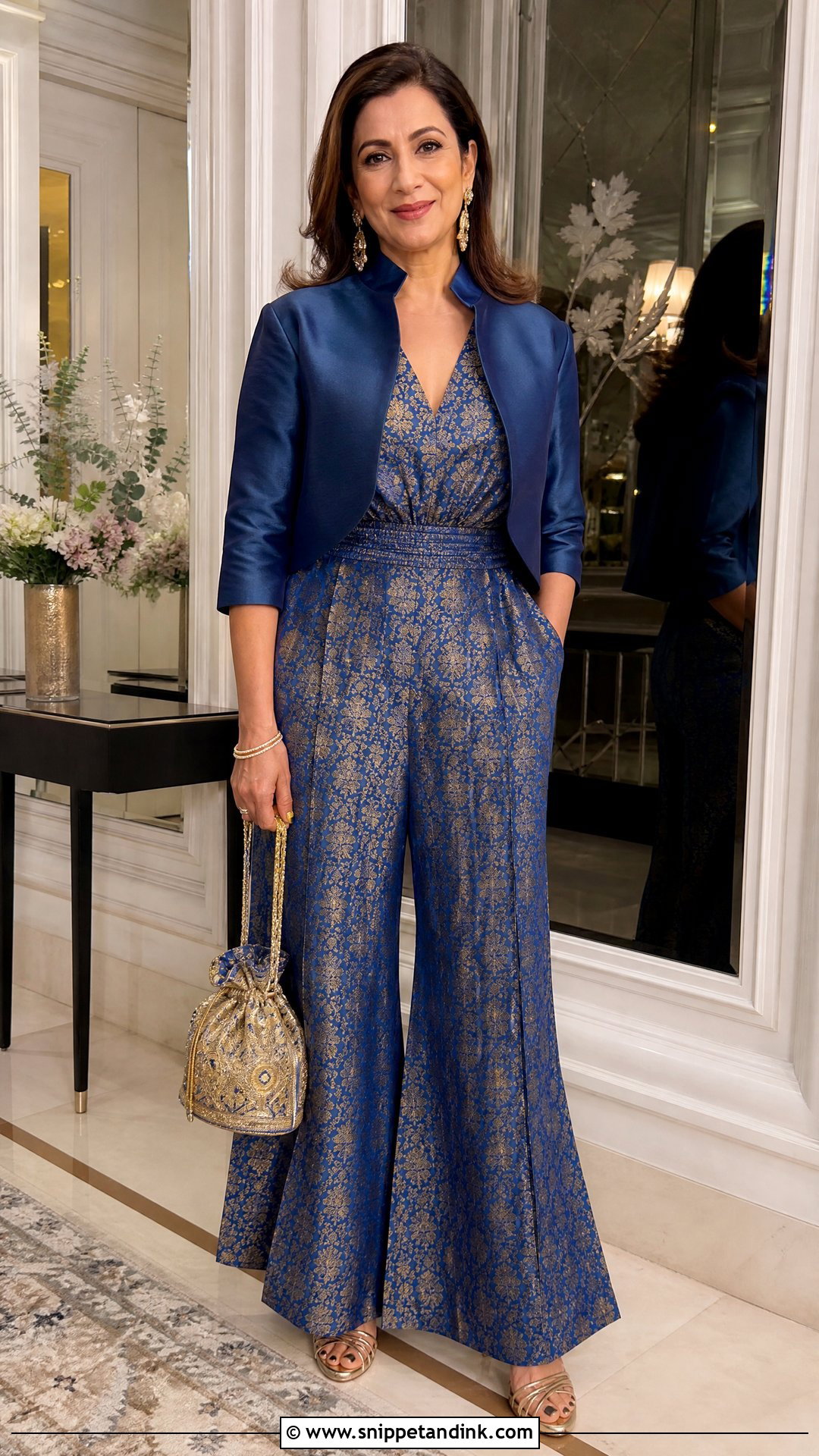
Banarasi weave carries its own pattern, so a jumpsuit cut from it needs clean construction rather than added embroidery. Look for a defined waist, a tailored bodice and straight or wide legs. Banarasi silk is fairly stiff, which helps the shape but means the fit at the hip has to be right; it won’t drape kindly over a tight spot. A solid silk cape or cropped jacket breaks up the pattern, and a potli links the modern shape back to tradition. Guests of most ages wear this comfortably to engagement parties and formal dinners.
23. Long Jacket And Palazzo Pants Indowestern Wedding Outfit
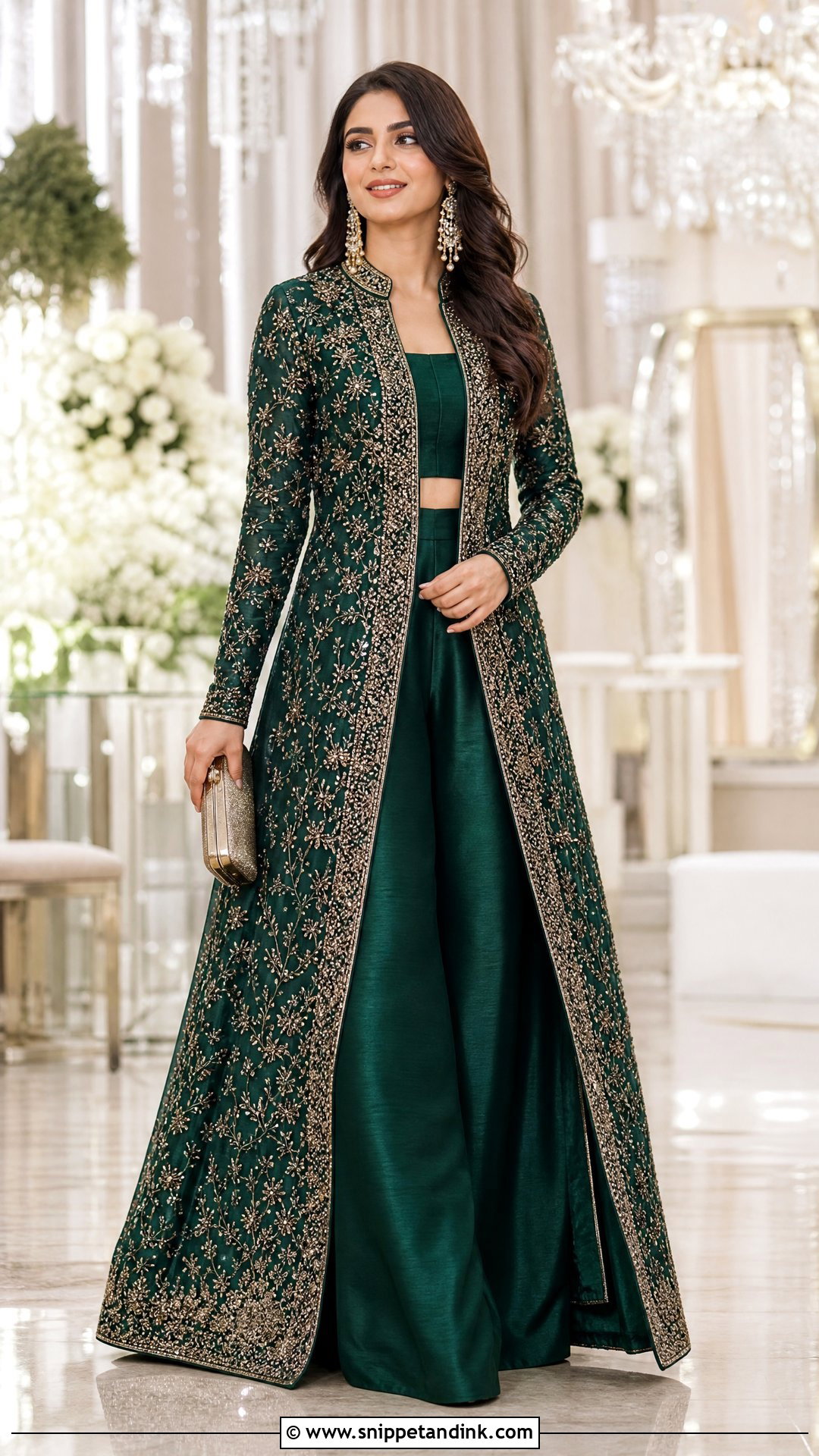
A long jacket over palazzos draws one unbroken vertical line. Use fluid high-waisted trousers and a blouse in the same color, then a long jacket with side slits so it opens as you walk. Embroidery along the front edges and cuffs frames the body without bulk, and platform heels hidden under the pants add height. One color head to toe lengthens; a contrasting jacket says more. It’s a warm outfit, so I’d save it for receptions and cooler venues.
24. Embroidered Co-Ord Indowestern Wedding Outfit
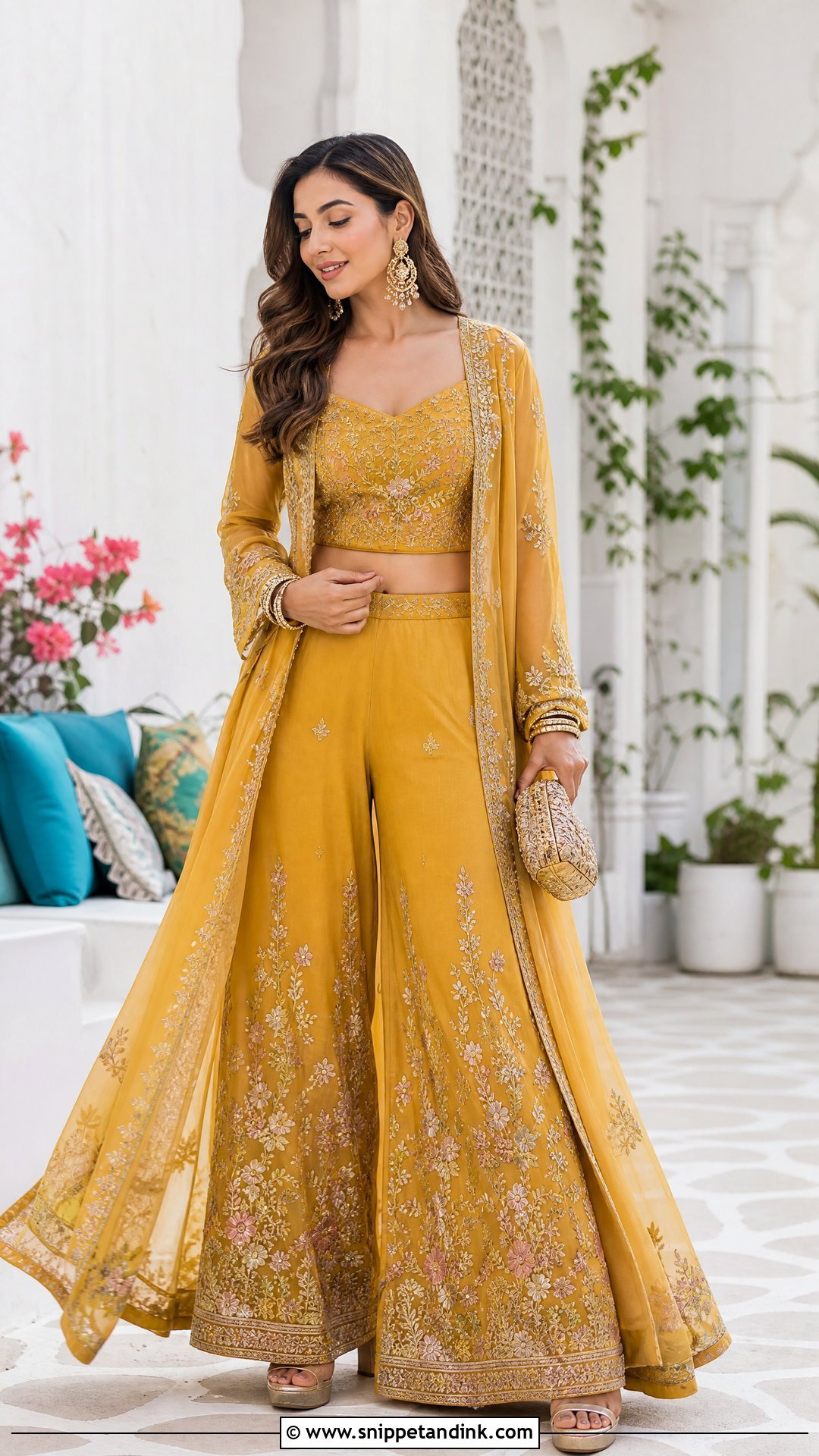
Co-ords are the uncomplicated route to a polished fusion look. A fitted or boxy top with wide-leg trousers, cut in Indian fabric with embroidered borders, mirror accents or block prints, feels festive straight away. Add a long sheer overlay for a formal dress code or extra coverage. Keep the trouser hem close to the floor, with heels high enough to stop it bunching at the ankle. For destination weddings they’re the easiest pieces to pack, and both wear again afterwards with plainer clothes.
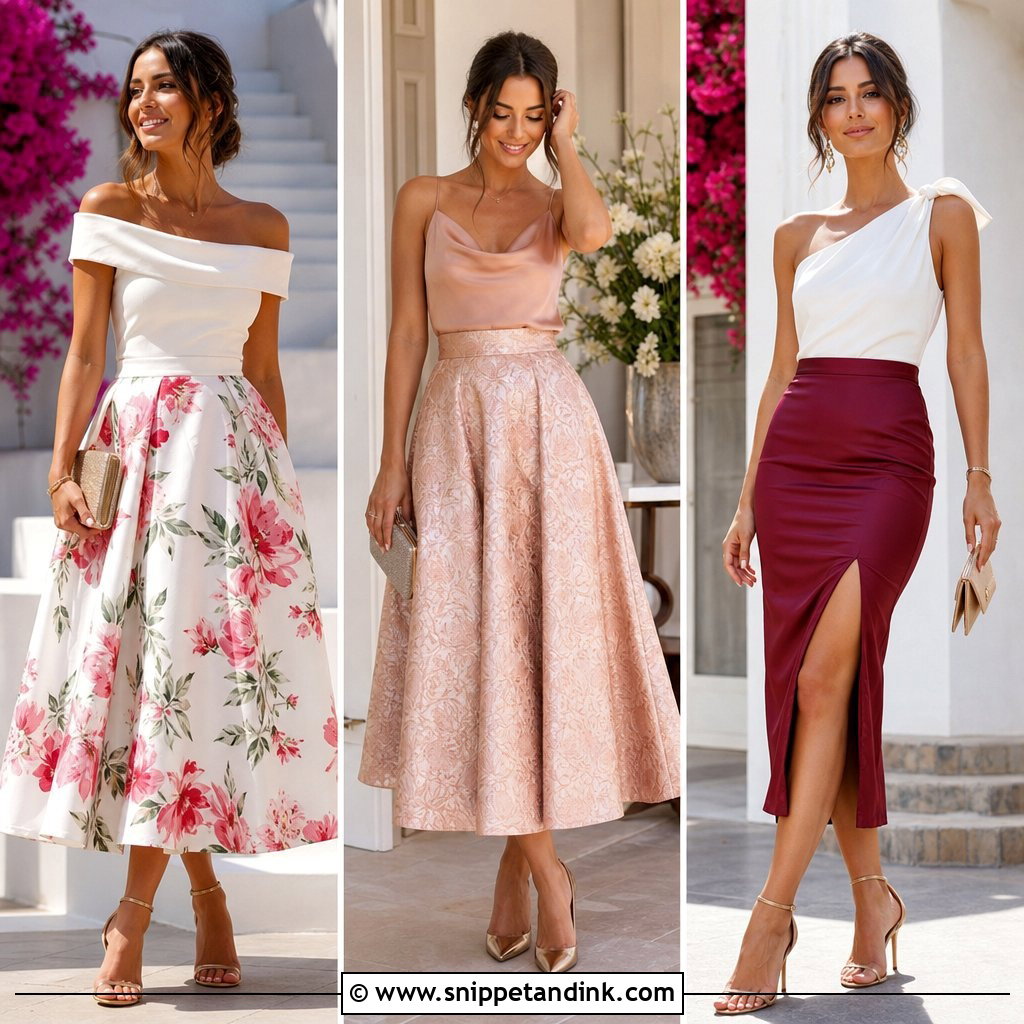
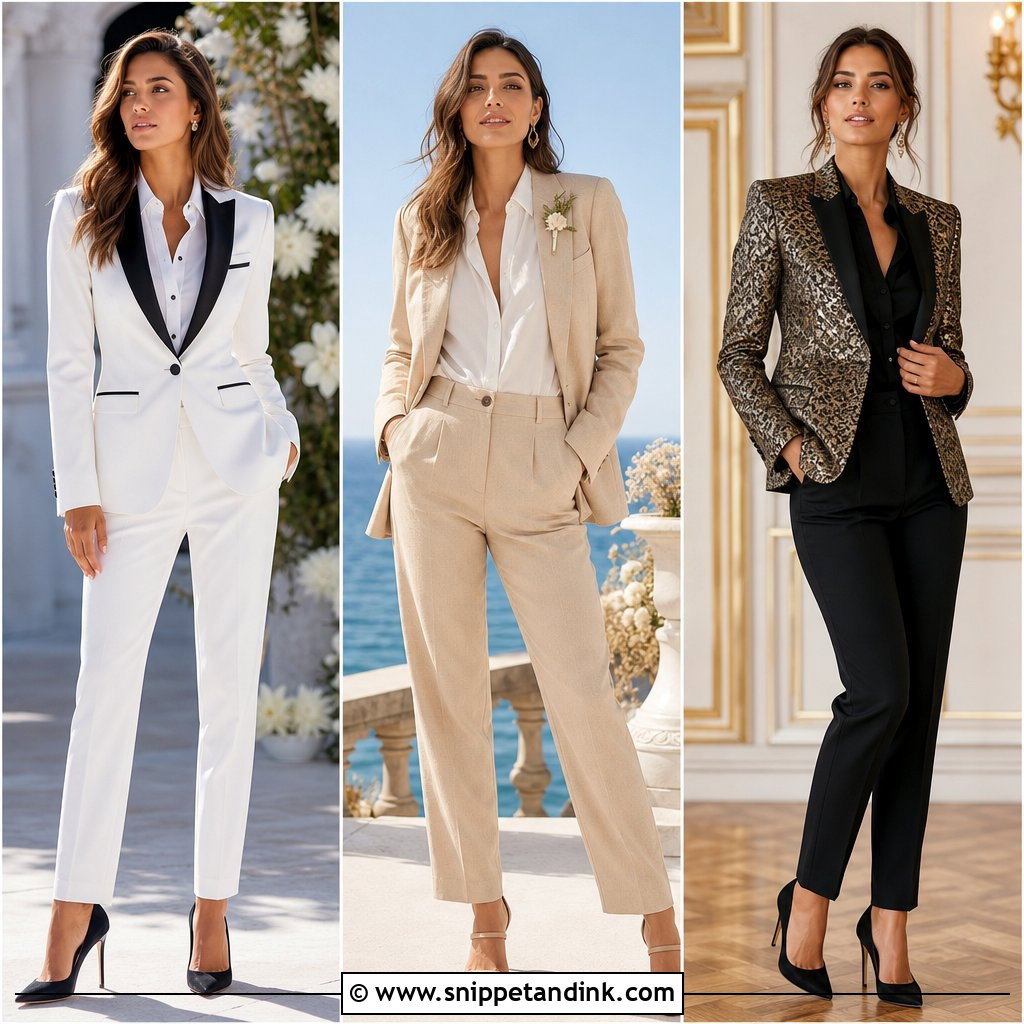
25. Tiered Skirt And Halter Blouse Indowestern Wedding Outfit
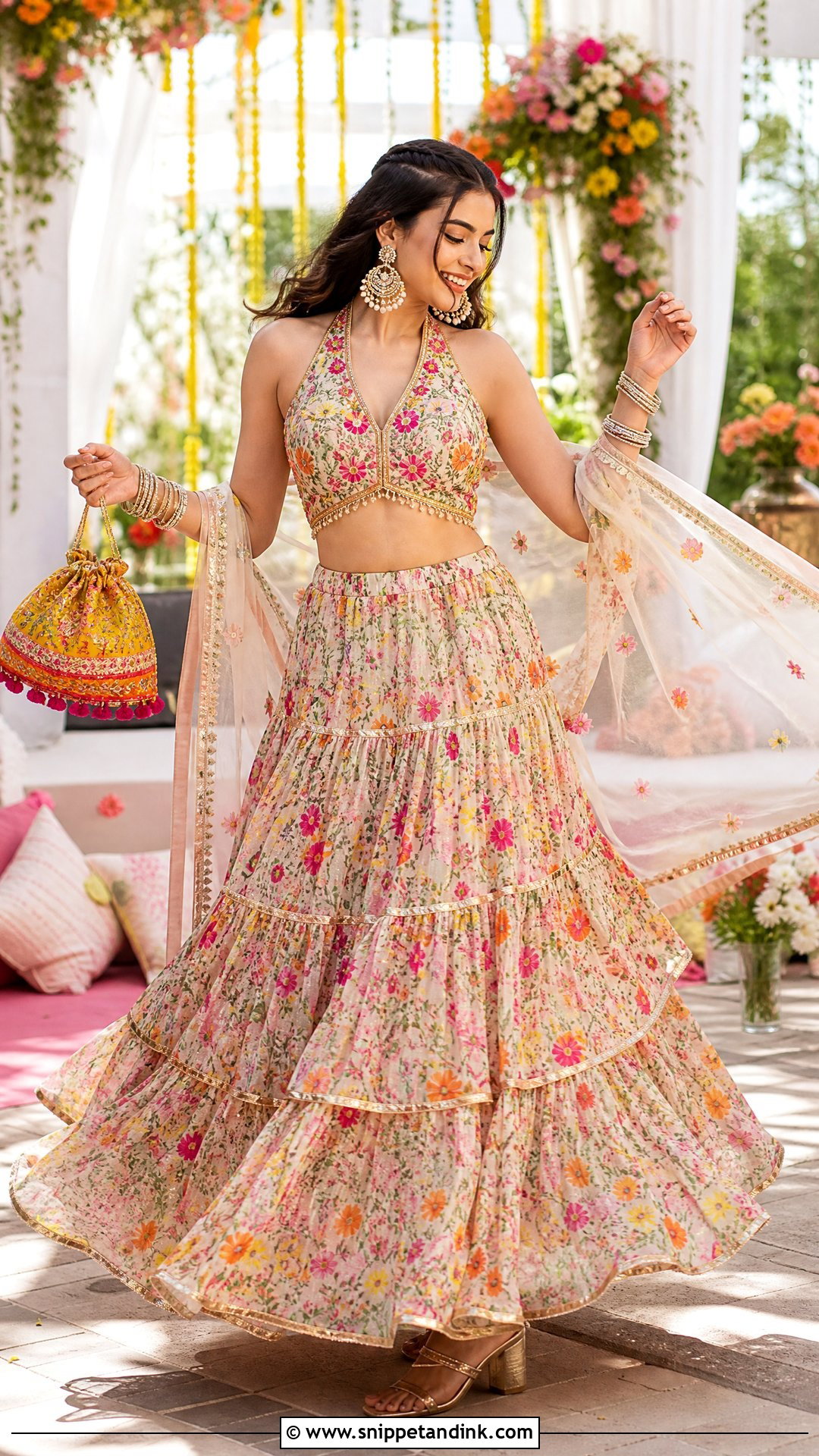
A tiered skirt carries a lot of volume, so the halter on top needs to be properly supportive. A halter held up only by a neck tie gets uncomfortable over a long evening, and I’d ask for a back band or hook. Add a cropped jacket, a sheer cape or a dupatta across both shoulders if you’d like coverage. Platform sandals or block heels lift the tiers for dancing. Floral colors suit a daytime mehndi and jewel tones an evening sangeet, and a braided ponytail suits the playfulness.
Wearing Family Kundan and Polki With a Modern Cut
Many brides and guests want to wear an heirloom set with a fusion outfit, and it usually works once you match the jewelry to the neckline rather than the color. A heavy choker needs a bare, open neck, so it suits off-shoulder blouses, corset tops and strapless saree gowns. It fights with capes, high necks and collared shirts. With those, wear only the earrings and a maang tikka, and carry the rest of the set’s weight in a single bracelet.
Old gold and uncut stones look warmer against ivory, champagne, emerald and deep red than against icy pastels. If your outfit is cool-toned, silver or diamond-look pieces will sit more comfortably, and the heirloom can come out for another function.
Colors and Coverage Worth Asking the Couple About
Guests sometimes forget that customs differ between families. Many brides wear red, so guests often avoid it, and some families prefer that guests skip black or all-white at auspicious ceremonies. Religious ceremonies can call for covered shoulders or a head covering. A short message to the couple or the planner before you buy saves an awkward evening.
Read the Invitation, Then Dress for the Function
Fusion works when traditional Indian details meet a cut that suits the function. Lighter shararas, co-ords and dhoti sets belong at daytime events, while saree gowns, jacket lehengas and embellished jumpsuits carry the evening. Pair a dramatic garment with quieter jewelry, choose shoes that survive hours of standing, and check whether the couple has asked for particular colors or traditional attire. An outfit you can move in will always photograph better than one you spend the night managing.
You'll Like These Ideas:





Leave a Reply