
A salwar suit lets a bride sit cross-legged through a long puja, dance at the sangeet and still look dressed for the photos, which is why I suggest one for at least one function in almost every wedding wardrobe I put together. The range is wide: red Anarkalis, pastel sharara sets and plenty of other wedding salwar looks sit somewhere between a lehenga and everyday ethnic wear. What decides the result is less the colour than three practical things: how the fabric behaves after six hours, how heavy the embroidery is, and how the dupatta is pinned. The 25 suits below are grouped by colour and cut, and for each one I’ve noted what I’d check before you commit.
Which Bottom Cut Suits Floor Rituals, Dancing or a Long Reception?
When a bride brings me a screenshot of a suit, the first question I ask isn’t about colour. It’s what she’ll be doing in it. The bottom cut decides how you sit, walk and dance far more than the kurta does.
- Churidar is cut longer than your leg so it gathers at the ankle. It’s neat for standing ceremonies but tight around the knee when you sit cross-legged on a mandap.
- Patiala and pleated salwar hold the most fabric and are the easiest to sit on the floor in. They suit a mehndi, a dholki or a gurdwara ceremony.
- Sharara flares from the hip, so it moves well at a sangeet. Hem it to your shoe height, not barefoot, or you’ll step on it all night.
- Gharara is fitted to the knee, which creases when you sit for long. I’d keep it for an engagement or reception.
- Palazzo pants are the most forgiving in heat and work for long daytime functions.
Fabric matters as much as cut. Georgette and crepe drape and travel well. Silk and brocade hold structure but mark with water and crease where you bend. Velvet is a winter fabric; in a crowded summer hall it becomes the reason a bride wants to change early. If you’re travelling for the wedding, I’d pack the velvet and brocade suits flat in a garment bag and keep the georgette ones folded.
Give the tailor enough time
Embroidered suits usually need two fittings: one before the embroidery is finalised, and one with the finished piece, your shoes and your jewellery. Hand zardozi and mirror work take weeks, so order early and wear the shoes you’ll dance in at every fitting so the hem is set correctly.
1. Red Bridal Anarkali Salwar Suit
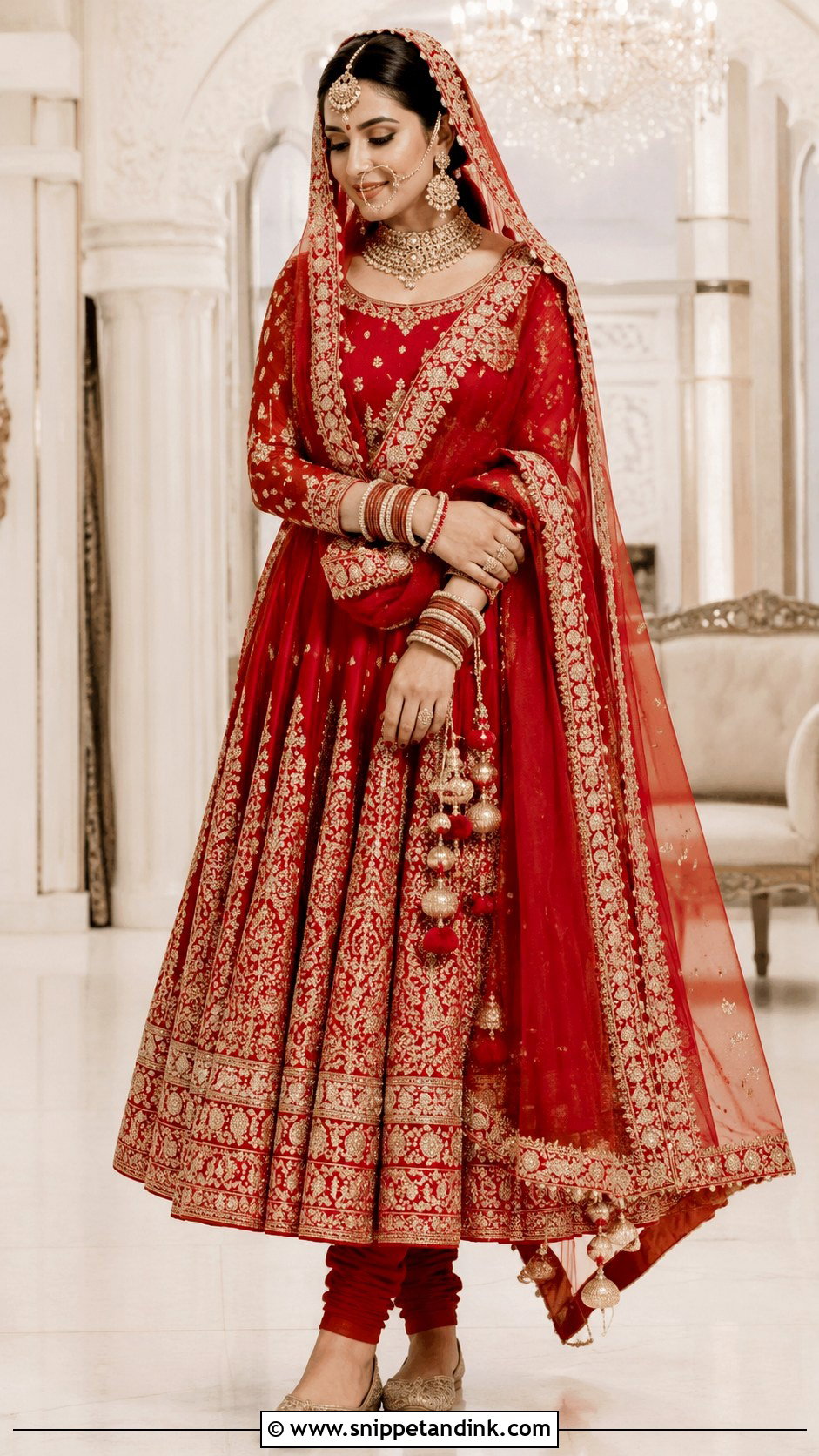
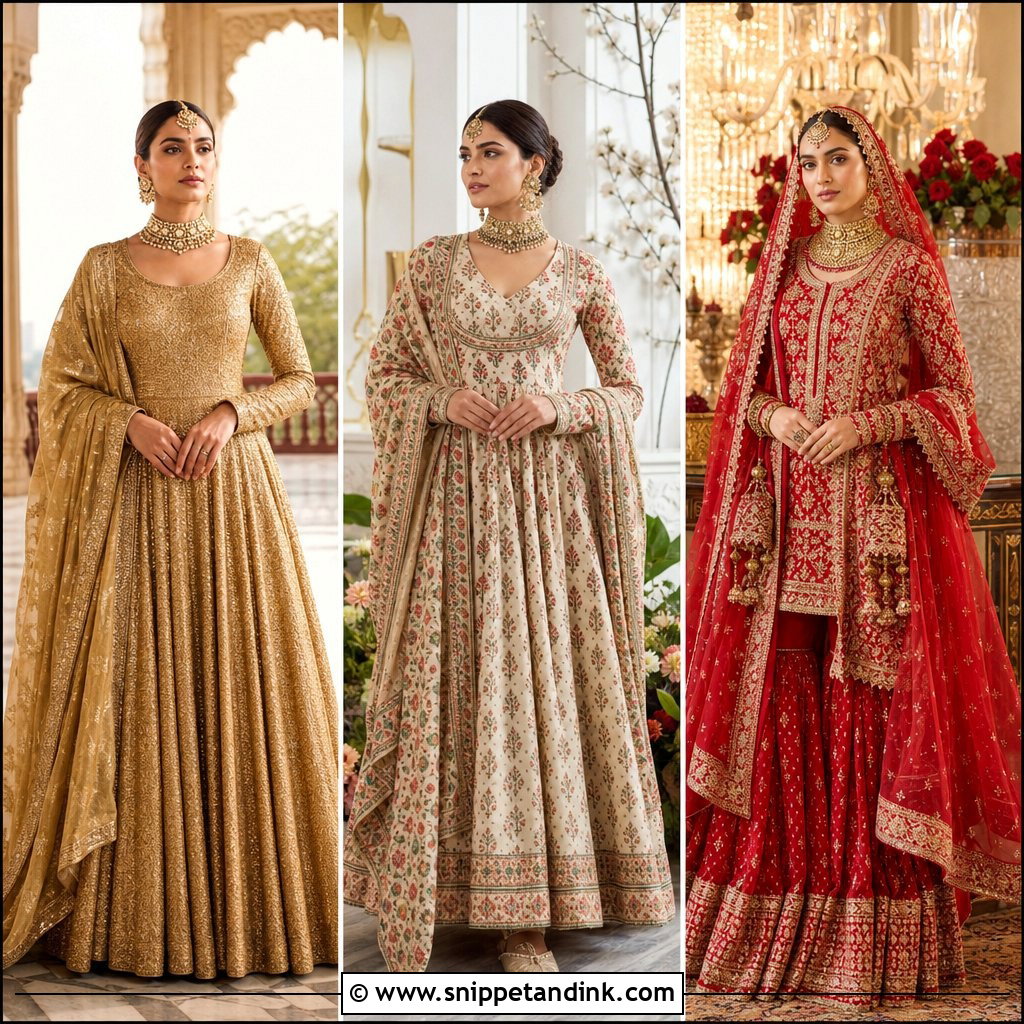
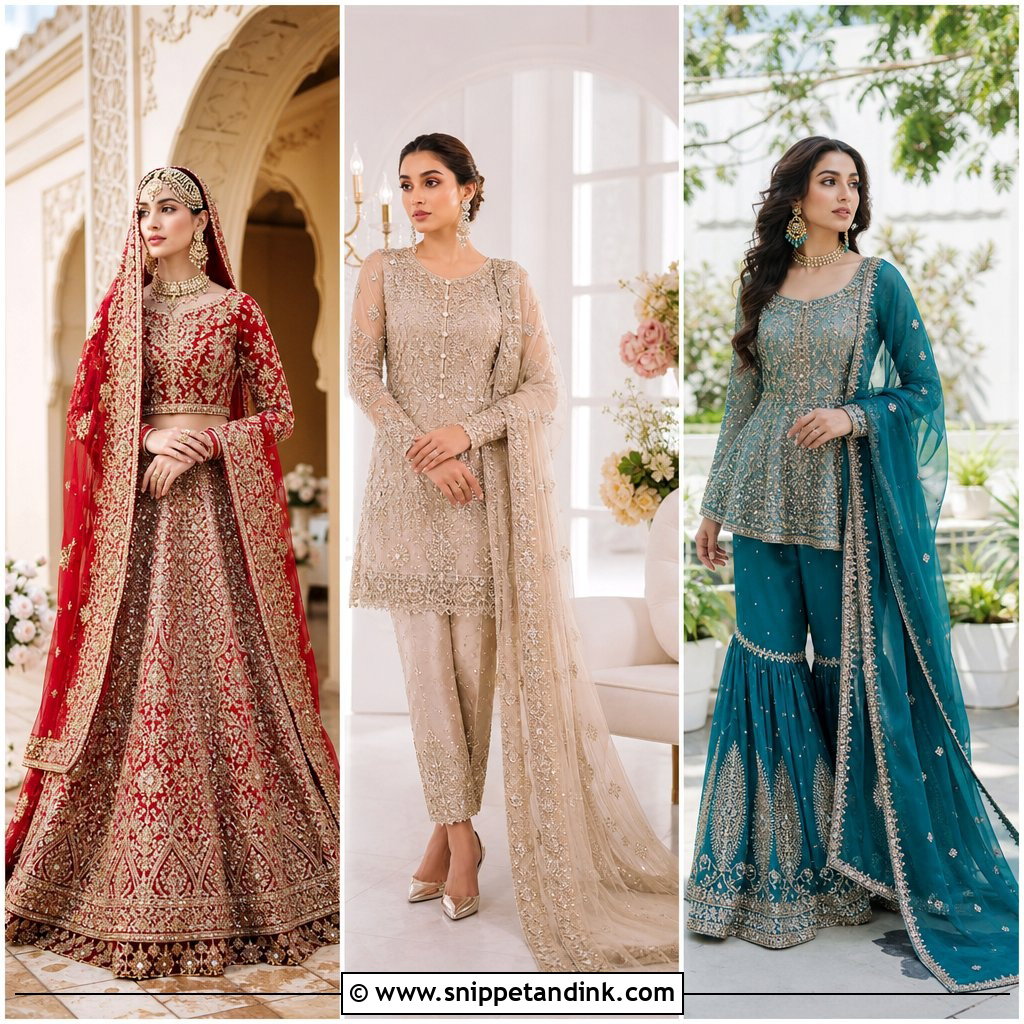
Red with a flared Anarkali is still the suit most families picture first, and it earns that place: the kalis spread when you turn, so the outfit reads as bridal even from the back of a hall. My one warning is weight. A full-length georgette or velvet Anarkali with zardozi at the hem pulls on the shoulders by the end of the pheras, so I ask the tailor to put the heaviest work below the knee and keep the yoke lighter. Have the churidar cut long enough to gather in soft rings at the ankle; a churidar that sits flat looks like leggings in photos. Kundan, a maang tikka and juttis finish it without competing with the embroidery.
2. Maroon Bridal Sharara Salwar Suit
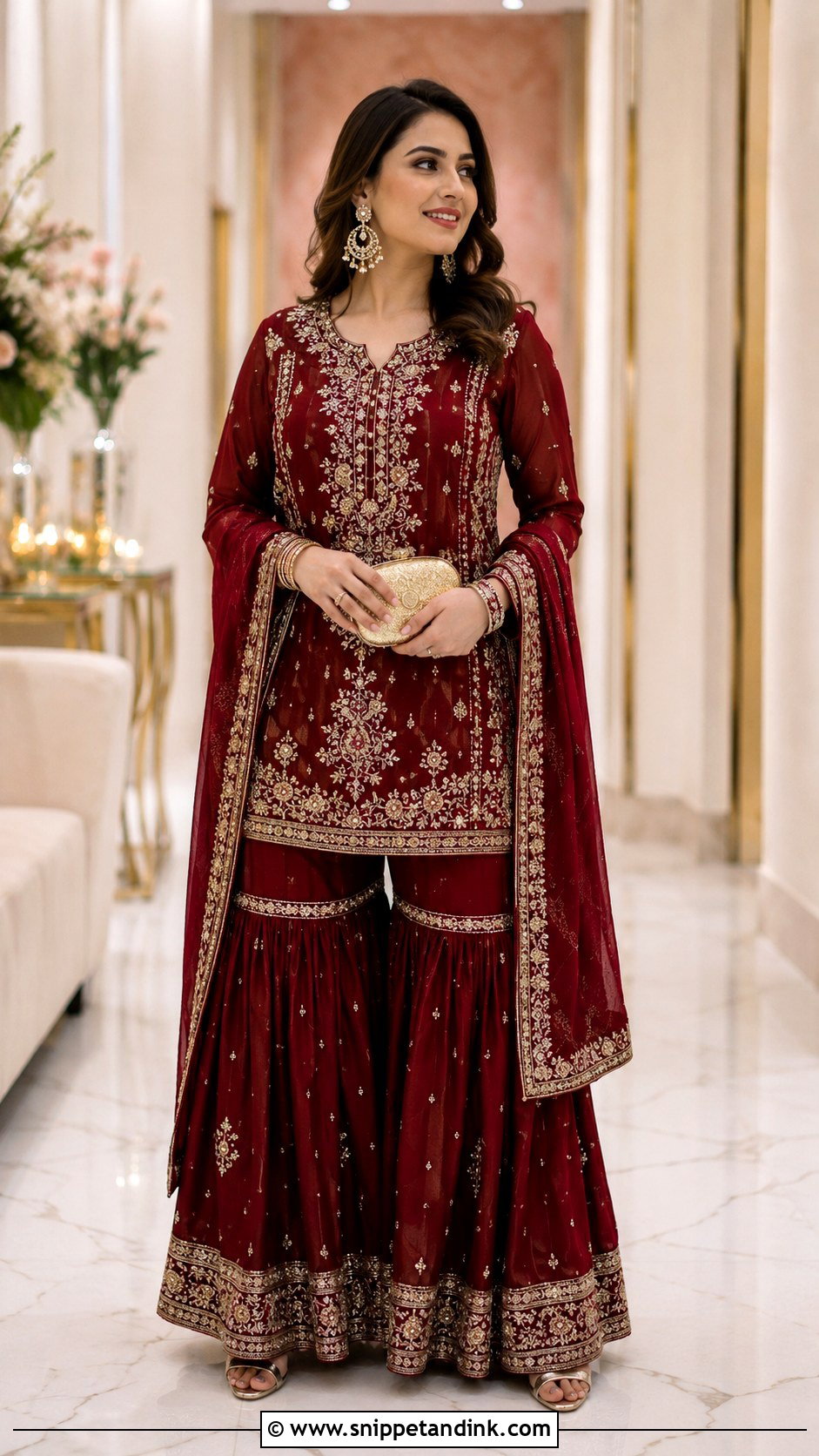
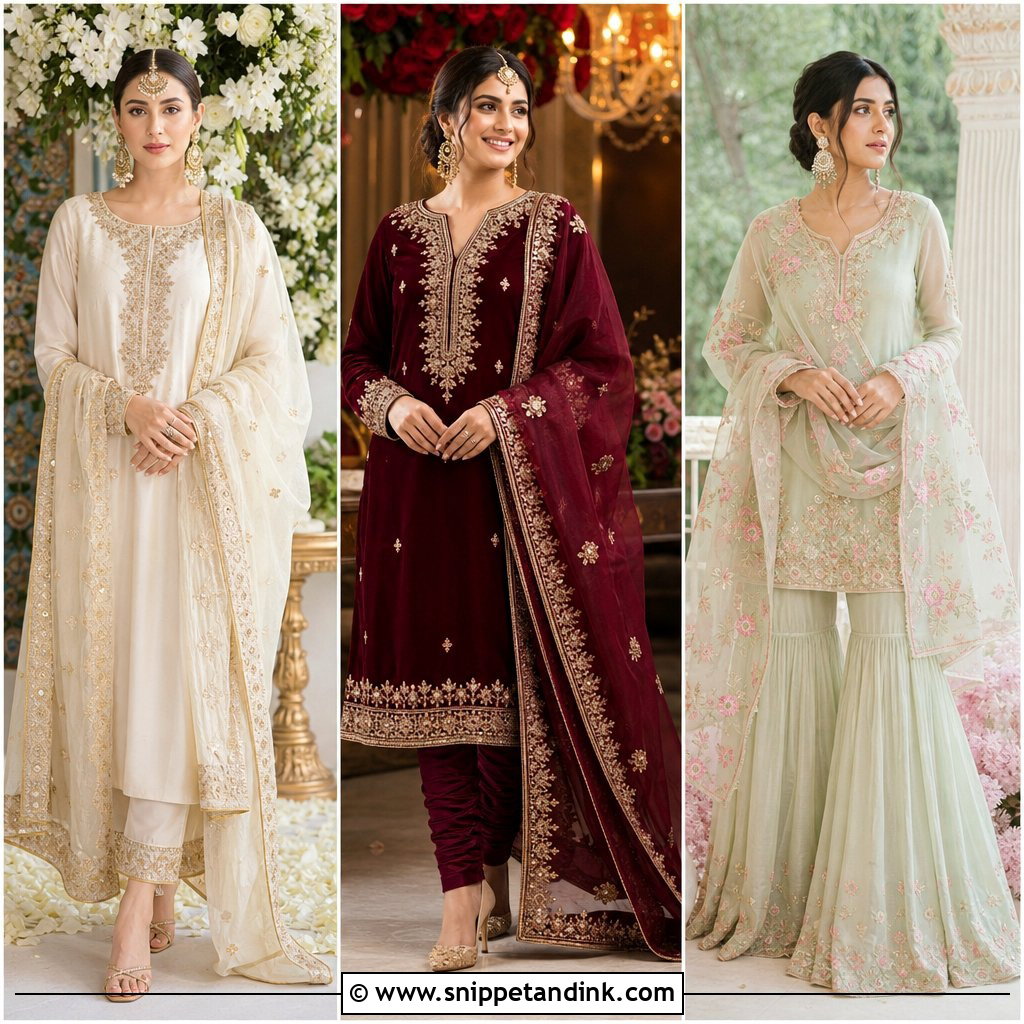
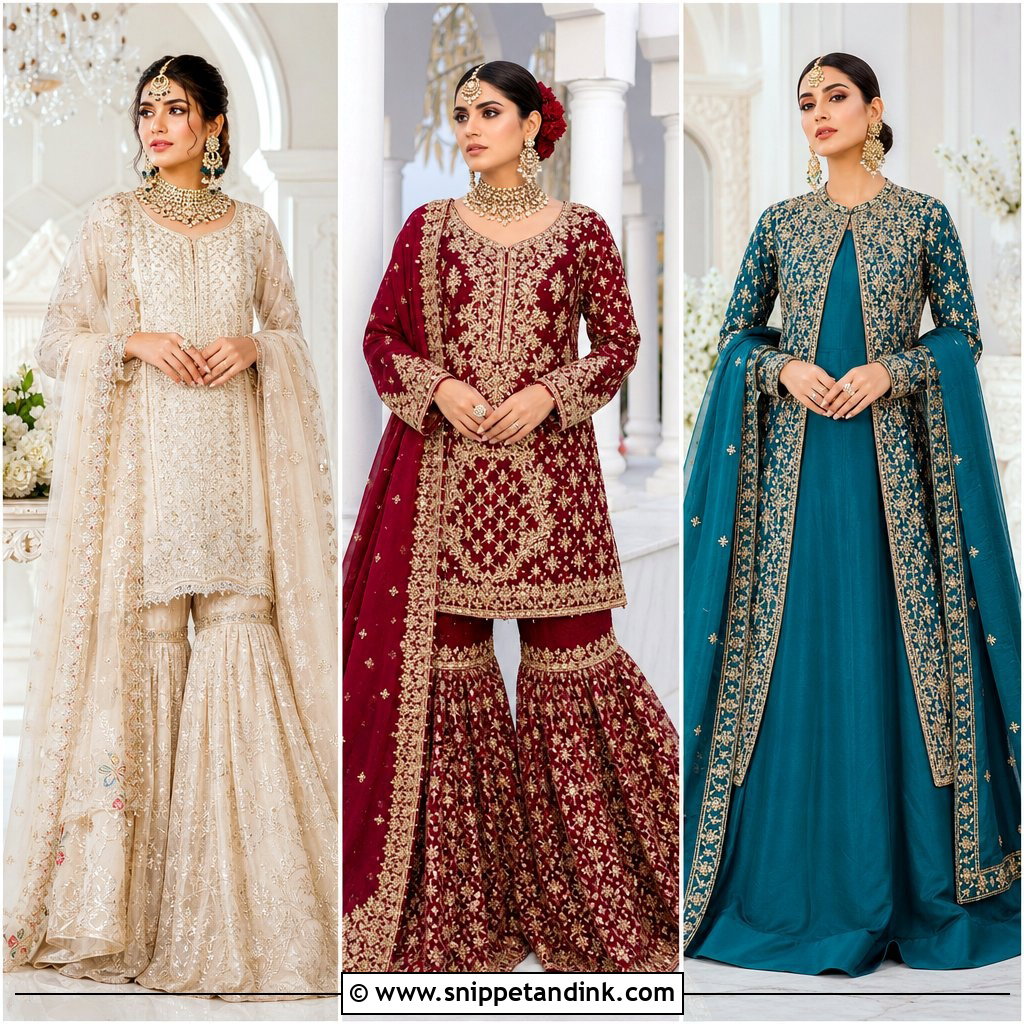
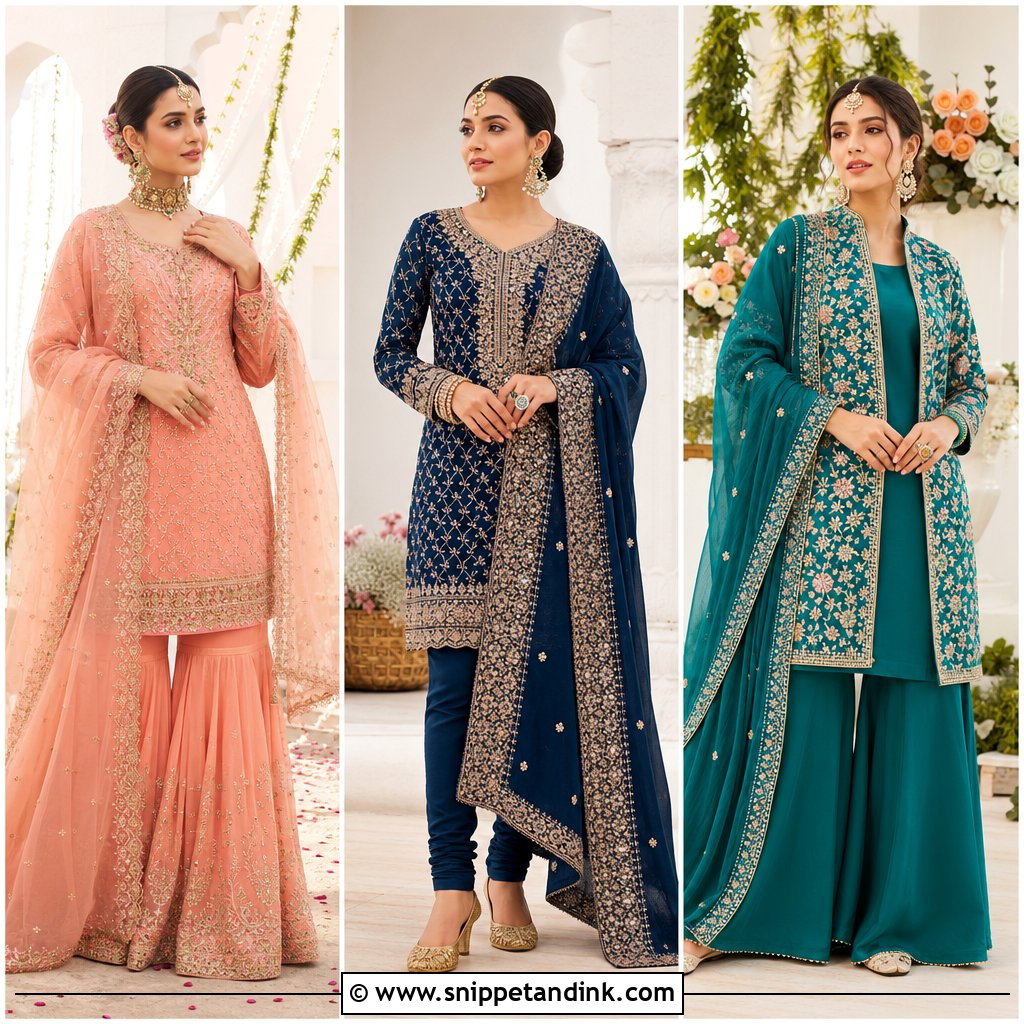
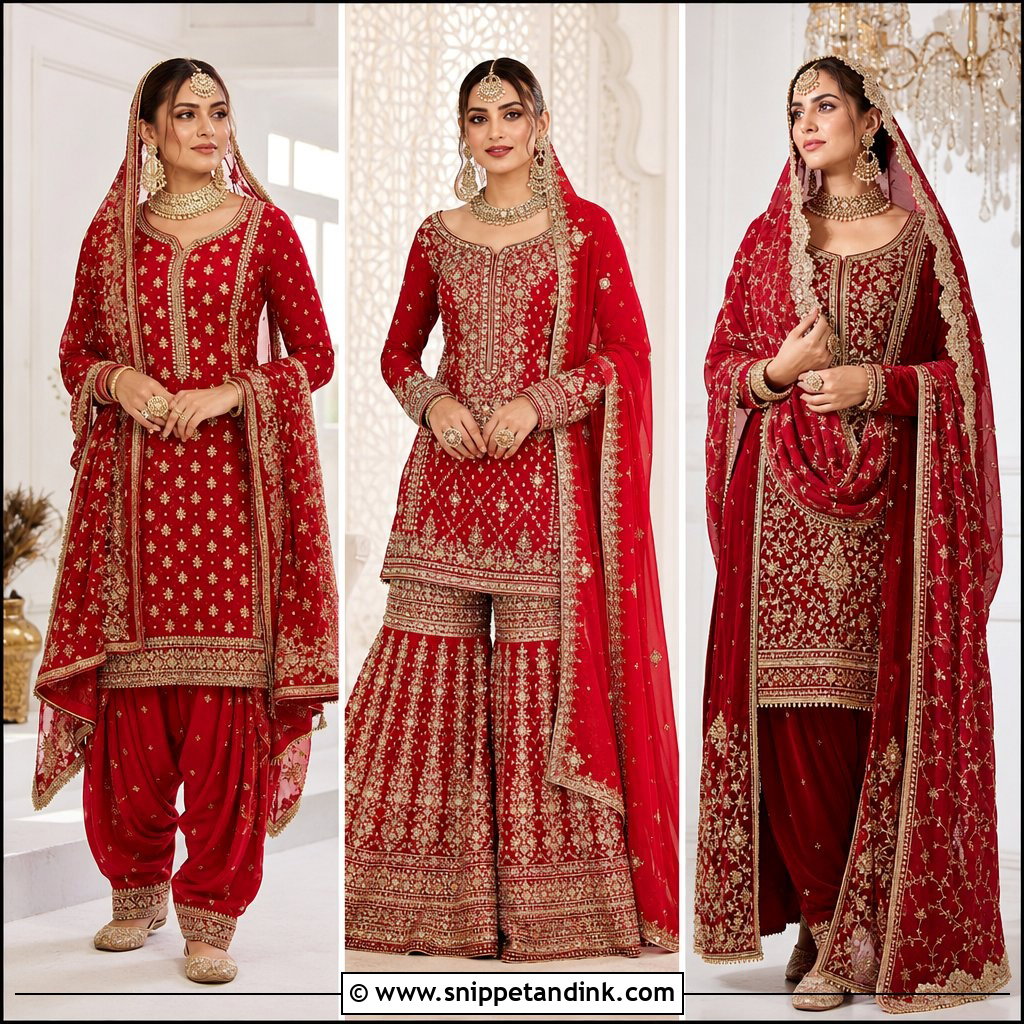
Maroon reads richer than red under warm evening lights, and a sharara gives you the swing of a lehenga without the can-can. The flare starts at the hip, which means the kurta needs to stop just below the waist or a little lower; anything longer swallows the shape. Velvet and brocade both suit antique gold work here, though velvet in maroon shows every crease from sitting, so carry a hand steamer to the venue. Pin the bordered dupatta on one shoulder if you’ll be greeting guests, because a two-arm drape keeps sliding every time you hug someone. Chandbalis and one statement ring are plenty.
3. Pink Bridal Gharara Salwar Suit
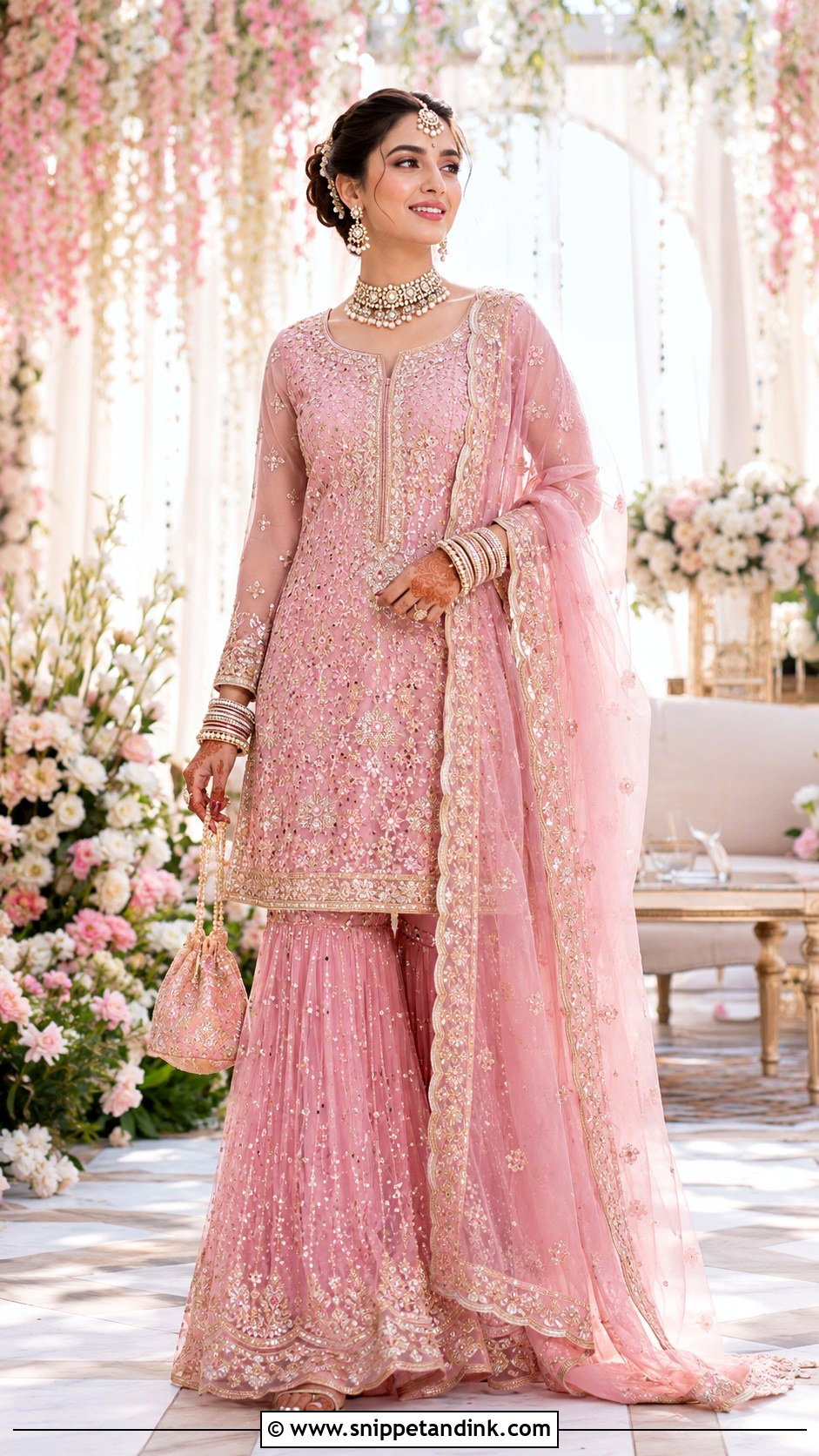
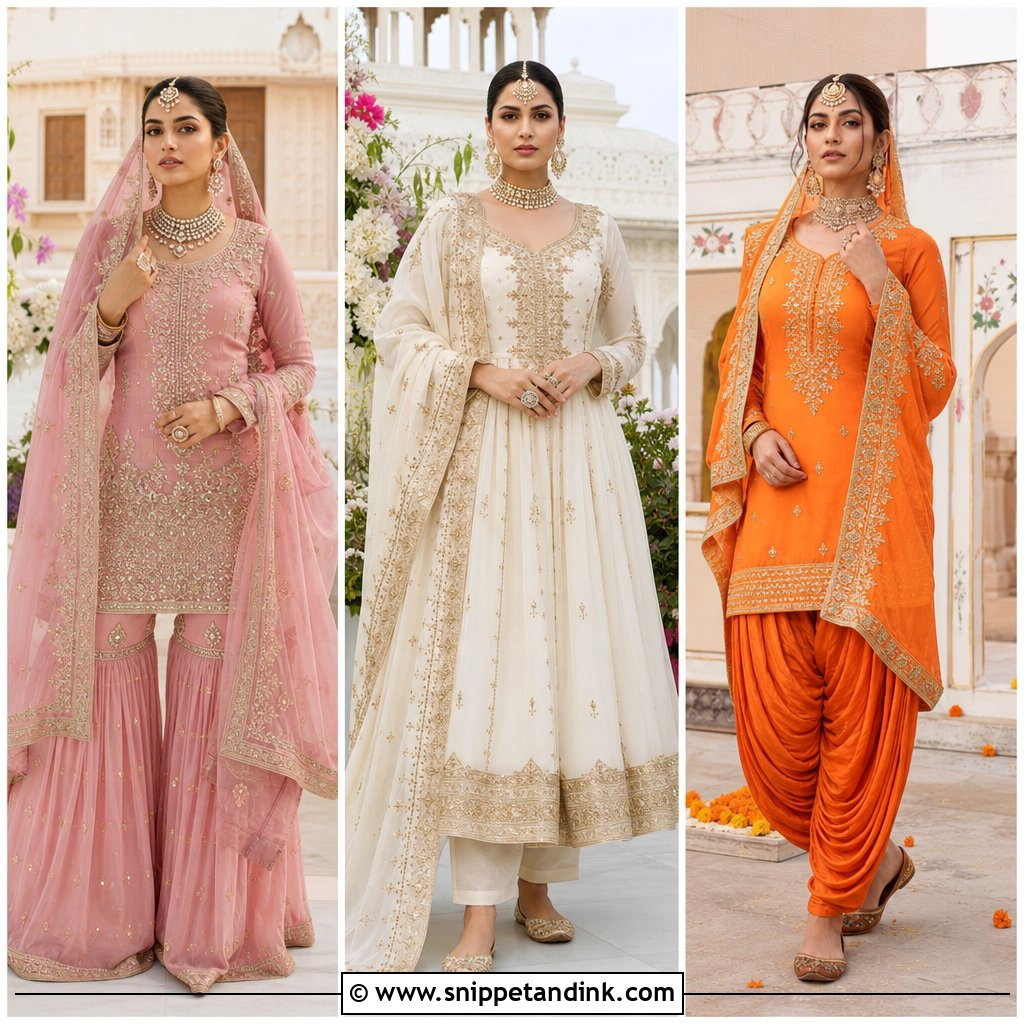
The gharara is fitted to the knee and then bursts out, and that joint at the knee is where I look first in any sample. Good makers cover it with a gota or embroidered band; a raw seam there tells you the rest is rushed too. Blush suits a day ceremony, rani pink holds its own at night. Keep the embroidery at the hem, neckline and dupatta border so the knee band has room to show. A sheer dupatta scattered with motifs, polki or pearls and soft makeup keep the pink from turning sugary. I’d skip this cut if you have a lot of floor sitting ahead, since the fitted thigh section creases hard.
4. Ivory Bridal Palazzo Salwar Suit
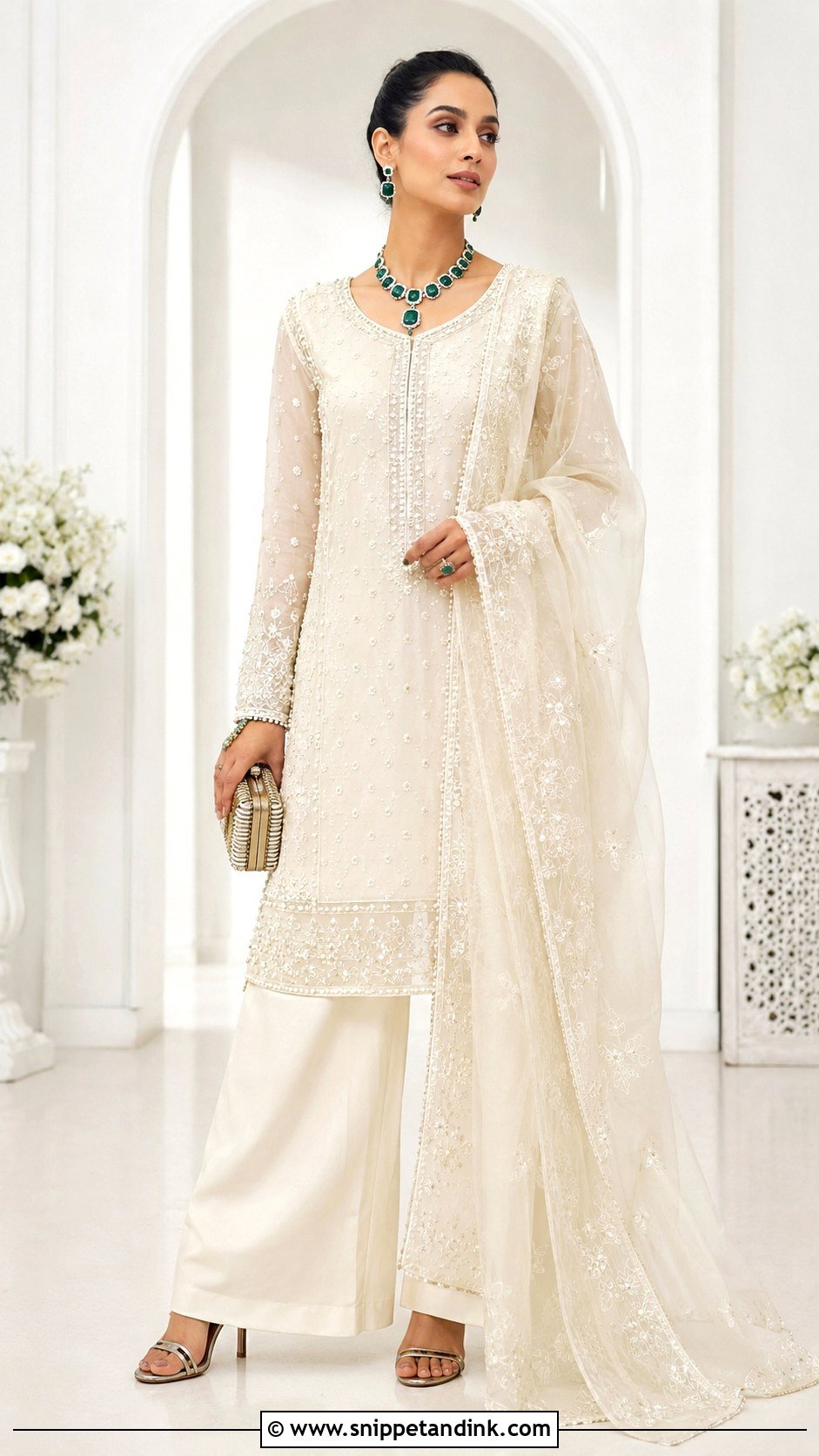
Ivory with palazzos is the suit I suggest to brides who hate feeling dressed up but still need to look like the bride. Plain ivory goes flat in photos, so it needs surface interest: pearl work, chikankari, mukaish or fine mirror pieces all catch light without adding colour. Palazzos in a fluid fabric fall better than stiff ones; if the bottoms are crepe and the kurta is organza, sit in them at the fitting to see whether they cling. An organza dupatta with a scalloped edge adds the bridal layer, and emerald or gold jewellery gives the contrast ivory lacks on its own.
5. Green Bridal Patiala Salwar Suit
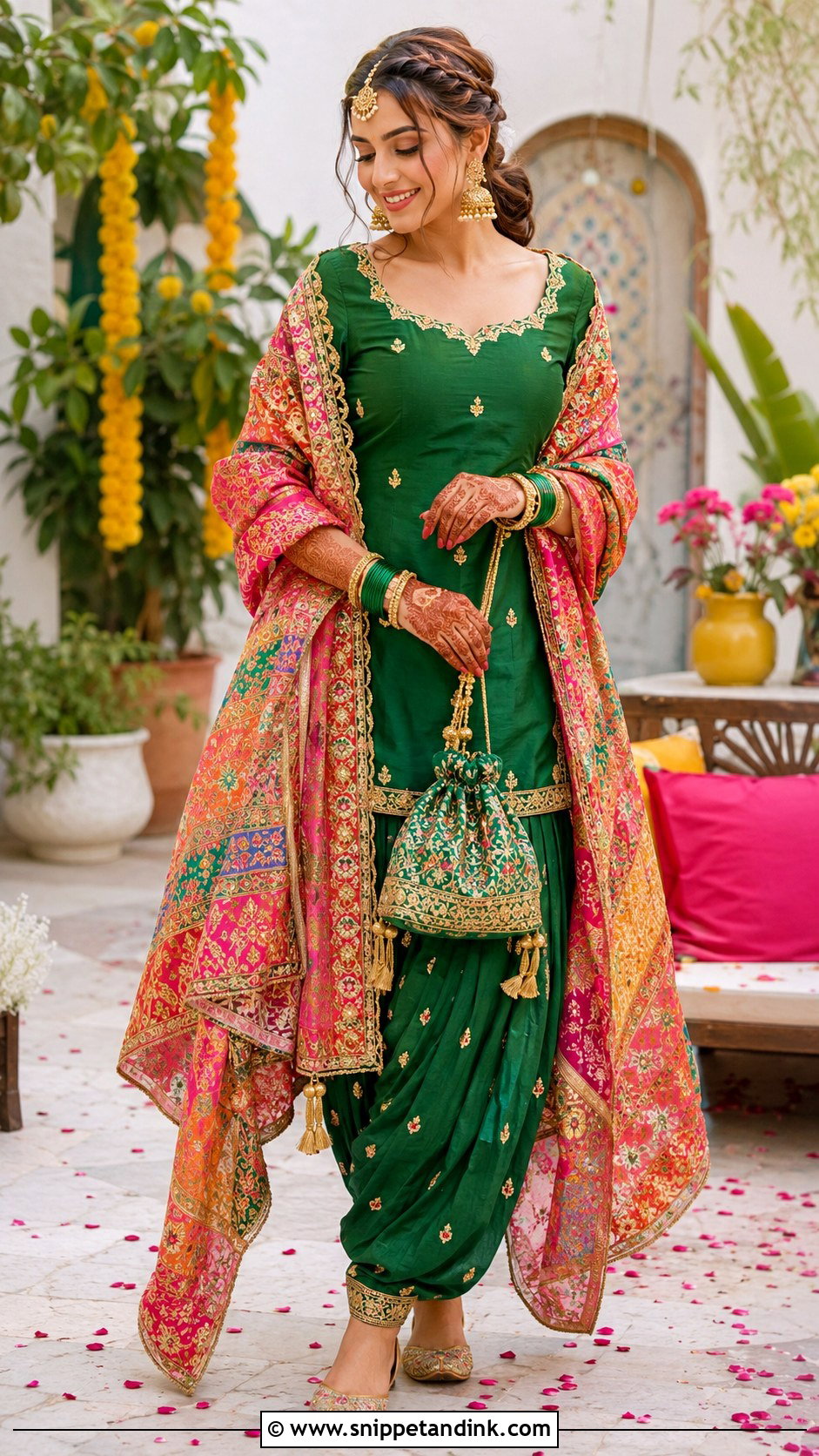
Patiala salwars take a surprising amount of fabric in their pleats, which is why the green bridal Patiala salwar suit moves so well at a dholki and sits so comfortably on the floor. For a bride, swap casual cotton for silk, brocade or crepe and let the work go on the kurti and dupatta: phulkari, gota patti and mirror all suit this cut. Watch the length of the kurti. A short one shows off the pleats; anything past mid-thigh hides the whole point of a Patiala. Add a passa, gold jhumkas and juttis, and you have a mehndi or daytime outfit you can wear for hours.
6. Gold Bridal Straight Cut Salwar Suit
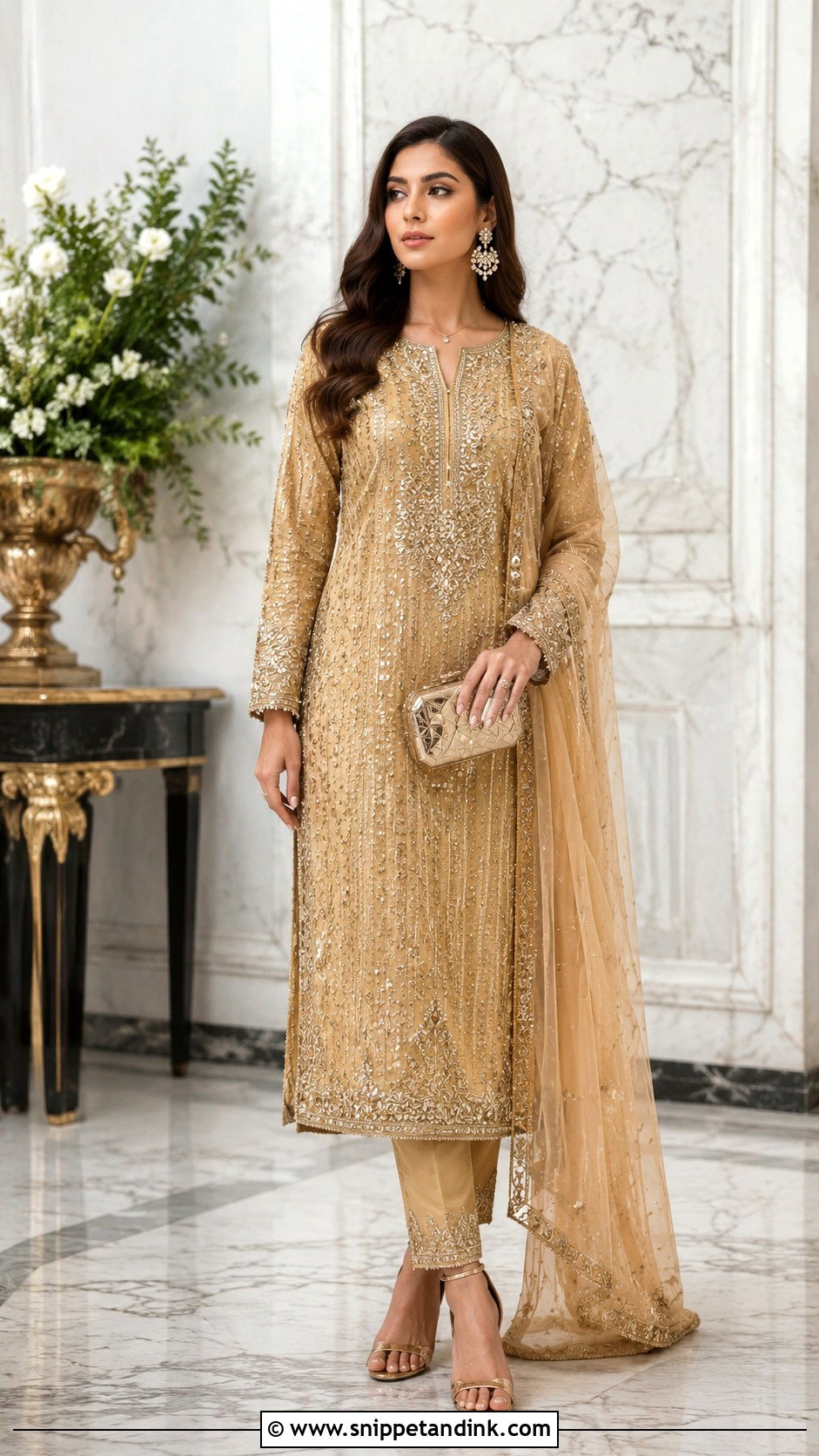
A straight cut in gold looks sleek, but it is the least forgiving shape on this list. There is no flare to hide a fit problem, so I have brides sit, raise their arms and walk stairs at the trial, because metallic thread fabric has almost no stretch and will pull across the hip when you sit. A side slit on each seam fixes most of that. Since the fabric already shines, choose net or organza for the dupatta, a single set of kundan earrings and a fine necklace. Champagne heels help the line run long. It suits receptions and family dinners better than a ritual-heavy ceremony.
7. Pastel Bridal Organza Salwar Suit
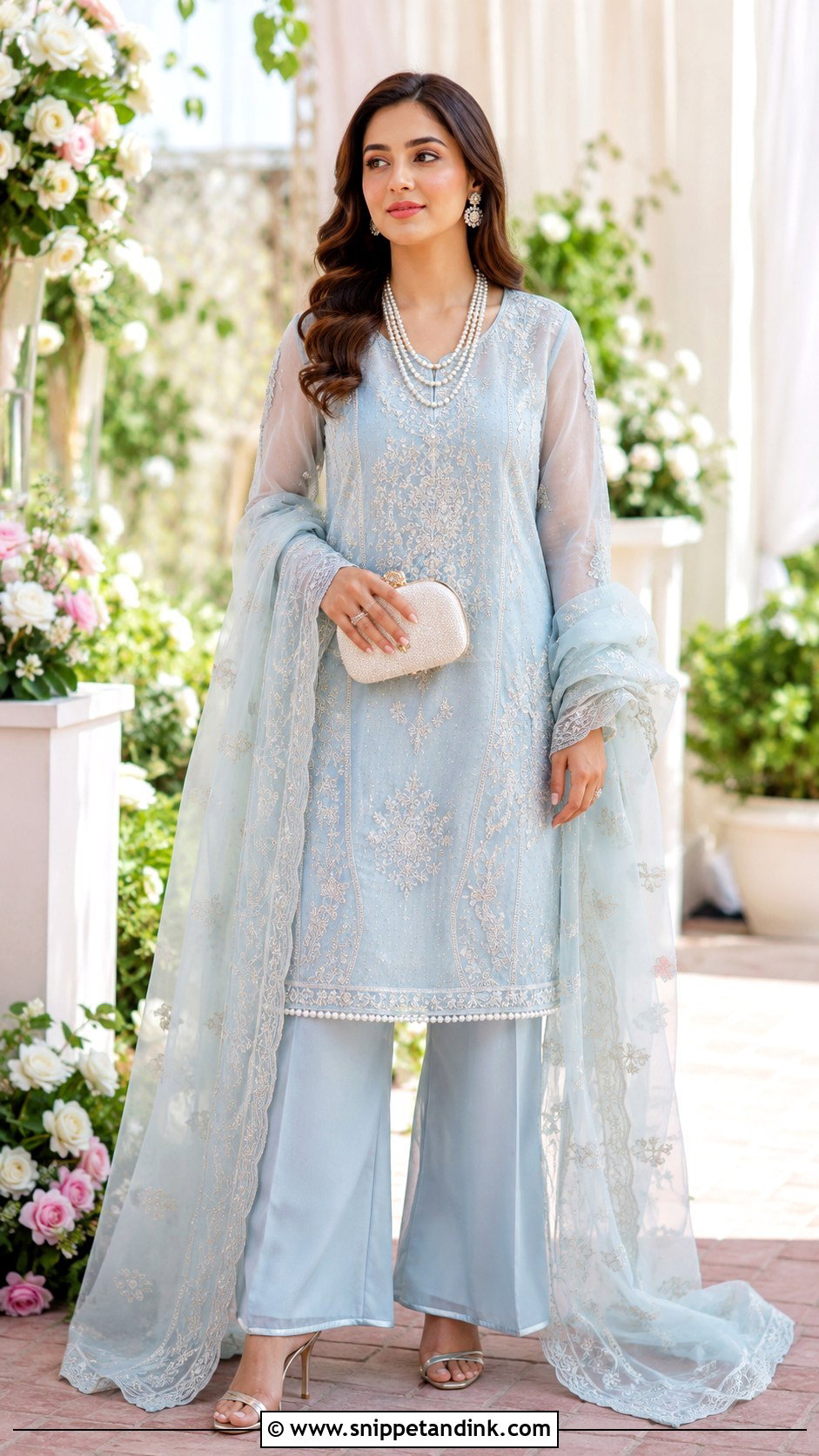
Organza holds volume on its own, so a pastel organza suit looks full without heavy lining. That stiffness has a cost: organza at the neckline and underarm can scratch after a few hours, and I always ask for a soft cotton or crepe lining in those spots. Powder blue, mint and peach suit daytime light; under yellow evening bulbs some pastels wash out, so check your shade at the time your function happens. Pearls, floral threadwork or tonal zari keep the embroidery in the same quiet register. Fold the dupatta into deliberate pleats before pinning, or the crisp fabric puffs out and adds bulk at the shoulder.
8. White Bridal Chikankari Salwar Suit
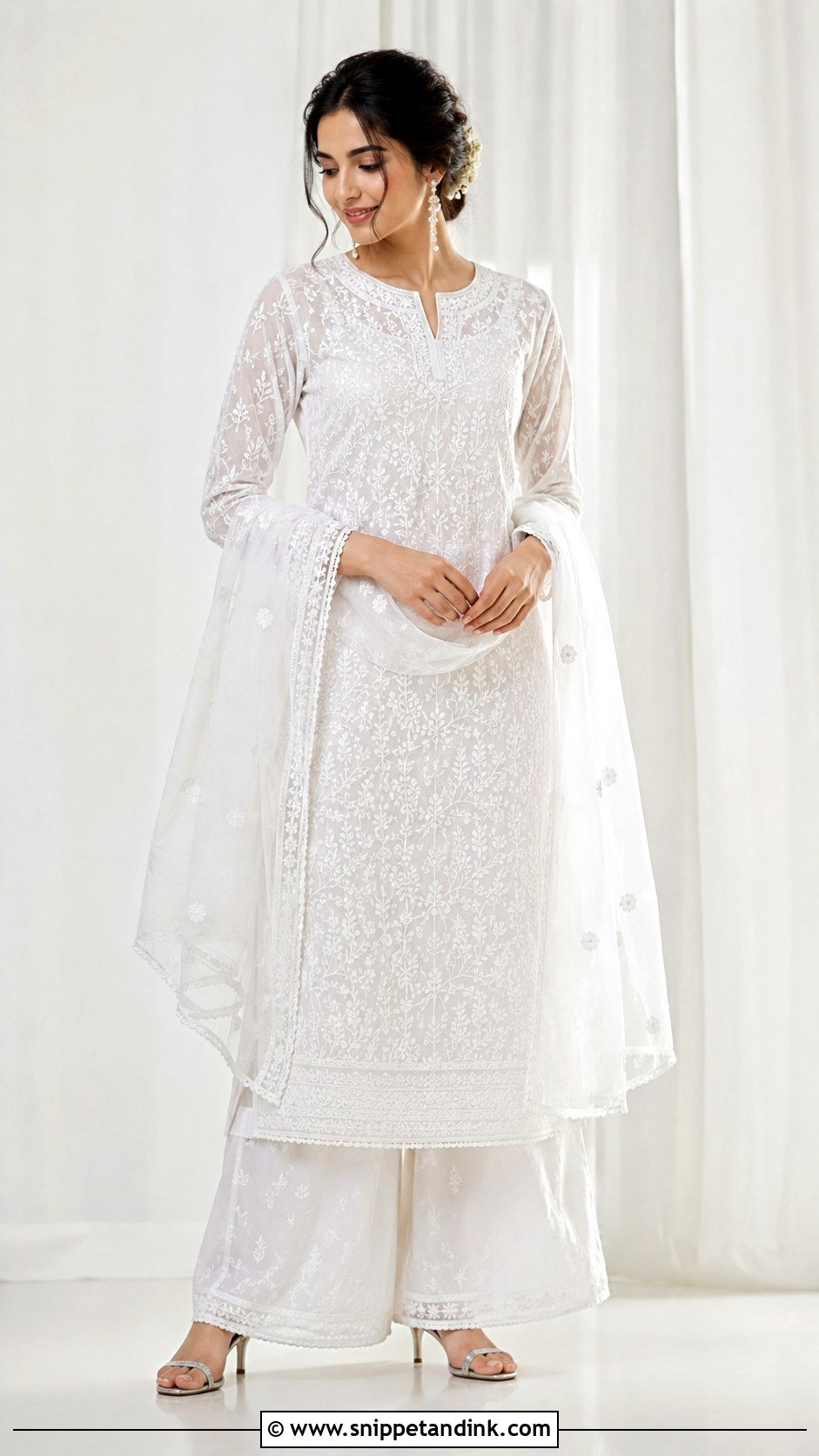
Chikankari is hand embroidery worked in white thread, traditionally on muslin, georgette or mulmul, and a good piece shows tiny shadow stitches from the back. That is the first thing I turn over at a shop. For a bridal version, look for mukaish (fine metal wire) or pearl touches, or pair a lighter kurta with a richly finished dupatta. Palazzos or straight pants keep it relaxed; churidar makes it more formal. Silver, pearl or emerald jewellery adds contrast without fighting the threadwork. White chikankari picks up turmeric and mehndi stains easily, so I’d keep it for a civil ceremony or a puja rather than the haldi.
9. Navy Bridal Velvet Salwar Suit
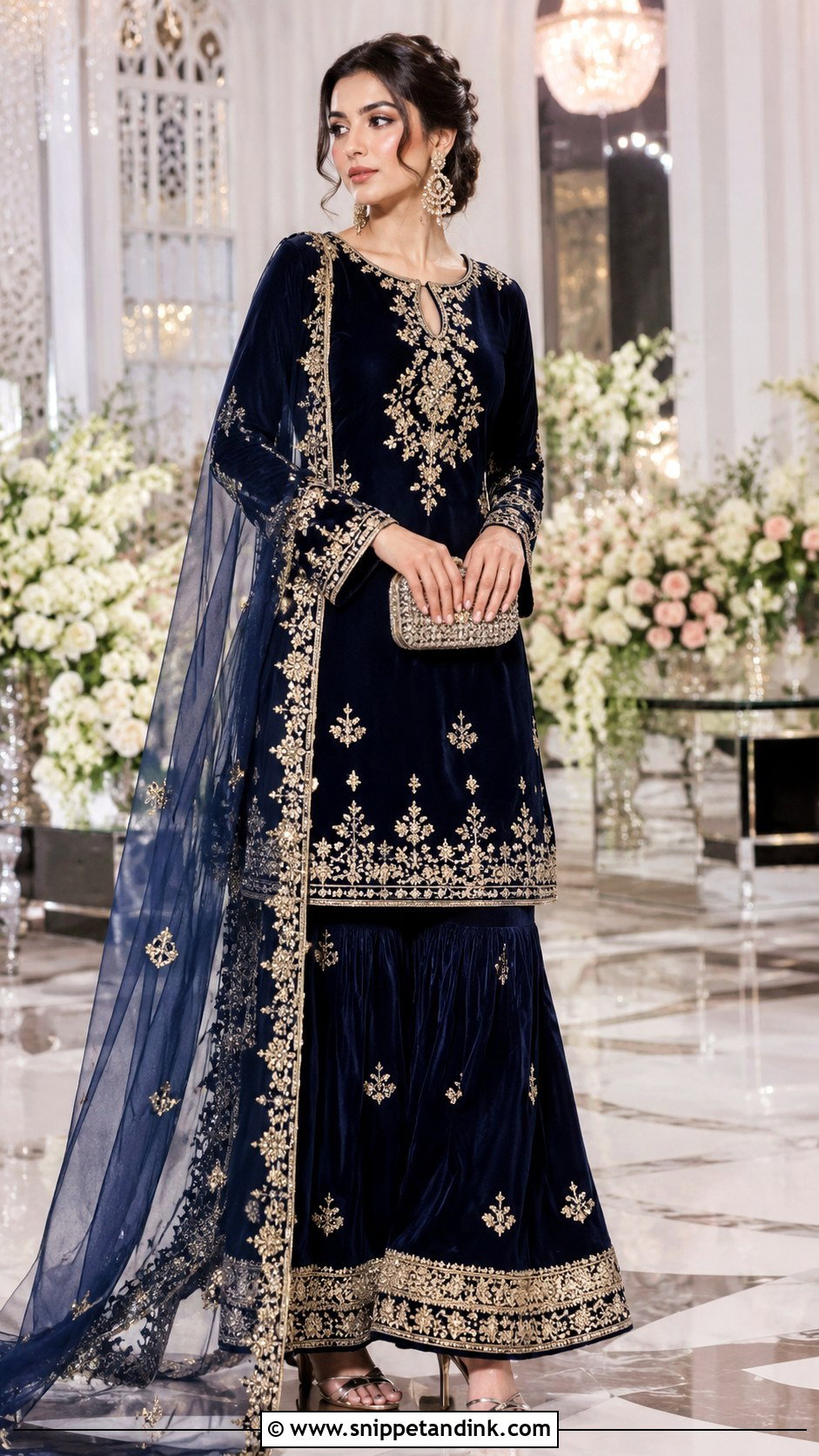
Navy velvet makes gold and copper embroidery look sharper than almost any other base, because the dark pile absorbs light around the stitches. It is a winter suit. In a warm hall, velvet gets heavy and hot within an hour, and I’d steer you away from it for anything outdoors before sunset in summer. A flared Anarkali, sharara or straight pants all work in navy; balance the weight with a net or organza dupatta rather than a second velvet layer. Statement earrings and one bold ring are enough. It gives you depth for an evening reception without the questions black can raise in some families.
10. Yellow Bridal Mehndi Salwar Suit
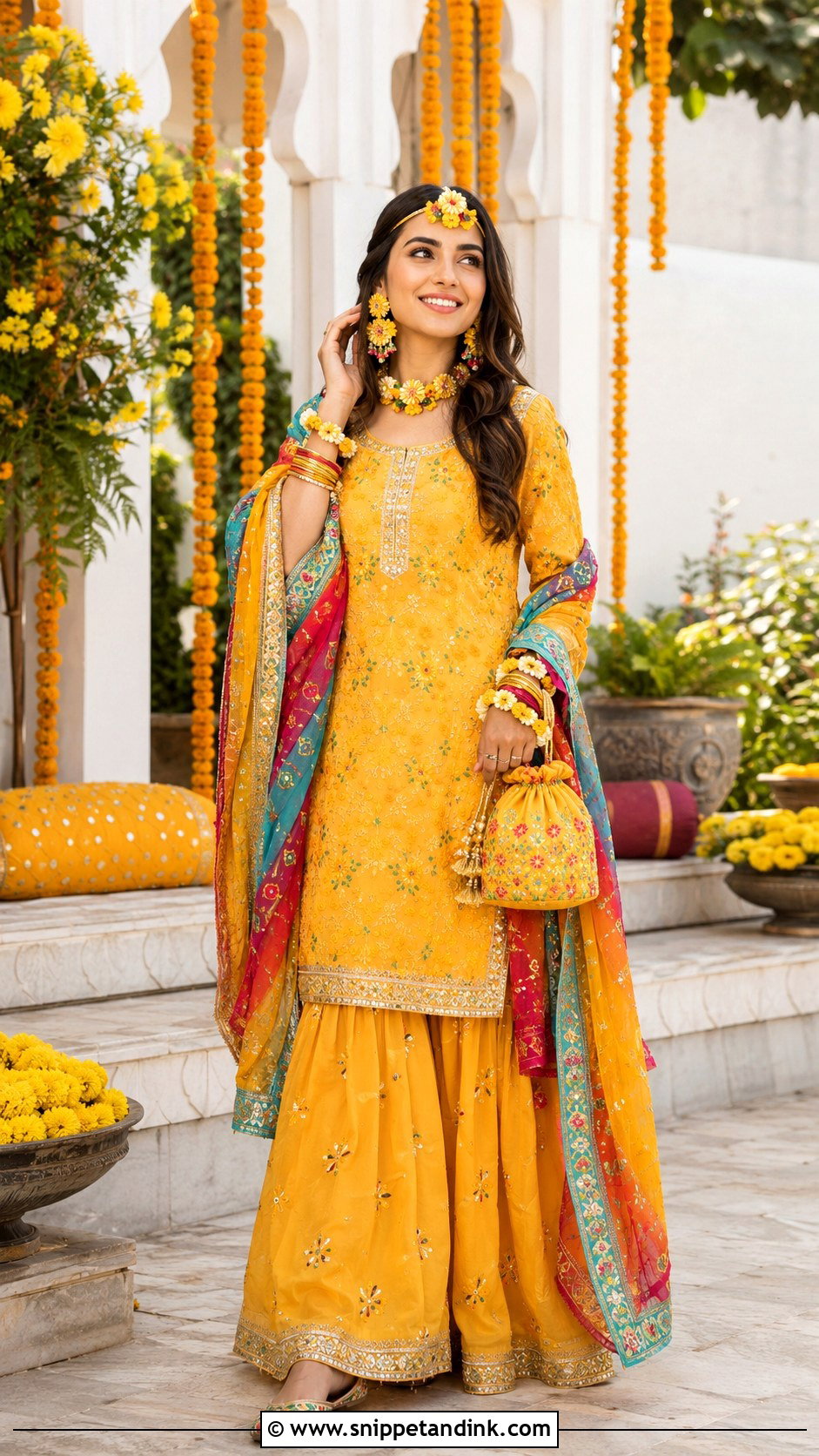
Yellow belongs to the haldi and mehndi, and a yellow bridal mehndi salwar suit lets you move, dance and hold your hands out while the paste dries. That last part matters more than people think: choose sleeves that end above the wrist or can be pushed up, because full sleeves smudge fresh mehndi. Mustard and marigold carry mirror work, gota patti and tassels well. A short kurta with sharara is the easiest to sit in. Floral jewellery is light, and a pink or green dupatta stops yellow from looking flat on camera. Pick a fabric you won’t mind getting turmeric on.
11. Peach Bridal Peplum Salwar Suit
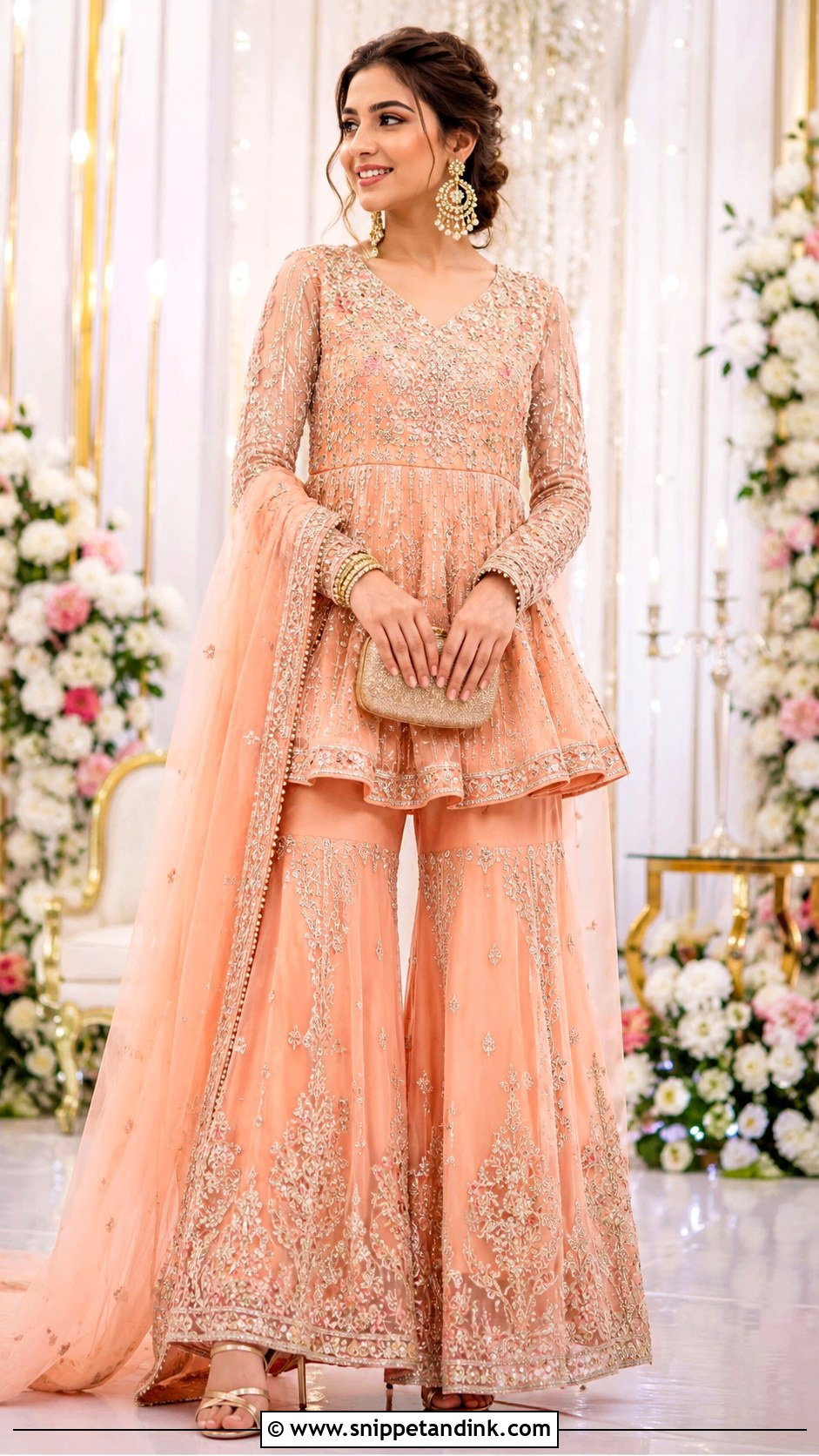
A peplum kurti flares out from the waist seam, so it defines the waist even when the bottoms are wide. That is exactly why I fit it carefully: the seam has to land at your natural waist, not where the sample happened to sit, or the flare starts on the ribs and makes the top look short. Peach takes gold, pearl and champagne embroidery without looking heavy. Keep the dupatta light enough to drape neatly. Polki earrings, a delicate choker and soft metallic heels are all it needs. I like it for engagements and smaller functions; it reads younger than an Anarkali.
12. Purple Bridal Embroidered Salwar Suit
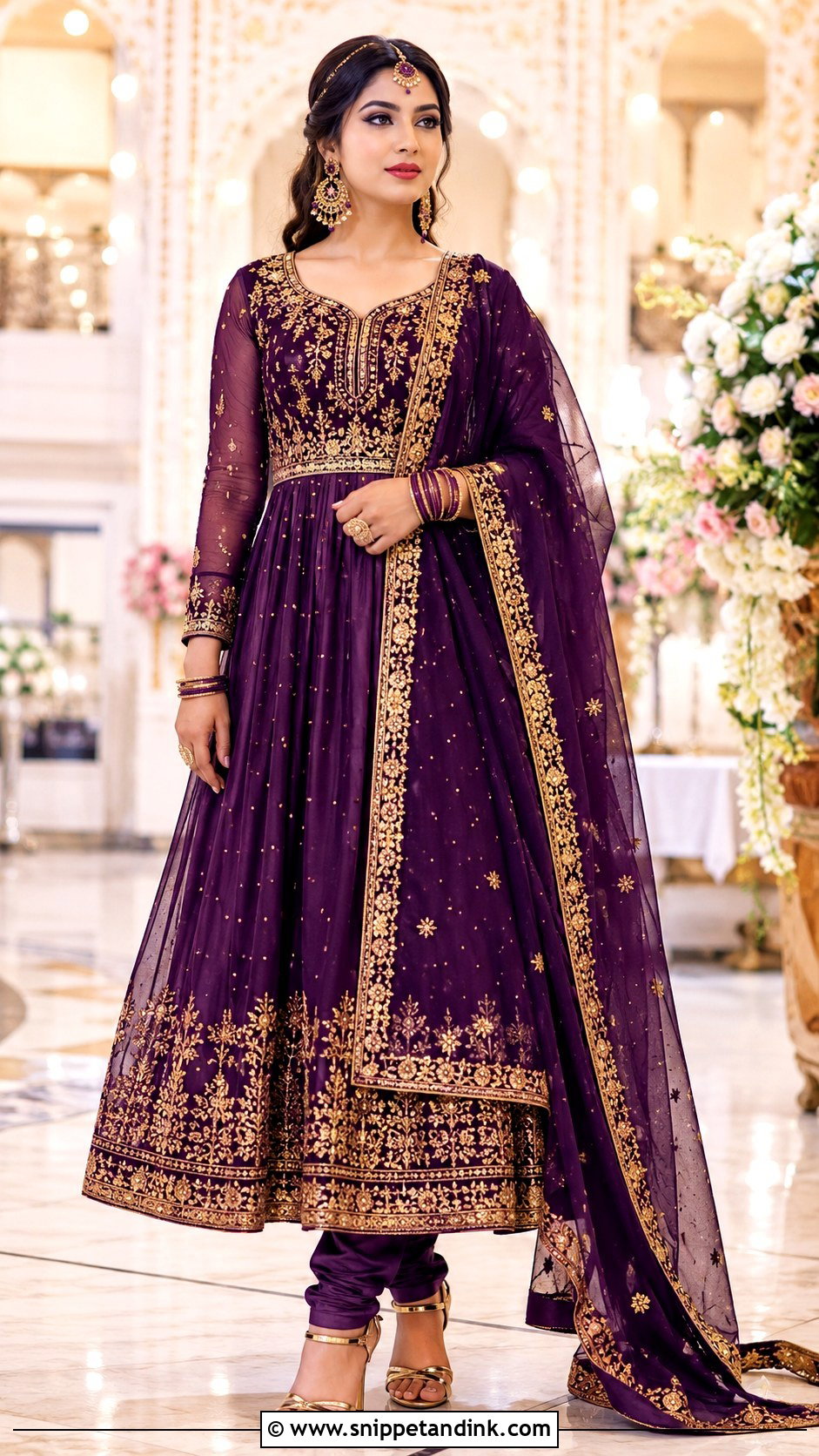
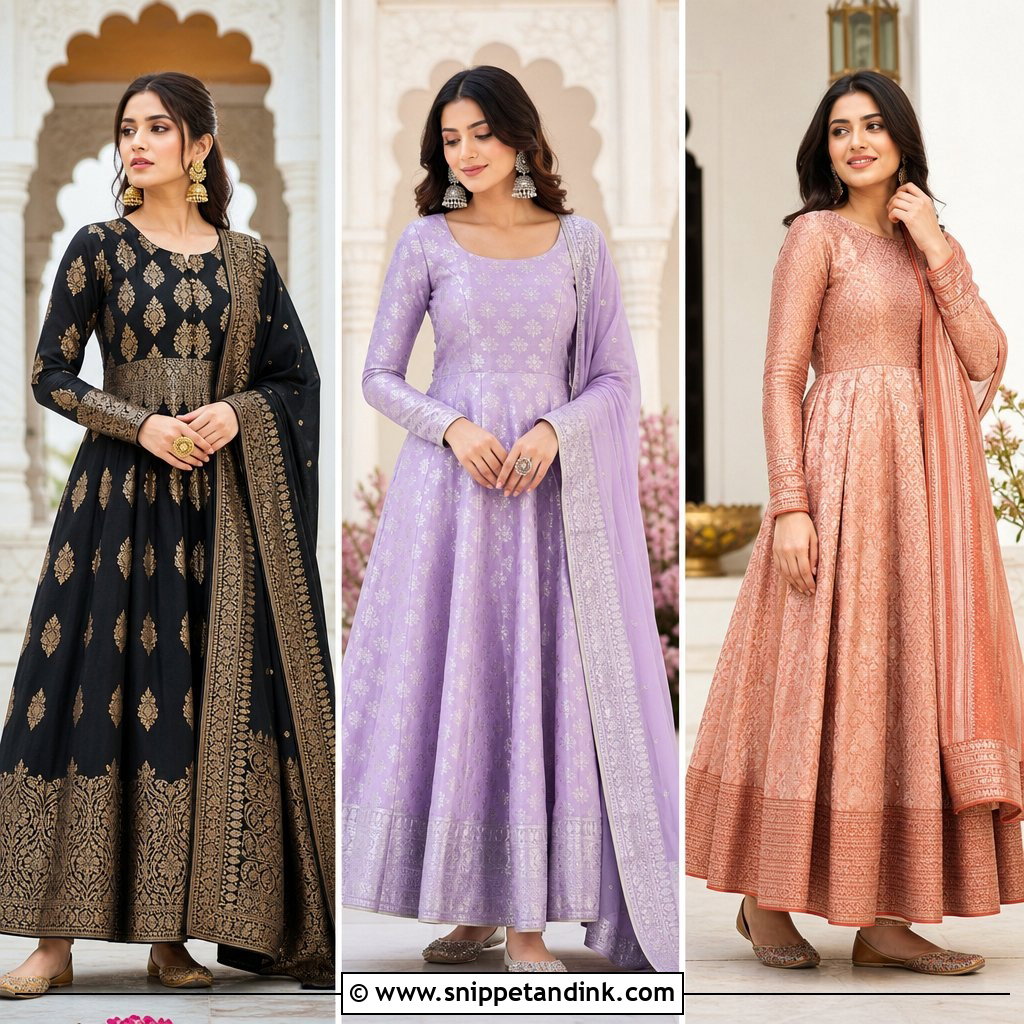
Purple changes mood more than any colour here depending on the shade, so decide on the event before the fabric. Deep plum with gold work suits an evening function. Lavender with silver or pearl reads fresh in daylight. One thing I check under the venue lights: some purples shift towards grey or blue in photos, especially synthetic dyes, so photograph a swatch with your phone flash before ordering. Anarkali, straight or sharara all work. Add a sheer bordered dupatta and one set of statement earrings, and you have a ceremonial colour that isn’t red.
13. Beige Bridal Mirror Work Salwar Suit
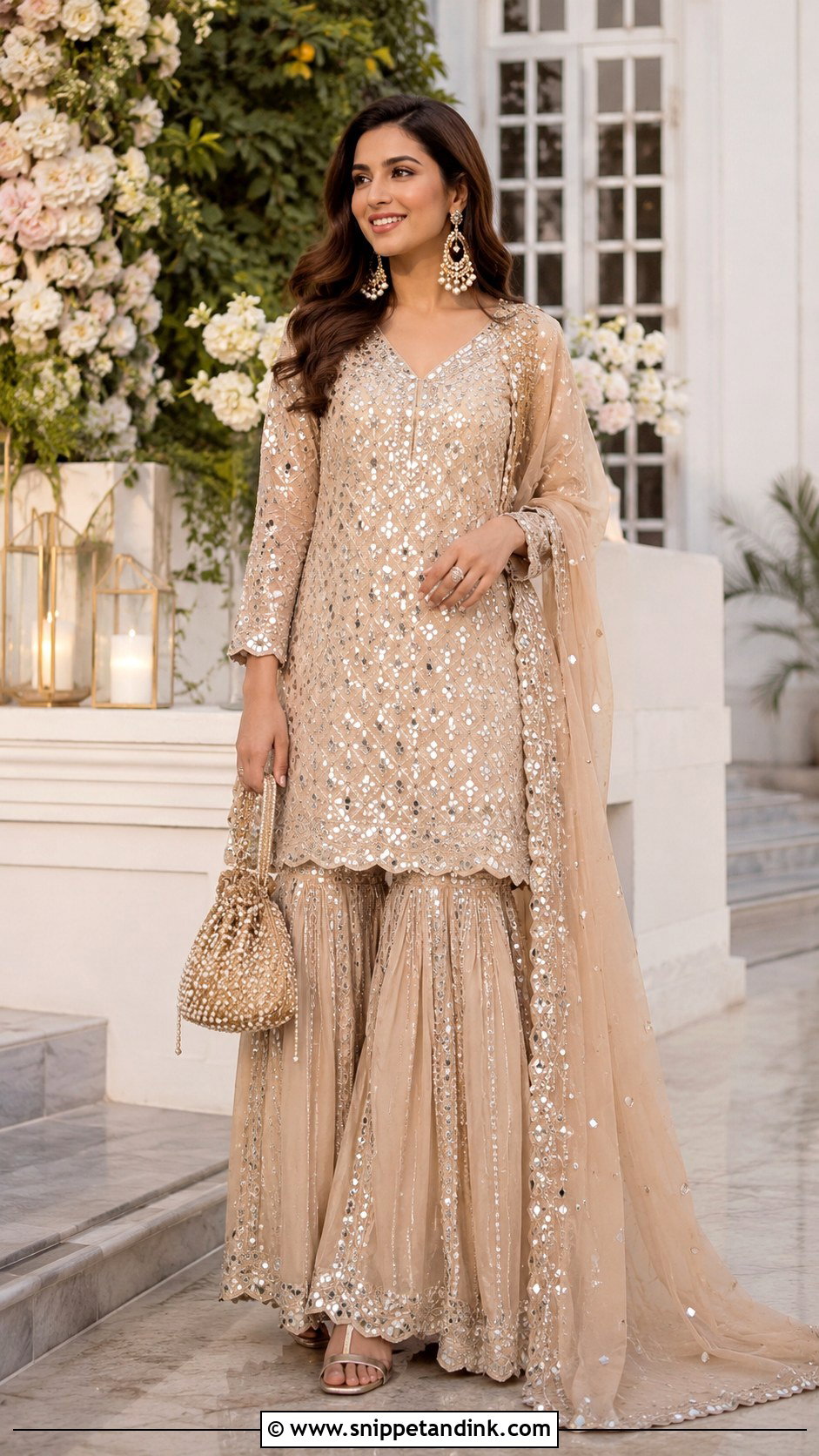
Beige is a quiet base that lets mirror work do the talking, and under bright wedding lights the small mirrors throw light back the way sequins can’t. Real mirror work has weight, though. Each glass piece is held by a ring of stitches, and a heavily mirrored dupatta can catch on bangles and drag a light kurta off the shoulder, so I prefer mirrors concentrated at the border. A straight kurta with sharara or palazzos keeps it comfortable. Match your jewellery metal to the thread around the mirrors: oxidised silver for white thread, kundan or pearl for gold. It’s a strong choice for a mehndi or welcome dinner.
14. Orange Bridal Bandhani Salwar Suit
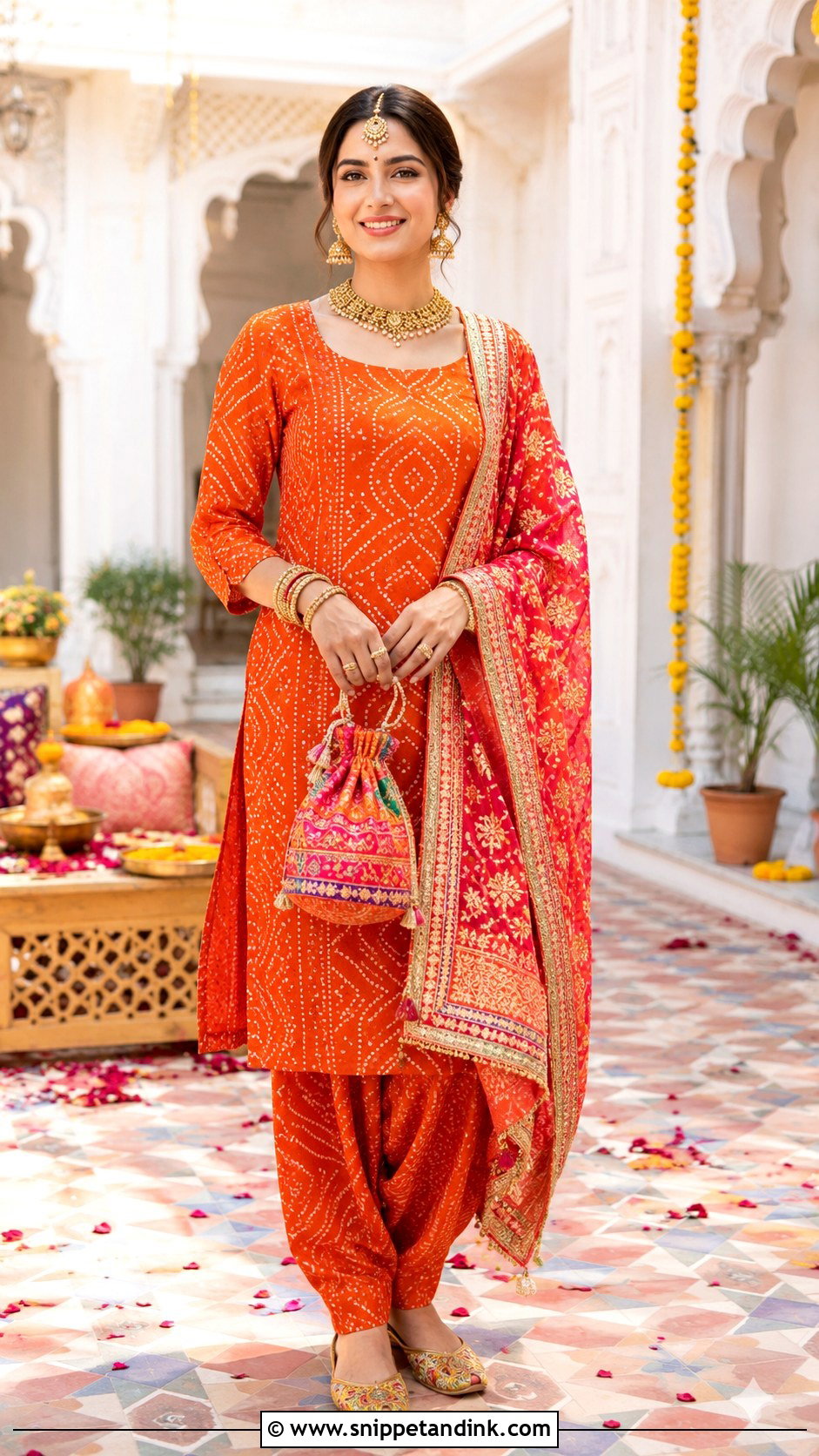
Bandhani is tie-dyed in tiny resist dots, and an orange bridal bandhani salwar suit carries that festive pattern into a pre-wedding ritual without any extra work. For a bride, I’d choose silk or georgette bandhani with a gota patti or zari border. Real bandhani dyes can bleed the first time they get wet, so never let a bandhani dupatta near haldi water and always dry clean it. A short kurta with Patiala, a straight kurta with palazzos or a sharara set all work. Add a red, pink or green contrast dupatta, gold jewellery, stacked bangles and juttis.


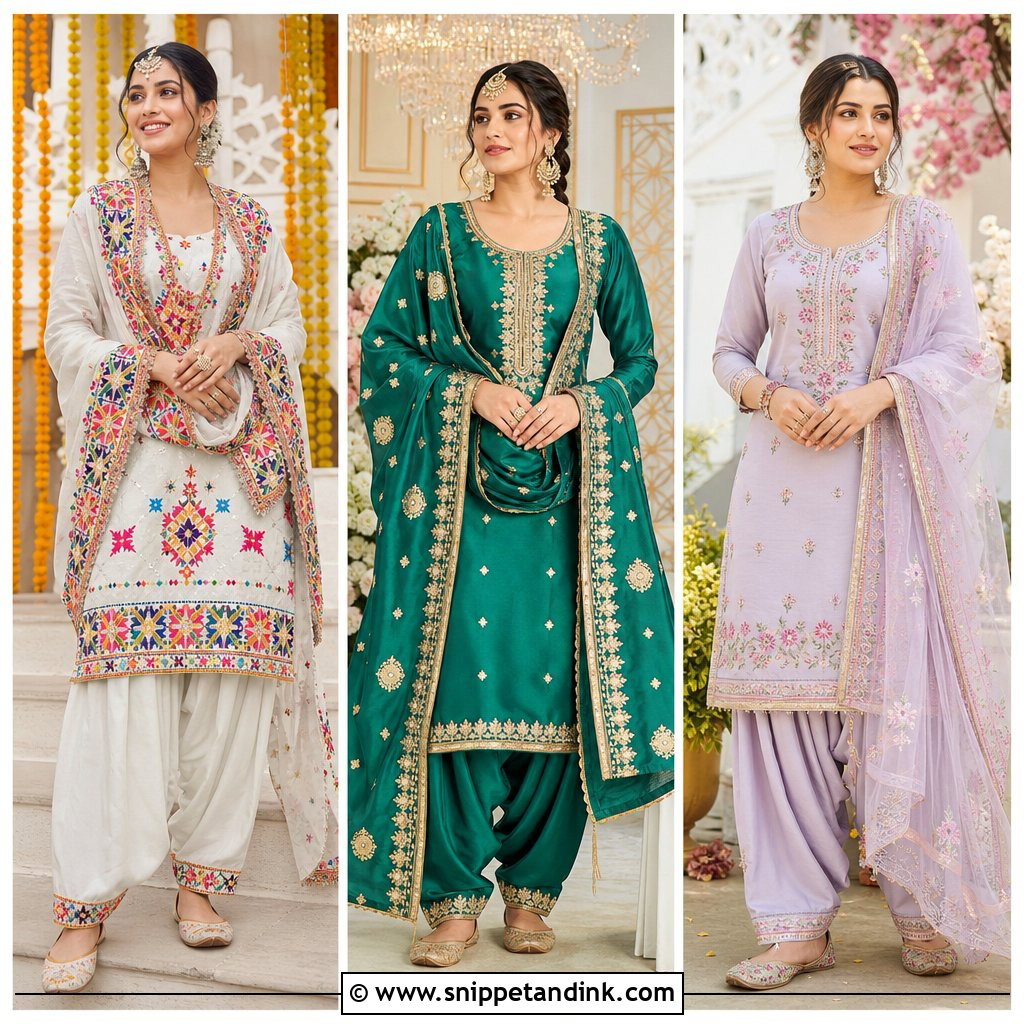
15. Blue Bridal Net Dupatta Salwar Suit
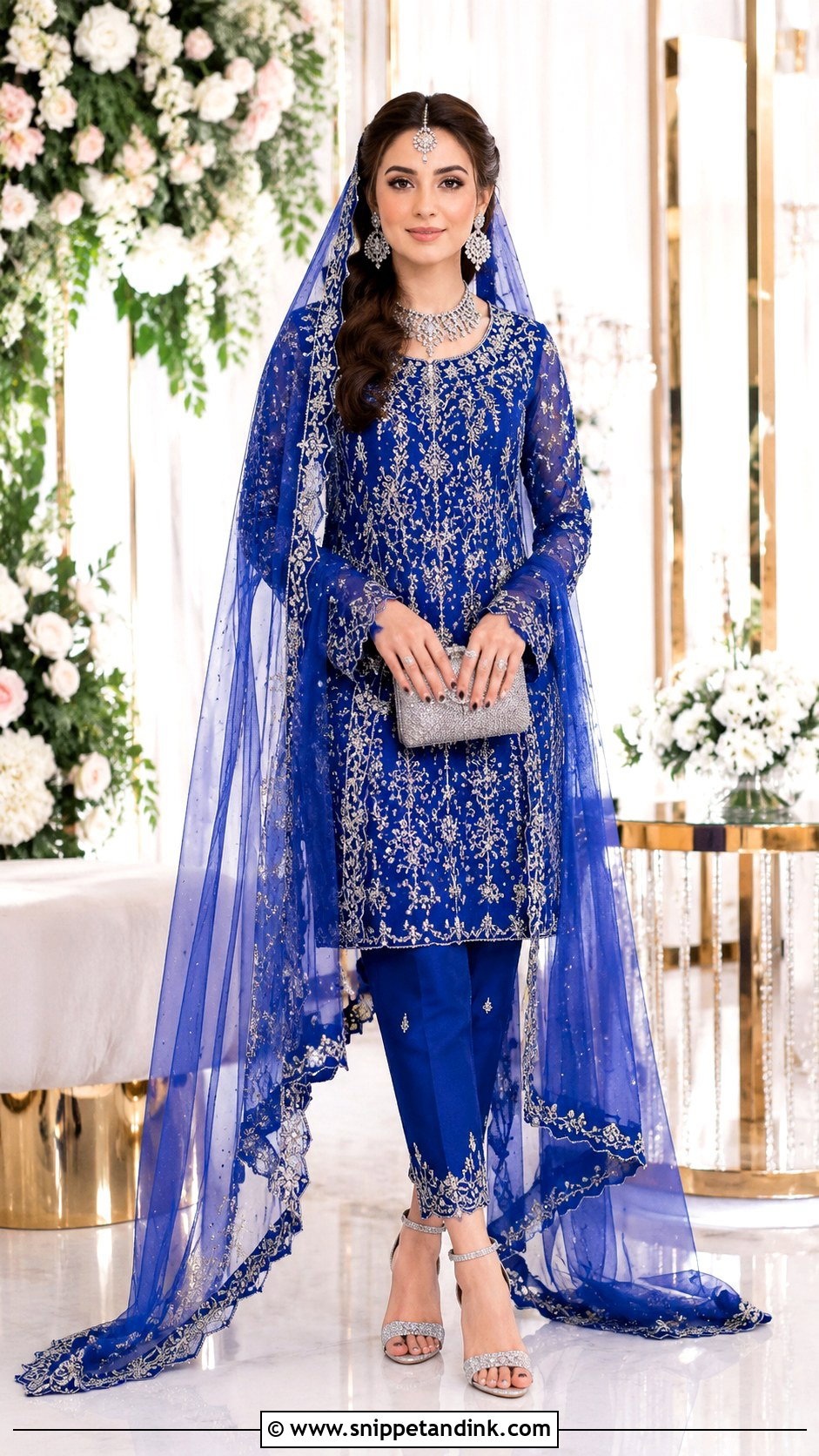
Here the dupatta does the bridal work. The suit can be fairly plain silk, georgette or velvet in royal blue, powder blue or teal, while a heavily embroidered net dupatta carries all the detail. That makes it practical: you can rewear the suit later without the dupatta. Net is fragile, though. It snags on kundan settings and the claws of statement rings, so I check jewellery against the dupatta at the trial, not on the morning. Match silver, pearl or kundan to the embroidery colour, and keep heels and clutch simple so the dupatta stays the one standout piece.
16. Teal Bridal Silk Salwar Suit
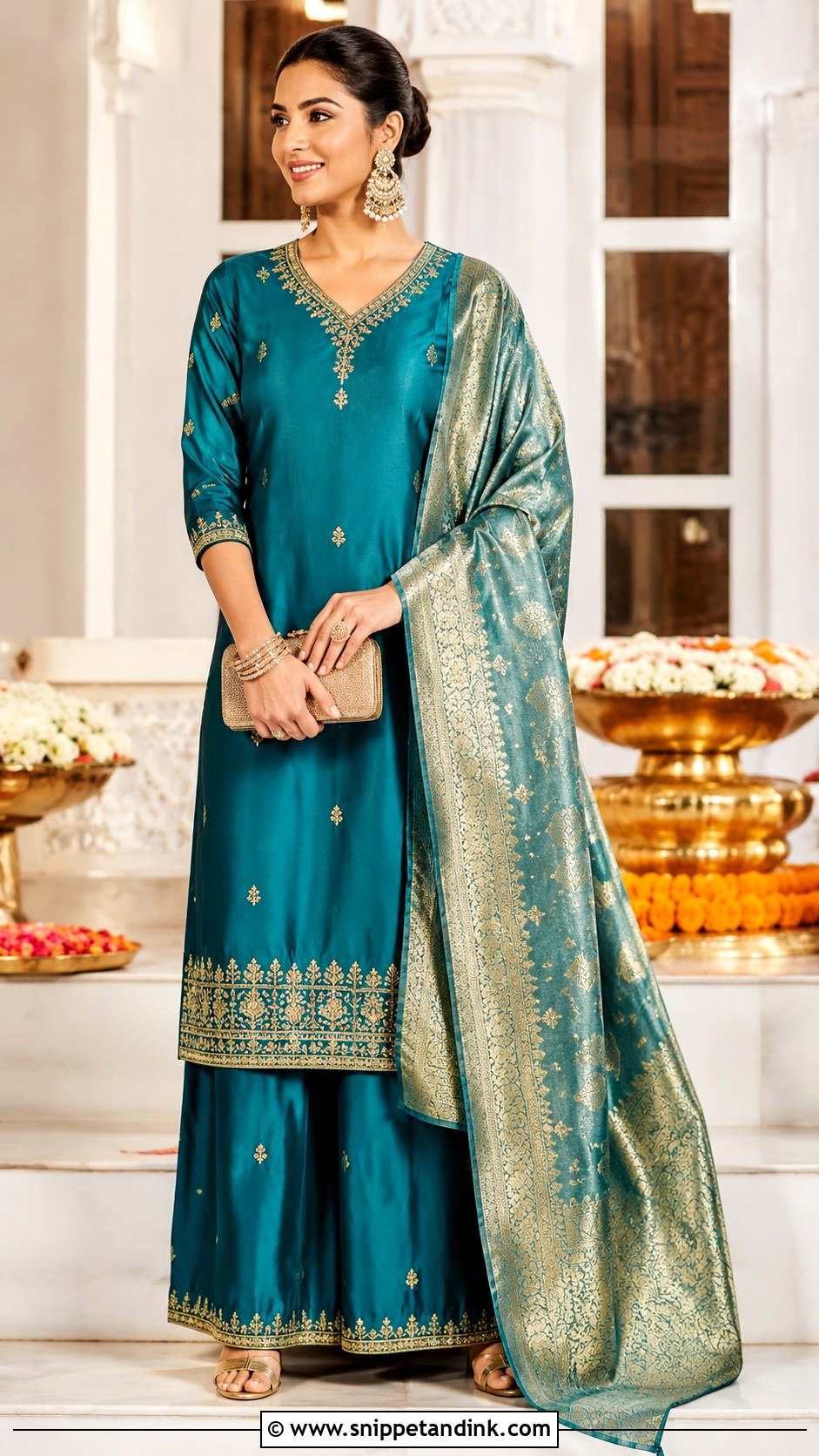
Silk gives teal a deeper sheen than any other base, and the structure means even a plain straight kurta looks dressed. Teal sits between blue and green, which flatters a wide range of skin tones, but it can look muddy next to warm yellow lighting; I’d try it on near a window and under a bulb. Straight with churidar, long with palazzos or a silk Anarkali all suit it. Gold zari borders or brocade panels add bridal richness. A contrast dupatta in gold, beige or soft pink brings depth. Pure silk marks with water, so keep a dry tissue for drinks and tears.
17. Fuchsia Bridal Zardozi Salwar Suit
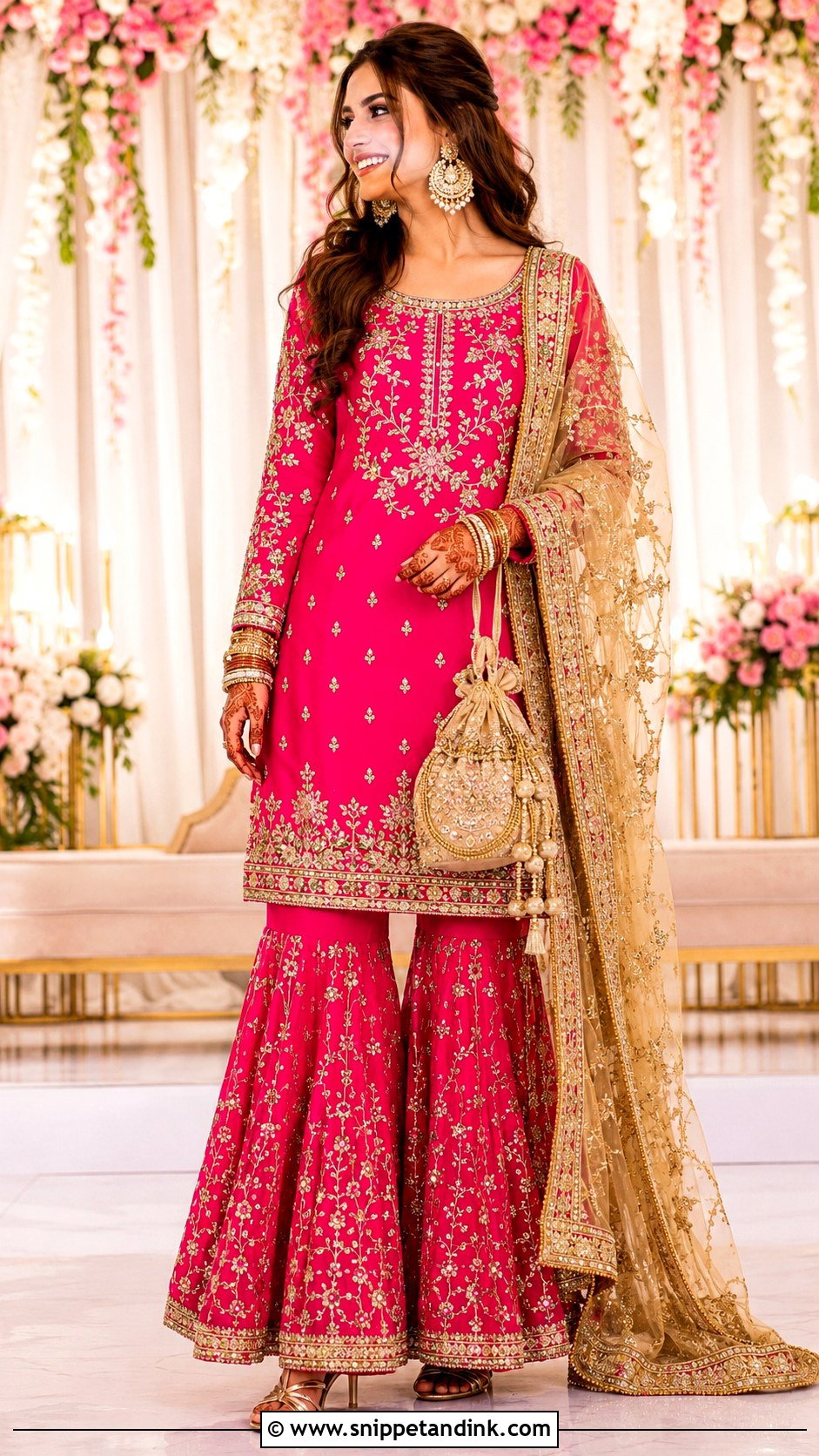
Zardozi is raised embroidery in metallic thread, often worked over padding, and it looks richest against a bright base like fuchsia. It is also heavy. A zardozi neckline and sleeves on a sharara or gharara set adds real weight, so I ask for a sturdy lining and wider shoulder seams to carry it. Keep the jewellery to one focal point, either a statement necklace or large earrings, because zardozi already sits at the neckline. Gold heels, bangles and a potli bag complete it. Fuchsia gives a sangeet or engagement the colour and sparkle a pastel can’t.
18. Mint Bridal Pearl Work Salwar Suit
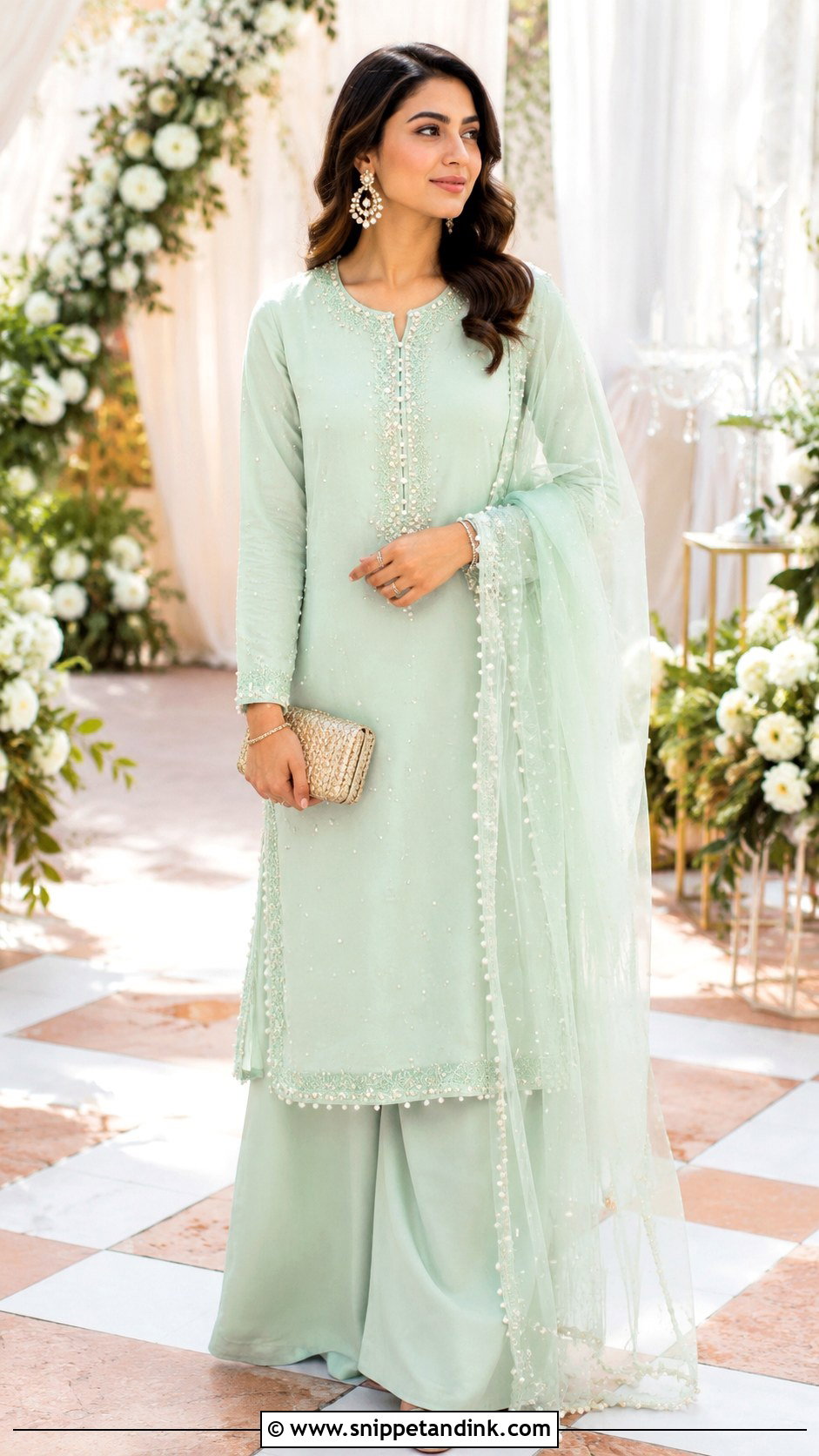
Mint with pearl work is a daytime suit through and through; under strong sun it looks cool and fresh, while at night it can fade into the background. Pearls are sewn on individually, so check the threads are knotted every few beads; a loose run can unravel along a whole border if one snaps. A long straight kurta with palazzos keeps it calm, and a mint Anarkali gives more movement. A sheer dupatta with pearl edging, pearl studs, a bracelet and metallic sandals are enough. Fresh skin and a neutral lip keep the mood consistent.
19. Coral Bridal Sequin Salwar Suit
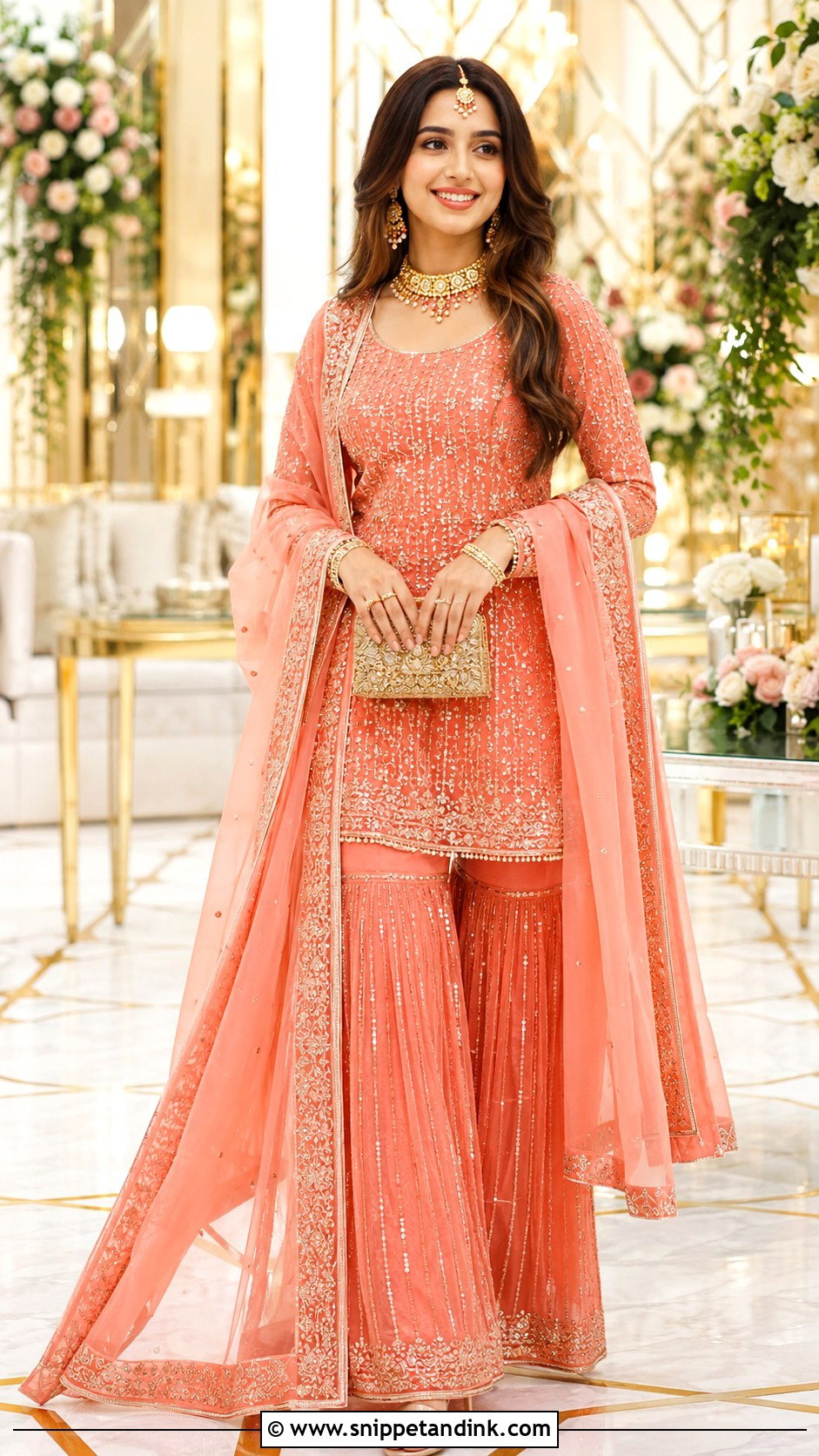
Coral sits between pink and orange, and it flatters warm undertones especially well. Sequins add shine, but the suits that photograph best use them in patterns or borders rather than all over, because full sequin coverage turns into a glare spot under flash. Sequins also scratch the inner arm if they run down the side seams, which I check by having the bride hug someone at the fitting. Cigarette pants, a sharara set or a flowy Anarkali all work. A light dupatta with a sequin edge, gold or rose-toned jewellery and soft heels keep it easy for a sangeet.
20. Lavender Bridal Cape Salwar Suit
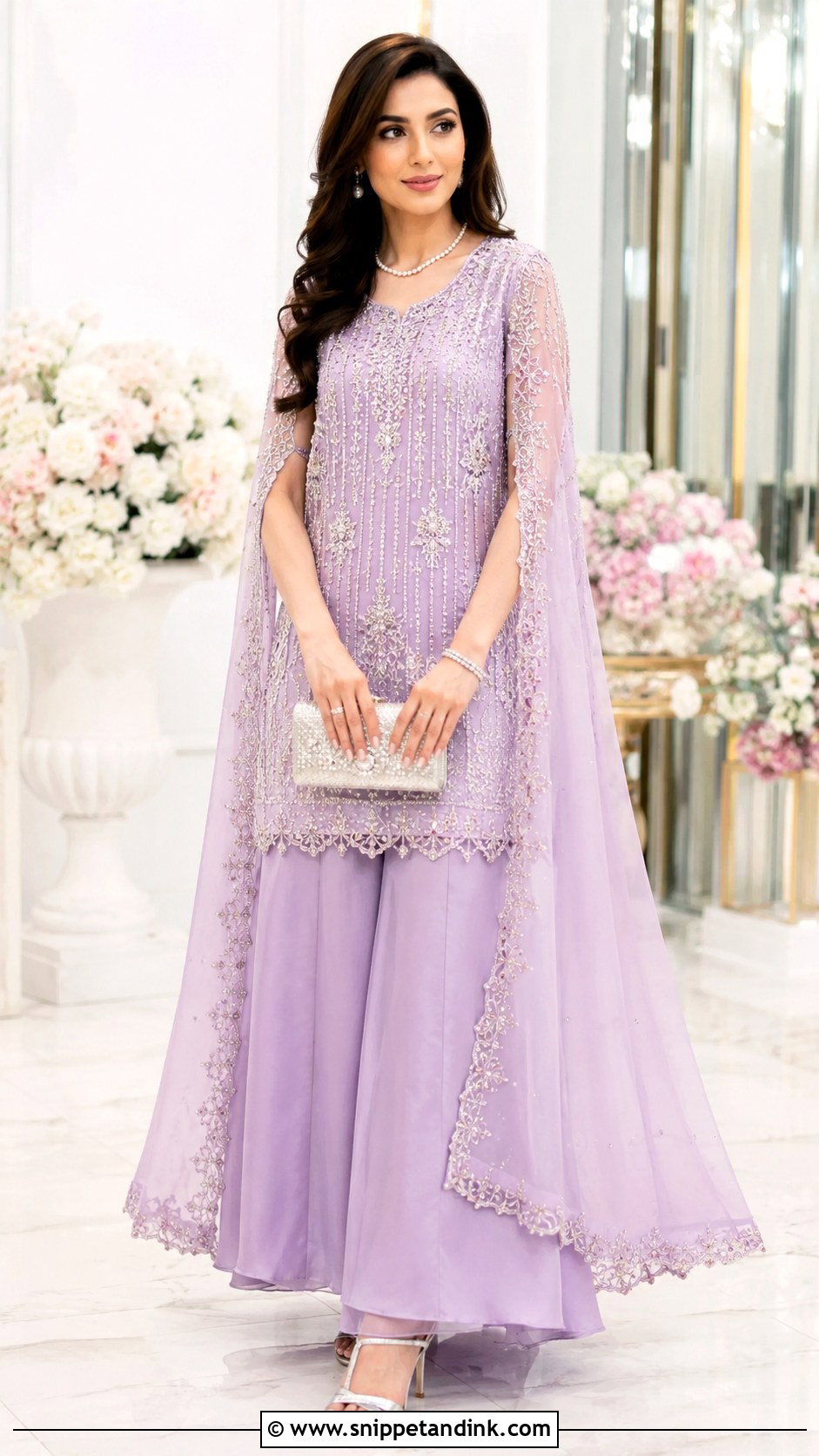
A cape replaces the dupatta for many brides, and that is its real advantage: nothing to re-pin every time you stand up, nothing sliding off while you eat. Lavender in a cape suit feels current without being experimental. Pair the cape with a fitted kurta or crop-style top and sharara, palazzo or slim pants, and put the embroidery on the cape edges, neckline and hem. Ask how the cape attaches. A cape stitched at the shoulder seams stays put; a loose one held by a hook drifts backwards all evening. Diamond-style jewellery, pearls and silver heels keep it light.
21. Cream Bridal Brocade Salwar Suit
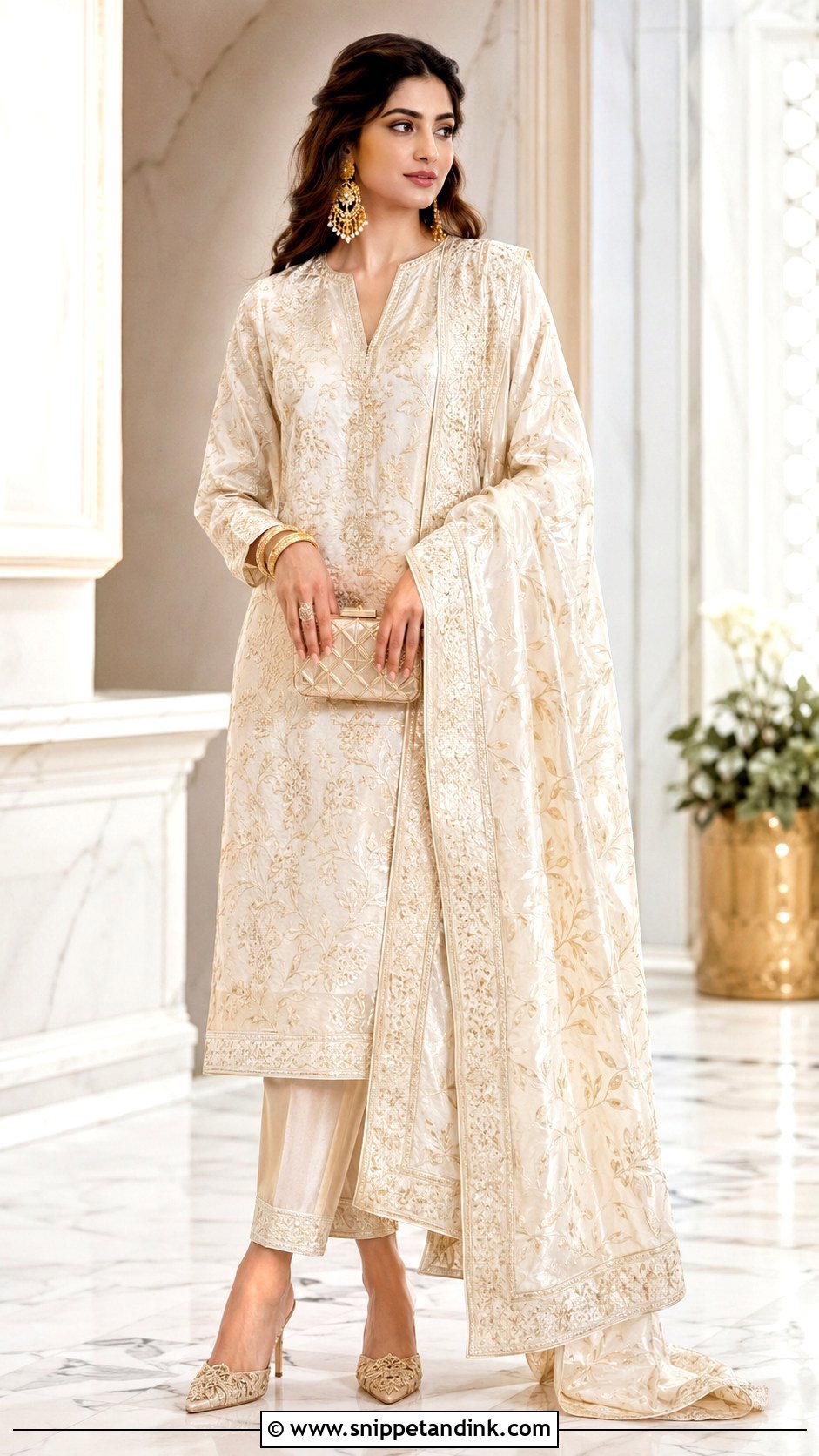
Brocade has its pattern woven in, so even a simple straight kurta looks finished, and cream brocade gives you that richness in a neutral. The trade-off is stiffness. Brocade has no give, creases sharply where you bend, and needs a little more ease through the hip than a softer fabric would. I’d choose a short kurti with gharara or a long jacket-style suit to let the fabric hold its shape. A matching or contrast dupatta with zari keeps it festive. Gold jewellery, a structured clutch and embroidered heels suit family ceremonies where you want to look grand without wearing anything heavy.
22. Black And Gold Bridal Salwar Suit
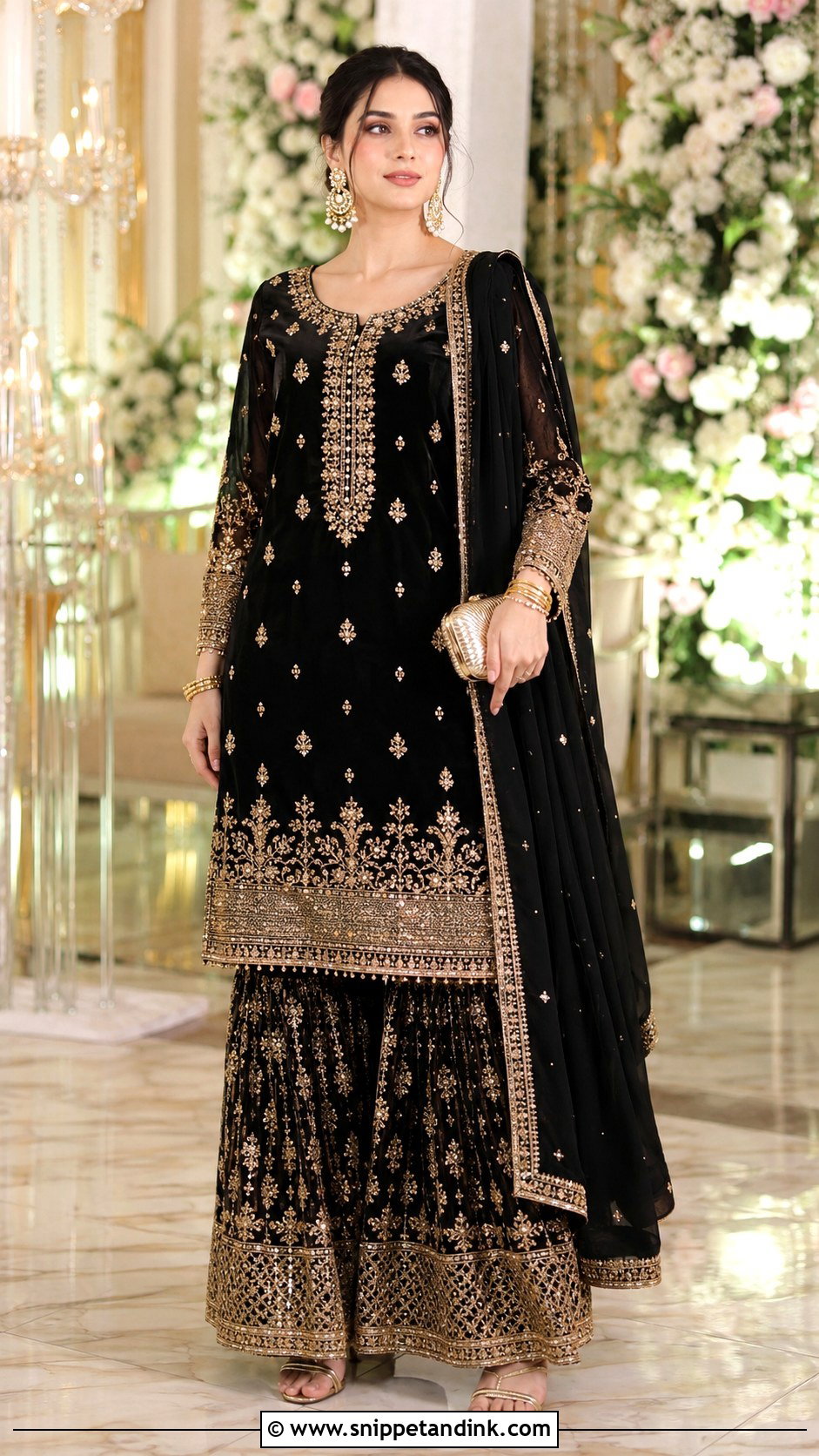
Before ordering a black and gold bridal salwar suit, ask the family. In some households black is avoided at wedding rituals, and a reception or cocktail evening is the safer home for it. When it works, the contrast is sharp: black velvet or silk with gold zari or brocade detail, worn with sharara, palazzo or churidar. A gold-bordered dupatta lifts the black near your face, which keeps you from looking washed out in photos. Kundan earrings, gold bangles and metallic heels are enough; a neat hairstyle and defined makeup match the formality.
23. Grey Bridal Thread Work Salwar Suit
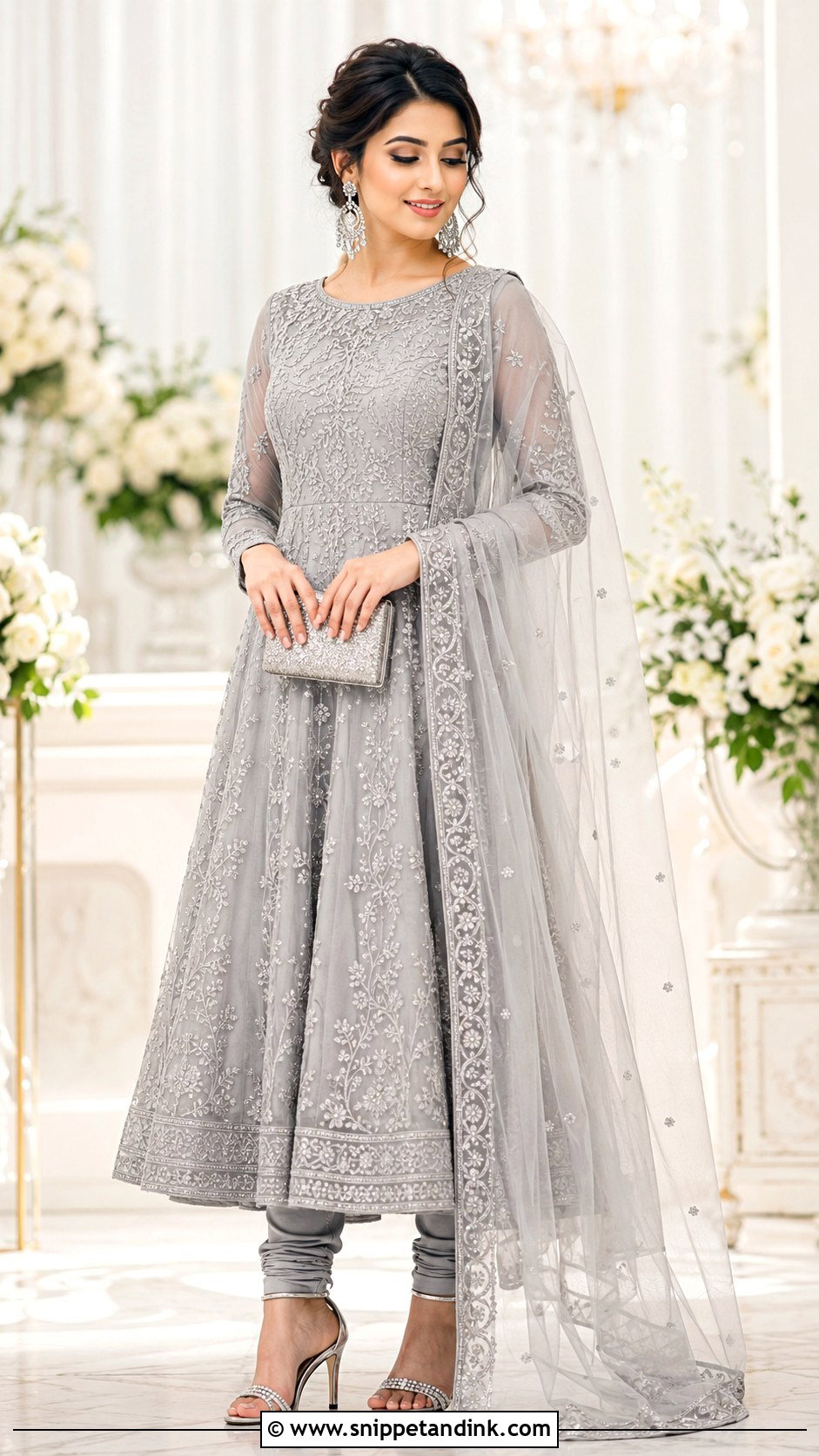
Grey is the colour I’m most careful with. In a muted silver or dove grey with detailed thread work, it looks refined; in a flat grey with sparse embroidery, it reads as office wear. Pearls, sequins and silver accents push it into wedding territory. A long kurta with palazzos or a flared Anarkali gives it the movement it needs. Add a sheer dupatta with a finished border, crystal-style earrings, silver heels and a small clutch. Like black, grey is avoided by some families for rituals, so I’d keep it for an engagement or reception with a contemporary dress code.
24. Rust Bridal Jacket Salwar Suit
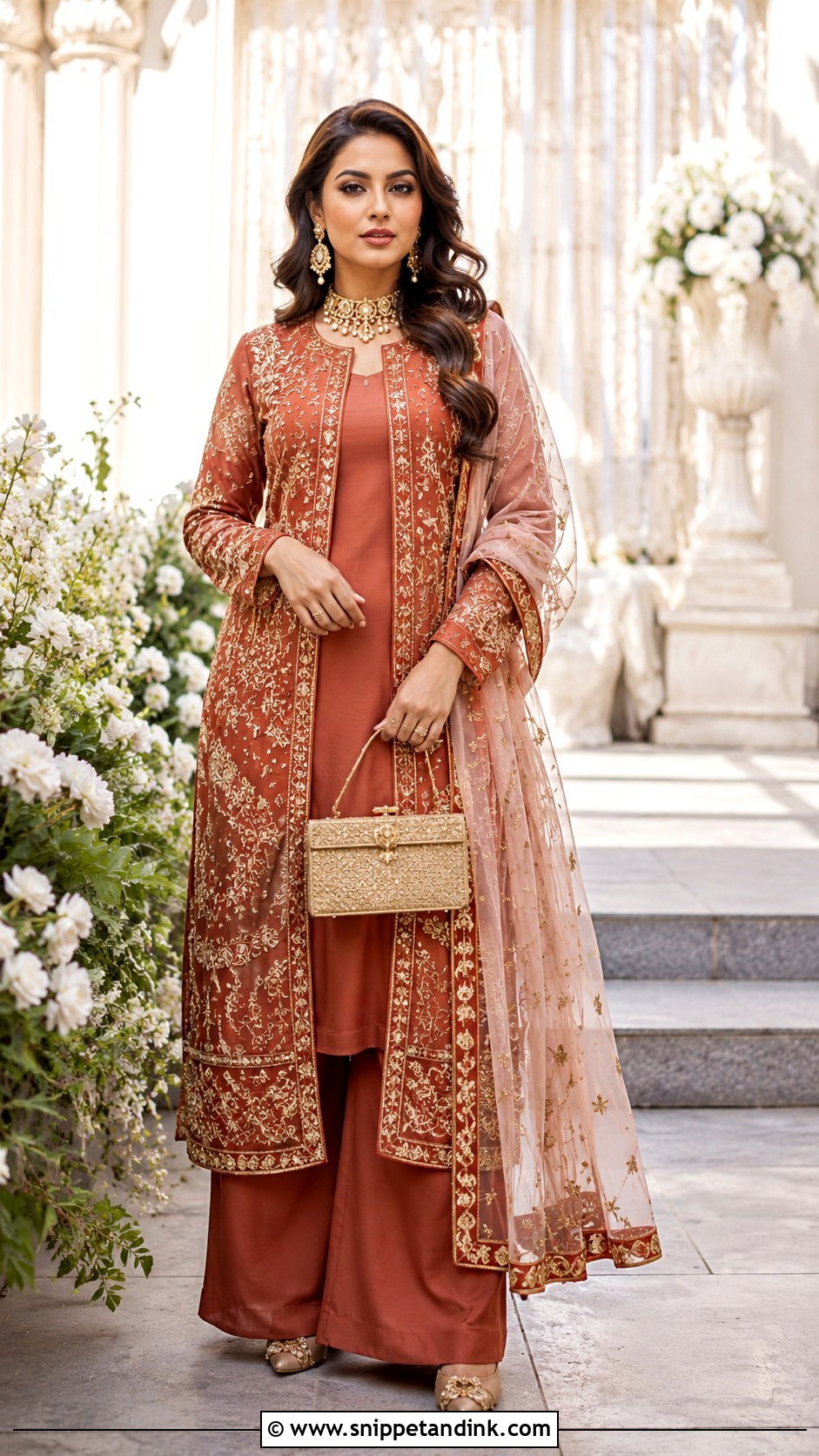
A jacket adds a third layer, which gives a rust suit structure and makes it feel more styled than a standard set. It also adds heat. I’d only suggest a full-length embroidered jacket for a cool evening or an air-conditioned venue, and I’d ask for it to be lined in cotton rather than polyester. Wear it over a straight kurta and pants, a crop top with sharara or a fitted inner kurta with palazzos. Zari, mirror or thread work on the jacket carries the bridal detail. Gold jewellery, warm-toned makeup and embellished heels suit the earthy colour; add a light dupatta only if the event calls for it.
25. Red And Green Bridal Punjabi Salwar Suit
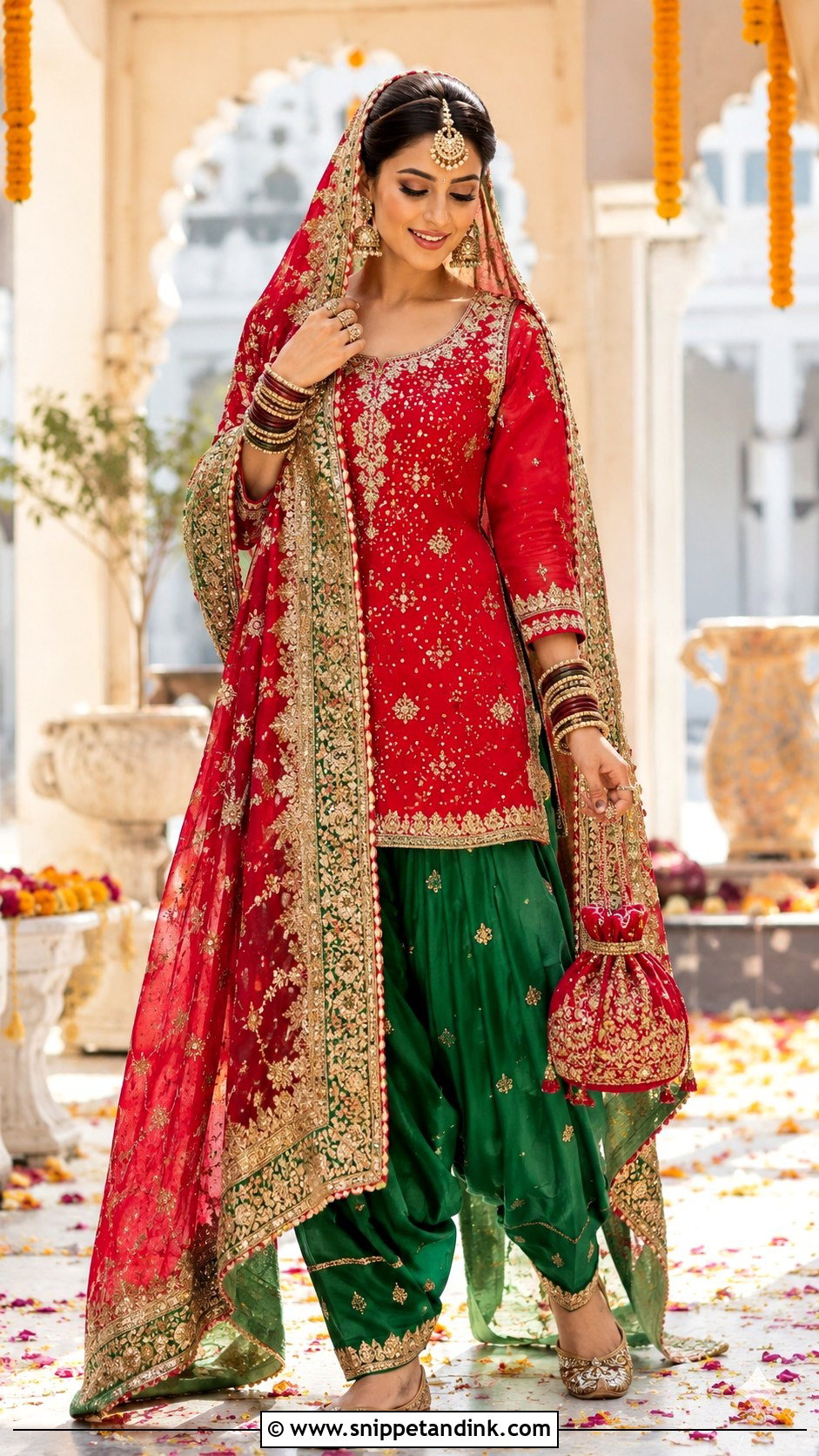
Red and green is the classic Punjabi pairing, and phulkari, gota patti, zari and mirror work all sit naturally on it. A short kurti with Patiala salwar gives the most traditional feel, while a longer kurta with a pleated salwar looks more formal for a ceremony. For the head drape, I fix the dupatta into the hair with U-pins before letting it fall over the front; a heavily embroidered phulkari slips easily otherwise. Gold jhumkas, bangles, a maang tikka and juttis complete it. This is the suit I’d pick if you want comfort and cultural roots in the same outfit.
Securing a Heavy Dupatta Through Hours of Rituals
Most of the suit trouble I see on the day comes from the dupatta. A bordered dupatta with zari or zardozi can be heavier than the kurta, and without anchoring it slides back, drags the neckline and pulls at the hair.
- For a head drape, ask your hairstylist to leave a firm bun or a padded base, then fix the dupatta into it with U-pins on both sides of the parting.
- Pin the shoulder side with a small safety pin through the kurta seam, from the inside, so the pin doesn’t show in photos.
- On net or organza, use fine pins and push them through the embroidered part rather than the bare net, which tears easily.
- Pack spare pins, a small pair of scissors and a hand steamer in a pouch that someone else carries for you.
If a dupatta is very heavy, I suggest a lighter second dupatta for the reception or dinner. It costs little and makes the evening far more comfortable.
Zari Tarnish, Velvet Crush and Other Storage Problems
These suits are worth rewearing, so how you put them away matters. Metallic zari and zardozi tarnish with moisture and perfume, so spray fragrance on your skin before dressing, never on the embroidery. Once the wedding is over, air the suit for a day before folding it.
Wrap embroidered pieces in a soft cotton or muslin cloth, not plastic, which traps damp. Refold along different lines every few months; zari cracks along a crease left for a year. Velvet should hang or lie flat with nothing on top, because the pile crushes under weight. Steam it from the back instead of ironing. Bandhani and dark silks go to a dry cleaner who handles ethnic wear, and I’d point out any stains so they aren’t set by heat.
Building a Suit Wardrobe One Function at a Time
A salwar suit can be as quiet as a chikankari kurta or as grand as a velvet Anarkali, so start with the function and work backwards. For the main ceremony, an Anarkali, gharara, sharara, and heavily embroidered suits carry enough weight to read as bridal. For the mehndi, haldi or sangeet, I’d go brighter and easier to move in, with sleeves that keep clear of fresh henna. Receptions suit velvet, silk, brocade and cape styles. Bring your jewellery and shoes to the final fitting, sit and dance in the suit once, and you’ll know before the day whether it works.
You'll Like These Ideas:





Leave a Reply