
Kerala weddings aren’t one look. A Hindu bride at a temple muhurtham, a Christian bride under a church veil and a Muslim bride at her nikah each need hair that works with very different head coverings, jewellery and timings. What they share is thick, often long hair, a humid climate and a love of fresh flowers. The twenty-five ideas below cover jasmine braids, gold-dressed buns, open curls and veil-friendly updos, with notes on which ceremony each suits and how to make it hold, all with that classic South Indian beauty at the centre.
Hair That Has to Sit Under a Church Veil or Nikah Dupatta
Half the trouble I see at Kerala weddings comes from styles chosen from photos where the bride wasn’t wearing her head covering. A bun that looks perfect alone can push a dupatta into an odd shape or leave nowhere for a veil comb to grip.
For a church veil
Bring the veil to your trial. I need to see how heavy it is and where it should fall. A long cathedral veil needs a solid anchor, usually the base of a bun or a pinned braid, while a short blusher can sit on open curls with a small hidden pin base.
For a dupatta or hijab-style drape
- Keep the bun low and flat so the fabric drapes without a bump.
- Avoid flowers or pins with sharp edges under the fabric; they snag silk and net.
- Use underscarf grips or small pins at the sides to hold the drape in place.
- If the bun will show at the reception, add roses or jasmine after the nikah.
1. Long Braid With Jasmine Flowers
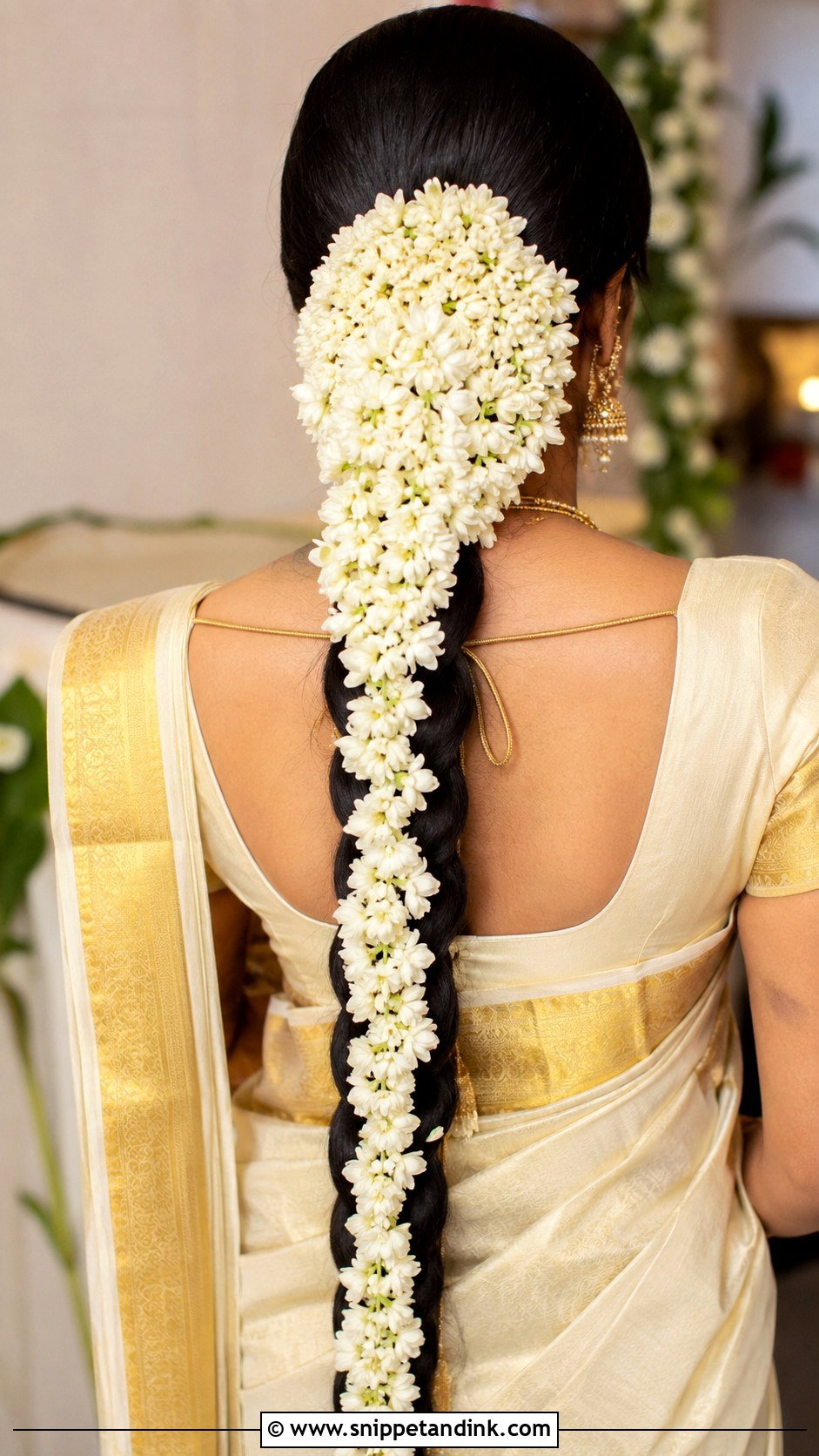
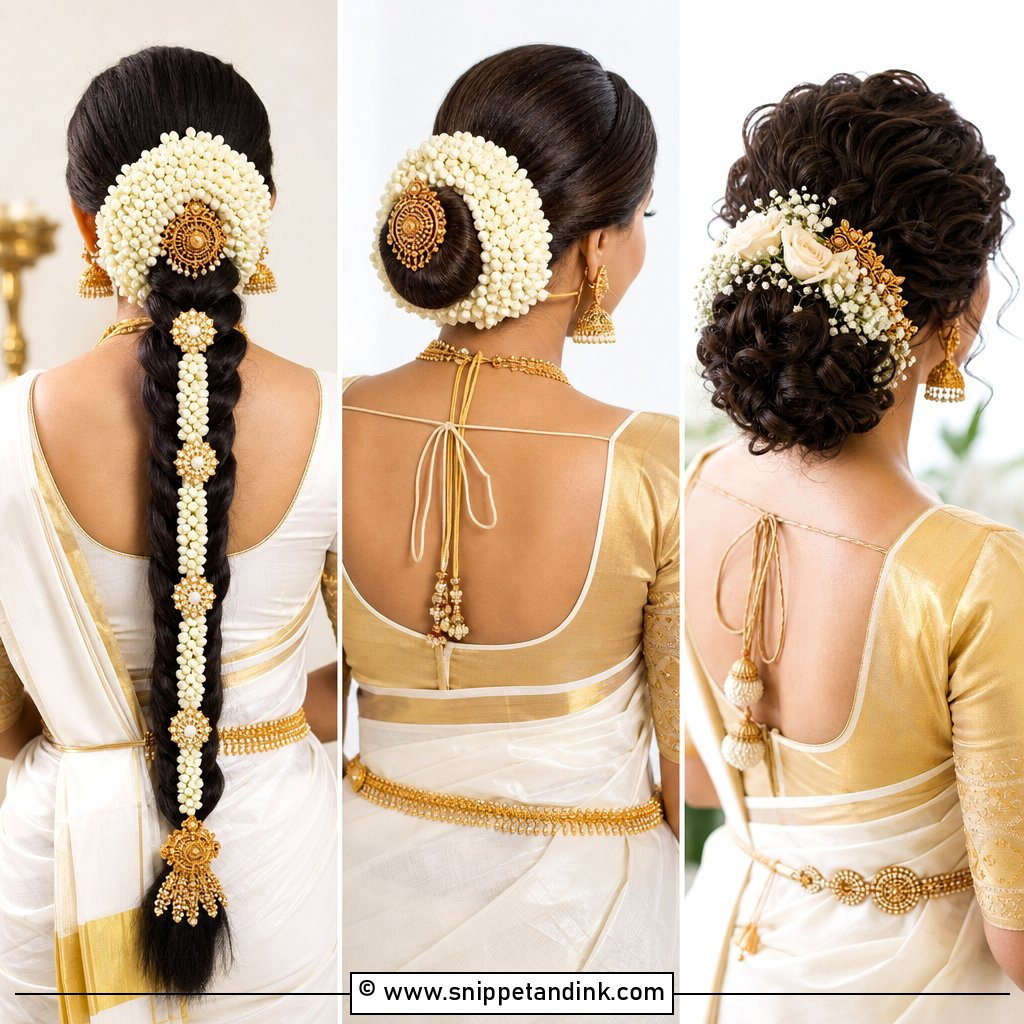
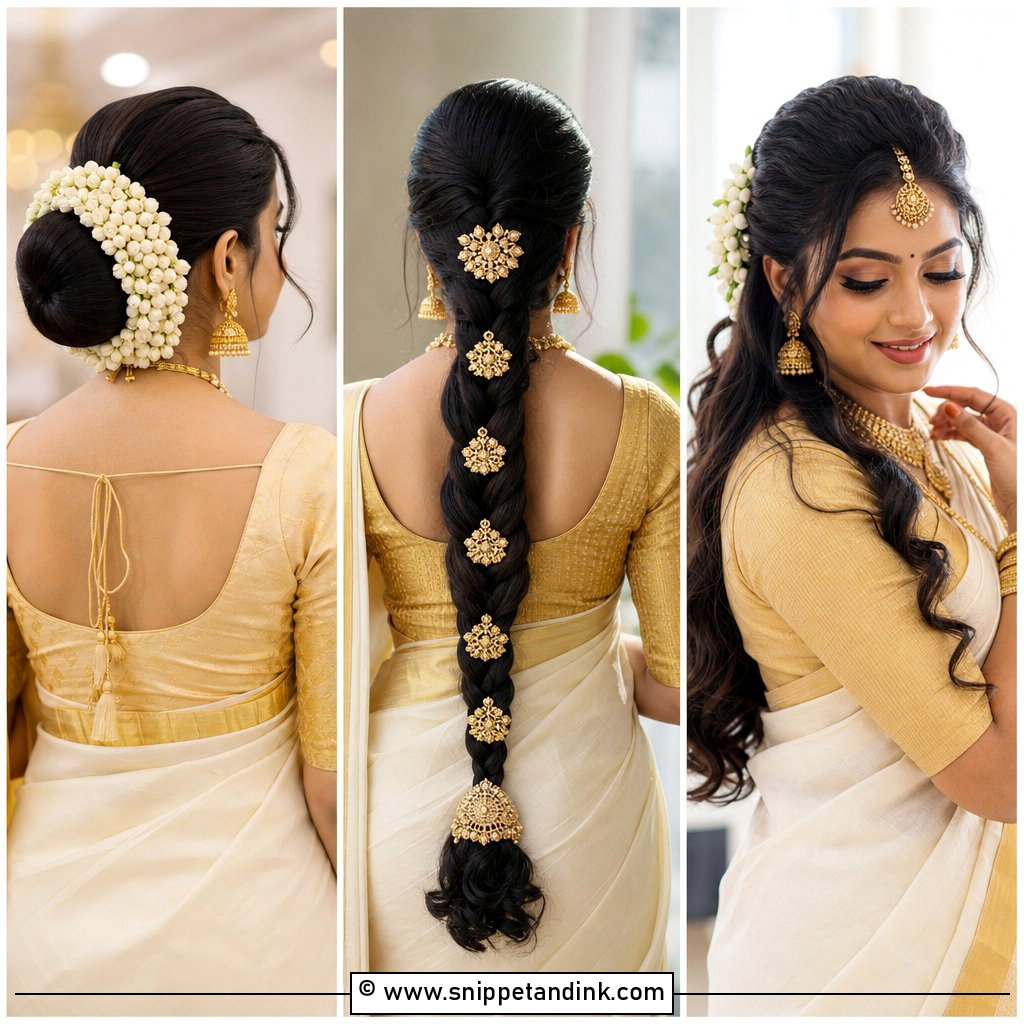
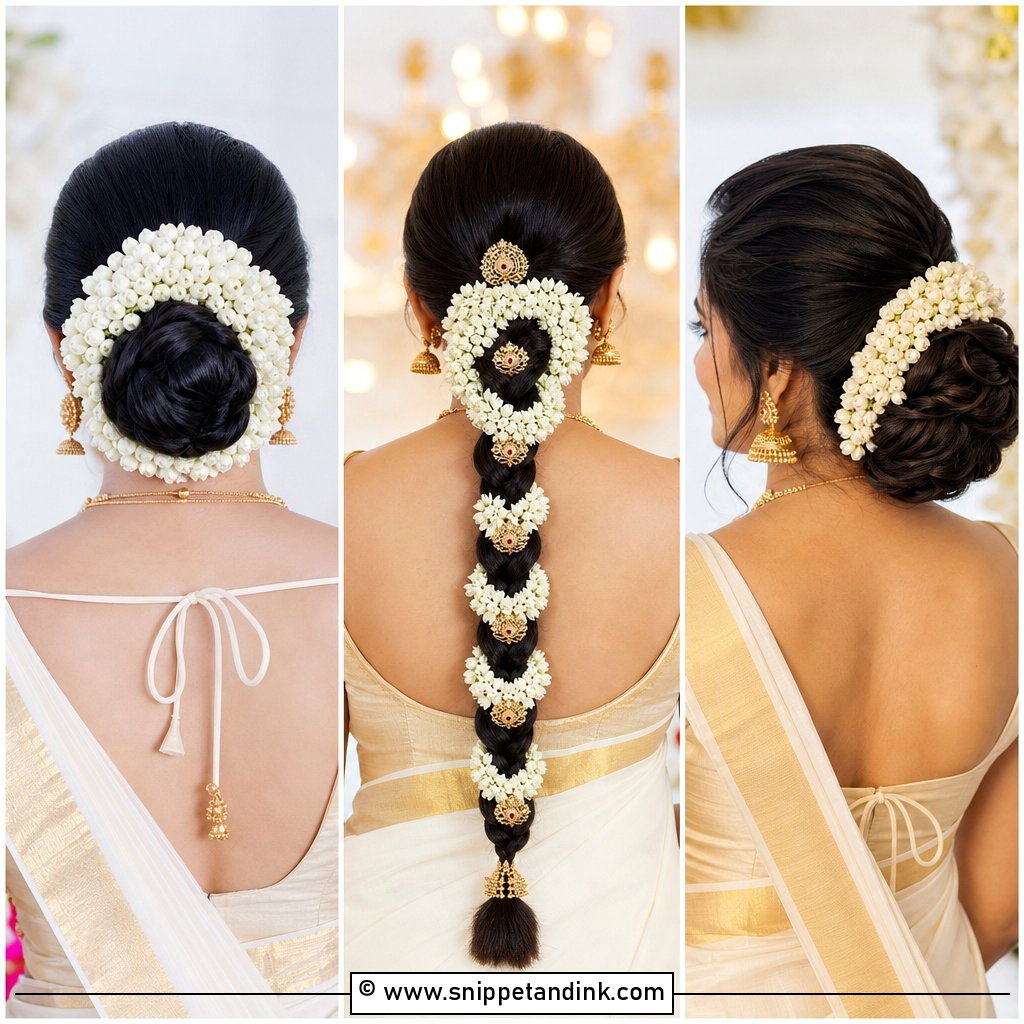
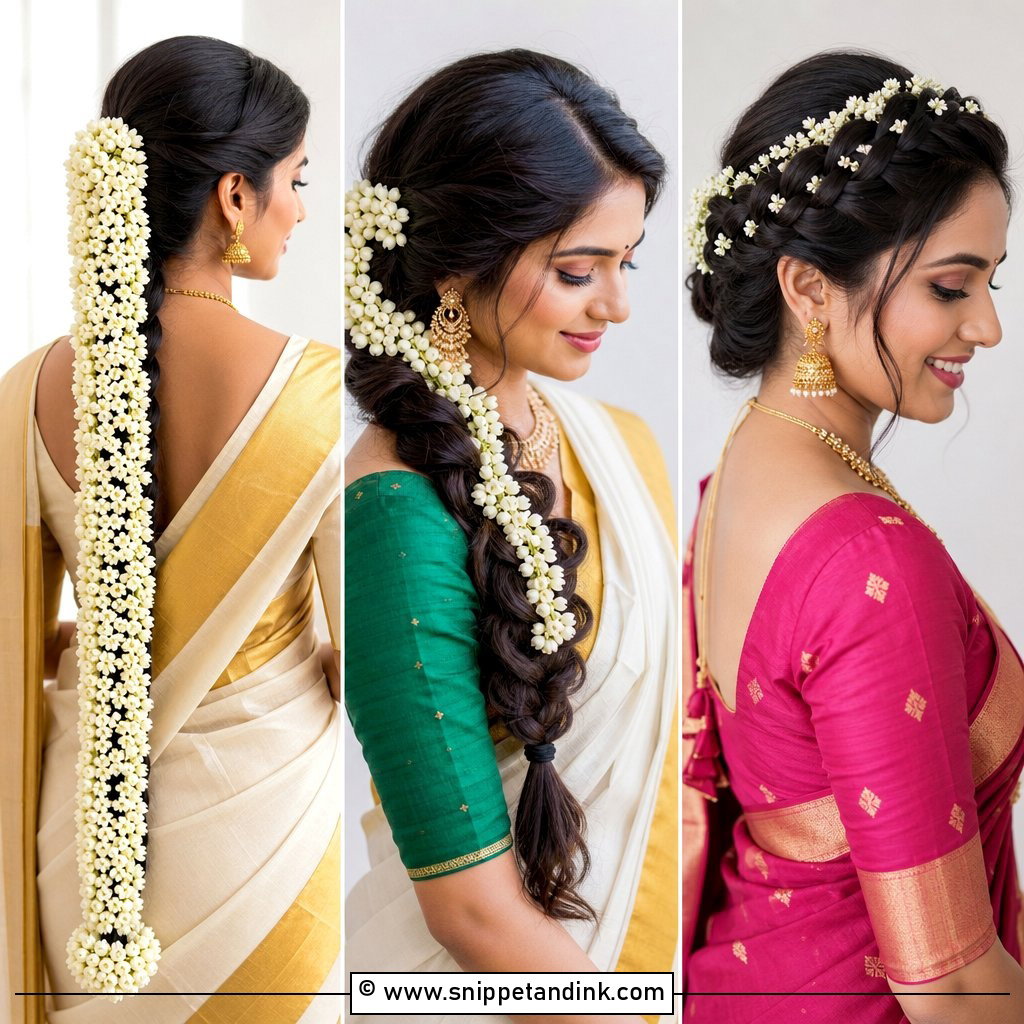
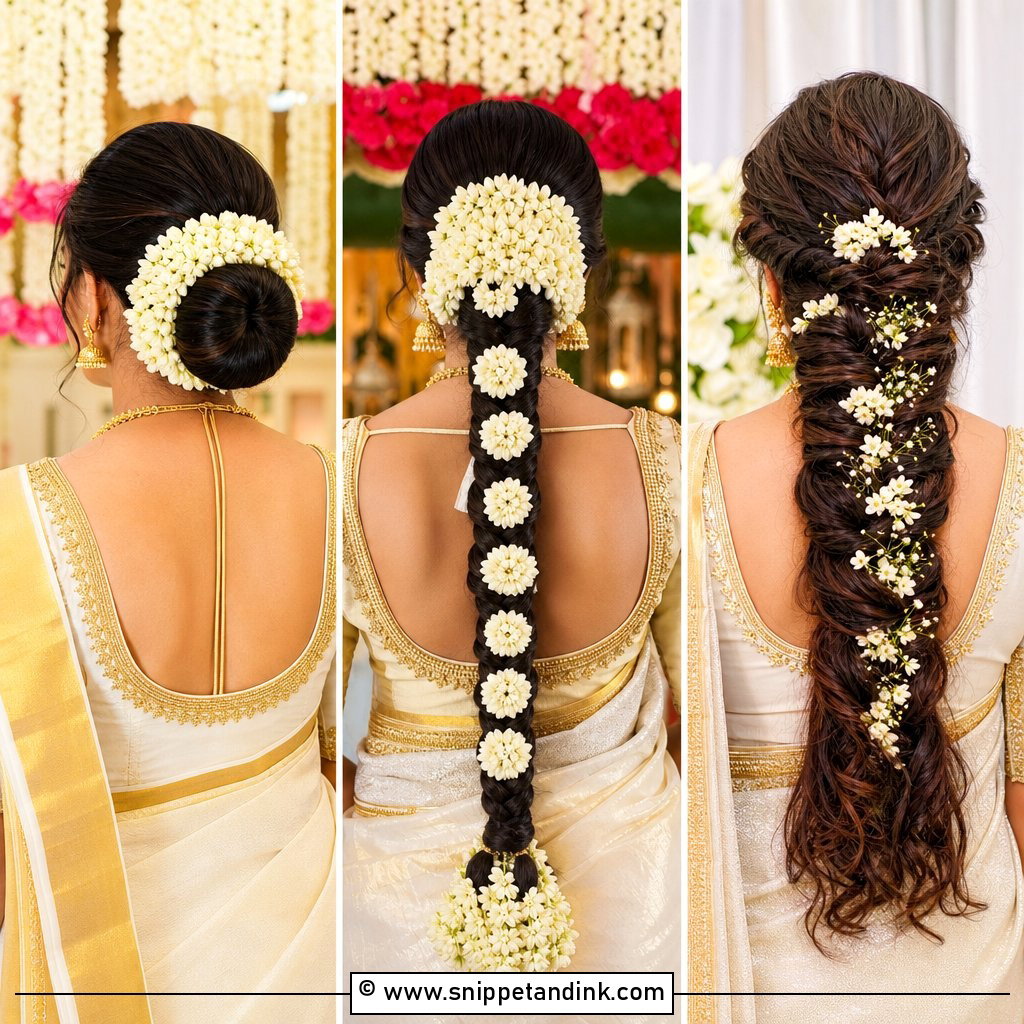
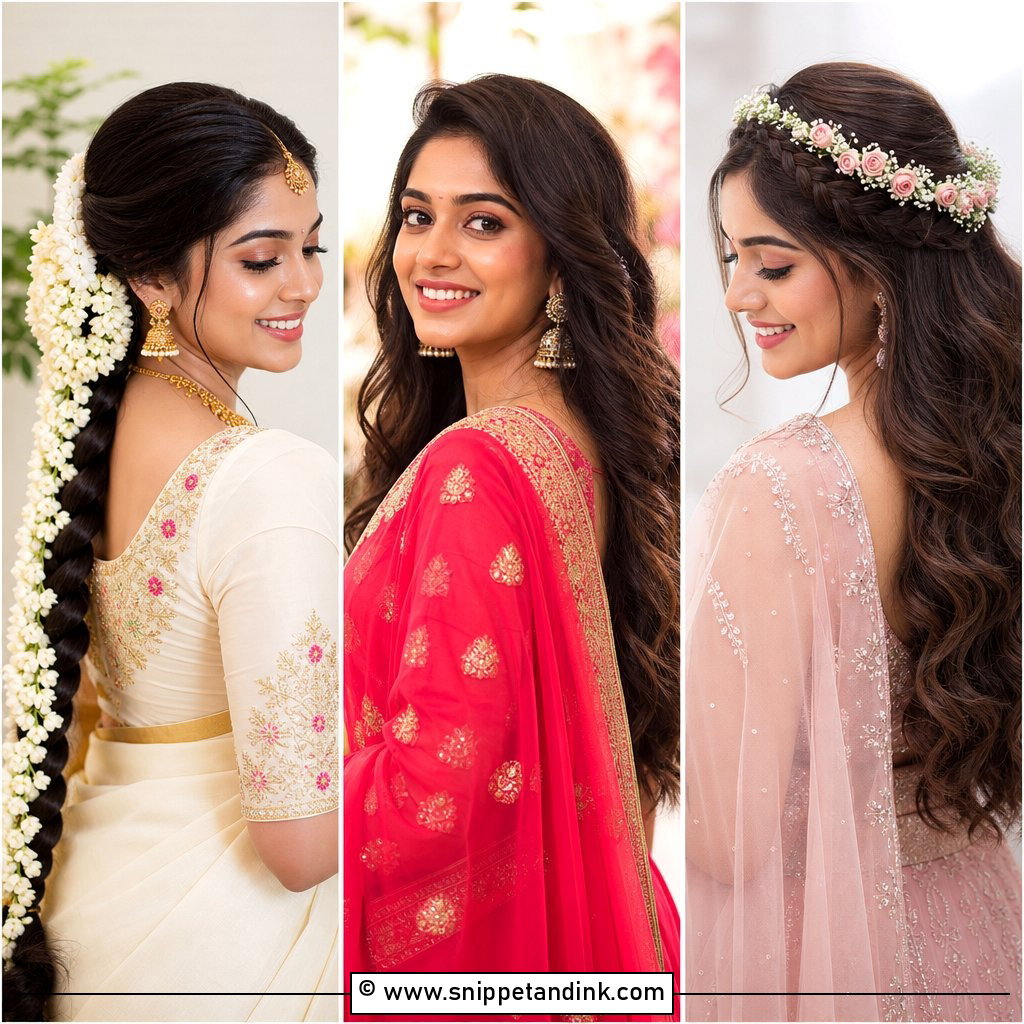
The jasmine braid remains the traditional Hindu ceremony look. Strands of jasmine are wound closely down a long, thick plait, and the scent fills the room. Many families see jasmine as auspicious for a new marriage. I braid firmly at the crown, where the most weight hangs, and a little looser lower down so the flowers sit flat. It belongs with a cream-and-gold Kasavu saree and temple jewellery.
2. Low Bun With Kanakambaram Flowers
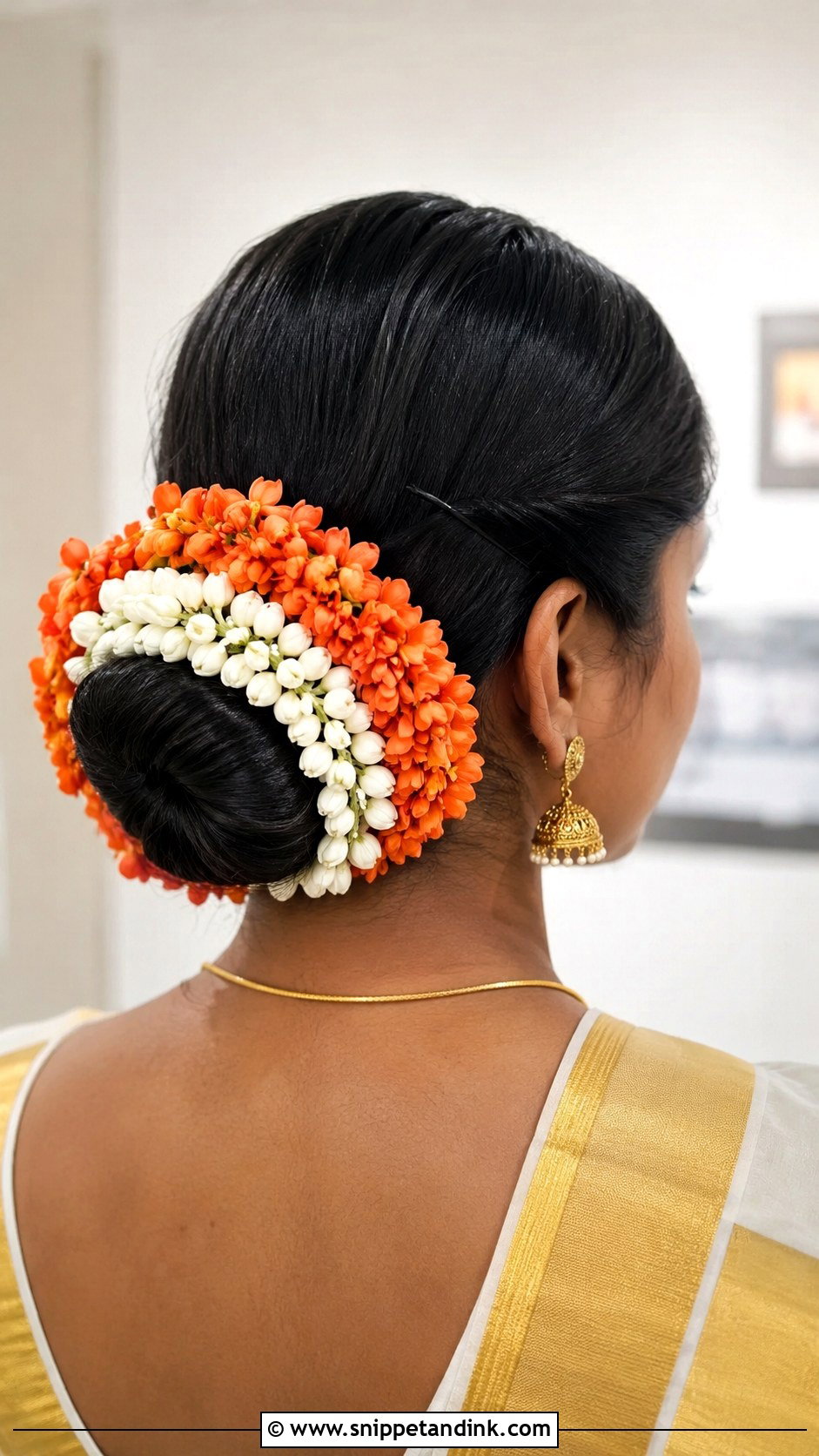
Orange kanakambaram on a low bun brings warmth that plain jasmine doesn’t. I usually alternate the two, white and orange, so the colour reads clearly in photographs. Kanakambaram is papery and light, which makes it easier to wear for hours than a dense jasmine wrap. Wrap it fully round the bun, or trail a string down one side if you want some movement.
3. Side Braid With Fresh Roses
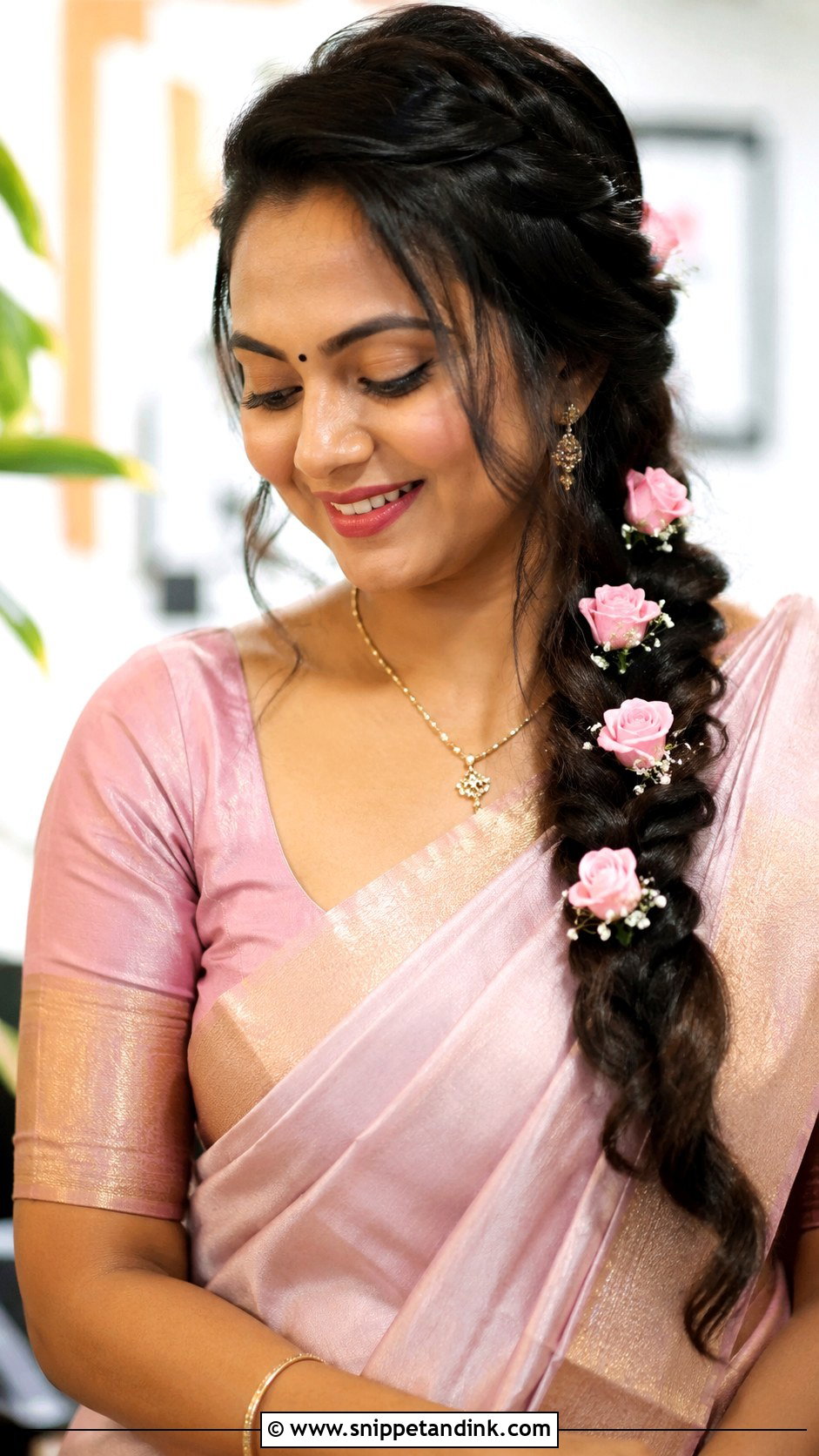
A side braid with roses is better suited to a haldi or pre-wedding event than the main ceremony. The loose plait drapes over one shoulder and roses are tucked along it. Pastel roses go with lighter sarees, deep red with bold silk. Roses bruise easily against a shoulder, so I tuck them into the braid’s outer edge, facing the camera, not underneath.
4. Floral Bun With Peach Roses
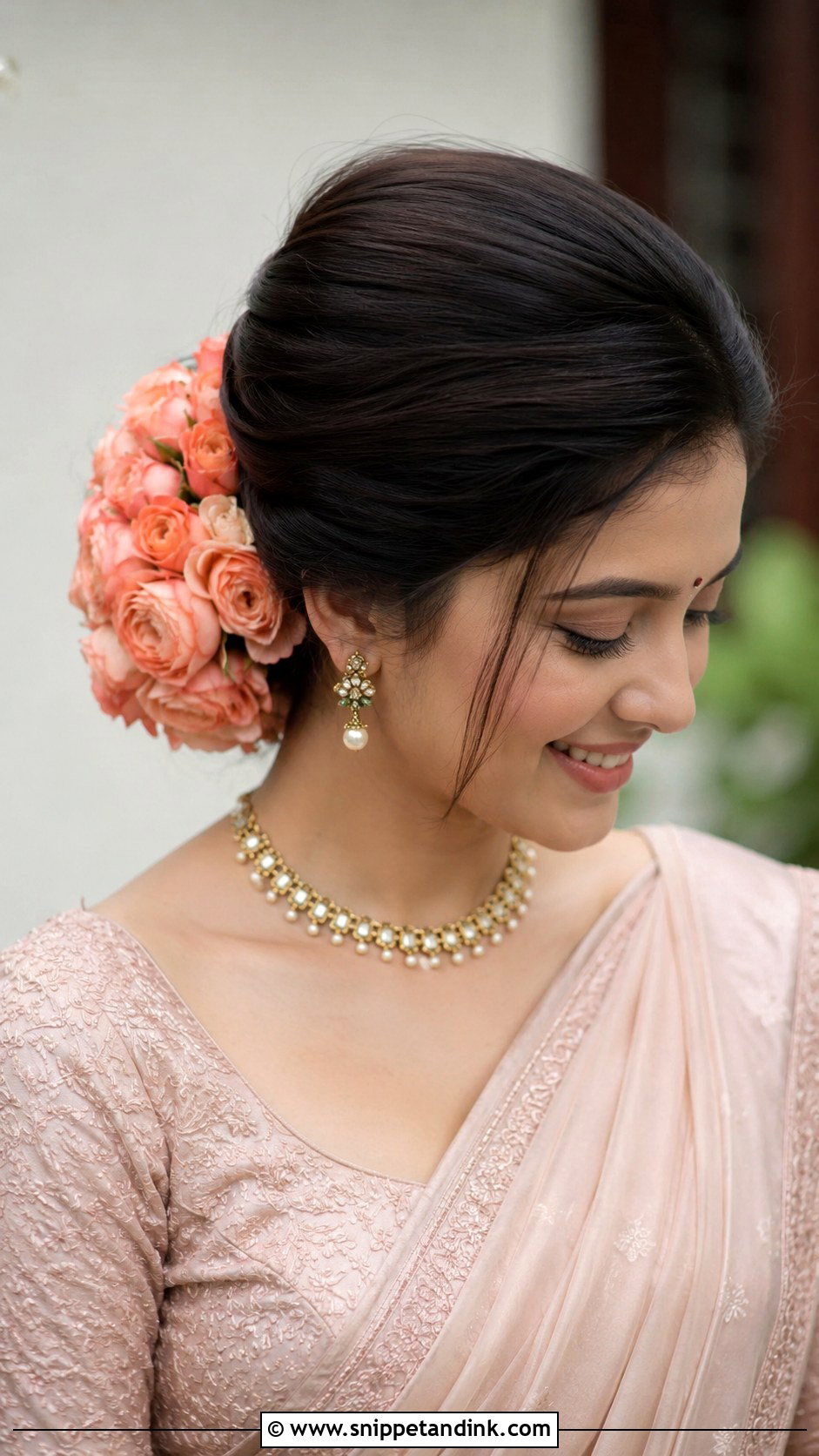
The peach rose bun is built from a dense, rounded base with roses packed closely, often set just beneath the bun so they lift it. Peach works on most skin tones without fighting gold jewellery the way bright pink can. It’s heavy if done fully, so I use a firm bun base and plenty of U-pins. Ask your florist for roses that are just starting to open; fully open ones drop petals by evening.
5. Fishtail Braid With Flowers
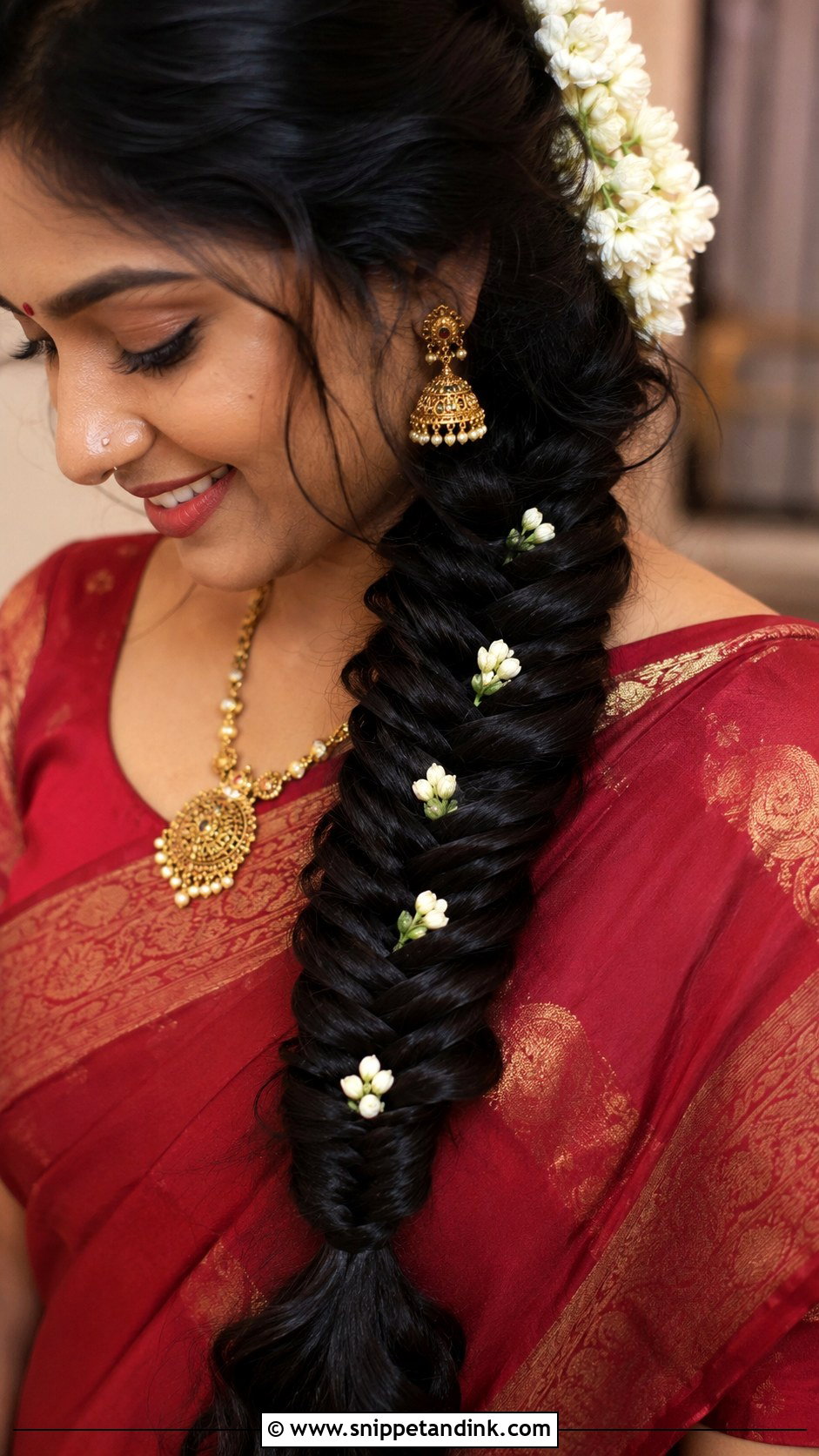
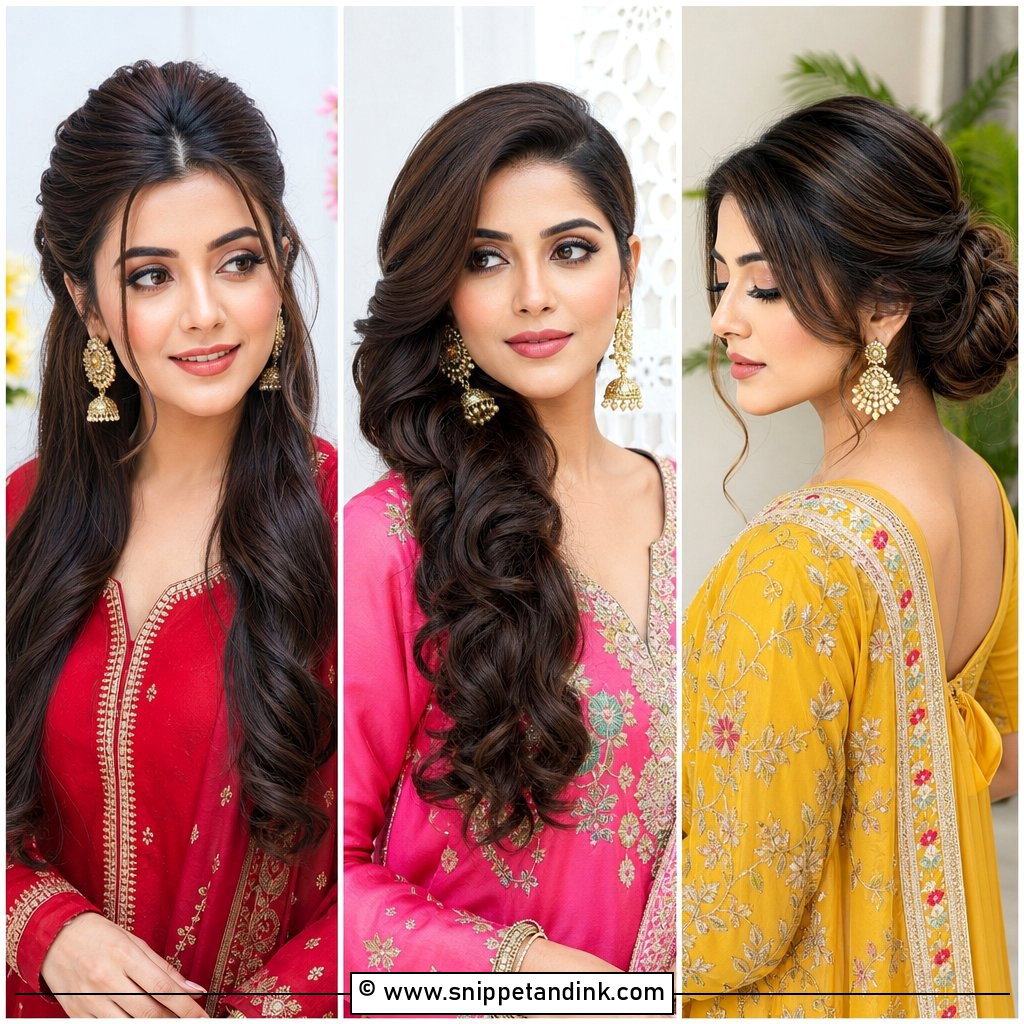
Fishtail braids are my suggestion for a bride who wants something less expected than a three-strand plait. The weave grips tightly, so small jasmine buds or baby’s breath can be tucked into it without pins. Down the back or over a shoulder, it works for engagements, receptions and main ceremonies. On very thick Kerala hair, the fishtail can look huge, so I keep the sections fine.
6. Half-Up Half-Down With Soft Curls
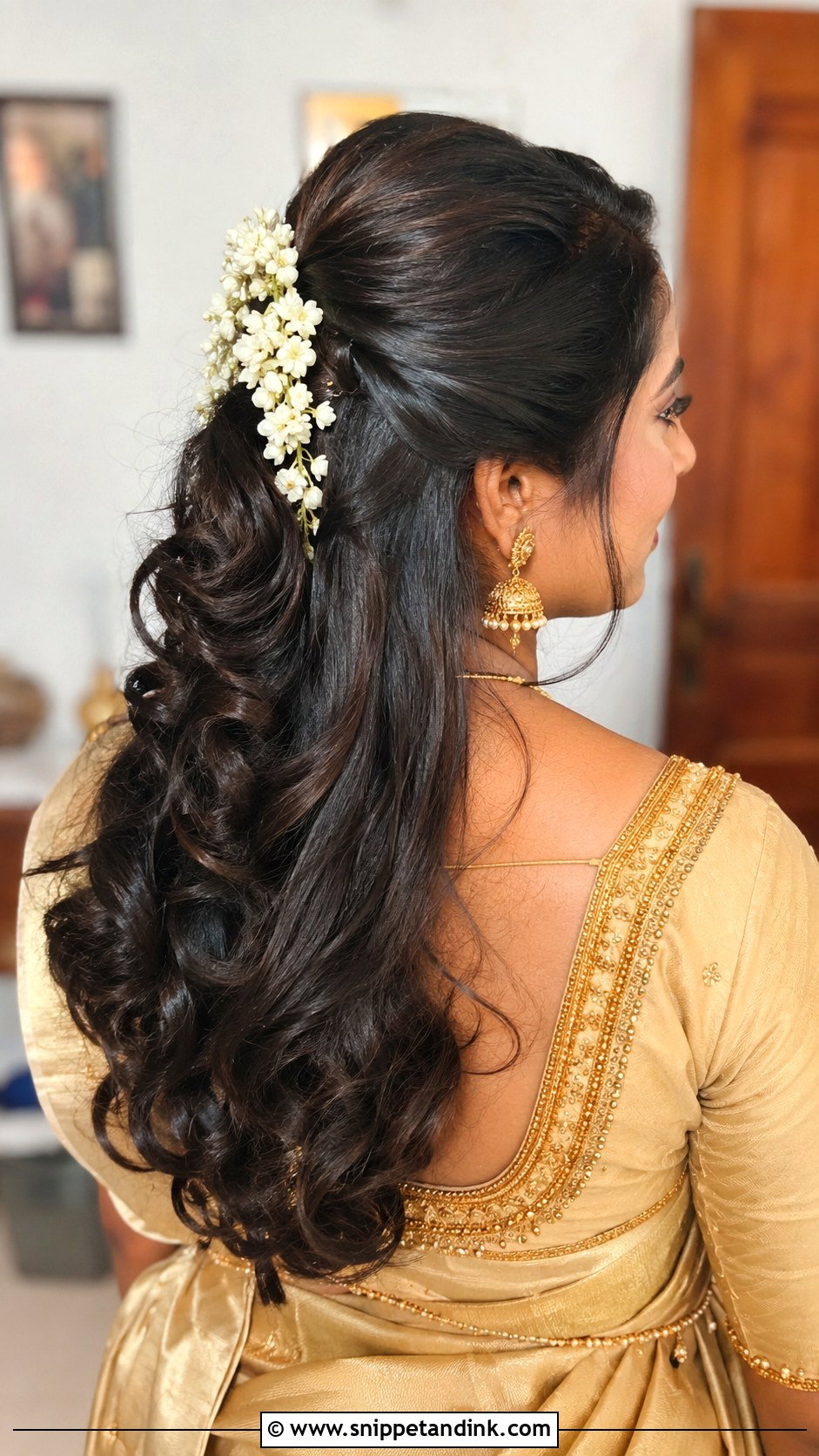
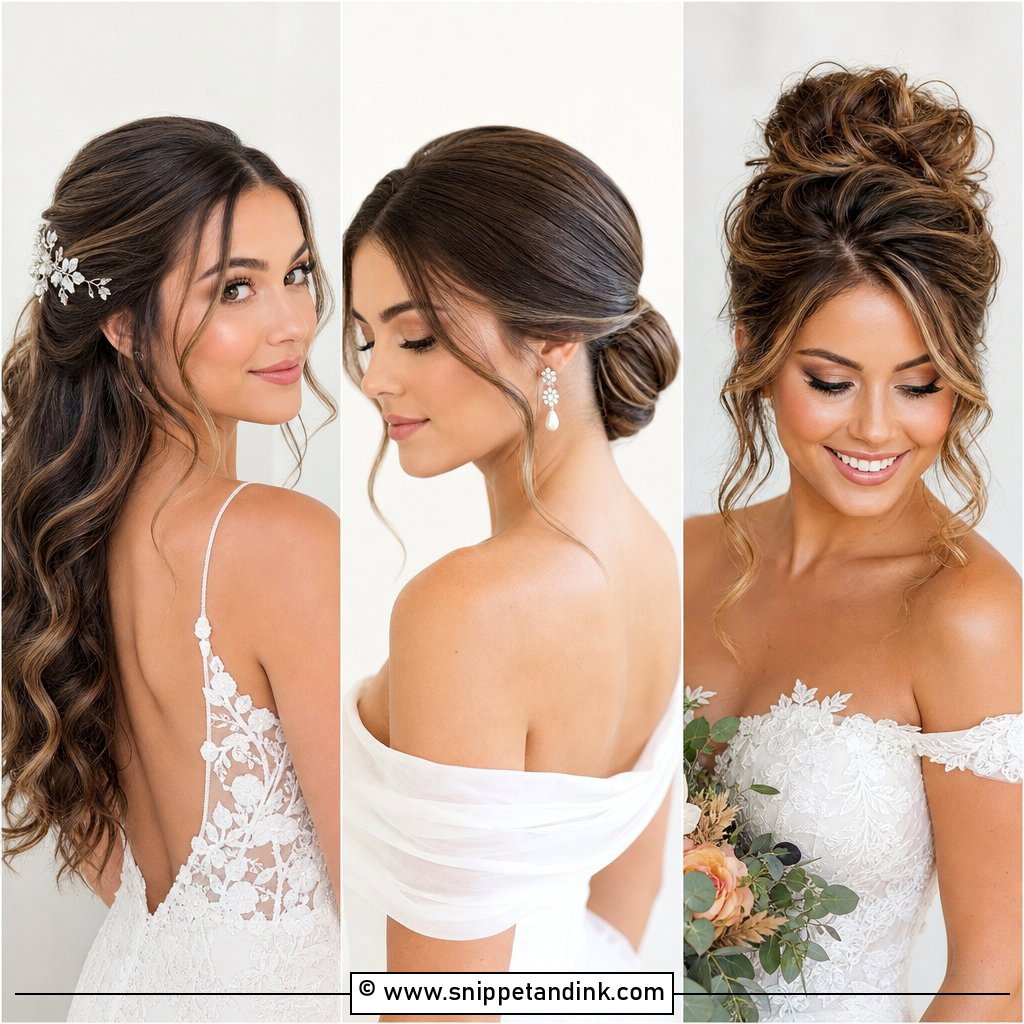
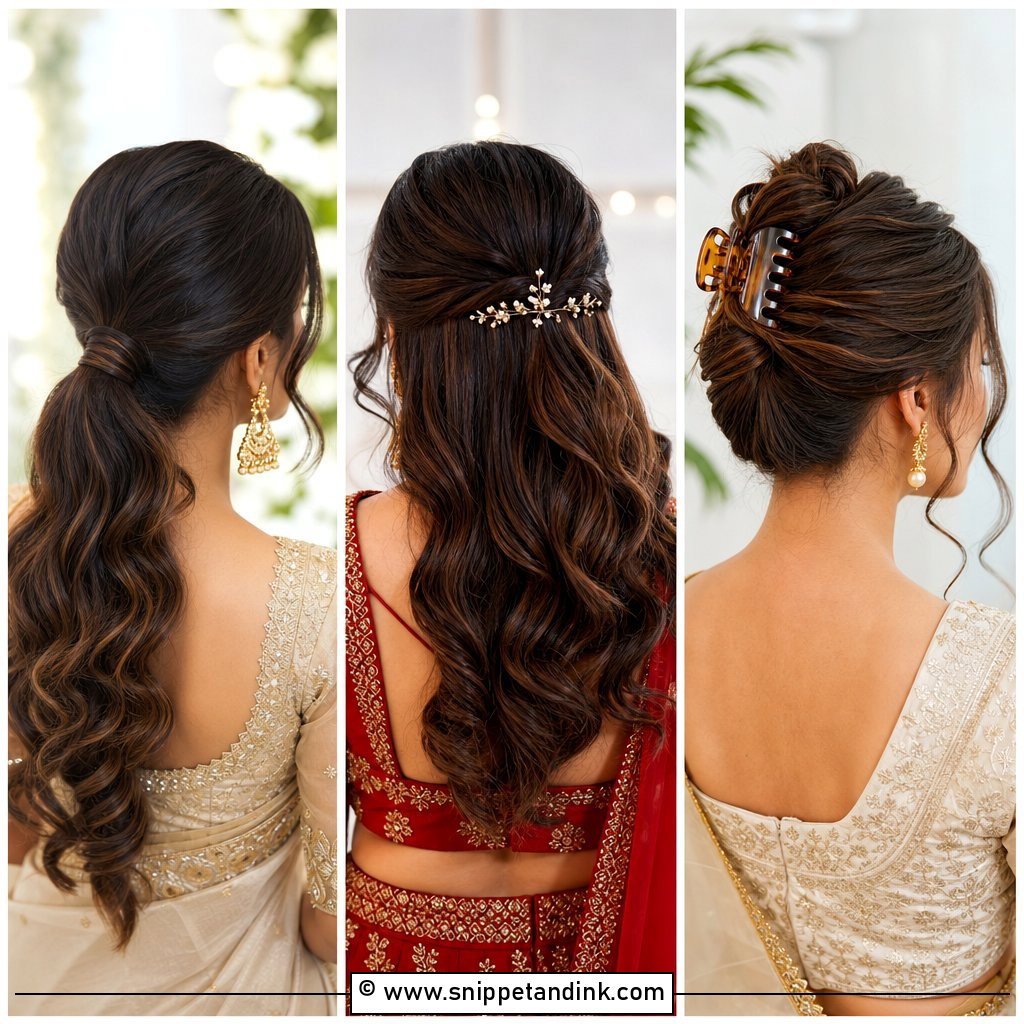
Half-up curls give you open hair and a tidy face at the same time. The top section is pinned back and the rest falls in curls, with a floral clip or a few jasmine strands at the crown. Engagements, haldis and shoots suit it. In humid weather the curls loosen fast, so I set them a size tighter than the finished look I’m aiming for.
7. Messy Bun With Baby’s Breath
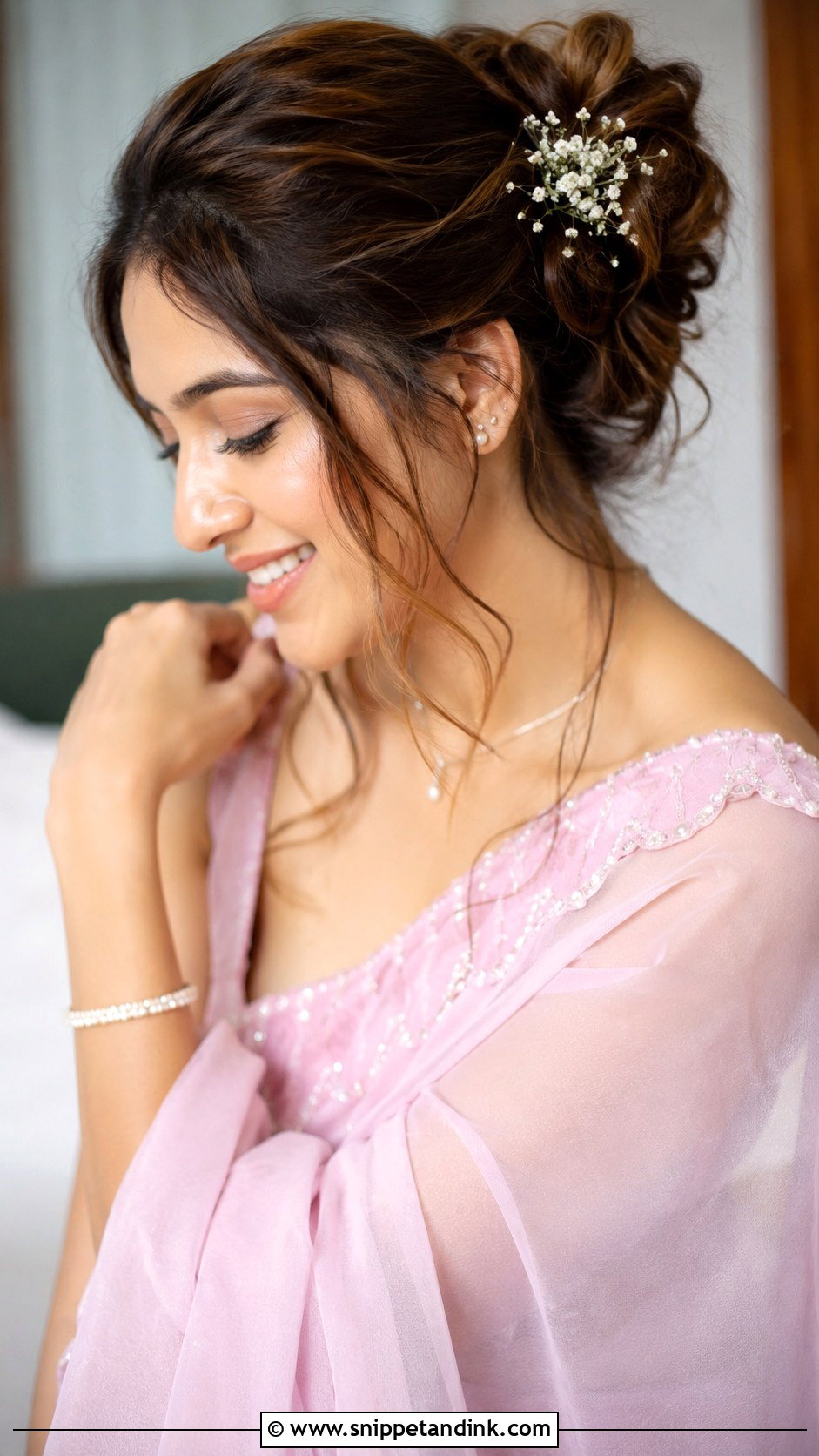
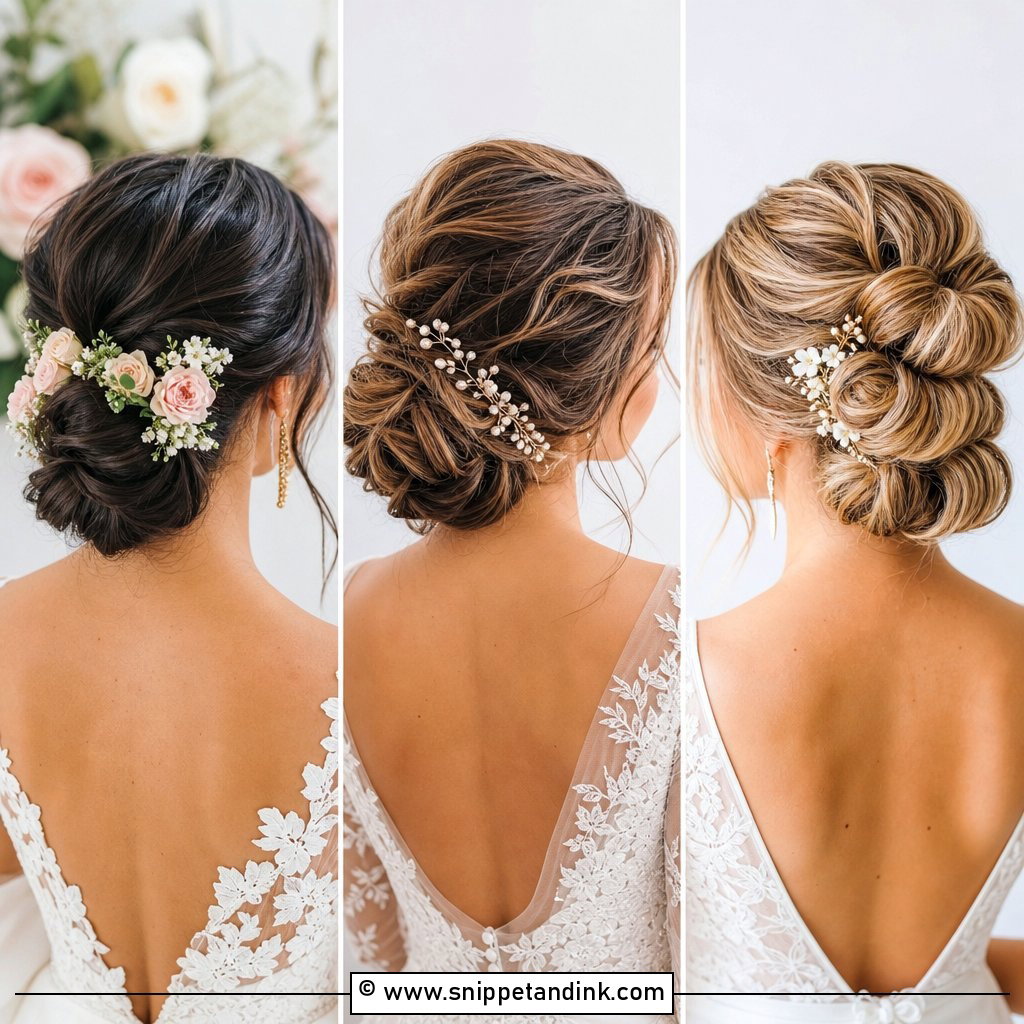
A loose bun dotted with baby’s breath has become a common pick among Christian Kerala brides and pastel weddings. The tiny white flowers look airy where jasmine looks dense. I pin the bun securely first, then pull a few strands out, because a truly messy bun won’t hold a veil comb.
8. Sleek Center-Parted Bun
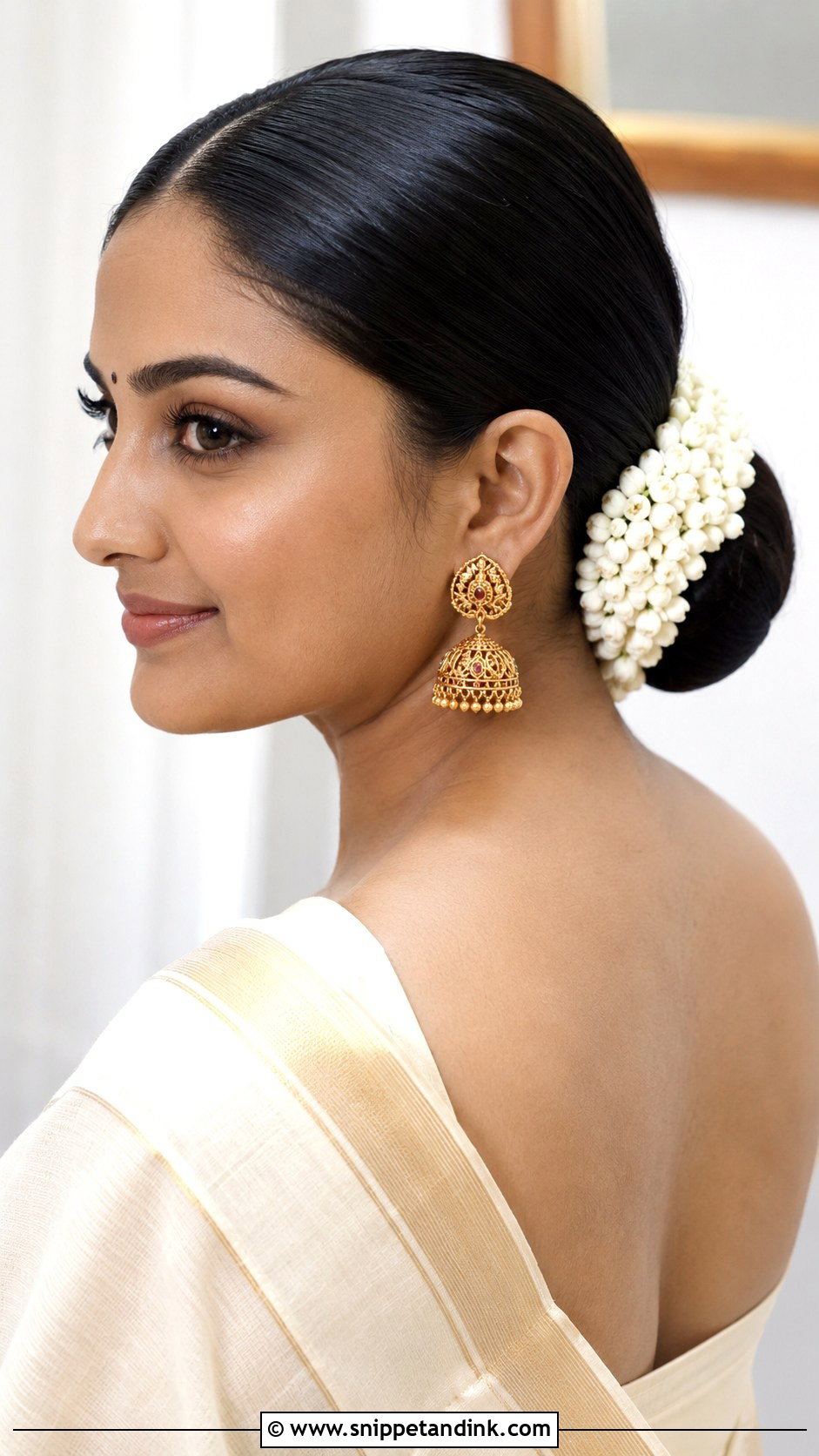
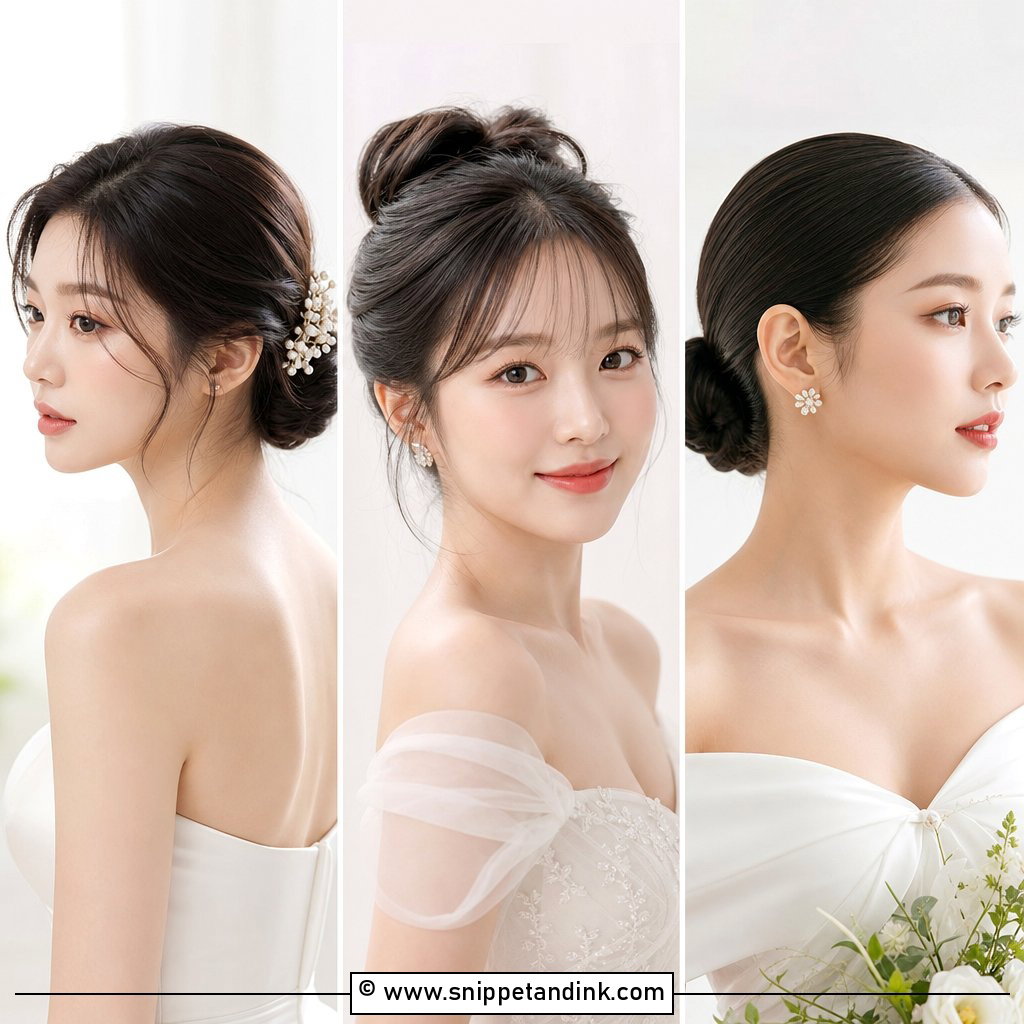
A sleek center-parted bun is the minimalist bride’s choice. A sharp middle part, every strand smoothed back, one jasmine garland around a low bun. It lets statement earrings and the saree carry the look. The centre part has to be exactly straight, so I take it with a tail comb against the nose bridge; any wobble shows in front-facing photos.
9. Dutch Braid With Jasmine
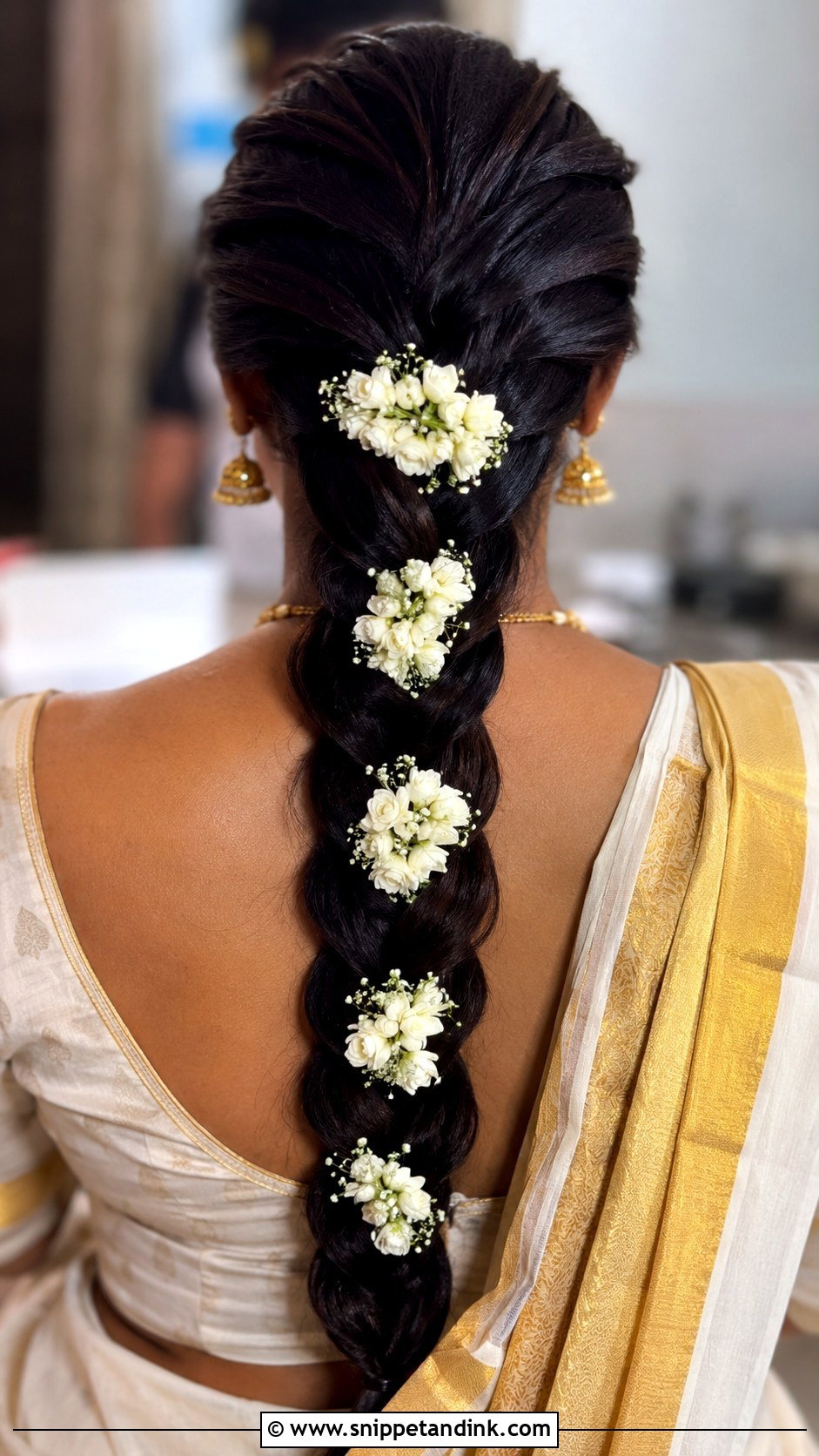
Dutch braids cross under rather than over, so the plait sits raised on the hair. With jasmine woven in, it becomes a strong centrepiece. Wear one thick braid or two. It’s one of the most secure looks here for an active ceremony day, and the raised texture shows up well in photographs even from a distance.
10. Voluminous Curls For Christian Brides
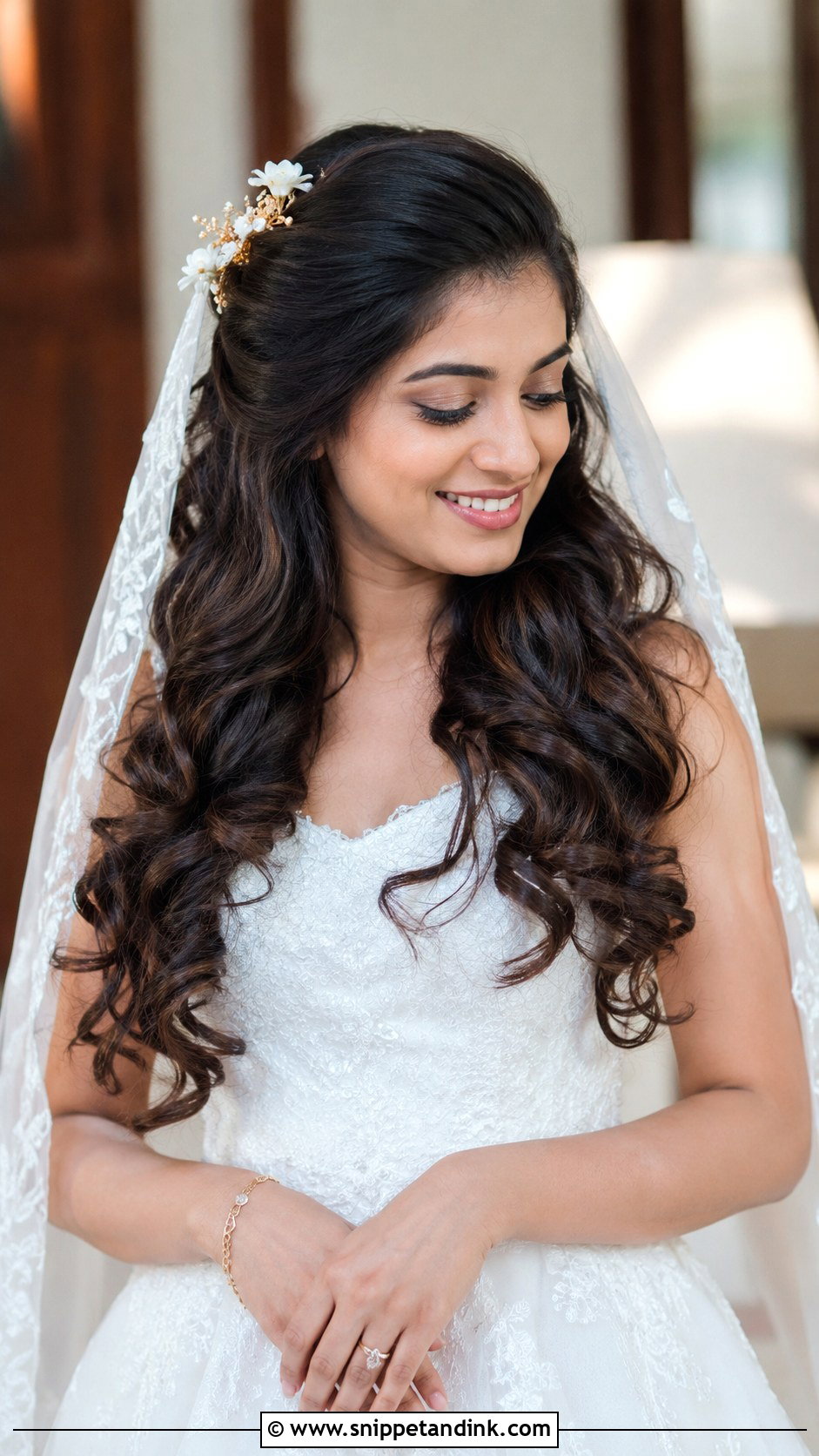
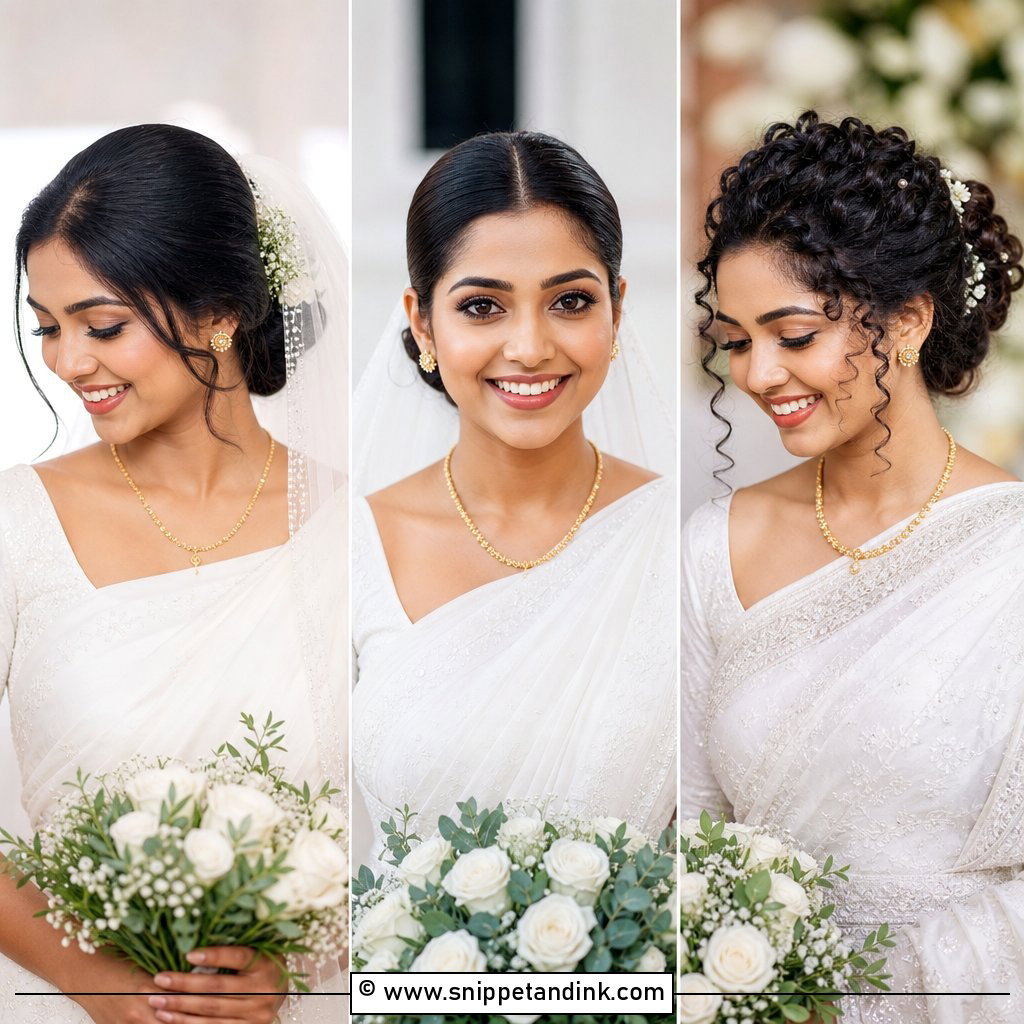
Christian Kerala brides in a white gown or saree often go for open, voluminous curls. The hair stays mostly down with a small floral touch or a hairpiece, and a lace veil sits on top. The challenge is the veil comb: on fully open curls it can slip, so I build a small hidden pin base at the crown before curling. Church interiors are often dim, and soft curls catch what light there is.
11. Bridal Bun With Gajra Wrap
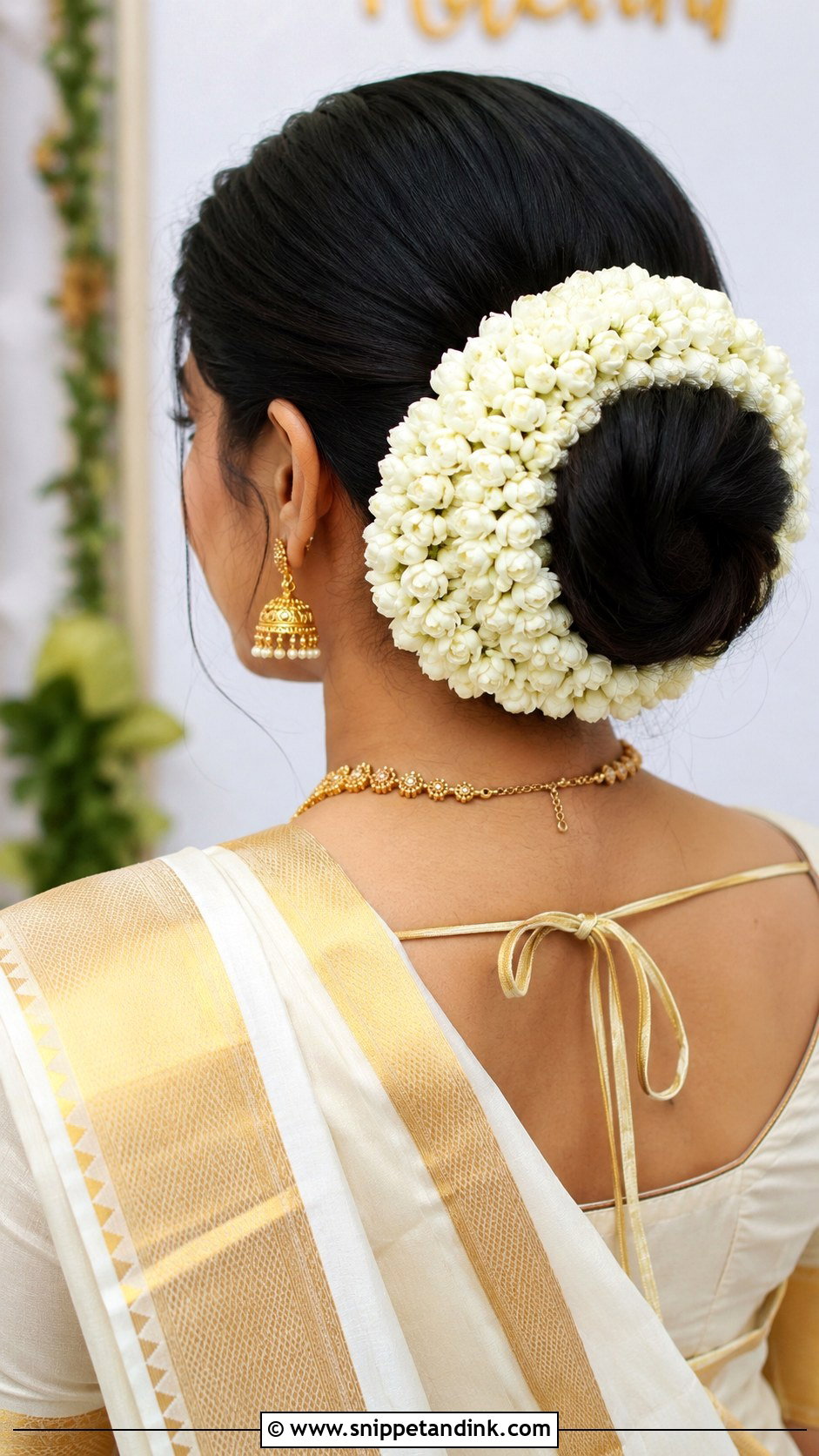
Coiling a gajra round a neat bun gives the most floral impact in the tidiest shape. Dense white jasmine against dark hair and gold jewellery is the classic contrast, and the scent lasts all day. Paired with a Kasavu saree, a gajra-wrapped bun is as traditional as South Indian bridal hair gets. Wrap it in loose passes; pulled tight, the gajra squeezes the bun into an oval.
12. Twisted Updo With Maang Tikka
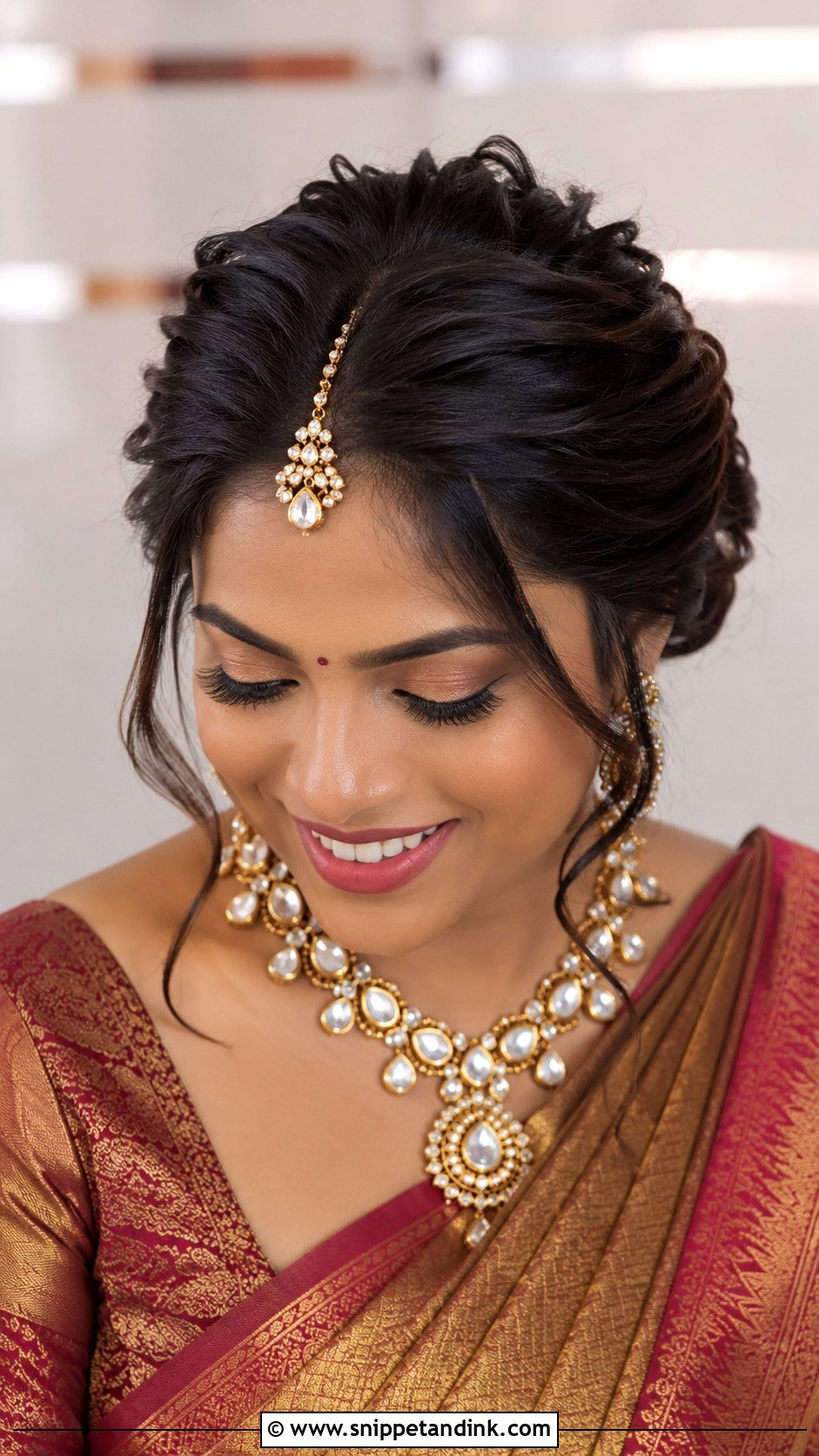
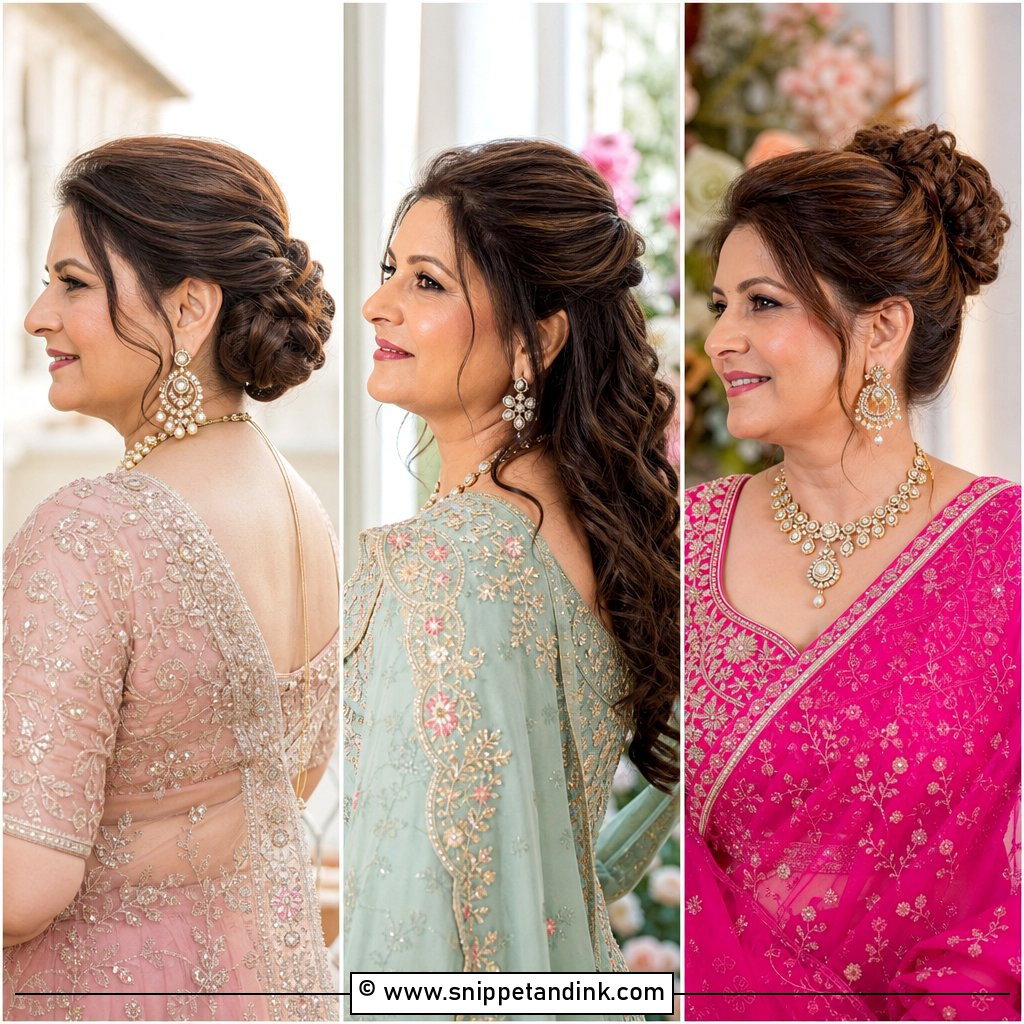
A twisted updo with a maang tikka on the centre part is a jewellery-led look. Sections are twisted and pinned into shape at the back, with pearl pins or small flowers tucked between the folds. I place the tikka chain first, then build the twists around it, so the chain is hidden and anchored. Receptions and grand ceremonies suit it.
13. Loose Waves With Side Flowers
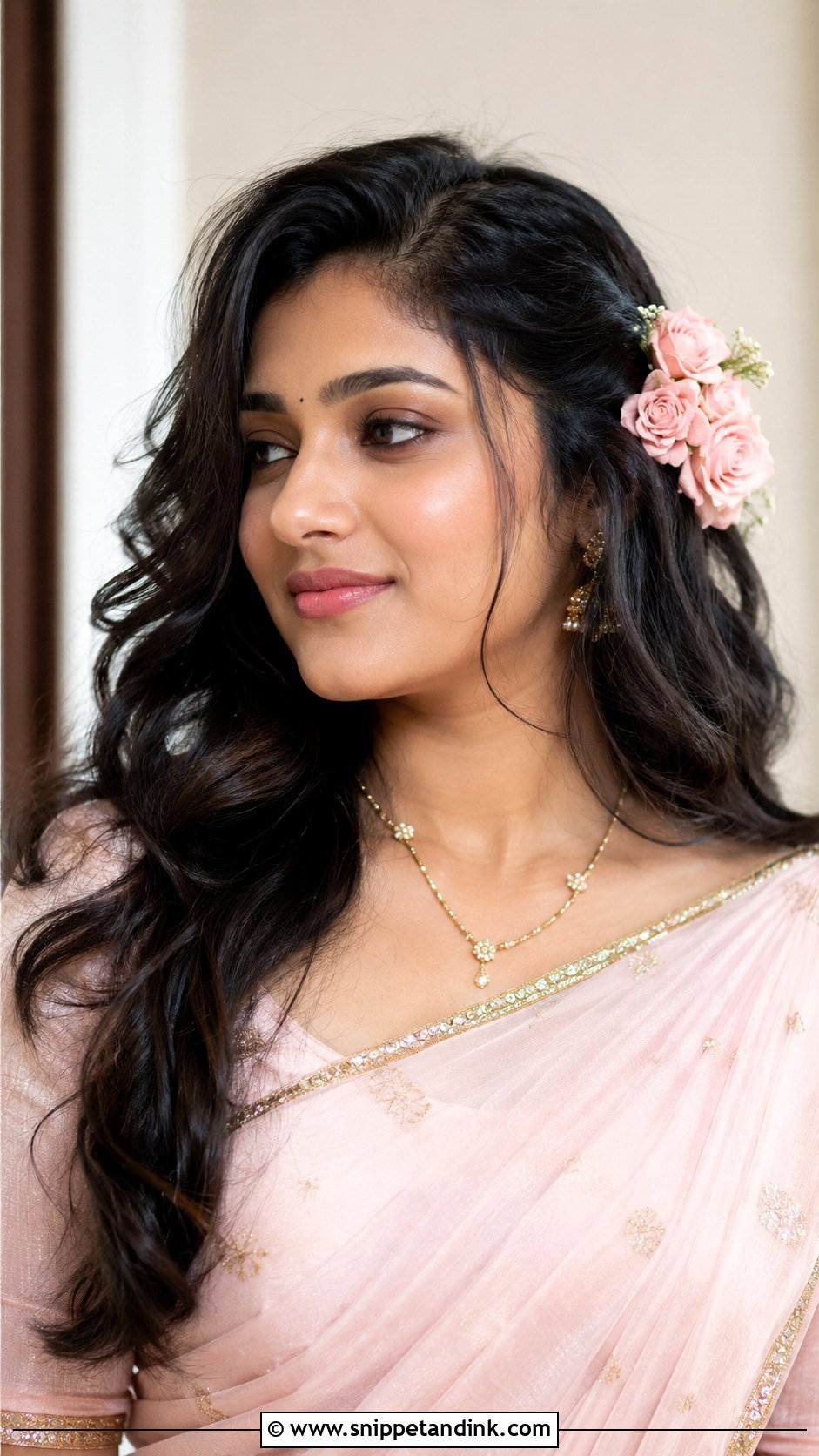
Loose waves with flowers pinned to one side are the lightest look in the collection. Roses or jasmine make the focal point; the waves keep the face open. It suits engagements, sangeet nights and relaxed celebrations. Long hair shows it best. I place the flower cluster behind the ear, not on top of it, so it doesn’t shift when you turn your head.
14. Braided Crown With Flowers
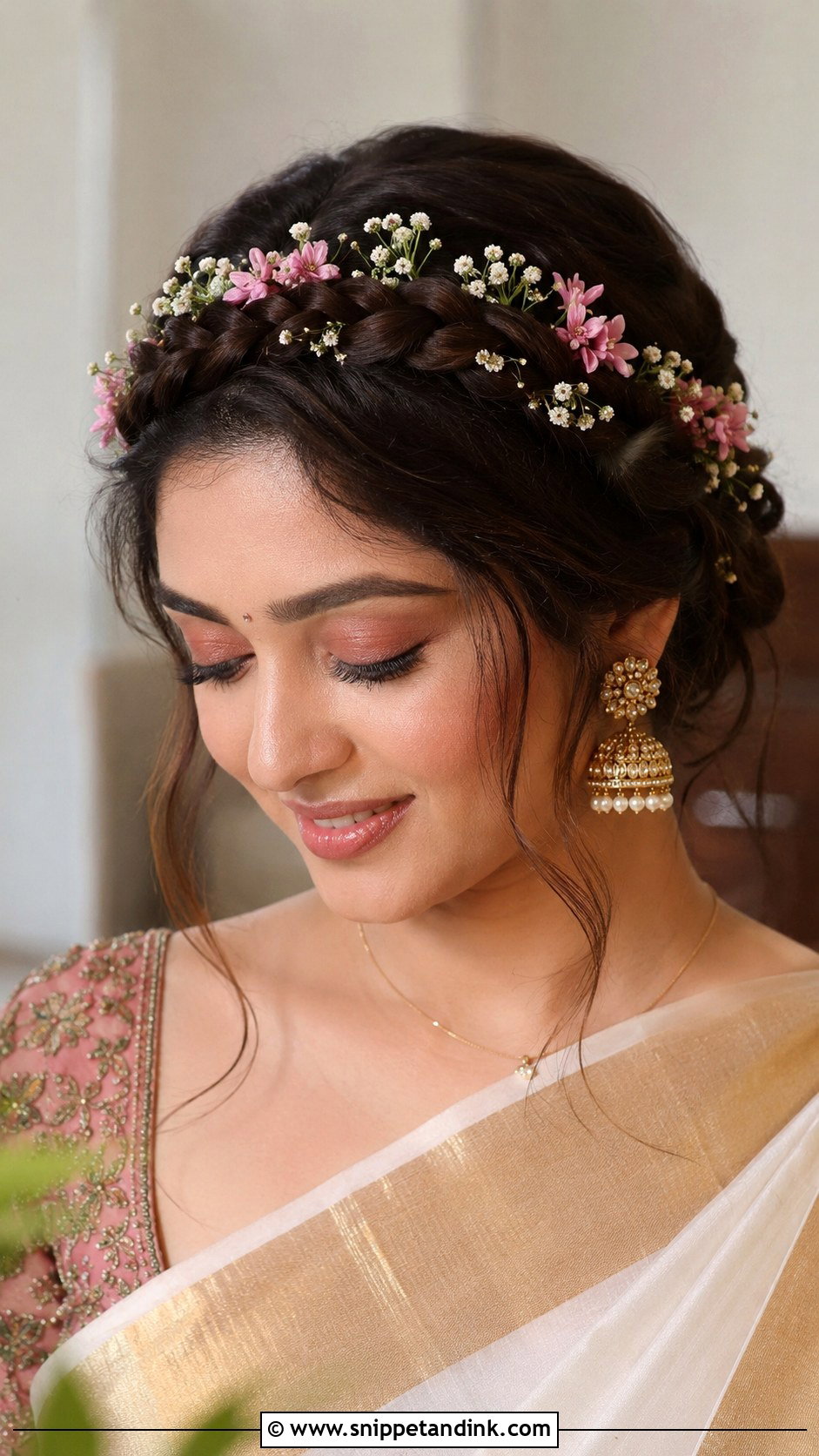
A braided crown circles the head with flowers woven in, while the rest is tucked under or left in waves. Because nothing touches the neck, it’s comfortable in Kerala heat. Tall earrings and a maang tikka sit neatly with it. It needs at least shoulder-length hair to wrap; otherwise, I join two shorter braids at the back.
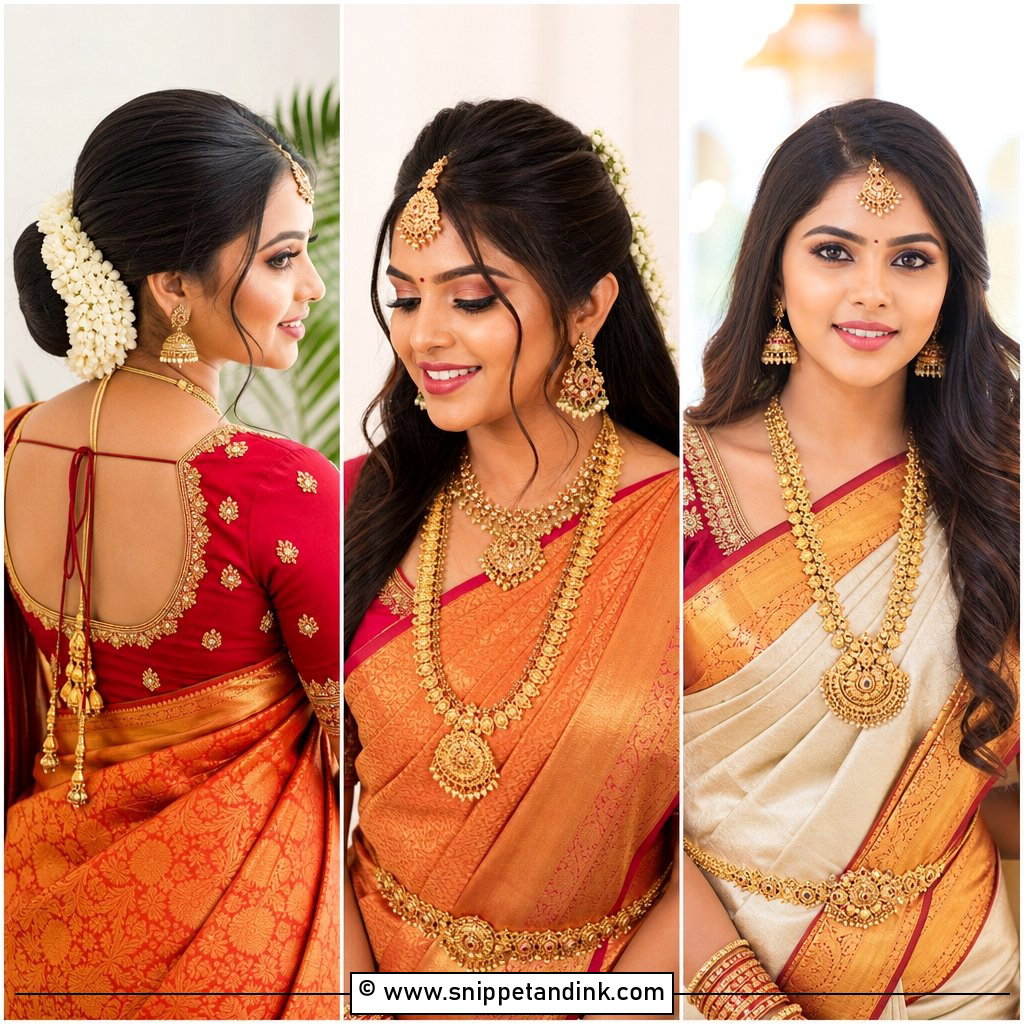
15. Reception Bun With Soft Curls
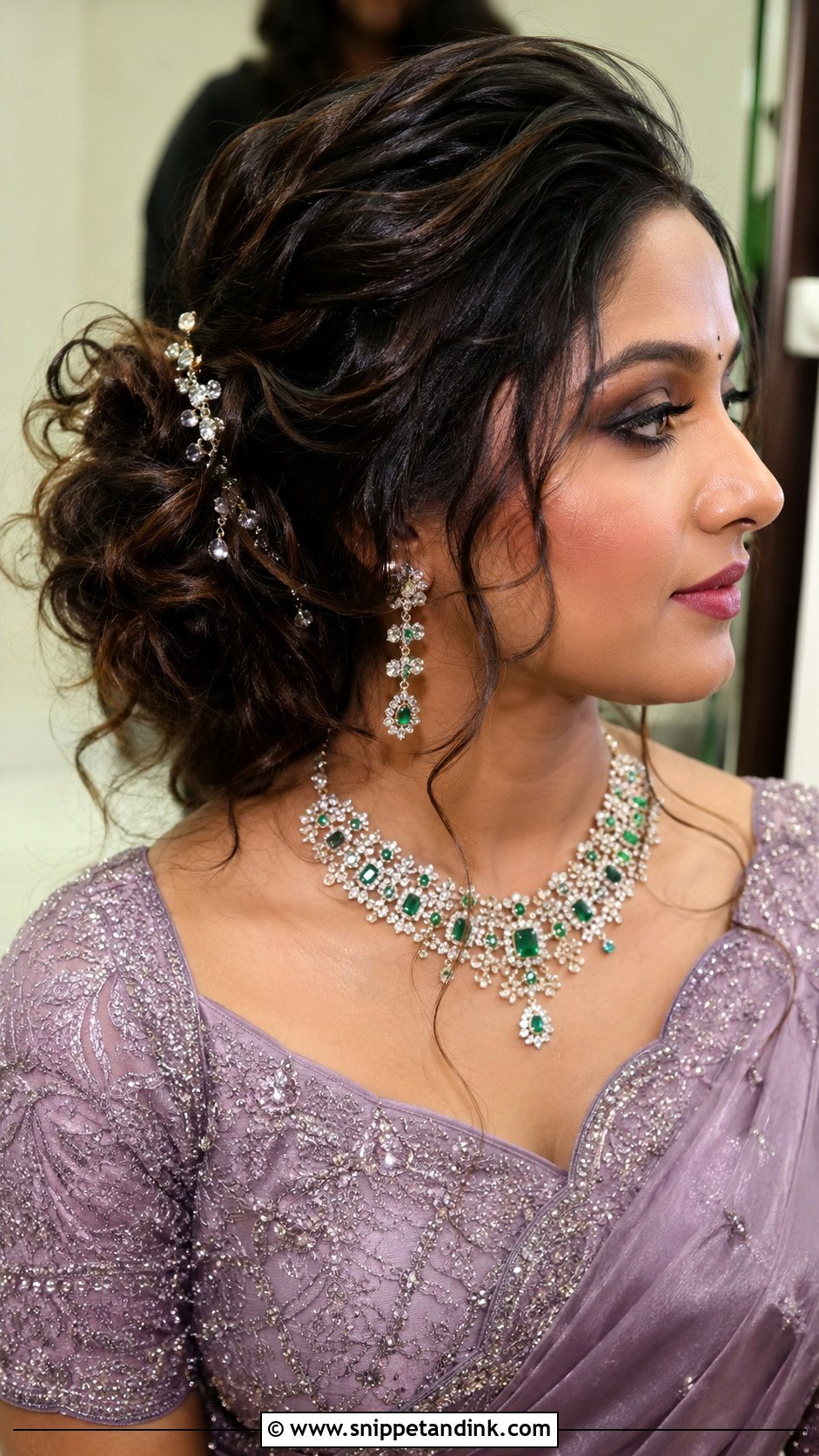
A curled reception bun is looser and fuller than a ceremony bun, with tendrils left at the face and a few sparkle pins. It pairs with heavier reception sarees and bold jewellery. If you’re changing from a morning braid, ask your stylist to curl underneath before braiding; the waves will be ready for this bun at night.
16. Engagement Half-Updo
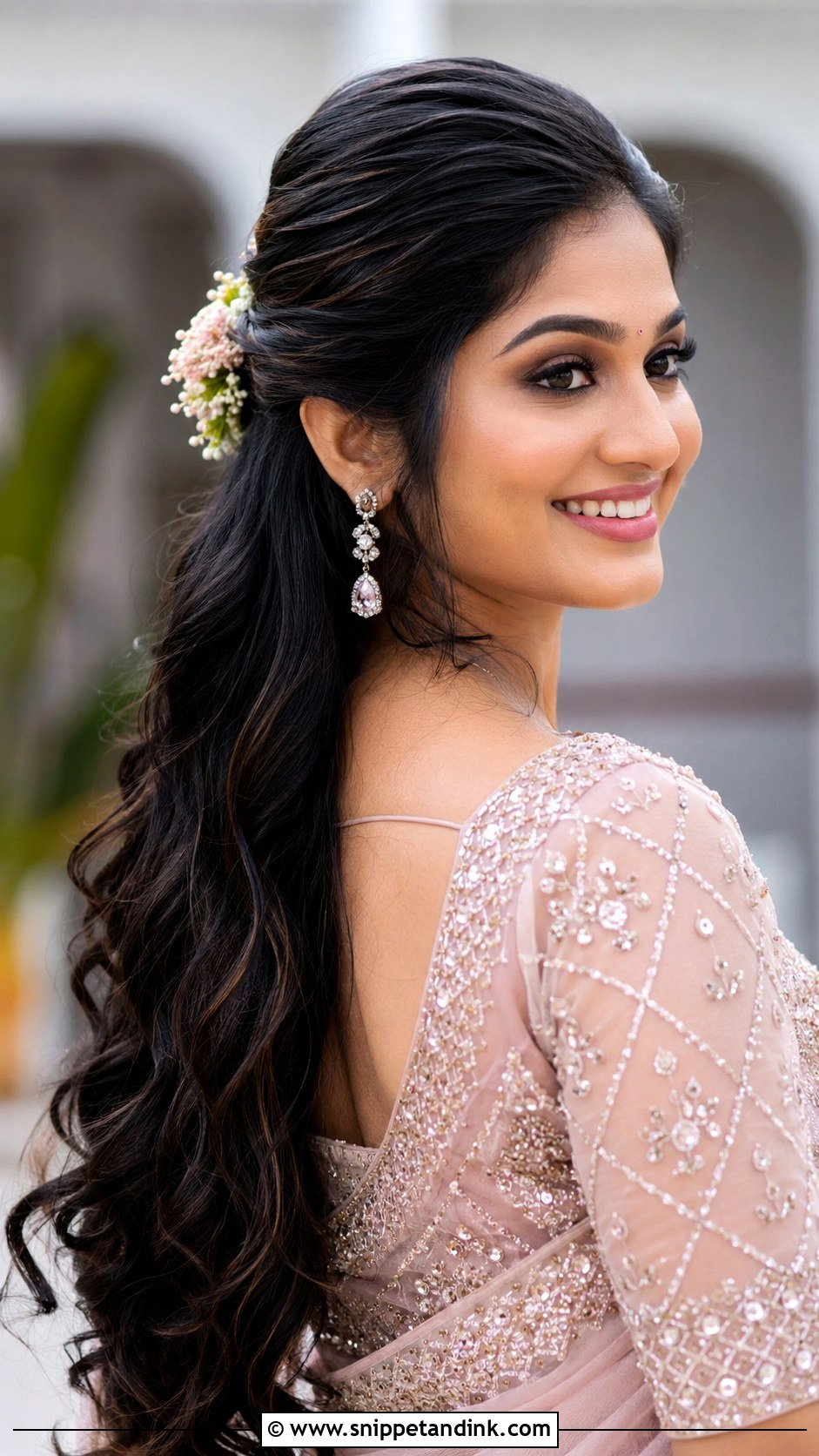
An engagement half-updo lifts the crown for volume and lets the rest fall smooth or curled. A small floral clip adds a ring-ceremony touch without looking like wedding hair yet. It carries well from a daytime event into evening. On fine hair I backcomb lightly under the lifted section so the volume lasts.
17. Double Braid With Jasmine
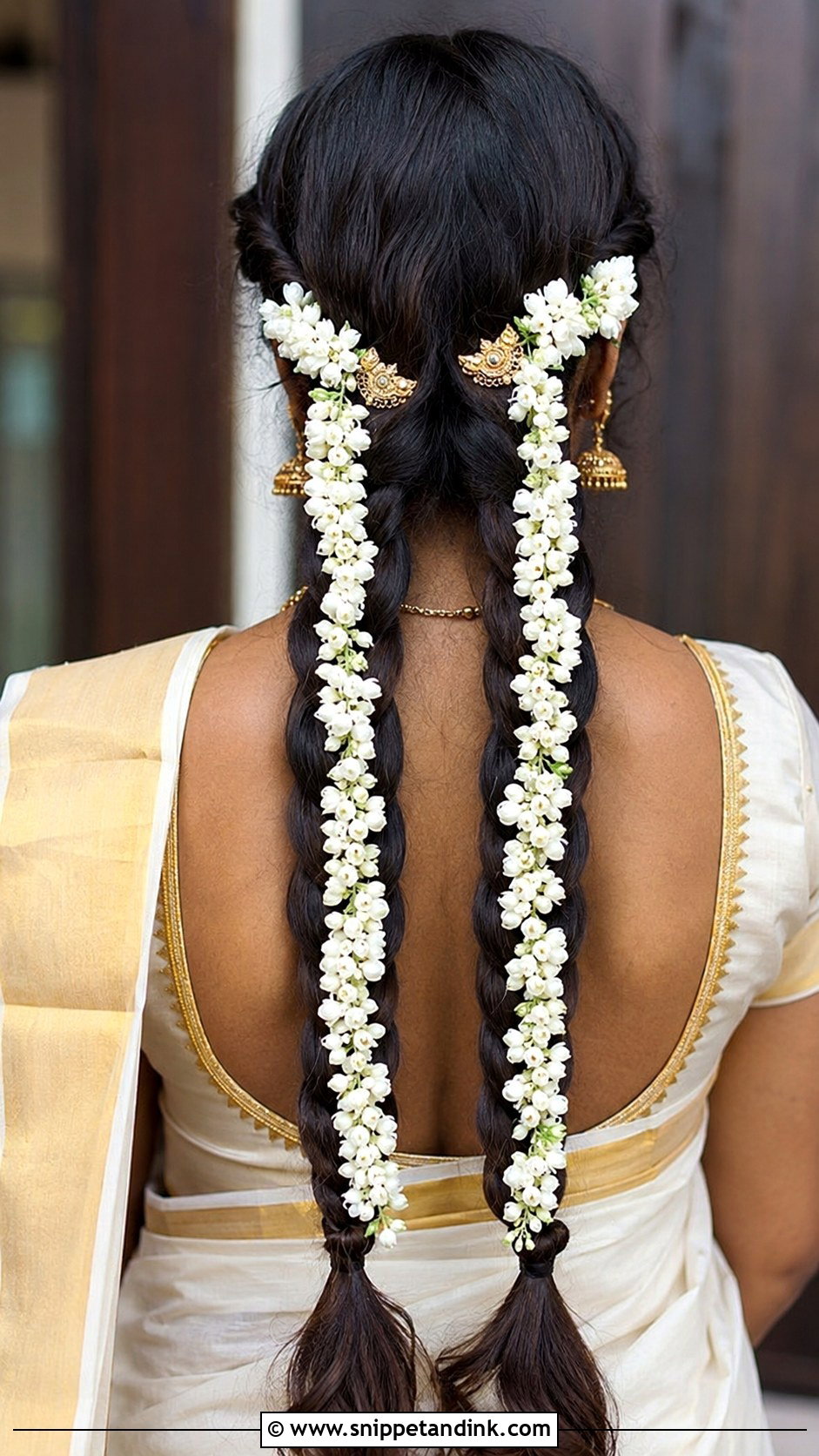
Double braids woven with jasmine give fullness and symmetry. They can join lower down or stay separate. I’d suggest them for very thick hair, since splitting the weight between two braids is more comfortable than one huge plait. They hold well through long ceremony days.
18. Bun With Mango Hairpiece
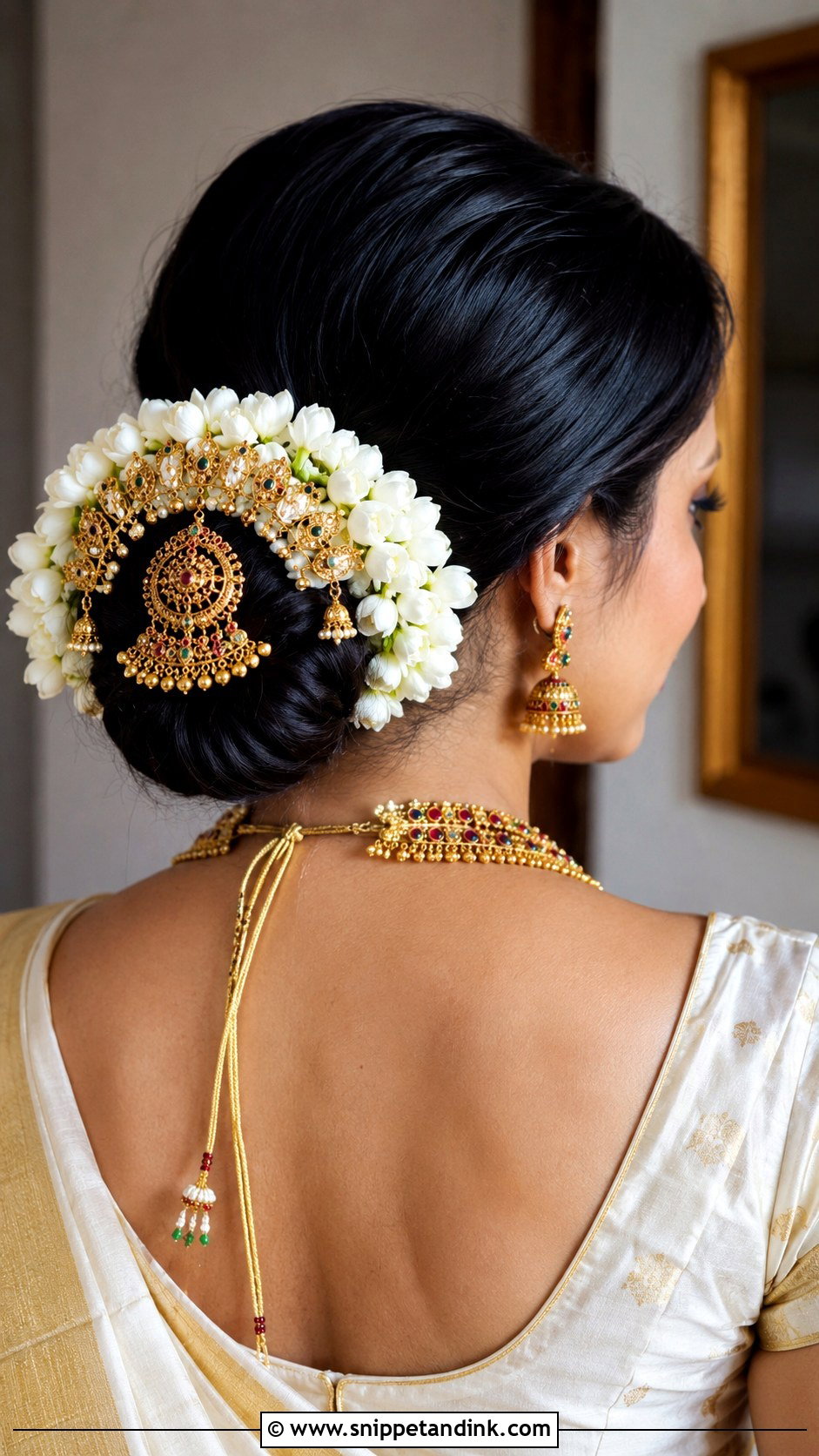
A gold mango hairpiece, the jadai billa, turns a low bun into a ceremonial look. It rests along the parting or on top of the bun with jasmine around it, and it celebrates South Indian heritage alongside temple jewellery. Gold hair ornaments vary in weight, so try yours at the trial; I adjust the bun height to balance a heavier piece.
19. Wavy Open Hair With Hairband
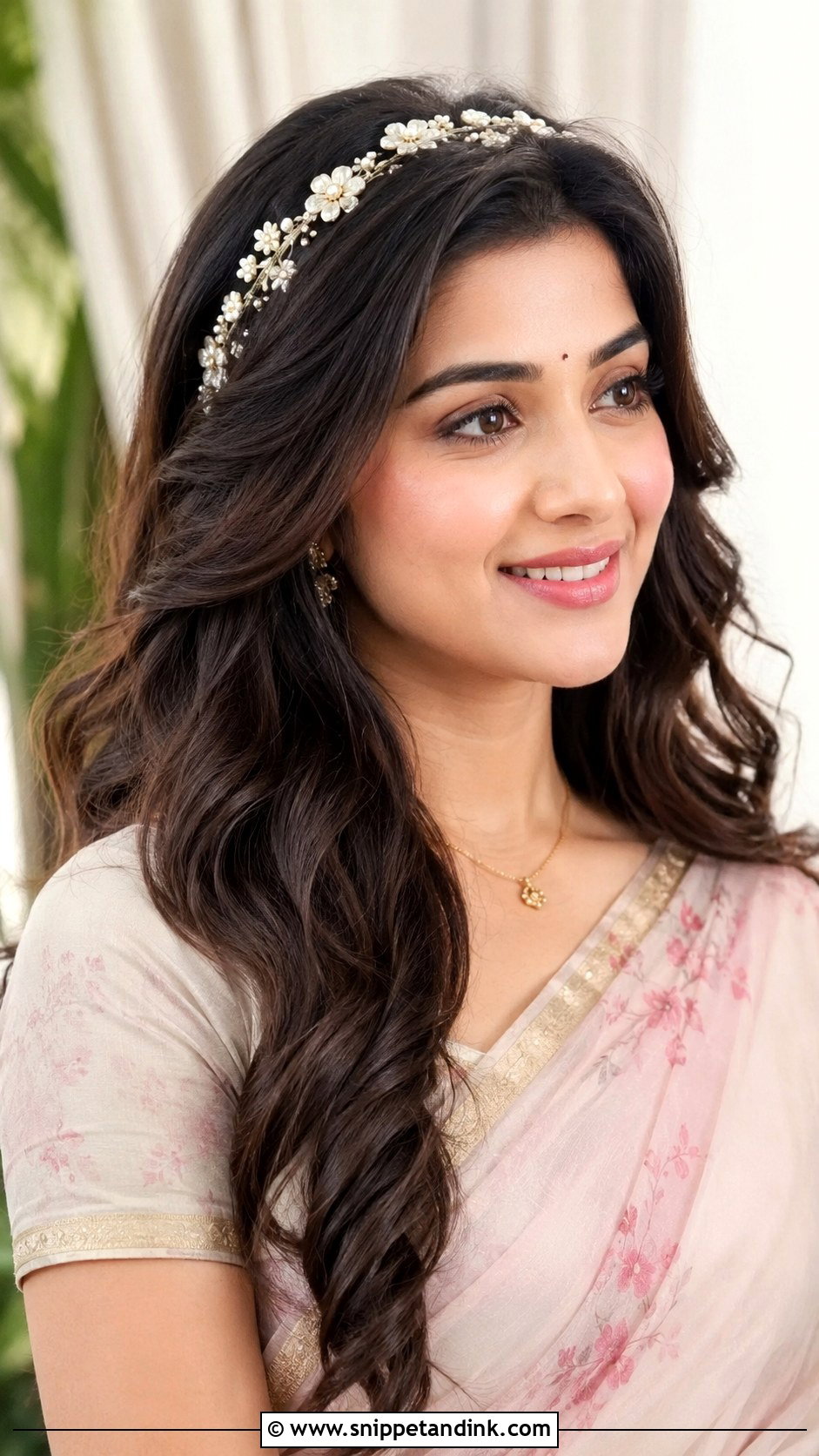
Open waves with a jewelled or floral hairband keep hair off the forehead with almost no pinning. It’s suited to engagements, haldi and relaxed ceremonies. A band with small teeth on the inside grips much better than a smooth one on thick, glossy hair. It’s the easiest look here to wear all day.
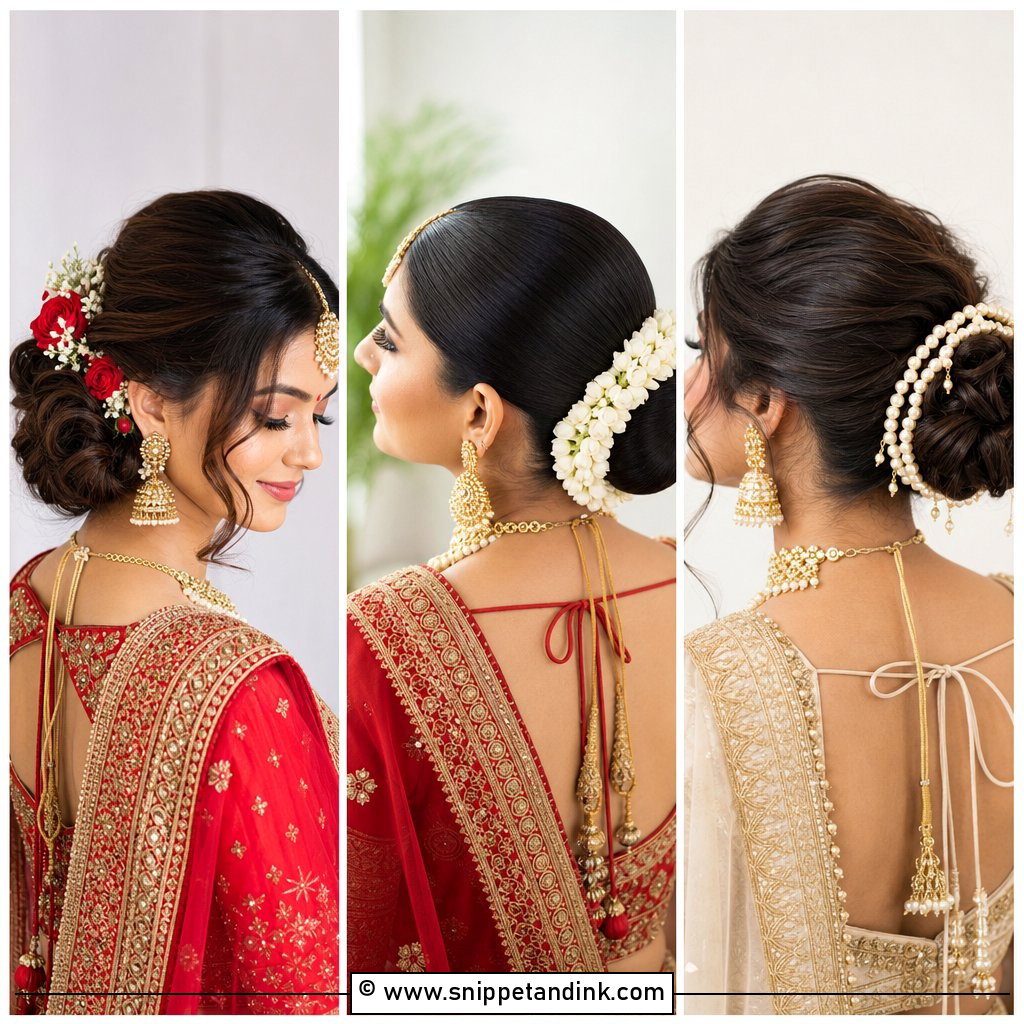
20. Traditional Jada Braid With Jadanagam
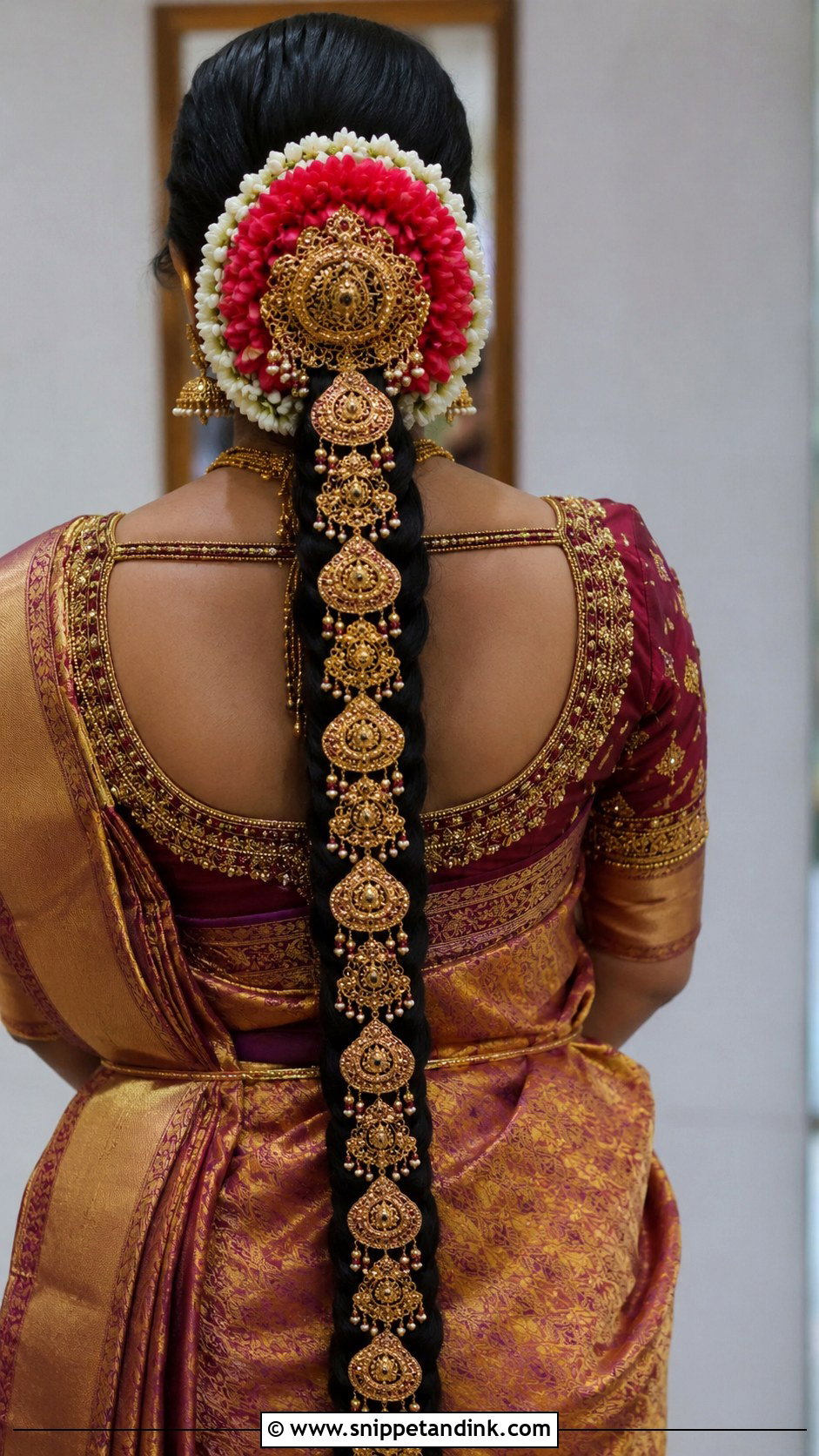
A jada braid dressed with a jadanagam, the full set of gold braid jewellery, is the most traditional temple-wedding look in this collection. Ornaments and flowers run from top to bottom. It’s also the heaviest, and I only recommend it if you’re comfortable carrying weight on your scalp for several hours. I attach the set at multiple points down the braid and use a hair extension underneath to give it a firm base.
21. French Braid With Flowers
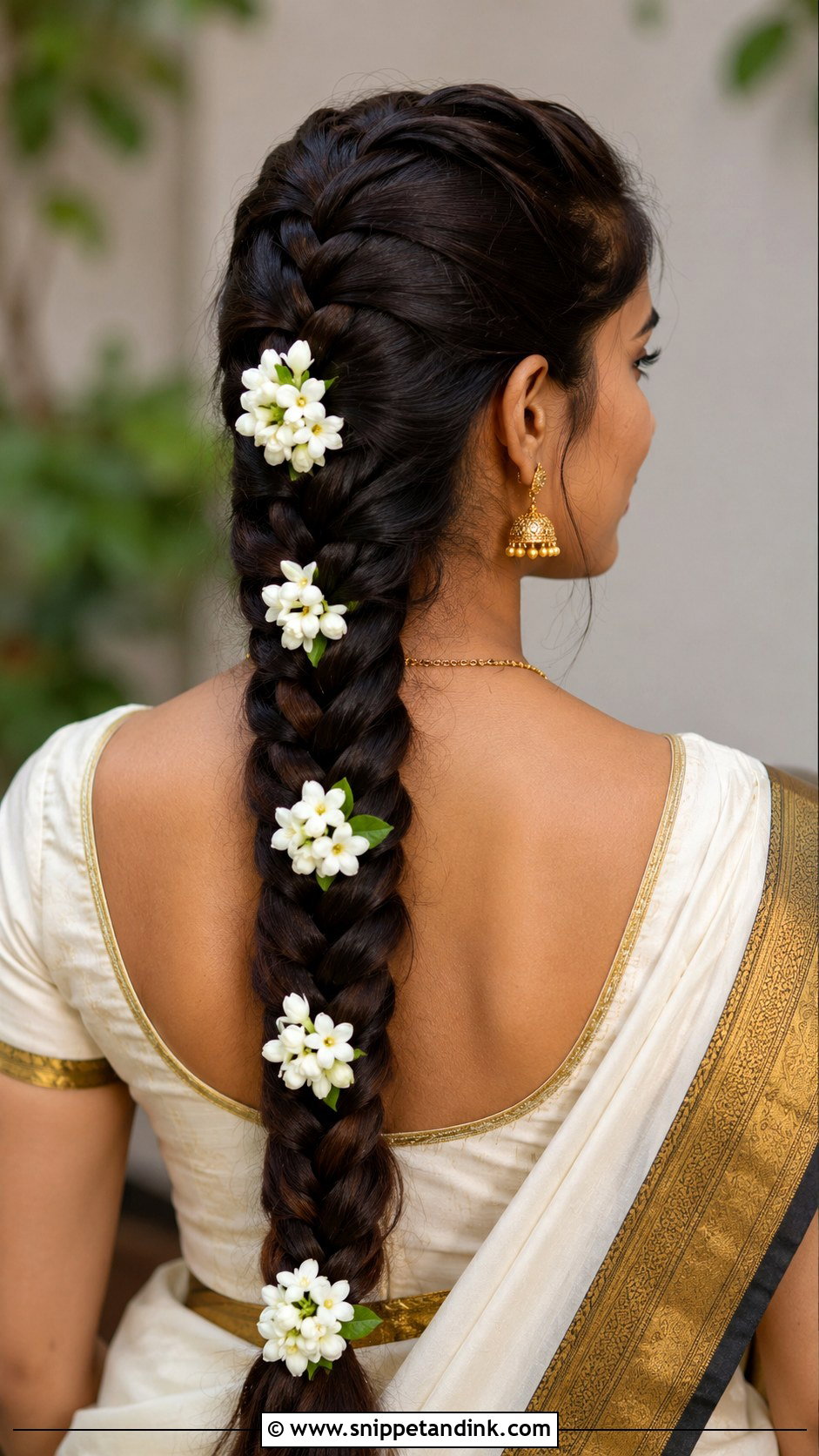
French braids gather everything from crown to nape into a smooth, structured plait. Jasmine or small roses tucked along it soften the look. It’s tidy enough for an intimate ceremony and holds through a long, hot day. Thick hair can make a French braid bulky at the nape, so I braid with smaller sections there.
22. Rose Bun For Muslim Brides
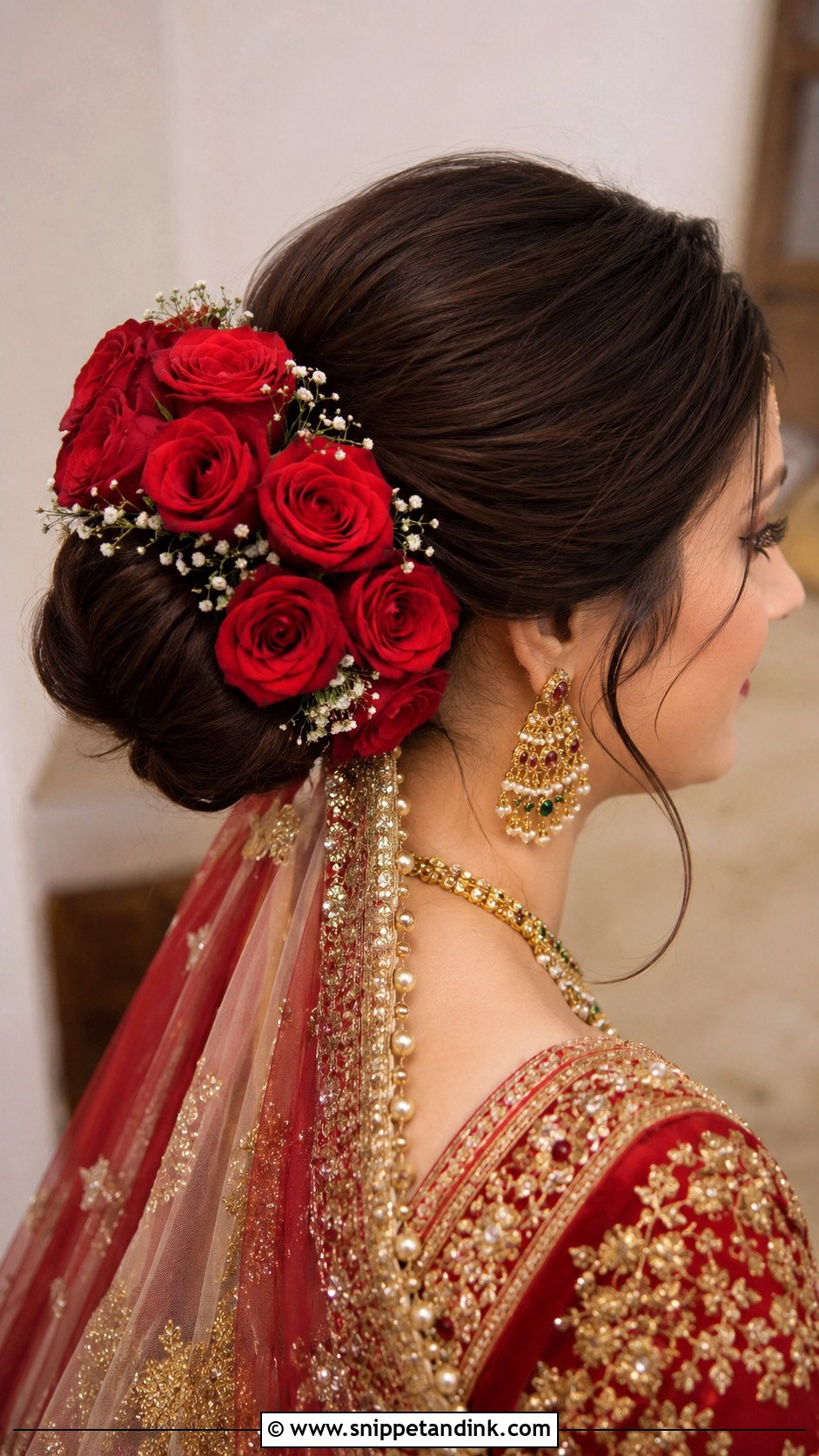
Muslim Kerala brides often want a bun that sits well under a dupatta or a hijab-style drape. Fresh roses round the bun add colour for the parts of the day when the bun shows. I keep the bun low and flat rather than round, so the dupatta falls smoothly instead of tenting. Pastel or deep-toned roses can match the outfit.
23. Curly Ponytail With Flowers
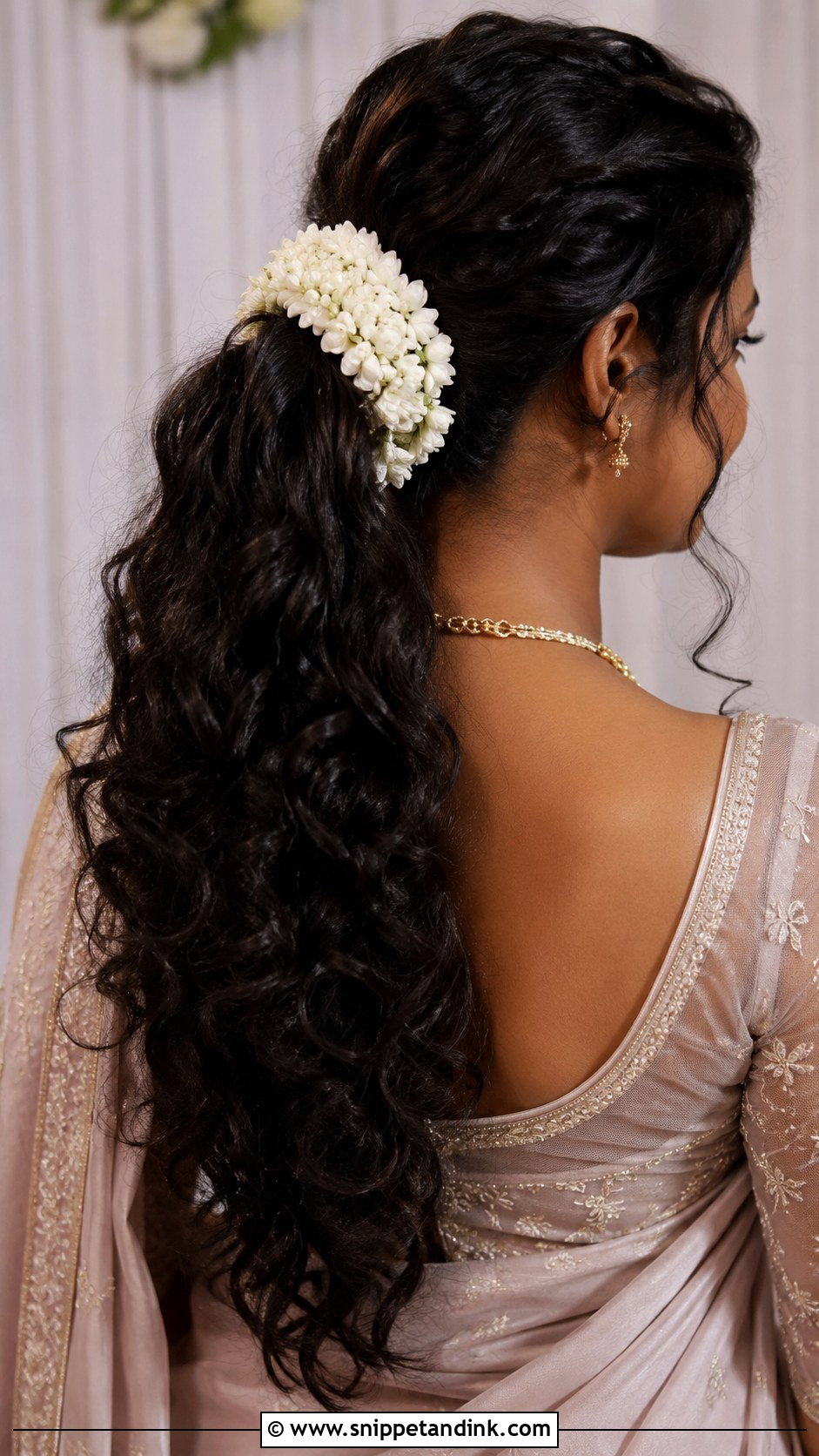
A curly ponytail, high or low, with flowers covering the band, suits engagements, sangeet and reception parties. It keeps the neck cool. I’d use a high ponytail only on hair that’s not very heavy; thick, long Kerala hair pulls at the crown after a couple of hours, so a mid-height placement is safer.
24. Bridal Updo With Veil
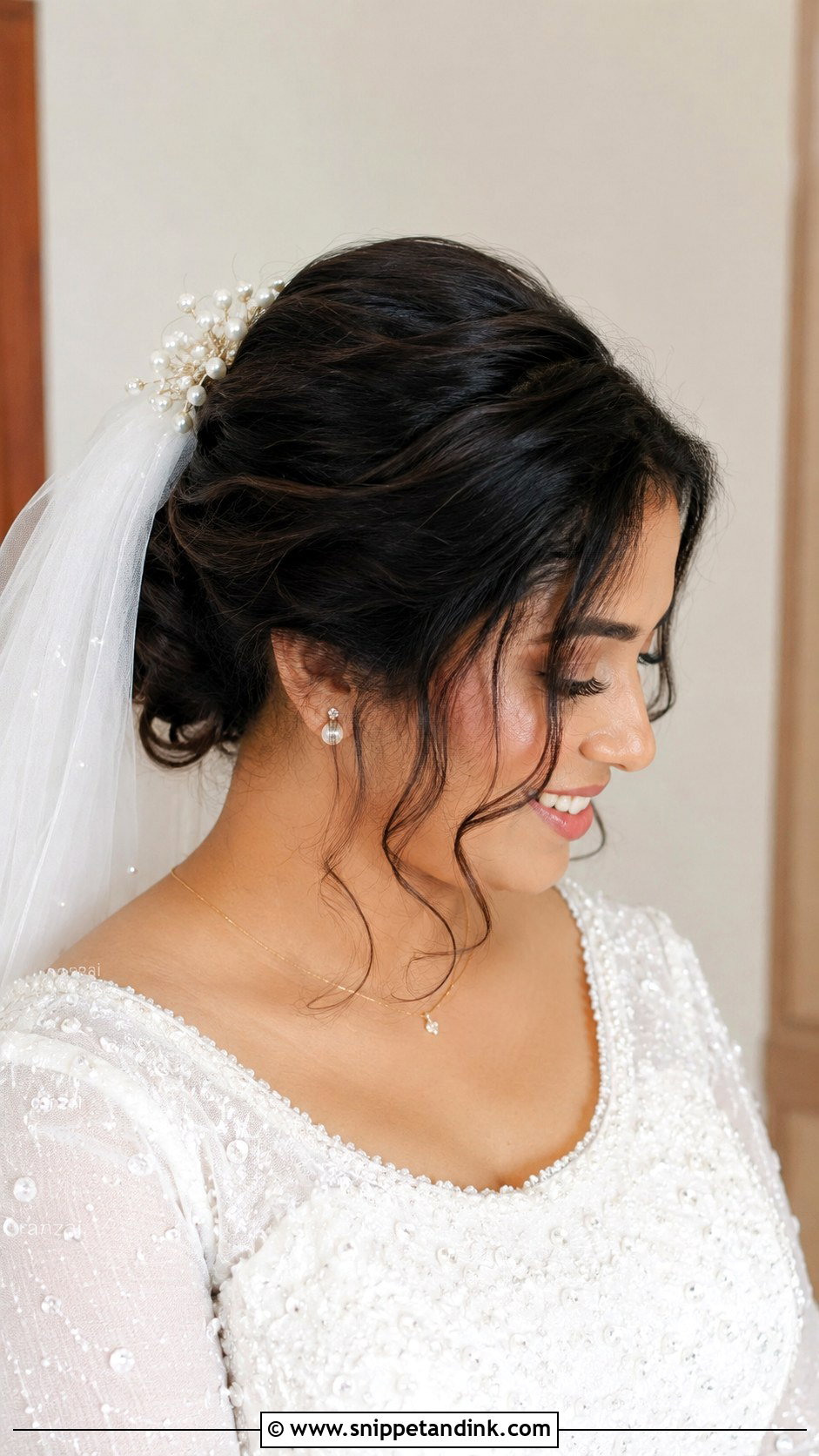
An updo with a veil is the classic church look for a Christian Kerala bride. The hair is swept up into a soft bun or twist, the neckline stays open, and the veil comb sits at the crown or just behind the updo. I insert the comb into the base of the updo, not into loose hair, and add two crossed pins behind it. A few face-framing strands and pearl pins finish it.

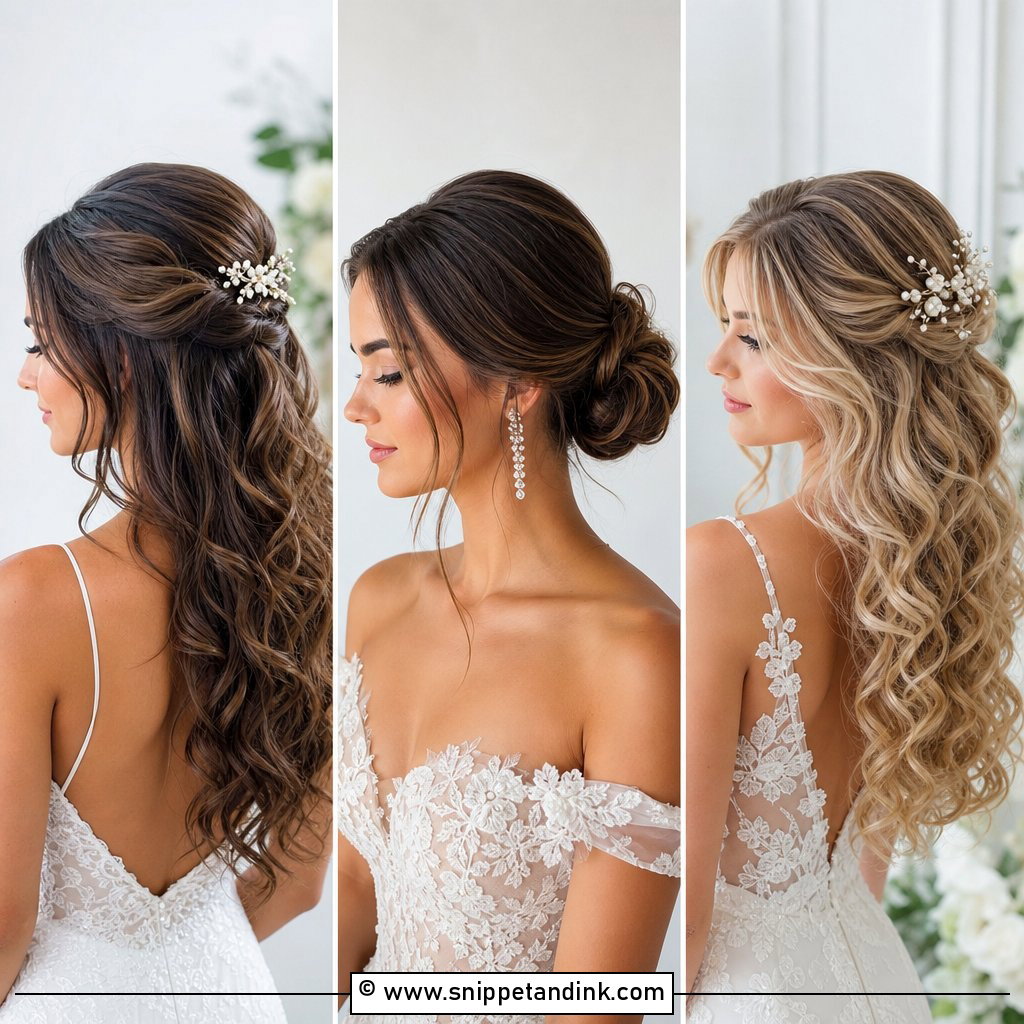
25. Low Chignon With Pearls
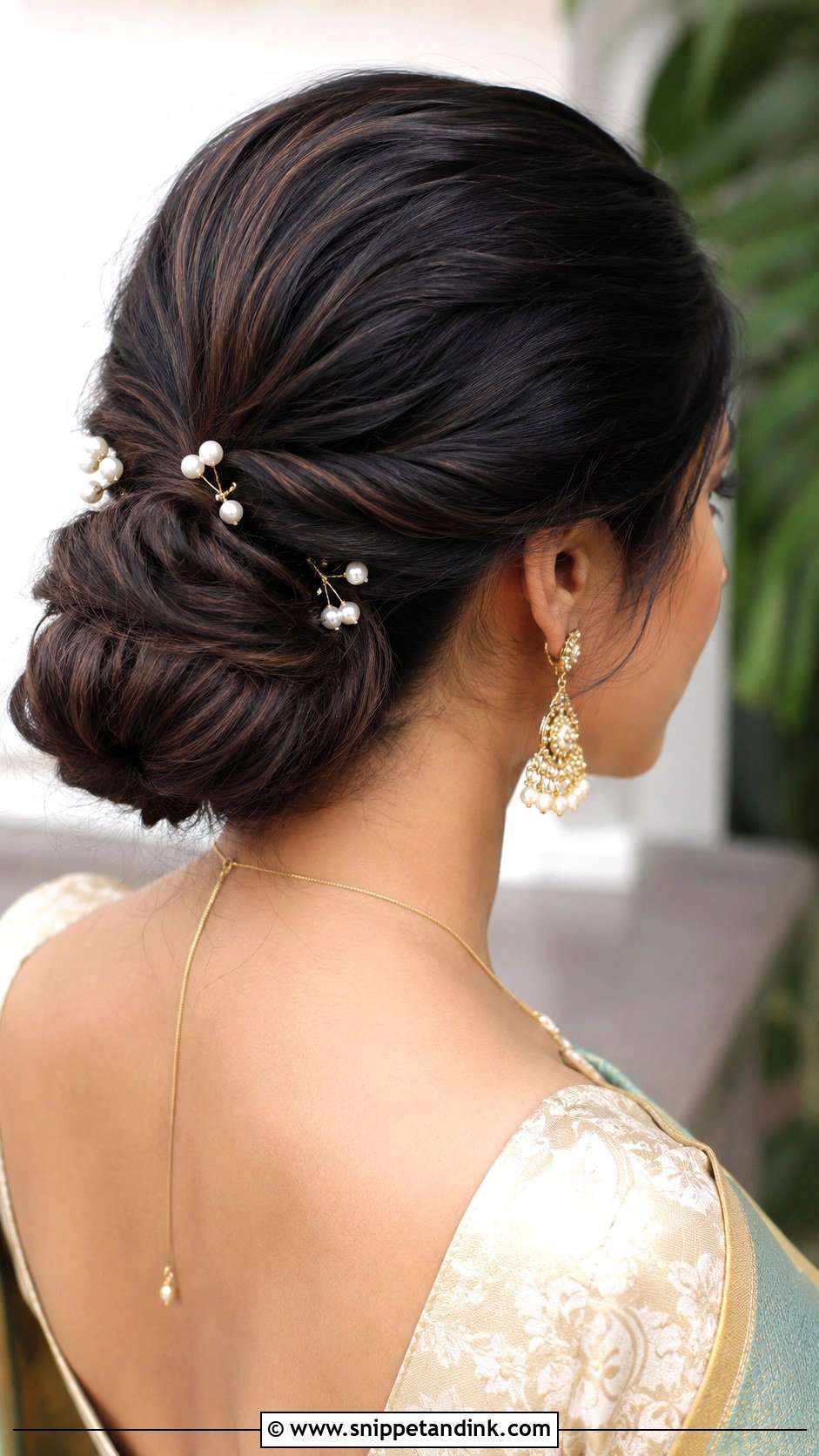
A low chignon with pearl pins is quiet and very secure. The hair is twisted into a smooth roll at the nape and the pins add shimmer without weight. It suits both sarees and gowns, and lets statement earrings stand out. I add the pearls in a gentle curve following the roll rather than scattering them, which keeps it neat.
Skip the Coconut Oil the Week of the Wedding
Many Kerala brides oil their hair regularly, and it shows: thick, glossy, healthy hair is a great start. But oil sitting at the roots makes pins slide, curls drop and dry shampoo clump. I ask brides to stop oiling a few days before the wedding and wash properly, twice if needed, the day before or the morning of, depending on how quickly their roots get greasy.
Humidity is the other half of the problem. Monsoon and pre-monsoon weddings are especially tough on curls.
- Blow-dry fully before any styling; damp hair at the nape undoes a bun by noon.
- Pin curls up to cool while makeup is done, then release them just before you leave.
- Choose braids and buns over open curls if the venue is outdoors or not air-conditioned.
- Keep a small comb, pins and spray with whoever is helping you through the day.
None of this means giving up oil for good. Go back to your routine after the wedding; your hair will thank you after all those pins and flowers.
Matching Hair to Your Ceremony and Your Saree
Start with your ceremony: a temple muhurtham, a church service or a nikah each asks something different of your hair. Then look at your saree or gown, your jewellery and how many hours you’ll be wearing it. Flowers, gold ornaments and pearl pins can dress up any base style. Hindu, Christian or Muslim, the right look is the one that stays secure and feels like you from the first ritual to the last photograph.
You'll Like These Ideas:



Leave a Reply