
Chic, to me, means nothing on the dress is there by accident. That can be a bare crepe column or a full ball gown, as long as the shape is clear and the details are edited. Lately designers keep returning to Basque waists, corsetry, minimal gowns, lace and pieces that transform during the day. I start every client with the venue and season, since a city ceremony suits crepe and sharp lines while a garden suits organza or botanical appliqué. Then it’s proportions and comfort. The twenty looks below run from understated to dramatic.
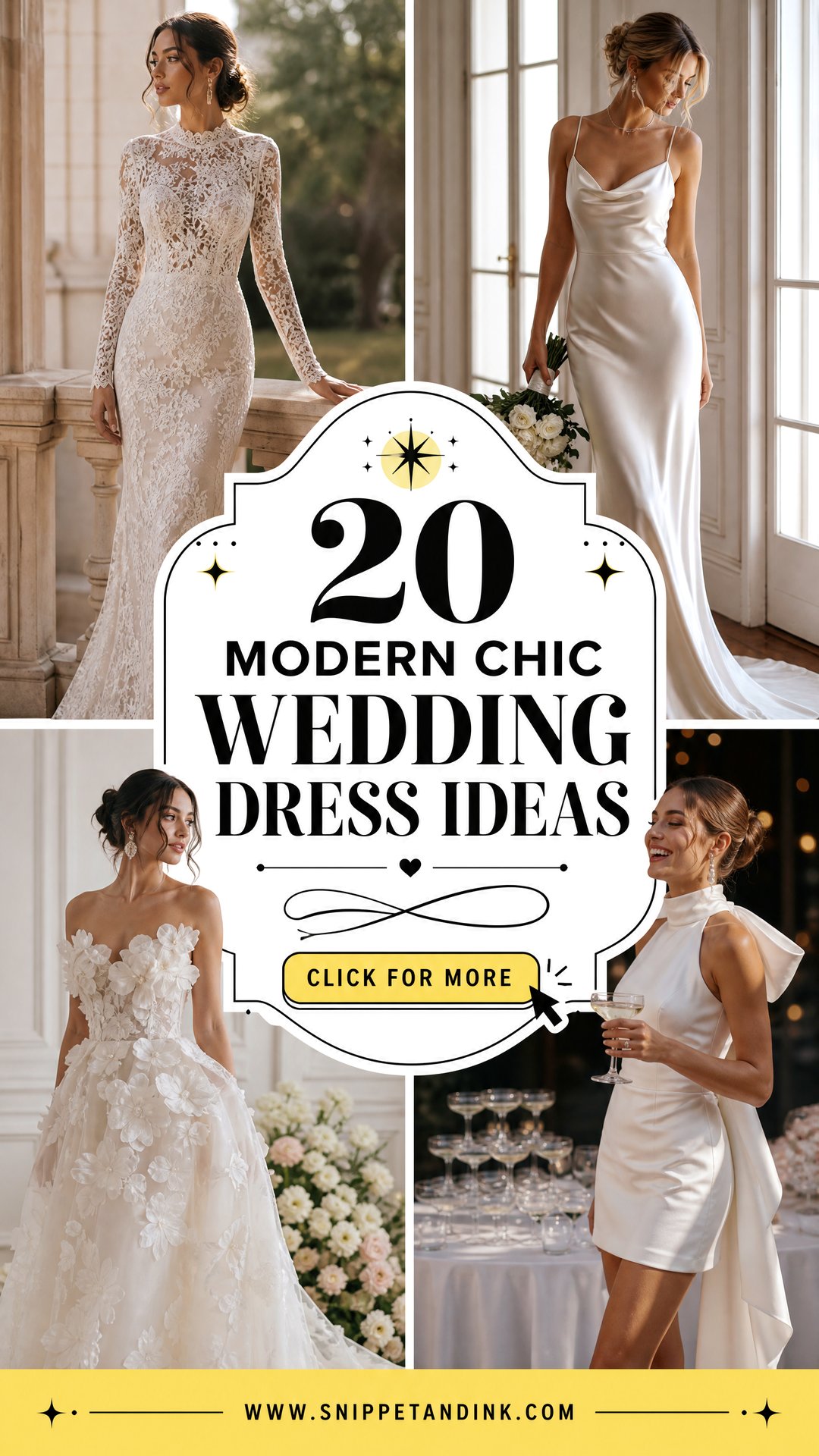
Run Your Dress Appointments Like a Fitting
The chicest brides I dress usually had the calmest appointments. They came with a clear idea of their venue, one or two people they trust and the right underwear. A few habits make the search much shorter.
- Wear smooth, skin-toned underwear and bring shoes close to the heel height you’ll wear.
- Try at least one of each main silhouette, even the ones you think you dislike. Bodies surprise people.
- Ask for photos from the back and side. A dress that’s perfect from the front can look plain or lumpy from behind.
- Sit down in every serious contender. If you can’t sit comfortably for five minutes in the store, dinner will be hard.
- Write down three words for each dress you love straight after trying it. They blur together by the third shop.
Bring fewer opinions, not more. I find two guests who know your style are more useful than five who each want a different dress.
1. Minimalist Satin Column Wedding Dress
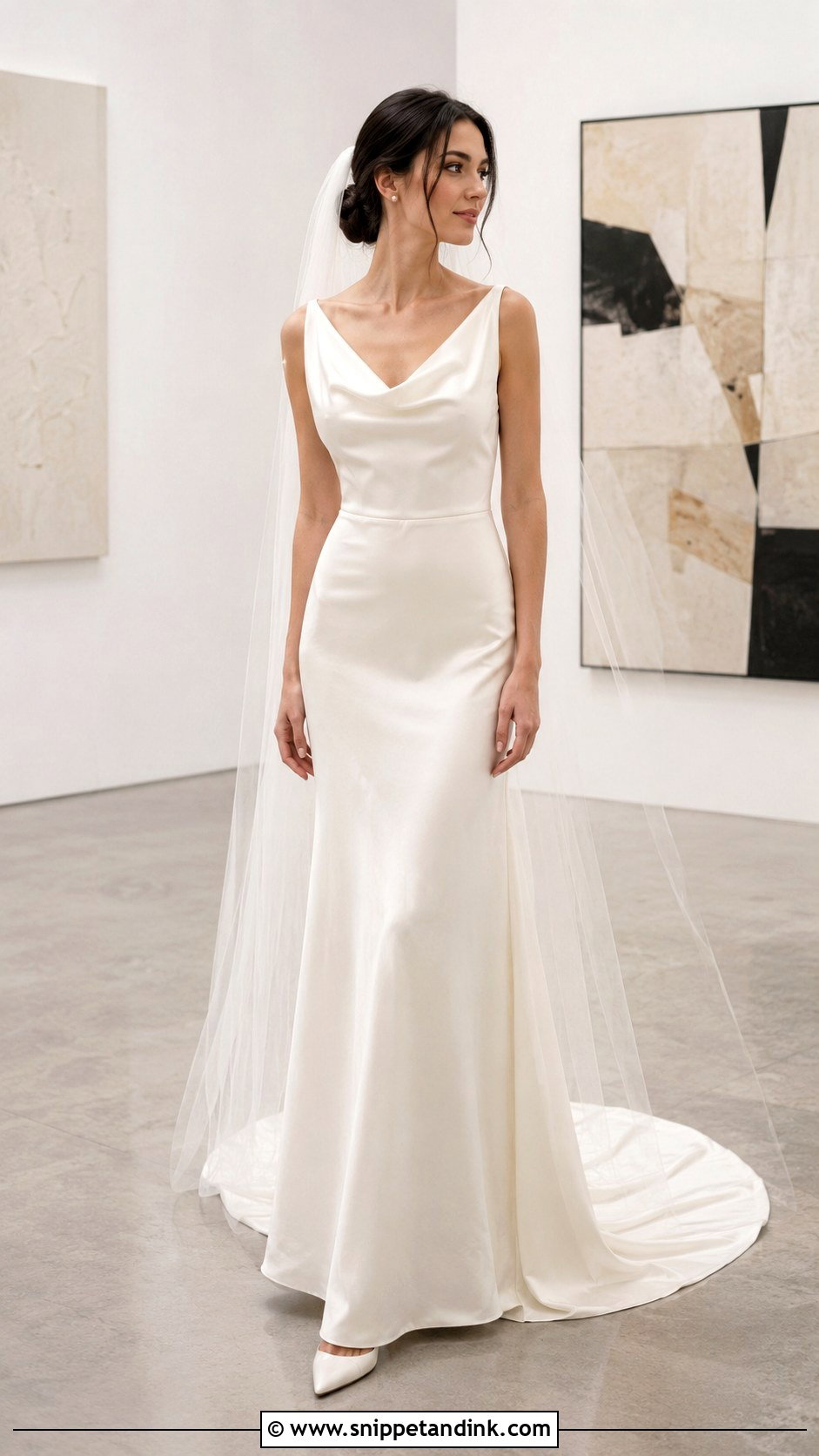
Satin columns are deceptively hard to fit. With no seams or embellishment to break the surface, a slightly crooked waist or a hem that’s a little uneven is visible across the room. I’d look for a softly draped neckline and a skirt that stays close before opening into a short train. Skip elaborate jewelry; pearl studs and pointed ivory pumps are plenty. A long, plain veil moves well and keeps the attention on the cloth.
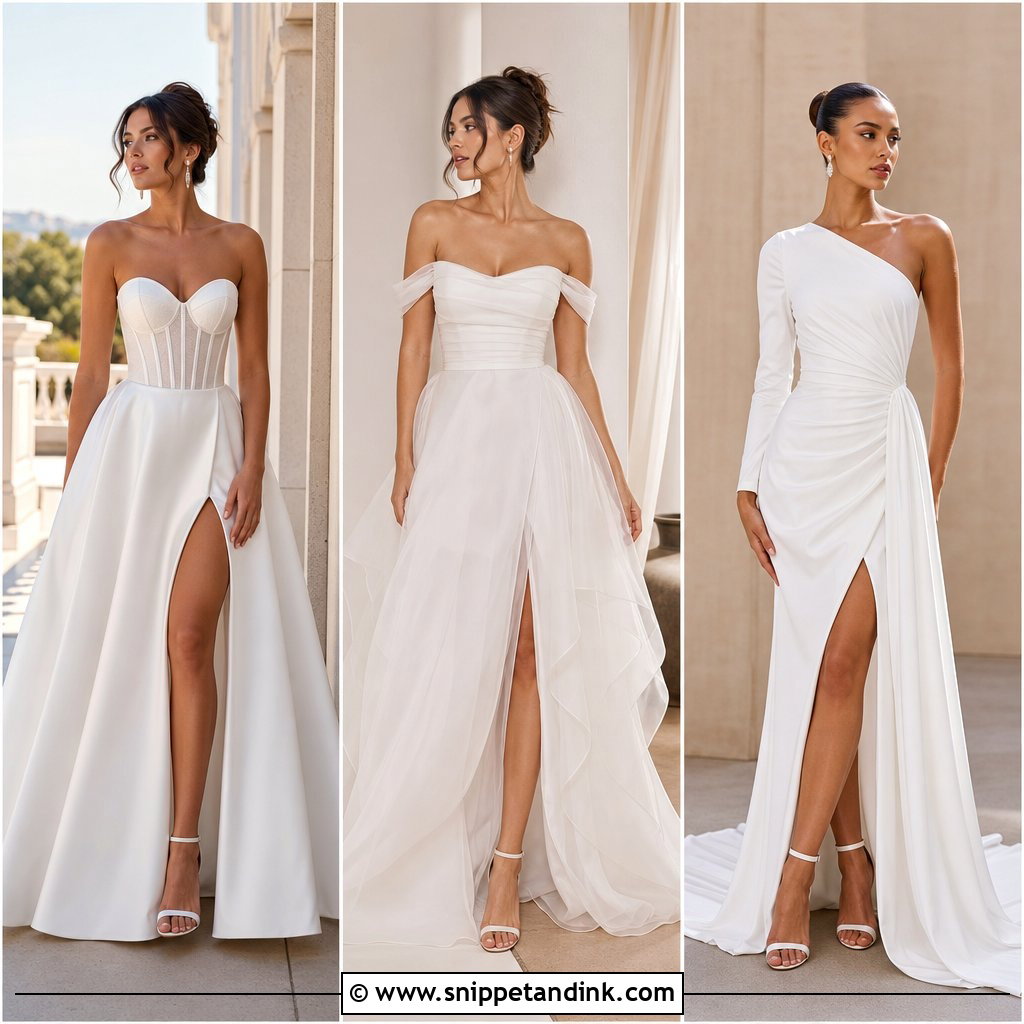
2. Strapless Basque Waist Ball Gown Wedding Dress
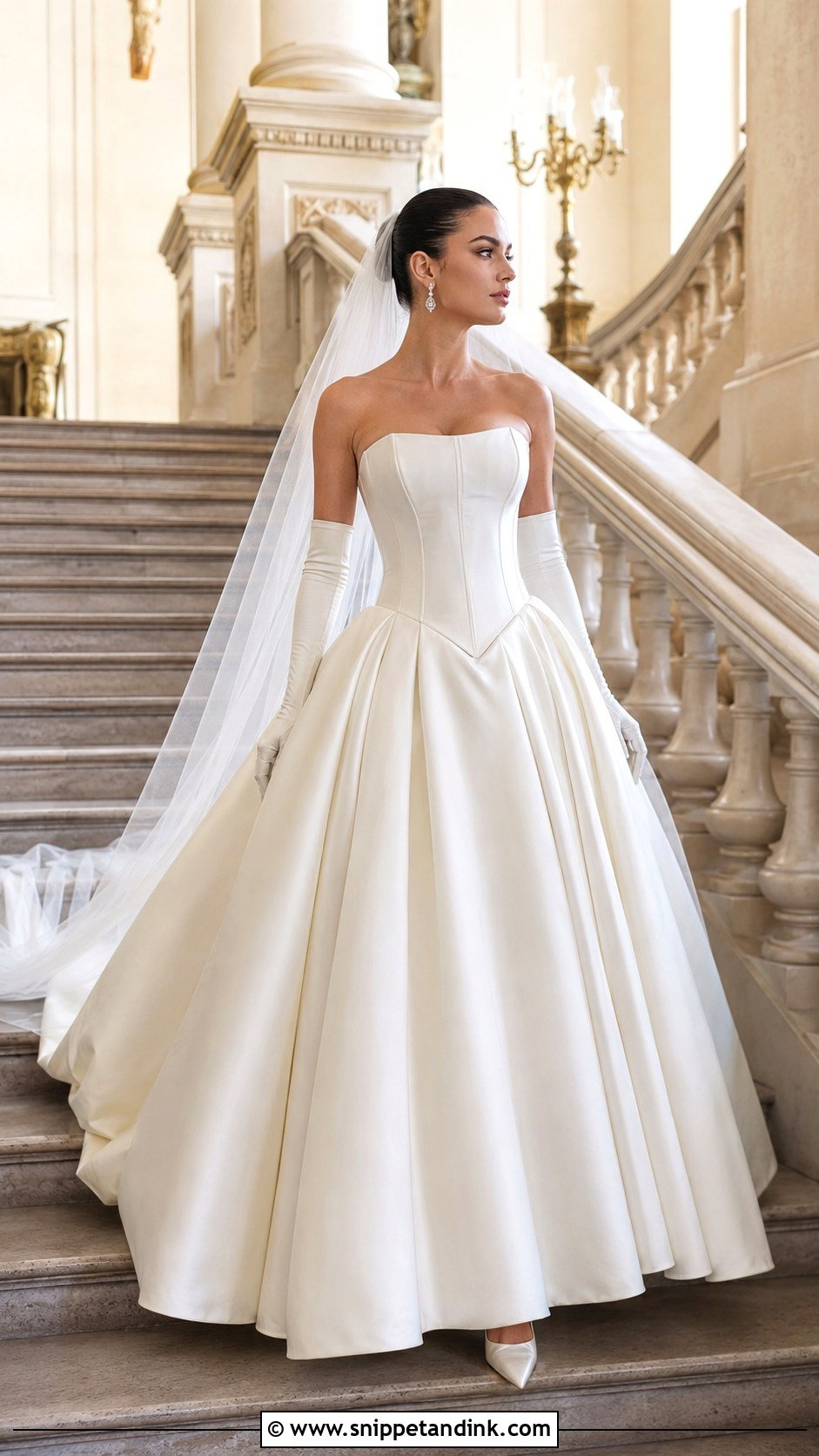
Strapless bodices on a ball gown carry a heavy skirt, so the boning has to do real work. I check the top edge by asking the bride to bend forward as if she’s signing the register. If it gaps, it needs taking in. The pointed Basque waist lengthens the torso into a full satin or mikado skirt. Crystal drops, satin pumps and a sheer cathedral veil with a narrow edge keep it refined, and opera gloves add coverage for a formal ceremony.
3. Drop Waist Mikado Wedding Dress
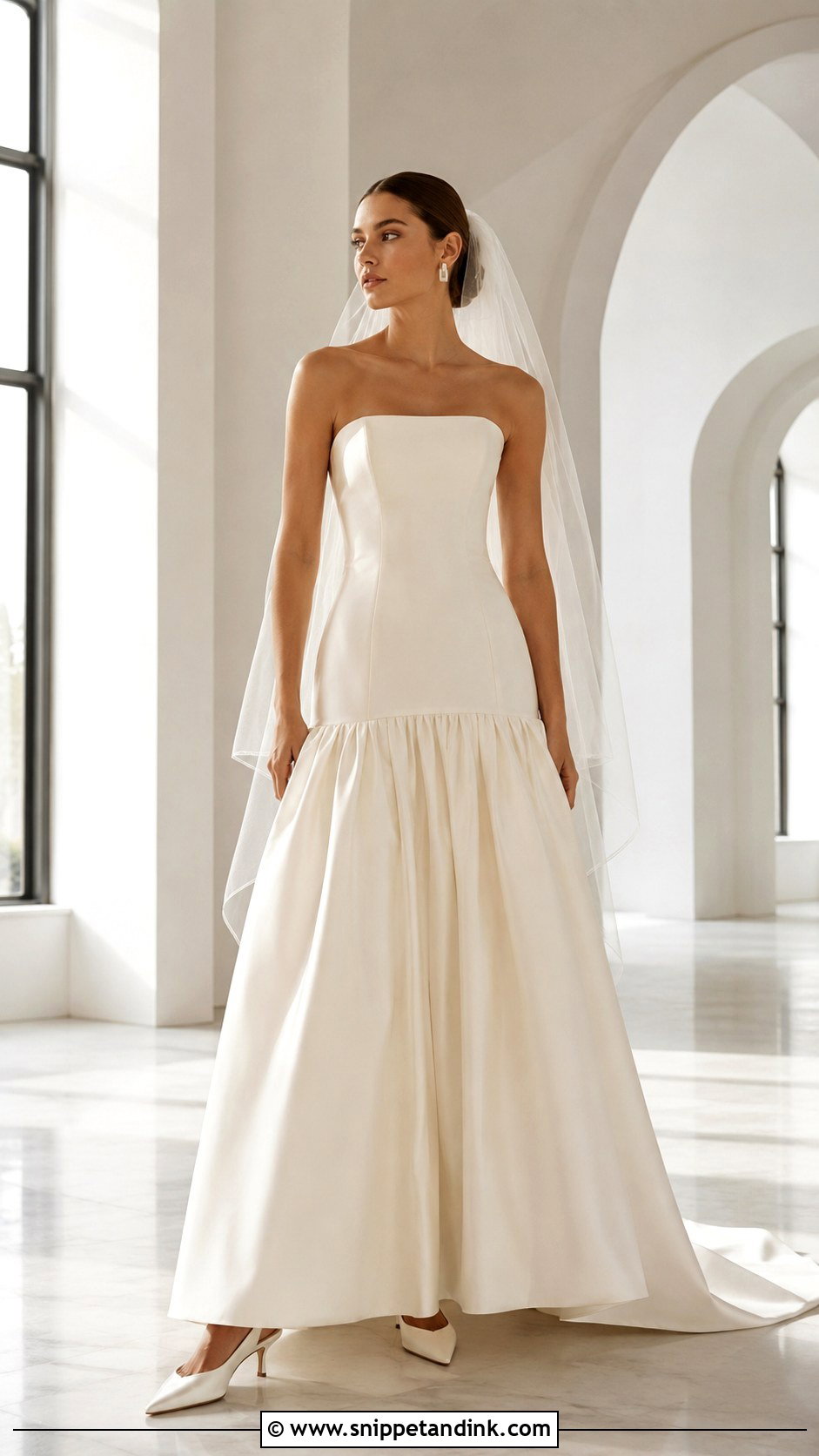
Mikado’s stiffness is exactly why it suits a drop waist wedding dress: it holds the long bodice and the gathered or pleated skirt in shape for hours. The bodice should end around the upper hip. On very petite brides I raise it slightly so the legs don’t look shorter. Slingbacks and geometric earrings suit the sharp lines, and a compact, architectural bouquet is better than a loose garden one here.
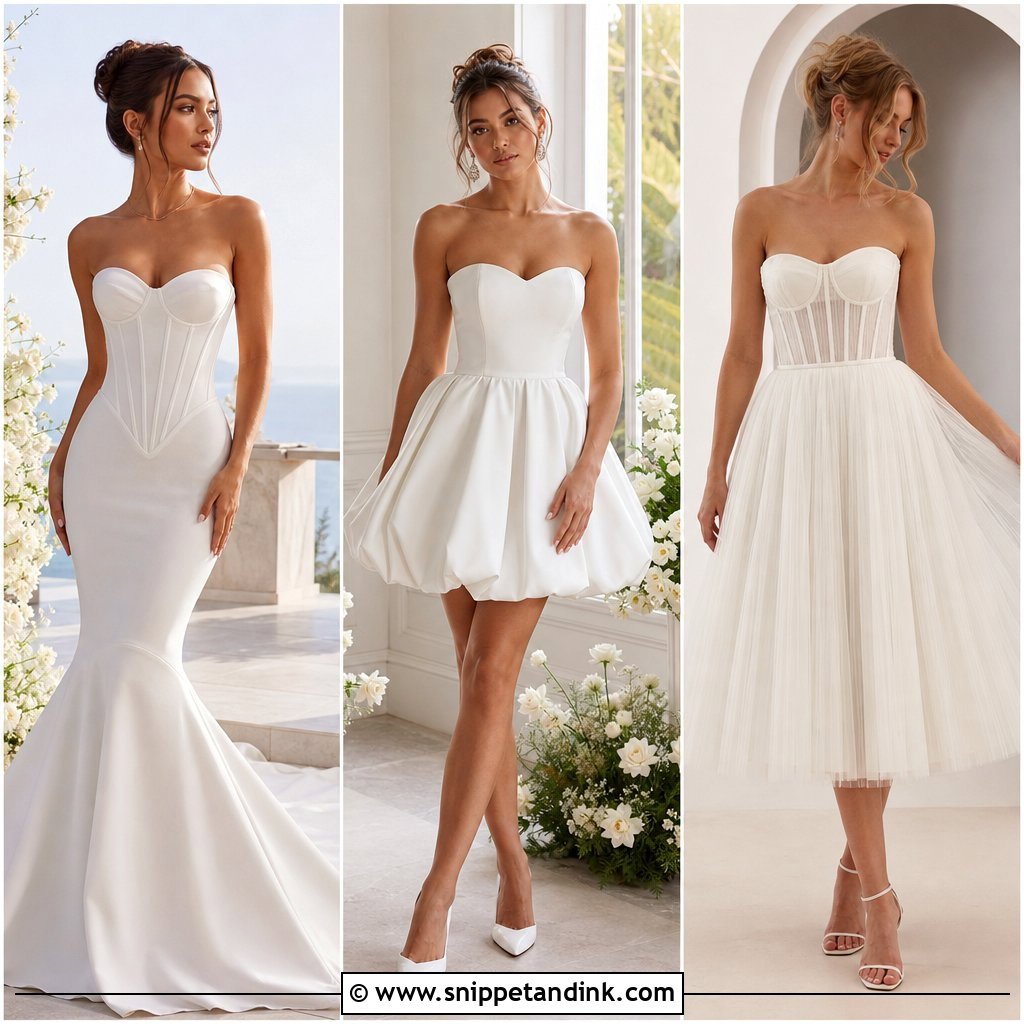
4. Sculpted Corset A-Line Wedding Dress
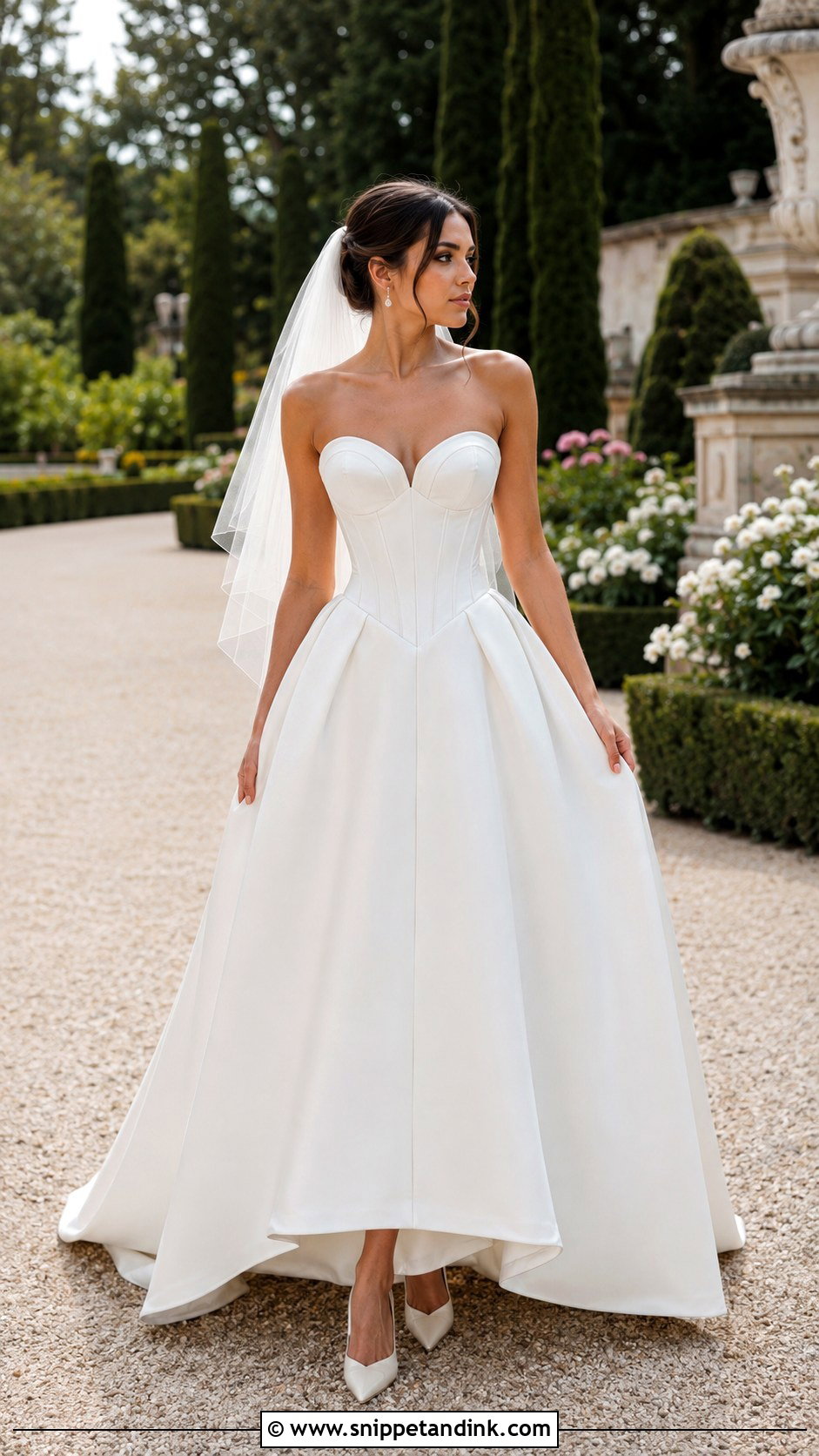
A corset bodice over an A-line skirt is the shape I recommend most often to brides who want structure but hate feeling held in. Visible seams or lightly exposed boning look modern, and a sweetheart or curved neckline softens it. If the bodice has sheer panels, decide on your coverage early, because changing the lining late in alterations is fiddly. Matte satin keeps it clean. Delicate drop earrings, pointed pumps and a light tulle veil under a relaxed updo finish it.
5. Square Neck Crepe Wedding Dress
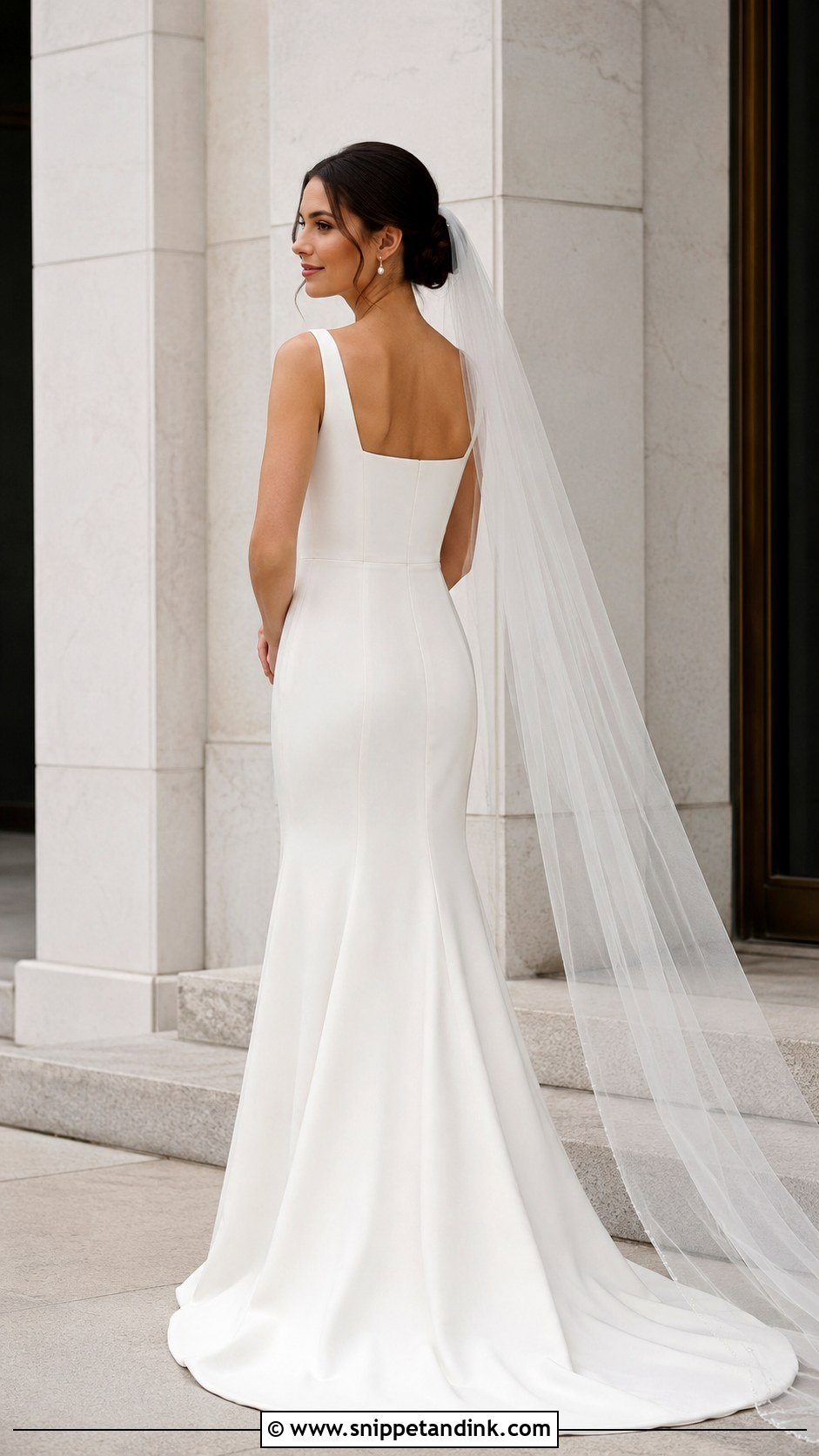
Crepe drapes cleanly and forgives creases from sitting, which makes it one of the most practical bridal fabrics. A square neckline with wide straps and princess seams gives it a tailored, architectural look, and a gently flared skirt adds movement without bulk. I like a square back to match. Pearl or sculptural gold earrings, a low heel and a narrow cathedral veil work, with a center-parted bun so nothing covers the neckline.
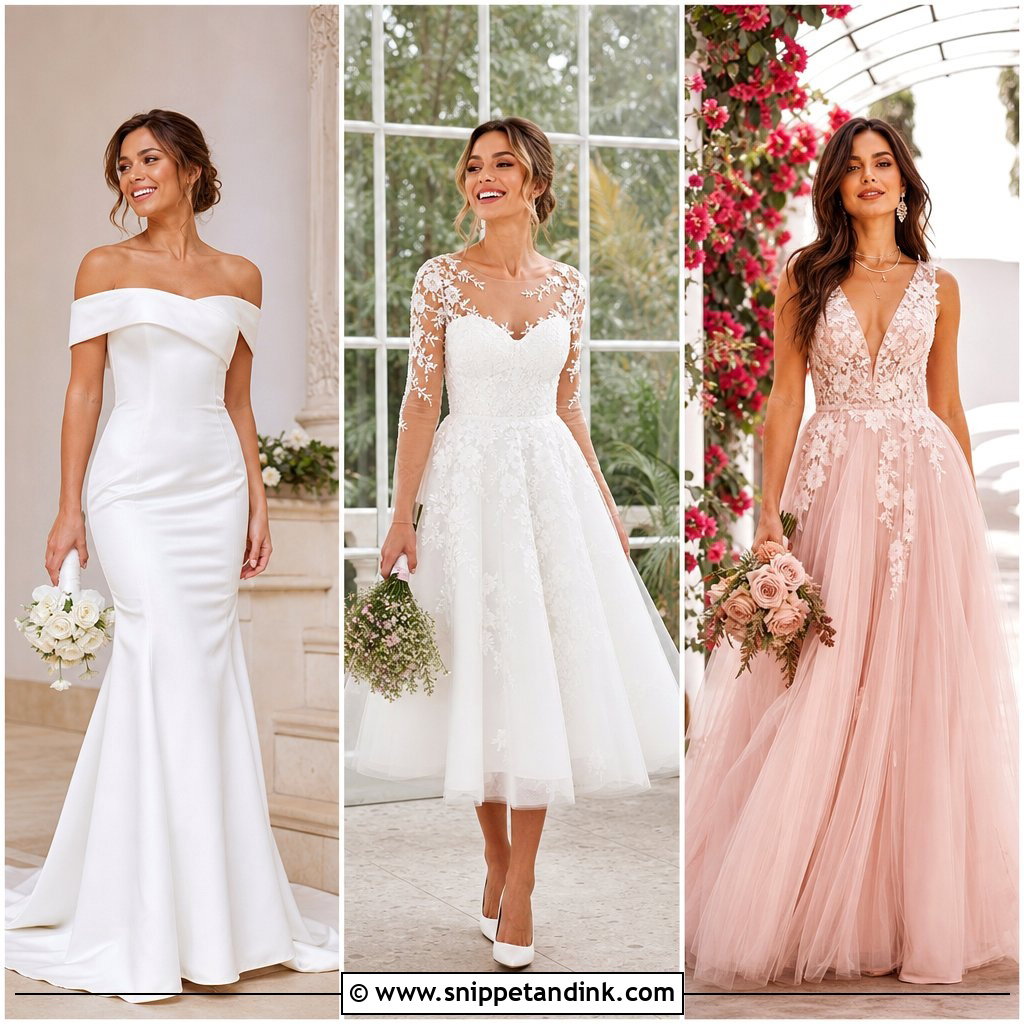
6. Off Shoulder Draped Wedding Dress
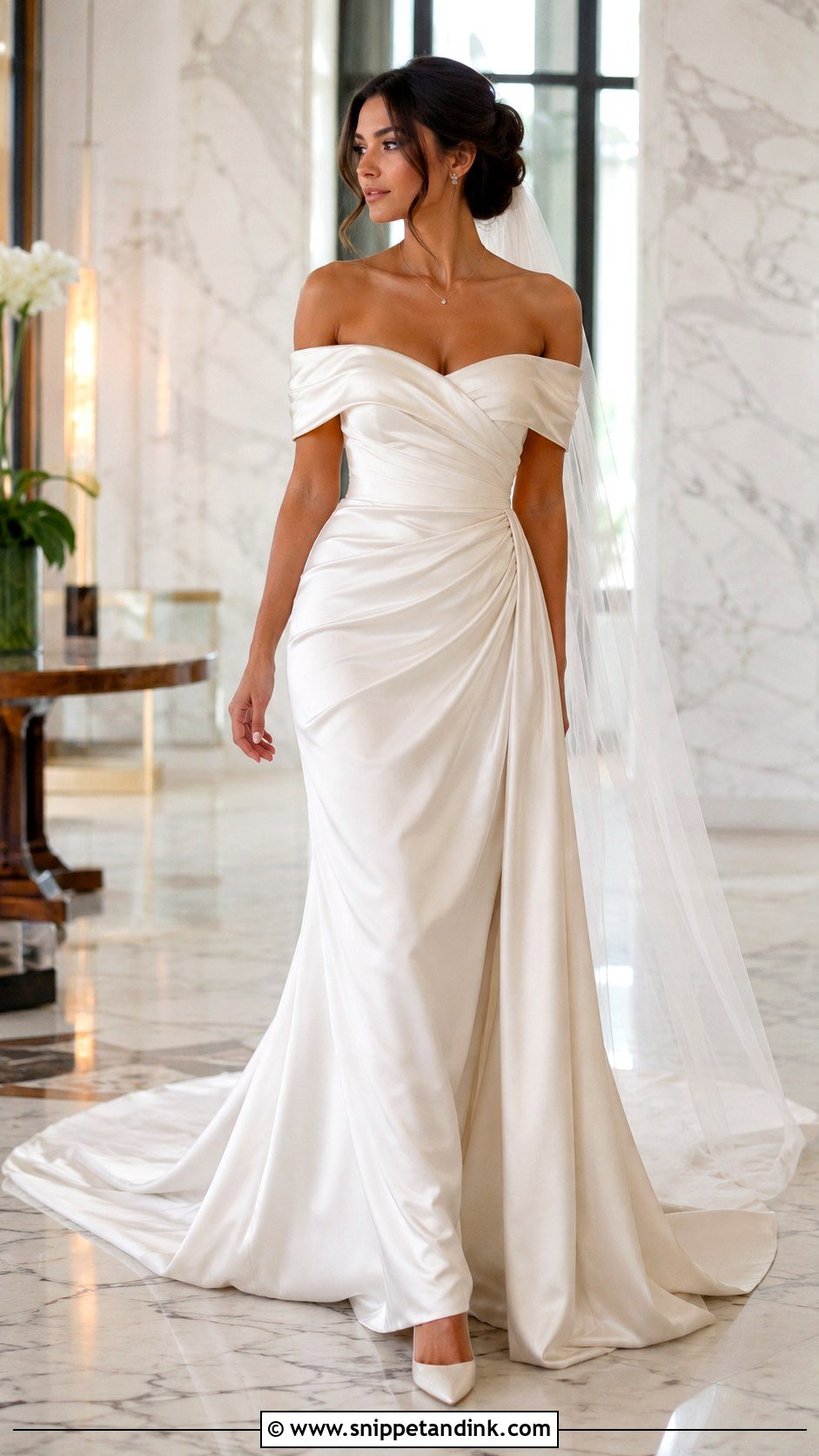
Draped necklines need fabric that drapes. Satin gives more structure, while silk or fluid crepe falls softer and folds more naturally across the collarbones and waist. The off-shoulder band should be anchored inside the bodice, since soft draping alone will slide. A fine tennis necklace and small earrings are enough. Pin the long sheer veil beneath your hairstyle, and take it off after the ceremony to show the draped back and train.
7. Long Sleeve Lace Column Wedding Dress
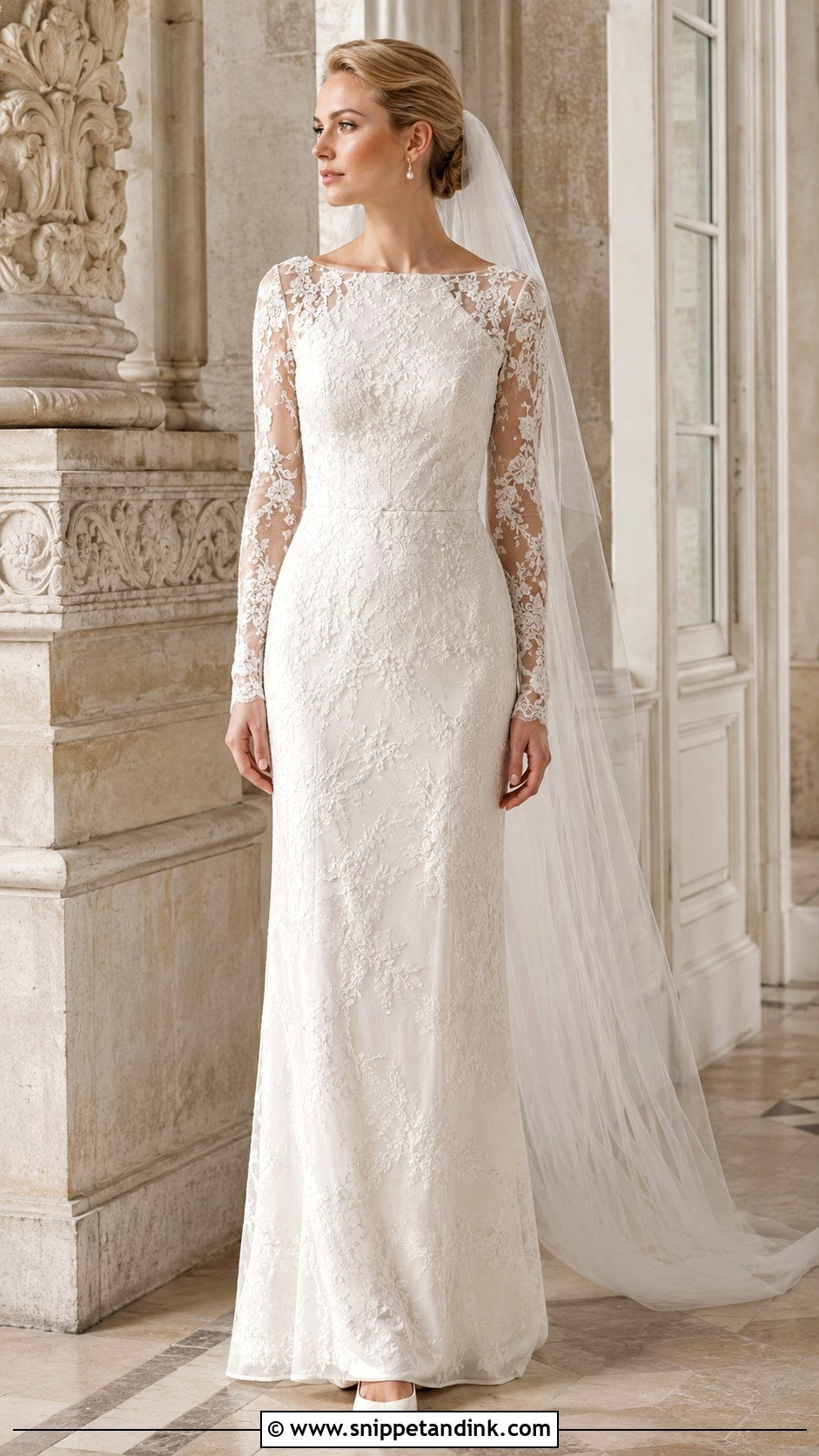
Lace columns look modern when the pattern is clean and the shape stays narrow. I look for motifs that follow the body’s lines rather than sitting randomly, and a lined bodice under sheer sleeves. A bateau, high, or softly scooped neckline gives coverage without heaviness. Pearl earrings, closed-toe pumps and a plain tulle veil keep it simple. It suits cooler months and historic venues, styled with contemporary accessories.
8. Halter Neck Silk Wedding Dress
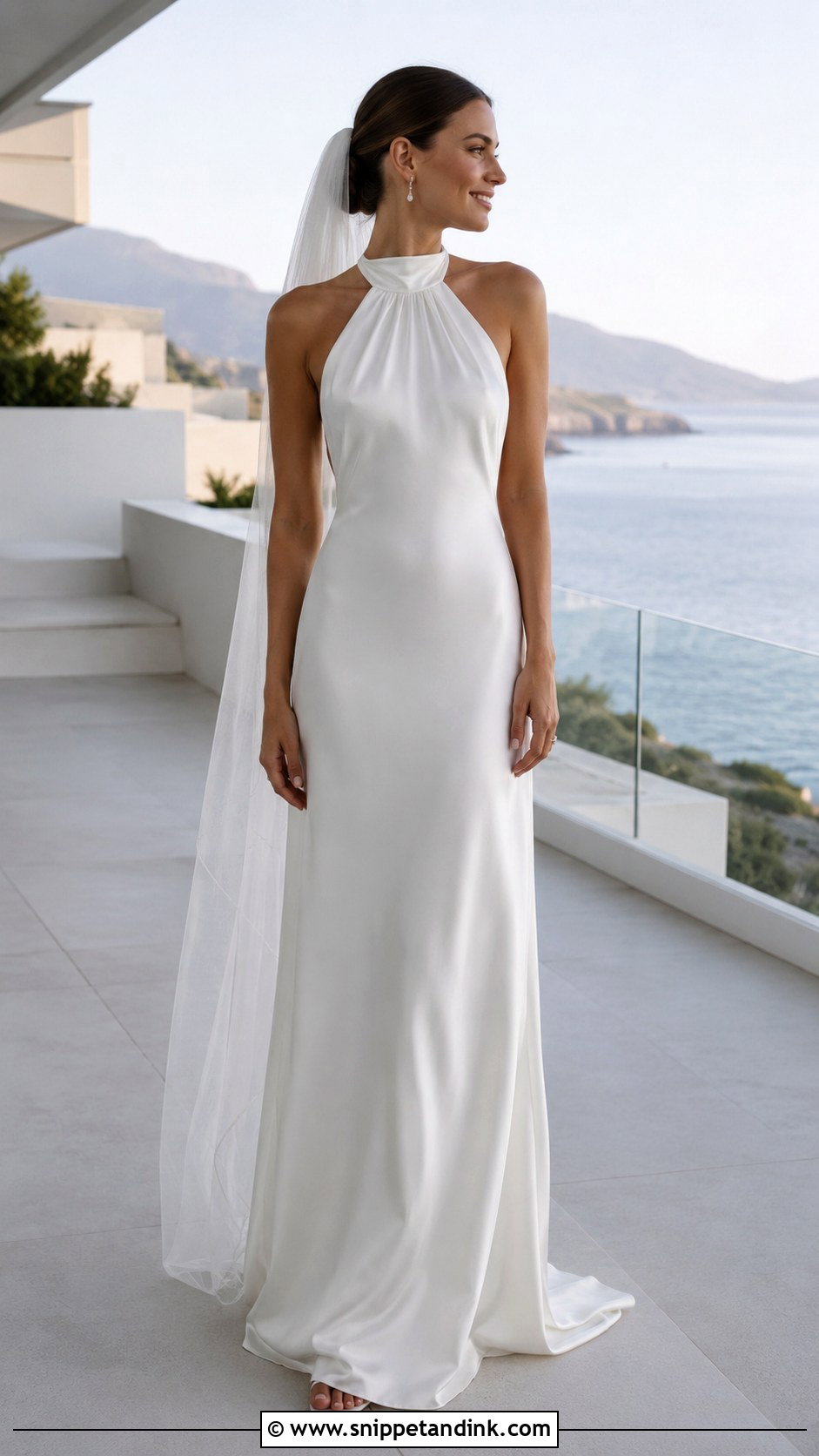
Halters run a long unbroken line from shoulder to hem, and silk makes that line liquid. The neck strap is the comfort question: silk is heavy when it’s bias cut, and a thin halter carrying that weight can ache by evening. I prefer a wider halter band or hidden support in the bodice. An open back balances the covered front. Skip the necklace, wear slim drop earrings and a smooth bun, and set the veil below the crown.
9. One Shoulder Draped Wedding Dress
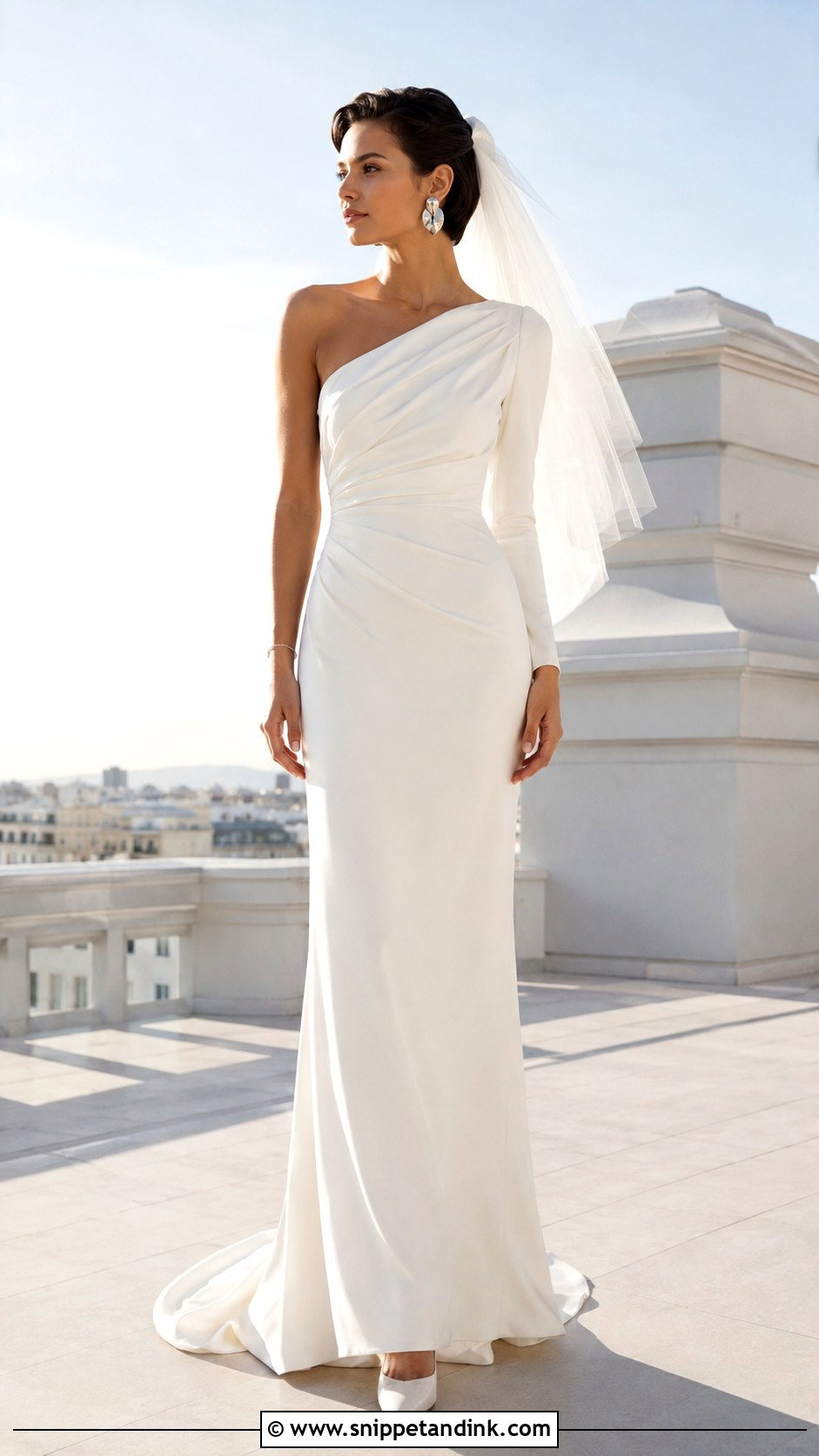
One shoulder, one diagonal, one statement earring on the bare side: that’s the formula, and it works because nothing interrupts the line. Matte crepe or satin with diagonal draping and a softly fitted skirt suits it best. A single long sleeve adds drama; sleeveless is cooler in summer. I’d avoid a necklace completely here. Pointed pumps, a slim bracelet and a short veil or a sculptural hair piece finish a gallery or rooftop look.
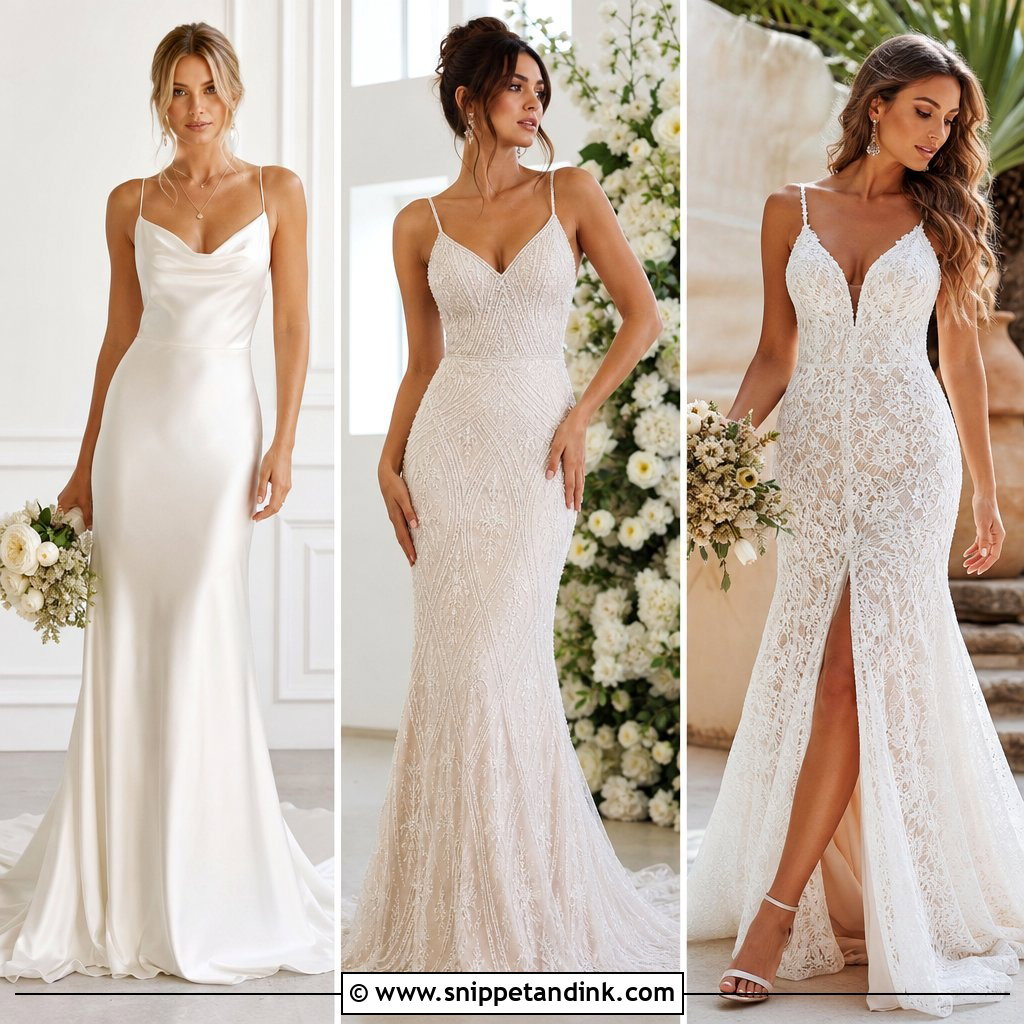
10. High Neck Sheer Lace Wedding Dress
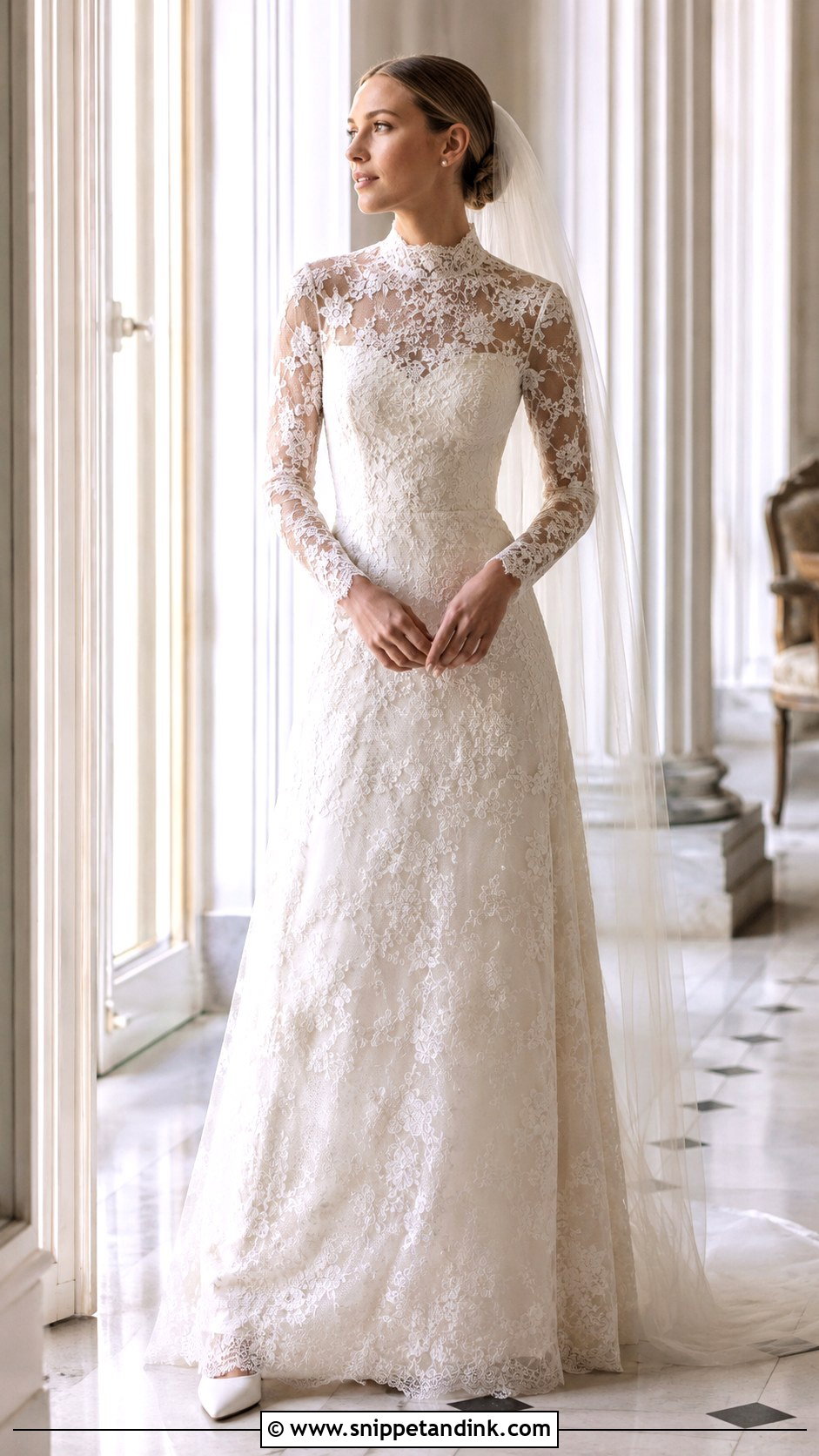
Sheer lace over a fitted underlayer makes a high neck feel light. The lining color changes the whole effect: lining matched to your skin makes the lace appear to float, while ivory lining reads more traditional. I’d hold both against you in daylight before deciding. Botanical motifs, long sleeves and a narrow column or soft A-line suit this. Fit around the neck and shoulders matters most for comfort. Studs, pointed shoes and a plain-edged veil keep it uncluttered.
11. Bias Cut Slip Wedding Dress
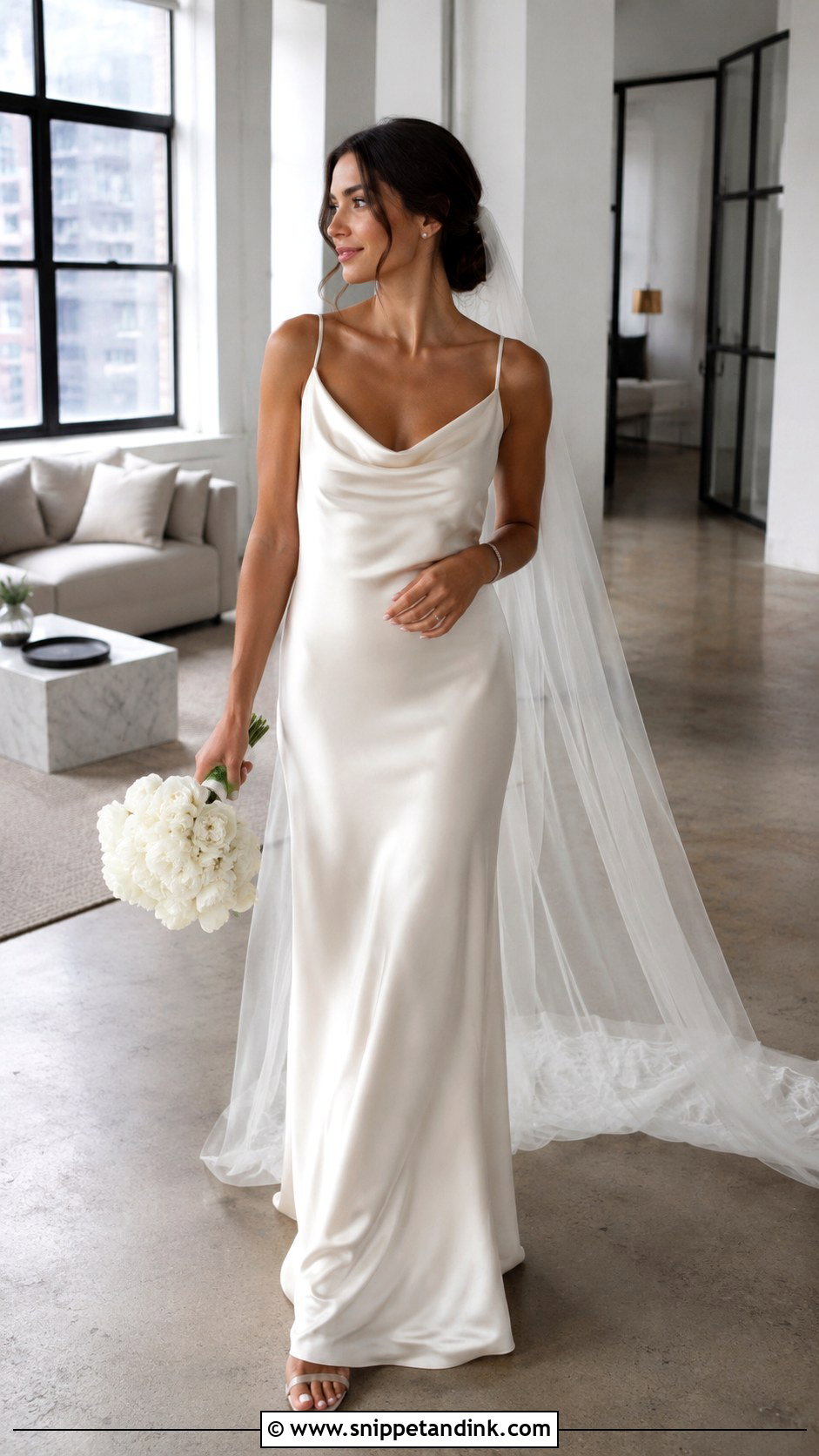
Bias-cut silk moves with you instead of holding a shape, which is what makes it so easy to wear and so revealing. A cowl neck, narrow straps and a low back with some hidden support are the details I look for. Silk charmeuse marks with water and sweat, so I warn summer brides to keep a cool room and a dry cloth nearby. Delicate sandals, small diamond studs and a sheer chapel veil suit it; swap the veil for a structured clutch at the reception.
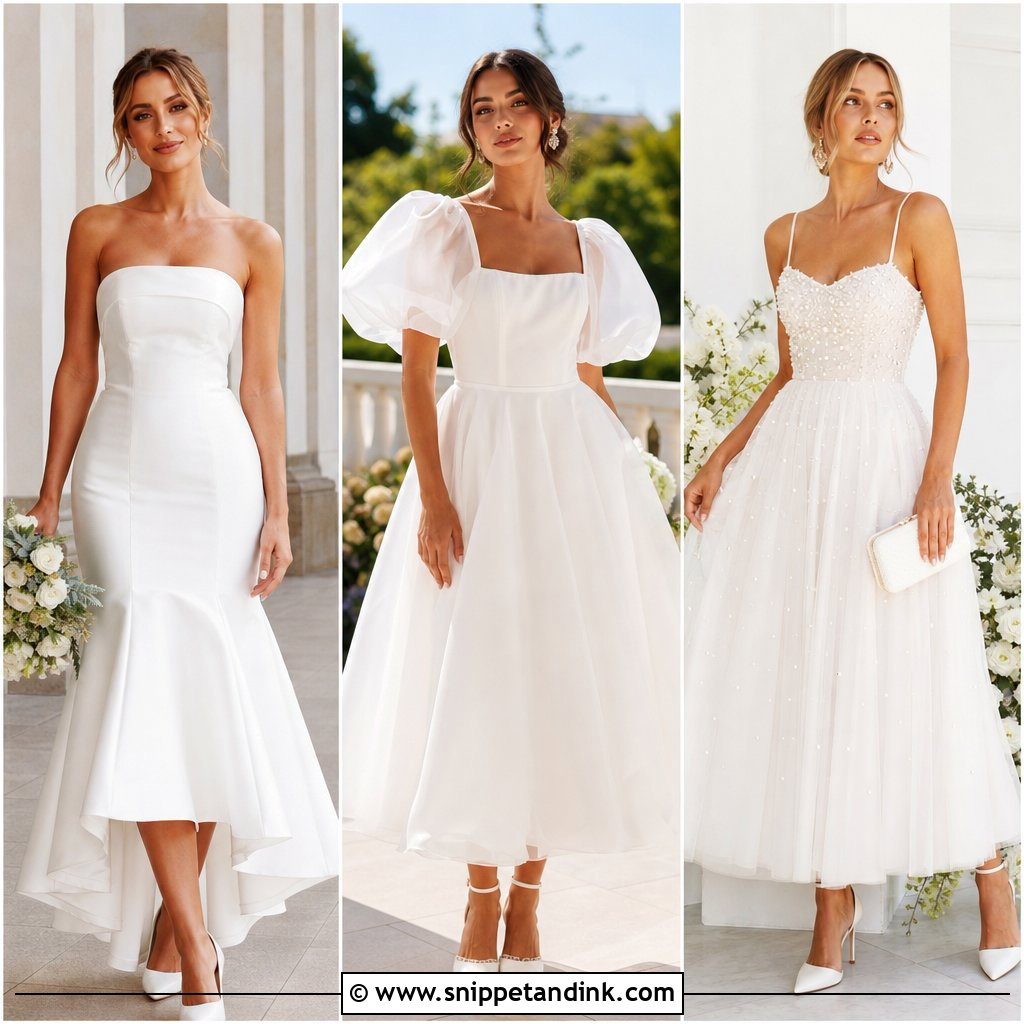
12. Tea Length Satin Wedding Dress
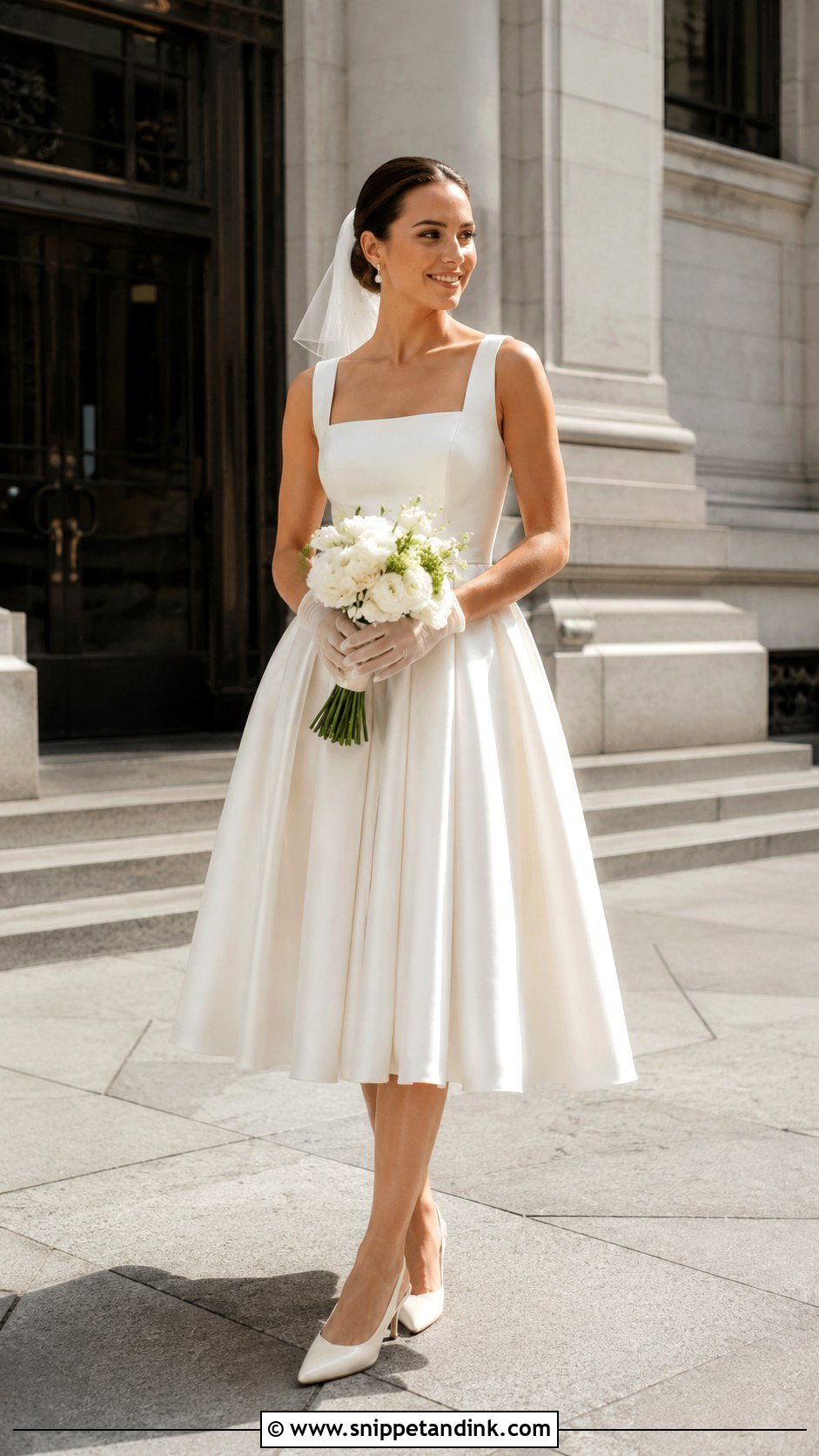
Shorter hems put the shoes on show, which is half the fun. A fitted bodice with a square, scoop or strapless neckline and a satin skirt ending between knee and ankle stays formal. Box pleats give structure; a circle skirt moves more. Choose a shoe you actually love, such as an ivory slingback, crystal pump or satin ankle-strap heel, and fit the hem in it. Gloves suit a plain neckline. It’s far easier to move in than a floor-length gown.
13. Cape Sleeve Crepe Wedding Dress
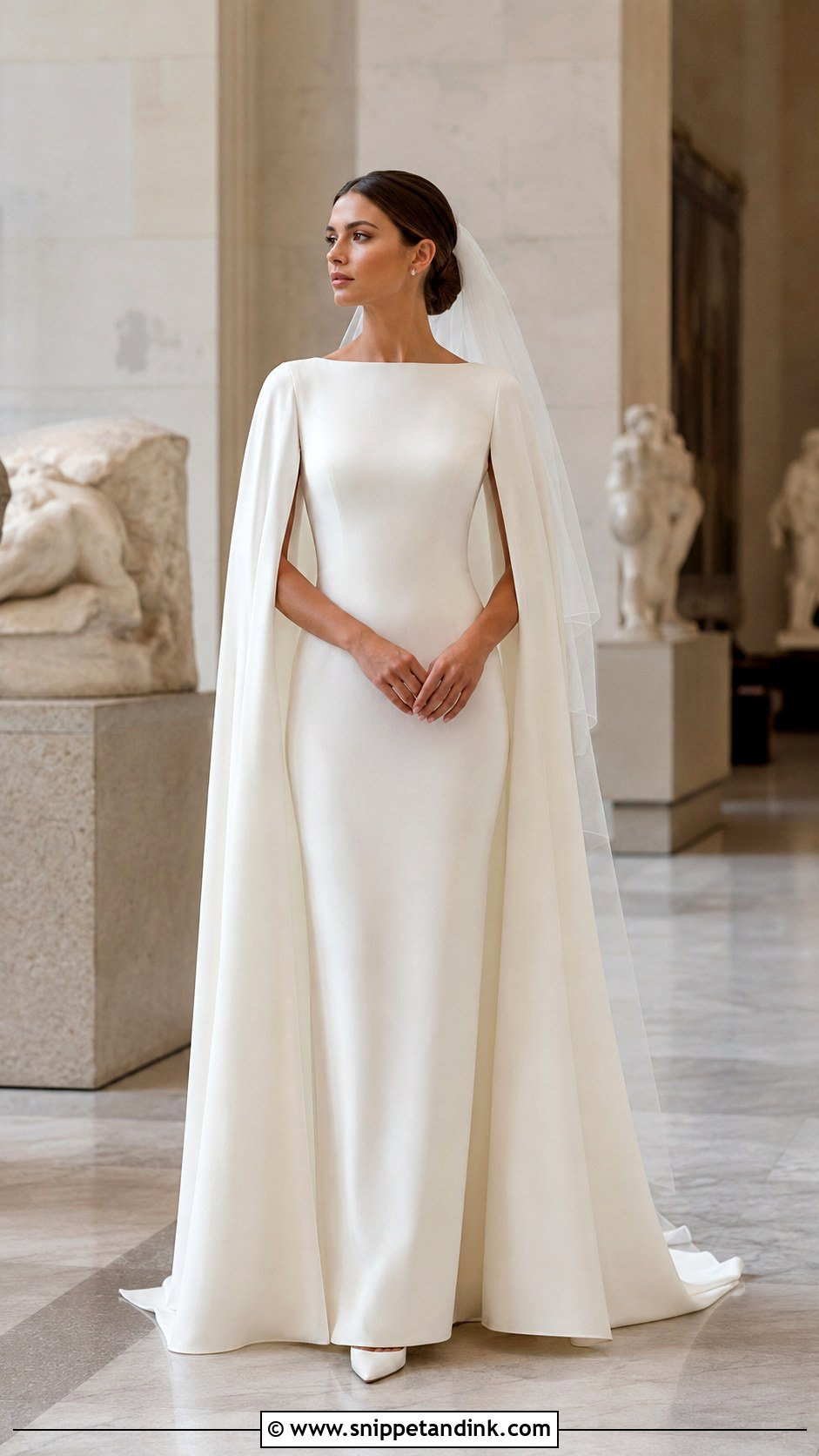
A crepe cape can replace the veil for the aisle. Fixed at the shoulders of a fitted column or soft A-line, the panels should fall cleanly behind the arms into a short or floor-length train. If the cape reaches the floor, I plan how it will come off or be secured for the reception before the day, not during it. A short blusher keeps a traditional veil moment if you want one. Minimal earrings and a sleek low bun suit it.
14. Detachable Overskirt Wedding Dress
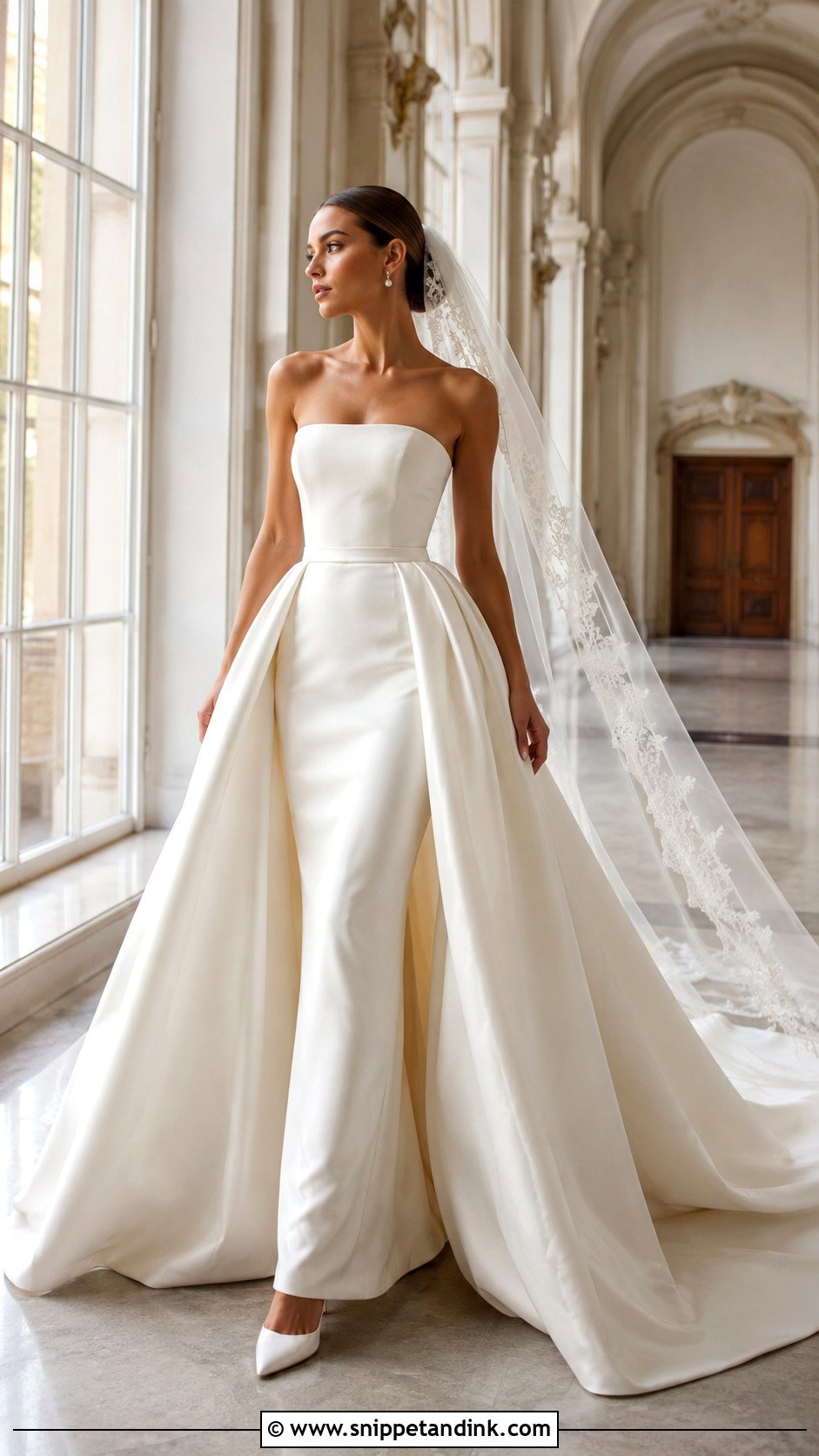
An overskirt should look like part of the gown, not an addition. That comes down to a smooth waistband and a fastening hidden at the side or back seam. I check the base dress on its own just as carefully, because once the overskirt comes off, its hem and train have to look finished. Pair the full version with a cathedral veil and pearl earrings, then switch to statement earrings for the reception. It’s an easy way to get two looks from one fitting schedule.


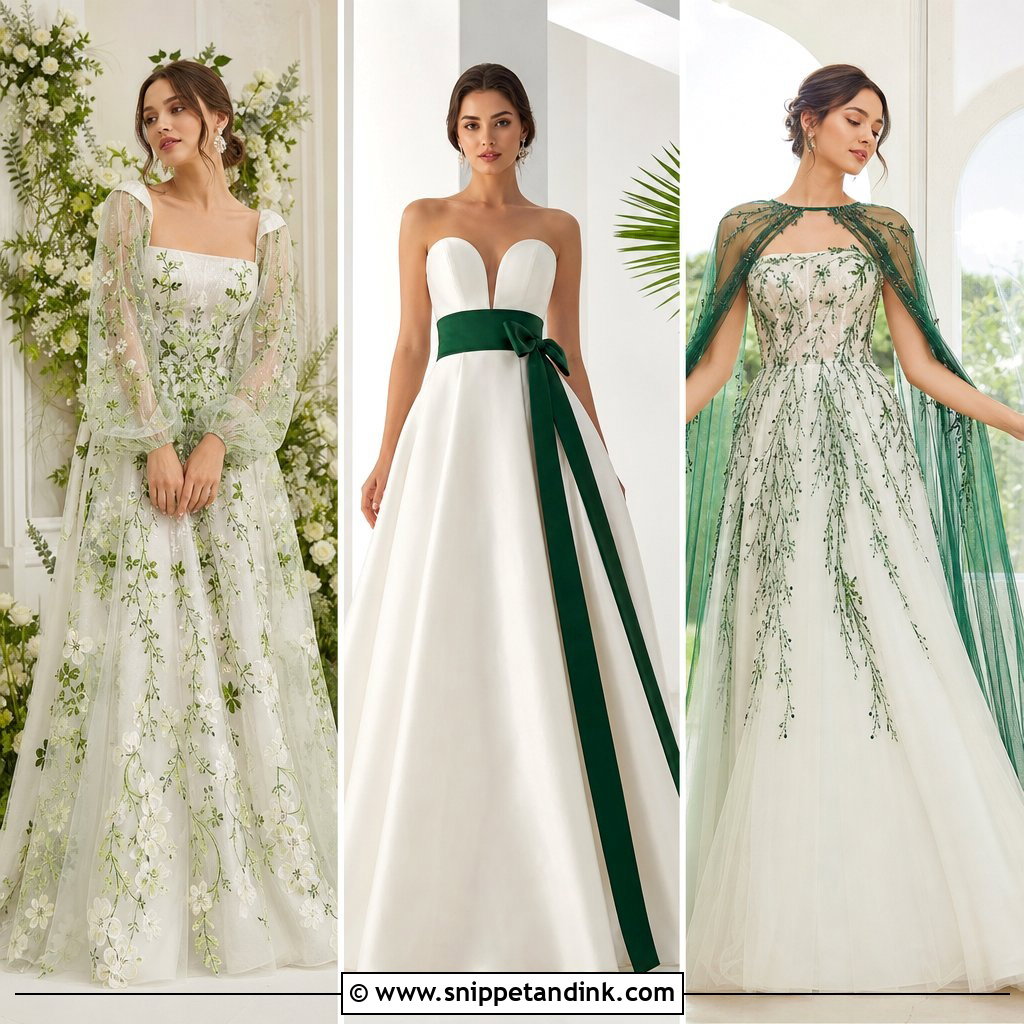
15. Three-Dimensional Floral Organza Wedding Dress
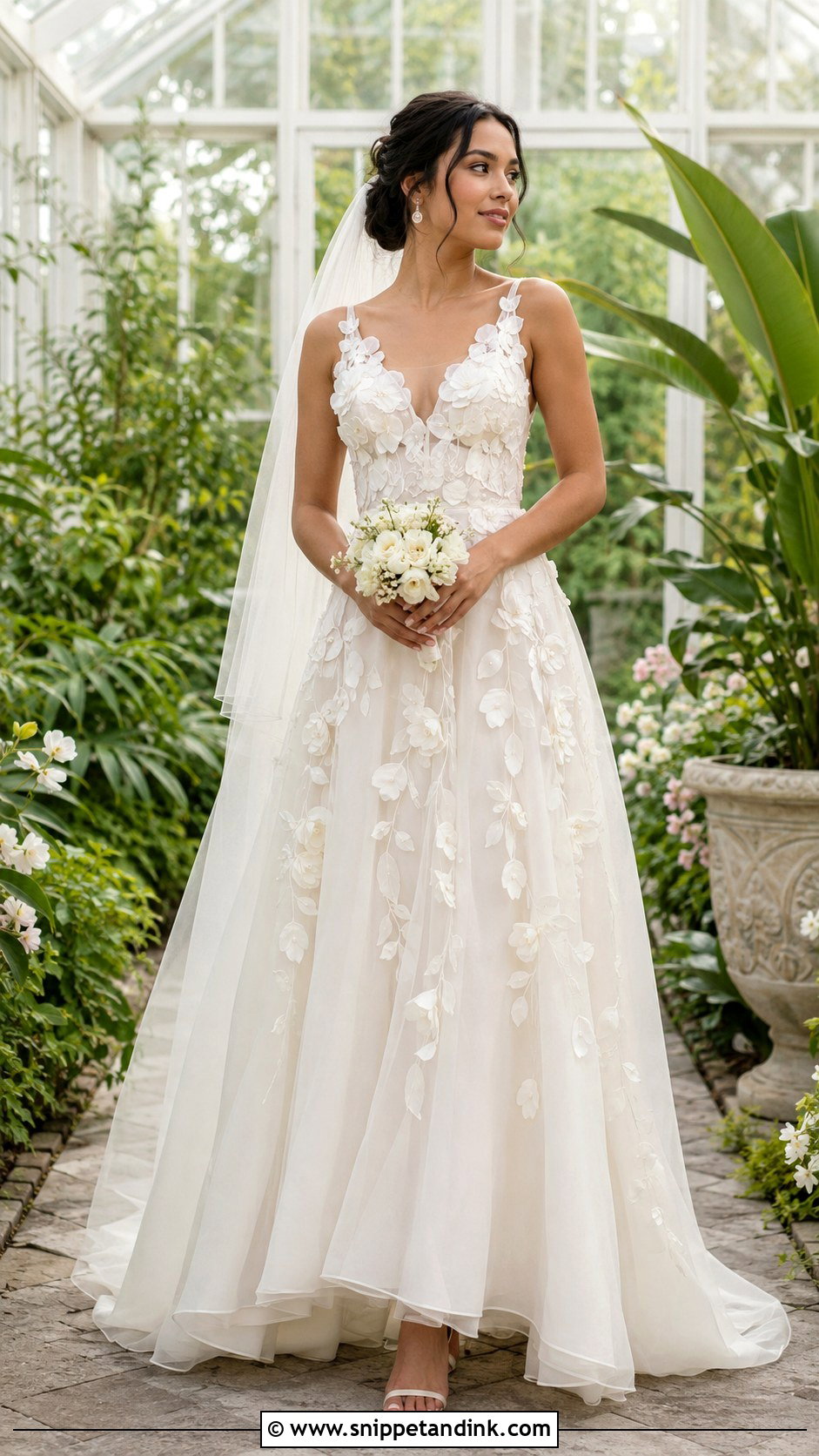
Organza is airy but stiff, which lets three-dimensional flowers hold their shape without weighing the skirt down. I like the blooms concentrated at the neckline and waist, then scattering smaller down the A-line skirt. Petals catch on embellished shoes and beaded bags, so keep those plain. Ivory sandals, delicate earrings and a plain veil suit it, along with a loosely gathered low hairstyle and a tonal bouquet for a spring garden or glasshouse.
16. Statement Bow Back Wedding Dress
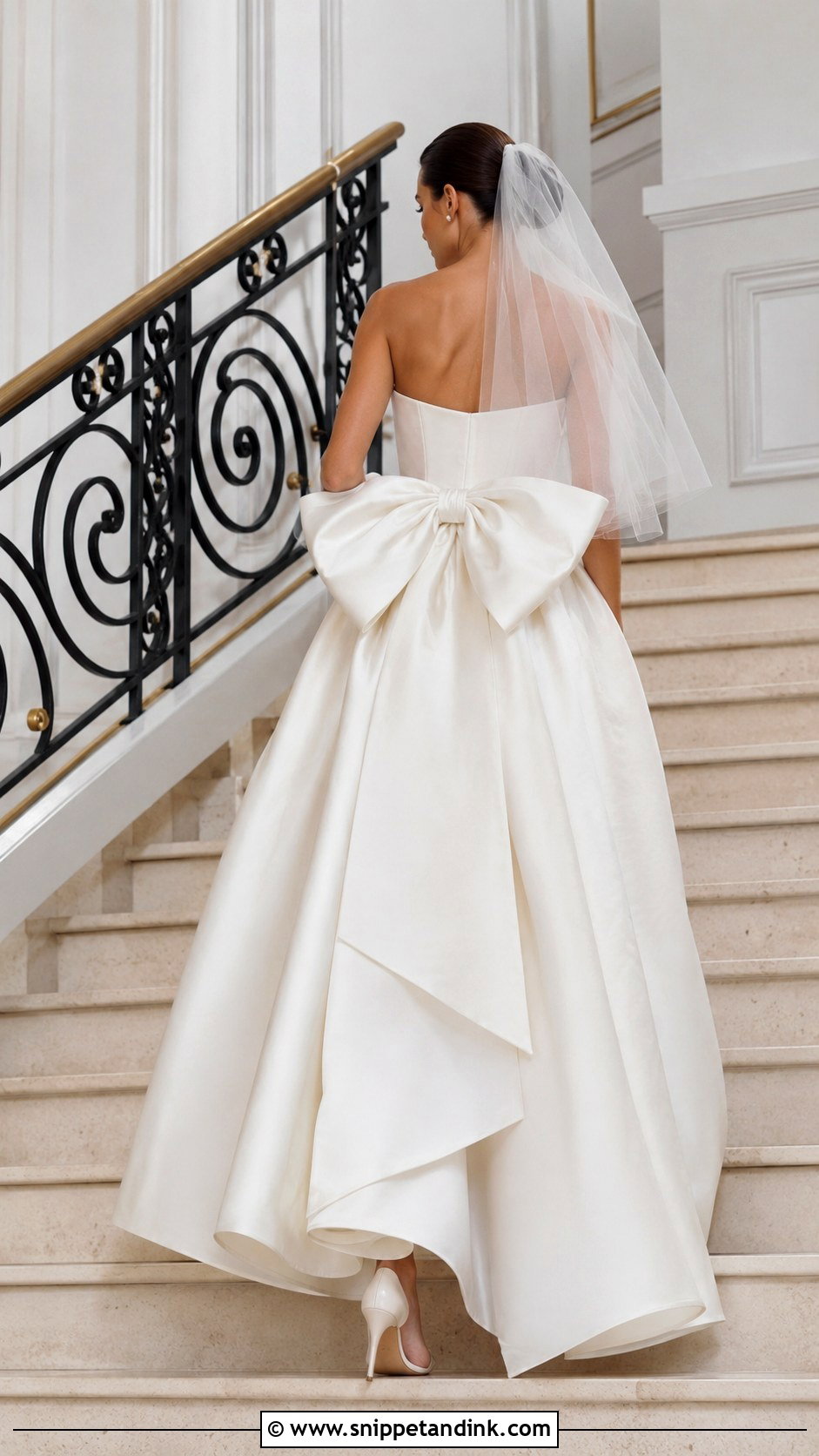
Back bows are for the aisle and the staircase. On a strapless or square-neck satin gown, the bow can sit at the waist, above the train or trail long tails. I attach the veil higher than usual so it doesn’t flatten the loops as you walk. The front stays minimal with pearl studs and understated pumps. Ask for a detachable bow if you’ll be sitting a lot at dinner, since a big bow crushes against a chair back.
17. Pearl Embellished Sheath Wedding Dress
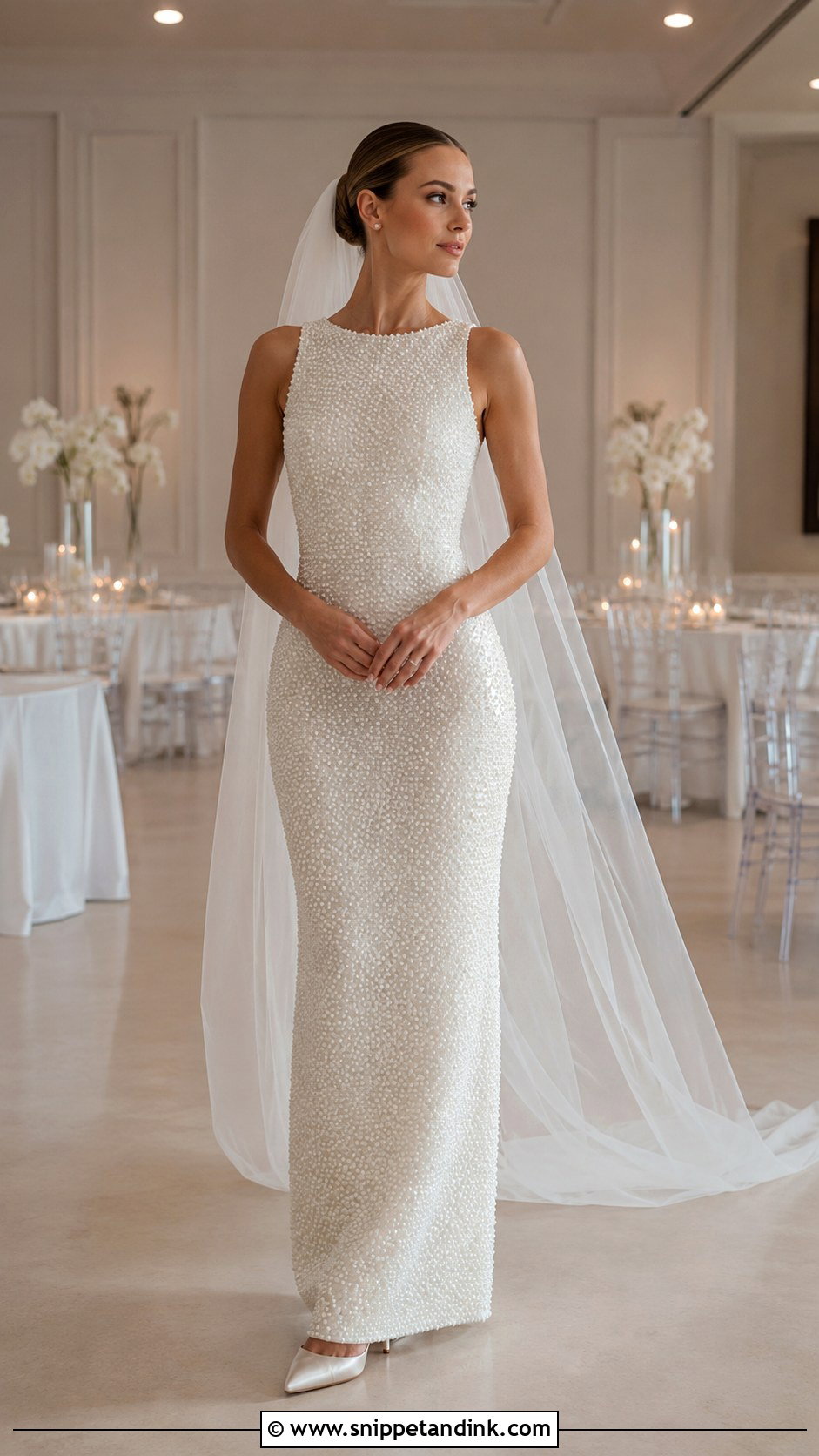
Pearls give shine through texture rather than glitter, so the rest of the styling should be matte. Evenly spaced pearls on tulle, crepe or a sheer overlay need a supportive, smooth lining underneath. Under the arms is where beads rub, and I check that spot specifically while the bride swings her arms. Satin pumps, plain studs and a clean fingertip veil or minimal headband suit it. Skip beaded necklaces and veils.
18. Pleated Chiffon A-Line Wedding Dress
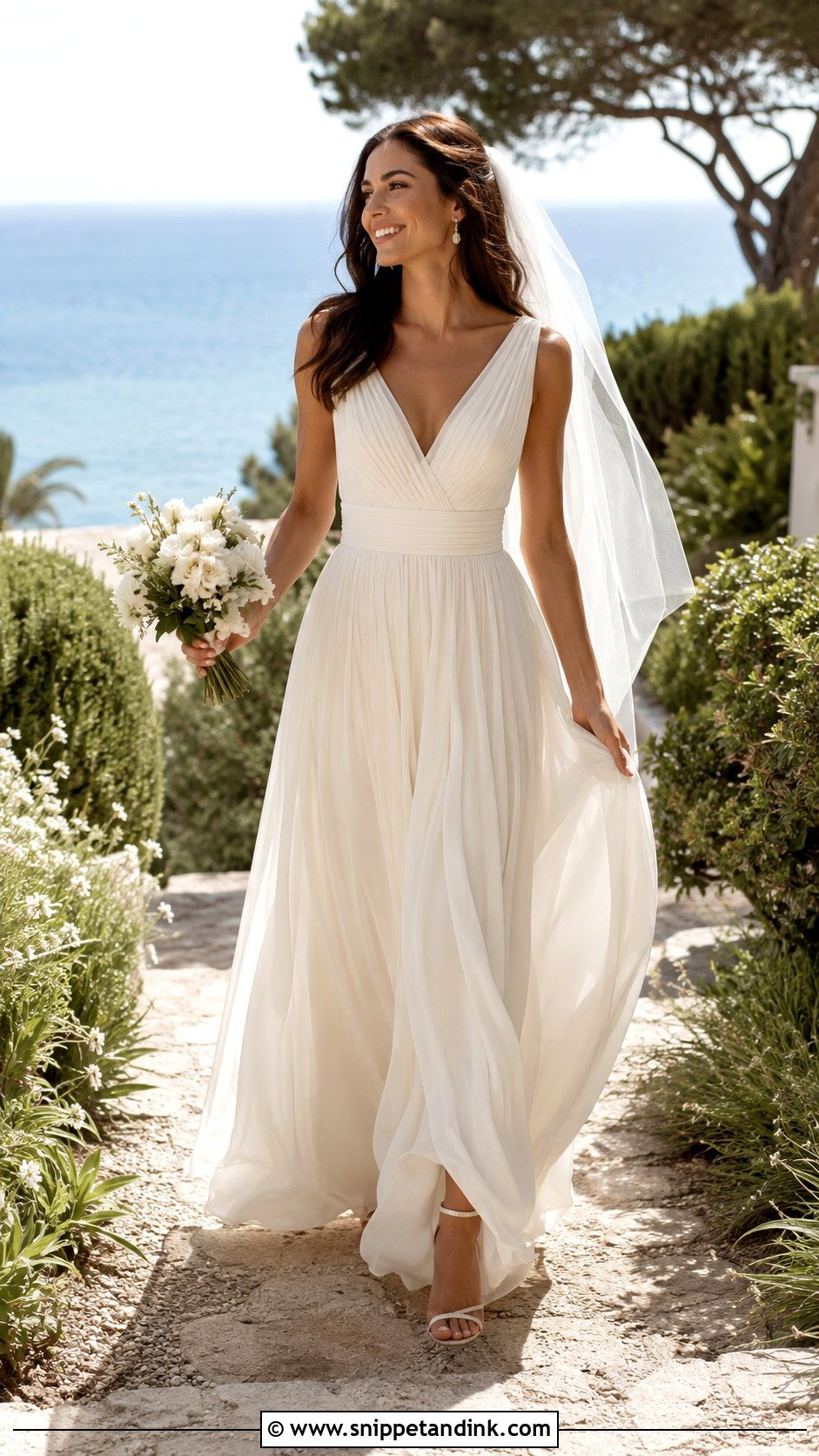
Chiffon pleats move in a breeze and look long and light, which is why I reach for them at outdoor and coastal weddings. Vertical pleating through bodice and skirt elongates; a defined waistband stops the fabric hiding your shape. Chiffon can be sheer, so ask for enough lining for bright sun. Hem it so you can walk on grass or sand without treading on it. Strappy ivory heels and a light veil move with the dress.
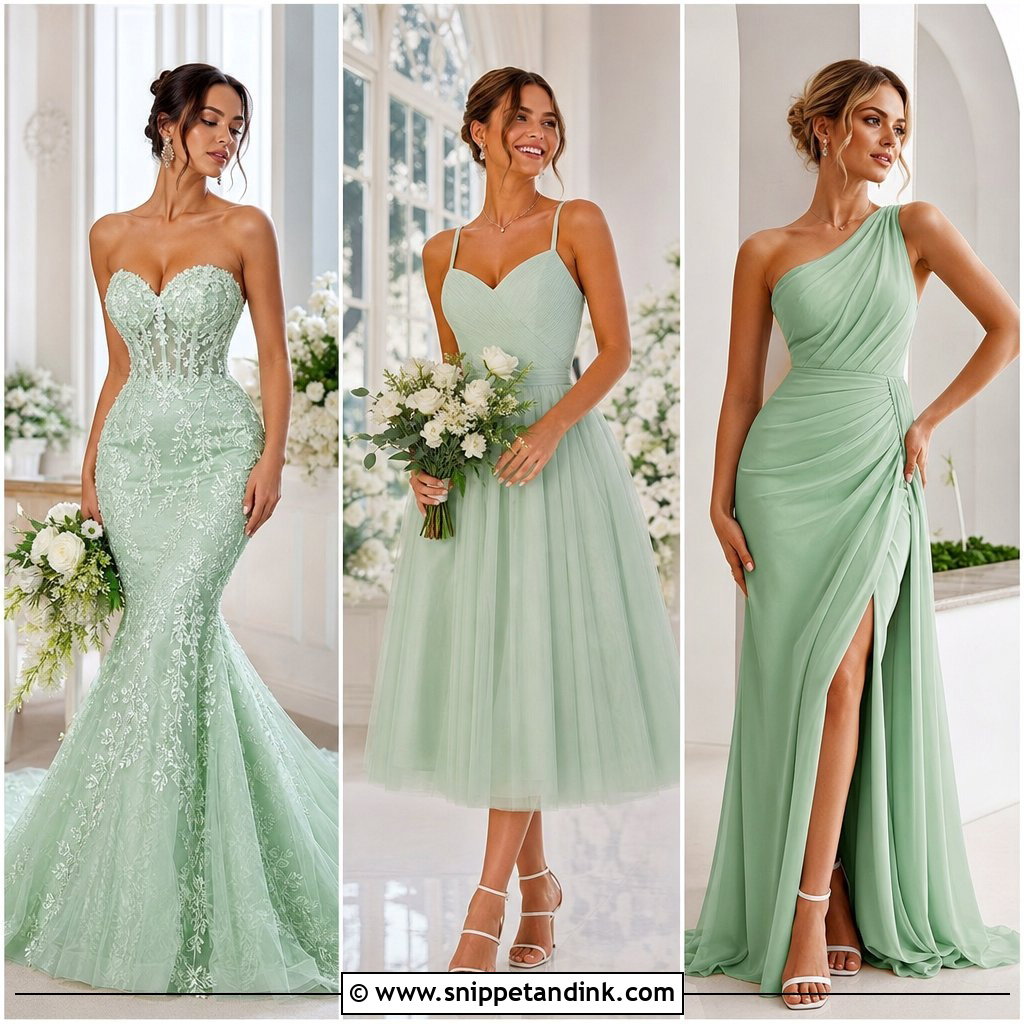
19. Blush Jacquard Ball Gown Wedding Dress
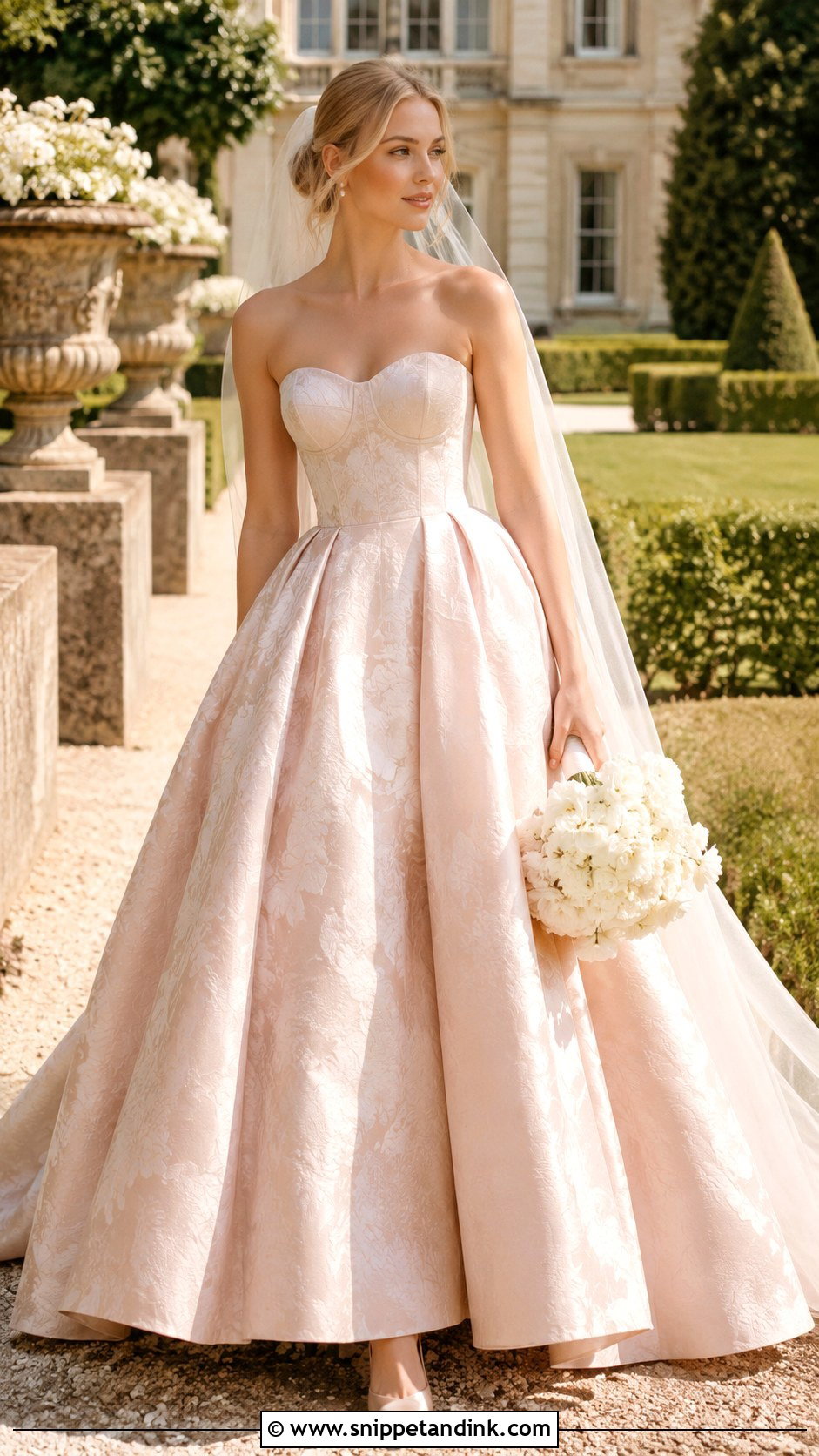
A blush jacquard ball gown is a gentle step away from ivory, and the woven pattern shows more as the light changes. A strapless corset bodice and full skirt let the fabric speak without beading. Blush can look grey or peach depending on lighting, so I always ask for a sample to photograph outdoors and under warm indoor bulbs. Neutral satin pumps, pearl earrings and an ivory veil keep it calm, with a cream and pale blush bouquet.
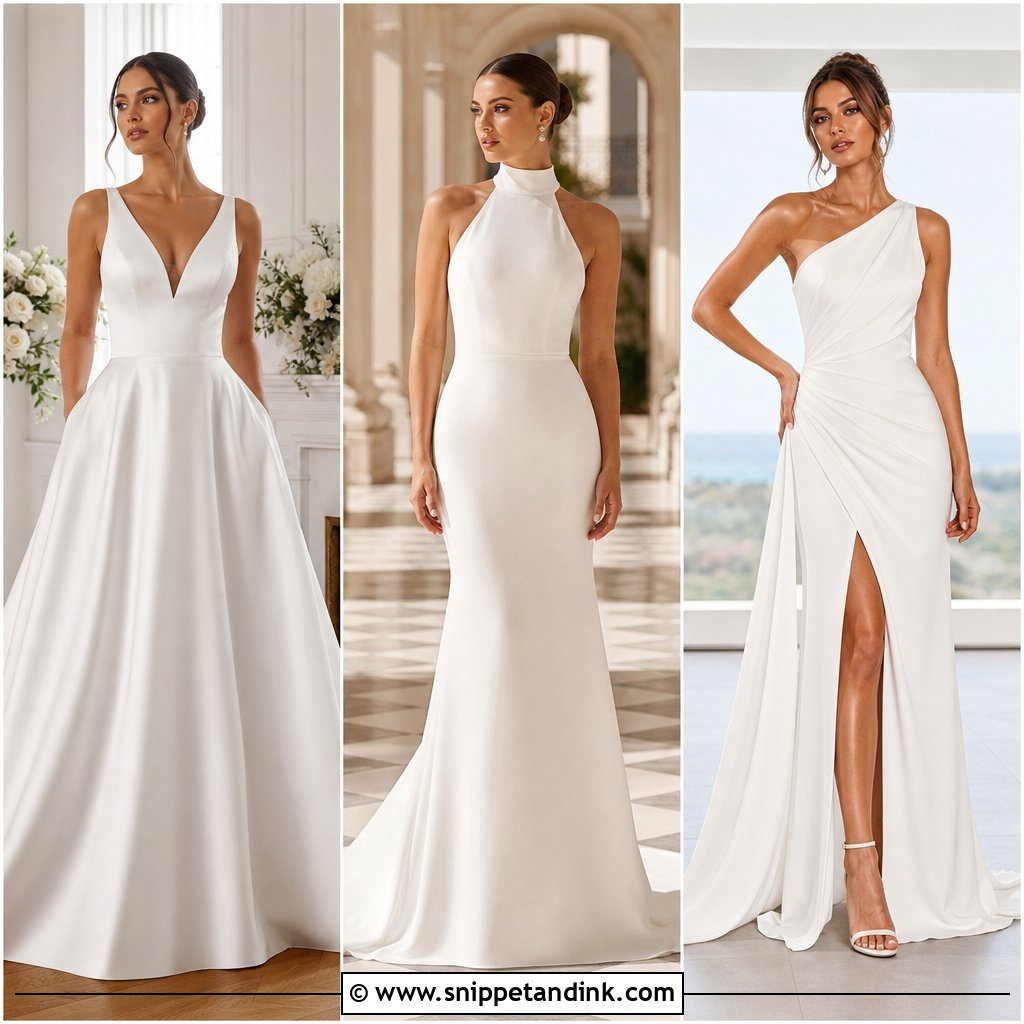
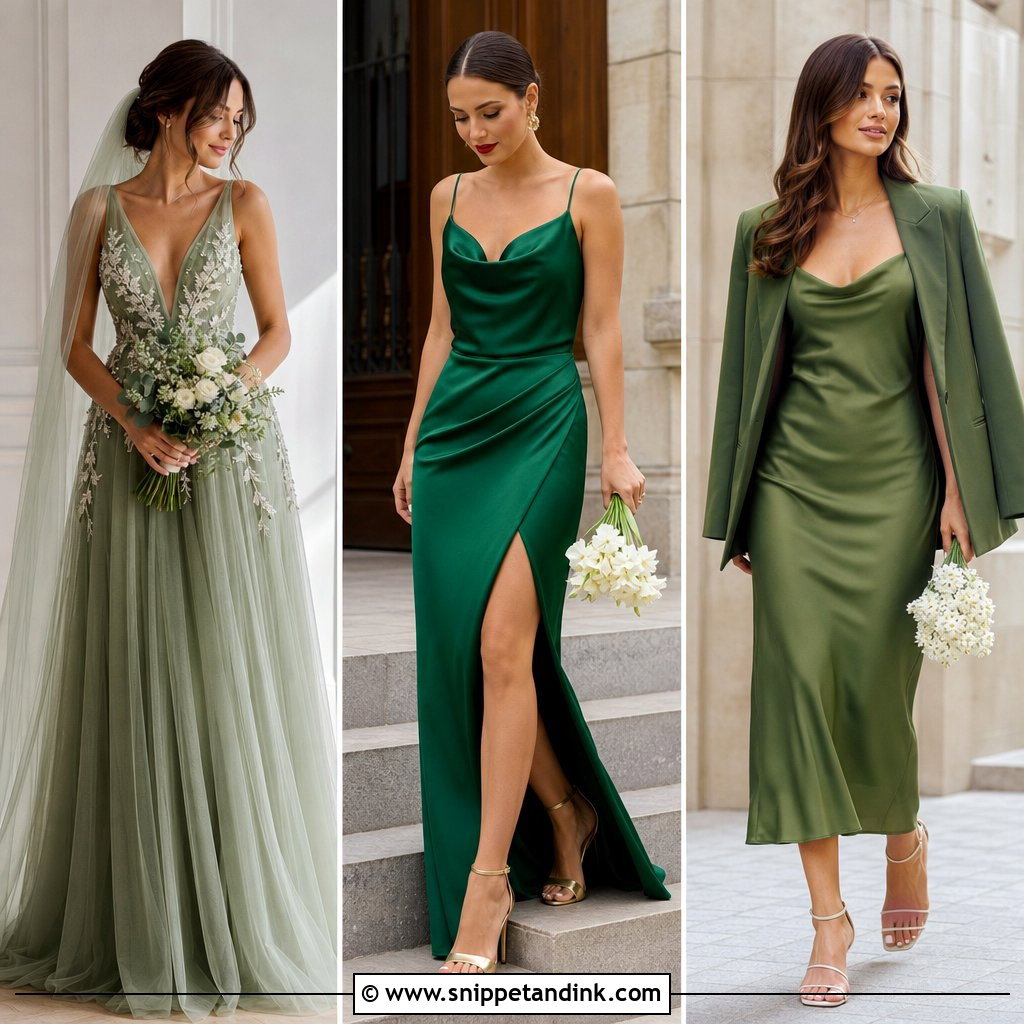
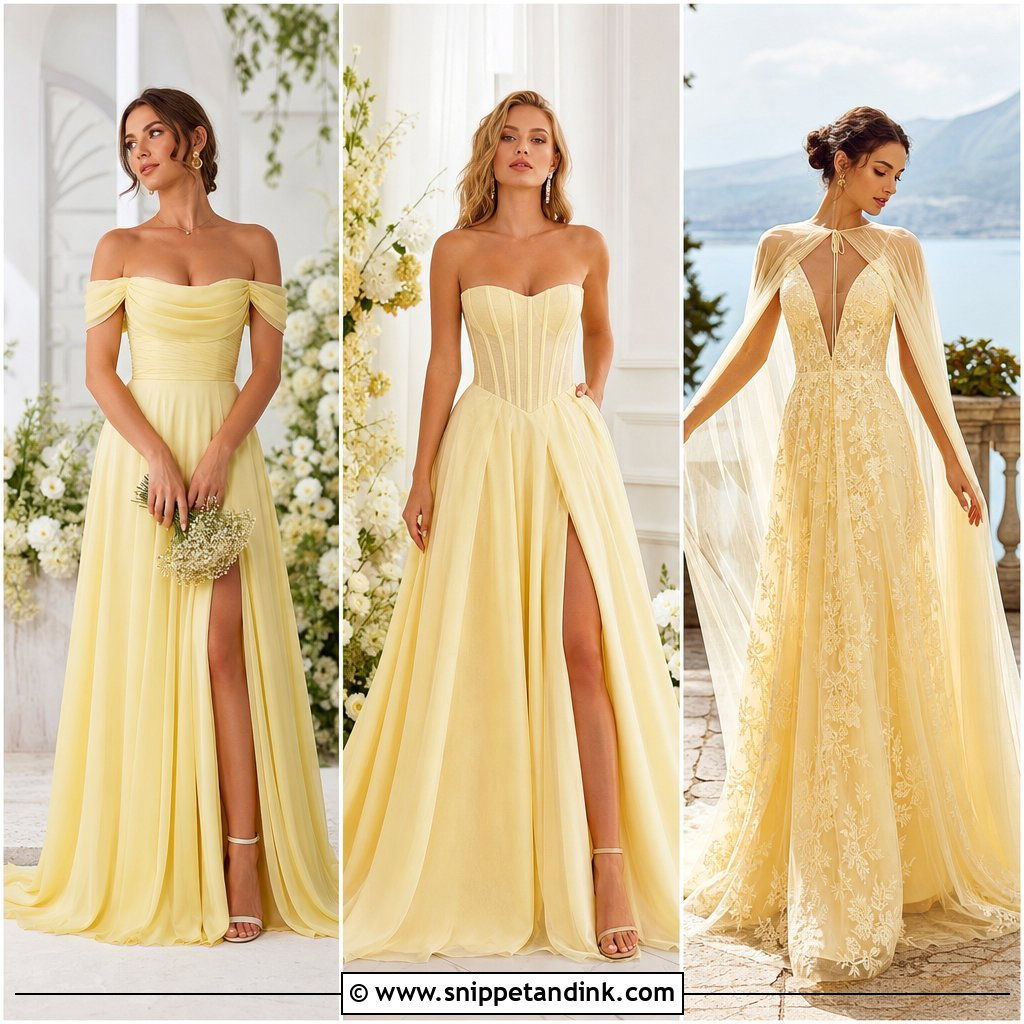
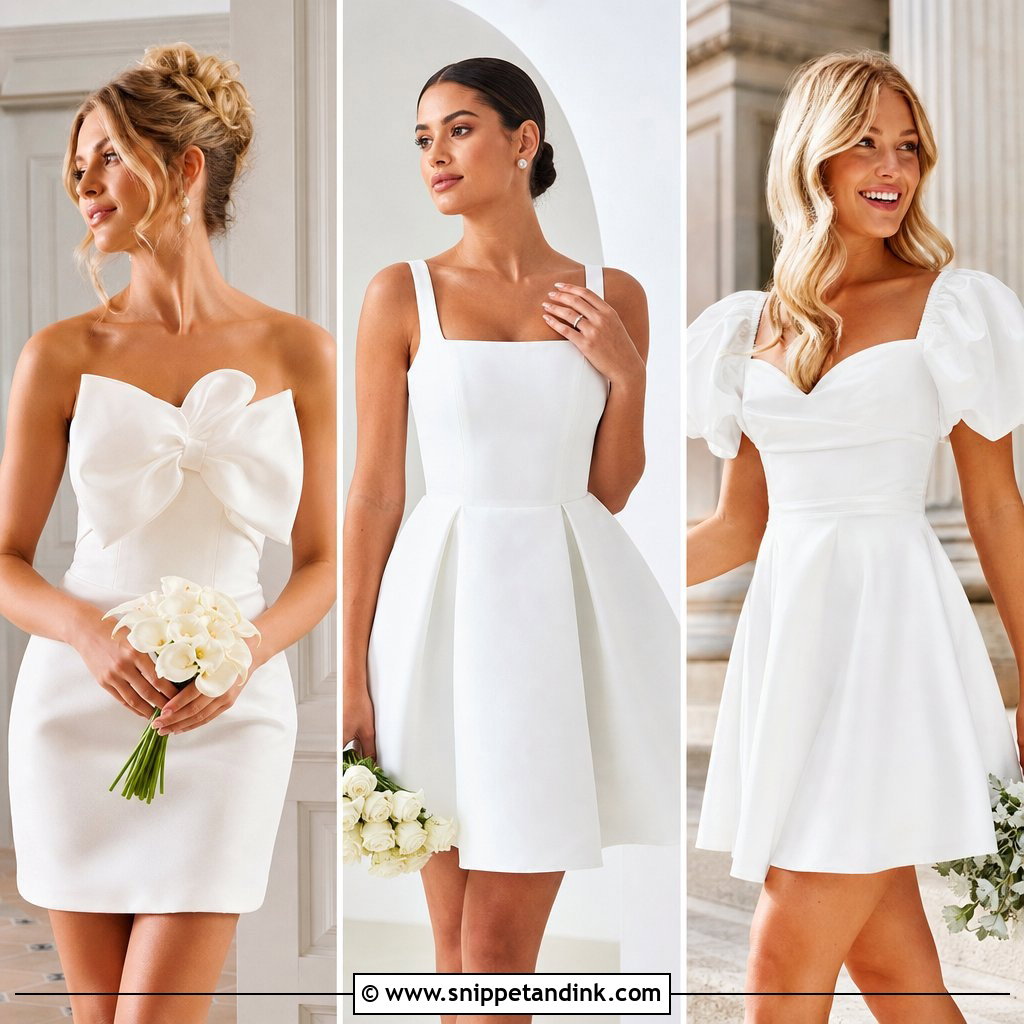
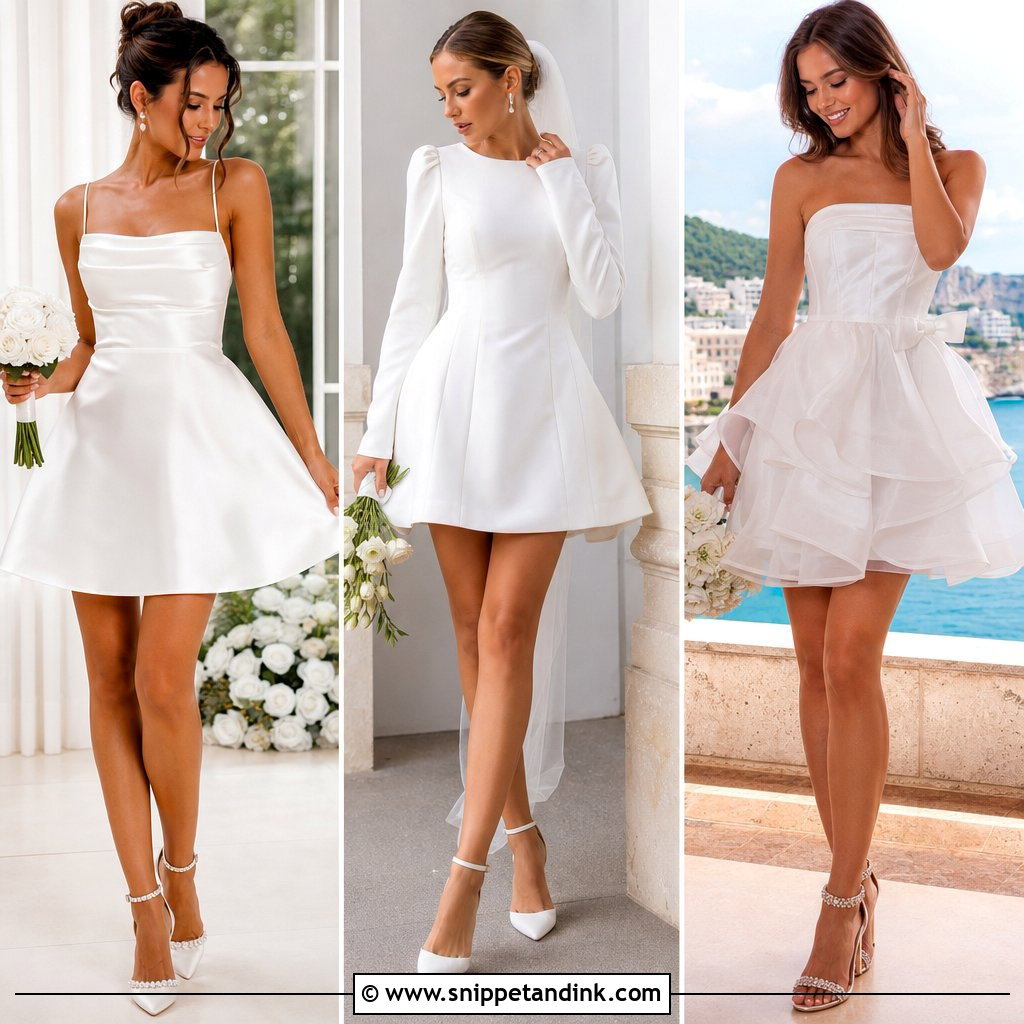
20. Modern Mini Reception Wedding Dress
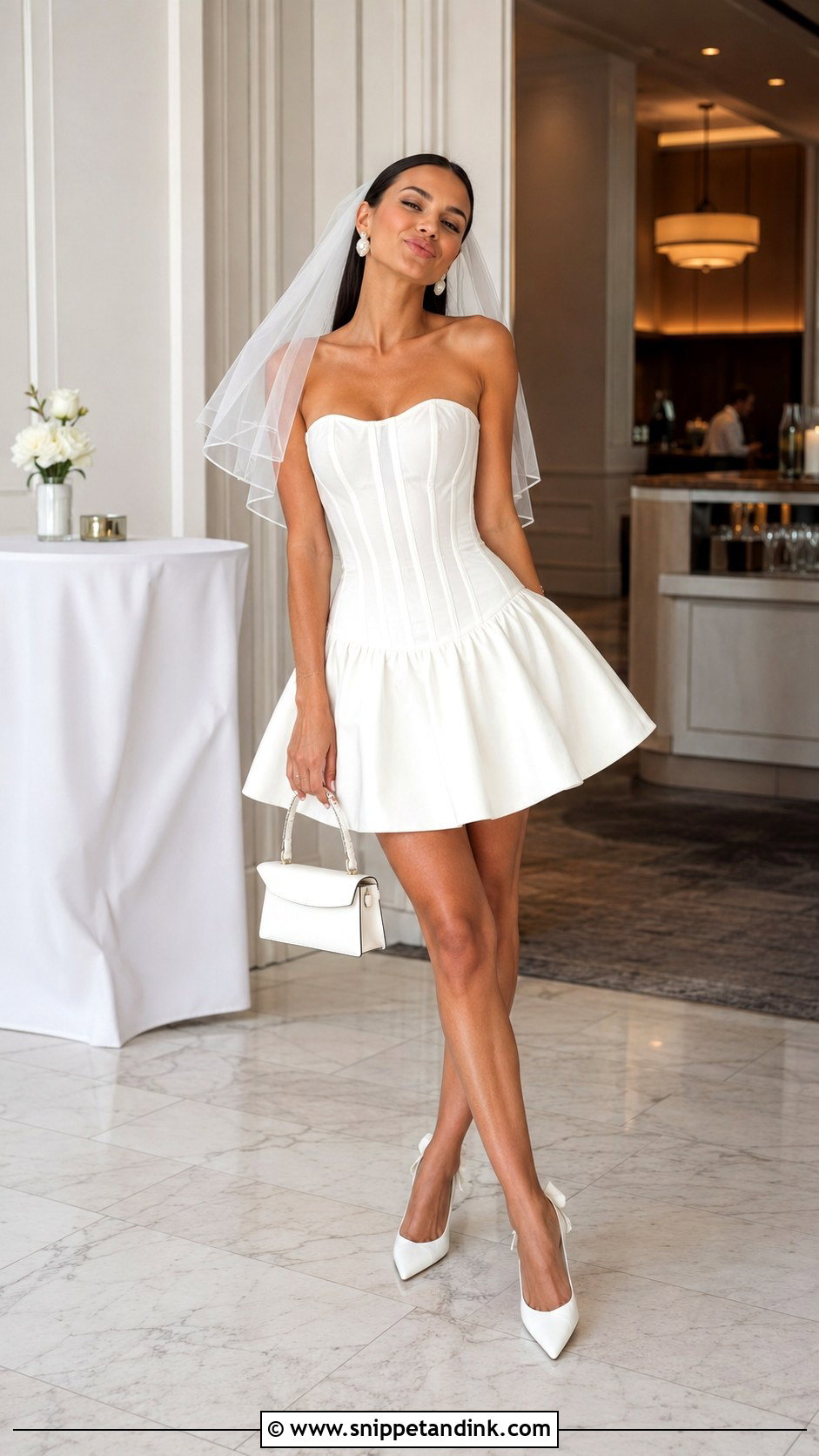
A reception mini should feel like a second outfit, not a downgrade. Structure keeps it bridal: a square neckline, corset bodice, tailored shift or flared skirt in satin, mikado or pearl-trimmed fabric. If the hem is very short, I balance it with a higher neck or long sleeves. Block heels make dancing realistic. A short veil or oversized bow is a fun entrance that comes off for the dance floor, and the same dress works as the main look at a courthouse.
How Crepe, Silk and Mikado Behave in Heat, Rain and Cold
Weather is the variable nobody plans for until the week of the wedding. The same chic dress can feel very different at an August garden ceremony and a February city one.
Heat and humidity
Silk satin and charmeuse show sweat and water marks; crepe and chiffon hide them better. Mikado holds its shape in humidity, which soft satin won’t. Boned bodices get warm, so plan shade and a cool room for the long gaps between ceremony and dinner.
Rain
A wet hem drags dirt up the skirt. Have a bustle fitted even if you didn’t plan one, and keep a clear umbrella and a dry white towel with whoever is helping you. Water on silk can leave a ring, so blot rather than wipe.
Cold
Sleeves, a cape or a tailored coat in a matching ivory look more considered than a borrowed cardigan. I’d choose the cover-up at the final fitting so its color matches the dress in daylight.
Whatever the forecast, I’d do one wear test in the actual dress for an hour before the wedding, ideally at the final fitting. Ten minutes in front of a mirror tells you how it looks; an hour tells you whether the boning warms up, the straps slip or the fabric marks where your arms rest.
Edit the Look Until Only Your Favorite Detail Is Left
Columns, ball gowns, slips, lace, removable layers and short reception dresses are all on this list because each solves a different kind of day. Start with the neckline, waist position, fabric and skirt volume you keep coming back to. Then weigh your venue, weather, shoes, veil and coverage. In fittings, walk, sit, raise your arms and turn. A simple dress with good tailoring always beats an elaborate one that doesn’t fit. Whether it’s corsetry or quiet satin, the look should feel polished and comfortable, and clearly yours.
You'll Like These Ideas:




Leave a Reply