
Guests spend most of a ceremony looking at the bride from behind, and the photographer shoots the aisle walk, the vows and the first dance from that angle too. That’s why I ask every bride at her first appointment how she feels about her back before we talk necklines. The shapes I’m pulling most often now are open backs, illusion tulle, lace, bows, long button rows, draping and clean sculptural cuts. The right one comes down to support, comfort, venue, hairstyle and how much skin you want on show. Below are 25 back designs, with what each one asks of you in fittings.
What Goes Under a Low or Open Back
Support is the question I’m asked most about backless gowns, and the answer changes with the cut. Bring whatever you plan to wear underneath to every fitting, because the seamstress adjusts the bodice around it.
- Sewn-in cups are my first choice for most open backs. Your alterations team stitches them into the lining, so there is nothing to slip or peel.
- Low-back or plunge longline bras work for backs that stop at or above the waist. Check the band drops below the opening when you turn in the mirror.
- Adhesive cups suit smaller busts in very low backs. They lose grip with heat and sweat, so I’d test one through a warm afternoon before relying on it.
- Built-in corsetry in the bodice carries a fuller bust in a backless dress far better than anything you add yourself. Ask about it before you order, since it’s hard to retrofit.
Skin matters too. An open back shows tan lines, strap marks and dry patches clearly in flash photos. Stop wearing tight straps for a few days before the wedding, and ask your makeup artist whether she brings body foundation for the back.
1. Open Back Wedding Dress
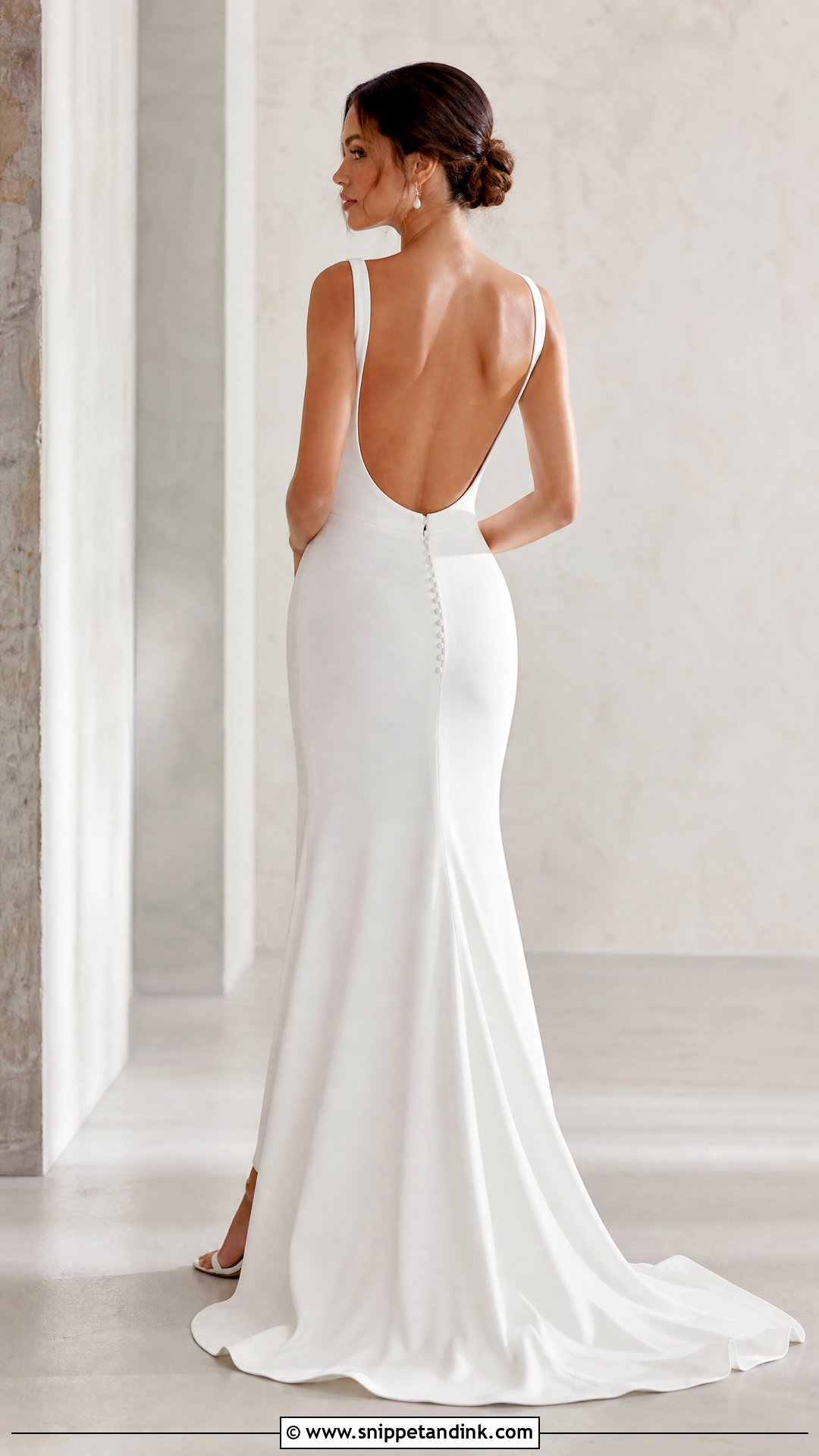
An open back makes its reveal with no embellishment at all, which is why it sits so well on fitted crepe, soft A-lines, satin sheaths and boho lace. The opening can be rounded, square, V-shaped or scooped. The first thing I check is where it stops: an opening that ends above the waist with side boning and wider straps holds a fuller bust far better than one that drops to the hip. Keep the veil plain, and wear your hair in a bun, ponytail or side wave so the back isn’t hidden in photos.
2. Low Back Wedding Dress
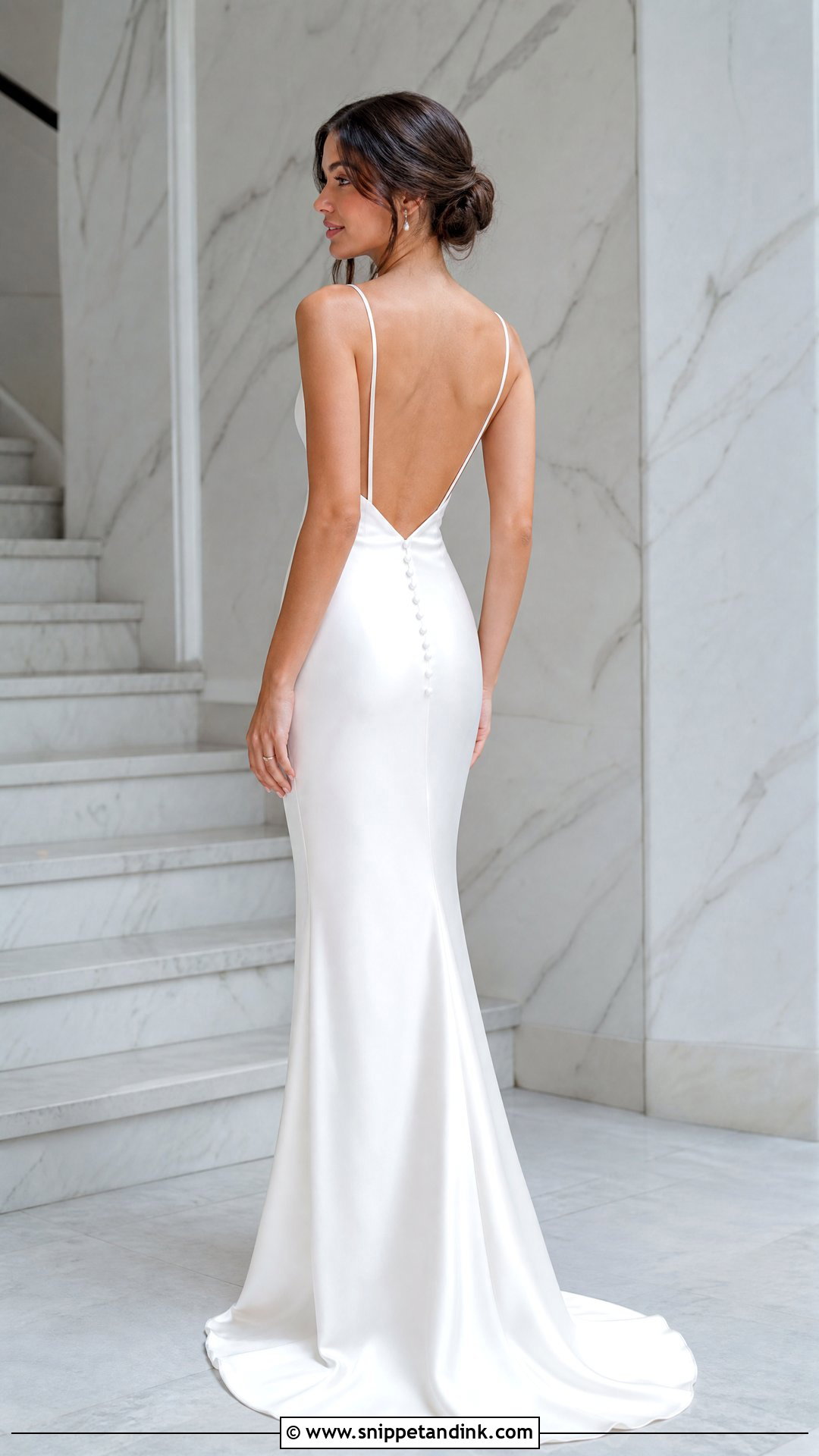
Low backs are about balance. When the back dips deep, I usually pair it with a higher neckline or long sleeves so the dress reads polished rather than bare. You’ll see this on satin slips, crepe mermaids and plain columns where the front stays quiet and the back is the surprise. Ask your consultant about built-in cups and supportive lining before you fall in love, because a low back rules out almost every standard bra. A low bun or tucked waves keeps the line clear.
3. Illusion Back Wedding Dress
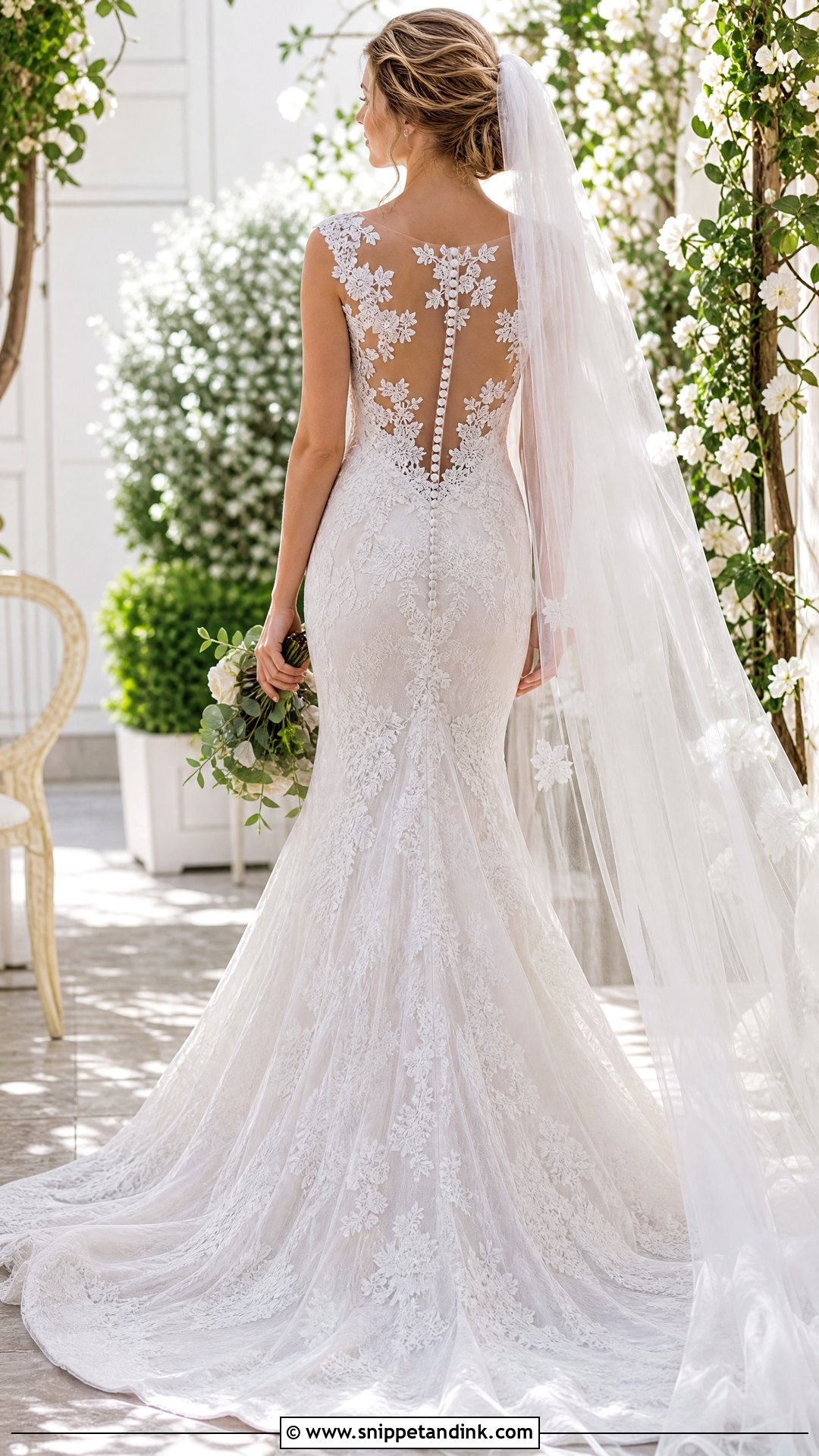
Illusion tulle is the reason so many brides who want an open look still feel secure. The sheer panel holds lace appliqués, beading, embroidery or tiny buttons in place, and it also stops the bodice from gaping when you lean or hug. It carries a pattern smoothly from bodice to train, and it sits well with long sleeves, high necks and fitted shapes. I’d always ask to see the tulle in a few shades and hold them against your skin in daylight; the closest match is what makes the lace appear to float.
4. Lace Back Wedding Dress
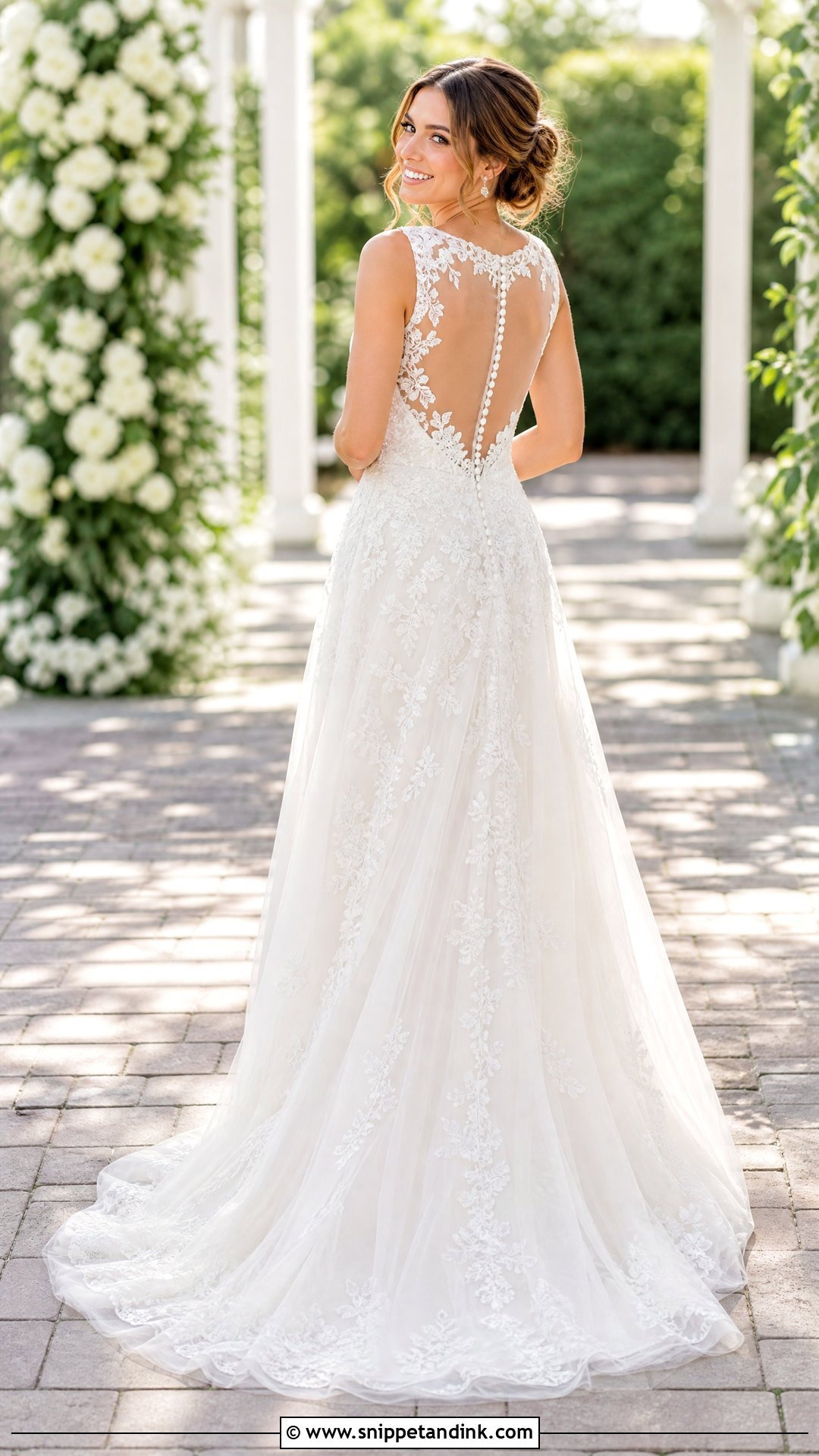
Lace on the back changes mood with the pattern. Fine Chantilly is flat and delicate; floral appliqué stands up off the fabric and catches shadow. If you want coverage, choose a fully lined lace back. If you want lighter, it’s sheer lace over illusion tulle. Look for lace that runs on from the bodice into the skirt, because a pattern that stops abruptly at the waist seam is the one thing that dates a gown. Pearl earrings, a soft veil and an updo finish it on ball gowns and mermaids alike.
5. Button Back Wedding Dress
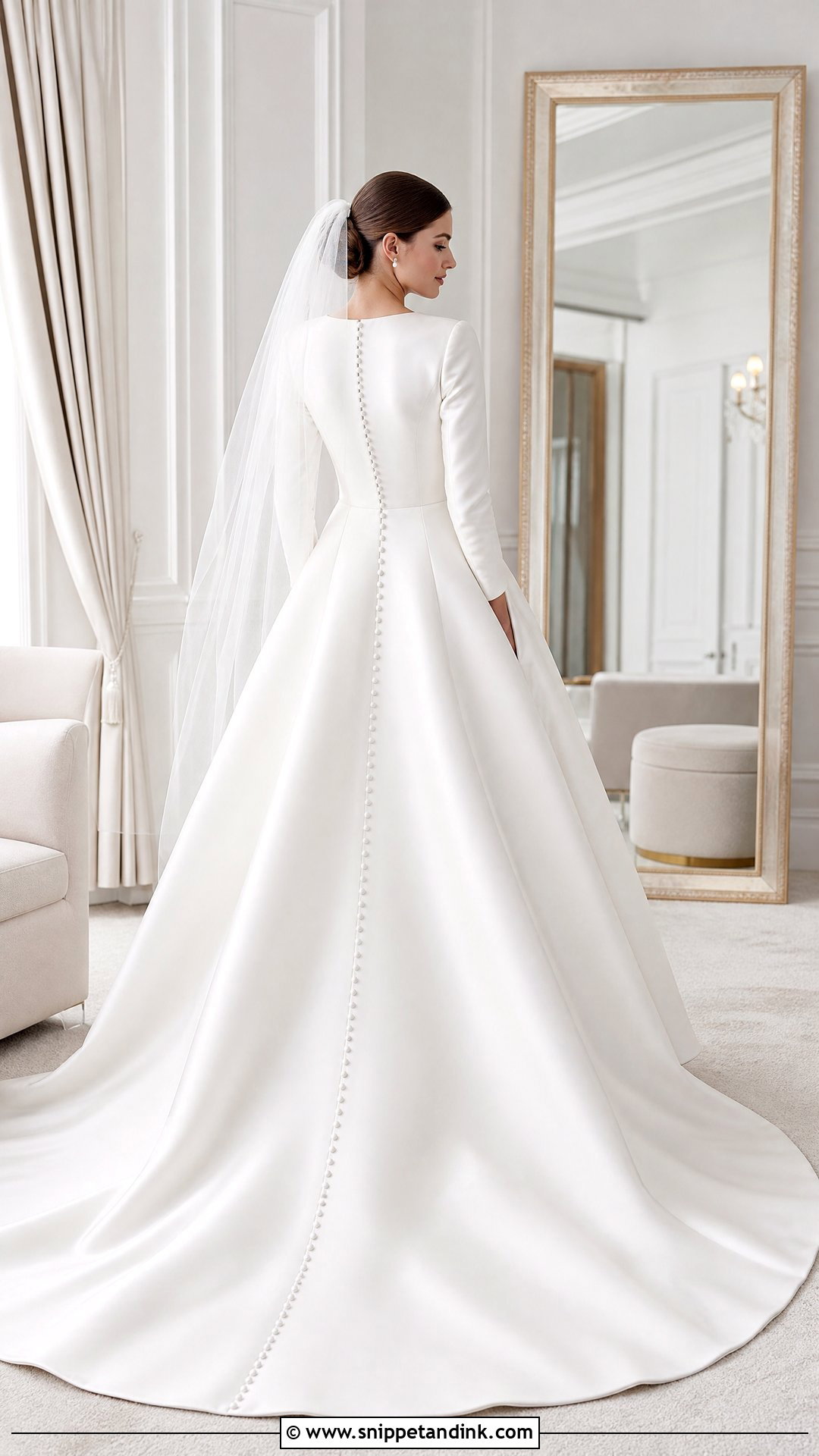
A button back wedding dress is classic for a reason: the row of covered buttons adds length and draws the eye down the spine. They can stop at the waist, run down the skirt or trail along the train, on satin, crepe, lace, mikado or tulle. In fittings I check that every button sits flat; if the fabric pulls between them, the bodice needs letting out. Most of these fasten with a hidden zip under the buttons, and those that don’t need a button hook and a patient helper, so plan ten extra minutes to get dressed.
6. Corset Back Wedding Dress
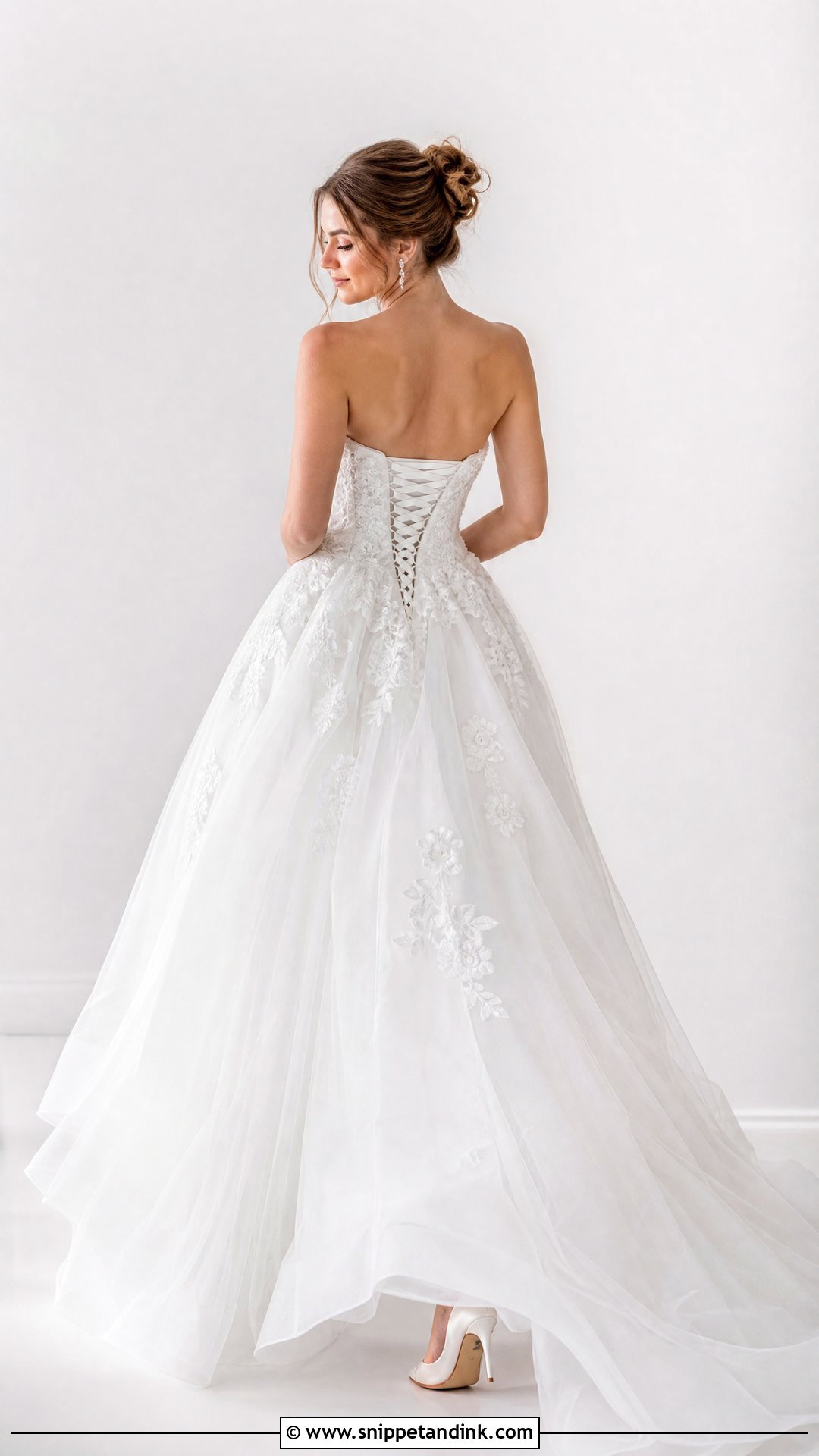
Corset lacing is the most forgiving back you can buy. Because the fit is adjusted by the lacing, a small change in your measurements between final fitting and the wedding is easy to absorb, which a zip can’t do. It suits ball gowns, princess shapes, lace dresses and fuller A-lines, and it can be soft with ribbon or more dramatic with exposed boning and sheer panels. For a cleaner look, ask for matching fabric loops and a modesty panel underneath. Have whoever will lace you on the day watch your consultant do it once.
7. V Back Wedding Dress
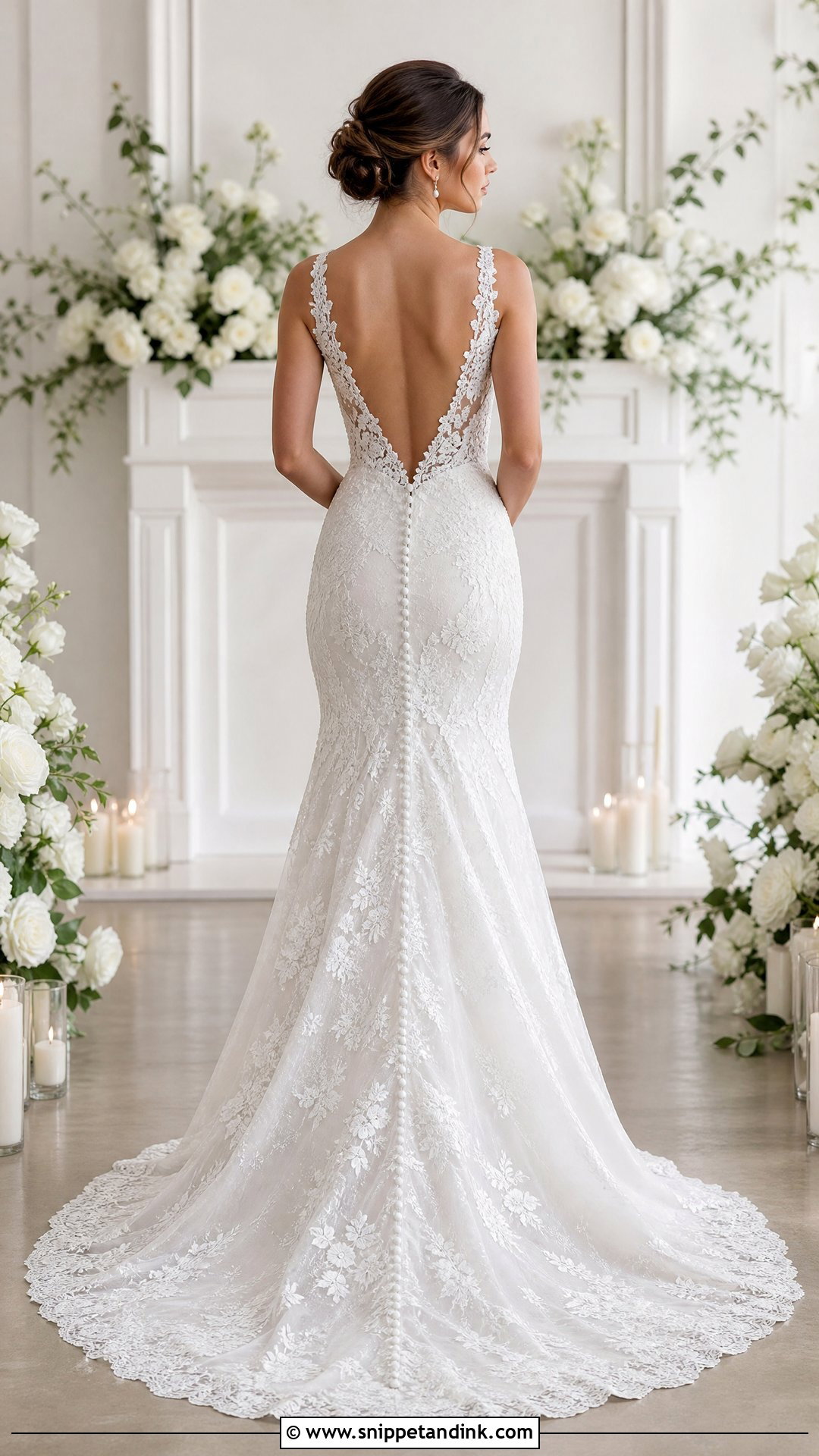
A V back draws the eye to the waist and makes the torso look longer, which is why it flatters such a wide range of figures. It can be shallow and modest or deep and dramatic, and it works with sleeveless styles, cap sleeves, long sleeves and fitted lace. Buttons down the center seam make it traditional; a clean V is minimal. It’s the shape I suggest most often to brides who want something open but aren’t ready for fully backless.
8. Square Back Wedding Dress
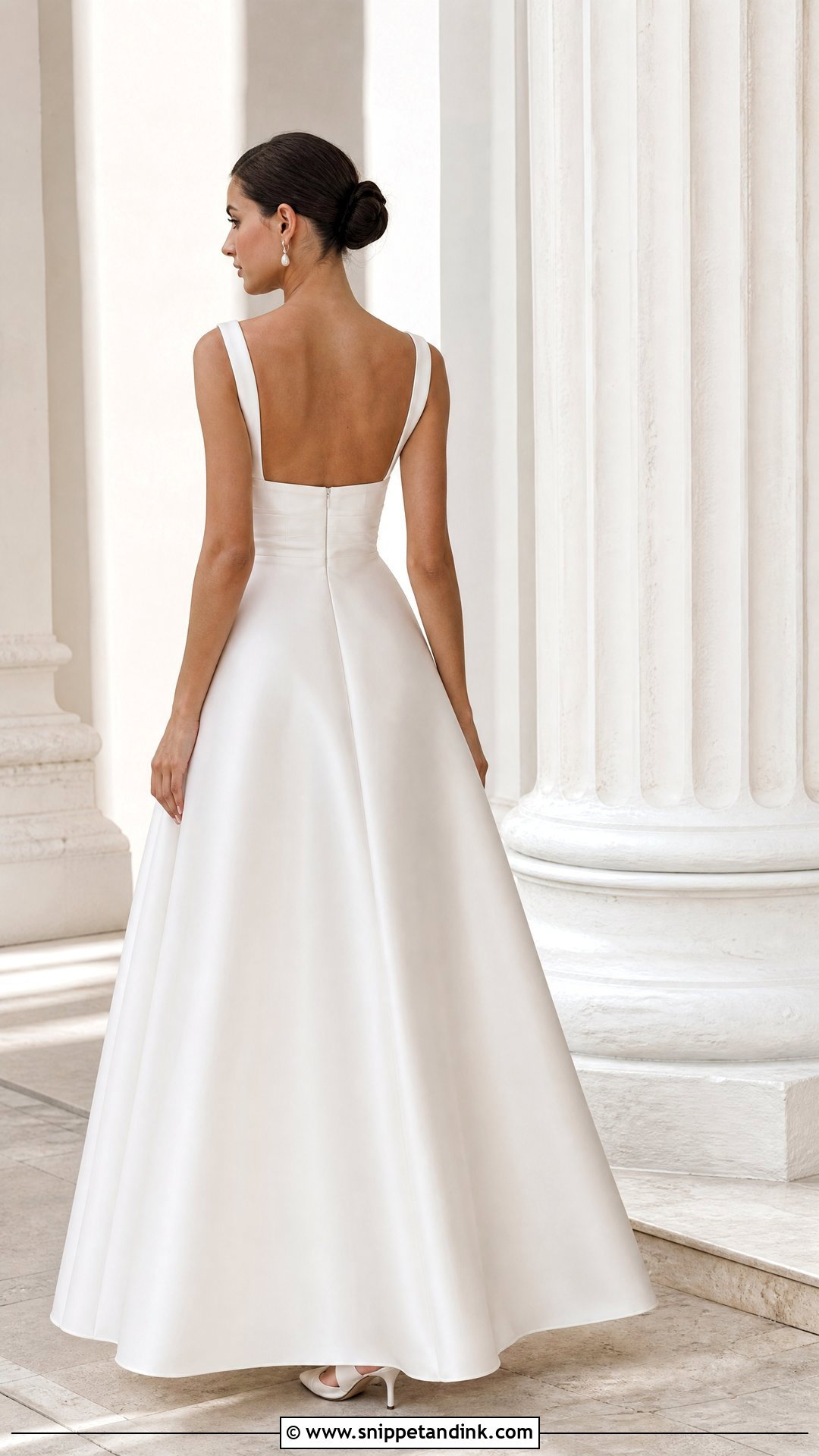
Straight lines across the shoulder blades give a square back its slightly architectural look. Because the cut is higher and the straps are wider, it supports better than a narrow plunging back and keeps a bra option open for many brides. It looks right with square necklines, structured satin and plain crepe. Pair it with a sleek skirt, simple jewelry and a smooth veil. Understated, yes, and it still finishes the gown properly.
9. Keyhole Back Wedding Dress
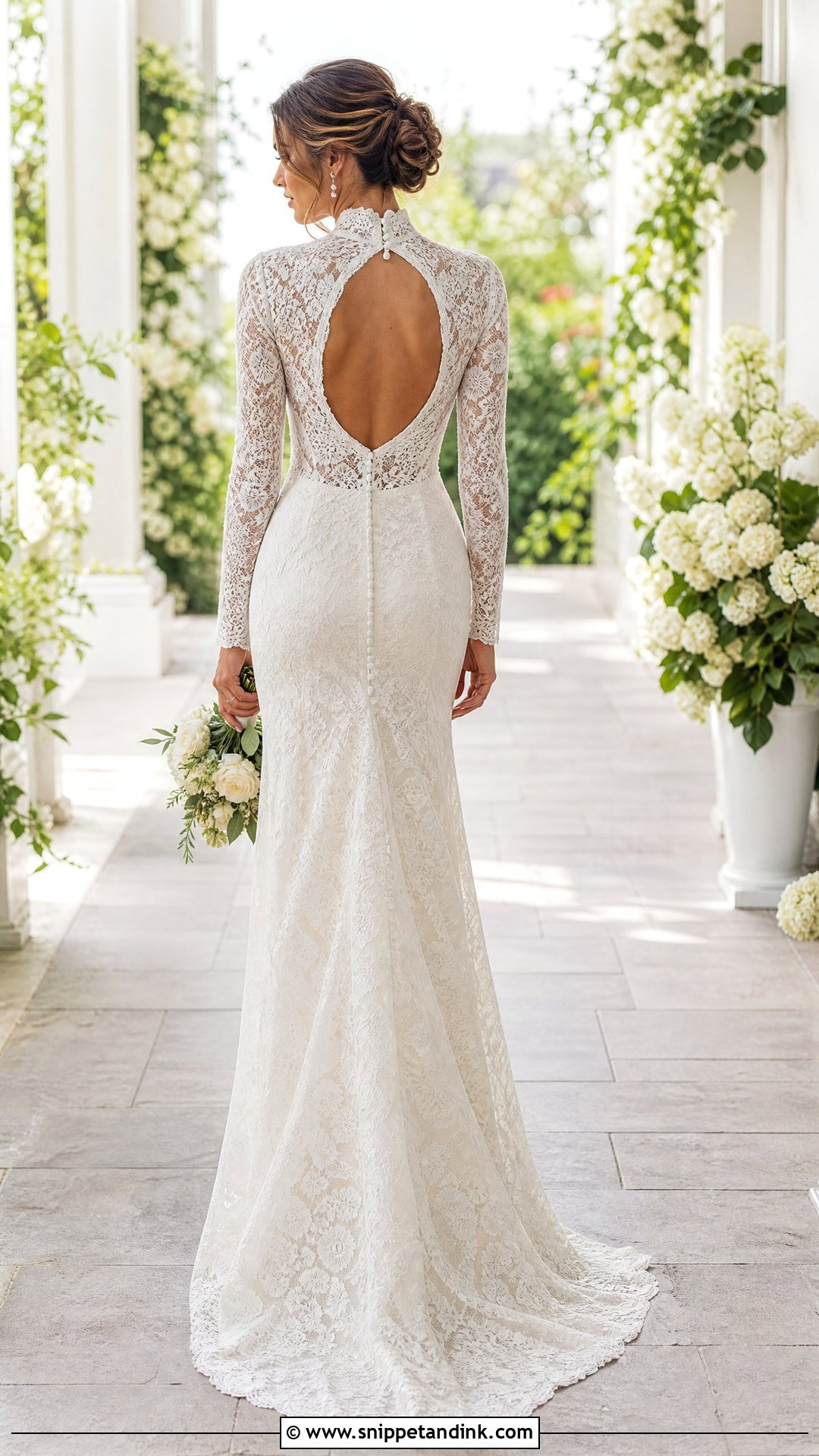
A keyhole back wedding dress gives a small reveal while keeping most of the bodice covered, so it’s a good fit for religious ceremonies where shoulders and back should be modest. The opening can be round, oval, teardrop or elongated, and it often shows off buttons, scalloped lace edges or a little bow at the nape. High necks, lace bodices, long sleeves and illusion panels are its natural partners. Check the button or hook at the top of the keyhole, as that one closure takes a lot of strain.
10. Bow Back Wedding Dress
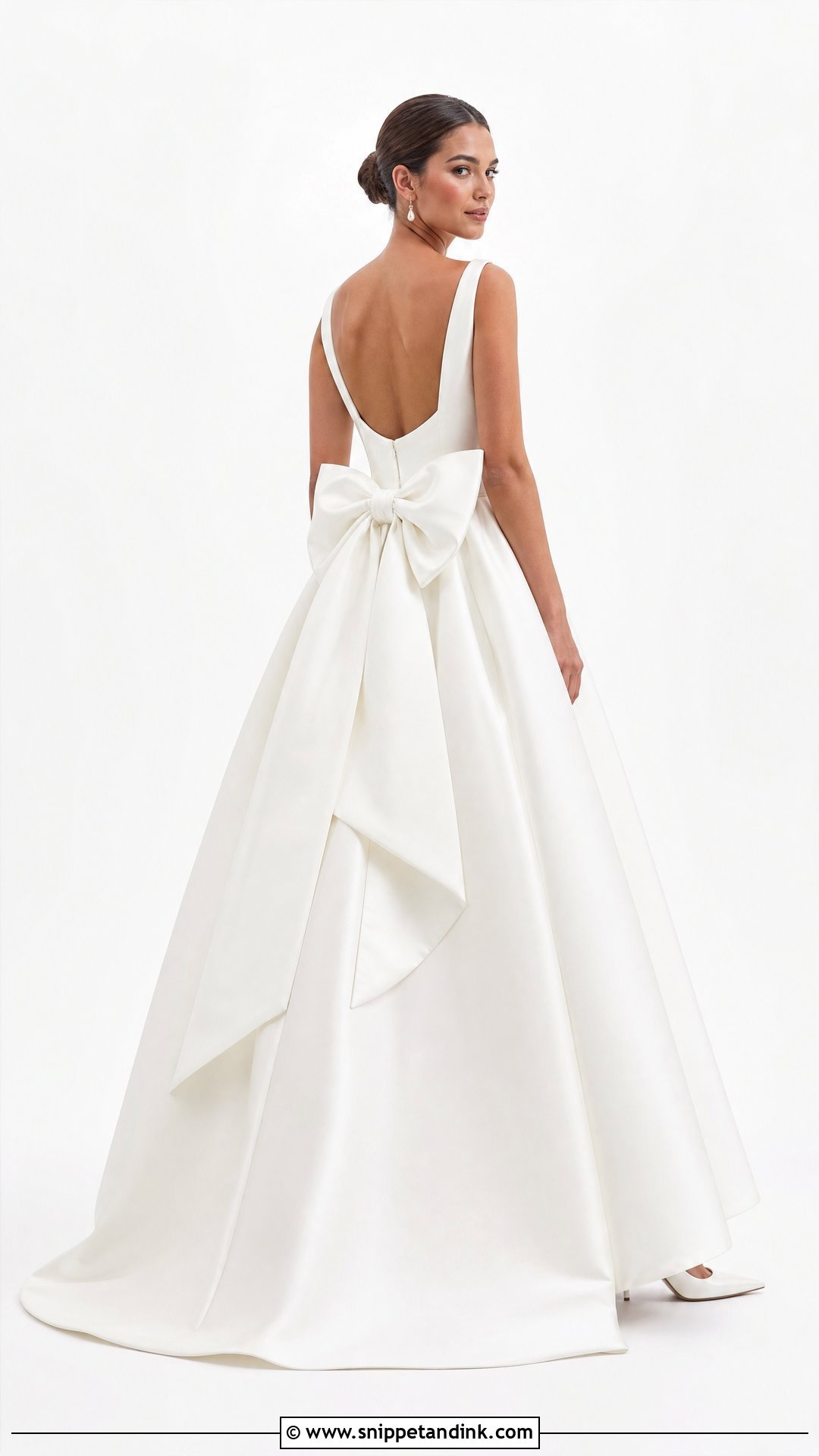
Bows need fabric with body. Mikado, structured satin, organza and taffeta hold a bow’s shape all day; soft crepe or chiffon bows flatten after an hour of sitting. A small bow at the waist is sweet and classic, a large sculptural one is couture, and a trailing bow with long tails blends into the skirt. For a modern take I’d pick a plain gown with one bow and nothing else on it. Ask how the bow attaches, since a removable one gives you a cleaner reception look.
11. Cowl Back Wedding Dress
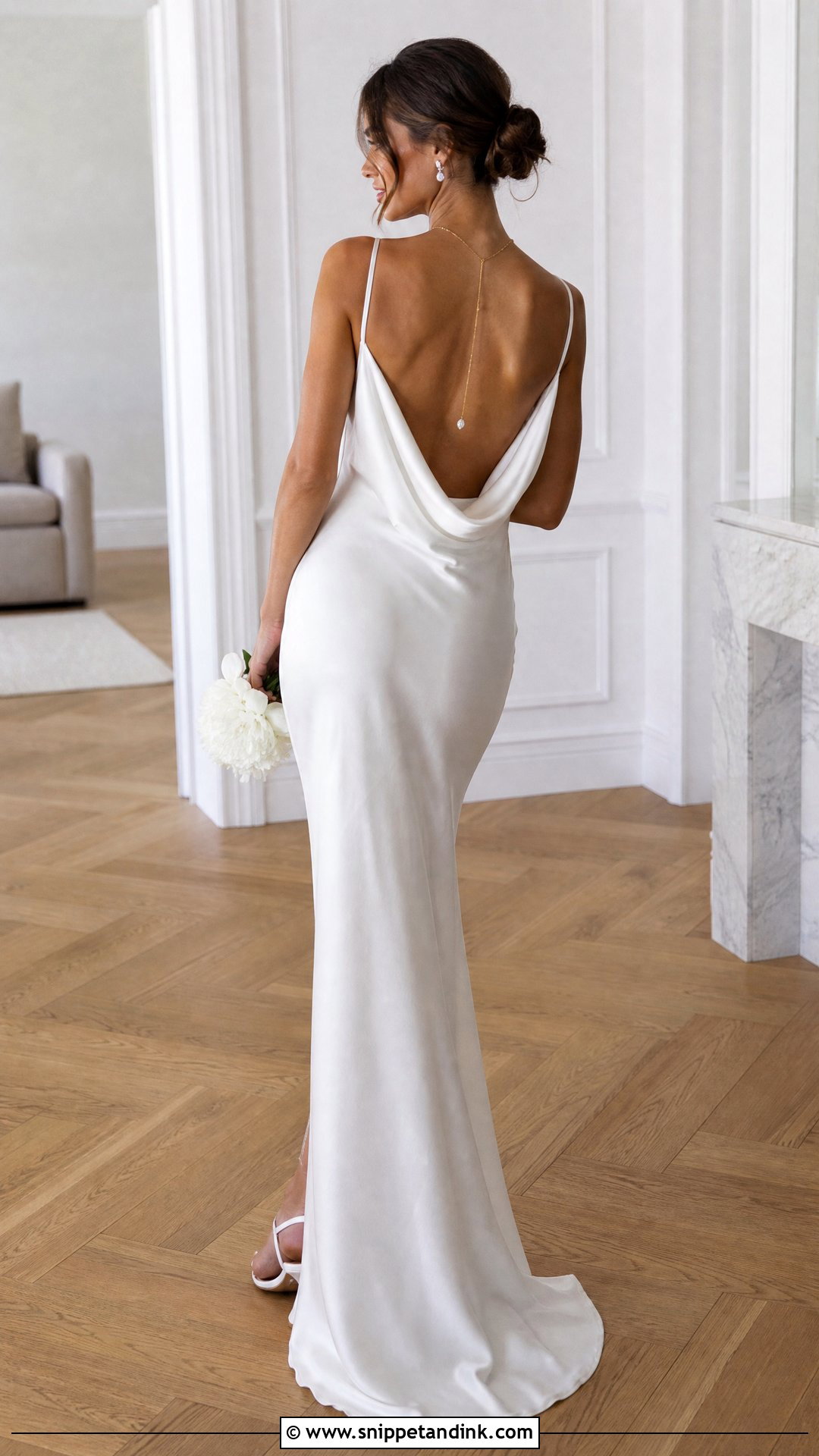
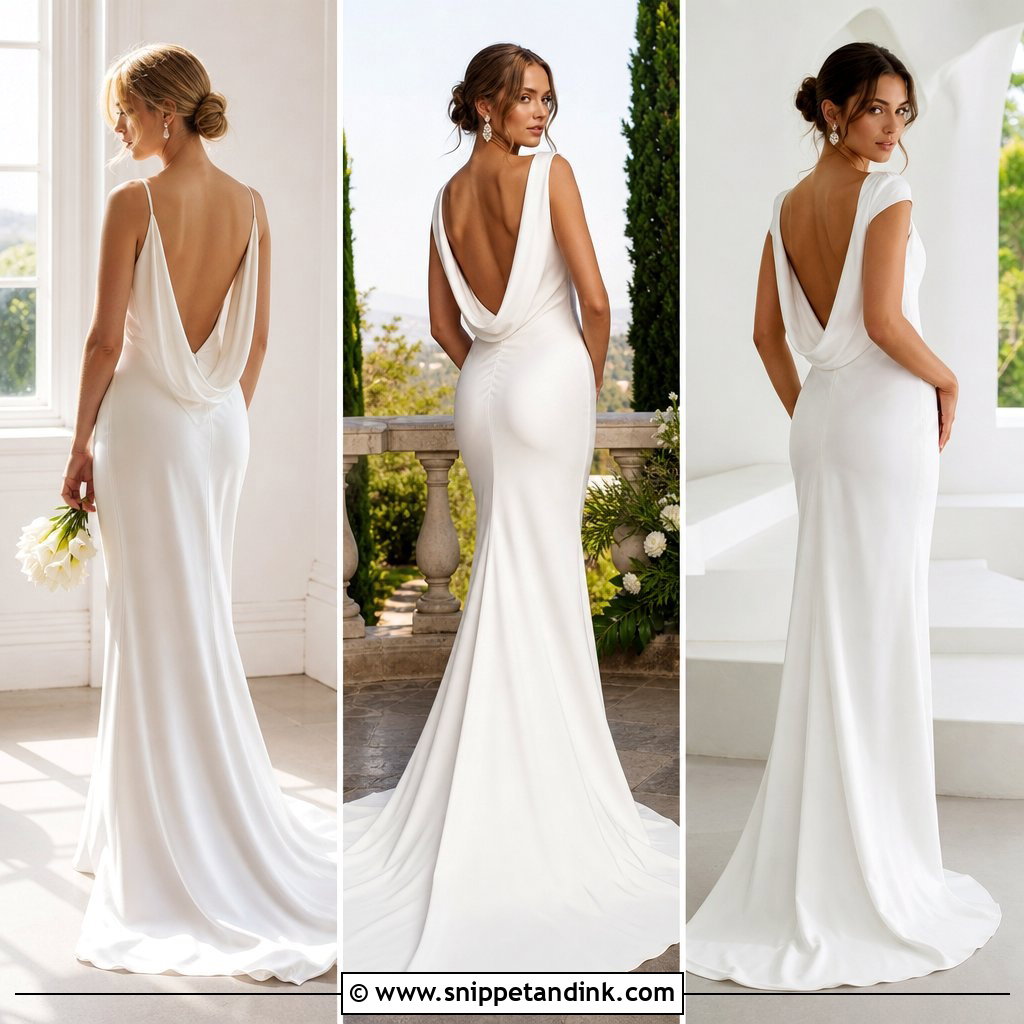
A cowl back is one loose curve of fabric falling across the back, and it only works in fabrics light enough to drape: silk satin, charmeuse, soft crepe. You’ll find it on slip dresses and bias-cut gowns. I warn brides that a cowl moves as you move, so it can open wider than expected when you bend; try a few reaches and hugs in the mirror. A fine back necklace with a low bun or swept-up hair is all the styling it needs.
12. Draped Back Wedding Dress
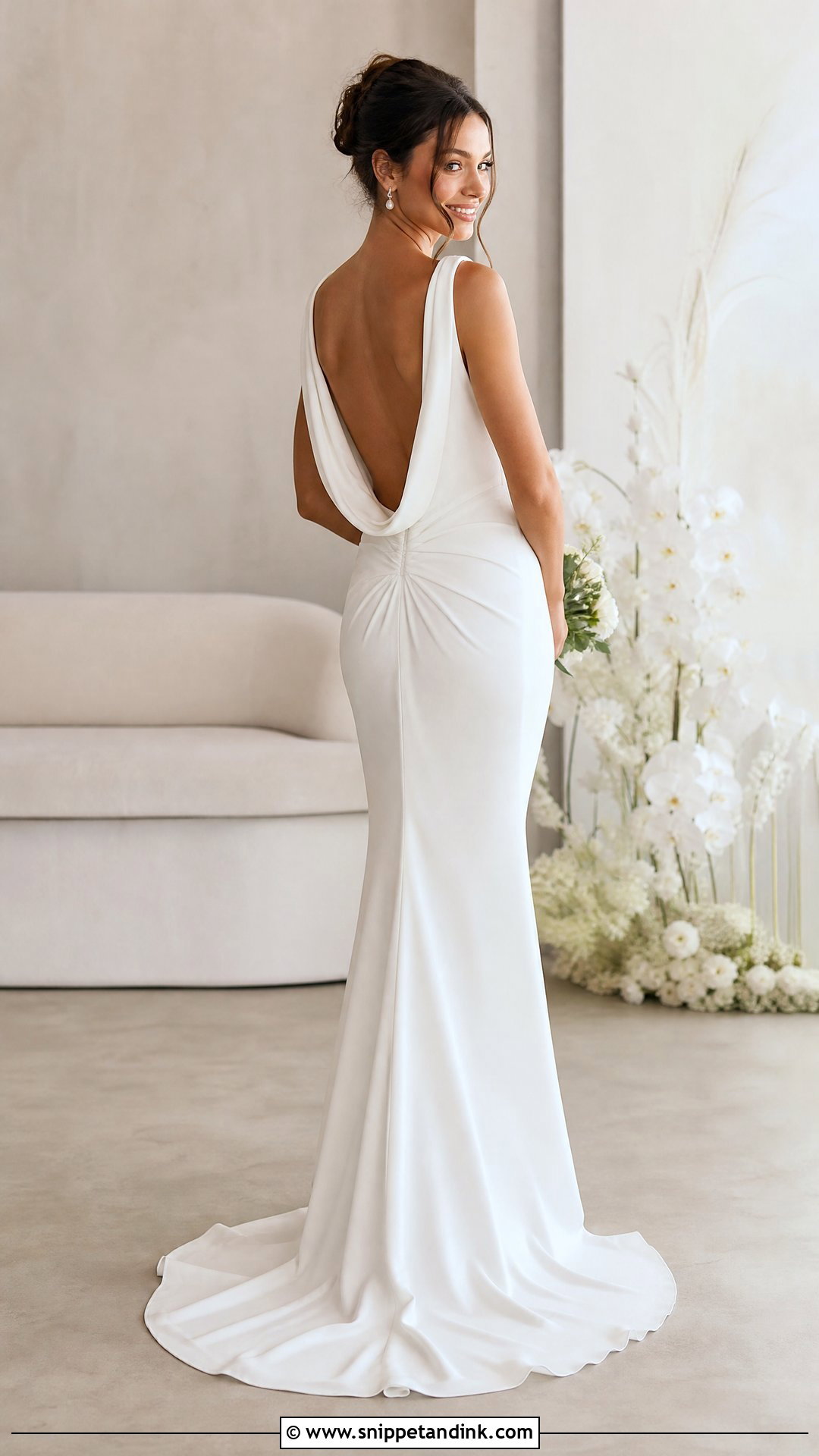
Where a cowl is a single fold, a draped back wedding dress can carry gathers, asymmetric folds or layered panels. It adds movement without sparkle and suits Grecian styles, modern satin and romantic A-lines, and it softens a structured front nicely. In the fitting room I have brides stand, walk and sit, because draping that looks perfect standing can bunch at the waist when seated. Simple earrings and an understated veil keep it balanced.
13. Sheer Back Wedding Dress
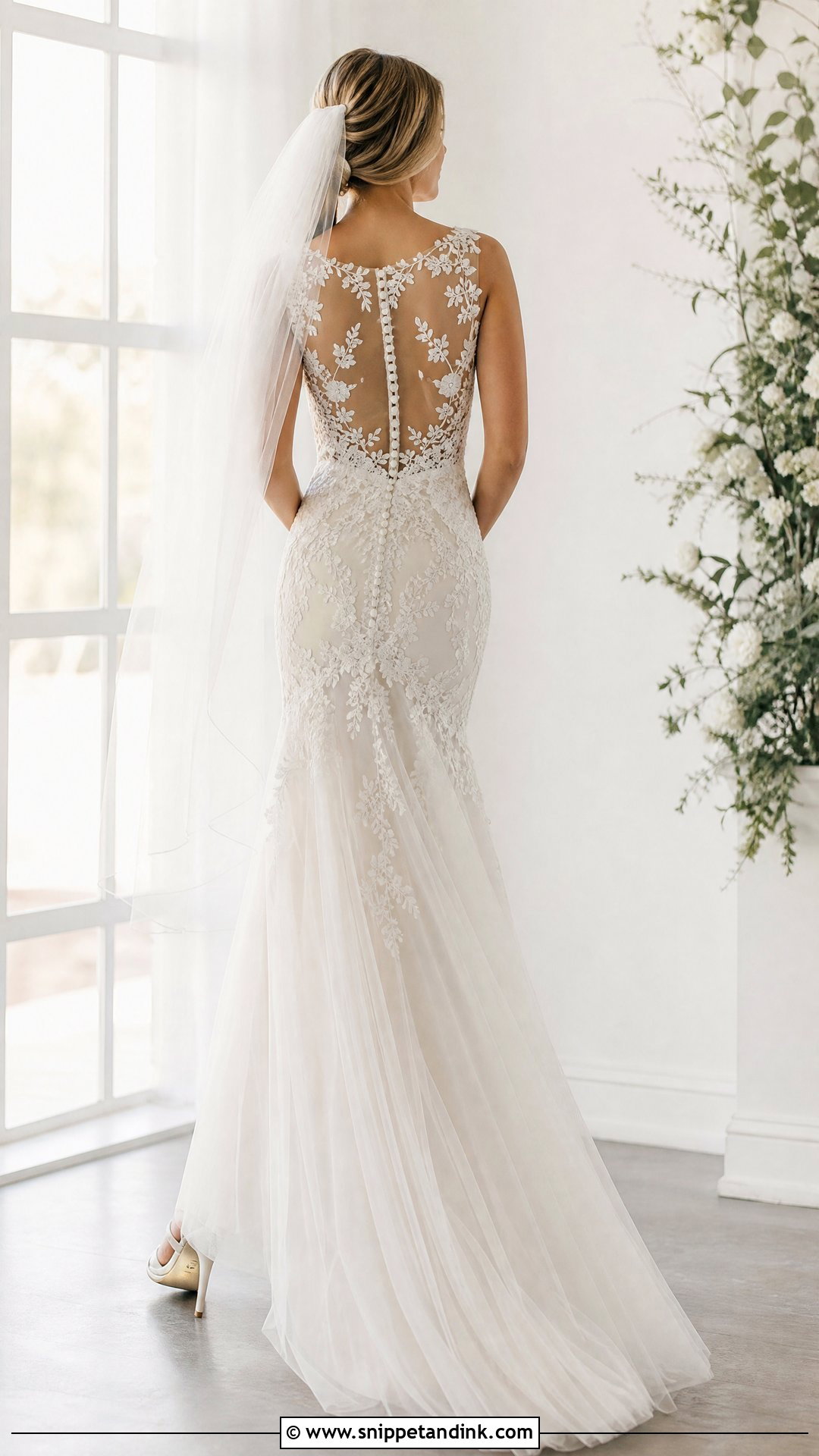
Sheer backs use fine tulle or mesh as a barely-there panel, often dotted with lace, pearls, crystals or embroidery. They give the look of an open back with much more stability, especially with sleeves or a fitted bodice. Quality matters here: cheaper mesh can look shiny and grey under a flash. Pick the shade that disappears against your skin. Close-up portraits pick up the texture well.
14. Pearl Back Wedding Dress
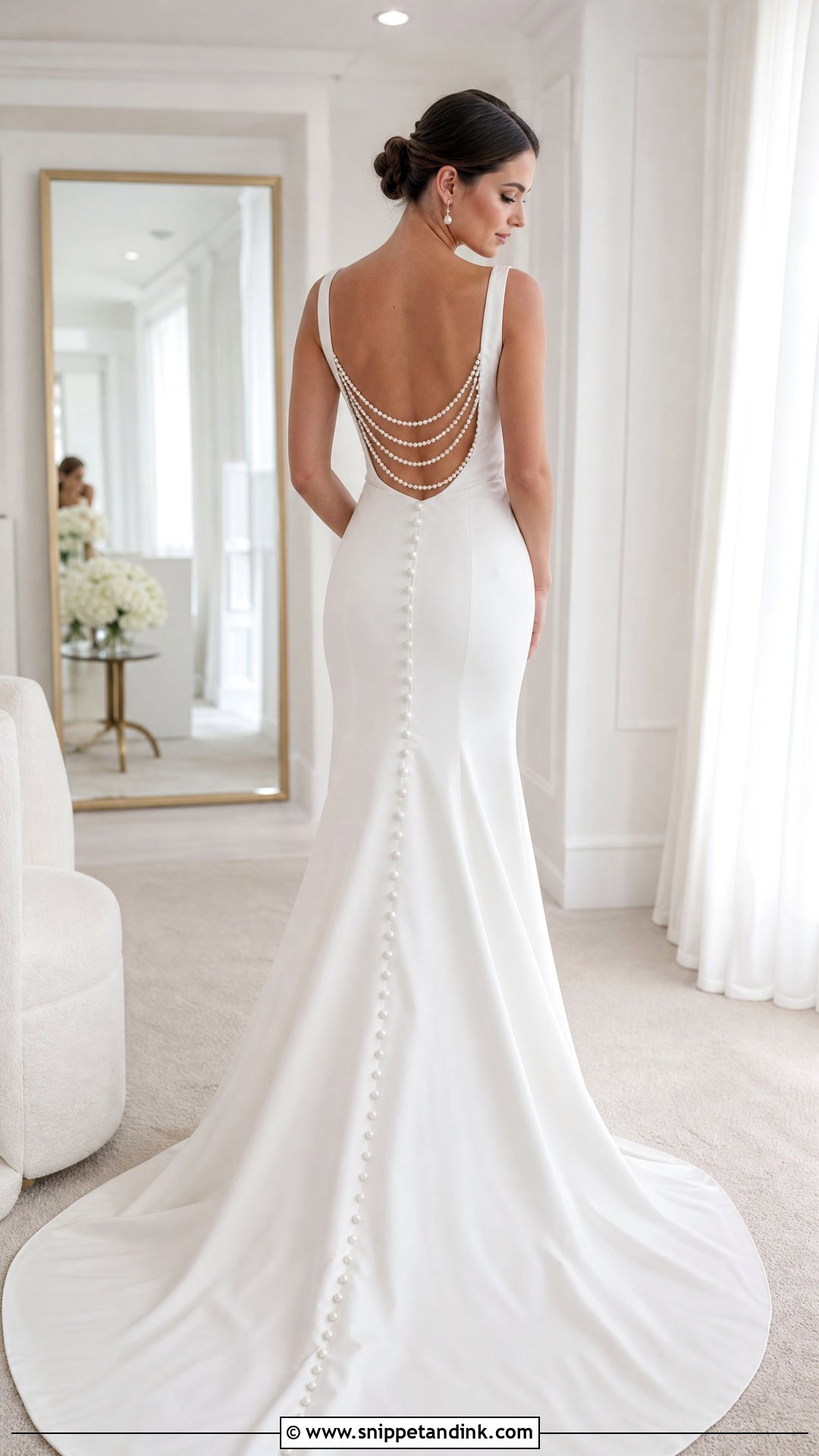
Pearls on the back can be buttons, scattered beads, beaded straps or trim along an open edge. Small pearls with space between them read refined; pearl strands swagged across an open back or a long row of pearl buttons down the train go dramatic. They sit well on satin, crepe, tulle and lace. Because pearls are softer than crystals, I’d keep the rest of the jewelry to one pair of pearl earrings or a single bracelet.

15. Beaded Back Wedding Dress
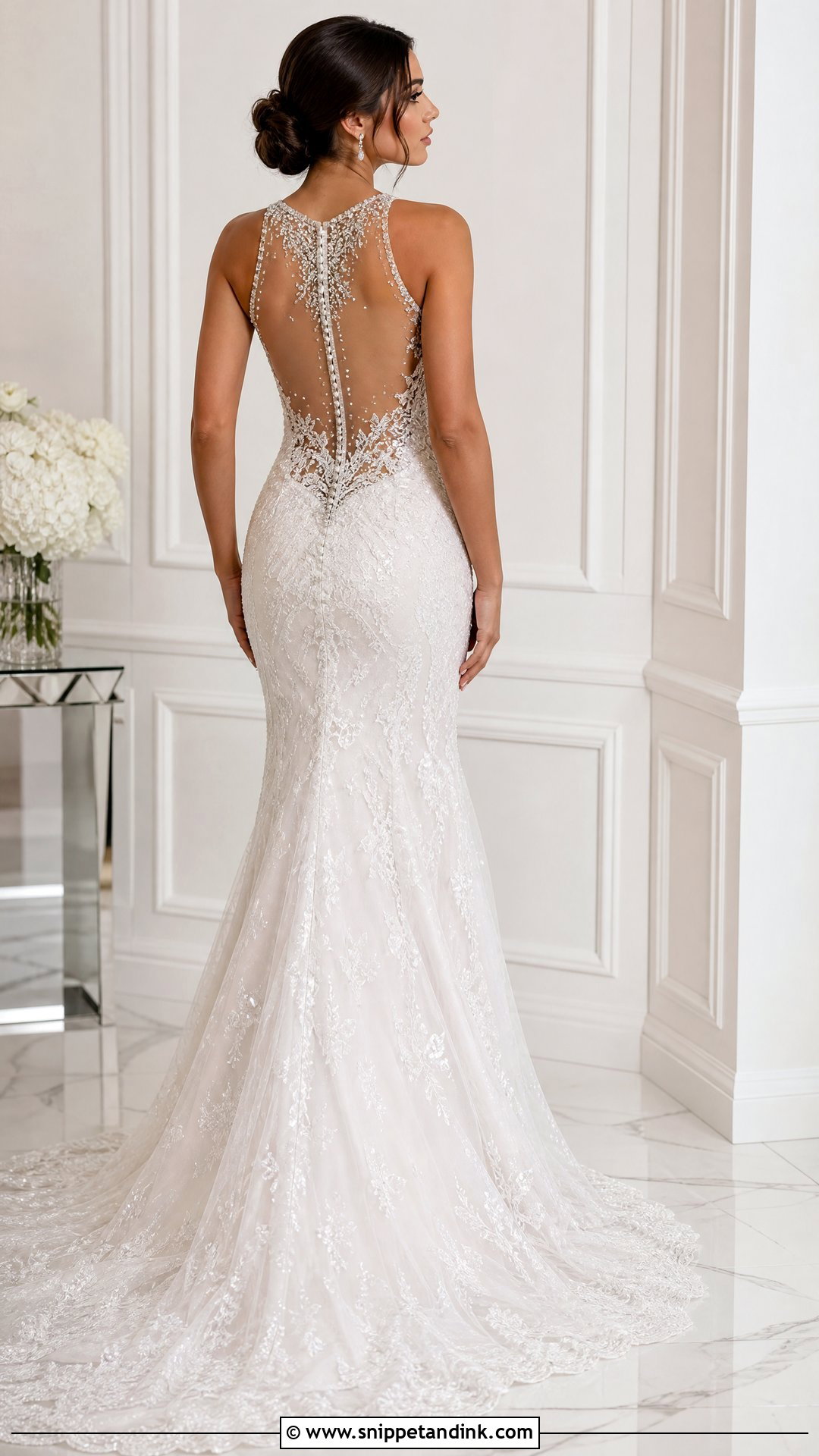
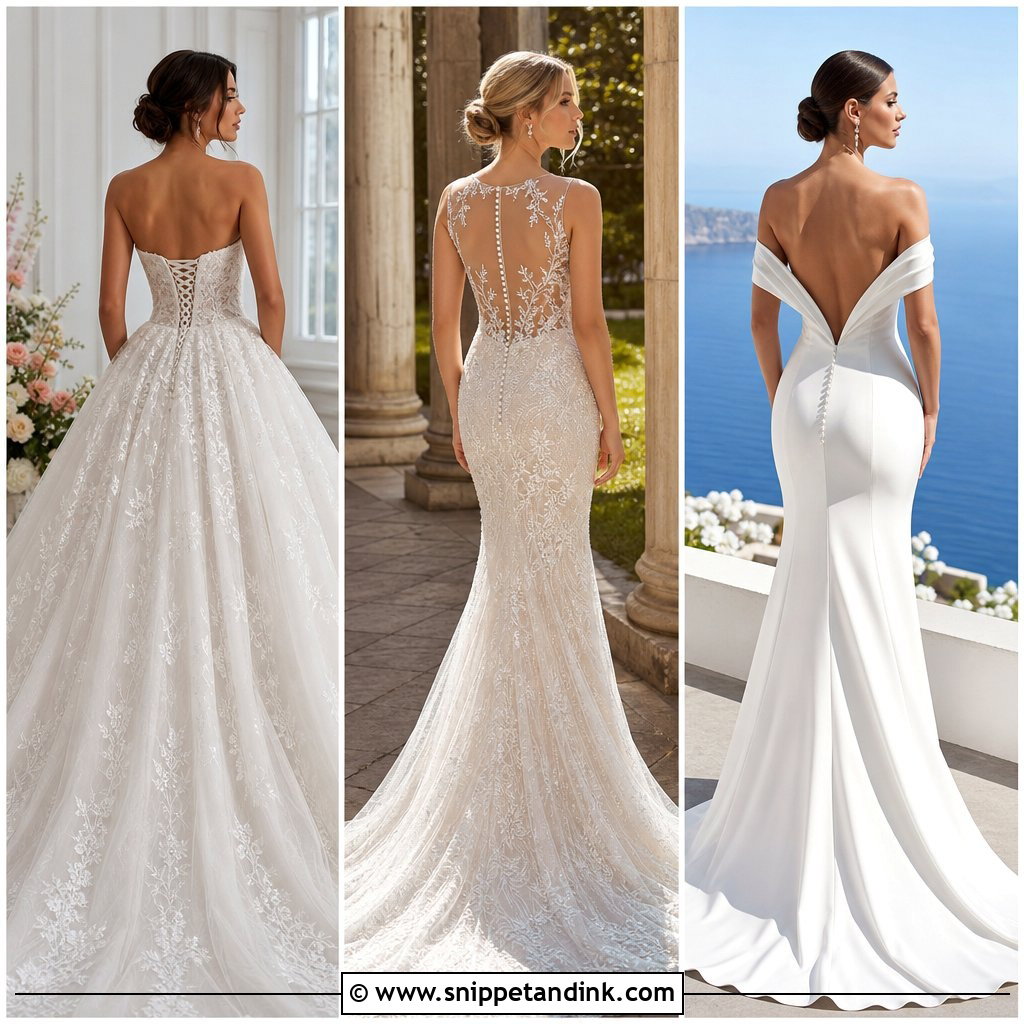
Heavy beadwork on the back is beautiful and it has weight. When I fit a beaded gown, I check how the beading feels against the skin when the bride sits back in a chair, since bare beads on illusion tulle can press into the shoulder blades through a long dinner. Good lining fixes that. Beading usually sits on illusion panels, lace appliqués, sheer sleeves and fitted bodices, and it suits evening weddings and formal rooms. Keep the hair simple so the work shows.
16. Off Shoulder Back Wedding Dress
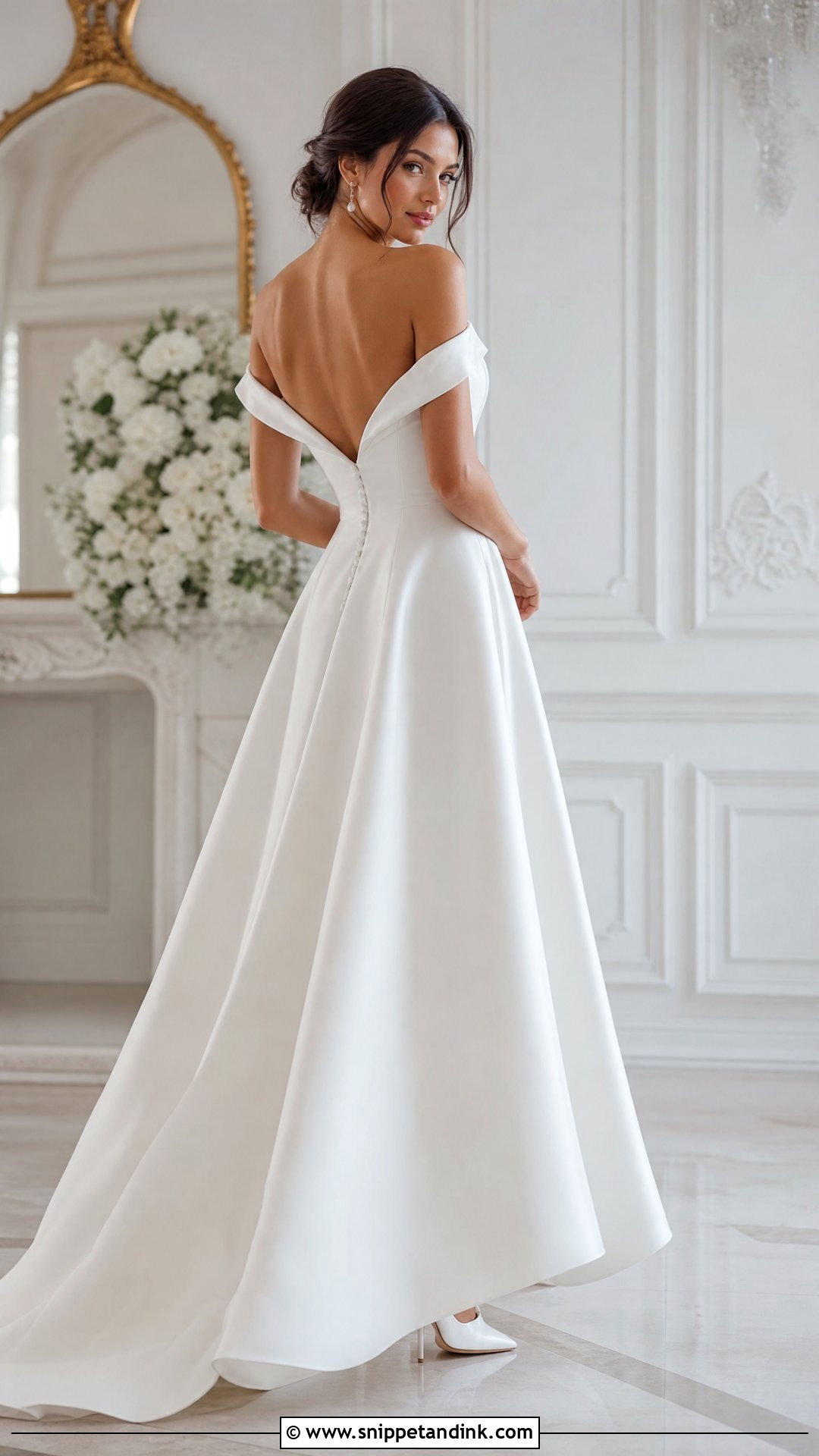
The off shoulder line wraps the arms and runs as one soft horizontal from front to back, framing the collarbone, shoulders and upper back. It gives coverage through the bodice while still feeling open, on fitted gowns, ball gowns and lace A-lines. The trade-off is arm movement: a tight off shoulder band makes raising your arms to hug or dance difficult, so test that before you commit. A structured bodice holds everything in place. Wear an updo or tuck waves behind the shoulders.
17. Long Sleeve Open Back Wedding Dress
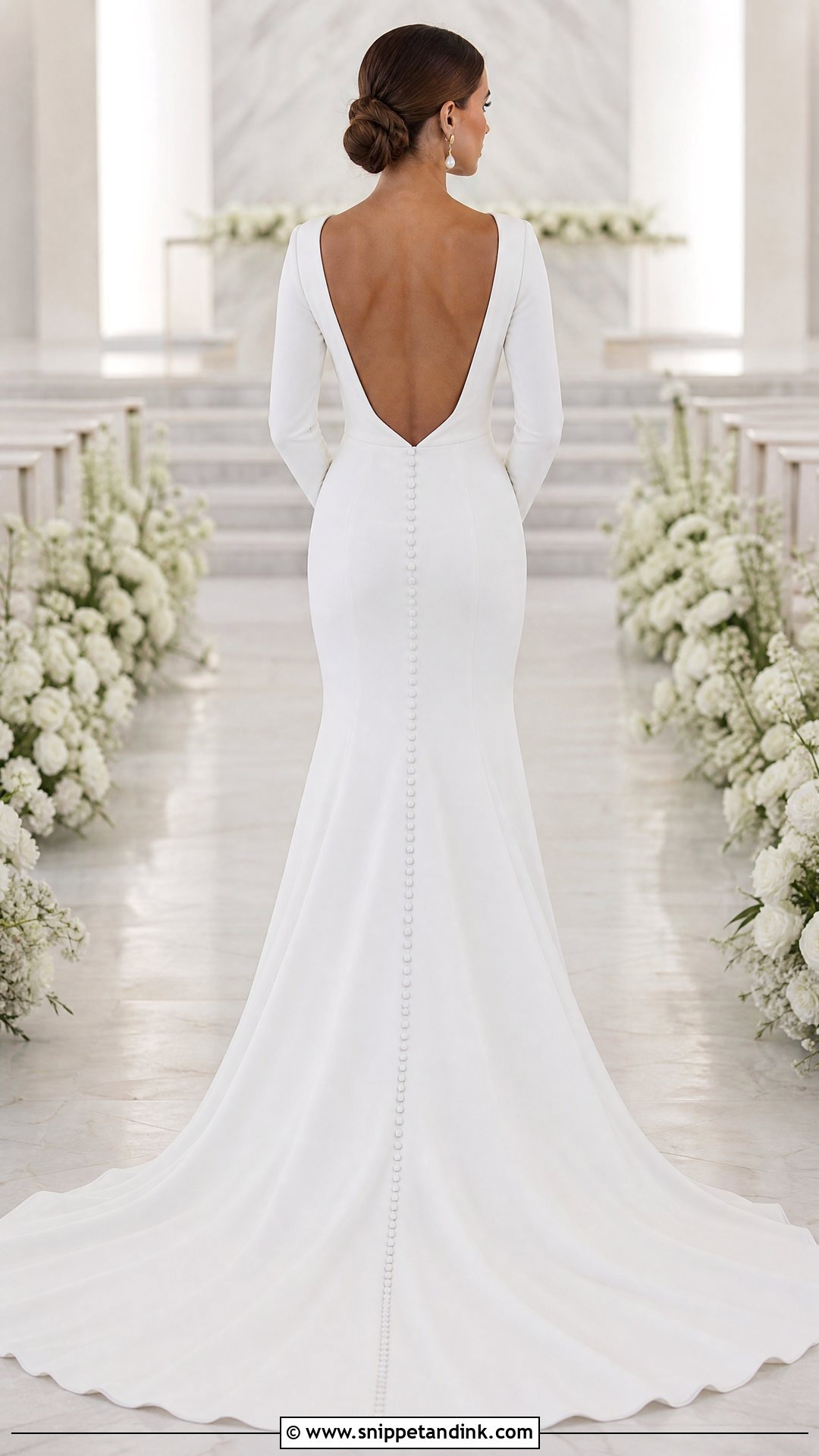
Long sleeves with an open back give coverage and reveal in one gown, and I see brides choose it most for autumn and winter ceremonies or formal church venues. A deep V with long sleeves is sleek; a rounded opening is softer. Lace, crepe, satin and illusion fabric all work. Balance the detail: if the sleeves are lace or beaded, keep the back edge clean. Make sure the sleeve allows you to lift your arm to shoulder height, or the back will pull open when you do.
18. High Neck Open Back Wedding Dress
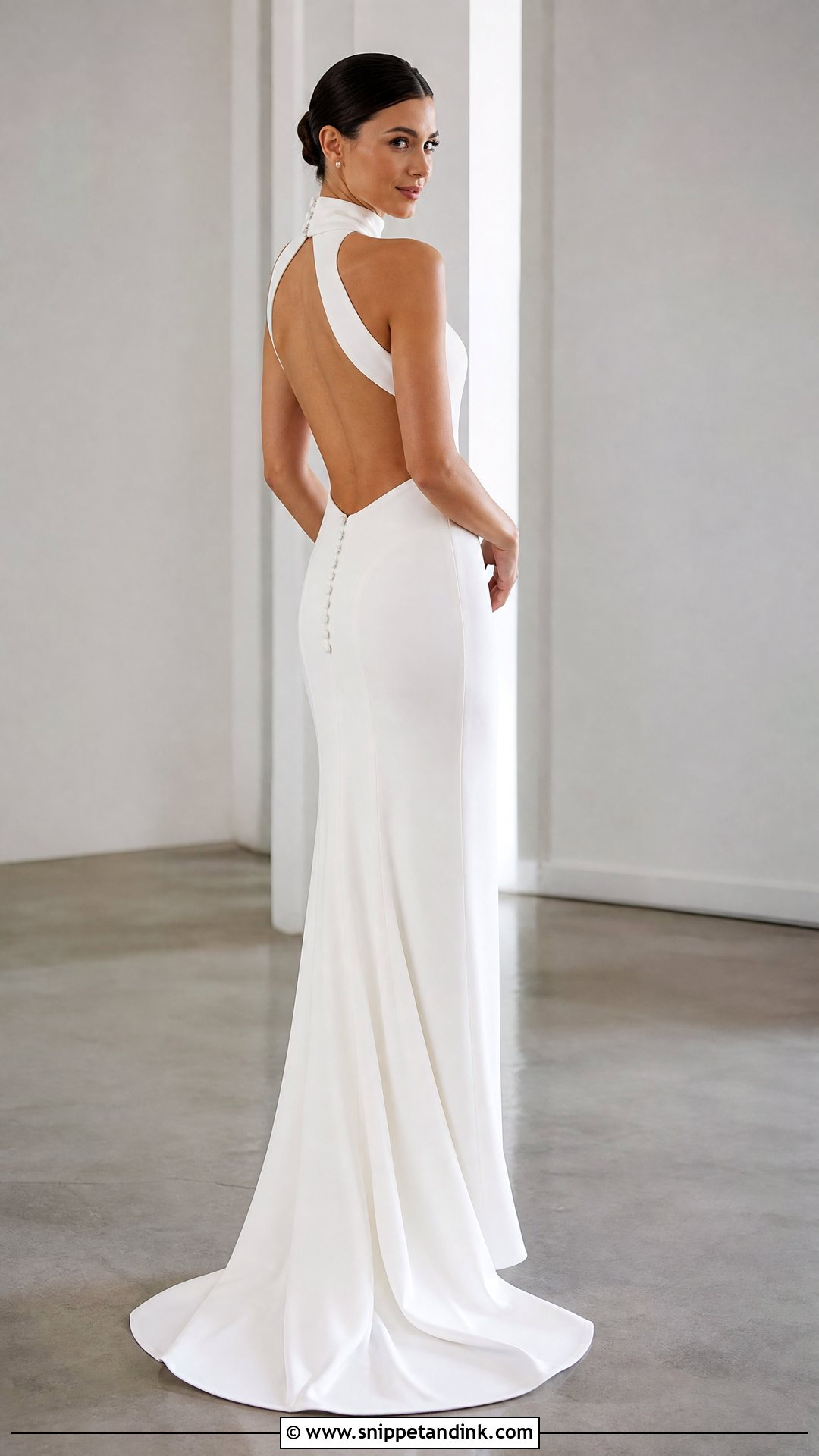
From the front, a high neck reads covered and sophisticated; turn around and the back opens up below the neck closure. That contrast is the whole appeal. The opening can be teardrop, keyhole or fully open, on sleek crepe, lace bodices or modern columns. The neck closure carries the weight of the bodice, so I always check it doesn’t dig in after the bride has worn it for twenty minutes. Hair up, simple earrings.
19. Halter Back Wedding Dress
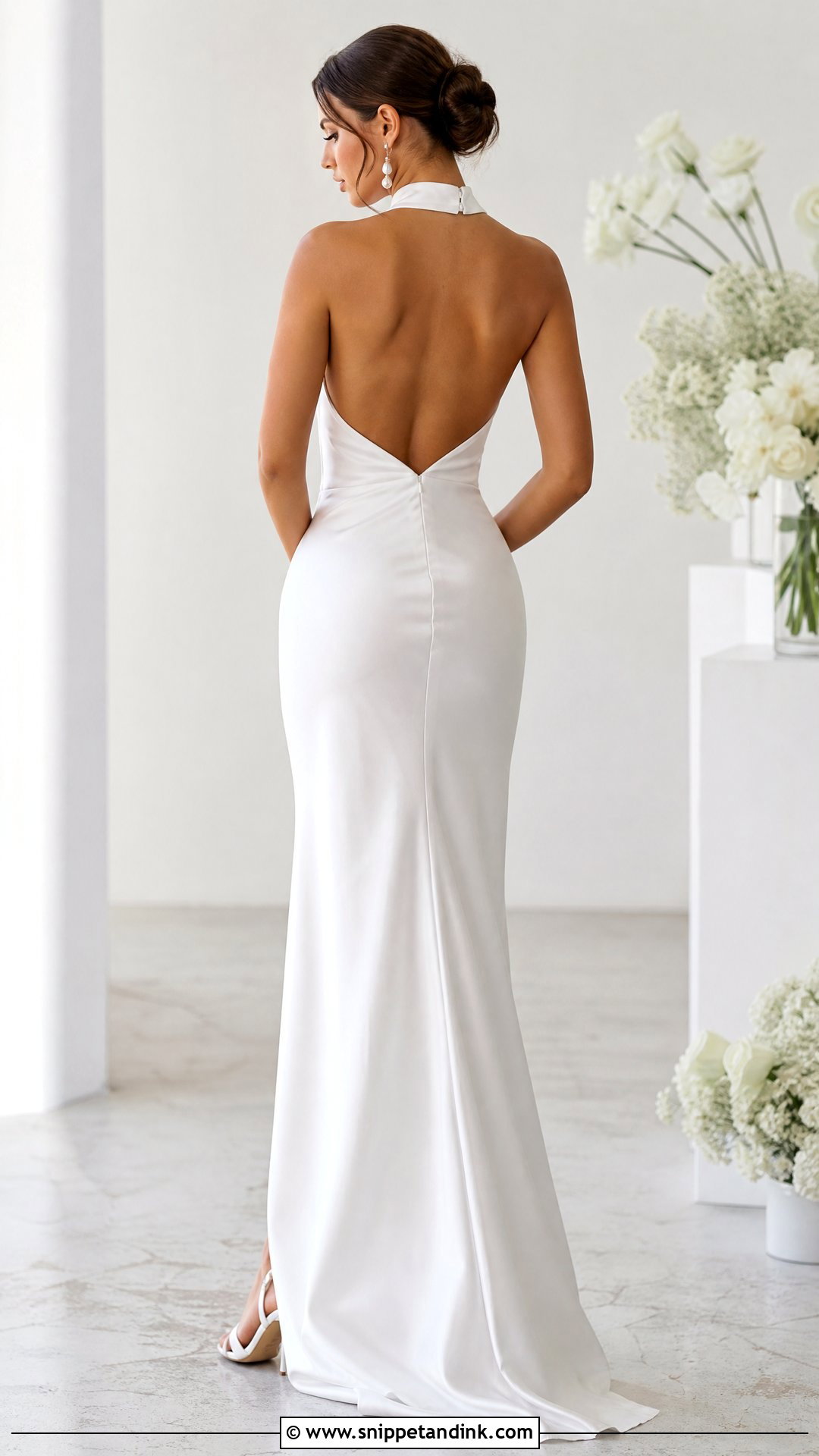
Halters show off the shoulders and give an athletic, clean shape, and the straps around the neck provide more security than strapless. They look best on sheath gowns, fit-and-flare dresses and modern satin. Lace or chiffon softens it; crepe or satin sharpens it. A sleek bun, drop earrings and a plain veil suit it. One honest caution: a heavy skirt hanging from a halter can pull on the neck over a long day, so I prefer this back on lighter gowns.
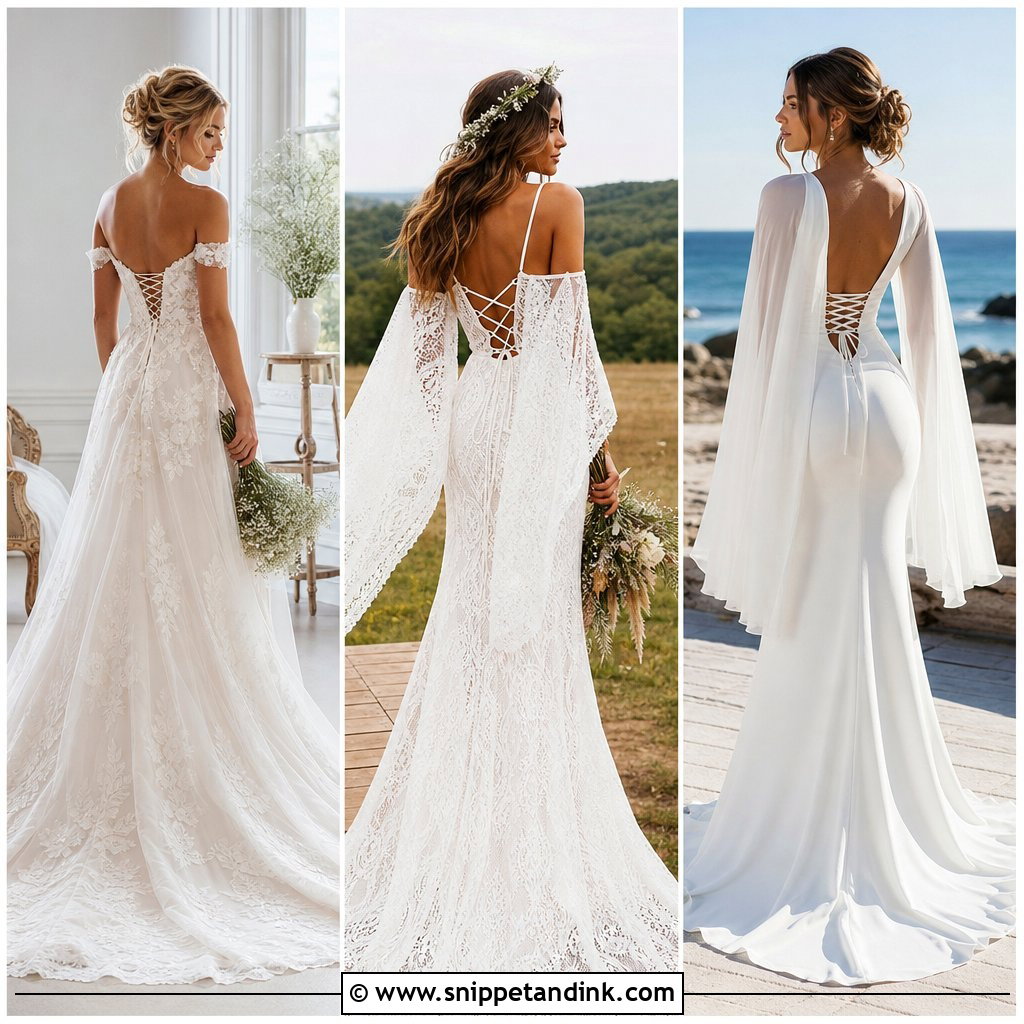
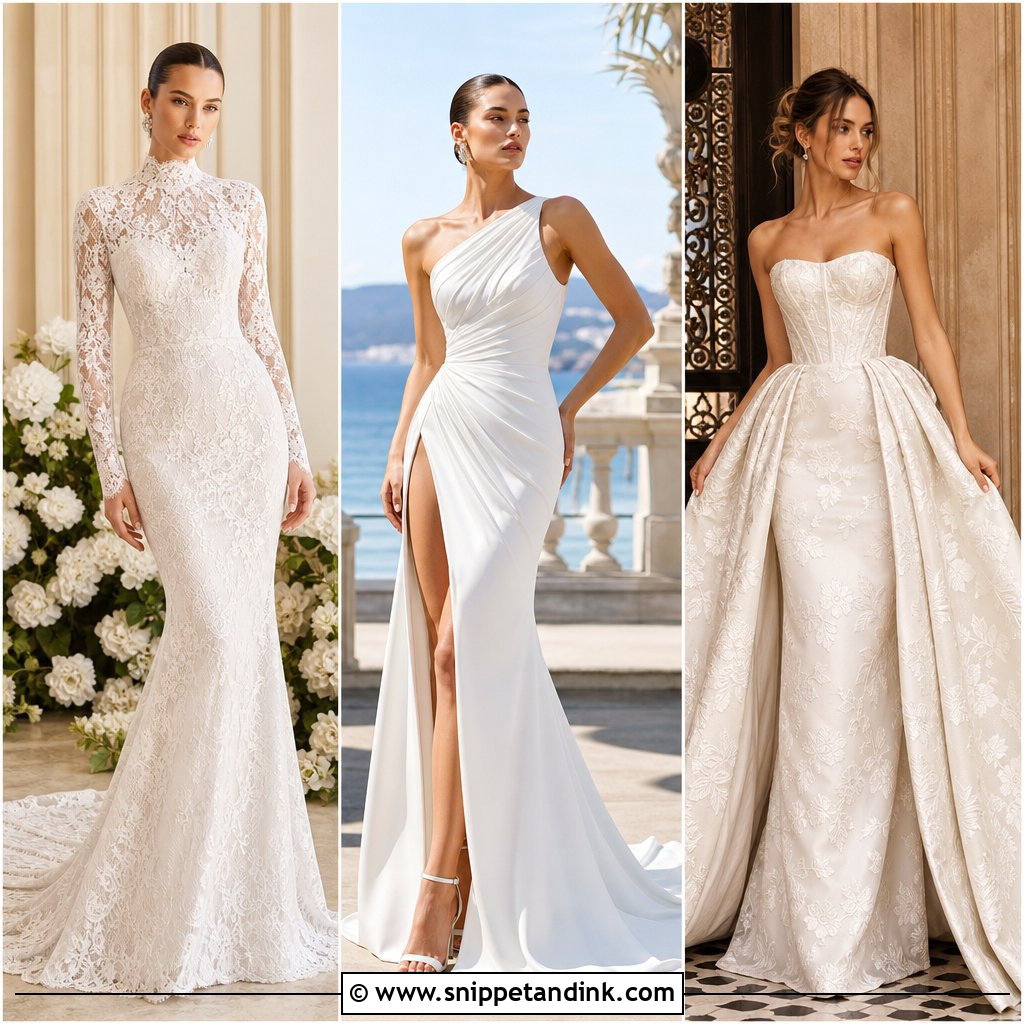
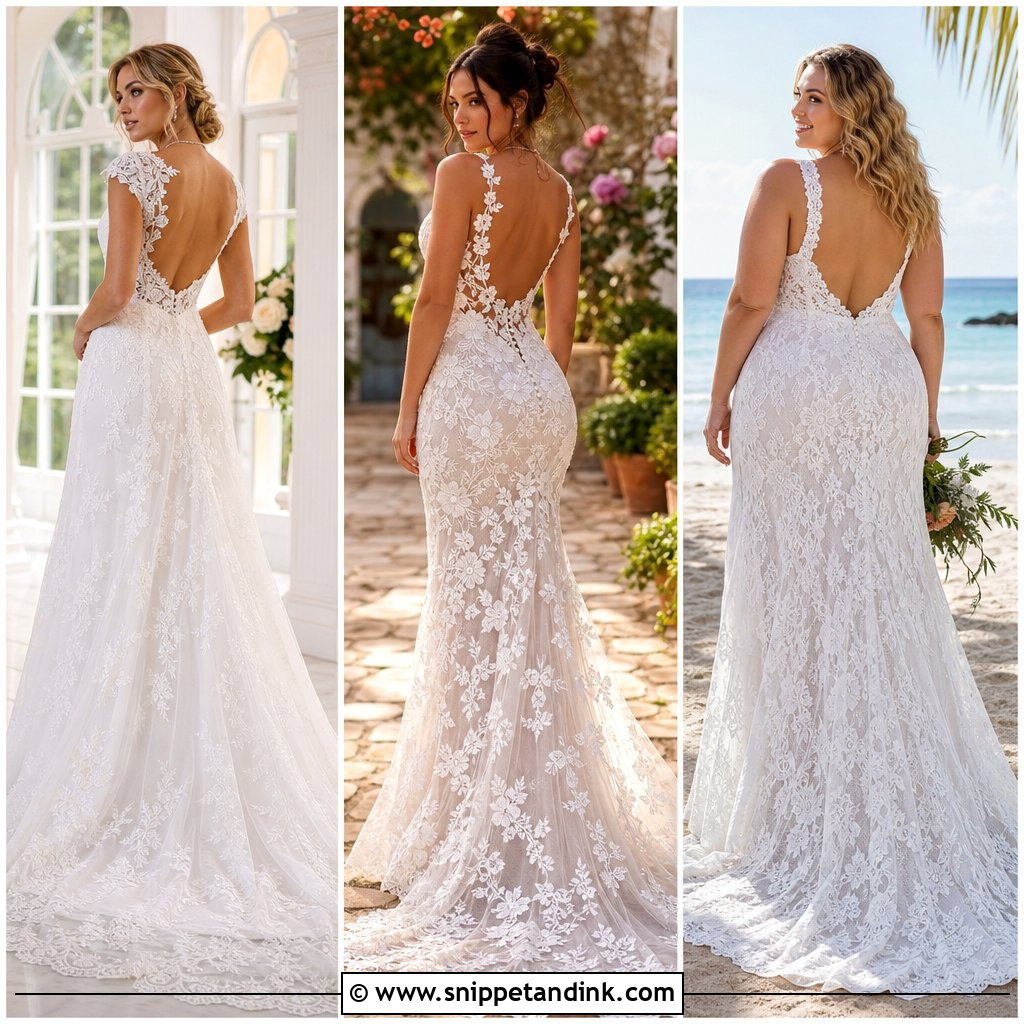


20. Cutout Back Wedding Dress
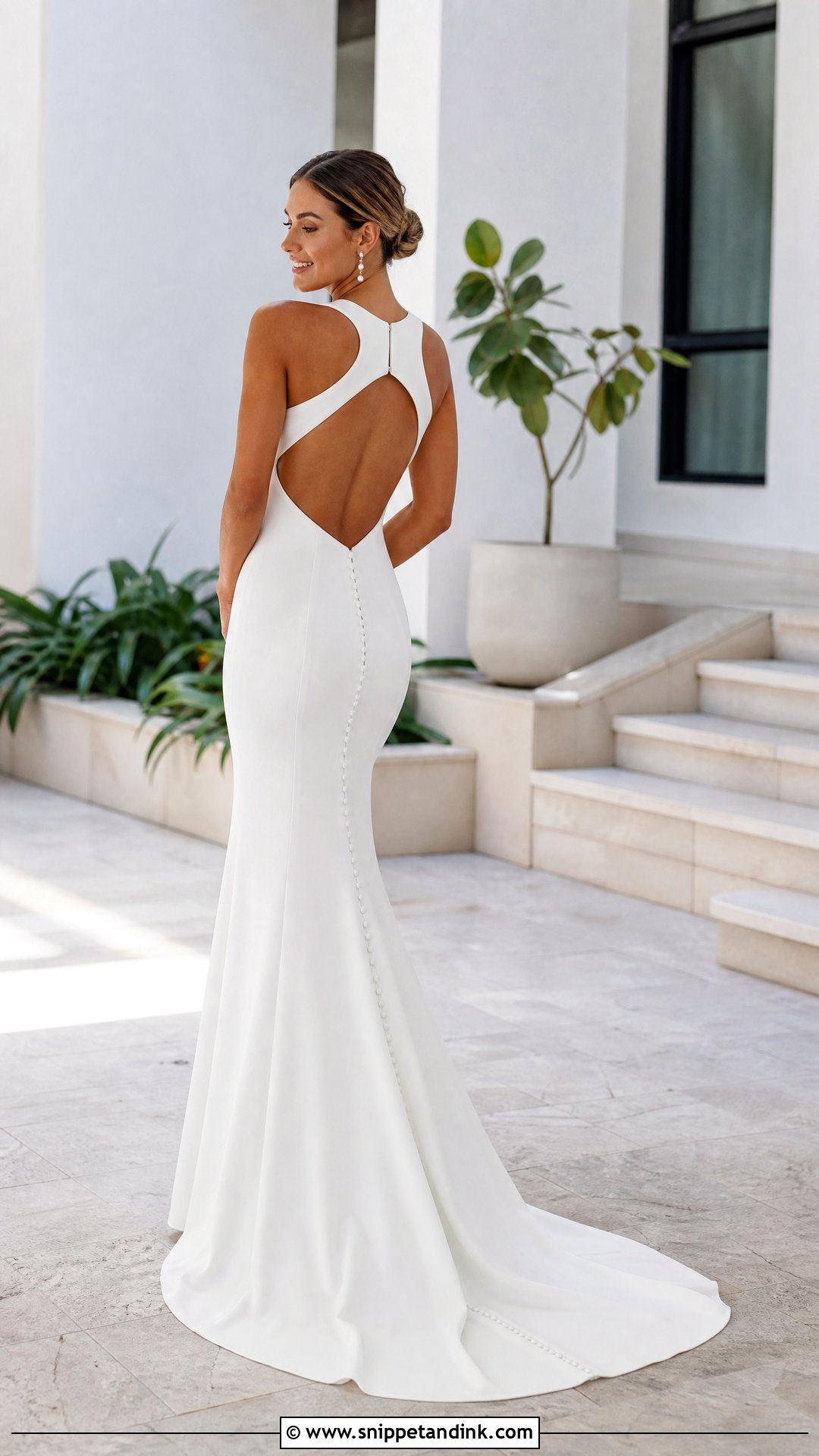
Cutouts at the waist, shoulder blades, sides or center back are modern without opening the whole back. Curved openings look softer and more bridal than sharp geometric ones. Fit is everything here, because a cutout that’s half an inch out of place shows skin bulging at the edge. I have brides hug, sit and dance in fittings to check how the edges behave. Done well, on minimalist crepe or contemporary satin, it’s fresh and still formal.
21. Scalloped Lace Back Wedding Dress
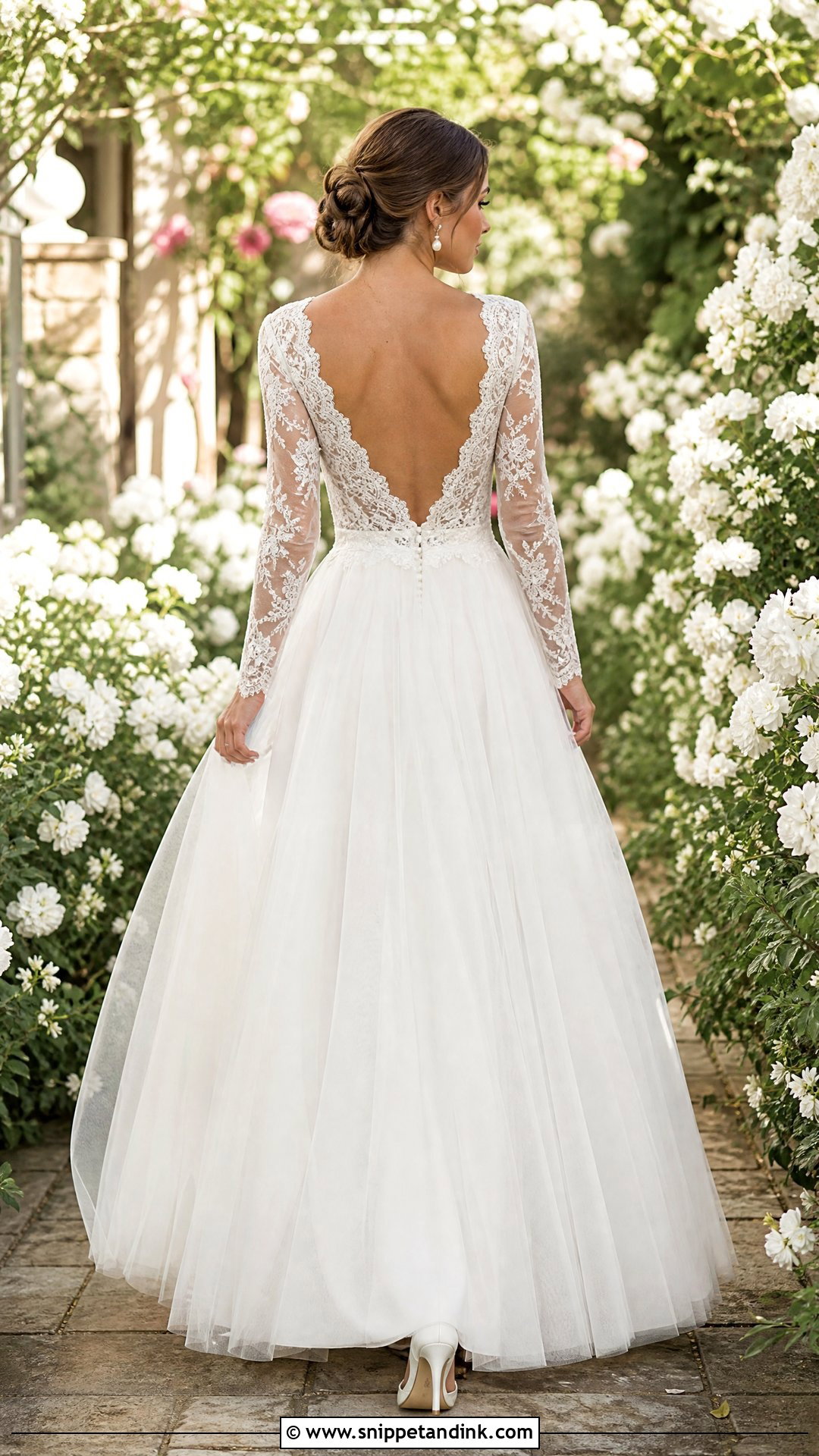
A scalloped lace back wedding dress uses the decorative curved edge of the lace to frame a V back, open back, illusion panel or sleeve. That edge shows clearly against skin or lining, which is why it reads so well in photos. It fits vintage-inspired, garden and classic gowns. If the lace is busy, I’d pick a veil with plain edges so two scalloped borders aren’t fighting at the same spot.
22. Backless Slip Wedding Dress
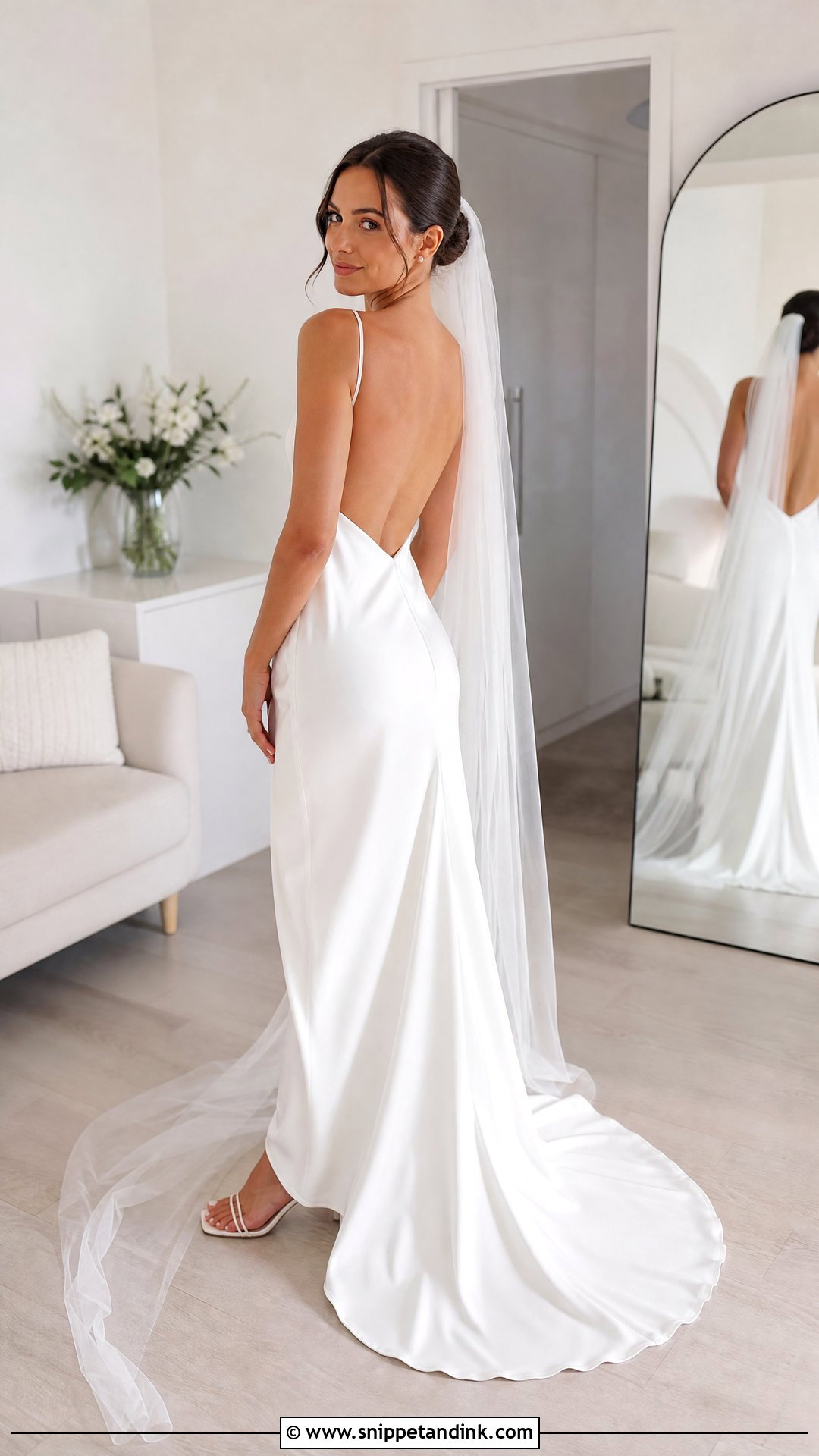
A backless slip wedding dress in lightweight satin or silk, with thin straps and a clean front, depends entirely on fit and fabric. It should skim the body without pulling across the hips, and silk shows every line underneath, so plan your underwear before the first fitting. A long veil, delicate earrings and minimal heels complete it. For a church ceremony, add a sheer wrap or removable cape and take it off for the reception.
23. Ball Gown Button Back Wedding Dress
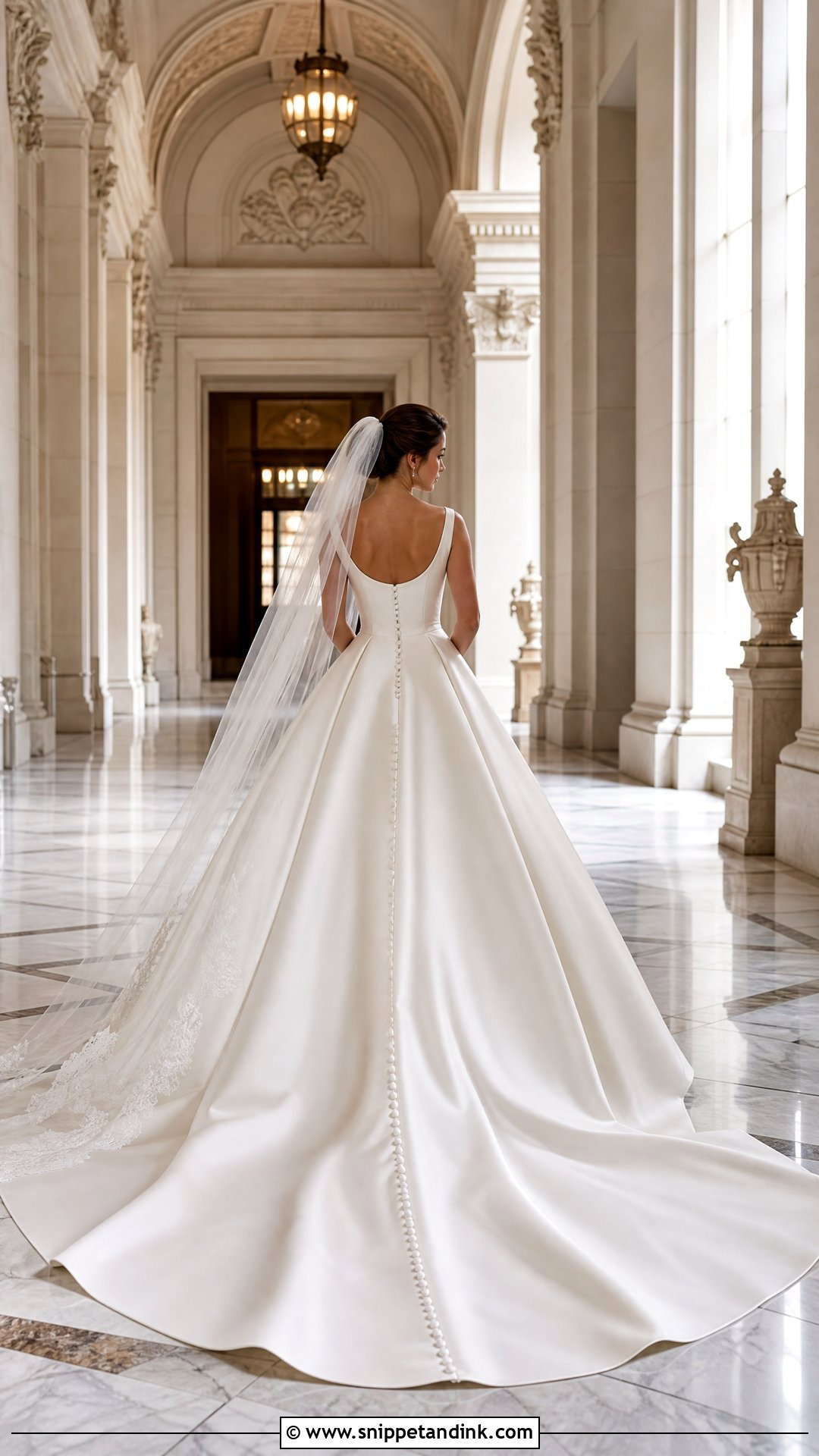
A fitted bodice, a full skirt and a row of buttons down the back is the most traditional combination on this list. The buttons can stop at the waist or continue along the train. Satin, mikado, tulle and lace all work. A cathedral veil makes it very formal; a fingertip veil keeps it fresher. The bodice must fit smoothly, or the buttons will gape and catch light unevenly in every aisle photo.
24. Mermaid Open Back Wedding Dress
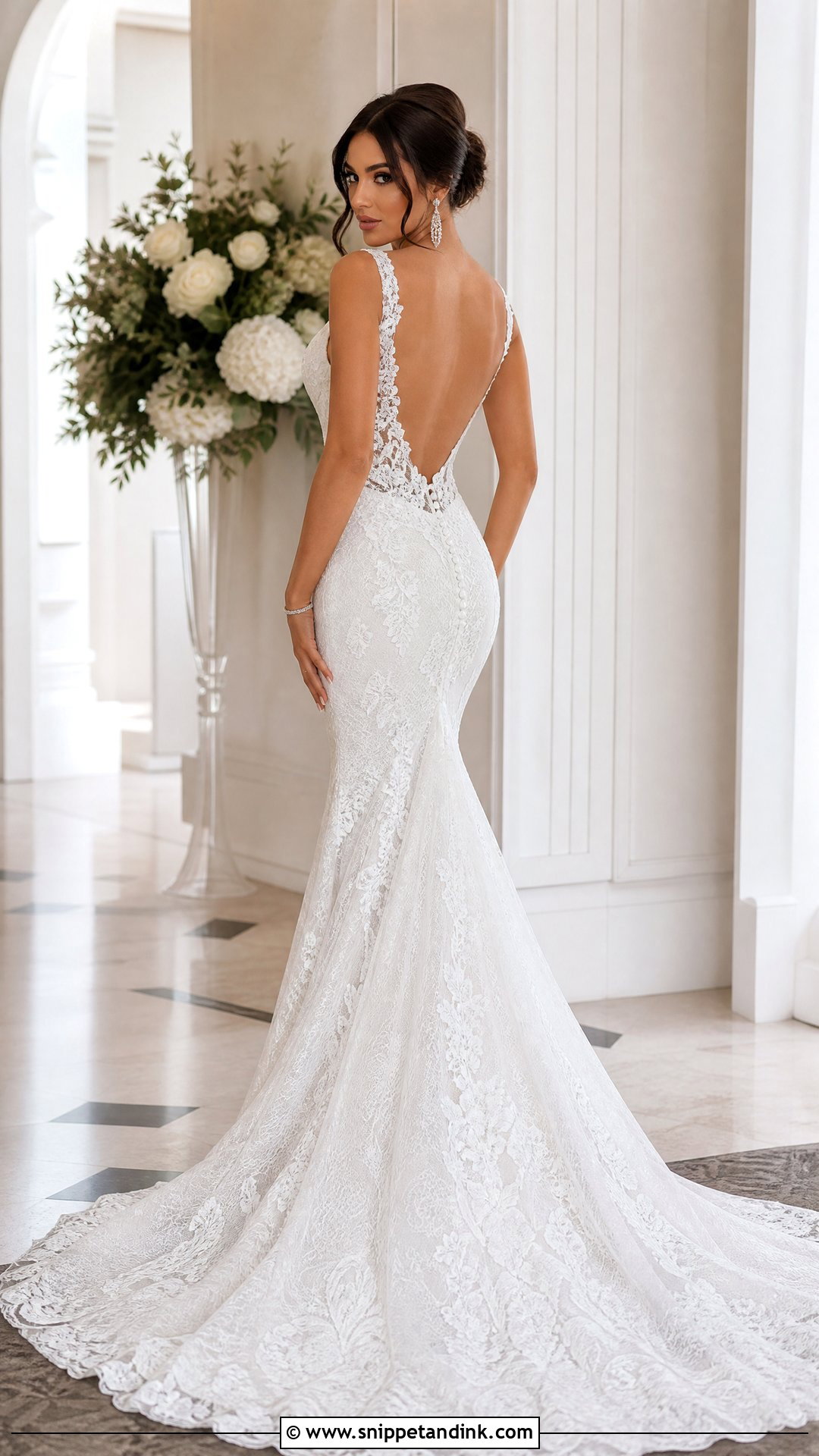
The mermaid shape hugs the body through the bodice and hips, then flares near the knee or lower thigh. An open back softens all that structure. It comes in crepe, lace, satin or beaded fabric and suits brides who want a glamorous outline. Comfort is the honest issue: the flare point decides how freely you can walk and sit, so I ask brides to climb a step and sit on a low chair in the fitting room. A long veil or simple train adds length without covering the back.





25. Detachable Cape Back Wedding Dress
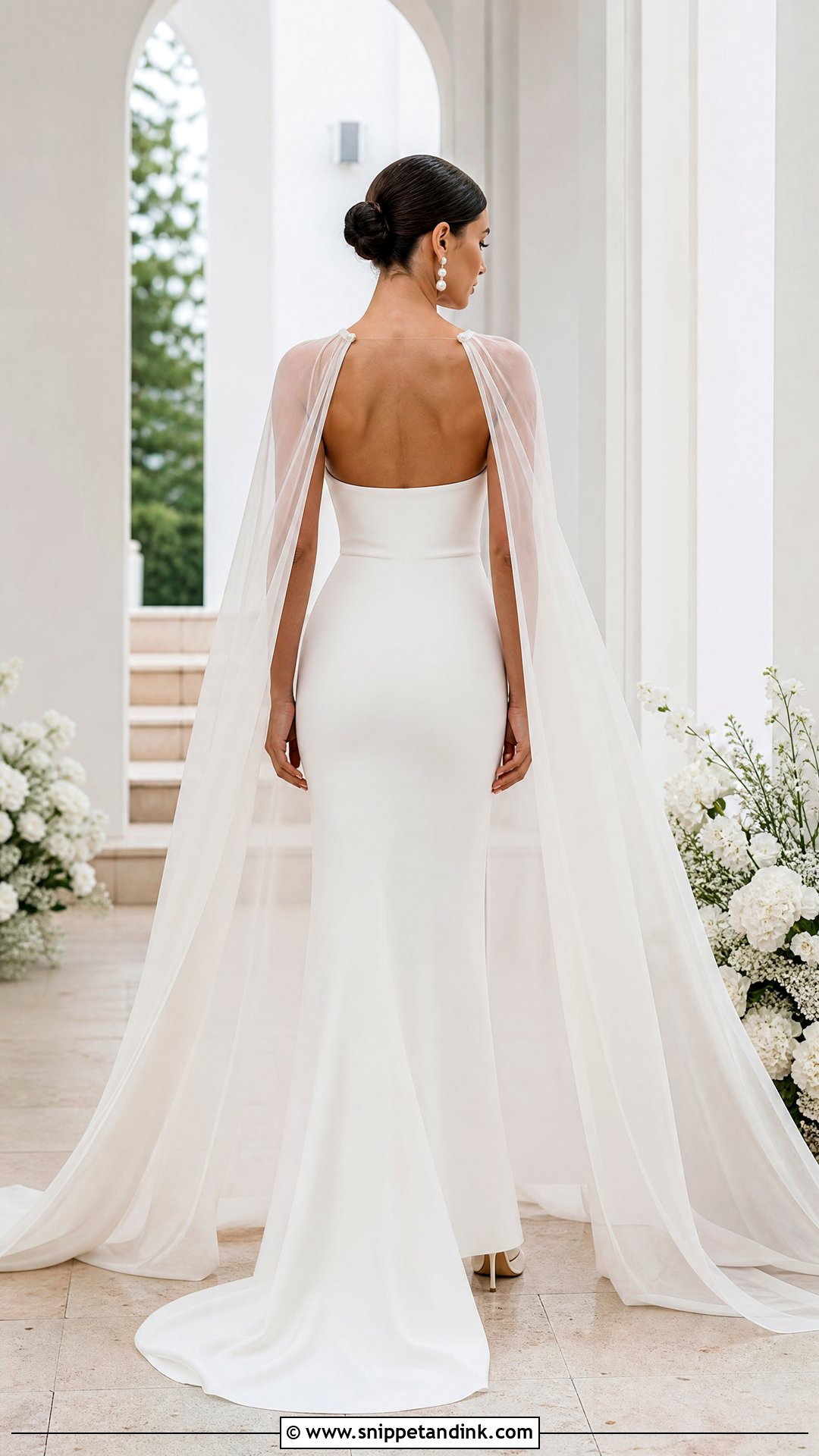
A detachable cape gives you a covered, flowing ceremony look and an open back for the party. It can attach at the shoulders, neckline or back bodice, and it replaces a veil for brides who don’t want one in their hair. It pairs with open backs, strapless gowns, sleek crepe and plain satin. Sheer tulle is soft, lace is romantic, chiffon moves the most. Ask the shop how it fastens; small hidden snaps are easier for a bridesmaid to undo than hooks.
Veils, Bustles and Hair That Can Hide the Back You Chose
I’ve watched a gorgeous back disappear under the wrong veil more than once. The back of the dress, the veil, the hair and the bustle all occupy the same few inches, so plan them together.
The veil
A plain, single-layer tulle veil lets the back show through. Lace-edged or heavily beaded veils compete with lace backs and buttons. If the back is very detailed, try placing the comb lower, under the bun, so the veil falls below the shoulder blades instead of over them.
The bustle
Bustle points are sewn where the train lifts and hooks up for dancing, and on a button or bow back they can end up right over the detail. Ask your seamstress to show you where the bustle will sit before she sews it, and choose a French or under-bustle if an over-bustle would cover the buttons.
The hair
Long loose waves cover most of an open back. If you love wearing your hair down, a half-up style or waves swept over one shoulder keeps part of the back visible. Take a photo of your back at the hair trial wearing a similar neckline.
A Dress Is Seen From Behind for Most of the Ceremony
Open and low backs bring drama; illusion, lace and sheer panels bring softness with more coverage. Buttons feel traditional, bows feel playful, and cowl or draped backs feel relaxed. Before you decide, think about support, alterations, underwear, hairstyle and how the back reads from the aisle. Walk, sit and lift your arms in every fitting. The back that still feels secure after hours of hugging is the one you’ll be glad you chose.
You'll Like These Ideas:




Leave a Reply