
Korean bridal fashion is mostly an exercise in editing. The look relies on a clean line, a soft ivory rather than stark white, and one considered detail, whether that’s a row of covered buttons, a pearl at the collar or a hanbok-shaped waist. What follows covers satin gowns, airy tulle, modern hanbok-inspired pieces, square necklines and pearl accents, and I’ve written each one with the practical question in mind: how does it wear through a ceremony, a studio shoot and possibly a change into something else for the paebaek? Plenty of couples now plan two outfits, so I’ve noted which dresses make an easy second look.
Ivory, Light and the Studio Shoot
Many Korean couples do a pre-wedding studio shoot, sometimes in a different dress from the ceremony. Studio lighting is bright and even, which flatters satin and crepe but can make cheap tulle look flat or shiny. If you’re shooting in a dress you’ll also wear on the day, I suggest bringing it to the studio once and checking a few frames on screen before the full session.
Colour matters more than people expect. Bright white can turn slightly blue under strong light, while ivory and soft white keep skin looking warm. Hold the fabric against your face in daylight and under a lamp before deciding.
- Satin and mikado give a smooth glow under studio lights.
- Organza photographs airy but shows every crease, so keep a steamer nearby.
- Matte crepe hides small wrinkles best during a long shoot.
1. Simple Korean Wedding Dress With Satin A-Line Gown
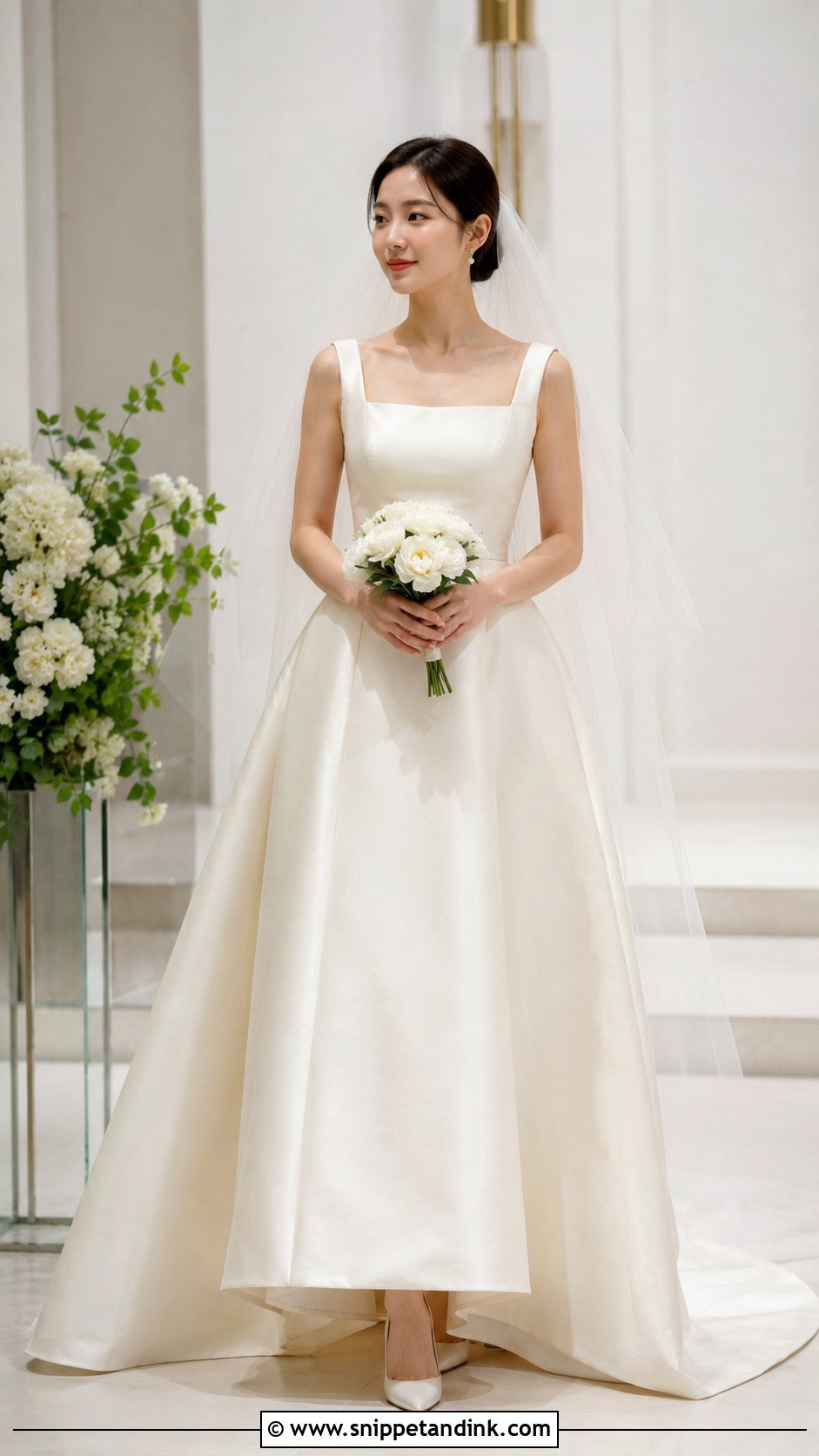
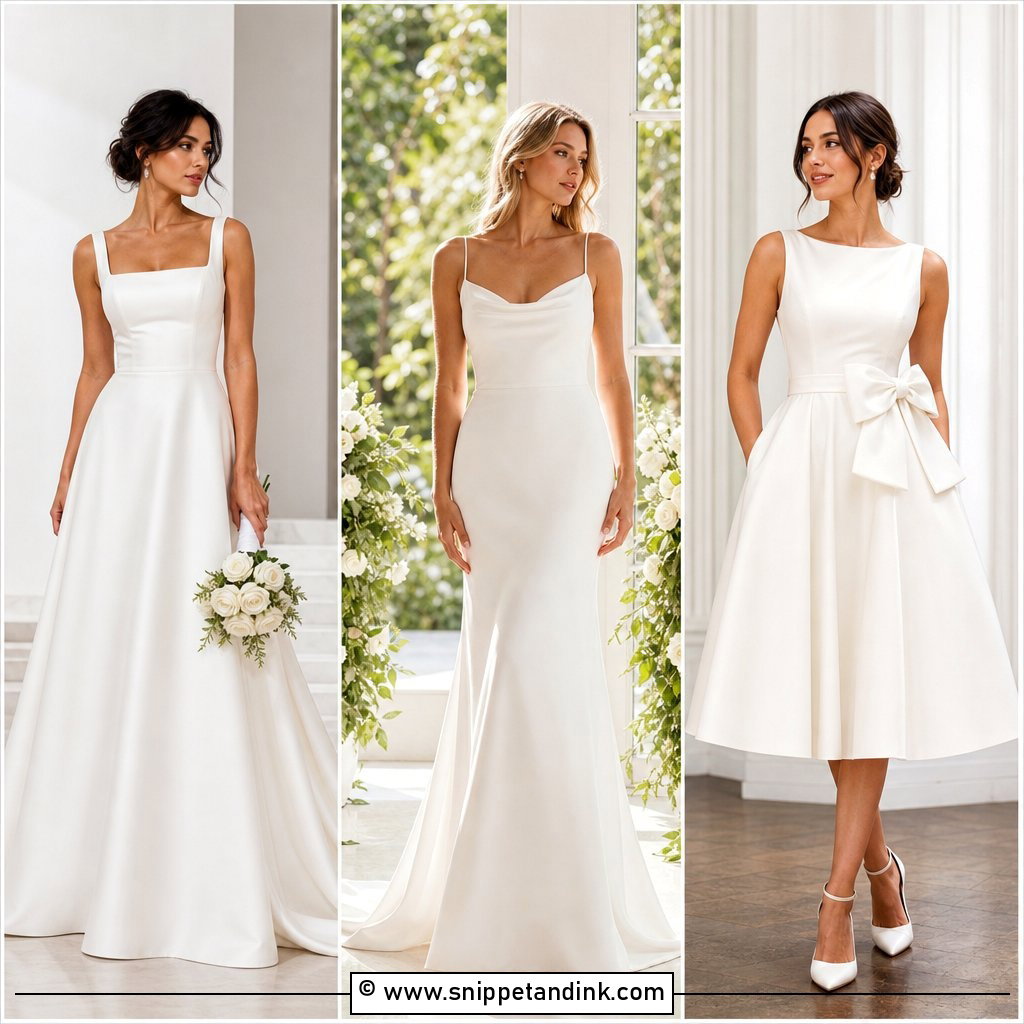
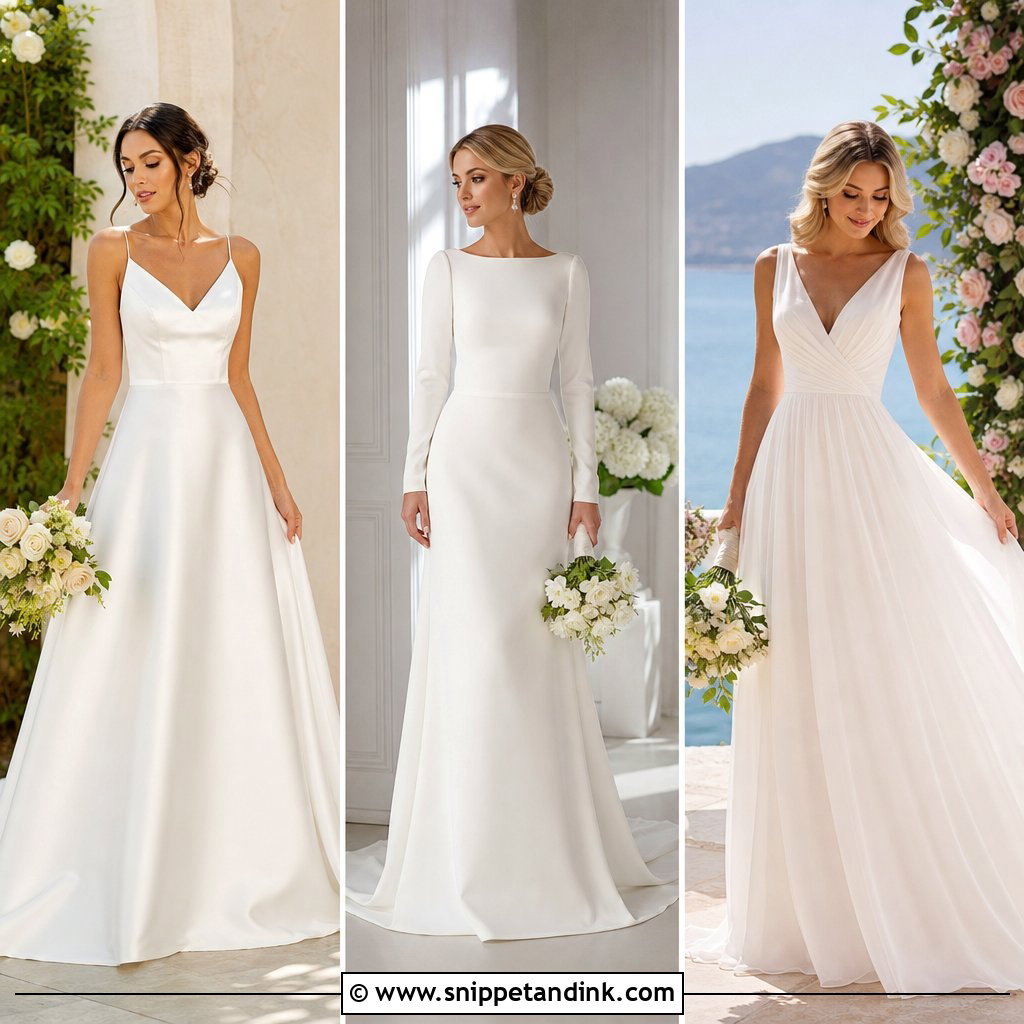
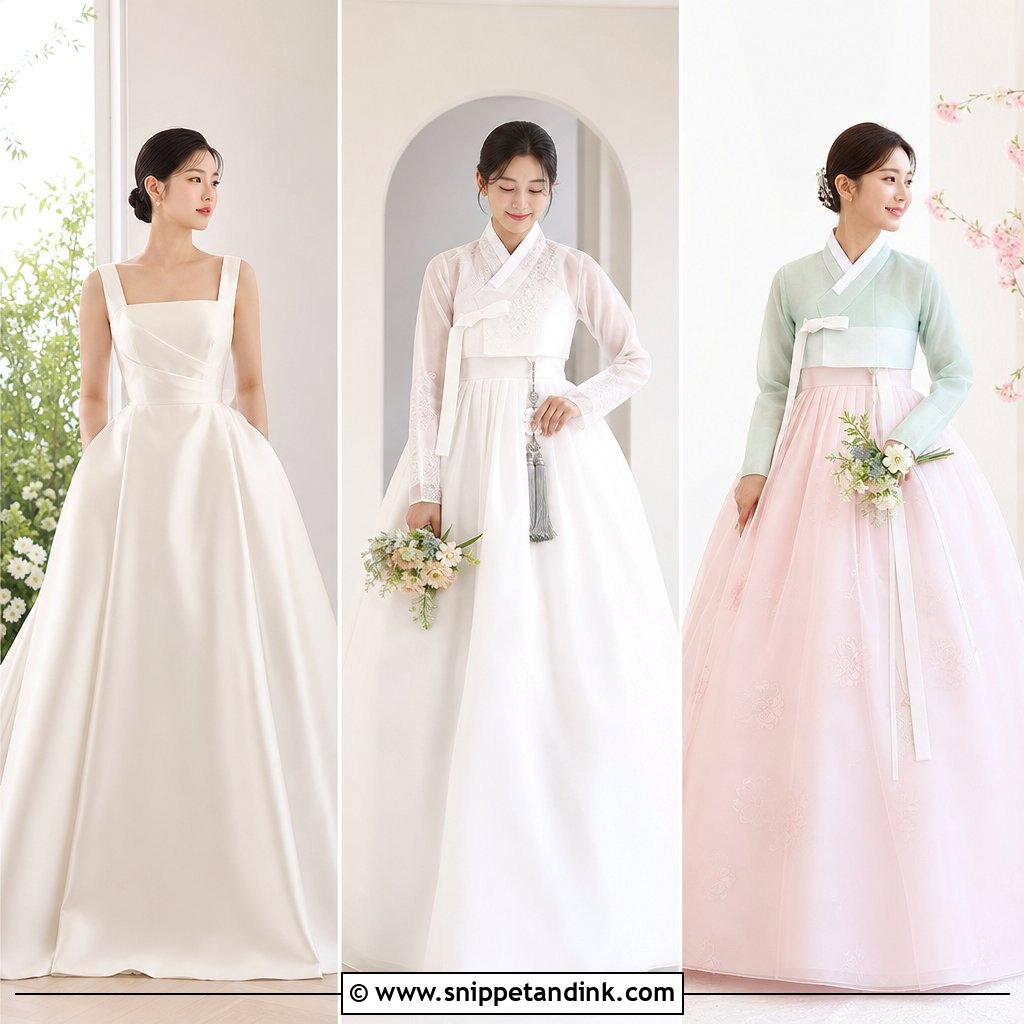
Satin A-lines are where I start most brides who want this aesthetic, because the shape is simple to fit and flatters a wide range of figures. Choose ivory or pearl satin over bright white; it reads warmer on camera and under wedding-hall lighting. A square or soft scoop neckline keeps it fresh. Satin does crease across the lap when you sit, so if you have a long car ride before photos, steam it on arrival. Low pearl earrings, a neat bun and ivory pointed heels finish it for a hotel, garden or small indoor wedding.
2. Simple Korean Wedding Dress With Modern Hanbok Skirt
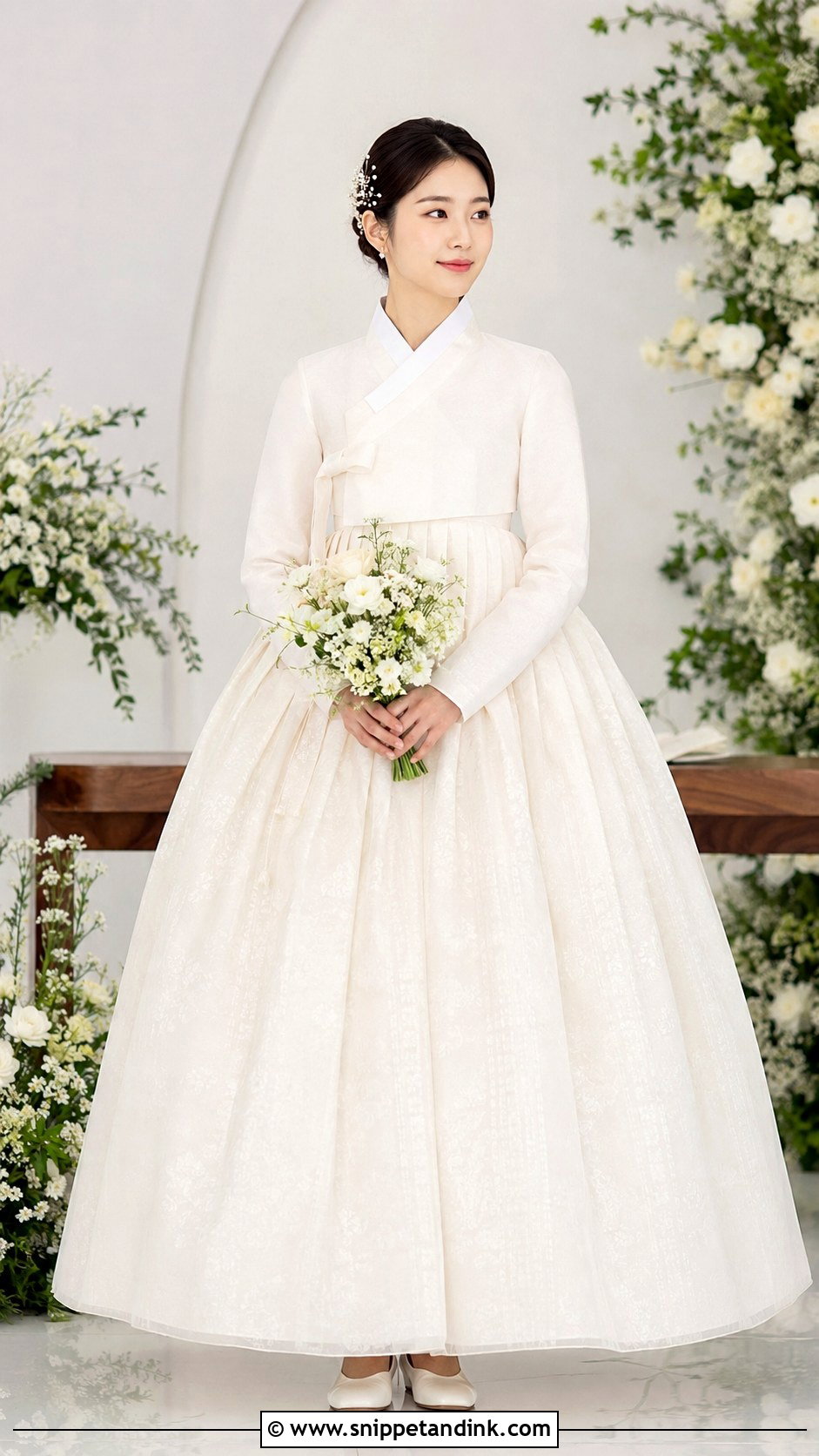
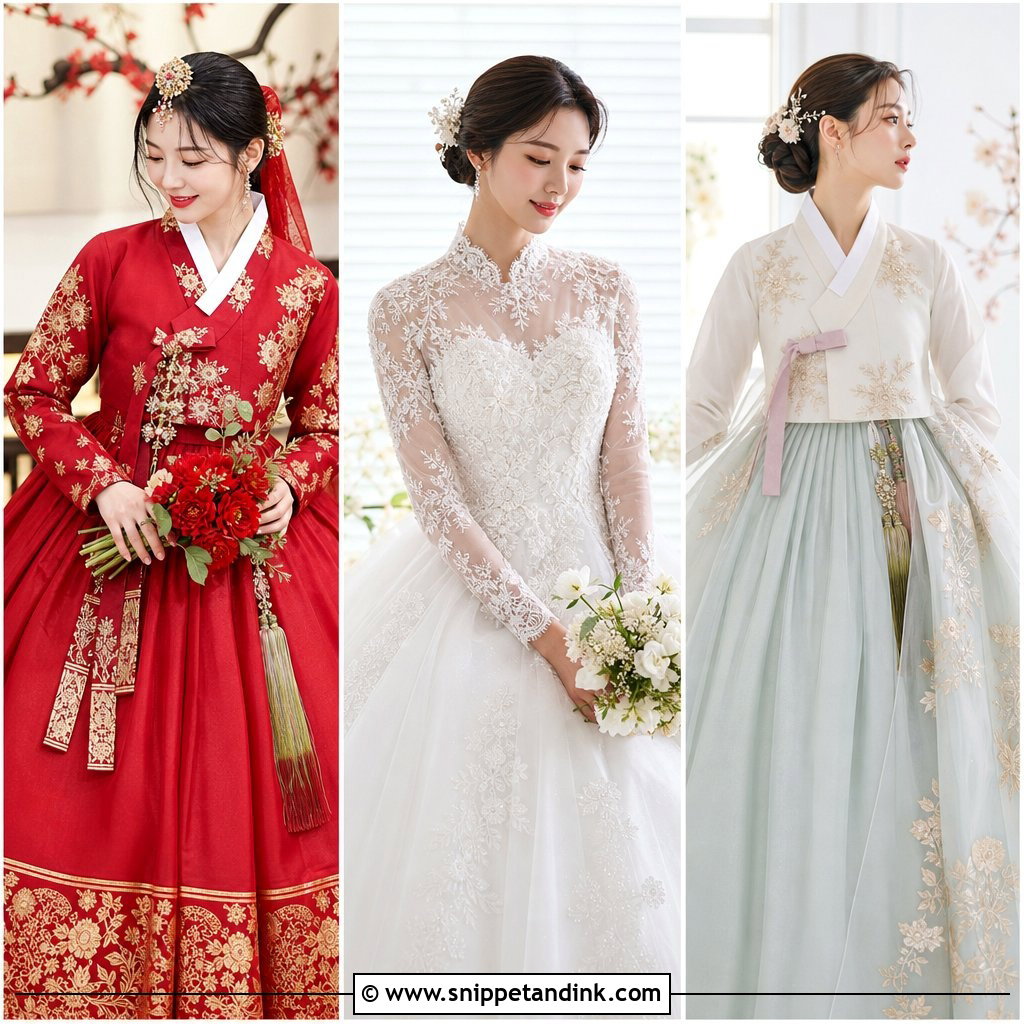
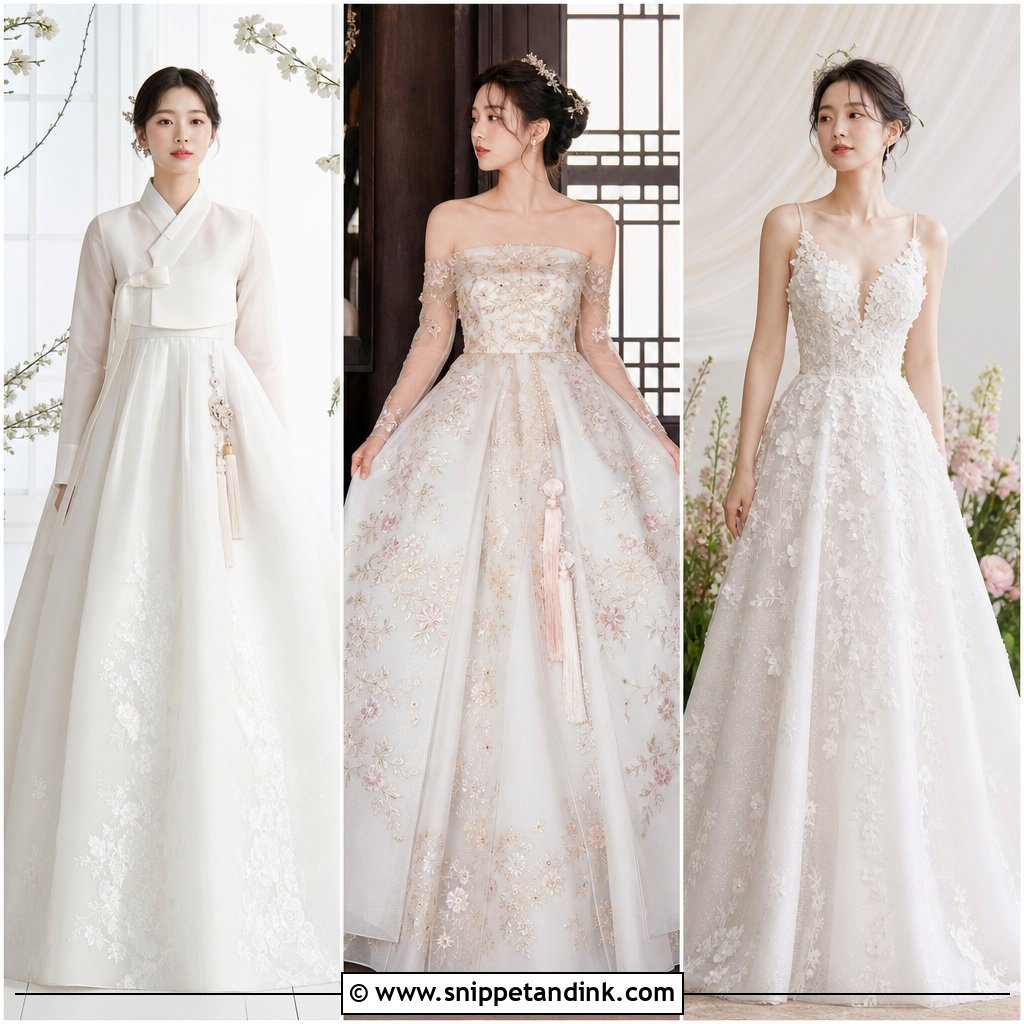
A modern hanbok skirt borrows the chima’s high waist, which sits just under the bust and makes the whole figure look taller. Pair a soft ivory skirt in silk, organza or satin with a clean wrap blouse or a fitted jeogori-style top. The thing I watch is volume: a full chima in stiff fabric can swamp a petite bride, so I keep the skirt light enough to move. Pearl hairpins and satin flats keep it from looking costume-like. It suits a paebaek-inspired moment or family photos especially well.
3. Simple Korean Wedding Dress With Long Sleeve Lace Gown
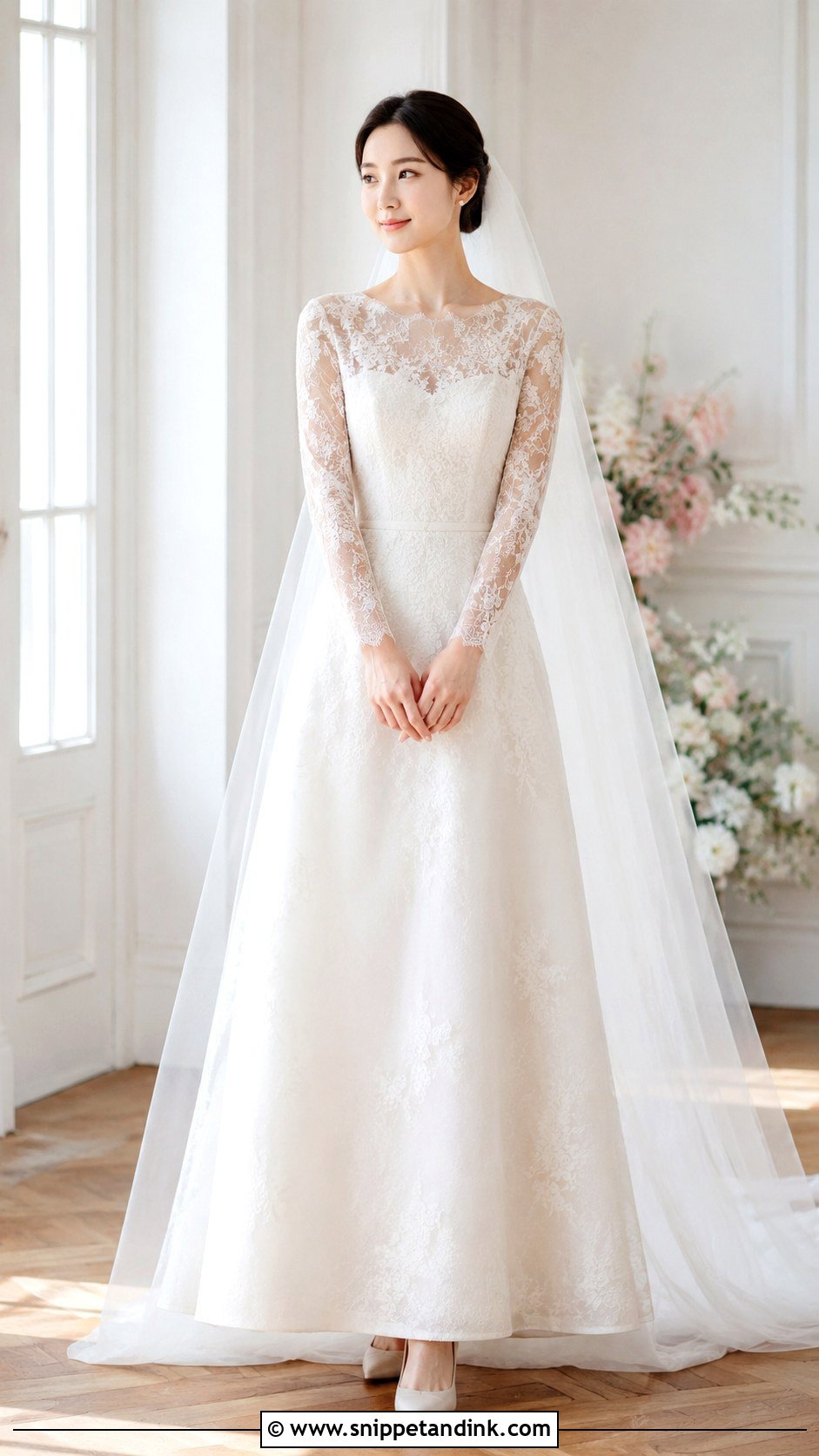
Lace sleeves only feel soft if the lace is fine. Heavy guipure on the arm looks dated and weighs the sleeve down, so for this look I’d choose a light floral lace over a clean sheath or A-line lining. A high illusion neckline and covered buttons down the back add detail without adding pattern. Fit the sleeves with your arms bent, not straight, or they’ll pull at the elbow when you hold the bouquet. Pearl studs and a smooth veil suit spring, autumn or indoor ceremonies.
4. Simple Korean Wedding Dress With Square Neck Gown
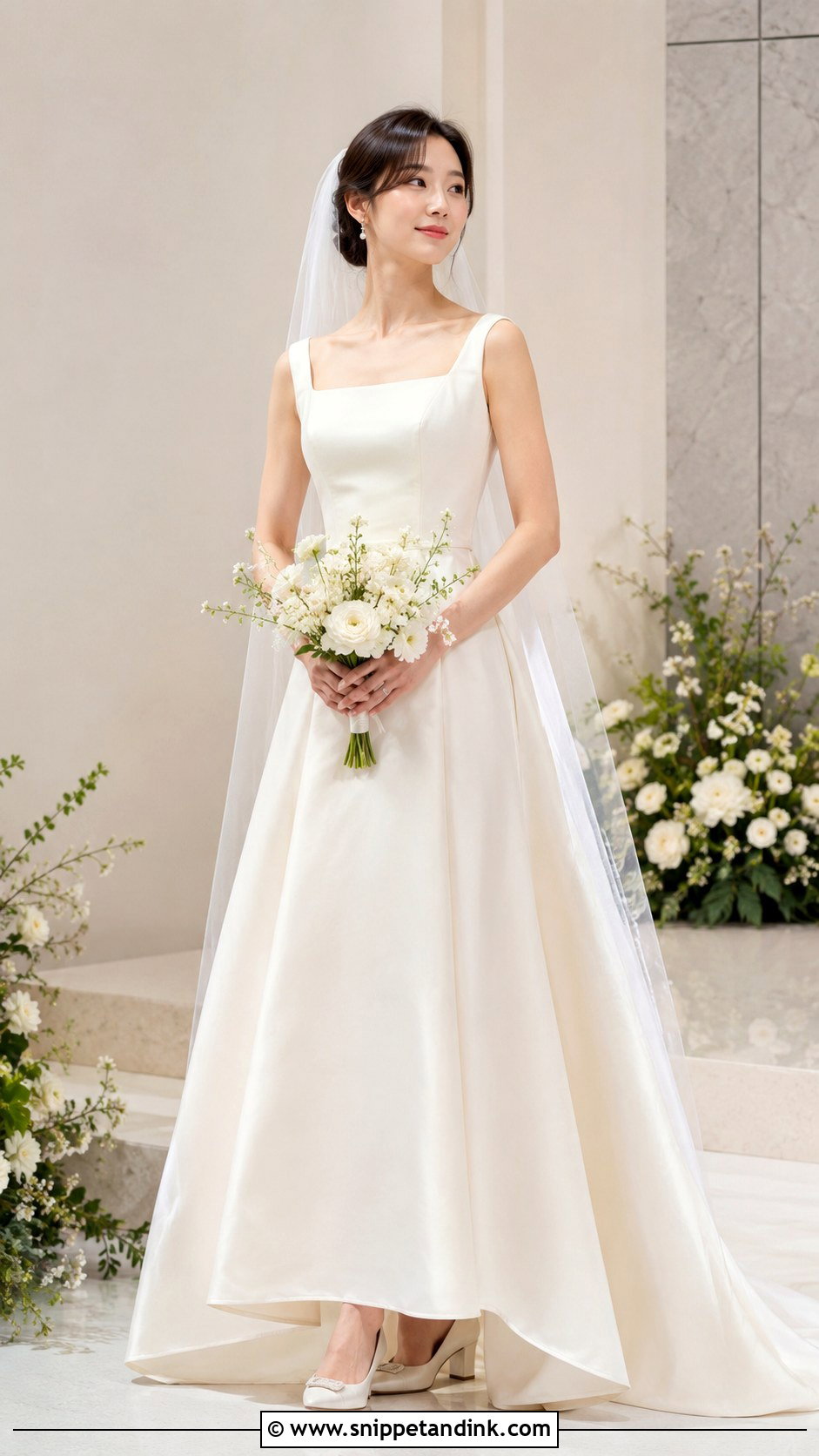
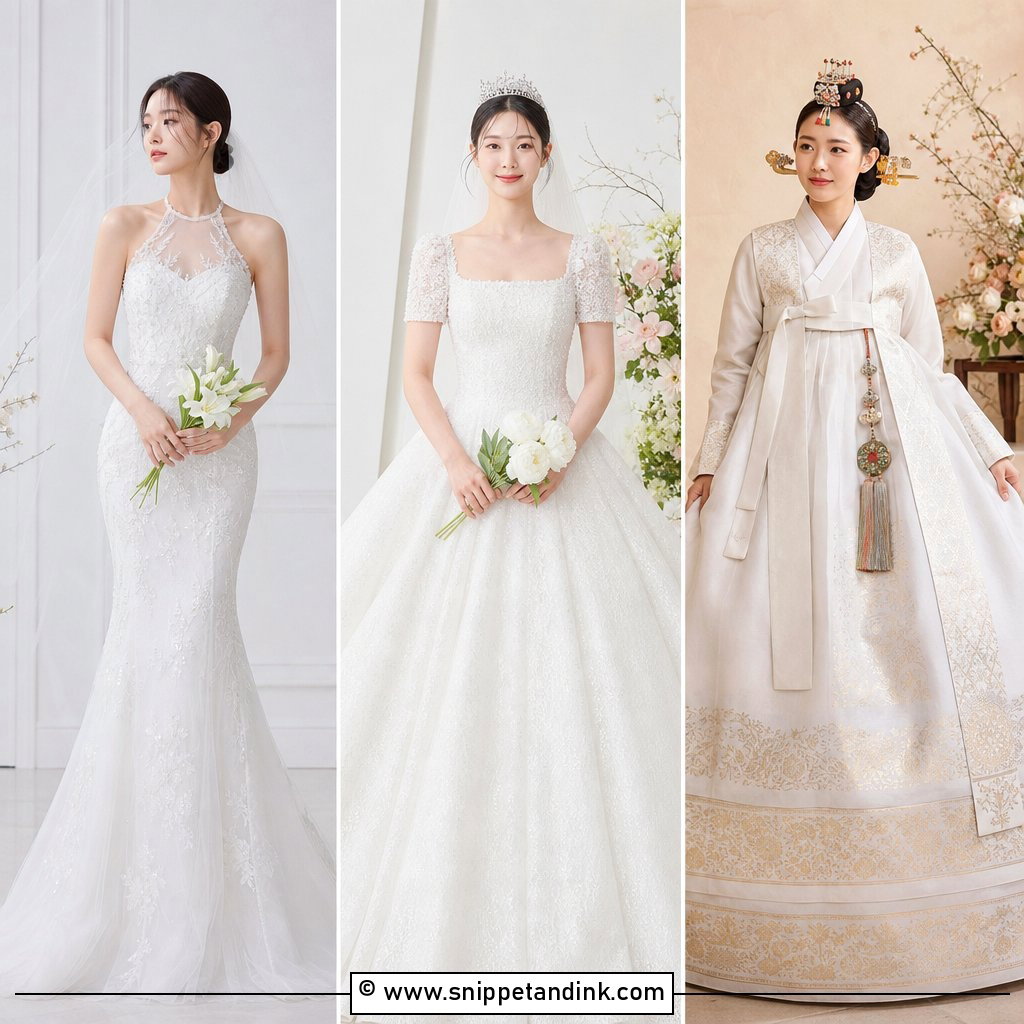
Square necklines are a staple of the Korean bridal look because they frame the collarbone without exposing much. I set the corners just inside the shoulder, so straps don’t drift. Satin, crepe and mikado hold the line best; softer fabrics let the neckline curve and lose its shape. Pair a fitted bodice with an A-line or straight skirt, then add a thin veil and low block heels you can stand in through a long ceremony.
5. Simple Korean Wedding Dress With Off Shoulder Satin Gown
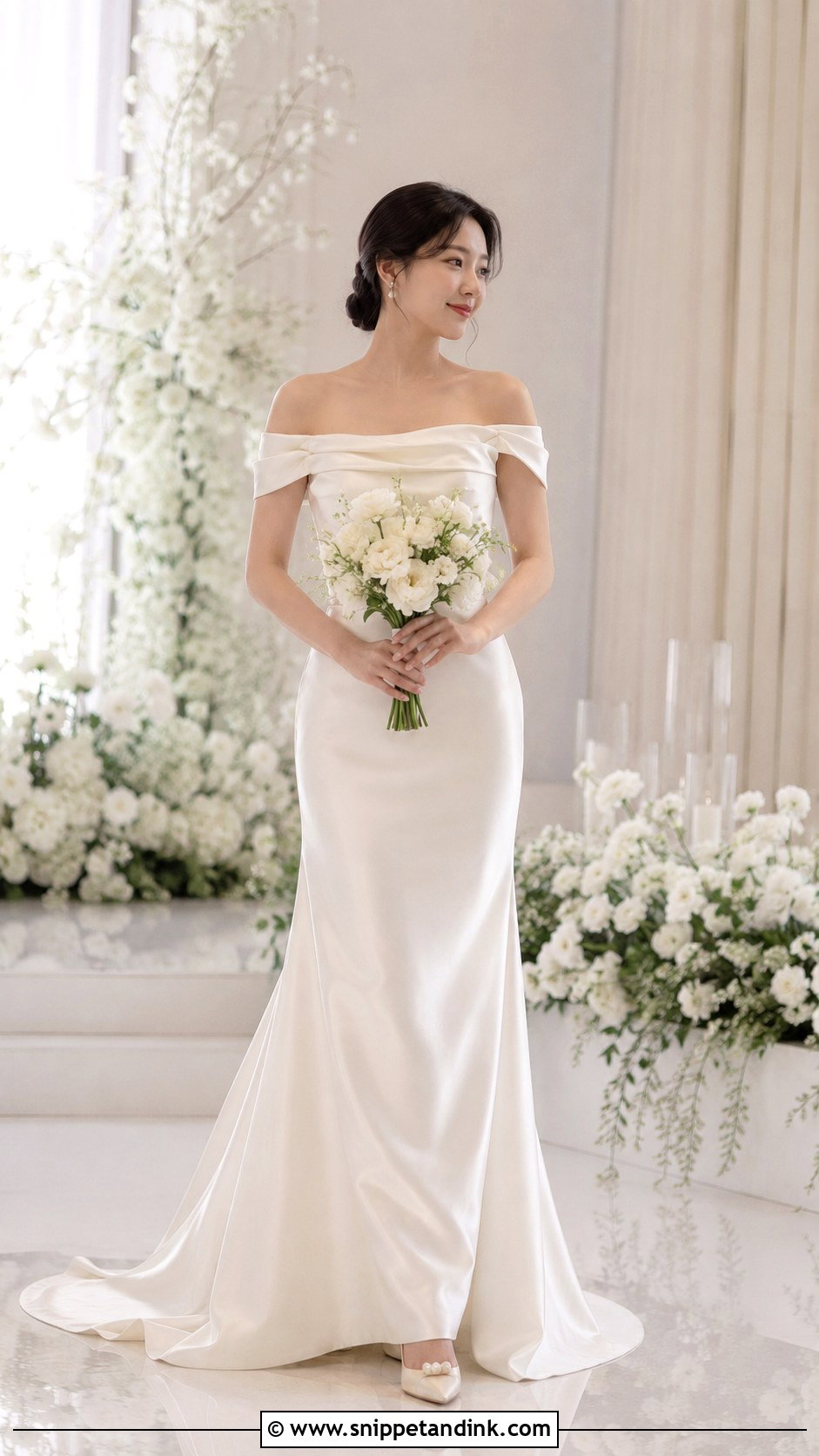
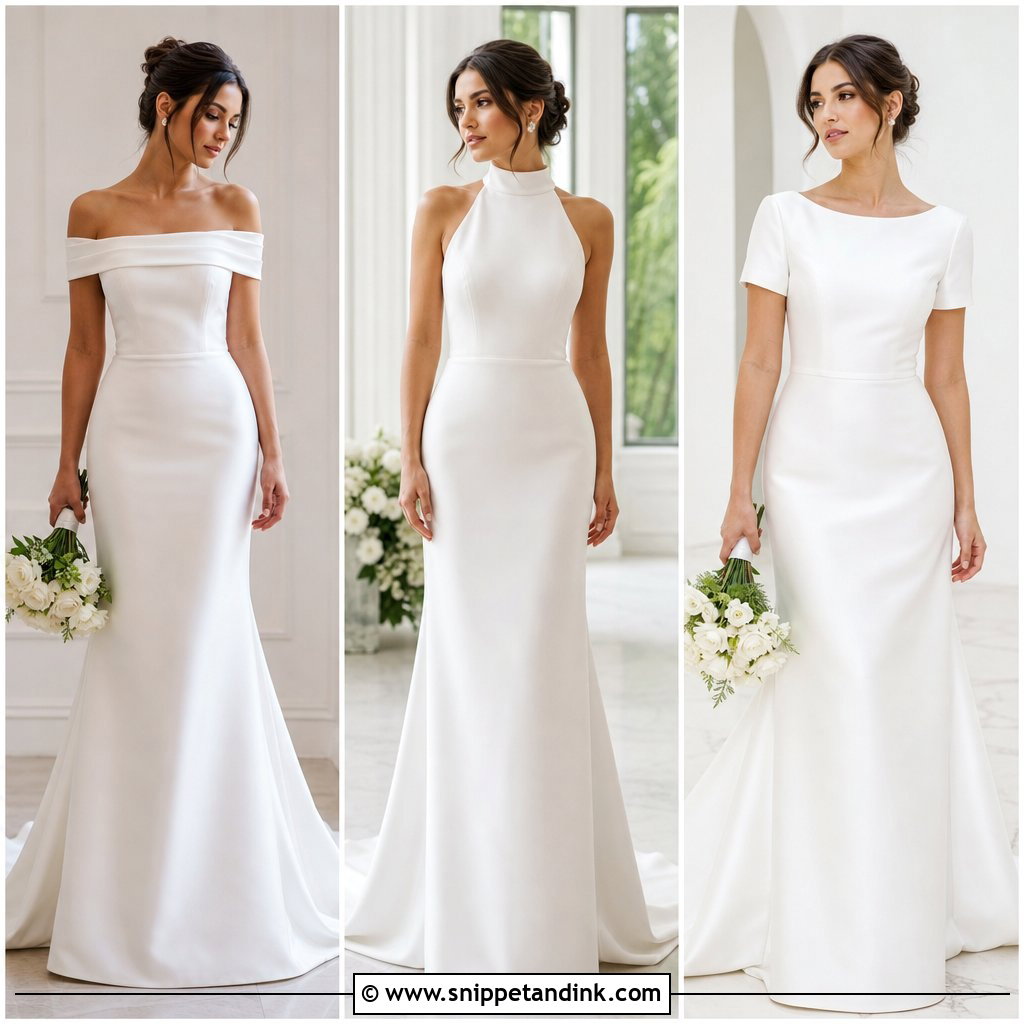
How often will you lift your arms? With an off shoulder satin gown, that’s the question I ask first, because the band restricts movement more than people expect. A well-fitted one with a grip strip inside stays put during hugs and bouquet tosses; a loose one slides all night. Keep the bodice clean and the skirt gentle, with a simple train and smooth back closure. A low bun with a few face-framing strands, pearl earrings and a small bouquet are all it needs.
6. Simple Korean Wedding Dress With High Neck Organza Gown
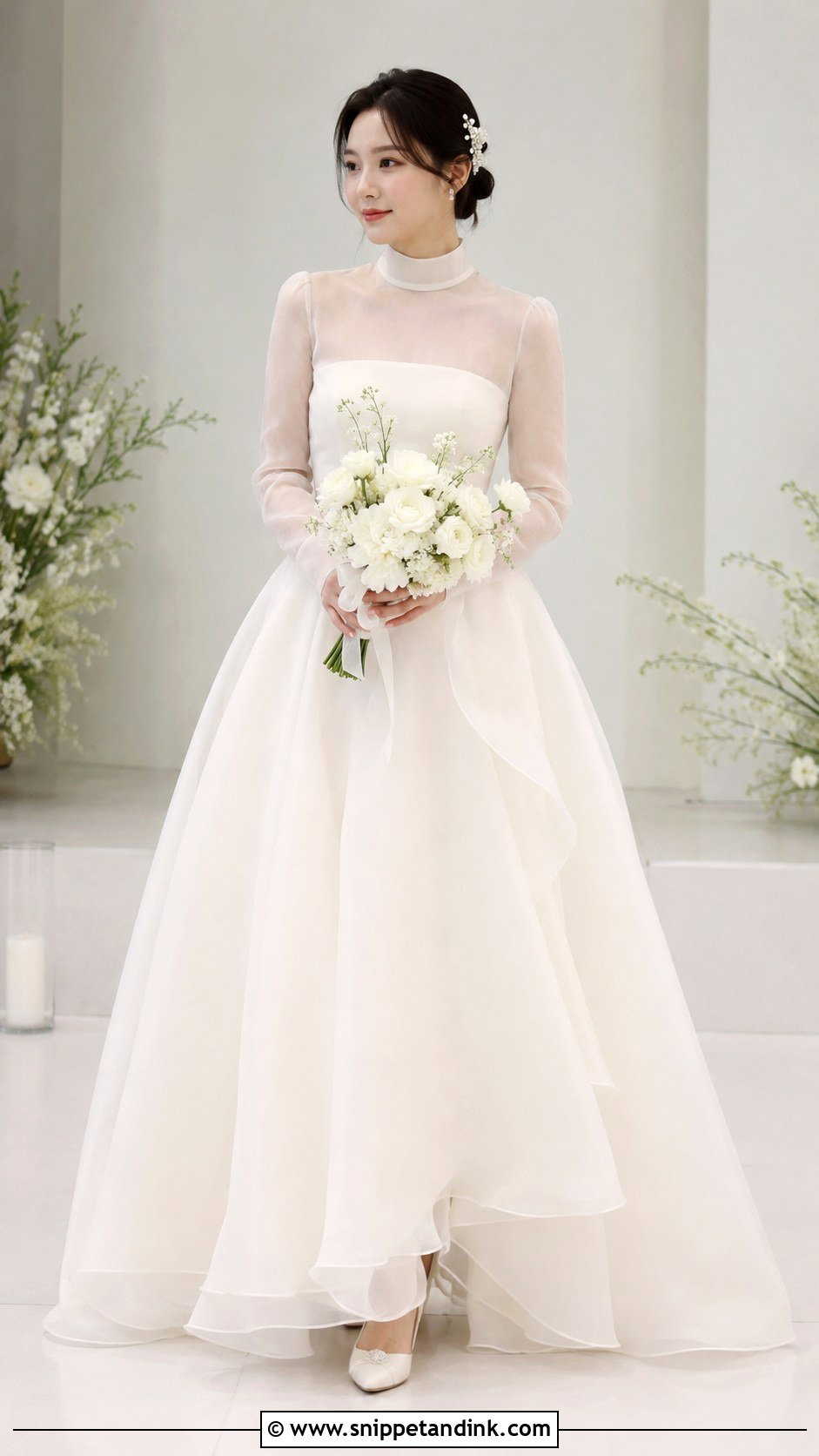
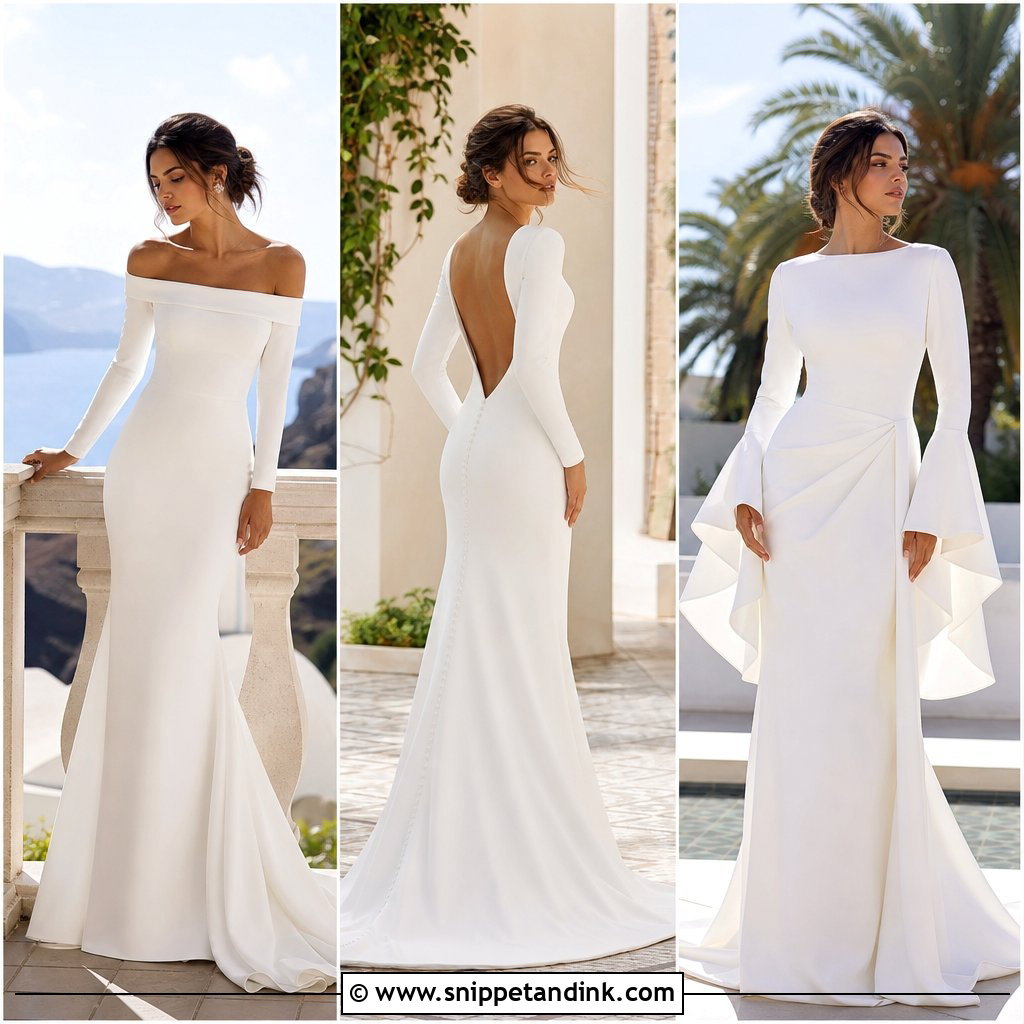
Organza is lighter than it looks, which is why a high neck organza gown can have volume and still feel comfortable. The sheer sleeves and soft skirt keep it airy. Organza does wrinkle sharply, though, and those creases show in close-up photos, so handle it carefully and steam on the morning. Keep accessories minimal since the fabric creates the interest: a sleek updo, a pearl hair comb, white satin shoes. It suits cooler seasons and formal indoor venues.
7. Simple Korean Wedding Dress With Minimal Slip Dress
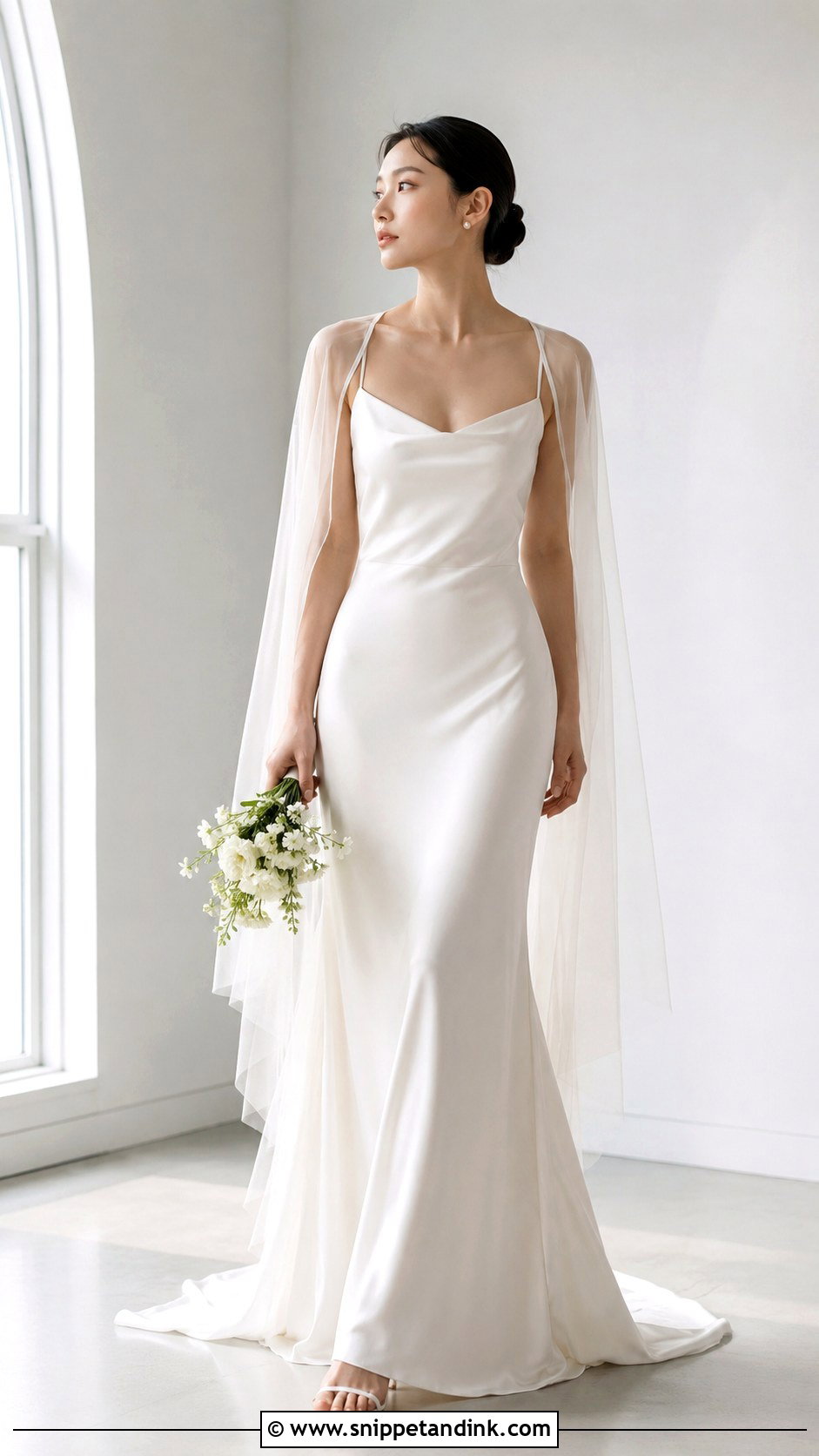
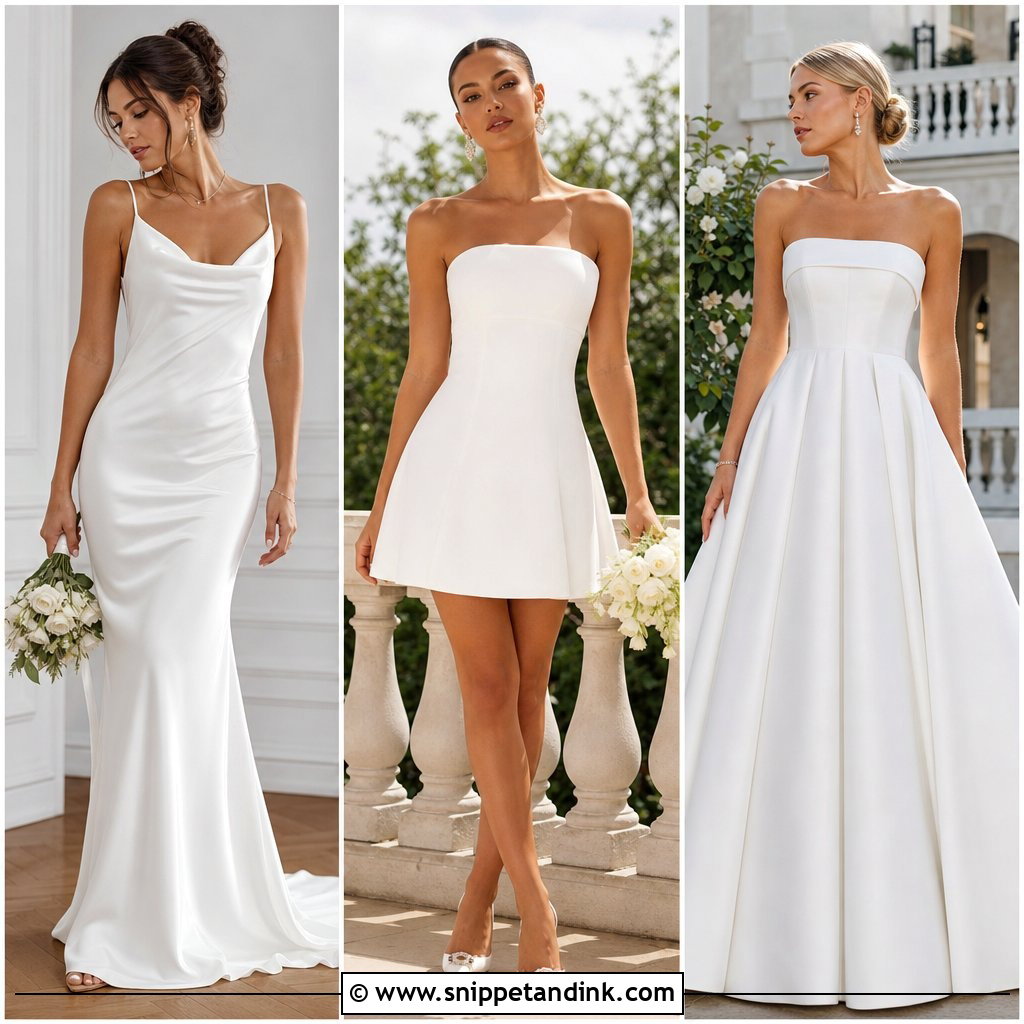
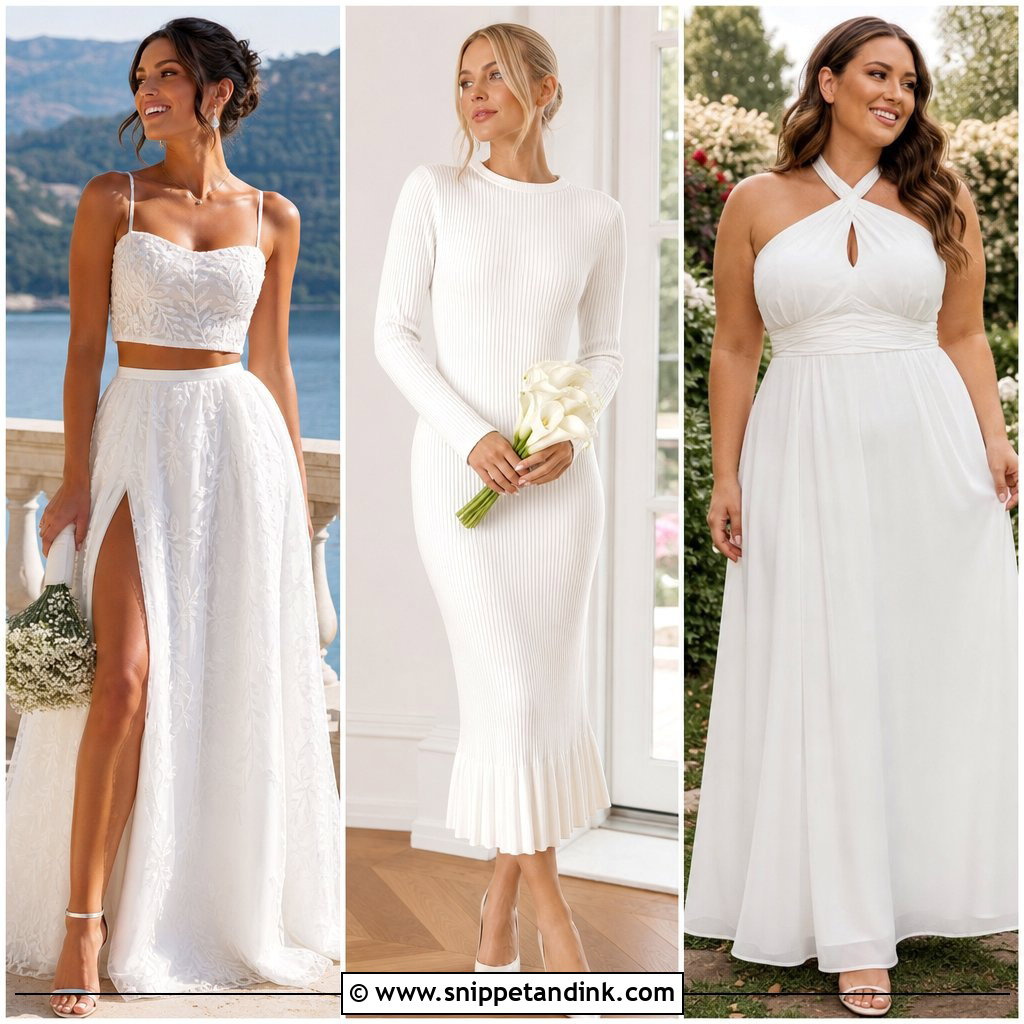
Slip dresses are all about fit. Bias-cut silk or satin skims the body and shows everything underneath, so I fit them over the exact undergarments the bride will wear. Thin straps and a soft sheen are enough. For the ceremony, add a sheer cape, short veil or cropped bridal cardigan for coverage, then remove it later. Strappy ivory heels and a smooth low bun suit intimate weddings and city ceremonies.
8. Simple Korean Wedding Dress With Tea Length Skirt
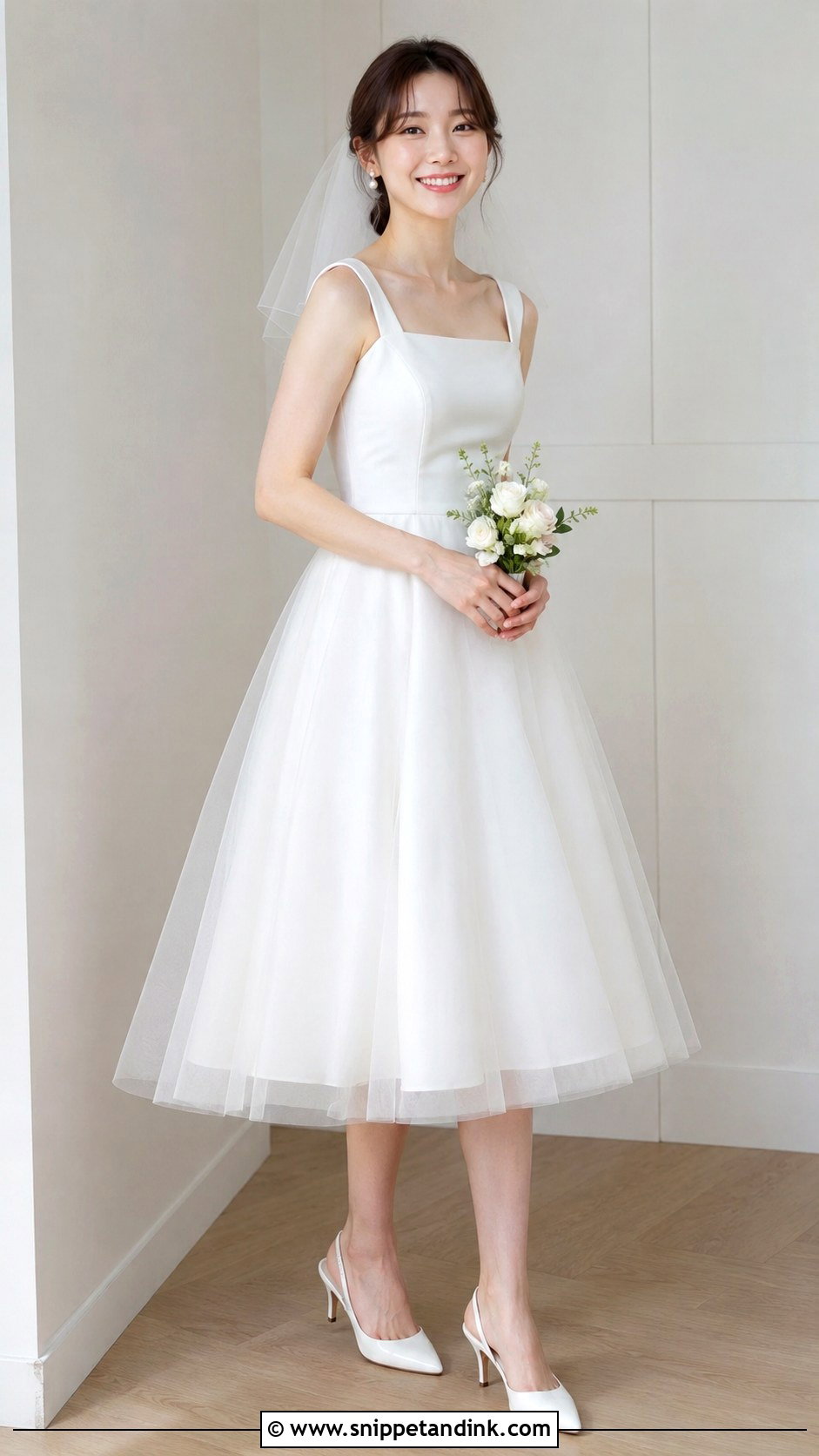
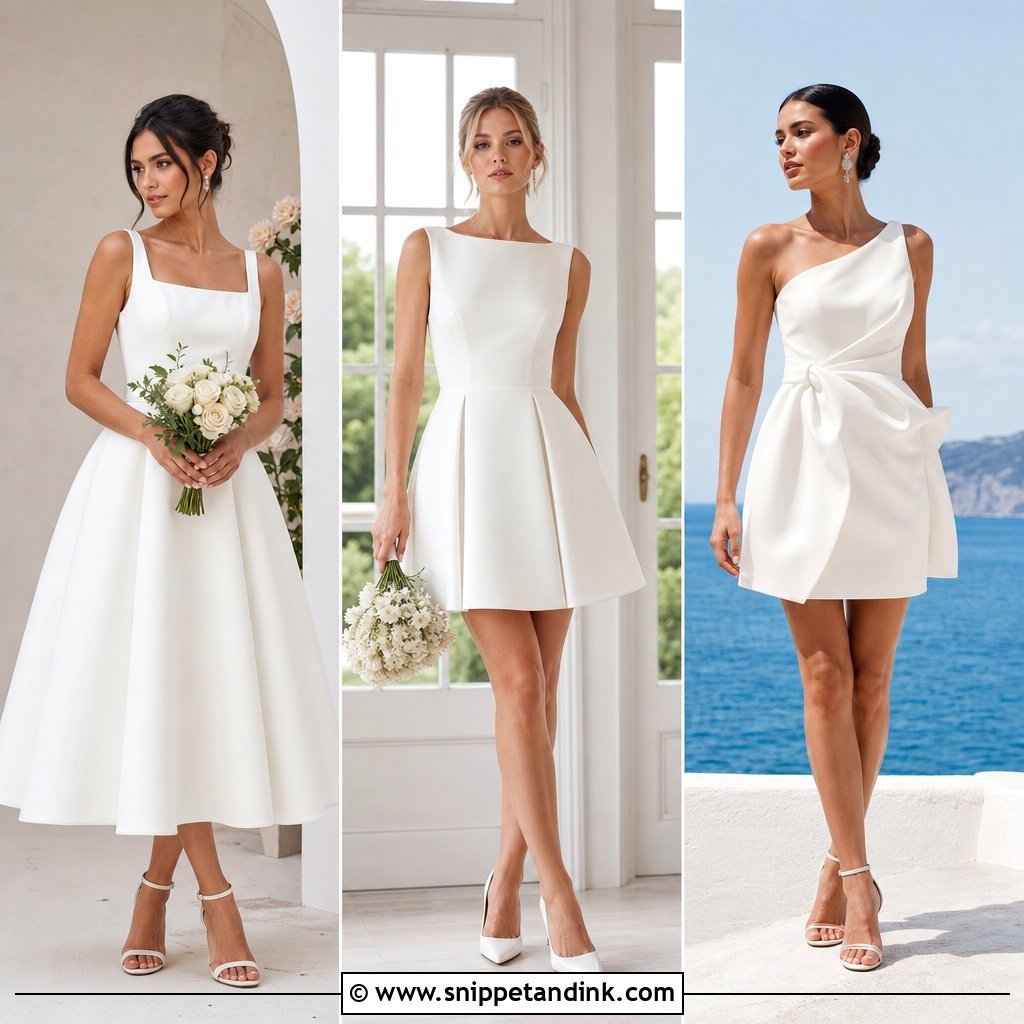
Tea length is practical. The hem falls between knee and ankle, so you can walk, dance and climb steps without anyone holding your train. I set the hem with your actual shoes on, aiming for the narrowest point of the calf. A fitted bodice with tulle or satin skirt keeps it balanced, with a boat neck, square neck or short sleeve top. White slingbacks and a short veil suit civil ceremonies, casual receptions and second looks.
9. Simple Korean Wedding Dress With Pearl Detail Gown
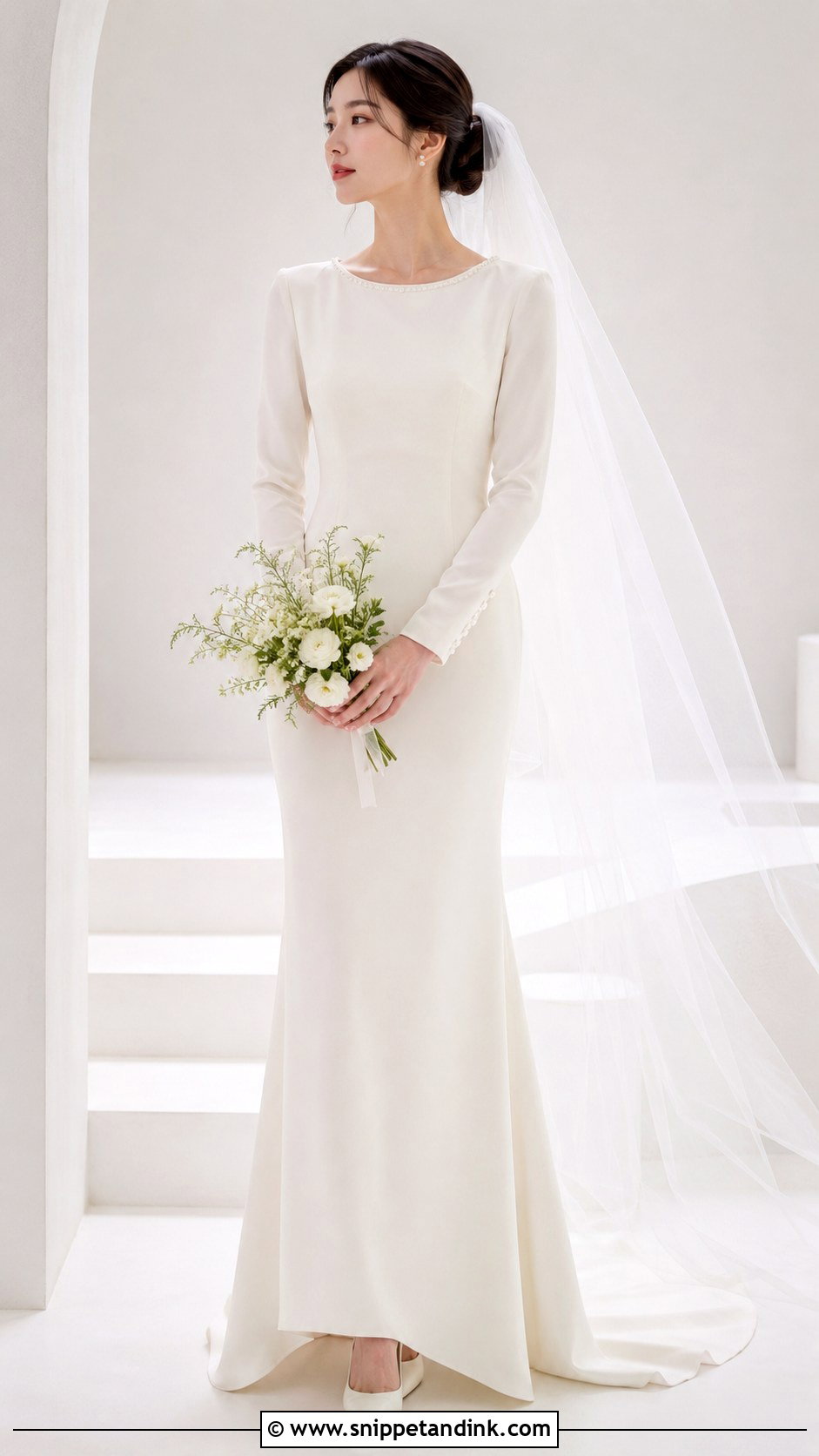
Small pearls in the right places do more than a scatter all over. I like them on the neckline, at the cuff or as buttons down the back of a plain crepe or satin gown. Sewn pearls add weight, so a heavily pearled bodice on fine fabric can pull and pucker. Then keep your own jewelry to one pearl element, studs or a hairpin, not both plus a necklace. Ivory heels and a soft bouquet complete it.
10. Simple Korean Wedding Dress With Sheer Sleeve Gown
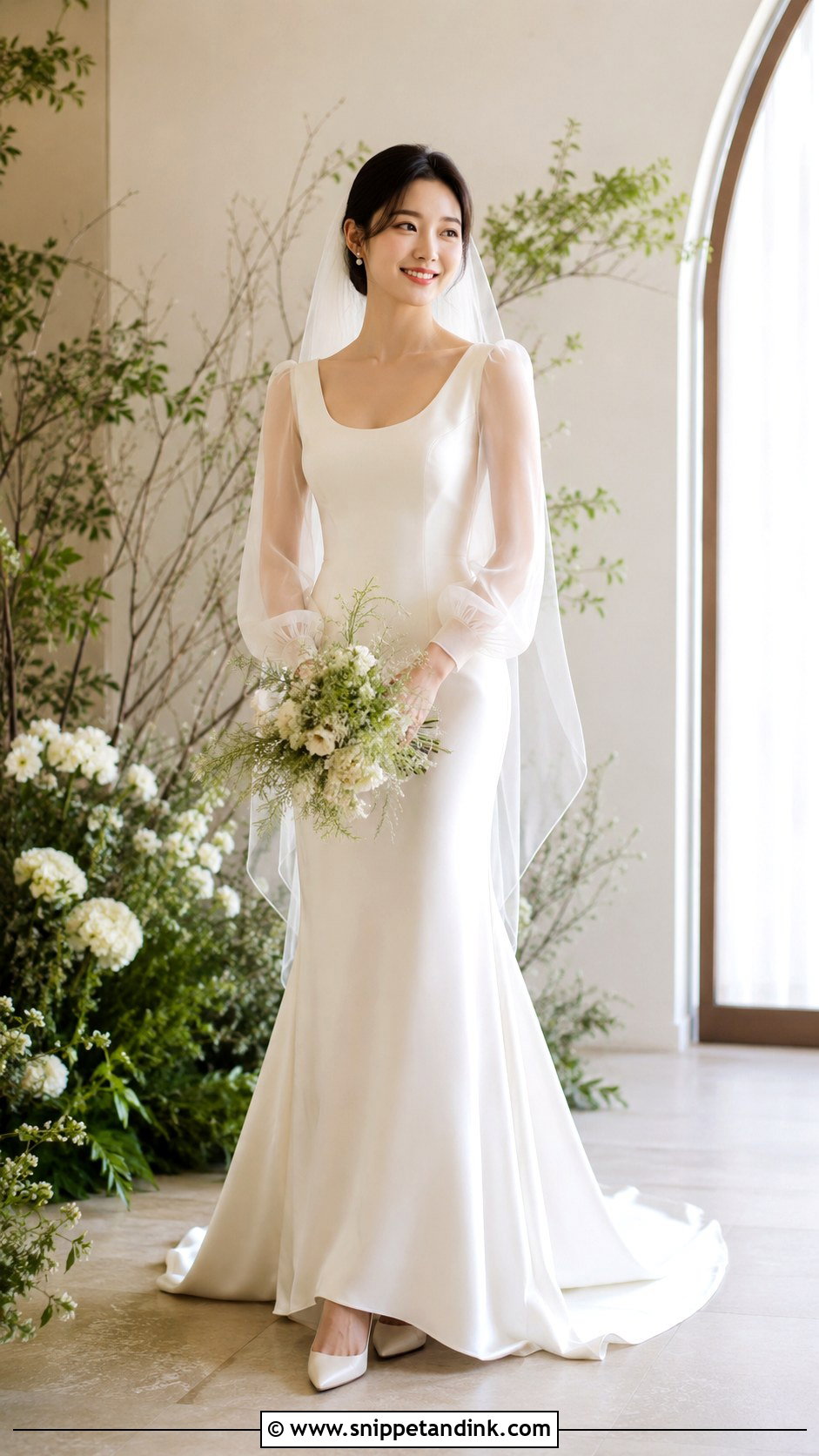
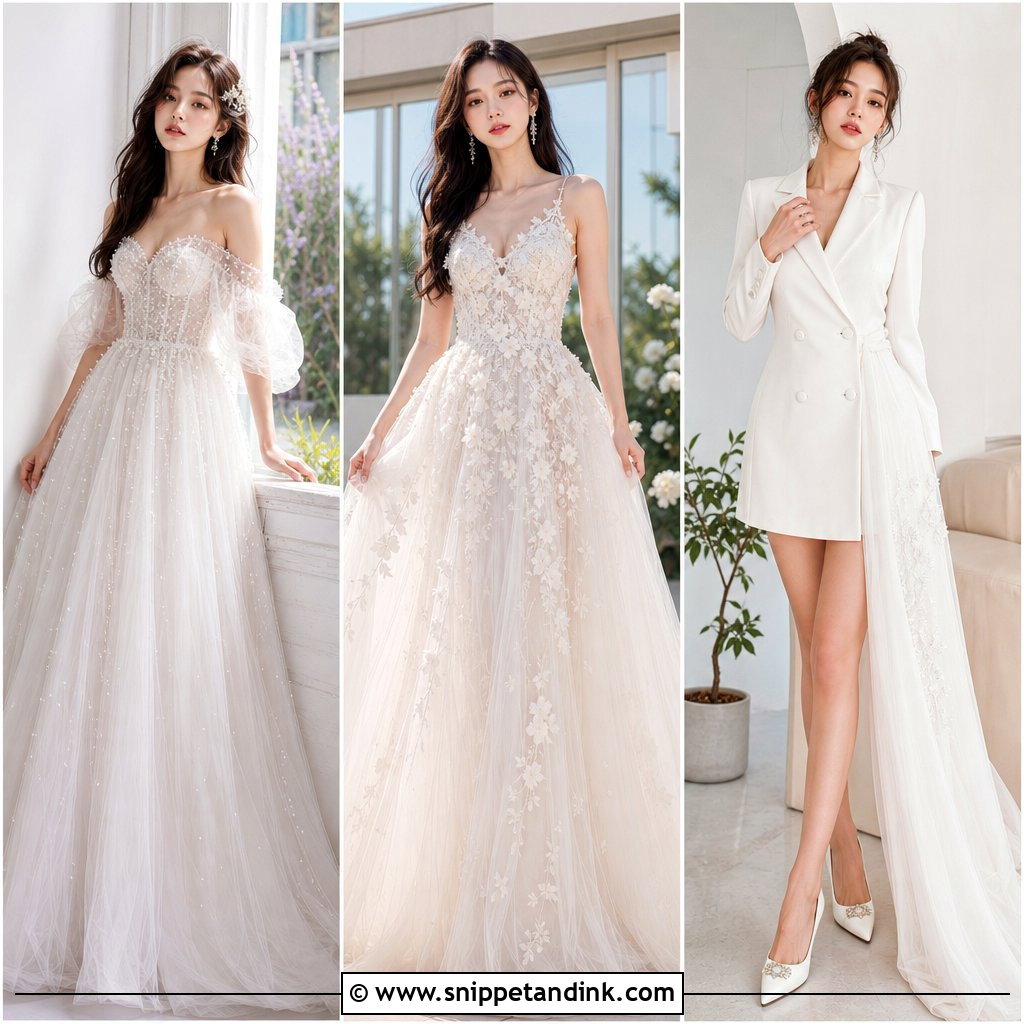
Sheer sleeves give coverage without heat. Translucent organza or tulle sleeves on a satin or crepe gown look soft, and the choice between puff and fitted changes the mood: puffs read sweet, fitted reads refined. I’d steer a bride with broad shoulders towards the fitted version, as puffs add width. Keep the neckline plain, a scoop, square or bateau, and balance it with a soft updo. It works well in spring and autumn when sleeveless feels too bare.
11. Simple Korean Wedding Dress With Bateau Neck Gown
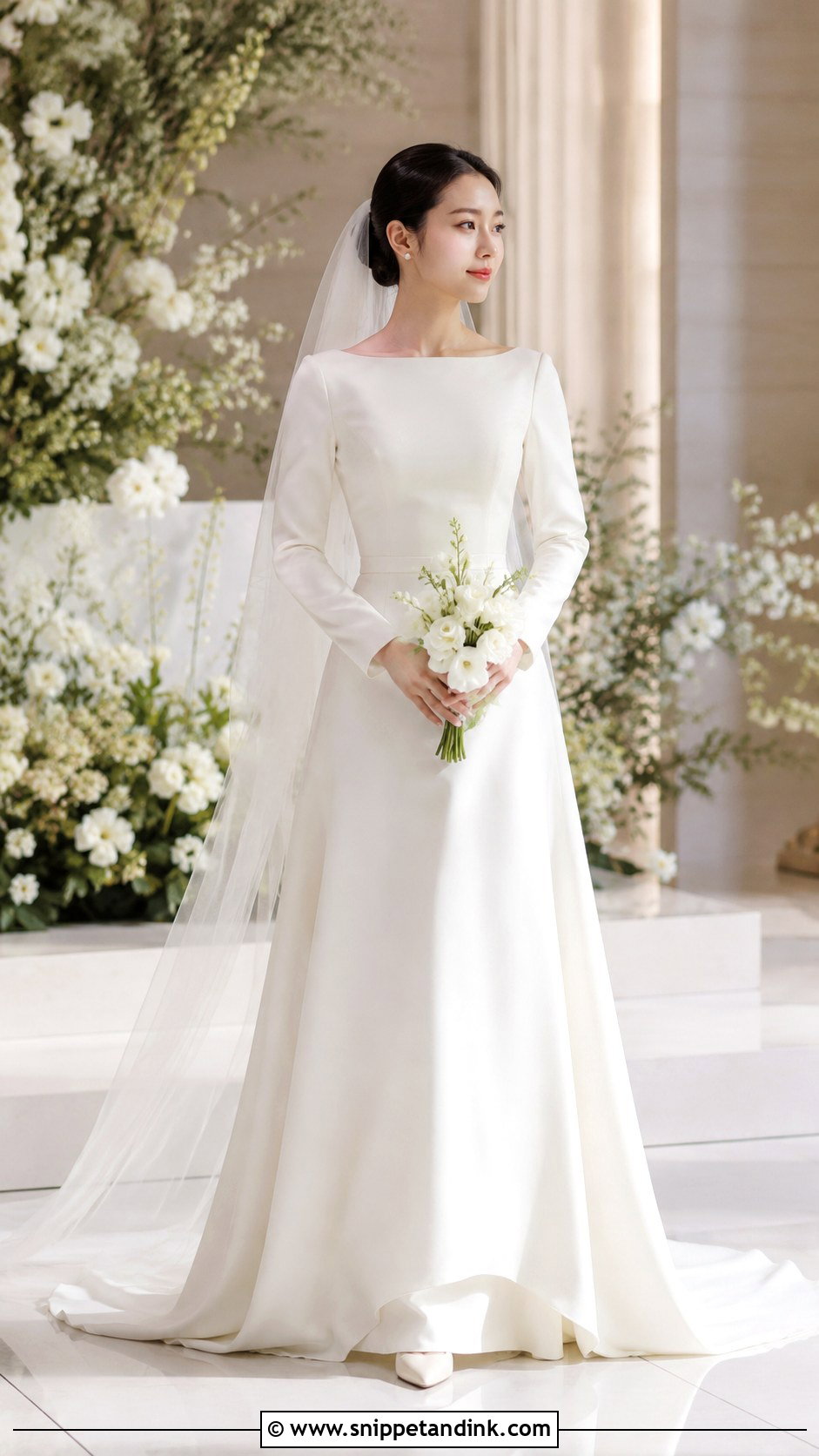
Bateau necklines run from shoulder to shoulder just below the collarbone, so they show shape without much skin. I keep a little ease at the neck so it doesn’t ride up when you raise your arms. Smooth crepe or satin with a fitted waist and flowing skirt suits it, with short, long or no sleeves. A floor-length veil and a low bun keep it classic. It’s a good choice for formal venues and smaller ceremonies alike.
12. Simple Korean Wedding Dress With Clean Ball Gown
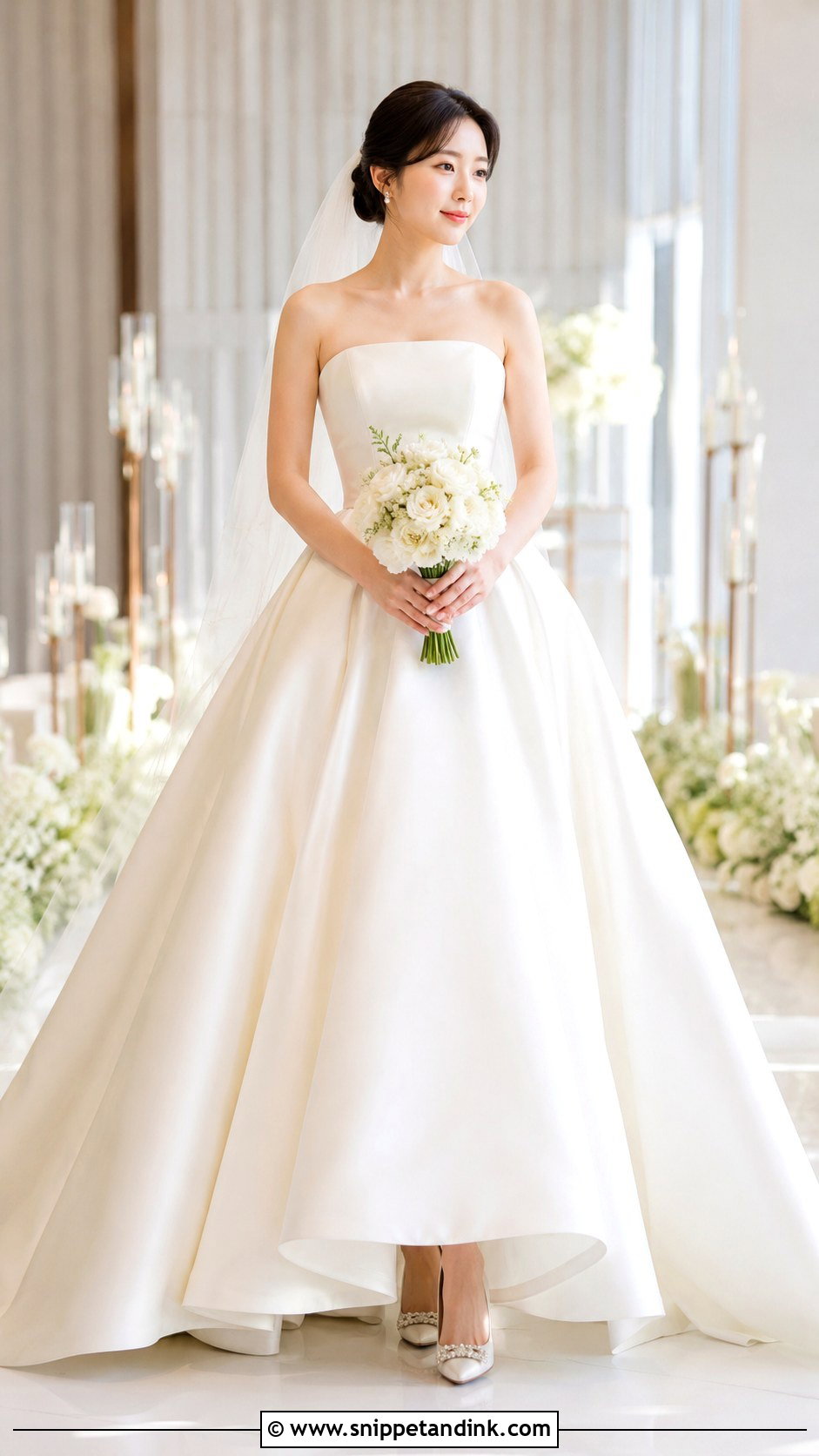
Volume without decoration is what makes a ball gown read as simple. Mikado holds a full skirt on its own; satin needs crinoline layers underneath to keep its shape through the day. Check the weight at a fitting by walking around for a few minutes, since full skirts get heavy by evening. A strapless, square or off shoulder bodice suits it, with pearl earrings and a sheer veil. It gives the princess silhouette without sparkle or lace.
13. Simple Korean Wedding Dress With Short Sleeve Gown
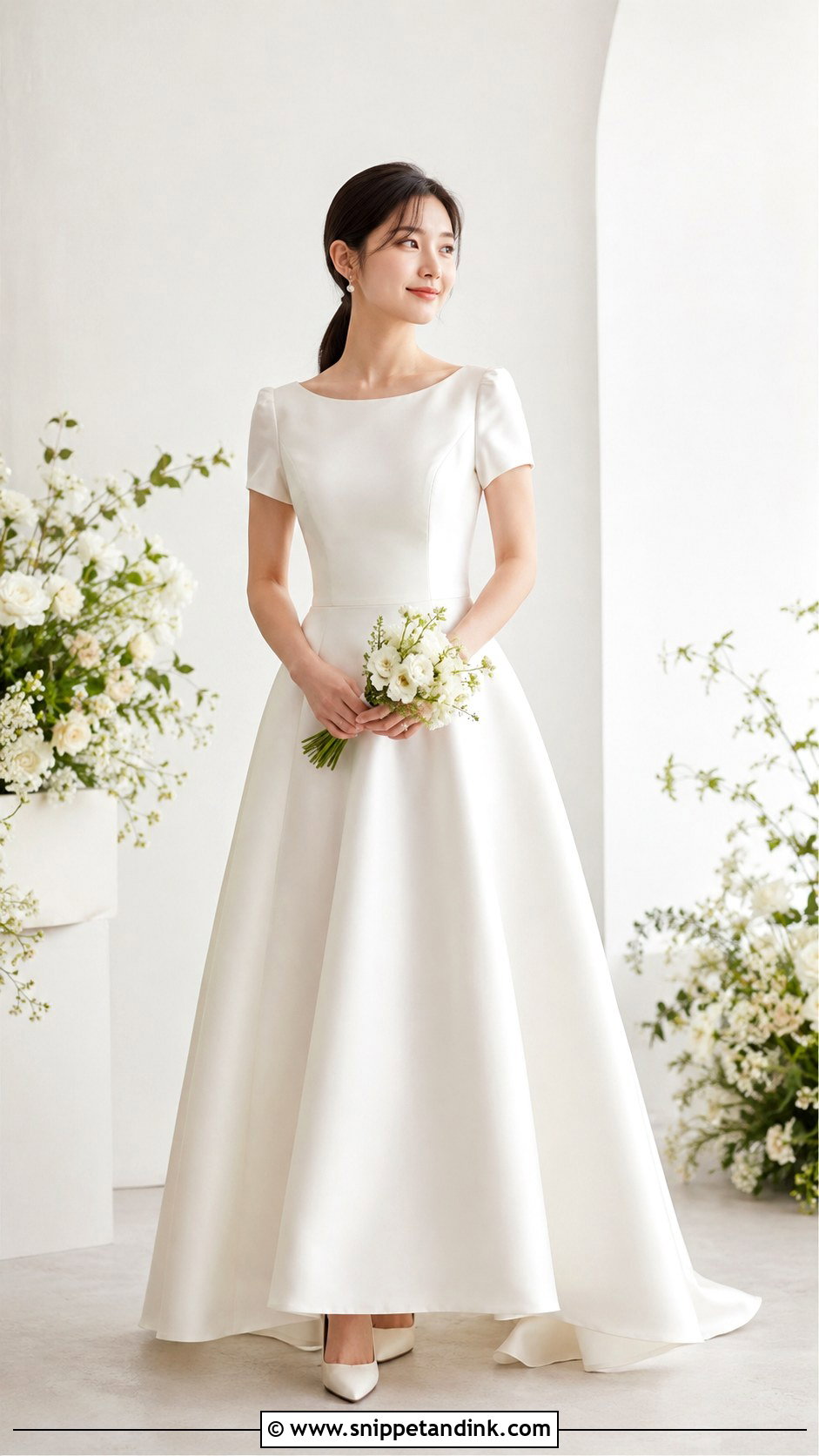
Short sleeves are a middle ground I recommend for warm-weather brides who still want some coverage. Cap sleeves, soft puffs and tailored short sleeves all work on a satin or crepe gown. The cap should sit on the shoulder bone, not past it, or it cuts across the widest point of the arm. A fitted bodice and A-line skirt keep it balanced. Style it with white pumps and a soft low ponytail or bun for spring and summer.
14. Simple Korean Wedding Dress With Tulle A-Line Dress
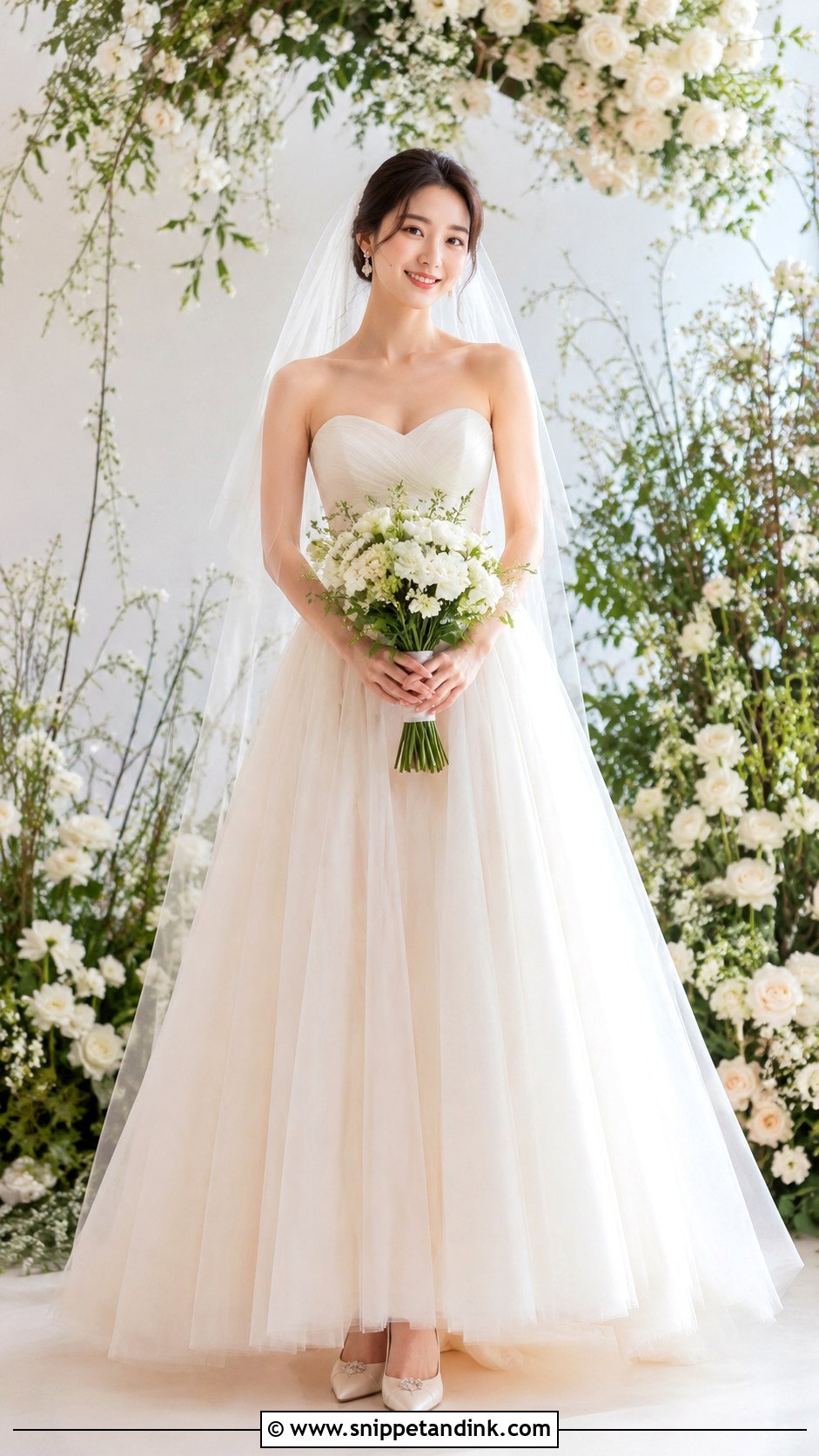
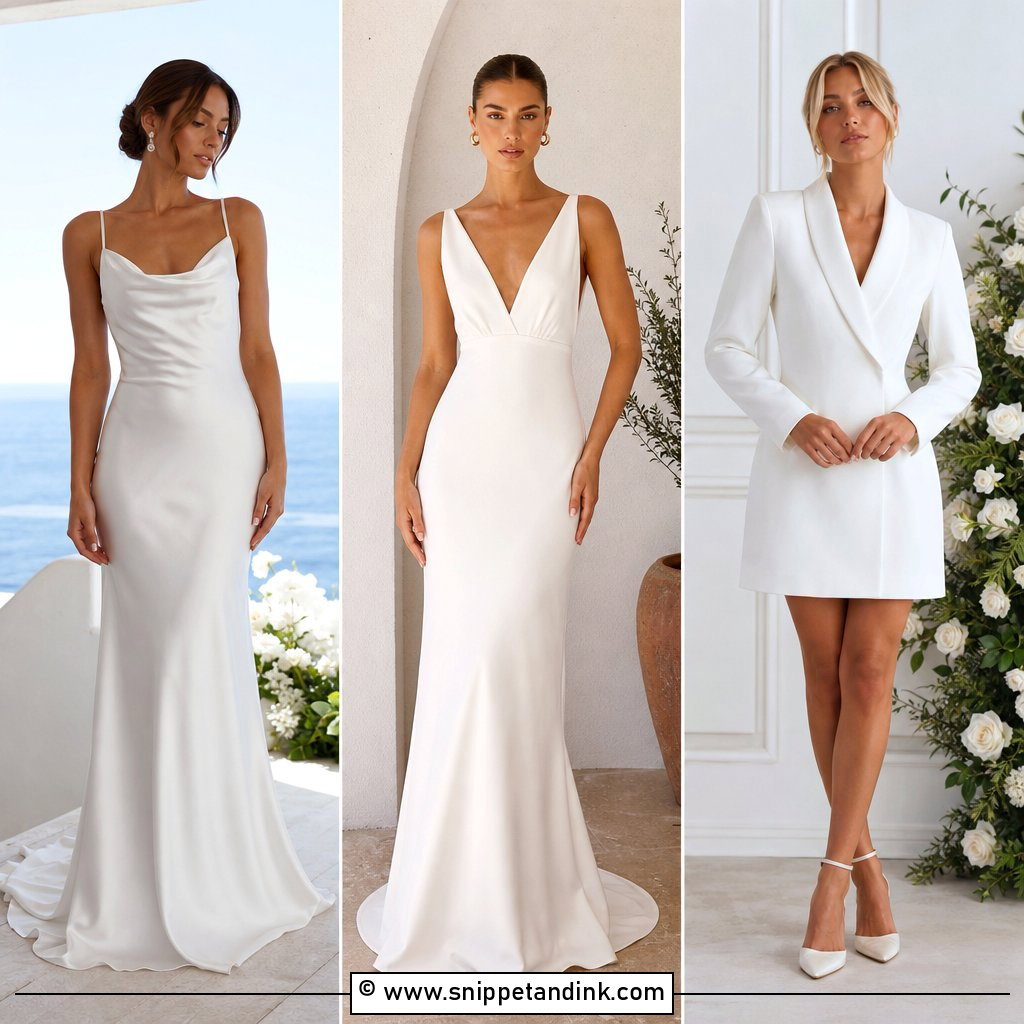
Fine tulle moves; stiff tulle stands up and can scratch. I rub a swatch against the inner arm before recommending a tulle A-line, because rough net irritates skin over a long day. Soft ivory tulle looks gentler on camera than bright white. A sweetheart, square or scoop bodice keeps the focus on the skirt’s shape. Delicate earrings and comfortable ivory heels suit garden weddings and studio photos.
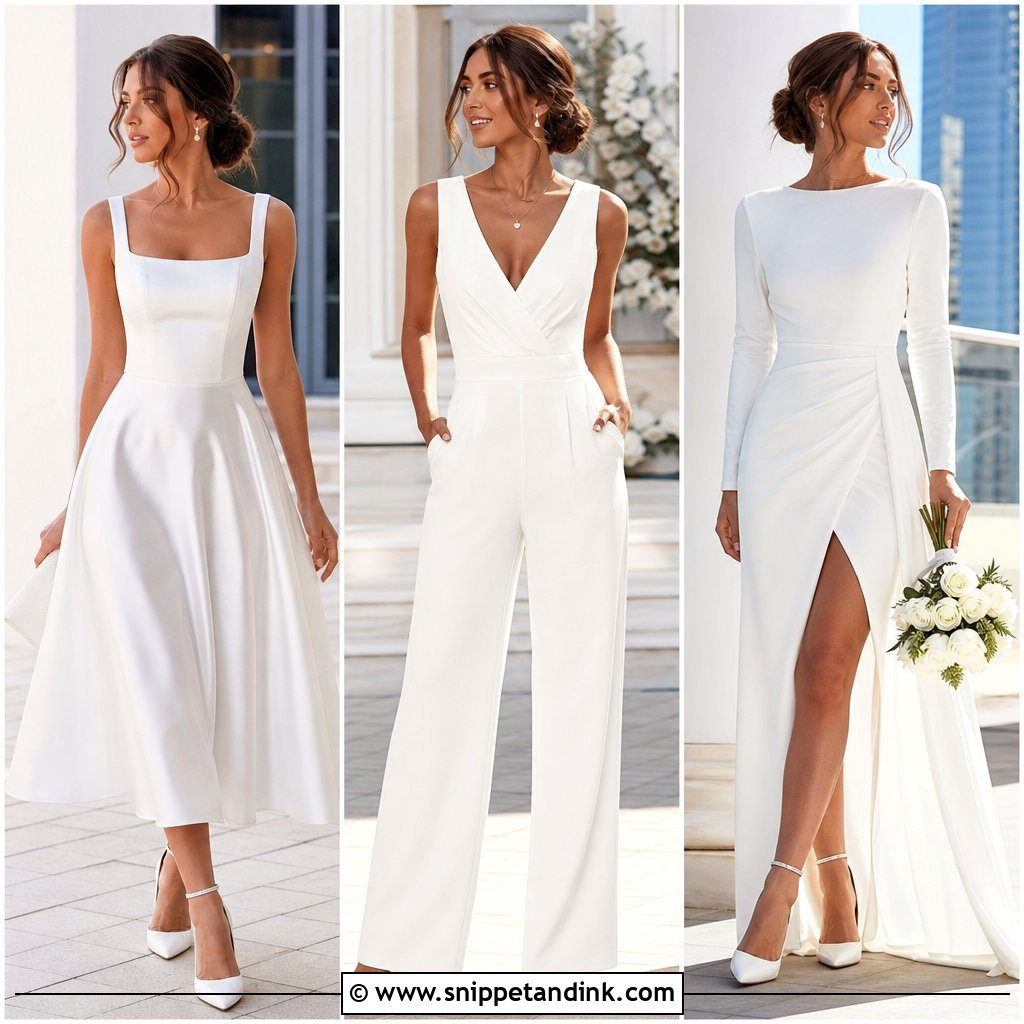
15. Simple Korean Wedding Dress With Ribbon Waist Gown
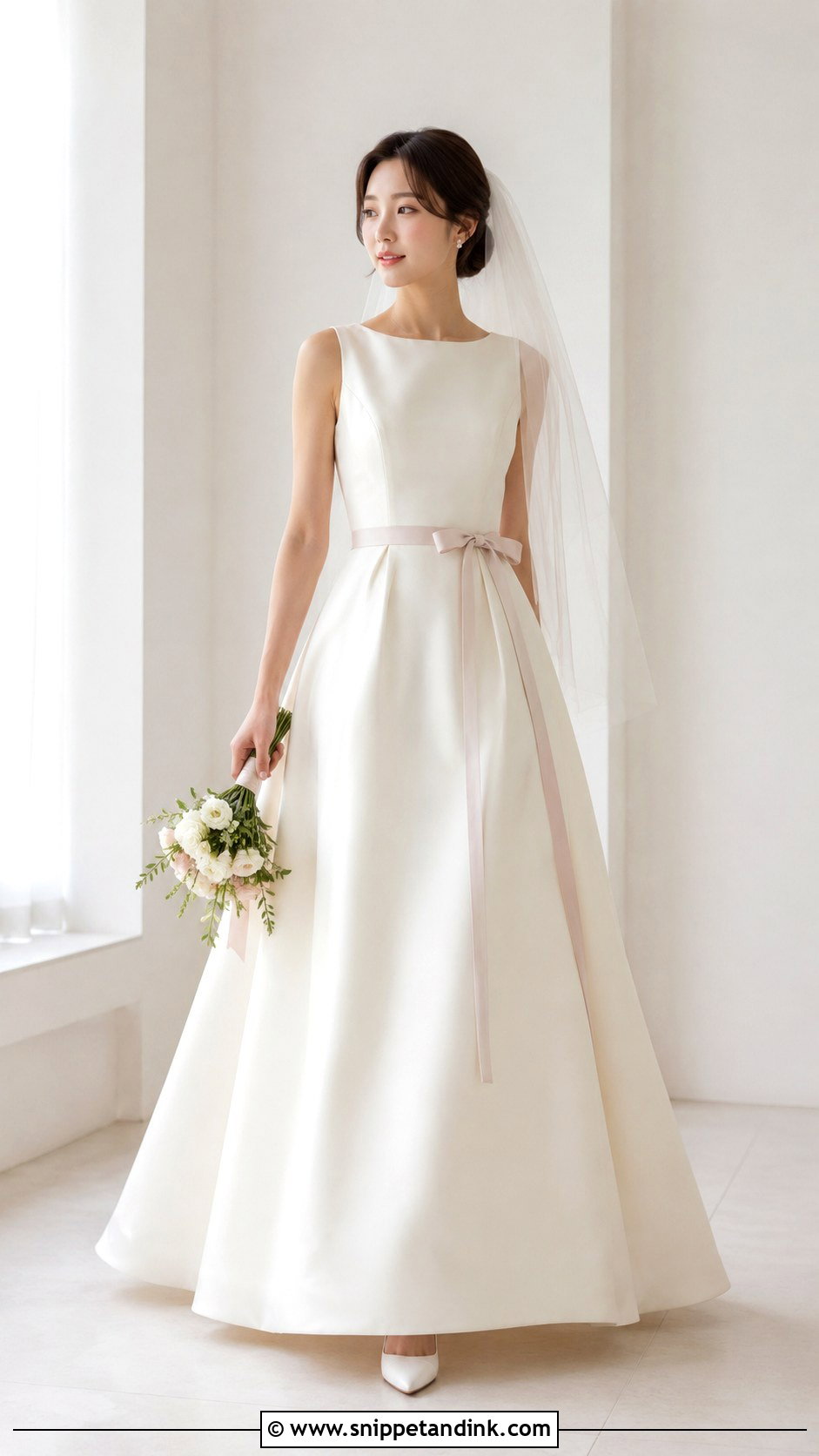
A ribbon at the waist echoes the goreum ties of a hanbok, which is part of why this detail feels Korean-inspired. Choose a narrow ribbon in ivory, blush beige or pale champagne and tie it at the back, where it shows in walking-away photos. Wide ribbons crush when you sit, so keep it slim and use a firm satin that holds a bow. An A-line or sheath shape lets the waist stay the focus, with pearl studs and a smooth veil.
16. Simple Korean Wedding Dress With Cape Veil Gown
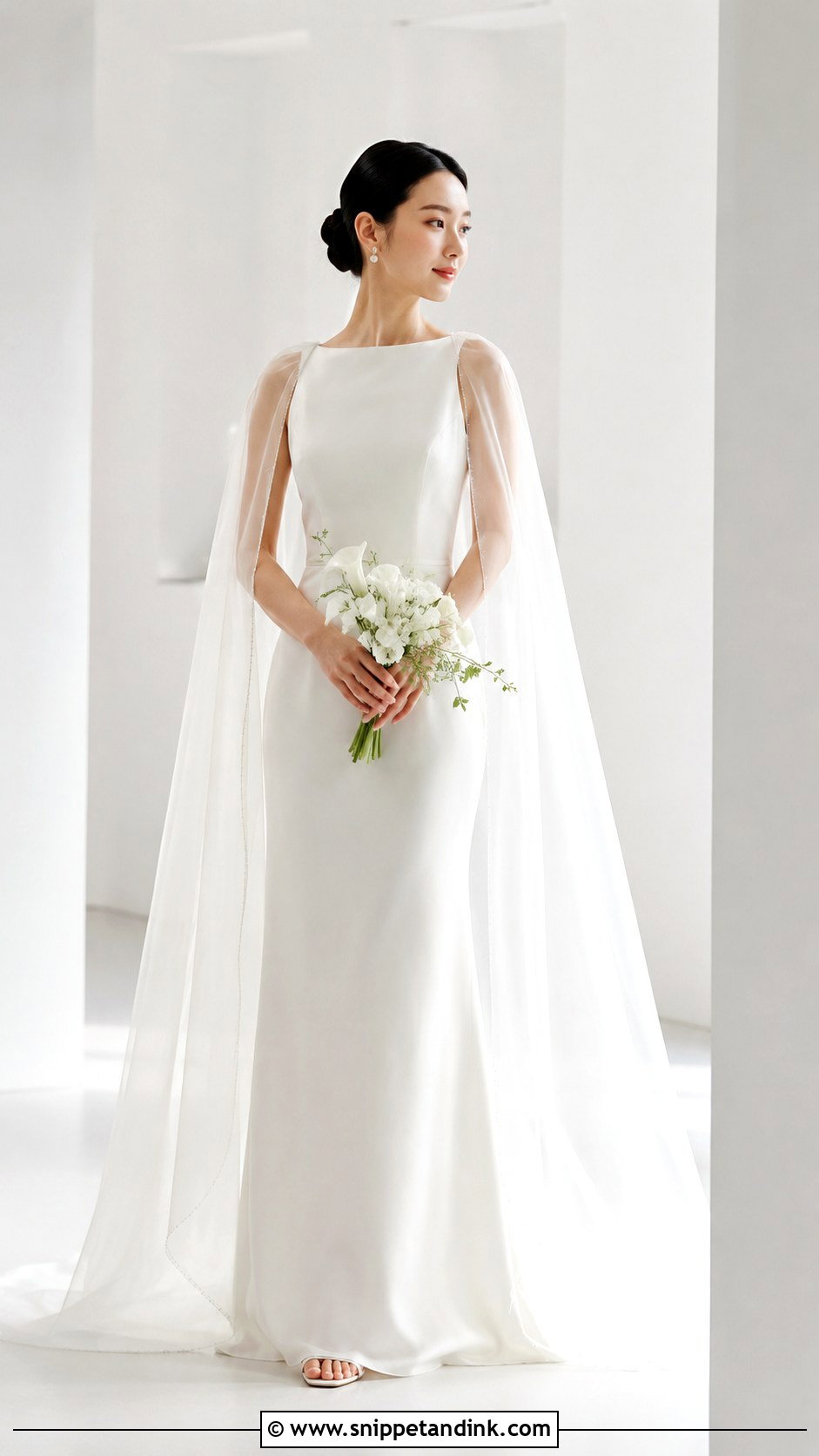
Cape veils turn a plain gown into something memorable without lace or beading. Start with a strapless, square neck or sleeveless dress and add a sheer cape in light tulle or organza falling from the shoulders. I fix capes with small hidden loops or clips at the shoulder seam so they don’t drag the neckline down. Sleek hair keeps the line clean. Remove it for the reception and the dress becomes a second look.
17. Simple Korean Wedding Dress With Jeogori Inspired Top
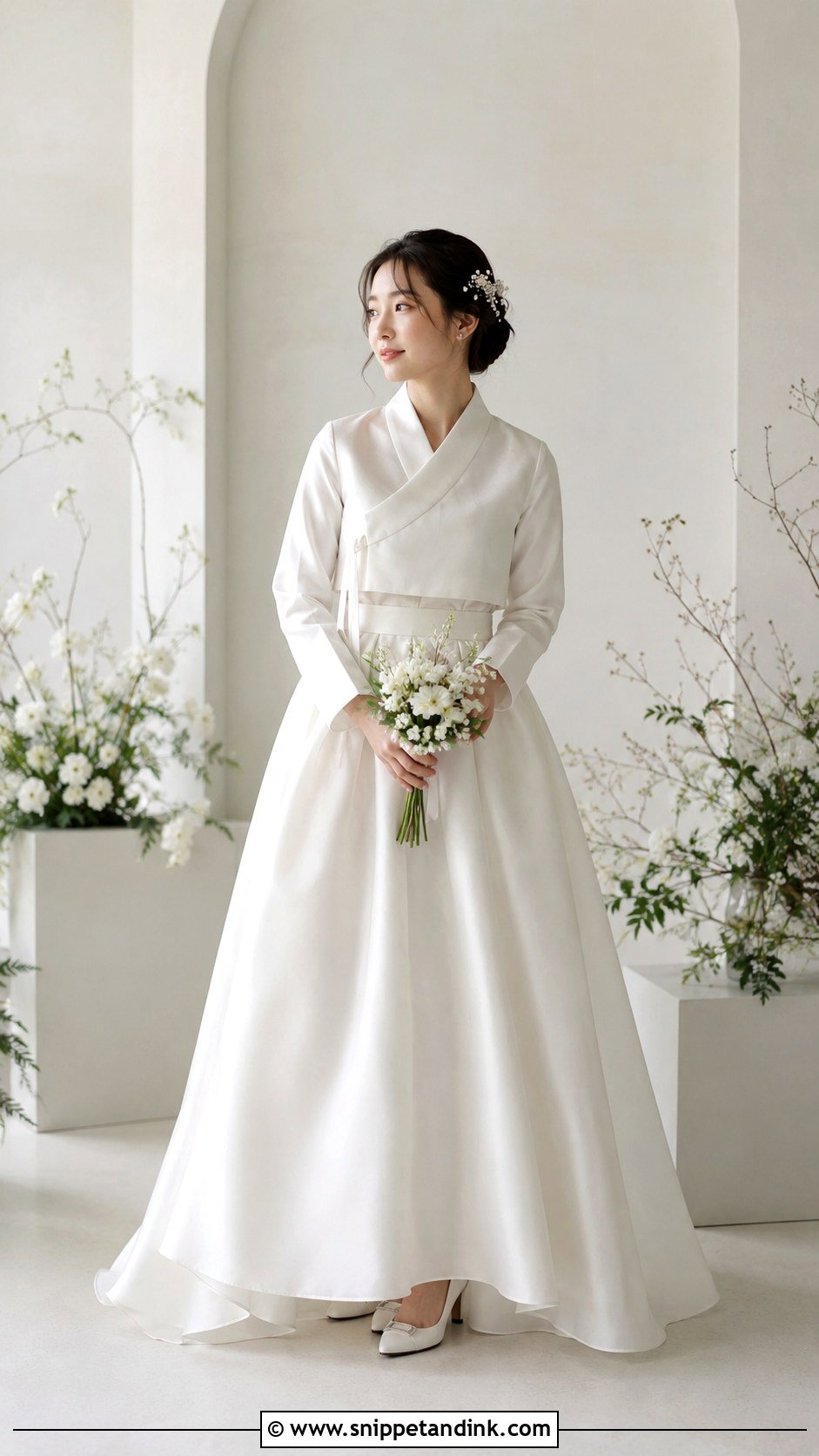
A jeogori-inspired top is the most direct Korean reference you can wear without full hanbok. Choose a cropped wrap-style top with clean lines and soft ties over a smooth ivory skirt in satin, silk or organza, depending on how formal the day is. The cropped length matters: it should end around the bust line, as a traditional jeogori does, so the skirt’s high waist reads properly. Low satin heels and pearl hairpins finish it for paebaek photos or fusion weddings.
18. Simple Korean Wedding Dress With Blush Hanbok Dress
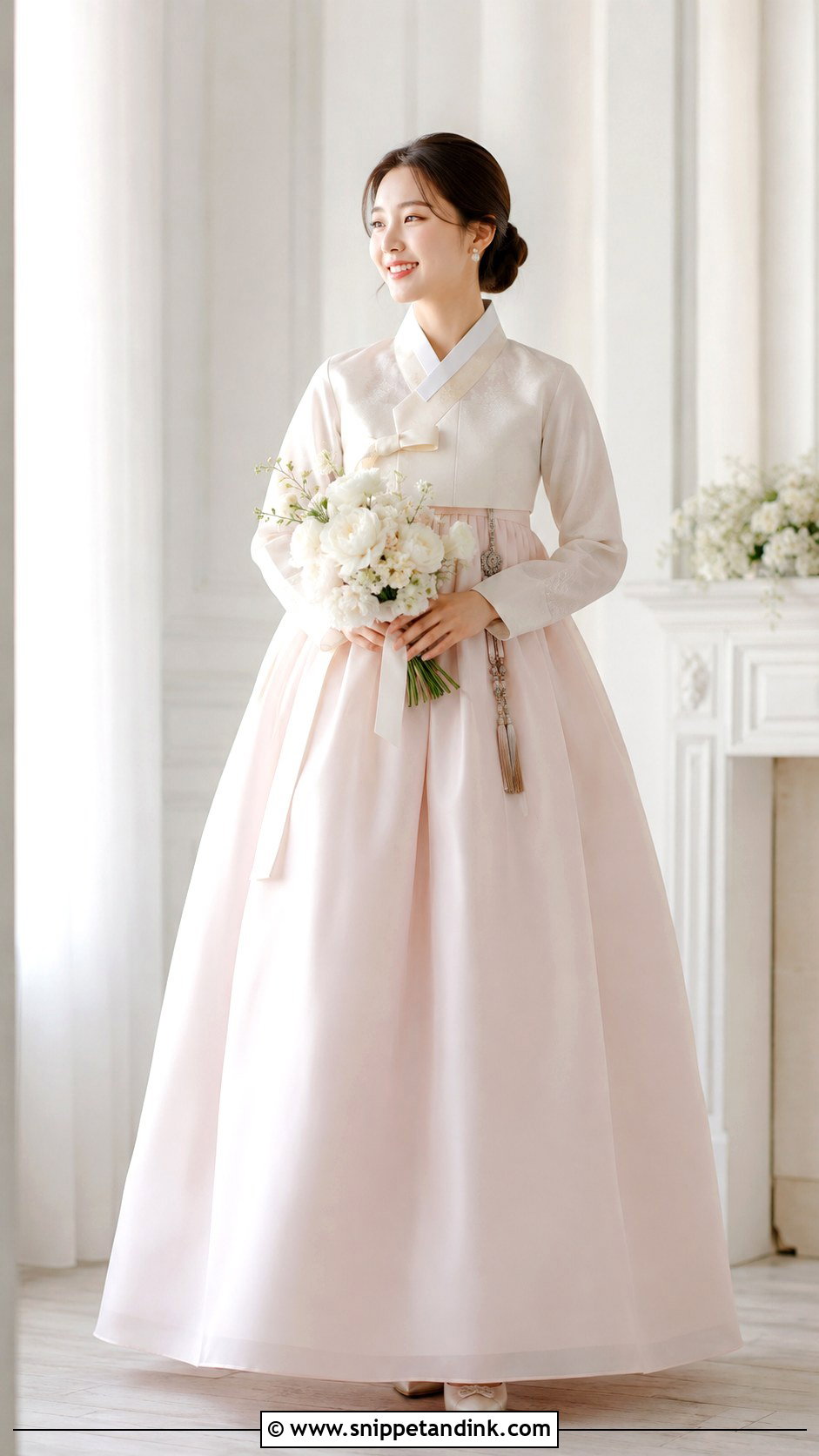
A blush hanbok dress pairs a pale pink chima with an ivory or cream jeogori-style top, which keeps the colour gentle rather than bright. Silk and satin give a soft sheen. Blush shifts a lot under different lights, so check it in daylight and under warm indoor bulbs before committing. Keep accessories understated: pearl earrings, a neat bun, satin shoes. It works well for pre-wedding photos or as a second outfit.
19. Simple Korean Wedding Dress With White Hanbok Dress
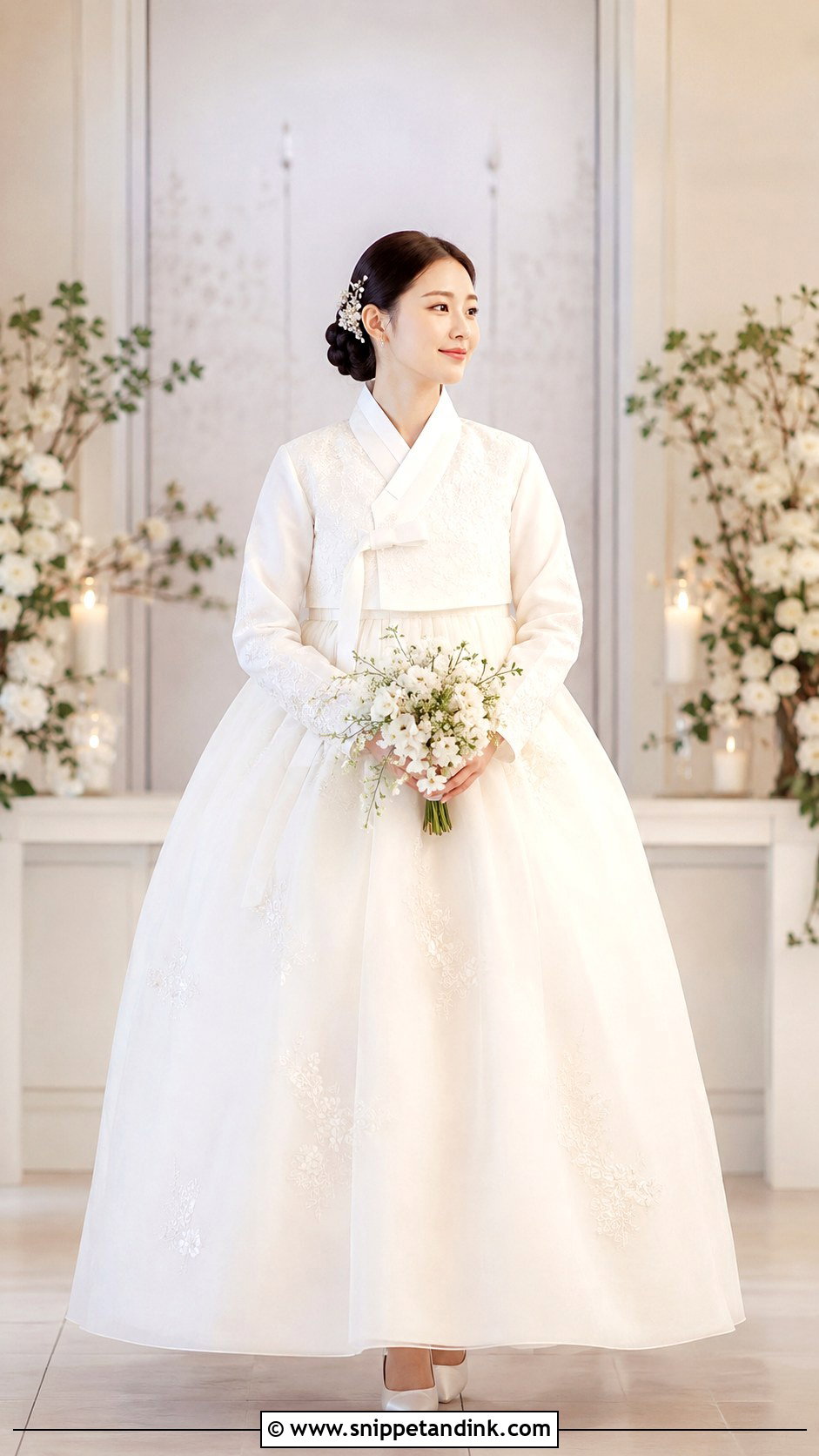
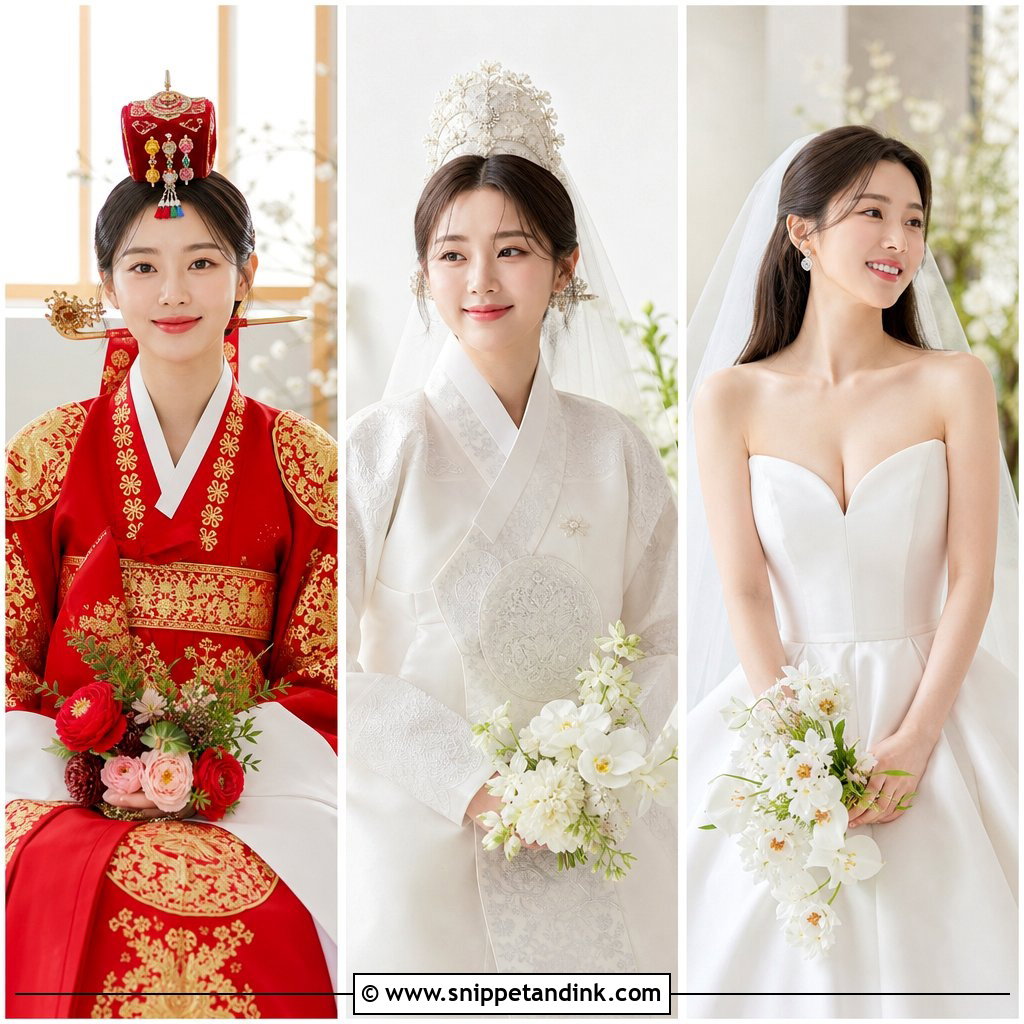
A white hanbok dress brings tradition in a minimal form: a white or ivory chima with a matching jeogori-inspired top, with trims and embroidery kept very subtle. One note from fittings: pure white silk can look bluish in photos next to an ivory gown, so if you’re changing between the two, choose matching tones. A soft updo with pearl hair ornaments and simple white shoes suits family ceremonies and traditional portraits.
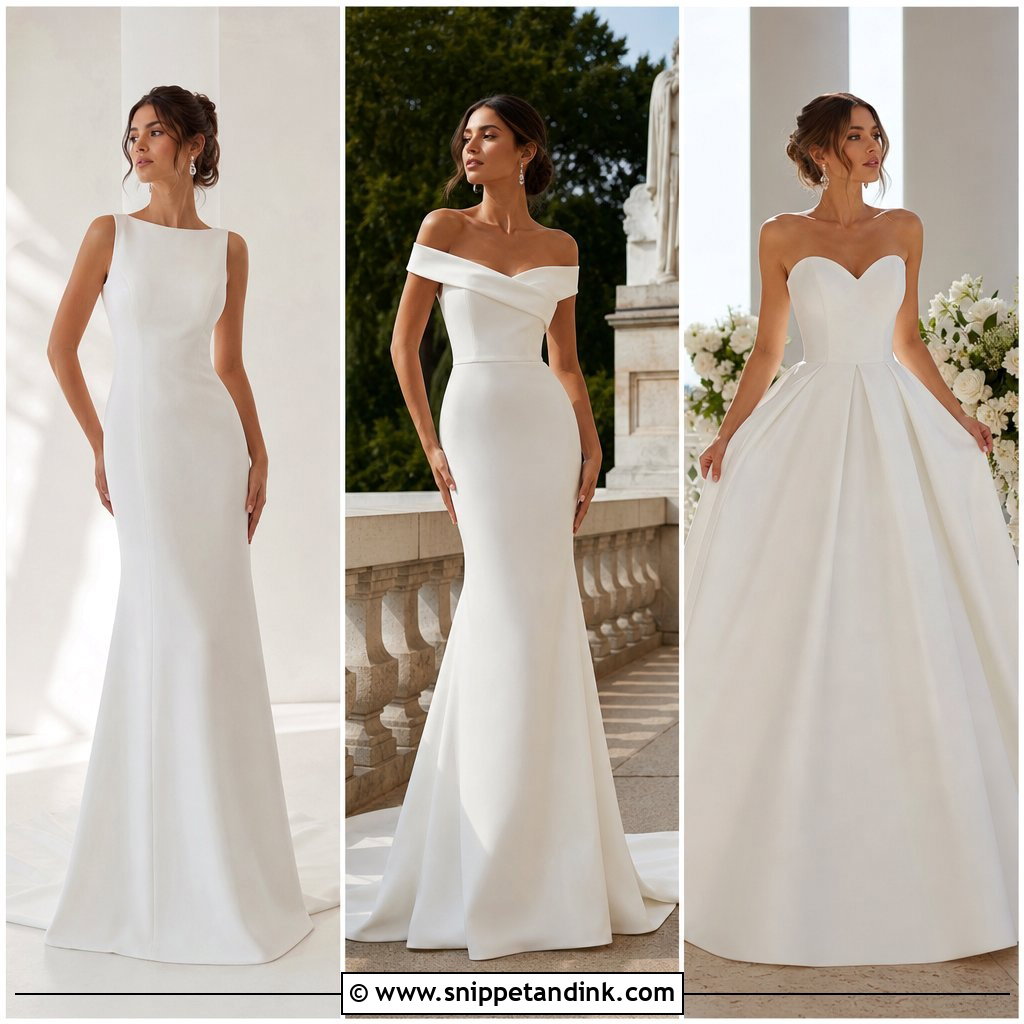
20. Simple Korean Wedding Dress With Floral Embroidered Gown
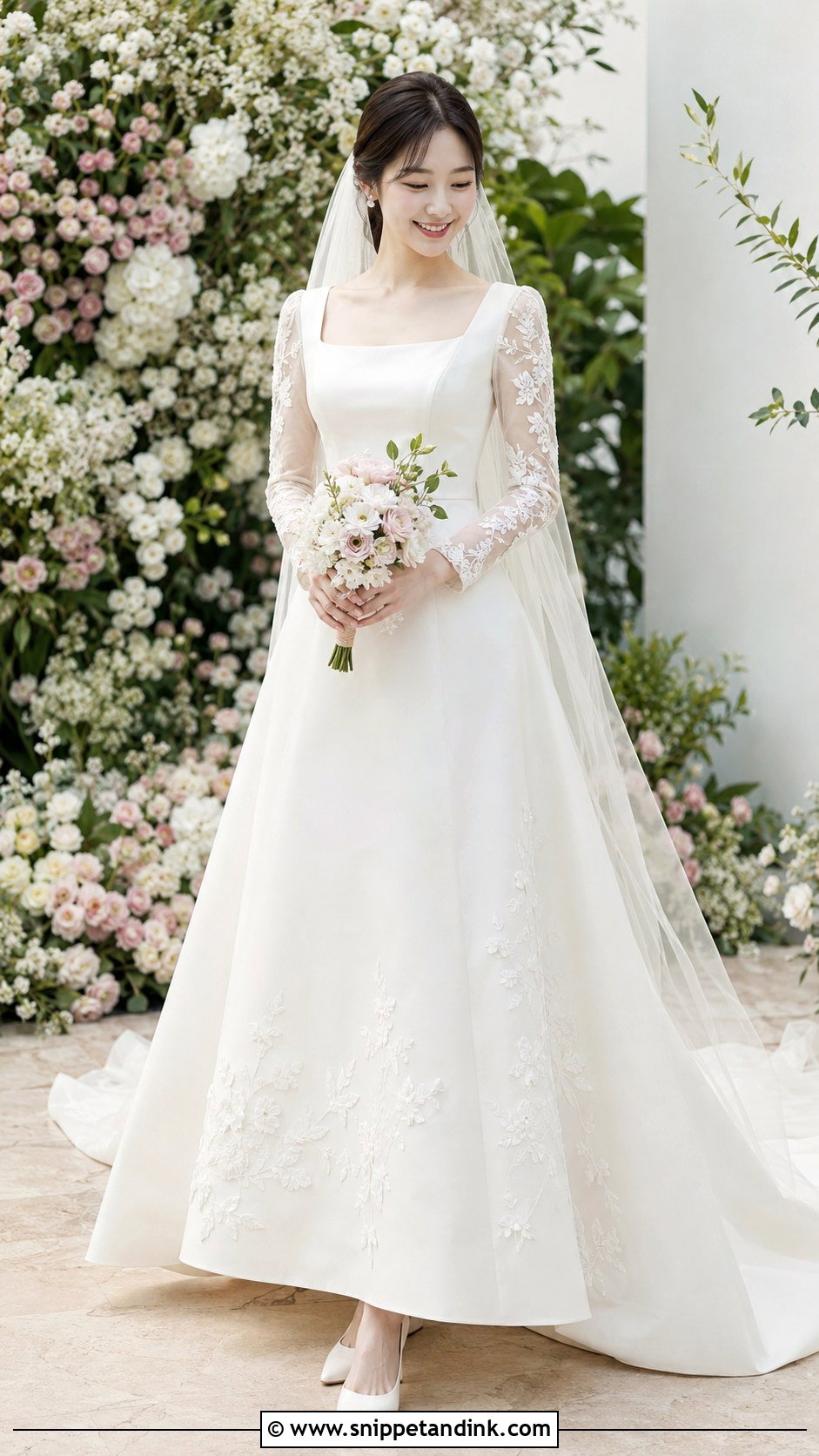
Embroidery reads simple when it’s tone-on-tone. White-on-white or ivory-on-ivory flowers on the bodice, sleeves or hem add a handmade feel without looking busy, while coloured thread pulls the dress into a different mood entirely. A soft A-line or sheath keeps it easy to wear. Pearl earrings, a sheer veil and plain heels let the embroidery stay the focus in garden, studio or indoor ceremonies.
21. Simple Korean Wedding Dress With Pleated Skirt Gown
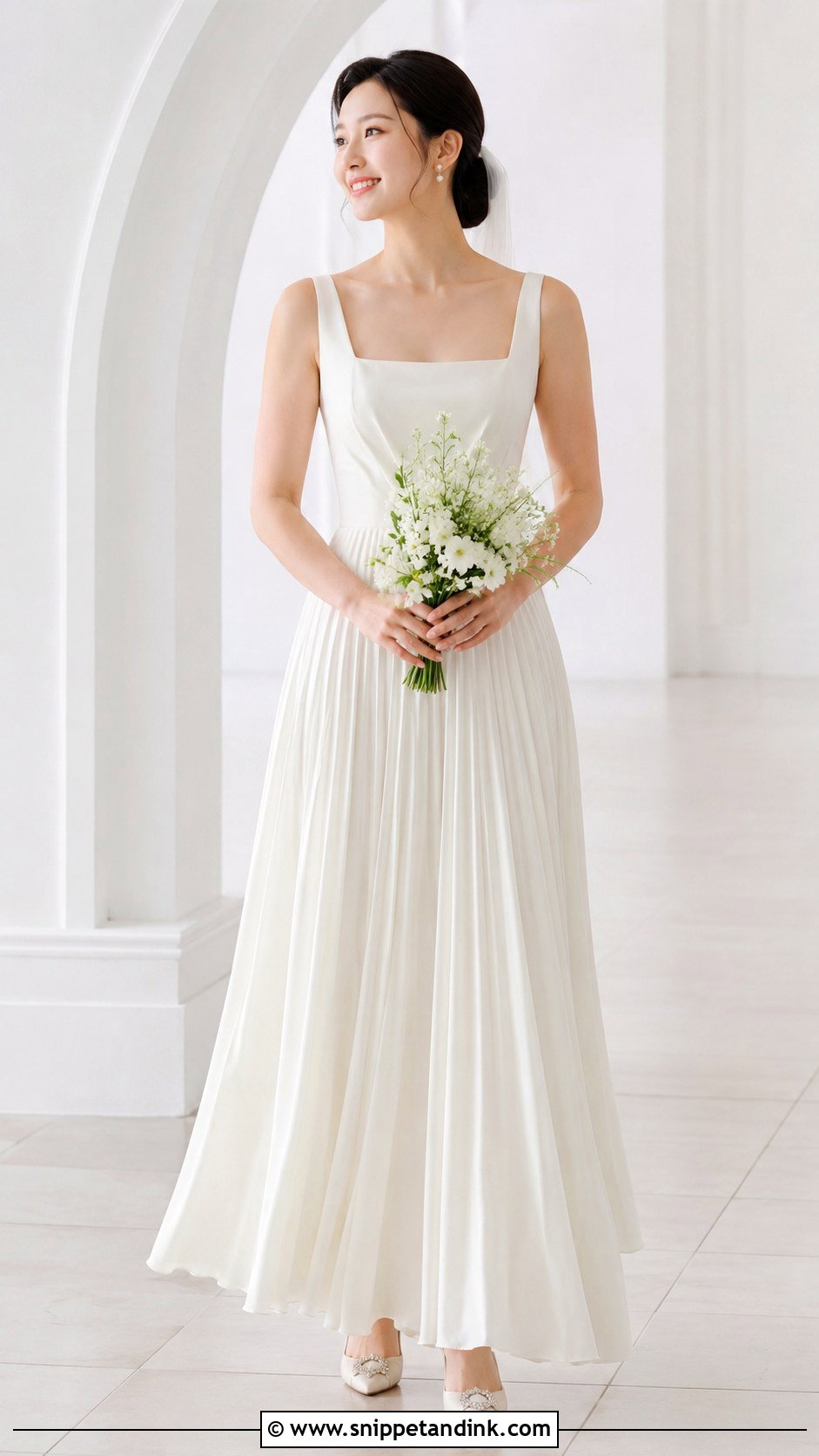
Pleats add vertical lines, so a fitted bodice over a softly pleated chiffon, satin or organza skirt lengthens the figure. The catch is pressing. Pleats need setting properly and can fall out in humidity, so ask your seamstress how they’ve been finished. Keep the neckline square, bateau or scoop, with delicate pearl earrings and a low bun. The skirt moves well in walking photos.
22. Simple Korean Wedding Dress With Detachable Overskirt
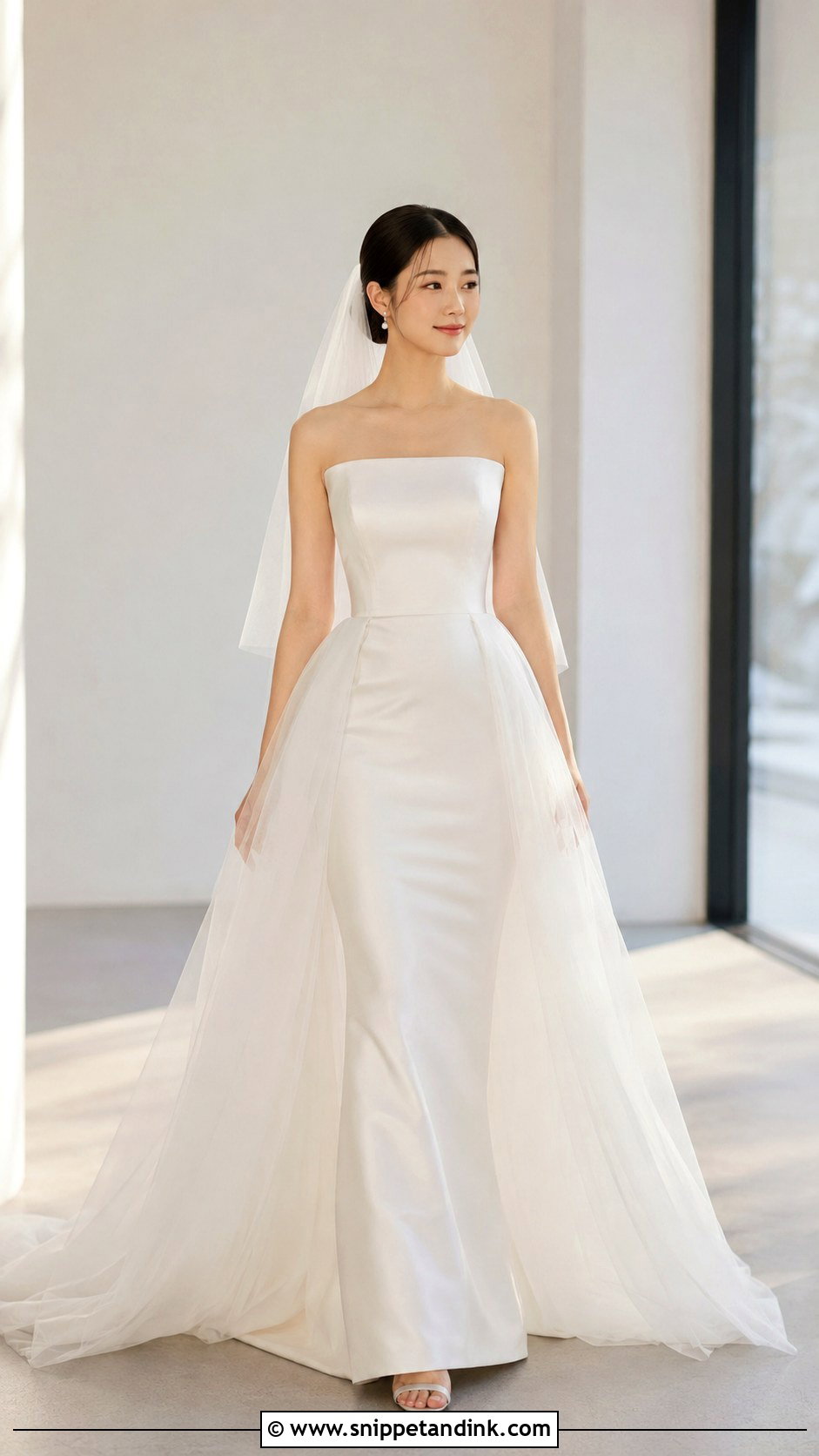
A detachable overskirt gives you one dress with two looks: a sheath, slip or fitted satin gown underneath, with a tulle, organza or mikado overskirt for the ceremony. Practise taking it off before the day. Most fasten with hooks or snaps at the waist, and someone who has never done it can take ages with a nervous bride. Keep the waist smooth and the veil sheer. It’s an efficient route to an aisle moment and a dance-floor dress.
23. Simple Korean Wedding Dress With Button Back Gown
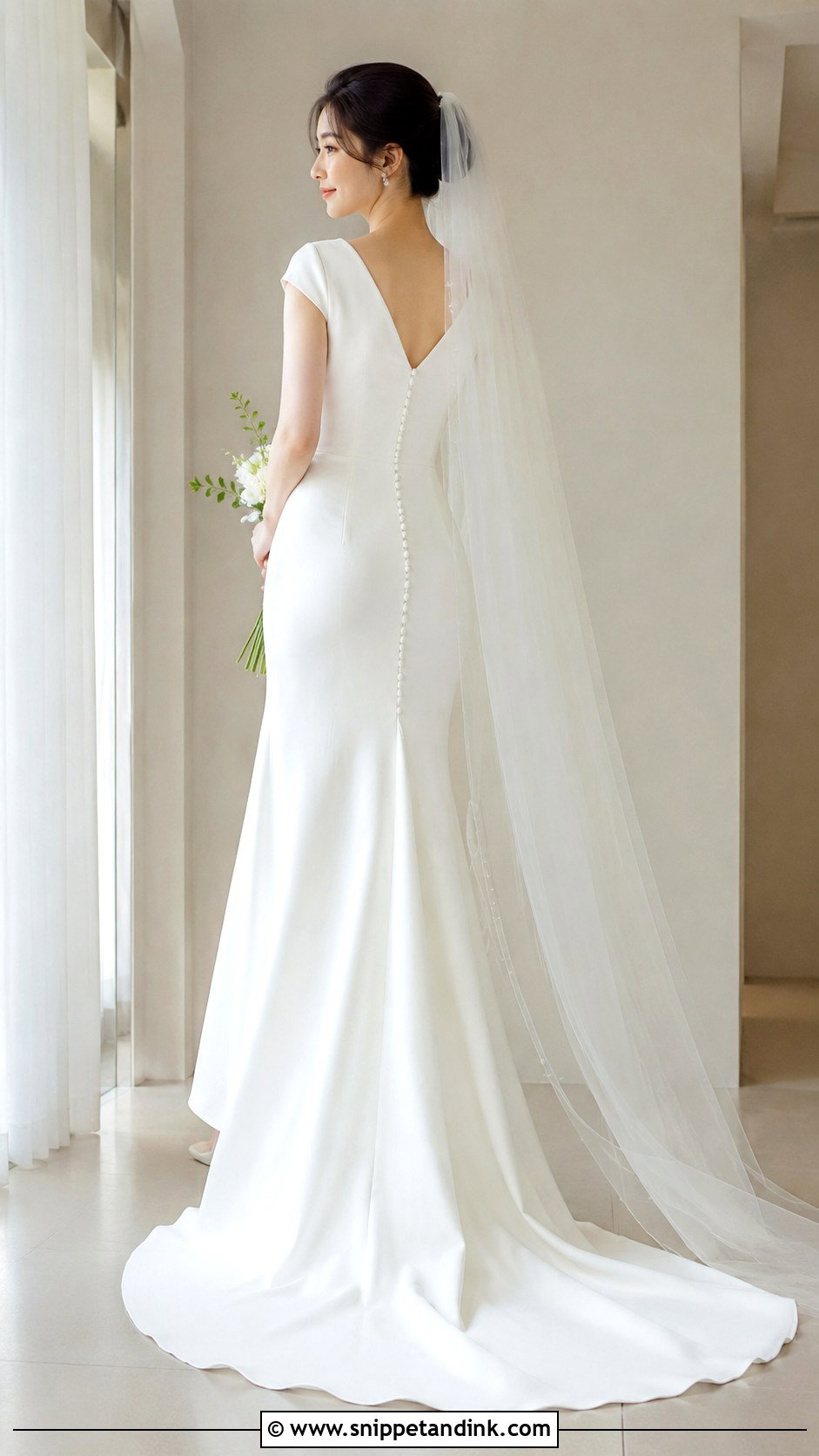
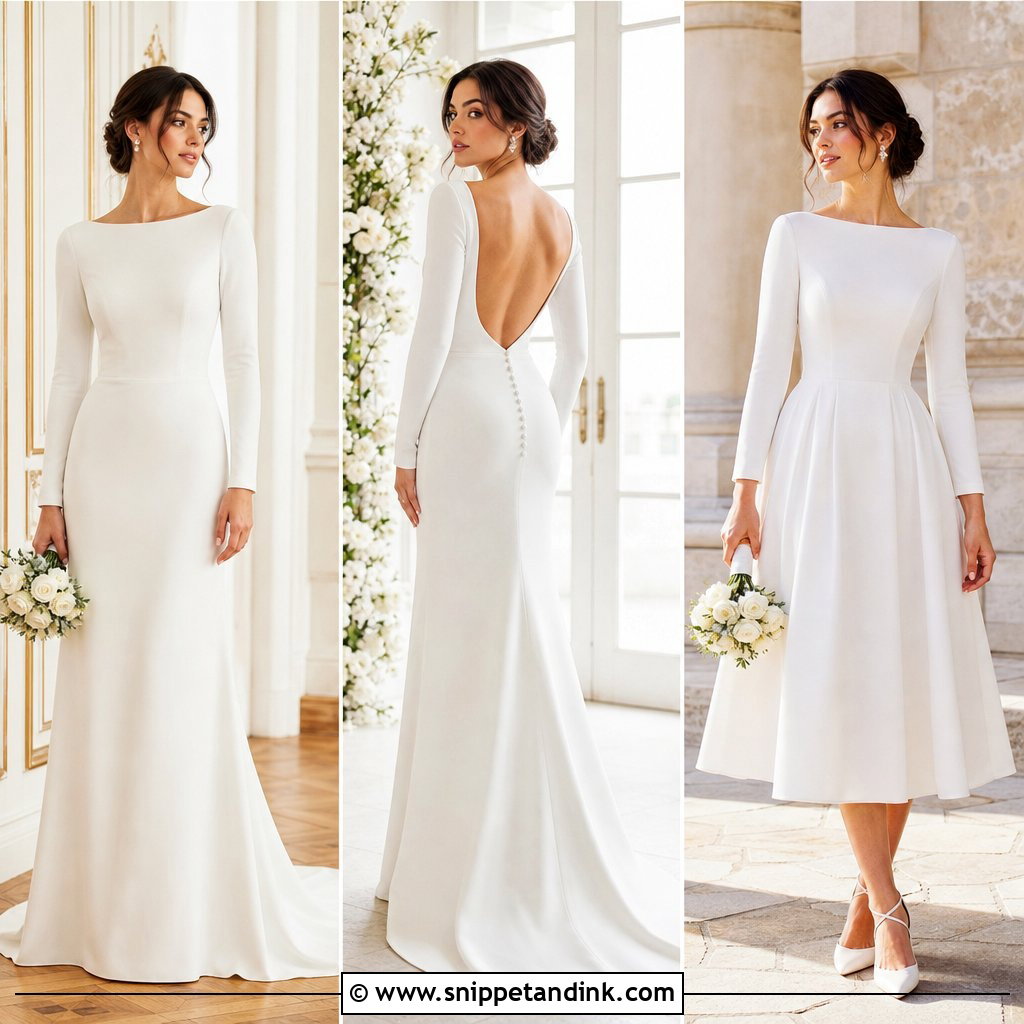
Covered buttons down the back look classic, and they take time. A long row can take several minutes to fasten, so allow for that in the morning schedule and give the job to someone with patient hands. A smooth satin or crepe dress shows them off, with a square neck, bateau or long sleeves. Choose a sheer veil so the buttons stay visible in photos taken from behind.
24. Simple Korean Wedding Dress With Minimal Mermaid Gown
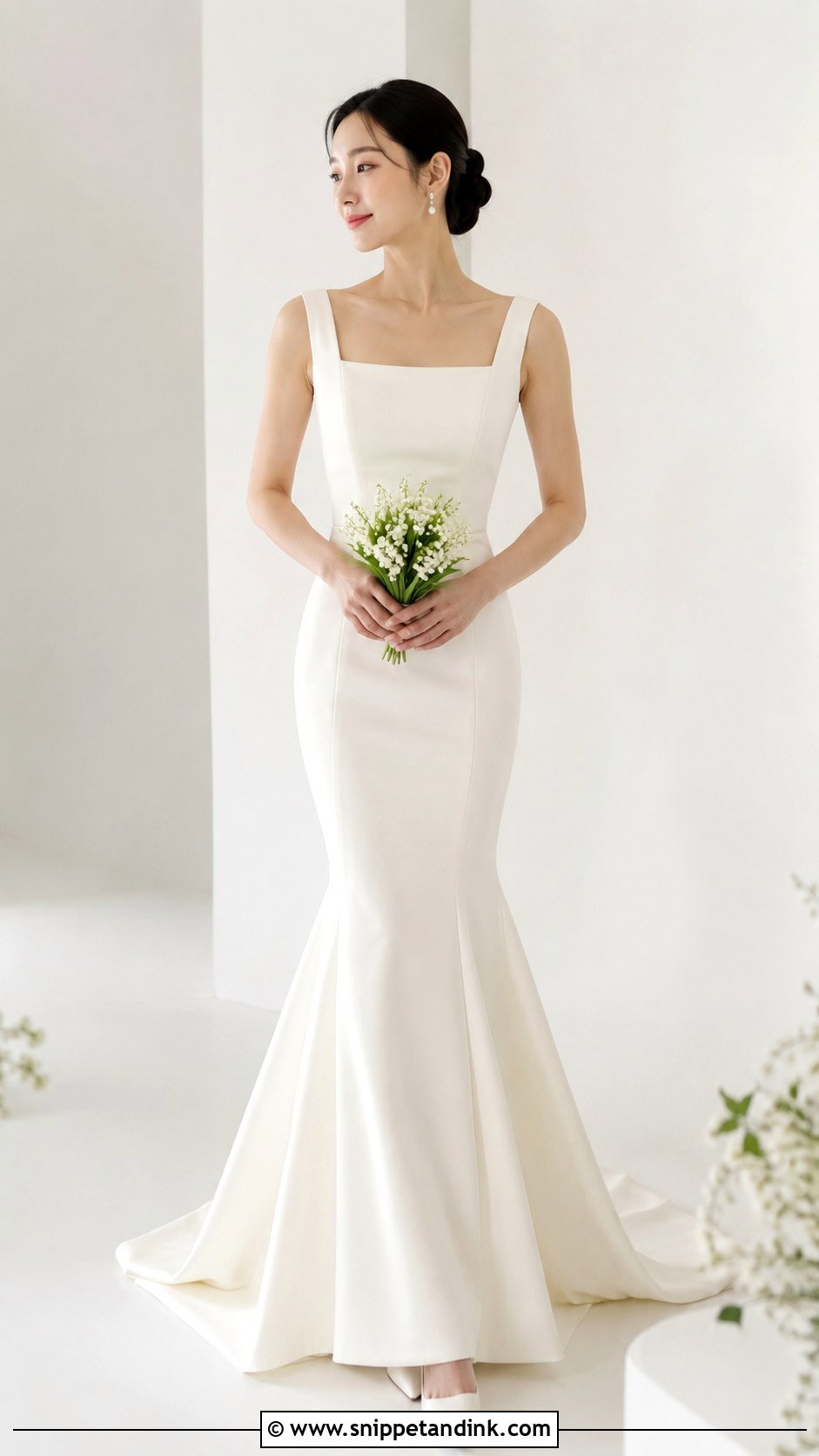
Mermaid gowns go wrong at the flare. Set too high, it bunches when you sit; set too low, you shuffle. I place the flare just below the knee for this cleaner version, in smooth crepe or satin with clean seams. Avoid heavy lace or sparkle if you want the look to stay simple. A square, off shoulder or high neckline all work, with a sleek bun and pointed ivory heels. It suits formal indoor venues and studio photos.

25. Simple Korean Wedding Dress With Bridal Pants Set
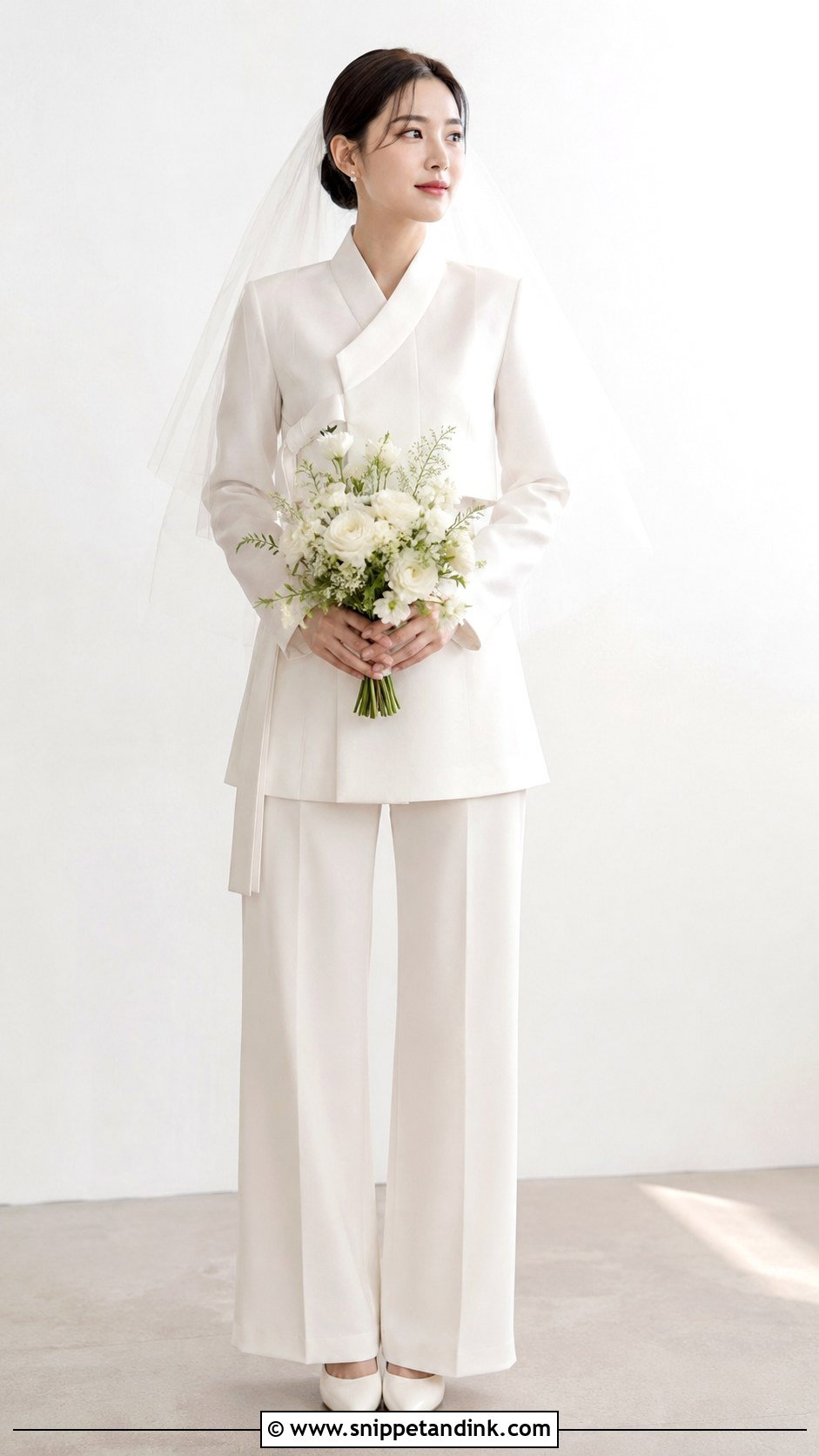
A bridal pants set needs one fit check a dress doesn’t: the rise, since trousers that sit too low pull every time you sit. Wide-leg ivory trousers with a tailored top, soft wrap blouse or jeogori-inspired jacket look formal in satin, crepe or silk. Hem them to just clear the floor in your pointed heels so the legs look long. A sheer veil or short cape makes it read bridal for the ceremony. Civil weddings and receptions suit it.
Changing for the Paebaek Without Losing an Hour
The paebaek is a family ceremony, traditionally held after the main ceremony, where the couple bows to the parents and elders, and the elders toss jujubes and chestnuts for the bride to catch in her skirt. Brides usually change into hanbok or a ceremonial robe for it, so plan the change as carefully as the dress.
- Ask the venue how long the room is booked for. Some wedding halls run tight time slots.
- Choose a gown that opens quickly; long button rows and tight corset lacing slow the change.
- Keep your hairstyle compatible with both looks, since a traditional headpiece needs a neat low bun.
- Have one person assigned only to the dress, the hanger and the garment bag.
If a full hanbok change feels too much, a cape you can remove or a detachable overskirt gives you two looks in a few minutes. The chima of a hanbok also needs to be wide enough to catch what is thrown, so choose a full skirt for that moment, not a narrow one.
Calm, Clean and Considered
The Korean bridal look is about balance: one clear line, one gentle detail, and a fabric chosen for how it moves. A modern satin gown, a hanbok-inspired outfit, a pearl-trimmed dress or a clean pants set can all deliver that, depending on your ceremony. Spend your attention on fit and fabric rather than decoration. A smooth neckline, a soft sleeve and minimal accessories will carry you from the aisle to the paebaek to the last photo.
You'll Like These Ideas:



Leave a Reply