
A Korean bridal outfit is built in layers, and every layer says something: the skirt colour, the jacket, the embroidery, the crown, the pendant at the waist. A wedding hanbok carries that meaning in its silk and stitching, which is why I always ask a bride about the ceremony before we talk about colour. A robe that suits a paebaek with elders is not always the one you want for a reception full of walking and hugging. Below are the hwarot, wonsam, chima and jeogori pairings and accessories I reach for most, with notes on how each one actually wears.
Rent or Tailor? Fitting a Hanbok You Will Bow In
Most brides I dress decide early whether to rent or have a hanbok made. Rental is common for the ceremonial robes, because a fully embroidered hwarot is a big purchase for a garment worn for an hour. A custom chima and jeogori, on the other hand, is something many families keep and wear again at a first birthday or a sibling’s wedding. Tailoring takes time, so start several weeks to a few months ahead and allow for at least one fitting.
Whichever you choose, fit it for movement, not for standing still. At a fitting I ask the bride to do these things:
- Kneel and rise again, the way she will during the bows. If the chima tie slides, it needs re-tying higher or an extra hidden tie.
- Lift both arms forward. A jeogori that pulls across the back will ride up and expose the waistband.
- Walk across a room. The hem should just touch the shoe tops; longer and you’ll step on it on stairs.
- Sit on a floor cushion for a few minutes. Under a ceremonial robe, two layers of silk get warm fast.
Ask for a sokchima, the underskirt, if it isn’t included. It gives the chima its bell shape, stops static cling and keeps the skirt from turning see-through in bright outdoor light.
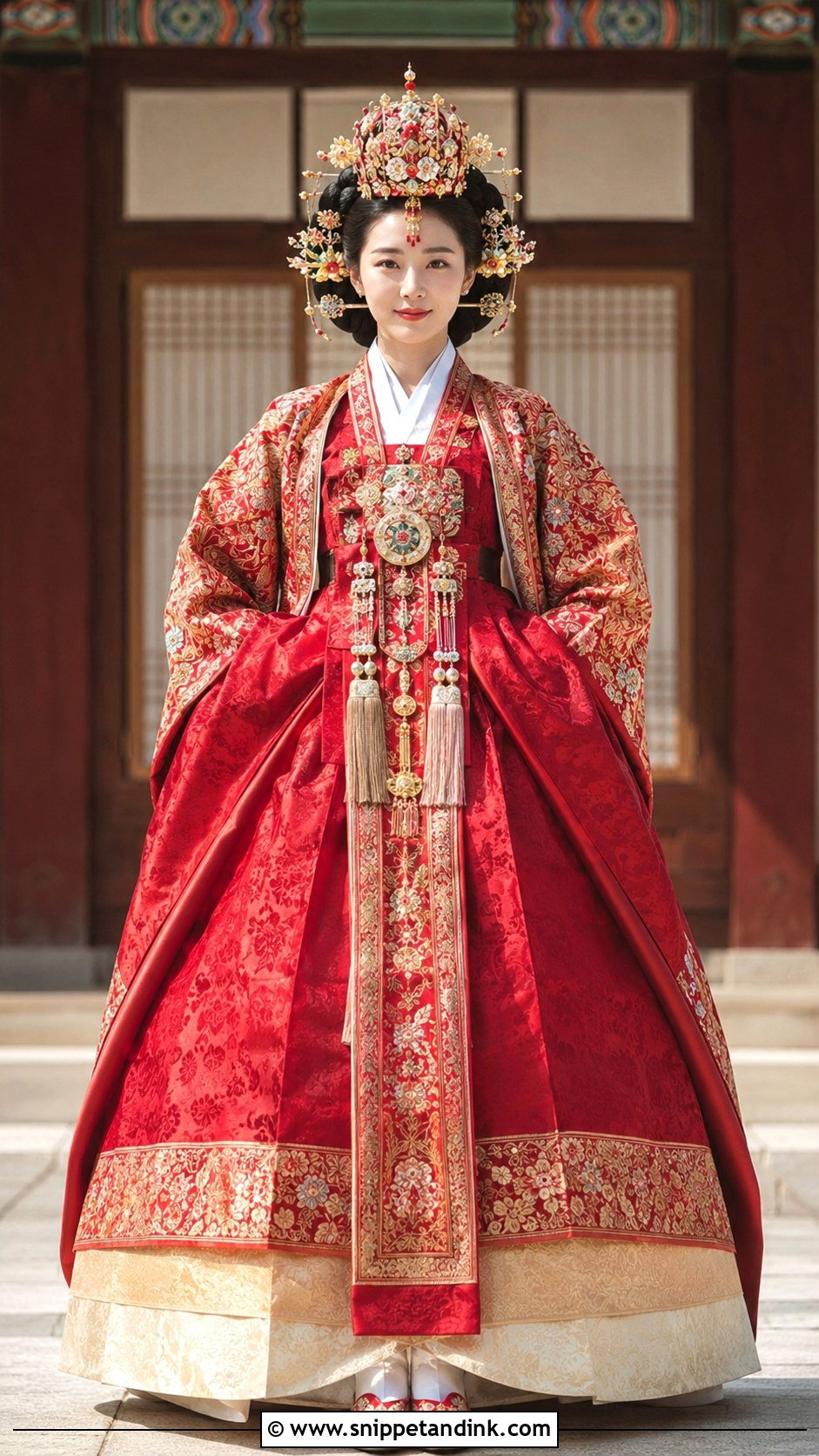
1. Red Hwarot Wedding Hanbok
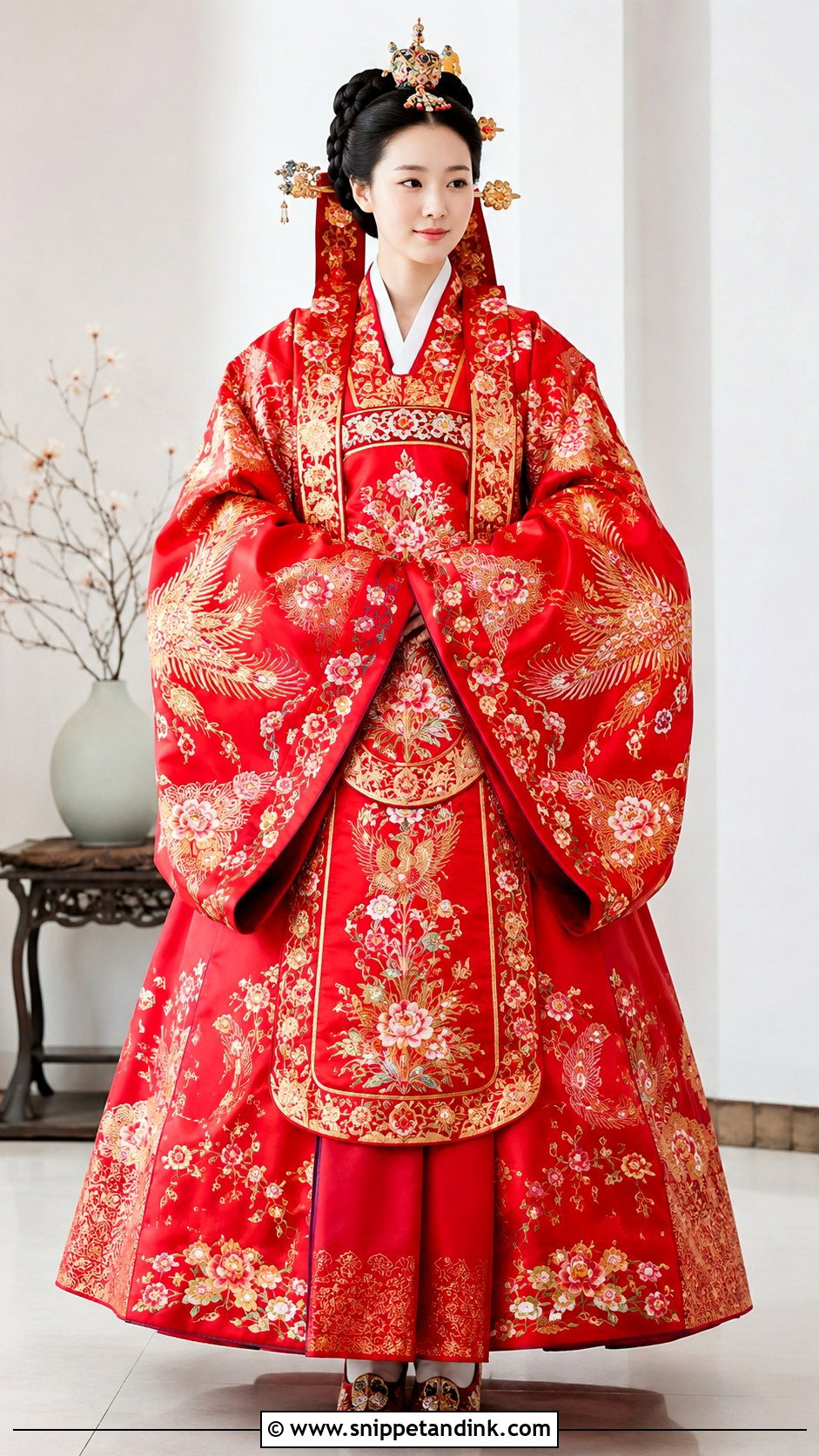
The red hwarot is the robe most people picture when they think of a Korean bride. It goes over a full skirt, the sleeves are wide and heavy with embroidery, and the motifs (peonies, lotus, phoenixes, butterflies) are wishes for prosperity and a happy marriage. Because the robe does so much, I pair it with a neat traditional hairstyle, a jokduri or hwagwan, embroidered silk shoes, and almost no other jewellery. One honest warning: a fully embroidered hwarot is warm and stiff, so plan to wear it for the paebaek and the formal portraits, then change.
2. Green Wonsam Wedding Hanbok
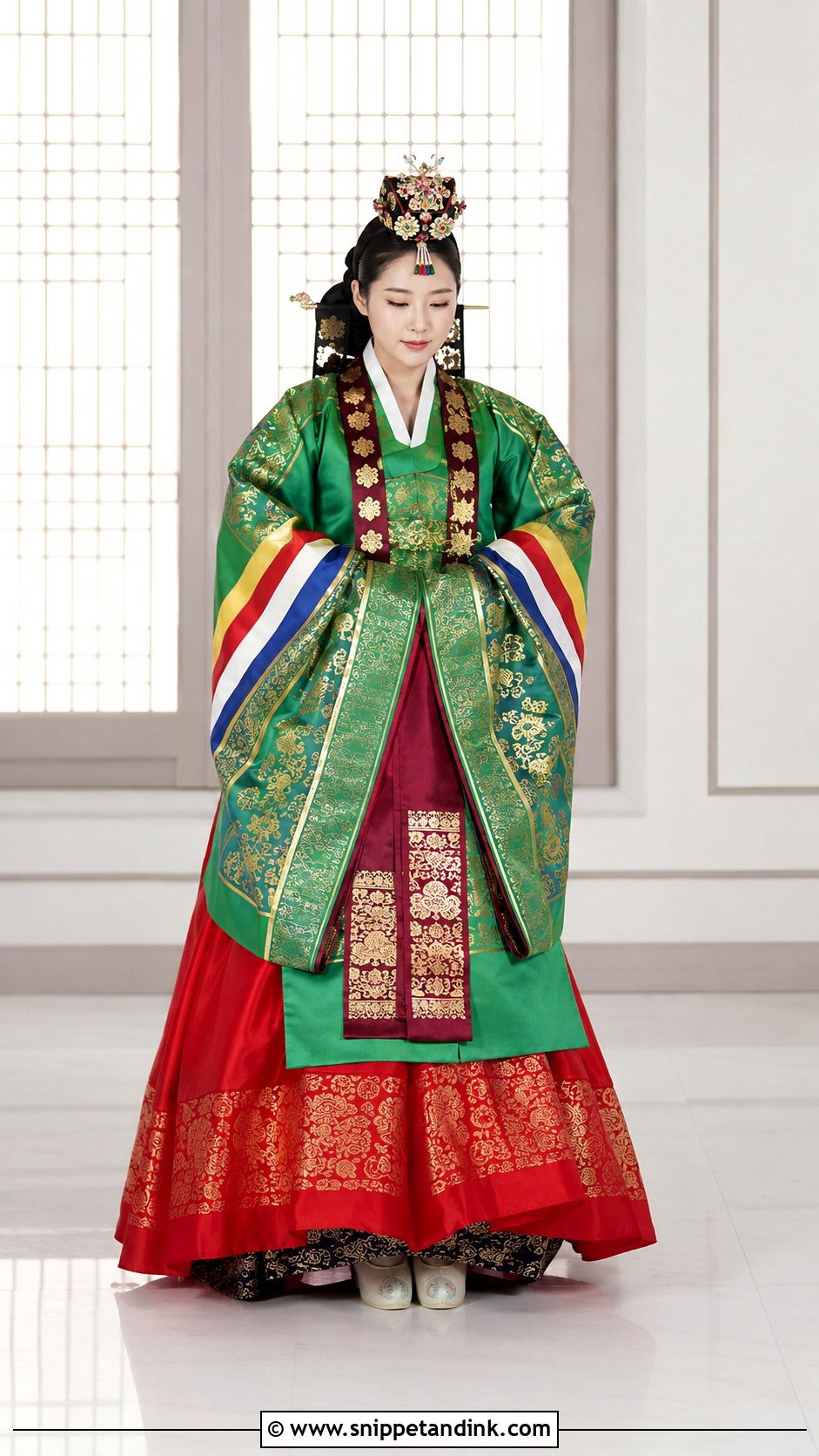
The green wonsam was a court robe, and it still carries that palace formality. Its signature is the striped saekdong band on the sleeves, which fans out when the bride raises her arms in a bow and reads clearly in photos. I put it over a red or deep pink chima. Gold patches on the chest and back are enough decoration; anything more starts to fight the stripes. Keep the bun smooth and low so the crown sits level.
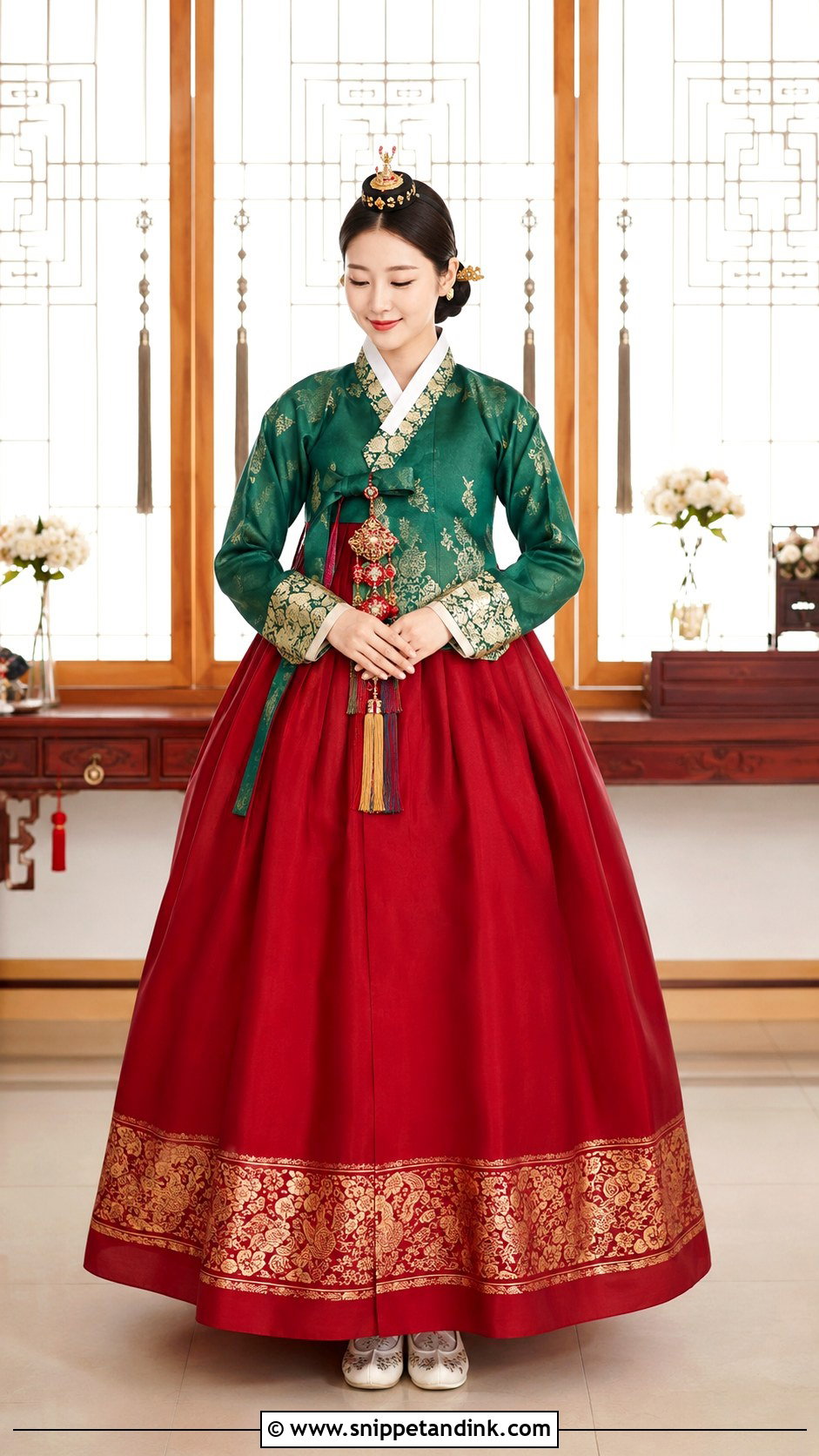
3. Red Chima Green Jeogori Hanbok
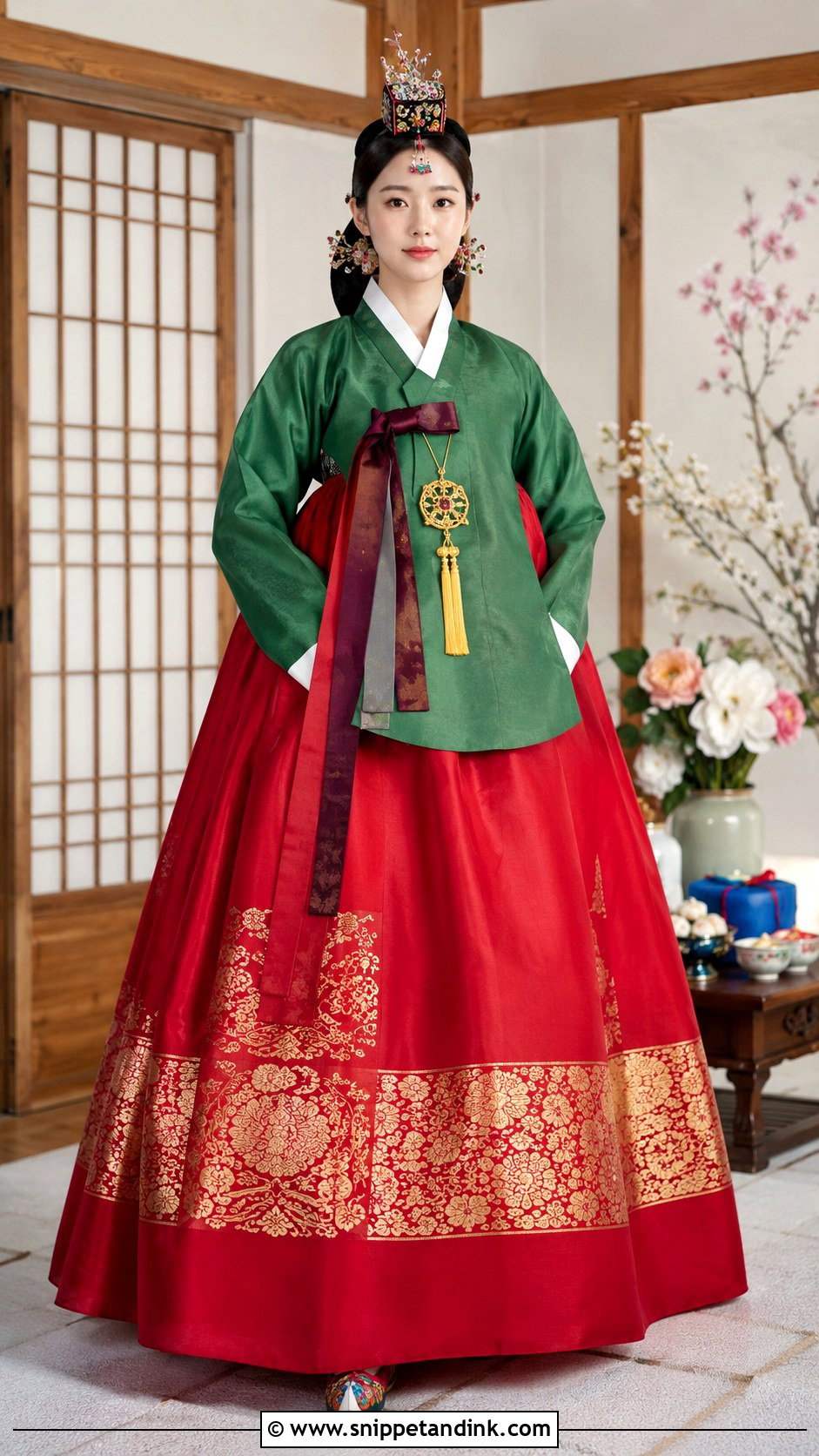
Red skirt, green jacket: this is the pairing Korean grandmothers recognise instantly as bridal. It is far lighter than a ceremonial robe, so I suggest it to brides who will be on their feet for hours. Brocade or a good satin silk keeps it formal. At the fitting I check that the goreum ribbon ties flat and the white collar band (dongjeong) sits close to the neck, because a gaping collar is the first thing a camera picks up. Add a norigae at the waist, a jokduri and embroidered shoes and you’re done.
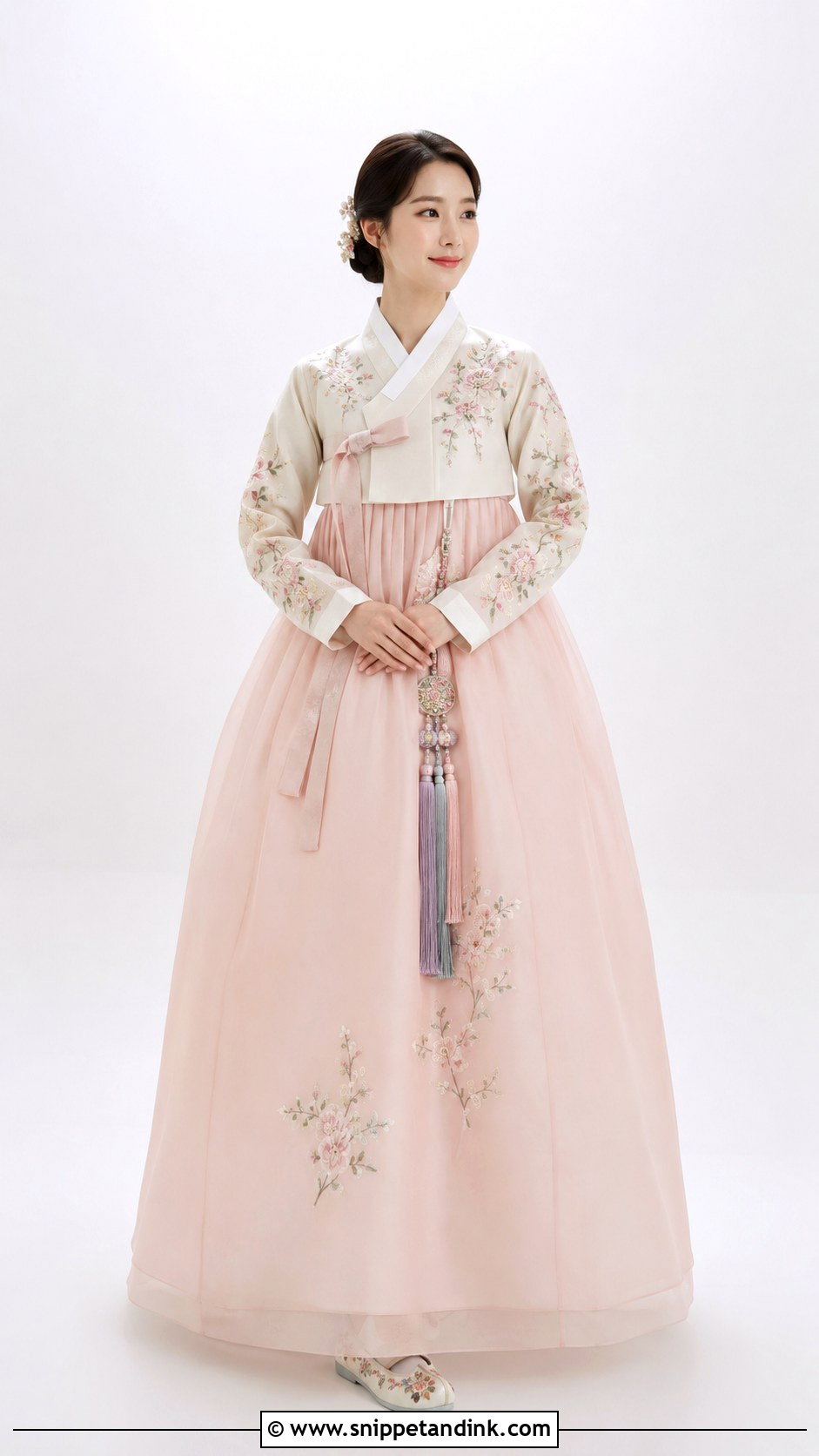
4. Pink Chima Ivory Jeogori Hanbok
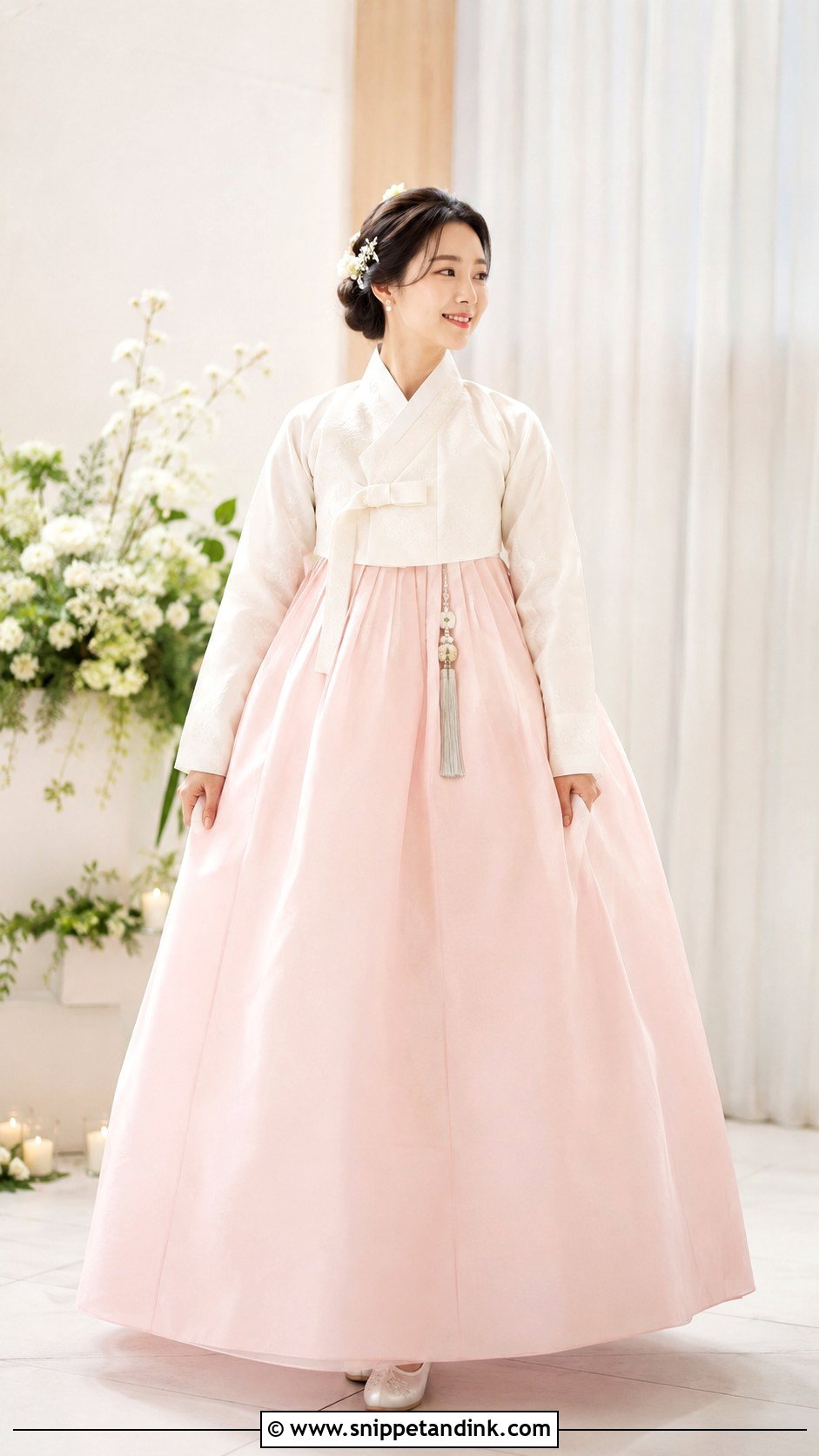
Pale colours can be every bit as bridal. A pink chima under an ivory jeogori gives a soft traditional Korean wedding dress look, and the ivory jacket throws light up onto the face. Pick silk with a low sheen rather than a high gloss, which can flatten into white glare in flash photos. I like this one for family greetings and smaller ceremonies. Pearl-toned hairpins and a small norigae finish it without weight.
5. Blue Chima Yellow Jeogori Hanbok
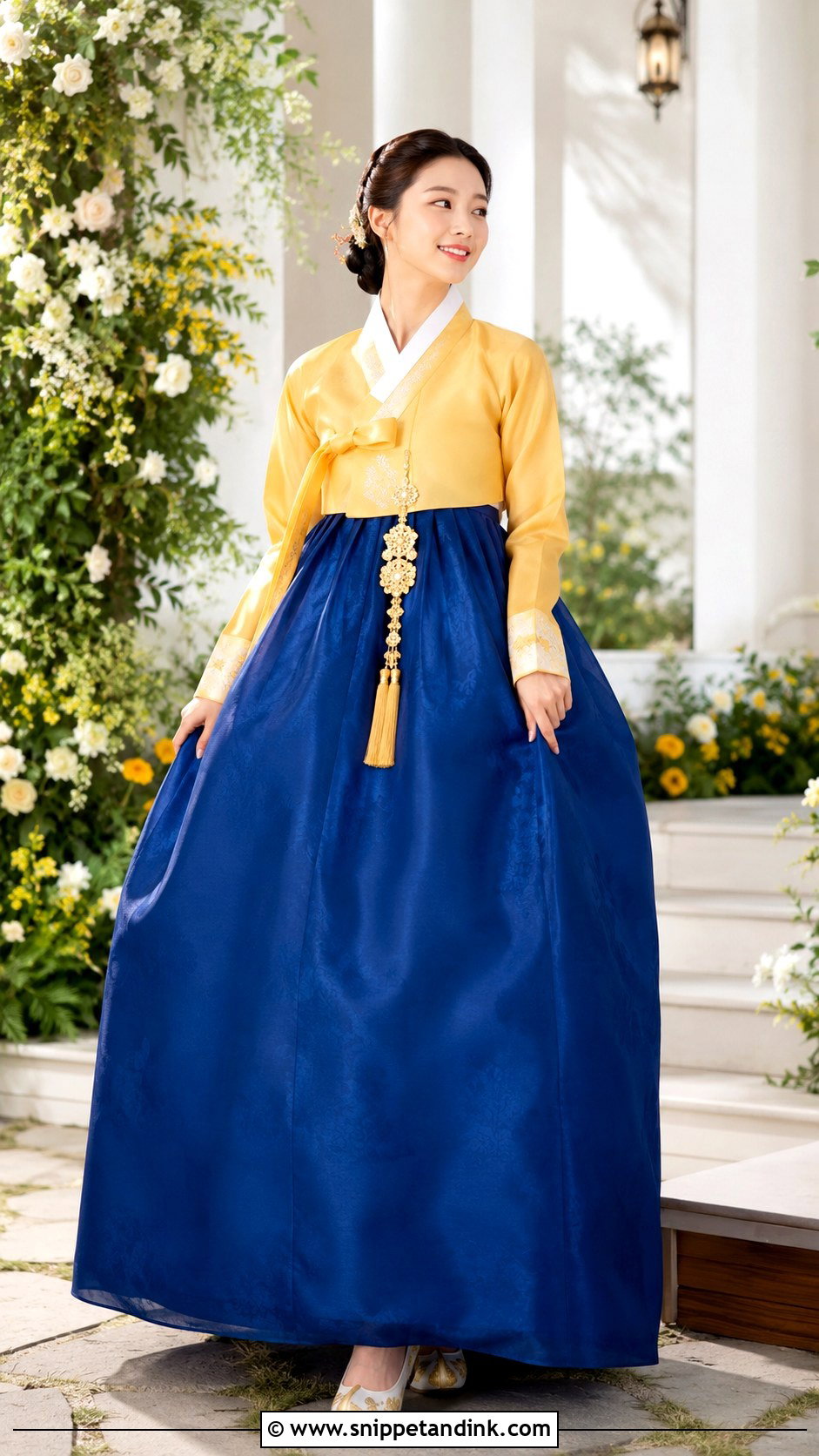
Blue below and yellow above is a cheerful, daytime combination. The blue chima grounds the outfit and the yellow jacket warms the complexion, which suits outdoor spring and summer ceremonies. Yellow is the colour I test most carefully against skin, though: on some brides it can drain the face under shade. A crisp white collar and a jade or red norigae keep it ceremonial. Smooth hair and natural makeup are all it needs.
6. Ivory Silk Wedding Hanbok
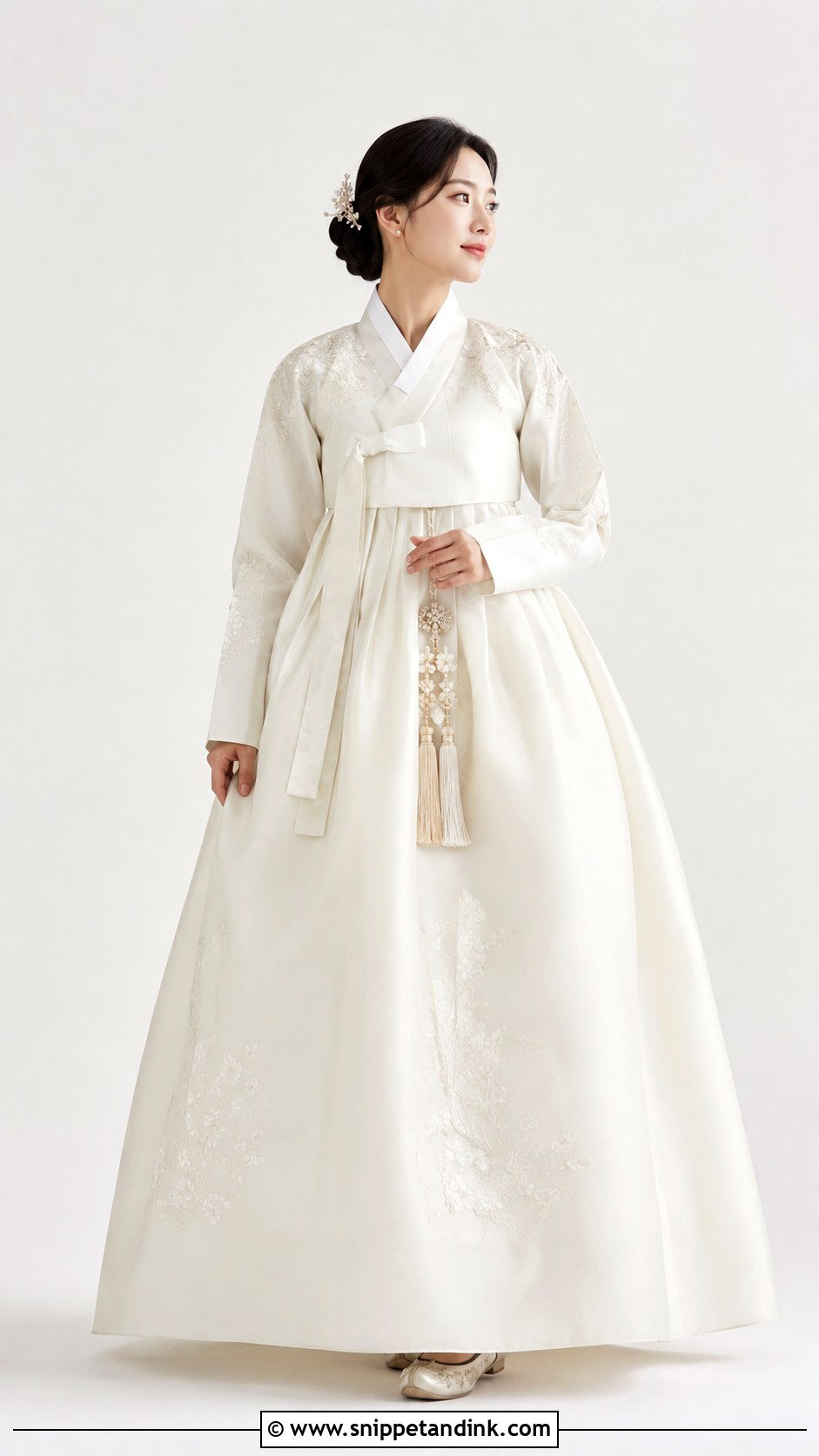
Ivory silk is my quiet suggestion for brides blending a Korean ceremony with a Western white-dress day. Tonal floral embroidery or fine gold thread gives texture you only see up close. The full chima brings volume, the fitted jeogori keeps the top neat. The thing to watch is cleanliness: ivory silk shows every mark from a tea ceremony, so keep a clean cloth on your lap during the paebaek.
7. Gold Embroidered Wedding Hanbok
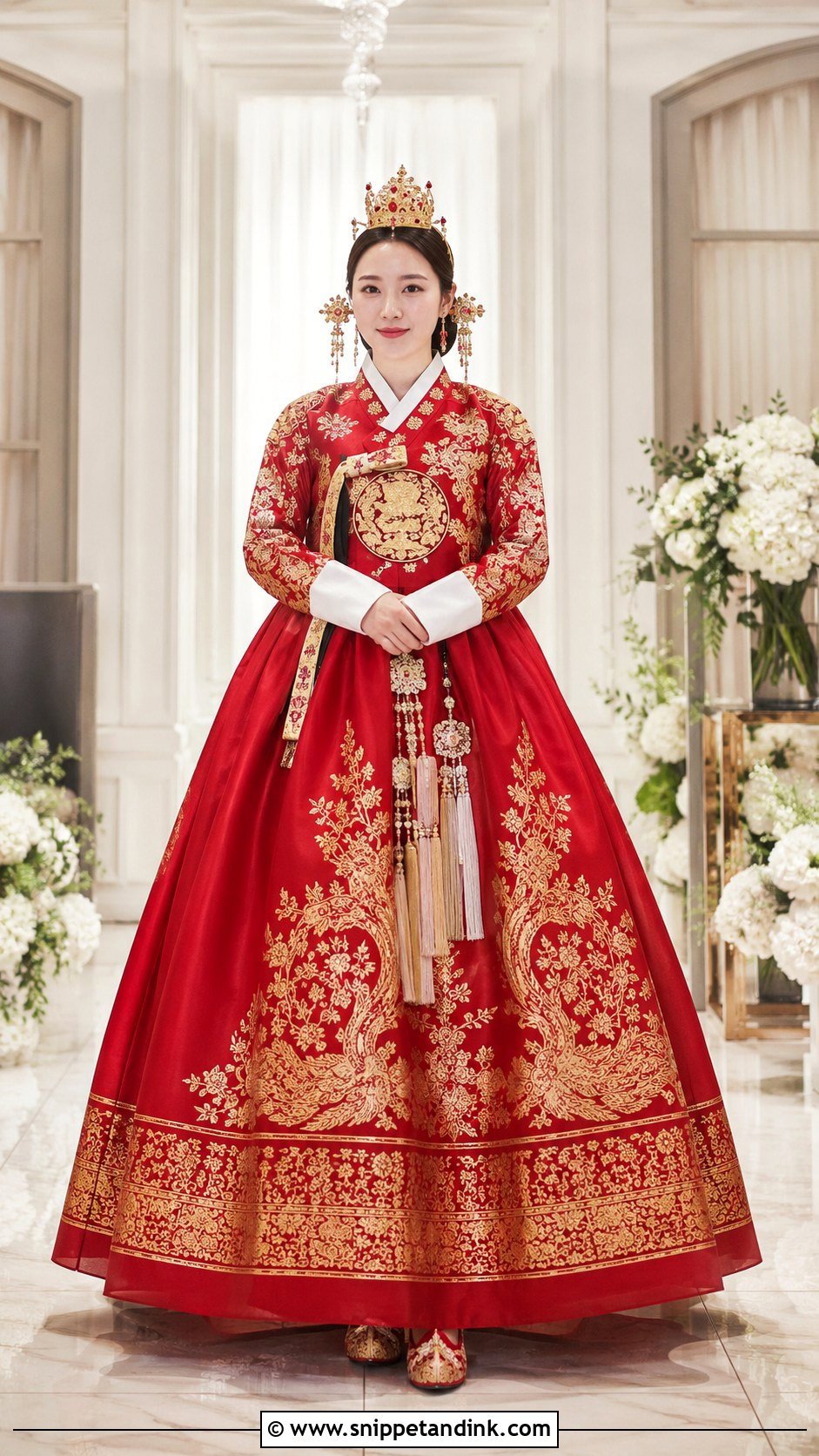
Gold thread changes a hanbok from festive to formal in one step. It works on red, green, navy or ivory, picking out flowers, clouds, birds or border patterns. The rule I follow is simple: the louder the embroidery, the plainer everything else. A polished bun, the crown, embroidered shoes and a single norigae. Metallic thread can scratch and snag fine silk, so I keep beaded clutches and bracelets well away from the sleeves.
8. Peony Embroidered Hwarot Hanbok
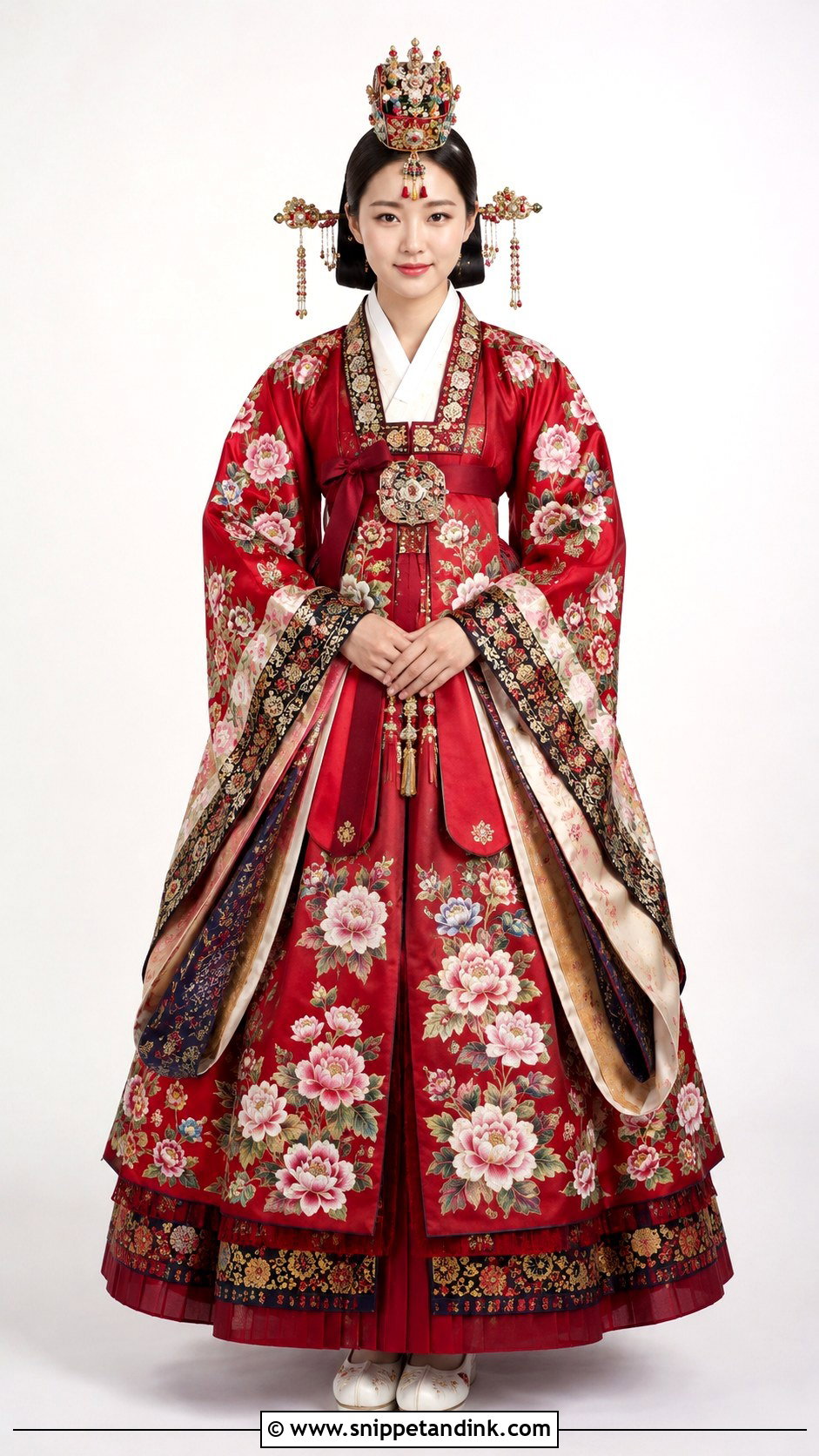
Peonies stand for prosperity and good fortune, which is why they bloom across so many hwarot sleeves, front panels and hems. Multicolour peonies on red or deep pink silk are the classic version. Since the robe is already busy, I’d skip a bouquet for the portraits and let the bride’s hands rest in the traditional folded position under the sleeves. Rosy cheeks and pale silk shoes keep the face and feet calm.
9. Phoenix Embroidered Wedding Hanbok
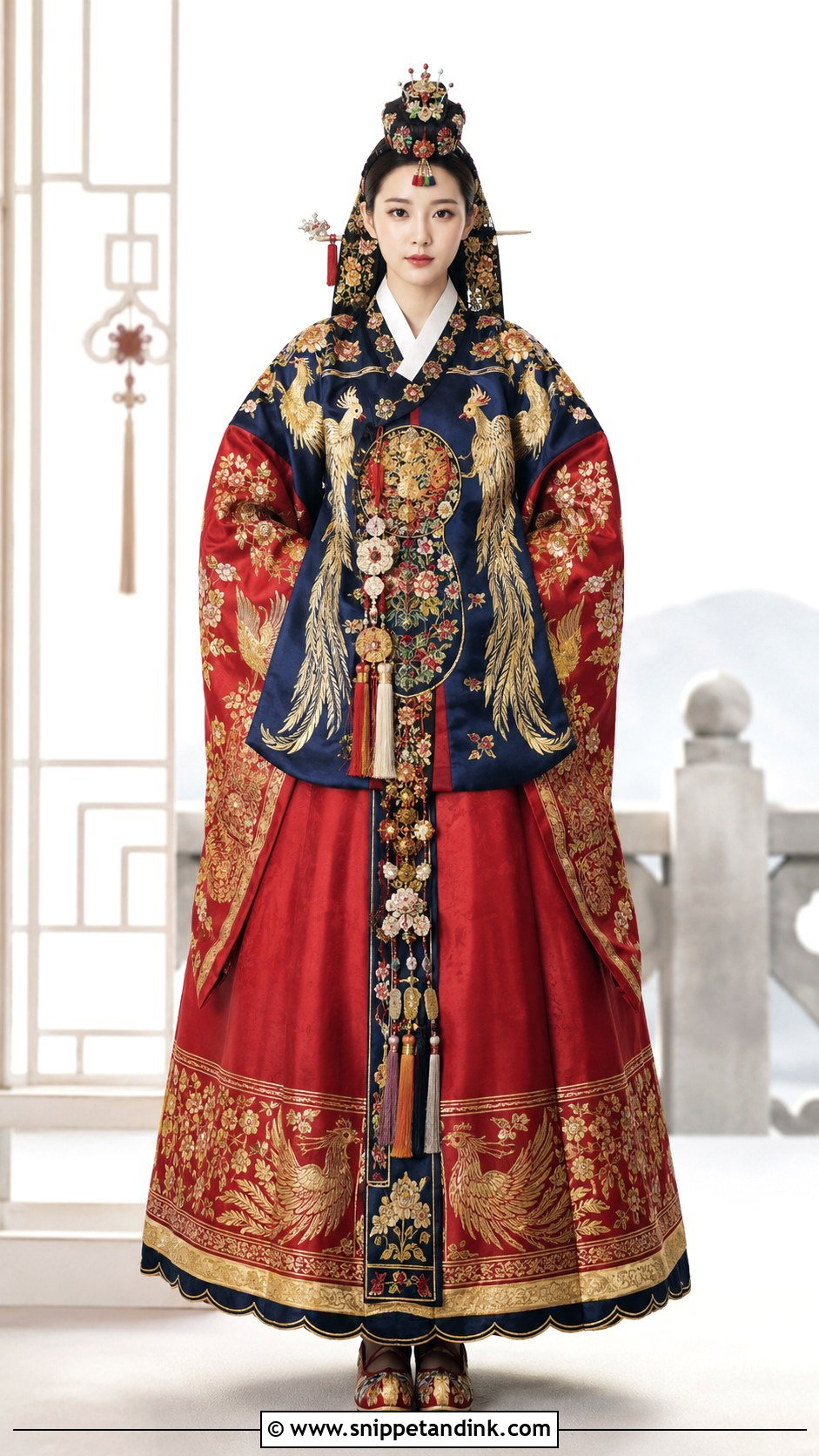
The phoenix is a symbol of harmony and dignity, and a phoenix embroidered wedding hanbok feels grand the moment it goes on. It shows up on hwarot and wonsam alike, in red, green, navy or gold-accented silk. I keep makeup polished but restrained here. If the lips and eyes are as strong as the embroidery, the photos lose a focal point. The bride should look like she’s wearing the robe, not competing with it.
10. Dangui Wedding Hanbok
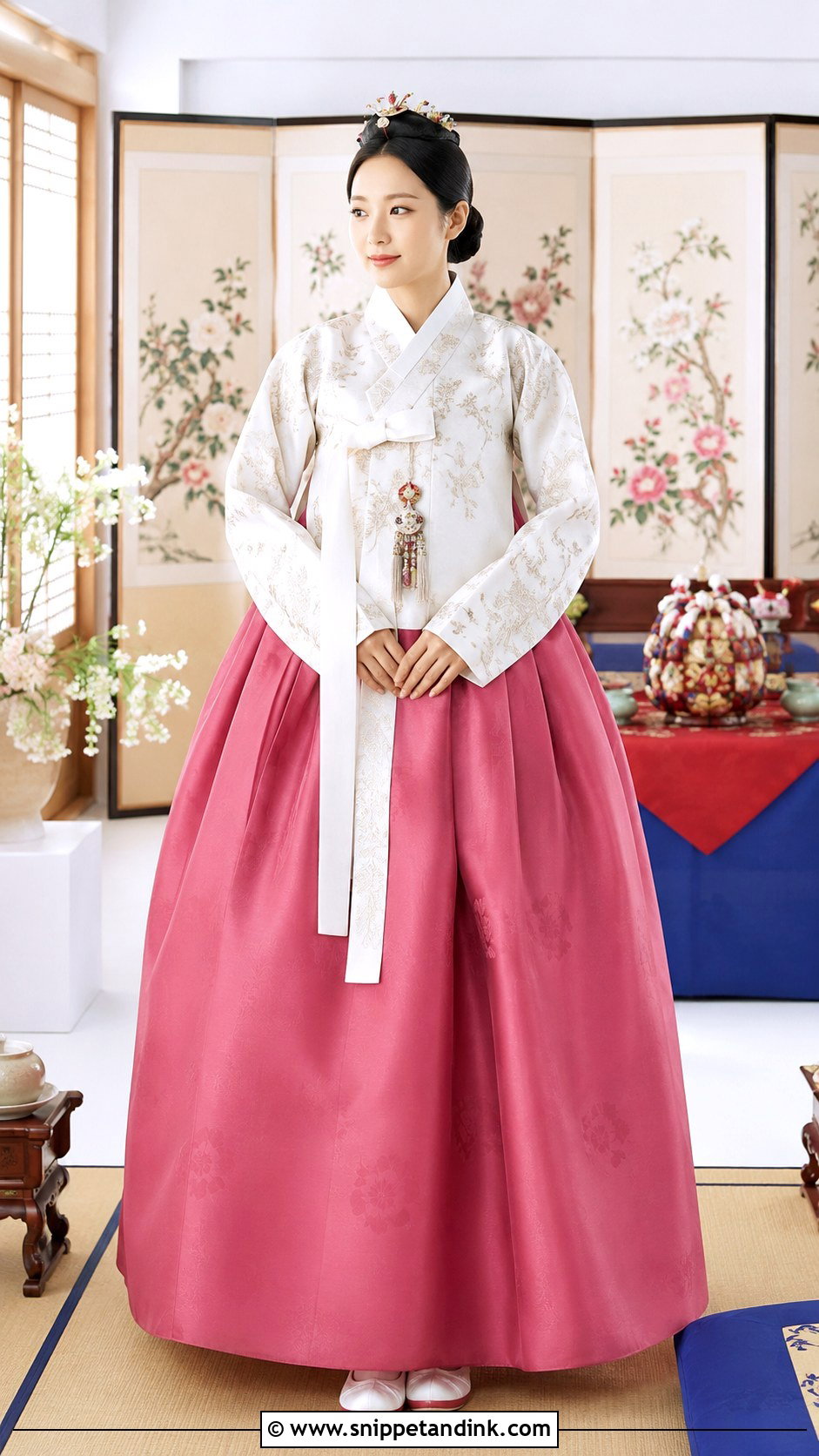
Not every bride wants the weight of a full robe. The dangui is a jacket with long front and back panels that curve at the sides, often trimmed in gold, and it gives a formal outline while leaving the arms free. I pair it with a red, pink or navy chima, a norigae and silk shoes, and a jokduri to make it read as bridal. It moves easily enough for a reception change or a paebaek where you’ll be bowing repeatedly.
11. Navy Chima White Jeogori Hanbok
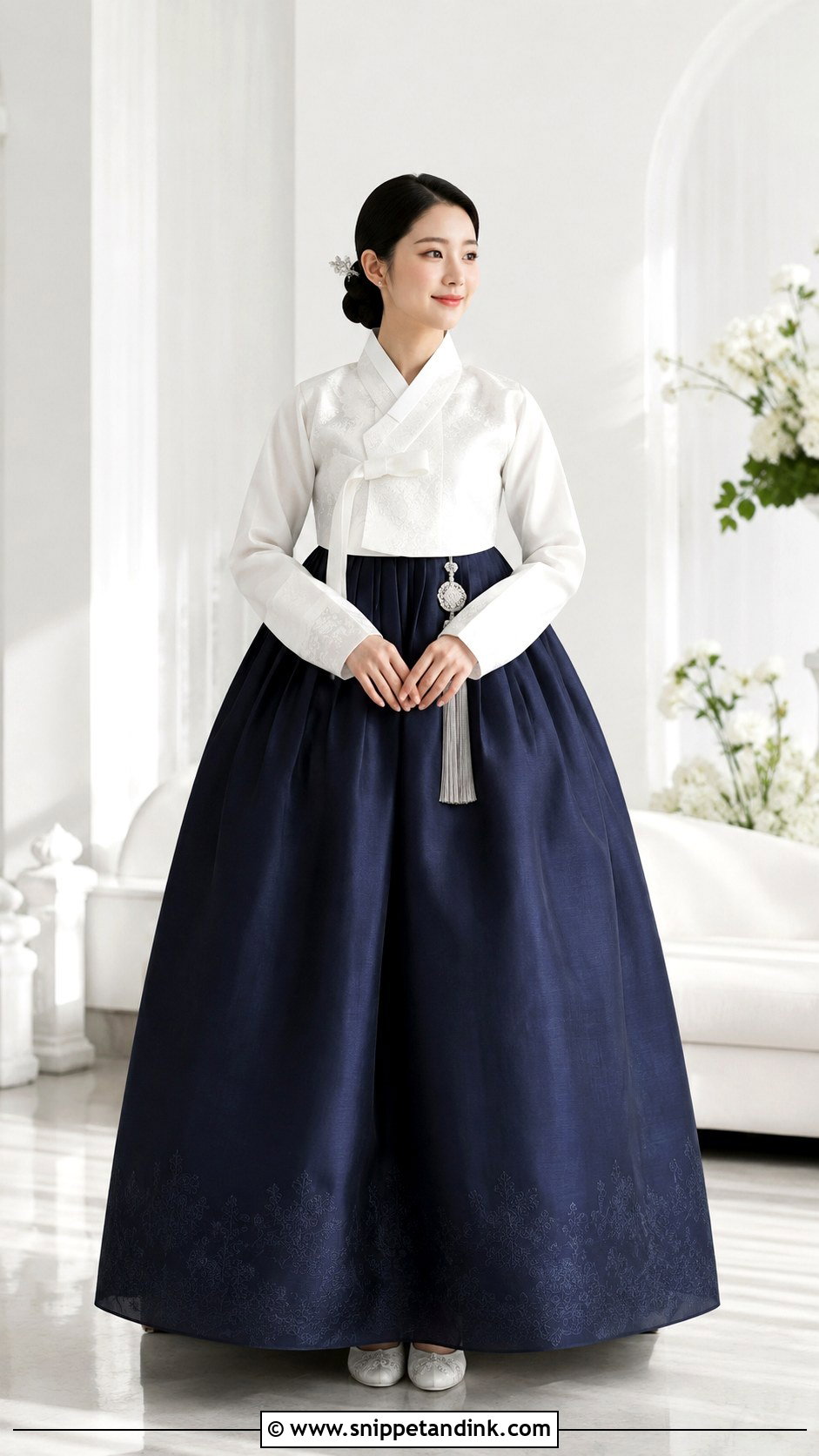
Navy and white is the pairing I suggest to brides who find red too loud. The dark skirt gives contrast and structure, the white jacket keeps the face bright. Silver, pearl or pale gold details suit it better than heavy yellow gold. Check the jeogori collar is crisp, since on a white jacket a soft or creased collar is very visible. A navy or ivory norigae and a sleek hairstyle finish it.
12. Pastel Wedding Hanbok
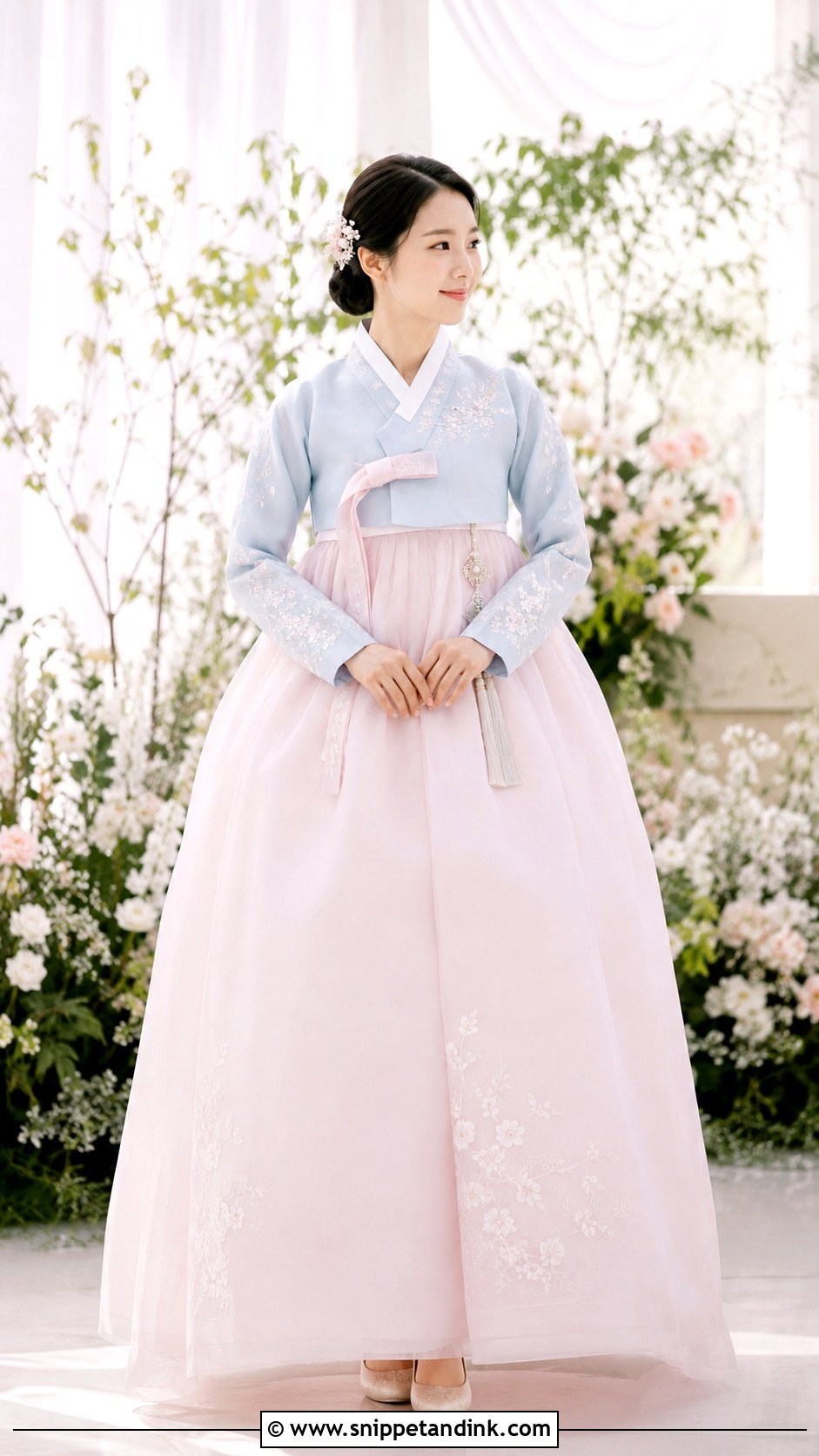
Blush, powder blue, mint, lavender and pale yellow keep the classic hanbok shape while lowering the drama. My trick is to make the jeogori a shade lighter than the chima; the eye goes to the face first. Pastel silk is forgiving in soft garden light but can wash out against a white studio wall, so mention your backdrop to your photographer. Delicate embroidery and a small norigae are plenty.
13. White And Red Wedding Hanbok
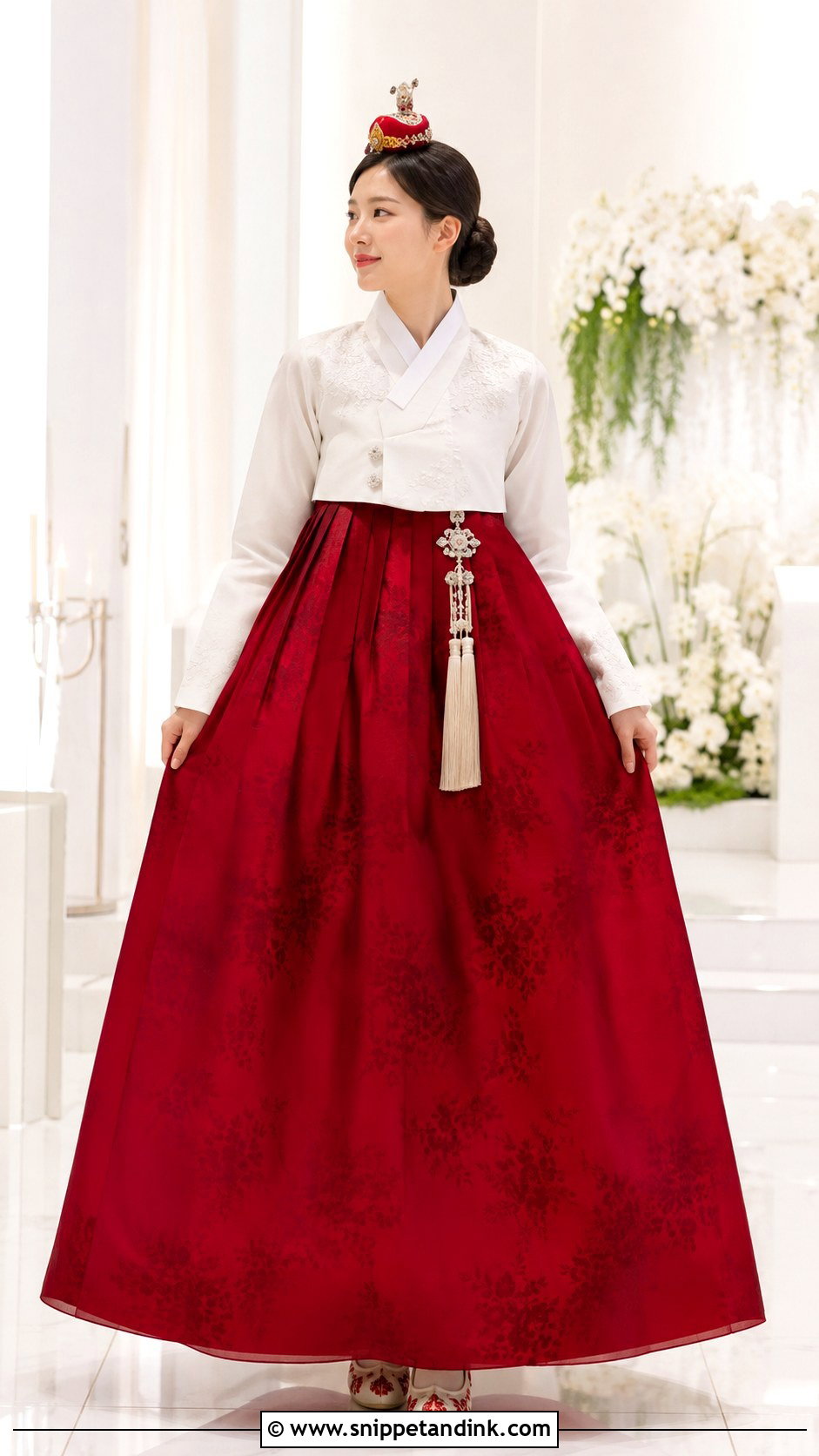
White over red is clear, festive contrast. The white jeogori lifts the upper body, the red chima carries the ceremony. Plain silk keeps it simple; embroidered borders and a decorative norigae push it toward formal. Some brides add a light outer robe for portraits and take it off for the family greetings, which I recommend whenever the ceremony runs long or the room is warm.
14. Royal Blue Wedding Hanbok
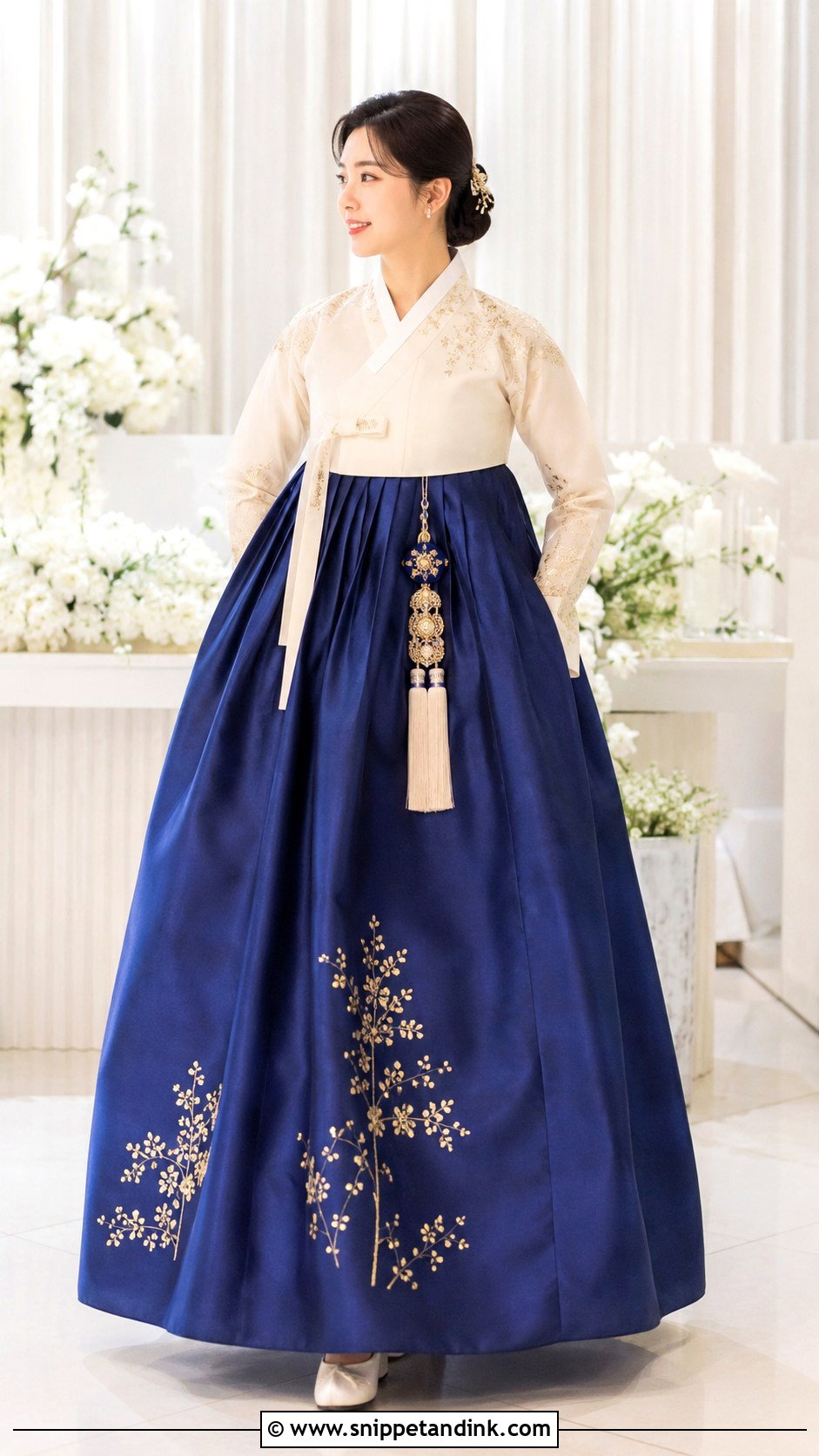
Royal blue has a cool, confident depth that red doesn’t. I pair the chima with an ivory, pale pink or gold-toned jeogori, and let gold or silver embroidery do the formal work. Saturated blue holds its colour under indoor and evening lighting where pastels can turn muddy. Keep the norigae and hair ornament in the same family of tones so the eye isn’t pulled in three directions.
15. Lavender Wedding Hanbok
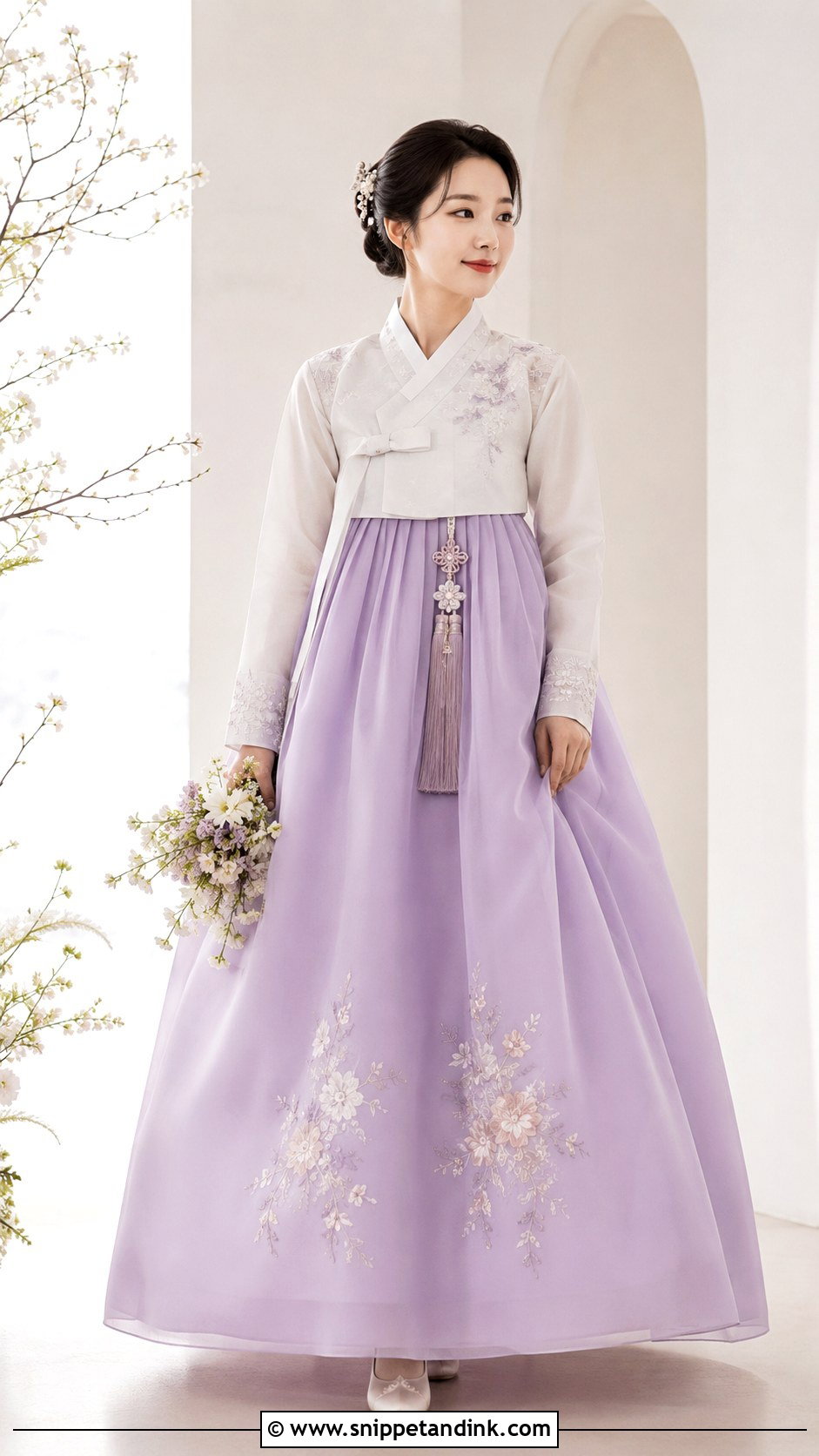
Lavender is the slightly unexpected option, and it suits a second outfit for the reception or pre-wedding portraits. I put it with an ivory or pale silver jeogori and subtle floral embroidery for texture. Lavender silk shifts toward grey or blue depending on light, so look at the fabric outdoors and indoors before you commit. Pearl-toned hairpieces and pale shoes keep it soft.
16. Black And Red Wedding Hanbok
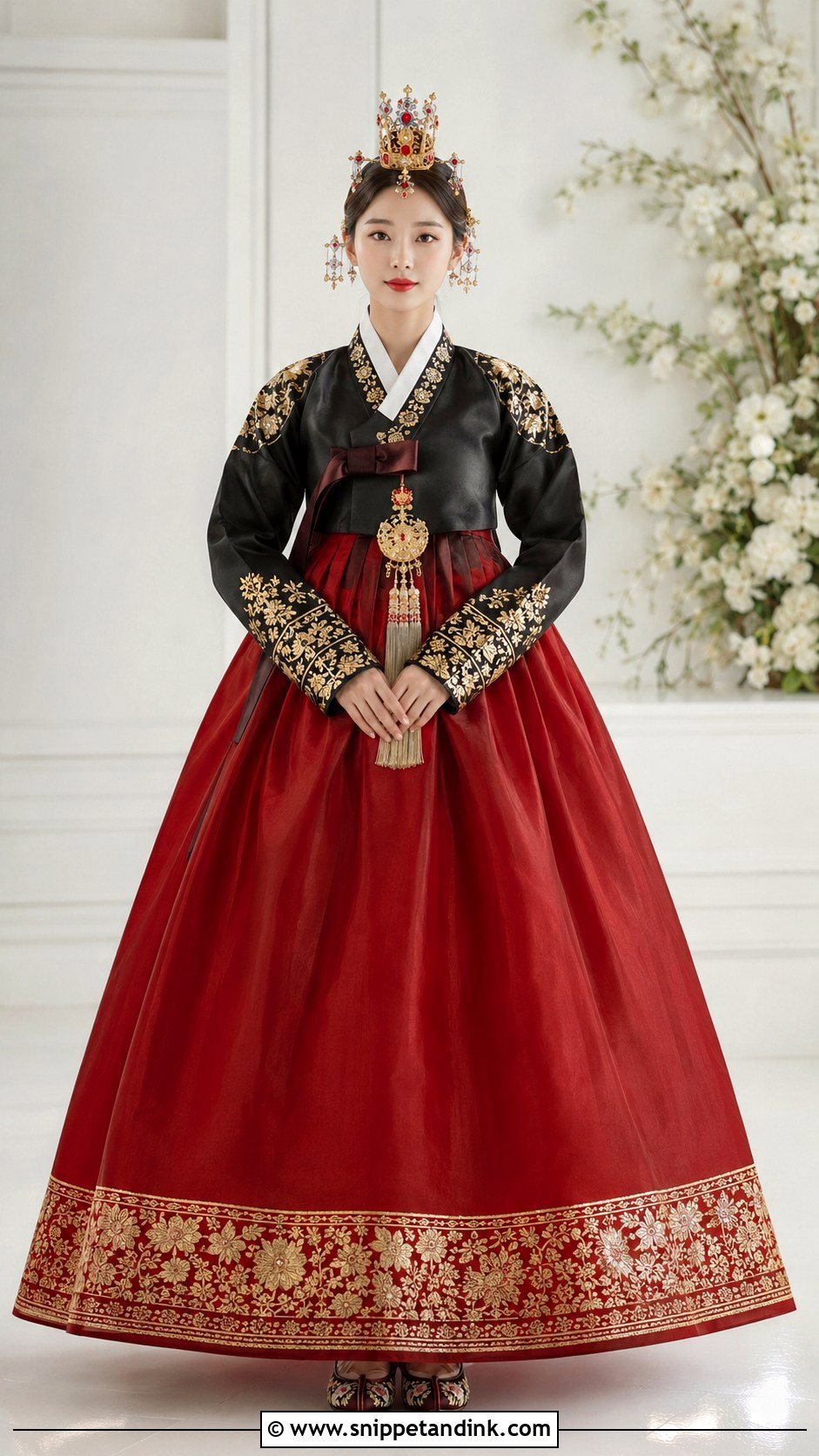
Red with black or deep charcoal is the boldest pairing on this list, and it needs careful handling. In cotton or a matte fabric it can tip into everyday wear, so I only do it in rich silk with sharp tailoring, gold trim and real embroidery. A sleek bun and a traditional crown soften the contrast. It suits an evening wedding or a fashion-led portrait session more than a daytime paebaek with traditional elders, so ask the family first.
17. Floral Embroidered Wedding Hanbok
Flowers can travel across the sleeves, skirt, chest panel or robe edges. My one rule: the thread should complement the base silk, not shout over it. Ivory blossoms on blush silk feel soft; multicolour florals on a red robe feel ceremonial. Embroidery is where close-up portraits get their detail, so ask your photographer for a few tight frames of the sleeves and hem.
18. Hwagwan Crown Wedding Hanbok
The hwagwan is the taller, more ornate crown, and once it goes on it becomes the centre of the whole look. It belongs with formal pieces: a hwarot, a wonsam, or a heavily embroidered chima and jeogori. The base has to be firm. I build a smooth, well-pinned bun first, because a crown sitting on soft hair will tilt within the hour. Clean makeup and a decorative norigae balance it.
19. Jokduri Crown Wedding Hanbok
The jokduri is small, light and much easier to wear for a full day than the hwagwan. It sits on the crown of the head and suits a red chima with a green jeogori, a dangui or a pastel hanbok equally well. I secure it with crossed pins under the bun so it survives repeated bows. Because it doesn’t hide the face, it photographs cleanly from the front and in profile.
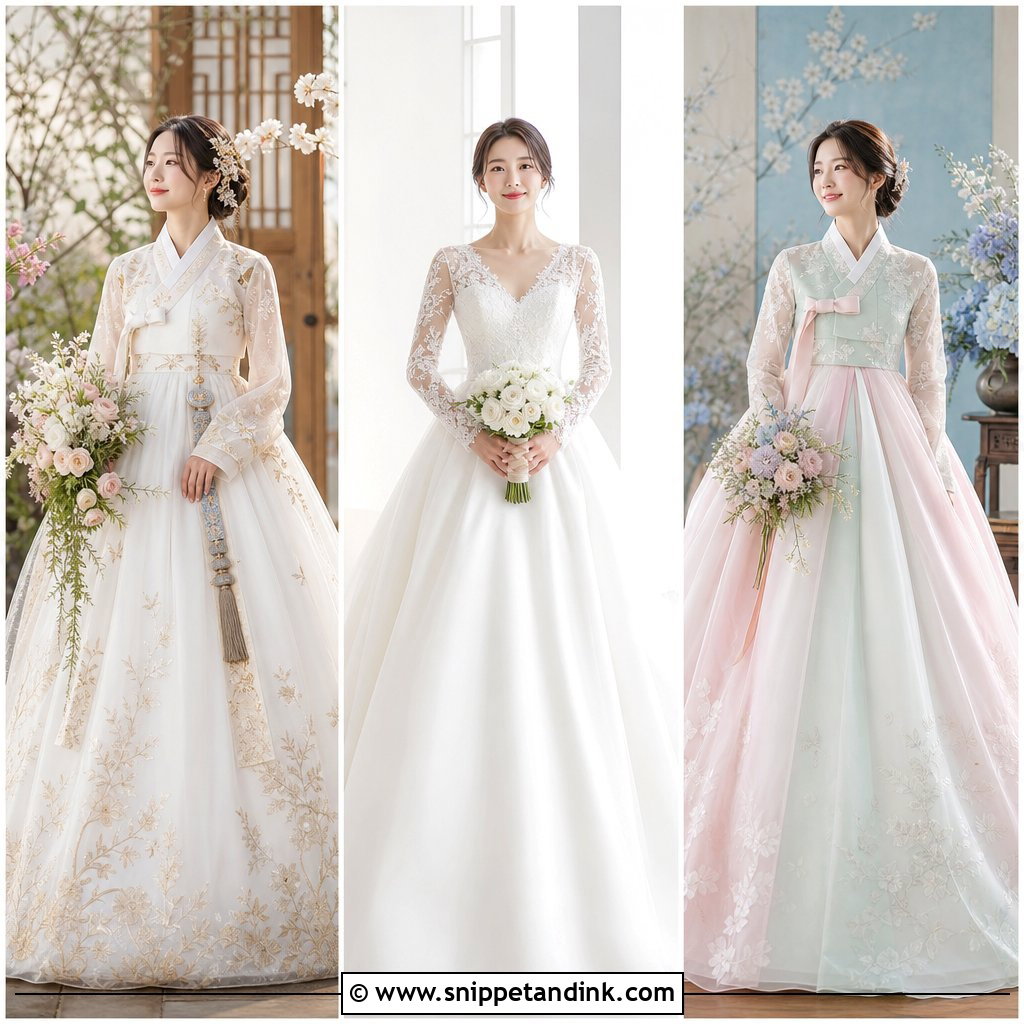
20. Norigae Wedding Hanbok
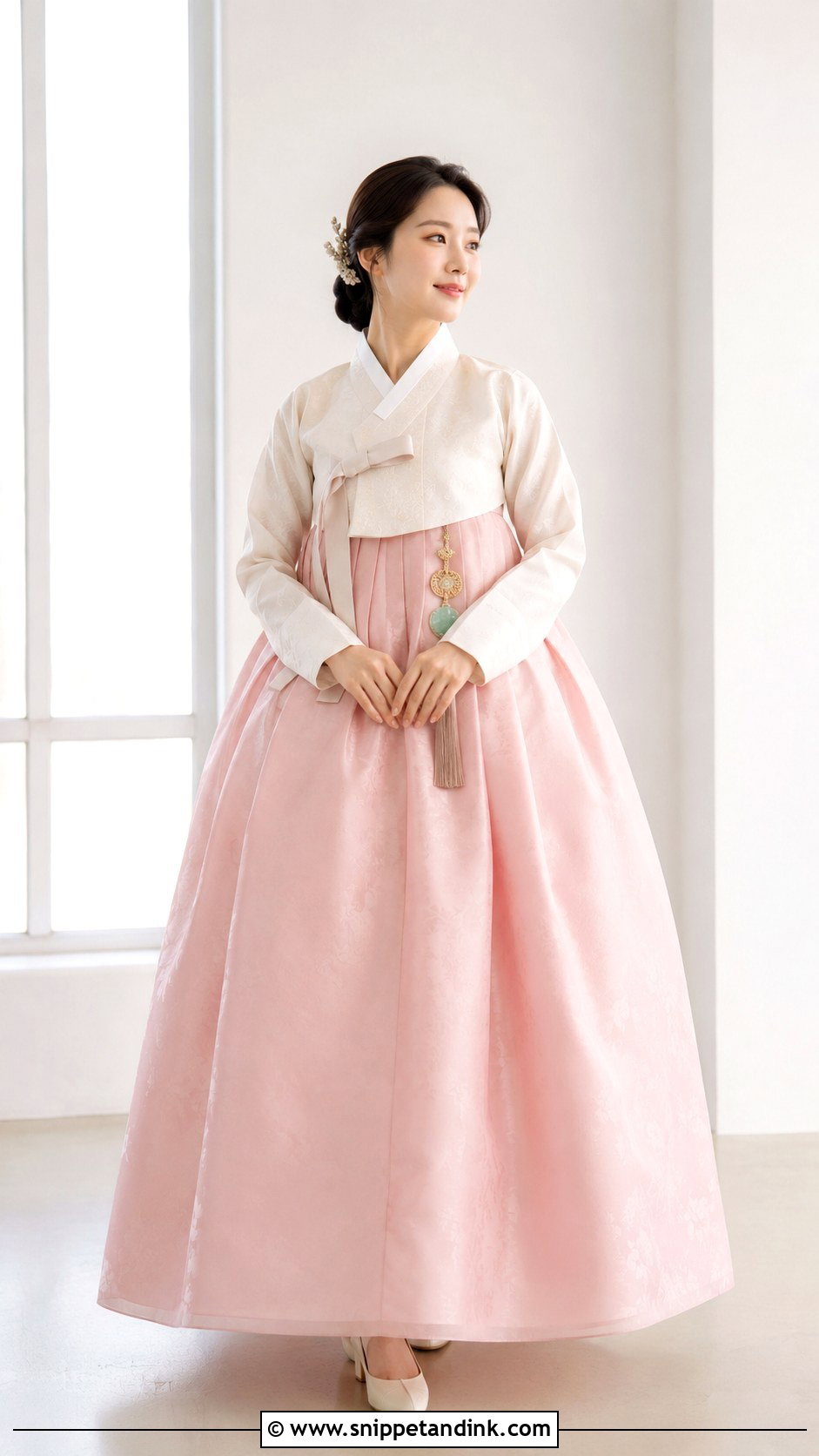
The norigae hangs from the jacket ribbon or the waist of the chima, and its tassel moves every time you walk. Match it to the outfit’s mood: gold for a formal hwarot, jade for a green jeogori, soft pink for a pastel set. A long tassel can tangle in a full skirt when you sit, so I check the length while the bride is seated, not just standing.
21. Silk Brocade Wedding Hanbok
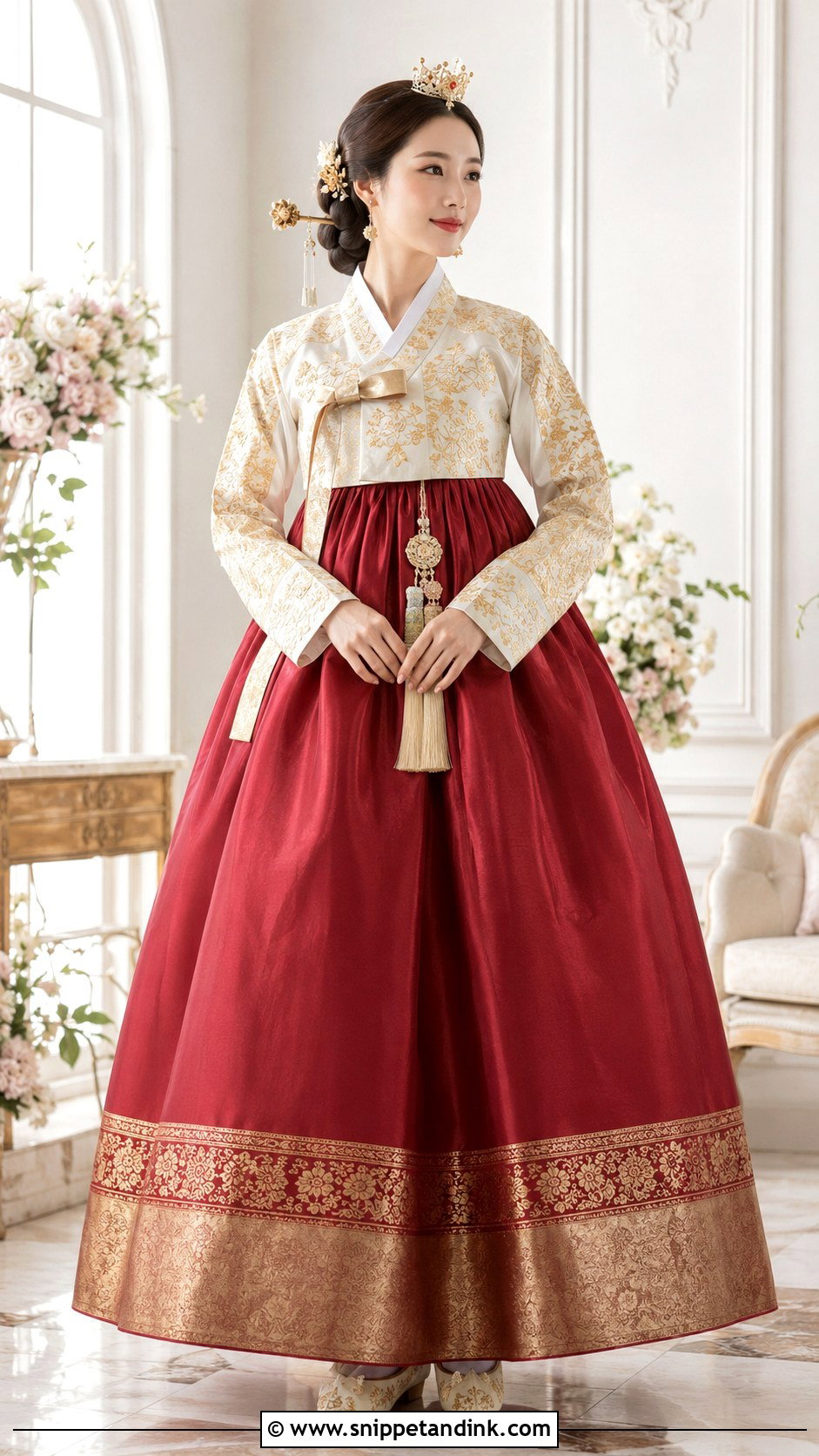
Woven brocade gives texture without any extra decoration. Its pattern catches light, which makes it reliable indoors. You can put the brocade on the jeogori and keep the chima plain, or reverse it. Ivory, red, gold, navy and emerald all look rich in brocade. The fabric is heavier and stiffer than plain silk, so I choose fewer accessories and a slightly smaller norigae.
22. Modern Traditional Hanbok Dress
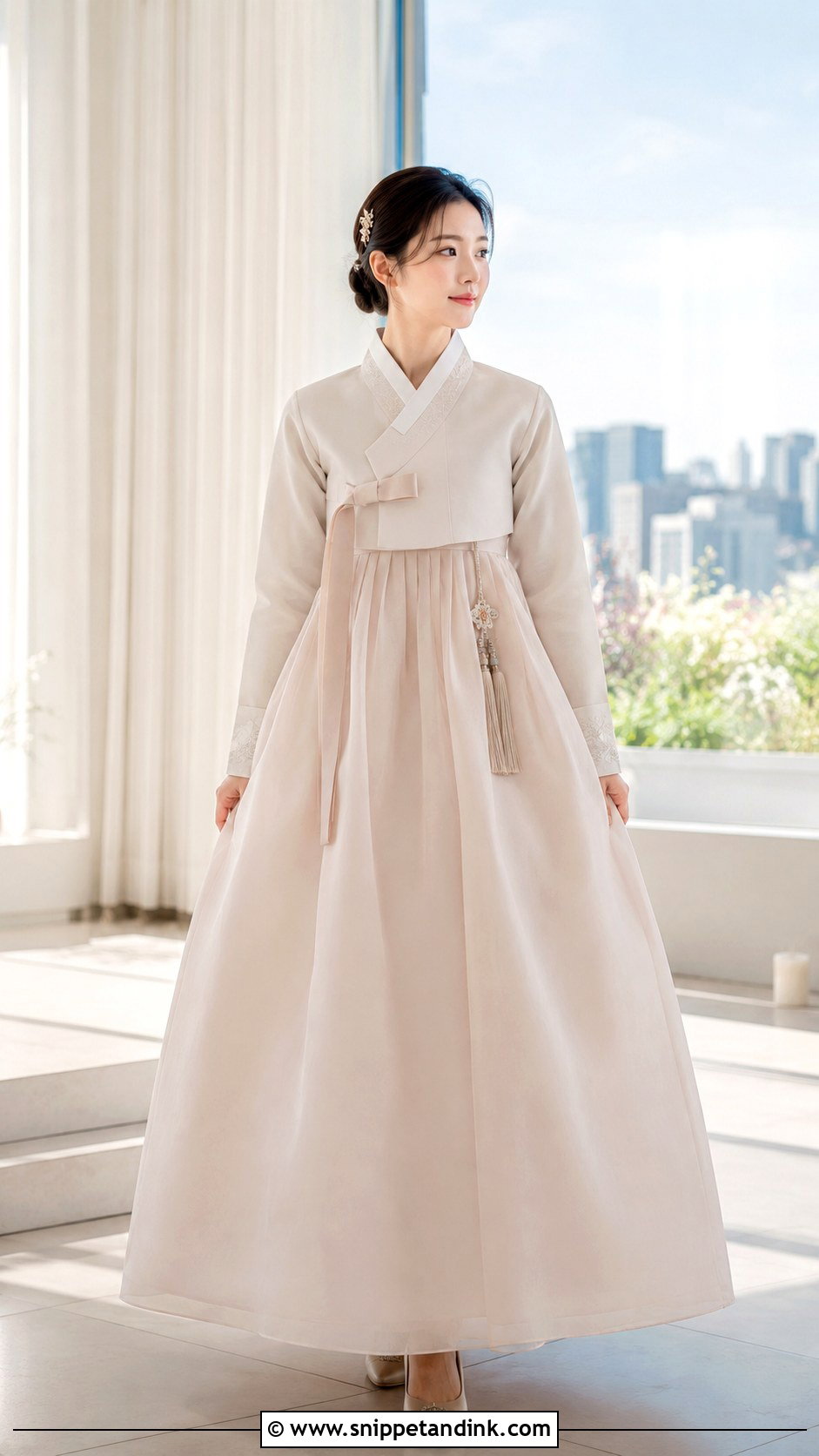
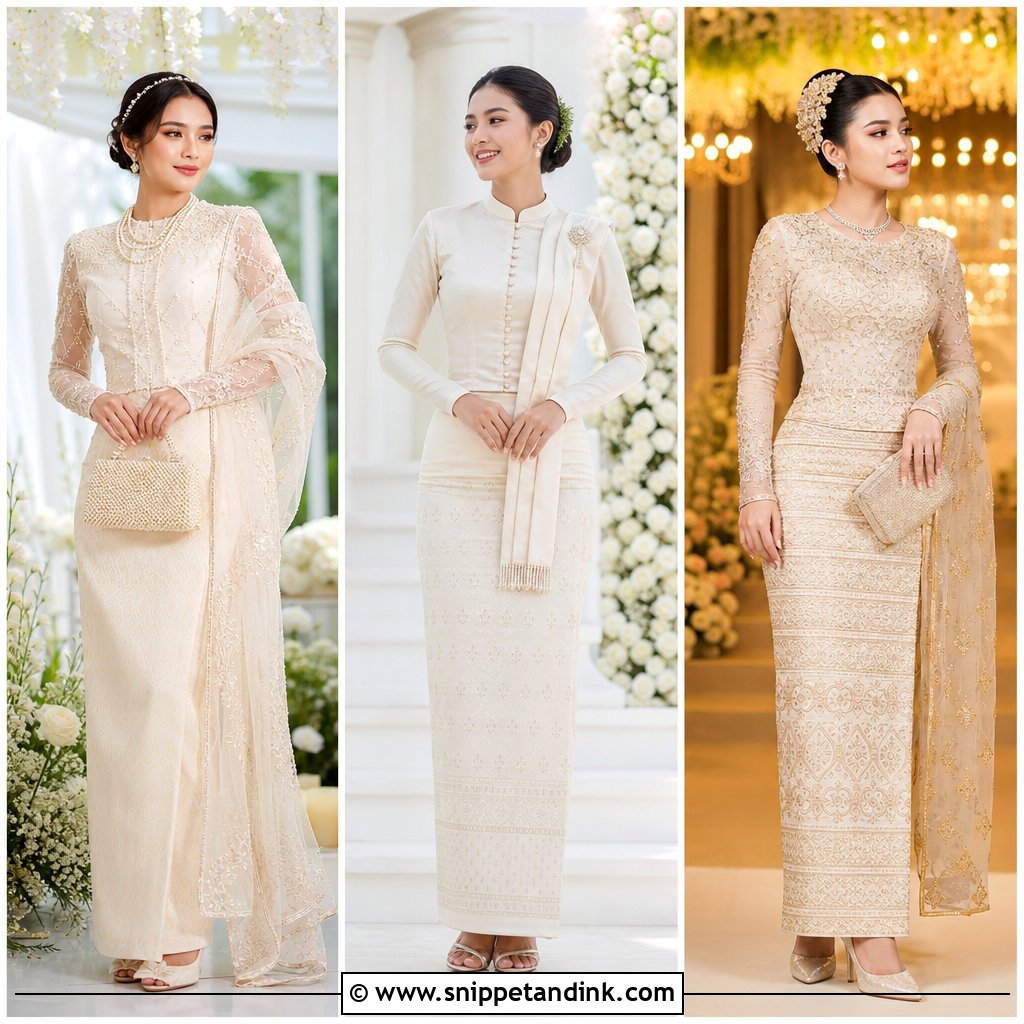
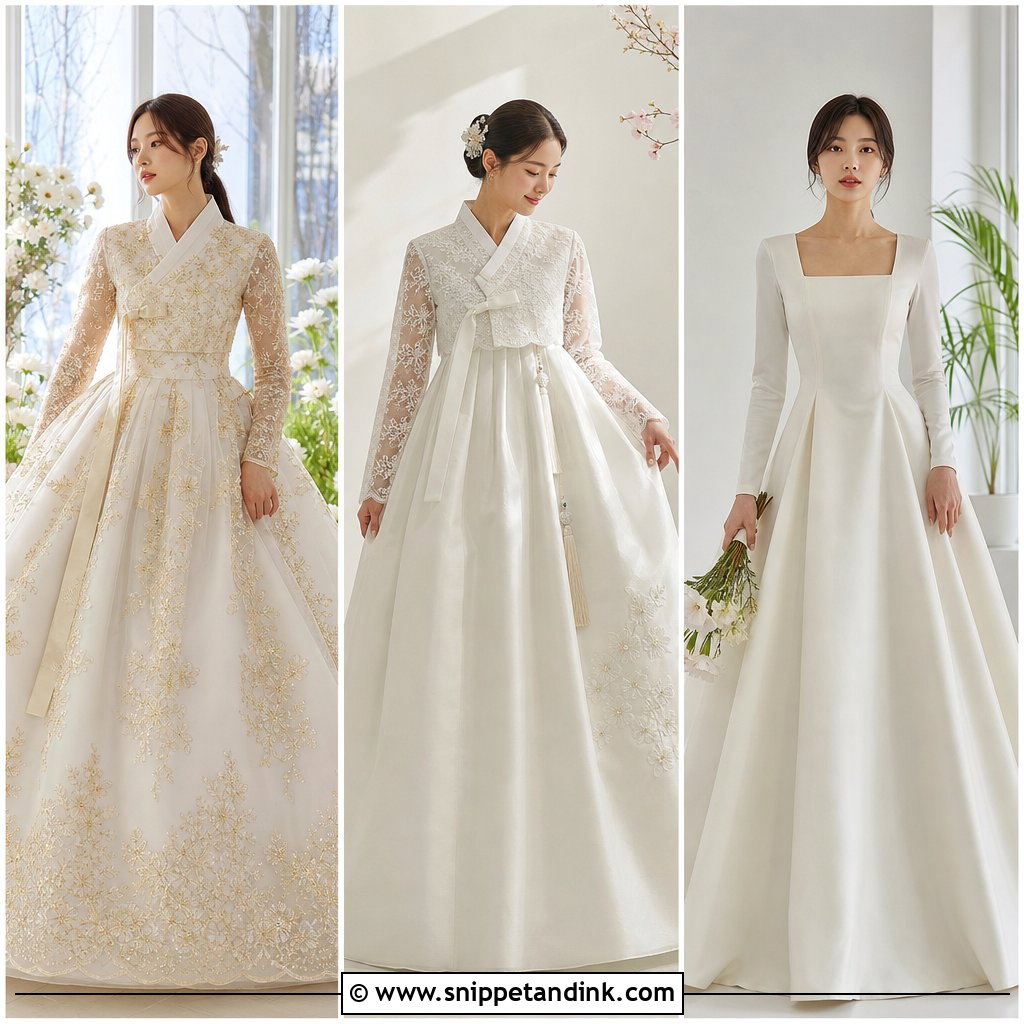
A modern traditional hanbok dress keeps the high waist, the wrap-style jeogori line, the full skirt and the ribbon, but in lighter fabric or a cleaner cut. Ivory, blush, pale gold and soft blue are the colours I see chosen most. It moves more freely than a ceremonial set, so it’s my go-to for reception entrances and fusion weddings. Simple low heels are fine here if traditional shoes feel unsteady.
23. Paebaek Wedding Hanbok
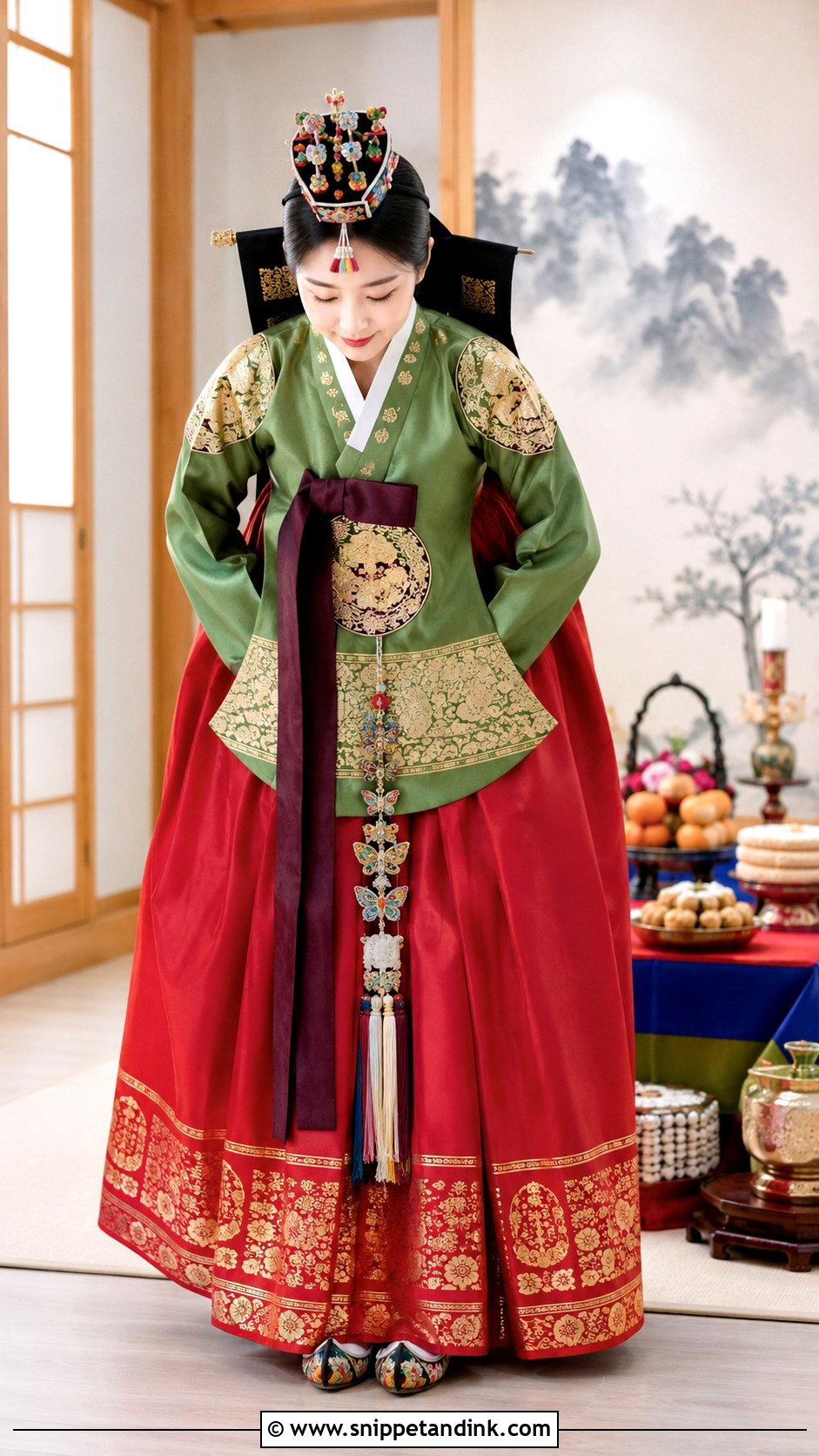
For the paebaek, comfort and fit come before anything else. The bride performs deep bows to her new family, kneels, sits on a cushion and holds out her skirt to catch the dates and chestnuts the elders toss. A red chima with a green jeogori is the usual choice, though a hwarot or dangui can work. I pin the shoulders and check the chima tie so nothing slips during the bows, and I remove any accessory long enough to catch underfoot.
24. Korean Wedding Reception Hanbok
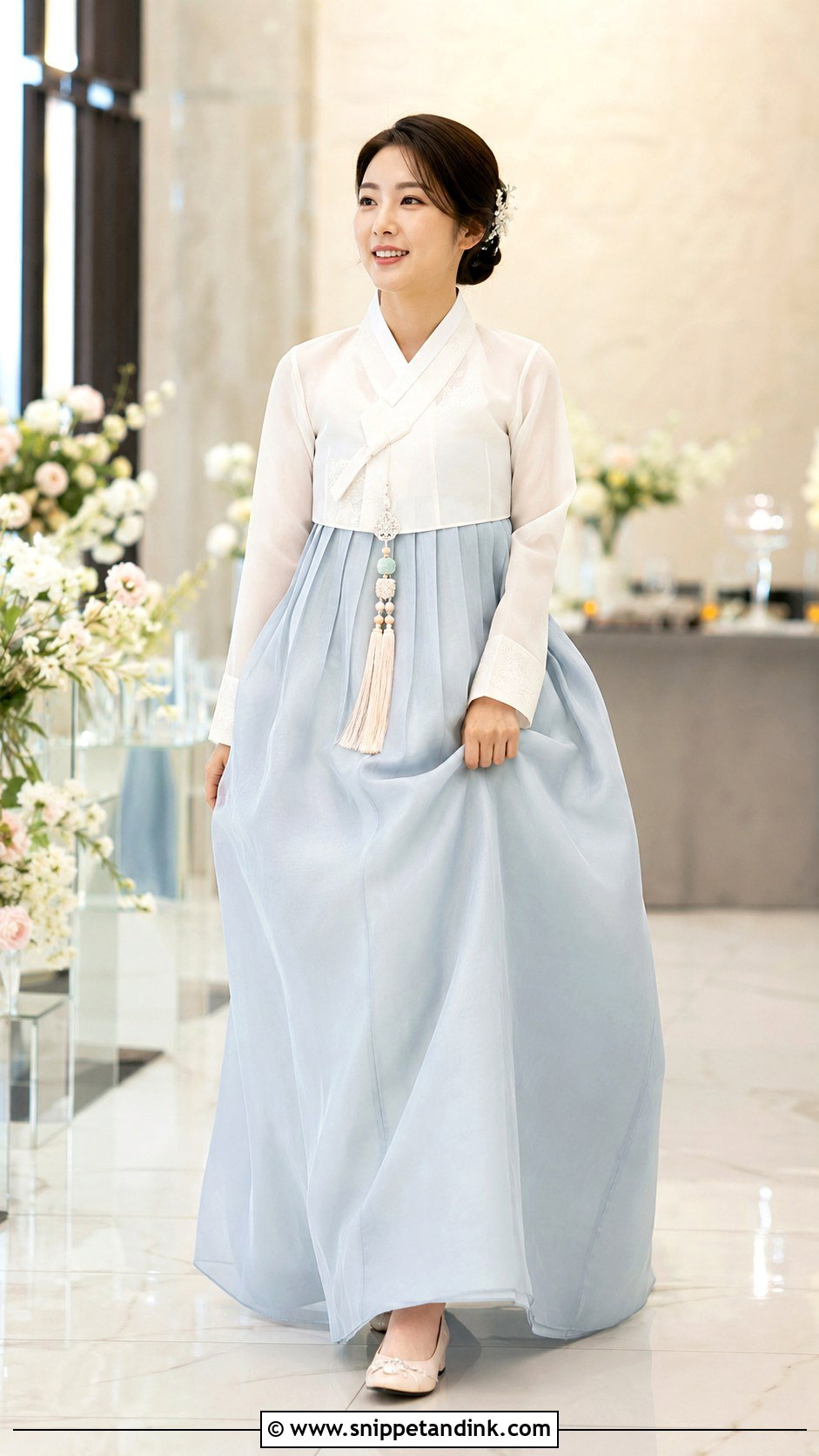
A Korean wedding reception hanbok is usually lighter than the ceremony outfit: a pastel chima with an ivory jeogori, a modern hanbok dress, or a softly embroidered dangui. You’ll be walking table to table, so it needs to clear the floor by a finger’s width. Low heels or silk shoes, a small norigae and one hair ornament are enough. It’s also a graceful way to bring Korean heritage into a day that began with a Western ceremony.
25. Korean Wedding Photo Hanbok
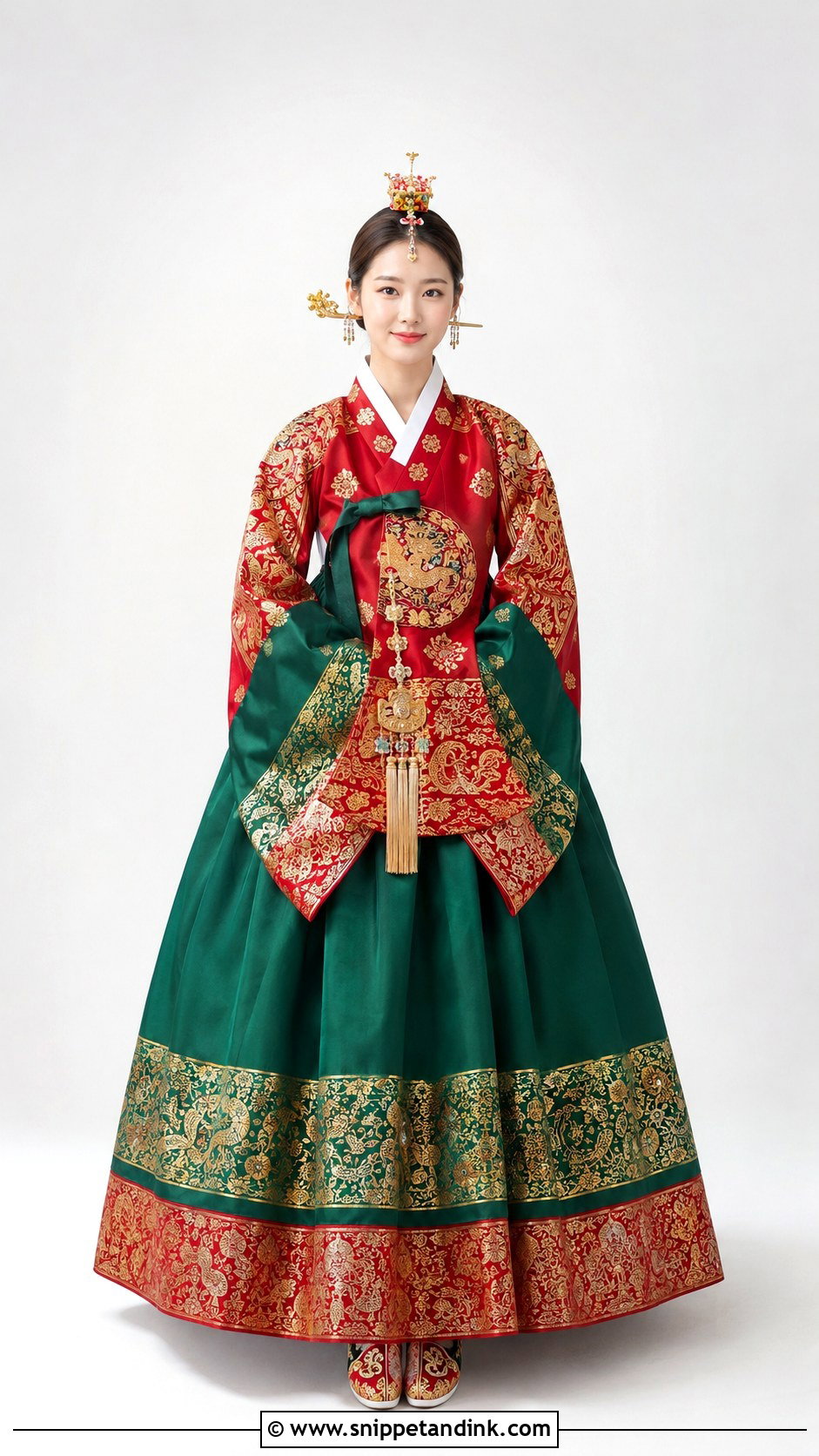
Shooting hanbok portraits is about shape as much as colour. Saturated reds, greens, royal blue and gold hold up best on camera; ivory and pastel give a softer mood. For full-length frames, the chima needs real volume, so a petticoat underneath matters, and the sleeves must fall straight from the shoulder. A norigae adds a little movement in close-ups. For studio sessions I bring a steamer, because silk creases in the car on the way.
Family Colours and the Paebaek Table
A hanbok wedding is a family event, and colour coordination usually reaches the mothers too. A common convention is pink or warm red tones for the bride’s mother and blue or cool tones for the groom’s mother, so the two sides read clearly in group photos. I always check with both families before assuming, since some prefer to match each other or follow their own region’s habits.
Small things that save the morning
- Keep the bride’s hanbok on a padded hanger only for the day itself; silk embroidery stretches if it hangs for weeks.
- Have a helper in the room who knows how to tie the goreum; a bow tied by a nervous groomsman never sits flat.
- Carry a small sewing kit with silk-coloured thread and a few safety pins for loosened ribbons.
- Blot oily fingers before touching the sleeves; the jujubes on the paebaek table are sticky.
Afterwards, a custom hanbok should be cleaned by someone used to silk and embroidery, then folded along its original creases with acid-free tissue and stored flat in a breathable box. Plastic traps moisture and can yellow ivory silk.
Wearing More Than One Hanbok on the Day
Many Korean brides change at least once: something grand like a hwarot or wonsam for the paebaek and portraits, then a lighter chima and jeogori or a modern hanbok for the reception. Start with the ceremony and the family’s expectations, then think about weight, colour meaning and how much moving you’ll do. Try each piece on sitting down and bowing, not only standing at a mirror. When the fit is right, the silk, the crown and the norigae do the rest.
You'll Like These Ideas:


Leave a Reply