
Petite is about height and the length of your torso and limbs, not your weight or dress size. That distinction matters, because most bridal samples are cut for someone several inches taller, and a petite bride tries them on with fabric pooling at her feet and a waist seam sitting on her hips. No wonder so many decide they can’t wear certain shapes. I’d argue almost nothing is off the table once the proportions are scaled: clean vertical lines, a waist seam in the right place, controlled skirt volume and details sized to you. A sleek sheath and a full ball gown can both work. The twenty looks below cover classic, modern and romantic options, with the alteration points I’d watch on each.
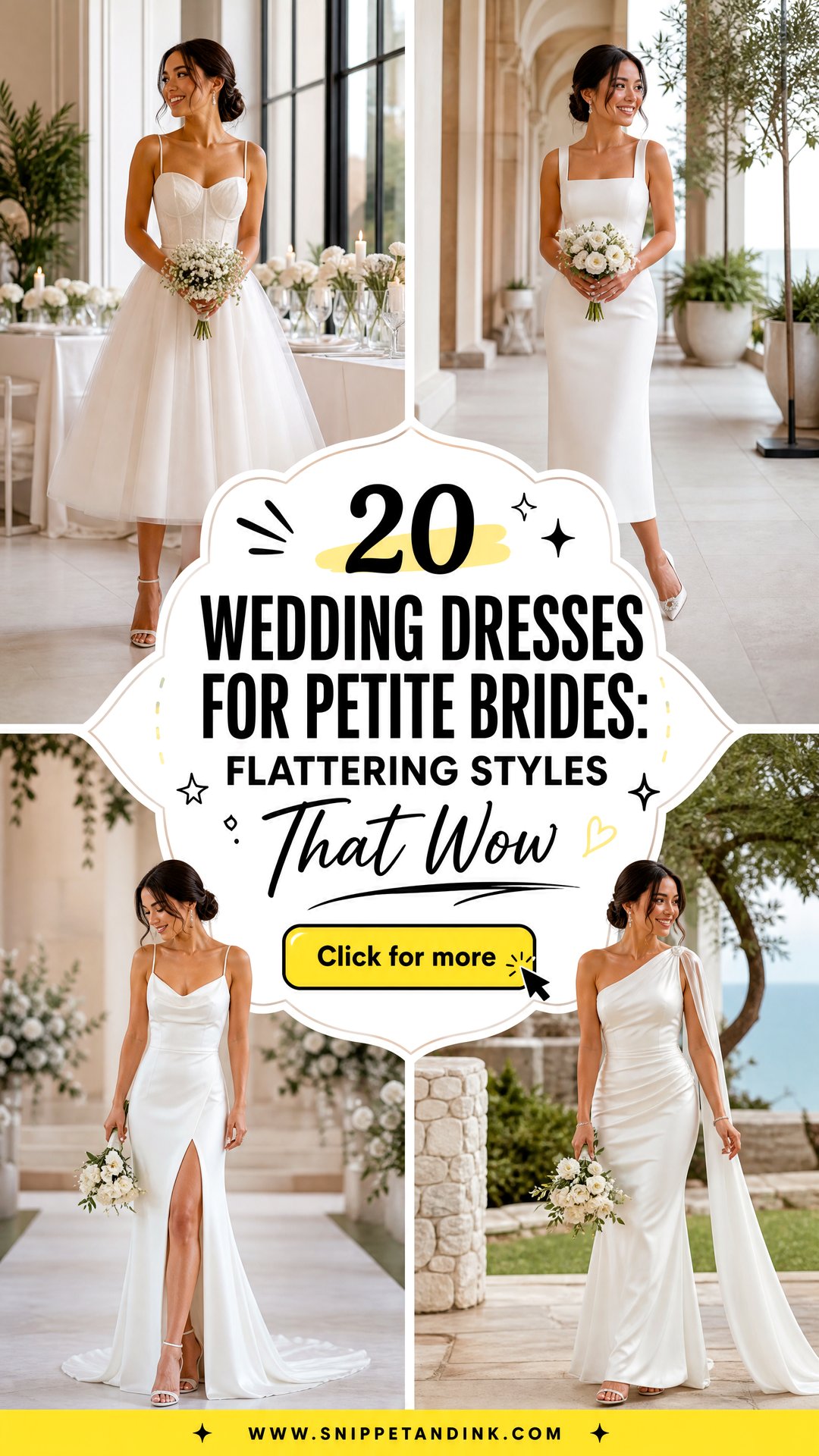
Trying On Samples Cut for a Taller Body
Salon samples are usually made for a taller model, so a petite bride never sees the gown as it will actually fit. A few habits make the appointment far more useful.
- Wear or bring heels close to the height you’ll marry in. Standing flat in a long sample adds several inches of fabric on the floor and makes every skirt look heavier.
- Ask the consultant to clip or pin the hem up and pinch the bodice at the waist, so you see where the seam will really sit.
- Check whether the designer offers a petite line or a custom length option. Some cut the bodice and skirt shorter at the factory, which saves heavy alterations later.
- Photograph yourself from the side. Front mirrors flatter; the side view shows whether the waist sits on your hips.
Don’t rule a gown out because the sample swamped you. Judge the neckline, the fabric and how you feel in it, and let the fitting fix the length.
1. V-Neck A-Line Wedding Dress
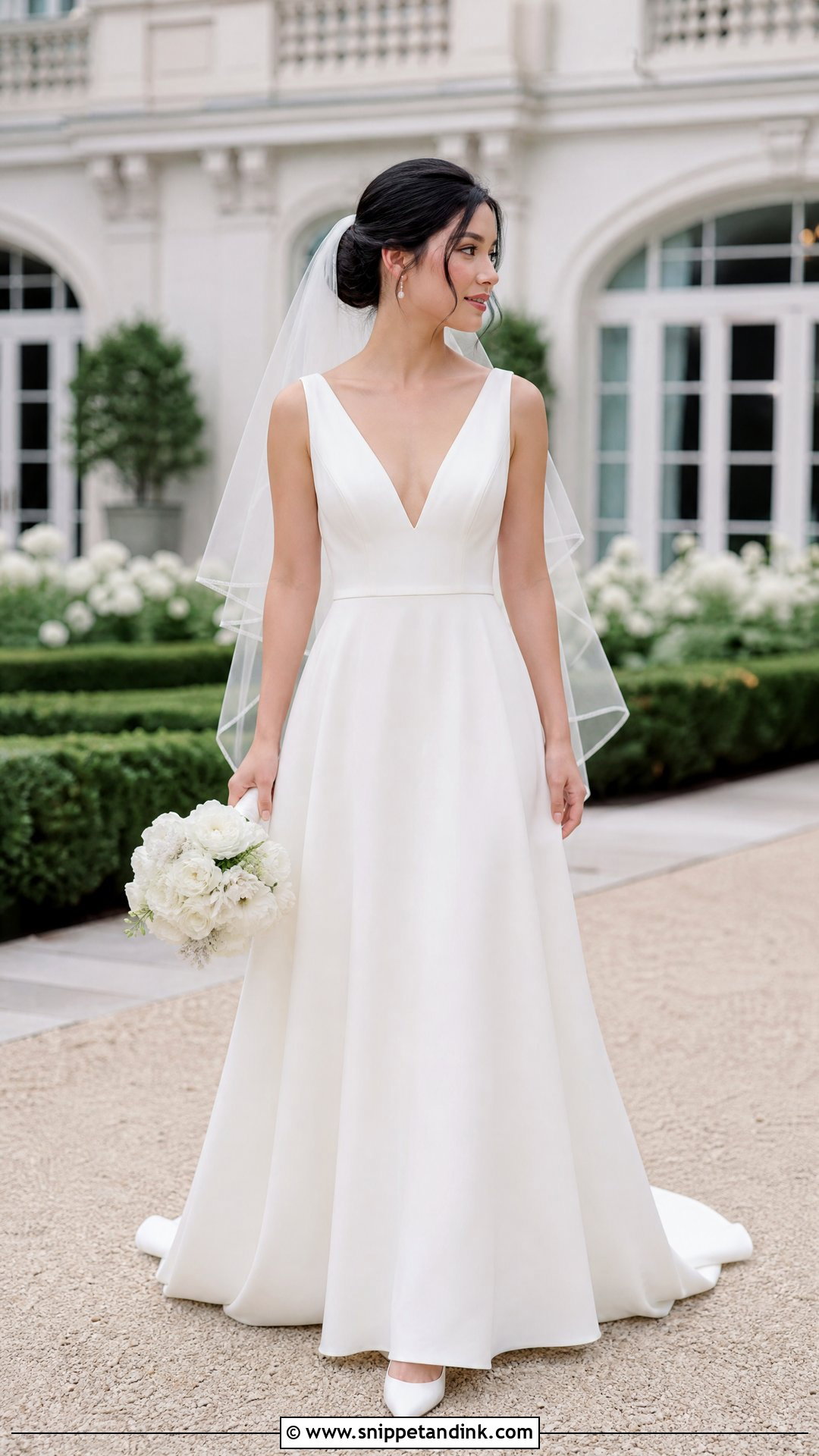
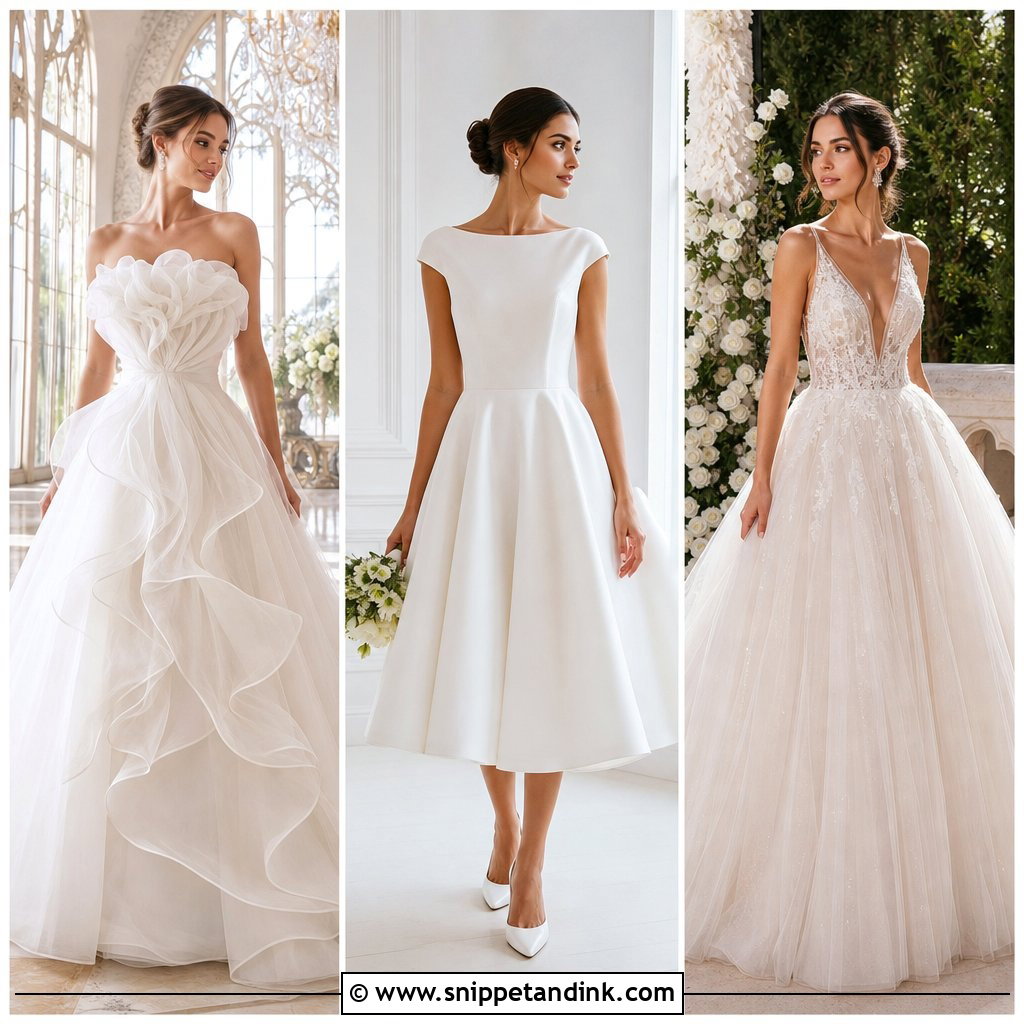
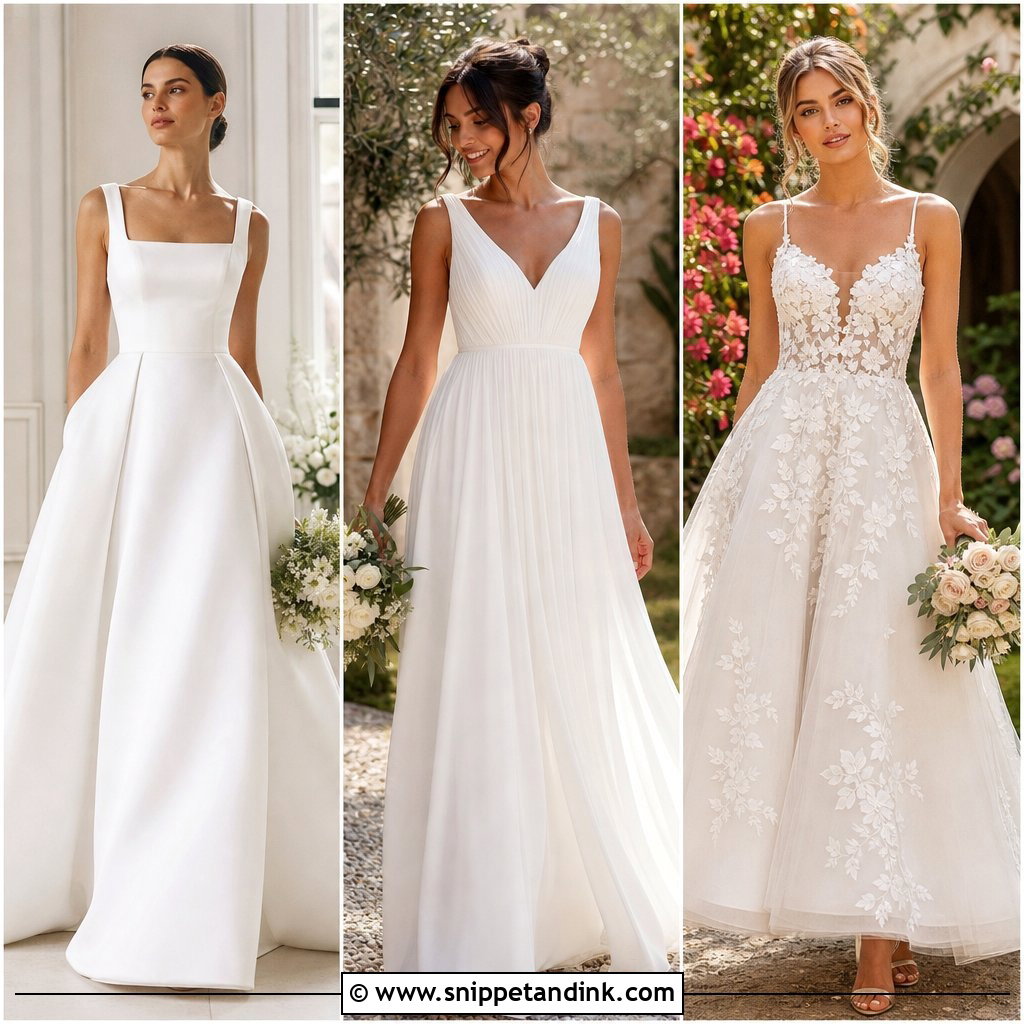
Nothing on a V-neck A-line gown fights a shorter frame: the V draws a long line down the bodice and the skirt widens gradually rather than all at once. I’d choose light crepe, chiffon or soft tulle with the waist at your natural waist or slightly above, which makes the legs read longer. A narrow waistband defines without cutting you in half; a wide sash does the opposite. Too many skirt layers or a broad train will swamp you. Pointed ivory pumps, a fingertip veil, small drop earrings and a compact bouquet suit gardens, hotels and estates alike.
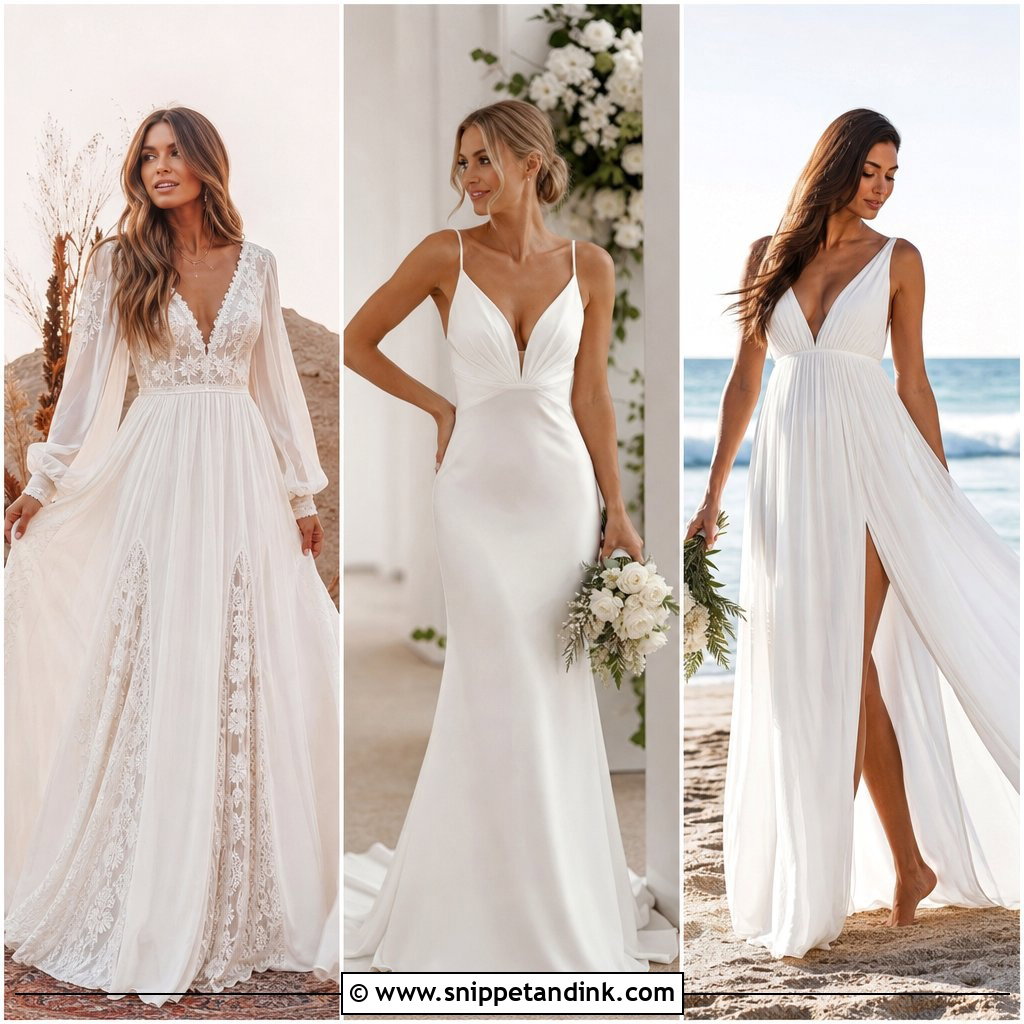
2. Crepe Sheath Wedding Dress
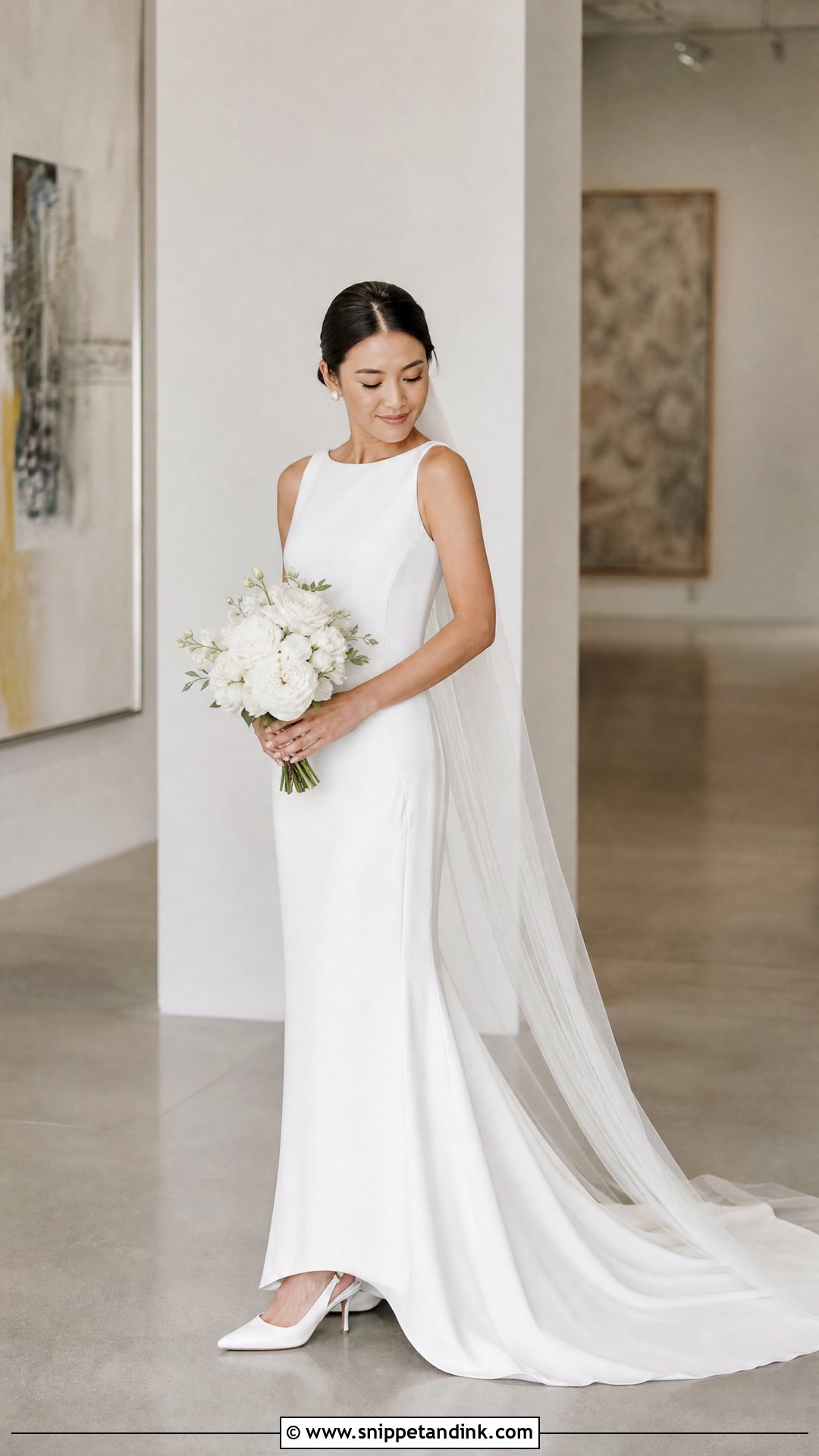
Crepe sheaths have no bulk to hide behind, which is why they suit petite brides so well and why the tailoring has to be exact. Princess seams should be shaped to your body, and the skirt should skim rather than cling. A bateau, scoop or modest V keeps the top streamlined. The detail I check most is where the hip curve sits; on a shorter torso, a sample’s hip shaping often lands too low and creates a fold. A sweep train gives drama without dragging. Pointed slingbacks, pearl studs, a narrow cathedral veil and a structured white bouquet suit a city ceremony or a small destination wedding.
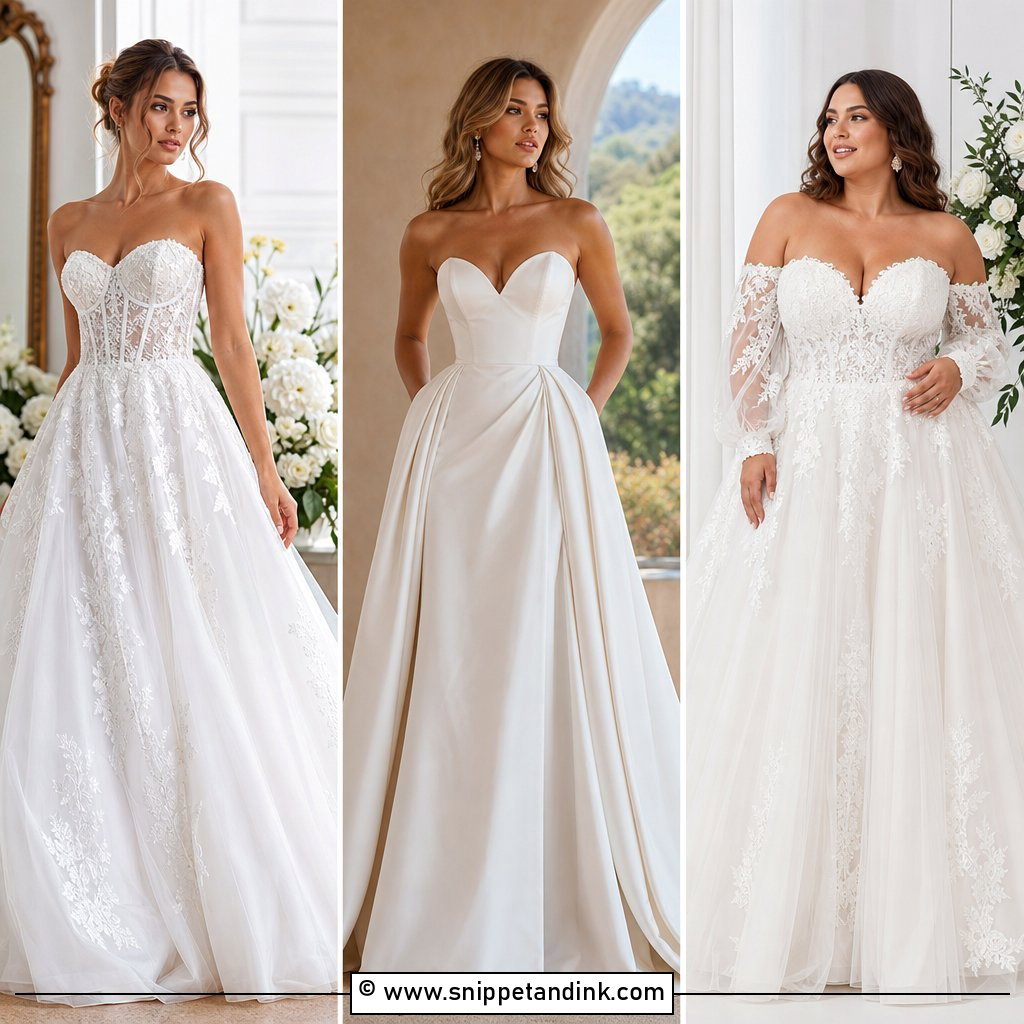
3. Lace Fit-And-Flare Wedding Dress
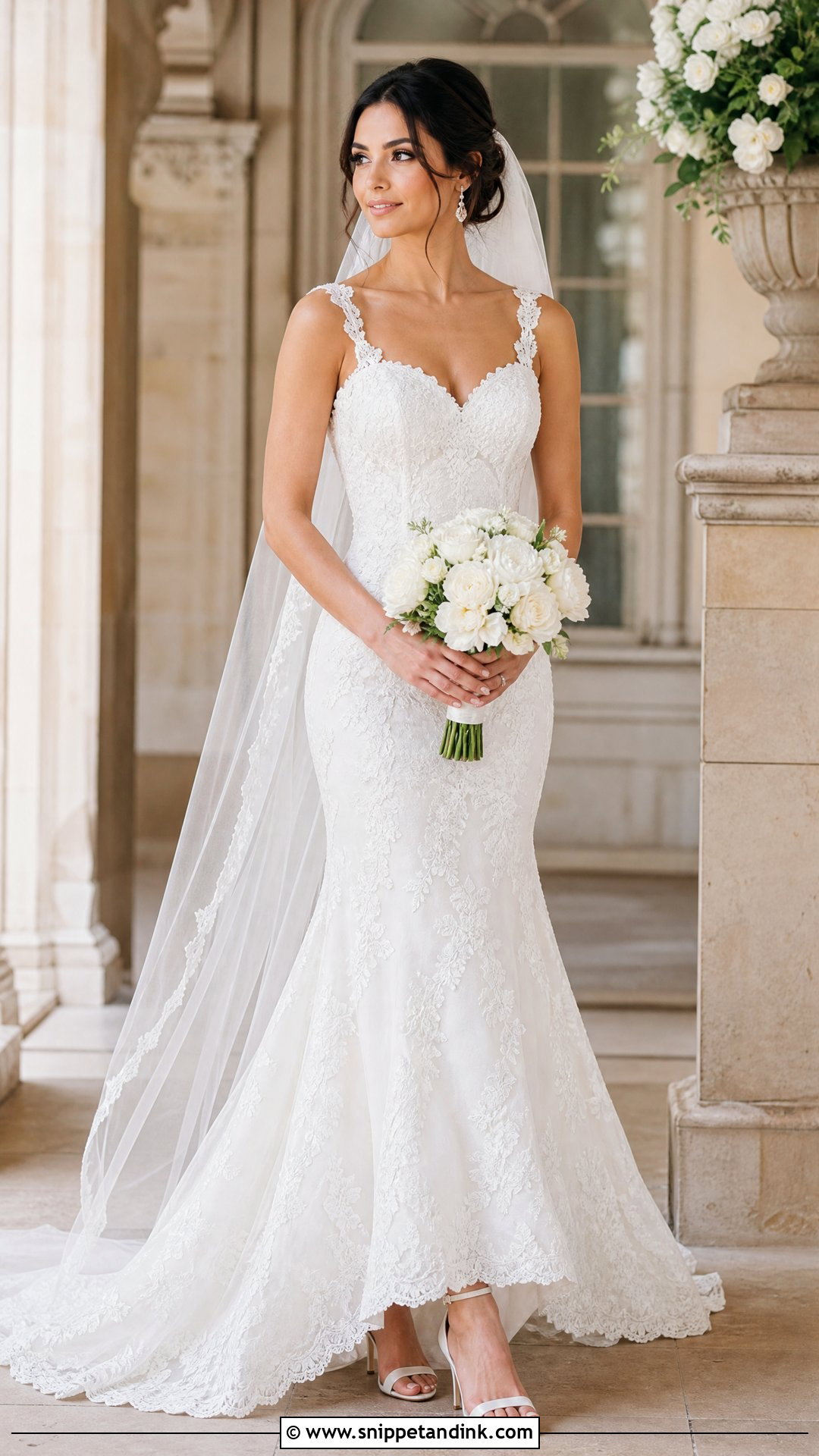
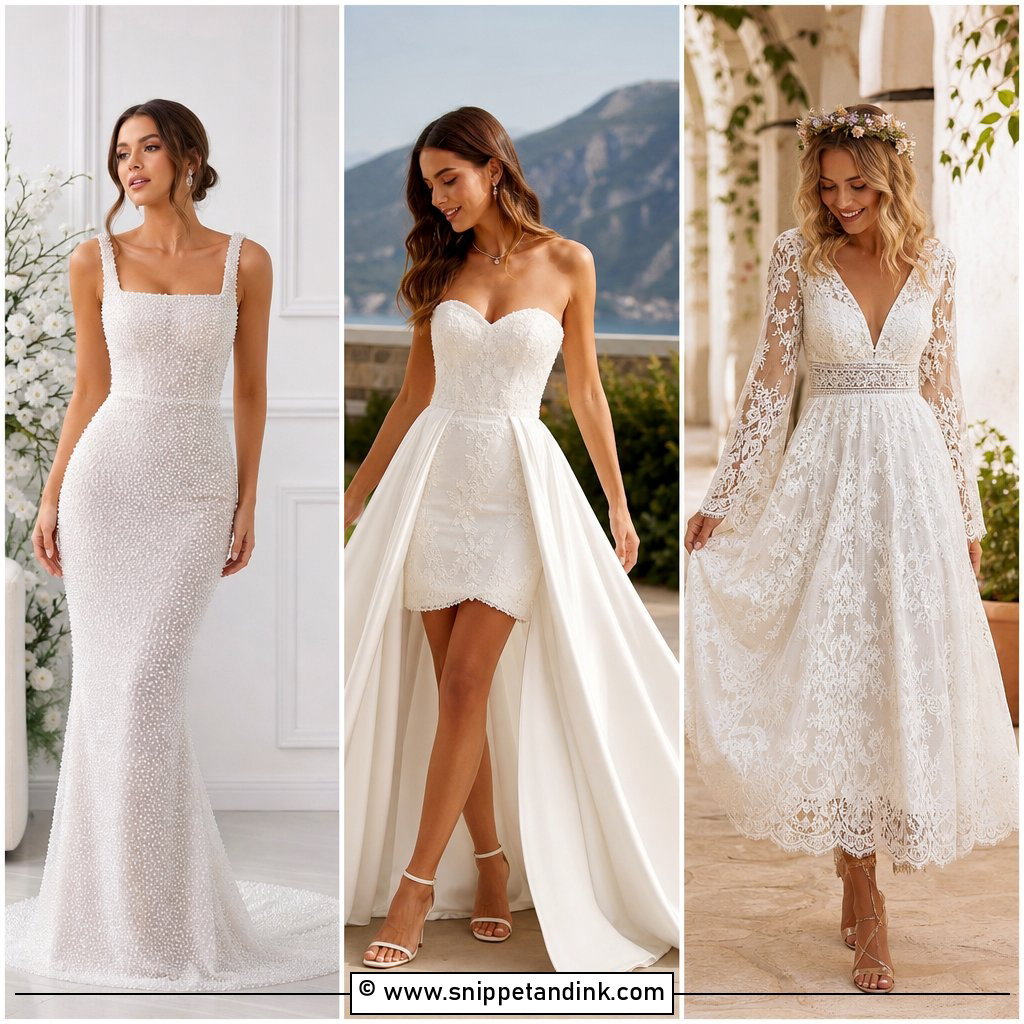
Where the flare starts is the whole story on a lace fit-and-flare for a petite bride. Sitting close through waist and hips, it should open around or just above the knee. Below the knee, the flare shortens your leg line visibly. Large lace motifs overwhelm a small frame, so look for smaller patterns or appliqués placed vertically. Keep the train light, especially in a small ceremony space. Ankle-strap heels, a simple tulle veil, small crystal earrings and a softly gathered bouquet complete it. It gives you traditional lace without the weight of a layered skirt.
4. Sweetheart Mermaid Wedding Dress
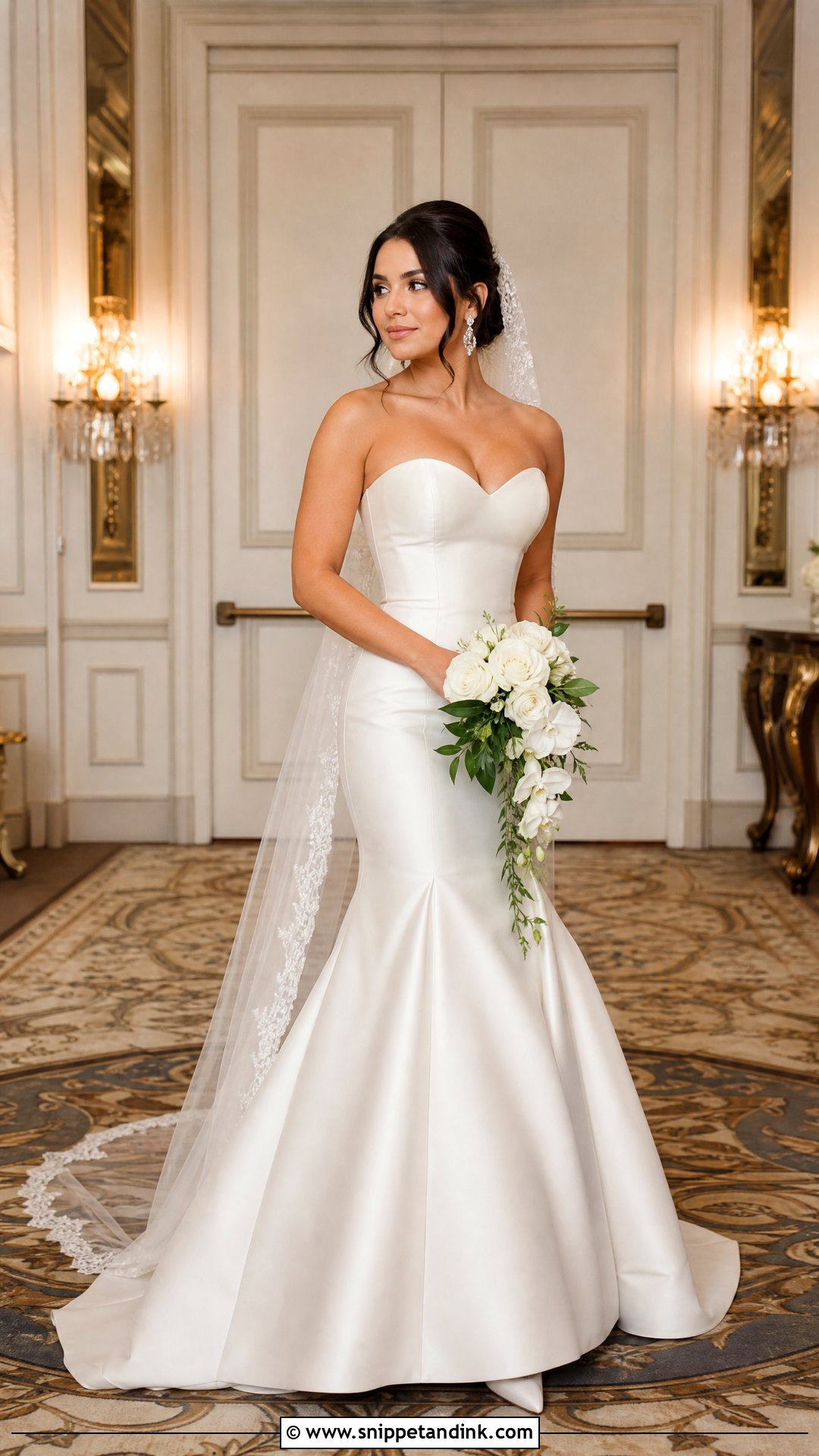
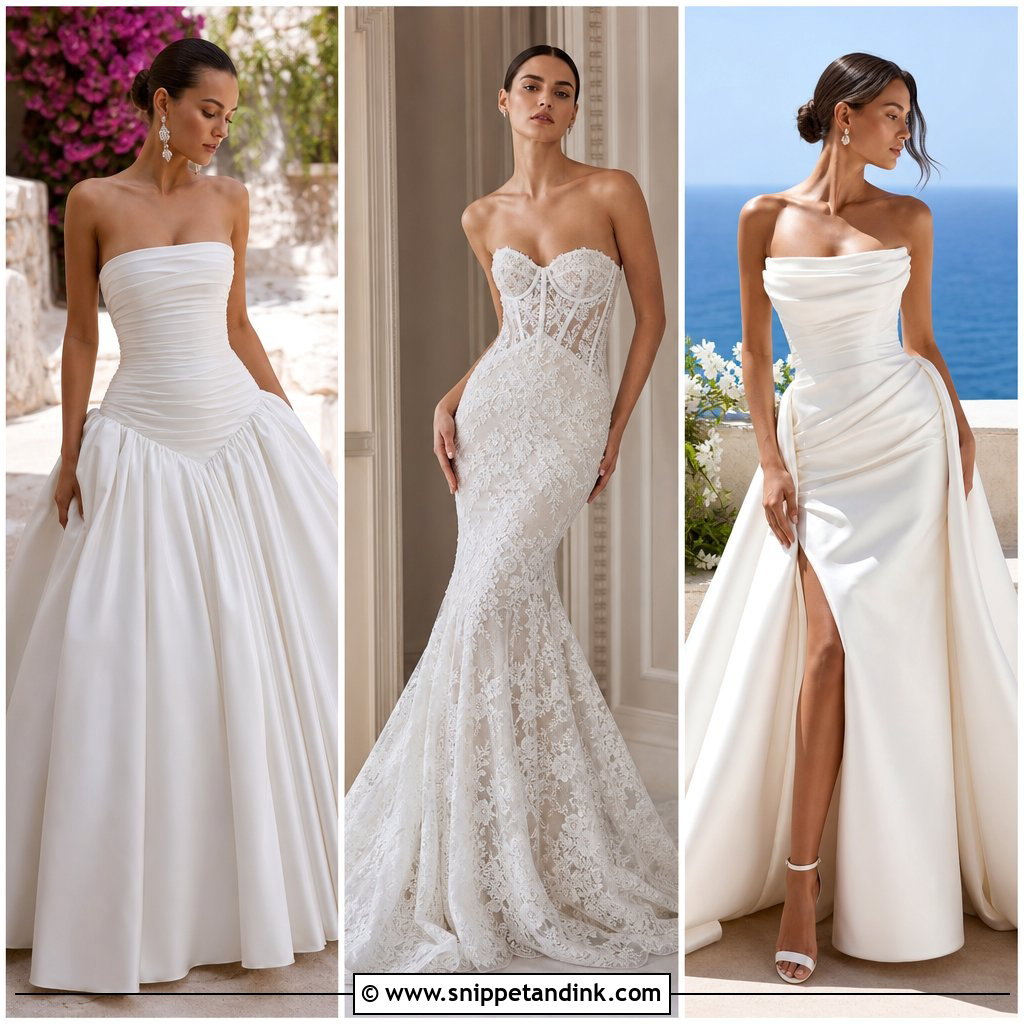
Mermaids get a bad name with petite brides, mostly because the samples flare at mid-calf on them. A sweetheart mermaid wedding dress cut so the flare begins near your knee can look sculpted and balanced. Firm bodice support and a clearly defined waist are essential. Smooth satin or lightly embellished lace keeps the shape readable; a ruffled hem crowds the lower half. Pointed pumps, a narrow chapel veil, small statement earrings and a compact cascade bouquet suit a ballroom or evening reception. Walk in it before you commit, as a low flare limits your stride even more on shorter legs.
5. Chiffon Empire Waist Wedding Dress
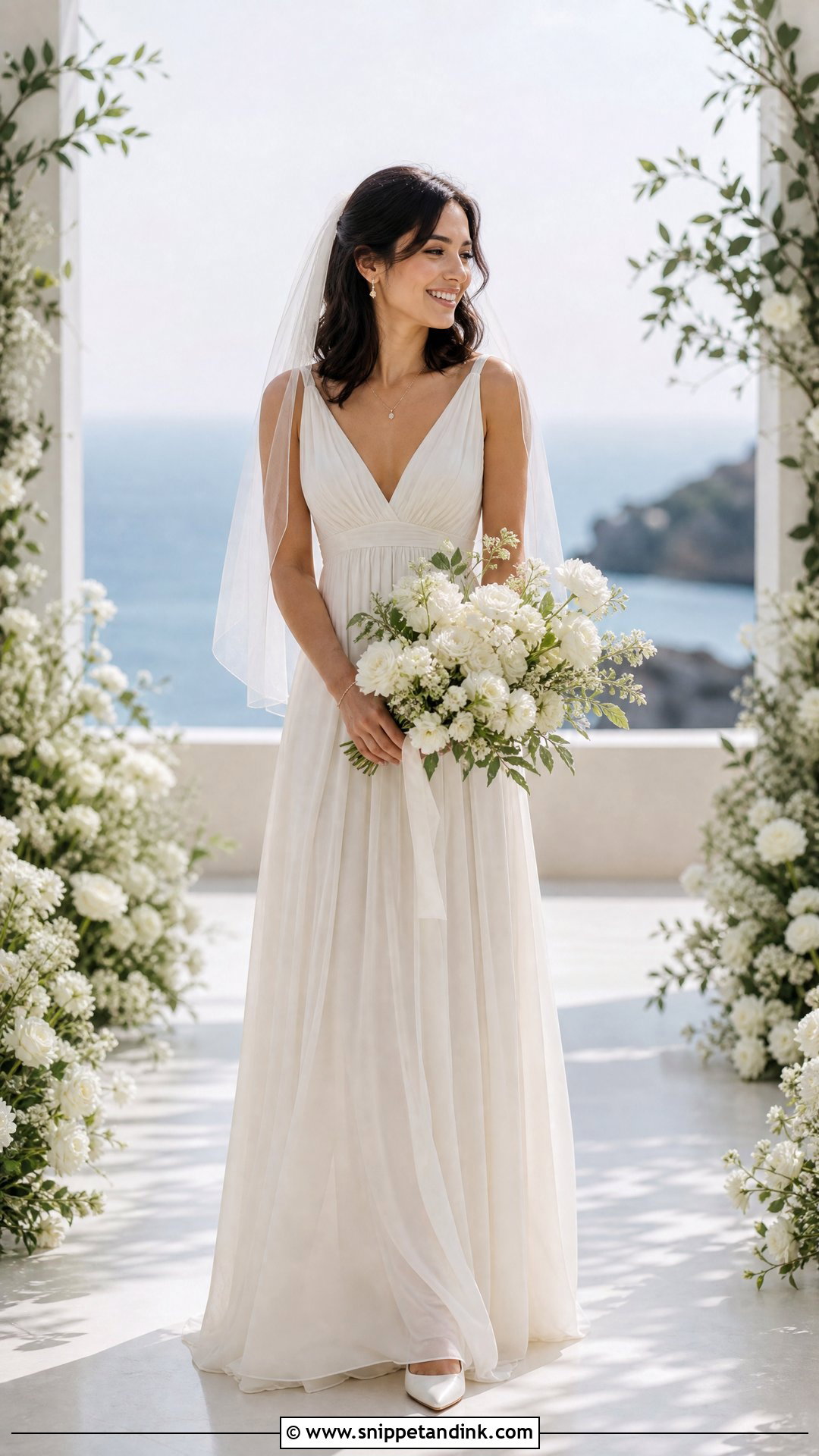
An empire seam sits right under the bust, so on a petite bride the skirt runs in one long line to the floor and the legs look endless. The bodice has to fit closely, though. A loose empire top on a small frame looks borrowed. Choose a fitted V or soft drape, and a skirt with little gathering; several full chiffon layers add width you don’t need. Low pointed heels, a shoulder-length veil, fine jewelry and an airy bouquet keep it light. A natural or relaxed updo suits the movement. I’d pick it for a beach or warm garden, or for any bride who wants nothing tight at the waist.
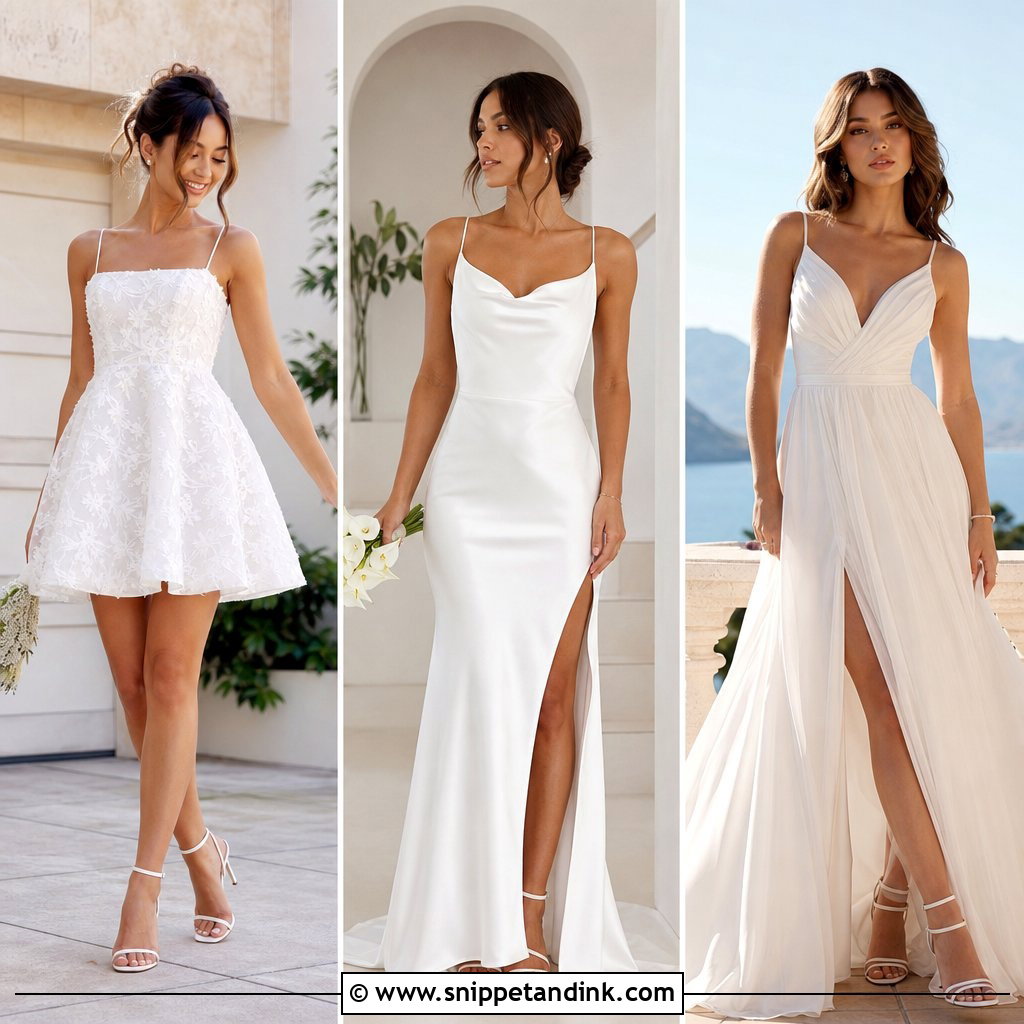
6. Tea-Length Wedding Dress
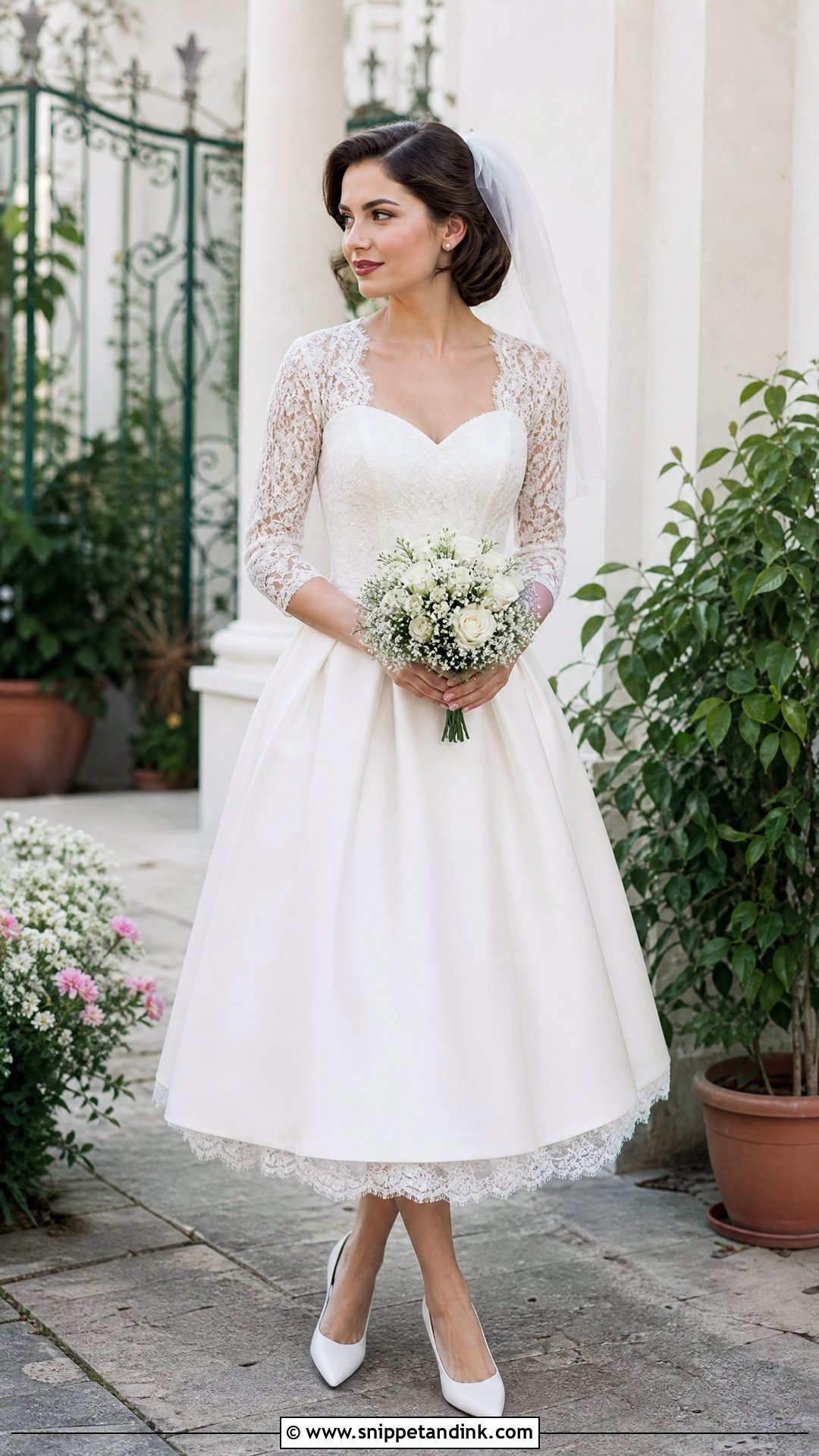
Tea length shows the ankle, which is the narrowest point of the leg, and that clear break between fabric and skin is what makes this length so flattering on petite brides. Choose a fitted bodice with a scoop, V or sweetheart neck and a hem that ends just above the ankle, not mid-calf where it cuts the leg. Softly structured satin, organza or lace moves without puffing out. Pointed pumps, slingbacks or embellished flats finish the look, since shoes are on show. A short veil, pearls and a small rounded bouquet give a vintage nod without tipping into costume.
7. Square-Neck Midi Wedding Dress
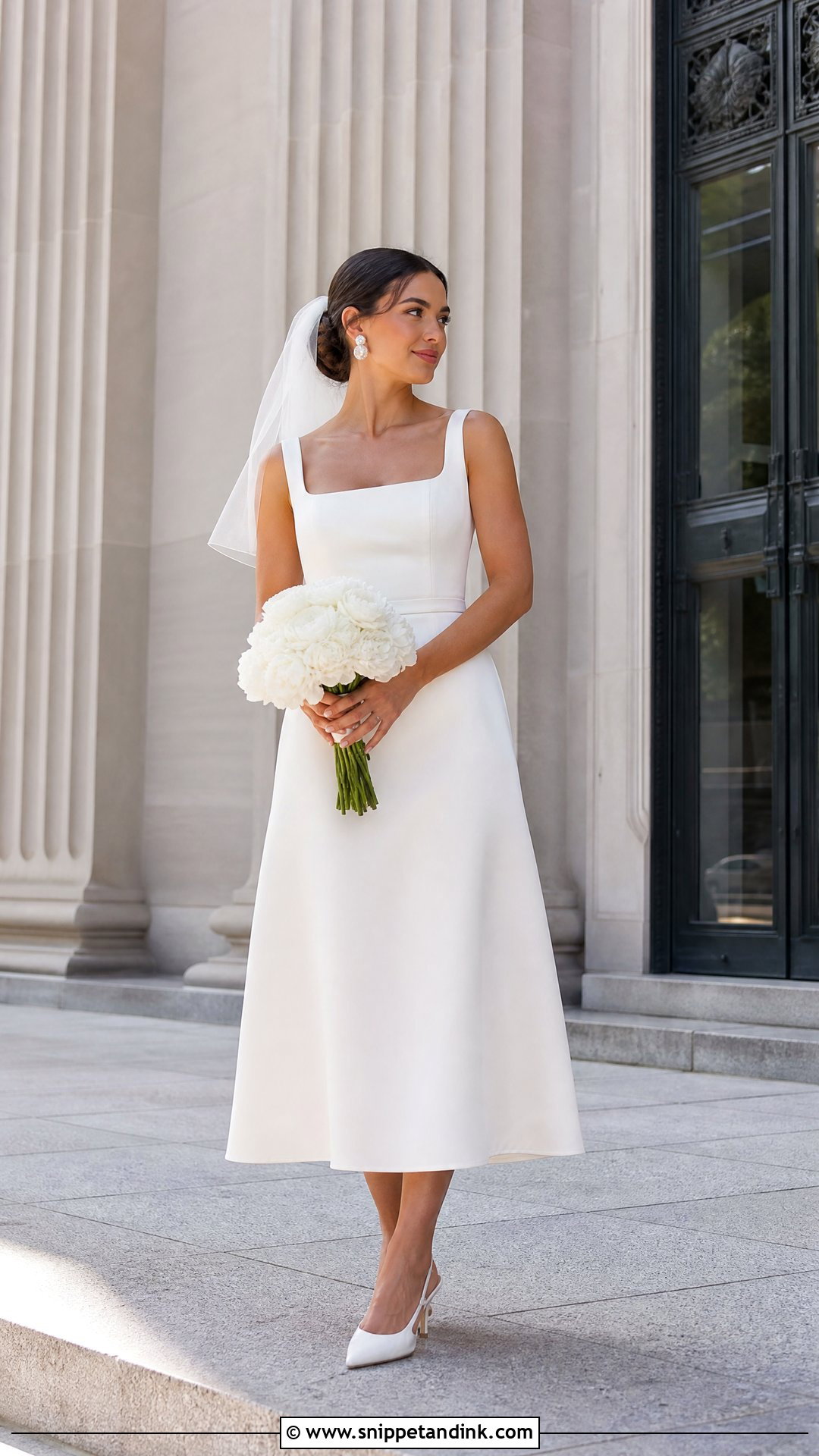
A square-neck midi is crisp and modern, with the neckline framing the collarbone and a close bodice that keeps it from boxing out. Hem placement needs a mirror test: below the knee or near the lower calf, wherever it looks balanced against your own legs. Brides often go too long, and the dress ends up looking like a misjudged maxi. A narrow A-line or slim column is cleaner than heavy gathering. Pointed slingbacks, sculptural pearl earrings, a short veil and a neat white bouquet suit courthouse weddings, restaurant dinners and civil ceremonies, where you’ll want to move freely.
8. Satin Slip Wedding Dress
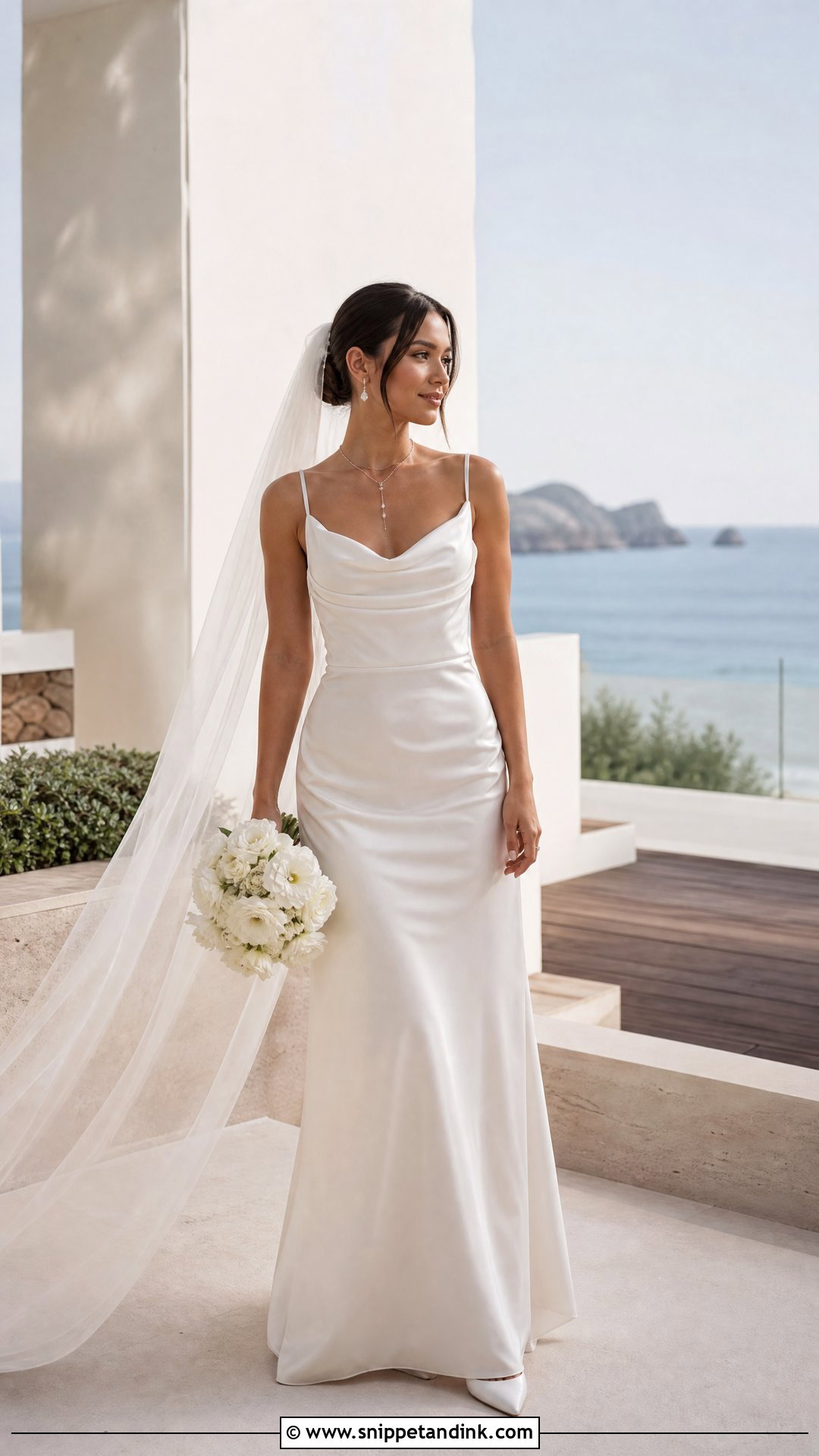
On a satin slip wedding dress, every small fitting error shows, and petite brides meet two of them constantly. The straps are too long, so the neckline sits low and the waist slips below where it should be, and the hem puddles. Choose straps that can be shortened, a waist shaped close to the body and a hem cut to your actual wedding shoes. A soft cowl adds some dimension without interrupting the long line. Sleek pointed heels, a fine back necklace, pearl drops and a sheer single-layer veil keep it minimal. In cool weather, a cropped fitted wrap works far better than a long jacket, which cuts your height in half.
9. Off-The-Shoulder Satin Wedding Dress
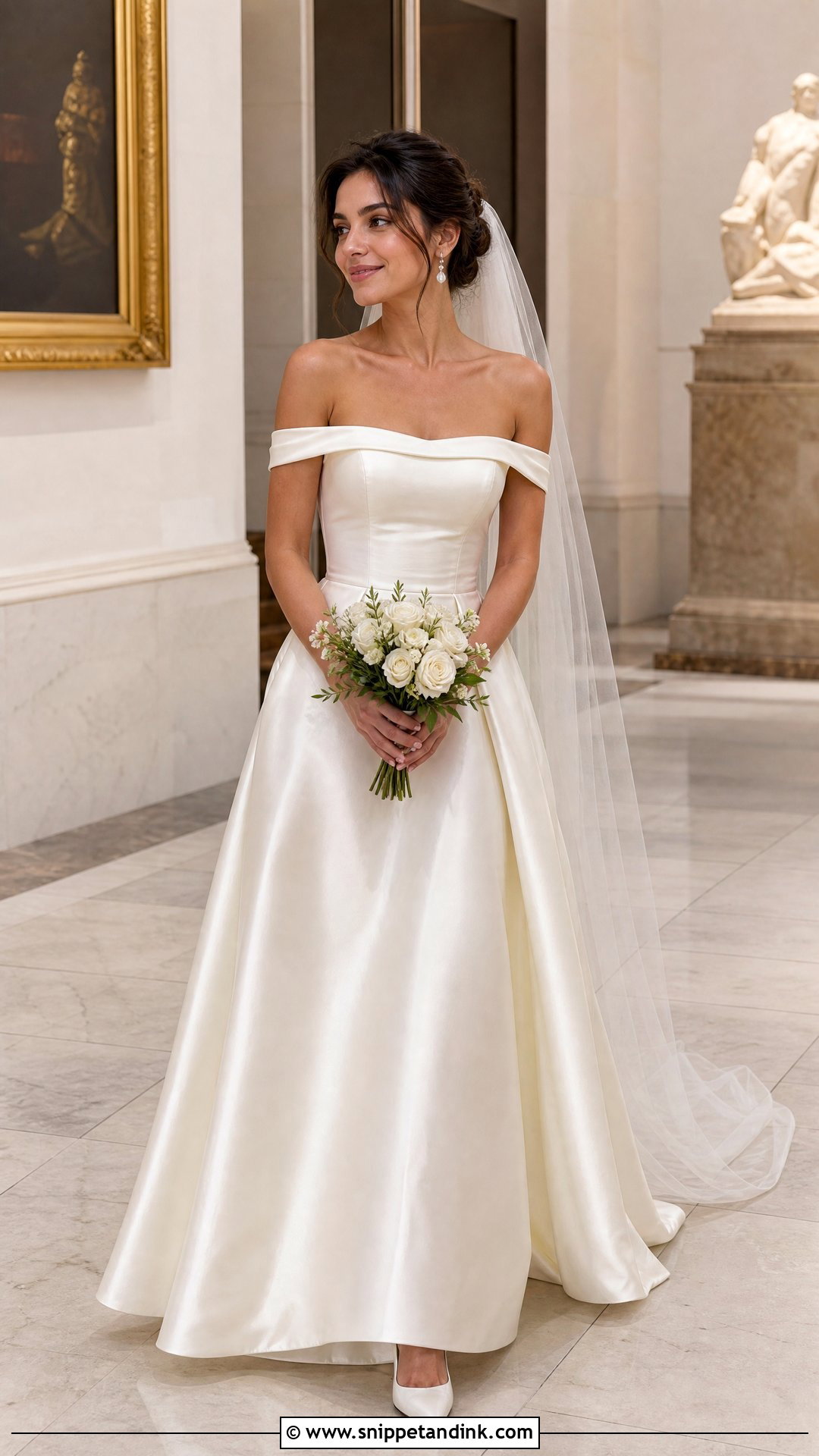
Off-the-shoulder satin frames the collarbone with a clean horizontal line. On a petite bride I keep that line slim: narrow folded straps, not big draped sleeves, which add width and make the top look heavy. A fitted bodice and a softly flared A-line give structure without excess volume. If there’s a train, chapel length looks formal and is far easier to manage than a cathedral train on a shorter bride. Pointed ivory pumps, a low bun, delicate earrings, a fingertip veil under the hair and a small bouquet with clean greenery finish it.
10. Halter Column Wedding Dress
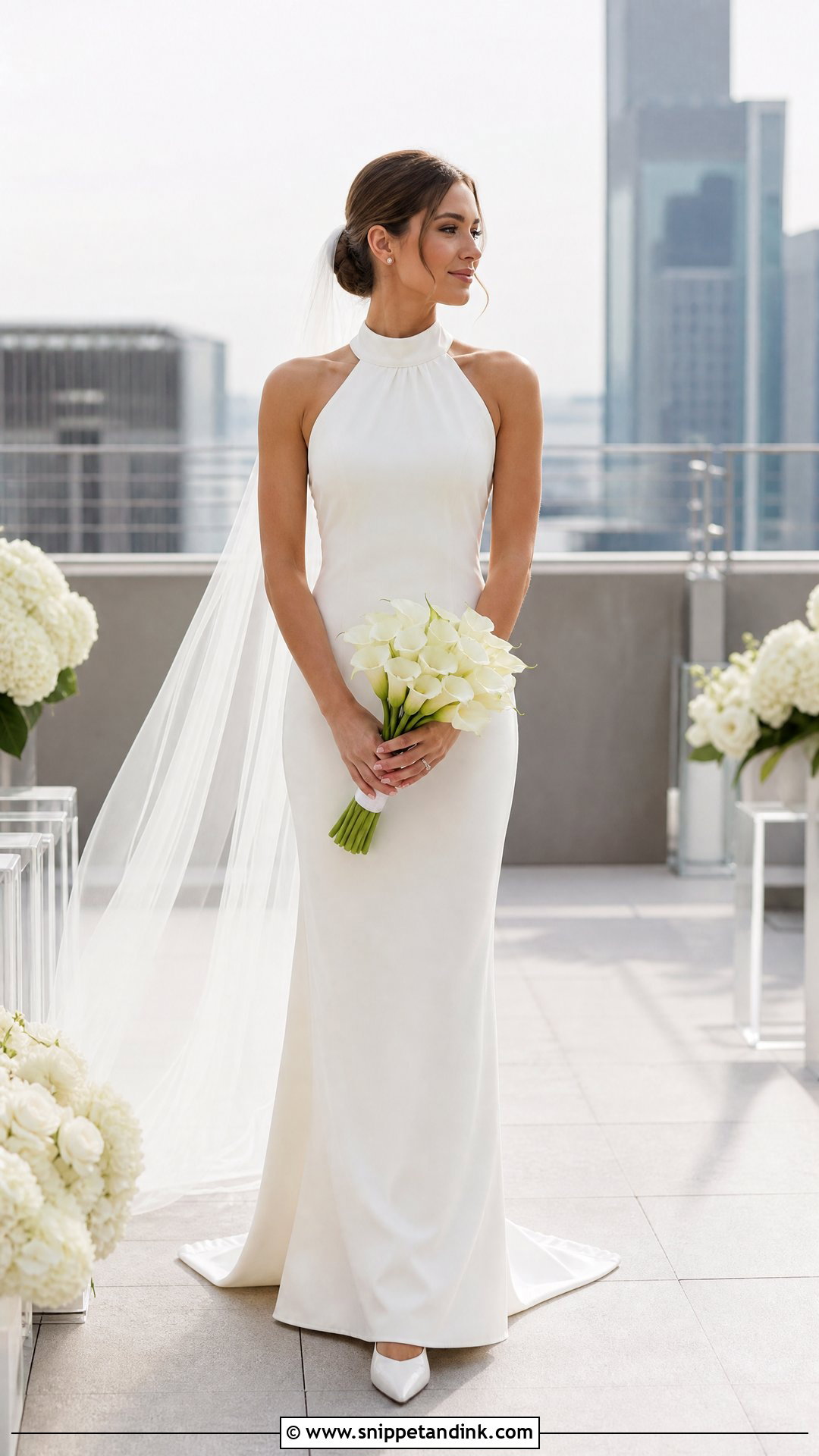
Halters pull the eye up to the shoulders, then a narrow column skirt carries it straight down, with almost no interruption at the waist. That uninterrupted line is what makes this one so effective on a shorter frame. Choose a softly fitted halter; a very high, tight neck can look severe and feel restrictive. Crepe, satin or light lace all work. Skip the necklace and carry a slim bouquet. Pointed heels, a low ponytail or neat bun, small studs and a veil attached below the hair suit rooftops and modern venues.
11. Cap-Sleeve Lace Wedding Dress
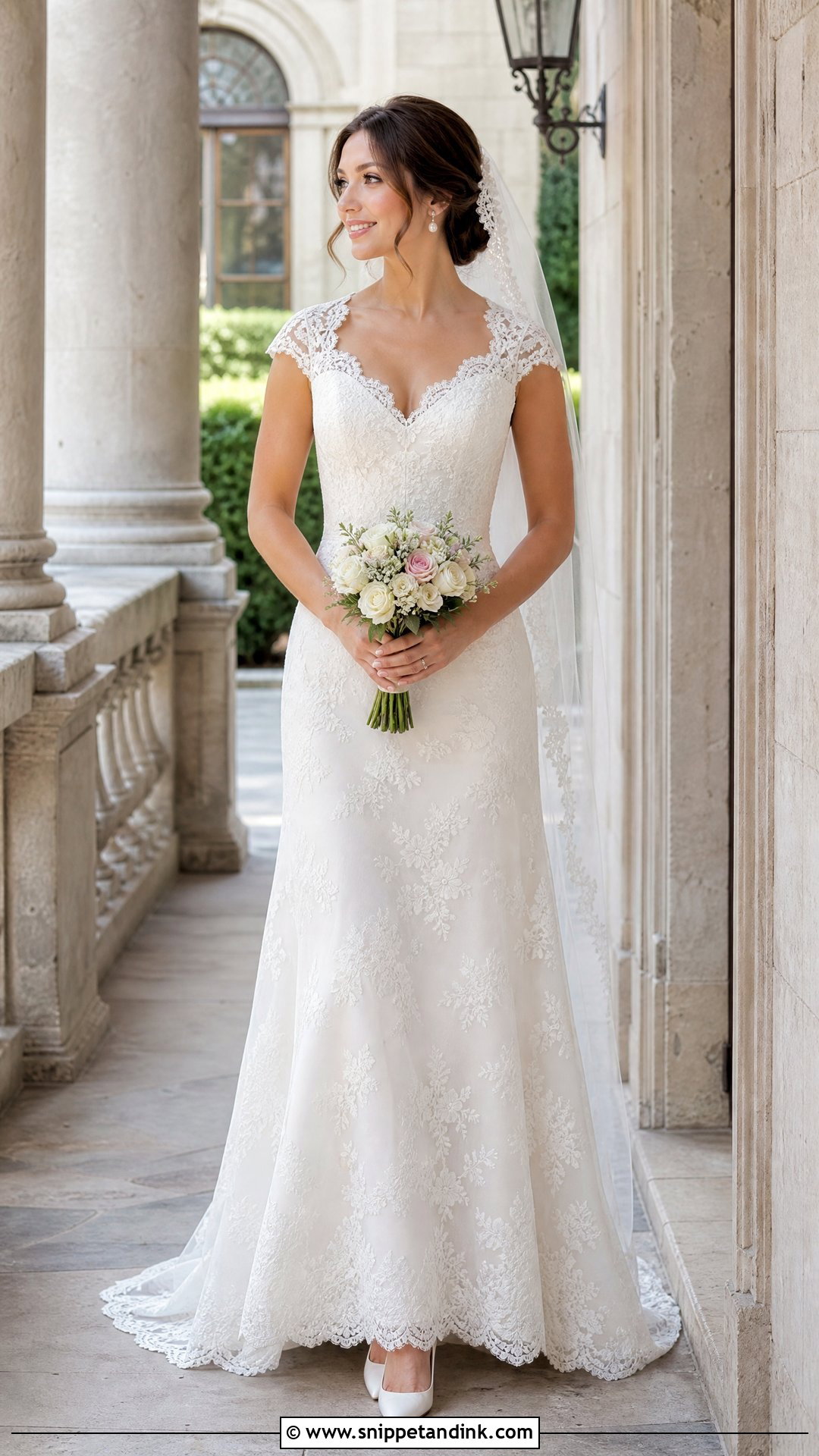
Cap sleeves give coverage without running fabric down the arm, which can visually shorten a petite bride. The sleeve should stay close to the shoulder; let it stand away and it adds width. Choose a lace gown with a fitted bodice, an open neckline and an A-line or sheath skirt. Small floral motifs placed vertically stay in proportion. A lightly lined bodice adds support and keeps the lace soft. Pointed pumps, a fine-edged veil, pearl earrings and a compact garden bouquet suit historic estates and spring gardens, and the bride gets coverage without losing her shape.
12. Long-Sleeve Crepe Wedding Dress
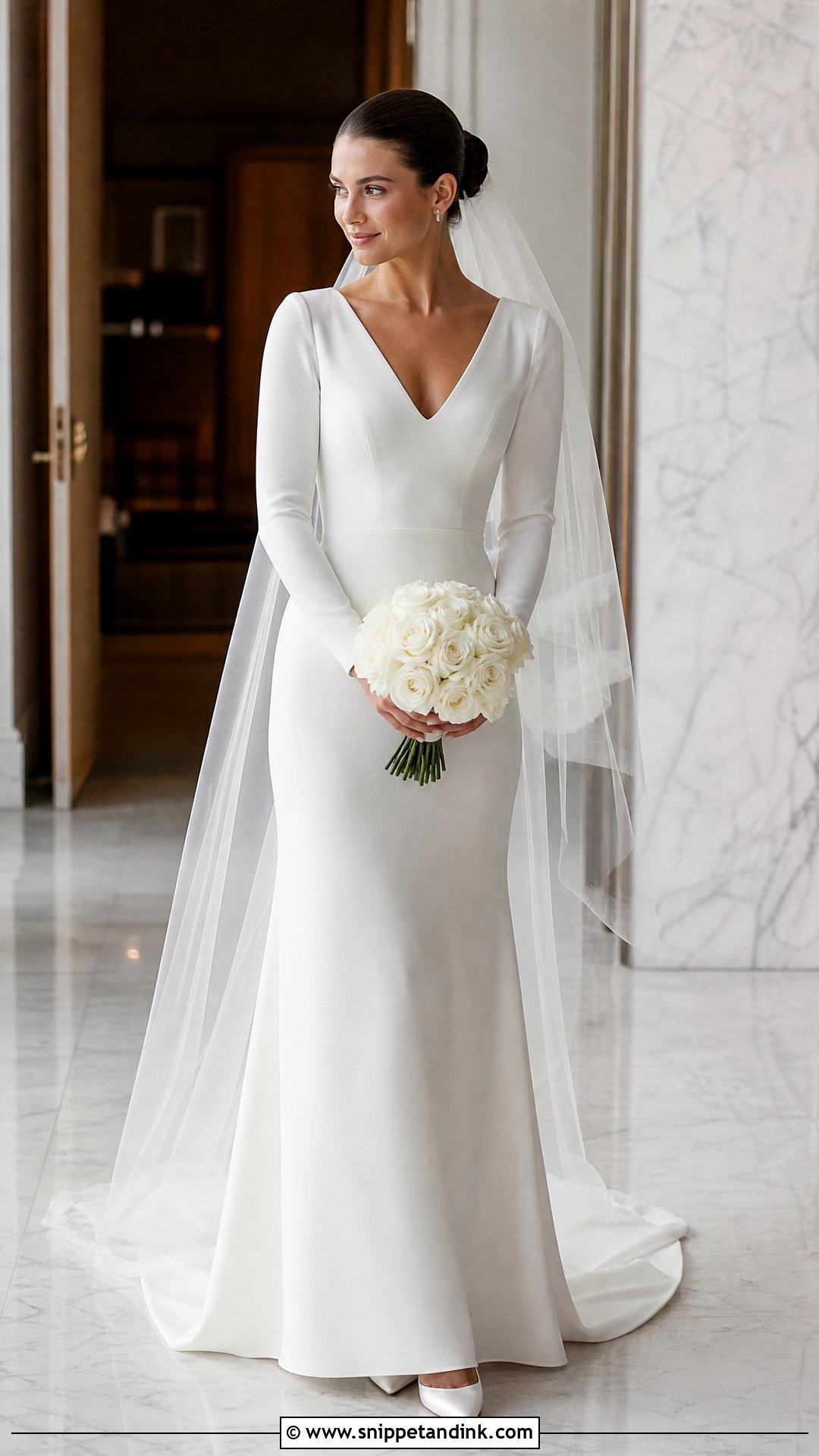
Sleeves on a petite bride need to be fitted, and they need to end at your wrist, not past it. Off-the-rack crepe sleeves are commonly an inch or two long on shorter arms, and the wrinkles gathering at the cuff make the whole gown look oversized. A V-neck or an open back keeps a long-sleeved dress from feeling buttoned up. A sheath or gentle fit-and-flare skirt continues the long line. Back or cuff buttons add detail without bulk. Have the shoulders and sleeves altered together, since excess at the shoulder changes everything below it. Pointed heels, a sleek bun, small earrings and a sheer chapel veil suit cool-season weddings.
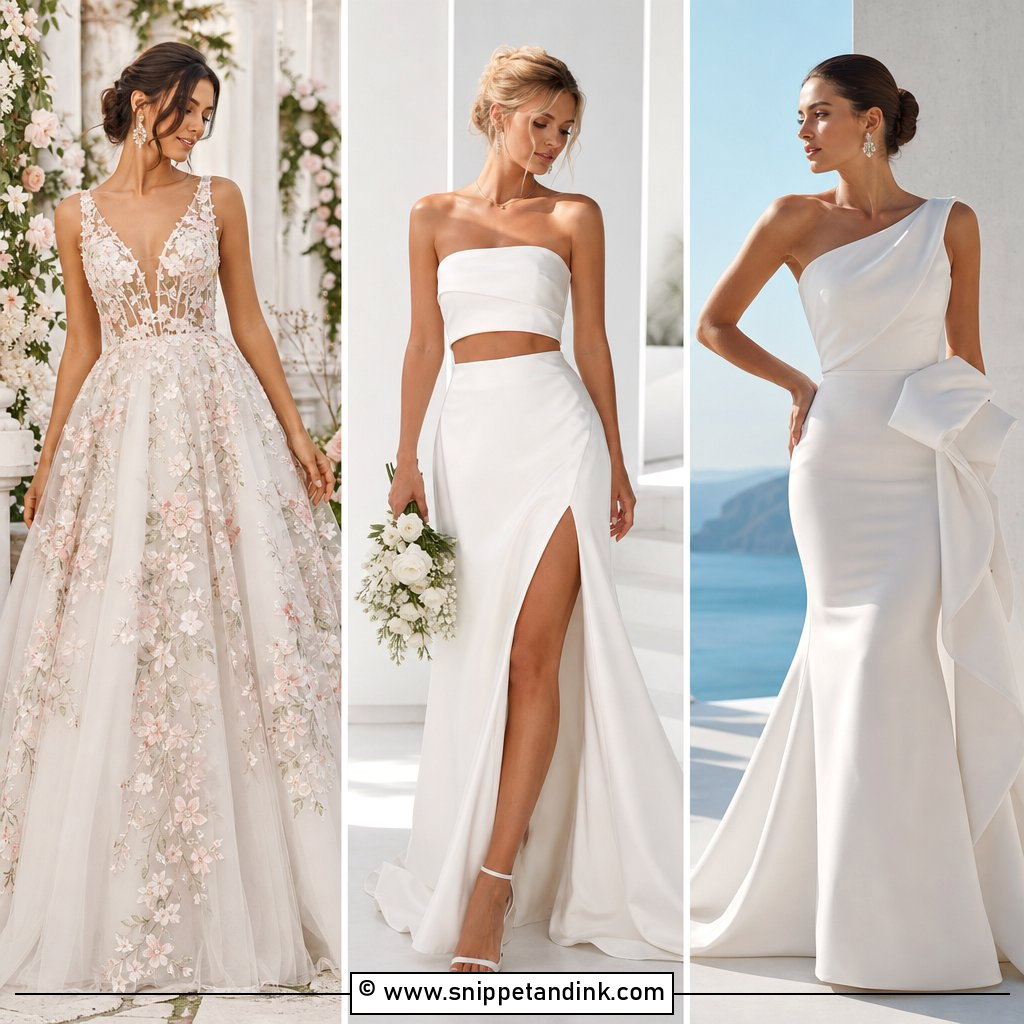
13. Floral Appliqué A-Line Wedding Dress
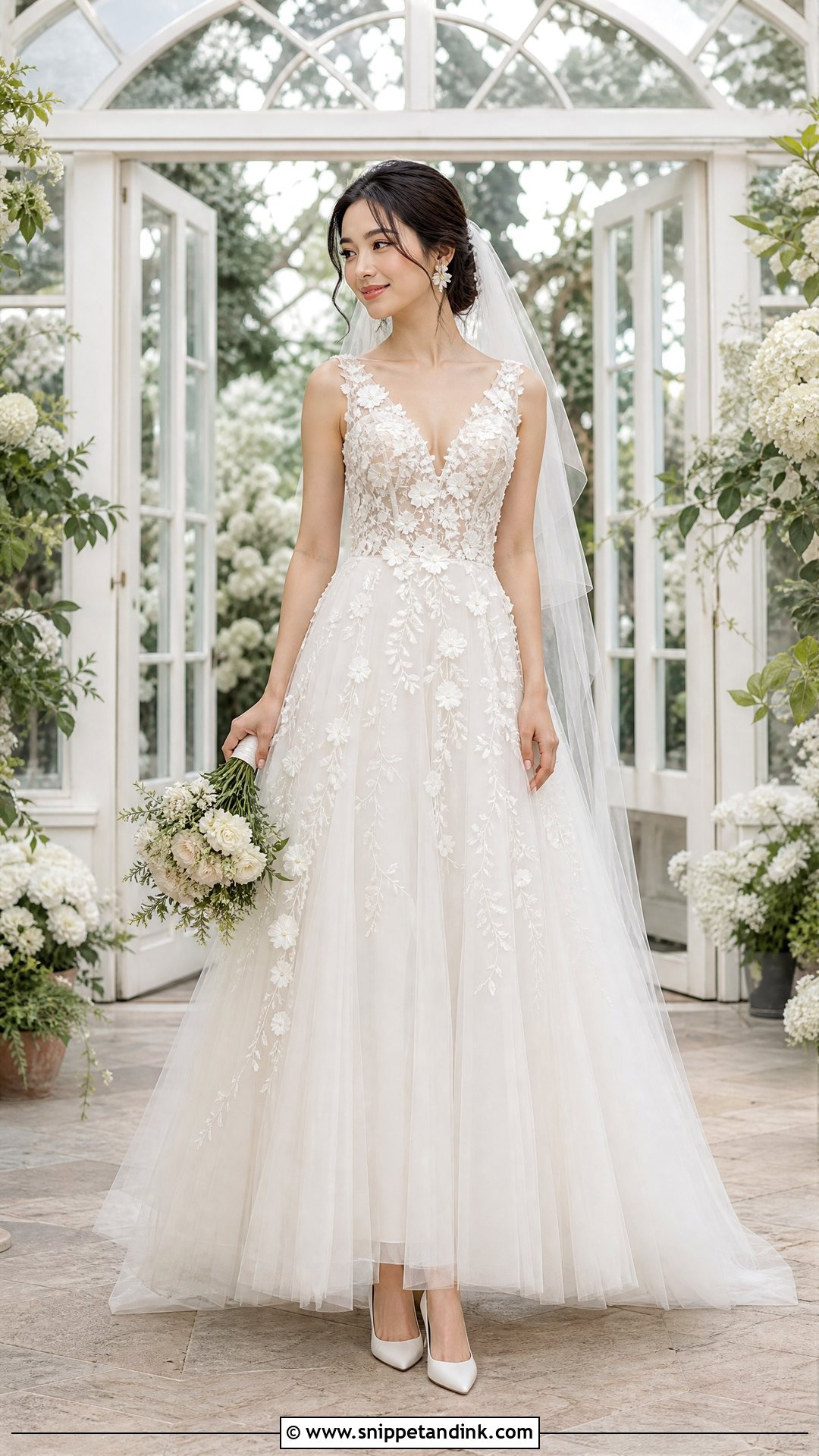
Small dimensional flowers suit a petite frame better than oversized blooms, which can overwhelm the bodice. Look for appliqués that thin out toward the hem or follow vertical paths across bodice and skirt, so the eye travels up and down. A fitted V or strapless bodice gives them a clean base, and a soft tulle skirt adds movement. Don’t stack bold details: big flowers, a wide skirt and an embellished veil together compete. Pointed pumps, floral earrings, a plain veil and a bouquet with restrained greenery suit gardens, glasshouses and spring celebrations.
14. High-Slit Sheath Wedding Dress
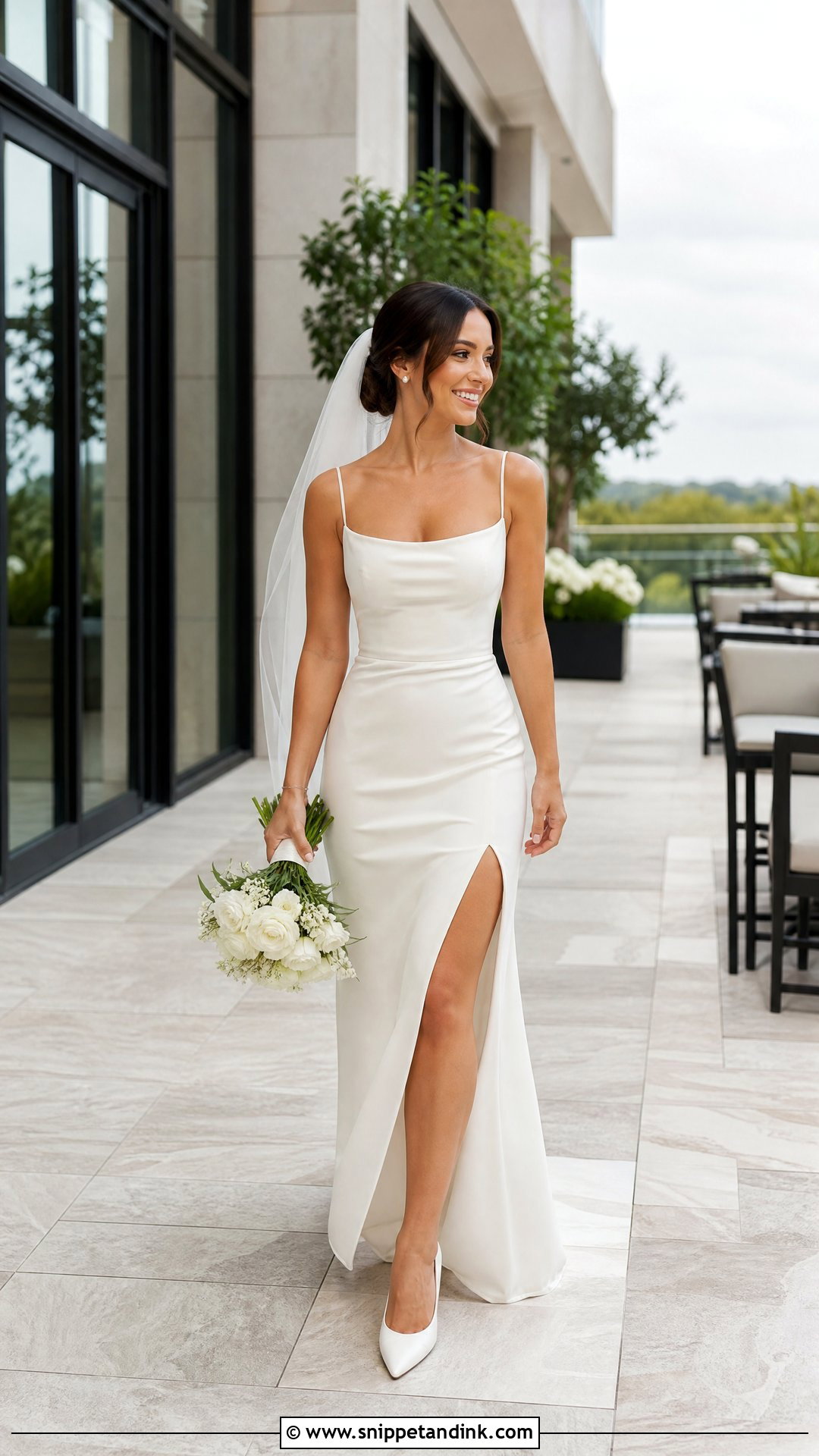
A slit breaks up a long expanse of fabric and shows a line of leg, and both make a petite bride look taller. Its height has to work in motion. Too high and you’ll be holding it closed every time you sit; check it sitting down, not just standing. A structured bodice, slim straps and smooth crepe or satin keep the gown polished. The hem should only just skim the floor with your final shoes. Pointed pumps or minimal sandals, a narrow veil, understated jewelry and a modern bouquet complete it, and your shoes get a visible role.

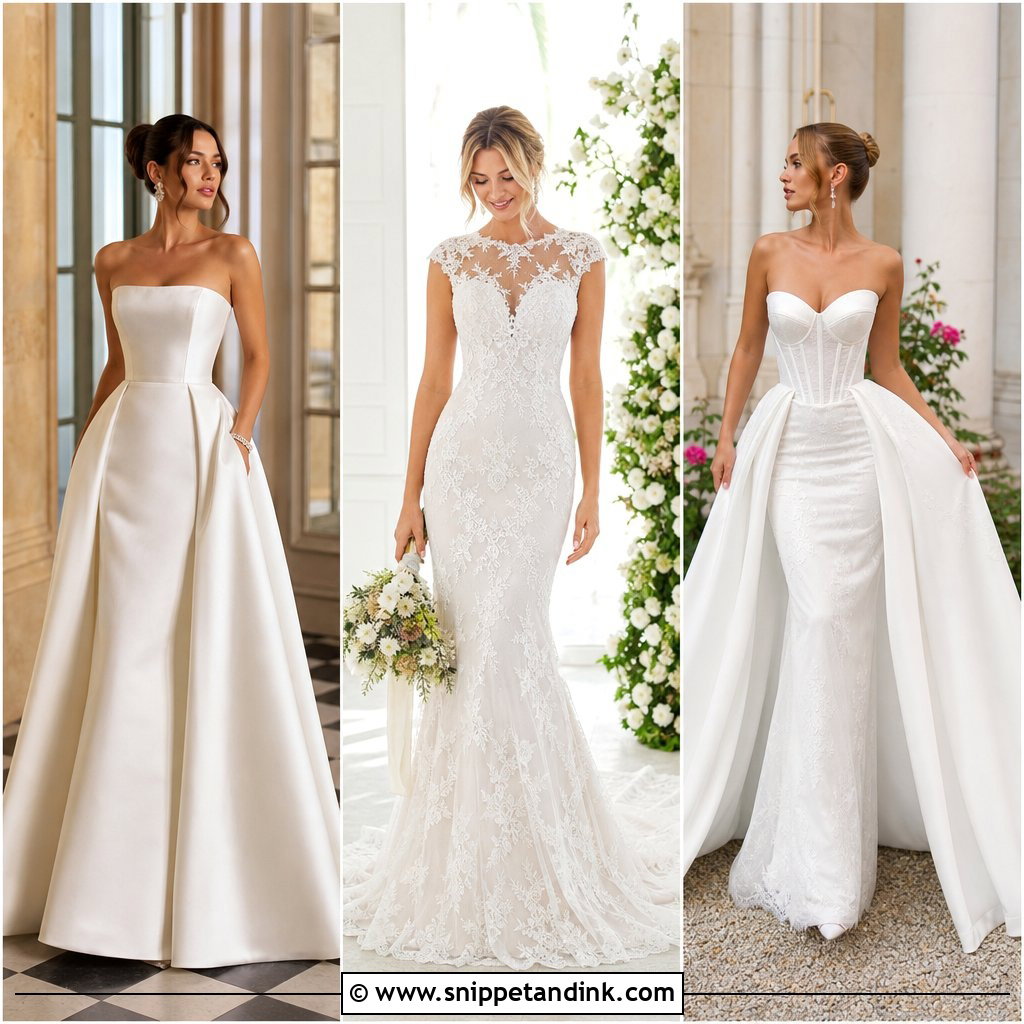
15. High-Low Wedding Dress
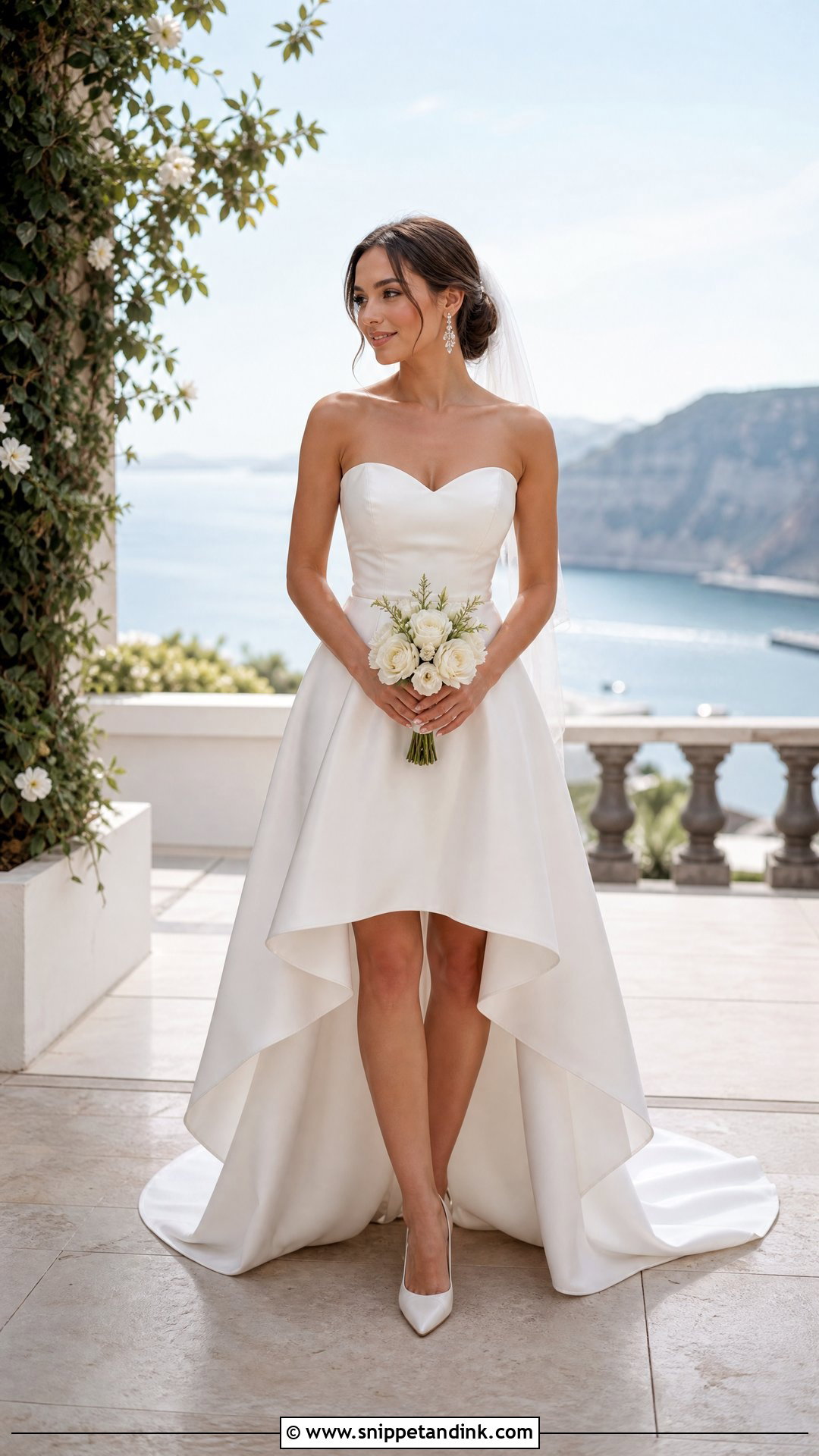
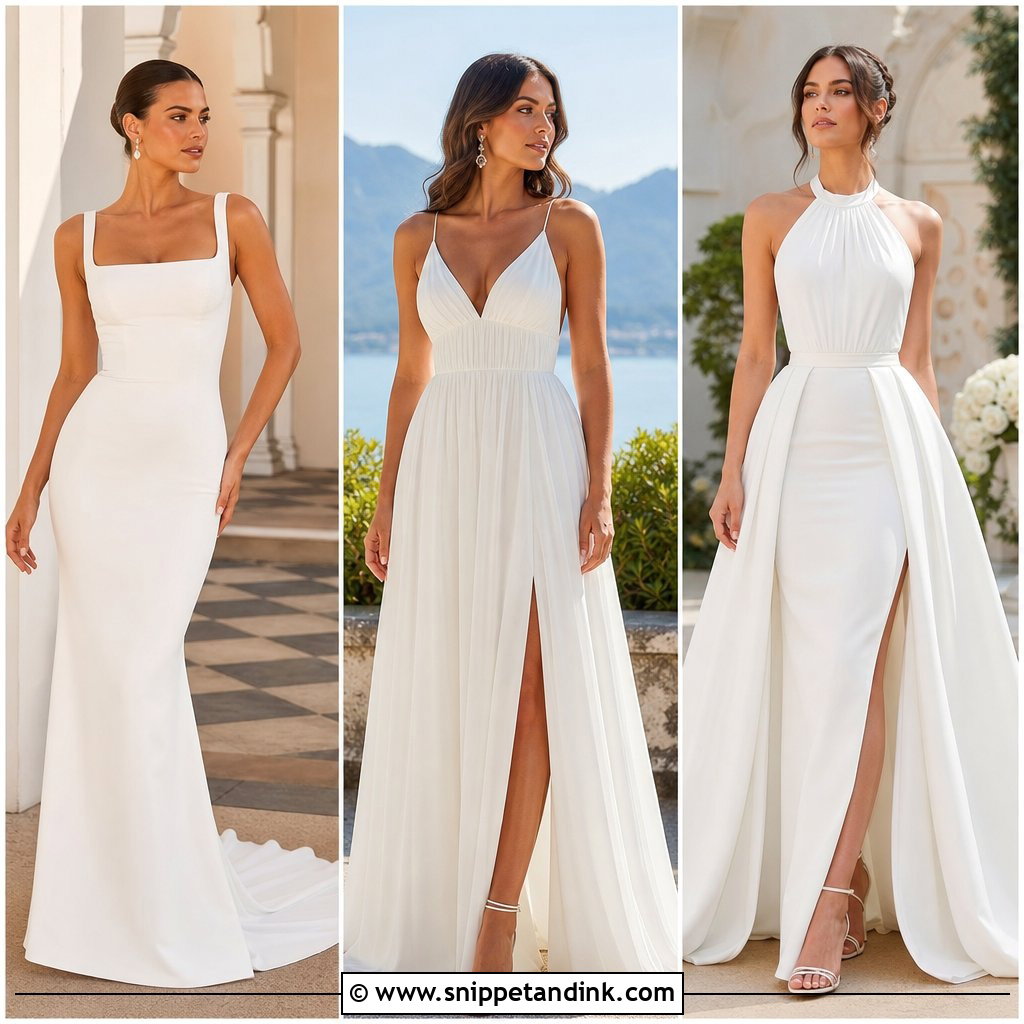
High-low hems give you a short front for ease and a longer back for the aisle. The front should end around the knee or lower calf and curve smoothly into a light train. On a petite frame, a very steep drop from front to back looks chopped; a gentler curve reads as one shape. A fitted bodice keeps the hemline intentional. Shoes are fully on show, so match them to the gown’s fabric and formality. Pointed heels, crystal or pearl earrings, a short veil and a small bouquet suit garden parties, destination weddings and receptions built around dancing.
16. Mini Wedding Dress With Overskirt
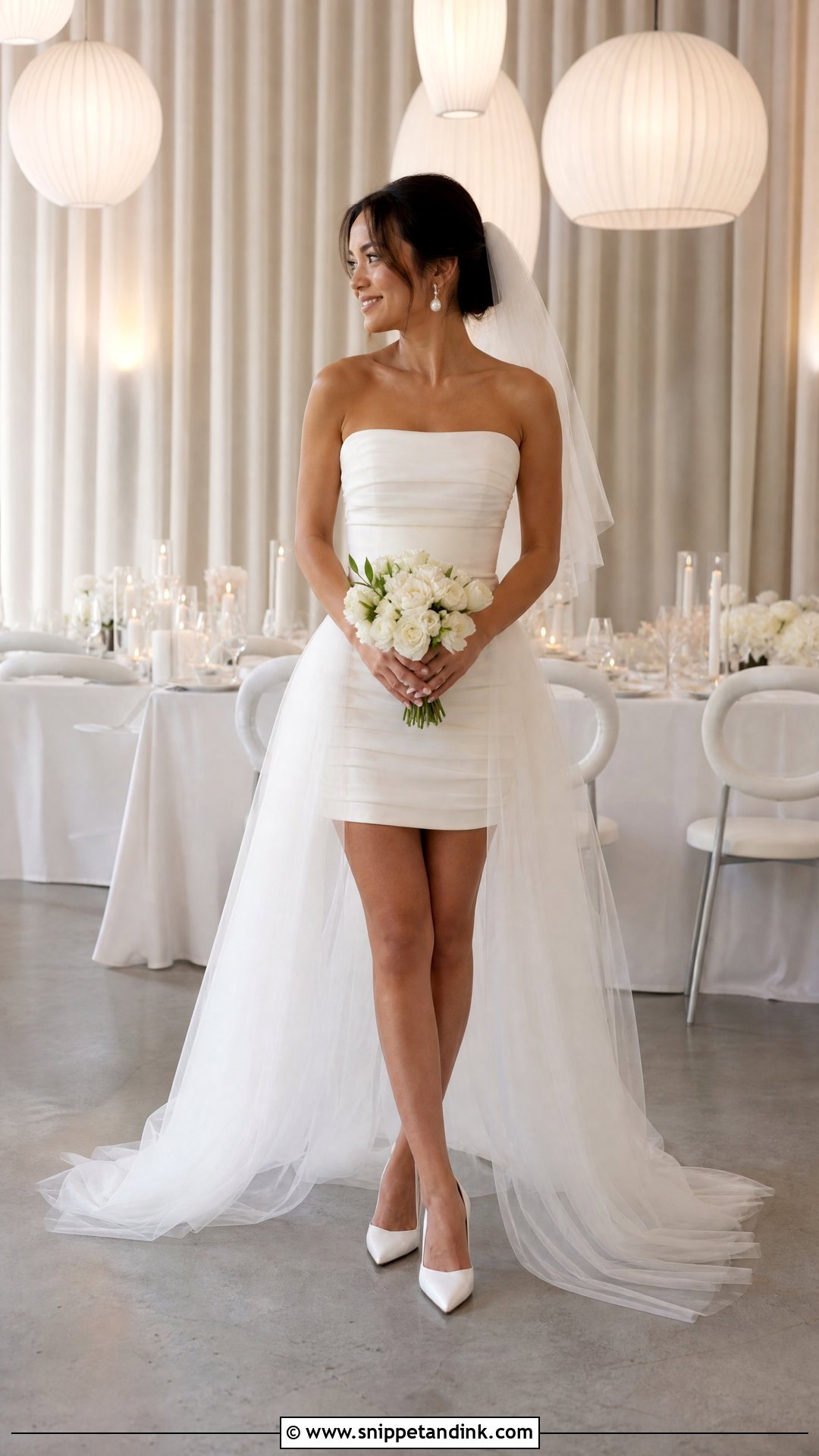
Two looks, one dress: a fitted mini for the party and a lightweight tulle or organza overskirt for the ceremony. The overskirt should start at the natural waist and fall as a clean A-line; on a petite bride, a heavy overskirt overwhelms the frame, so keep it light. Check that the mini gives you comfortable coverage when you sit and bend, and that the overskirt fastening sits flat under the waistband. Pointed pumps, a short veil, pearl earrings and a compact bouquet carry through both looks. It suits city weddings and any bride who wants to dance freely.
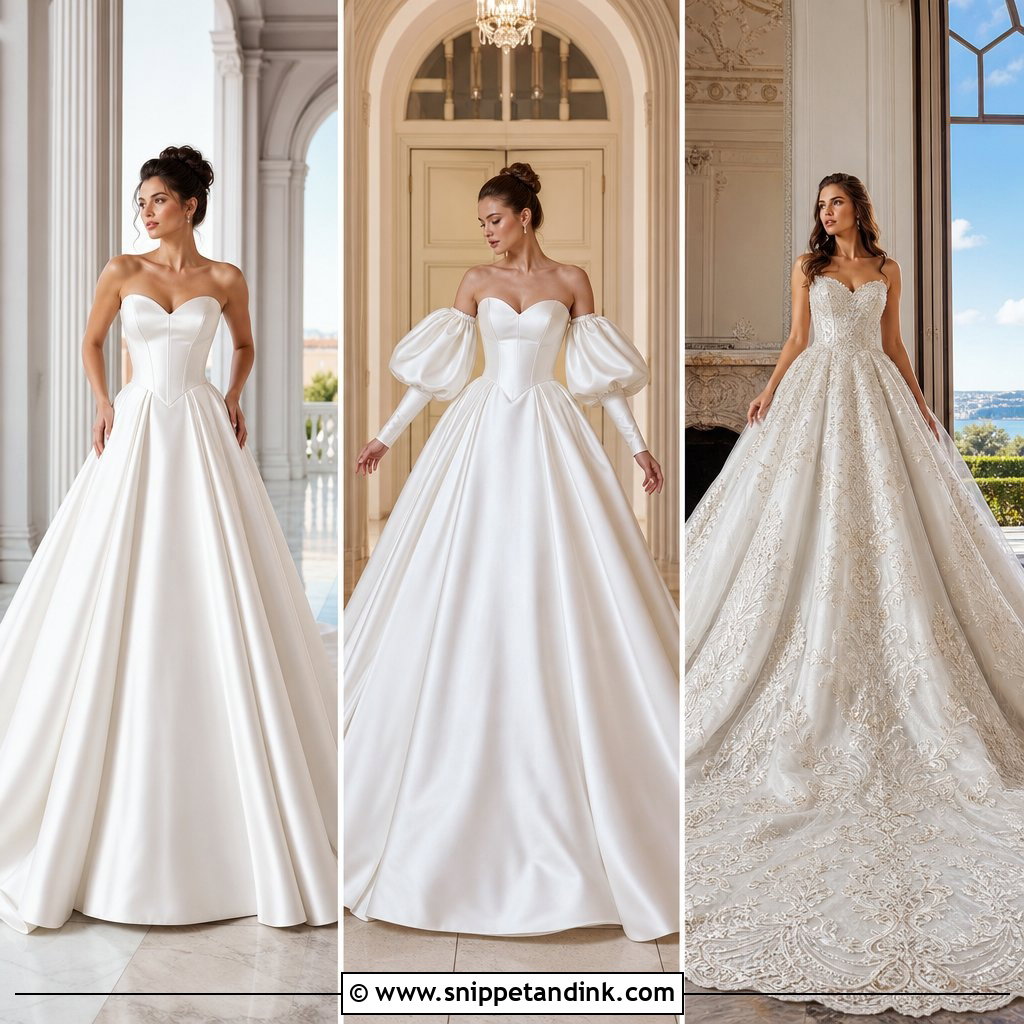
17. Strapless Ball Gown Wedding Dress
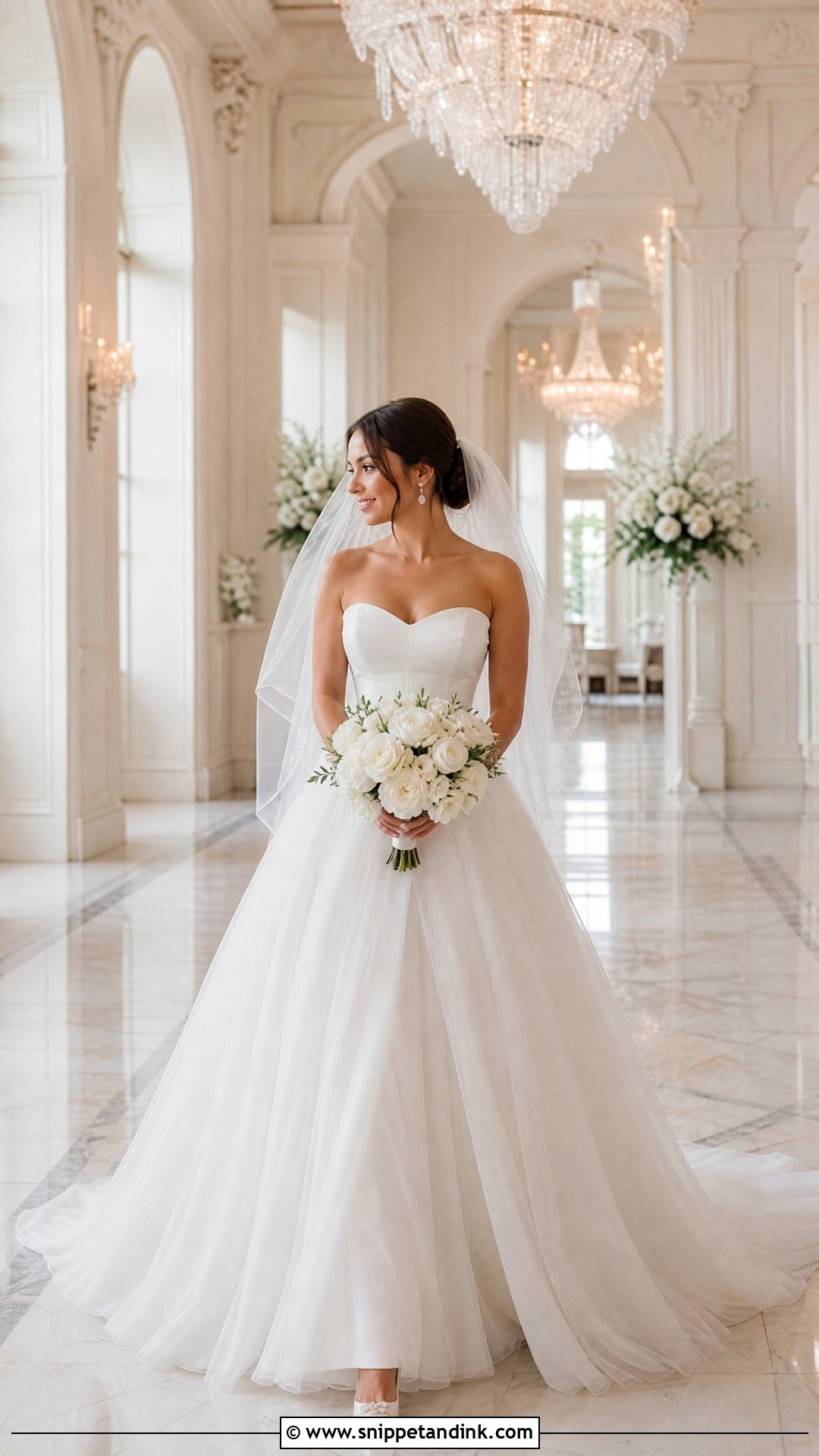
Ball gowns are possible for petite brides when the bodice, waist and skirt are all scaled down. The waist has to sit exactly at your narrowest point, and the skirt needs controlled fullness rather than stiff layers projecting far from the body. Lightweight tulle or organza builds volume without weight, which matters when you’re carrying it for hours on a smaller frame. A shorter train balances better and moves more easily. Pointed heels, a simple fingertip veil, small drop earrings and a medium bouquet keep the focus on the shape. Dramatic silhouettes are still yours to wear.
18. Scoop-Neck Drop-Waist Wedding Dress
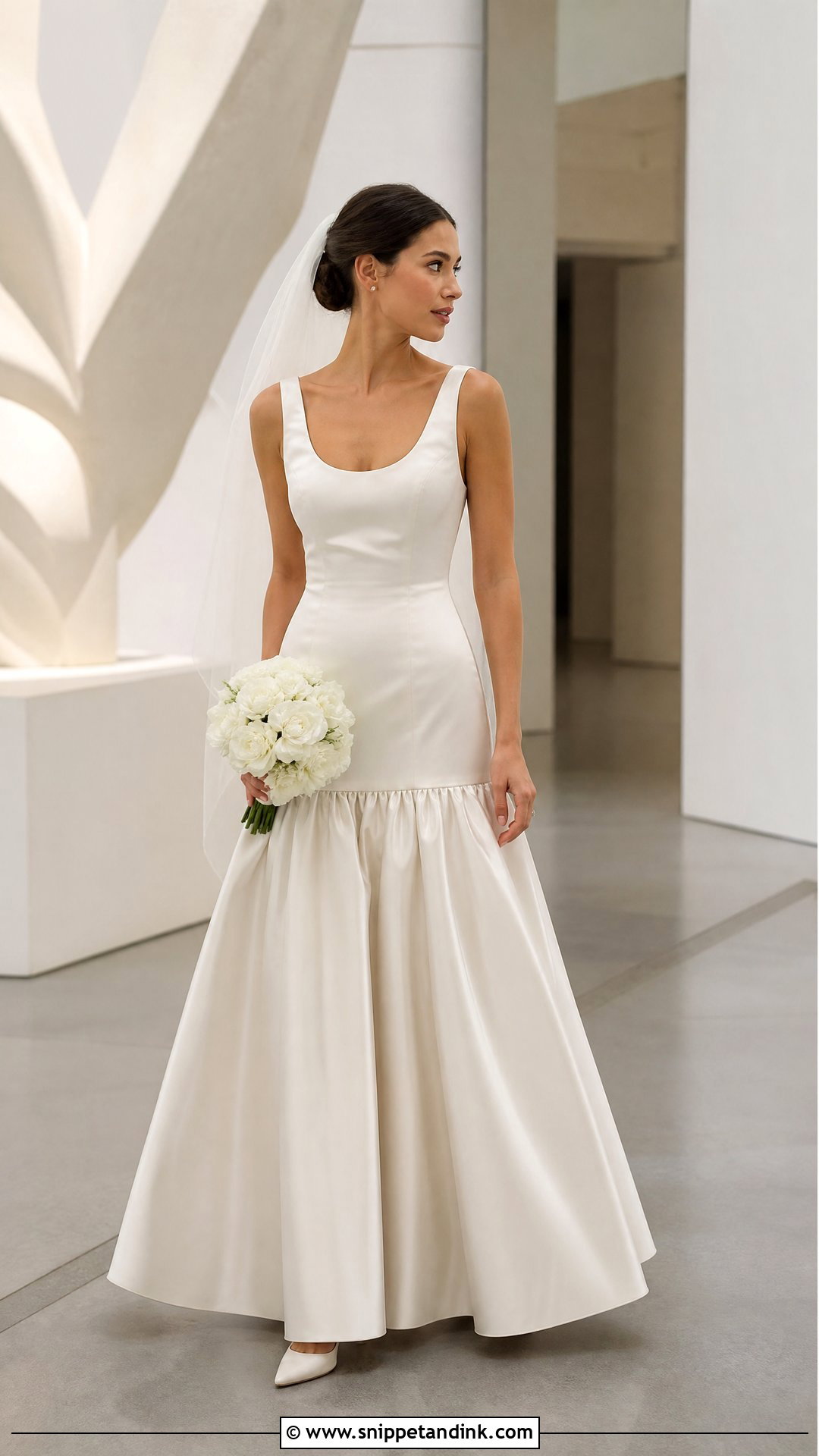
A gentle drop waist can lengthen a short torso. The key word is gentle. A seam that drops far onto the hips eats into leg length, which is the last thing a petite bride wants. Pair the lowered seam with a scoop neck and a softly flared skirt. Structured satin or mikado gives definition, so keep the skirt volume controlled. Hold the bouquet small and low so it doesn’t hide the bodice you’ve had fitted. Pointed pumps, a low bun, small earrings and a plain veil suit modern ballrooms and city weddings. Waist placement is everything, so prioritize alterations.
19. One-Shoulder Wedding Dress
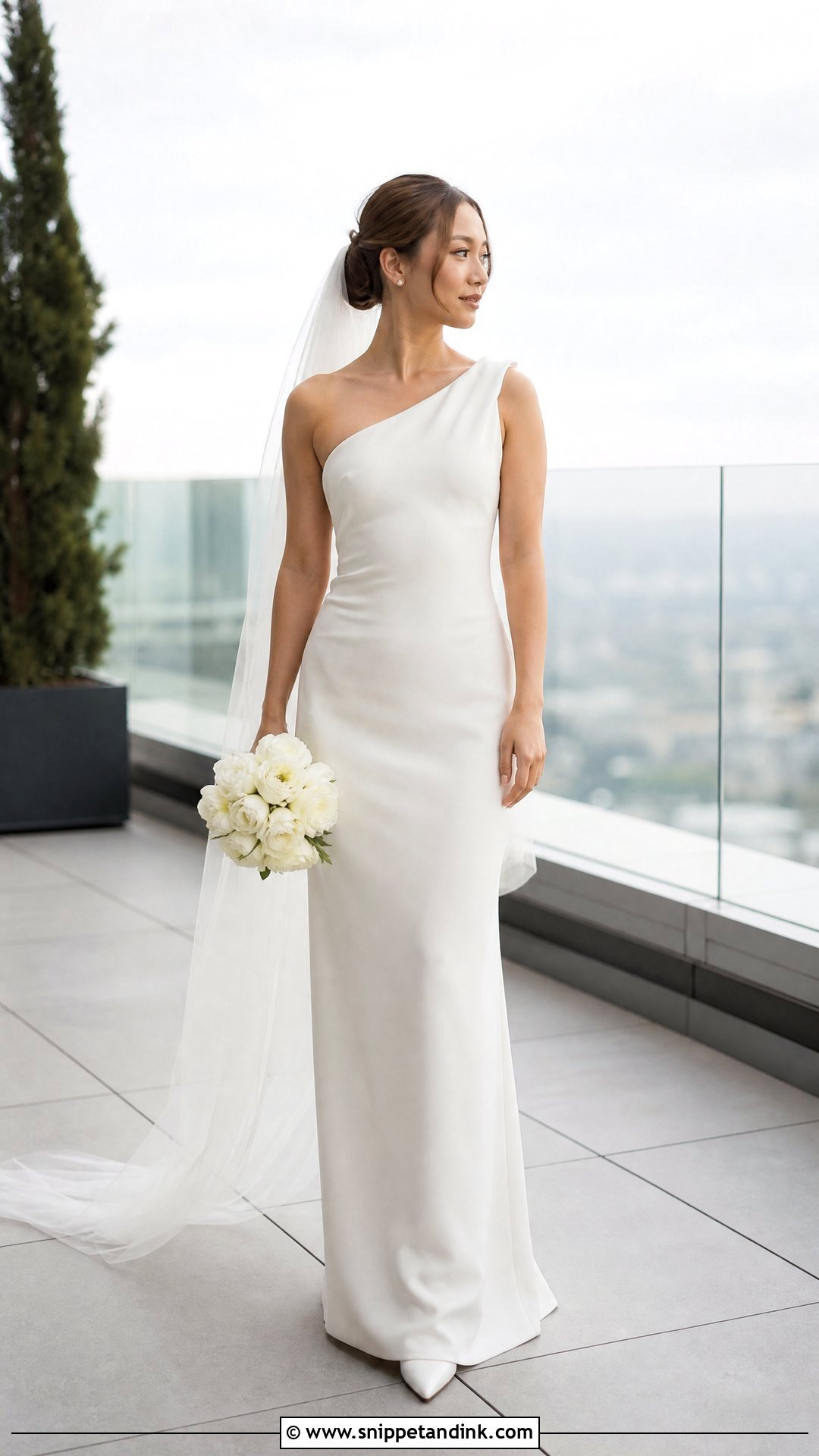
One shoulder sends a diagonal across the upper body and keeps it clean. Choose a single narrow, structured strap; a large bow, ruffle or drape at the shoulder is too much detail for a small frame. A column, sheath or slim A-line keeps the line going. Crepe and satin let the cut show. No necklace, a smooth updo, small earrings and a narrow veil attached under the hair keep the shoulder visible. A simple white bouquet finishes it. It belongs in galleries, rooftops and modern hotels where the surroundings are pared back too.

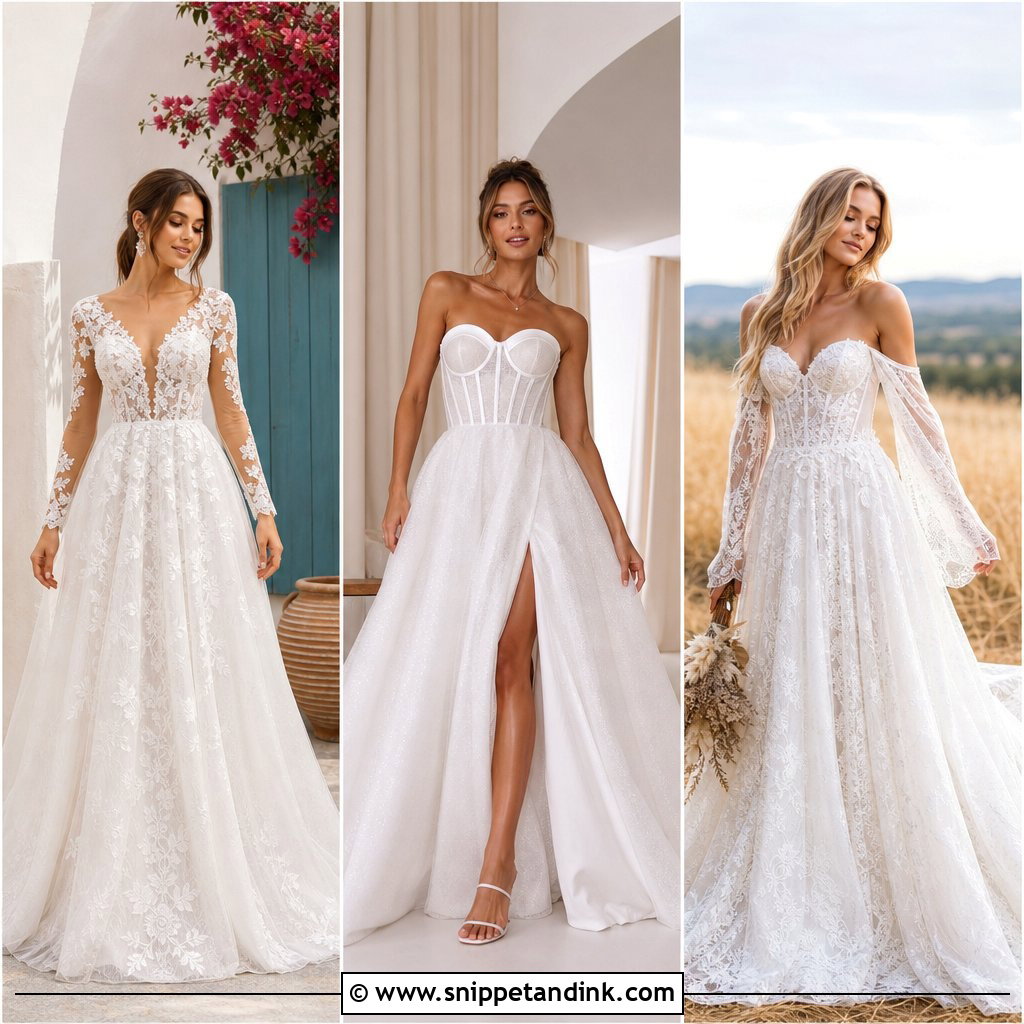
20. Corset A-Line Wedding Dress
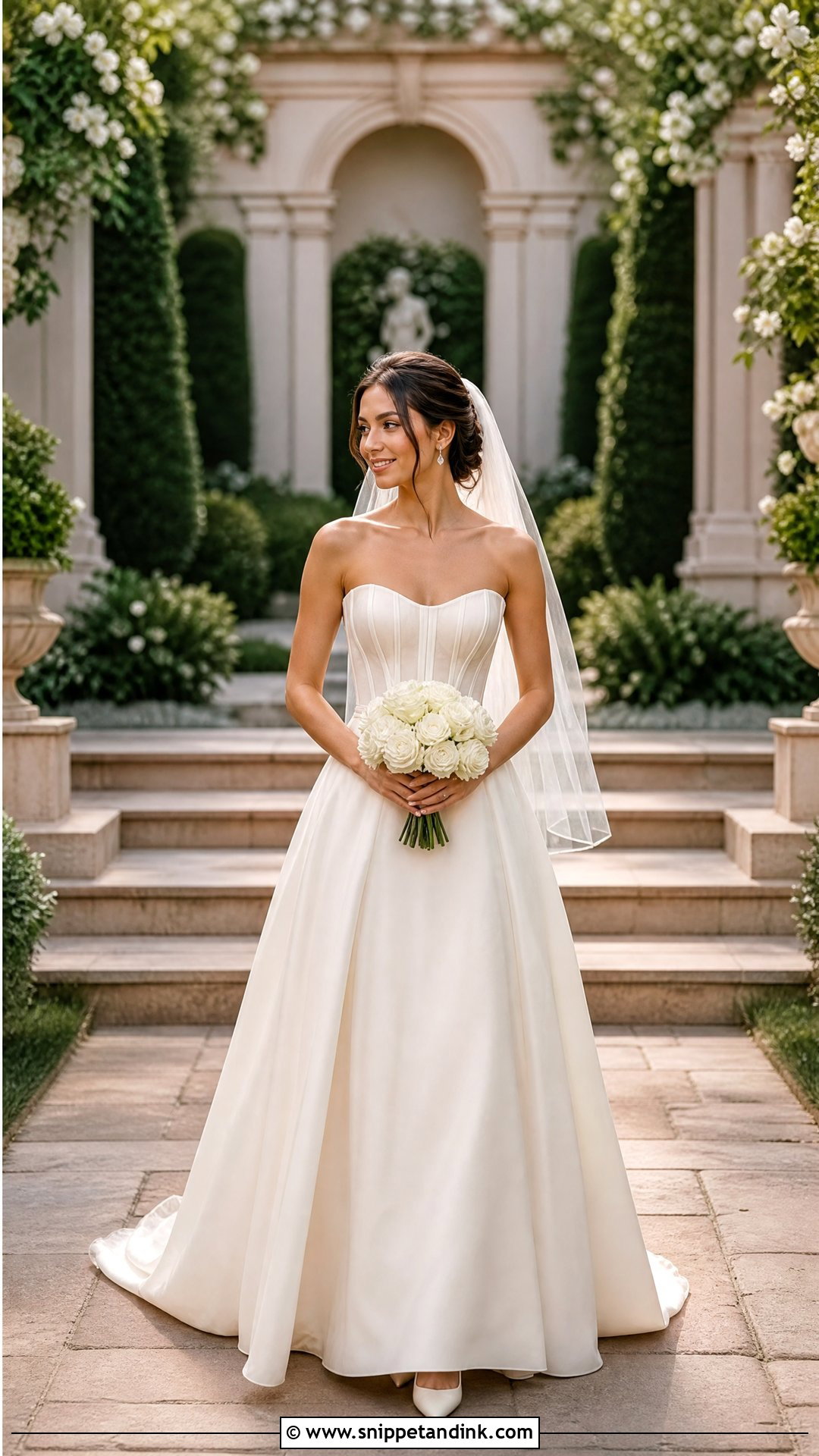
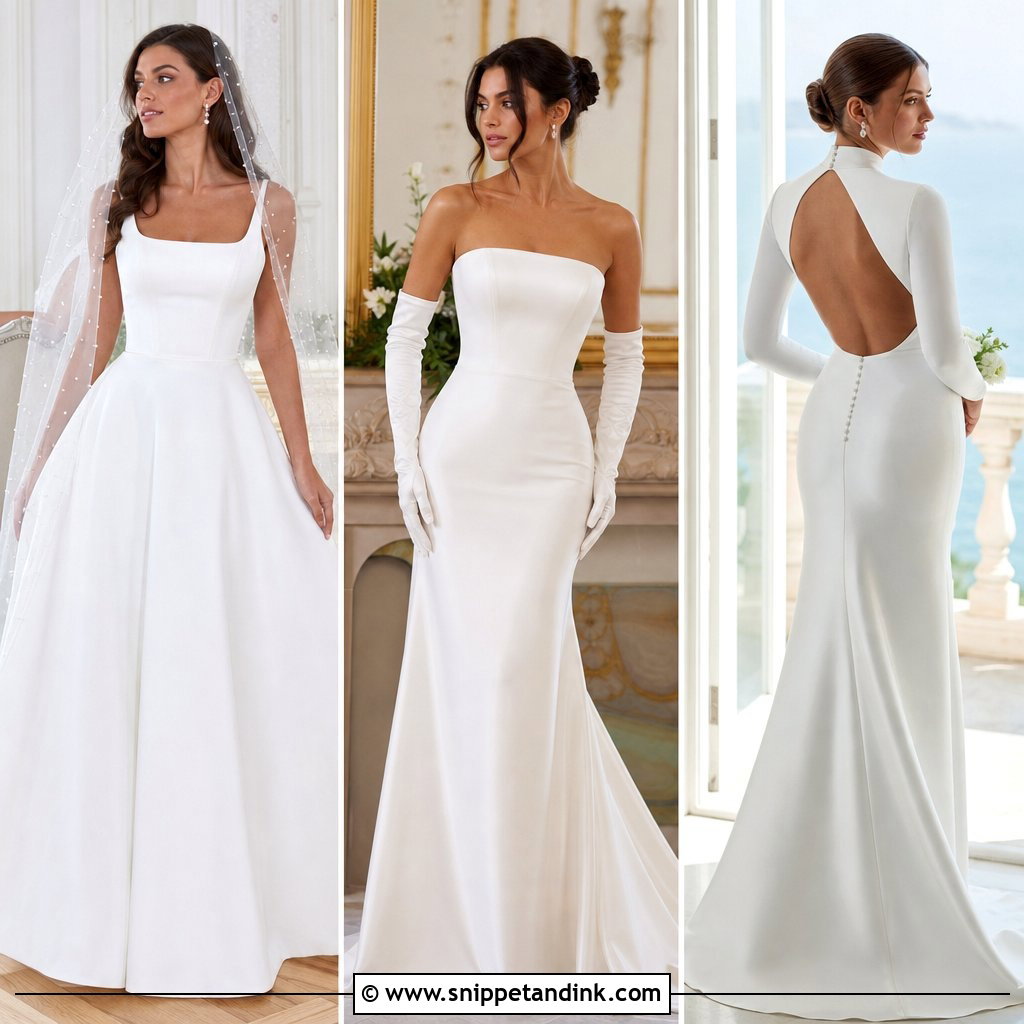
The issue I see most with corset gowns on petite brides is cup placement. Sample bodices are drafted for a longer torso, so the cups sit high and the waist sits low. Look for vertical boning, a softly curved neckline and cups proportioned to your torso, which usually means the bodice is shortened at the waist during alterations. The skirt should flow gradually with light layers and little gathering. If the corset has visible lacing or embroidery, keep accessories simple: pointed ivory heels, delicate earrings, a single-layer veil and a compact bouquet. It should feel secure without restricting you.
Shortening a Gown Without Changing Its Shape
Hemming is the obvious alteration, but on many gowns it isn’t the right one, and a petite bride’s dress often needs length taken out in more than one place.
From the Waist
If the waist seam lands below your natural waist, the bodice has to be shortened. That means taking the skirt off at the waist, lifting it and resetting any boning. It moves the flare or the skirt fullness up to where it was designed to start, which a hem never can.
At a Lace Hem
Scalloped or appliquéd lace edges can’t simply be cut. The lace is unpicked, the skirt is shortened and the edging is sewn back on by hand. Expect it to take longer and cost more than a plain hem. On layered tulle, each layer is cut separately, so the price rises with the layer count.
Trains
A train can usually be shortened from the back without touching the front hem. On a small frame a cathedral train can look as long as you are tall, so a chapel or sweep length often balances better and is easier to bustle.
Veil Lengths That Stay in Proportion
Veil lengths are sold in standard measurements, but they land differently on a shorter bride. A fingertip veil finishes higher on the hip, and a cathedral veil trails much farther behind. Stand with your arms relaxed and have someone hold the tape from the comb position to where you want it to end. Custom lengths are common and normally just a request when ordering. A single layer of fine tulle keeps the line long; a gathered double layer adds width around the head and shoulders.
Scale It to Your Frame and Almost Any Silhouette Works
Across all twenty of these gowns, proportion did more of the work than any rule. A-lines, sheaths, columns, fit-and-flares, tea lengths and short convertible gowns all have a place, and mermaids and ball gowns can work too once the waist, flare, volume and train are scaled to you. Bring shoes of a similar heel height to every appointment, look at the gown from the side and back, and ask whether the bodice can be shortened and details moved. The dress that fits your body and taste, with good tailoring behind it, will feel entirely your own.
You'll Like These Ideas:







Leave a Reply