
A women’s hanbok is built from two main pieces: the short, fitted jeogori jacket and the high-wrapped chima skirt that falls in a wide bell from just under the bust. For the most formal ceremonies, a bride may add an embroidered hwarot or wonsam robe and an ornamental headpiece. Brides now wear everything from the full ceremonial red to white-and-gold designs and fusion gowns that borrow hanbok details. In fittings, I’ve found proportion matters more than decoration with this garment. Where the skirt sits, how far the jacket’s ribbon falls, and how much volume the petticoat gives decide the whole look. Below are twenty directions, from regal to minimal.
Rent, Buy Ready-Made or Have It Sewn to Measure?
Hanbok for a wedding usually comes from one of three places, and the choice affects your timeline more than your budget.
Renting
Rental shops are common for ceremonial pieces like the hwarot and jokduri, which most families wear once. Rental is the practical route for the paebaek outfit in particular. Book early in peak seasons, confirm exactly which pieces are included, and ask whether minor alterations to sleeve and skirt length are allowed.
Made to measure
A custom hanbok is fitted to your bust, shoulder, arm length and height, and you choose the fabric and colors. It usually takes several weeks, longer for embroidered or hand-sewn pieces, so ask the maker for their timeline at the first appointment and plan a fitting buffer before the wedding.
Ready-made
Off-the-rack modern hanbok works well for a reception outfit or a fusion look, but the jacket sleeves and skirt length almost always need adjusting. Budget for a local tailor who has handled silk.
Whichever you choose, ask about the sokchima, the petticoat worn under the chima. It controls how full and round the skirt looks. A flat skirt in photos is nearly always a petticoat problem, not a skirt problem.
1. Traditional Red Hwarot Hanbok Wedding Dress
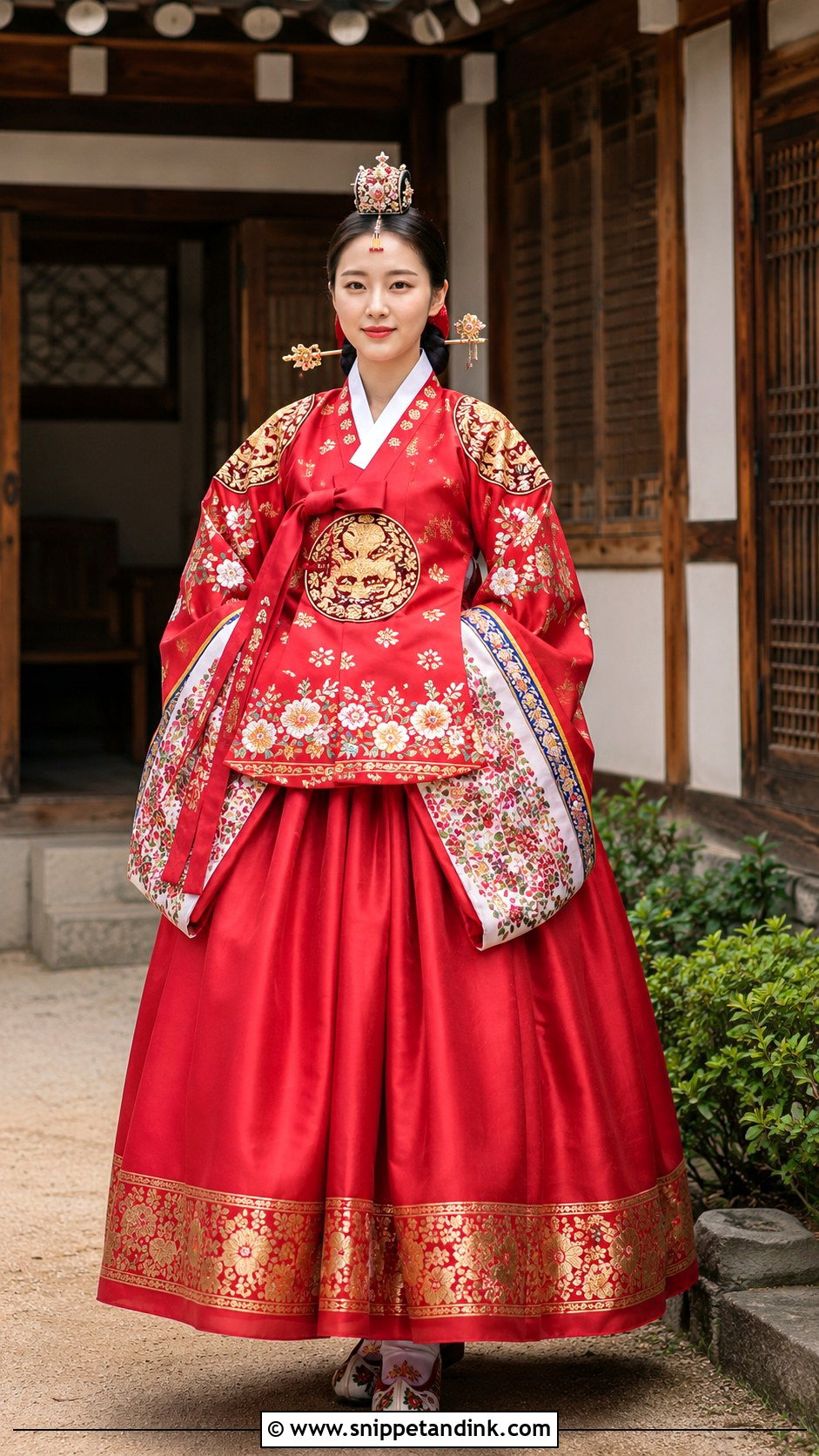
The traditional red hwarot is the most formal Korean bridal look there is. It was once a court robe, later permitted for brides on their wedding day, and it’s usually layered over a jeogori and full chima and paired with a jokduri or hwagwan headpiece. The robe has very wide sleeves, so I always have the bride practice lifting her hands to her forehead in it before the ceremony; the sleeves are heavy and swing. Look for embroidery that has space between the motifs rather than solid coverage. White beoseon socks, embroidered silk shoes and a low bun complete it, with makeup kept soft so the robe leads.
2. Green Jeogori And Red Chima Wedding Hanbok
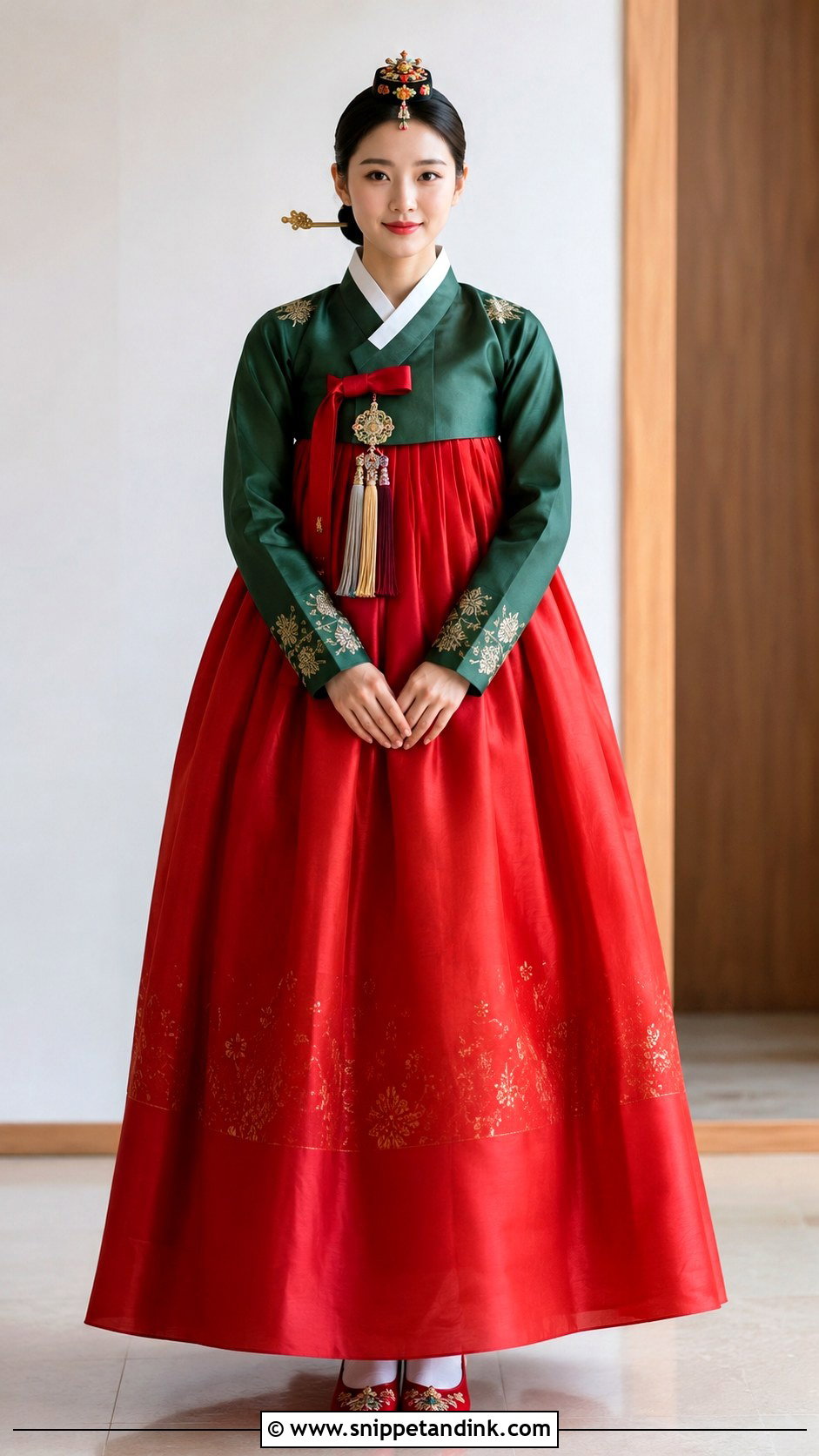
Green jacket, red skirt: this is the classic bridal color pairing, and it makes the bride easy to spot in every group photo. Check the jeogori’s sleeve bands and the goreum ribbon ties closely in a fitting, because a ribbon that won’t sit flat is the detail people notice first. A smooth silk or silk-blend skirt moves gracefully without bulk. A small jokduri and a decorative hairpin are enough on top. It’s well suited to a paebaek, where the clearly traditional look feels right with the family.
3. White And Gold Hanbok Wedding Dress
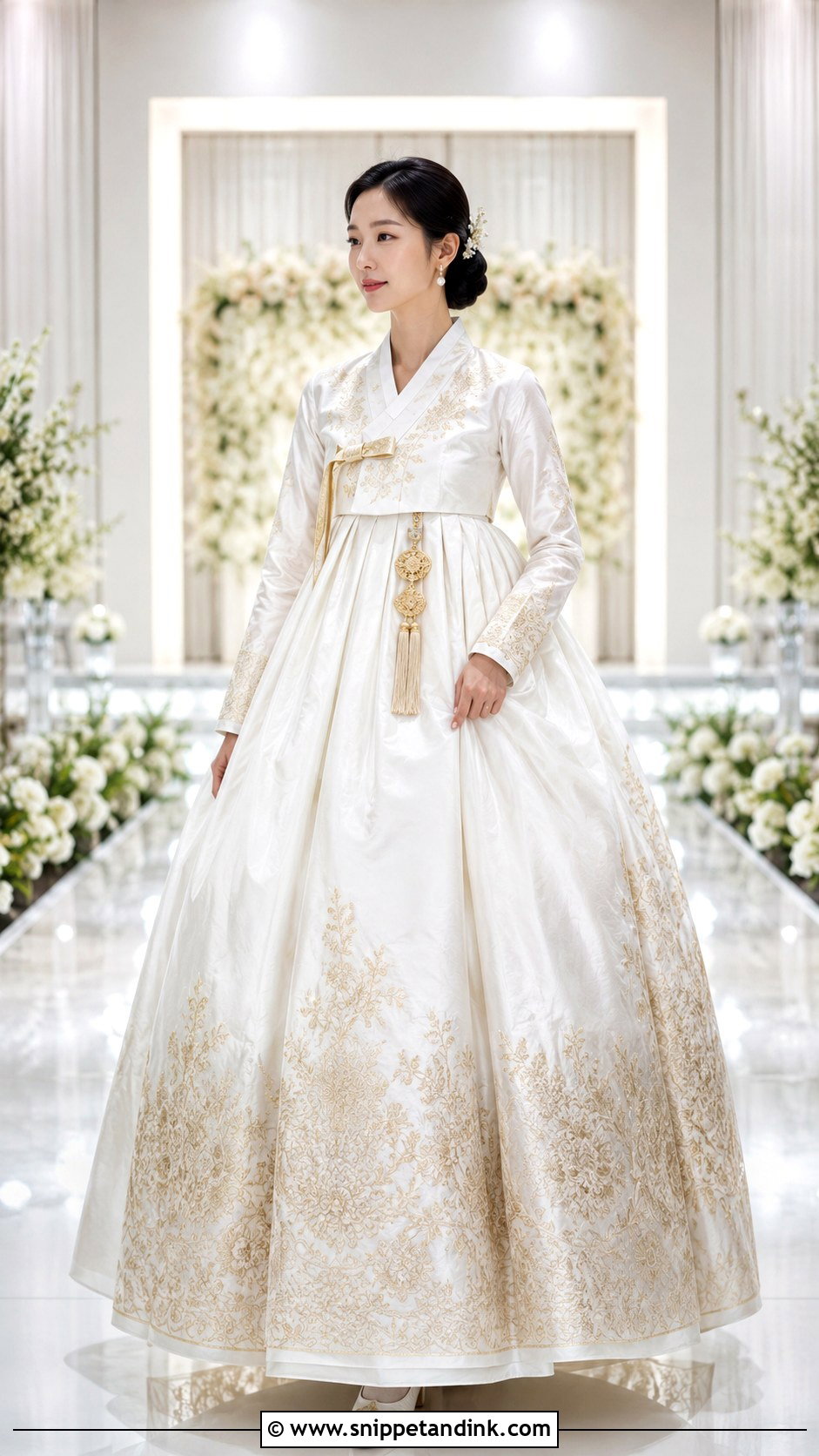
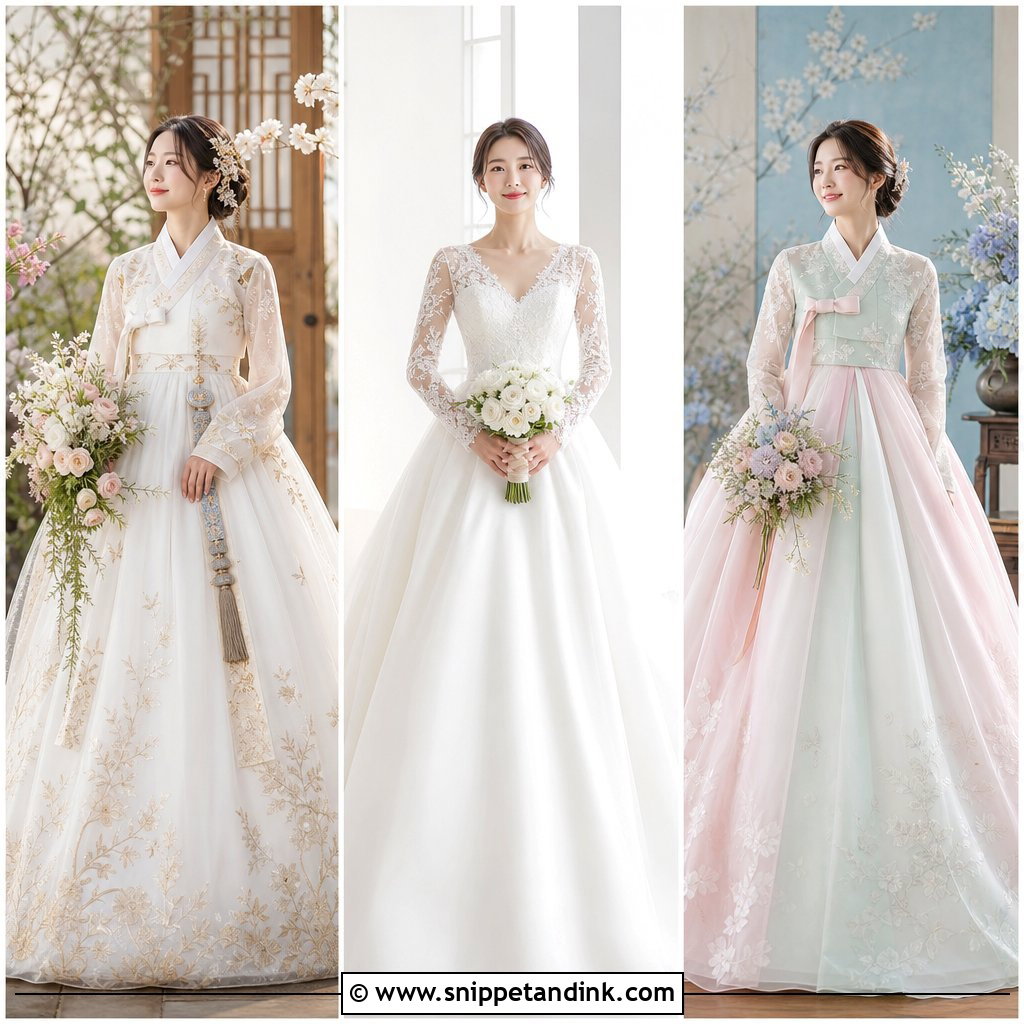
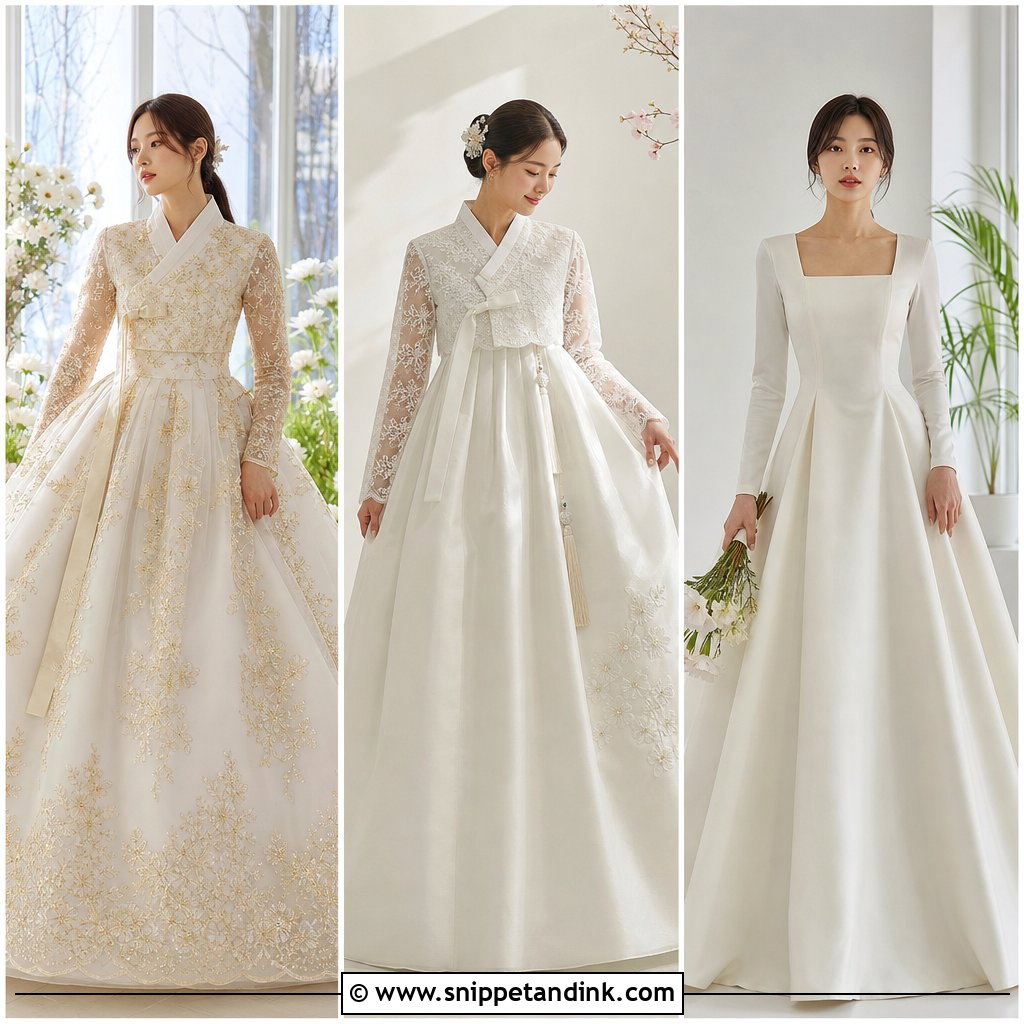
White and gold reads as bridal to almost any guest, while the shape stays unmistakably hanbok. An ivory jeogori with fine gold piping over a full white chima in lightly lustrous silk or organza is the starting point. Insist on an opaque lining under any sheer chima layer; white organza turns see-through in flash photography. A gold norigae, the tasseled ornament hung from the ribbon, adds movement at the front. If you want a veil, a short sheer one tucked under the bun sits better with the jacket than a long cathedral veil.
4. Ivory Lace Hanbok Wedding Dress
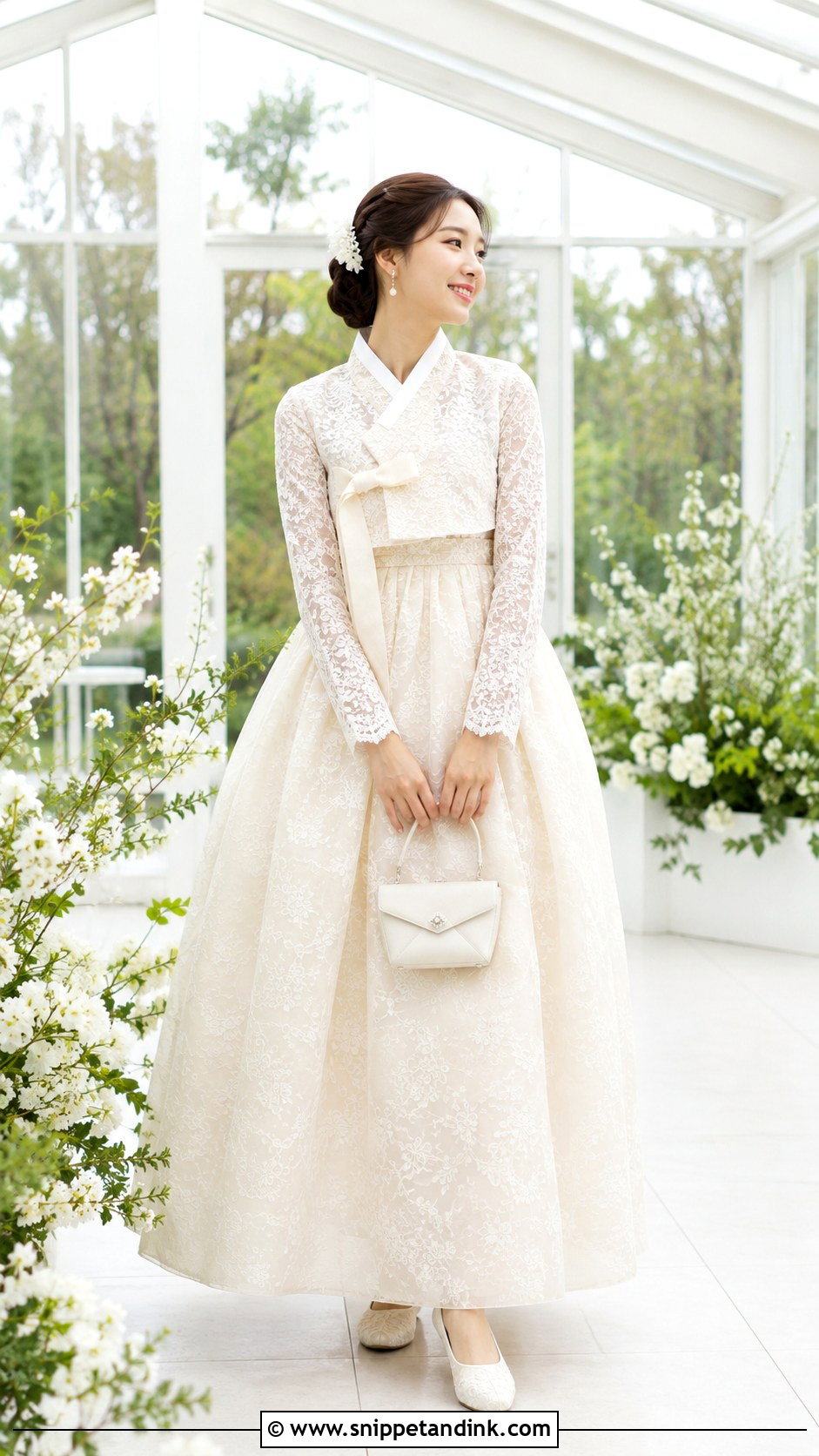
Lace softens an ivory hanbok without disturbing its clean outline. I’d only use it on the jeogori, laid over an opaque silk lining, with a plain ivory chima below so the outfit doesn’t look busy. Lace on a cropped jacket can scratch at the underarm when you move, so ask for a smooth seam finish there. A few light skirt layers give volume while still letting the skirt swing when you walk. Pearl drops and a small floral comb are enough. It’s a gentle Korean-Western blend that sits well in spring and indoors.
5. Blush Pink Silk Hanbok Wedding Dress
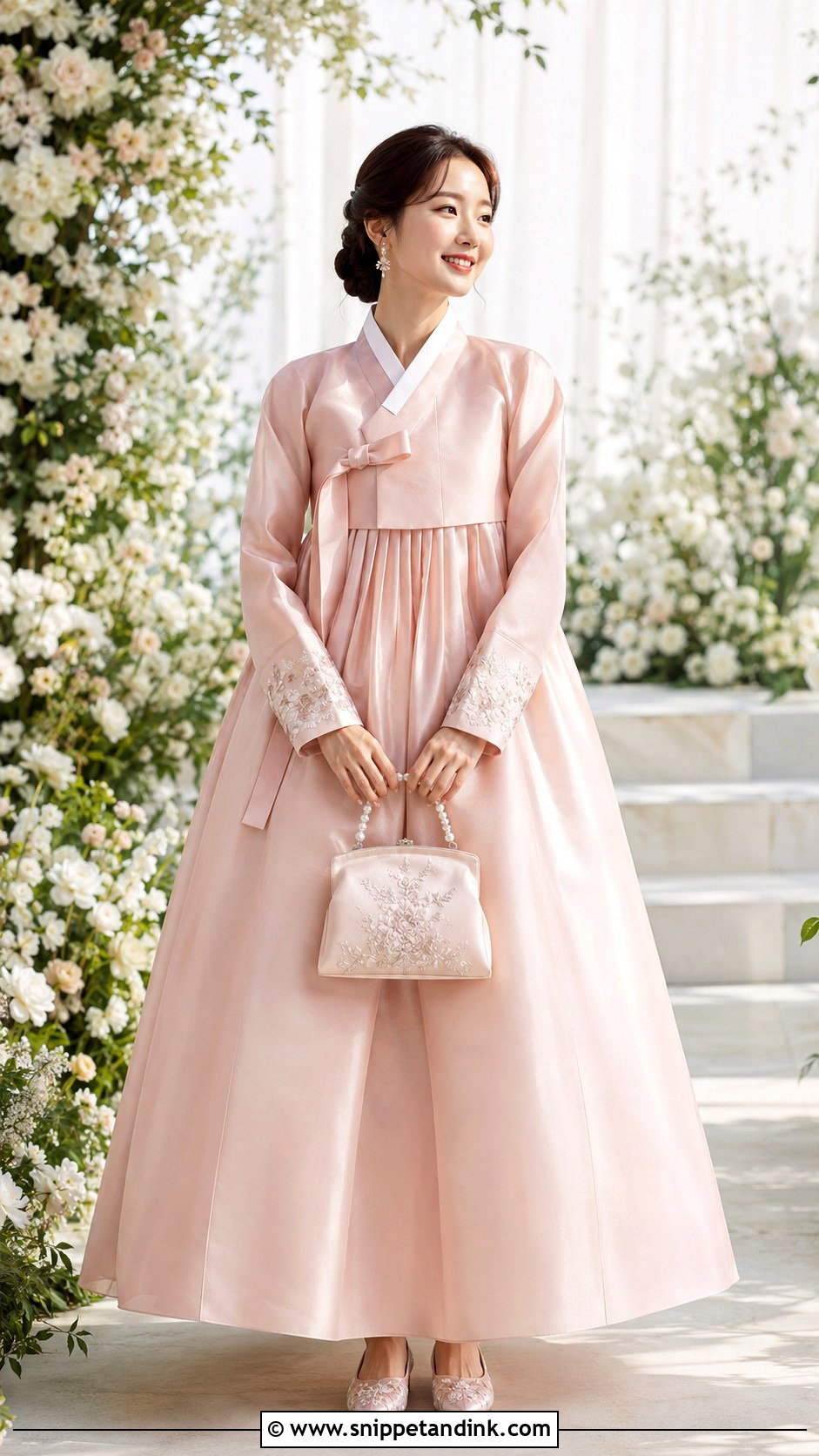
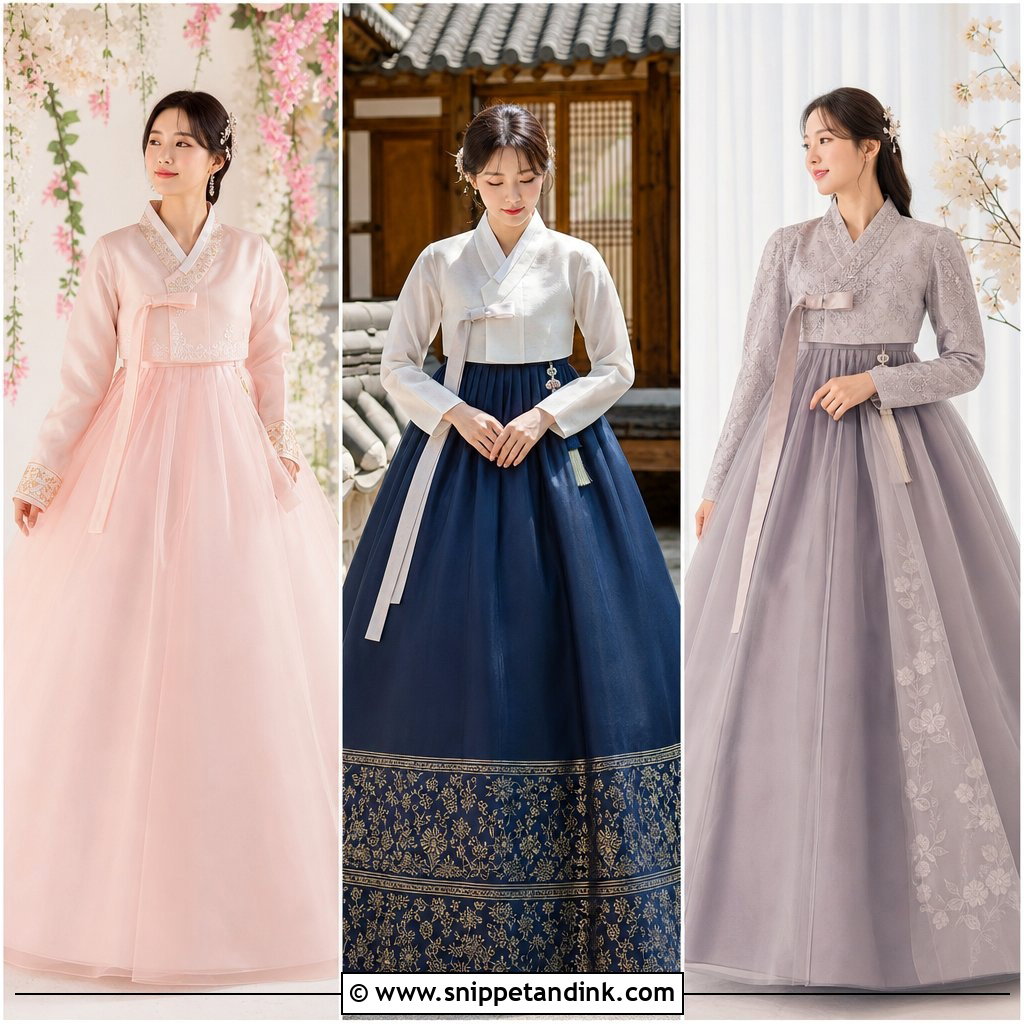
Blush silk is warm on most skin tones and glows in daylight. The trick with tonal dressing is texture: if jacket and skirt are the identical silk, they merge into one pink shape, so I like a slightly different weave or a deeper ribbon to separate them. Small floral embroidery at the cuffs is plenty of decoration. A smooth chignon or braided bun keeps the neckline clear. It’s a graceful option for garden ceremonies and spring portraits, and anyone who’d like color without a strong contrast.
6. Pastel Blue And Pink Hanbok Wedding Dress
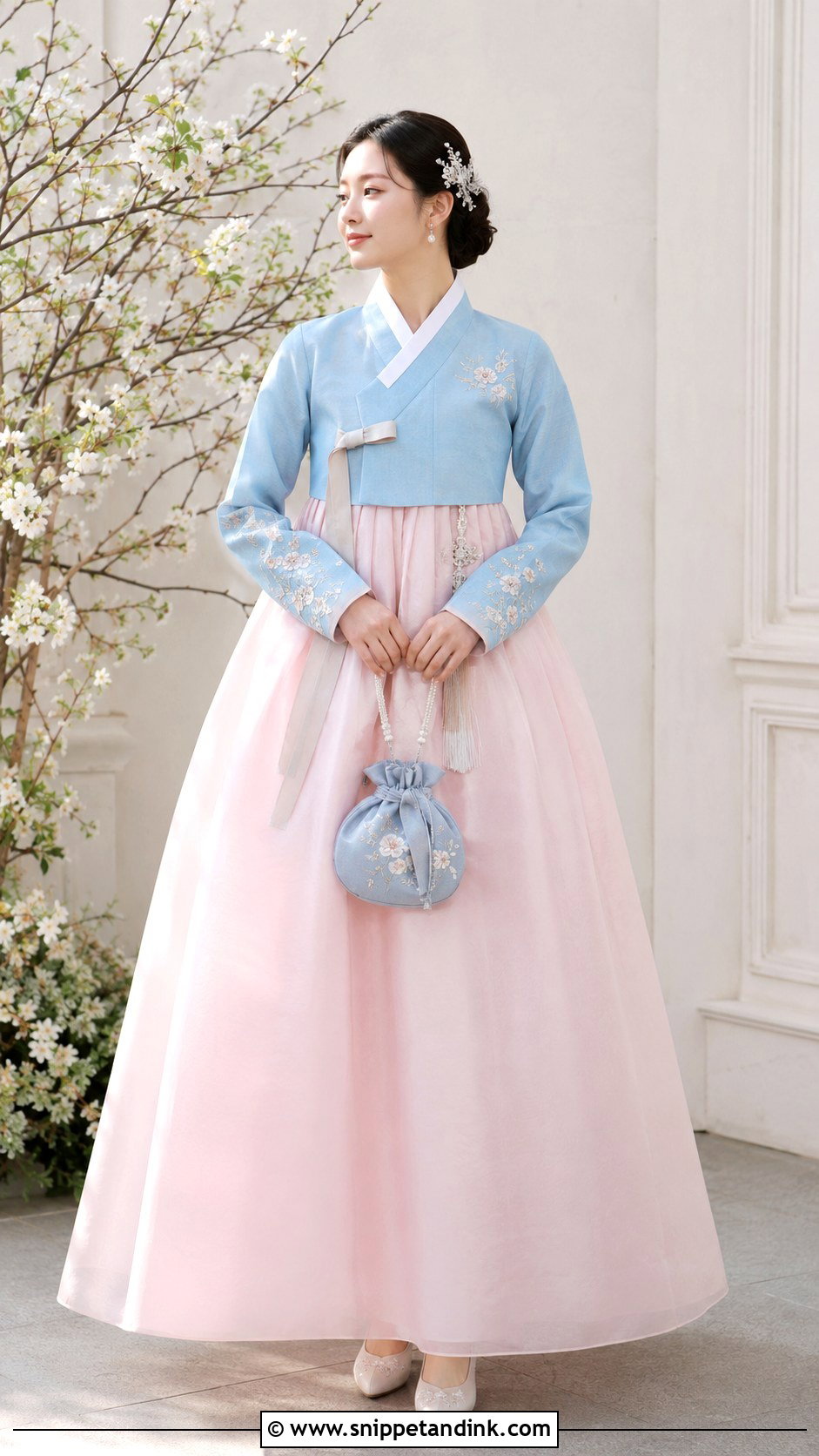
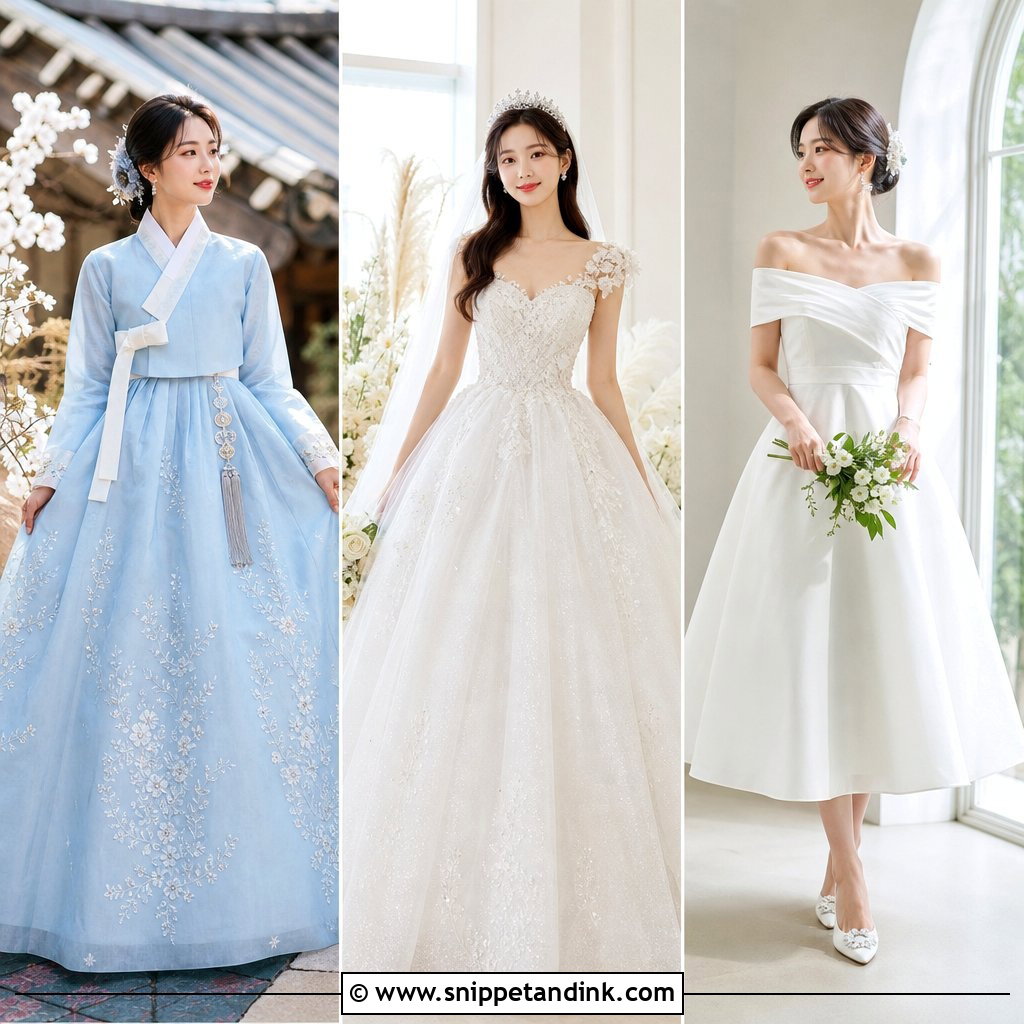
Pale blue over pale pink gives an airy, youthful outfit, and the key is keeping both shades softly muted; saturated versions start to look like children’s festival wear. A blue goreum matching the jacket defines the bodice, and a lightly pleated pink skirt moves well. Pearl studs, silver hair ornaments and pale silk shoes keep the palette cool. This one belongs to daytime, outdoor photos or a reception change rather than the main ceremony.
7. Red And Gold Royal Hanbok Wedding Dress
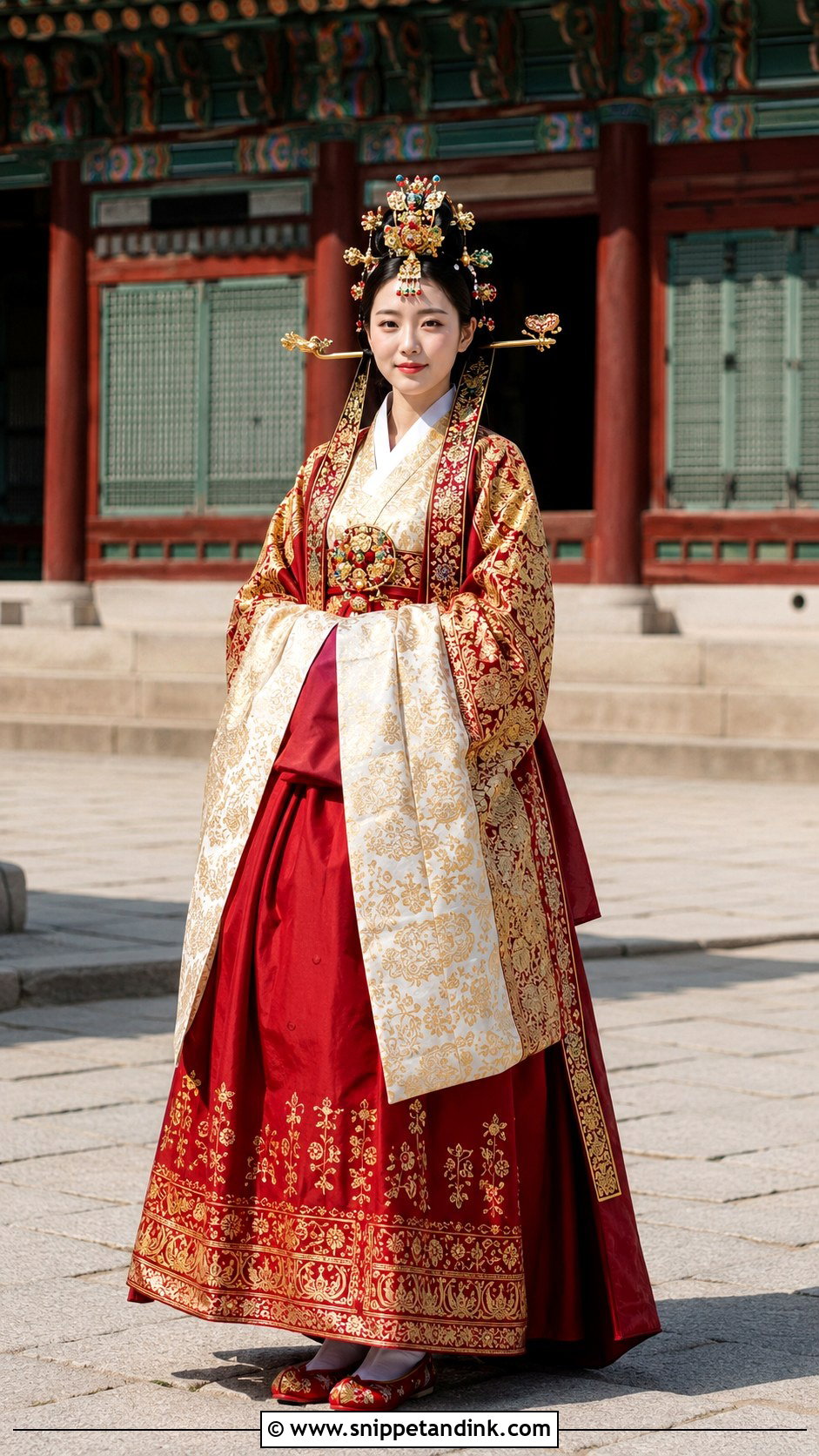
Deep red and gold is the royal look, and it’s heavy, both visually and literally. A deep red chima, a coordinating ceremonial robe edged in gold and a cream or yellow jeogori underneath to bring light back to the face. Ask about the weight of the embroidered robe before the day; a fully worked one can feel tiring after an hour of standing for photos. Embroidery placed in distinct panels looks grander than embroidery everywhere. Add a jokduri, gold hairpins, white beoseon and red embroidered shoes, and nothing else. Strong red holds up beautifully under indoor evening light.
8. Floral Embroidered Hwarot Wedding Hanbok
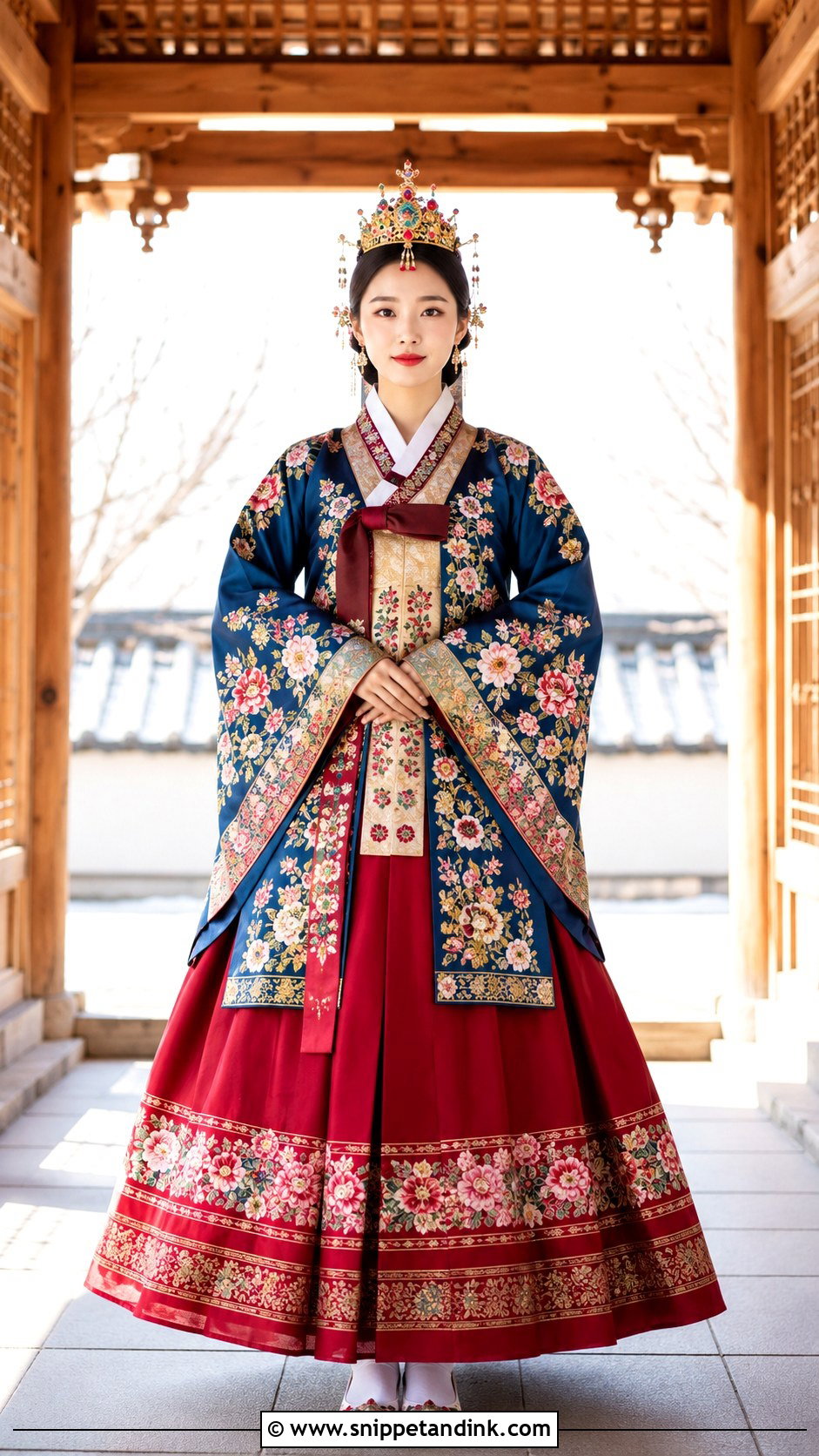
An embroidered hwarot can be the whole story of the outfit. Peonies, lotus and paired birds are traditional motifs, chosen for wishes like prosperity and lasting marriage, so it’s worth asking what the motifs on your robe mean. Well-spaced blossoms balanced across front, sleeves and back look better than crowding. Pull your accessory colors from the embroidery itself. The hair has to be set firm and low to carry a crown for the whole ceremony. Full-length portraits are where this robe shows best.
9. Pearl White Satin Hanbok Wedding Dress
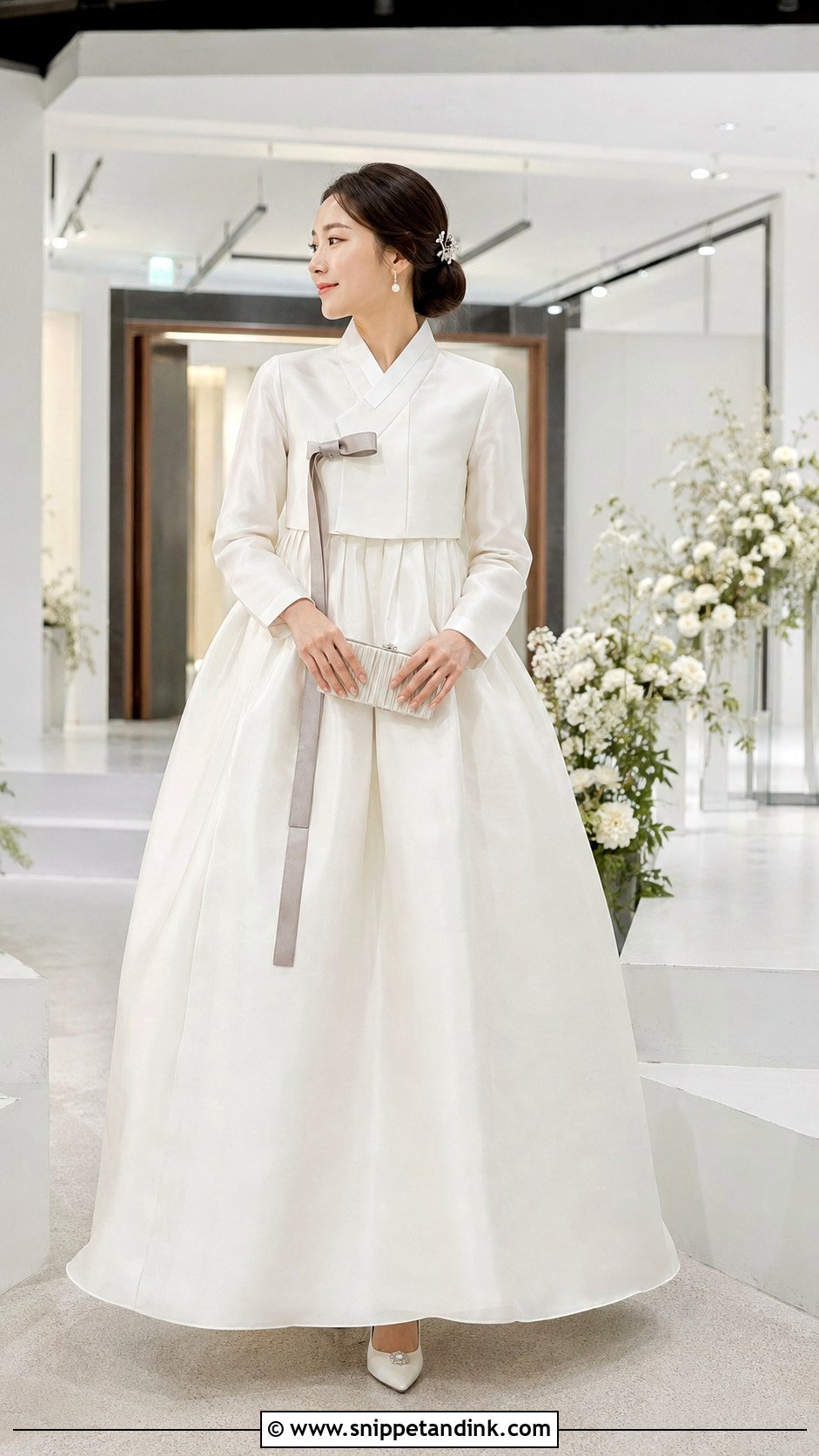
Satin shows every wrinkle and every uneven pleat, so a pearl white satin hanbok has to be cut and pressed precisely. In return, it gives a clean, luminous finish. Keep the jeogori simple, with pearl buttons or a little beadwork at the cuffs, and let a generous chima carry smooth pleats. A silver-gray ribbon adds definition. Bring your final shoes to every fitting; the hem on a floor-length chima is set to the shoe heel, and changing shoes later means you’ll trip or show your ankles.
10. Hanbok Wedding Dress With A Train
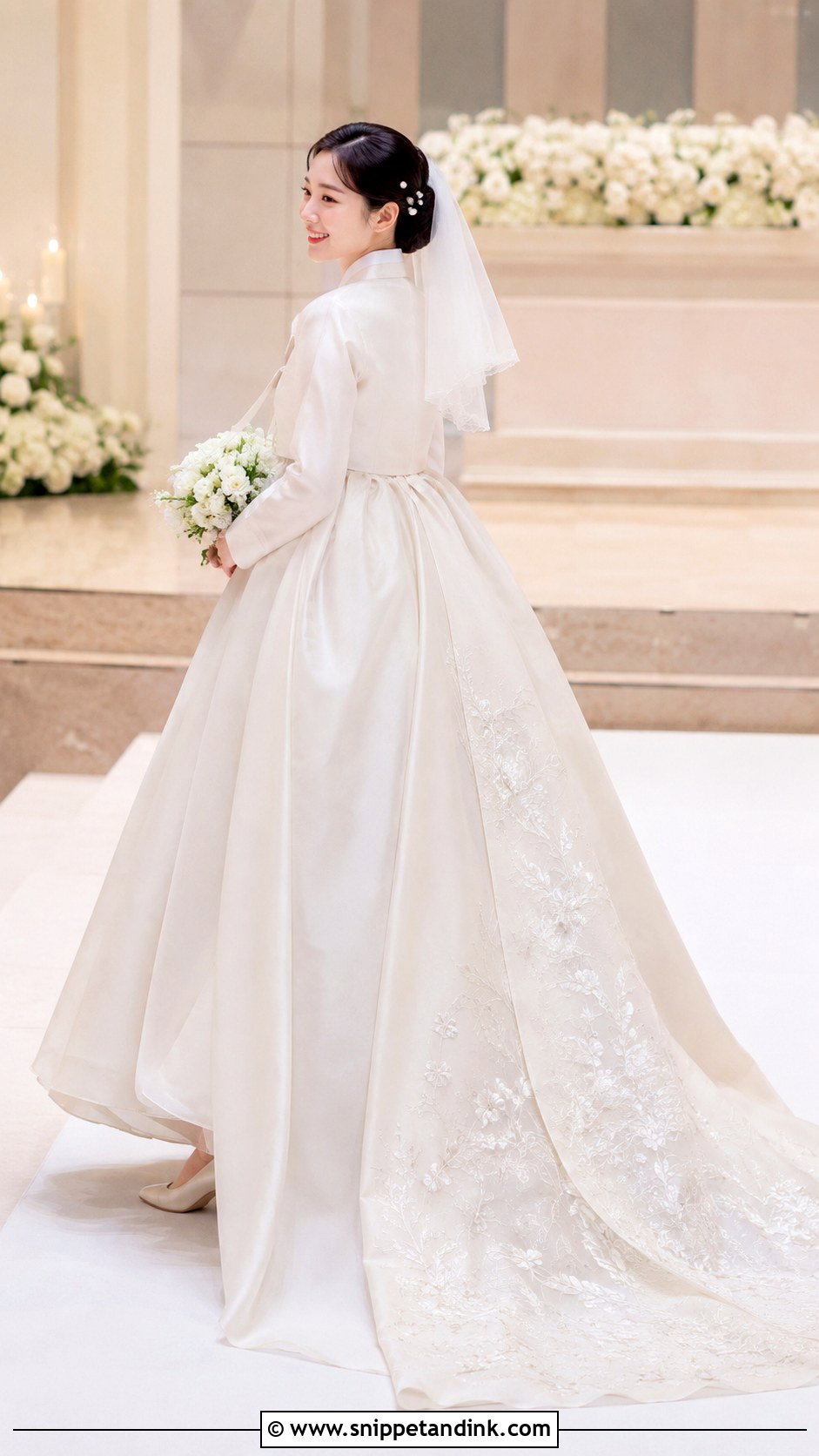
A train adds Western drama to a hanbok skirt, but it has to grow gradually from the back of the chima, or it looks like a separate piece pinned on. Lightweight organza or silk layers keep the volume while letting it move. Embroidery along the back hem draws the eye during the aisle shot. Plan for the reception early and ask the maker for a hidden wrist loop or bustle. Hold a compact bouquet so the ribbon ties stay visible.
11. Minimalist Cream Hanbok Wedding Dress
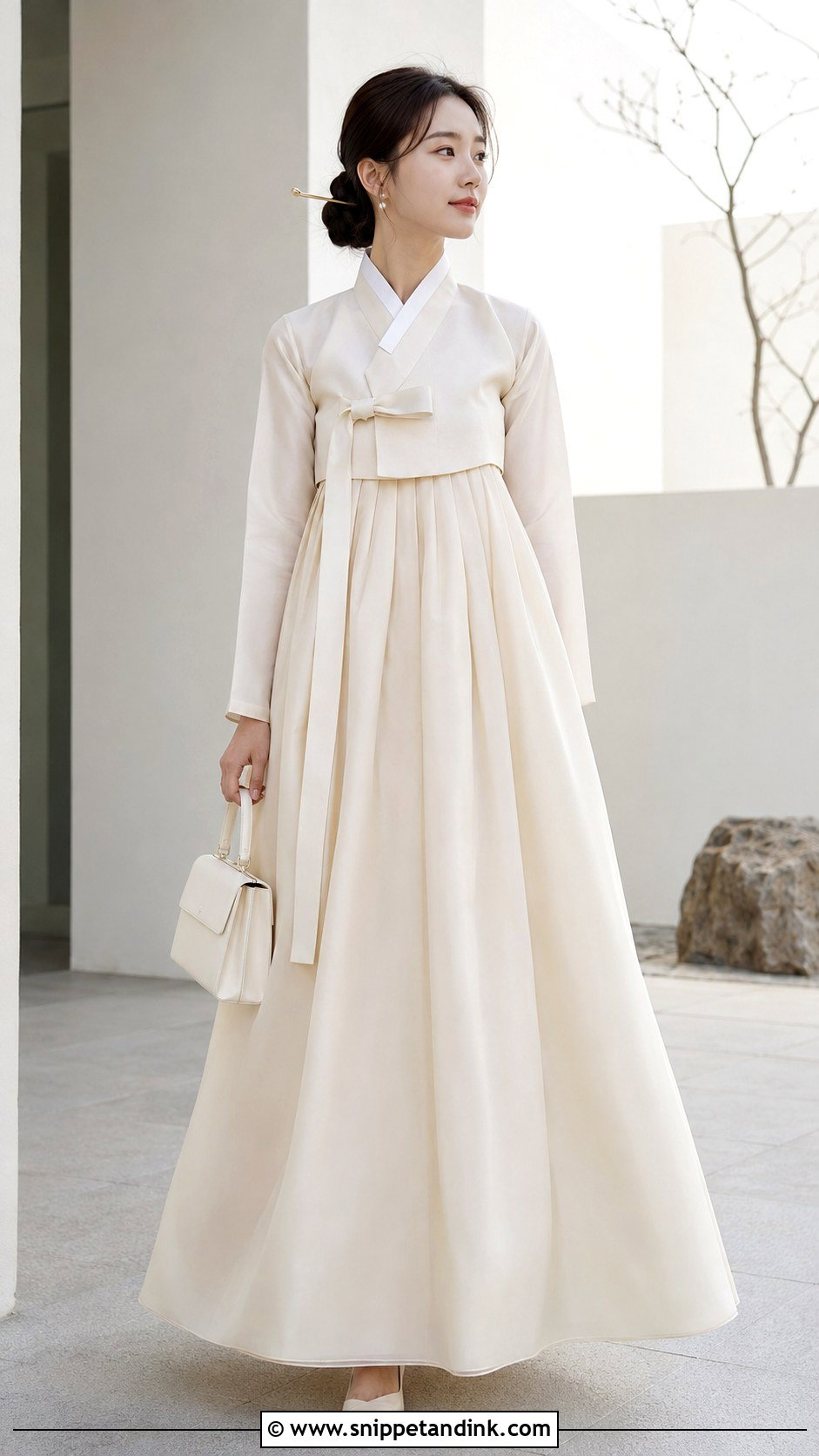
Minimal hanbok depends entirely on construction. With almost no decoration, every line shows: the crispness of the dongjeong, the white inner collar band, the precision of the ribbon, the smoothness where the chima wraps the chest. A matte silk jeogori with a softly pleated chima in a closely matched cream is quiet and modern. Small pearls, a slim gold hairpin and natural makeup suit it. I’d recommend it for registry ceremonies and intimate hotel weddings where clean architecture is part of the setting.
12. Black And Gold Modern Hanbok Wedding Dress
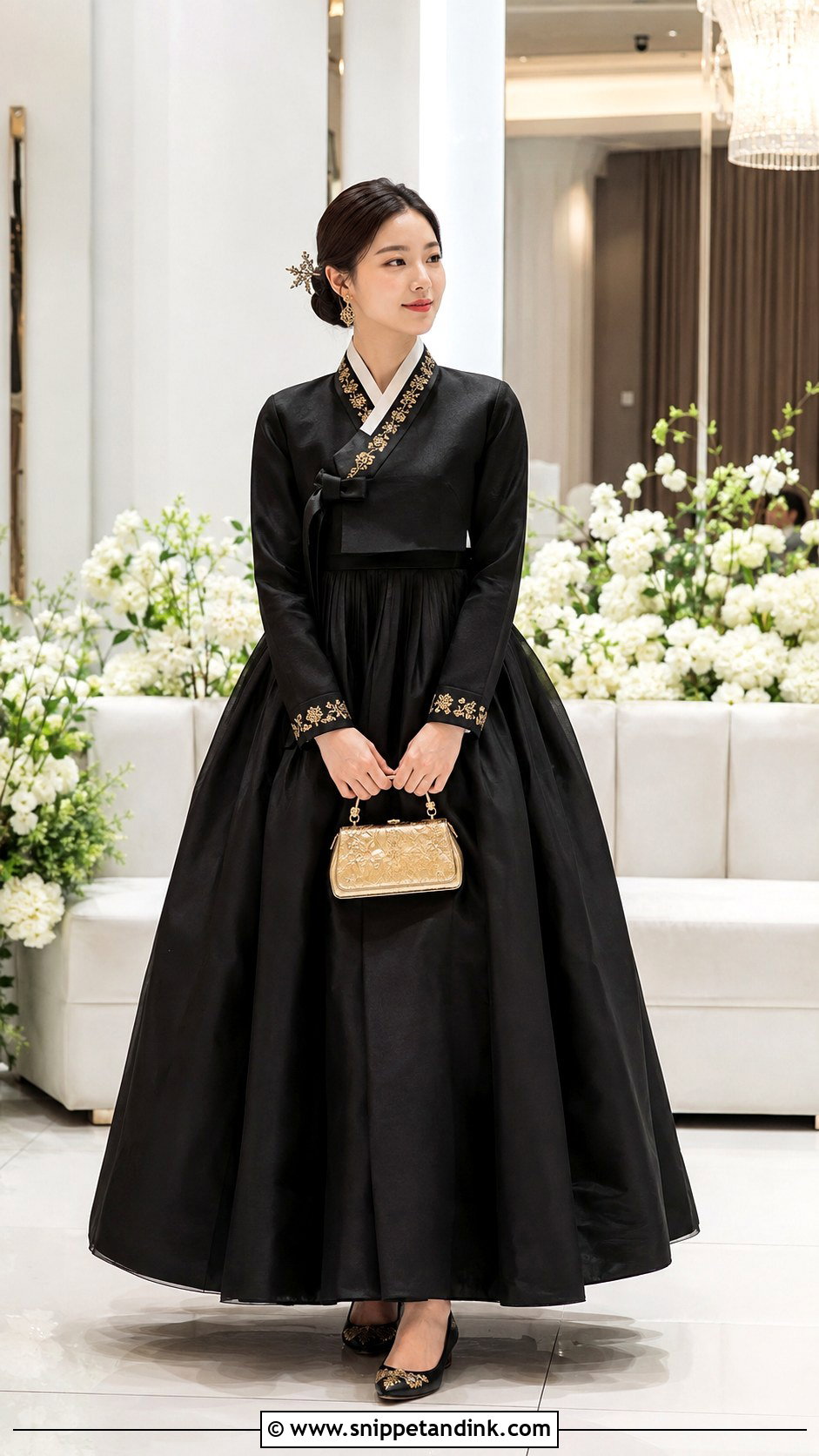
Black and gold is a reception look for most families, and I’d talk to your parents before wearing it to the ceremony, since black isn’t a traditional bridal color. Done well, it’s dramatic. A fitted black jeogori and full chima in fabric with a soft sheen keep the dark color from going flat in photos, with gold placed at the collar, ribbon and cuffs. Matte black silk can photograph as a single dark shape. A red lip adds contrast; neutral makeup is quieter.
13. Lavender Hanbok Wedding Dress
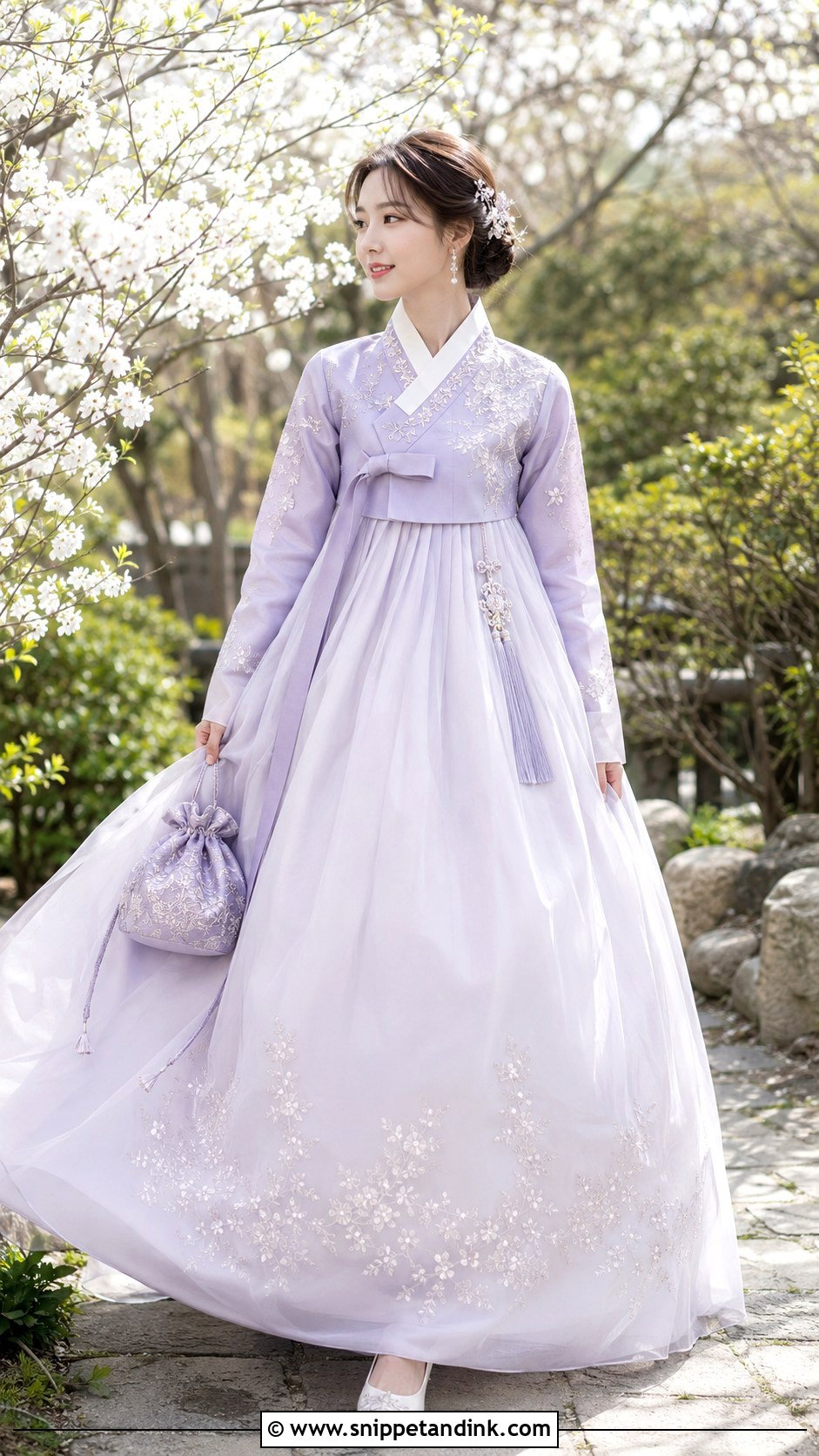
Lavender is pastel enough for a bride but less expected than pink. A pale lavender jeogori with an ivory collar over a slightly lighter chima gives a soft tonal effect. Silver embroidery or tiny pearls at the cuffs work better than gold here, which can look muddy against cool purple. A binyeo-style hairpin through a low bun is the right scale. White flowers and light stone settings flatter it most.
14. Sage Green Hanbok Wedding Dress
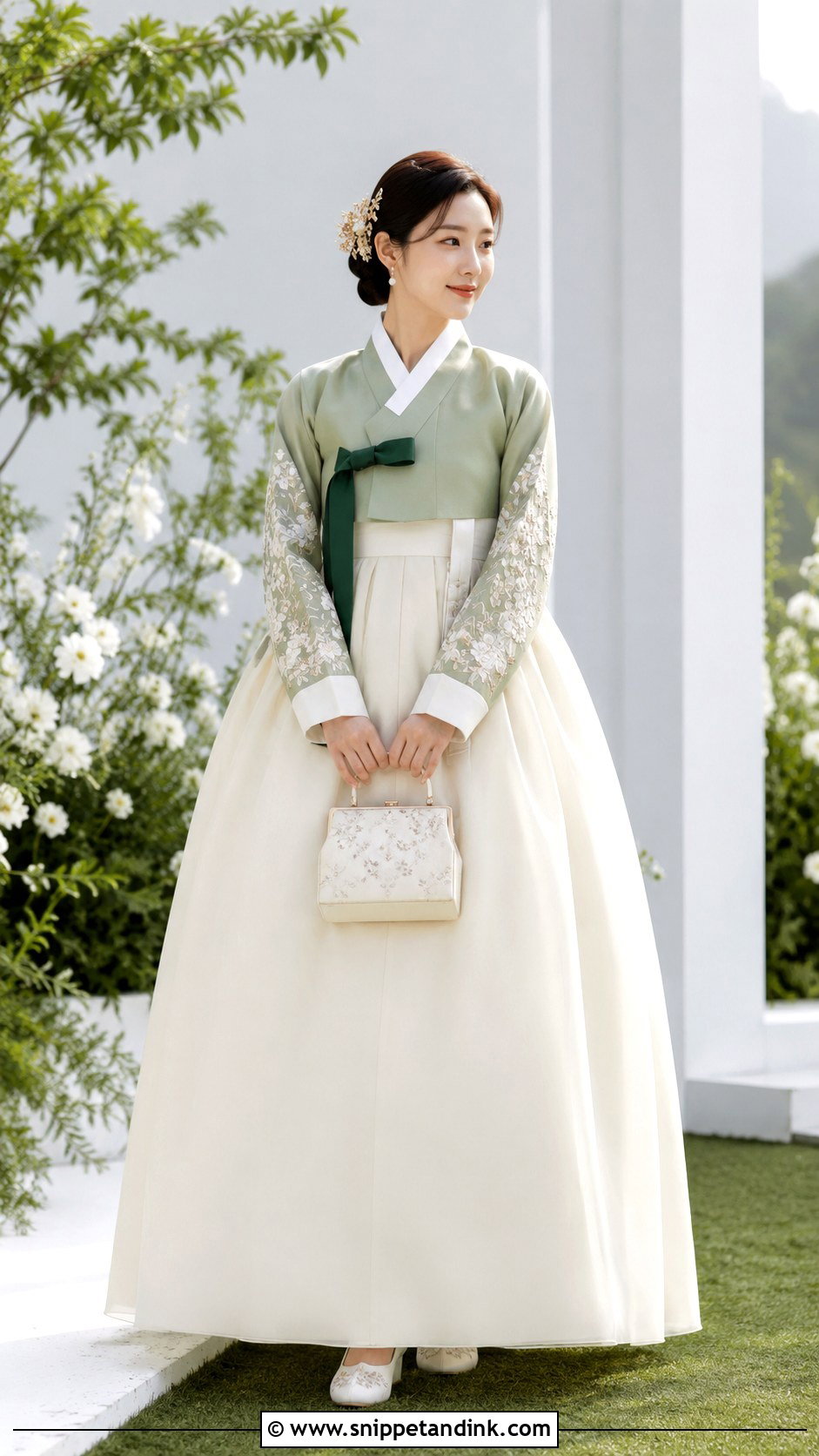
Sage green suits outdoor weddings, and pairing it with an ivory chima keeps the whole outfit reading as bridal rather than as a guest’s hanbok. Fine botanical embroidery at the sleeve ends links it to a garden setting; much more than that and it can look themed. A deeper green or soft gold ribbon defines the front. Keep the bouquet white and green, and small enough not to hide the jacket.

15. Navy And Burgundy Winter Hanbok Wedding Dress
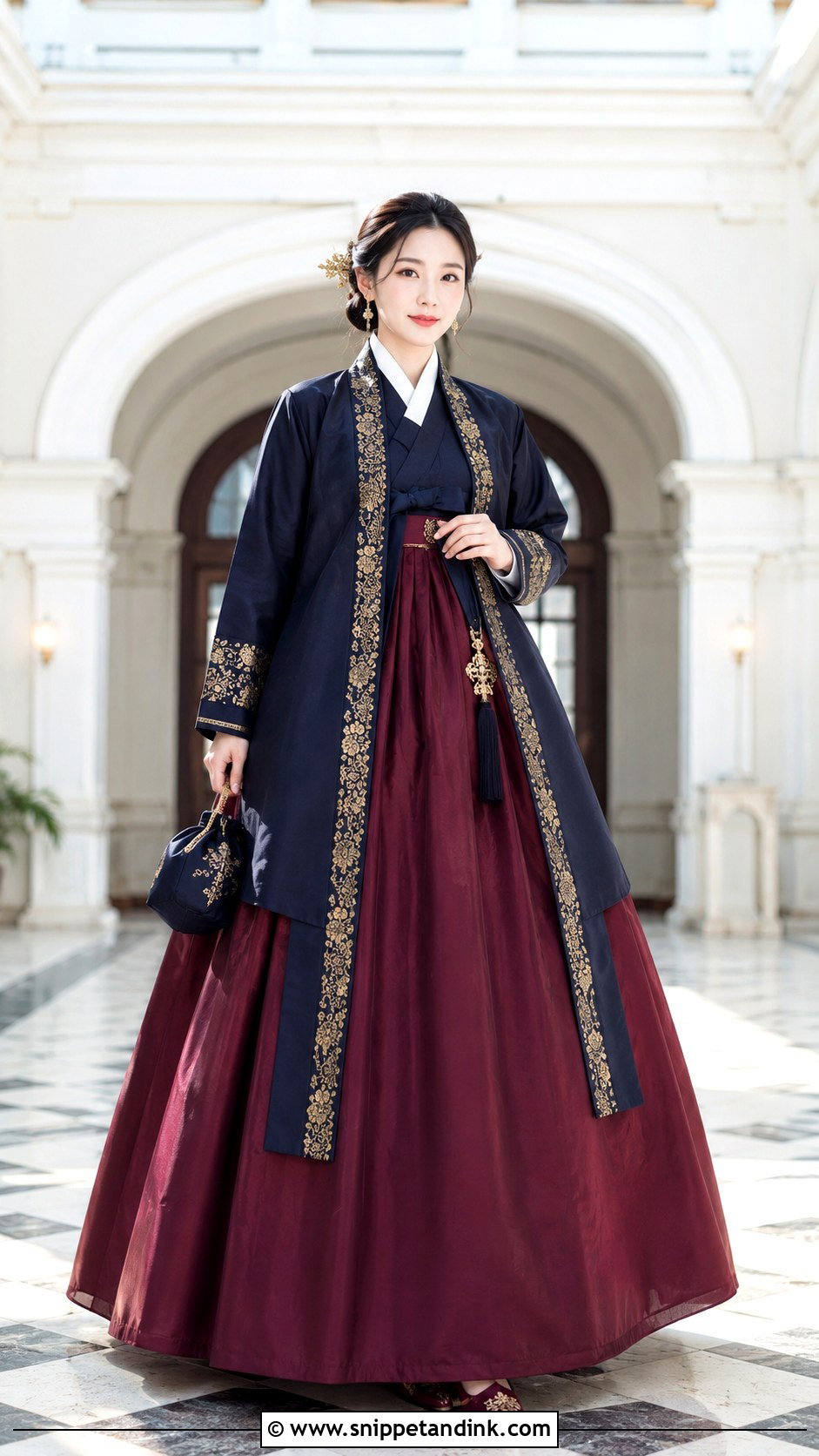
For winter, I’d move to heavier silk or brocade, which holds warmth and color better than summer-weight fabric. A navy jeogori and burgundy chima are rich together; gold trim at the collar and sleeves separates the dark pieces on camera. Thermal underlayers are a real option under a hanbok because the chima is roomy, so you can wear warm layers without changing the silhouette. For outdoor portraits, add a traditional-style overcoat. A cream or pale blush bouquet stops the photos from looking too dark.
16. Layered Organza Hanbok Wedding Dress
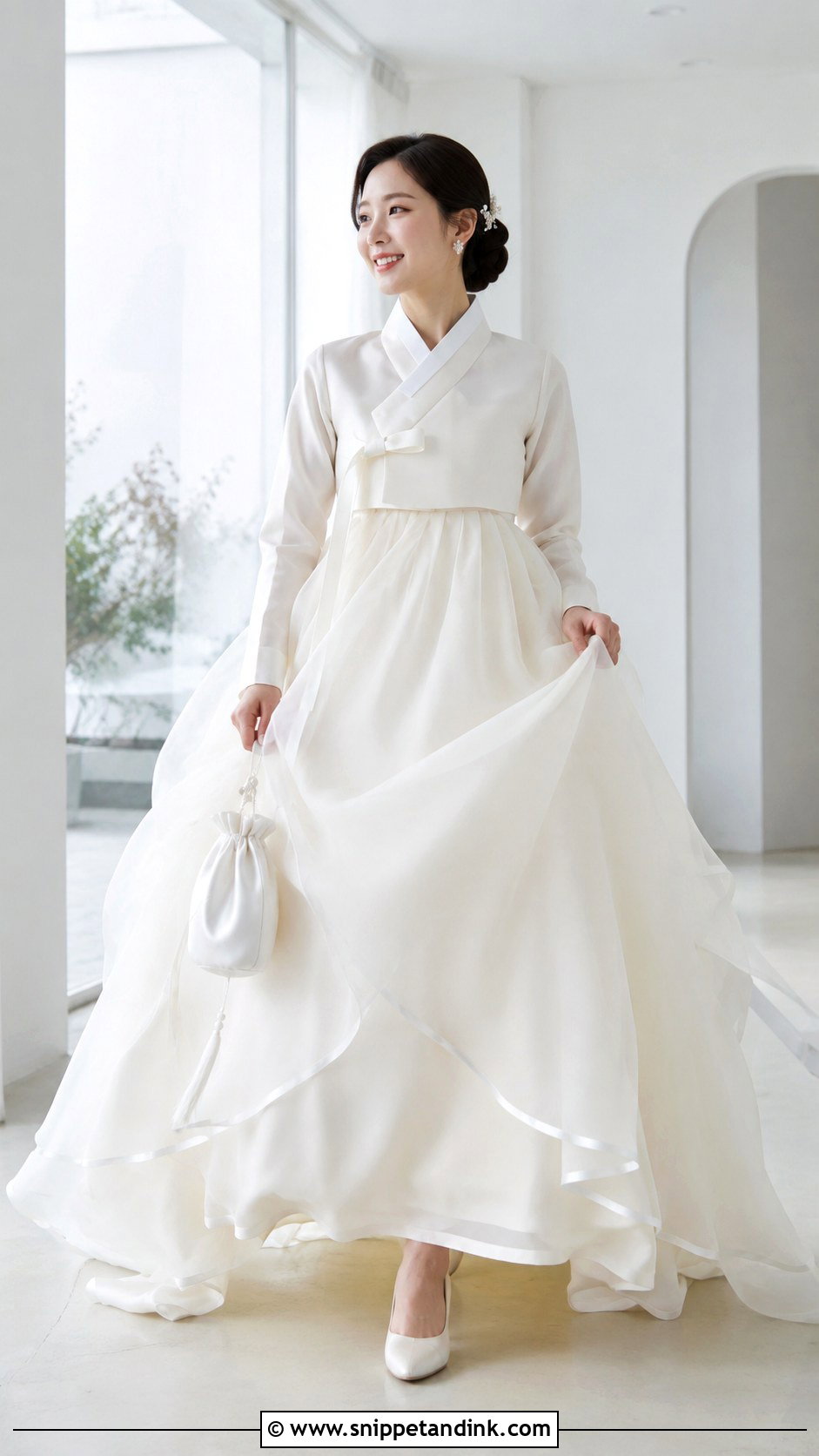
Organza layers give a floating silhouette, but organza is unforgiving if the support underneath isn’t right. The jeogori must be fully lined, and the chima’s sheer layers need an opaque underskirt. Narrow satin edging on the collar and cuffs gives the airy fabric a defined edge. Avoid brooches, bracelets with prongs or anything that can snag; one pulled thread runs visibly in organza. Ivory, pale pink and misty blue show the fabric’s lightness best. It suits spring indoor ceremonies and bright studios.
17. Champagne Embroidered Hanbok Wedding Dress
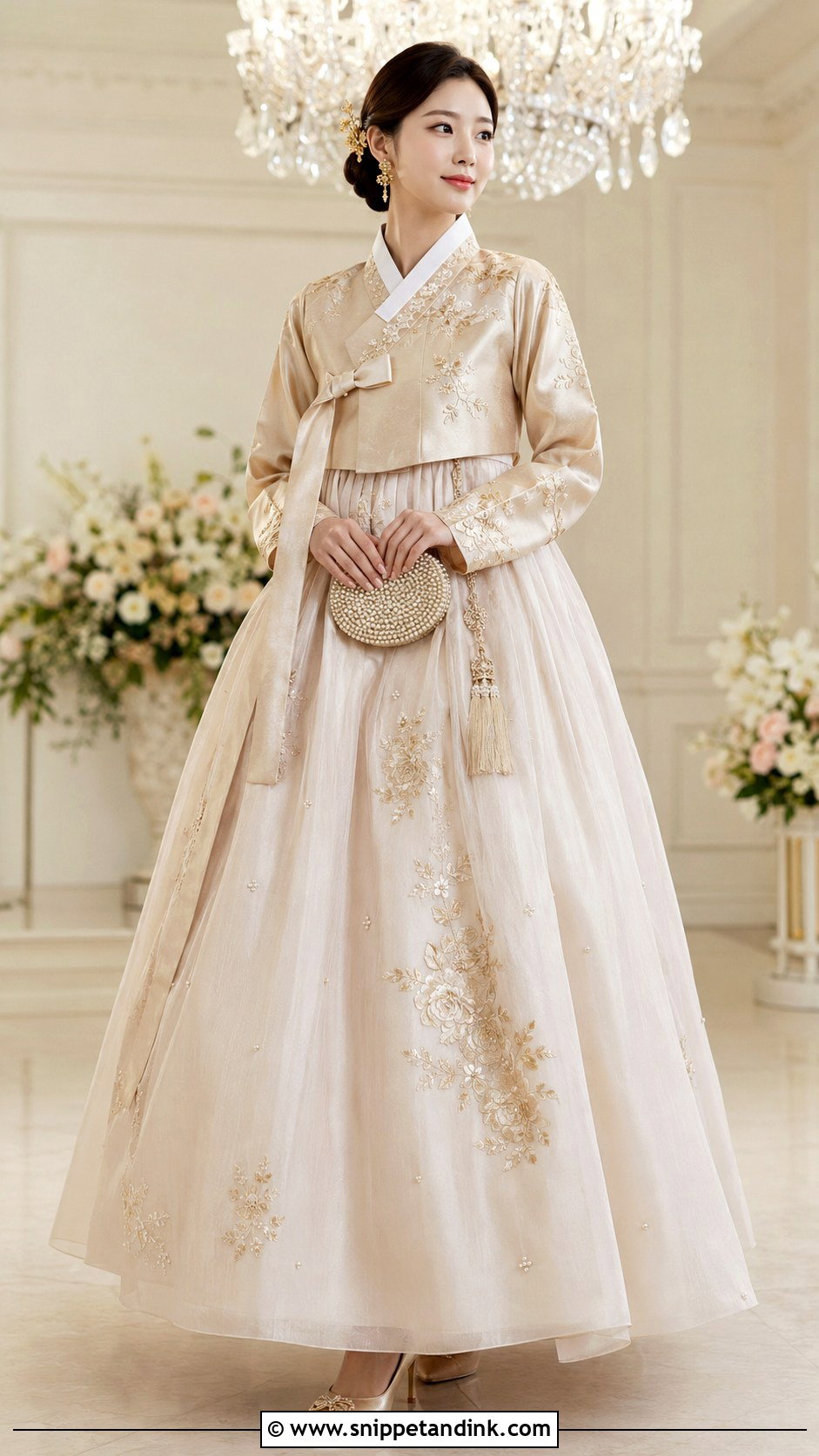
Brides who find bright white harsh against their skin often look warmer in champagne. A fitted champagne jeogori with tonal embroidery and a full skirt in a slightly lighter shade keeps the palette neutral. Gold thread or tiny pearls add depth. Champagne can turn gray or beige in poor light, so I’d save it for venues with bright, neutral lighting where the embroidery shows. Keep the hair smooth and sculpted, and the bouquet cream with a little green.
18. Hanbok Inspired A-Line Wedding Gown
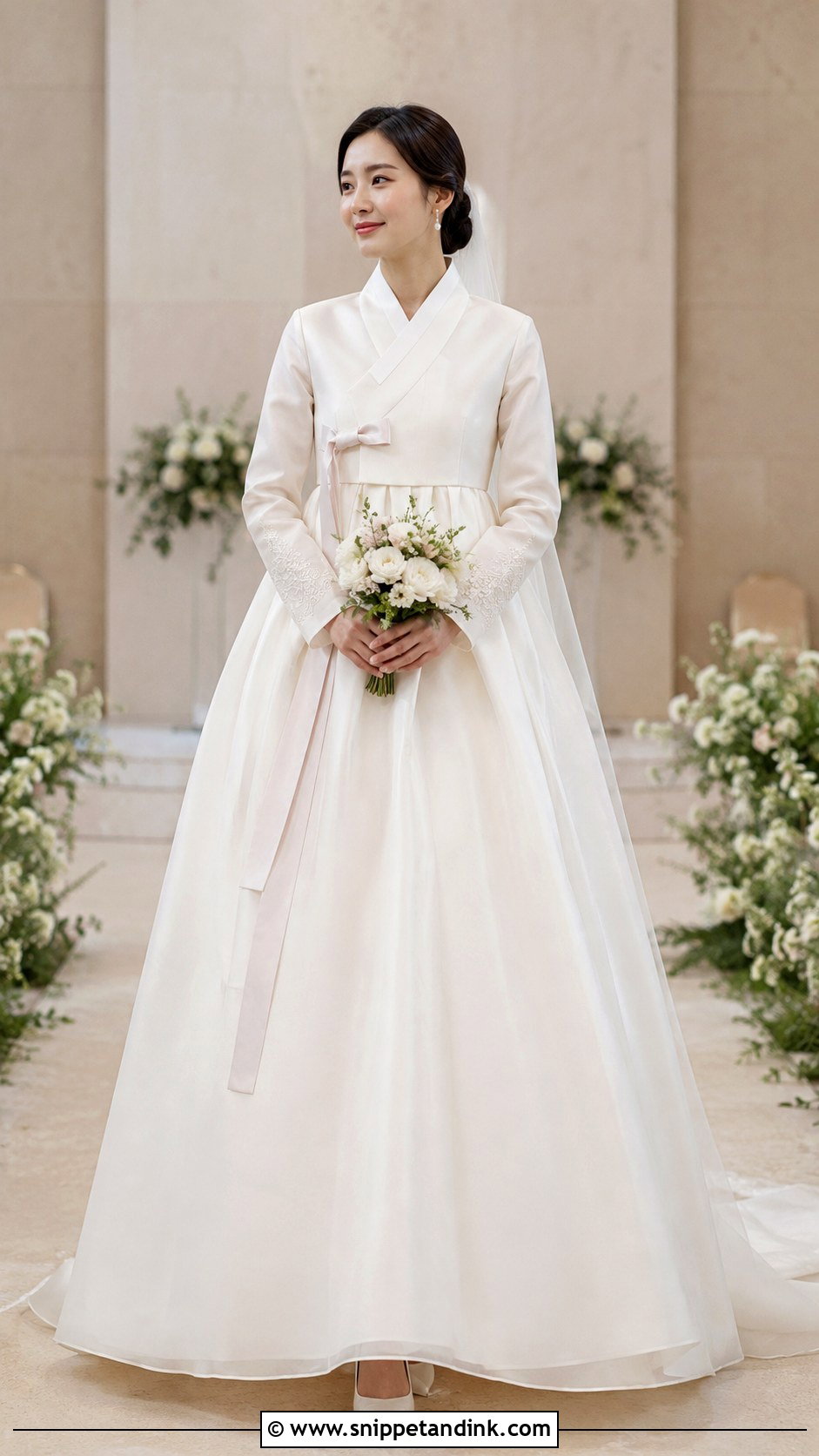
An A-line gown with hanbok details solves the problem of needing one outfit for both ceremony and reception. The bodice can borrow the crossed jeogori neckline, a goreum-style ribbon and long structured sleeves, while the skirt widens gradually from the waist, so it’s easier to move in than a full chima. Put Korean embroidery at the cuffs, neck or hem rather than all over. This needs care to avoid looking like a costume. A hanbok specialist or culturally knowledgeable designer can keep the recognizable details accurate while adapting the shape.
19. Plus Size Hanbok Wedding Dress
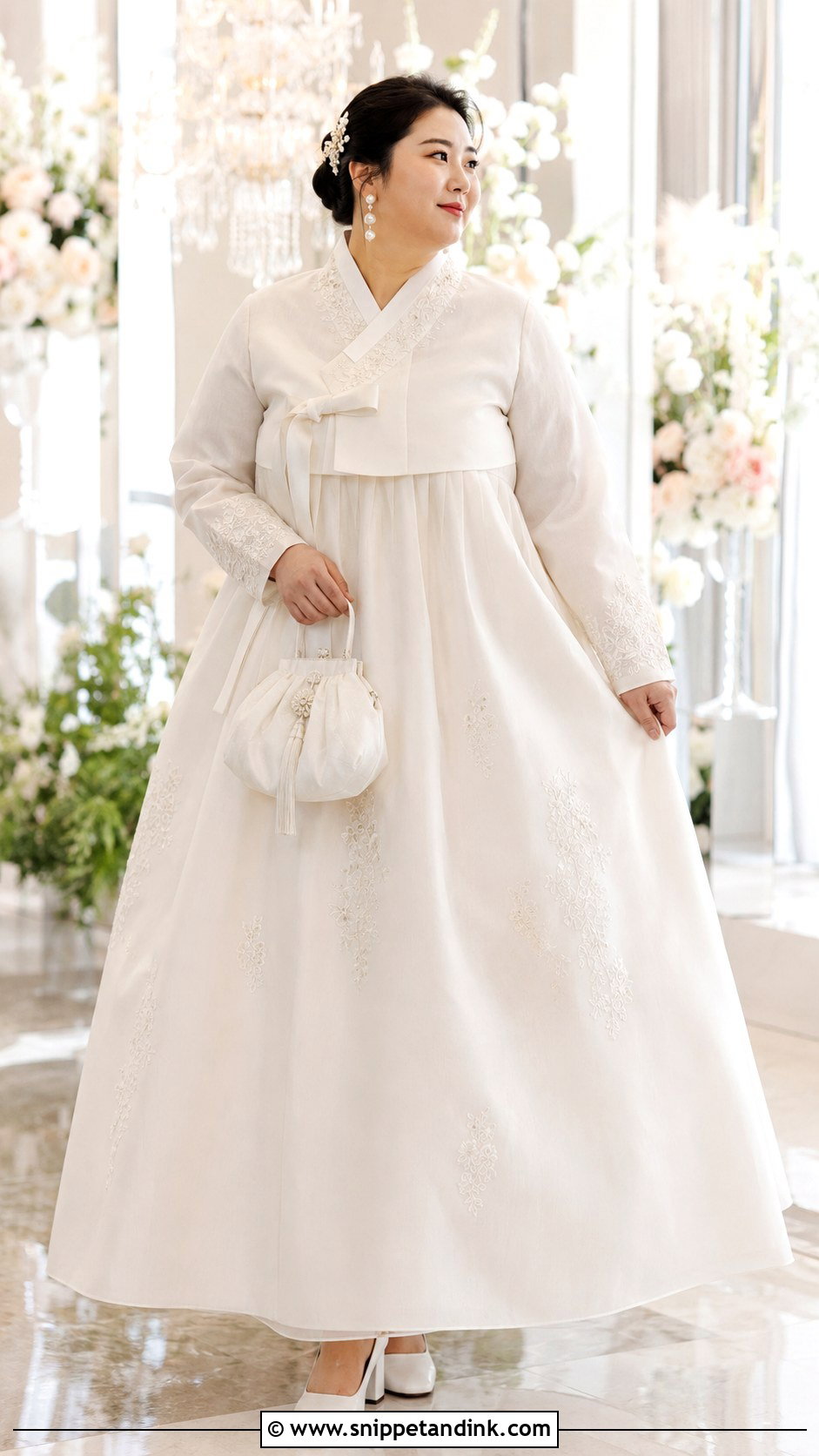
Hanbok is easier to fit on a fuller figure than most Western bridal gowns, because the chima wraps high and falls from the bust instead of relying on a fitted waist. The jeogori is where fit needs attention: it should close smoothly with no pulling at the bust, shoulders or upper arms, and the sleeves should allow you to raise your arms. The chima band must feel secure while letting you breathe, sit and bow. Fluid silk drapes better than stiff fabric. Book at least one fitting where you move in the full outfit, shoes included.
20. Modern Reception Hanbok Wedding Dress
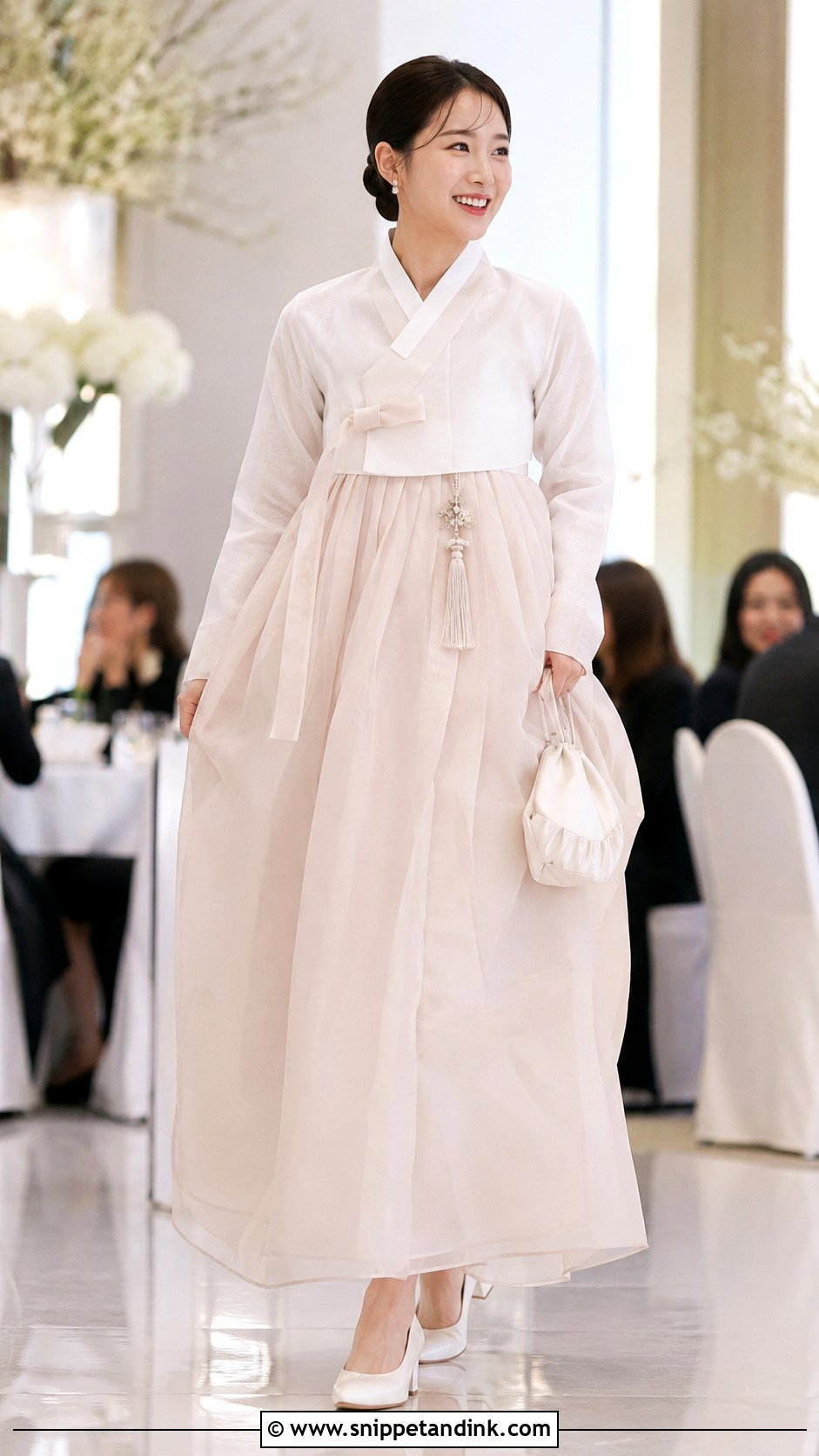
Most brides change after the ceremony, and a streamlined reception hanbok lets you greet guests and eat without minding a huge skirt. Ask for a simplified jeogori with secure fastenings and a lighter chima ending near the ankle. Modern hanbok usually uses lighter fabrics, softer colors and simplified cuts for exactly this reason. Ivory with blush, white with gold, or soft blue with silver all still read as bridal. A short norigae-style ornament adds movement; skip long ones that can catch on chairs.
Moving Through a Paebaek in a Full Chima
The paebaek is the family ceremony where the couple bows deeply to the groom’s parents and elders, and parents toss dates and chestnuts for the couple to catch in the bride’s skirt or a cloth. It’s joyful, and it’s physically demanding in a full hanbok. Practice once in the actual outfit, ideally with whoever will help you.
- The bride’s deep bow involves kneeling and rising with hands raised to the forehead. Most brides need an attendant on each side to steady them, especially in a heavy hwarot.
- Lift the chima from the front with one hand when stepping up or kneeling, so you don’t tread on the hem.
- Keep the headpiece pinned firmly at several points. Bowing tips it forward every time.
- Wear the white beoseon socks or flat shoes you’ll be wearing on the day for practice; silk shoes slip on polished floors.
Caring for a Silk Hanbok Once the Day Is Over
If you own your hanbok, have it professionally dry-cleaned before storage, and point out makeup on the collar band and food on the skirt. Silk weakens where stains are left to sit.
Store it folded flat along its original lines, wrapped in clean cotton or acid-free tissue, not plastic, which traps moisture. Keep it somewhere cool and dark, since silk fades in sunlight. Refold it along slightly different lines once or twice a year so permanent creases don’t form in the jacket. Remove the norigae and any metal ornaments before storage; they can mark the fabric over time.
A Hanbok That Honors the Ceremony and Fits the Bride
A hanbok bridal outfit should carry meaning, look balanced and let you move through every part of the day. The red hwarot brings the most formality; white, blush, champagne and pastel designs feel softer and more current. Fusion gowns, reception hanbok and made-to-measure fits for every body type make it adaptable. Before ordering, talk through fabric weight, underlayers, skirt volume, shoes and headpieces with a hanbok maker or rental specialist, and involve family elders if you’ll wear ceremonial pieces. Respectful choices and good tailoring are what make the outfit feel like yours.
You'll Like These Ideas:


Leave a Reply