
Sleeveless gowns cover more ground than any other category I style: lace, satin, crepe, chiffon, corsetry, appliqué, clean minimalist cuts. That range is useful, but it also means the details that decide comfort get overlooked, namely how the armhole sits, what holds the bodice up without sleeves, and what happens if your ceremony venue wants covered shoulders. I’ve built twenty complete looks below, each with veil, shoes and jewelry, and noted where I’d adjust coverage, proportion or support for different bodies. Garden, beach and ballroom weddings are all in here.
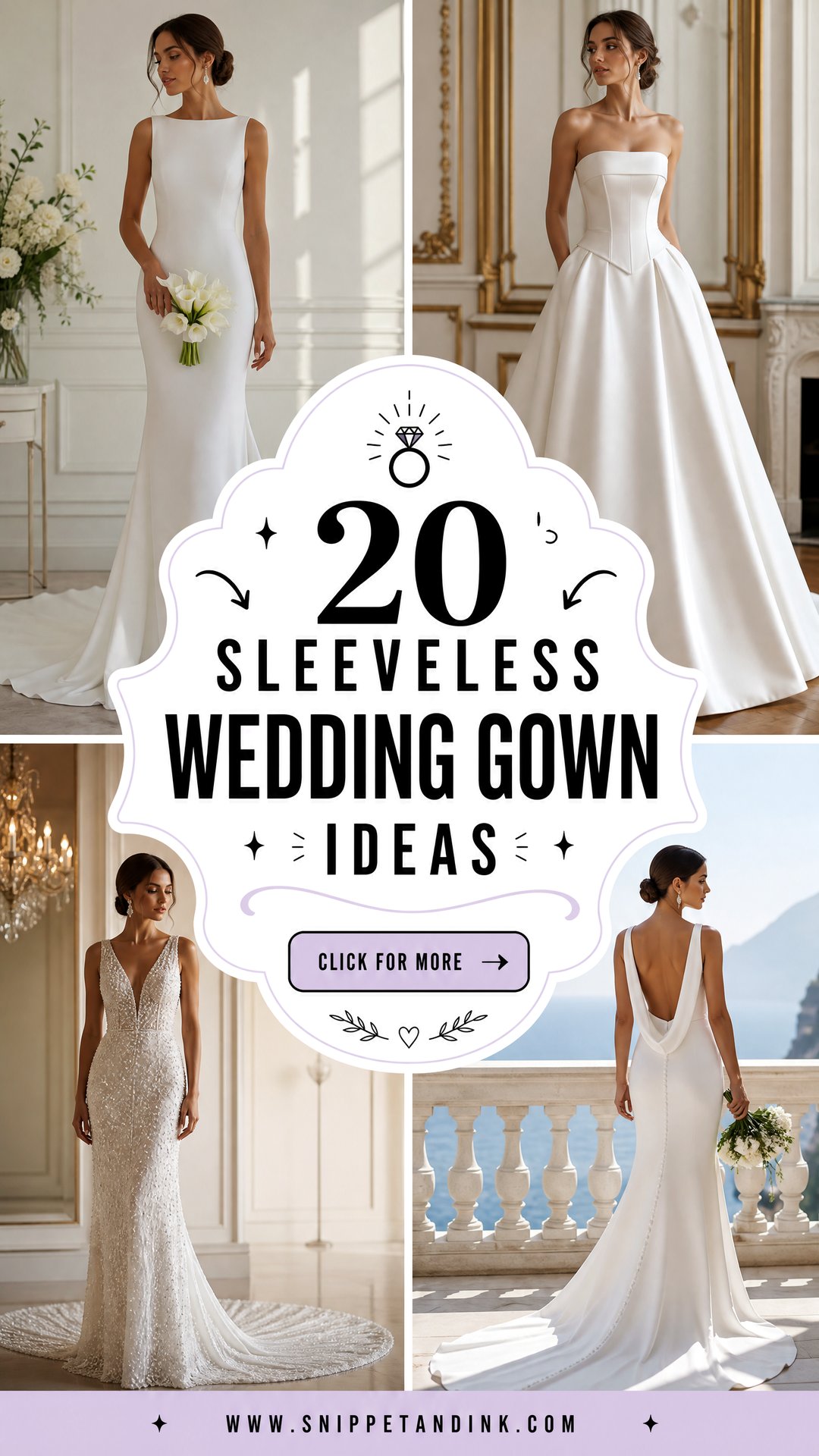
Armholes, Straps and Bare Arms Up Close
Without sleeves, the armhole is doing a job most brides never think about. It decides whether the bodice stays put, whether a bra edge peeks out, and whether you can raise your arms for a hug without the whole top lifting. I check these at the first fitting, before anyone talks about veils.
- The armhole should sit close to the body without cutting into the underarm. A gap at the side lets the bodice shift and shows whatever is underneath.
- Raise both arms above your head. If the bodice rides up more than a little, the straps or side seams need adjusting.
- Look at the strap placement from behind. Straps set too wide slip off sloping shoulders; set too close to the neck, they look narrow and pull.
- Antiperspirant can leave white marks and, over time, yellow stains on satin and silk. Apply it the night before or well ahead of dressing, and let it dry fully.
- Watch for tan lines from sports tops or swimwear in the months before the wedding. They show clearly against a sleeveless neckline.
Arms are part of the outfit too. A light body moisturiser that sinks in fully, rather than a shimmering oil, avoids transfer onto the fabric when you hold your bouquet against the bodice.
1. Sleeveless A-Line Wedding Gown
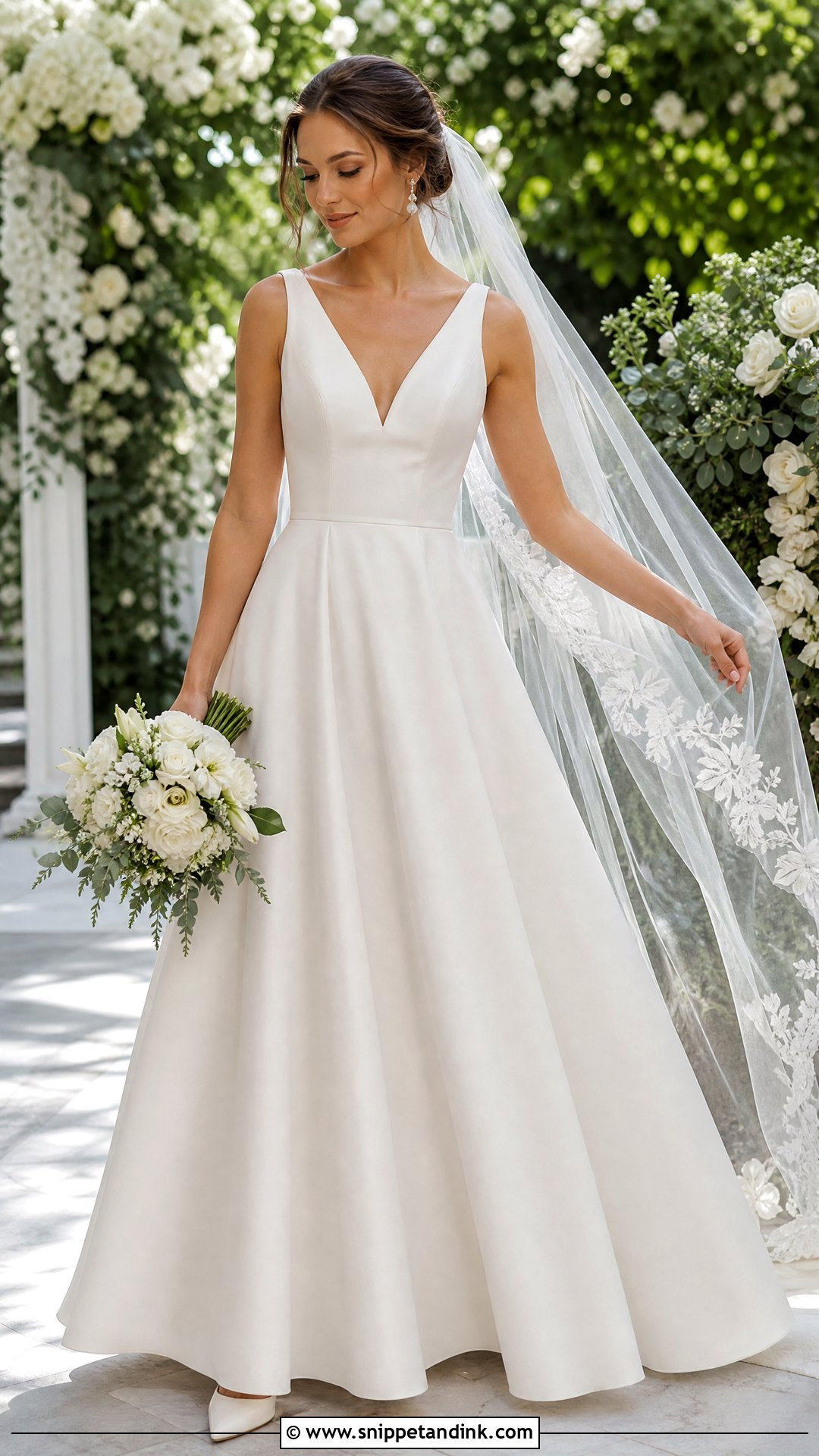
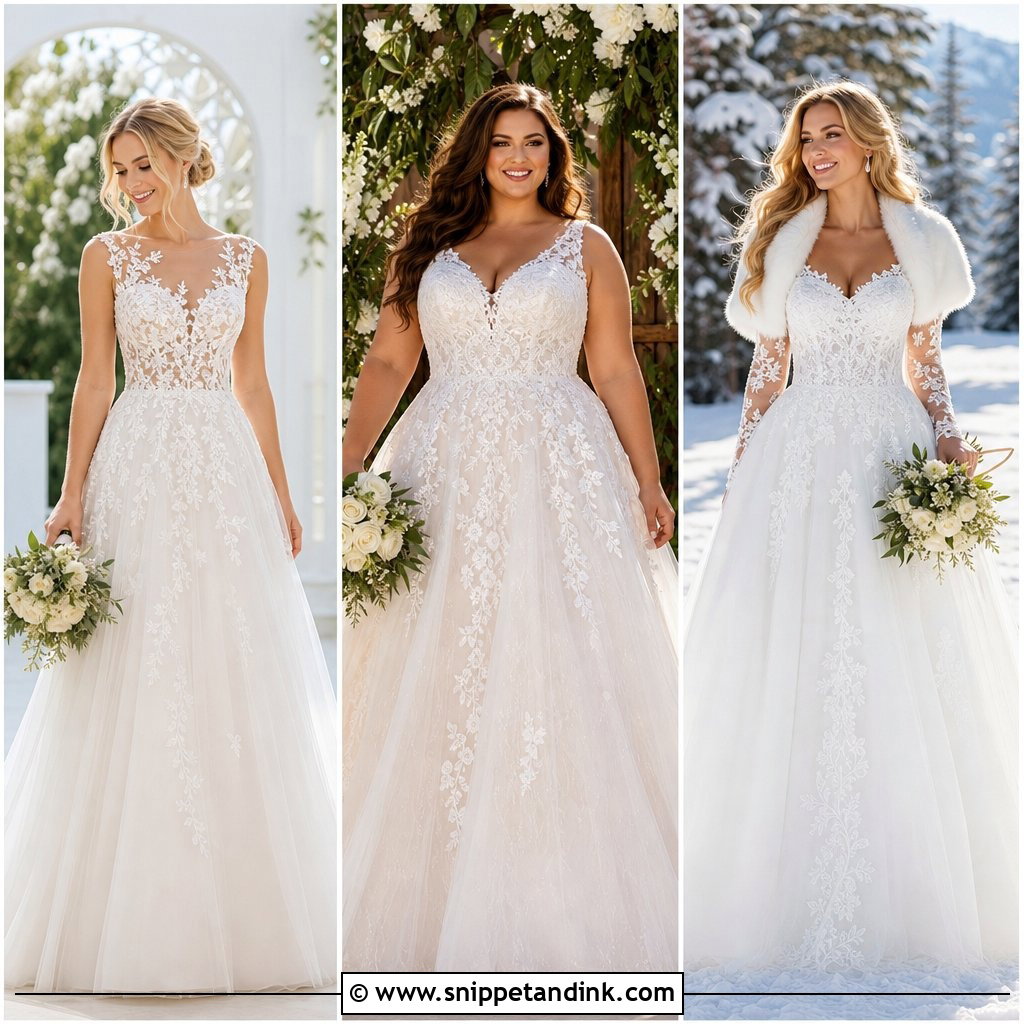
An A-line is the shape I suggest when a bride wants structure but hates feeling held in. The fitted bodice does the shaping and the skirt widens gradually from the waist, so you can sit and dance without a fight. Satin or mikado suits a formal room; tulle and chiffon move better outdoors. A V-neck lengthens the torso, and a square neck reads more contemporary. I’d add a fingertip veil, pearl drops, pointed pumps and a low bun to keep the neckline clear. On a plain surface, I add texture through an embroidered veil or trailing greenery in the bouquet rather than heavy jewelry.
2. Sleeveless Ball Gown Wedding Gown
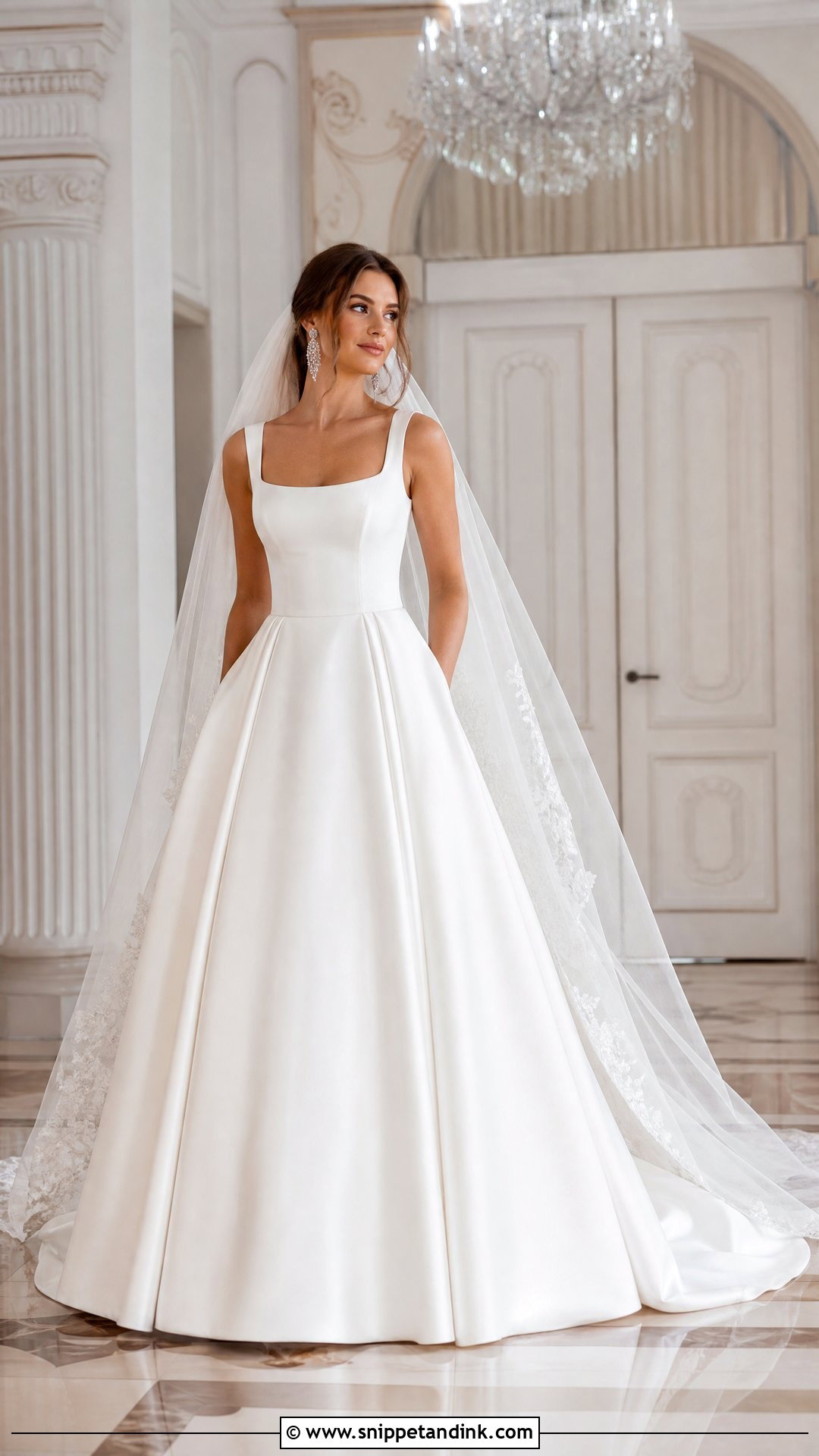
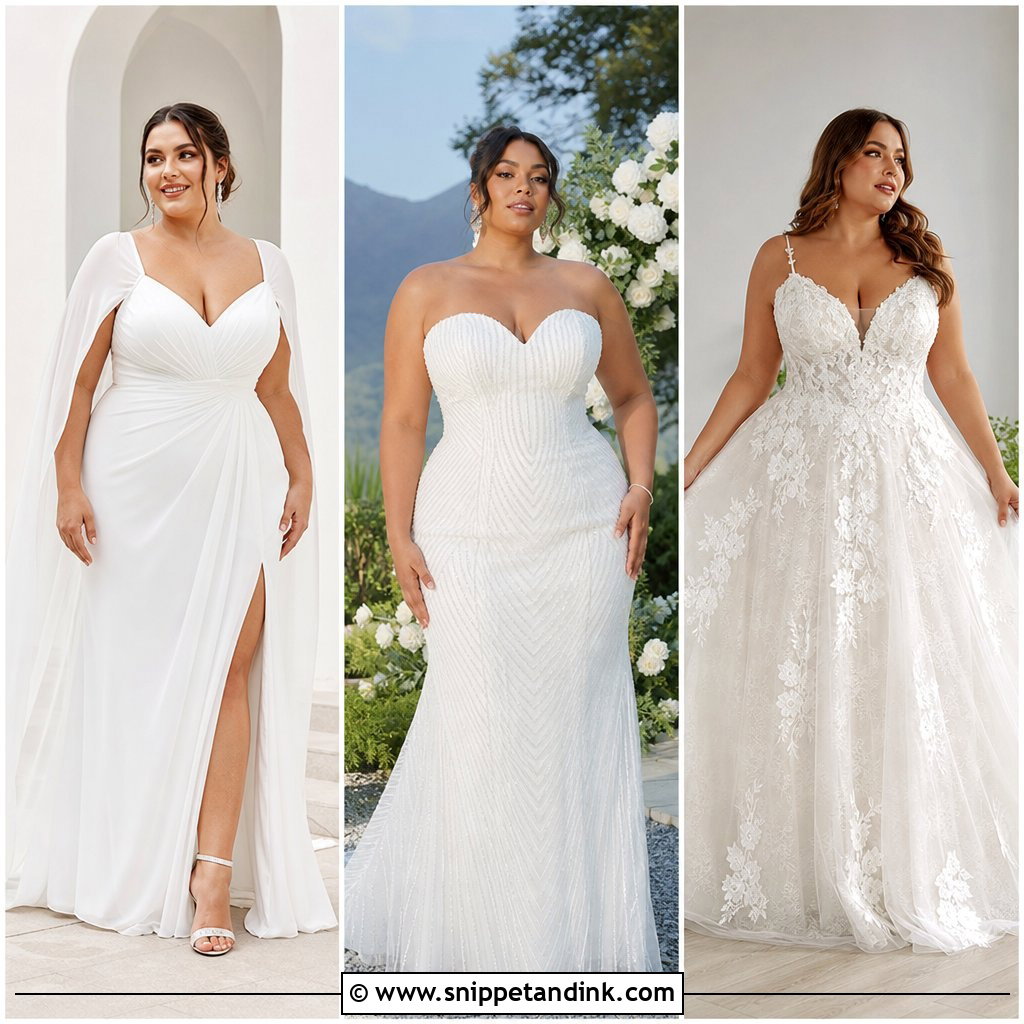
Picture walking into a ballroom in a fitted bodice and a sweeping skirt. A sleeveless ball gown gives you that entrance with shoulders and arms bare. Structured satin keeps a crisp outline; layered tulle is lighter and moves more. For a fuller bust, I’d look at wide straps or a supportive scoop rather than strapless, because a heavy skirt pulls a strapless bodice downward over the hours. A cathedral veil, crystal studs and block heels hidden under the skirt are practical and pretty. Skip the necklace if the bodice is beaded. Set the waist at your natural waist, and hem so the skirt floats just off the floor.
3. Sleeveless Lace Wedding Gown
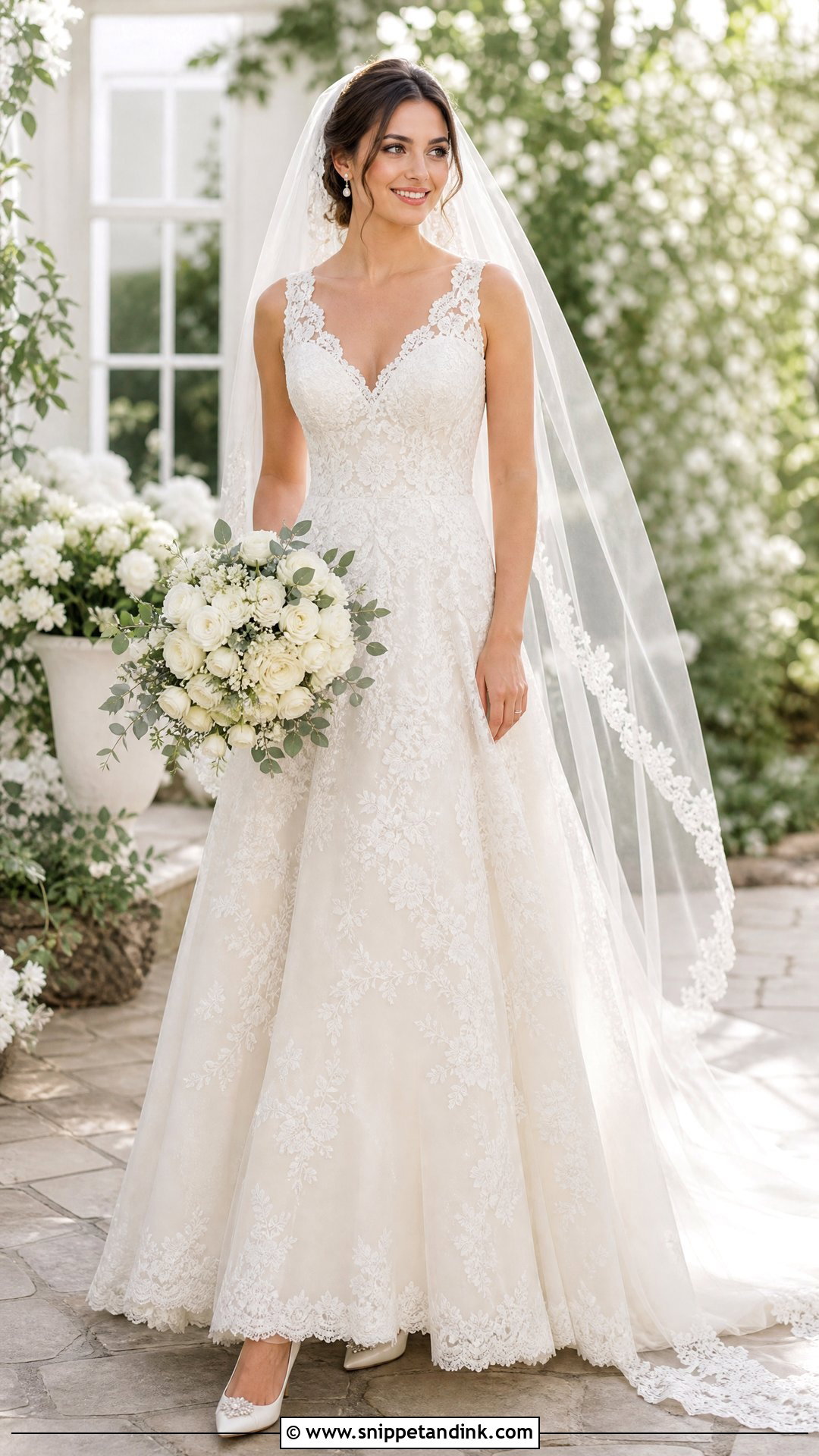
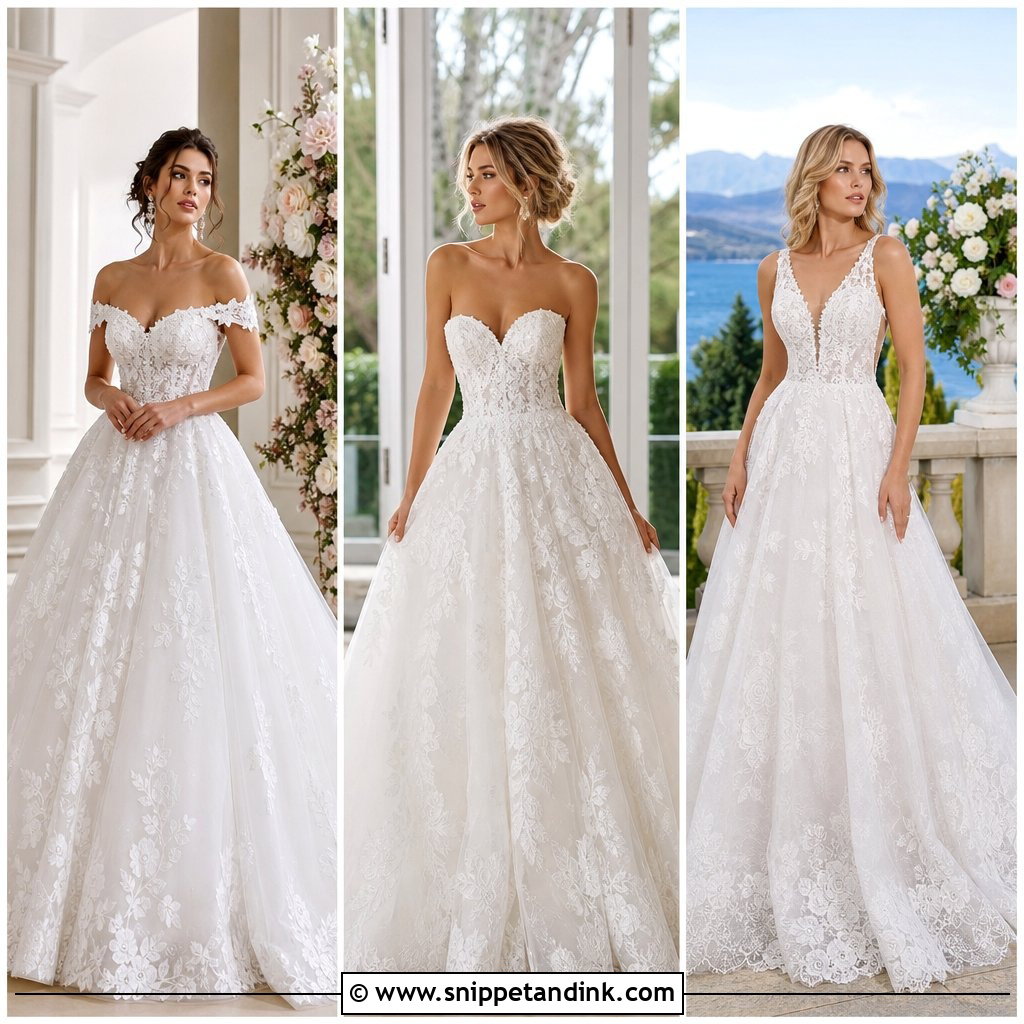
Lace edges are the thing I check first on a sleeveless lace gown, because scalloped trim at the armhole can scratch after a few hours. Floral lace over a fitted lining gives definition; lace over tulle looks airier. A scalloped V-neck feels romantic, and a high bateau gives more coverage. If you want a lace-trimmed veil, hold it against the gown first, since two different lace patterns side by side can look busy. Pearl earrings, ivory heels and a loose chignon finish it. Sleek hair and minimal jewelry give lace a modern edge if that’s more you.
4. Sleeveless Satin Wedding Gown
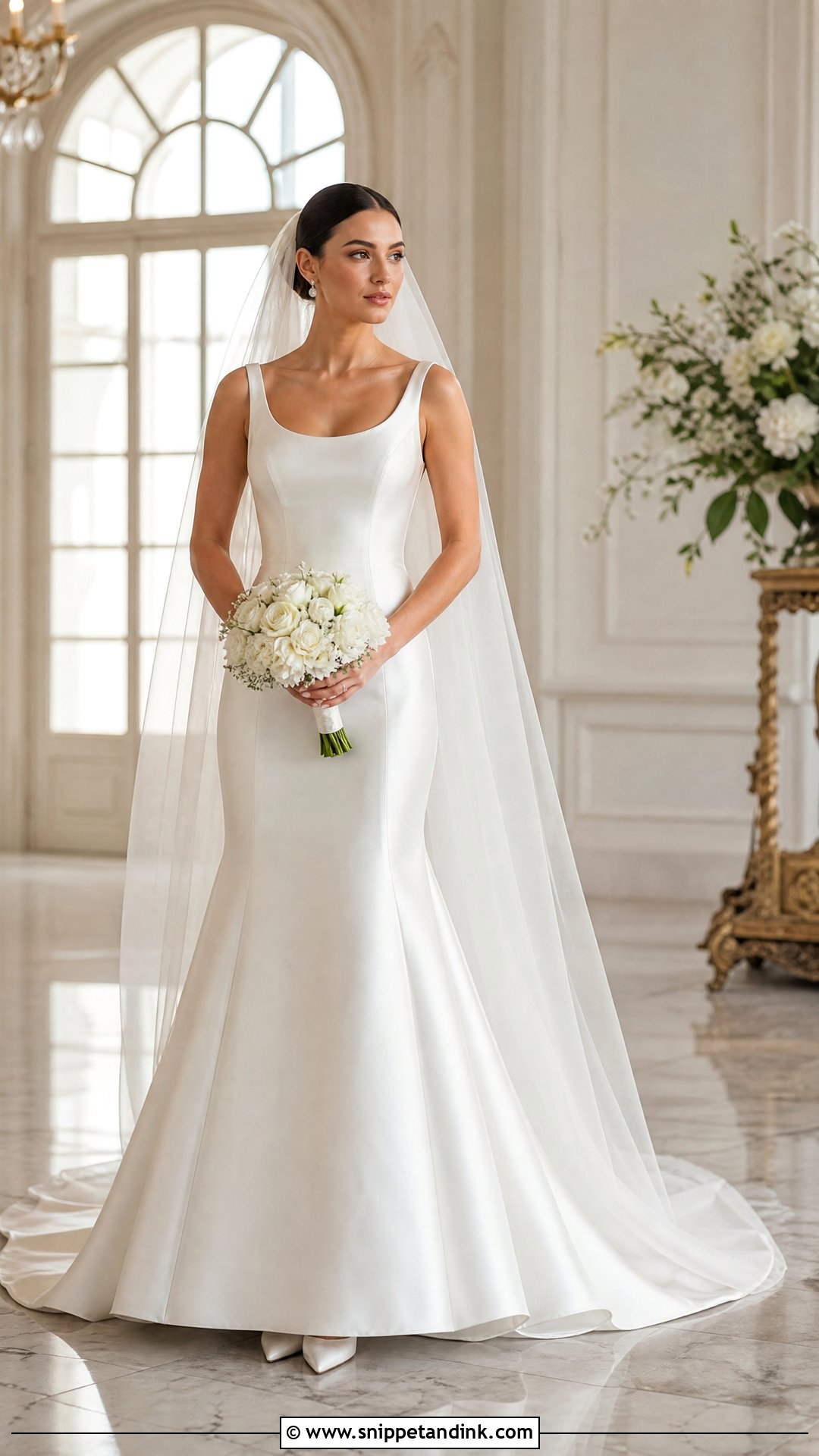
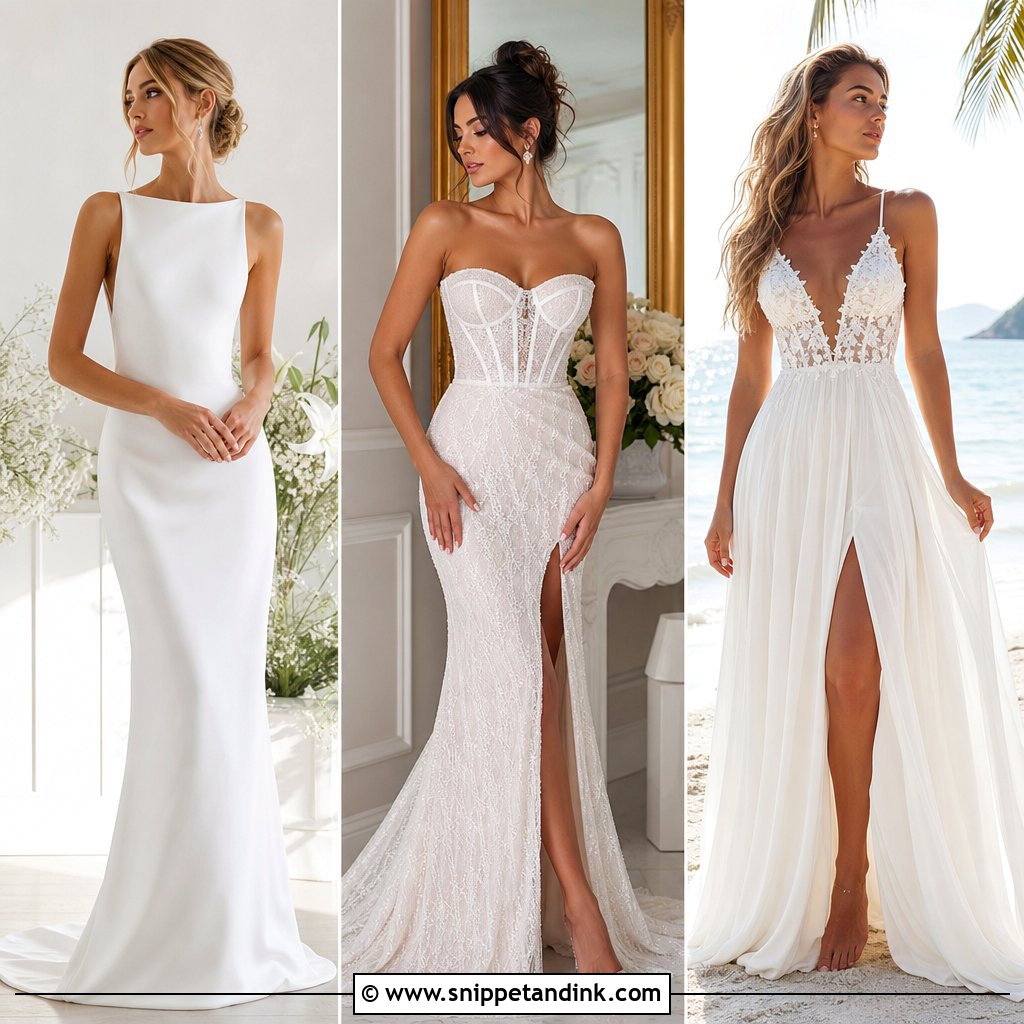
Satin is honest about construction. Every seam and dart shows, so I’m fussier about tailoring here than on almost any other fabric. A fitted bodice with a softly flared skirt keeps the fabric the star, and square, scoop or draped necklines all suit it. A plain chapel-length veil, pearl earrings and closed-toe satin pumps are all it needs, with a sleek bun or polished waves. A compact white bouquet with little greenery keeps it clean. Ask the salon how to steam your particular satin, because silk satin and polyester satin react differently to heat and water.
5. Sleeveless Mermaid Wedding Gown
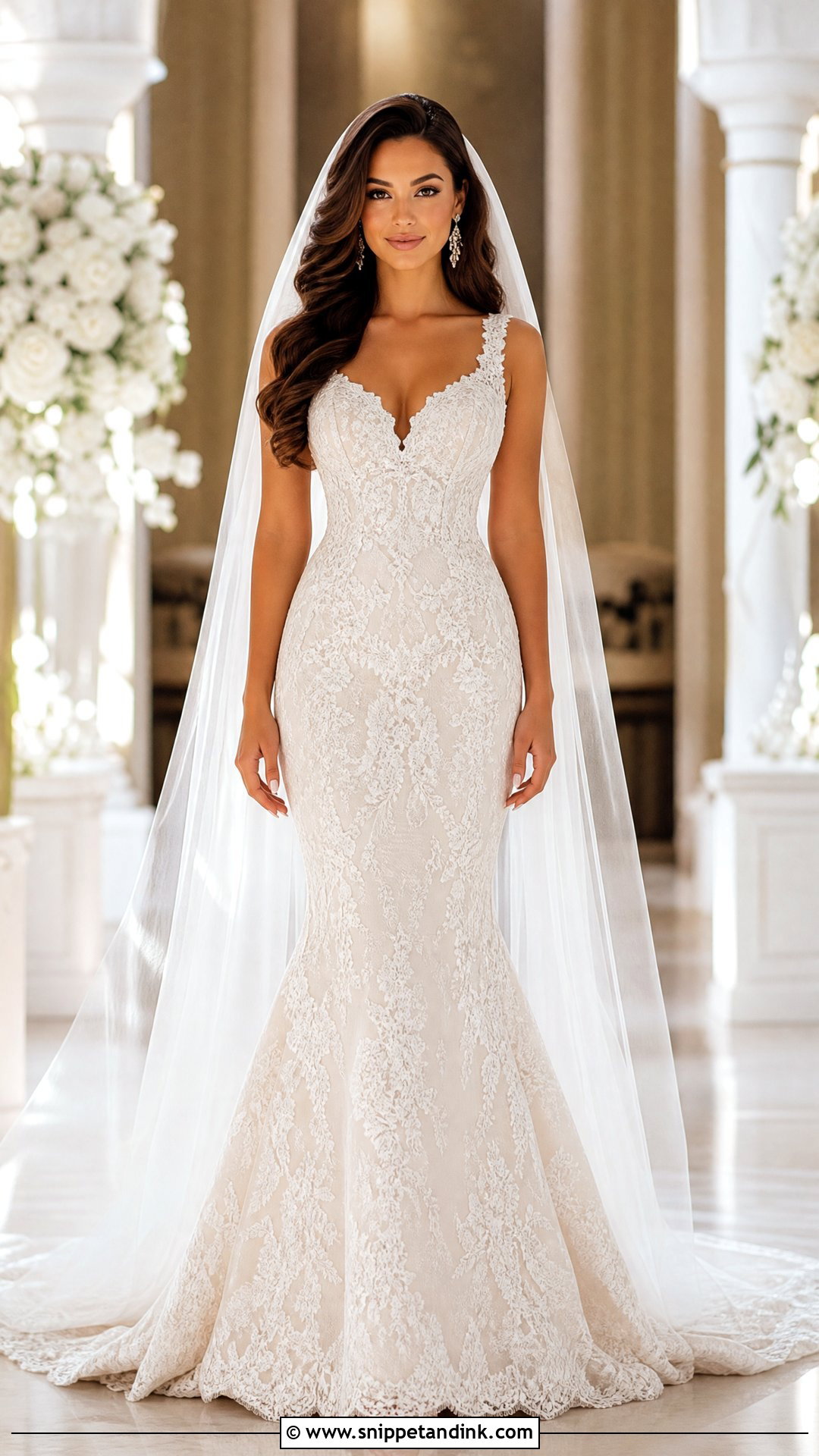
Mermaids look dramatic and walk badly if the flare starts too low. I have brides climb stairs in the sample before they commit, because that’s the moment a too-tight knee shows itself. Stretch crepe gives a smooth modern finish, and lace adds texture. A V-neck bodice lengthens the torso, and wider straps help support. A long plain veil, delicate earrings and low-profile heels keep the shaped skirt in focus. A side-parted bun or soft Hollywood waves suit the glamour. The lining matters too: a stiff lining shortens your stride even when the outer fabric stretches.
6. Sleeveless Sheath Wedding Gown
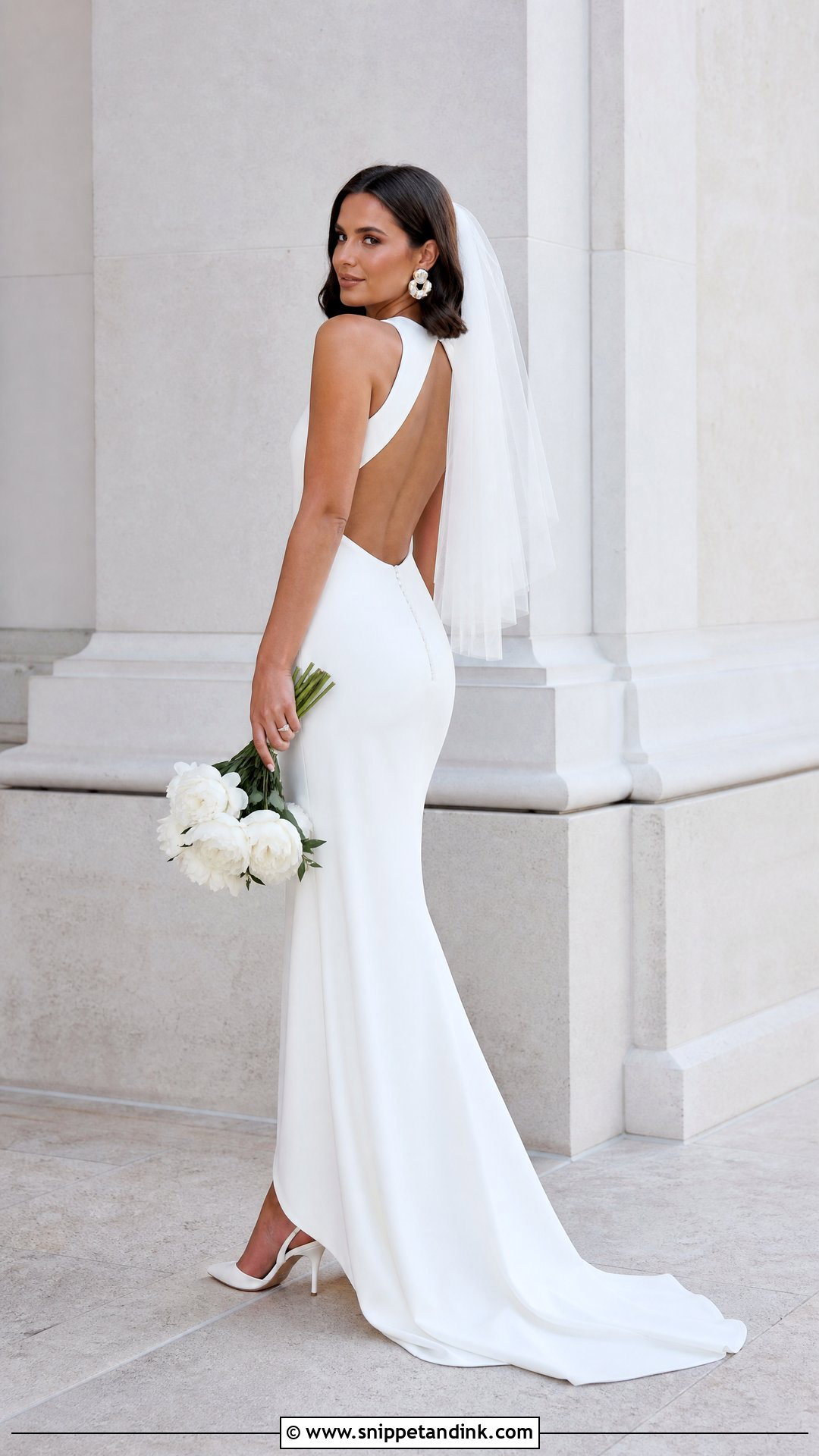
A sleeveless sheath wedding gown sits close without the flare of a mermaid, which makes it easy to wear at a courthouse or small venue. Crepe, silk and lightweight satin keep the vertical lines clean. A high neckline offers quiet coverage; a low back adds drama. I’d style it with a shoulder-length veil, sculptural earrings and pointed slingbacks. You won’t need a clutch at the altar, but keep one for later. Sheaths show everything underneath, so smooth undergarments are a must. If you want more movement, a back slit, godet panel or detachable train gives it without bulk.
7. Sleeveless Chiffon Wedding Gown
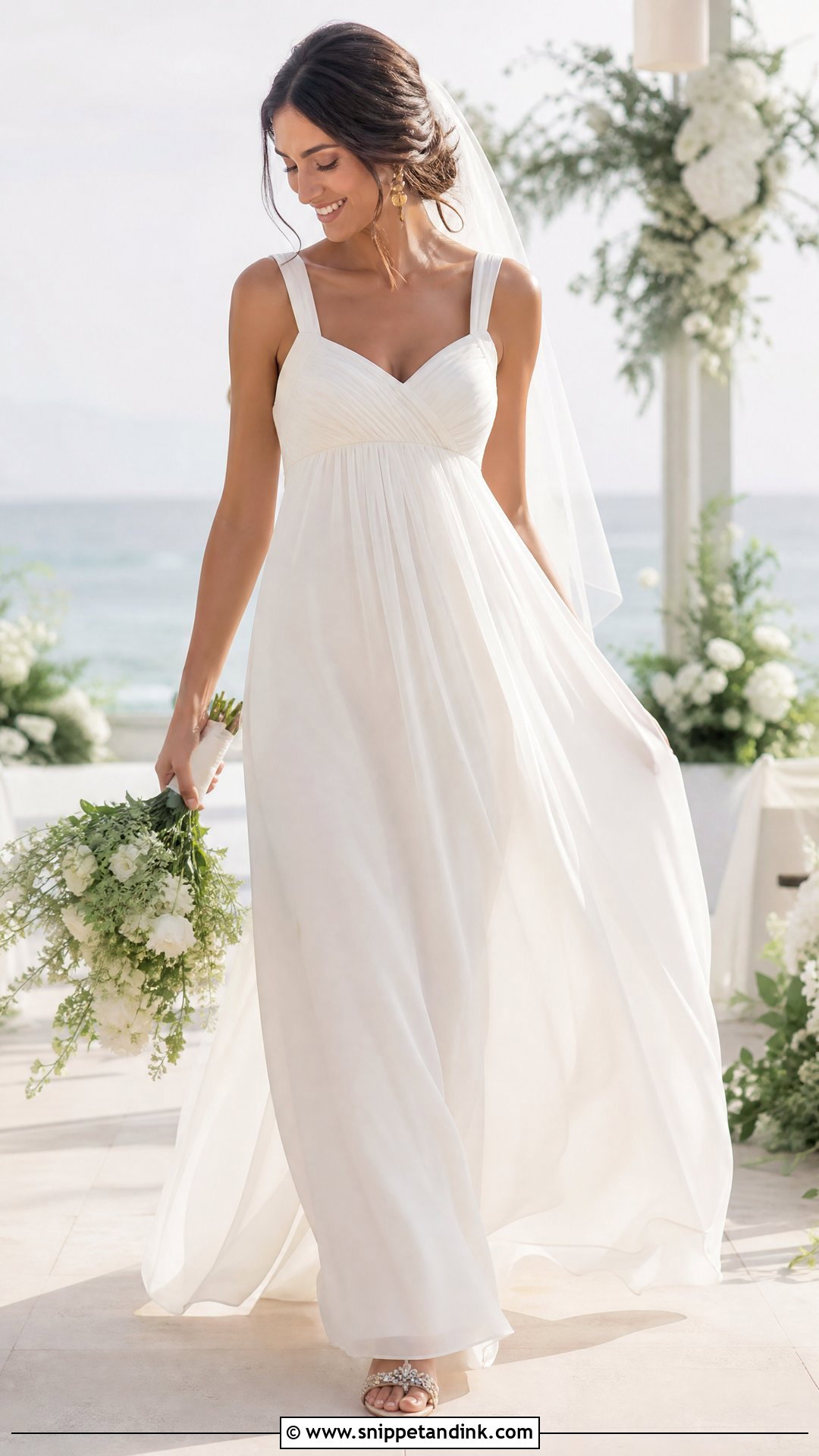
Chiffon moves in the slightest breeze, which is exactly why it’s at home on a beach or in a garden. An A-line or empire waist keeps it from clinging. I’d look for a lined bodice with wide straps for support, then add a lightweight veil, fine gold or pearl jewelry, and block-heel sandals that won’t sink into grass. On sand, go flat. Loose waves, a braided updo or a textured low bun keep the mood relaxed. Chiffon can be sheerer than it appears inside, so step outside in daylight before final alterations and check the lining from every side.
8. Sleeveless Crepe Wedding Gown
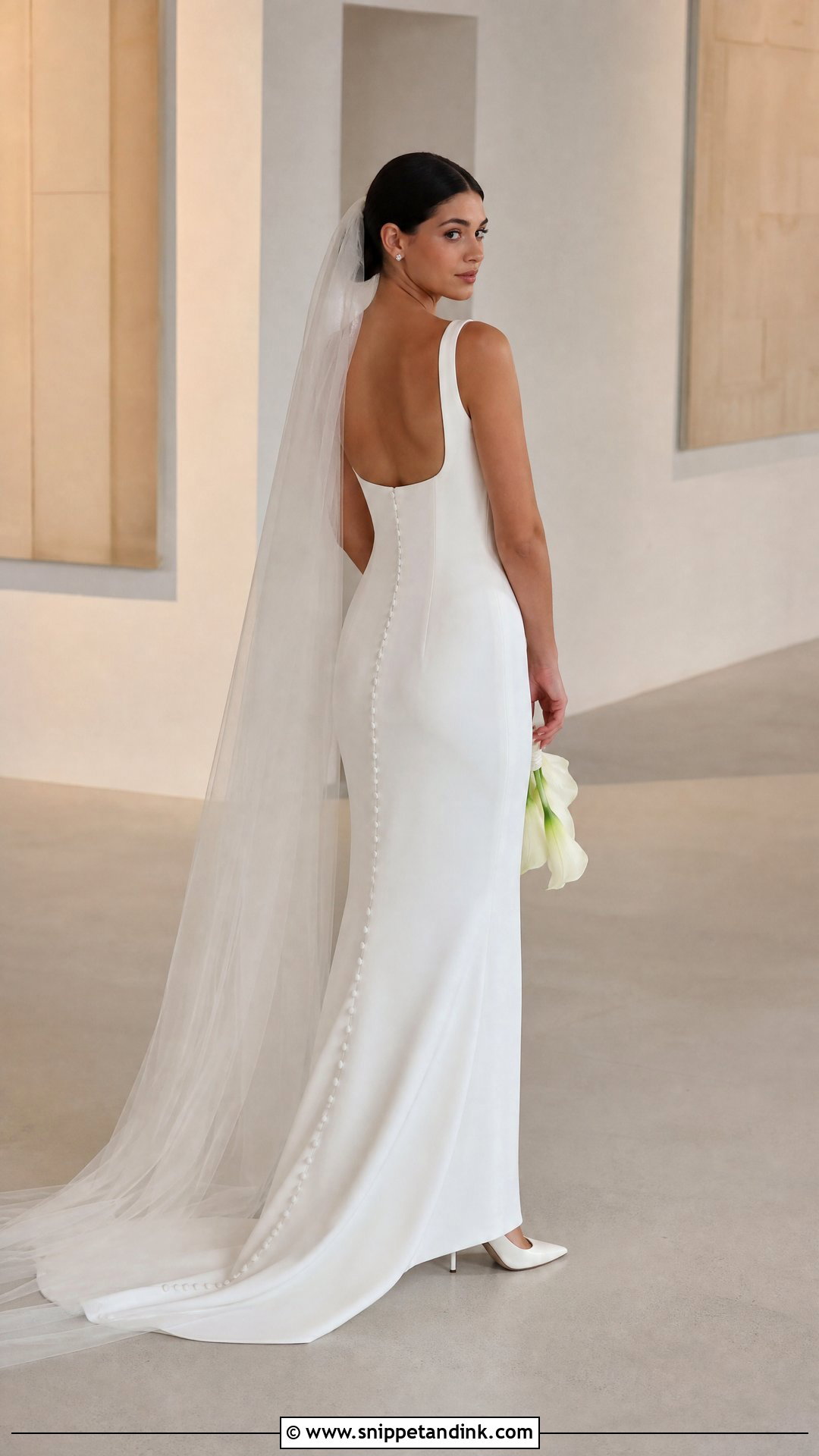
Crepe is my go-to fabric when a bride wants polish without a stiff, formal feel. It drapes smoothly on columns, sheaths and fit-and-flares while keeping its shape. A square neckline adds definition; a cowl is softer. A long sheer veil, small diamond or crystal earrings and pointed pumps finish it, and a low ponytail or sleek chignon keeps the eye on the construction. A plain front benefits from interest at the back: covered buttons, an open back or a detachable bow. Crepe shows seams and undergarment lines, so bring your actual foundation pieces to every fitting and check the dress under both daylight and indoor light.
9. Sleeveless High-Neck Wedding Gown
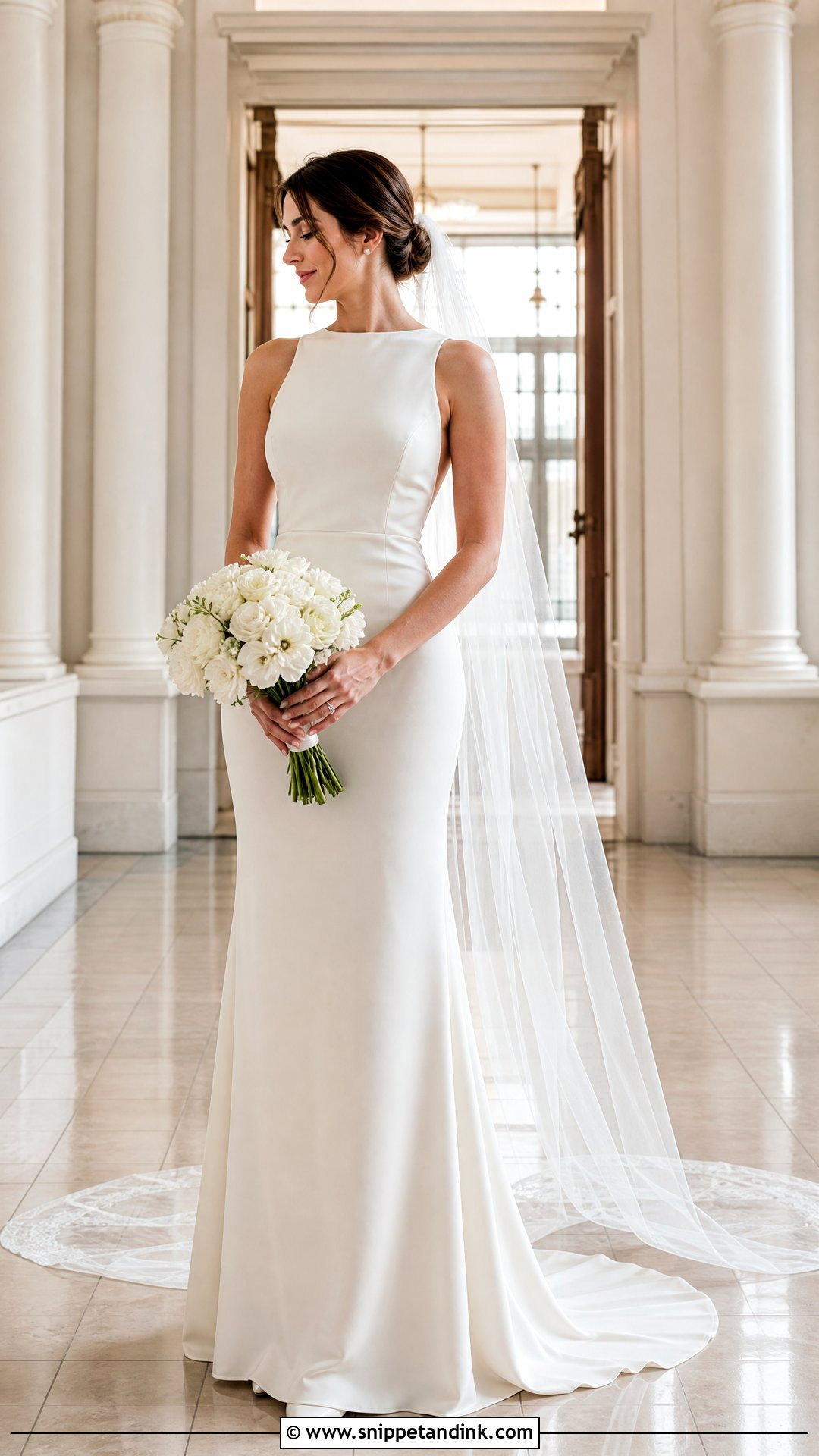
Bare shoulders with a covered chest is a balance I love, but the collar has to be fitted precisely. When you turn your head or sit, a high neck that’s even slightly tight presses against the throat. Smooth crepe, satin or fine lace all suit it. Pair with a column skirt for a modern look or an A-line for more movement. The neckline is already the feature, so I’d skip the necklace for pearl studs or narrow drops. An updo keeps the collar clean, a low back balances the covered front, and a long veil, closed-toe heels and a structured bouquet complete it.
10. Sleeveless Square-Neck Wedding Gown
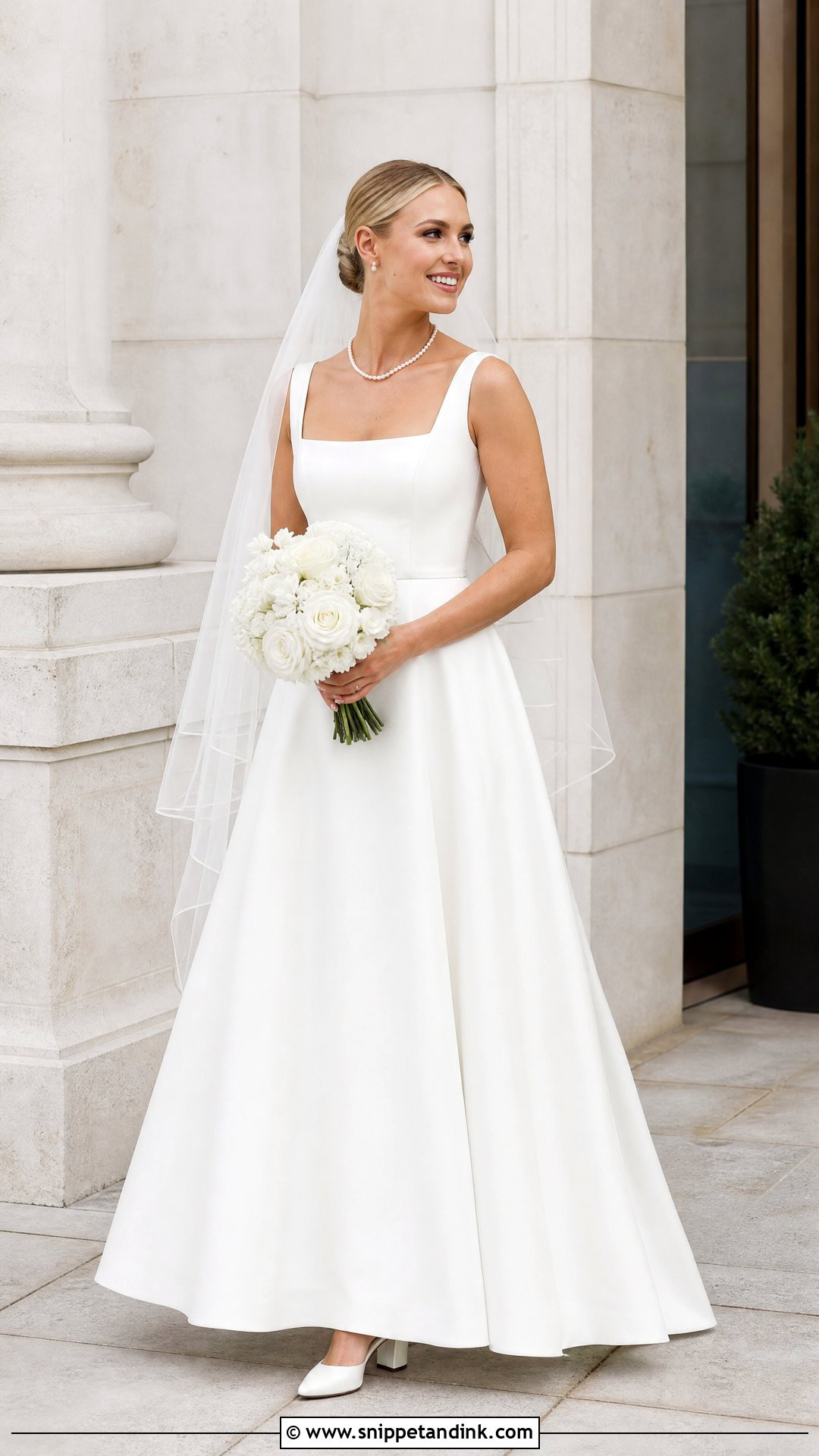
Square necklines are crisp and balanced, and they work on narrow straps, wider shoulder panels, plain or embellished bodices. The weak point is the corners: they gape if the bodice isn’t fitted closely, so I pin them with the bride leaning forward. An A-line skirt reads classic; fitted crepe reads modern. A short pearl necklace can echo the straight neckline, though drop earrings alone often look cleaner. A chapel veil and block-heel pumps keep you comfortable through a long ceremony. A middle-parted bun or softly waved bob suits the geometry. Good internal construction keeps the bodice neat when you move.
11. Sleeveless V-Neck Wedding Gown
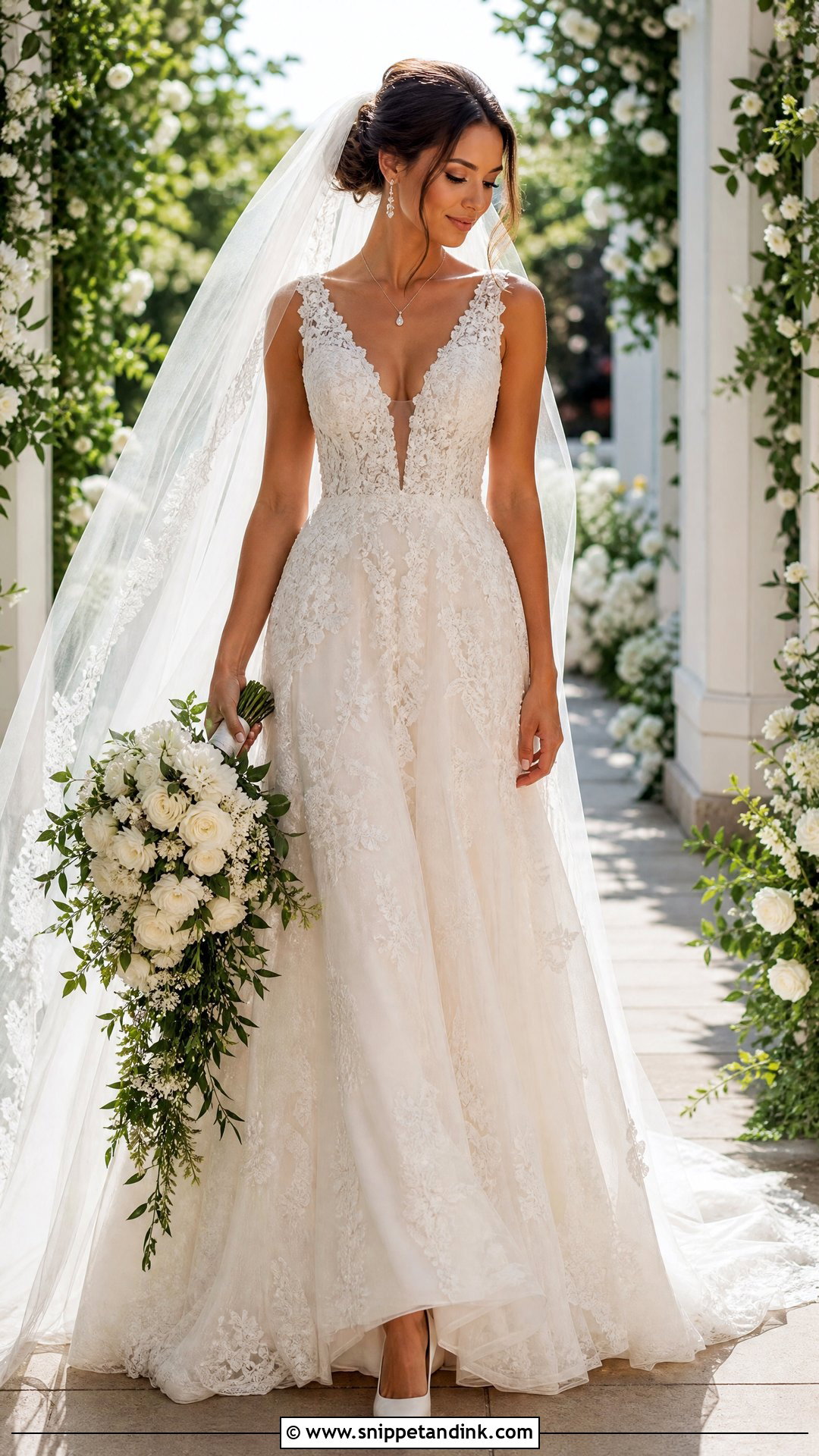
A V-neck lengthens the whole upper body. A moderate V gives flexible coverage, while a plunge looks dramatic and usually needs illusion mesh to stay secure. Lace, satin and crepe each change the mood. If you wear a pendant, keep it delicate so it doesn’t fight the neckline. A soft tulle veil, drop earrings and pointed heels suit it, and an elongated bouquet continues the vertical line. With a plunge, I ask the seamstress to check the straps, bust support, and mesh color, then have the bride bend, sit, hug and dance. Mesh that’s a shade off your skin tone shows clearly in photos.
12. Sleeveless Halter Wedding Gown
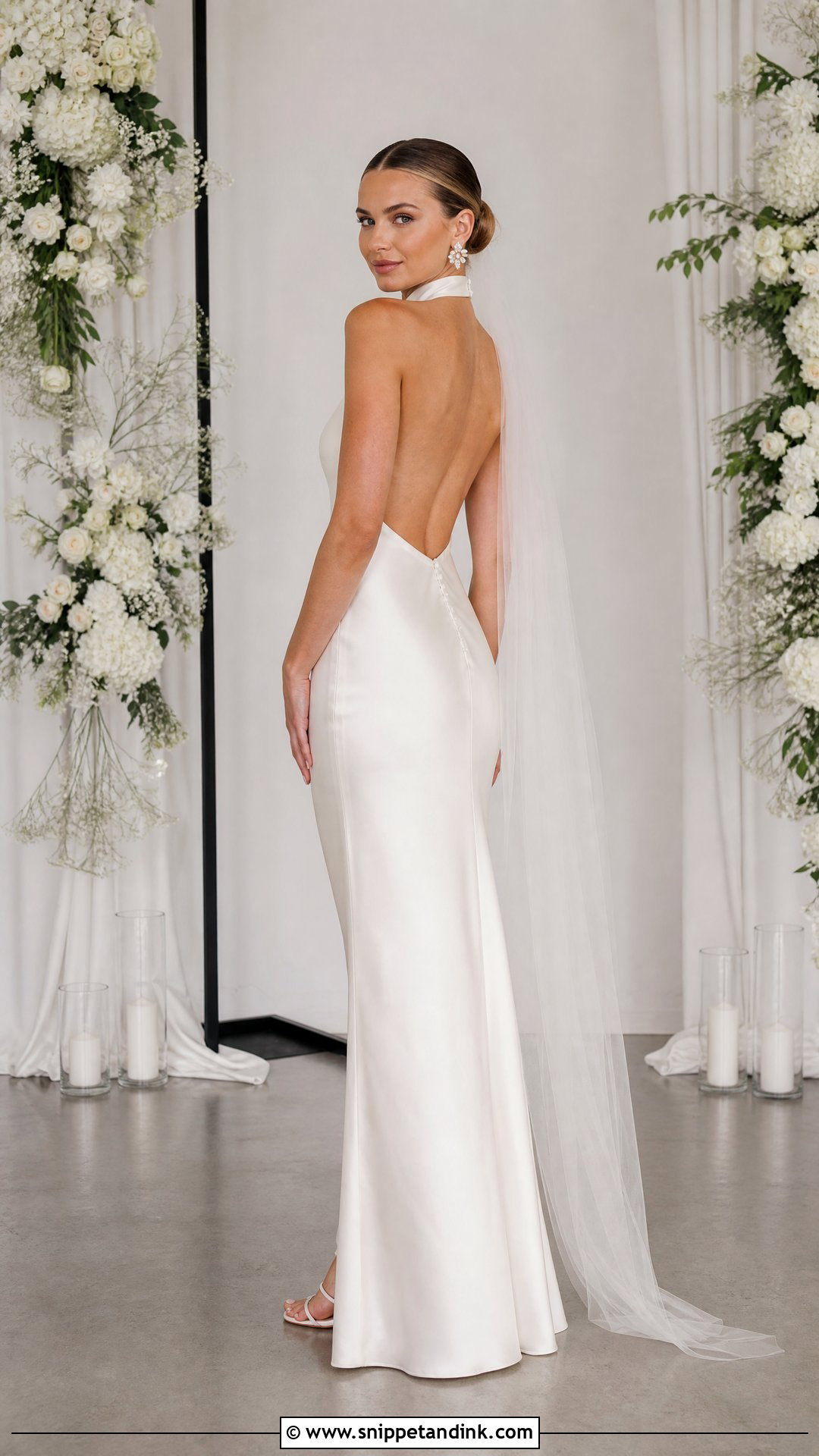
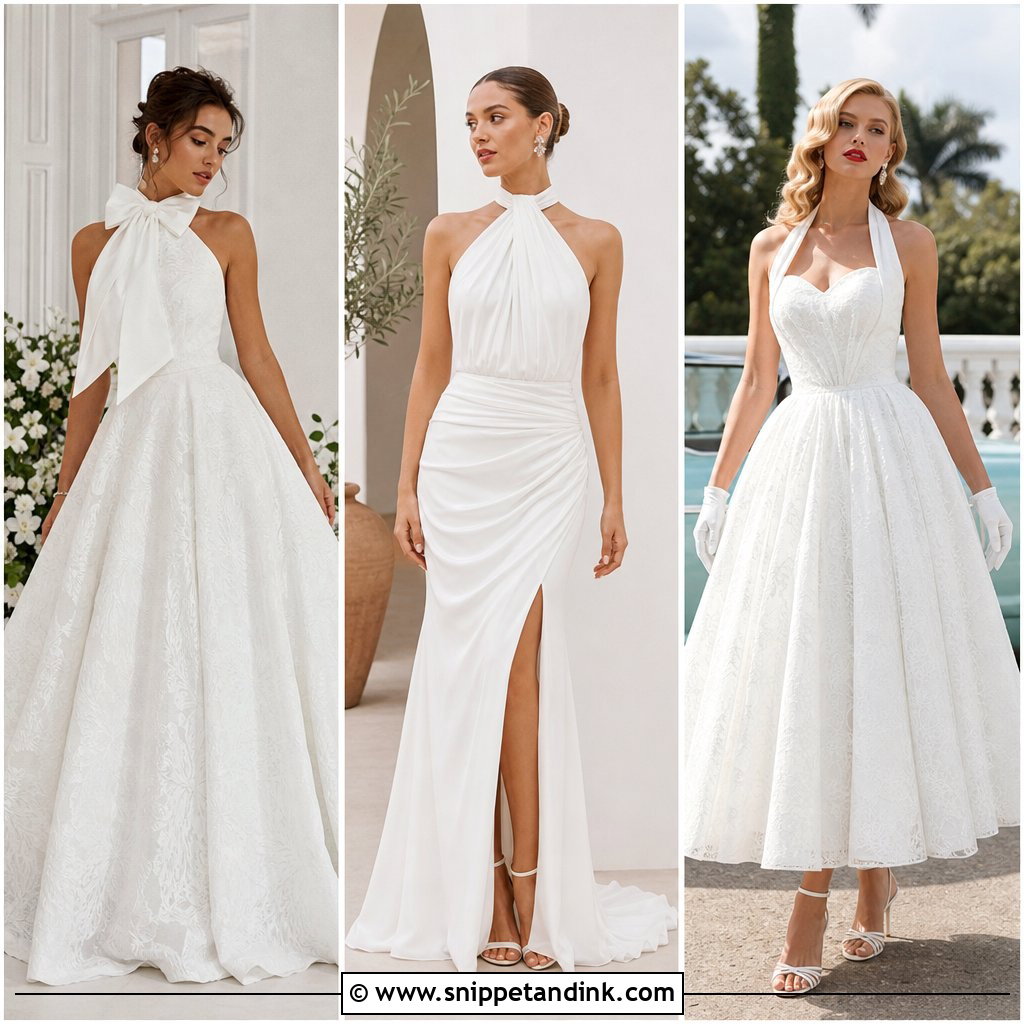
Halters frame the shoulders and give a distinctive neckline with very little decoration. They suit satin columns, flowing chiffon and fitted crepe. The center of the chest is covered, so I skip the necklace and use statement earrings or a decorative comb. A polished bun, a minimal veil and narrow-strap heels keep it balanced, and an open back stops the bodice from feeling heavy. The real check is the neck: if the skirt or train has weight, the halter can drag. Good internal support carries the gown’s weight from the bodice, leaving the halter to simply frame.
13. Sleeveless Illusion-Neck Wedding Gown
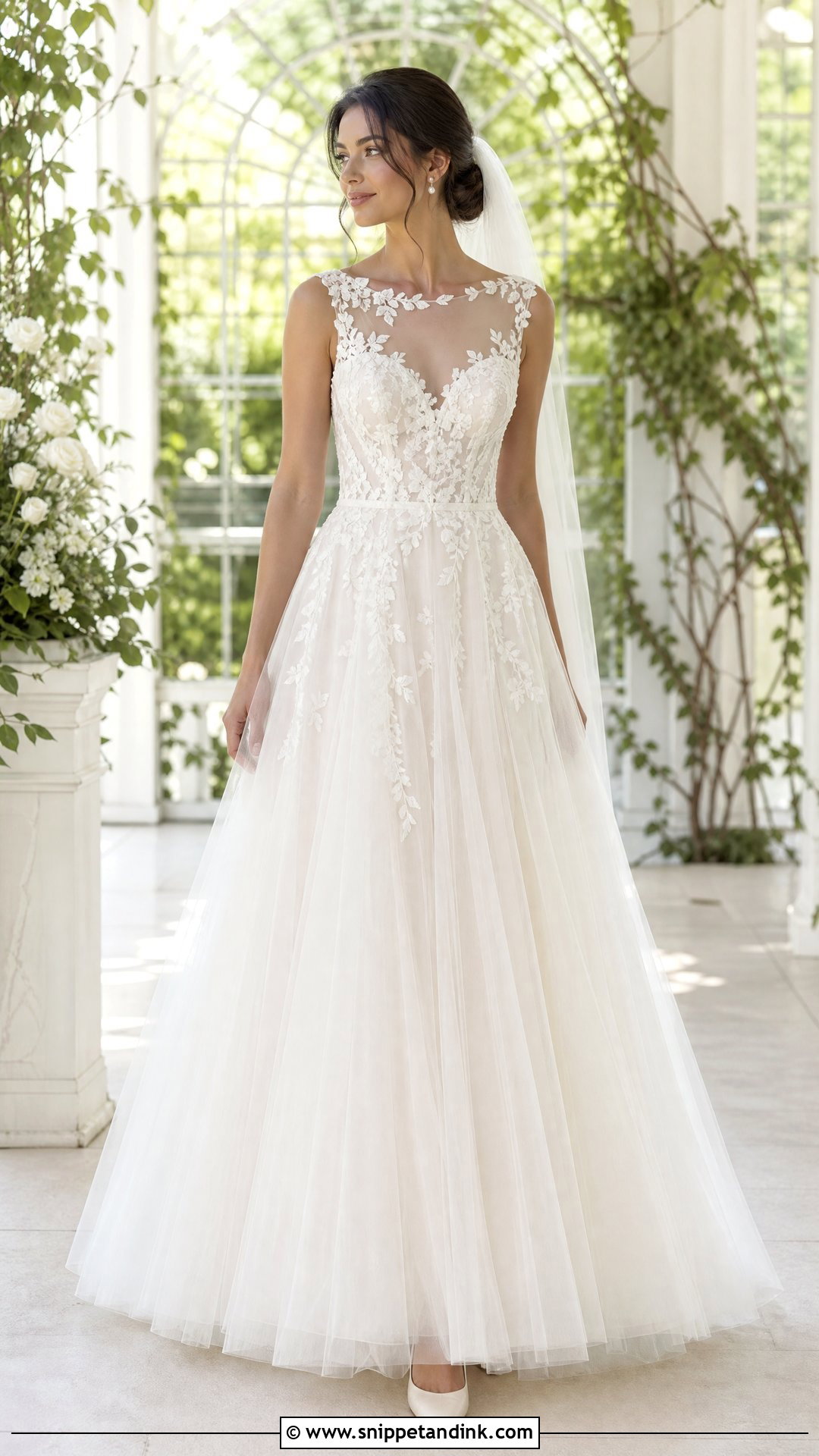
Do you want a delicate neckline with a little more coverage? An illusion neck uses sheer mesh to hold lace, appliqués or beading across the upper chest. It only looks subtle when the mesh matches your skin, and I’ve seen tulle that looks invisible in a shop turn grey or shiny under flash. Pair it with a flowing A-line or a fitted skirt. Pearl studs, a simple veil and classic pumps keep things restrained, and a low bun shows the detail. Look at the mesh edges around neck and armholes; they should lie flat without puckering.
14. Sleeveless Corset Wedding Gown
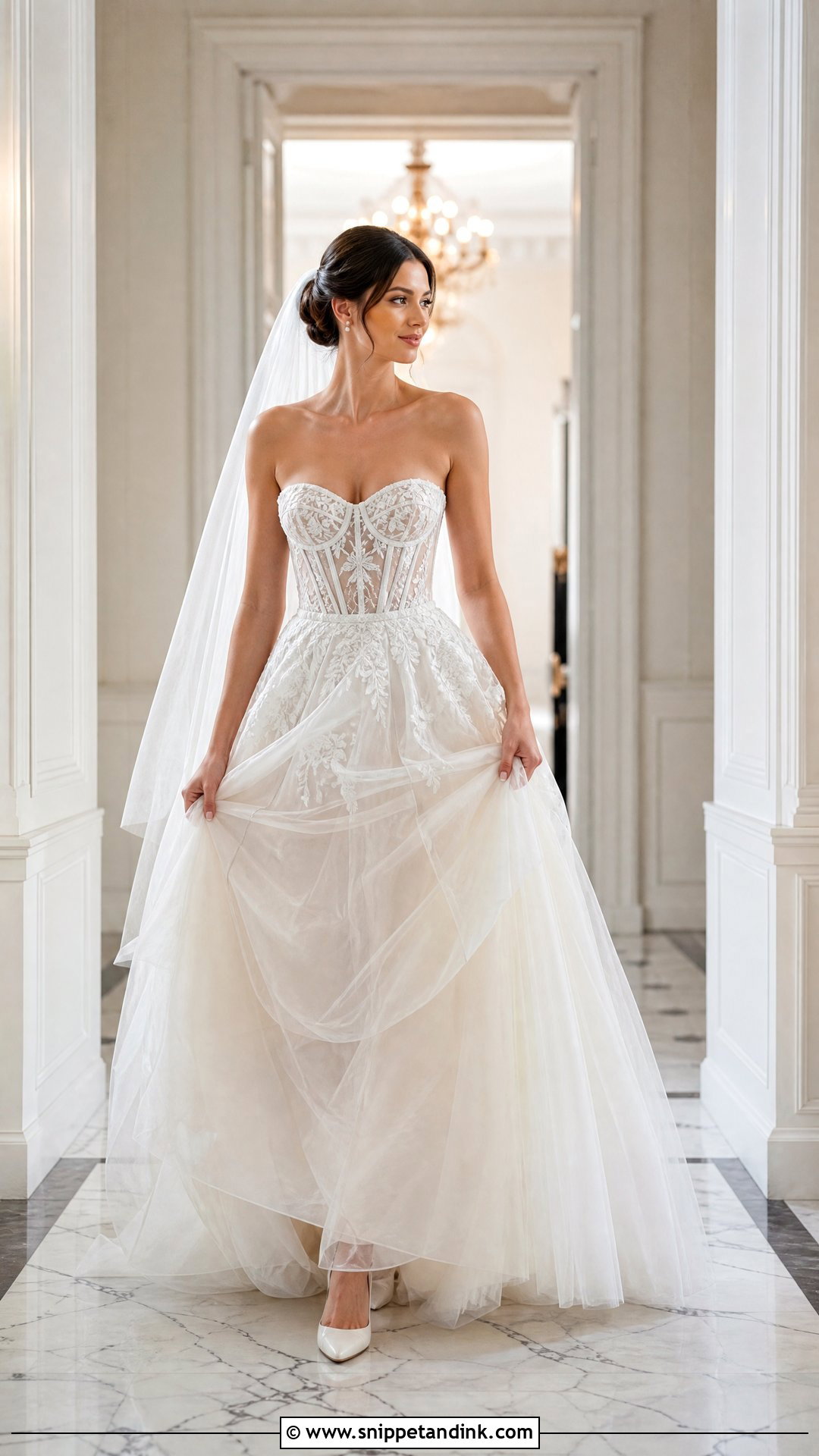
Visible boning gives support and a fashion edge at once. A corset bodice pairs with a satin ball gown, a layered tulle skirt or a sleek fit-and-flare base. Lace over corsetry softens it; semi-sheer panels with appliqués push it bolder. Balance the busy bodice with a plain veil, small earrings and simple closed-toe heels, plus a neat updo. The corset should hold you securely while letting you breathe and eat; if it leaves red marks at a fitting, it’s too tight. Ask about cup placement, lining and closures. A lace-up back allows small adjustments on the day, while covered buttons or a zip look cleaner.


15. Sleeveless Basque-Waist Wedding Gown
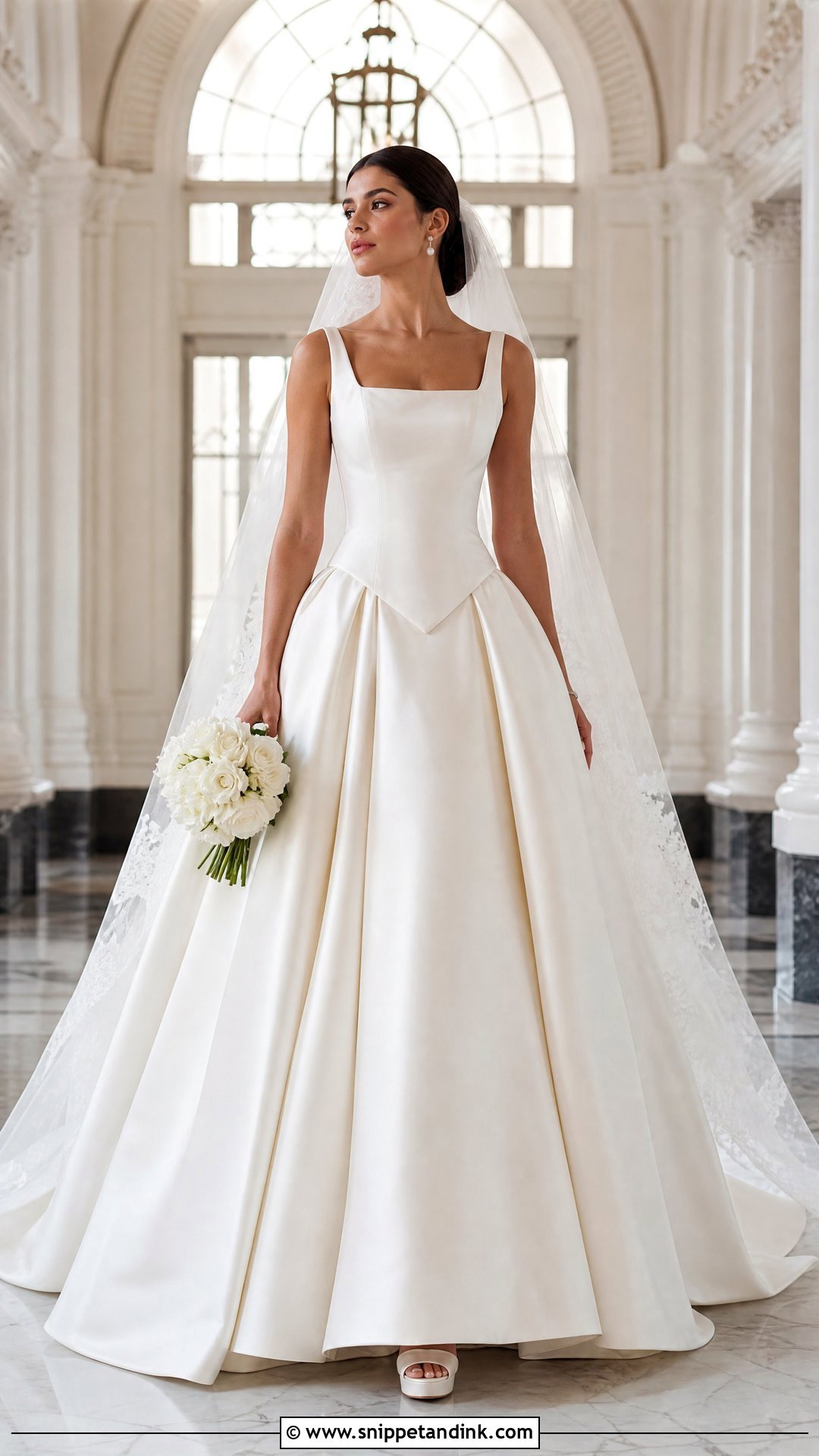
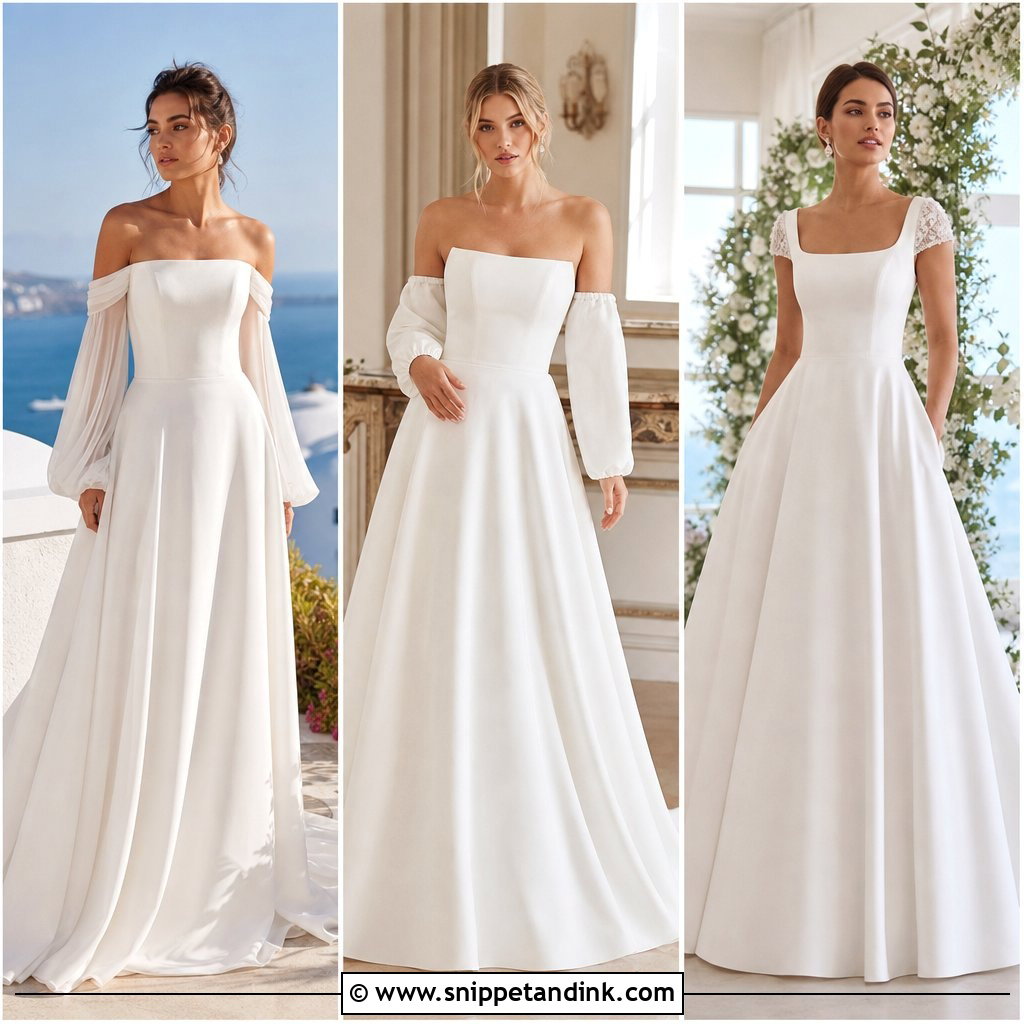
A sleeveless Basque-waist wedding gown dips below the natural waist into a point, lengthening the torso. With a full satin or tulle skirt it’s dramatic. Wide straps and a curved neckline give it a regal feel; narrow straps and a square neckline make it more modern. A cathedral veil, pearl earrings and supportive platform heels suit the volume, with a sleek bun or half-up style. I always check the point standing and seated, since a rigid point presses into the stomach when you sit. It usually needs some customisation to land in the right place for your proportions.
16. Sleeveless Floral Appliqué Wedding Gown
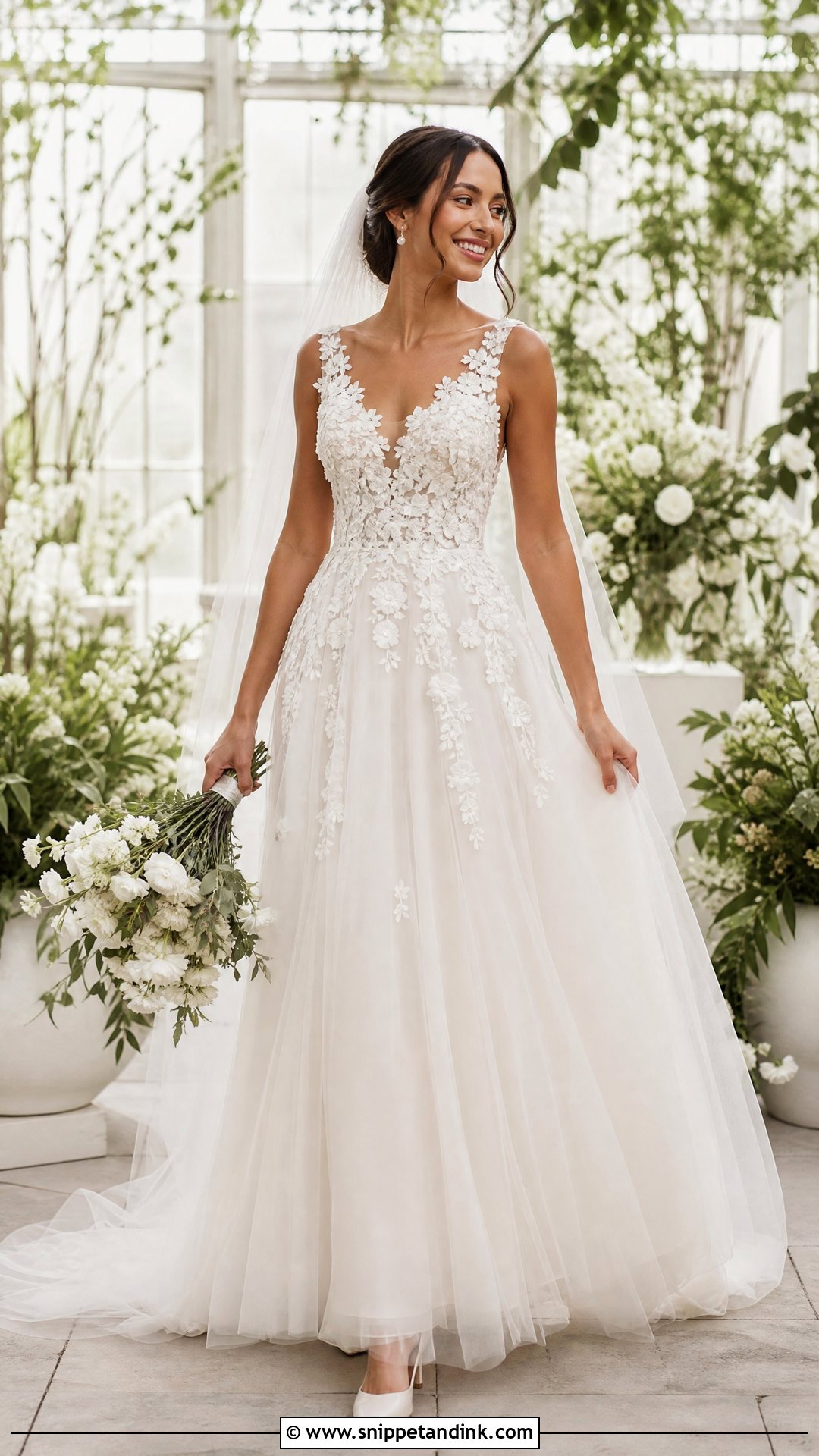
Dimensional flowers bring romance without heavy sparkle. Appliqués can cover the whole gown or sit only on the bodice, waist and skirt. An A-line softens them, while a fitted silhouette makes the texture more dramatic. I’d use a plain veil so the flowers read clearly, then pearl earrings, ivory pumps and a loose bouquet that complements rather than copies the appliqués. Keep hair accessories small if flowers sit near the neckline. At fittings, inspect appliqués at the armholes and seams. Loose petals catch on a veil repeatedly, and that tugging adds up over a long day.
17. Sleeveless Beaded Wedding Gown
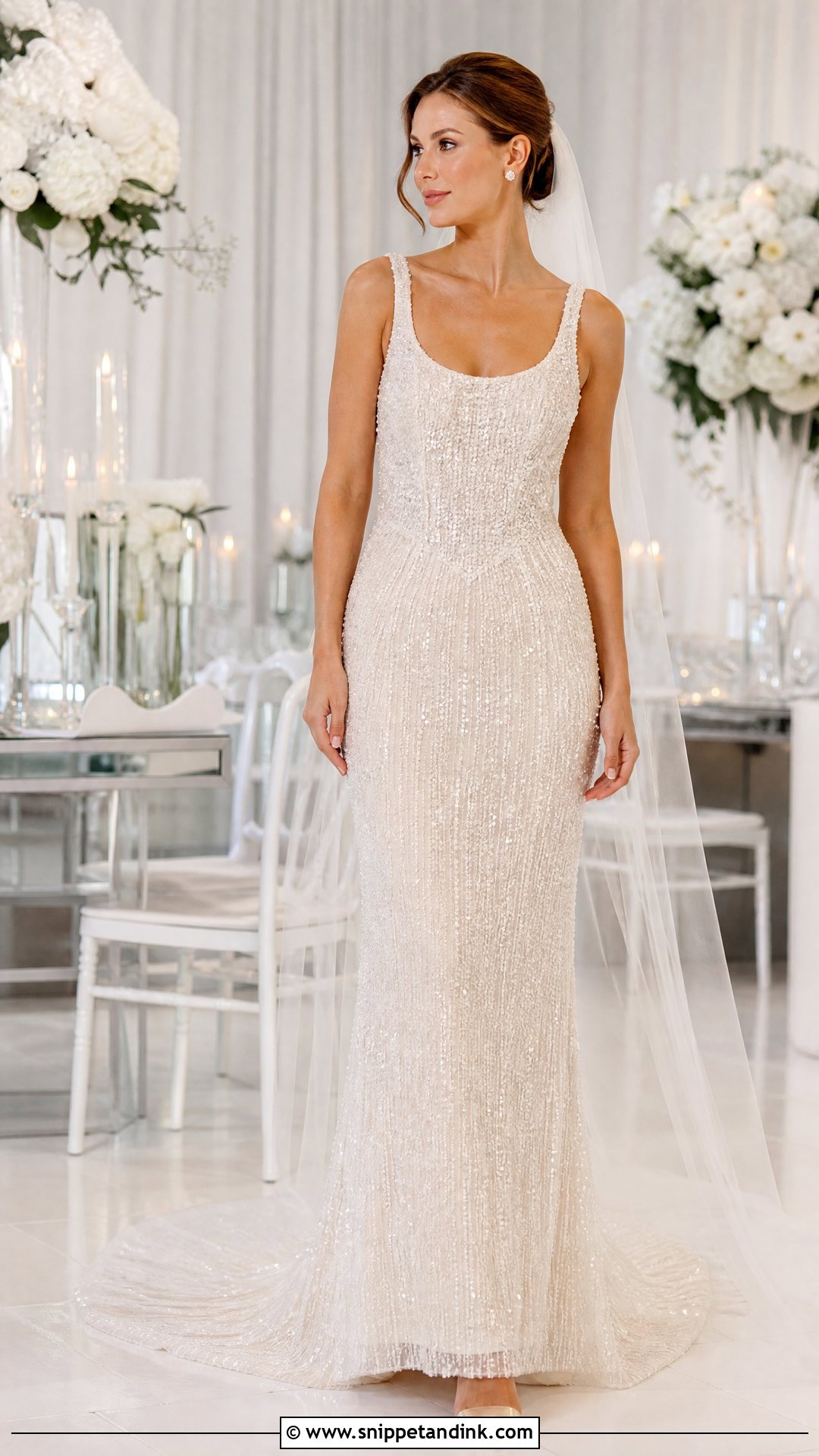
Beadwork is heavy. A fully beaded sleeveless gown can weigh far more than brides expect, and that weight hangs from the straps, so I check strap width and internal support carefully. Allover beading gives vintage glamour; a beaded bodice with a plain skirt is lighter. A column looks sleek, and an A-line gives more movement. A simple tulle veil, understated studs and metallic or ivory heels are enough, since the gown already reflects plenty of light. A polished updo finishes it. Run a hand along the inner arm edge, because beads and sequins there can rub and irritate during dancing.
18. Sleeveless Open-Back Wedding Gown
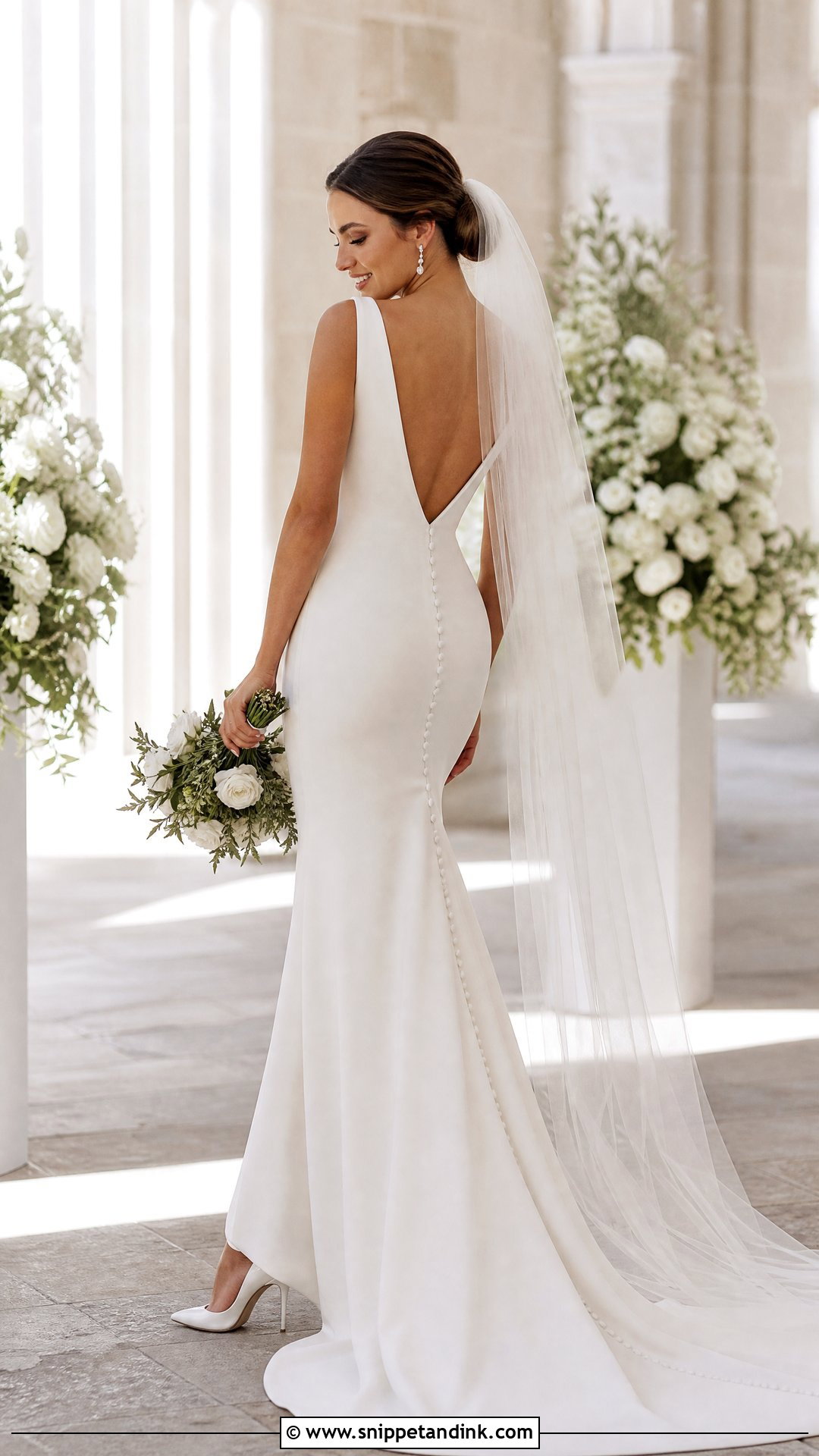
The back is where an otherwise simple gown gets remembered. Crepe sheaths, lace A-lines and satin fit-and-flares all take an open back well. A low scoop is soft, a sharp V dramatic, and illusion mesh adds support if you need it. Wear your hair up or swept to the side so the back is seen. A sheer veil, drop earrings and elegant pumps complete the look; back jewelry is optional and should stay minimal near buttons or lace. Standard bras will show, so bring your undergarment plan to every fitting. Sewn-in cups or internal corsetry hold you without breaking the line.
19. Sleeveless Wedding Gown With Overskirt
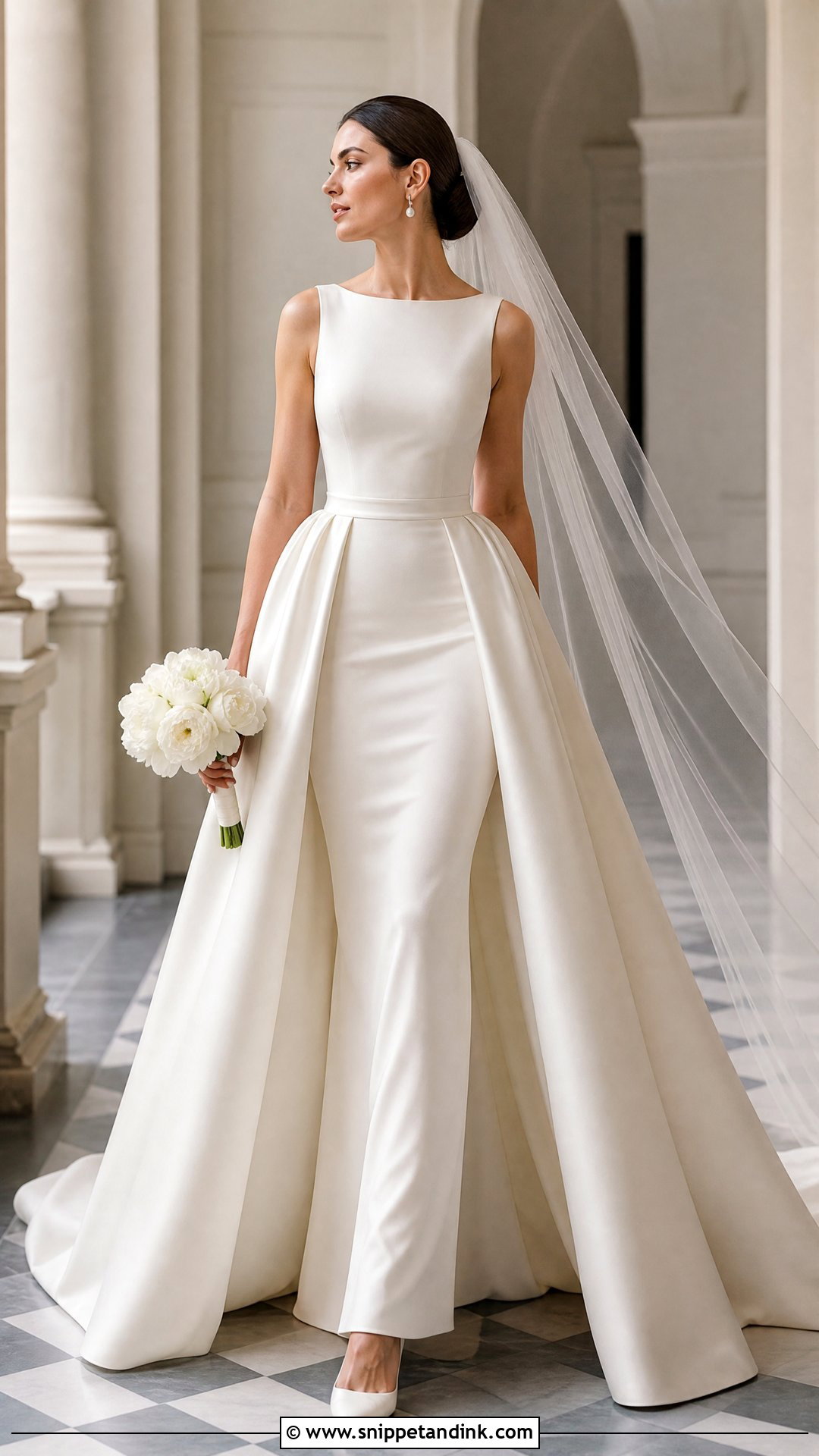
A detachable overskirt gives you ball-gown volume for the vows and a fitted dress for the party. Satin and mikado overskirts are architectural; tulle is lighter and softer. I’d pair the ceremony look with a long veil, pearl earrings and sturdy heels that work in both versions, plus a smooth bun. The attachment points must lie flat and disappear once the skirt is off. Rehearse the removal with whoever will help you, and check both hemlines with the same shoes. If the base dress was hemmed under the overskirt’s weight, it can end up dragging once the top layer comes off.
20. Sleeveless Tea-Length Wedding Gown
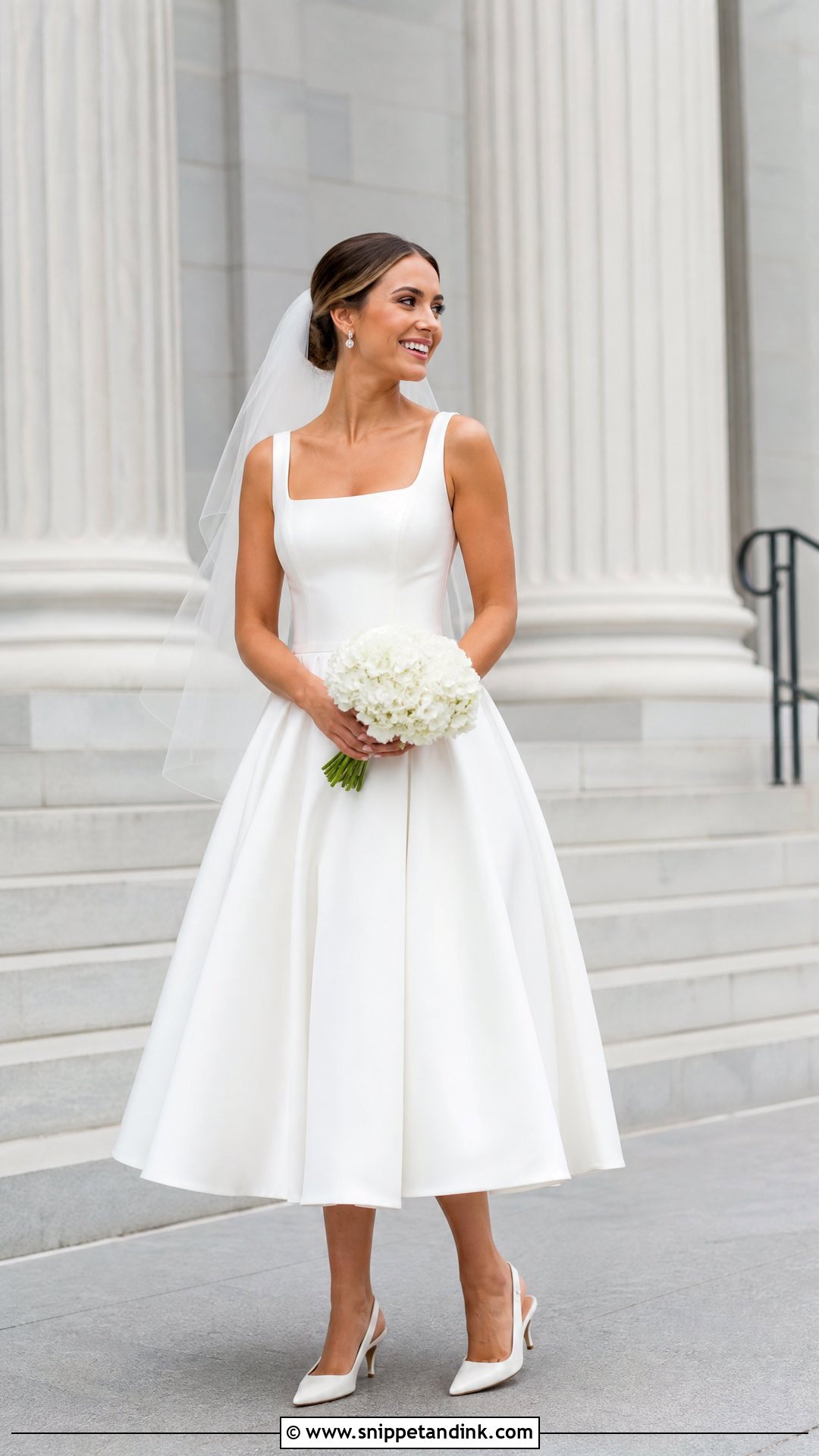
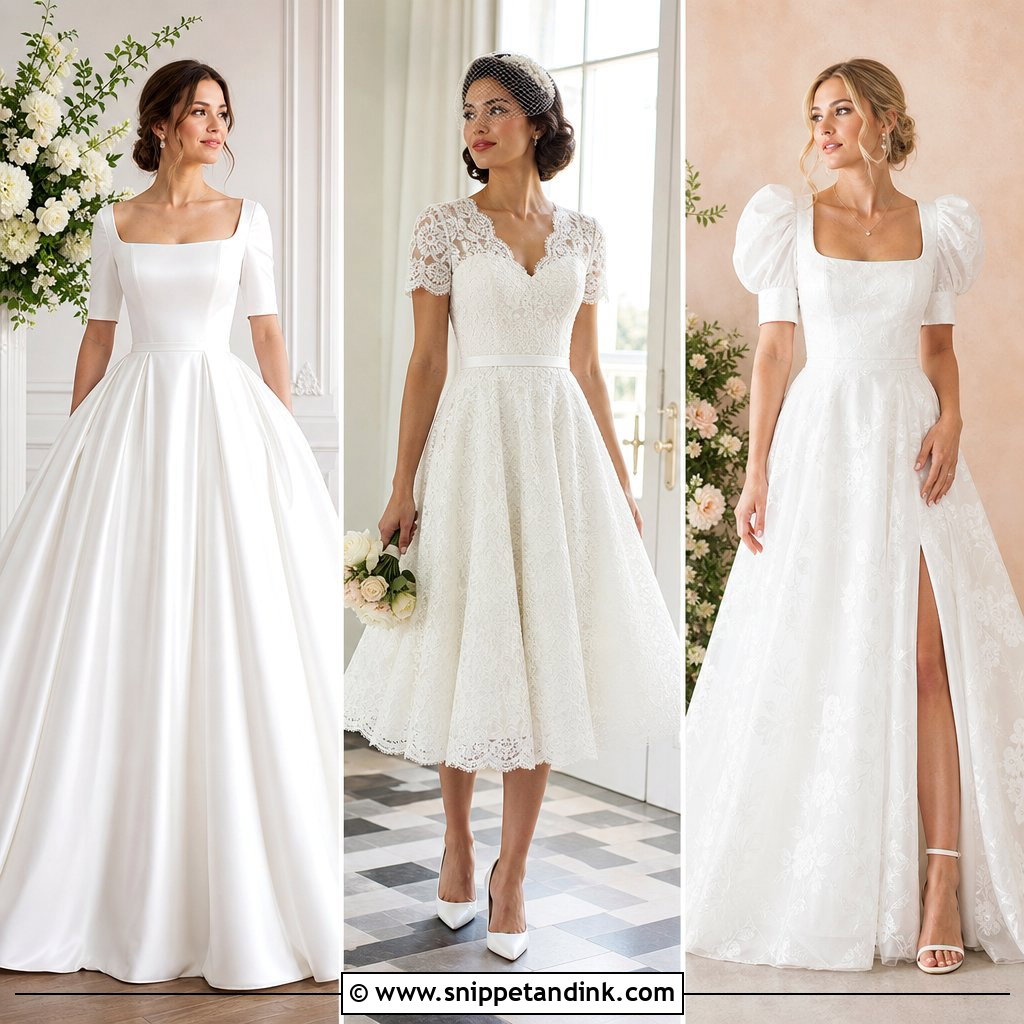
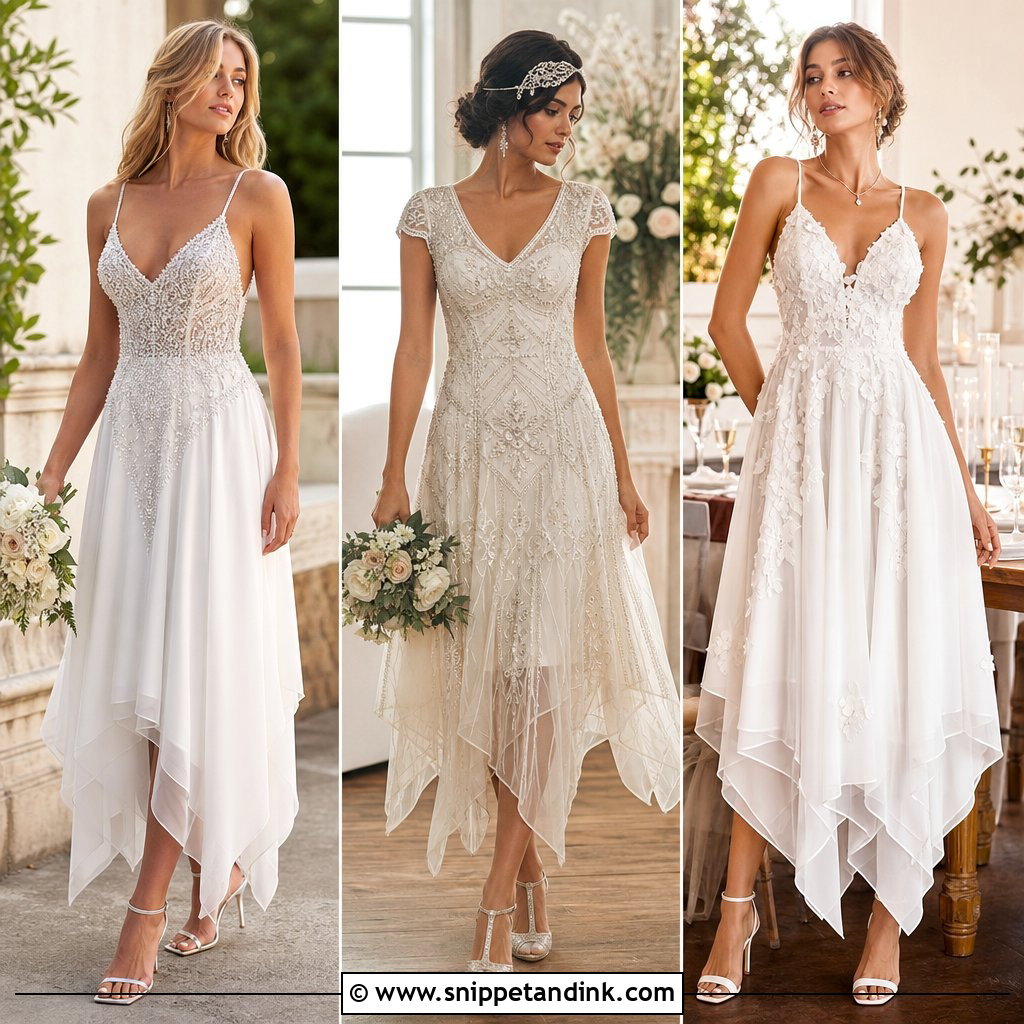
Tea length is cheerful and practical for a courthouse ceremony, daytime wedding or reception change. The hem falls between knee and ankle, so the shoes become part of the outfit. A fitted satin bodice with a full skirt leans vintage, and plain crepe leans modern. Pointed pumps, slingbacks or embellished flats all work. A short veil, pearl earrings and a compact bouquet keep the proportions even. The hem is on show, so it must be level all the way round. I mark it with the bride in her final shoes, and add a structured petticoat if she wants more volume.
If Your Ceremony Venue Expects Covered Shoulders
Some churches, temples and other places of worship ask brides and guests to cover their shoulders, and rules vary from one building to the next even within the same faith. Ask the officiant or venue coordinator before you buy, not after. A sleeveless gown can still work; you simply need a planned ceremony layer.
- A lace or tulle bolero, cut to finish just above the waist, keeps the bodice shape visible and comes off easily for the reception.
- Detachable sleeves that clip or button into the armhole can be made from the gown’s own fabric by a good seamstress.
- A long sheer cape veil covers shoulders and arms while reading as one piece with the gown.
- A fine silk or chiffon wrap is the simplest choice, though it needs pinning so it doesn’t slide off during the service.
Whatever you choose, match the ivory. A cover-up in a whiter shade makes the gown look yellow beside it. Take the layer to your final fitting so the seamstress can check it lies smoothly over beading or lace, and decide who will take it from you when you change.
Will Your Shoulders Still Feel Right at the Last Dance?
A sleeveless gown should feel secure and comfortable from the first portrait to the end of the night. The twenty looks above run from minimalist to romantic, glamorous to traditional. Start with a silhouette that suits your venue and how much you want to move, then compare necklines, fabrics, support and back details. Bring ceremony shoes and the right undergarments to every fitting. Let accessories support the gown rather than compete with it. Chiffon, satin, lace or crepe, careful tailoring is what will make it feel like yours.
You'll Like These Ideas:




Leave a Reply