
Tulle gives a formal dress movement and volume without much weight, and that’s why I keep reaching for it for wedding guests, bridesmaids, mothers and the occasional bride. A layered ball gown makes a grand entrance; a fitted dress with a light tulle overlay looks cleaner and moves more easily through a crowded reception. The extras matter more than people think. Fine jewelry keeps an embellished dress in proportion, and shoes you can stand in make a floor-length skirt manageable. Below are twenty tulle gowns in neutrals, jewel tones and pastels, for weddings, proms and galas, each with notes on fit, styling and the small things that go wrong.
Why Three Layers of Pink Turn Raspberry
Colored tulle doesn’t behave like solid fabric. Each layer is sheer, so the color you see is the sum of every layer stacked over the lining. One layer of pink over white looks pale; four layers of the same pink look much deeper. That’s why a swatch card rarely matches the finished gown.
When I help someone choose a colored tulle gown, I check three things in person:
- The lining color. A nude lining warms the tulle, a white one cools it, and a matching one makes the color richest.
- The skirt in motion. Where the layers separate as you walk, the color lightens, so a deep shade can look streaky at the hem.
- The dress outdoors and under warm indoor light. Blues and lavenders shift the most between the two.
If you’re ordering online, ask for the exact shade on the actual fabric, not on a flat color chip.
1. Black Strapless Tulle Gown
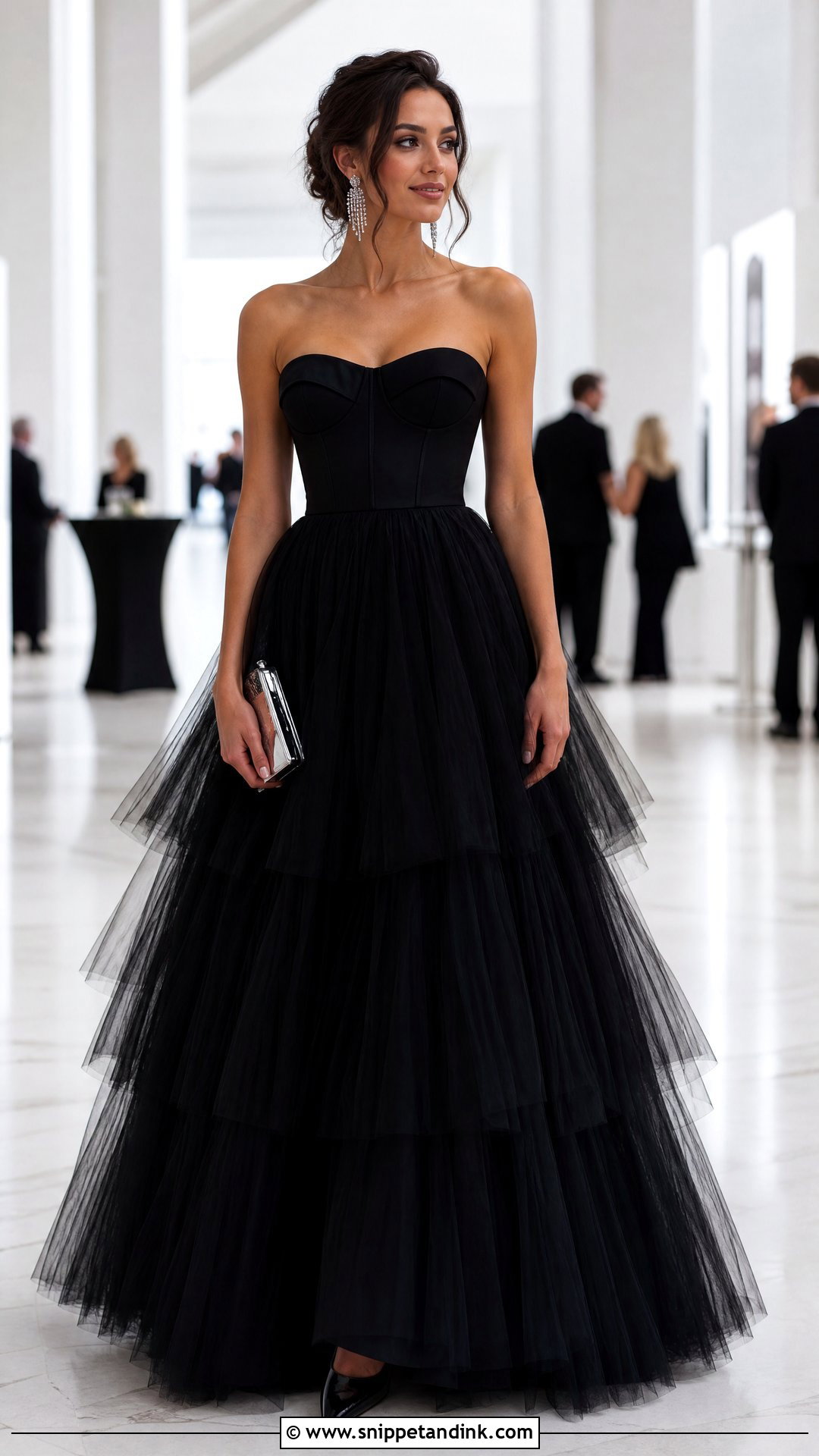
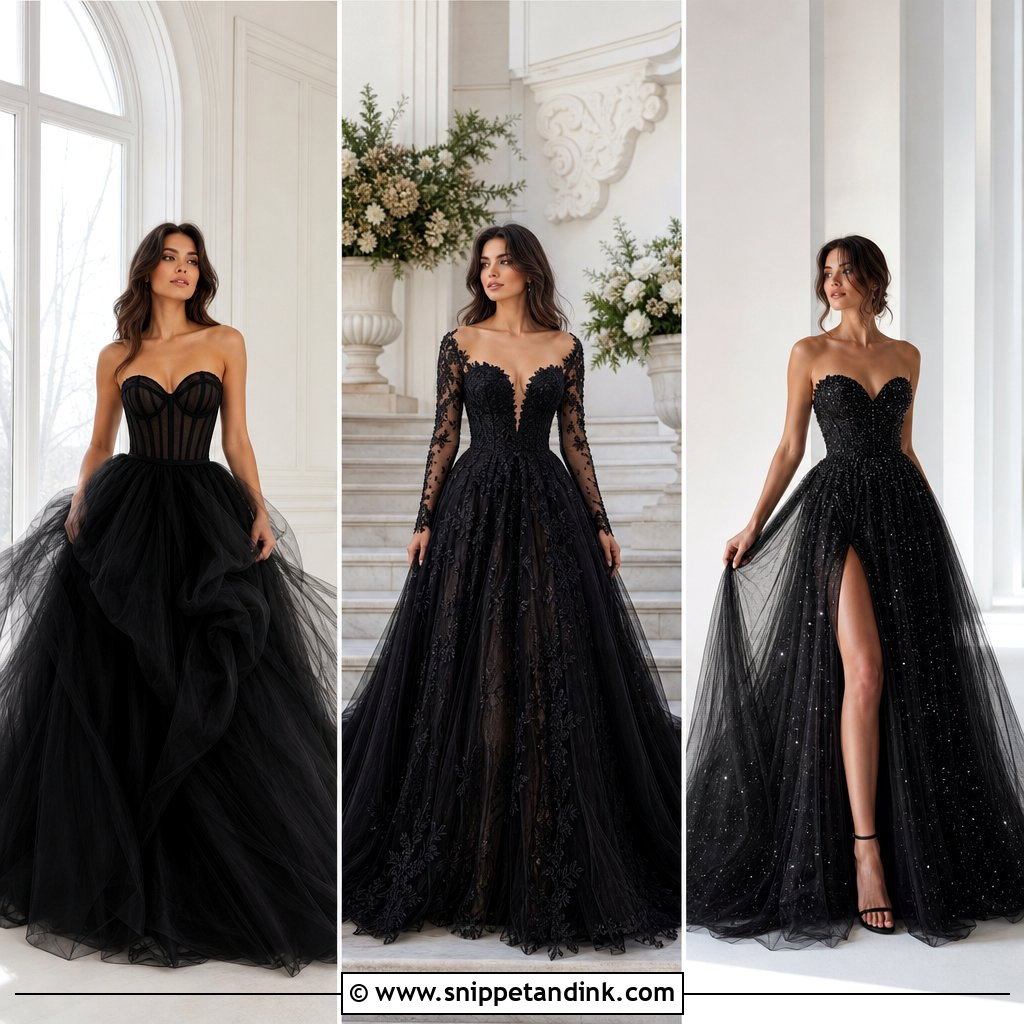
Black tulle has a softness that black crepe doesn’t, so it reads dramatic without looking severe. The bodice needs real internal support; a strapless top that you keep hitching up spoils the whole effect. An A-line or full skirt in several layers keeps the color from looking heavy, because light passes through the top layers. Pointed black heels, crystal drops and a small metallic clutch are all I’d add, plus a neat updo. A sheer black wrap works for a cool evening. It’s the safest choice for black tie.
2. Blush Off-Shoulder Tulle Gown
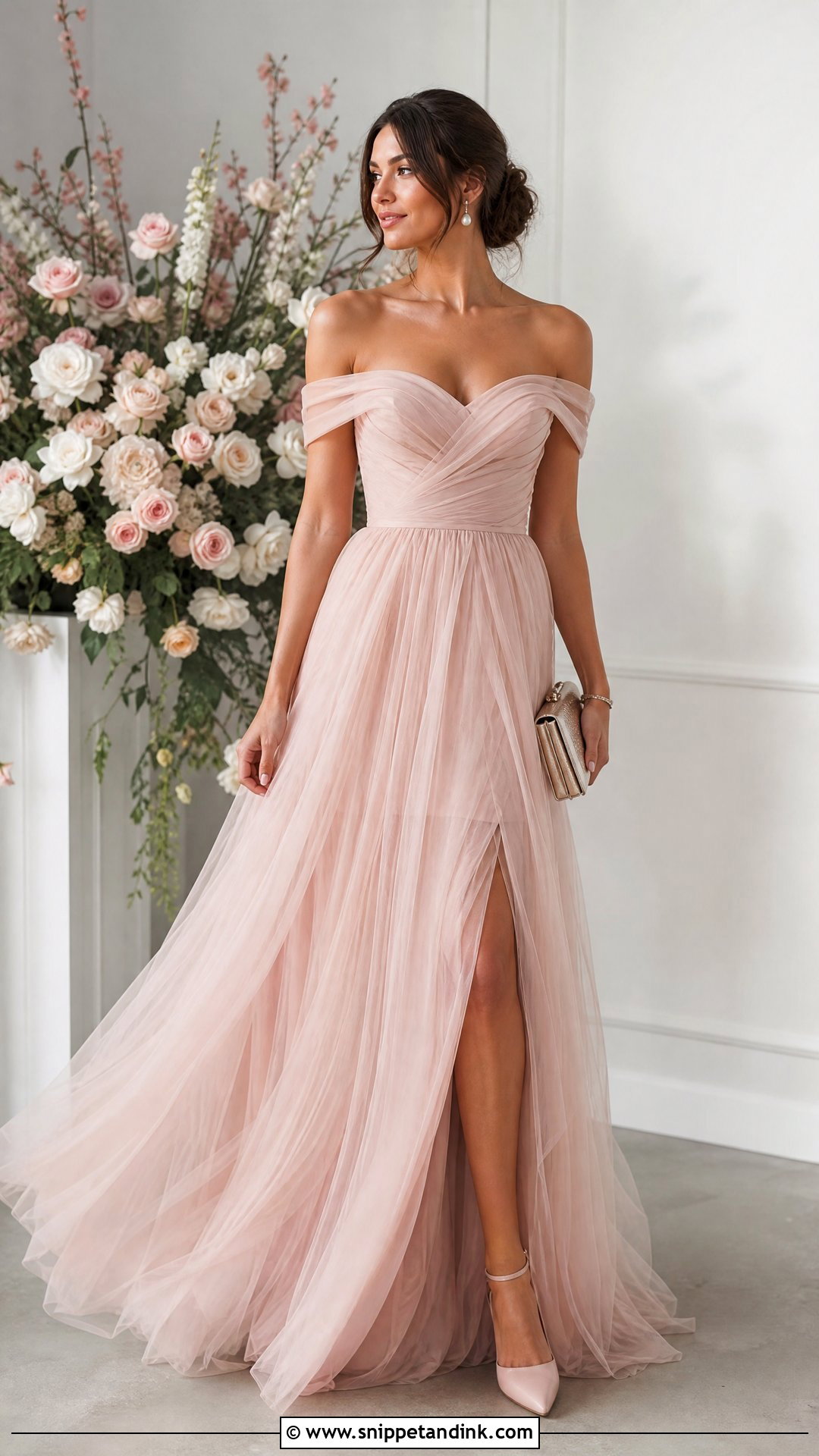
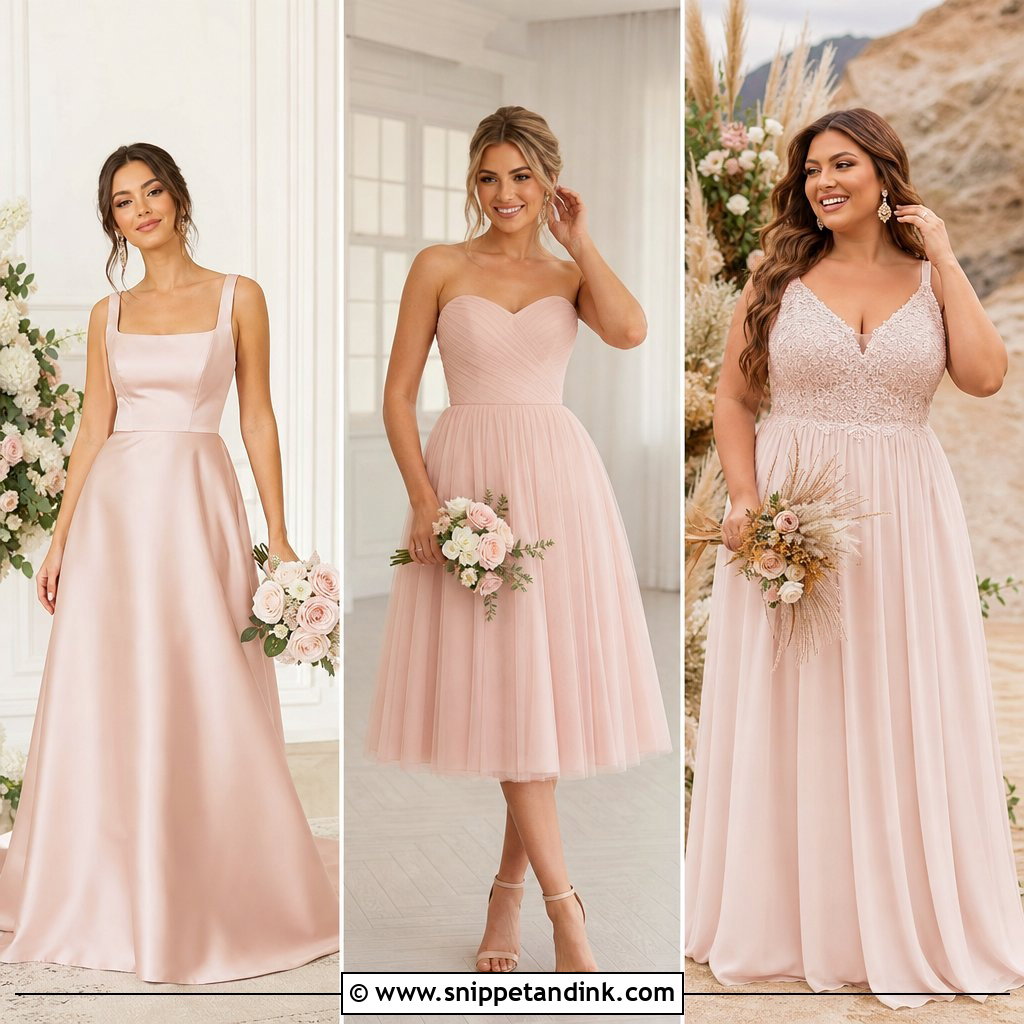
Blush with an off-shoulder neckline is soft without tipping into sweet, as long as the waist is fitted. Check the shoulder band: it must let you lift your arms, or you’ll spend the night tugging it back into place. A word of caution I give every guest: pale blush photographs very close to ivory in some light, so check the dress code, and if the bride is wearing blush, choose something else. Nude heels, pearls, a champagne clutch and a low bun suit it for prom or portraits.
3. Navy One-Shoulder Tulle Gown
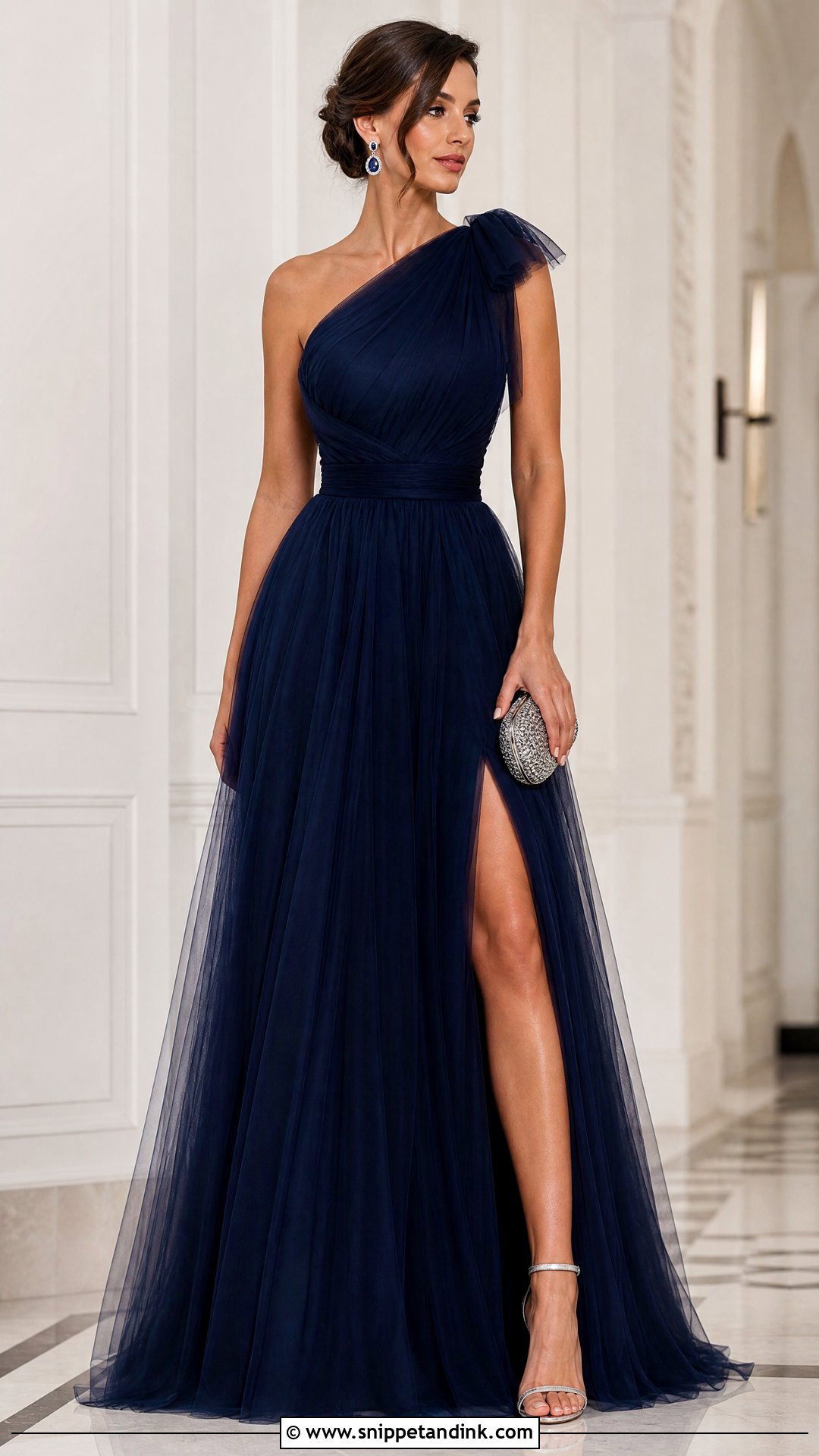
Navy is the color I suggest when someone is tired of black. It’s just as formal, a little warmer, and it works in every season. A one-shoulder neckline adds interest, and a defined waist with controlled skirt volume keeps the line clean. Silver heels and a crystal clutch lift the dark fabric. If the shoulder is pleated or beaded, skip the necklace. Gray eye makeup and a berry-toned lip finish it, with a side-swept updo that keeps the bare shoulder visible.
4. Emerald Corset Tulle Gown
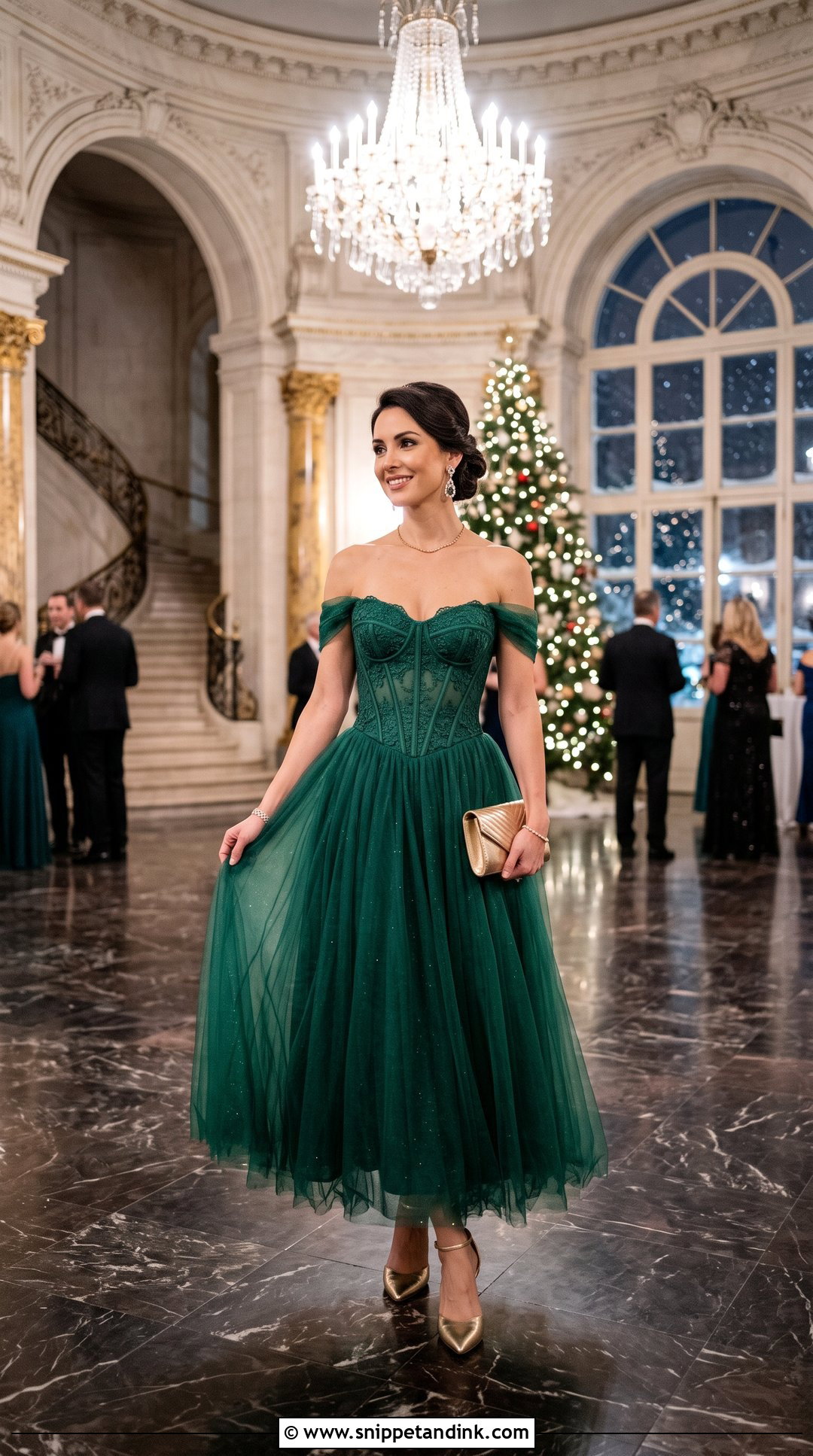
Emerald is saturated enough that a corset bodice and the color together already make the statement. Don’t add much else. Look for boning, a secure back closure and enough lining to cover you, since dark tulle can still show skin under strong light. A gathered skirt balances the fitted top. Gold ankle-strap heels and small emerald or crystal earrings are enough. I’d wear warm neutral makeup with a deep rose lip. It looks best at winter events under warm lighting.
5. Burgundy Long-Sleeve Tulle Gown
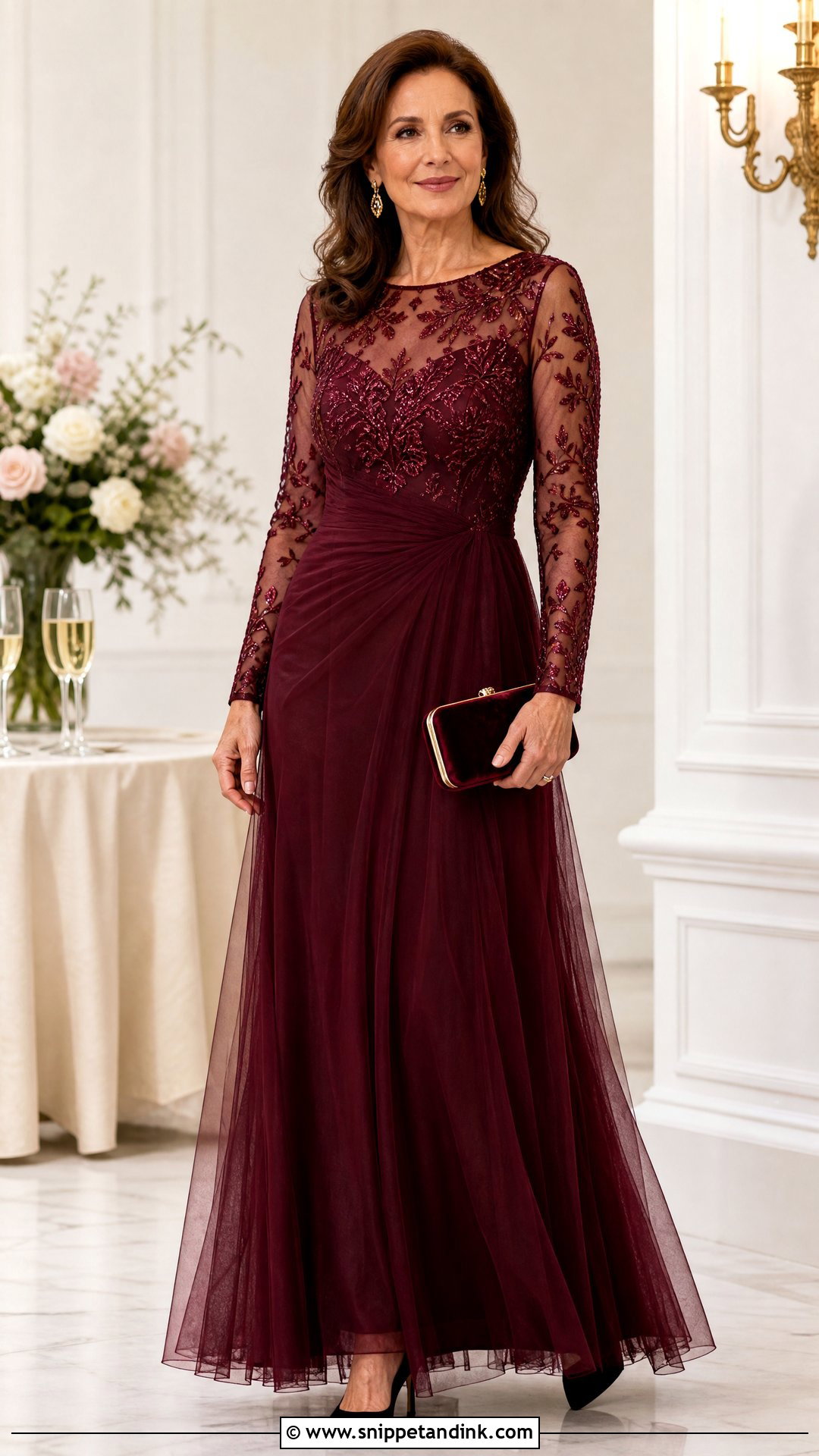
A burgundy long-sleeve tulle gown is the one I suggest to guests who want coverage and still want to feel dressed up. Sheer sleeves with embroidered cuffs add detail without bulk. Watch the sleeve length: tulle sleeves should end at the wrist bone, because longer ones bunch and catch on everything at dinner. Black pointed heels, a velvet clutch and small gold earrings suit the depth of the color. It’s very good for mothers of the bride at autumn and winter weddings.
6. Lavender Tiered Tulle Gown
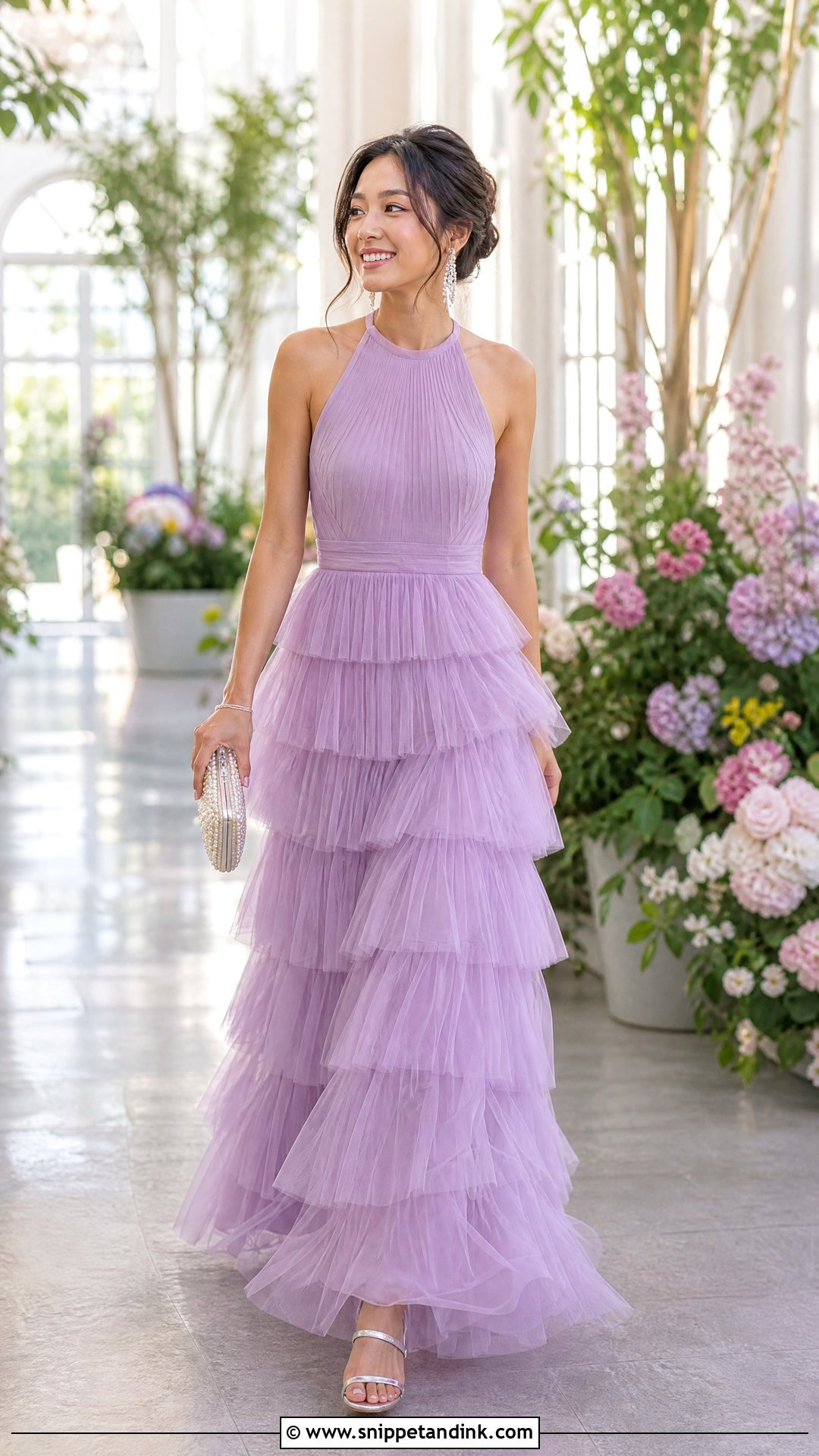
Tiers give a lavender tulle gown a light, playful movement. The best ones are graduated so each tier falls cleanly, instead of adding width at the waist. Proportion matters here: petite wearers usually look better in narrower tiers with a defined waist, while taller wearers can carry wide ones. A fitted sleeveless or halter top, silver sandals and small crystal earrings keep it fresh. Keep makeup light with luminous skin and a natural pink lip.
7. Light Blue Beaded Tulle Gown
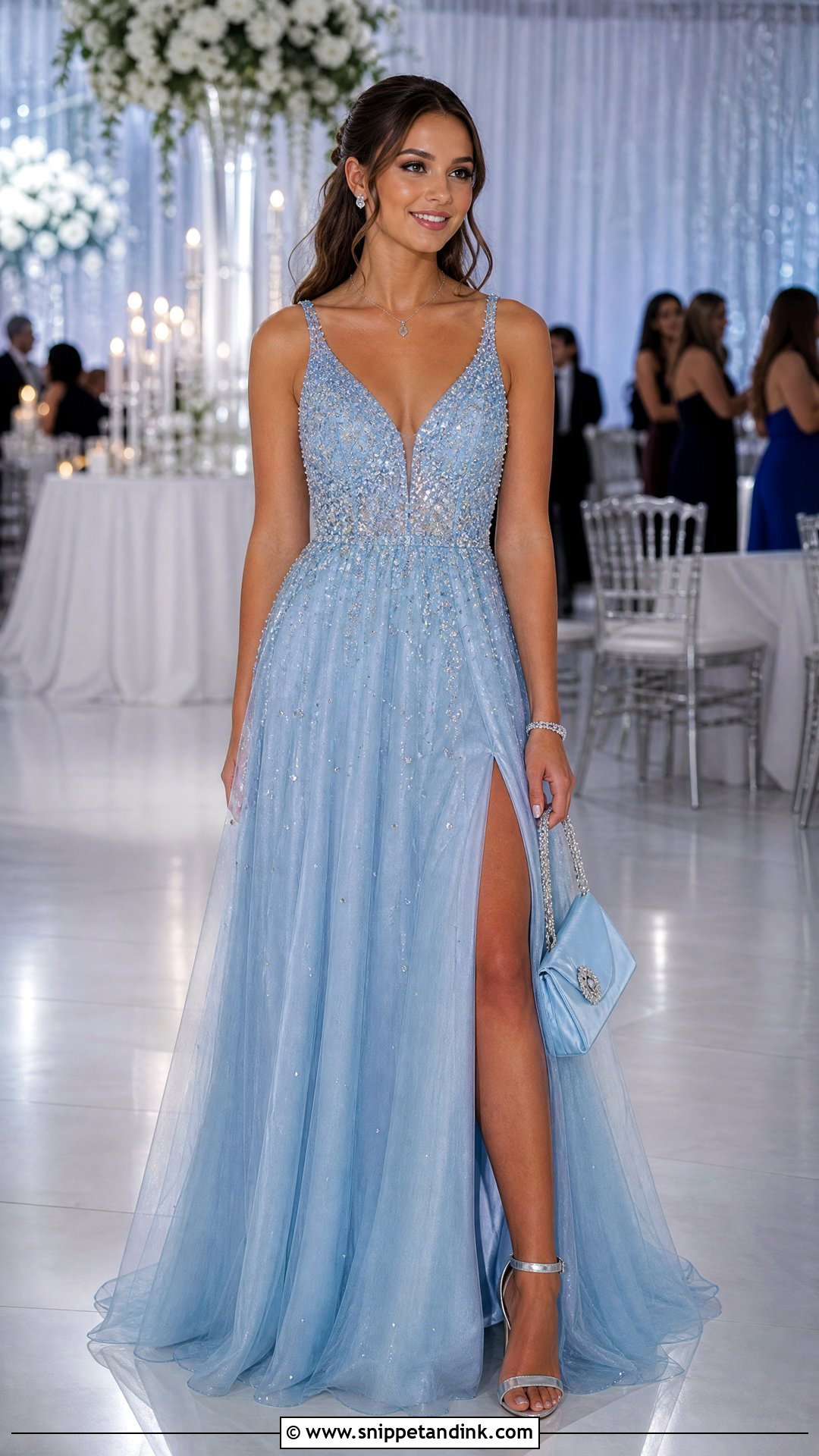
Beading on pale blue tulle catches light in a soft way. The placement I like best is dense around the bodice and scattered lighter toward the skirt, so the sparkle sits near the face. Check the lining length before you buy. On cheaper gowns it often stops short, and you see a hard line through the tulle when you walk. Silver heels, crystal studs and a small satin bag work well, with a half-up style for a V or scoop neck. Skip glitter makeup; the dress already shines.
8. Red Tulle Gown With Slit
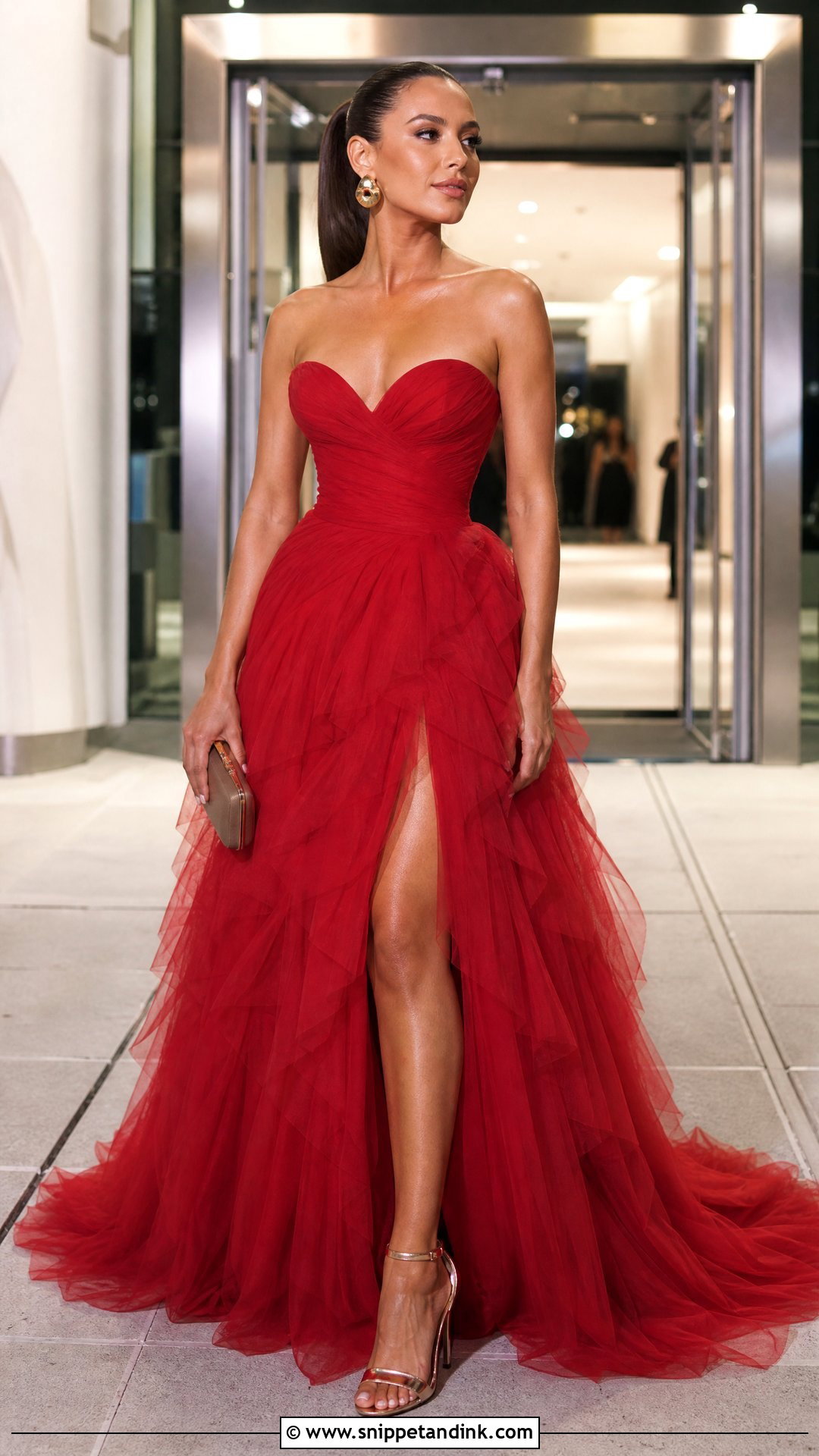
A slit lets you walk and dance in a full tulle skirt, which is exactly what red needs to feel confident rather than costume-like. Start the slit around the knee or lower thigh. Higher slits on tulle tend to flap open because the fabric is so light. Simple metallic sandals, sculptural gold earrings and a compact clutch are enough, with a sleek ponytail. Classic red lip or soft nude both work. One caution: at many Chinese and South Asian weddings red is the bride’s color, so ask before wearing it as a guest.
9. Champagne Sequin Tulle Gown
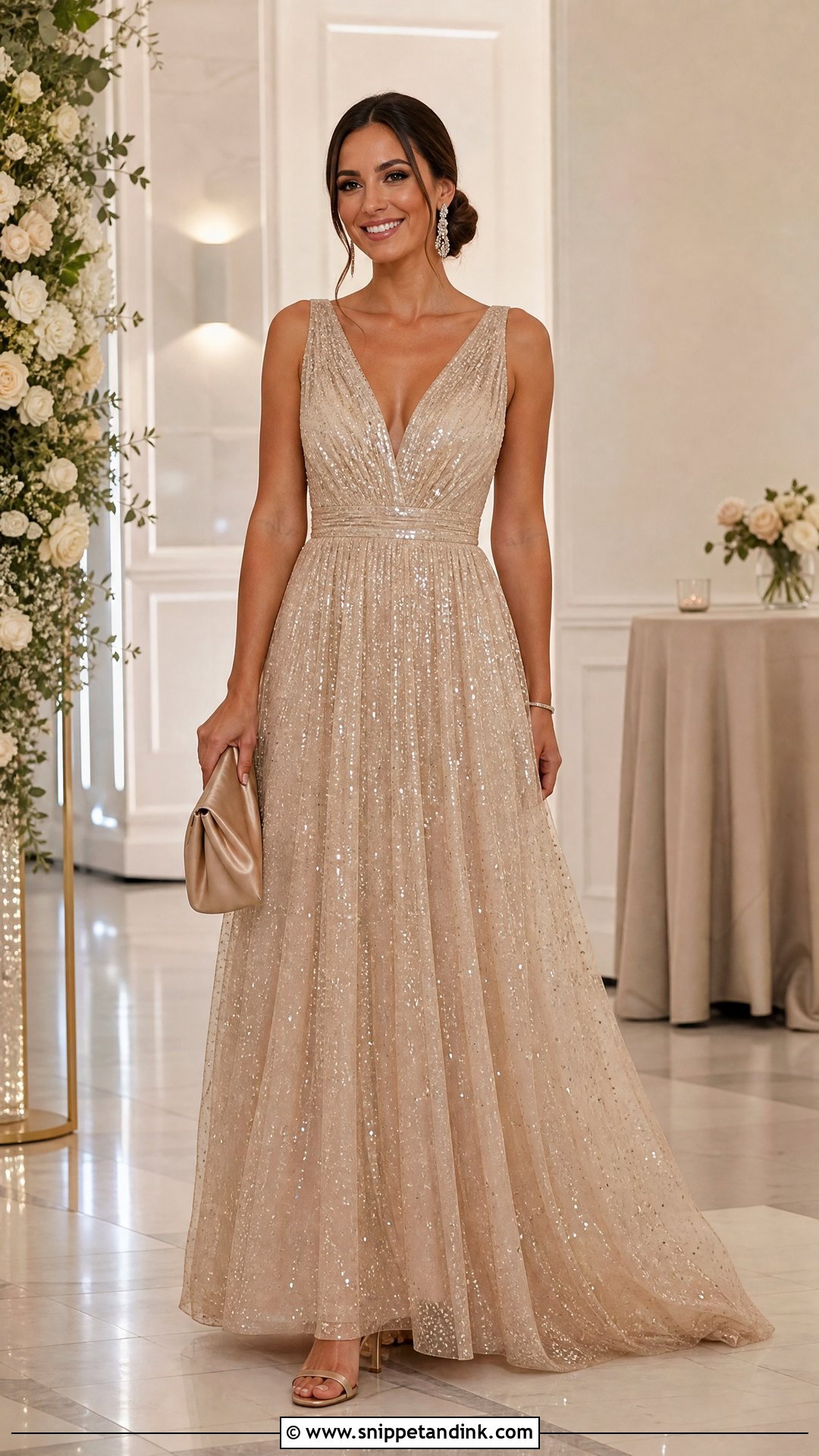
Scattered sequins on champagne tulle give a quiet glow; dense sequins look heavier and harder. The lining shade decides how warm the dress reads. A warm neutral lining makes the layers look smooth. A V-neck and a defined waist look flattering. Because there’s already shine everywhere, I’d keep to small crystal earrings, champagne heels and one satin clutch. Warm beige eyes and a peach lip finish it. Be careful at a wedding: champagne can read close to bridal ivory in photos.
10. Silver Illusion Tulle Gown
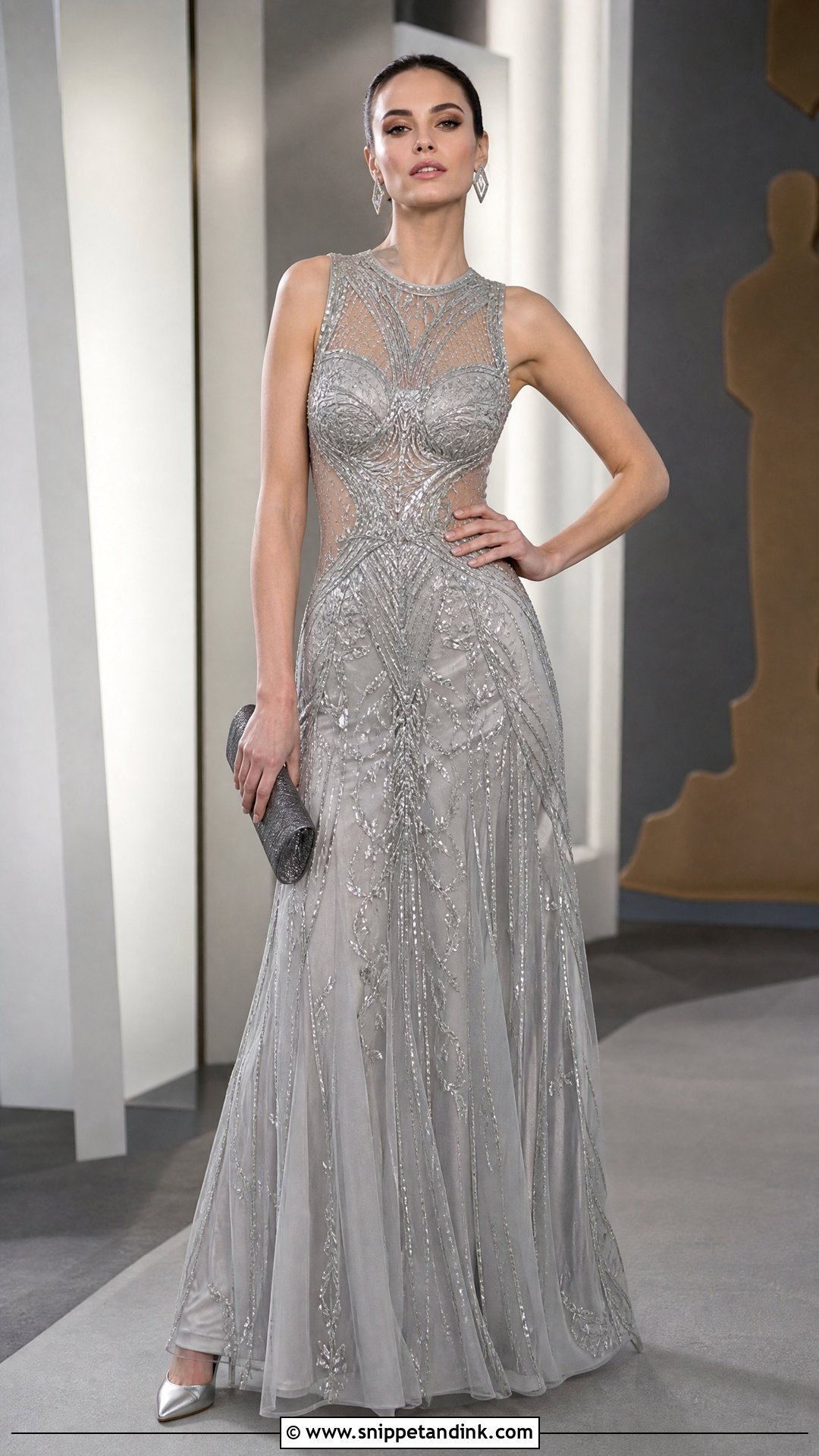
Illusion gowns depend on where the lining sits. Sheer panels and metallic embroidery look striking only if the opaque parts fall in the right places on your body. Try it with the undergarments you’ll actually wear; many illusion designs need a stick-on bra or built-in cups, and visible straps ruin the effect. A column or soft A-line stops the surface looking busy. Silver pointed heels, geometric earrings and a sleek bun keep it modern.
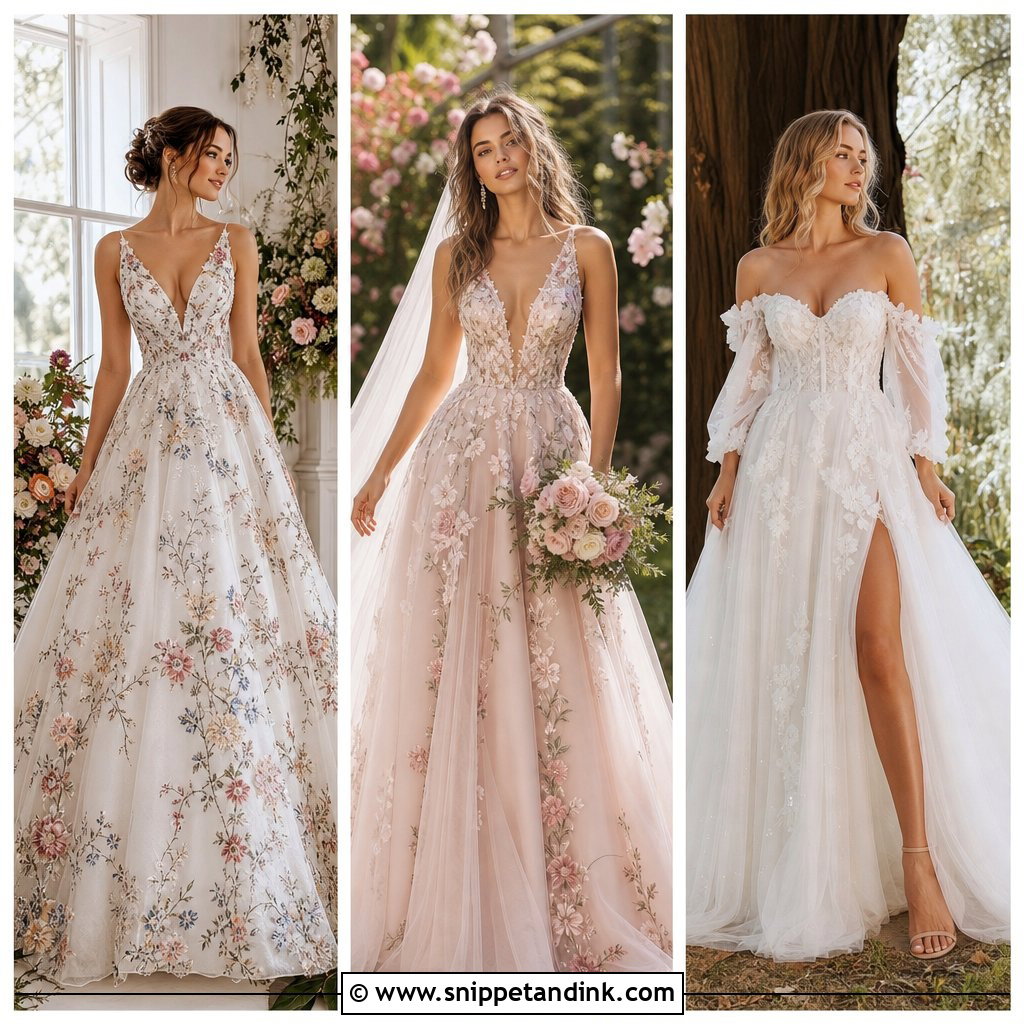
11. Floral Applique Tulle Gown
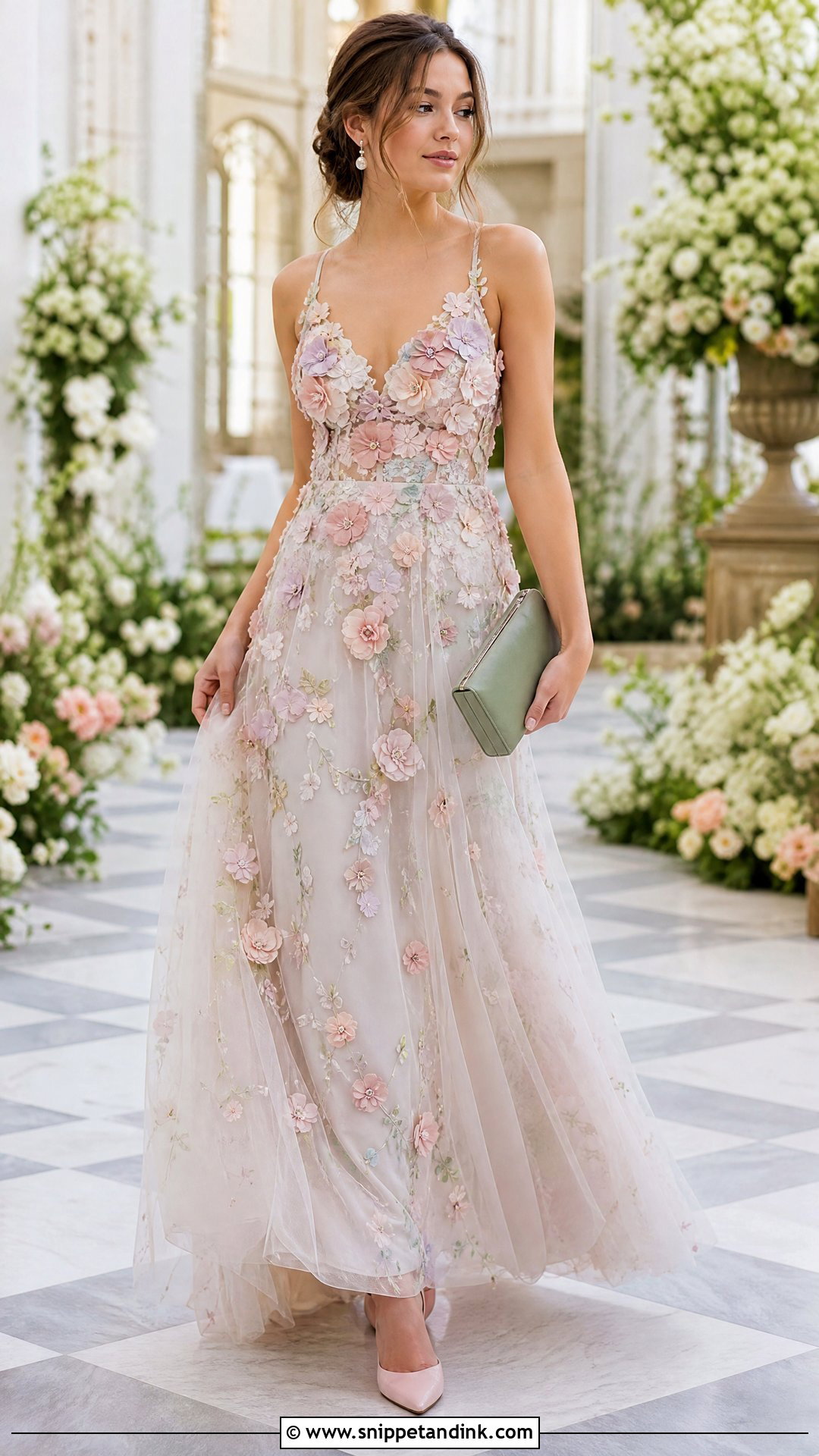
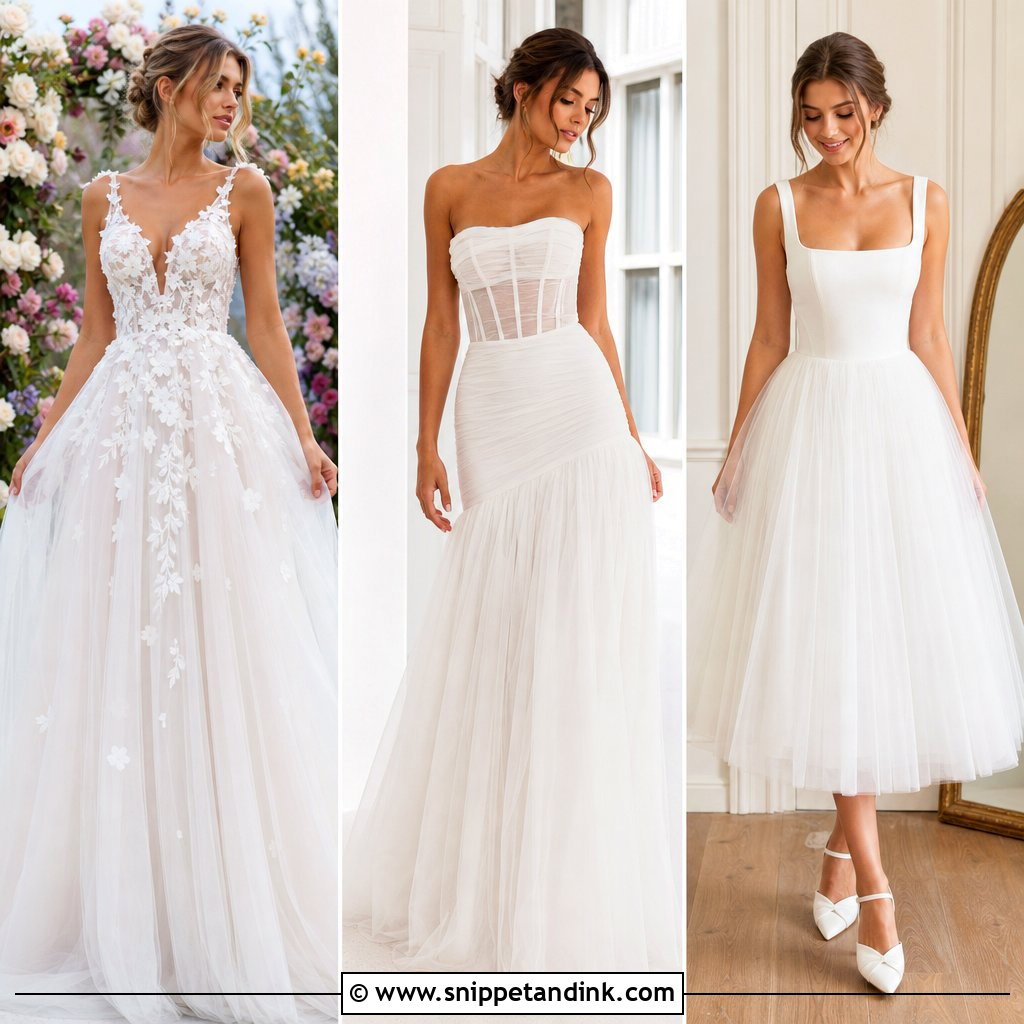
Floral appliqué works best when the flowers cluster around the bodice and waist and then thin out down the skirt. Fully covered gowns look heavy. Pull one shade from the flowers for your accessories, such as pale pink heels or a sage clutch, rather than matching everything. Raised flowers near the neck rule out most necklaces. A loose updo with face-framing pieces, rosy cheeks and a neutral lip keep it romantic. Bridesmaids can wear this well if the colors fit the palette.
12. White Bridal Tulle Gown
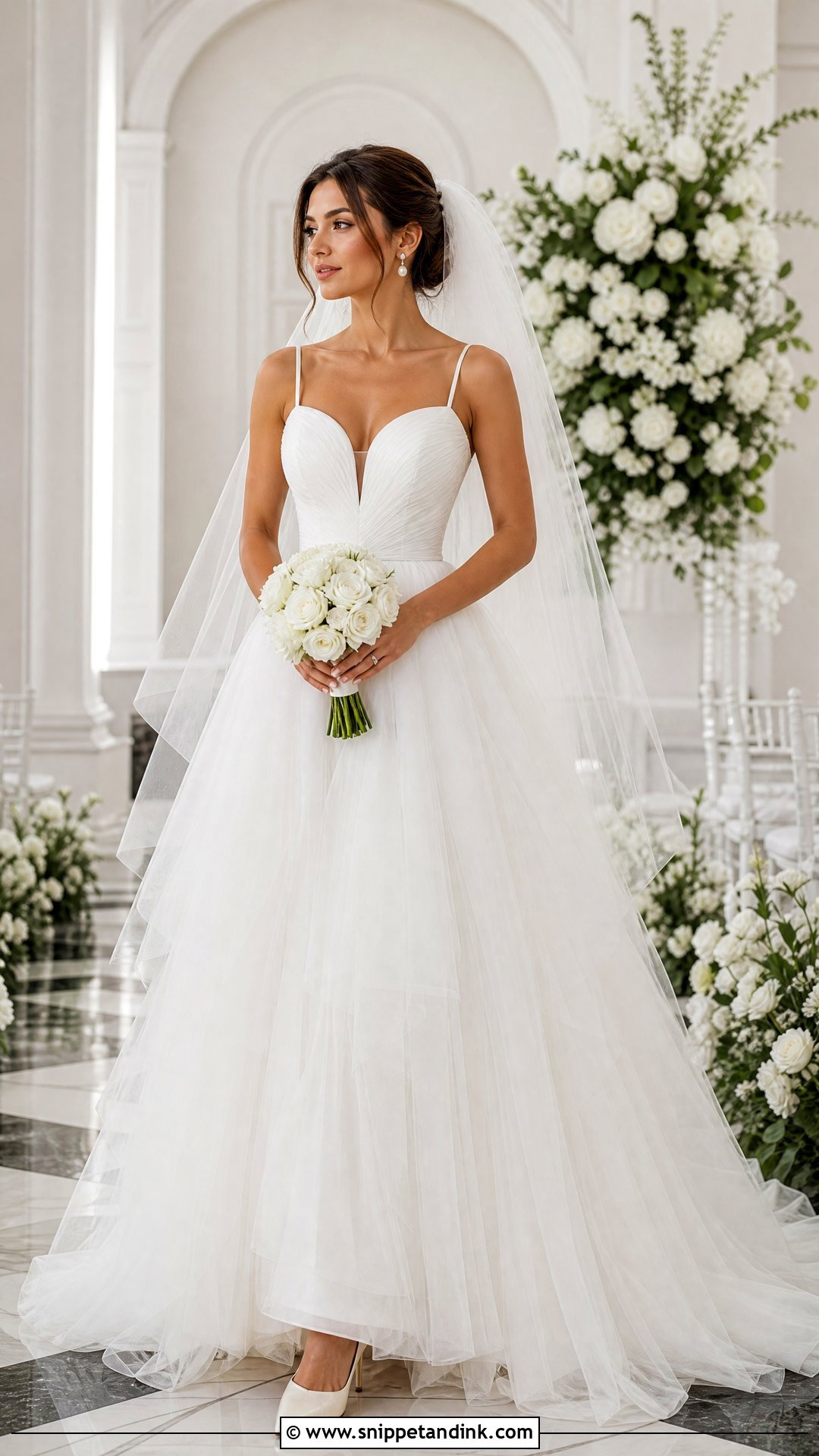
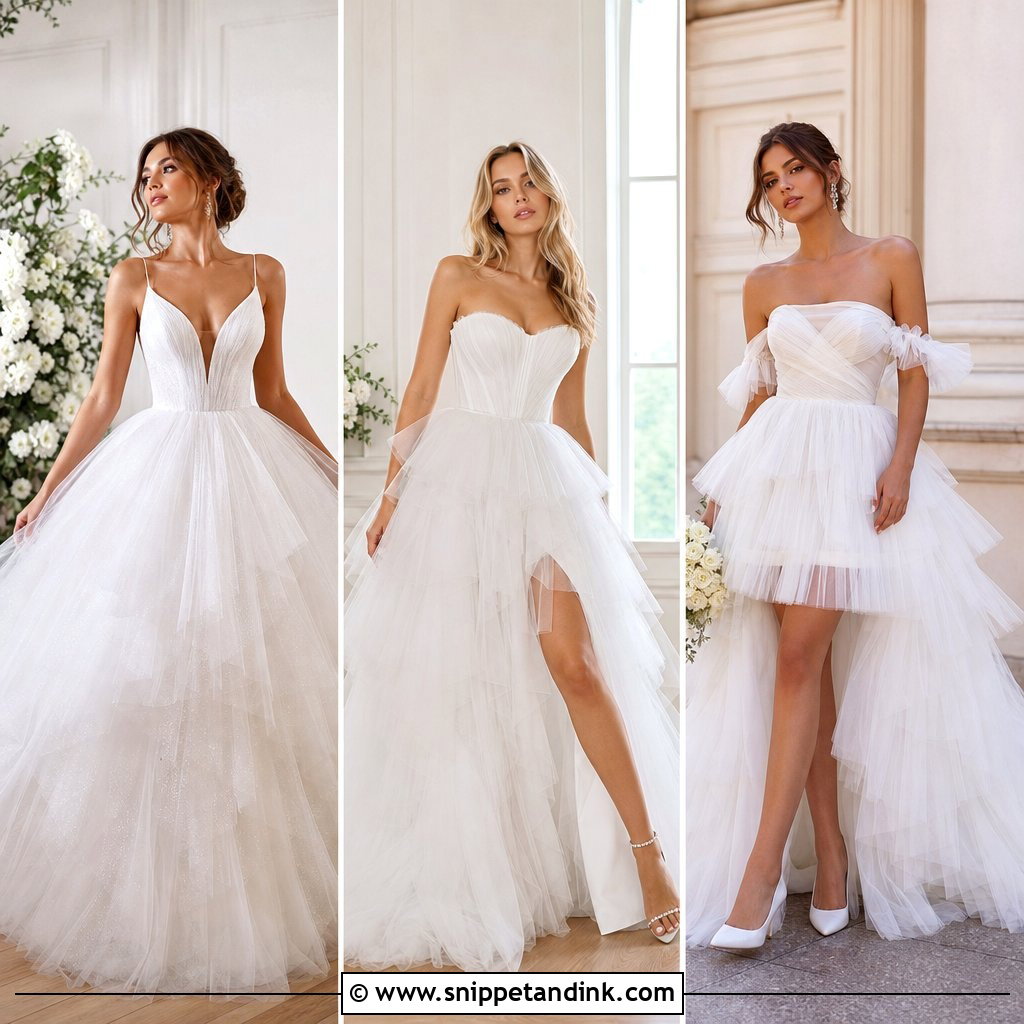
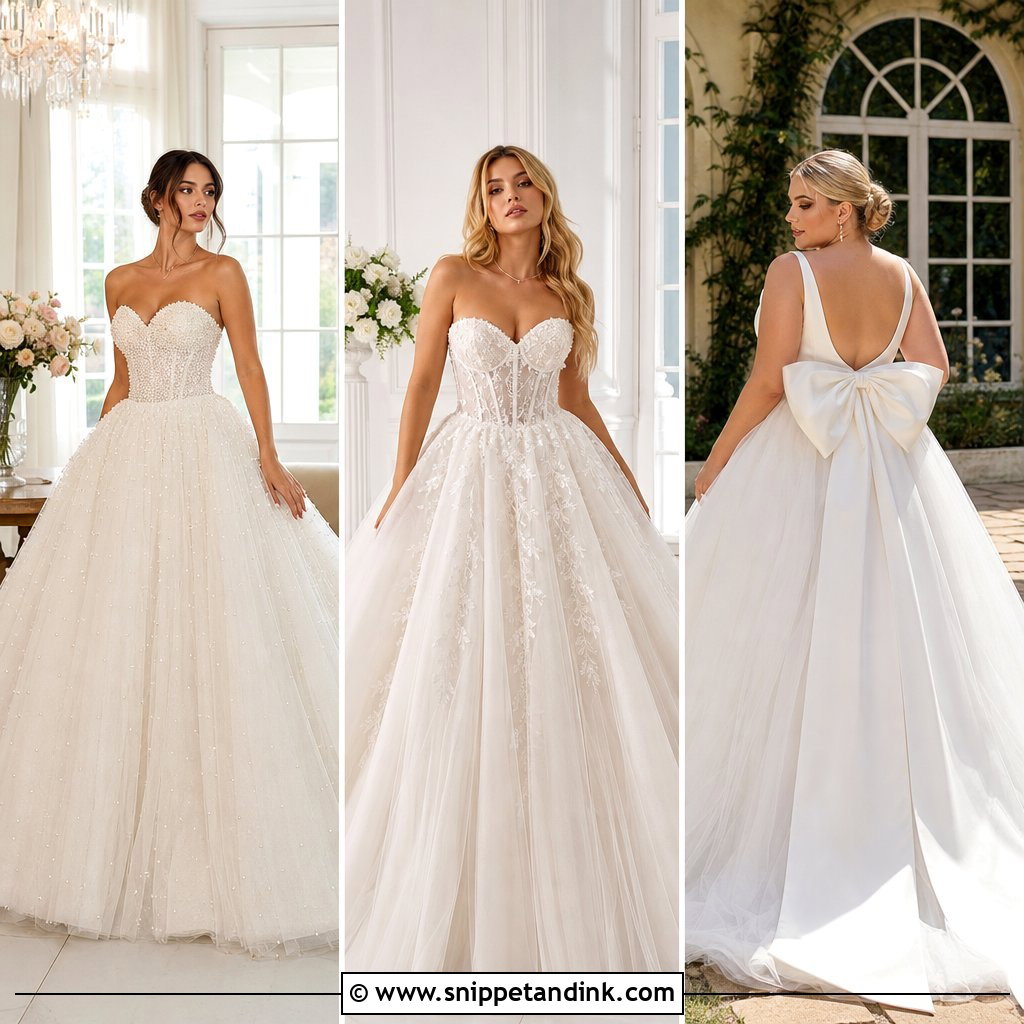
Bridal tulle in white is the classic: fitted bodice, natural waist, full layered skirt. A chapel veil echoes the airy fabric. I always hem a full tulle gown with the bride standing in her exact shoes; the front layers have to clear the floor, or they catch under your toes on the aisle. If there’s a train, ask for a secure bustle. Pearl or diamond-style earrings, pointed ivory heels and a small structured bouquet keep it refined.
13. Ivory Minimalist Tulle Gown
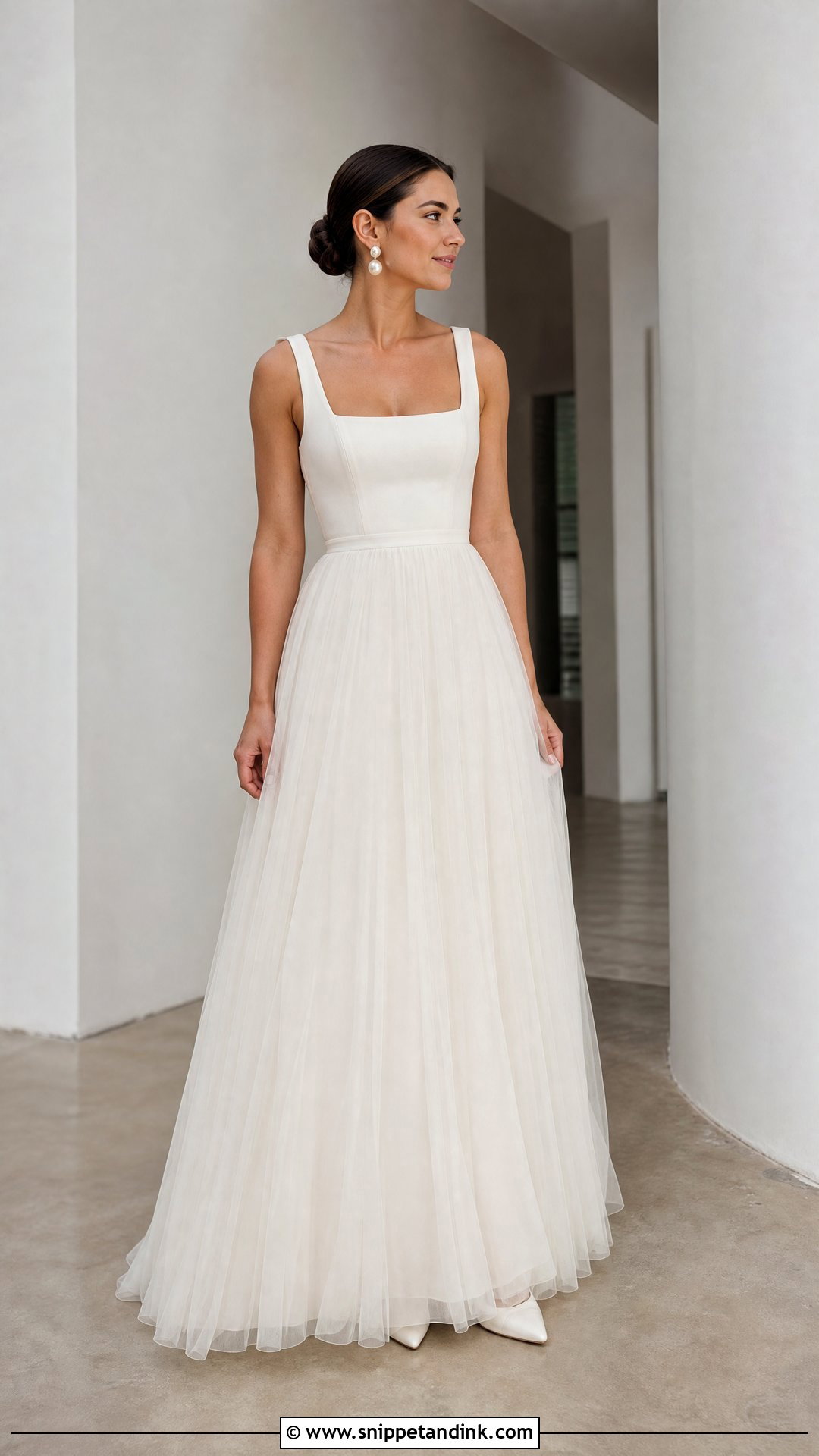
Smooth layers instead of ruffles make tulle look modern. An ivory minimal gown with a square neckline, wide straps and a fitted waist relies on cut, so the seams must be precise. Pick one detail, like a narrow satin belt or a fine bracelet, instead of adding sparkle everywhere. Ivory pumps, sculptural pearls and a sleek low bun suit it, with defined brows and a beige-pink lip. I’d put it in a courthouse ceremony followed by a dinner reception.
14. Plus-Size A-Line Tulle Gown
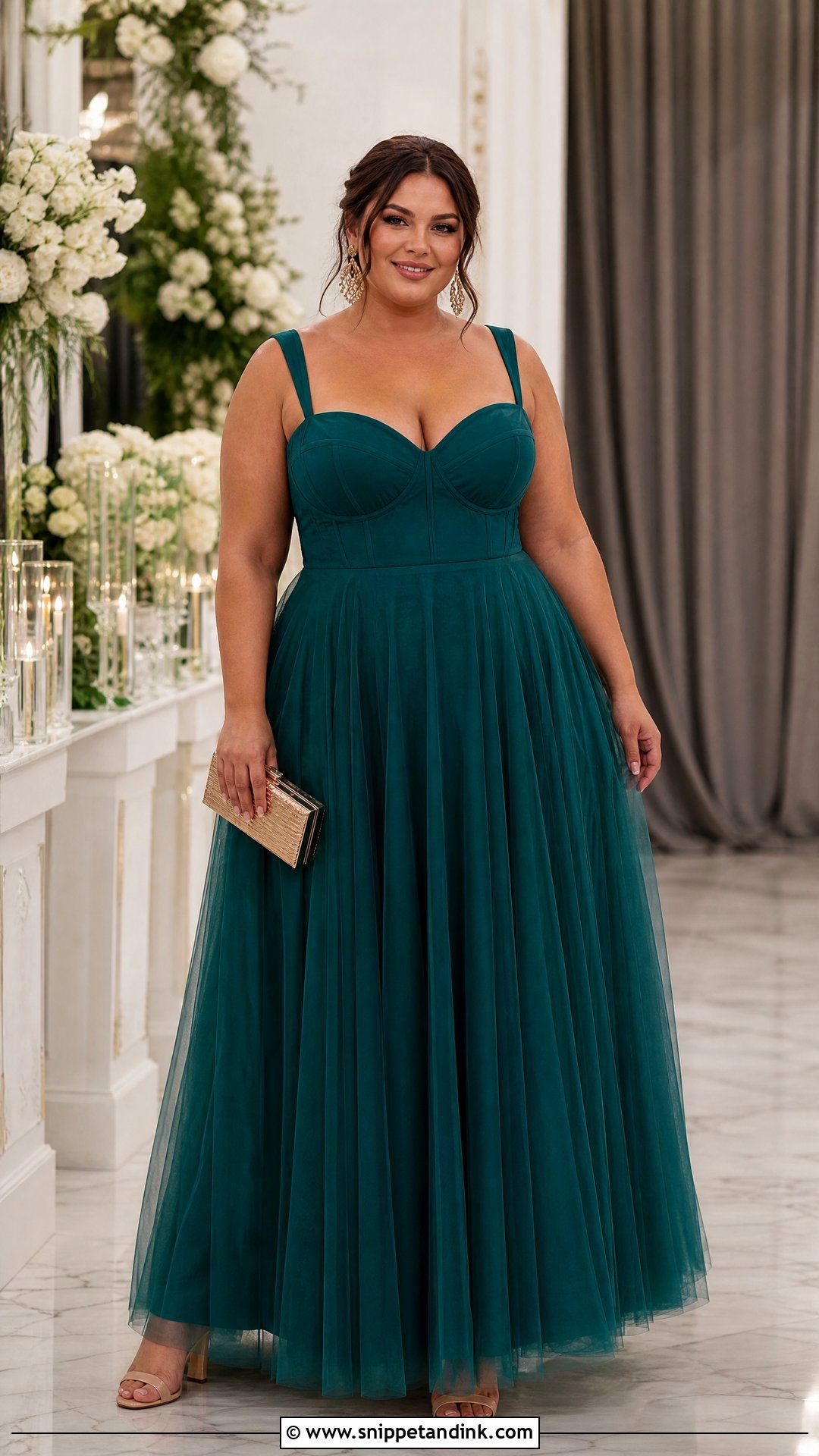
A-line tulle is comfortable and balanced on plus-size figures when the waistband sits at the natural waist, not above or below it. Supportive straps and a structured bodice carry the skirt; the tulle should skim and then widen gradually. Choose smooth, supportive undergarments after you’ve seen the neckline and back. Block-heel sandals, statement earrings and a structured clutch finish it, and a tailored jacket gives cover for a cold venue without hiding the dress.
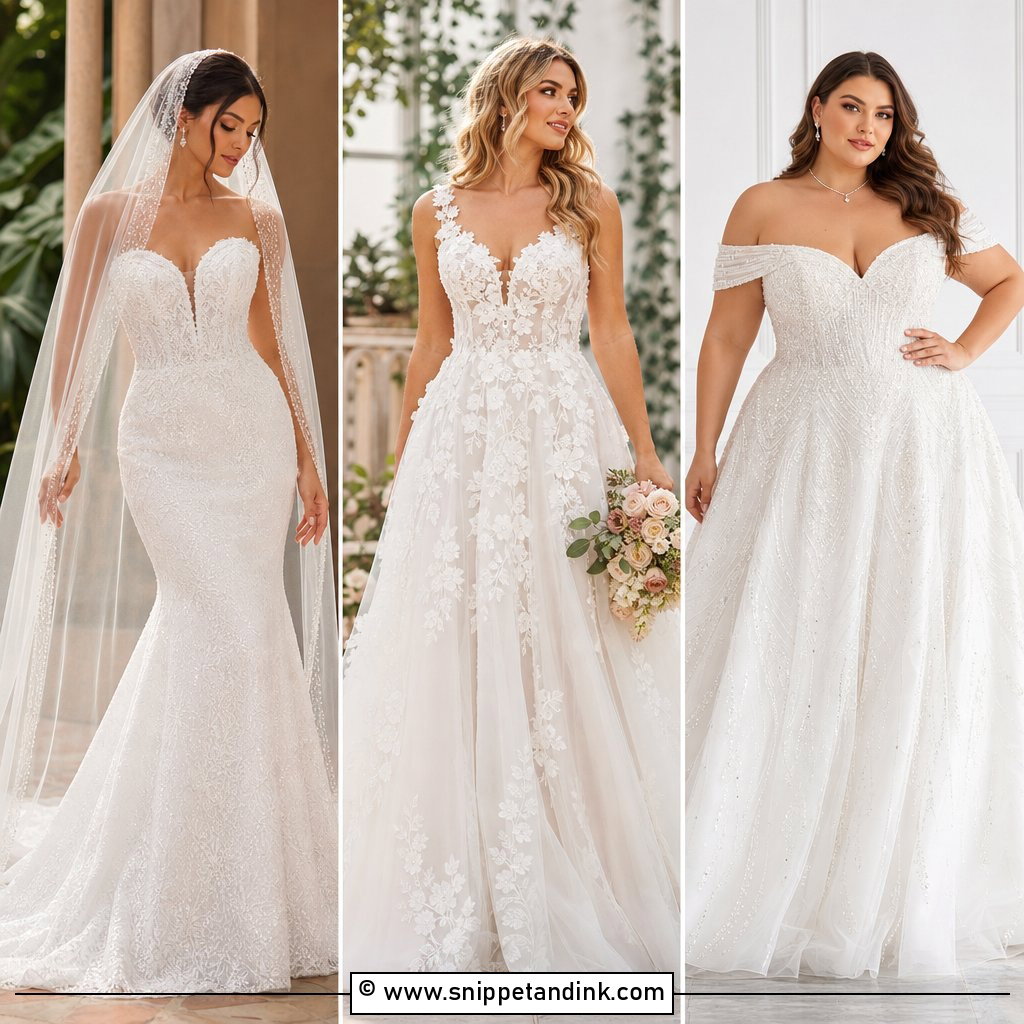


15. Petite High-Low Tulle Gown
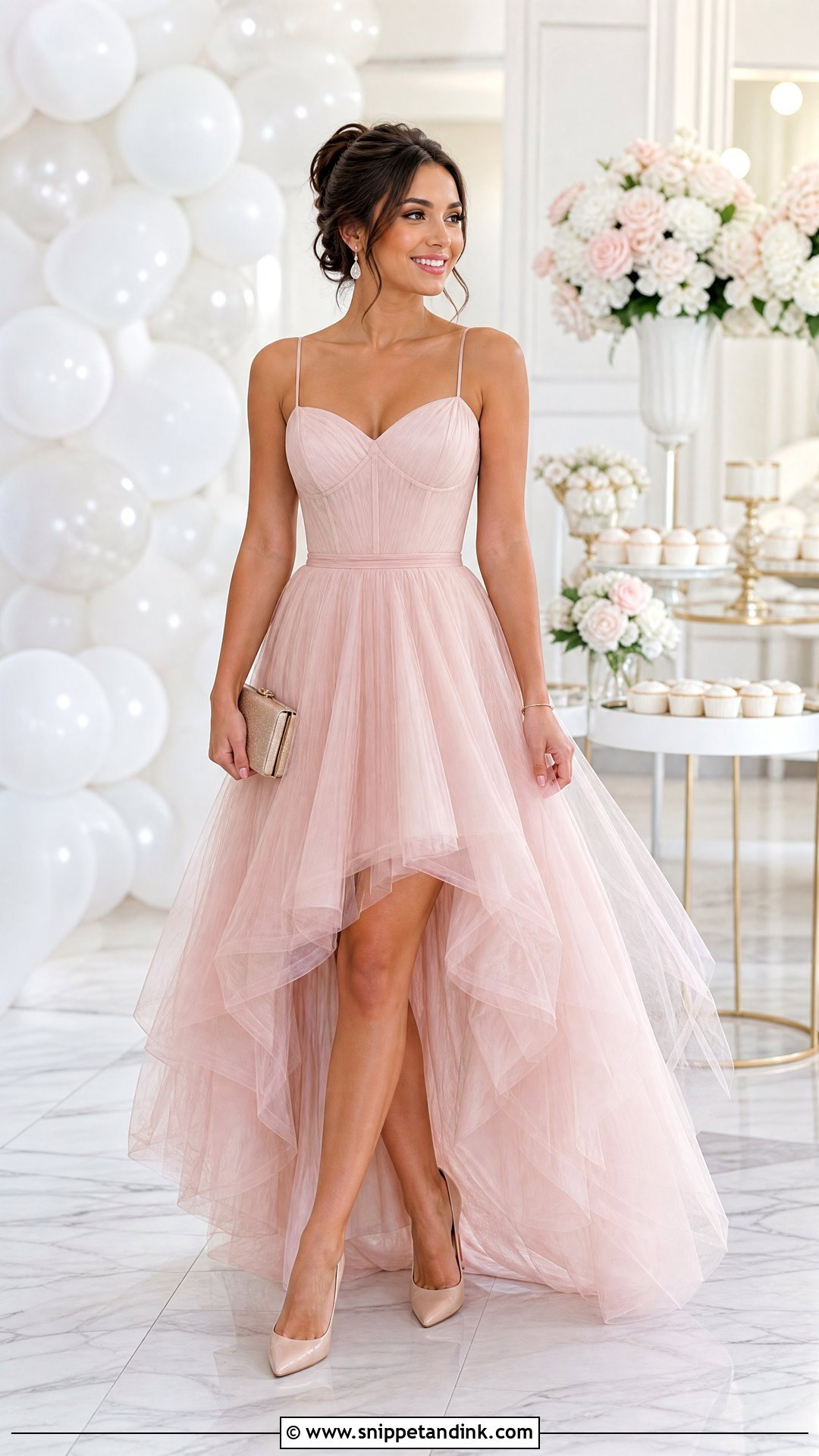
A petite high-low tulle gown shows the legs and shoes, which stops a shorter frame from disappearing under fabric. Keep the difference between the front and back hems gentle; a dramatic drop looks unbalanced on a small frame. Shoes close to your skin tone extend the leg line further. Small drop earrings, a compact clutch and hair pulled up keep everything in scale. The front hem should still feel formal, so don’t cut it too short at alterations.
16. Lace Bodice Tulle Gown
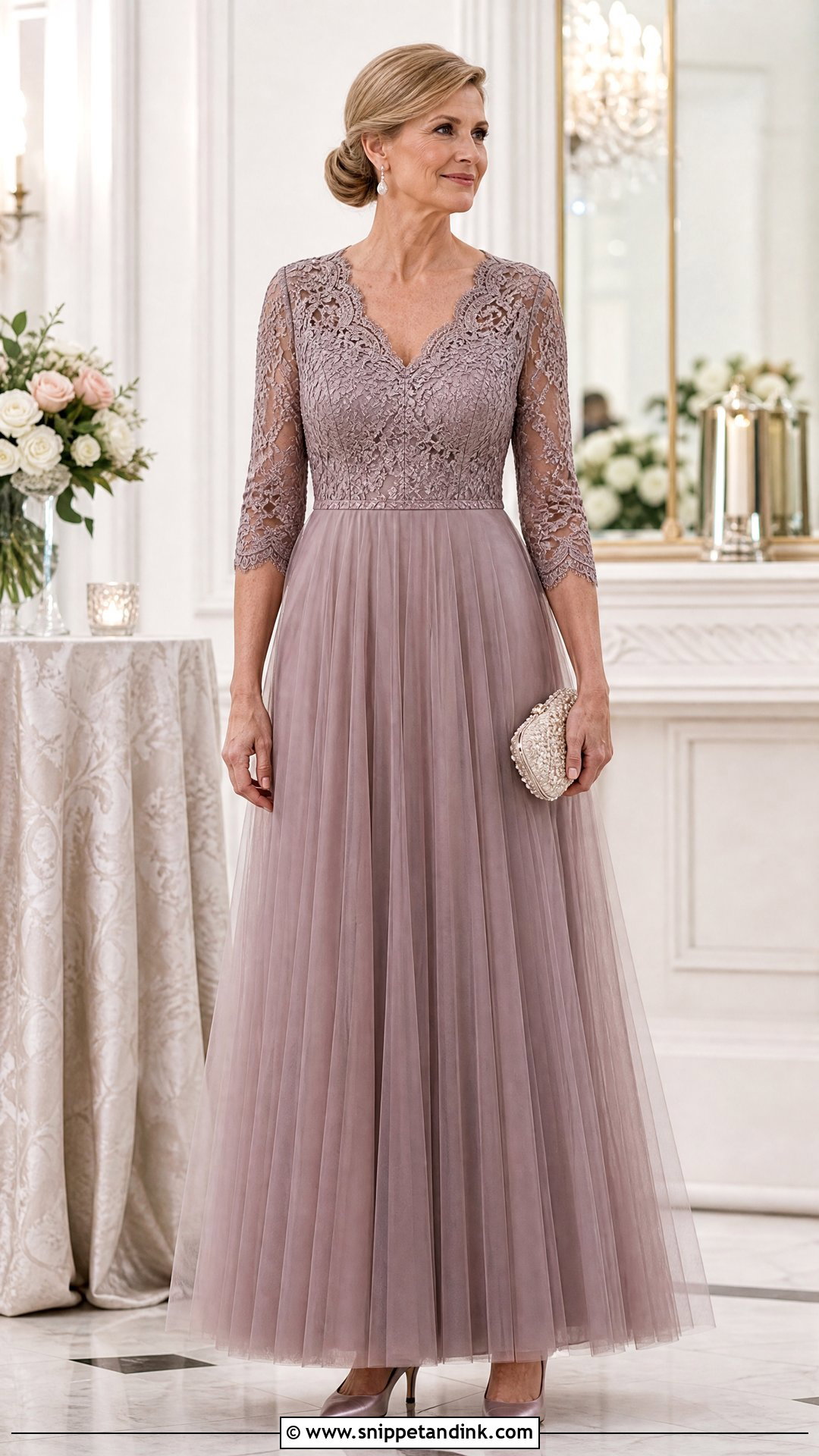
Lace on top and tulle below is a good mix of texture and movement. The lace should lie flat on the lining and carry slightly past the waist, so the join into the skirt looks natural. Cap or three-quarter sleeves give coverage; a V-neck opens the upper body. One rule I hold to: detailed lace and an ornate necklace never go together. Satin pumps, pearl drops and a low chignon suit mothers of the couple and formal anniversaries.
17. Pink Tulle Prom Ball Gown
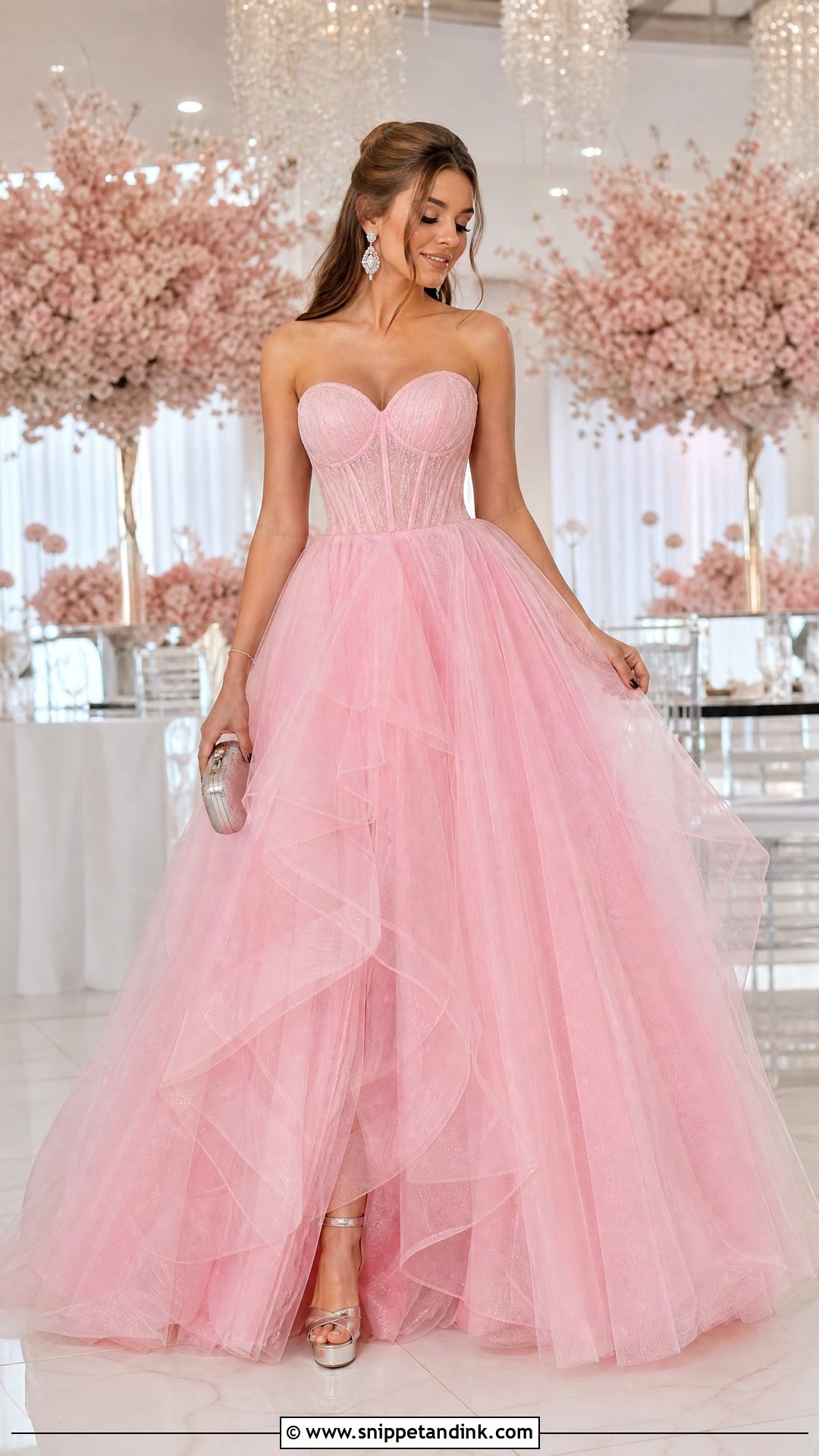
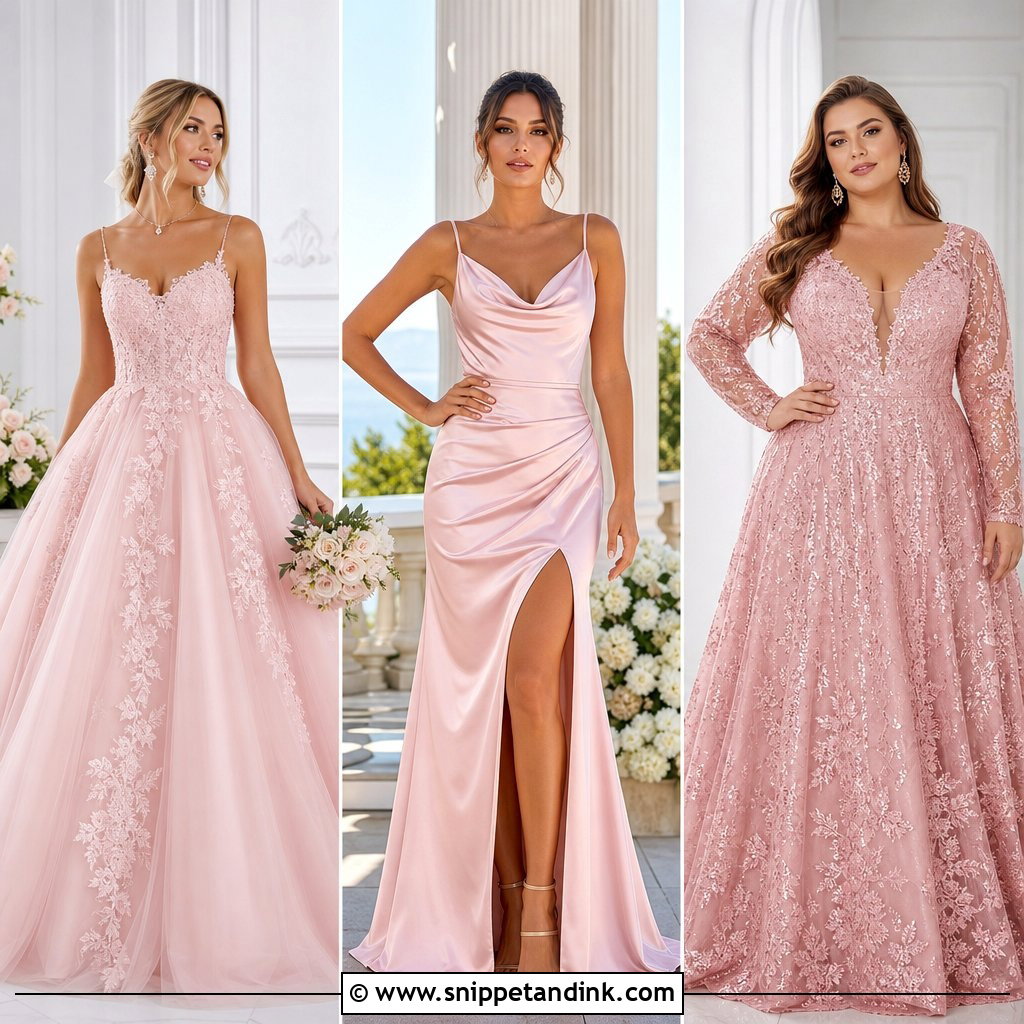
Pick the pink by your undertone first: cool rose and fuchsia suit cool skin, coral pink suits warm skin. Then pick the gown. A structured sweetheart or square neck keeps a big prom skirt from looking shapeless. I prefer block heels under wide skirts; they’re steadier when you can’t see your feet. A half-up style balances the volume. Practice sitting, walking and stairs at home first so the layers feel familiar.
18. Black-Tie Tulle Column Gown
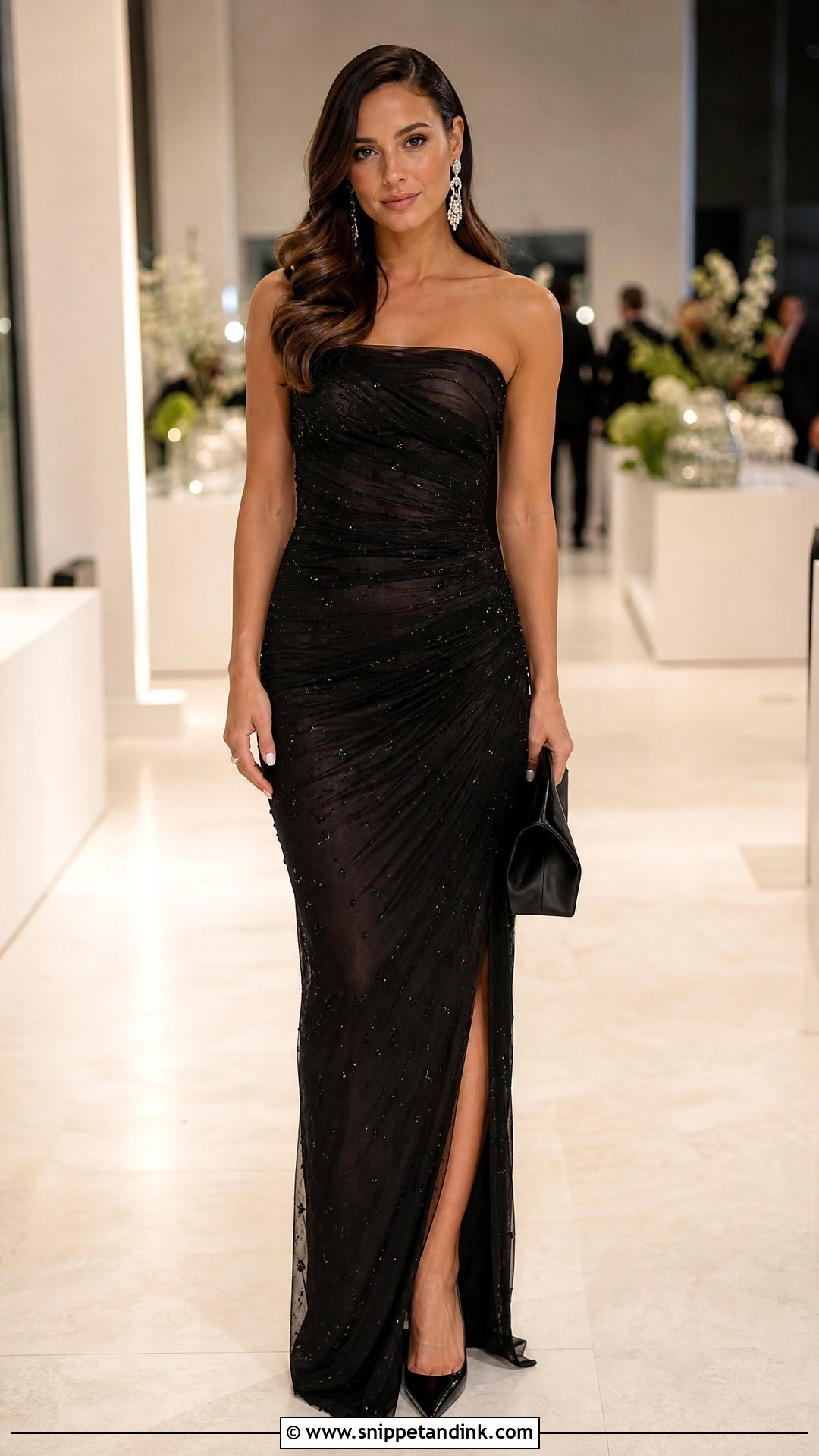
A tulle column is the sleek answer to black tie. It follows the body and drops straight to the floor, so gathered tulle, light ruching or a little beading gives dimension without bulk. Narrow skirts restrict your stride; a small walking slit at the back or side solves that. If the back is low, buy the right low-back undergarment and test it before the night. Pointed heels, a satin bag and one pair of statement earrings complete the look.
19. Cape-Sleeve Tulle Gown
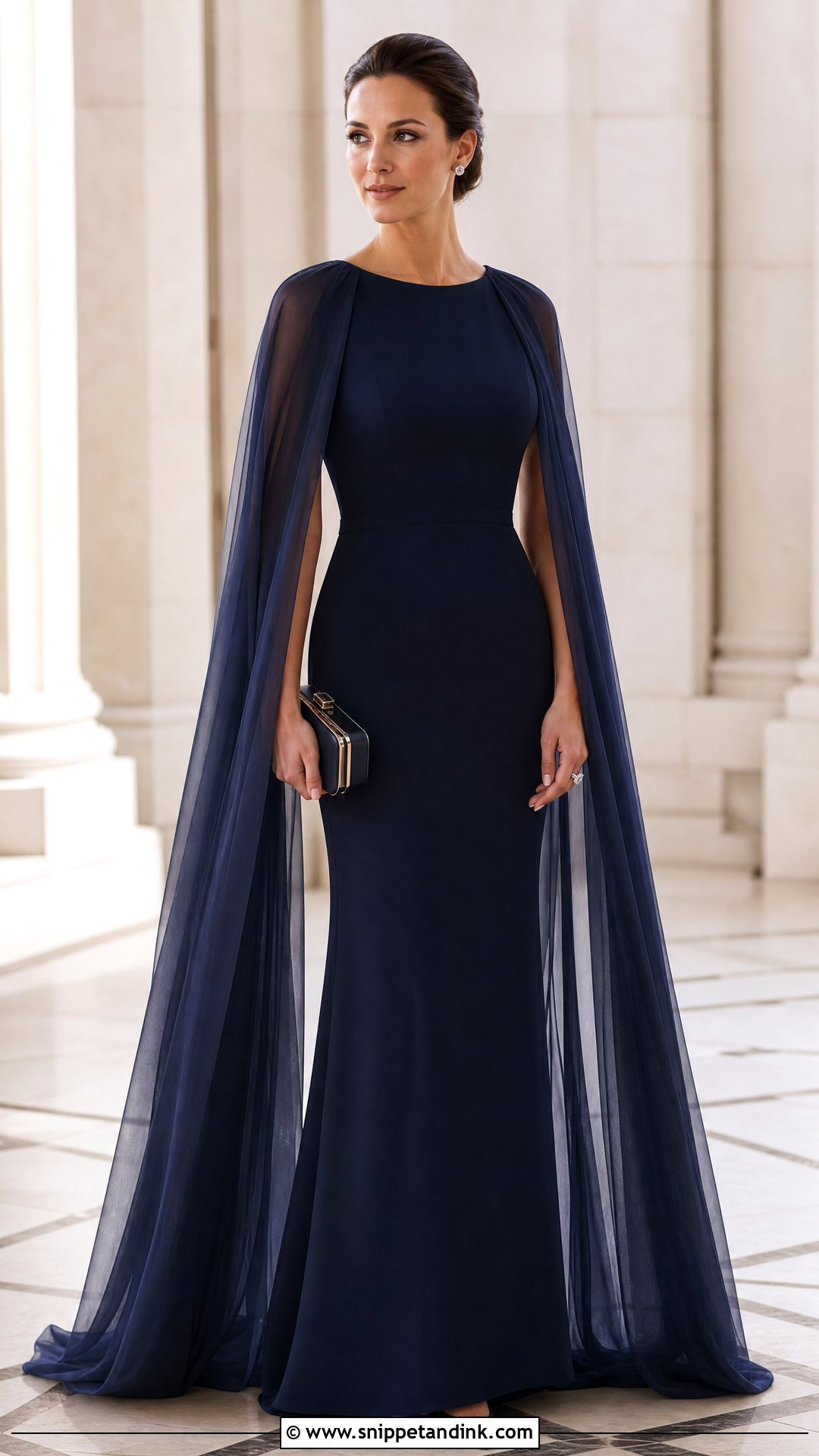
A tulle cape floats behind you as you walk and covers the arms without sleeves. It can stop at the elbow, the wrist or run down the back of the skirt. Keep the gown underneath simple so the cape stays the feature. Stiff tulle widens the shoulders; soft tulle falls neatly, so feel the fabric before you buy. Skip the necklace if the cape gathers at the neck, and wear a sleek updo. It’s a good choice for cool weather and for mothers of the bride.

20. Ombre Tulle Ball Gown
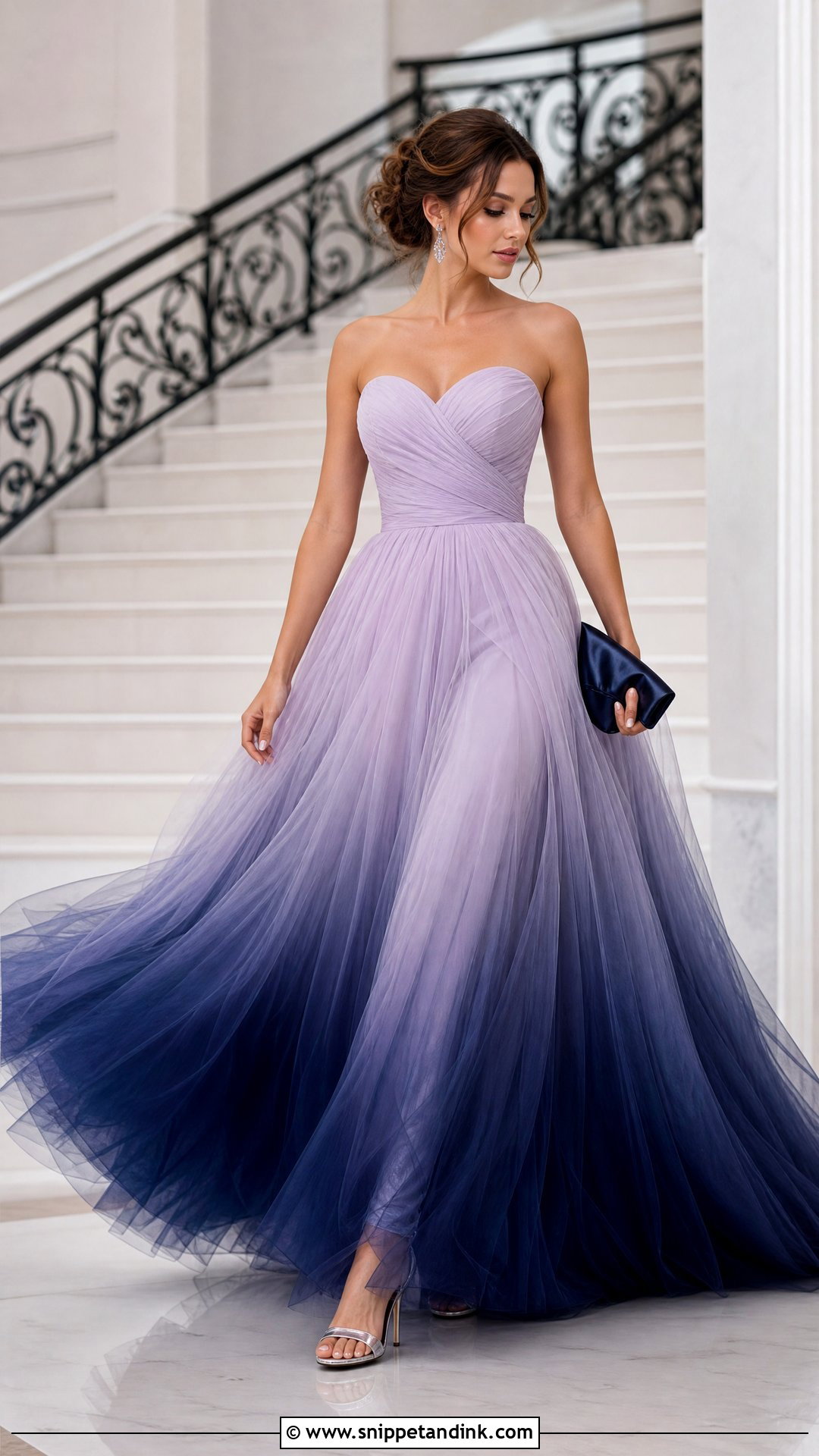
An ombre tulle ball gown fades from one shade to another down the skirt, like blush to burgundy or pale blue to deep teal. The transition should be gradual; a hard band where colors meet looks like two skirts sewn together. Match accessories to either the lightest or darkest tone, never a new color. A simple fitted bodice, metallic heels and understated earrings let the dye do the work.
Tulle at Someone Else’s Wedding: The Polite Version
Many of the gowns above are worn by guests and the wedding party, and full tulle can easily look bridal. A few habits keep you on the right side of the line.
- Avoid white, ivory and very pale champagne unless the couple asks for it. In photos these all read as bridal.
- Keep the skirt smaller than you’d choose for prom. A modest A-line or column feels dressed up without competing with a ball gown.
- Read the invitation. Black tie supports floor length; cocktail suggests midi or a lighter skirt.
- Ask about cultural color rules. Some traditions reserve red, white or black for specific roles.
Travelling With a Full Skirt
Tulle survives travel better than satin, but the skirt still crushes. I fold the layers loosely around tissue paper rather than pressing them flat, carry the gown on board in a long garment bag if I can, and hang it in the bathroom with a steamy shower when I arrive. A handheld steamer held a few inches away fixes the rest. Never iron tulle directly; the heat can melt synthetic net.
Layers You Can Sit, Stand and Dance In
A tulle gown should feel supportive and right for the event. Before deciding, look at the skirt volume, bodice structure, lining and hem, and check you can move. Color and embellishment set the mood, but accessories finish the outfit: simple shoes and jewelry calm big layers, and bolder pieces wake up a plain column. Alterations are usually worth paying for, especially on strapless bodices, long trains and full skirts. From columns to ball gowns, there’s a tulle shape for every age and size here; wear the one you can dance in.
You'll Like These Ideas:







Leave a Reply