
Most brides come to me saying they want lace, and then discover that lace covers a huge range of fabrics. Some are fine as cobweb, some are heavy enough to stand up on their own. That difference matters as much as the silhouette, because it changes how the gown moves, how warm it feels and how it reads in photos. Below are twenty gown styles, from classic A-lines and ball gowns to short dresses, beaded lace and a cathedral train, with the styling and fitting notes I’d give at an appointment. If you’re drawn to delicate Chantilly patterns, bold floral motifs or a little beadwork, there’s a shape here that will carry it.
Telling Lace Apart by Touch and Weight
Before I talk silhouettes with a bride, I hand her a few swatches. Feel tells you more than any photo, and the lace you pick will narrow the shapes that work for you.
Chantilly
Fine, flat and soft, worked on a delicate net with the pattern outlined in a thin thread. It drapes beautifully on A-lines, sleeves and veils, and it’s cool to wear. The trade-off is fragility: it snags on rings and rough chairs.
Alençon-style corded lace
The motifs are outlined with a raised cord, so the pattern has edges you can feel. It holds its shape well, which is why it is so often cut out and appliquéd onto bodices and trains.
Guipure
No net at all; the motifs are joined by little bars, so it’s heavy and almost sculptural. It suits clean, modern shapes and sheath dresses, but it can feel warm and stiff for a long summer day.
Embroidered tulle
Many gowns sold as lace are actually tulle with embroidery stitched into it. It’s light, often more affordable and photographs well, though it’s worth knowing what you’re paying for.
1. A-Line Lace Wedding Gown
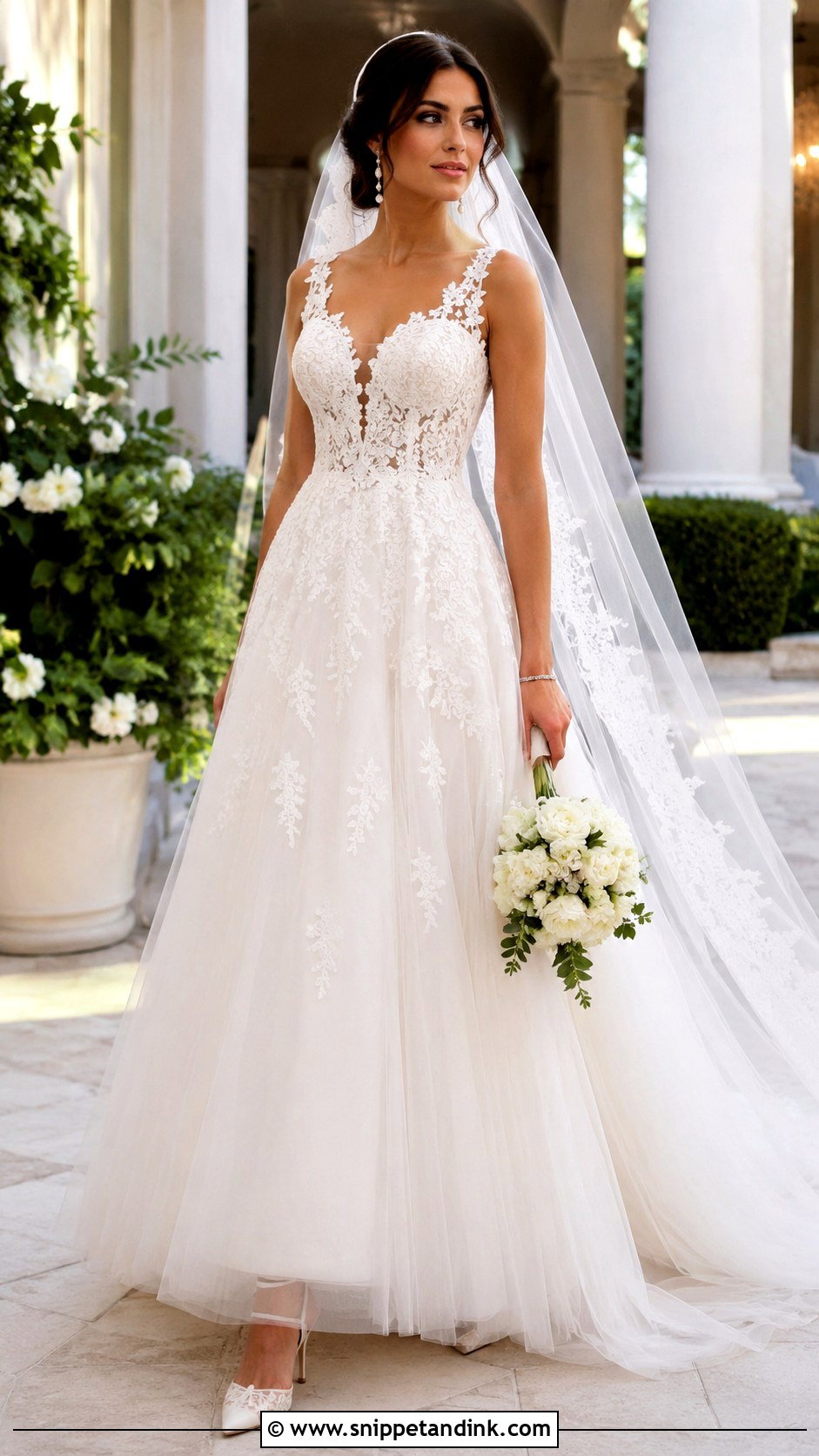
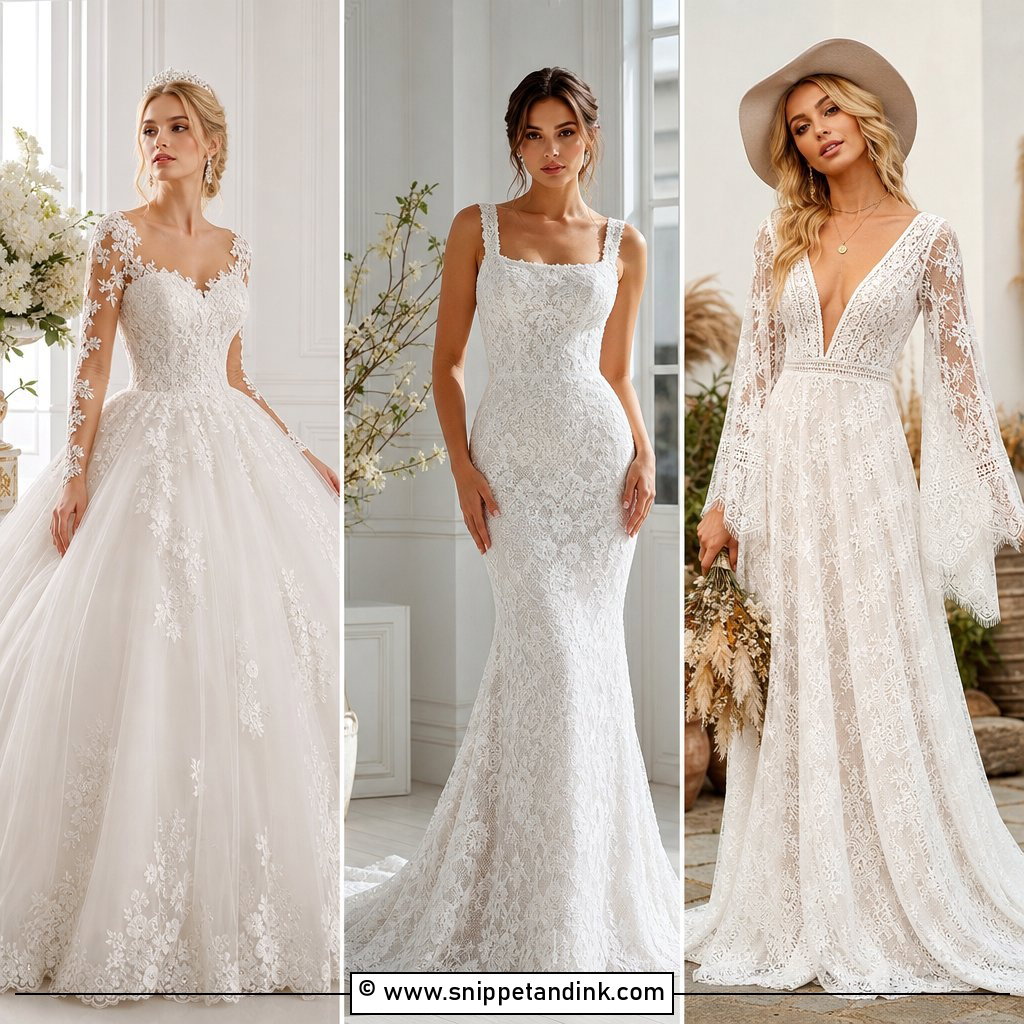
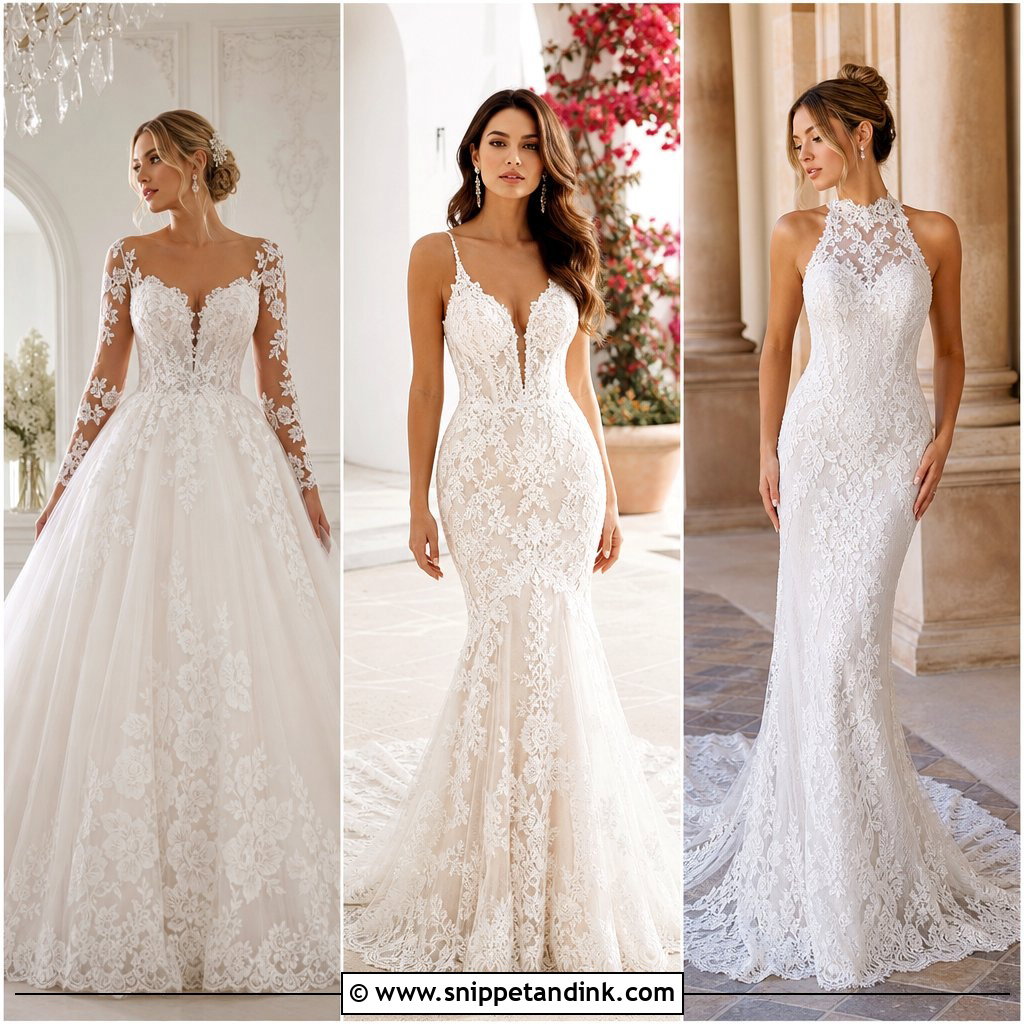
Hand me a bride who isn’t sure what she wants and I’ll start her in an A-line. The fitted bodice defines the top half and the skirt widens gently from the waist, so it suits almost every figure and venue, from a garden to a hotel ballroom. Delicate floral lace over light tulle keeps it soft; a lined bodice gives more coverage. Pointed ivory heels, pearl drops, a fingertip veil with a narrow lace edge and a small white bouquet complete it. The one thing I watch is where the skirt seam meets the waist. If the lace pattern doesn’t line up across that seam, it’s very noticeable on an A-line because the eye travels straight down it.
2. Lace Ball Gown
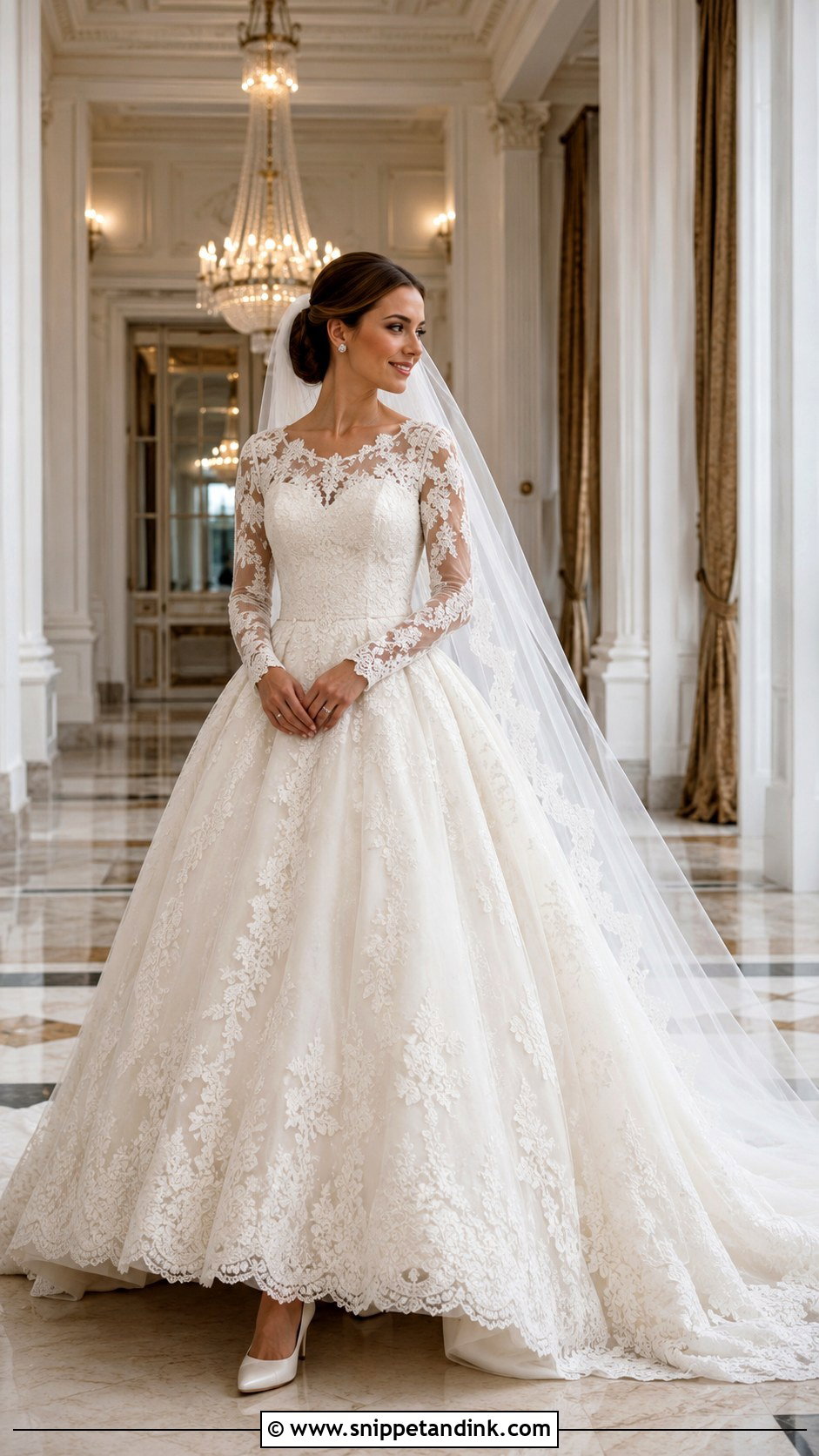
A lace ball gown is a fitted bodice over a full, sweeping skirt, and it needs room. The best ones put the densest lace on the bodice and let it thin out down the skirt, otherwise all that volume plus heavy lace looks top-to-bottom busy. A structured waist holds the shape under the weight. I’d style it with a plain cathedral veil, crystal studs and closed-toe pumps under the hem, and leave the big necklace off if the neckline already has embroidery. A neat low bun keeps attention on the bodice. Before you fall for one, check your aisle and doorways. In a narrow chapel the skirt brushes every pew end.
3. Mermaid Lace Wedding Gown
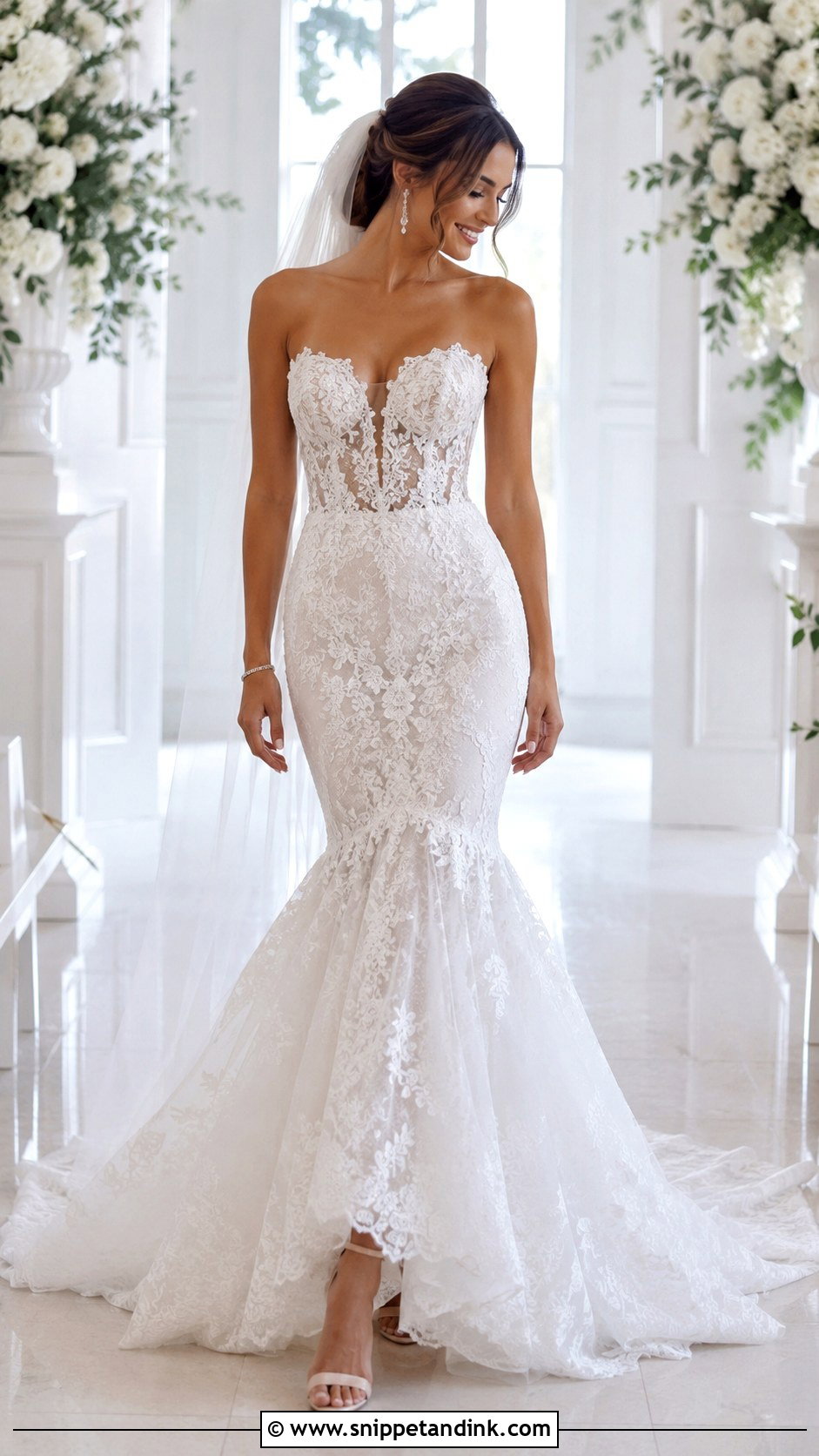
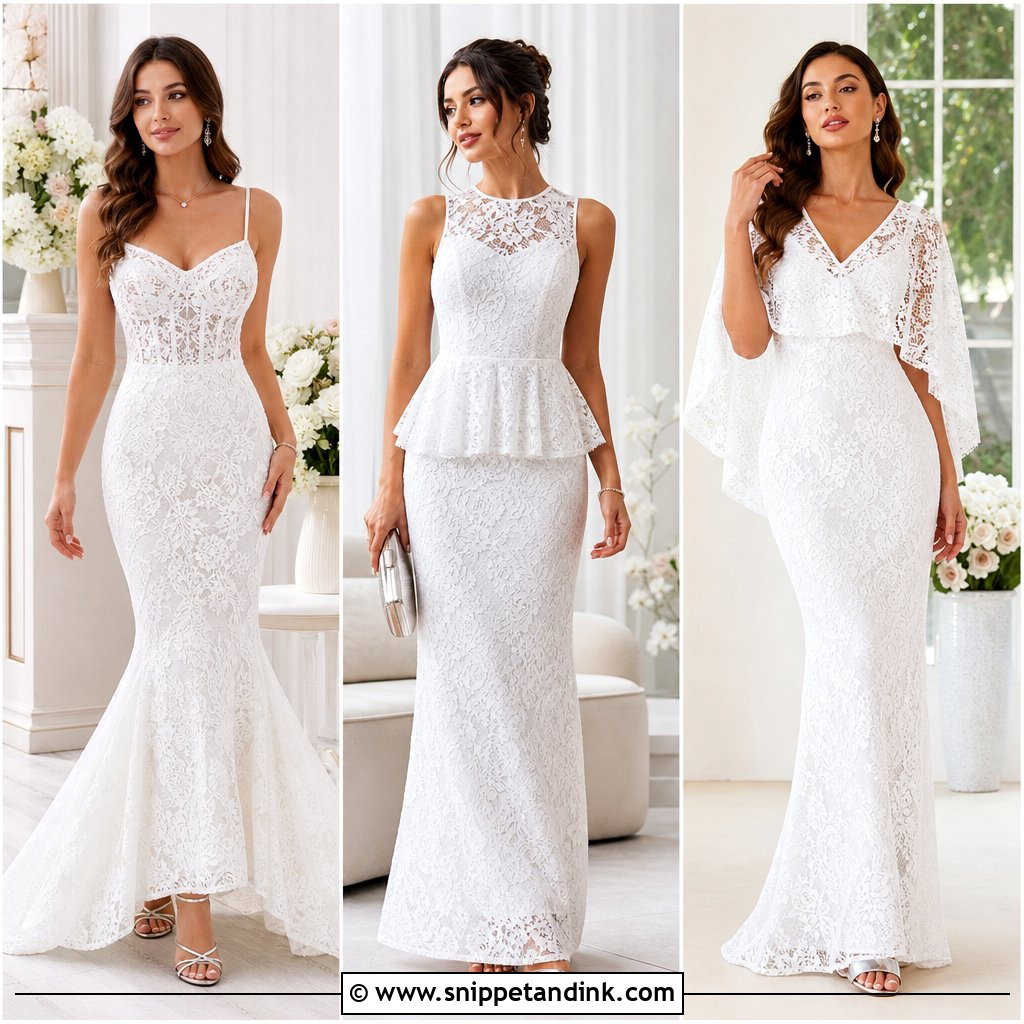
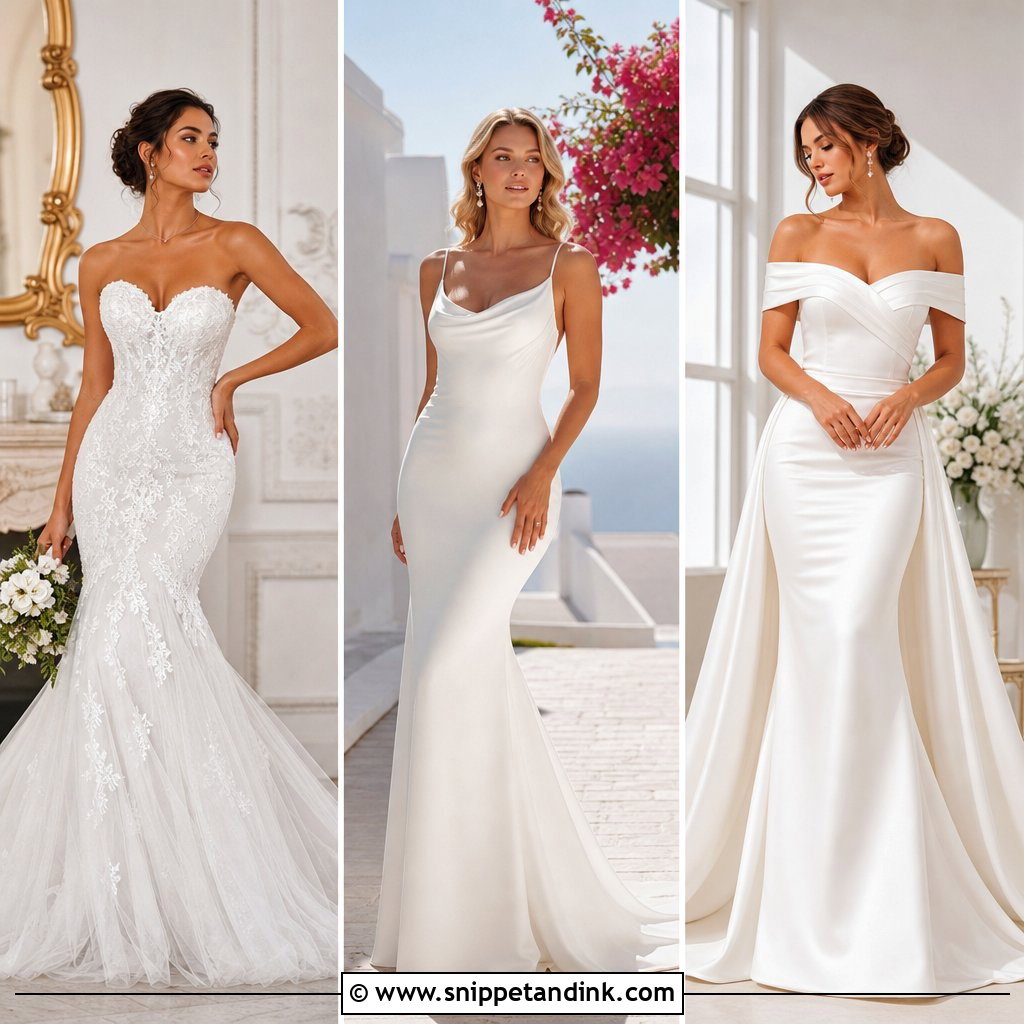
Mermaid gowns follow the body to the knee before flaring, and allover lace shows every line underneath it. That’s why the lining matters so much here: a smooth, close lining and motifs placed evenly over the hips give a much cleaner result than lace sitting on a loose slip. Slim ivory heels, a narrow bracelet, medium drop earrings and an unfussy veil keep it from tipping into busy. Soft waves or a sleek side part suit the shape. At your fitting, sit, walk and climb a few steps. If the knee seam stops you from taking a normal stride, ask whether the flare can be raised slightly.
4. Fit And Flare Lace Wedding Gown
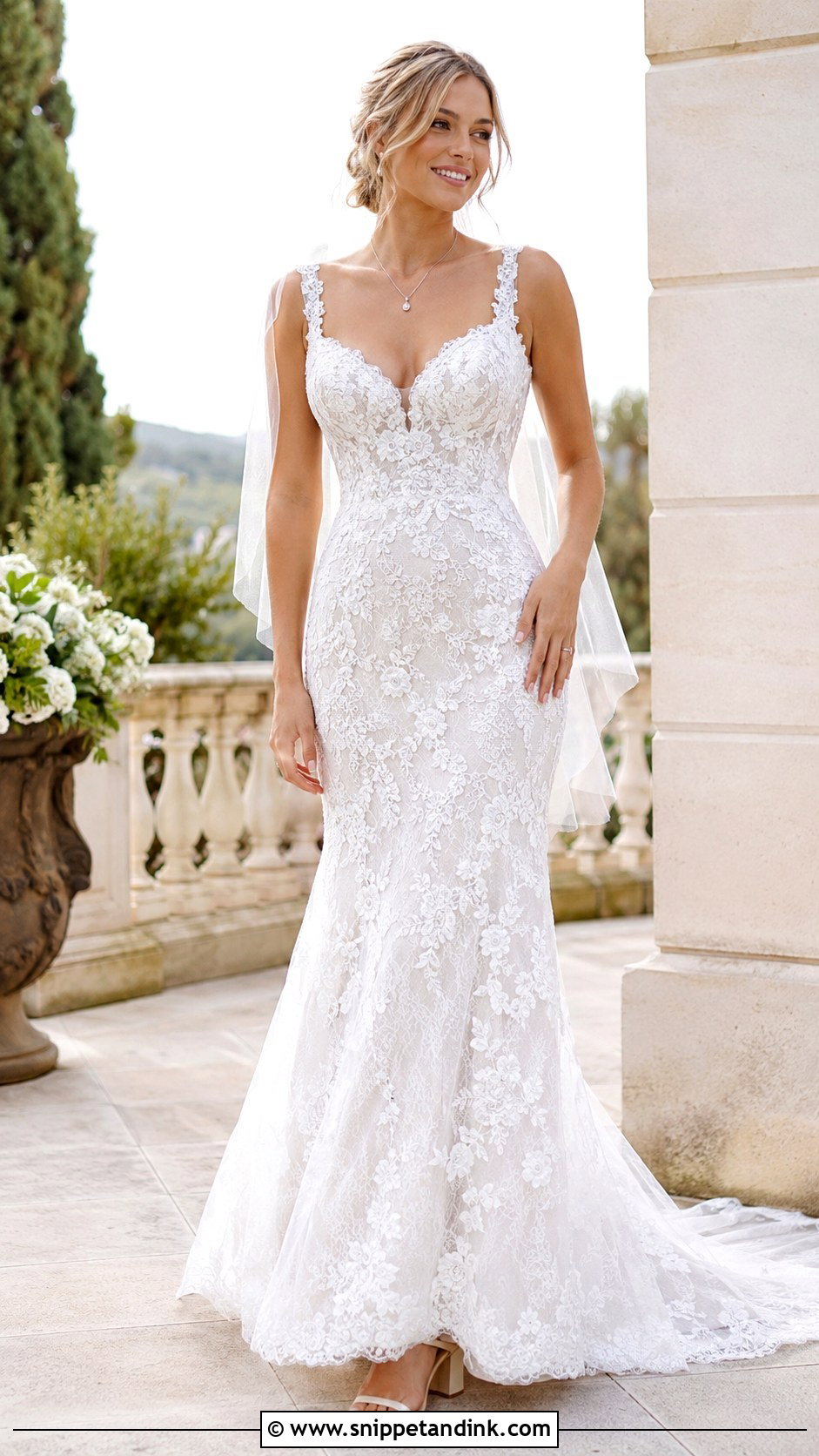
Think of fit and flare as the mermaid’s easier sister. It’s fitted through the bodice and hips but flares higher, so you can walk normally and sit without a fight. Medium-scale floral lace shows off the silhouette without swamping it; tiny lace can disappear on this shape and very large motifs break it up. Block-heel sandals, a delicate pendant, small earrings, a light chapel veil and a loose updo suit it, and a manageable train can be bustled after the ceremony. It’s the one I suggest most for terraces and destination weddings where comfort counts as much as the look.
5. Long Sleeve Lace Wedding Gown
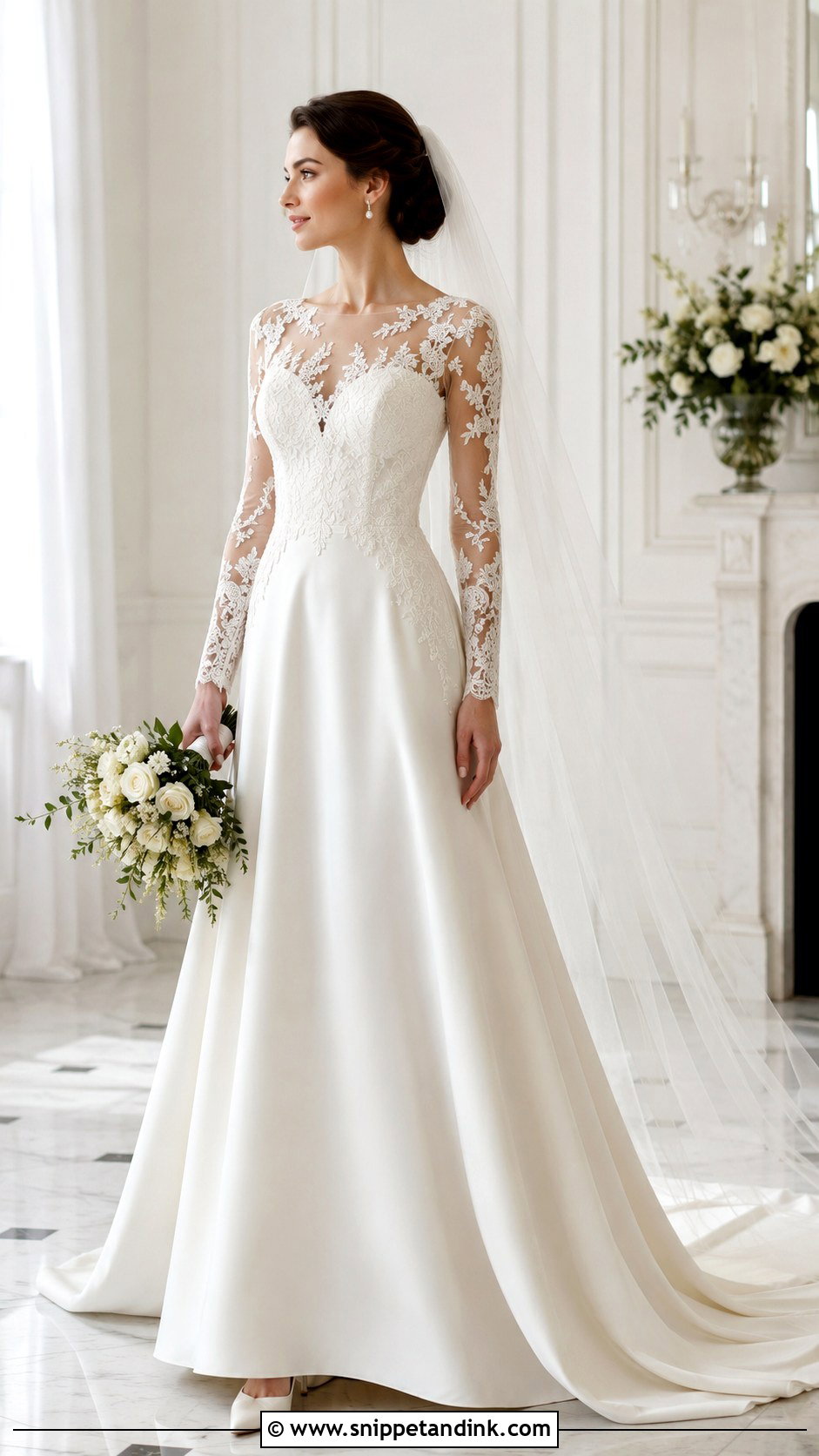
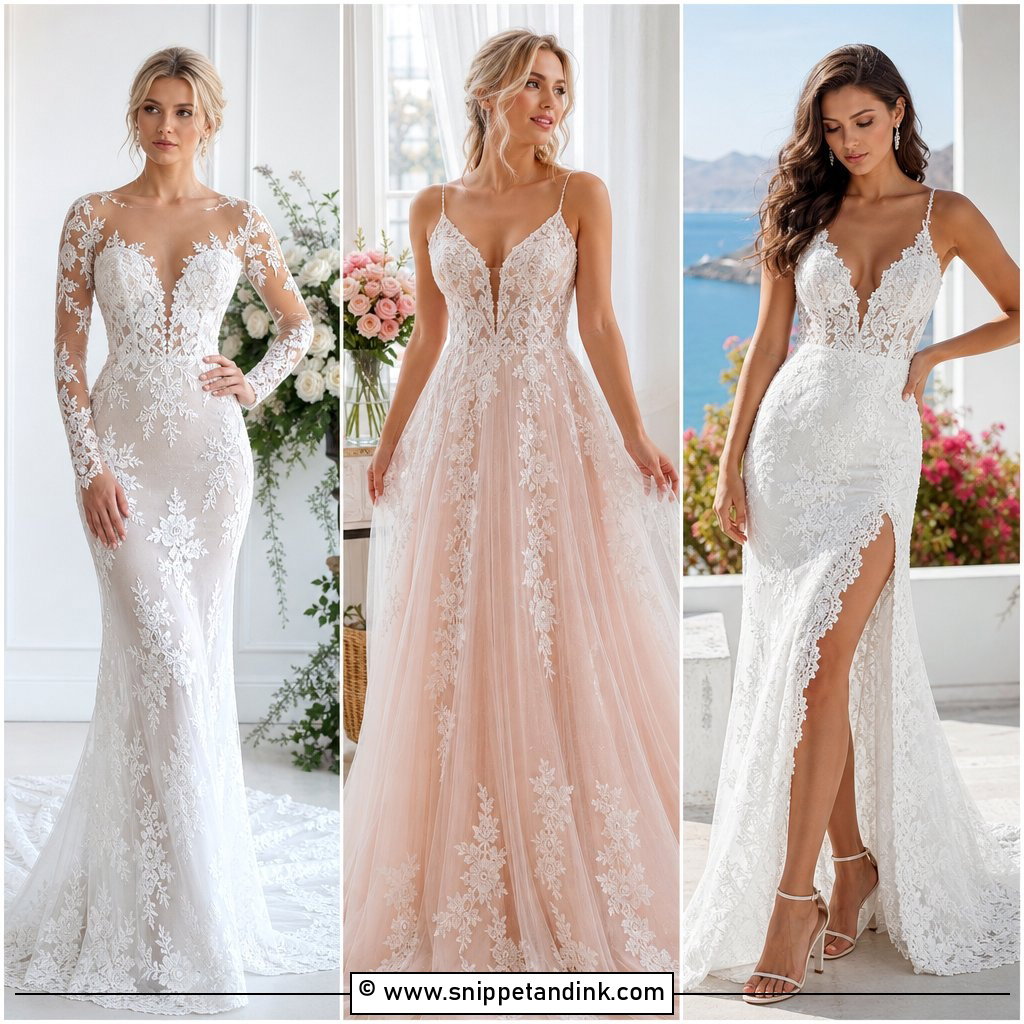
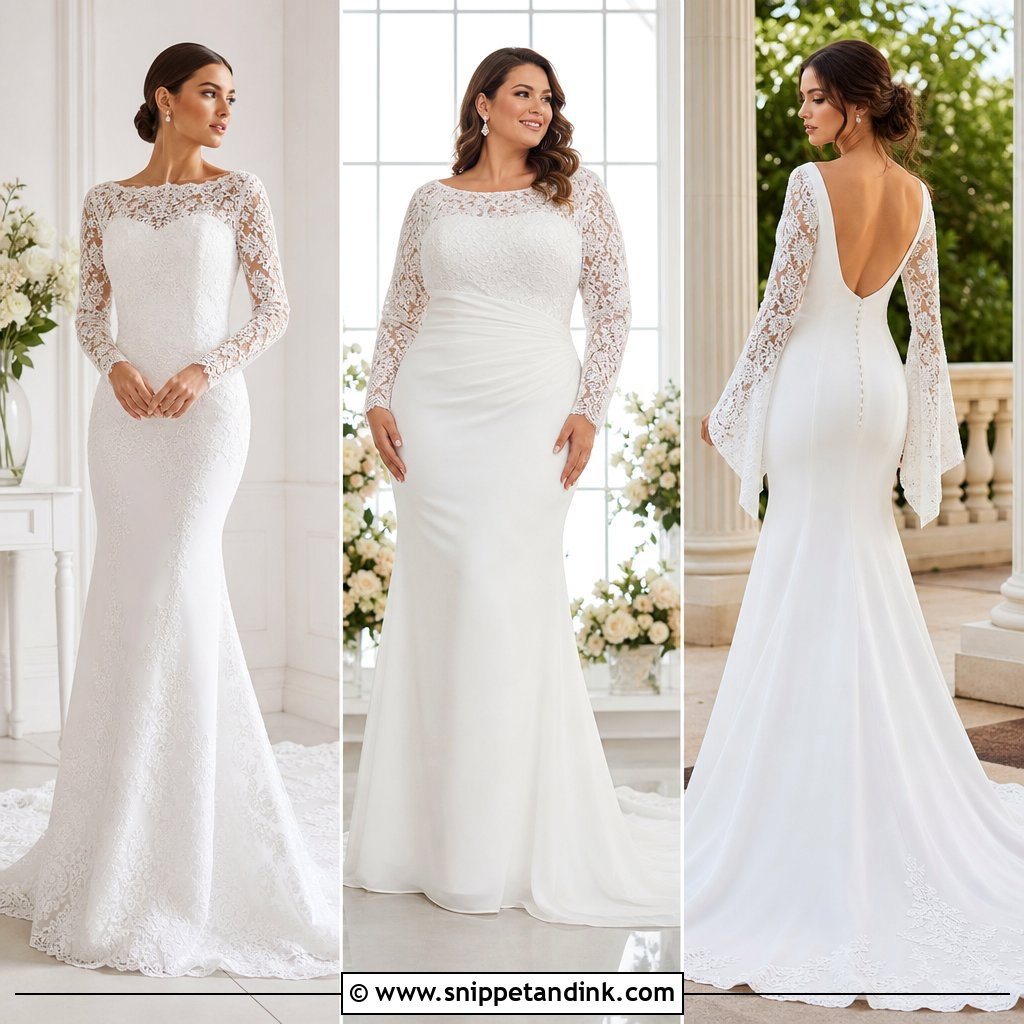
For a cool-weather wedding, sleeves are the obvious answer, and lace sleeves don’t feel heavy the way satin ones can. Illusion sleeves with floral motifs look light, while fully lined sleeves give a more modest finish. A fitted waist and flowing skirt balance the extra fabric up top. I’d add closed-toe satin heels, pearl earrings, a clean tulle veil and a structured clutch for later, with a low chignon to show the shoulder lace. My fitting test is simple: cross your arms and reach for your partner’s hand. If the lace strains at the elbow or shoulder blade, it needs easing before the day.
6. Off Shoulder Lace Wedding Gown
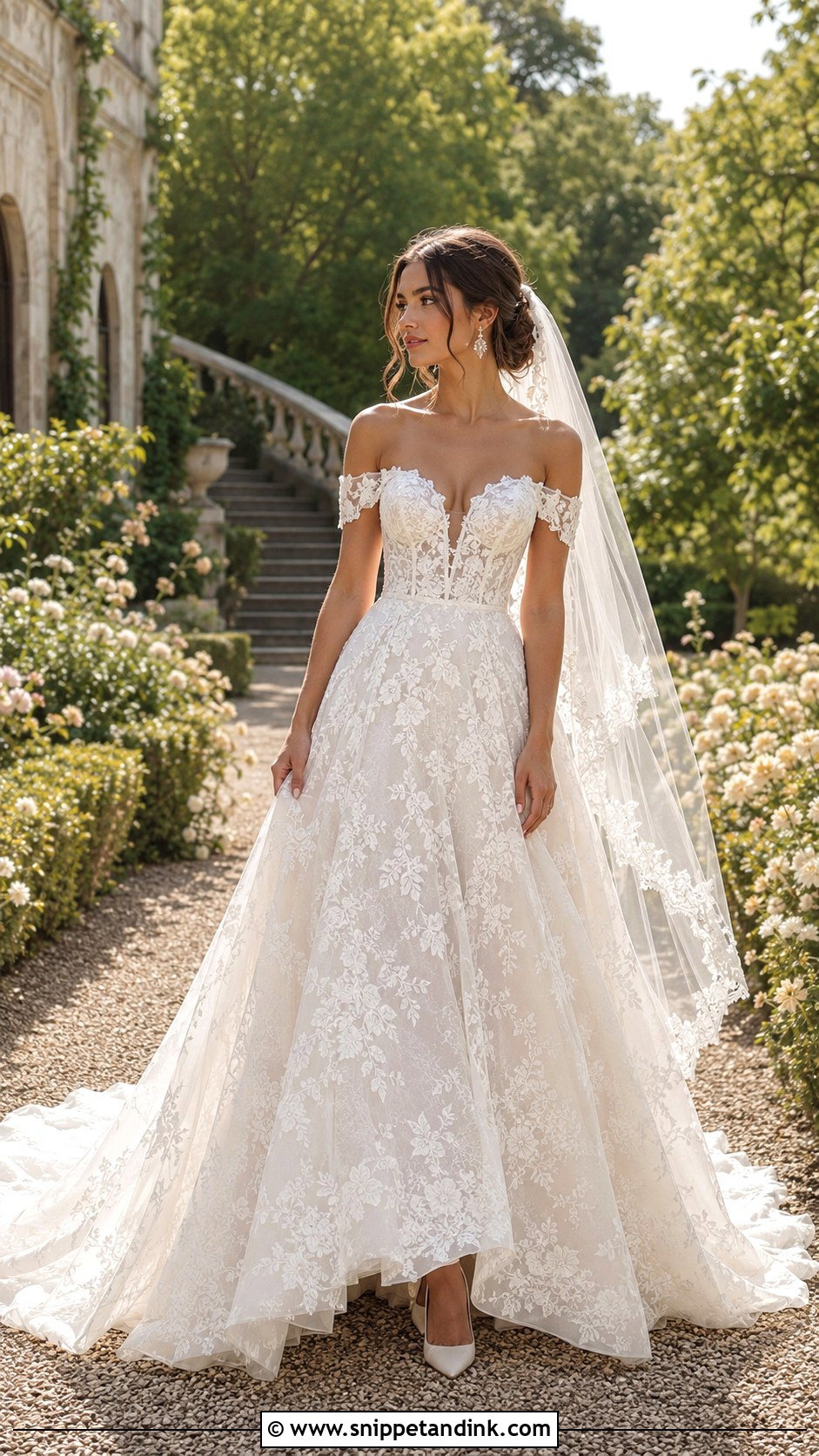
Off-the-shoulder necklines frame the collarbone, but they only stay put on a properly structured bodice. Without boning to anchor them, the sleeves creep up toward the shoulders every time you lift your arms. A flowing A-line gives the classic version, a fitted skirt a more dramatic one. Wear a short pendant, or skip the necklace and go for statement earrings. Ivory pumps, a chapel veil and a neat updo keep the neckline clear. During alterations, raise your arms and sit down a few times; you’ll know straight away whether the sleeve placement is right.
7. Strapless Lace Wedding Gown
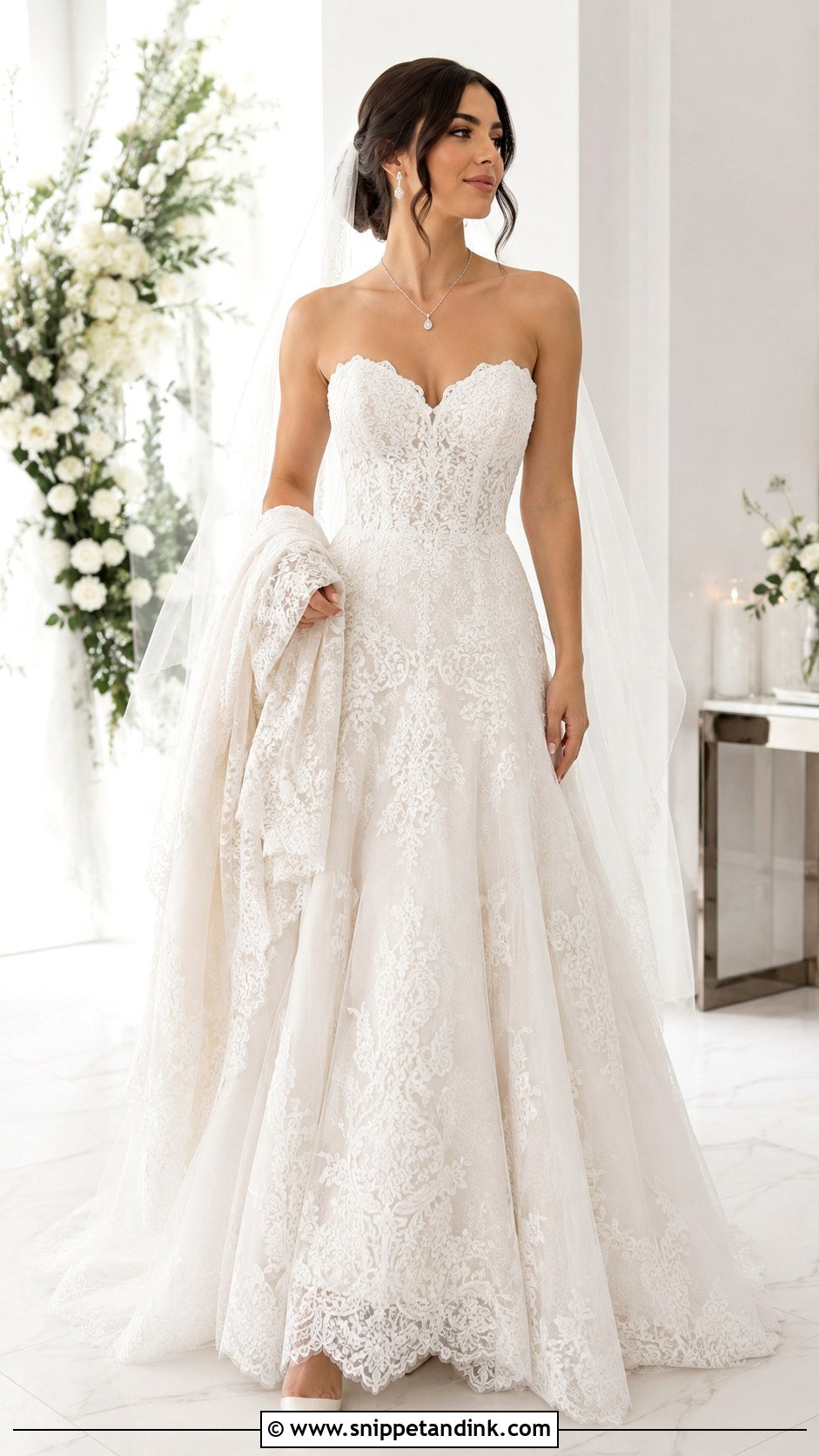
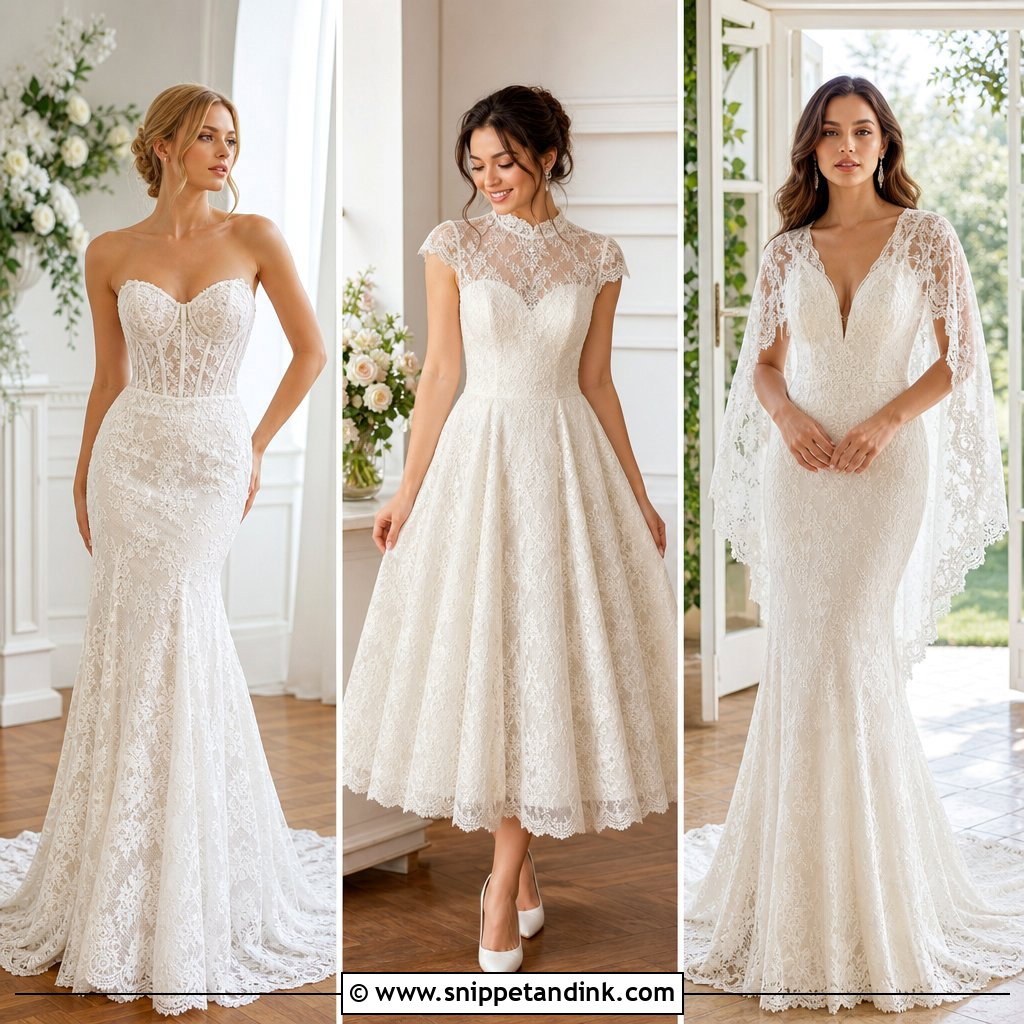
Strapless lace relies entirely on what’s inside. I look for internal boning and a bodice fitted to your measurements, not one that’s simply tight, because tight bodices slip while fitted ones grip. A sweetheart line softens the look and a straight neckline sharpens it. A fine collar necklace, matching earrings, pointed ivory pumps, a sheer veil and a sleek ponytail or bun frame the shoulders. If you’d like cover for a chilly church or the evening, a removable lace bolero cut from matching lace is an easy add-on and comes off for dancing.
8. Square Neck Lace Wedding Gown
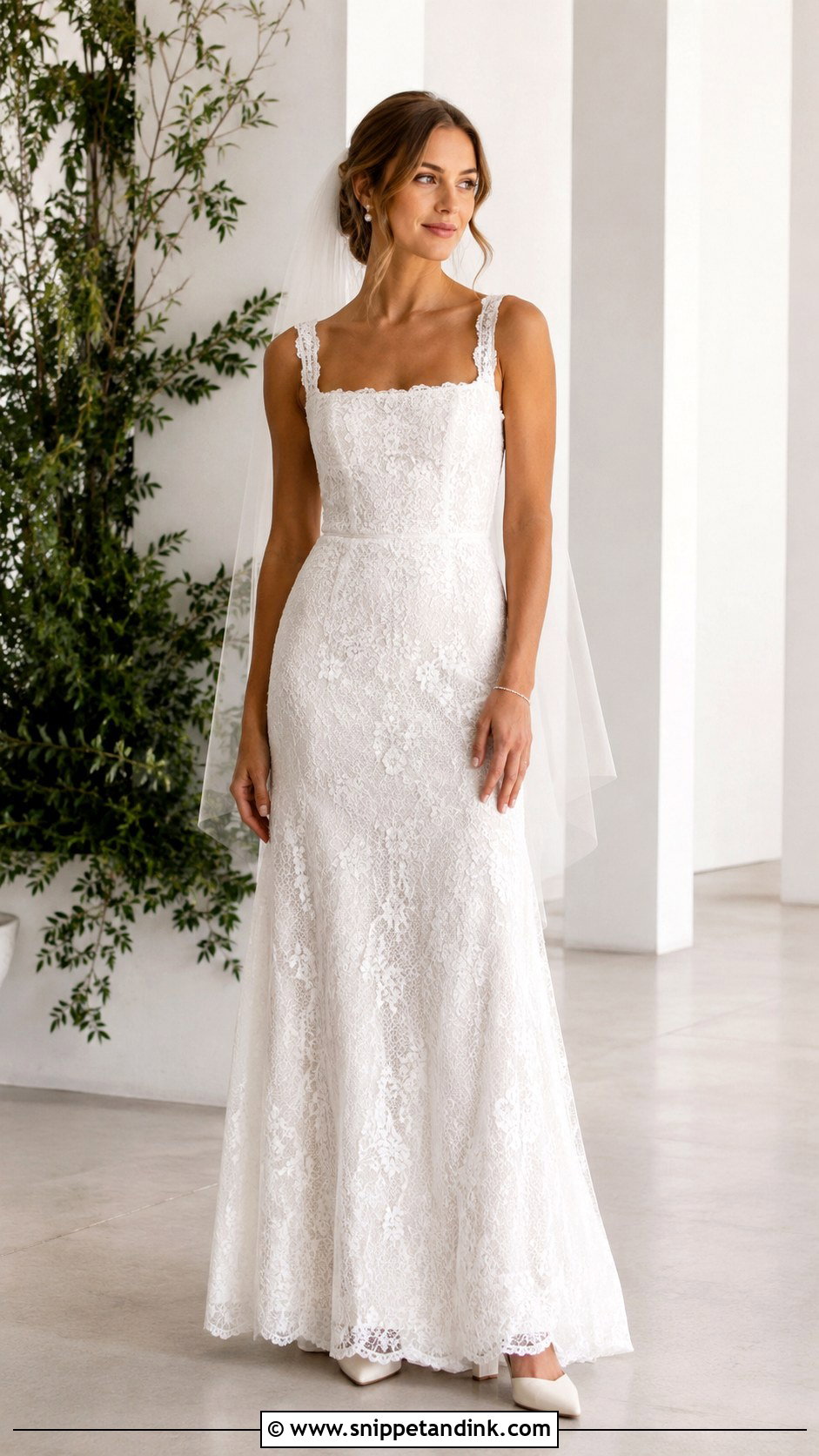
A square neckline frames the face and collarbone with clean lines, and it looks particularly good with wide straps or fitted lace sleeves. The skirt can be a column, an A-line or something gently fitted depending on how much volume you like. Pearl studs, a thin bracelet, block-heel pumps and a plain fingertip veil suit it, with a low centre-parted bun. Skip big necklaces; they cut across the strong neckline. I’d pick this for a bride who loves traditional lace but wants the overall shape to feel fresh and easy to accessorise.
9. High Neck Lace Wedding Gown
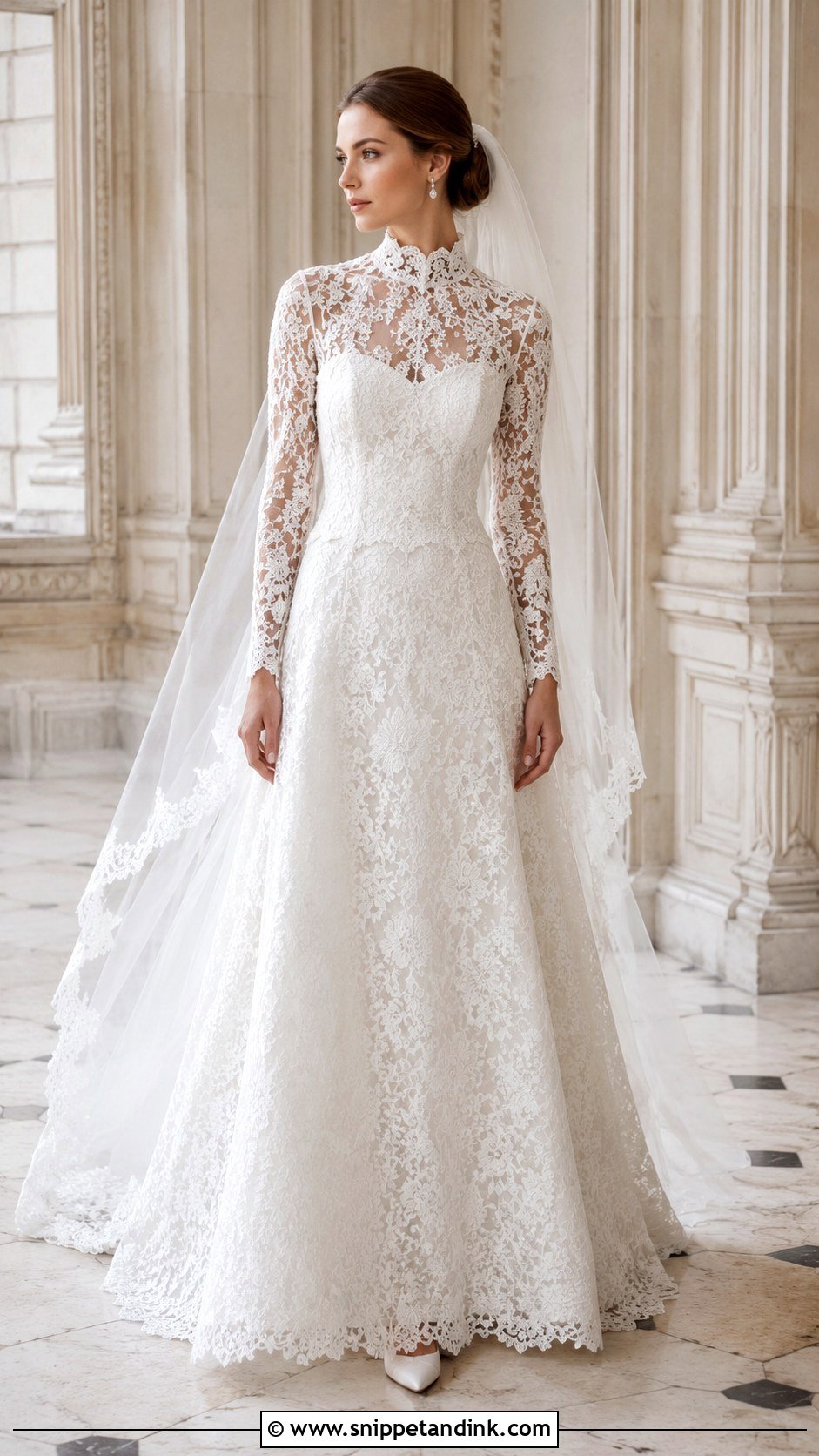
High necks put the lace right up near your face, so the pattern there needs to be the prettiest part of the gown. Sheer lace at the neck keeps it light, and a lined bodice underneath gives support. Pair it with an A-line or fitted skirt so the line stays long. Small drop earrings, a smooth low bun, closed-toe heels and a veil set below the hairstyle are all you need, since the lace frames the face better than a necklace would. Turn your head both ways in the fitting. Scratchy edges at the throat are the main complaint with this neckline, and a seamstress can usually soften them.
10. V-Neck Lace Wedding Gown
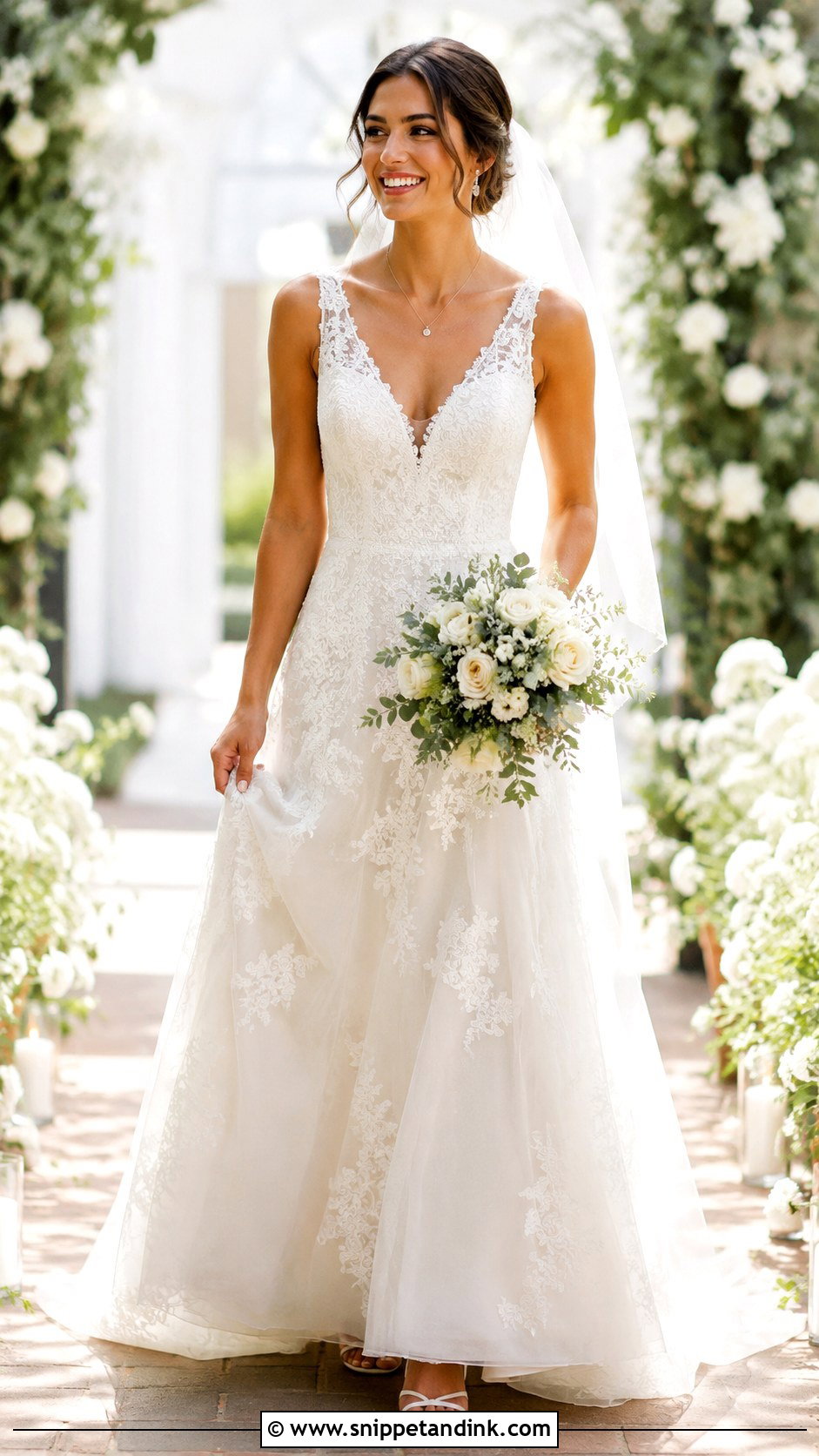
V-necks open up the upper body and work with almost any skirt. A shallow V is classic; a deeper one feels more current. What keeps it secure is straps cut close to the neck and lace motifs placed along the edge so it doesn’t gape. A fine pendant, small earrings, strappy ivory heels and a light veil suit it. Soft waves make it romantic, an updo makes the neckline look sharper. For a deep front, I’d ask for illusion mesh or extra appliqués during alterations, then test it by bending to hug a shorter guest.
11. Backless Lace Wedding Gown
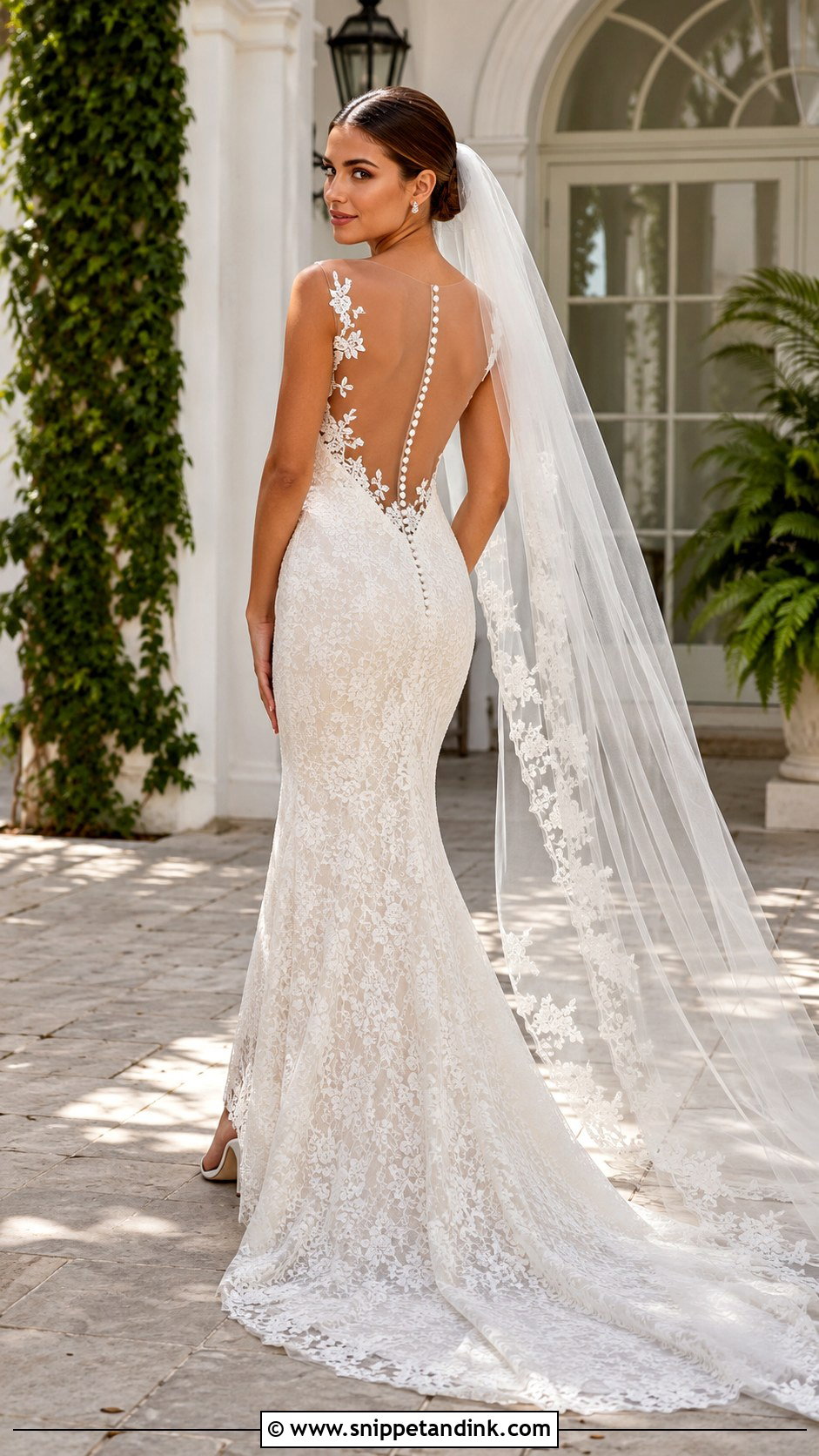
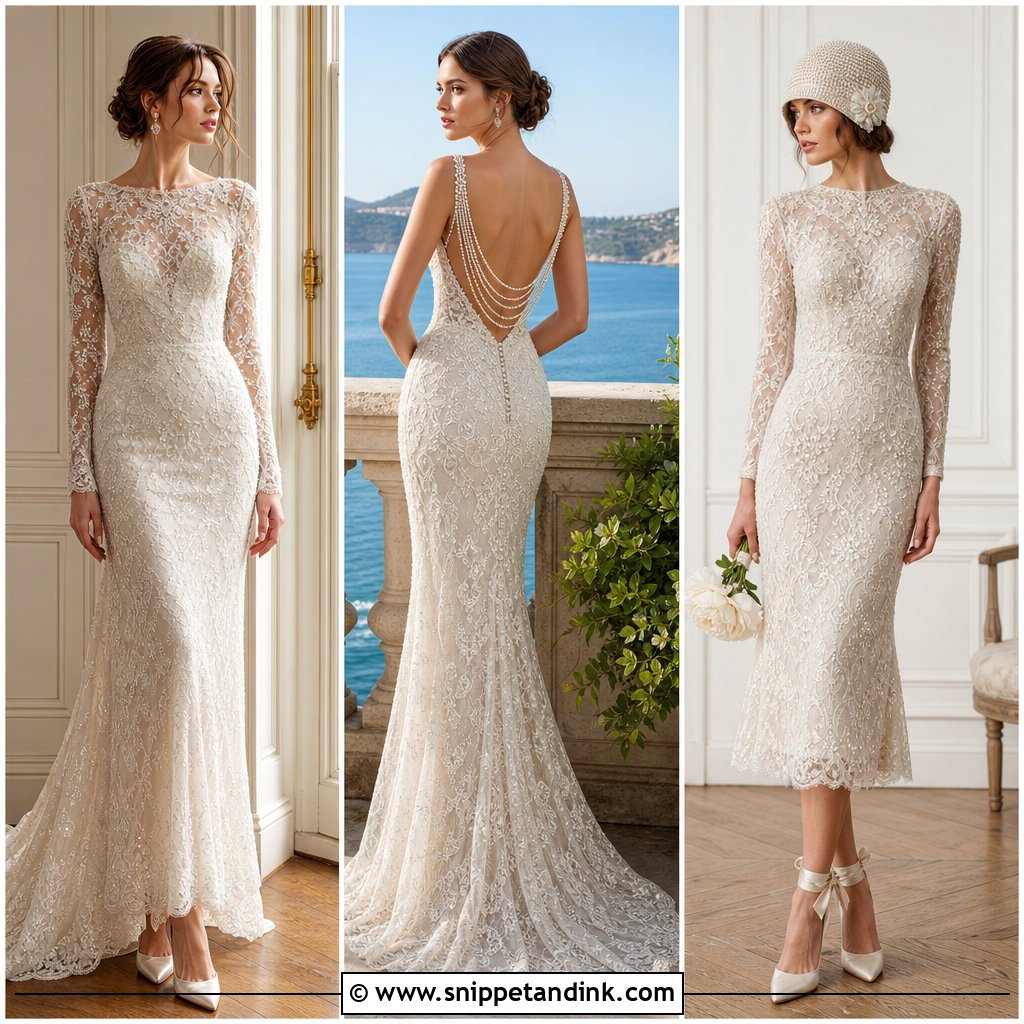
From the front, a backless lace wedding gown can look almost plain, and then you turn around. Floral lace can frame the opening, cover sheer mesh or trail down a row of covered buttons. The engineering is the thing to ask about. With no back to hold it, support comes from the side seams and cups, so bring the exact underwear you plan to wear to every fitting. A low bun or side-swept waves keep the back visible, with small earrings, sleek heels and a veil you can take off for the reception. Let the back be the feature and keep everything else quiet.
12. Boho Lace Wedding Gown
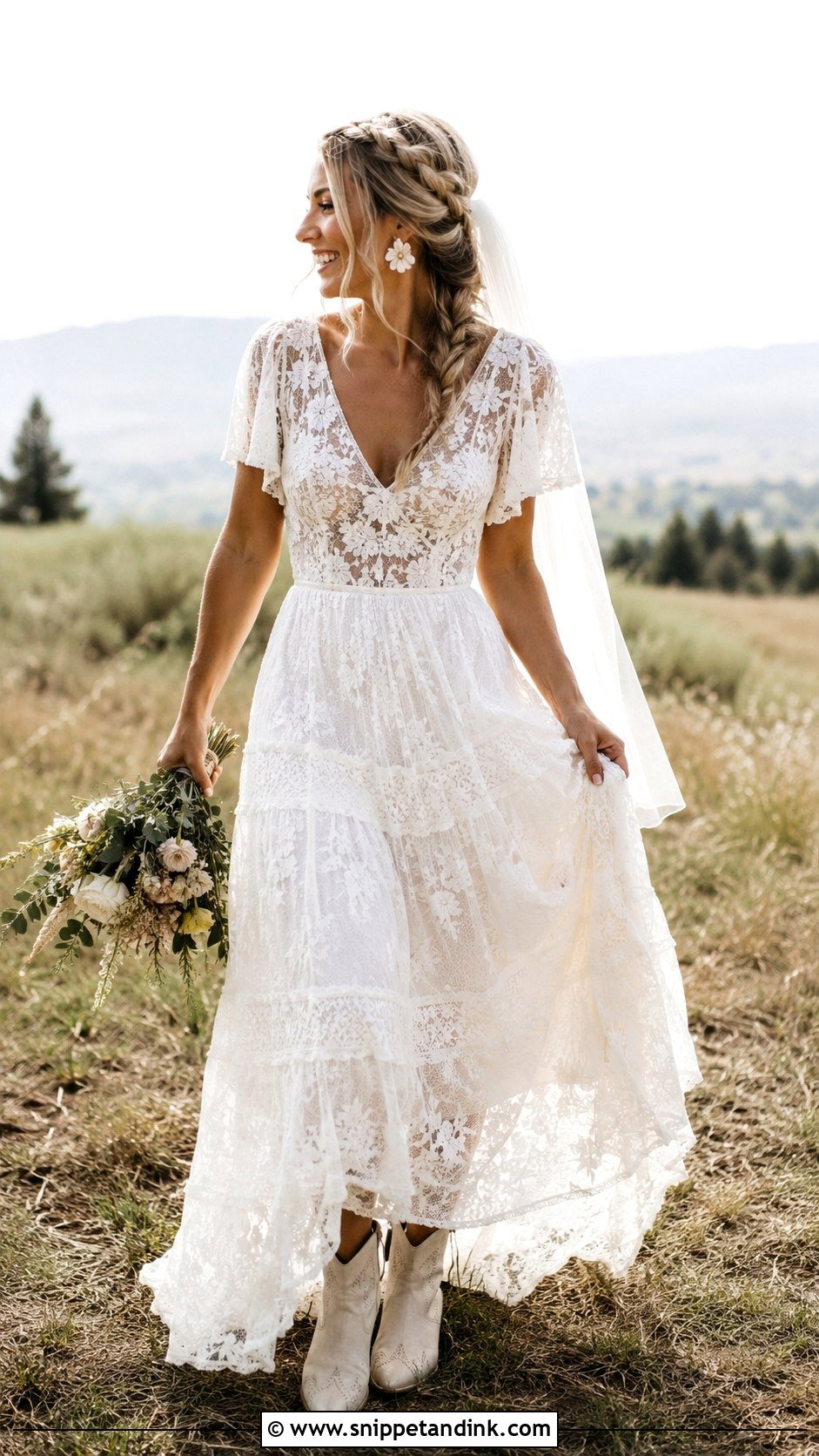
Boho gowns are made for outdoor, beach and woodland weddings, and they rely on lace light enough to move in a breeze. Look for a relaxed waist, flutter sleeves or a flowing skirt. Low block heels, flats or neat ankle boots handle uneven ground. Small floral earrings, a loose braid and a simple veil or comb finish it, with a greenery bouquet that doesn’t push the theme. I’d steer you away from heavy beadwork or stiff underskirts on this style; they fight the whole point of the dress. If it looks relaxed but still considered from head to toe, you’ve got it right.
13. Vintage Lace Wedding Gown
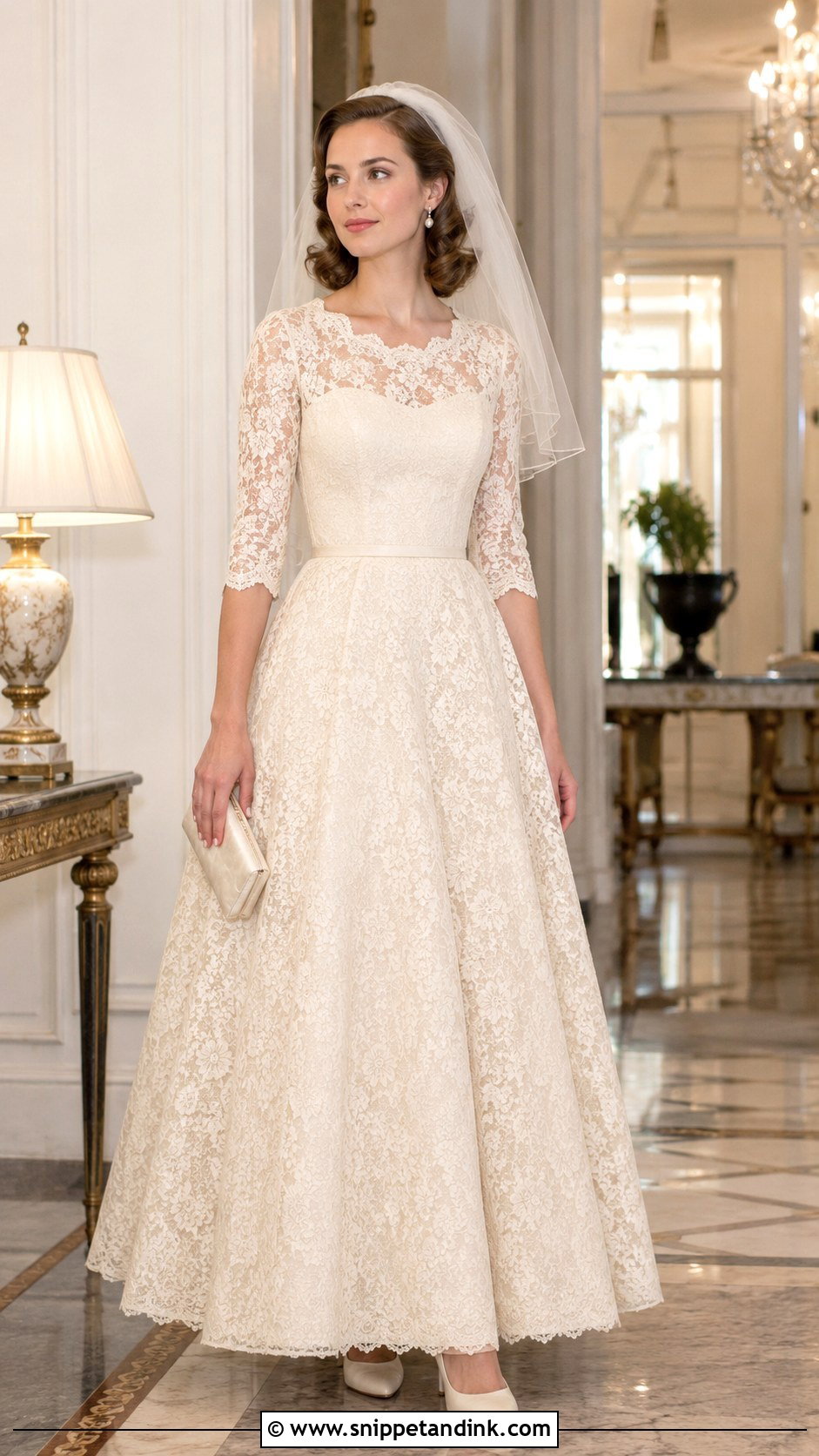
Vintage lace can nod to the past without turning into fancy dress, and the trick is to pick one or two period details, not all of them. A fitted waist, a scalloped neckline, covered buttons, three-quarter sleeves or softly layered lace all work. Ivory, cream and pale champagne linings help the antique feel. Round-toe heels, pearl earrings, a small structured clutch and a shoulder-length veil complete it. Finger waves suit a stronger retro theme, while a soft chignon keeps it gentler. If you’re wearing a genuinely old family gown, have the lace checked by a specialist cleaner before any alterations, as old lace can be brittle along fold lines.
14. Plus Size Lace Wedding Gown
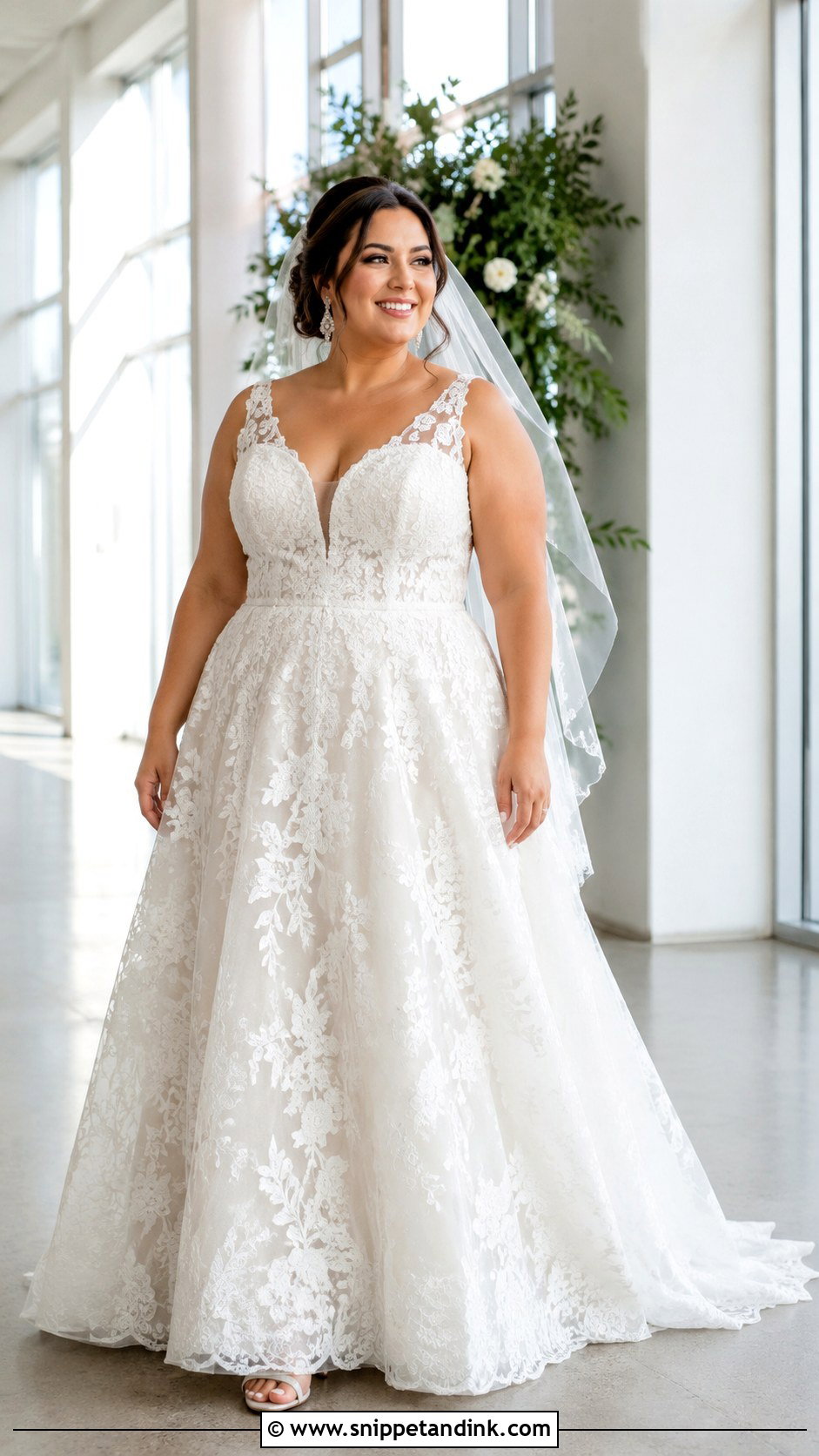
A plus-size lace gown needs reliable support, comfortable movement and details placed where you want the eye to go. A-line, ball gown, fit and flare and softly draped designs can all work when the proportions and alterations are right. I look for supportive straps, a structured bodice and a smooth lining under the lace so the pattern lies flat instead of stretching over seams. Comfortable heels, statement earrings and a veil scaled to the skirt suit it. A waist can be defined with seam placement, a narrow belt or a change of lace pattern. Ignore any rule that says you can’t wear a particular shape. Fit decides it.
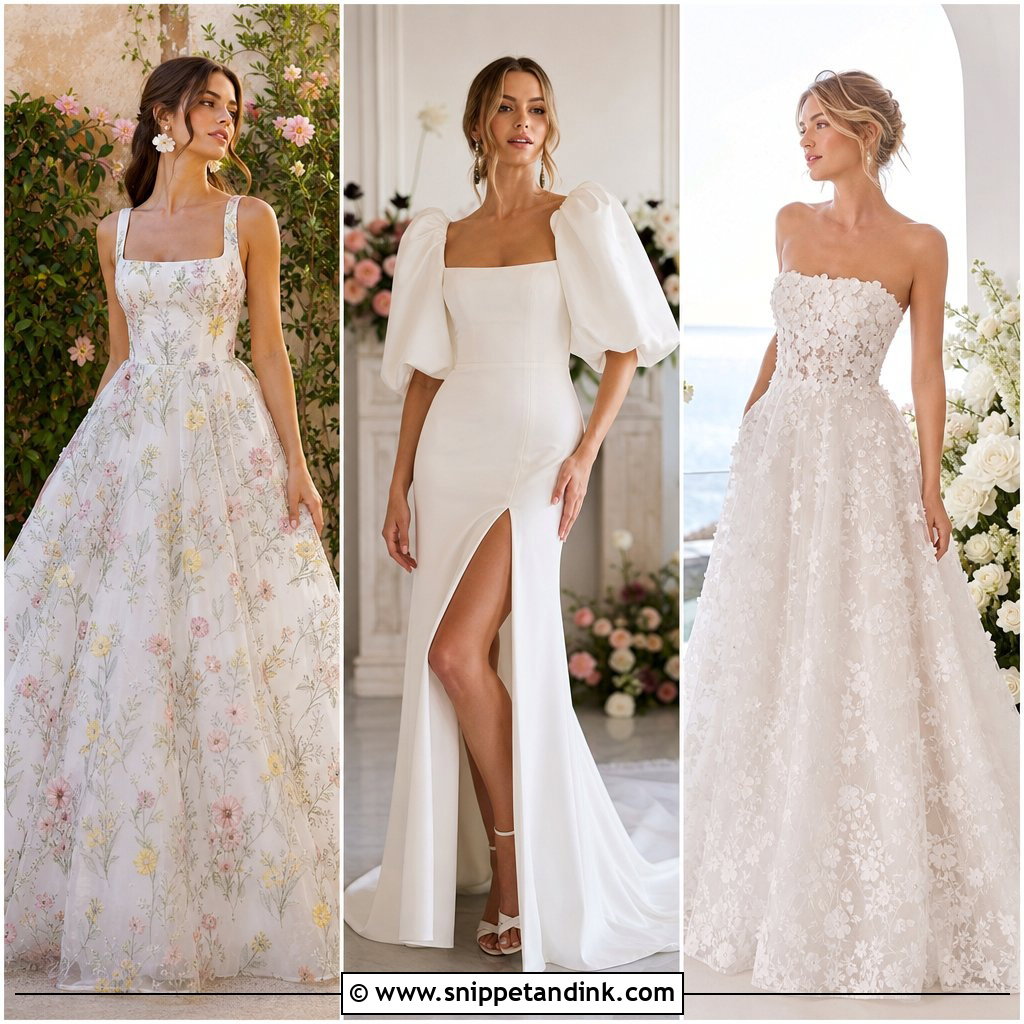

15. Modest Lace Wedding Gown
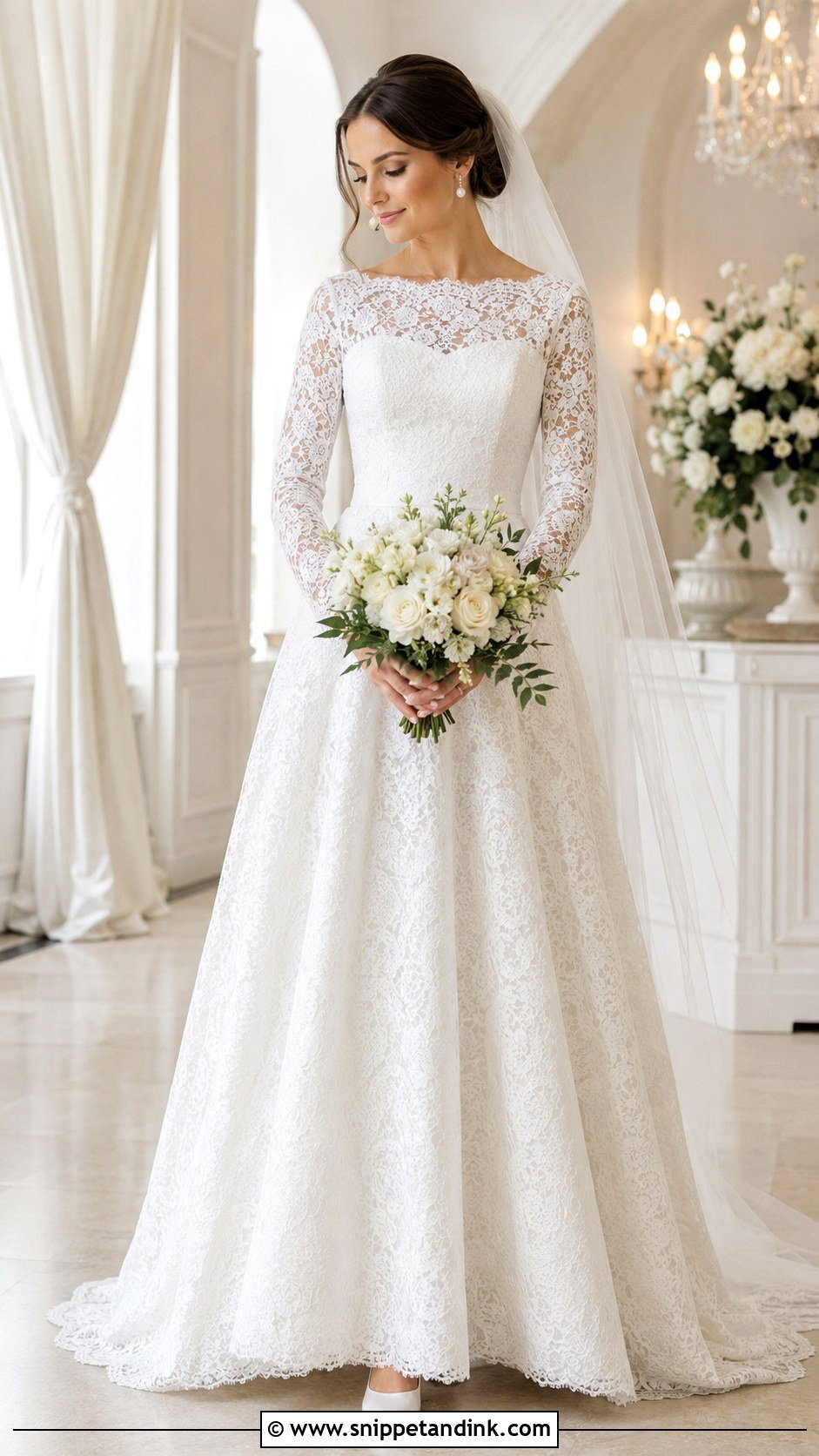
Modest gowns cover more without feeling heavier, as long as the lining breathes. High or bateau necklines, lined bodices, full sleeves and covered backs give a refined finish, with an A-line skirt for easy movement. Closed-toe heels, pearl or crystal earrings, a simple veil that doesn’t hide the sleeves and a smooth bun complete it. My one must-do: check the opacity in daylight and under indoor lights, and ask the photographer about flash. Lace that looks covered in the boutique can show skin tone through the net under a strong light, and a nude or ivory lining solves it.
16. Short Lace Wedding Gown
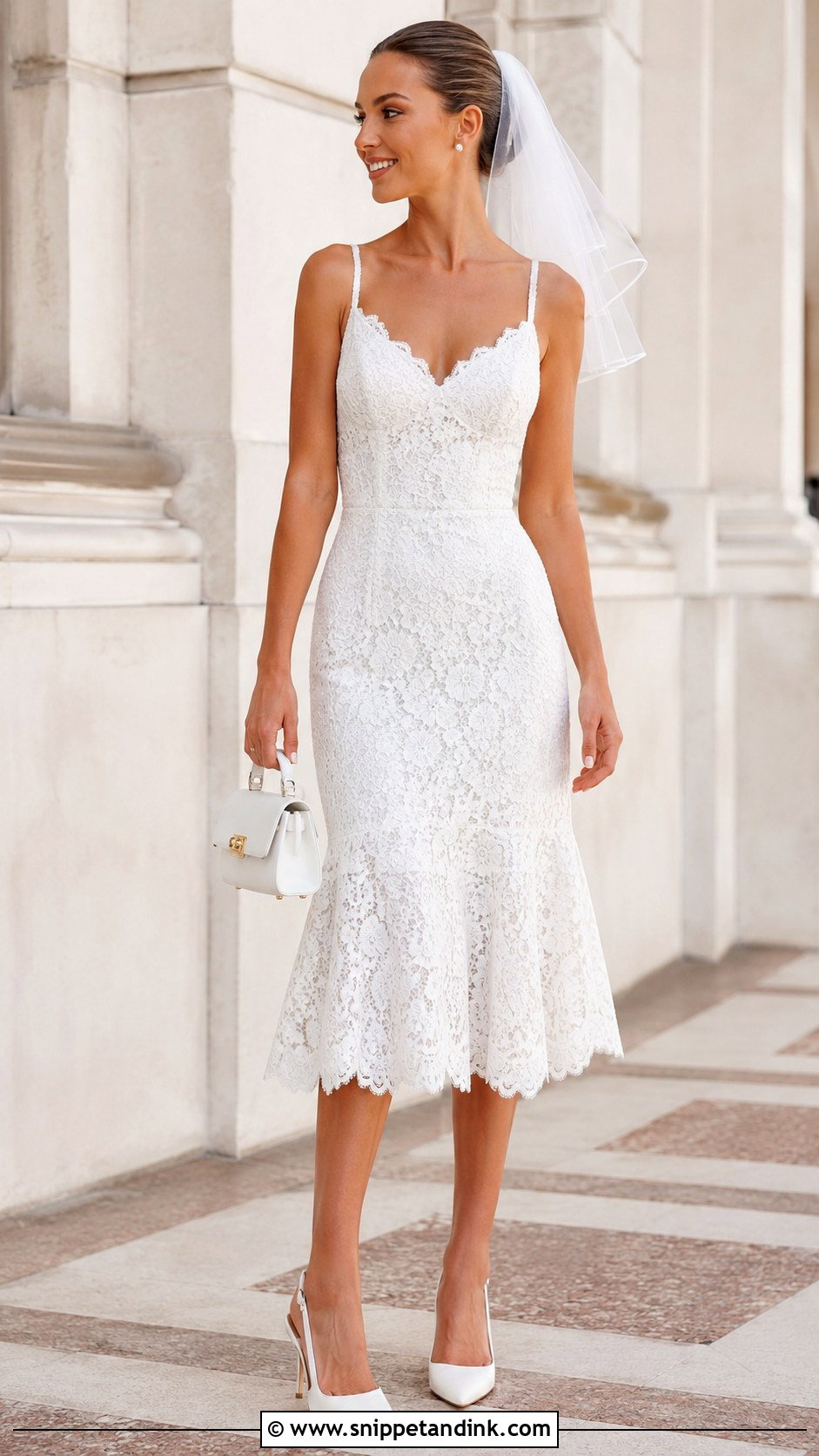
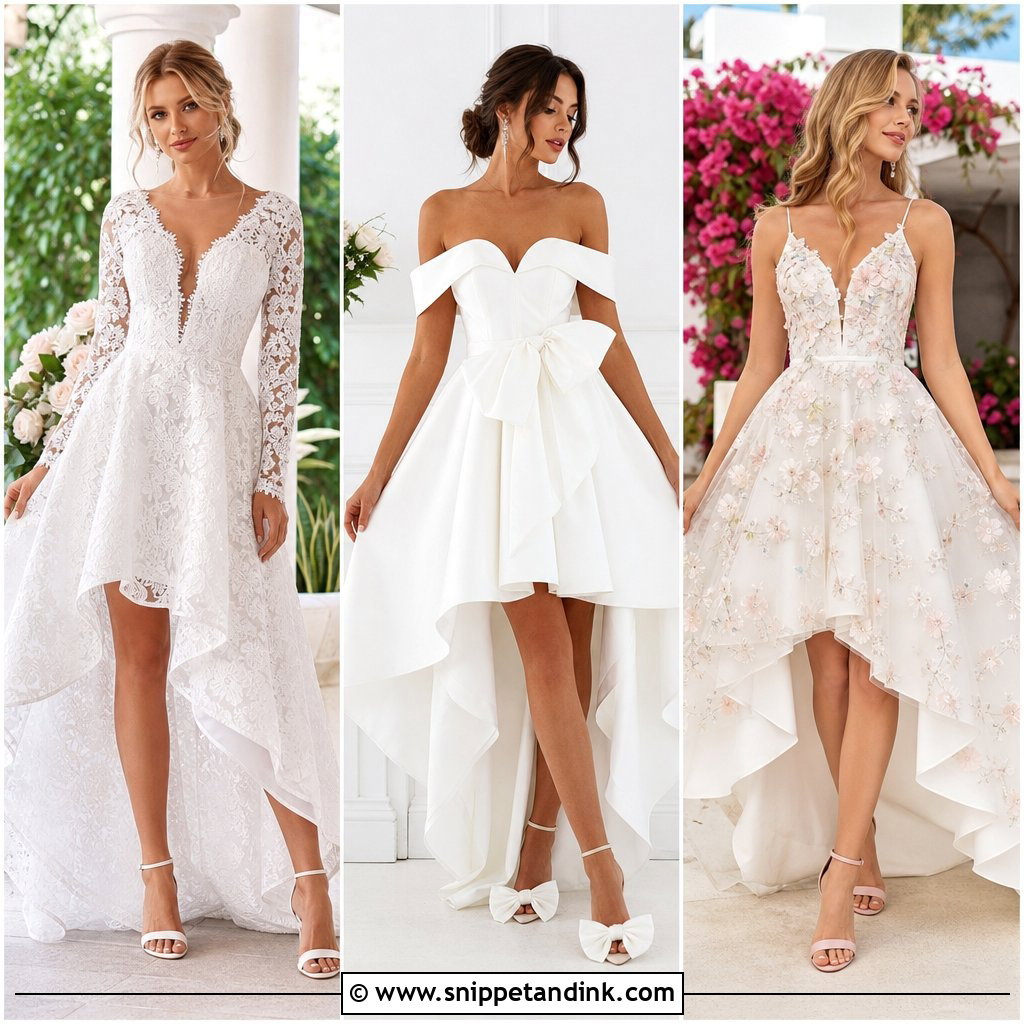
Short lace dresses suit a courthouse ceremony, a relaxed wedding, a second look or the reception. Tea length has vintage charm; knee length and mini feel more modern. Your shoes are on full show, so pointed pumps, slingbacks or embellished flats are part of the outfit, along with a small bag, pearl studs and a short veil or hair bow. Look hard at the hem. A scalloped lace edge should be finished cleanly and sit level all the way round, because at this length any dip catches the eye straight away. Fitted through the bodice and free below, it’s the easiest gown on this list to dance in.
17. Lace Wedding Gown With Detachable Sleeves
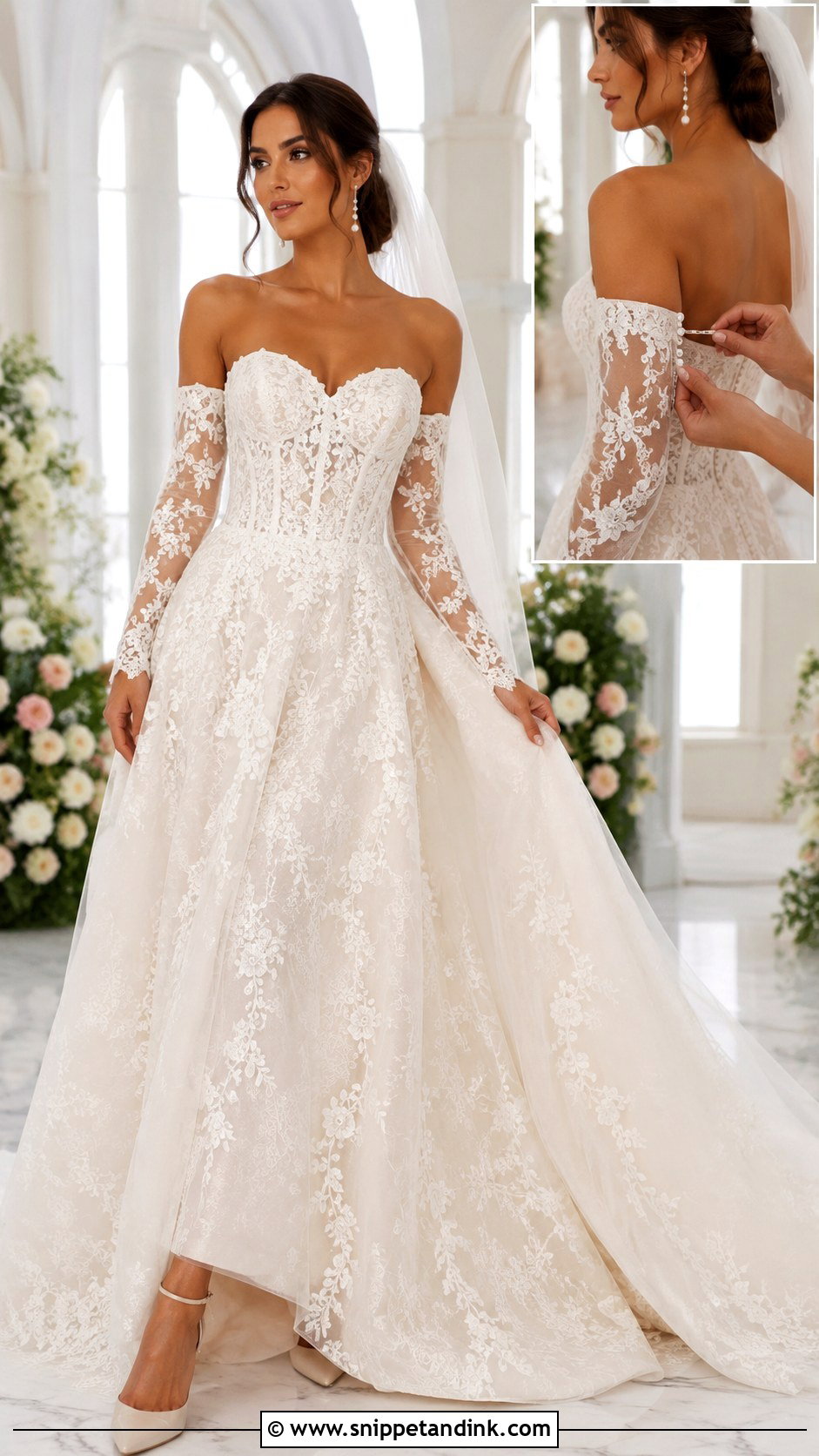
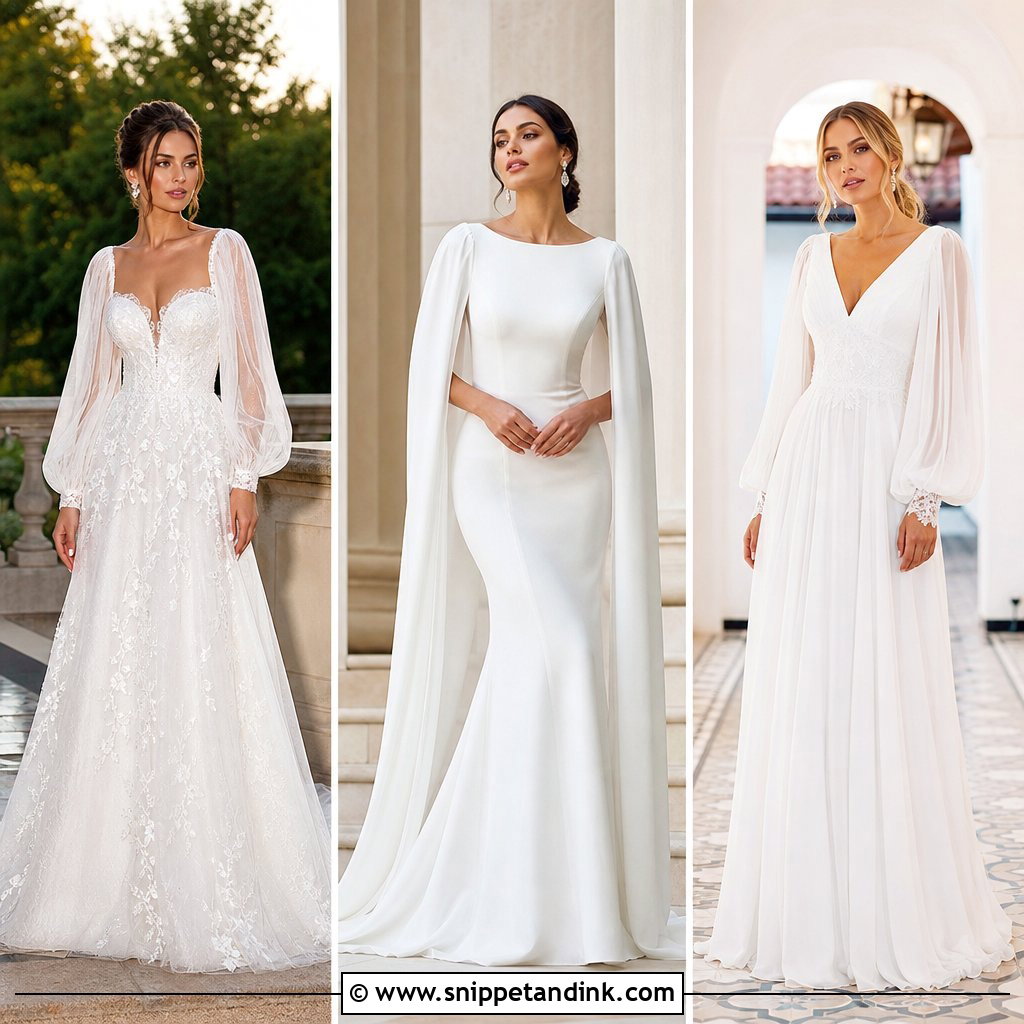
Detachable sleeves give you two looks without buying a second dress. Start the ceremony with fitted long sleeves, off-the-shoulder straps or puff sleeves on a structured bodice, then take them off for a strapless or sleeveless reception look. Keep ivory heels, drop earrings and a simple veil for both, and swap the veil for a sparkly comb later. I always ask to see the gown with the sleeves off before a bride commits. Well-designed removable pieces stay secure while you move and leave no hooks, loops or bare patches on the bodice once they’re gone.
18. Floral Appliqué Lace Wedding Gown
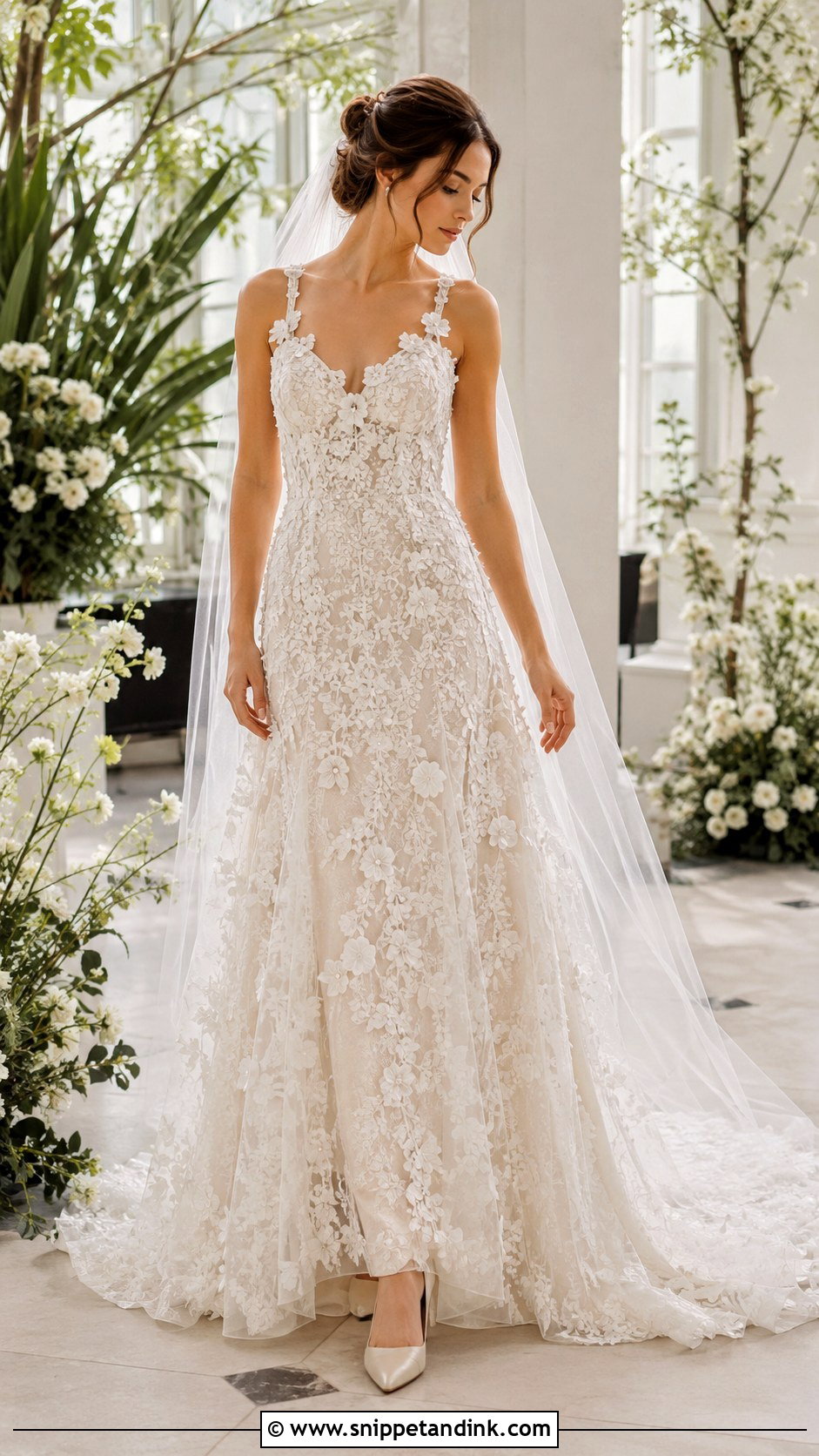
Floral appliqués add raised flowers to the lace, concentrated on the bodice, scattered down the skirt or gathered around the train. Scale is the big decision. Small flowers read as fine detail; oversized ones are a fashion statement and can overwhelm a petite frame. Clean ivory heels, stud earrings and an unembellished veil let the flowers stay the focus, and a loose bun or polished waves both work depending on the neckline. Skip floral jewellery. One more practical check: run a hand over the appliqués at the inner arm, since thick petal edges there can rub through an afternoon.
19. Beaded Lace Wedding Gown
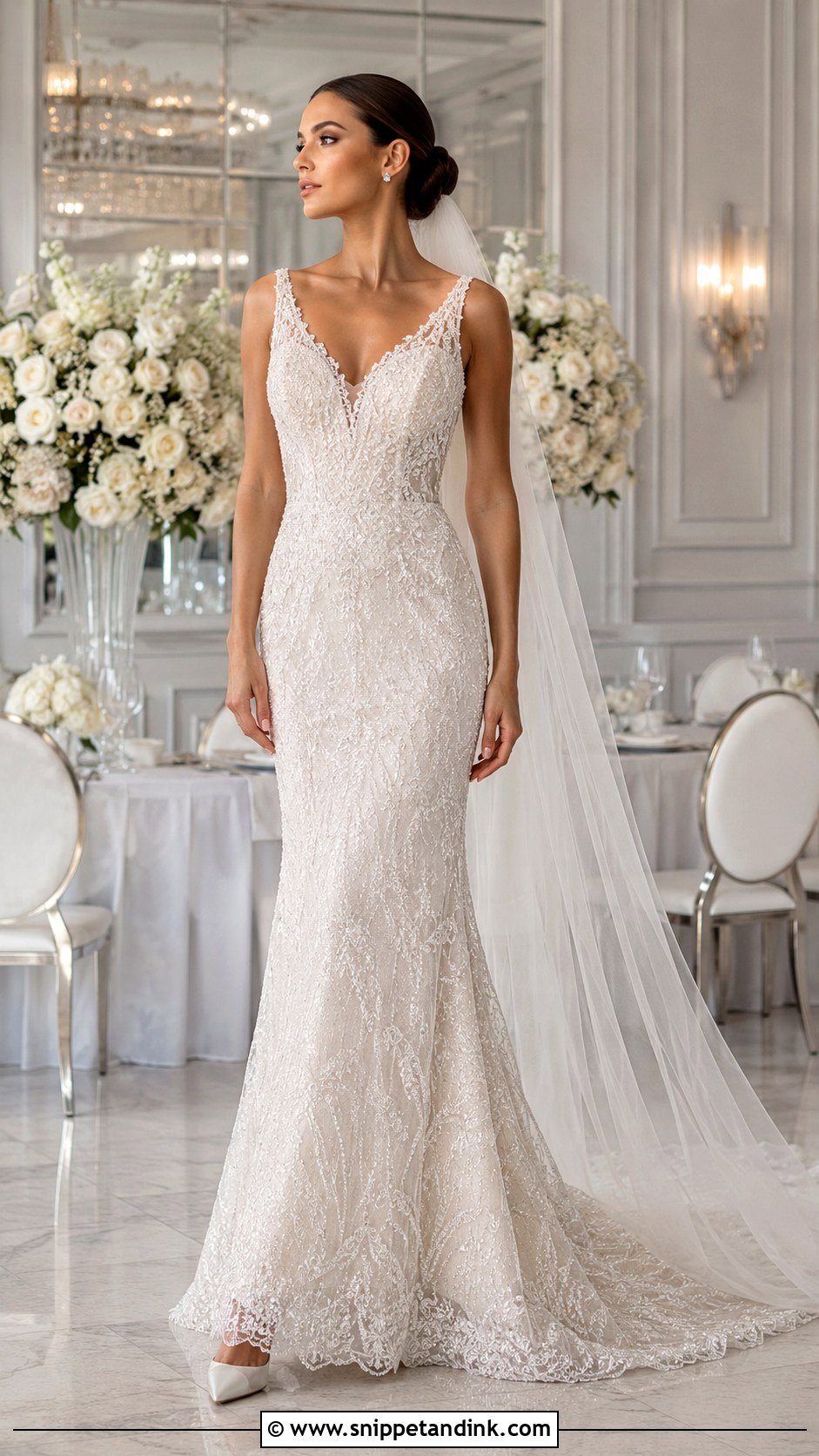
Beading on lace catches the light in the evening without turning the whole dress into sequins. Clear beads, pearls or small crystals stitched into selected motifs look the most refined. Beads add real weight, though, so pair them with a comfortable silhouette and a secure lining, and expect the gown to feel heavier than the sample photos suggest. Satin heels, small crystal earrings, a plain veil and a sleek bun stop hair snagging on the beadwork. Walk and sit in it with bare arms against the bodice. Beads sewn near the underarm are the ones that scratch.

20. Lace Wedding Gown With Cathedral Train
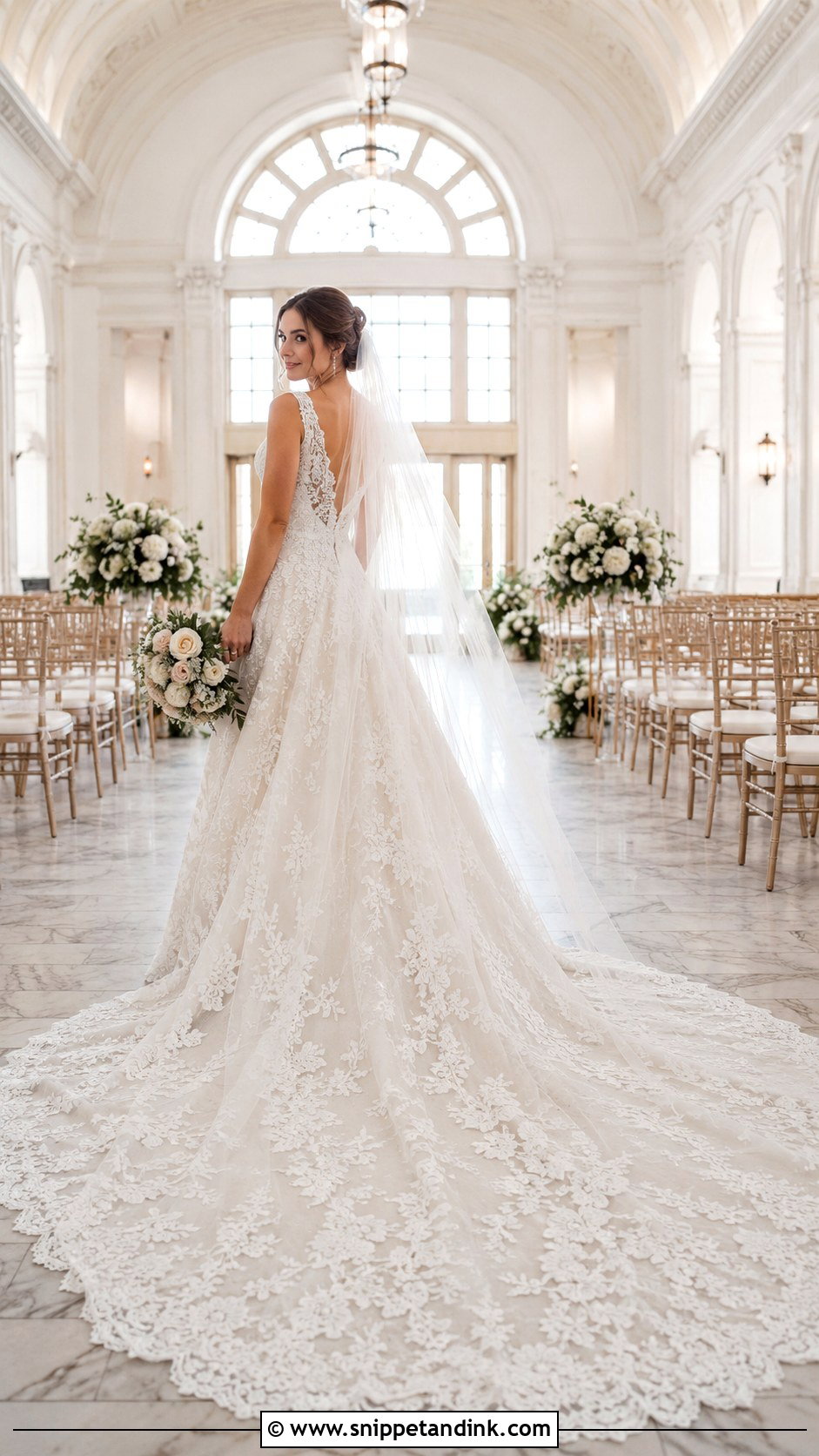
A cathedral train is the most dramatic thing a lace gown can do, and it works on ball gowns, A-lines and fitted dresses alike. The lace should flow naturally from the bodice down into the train rather than starting abruptly at the hips. Choose a veil that sits over the lace without hiding it, plus understated earrings, supportive heels and a neat hairstyle. Ask for a secure bustle so the train lifts after the ceremony and photos. Then think about the floor: a long lace train on gravel or a damp lawn picks up grit and stains fast, so I’d plan for someone to arrange it and carry it outdoors.
Why Lace Alterations Take Longer
Brides are often surprised when I tell them their lace gown needs more alteration time than a plain one. The reason is the edges. A scalloped lace hem can’t simply be cut shorter, because you’d lose the scallop. The seamstress has to unpick it, shorten the skirt and stitch the edging back on by hand. Taking in a lace bodice works the same way: appliqués that cross the seam have to be lifted and re-sewn so the pattern still flows.
In practice, that means:
- Order early. Made-to-order gowns often take several months to arrive, and lace styles rarely ship faster.
- Start fittings with enough room for two or three appointments; I like the first one roughly two to three months before the wedding.
- Ask for a quote that separates hemming, bodice work and bustle, since lace work is usually priced higher and the total can vary a lot between seamstresses.
- Lock in your shoes before the first fitting. Changing heel height after a lace hem is finished means redoing the hand work.
If a seamstress offers to hem lace by machine in an afternoon, ask how she’ll keep the scallop. A good one will explain, and a rushed one will simply cut it off.
Lace Is the Fabric, the Shape Is Your Decision
Pick the silhouette, coverage and lace together, and think about your venue, season and how much you want to move. A gown has to look good in photos, but it also has to let you walk, sit, hug people and dance. Try a few different laces, because fine Chantilly, raised appliqués and heavy guipure give very different results even on the same shape. Bring your shoes and underwear to every fitting and look at the dress in more than one kind of light. From a breezy boho dress to a cathedral train, the details you choose around the gown should support it and never compete with it.
You'll Like These Ideas:



Leave a Reply