
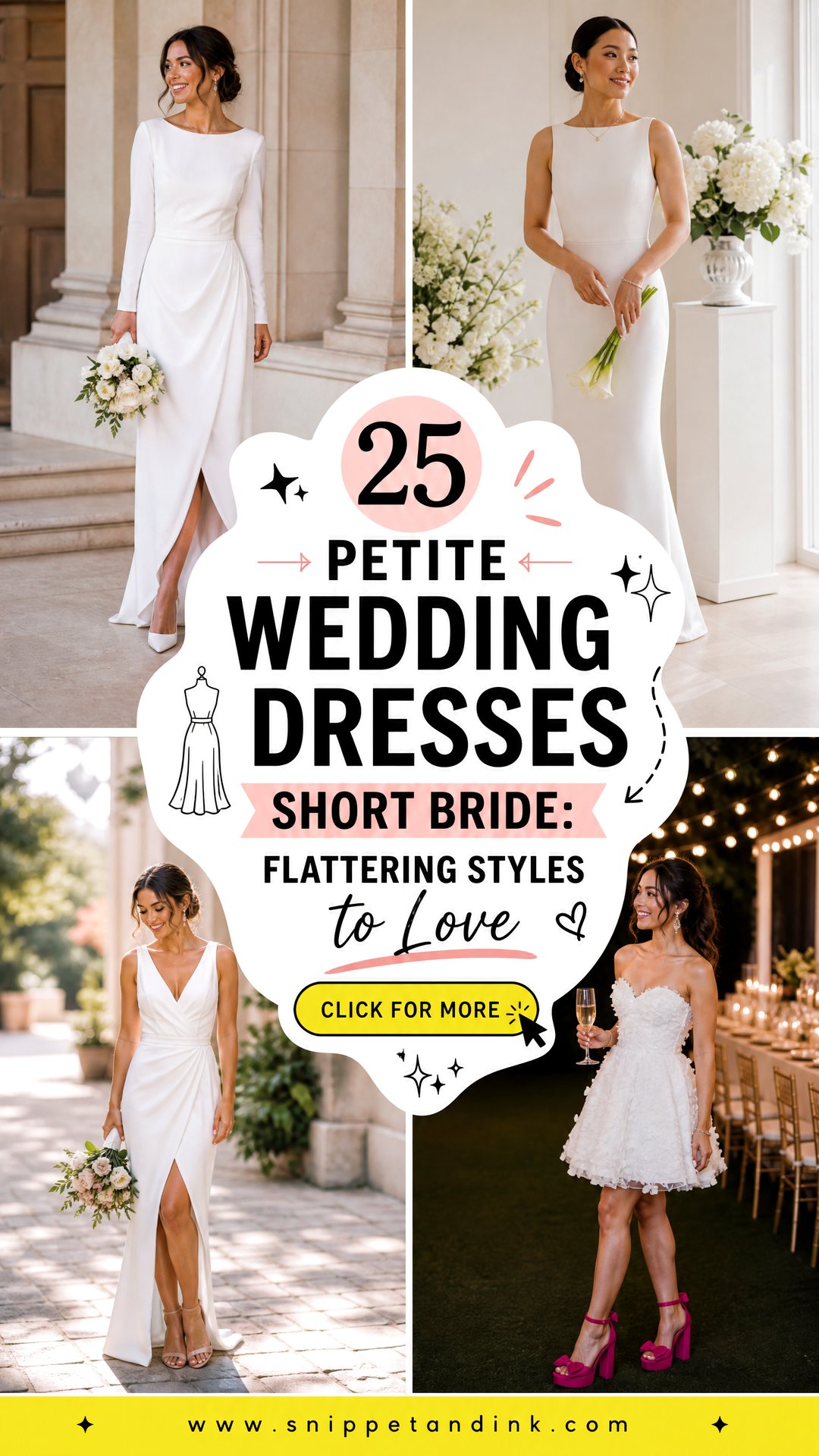
Most bridal samples are cut for a woman around five foot eight in heels, so a shorter bride often spends her first appointment drowning in fabric and assuming the dress is wrong for her. Usually it isn’t. What decides whether a gown works on a petite frame is where the waist seam lands, where the hem stops, how heavy the fabric is and what shoe sits under it. I’m happy to put a short bride in anything from a knee-length mini to a controlled ball gown once those four things are right. Below are 25 complete looks, each with the shoe and accessories I’d pair, and my notes on what to check at the fitting.
Trying On Sample Gowns Made for Someone Taller
Shop samples are usually made in one size and one length, and that length assumes a tall woman in high heels. On a bride of five foot two, the hem pools a foot onto the carpet and the waist seam drops to her hips. That is a fitting problem, not a verdict on the dress.
When I dress a petite bride in samples, I clip and fold rather than judge. Here’s what I do at the appointment so the mirror tells the truth:
- Bring heels at the height you plan to wear, or ask for a platform to stand on, so the length you see is roughly the length you’ll have.
- Ask the consultant to pin up the hem and pin the waist seam to your natural waist. A dress that looks wrong unpinned often looks right once the waist is in place.
- Look at your side profile. Where the skirt starts to widen tells you more than the front view does.
- Sit down in anything you’re seriously considering. Long bodices and corsets show their problems seated, pressing into the hips.
Some designers offer petite lengths or will cut a gown shorter when they make it. It’s worth asking at order time, because a dress cut to your height needs less work later, and a big hem alteration on a gown with lace edging or horsehair braid at the bottom is slow.
1. Petite A Line Wedding Dress With Pointed Heels
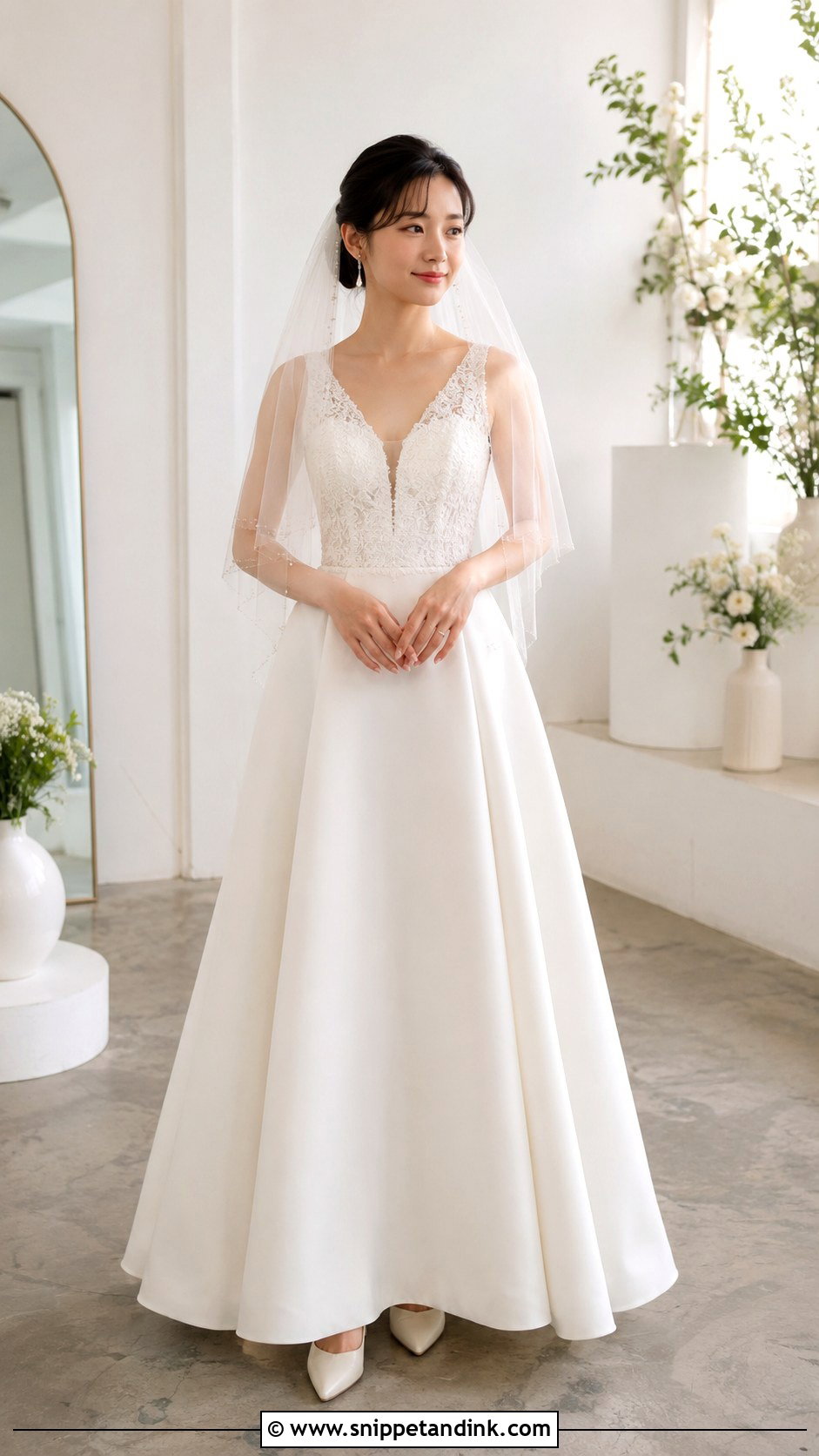
A petite A-line wedding dress gives shape without much bulk, which is why I pull one first for nearly every short bride. The thing I check is the waist: if the seam sits at her natural waist or a touch above, the skirt reads as leg. If it drops to the hip, she looks shorter instantly. A V-neck or sweetheart opens the chest, and pointed ivory heels carry the line down to the floor. Skip skirts built from several stiff petticoats; on a small frame they push the hem outward and the dress starts wearing you.
2. Petite Short Wedding Dress With Block Heels
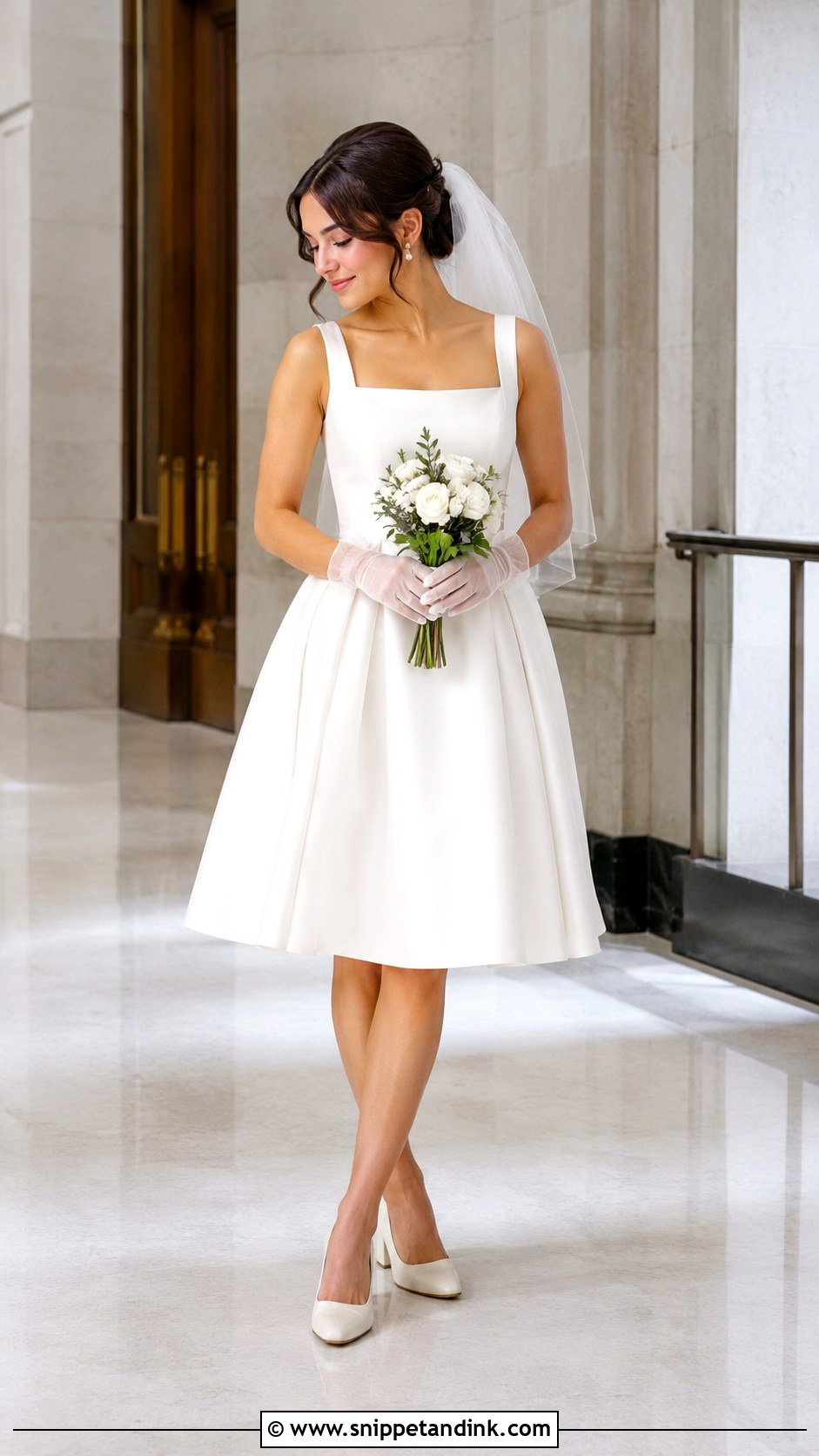
Showing leg is the quickest way to add height, and a hem at or just above the knee does it honestly. The risk with short dresses is that they slide toward cocktail wear, so I insist on a structured bodice, ideally with boning or a firm lining, to keep it bridal. Block heels earn their place here: you’ll be standing for photos, walking on grass or cobbles, and dancing, and a wide heel doesn’t sink. Sheer gloves, a short veil or a bow clip finishes it. Courthouse ceremonies and relaxed receptions suit this best.
3. Petite Tea Length Wedding Dress With Ankle Strap Heels
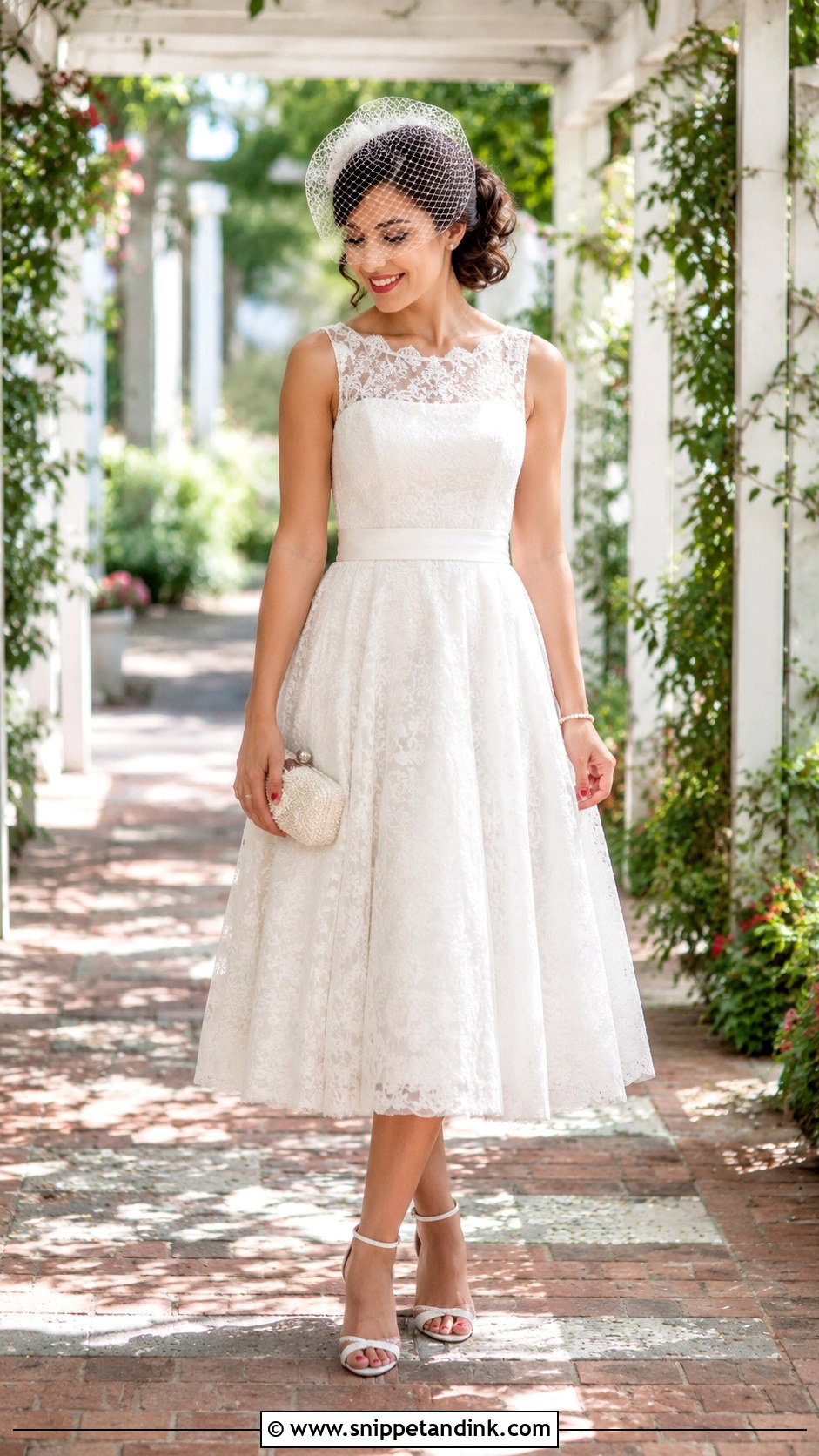
Tea length is unforgiving about where it stops. I want the hem a few inches below the knee and well clear of the ankle; if it lands mid-calf on a short leg, it cuts her right at the widest point. A fitted waist and a softly flared skirt keep it light. Ankle straps are tricky on petite legs because a thick strap draws a horizontal line, so choose the thinnest strap you can find, or a strap in a nude tone. A birdcage veil and a small clutch suit the vintage shape well.
4. Petite Satin Slip Wedding Dress With Strappy Sandals
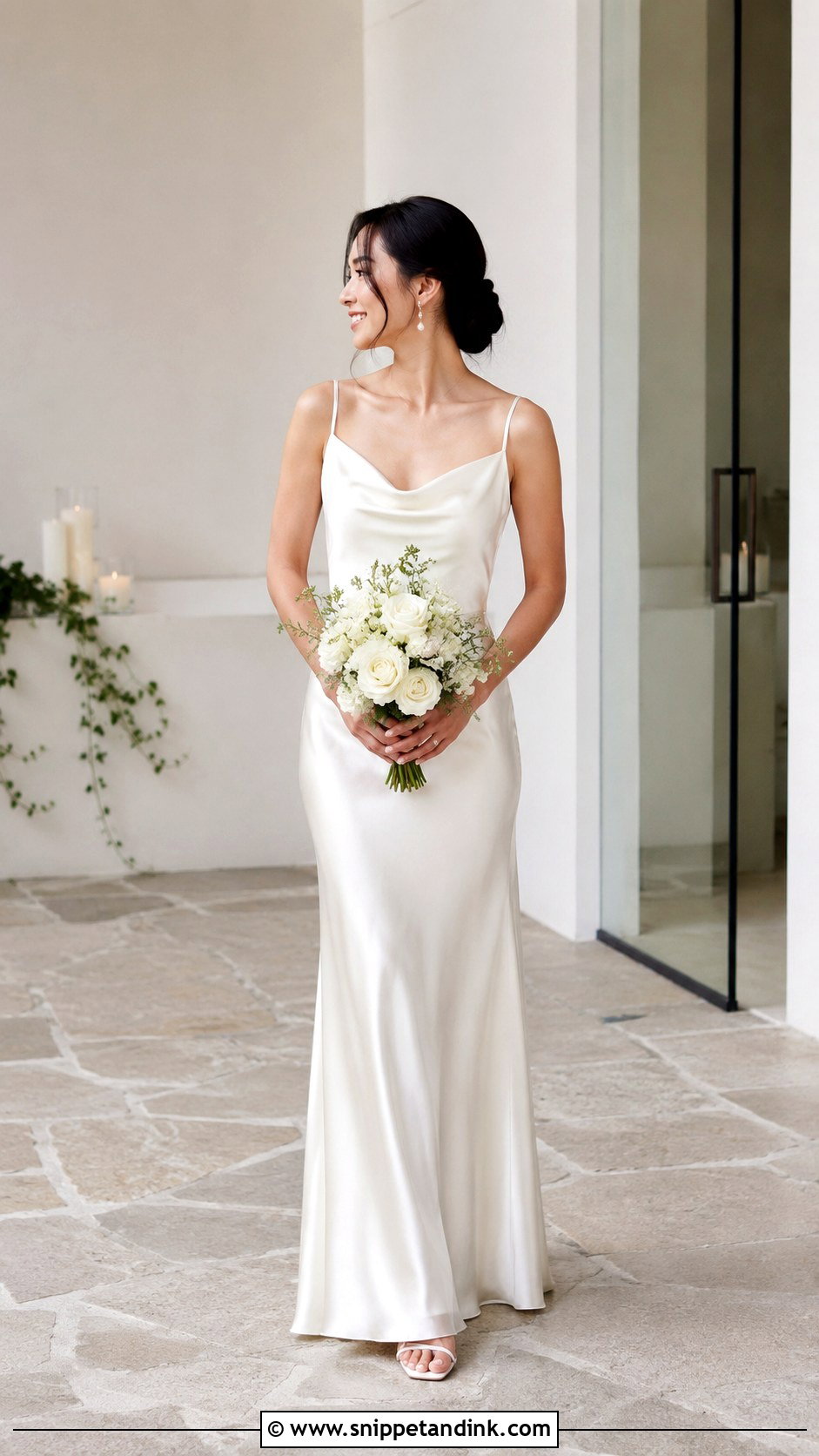
Bias-cut satin makes one unbroken line from shoulder to floor, and that line is the whole point for a short bride. It is also the least forgiving fabric I work with. Bias stretches as it hangs, so the hem needs to be set after the dress has had time to drop, and it shows every seam and undergarment edge. I look for adjustable straps so the neckline sits right on a shorter torso. Strappy ivory sandals and a low bun keep it clean; a cropped sheer wrap adds coverage for church ceremonies without hiding the drape.
5. Petite Lace Mini Wedding Dress With Bow Heels
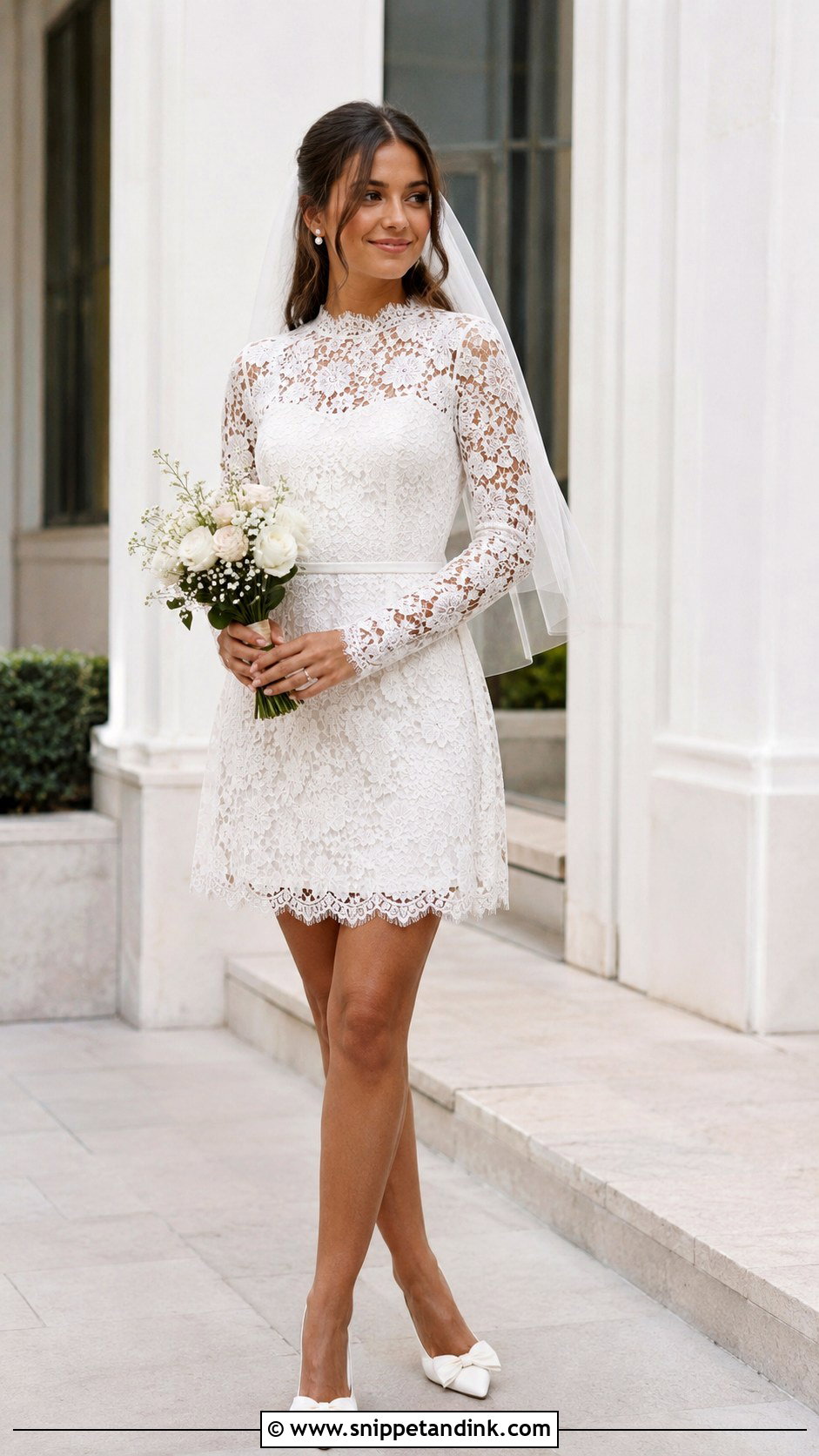
Lace on a mini works when the motif is small. Large corded lace flowers can swallow a short torso, so I hold the lace up and look at the scale of the pattern against her shoulders before anything else. A fitted waist or a gentle fit-and-flare gives the body definition. Bow heels are fine, but keep the bow small or move it to the back of the shoe so it doesn’t compete with the lace. Add a simple veil and pearl studs. It’s a strong pick for a civil ceremony or a reception change.
6. Petite Off Shoulder Wedding Dress With Low Heels
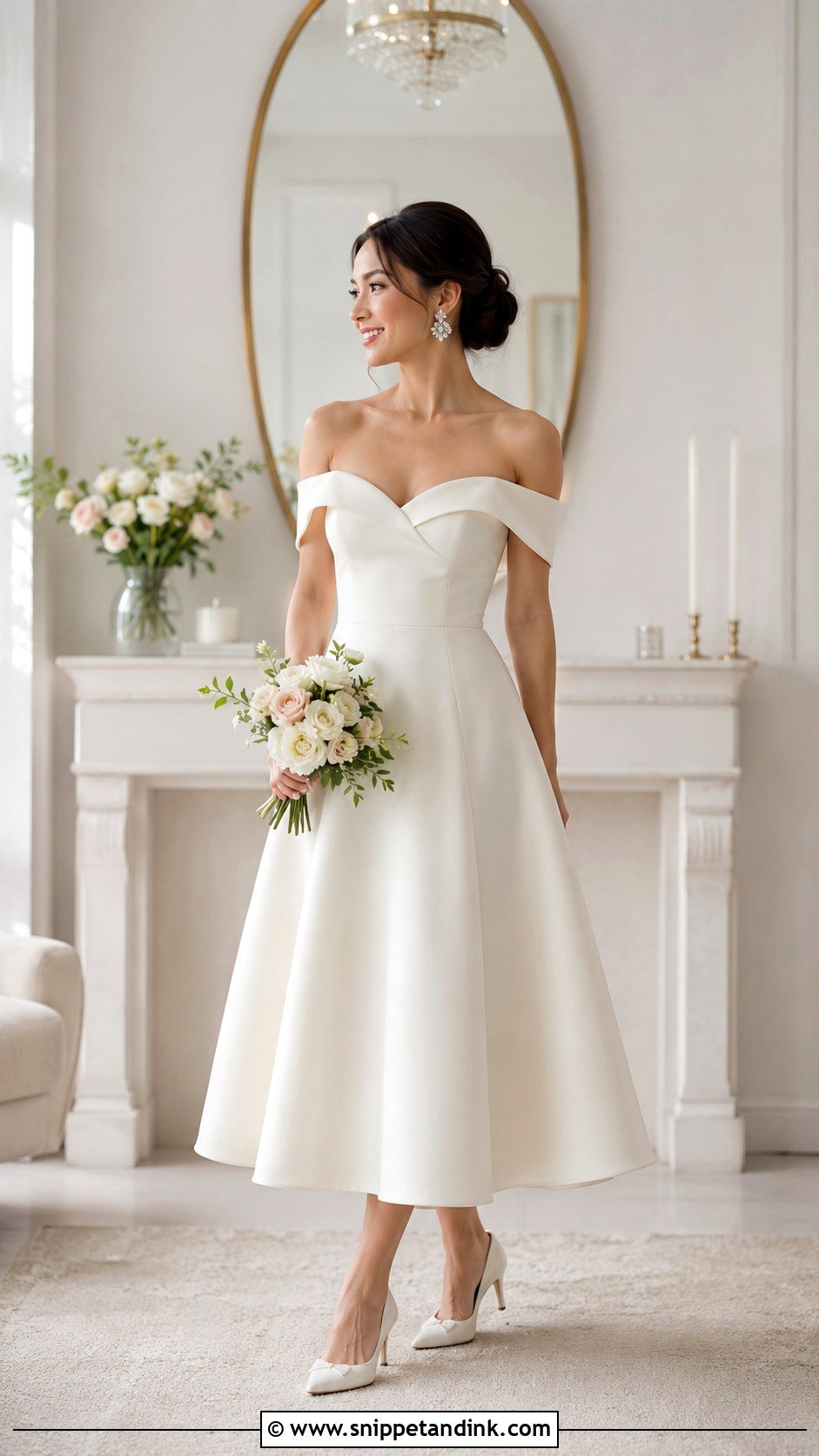
Bare shoulders pull the eye up to the collarbones, which is exactly where a petite bride wants attention. My concern with off-shoulder styles is movement: the sleeve band sits on the upper arm and can restrict raising your arms for a hug or a toast, so I always ask brides to lift their arms at the fitting. Keep the skirt a soft A-line or a column rather than wide. Low heels are fine here because the neckline is doing the lengthening. Wear statement earrings or a fine pendant, never both, and choose a smooth updo to keep the neckline clear.
7. Petite High Low Wedding Dress With Clear Heels
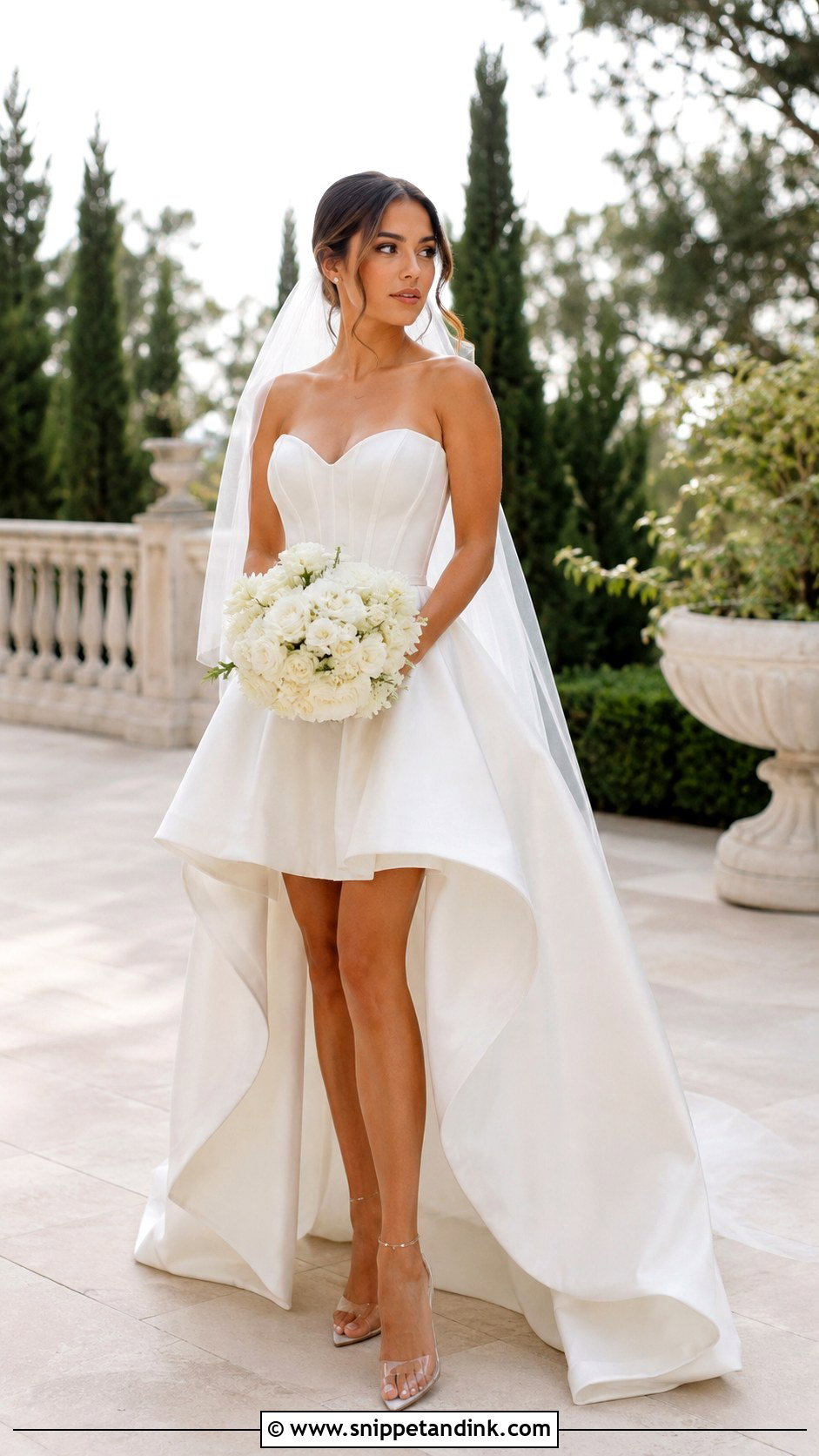
A high-low hem gives the sweep of a longer gown at the back while the front shows leg, and that front hemline does most of the work. I set it so the front stops at or slightly above the knee; anything lower and the dress just looks unevenly hemmed. Clear or nude heels extend the leg line and stay out of the way. Choose a skirt with soft movement, since a stiff high-low can look like a costume on a smaller frame. Finish with a sleek veil and crystal studs. Outdoor ceremonies in warm weather suit it best.
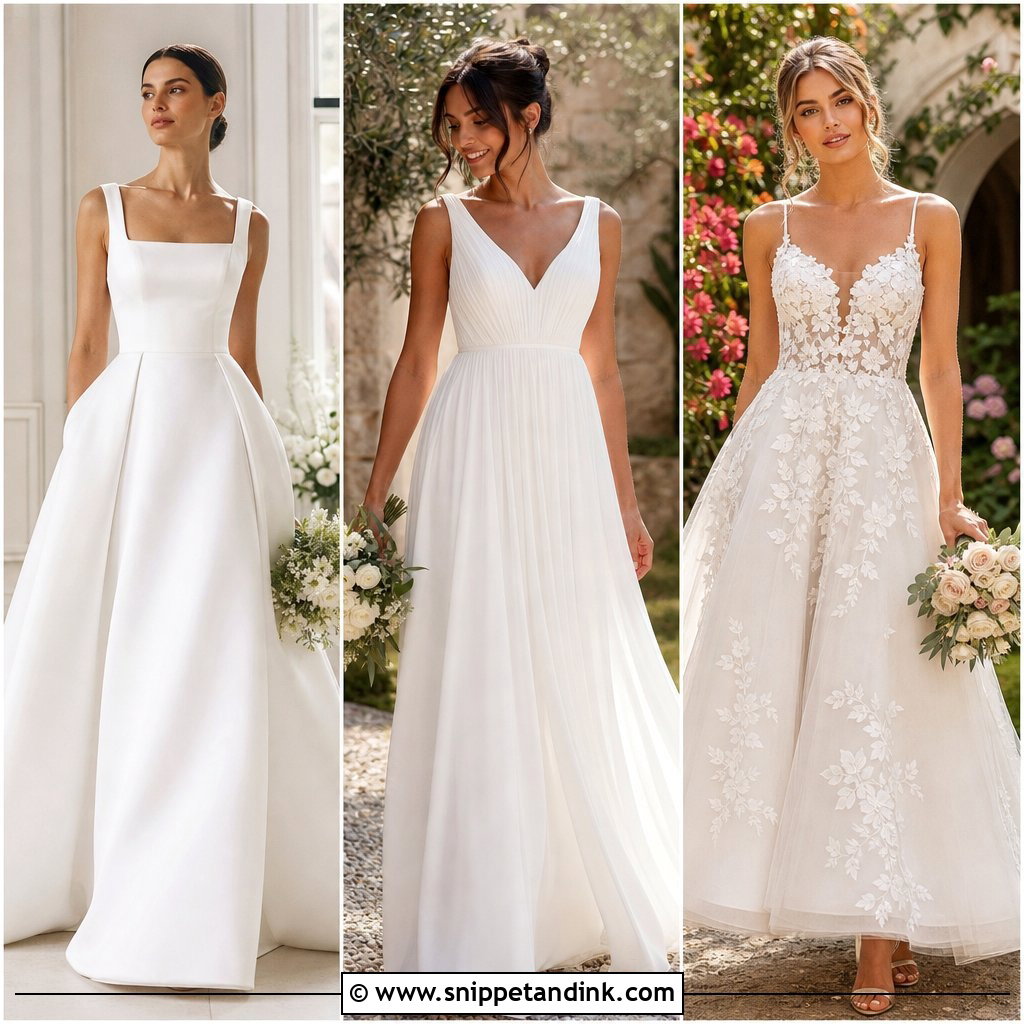
8. Petite Square Neck Wedding Dress With Pearl Accessories
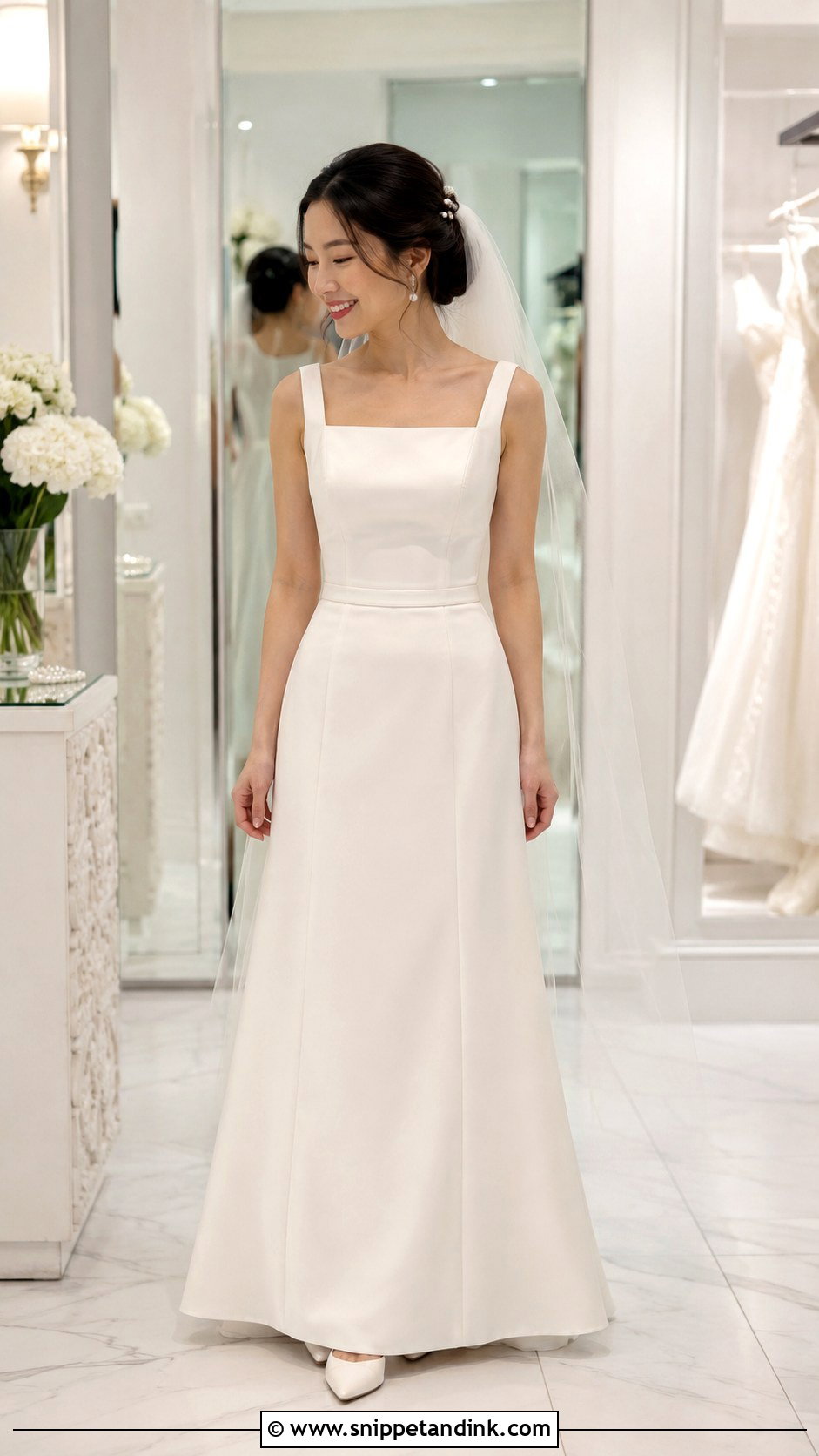
A square neckline frames the upper body with clean horizontal and vertical lines, and wide-set straps give narrow shoulders a little more presence. I pair it with a slim A-line, sheath or a tea-length skirt, always with a defined waist. Pearls suit the geometry: drop earrings, a single pearl hair pin and pointed pumps. The detail I watch is the veil. A heavily edged veil lies across the neckline and hides the shape you bought the dress for, so keep it sheer and unedged.
9. Petite Strapless Wedding Dress With Platform Sandals
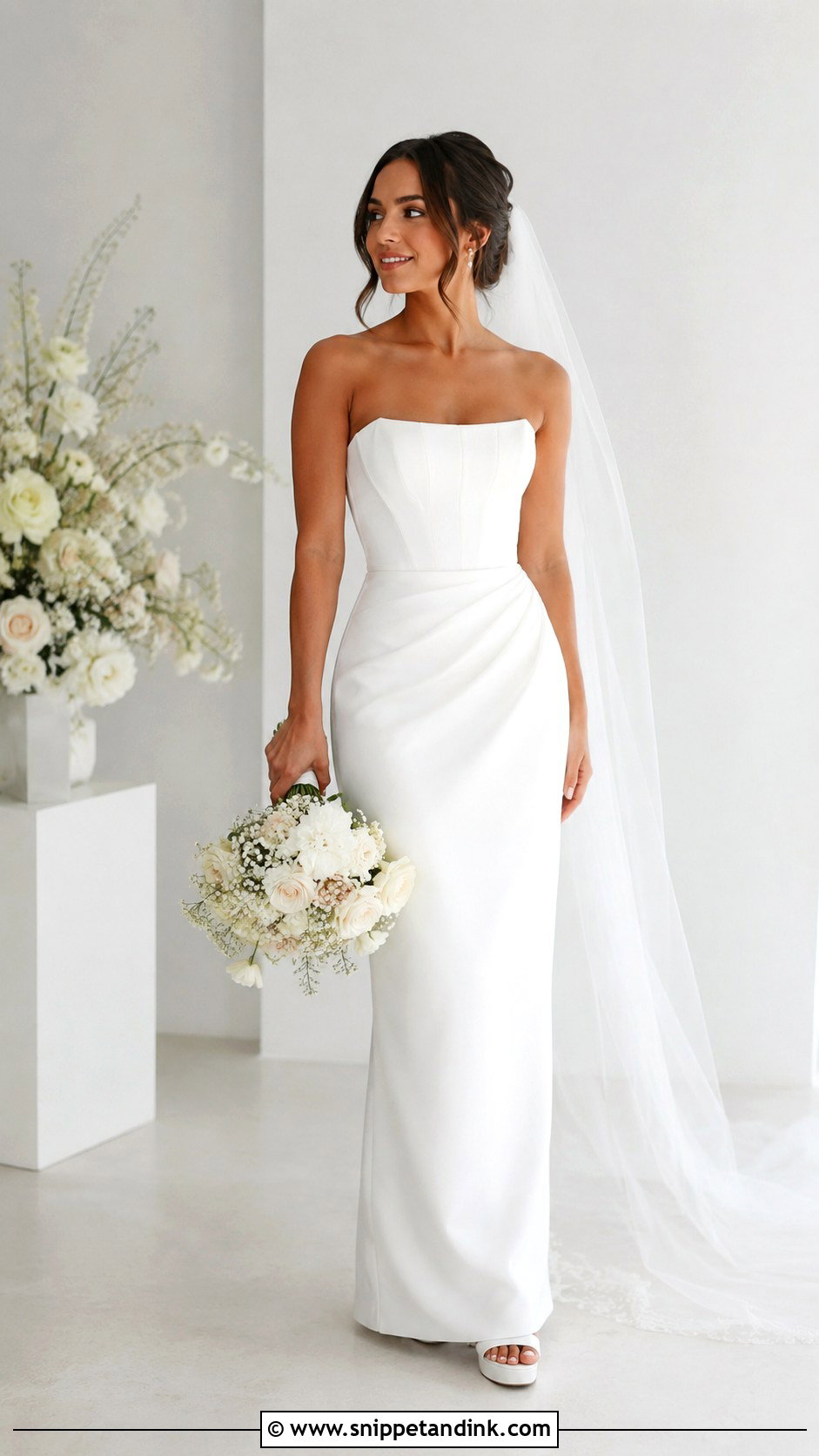
Strapless on a petite bride lives or dies by the bodice fit. Shorter torsos often mean a strapless top sits too high under the arms or too low at the waist, so I expect to take it in and sometimes shorten it from the waist seam. When it’s secure, it lifts the eye and defines the waist on its own. Platform sandals add comfortable height. With the veil, scale matters: a cathedral length works only in very sheer tulle, otherwise go to fingertip so the veil doesn’t outsize you.
10. Petite Long Sleeve Wedding Dress With Pointed Pumps
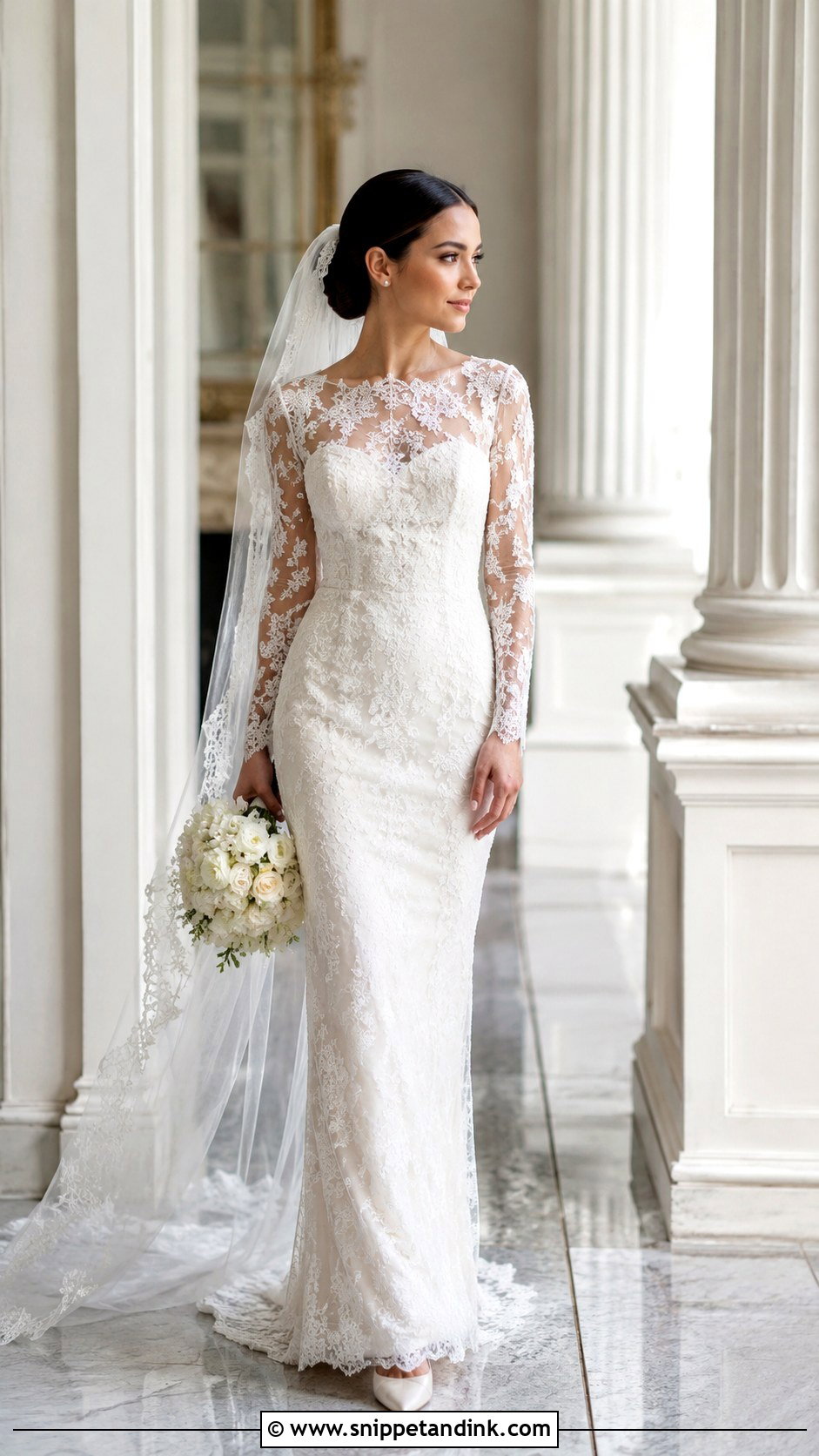
Sleeves can shorten a small frame quickly if they’re heavy, so I look at weight before style. Lace, crepe or sheer illusion sleeves that sit close to the arm keep the line slim; puffed shoulders or deep cuffs add width where you don’t want it. Sleeve length matters more than people think on shorter arms, and taking sleeves up at the wrist is a common alteration. A V-neck or bateau keeps the chest open, and pointed pumps lengthen the leg beneath. It suits cooler months and formal venues.
11. Petite Midi Wedding Dress With Slingback Heels
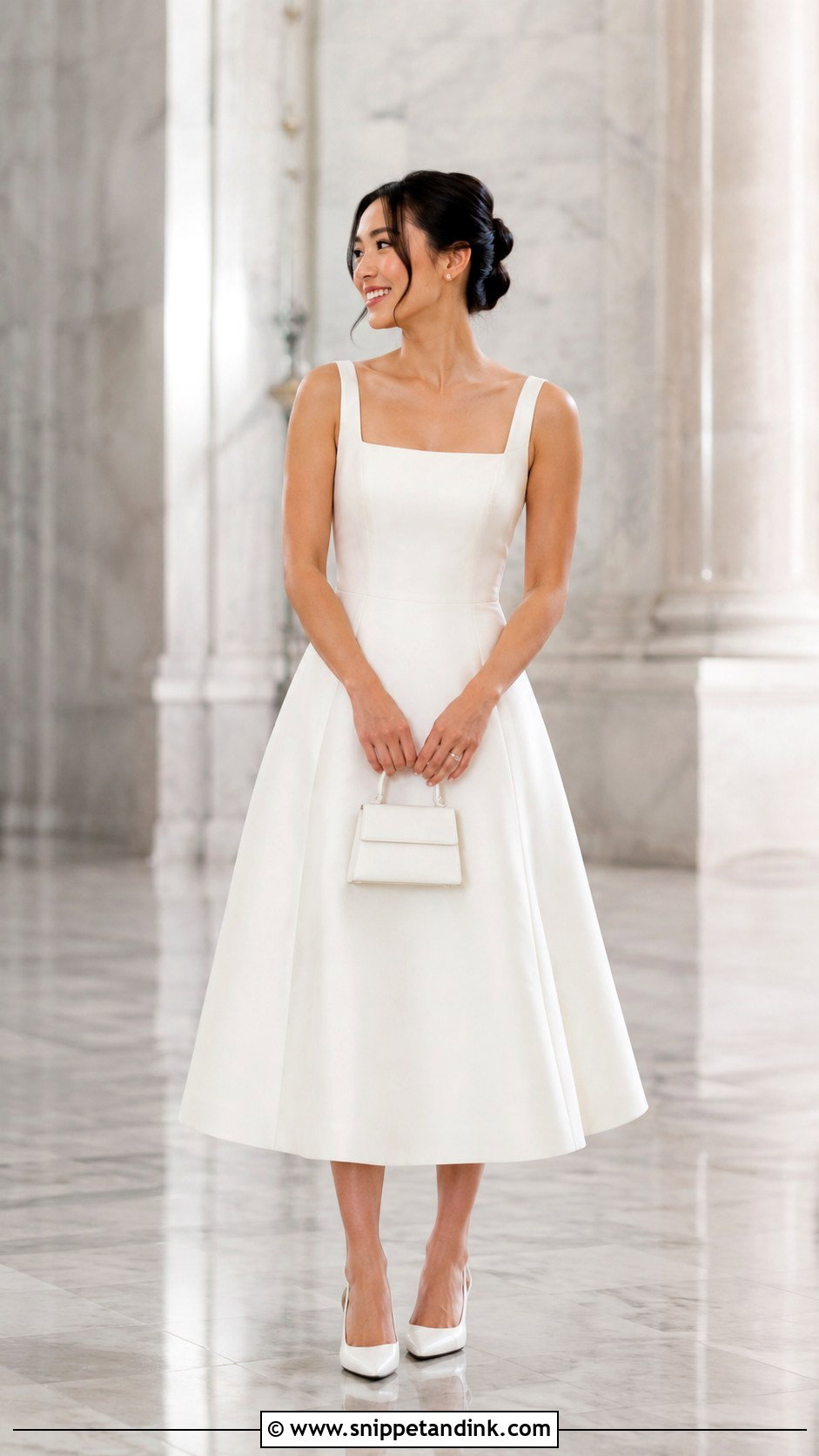
Midi is the length I fuss over most, because the margin for error is a couple of inches. On a short leg, I want the hem just below the knee or at the top of the calf, never across the widest part of the calf. A fitted bodice and lightly flared skirt define the waist. Slingbacks keep the foot visually open, which helps. Add a small veil and pearl studs. It’s modest, easy to sit in, and one of the few wedding dresses brides actually wear again.
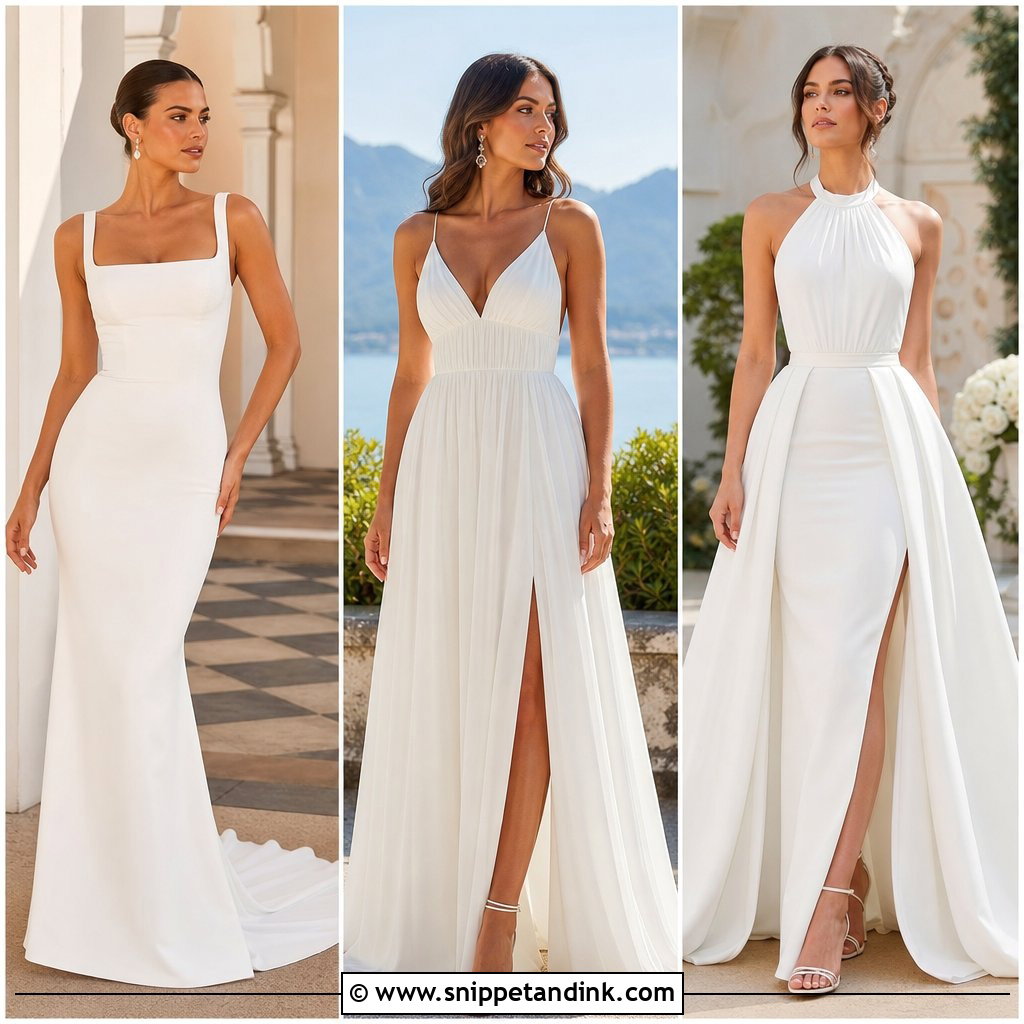
12. Petite Column Wedding Dress With Minimal Jewelry
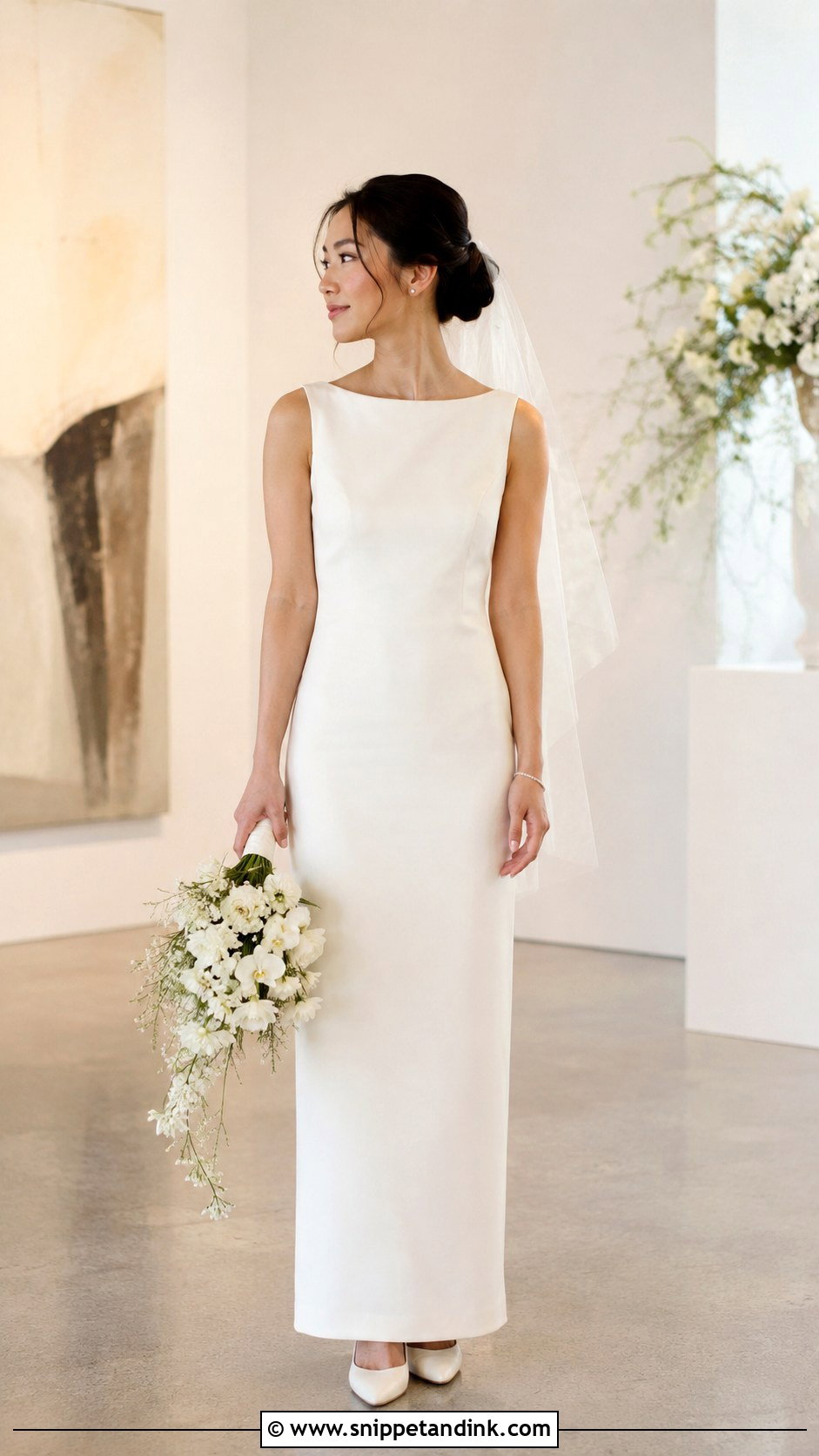
A column only lengthens if it skims. Too tight and it shows every line; too loose and it reads as a nightgown. The hem has to be set to the exact heel you’ll wear, because a column that puddles even an inch on the floor makes a short bride look sunk into it. Crepe, satin and matte fabrics all fall straight. Keep jewelry to small studs and a thin bracelet, and consider no veil at all. I’d suggest it to a bride who wants quiet clothes and easy movement.
13. Petite Fit And Flare Wedding Dress With Simple Veil
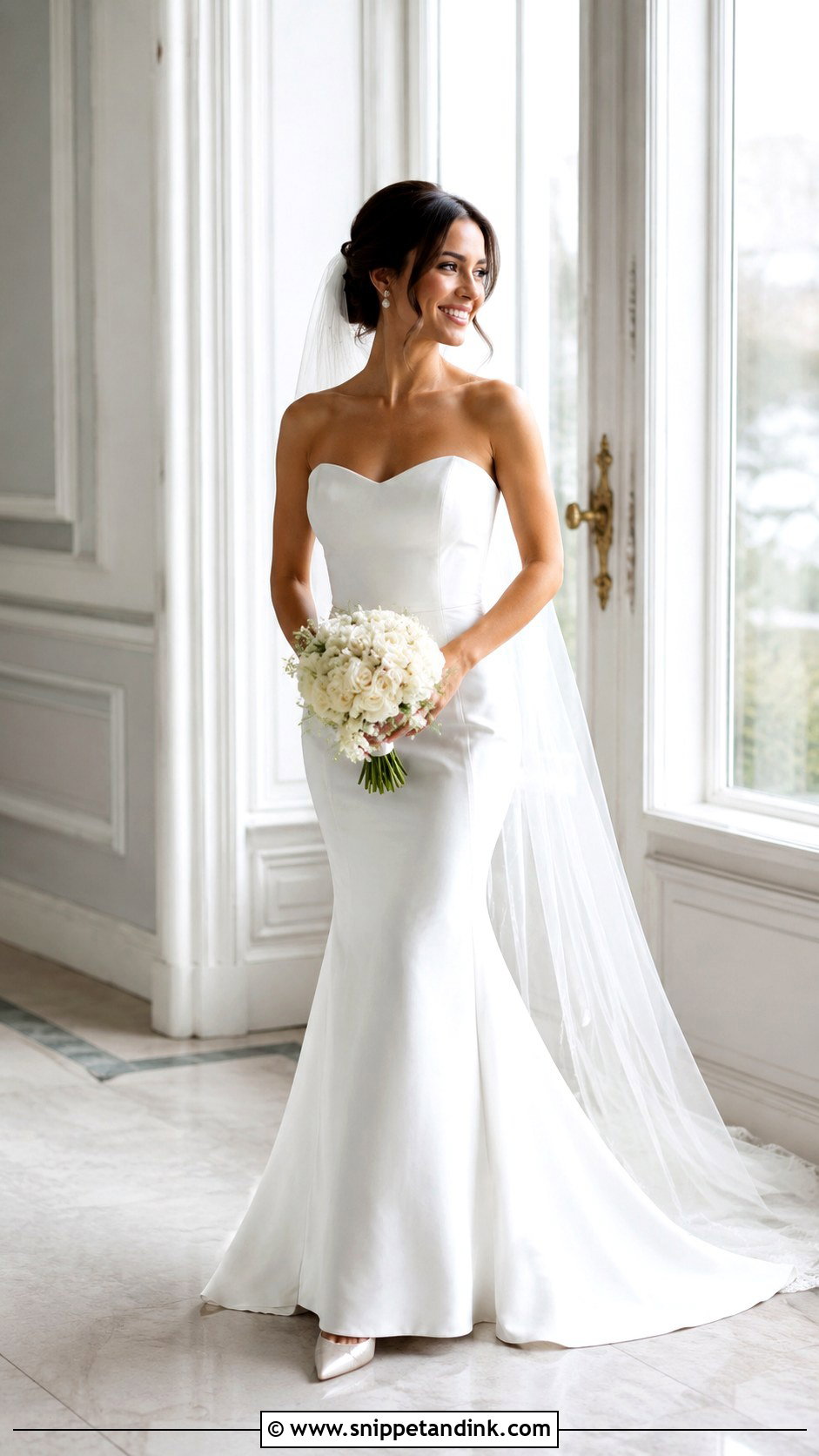
Where the flare begins is the whole question with this shape. On a petite bride I place it at the knee or slightly above; set too low, the skirt fans out around the ankles and the legs disappear. Fitted through the bodice and hips, it shows curves without the weight of a full mermaid. Keep the veil simple so the silhouette stays readable. Pointed heels or slim sandals help, and small hoops or pearl studs are enough. Walk the length of the shop at the fitting; this skirt shortens your stride more than you expect.
14. Petite Tulle Wedding Dress With Ballet Flats
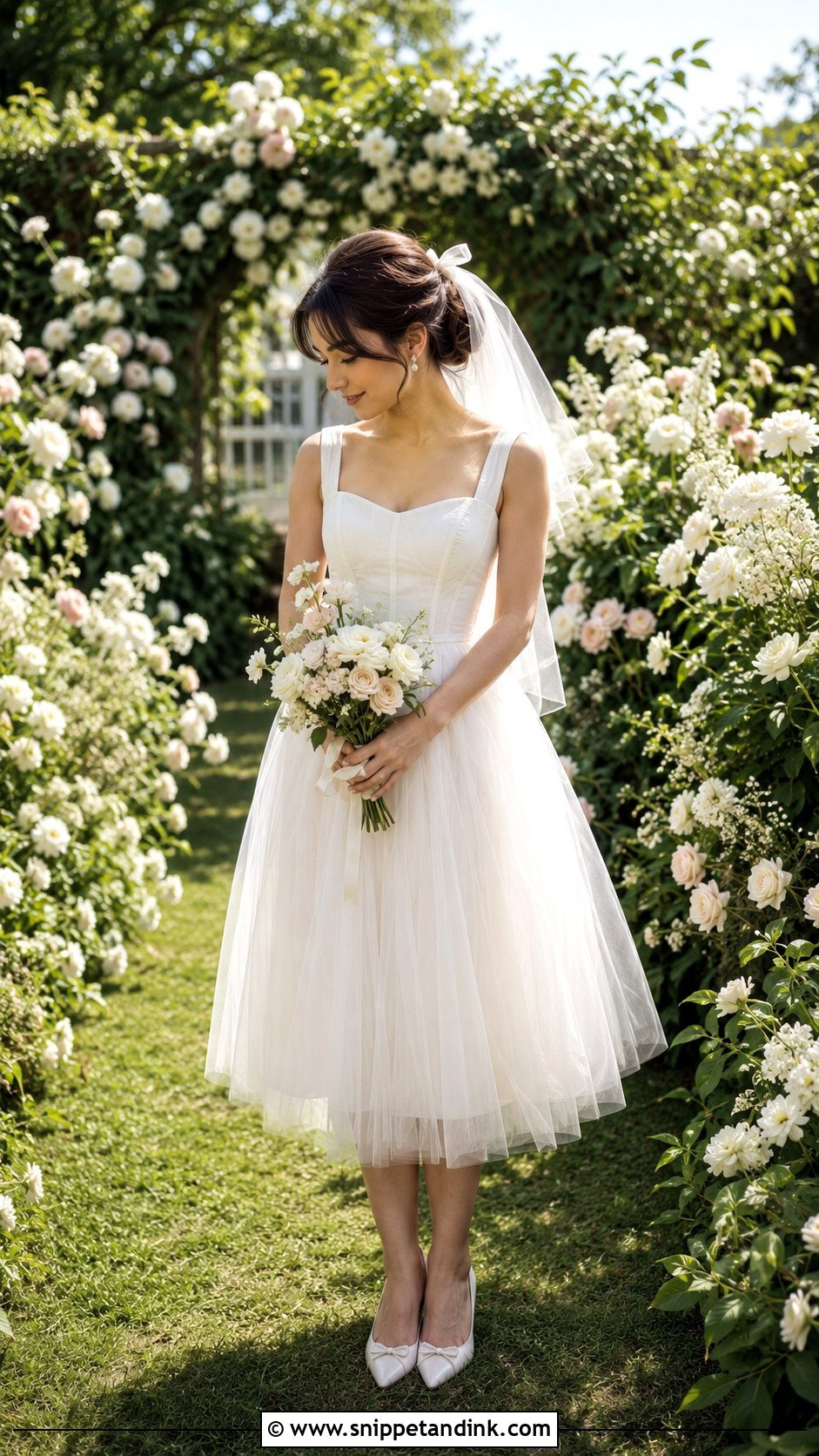
Tulle is lighter than it looks, which is why it can suit a short frame, but only in controlled amounts. I’d choose a shorter tulle dress, a tea length or a slim A-line before a very full skirt. Ballet flats are a real option if heels aren’t for you; pick a pointed or almond toe, because a round toe shortens the foot and the leg with it. The bodice must fit closely to anchor all that air. A ribbon bow and pearl earrings finish it for a garden or daytime wedding.

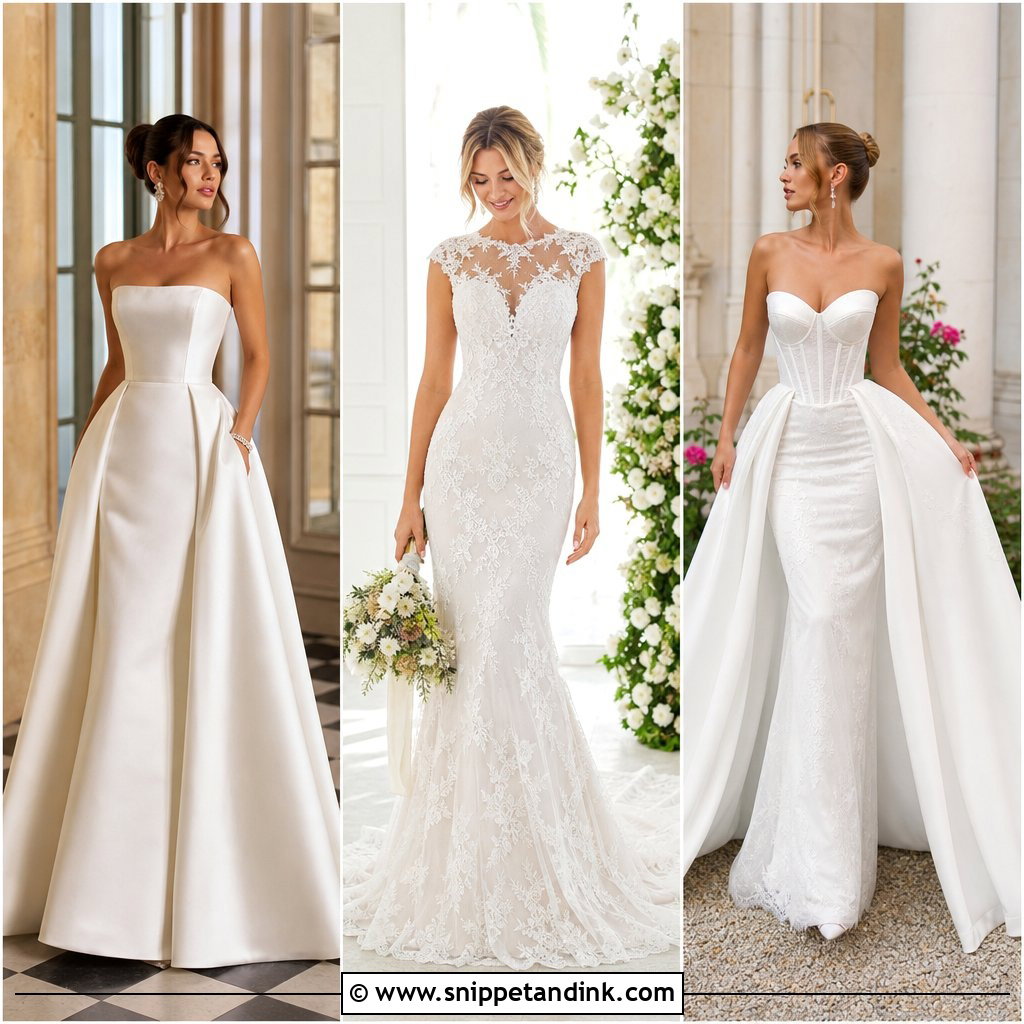
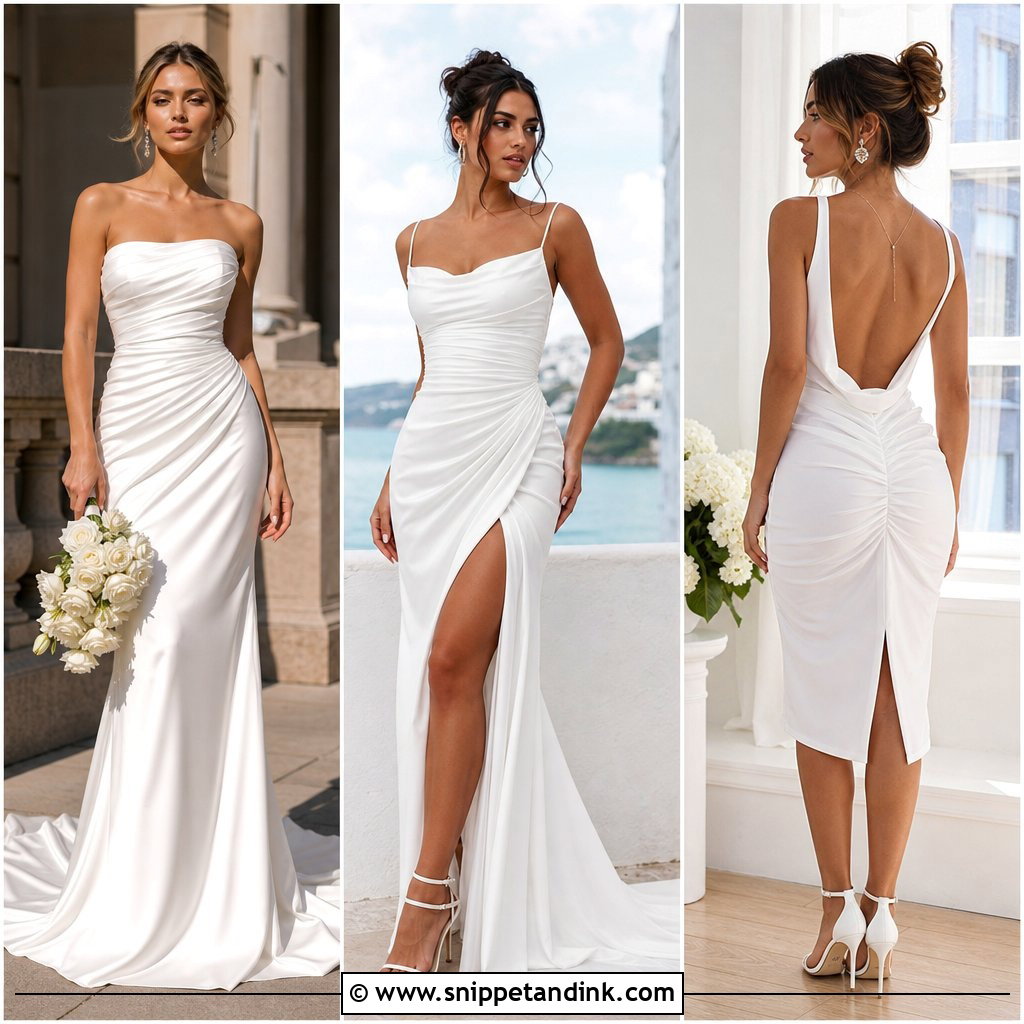
15. Petite Crepe Wedding Dress With Ivory Pumps
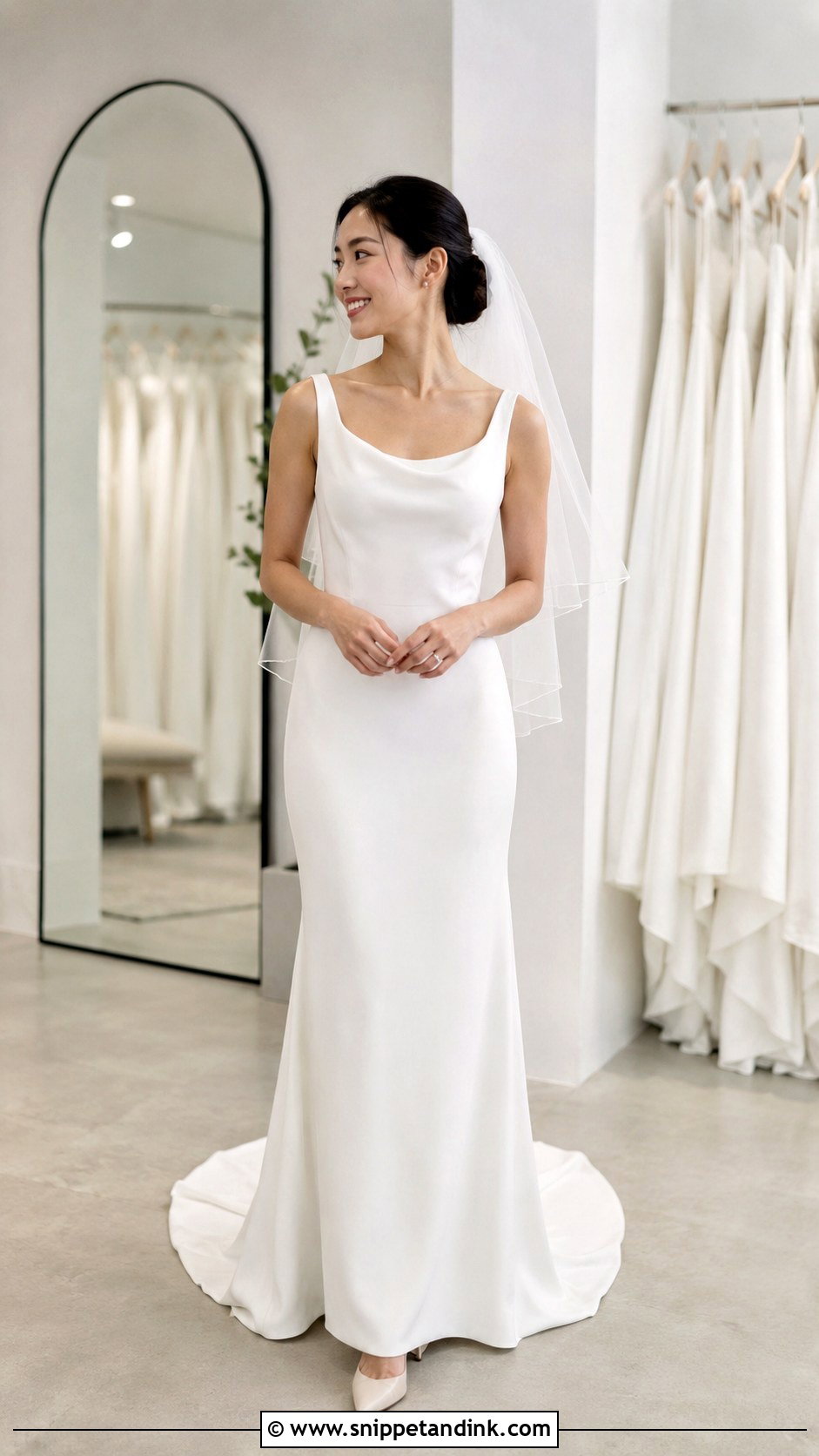
Crepe is my favourite fabric for petite tailoring because it holds a sharp seam and doesn’t add bulk. Alterations show cleanly on it, which matters when we’re taking a dress up several inches and resetting the waist. It suits sheath, column and fit-and-flare shapes. Ivory pumps keep it classic, and a low chignon with tiny studs keeps the attention on the cut. A subtle waist seam or a line of back buttons gives just enough detail without breaking the line.
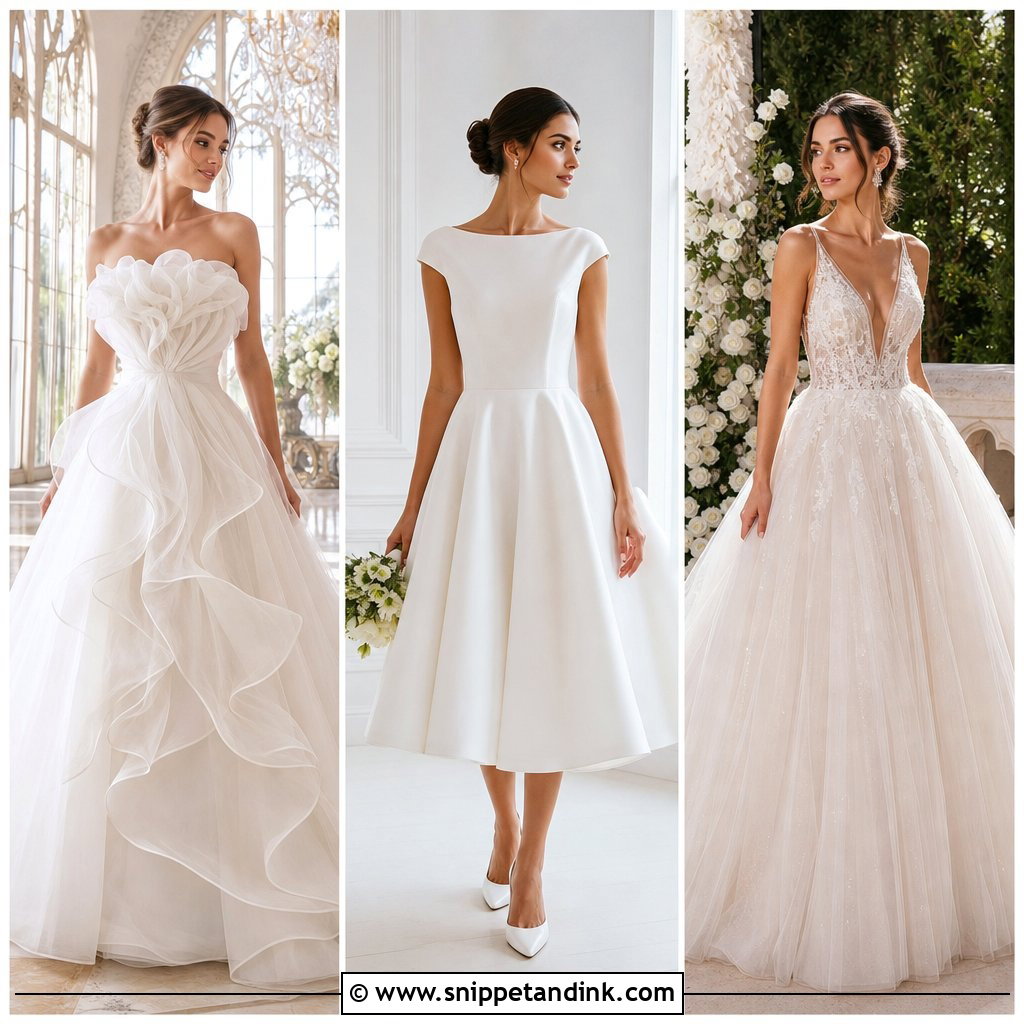
16. Petite Ball Gown Wedding Dress With Slim Waist
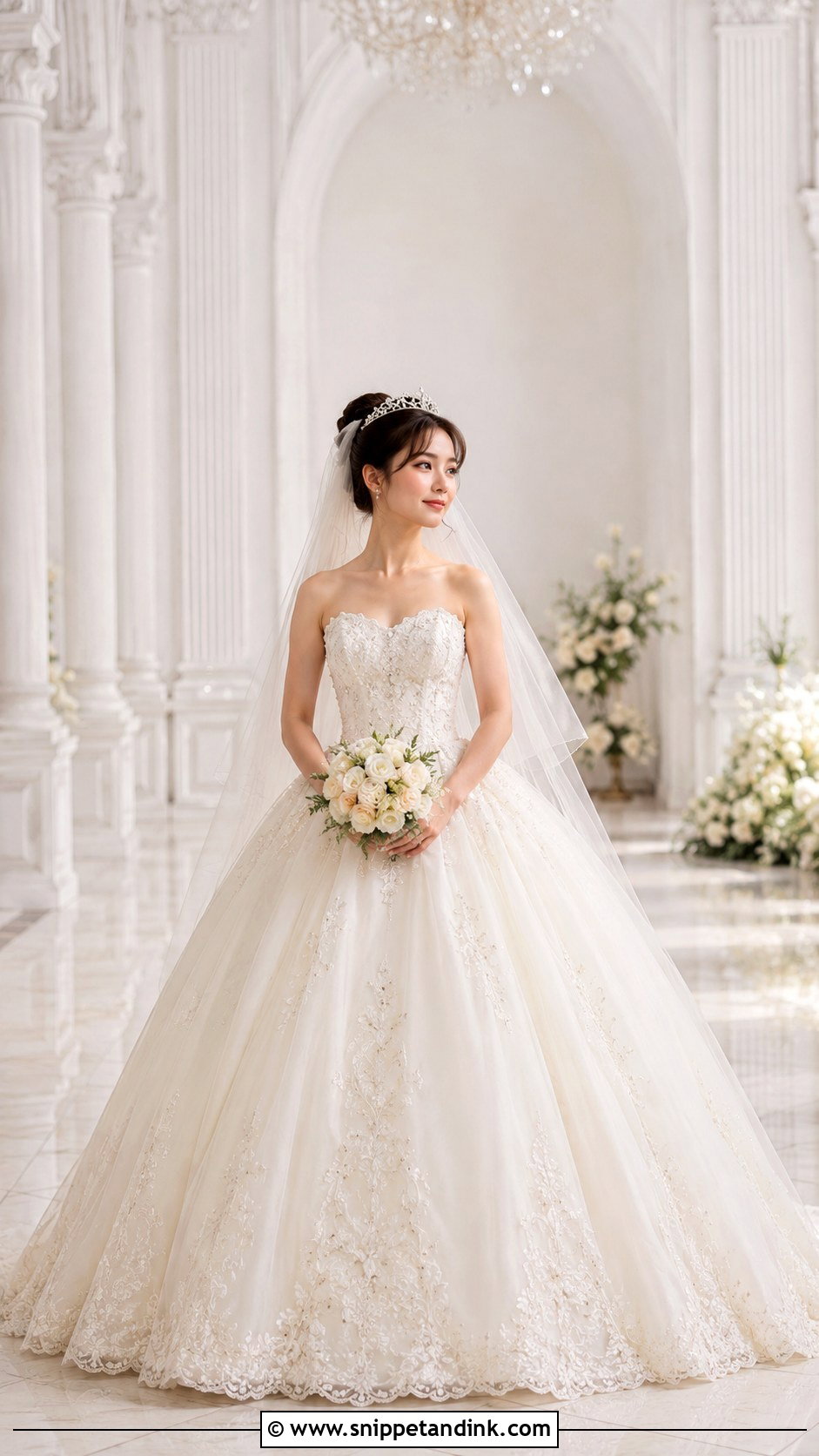
Yes, a short bride can wear a ball gown. I just don’t let the skirt be wider than she is tall, as a rough rule of eye. That means a slim, fitted bodice, a clearly defined waist and a skirt with controlled volume. Lightweight tulle or organza moves and weighs less than heavy satin, which also matters for your back by the end of the night. A stable platform heel helps balance the skirt. Keep accessories small: a fine tiara, small earrings and a sheer veil. The figure should still be visible under the gown.
17. Petite Halter Wedding Dress With Sleek Updo
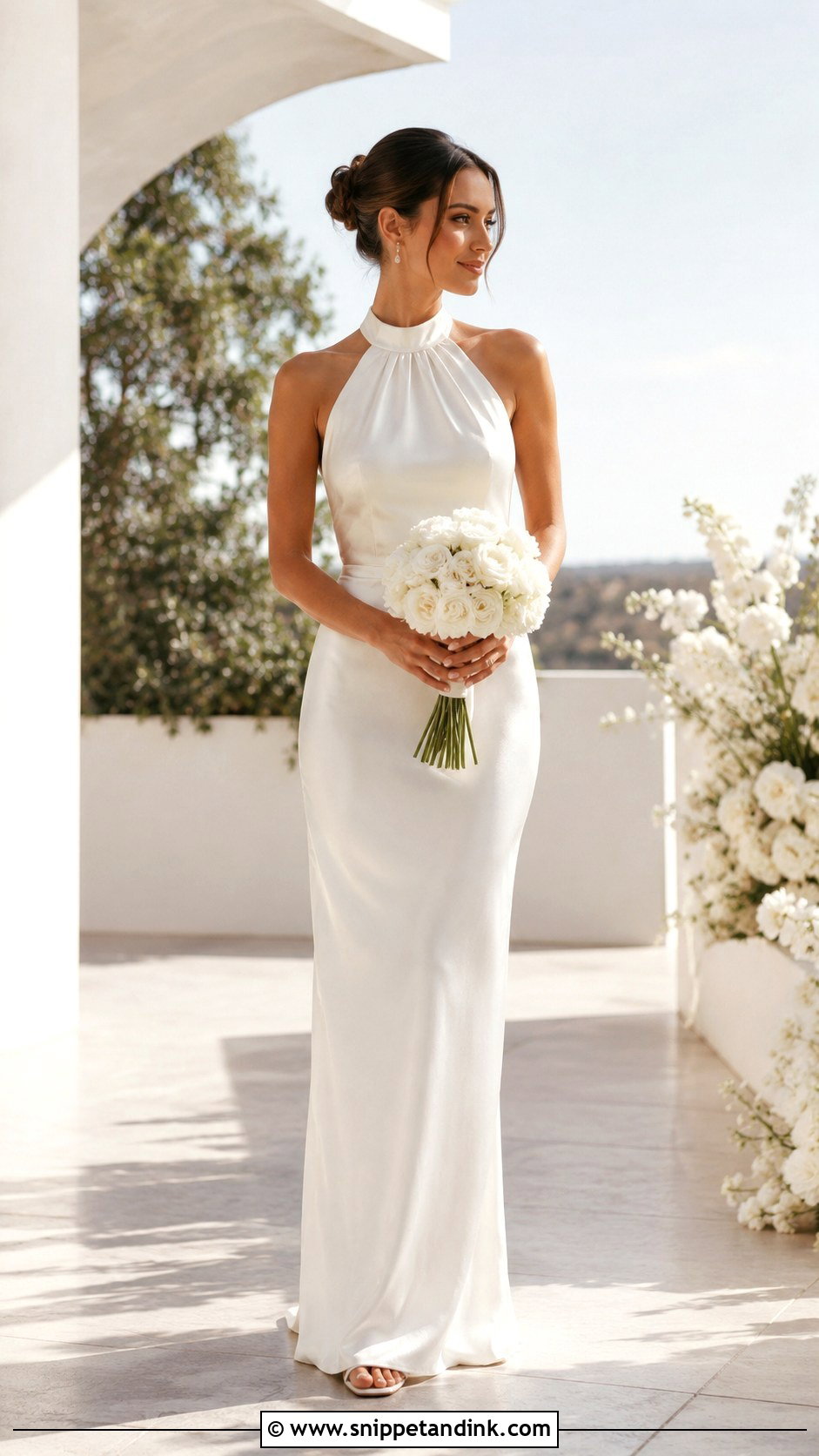
A halter draws the eye up and makes a strong vertical line through the bodice. It also exposes the shoulders and upper back, so I check strap tension early; a halter neck that’s too tight pulls the bodice up, and on a short torso that throws the waist out of place. A slim skirt or a soft A-line keeps it balanced. A sleek updo shows the neckline and adds a little height. Skip the necklace; earrings and a single cuff are plenty. Warm-weather ceremonies suit it well.
18. Petite V Neck Wedding Dress With Nude Heels
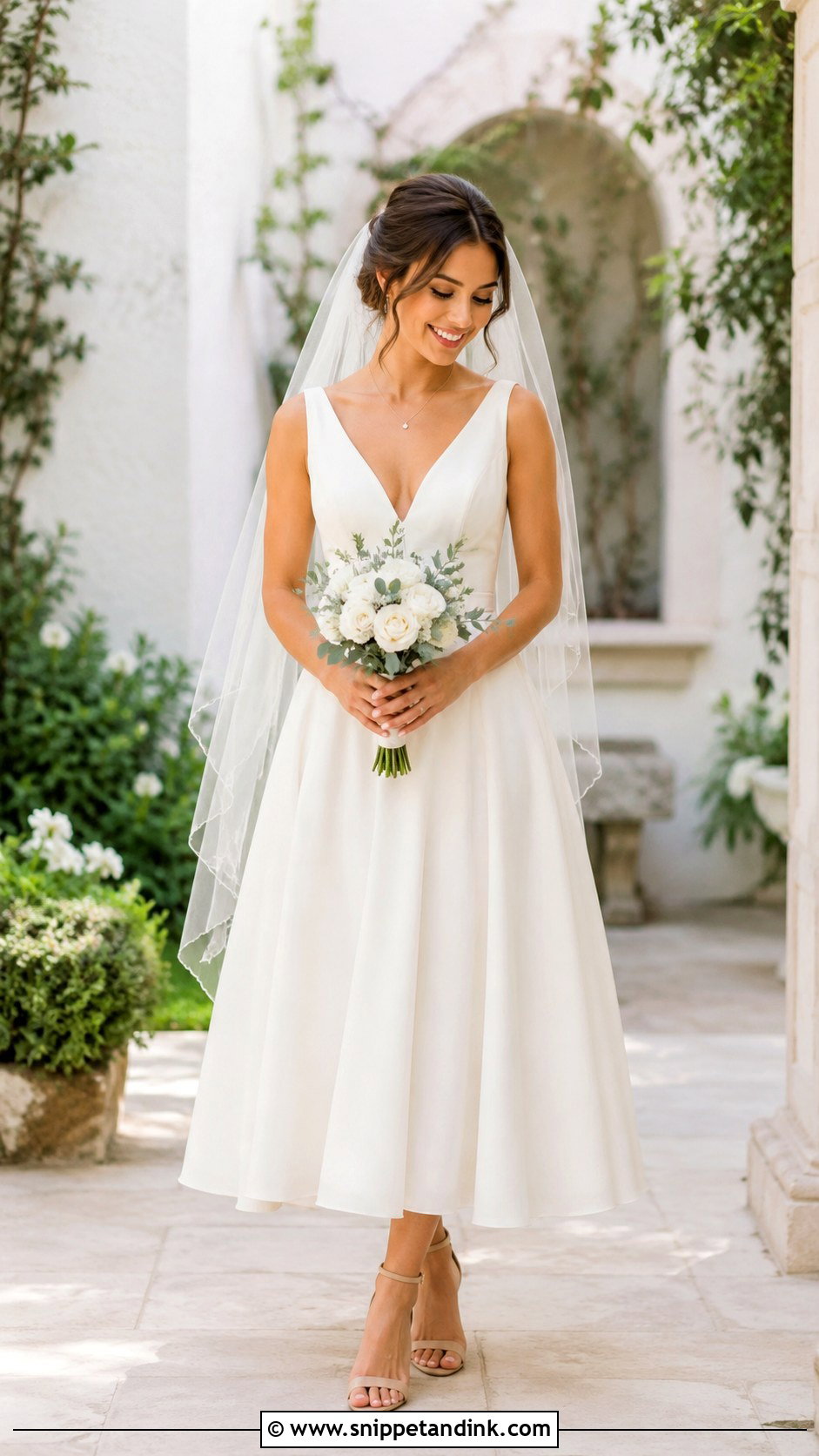
The V-neck is the most reliable lengthening neckline I know, and it adjusts well: deep or modest depending on your comfort. A fitted waist and simple skirt keep the shape clean. Nude or skin-tone heels blend with the leg and add apparent height. A fine necklace that follows the V looks considered. Keep the veil light so it doesn’t lie heavily over the neckline. Of all 25 here, it’s the one I’d send a bride to try if she’s unsure where to start.
19. Petite Empire Waist Wedding Dress With Soft Curls
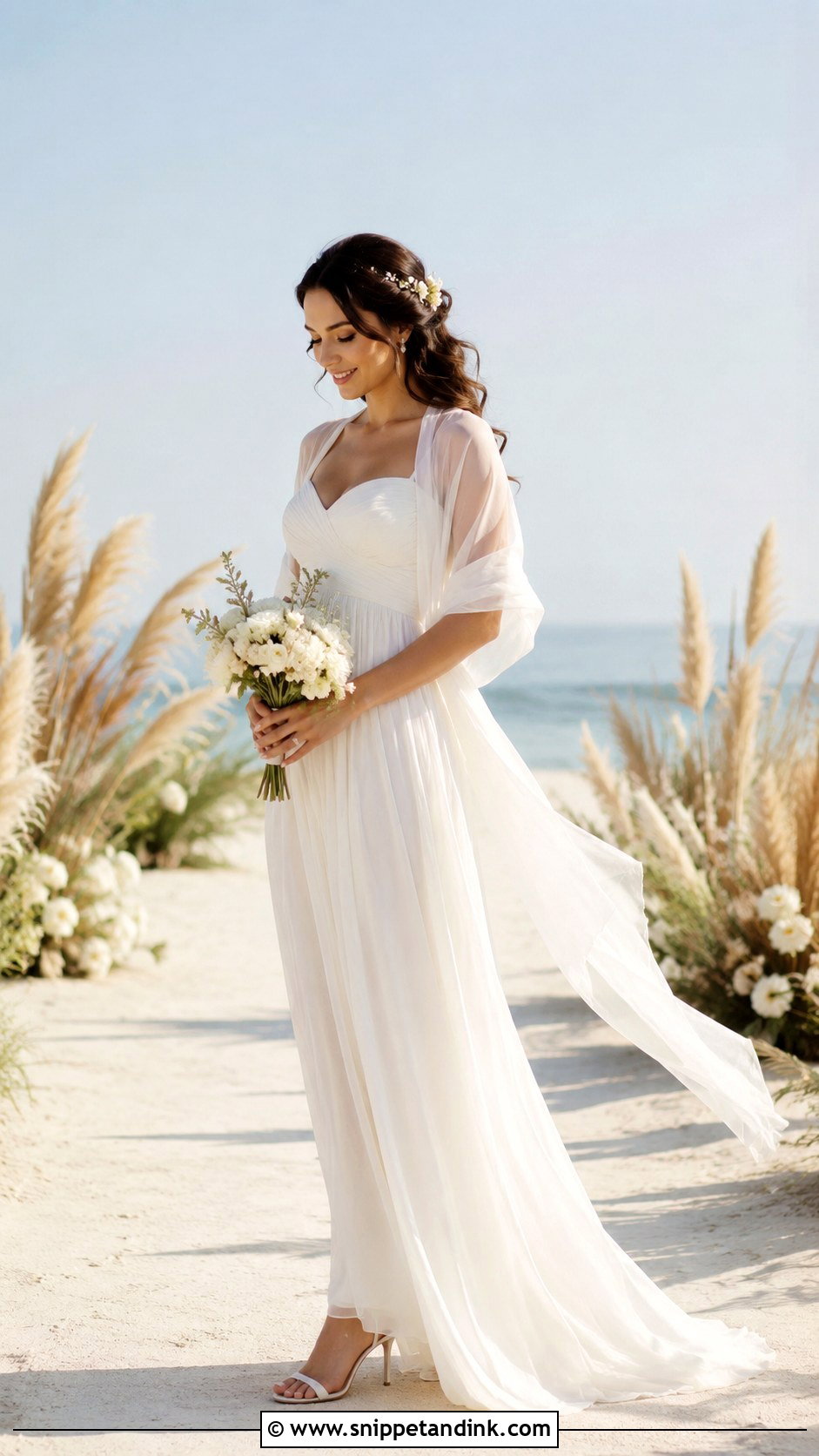
An empire waist wedding dress raises the waistline just under the bust, so everything below reads as leg. The seam has to sit precisely there; a quarter inch too low and it lands on the bust instead of under it. I avoid heavy gathering at that seam, because it adds volume right where a petite bride doesn’t need it. Chiffon or soft satin falls best. Pair with slim heels and soft curls, and a sheer wrap if you need coverage. It’s also kind to pregnant brides.
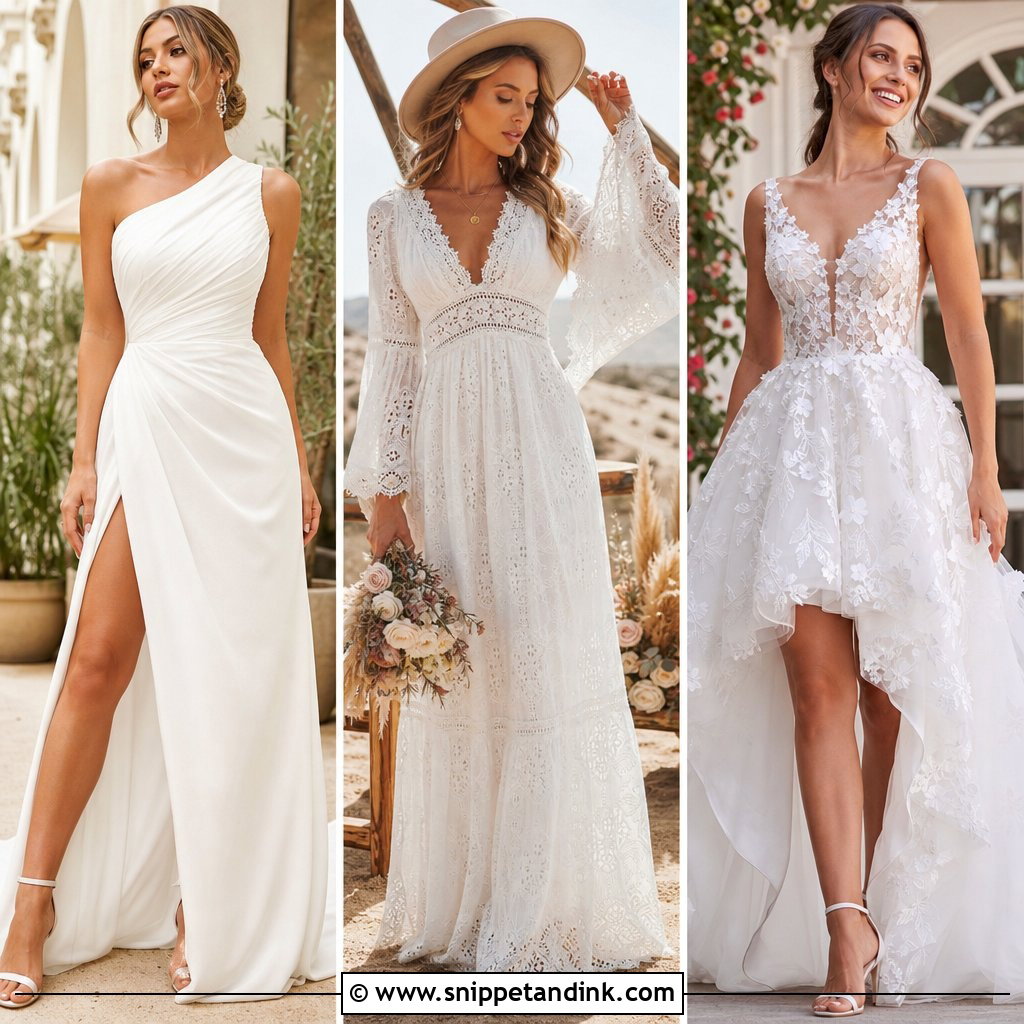
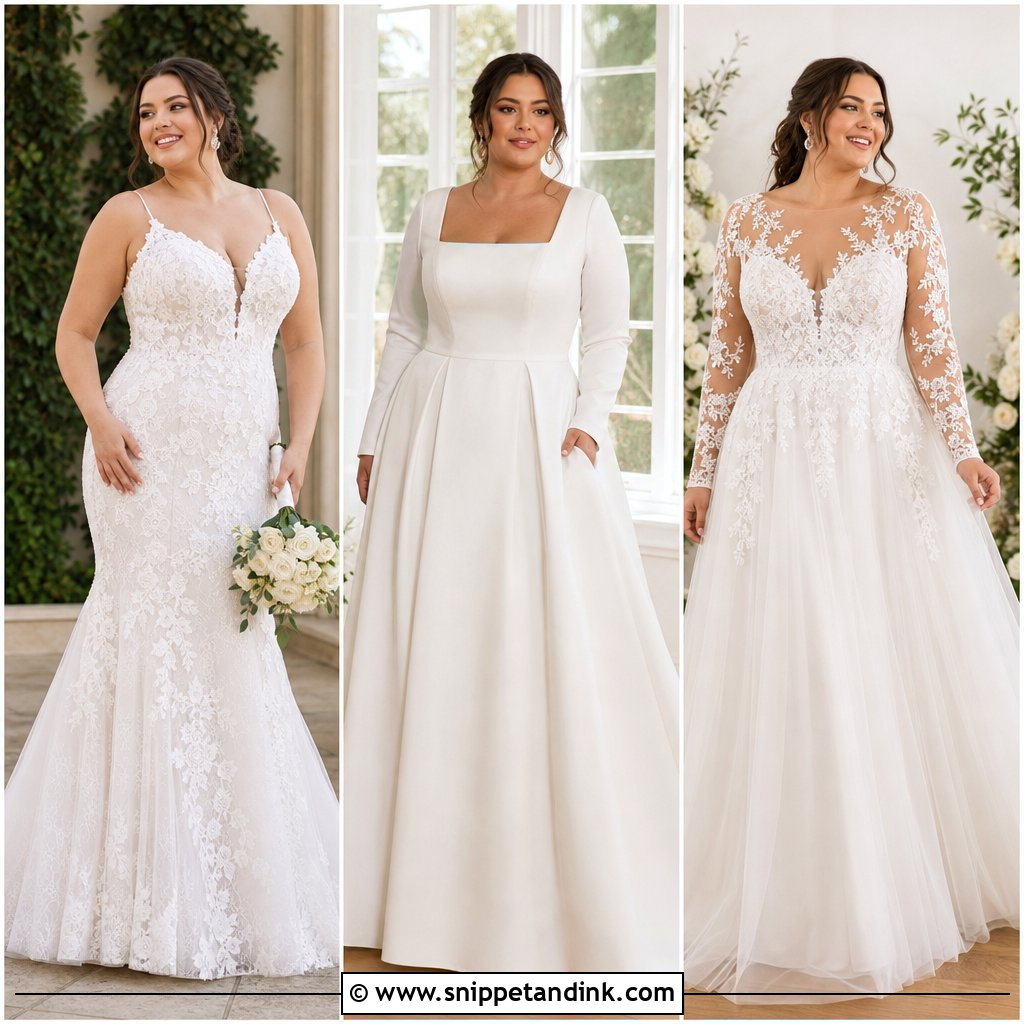



20. Petite Corset Wedding Dress With Satin Heels
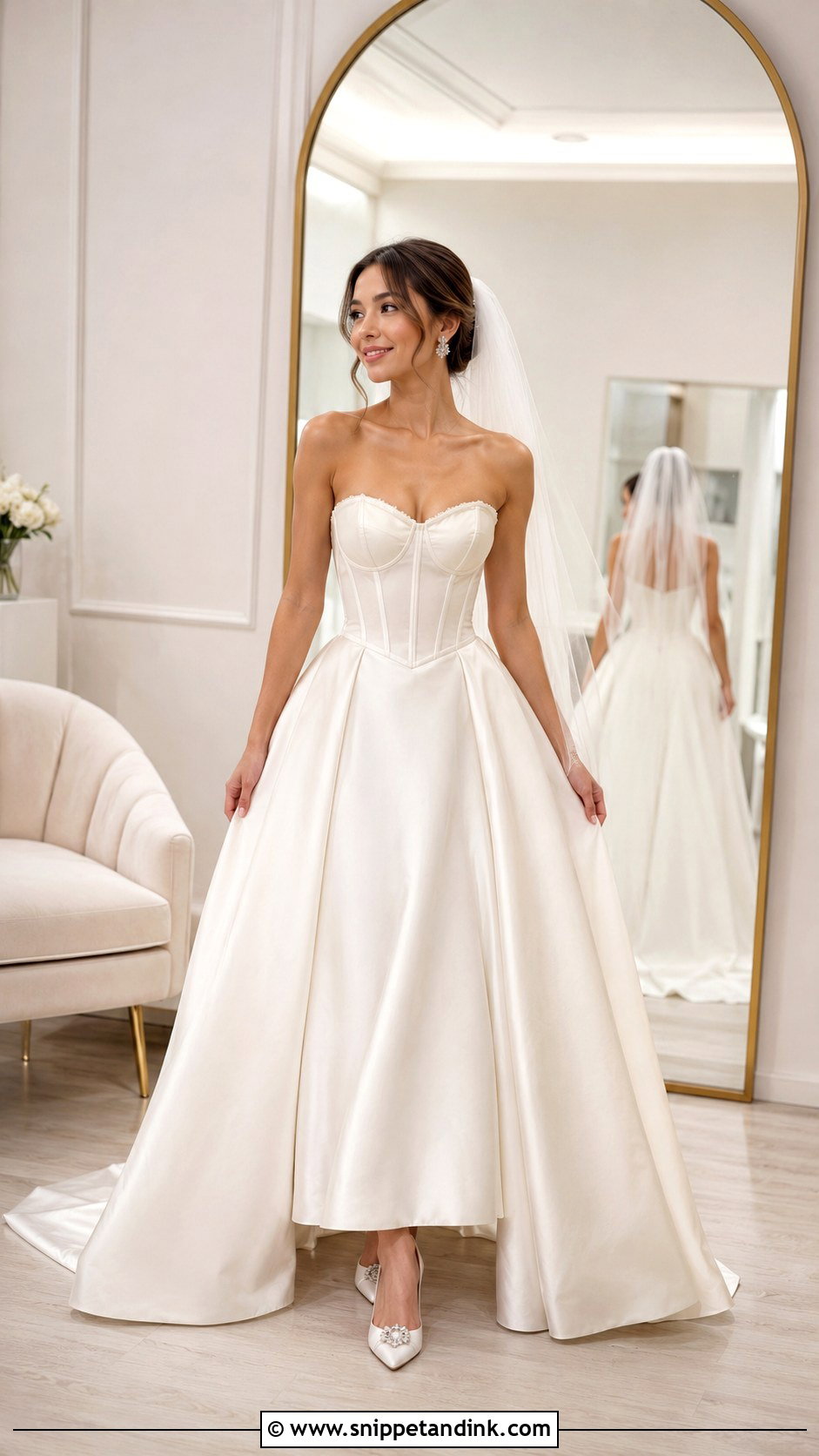
Corsets give structure and support, and visible boning seams draw vertical lines down the torso, which helps a short bride. The fit has to be exact. I check that the bodice ends at her natural waist; standard corsets are often too long in the torso for petite brides and press into the hips when she sits. Pair it with a soft A-line, slim skirt or a short hem rather than a huge skirt. Satin heels and a simple veil keep it from getting busy.
21. Petite Floral Applique Wedding Dress With Dainty Sandals
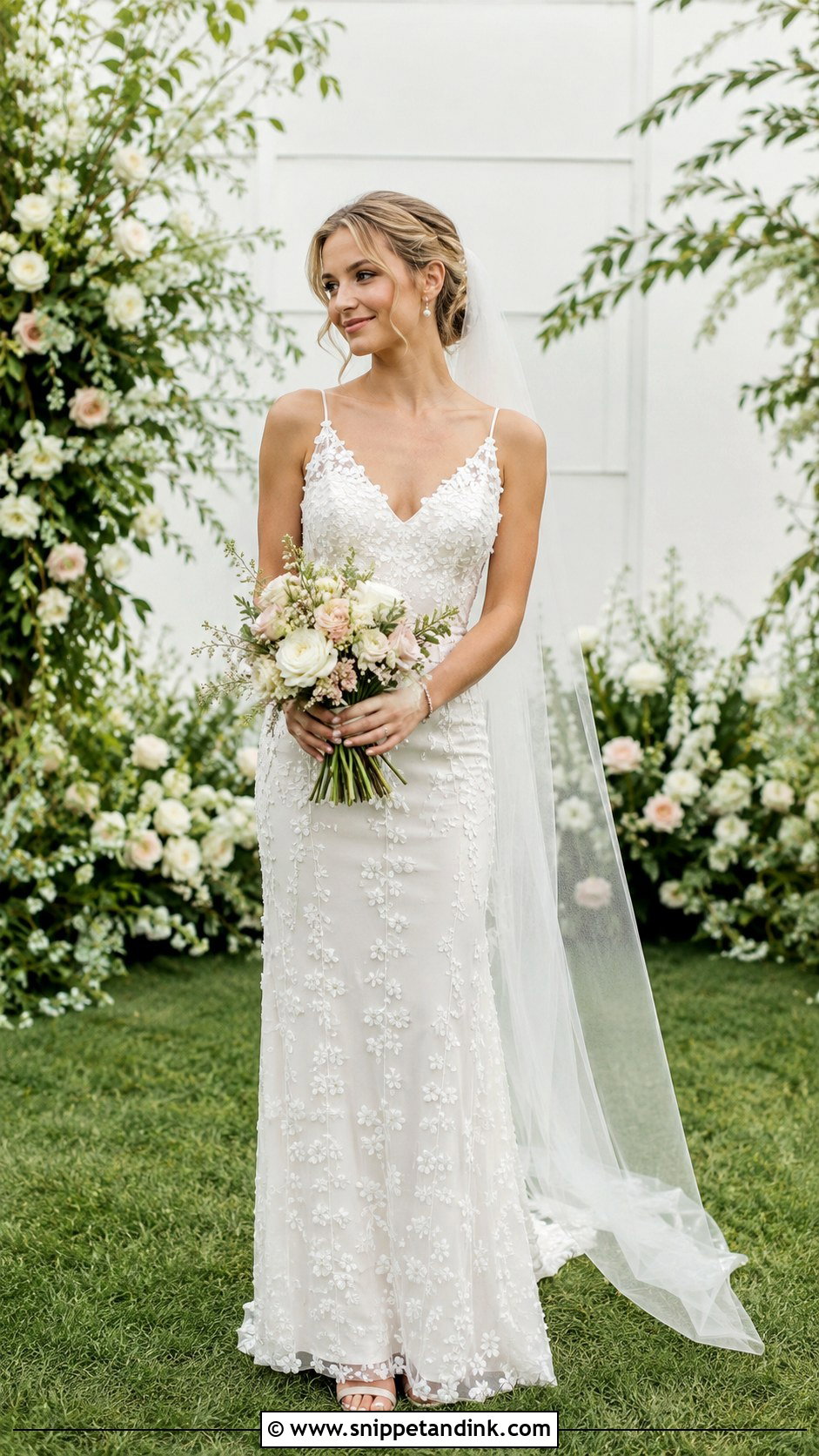
A floral applique wedding dress needs its motifs scaled to the bride. I look for small appliques, or florals that run vertically up the bodice and down the skirt, since big flowers scattered sideways make a small frame look wider. Placement also changes when we shorten a hem; appliques near the bottom may need to be removed and resewn higher, which takes extra time. Dainty sandals and small pearls keep it light for spring and summer.
22. Petite Wrap Wedding Dress With Kitten Heels
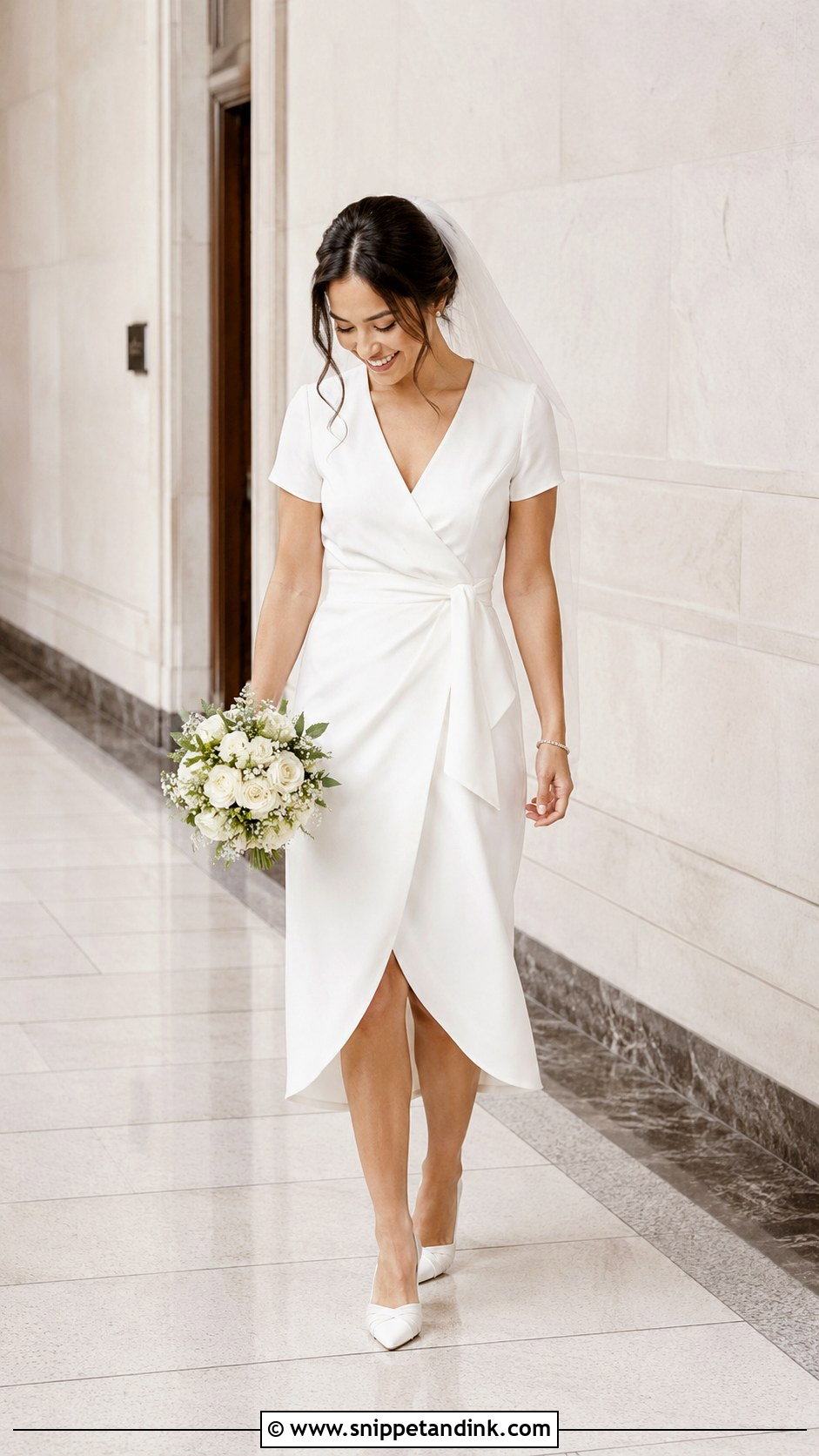
The diagonal of a wrap dress makes a natural V and points the eye down the length of the body. It’s also adjustable at the bust and waist, which helps if you’re between sizes. Midi or knee length suits a smaller frame. The issue I watch for is gaping: when a wrap is too wide for a narrow chest, the neckline opens as you move, so a hidden snap at the cross point is worth adding. Kitten heels and pearl studs suit a courthouse or a destination wedding.
23. Petite Blazer Wedding Dress With White Pumps
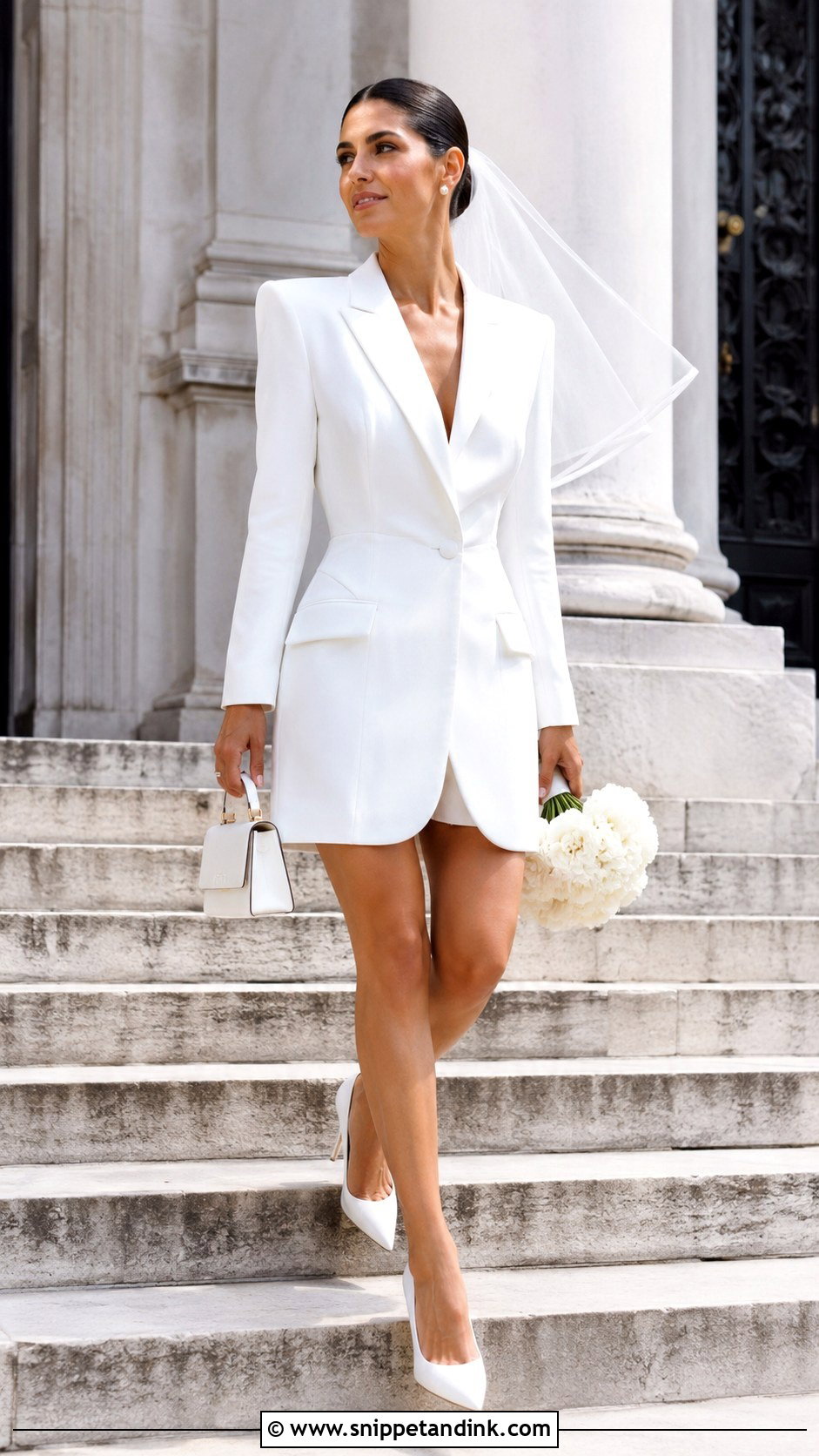
A blazer wedding dress is tailoring, so it needs the treatment you’d give a suit. Shoulders must sit exactly at the shoulder bone; a petite bride in a standard blazer often has shoulder seams hanging past her arm, and that one detail makes the whole dress look borrowed. A nipped waist and a hem at the knee or mid-thigh give a long leg line. White pumps or pointed slingbacks finish it. Keep the veil short or swap it for a bow headband, and wear it to a city or civil ceremony.
24. Petite Two Piece Wedding Dress With Heeled Sandals
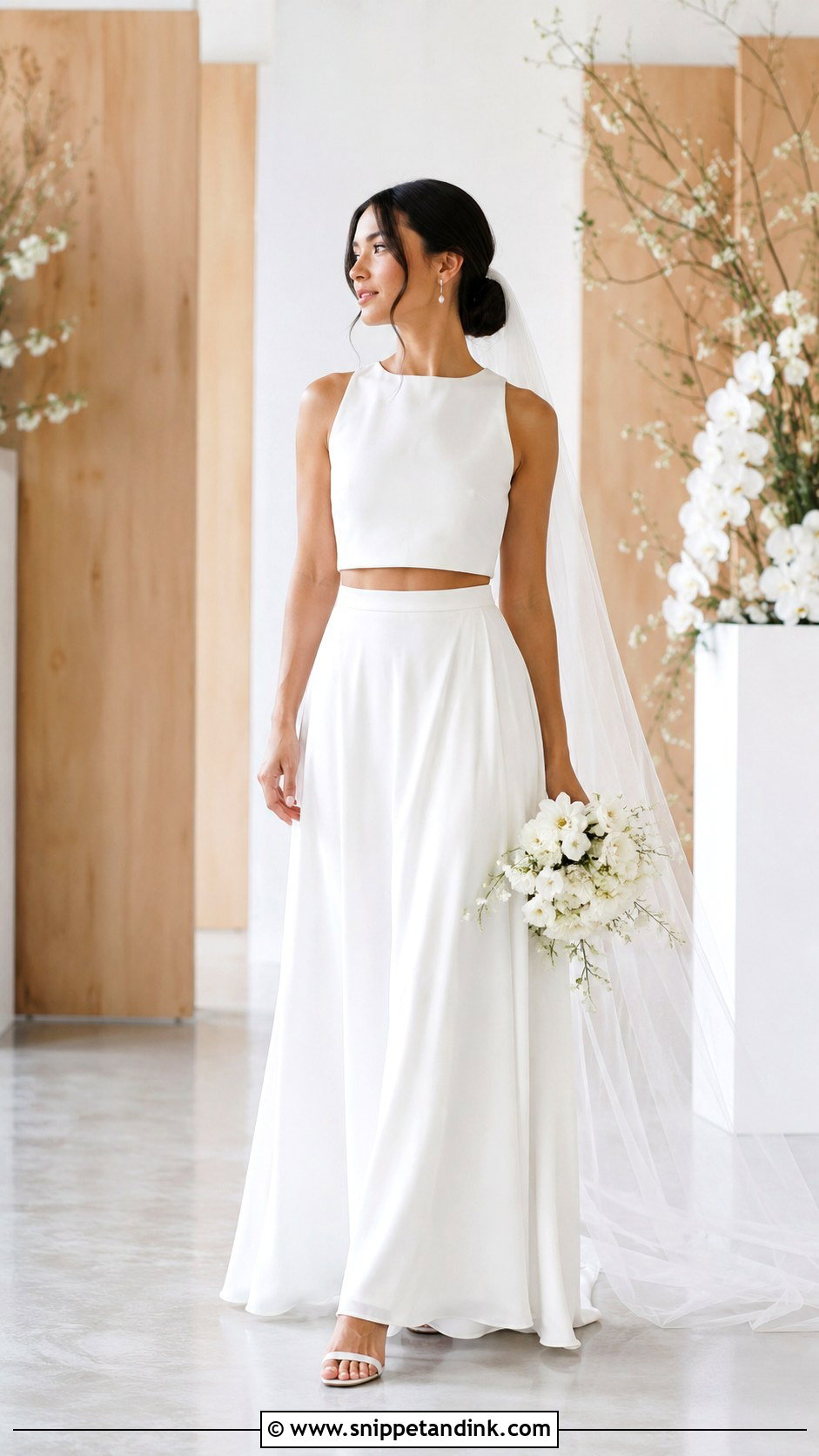
Two-piece sets flatter short brides more often than people expect. A cropped top over a high-waisted skirt moves the visual waistline up, and the legs look longer for it. I keep the gap between top and skirt to a sliver; a wide strip of midriff cuts the body in half and undoes the effect. A fitted top and a slim or softly flared skirt give the cleanest line. Heeled sandals, simple earrings and a low bun with a sheer veil keep it bridal while you move freely.
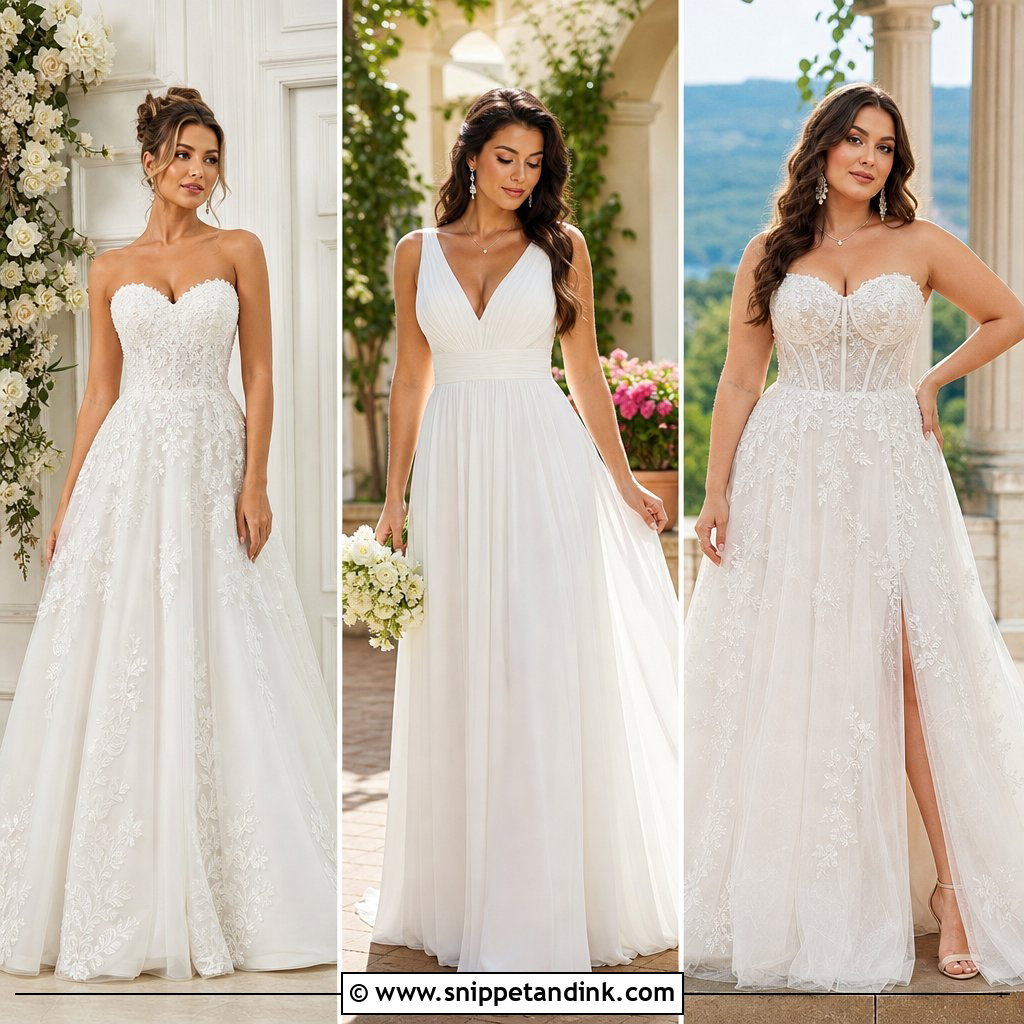

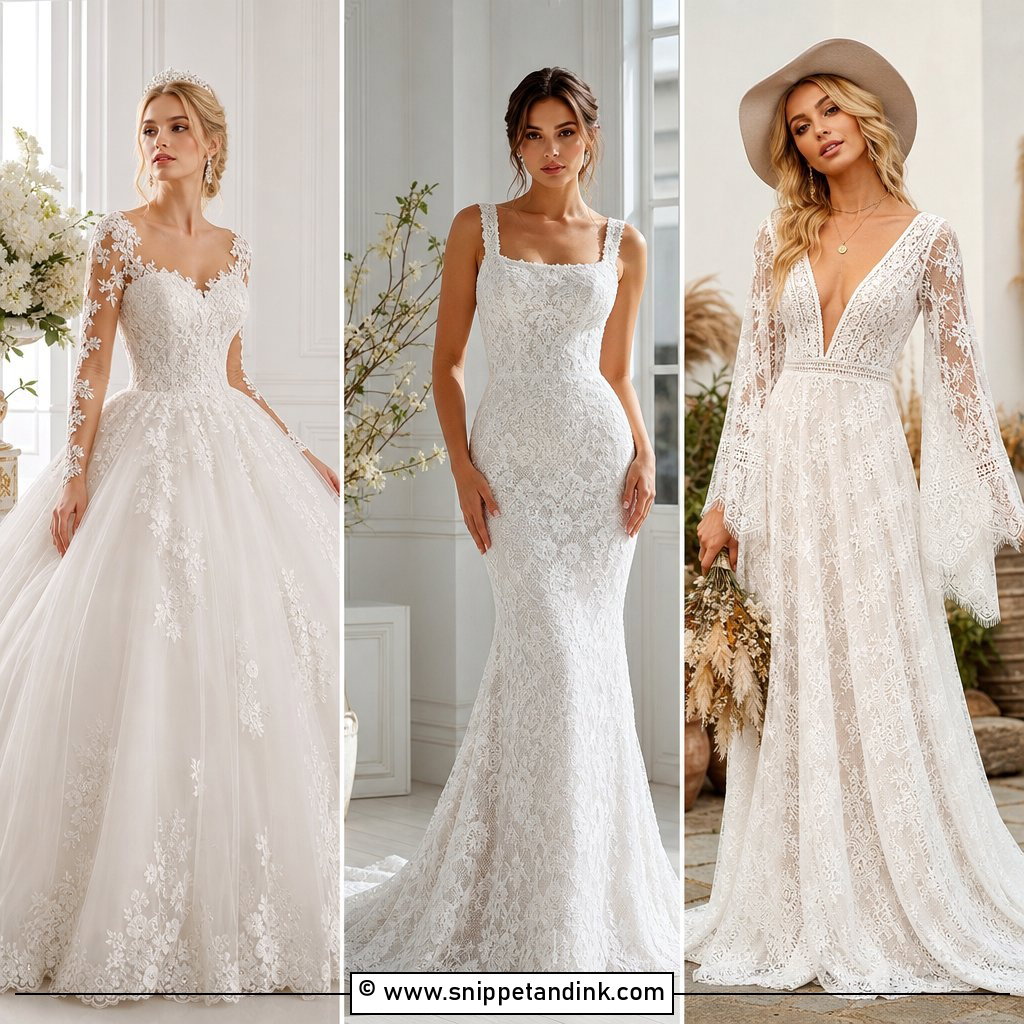
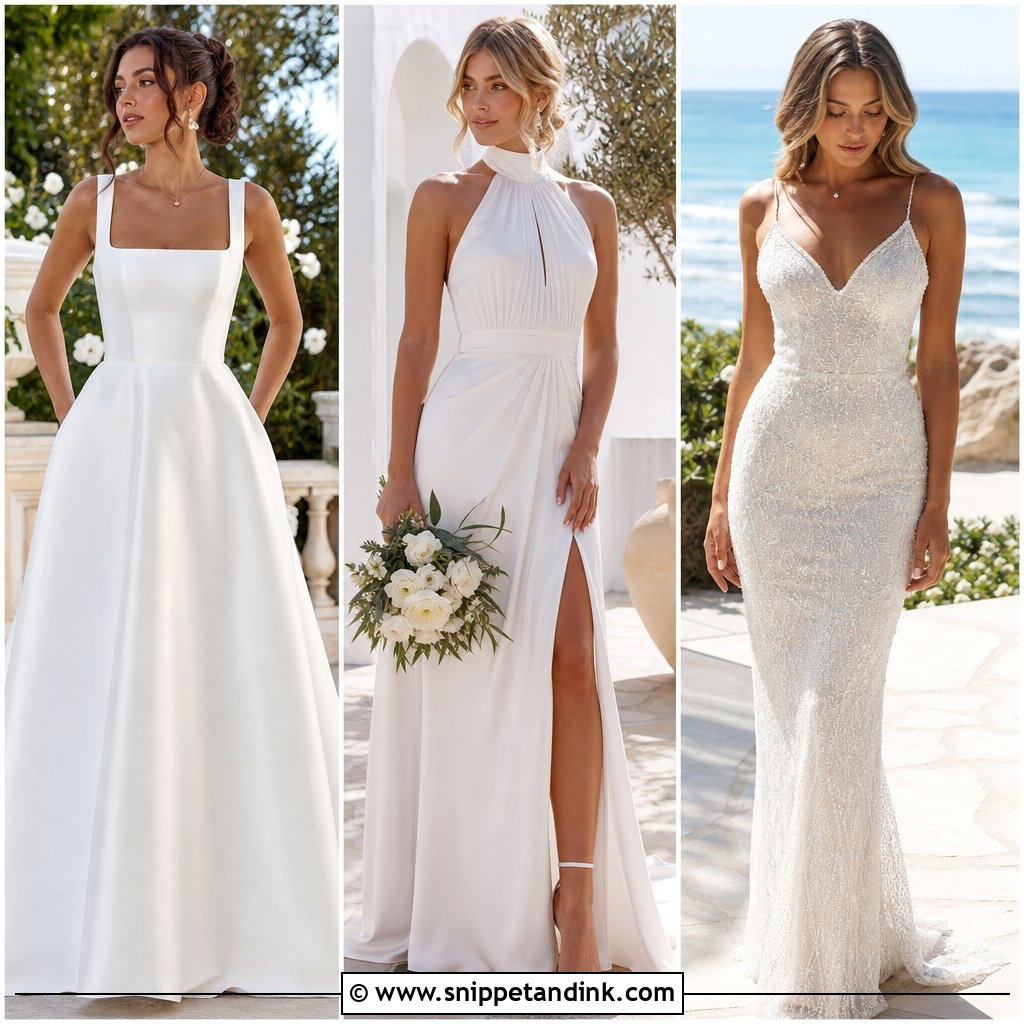
25. Petite Reception Wedding Dress With Statement Shoes
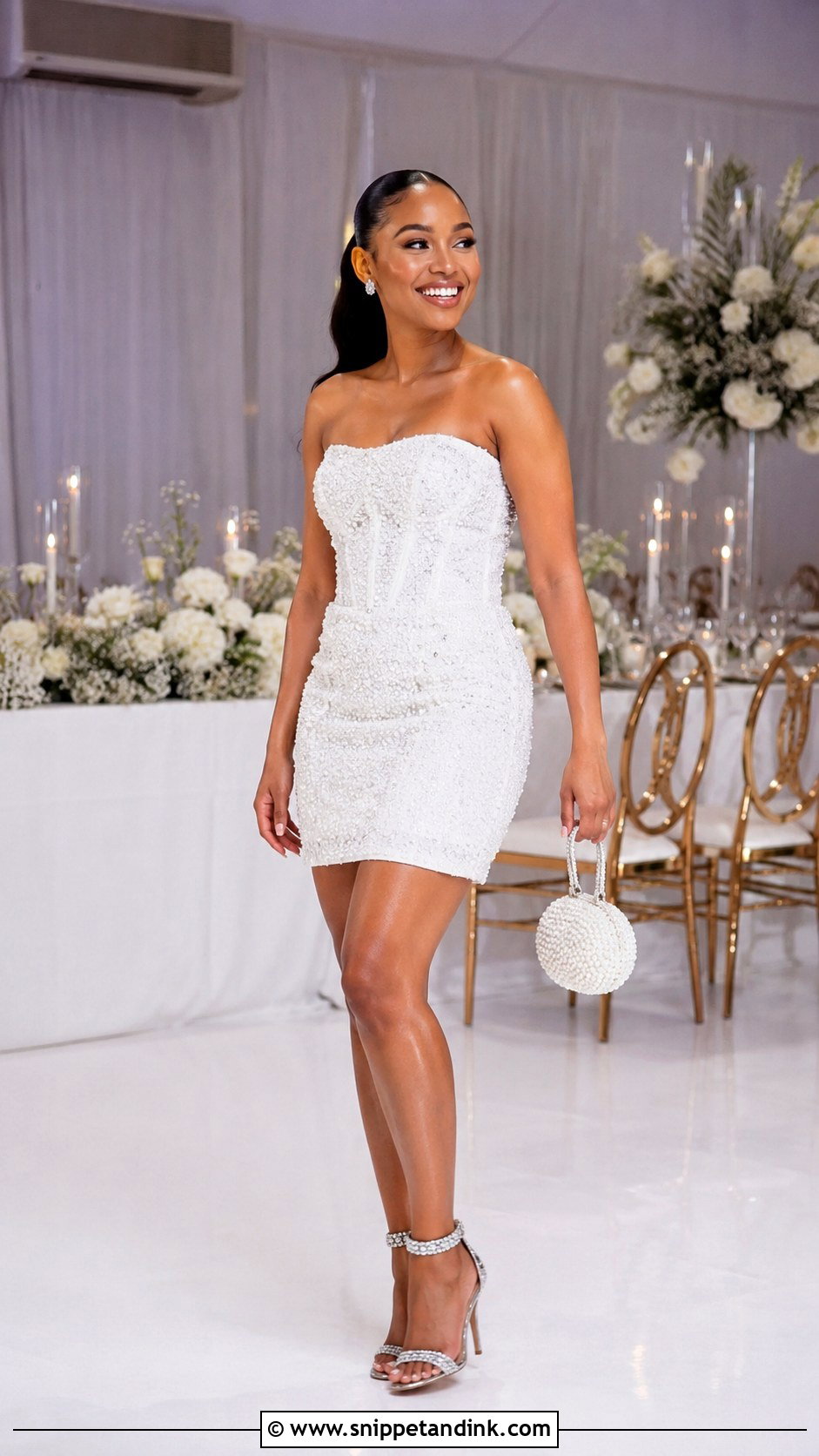
A second look should be the dress you dance in, so I fit it with movement in mind: arms up, sitting, a quick spin. A mini, a feather-trim hem, a satin shift or a beaded short dress all suit petite brides. With a short hem, the shoes become part of the outfit. Pearl heels, crystal sandals or bow pumps all work, but if the dress is heavily beaded, pick a quieter shoe. A sleek ponytail and a small bag finish it.
The Alterations a Petite Bridal Gown Usually Needs
Almost every gown on a short bride gets altered, and planning for it early saves stress. I’d expect most of these, depending on the dress:
Hem, set to the final shoe
The hem is set to the shoe you’ll actually wear, so buy shoes before the first fitting and don’t change them afterwards. A difference of an inch in heel height shows up straight away in the hem. Multi-layer skirts are hemmed layer by layer, and lace hems may have to be taken off and reattached, which costs more and takes longer.
Torso length and straps
If the waist seam sits low on you, a good seamstress can shorten the bodice from the shoulders or the waist. Straps and sleeves are commonly shortened too. These changes make the biggest difference to how tall you look, more than the hem.
Timing
Most brides start fittings about two to three months before the wedding, with two or three appointments and a final try-on in the last couple of weeks. Petite alterations can take more work, so book your seamstress early, and don’t start a diet or a new fitness plan that will change your shape after the first fitting without telling her. Prices vary a great deal by region and fabric, so ask for a quote at the first appointment.
Fit Over Formula for the Shorter Bride
Proportion matters more than any rule. Shorter hems, defined waists, open necklines and light fabrics help a petite bride, but none of this means avoiding sleeves, lace, tulle or a ball gown. Fit decides it. Bring the exact shoes to every fitting, have the hem checked from the front, the side and the back, and keep accessories in scale with your frame. Your tailor and your stylist will do the rest.
You'll Like These Ideas:







Leave a Reply