
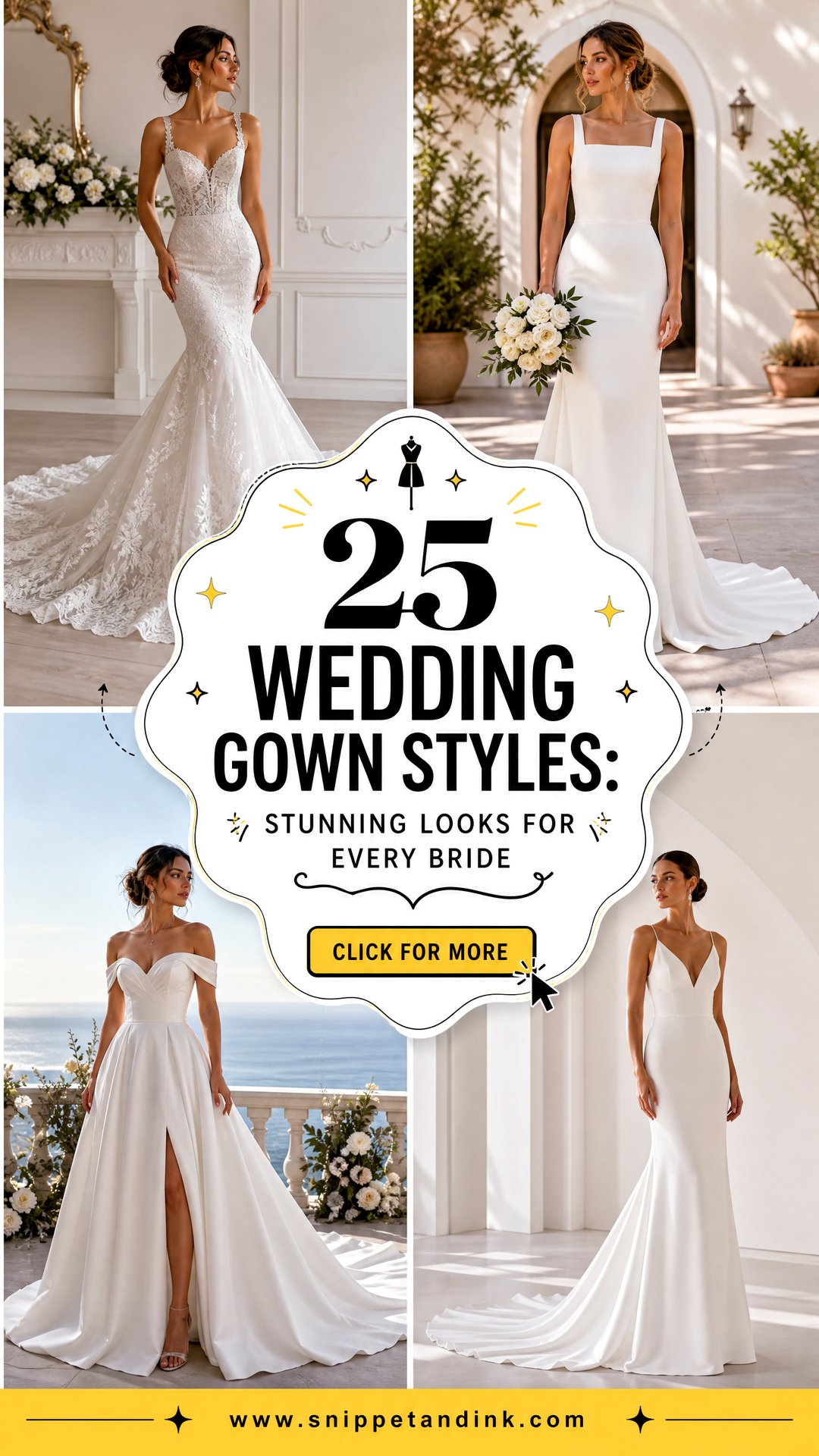
Brides often walk into a salon knowing a designer’s name and nothing about the shape underneath it. I’d rather you knew the vocabulary: silhouette, neckline, fabric, waistline. Once you can name what you like, an appointment stops being a guessing game. The 25 styles below run from clean satin and lace sleeves to detachable overskirts, basque waists, sculpted bows and soft colour, and each one comes with the outfit around it plus what I look for when a bride tries it on. A gown has to move with you, suit your proportions and fit your venue, so read these with your own day in mind.
Matching a Silhouette to Height, Hips and Bust
No body type is banned from any gown. Still, some shapes do more of the work for certain frames, and knowing that saves you an afternoon of try-ons. These are the starting points I use, not rules.
Petite frames
Lighter fabrics and higher waist placements help. A tulle A-line, a fitted sheath or a V-neck adds length; heavy satin ball gowns and very low drop waists can shorten the leg line. Keep the train modest so you aren’t dragging more fabric than you can manage.
Tall frames
Columns, mermaids and dramatic ball gowns all carry well on a long body. Check the gown length early, because many samples are cut for average heights and you may need extra hem or a longer veil to keep proportions right.
Fuller bust or curvier hips
Structure is your friend. A boned bodice, a defined waist and a wide strap or sleeve give support without hiding shape. Fit and flare and A-line cuts balance the hips, and a sweetheart or V-neck usually sits more comfortably than a high, straight neckline.
Straight or athletic frames
A basque waist, a full skirt or soft draping builds curves, and high necks or square necklines show off strong shoulders. I’d try a column too, because clean lines often suit this frame best of all.
1. A-Line Wedding Gown
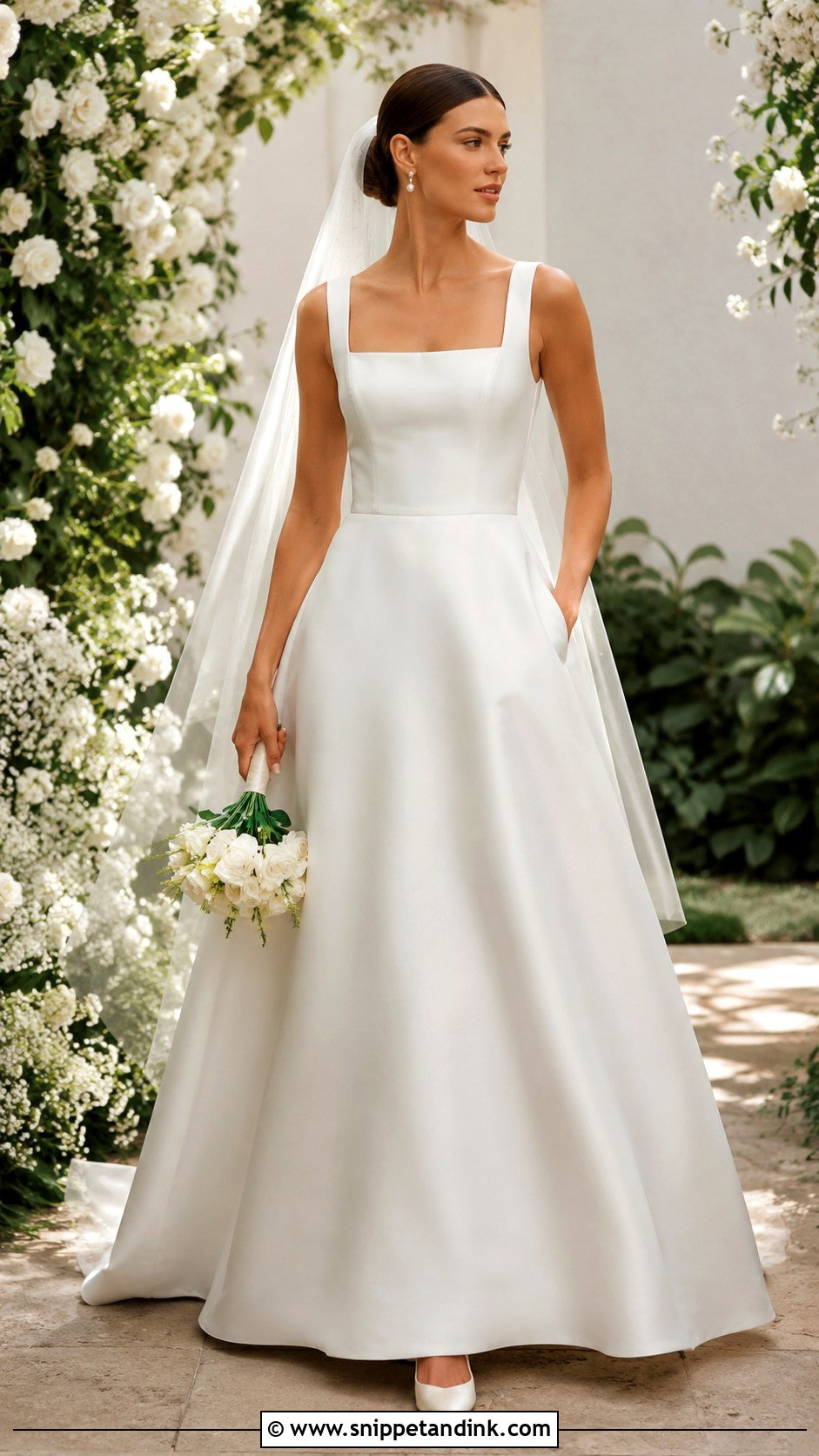
If I had to put one silhouette on every bride for a first try-on, it would be this one. The bodice fits to the waist and the skirt opens gradually, so it balances hips and shoulders without the weight of a full skirt. Satin or crepe with a square neckline, pearl earrings, a fingertip veil and pointed ivory heels gives you a clean classic version; lace applique or floral embroidery adds romance without crowding the shape. Watch the skirt’s width at the hem: a narrow A-line moves easily in a courthouse, while a wider one carries better down a long garden or ballroom aisle.
2. Ball Gown Wedding Gown
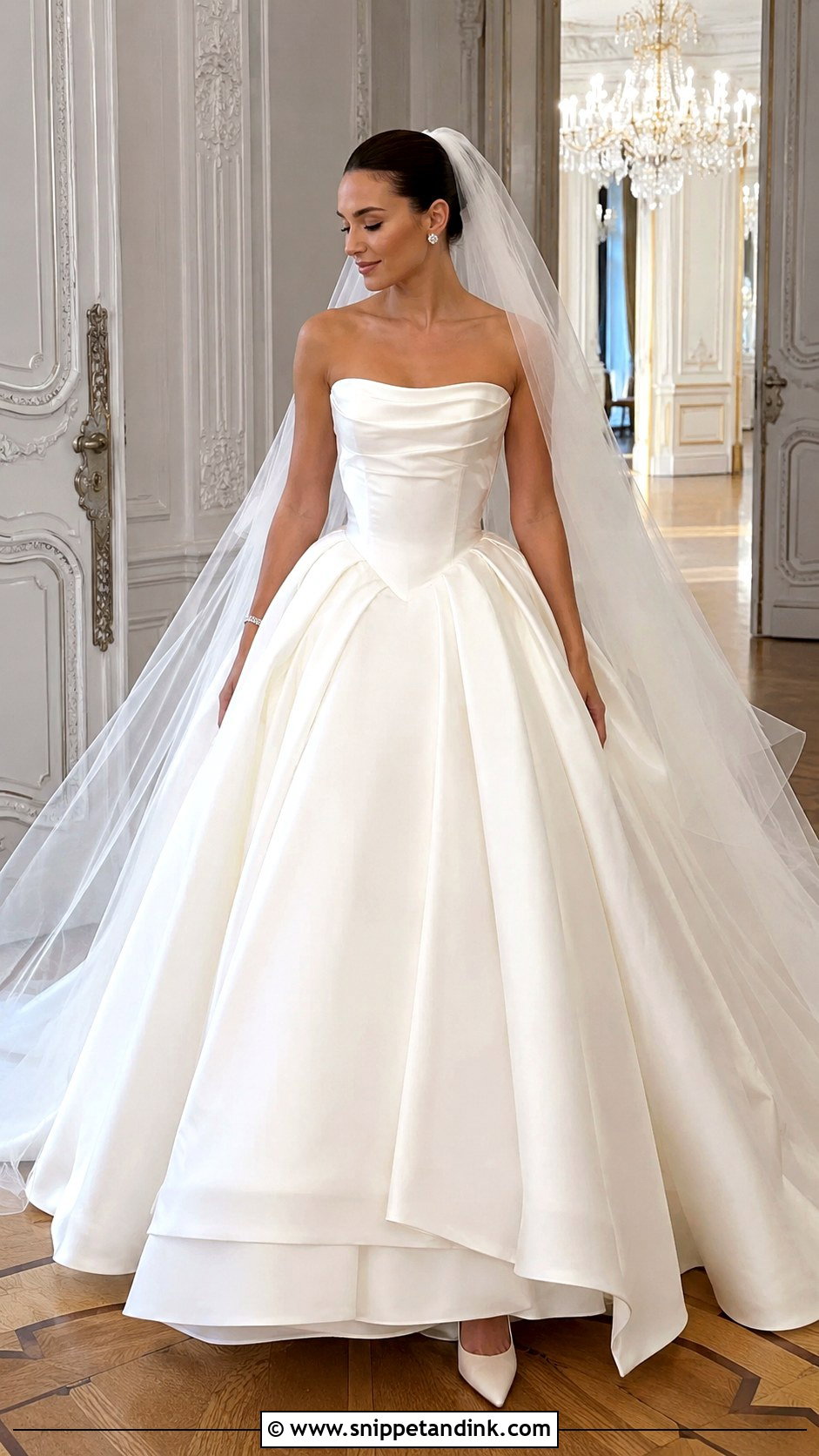
Volume is the whole idea here: a fitted bodice and a wide skirt, usually held out by layers of tulle or a hoop. A strapless satin version with a basque waist looks current because the dipped waist creates a soft princess effect without feeling dated. Keep accessories few: a long veil, crystal studs, a sleek updo, simple heels. Petite brides can absolutely wear one, but I steer them toward lighter tulle rather than heavy satin, which can swallow a small frame. Curvier brides tend to appreciate the supportive bodice. Whoever you are, test sitting in it; a big skirt needs a wide chair and a little practice.
3. Mermaid Wedding Gown
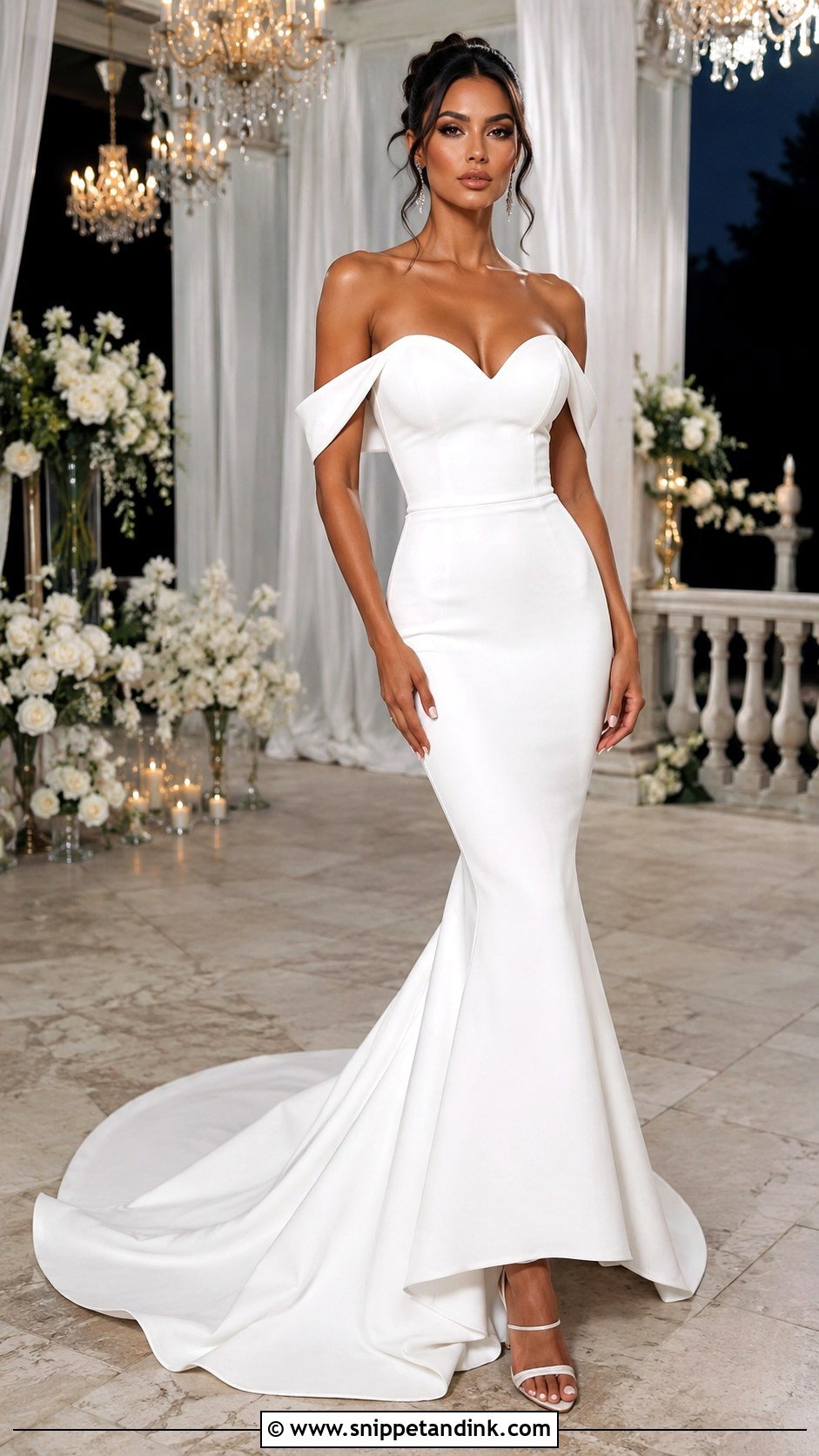
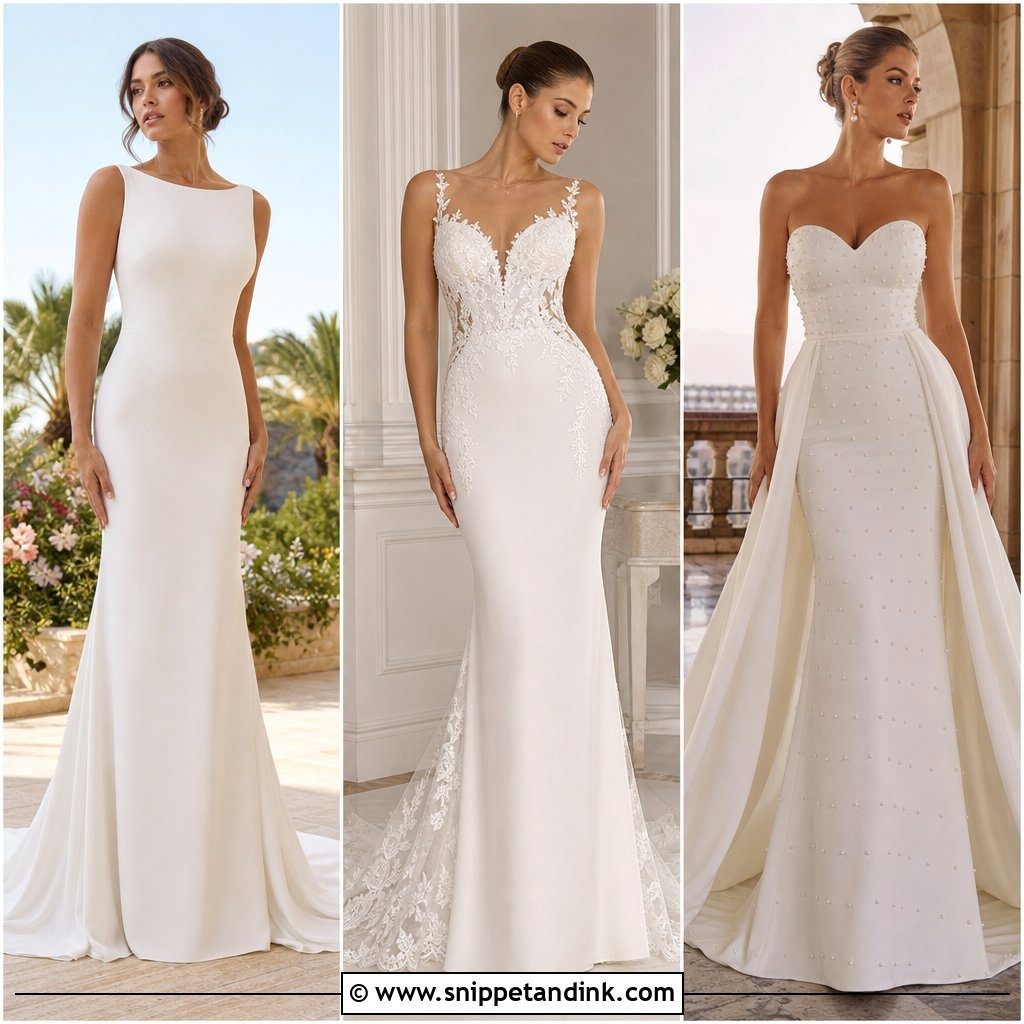
Mermaid gowns are fitted through the bust, waist, hips and thighs before flaring near the knee, and they reward curves. A crepe version with a sweetheart neckline, detachable off-shoulder sleeves, drop earrings and strappy ivory heels is a polished starting point. Tailoring decides everything. I want the gown to feel secure at the hip without stopping your knees from bending, and if dancing matters, ask about a stretch lining and a bustle that lifts the train without bunching. Formal venues, modern hotels and evening receptions suit it.
4. Fit And Flare Wedding Gown
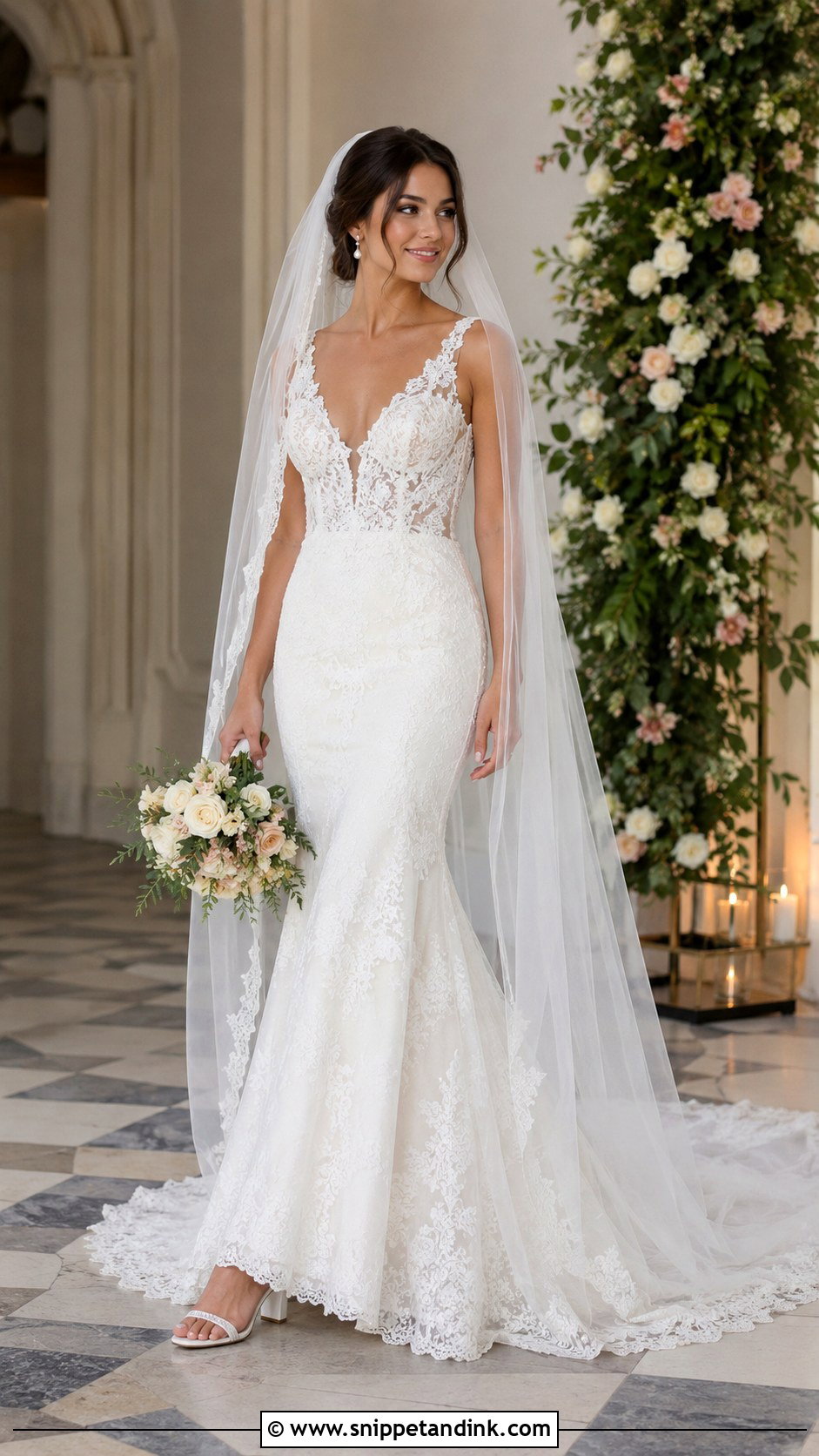
Think of this as the mermaid’s easier sister. It follows the body through waist and hips but opens around mid-thigh, so you can climb steps and dance without hitching the skirt. Lace with a V-neck, sheer straps, a chapel veil and low block heels reads romantic; crepe looks cleaner and beaded versions dress it up. I’d pick this over a mermaid for any bride with a long standing ceremony or a lot of moving between locations. Soft waves or a low bun keep the neckline in view.
5. Sheath Wedding Gown
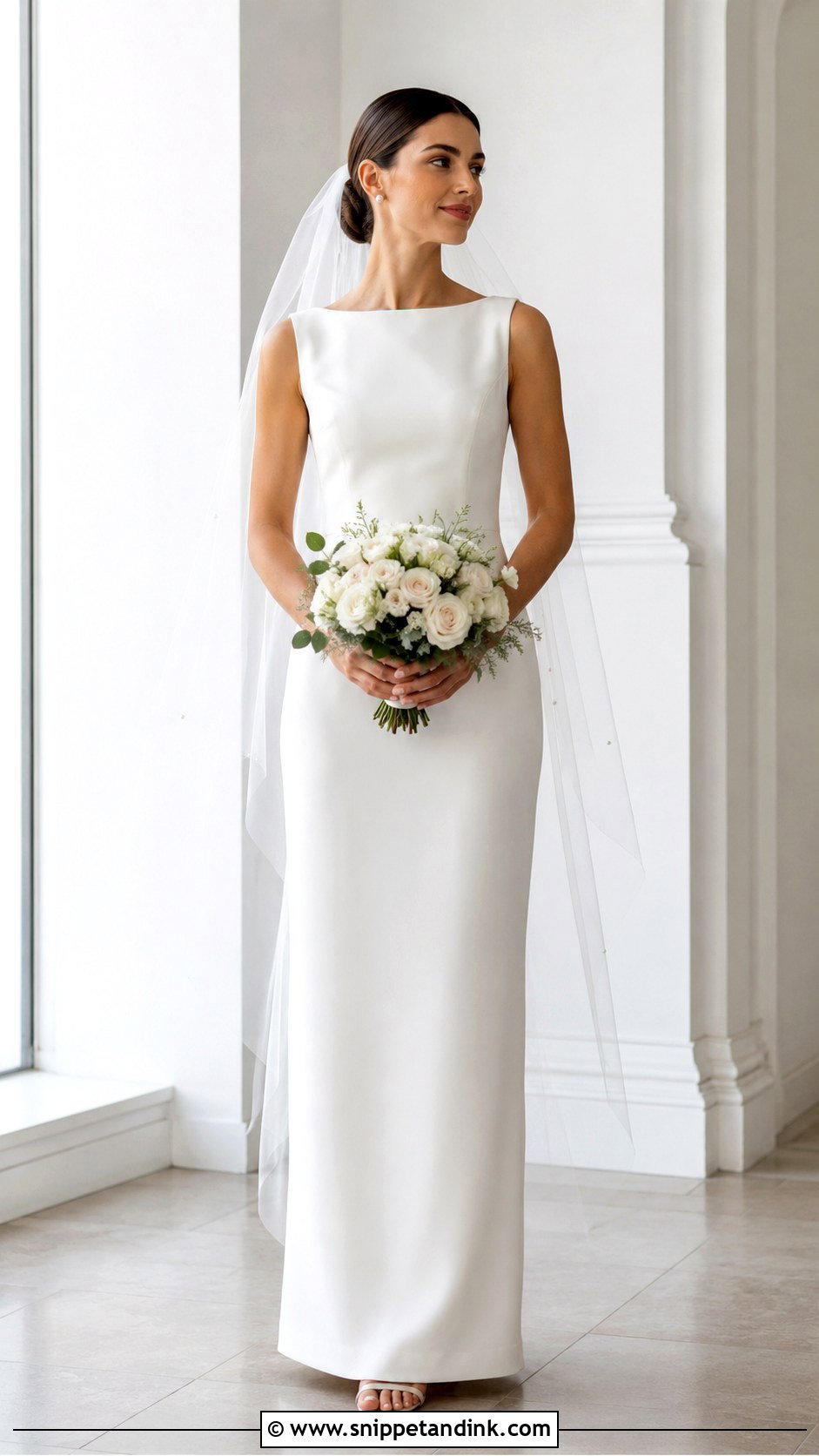
A sheath drops close to the body in a straight, narrow line with no skirt volume at all, which is why it suits beach weddings, city ceremonies and small celebrations. Crepe with a bateau neckline, a sleek bun, pearl studs and barely-there heels needs almost nothing else. Lace, chiffon or light beading soften it. Because the shape is so simple, fit through the waist and hips matters more than anything; a sheath that’s slightly too tight pulls into horizontal lines across the hips. Brides who dislike heavy gowns usually love how easy it is to walk in.
6. Column Wedding Gown
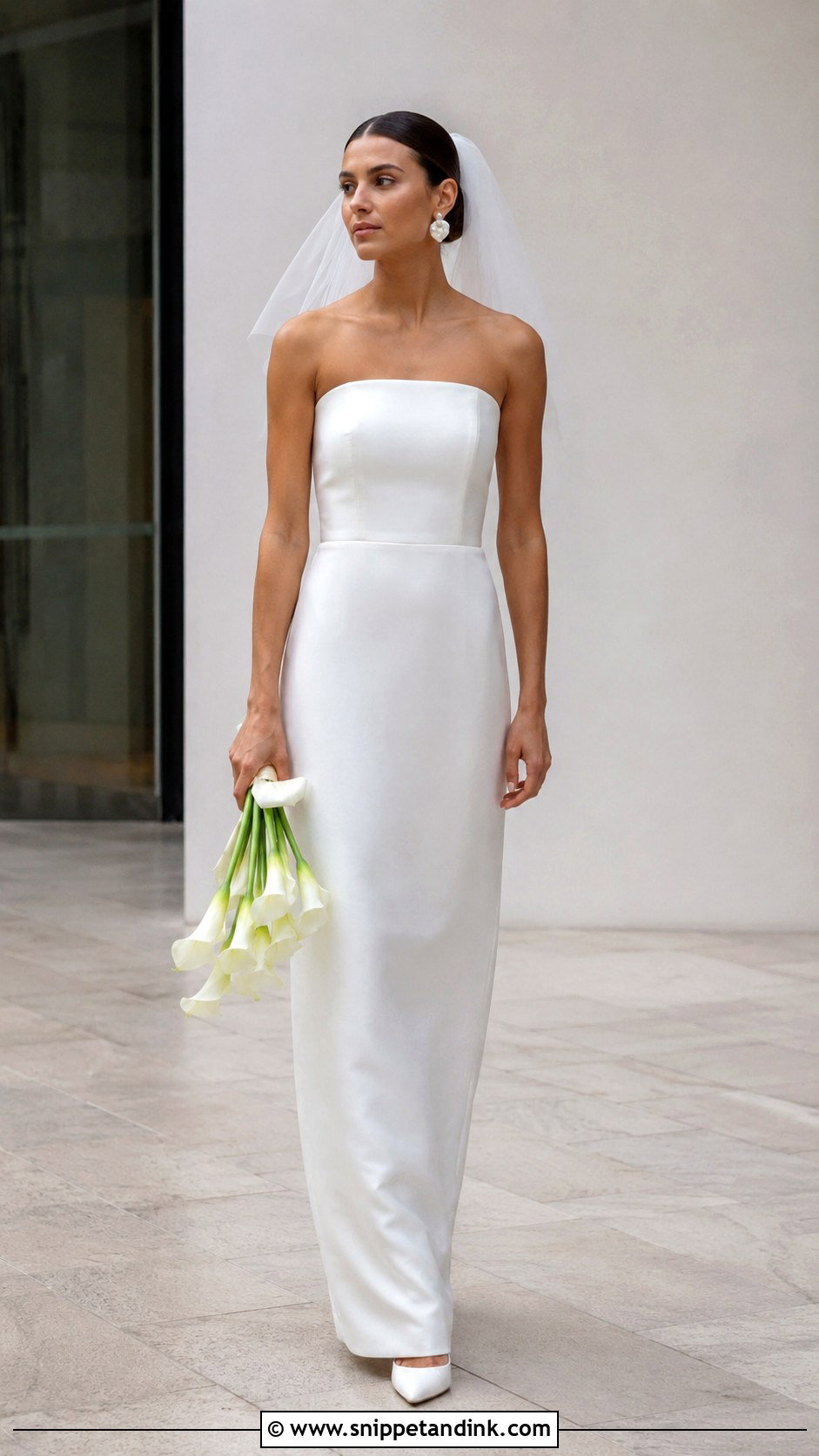
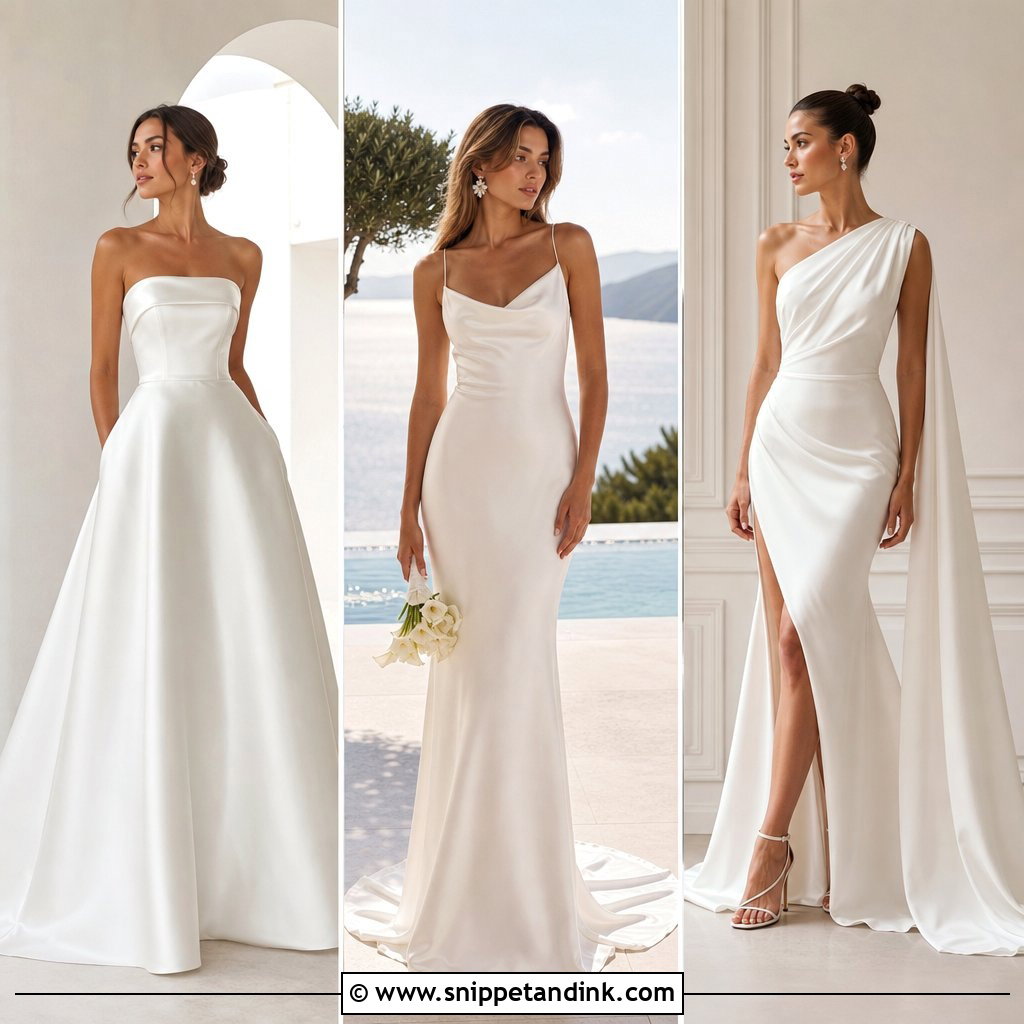
Column gowns are stricter than a sheath: straighter, more vertical, sometimes stiff enough to stand away from the body. Mikado or heavy satin with a strapless neckline, a structured veil, sculptural earrings and pointed pumps gives you the full modern version. A draped neckline or soft side ruching relaxes it. Since there’s no decoration to distract, I check the seams and lining closely, because a lining that’s a fraction too short drags the outer fabric and shows as ripples. Good alterations make this simple gown look expensive.
7. Empire Waist Wedding Gown
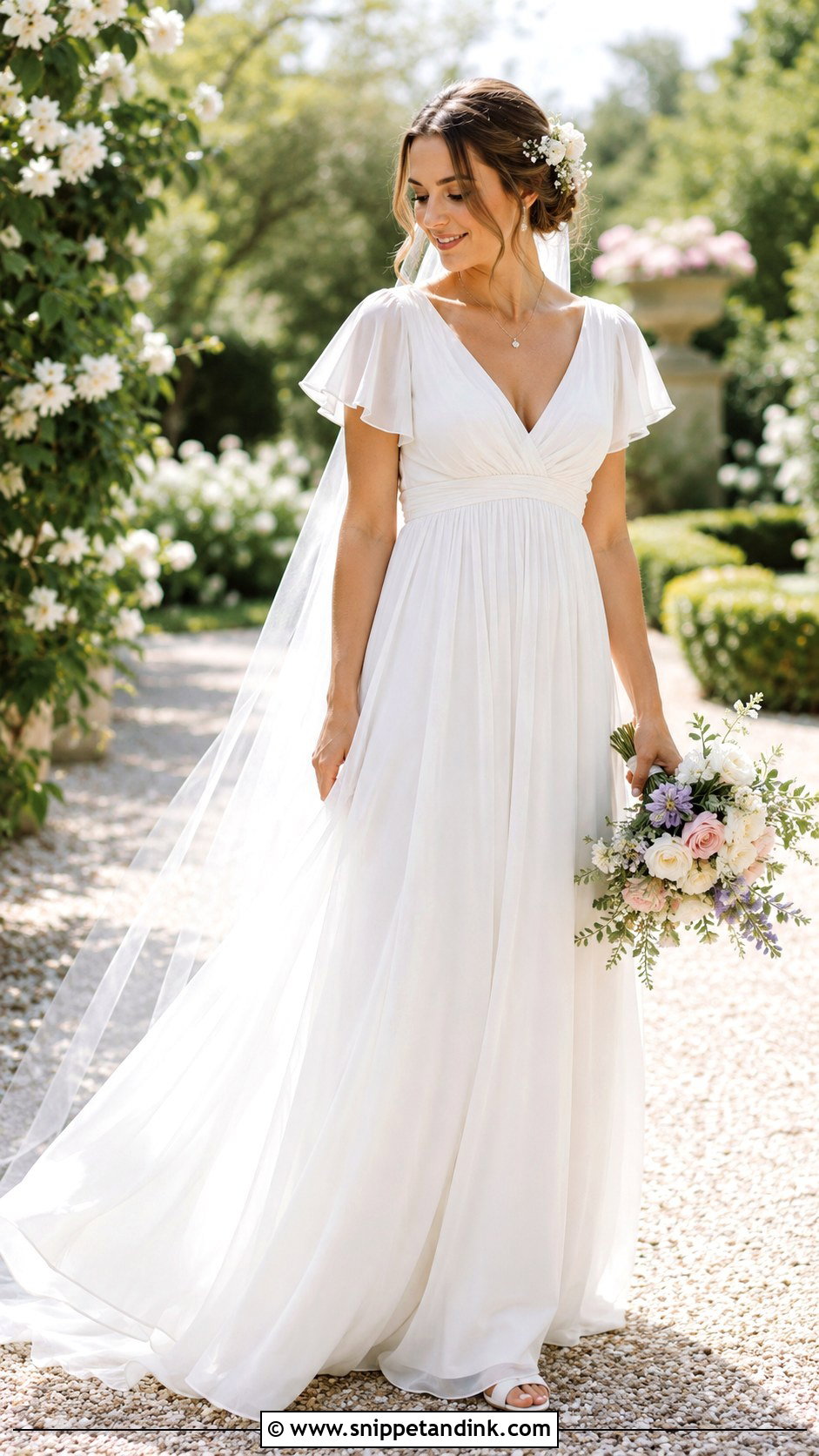
An empire waist wedding gown sets the seam just under the bust and lets the skirt fall loose from there. There’s nothing tight around the middle, which makes it comfortable for long days and a sensible option for pregnant brides. Chiffon with flutter sleeves, a soft veil, low heels and floral hair pins is the classic version. To keep it from looking like a costume, I go for modern details: a clean V-neck, fine pleating or sheer sleeves. Keep the skirt slim, because too much volume below a high waist can make you look shorter than you are.
8. Basque Waist Wedding Gown
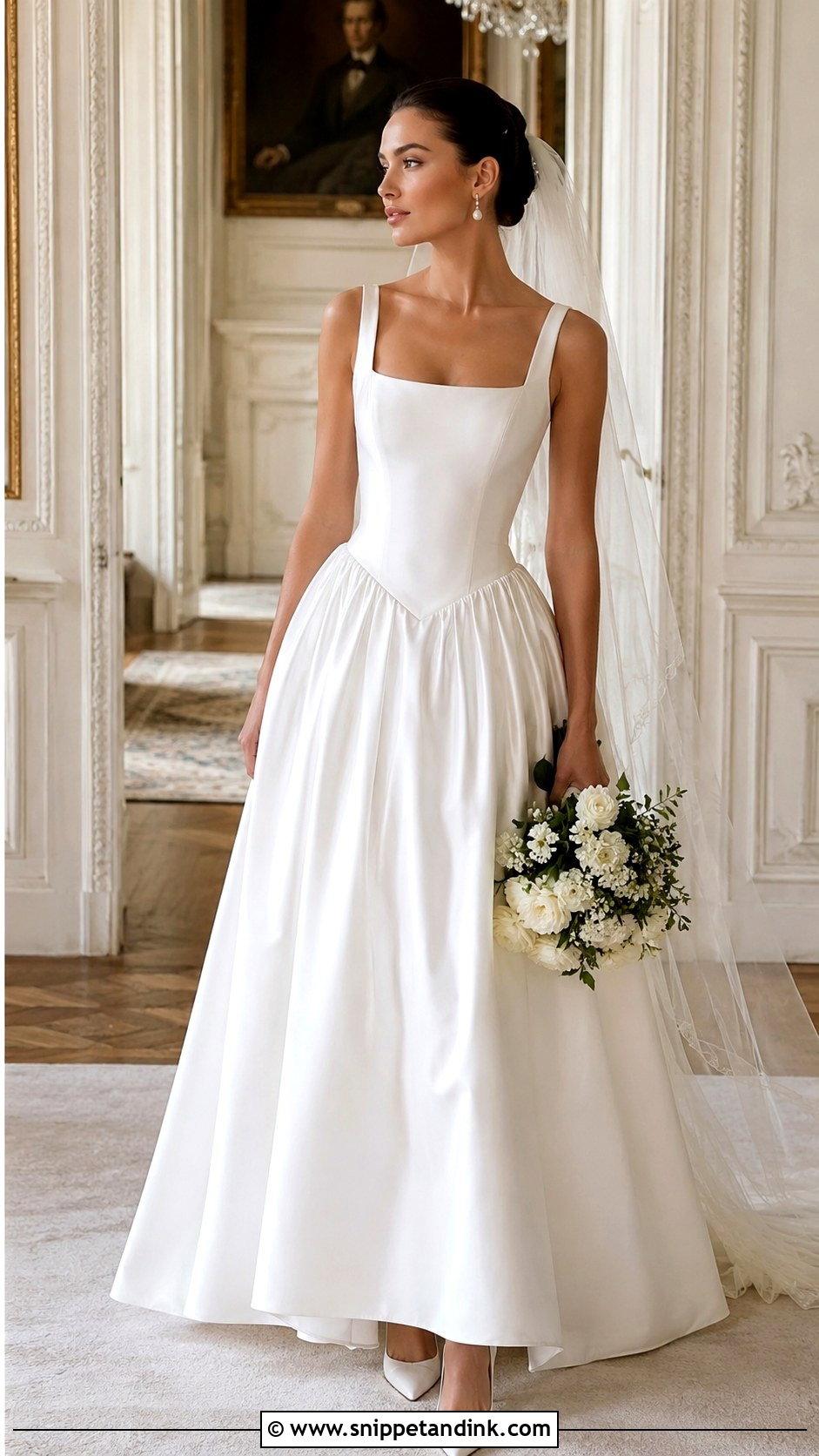
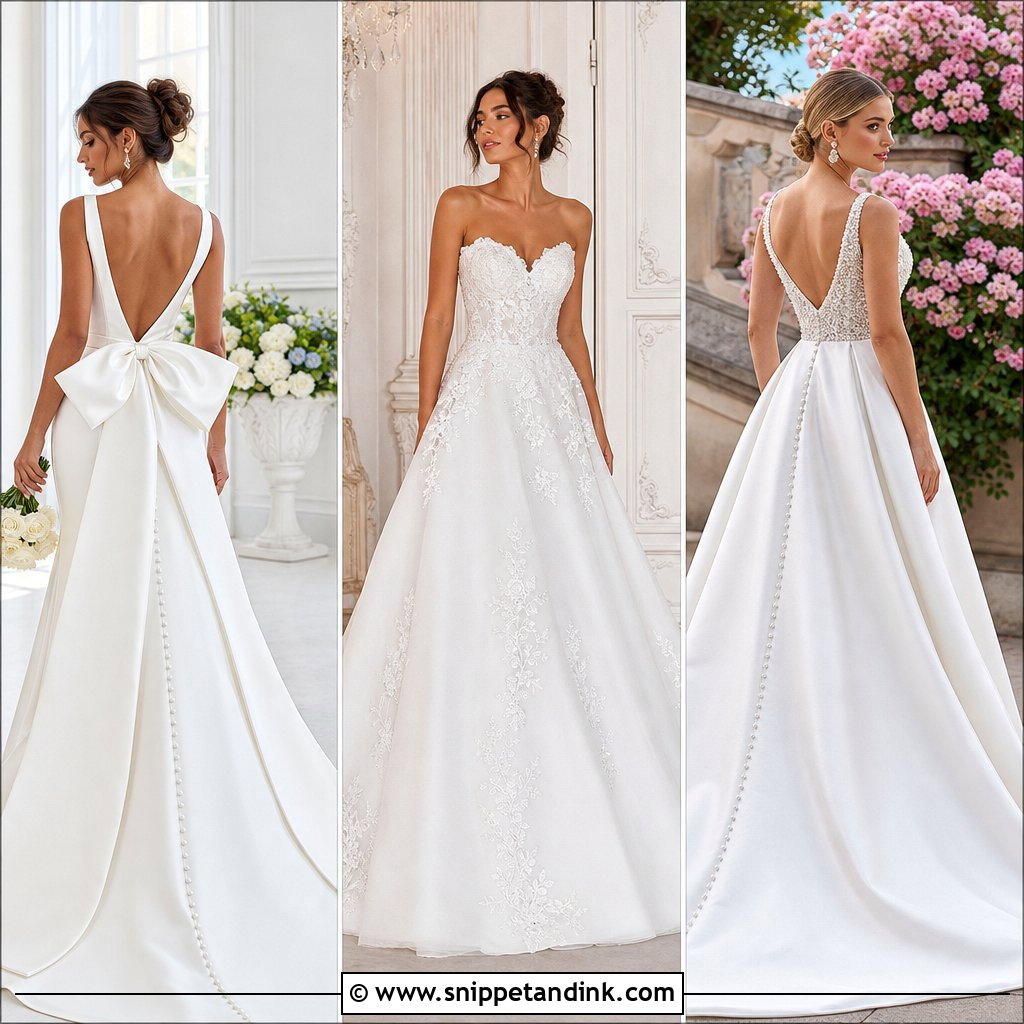
The waist dips below its natural line into a V or U at the front, which sculpts the torso and makes a full skirt look deliberate. This is one of the shapes brides ask about most at the moment. Satin with a square neckline, a soft ball gown skirt, a long veil and pearl drops looks classic without feeling old. The bodice must be well fitted for that lengthening effect; if it’s loose, the point floats away from the body. Keep the bouquet small and held low so it doesn’t cover the waistline you chose the gown for.
9. Drop Waist Wedding Gown
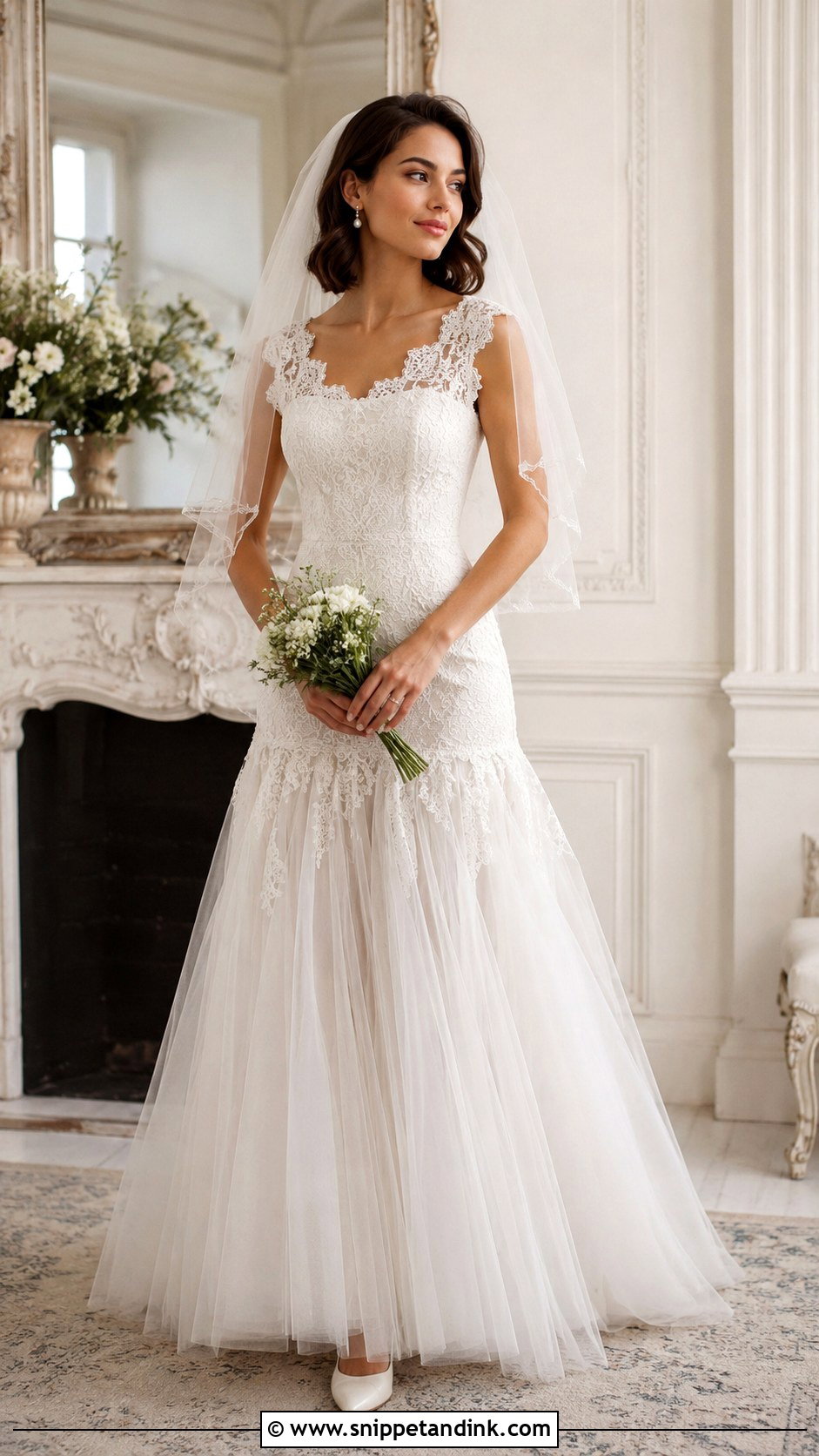
Drop waists carry the bodice past the natural waist, down toward the hips, before the skirt starts. Fabric sets the mood: a fitted lace bodice over soft tulle with satin pumps and a shoulder-length veil feels romantic, while a clean satin version looks editorial. The tricky bit is placement. An inch too low and your legs look short, an inch too high and it reads as a normal waist, so I mark the seam with the bride in her actual heels. Done right, it gives you something distinctive without tipping into costume.
10. Strapless Wedding Gown
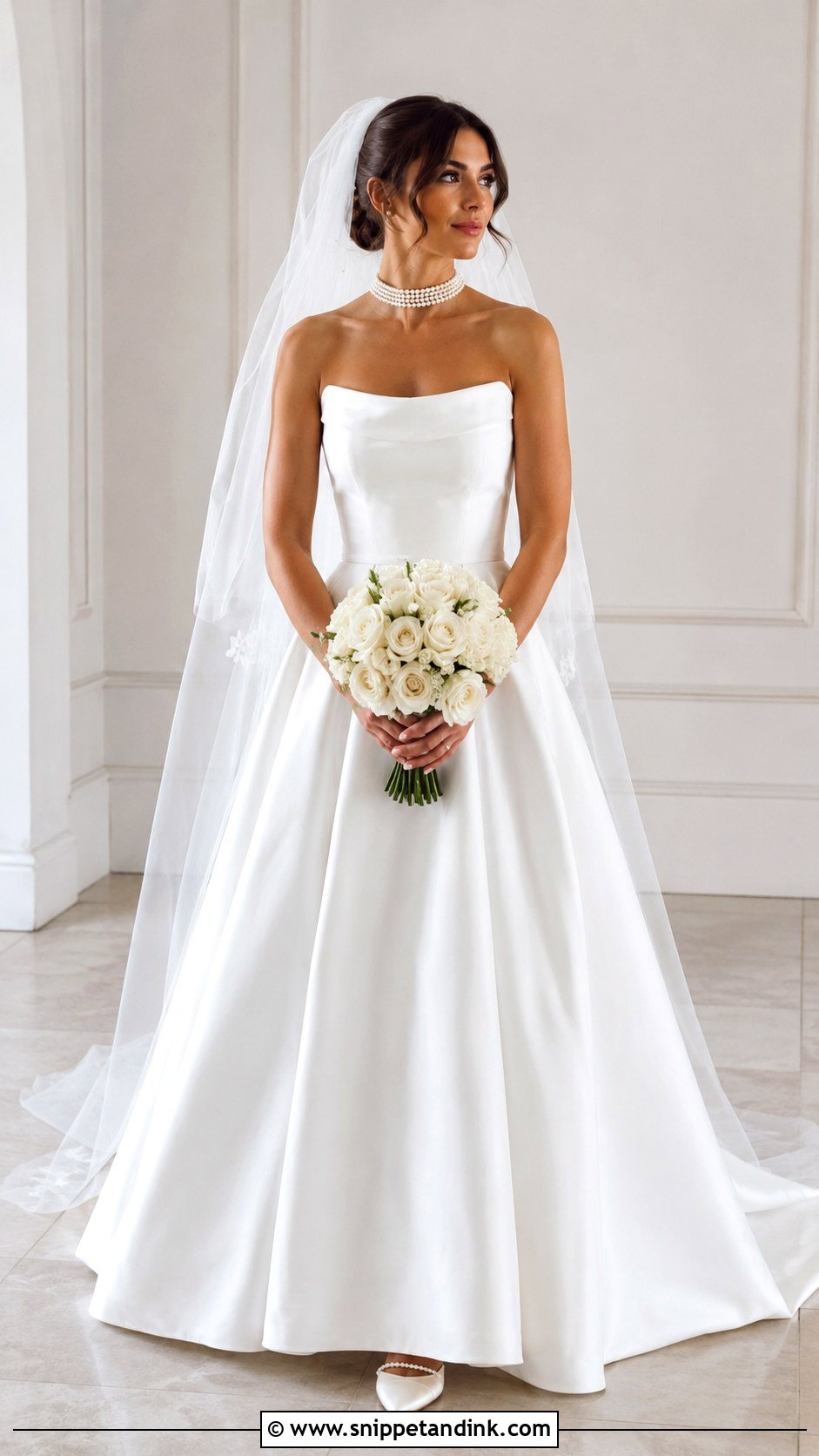
Strapless leaves the shoulders, collarbone and neckline open, and it depends completely on what’s inside the bodice. Good ones have boning and a waist stay so the gown holds up on its own; poor ones slide down and you’ll spend the day tugging. A satin A-line with a soft cat-eye neckline, pearl choker, sheer veil and pumps is a timeless ceremony look. Lace or floral applique adds romance, and a detachable overskirt or long gloves adds drama. An updo or half-up style keeps that open neckline clear.
11. Off Shoulder Wedding Gown
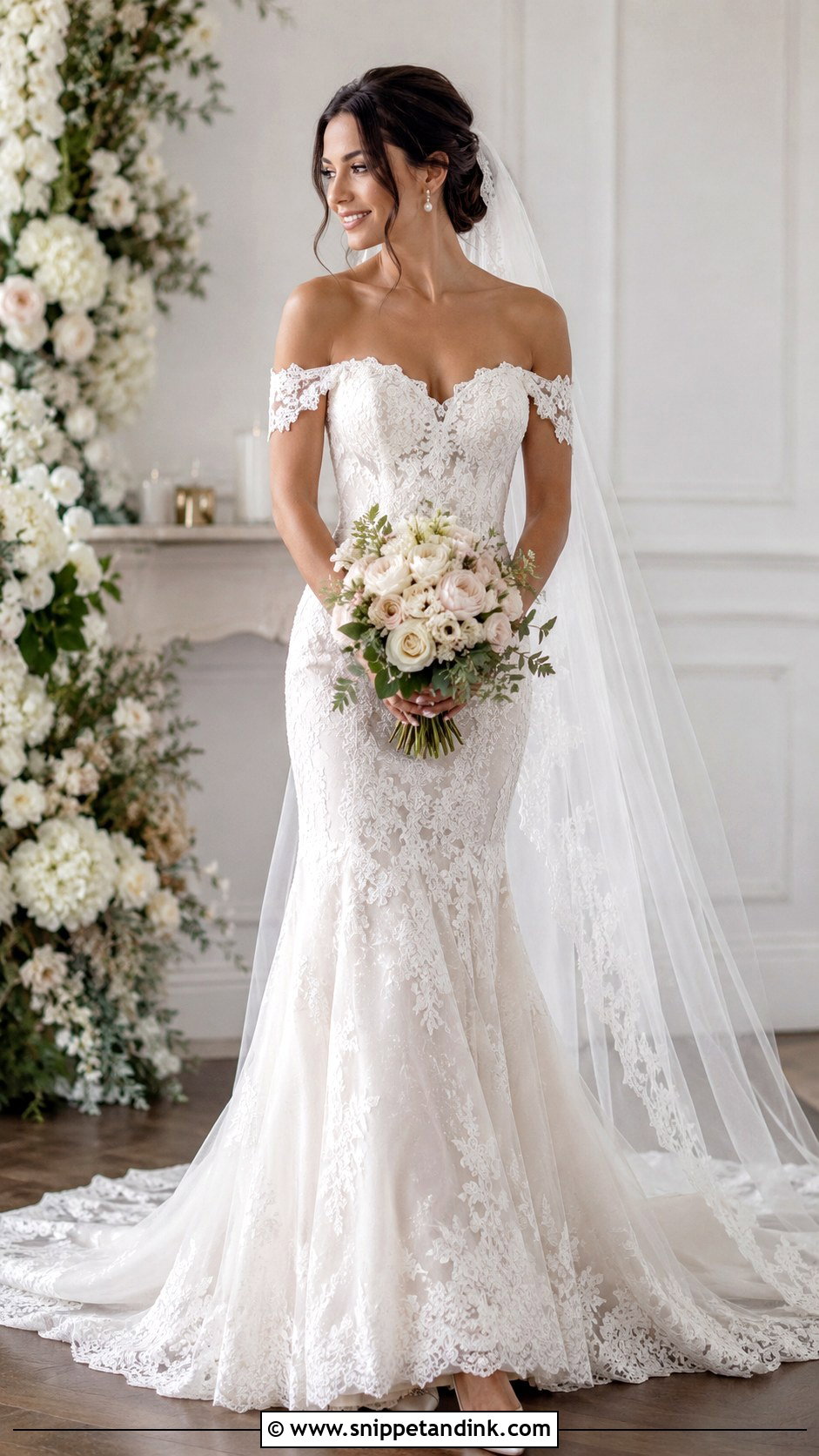
Off-shoulder sleeves frame the collarbone while giving the upper arm a little coverage. Lace with a flared skirt, pearl earrings, a chapel veil and pointed heels is the softer version; folded satin sleeves are the modern one. The thing to test is reach. Sleeves that sit across the upper arm can stop you lifting your arms above shoulder height, which you’ll want for hugs and dancing, so I ask brides to wave both arms during the fitting. A low bun or waves tucked behind the ears suits it.
12. Square Neck Wedding Gown
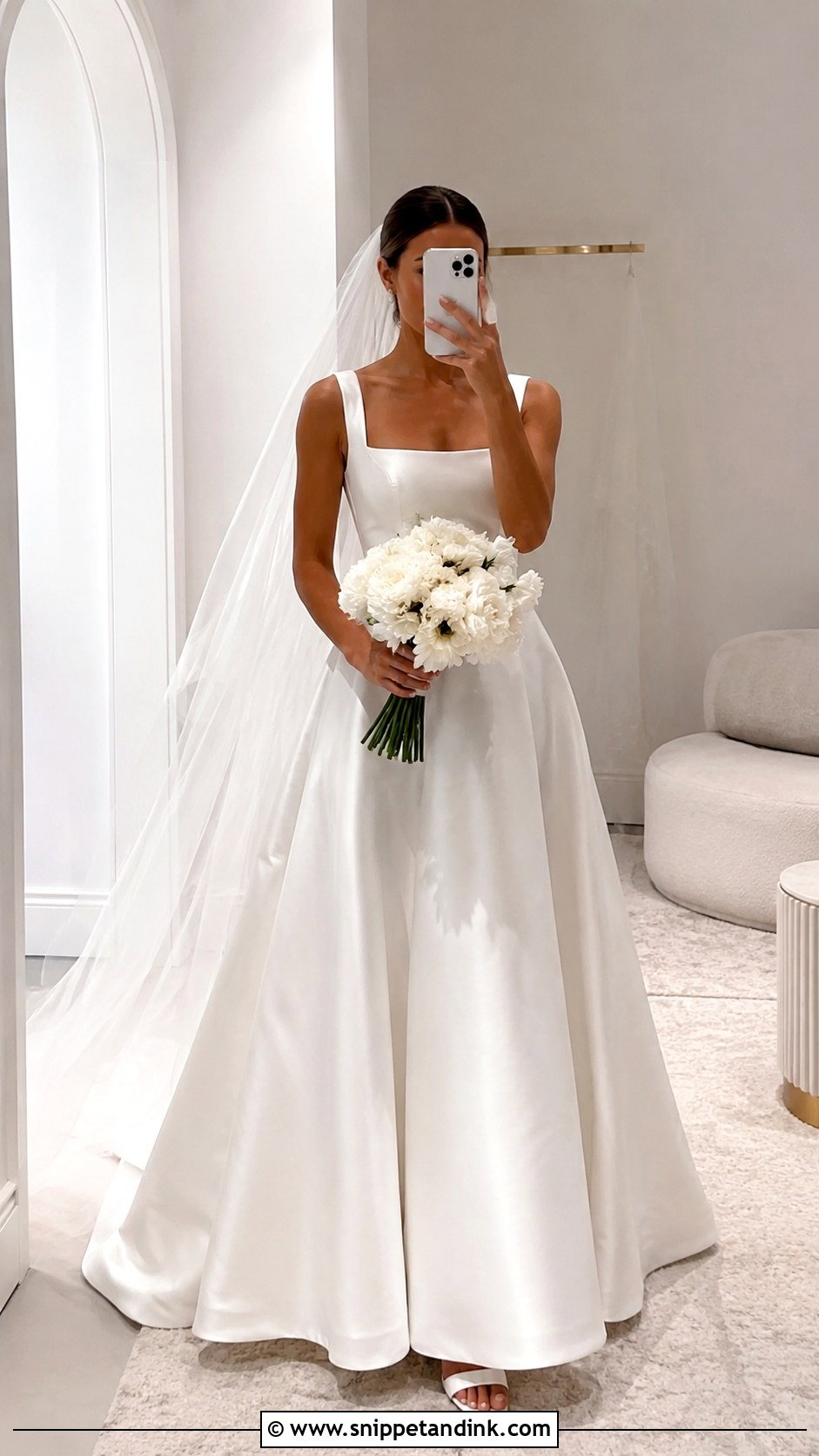
Square necklines open the chest but give more structure than a deep V or a strapless cut, and they have a slightly vintage feel I’m fond of. A satin or crepe A-line with this neckline, pearl studs, a smooth veil and block heels is a comfortable, polished outfit. It pairs with wide straps, cap sleeves or full sleeves. On a bride with a fuller bust, I check that the straight edge isn’t pressing flat across the chest; a slight curve built into the line often fixes it. Skip the necklace and let the neckline frame you.
13. Sweetheart Wedding Gown
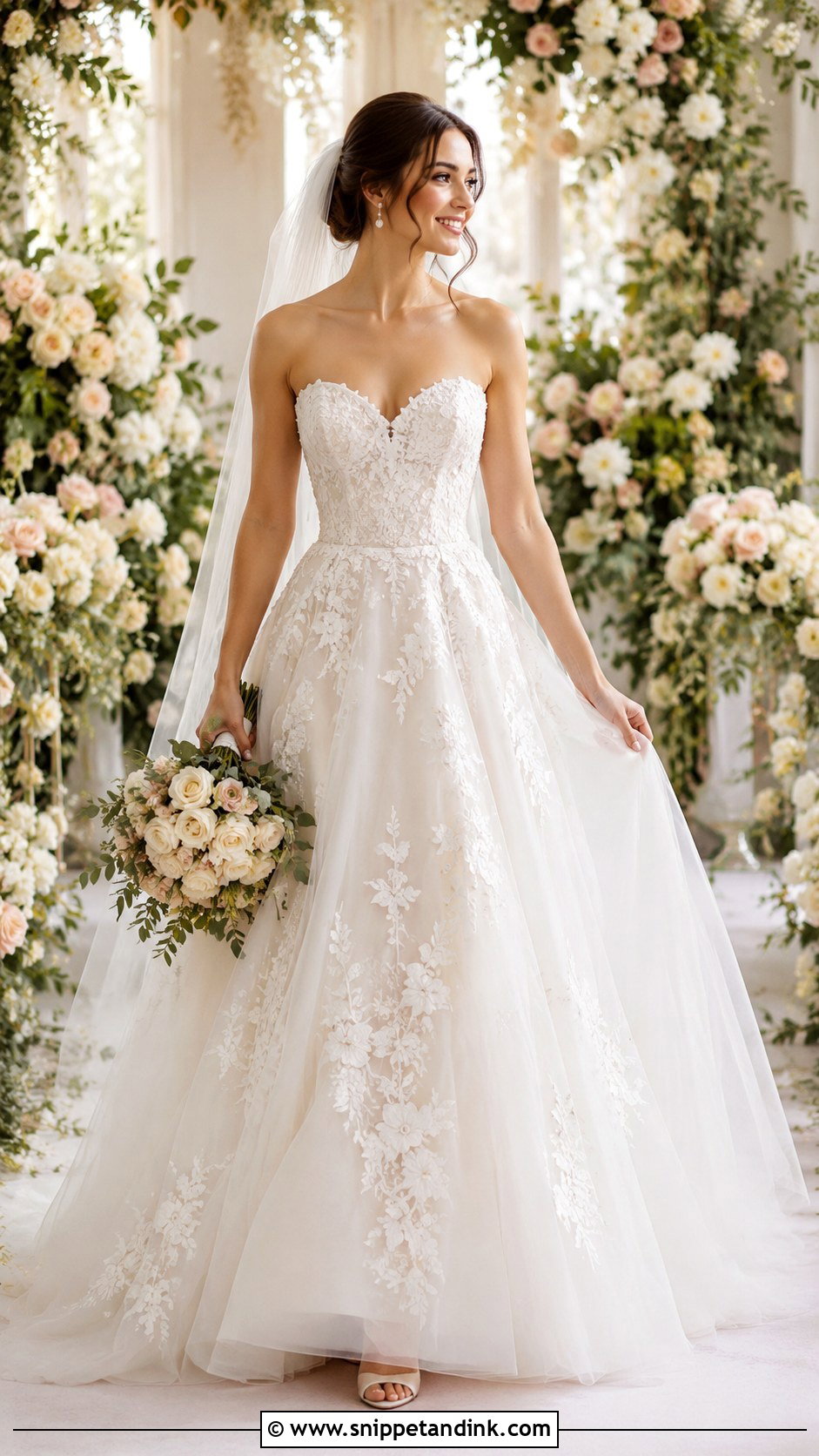
A sweetheart wedding gown has a neckline shaped like the top of a heart, and it works with ball gowns, A-lines, mermaids and fit and flare cuts. Tulle with a fitted bodice, floral applique, a fine veil and ivory heels is the classic romantic version; a modified sweetheart in smooth crepe looks more modern. The curve is already decorative, so I keep jewelry to earrings. Small-busted brides should check the dip at the centre doesn’t gape when they lean forward, which a little boning or cups usually fixes.
14. V Neck Wedding Gown
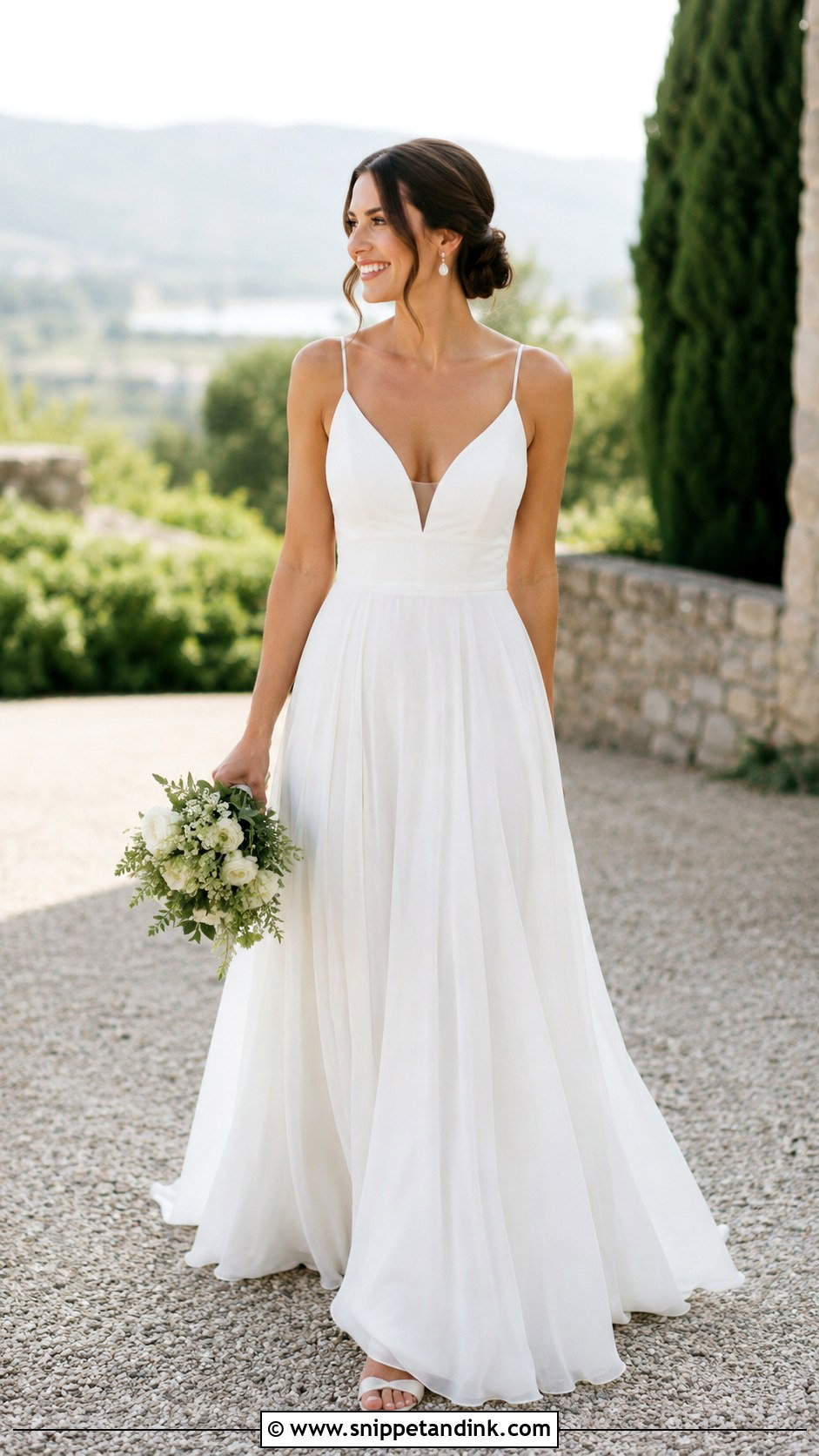
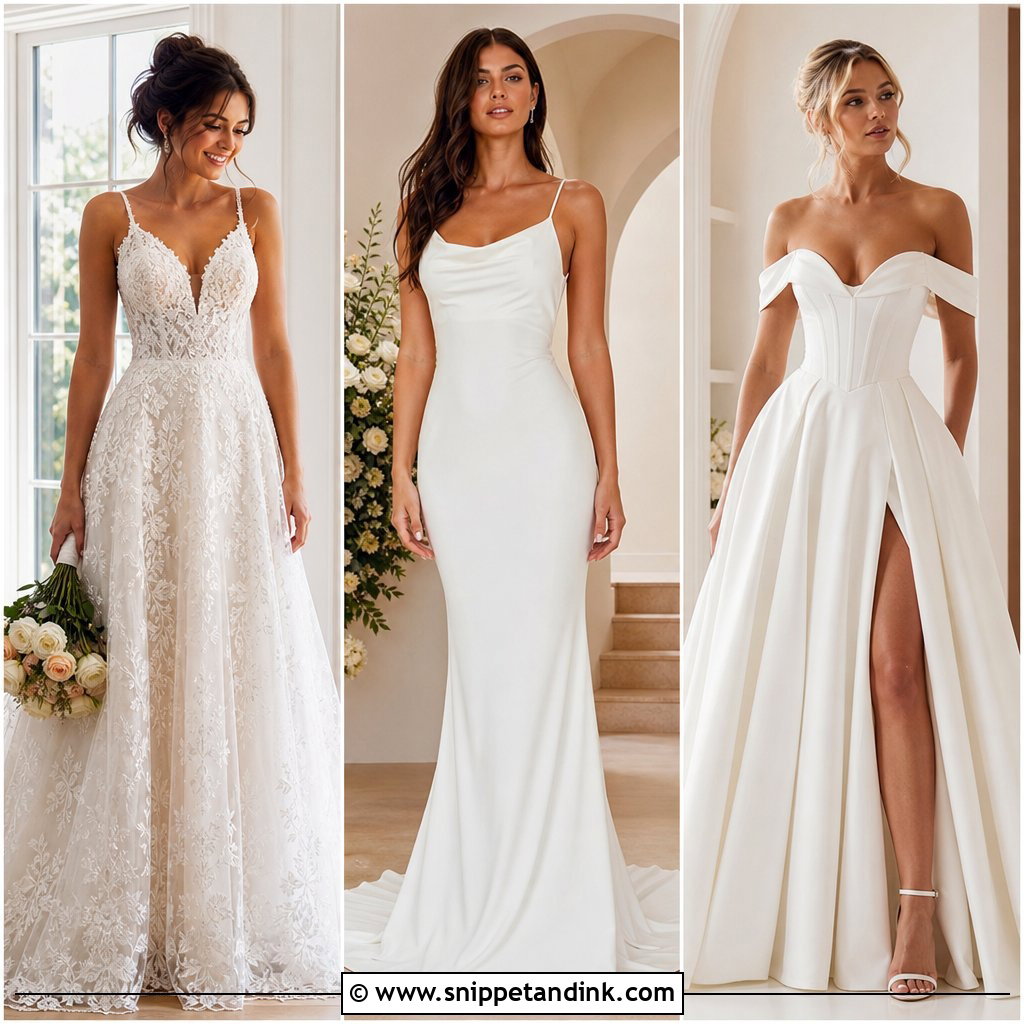
The V pulls the eye downward and outward, lengthening the torso and the neck. You decide the depth. A chiffon A-line with a soft V, thin straps, pearl drops and low heels suits outdoor ceremonies, and lace on a fit and flare cut adds detail. For deep plunges I balance the line with a fuller skirt or long veil. Security comes from built-in cups, a clear mesh insert if needed and fashion tape tested at a fitting, so the neckline stays where it should from ceremony to reception.
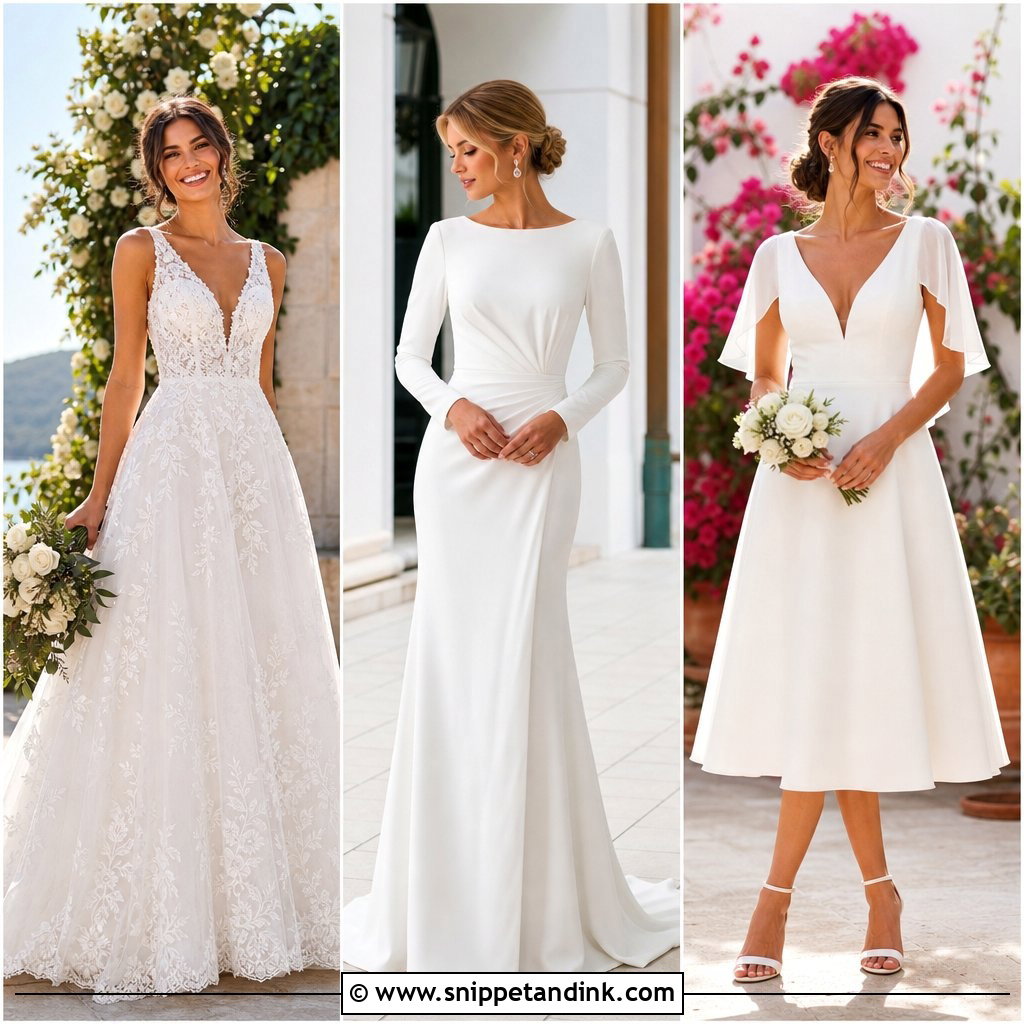

15. High Neck Wedding Gown
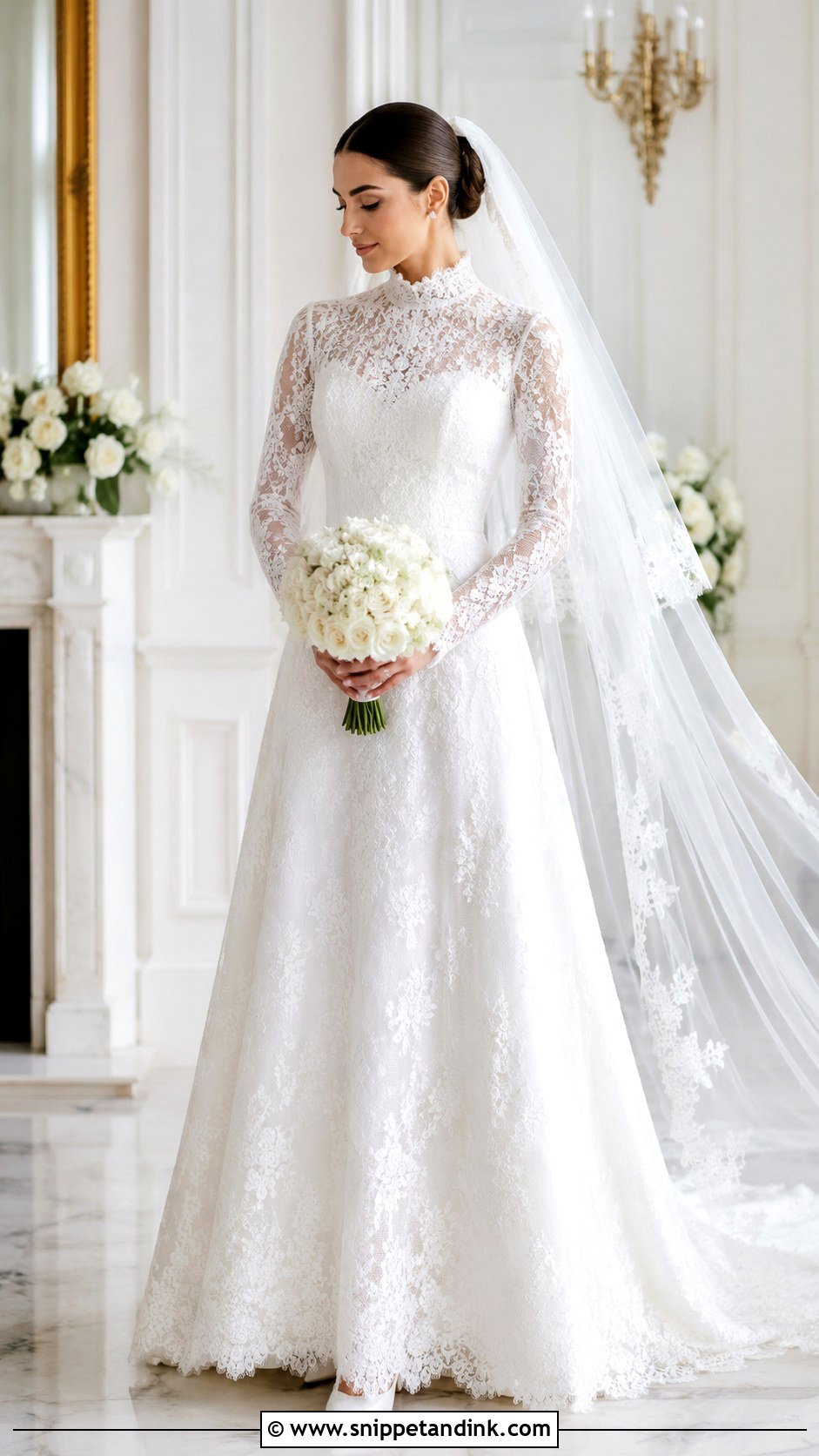
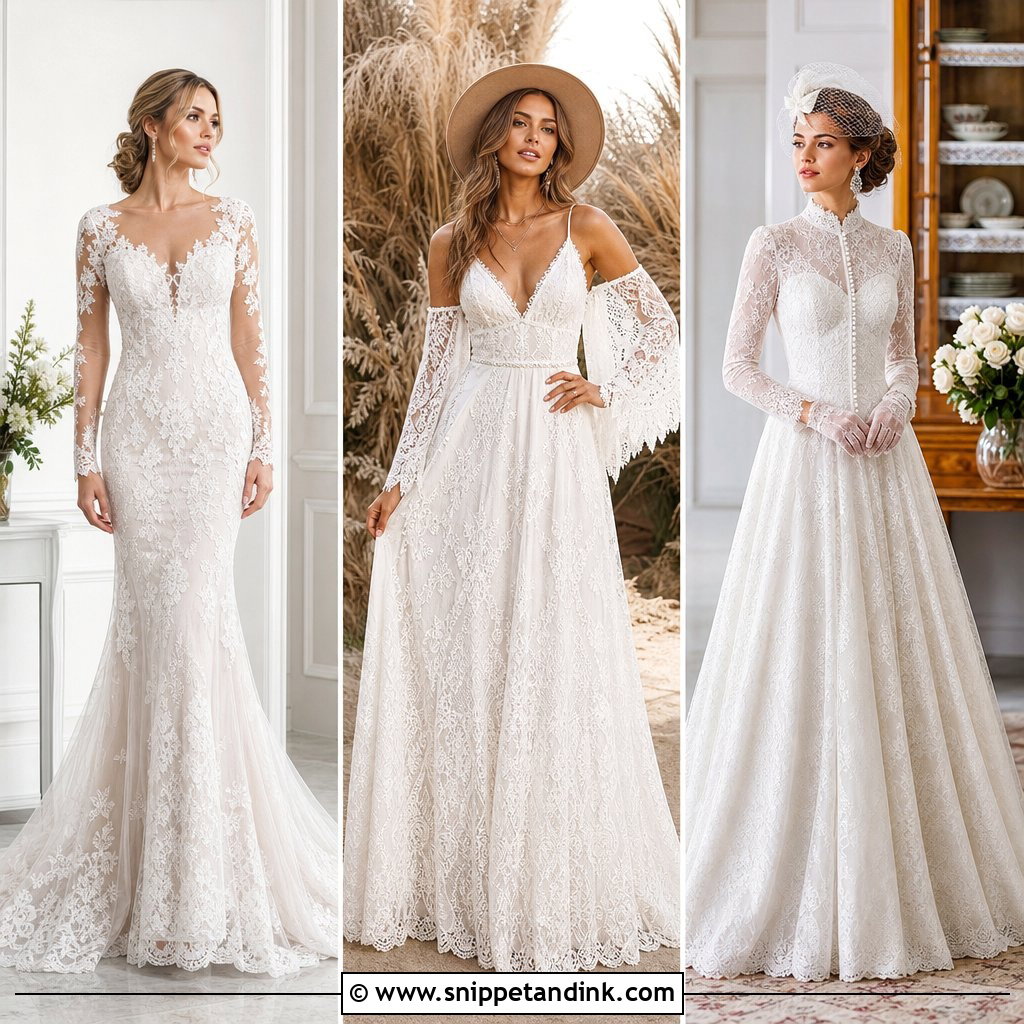
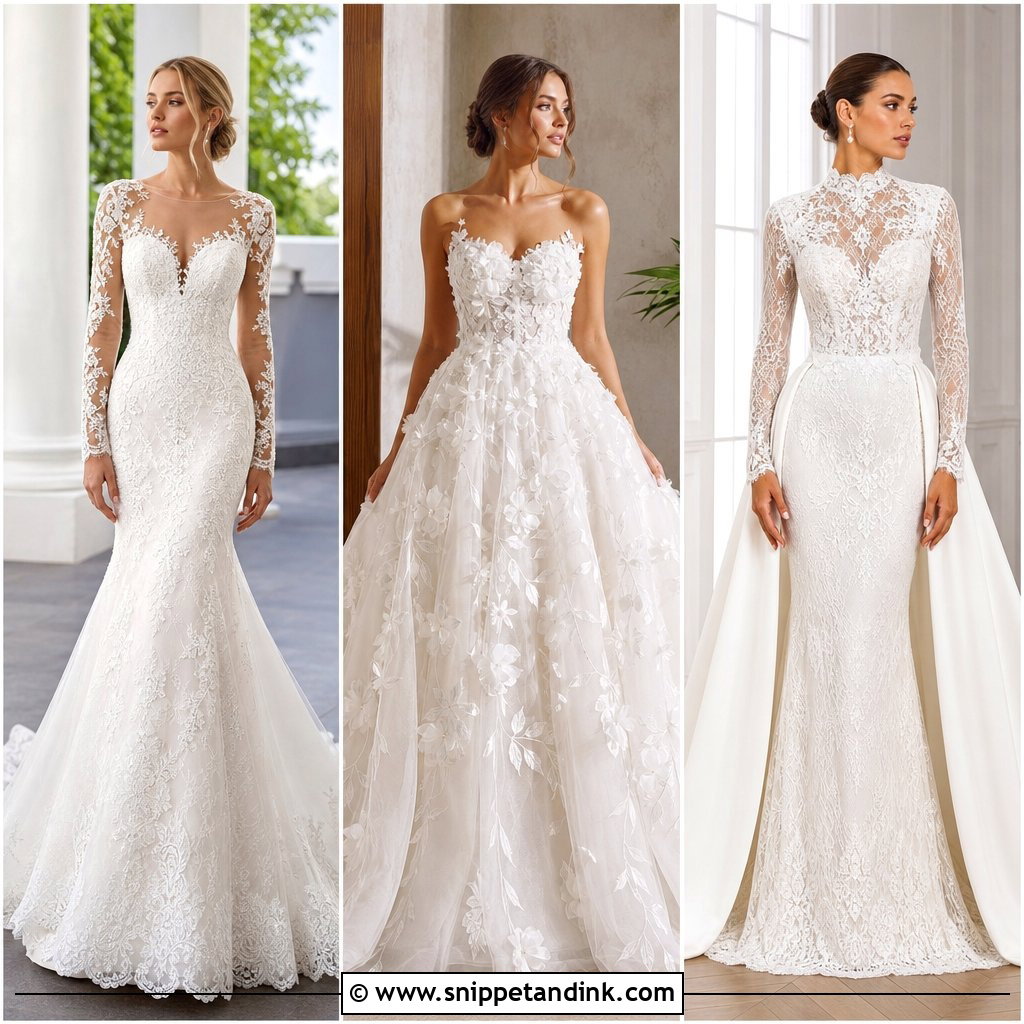
High necklines feel refined and a little regal, and they suit brides who want coverage without looking old-fashioned. Lace with long sleeves, a fitted waist, a soft A-line skirt, pearl studs and a sleek bun is the classic route. For something cleaner, try crepe with a high front and an open back. Covered skin makes details count: sheer lace, a row of buttons or a sculpted shoulder keep the top half from feeling heavy. I skip necklaces with this neckline and move the sparkle to earrings or a hair piece.
16. Long Sleeve Wedding Gown
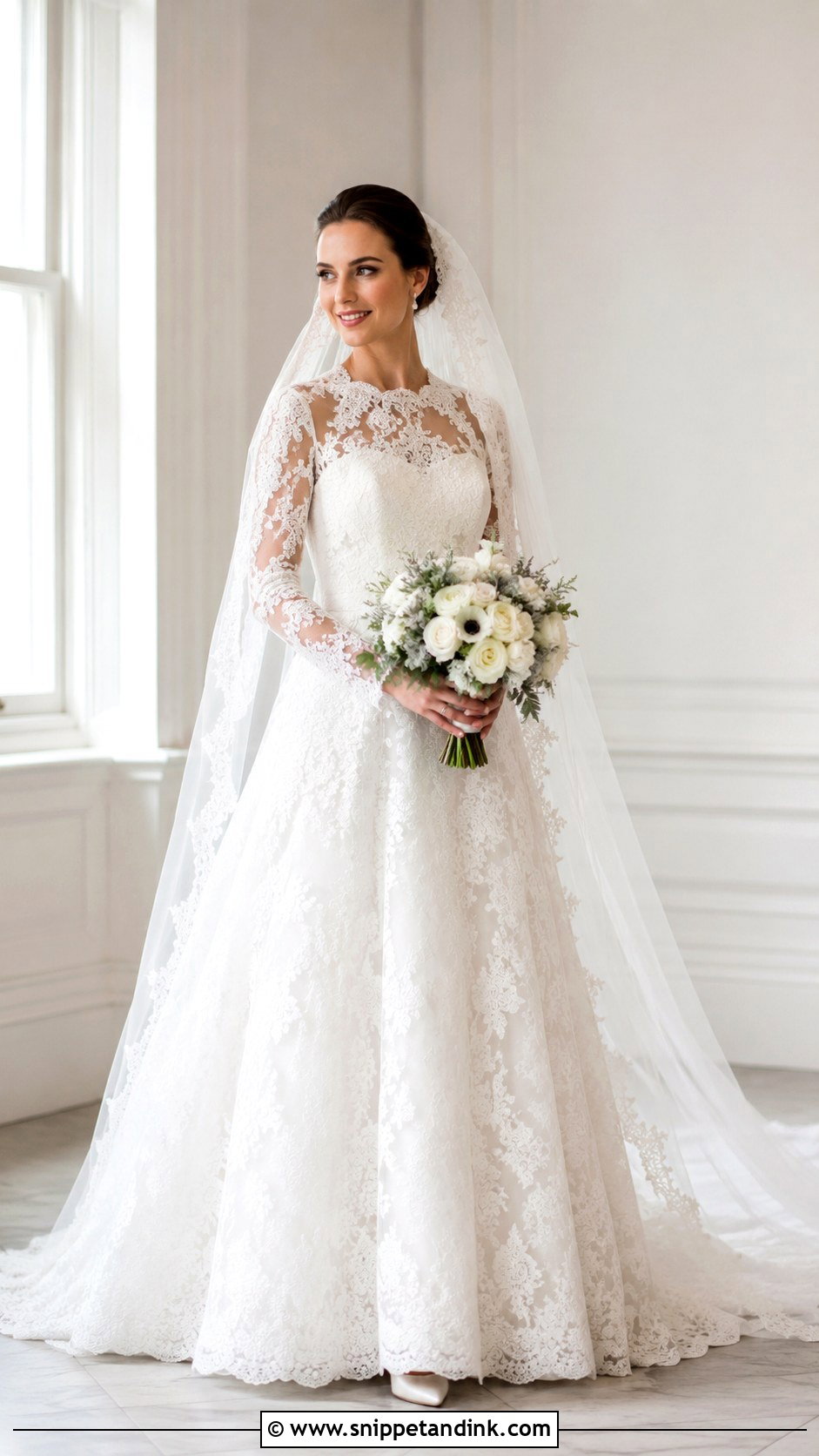
Sleeves can be lace, sheer tulle, satin, crepe or detachable, and the fabric shifts the mood from classic to modern. A lace A-line with a fitted bodice, a cathedral veil, pearl earrings and closed-toe heels suits cooler months; a crepe column with long sleeves looks sharp at a city wedding. Comfort is where sleeves fail. I check them at the shoulder, elbow and wrist, and ask the bride to raise her arms overhead. Stretch lining or illusion fabric helps a lot if you plan to dance hard.
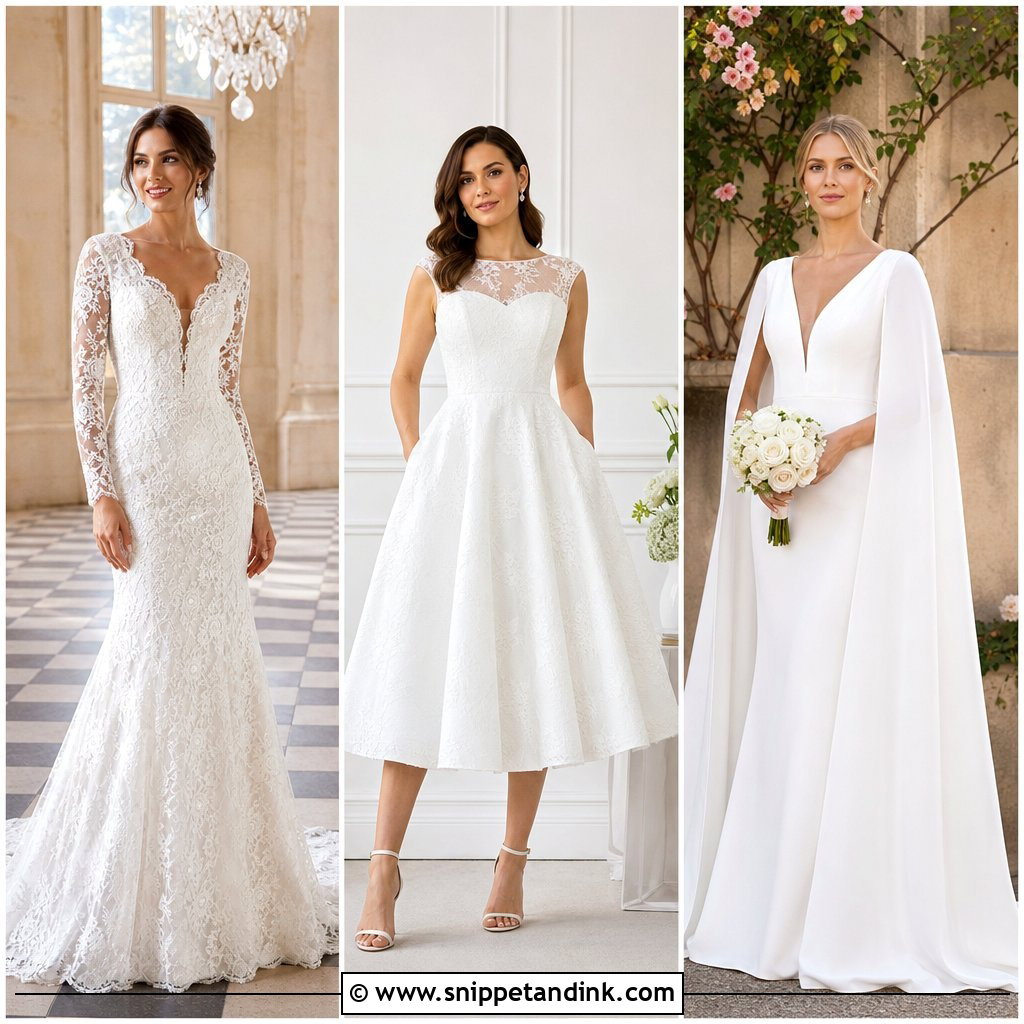
17. Lace Wedding Gown
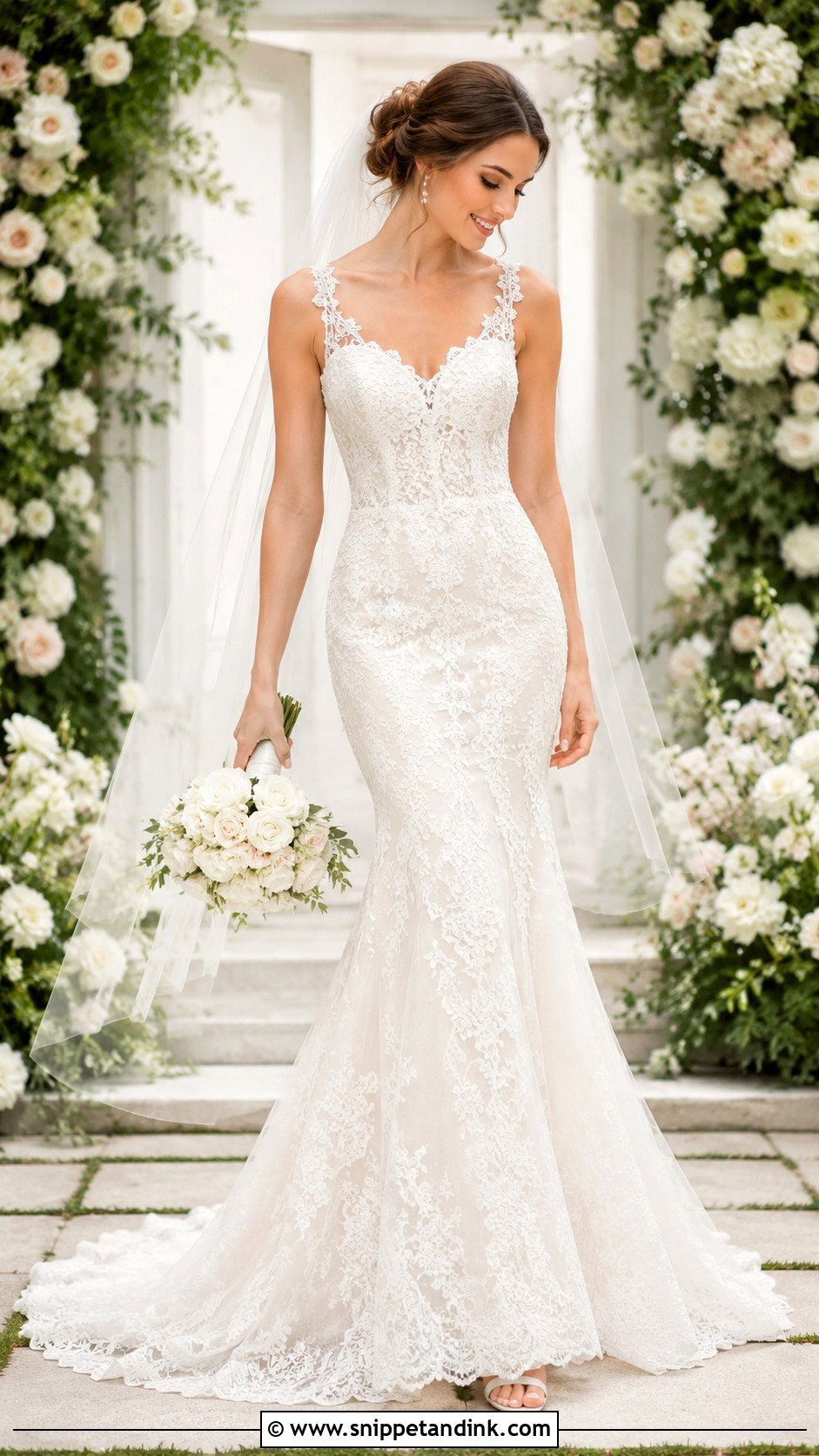
The pattern of the lace changes the whole gown. Floral lace reads soft and classic, geometric lace modern, Chantilly delicate. A lace fit and flare gown with a scalloped neckline, a soft veil, pearl earrings and ivory heels is one complete outfit. For a lighter feel, look at lace applique over tulle rather than allover lace, which can be warm in summer. I match jewelry to the lace: pearls for traditional floral patterns, sleek metal for modern ones. Then I let the lace do the talking.
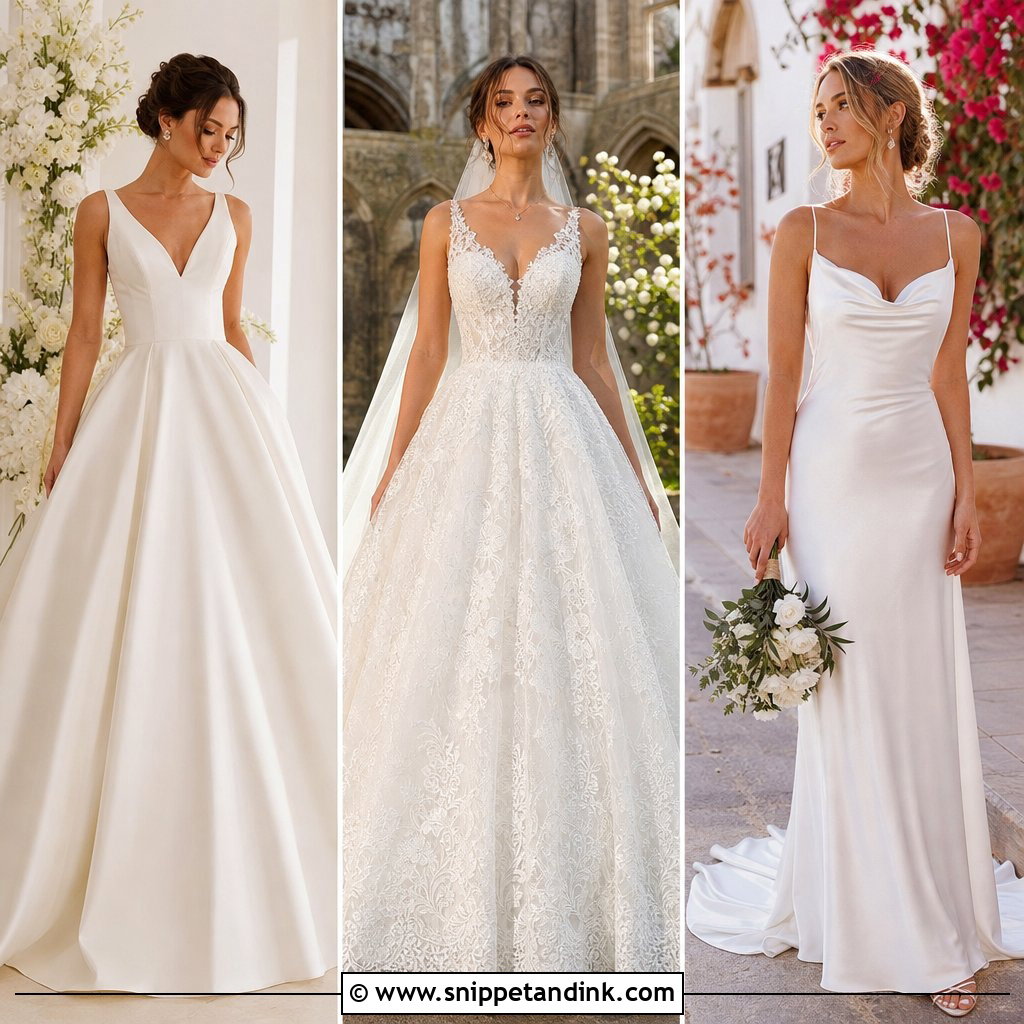
18. Satin Wedding Gown
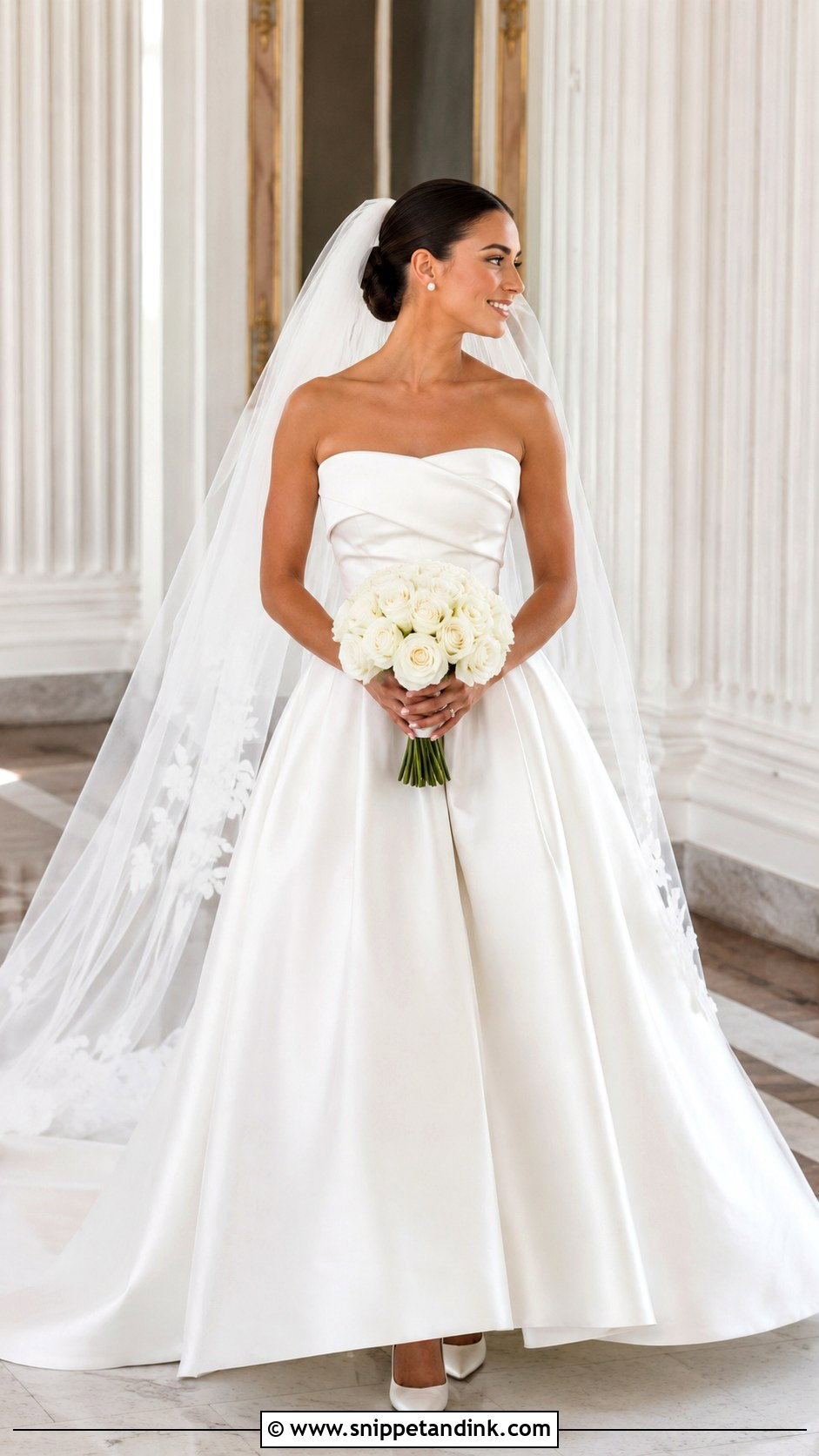
Satin has a smooth, light-catching finish that rewards good tailoring and punishes poor tailoring. A strapless satin ball gown with a folded bodice, long veil and pointed pumps feels classic and polished; a satin sheath or column gown is more minimal and city-ready. Because it reflects light, every pucker and pull shows, so steaming on the morning is non-negotiable and smooth undergarments matter. Keep accessories tidy: pearl studs, one bracelet, a structured bouquet. Ask whether the satin is silk or polyester; silk feels softer and breathes better, polyester resists creasing and costs less.
19. Tulle Wedding Gown
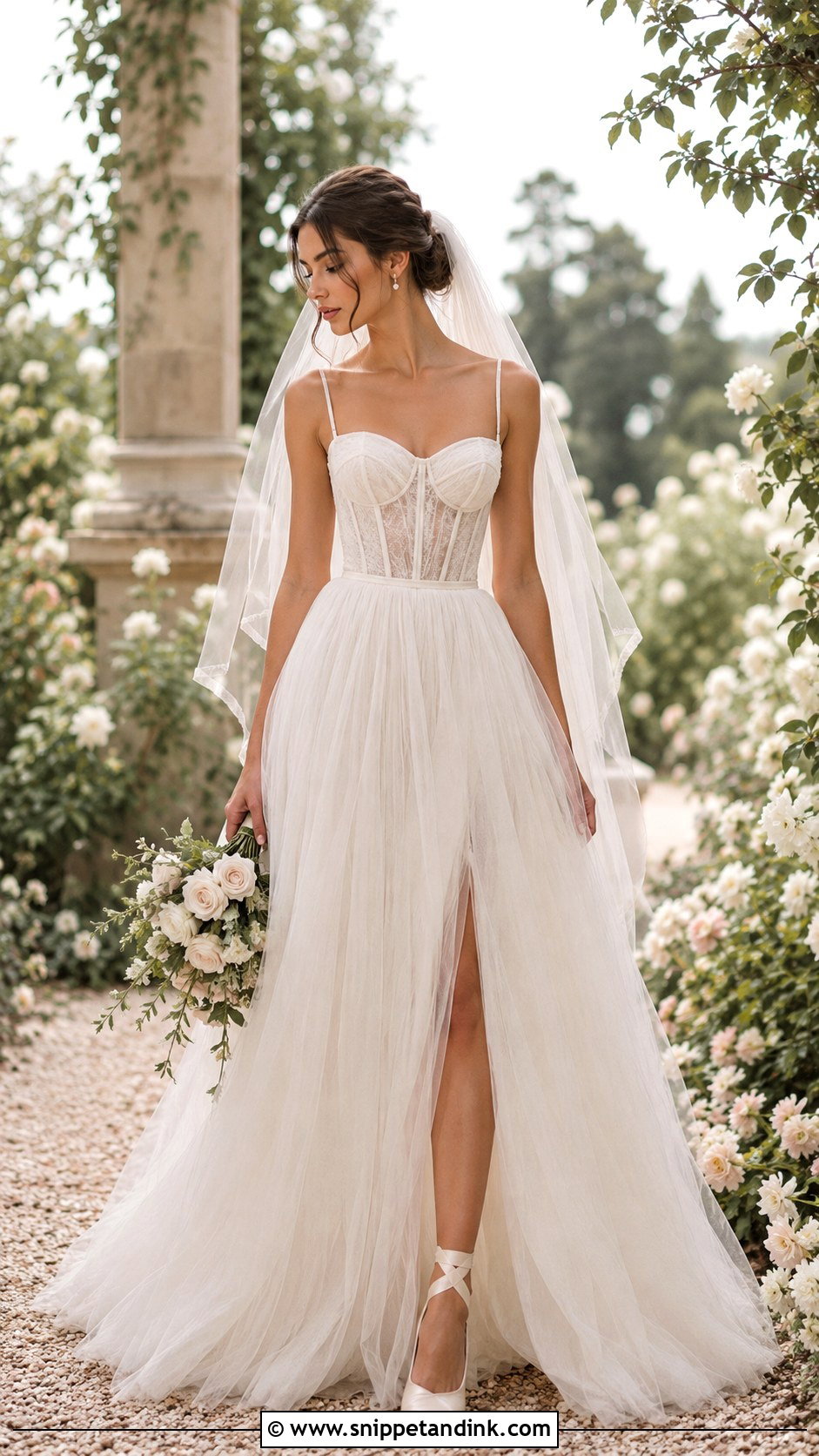
Tulle builds shape through layers, so it can be full and dramatic or light and floaty. A tulle A-line with a corset bodice, fine straps, a fingertip veil and ballet-style heels is romantic without being formal; a tulle ball gown with soft sparkle makes the bigger entrance. Gardens, estates and airy rooms suit it. The structured bodice is what stops it looking like a costume, so I never pair a soft tulle skirt with a soft, unboned top. Tulle can crush in a car, so fluff the layers by hand when you arrive.
20. Crepe Wedding Gown
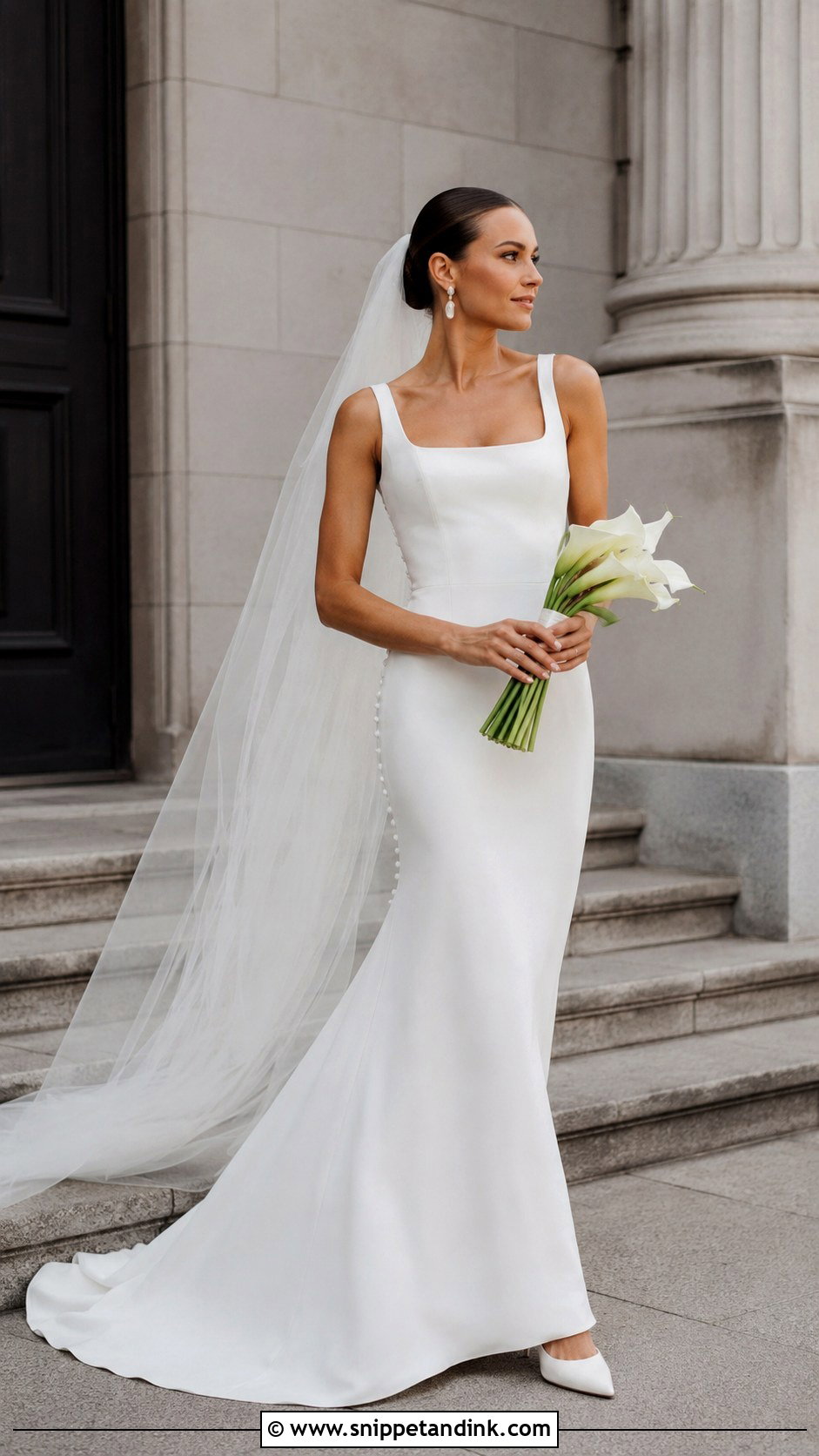
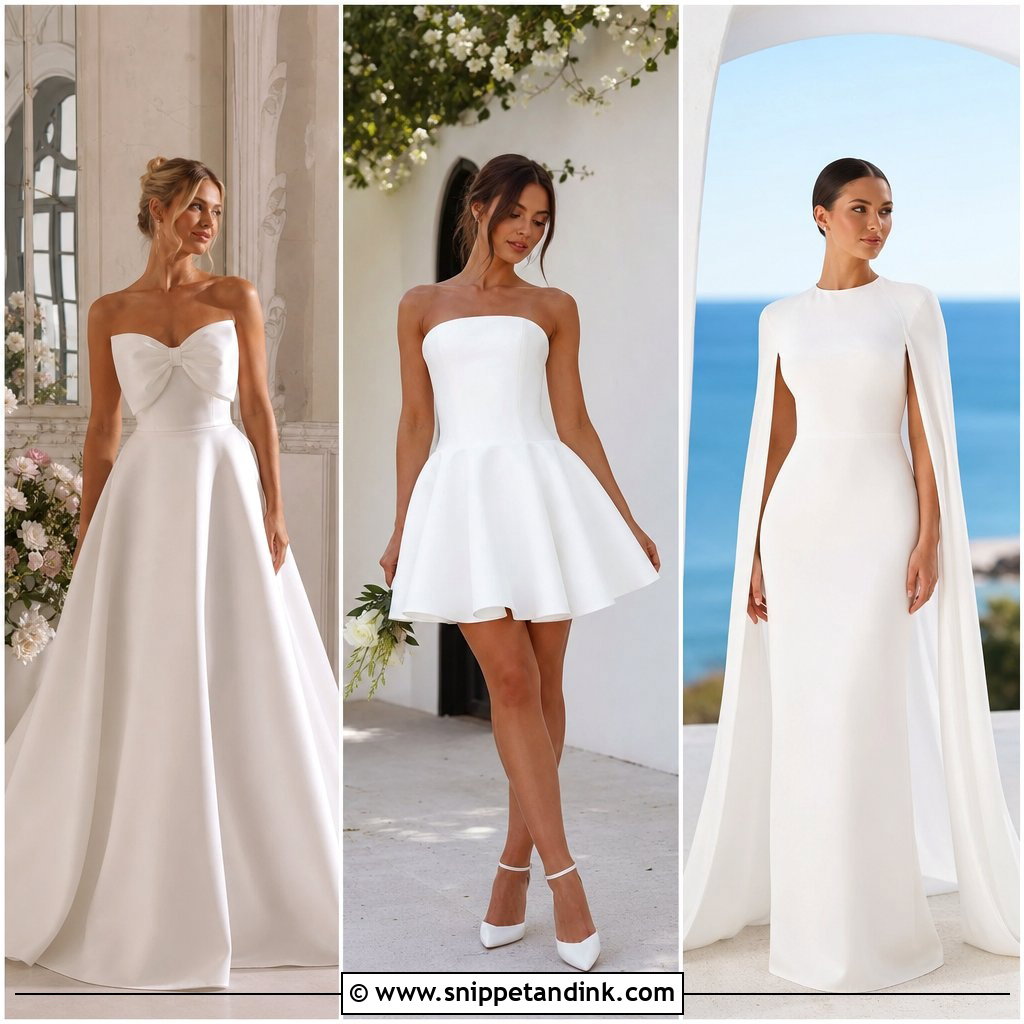
Crepe is matte, smooth and quietly modern. It skims the body and shines in sheath, column and mermaid shapes because it holds a line without any gloss. A crepe fit and flare with a square neckline, covered buttons, sculptural earrings and pointed heels looks confident and clean. Crepe clings, though, so the cut must be excellent and the lining supportive, otherwise every seam underneath shows through. Check that the bustle suits the train. Add a long veil for drama or keep it bare.
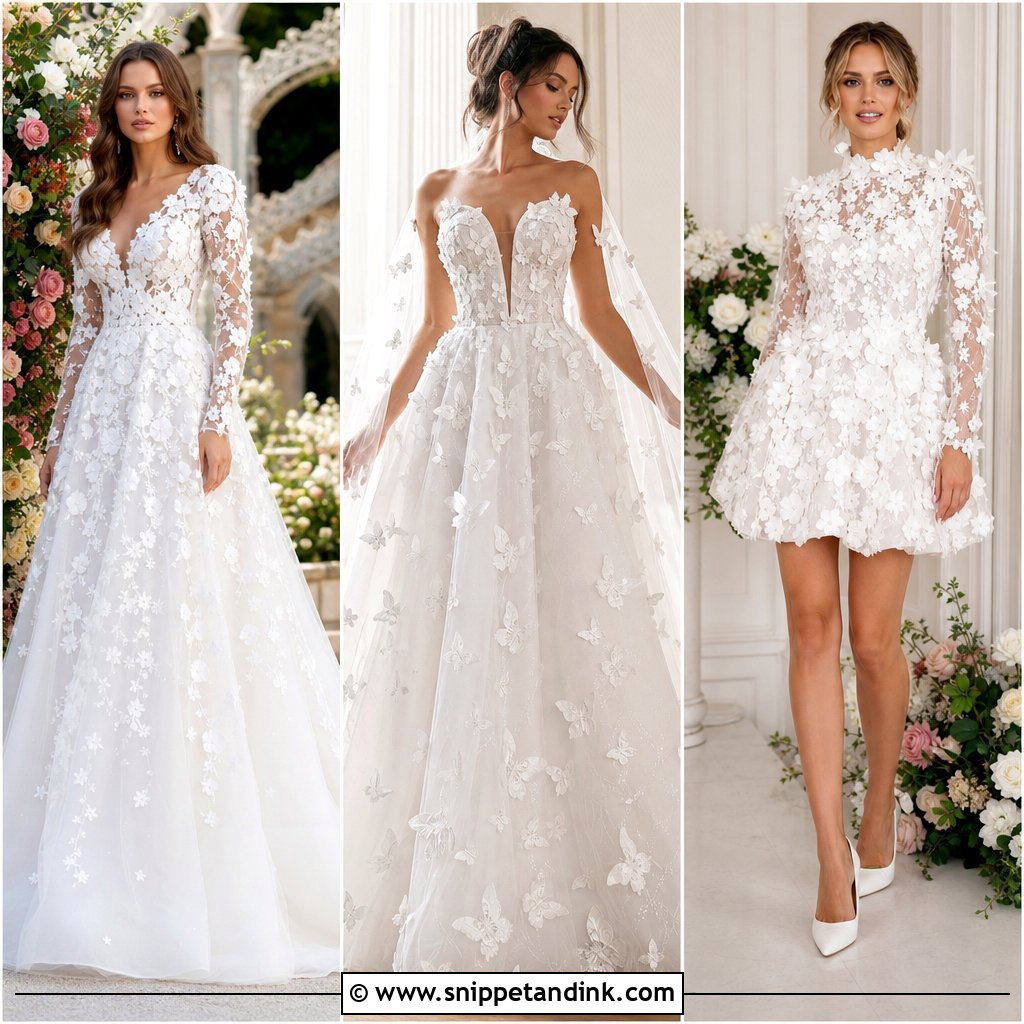
21. Floral Embroidered Wedding Gown
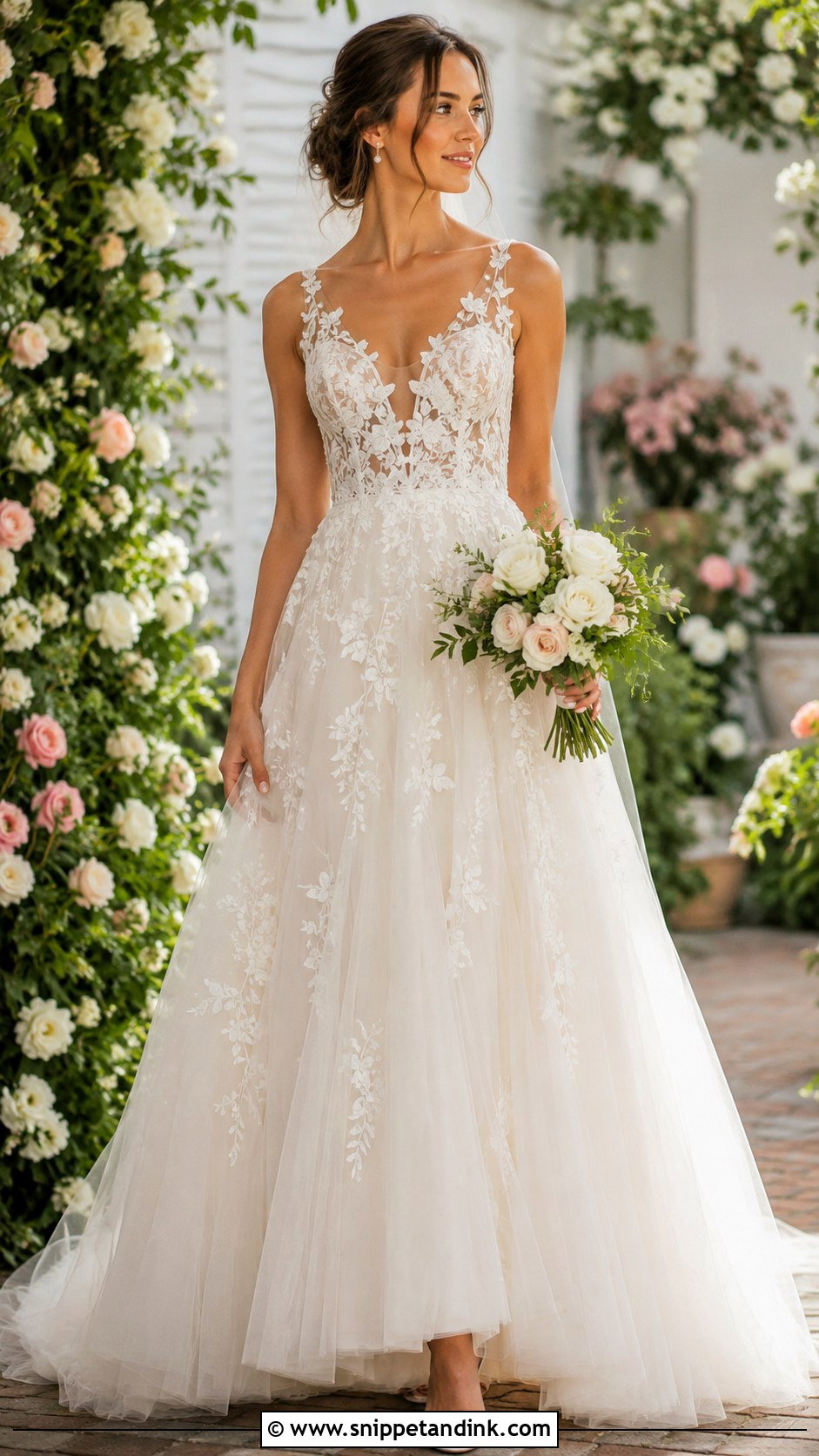
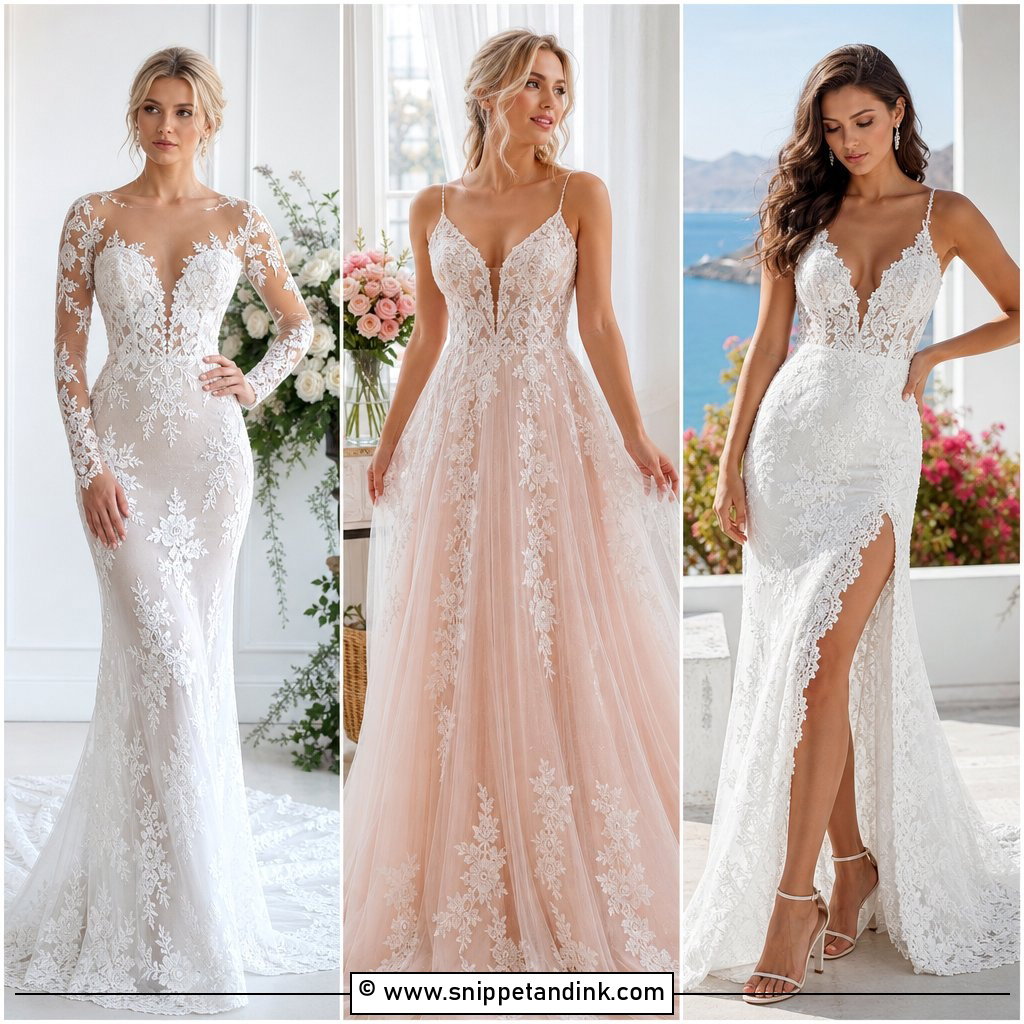
Embroidery makes a gown personal. White-on-white thread keeps it classic, while blush, blue or champagne threadwork gives you colour without a coloured dress. An embroidered A-line with sheer straps, a soft tulle skirt, pearl earrings and satin sandals is made for a garden. Keep the bouquet simple so it doesn’t fight the pattern. When the embroidery has colour, I pull one shade into the shoes, earrings or a hair ribbon. Ask how heavy the thread work is; dense embroidery on a fine base fabric can pucker after alterations.
22. Minimalist Wedding Gown
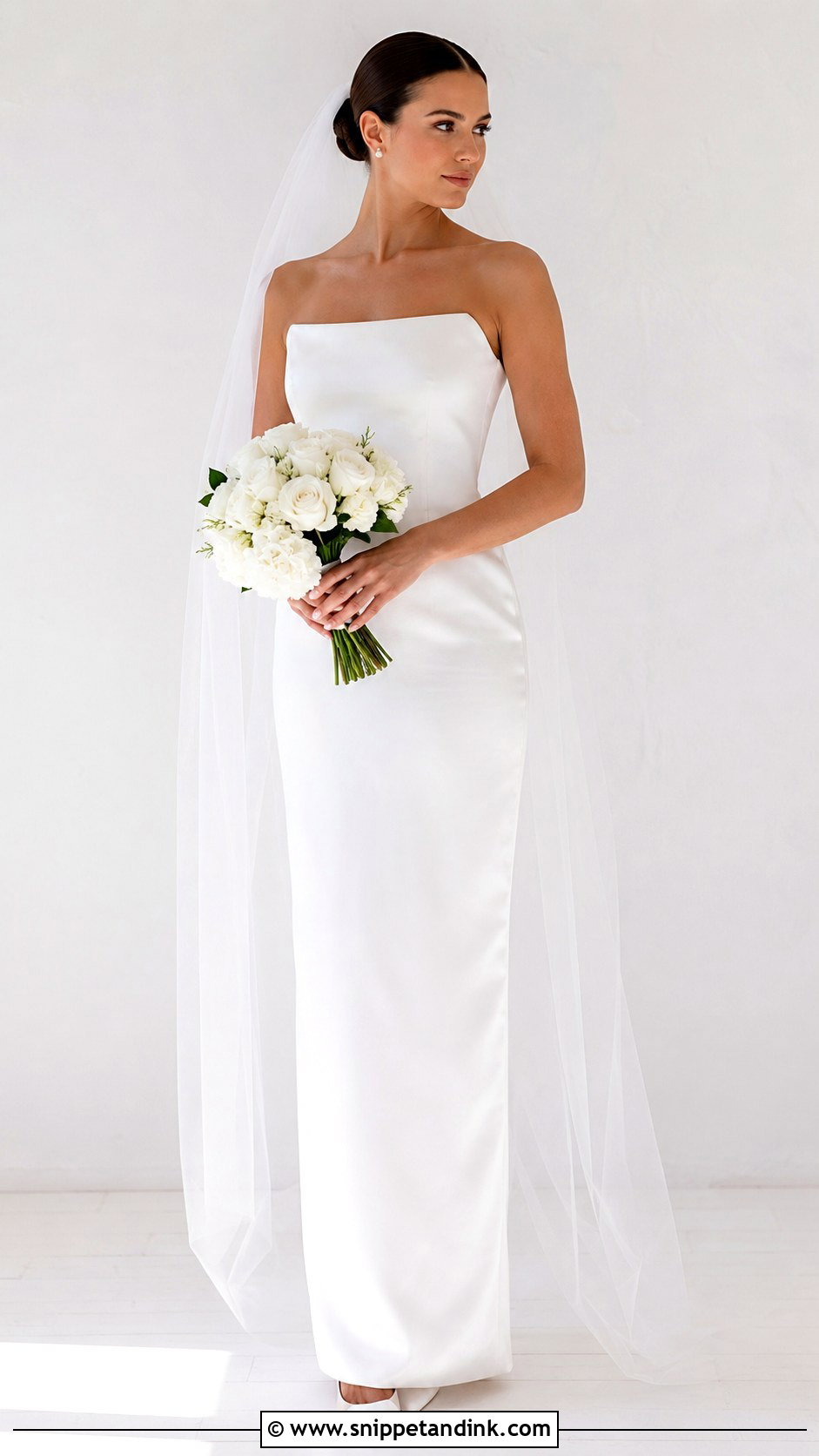
Minimal gowns have little or no lace or beading, so fit and fabric are the design. A satin column with a straight neckline, a sleek bun, pearl studs and white pointed heels looks modern and calm; a square-neck crepe A-line is a softer route. Styling carries more weight here: a polished veil, a structured bouquet and smooth undergarments. Minimal never means plain to me. It means every seam and accessory has a reason to be there, and a bad hem is the first thing anyone notices.
23. Detachable Overskirt Wedding Gown
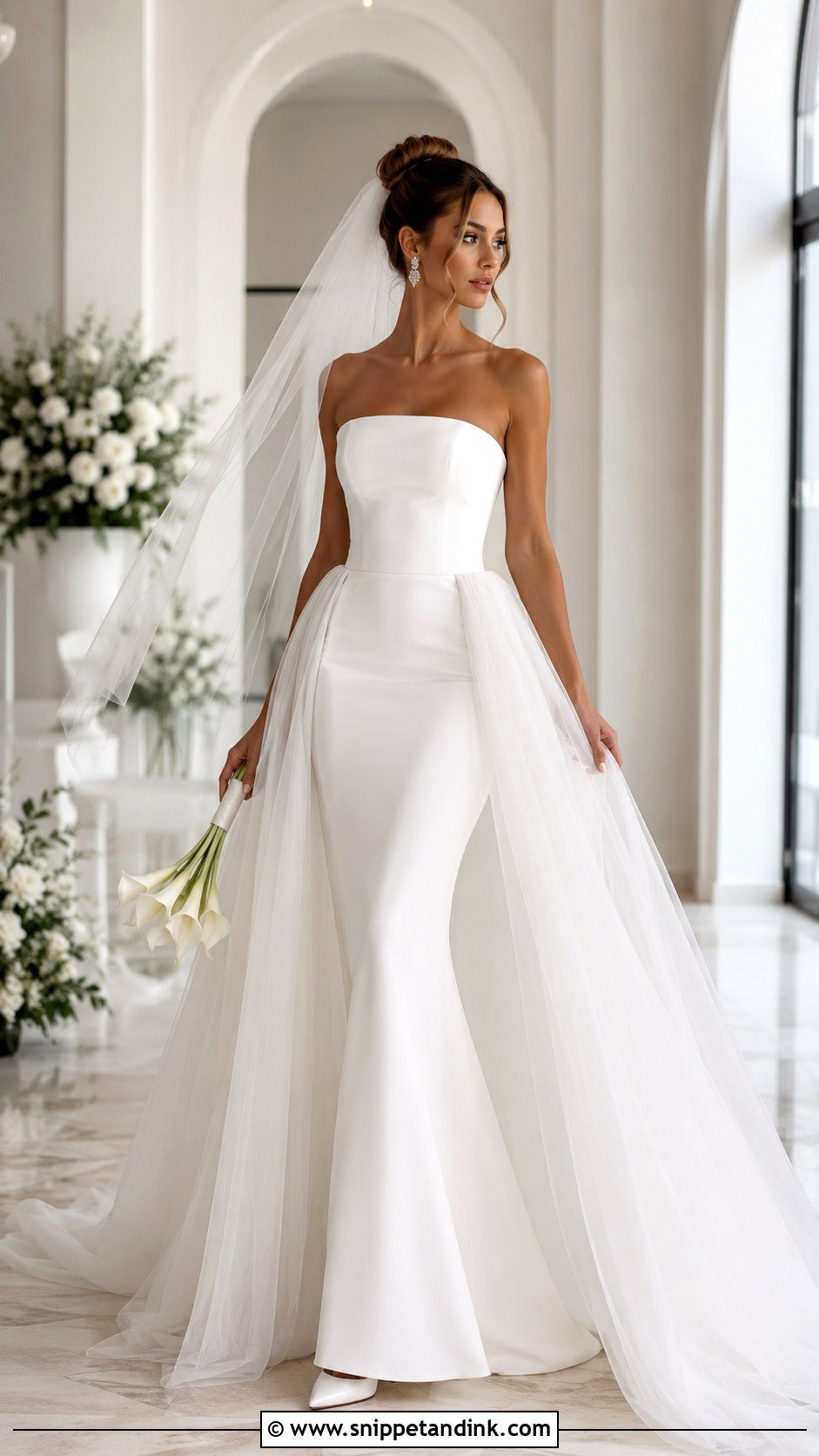
Two looks, one gown. The full overskirt goes on for the ceremony and photos, then comes off to reveal a slimmer reception outfit. A fitted crepe gown under a satin or tulle overskirt, with a strapless neckline, long veil and crystal earrings, is the usual pairing. The join is the detail I check: the overskirt should fasten flat at the waist and not add a bulky ridge to the gown beneath. It suits brides torn between a ball gown and a fitted silhouette, provided someone practises the removal beforehand.
24. Short Wedding Gown
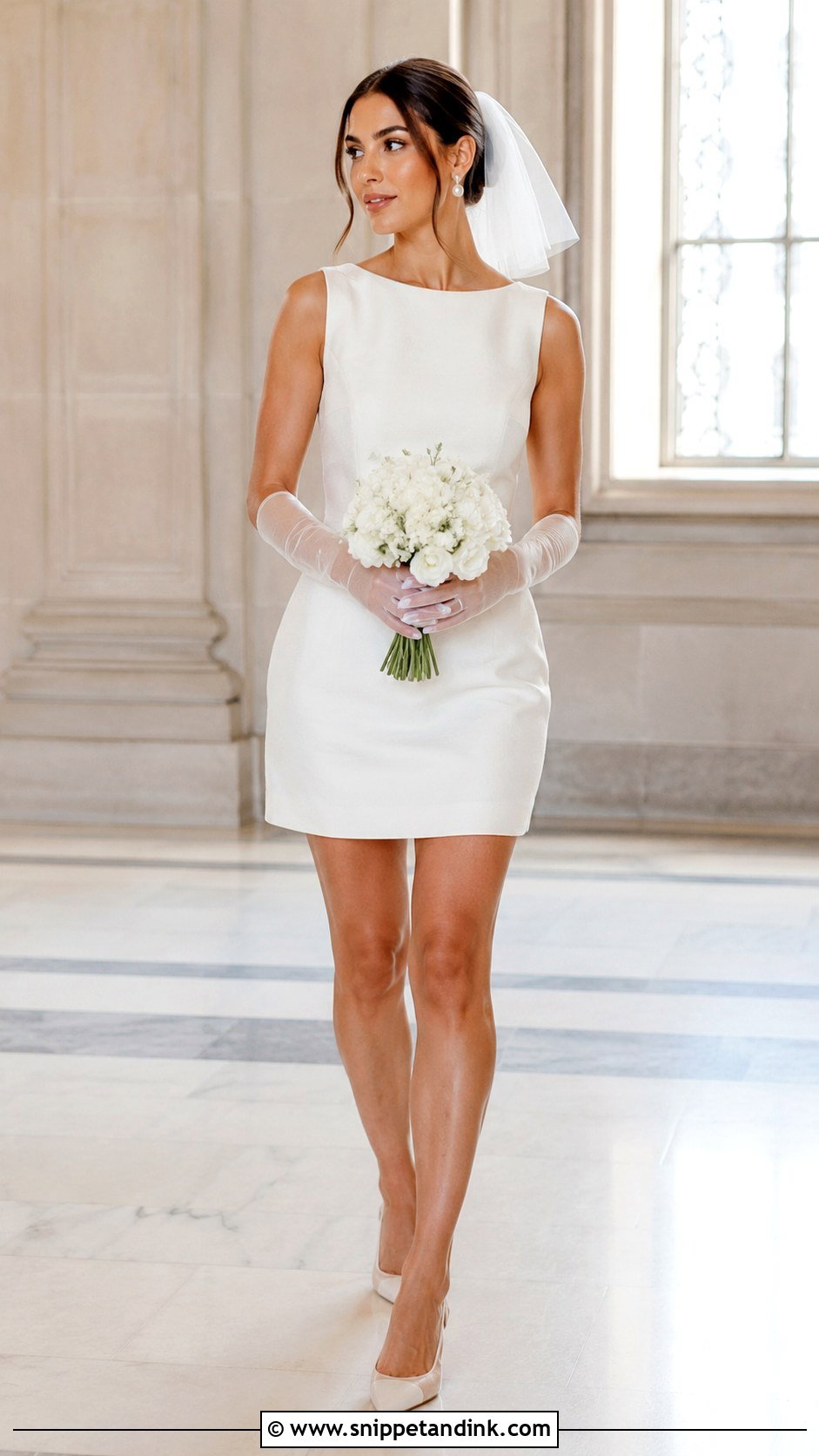
Short gowns feel fresh and practical at civil ceremonies, after-parties, elopements and warm-weather weddings. A short ivory mini with a tailored bodice, pearl earrings, sheer gloves, slingback heels and a small veil reads chic and still clearly bridal. For more coverage, a tea-length A-line with satin pumps and a structured bouquet does the job. Short hems expose the shoes and the fit, so quality fabric and careful proportions matter. I hem a short gown with the bride standing on a box in her shoes, because even a small difference shows.
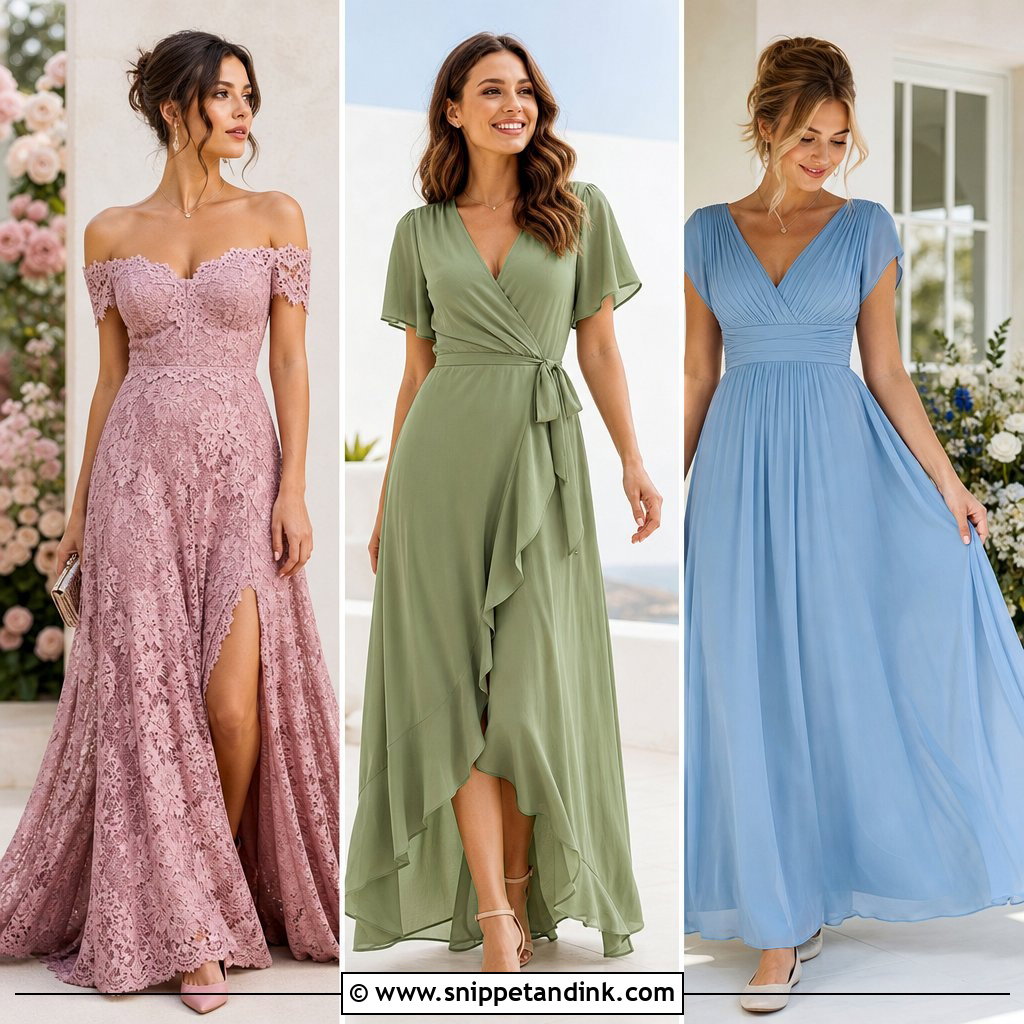
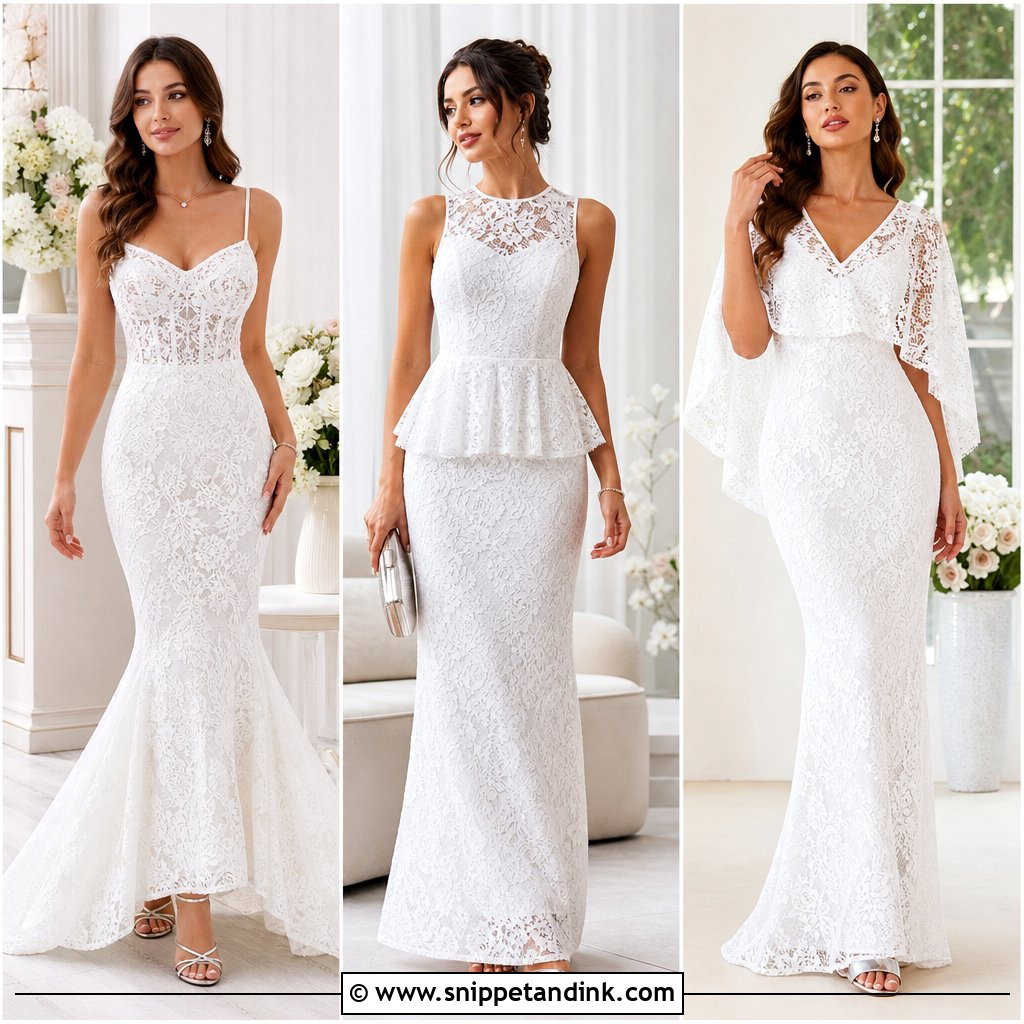
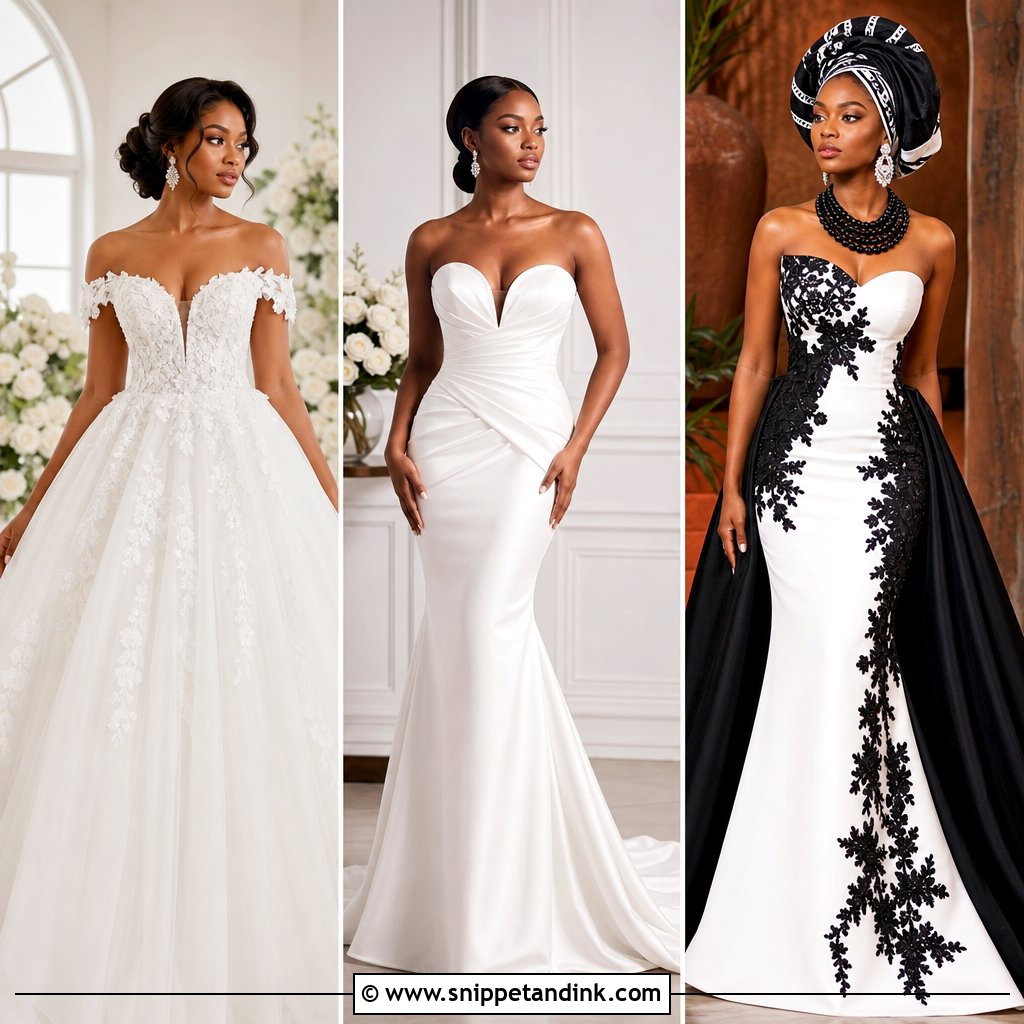
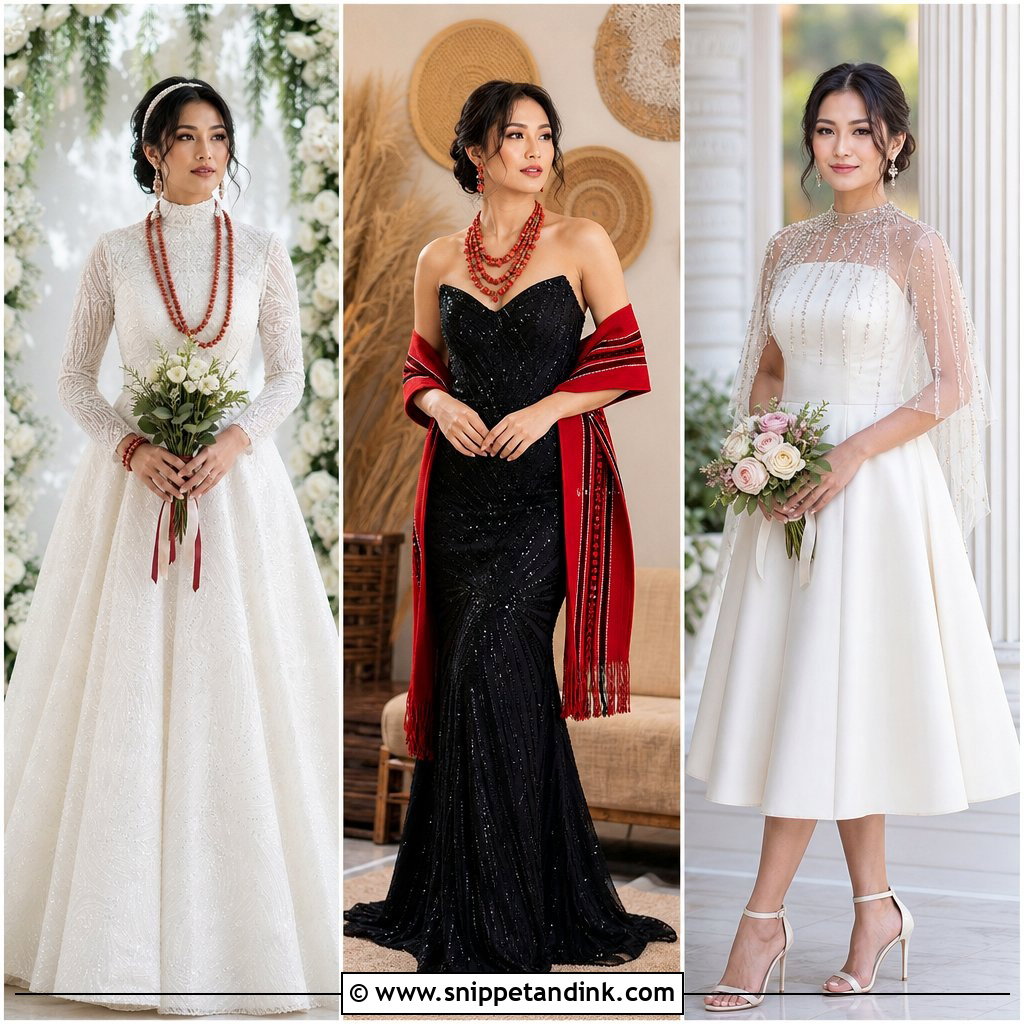
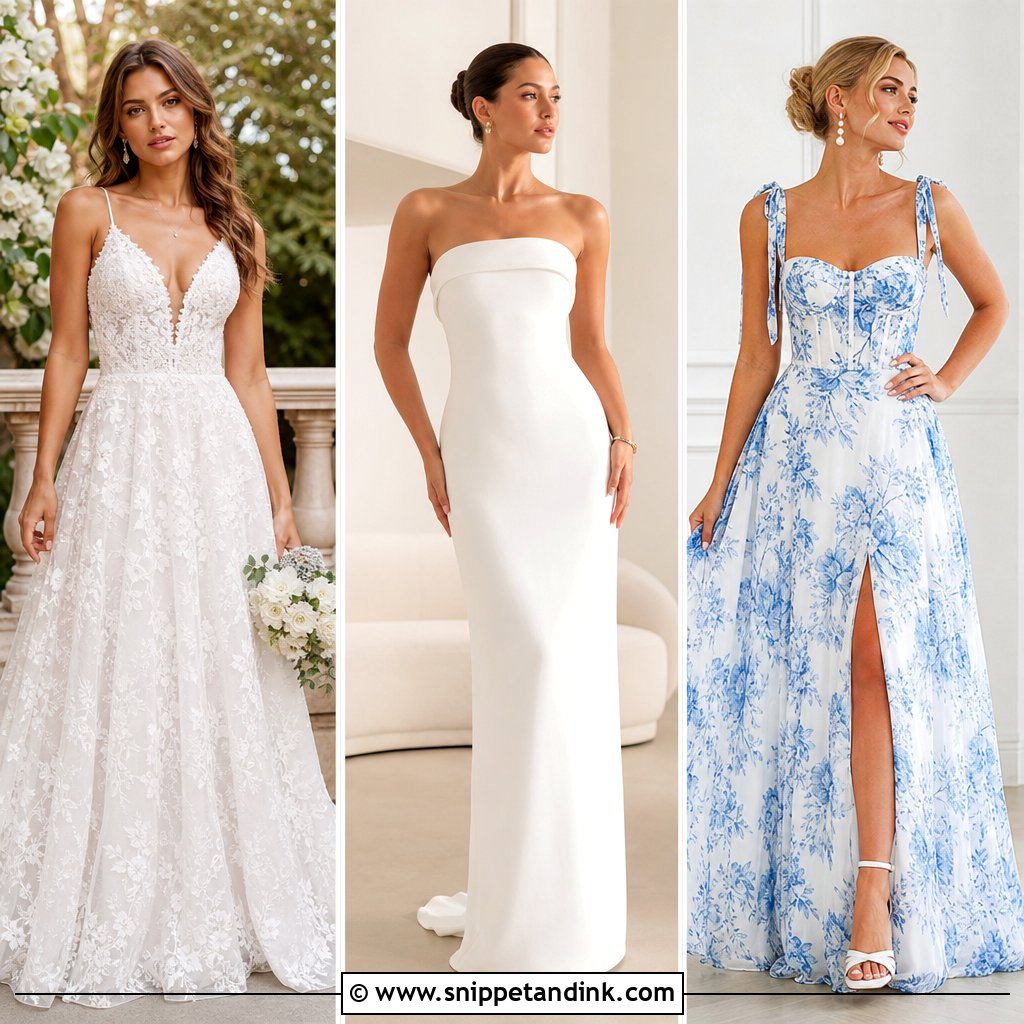
25. Colored Wedding Gown
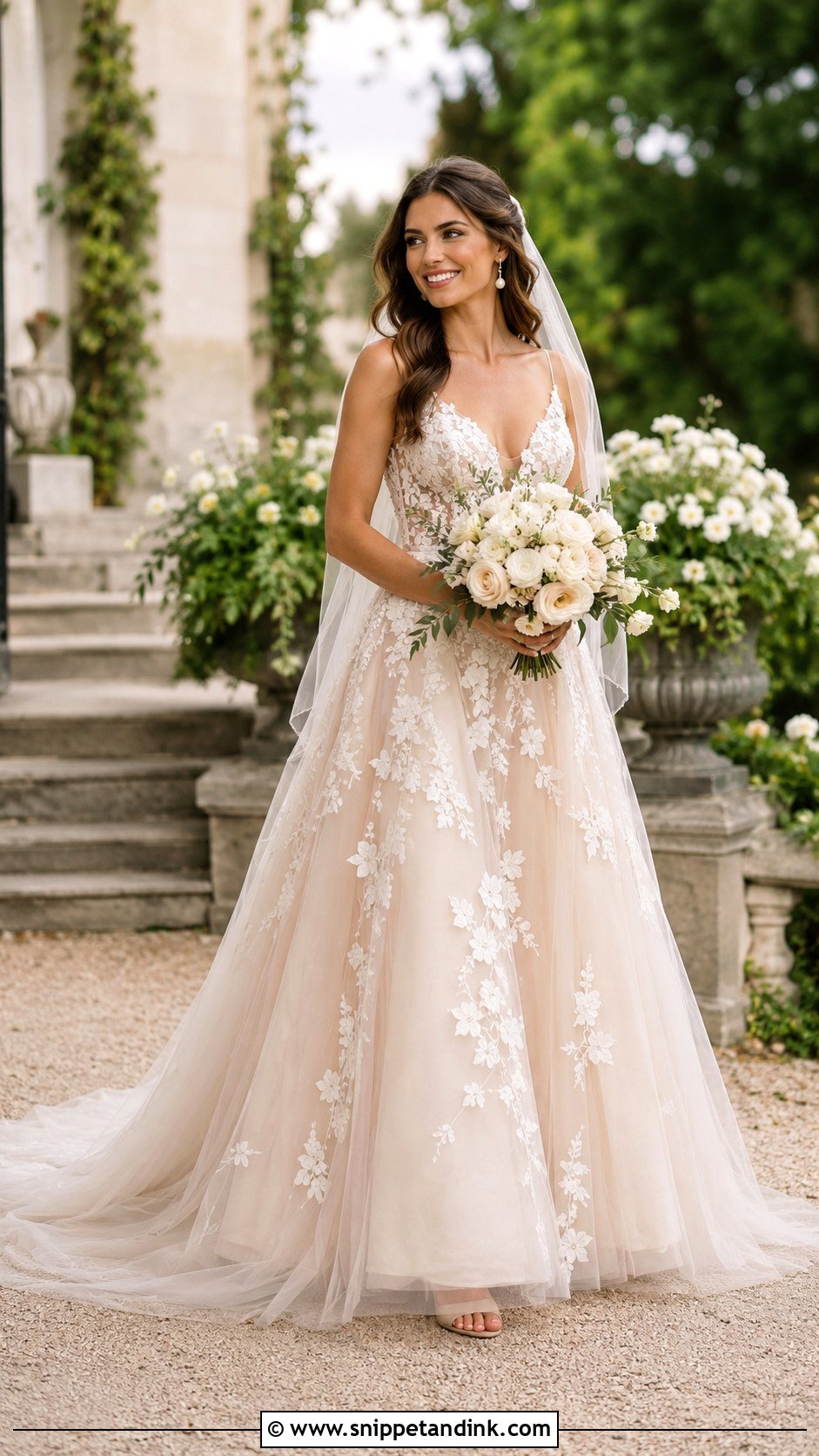
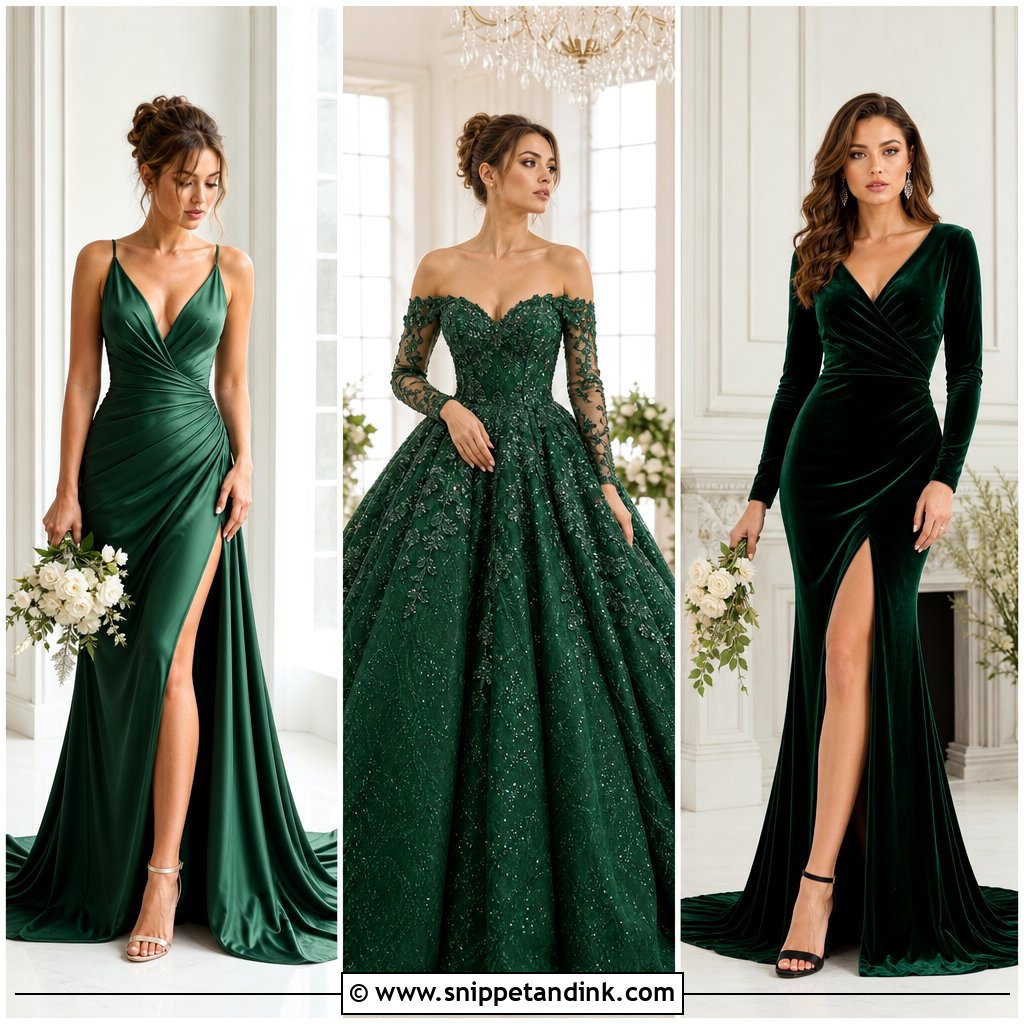
Champagne, blush, pale blue, soft grey and light gold can all feel bridal while adding depth. A champagne A-line with floral applique, pearl earrings, nude heels and a sheer veil is romantic; blush tulle is dreamy; pale blue satin is the unexpected one. I match accessories to the gown’s undertone, warm with warm and cool with cool, so nothing looks borrowed. Coloured gowns suit second looks, outdoor weddings and creative venues. Check the shade in daylight and under the warm light of your reception before ordering.
What Bridal Salons Assume You Already Know
A few things about gown shopping catch nearly every bride off guard, and staff don’t always explain them unless you ask.
- Bridal sizing usually runs smaller than everyday clothing, so the number on the label can be a size or two up from your usual. Ignore it; the order is made from your measurements.
- Samples come in a limited size range and are often clipped or pinned to fit, which means the try-on gives you the shape, not the final fit.
- The price on the tag rarely includes alterations, a veil, a bustle or steaming. Set aside a separate amount for tailoring, and expect it to vary a lot with the gown’s complexity.
- Most made-to-order gowns take several months to arrive, so leave plenty of time before the date for production plus fittings.
- Bring one or two people whose opinion you trust. A big group means more voices and less clarity.
I also tell brides to wear the right underwear and bring shoes close to the height they’ll wear on the day. A strapless bodice tried over a regular bra and a mermaid hem judged in trainers both give you the wrong answer.
Take Three Shapes to Your First Appointment
Twenty-five styles is a lot to hold in your head, so don’t try. Pick three silhouettes from this list that you keep returning to, and try those first, then let your stylist pull one wildcard. Think about the whole outfit: shoes, veil, jewelry, bouquet and how you’ll move through the day. Gowns change on a real body, and the one you’d never have picked from a photo is often the one that fits. Get comfort and fit right first, then add the current details you love, like a basque waist, a bow, an overskirt or soft colour.
You'll Like These Ideas:






Leave a Reply