
Dressing a petite bride is mostly a matter of where things land: the waist seam, the bust, the flare, the hem. Get those right and almost any silhouette works, including dramatic lace, a fitted trumpet or a full ball gown scaled to your frame. Vertical lines, well-placed seams and lighter skirts help lengthen the body without hiding your shape. A-line, sheath, column and shorter gowns are the easiest starting points, but I’d never rule anything out before you’ve tried it. Below are twenty complete looks, from plain satin to modern convertible designs, each with the fitting detail I’d check on a shorter frame.
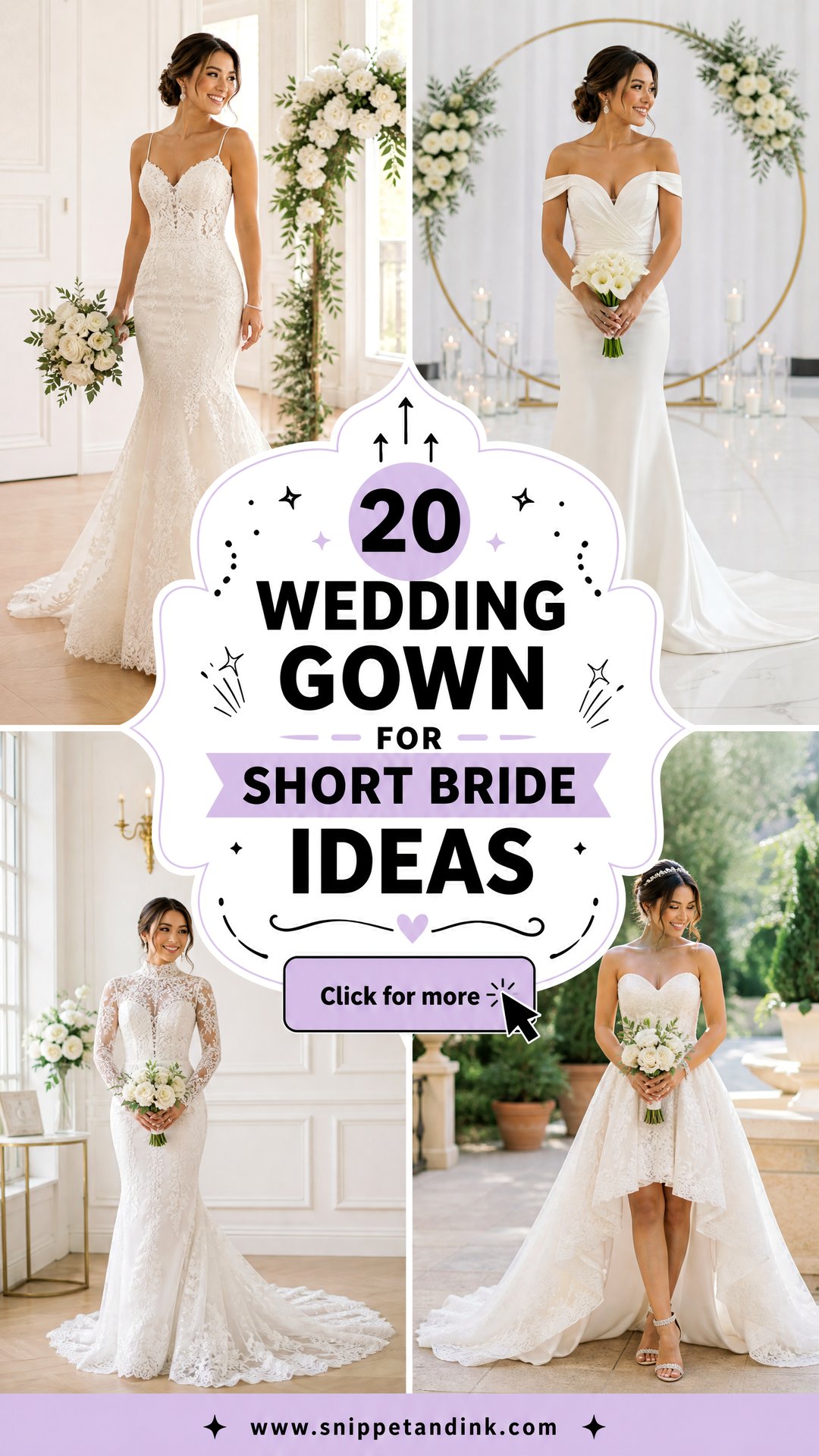
Sample Gowns Are Cut for Someone Taller
Most bridal samples are made for a taller figure, so a petite bride trying them on sees fabric pooling at her feet and seams in the wrong places. That’s normal, and it isn’t a reason to reject a gown. You just need to look past it.
- Ask for heels or a low platform in the fitting room so the hem drops roughly where it will be on the day.
- Ignore the hem at first. Look at where the bust darts, waist seam and flare sit on your body; those are the expensive things to move.
- Ask the consultant to clip or pin the bodice up at the shoulders, which shows how the gown looks once the seams sit at your real waist.
- Find out whether the design can be ordered in petite length or with a shorter bodice. Some can; others only come in standard proportions.
If a gown needs its waist moved and its flare raised as well as a hem, it can be done, but costs and fitting time climb. That’s worth knowing before you fall for it.
1. Petite A-Line Wedding Gown
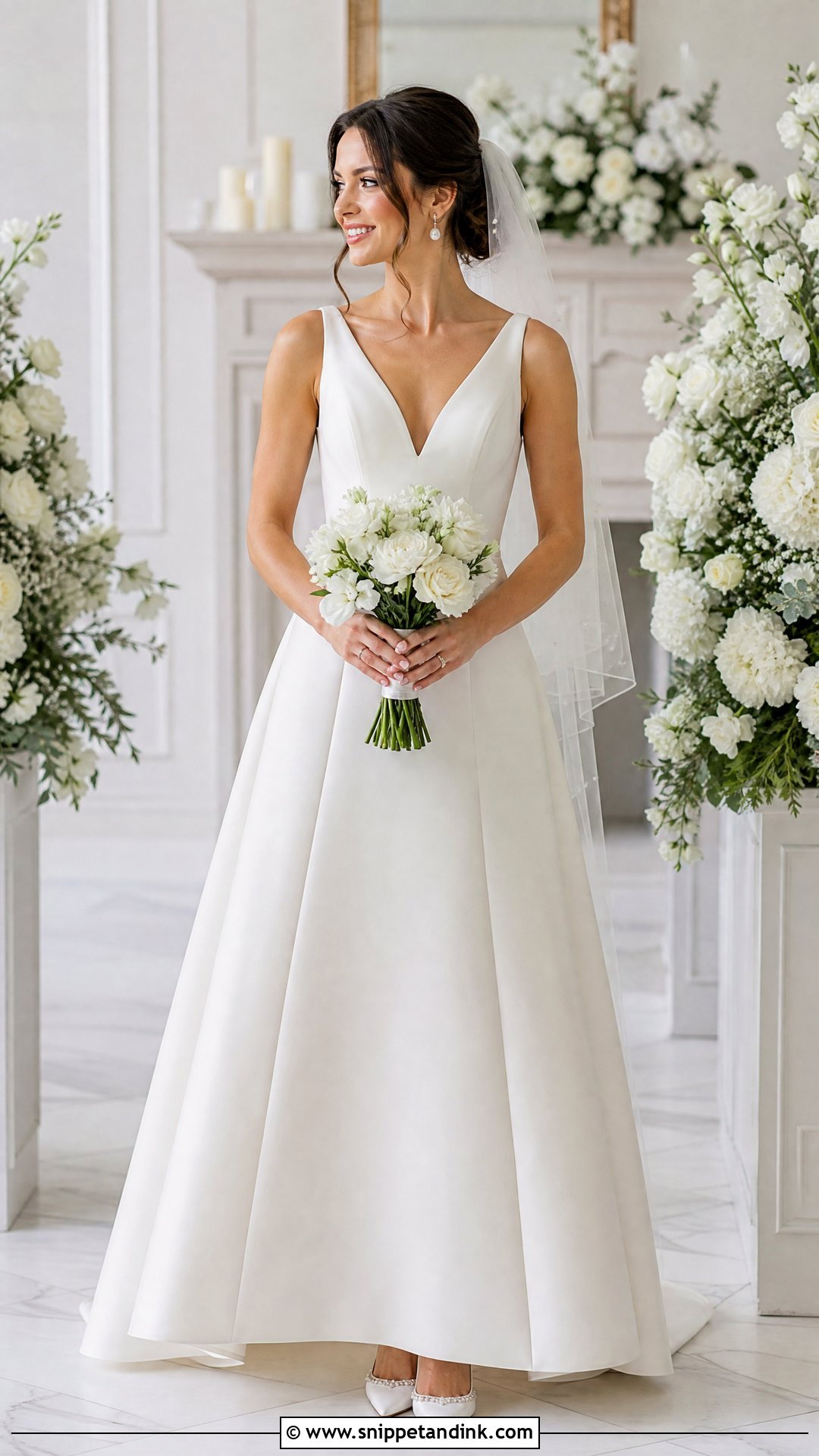
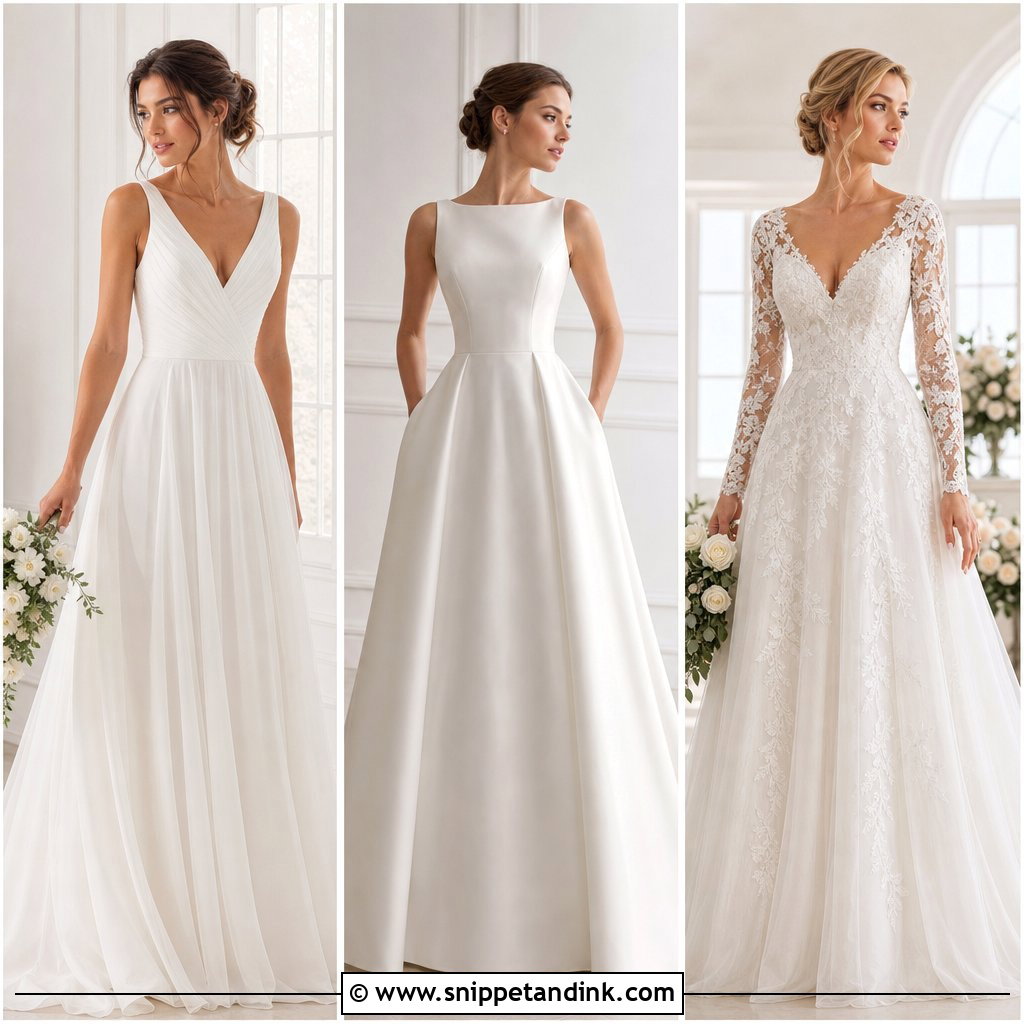
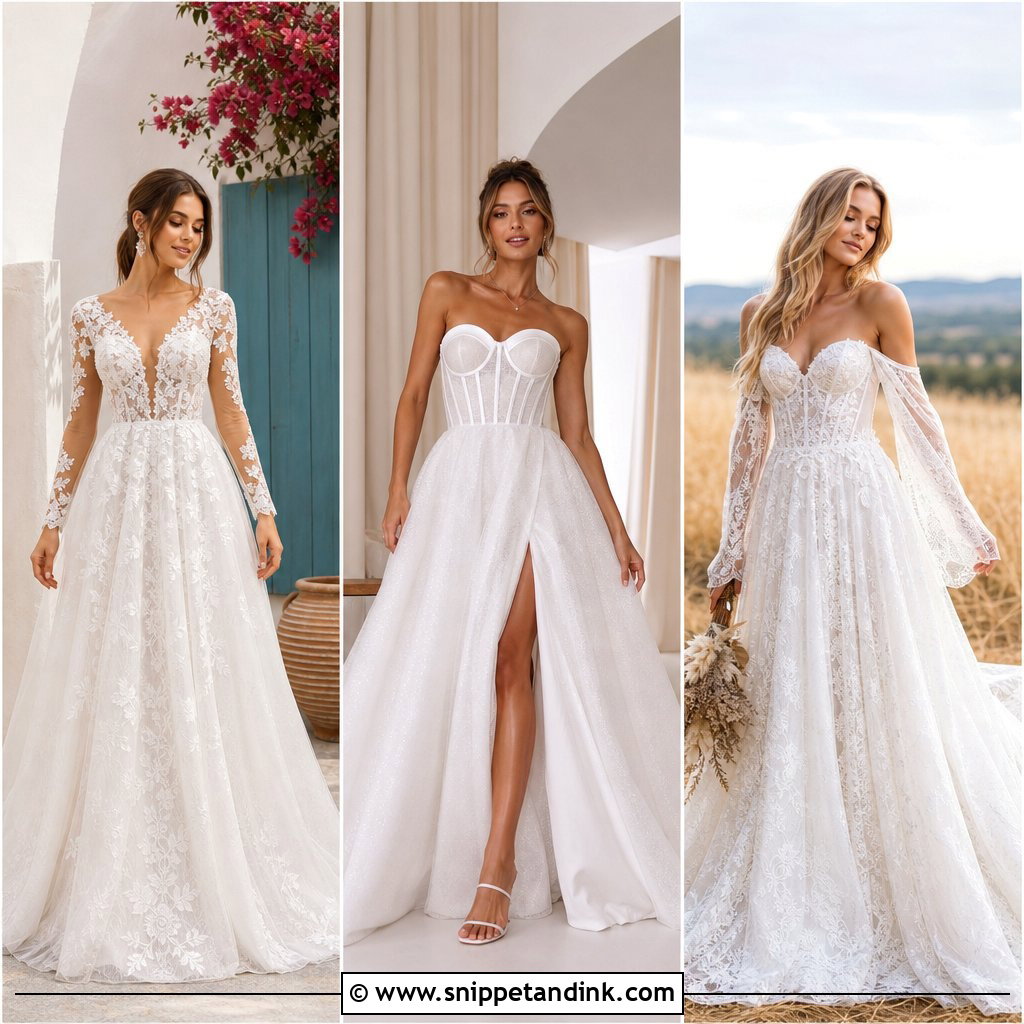
An A-line gives shape without burying a small frame in fabric, provided the skirt starts widening at your natural waist and not a few inches below it. Princess seams, a V-neck or lace motifs running vertically all add length. Chiffon, soft tulle and fluid satin are easier to balance than stacked layers of stiff net. Pointed heels, a fingertip veil, pearl drops and a compact bouquet suit it. Skip a wide belt, which cuts you in half visually. Ask whether the gown comes in petite proportions; many designers offer a shorter bodice or skirt at order, and that’s cleaner than altering it afterward.
2. Empire Waist Wedding Gown
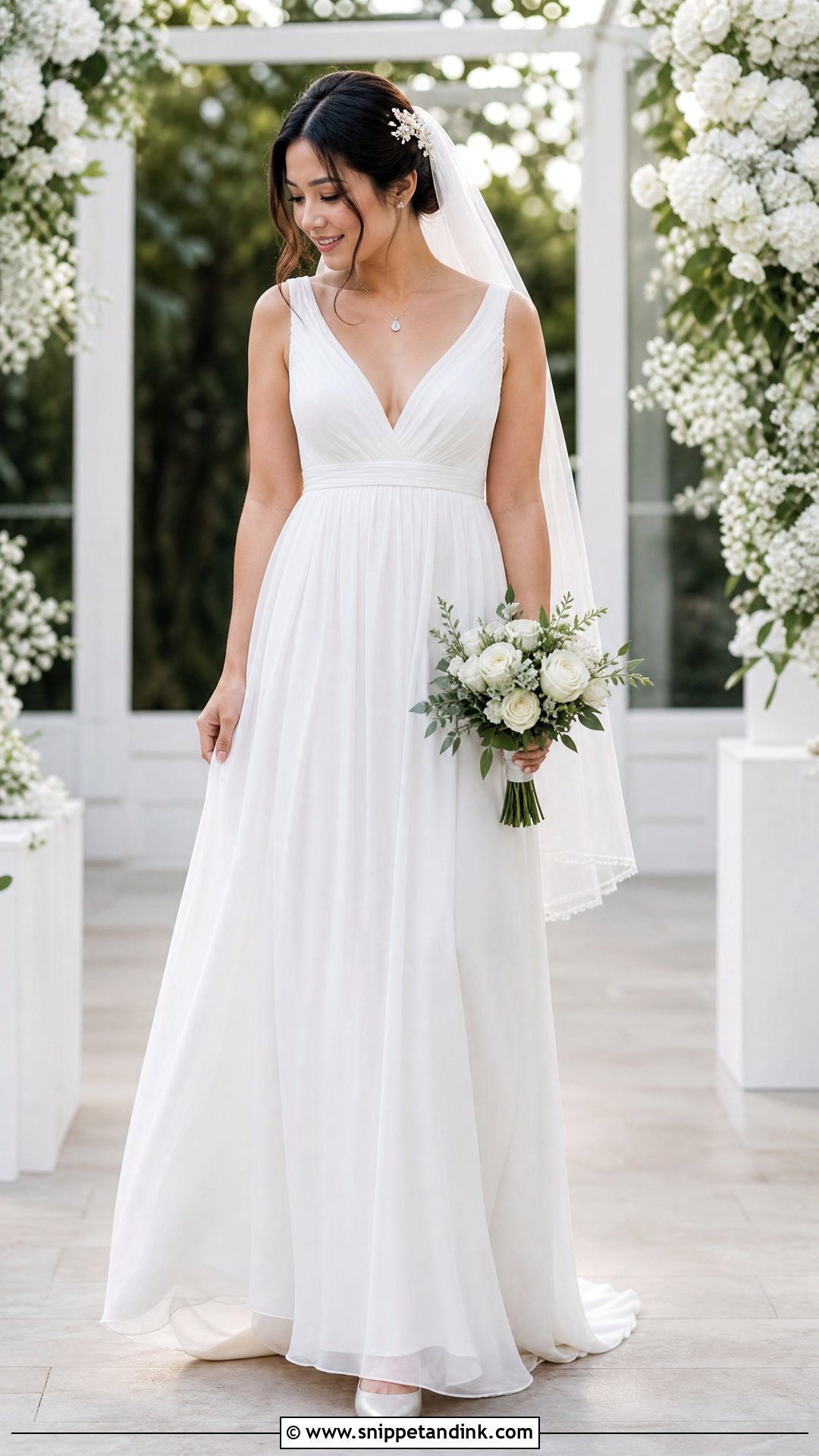
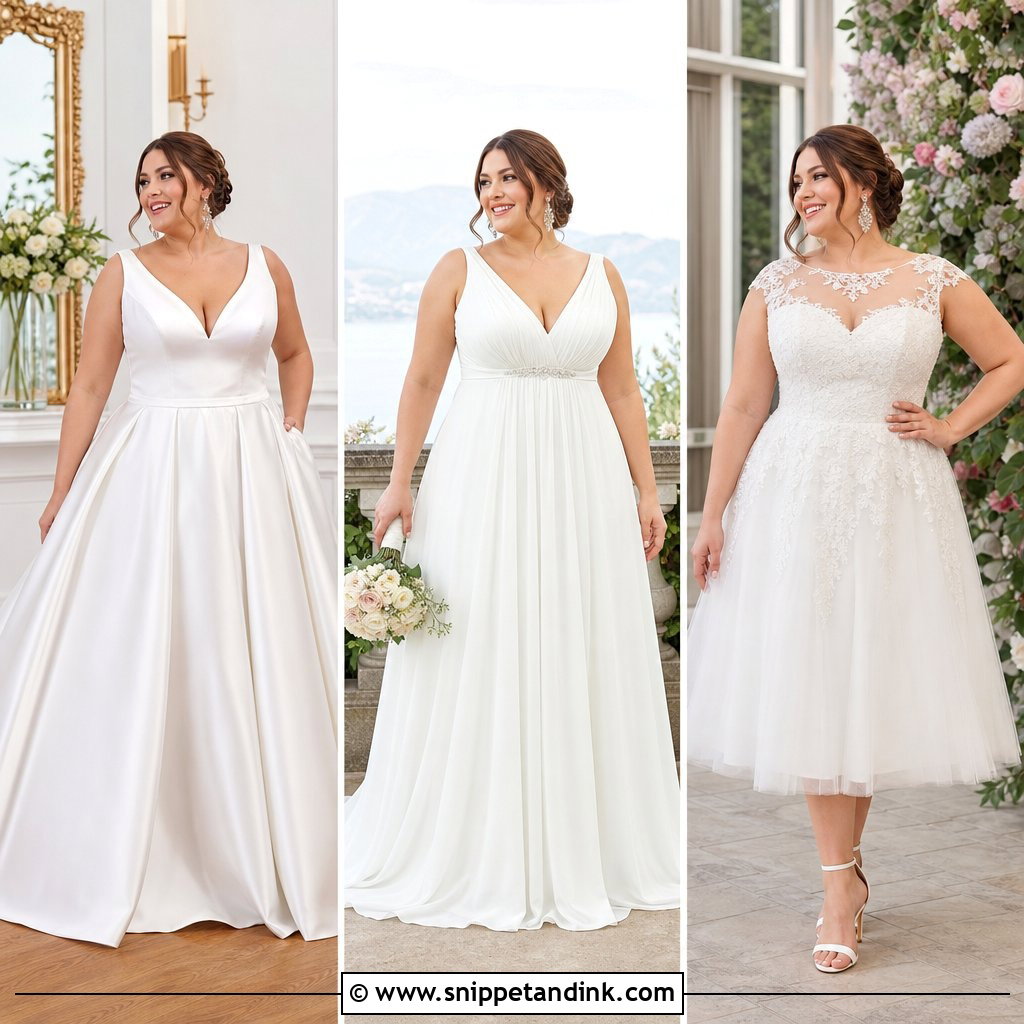
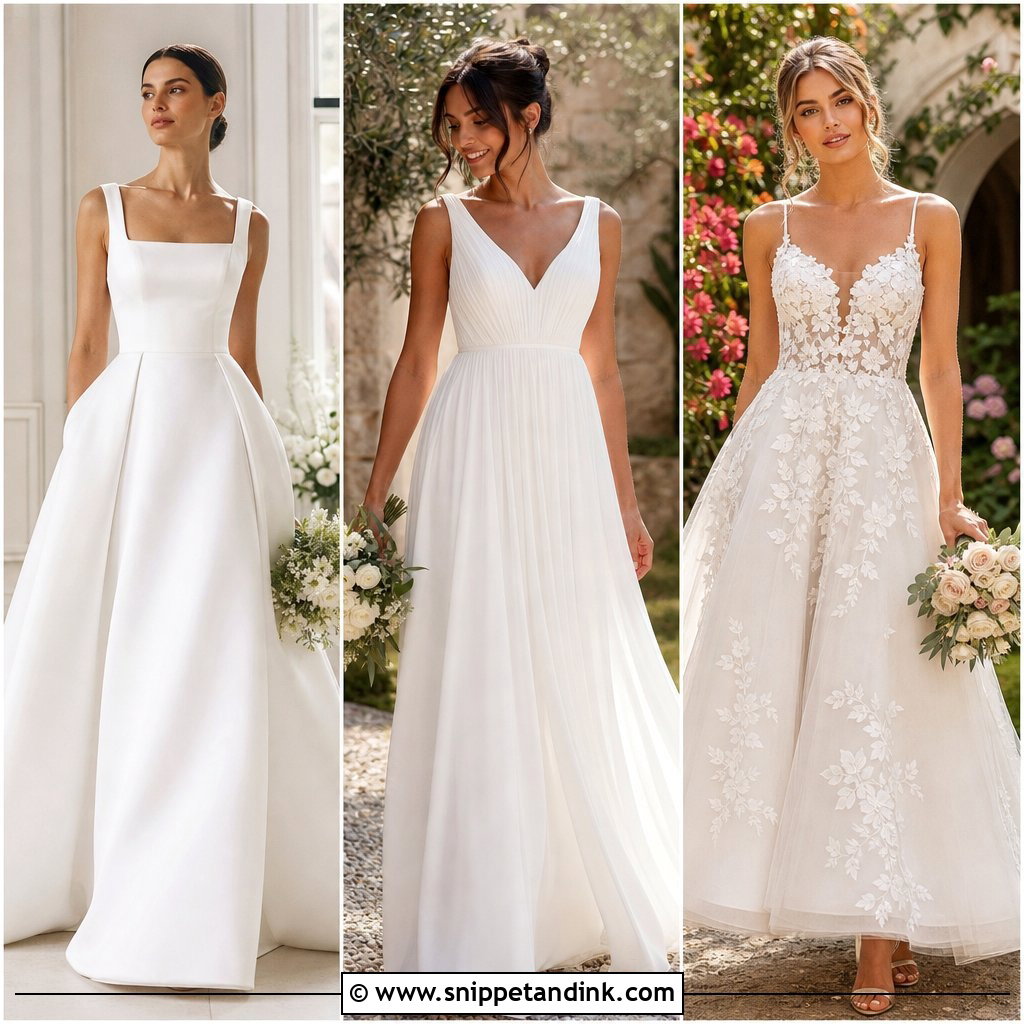
Could a higher waistline change the whole silhouette? On a petite bride, often yes. An empire seam sits just under the bust and lets the skirt fall in one unbroken line, which makes the legs read longer. A fitted bodice with narrow straps, a V-neck or soft cap sleeves works well, in chiffon, silk georgette or light crepe. Avoid heavy gathering at the seam; it adds width right where you want height. Low pointed pumps, a fine pendant, a slim floral comb and a chapel veil finish it. Have the seamstress check the under-bust seam closely, because even half an inch too low spoils the effect.
3. Petite Sheath Wedding Gown
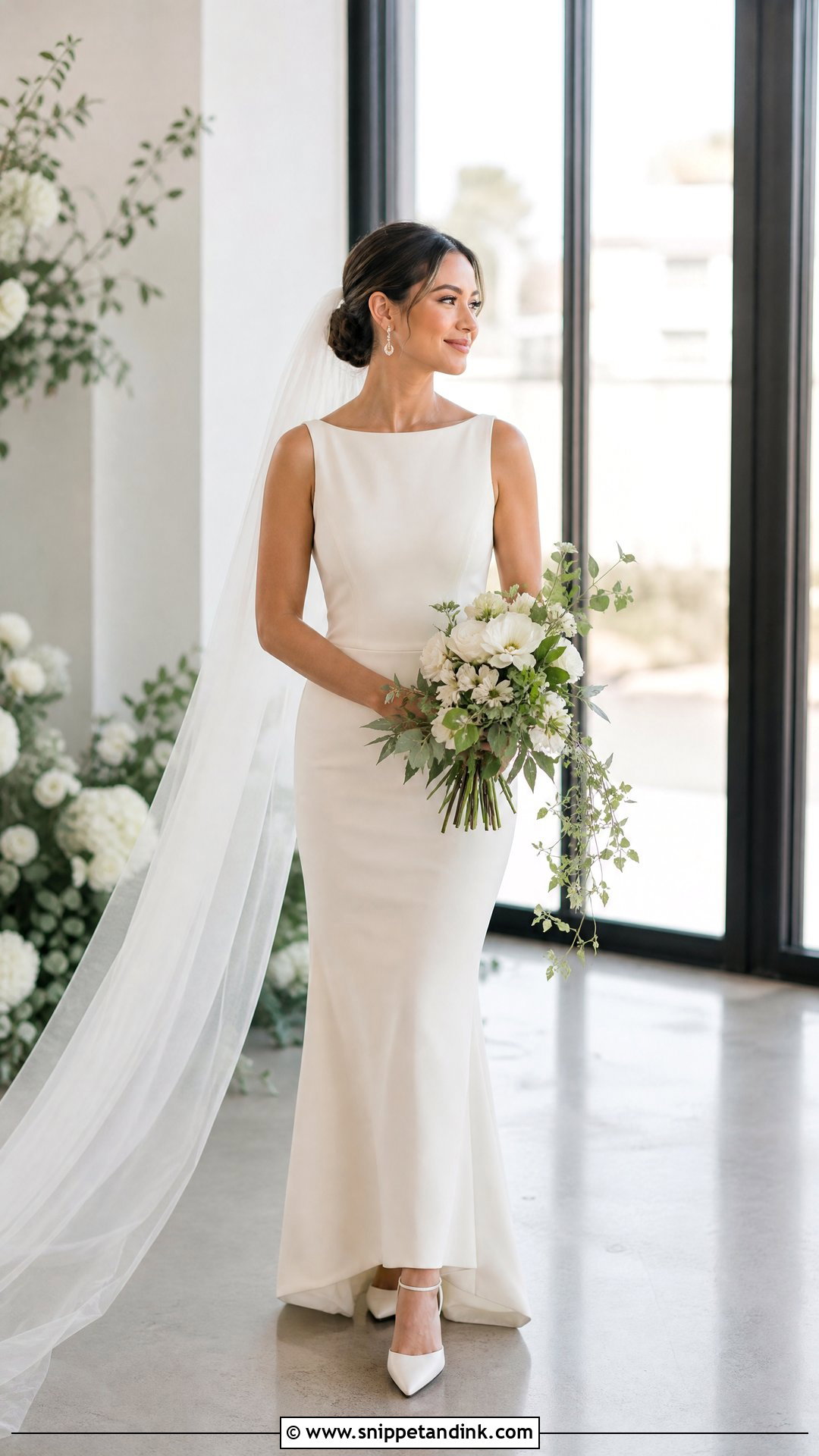
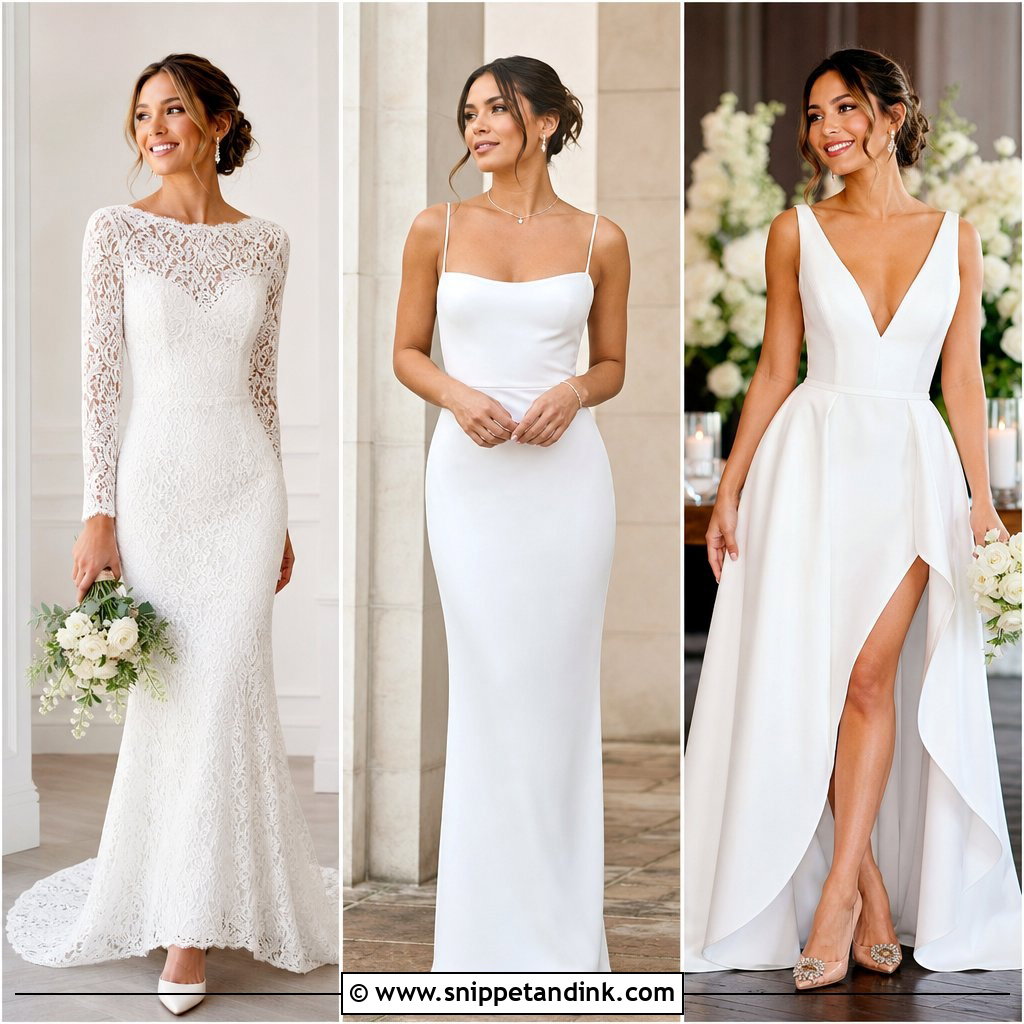
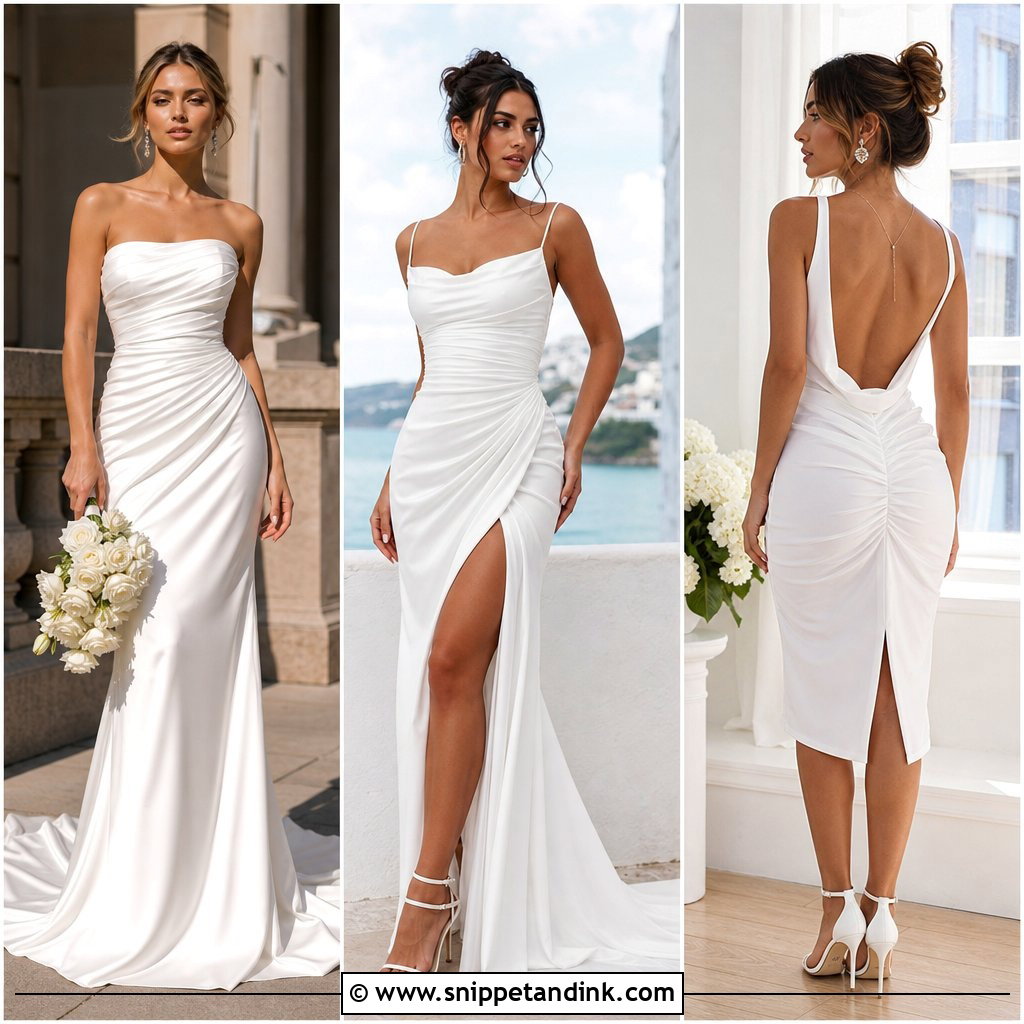
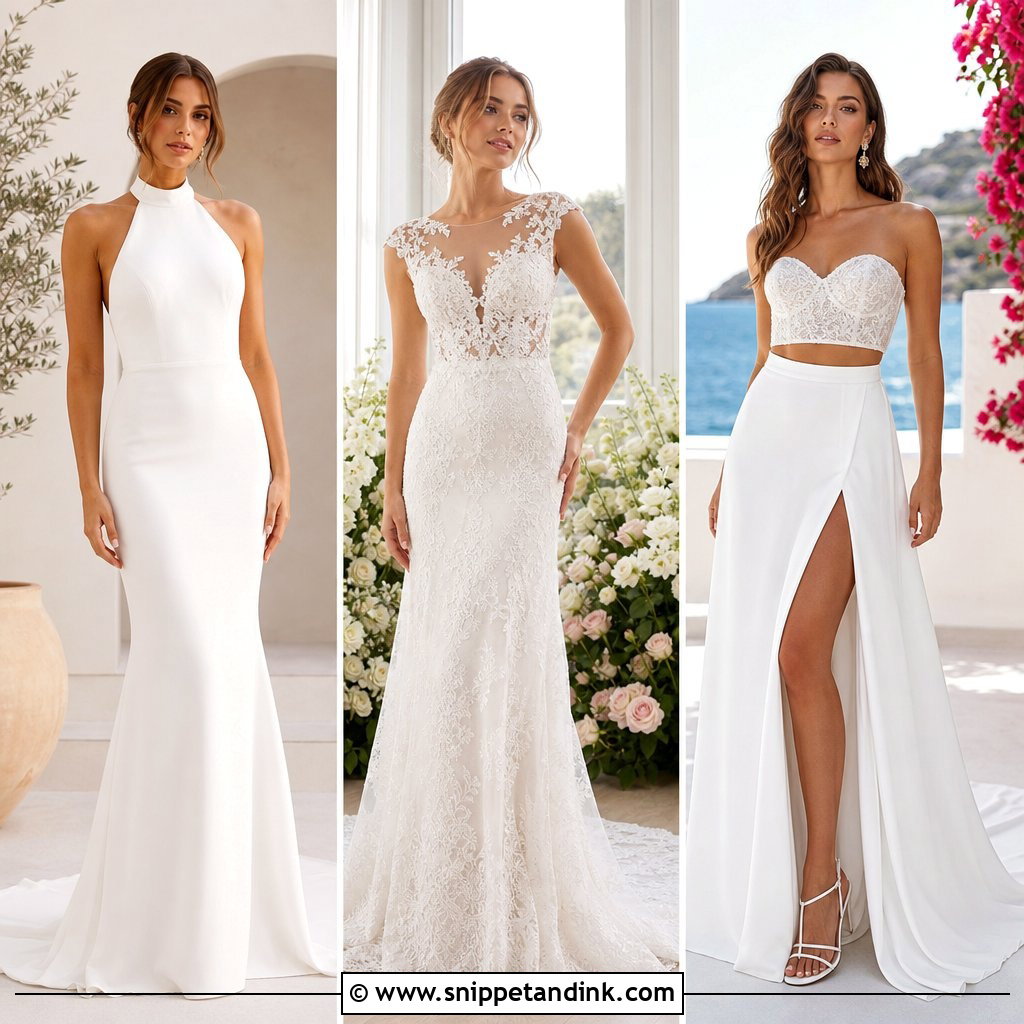
A petite sheath wedding gown follows your shape from shoulder to hem with nothing interrupting the outline. Stretch crepe or smooth satin with vertical seaming and a tailored waist keeps it clean, and a V-neck or narrow scoop adds length up top. Pointed slingbacks, a sleek bun, small crystal earrings and a long single-layer veil suit it, with a bouquet trailing a little greenery downward. My test for sheaths is dancing. If the skirt is narrow enough that you can’t take a full step, ask for a walking slit or a little more ease at the knee.
4. Petite Column Wedding Gown
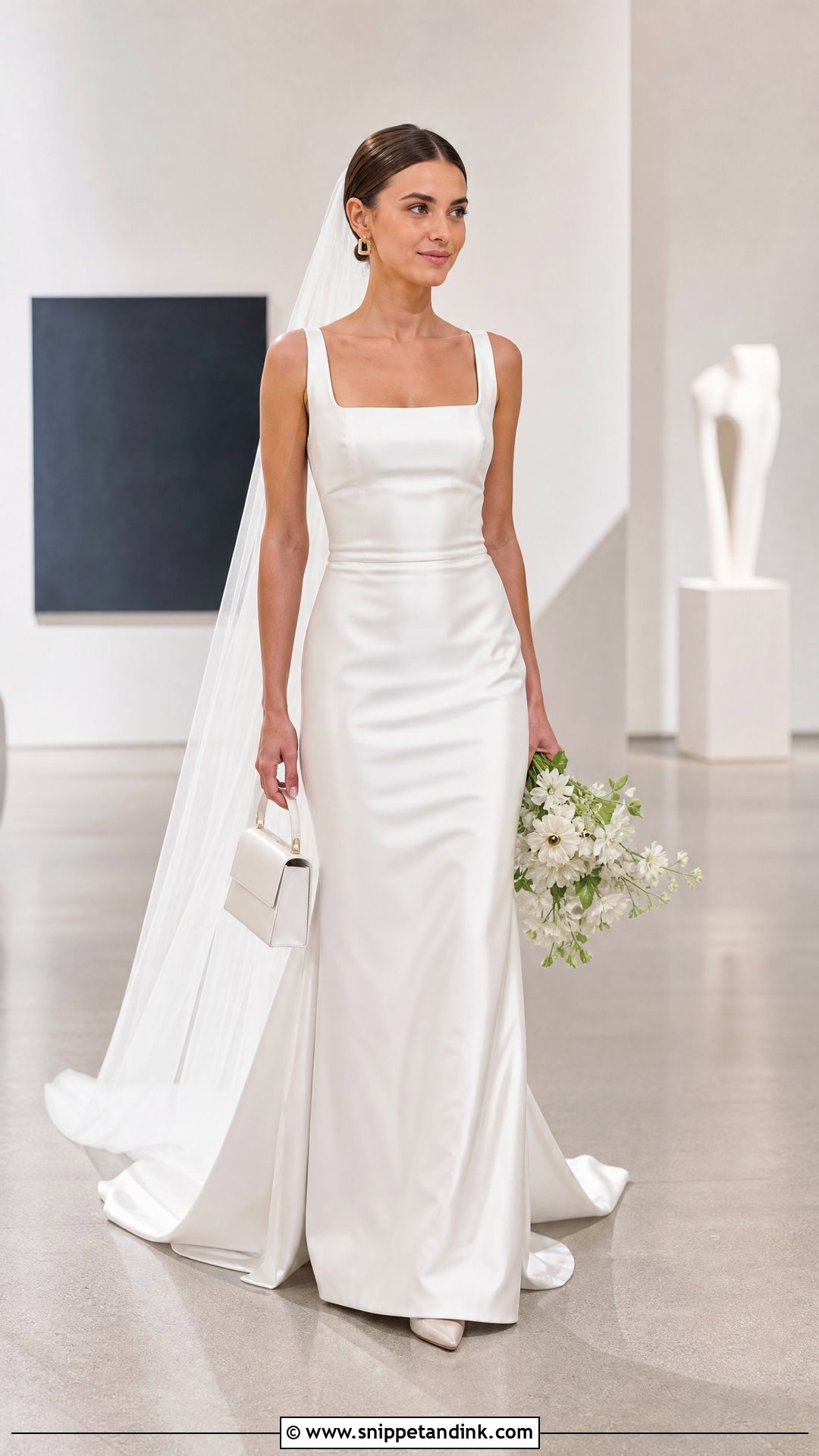
A column falls almost straight from neckline to floor, one long line with very little clutter. In square-neck satin with wide straps it looks structured; in soft crepe it’s quieter. Pointed ivory pumps, geometric earrings, a narrow cathedral veil and a mini bag for the reception suit it, with a slim bouquet that doesn’t hide the front. Keep any train light. Here’s the part most people miss: a standard column on a petite bride often has the bust, waist and hip shaping a few inches too low. Shortening the hem doesn’t fix that, so the shoulder straps or bodice may need taking up too.
5. Petite Fit And Flare Wedding Gown
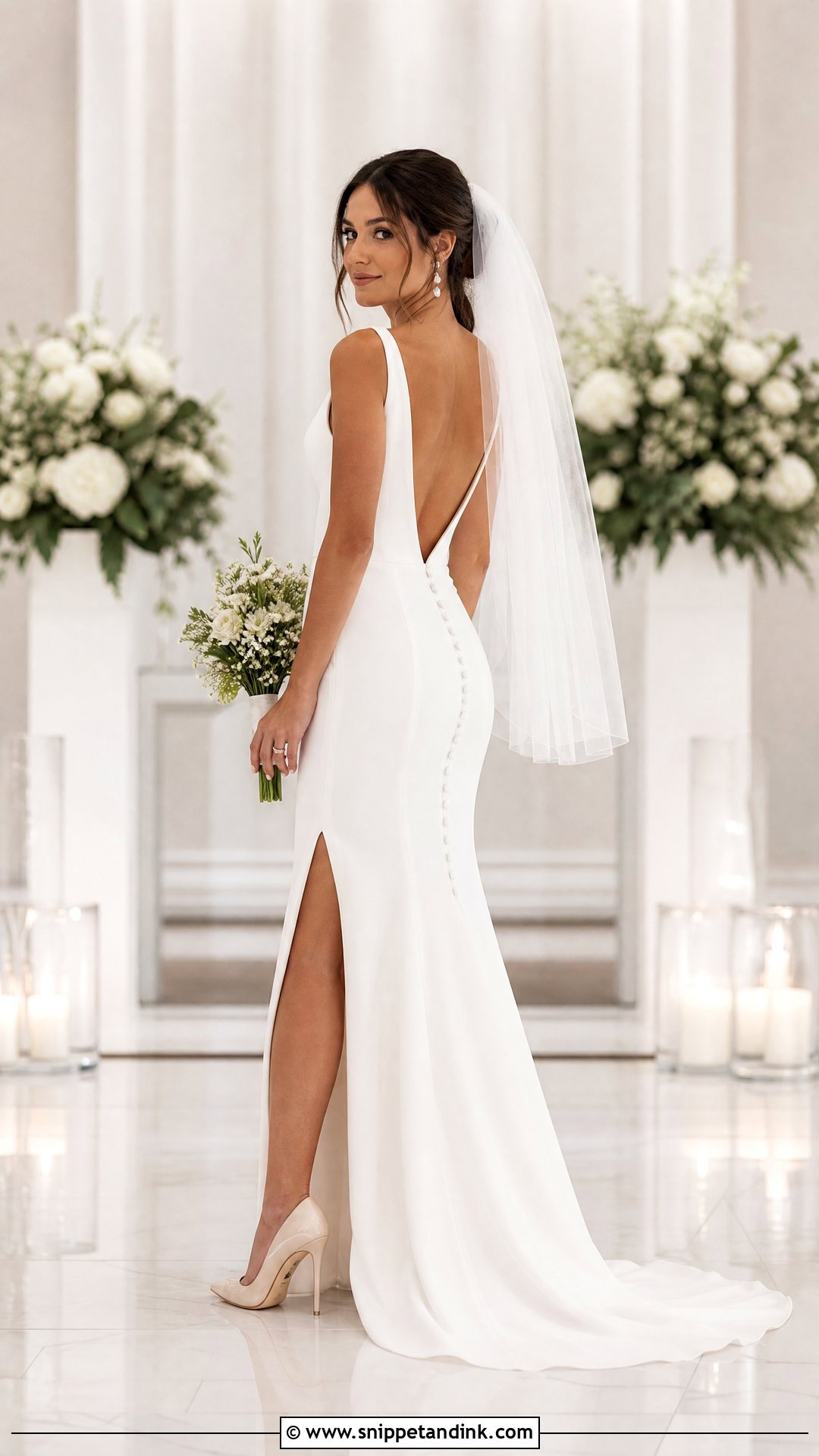
Where the flare begins is the whole question with fit and flare. On a shorter frame I prefer it around the lower thigh rather than near the knee, because a low flare makes the legs look short and makes walking harder. Diagonal draping, vertical lace or princess seams help the line, and an open V-back adds another long line behind. Pointed heels, a fingertip veil, fine drops and a small hand-tied bouquet complete it. When a sample is too long, brides assume hemming solves everything. It doesn’t: take up only the hem and the flare stays too low, so the seamstress may need to move it.
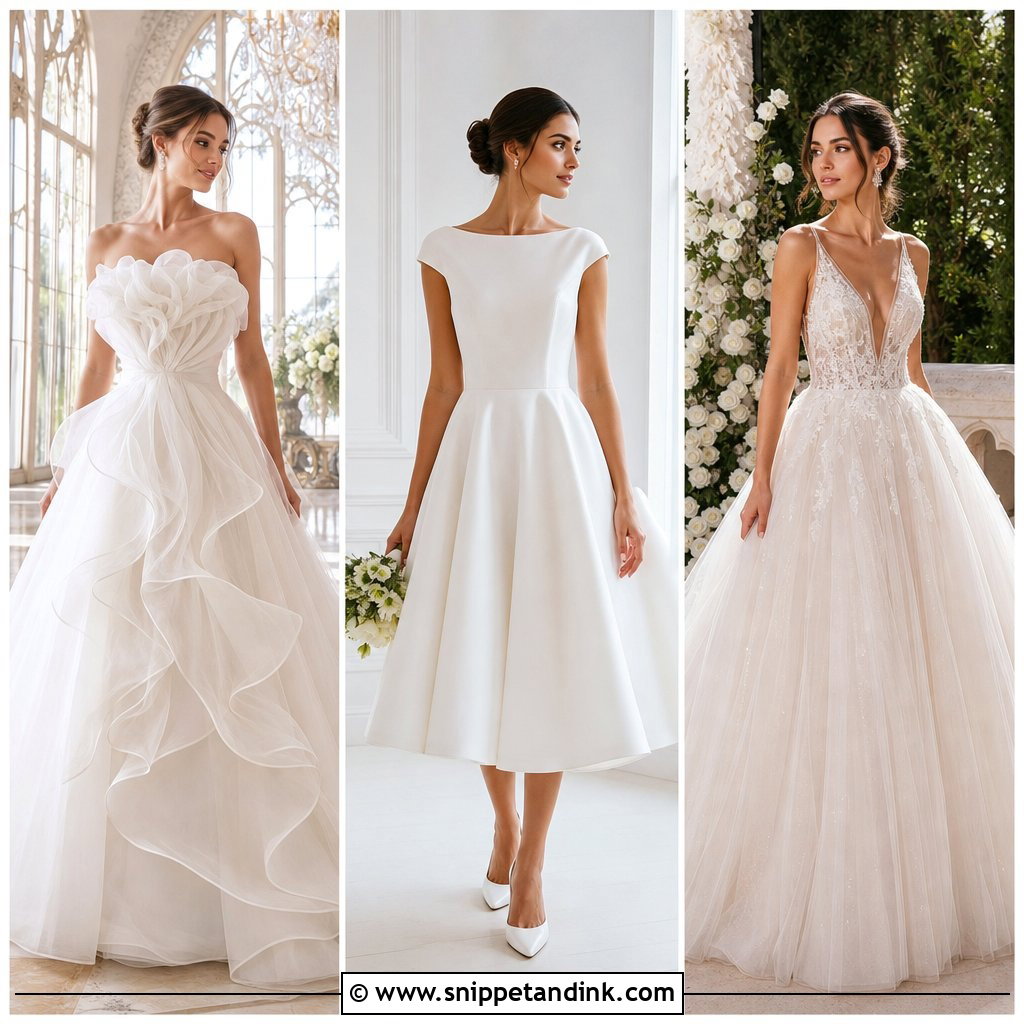
6. Petite Trumpet Wedding Gown
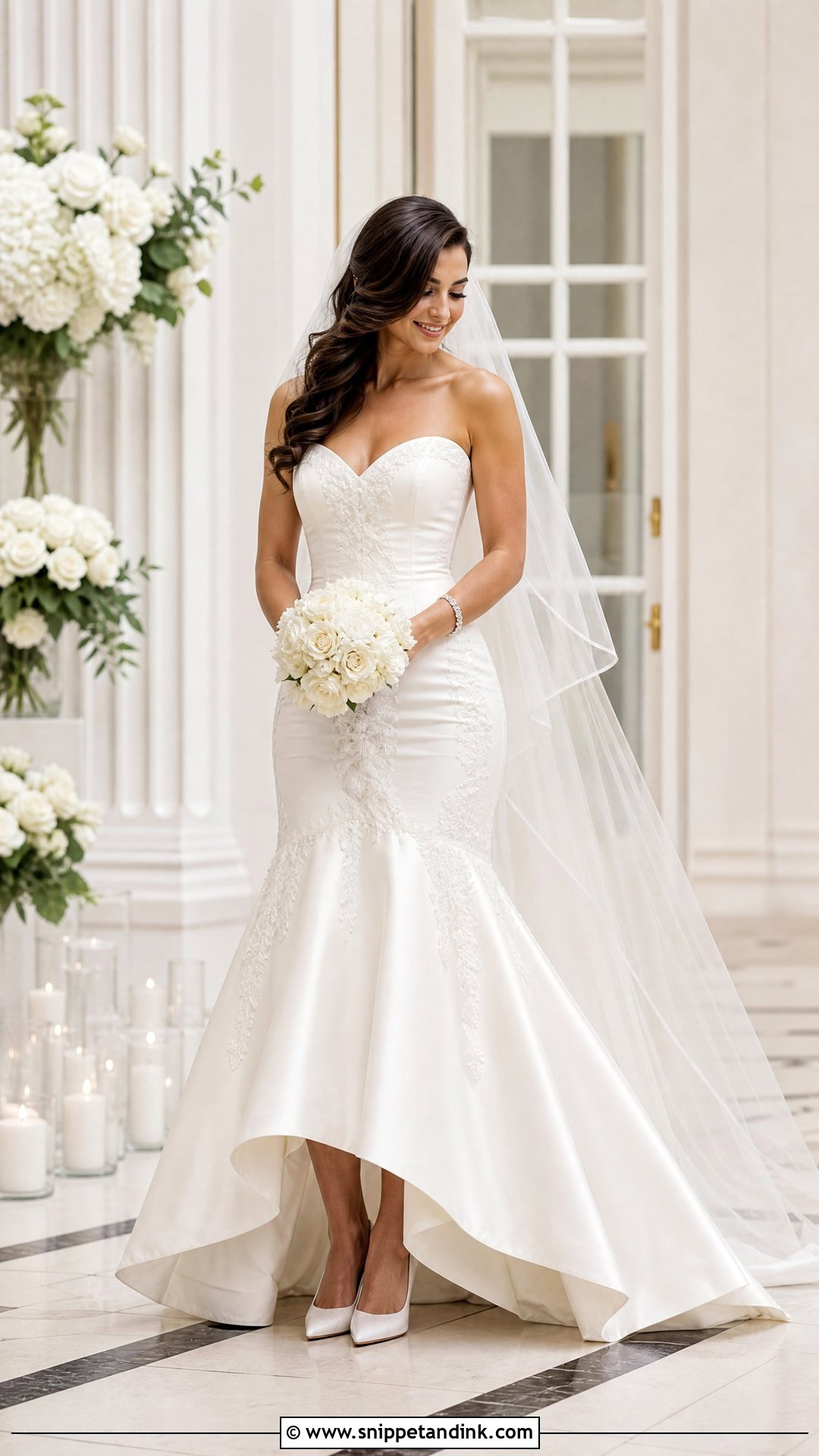
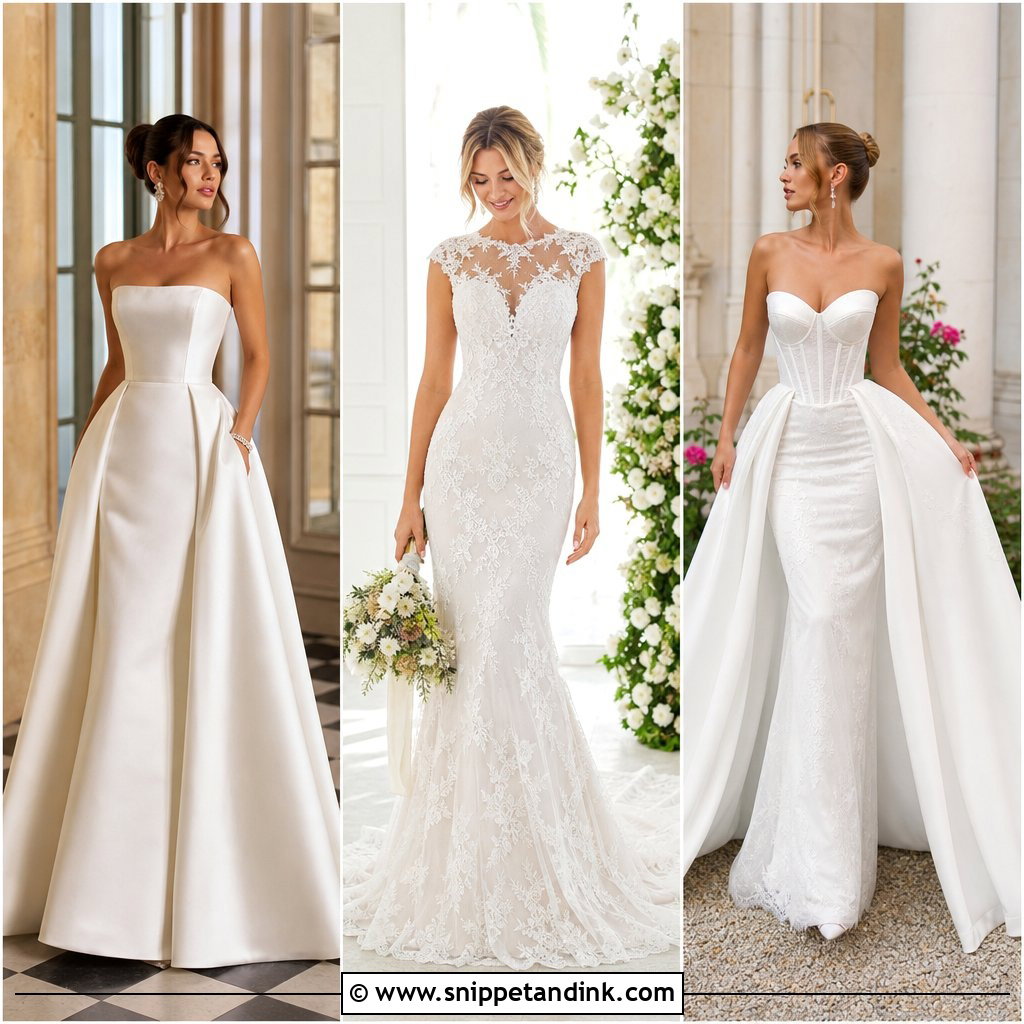
A trumpet wedding gown flares from mid-thigh, which makes it more forgiving than a true mermaid and usually better scaled for a petite bride. A strapless sweetheart bodice in clean satin panels or with lace placed vertically suits it. Pointed pumps, a narrow crystal bracelet, medium earrings and a sheer chapel veil, with a side part directing the eye upward, complete it. I’d avoid big ruffles at the bottom; they make the gown bottom-heavy. Ask the tailor to set torso length and flare position first, and only then the hem.
7. Petite Ball Gown Wedding Dress
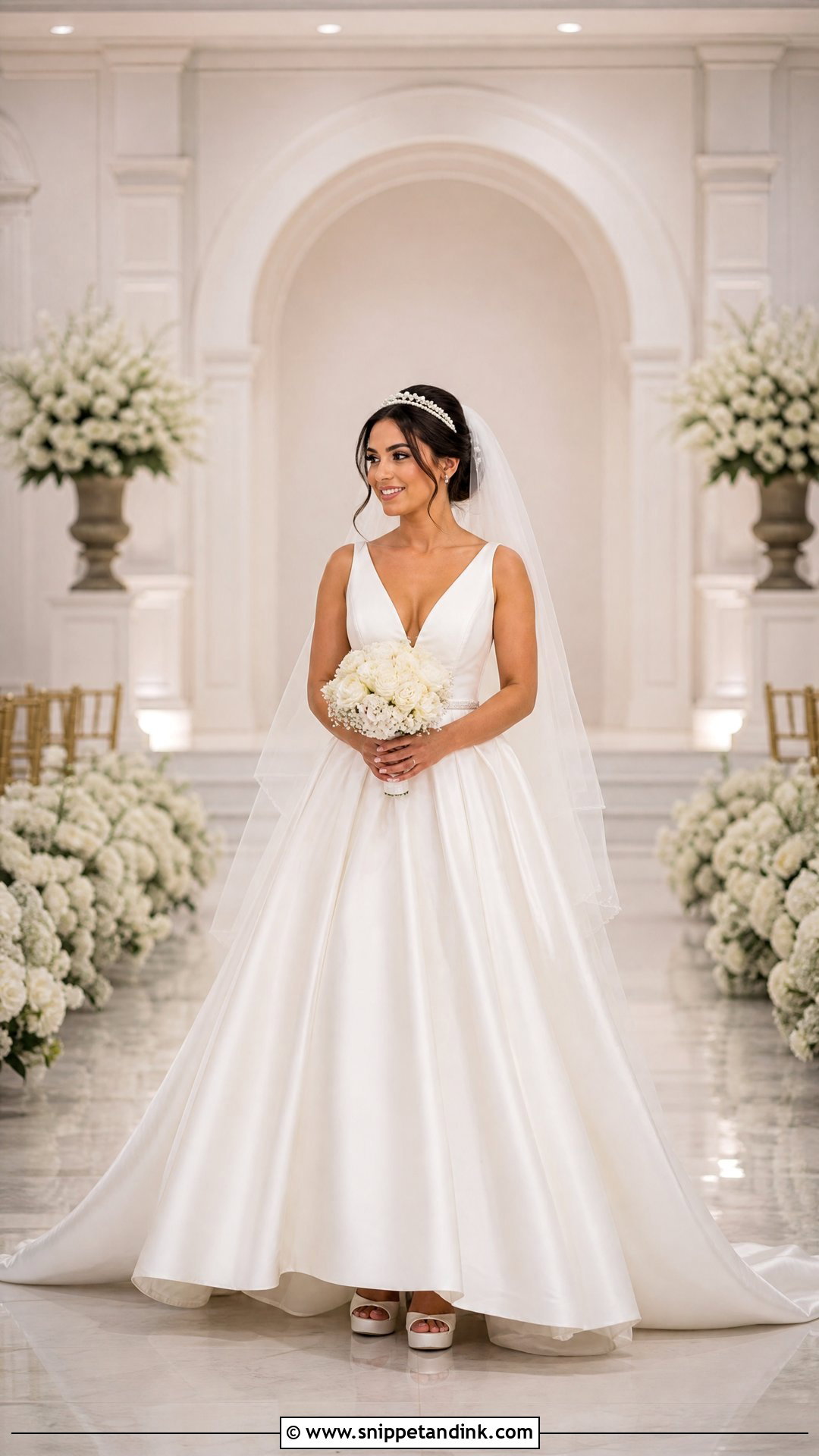
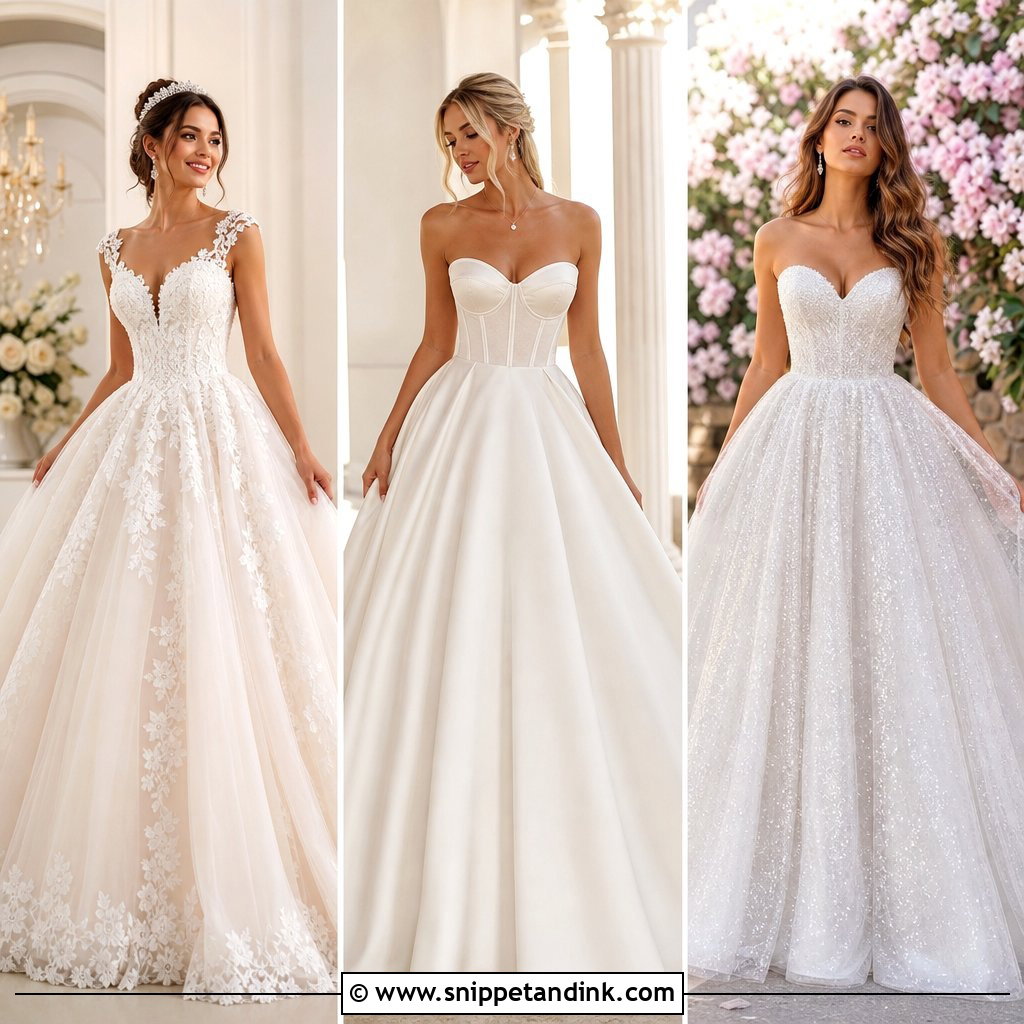
Yes, a short bride can wear a ball gown. The trick is controlled volume: a structured waist, a moderately full skirt and lightweight layers that hold their shape rather than swallowing you. A strapless or V-neck bodice shows more of the upper body, which keeps you from disappearing. Platform heels add height without a steep pitch, and a small tiara or pearl band, simple studs and a waist-length veil balance it, with a compact bouquet. Skip a thick contrasting belt. At the fitting I stand back across the room; if all I see is skirt, the volume needs reducing.
8. Sweetheart Neckline Wedding Gown
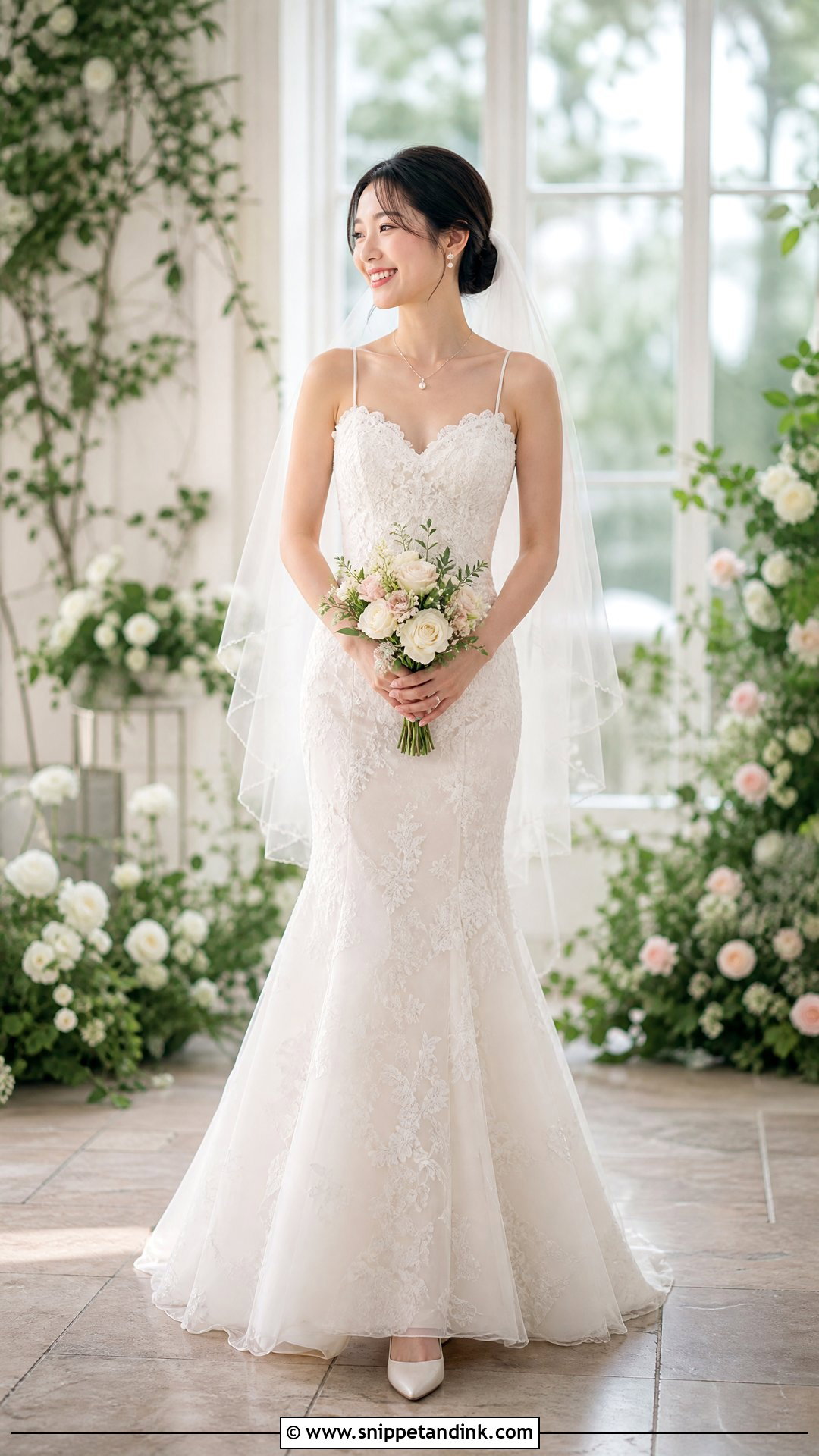
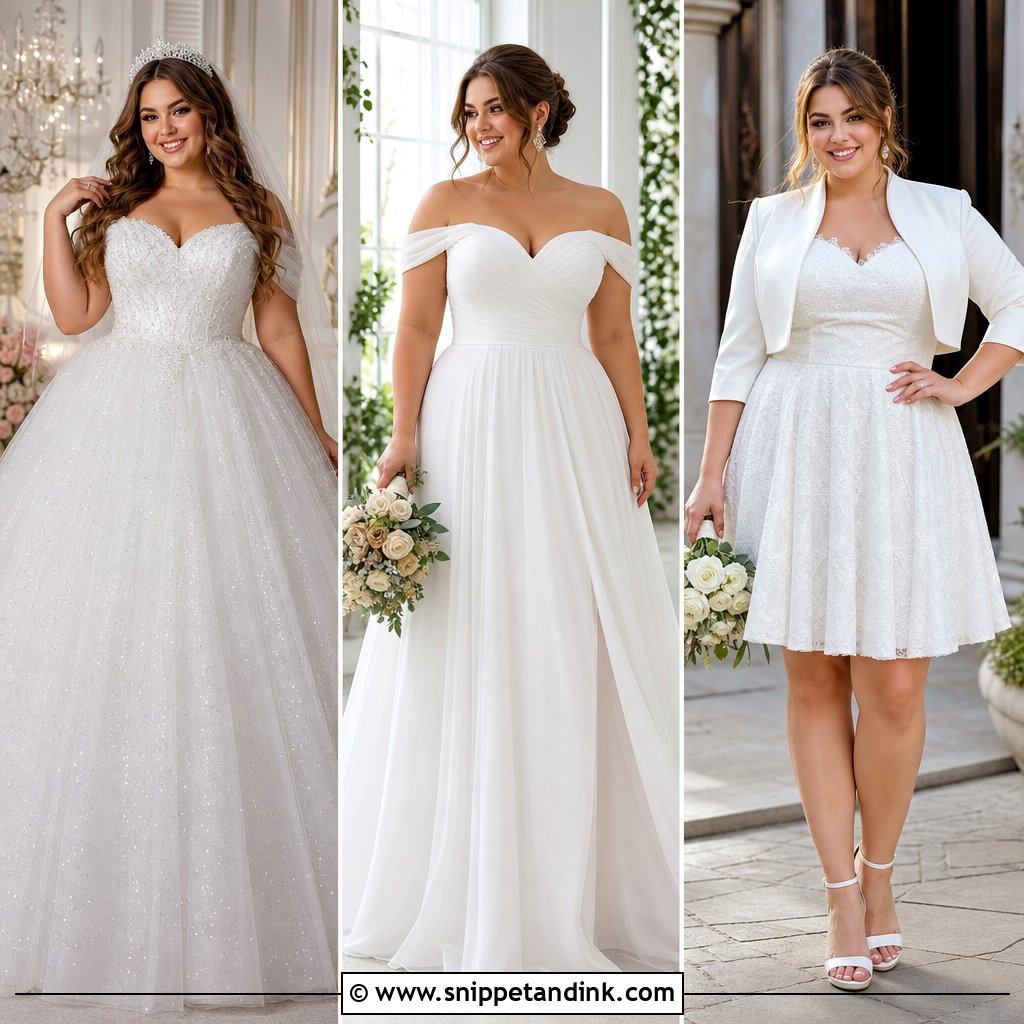
A sweetheart neckline opens up the collarbone and draws attention to the face, which balances a floor-length skirt. On a petite frame I prefer a moderate curve rather than a deep plunge, and lace motifs scaled down; very large appliqués can look like they belong to a bigger gown. A petite A-line or fitted crepe works, with thin straps or removable off-shoulder bands for support. Pointed heels, a fine pendant, pearls, a lightly gathered fingertip veil and a low bun or half-up style suit it. The cups and waist must sit exactly right, so this is not a gown to buy without alterations.
9. V-Neck Wedding Gown
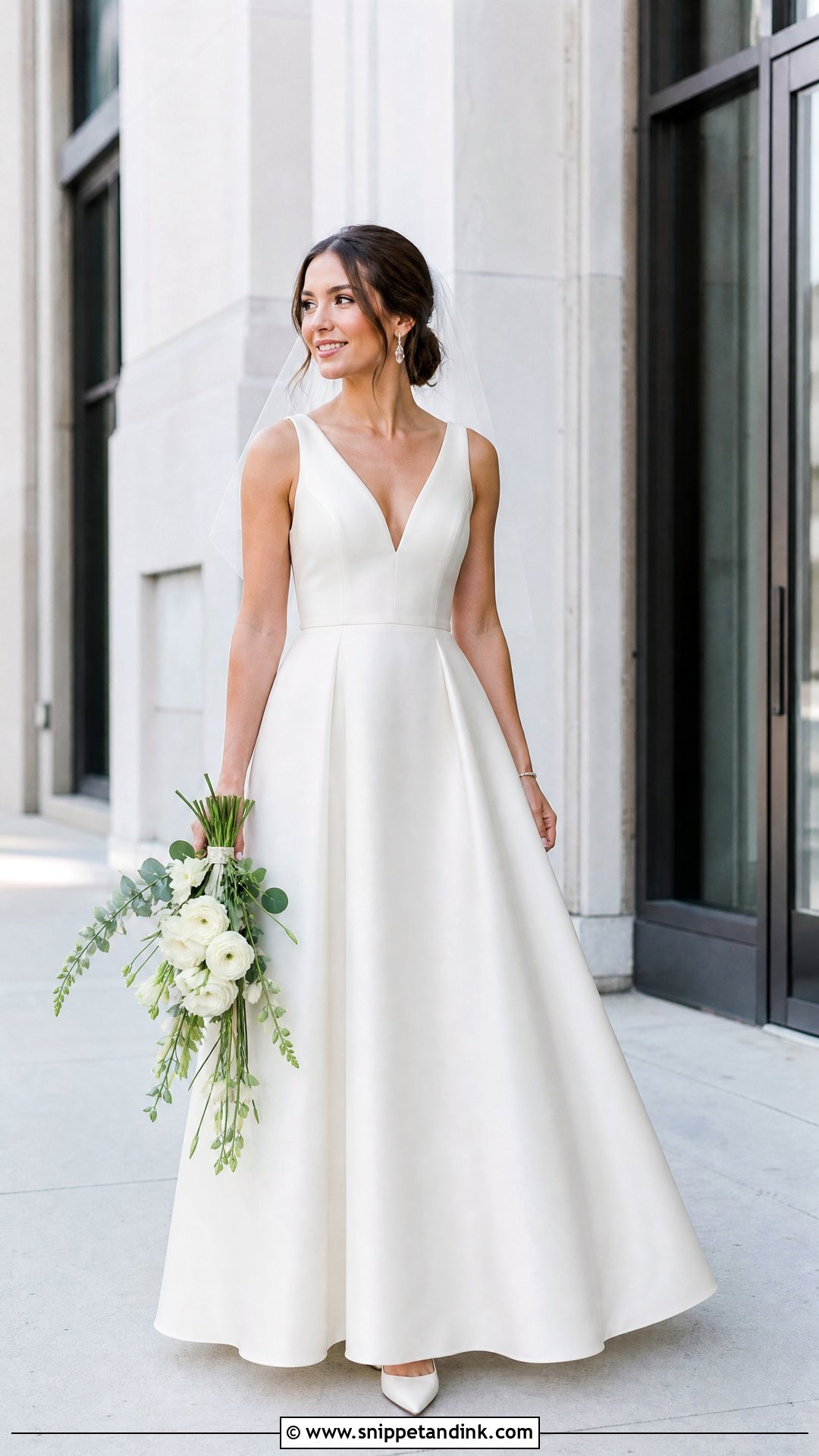
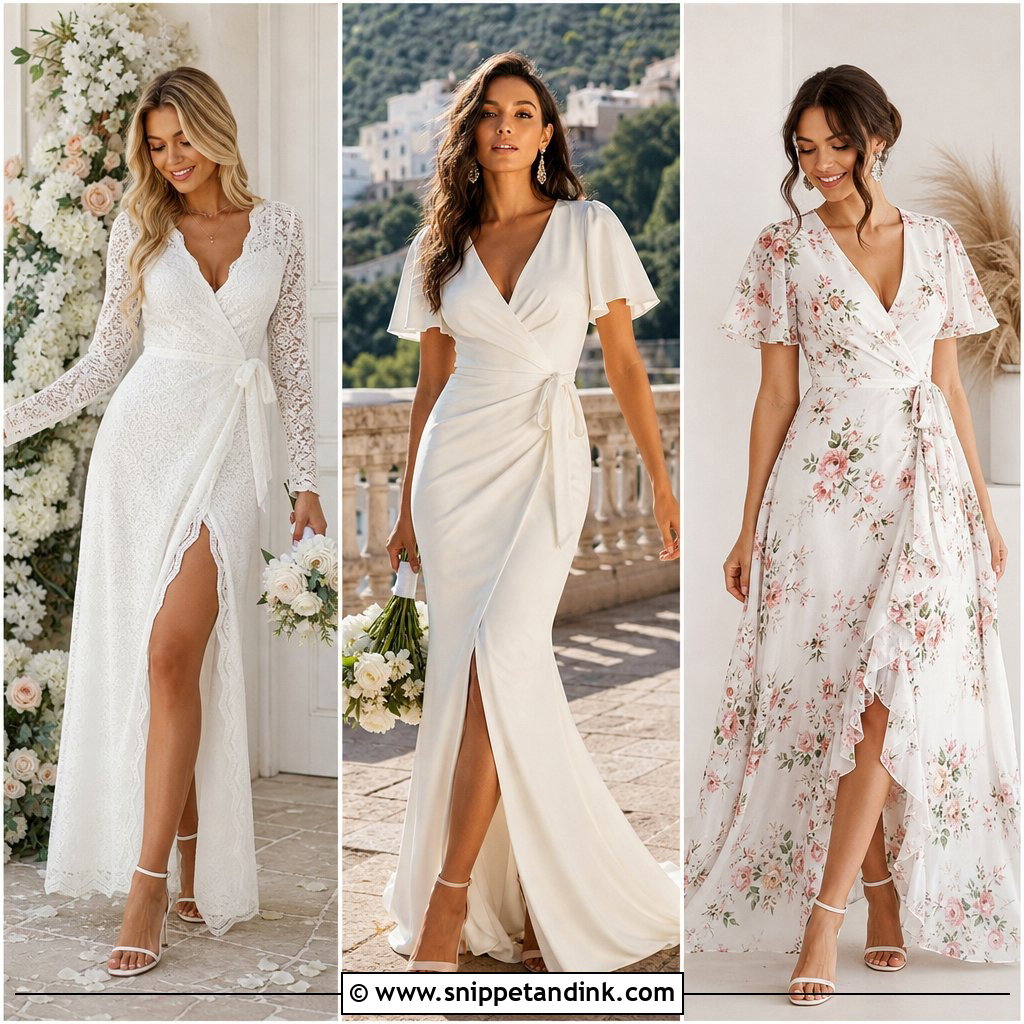
A V-neck draws the eye down through the bodice and makes the torso look longer, which is why I suggest it so often to petite brides. It works on an A-line, sheath or soft fit and flare. Choose a depth you’ll be comfortable in all day. Vertical seams and a lightly flared skirt continue the line, with pointed pumps, slim drops, a simple bracelet and a single-layer veil, plus a bouquet with long stems. Wide necklaces interrupt the V, so leave them off. Fashion tape or an expertly fitted illusion panel keeps a deeper V secure.
10. Off Shoulder Wedding Gown
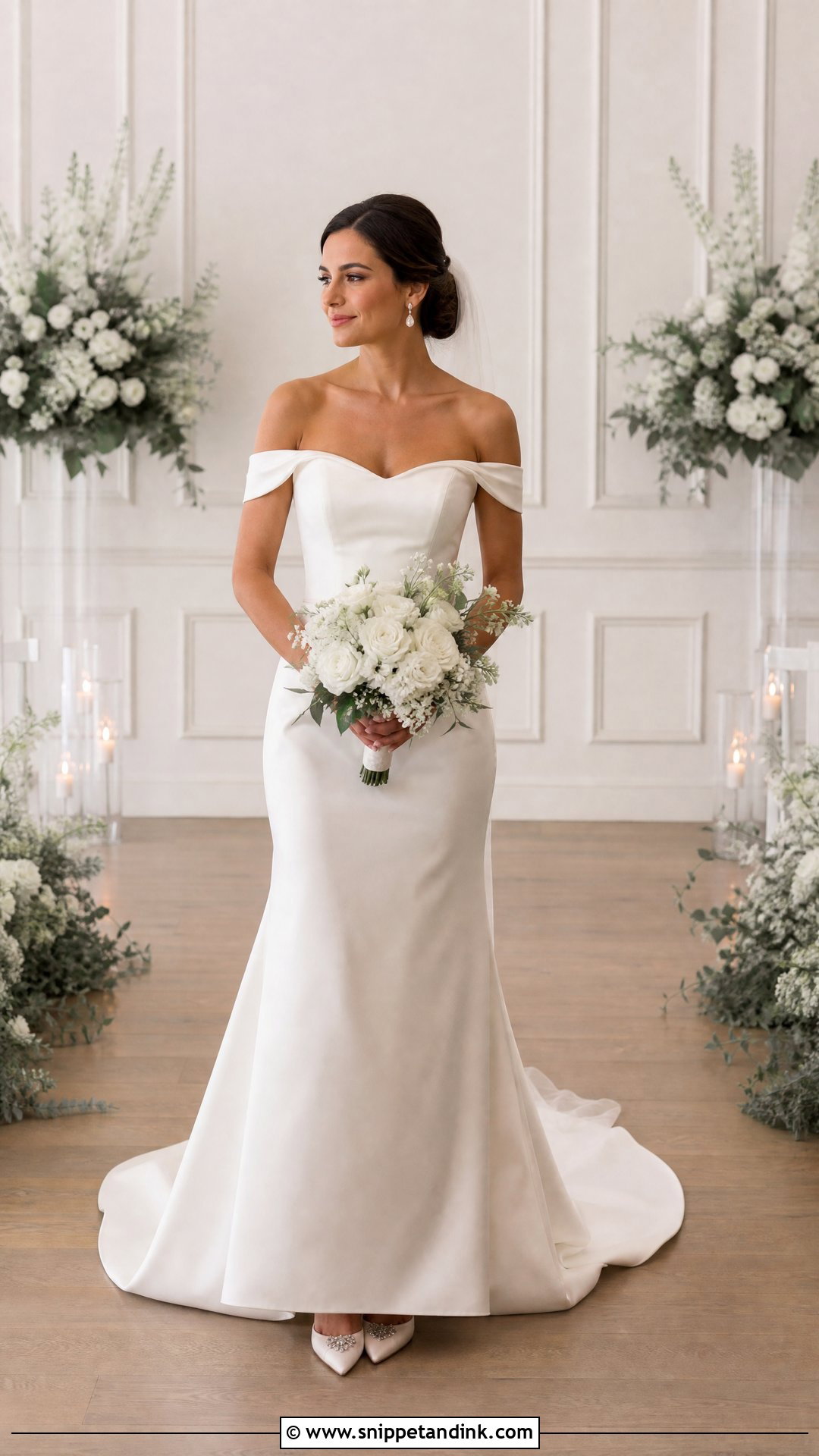
Wide off-shoulder bands can overwhelm narrow shoulders and make the upper body look boxy. For a petite frame, I look for slim draped bands or fitted lace sleeves that sit close to the arm, over a defined natural waist and a gentle A-line or column skirt. Pointed heels, a short pendant or none, delicate earrings and a gathered veil set beneath a low bun suit it, with a medium bouquet so the neckline stays visible. Raise your arms, hug someone and sit down at the fitting. If the bands ride up, a hidden elastic or extra support inside the bodice fixes it.
11. Square Neck Wedding Gown
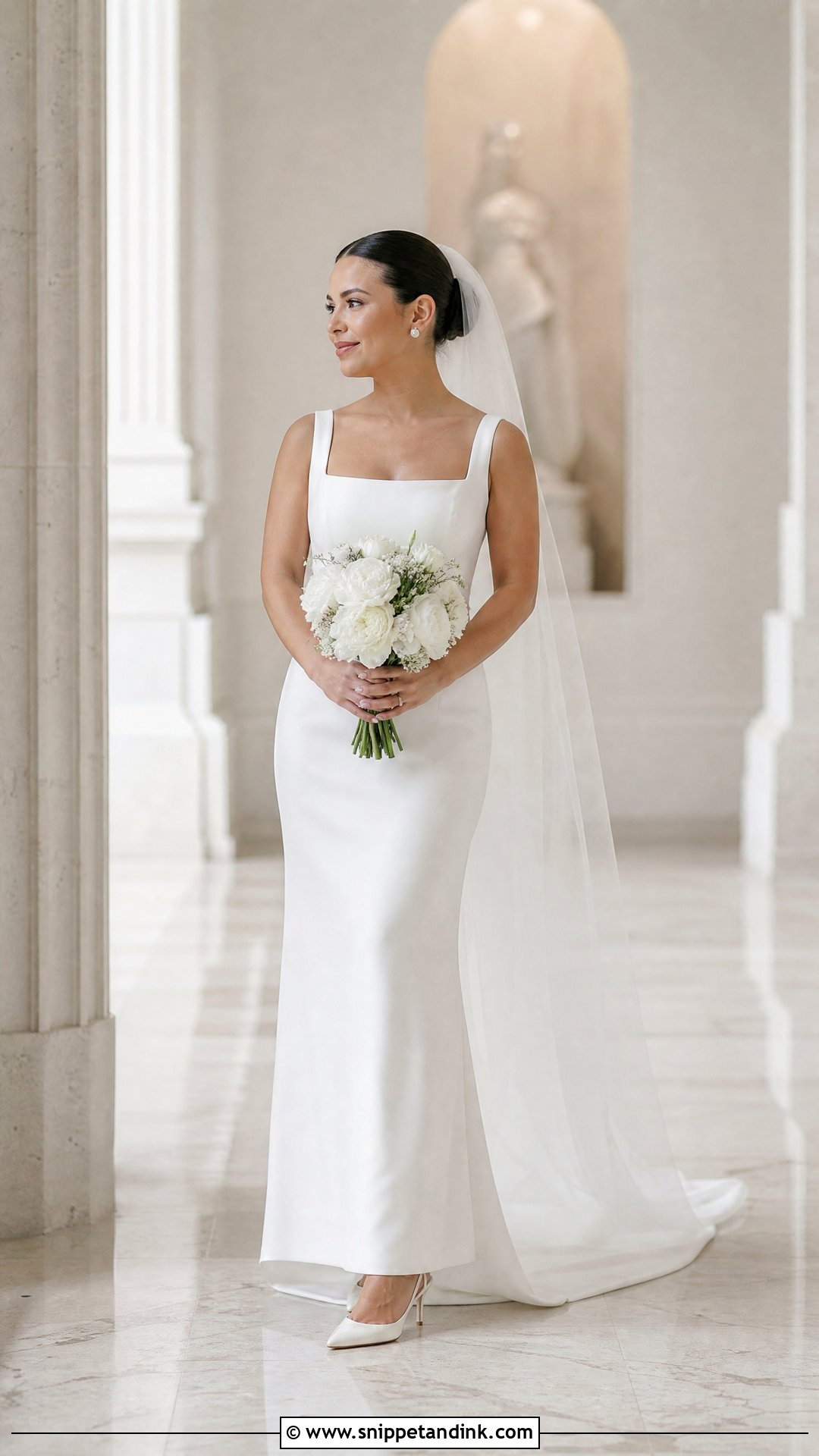
Square necklines bring clean lines and frame the collarbone, while straight vertical straps add a little height. A petite column, sheath or narrow A-line in satin, mikado or crepe all work, kept balanced with a defined waist and a plain skirt. Pointed slingbacks, pearl studs, a polished bun and a long, lightly edged veil complete it. If you want more detail, embroidered gloves or a small floral piece are better than a heavy necklace. Strap width is what I watch on a petite bride. Straps cut for a broader shoulder gape at the corners, so ask for them to be narrowed or moved inward.
12. High Neck Lace Wedding Gown
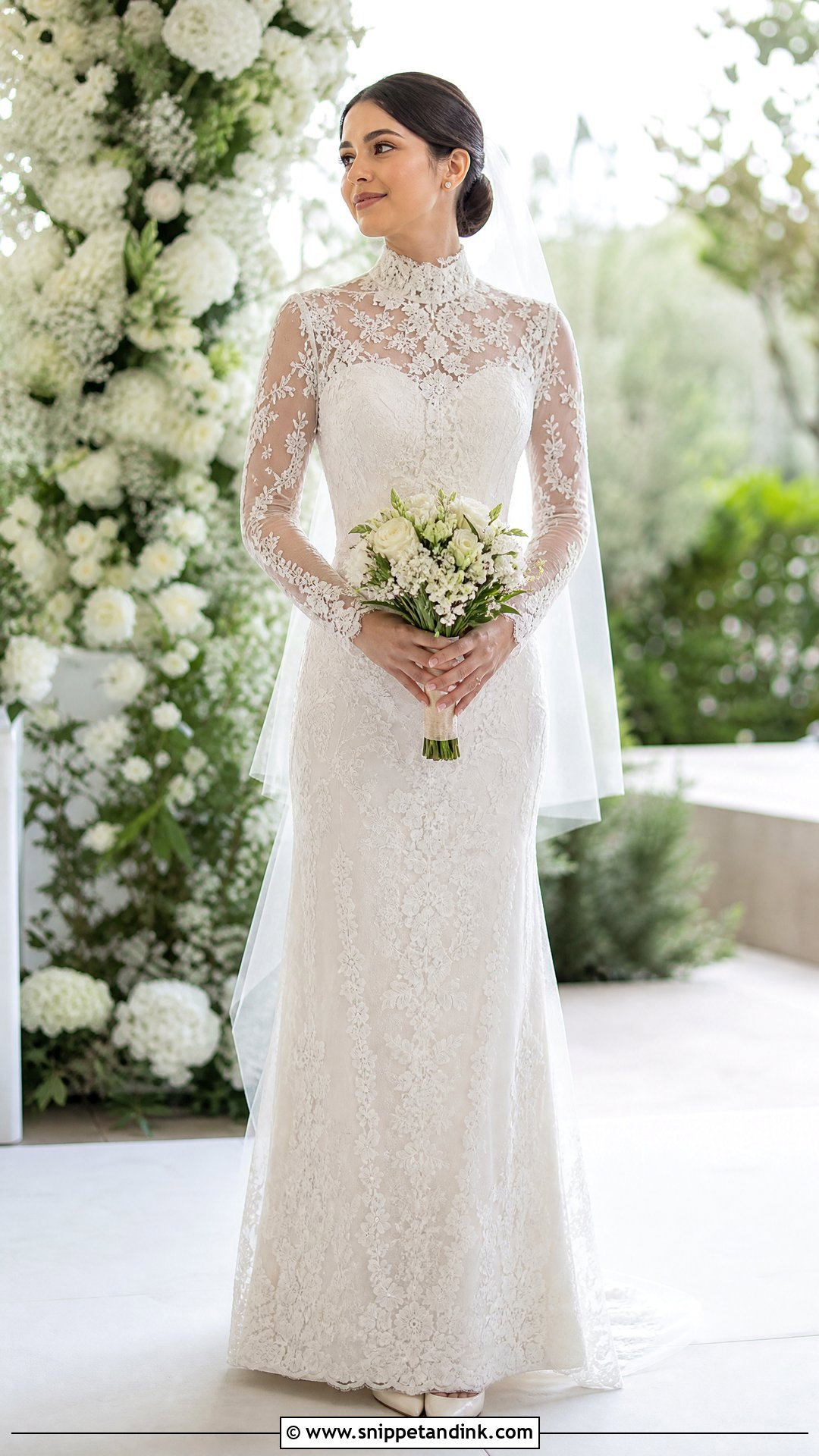
Lace can suit a smaller frame when it’s placed lightly and the motifs are scaled down. A high-neck lace gown with a fitted bodice, vertical lace and a narrow A-line or sheath skirt looks refined, especially with sheer lace across the neck and shoulders to keep it open. Understated pumps, pearl studs, a smooth low bun and a plain tulle veil keep the fabric as the focus. Skip the necklace. Heavy lace covering the whole gown can feel weighty on a short bride, so I’d keep the skirt lighter. Check where the sleeves end at your wrist; standard sleeves often run long on petite arms.
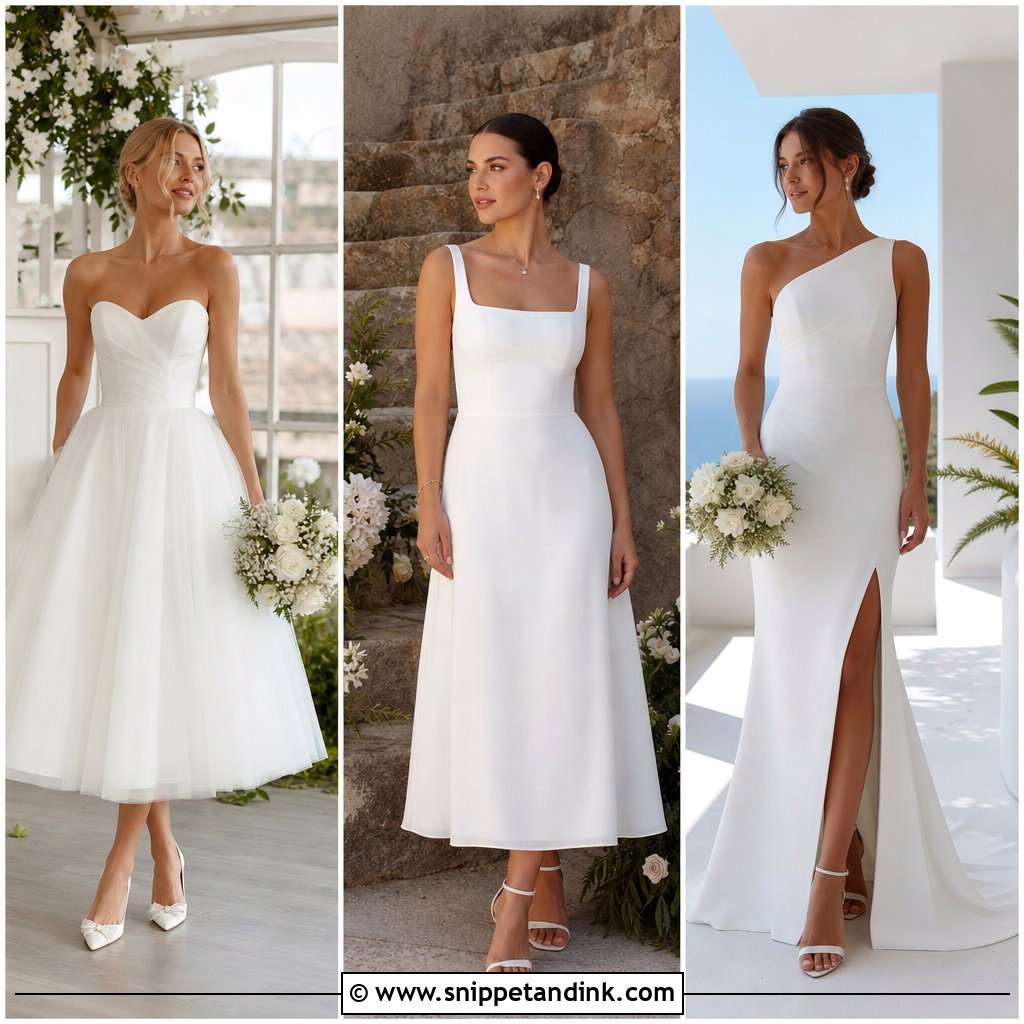
13. Tea Length Wedding Gown
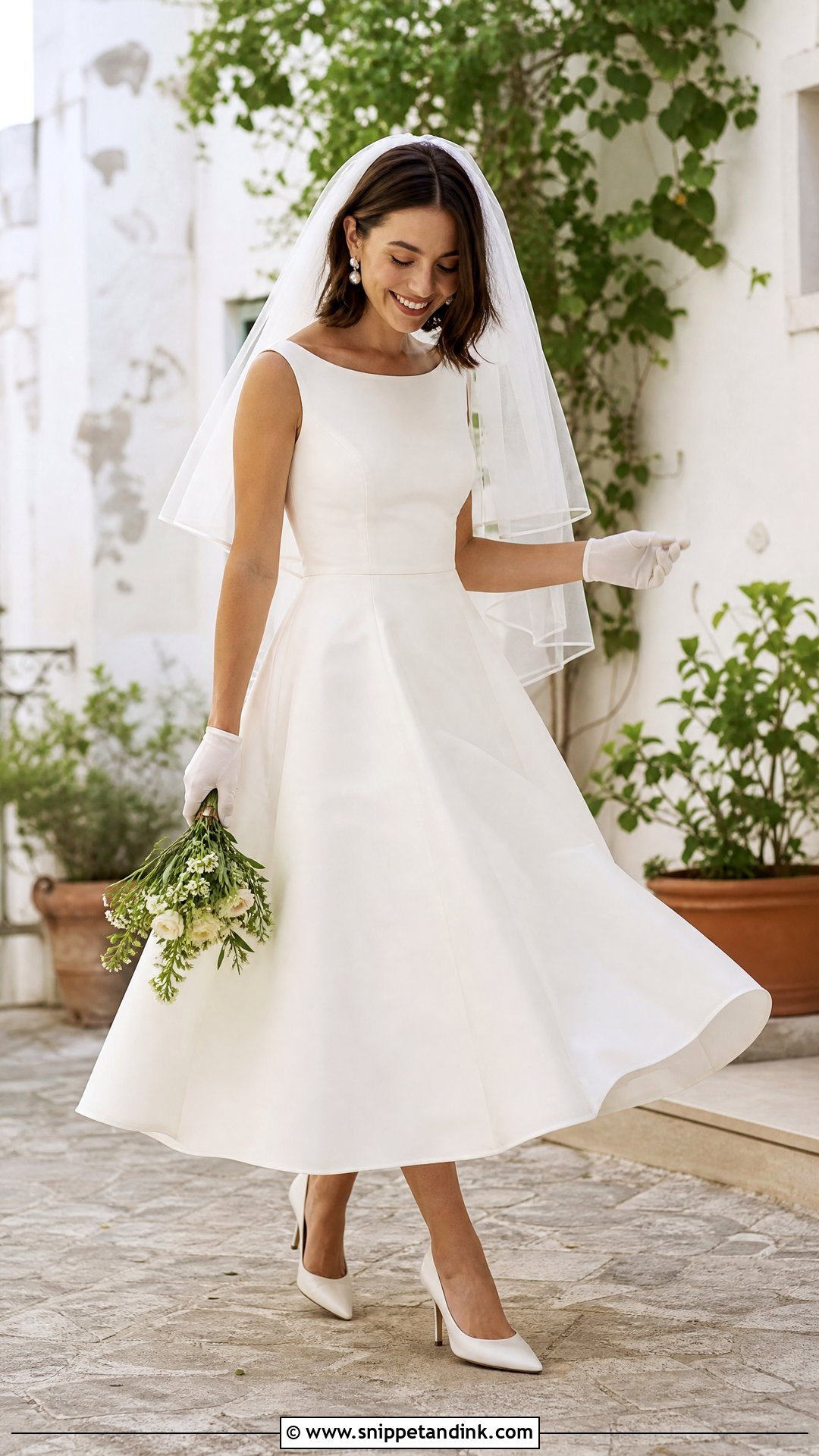
Tea length puts your shoes on show and gives the skirt some swing around the calf. The detail that matters most for a petite bride is where it stops: end it at a slimmer part of the lower leg, never the widest part of the calf. A fitted bodice, defined waist and lightly structured skirt give volume without weight. Pointed pumps or sleek ankle straps, short gloves, pearl earrings and a birdcage or shoulder-length veil complete it. Thick ankle straps shorten the leg line. It suits courthouse ceremonies, daytime weddings and reception changes. Hem it in the exact shoes you’ll wear.
14. Petite Midi Wedding Gown
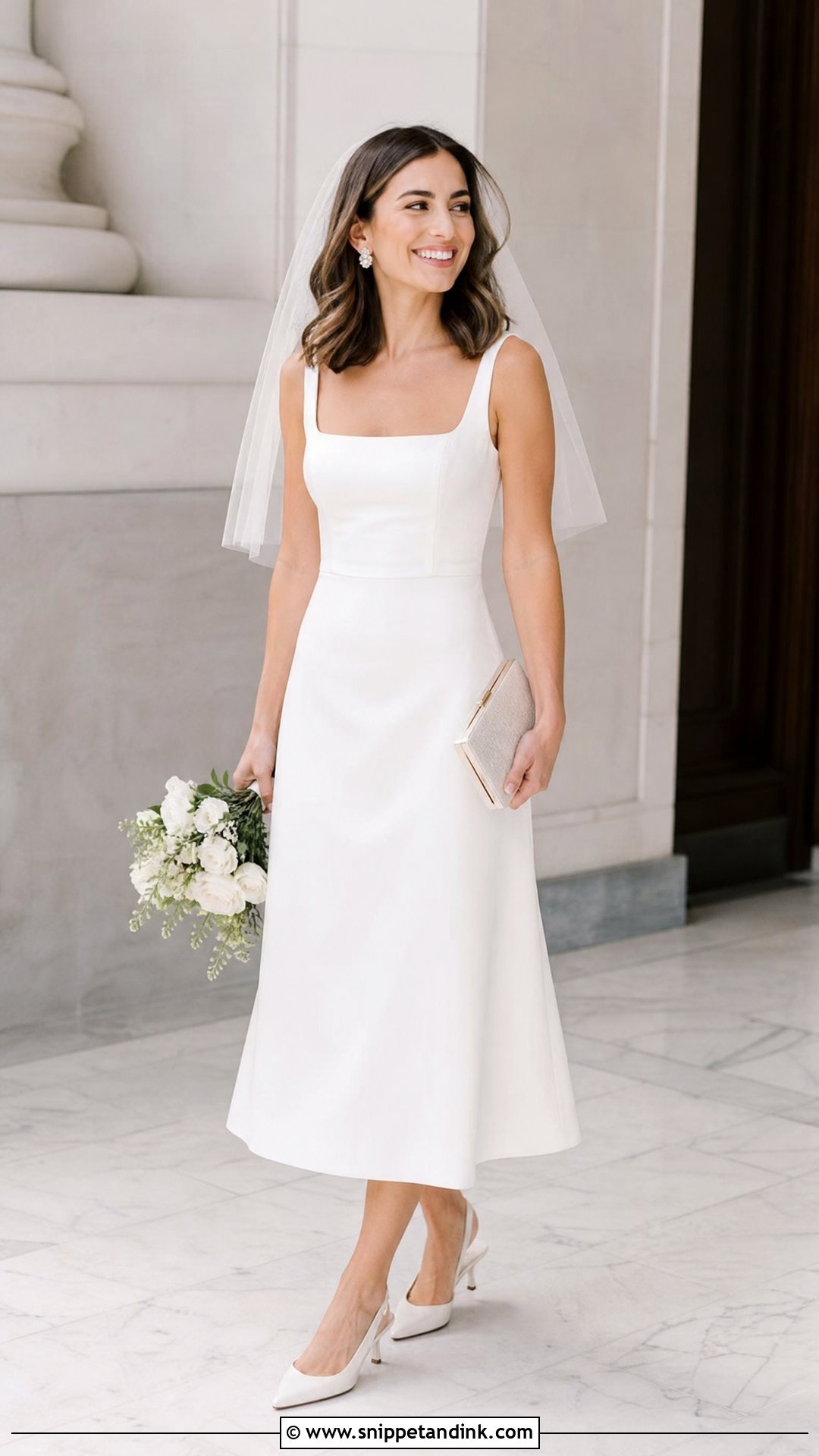
A midi ends below the knee or at mid-calf, and on a short bride a couple of inches makes all the difference, so I pin several hem positions and compare them in a mirror with the wedding shoes on. A square-neck fitted bodice with a lightly flared skirt keeps it clean. Pointed slingbacks, a structured clutch, small statement earrings and a shoulder-length veil suit it. In cooler weather, add a cropped jacket that ends at the waist, not a long coat. One focal detail is enough; a bold neckline, waist and hem together crowd a small frame.
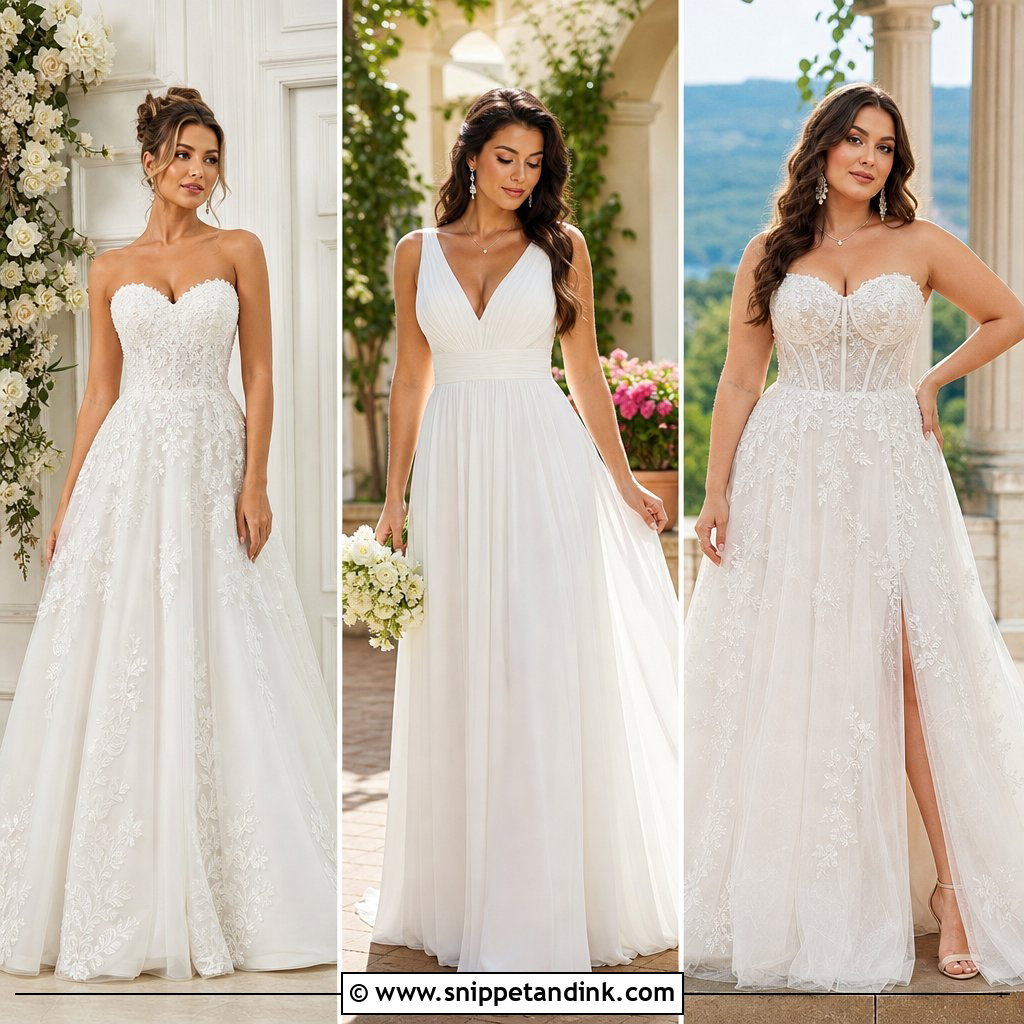
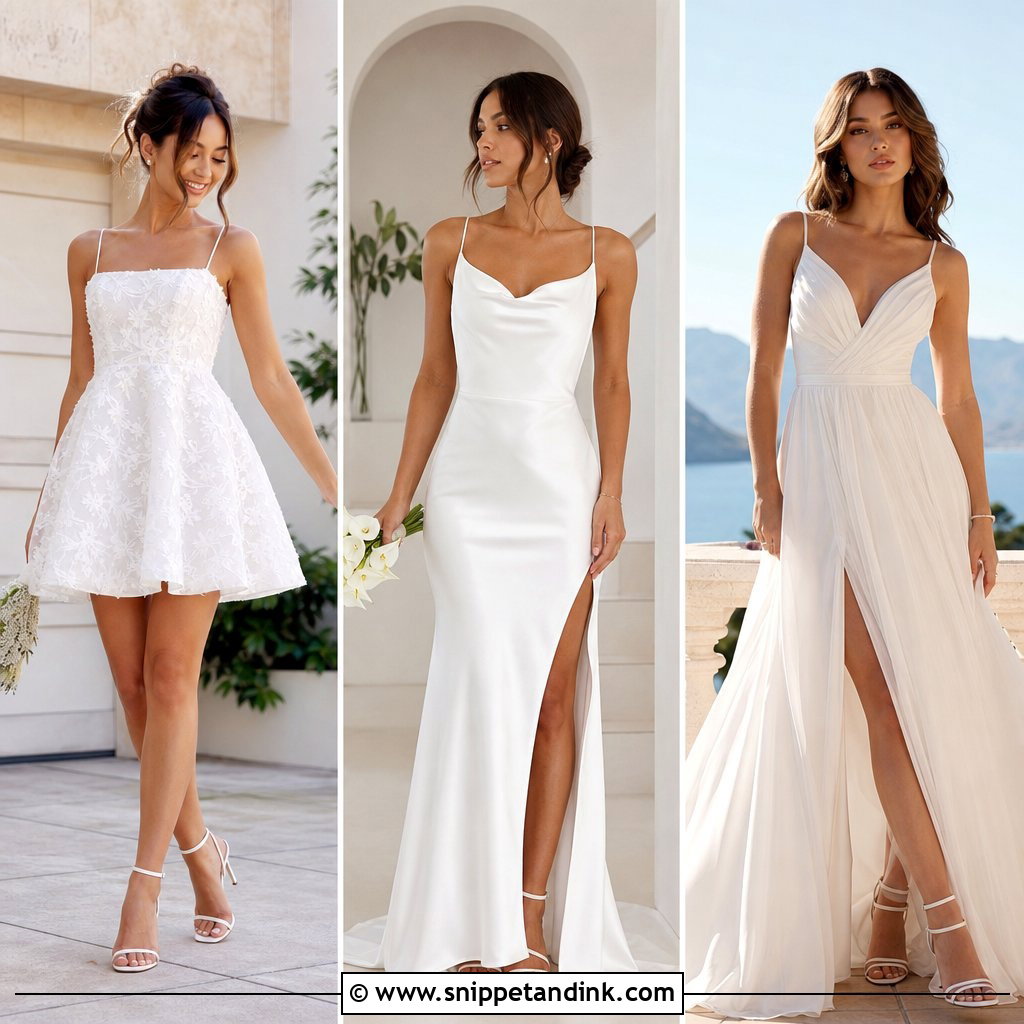
15. Short Wedding Gown
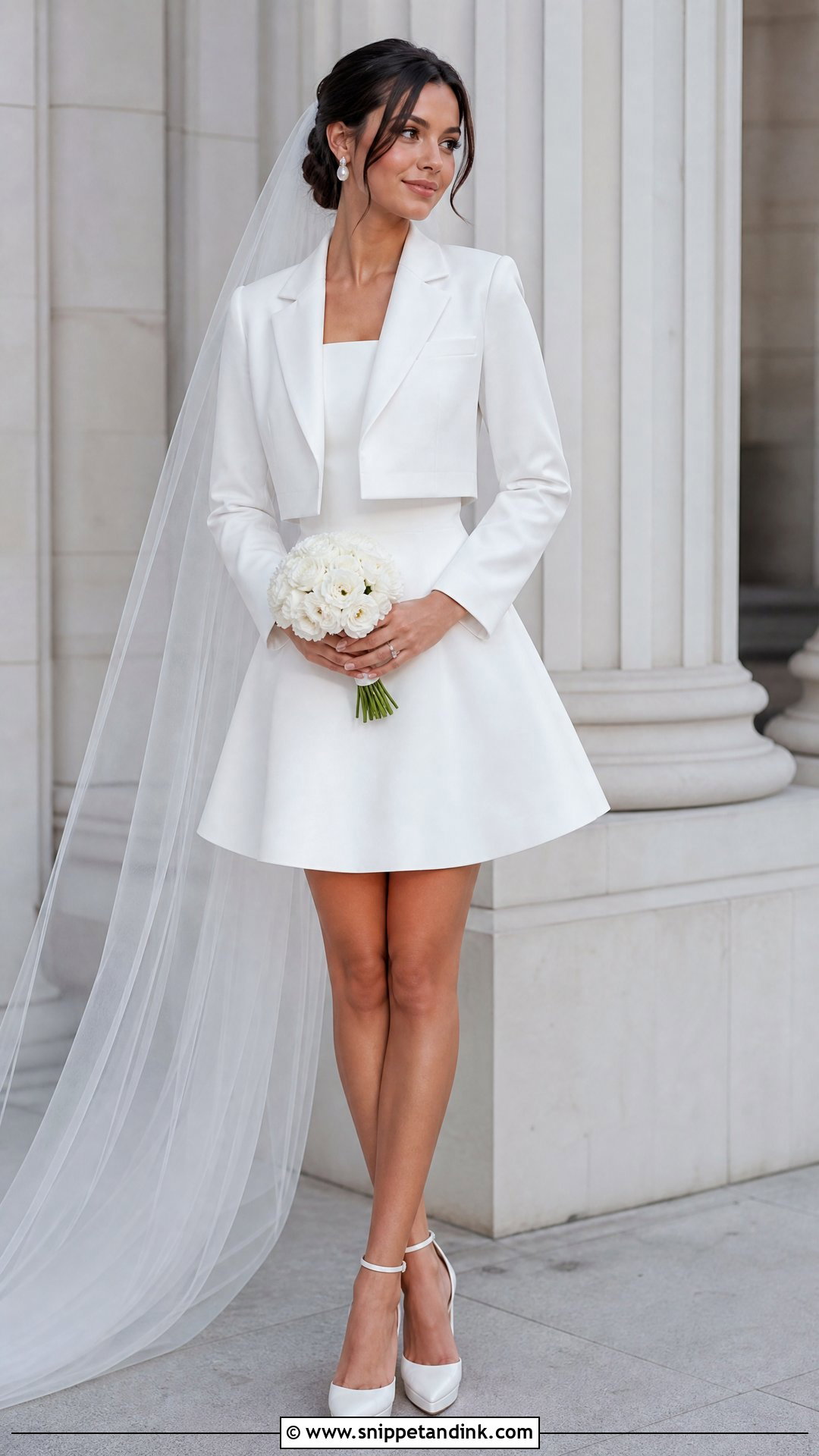
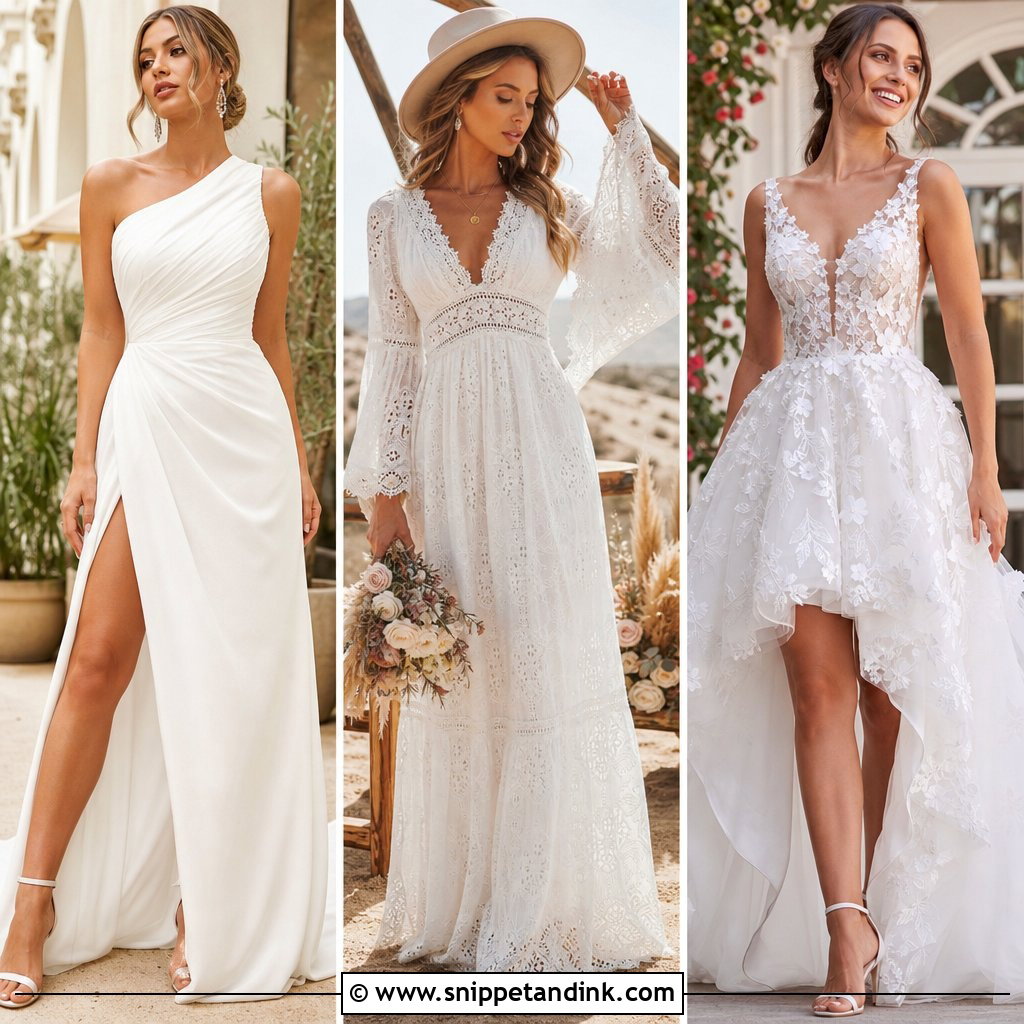
Short gowns show the legs, which is often the most lengthening thing a petite bride can do. A knee-length or above-the-knee dress needs a clearly defined waist to look bridal; a structured mini A-line, fitted sheath or softly flared shape all work. Pointed pumps, embellished flats or platform heels, chosen for how long you’ll stand, plus pearls, a small bouquet and, for contrast, a long veil. A tailored blazer gives coverage at a courthouse or city wedding. Keep the accessories controlled so it doesn’t tip into costume. It also makes an easy second look for dancing.
16. High Low Wedding Gown
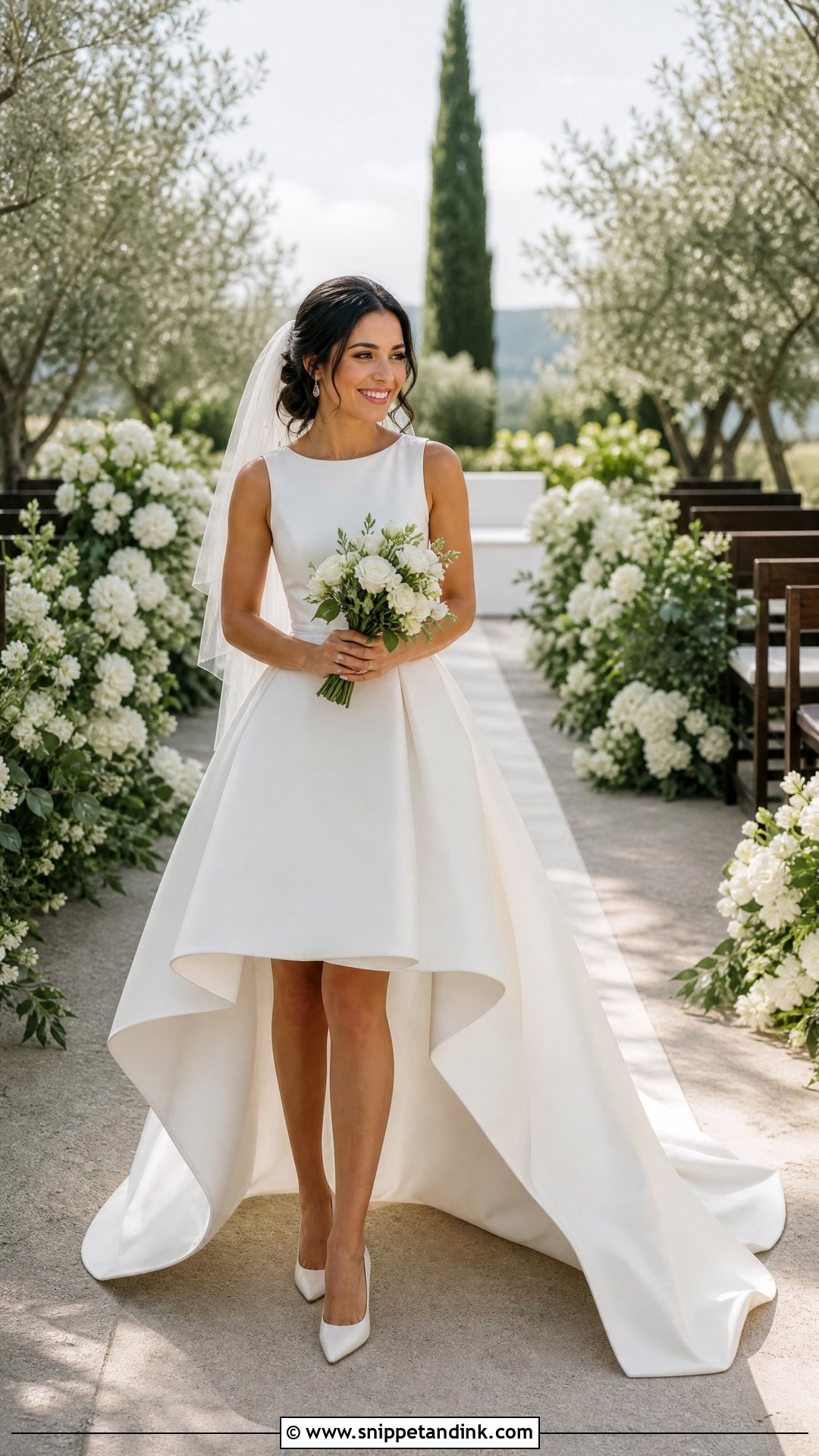
A high-low hem shows the legs in front while keeping length and drama behind. On a petite bride, the difference between front and back should be gradual; a steep angle chops the silhouette diagonally. A fitted bodice with a light organza or mikado skirt gives clear structure, and the back can extend into a modest train. Pointed heels, delicate earrings, a short veil and a compact bouquet suit it. Because your shoes show, choose a pair that’s steady on stairs. Tiers, ruffles and contrast trims all add bulk, so leave them off. Hem the front in your wedding shoes and check it while seated.
17. Petite Slip Wedding Gown
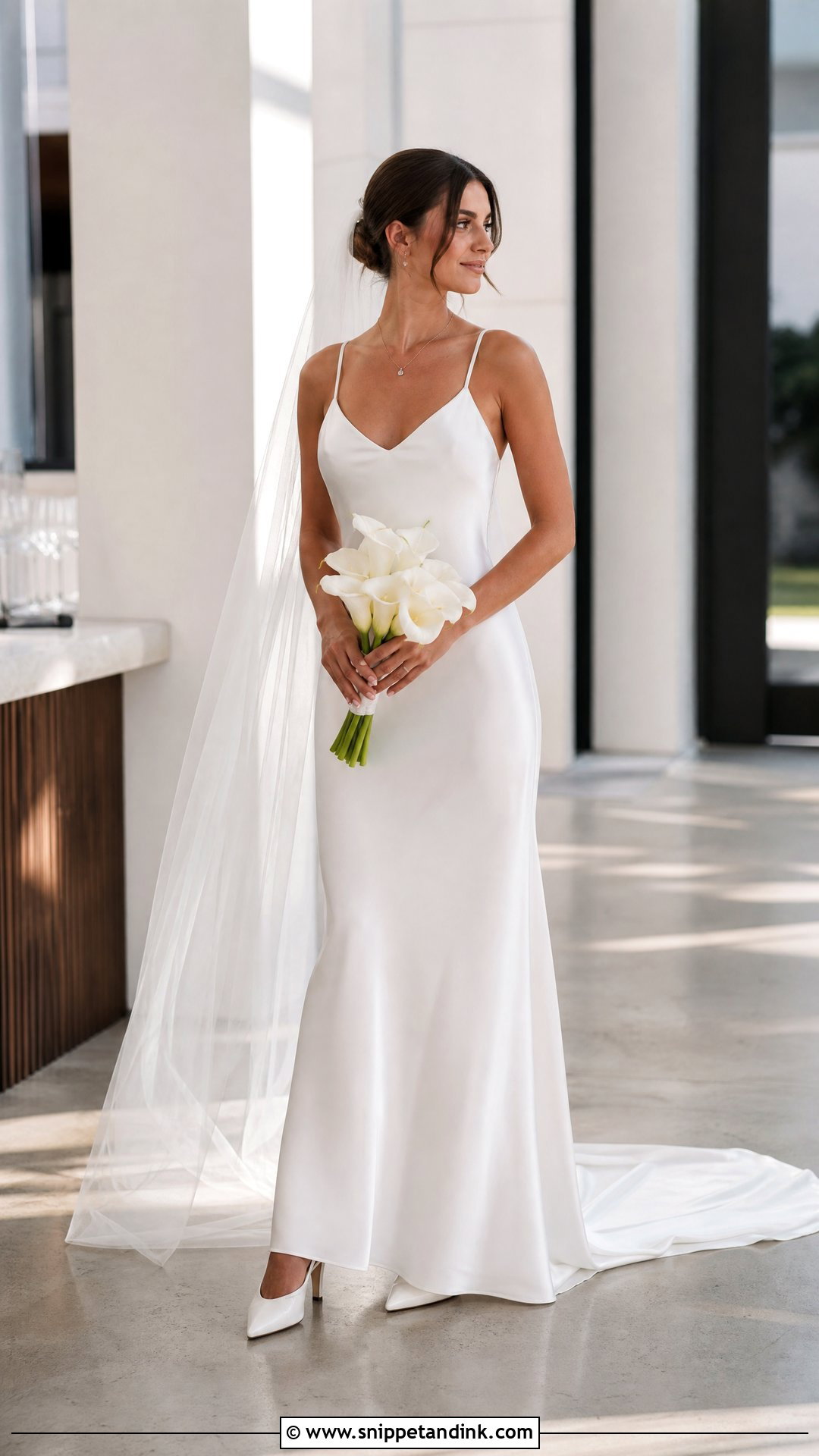
Bias-cut silk or satin falls softly over the body in one smooth outline, and that’s what makes a petite slip gown look so refined. Adjustable straps, a gentle V-neck and a waist that sits naturally, not dropped, keep proportions right. Pointed mules or slingbacks, a fine pendant, small earrings and a sheer cathedral veil for contrast suit it, with a sleek bun or soft waves. Bias fabric clings, so choose smooth, invisible undergarments, and ask for a good lining rather than sizing up if it feels too close. With no embellishment to hide behind, the hem has to be precise. A cape, gloves or reception jacket layer easily over it.
18. Petite Corset Wedding Gown
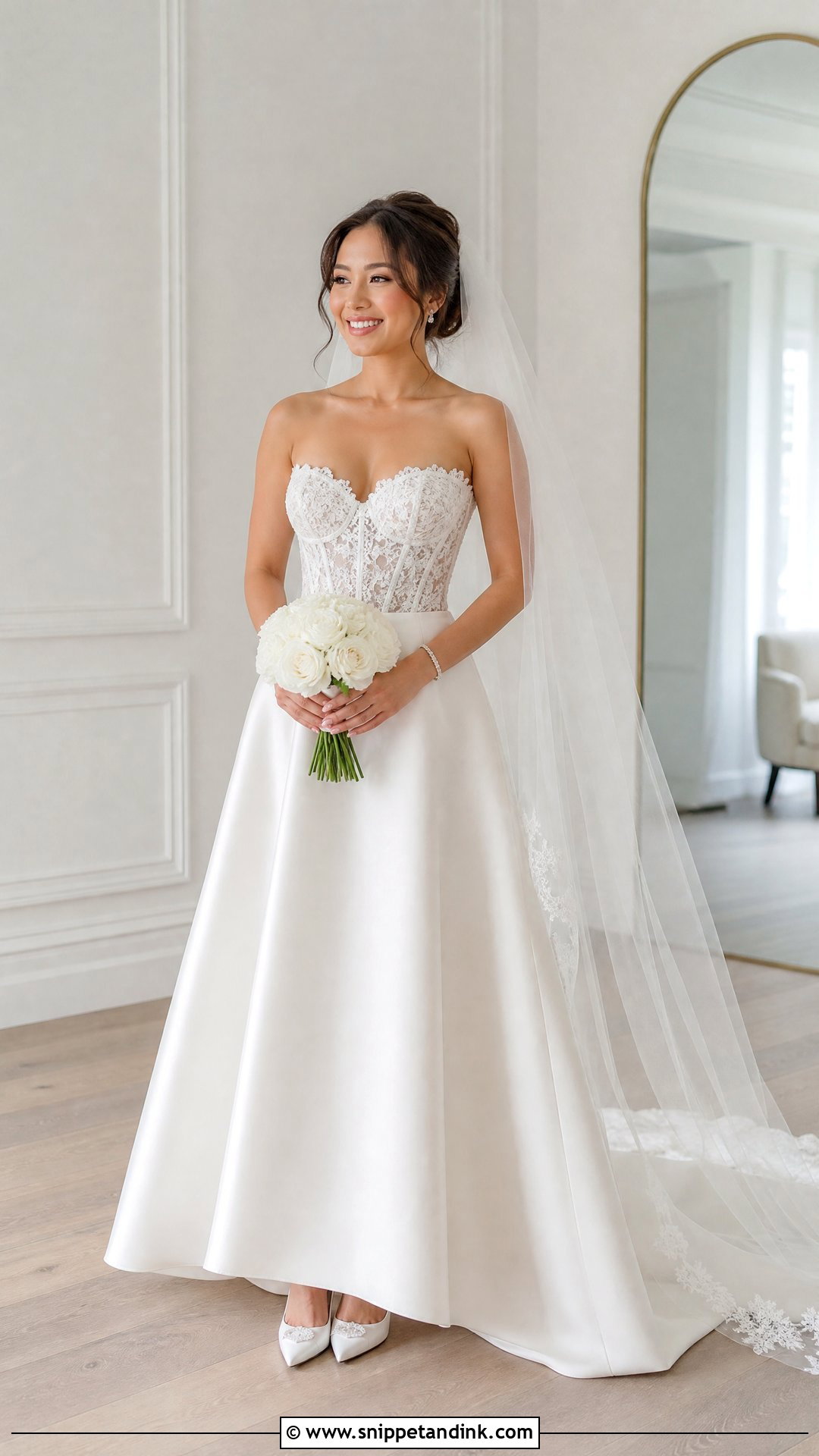
A corset bodice made for an average torso usually ends too low on a petite bride and pokes into the hips when she sits. Look for one that finishes at your natural waist, or ask whether the bodice can be shortened from the top. Pair it with a light A-line, narrow column or draped satin skirt. Exposed boning reads modern; lace-covered construction reads traditional. Pointed pumps, a fine tennis bracelet, small drops and a clean fingertip veil complete it. You should be able to breathe deeply and laugh. If the bodice is detailed, keep the skirt plain.
19. Wedding Gown With Detachable Overskirt
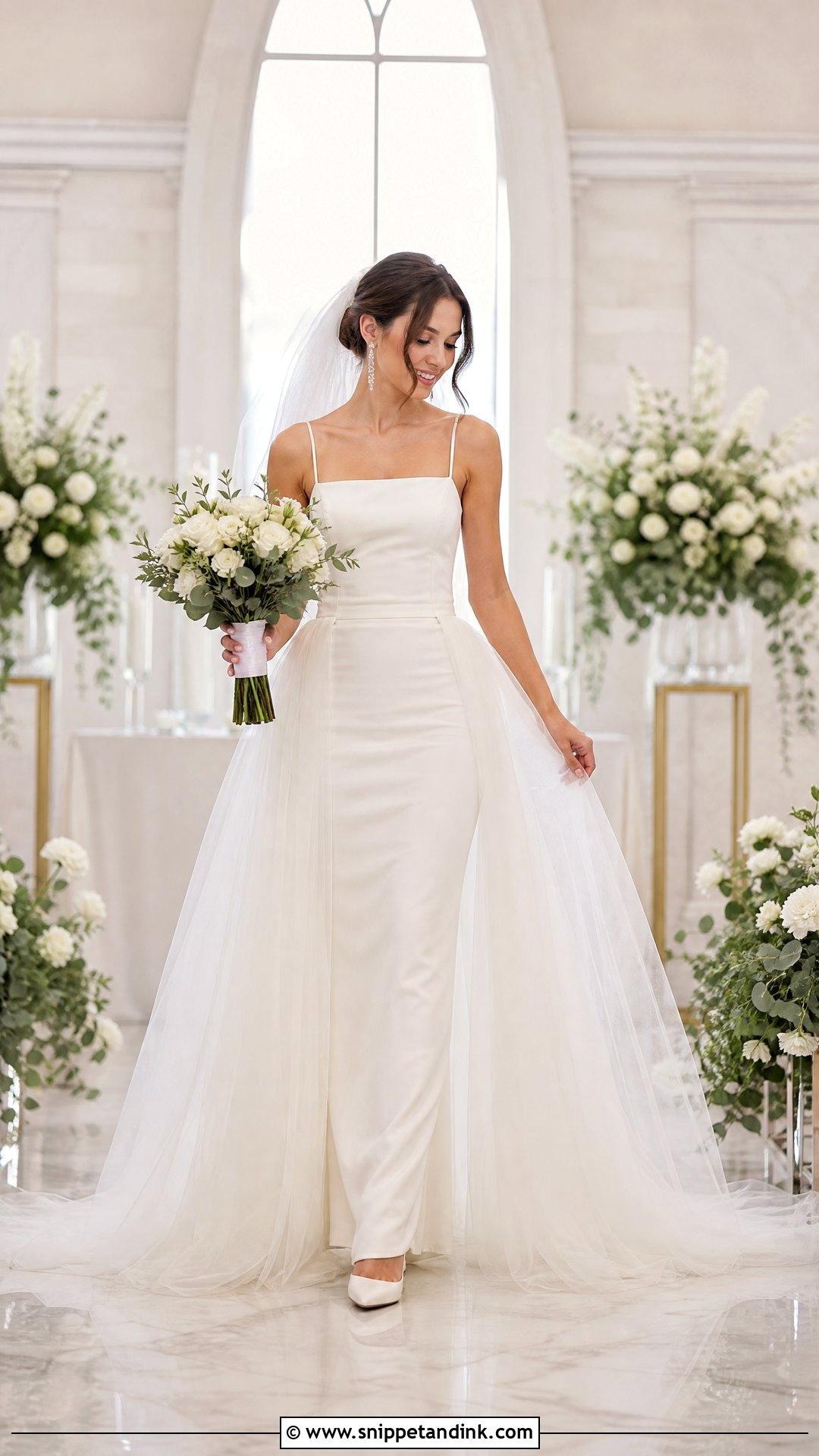
One dress can give you two looks with a detachable overskirt. Start with a petite sheath, column or mini that fits properly on its own, then add a light tulle or satin overskirt at the natural waist for the ceremony. Pointed heels, crystal earrings, a chapel veil and a structured bouquet suit the formal version; remove skirt and veil later and add a sparkling comb or short gloves. Thick waistbands divide a short body, so ask for the slimmest attachment the design allows. Have whoever will help you practice removing it before the day.
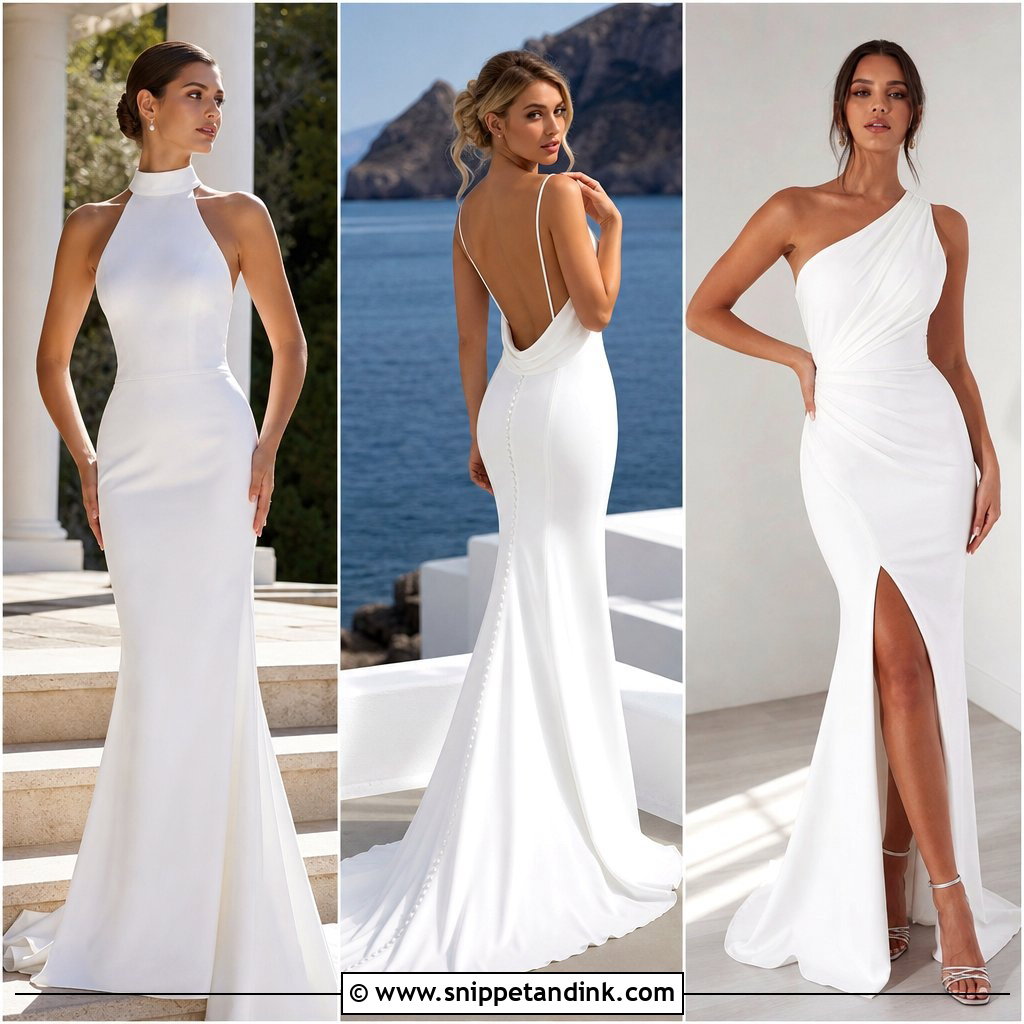
20. Wedding Gown With Front Slit
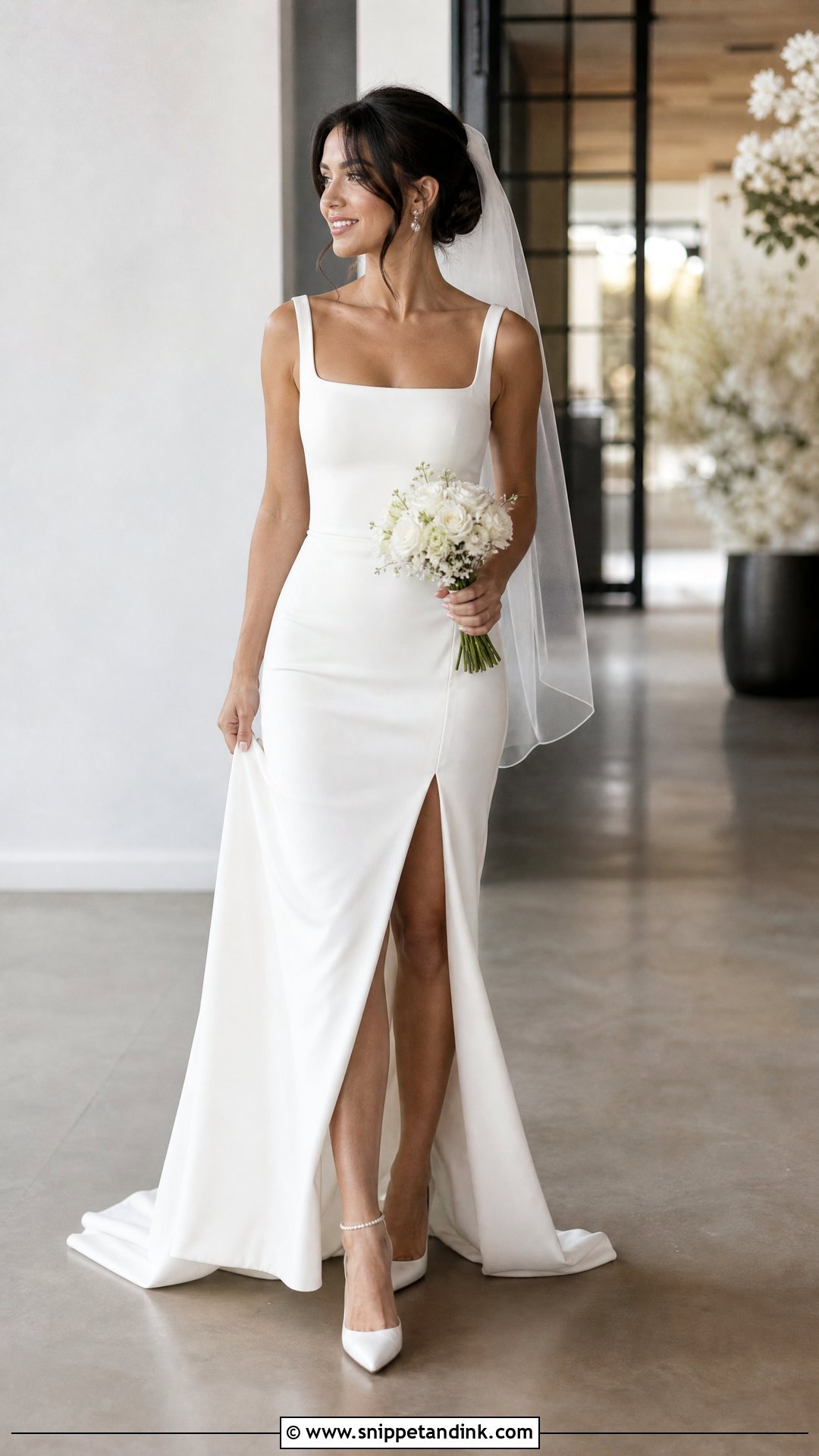
A front slit adds movement and a vertical line to a floor-length gown, which suits a petite frame well. A column, A-line or fitted crepe design works, with a slit that starts at a height you’re comfortable with. Keep the bodice simple, with a square, V or off-shoulder neckline, then add pointed pumps, a fine anklet if you like, drop earrings, a narrow veil and a small bouquet. Climb steps, sit and turn at fittings. If the slit opens further than you’d like, a hidden panel or a small snap can close it a little. Don’t pair a very high slit with lots of other details.
Which Hems Shorten Easily and Which Fight Back
Almost every petite bride needs a hem taken up. How simple that is depends on what’s at the bottom of the skirt.
- Plain chiffon, crepe or satin: the simplest. Cut, finish and press, although satin needs care so the new hem doesn’t show a ridge.
- Layered tulle: each layer is shortened separately, so a skirt with several layers takes longer.
- Scalloped lace edges: the lace border is unpicked, the skirt shortened, and the scallops sewn back on so the edge stays intact. Skilled work, and priced accordingly.
- Beaded or embroidered hems: beads have to be removed and re-sewn. Sometimes the better answer is to take the length out at the waist instead.
Bring your wedding shoes to every hemming appointment, and decide on your heel height early. Changing from a high heel to a flat after the hem is cut leaves the skirt dragging.
Veils and Trains Scaled to a Smaller Frame
Veil lengths are named by where they fall: fingertip, chapel, cathedral. On a petite bride, each one lands a little lower on the body, so a fingertip veil may reach mid-thigh and a chapel veil adds noticeably more floor length. A long cathedral veil can look striking, but I’d choose single-layer tulle so it doesn’t weigh on the head or bury you. Trains follow the same logic. A sweep or short chapel train usually looks proportionate, and anything longer should be lightweight and bustle neatly for the reception.
Height Matters Less Than Where the Seams Land
Height matters less than proportion, construction and tailoring. Petite brides can wear minimal columns, lace, convertible overskirts, short gowns or a controlled ball gown. Try several silhouettes rather than limiting yourself to one rule, wear shoes close to your wedding pair, and photograph each dress from different angles. Before ordering, check bodice length, waist placement, flare point and hem. Accessories should support the gown and stay in proportion. The gown to choose is the one you move easily in and that looks like you.
You'll Like These Ideas:


Leave a Reply