
Pear-shaped brides often walk into a salon expecting to be steered straight to a big A-line and told everything else is off-limits. That isn’t how I dress them. Fuller hips and a narrower top half simply mean the waist needs defining and the shoulders need some presence, and there are plenty of ways to do both. A-lines and ball gowns are dependable, and sweetheart, square, portrait and off-the-shoulder necklines all widen the top line. Fitted gowns are possible too: a stretch crepe fit-and-flare or a trumpet with solid inner construction can look superb on full hips. Below are twenty complete looks with what I’d check at each fitting. Pick the one that feels most like you.
Ordering to the Hip, Then Rebuilding the Bodice
Pear-shaped brides almost always sit in a larger bridal size at the hip than at the bust. Order to the hip. Bridal seam allowances are narrow, so letting a skirt out is rarely possible, while taking a bodice in is everyday alteration work.
There are limits, though. When a bodice has to come in more than a size or two, the side seams move far enough that princess seams, darts and lace motifs can end up in the wrong place. A strapless bodice may also need its boning shortened or repositioned. Ask the salon whether the designer offers a split size or made-to-measure option, where the gown is cut to different bust and hip measurements from the start. Where it’s available, it usually costs less than heavy alterations and gives a cleaner result.
Corset-back gowns are the friendliest choice for a big size difference, because the lacing adjusts across the back without touching the side seams at all.
1. Sweetheart A-Line Wedding Dress
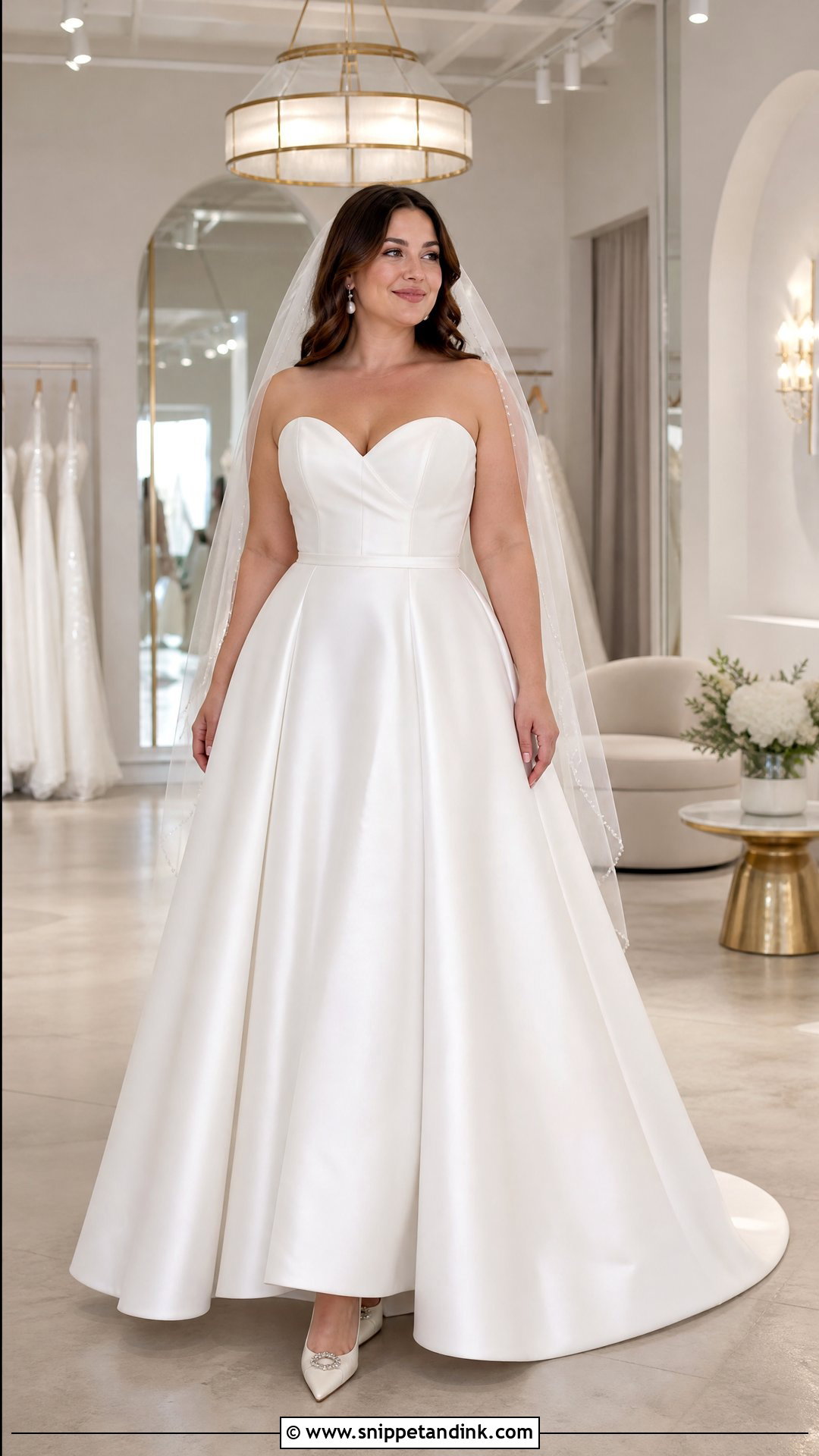
A sweetheart A-line wedding dress is the gown I reach for first with a pear-shaped bride, mostly because it asks so little of her. The curved neckline gives the bust shape and a focal point, the bodice fits close, and the skirt widens gradually so it glides over the hips instead of ballooning. Satin or mikado looks clean and structured; chiffon or tulle layers feel lighter. The fitting detail that matters is where the skirt starts. It has to flare from your natural waist, not an inch below, or it catches on the hip and creates a shelf. Fingertip veil, pearl drops, pointed pumps and a small bouquet complete it.
2. Off-the-Shoulder Ball Gown Wedding Dress
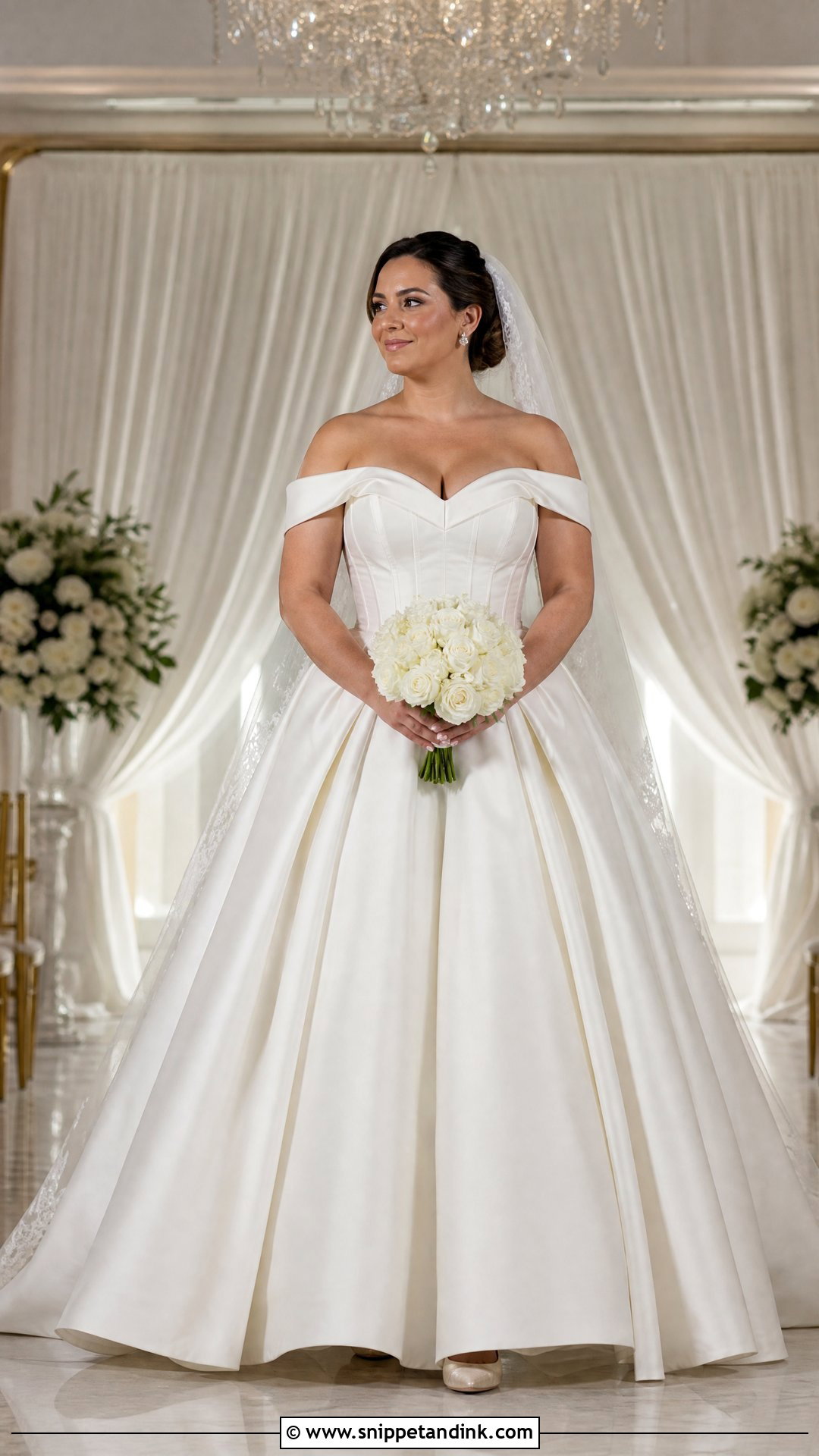
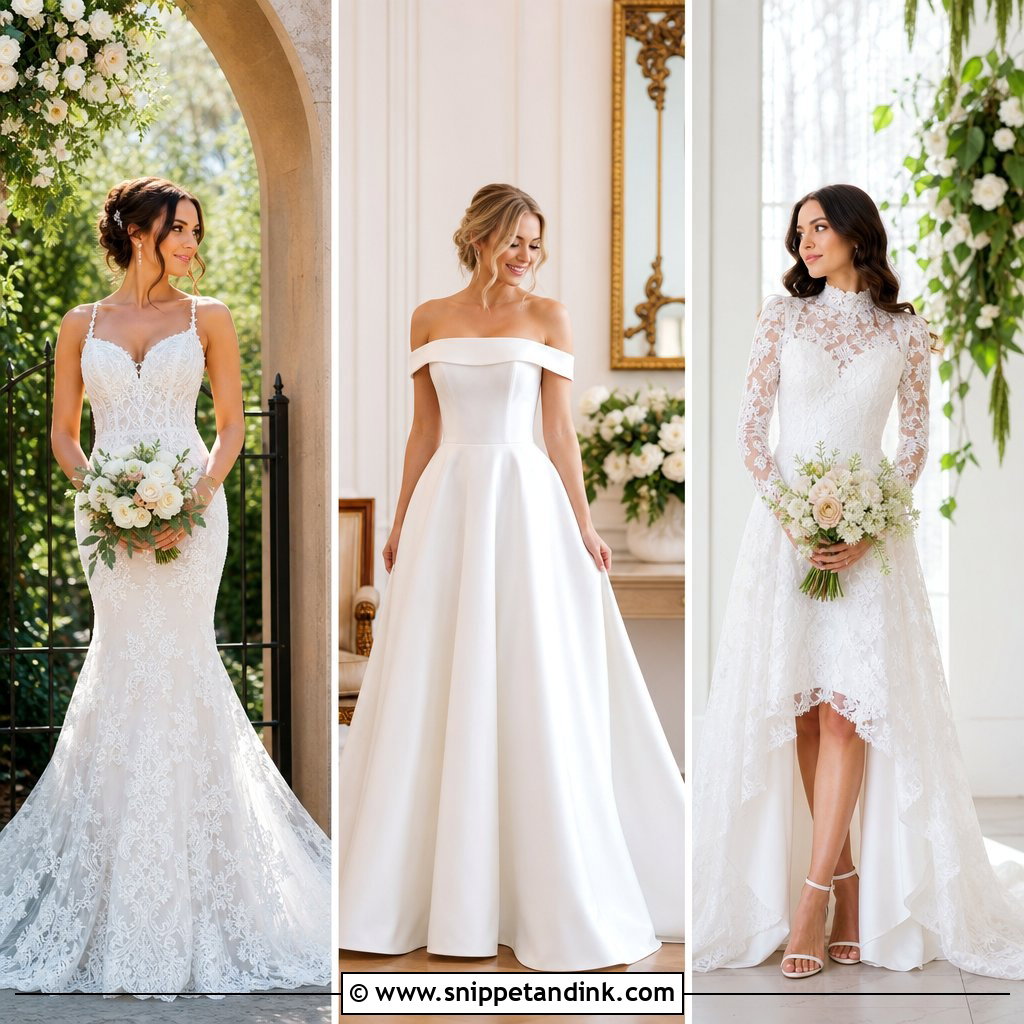
Off-the-shoulder necklines do something for a pear figure that few others can: they physically widen the shoulder line, so a full ball gown skirt looks balanced rather than bottom-heavy. The neckline is also the part brides fidget with all day if the gown lacks a corset interior, so I check that it holds when the arms are raised. Plain satin across the bodice looks classic; lace appliqués soften it. A delicate necklace, studs and a cathedral veil under a polished bun keep the upper half refined. Closed heels hide easily beneath the skirt. It belongs in a formal venue.
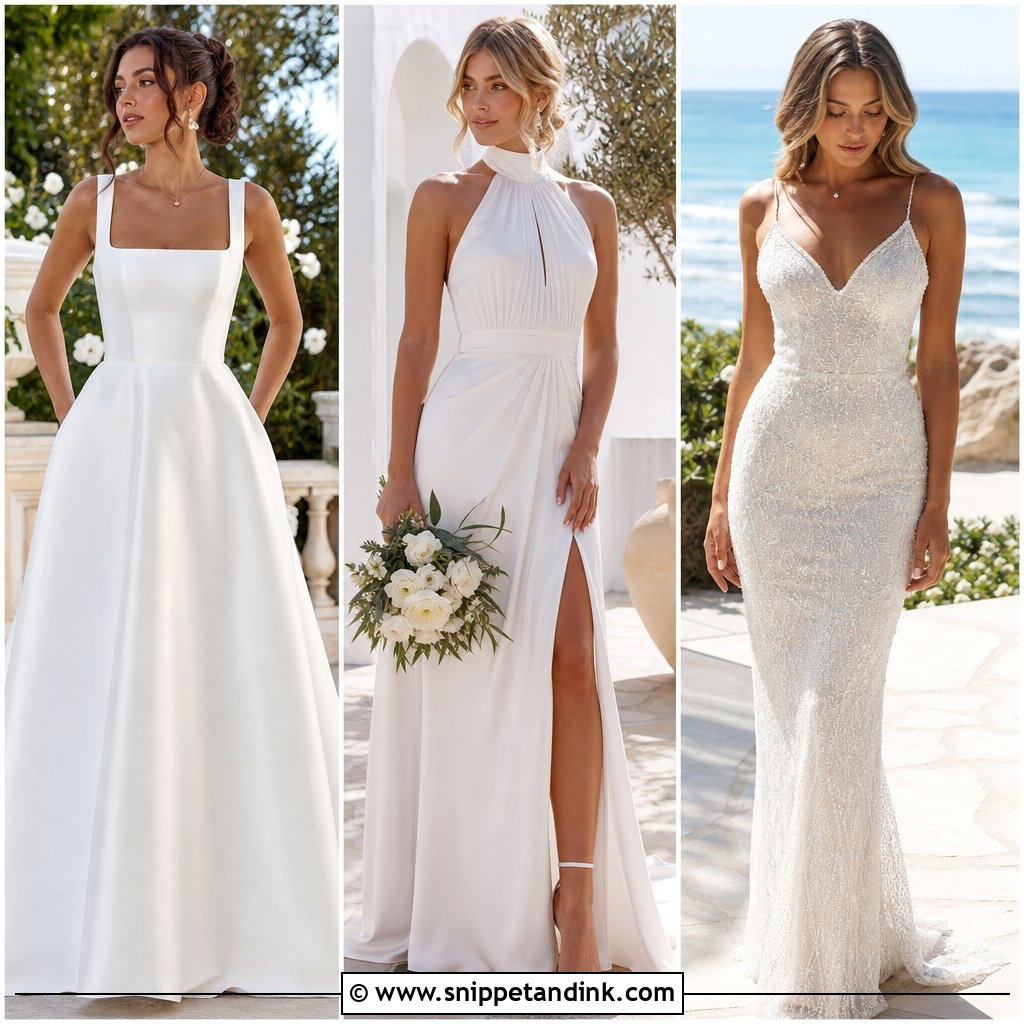
3. Square Neck Mikado A-Line Wedding Dress
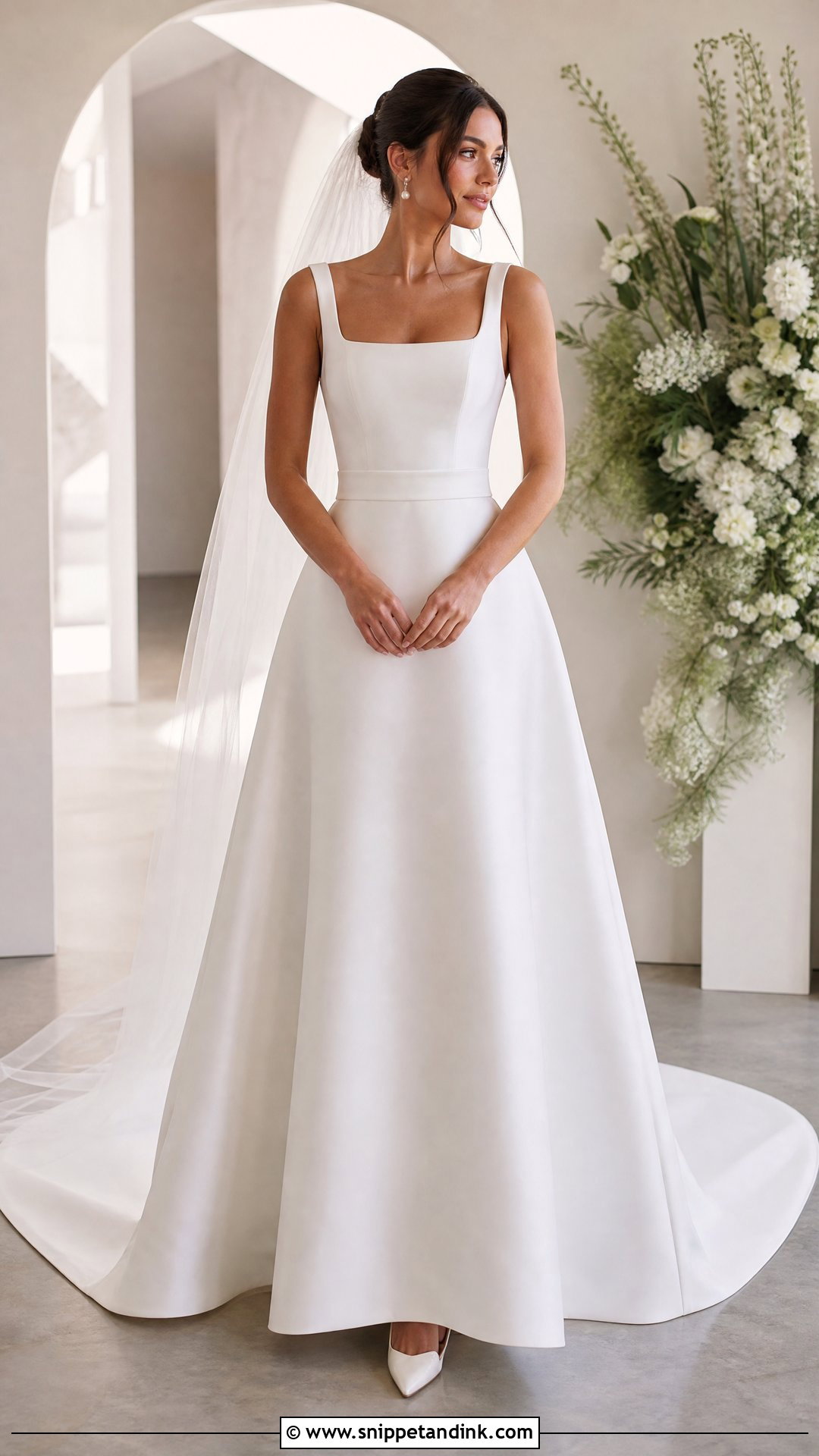
Mikado is stiff enough to stand away from the body, so a square-neck A-line in it creates shape without beads or lace. The square neckline draws a strong horizontal line across the chest, and wide straps frame the shoulders; both make the top look broader against fuller hips. A fitted waistband marks the narrowest point and the skirt falls clean. What I inspect at alterations: the square corners must lie flat rather than lifting away from the chest, and the waist seam needs to sit level from front, side and back. Mikado shows a tilted seam instantly. A sleek low bun, pearls, satin pumps, a structured bouquet and a chapel veil suit it.
4. V-Neck Chiffon A-Line Wedding Dress
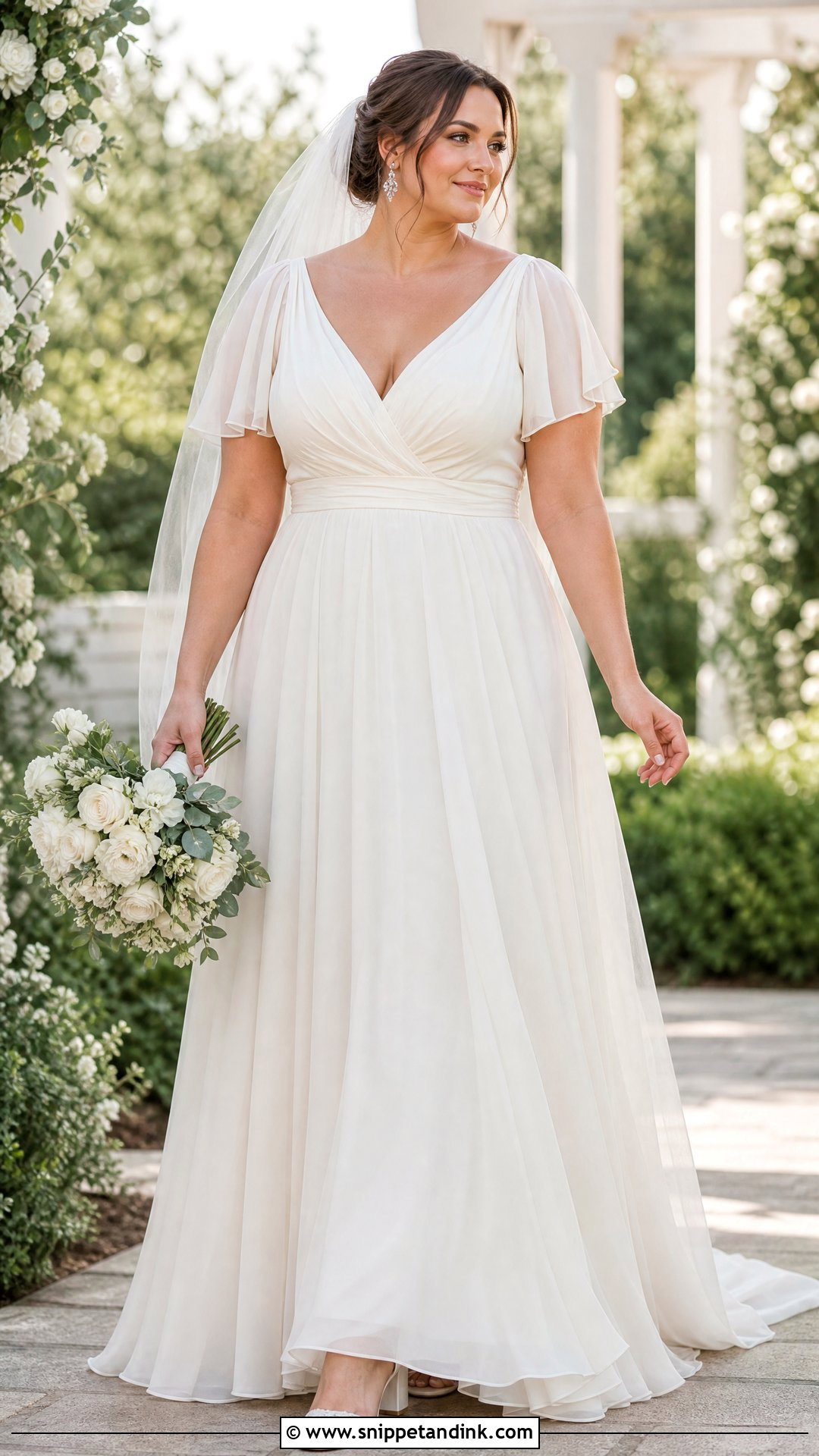
Chiffon is forgiving at the hip because it falls rather than holds. On this A-line, a V-neck lengthens the upper torso and soft gathering beneath the bust adds shape without bulk at the waist. The skirt needs several light layers. One layer of chiffon clings to the thigh, especially in a breeze, which shows the exact outline you might want skimmed. Flutter sleeves or wider straps help balance the top half. A loose updo, crystal earrings, low block heels and a light chapel veil make it an easy gown for a garden or beach where you’ll be walking on uneven ground.
5. Corset Lace Ball Gown Wedding Dress
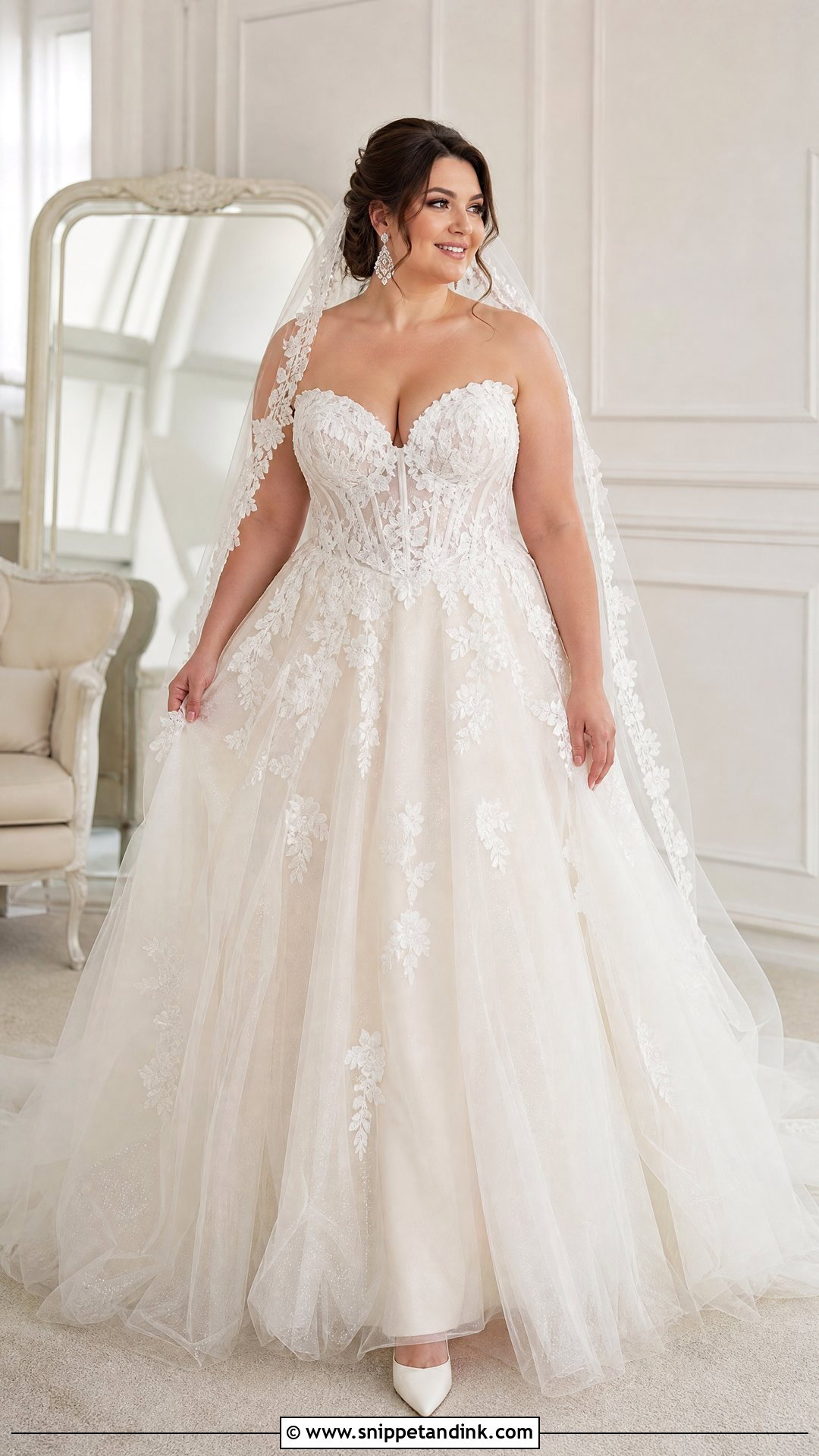
A corset lace ball gown puts all the texture and structure in the top half, then lets a full layered skirt drop away from the waist. That combination is very kind to a pear shape. Visible boning defines the bust and waist, and a softly pointed or sweetheart neckline keeps the bodice from looking severe. The one thing I’d change on many samples is heavy lace sitting right at the widest part of the hip. Ask for the appliqués to thin out as they travel down. A lace-edged veil, classic pumps and small crystal earrings finish it. Corset fit is everything here, so plan proper alterations.
6. Bateau Neck Satin A-Line Wedding Dress
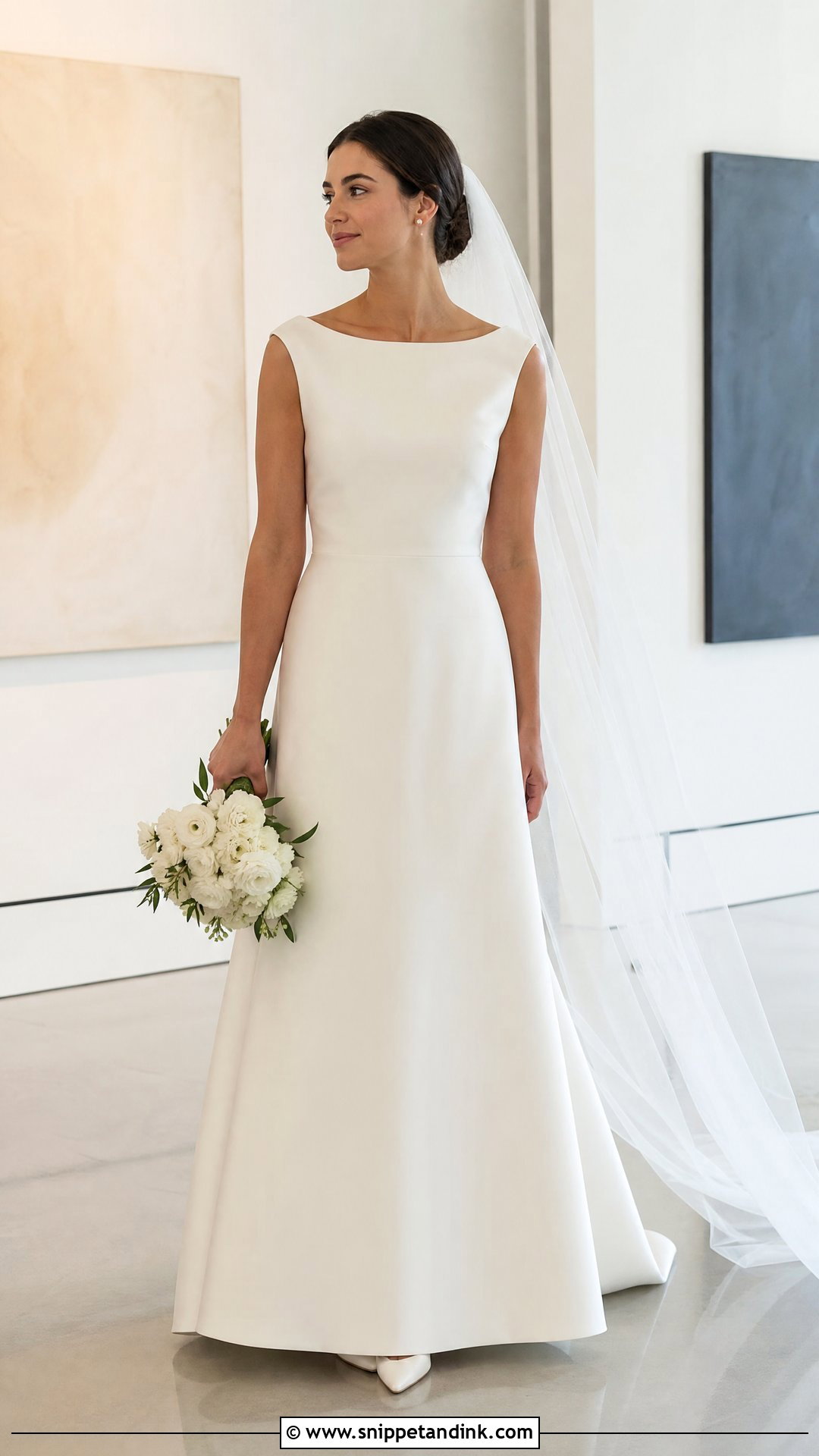
A bateau neck runs along the collarbones and out toward the shoulders, so it widens the top line in a very quiet way. With a fitted natural waist and an A-line that skims the hips, the proportions settle. Matte satin is understated; lustrous satin is more formal. Back details, a low back, covered buttons or a detachable bow, add interest without cluttering the front. Smooth satin shows every seam and every press mark, so I want a professional press the day before and tailoring that lies flat at the side seams. Pearl studs, a neat chignon, pointed satin shoes and a long plain veil suit it.
7. Cap Sleeve Tulle A-Line Wedding Dress
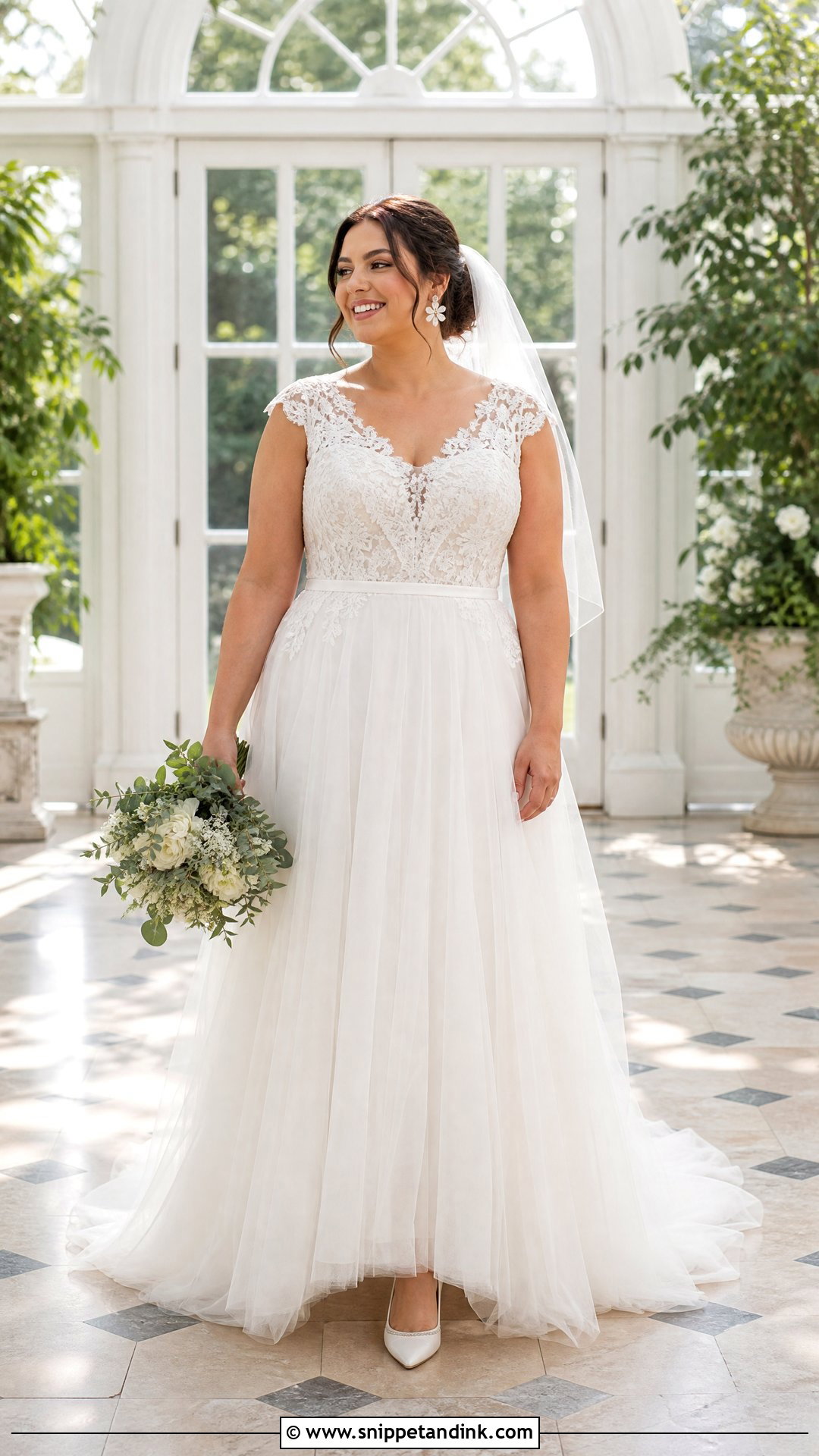
Cap sleeves give a narrower upper body a little width at the shoulder point. They should extend slightly over the shoulder; sleeves that stop close to the neck do nothing for balance. A fitted lace bodice, a defined waistband and an airy tulle skirt make the transition. Fine tulle moves without weighing on the hips. Appliqués concentrated on the bodice and scattered sparsely across the skirt keep attention up top. Watch the sleeve edges at fittings: tight cap sleeves press into the upper arm and leave a mark after a few hours. A simple veil, almond-toe heels and floral earrings complete it.
8. Long Sleeve Lace A-Line Wedding Dress
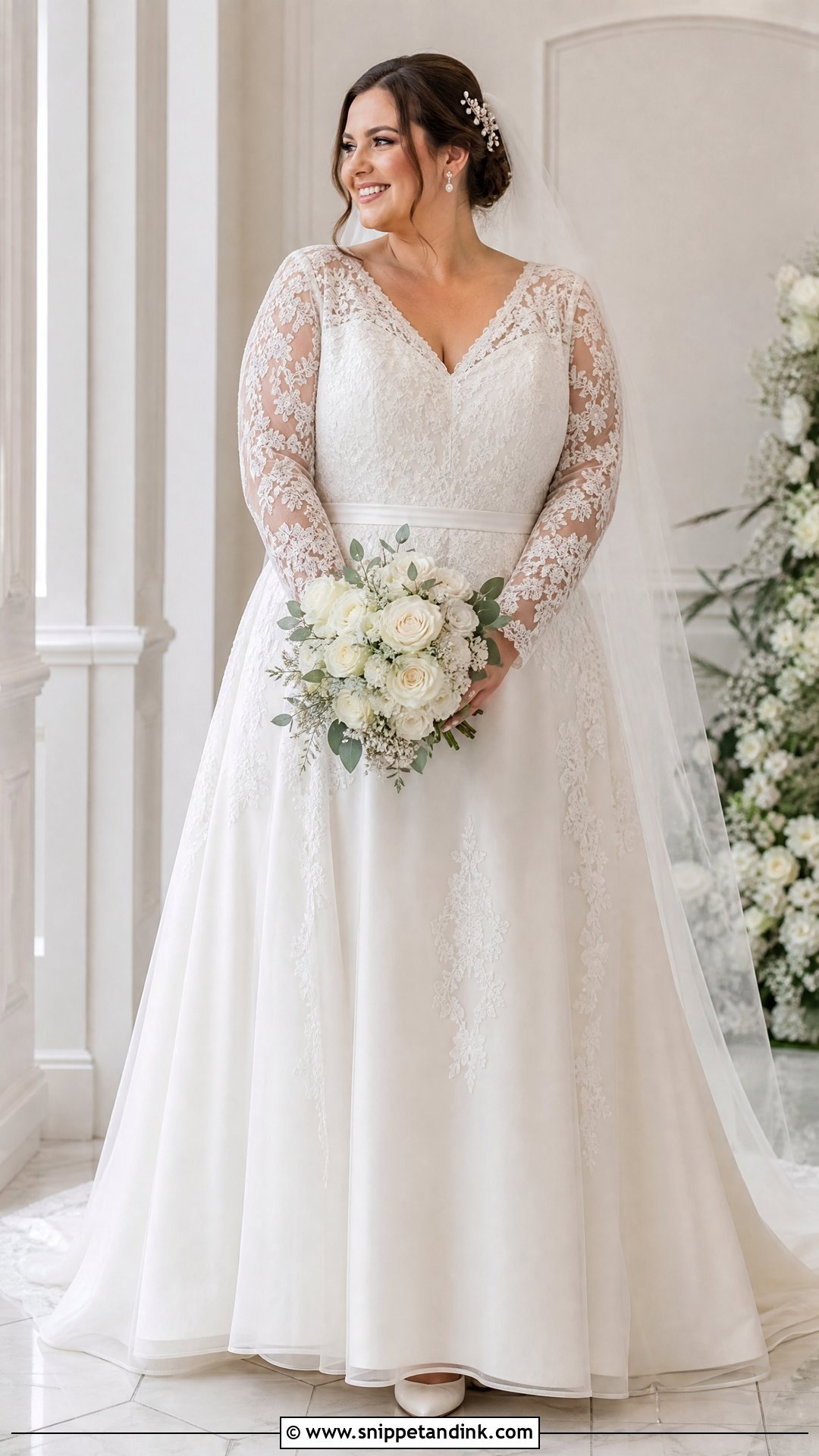
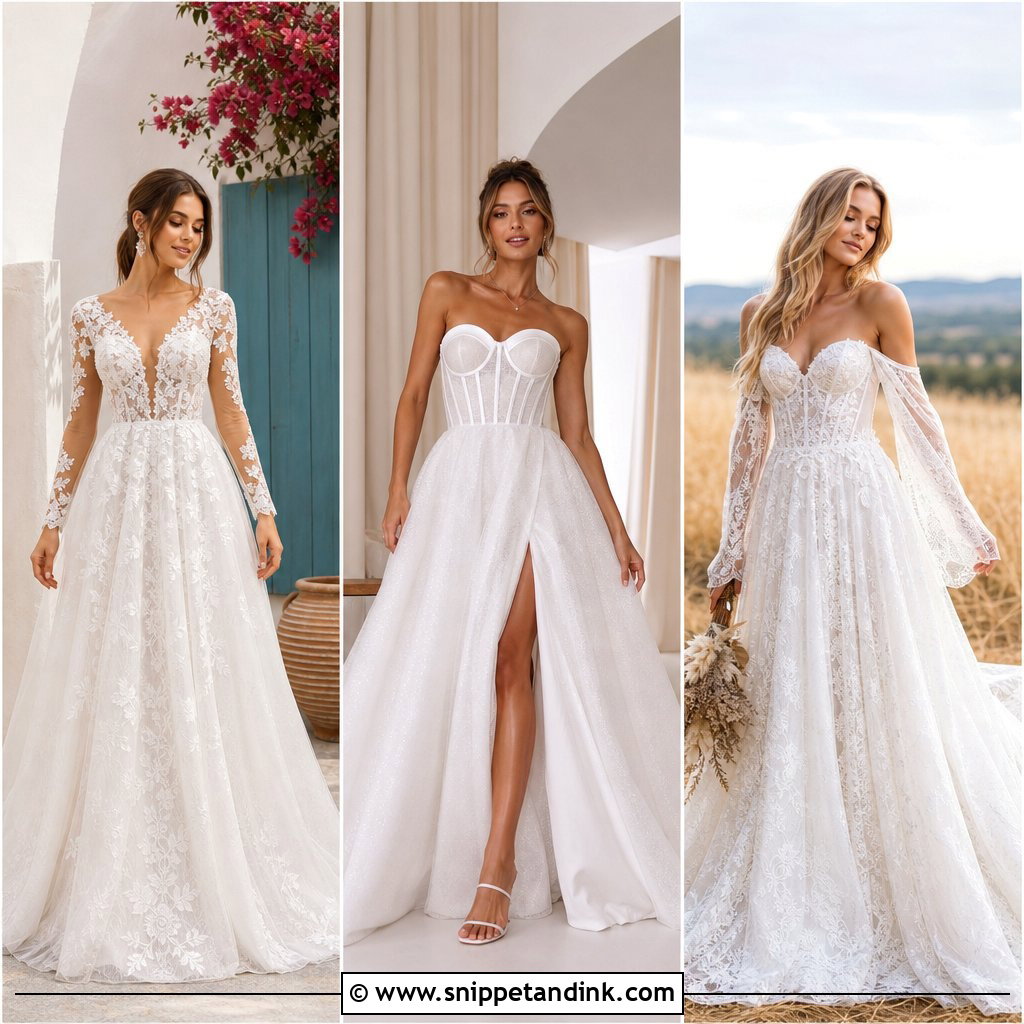
In cooler weather, sheer lace sleeves bring texture to the shoulders and arms and pull attention up, exactly where a pear figure benefits from it. Keep the bodice visually open with a V, square neck or modest sweetheart lining, and the waist clearly defined before the skirt falls over the hips. Lightweight lace that moves is better than thick motifs, which make the whole gown feel heavy. Bend your elbows and lift your arms during fittings. Lace sleeves rarely have stretch, and underarms are where they tear. A low bun with pearl pins, drop earrings, closed pumps and a chapel veil suit it.
9. Stretch Crepe Fit-and-Flare Wedding Dress
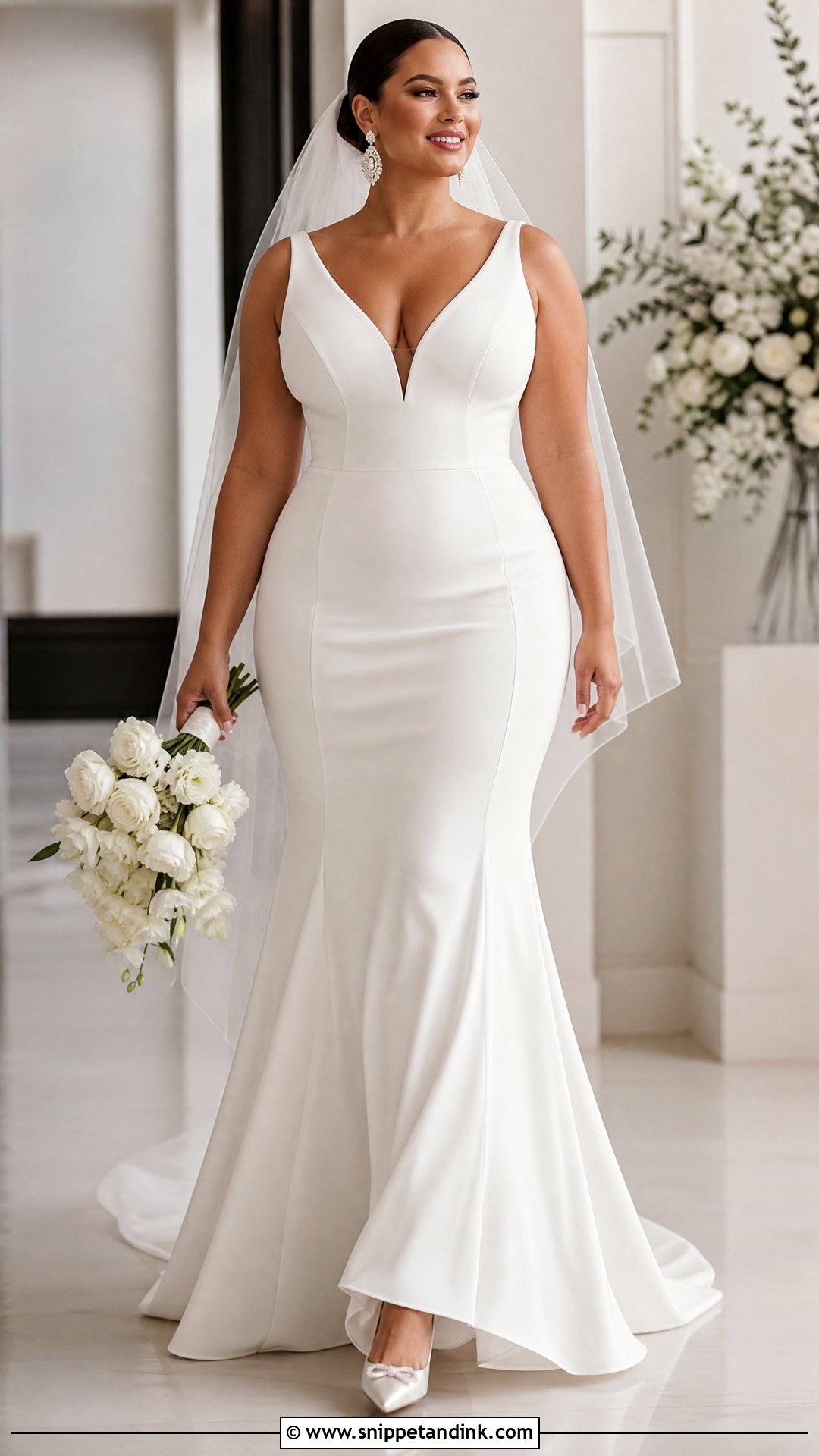
This is the gown for a pear-shaped bride who wants to show her curves rather than skim them. A stretch crepe fit-and-flare wedding dress follows the waist and hips and widens around the lower thigh or knee. Fabric weight decides whether it works. Thin crepe pulls into horizontal lines across the hips; a substantial, stretchy crepe holds smooth. Off-the-shoulder, portrait or wide V necklines balance the fitted skirt. I prefer well-placed seams to ruching, which can add bulk. Statement earrings, a sleek veil, pointed pumps and a clean bouquet suit it. Sit, walk and take stairs at the fitting, since the gown should support you, not hold you back.
10. Portrait Neck Trumpet Wedding Dress
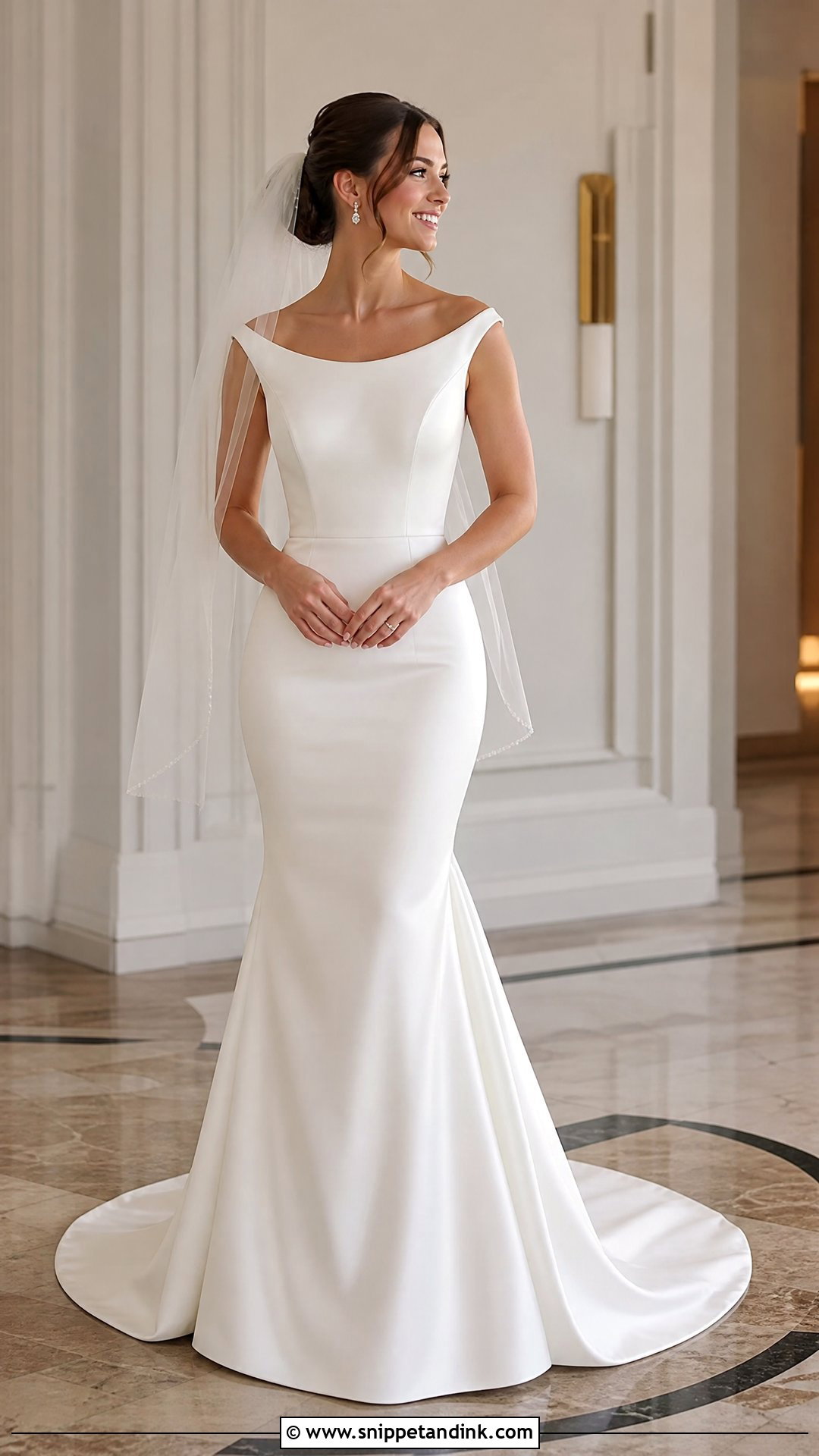
The portrait neckline is a wide, folded band that sits around the shoulders like a frame, and on a pear-shaped bride it builds the visual width the top needs. A trumpet skirt flares higher on the leg than a mermaid, so walking is easier. Stretch satin, lined lace or structured crepe hold the shape without pulling across the thigh. Fit at the seat is what I’d watch most closely. Full hips and seat can drag the back seam sideways when you sit, so have the seamstress check you seated as well as standing. A smooth updo, crystal drops, a fingertip veil and a discreet bustle for the reception finish it.
11. Empire Waist Chiffon Wedding Dress
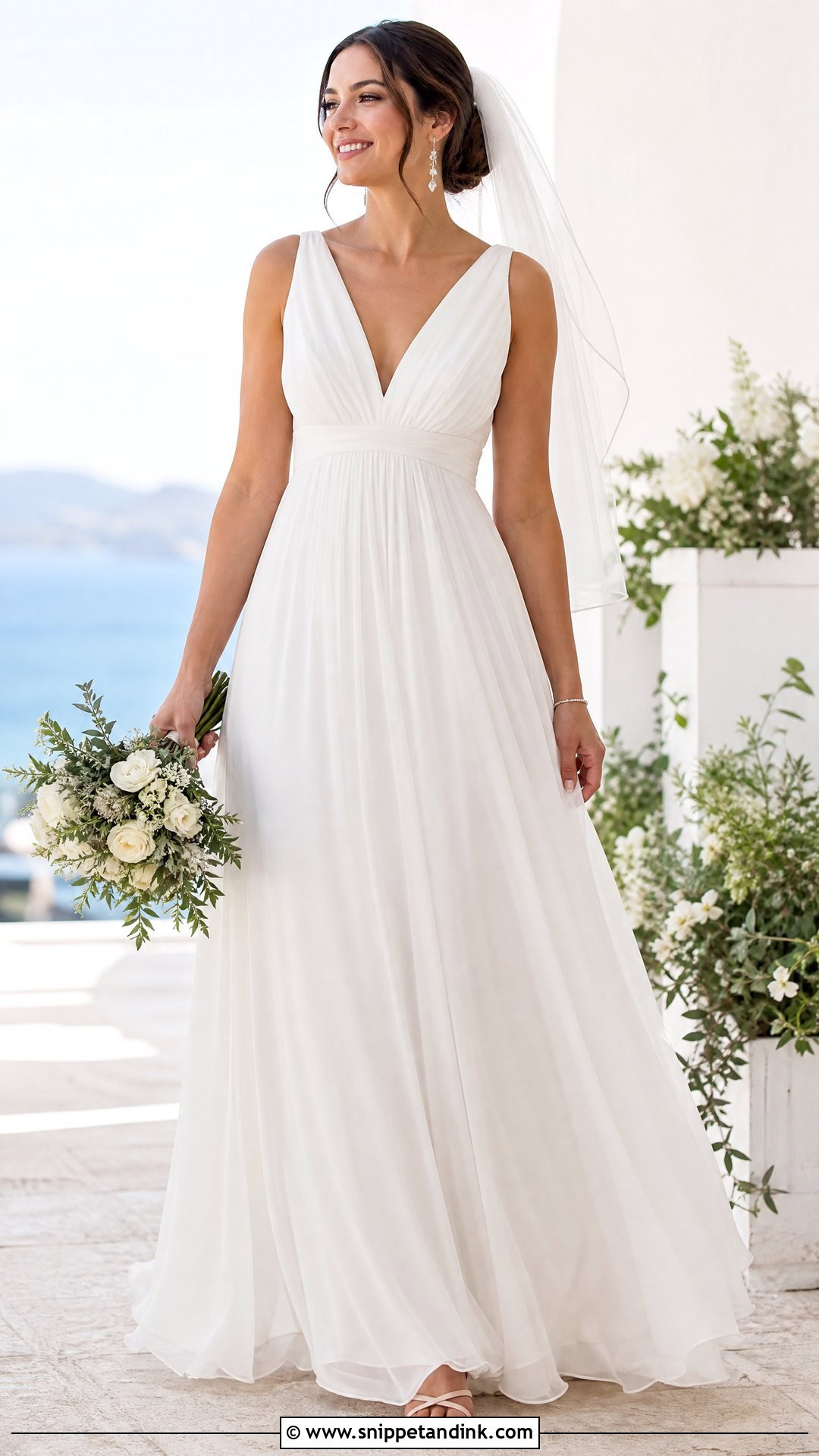
The seam on an empire waist chiffon wedding dress sits just under the bust, so the skirt flows freely over stomach, hips and thighs. That freedom is the appeal for warm-weather or destination weddings. A gathered V or a draped off-the-shoulder bodice gives the upper half presence. The common mistake is a loose band below the bust. If it isn’t fitted, the gown loses all definition and reads like a nightdress. Ask for a firm, supportive band and a bodice that holds the bust. Low-heeled sandals, a light veil, drop earrings and a loose braided updo suit it.
12. Basque Waist Ball Gown Wedding Dress
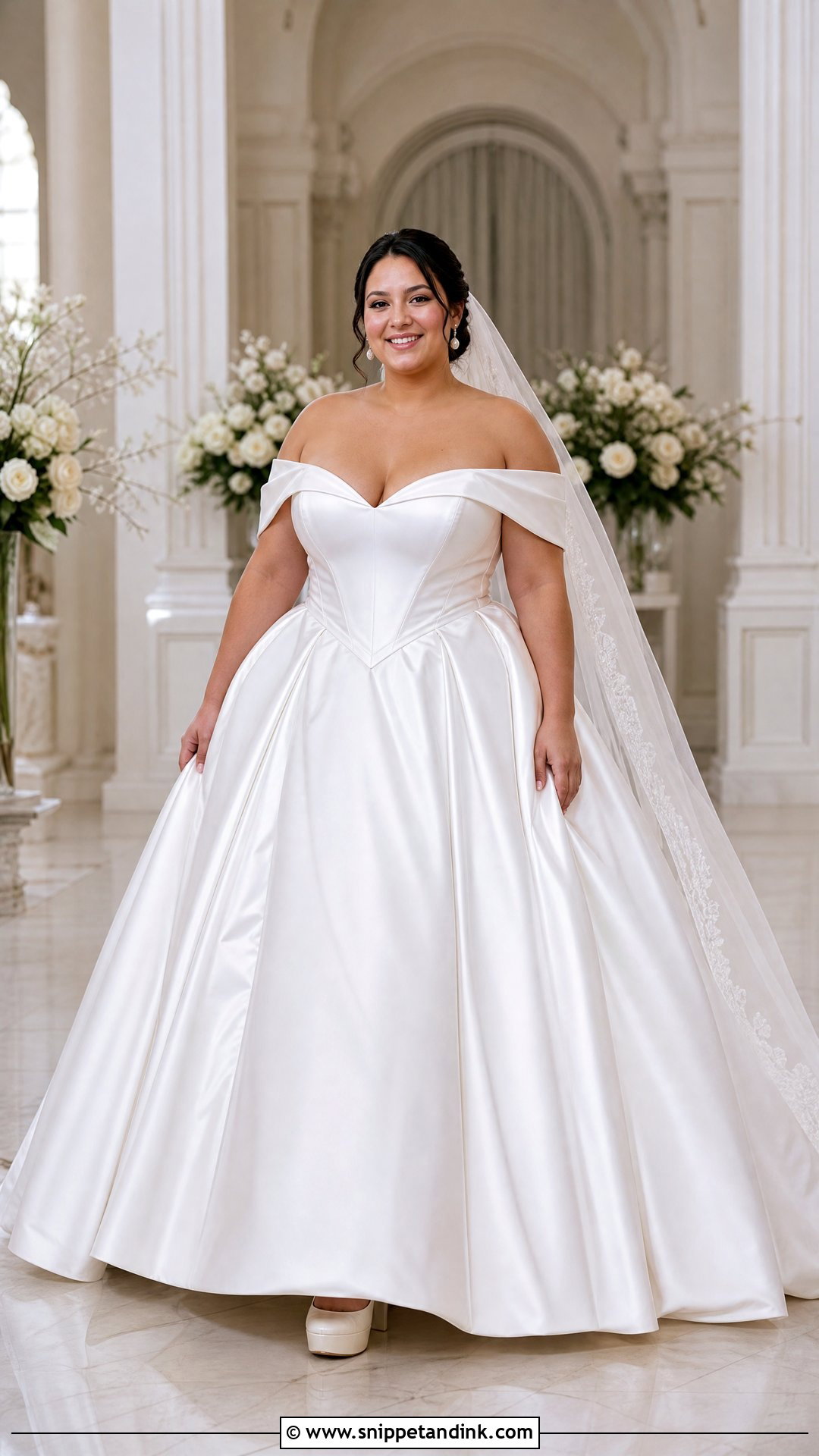
A basque waist dips into a V or U below the natural waist, drawing the eye to the center of the torso and blending into a full skirt. Balance the lower half with a wide square, scoop or off-the-shoulder neckline. Structured satin looks regal; embroidered fabric adds romance. Pay attention to how the skirt is gathered onto the bodice. Heavy gathers right at the point add bulk over the hips, while controlled pleating keeps it flat. The corset needs careful fitting so the point doesn’t dig in when you sit. A cathedral veil, pearls, platform pumps and a polished updo complete it.
13. Pleated Organza A-Line Wedding Dress
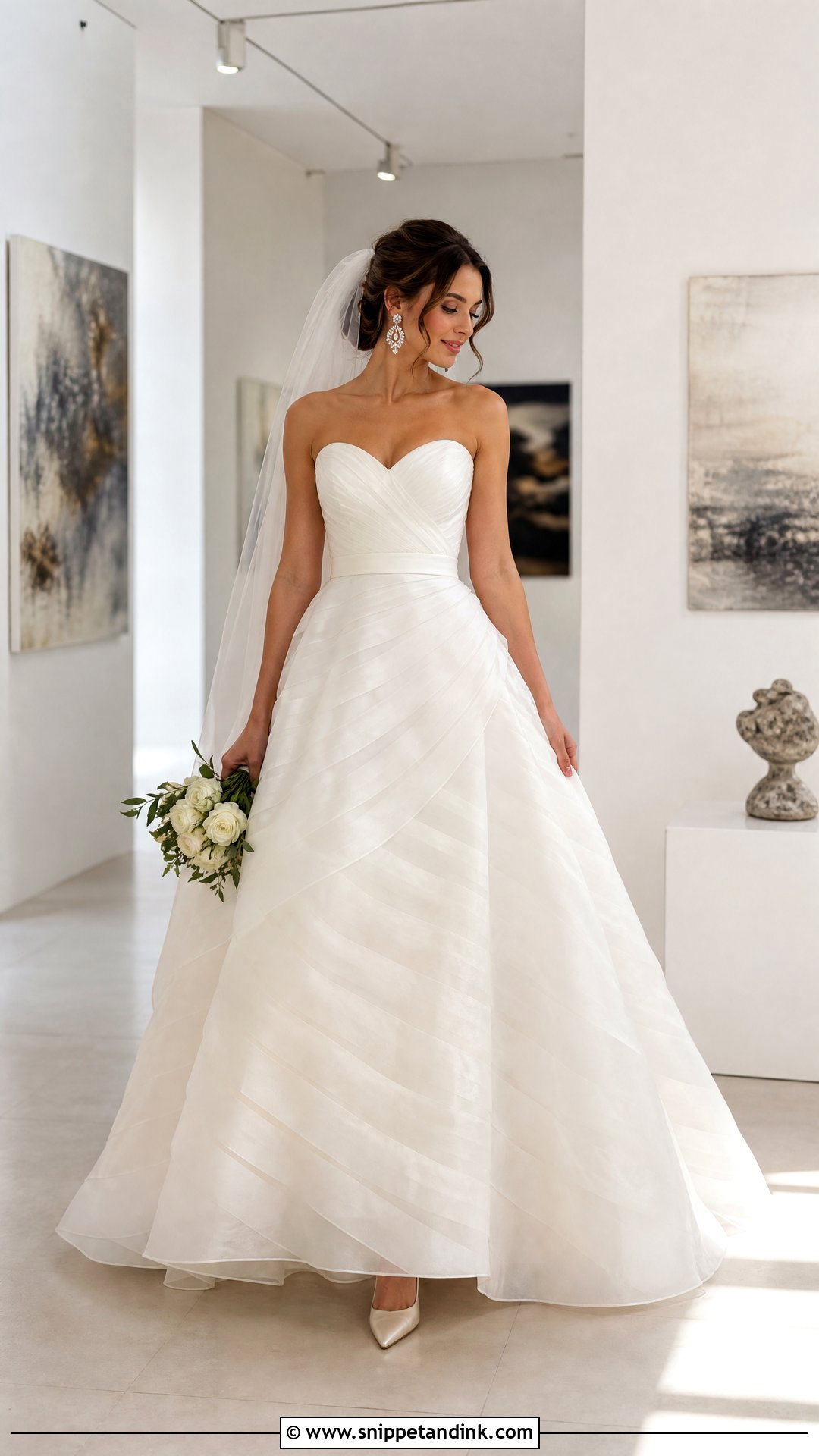
Organza is light, but it holds a pleat, so the skirt stands away from the hips instead of resting on them. The pleats should be stitched flat at the waist and open gradually; loose gathers at the waistband add exactly the volume a pear figure doesn’t need. A fitted square neck or sweetheart bodice gives structure above. A horsehair braid in the hem helps the skirt keep its shape all day. A sheer fingertip veil, modern earrings, pointed heels and a compact bouquet suit a bright ballroom or gallery. It looks fresh and formal at once.
14. Illusion Neck Beaded A-Line Wedding Dress
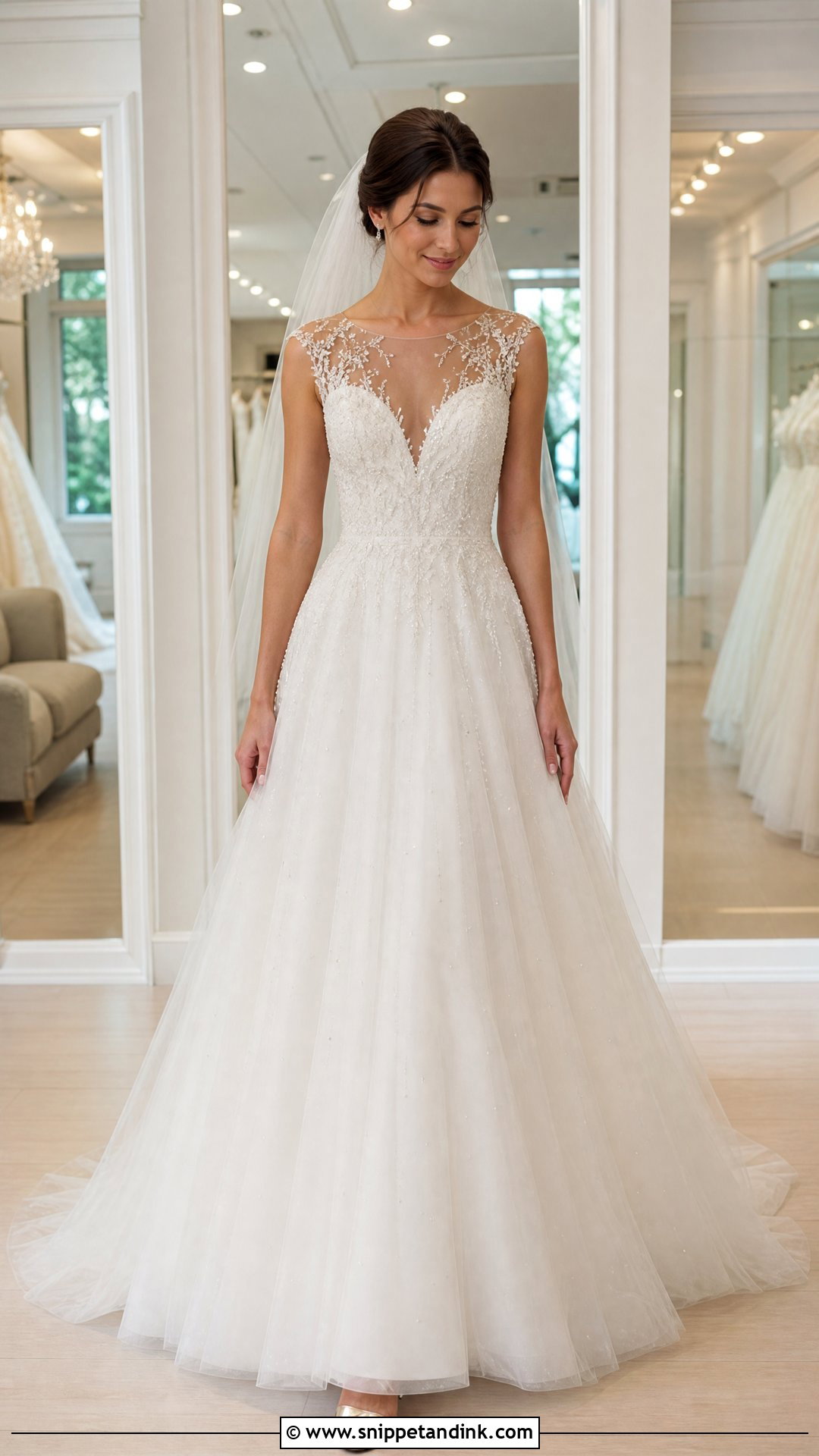
Shimmer near the face pulls the eye up, which is why I like an illusion neckline with beading or embroidery for a pear-shaped bride. The sheer panel lets the decoration sit on the shoulders and collarbones, while the defined waist and flowing skirt balance the outline. Keep the beading light so the bodice stays comfortable and moves. A plain tulle or chiffon skirt stops the gown looking crowded. Illusion mesh comes in several shades, so compare it against your skin by a window and ask for the closest match; the wrong one shows in photos as a pale band. A simple veil, crystal studs, metallic or ivory heels and a low bun suit it.
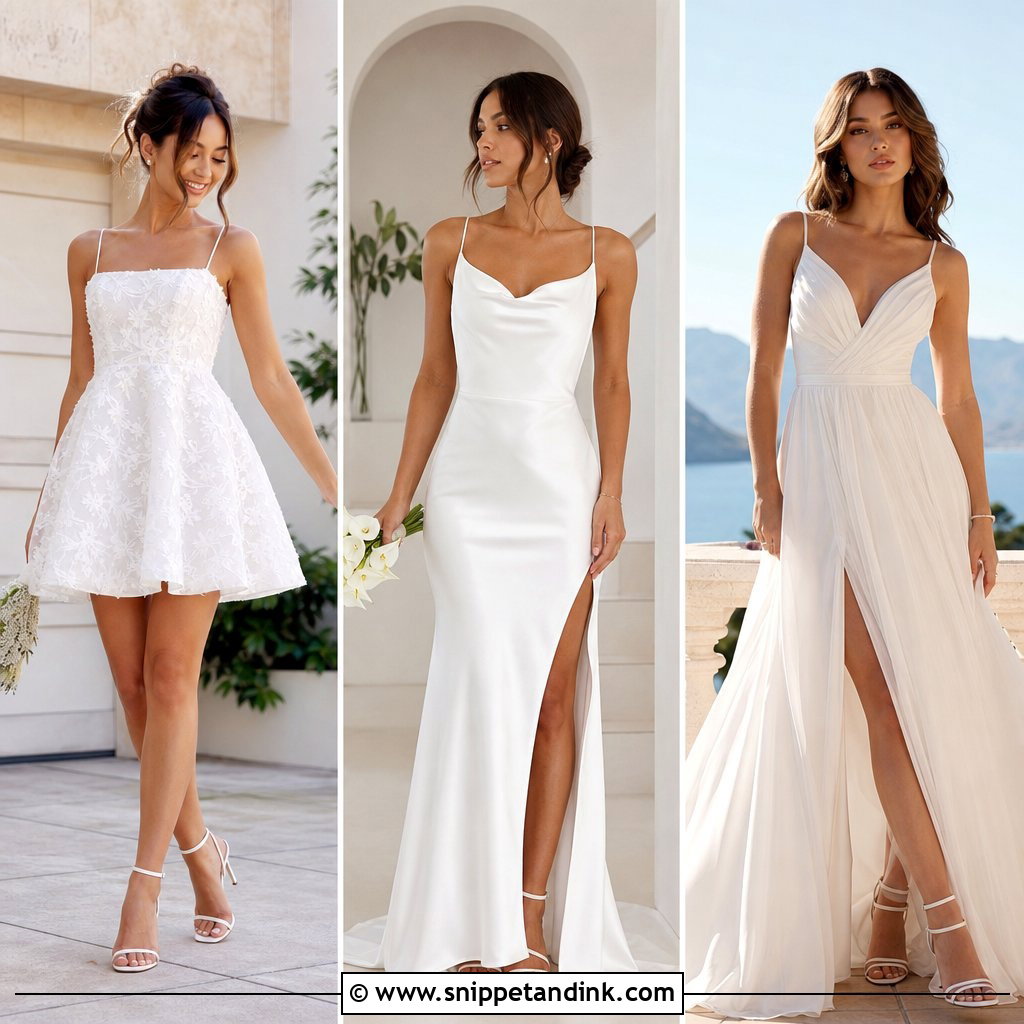

15. Halter Satin A-Line Wedding Dress
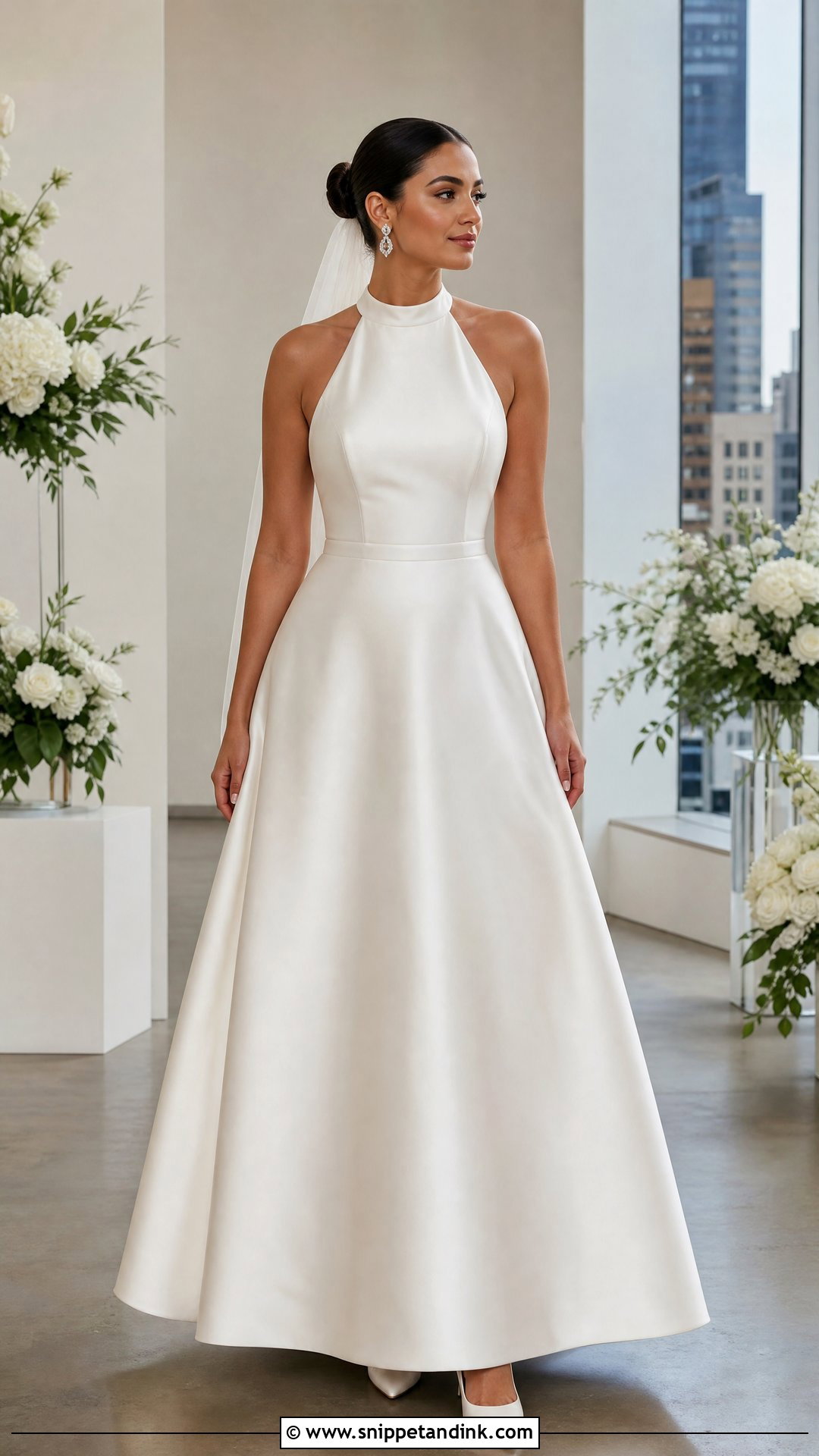
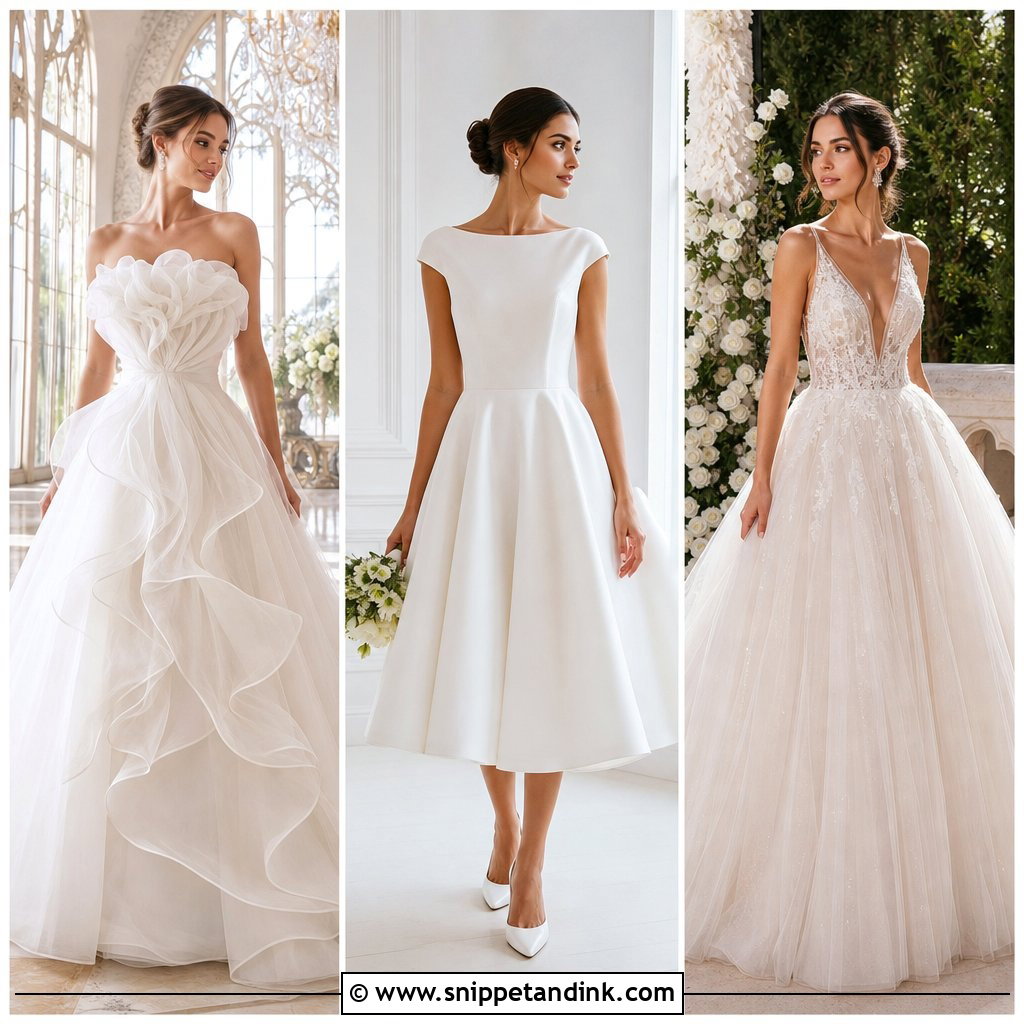
Halters draw the eye up and in, and when the strap is wide or has a structured collar, the shoulders gain presence. The flared skirt and defined waist keep everything balanced. Support is the question I always ask about: a halter that relies on the neck strap to hold the bodice up causes neck ache by mid-afternoon. Look for internal boning and cups. An open back adds interest with a simple front. Skip the necklace, wear statement earrings and a sleek bun, and pin the veil below the hair. Check the armholes for rubbing, since halters cut in closer to the underarm.
16. One-Shoulder Draped A-Line Wedding Dress
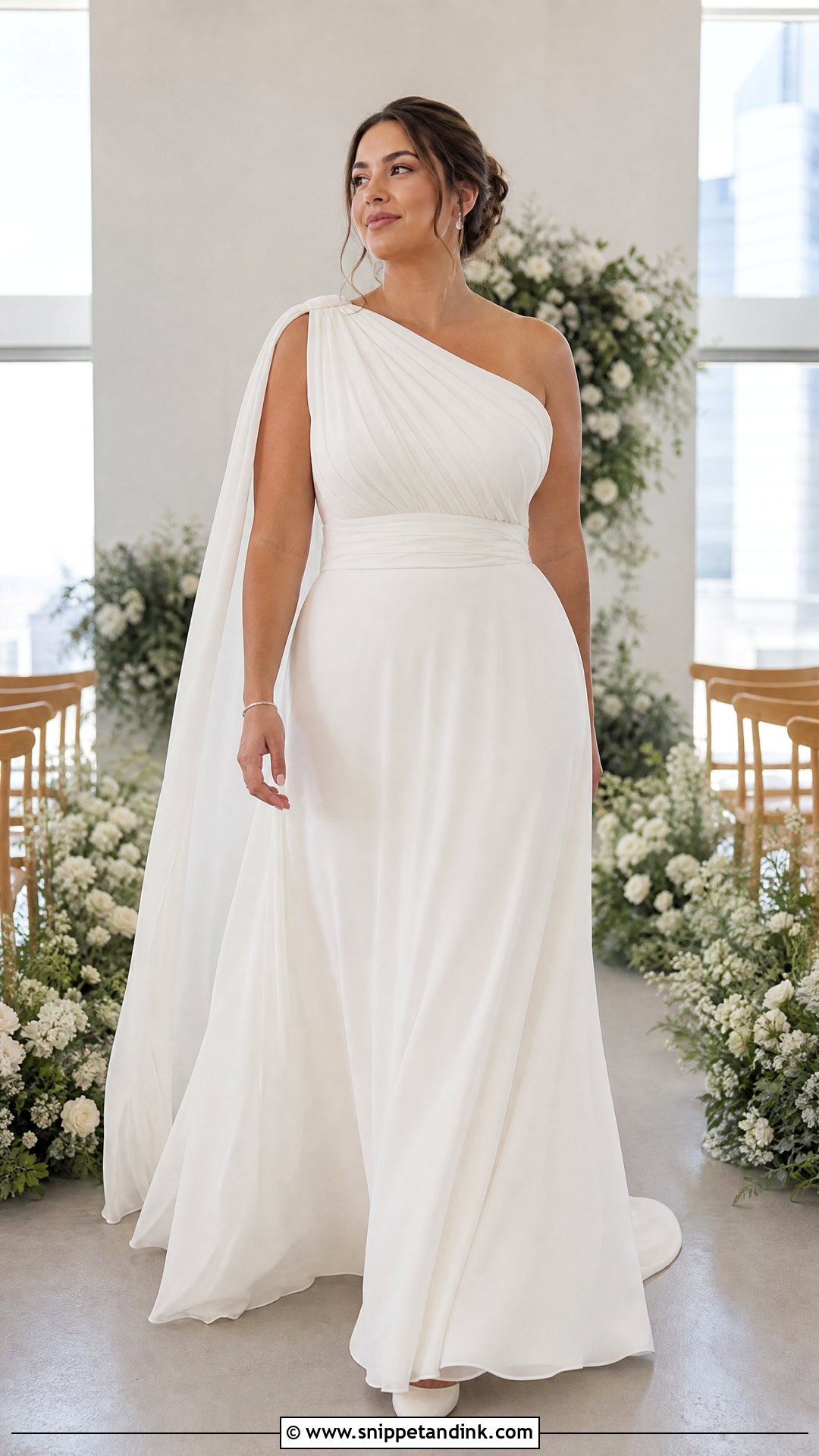
An asymmetric neckline puts the interest above the waist, and gentle draping adds some softness at the bust and shoulder. The A-line skirt should begin at a fitted natural waist and widen without clinging. Crepe looks streamlined, chiffon moves, satin dresses it up. A one-shoulder strap pulls the bodice toward the supported side if it isn’t properly anchored, so check in the mirror that the neckline stays level after you’ve moved around. A low side bun, small earrings, a slim bracelet and pointed heels suit it. A cape or detachable shoulder drape can stand in for a veil.
17. Tea-Length Bateau Wedding Dress
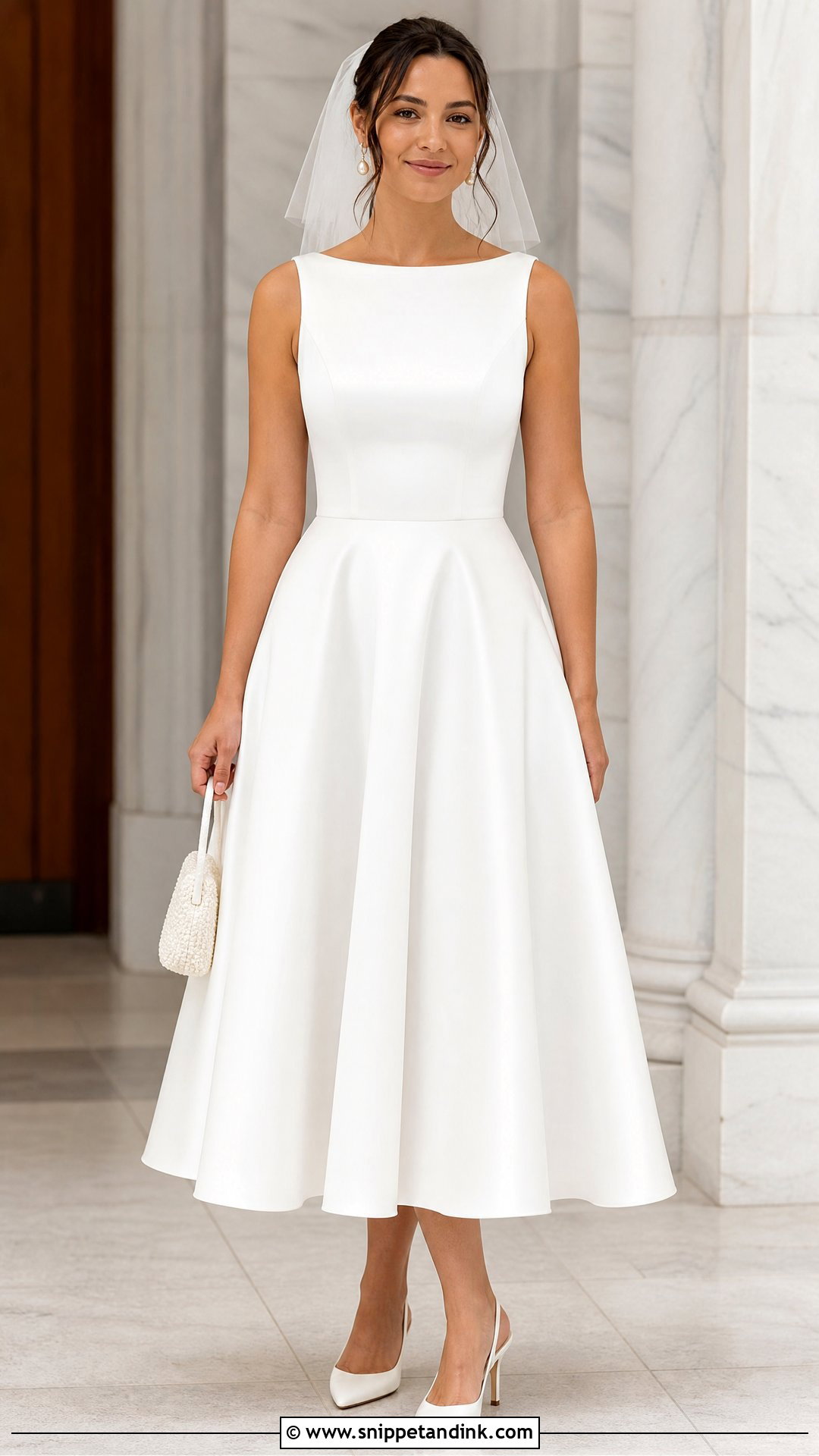
Tea length is ideal for a courthouse ceremony, a reception change or a relaxed daytime wedding. The bateau neckline highlights the collarbones, and a fitted waist with a flared skirt keeps proportions balanced. The hem should fall between the lower calf and ankle so it looks deliberate, never at the widest part of the calf. Satin, mikado or layered tulle give the skirt enough body to stand away from the hips instead of collapsing onto them. Shoes are on show, so choose pumps, slingbacks or embellished flats with care. Pearls, a short veil and a small structured bag finish it. A short gown shows bodice fit and hem errors immediately.
18. High-Low Wedding Dress With Overskirt
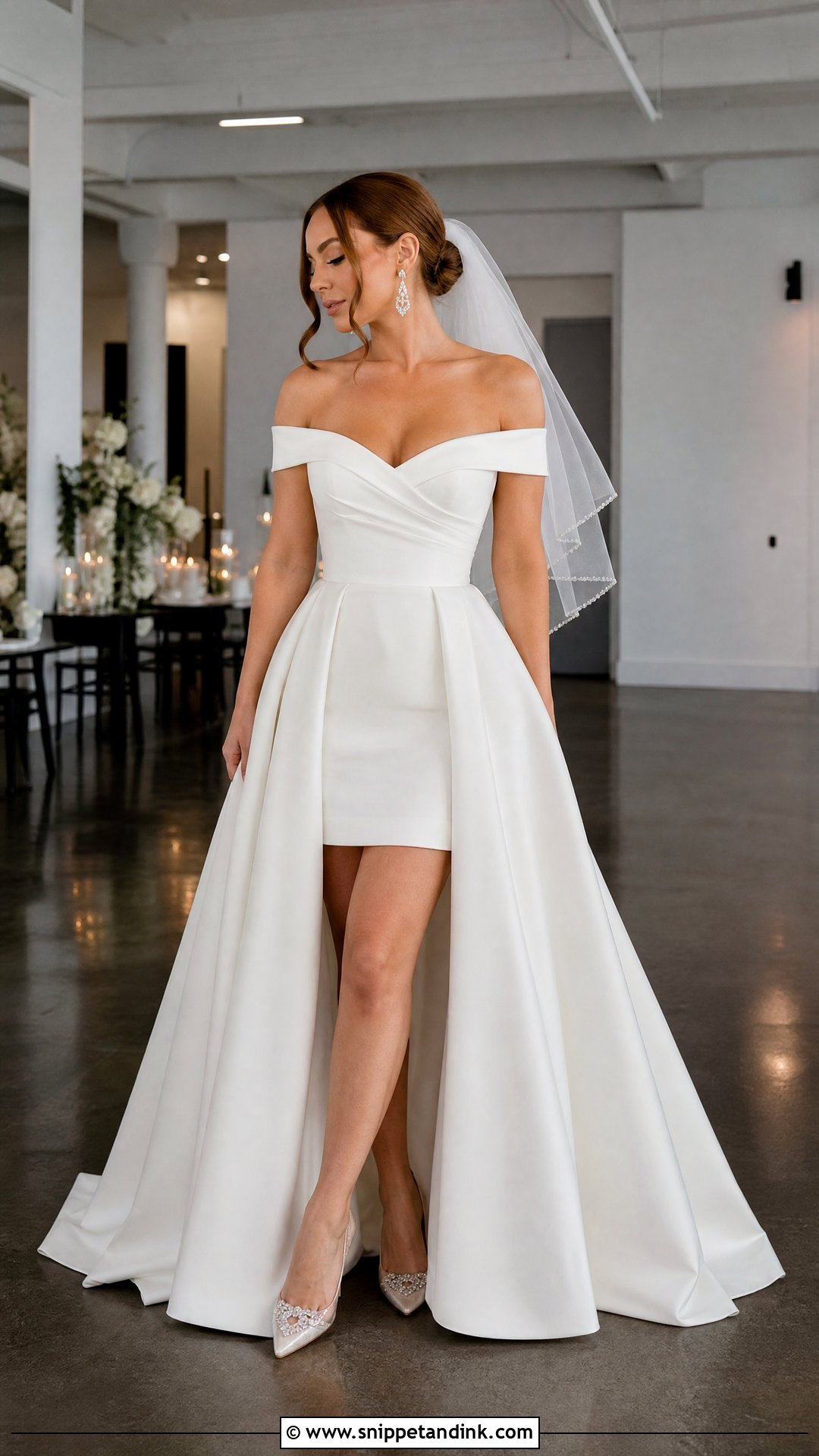
A high-low wedding dress with a removable overskirt gives you two looks in one: the overskirt adds an A-line for the ceremony, then comes off to reveal a shorter front for dancing. Start with a fitted, supportive bodice in a sweetheart, square or off-the-shoulder shape. For a pear figure the waistband of the overskirt matters most. It should sit flat at the waist with no bulky fastening over the hips. Keep the base dress clean so it still looks finished once the overskirt is off. Practise taking it on and off before the day. Embellished pumps, statement earrings and a fingertip veil suit it.
19. Floral Appliqué A-Line Wedding Dress
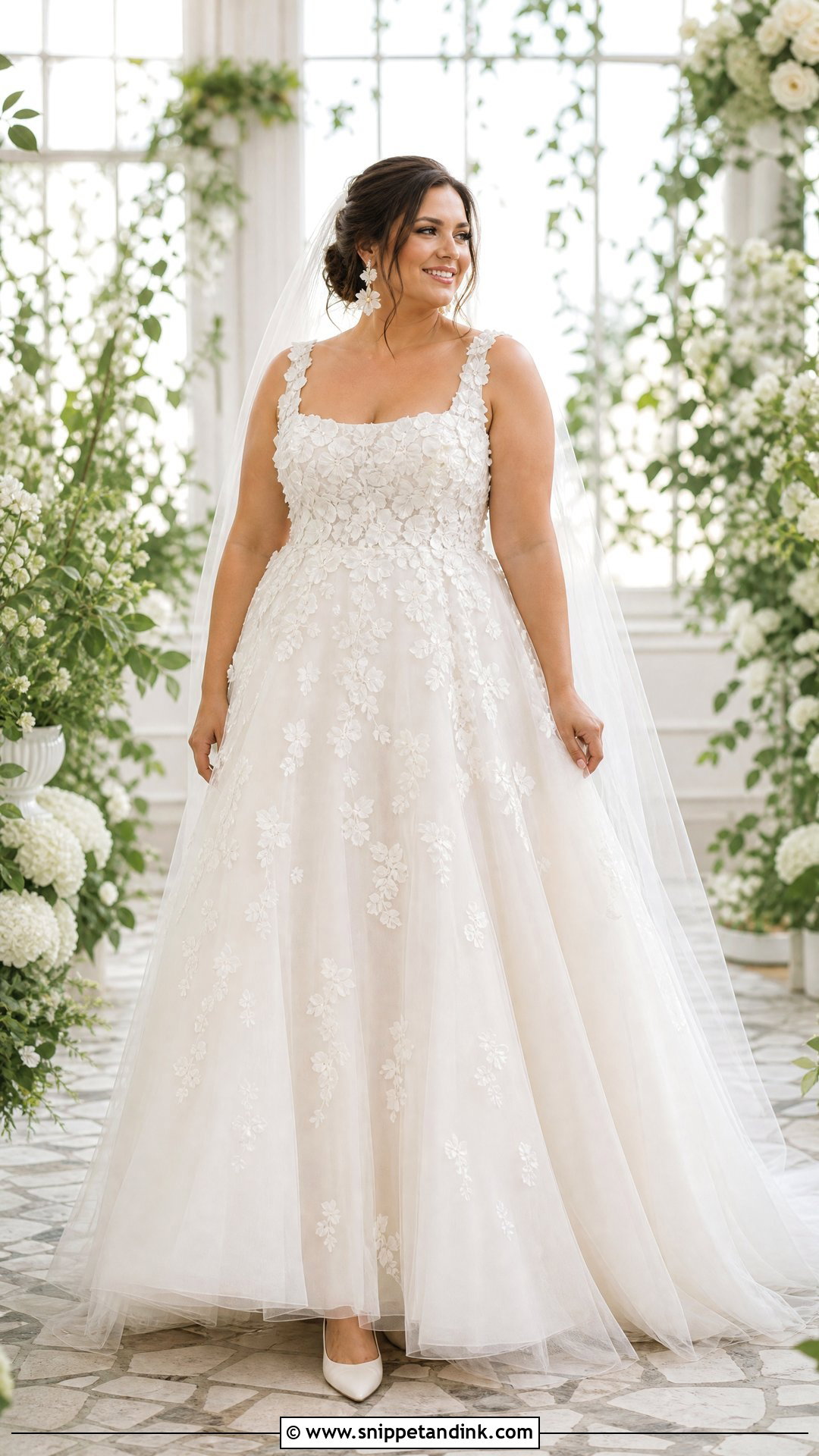
Placement of the appliqués decides whether this gown balances a pear shape or works against it. I want the densest flowers at the neckline, shoulders and bodice, then smaller, sparser motifs on the skirt. A square, sweetheart or off-the-shoulder neckline gives the decorated top a clear shape. Soft tulle layers float over the hips. Where brides go wrong is stacking details: heavy beading, oversized flowers and elaborate jewelry together. Stick with one floral motif from veil to earrings. Floral earrings, simple pumps, a sheer veil and a loosely pinned updo complete it.

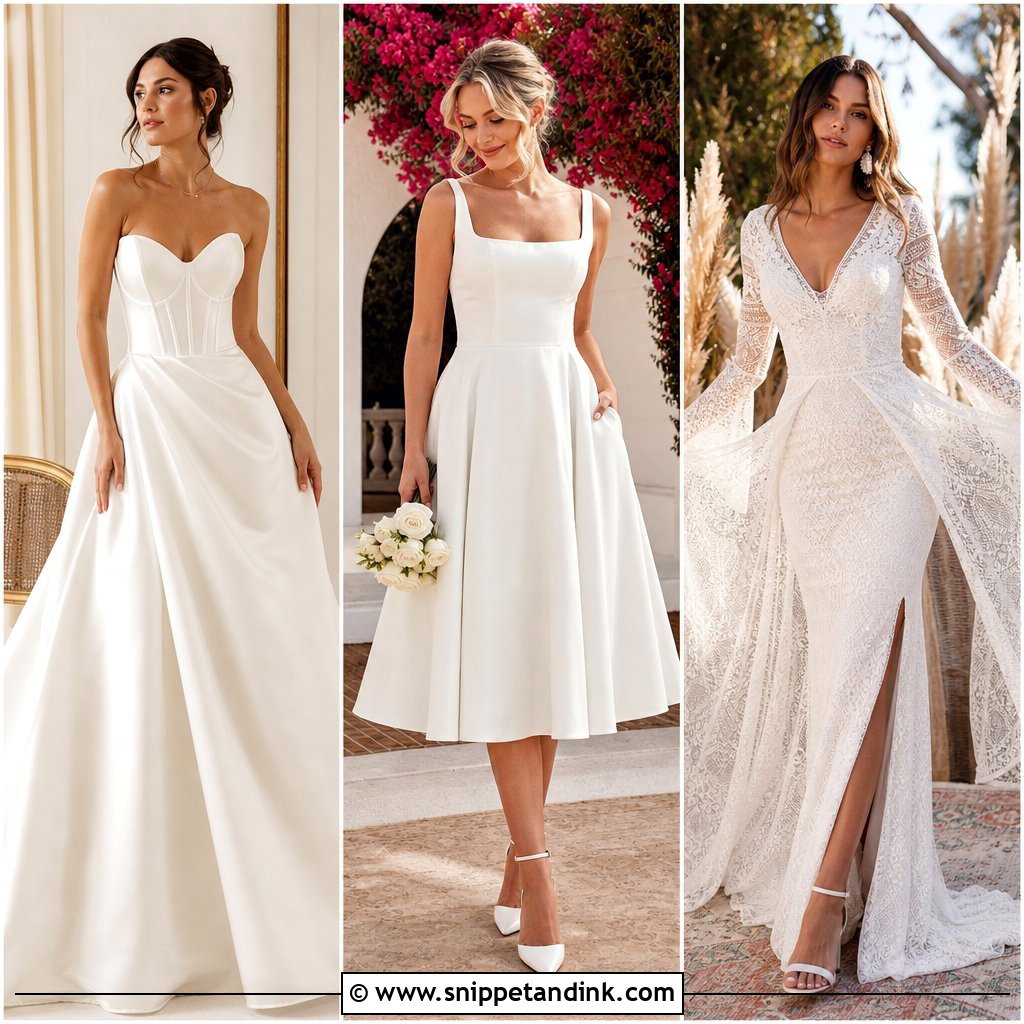
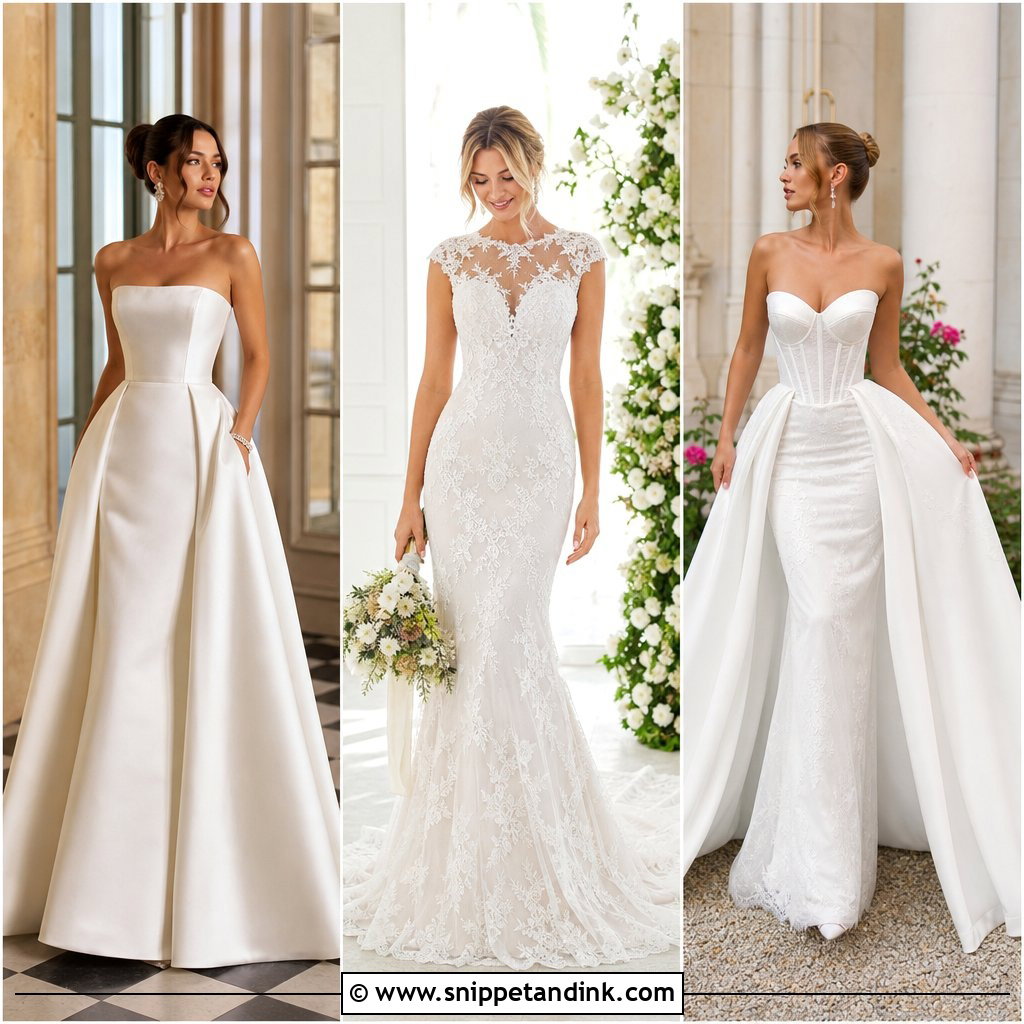

20. Scoop Neck Wedding Dress With Overskirt
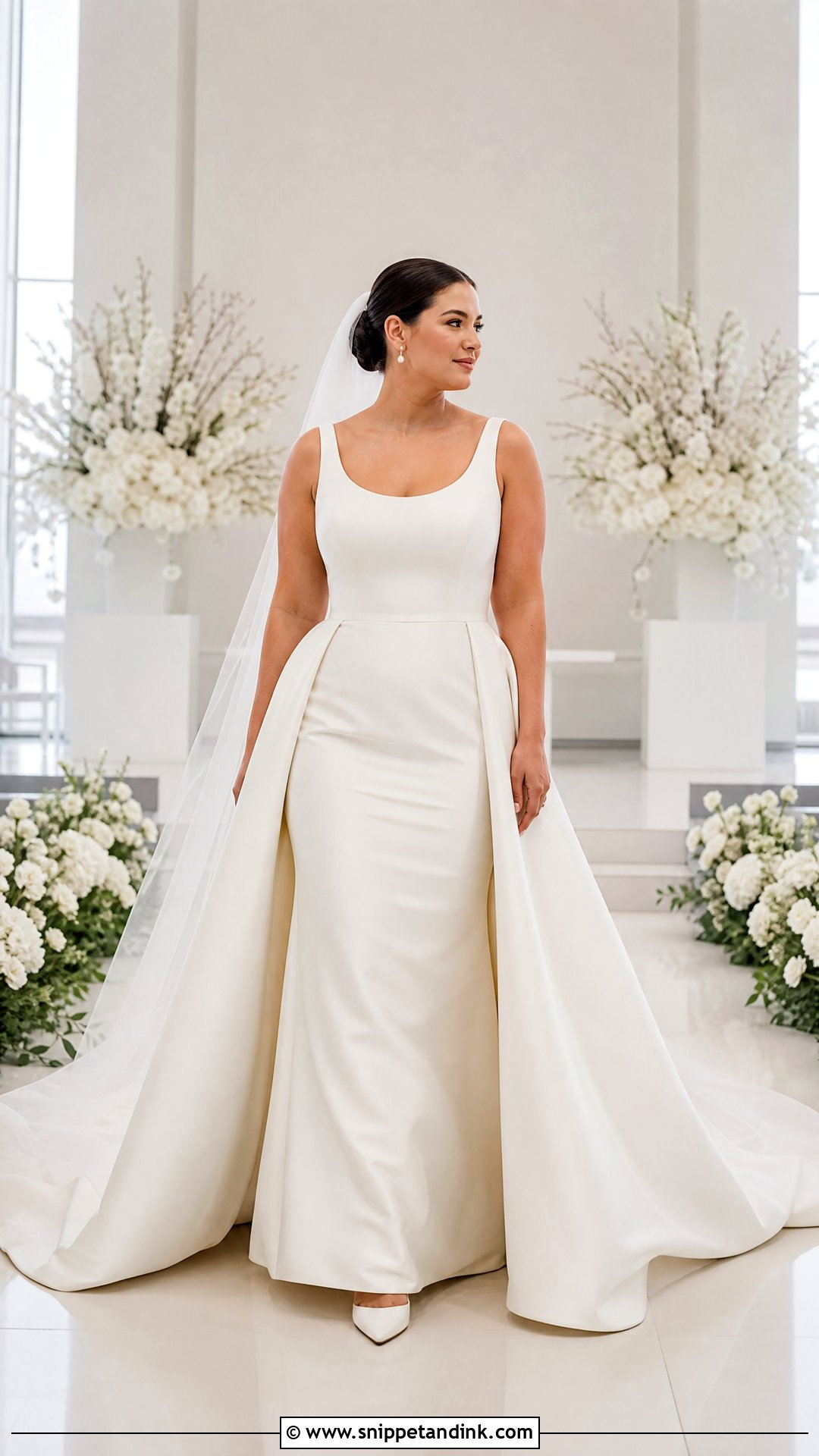
A scoop neck base gown with a removable overskirt suits brides who want volume for the aisle and a slimmer line for the party. The rounded neckline opens the upper body, and wider straps give the shoulders a frame. The base has to be good on its own: fitted crepe or satin, princess seams and enough stretch through the hips that it doesn’t strain when the overskirt comes off. The structured A-line overskirt fastens at the natural waist for the ceremony. Look at both versions from every angle in fittings, and check the overskirt’s waistband is hidden and comfortable. A low bun, pearl drops, pointed heels and a long plain veil suit it.
The Sitting and Stair Test for Full Hips
Standing in front of the salon mirror shows you very little about how a gown behaves around the hips and seat. At the second fitting, I ask brides to do four things.
- Sit on an ordinary chair for a full minute, then stand. Satin and crepe crease across the lap and seat; a little is normal, deep horizontal creases mean the hip is too tight.
- Climb three or four steps. A fitted skirt that blocks the knee will need a higher flare or a hidden slit in the lining.
- Get in and out of a car seat, or mimic it. This is where seams at the seat split.
- Walk briskly for a couple of minutes and notice any rubbing between the thighs. Anti-chafe balm or slip-on thigh bands under the gown solve it and nobody sees them.
How Detachable Overskirts Fasten, and Fail
Two looks in this list use a removable overskirt, and the fastening is what decides whether that’s a smooth change or a struggle in a bathroom. Hidden hooks and bars are secure but fiddly; buttons look neat yet add bulk at the waist; snaps are fast though they can pop under a heavy skirt. On a pear figure, I prefer hooks set into a flat waistband on the base dress, so nothing ridges over the hip. Ask for a reinforced waist on the base gown, since it carries the full weight of the overskirt all ceremony. Choose who will remove it, a bridesmaid or your mother, and have her practise once at the final fitting.
Fuller Hips Are Easy to Dress Once the Waist Is Right
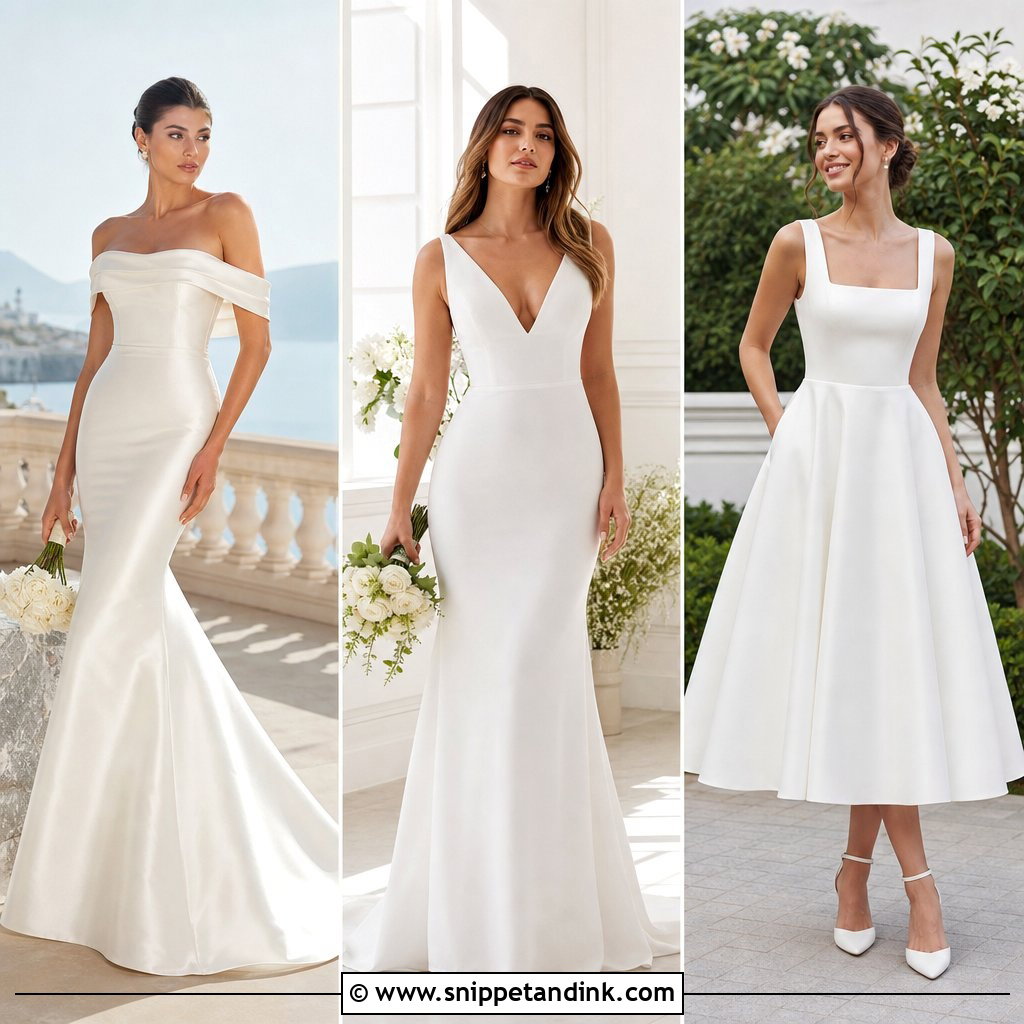
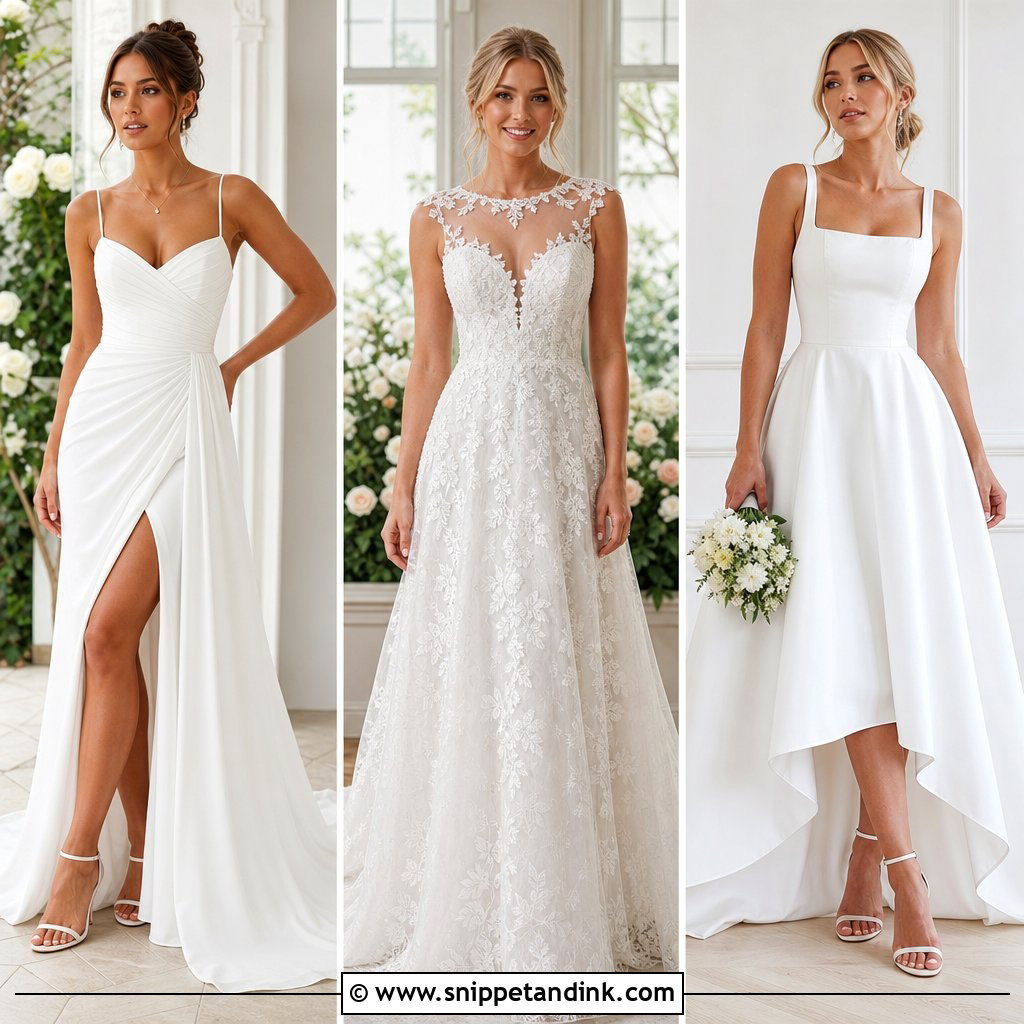
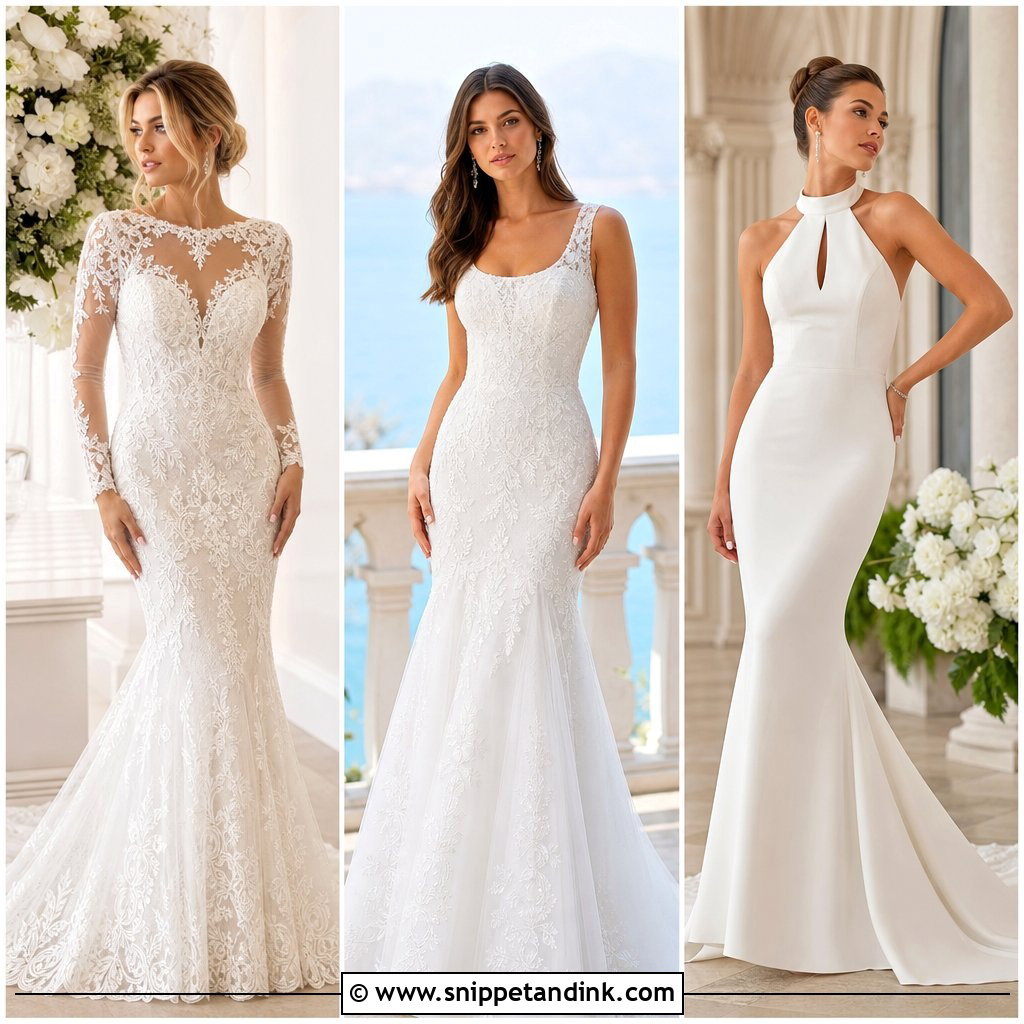
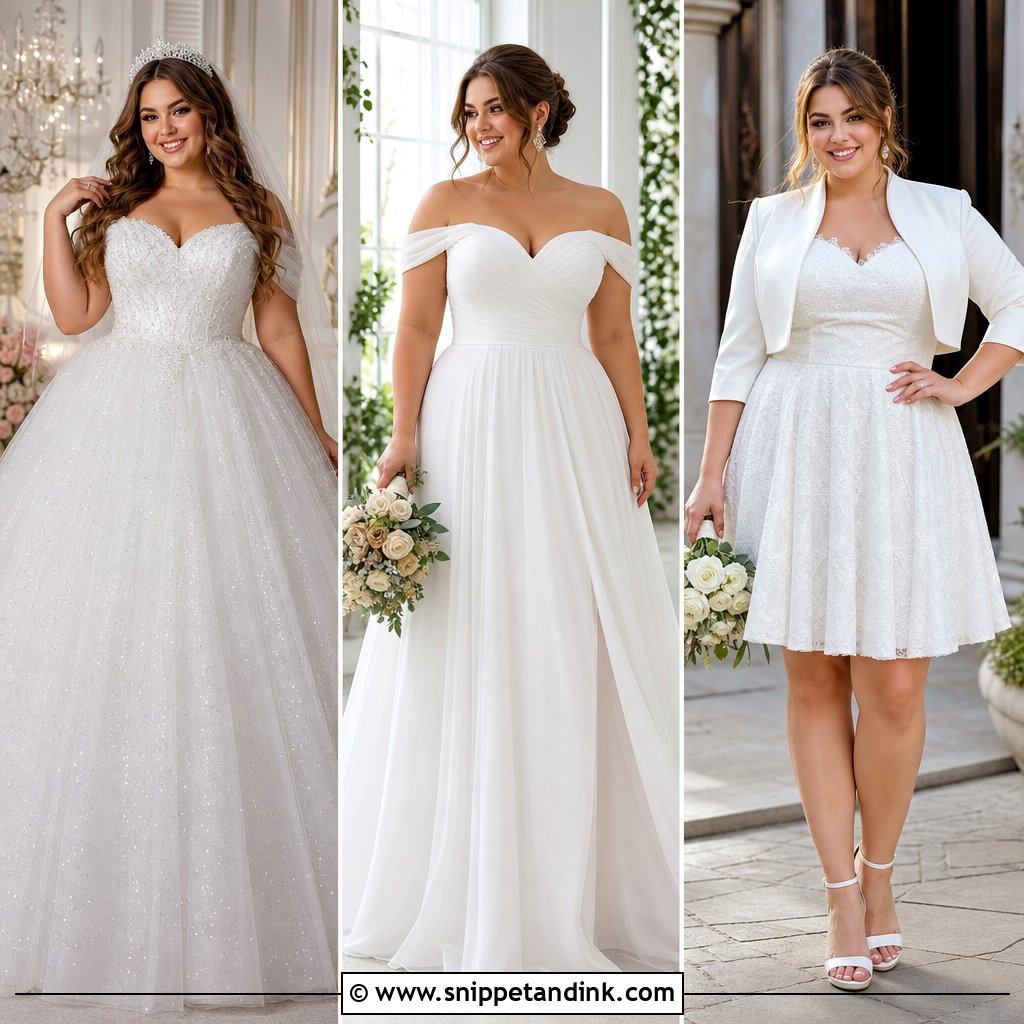
Every gown that works on a pear shape gets the same basics right: the bodice supports you, the waist seam sits on your actual waist and the skirt clears the hips without strain. The 20 Wedding Dresses for Pear Shape collected here run from classic A-lines and ball gowns to fitted crepe, tea length and removable overskirts. Start with a neckline that frames your shoulders and a bodice that defines your waist, then compare fabrics by how they move and hold. Don’t treat body-shape advice as law. Try something unexpected, walk, sit and turn in it, and let good alterations do the rest.
You'll Like These Ideas:






Leave a Reply