
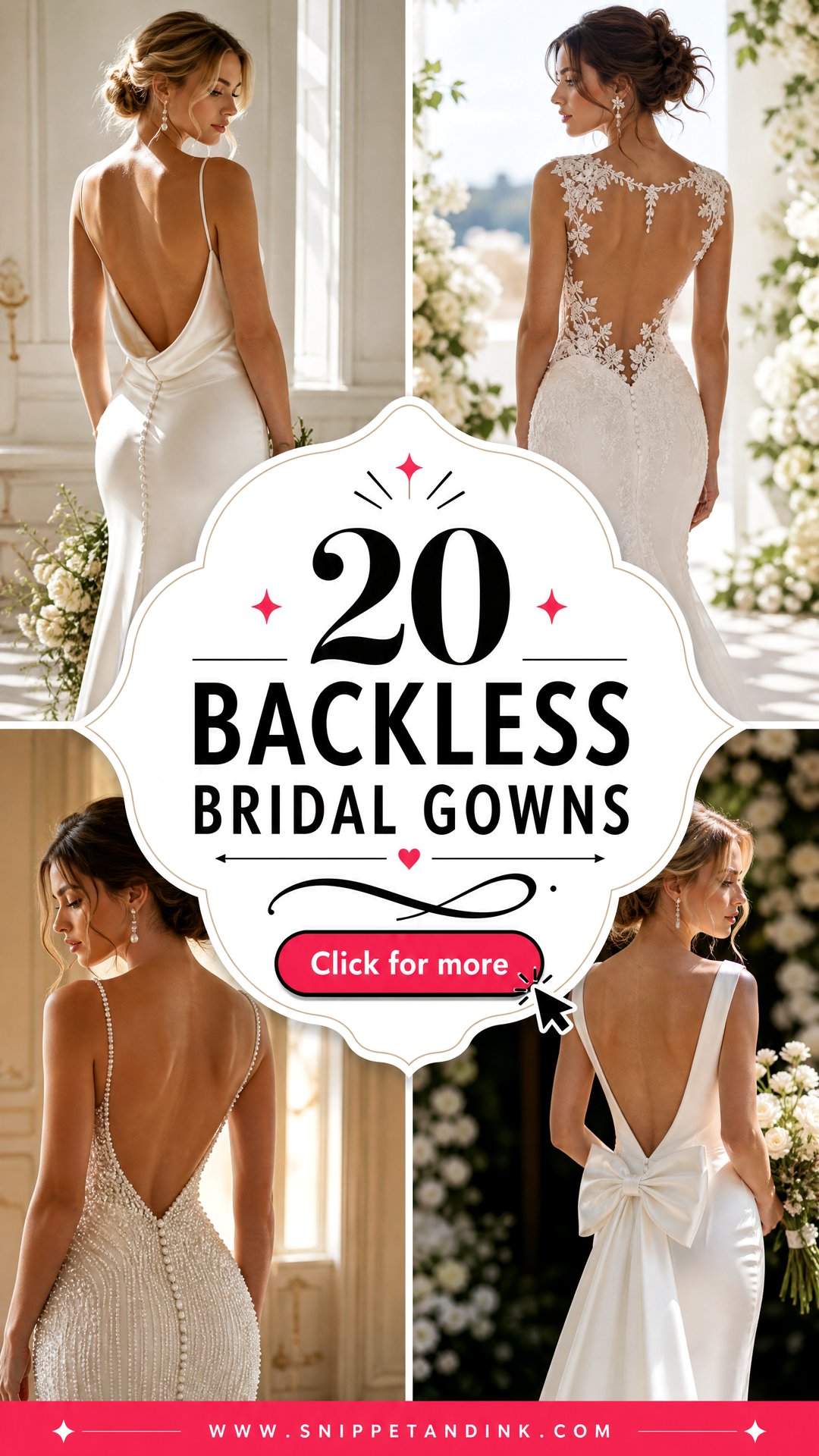
For most of the ceremony, your guests are looking at your back. That’s the quiet argument for an open-back wedding dress, and it’s why I spend as much time on the rear view in a fitting as on the front. The gowns here run from clean satin columns and fluid cowl backs to lace mermaids, structured ball gowns and convertible designs with detachable layers. Each one is styled with a veil, shoes, hair and jewelry, and each comes with the fit point I’d check before saying yes. Back depth, strap placement, fabric weight and train length matter more here than in a closed gown, so read the notes along with the pictures.
Judging Back Depth at the Bridal Appointment
Back depth is the decision brides most often regret in one direction or the other, and it’s hard to judge in a three-way mirror. Here’s how I’d test it with a sample before you commit.
- Ask someone to film you from behind as you walk ten steps away and turn. That’s the view your guests get during the ceremony, and it’s rarely the one you see in the shop.
- Sit on a hard chair and lean slightly forward, as you would at the dinner table. The back edge should stay against your skin, not gap open.
- Raise both arms as if hugging someone taller. If the front lifts or the straps slide, the gown needs a closer fit or a different cut.
- Look at where the opening ends against your lower back. A back cut to the natural waist is the easiest to fit and wear. Lower than that, the fit at the sides and waist does almost all the holding.
Think about the ceremony setting as well. In a place of worship with a dress code, a sheer illusion back or a removable lace bolero can keep the open back for the reception without any awkwardness. It’s a common solution and worth mentioning at your first appointment so the shop can suggest gowns that adapt.
1. Simple Satin Backless Bridal Gown
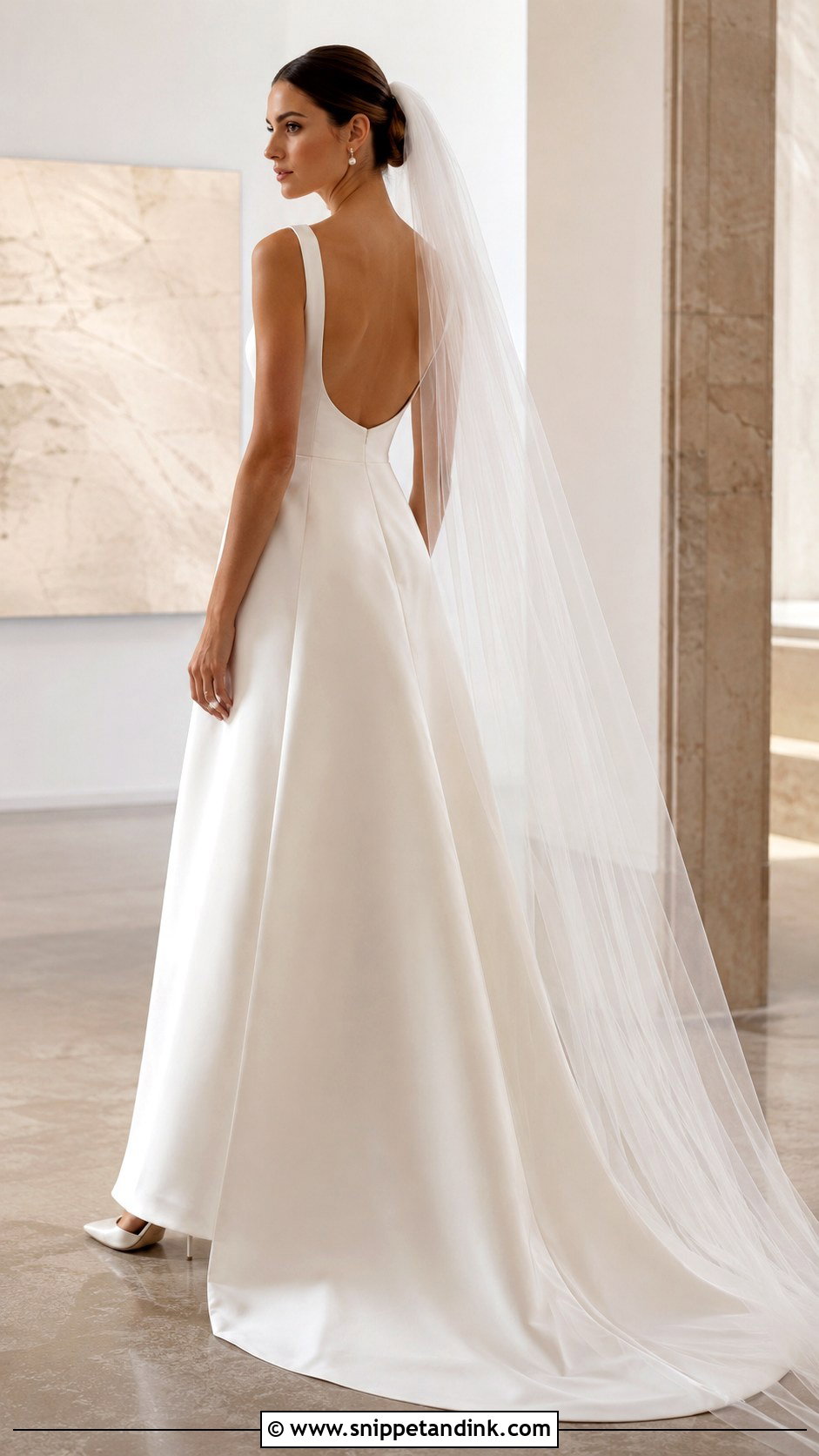
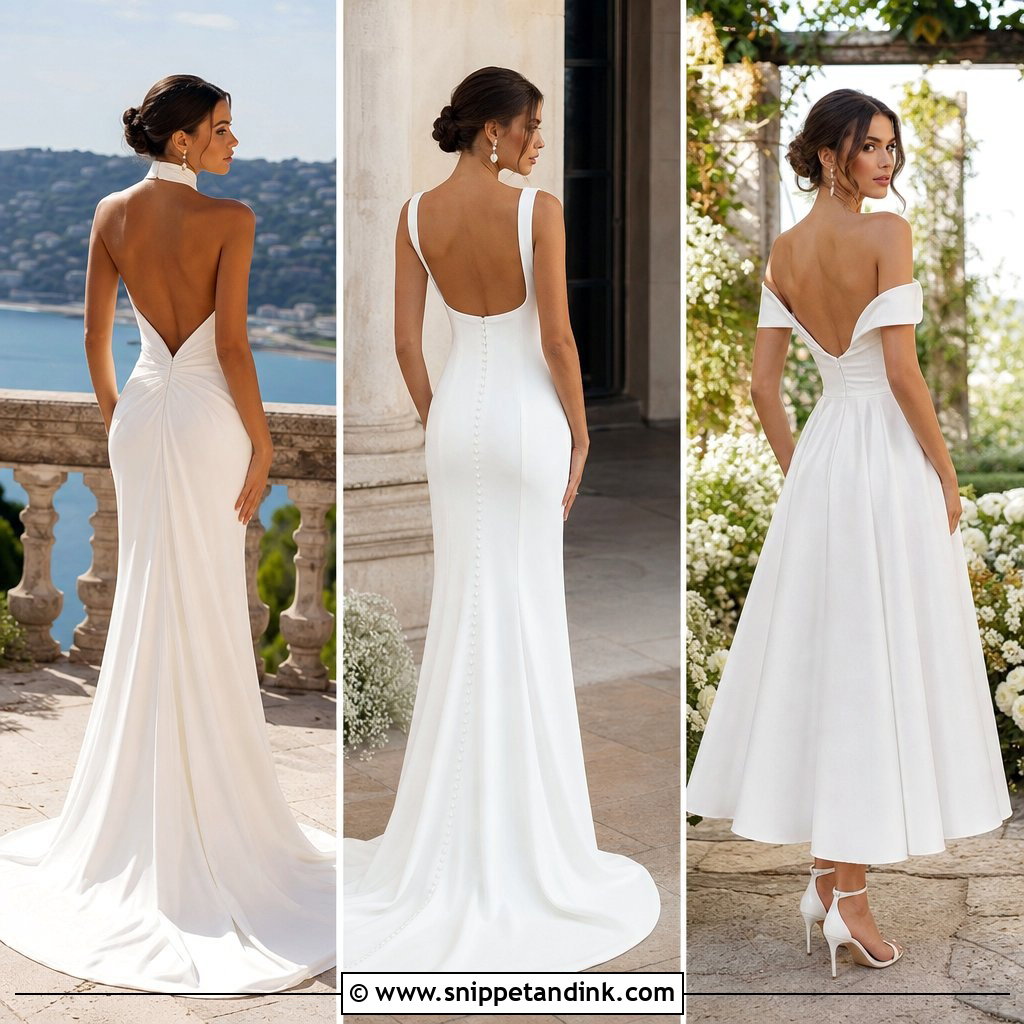
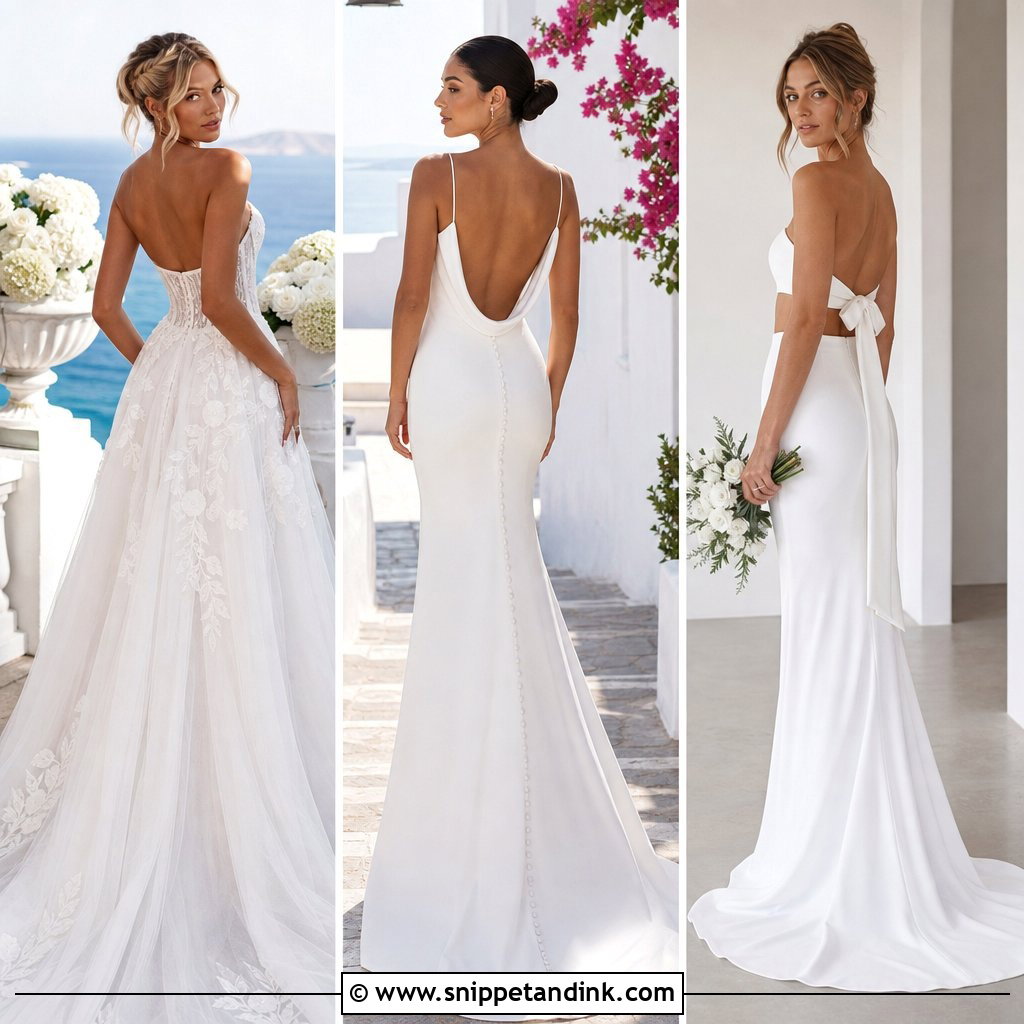
A simple satin backless bridal gown has nowhere to hide a fitting problem. Satin reflects light along every pull line, so a strap that’s a quarter inch too long shows as a ripple across the back. I like it as a soft column or A-line with wide straps, a bateau neck and a clean scoop back. Petite brides usually need the bodice shortened, not just the hem, or the waist sits low. Pearl drops, a sleek low bun, ivory pumps and a long sheer veil tucked under the bun suit hotels and gallery venues.
2. Lace Mermaid Backless Bridal Gown
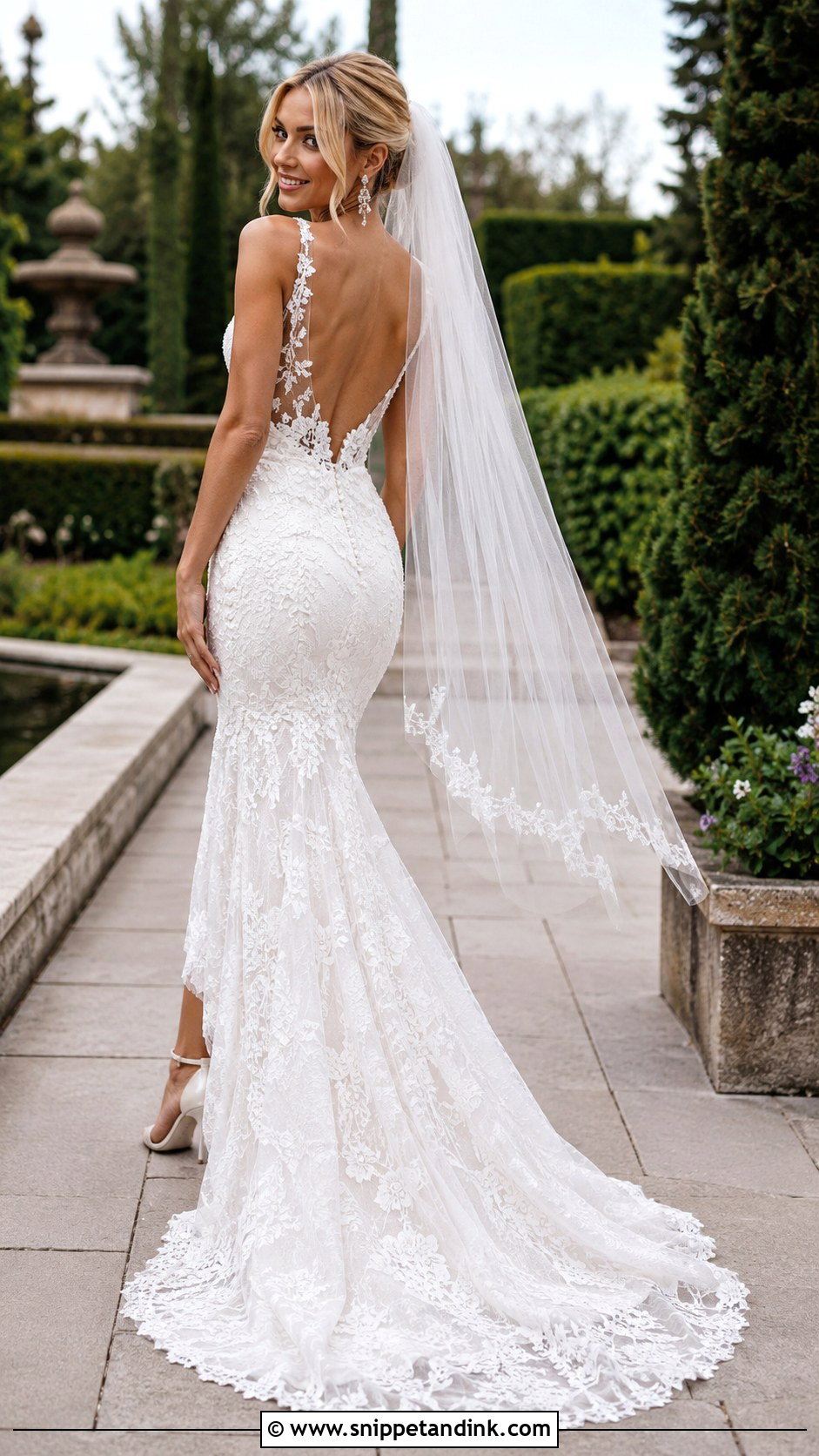
The trouble with a lace mermaid is rarely the lace. It’s the knees. The skirt is fitted down to where it flares, so if that flare sits too high, you shuffle; too low and you can’t climb a step. In the fitting I mark the flare point while you walk, not while you stand. Firm lining and appliqués placed to frame the waist give the open V back its shape. Crystal earrings, a jeweled comb, ivory ankle-strap heels and a fingertip veil that ends above the flare, with the hair curled up and off the back.
3. Long Sleeve Backless Bridal Gown
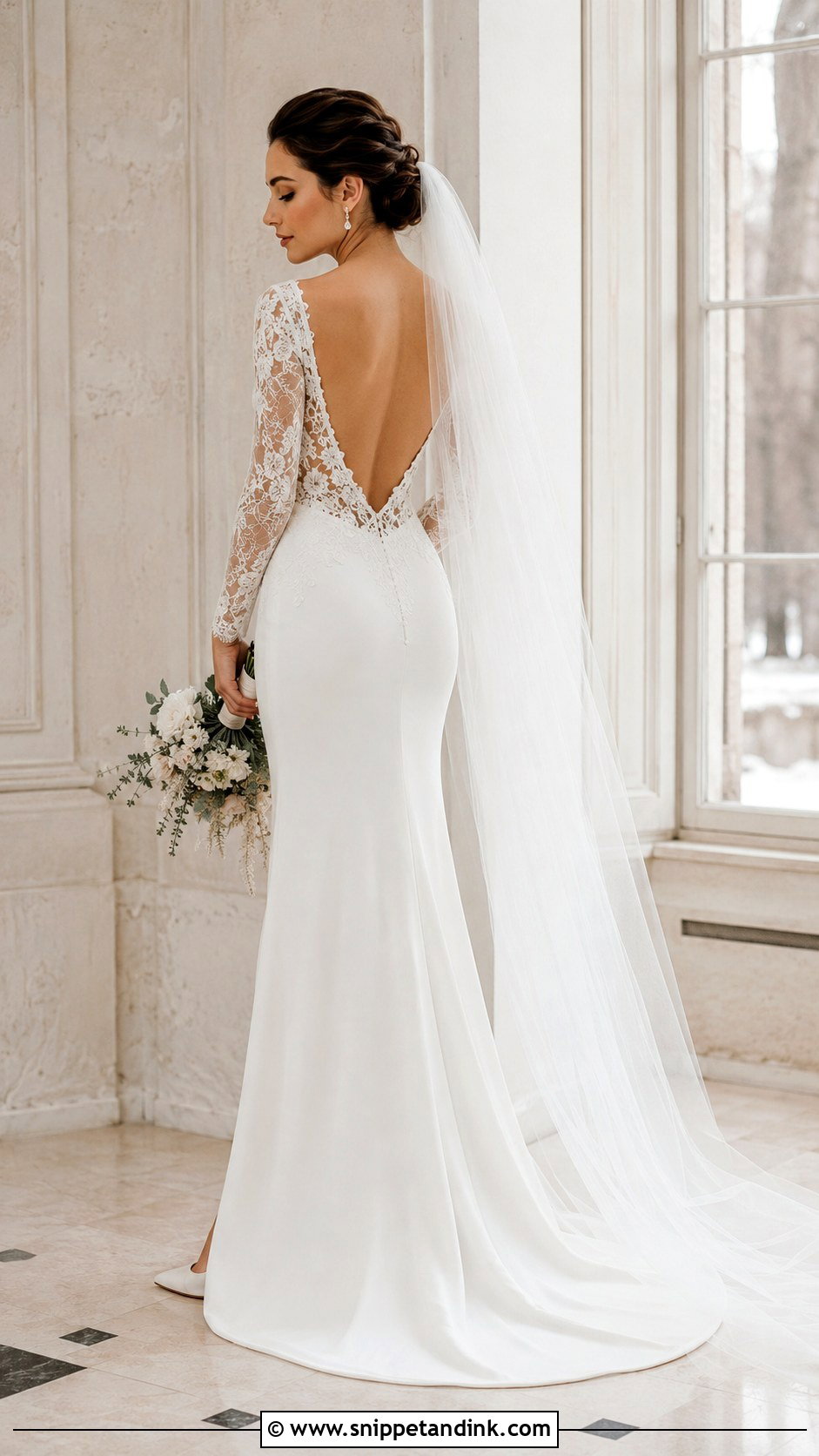
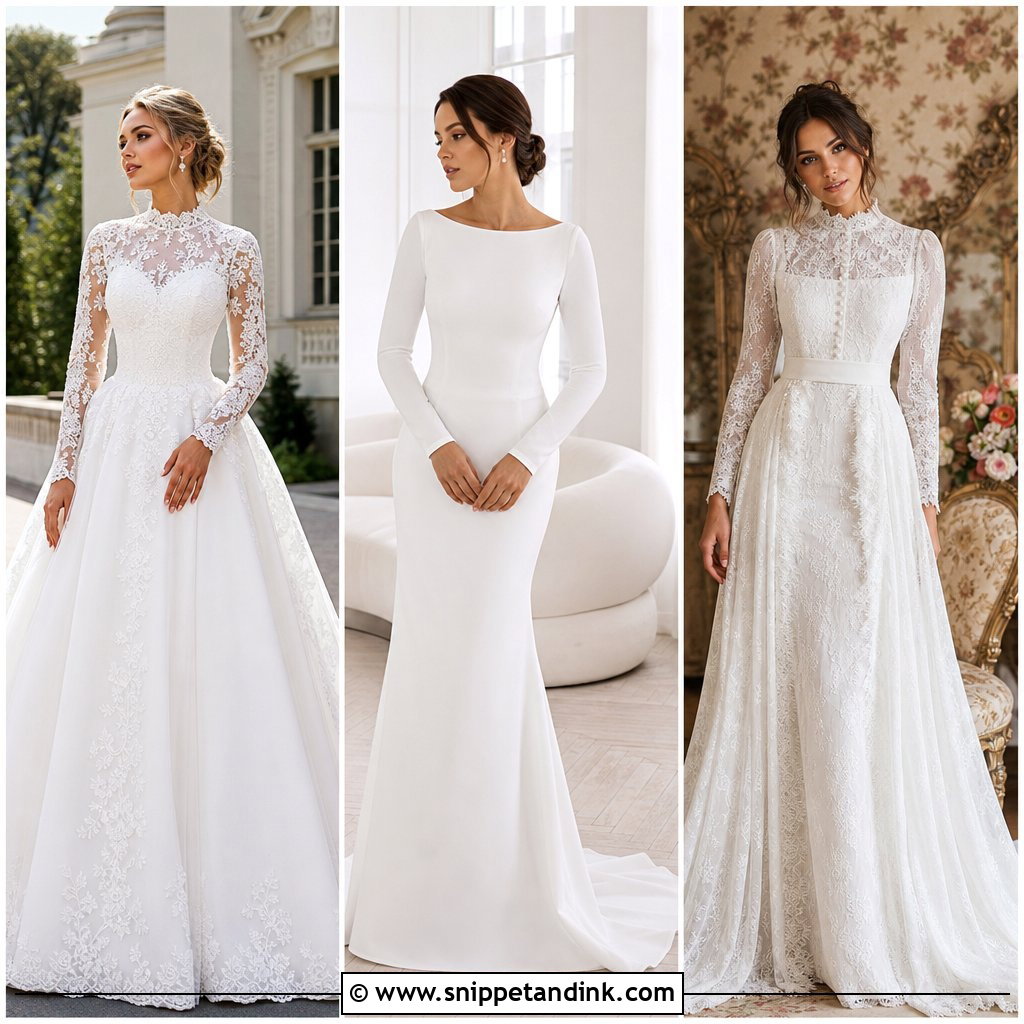
Long sleeves and a deep open back are a natural pair for cooler months: coverage in front, a surprise behind. Lace sleeves feel romantic; plain crepe looks cleaner. Make sure the sleeve is cut with enough room at the upper arm, because a tight sleeve and a bare back together mean the bodice lifts every time you hug someone. A slim A-line or fit-and-flare skirt keeps it light. Satin pumps, small studs and a chapel veil under a twisted bun. For an outdoor arrival in the cold, a removable ivory cape comes off right before the processional.
4. A-Line Backless Bridal Gown
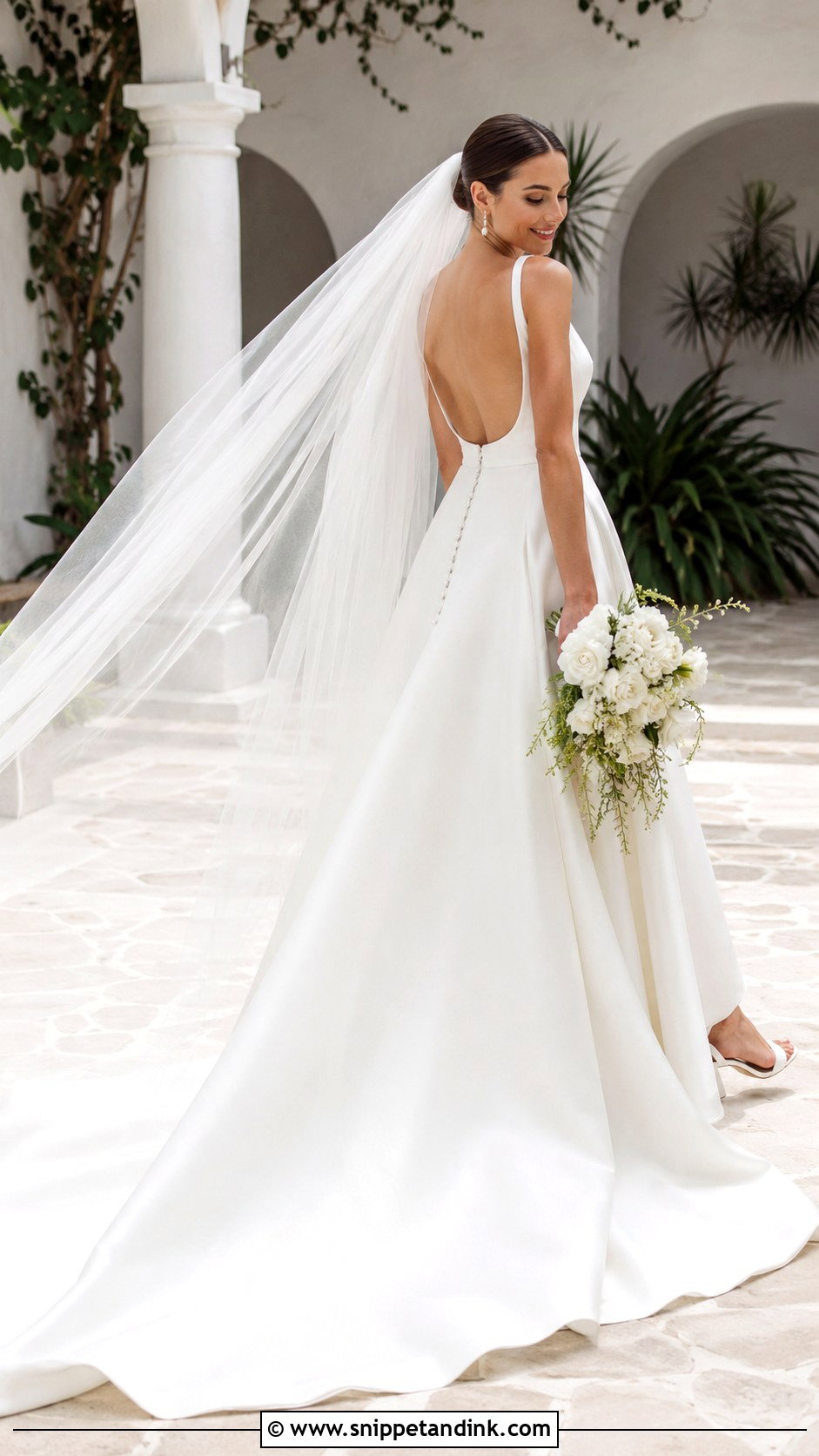
If I had to pick one silhouette that suits the most brides, it’s the A-line. Close through the waist, gradually wider below, it lets you walk, sit and dance without thinking about it. A rounded low back with covered buttons running down toward the train is the traditional finish. Those buttons are usually decorative over a hidden zip, which is good news on the morning, when nobody wants to do up forty loops. Block-heel sandals, small pearls, a cathedral veil and a loose chignon. Ask your seamstress to watch the straps while you move; on A-lines they tend to slide outward.
5. Halter Neck Backless Bridal Gown
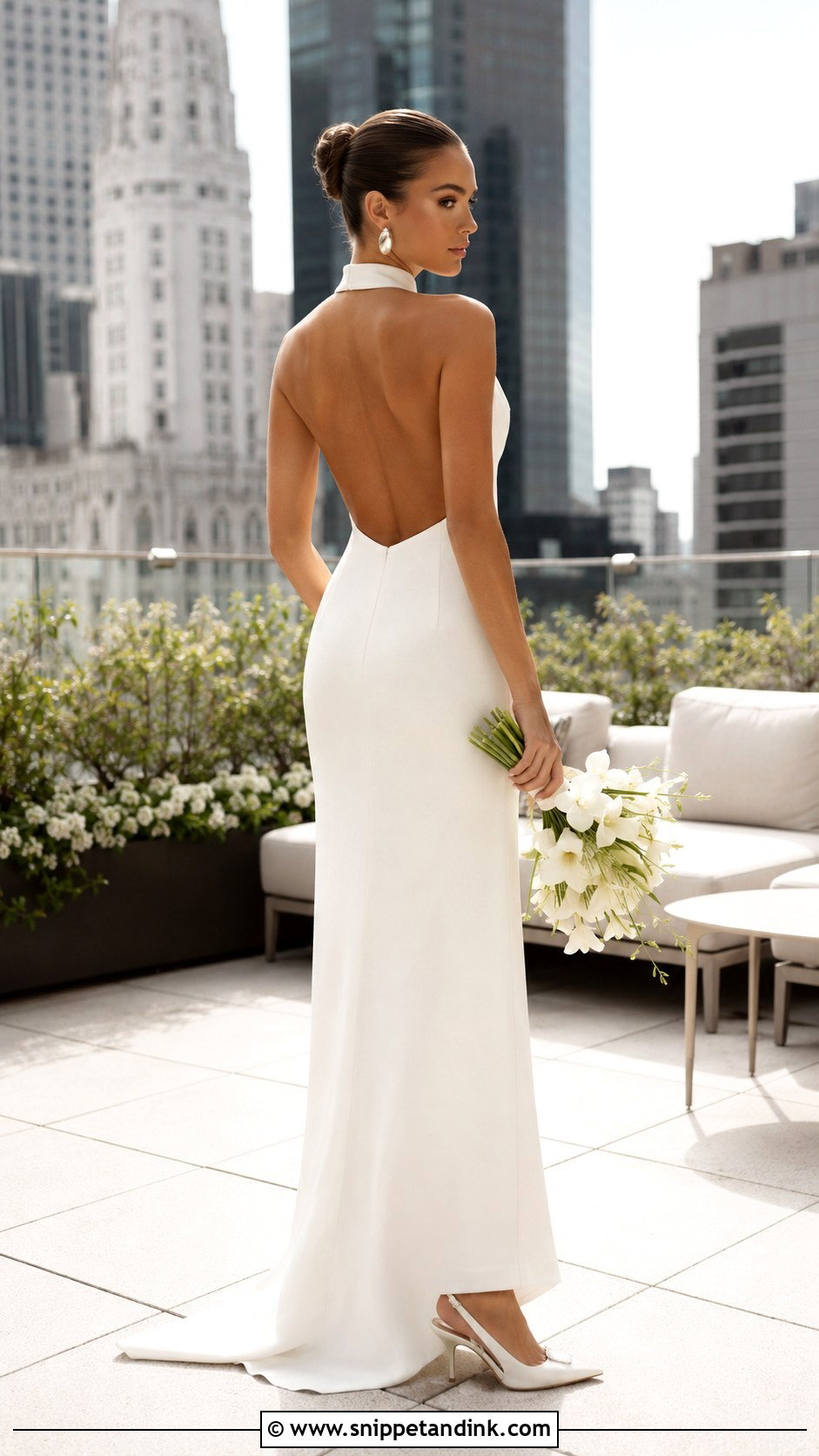
Halters do their best work in fabrics that skim the body: crepe, silk, satin falling into a column skirt. A high halter looks sharp; a draped one feels softer. Weight is my main concern with this neckline. If the gown hangs entirely from a strap around your neck, you’ll feel it by the first dance, so I look for internal boning or a waist stay that takes the load off the neck. Sculptural earrings, a smooth ponytail or bun, slingbacks and no necklace. A narrow veil or detachable cape gives ceremony drama and comes off for the reception.
6. Cowl Back Satin Bridal Gown
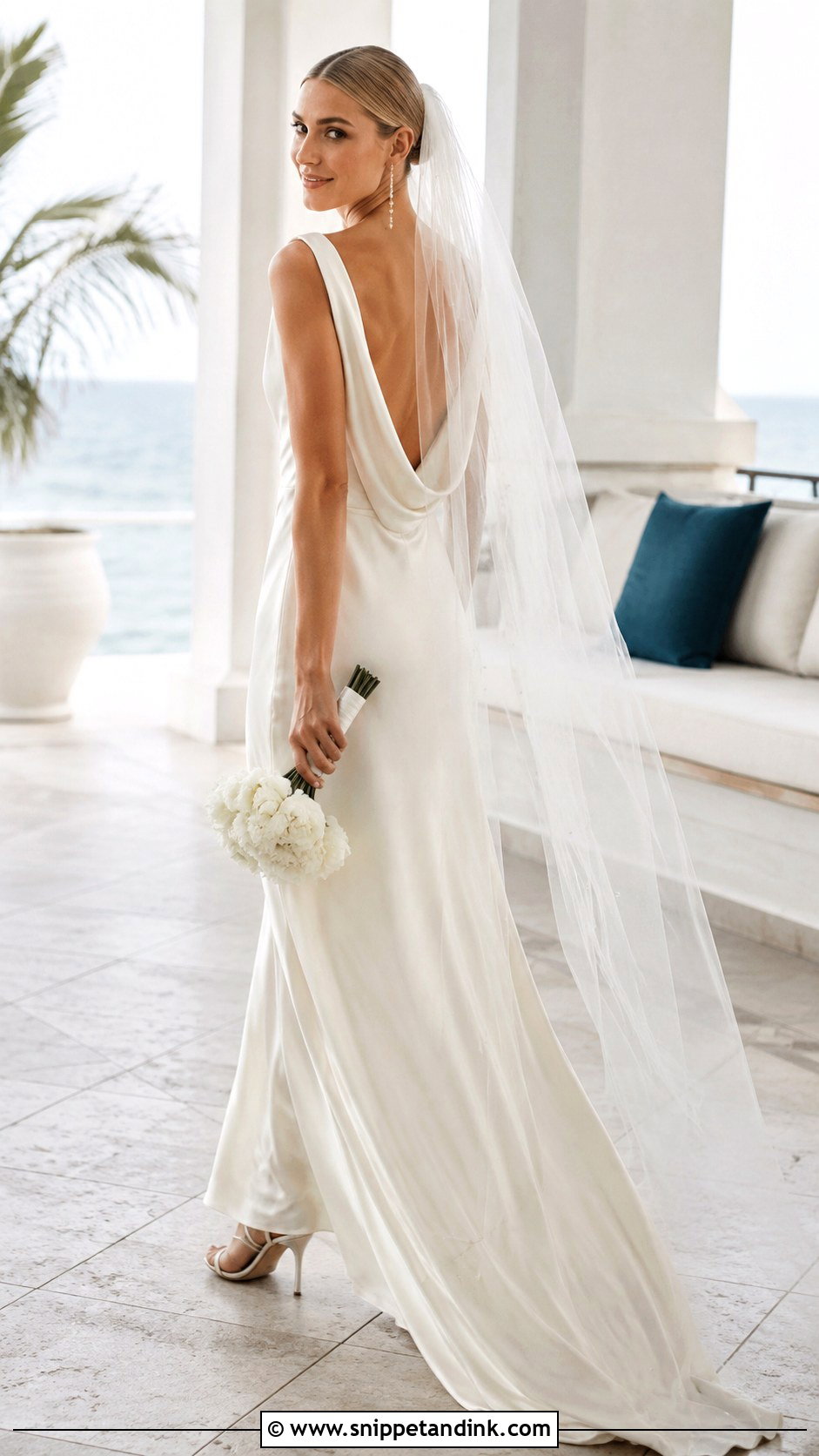
A cowl back is fabric cut on the bias and left to fall in soft folds across the lower back. It moves when you walk, which a cut-out opening never does. That same movement is its risk: if the cowl isn’t anchored at the straps, it swings open further than you planned when you lean forward or sit. Small hand-tacks or a hidden weight at the base of the fold fix that. A bias skirt follows the figure; pair it with pearl threaders, a low side-parted bun, slim metallic sandals and a light fingertip veil.
7. Illusion Lace Backless Bridal Gown
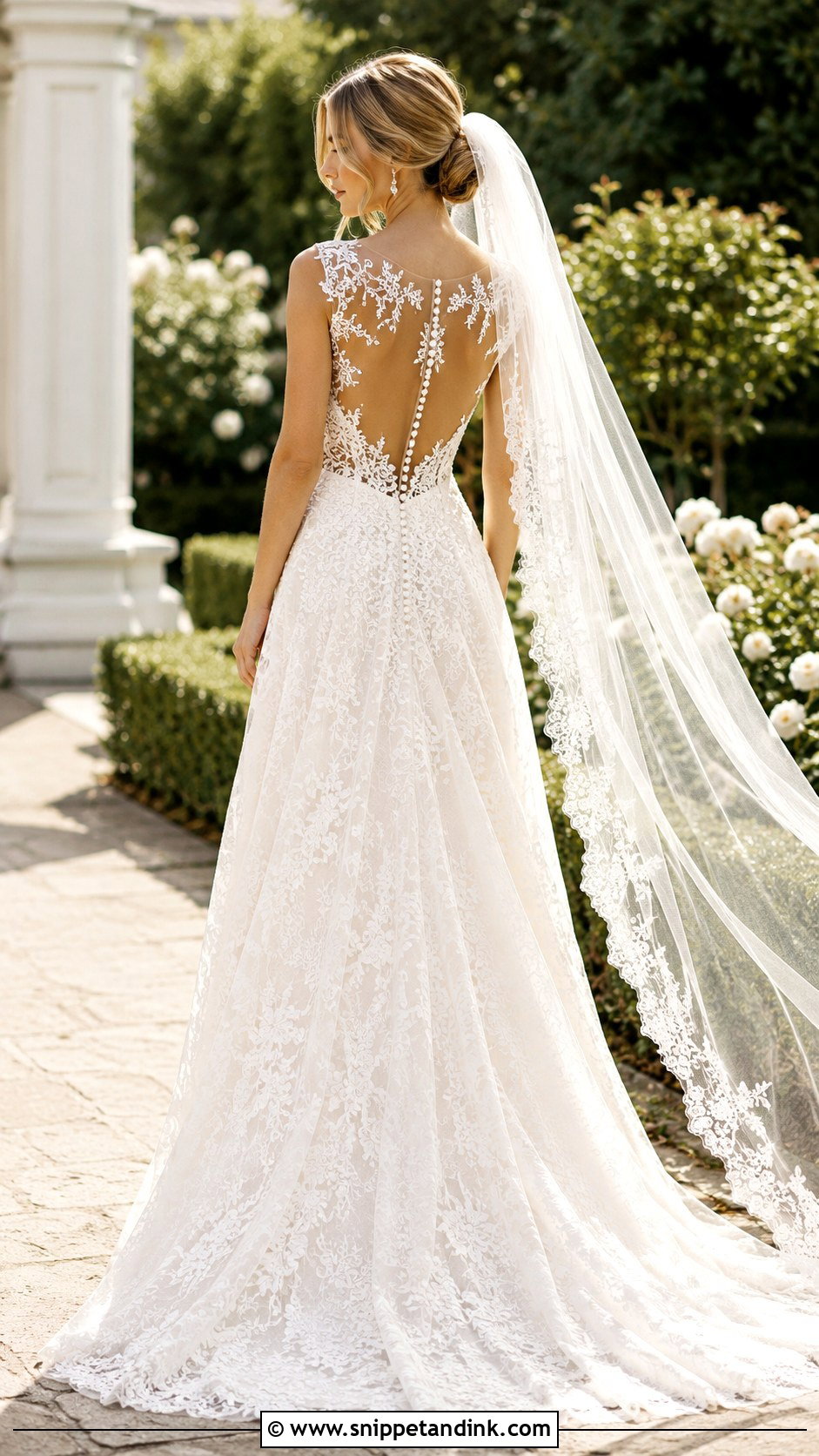
An illusion lace backless bridal gown gives the look of an open back with a sheer mesh layer holding the lace and buttons in place. That mesh is the reason the bodice stays put, so it’s a sensible option if a fully bare back worries you. Mesh color is everything. Hold several swatches against your skin in daylight, then photograph them with flash, because a shade that vanishes in the shop can glow grey in pictures. A lace-edged veil, crystal studs, a textured low bun and mid-height ivory pumps complete it.
8. Square Neck Backless Bridal Gown
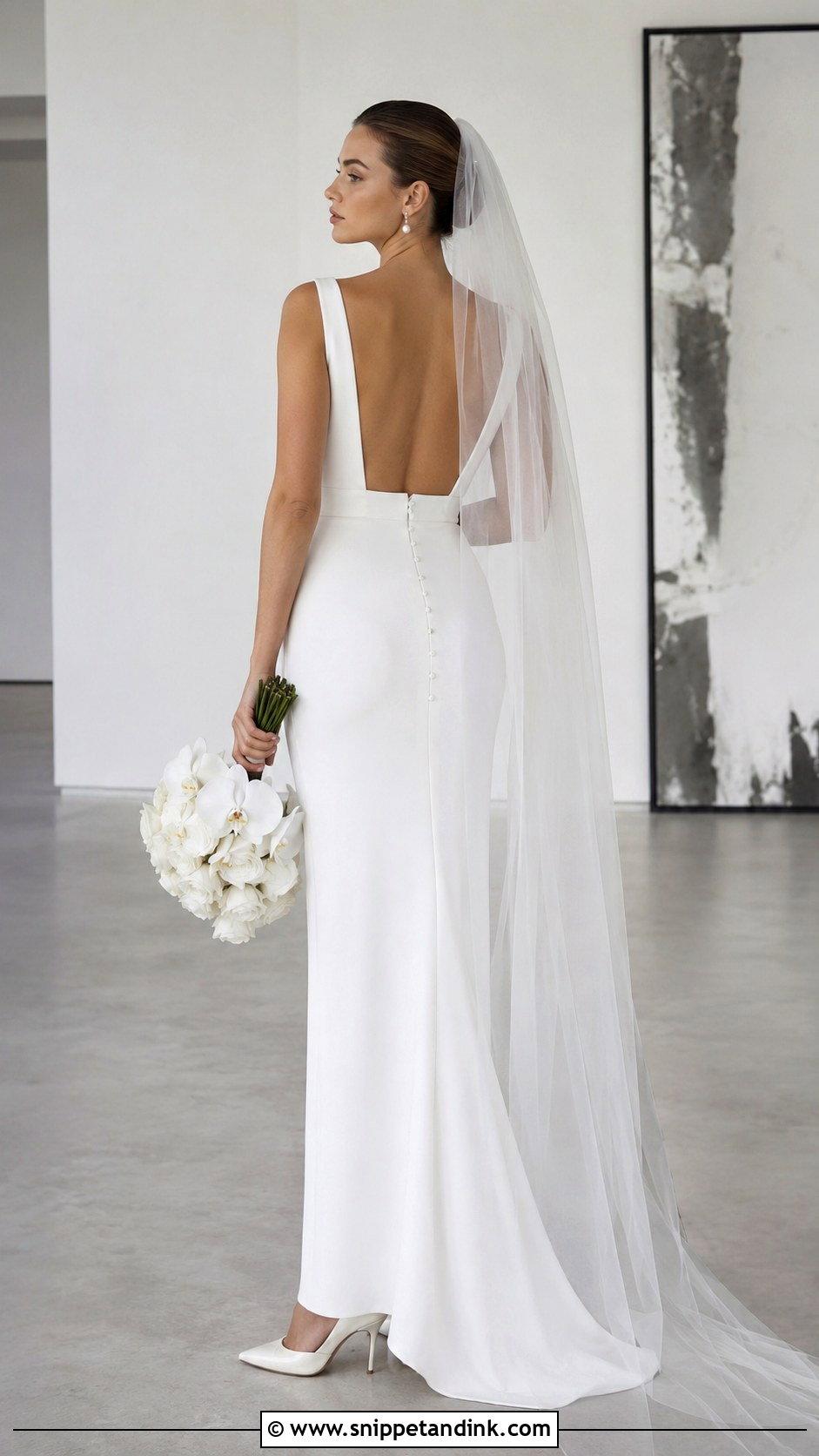
A square neck in front and a square back behind is a lovely bit of symmetry, and symmetry is unforgiving. Both straps must be exactly the same length and both back corners the same height, because the eye catches a difference of a few millimeters on straight lines. Wide straps help; they also hold better than thin ones. Matte crepe is minimal, satin more formal. Pearl buttons, a center-parted bun, pointed pumps and a long plain veil suit city halls and gallery spaces, with a structured bouquet of white blooms to match the lines.
9. High Neck Backless Bridal Gown
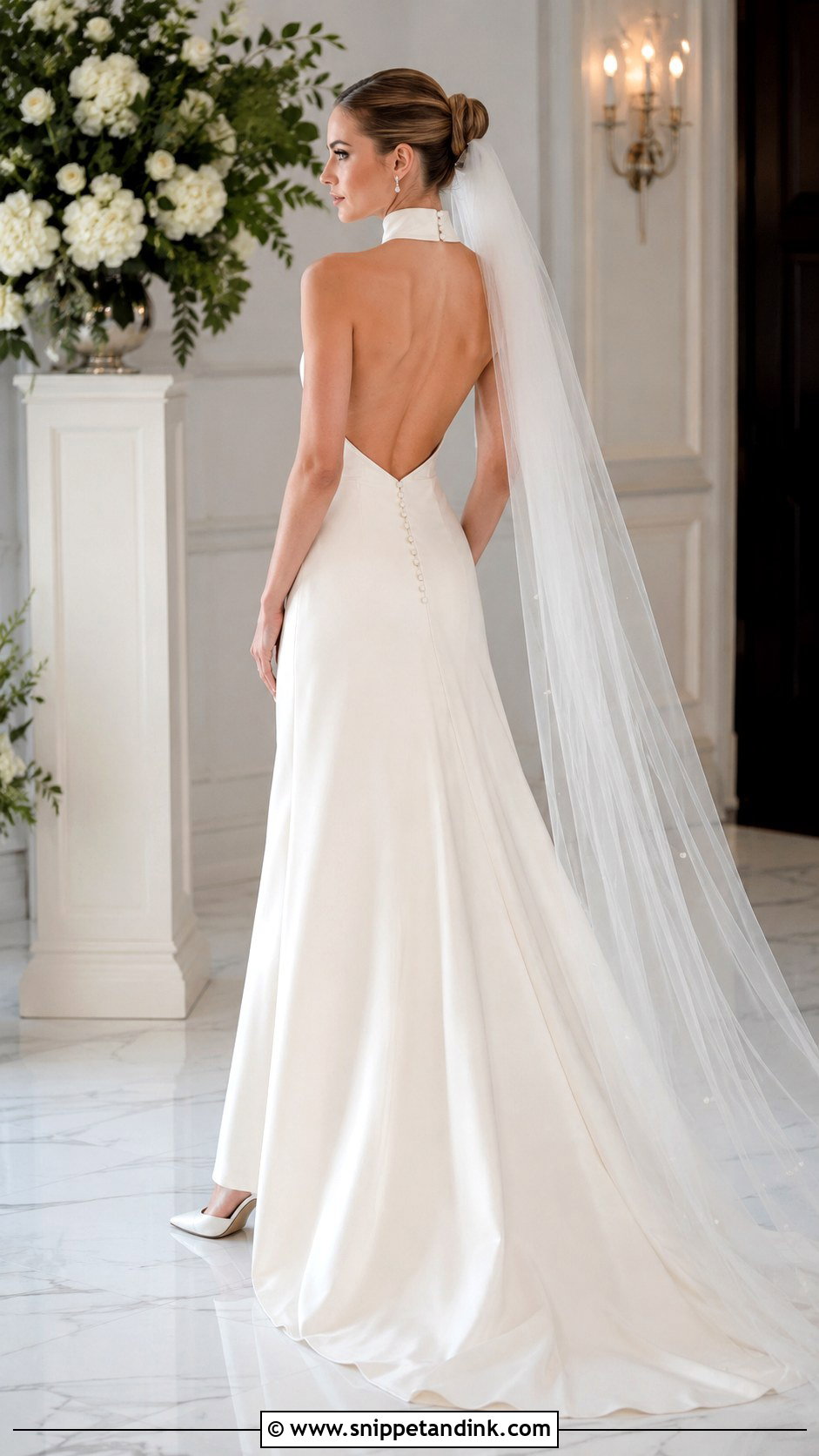
A high neck backless bridal gown covers everything in front and nothing behind, so the closure at the nape carries more than you’d guess. I check it for two things: that it doesn’t press on the top of the spine, and that the bodice doesn’t ride up when you raise your arms to hug. A slim sheath reads modern; a soft A-line moves more. With lace, repeat it once in the veil trim and stop there. An updo, small earrings, pointed heels and a veil anchored below the bun keep the back clear.
10. Strapless Backless Bridal Gown
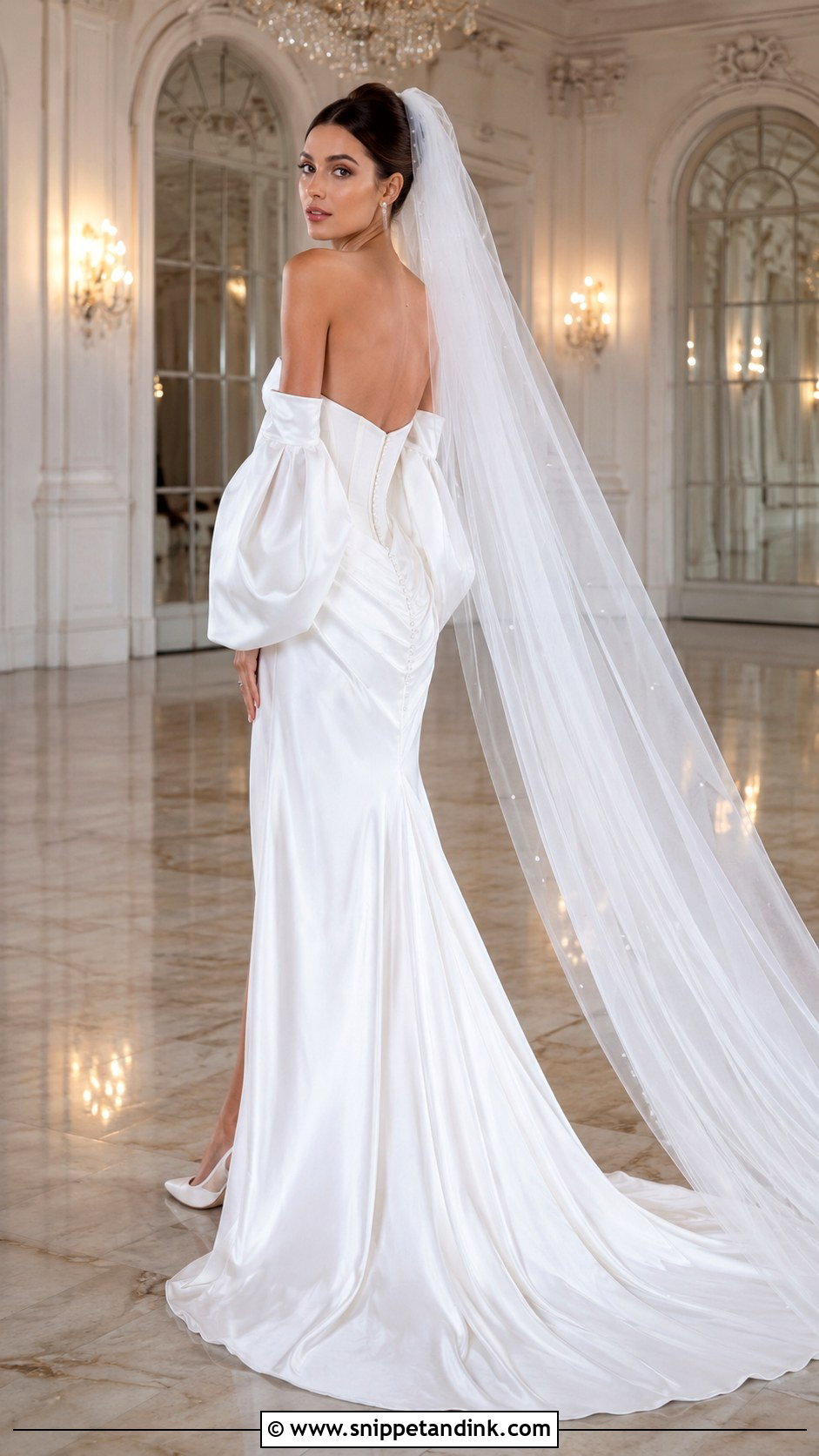
Strapless and backless together is the hardest combination to wear well, because nothing at all passes over your shoulders. Everything depends on a corseted bodice with sewn-in cups and firm reinforcement at the waist. I also want the back opening to stop above the boning’s base, so the structure isn’t cut away. A satin or full ball gown skirt balances the bare top. A short necklace, pearl studs, satin pumps and a cathedral veil suit it. Detachable sleeves add coverage for the ceremony and come off later, giving you a second look.
11. Pearl Beaded Backless Bridal Gown
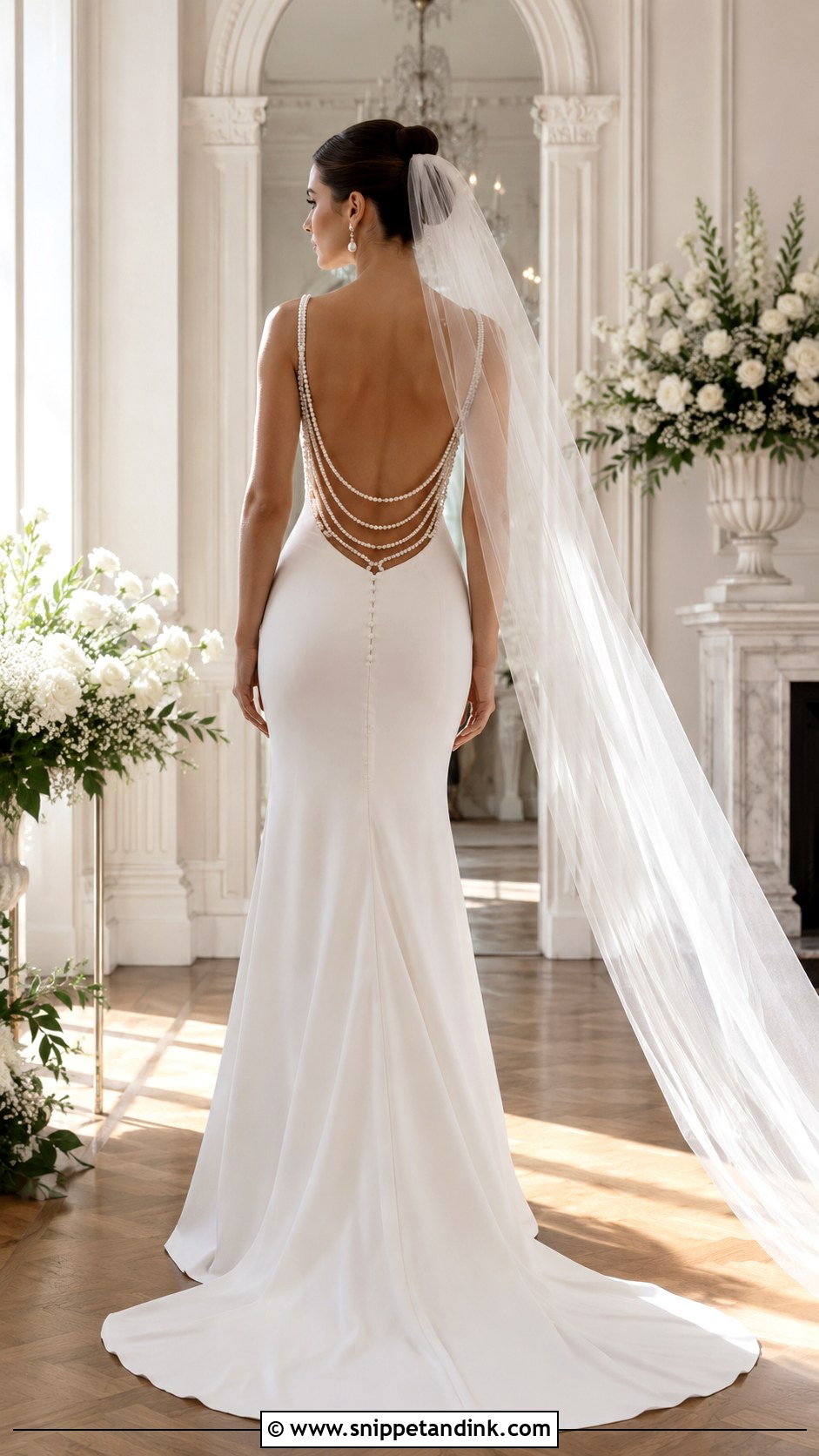
Pearl strands draped across an open back catch light softly and move when you turn, which looks pretty until one snags. Check that the strands have some slack when you sit and that they’re tacked at regular points, not just at each end. A long loose strand can loop over a chair finial. Keep the front plain so the gown stays balanced, with a fitted crepe skirt or light tulle A-line. Pearl earrings, ivory satin heels, a polished bun and a plain veil tucked underneath, so the pearls stay visible.
12. 3D Floral Backless Bridal Gown
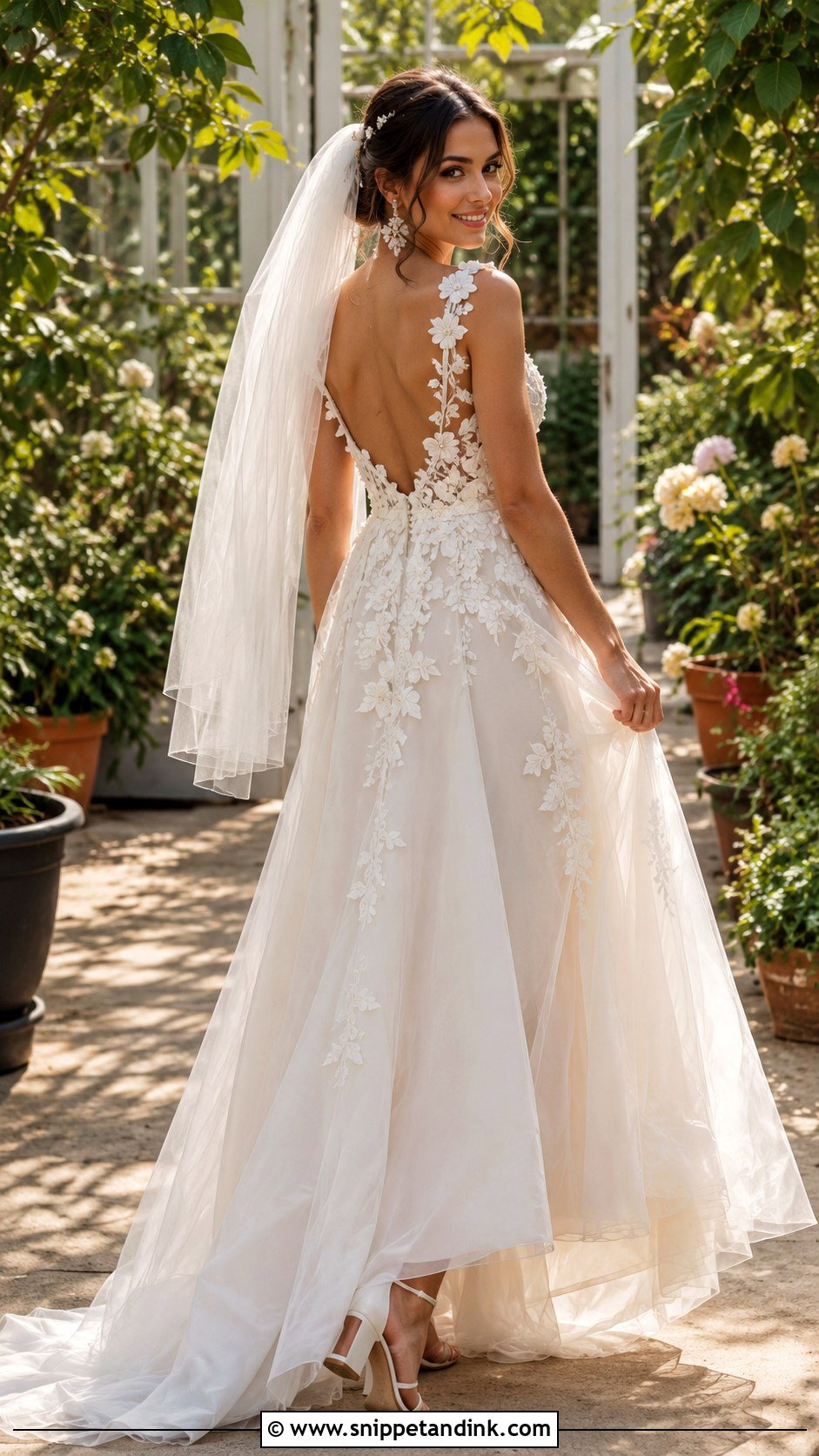
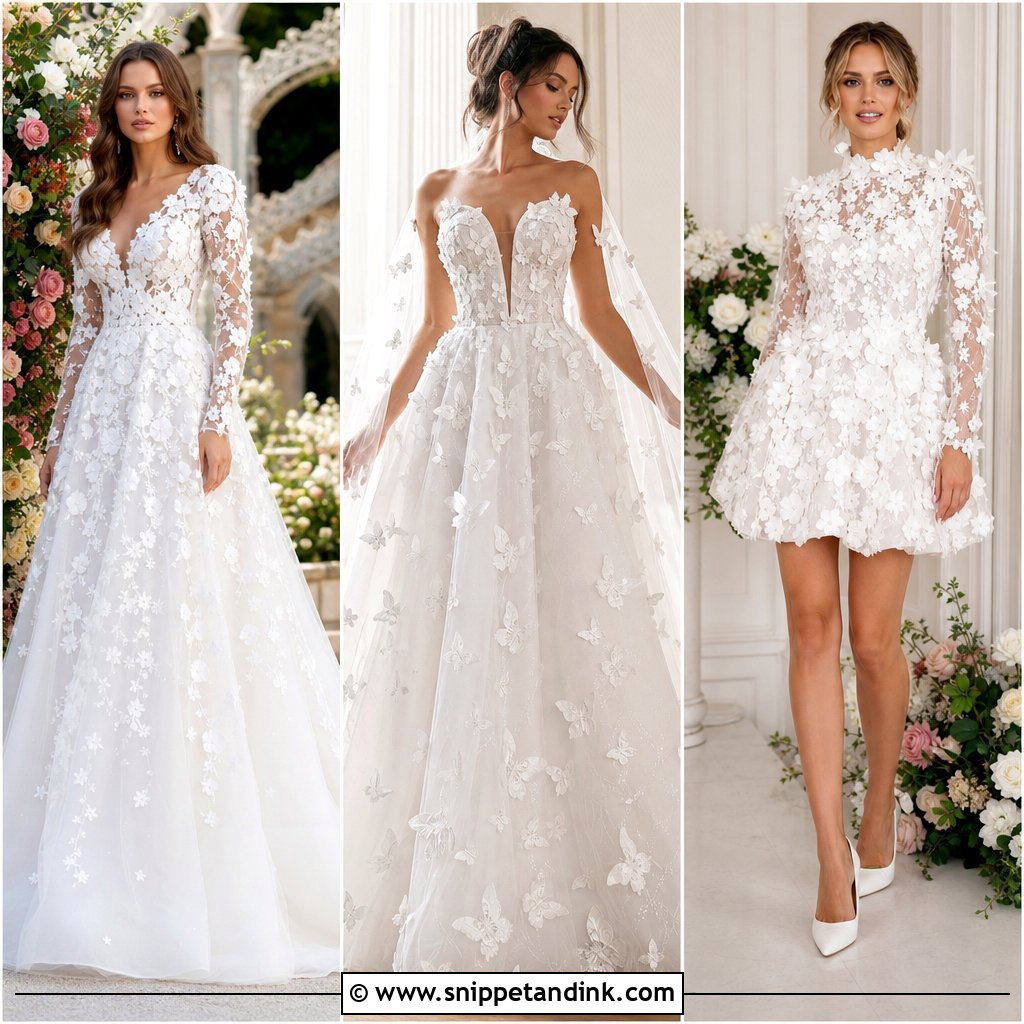
3D florals give an open back real depth, framing the edge, climbing over the straps and scattering down a tulle skirt. The weight adds up fast. Heavy dimensional petals near the back edge pull it away from the skin, so I ask for lighter flowers there and the larger ones lower on the skirt. Tonal ivory blooms look subtle; bigger petals look editorial. Floral hairpins, small crystal studs, block heels and a plain sheer veil. A loose bouquet in similar flower shapes ties it together without matching too literally, which suits gardens and spring dates.
13. Crepe Fit-And-Flare Backless Bridal Gown
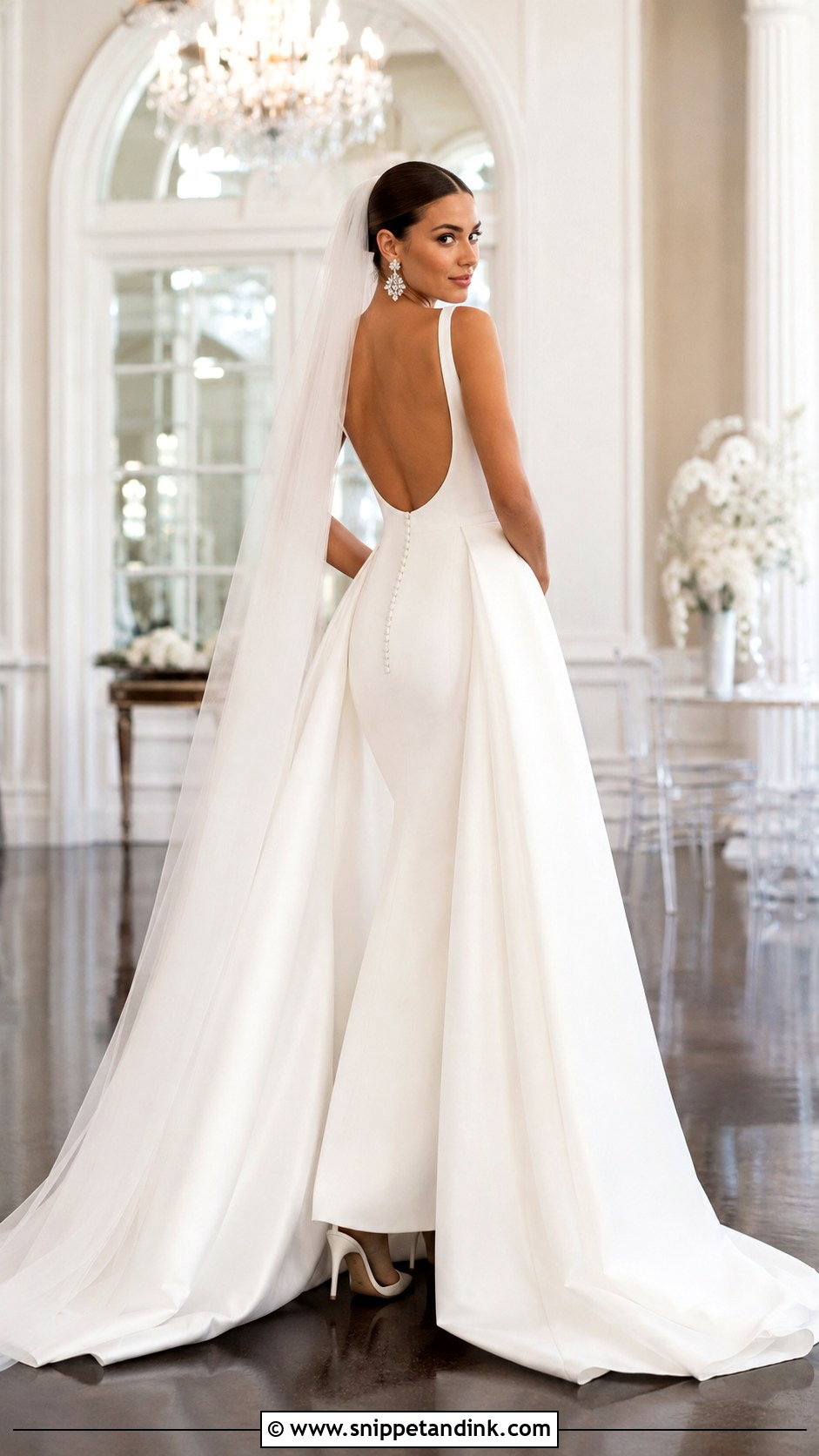
Crepe skims the body, which is why a crepe fit-and-flare looks so sleek and why it shows everything underneath. The seams over the hips and the edge of the back are where I spend most of the fitting. A deep rounded back or narrow V keeps the design clean, and a removable overskirt gives extra volume for the ceremony if you’d like it. Bold drop earrings, a sculpted low bun, pointed ivory heels and a plain chapel veil suit modern ballrooms and city venues where sharp lines carry the look.
14. Ball Gown Backless Bridal Gown
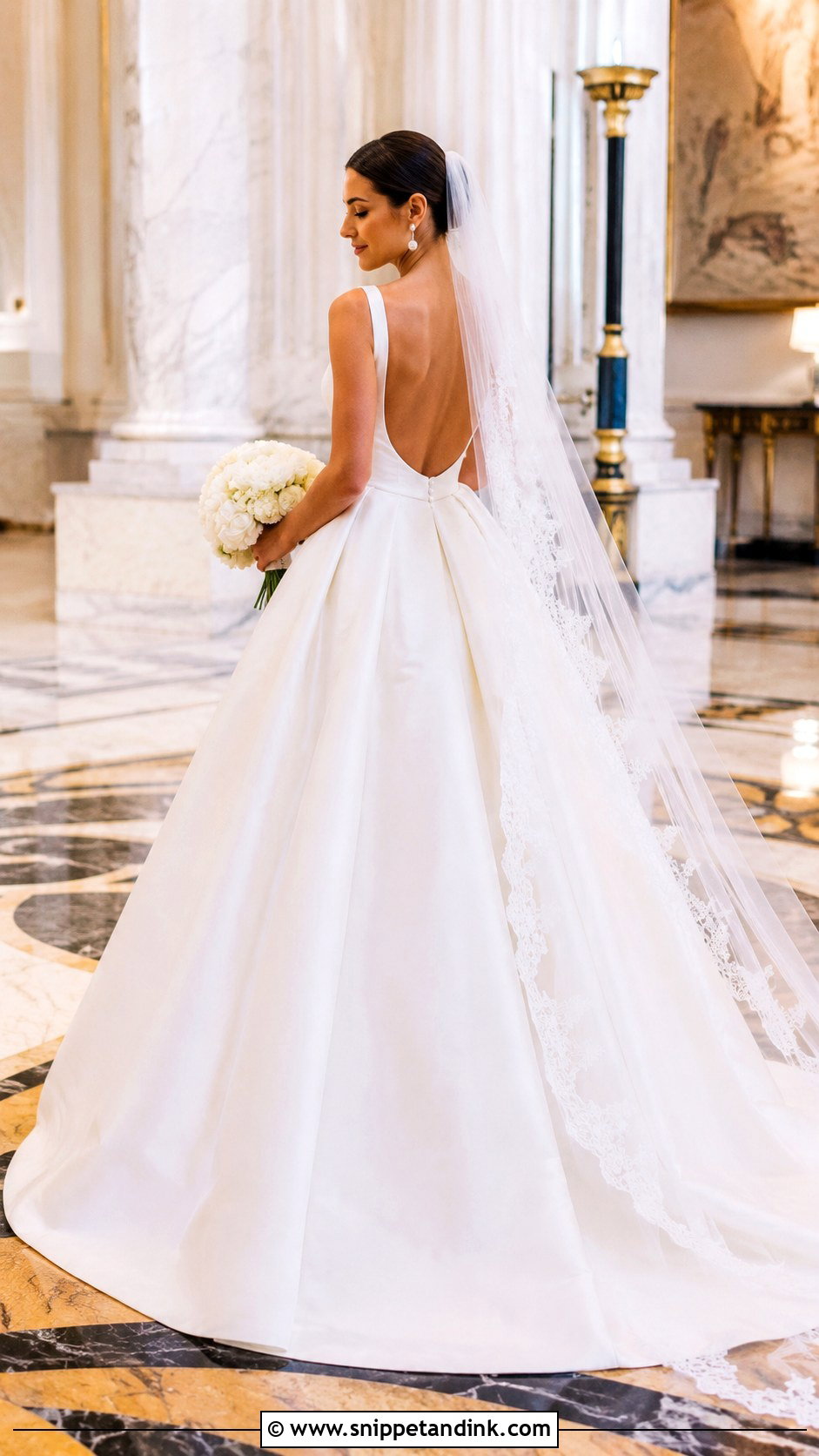
A full skirt and a bare back pull in opposite directions. Satin, mikado or tulle layers can be heavy, and that weight hangs from the waist. Wide straps and a low scoop back hold the bodice in place while keeping the rear view open. The bustle is the part brides forget: test it at a fitting, because a heavy train bustled in the wrong spot drags down the back edge. Petite brides often take out skirt volume; tall brides can carry more train. Pearl earrings, a classic bun, closed-toe pumps and a cathedral veil past the train.
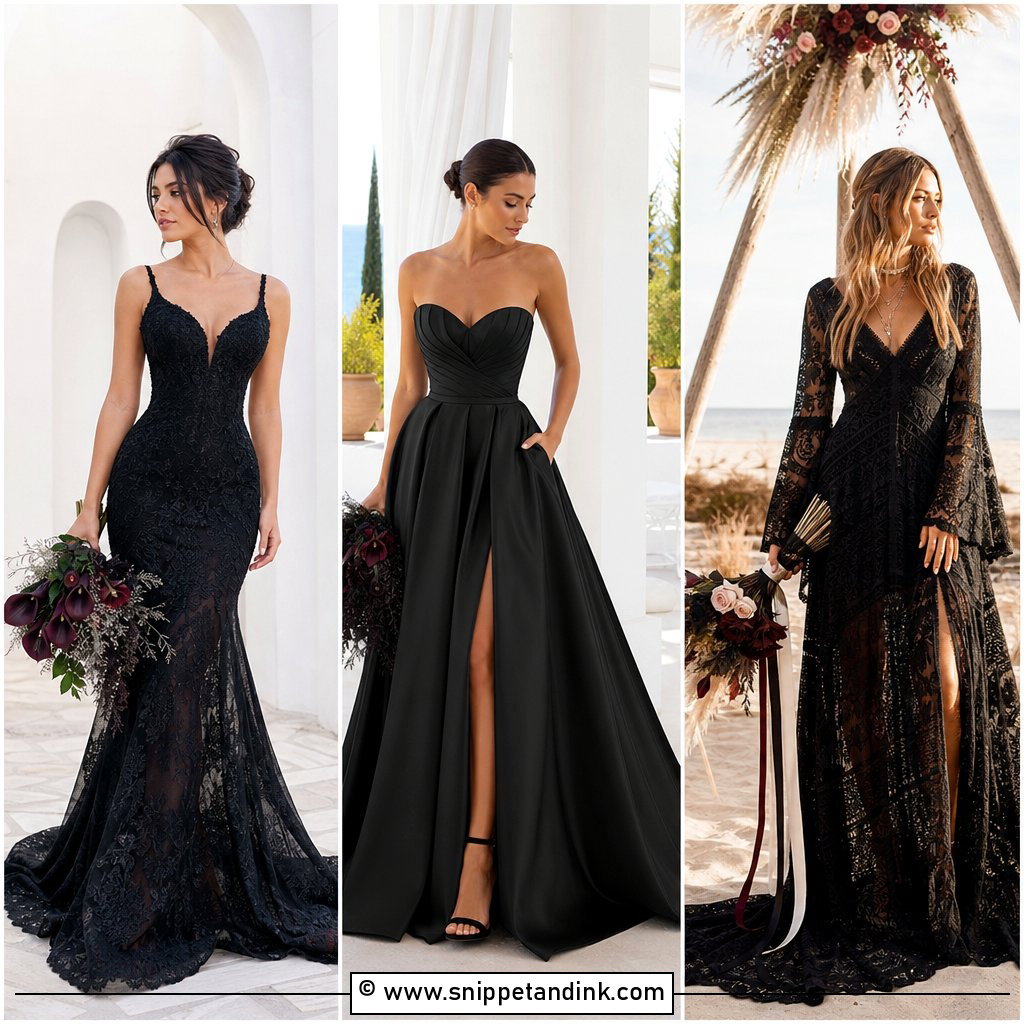

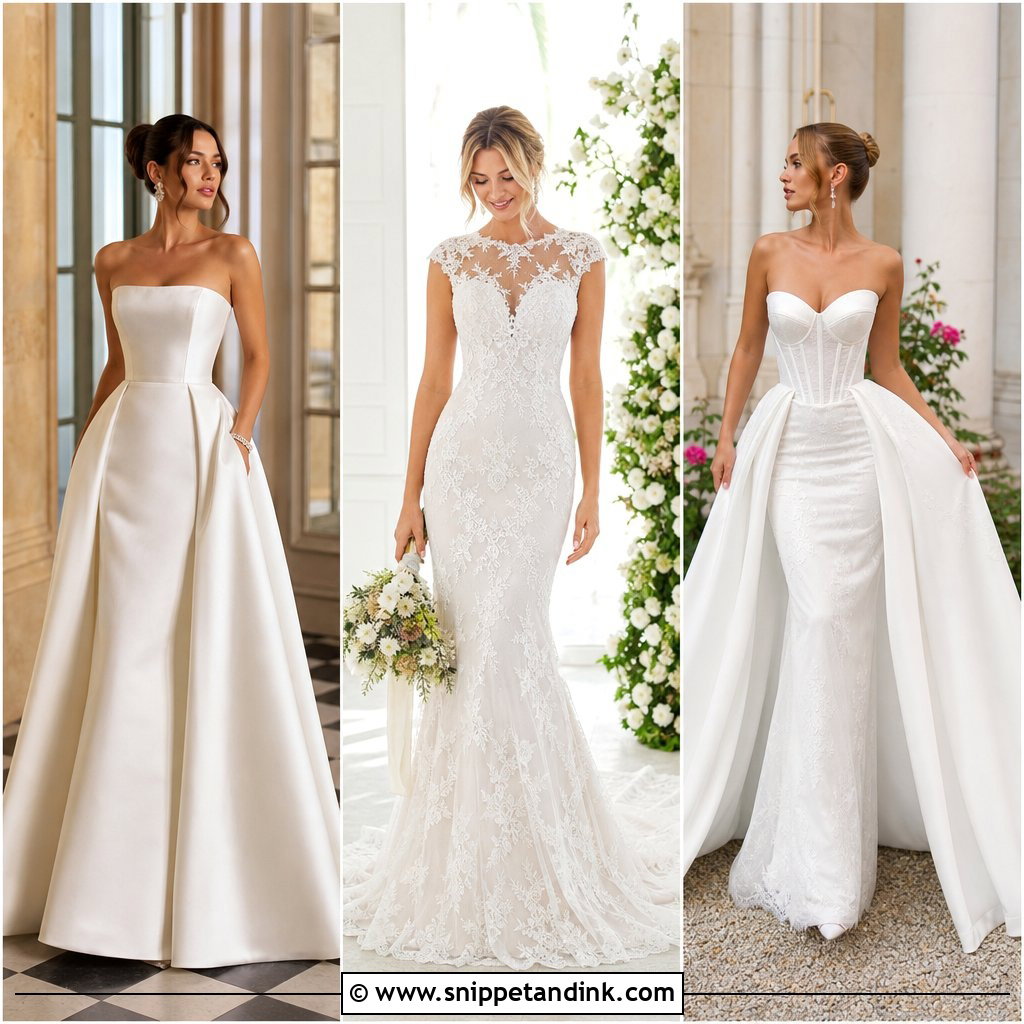
15. Boho Chiffon Backless Bridal Gown
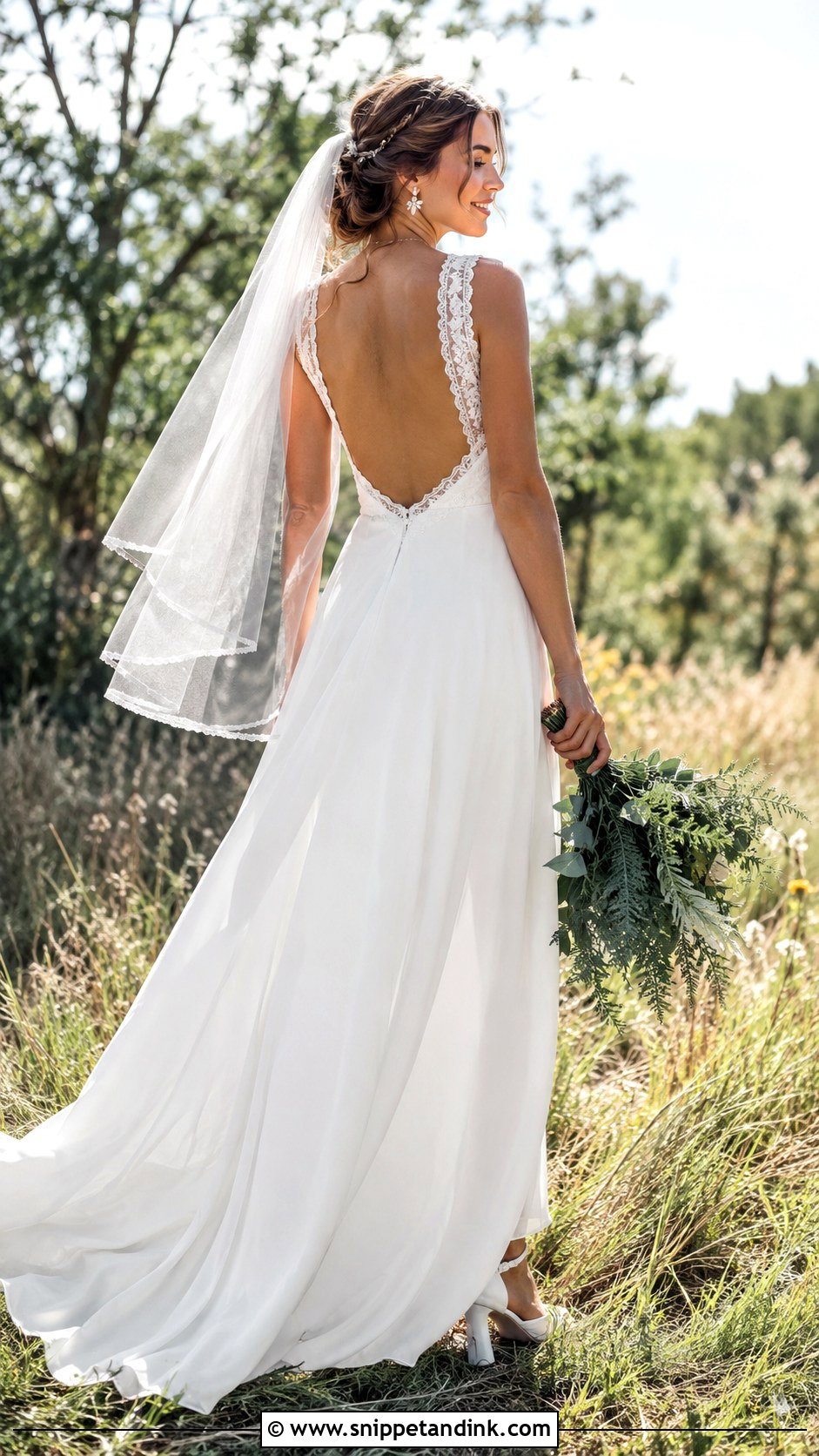
Chiffon is light and forgiving, and outdoors in summer that matters more than almost anything else. A softly gathered A-line, lace-trimmed straps and a gently curved back keep it airy. Don’t add extra layers for warm-weather ceremonies; two layers of chiffon is usually enough to be opaque. Wind is chiffon’s weakness, so ask about small hem weights if you’re marrying in an open field. A loose braided updo, small floral earrings, low block heels and a fingertip veil suit meadows, woodlands and ranch venues.
16. Beach Backless Bridal Gown
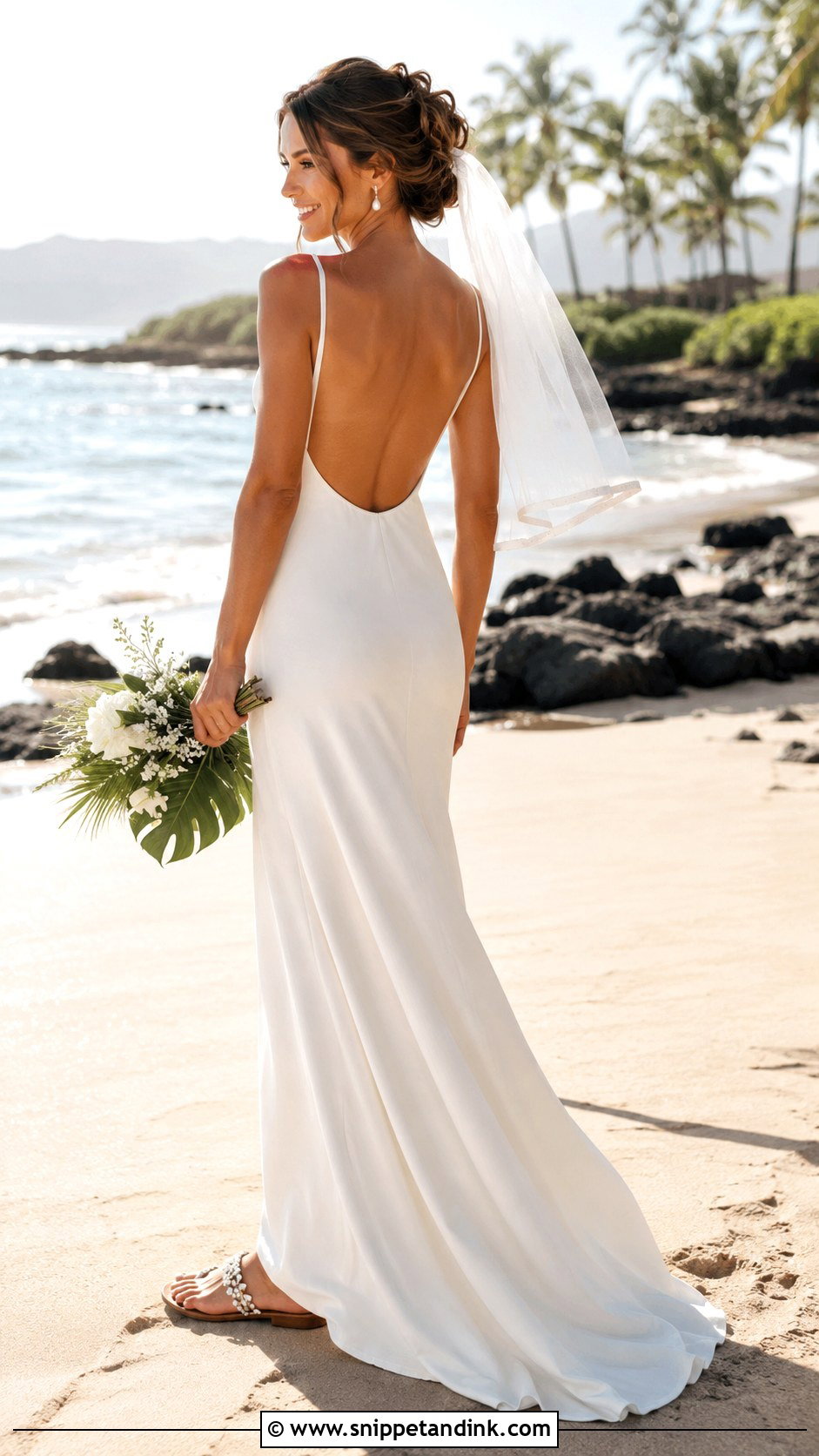
Sand changes everything about a gown. Long trains drag it, heels sink, and strong sun reveals sheer fabric you never noticed indoors. Choose lightweight crepe, chiffon or soft satin in a slim A-line or column, with a scoop back held by secure straps rather than fiddly closures. Stand outside in direct sun before your final fitting and check the skirt for show-through. Flat embellished sandals, small gold or pearl earrings, a low textured bun and a short veil that won’t trail. Skip long trains unless one detaches.
17. Detachable Overskirt Backless Bridal Gown
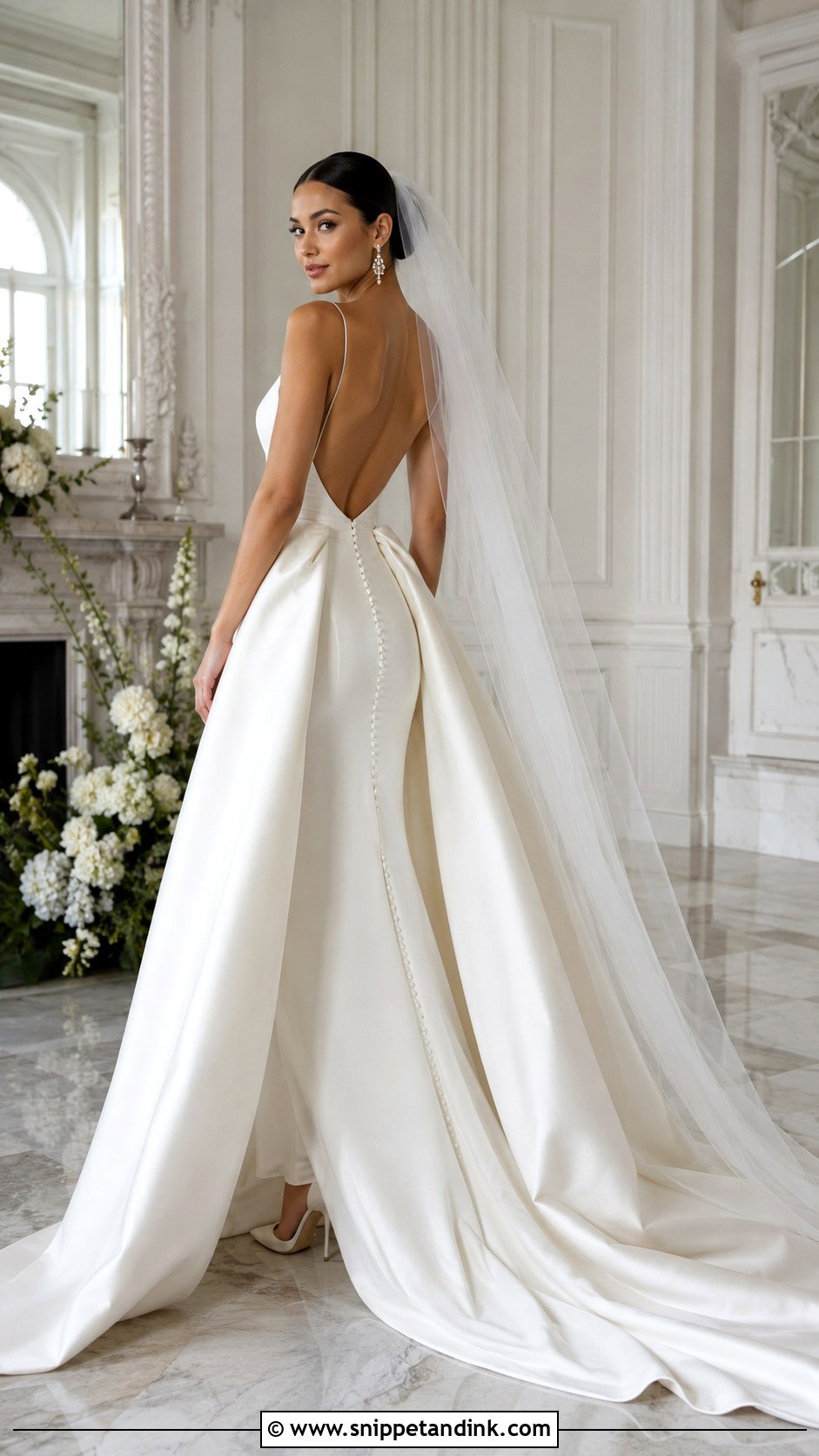
A detachable overskirt backless bridal gown gives you two looks: a full ceremony skirt over a fitted crepe, satin or lace column with a low back, then the slim gown alone for dinner and dancing. Convertible pieces like this have become a common option in bridal lines because you change proportion without a second dress. The waistband of the overskirt is the part to inspect; hooks or snaps should sit flat and hidden under it. Practice taking it off with whoever will help you, ideally twice. Statement earrings, a polished bun and pointed pumps.
18. Bow Back Bridal Gown
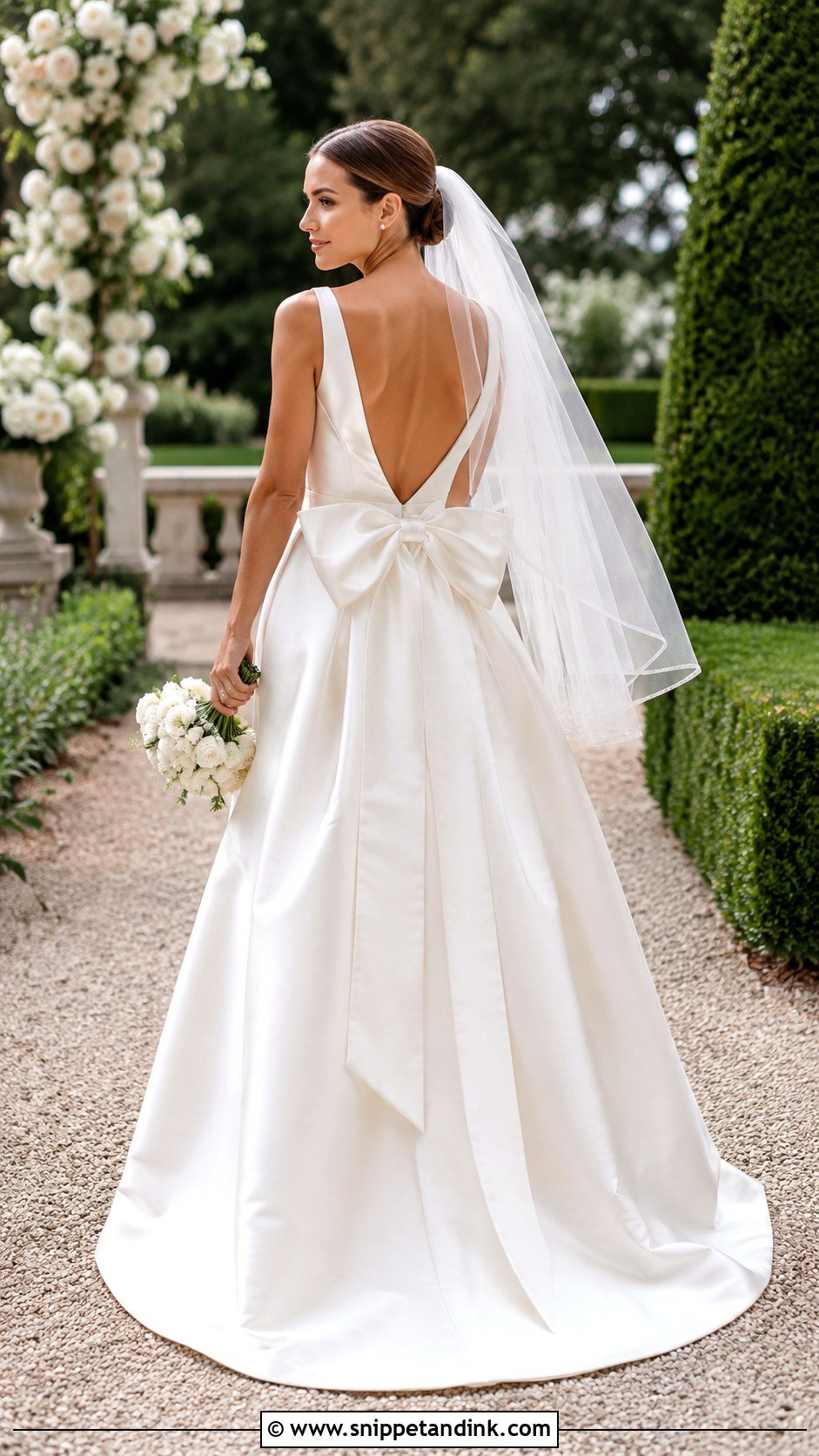
A bow at the back gives an open-back gown one clear focal point. Placement changes the mood: at the waist it feels classic, at the shoulder more fashion-led, and long tails trailing into the train add movement. Those tails need planning. They should fall between the bustle points, or they’ll get caught when the train is lifted for the reception. Ask whether the bow is interfaced so the loops keep their shape. Pearl studs, a neat bun, classic pumps and a veil that comes off after the ceremony to show the bow.
19. Basque Waist Backless Bridal Gown
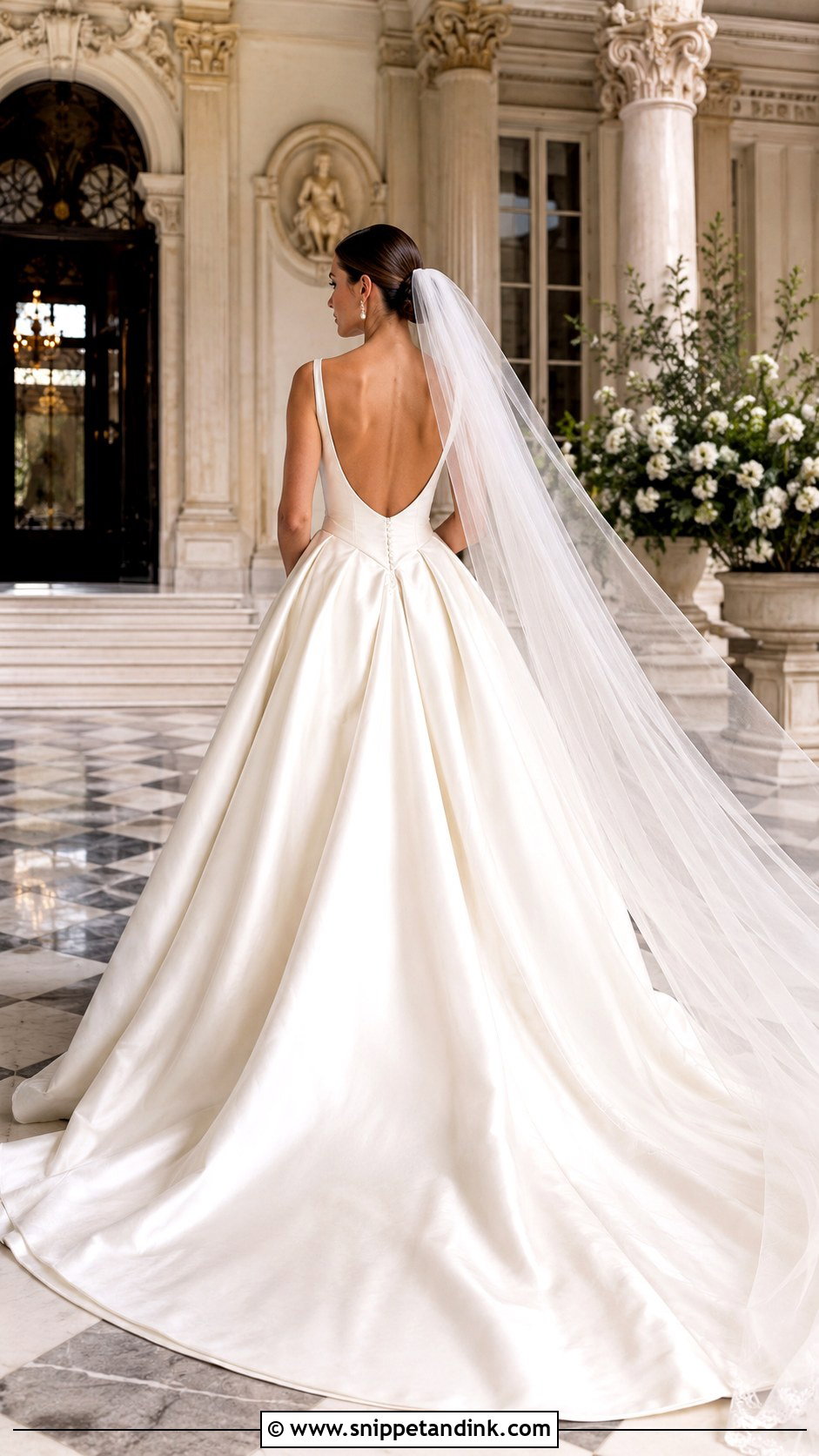
A basque waist points down at the front, lengthening the torso and sculpting the change from bodice to skirt. It pairs well with corsetry and full skirts in either lace or plain satin. Choose an open scoop back that follows the curve of the bodice seams so the lines connect. The point is personal: the sample length is cut for the sample, and it should sit at your hip bones, not below them. If it digs in when you sit, it needs shortening. A cathedral veil, drop earrings, satin pumps and a smooth low bun.

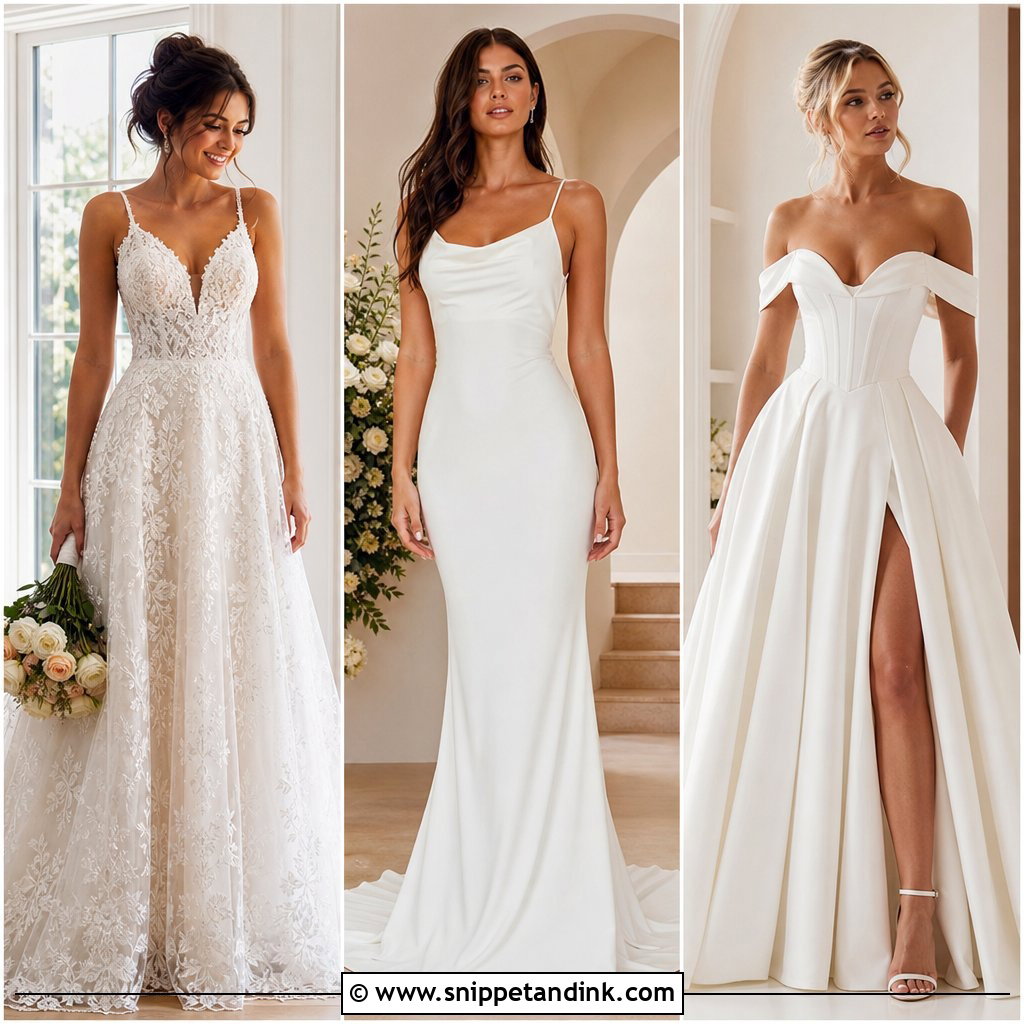
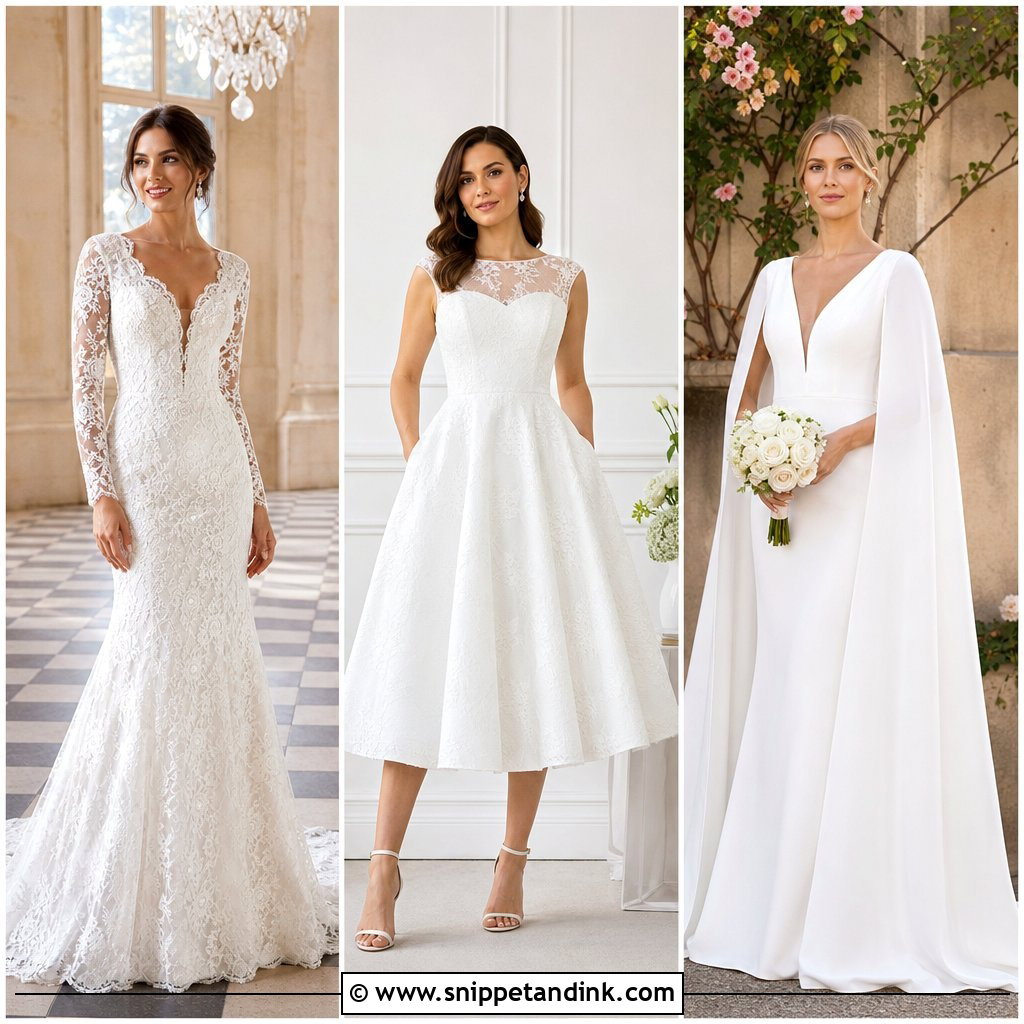
20. Plus Size Backless Bridal Gown
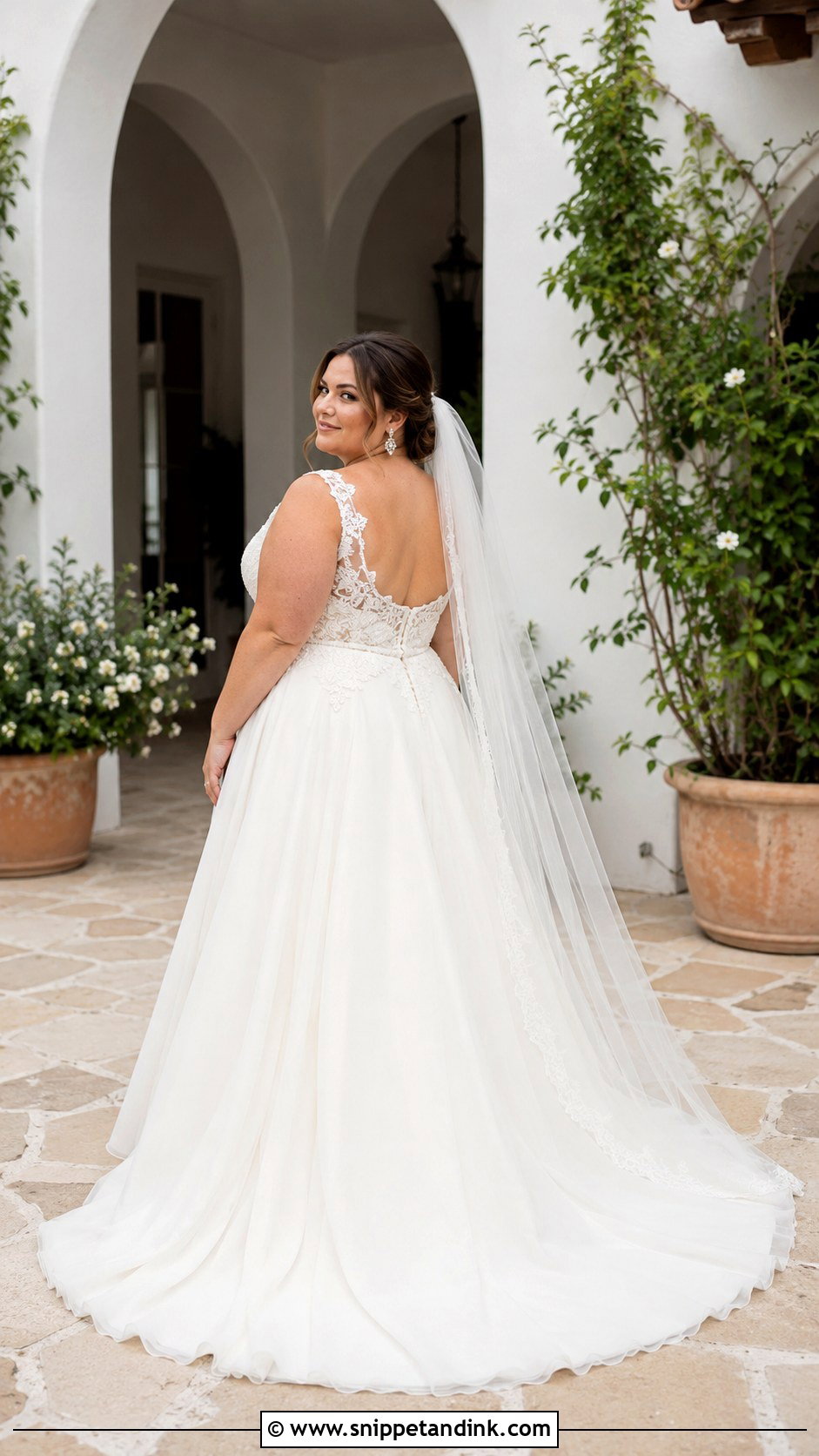
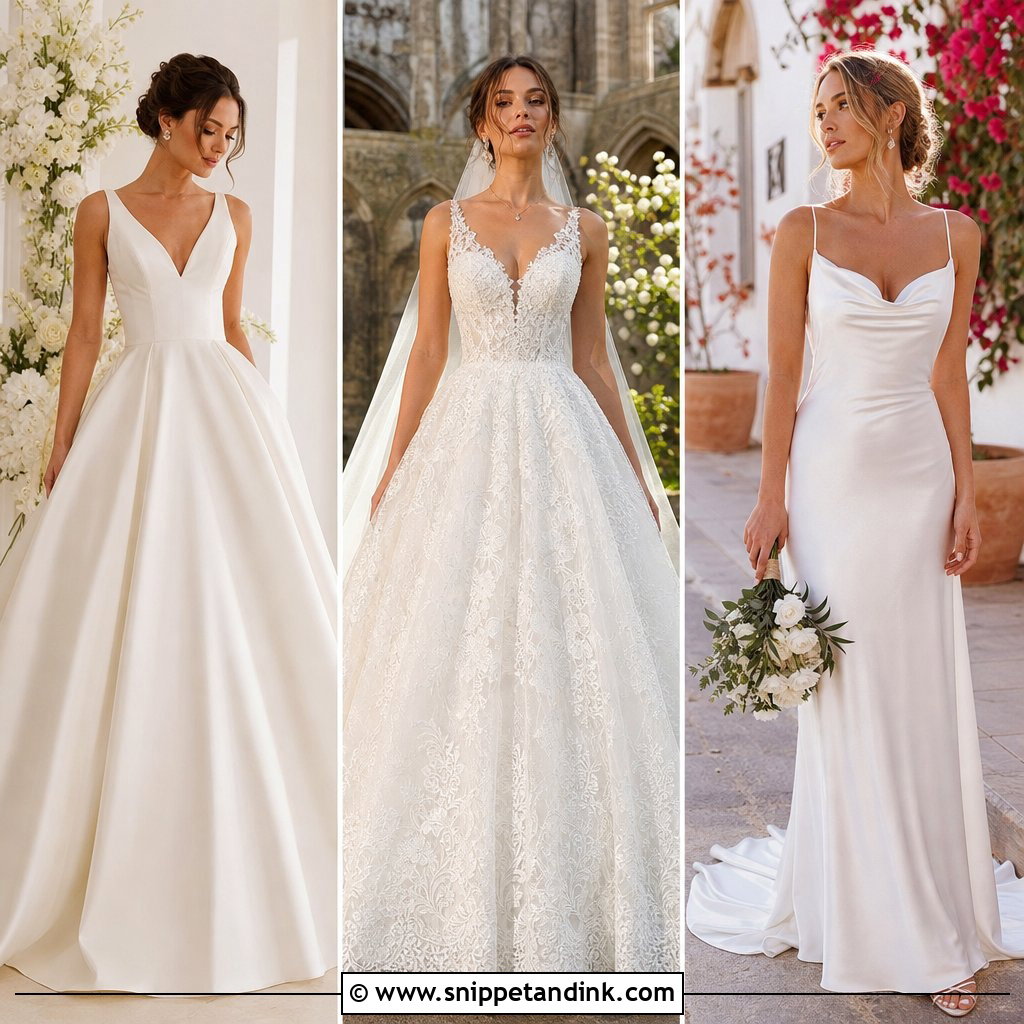
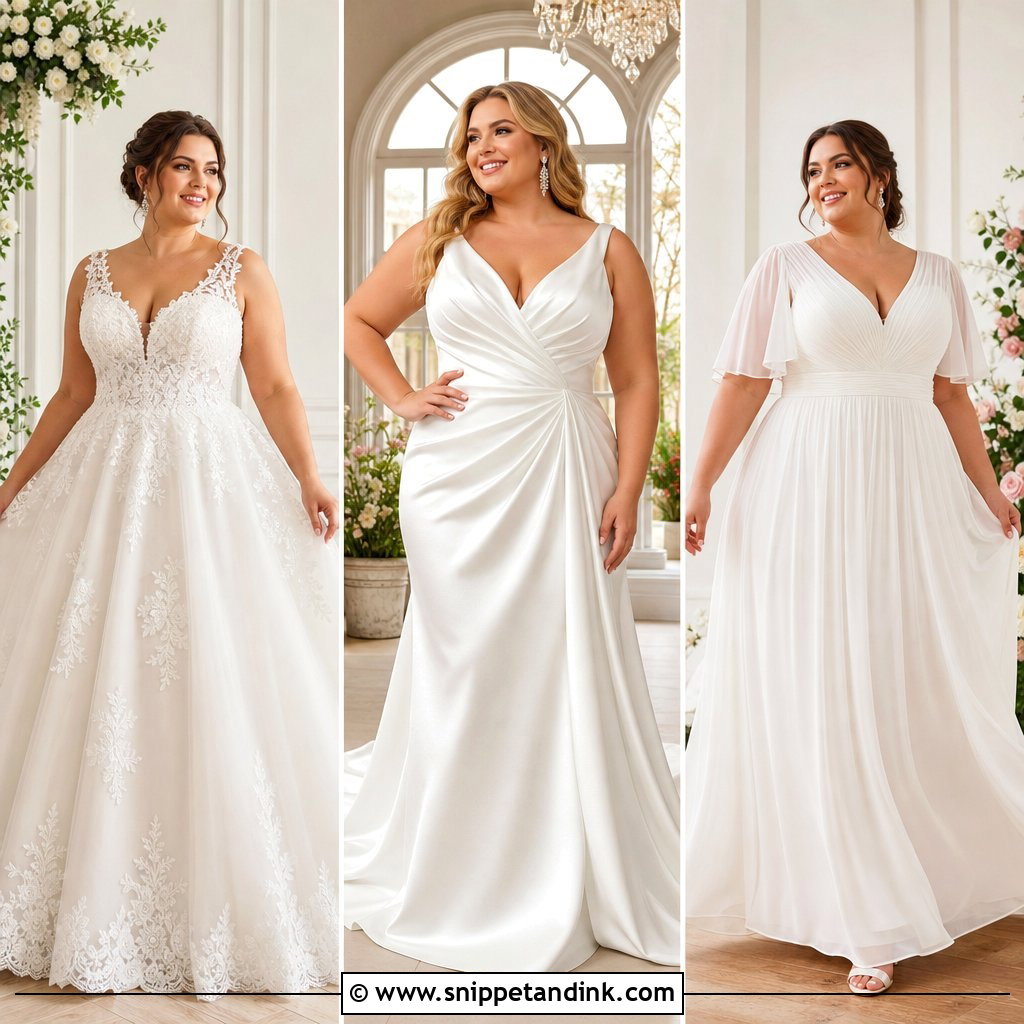
A plus size backless bridal gown can be every bit as secure as any other, provided the support is built in rather than borrowed from straps alone. Look for wider straps, reinforced side seams, structured cups and a firm waistband in an A-line or fit-and-flare. An illusion panel or moderately low scoop back gives stability without looking covered. Ask the shop to pull a sample close to your size, since clipping a large sample tells you little about where a back will sit. A good seamstress can fine-tune straps, back depth, bust support and waist placement. Accessorize to the gown, not to rules about minimizing.
Veils and Bustles That Leave the Back in View
Two pieces can quietly hide the detail you chose: the veil and the bustle. Neither has to.
Veil placement
Anchor the comb under or below the bun instead of on top of it, so the veil falls from the nape rather than across the shoulder blades. A plain sheer tulle or one with a narrow edge lets the back show through during the ceremony; heavily embroidered veils cover it completely. Many brides take the veil off after the portraits, which also stops it catching on chairs at dinner. Ask your hairstylist to practice the removal at your trial so the style stays intact.
Bustle styles
A bustle lifts the train for the reception, and on an open-back gown the anchor points have to sit below the opening, never at its edge. An over bustle hooks the train up onto the outside of the skirt; an under, or French, bustle tucks it underneath. Low backs usually suit the under style better, since there’s less pulling near bare skin. Your seamstress adds it near the final fitting, so bring the person who’ll do it on the night and let them practice once. Color-coded ribbons inside make it much easier after a glass of champagne.
What Your Back Looks Like at the Last Dance
An open back should feel as secure at the last dance as at the processional. Start with the silhouette that lets you move the way you’ll actually move, then look at how the back opening works with straps, construction, train, veil and hair. Satin gives clean lines, lace adds detail and crepe offers smooth structure; illusion panels, wider straps and good alterations make any of them easier to wear. Treat the looks above as starting points. A minimalist column or a floral ball gown both work when the fit is right.
You'll Like These Ideas:








Leave a Reply