
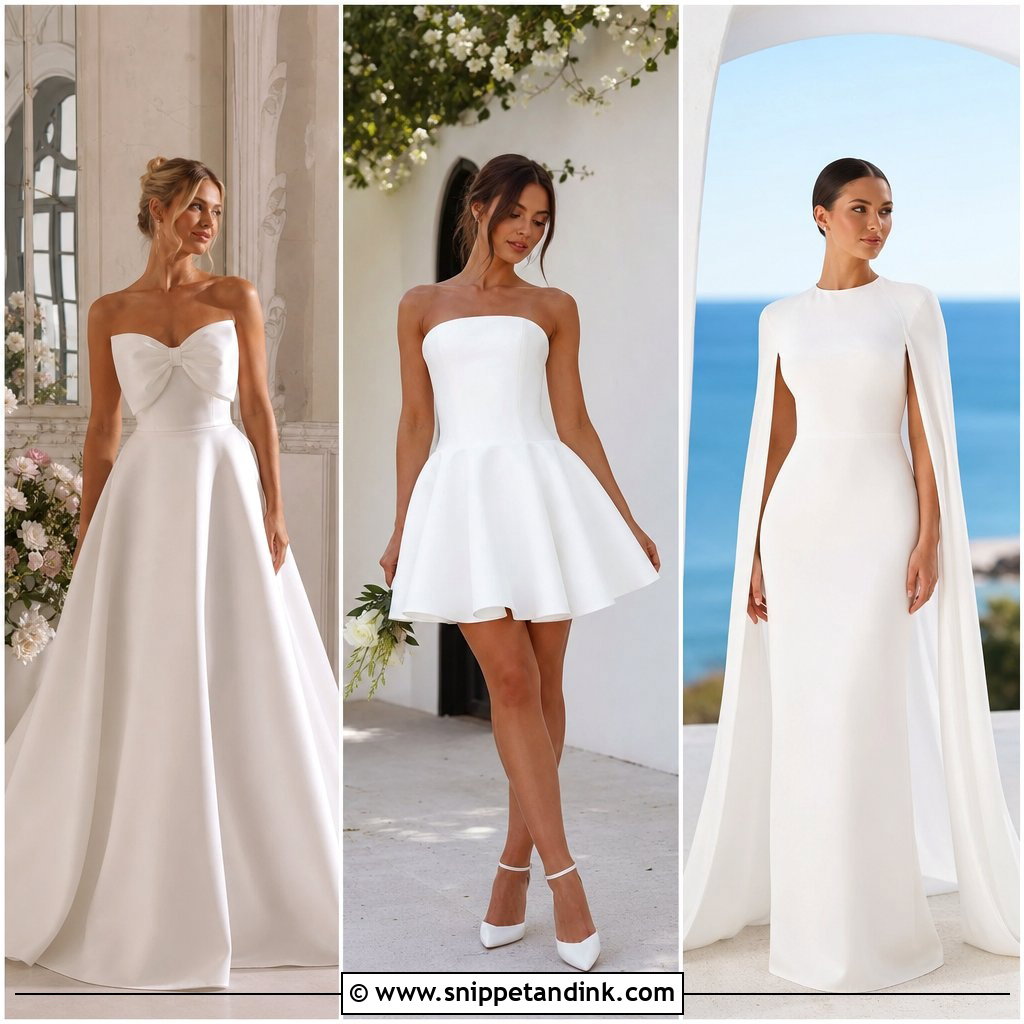
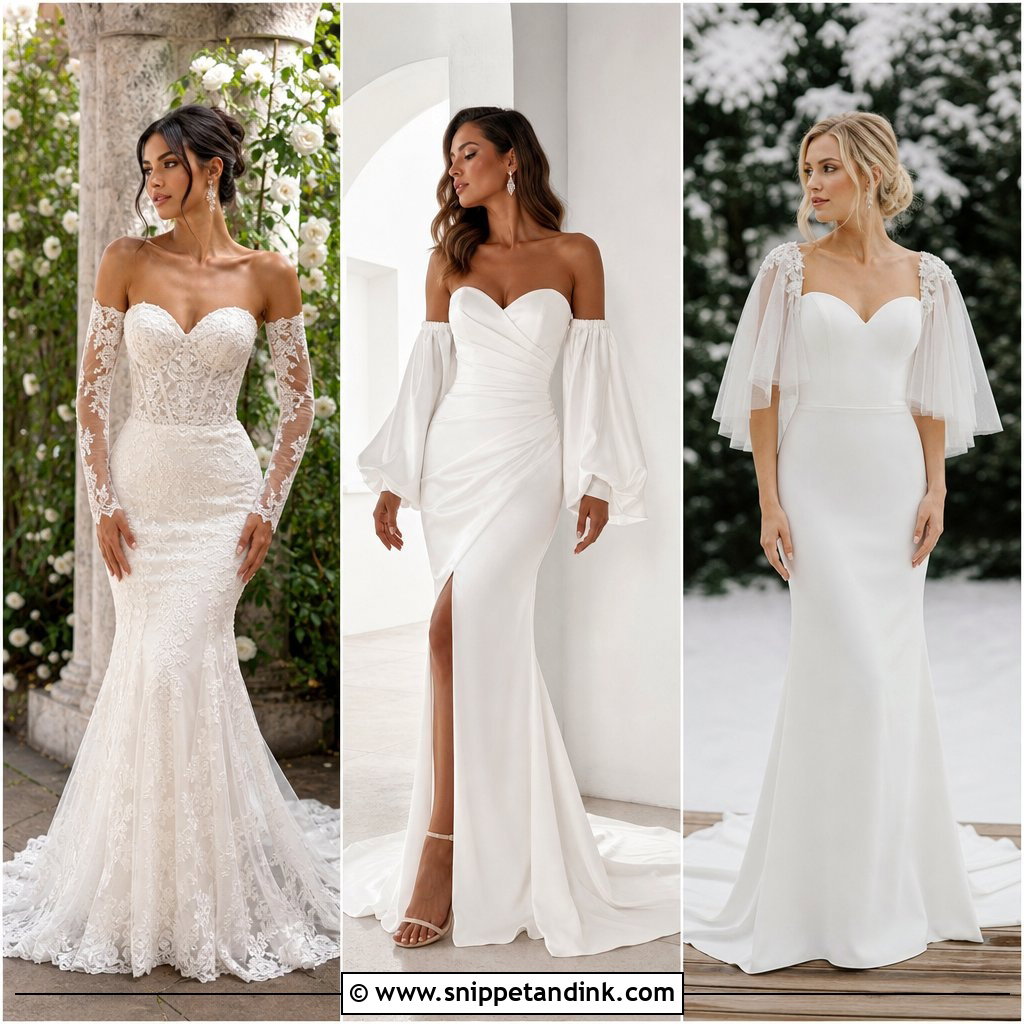
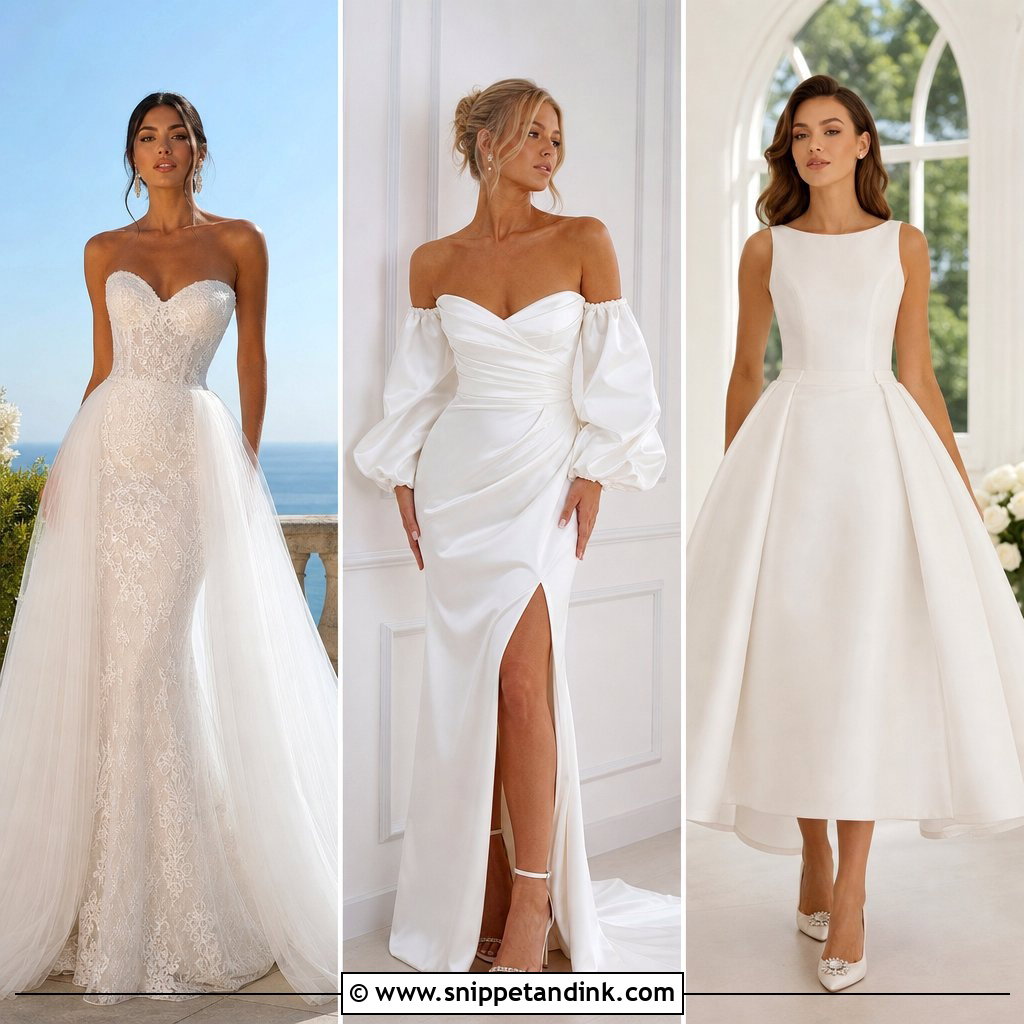
Most brides who ask me about a two-look dress want the same thing: a proper ceremony gown, then something they can actually dance in, without paying for a second dress and a second round of alterations. Convertible bridal designs get there with pieces that come off: overskirts, sleeves, capes, trains, toppers. Some changes are dramatic, like a ball gown skirt lifting away from a fitted mini. Others are quiet, such as a lace jacket unbuttoned to show a strapless neckline. The idea only works if the base dress fits on its own and someone other than you can make the switch in minutes, so that is how I look at every style below.
How Detachable Pieces Are Actually Held On
Most of what goes wrong with a convertible gown comes down to hardware, and it is rarely discussed in the shop. Snaps are quick but pop open under weight, so they suit sleeves and light tulle, not a satin overskirt. Hook and bar closures hold far more and lie flat. Covered buttons with elastic loops look neat but take longer to undo, which matters when the change is happening in a corridor.
When I fit one of these, I look at where each attachment point sits against the base gown’s seams. A good seamstress hides hooks along the waist seam or inside a lining, so nothing shows when the piece is off. If a shop sells the overskirt separately from the gown, ask whether it was designed for that exact dress. Adding one to a gown from another brand is very doable, but it needs its own fitting.
- Allow extra time for alterations: each piece is fitted separately and then together.
- Ask for a spare hook or snap for each closure, sewn inside the lining.
- Have the base gown hemmed with the overskirt removed, so the second look is the right length.
1. Wedding Dress With Detachable Overskirt
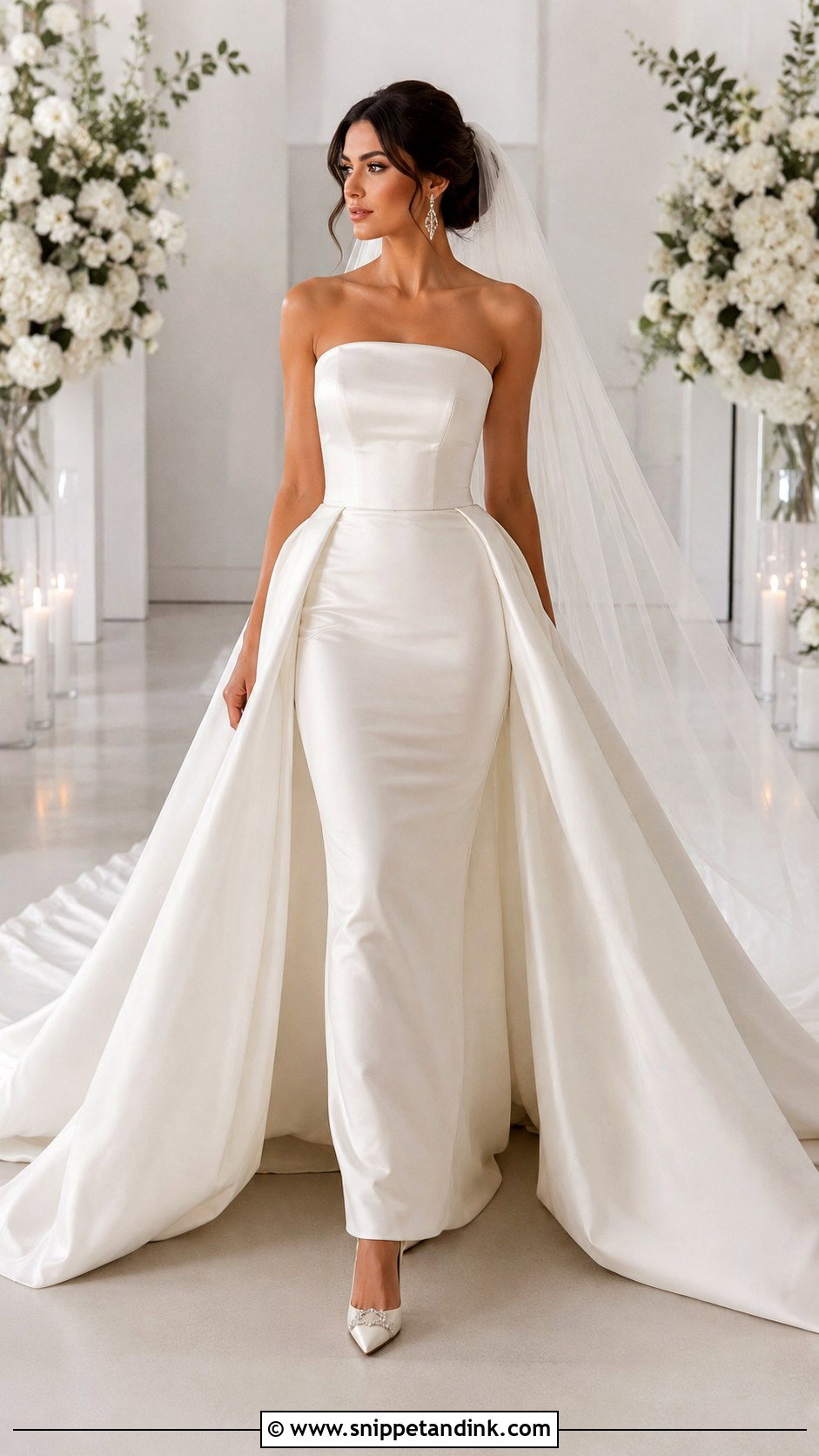
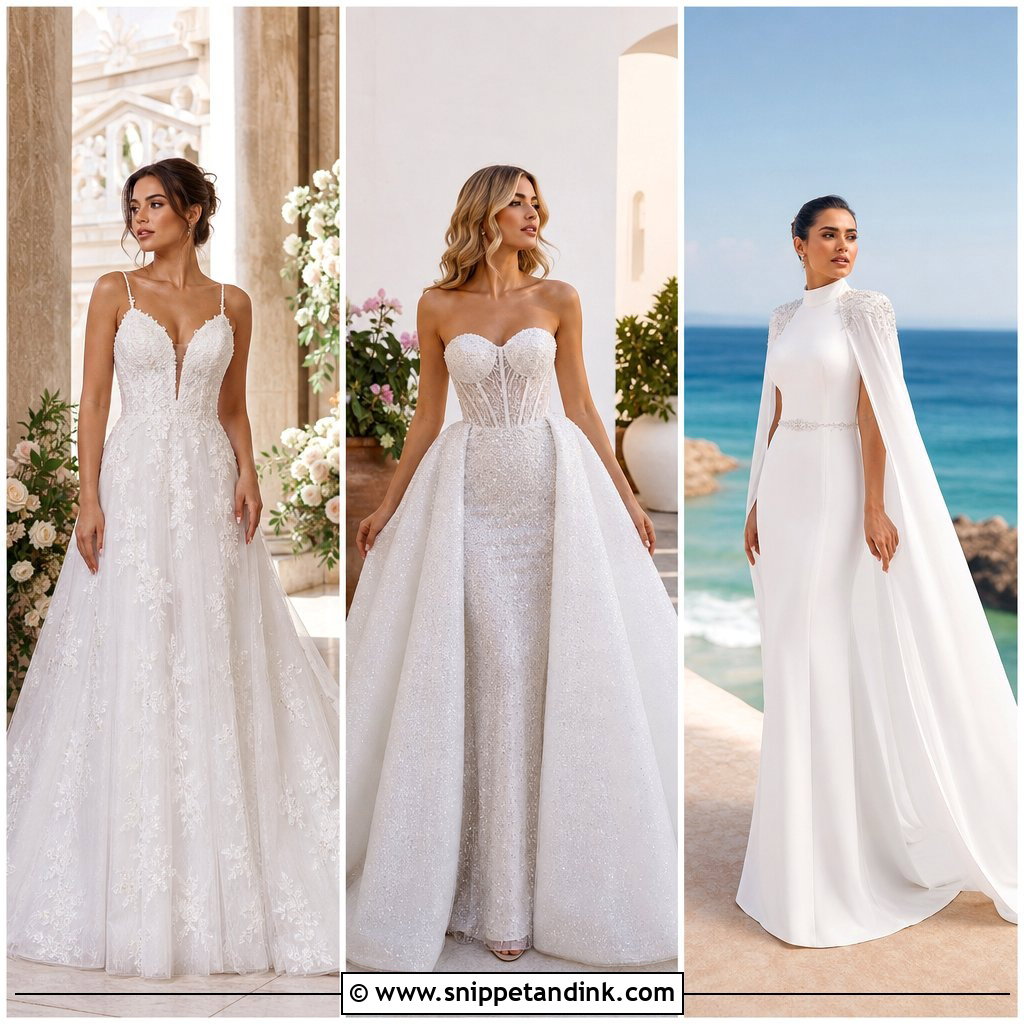
This is the switch I’m asked about most, and for good reason. A tulle, organza or satin overskirt gives you a full aisle silhouette, then comes off to leave a sheath, column or mermaid underneath. Go cathedral veil and pointed pumps first, then swap the veil for a sleek hair piece and bigger earrings later. The part people underestimate is weight. A satin overskirt pulls on its waistband all day, so I ask the seamstress to anchor it to the base gown’s waist seam with hooks and a covered bar rather than snaps alone. Light enough for a bridesmaid to unhook in one go is the test.
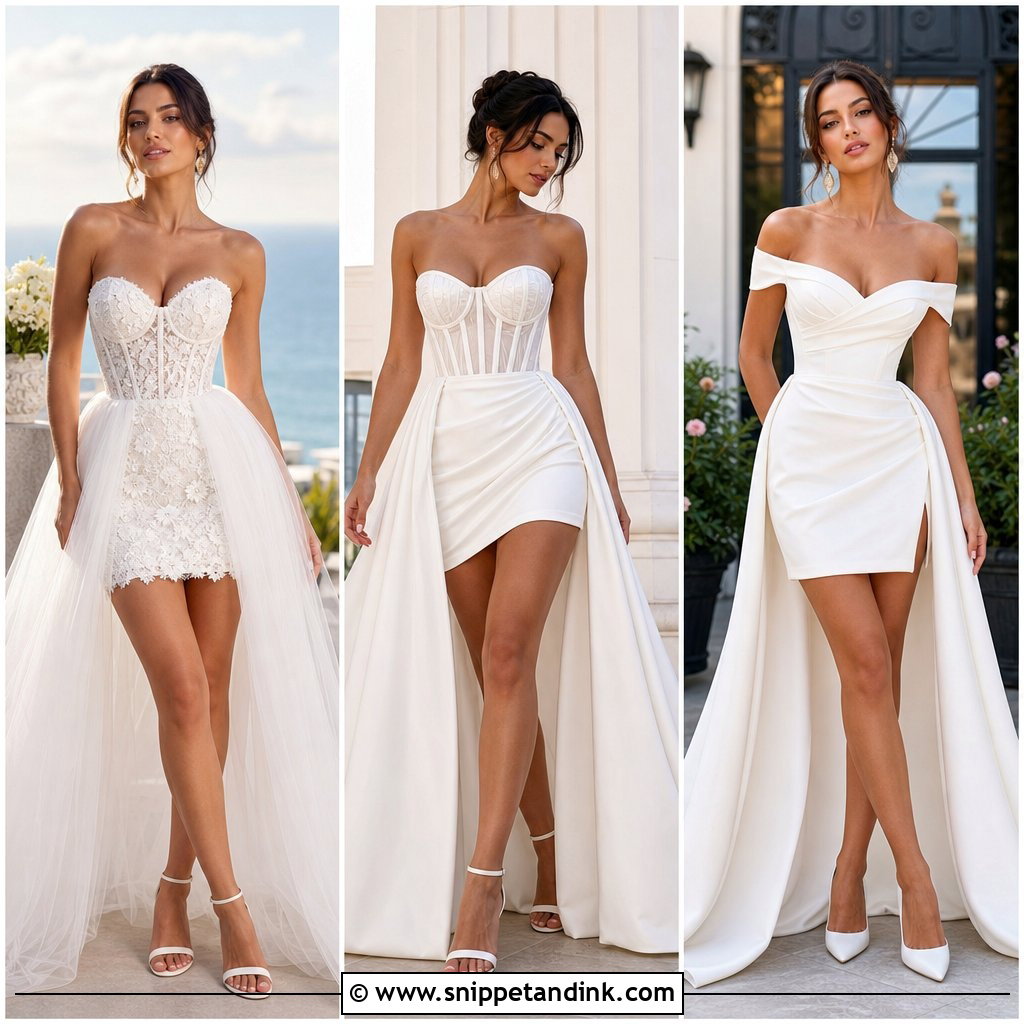
2. Mini Wedding Dress With Long Overskirt
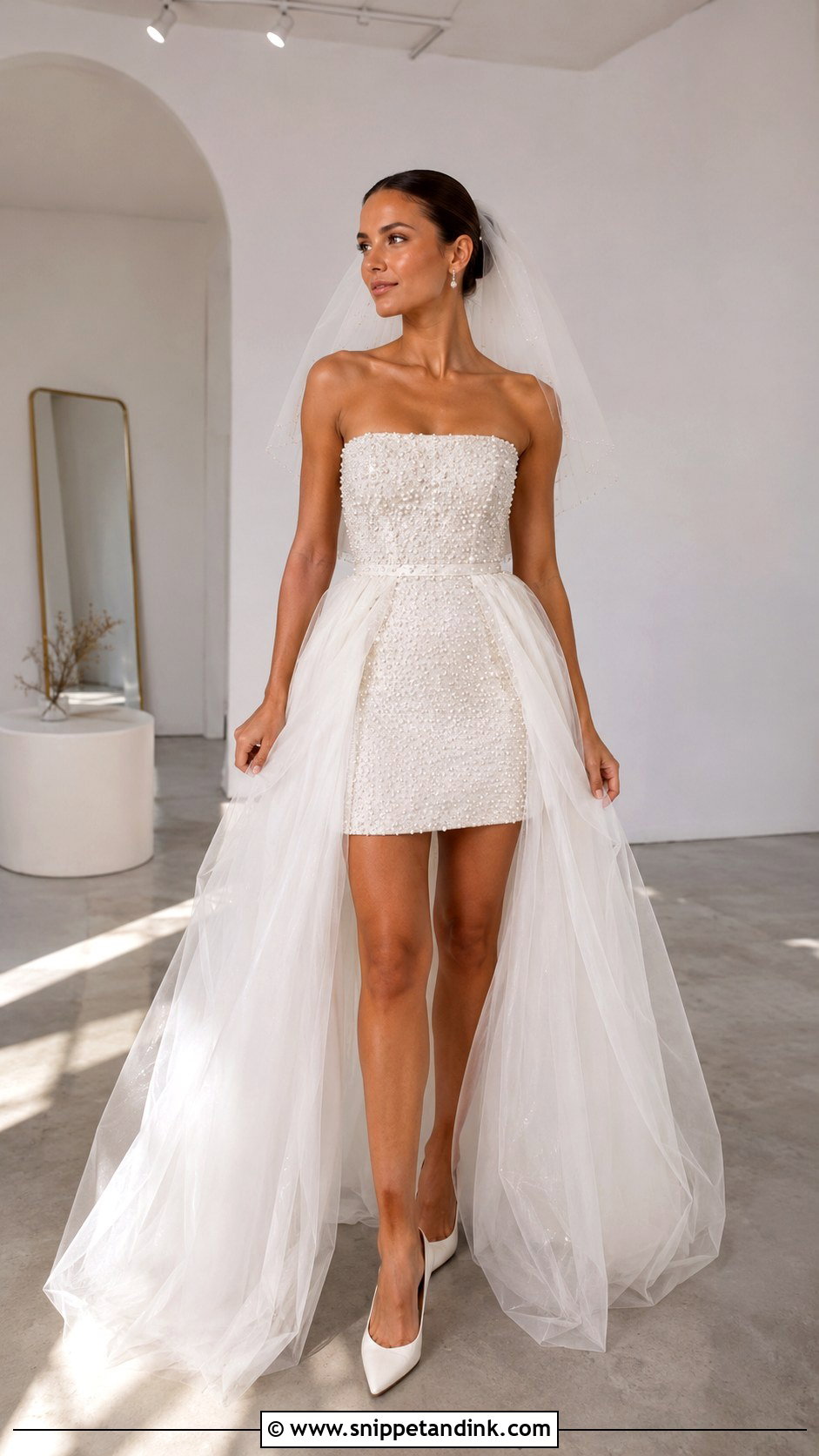
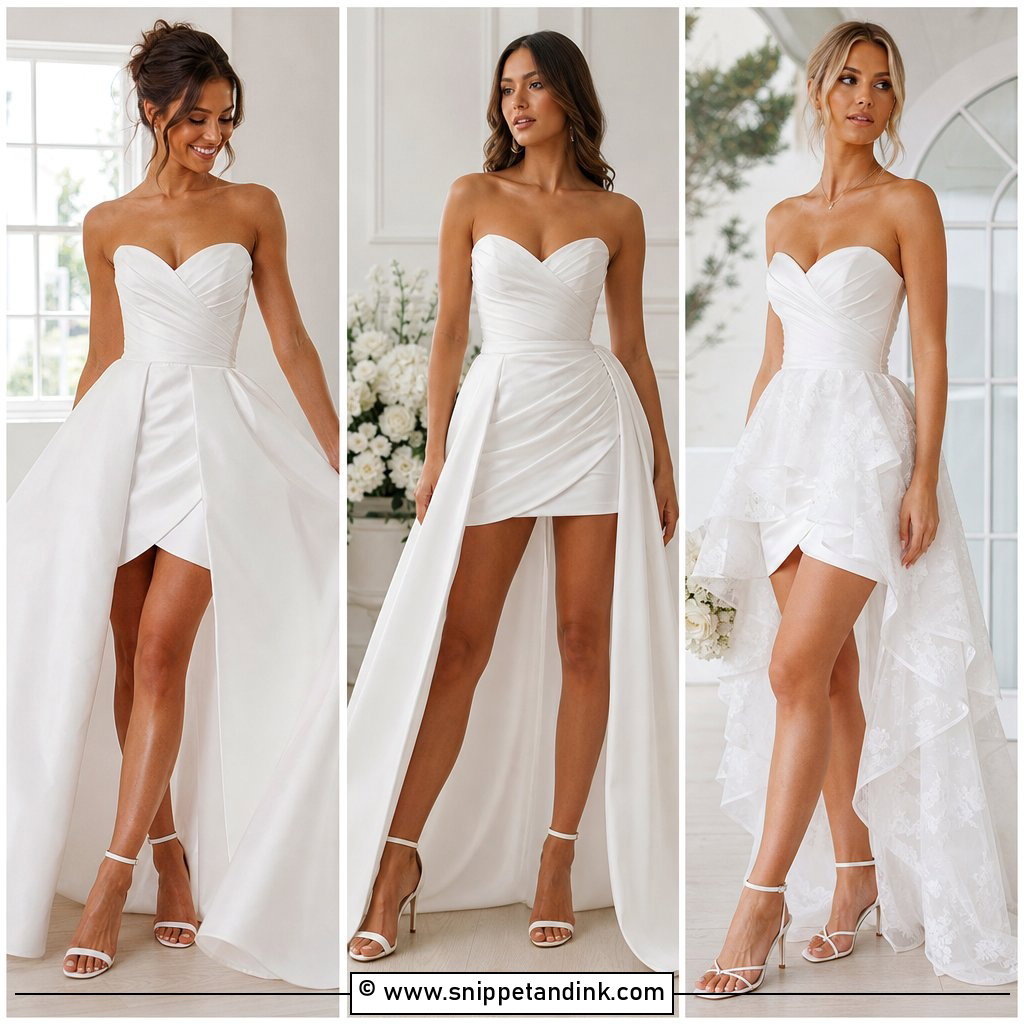
Floor length or short? You get both here. With the overskirt on, the line reads as an A-line or even a ball gown; once it’s off, the mini underneath is easy to dance in. I keep the short version grown-up with a structured bodice, pearl work or clean satin, because a soft, unstructured mini can look like a separate party dress next to a formal skirt. Your shoes go from hidden to front and centre, so buy one pair you’re happy to show, or plan a flat swap. At alterations, check the waist from the side while seated. That is where a bulky closure shows first.
3. Mermaid Wedding Dress With Detachable Overskirt
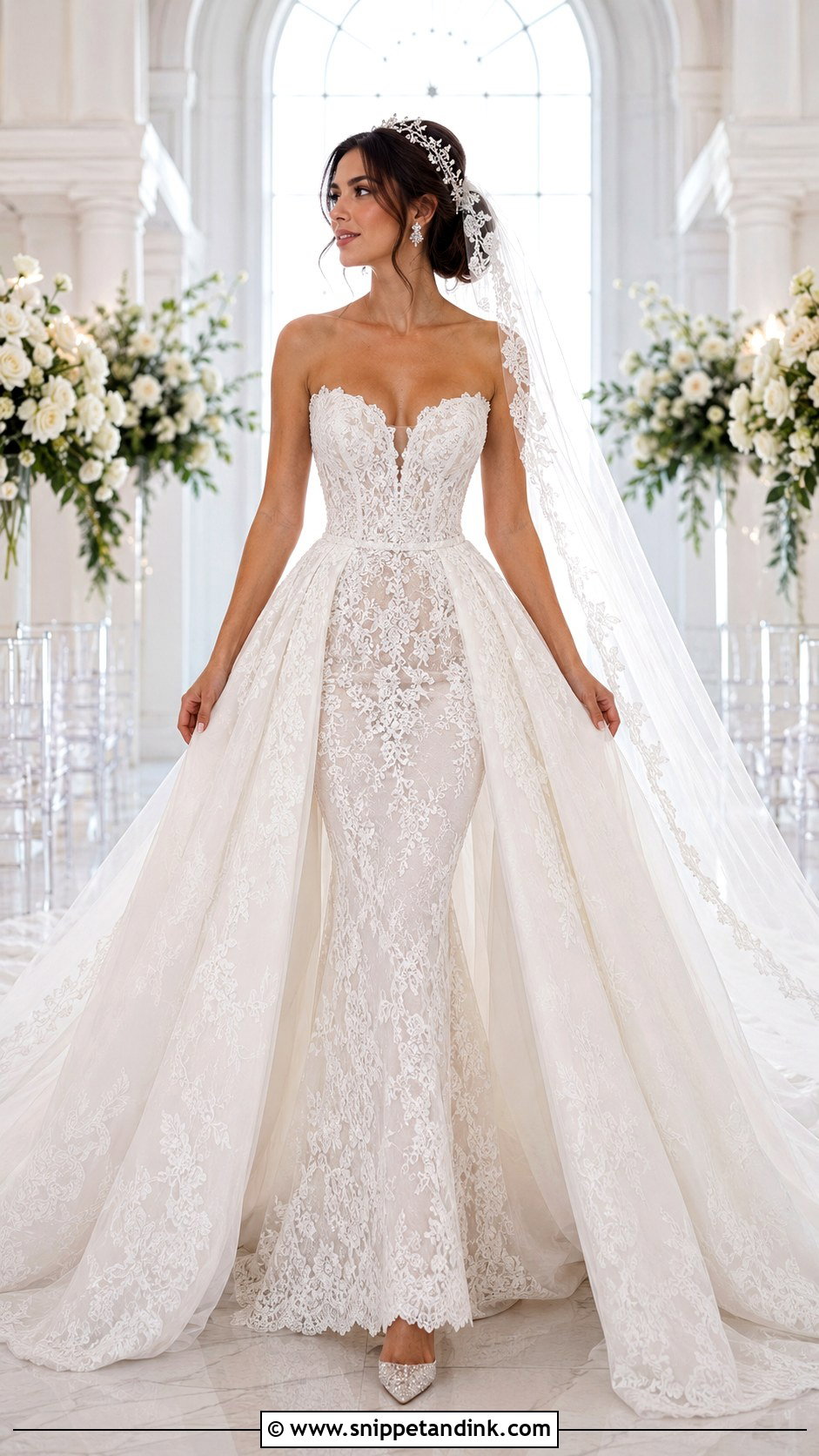
A detachable overskirt gives a mermaid gown a fuller, more ceremonial entrance, since the skirt adds volume from the waist while the inner dress still hugs down to the knee. Lace, satin and mikado hold that shape best. The thing I watch for is waist placement. If the overskirt band sits even slightly above or below the gown’s natural waist, it breaks the mermaid proportion and adds bulk right at the bodice, and the camera finds it. Once the skirt is off, a sleek bun or side-swept waves suit the sculpted line for dinner and dancing.
4. Sheath Wedding Dress With Tulle Overskirt
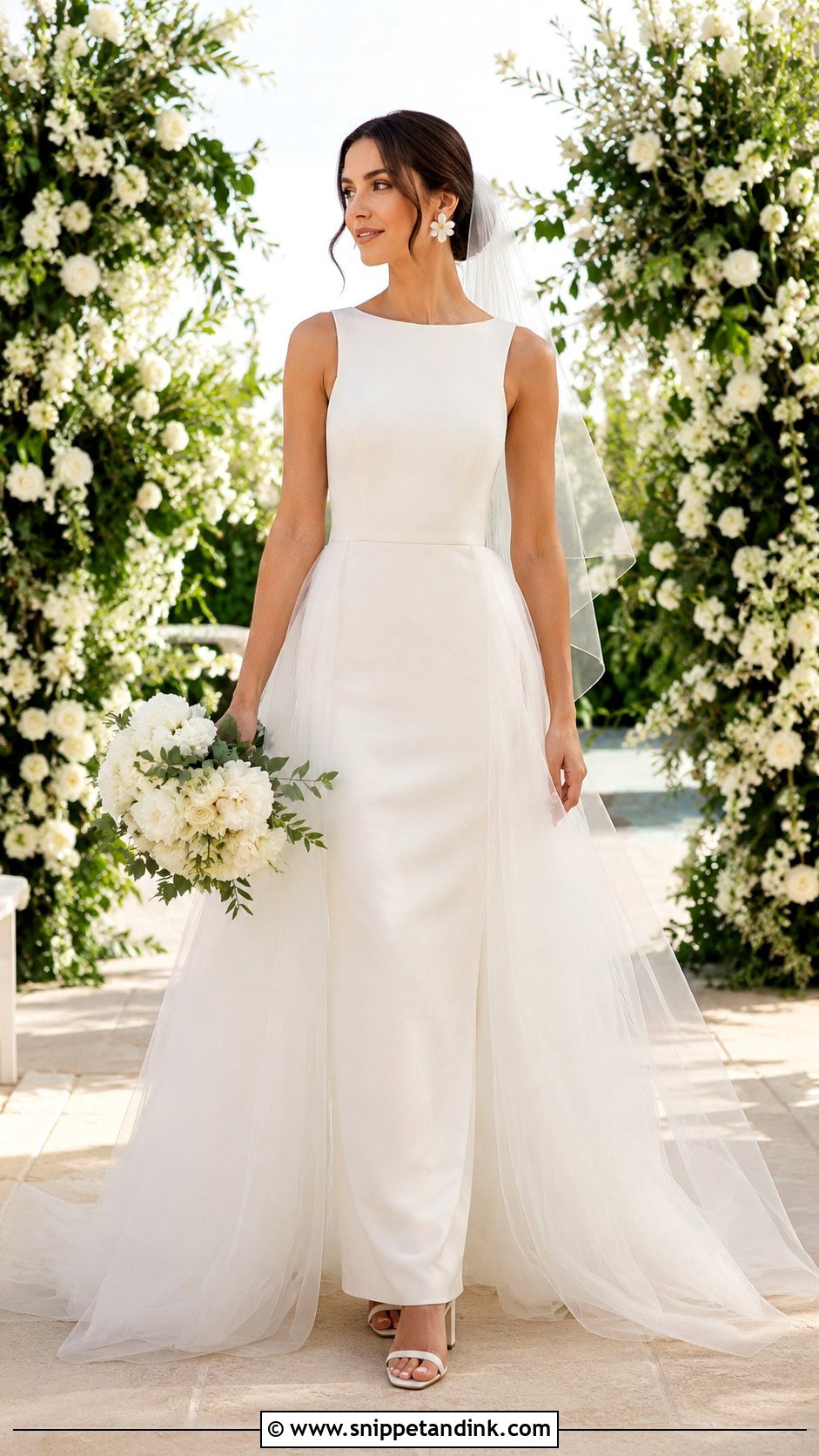
Tulle is the lightest way to give a plain sheath ceremony volume, and that lightness is the point: a sheath often gets chosen for heat, gardens and coastal venues where heavy satin would wilt you. Add a fingertip veil and slim block-heel sandals, then style the bare sheath later with a hair comb and a small clutch. I’d skip stiff bridal netting here. It stands away from the body and dwarfs a narrow base. Soft tulle that drops close to the hem, finished at the same length as the gown in your actual shoes, keeps the walk even.
5. Ball Gown Wedding Dress With Detachable Sleeves
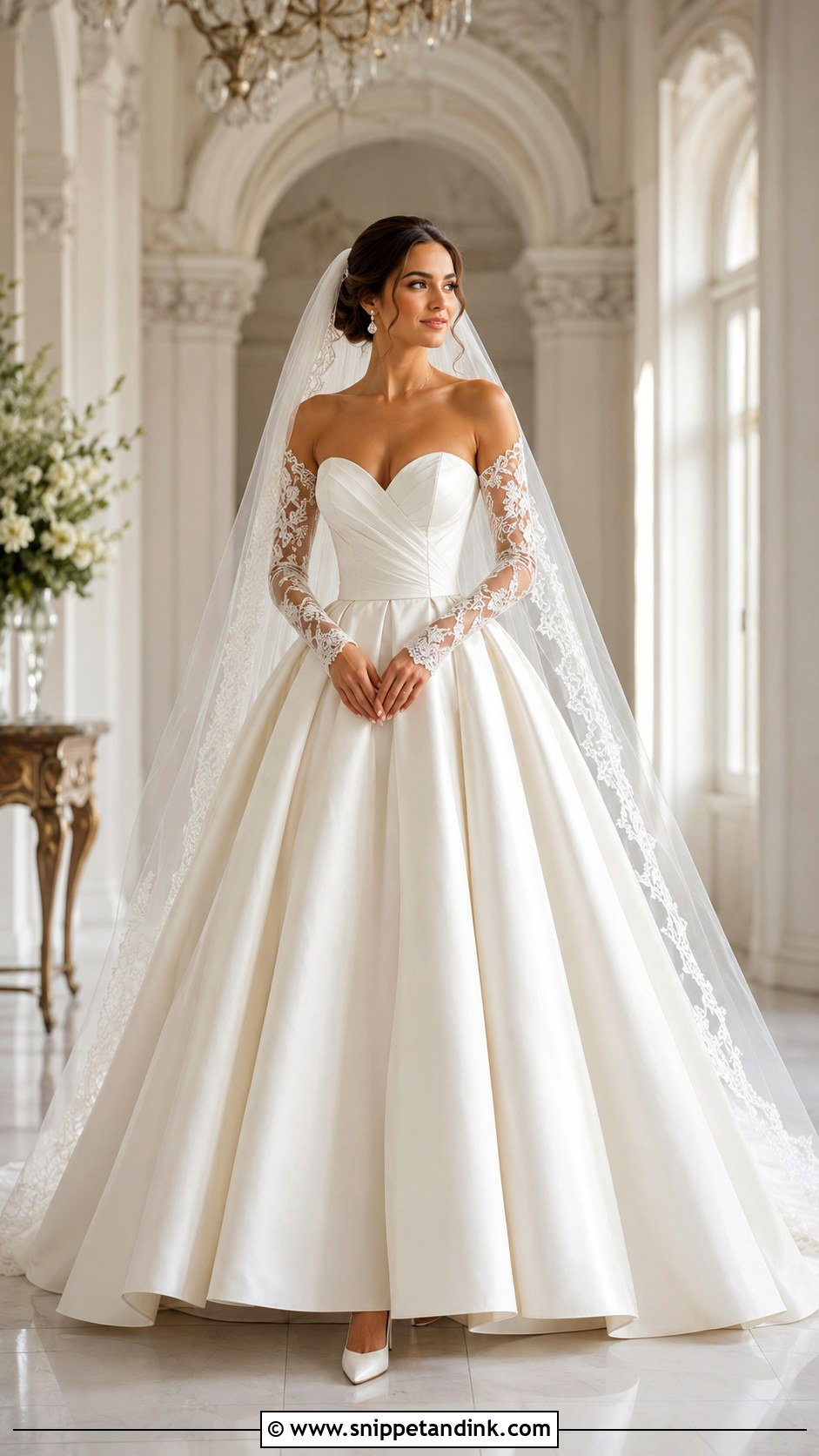
Detachable sleeves let a structured ball gown cover up for the ceremony and go strapless for the party. Long lace sleeves read romantic; puff or bishop sleeves feel more fashion. Wear the full version with a chapel veil and pearl drops, then add a delicate necklace once the neckline is bare. You don’t even need a room to change, which makes it one of the quickest switches. At fittings I make brides raise both arms, hug someone and sit down with the sleeves on. Elastic that grips too tightly leaves a red band on the upper arm that shows in every reception photo.
6. A-Line Wedding Dress With Lace Topper
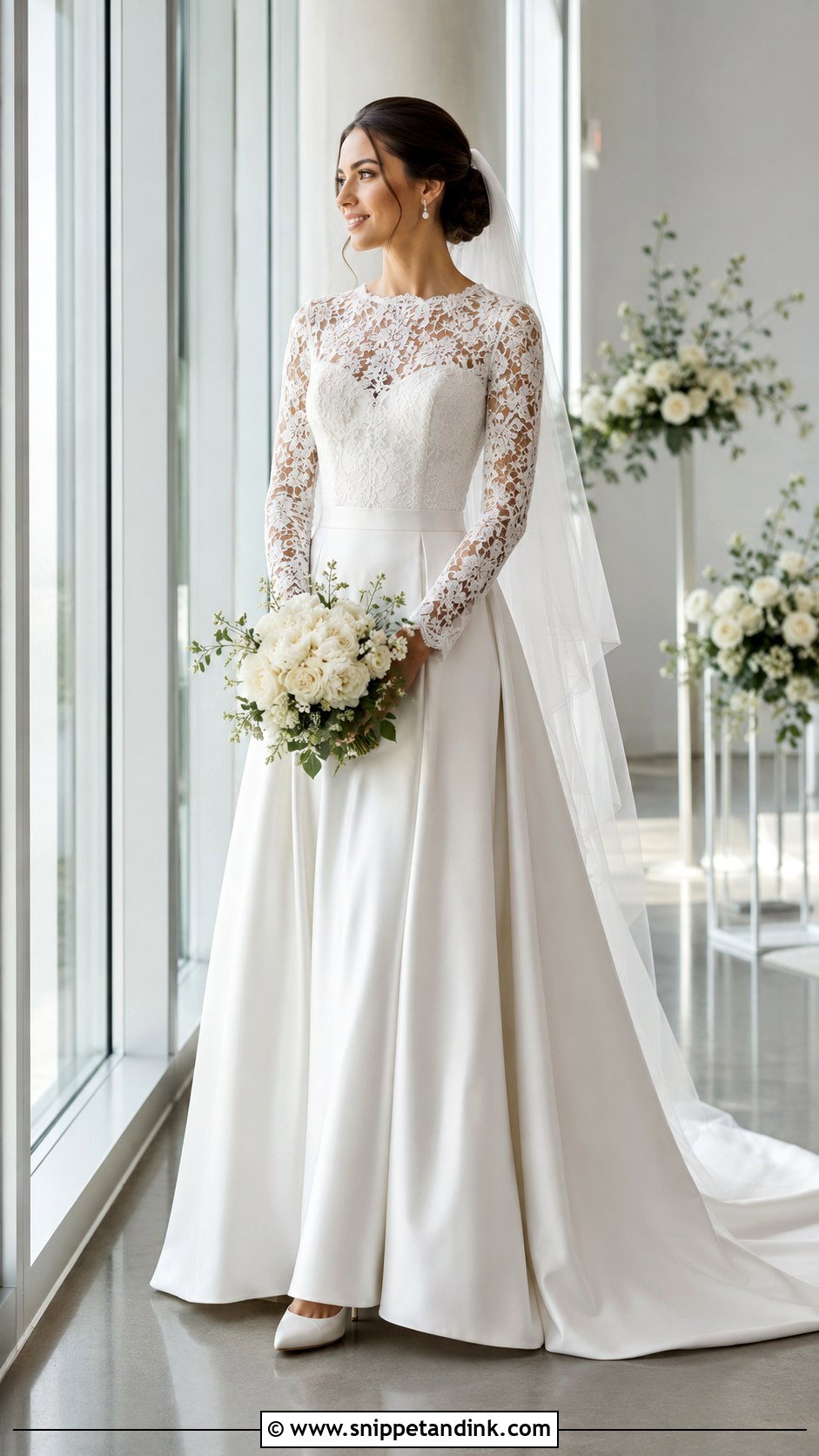
An A-line with a removable lace topper suits brides who want a covered ceremony, perhaps for a religious service, but a cooler, open dress afterwards. The topper can add long sleeves, a high neck or an illusion back over a strapless or sleeveless base. Under it, keep the accessories small: pearl earrings, a soft veil, low satin heels. Later, a jeweled barrette and a slim belt freshen the simpler dress. My first check is whether the topper’s seams line up with the gown’s princess seams and neckline. If they don’t, it reads as a borrowed cardigan rather than part of the dress.
7. Strapless Wedding Dress With Off-Shoulder Sleeves
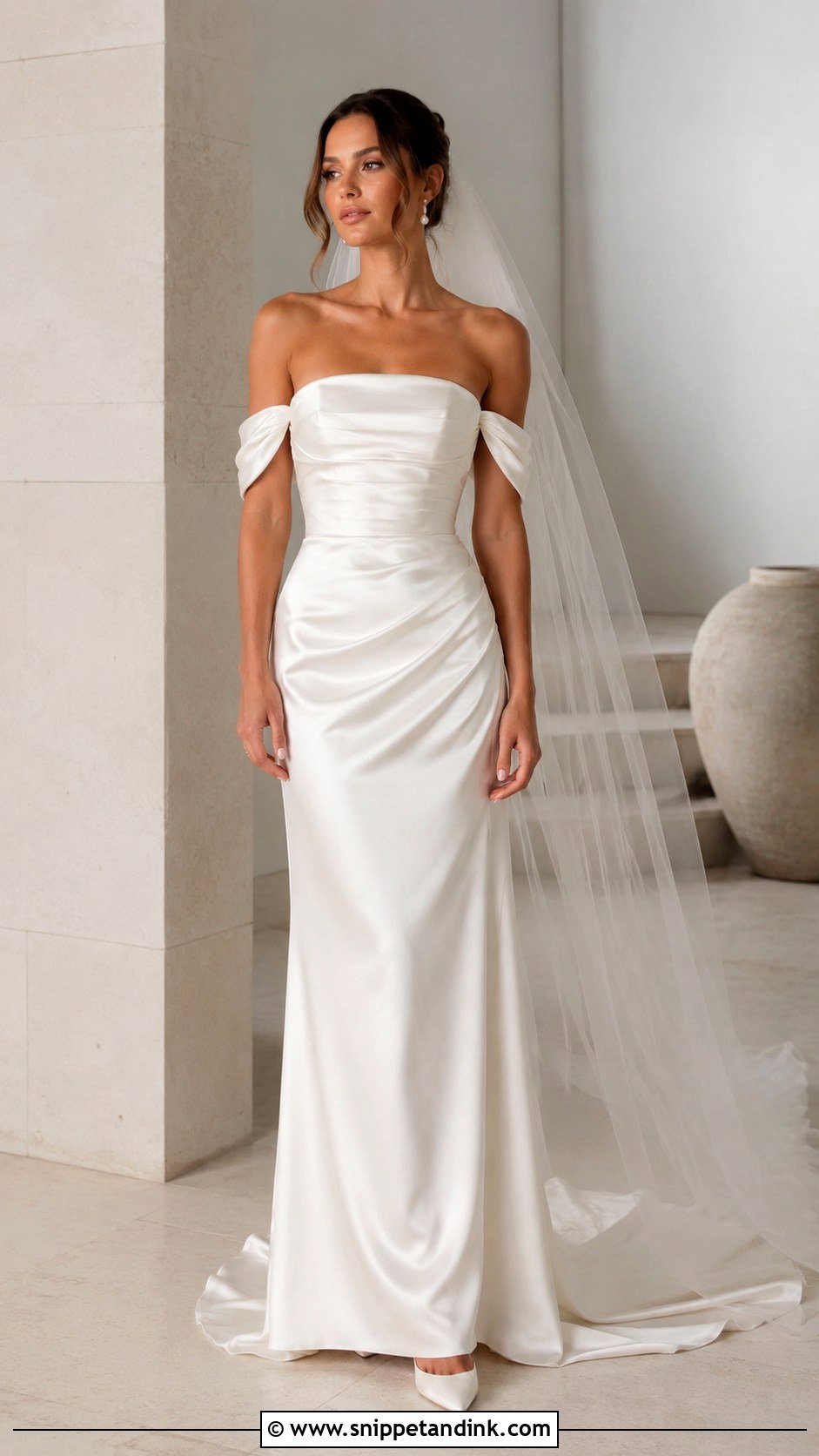
A strapless gown with removable off-shoulder sleeves gives you two necklines from one bodice. Worn low on the upper arm, the sleeves frame the collarbone for the ceremony; take them off and the reception look is clean and open. Satin bands feel architectural, while lace or tulle is softer. A low chignon suits the first look, and you can loosen it or add a necklace later. One rule I won’t bend: the bodice has to stay up on its own. If a bride is relying on the sleeves to hold the dress in place, it needs taking in before anything else. I also check the sleeve height from the back, where it usually sits lower than people expect.
8. Wedding Dress With Detachable Cape
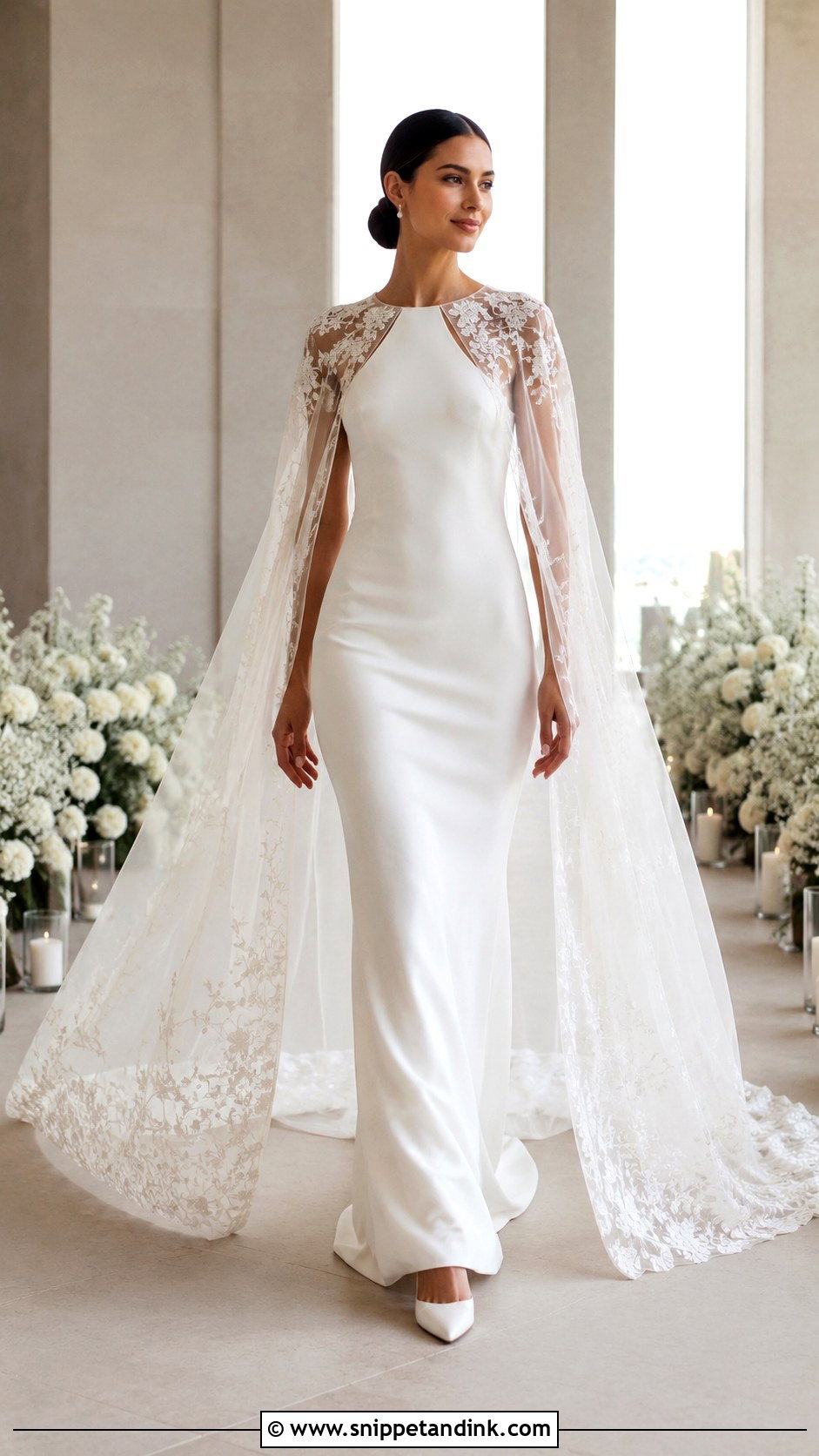
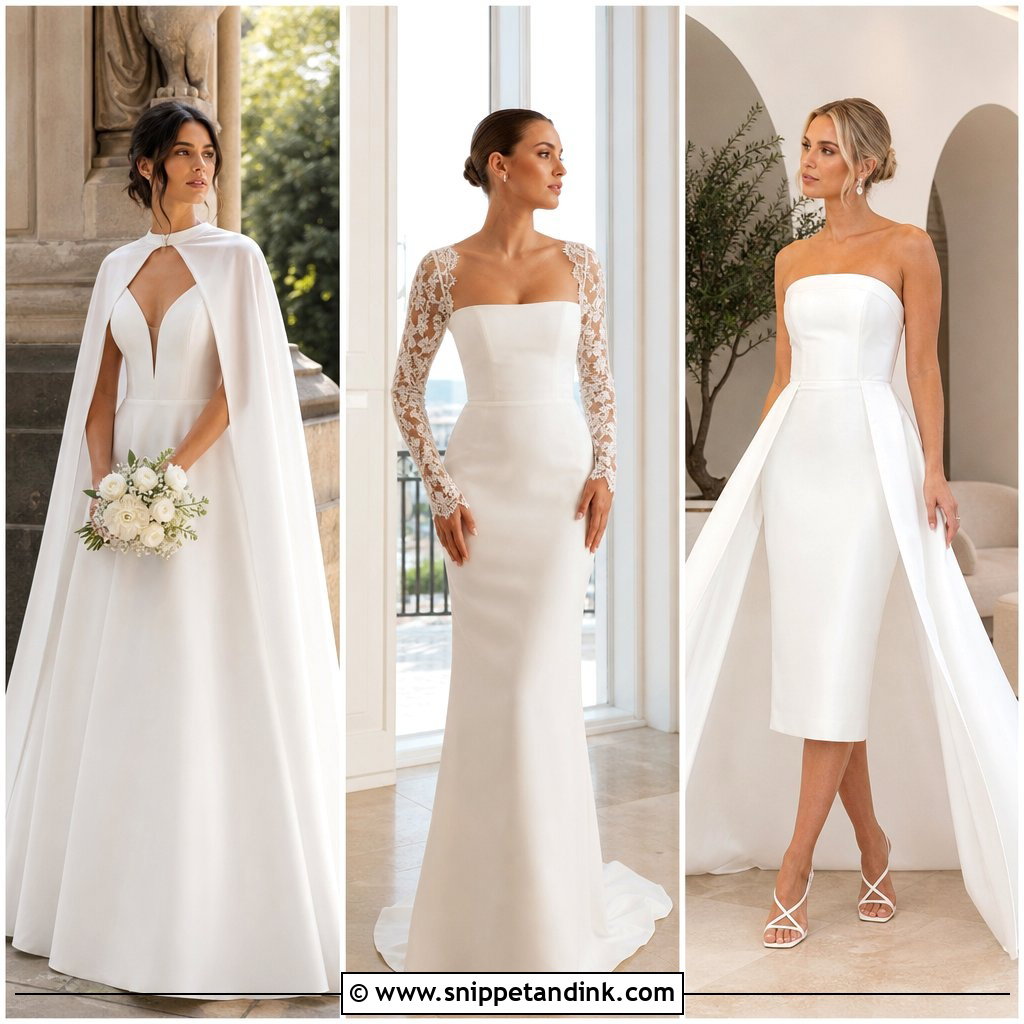
A cape gives you a ceremony moment without a veil. Sheer tulle floats; embroidered lace or structured satin feels much more formal. Put it over a quiet column, A-line or crepe gown so the two aren’t fighting, keep the hair sleek and let the cape lead. Then take it off before dinner to show the neckline and back. Where it fastens matters more than how it looks on the hanger. Clipped too far back on the shoulders, a heavy cape drags the neckline toward your throat, so I have it anchored at the shoulder seam. Check its length against the gown’s train and the aisle surface too; grass and gravel catch a long hem.
9. Wedding Dress With Detachable Train
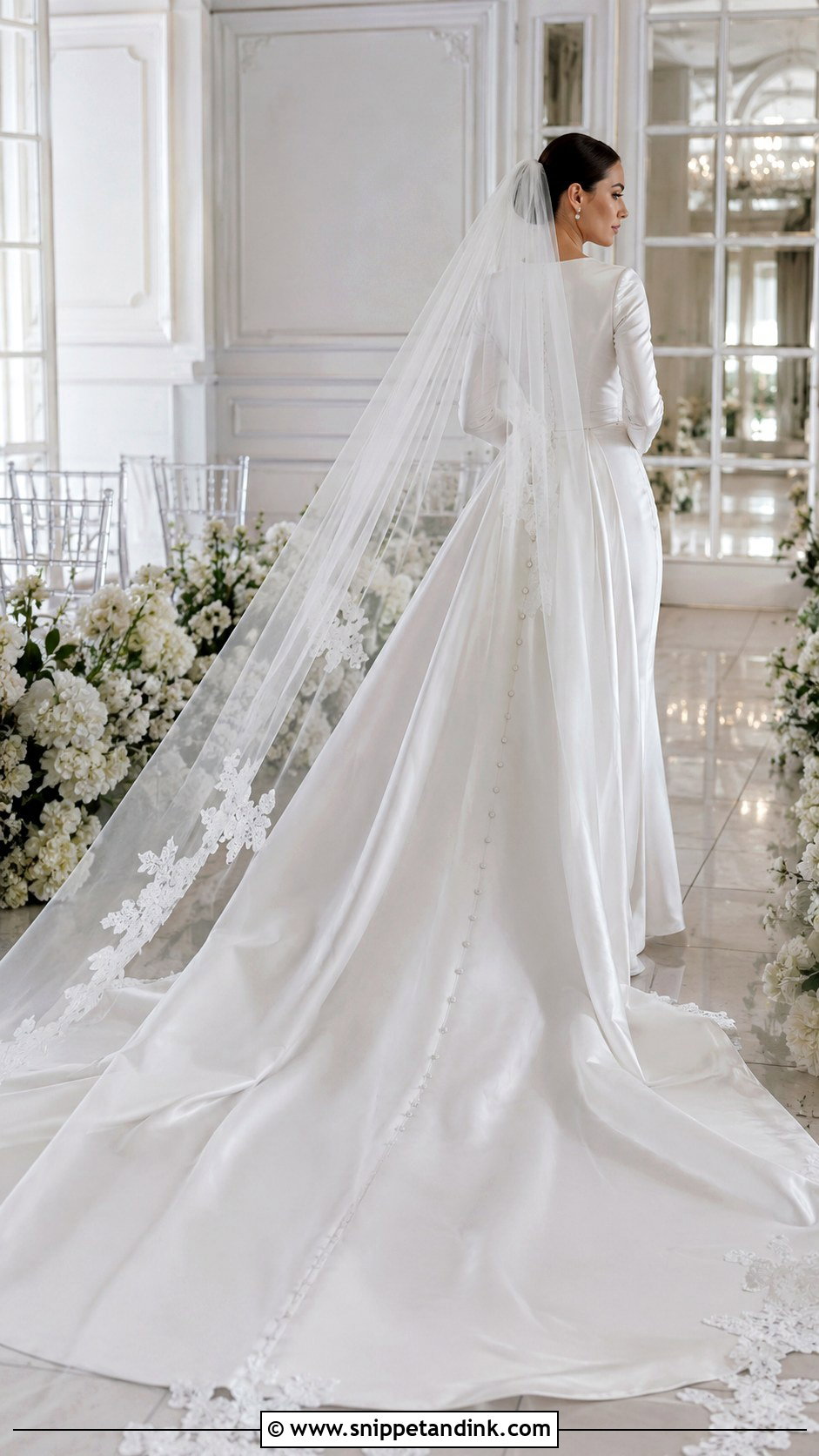
A train that unhooks completely is my favourite answer for brides who hate the idea of a bustle. You get the cathedral sweep for the aisle and portraits, then the whole panel goes into a bag. Go chapel length if the venue is small or the aisle is short. A plain satin gown suits a sculptural train; a lace dress looks right with a matching appliquéd one. Afterwards, the closures along the back need to vanish, and that is worth checking under the lights. Practise the detach with your helper before the day, because a long train is awkward to fold neatly while guests are waiting.
10. Satin Wedding Dress With Detachable Bow
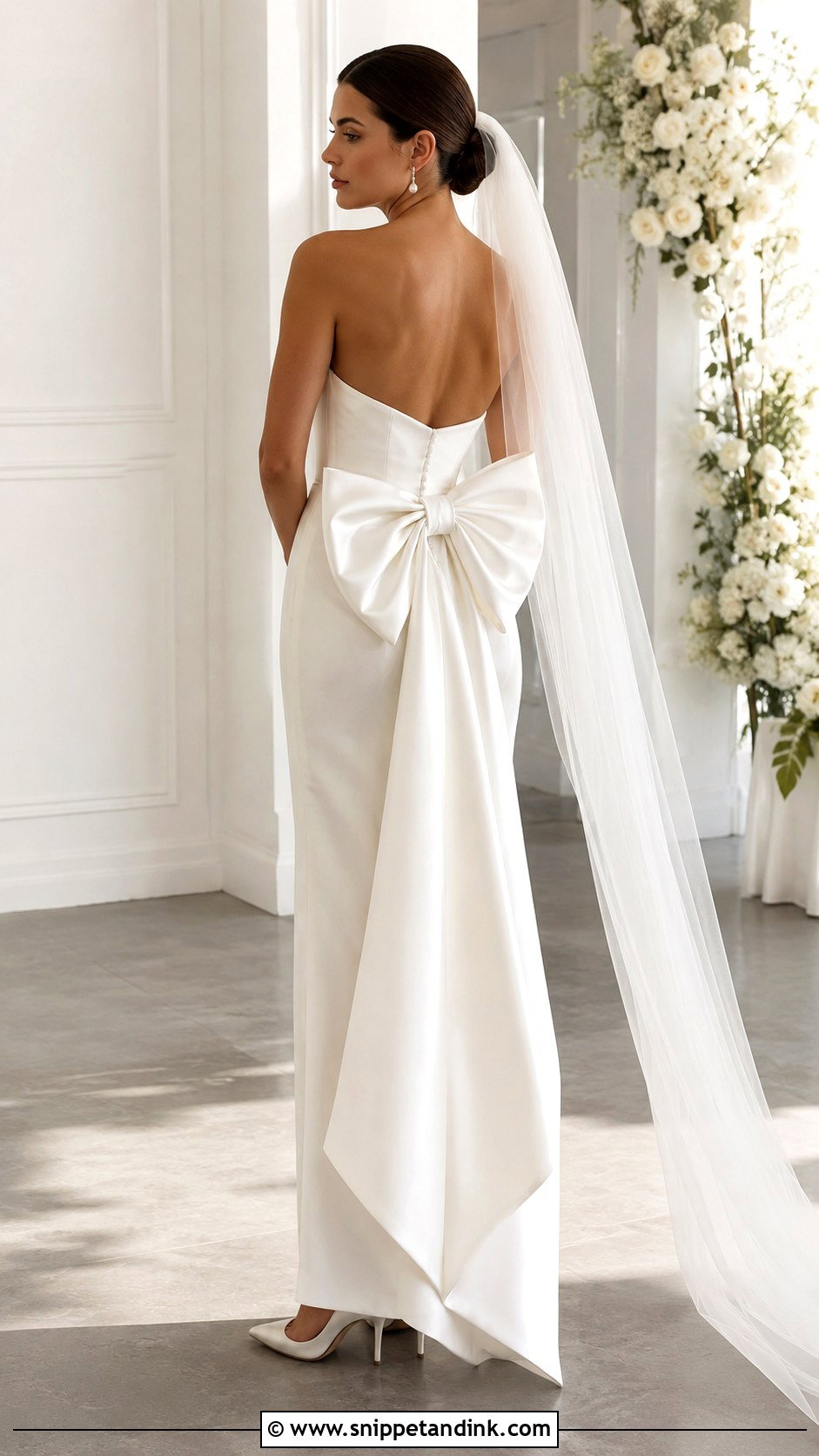
A big back bow on satin gives guests something to look at during the walk, and its tails add movement. Some designs extend the bow into a train. Keep everything else restrained, with pearls, a smooth veil and plain pumps. Take it off for the reception and the satin reads clean and modern; a sleek ponytail suits that version. The practical issue is sitting. A structured bow sits exactly where your back meets a chair, so it gets crushed at the ceremony or the signing. I check bows seated as well as standing, and I want the hooks taking its weight rather than the satin, which marks if it is pulled.
11. Column Wedding Dress With Removable Peplum
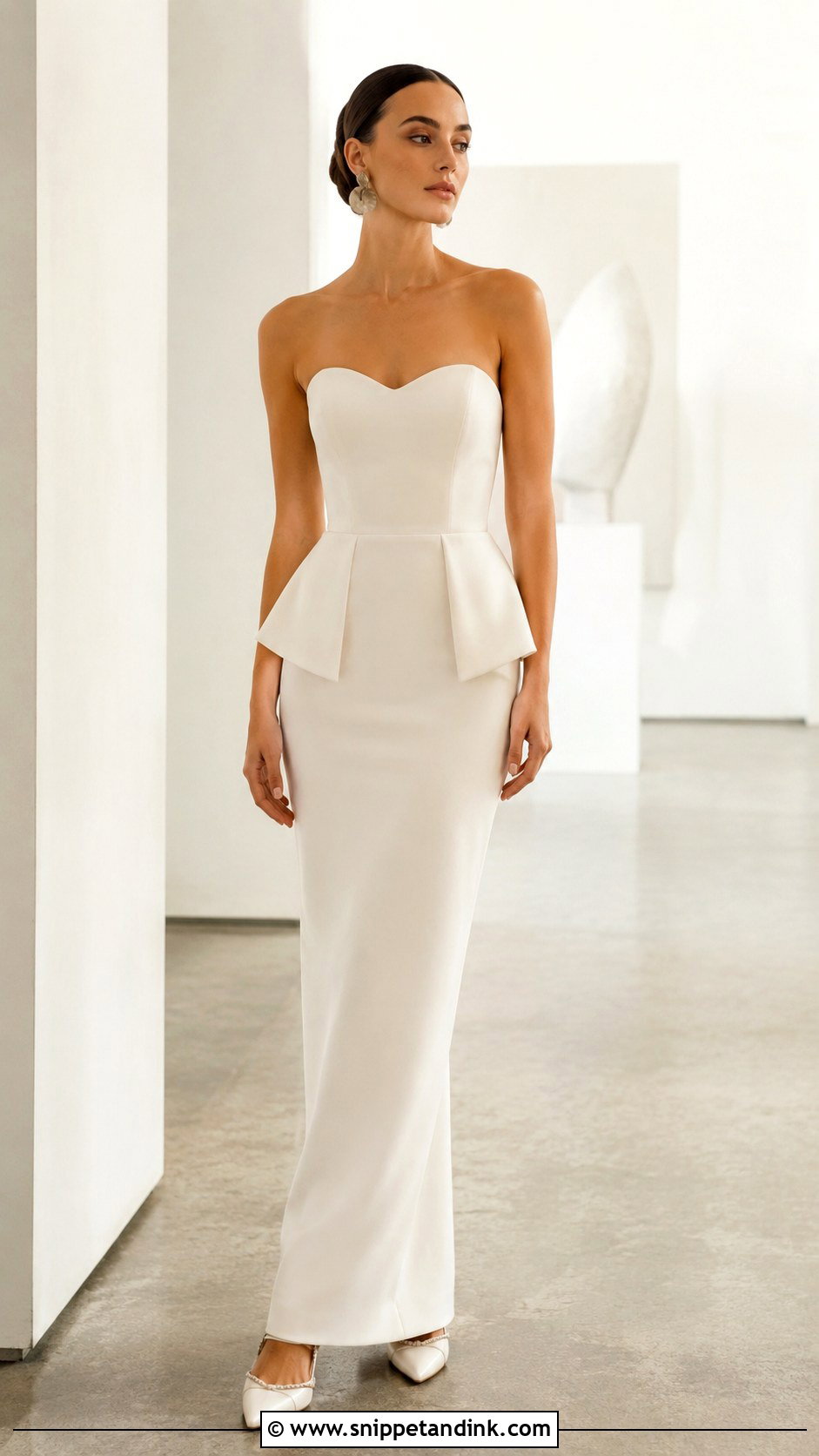
A removable peplum gives a narrow column gown some shape at the waist for the ceremony, sometimes with side draping or a short overskirt attached. It works best on a gown with very little detail, since the peplum becomes the focal point; pair it with sculptural earrings and a clean updo. When it comes off, the plain column is easy to wear all night. Placement is everything with this one. A peplum that sits a little high shortens the torso, and one that sits low widens the hips, so I pin it on the bride rather than trusting the pattern, and every hook gets hidden on the inside.
12. Wedding Jumpsuit With Detachable Overskirt
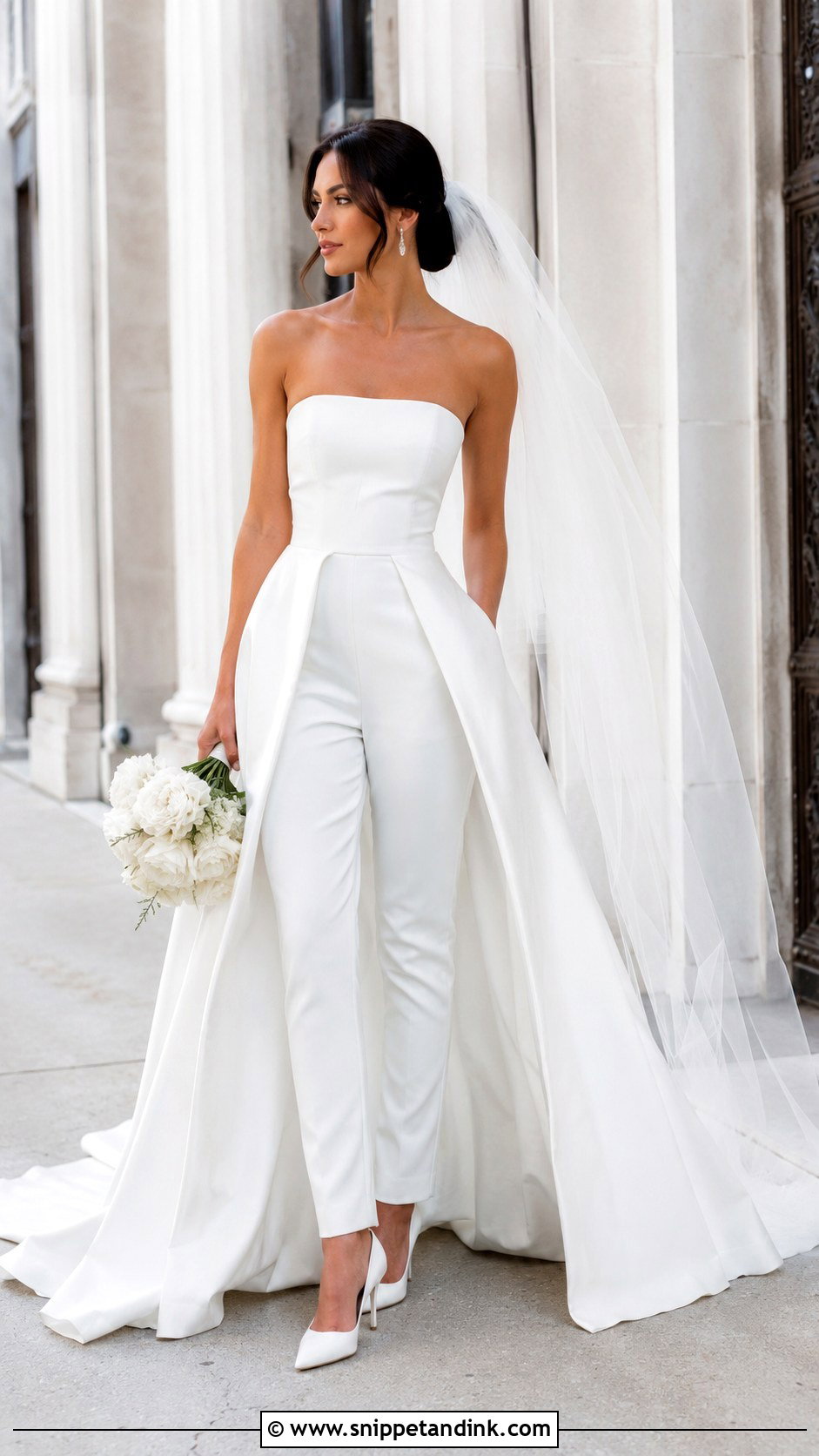
A wedding jumpsuit with a detachable overskirt is the choice for a bride who wants a classic aisle shape and a surprise afterwards. The skirt hides tailored trousers until the reception. A strapless, square-neck or halter jumpsuit gives the best foundation, with a long veil and pointed pumps first, then a sleek headband once the veil is off. The tailoring has to be exact. I have trouser hems taken up only in the shoes she’ll wear, and I look closely at the waist, because a skirt band laid over the jumpsuit’s own waist seam creates a double ridge. Thin waistbands on both pieces are the fix.
13. Wedding Romper With Detachable Ball Gown Skirt
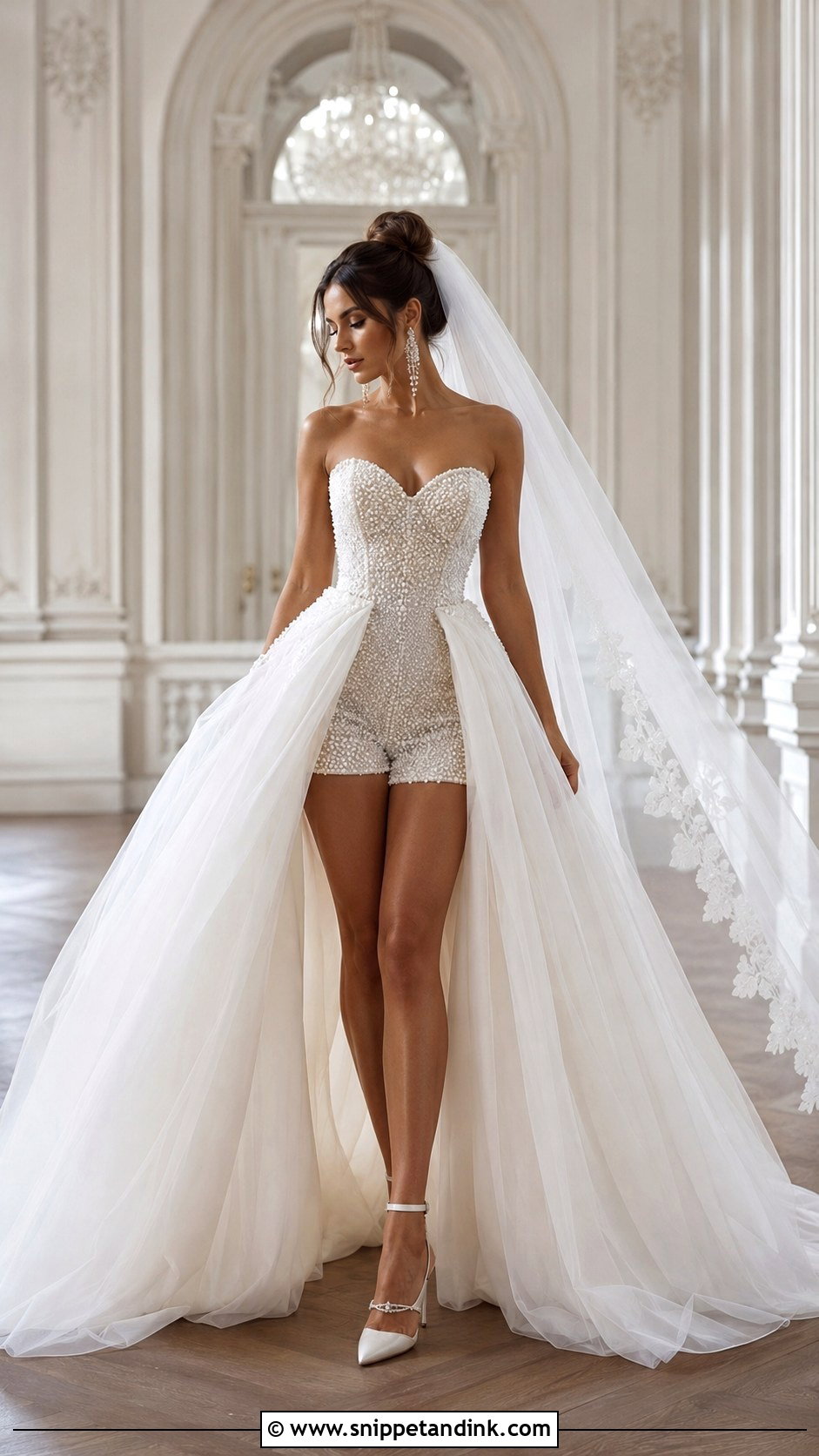
This is the biggest reveal on the list: a full ball gown skirt for the ceremony, a fitted romper underneath for the party. Choose a romper with real bridal detail, such as a corseted bodice, pearl beading or 3D florals, so it doesn’t look like daywear once the skirt is gone. Classic heels and a long veil go with the first look; comfortable embellished shoes and bigger earrings with the second. Some brides want a short removable panel at the back for coverage, which is easy to add. Fit the romper as its own garment. I make brides sit, crouch and dance in it alone, because the skirt can’t hide a riding-up leg.
14. High-Low Wedding Dress With Removable Skirt
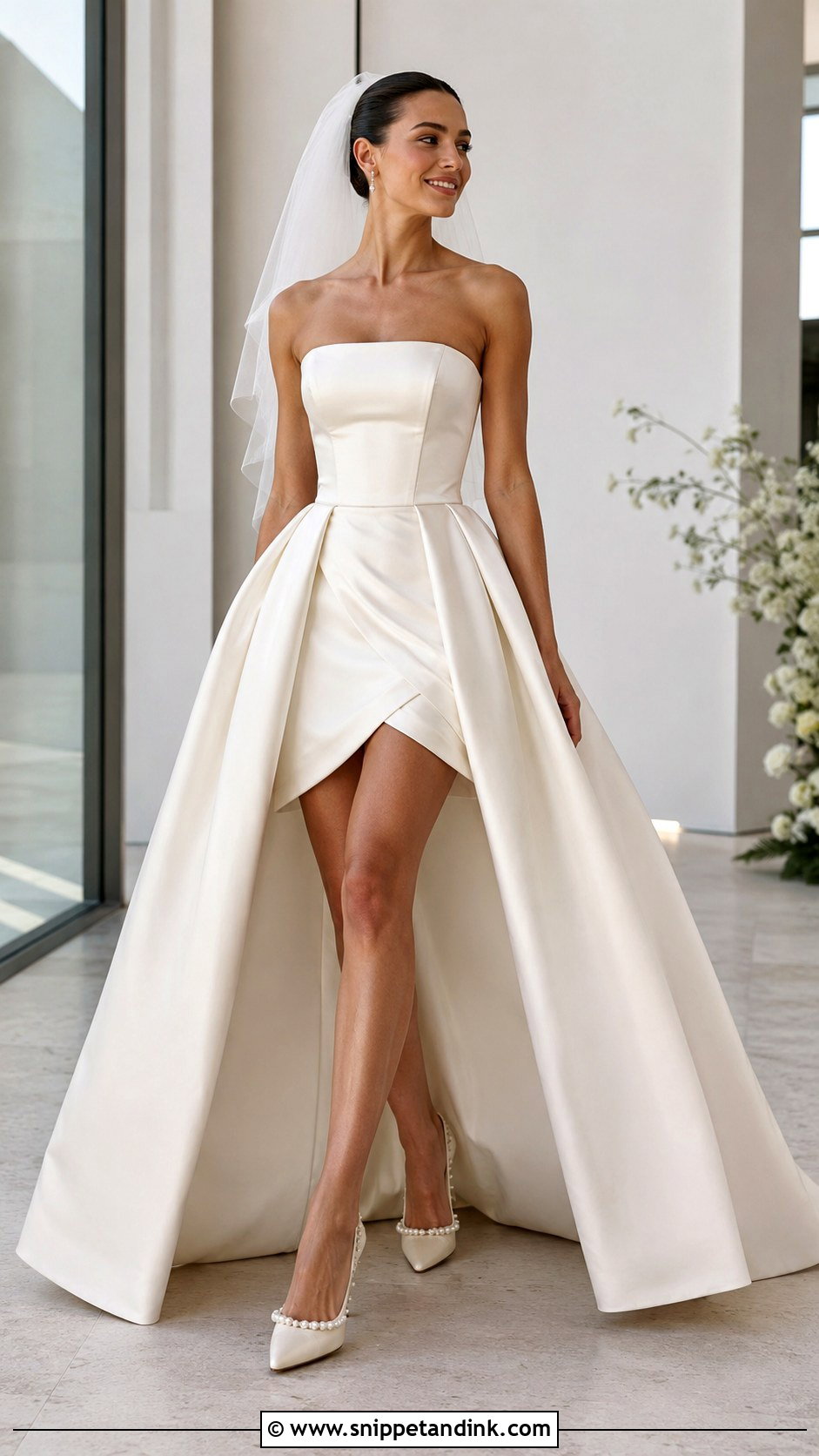
A high-low dress with a full outer skirt starts traditional and ends with a hem that’s shorter in front, longer at the back. Because your shoes show for most of the day, they’re worth thinking about: pearl-trimmed pumps or a clean ankle strap. I’d keep jewellery small for the ceremony and go bigger once the hem rises. Matching satin inside and out gives the smoothest change; tulle over satin feels lighter. The front hem is the fiddly bit. Too short and it reads like a cocktail dress, too long and it brushes your shins when you walk, so I mark it standing in the shoes.
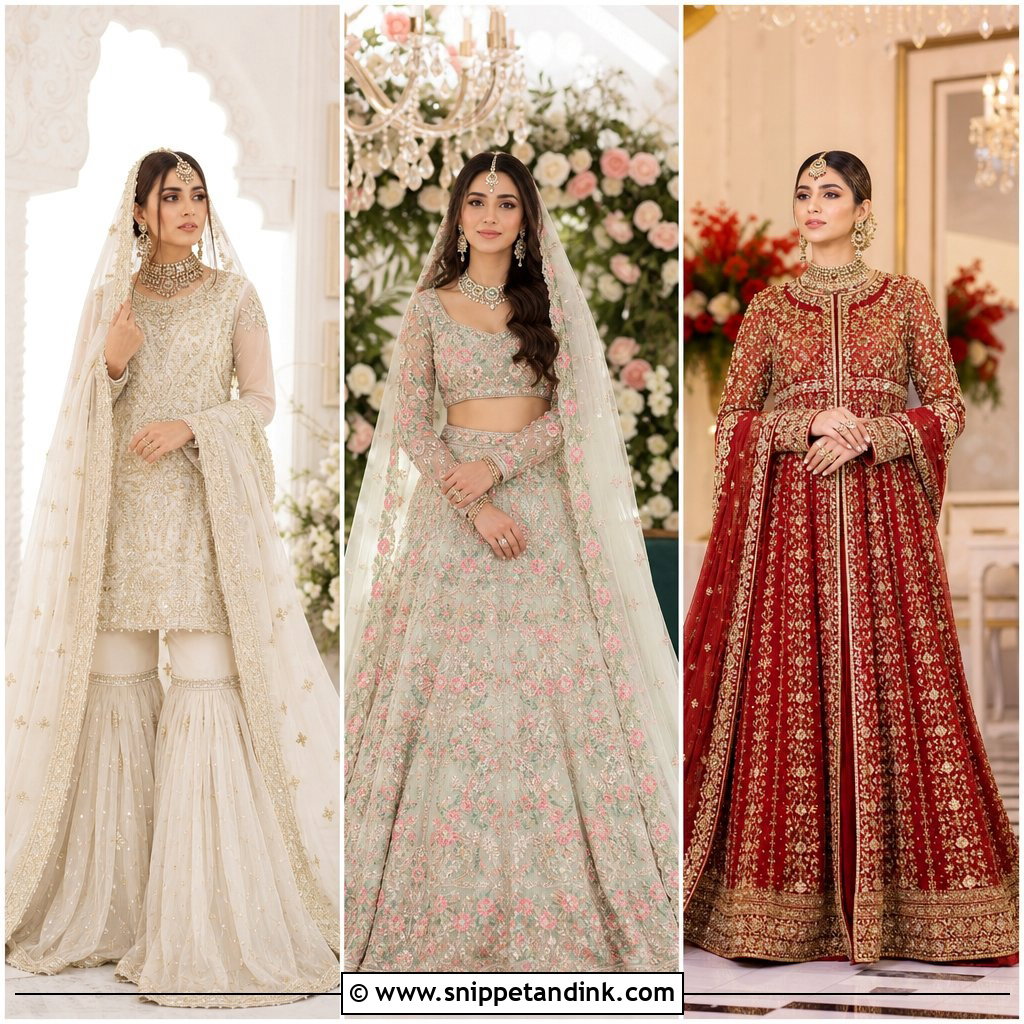
15. Lace Wedding Dress With Detachable Bolero
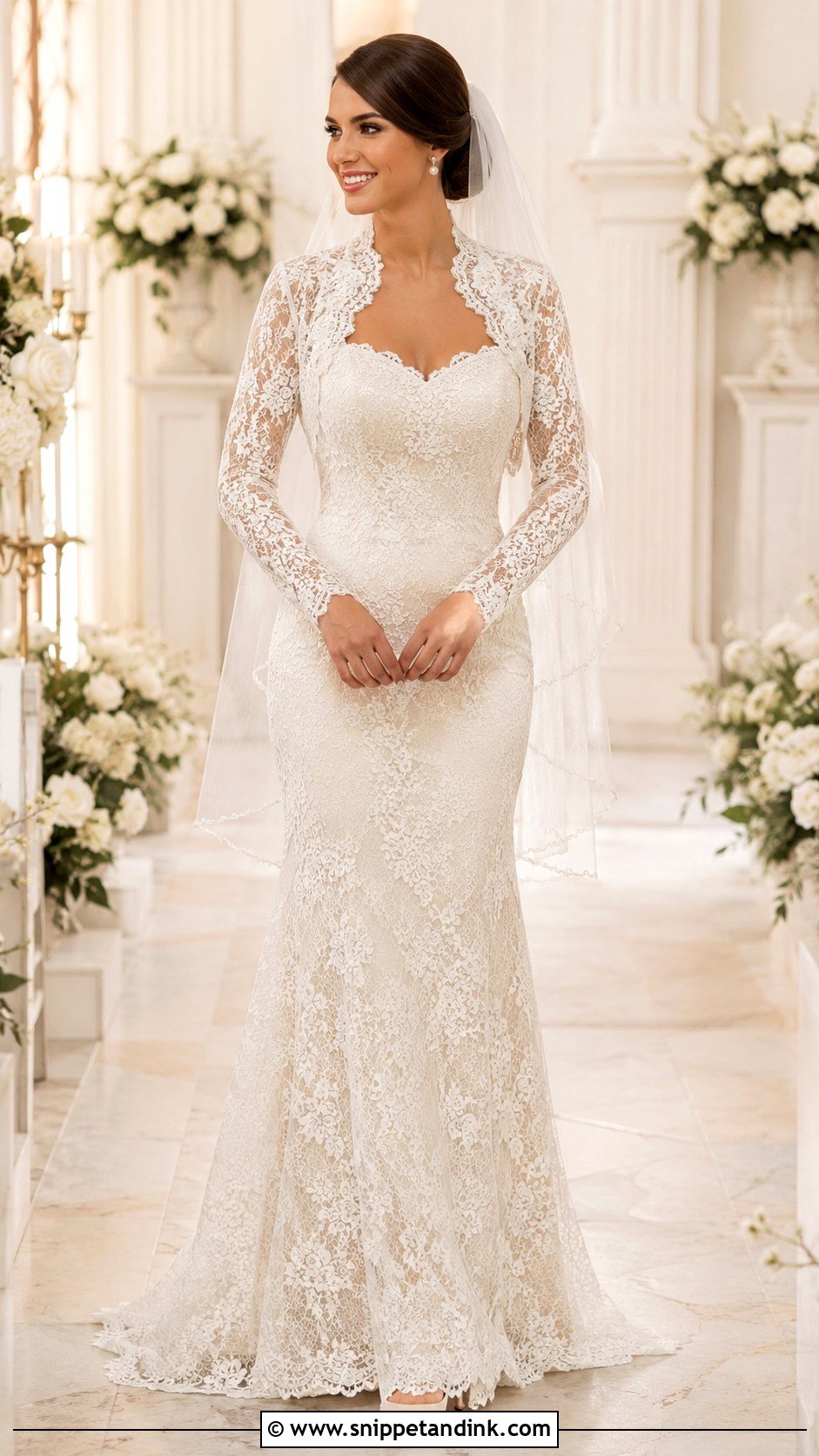
A bolero covers the shoulders and arms but stops around the waist, so the gown’s shape still shows. Matching lace makes the bolero look like part of the bodice; sheer tulle with appliqués gives quiet contrast. Wear the full version with a soft veil and pearl studs, and when it comes off, the sleeveless, strapless or low-backed dress feels relaxed enough for the reception. The edge is what I study. A thick lace border sitting on a lace bodice can leave a visible ridge, so I’d ask for a scalloped or tulle-finished edge. Armholes need room too, since you’ll hug a lot of people in it.
16. Wedding Dress With Detachable Illusion Neckline
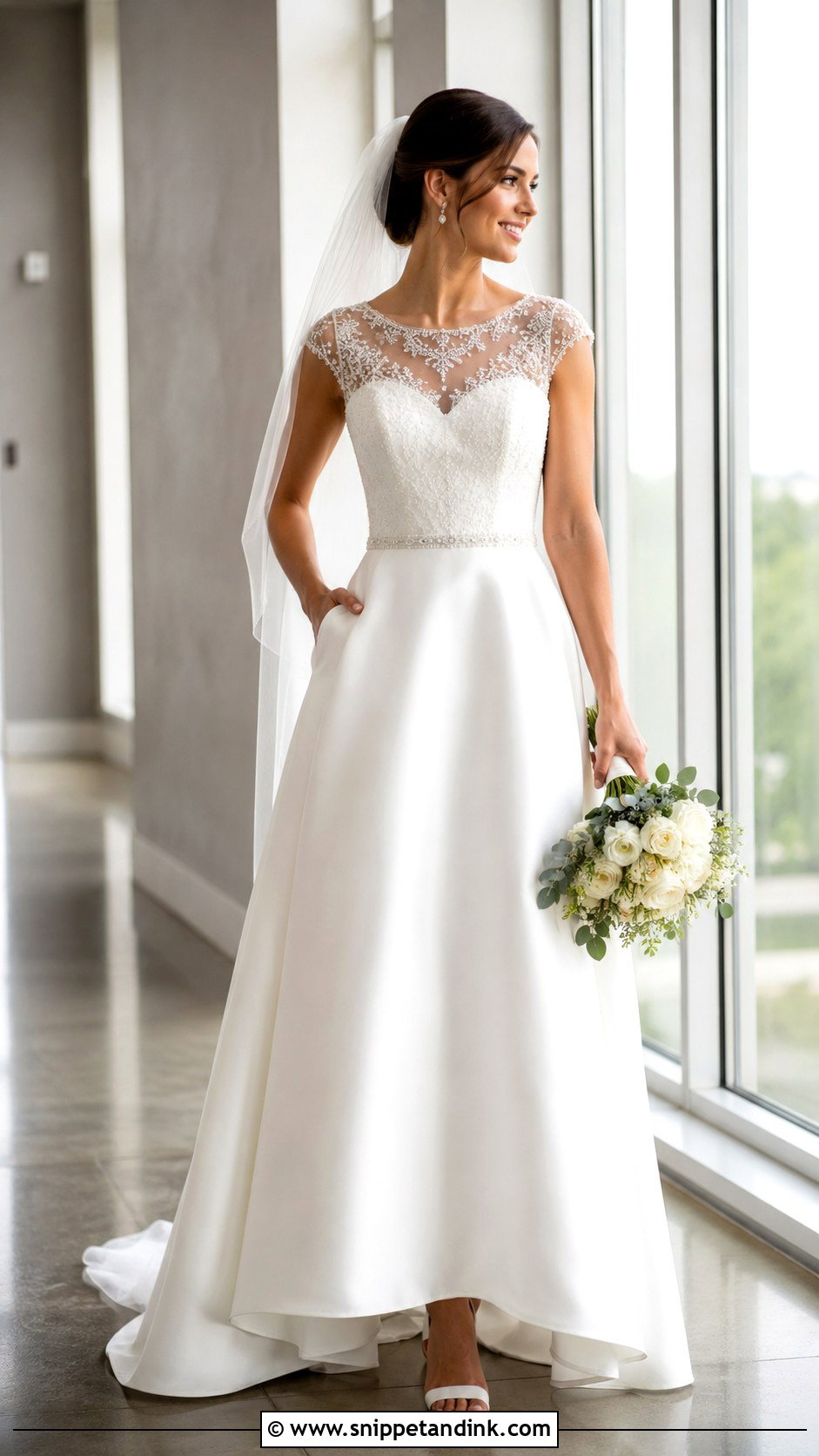
A detachable illusion neckline turns an open bodice into something more covered for the service. The panel might bring a high neck, cap sleeves, appliqués or beading on sheer tulle, over a sweetheart, straight or plunging base. Keep the ceremony accessories small and the veil clear of the neck so the detail shows; add a necklace once the panel is off. The tulle shade is my biggest worry here. Illusion fabric that is a touch too pink or too grey looks fine in a mirror and wrong in photos, so I check it against the skin in daylight and under the venue’s lights, then hide every snap behind lace.
17. Halter Wedding Dress With Detachable Overskirt
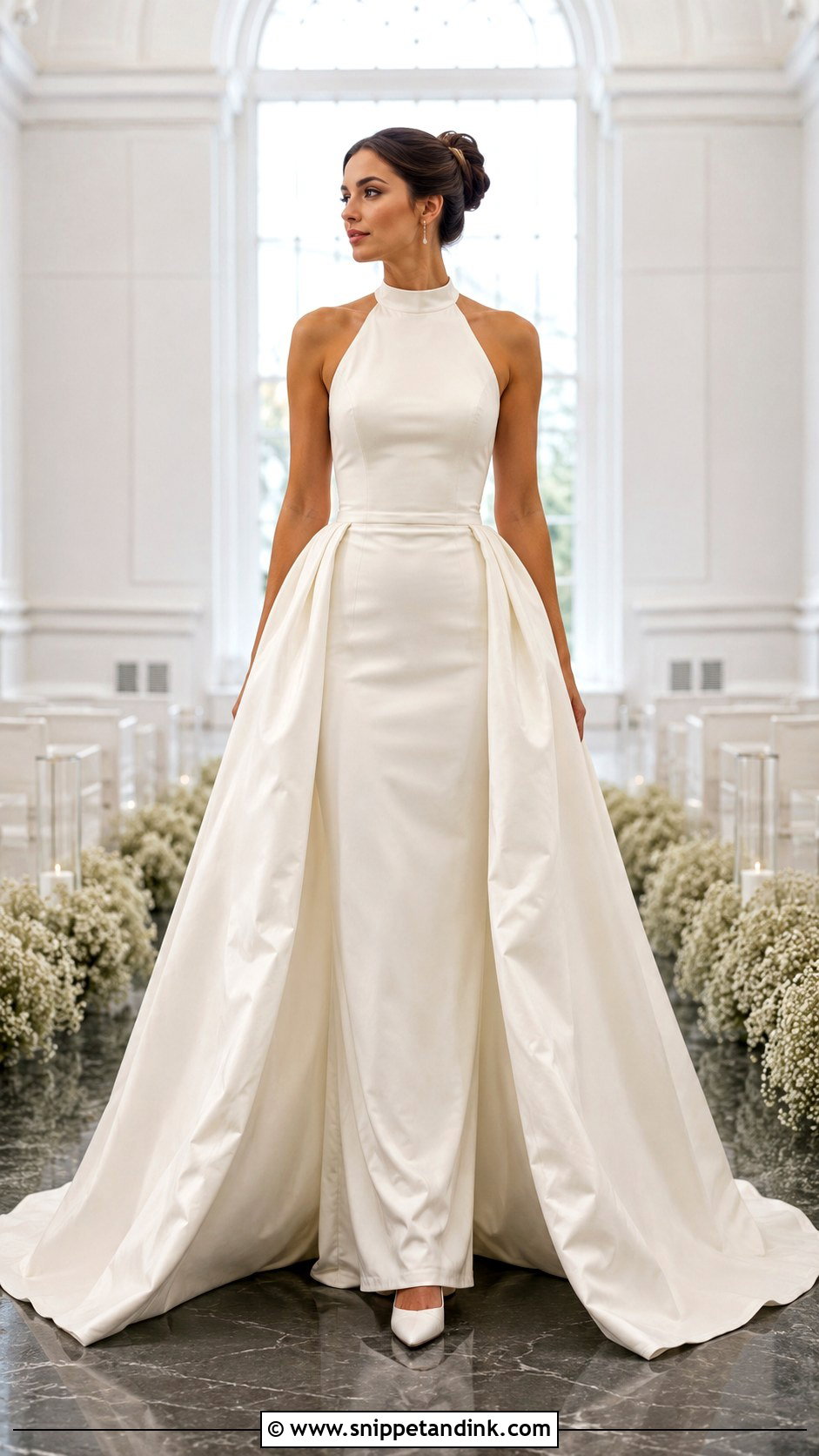
A halter with a removable skirt pairs a strong shoulder line with a skirt you can change. The full skirt gives ceremony volume; under it you might have a column, mini or mermaid. Satin, crepe and beaded tulle all suit the shape. Pick an updo so the neckline stays visible. For the reception, I’d reach for a metal cuff or a hair piece rather than a necklace, which fights with the halter strap. Check two things in the fitting: that the overskirt band doesn’t cut across the long bodice line, and that you can lift your arms freely, since a halter pulls at the neck when shoulders are restricted.
18. Two-Piece Wedding Dress With Removable Sleeves
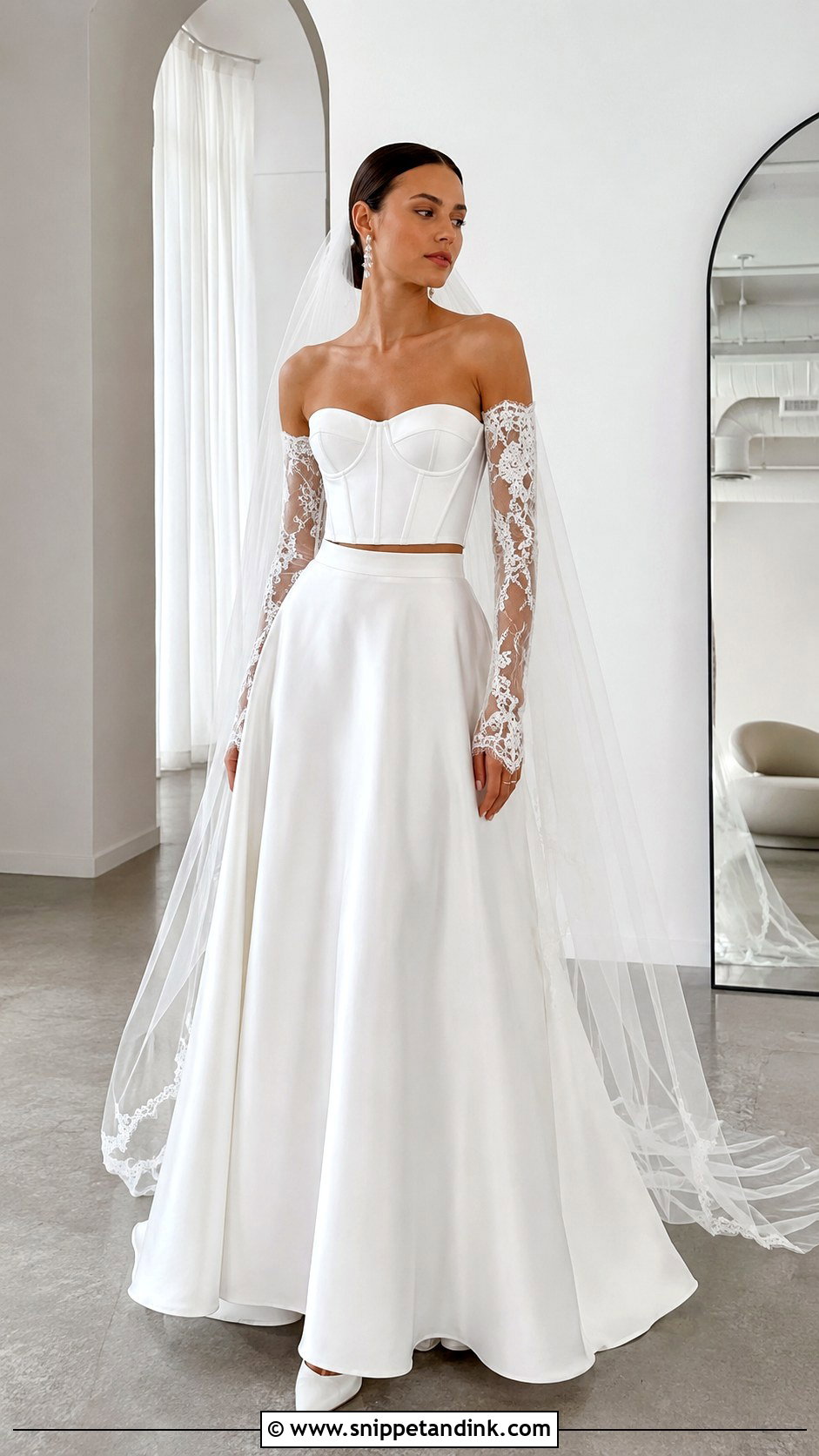
A two-piece with removable sleeves gives you a corset or structured crop top over a high-waisted A-line, column or full skirt, with lace, tulle or satin sleeves for the ceremony. The small gap between top and skirt feels modern while still covering most of the torso. A fingertip veil and drop earrings suit the first version; stacked bracelets or a hair clip suit the bare-armed one. Two separate pieces mean two places that can slip. I want the top to stay put without the sleeves, and the skirt waistband to stay flat when you sit. Match the fabrics and beading exactly so it reads as one dress.
19. Wedding Dress With Detachable Puff Sleeves
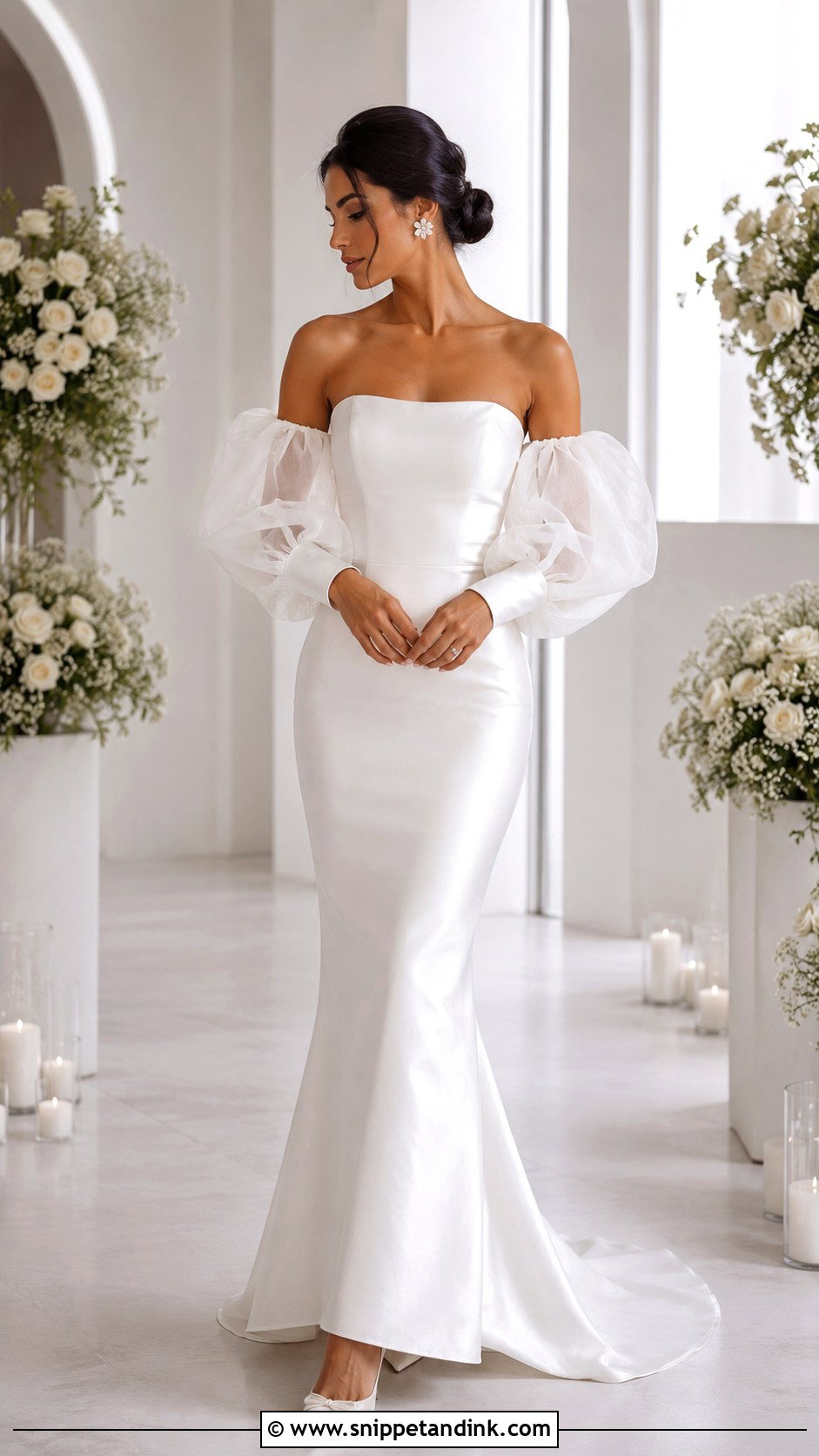
Puff sleeves add volume at the shoulder and balance a strapless bodice, especially over a full skirt. Organza is crisp and holds its shape; tulle or dotted mesh versions look softer and lighter. A low bun and small earrings suit the ceremony, then the sleeves come off and the line is simpler for dinner. I size the puff to the bride and the skirt, not the picture. On a petite frame, a huge sleeve swallows the neck. Make sure the elastic is firm but not tight, and that the hidden loops lie flat once the sleeves are gone.


20. Three-In-One Convertible Wedding Dress
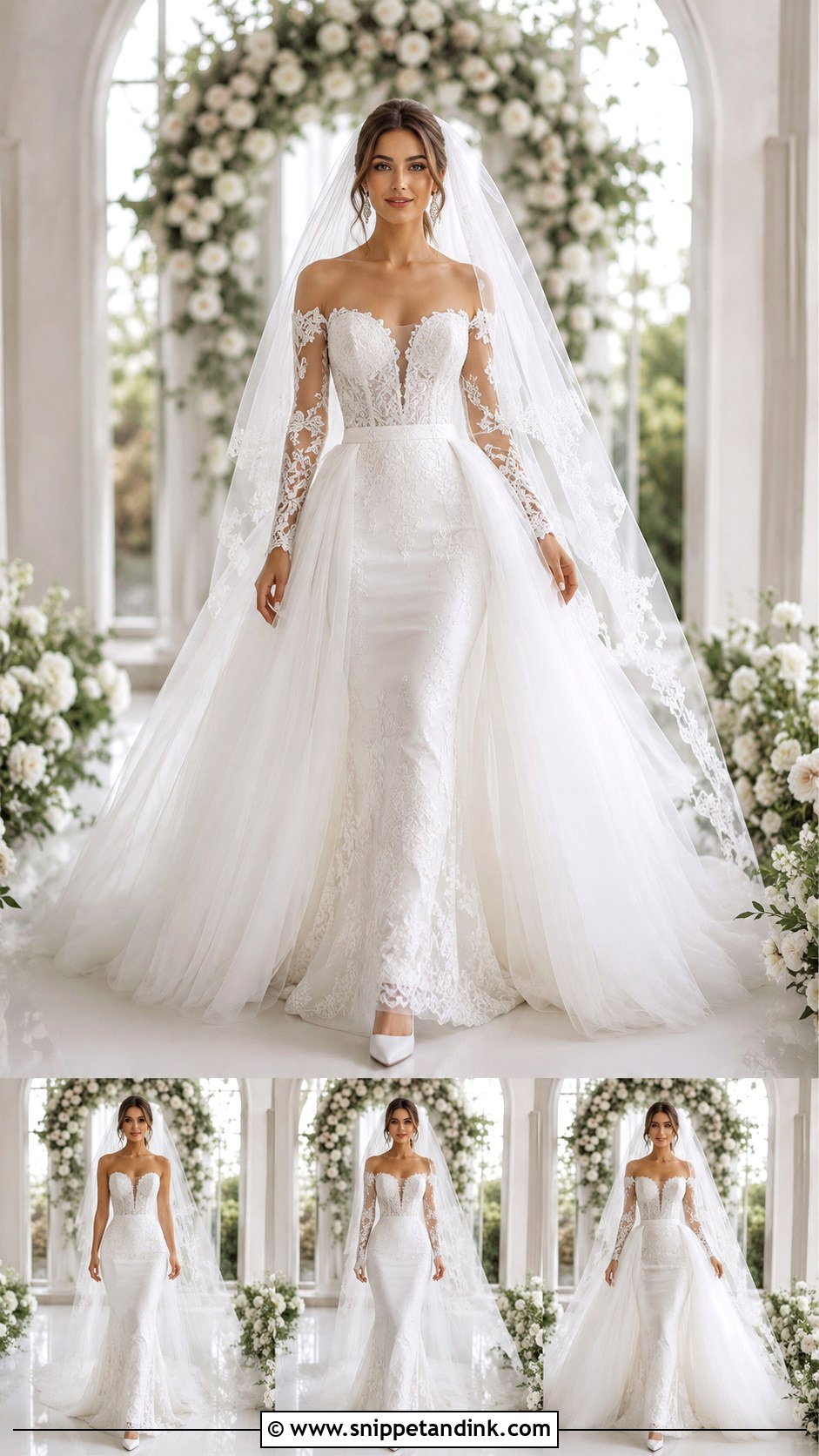
Three in one means a base gown, removable sleeves or a topper, and an overskirt, so you can have three looks: everything for the ceremony, no sleeves for portraits, no skirt for the dancing. Pick one pair of comfortable heels, earrings and a hairstyle that suit all three, because you won’t have time to change those too. Every piece has to look finished alone and together, which means more fitting time. Photograph each combination at the last fitting, label the garment bags and give one person the job of handling the changes. Simple closures are what make it quick.
The Ten Minutes Behind a Closed Door
The change usually happens between portraits and dinner, or just before the first dance. I’d build ten to fifteen minutes into the schedule for it, even though most switches take less, because finding a free room and a bridesmaid takes longer than the hooks do.
Choose your helper early and let them practise at the final fitting. They should know which closure opens first and how the piece folds. A small kit in their bag saves panic: safety pins, a needle threaded in ivory, fashion tape and a lint roller. Ask the venue for a lockable room or cupboard near the reception space, since an overskirt is too big to stuff under a chair.
Cleaning and Storing Pieces That Must Still Match
After the wedding, send every piece to the cleaner together, even the sleeves you wore for an hour. Fabric that’s cleaned separately can end up a slightly different shade, which shows if you ever want to wear or pass on the full dress. Store the pieces folded in acid-free tissue in a breathable box or cotton bag, never plastic, which can trap moisture and yellow the fabric. Pad the folds of a heavy overskirt so the satin doesn’t hold a hard crease.
Two Looks, One Fitting Schedule, One Helper
A two-look dress is worth it when every change is quick and every version looks finished on its own. Before you commit, wear each piece, sit and walk in it, and take it off yourself at least once. Bring your actual shoes and underwear to the fittings, and let the person who’ll be helping you watch how the closures work. Then make a plan for where the removed pieces go while you’re dancing. A ball gown, jumpsuit or mini can all work this way; the one to buy is the one whose second look you’d happily wear all night.
You'll Like These Ideas:



Leave a Reply