
Sleeves change a wedding dress more than almost any other single detail, and they don’t lock you into one silhouette. The range is wide: sheer illusion lace, sleek crepe, satin with a soft glow, floaty chiffon and crisp mikado, cut as fitted cuffs, bishop sleeves, puffs or pieces you can take off after dinner. In a fitting room, I watch how a bride moves her arms long before I comment on the bodice, because that tells me which sleeve she’ll forget she’s wearing and which one she’ll be tugging at by the speeches. The twenty dresses below are grouped by fabric, silhouette, neckline and sleeve shape, with the shoes, veil and jewelry I’d pair with each.
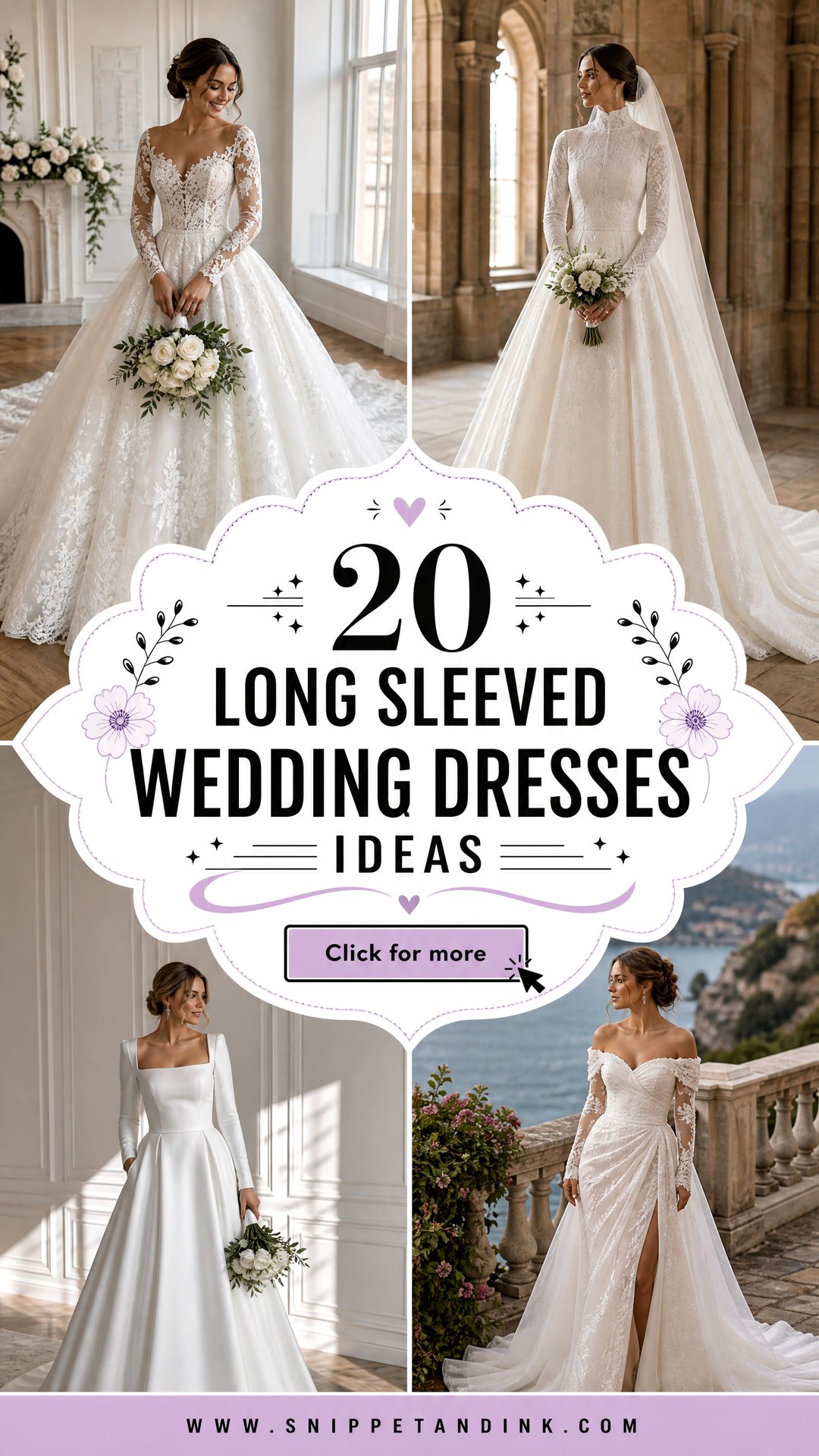
Fitted, Bishop, Puff or Illusion? Describing the Sleeve You Want
Brides often arrive at a salon saying they want long sleeves and then try on five dresses that all feel wrong. Usually the problem is the sleeve type, not the dress. Knowing the names helps a consultant pull the right samples on the first round.
- Fitted sleeve: close to the arm from shoulder to wrist. Clean and sleek, but it needs exact alteration and some stretch to bend comfortably.
- Illusion sleeve: sheer mesh with lace or beading on top. Light and decorative, little warmth, and the mesh shade must suit your skin.
- Bishop sleeve: loose through the forearm, gathered into a cuff. Soft and romantic, forgiving on the upper arm, but the volume adds visual width.
- Puff sleeve: volume at the shoulder, narrowing below. Shape-giving and striking, though it can overwhelm a small frame.
- Detachable sleeve: a separate piece fastened to the bodice. Two looks from one dress, plus one more thing to fit and look after.
When you book appointments, mention the sleeve type alongside the silhouette, and say how you’ll spend the day. A bride who plans to hug a hundred guests and dance for three hours needs a different sleeve from one who’ll be mostly seated at a small dinner.
Bring a photo of a sleeve you like even if the rest of the dress is wrong. Consultants can often find the same sleeve on a different body, or a seamstress can add sleeves to a gown that has none.
1. Long Sleeve Lace Wedding Dress
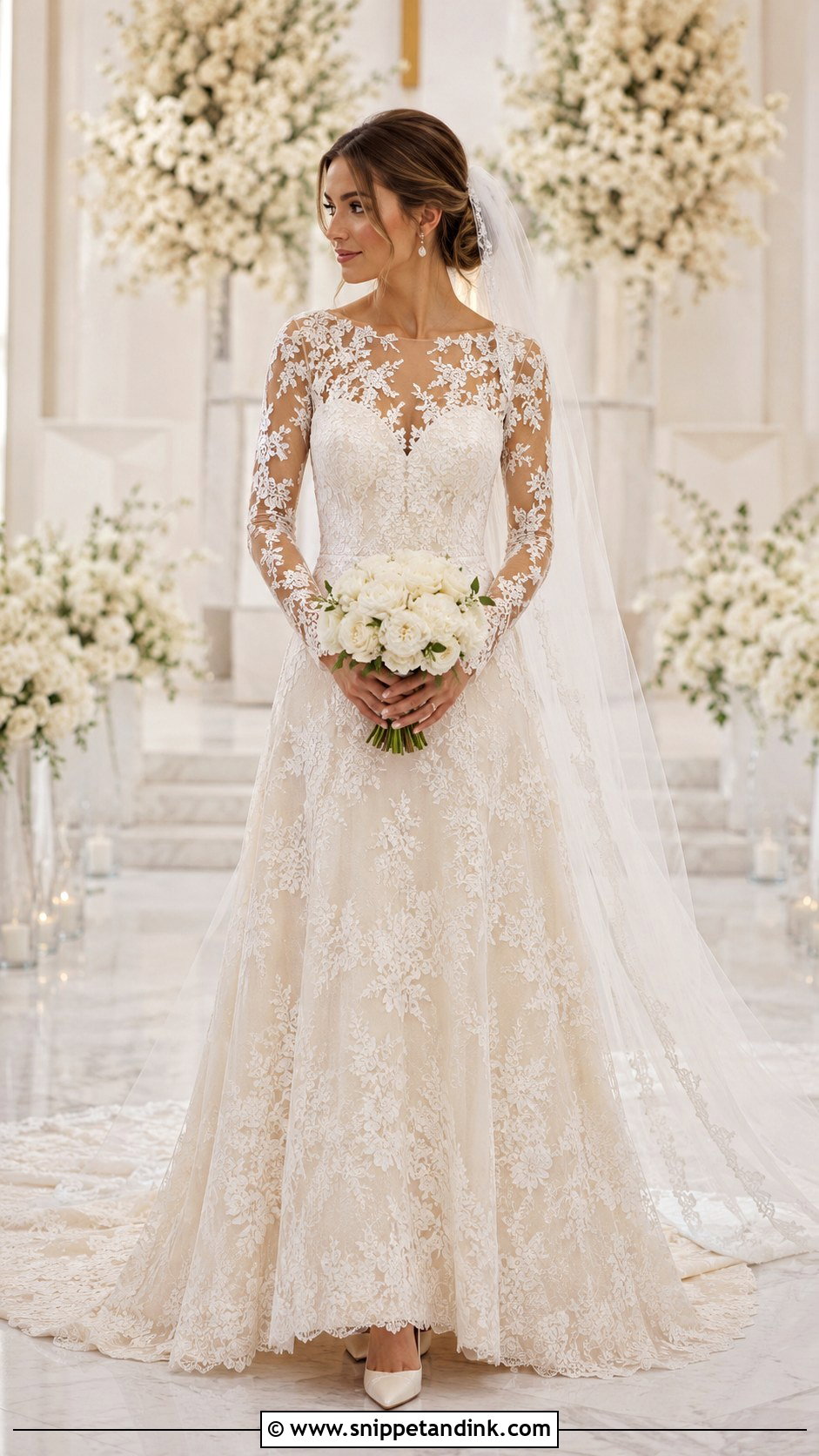
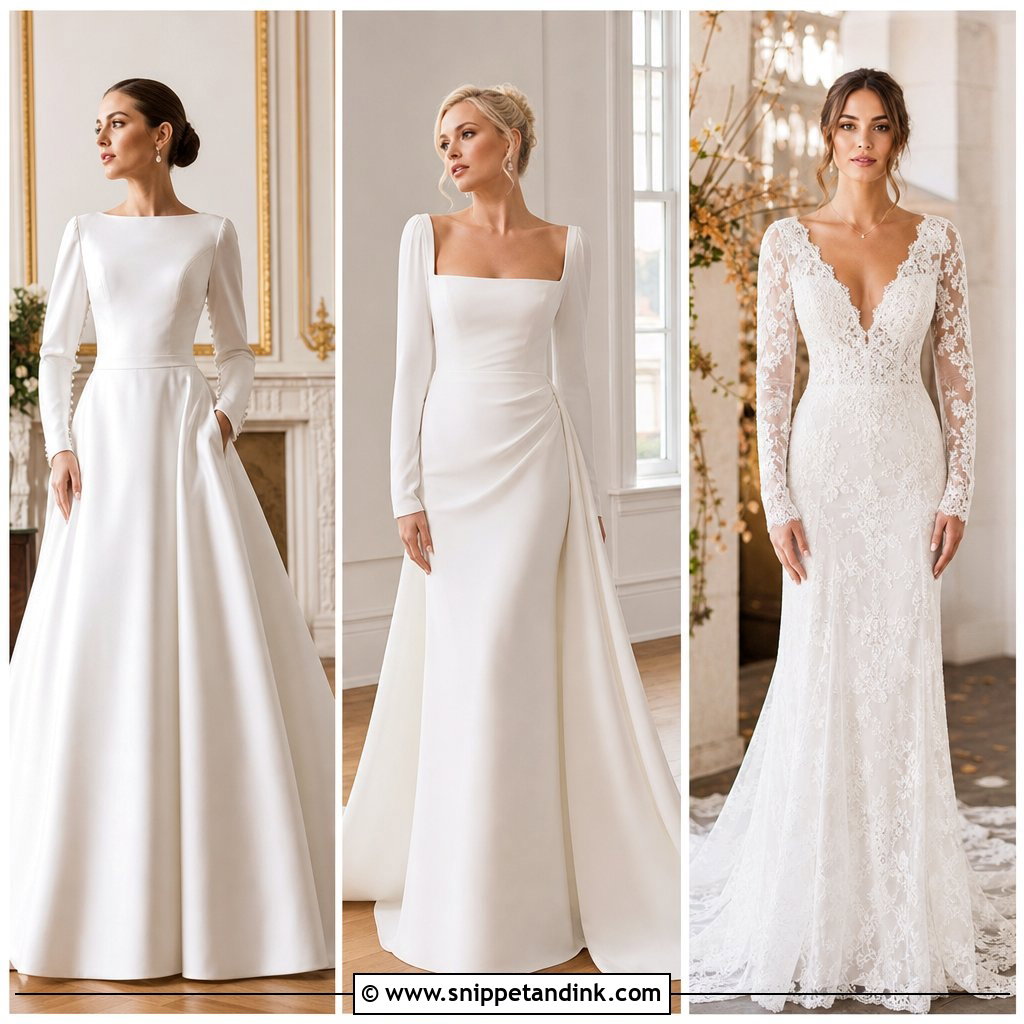
Lace is the sleeve most brides picture first, and the pattern density changes everything. An open floral lace looks airy and shows more skin; tightly worked lace gives real coverage and holds its shape better at the elbow. On an A-line with a fitted bodice, I’d style it with pearl drop earrings, a low chignon and pointed ivory pumps, plus a cathedral veil if you want the full traditional effect. Detailed lace and a busy bouquet fight each other, so keep the flowers to white blooms and greenery. Watch where the sleeve seam meets the shoulder: lace set even a little too far back pulls when you reach forward to hug someone.
2. Long Sleeve Satin Wedding Dress
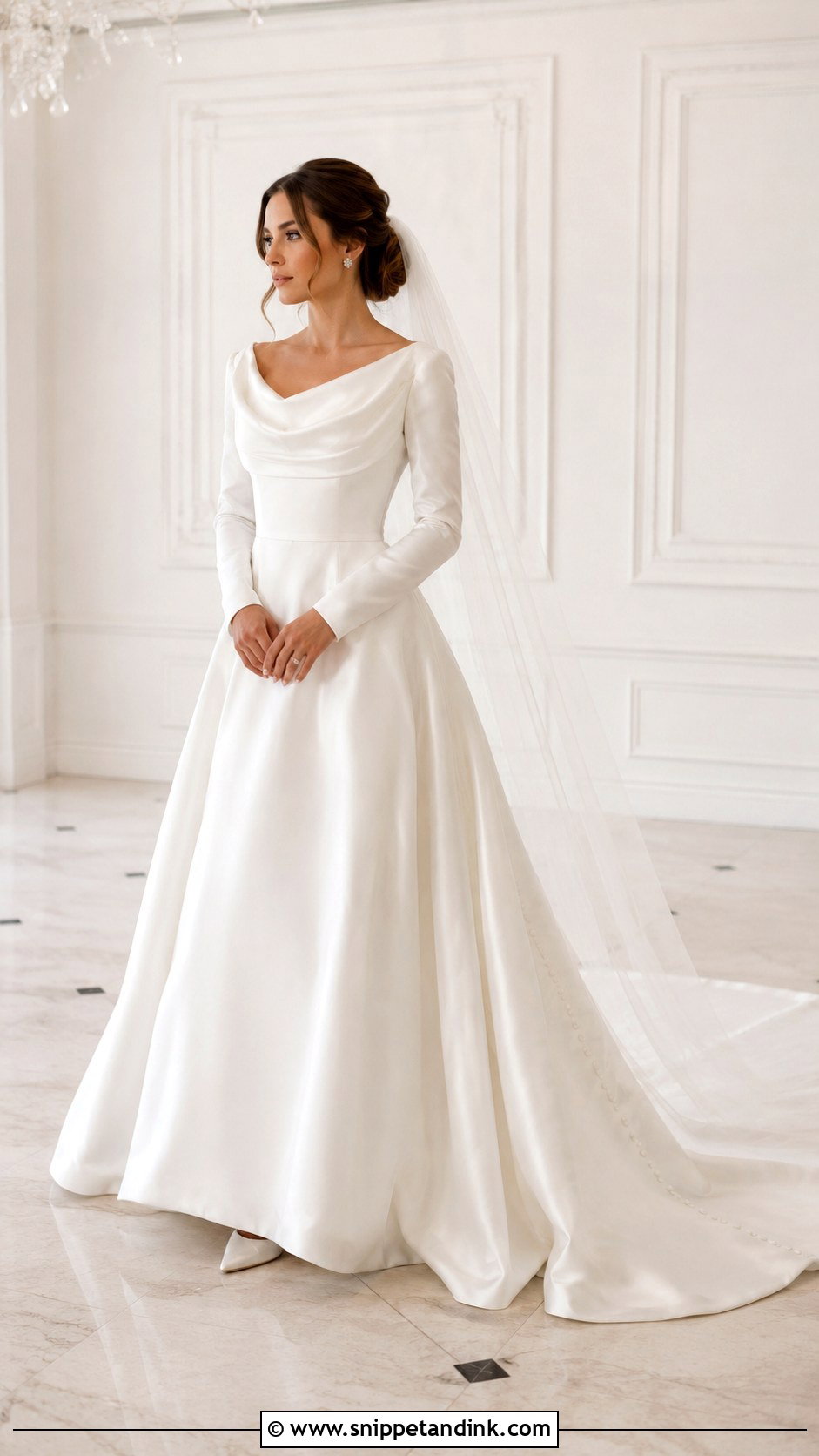
Satin does the decorating for you. Its sheen picks up every light source, so a plain bateau, scoop or draped neckline is plenty. A fitted bodice with a full skirt reads formal; a satin column reads modern and spare. Keep the accessories quiet: crystal studs, a sleek bun, pointed pumps, a chapel veil and a small structured bag for later. The honest drawback is that satin shows strain. Any spot where a sleeve is too tight will show as diagonal pull lines in photographs, so at fittings sit, walk, raise your arms and turn fully, and look in a three-way mirror while you do it.
3. Long Sleeve Crepe Wedding Dress
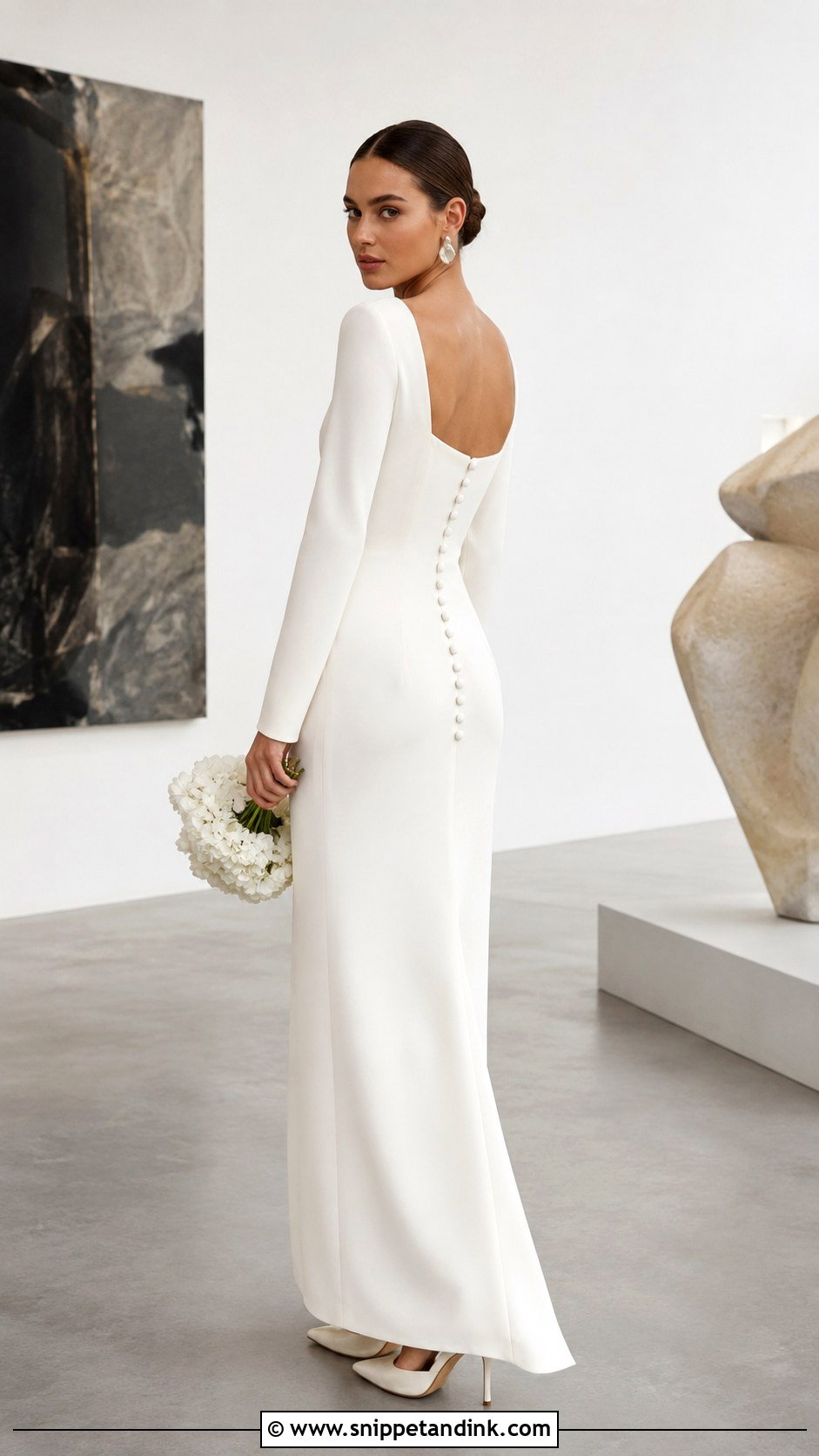
Crepe has no lace or volume to lean on, so the tailoring is the design. Matte crepe drapes smoothly over the body and suits a square neckline, a bateau neckline or a subtle V that gives the upper body some structure. A low back or a line of covered buttons adds interest without breaking the minimal mood. Sculptural earrings, a polished ponytail, pointed ivory heels and a compact bouquet fit it. Crepe clings, so seam-free underwear matters through the waist and hips. I’d spend fitting time on the sleeve length and the hem above everything else; on a plain dress the eye goes straight to those edges.
4. Long Sleeve A-Line Wedding Dress
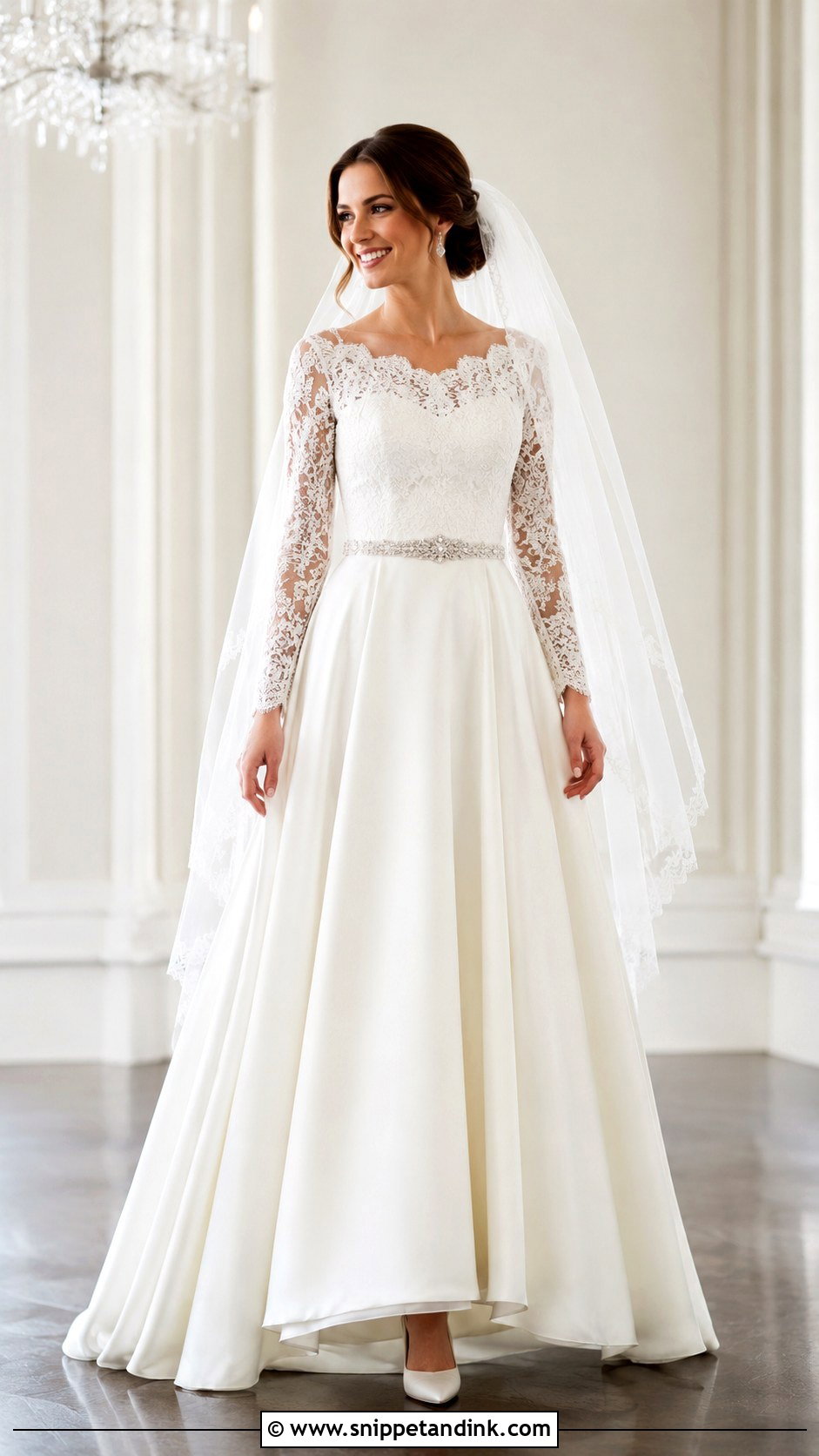
If you’re unsure where to start, start here. The A-line fits through the bodice and releases at the waist, so you can walk, sit and dance in it without thinking. Lace sleeves make it romantic; crepe or satin sleeves make it cleaner. A V-neck lengthens the upper body, a high neck adds coverage. Pair it with a fingertip veil, delicate earrings and closed-toe heels, and a narrow crystal belt at the natural waist if you’d like a little sparkle. The one alteration that changes an A-line most is where the skirt begins. Moving that seam even a little higher or lower can rebalance your whole torso.
5. Long Sleeve Ball Gown Wedding Dress
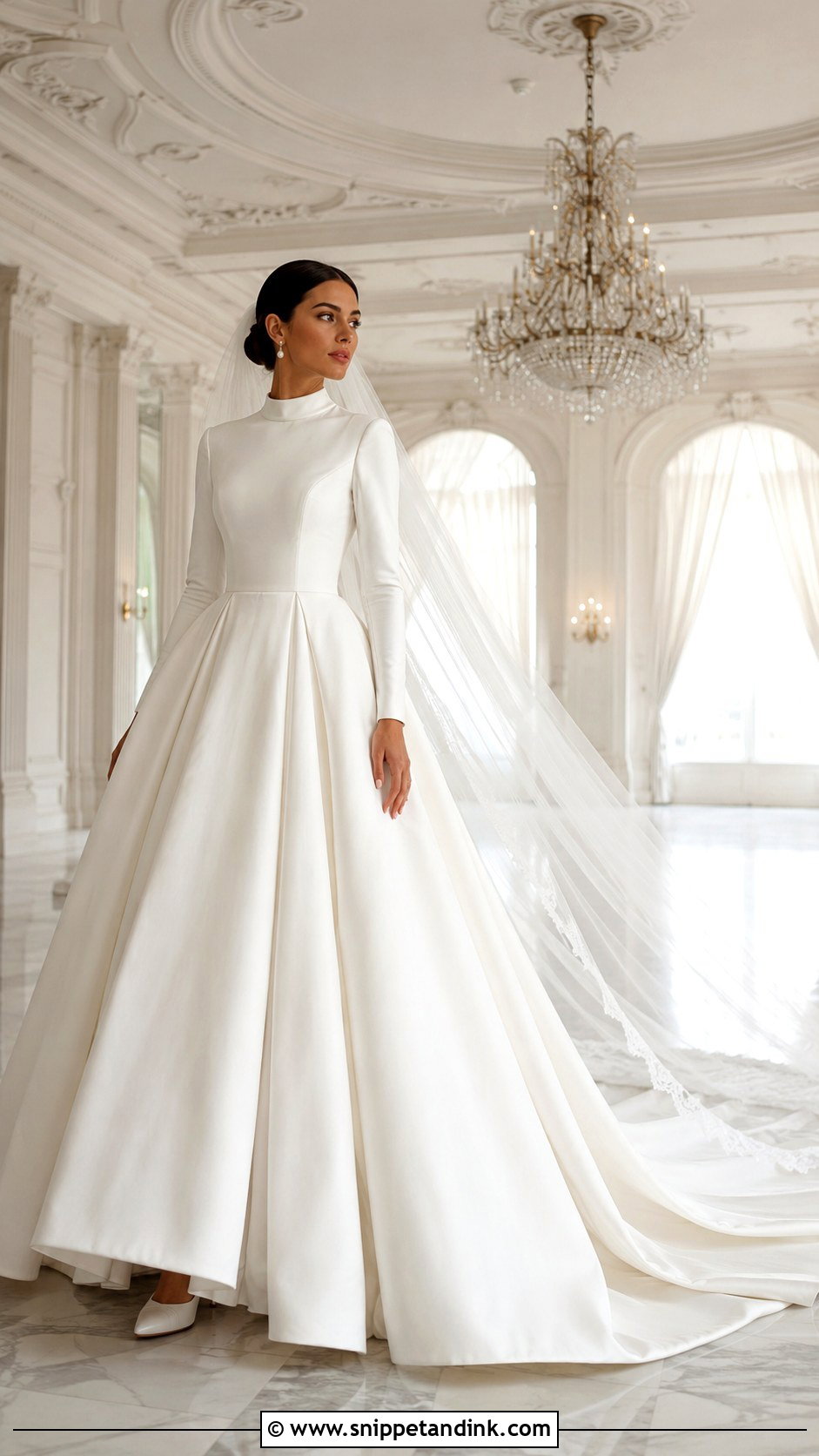
A long sleeve ball gown is built for a big room and a long aisle. The structured bodice and wide skirt need fabric with body: mikado or satin for crisp volume, layered tulle for something softer. Fitted lace sleeves counter the fullness of the skirt nicely, while plain fabric sleeves feel regal. A cathedral veil, pearl earrings and block heels hidden under the hem complete it; keep the necklace minimal if the neckline is detailed. Ball gowns are heavier than they look on a hanger, and the weight sits on your hips. Walk and turn in the sample, ask how the bustle works, and sit down to see how much chair space the skirt really takes.
6. Long Sleeve Mermaid Wedding Dress
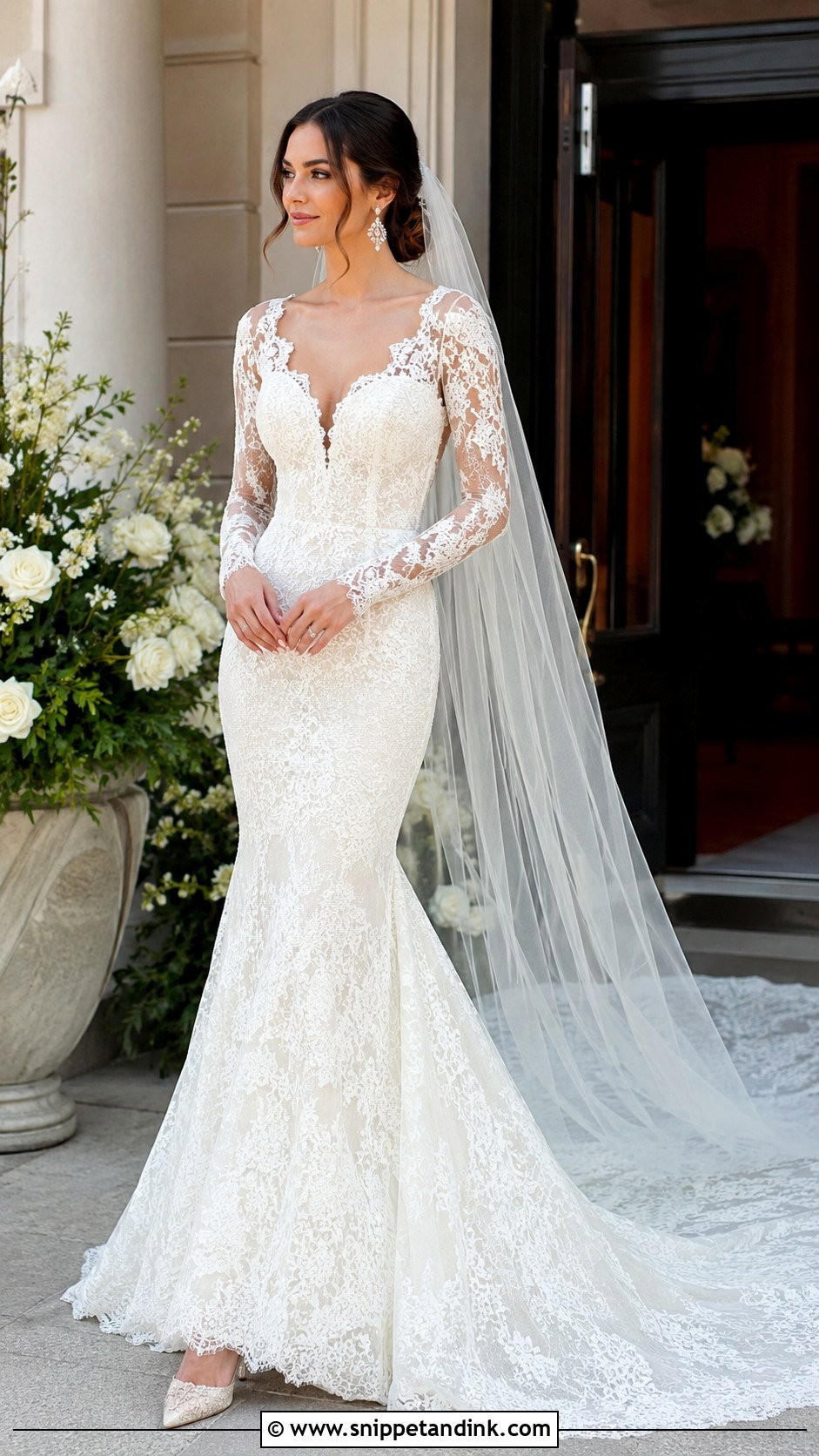
A mermaid follows you through the torso and hips and flares near the knee. Stretch crepe gives a smooth line; lace adds texture and softens it. A plunge makes it dramatic, a bateau or illusion neckline more covered. I’d pair it with a long veil, crystal earrings, slim pointed heels and a low bun that keeps the back on show. Long sleeves add a fitting challenge here, since a close sleeve on a close bodice leaves no ease anywhere. The flare should start just below the knee, not across it. Sit, climb a few steps and dance in the shop, and ask for a bustle that lifts the train without wrecking the shape.
7. Long Sleeve Boho Wedding Dress
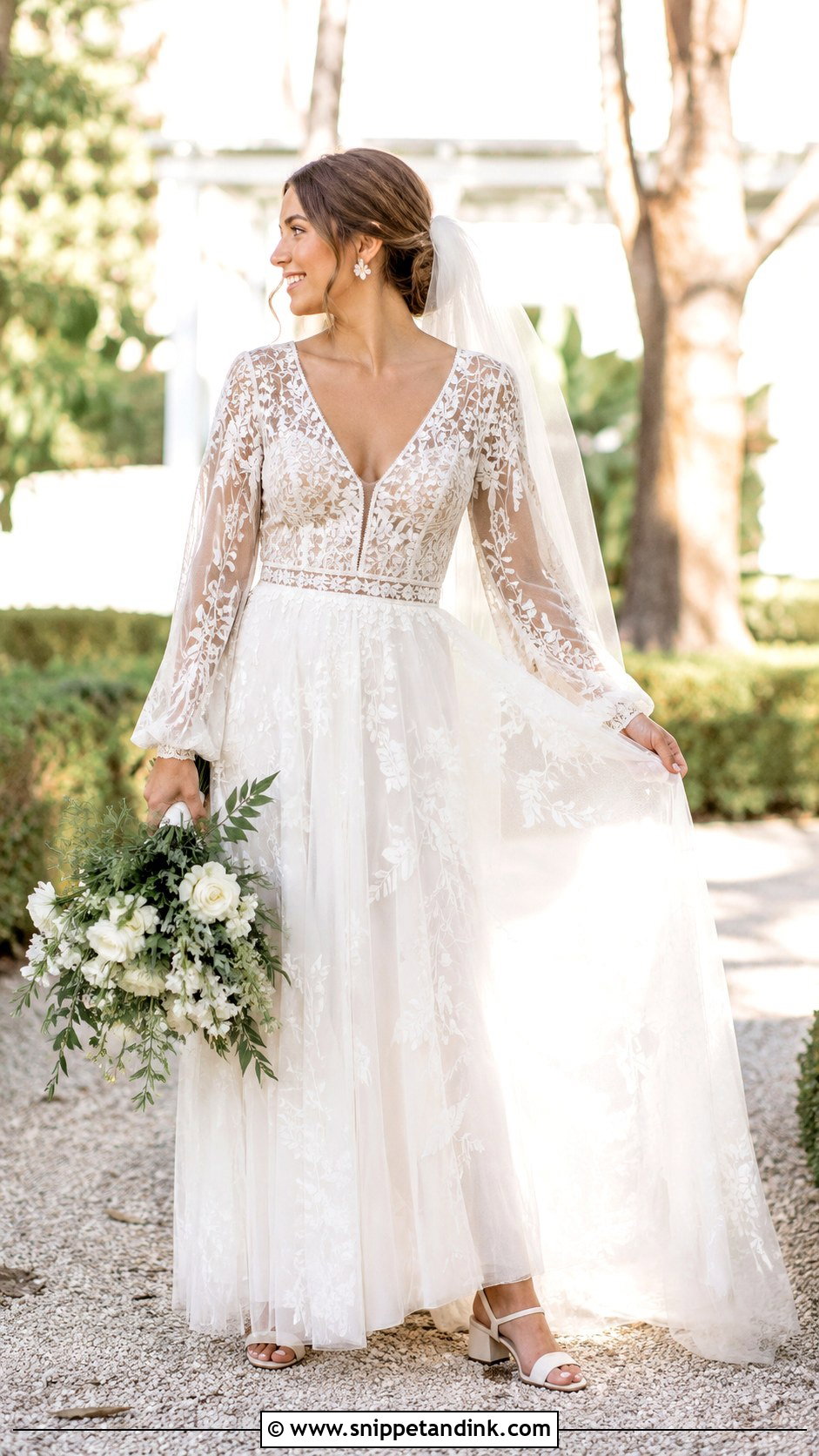
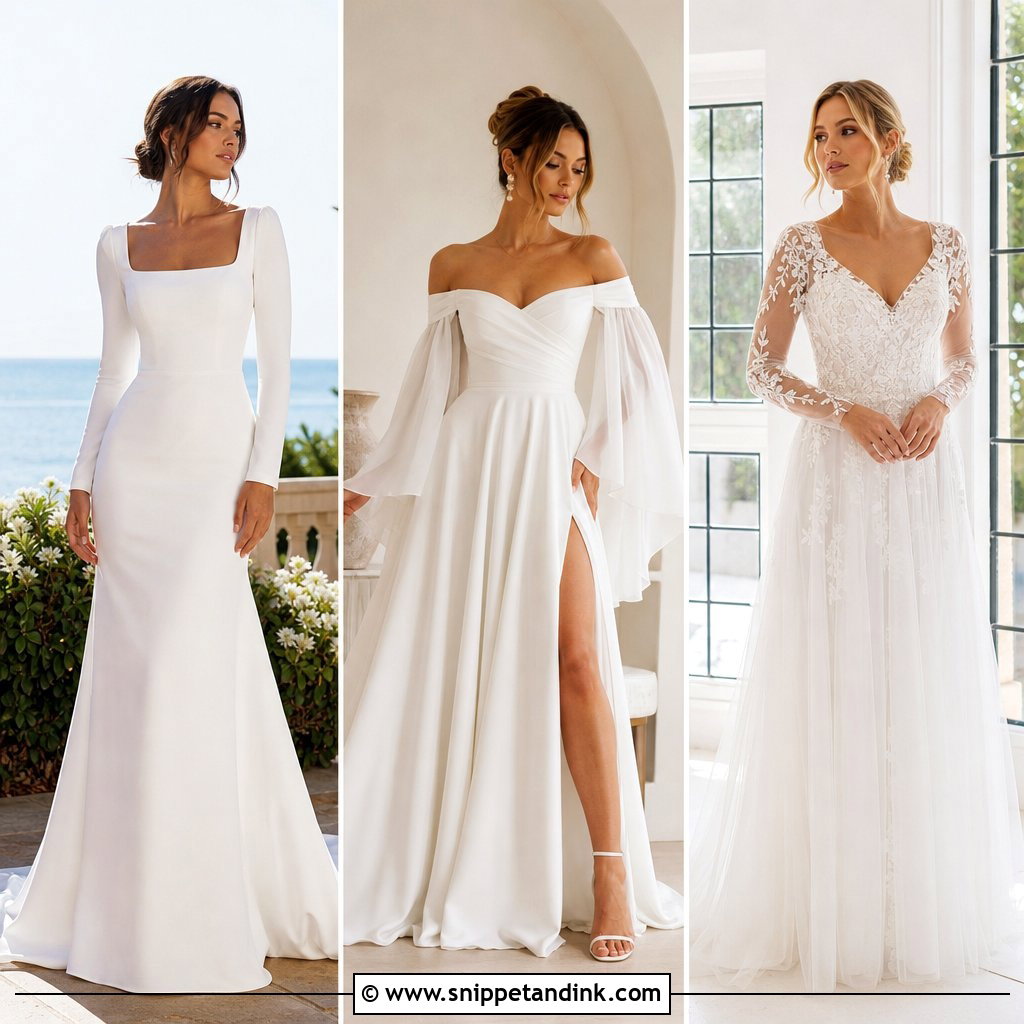
The boho long sleeve dress is built on softness: botanical lace, flowing chiffon or lightly embroidered tulle over an easy A-line or column. Bishop sleeves, flared cuffs and open backs give it movement. Loose waves, small floral earrings and ivory block-heel sandals keep it relaxed, with a simple veil or a fine hair vine. It suits gardens, woodland, barns and coastal venues, though the fabric should match the setting. Lightweight sleeves stay cooler outdoors, and a short or moderate train won’t snag on roots and gravel. I’d choose a bouquet with loose shapes and a restrained palette rather than anything tightly domed.
8. Long Sleeve Modest Wedding Dress
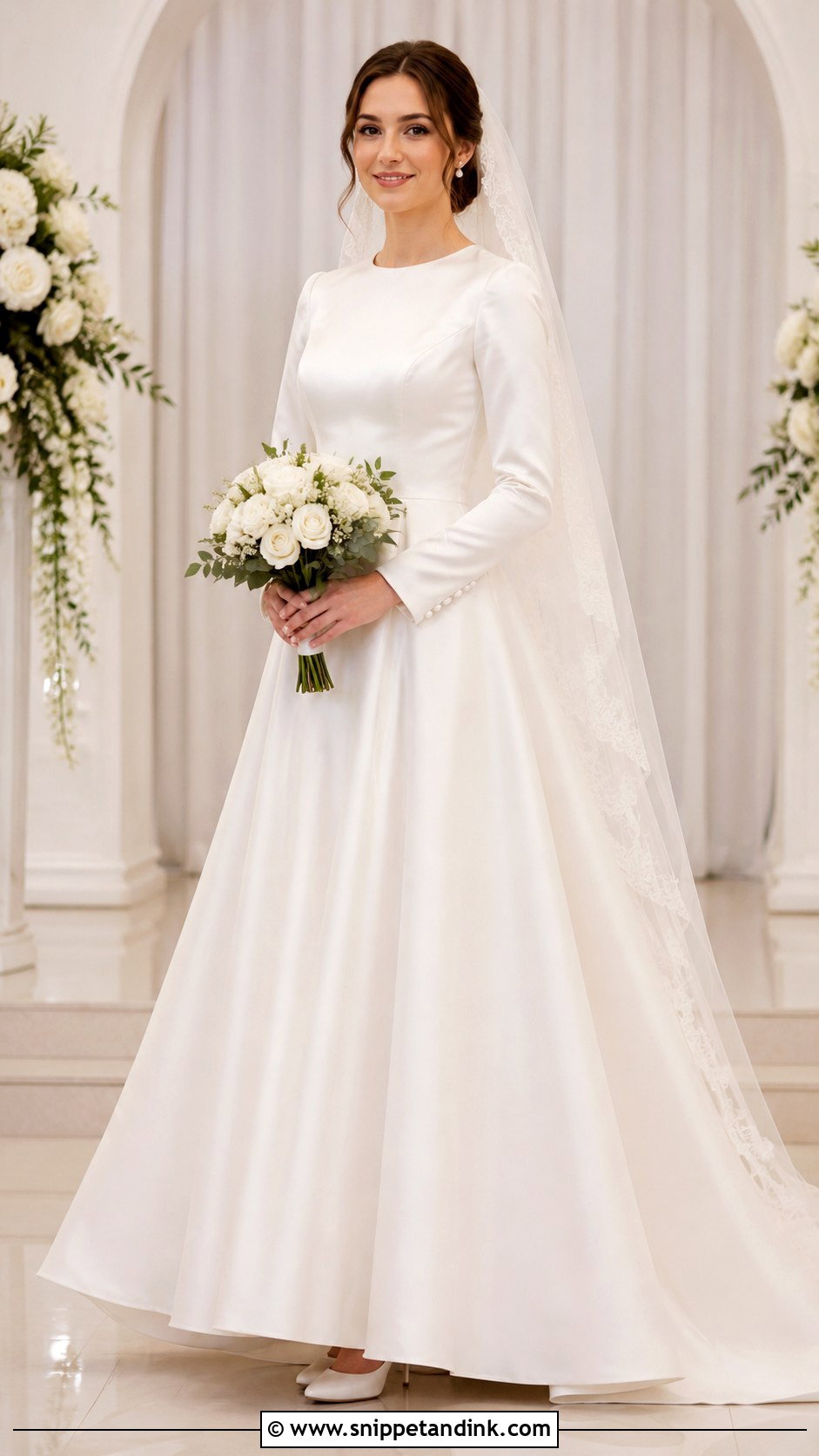
Modest gowns are the ones where lining does the most work. An opaque bodice, full-length lined sleeves and a high bateau, jewel, or mock neckline give coverage; satin and mikado bring structure, and lined lace adds texture without going sheer. An A-line skirt moves easily and balances the covered top. Pearl earrings, a smooth low bun, closed-toe pumps and a flowing veil suit it, with covered buttons on the back or cuffs for quiet detail. Many sheer panels can be lined in a fabric close to your skin tone or the gown color, so ask the salon early. Alterations at the neckline, shoulders and wrists stop the fabric gaping when you move.
9. Long Sleeve Illusion Wedding Dress
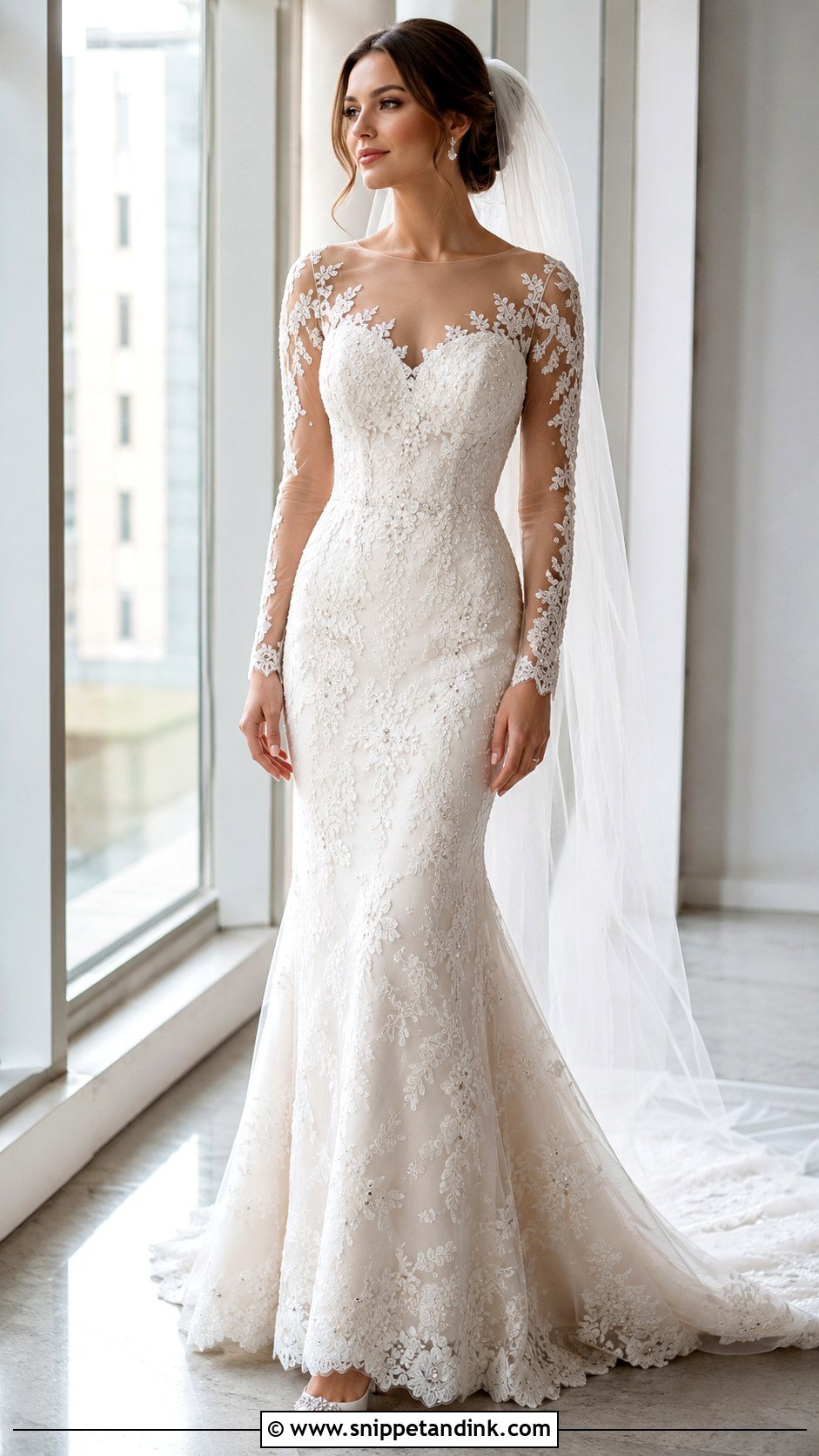
Illusion sleeves are fine mesh carrying lace appliqués, pearls, embroidery or tiny crystals, which is why the decoration seems to sit directly on the arm. The mesh color decides whether the effect works. Hold the sample against your wrist in daylight and under warm indoor light, because a tulle that matches in the shop can read pink or grey in photographs. A fitted bodice with an A-line or trumpet skirt keeps attention on the sleeves. Add crystal studs, a soft updo, ivory pumps and a veil with minimal edging. Skip bracelets near embroidered cuffs. The sleeve should hug without pulling across the back of the shoulders.
10. Long Sleeve Vintage Wedding Dress
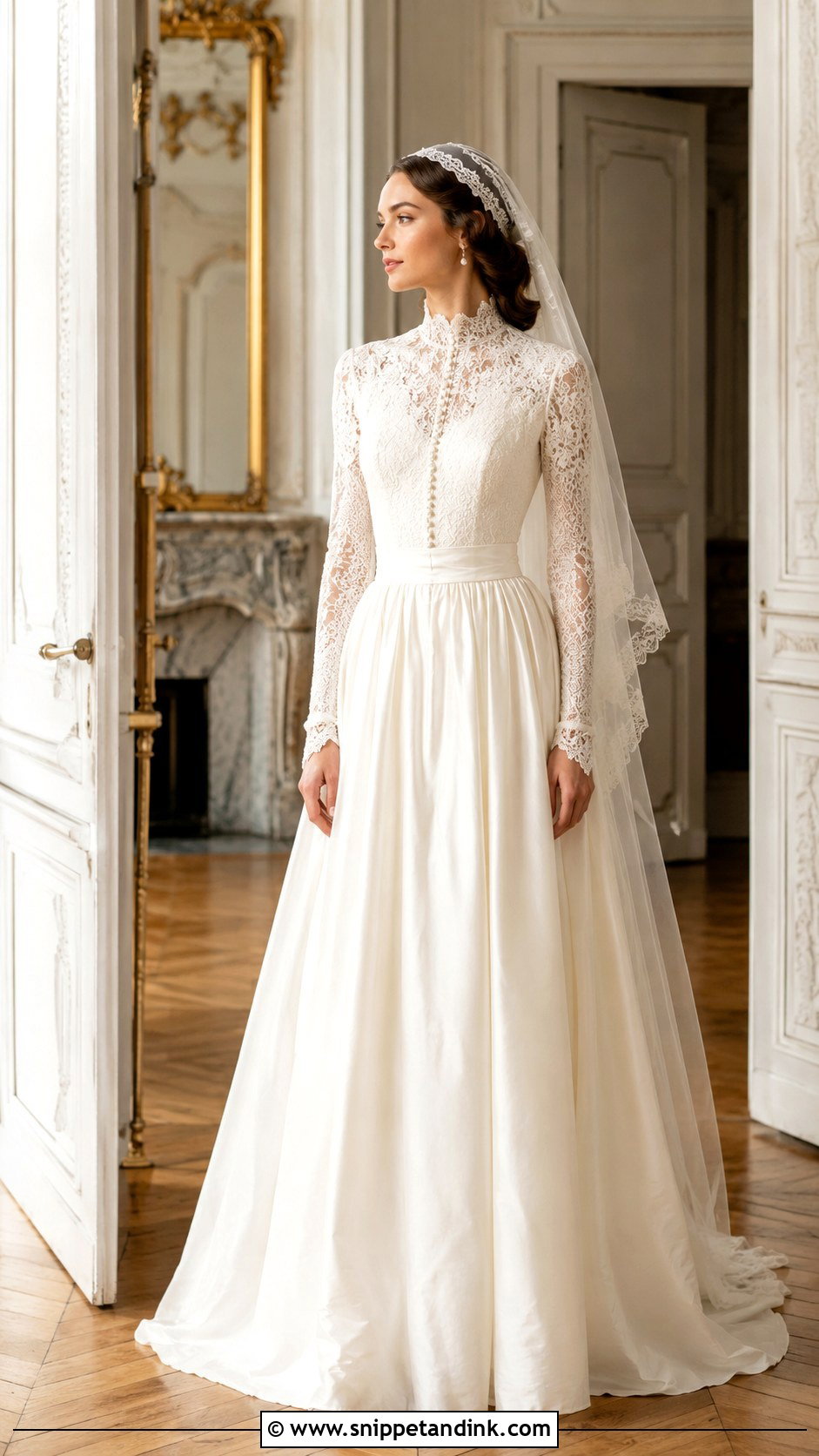
Vintage long sleeve gowns borrow their character from specific decades. Victorian-influenced gowns lean on high collars and fitted cuffs, 1930s styles on fluid bias-cut fabric and a slim line, and 1950s designs on a structured bodice with a fuller skirt. Pick one era and commit; mixing them is what pushes a look into costume. Pearl earrings, a Juliet cap veil, low ivory heels and soft waves work across most of them. If the gown is a true vintage piece, have it checked for fragile seams, yellowing and old alterations before any work starts. A new reproduction gives you modern lining and support with the same period character.
11. Long Sleeve High Neck Wedding Dress
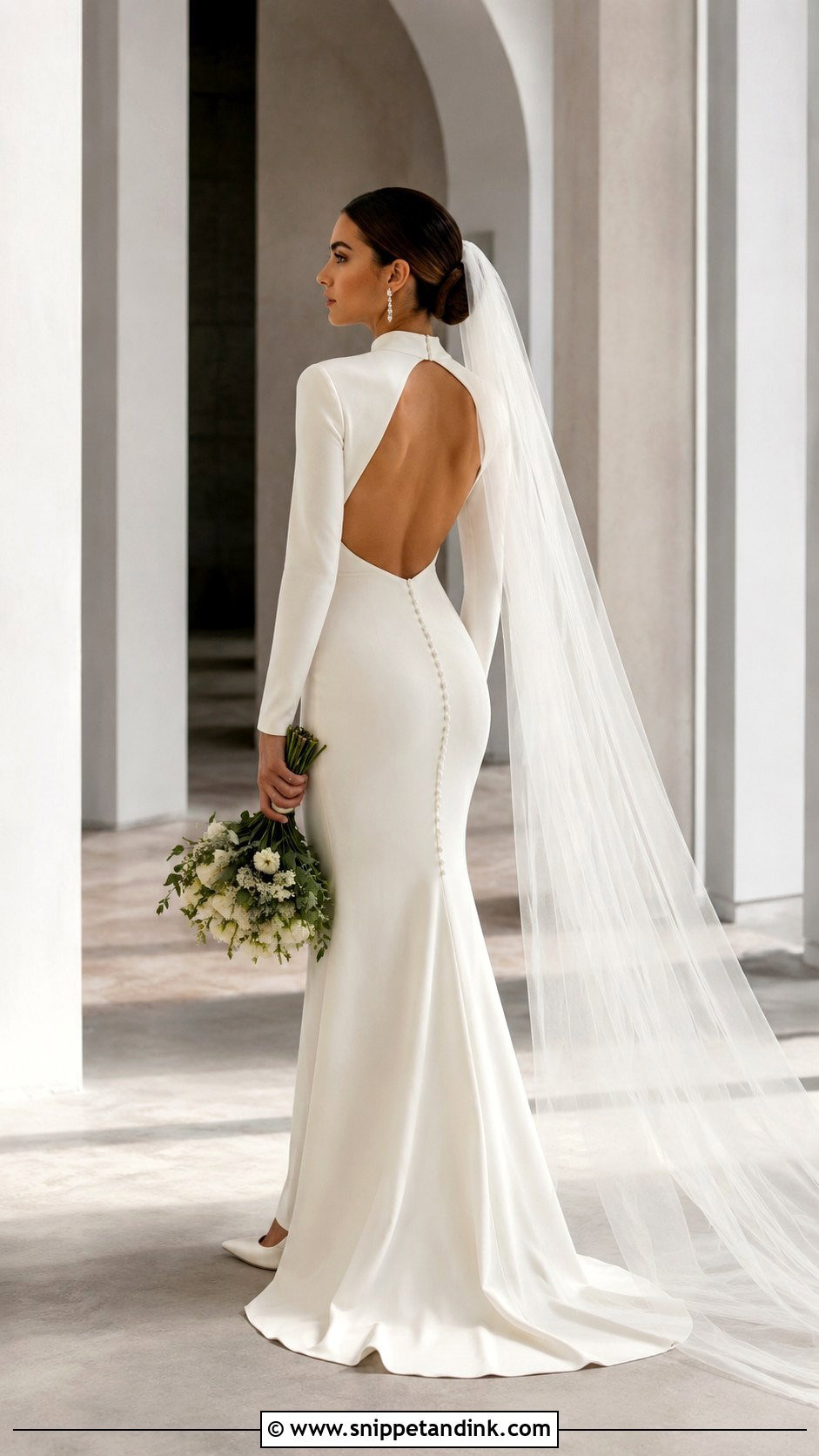
The high neck frames your face like nothing else, and it carries the most coverage across the chest and shoulders. Lace keeps it romantic; crepe or satin makes the collar sharper. To stop the top half feeling heavy, balance it with an open back, a defined waist or a skirt with movement. Earrings take the place of a necklace here, with a neat bun, pointed heels and a simple veil. The collar should lie flat and still when you move. At the fitting, turn your head, lift your chin to the camera and sit for a few minutes. A collar that rubs in the shop will feel raw by dinner.
12. Long Sleeve Square Neck Wedding Dress
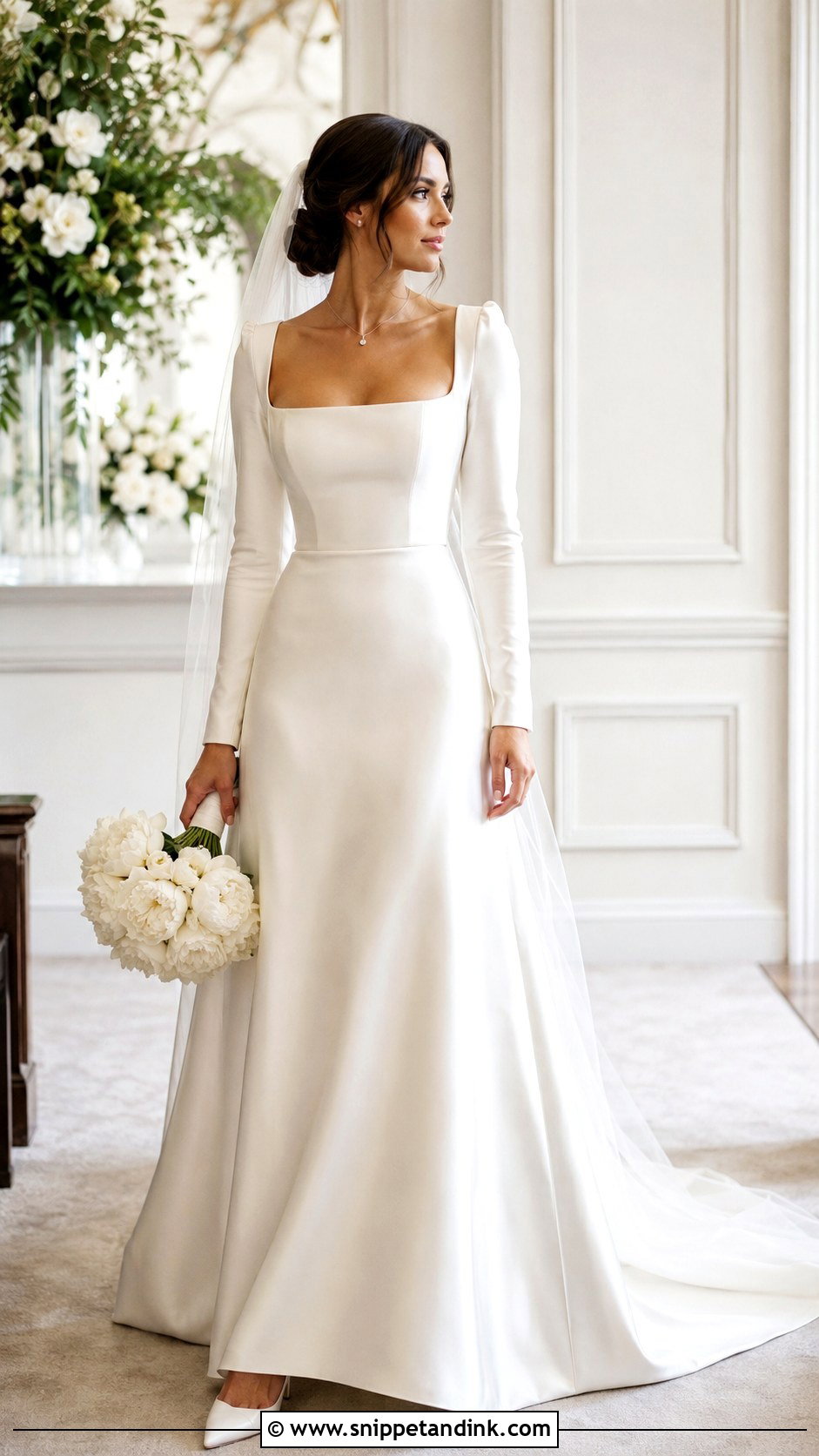
A square neck gives a long sleeve gown a crisp, architectural top while the rest can stay soft. It shows the collarbone and makes a neat frame for a simple pendant or fine drop earrings. Crepe keeps it understated, satin adds shine and lace adds texture. Fitted sleeves with an A-line skirt balance well; a straight column is sleeker. I’d style it with a low chignon, a fingertip veil and pointed ivory heels. The corners of a square neck are where gaping starts, so sit and lean forward in the mirror. Internal boning or cups help a lot, and covered back buttons give a traditional finish.
13. Long Sleeve V-Neck Wedding Dress
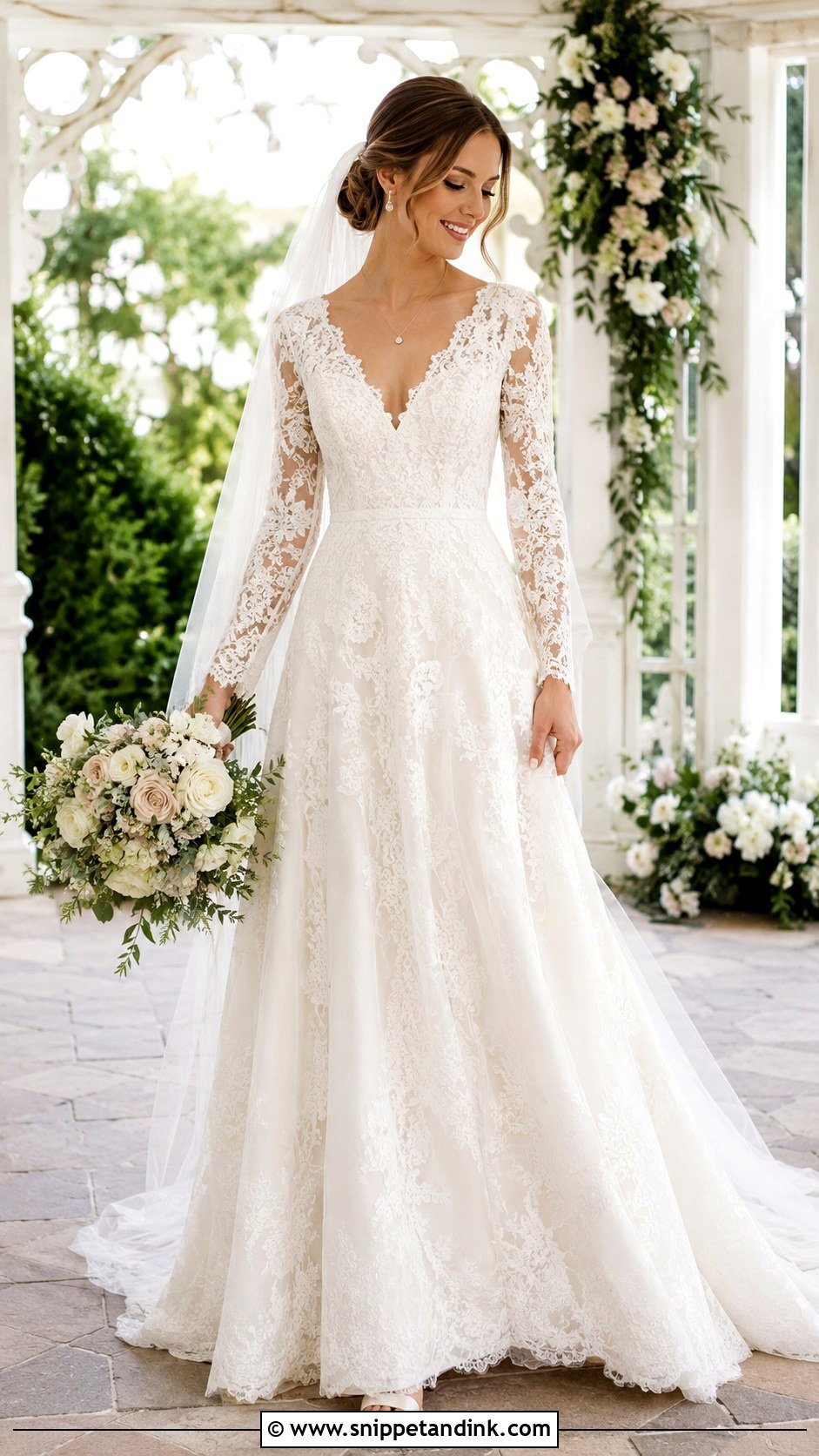
Full sleeves can make a dress feel buttoned-up, and a V-neck is the quickest fix. A shallow V is the versatile one; a deeper cut makes a statement and needs more support. Lace trim softens the edge, and an illusion mesh insert adds security without changing the outline. An A-line skirt gives classic movement, a fitted crepe skirt a sleeker finish. Style it with a fine pendant, simple earrings, a low bun and comfortable heels. Check the neckline from the side as well as the front, especially when you bend. Fashion tape and discreet mesh help, and a plain veil keeps embroidered V-necks from looking busy.
14. Long Sleeve Off Shoulder Wedding Dress
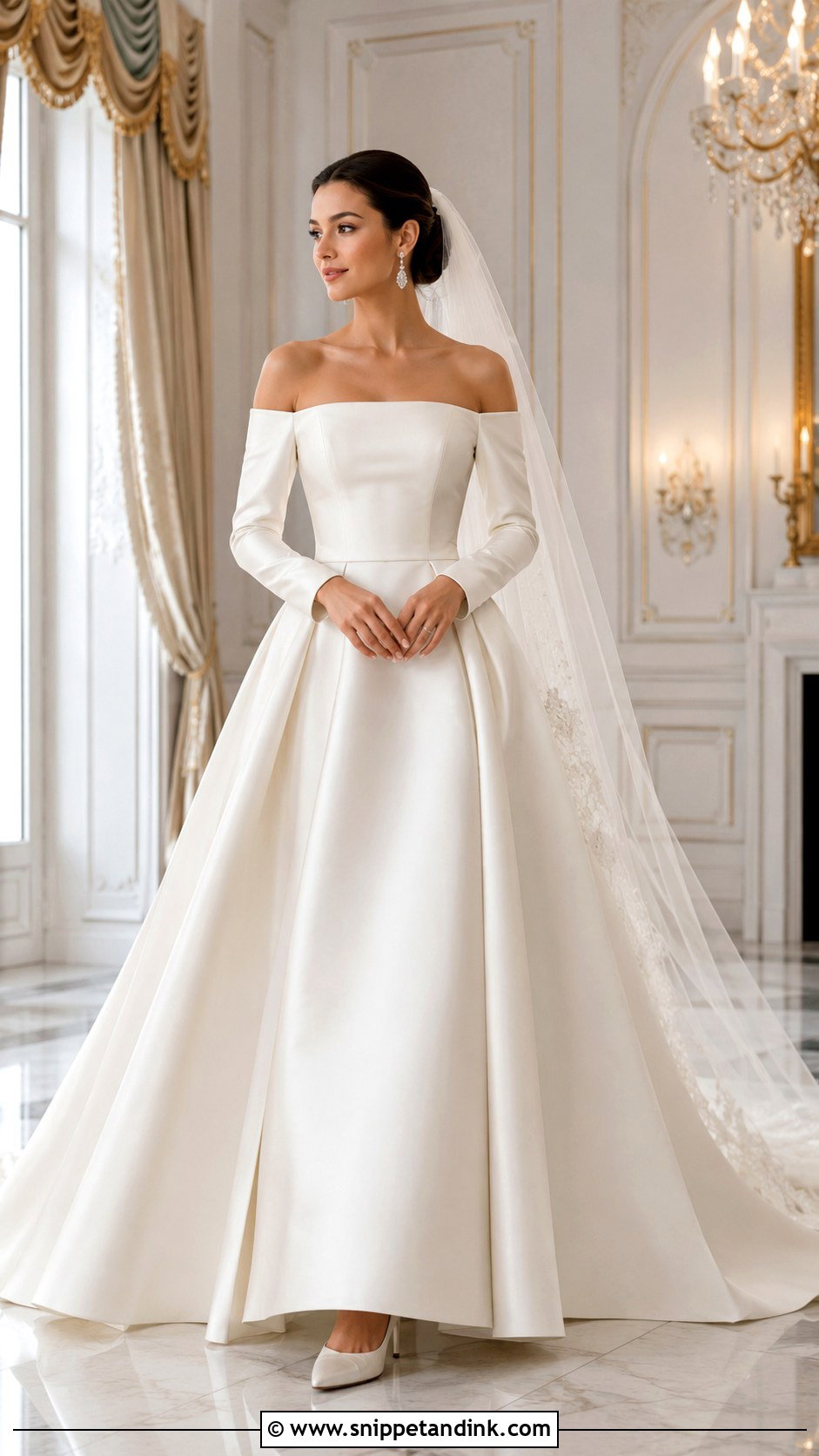
Off-shoulder long sleeves leave the collarbones bare while the arms stay covered, which flatters most necklines but demands good engineering. Lace feels romantic here, satin dramatic, structured crepe modern. With no straps over the shoulder, the bodice has to hold everything up on its own, so internal boning and a firm band are non-negotiable. Pair it with drop earrings, a smooth updo, a chapel veil and ivory pumps, and leave heavy necklaces out. During alterations, reach forward, sit and dance. If you catch yourself hitching the sleeves back up in the fitting room, you’ll do it all day.

15. Long Sleeve Puff Sleeve Wedding Dress
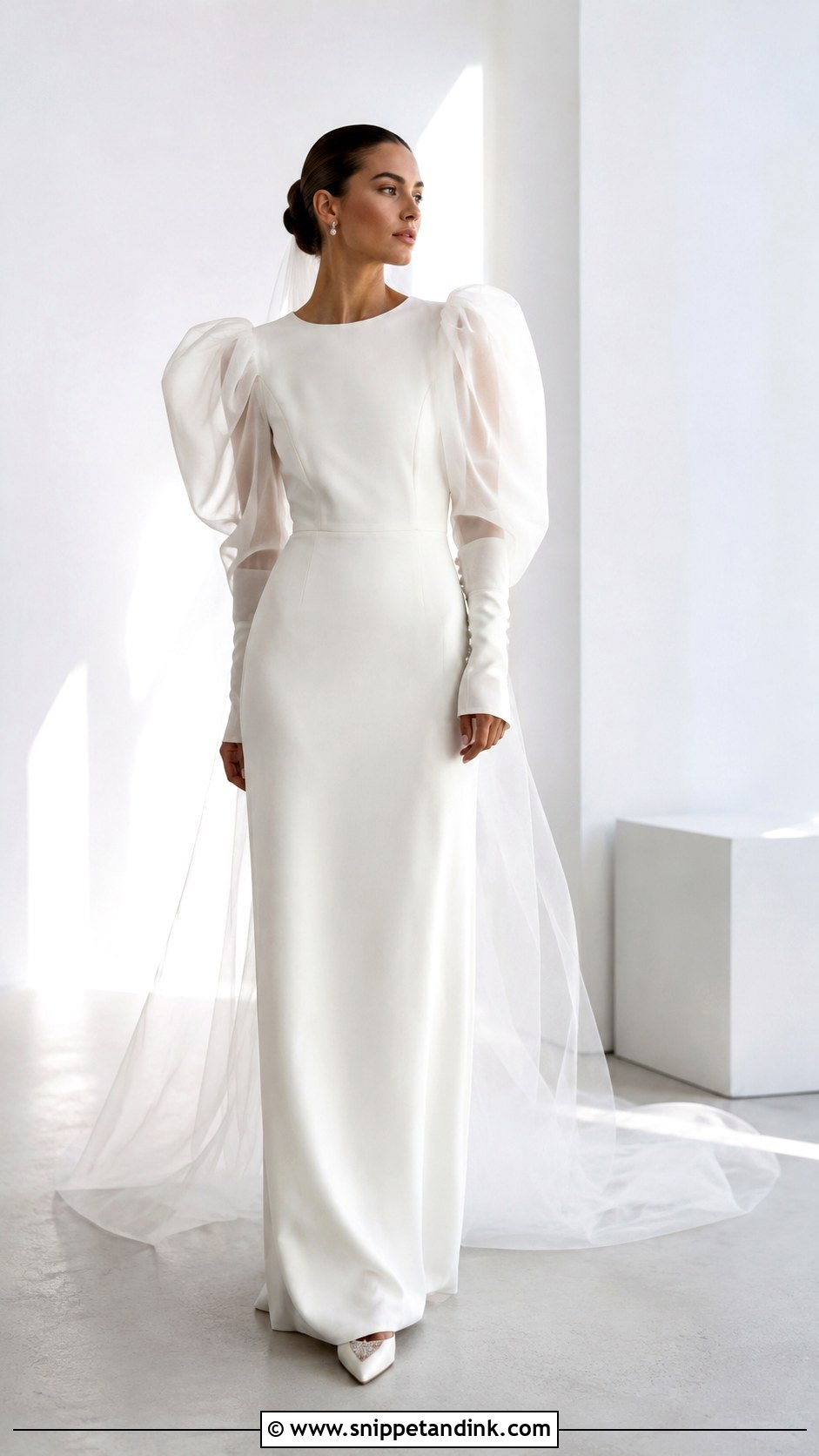
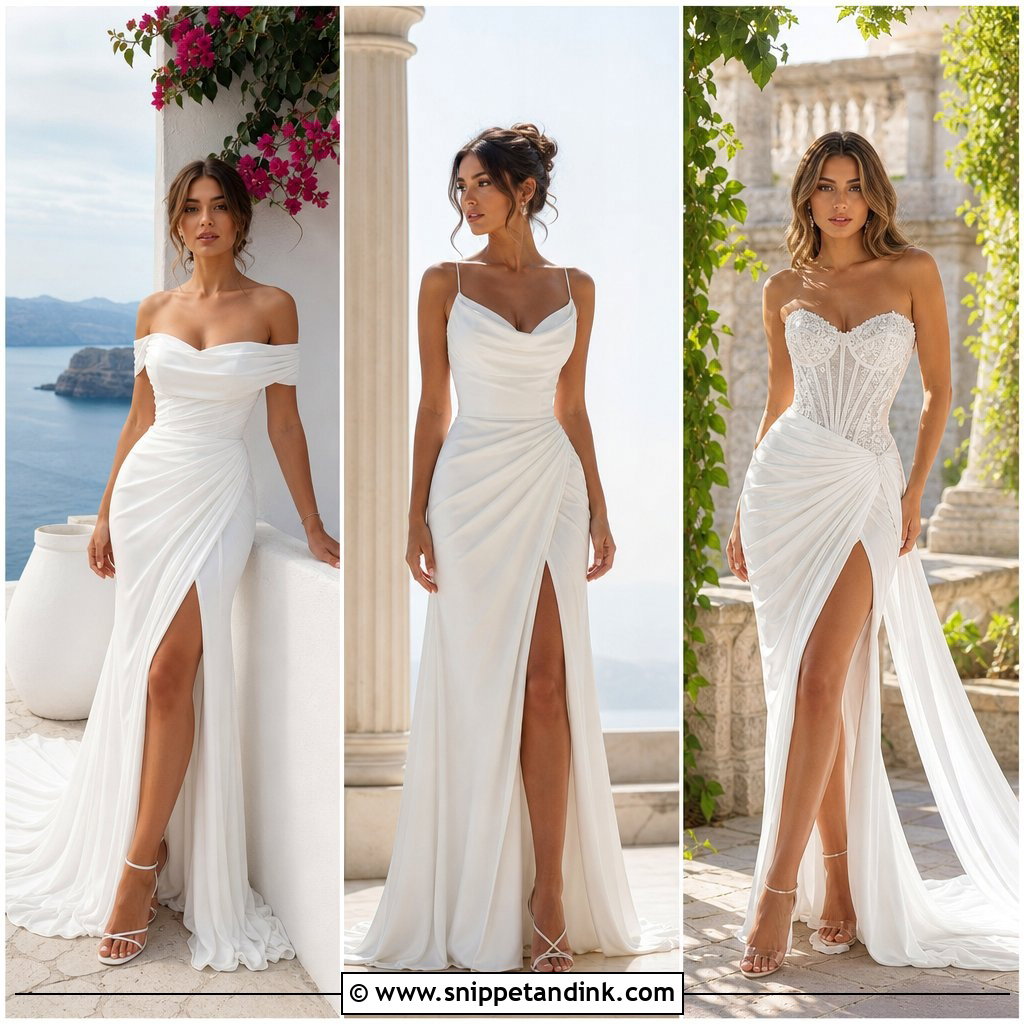
Puff sleeves are a fit question before they’re a style question. If the shoulder seam sits even slightly off, the puff collapses or juts out at an odd angle. Organza and tulle give an airy, see-through volume; satin gives a firmer, sculpted puff that holds its shape longer. A clean skirt lets dramatic sleeves lead, while a full skirt makes the whole look deliberately bold. Small earrings, a sleek bun, pointed heels and an unembellished veil finish it. On a petite frame, a controlled puff usually looks better than a huge one. Have someone photograph you from the side and back at the fitting; those are the angles guests see most.
16. Long Sleeve Bishop Sleeve Wedding Dress
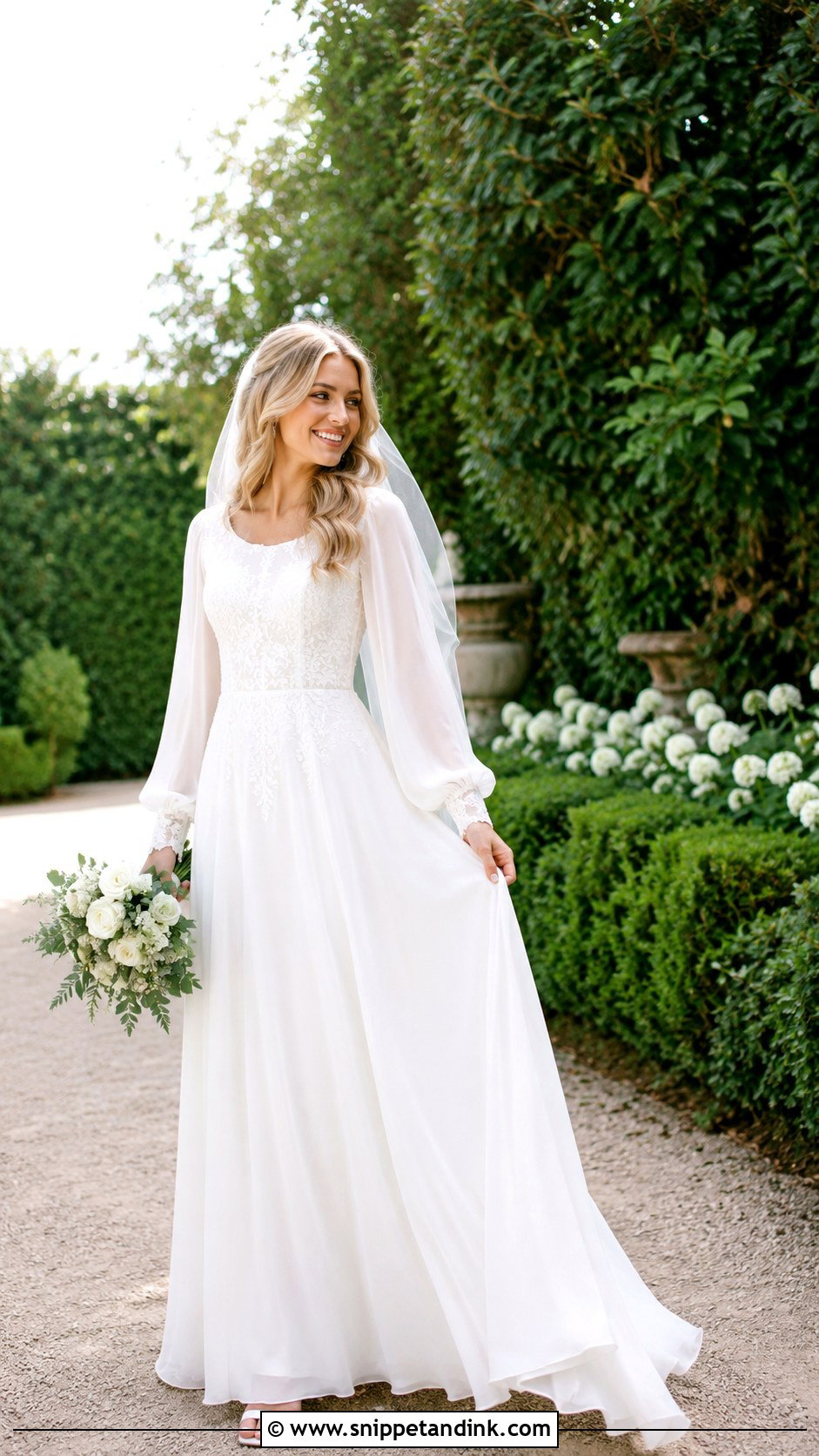
A bishop sleeve wedding dress is full through the forearm and gathered into a fitted cuff, so the fabric billows and then stops. It works best in soft fabrics such as lace, chiffon, organza and light tulle, and suits romantic, bohemian and vintage-leaning weddings. A fitted waist keeps all that sleeve volume from swallowing you. Pair it with an A-line skirt, a subtle V and restrained embroidery, plus pearl studs, loose waves, low block heels and a fine veil. Look closely at the cuff closure; rows of tiny buttons and loops are slow to fasten, so someone needs to do them early. Keep sharp rings and bracelets clear of the fabric.
17. Long Sleeve Embroidered Wedding Dress
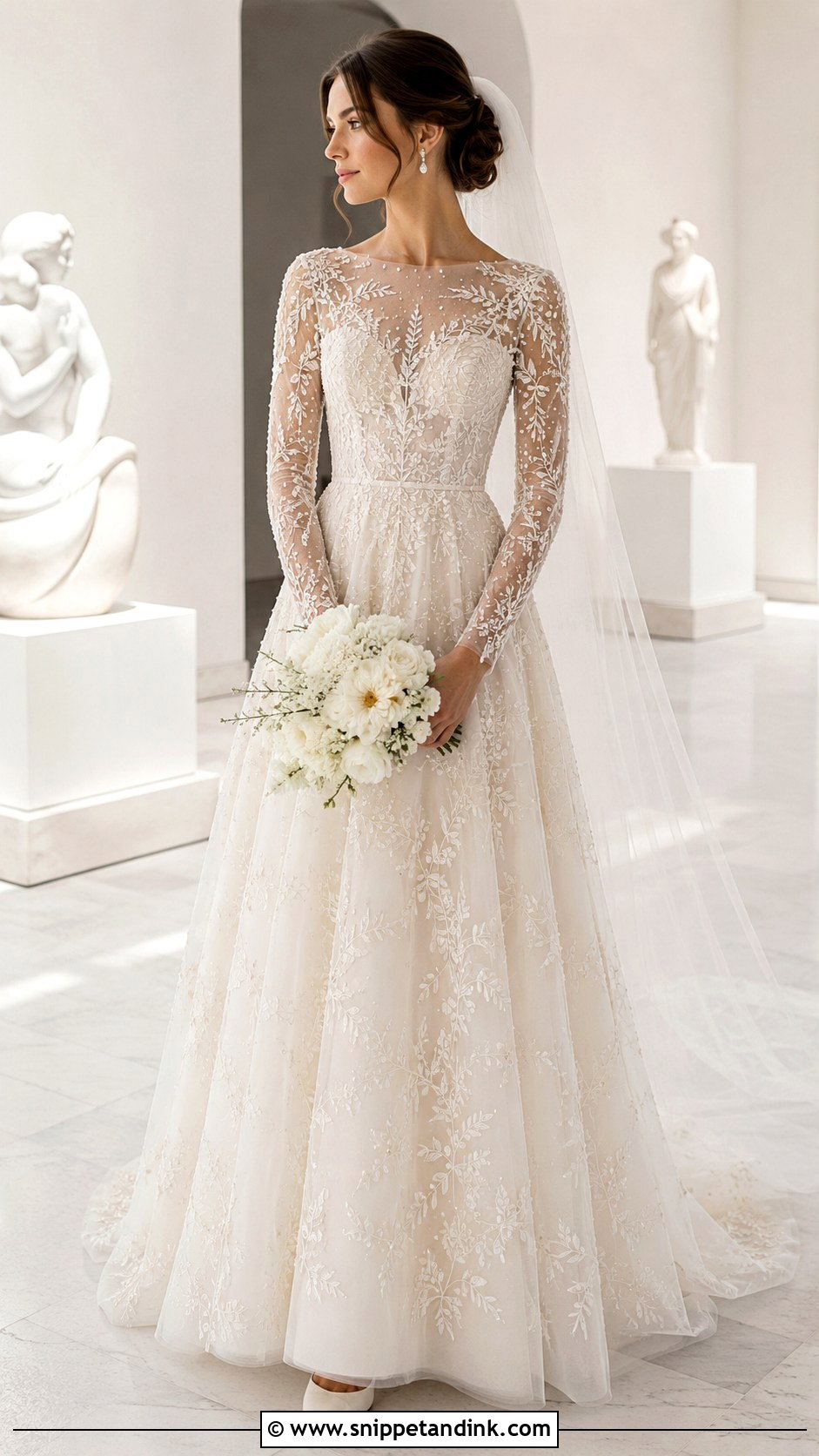
Embroidery gives sleeves depth that lace alone can’t, because the thread sits on top of the fabric and catches light at different angles. Botanical motifs, vines, scattered flowers, pearls or geometric patterns can run down sheer sleeves and across the bodice. A pattern that thins toward the skirt feels lighter; all-over embroidery feels rich. Small drop earrings, a smooth bun, ivory pumps and a plain tulle veil let the work show. Check where the motifs land on your bust, waist, elbows and cuffs. A large flower sitting right on the elbow crease will wrinkle every time you bend. Pronged rings and rough bracelets snag thread, so keep them simple.
18. Long Sleeve Detachable Sleeve Wedding Dress
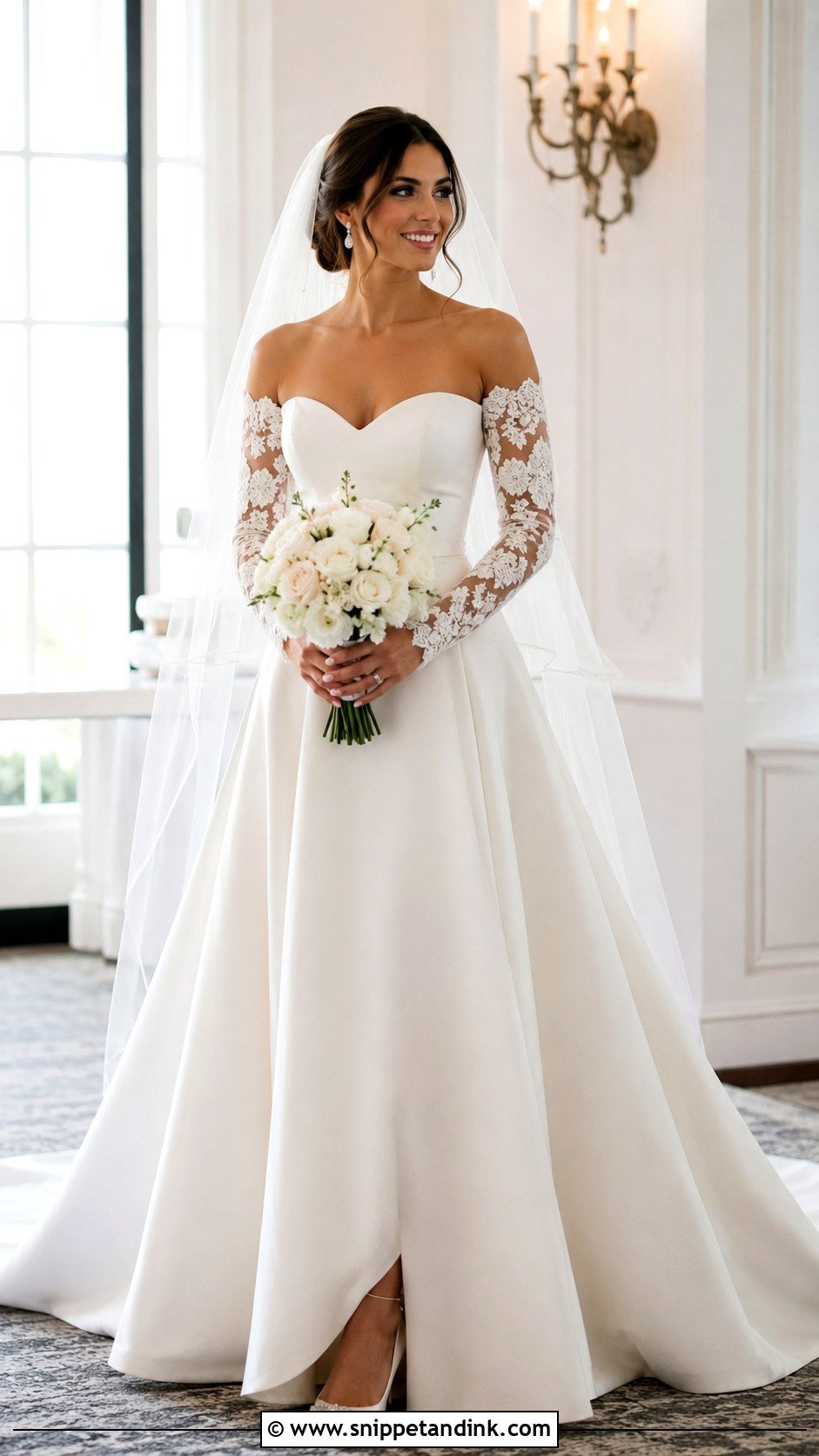
Detachable sleeves turn one gown into two looks. Fitted lace, draped tulle or plain fabric sleeves go on for the ceremony, then come off before the dancing. Underneath, the dress might be strapless, sleeveless or off the shoulder, and that decides how the sleeves fasten. Insist on a fastening that disappears in photographs. A long veil, classic earrings and elegant pumps suit the ceremony; once the sleeves are off, swap to bolder earrings or add a hair piece so the change feels intentional. Rehearse the switch before the day with the person helping you, and keep the sleeves in a labeled garment bag afterward.
19. Long Sleeve Plus Size Wedding Dress
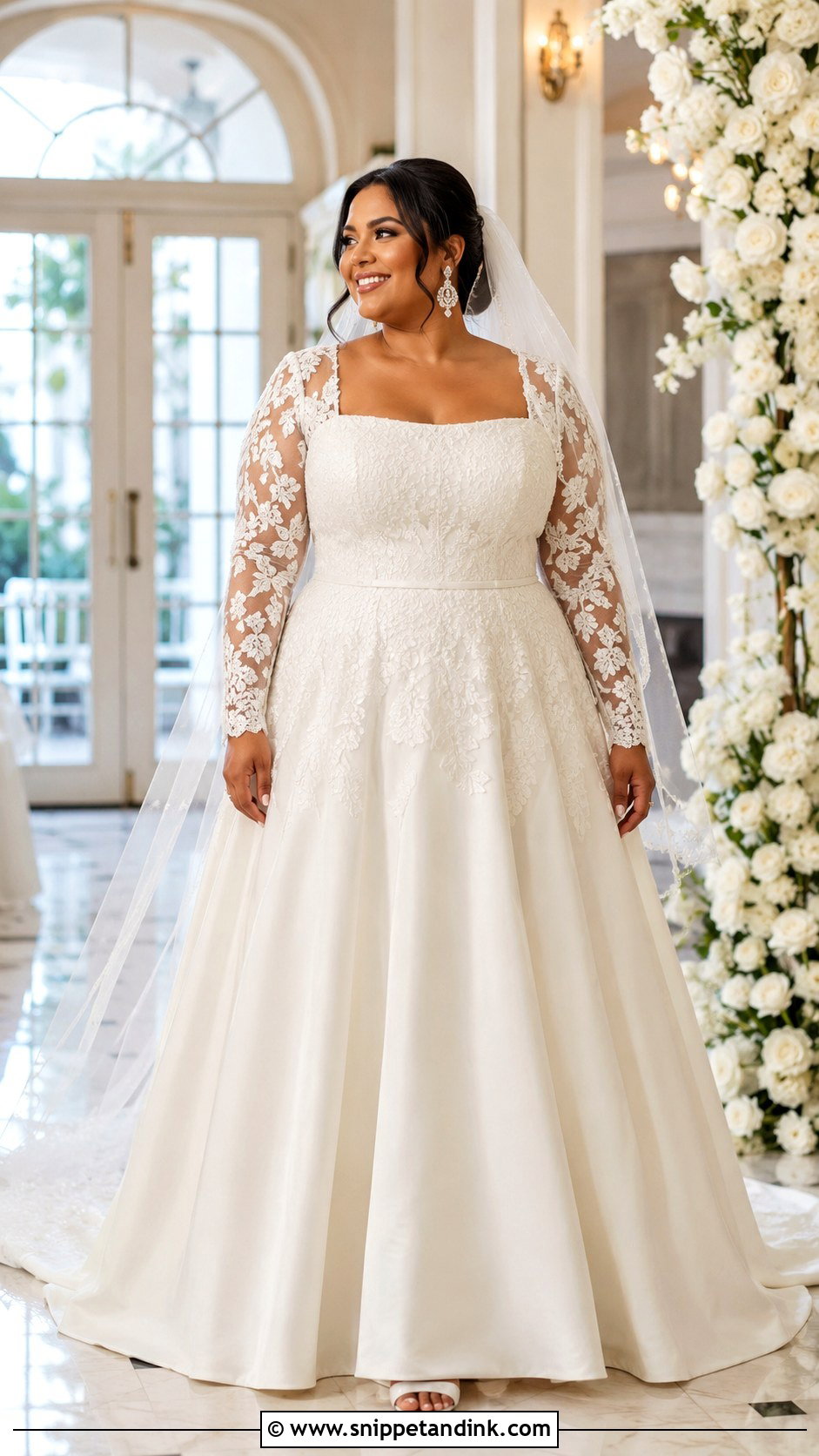
Plus-size brides can wear any silhouette on this list; what matters is proportion and construction, not rules about what to hide. A well-built A-line, fitted crepe, ball gown or lace sheath can all work. Sleeves should move freely at the shoulder and elbow, and the bodice should feel secure without digging in at the waist. A V-neck, square neck or bateau neckline each frame the upper body differently, so try all three. Supportive heels, statement earrings, a comfortable veil and a bouquet scaled to the dress finish it. Shop where the samples come in sizes close to yours. Seeing the real fabric and sleeve placement on your own body ends a lot of guesswork.
20. Long Sleeve Winter Wedding Dress
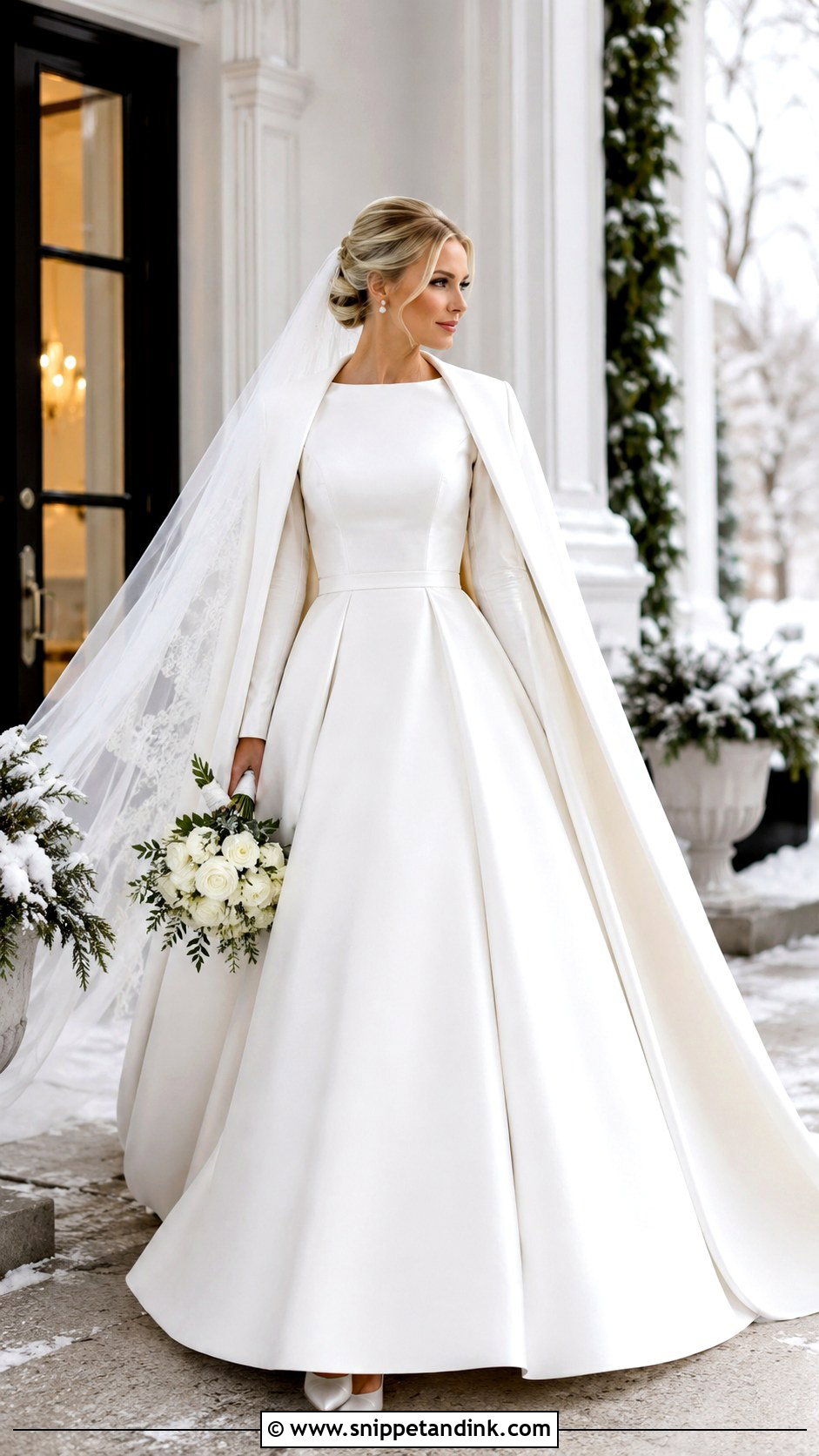
Winter makes long sleeves feel natural, and it’s the season for the heavier fabrics: satin, mikado, lined lace and thicker crepe. A structured A-line or ball gown suits a formal indoor venue, while a fitted gown suits a smaller celebration. Sleeves alone won’t keep you warm through outdoor photographs, so plan a tailored white coat, faux-fur wrap or bridal cape that works with the neckline. Closed-toe pumps or smart boots protect your feet depending on the ground. Pearl earrings, a polished updo and a cathedral veil finish it. Ask your photographer to keep outdoor sessions short when it’s cold; nobody looks relaxed while shivering.
Can You Wear Long Sleeves to a July Wedding?
Yes, and plenty of brides do, but the fabric decides how comfortable you’ll be by mid-afternoon. A satin or mikado sleeve in summer heat traps warmth against the arm; an unlined illusion or chiffon sleeve lets air reach the skin. For a hot day, I’d look for:
- Sheer sleeves with little or no lining, or lace with an open pattern.
- Natural or breathable linings in the bodice, since a fully synthetic lining against skin holds sweat.
- Sleeves that end at the wrist rather than covering the hand, so you can cool your wrists.
- Detachable sleeves, if the ceremony needs coverage but the reception is outdoors.
Underarm dress shields sewn into the lining protect delicate fabric from sweat marks, which matter more on long sleeves because the fabric sits in contact all day. Ask the seamstress to stitch them in rather than using adhesive ones that shift. Keep a small fan and blotting papers with a bridesmaid, and plan portraits for early morning or the last hour before sunset, when the light is softer and you aren’t standing in full sun.
Your Arms Will Tell You at the Fitting
Start with the practical facts of your wedding: venue, season, how much you’ll move and how much coverage you want. Then compare silhouettes and fabrics, remembering that lace softens, crepe sharpens, satin shines and mikado holds structure. At each appointment, pay attention to shoulder movement, cuff fit, lining and whether the neckline stays put. Plan shoes, jewelry, a veil or hair piece and any outer layer as part of the same outfit. The right long sleeve wedding dress is the one you stop noticing ten minutes after putting it on, because it moves when you do.
You'll Like These Ideas:








Leave a Reply