
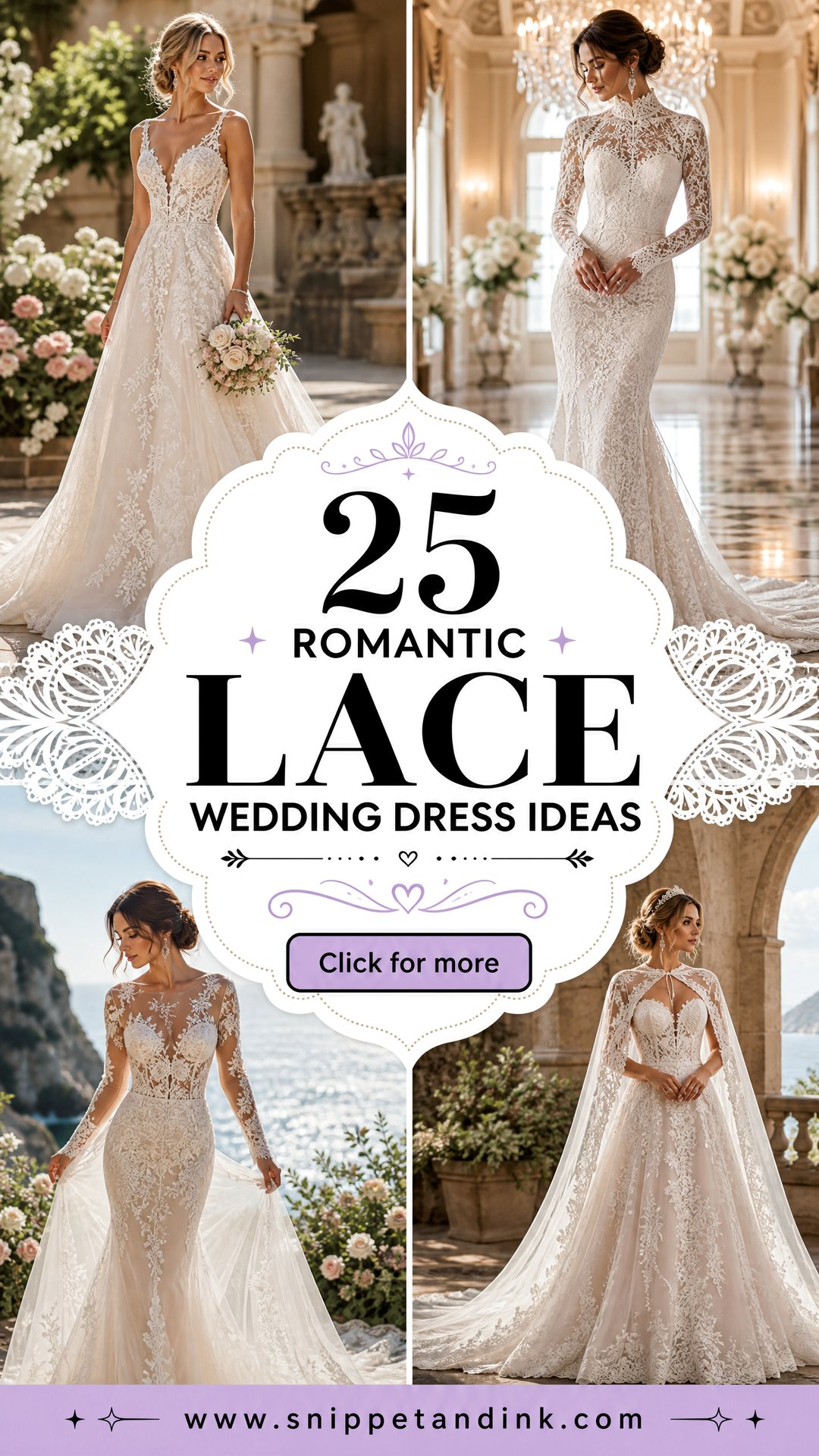
Lace is the fabric I spend the most time explaining at fittings, because two gowns that both say “lace” on the tag can behave completely differently once you sit, dance and hug people in them. The pattern matters, but so do the neckline, the sleeve, how the skirt moves and what you put with it: veil, shoes, bouquet, the room you’ll stand in. Below are 25 lace looks I’d actually style, from fine Chantilly sheaths to corded floral ball gowns, with notes on how each one wears and where it tends to cause trouble.
Reading a Lace Before You Fall for the Gown
Before I talk silhouettes with anyone, I let them touch three or four laces, because the fabric decides how the dress will feel at hour eight far more than the photos do. Most bridal lace falls into a few families, and each has a personality.
- Chantilly: a fine net with a light, outlined pattern. It drapes softly and weighs almost nothing, but it snags easily on rings and bouquet wire.
- Alençon: a pattern outlined with a raised cord, so it holds its shape and reads clearly in photos. It’s stiffer and works well for bodices and scalloped hems.
- Guipure: motifs joined by bars rather than a net background. It’s bold and sculptural and can feel heavy on a slim frame.
- Embroidered tulle: thread worked onto soft netting. It’s light and flexible, good for sleeves and boho shapes, but the net can stretch if it isn’t lined.
Run your thumb over the edge of a motif. If it’s scratchy at the wrist or underarm in the fitting room, it will be worse by the reception. And look at the lining colour behind the lace: ivory over nude reads warm, ivory over white reads crisp, and that choice changes the gown more than most people expect.
1. Long Sleeve Lace Wedding Dress
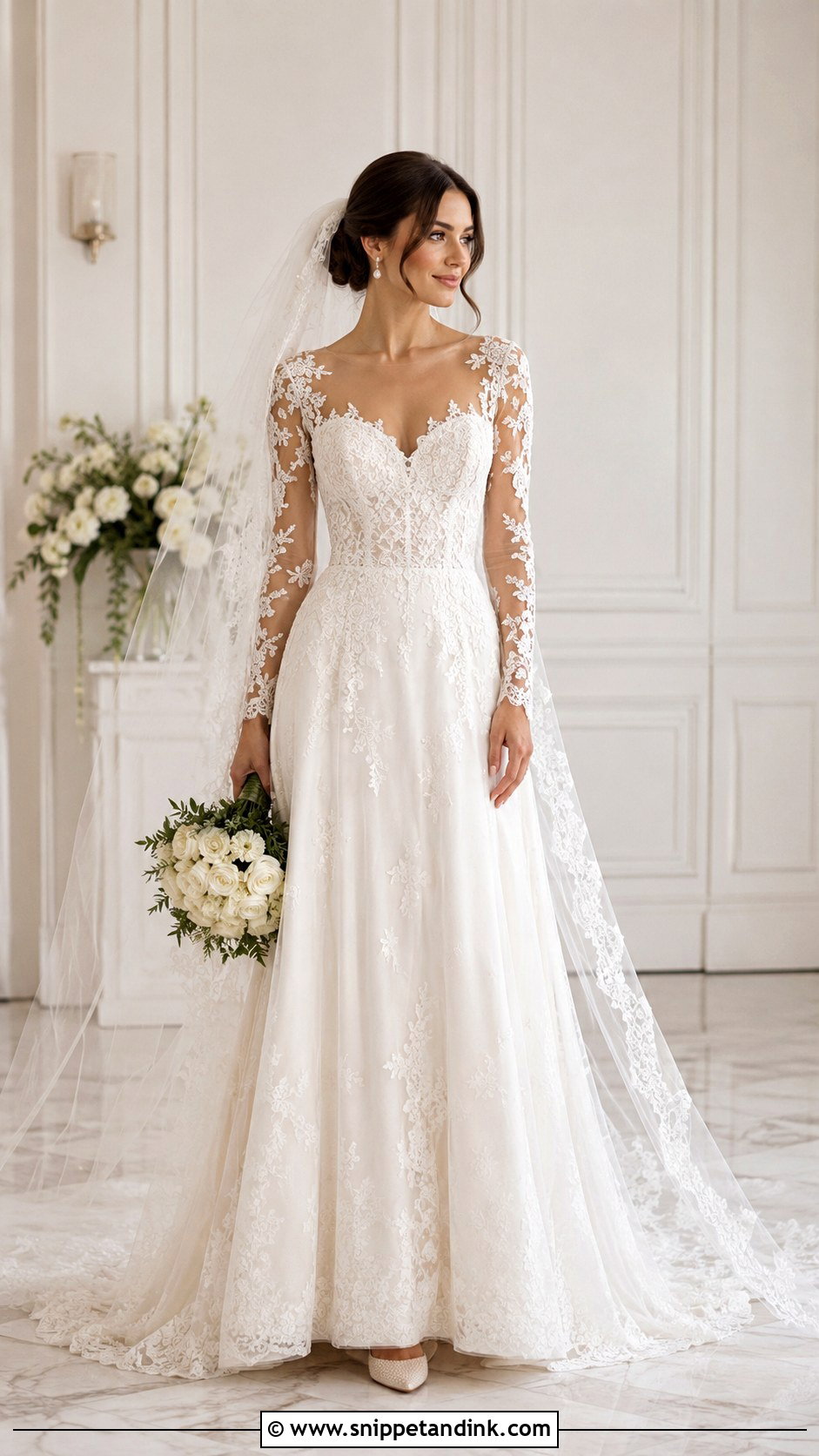
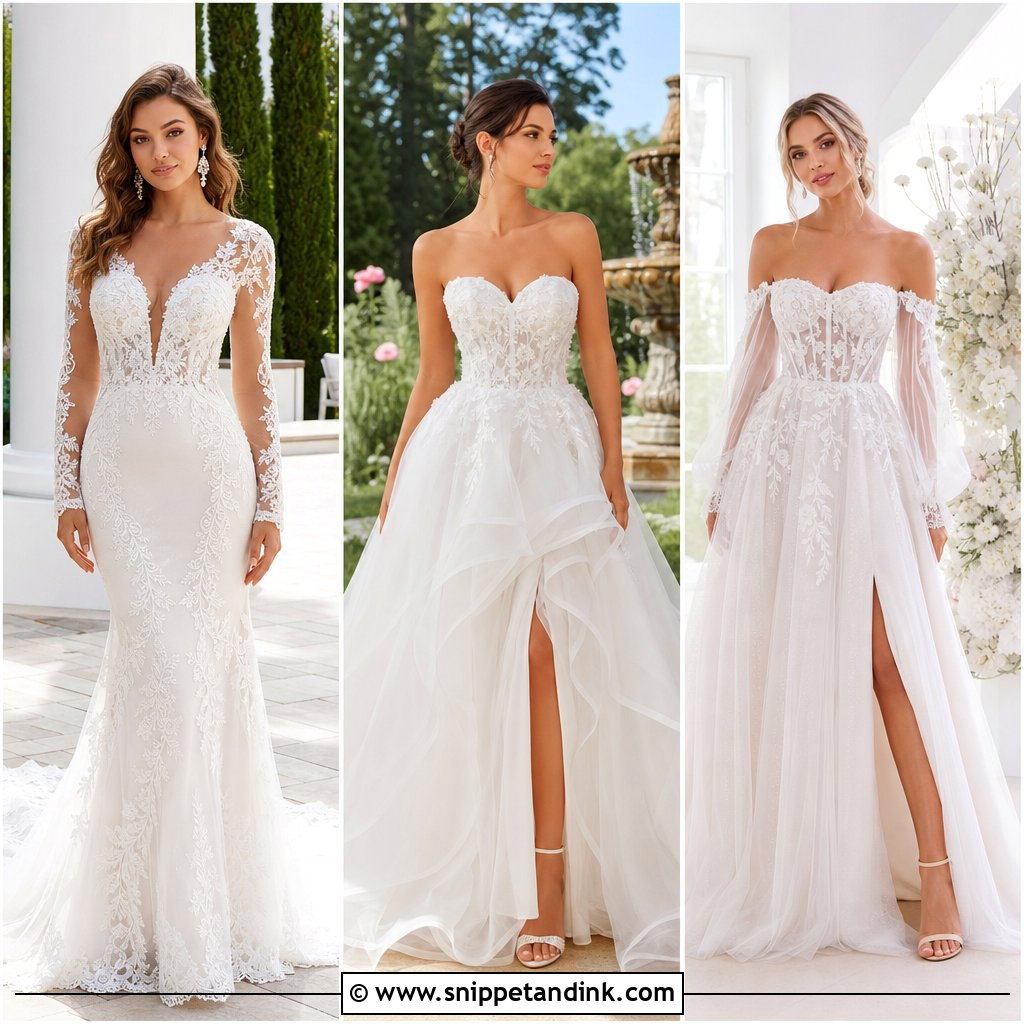
Sleeves are where lace earns its keep. A sheer sleeve covers the arm without the heat of a solid fabric, and a fitted bodice over a soft A-line skirt keeps the whole thing light. The detail I check first is the armhole: if it’s cut low, you can’t lift your arms to hug anyone, so I always ask a bride to reach up during the fitting. Pearl earrings, a low bun and a cathedral veil suit this, with ivory satin pumps underneath. It’s at its best in autumn, winter or a formal indoor room, and if the lace is busy, let it do the talking and keep the jewelry small.
2. Off The Shoulder Lace Wedding Dress
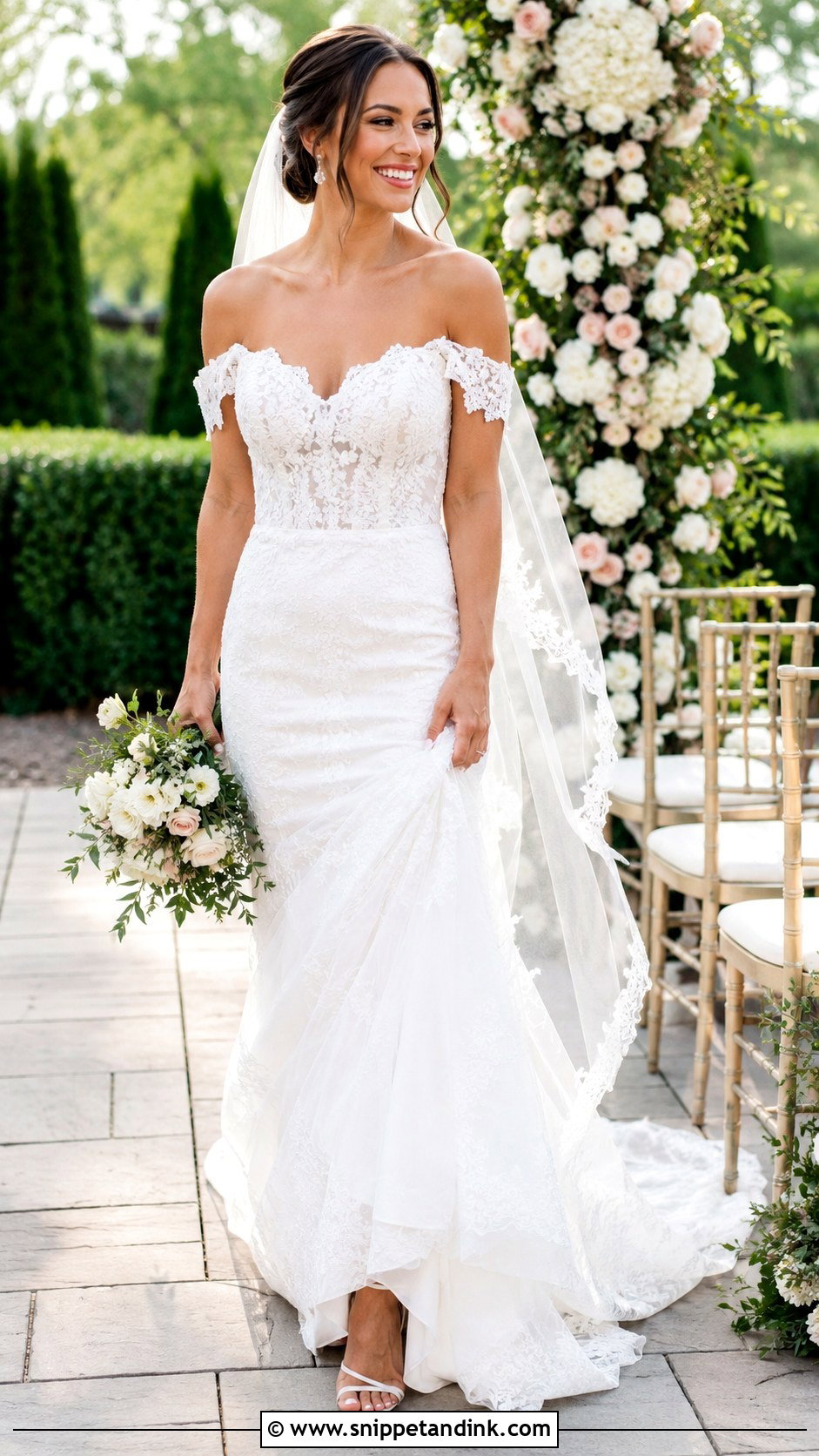
This neckline frames the collarbone, but it has one real catch: the band sits on the upper arm, so your arm movement is limited. I have brides raise a glass and wave during the fitting to see whether the band digs or rides up. Floral appliqués along the edge keep it soft. A loose updo, drop earrings and a fingertip veil work well, with strappy ivory heels or a pointed pump. It reads naturally at a garden or estate ceremony, and a small white bouquet with some greenery keeps the eye on your shoulders.
3. Lace A Line Wedding Dress
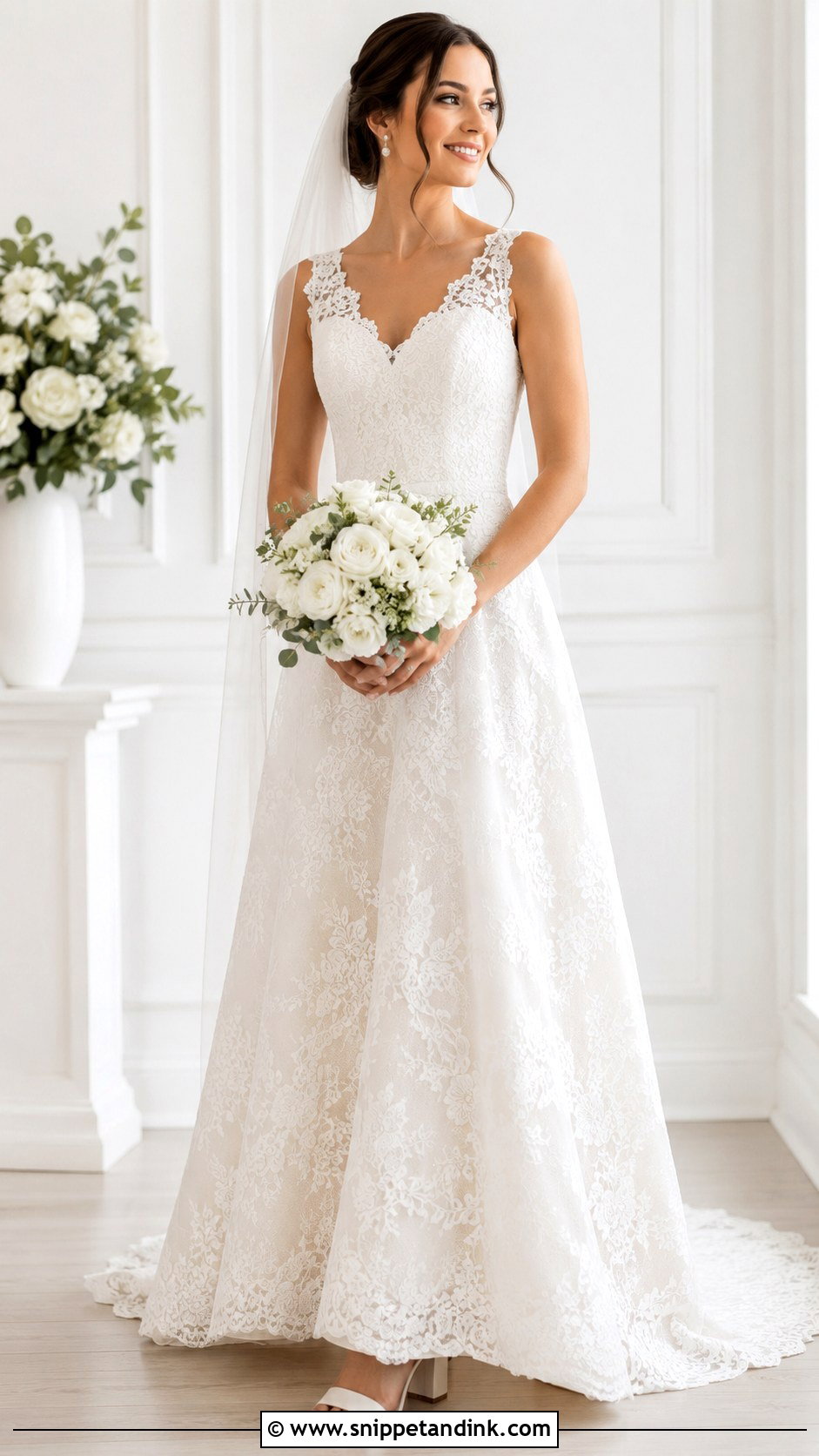
The A-line is the shape I reach for when a bride isn’t sure where to start. It nips at the waist and opens out from there, so it suits a wide range of figures and lets you walk without kicking fabric. Look for lace that continues from bodice into skirt rather than stopping at the waist seam, because an abrupt stop shortens the torso in photos. Pair it with a classic veil, pearl studs and block heels if you’ll be on grass. A thin bracelet adds a little shine without competing. Honestly, there are few venues where this one feels wrong.
4. Lace Mermaid Wedding Dress
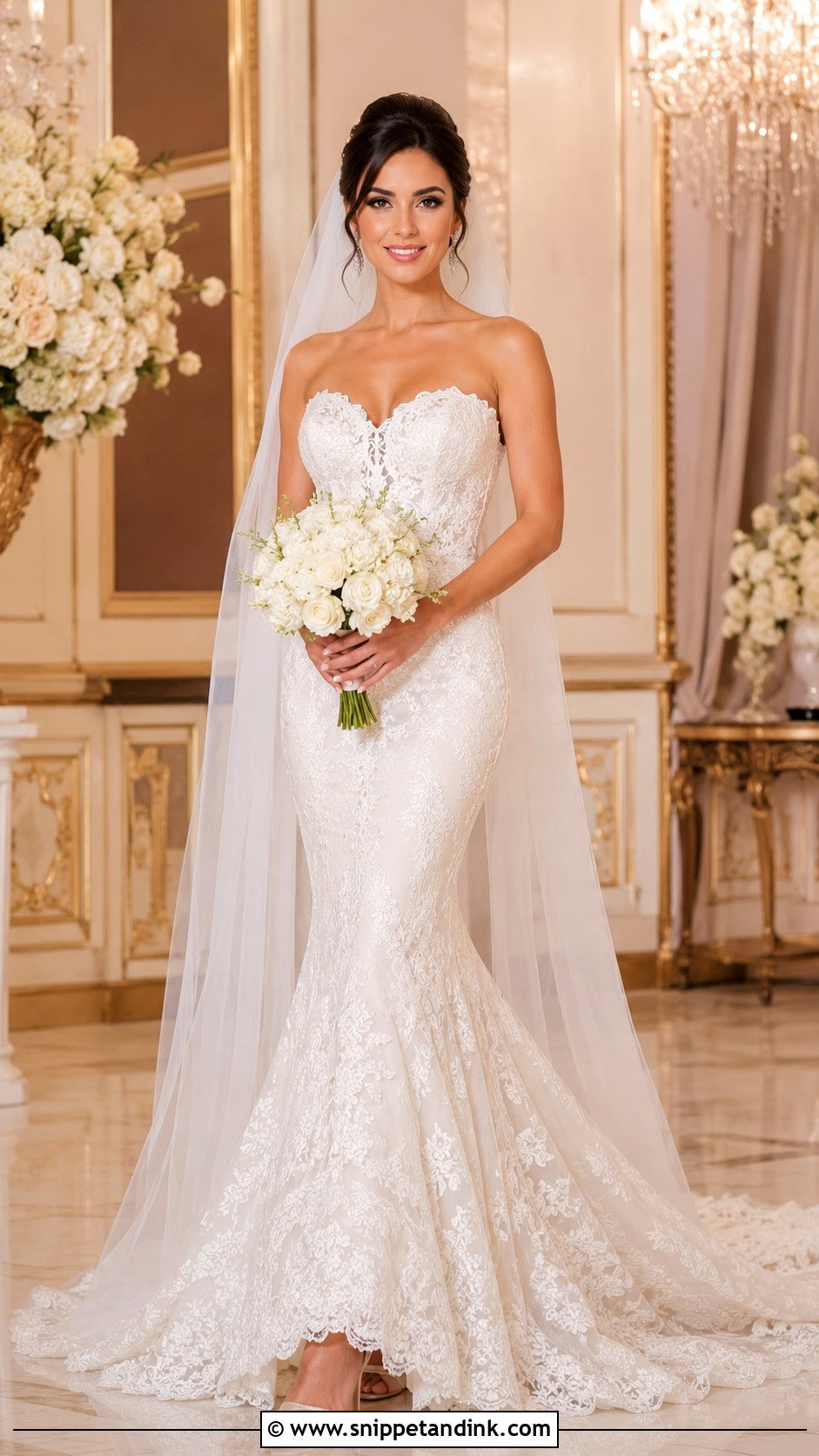
Drama, with lace to soften it. The gown follows the body and flares at the knee or lower thigh, and that flare point decides everything: too high and the dress looks heavy, too low and you’ll shuffle. I always make a bride climb a step and sit in a mermaid before she commits. Pick a sweetheart neckline, illusion straps or long sleeves depending on how much support you want. Keep accessories sleek: a plain veil, crystal earrings and clean ivory heels. It belongs in a ballroom or an evening reception, and it needs a bustle or a quick loop if you plan to dance.
5. Lace Ball Gown Wedding Dress
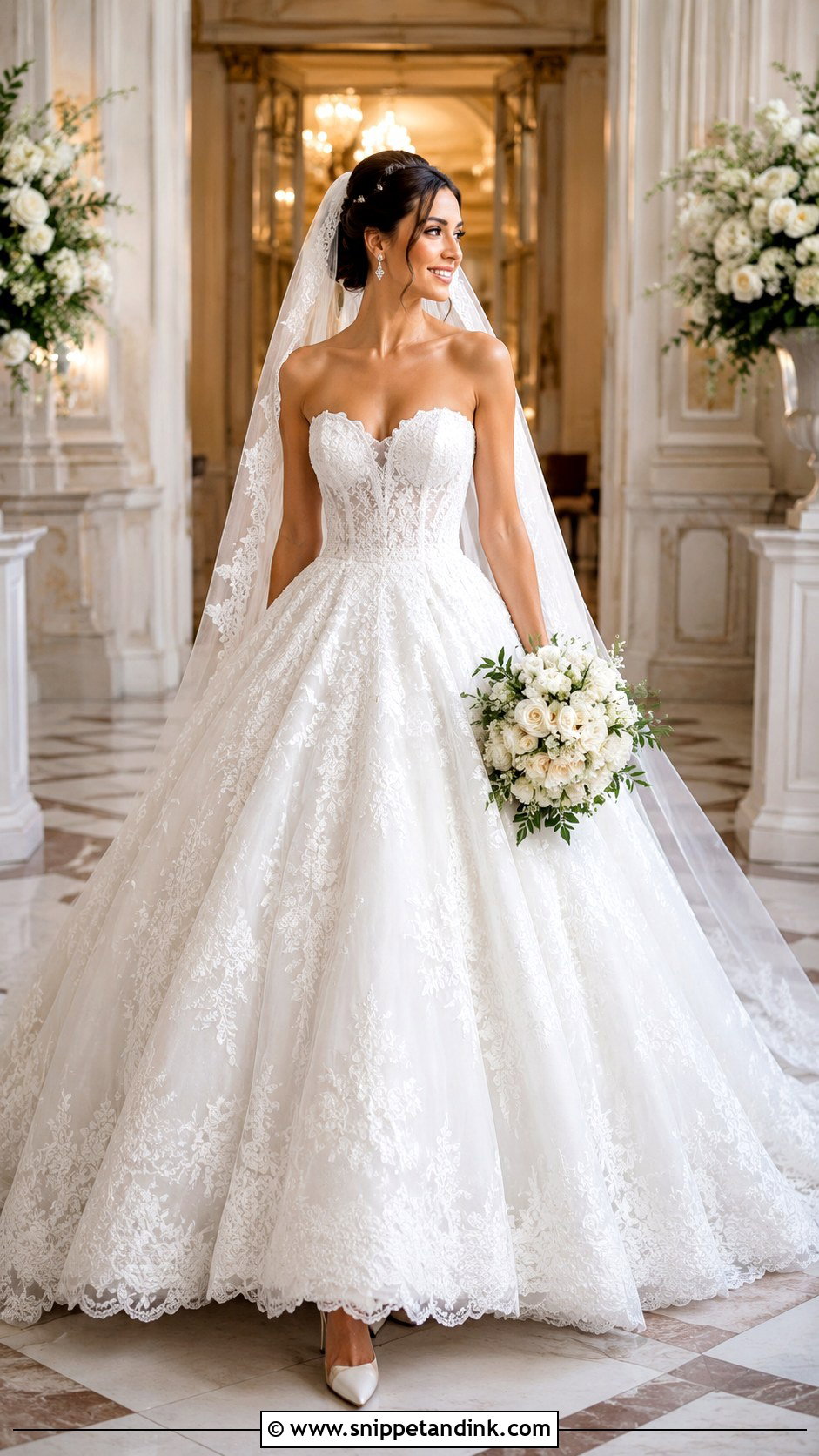
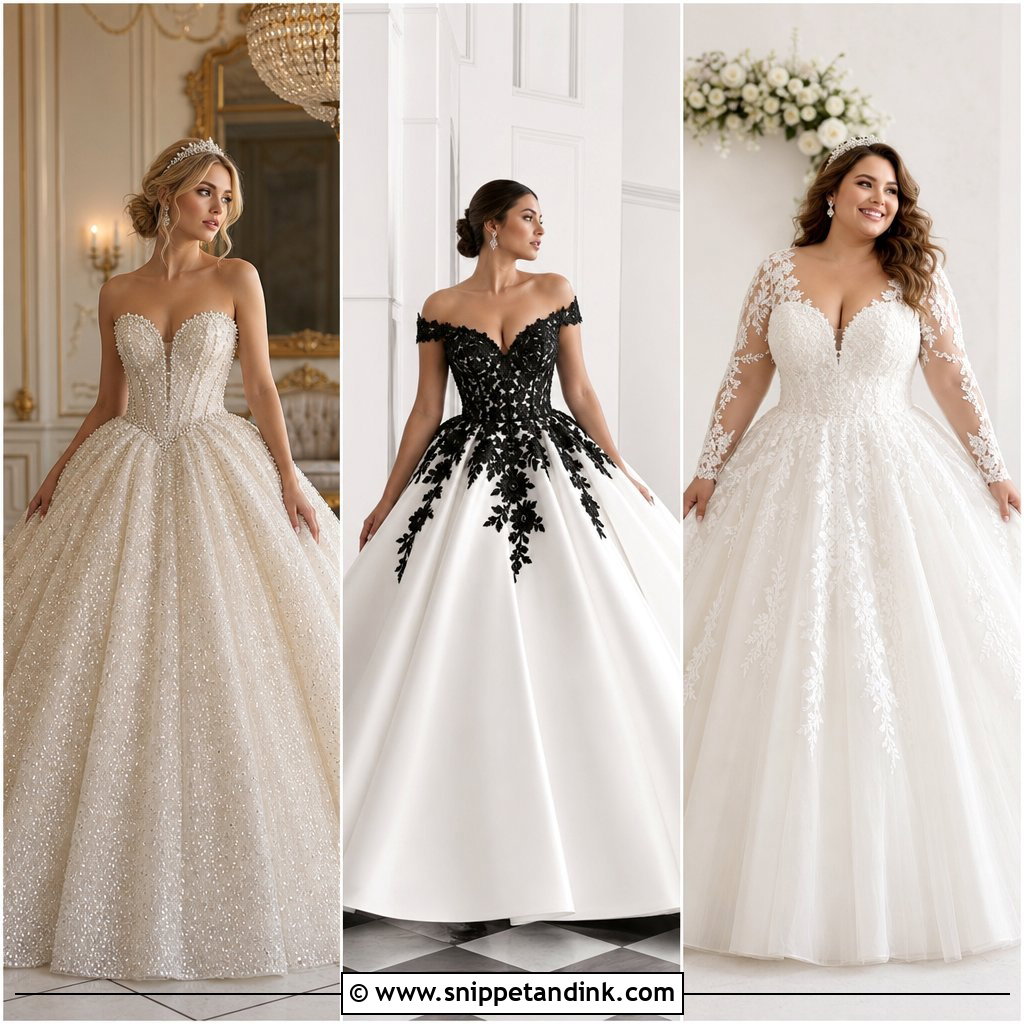
Volume plus lace gives you the fairytale version, but a ball gown is only as good as its bodice. Layers of tulle or organza are heavy, and without real boning the waist will sag by the speeches. I check that the bodice stays put when the bride bends to pick something up. Floral appliqués soften all that skirt. Add a cathedral veil, classic earrings and a neat updo, and choose flat or low shoes, because no one sees them and you’ll be standing for hours. A large venue with a long aisle suits it; a small room can feel crowded by it.
6. Vintage Lace Wedding Dress
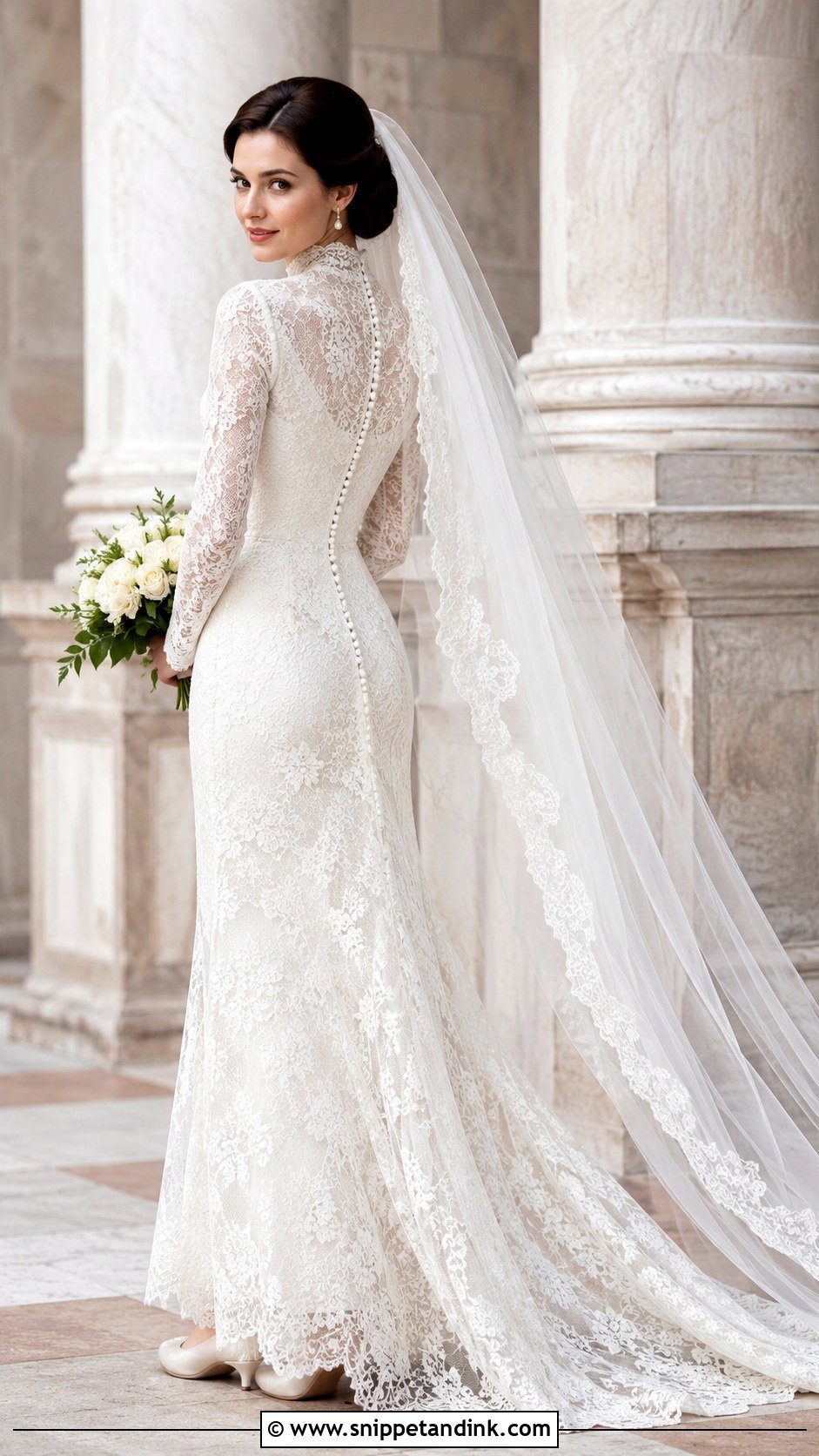
Old-world lace has a quieter charm: high necklines, covered buttons, scalloped hems, eyelash edging. The risk is tipping into costume, so I keep one or two vintage details and let the rest stay plain. A slim A-line or sheath silhouette keeps the look graceful and easy to wear. Pearl earrings, a soft veil and low ivory heels finish it. If you add a lace-edged veil, make sure its lace doesn’t fight the gown’s pattern. Historic houses and courtyards are its natural home. One practical note: a back full of covered buttons takes ten minutes to close, so plan that into the morning.
7. Boho Lace Wedding Dress
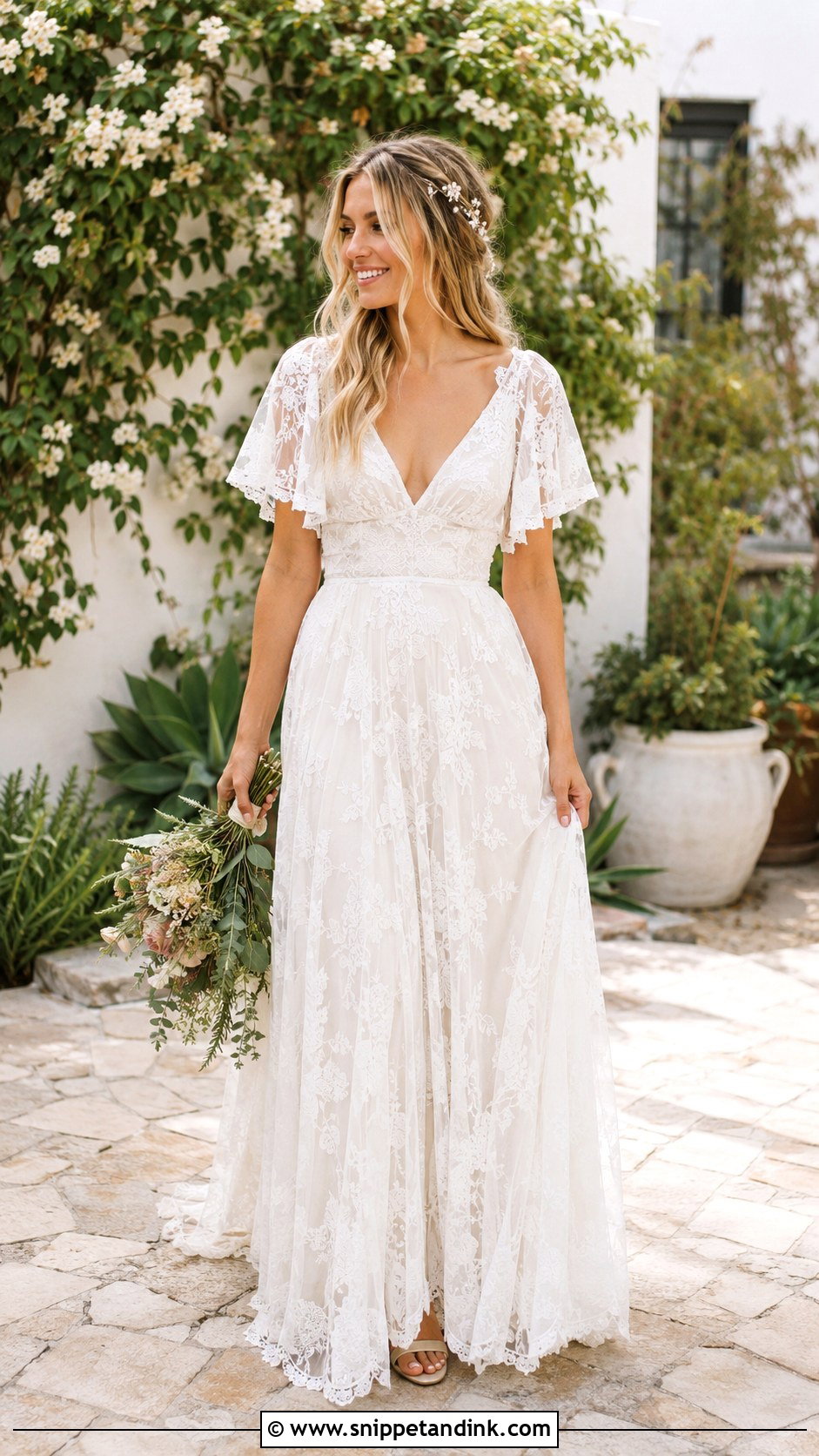
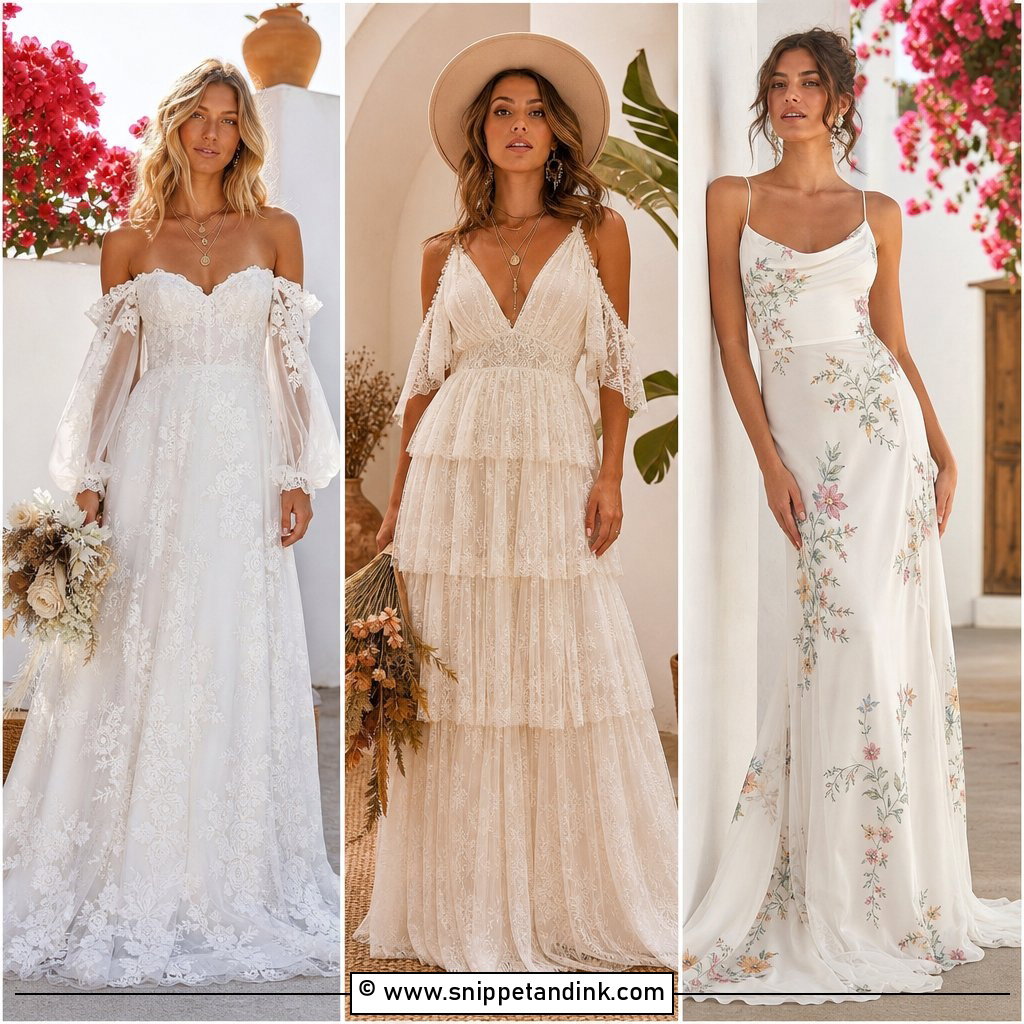
Boho lace is about letting the fabric hang rather than holding it in. Soft lace, flutter sleeves, open backs and botanical patterns all belong here. The thing I warn about is that unlined, unstructured lace shows every undergarment line, so try it on with what you’ll actually wear beneath. Loose waves, a few hair pins and sandals or block heels suit it, plus a light veil or a floral piece. It’s made for beaches, gardens and desert venues, and a loose bouquet of greenery and white flowers matches its ease.
8. Floral Lace Wedding Dress
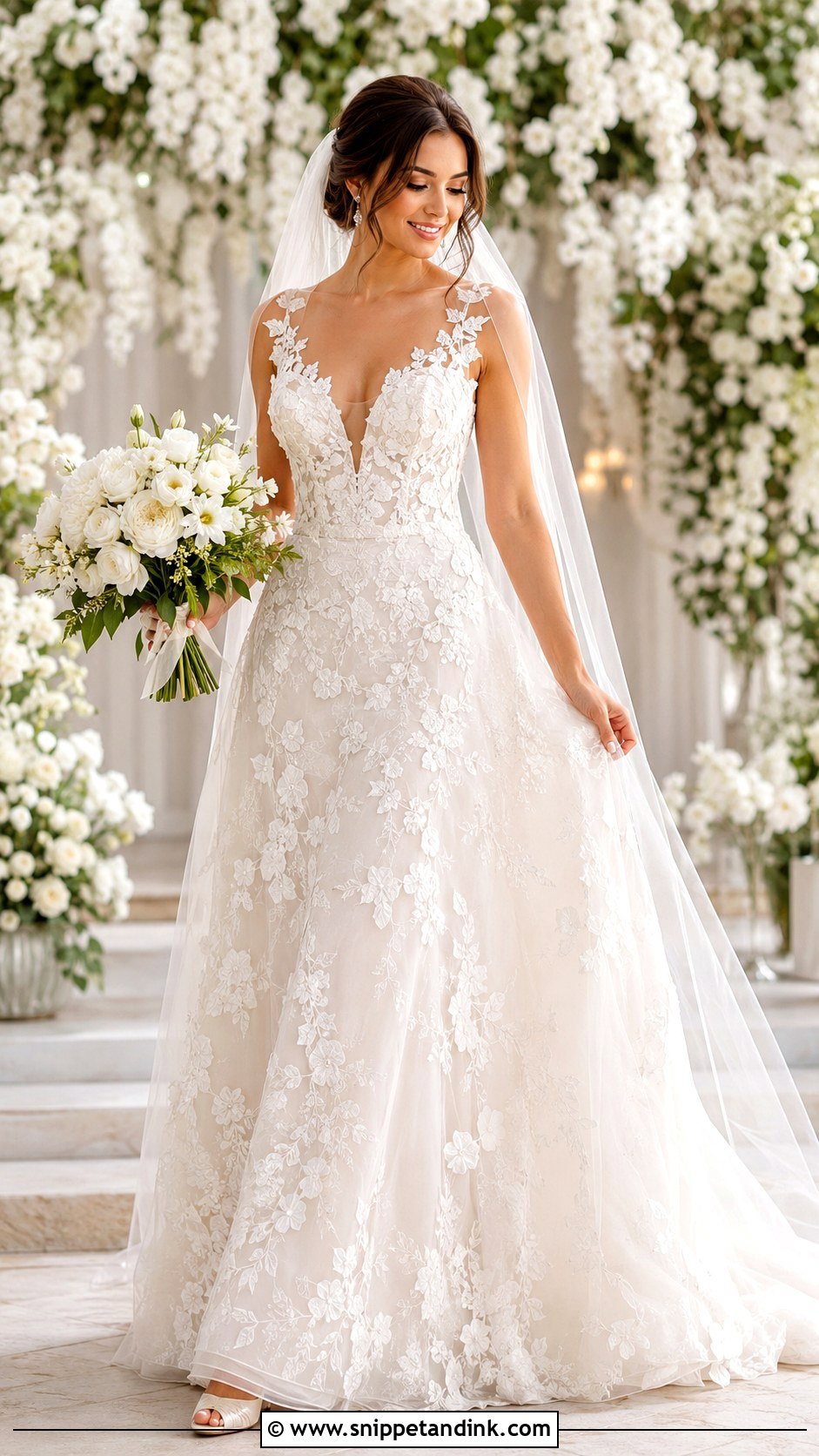
Scale is the decision with floral lace. Large appliqués read from the back of the room and in wide shots; small flowers read only up close, which can look like plain texture in group photos. I hold a bride’s swatch at arm’s length and across the room before she picks. It works in an A-line, fit-and-flare or ball gown. Keep earrings simple and the veil airy so the pattern isn’t fighting anything. If you’re marrying in a garden, choose a bouquet that echoes the florals loosely rather than copying them flower for flower. Spring and summer suit it, though nothing stops you wearing it in December.
9. Chantilly Lace Wedding Dress
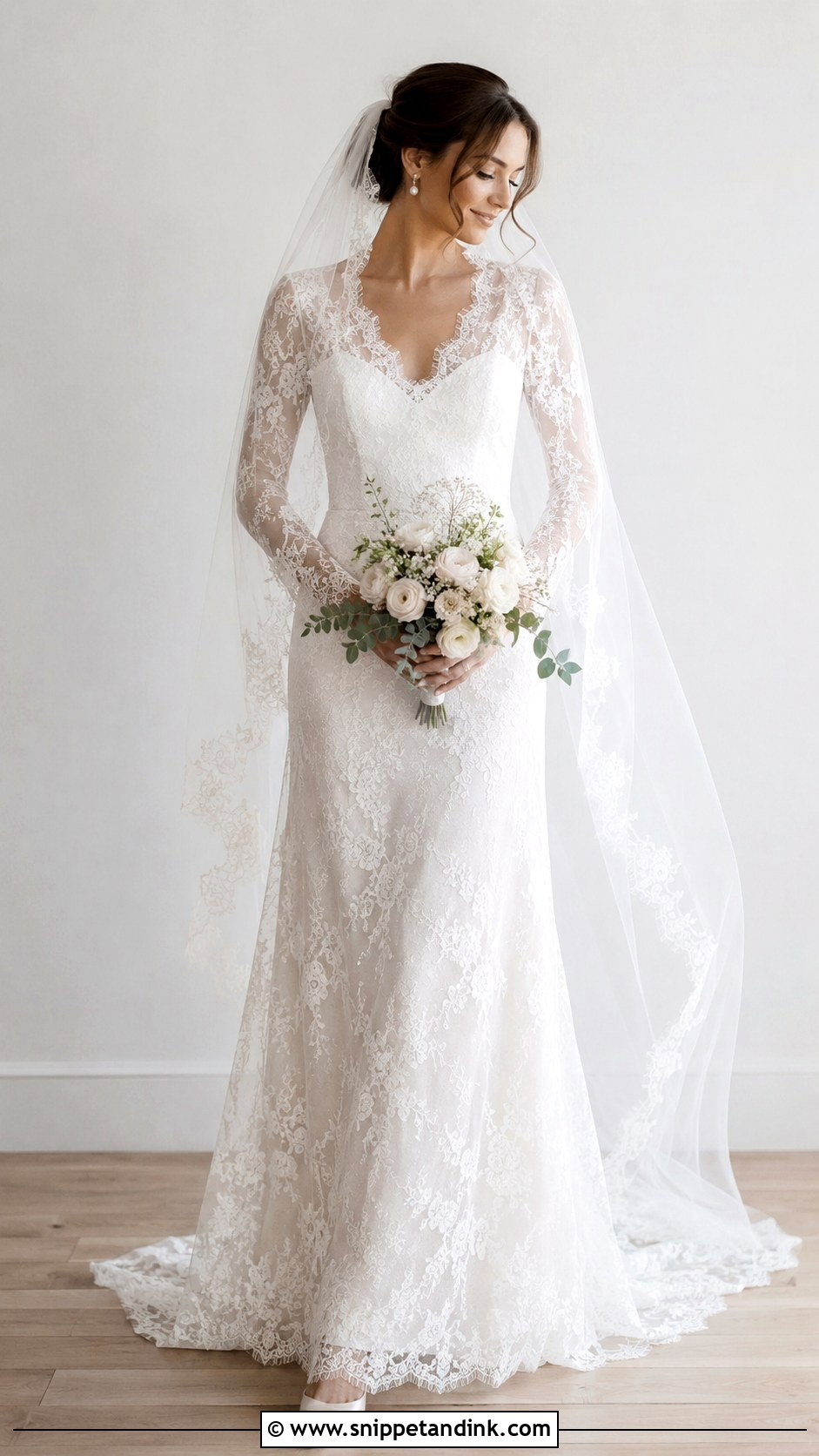
Fine net, a delicate outlined pattern and almost no weight: that’s what you get with A Chantilly lace wedding dress, which is why I steer brides who hate feeling dressed up toward it. The flip side is that Chantilly snags easily on rings, bracelets and bouquet wire, so I tell brides to check their jewelry for sharp prongs. A sheath or A-line lets it move. Pair it with a sheer veil, pearl earrings and slim ivory heels, and a small pendant if the neckline is plain. It suits an intimate wedding or a classic indoor room.
10. High Neck Lace Wedding Dress
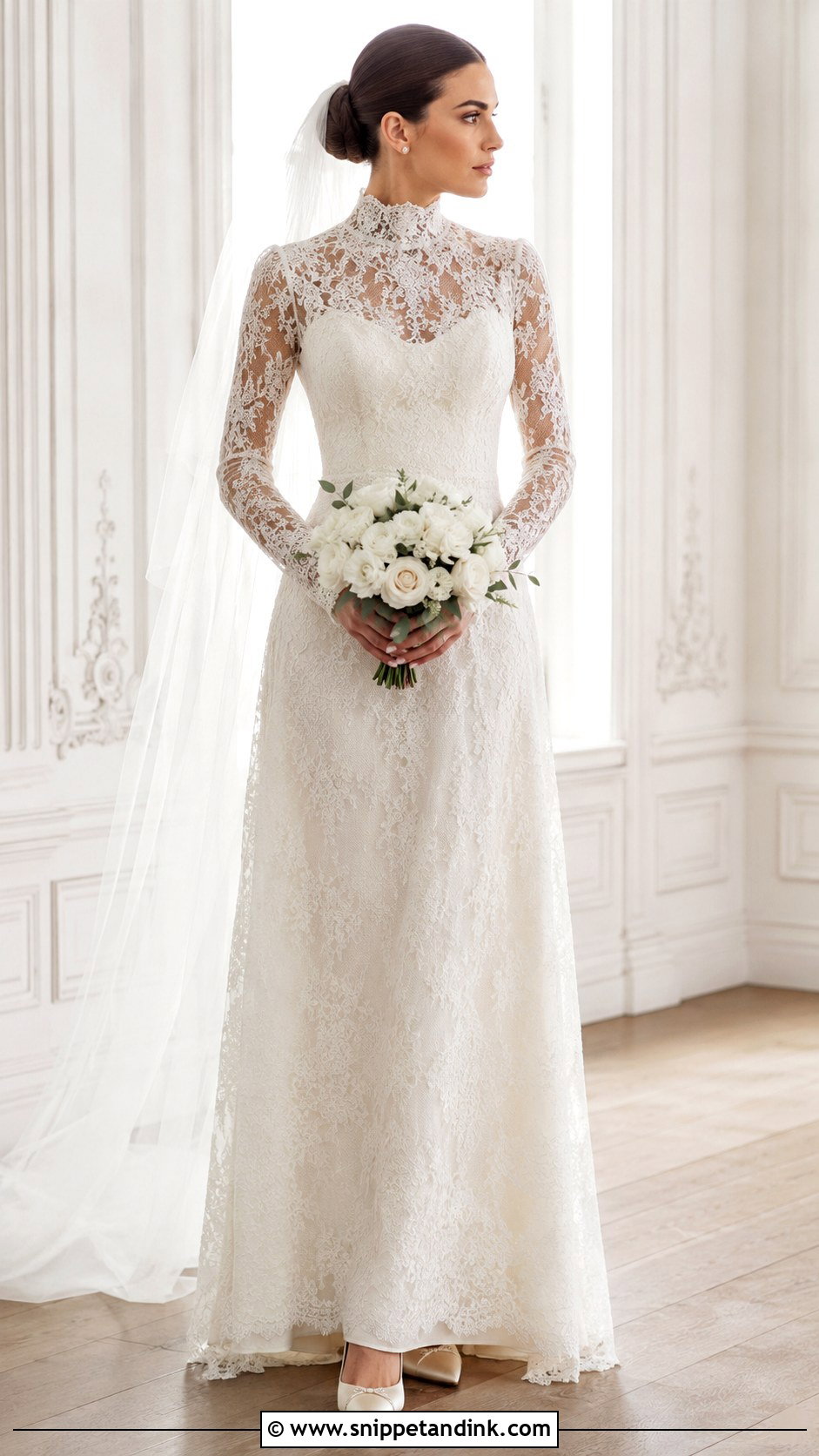
A high neck draws every eye to your face, which is exactly why I love it with long sleeves or a fitted bodice. Choose sheer lace at the throat rather than a solid collar, which can feel tight once you’re warm and talking. Check the closure: a hook at the nape should sit flat under your hair. A sleek bun, small earrings and a long veil keep it clean, and skip the necklace entirely. Pointed ivory heels or plain satin shoes sit well underneath. Winter and formal ceremonies are where it shines.
11. Strapless Lace Wedding Dress
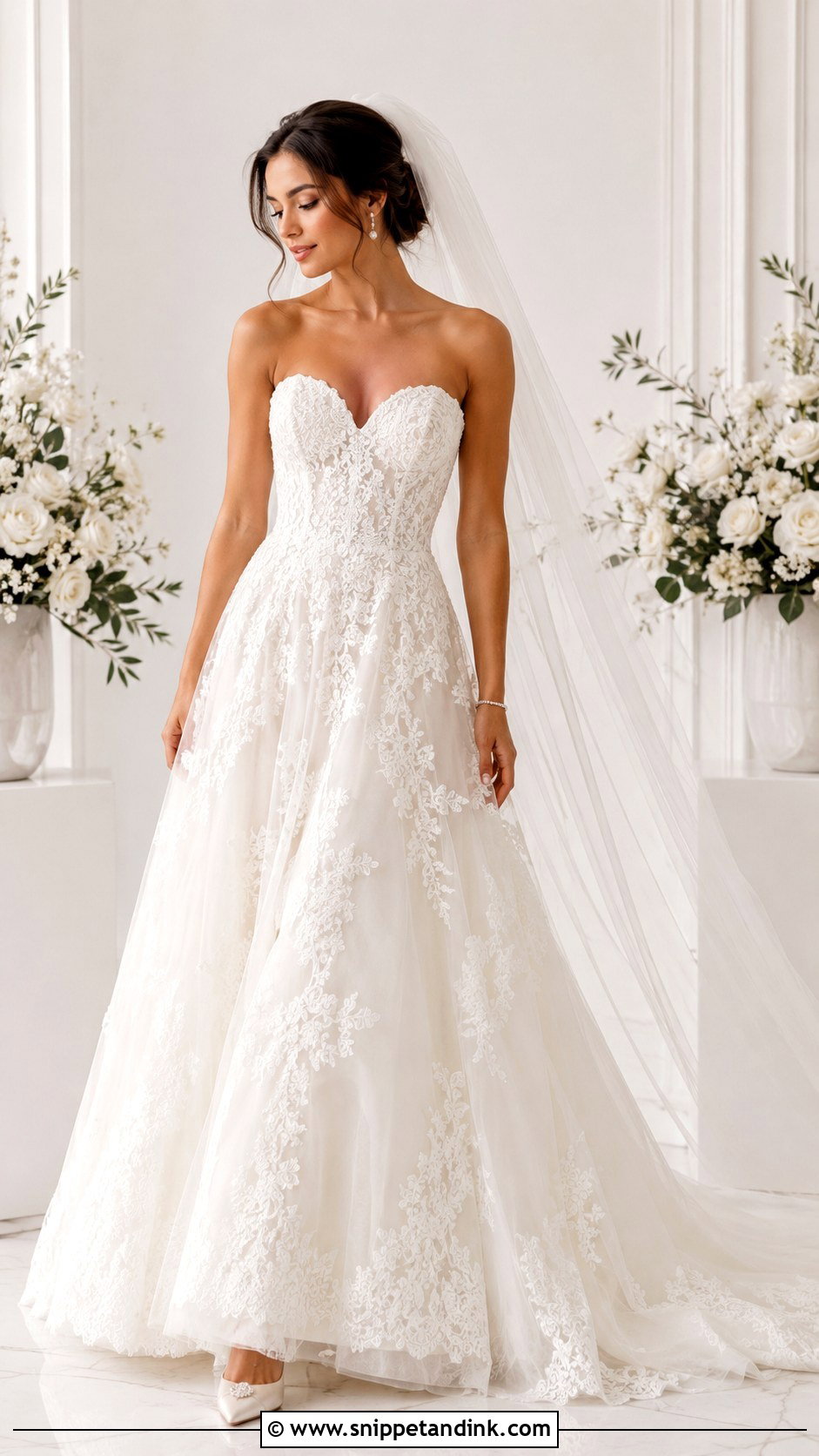
Strapless lace is a classic for a reason, but it lives or dies on construction. If the bodice isn’t boned and fitted to your ribcage, you’ll spend the night hitching it up. I ask brides to jump lightly and lift their arms during the fitting; if it slips, it needs taking in. A sweetheart line feels softer and a straight neckline looks more current. Pair it with a structured veil, pearl or crystal earrings and one bracelet. It sits happily in an A-line, mermaid or ball gown cut, with stable ivory heels.
12. Square Neck Lace Wedding Dress
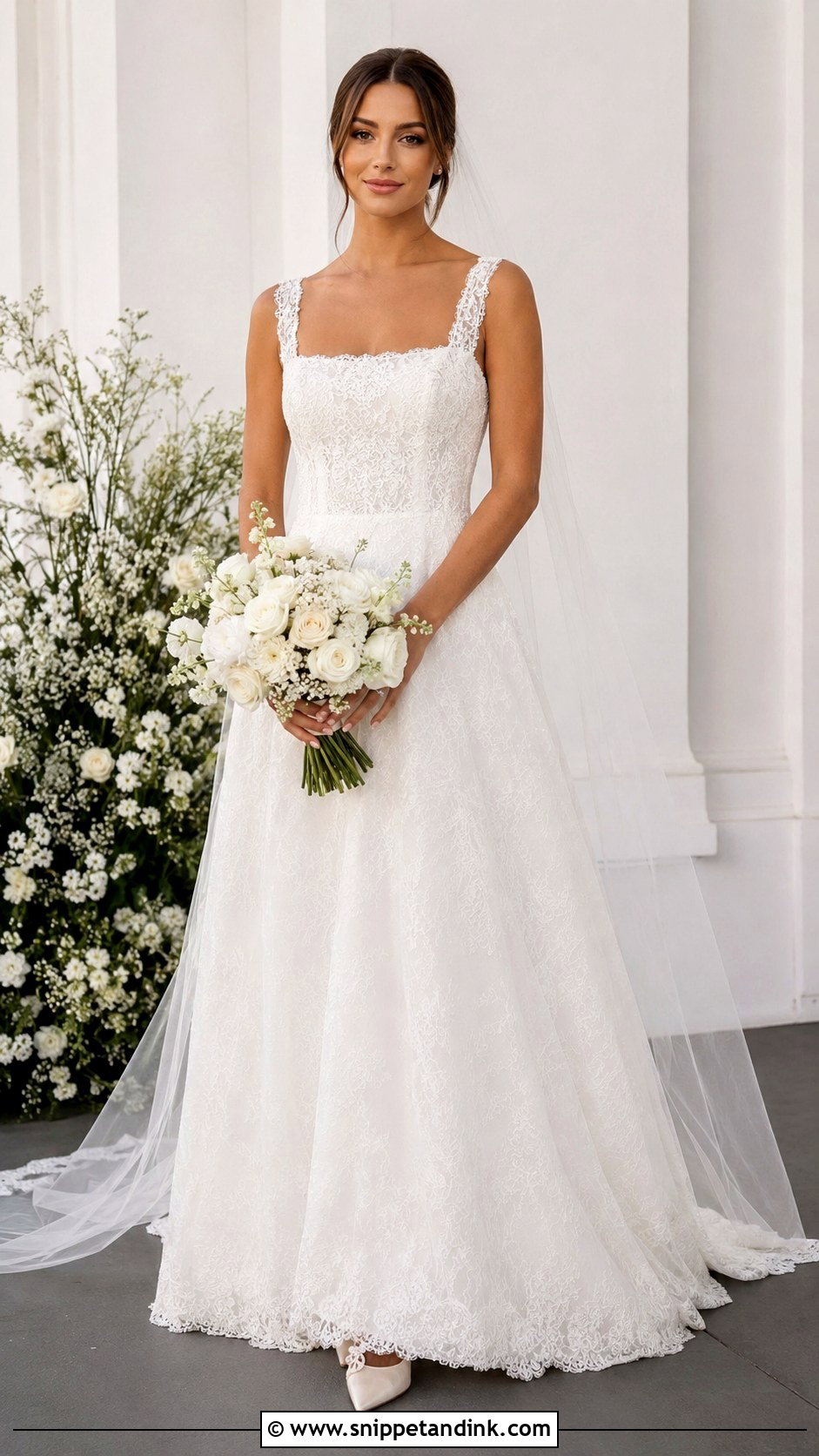
The square neckline gives lace a slightly architectural edge. It frames the upper body cleanly, works with wide straps or lace sleeves and doesn’t reveal much, so it’s easy to accessorize. I watch the corners: on a petite frame, a neckline cut too wide makes the straps slide toward the shoulder, which a seamstress can fix by moving the strap in a little. Choose an A-line for softness or a fitted shape for polish. Pearl studs, a sleek veil and pointed heels complete it, and both a low bun and soft waves suit the line.
13. V Neck Lace Wedding Dress
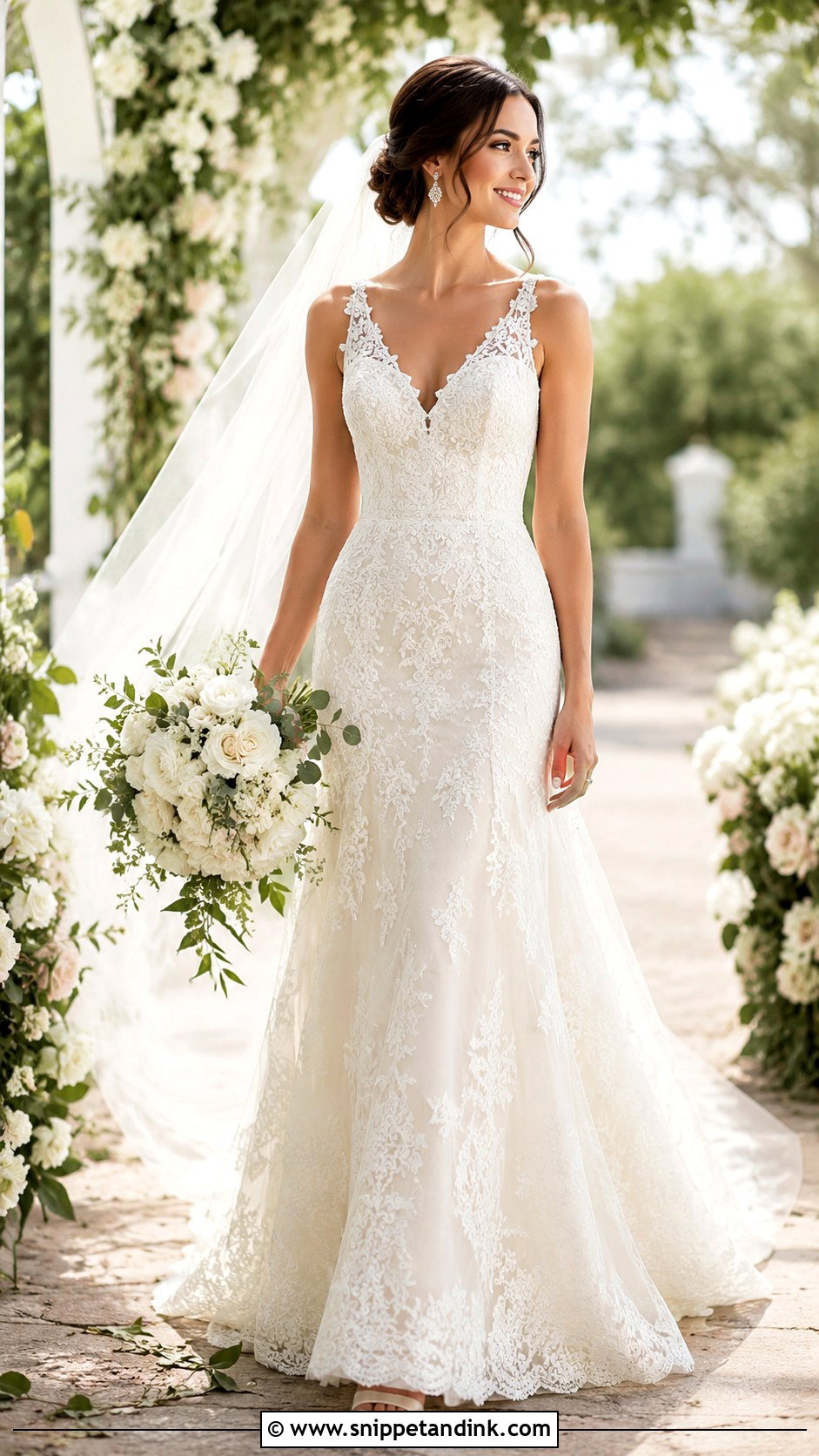
A V neckline lengthens the torso while lace keeps it gentle. It can be shallow, or deeper with illusion mesh holding things in place, and I’d always choose the mesh for a deep V on a fuller bust. Lace straps, a defined waist and a flowing skirt balance it. Wear a pendant only if the neckline is plain; otherwise go for earrings and a bracelet. A soft veil and ivory heels keep attention on the lace. It moves easily from garden ceremony to formal reception.
14. Illusion Lace Wedding Dress
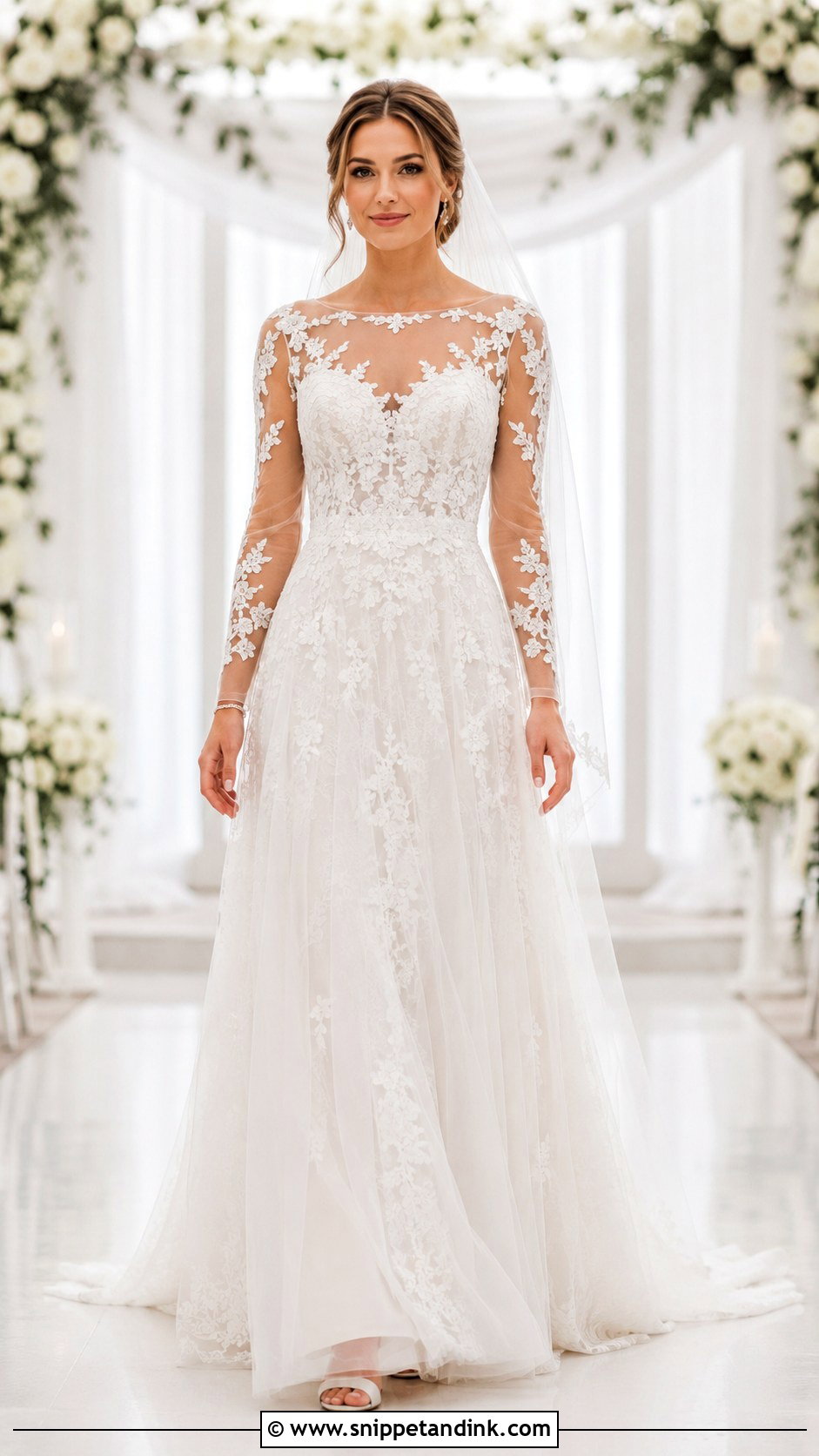
Illusion work places lace motifs on sheer tulle so the pattern looks as if it’s floating on your skin. It can sit on the neckline, sleeves, back or sides. The quality check is the tulle colour: it has to be matched to your skin tone, or it shows as a grey or pink band in daylight photos. Well-placed appliqués should feel flat and comfortable, not scratchy at the edges. A smooth updo shows off illusion shoulders or a detailed back, and small crystal earrings with a thin bracelet are plenty. Simple heels and a sheer veil finish it.

15. Backless Lace Wedding Dress
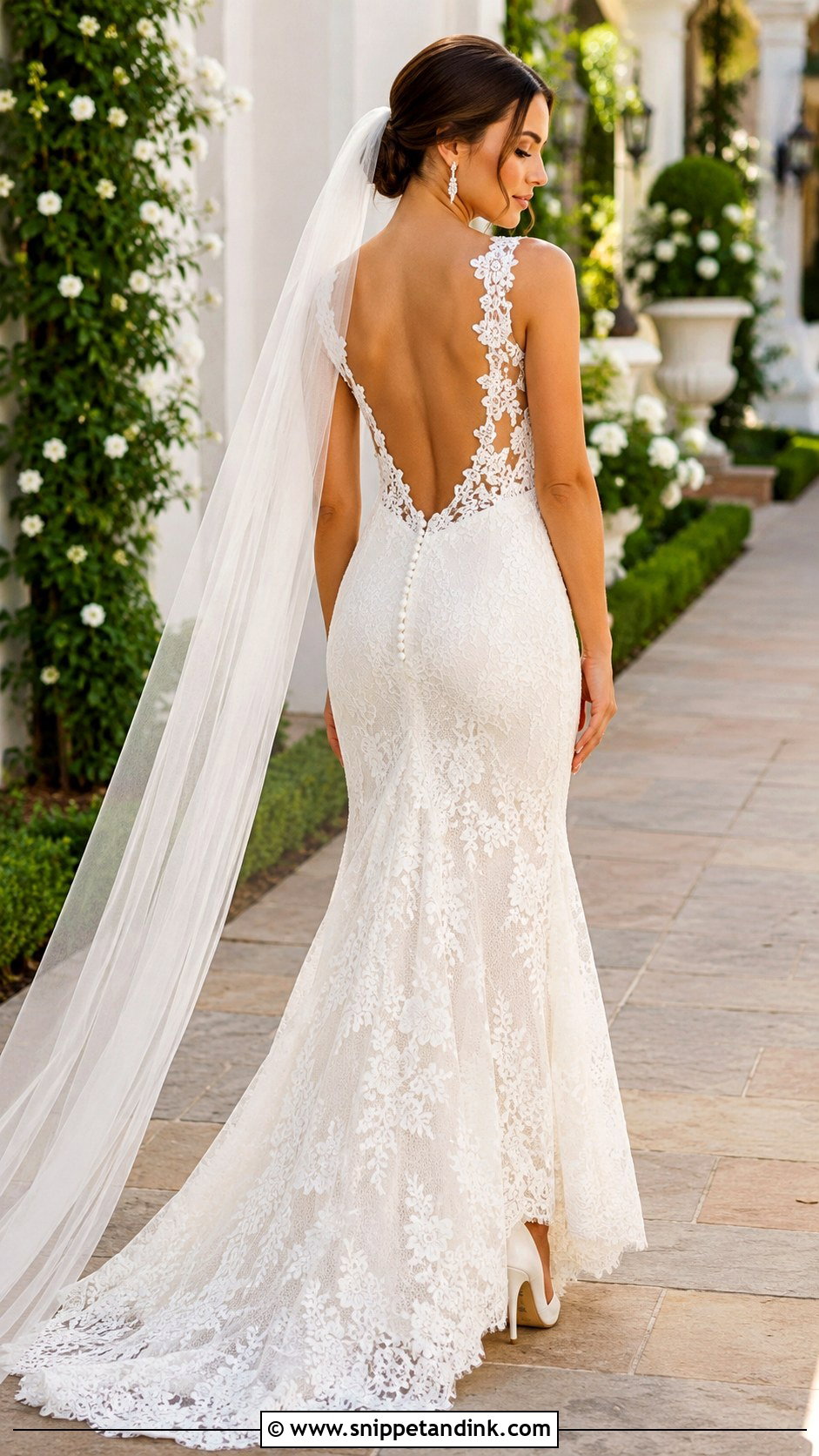
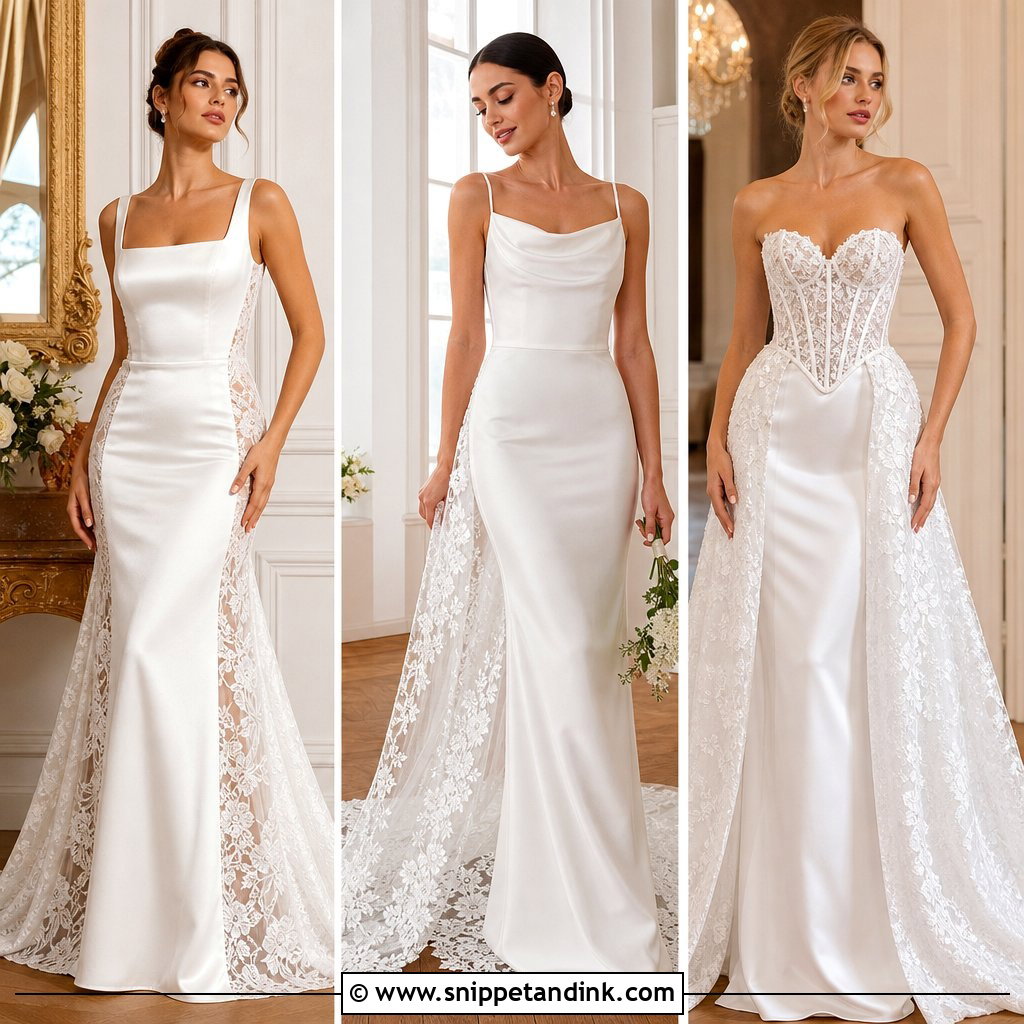
From the front, a classic gown. Then you turn around. That reveal is the appeal, and lace around the opening keeps it bridal. The practical issue is support: with no back, everything relies on the side seams and a built-in cup, so I always plan the bra question at the first fitting, not the last. A low bun or full updo lets the back show. Drop earrings, a plain veil and elegant heels are enough. It suits warm weather, gardens and modern rooms, and it looks best when everything else stays restrained.
16. Lace Wedding Dress With Train
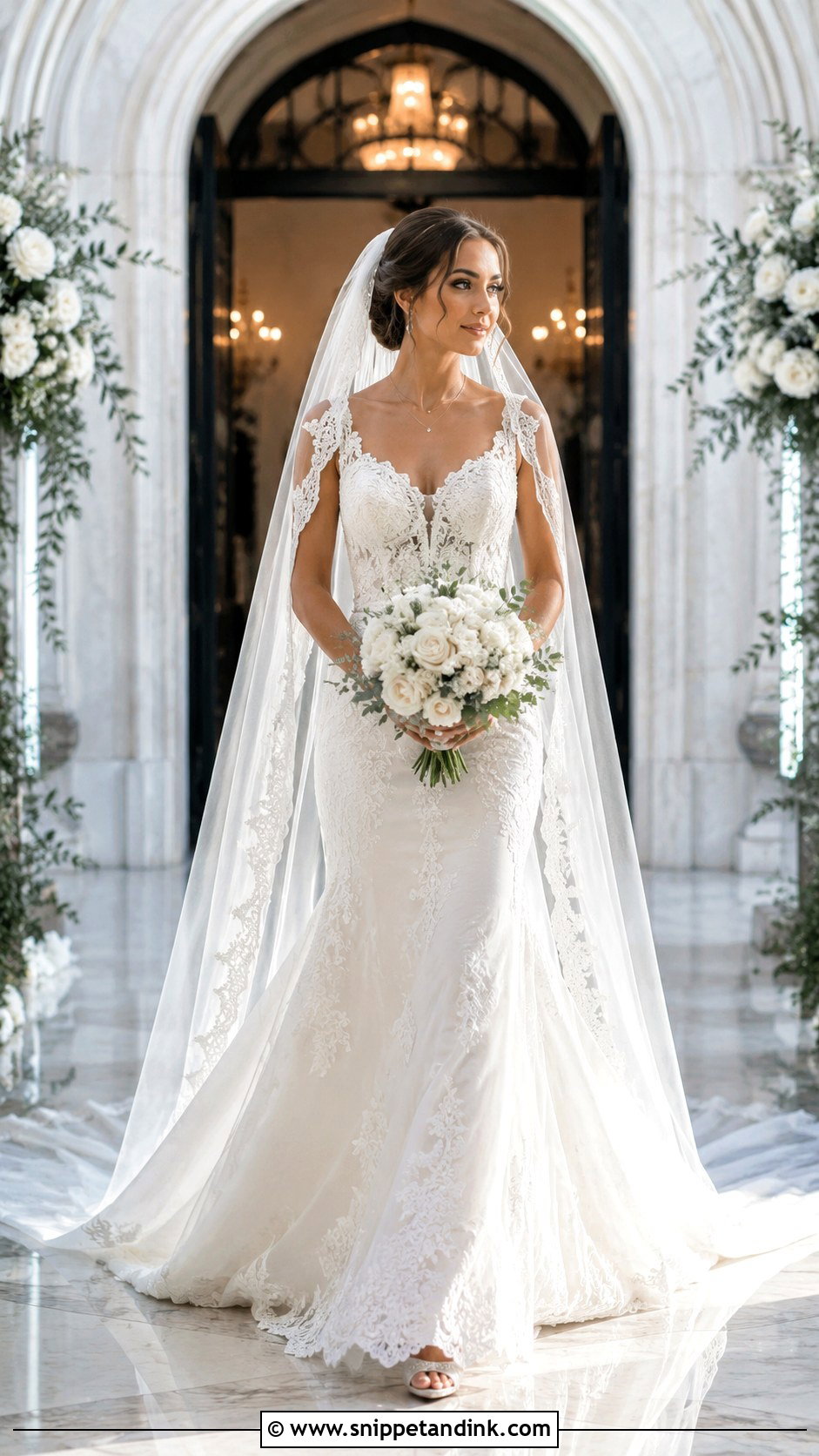
A lace wedding dress with train gives you movement and an aisle moment, with lace detail on show from behind. Trains run from a short sweep to chapel or full cathedral length. Lace trains catch on grass, gravel and chair legs more than satin does, so an outdoor venue is a reason to go shorter. For anything long, have a bustle sewn in and practise it with whoever will fasten it, because those hooks are fiddly in a dim room. Wear a long veil for the ceremony and take it off later. Simple earrings, a classic bouquet and secure heels round it off.
17. Lace Sheath Wedding Dress
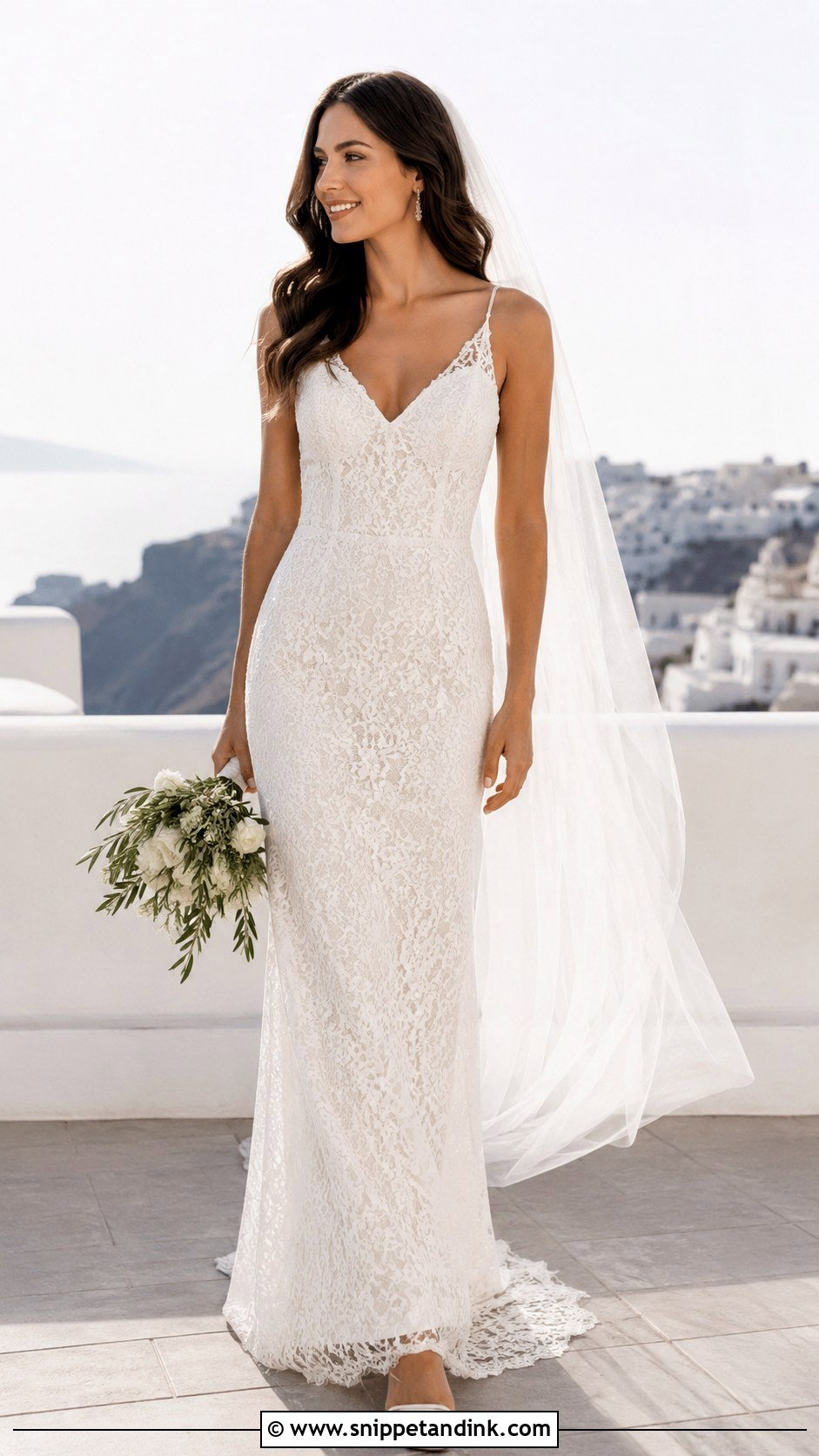
The sheath is the lightest lace gown you can wear: no flare, no volume, just a slim line that follows the body. Delicate lace adds texture while the shape stays clean. What I check is the walk, because a narrow sheath without a slit or kick pleat shortens your stride. Soft waves, a sheer veil and slim heels suit it. With a high neckline, skip the necklace and focus on earrings; with a simple V, a tiny pendant works. Beach weddings, rooftops and small ceremonies are where it feels most at ease.
18. Lace Fit And Flare Wedding Dress
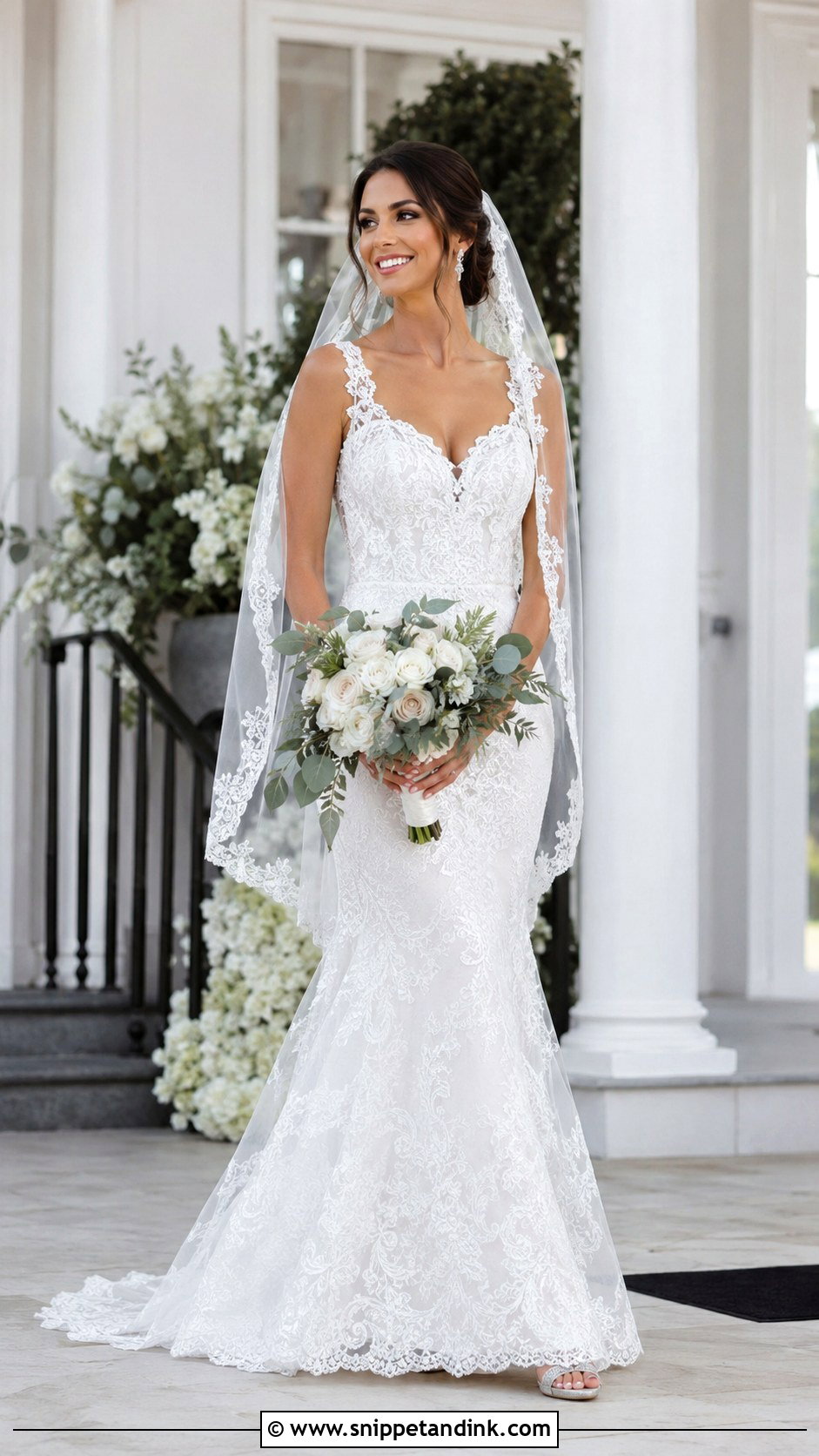
Fit and flare gives you shape without the commitment of a mermaid. It hugs the bodice and hips, then opens softly at mid-thigh, so you can still walk and dance freely. Lace softens the line. In practice, I tell brides who love the mermaid look but worry about comfort to try this first. Floral lace on the bodice highlights the waist. Pair it with a fingertip veil, crystal earrings and classic bridal heels. It moves comfortably between formal, semi-formal and outdoor settings, from the ceremony right through to the last song.
19. Lace Wedding Dress With Detachable Sleeves
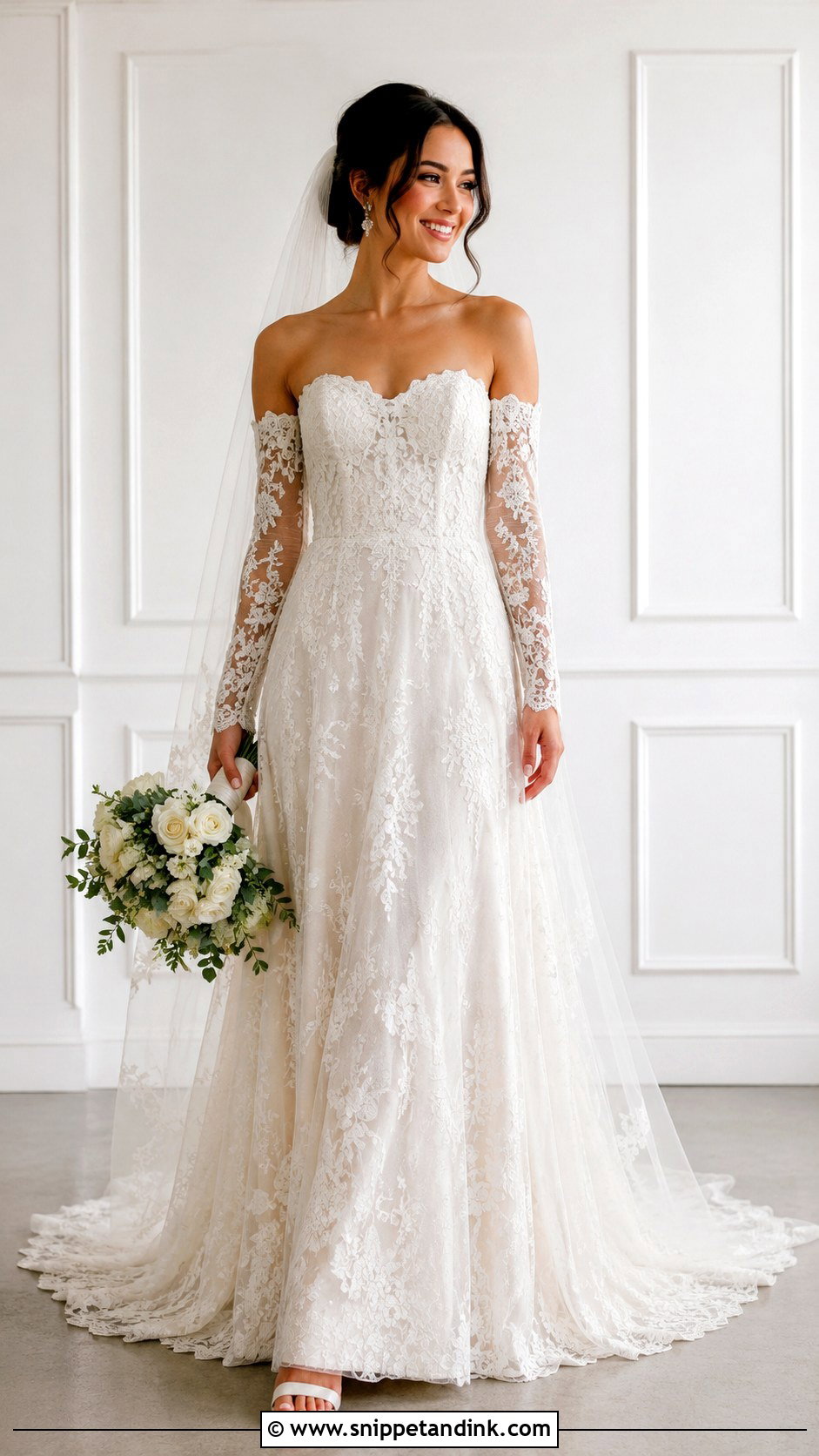
Two looks, one dress. Wear the sleeves for the ceremony and unclip them for the reception. Detachable lace sleeves can be fitted, puffed, off the shoulder or sheer, depending on the gown. I’d pair them with a strapless or square neck bodice, and I always ask how they fasten: snaps and hidden hooks are quick, while sleeves sewn to a bodice band need a helper. Keep earrings flexible so they suit both versions. A simple veil, clean heels and a polished hairstyle are all it needs, and you avoid buying a second gown.

20. Lace Wedding Dress With Cape
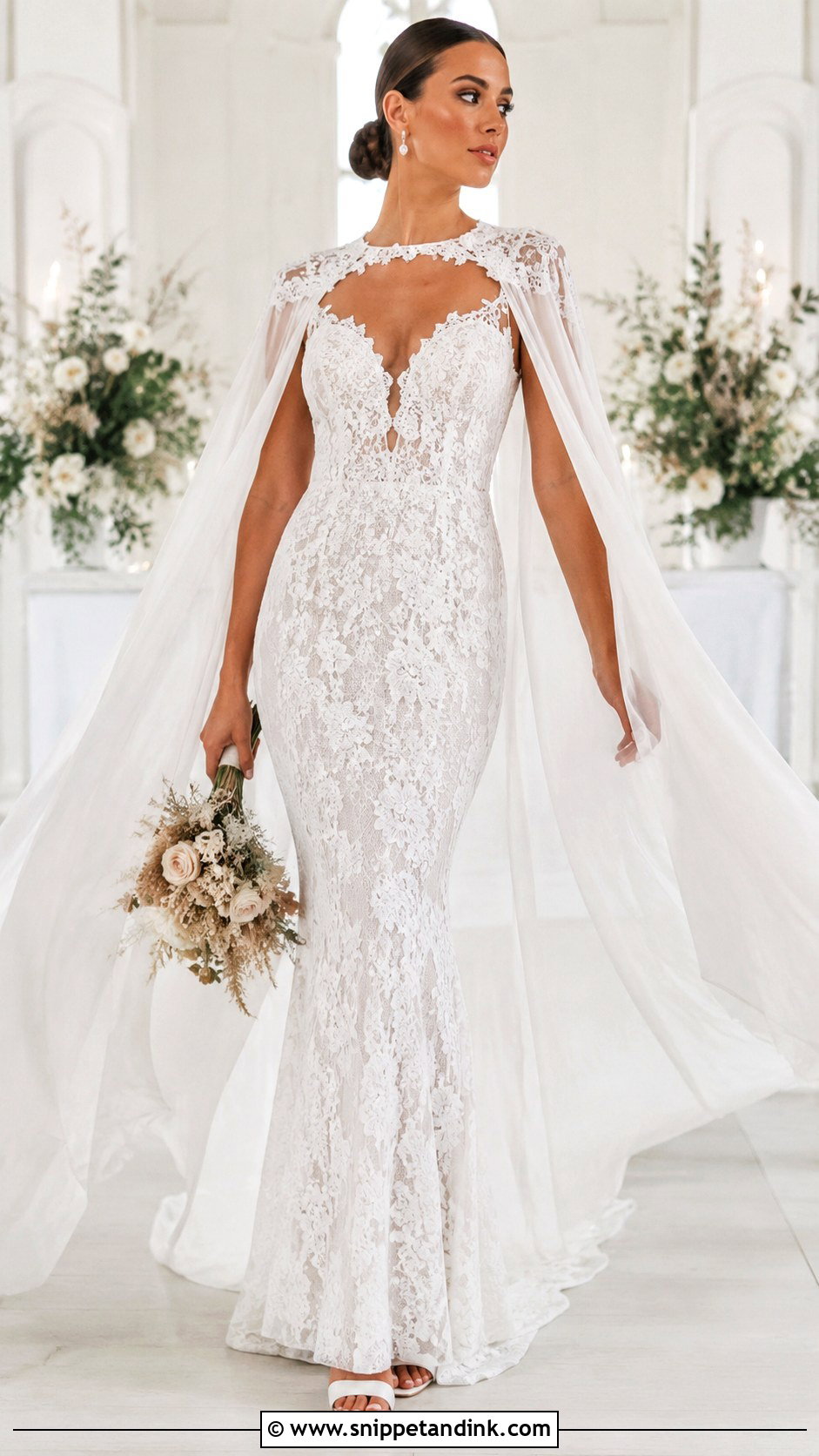
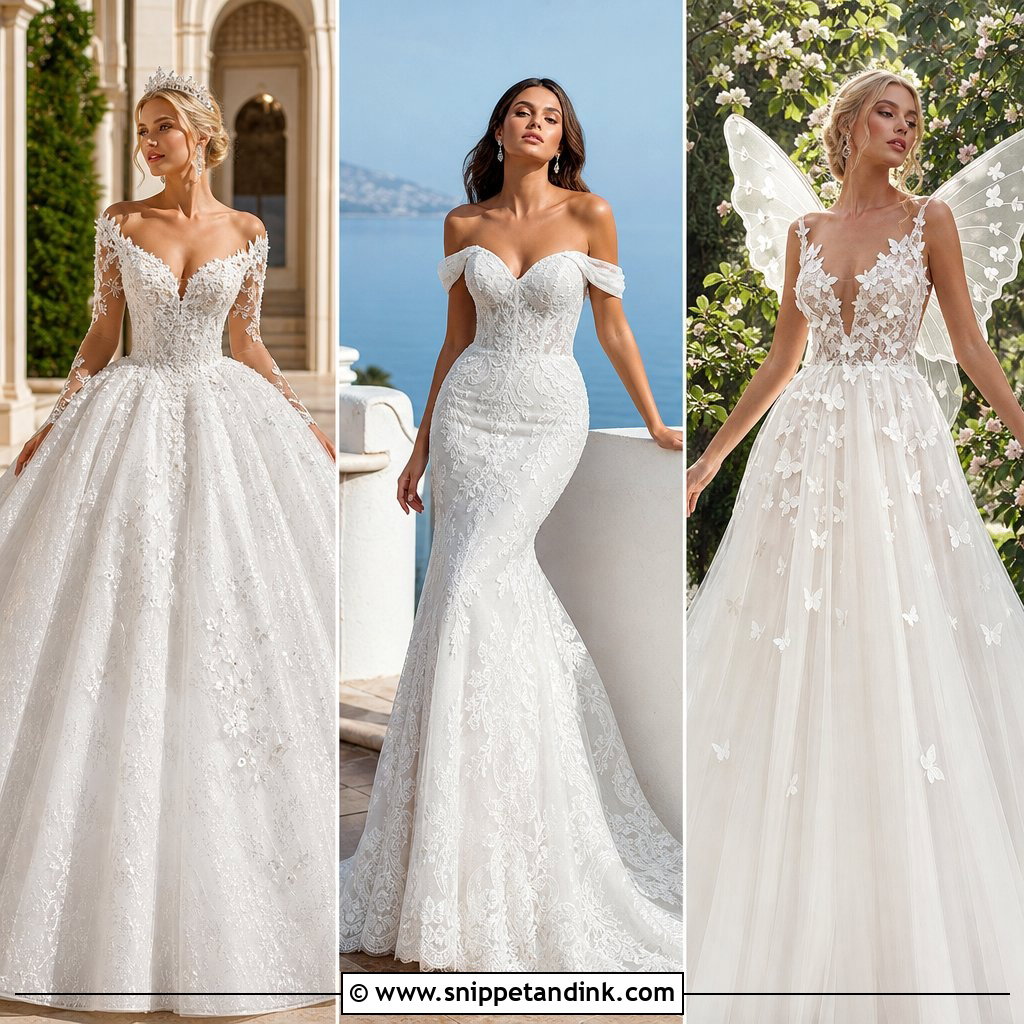
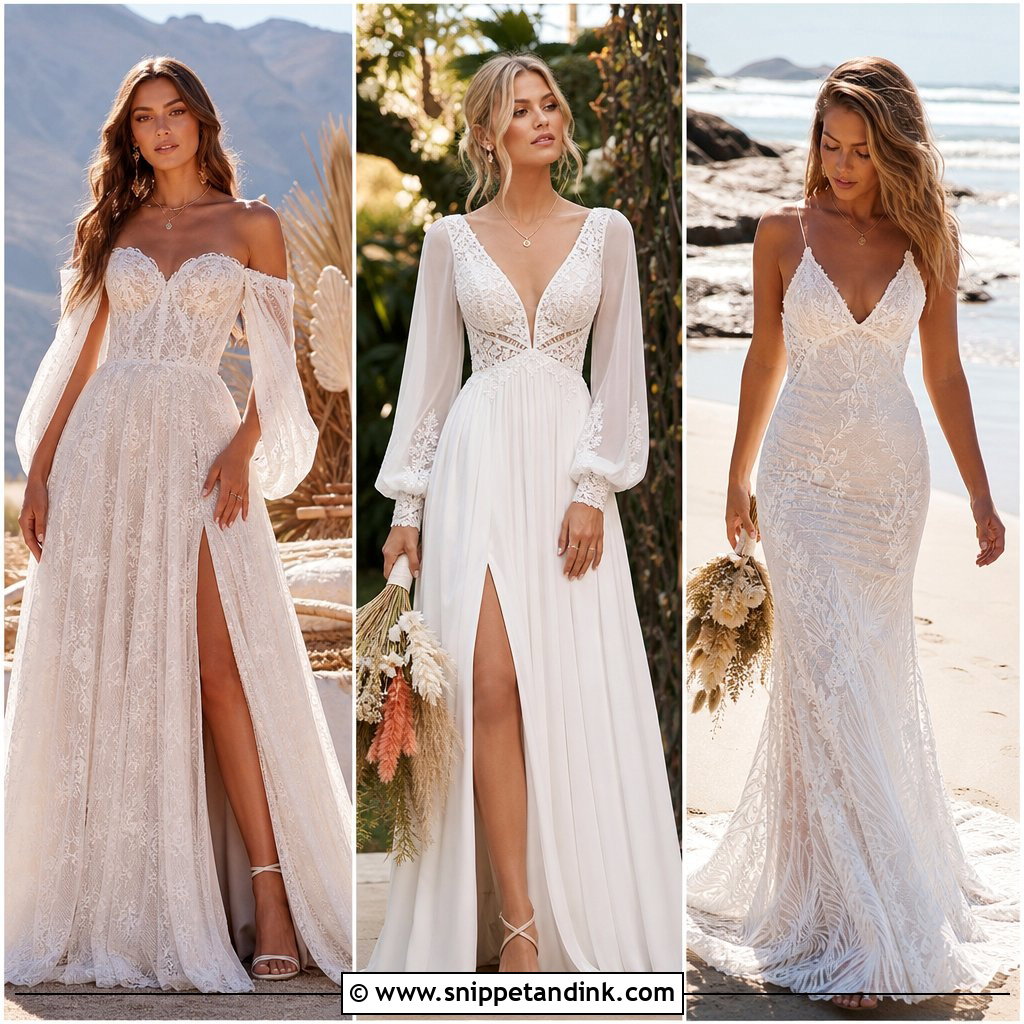
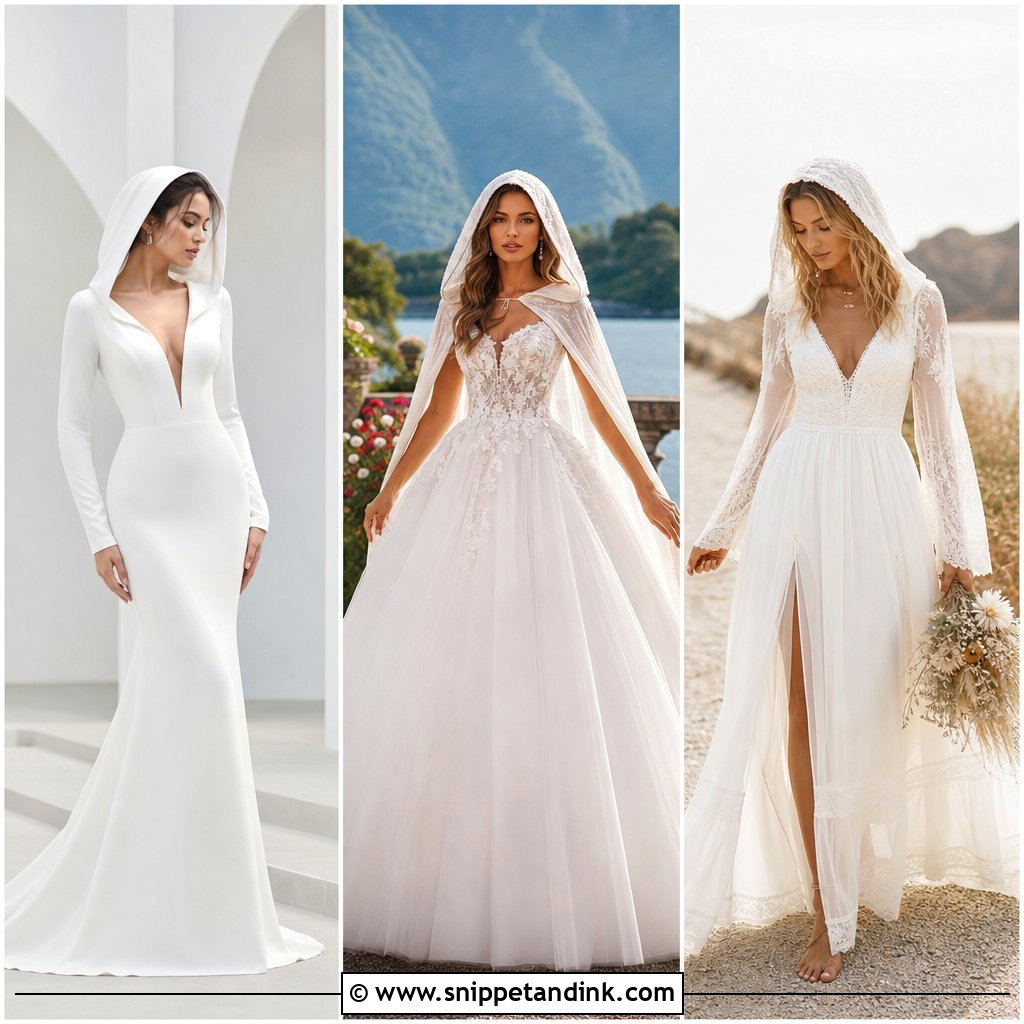
A cape can replace the veil or layer over it for extra movement on the aisle. If the gown is already heavy with lace, I go for a plain tulle cape; a sheer lace cape suits a quieter dress, so the two patterns don’t compete. It works over a sheath, A-line or fitted shape. Keep hair and jewelry simple, with ivory heels, small earrings and a neat bouquet. A cape gives coverage without sleeves, and it should be anchored at the shoulder or neckline with snaps so it doesn’t slide when you hug people. From behind, it creates a strong aisle moment.
21. Lace Wedding Dress With 3D Flowers
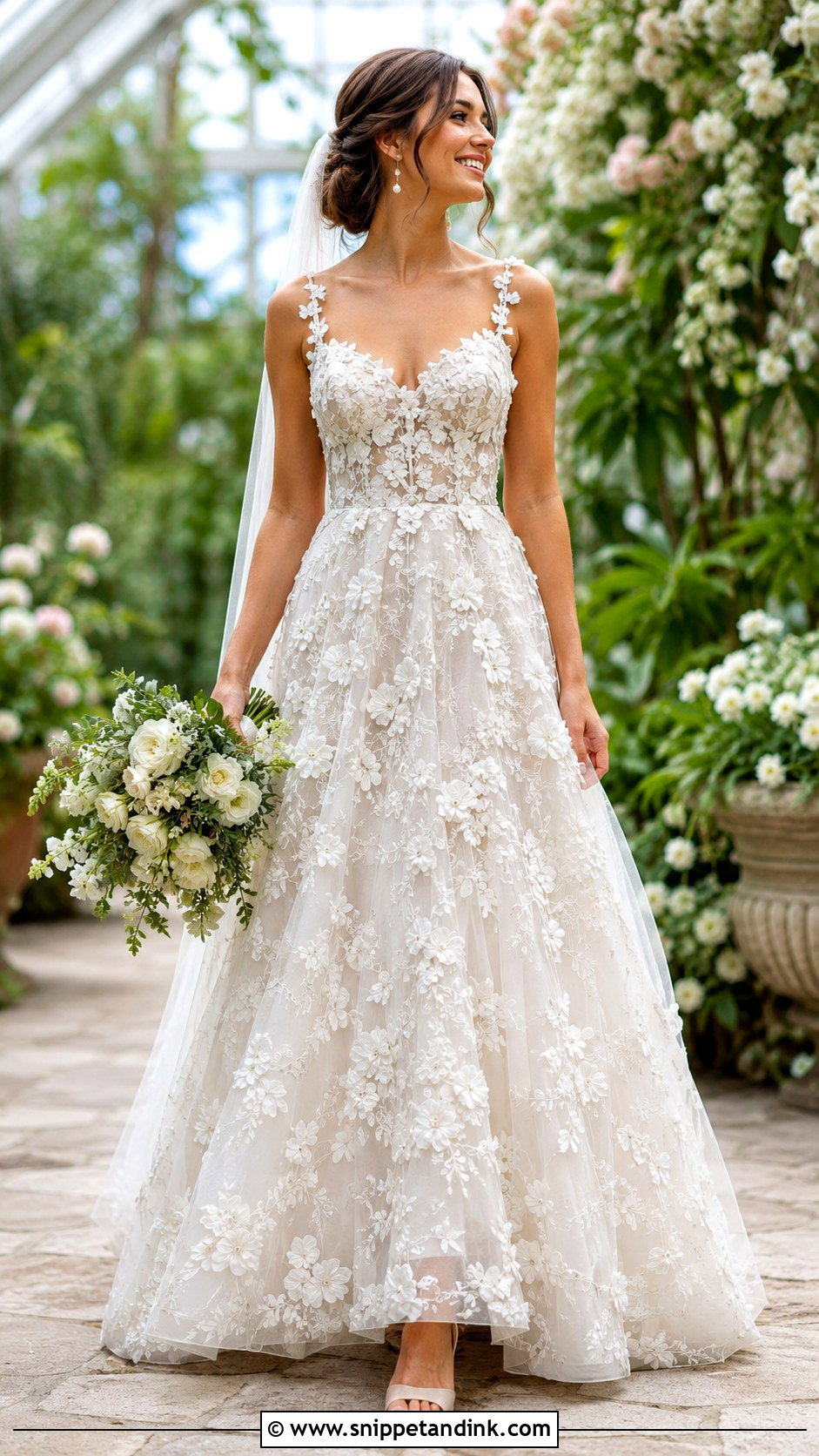
Three-dimensional flowers add real depth, scattered lightly over the bodice or massed over the skirt. They show best on an A-line or ball gown where they have room. The catch is wear and tear: raised petals flatten in a car, under a seatbelt and against a groom’s jacket, so I tell brides to have a steamer on hand and to avoid jewelry with prongs that can catch a petal. Pearl earrings and a plain veil suit it, along with soft makeup, loose waves and ivory heels. Botanical venues and outdoor ceremonies are its natural fit.
22. Lace Corset Wedding Dress
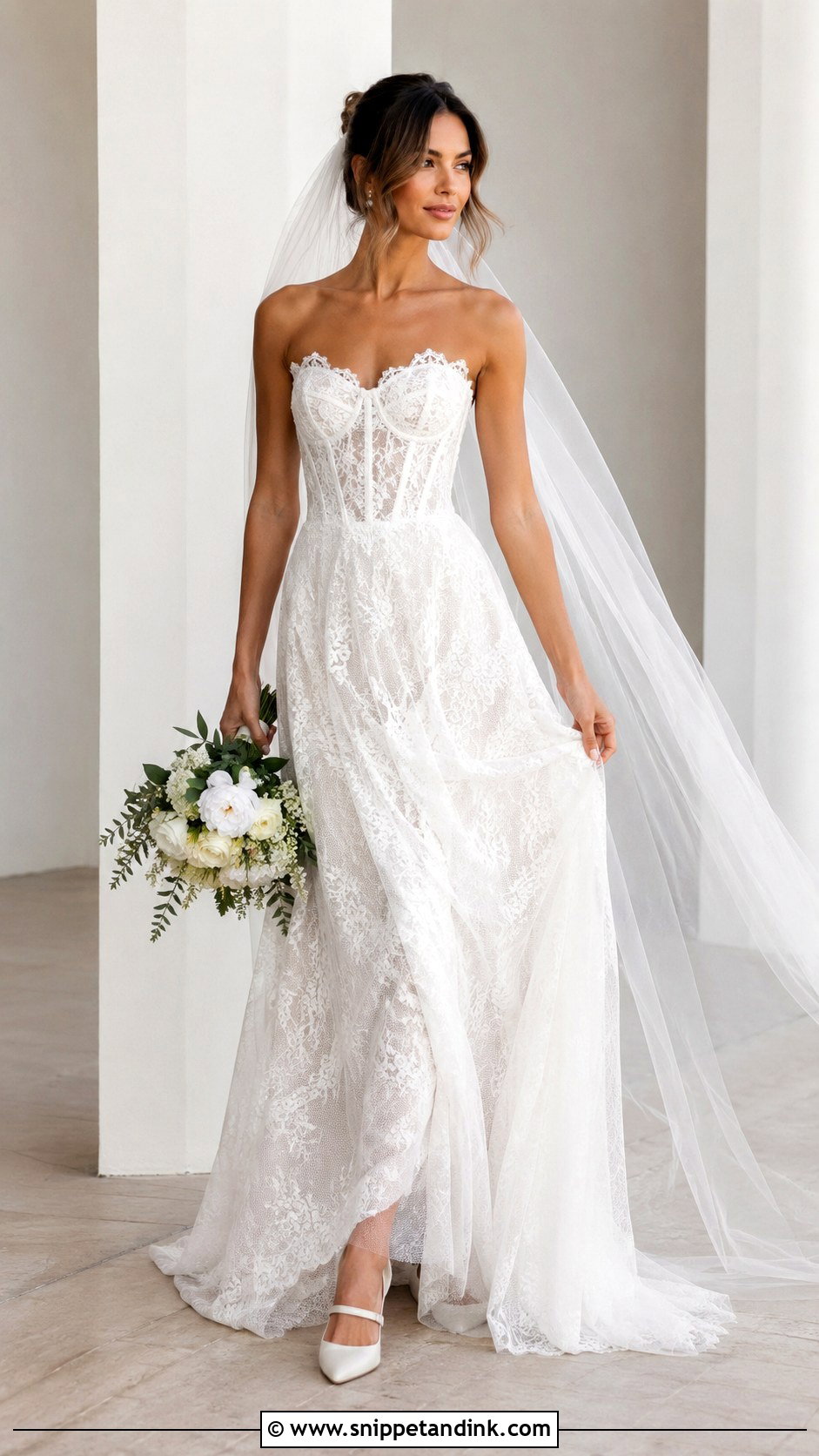
Structure and softness in one bodice. A corset defines the waist and gives proper support, and lace stops it from looking harsh. Visible boning reads modern; covered boning feels classic. The corset must be fitted with you sitting down as well as standing, because a bodice that’s comfortable upright can press into the ribs at dinner. Pair it with a flowing skirt for balance or a fitted one for more impact. Add a sheer veil, delicate earrings and comfortable heels, and skip heavy necklaces over a detailed bodice.
23. Lace Tea Length Wedding Dress
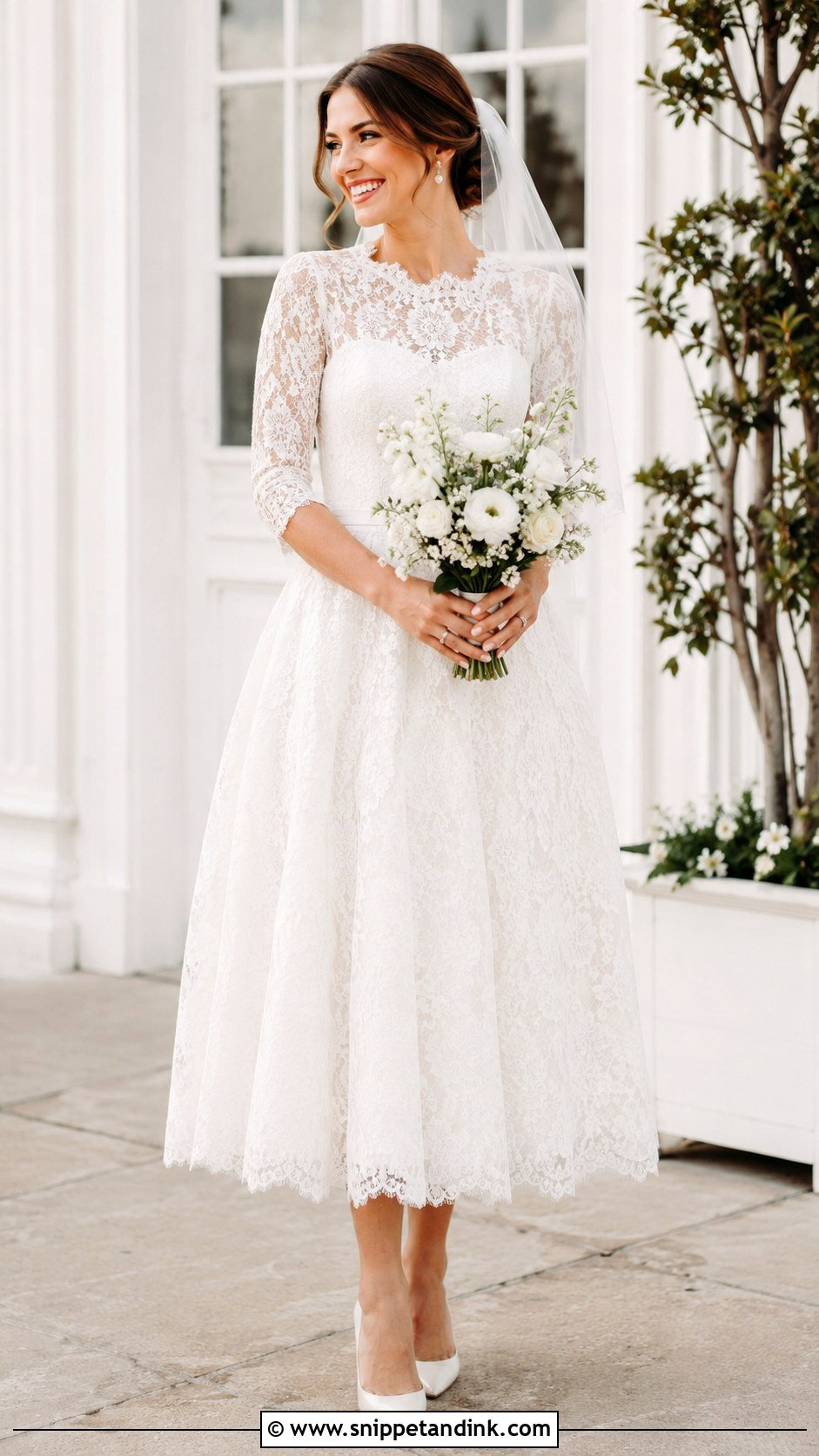
Tea length hems fall between the knee and ankle, so your shoes become part of the outfit. Pointed pumps, bow heels or ivory slingbacks are all worth showing. The hem length is everything, and I always have it set with the actual shoes on, because even a small change in heel height moves where it lands on the calf. A short veil, pearl earrings and a structured bouquet finish it. The lace keeps the shorter length bridal, and you can move freely. It fits a courthouse ceremony, a garden party or a relaxed reception.
24. Lace Wedding Dress With Pearl Details
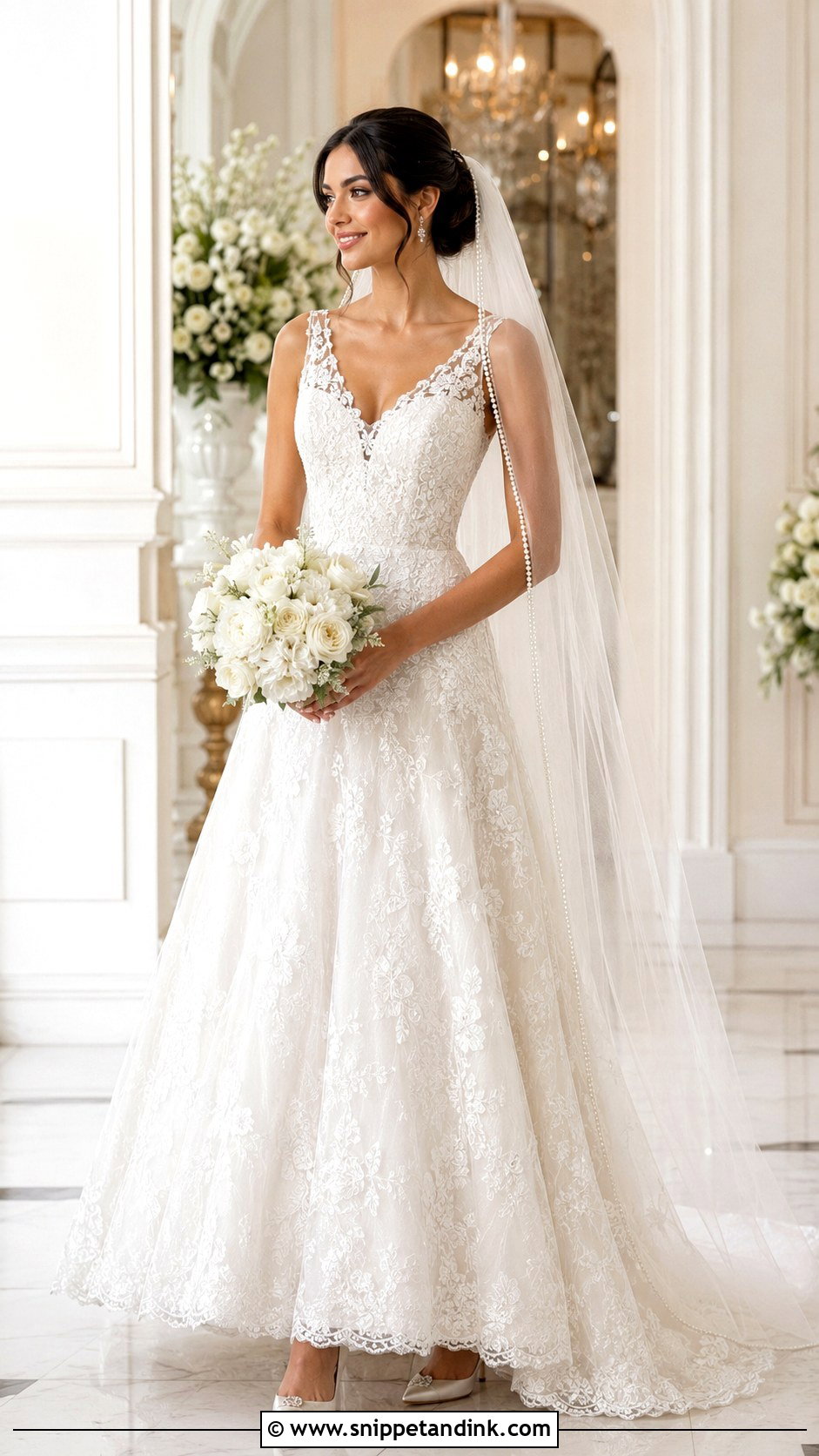
Pearls give a soft glow rather than sparkle, which suits lace well. They can sit on the bodice, sleeves, veil, belt or your jewelry, and balance is the rule. If the gown has pearl embroidery, wear small studs, not a statement piece. One thing to check: sewn-on pearls on the sleeves and skirt add real weight, so feel how the dress hangs on a hanger before trying it. A lace A-line or fitted gown with scattered pearls works with satin heels, a pearl-edged veil and a neat updo.

25. Simple Lace Wedding Dress
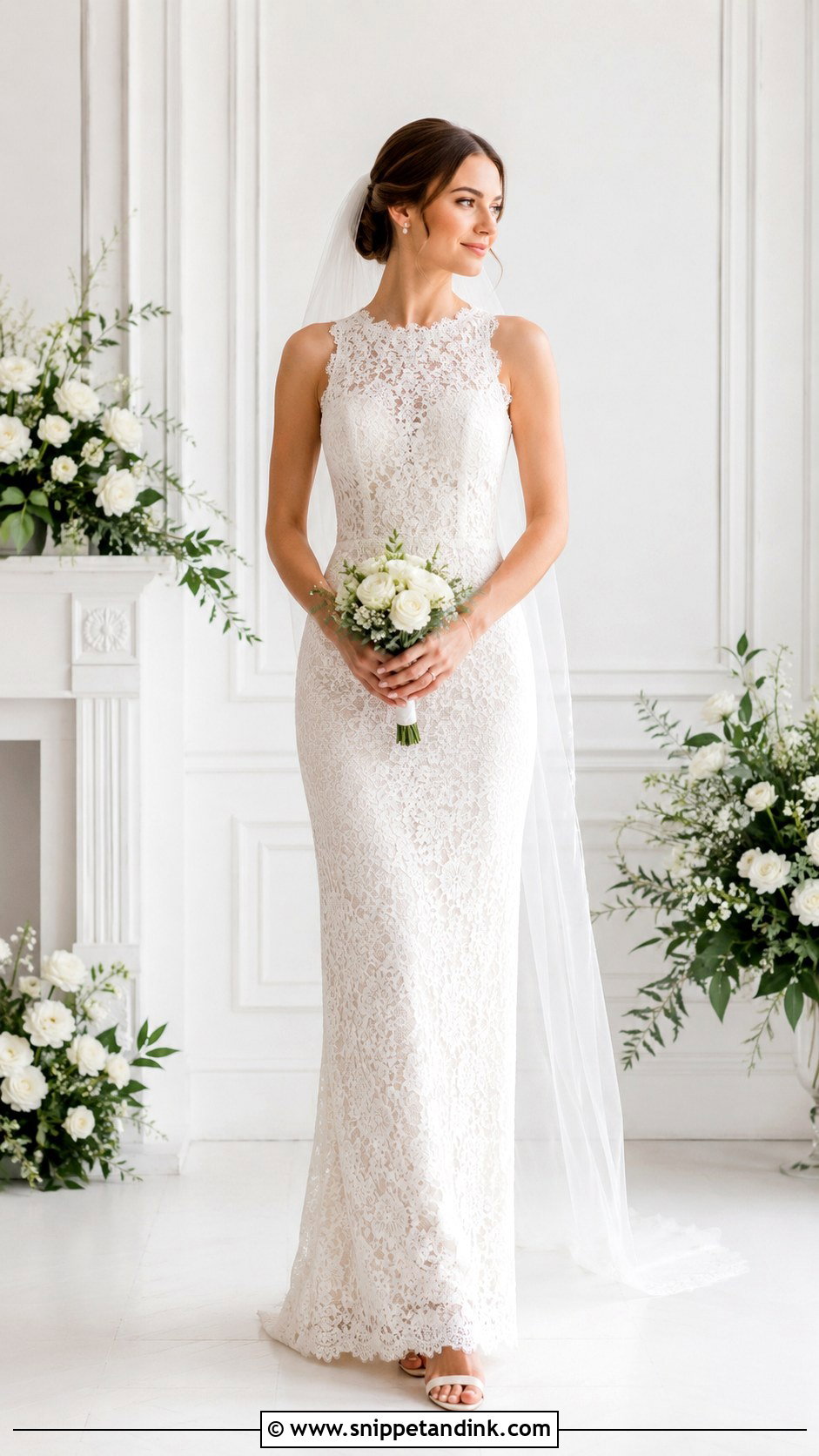
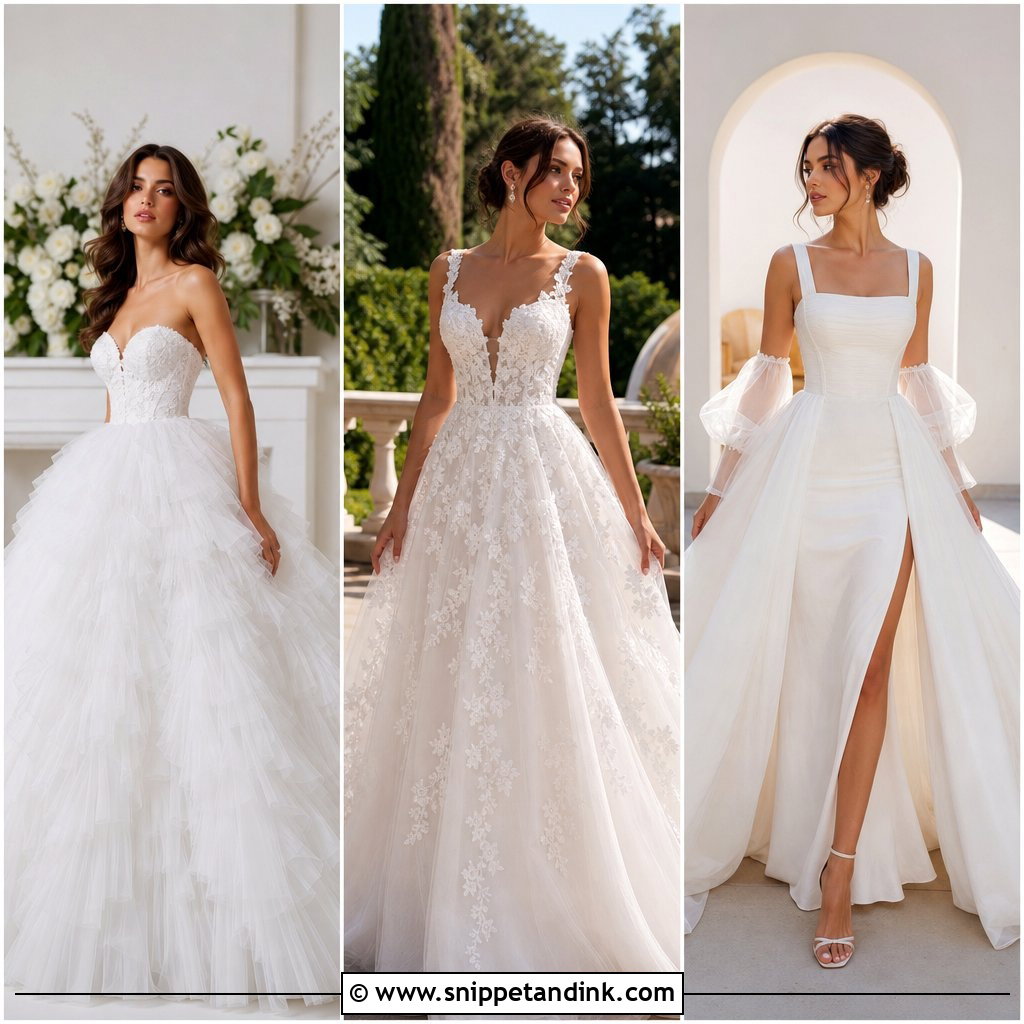
Simple doesn’t mean plain. It means the silhouette and the lace do the work, without heavy beading or volume. A sheath, A-line or slim fit-and-flare all qualify. In my experience, a simple gown is also the easiest to alter and to personalize later with a belt, a different veil or a bouquet. Small earrings, a plain veil and classic ivory heels are enough. A sleek hairstyle makes it modern, and soft waves make it relaxed. It adapts to almost any venue, which is a quiet advantage when your plans are still moving.
Lace Alterations Take Longer Than Satin
A satin hem can be cut and stitched in an afternoon. A lace hem with a scalloped edge can’t, because the seamstress has to lift the lace border off, take up the skirt underneath and then re-apply the scallops by hand so the pattern still finishes cleanly. The same goes for taking in a bodice where appliqués cross the seam. That’s why I plan lace gowns around more fitting time, not less.
- Order early. Made-to-order gowns commonly take several months to arrive, and lace pieces can take longer.
- Book the first fitting roughly two to three months before the date, with your wedding shoes and undergarments in hand.
- Expect two or three fittings. Hand-applied lace work is often the slowest part of the schedule.
- Keep the final fitting a week or two out, so any weight changes or bustle tweaks can still be made.
Caring for Lace on the Day and After
On the morning, get dressed after your makeup is done, step into the gown rather than pulling it over your head, and keep a lint roller and a small steamer nearby. If wine or makeup lands on lace, blot it gently with a clean cloth and leave it; rubbing pushes the stain into the net and can tear it.
Afterwards, have it professionally cleaned as soon as you can, since sugar stains that look invisible now turn brown over months. I’d store it folded in acid-free tissue in a breathable box, away from light, and never in the plastic bag it came home in. Hanging a heavy lace gown for years pulls the shoulders out of shape, so if you do hang it, use the inner hanging loops, not the straps.
Which Lace Will Feel Right in Hour Ten?
The right lace gown is the one you forget you’re wearing by the second hour. Lace can lean classic, modern, boho, vintage or minimal depending on the cut, so start with your venue, season and comfort, then decide which detail you want people to notice: sleeves, neckline, train or back. Try at least two lace types and two silhouettes before deciding, because a small change in pattern scale shifts the whole mood. Once you’ve found the shape that lets you sit, hug and dance without thinking about it, the styling is the easy part.
You'll Like These Ideas:











Leave a Reply