
Sleeves change a wedding dress more than almost any other detail. The same bodice reads romantic in sheer lace, formal in satin and sharp in crepe, and the sleeve also decides how freely you can hug, raise a glass or throw a bouquet. They work in every season once the fabric is right: open lace for spring, mikado or crepe when it’s cold. In fittings I spend more time on sleeves than on necklines, because a sleeve that looks perfect with arms at your sides can pull badly the moment you reach forward. Below are the long-sleeved gowns I style most, with the fit details I check on each.
Bishop, Bell, Fitted or Puff: How Each Sleeve Moves
Before you look at fabric, decide on the sleeve shape, because it changes how the whole dress behaves on the day. These are the shapes I see most in bridal:
- Fitted: close to the arm from shoulder to wrist. The cleanest line, but it needs precise fitting so you can bend your elbow.
- Bishop: full along the arm and gathered into a cuff at the wrist. Romantic, and easy to move in.
- Bell: fitted at the top, flaring from the elbow down. Lovely in motion, but it gets into food and catches on things.
- Puff: volume at the shoulder, often narrowing below. Adds shape on a slim frame.
- Juliet: puffed at the top, fitted from the elbow down. A good choice if you want volume without loose cuffs.
Length matters too. I usually end a sleeve just at or slightly past the wrist bone so it doesn’t hide the ring exchange. A finger loop holds a sheer sleeve in place, but some brides find it annoying after a few hours, so try it in the shop before saying yes.
1. Long Sleeved Lace Wedding Dress
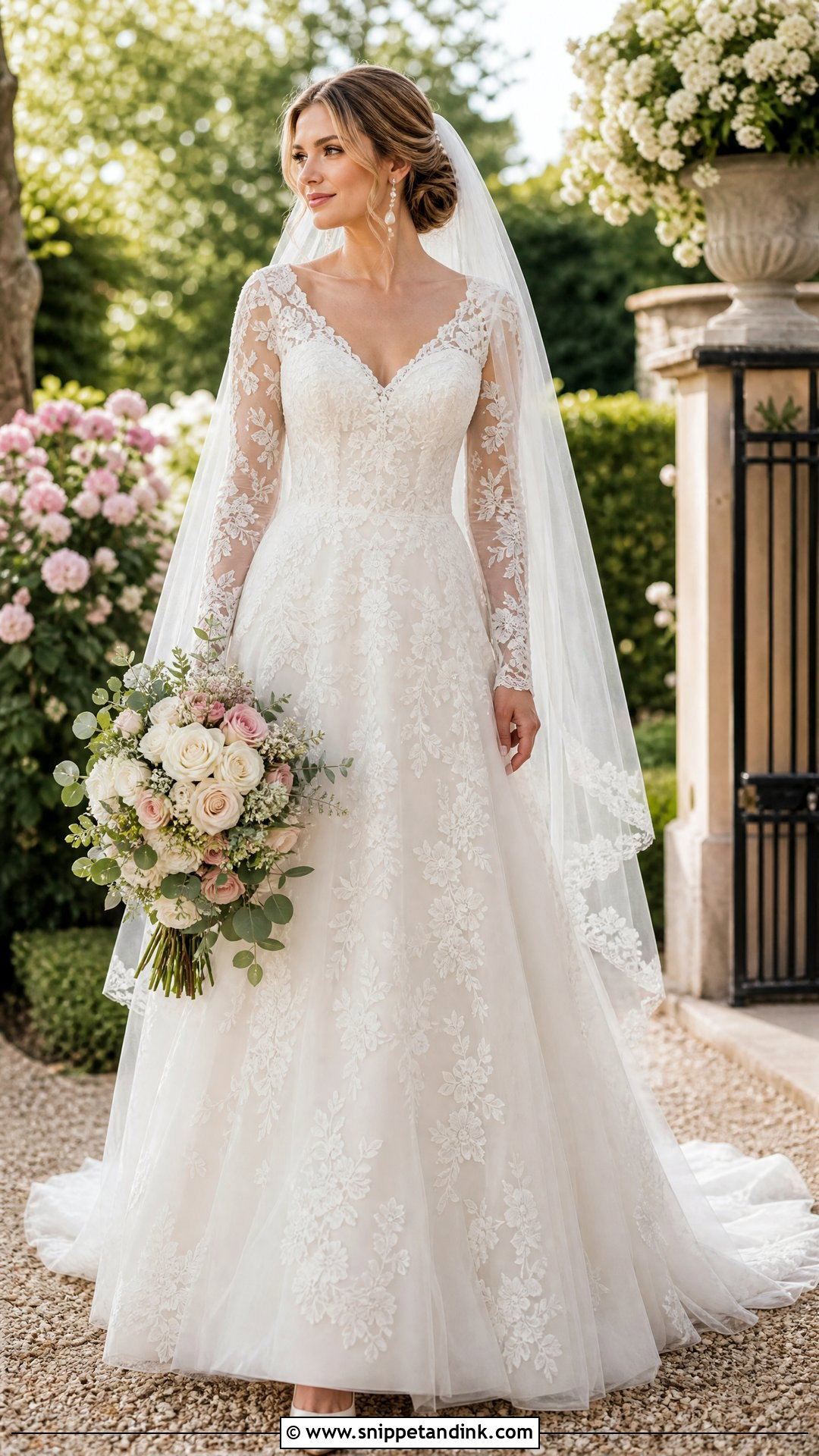
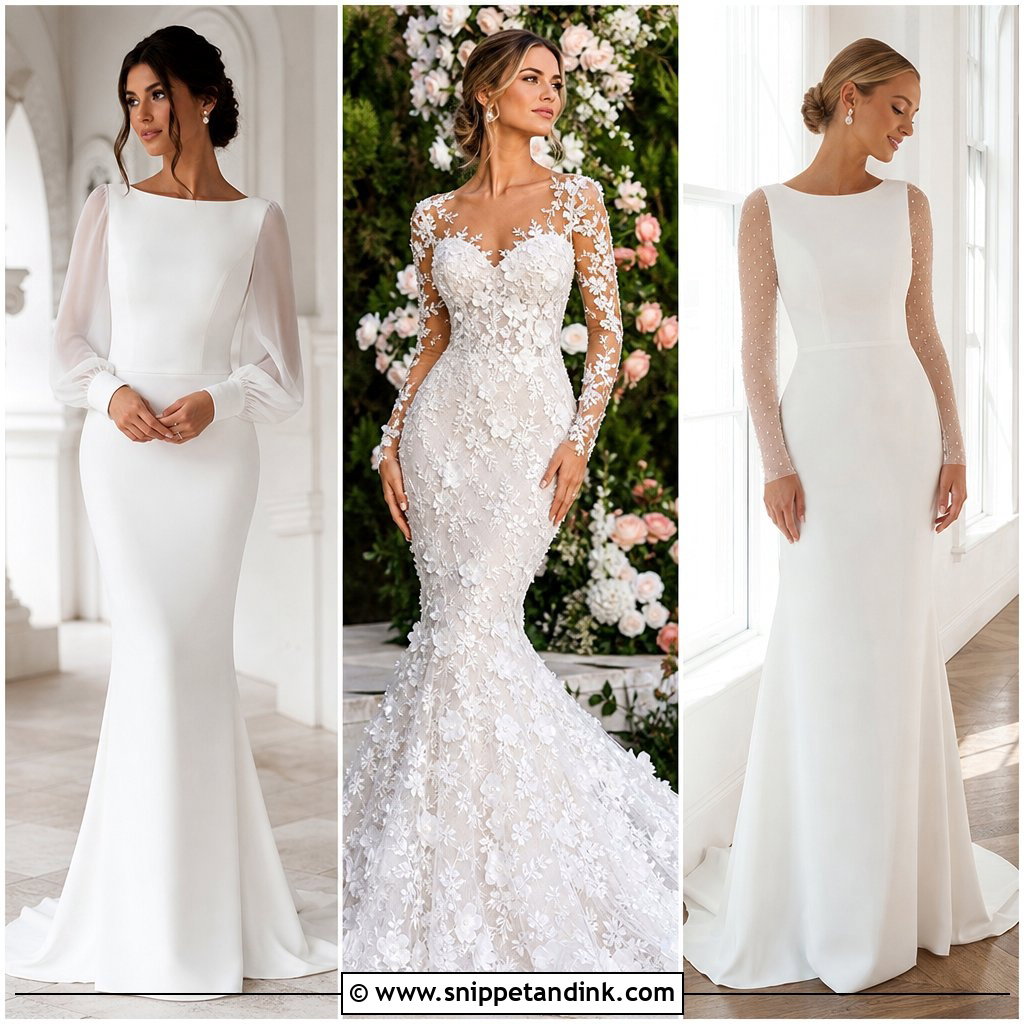
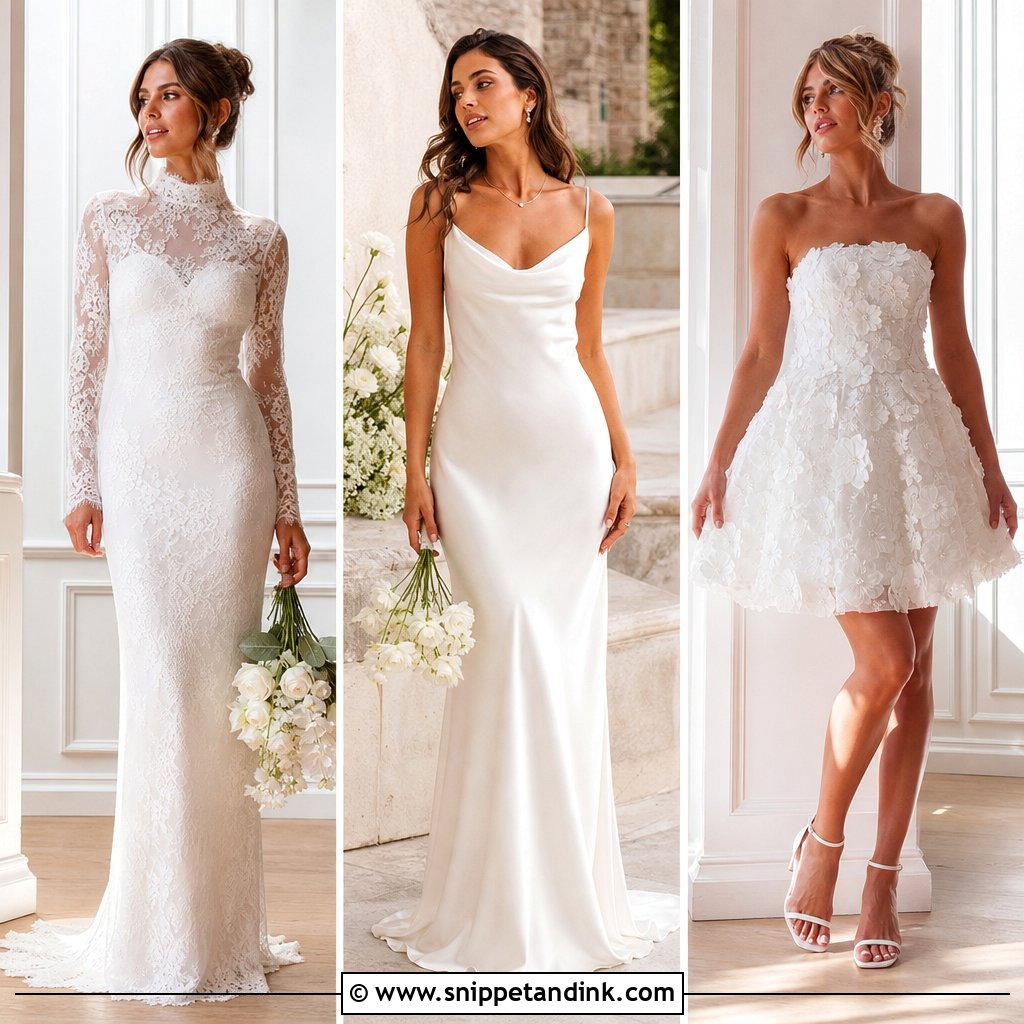
Lace sleeves on a fitted bodice, flowing into a soft A-line, are about as classic as bridal gets. A sweetheart or illusion neckline keeps the top from feeling heavy. If you want coverage that still looks light, ask for appliqué lace placed on sheer tulle rather than allover corded lace, which is warmer and stiffer. I always check that the lace motifs mirror each other on both sleeves; a mismatched cuff is the first thing a photographer’s close-up catches.
2. Long Sleeved Satin Wedding Dress
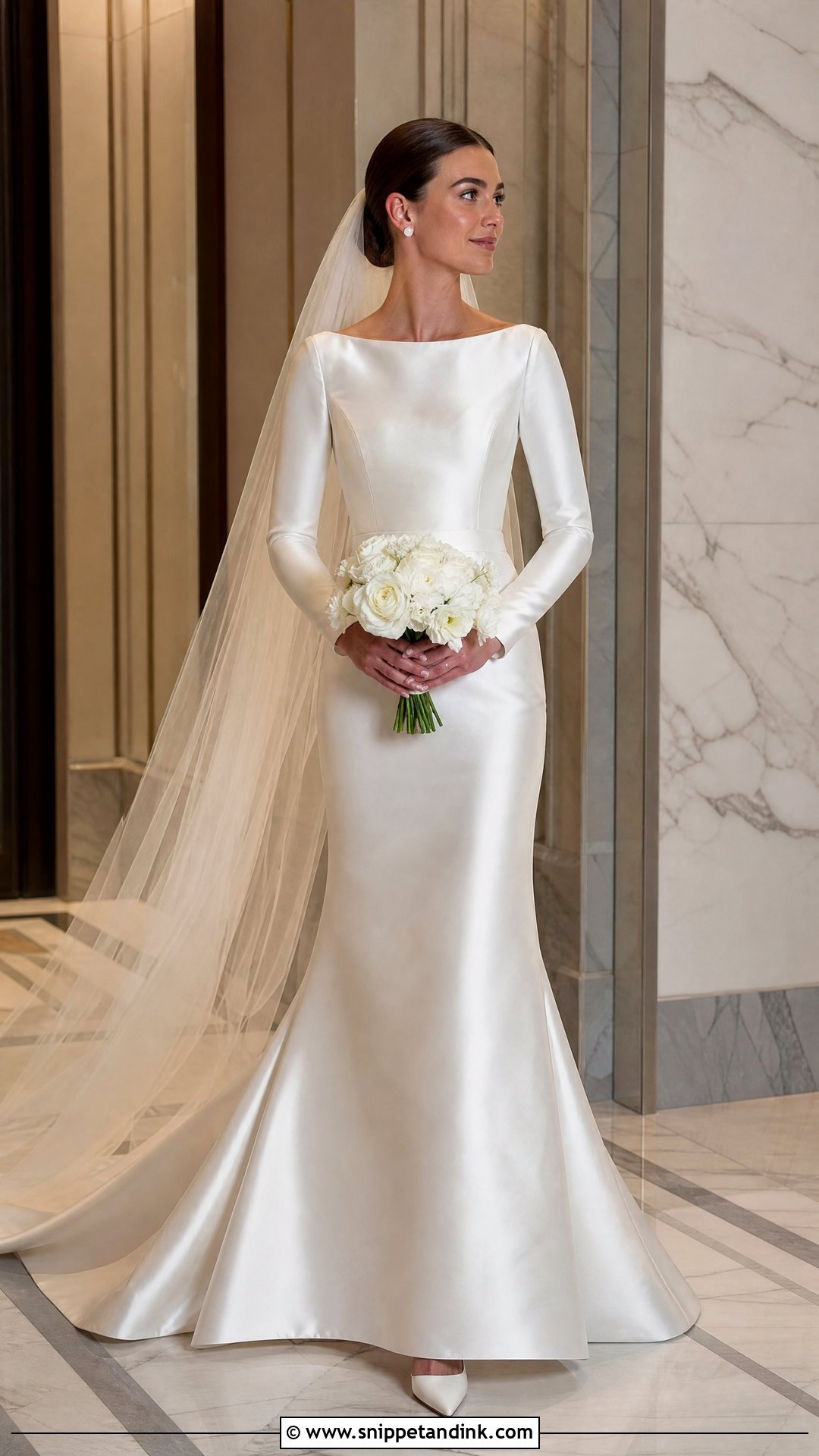
Satin sleeves look formal and clean, which is why they suit hotels and evening ceremonies. A structured bodice and a modest train give the dress all the shape it needs. The challenge is fit, because satin shows every pull. I have brides cross their arms in front of them at the fitting: if the fabric strains across the upper back, the sleeve head needs more ease. A low bun and pearl studs keep it quiet and polished.
3. Long Sleeved Crepe Wedding Dress
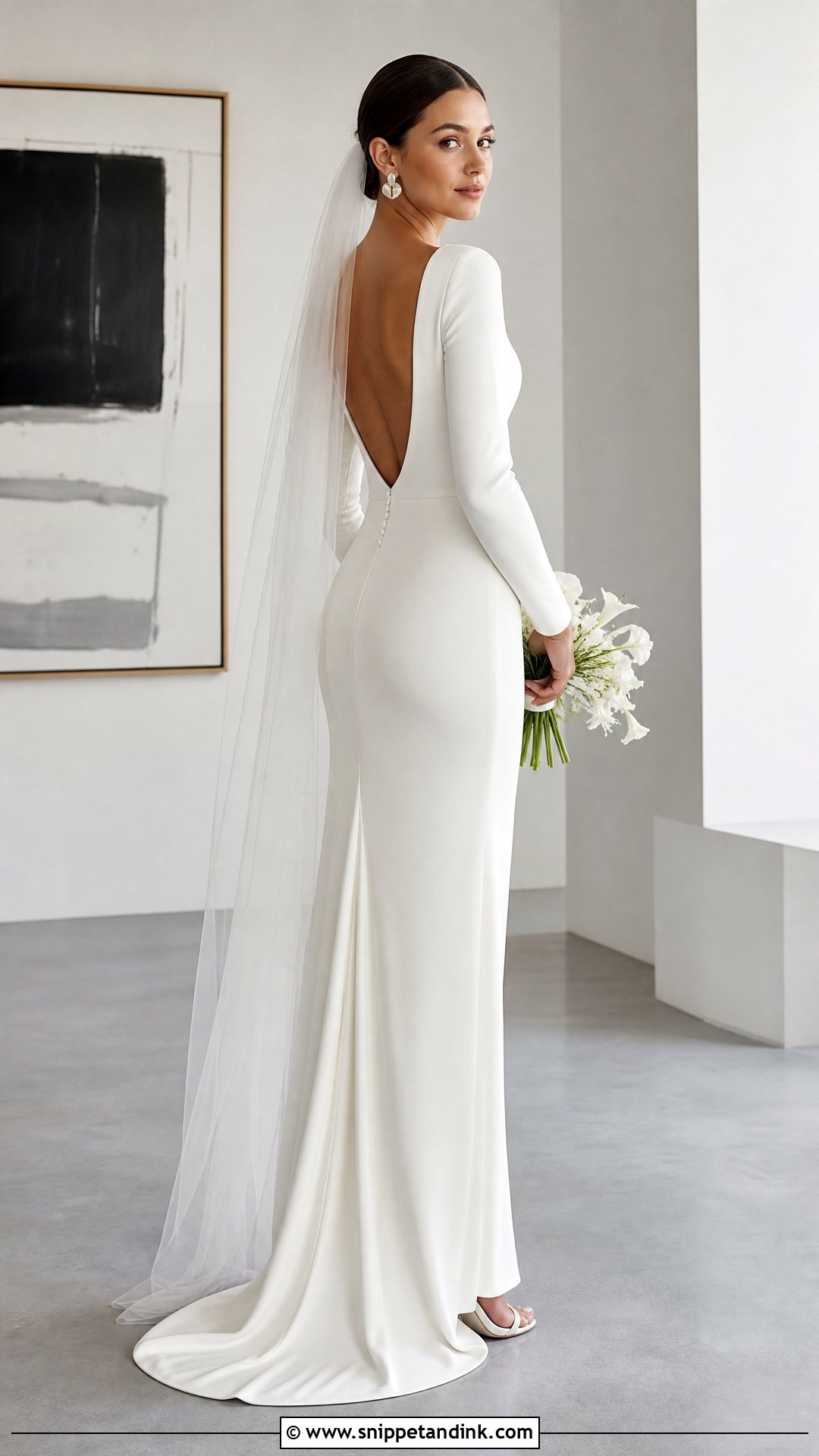
Crepe has a matte surface that skims the body, so a long-sleeved crepe sheath or slim mermaid looks modern without trying. It’s also comfortable; crepe has a little natural stretch and moves well from ceremony to dance floor. The catch is that it shows lines from underwear and seams. For subtle detail, I’d look at a low back, covered buttons down the sleeve, or a soft train rather than adding jewelry.
4. Long Sleeved A Line Wedding Dress
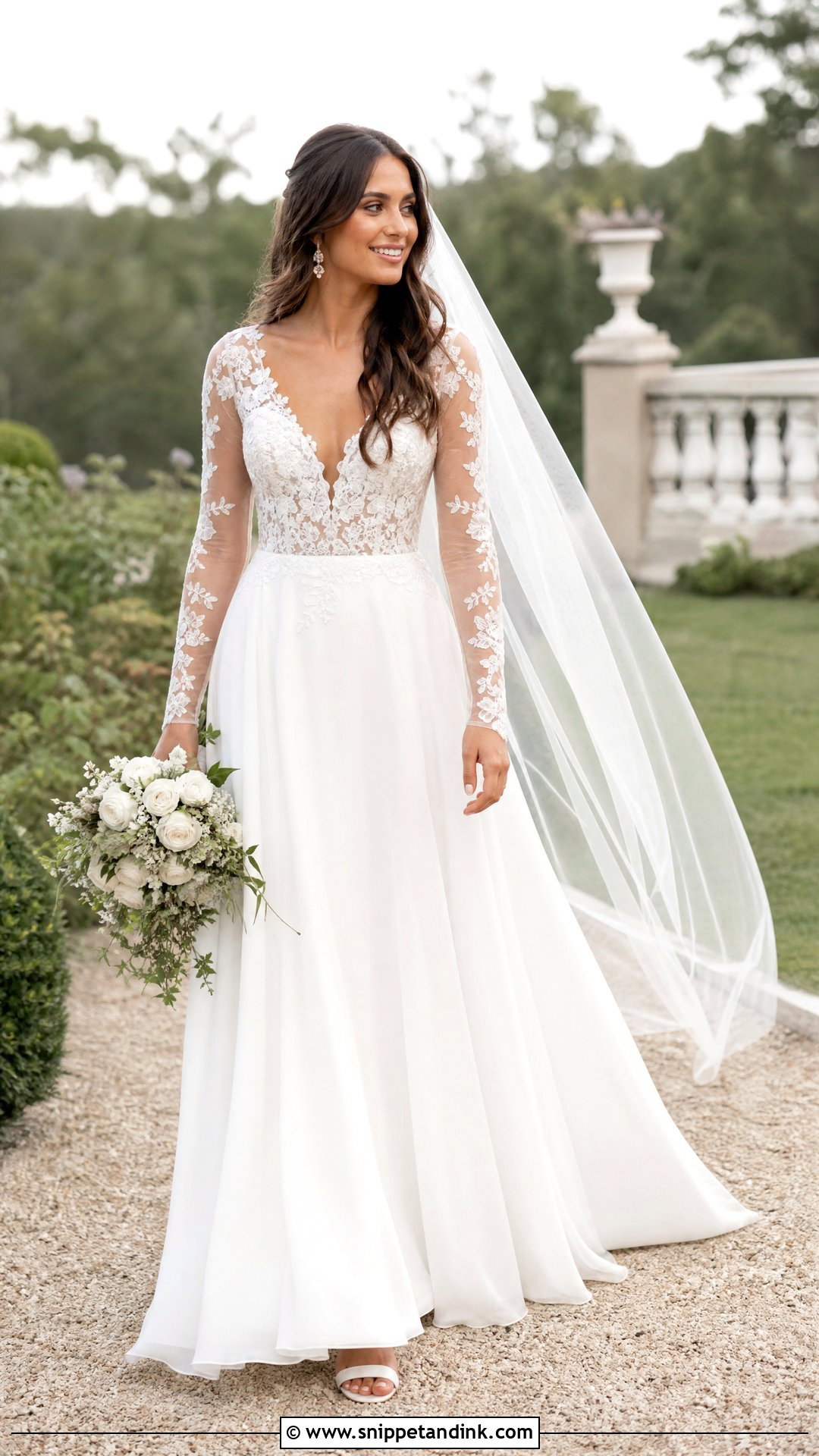
A-line is the kindest silhouette to pair with sleeves, because the skirt doesn’t compete with the arms for attention. The bodice defines the waist, then the skirt falls away from the hips. Lace, chiffon or tulle all work. Block heels and a waist-length veil suit garden and estate venues. If your arms are fuller at the top, a slightly looser sleeve above the elbow keeps the line balanced with the skirt.
5. Long Sleeved Ball Gown Wedding Dress
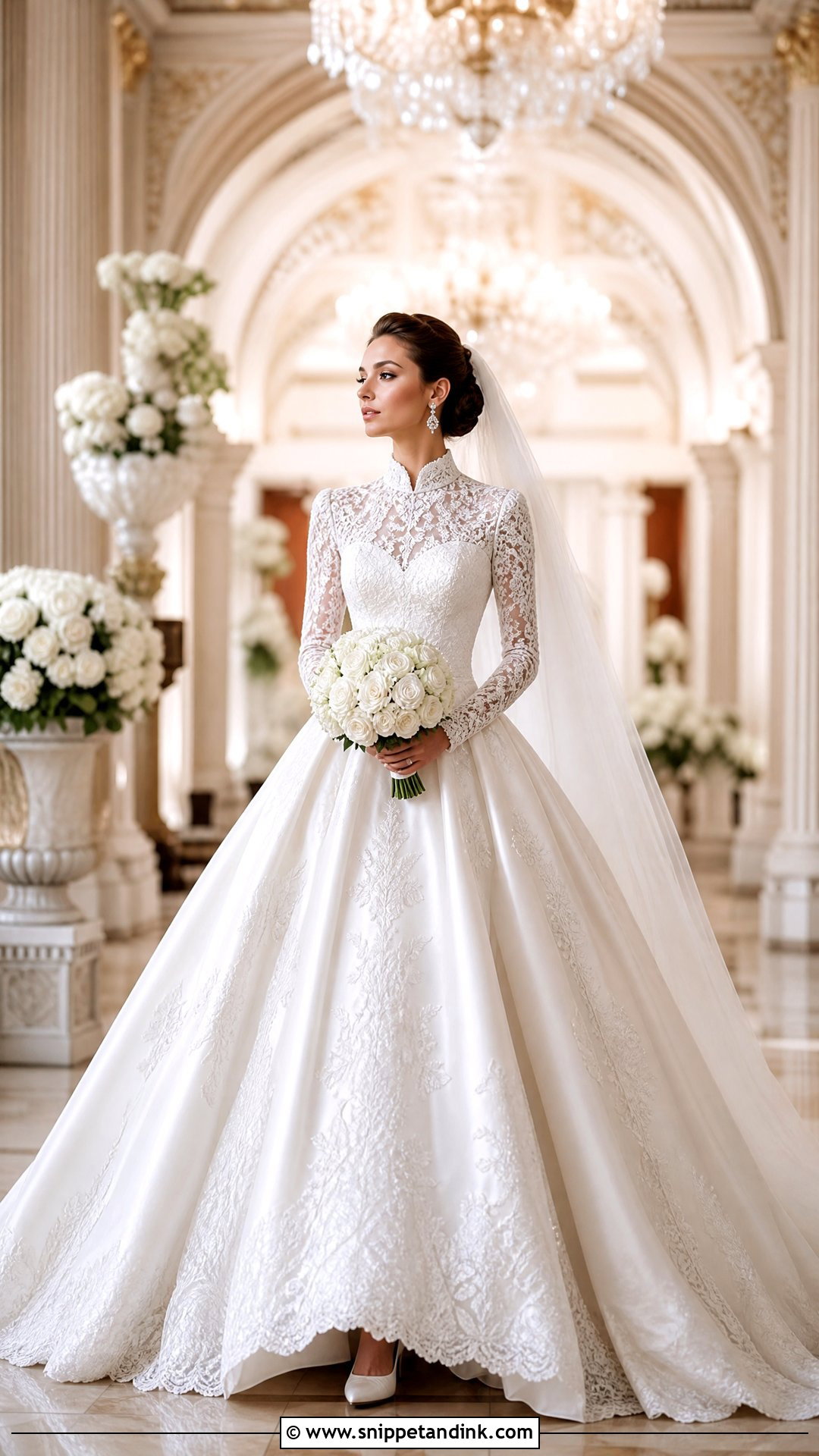
A fitted bodice and voluminous skirt with long sleeves is the full ceremonial look, and it’s very good in winter or a grand venue. Lace sleeves soften all that volume; satin or mikado sleeves make it regal. With so much going on below the waist, I keep the neckline simple. Mind the bouquet size too, because a big skirt plus long sleeves plus a large bouquet leaves no visible waist at all.
6. Long Sleeved Mermaid Wedding Dress
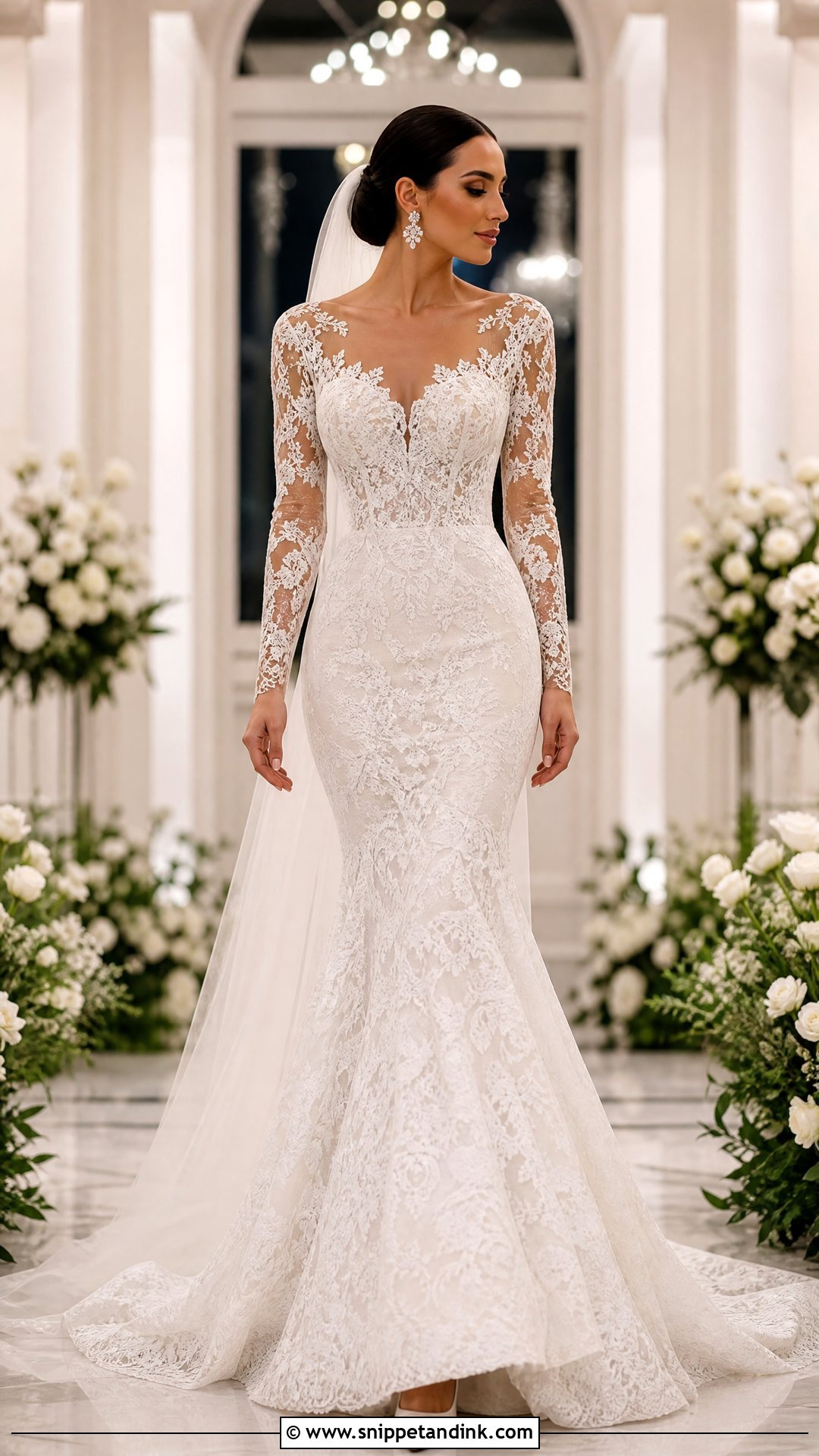
A mermaid shape with sleeves covers the arms while sculpting everything else, which looks very glamorous for evening. Lace, crepe or beading all suit it. Because the skirt is tight to the knee, I check sitting and dancing first, and the sleeves second: fitted sleeves plus a fitted skirt can leave you feeling held in from both directions. A low bun lengthens the neck and balances the shape.
7. Long Sleeved High Neck Wedding Dress
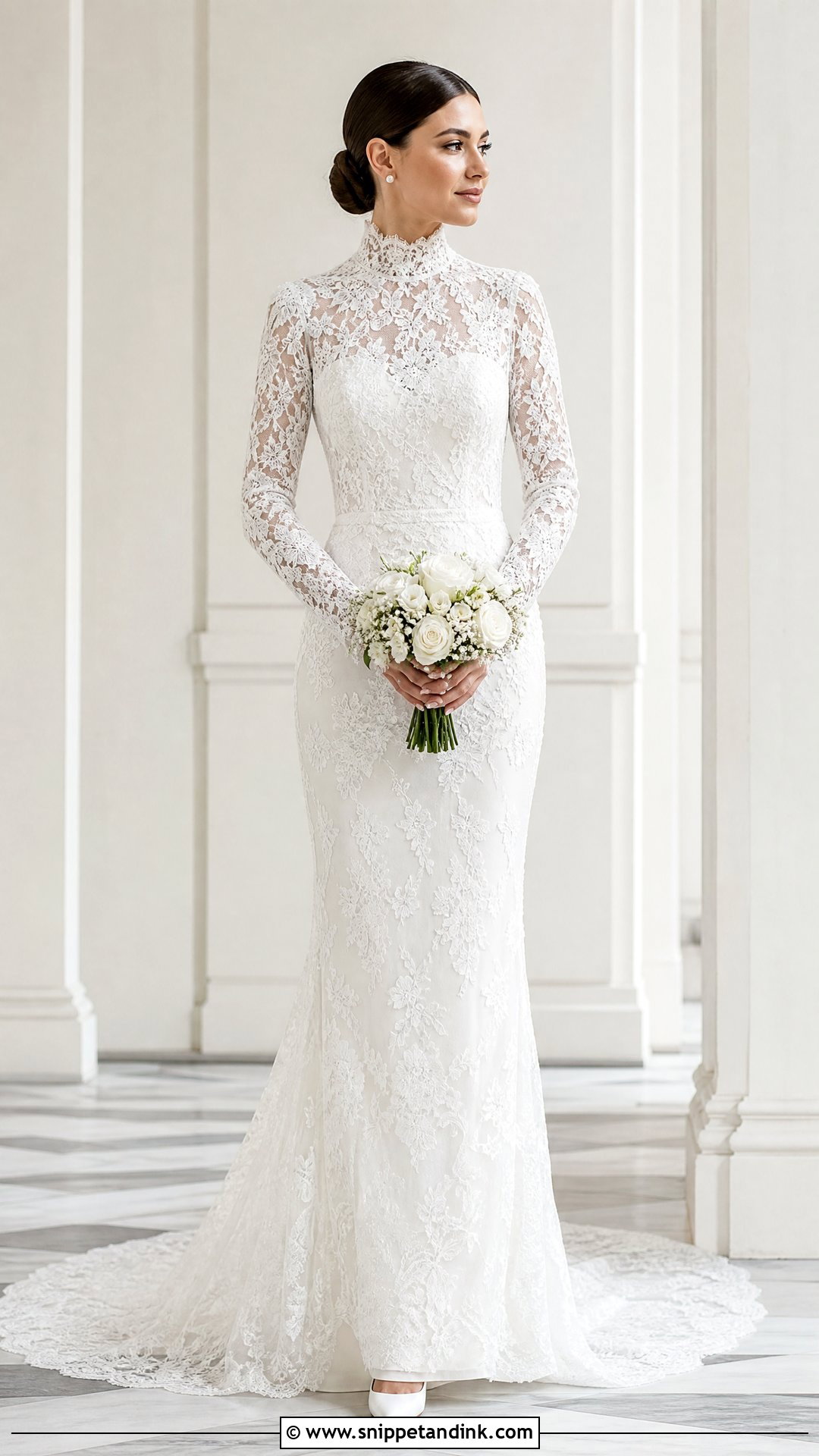
A high neck with long sleeves is the most covered look here, and also one of the most editorial. The neckline draws all attention to the face, so hair and earrings matter more than usual; sleek hair and small drops work best, and I’d skip a necklace entirely. Lace softens it, crepe makes it minimalist. One fitting note: a high neck must sit loose enough to swallow comfortably, which sounds obvious but gets missed when a neckline is pinned too snug.
8. Long Sleeved Off Shoulder Wedding Dress
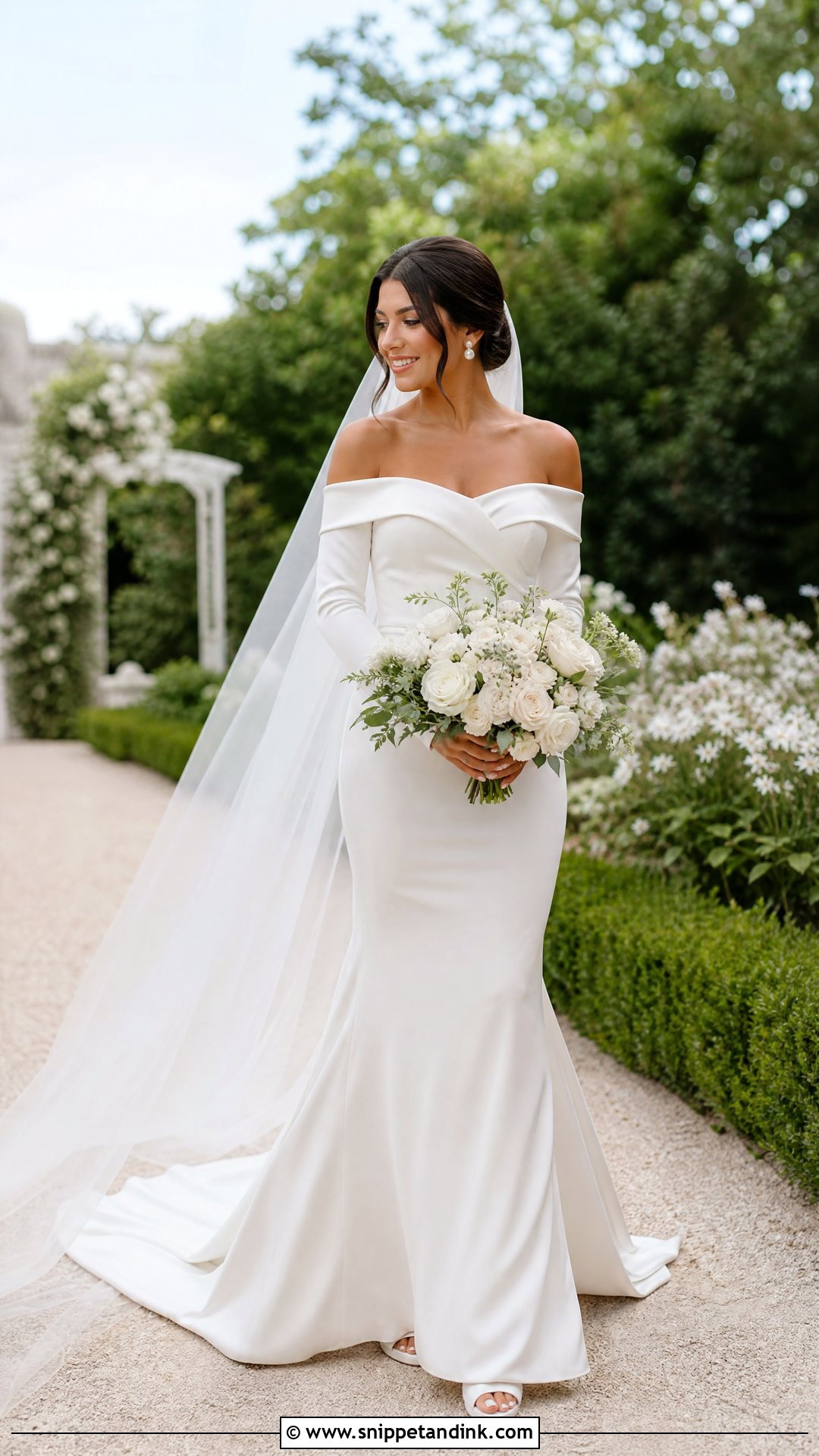
Off-shoulder sleeves show the collarbones while still covering the arms. Lace, satin and draped crepe all suit them. The issue I see most often is movement: the sleeve is attached below the shoulder, so lifting your arms can pull the whole bodice down. At fittings I ask brides to hug me and wave. If the neckline shifts, the fitter can add a hidden elastic or silicone strip inside the edge.
9. Long Sleeved Square Neck Wedding Dress
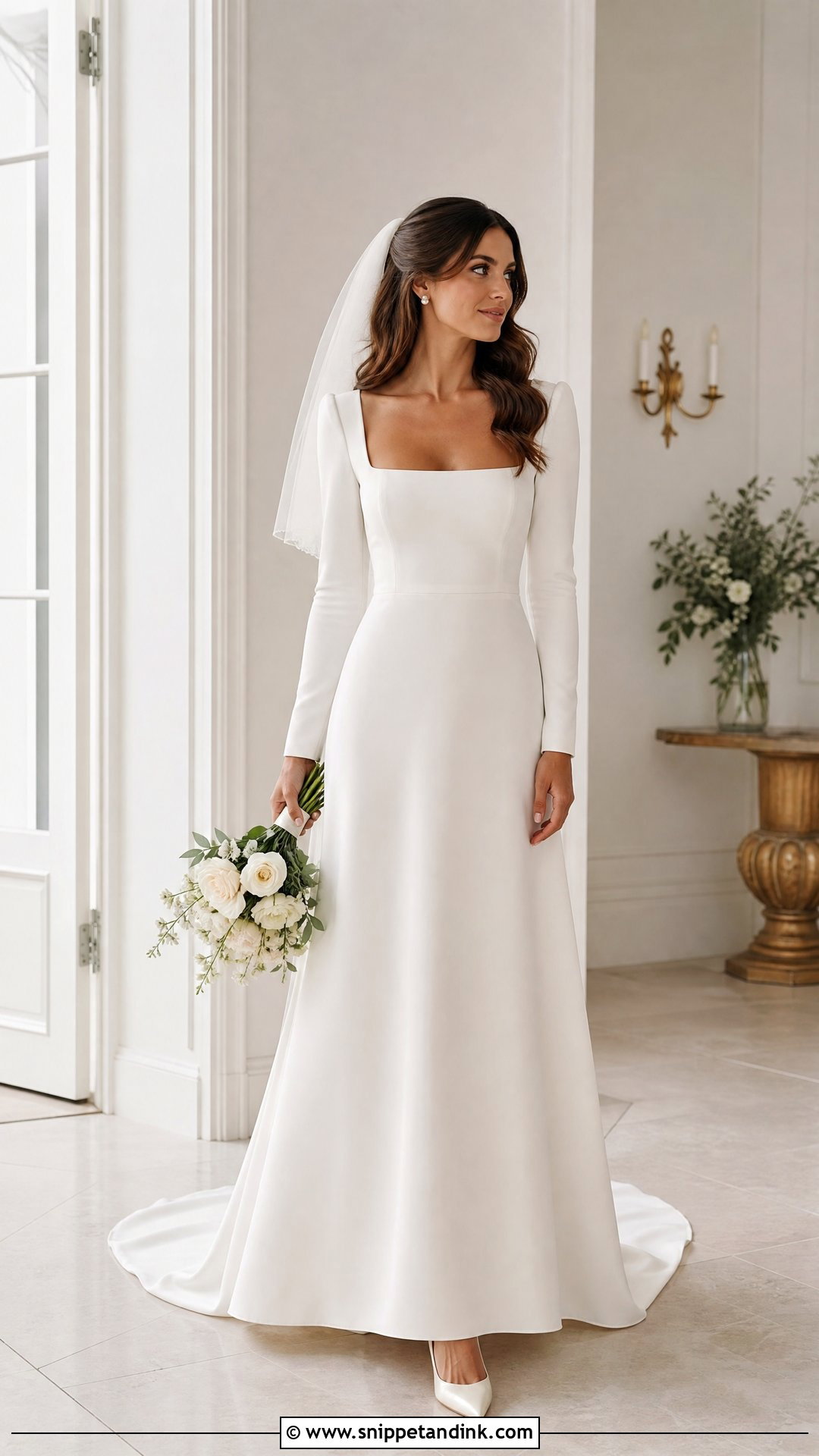
A square neck with long sleeves looks clean and a little vintage. The straight edge frames the chest and shoulders, and it works especially well in crepe, satin or lace with a slim A-line skirt. Keep jewelry minimal, since the neckline is already the focal point. It suits small ceremonies and courthouse weddings as easily as an estate.
10. Long Sleeved V Neck Wedding Dress
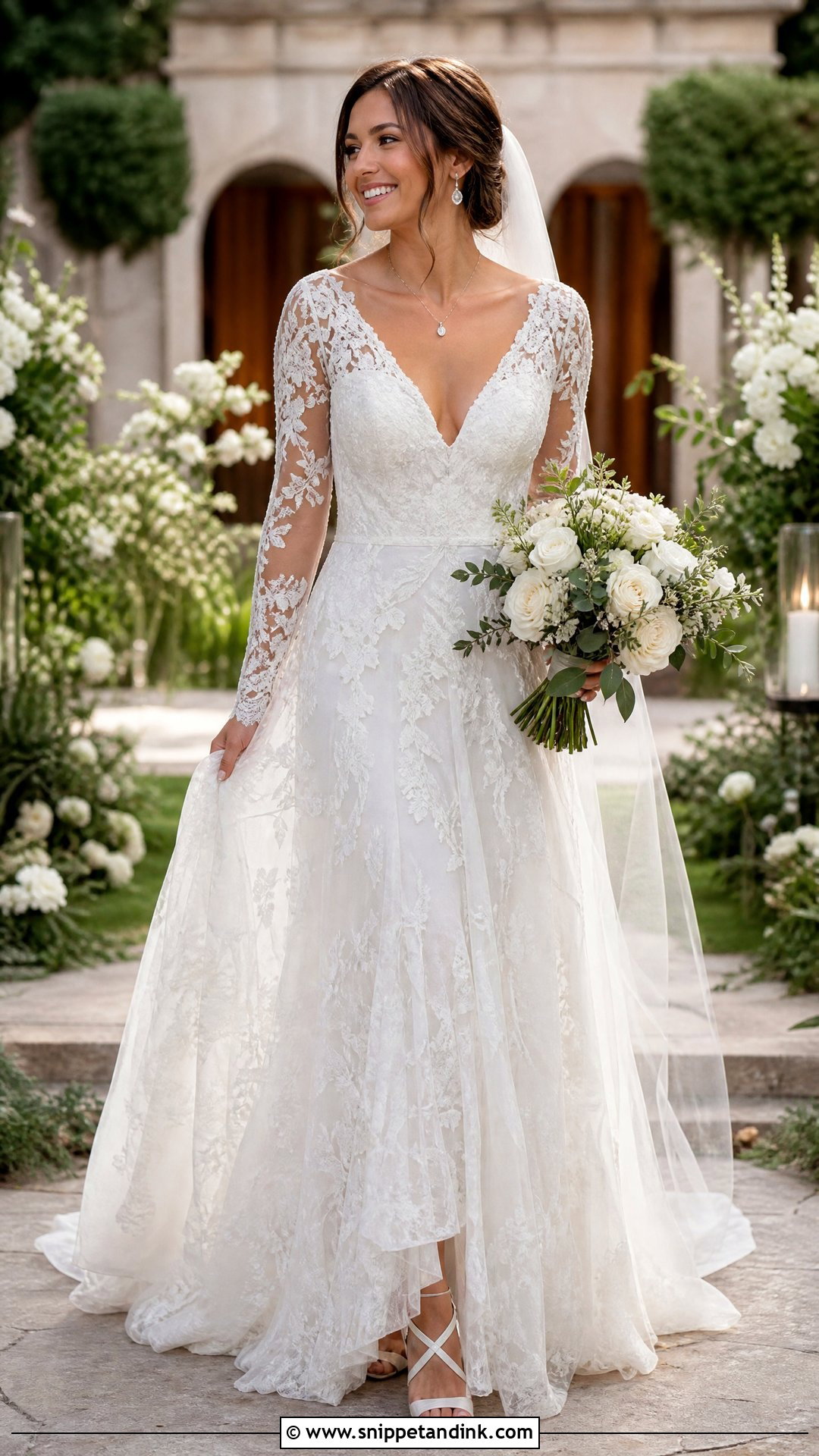
A V neck draws the eye vertically, which lengthens the body and balances the weight of a long sleeve. It works on lace A-lines, crepe sheaths and chiffon. If the V is deep, I want a supportive lining and secure tailoring rather than relying on tape all day. A delicate pendant can sit in the V when the gown is plain. The fabric decides whether it reads relaxed or formal.
11. Long Sleeved Illusion Wedding Dress
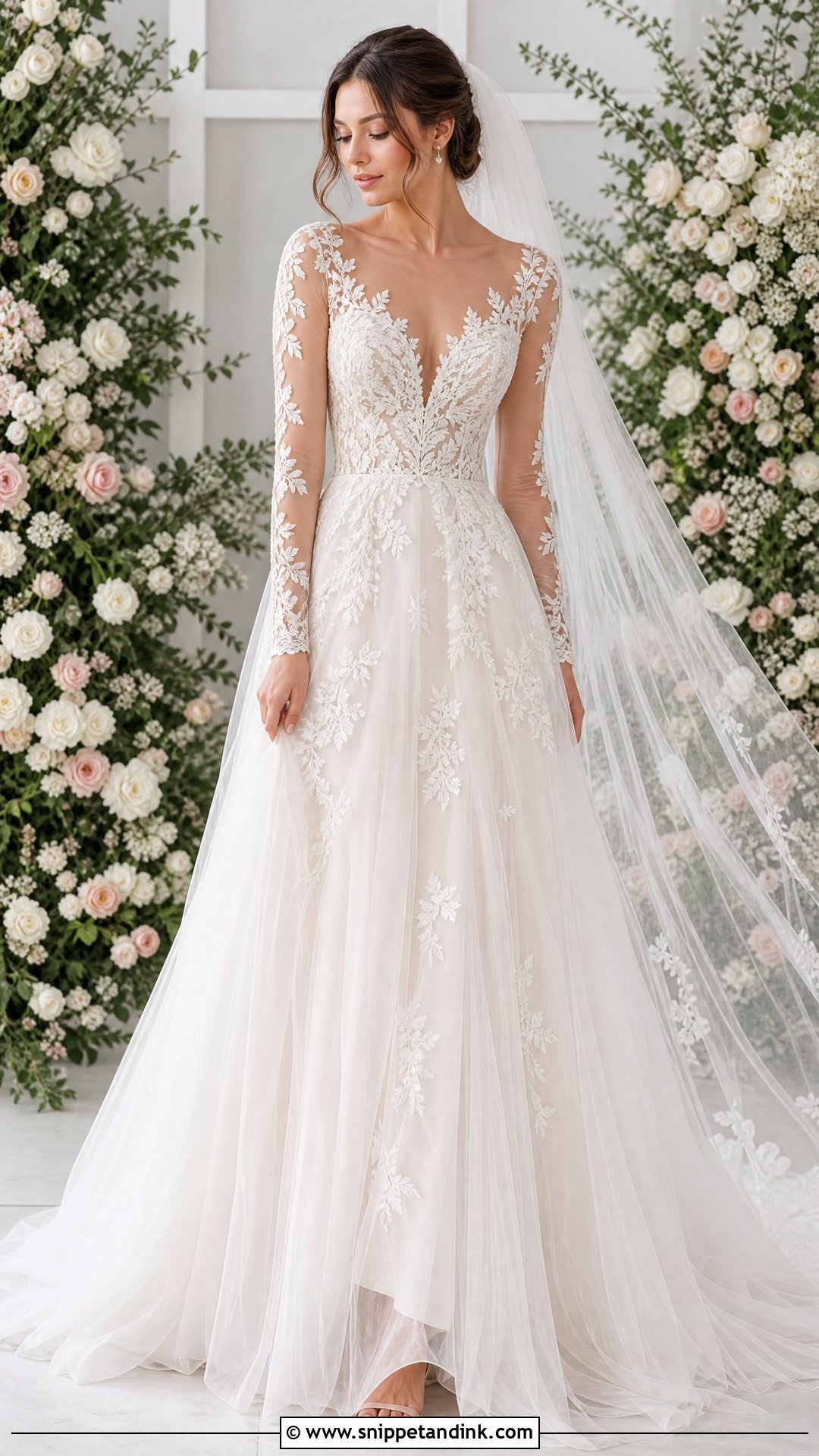
Illusion sleeves are sheer mesh with lace appliqués, so the lace looks as if it’s floating on the skin. They give coverage that stays light enough for spring and summer. Fit matters a lot: illusion mesh shows any pulling at the shoulder or wrist as a ripple. I also hold the mesh against the bride’s arm in daylight; if the shade is wrong for her skin, it looks like a grey sleeve rather than nothing at all.
12. Long Sleeved Boho Wedding Dress
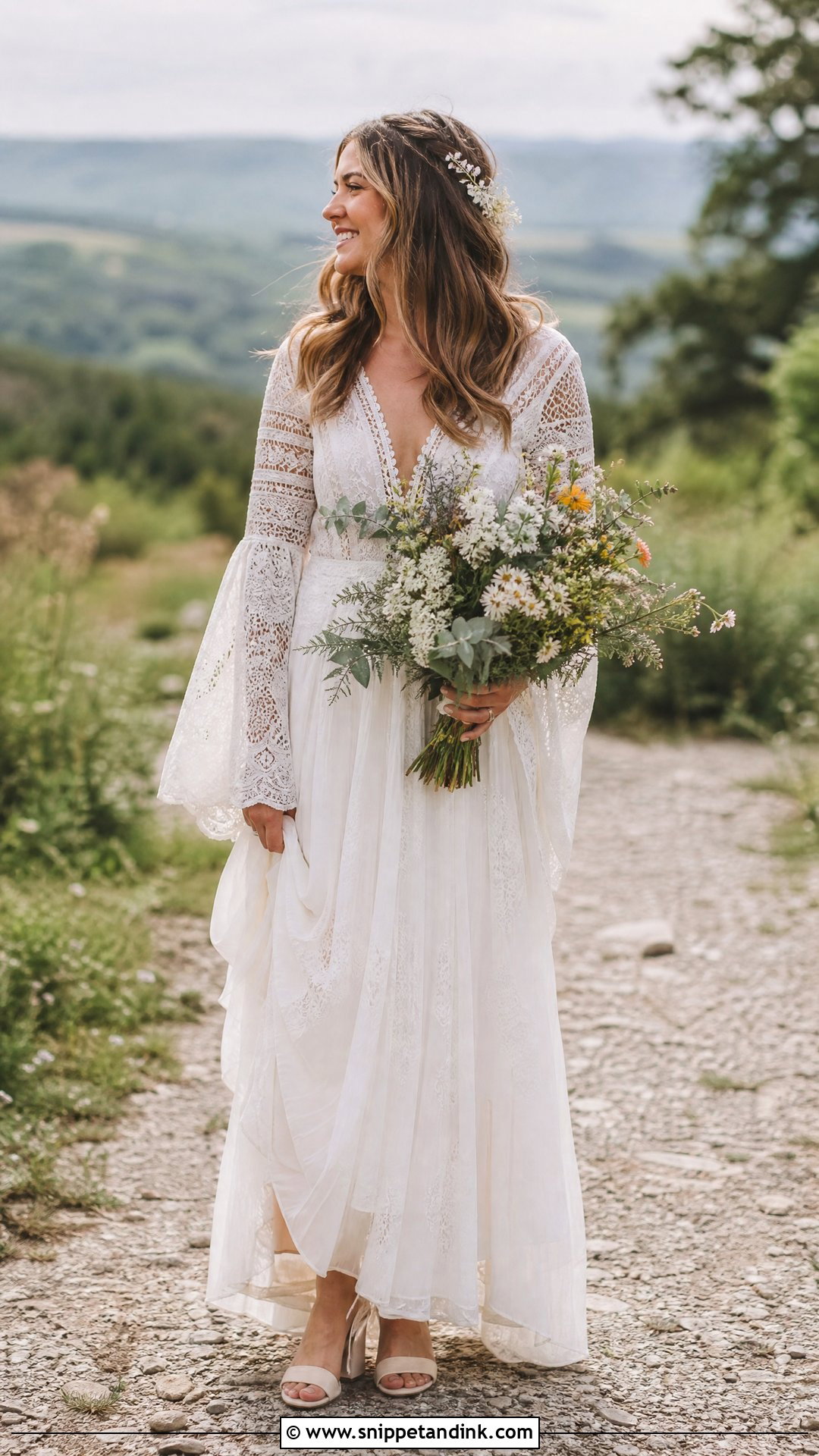
A boho long-sleeved dress needs to move. Look for soft lace, a flowing skirt, bell sleeves, crochet-inspired details or a gentle V neckline. Bell sleeves are glorious in photos but they drag through food and catch on chair backs, so I’d keep them wrist length rather than extra long. Loose waves and a wildflower bouquet suit outdoor, desert or rustic settings.
13. Long Sleeved Vintage Wedding Dress
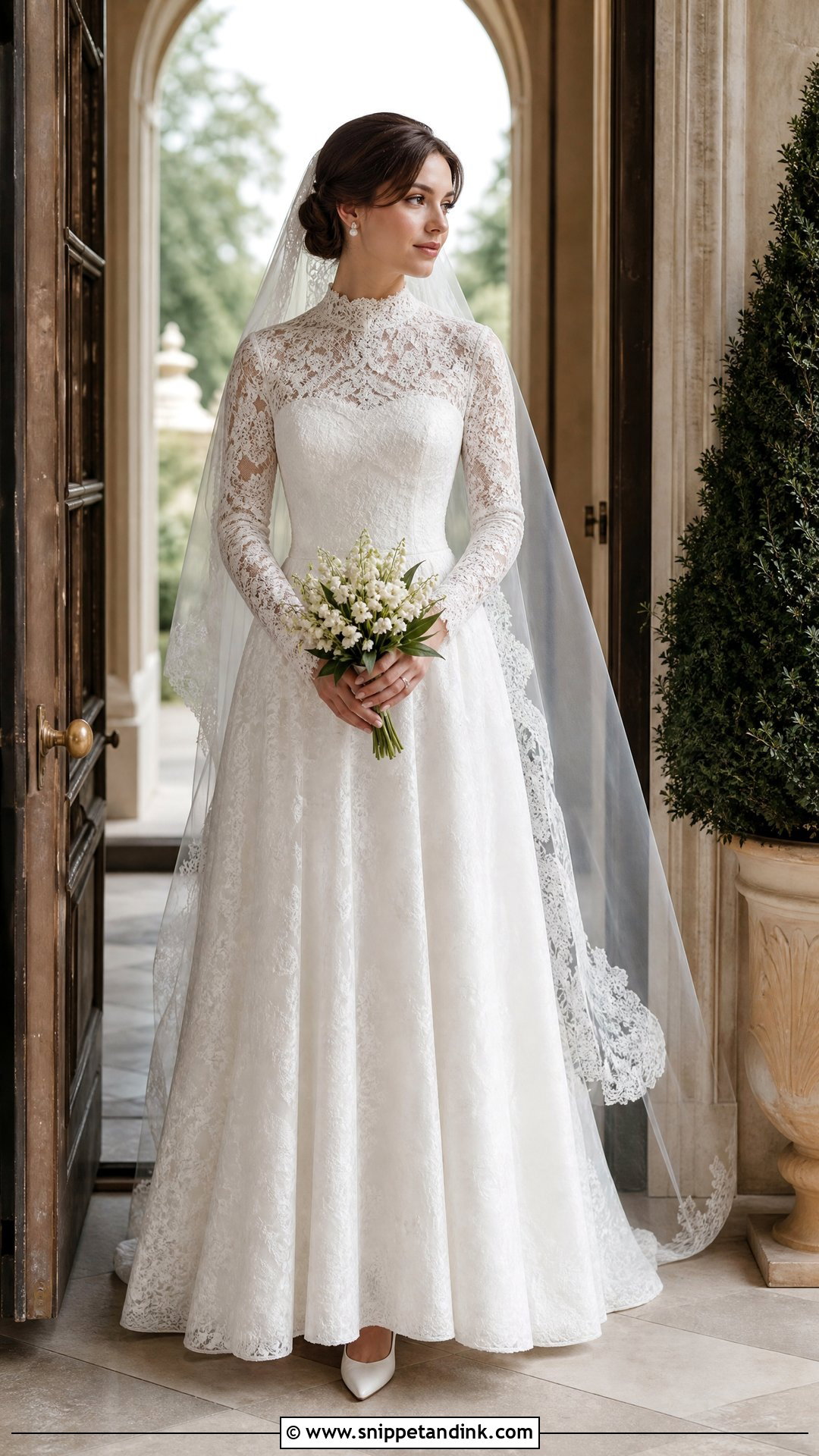
Vintage long sleeves usually mean a high neck, covered buttons, lace sleeves, a basque waist or soft satin. To keep it from feeling themed, I pick one or two of those elements, not all of them. A Juliet cap veil or a short veil, pearls and classic pumps finish it. Historic venues suit this look best. Tailoring keeps it fresh; a slightly loose vintage dress looks borrowed.
14. Long Sleeved Modest Wedding Dress
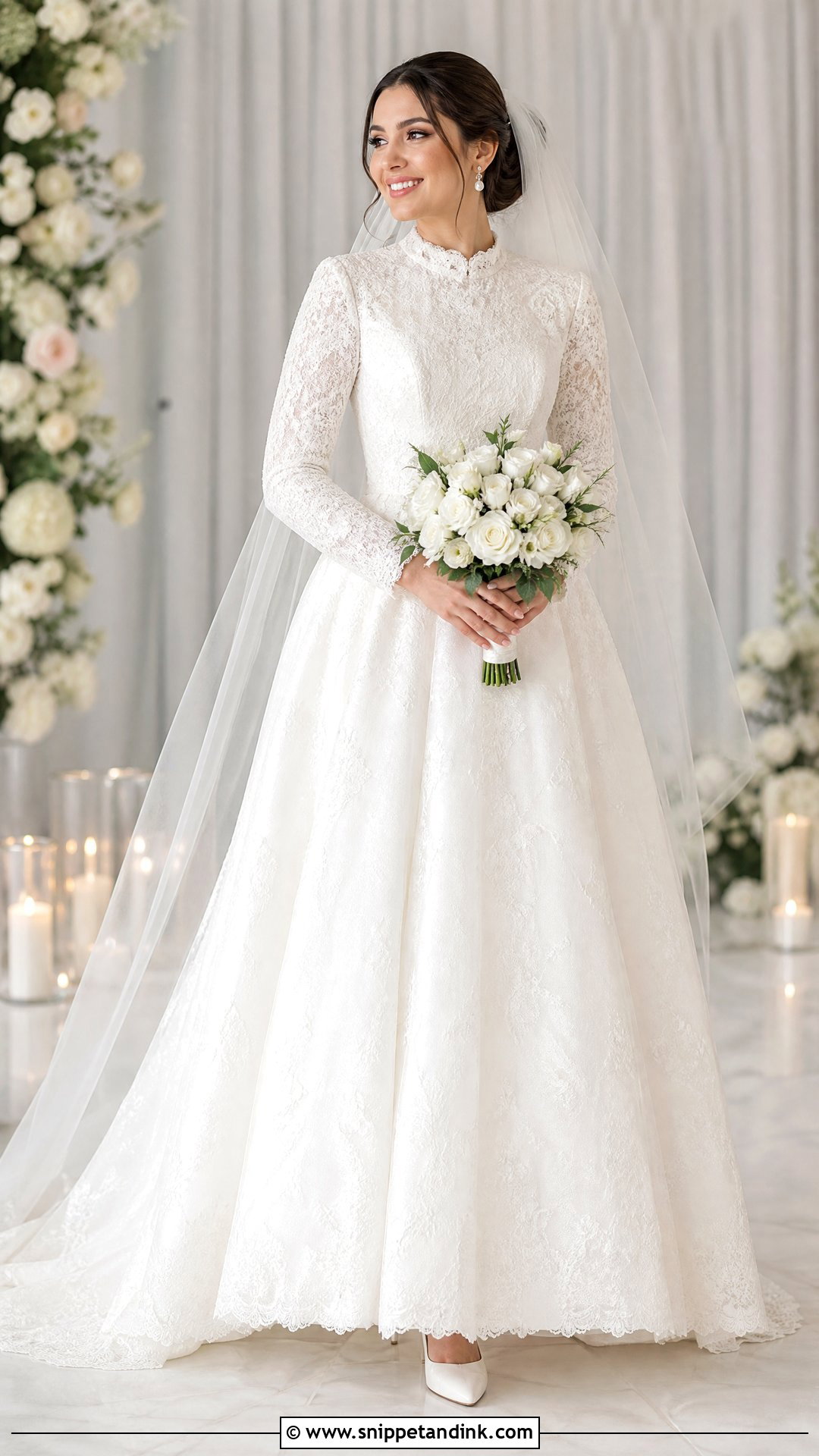
A long-sleeved modest wedding dress doesn’t need to be plain. A higher neckline, lined sleeves and careful tailoring give shape without revealing, and details like covered buttons, lace texture or a train make it special. If you need full coverage, check the sleeve lining and back design closely. Sheer sleeves can look fully covered in the shop and much more transparent under flash photography.


15. Long Sleeved Winter Wedding Dress
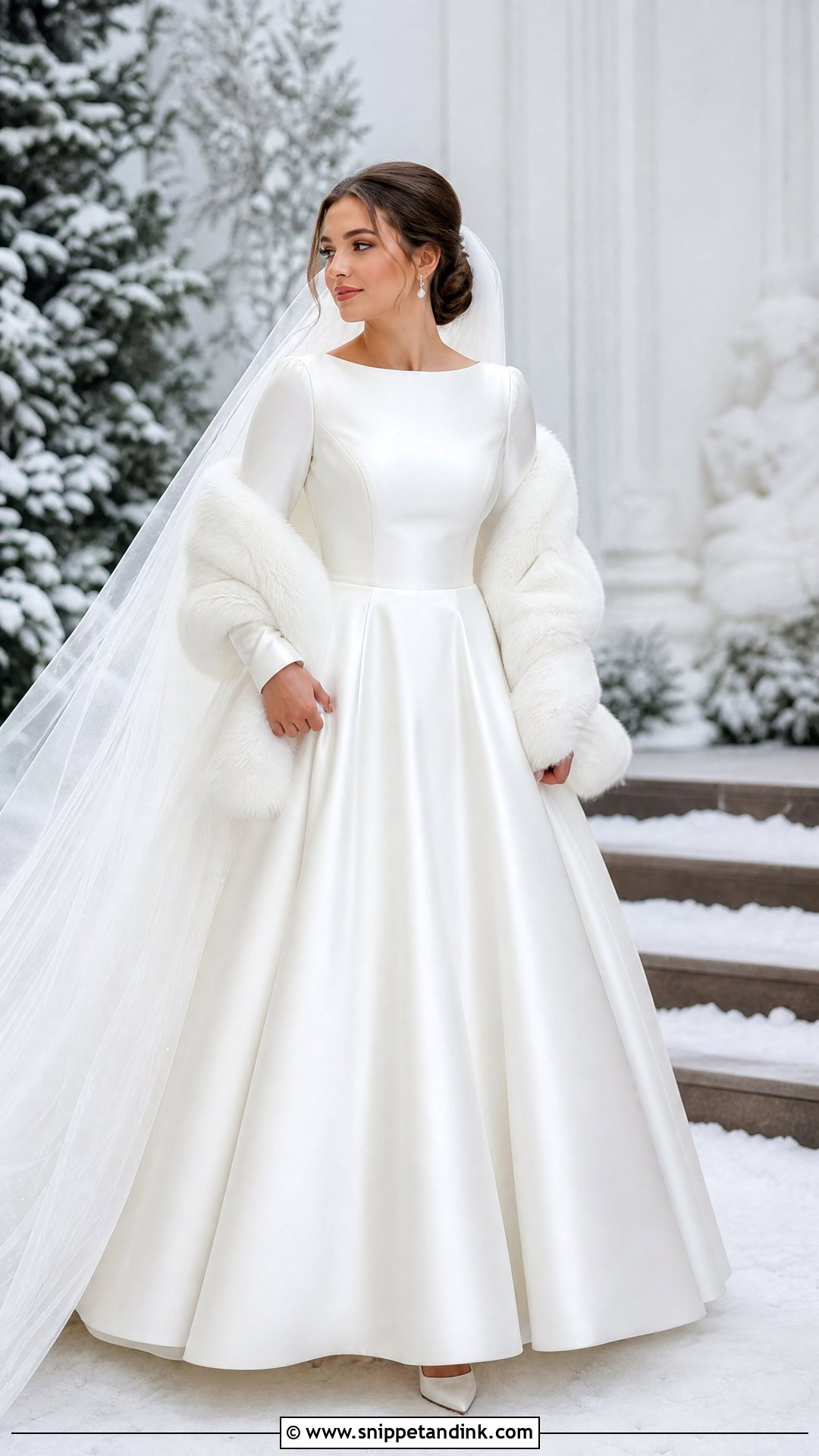
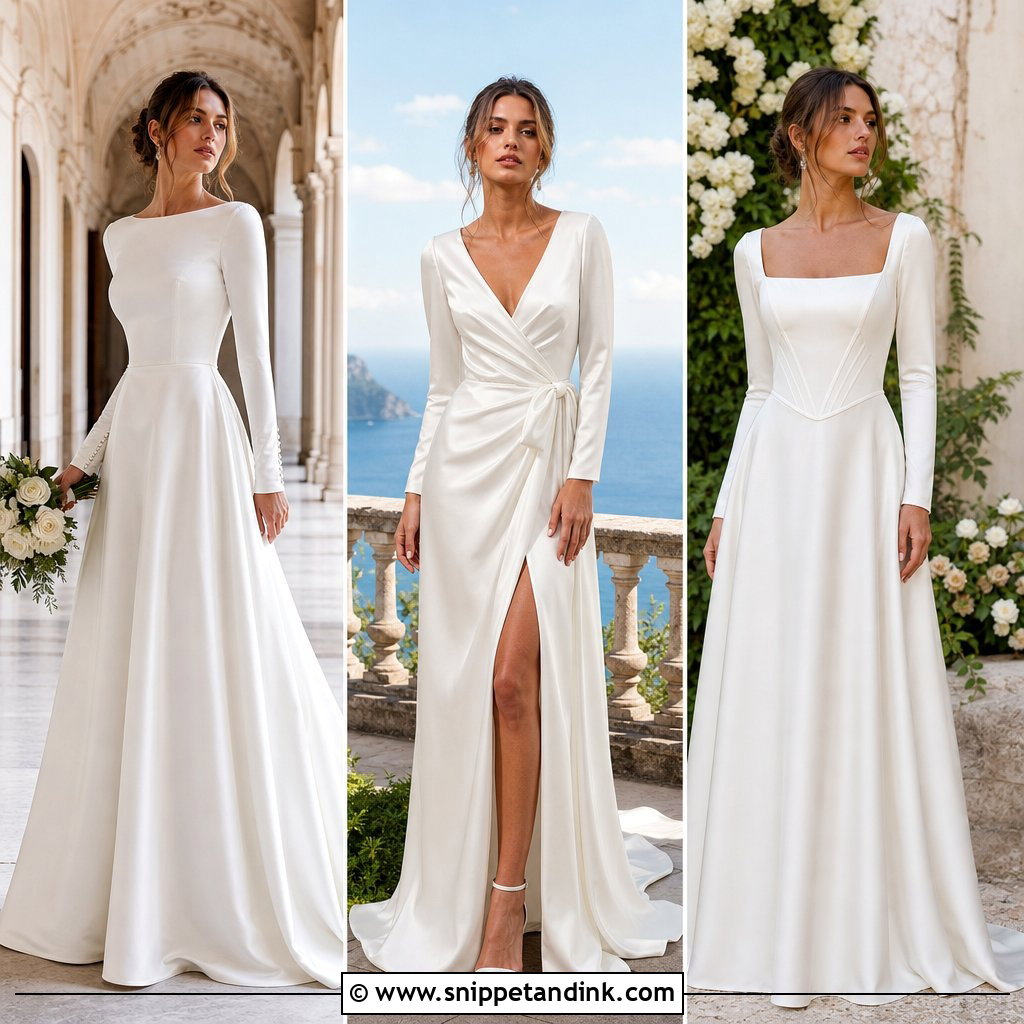
A long sleeved winter wedding dress in satin, mikado, crepe or layered lace adds warmth and structure. A full skirt and higher neckline make it cozy but polished. For outdoor portraits, add a faux fur wrap or a tailored bridal coat. Thin illusion sleeves look delicate but give almost no warmth outside, so in real cold I’d choose a lined sleeve.
16. Long Sleeved Summer Wedding Dress
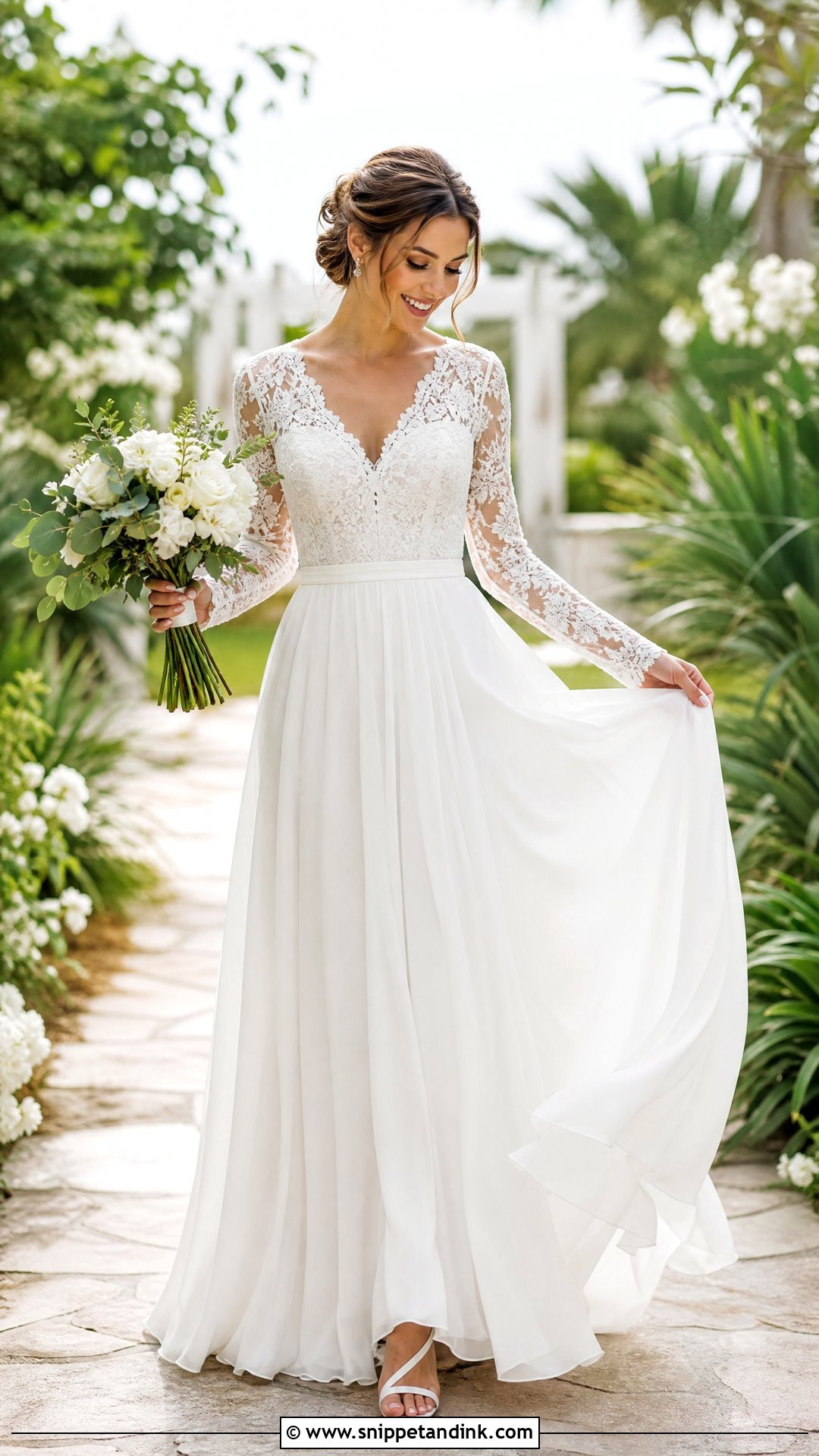
Long sleeves in summer are absolutely possible, as long as the fabric breathes. Sheer lace, soft tulle, chiffon or illusion are the right choices; heavy satin and thick linings are not. An open back or a soft V keeps air moving. I test sleeves in summer by having the bride wear the dress for twenty minutes in a warm fitting room, because heat builds up at the underarm faster than anywhere else.
17. Long Sleeved Beach Wedding Dress
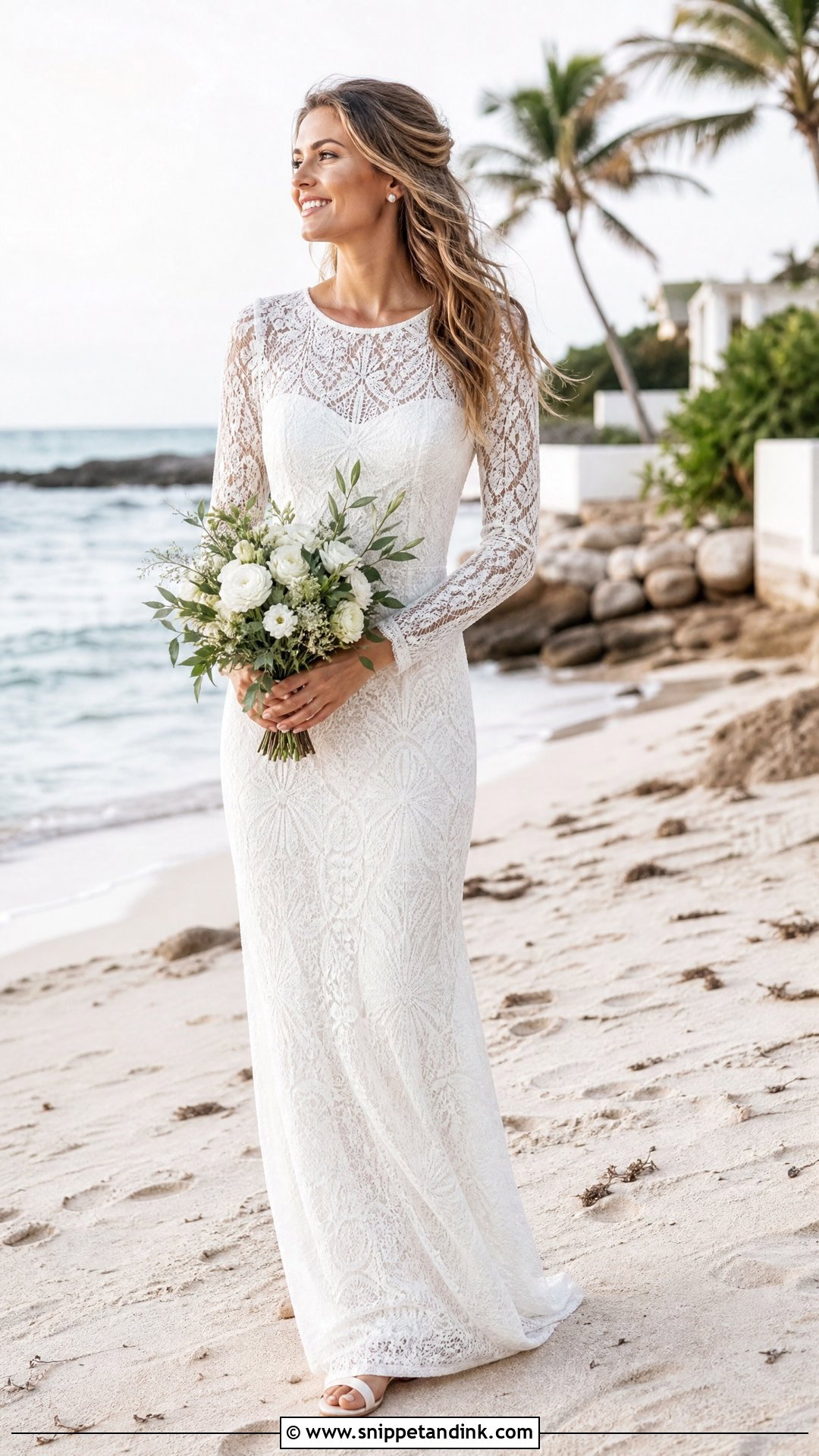
At the beach, sleeves can actually help, since they protect the arms from the sun. Soft lace, chiffon and airy tulle suit the setting; beading and stiff satin do not. A relaxed A-line or sheath moves with the breeze and doesn’t drag much. Keep the train short or skip it on sand, and wear flat sandals. Loose sleeves can billow in wind, which looks romantic in photos but less so during the vows.
18. Long Sleeved Courthouse Wedding Dress
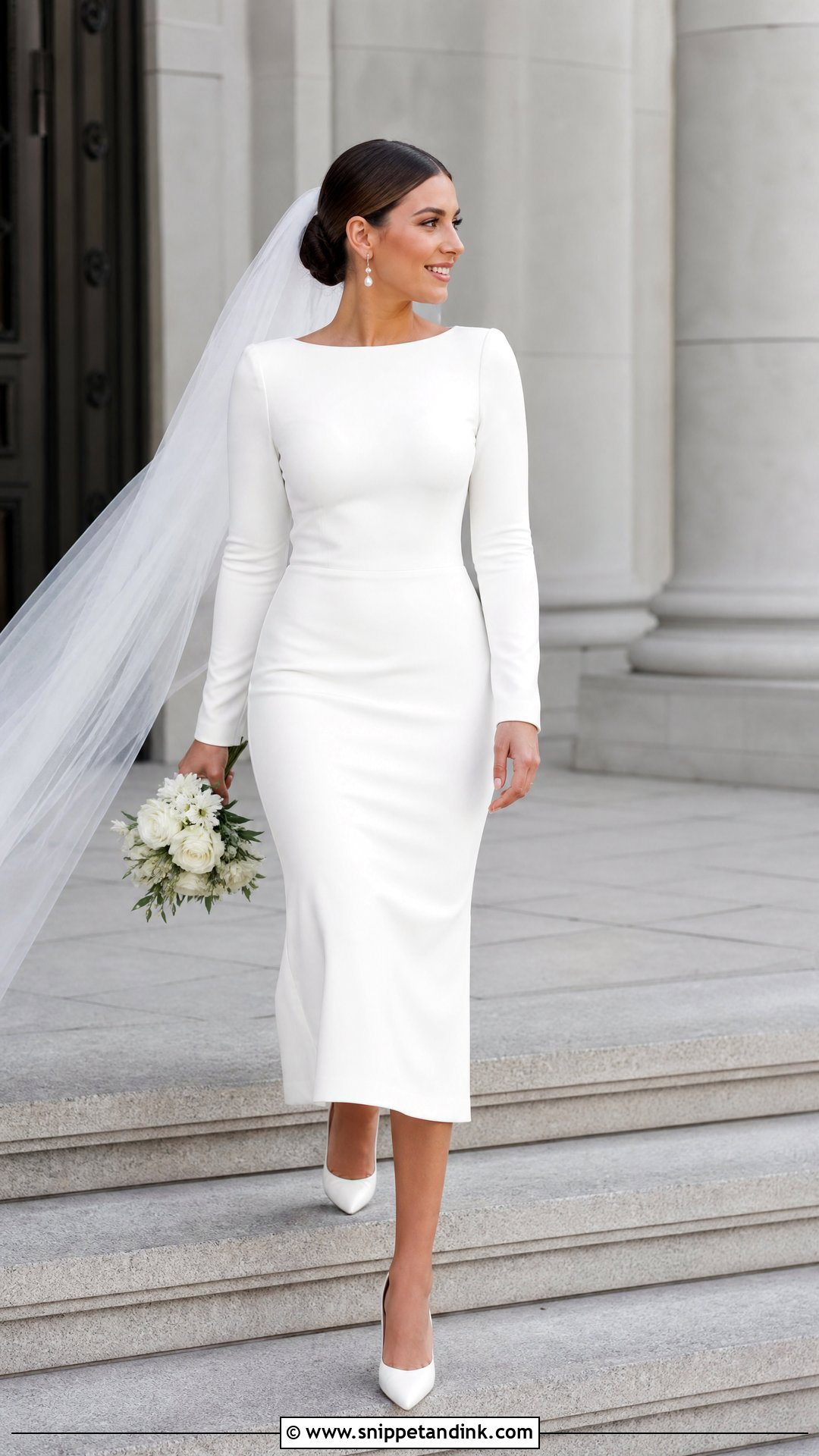
A crepe mini, midi or slim column with long sleeves looks chic for a civil ceremony without feeling like a full ballgown. Pair it with pointed pumps, a small bouquet and a sleek veil or hair bow. Covered buttons, a square neck or lace cuffs make it more bridal. It suits city hall ceremonies, elopements and small weddings. Keep the silhouette clean so it looks deliberate rather than like office wear.
19. Long Sleeved Minimalist Wedding Dress
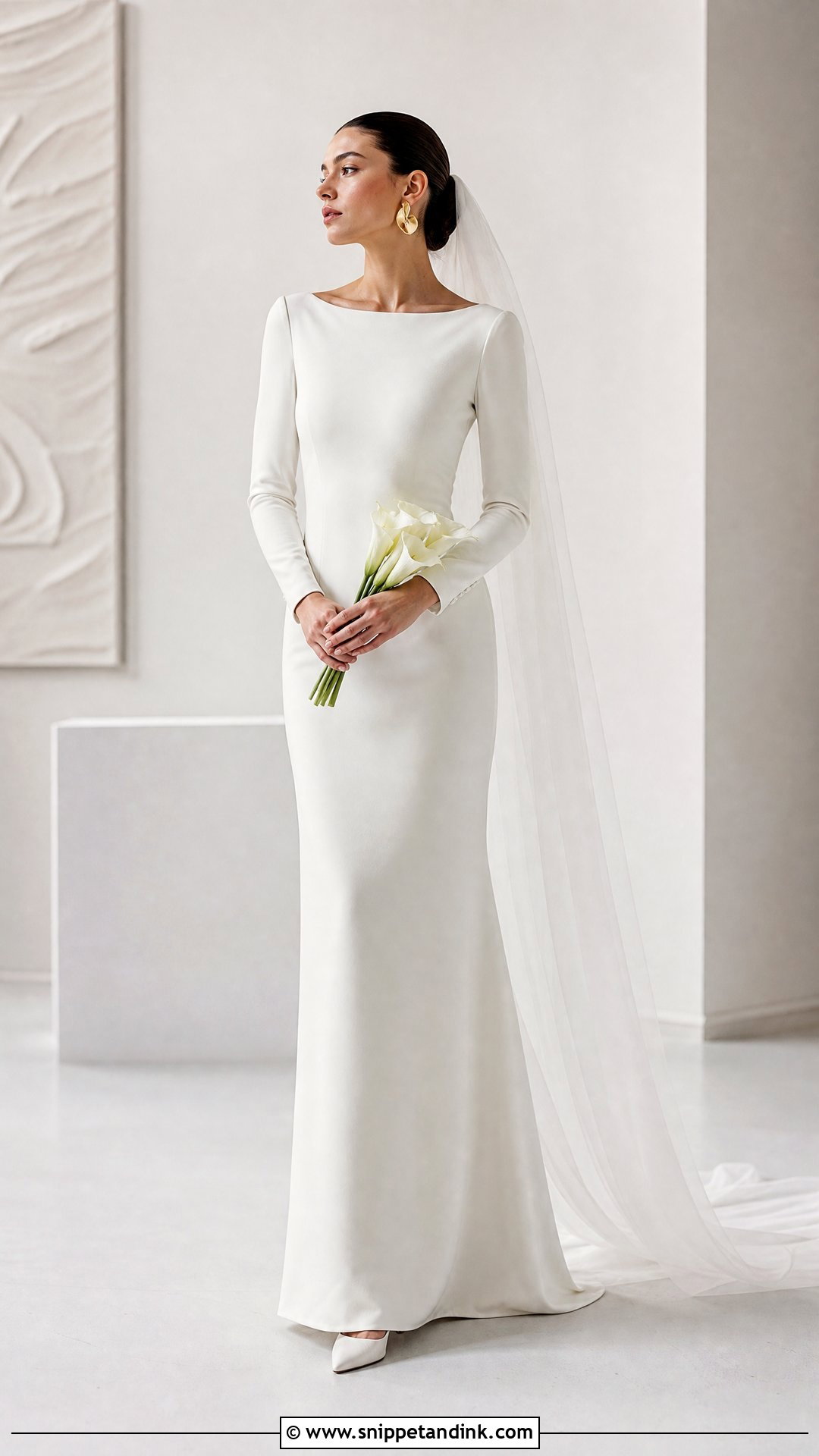
Minimalist sleeves depend entirely on fabric and fit. Crepe, satin or mikado with minimal seams, cut as a column, sheath or soft A-line, keeps the focus on proportion. Since there’s nothing to distract the eye, I check the sleeve length against the wrist bone and that both sleeves hang identically. Sculptural earrings and a sleek bun suit modern venues and rooftops.
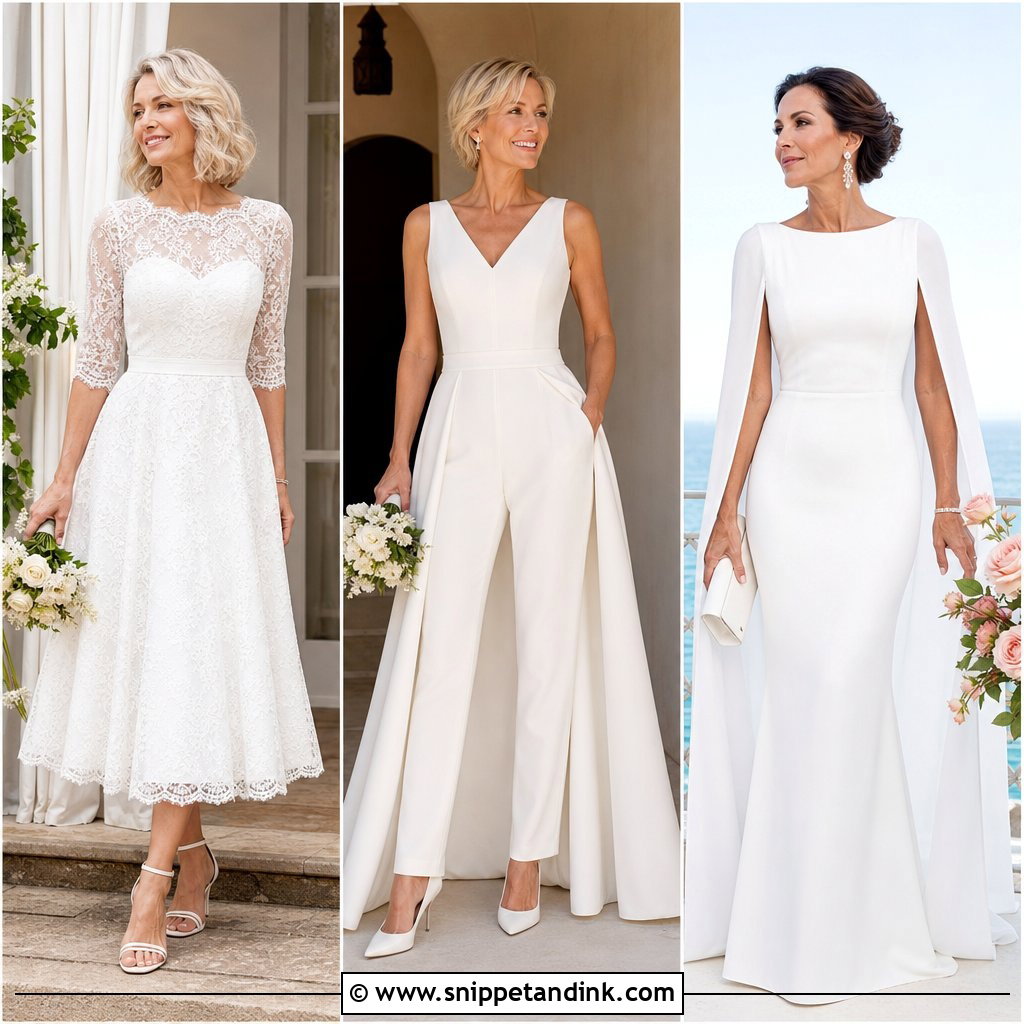
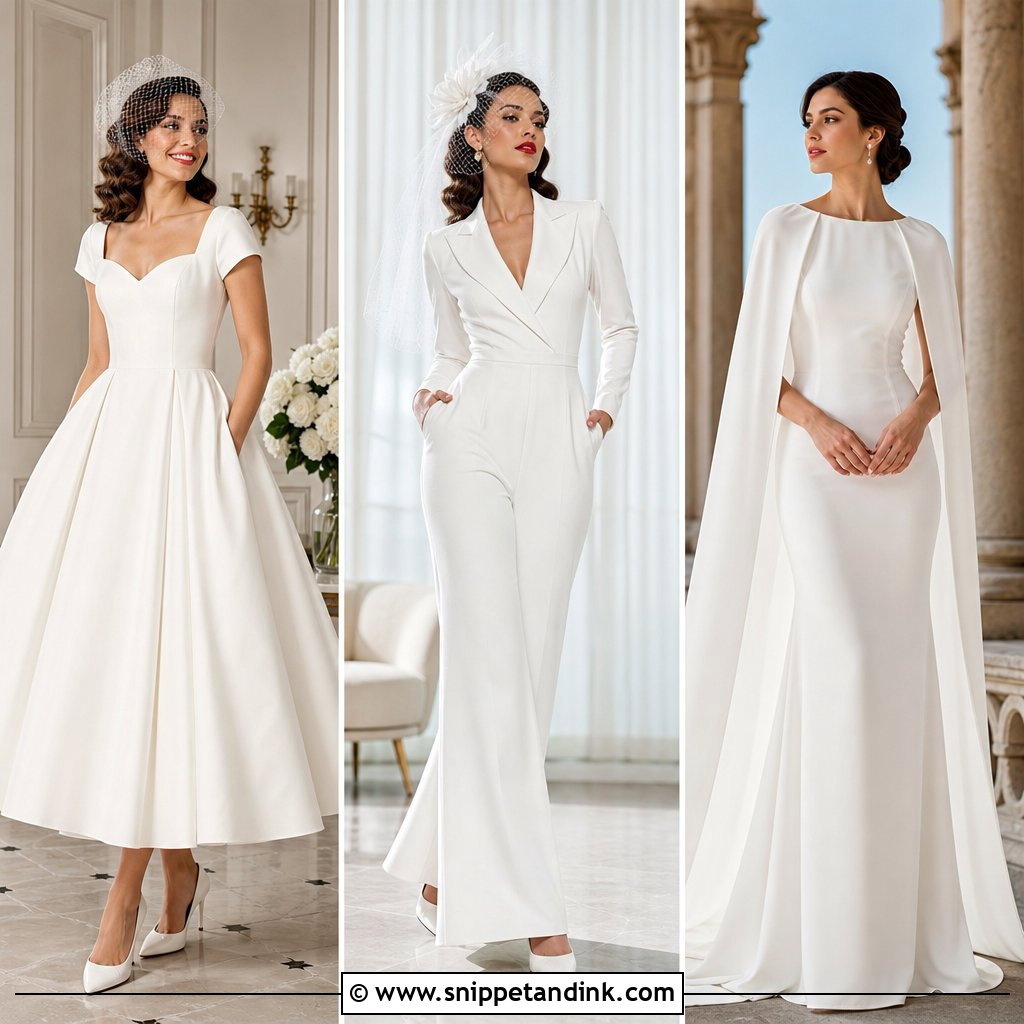



20. Long Sleeved Beaded Wedding Dress
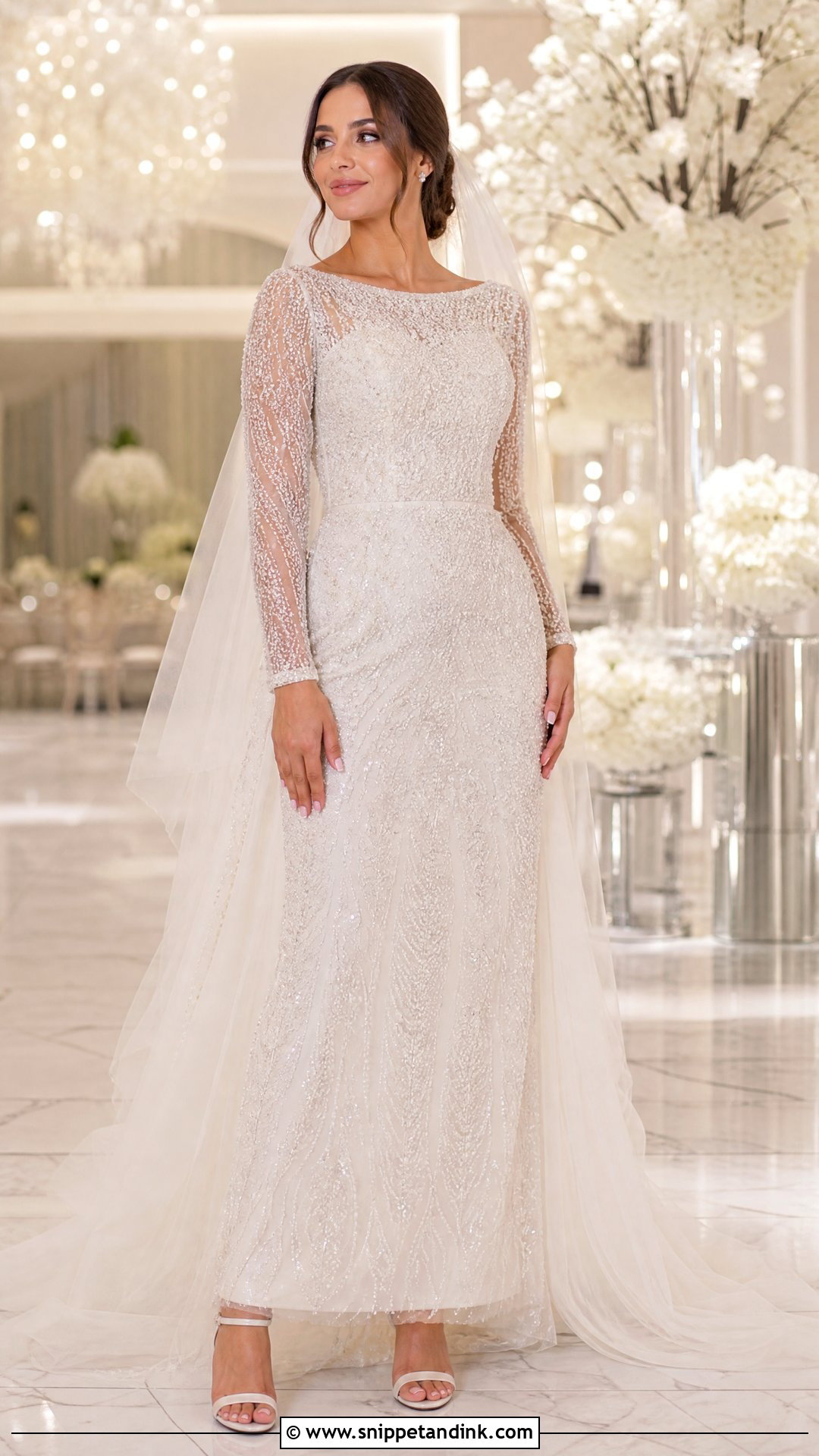
Beaded sleeves catch light every time you move your arms, which is a lot during a wedding: vows, rings, hugs, toasts. Delicate beading on sheer sleeves feels refined; allover beading is dramatic. Beading adds real weight to a sleeve, and heavy sleeves drag at the shoulder seam by evening. I check that the beads on the inner arm are flat or absent, since raised beads there rub against the bodice.
21. Long Sleeved Floral Wedding Dress
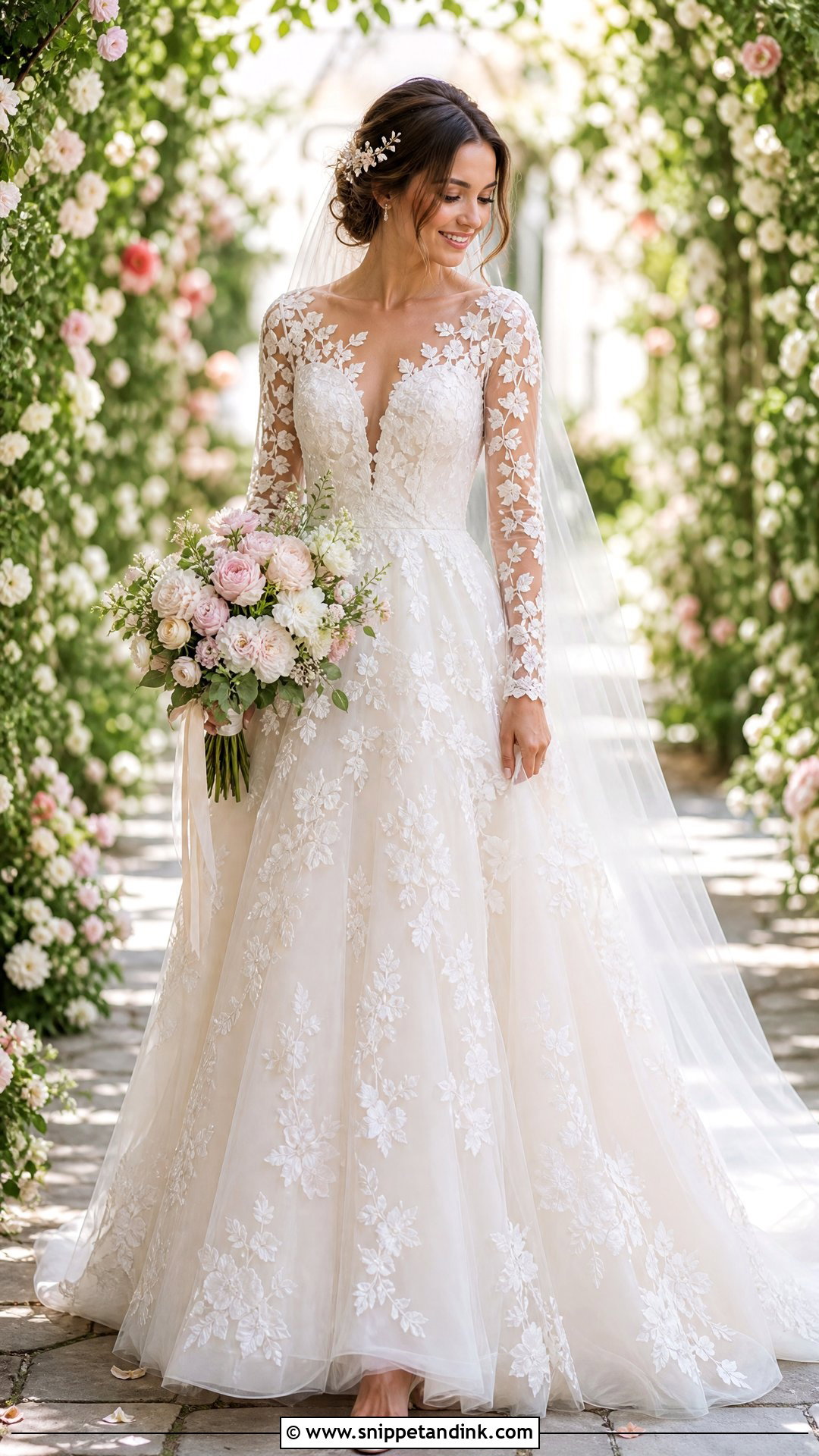
Floral lace, embroidered blooms or 3D appliqués on long sleeves feel fresh and a bit whimsical. They suit an A-line, sheer sleeves and a soft neckline, especially for garden ceremonies. If the florals are bold, keep everything else simple. If they’re subtle, a veil with a soft edge can echo them. A bouquet that picks up the same texture ties the whole look together.
22. Long Sleeved Tulle Wedding Dress
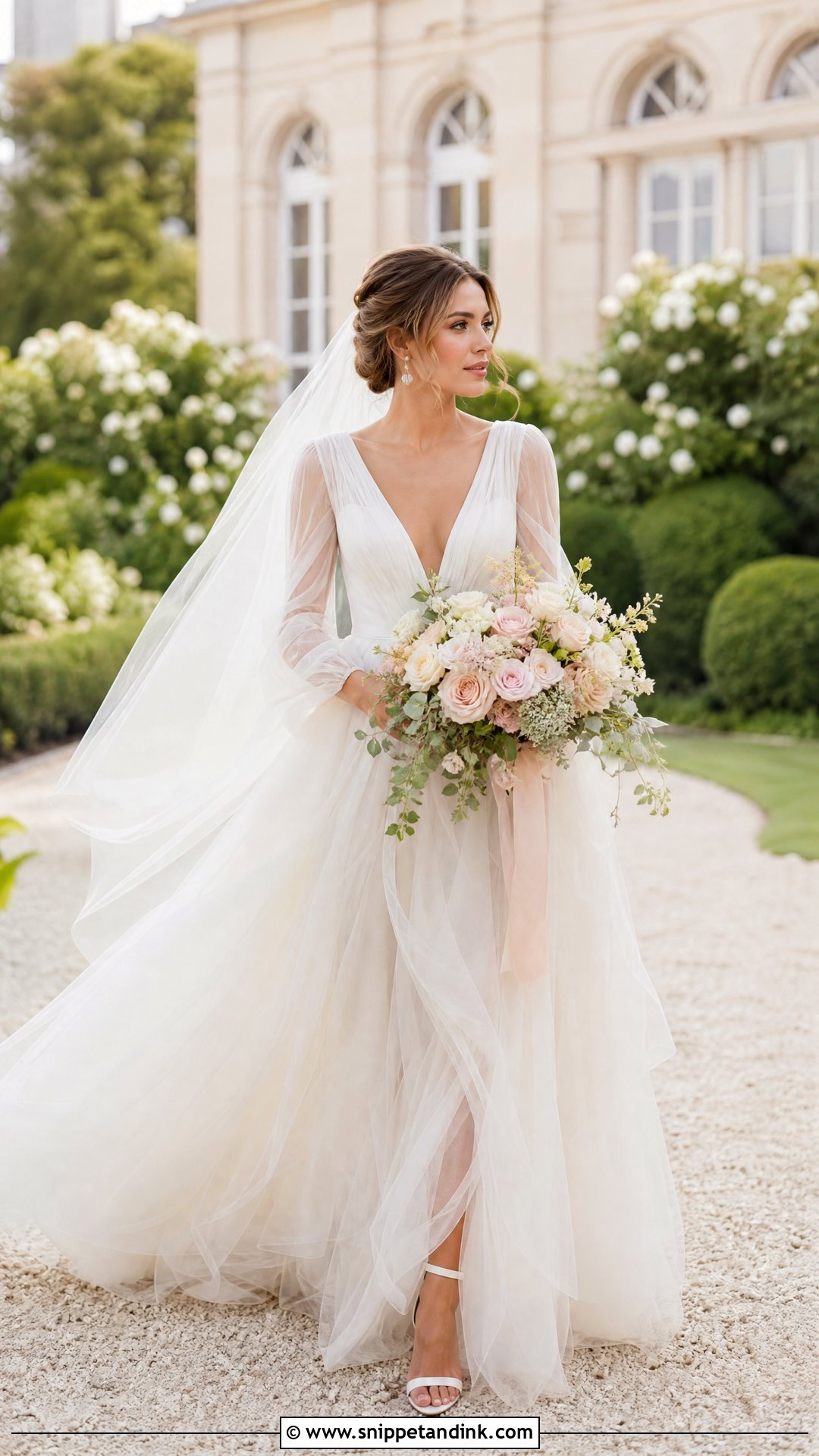
Tulle sleeves and a tulle skirt make a light, floating gown. A fitted bodice gives the softness some structure. Watch the waist: several layers of tulle gathered into one seam can look bulky, so I prefer skirts where the fullness starts a little below the waistband. Tulle sleeves also crush flat under a coat, so carry, don’t wear, any wrap between locations.
23. Long Sleeved Puff Sleeve Wedding Dress
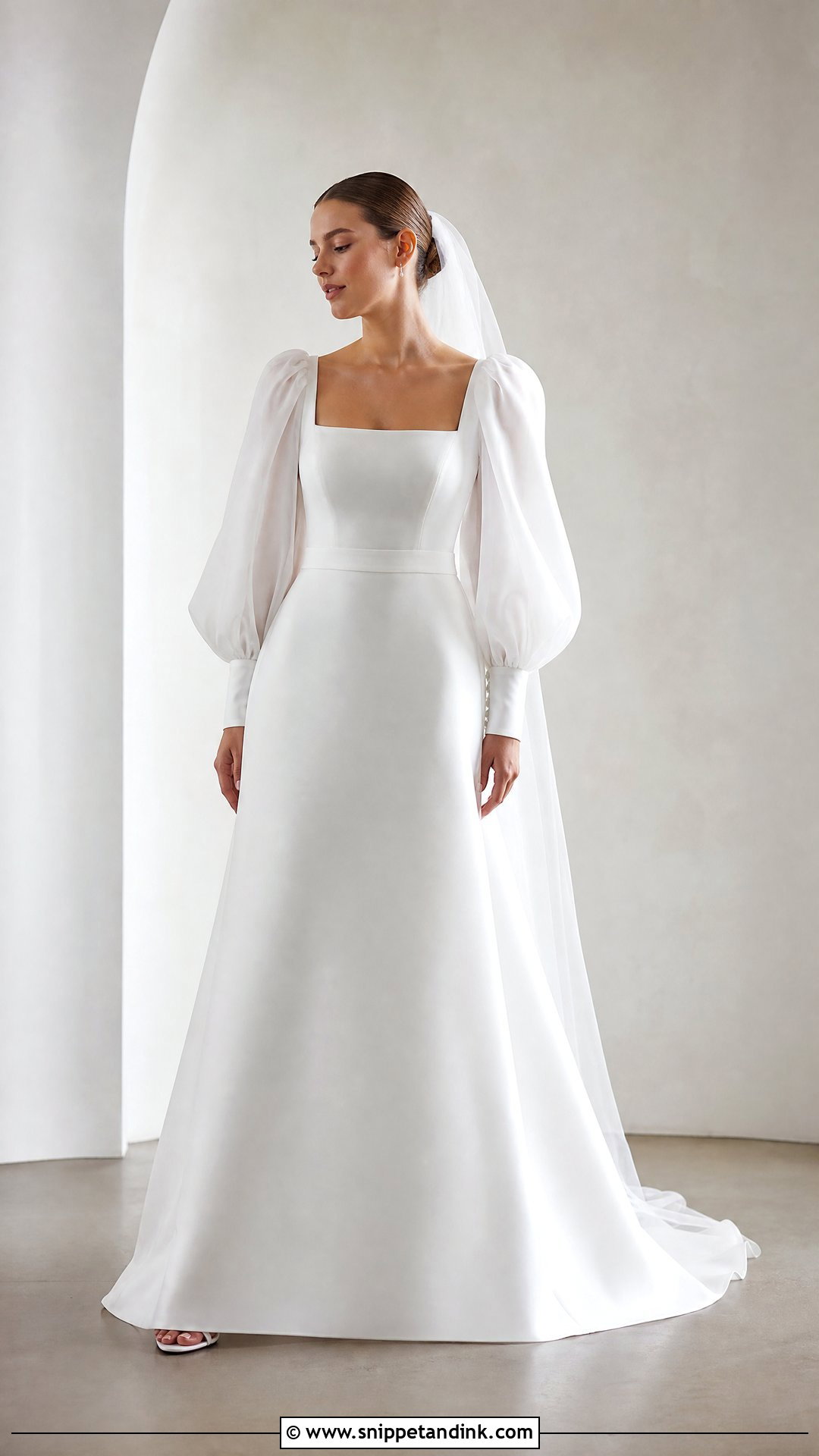
Puff sleeves add personality, while the rest of the gown can stay simple. A square neck, fitted waist and clean A-line skirt suit them best. Organza gives a light, held puff; satin is more structured; lace softer. The puff should sit on the shoulder, not hang off it, and I check that the sleeve head doesn’t flatten when you put your arms down. Keep the bouquet simple so the sleeves stay the statement.
24. Long Sleeved Open Back Wedding Dress
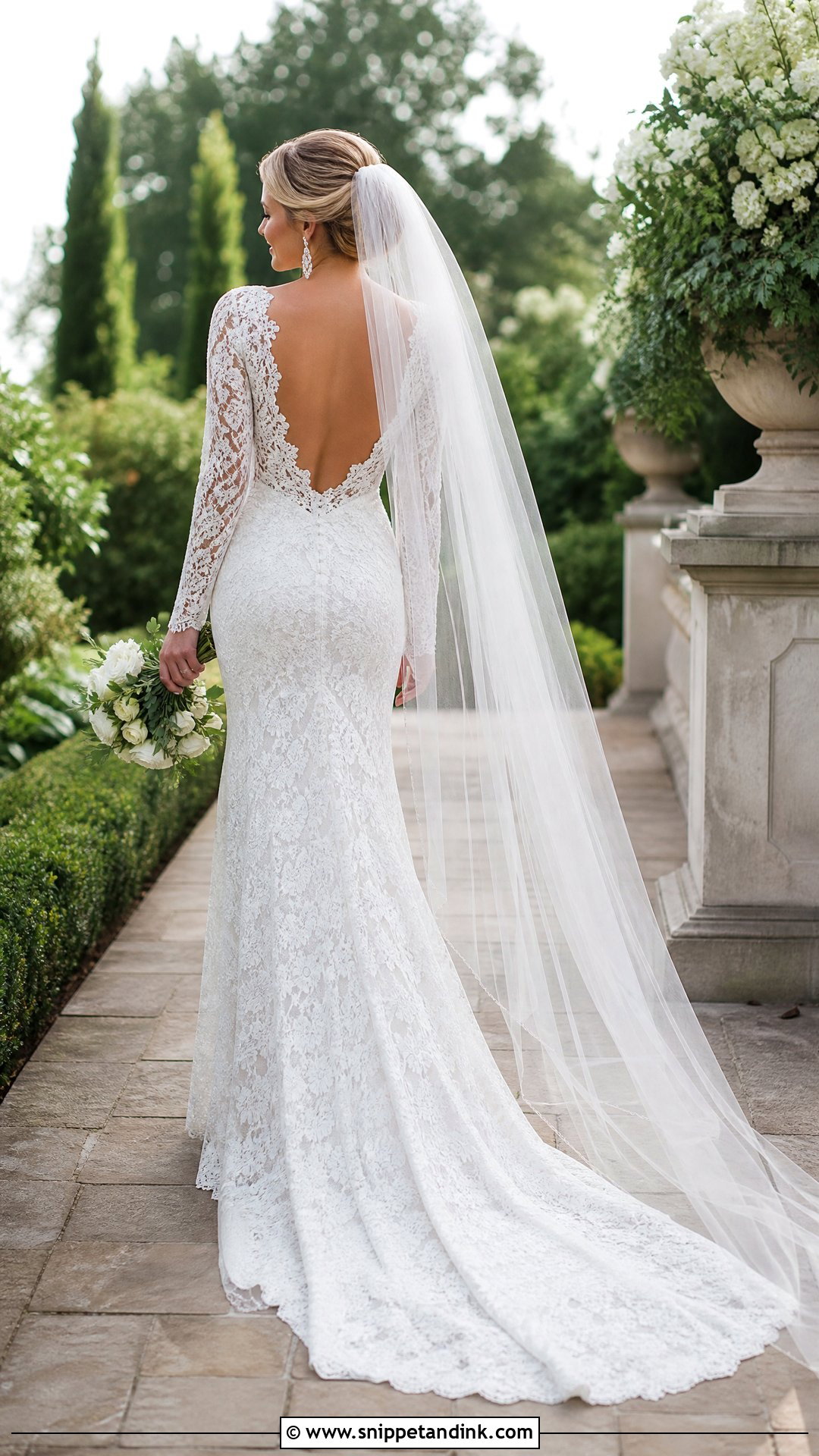
Long sleeves and an open back create a contrast: covered and composed from the front, dramatic from behind. Crepe, lace, satin and beaded fabrics all work. The fit has to be secure around the shoulders, because with a low back the sleeves are what hold the dress up. Wear your hair up, add back-drop earrings, and choose a sheer veil so the back stays visible during the ceremony.
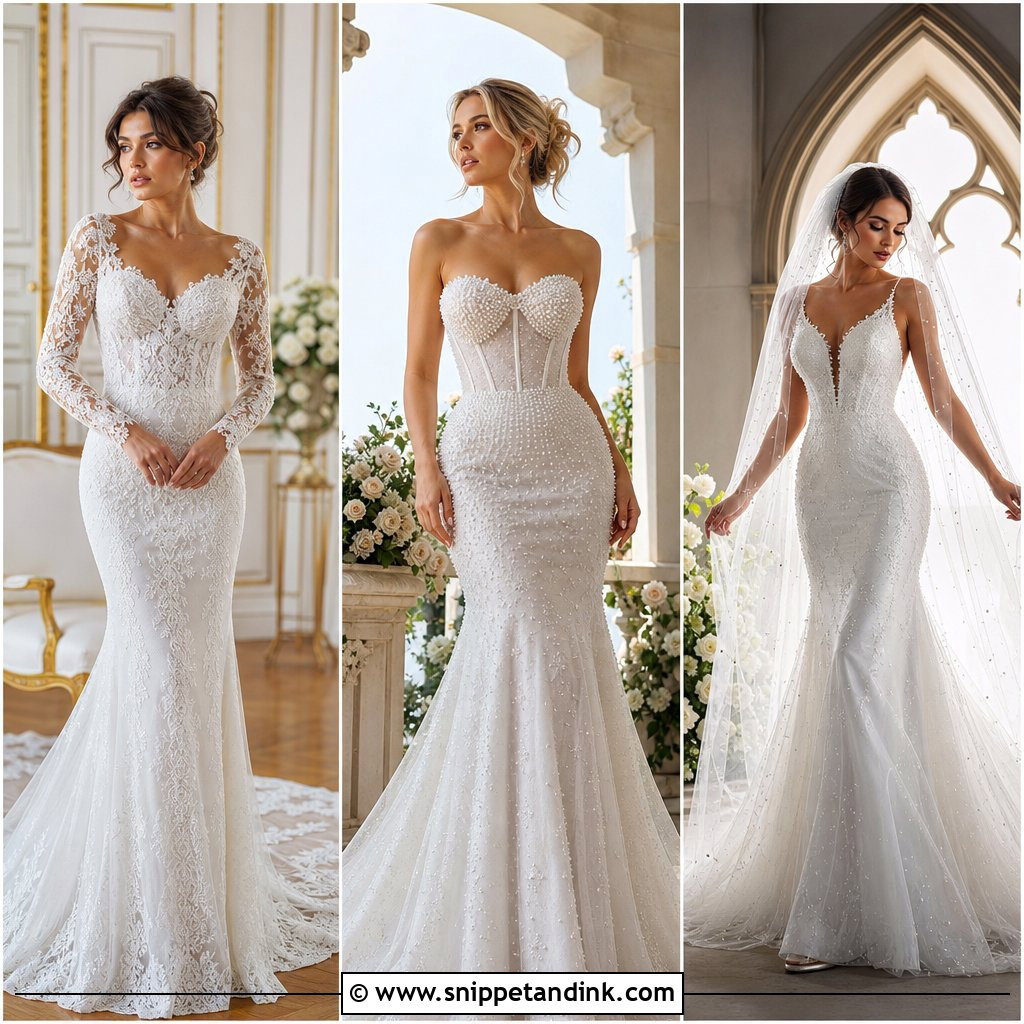
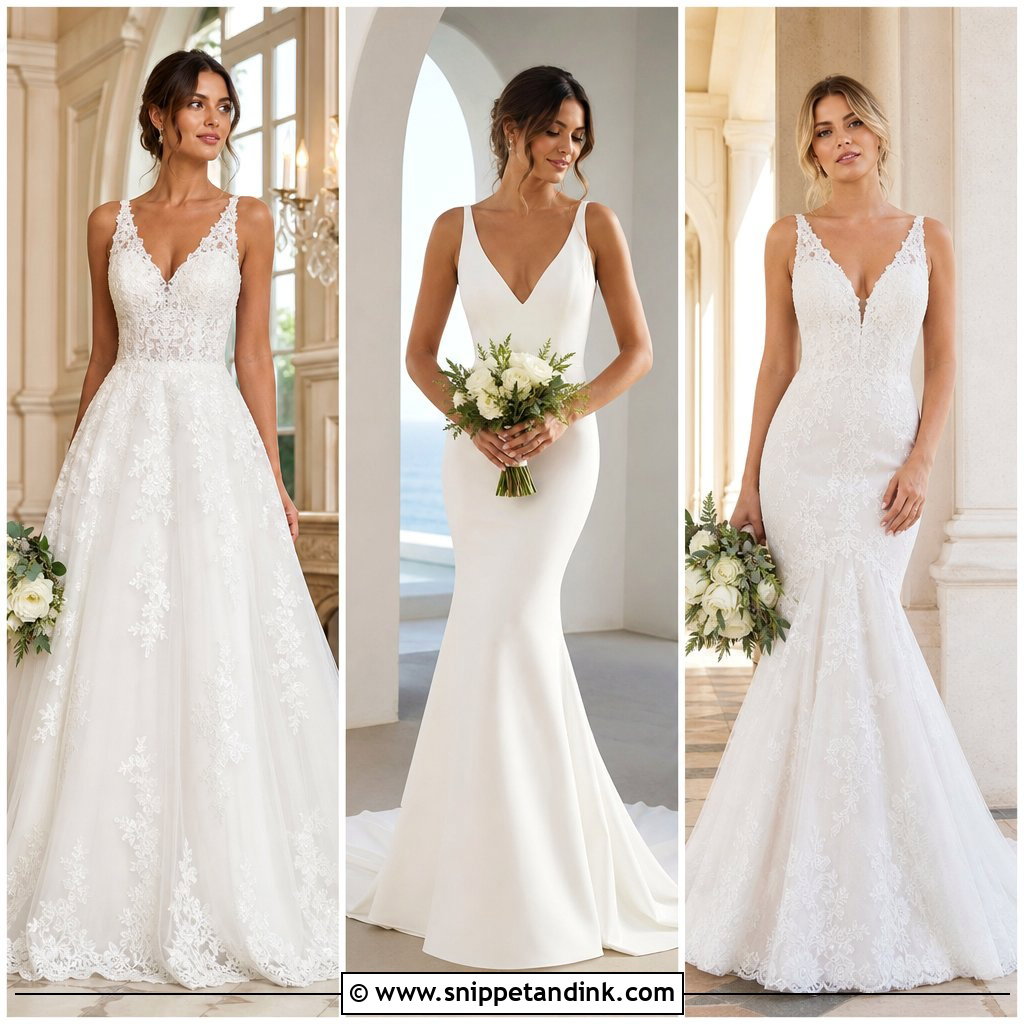
25. Long Sleeved Detachable Sleeve Wedding Dress
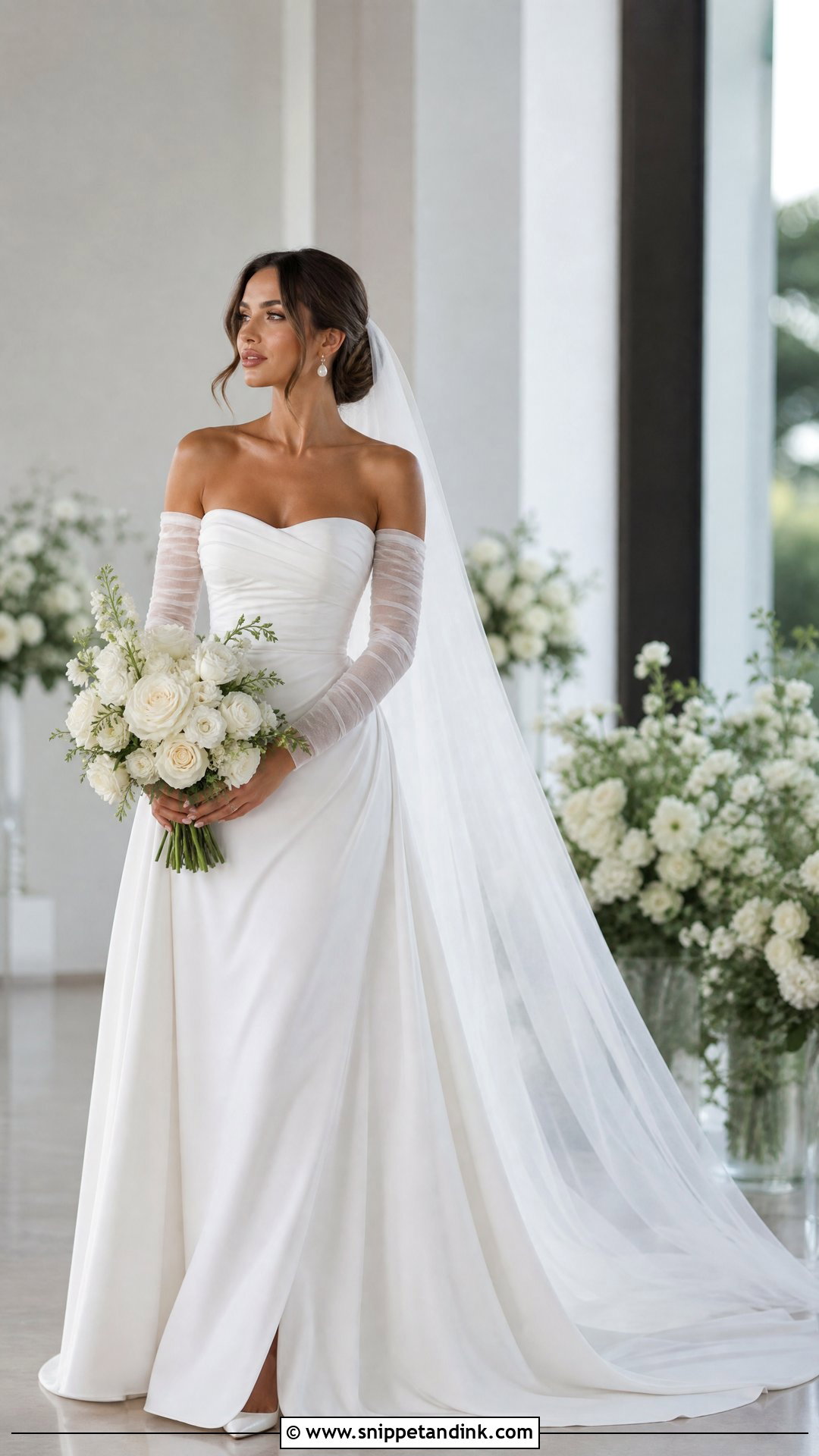
Detachable sleeves give you two looks without a second dress: covered for the ceremony, lighter for the reception. They pair with strapless, off-shoulder, square neck or fitted gowns. I check the attachment point carefully. Sleeves that fasten with hidden buttons or hooks inside the bodice look intentional; ones that tie or snap visibly look like an afterthought. Practice removing them before the day.
Sleeves Are the Trickiest Part to Alter
Shortening a plain sleeve is simple. Shortening a lace sleeve with a scalloped edge means the seamstress has to remove the edging and reattach it higher, and that takes time. Raising an armhole or adding room across the back is harder still, and on some dresses it’s not possible at all.
So I’d judge sleeve fit carefully in the sample, not hope alterations will fix it. Raise both arms, cross them in front of you and bend each elbow. If the sleeve pulls across the shoulder blades or the cuff rides halfway up your forearm, ask the fitter straight away whether it’s fixable. Leave extra time for fittings if the sleeve is lace or beaded, as hand-finishing a cuff can add weeks.
Bracelets, Watches and the Ring Moment
Long sleeves change your jewelry plan. Bracelets worn over lace snag it, and worn under a fitted sleeve they create a lump at the wrist. I’d skip bracelets entirely, or choose a smooth bangle only if the sleeve ends above the wrist.
Think about the ring exchange as well. Your hands will be photographed close up, so the cuff should end neatly at the wrist and not cover the back of your hand unless you want a finger-loop look. A quick manicure in a soft neutral finishes the hands, since they’re the part of your arm that sleeves leave on show.
Sleeves You Can Hug, Dance and Raise a Glass In
Long sleeves can take a gown anywhere from soft and romantic to sleek and modern. Lace softens, satin polishes, crepe sharpens and tulle floats. Your venue, the season and how much you want to move should decide the rest. At every fitting, sit, hug, walk and lift your arms, because the right sleeve is the one you forget you’re wearing by the evening.
You'll Like These Ideas:





Leave a Reply