
Covered gowns have changed a lot. Brides who want long sleeves and a higher neck now have clean crepe sheaths, structured Mikado ball gowns and properly lined lace to choose from, rather than one or two conservative styles at the back of the rail. The twenty below run from minimalist to Victorian, with notes on plus-size, petite and maternity fits. Before you fall for a silhouette, think about fabric weight, how high you want the neckline, whether the sleeves let you move and how much underlining the gown needs, because those details decide how much alteration you’ll pay for later.
When Every Sample in the Shop Is Strapless
Plenty of brides who want sleeves walk into a boutique and find most of the samples strapless or sleeveless. That doesn’t mean the shop can’t help. In my experience many designers offer sleeves, higher necklines and closed backs as add-ons that aren’t shown on the sample, so ask before you rule a gown out.
- Call ahead and ask which gowns in stock have sleeves, or can be ordered with them. Some shops will pull them before you arrive.
- Bring a fitted, nude long-sleeve top or bodysuit. Wearing it under a sleeveless sample gives you a far better sense of the covered version than holding your arms over your chest.
- Ask the consultant to clip on loose sleeves or lace pieces if the designer supplies them. Even a rough mock-up shows how sleeves change the proportions.
- Ask whether a sleeve option is made with the gown or added by the shop’s seamstress afterwards. Factory sleeves match the fabric exactly; added ones may vary slightly in shade.
Leave plenty of time. Made-to-order gowns often take several months to arrive, and design changes can add to that, so begin shopping well ahead if you know you’ll need custom coverage.
1. High Neck Lace A-Line Wedding Dress
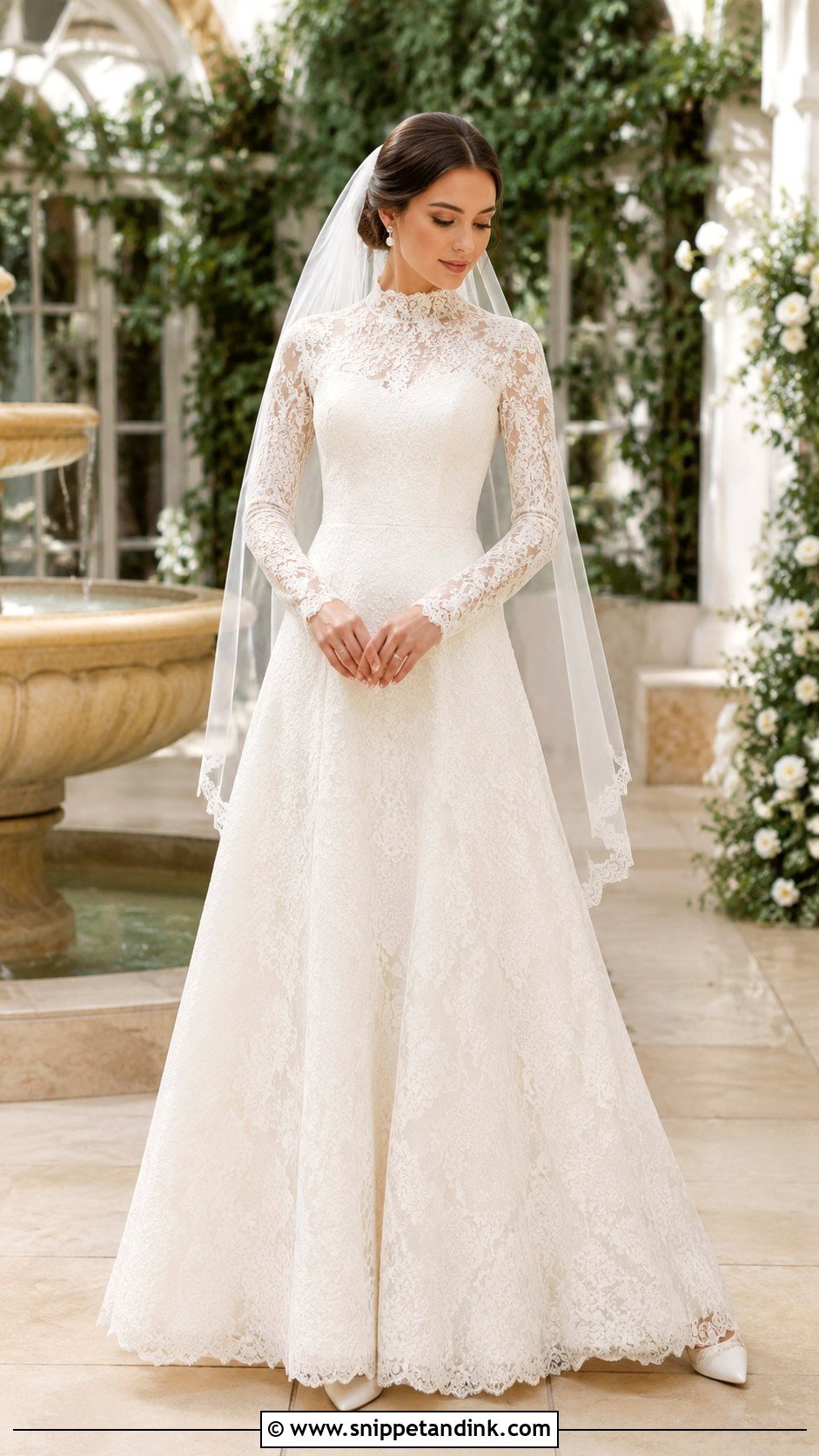
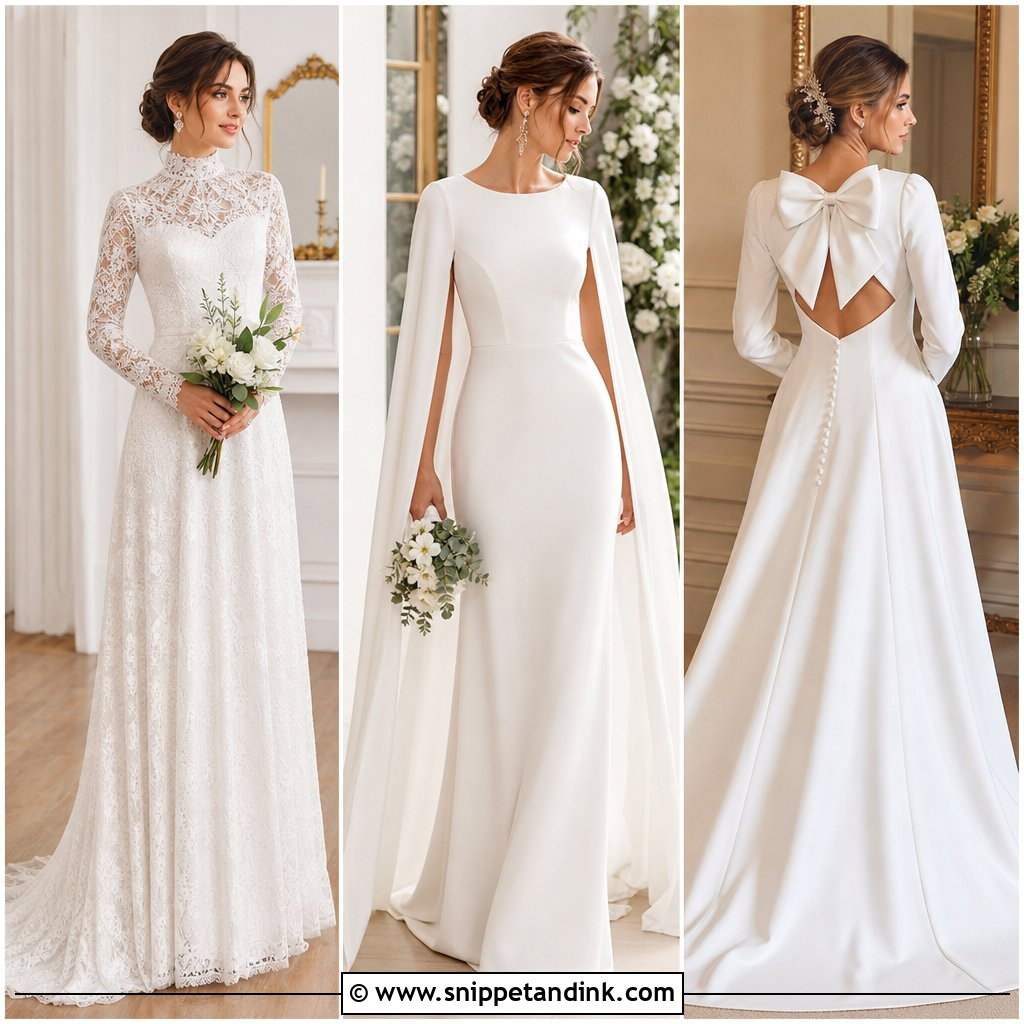
I always start with the lining, not the lace. A high-neck lace A-line only gives full coverage if the opaque layer runs through the bodice, shoulders and skirt; illusion panels look covered on a hanger and read as skin in photos. Fitted lace sleeves can finish at the wrist with covered buttons or scalloped cuffs, and the A-line skirt gives room to walk and sit. A fingertip veil, pearl studs, pointed ivory pumps and a small white bouquet are all it needs. Ask for sleeve movement to be checked at every fitting, not just the first.
2. Bateau Neck Satin Ball Gown
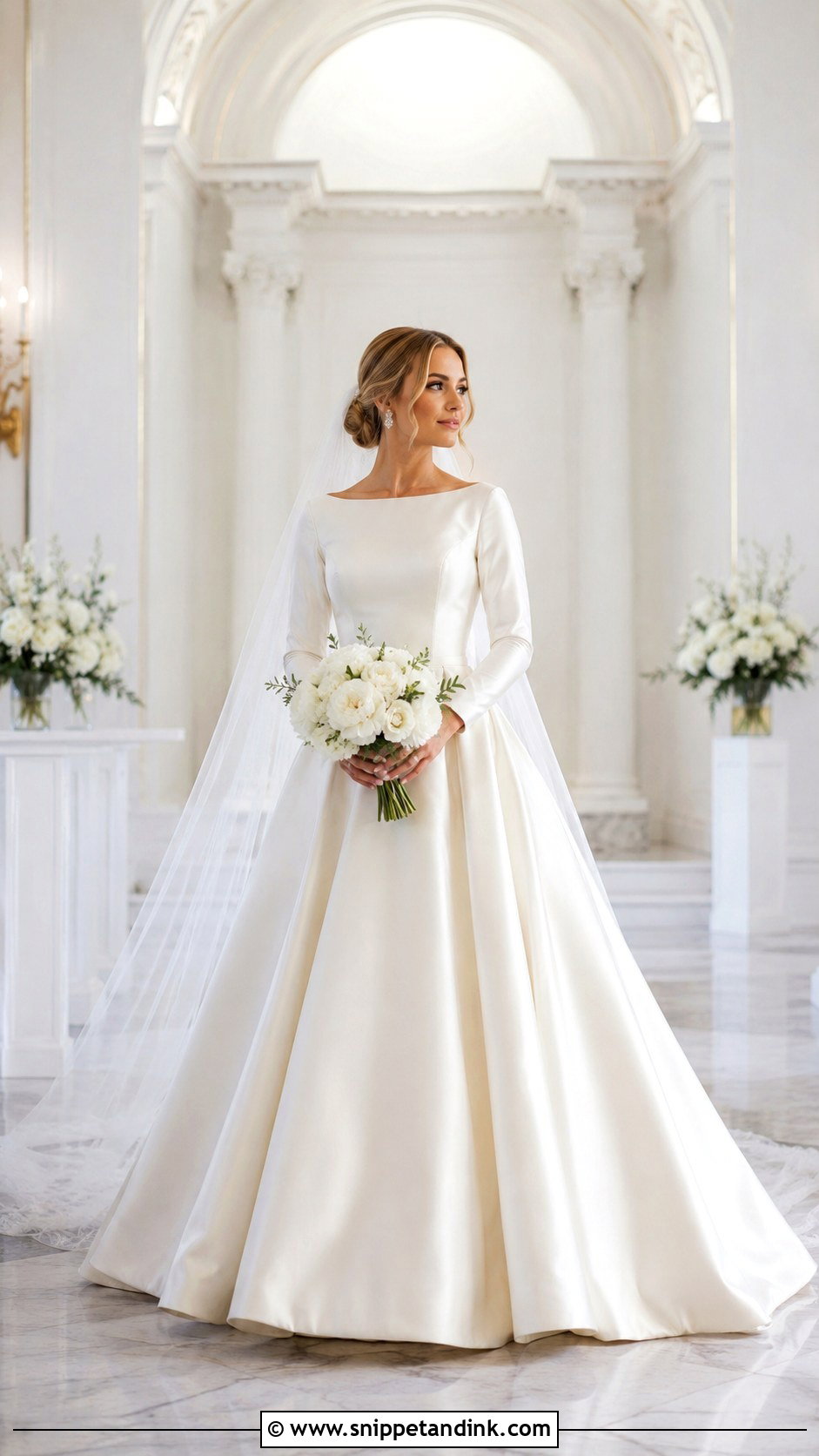
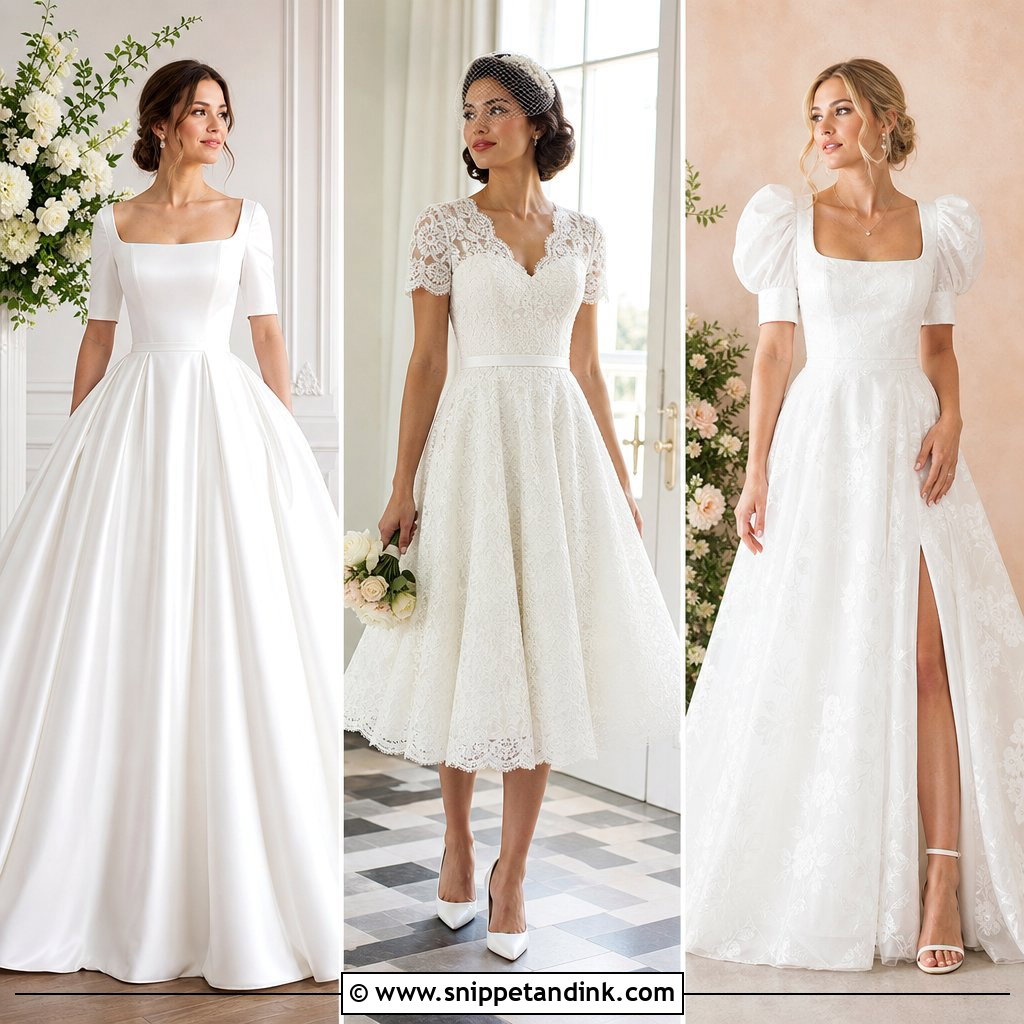
A bateau ball gown in satin is about as traditional as a covered dress gets: the neckline traces the collarbone and the chest, shoulders and back stay covered. Satin has almost no stretch, so the sleeves need real room at the elbow or you’ll feel them pull every time you bend. Pair a defined waist and full skirt with a cathedral veil, crystal earrings, low block-heel pumps and a sleek bun. Satin shades shift between warm and cool depending on the light, so look at your swatch beside a window and under the shop lamps before you confirm the colour.
3. Mock Neck Crepe Sheath Wedding Dress
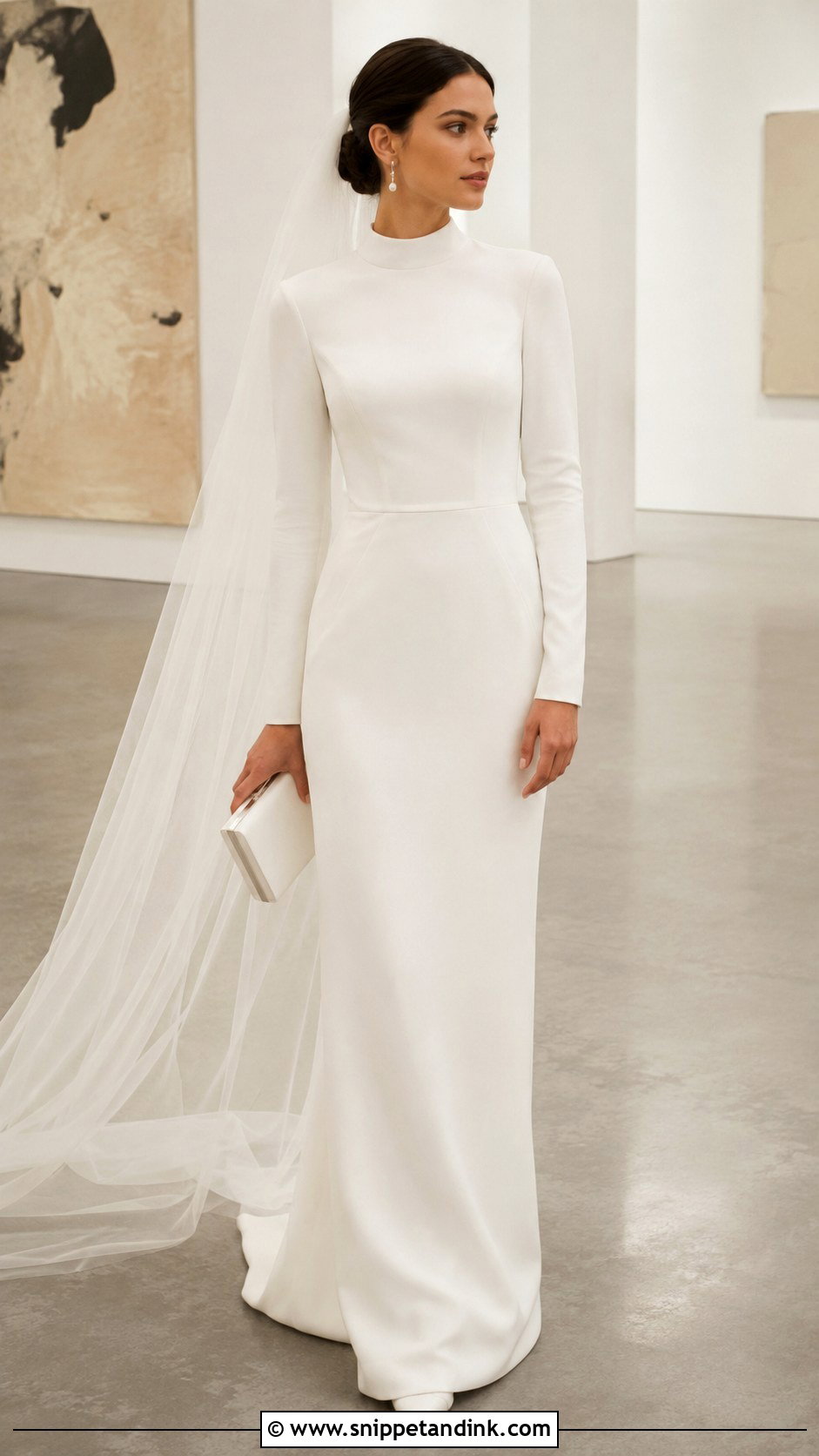
Medium-weight crepe is what makes a mock neck crepe sheath work. Thin crepe clings and shows everything underneath; a heavier one skims. Princess seams or light waist shaping give definition without beads or a belt, and a closed back with fabric buttons adds one traditional note. Pearl drops, a chapel veil and closed heels are enough, with a structured clutch for the reception. I ask every bride to bring her actual undergarments to every fitting. A sheath has nowhere to hide a seam line, and changing your bra between fittings can throw the alterations off.
4. Bishop Sleeve Chiffon A-Line Wedding Dress
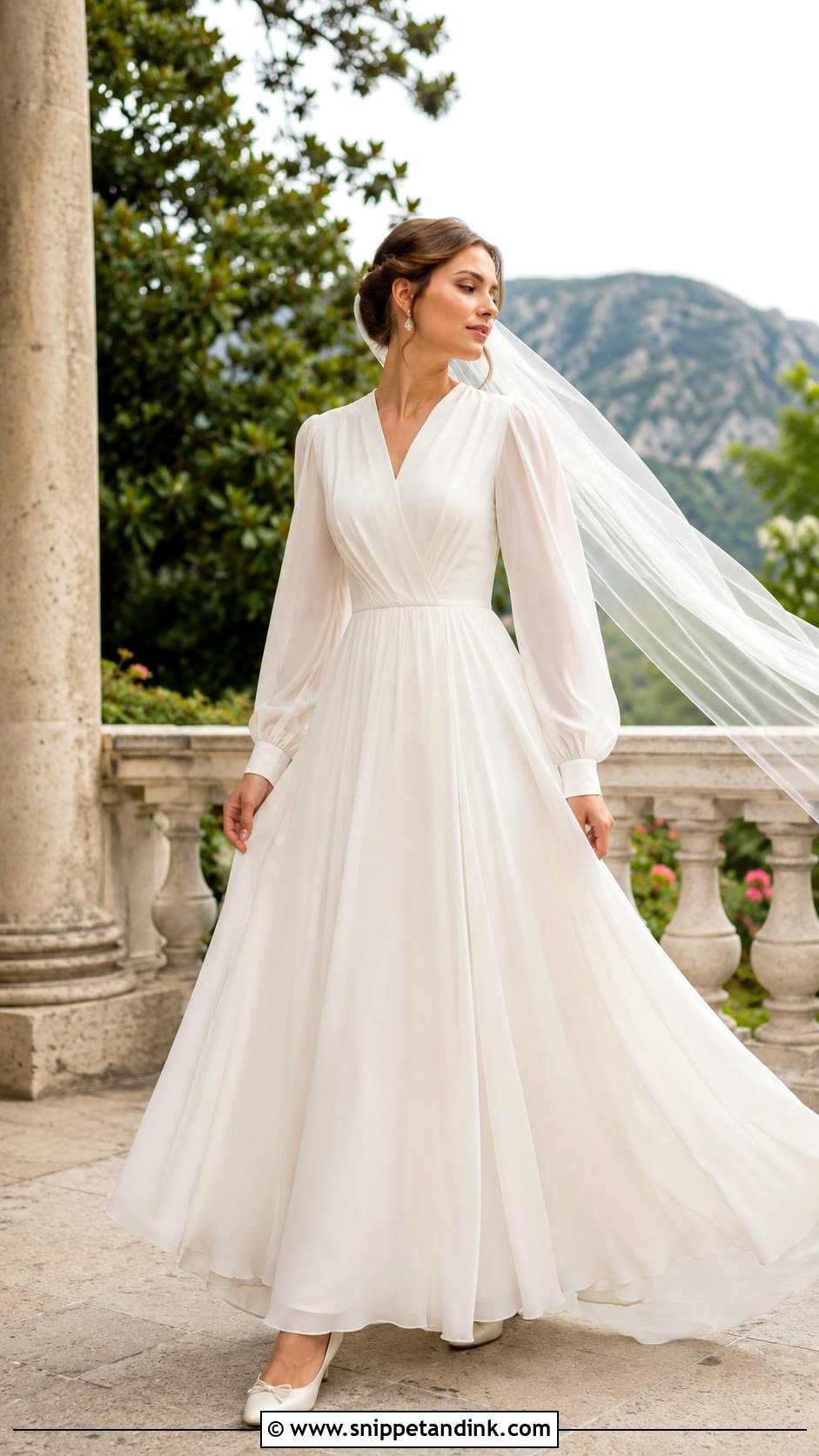
Chiffon and softly gathered bishop sleeves are made for each other, since both are about movement. If you want the arms fully covered, ask for lined or multi-layered sleeves, and keep narrow cuffs so the volume stays controlled. A modest V-neck works if it sits high and is closed with an opaque panel. Delicate earrings, satin flats, a light veil and soft waves or a low braid suit it. Chiffon frays and snags more easily than most fabrics, so look closely at the cuff and underarm seams, and check the skirt lining against a bright window.
5. Square Neck Mikado A-Line Wedding Dress
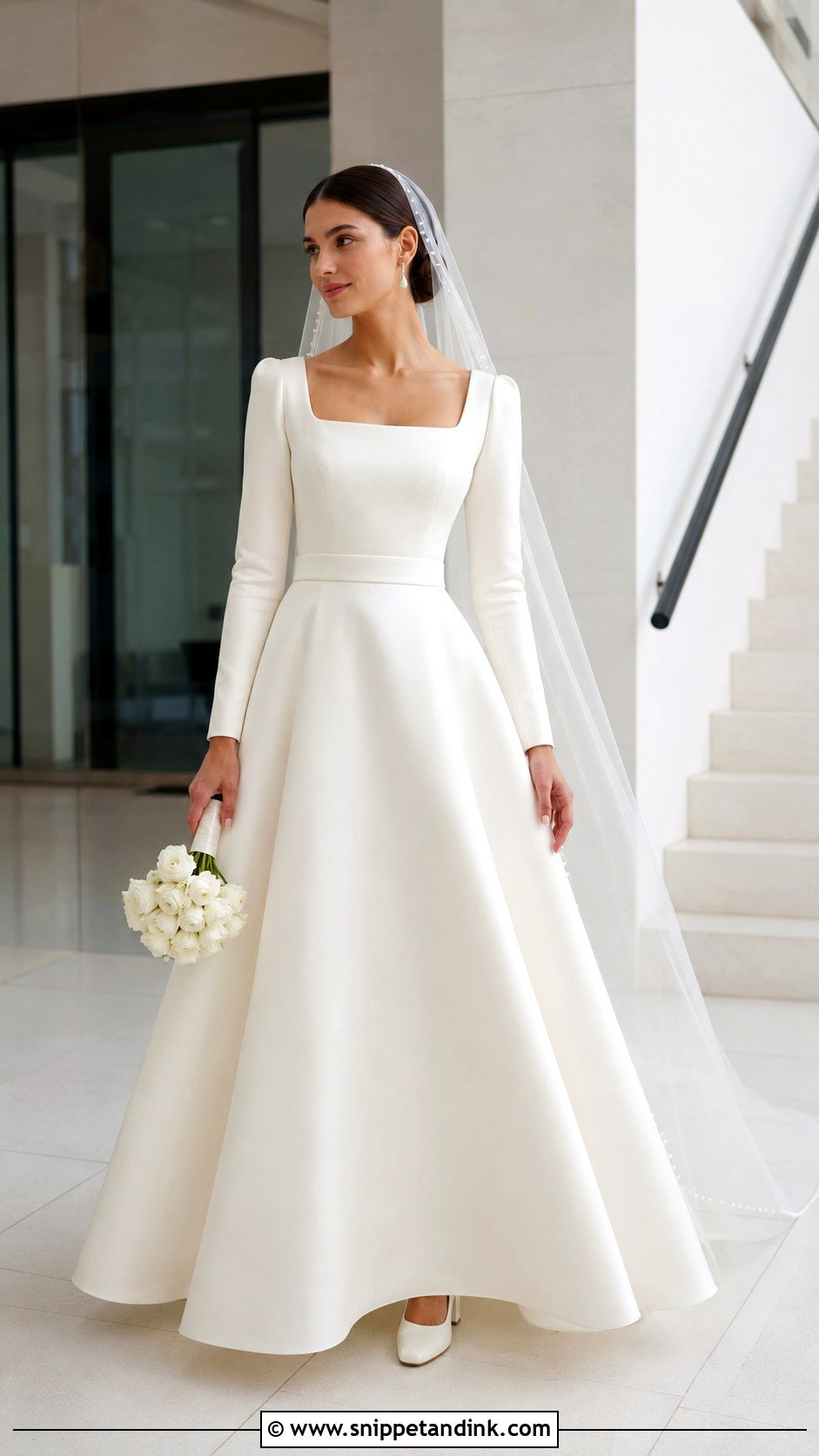
Mikado is the fabric for brides who like structure. It holds a square neckline crisply, supports a defined waistband and makes tailored sleeves look sharp. Choose a square back above the bra line or a fully buttoned back, then add a pearl-edged veil, small drops, ivory block heels and a compact bouquet. The trade-off is stiffness through the arm. Reach forward and lift your hands at the fitting; if the sleeves restrict you, a good seamstress can add width at the underarm seam without softening the outline.
6. Lined Lace Fit-And-Flare Wedding Dress
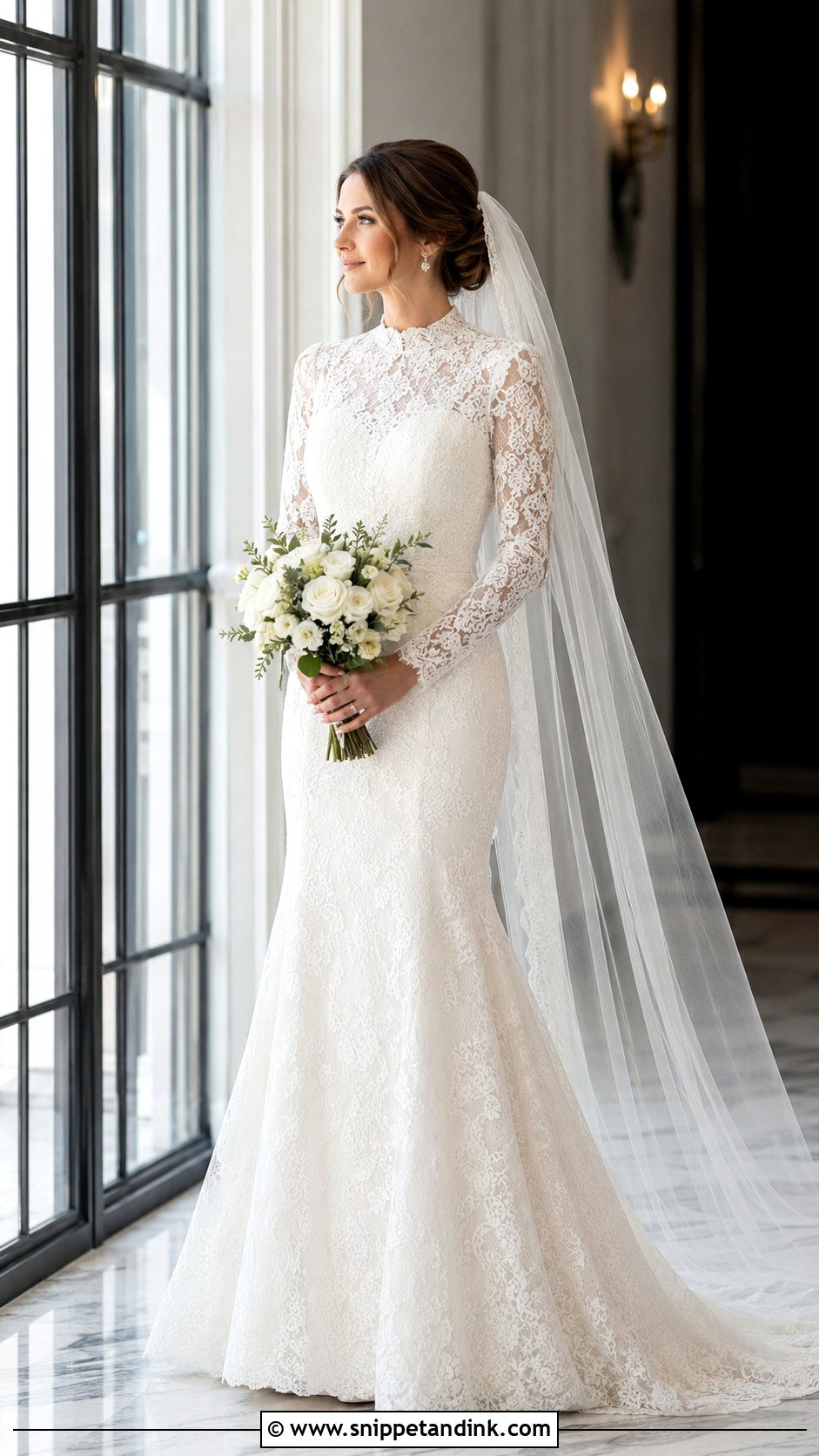
Fit-and-flare gives a closer shape while the lining keeps it modest. Substantial lace over an opaque base, a neckline sitting comfortably above the chest and matching lace sleeves make it cohesive, with covered buttons down the back and at the cuffs. The skirt should follow the hips and widen around the knee. A chapel veil, crystal studs, supportive closed heels and a low chignon keep the focus on the lace. What I watch for in the mirror is the lining. If it pulls across the hips or elbows while the lace sits smoothly, the two layers were cut to different sizes and need fitting separately.
7. Boho Long Sleeve Lace Wedding Dress
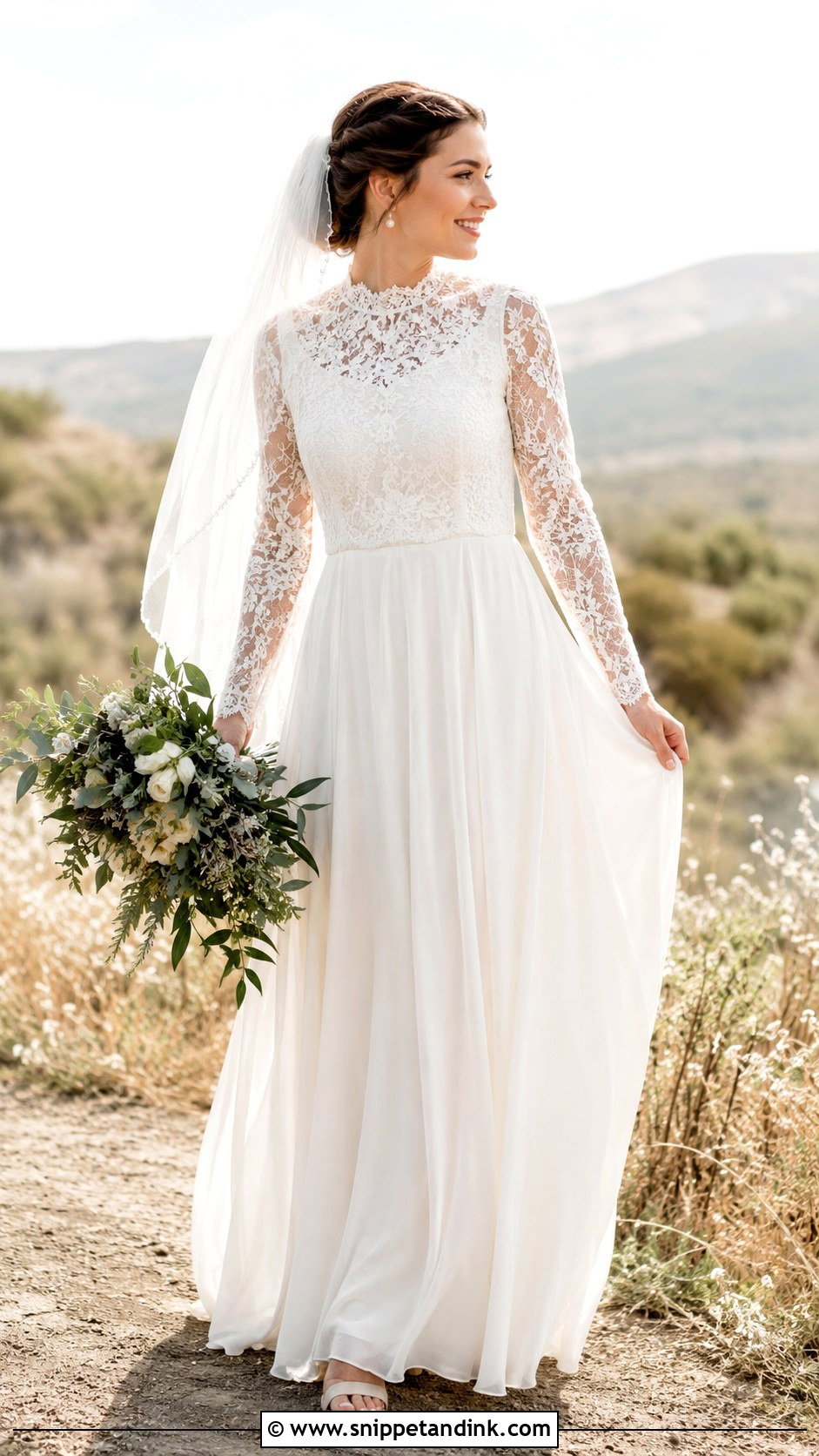
Boho style usually means bare backs and sheer panels, but this version gets the relaxed feel from lace and movement instead. Look for a fully lined bodice, a high scoop neck and lace sleeves over matching opaque fabric, with soft floral motifs, gentle gathers and a short train. A simple veil, small pearl earrings, ivory flats or low block heels, a loose braided updo and a greenery bouquet fit the mood. Skip fringe and transparent inserts if coverage matters. For an outdoor wedding, hem it to clear grass and gravel in your actual shoes, or the lace will fray along the bottom by evening.
8. Plus Size Empire Waist Wedding Dress
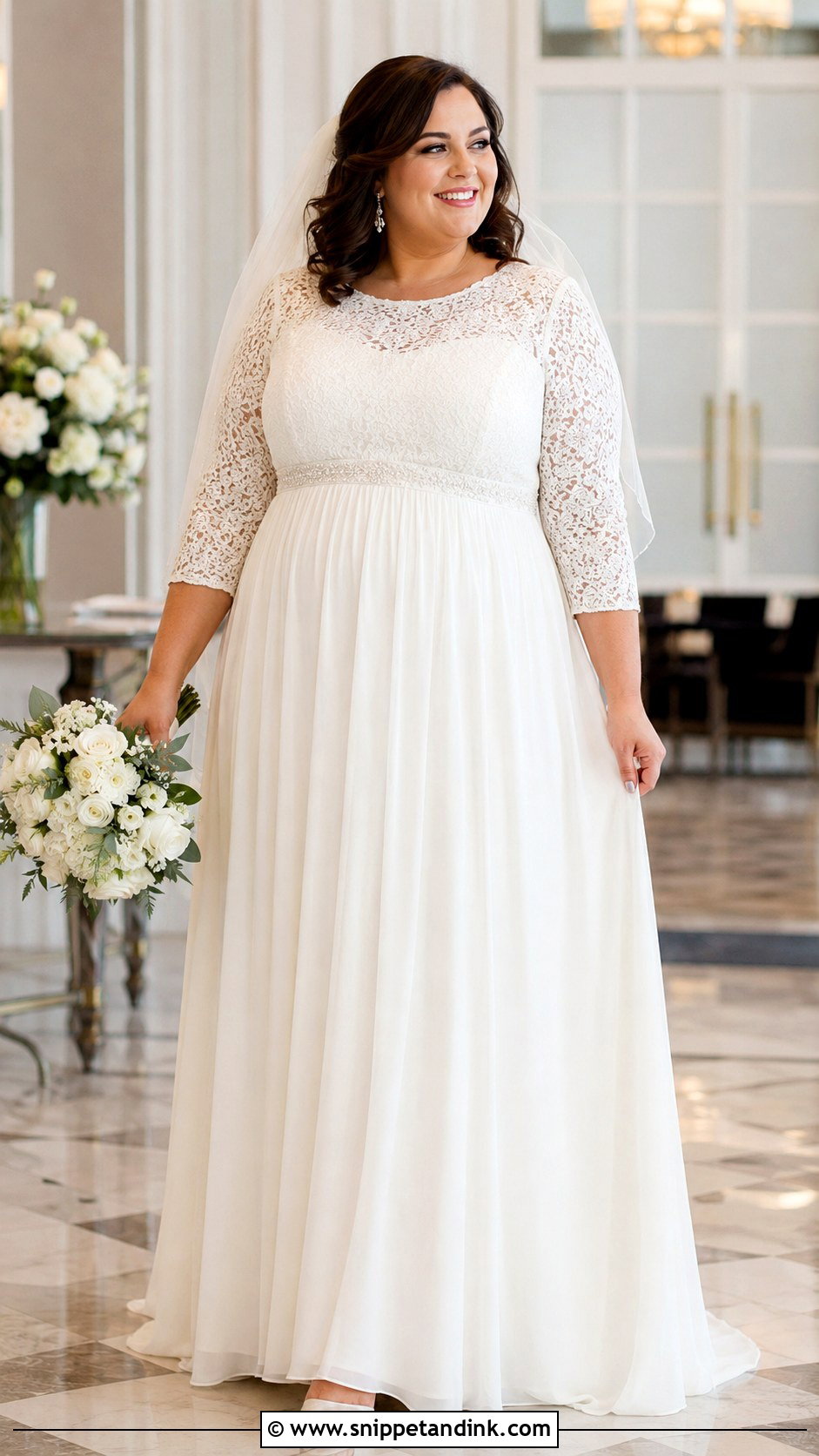
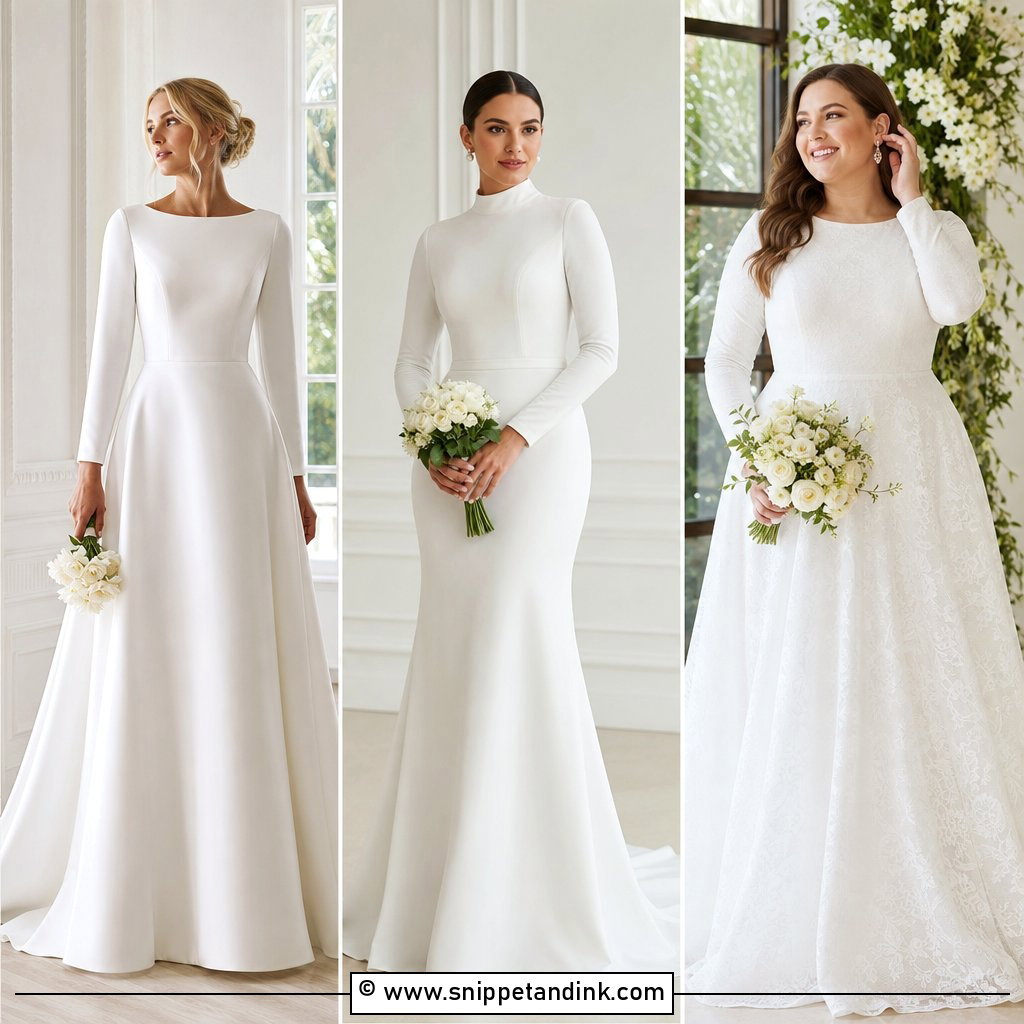
An empire waist puts the seam just under the bust and lets the skirt fall from there, which many plus-size brides find more comfortable than a natural-waist seam. Choose a supportive lined bodice, a high scoop neck and sleeves in stretch lace or soft crepe, with a skirt that skims rather than billows. A shoulder-length veil, supportive low heels and medium earrings that show beside the neckline finish it. Support makes or breaks the drape. Talk through built-in cups, boning and bra compatibility at the first fitting, and move around for several minutes to check the armholes and empire seam stay comfortable.
9. Petite Long Sleeve Column Wedding Dress
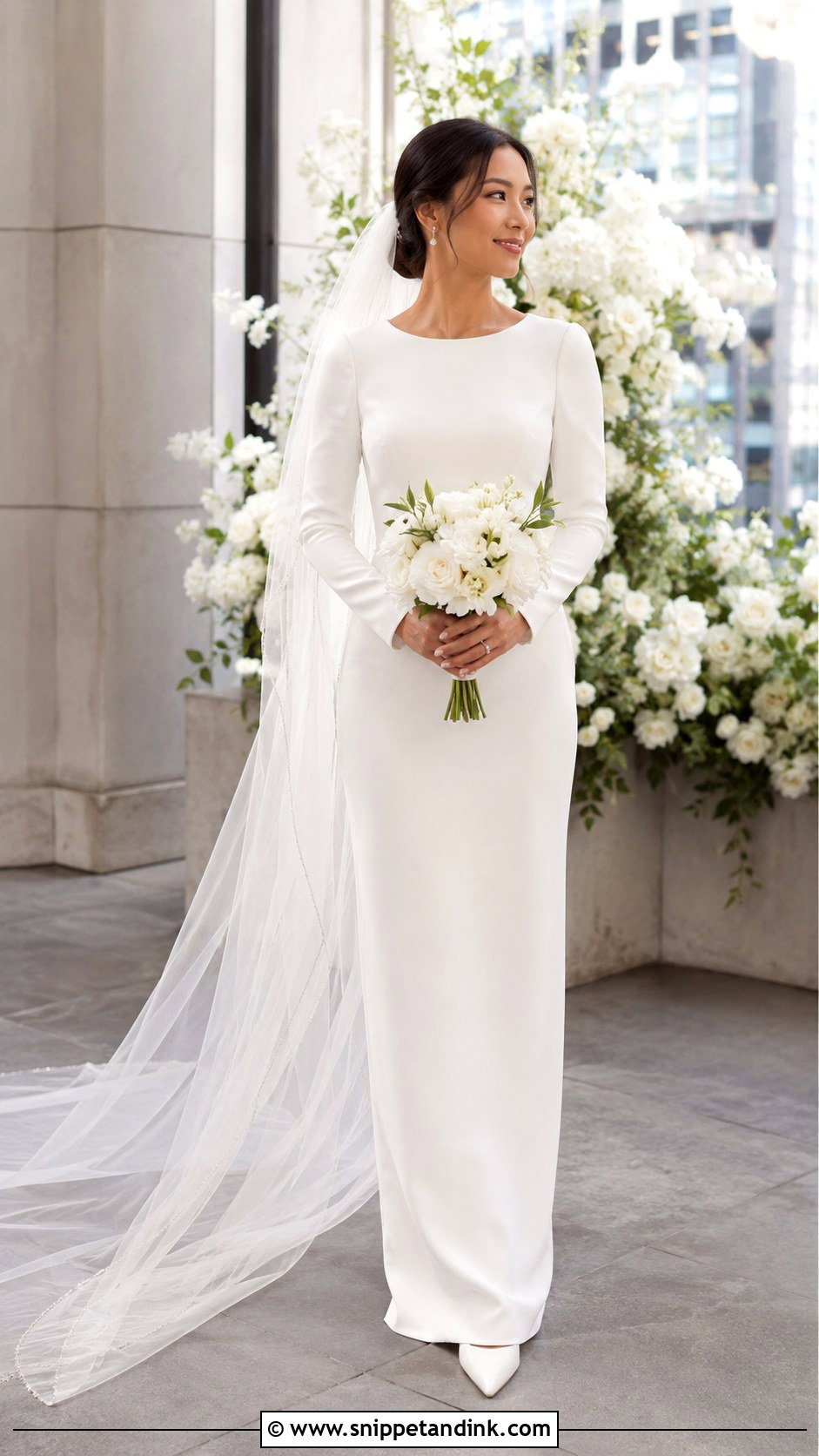
On a petite frame, a column with long fitted sleeves draws one clean line from shoulder to hem. Choose vertical seams, restrained detail and a jewel or bateau neck, and avoid overly long trains or big lace motifs that dwarf a smaller frame. Smooth crepe or satin suits careful tailoring. A narrow chapel veil, pointed heels and fine pearl earrings finish it, and matching the ivory of dress and shoes keeps the line unbroken. Most sample gowns are cut for taller bodies, so the shoulder, elbow and waist all need moving, not just the hem.
10. Tea Length Long Sleeve Wedding Dress
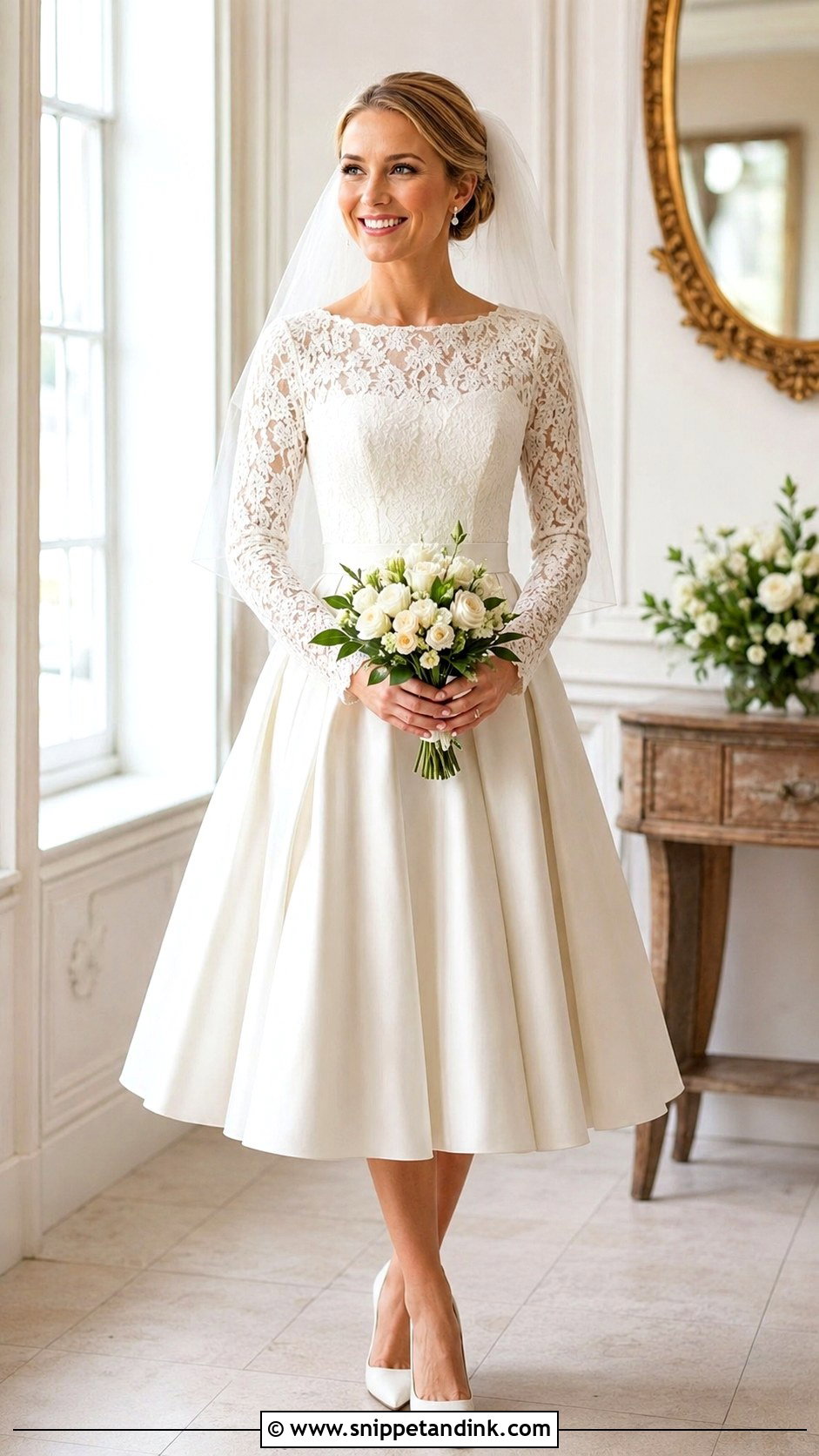
Tea length is the cheerful option, and a practical one for a daytime or registry wedding. A fitted long sleeve bodice with a bateau or high scoop neck over a structured skirt ending between knee and ankle looks vintage in lace and cleaner in satin or Mikado. Your shoes are on display, so choose ivory pumps, block heels or polished flats you genuinely like. Add a short veil, pearl studs and a small structured bouquet. Look at the hem from the side and the back before the final alteration. A tea-length hem that dips even slightly looks shortened rather than designed.
11. Ivory Velvet Winter Wedding Dress
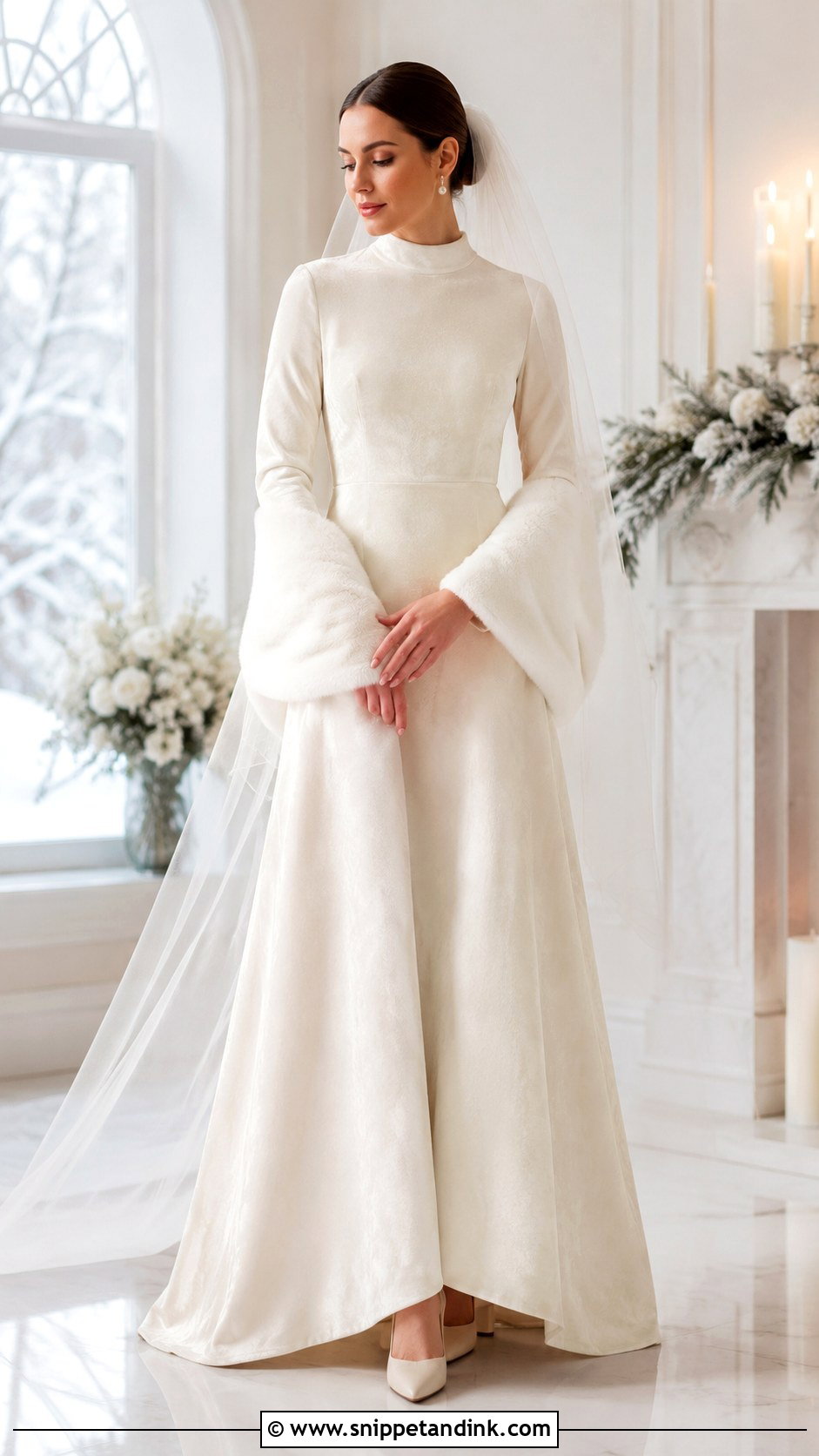
Velvet is the warmest bridal fabric, and in ivory it looks rich without needing any decoration. A high neck, fitted long sleeves and a softly shaped A-line skirt give substantial coverage. Lightweight silk velvet or stretch velvet moves far better than heavy upholstery-weight pile. Keep to a simple waist seam and a modest train, with pearl earrings, closed block heels and a plain tulle veil, plus a faux-fur wrap outdoors. Velvet pile catches light differently depending on its direction, so every panel must be cut the same way up, which is something to confirm if a seamstress is adding sleeves or panels.
12. Beaded Tulle Ball Gown With Long Sleeves
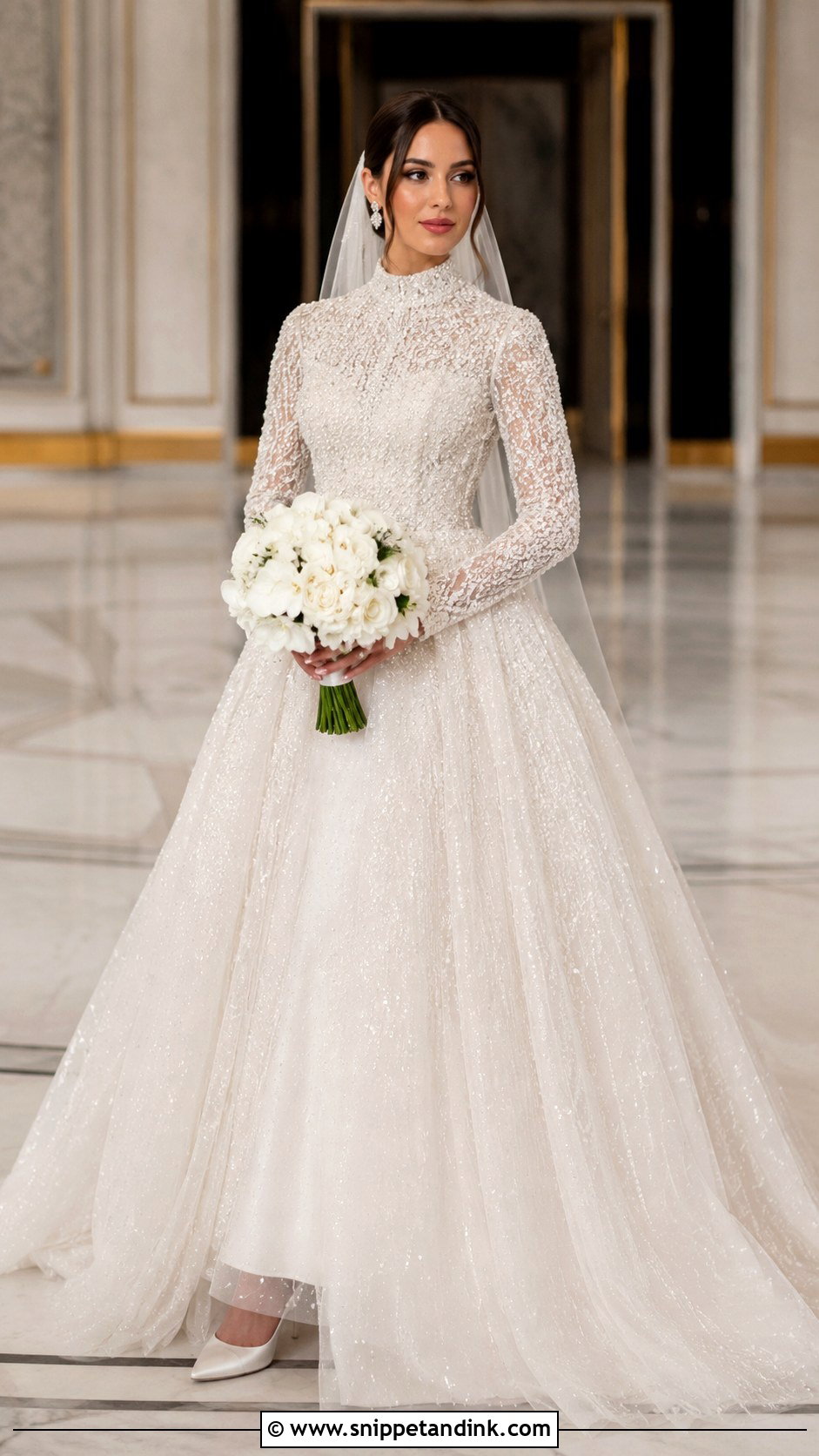
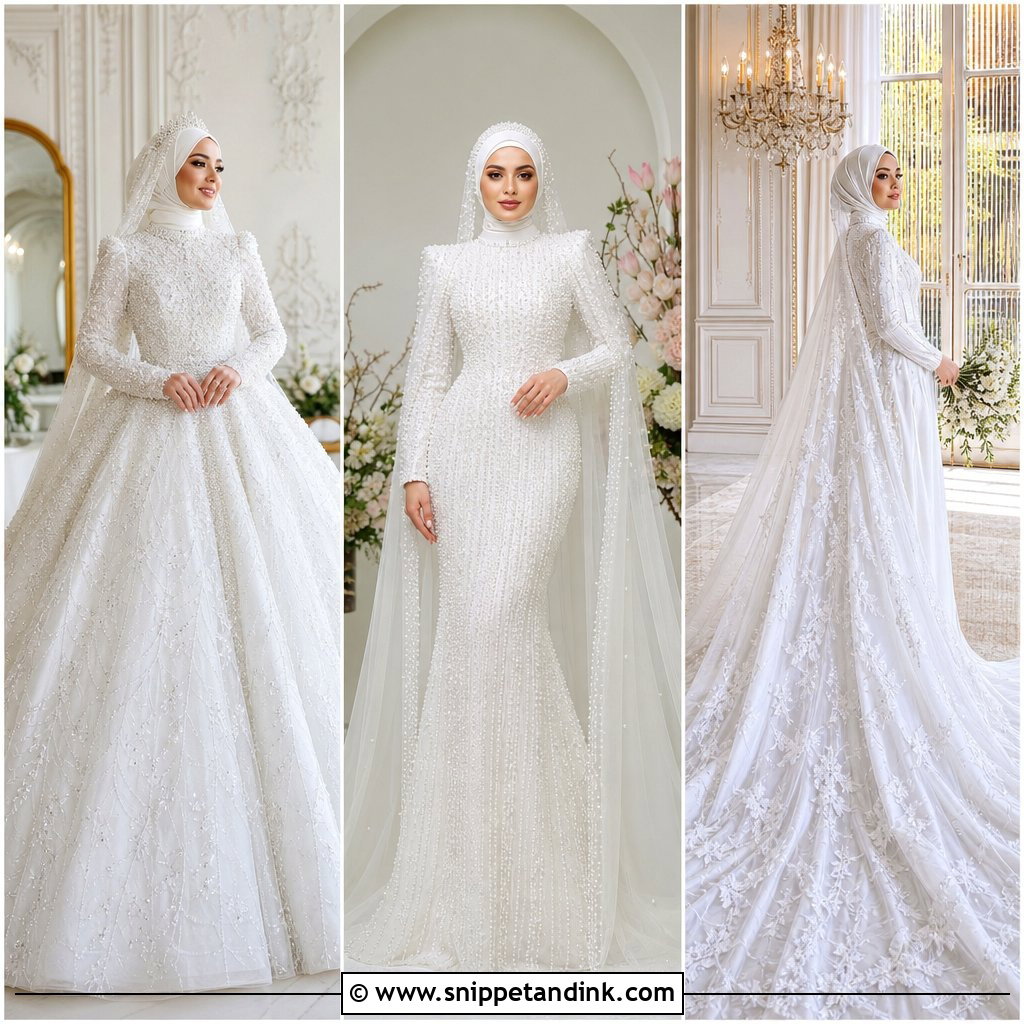
Beaded tulle gives a covered ball gown real sparkle, provided there’s an opaque bodice under the beadwork and the long sleeves are lined. Beading concentrated at the bodice and cuffs looks more refined than an all-over skirt. A plain veil, small crystal earrings and steady satin heels are enough, and the high neck means no necklace. Beaded sleeves can scratch at the elbow if fitted tightly, so allow a little ease. I’d ask the shop for a small bag of spare beads. Something always comes loose, and matching beads later is nearly impossible.
13. Pearl Long Sleeve Wedding Dress
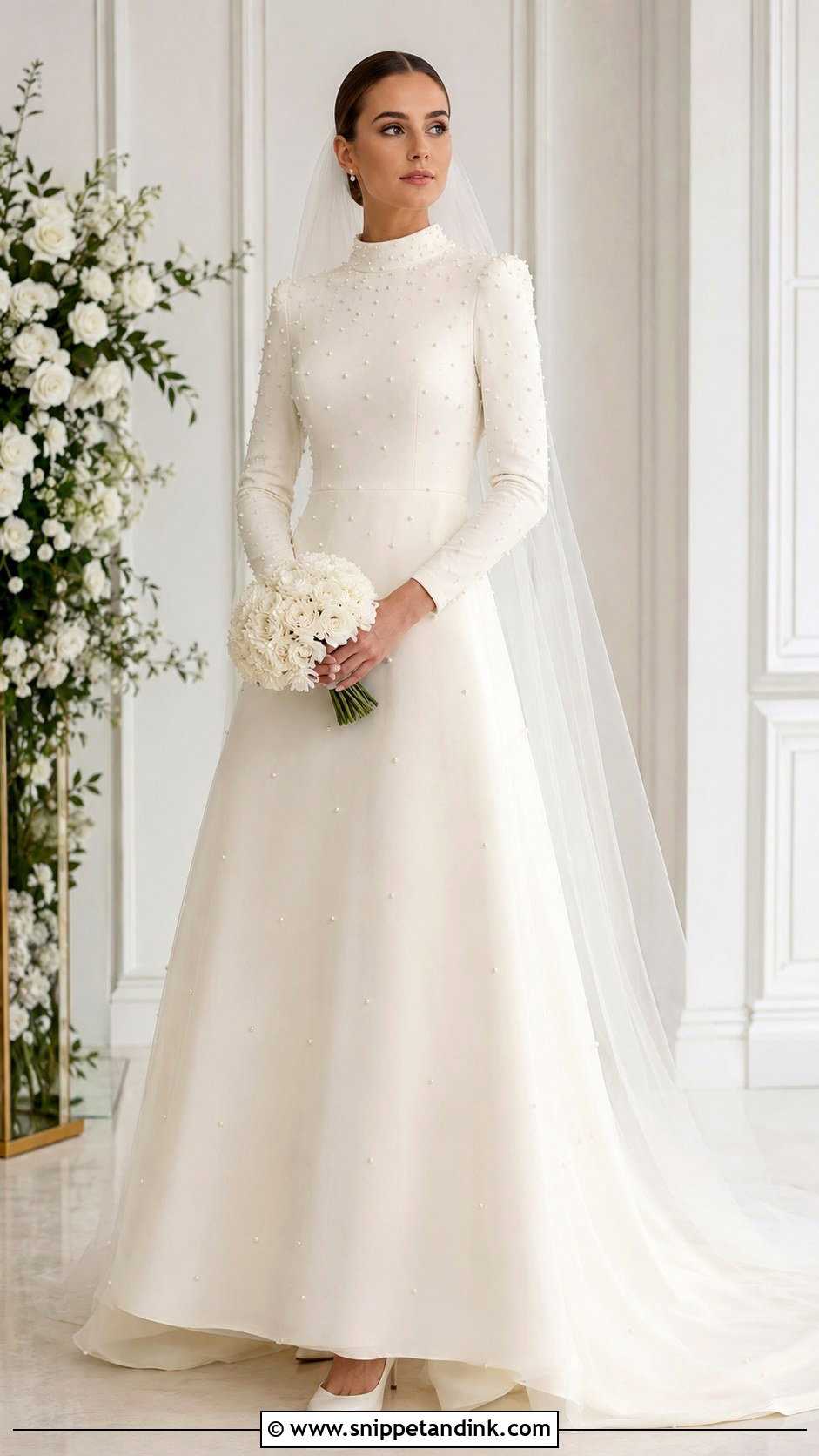
Graduated pearls work best: more around the neckline, fewer down the bodice and almost none on the skirt. That keeps a high-neck A-line from looking overloaded. Pair it with a plain tulle veil, pearl studs, ivory heels and a compact white bouquet, and resist pearl gloves, pearl shoes and pearl hairpins all at once. Too much matching flattens the look. Bend your arms in the shop and check the pearls lie flat on the sleeves, and that the lining covers the thread backing so it doesn’t scratch your skin.
14. Victorian High Collar Wedding Dress
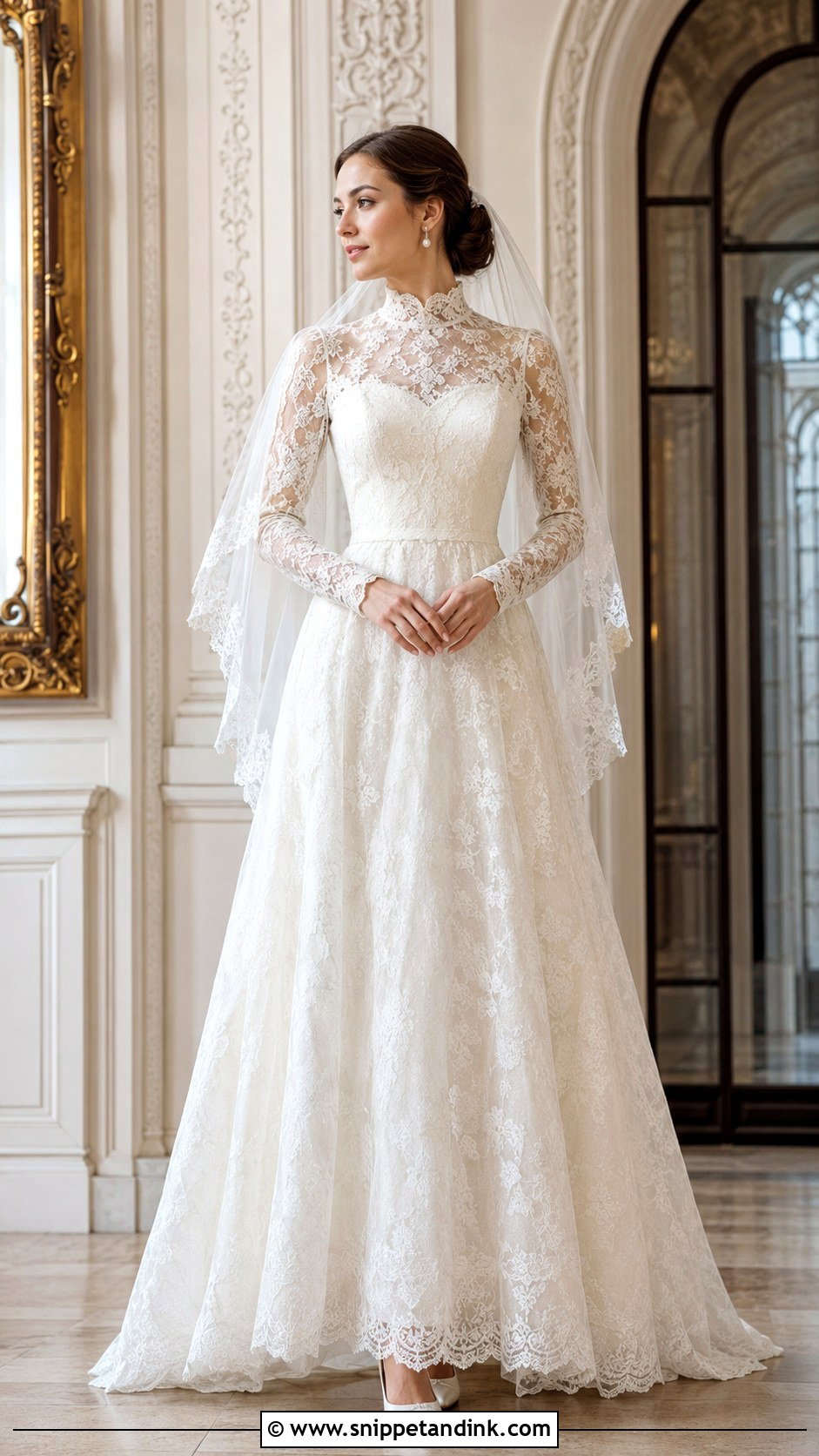
The high Victorian collar is the most covered neckline here and the one most likely to feel tight. Look for a modern version with a soft collar, light lining and restrained lace, with fitted sleeves, a softly defined waist and a flowing A-line skirt. Covered buttons at the cuffs and back carry the vintage feel without extra accessories. A fingertip veil, pearl earrings, closed heels and a neat low bun keep the collar clear. Turn your head and sit for a few minutes at every fitting. A collar that touches your throat when you’re seated will feel worse by the speeches.
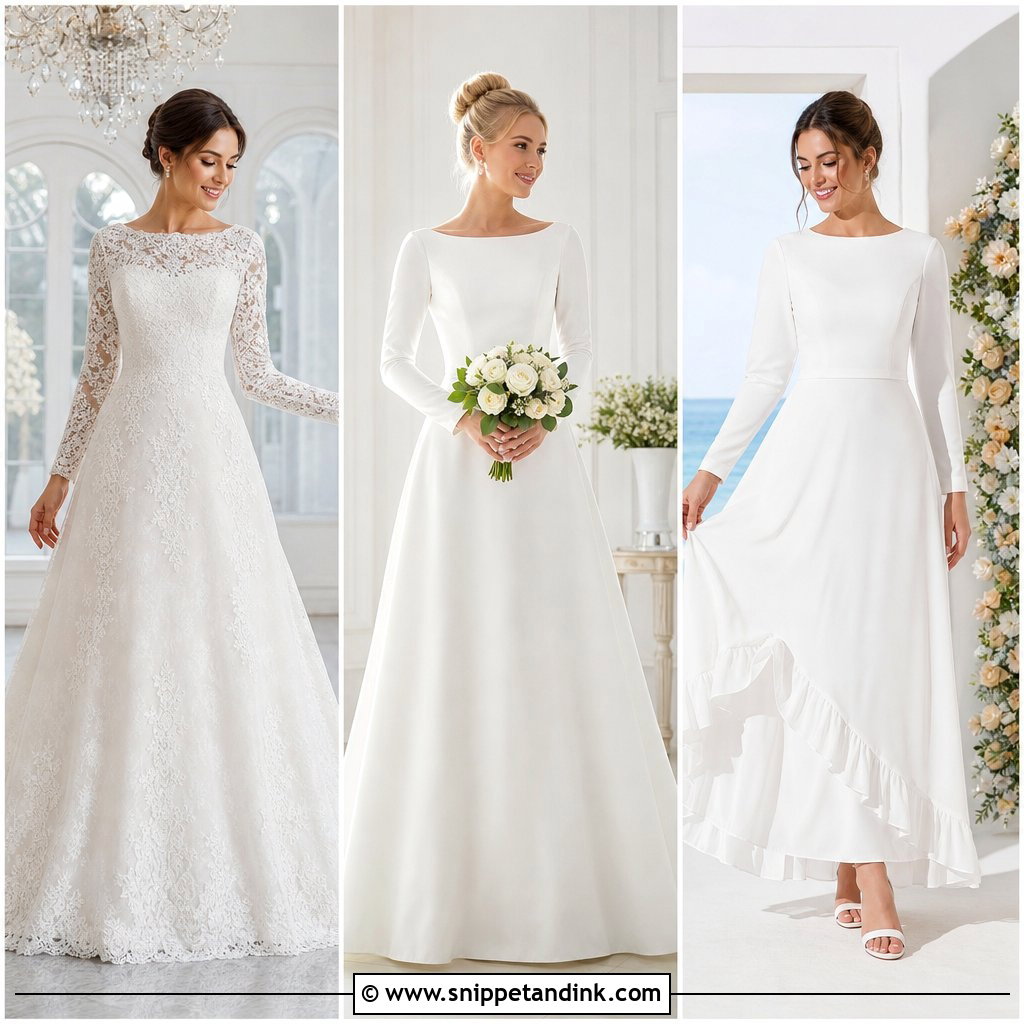
15. Floral Embroidered Long Sleeve Wedding Dress
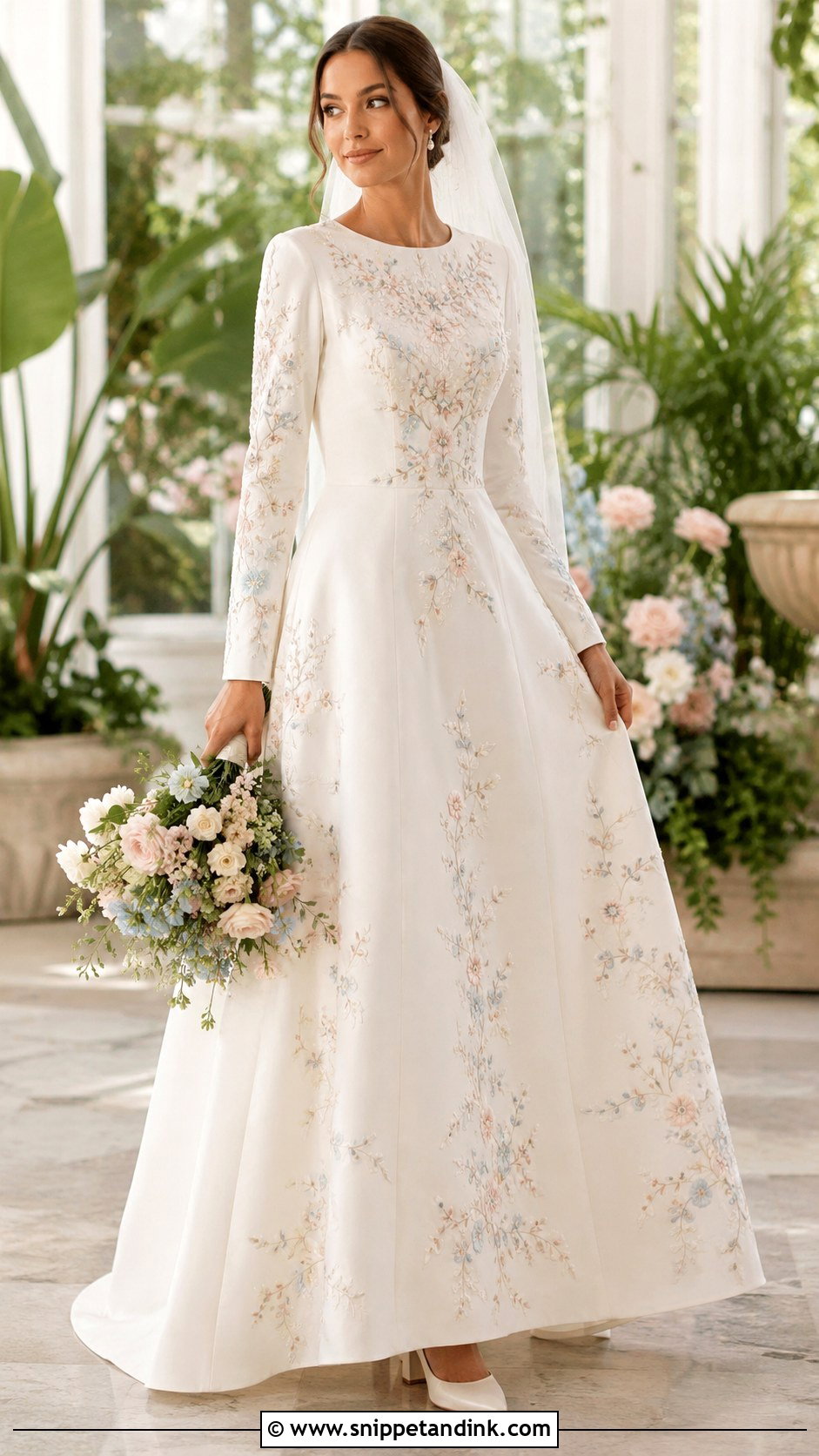
Coloured embroidery is a quiet way to add colour to a covered gown and still look bridal. Start with an ivory A-line with a high scoop neck, opaque lining and fitted long sleeves, then add white, pale blue, blush or muted green stitching across the bodice and onto the skirt. Keep the veil plain, the earrings small and the shoes ivory, and repeat one or two thread colours in the bouquet. Pastel threads look stronger in daylight than indoors. Embroidery that crosses a seam makes alterations harder, so ask the seamstress about sleeve, waist and hem changes before you order.
16. Basque Waist Long Sleeve Ball Gown
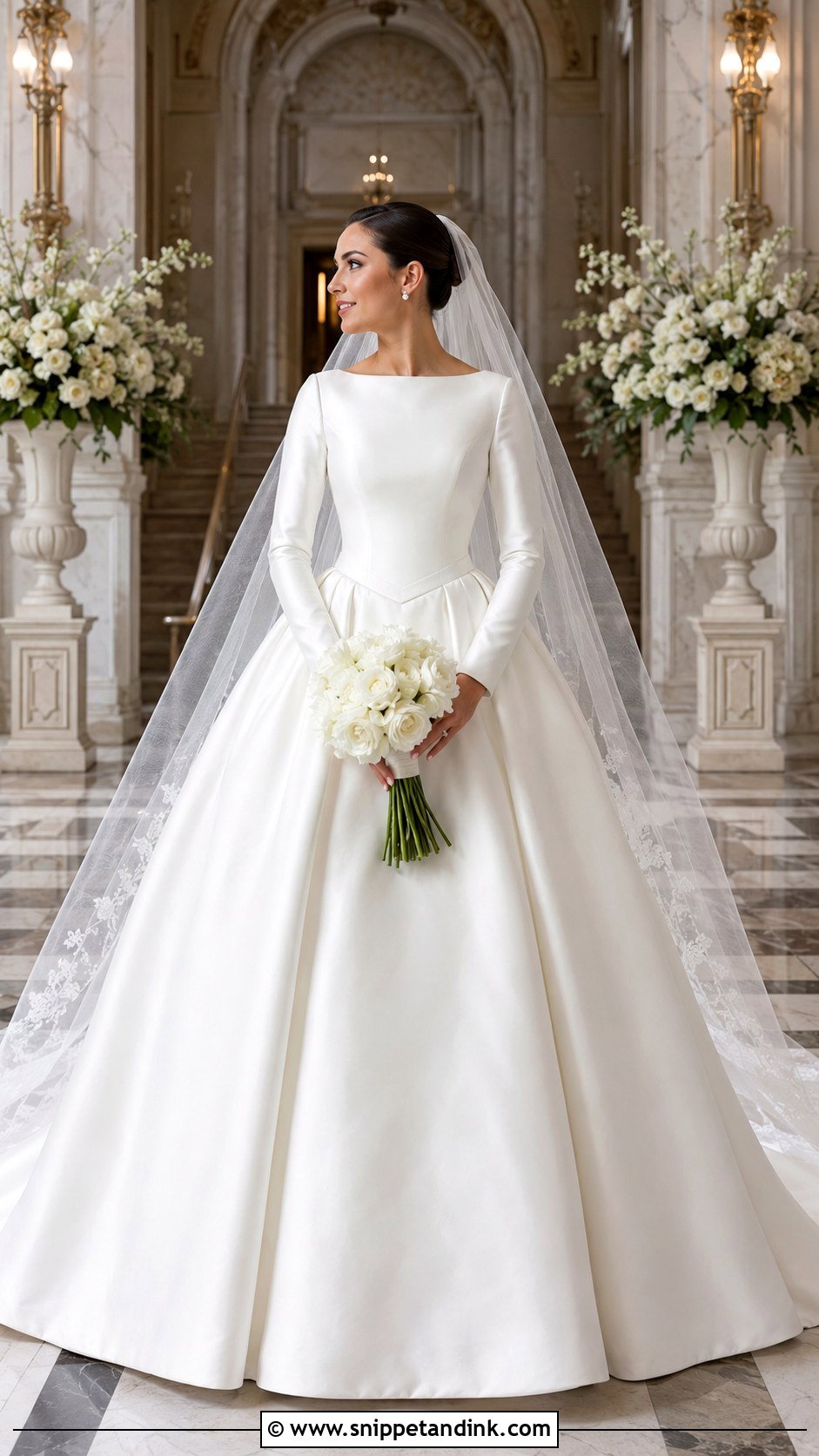
A Basque waist dips into a point below the natural waist, and with a full skirt it creates one of the most defined shapes in bridal. For coverage, pair it with a bateau neck, a closed back and fitted long sleeves, in satin or Mikado to hold the architecture, perhaps with light lace appliqué on the bodice. A cathedral veil, pearl drops, closed heels and a neat bouquet suit it. Skip any belt, as the pointed seam is already the focus. The bodice has to fit exactly where it meets the skirt or it bunches, so sit, walk and bend at every fitting.
17. Pleated Chiffon Long Sleeve Wedding Dress
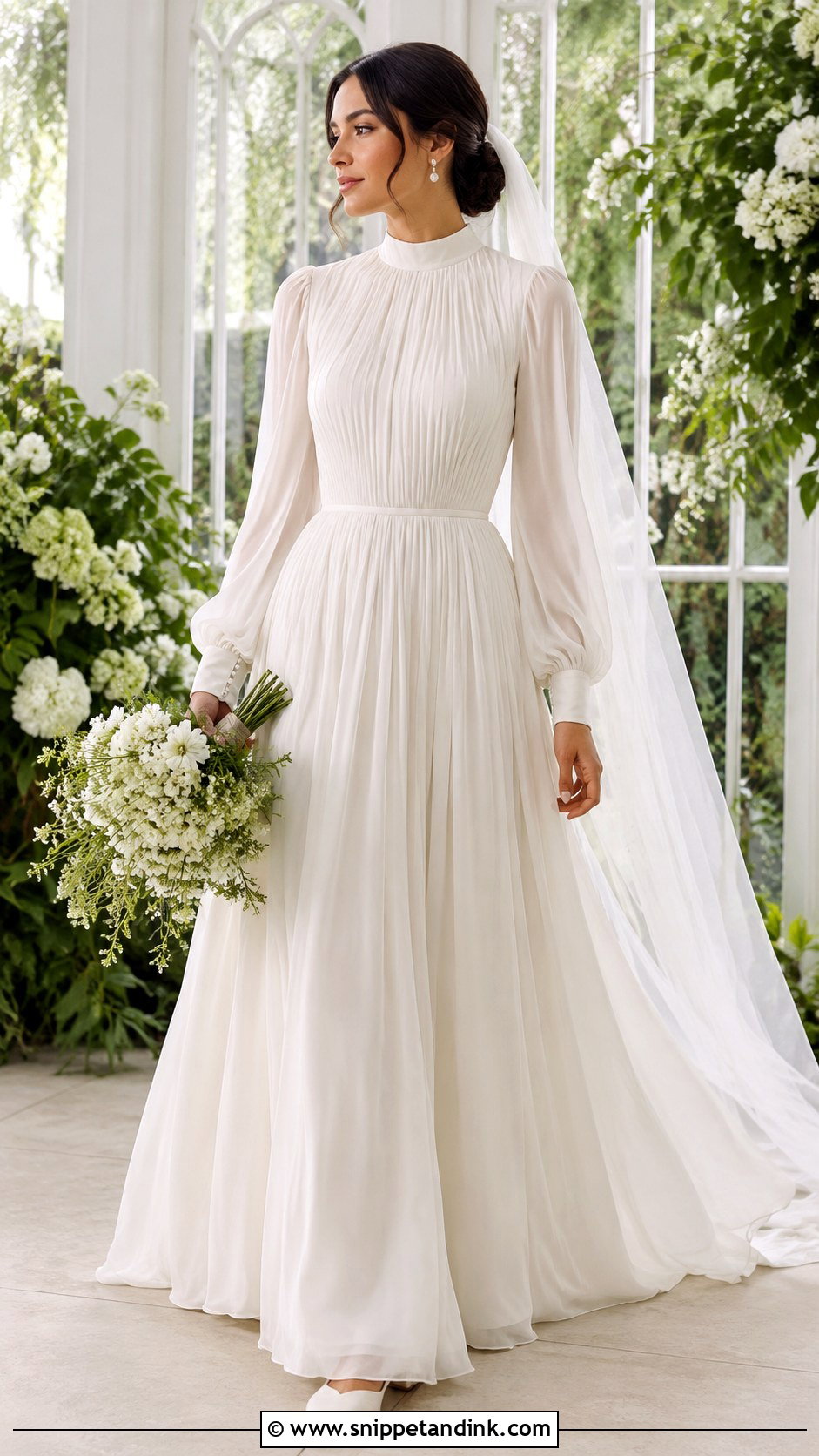
Fine pleats give chiffon texture without lace or beading. A high-neck bodice with narrow vertical pleats, lined bishop sleeves with tiny buttoned cuffs and an A-line skirt from the natural waist look soft and tidy. Pair with a light fingertip veil, pearl earrings, satin flats or low heels and airy white flowers. I find pleated chiffon fussy to alter and to press. Ask how the shop recommends steaming it, and never let anyone iron it flat, because heat and pressure can set the pleats unevenly or remove them altogether.
18. Minimalist Satin Long Sleeve Wedding Dress
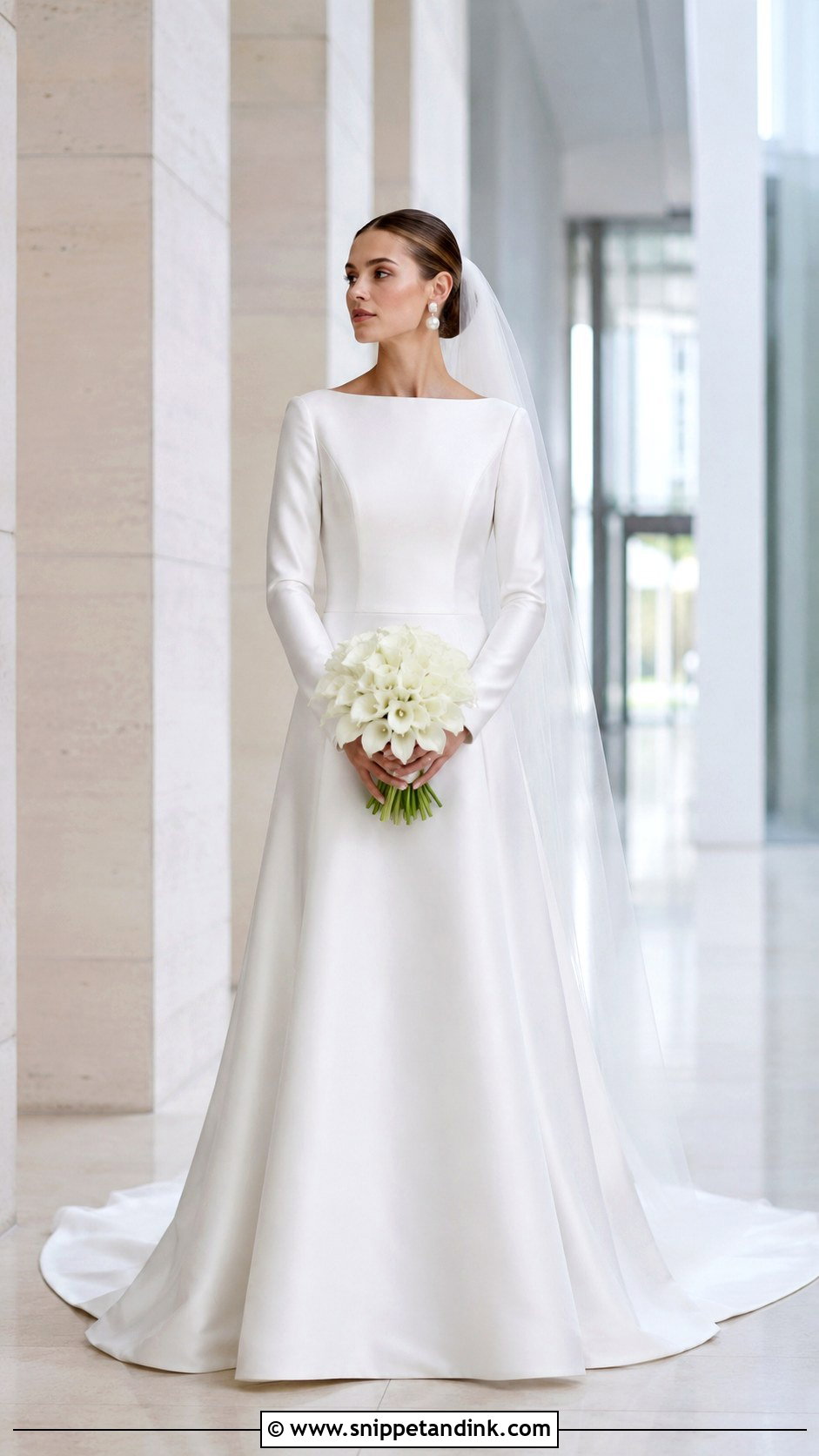
Minimal satin is for brides who would rather show tailoring than embellishment. A high scoop or bateau neck, smooth fitted sleeves, a covered back and a gently flared skirt shaped with princess seams keep the surface clean. Add a long plain veil, sculptural pearl earrings, pointed pumps and a simple white bouquet, with a bun, low ponytail or controlled waves. Satin shows pulling and wrinkles immediately, so stand under bright light at fittings and check the waist, hips, shoulders and elbows. Plan a professional steam close to the day and move it in a roomy garment bag.
19. Maternity Empire Waist Wedding Dress
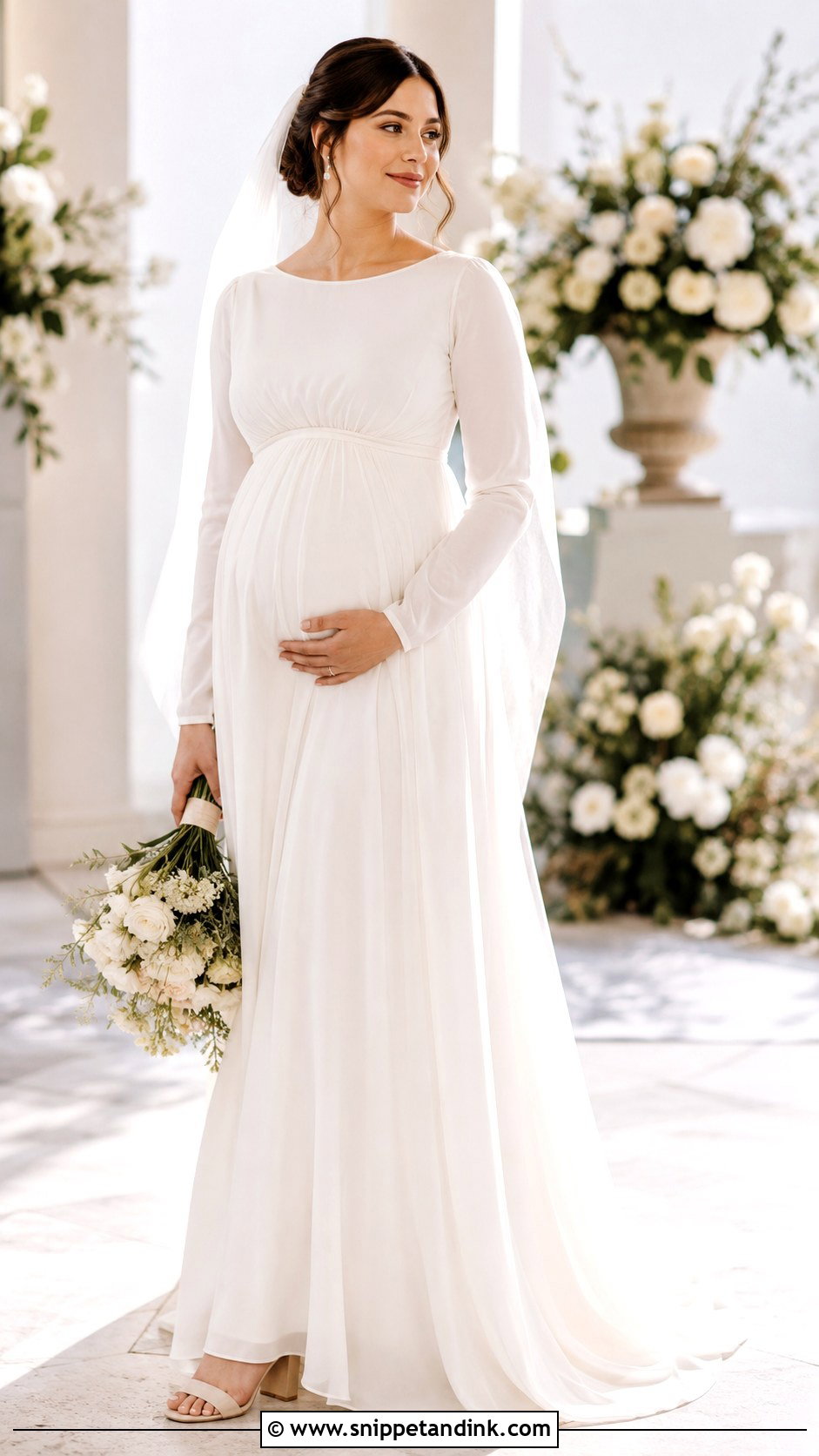
A maternity wedding dress needs to fit a body that is still changing, so adaptability matters more than anything else. An empire waist above the bump with a flowing chiffon or soft crepe skirt, a high scoop neck, stretch lining and long sleeves with room at the upper arm all help. Gentle gathering under the bodice accommodates growth without looking oversized. Supportive flats or low block heels, pearl earrings and a light veil complete it. Book the final alteration as close to the wedding as your seamstress allows, and skip stiff waistbands and corsetry. Sit and rest in it at the fitting, not just stand.

20. Modest Long Sleeve Mermaid Wedding Dress
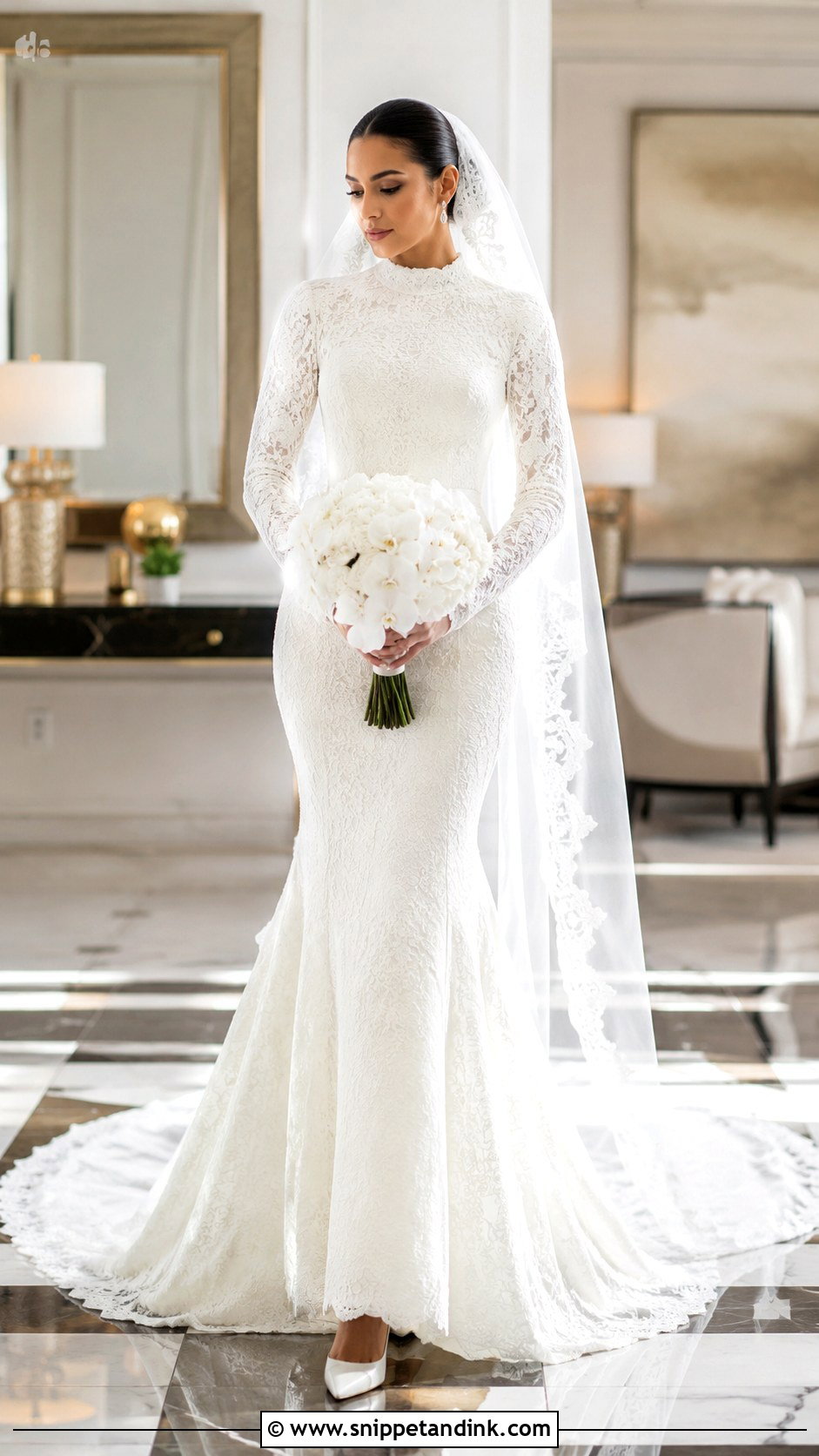
A mermaid can be fully covered: an opaque high neck, closed back and long sleeves in lined lace or stretch crepe, with the skirt following the body before flaring at or below the knee. I’d call it the least forgiving shape in this list for walking. Avoid a skirt so narrow that you can’t step or sit, and take full strides and sit in an ordinary chair at your fittings. A chapel veil, understated earrings, pointed heels, a structured bouquet and a low bun or sleek waves suit it. Watch for horizontal wrinkles across the thighs, which mean the lining and outer fabric aren’t moving together.
From Garment Bag to Preservation Box
Long sleeves and high necks add fabric in exactly the places that crease, stain and stretch, so a covered gown needs a little more care before and after the wedding.
Between the last fitting and the day
Hang the dress by its inner hanging loops, not the shoulders, so the weight of the skirt doesn’t stretch the sleeve heads. Keep it in a breathable fabric garment bag in a cool, dark place, never a plastic one, which can trap moisture. Steam it on the morning or the day before; heavy satin and Mikado hold creases longer than chiffon or lace.
On the day
Cuffs and collars pick up makeup and foundation fast. Put your dress on before your final touch of makeup, with a light scarf over your face if you’re stepping into it, and keep tissues and a white chalk stain pen in the emergency kit. Don’t rub at a mark on satin or silk, as rubbing spreads it and dulls the sheen.
After the wedding
Take the gown to a specialist cleaner within a few weeks, even if it looks clean. Sugary drinks and perspiration often dry invisibly and turn yellow or brown months later. For long-term storage, a preservation box with acid-free tissue in a stable, dry room is best. Pad the sleeves and bodice with tissue so they don’t flatten into permanent fold lines.
Look at the Back, the Lining and the Sleeves Before the Front
A modest gown should give you the coverage you want and still feel like yours. Traditional ceremony, outdoor wedding, winter venue or minimalist city celebration, the same rule applies: look past the front view. Check the neckline, back, lining, sleeve construction, hem and how you move from every angle. Bring your shoes and undergarments to fittings and leave enough time for alterations. Lace, satin, crepe, chiffon, velvet or embroidered tulle can all work, as long as the fit is right.
You'll Like These Ideas:








Leave a Reply