
Turning an Almost-Right Gown Into a Modest One
Many brides I work with fall for a gown that’s close but not covered enough. A skilled bridal seamstress can often close that gap, though some changes are far easier than others. Here’s how I’d rank them.
- Easiest: filling a V or sweetheart neckline with illusion tulle or a lace panel, and adding a modesty layer under a sheer bodice.
- Moderate: adding cap or short sleeves, or closing an open back with mesh or a matching fabric panel.
- Hardest: adding full-length fitted sleeves to a strapless gown. The bodice wasn’t built to carry them, and matching the fabric exactly can be difficult.
If you’re ordering from a bridal shop, ask whether the designer offers sleeves or higher necklines as a factory option, and whether extra fabric can be ordered with the gown. Matching fabric from the same dye lot gives a far cleaner result than anything sourced later. Add the alteration time to your schedule, since structural changes take longer than a simple hem.
1. Long Sleeve A Line Wedding Dress
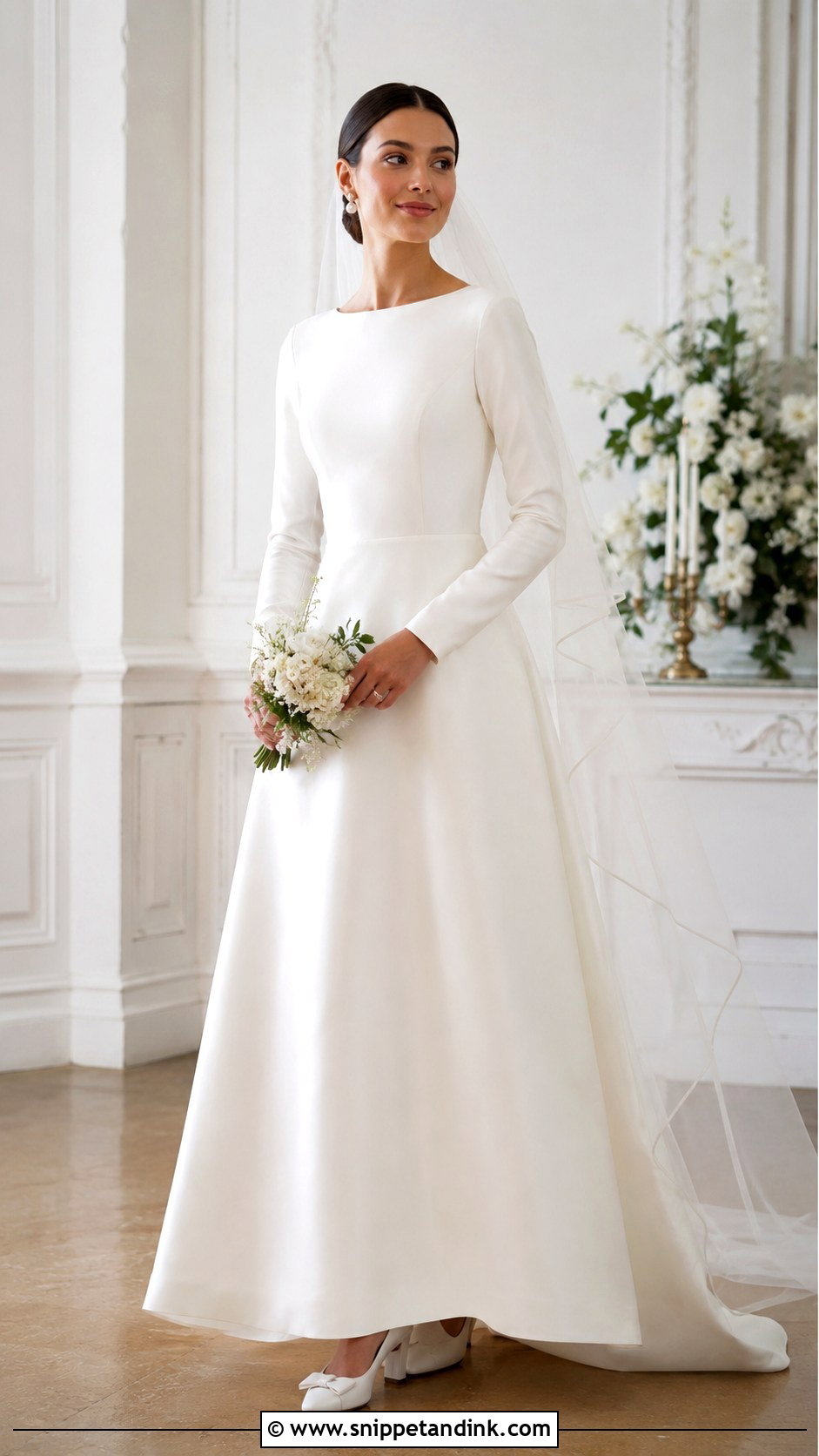
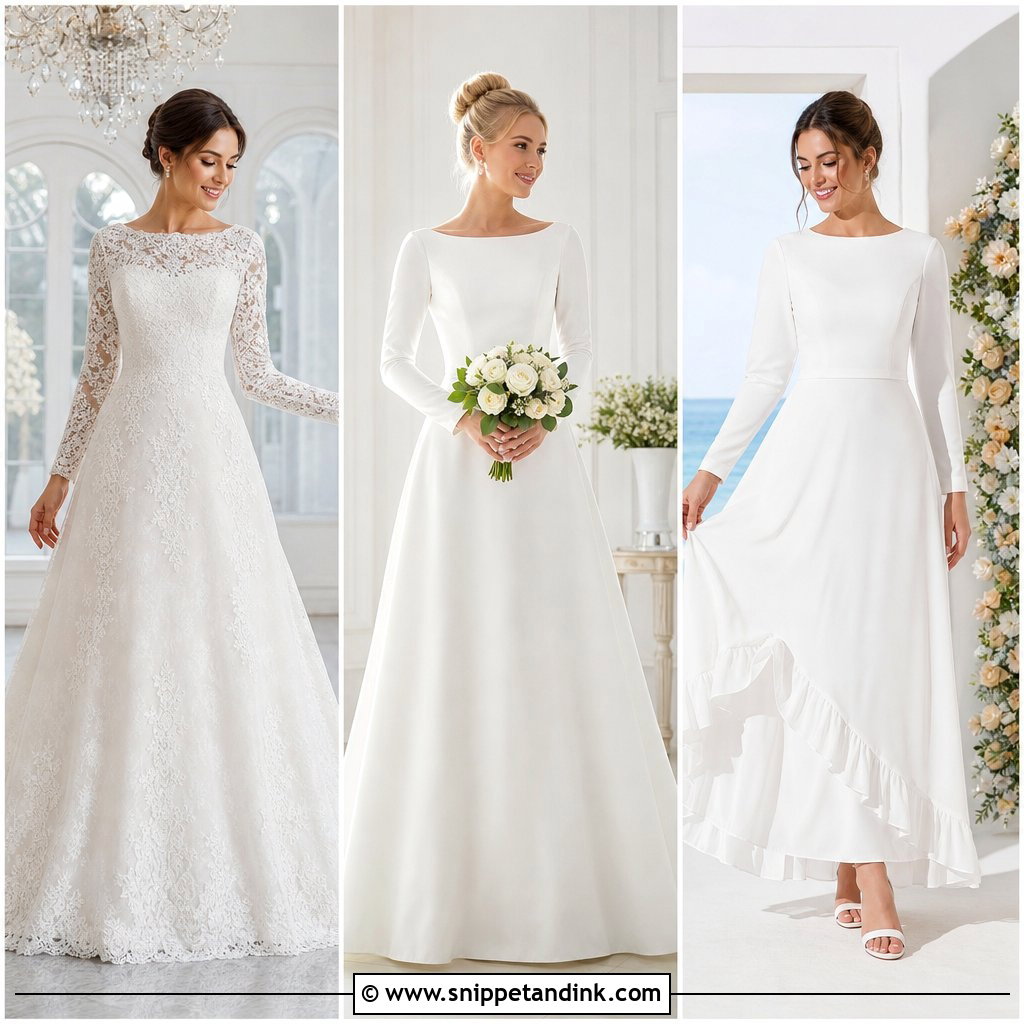
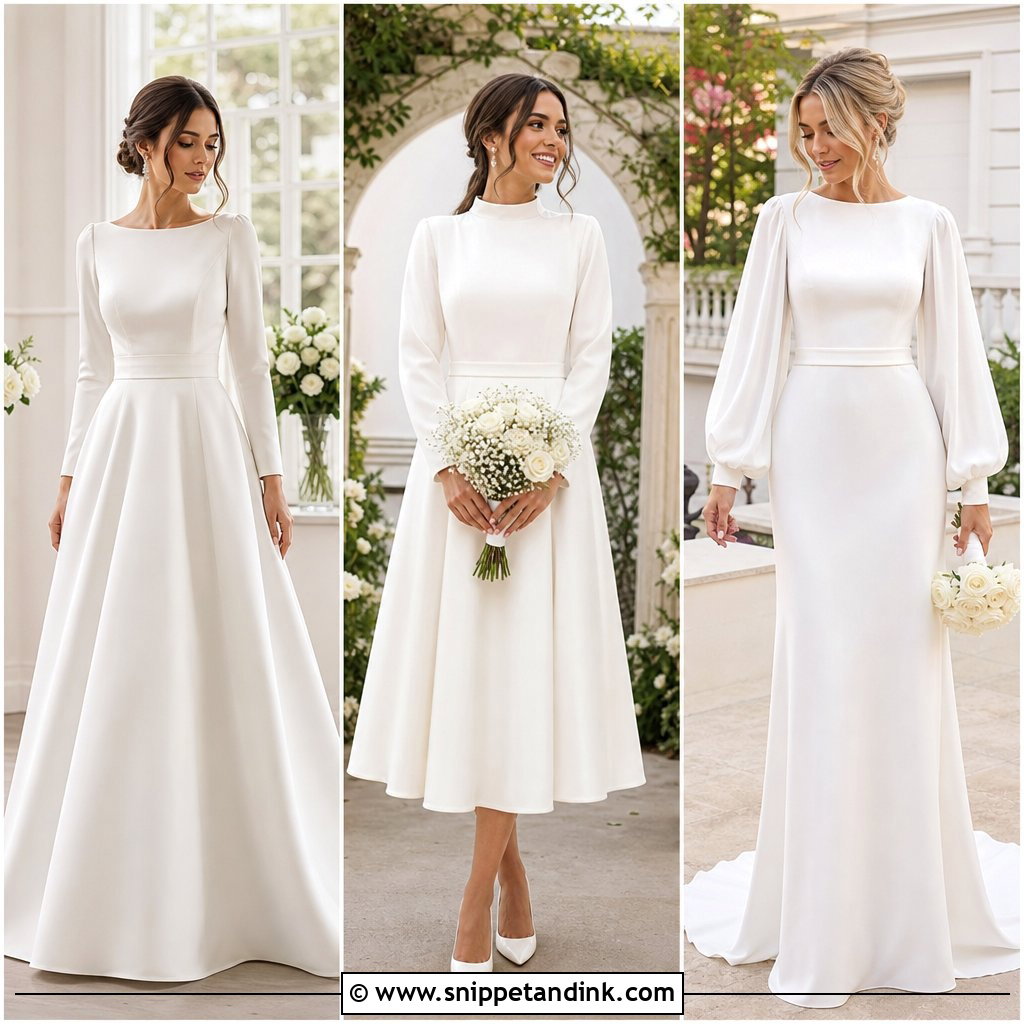
Long sleeves and an A-line skirt are the combination I reach for first when a bride wants coverage and hasn’t settled on a shape. The skirt falls away from the waist, so it suits most figures and never pulls when you sit. Crepe keeps it modern, satin adds a soft shine, and lace sleeves read more romantic. A high, bateau or gentle scoop neckline completes the coverage. One fitting tip: long sleeves need room at the elbow, or they’ll ride up every time you bend your arm. Pearl drops, a fingertip veil and low block heels finish it for almost any venue.
2. High Neck Satin Wedding Dress
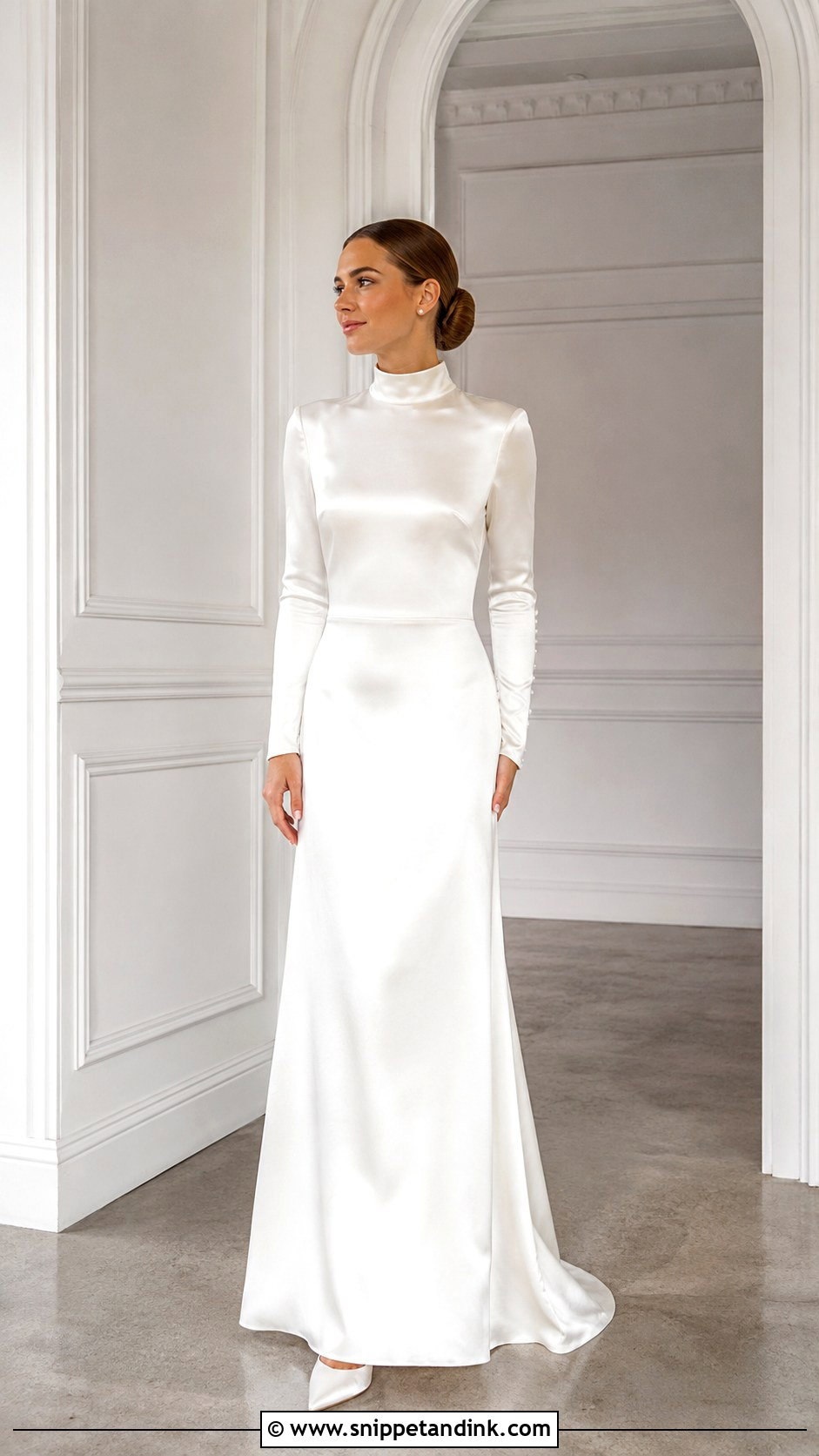
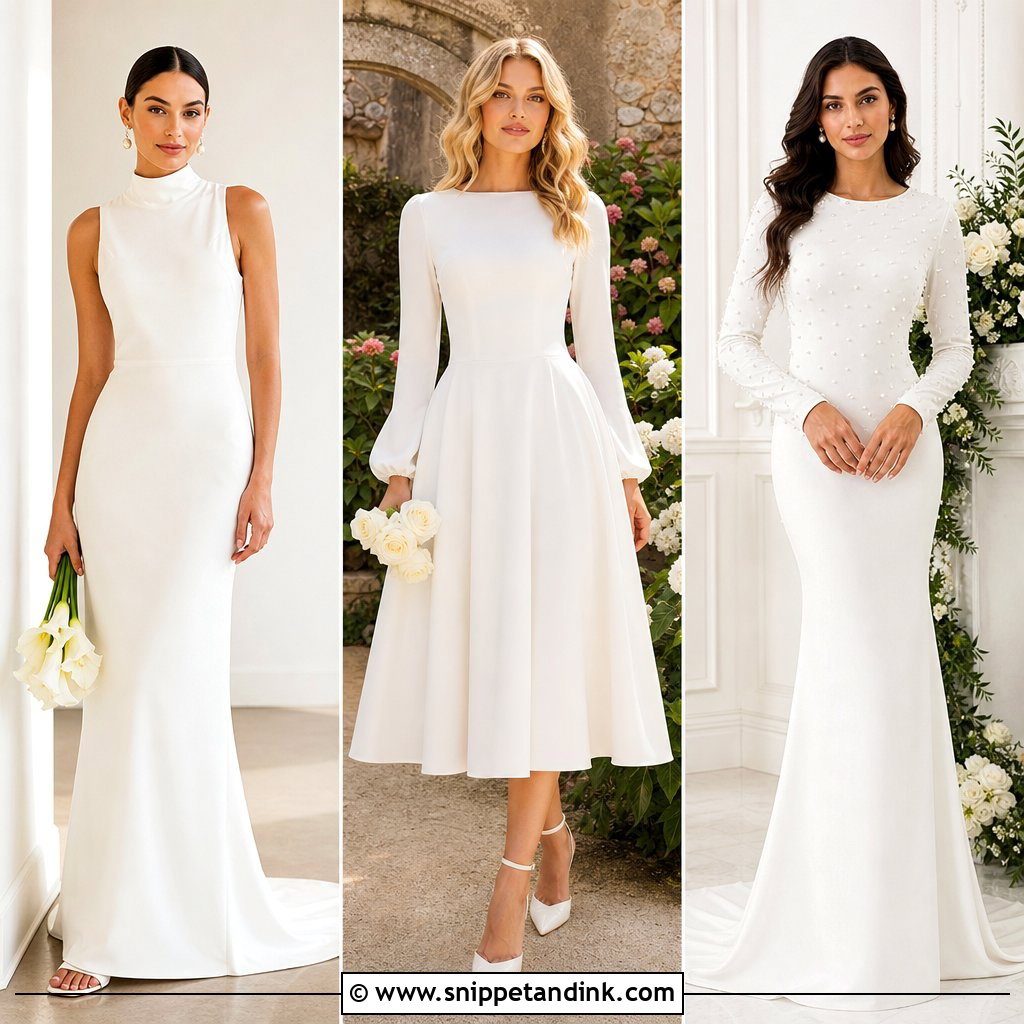
Satin has enough shine that a high-neck gown can stay completely plain and still look dressed. Pair it with a slim A-line skirt, long fitted sleeves and a covered back. Because the neckline frames the face, I keep jewelry to pearl studs and put the hair in a smooth low bun. Satin does show creases where you sit, so if the ceremony is long and seated, ask about a heavier satin or one with a little texture.
3. Simple Crepe Wedding Dress With Sleeves
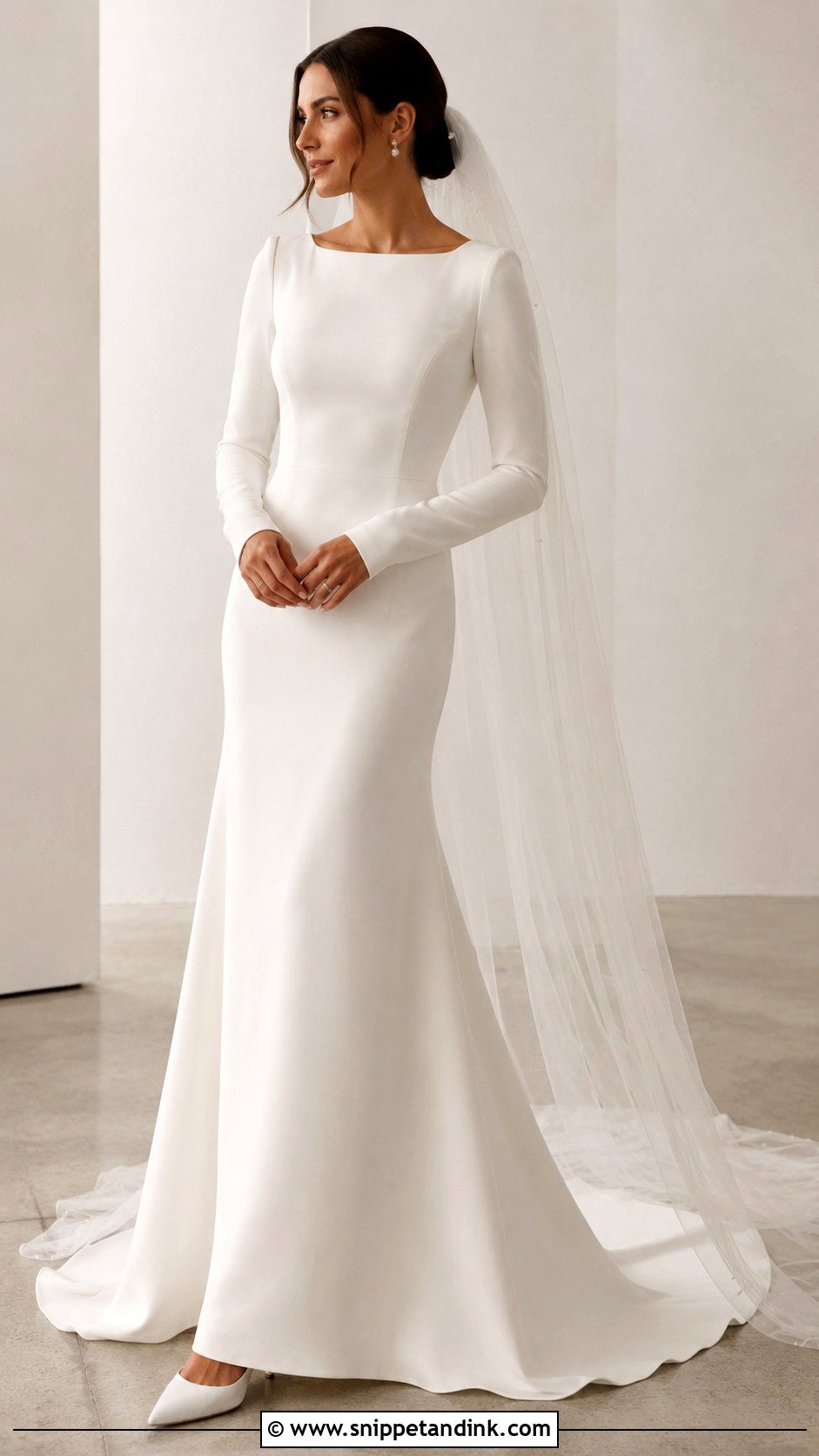
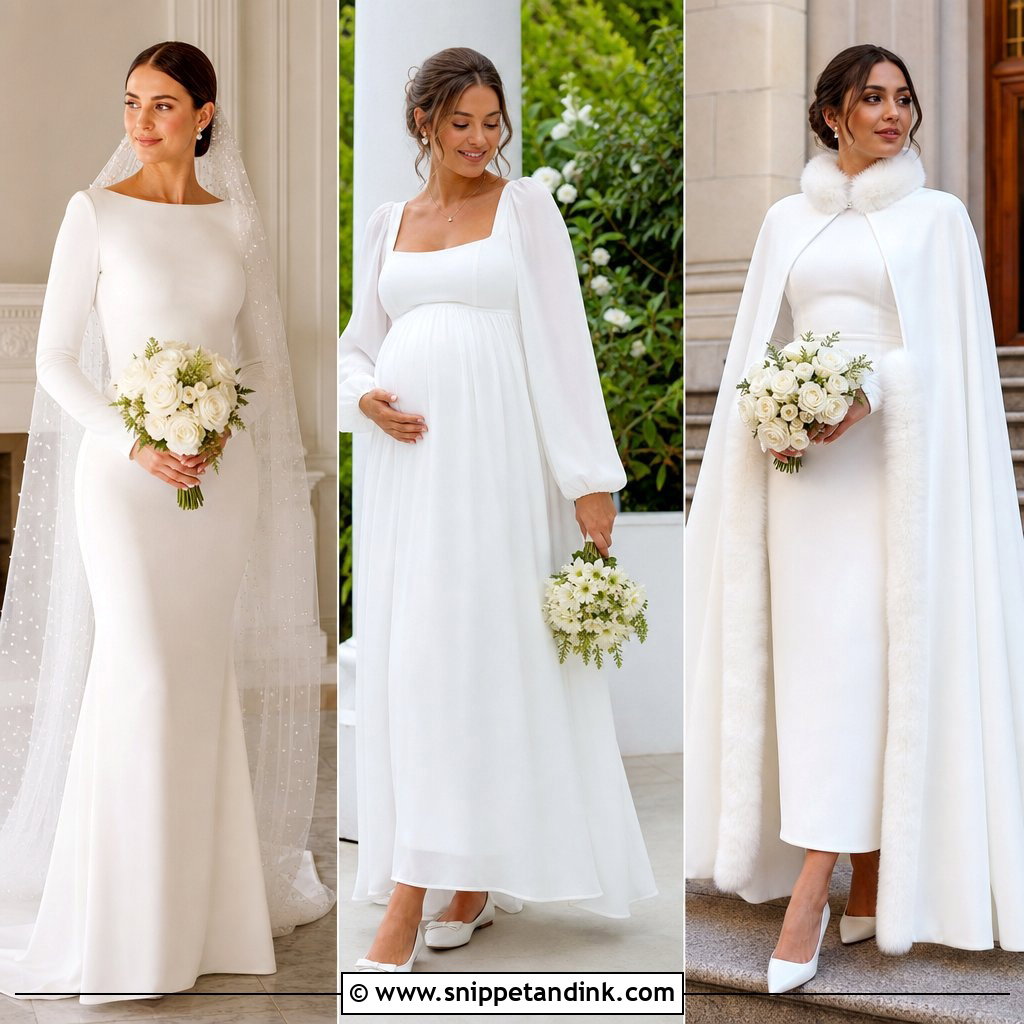
Crepe has enough weight to skim the body without clinging, which is why it’s the fabric I trust most for minimal modest gowns. Long sleeves, a high square neckline and a covered back with a sheath or soft fit-and-flare skirt keep it tailored. There’s nowhere to hide on crepe, so the cut and the seams carry everything. Pointed ivory heels, a sleek veil and small pearl or crystal earrings are all it needs.
4. Modest Lace Wedding Dress
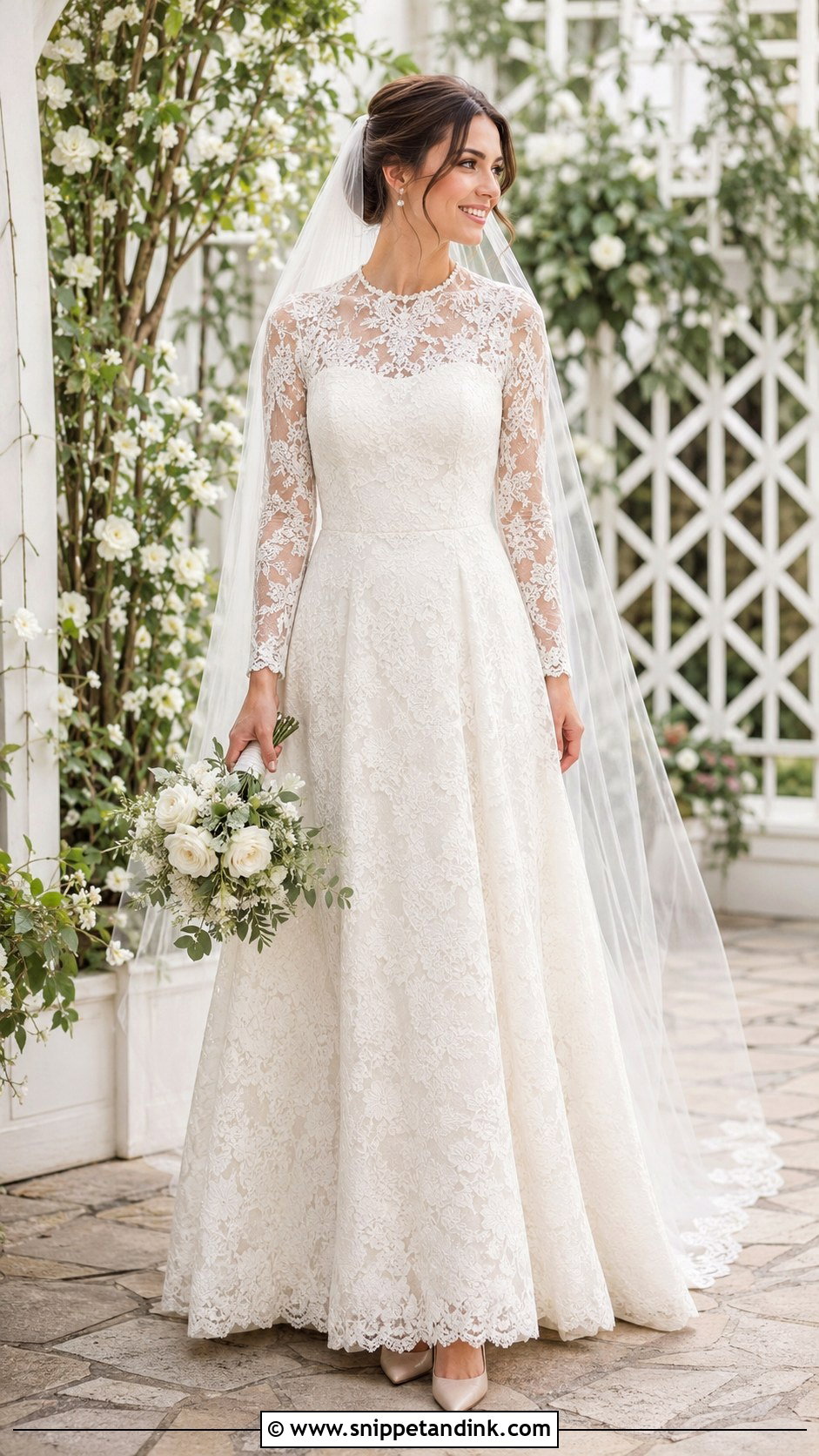
Lace adds texture while covering, but the lining makes or breaks it. I check how the bodice lining sits against the lace at the neckline and sleeves, since a lining cut too low turns a modest dress into a sheer one in flash photos. A high neckline or illusion neckline works well when that lining is placed carefully. Floral lace feels romantic; geometric lace looks more modern. Pick one lace pattern and keep it, with nude or ivory heels and pearls.
5. Boat Neck Wedding Dress
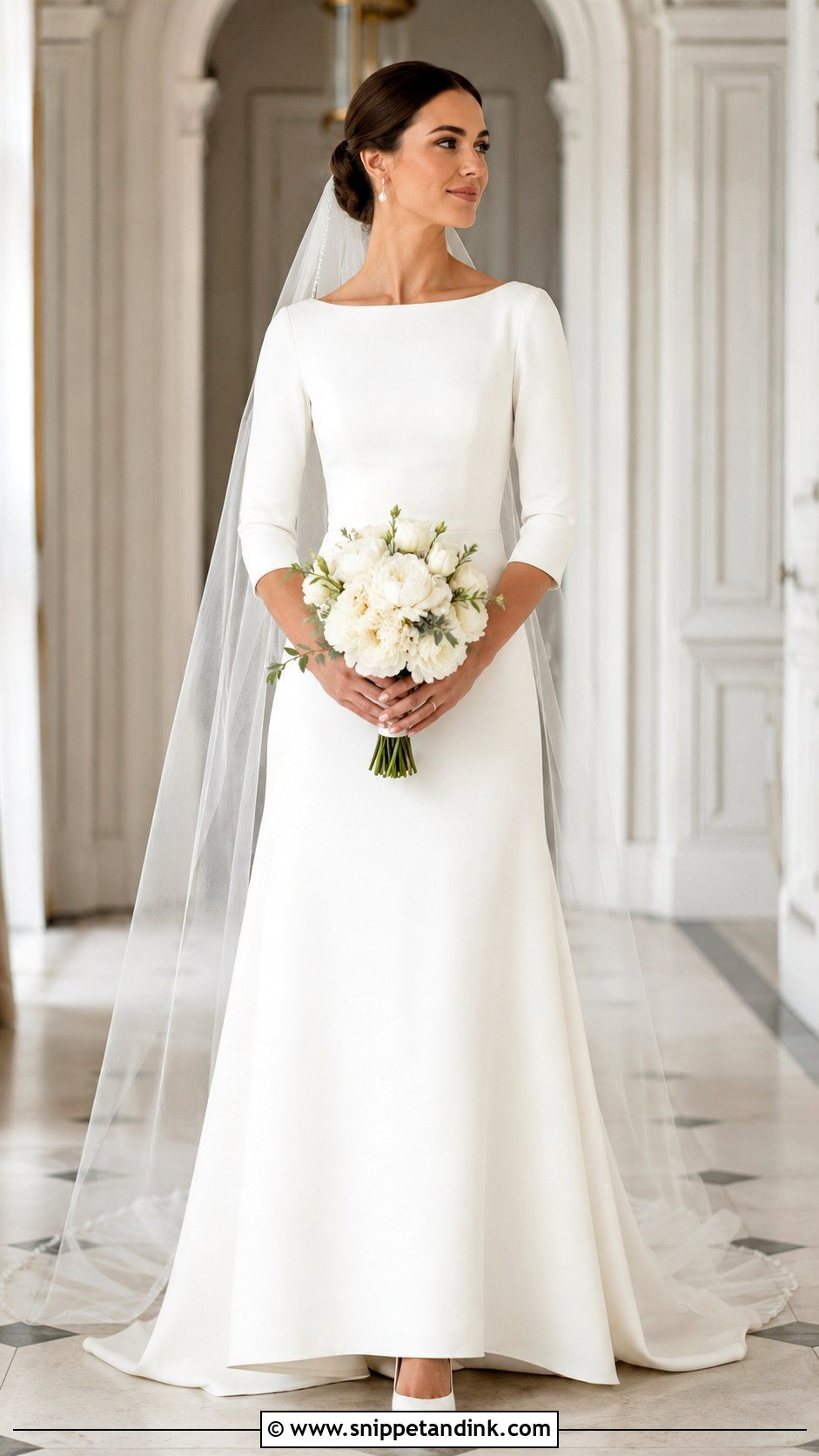
If a high collar feels too closed for you, a boat neck wedding dress covers the chest while opening the line across the collarbone. It widens the shoulders slightly, which balances fuller hips. Three-quarter, long or cap sleeves all suit it. Satin, crepe or mikado with little embellishment and a softly flared skirt keep it calm. Wear a low chignon so the neckline stays visible under a chapel veil.
6. Modest Ball Gown Wedding Dress
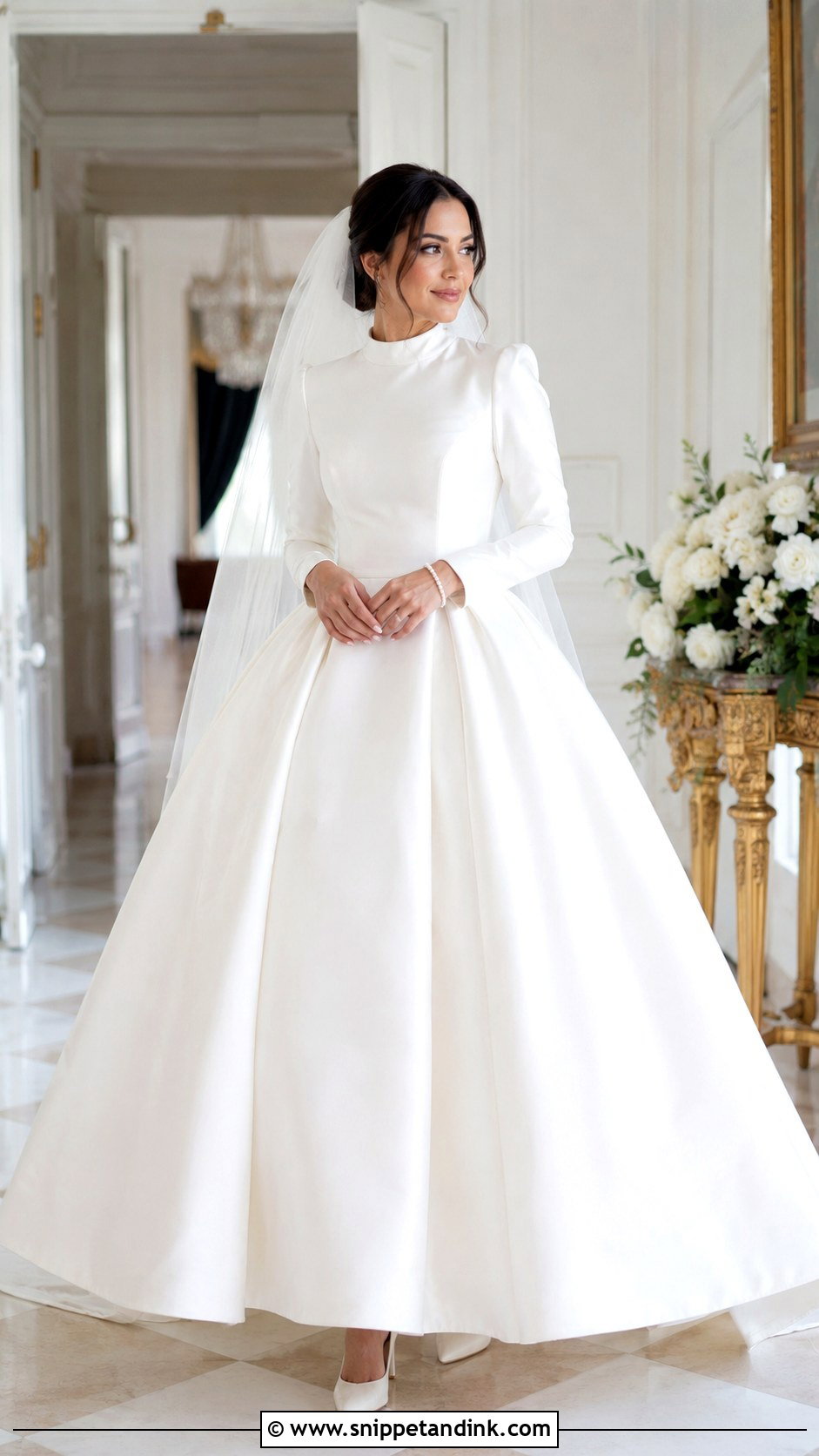
A ball gown gives the traditional bridal volume without any need to reveal anything. A high neckline, long sleeves and a fitted bodice balance the skirt. Plain satin or mikado keeps it simple; a tulle skirt over a clean lined top makes it lighter. The practical side is weight. A full mikado skirt can be heavy by evening, so try walking a few minutes in one before you commit. A simple veil and classic pumps are enough.
7. Simple Chiffon Wedding Dress
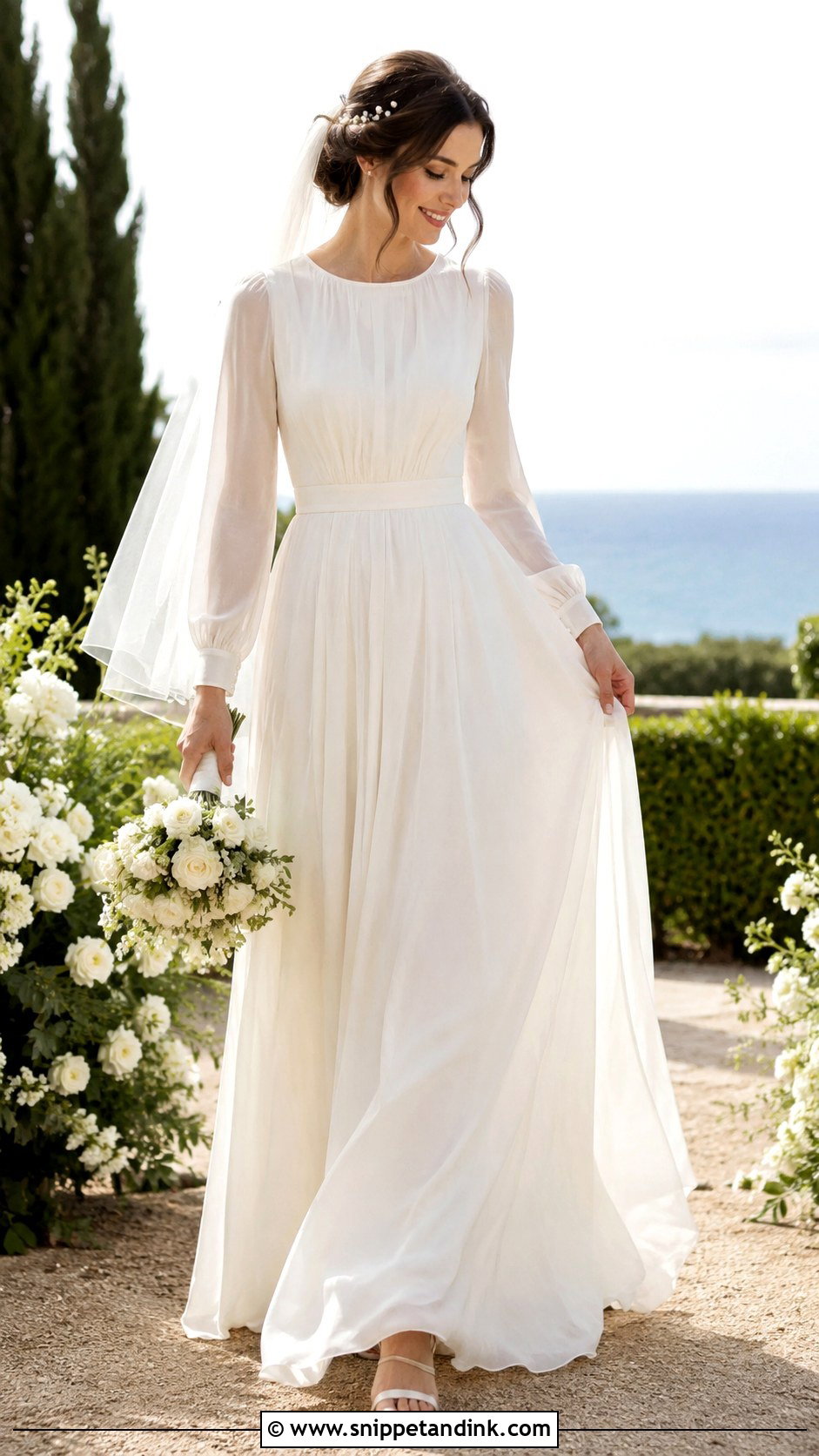
Chiffon floats, which makes it the most comfortable modest fabric in heat. A long-sleeve chiffon gown with a lined bodice and a modest V or high neckline moves well for walking, sitting and dancing. Watch the sleeves: unlined chiffon sleeves are sheer, which some brides want and some don’t, so decide before ordering. Soft curls, pearl pins and low sandals suit garden and beach settings.
8. Modest Square Neck Wedding Dress
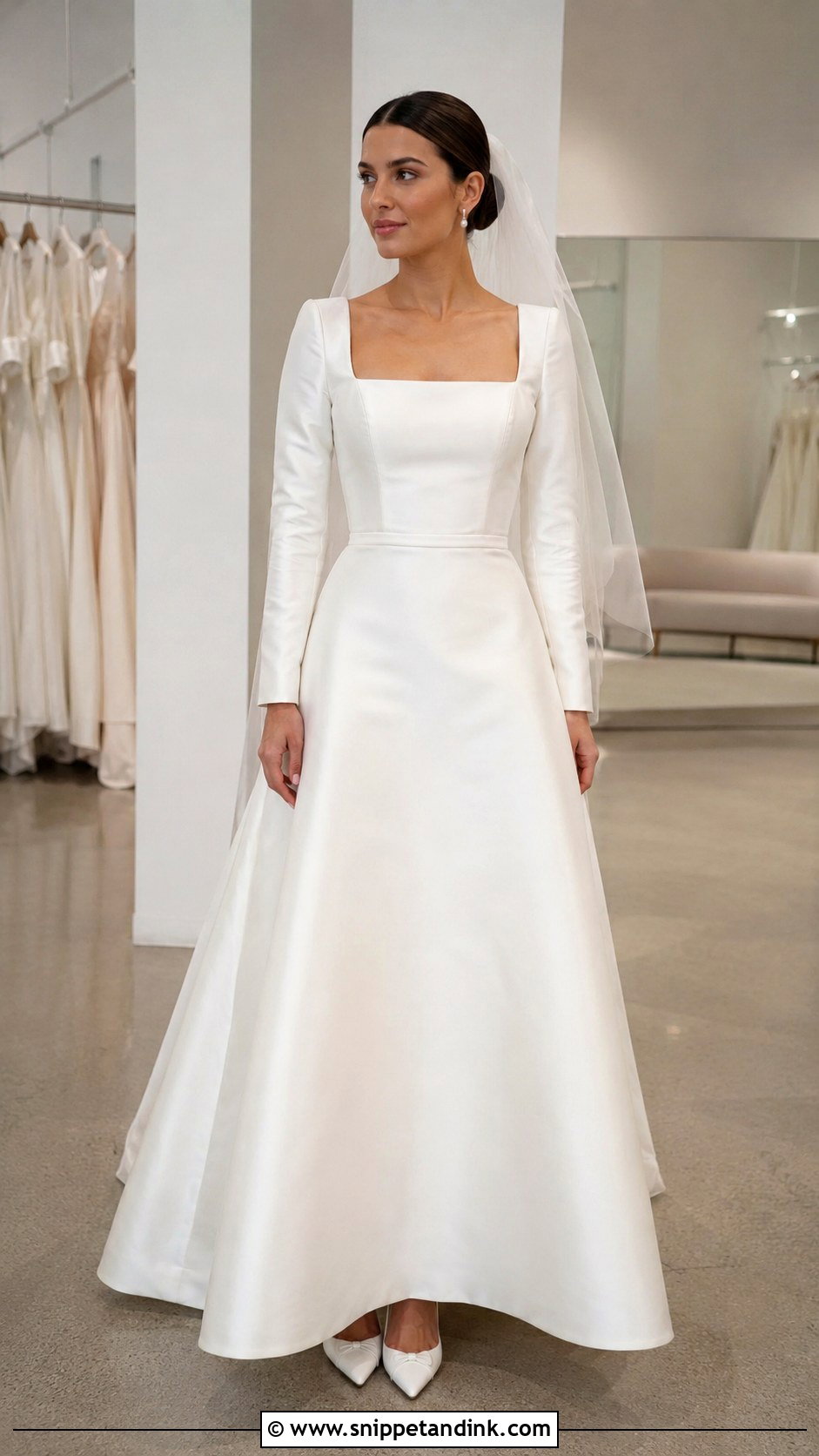
The square neckline sits high enough to be modest and still gives the bodice clear structure. Long, puff or elbow-length sleeves all pair with it. Satin reads classic, crepe reads modern and cotton lace feels softer. I check the corners of the square at fittings; if the bodice is even slightly loose, the corners collapse inward and the shape is lost. A fitted waist with an A-line skirt, pearl hoops and ivory heels keep it current.
9. Long Sleeve Sheath Wedding Dress
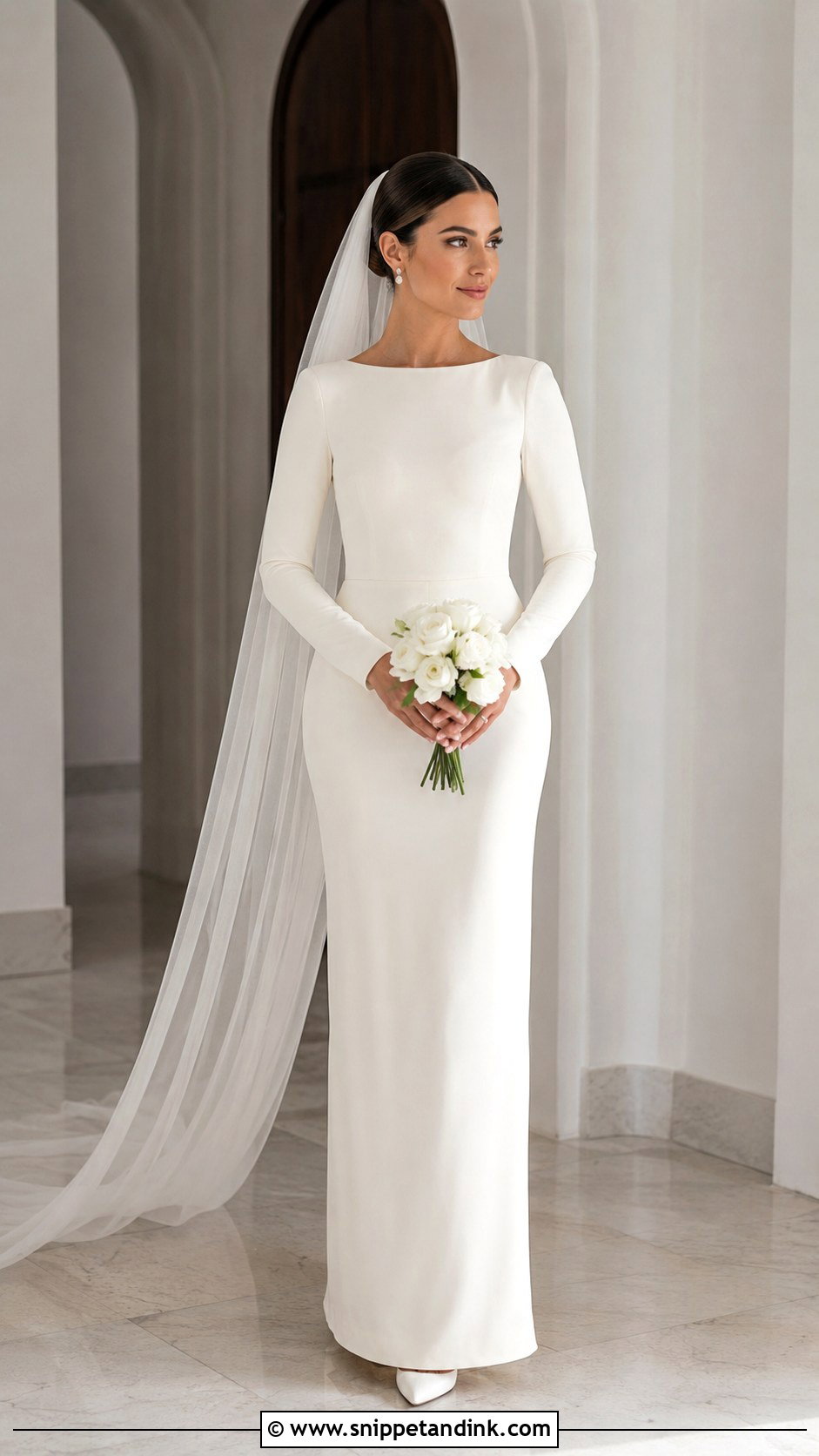
A long sleeve sheath wedding dress follows the body in a narrow line, so tailoring matters more than with any fuller shape. A high neckline, lined sleeves and a covered back give full coverage. Crepe, satin and stretch mikado hang smoothly. I make sure the hem falls cleanly at the back and that the sleeves allow you to lift a glass without the shoulder seam pulling. A long veil, pointed heels and a small bouquet suit intimate venues.
10. Modest Tea Length Wedding Dress
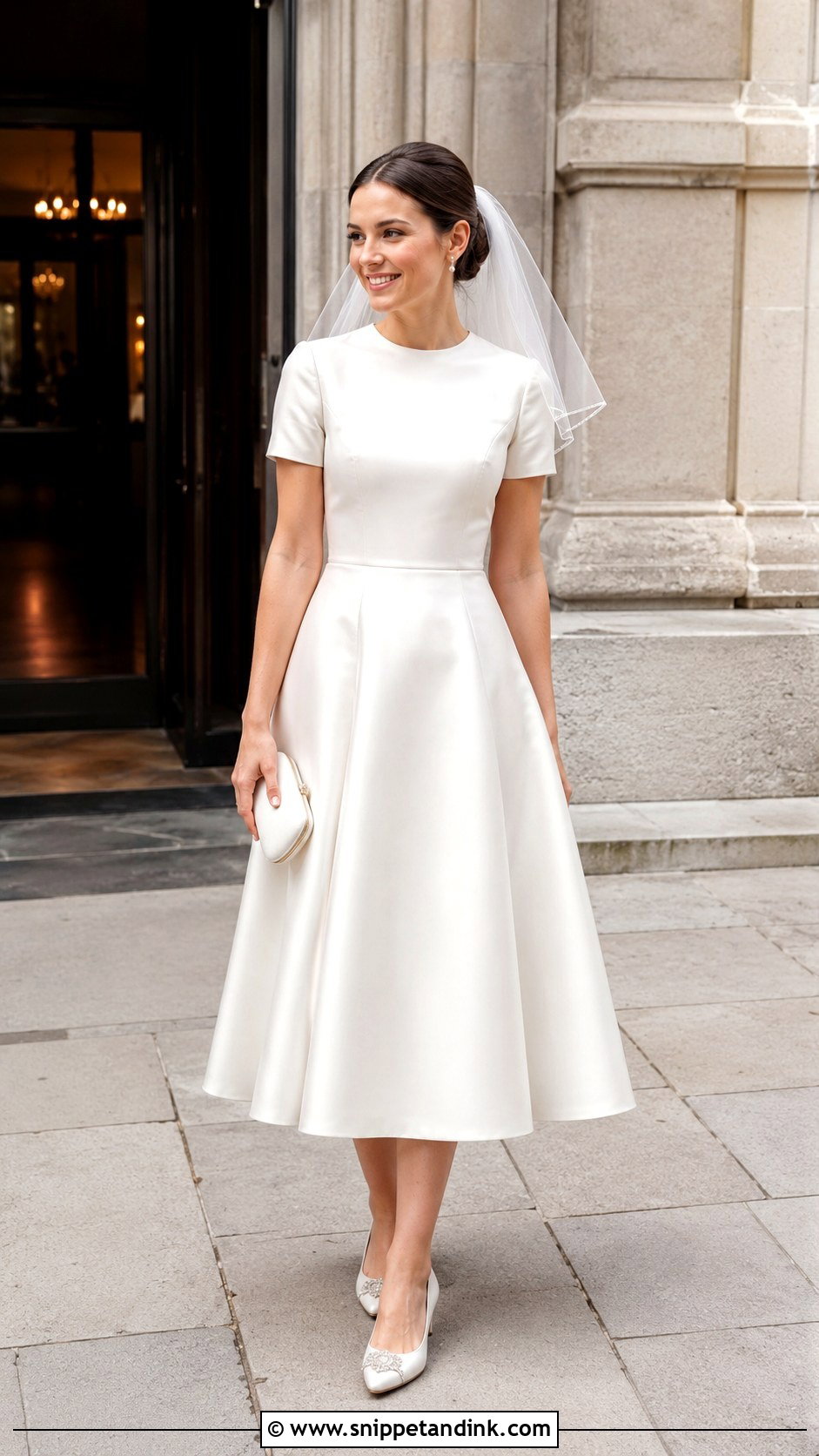
Tea length falls between knee and ankle, which gives a vintage feel and makes walking easy. Keep it bridal with a high neckline, short or long sleeves and a structured bodice. Satin, organza, lace or crisp cotton blends hold the skirt nicely. Because your shoes are on show, choose them early and pick ones you can stand in. Low heels, ballet flats or embellished pumps, plus a short veil and pearl studs, suit daytime and courthouse weddings.
11. Simple Tulle Wedding Dress
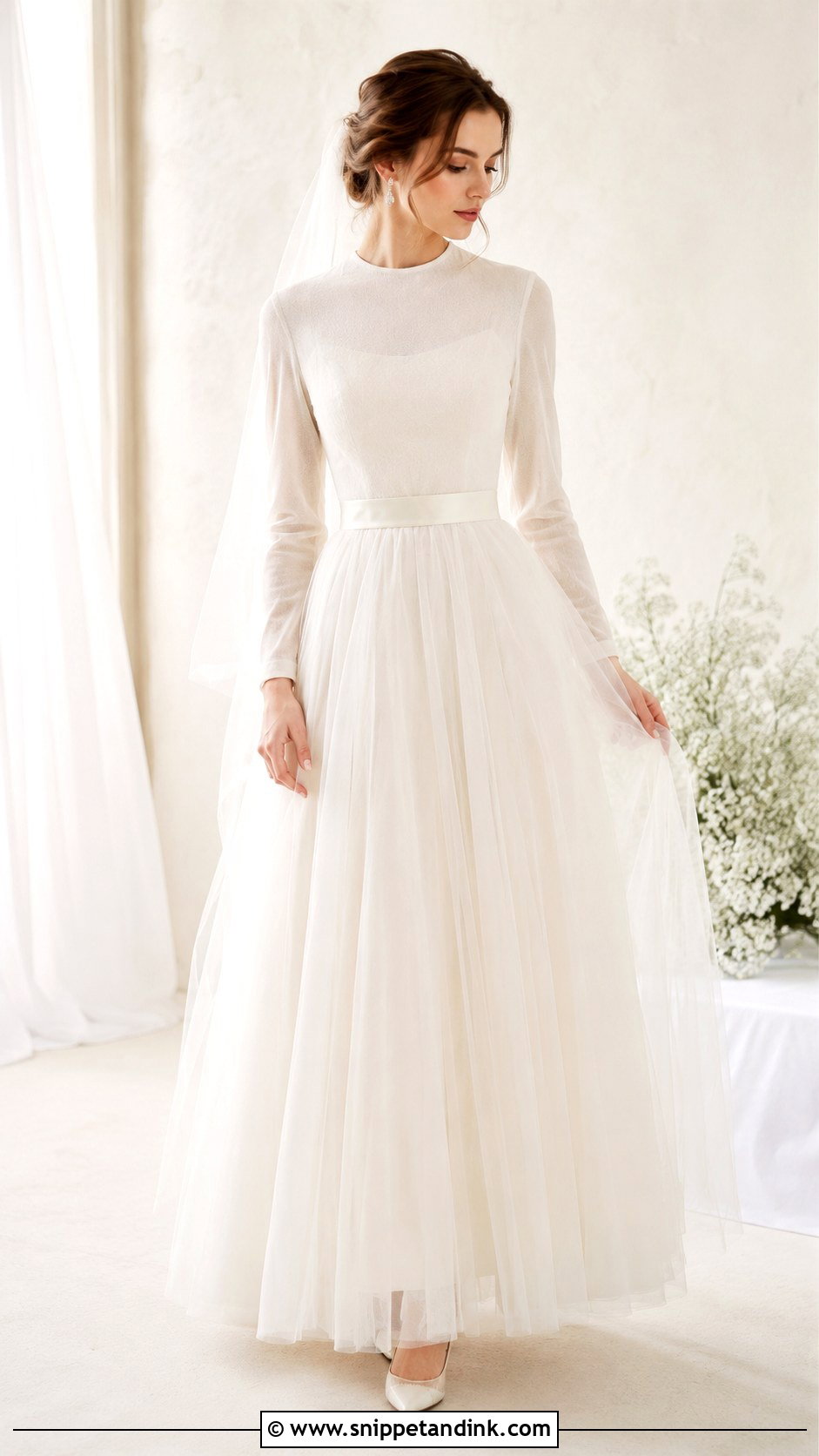
Tulle can look dreamy or overdone, and the difference is layering. Soft, fewer layers keep it light; stiff volume makes it heavy. Pair the skirt with a modest lined bodice, long sleeves or a high or bateau neckline. A plain waist or narrow satin belt defines the shape. Tulle also snags easily on bracelets and bouquet wire, so I keep jewelry smooth and simple.
12. Modest Wedding Dress With Puff Sleeves
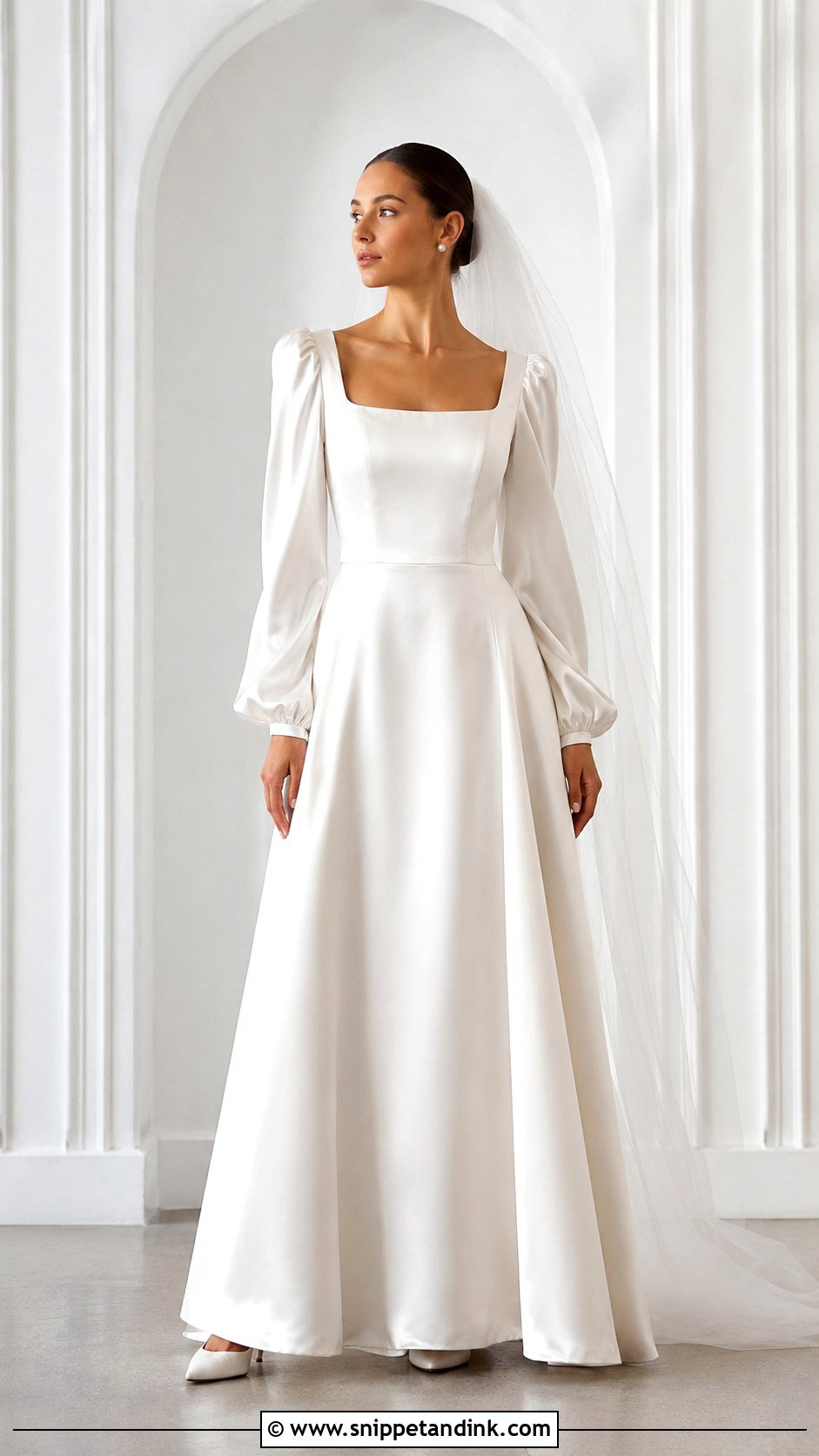
Puff sleeves add personality without changing the rest of a simple gown. Short, elbow or full-length all work depending on the season. Satin and organza give a crisp puff; chiffon gives a soft one that collapses a little through the day. Balance the volume at the shoulder with a clean A-line or slim skirt and a square, high or bateau neckline. Small jewelry keeps the sleeves as the focus.
13. Simple Mikado Wedding Dress
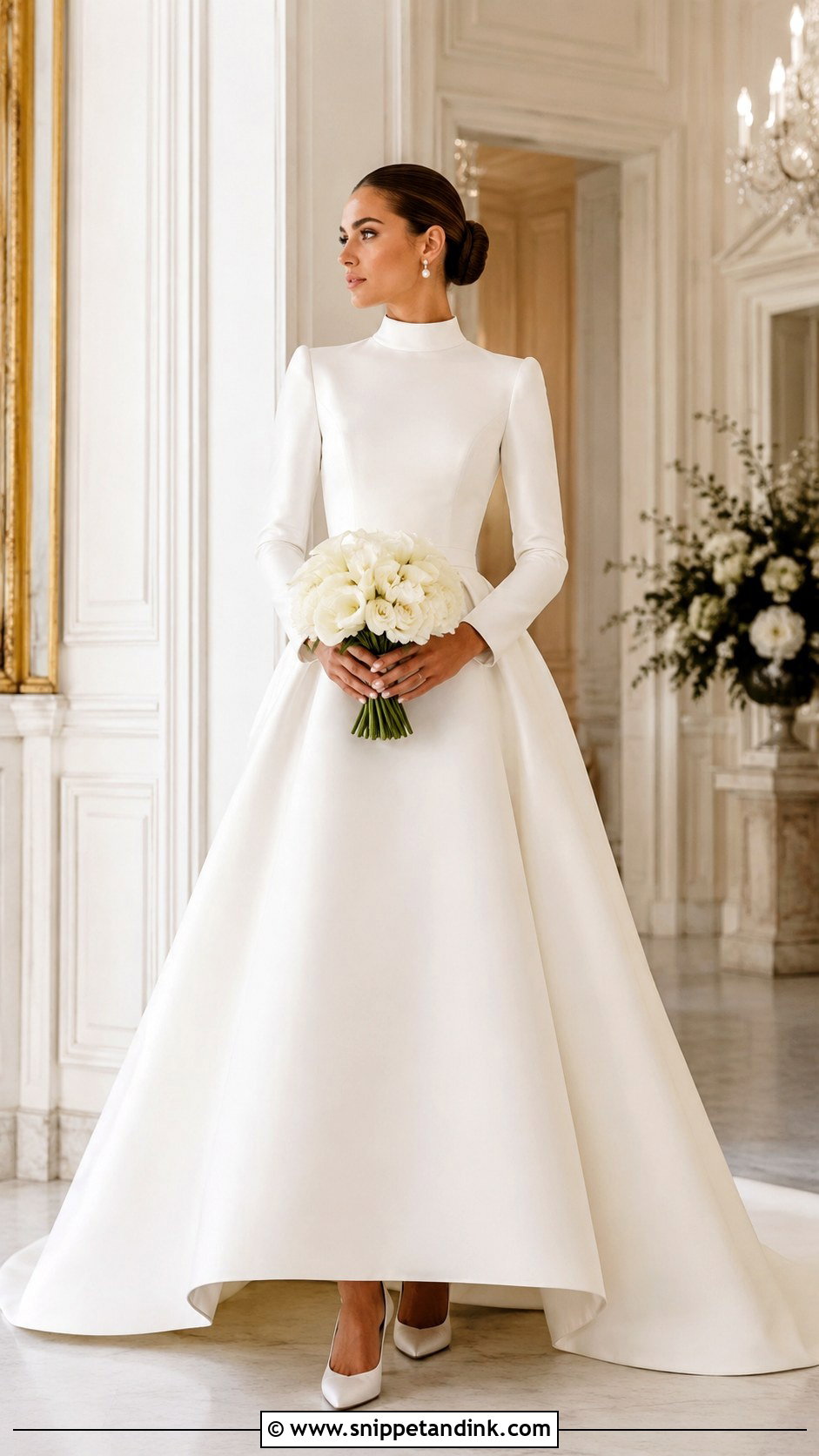
Mikado is a heavy, structured silk or silk blend with a slight sheen, so it holds its shape without boning everywhere. That makes a high neck, long sleeves and full skirt look regal with no lace or beading. A modern take is a mikado A-line with a square neckline and covered back. It’s warm to wear, so I’d save it for cooler seasons and formal indoor venues. A sleek bun, pearl earrings and satin heels suit its crispness.
14. Modest Empire Waist Wedding Dress
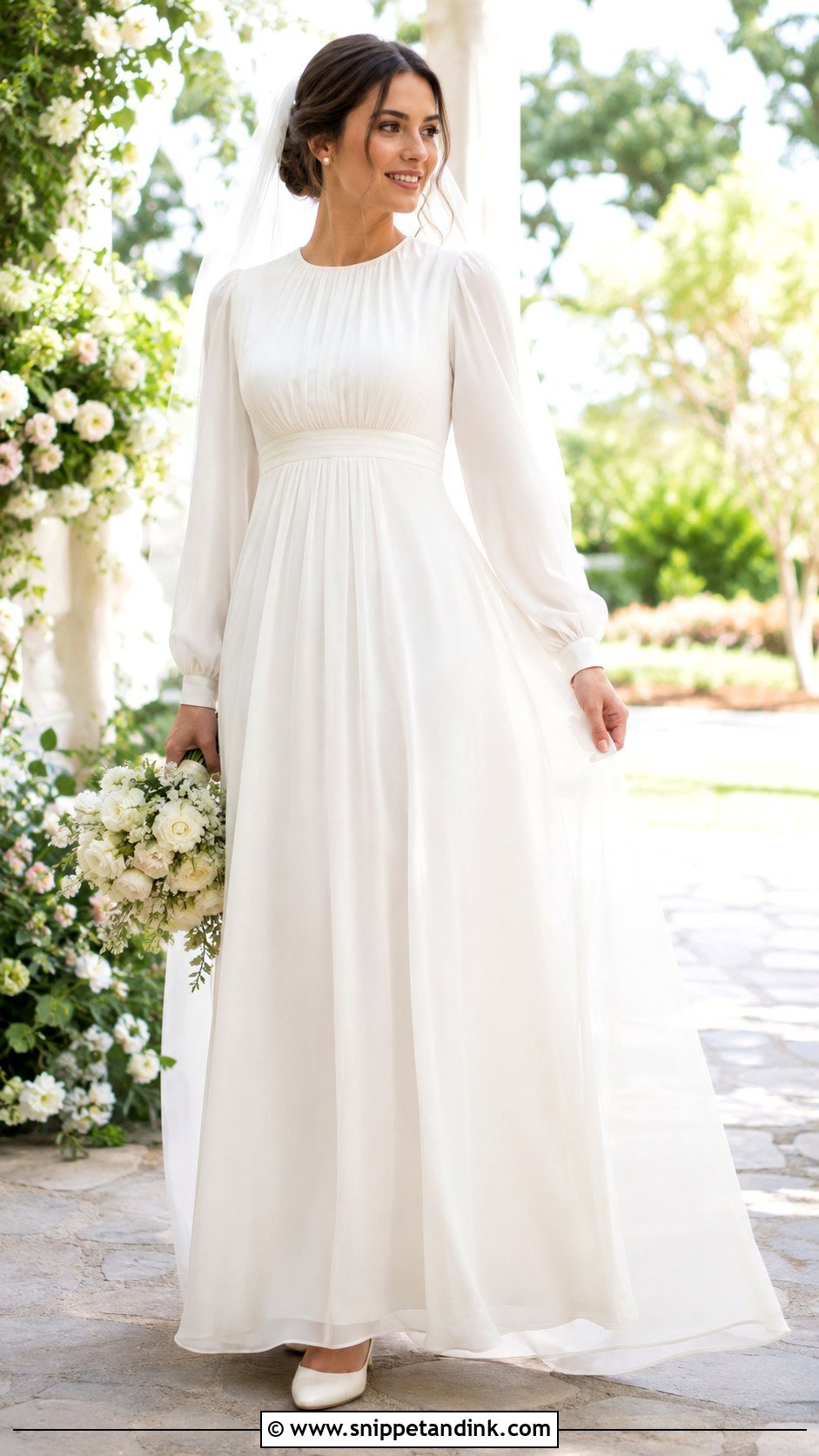
The waist on a modest empire waist wedding dress sits just under the bust, then the skirt falls freely. Nothing presses on the stomach or hips, which is why I recommend it to pregnant brides and anyone who wants to eat dinner comfortably. Chiffon, soft crepe or light satin drape best. Add a high neckline, flutter sleeves or long sleeves for coverage. Pearl studs, low heels and a simple veil keep it light for warm weather.

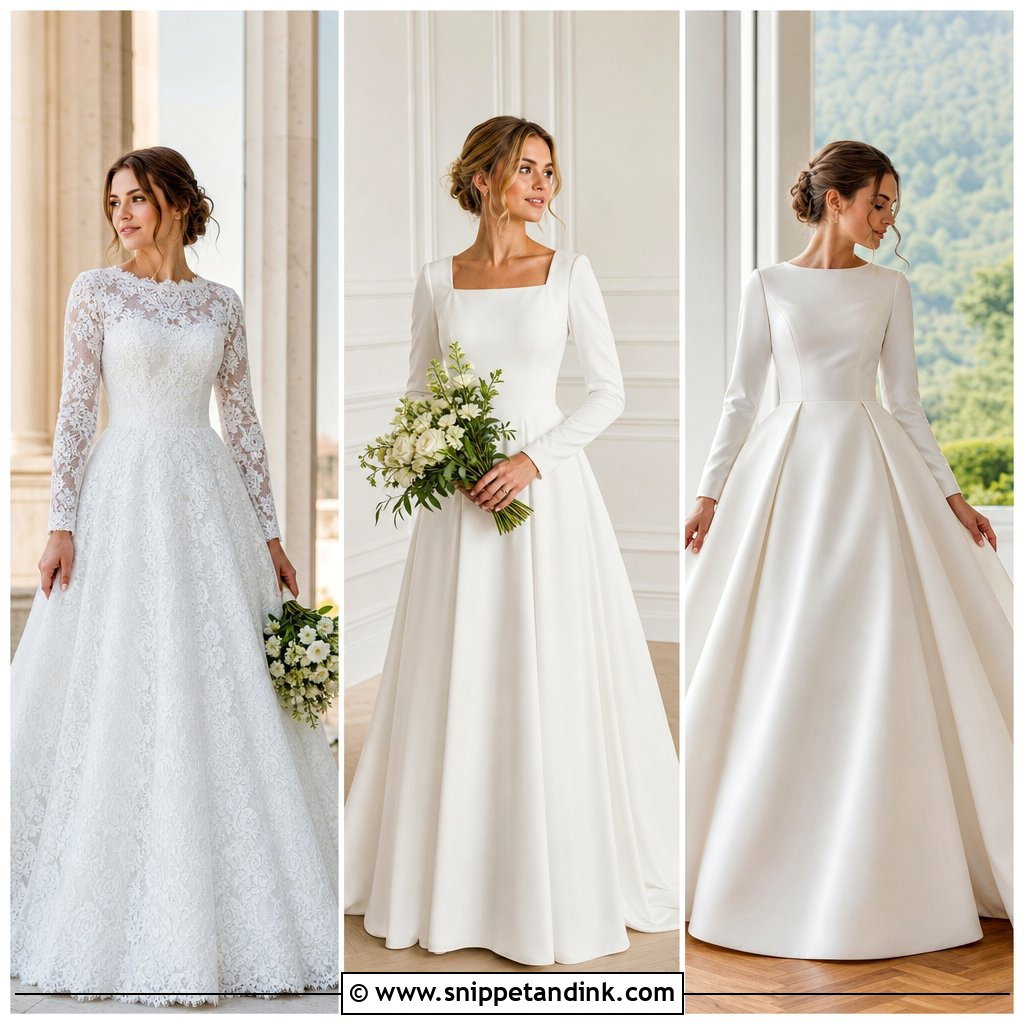

15. Simple Wedding Dress With Cape
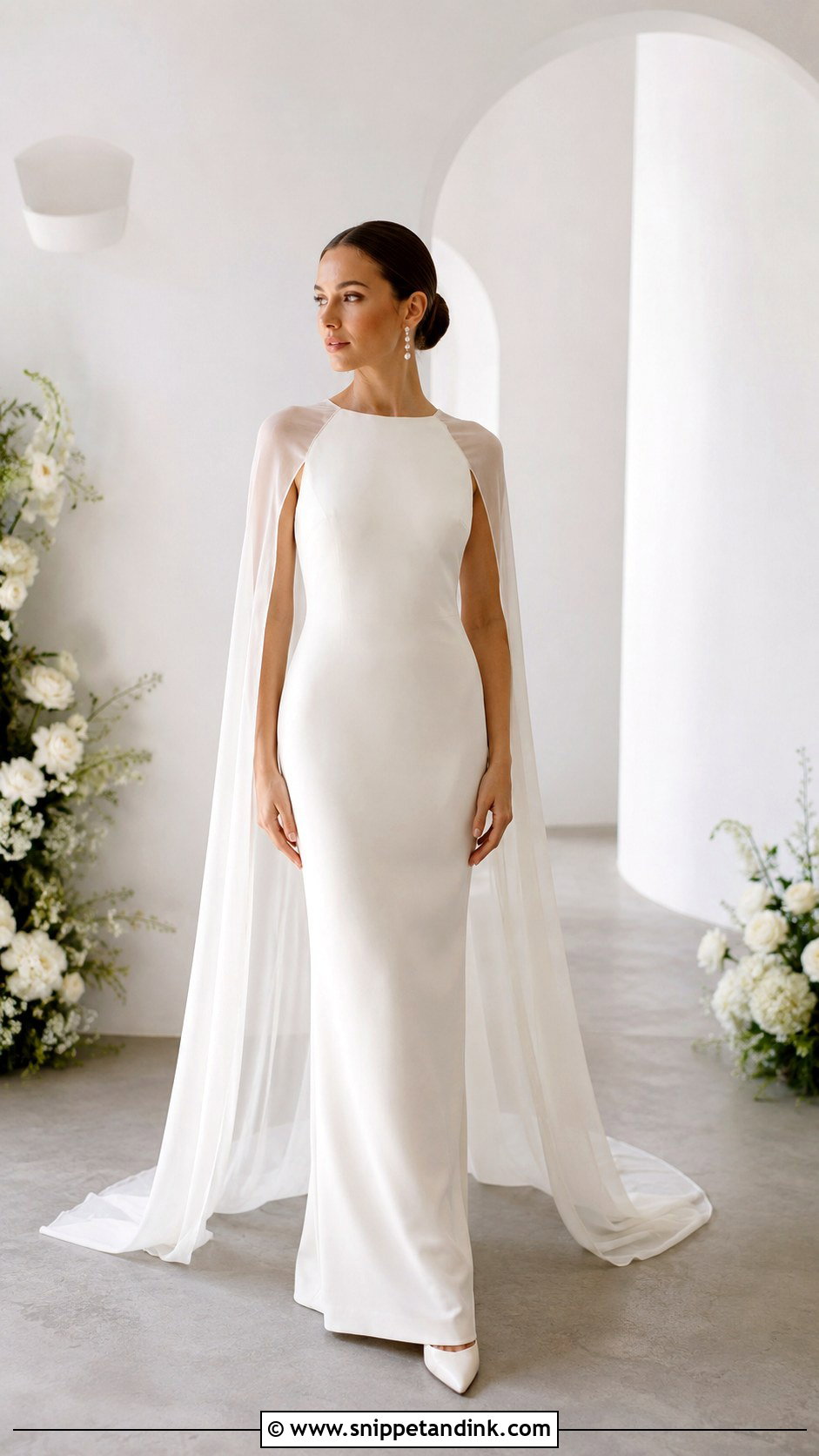
A cape gives coverage over the arms and back while letting air move, which makes it a smart alternative to sleeves in summer. Attach a sheer or chiffon cape at the shoulders of a plain crepe sheath, satin A-line or column gown. Check how far down your arms it falls; a short cape may not cover enough for a religious ceremony. Keep the neckline high or gently rounded, with simple earrings and sleek hair.
16. Modest Column Wedding Dress
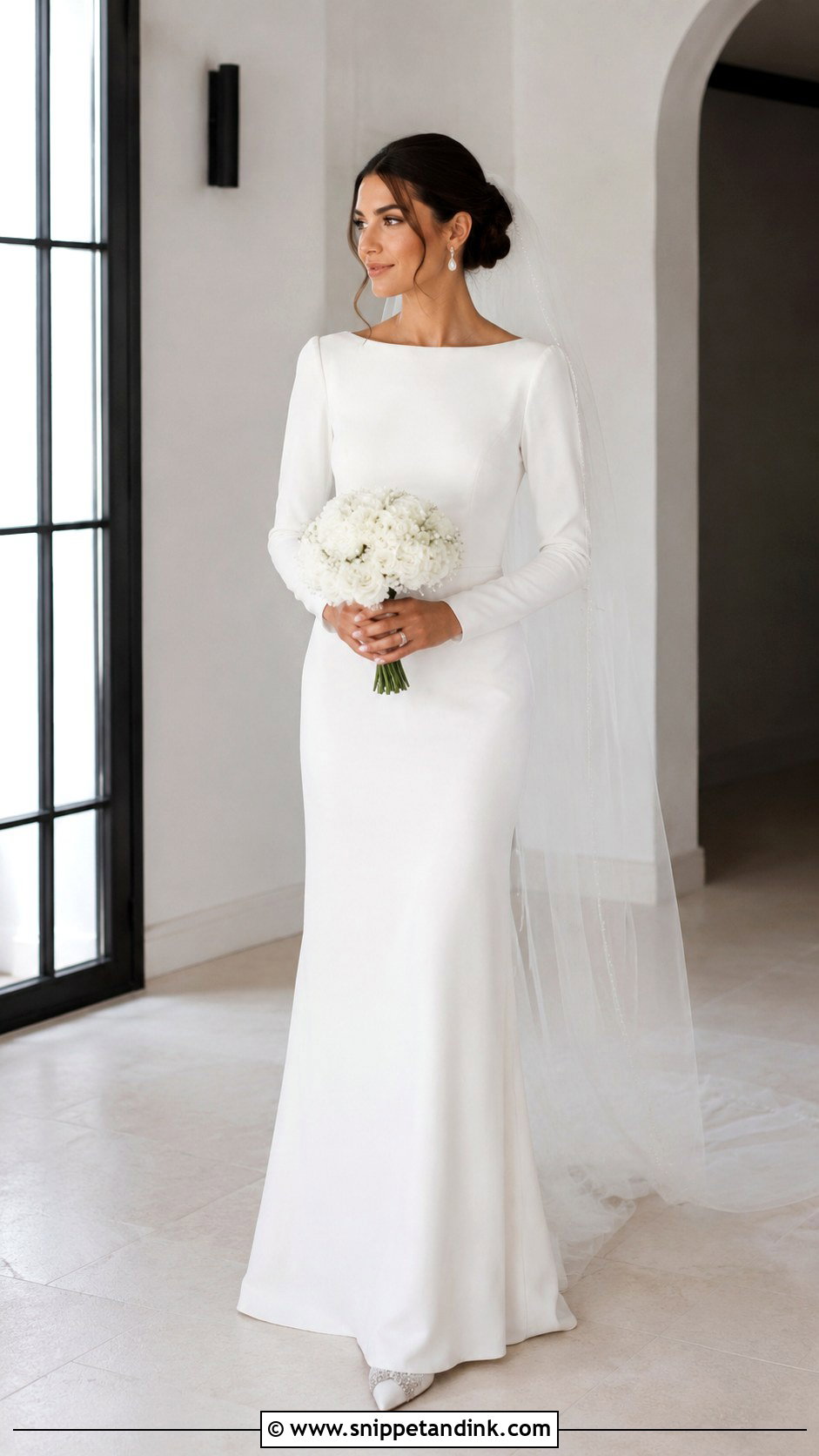
A column falls a little looser than a sheath, so it’s sleek without hugging. With a high neckline, long sleeves and a covered back, it gives full coverage and a clean line. Crepe, satin and silk blends hang without bulk. I like a long veil with it, because the veil adds the softness the straight shape lacks. Pointed heels and pearl earrings keep it minimal and modern.
17. Long Sleeve Satin A Line Wedding Dress
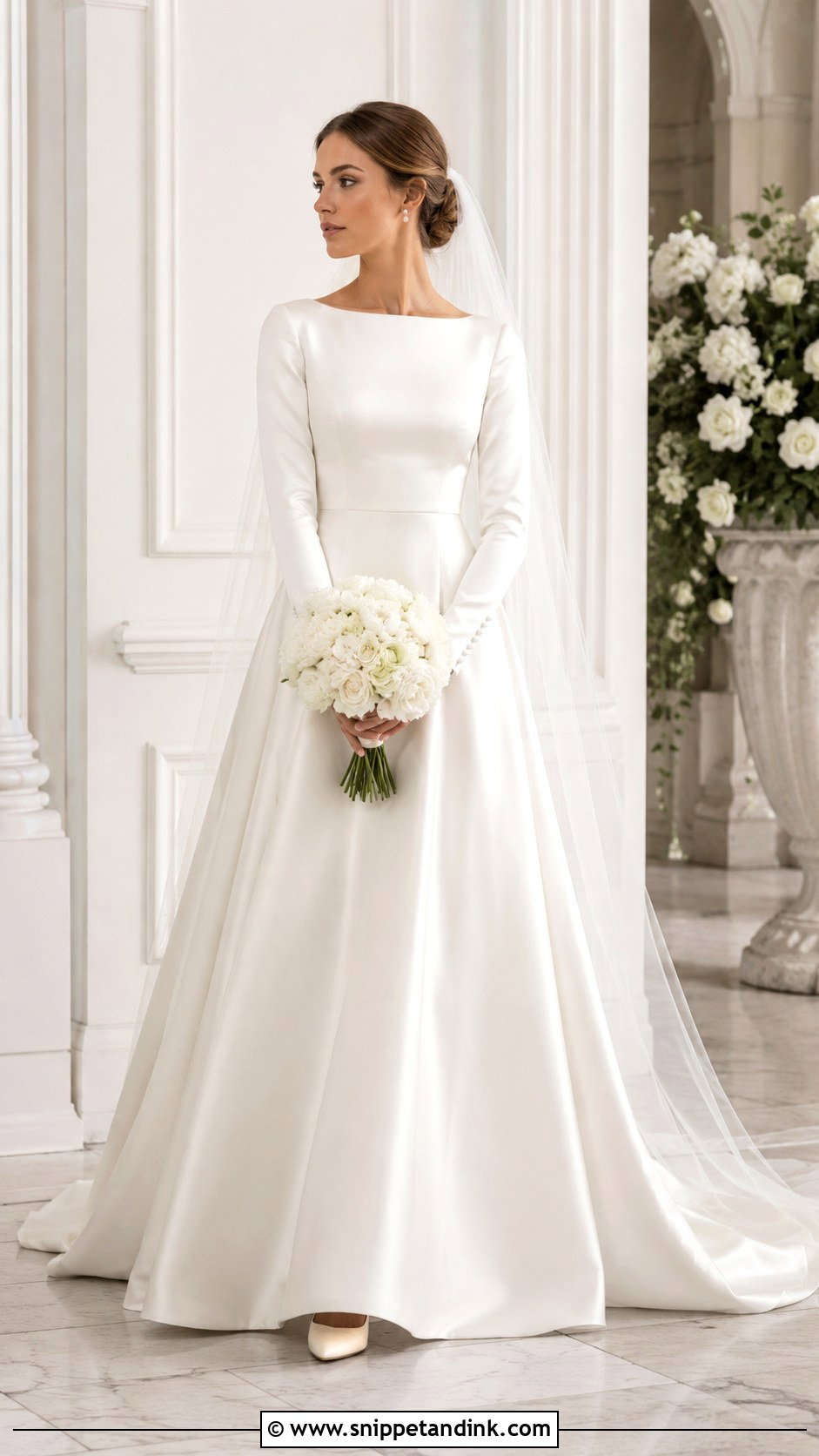
Satin and an A-line skirt together make the most classic modest gown on this list. The satin gives a polished glow; the skirt stays comfortable. Long sleeves plus a high or boat neckline complete the coverage. For a quiet detail, add covered buttons down the back or a narrow waistband. It suits nearly any season and venue, which is why it’s often the gown families agree on fastest.
18. Modest Wedding Dress With Detachable Sleeves
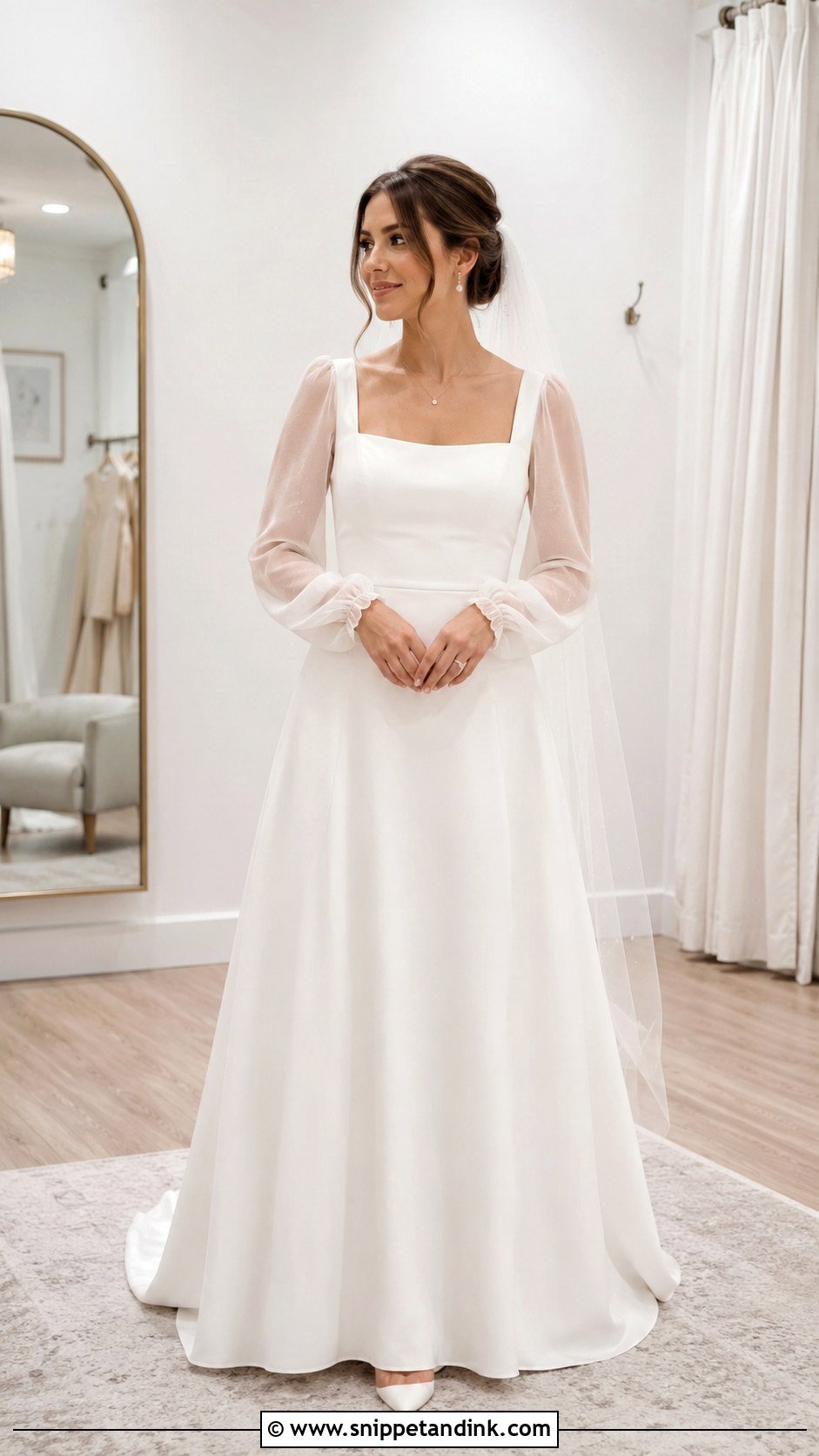
Detachable sleeves let you cover up for the ceremony and portraits, then take them off to dance. The base gown needs to feel modest on its own, so choose a high, square or covered neckline underneath. Sleeves can be lace, tulle, satin or organza. I ask brides to practise removing them before the day, since snaps and loops at the shoulder are hard to reach alone. Keep the rest of the gown plain, with a veil and low heels.
19. Simple Modest Mermaid Wedding Dress
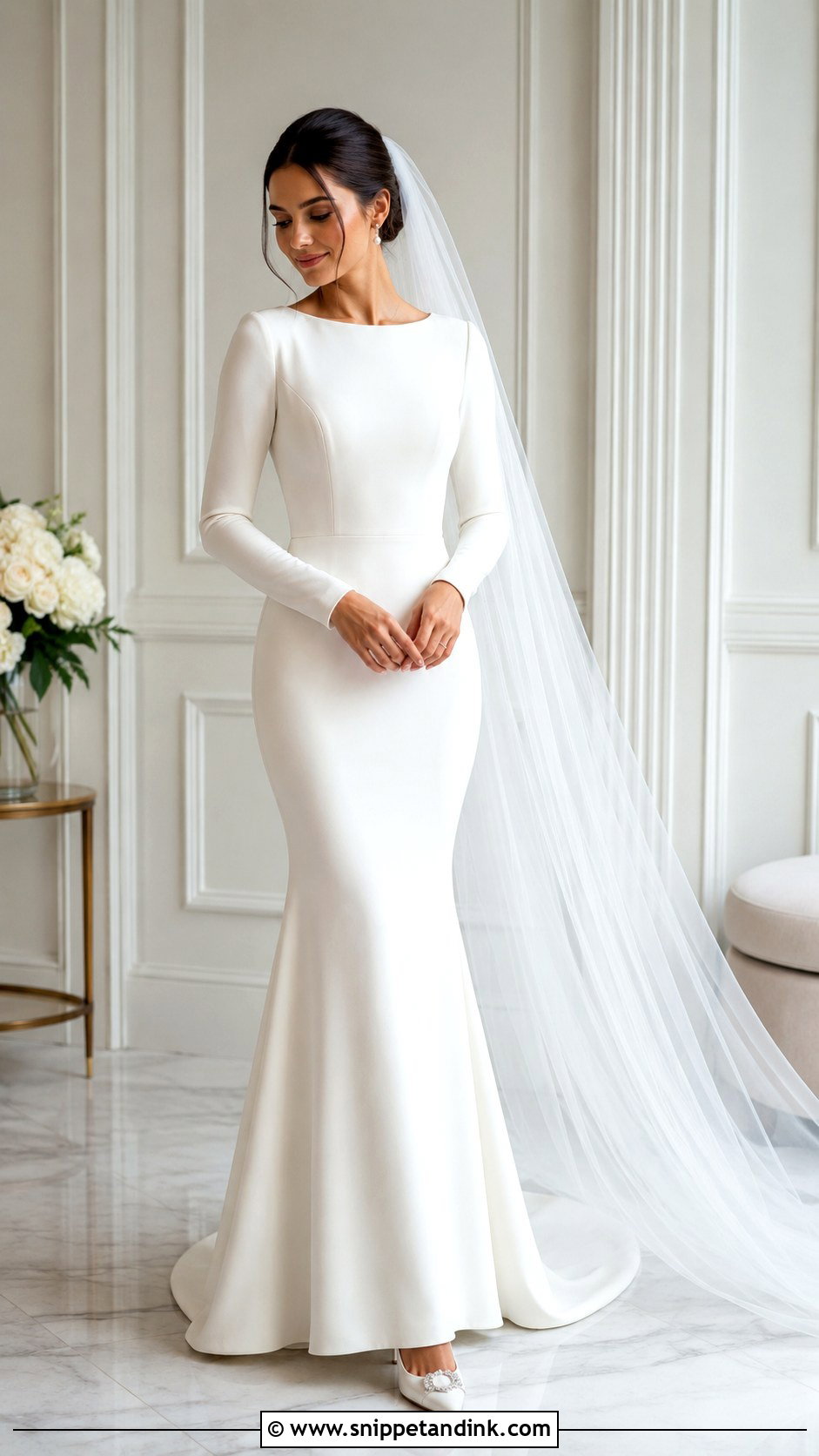
A mermaid can be modest when the coverage comes from the neckline, sleeves and back while the fit stays smooth rather than tight. Crepe shapes it without shine or bulk. A high neckline, long sleeves and a gentle flare at the knee keep it balanced. Be realistic about movement: a fitted skirt narrows your stride, so test stairs and sitting at fittings. A long veil softens the outline.

20. Modest Wedding Dress With Jacket
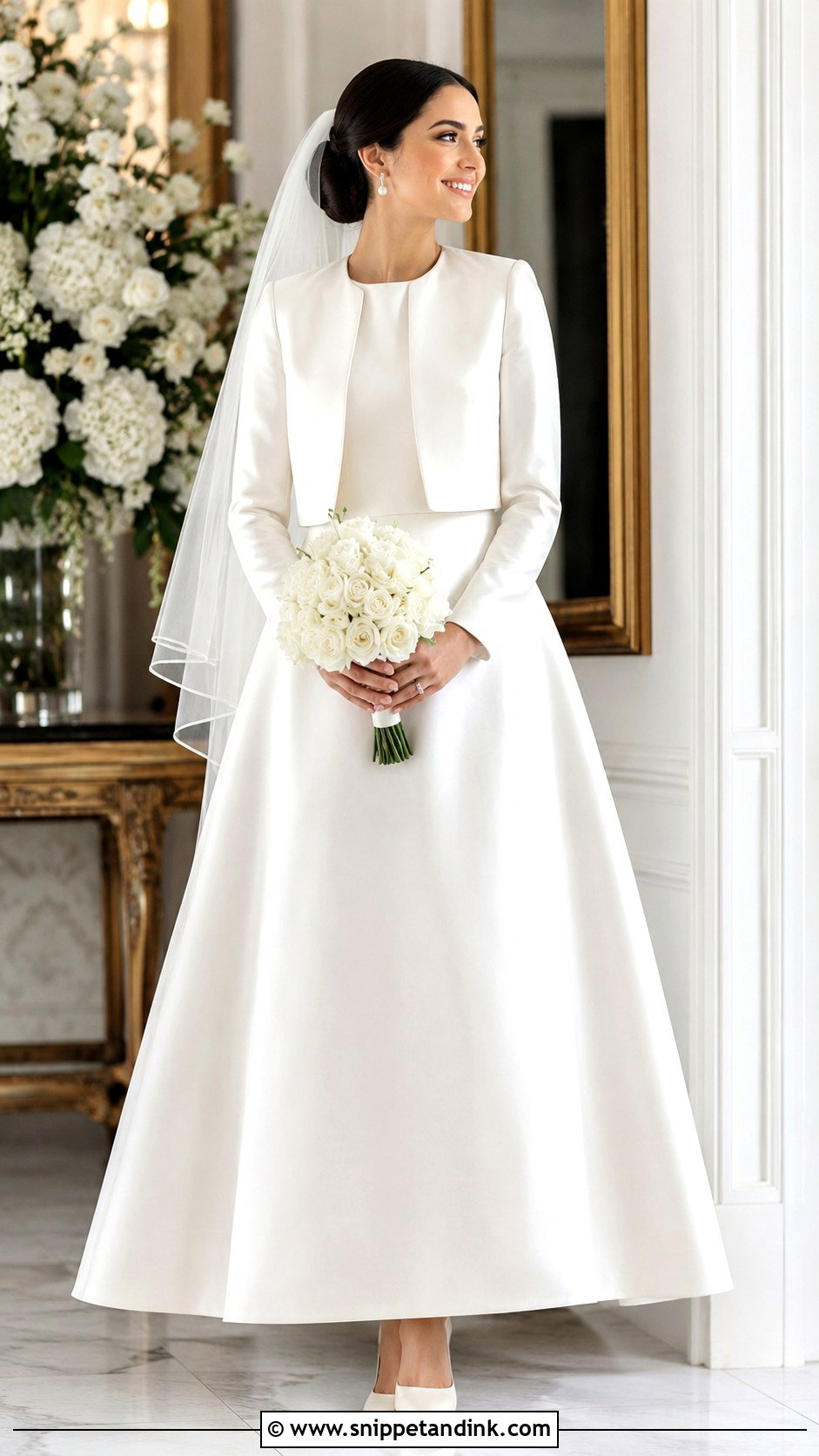
A jacket over a sleeveless or short-sleeve gown gives coverage and a tailored finish, and it comes off for the reception. A cropped satin jacket looks classic, crepe looks modern and lace looks soft. Match the jacket’s fabric tone to the gown carefully; two different whites side by side look obvious in photos. It’s a useful option for unpredictable weather and formal venues.
21. Simple Wedding Dress With High Back
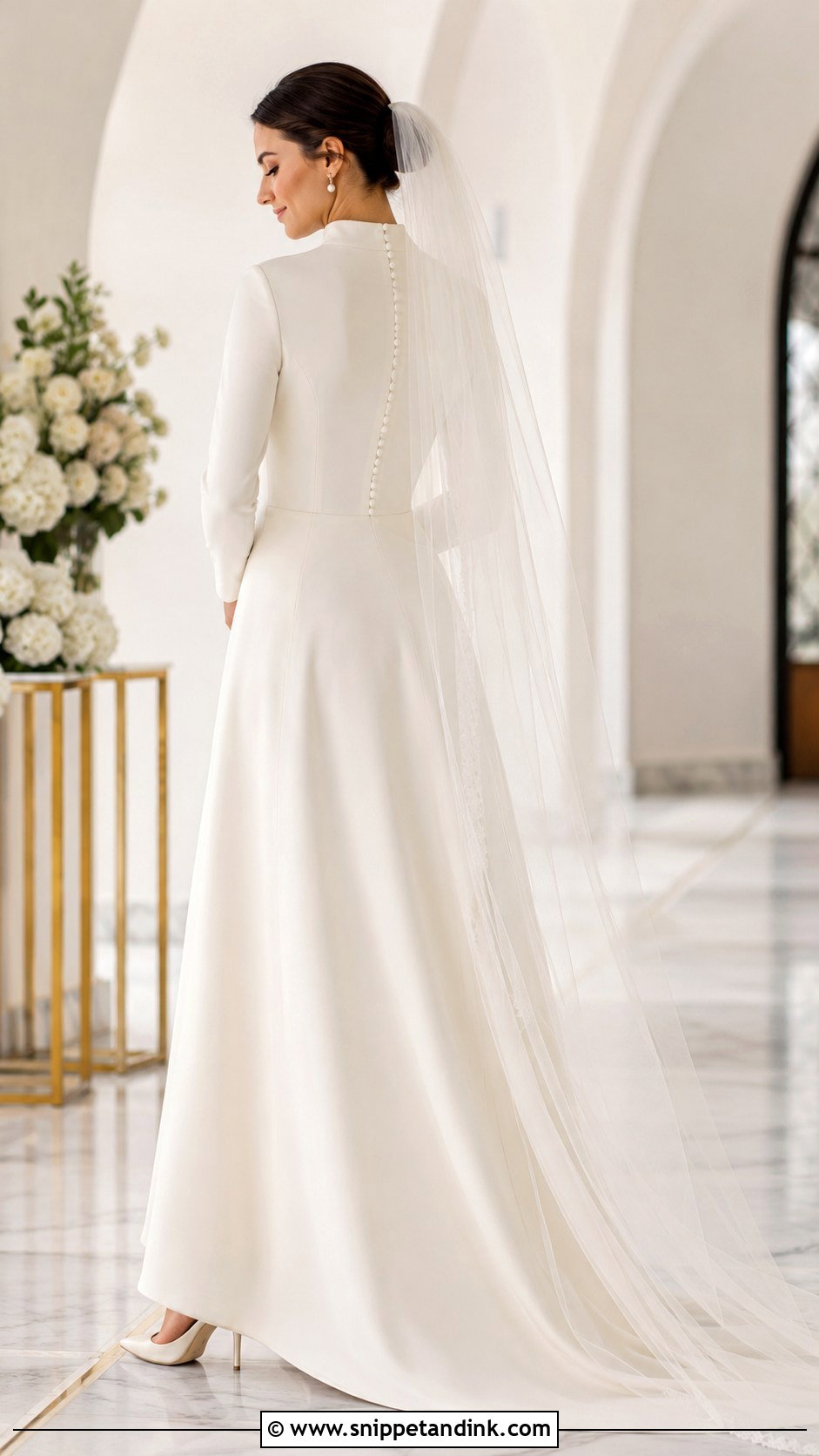
Guests see your back for most of the ceremony, so it deserves as much thought as the front. A high back with covered buttons, smooth seams or subtle lace finishes a modest gown well. Pair it with long sleeves or three-quarter sleeves for full coverage. Crepe and satin keep it clean; lace adds texture. A sheer veil over a high back adds depth without showing skin.
22. Modest Wedding Dress With Three Quarter Sleeves
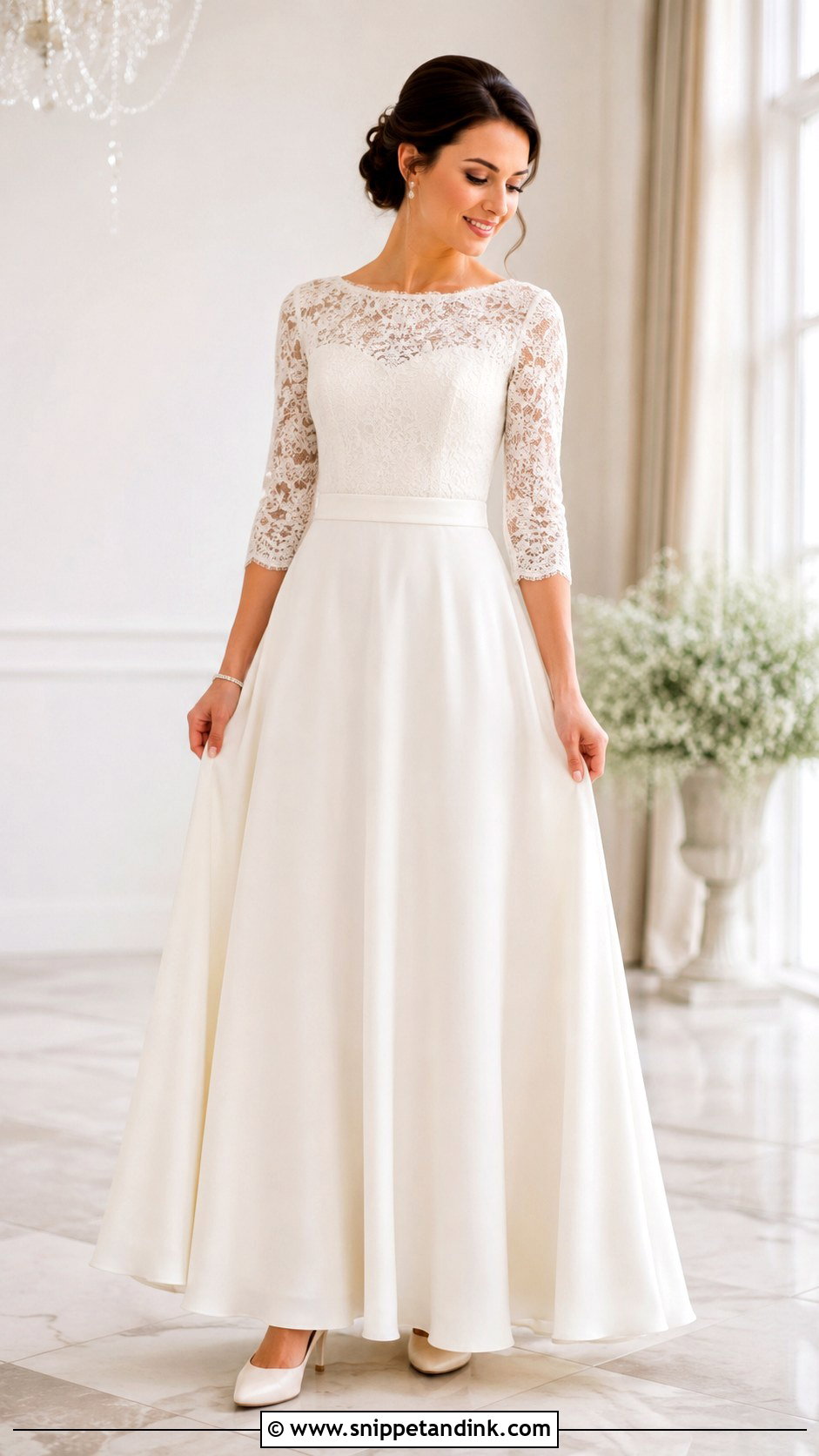
Three-quarter sleeves cover the upper arm and elbow while leaving the wrist free, which feels lighter than full sleeves and keeps cuffs out of your food. They work with A-line, sheath, tea-length and ball gown shapes. A boat neckline or soft square neckline balances the sleeve. Lace sleeves feel romantic; plain crepe sleeves look clean. A bracelet becomes a natural accessory here.
23. Simple Off White Wedding Dress
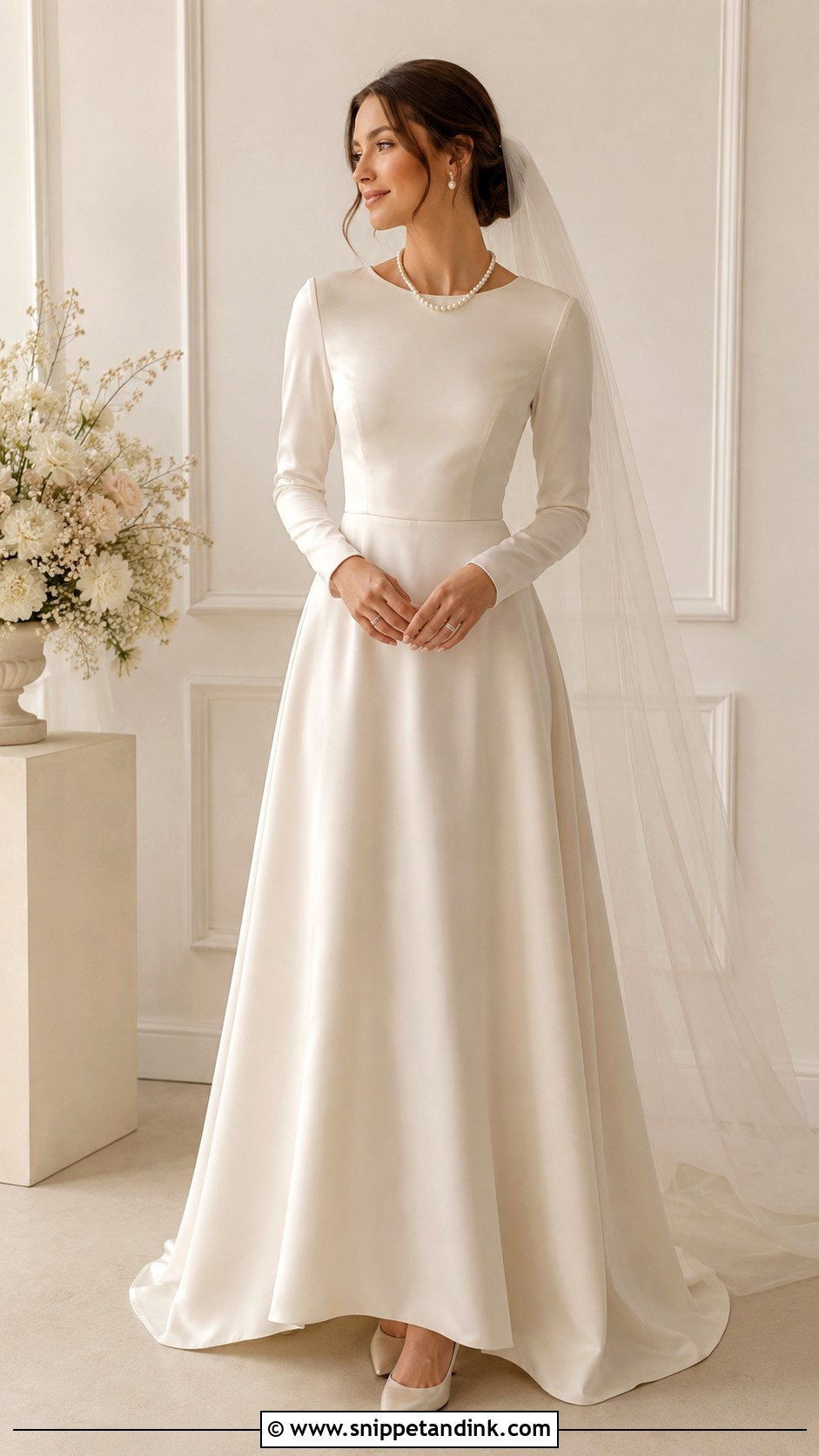
Bright white can look stark on warm or olive skin, and in that case I’d move to ivory, cream, pearl or soft vanilla. Satin makes these shades look rich; chiffon and tulle make them airy. Add long sleeves, a covered back and a neckline you’re comfortable in. The one thing to get right is matching: veil, shoes and jewelry should all sit in the same off-white family, because a bright white veil next to an ivory gown makes the dress look dingy.
24. Modest Courthouse Wedding Dress
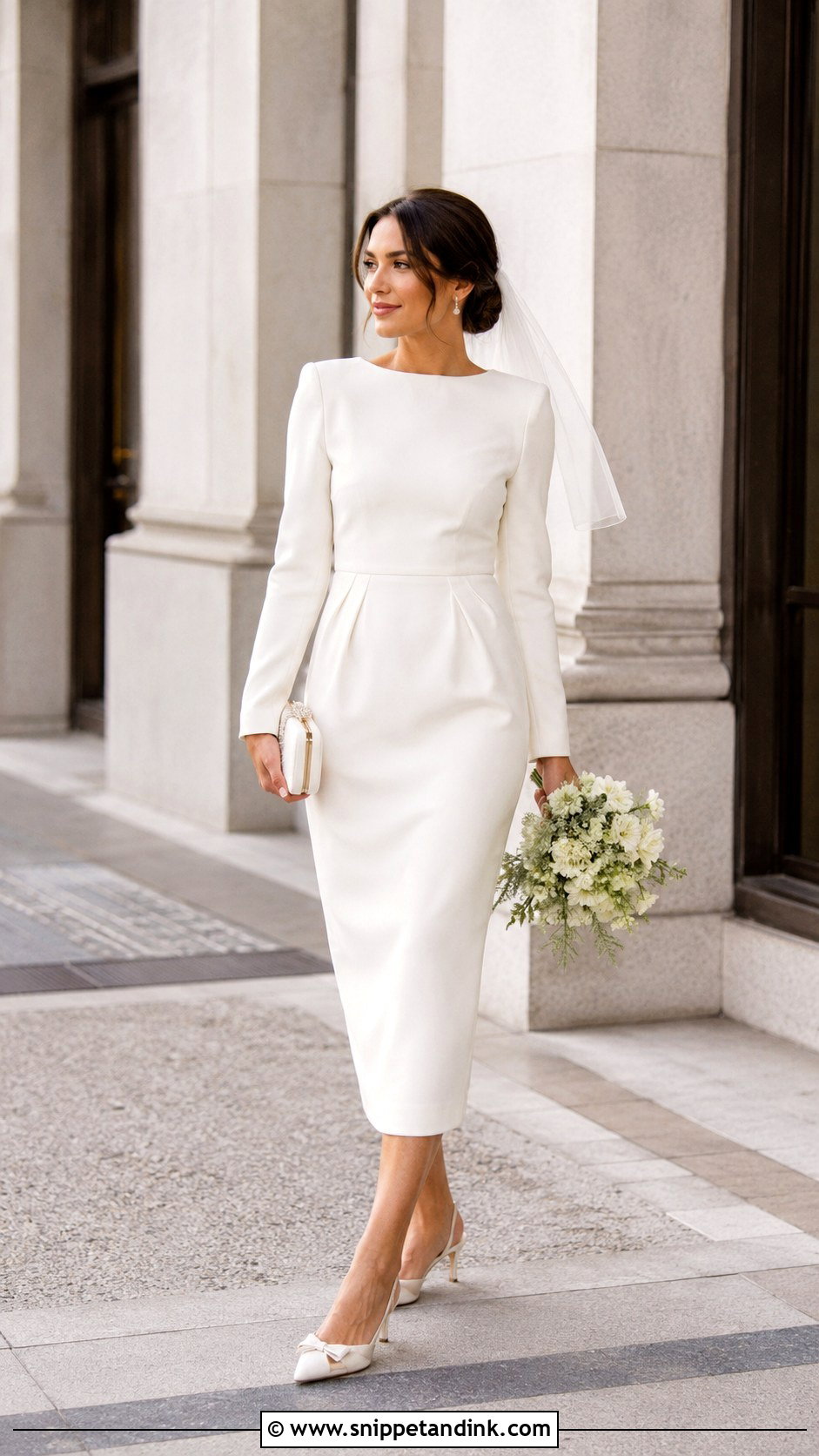
For a civil ceremony, a knee-length, midi or tea-length dress with sleeves and a clean neckline looks polished without competing with a small room. Crepe, satin or structured cotton blends stay neat. A sheath, A-line or tailored fit all suit. Courthouses often involve waiting, standing in corridors and walking outside for photos, so comfortable low heels matter. Add a small bouquet, pearl earrings and a short veil or hair bow if you’d like a bridal touch.


25. Simple Modest Reception Wedding Dress
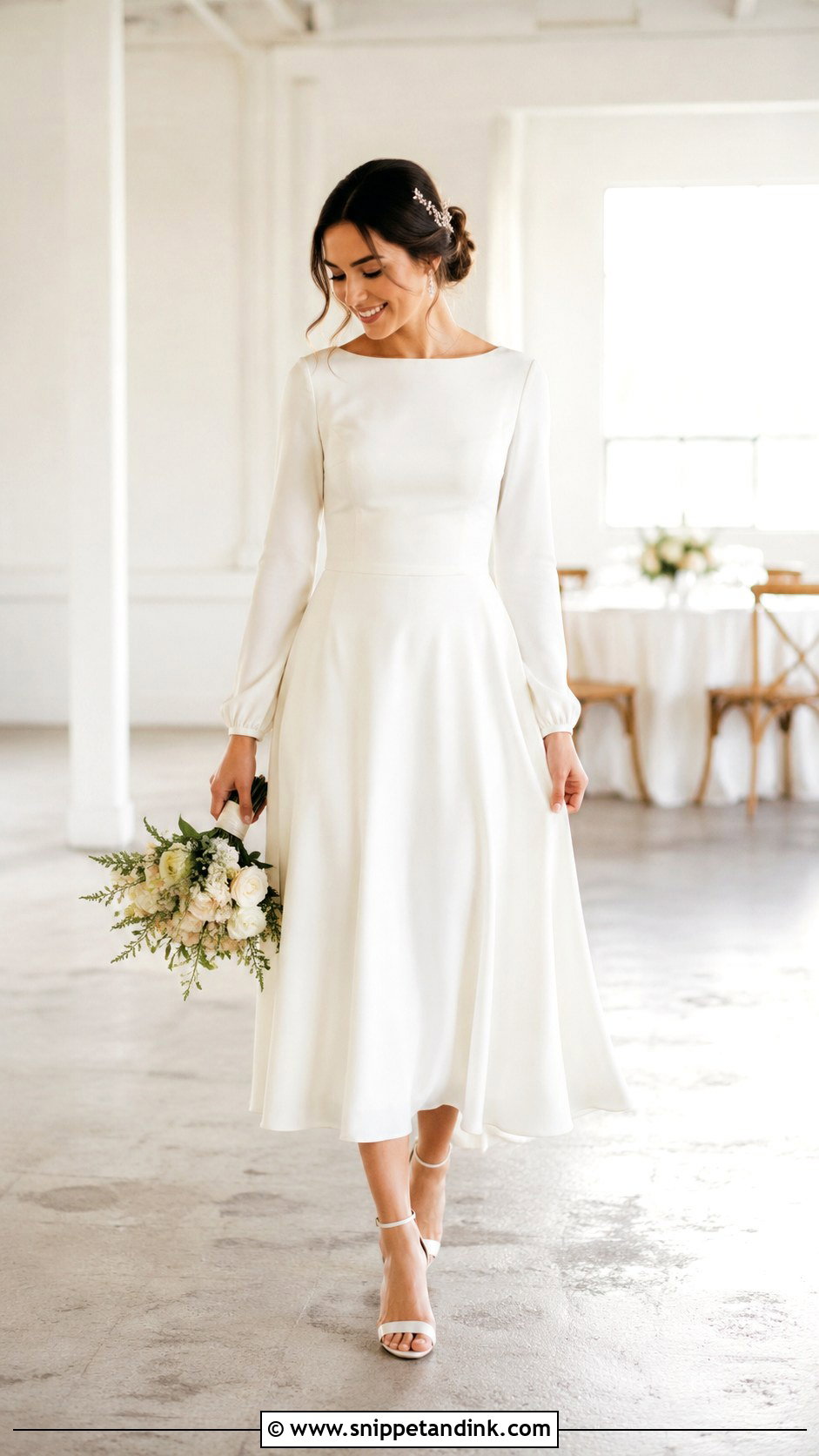
If your ceremony gown is full or formal, a lighter second dress makes the reception far easier. A midi, soft A-line or simple column with sleeves and a higher neckline keeps the same modest standard. Satin, crepe or chiffon stays elegant without weight. I usually suggest changing shoes at the same time, into block heels you can dance in. A short veil or a small hair accessory keeps it bridal.
Staying Cool Under Full Coverage for Twelve Hours
Long sleeves, a high neck and a full lining add up to a lot of fabric on a long day. Most of the discomfort I see comes from the lining rather than the dress itself, because many linings are polyester and trap heat. Ask whether a breathable lining is possible, and look at these details when you try gowns on.
Sleeves and armholes
Lace or chiffon sleeves breathe better than satin. A slightly higher, closer armhole actually lets you move your arms more freely than a low, loose one, which pulls the whole bodice up when you lift.
Necklines with a hijab
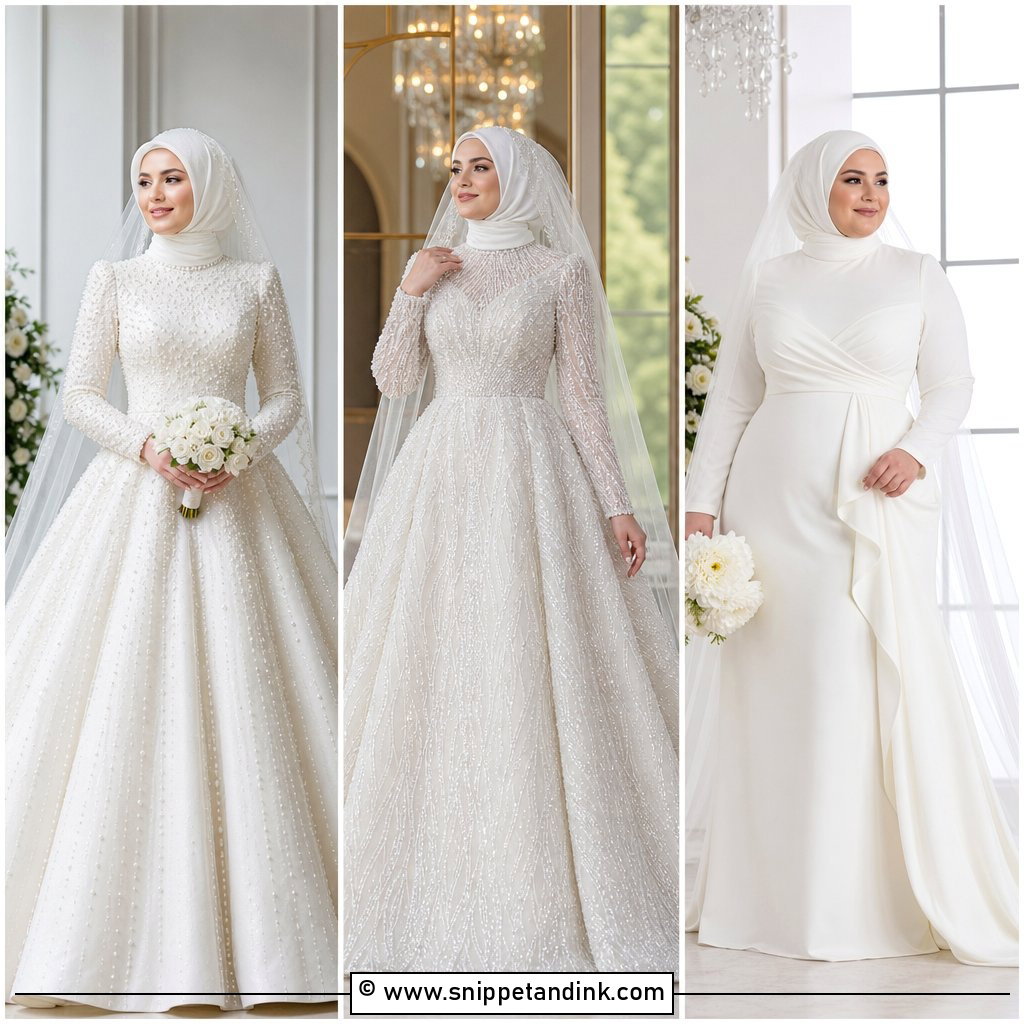
If you’ll wear a hijab, a plain high or bateau neckline sits most cleanly under the scarf. Busy collars and heavy beading at the neck bunch underneath it. I bring the scarf fabric to a fitting so we can see the colours together, and pin the veil to the underscarf rather than the hijab itself so nothing pulls.
Planning for heat
For a summer or outdoor ceremony, chiffon, lightweight crepe and organza are kinder than mikado or heavy satin. Keep blotting papers and a small fan with a bridesmaid, and schedule outdoor portraits for the cooler part of the day.
Why the Cut Matters More Than the Coverage
A covered gown looks as striking as any low-cut one when it’s tailored well. The neckline, sleeves and back give you coverage; the cut, fabric and fit decide whether it looks graceful or heavy. Crepe and satin feel modern, lace feels romantic, chiffon feels soft and mikado feels structured. Think about your venue, the season and how long you’ll be wearing it. From courthouse dresses to formal ball gowns, modest bridal style works best when the accessories support the dress instead of competing with it.
You'll Like These Ideas:










Leave a Reply