
A modest bridal outfit doesn’t mean giving up on detail; it means the detail has to work harder. The gowns and ensembles below cover nikah ceremonies, receptions and walima celebrations, from plain satin dresses and lace A-lines to embroidered lehengas, kaftans, takchitas and a tailored pantsuit. In my fittings with brides who cover, the questions are always practical. Is the fabric opaque under strong light? Will the sleeves stay down when you raise your arms? Does the hijab sit well with this neckline? Each look here can be adapted with linings, full sleeves, higher necklines and an underlayer, so treat them as starting points to shape around your family’s traditions and your own comfort.
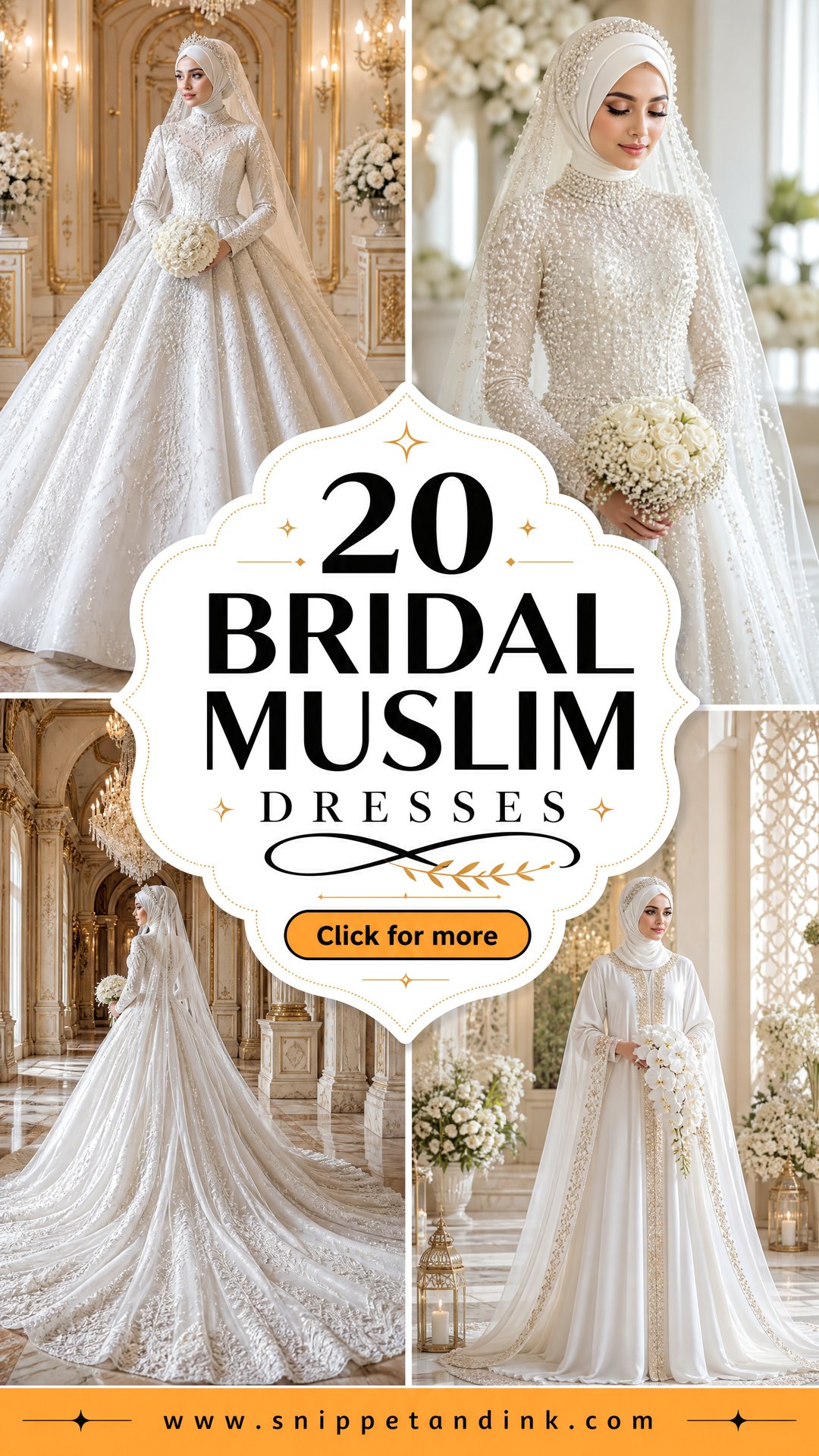
Testing a Gown for Real Coverage Before Alterations Begin
Many brides who cover end up buying a mainstream gown and having it adapted, and that can work very well if you know what a seamstress can and can’t do. Sleeves can be added to a strapless or short-sleeved dress, a neckline can be raised with a matching panel, and a lining can be put under lace. A gown that is sheer all over, or one with a deep open back cut into its structure, is much harder to fix.
In the fitting room, I run three quick checks:
- Shine your phone torch through the skirt and sleeves from behind. If you can see the light clearly, so will the photographer’s flash.
- Look closely at any skin-toned illusion mesh. It reads as bare skin in photos, so ask for it to be lined or replaced with lace or opaque fabric.
- Raise both arms and bend forward. Sleeves should stay at the wrist and the neckline should not gape.
1. Ivory Lace Muslim Bridal Dress
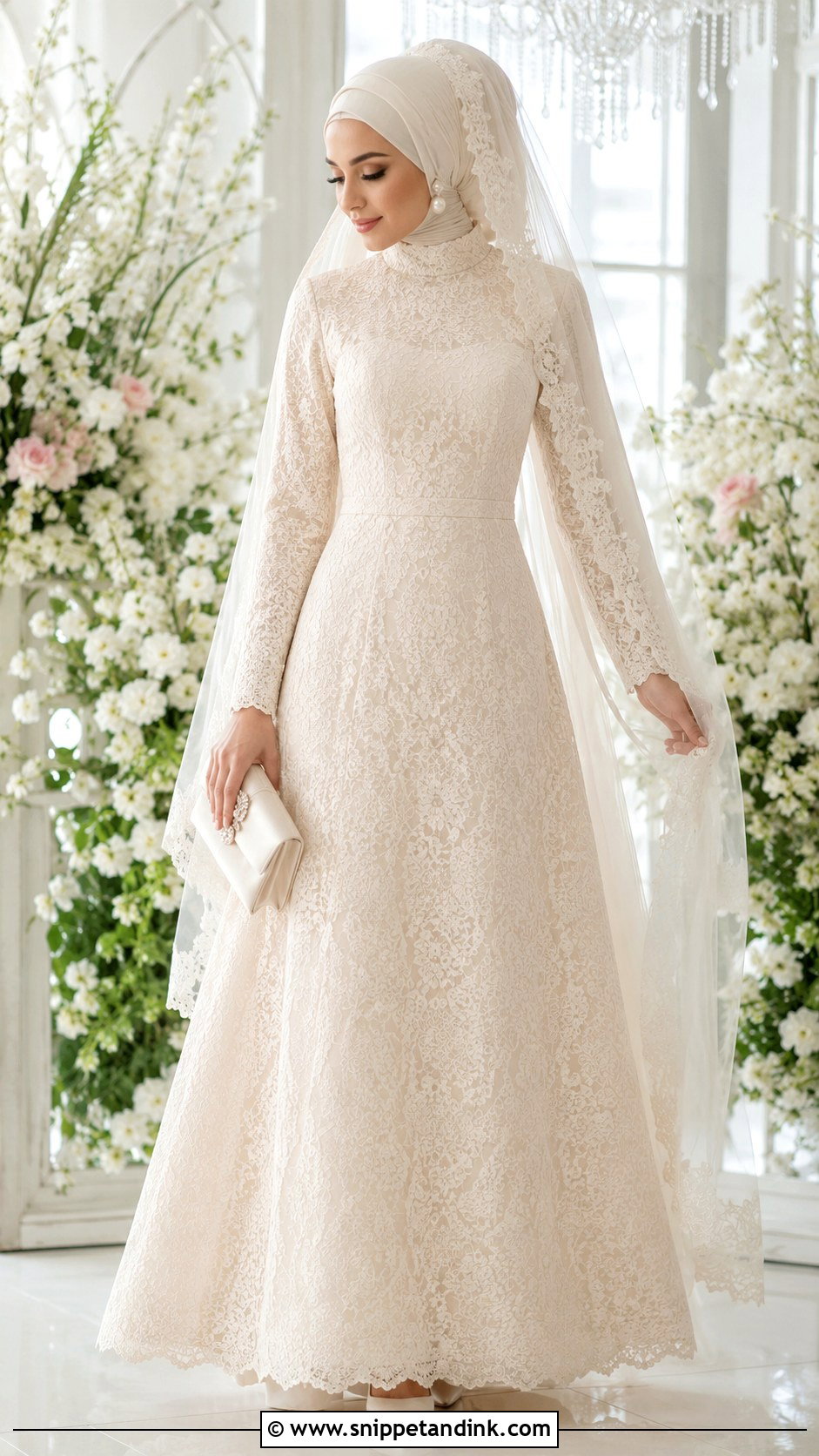
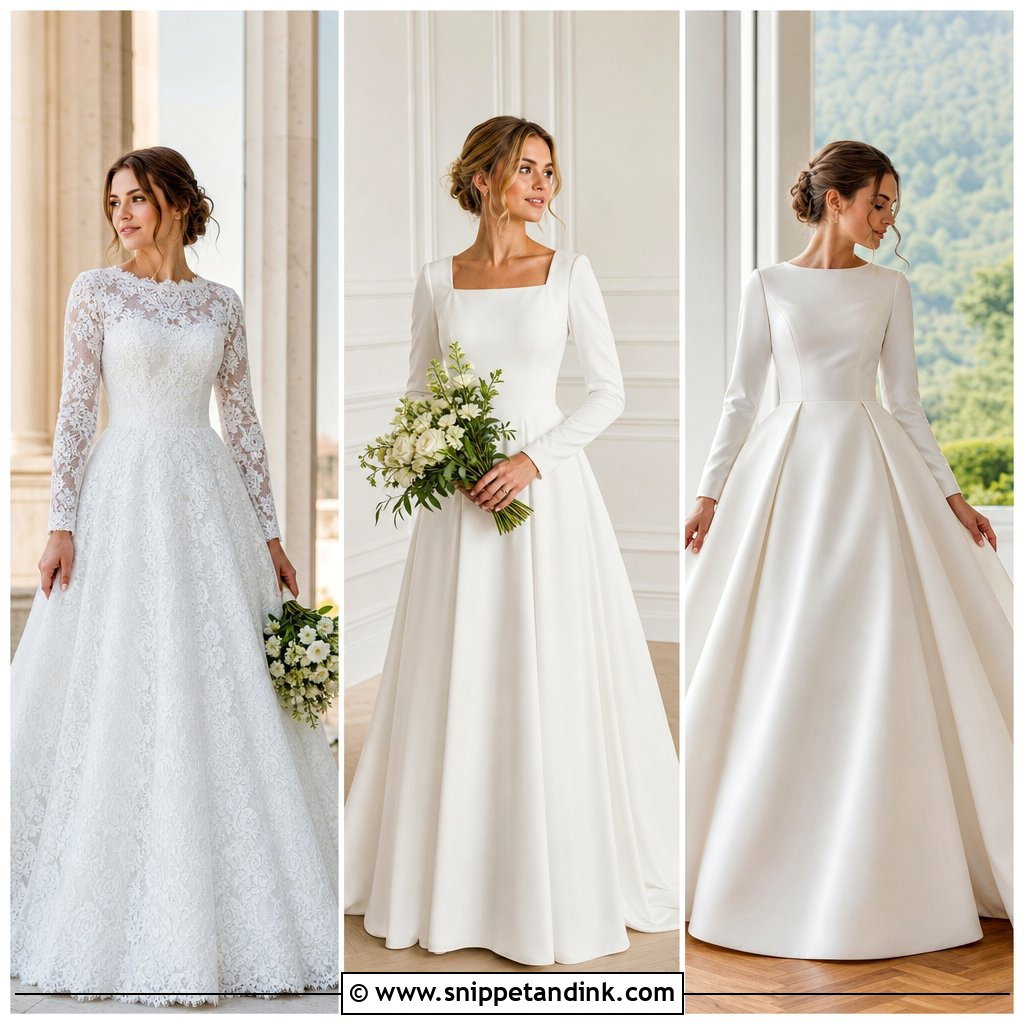
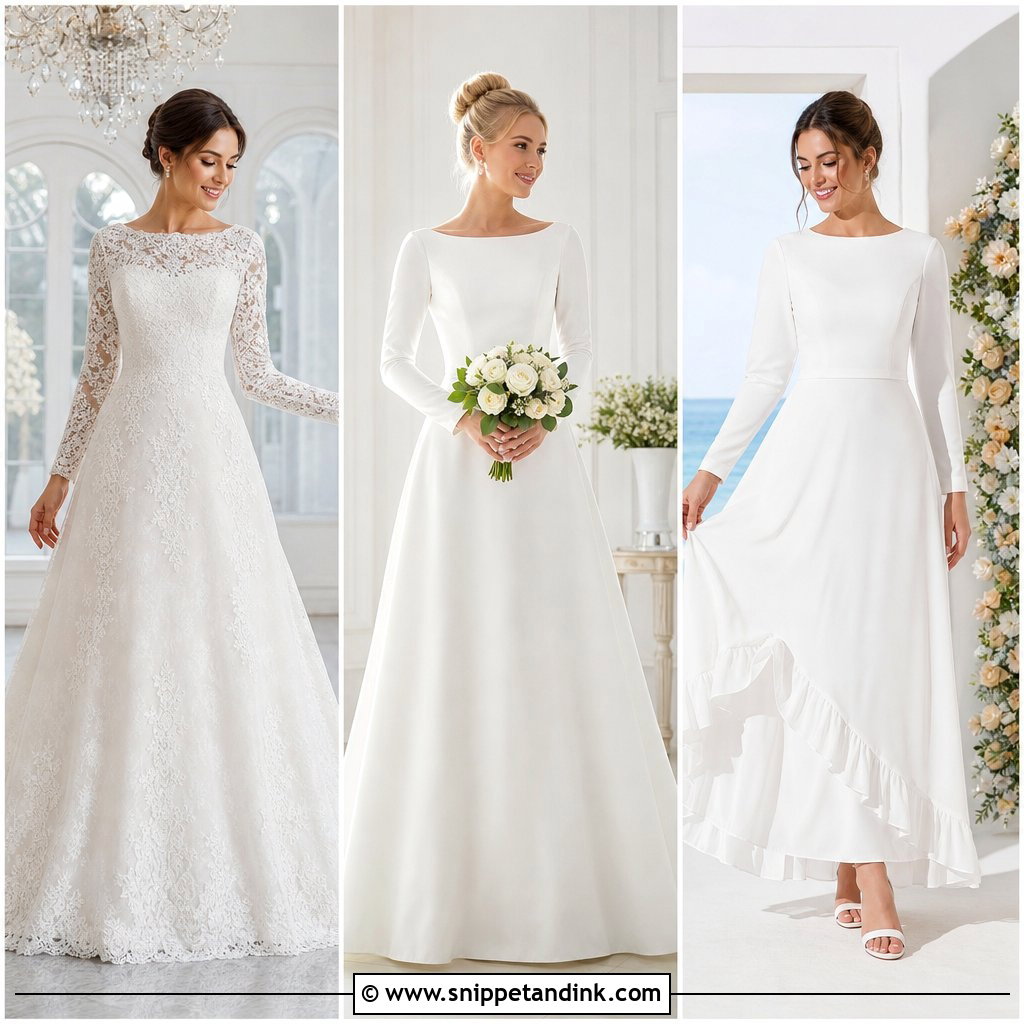
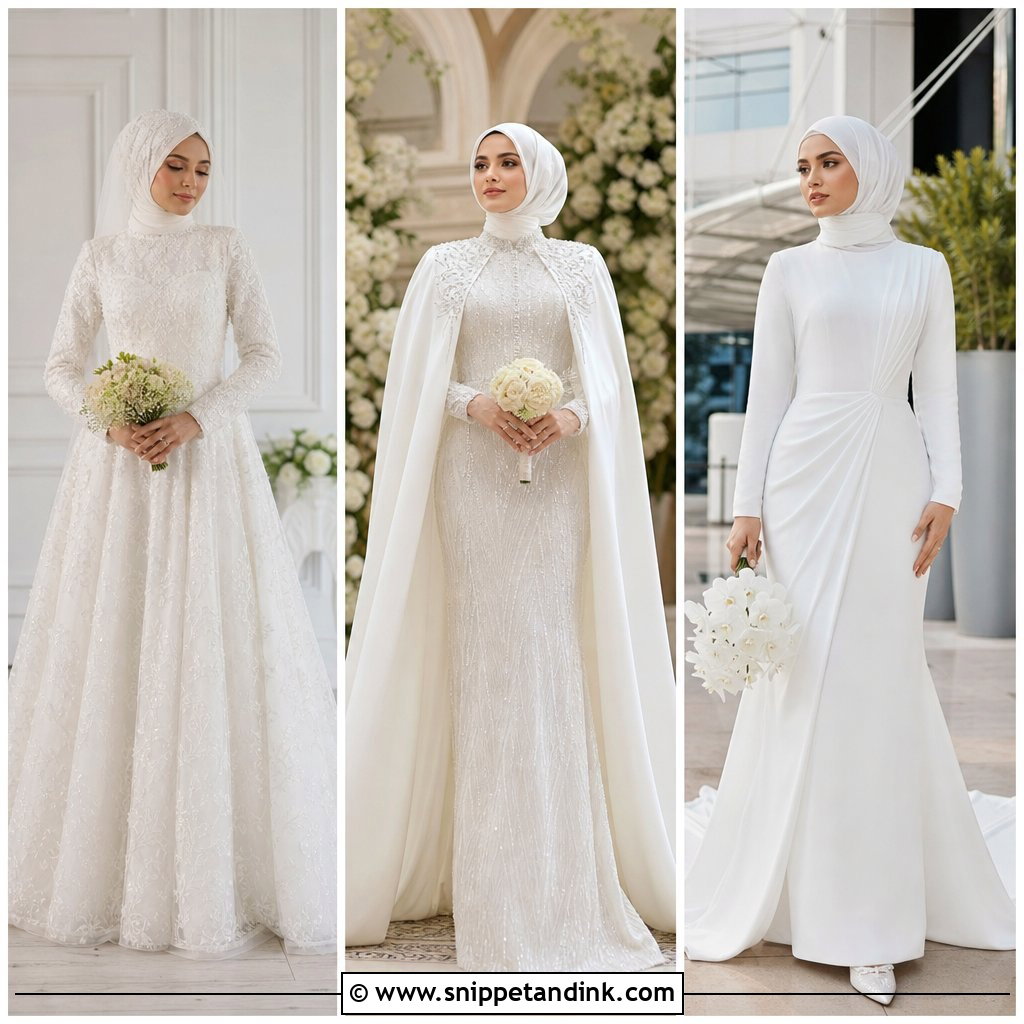
Lace is the fabric I find most rewarding to adapt for full coverage, because a lining can sit under it without hiding the pattern. Pick an A-line with full lace sleeves, a high neckline and a layered skirt, then make sure the sleeves are lined too, not left sheer. An ivory chiffon hijab wrapped close to the face, with a lace-edged veil on top, keeps the lines clean. When the lace is busy, I keep jewelry to pearl drops so the eye goes to the handwork. It suits a daytime nikah or a garden ceremony.
2. White Satin Muslim Bridal Dress
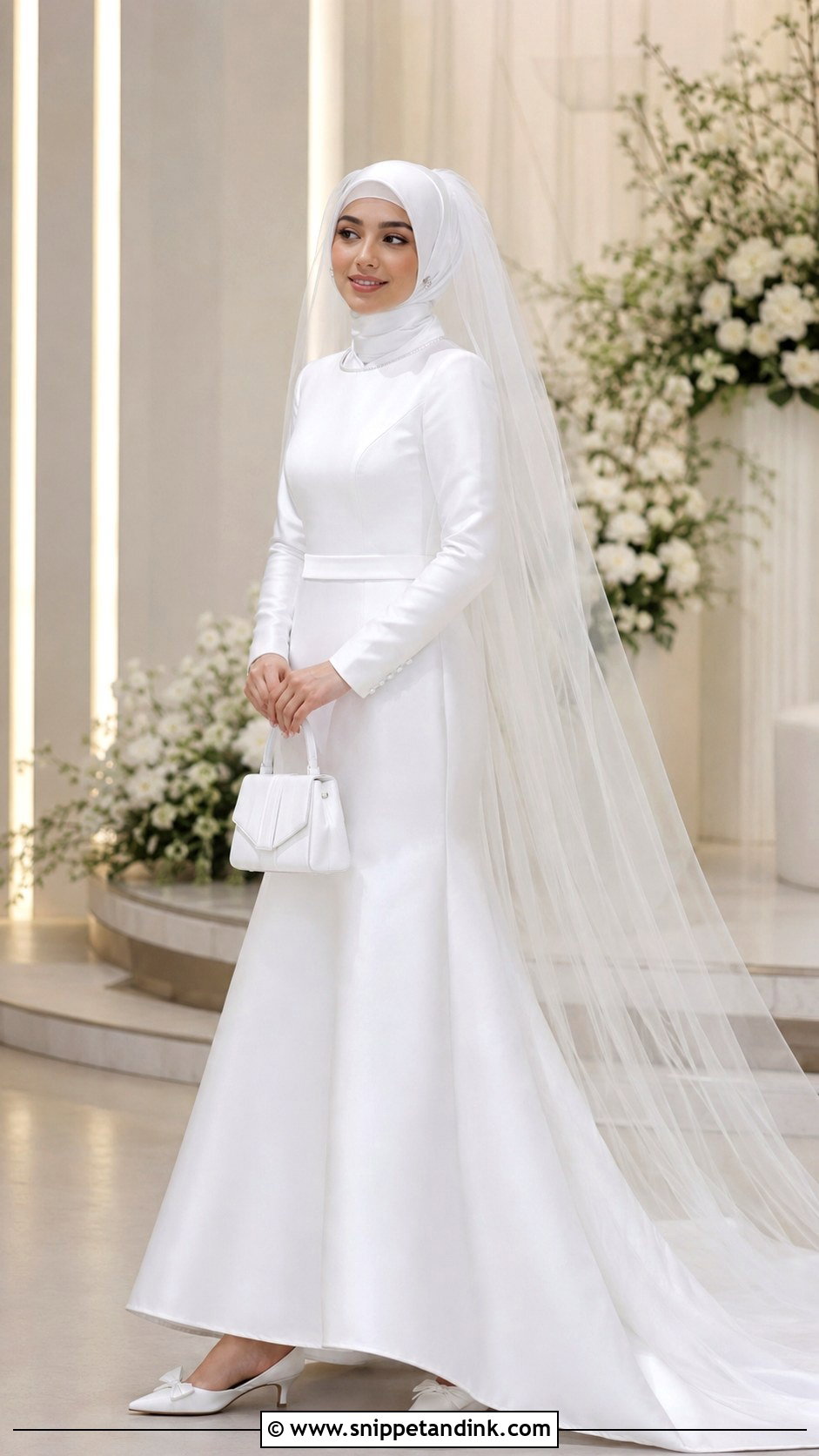
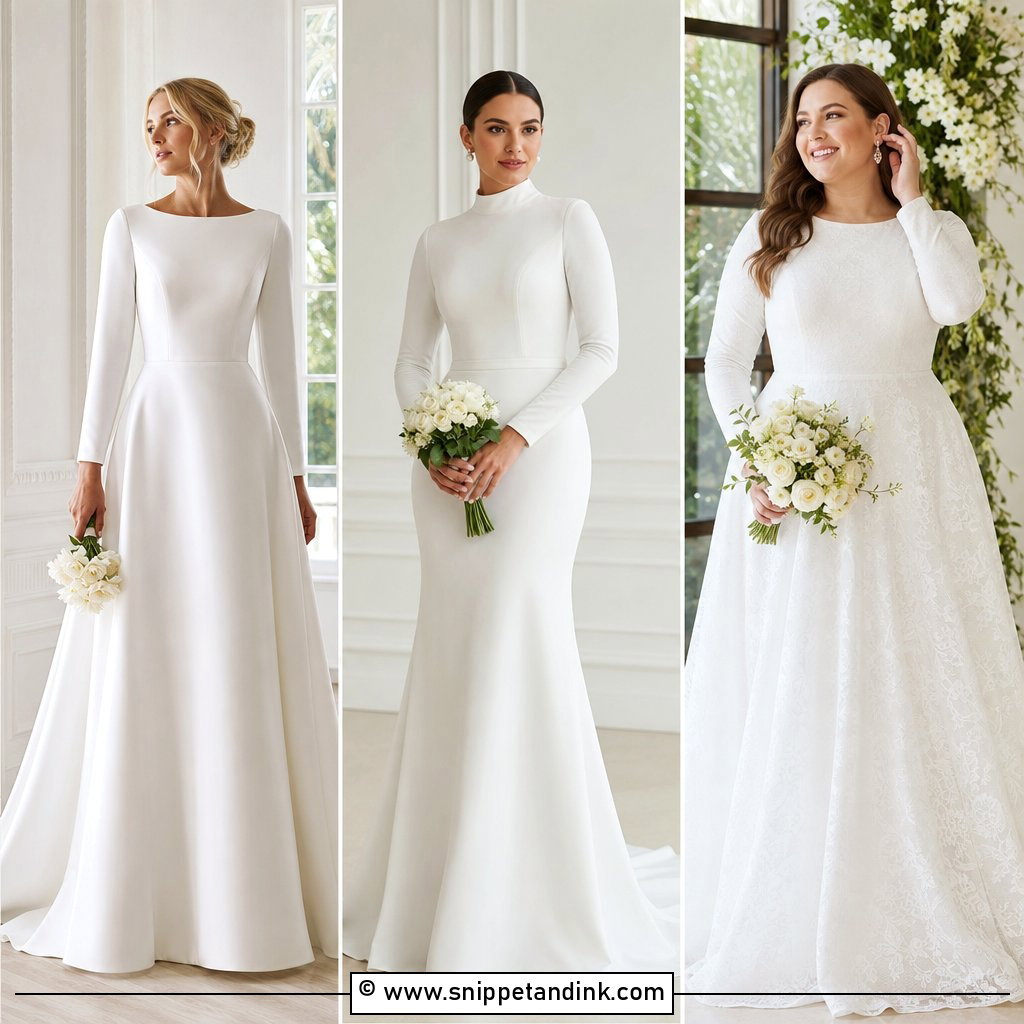
Satin is honest about construction, which is why a simple Muslim bridal dress in it looks so finished. I look for a floor-length A-line with fitted cuffs, a high bateau neckline and a little gathering at the waist. Hold the fabric up to a lamp in the shop; thin bridal satin can show the outline of underwear under venue spotlights, and a heavier duchess weight avoids that. A matching satin hijab gives a single unbroken color from head to hem, and a plain tulle veil is plenty. Satin creases where you sit, so steam it again just before the ceremony.
3. Beaded Ball Gown Muslim Bridal Dress
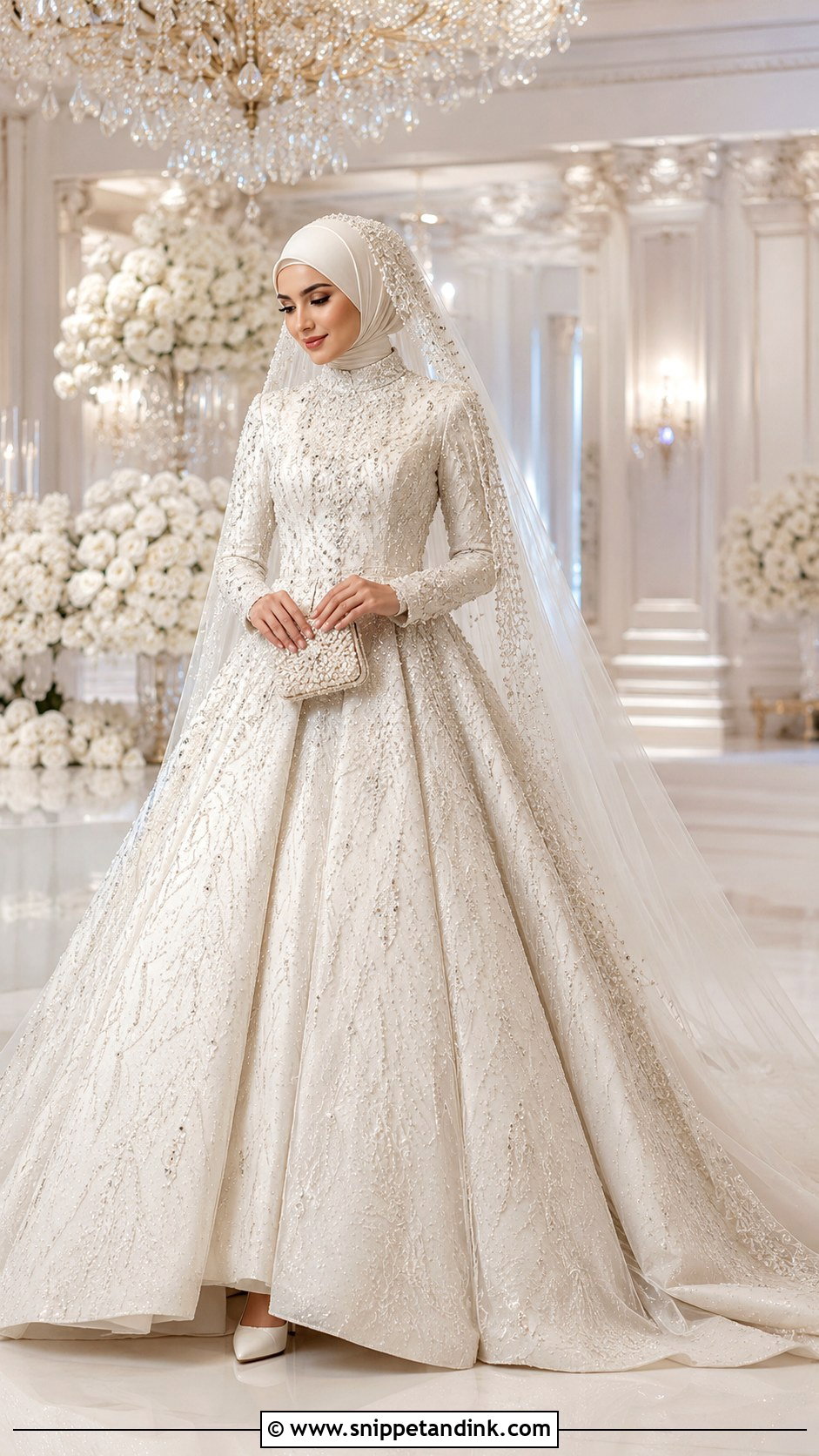
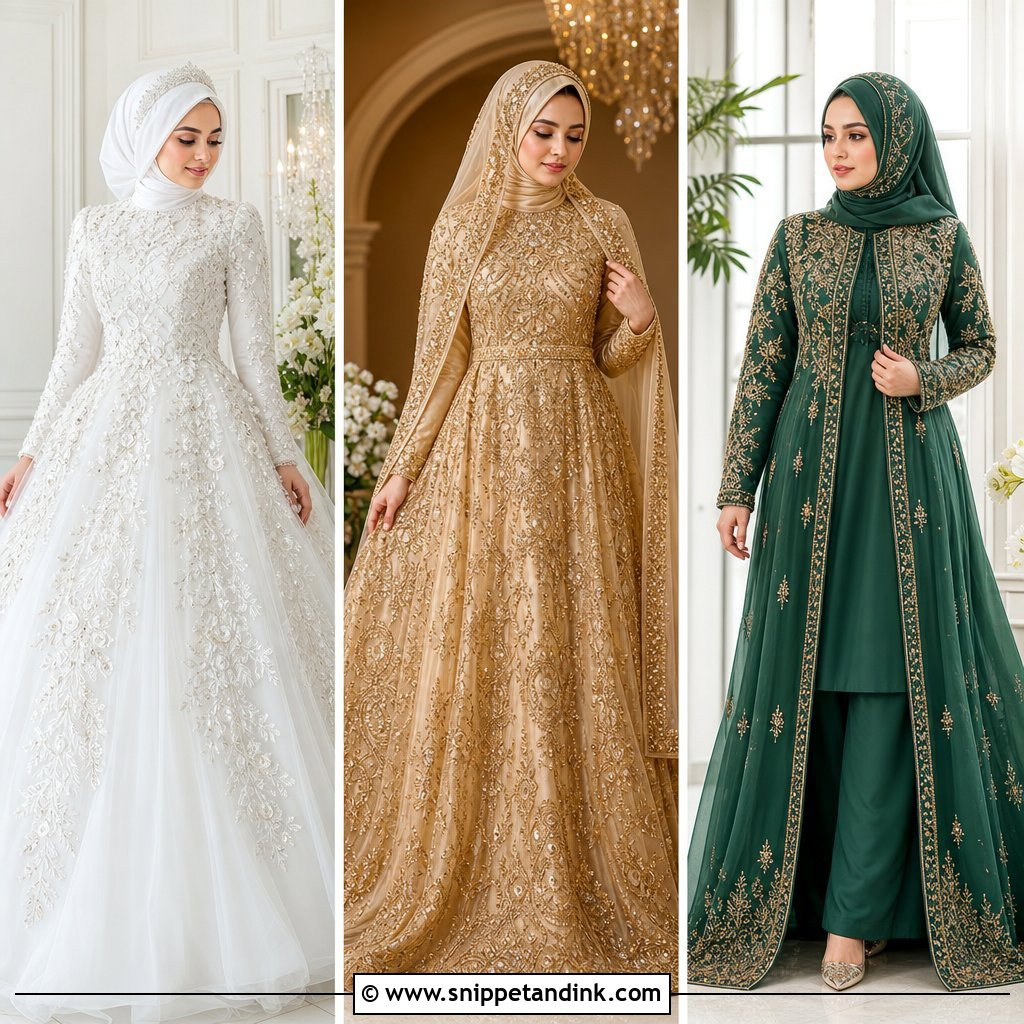
A beaded ball gown makes a grand entrance, but I always lift one before a bride falls in love with it. Heavy beading on a full skirt can weigh a surprising amount, and after hours of greeting guests that weight sits on your shoulders and waist. Choose a structured bodice with a high neckline and full sleeves, and check that every beaded panel is lined underneath, since beading is often sewn onto sheer net. A smooth ivory hijab keeps the face clear of all that sparkle. Save it for a ballroom reception or a formal evening walima.
4. Minimalist Crepe Muslim Bridal Dress
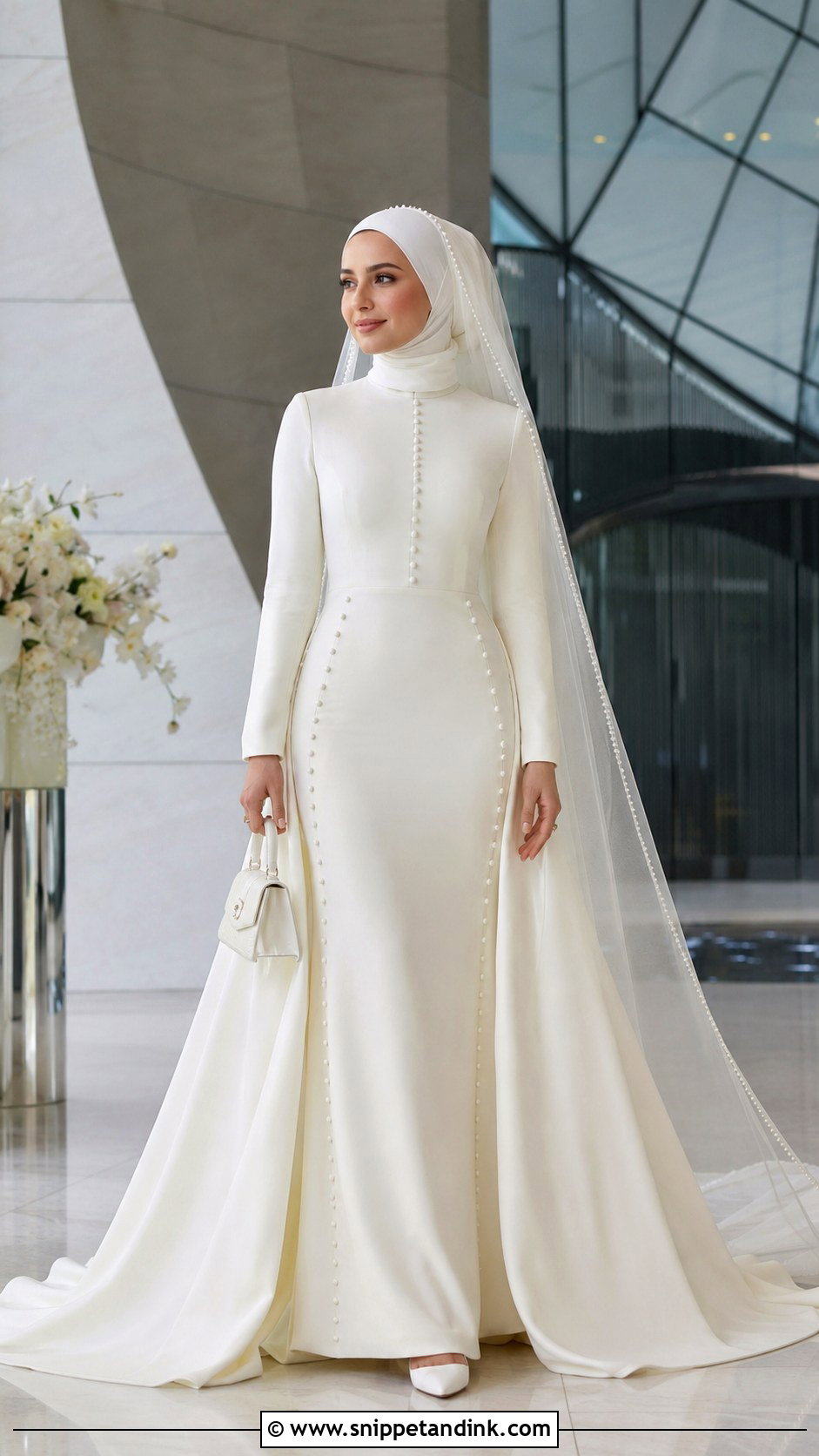
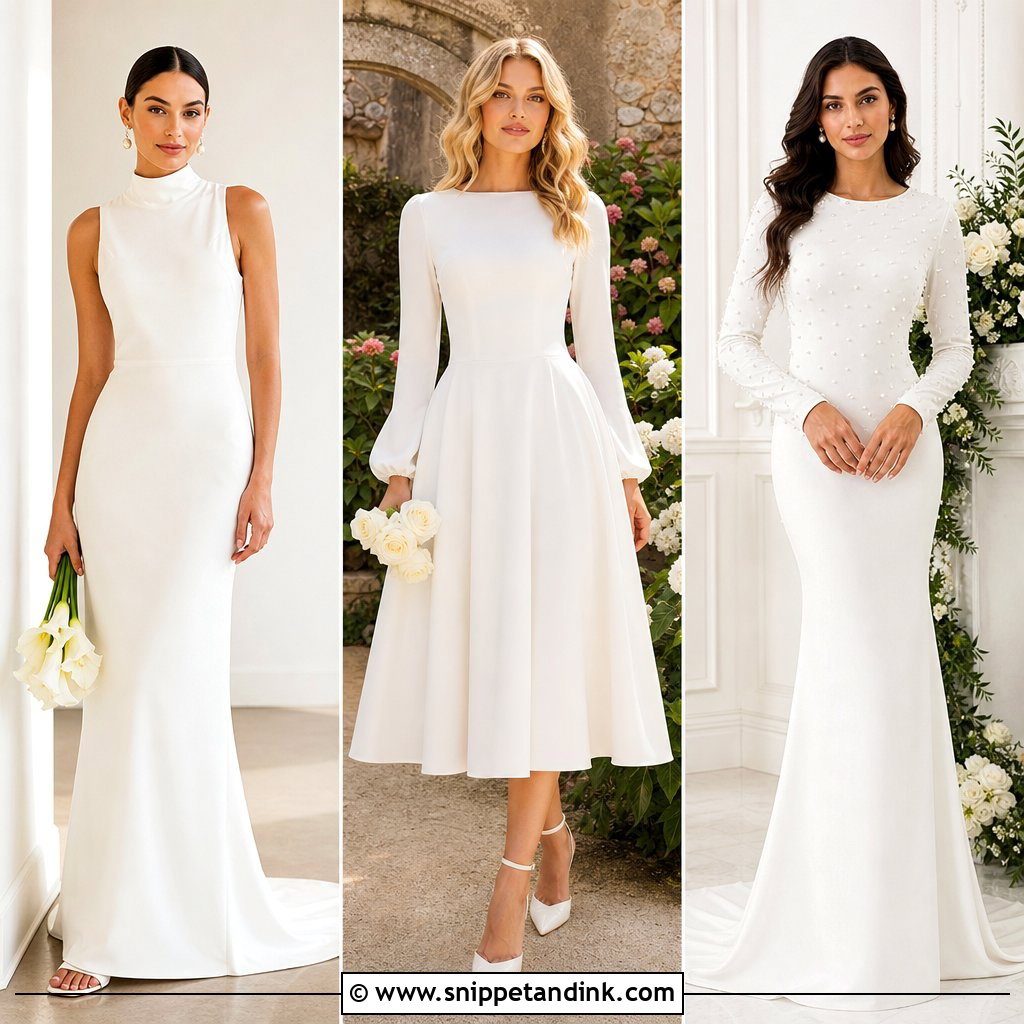
Heavyweight crepe is what I suggest to brides who want no decoration at all. It drapes from the shoulder in a clean line, hides undergarments and doesn’t wrinkle much. A column or relaxed A-line with long sleeves, a raised neckline and covered buttons gives quiet structure, and a detachable train lets you have ceremony length and then walk freely. Crepe must skim, not cling, so tailoring matters more here than with lace. A matte chiffon hijab in the same shade and pearl earrings finish it for an intimate nikah.
5. Pearl Embellished Muslim Bridal Dress
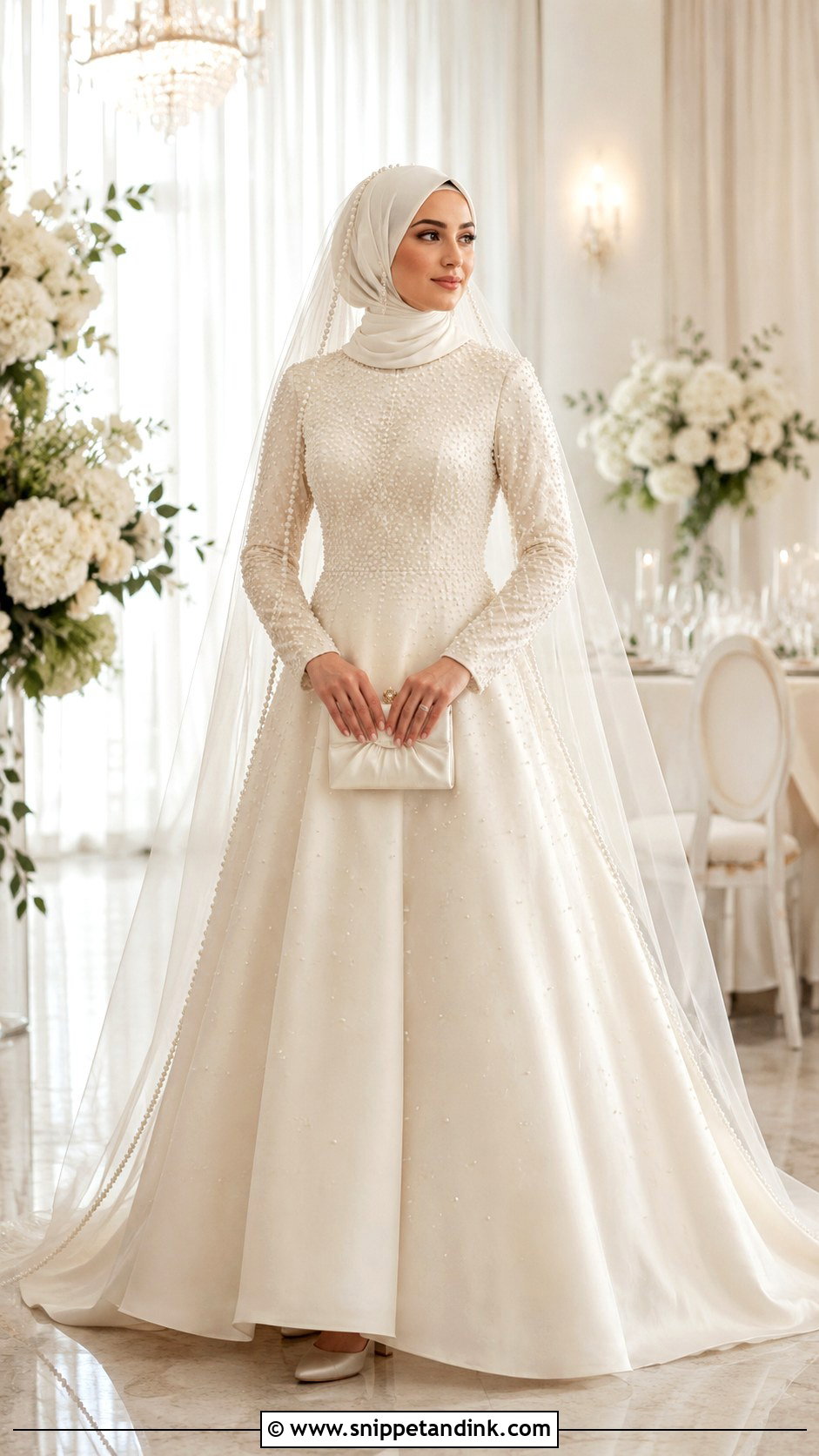
Pearls give a soft glow rather than the hard flash of crystals, and I find they suit brides who wear warm-toned makeup. A full-length gown with scattered pearls across the bodice and sleeves, over an opaque lining, keeps the effect delicate. Pearls at the wrist are the practical concern. They catch on a lace hijab edge or tulle veil every time you lift your hands, so I ask the seamstress to reinforce them and keep the cuff area lighter. A plain ivory hijab and low block heels let the pearl detail do the work.
6. Cape Muslim Bridal Dress
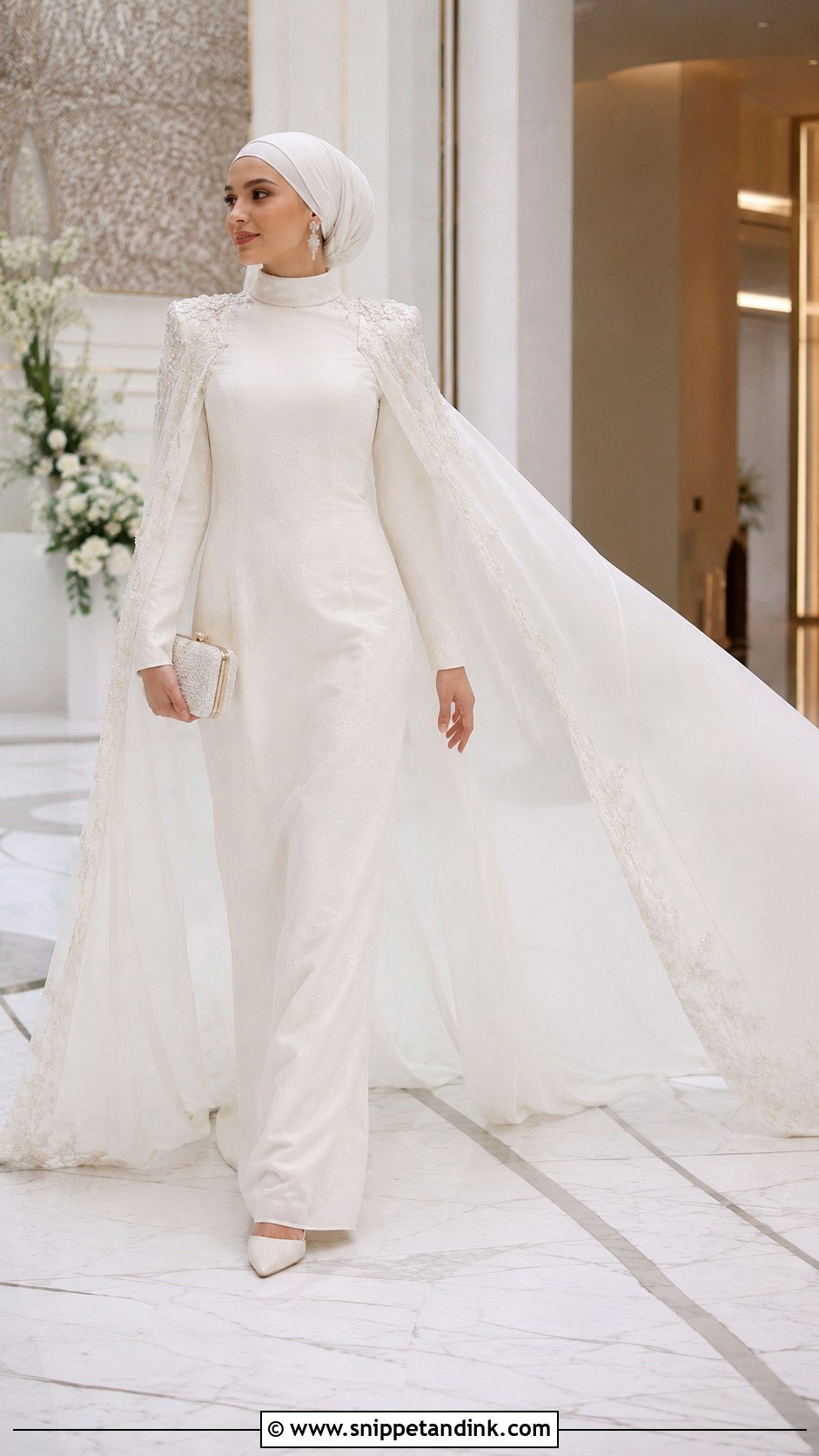
A detachable cape gives a simple column dress a dramatic back view without adding a huge skirt. Start with an ivory column with long sleeves and a high neckline, then attach a floor-length cape in chiffon, tulle or lightly beaded crepe. Where it attaches is the detail I watch. Hooks or snaps at the shoulder seam can pull against hijab pins, so the cape should fasten slightly behind the shoulder line. With that much fabric behind you, a veil is usually unnecessary. It suits modern venues and a strong walk down the aisle.
7. Tiered Tulle Muslim Bridal Dress
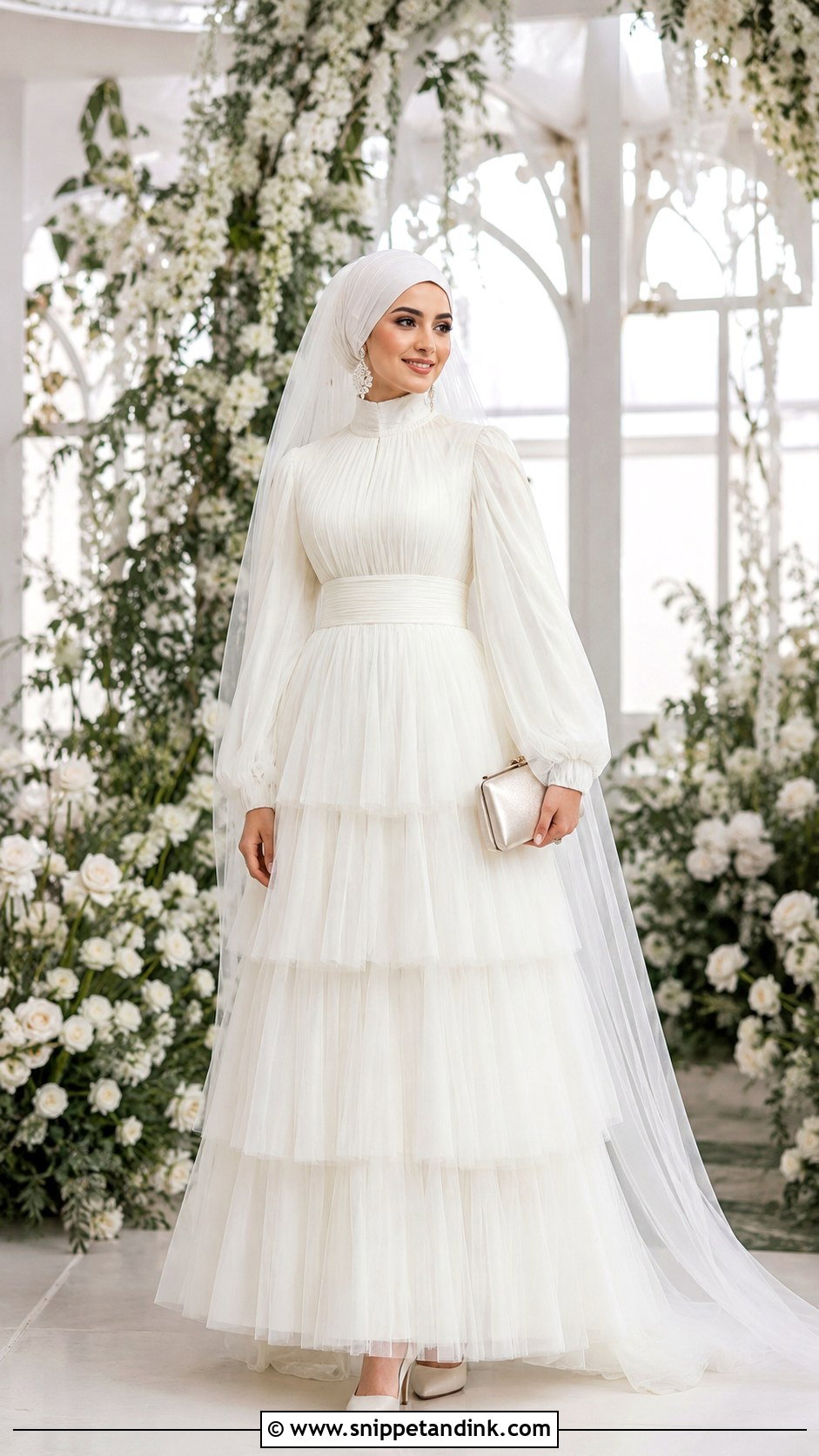
Tulle tiers bring movement to a fully covered gown, and smaller tiers look more refined than heavy ruffles. Keep the bodice opaque, the neckline high and the sleeves long, then let the skirt carry the softness. I like a matte chiffon hijab here because it contrasts with the airy tulle. Hem length is critical with tiers. If the bottom tier touches the floor in your wedding shoes, you’ll step on it on the stairs, so bring the exact shoes to every fitting. It’s a natural choice for garden venues and spring or summer celebrations.
8. Long Train Muslim Bridal Dress
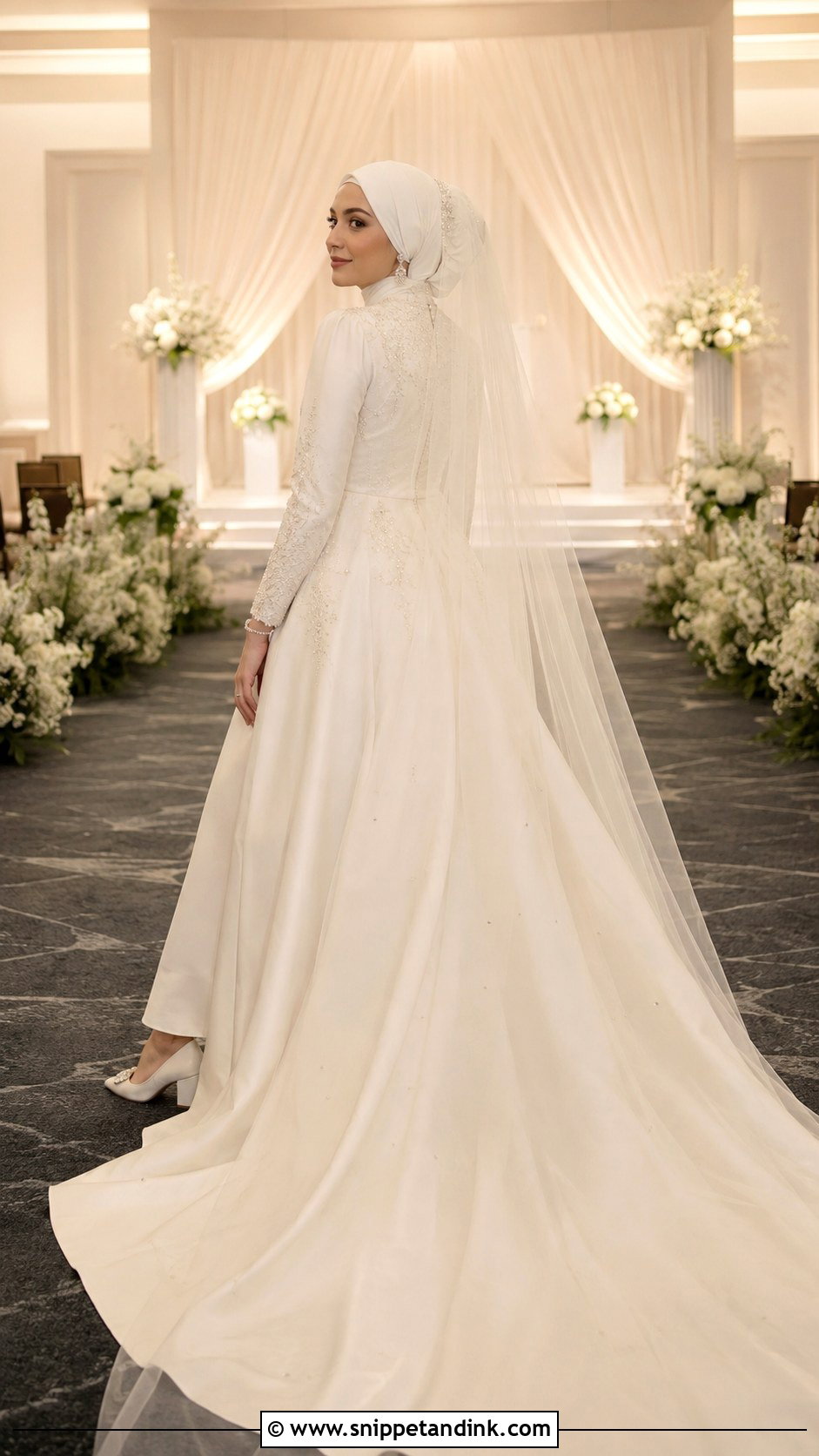
A train that starts from the skirt rather than the waist gives a smoother line and is far easier to bustle after the photos. Pair a full-sleeved, high-necked A-line with a securely wrapped ivory hijab and a veil that reaches just past the train. I always rehearse the train with a bride: walking, turning to sign the nikah papers, and sitting down without trapping the fabric under the chair legs. Hand a wristlet to a sister or friend so your hands stay free. A long train needs a wide aisle and a spacious hall to be seen properly.
9. Bridal Abaya With Embroidery
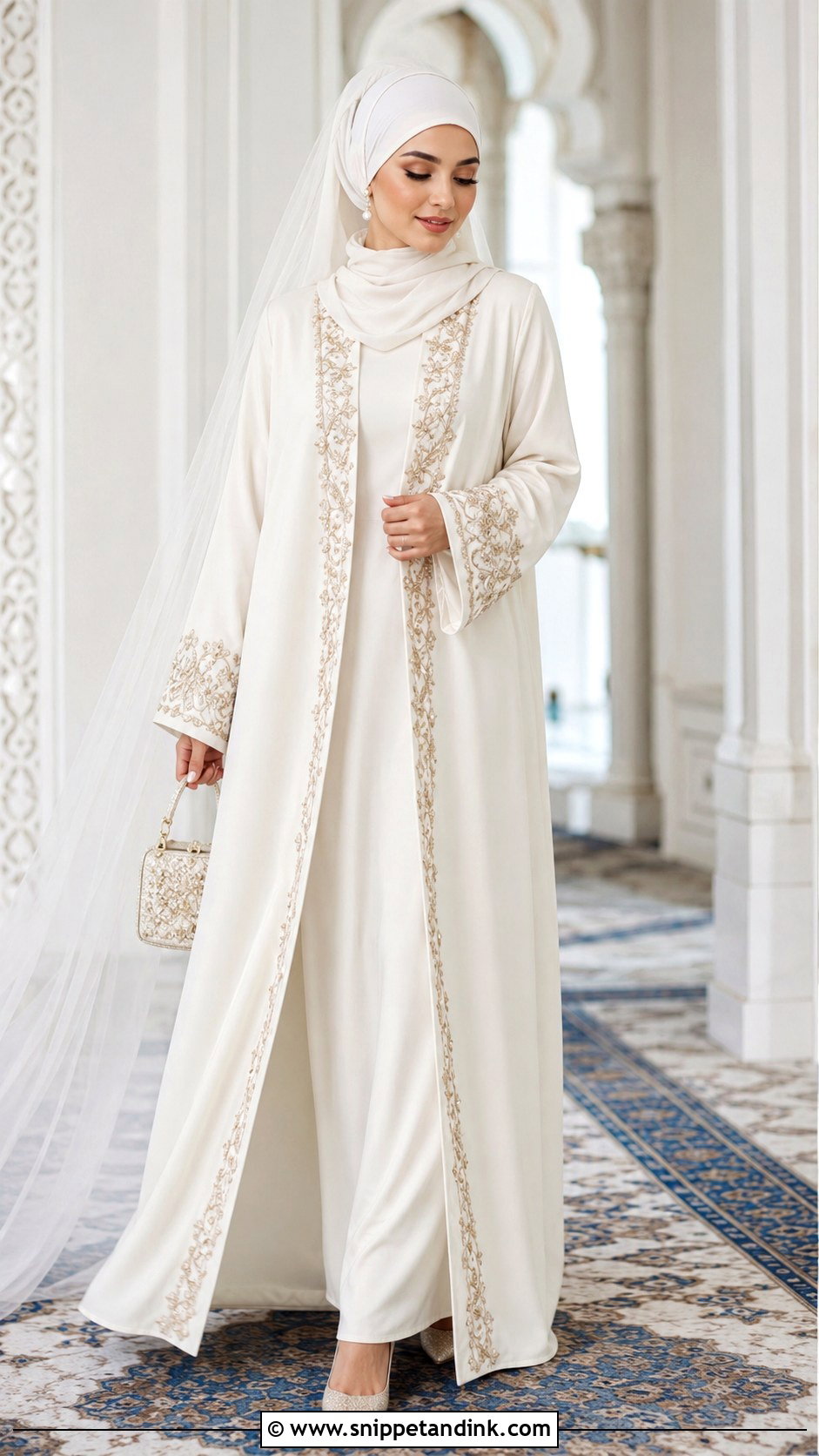
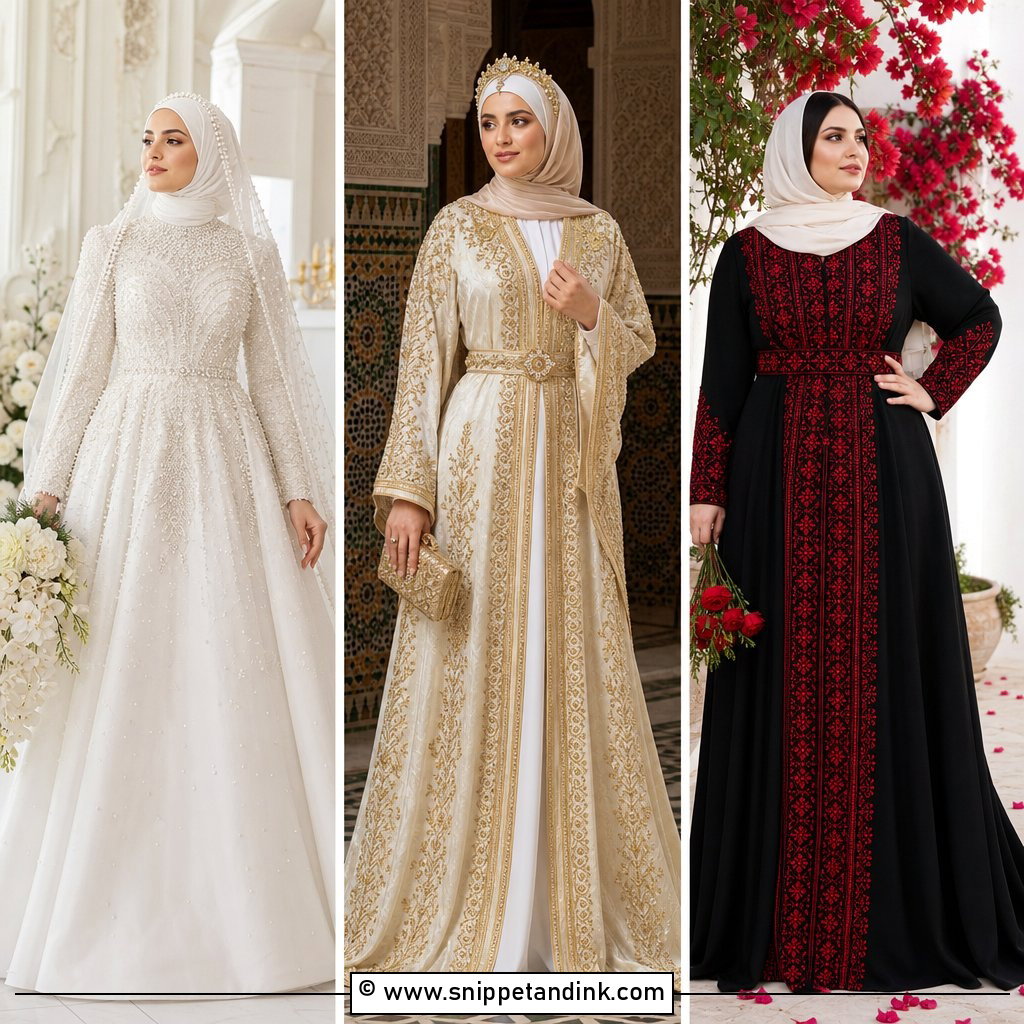
An embroidered abaya is one of the most comfortable bridal options, and some brides prefer it for a mosque ceremony. Look for premium crepe, satin or nida with secure front closures and sleeves wide enough to move in but not so wide they trail. White, ivory, champagne and soft beige all read as bridal. Embroidery at the cuffs, shoulders and front edge gives detail without cluttering the silhouette. Wear an opaque slip dress underneath, because a flowing abaya opens as you walk, and pin a light veil behind the hijab if you want one.
10. White Bridal Kaftan
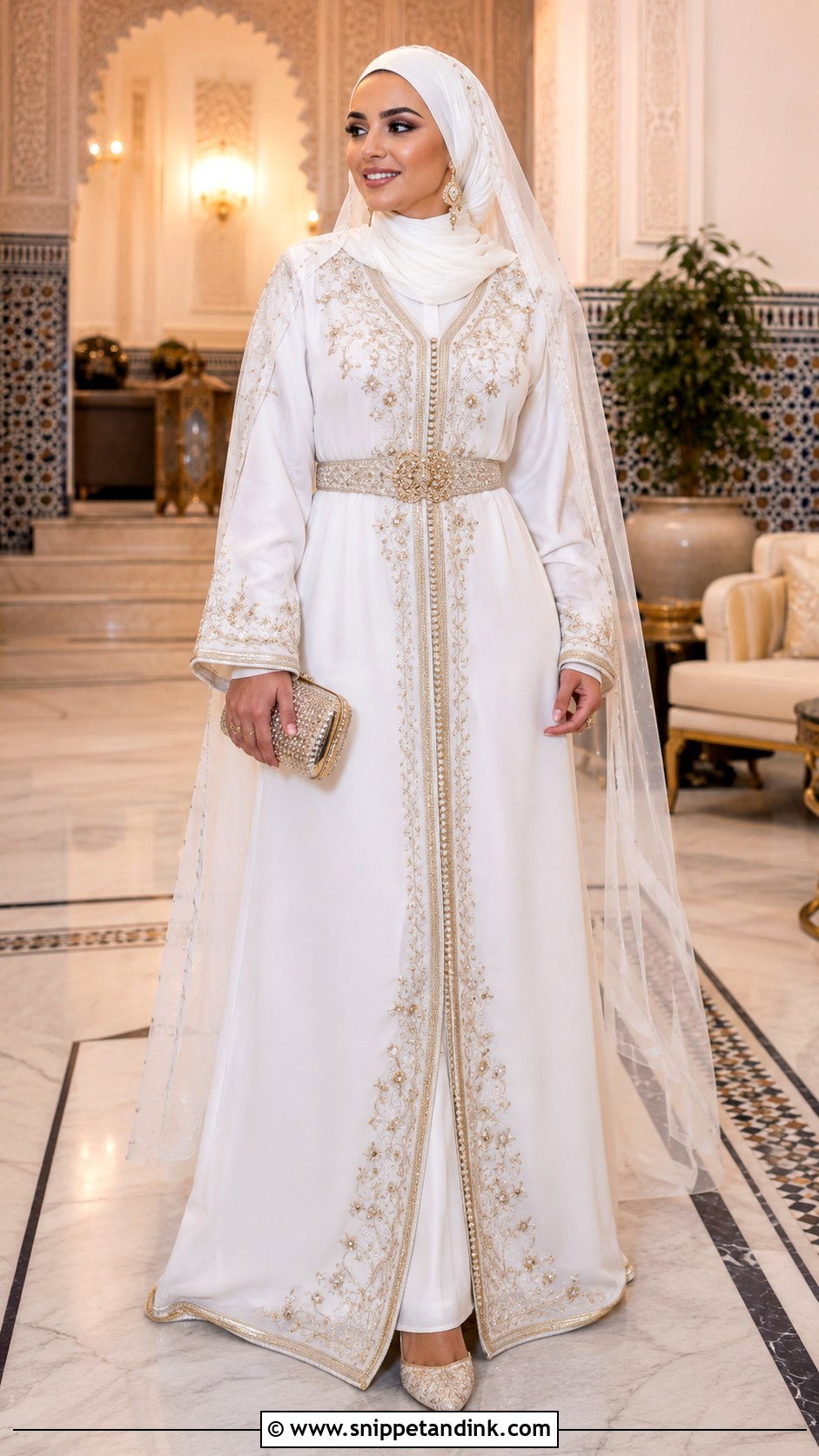
A white kaftan keeps generous coverage while letting the embroidery speak. Choose an opaque design with long sleeves and embroidery down the neckline, front panel and cuffs. The traditional belt should sit comfortably at the waist; I loosen it a notch for brides who’ll be seated for a long meal. Dense gold threadwork needs a plain chiffon or tulle veil, never a decorated one. It works for a Moroccan-inspired ceremony, a formal family celebration or a second reception outfit.
11. Moroccan Takchita Muslim Bridal Dress
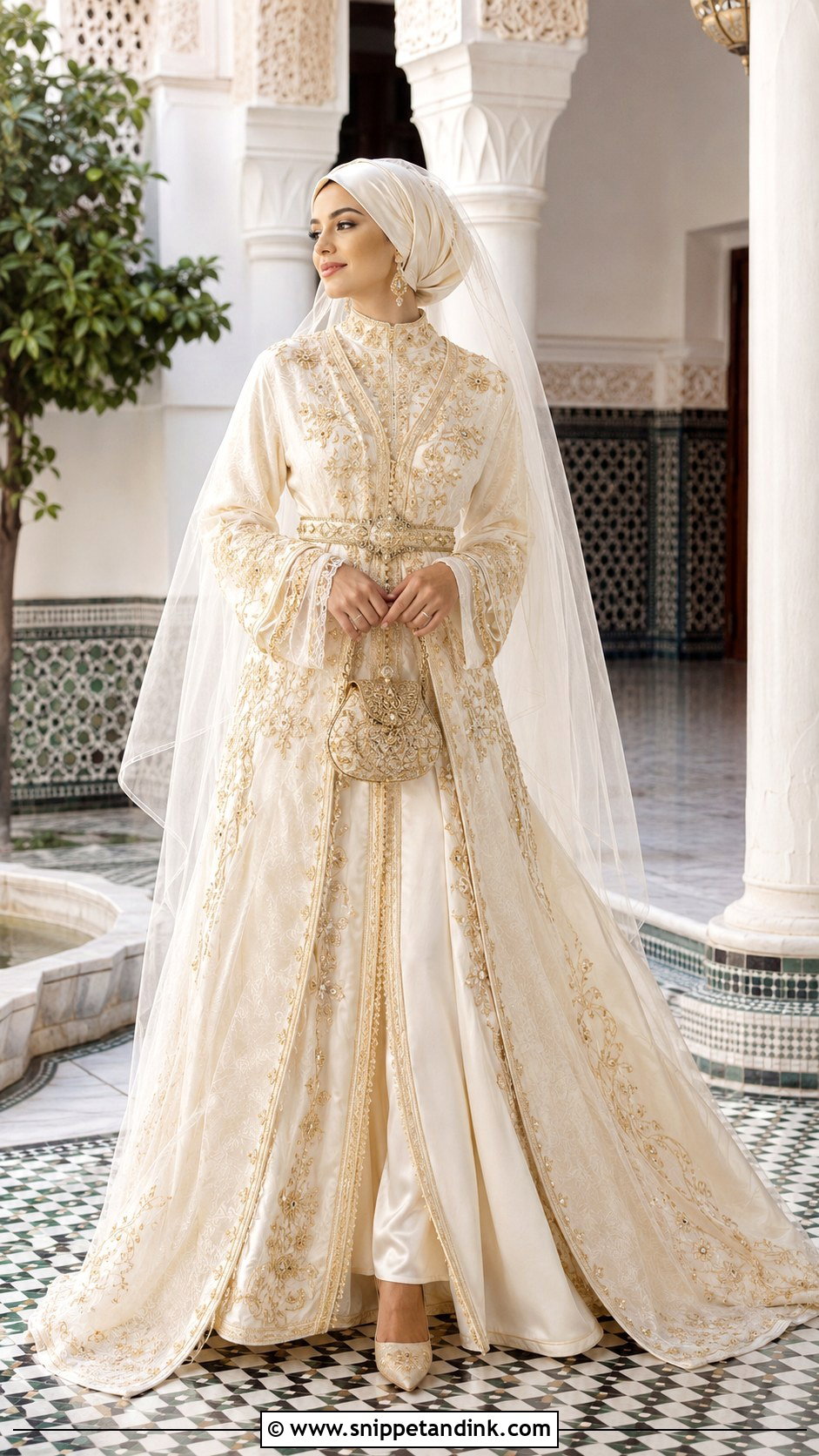
A takchita is built in layers, usually an inner dress under an embellished outer one, with a belt to shape the waist. That layering gives coverage and depth at once. Ivory, white, champagne and pale gold with fine embroidery suit a bride, and the belt does the structure that a corset would in a Western gown. Layers trap heat, though, so for a summer evening I ask brides to pick a lighter inner dress. A neatly draped satin hijab, gold earrings and embroidered shoes finish it, with a light veil that doesn’t compete.
12. Red Muslim Bridal Lehenga
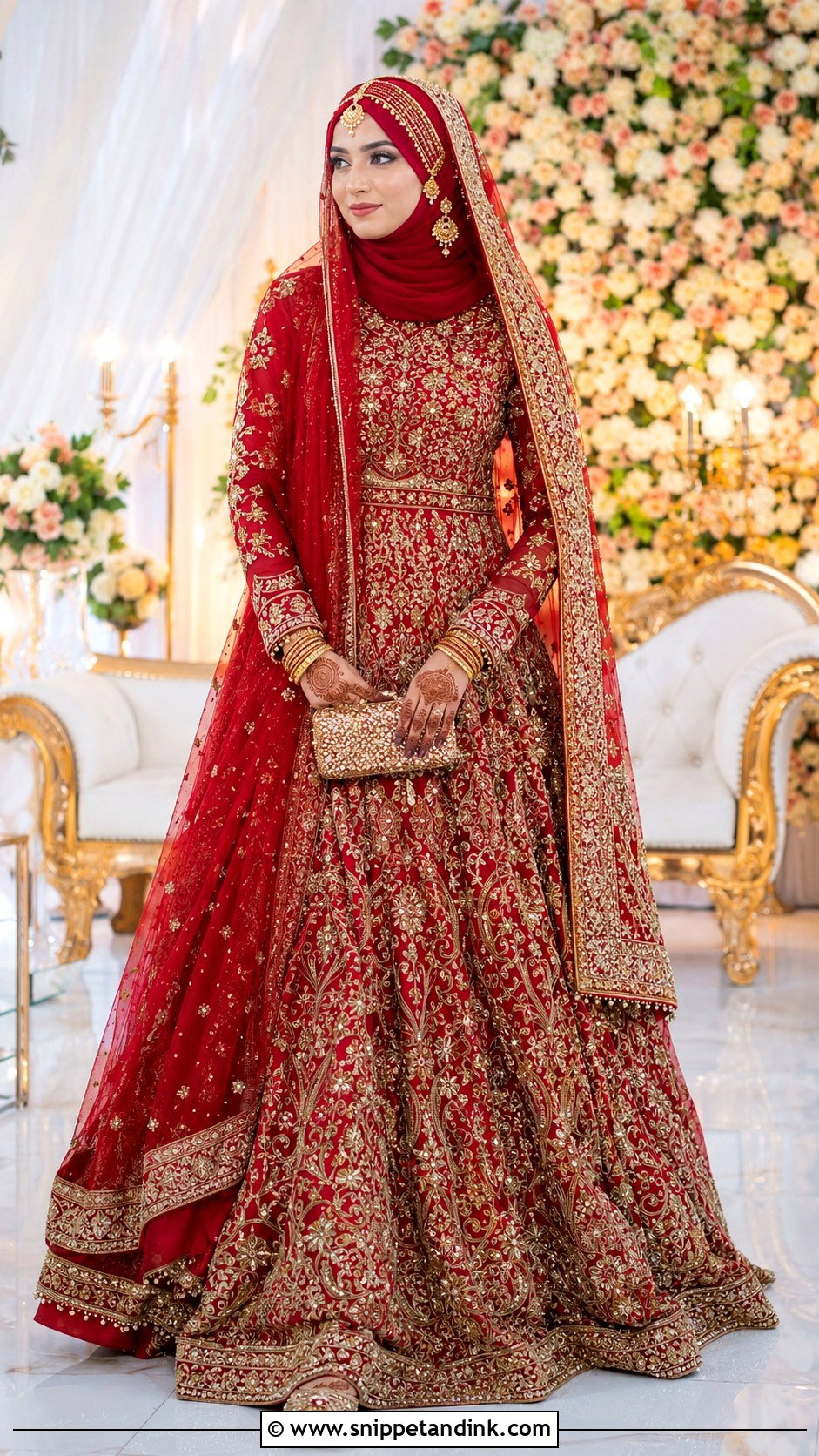
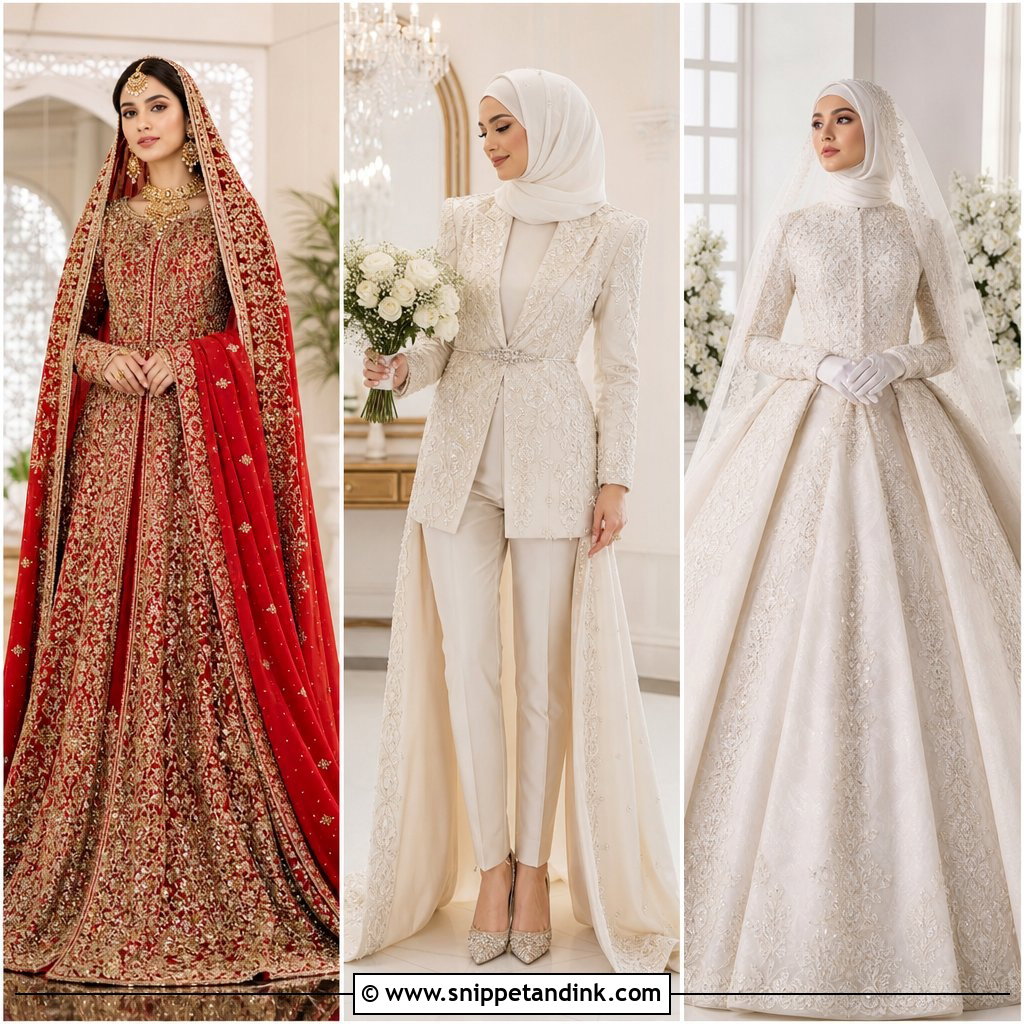
Red is still the color many South Asian brides want for the main event. For a covered look, pair a high-waisted, floor-length skirt with a long blouse that covers the midriff, neckline and arms, and check that every embroidered panel is lined. The dupatta drapes over a secure red hijab so its border frames the face. Zardozi and heavy embroidery are weighty, and a dupatta pinned to a hijab pulls backward all evening, so I anchor it with pins into an underscarf, not the outer hijab. Gold earrings, bangles and juttis complete it.
13. Champagne Muslim Bridal Lehenga
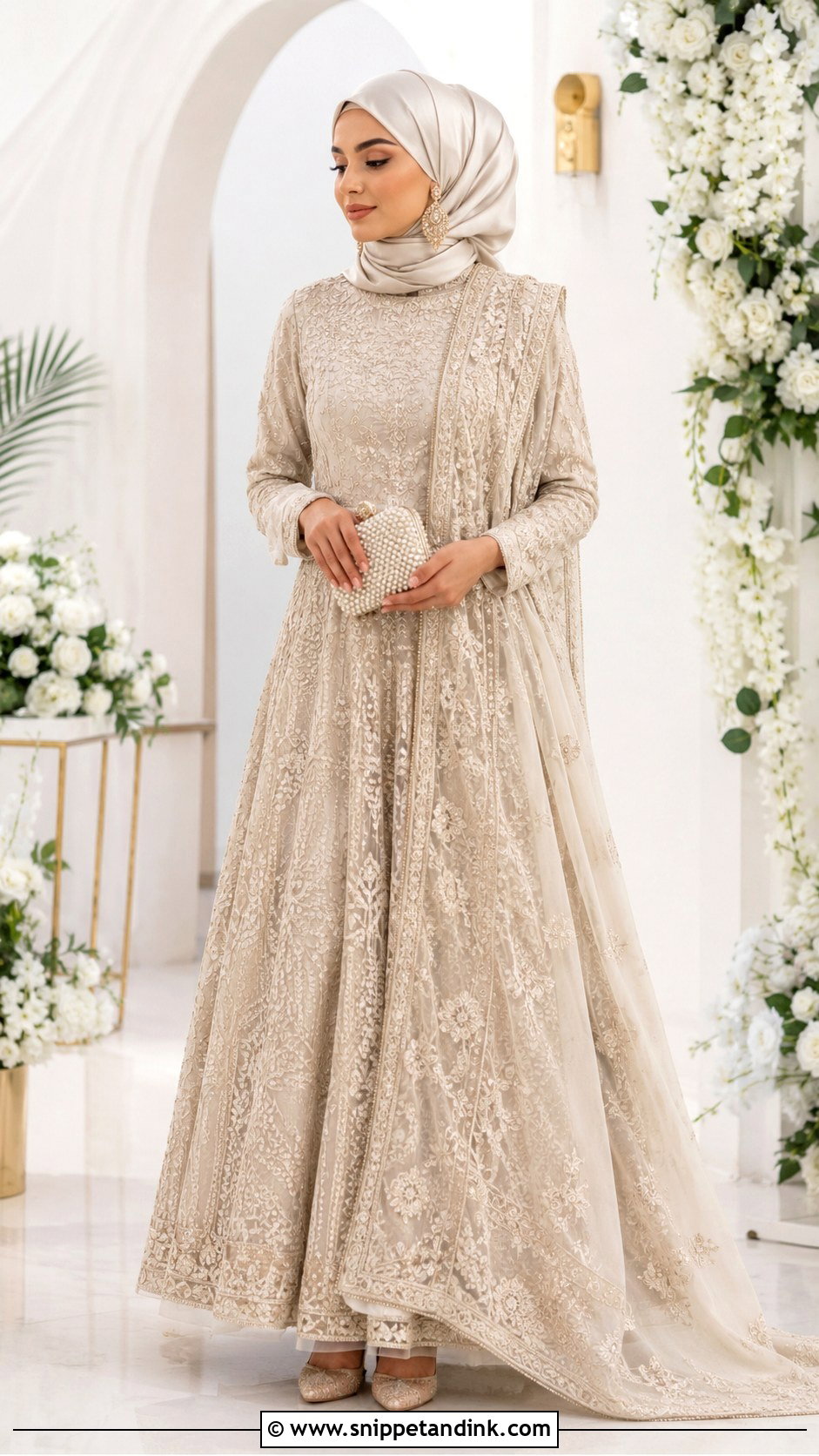
Champagne is softer than white and still clearly bridal. Choose a full-length lehenga skirt with tonal embroidery and a long blouse whose hem overlaps the skirt by a good margin, so nothing shows when you lift your arms. A champagne satin hijab under the dupatta gives smooth coverage. Tonal beadwork adds depth without harsh contrast. Champagne also shifts a lot between daylight and warm indoor bulbs, from almost gold to almost gray, so look at your fabric in both before you choose the hijab shade.
14. Pastel Pink Sharara Bridal Dress
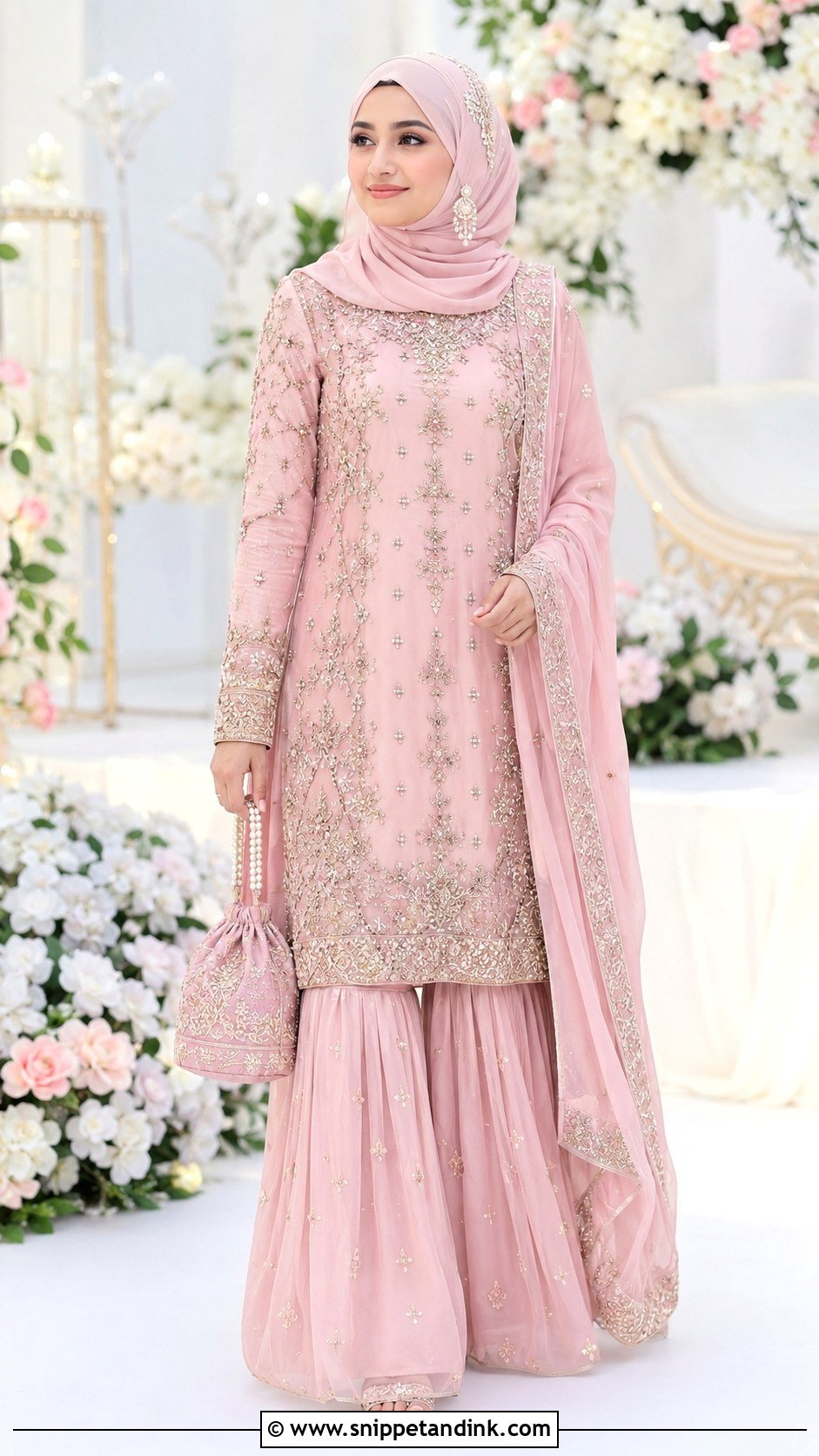
A sharara gives you the most freedom to move on this list, which matters at a long daytime event. Wide flowing pants go under a tunic of knee length or longer, with full sleeves and a high neckline. Pale pink chiffon, organza and georgette are almost always sheer, so a full lining is not optional. Drape the dupatta over the head and one shoulder on top of a matching hijab. Sharara hems flare at the knee and can catch under your sandals; I have them finished just above the floor in the shoes you’ll wear.
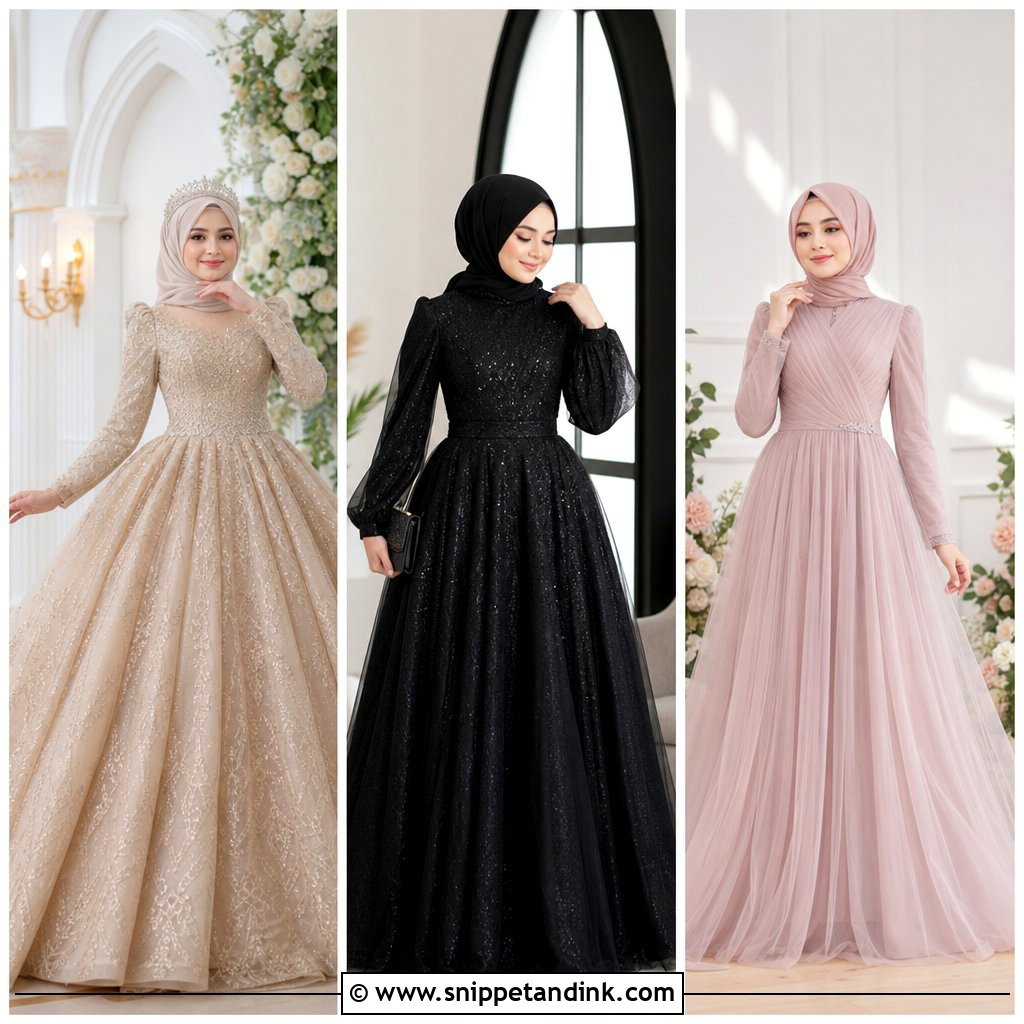

15. Green Embroidered Anarkali Bridal Dress
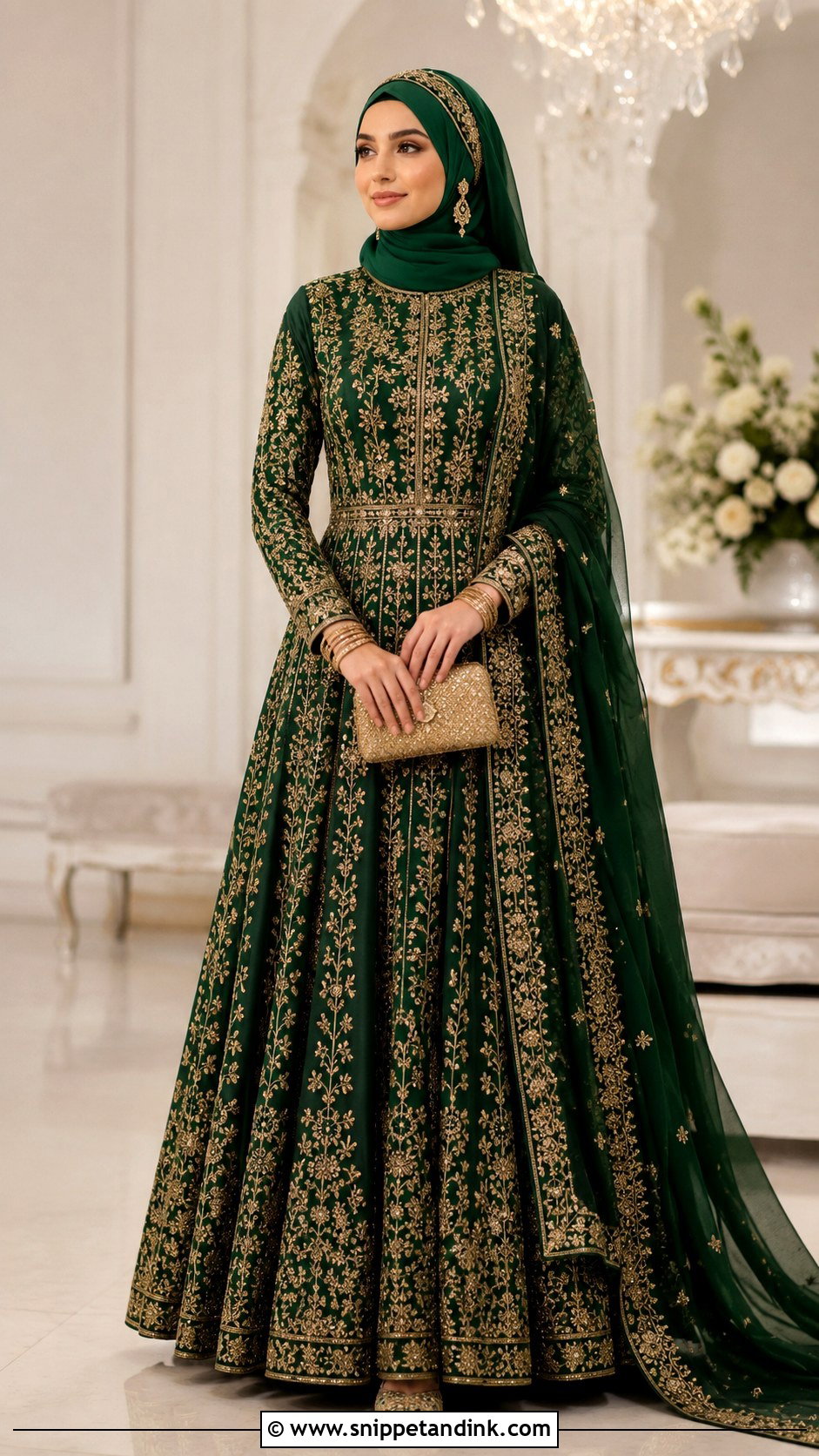
Emerald or muted sage suits brides who’d rather wear color than white. A floor-length Anarkali with a fitted bodice, high neck and full sleeves flares generously from the waist, and that flare needs a complete lining under any net or chiffon. I pair emerald with antique gold and sage with pearls and softer metals. Many Anarkali skirts are cut from a lot of panels, so they swing beautifully but also get heavy; try spinning in it once to feel the weight. A matching hijab and an embroidered dupatta finish the look.
16. Turkish Muslim Bridal Dress
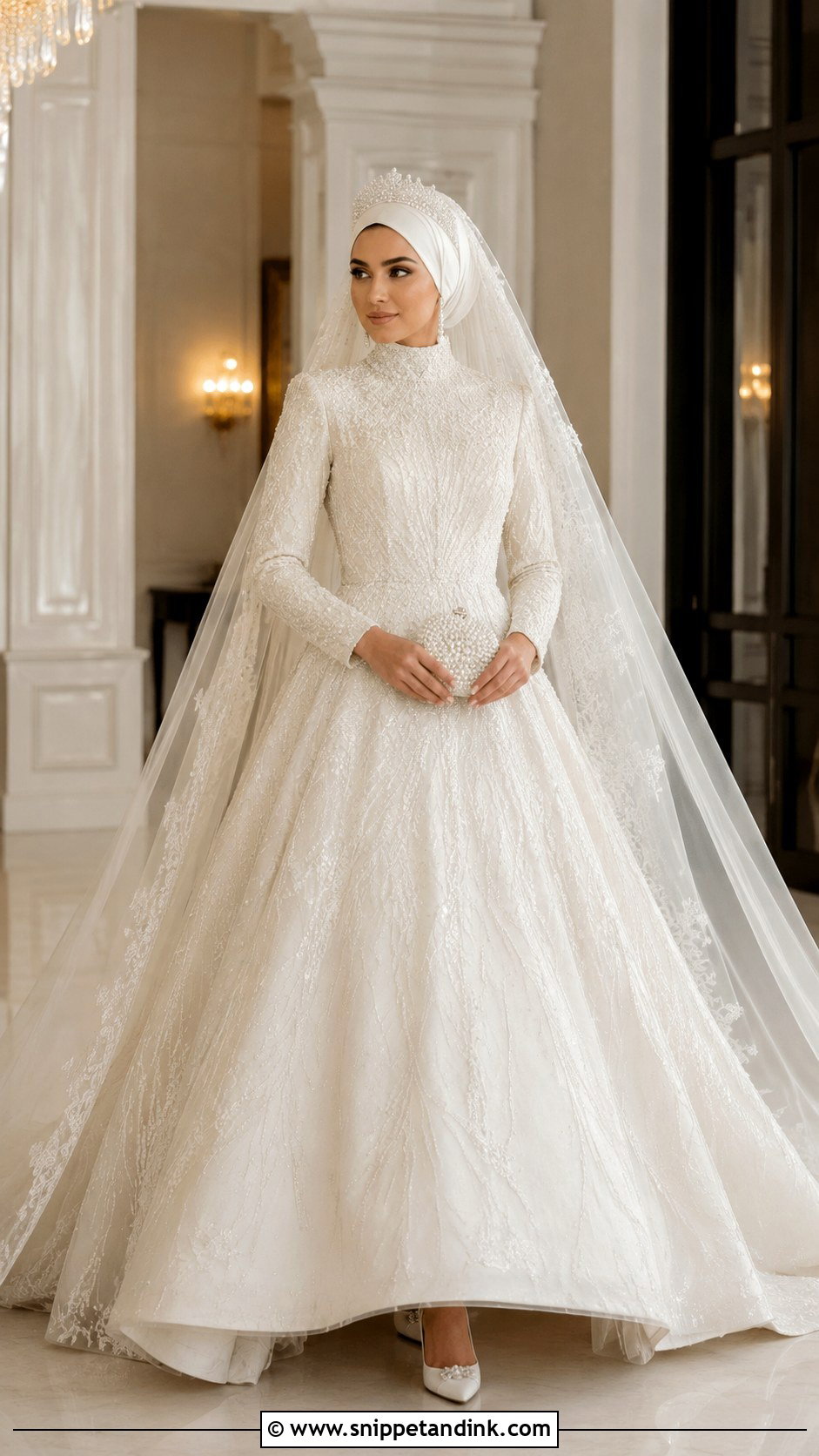
A Turkish-inspired bridal gown usually takes a Western silhouette and builds modesty into the pattern, with long sleeves, a raised neckline and fitted cuffs. Lace or beadwork carries the decoration, and a structured waist gives shape without tightness. The hijab tends to be wrapped close and smooth, with the veil attached beneath a crystal or pearl headpiece. I choose a veil wide enough to fall over the shoulders without hiding the sleeve detail. Grand halls and hotel weddings suit it.
17. Malaysian Baju Kurung Bridal Dress
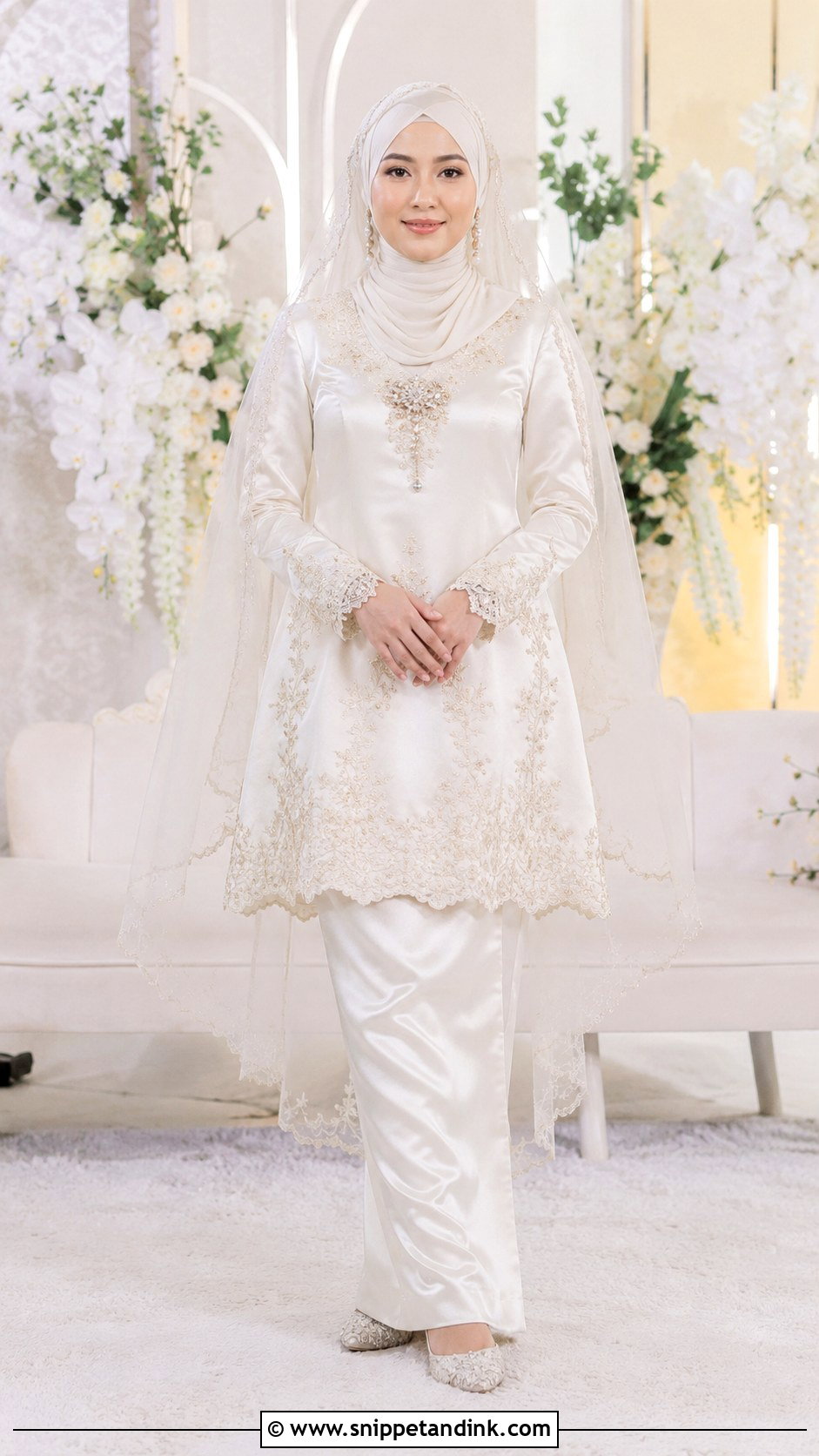
A bridal baju kurung gets its coverage from the cut itself: a long tunic over a floor-length skirt. For a wedding finish, choose ivory brocade, embroidered satin or lightly beaded fabric with an opaque lining. The tunic should fall below the hips, and the skirt needs enough room to walk and to sit on the dais. Brocade is stiff and warm, so in tropical heat I ask for a breathable cotton lining. A matching satin hijab, a small brooch and a light shoulder veil complete it.
18. Indonesian Kebaya Muslim Bridal Dress
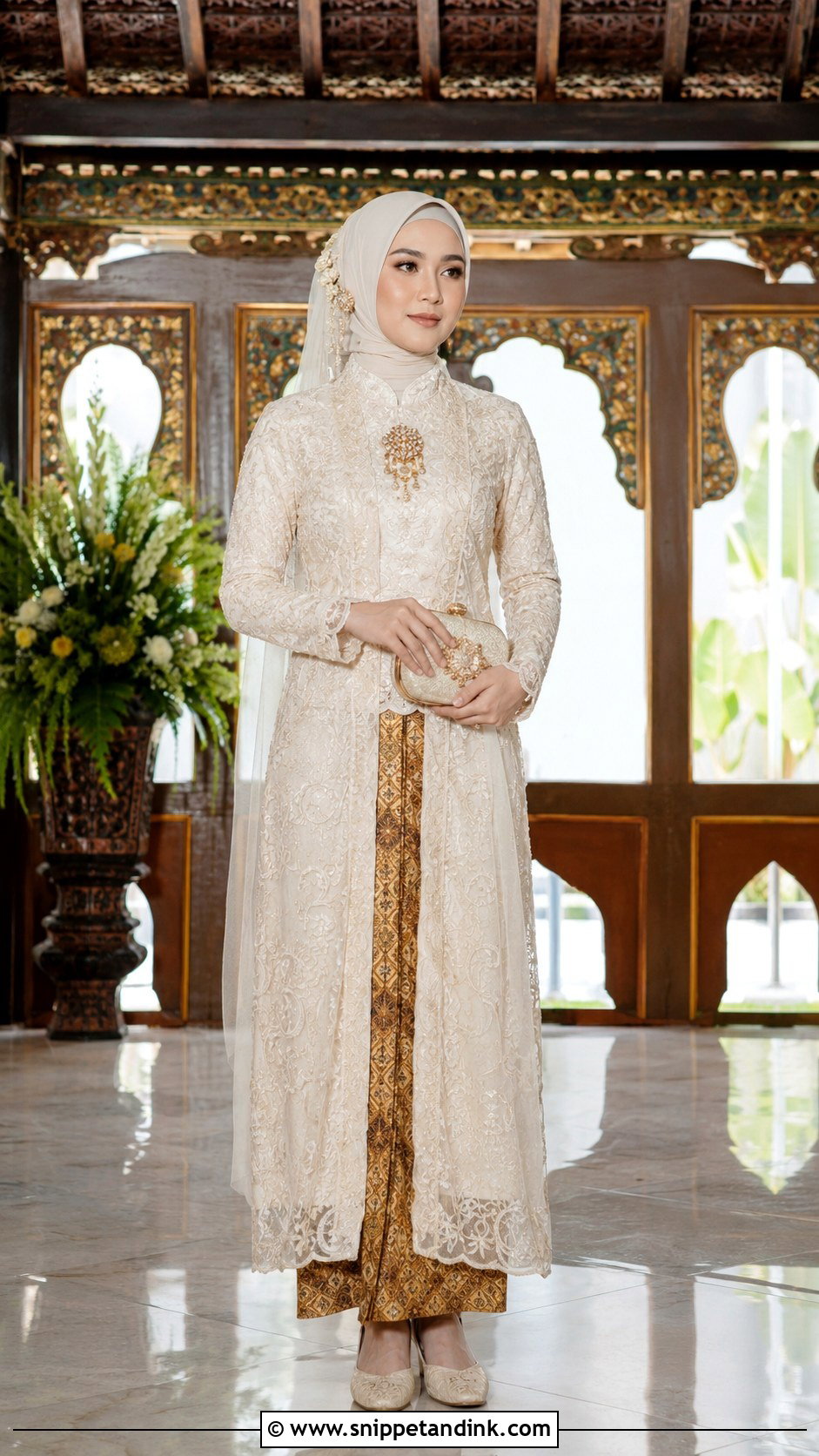
A modest Indonesian kebaya works as a bridal outfit once the layering is planned. Choose a long embroidered kebaya with full sleeves and a high inner neckline, worn over an opaque camisole or fitted lining, with a floor-length batik or songket skirt. Traditional kebaya lace is often fine and sheer, so check every part of it under bright light before alterations start; adding lining later is harder than building it in. A hijab in ivory, gold or a shade from the skirt keeps it unified.
19. Plus Size A-Line Muslim Bridal Dress
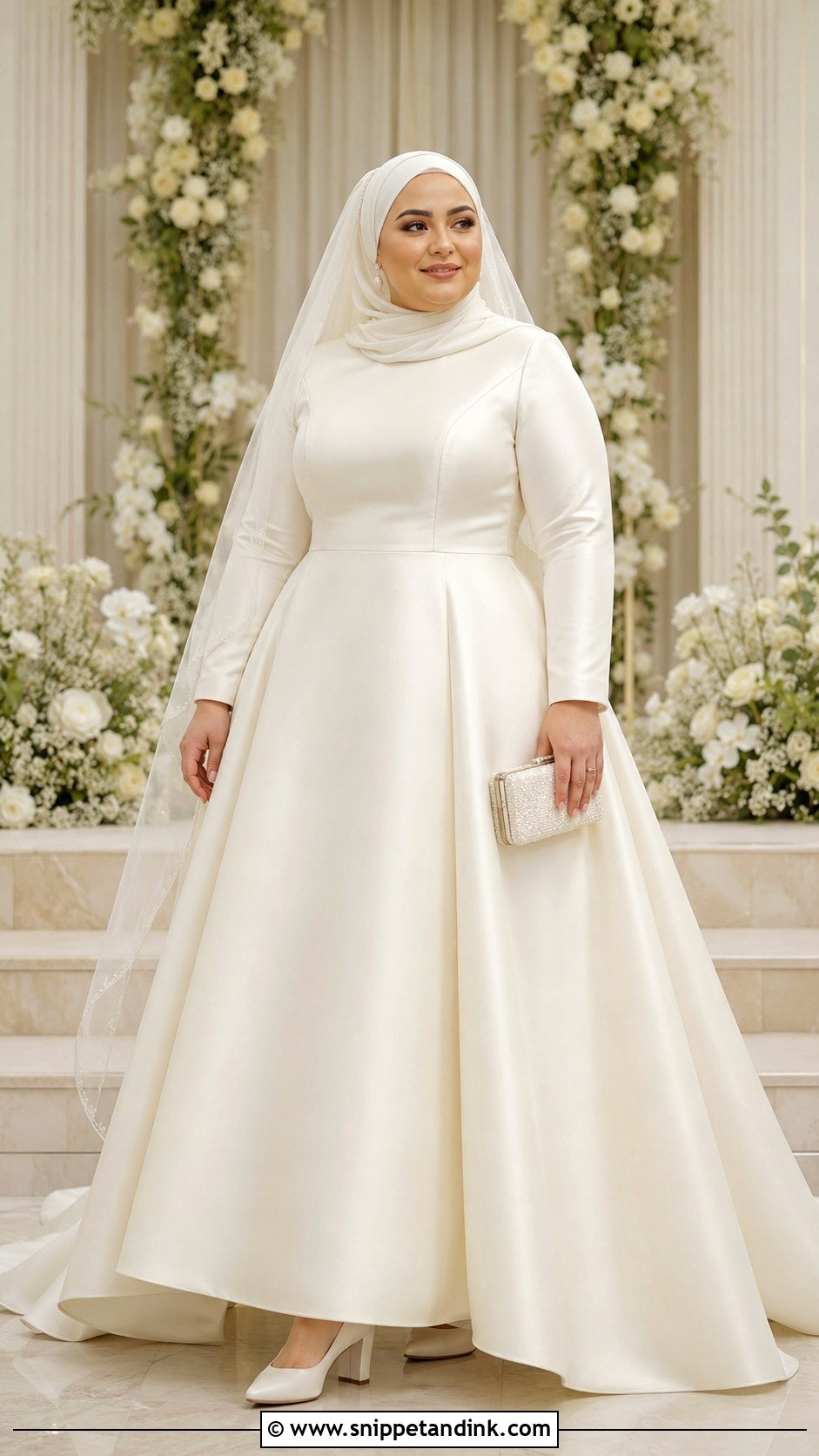
An A-line balances most plus-size shapes because it releases from the waist instead of following the hips. I look for a structured shoulder, full sleeves, a high neckline and princess seams, which shape the dress without adding horizontal bulk. Opaque crepe, mikado, satin or lined lace hold that shape. Fit the arms first: bridal sleeves are often cut narrow, and on a fuller upper arm they restrict movement when you hug or eat. Tailoring for ease through the arms, waist and hips matters far more than the size on the label.

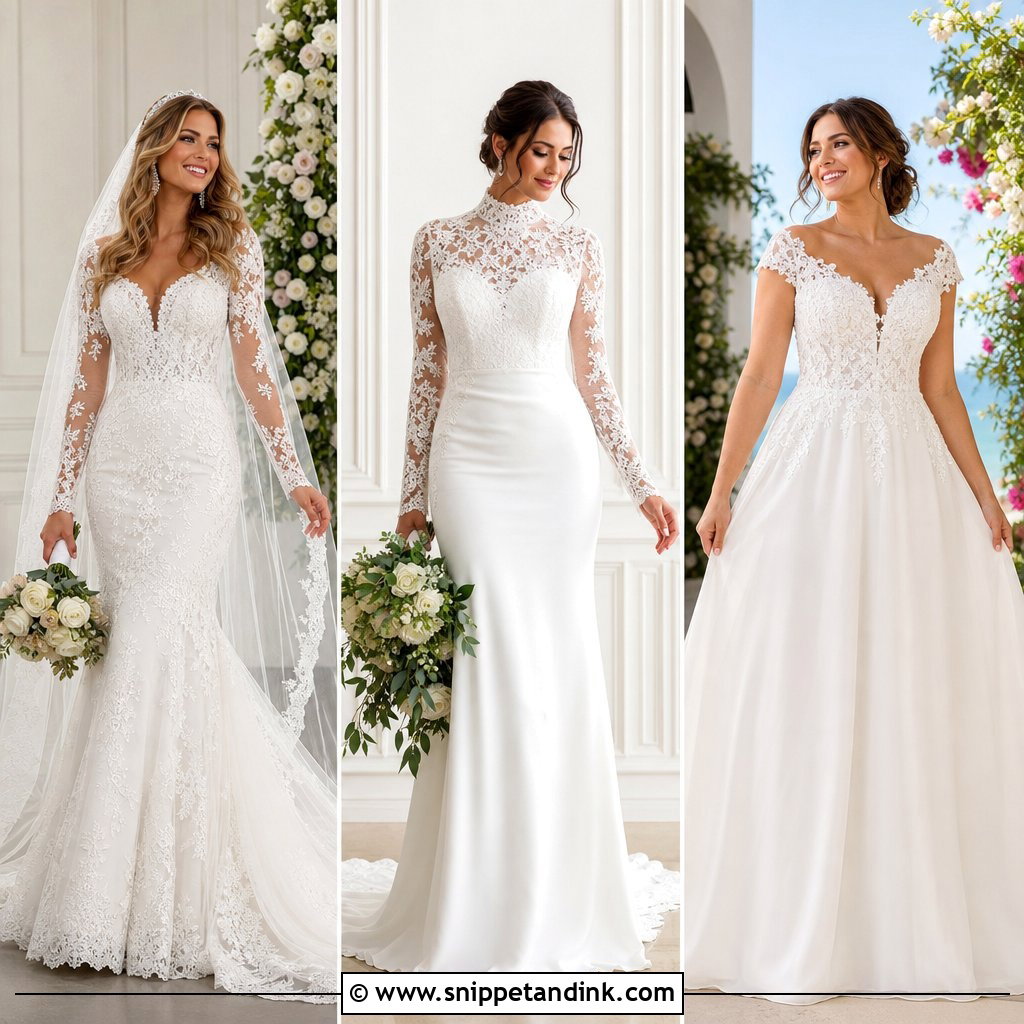
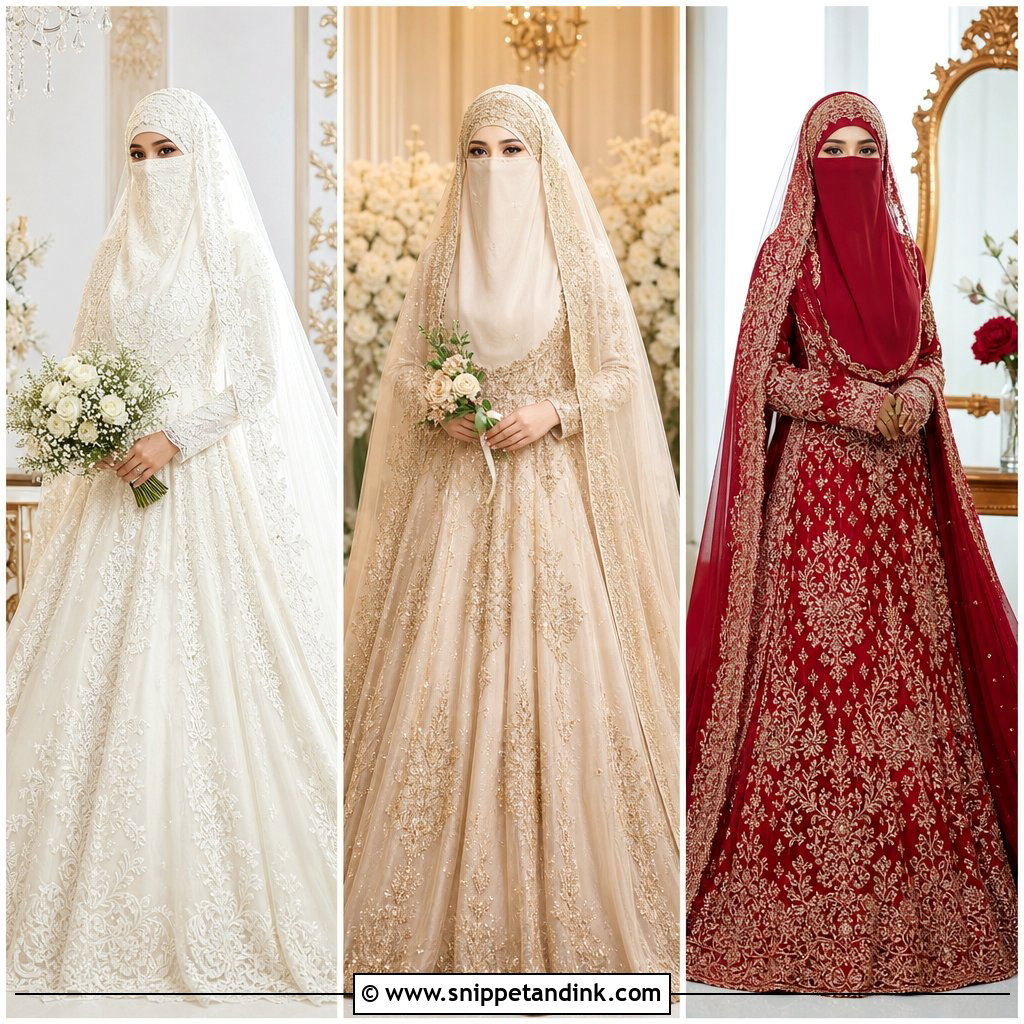
20. Modest Bridal Pantsuit With Cape
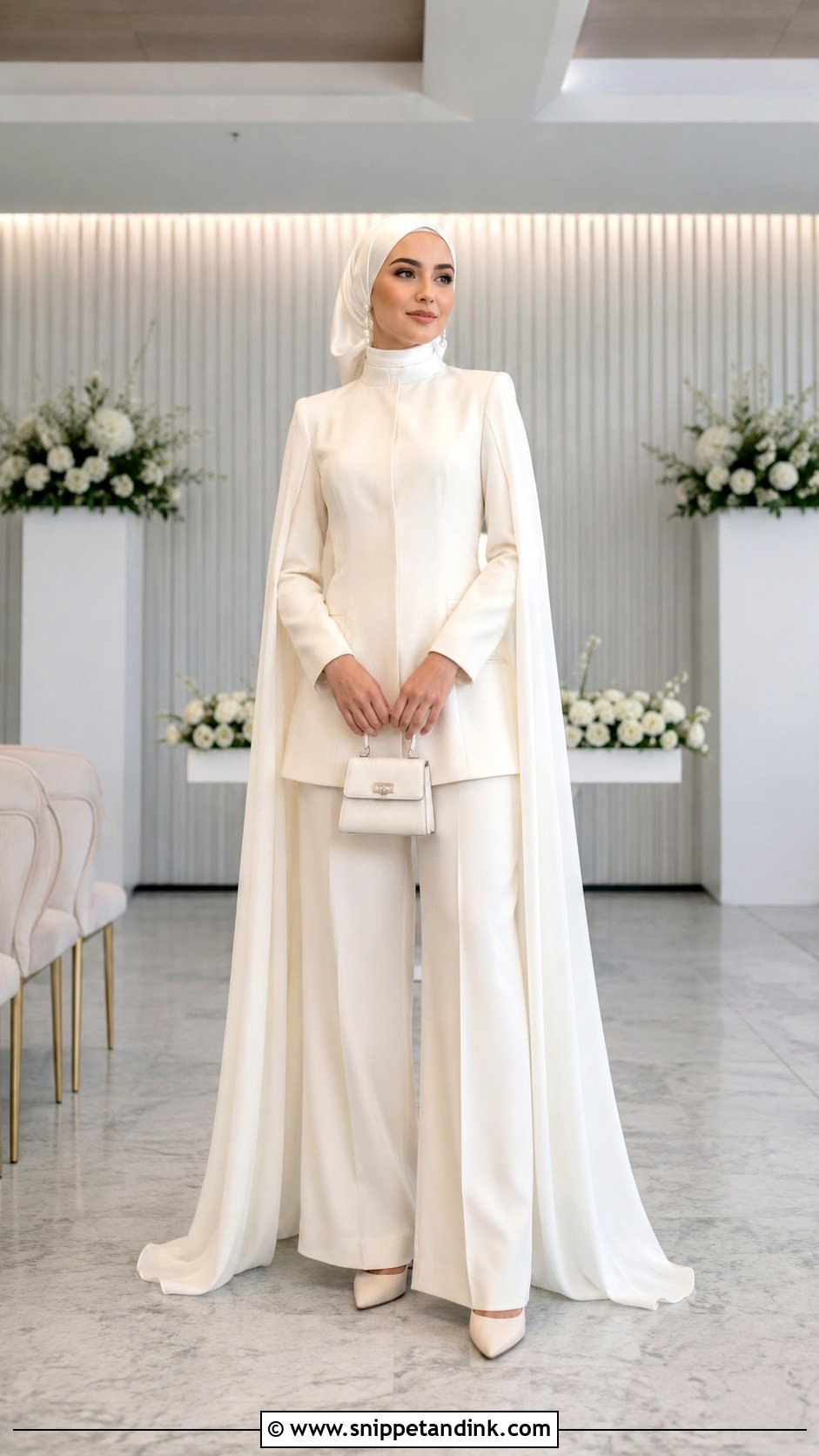
A bridal pantsuit with a cape or overskirt is for the bride who feels most herself in tailoring. Wide-leg ivory trousers go with a thigh-length jacket with full sleeves, secure buttons and a high neckline, and a detachable chiffon cape or floor-length overskirt adds ceremony. Line the trousers fully and hem them for the exact shoes. The jacket must not pull across the front when buttoned, so I fit it with arms forward, as if signing papers. It suits civil ceremonies and intimate nikahs.
Planning the Hijab and Veil Along With the Dress
The hijab is part of the outfit, not an accessory chosen the week before. Chiffon looks soft but slides, jersey grips but can look casual, and satin holds a sculpted wrap well. Whichever you choose, I’d always build it on a snug underscarf or cap. That gives pins something to grip, and it’s where a veil comb or headpiece should anchor, so the weight never drags the outer hijab out of shape.
Bring the hijab, the veil and any headpiece to your final fitting and do a full trial with whoever will wrap it on the day. A heavy cathedral veil can pull backward over hours, and the fix is usually more pins into the underscarf or a lighter veil, not a tighter wrap.
One Outfit or Several Across the Wedding Events?
Plenty of families hold a nikah, a main celebration and a walima on different days, and brides often wear a different outfit for each. In many South Asian families the main event leans to red or deep jewel tones while the walima goes lighter, though every family has its own habits. If the events fall on one day, plan the change honestly: a lehenga with a dupatta and pinned hijab can take a long time to undo and rebuild, so arrange a private room and a helper who has practiced the wrap.
Raise Your Arms, Sit Down, Then Say Yes
Whatever silhouette you lean toward, from plain satin to an embroidered abaya, a red lehenga or a caped pantsuit, the outfit should support your modesty without making you fidget all day. Look at every fabric in strong light, try the full outfit with your hijab, and leave real time for alterations. Then walk, sit and raise your arms in the finished look before the wedding. Comfort through the whole celebration is the test that counts.
You'll Like These Ideas:






Leave a Reply