
A long train changes how you walk, how you turn, how your photographer frames the aisle and what happens the second the ceremony ends. That’s why I never treat it as decoration. The gowns below run from clean satin to lace ball gowns, sculpted mermaids and convertible designs, with cathedral trains reaching several feet behind the waist and royal trains going further still. For each one I’ve added the veil, shoes, earrings and bouquet that keep the train as the focus, plus the practical checks for bustling and moving. If you love the drama but dread dragging it all night, there’s a middle route. Detachable trains and overskirts give you two silhouettes from one dress.
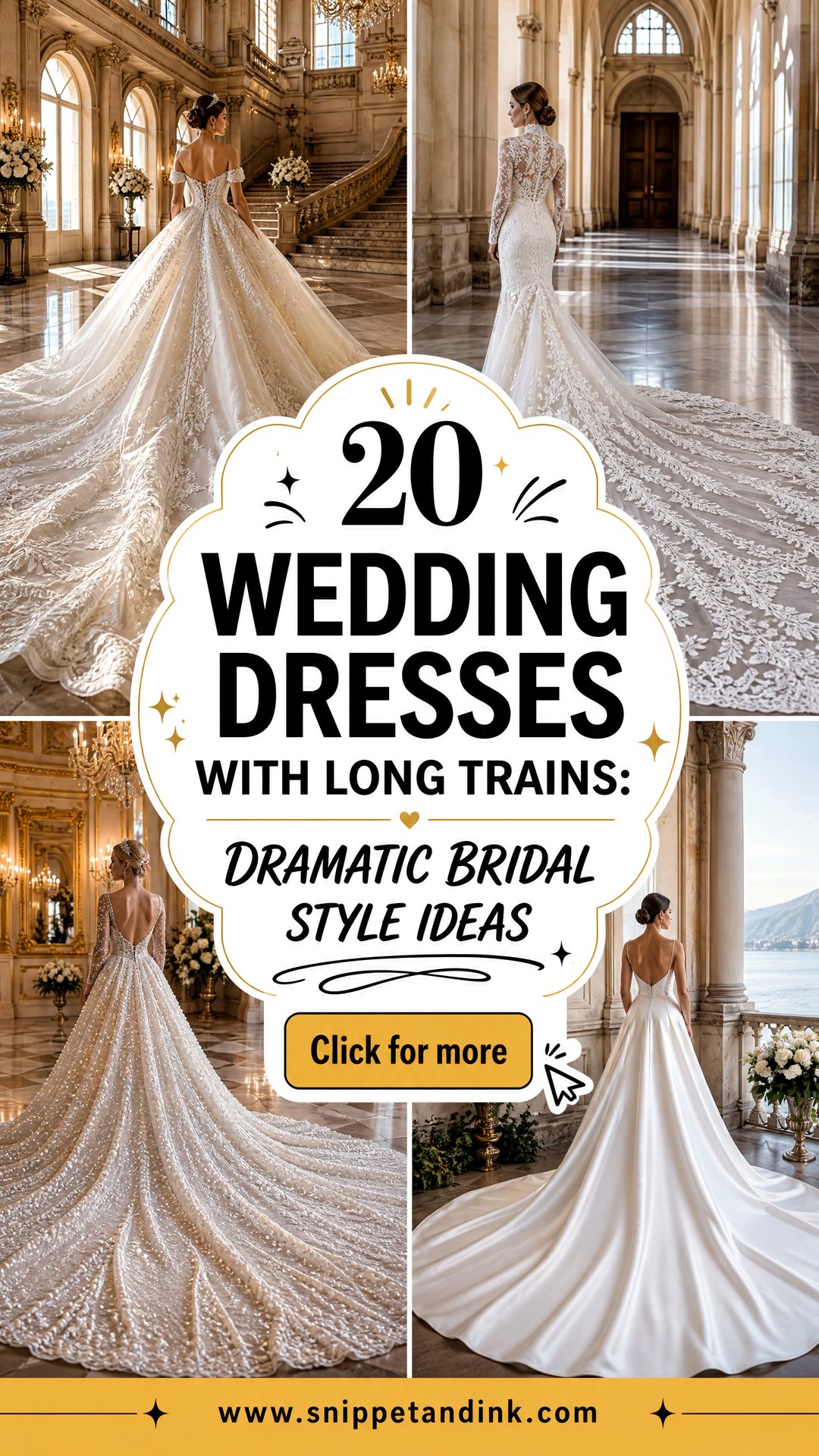
Sweep, Chapel, Cathedral, Royal: Train Lengths in Real Terms
Train names are used loosely, and designers measure them differently, some from the waist and some from where the hem touches the floor. These are the rough lengths I work with when matching a gown to a venue:
- Sweep or brush: just grazes the floor behind you. Easy to walk in and often needs no bustle.
- Court: a little longer, around a foot past the hem. Good for smaller rooms and civil ceremonies.
- Chapel: roughly three to four feet from the waist. The most common long train, and still manageable outdoors.
- Cathedral: about six to seven feet from the waist. Needs a long, wide aisle to look intentional.
- Royal or monarch: anything beyond that, often ten feet or more. Formal, heavy, and nearly always bustled or detached afterward.
Measure the aisle before falling for the longest option. A cathedral train on a short aisle means half of it is still in the doorway when you reach the front, and on grass, gravel or a beach every extra foot picks up something on the way.
1. Cathedral Train Ball Gown Wedding Dress
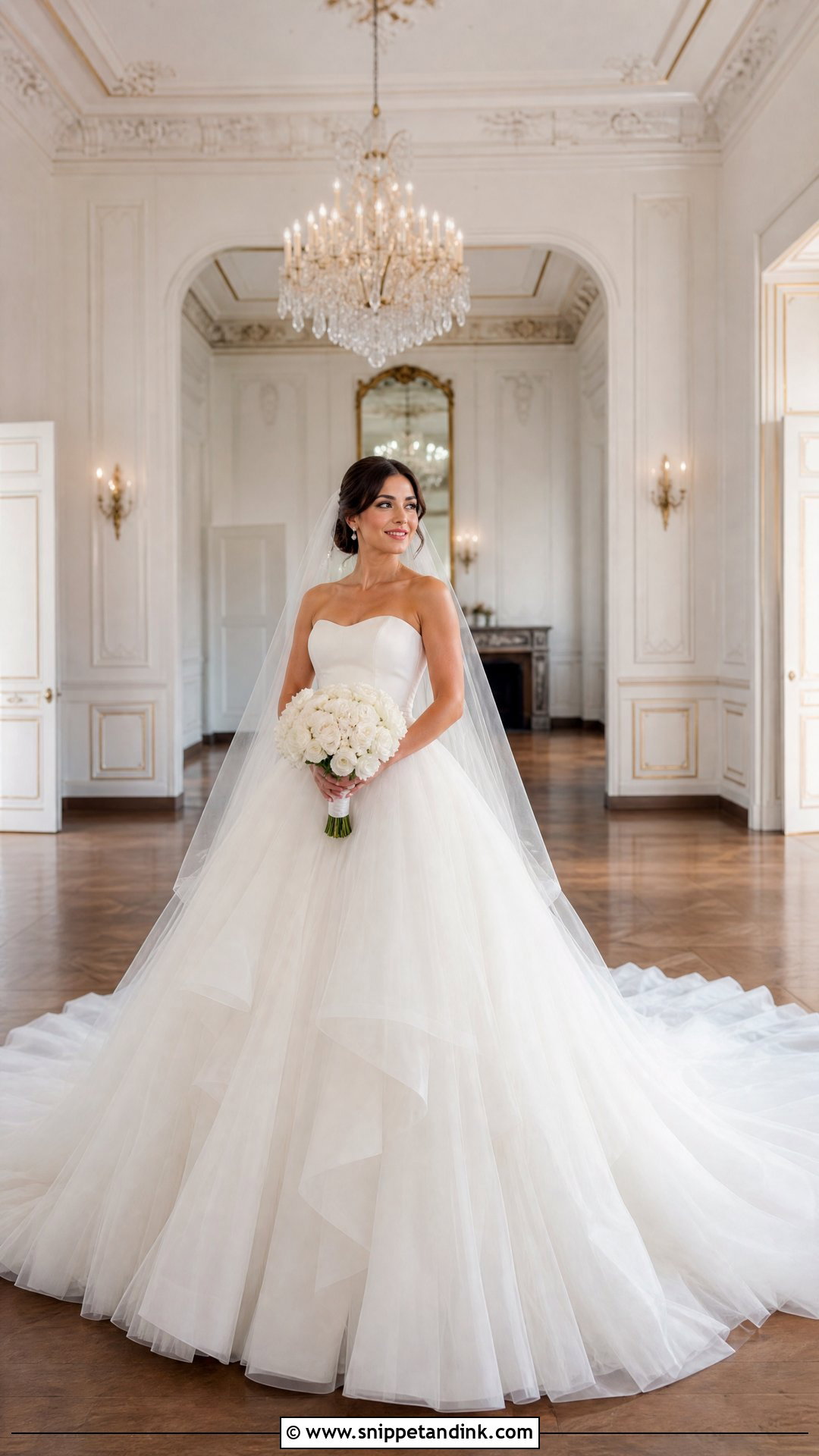
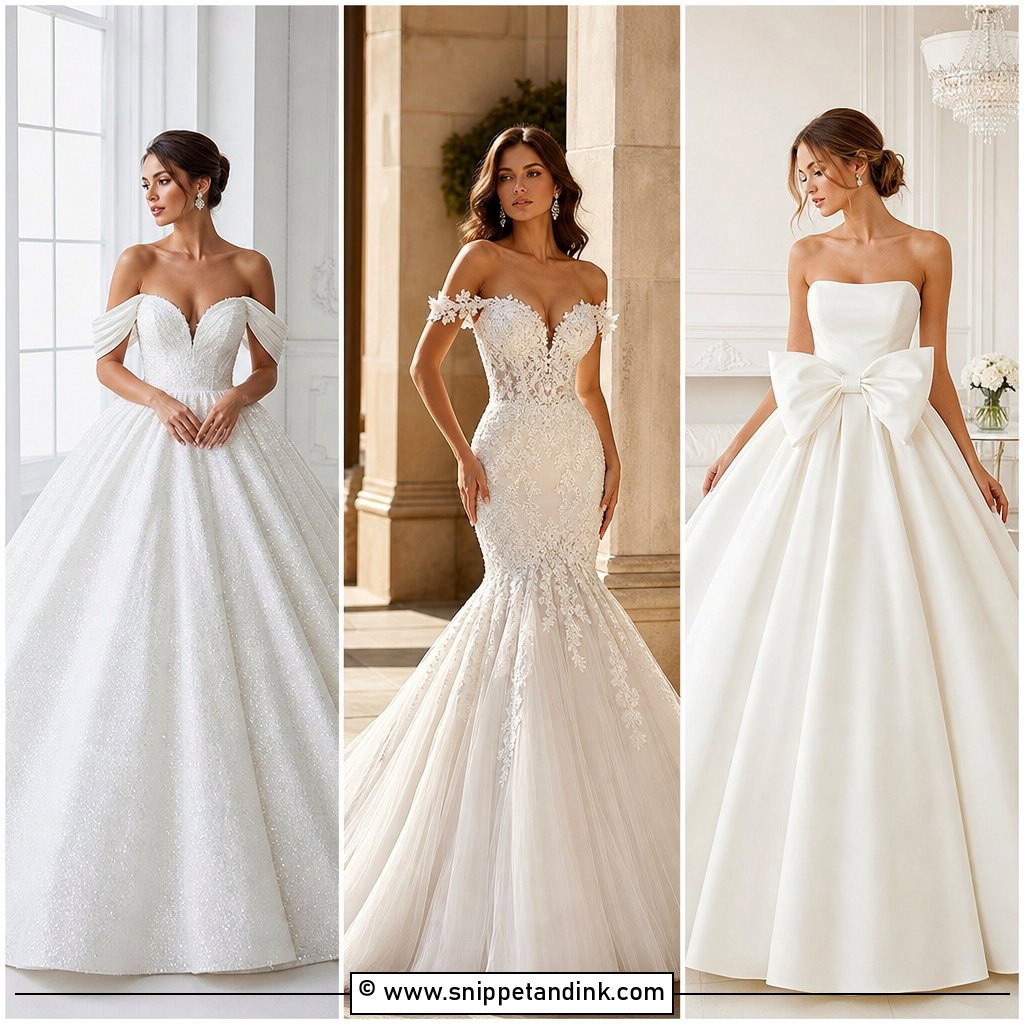
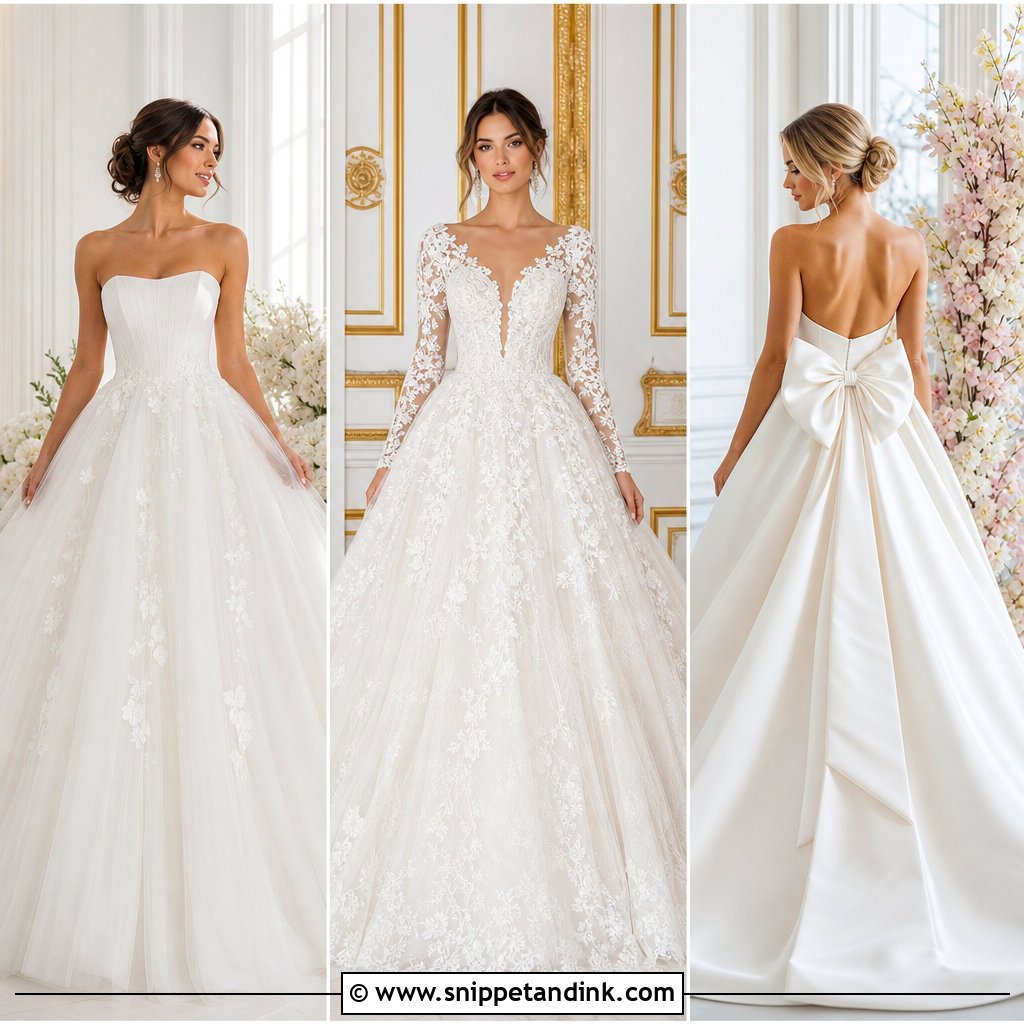
The storybook version: a structured bodice with a softly curved neckline, layers of tulle or organza that move rather than weigh, and a smooth satin waistband to keep the outline crisp. I pair a full cathedral train with a fingertip veil, never a second cathedral layer, so the train stays the hero. Pearl drops, pointed ivory pumps and a rounded bouquet are plenty. Ballrooms, historic estates and formal indoor venues give it room. Before ordering, find out how wide the aisle actually is. A full skirt plus a cathedral train can brush chair legs and pew ends on a narrow one.
2. Lace Mermaid Wedding Dress With Cathedral Train
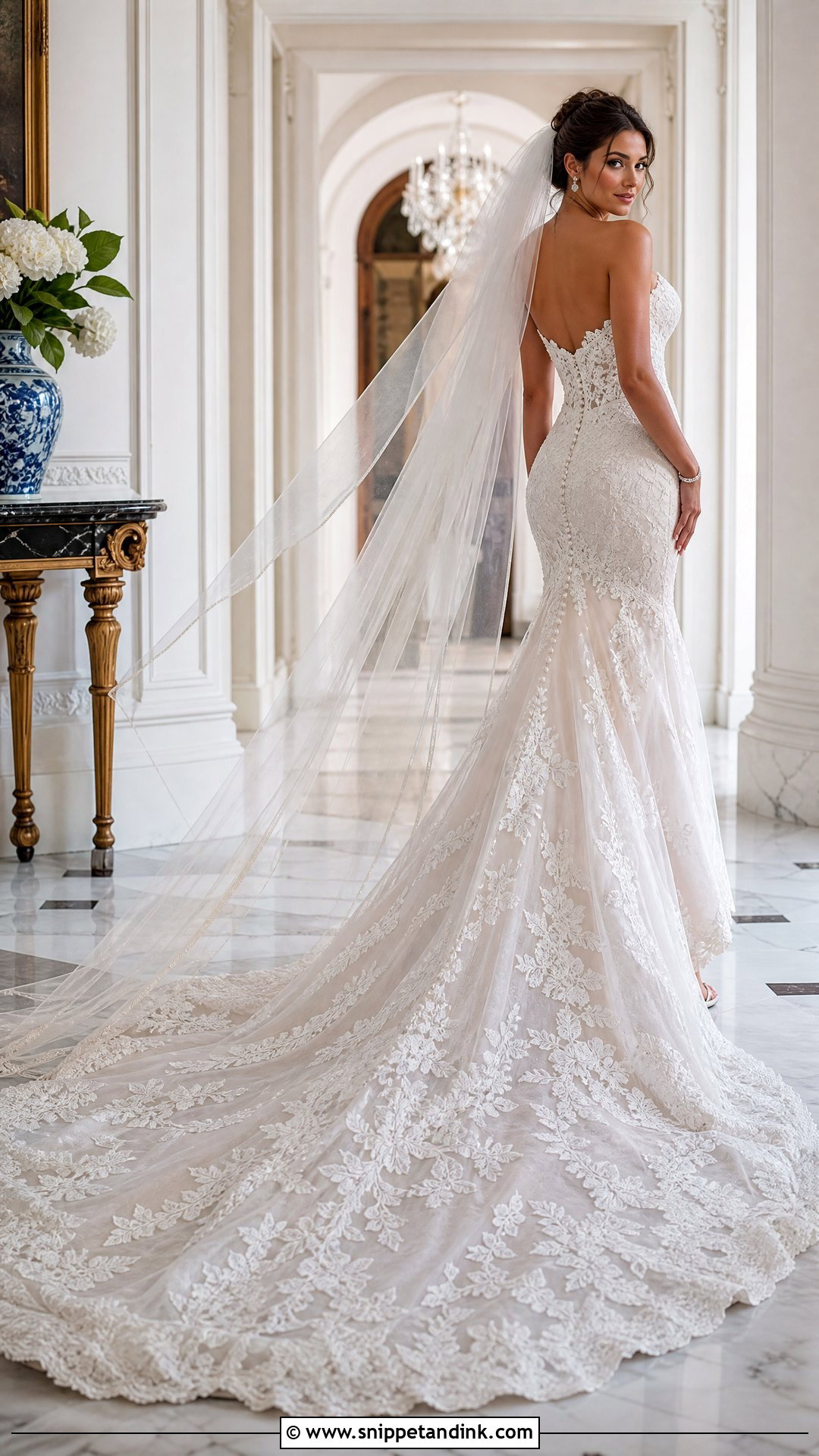
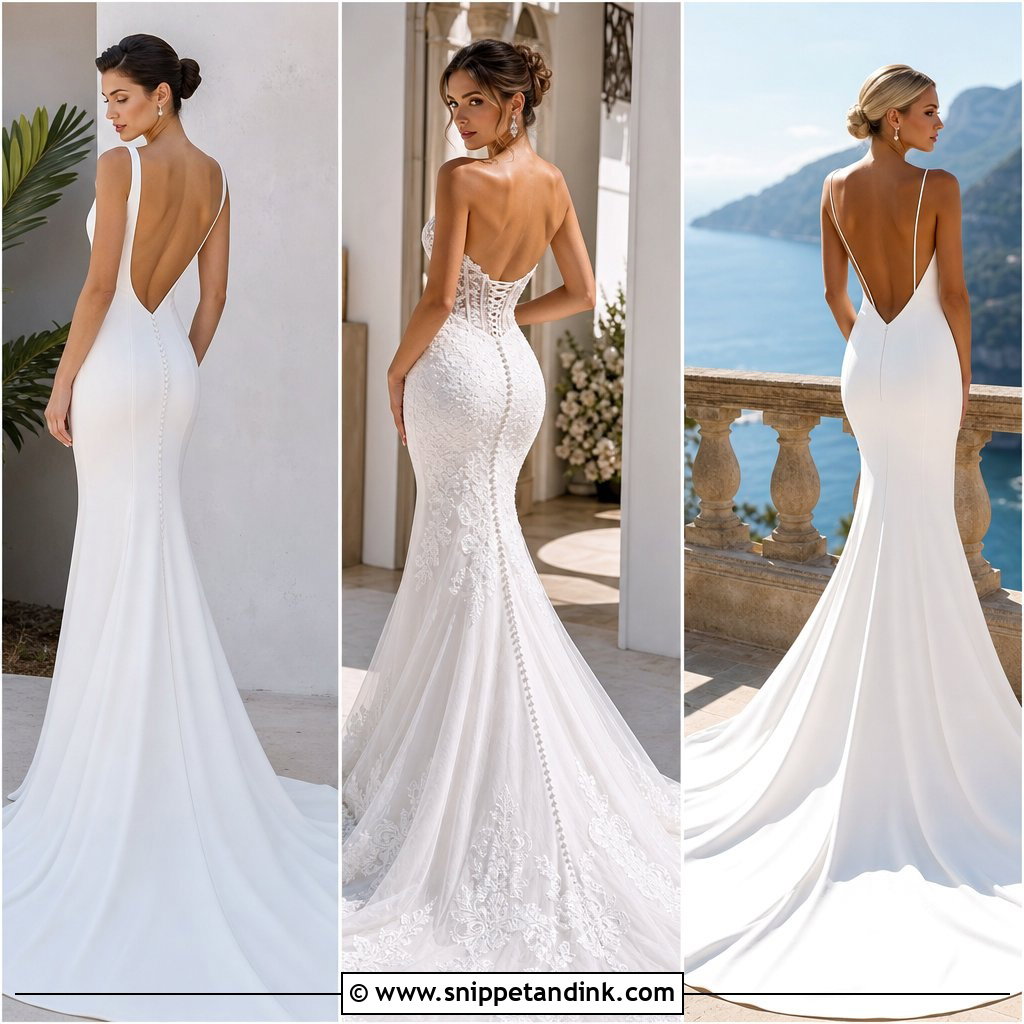
Mermaid and cathedral is a contrast I enjoy styling: tight through the body, then a sweep of lace behind. Lace motifs should follow the body and spread across the flare, and a sweetheart or soft scoop keeps the neckline from fighting the fabric. Crystal studs, a slim bracelet and a single-layer veil with a clean edge are enough. Choose ivory pumps with a stable heel, because a narrow skirt shortens your stride and wobbly shoes make it worse. A loose low bun keeps the back visible. Practise sitting and walking at fittings, and ask for a bustle that lifts the train without crumpling the lace pattern.
3. Satin A-Line Wedding Dress With Long Train
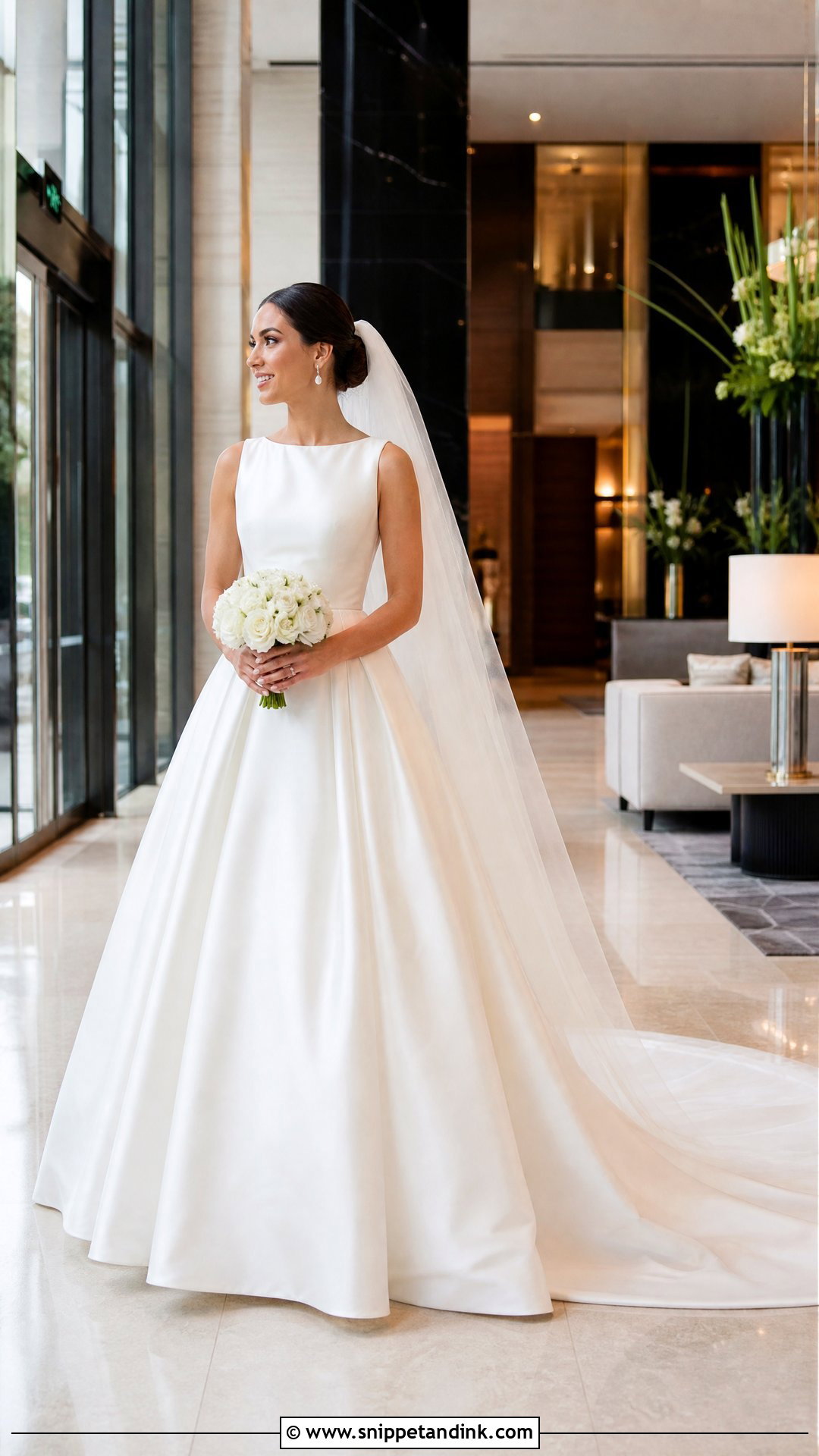
Satin shows everything, including a train that’s been badly handled. On an A-line with a fitted bodice and a gently widening skirt, I look for pleats set precisely at the back so the train falls in a clean sheet rather than bunching at the hips. A plain tulle cathedral veil extends the line without hiding the satin’s sheen. Pearl earrings, closed-toe heels and a compact bouquet of white flowers and greenery finish it for hotels, galleries, formal gardens and indoor ceremonies. Steam the train on the morning and have someone straighten it at the top of the aisle, right before you walk.
4. Basque Waist Wedding Dress With Royal Train
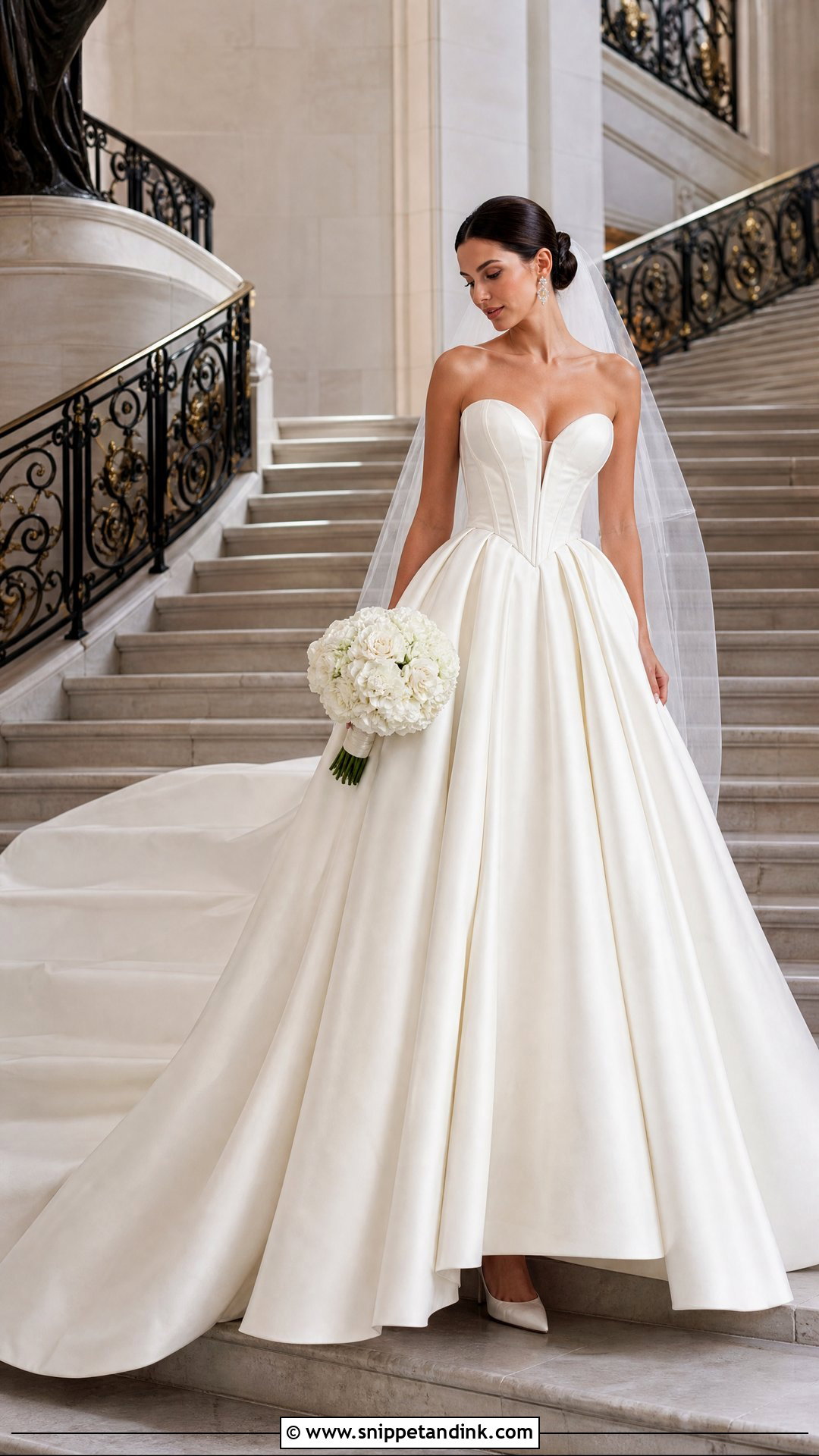
The pointed shape of a basque waist draws the eye to the center and lengthens the torso, which is exactly the proportion a royal train needs. Pair the bodice with a full satin or mikado skirt whose broad pleats open behind you as you walk. Internal structure keeps the whole silhouette supported. The gown is already loud, so I keep the rest quiet: a simple tulle veil, small diamond or crystal earrings, classic ivory heels and a structured white bouquet. Grand staircases and formal halls suit it. Sit down in it at every alteration appointment; a waist point that folds when seated means the bodice is cut too long.
5. Long Sleeve Lace Wedding Dress With Cathedral Train
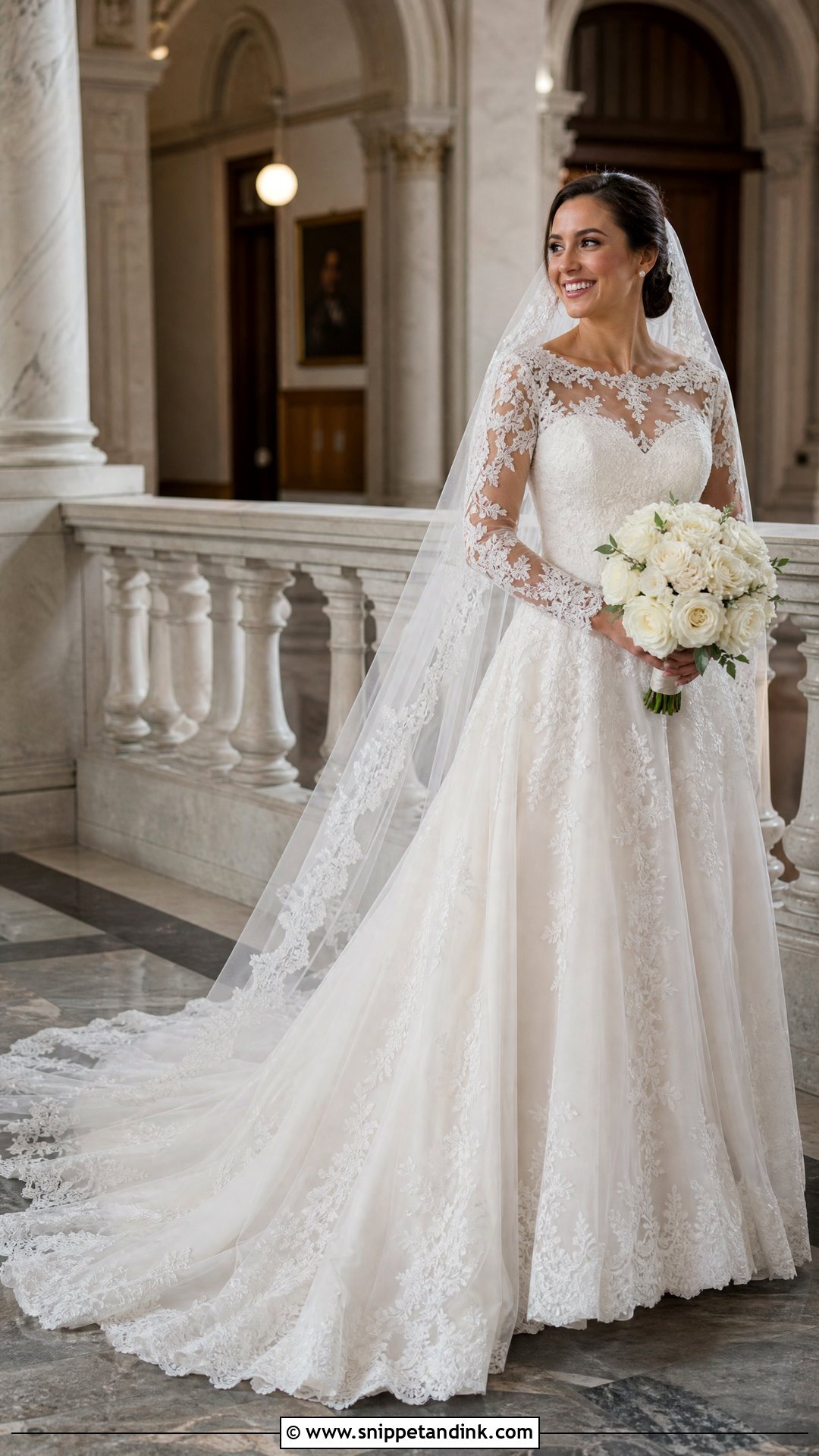
Sheer lace sleeves with appliqué gathered at the cuffs and shoulders give coverage without heaviness. An illusion neck or shallow V joins the lace bodice naturally, and an A-line skirt keeps you comfortable. What makes this gown, for me, is carrying the same motifs onto the cathedral train, so the back view matches the front. A narrow lace-edged veil, pearl studs, closed-toe pumps and a low chignon keep the sleeves and neckline on show. It’s a cooler-season dress or one for air-conditioned rooms. Lift your arms at fittings; sleeves that pull across the shoulders also tug the whole bodice backward against the weight of the train.
6. Off Shoulder Wedding Dress With Long Tulle Train
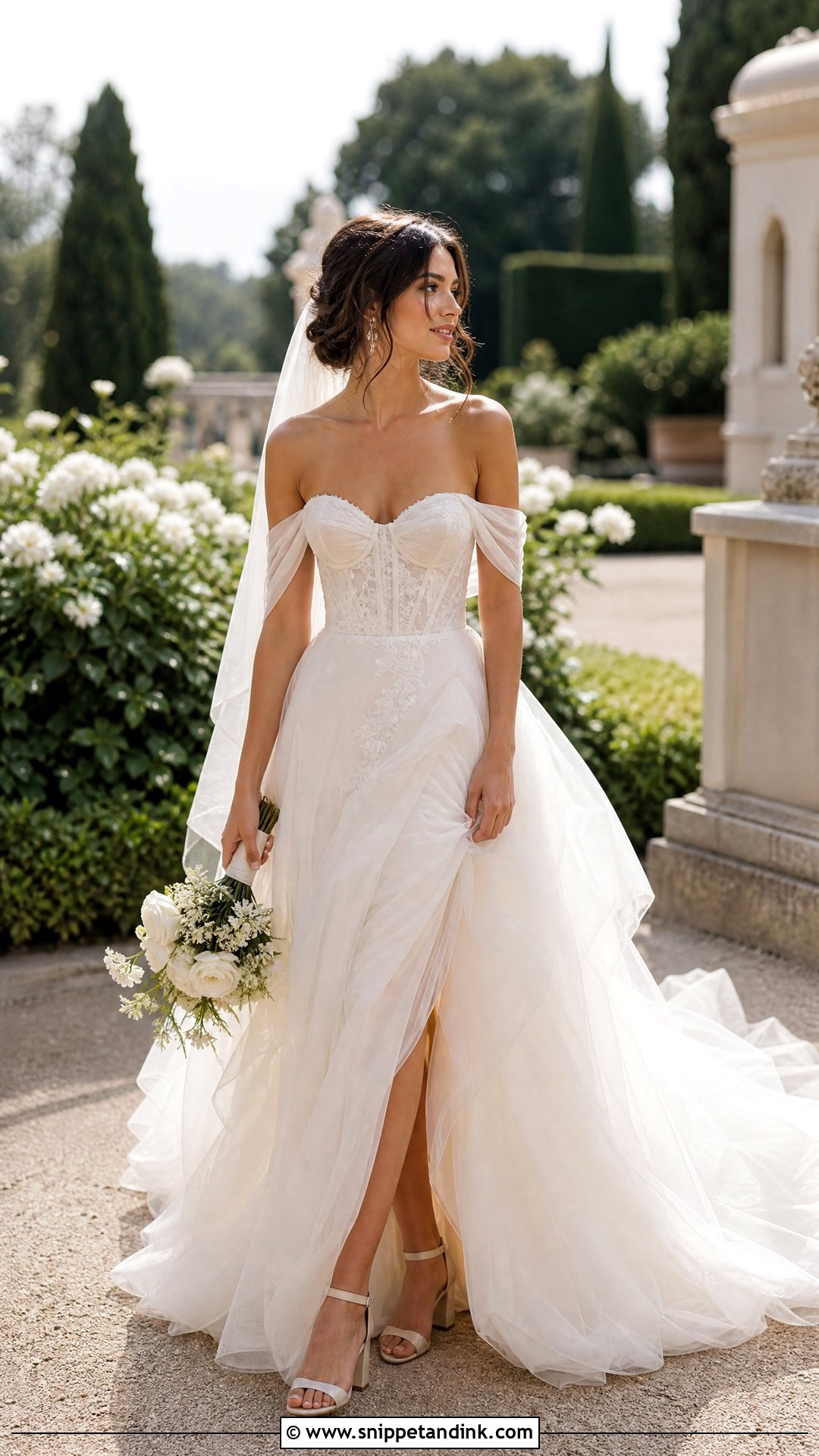
Off-the-shoulder tulle looks airy, but the neckline only stays where it should if a corseted bodice is doing the holding underneath. Let a lightly layered skirt run into a semi-cathedral or cathedral train, and set a simple veil below a loose bun. Delicate drops and low block heels keep you steady on long walks across lawns or ballroom floors, while a softly arranged white bouquet repeats the relaxed sleeves. Garden venues, bright ballrooms and estates all work. Test the arm positions you’ll actually use: hugging, holding the bouquet high and dancing with both arms up.
7. Strapless Corset Wedding Dress With Cathedral Train
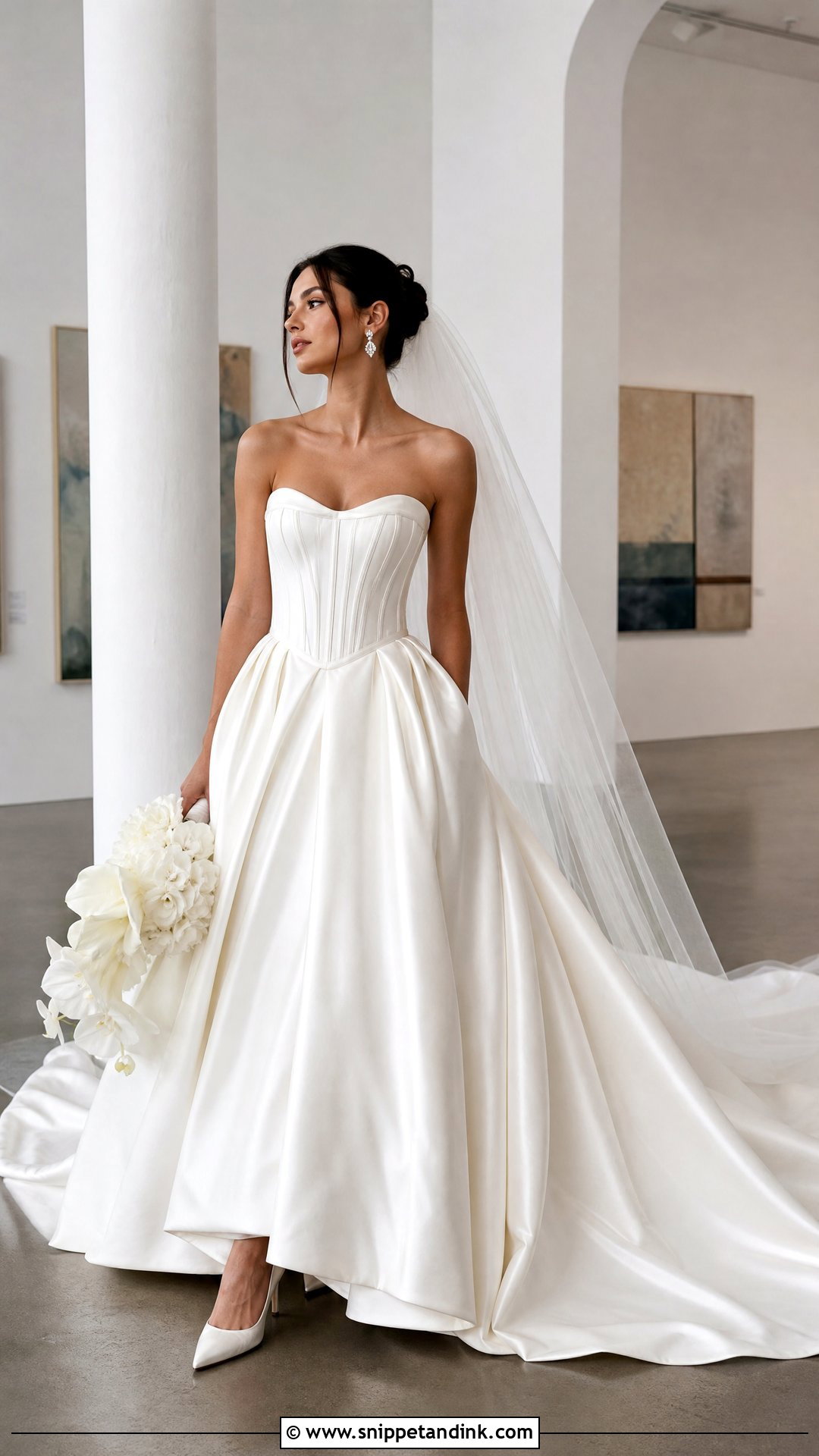
Visible boning and a long train together make a strong statement. Look for secure boning, a neatly finished neckline and cups placed correctly for your shape; a corset that relies on tight lacing will dig in long before the speeches. A full skirt is traditional and a fitted one more contemporary, and both carry a cathedral train well. I only add a single-strand necklace if the neckline feels bare; usually crystal earrings are enough. Pointed pumps, a smooth veil and a streamlined bouquet keep it cohesive. Ask the salon early how the bodice can be altered without throwing off its proportions or support.
8. Square Neck Wedding Dress With Long Crepe Train
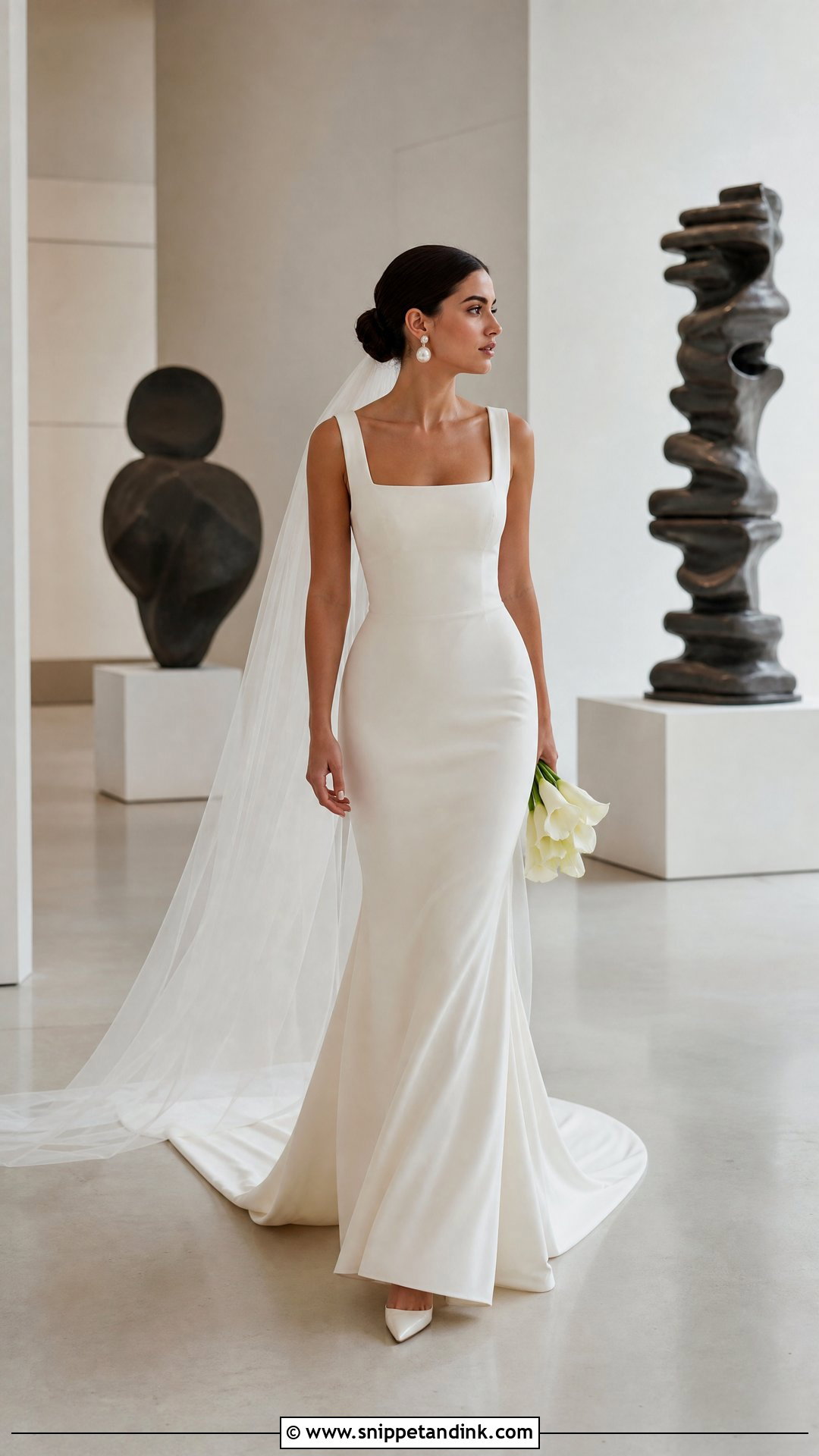
Crepe hides nothing, so a square neckline and precise seams become the whole story. A fitted column or gentle fit-and-flare with wide shoulder straps balances the coverage, and the train should flow straight from the back seams in one uninterrupted line. Sculptural pearl earrings, a sleek low bun and pointed ivory pumps finish it. A plain cathedral veil adds softness for the ceremony and comes off later to show the modern shape. City venues, museums and contemporary hotels suit it. Bring your planned shapewear and shoes to every fitting, because crepe shows undergarment lines in a way lace and tulle never will.
9. High Neck Wedding Dress With Long Lace Train
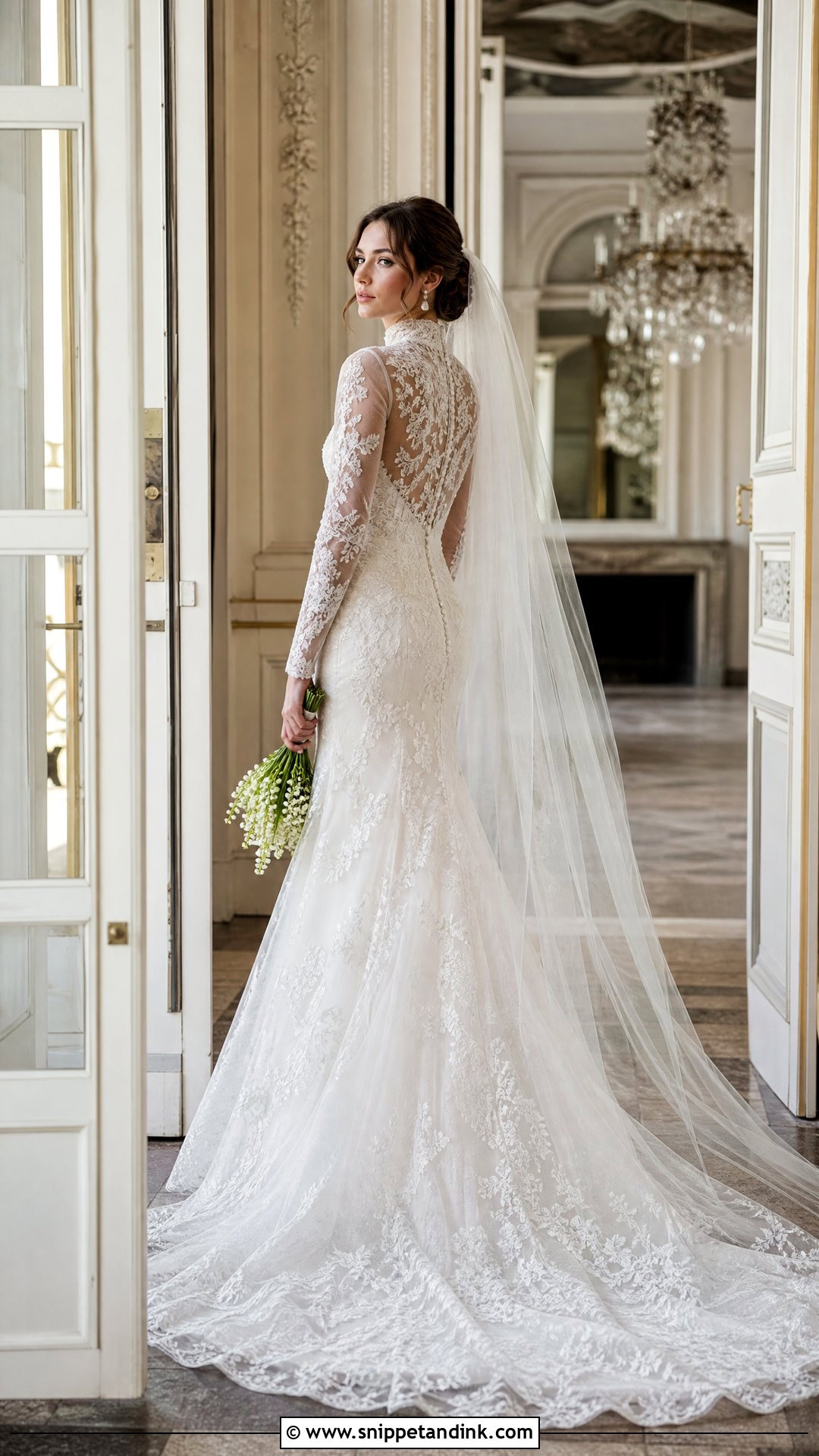
With a high neck, the interest moves to the back of the gown, which is where a long lace train lives anyway. Light lace or embroidered tulle keeps the collar from feeling heavy. I like a keyhole or buttoned back above a softly flared skirt, so the view guests see during the ceremony has detail all the way down. Skip the necklace for pearl studs or small drops, set a clean cathedral veil beneath an updo, and add closed-toe satin shoes and a narrow bouquet. Formal daytime ceremonies and cooler seasons suit it. Turn your head and sit at fittings to check the collar lies flat.
10. Sweetheart Mermaid Wedding Dress With Royal Train
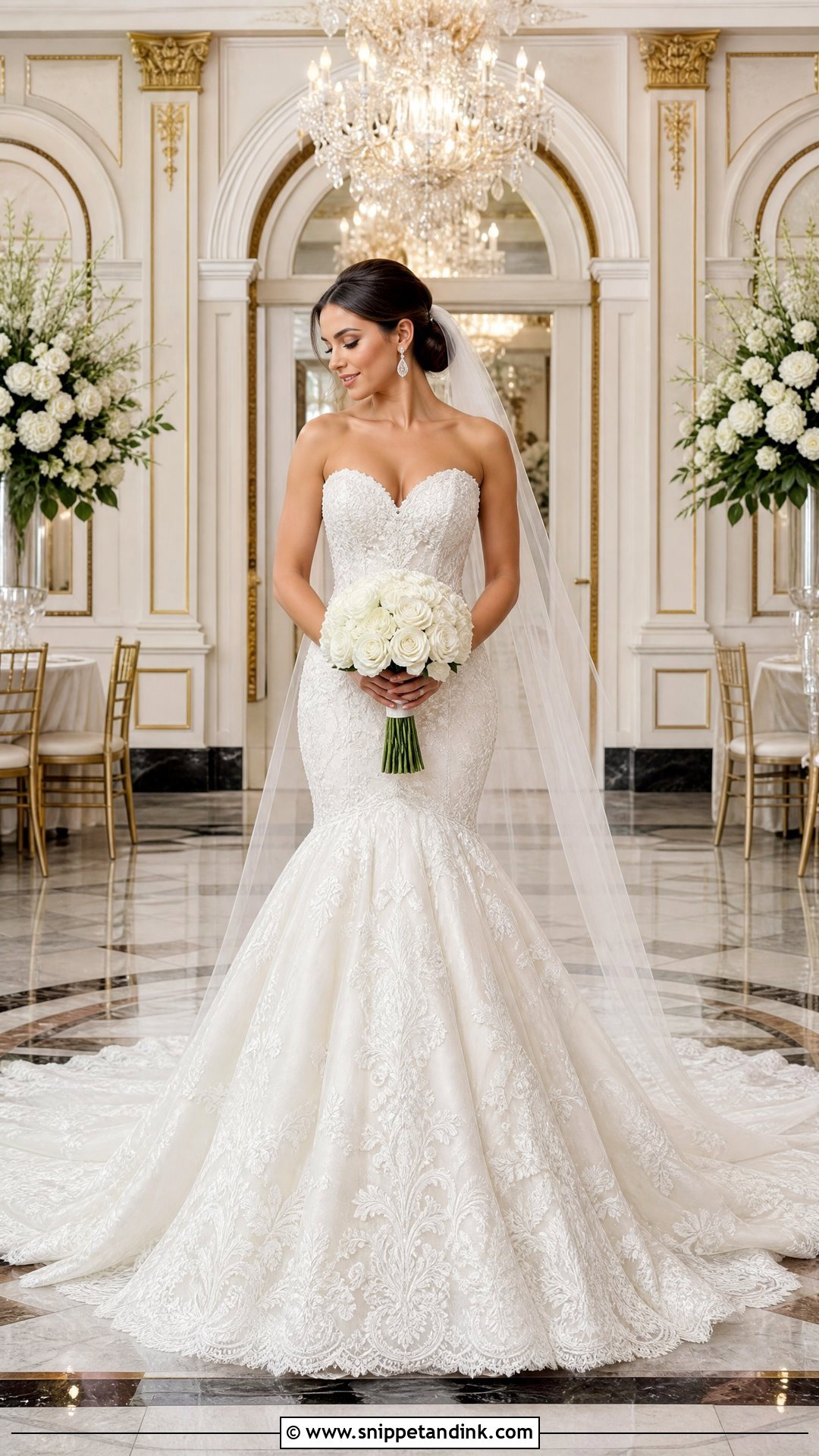
A sweetheart mermaid gown with a royal train is the most dramatic silhouette here, and the flare point decides whether you can enjoy it. Set too high and it looks heavy; set too low and you can’t take a proper step. Near or just below the knee is usually the comfortable spot. Extend the flare into lace, tulle or light organza, and choose a veil that ends before the widest part of the train. Teardrop earrings, supportive heels and a long-stemmed bouquet balance it in ballrooms and large indoor venues. Climb a few stairs at the fitting before you sign off on the hem.
11. Pearl Beaded Wedding Dress With Cathedral Train
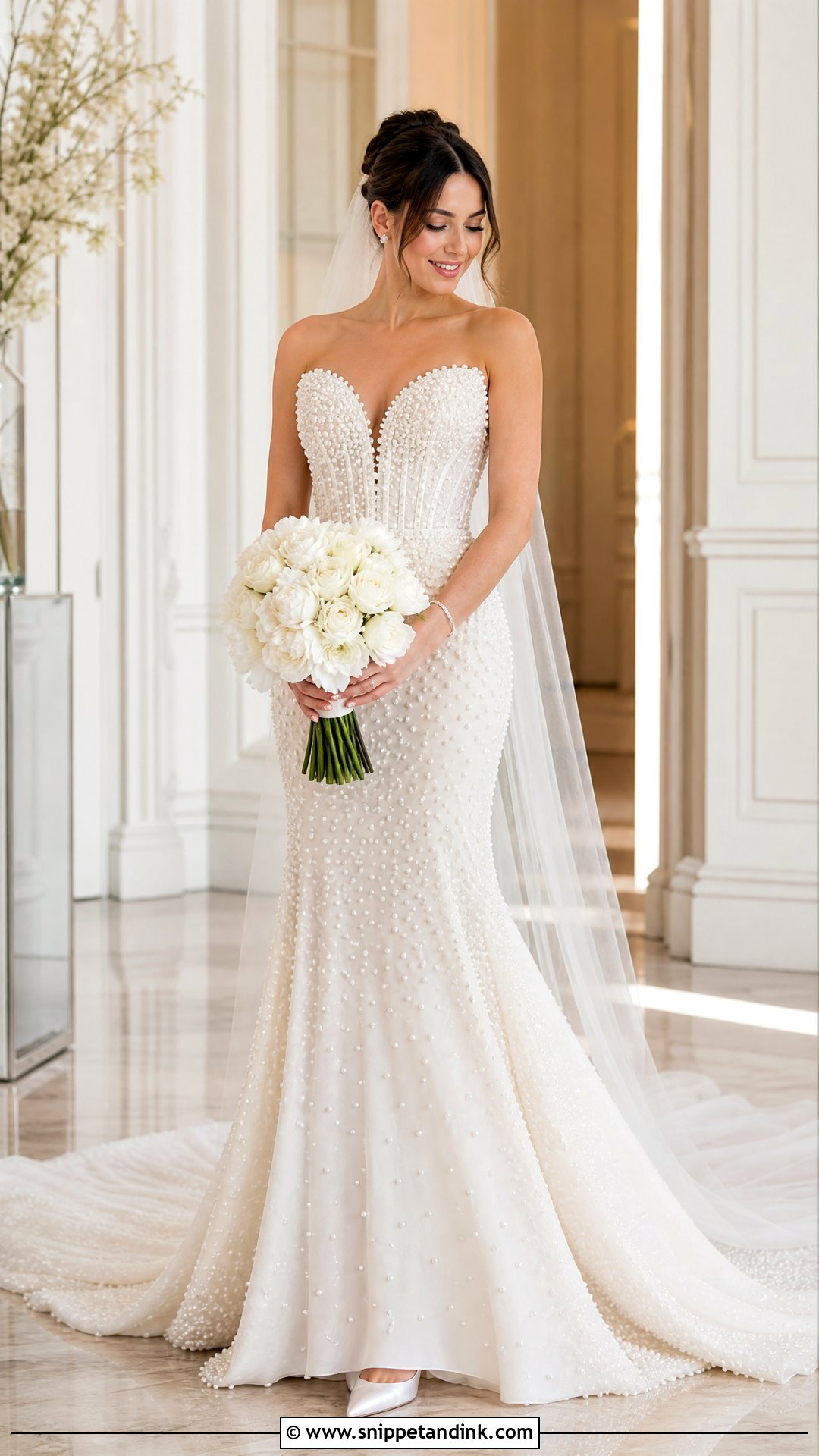
Pearls catch light softly instead of flashing, and they look richest evenly spread over the bodice and fading through the skirt into the cathedral train. A fitted column, A-line or modern ball gown can carry them. Keep jewelry to small pearl earrings and a slim bracelet, with a plain veil, satin pumps and a white bouquet. Pearl beading adds real weight, especially across several feet of train, so I check the lining, strap security and where the bustle points will take that load. Inspect the beading at final pickup and ask for spare pearls; one loose thread on a train dragged over a floor can shed a row.
12. Floral Applique Wedding Dress With Long Train
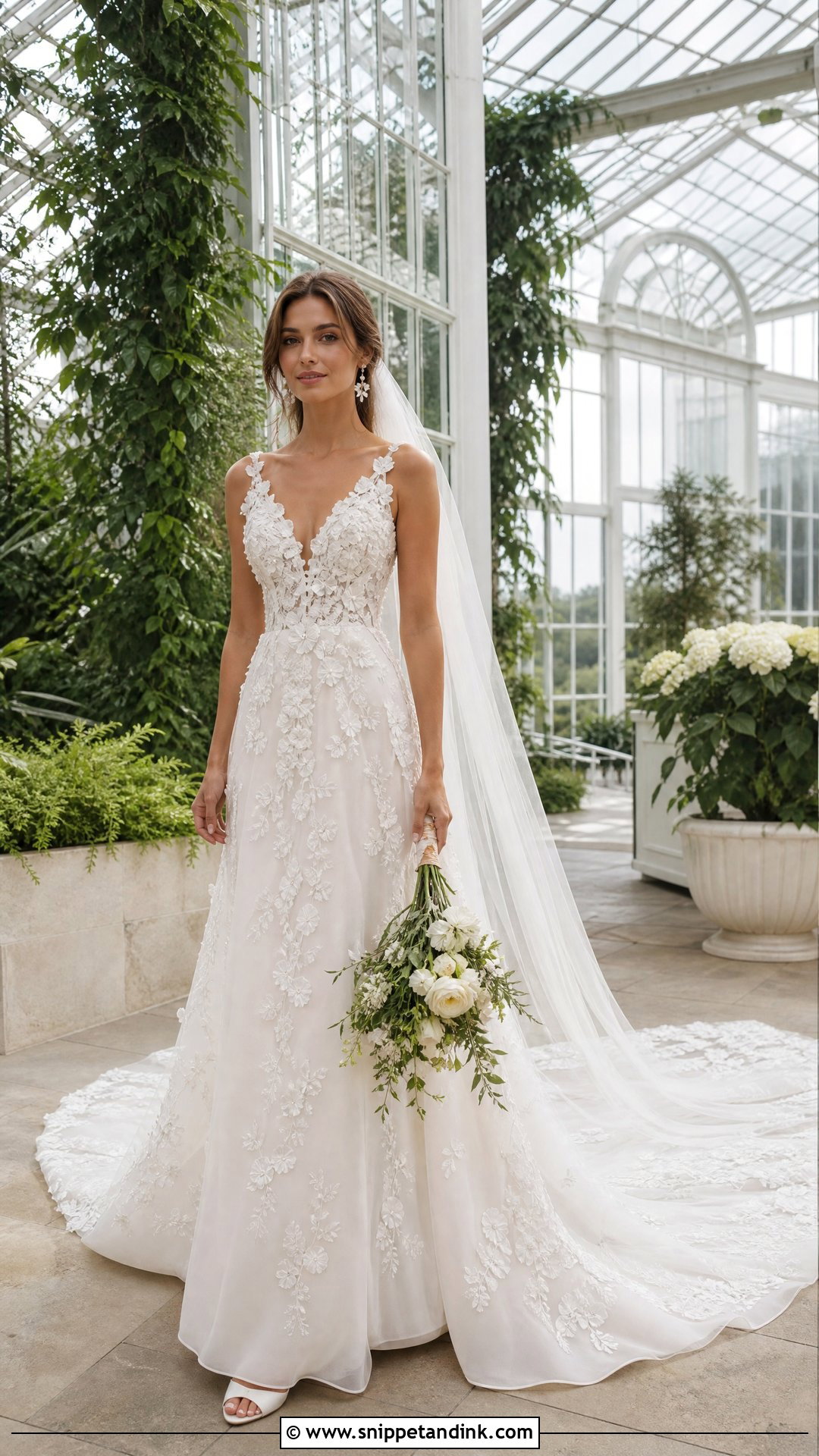
Floral appliqués that start at the bodice and spread across the skirt turn the train into the detail people remember. An A-line feels softer; a fitted trumpet makes the flowers look more sculptural. Keep the veil plain, the earrings delicate and the shoes simple, with a loosely gathered bouquet that doesn’t copy the dress too literally. Gardens, conservatories and bright estates suit it. My main check is the bustle. When a train folds up, any flower sitting on a fold line gets bent or crushed for the rest of the night. A good seamstress places the bustle loops between motifs to protect them.
13. Wedding Dress With Detachable Cathedral Train
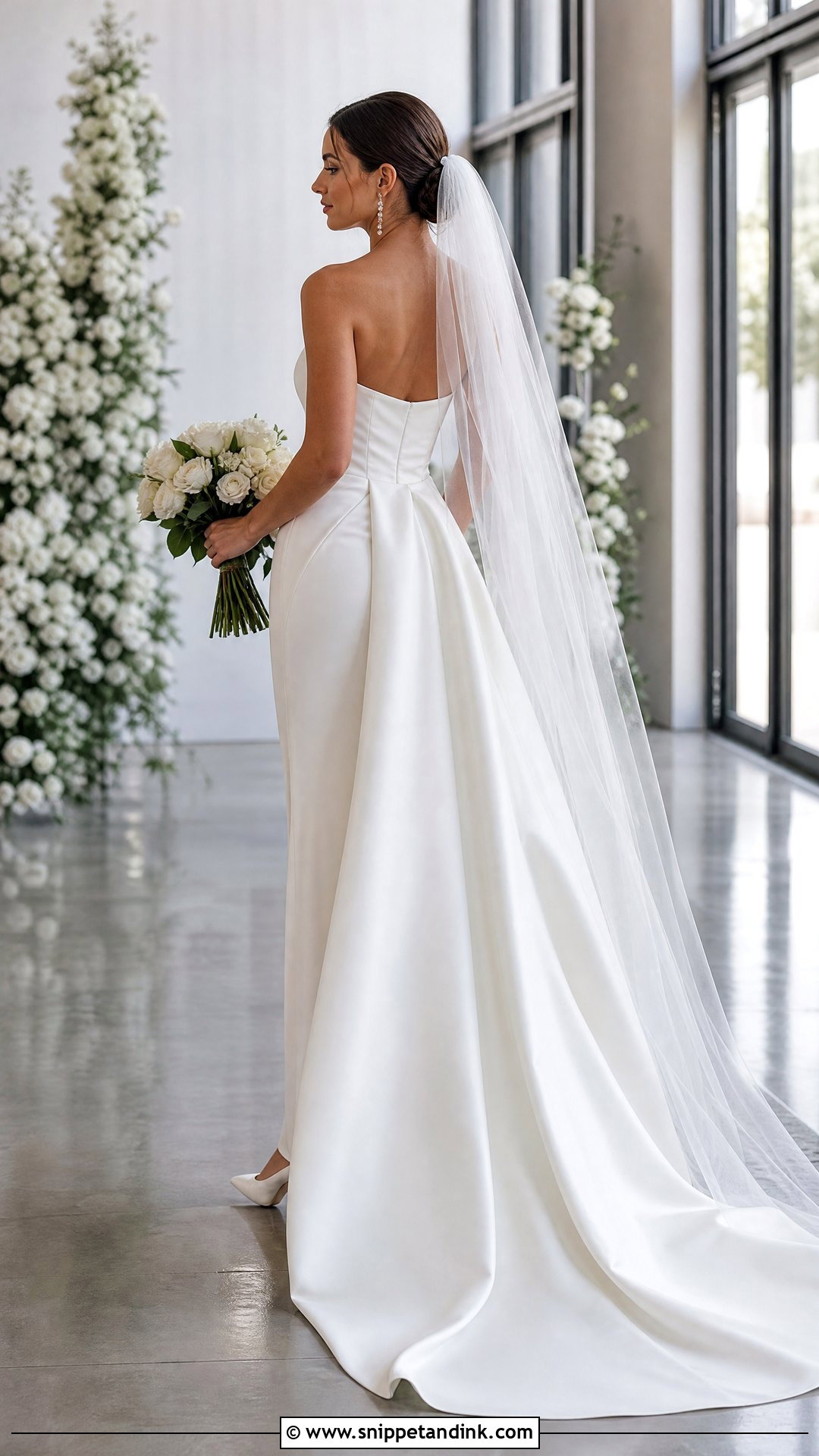
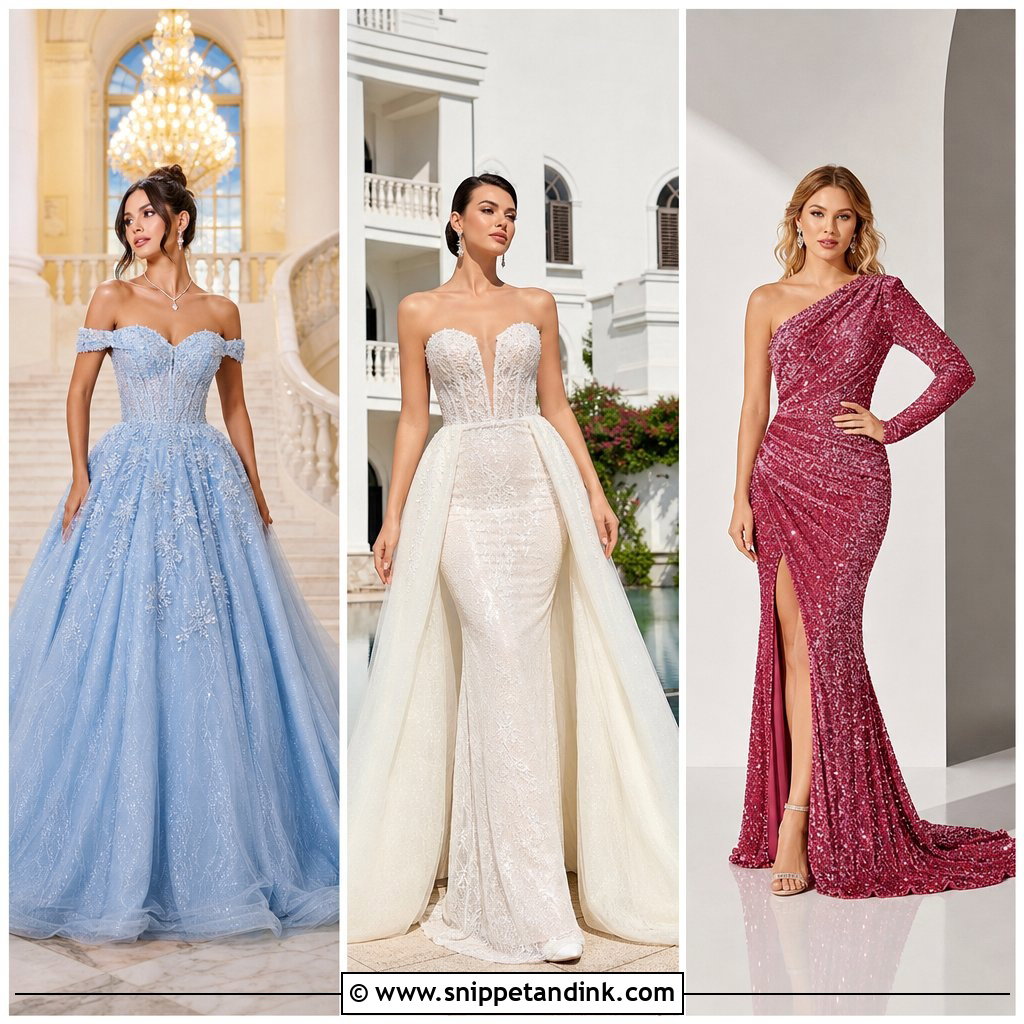
A detachable cathedral train gives you the ceremony entrance and a lighter reception dress without a change of clothes. It can attach at the waist, along the back of a fitted gown or beneath a decorative bow. A strapless crepe column under a voluminous satin or organza train is the cleanest version I know; unclip it after the ceremony and you’re free to walk and dance. Modern earrings, pointed pumps and a structured bouquet suit it, and skip a detailed veil if the train is embroidered. Because these trains come in several lengths and attach in different ways, practise putting it on and taking it off before the day.
14. Watteau Train Wedding Dress
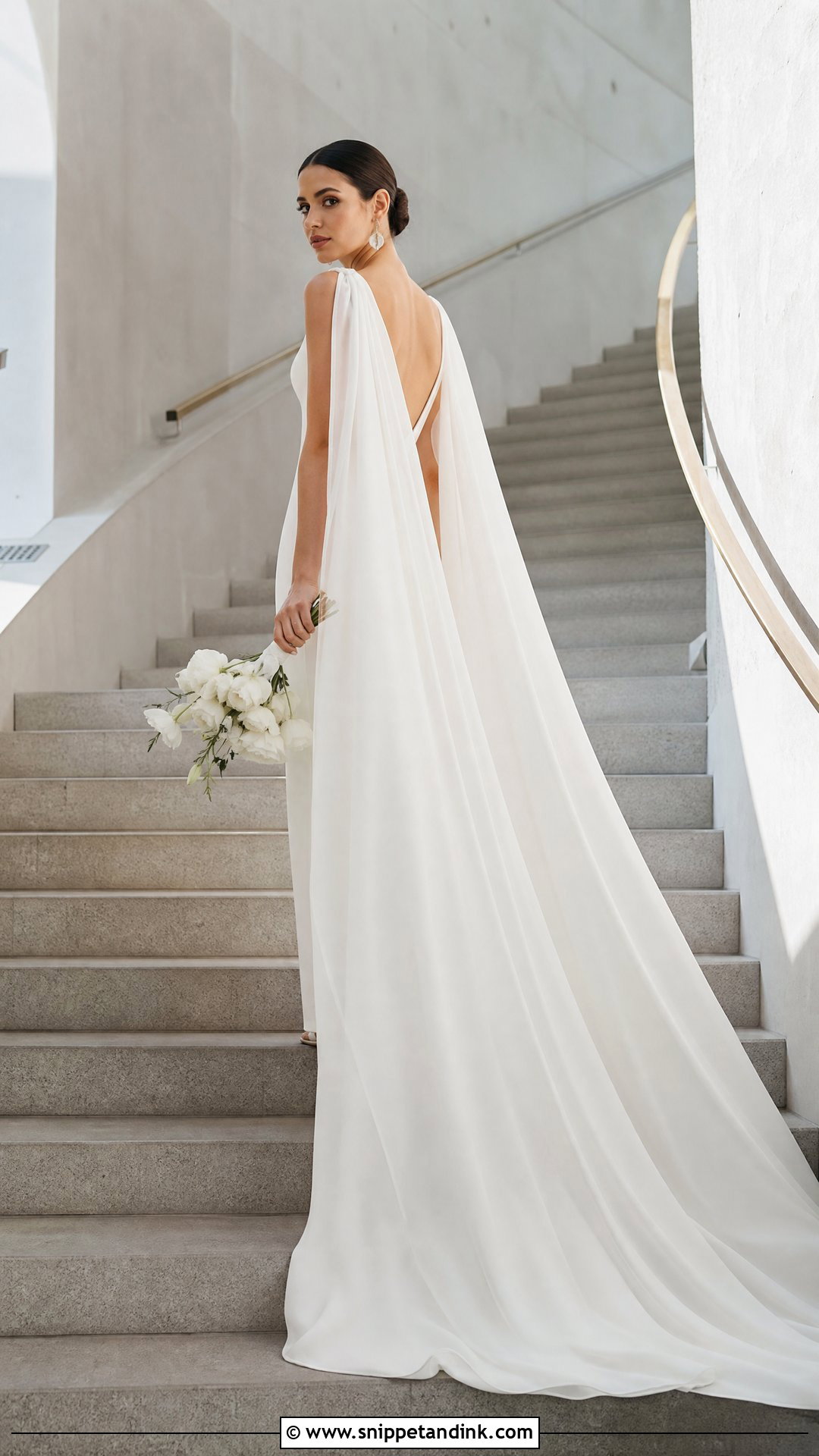
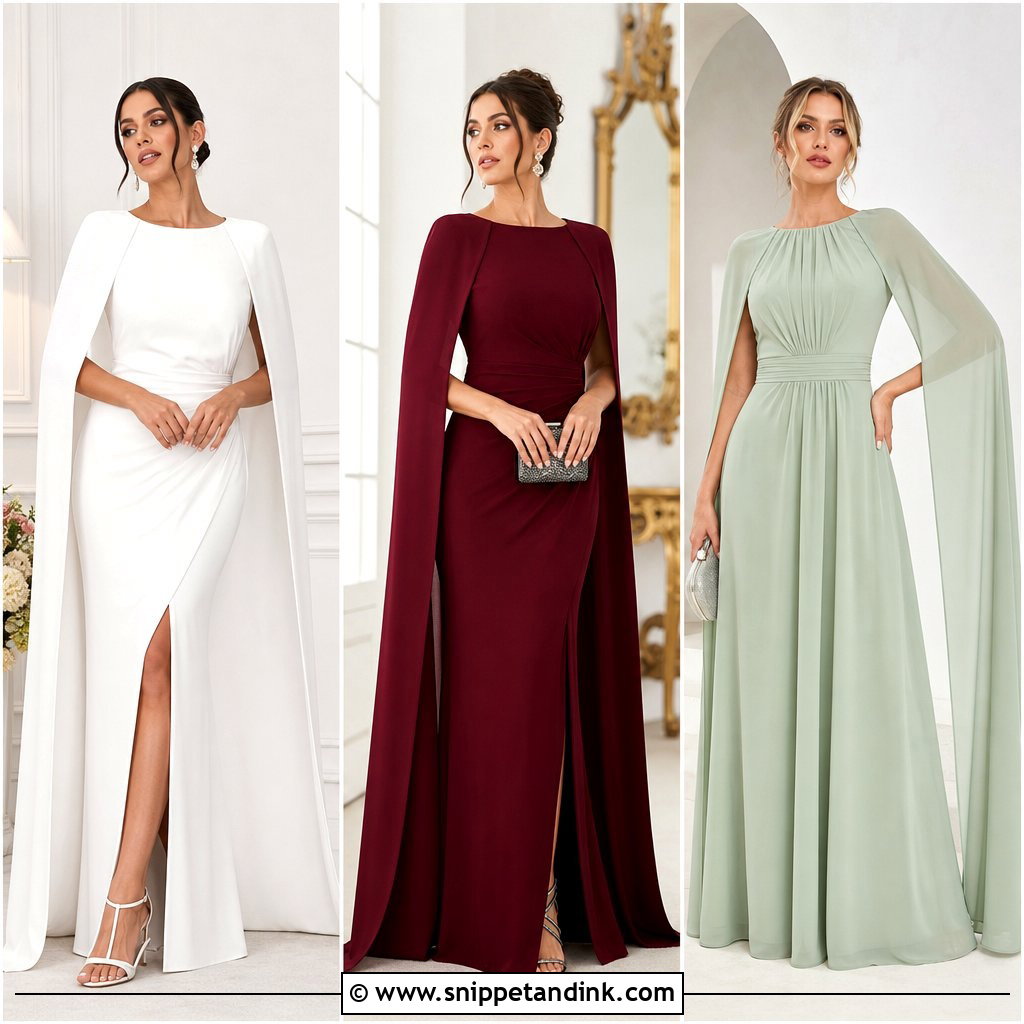
Unlike a train that extends from the skirt, a Watteau train falls from the shoulders or upper back like a cape. A fitted sheath or column underneath gives the fabric a clean base: sheer tulle floats, while satin or crepe holds more shape. Choose a neat bun, statement earrings and understated heels to show off the shoulders, and leave the veil off, since the train already frames you. Wide staircases and modern venues are ideal backdrops. Because everything hangs from the shoulder points, I check that the attachments are secure and that the weight doesn’t pull your arms back when you reach forward.

15. Bow Back Wedding Dress With Long Train
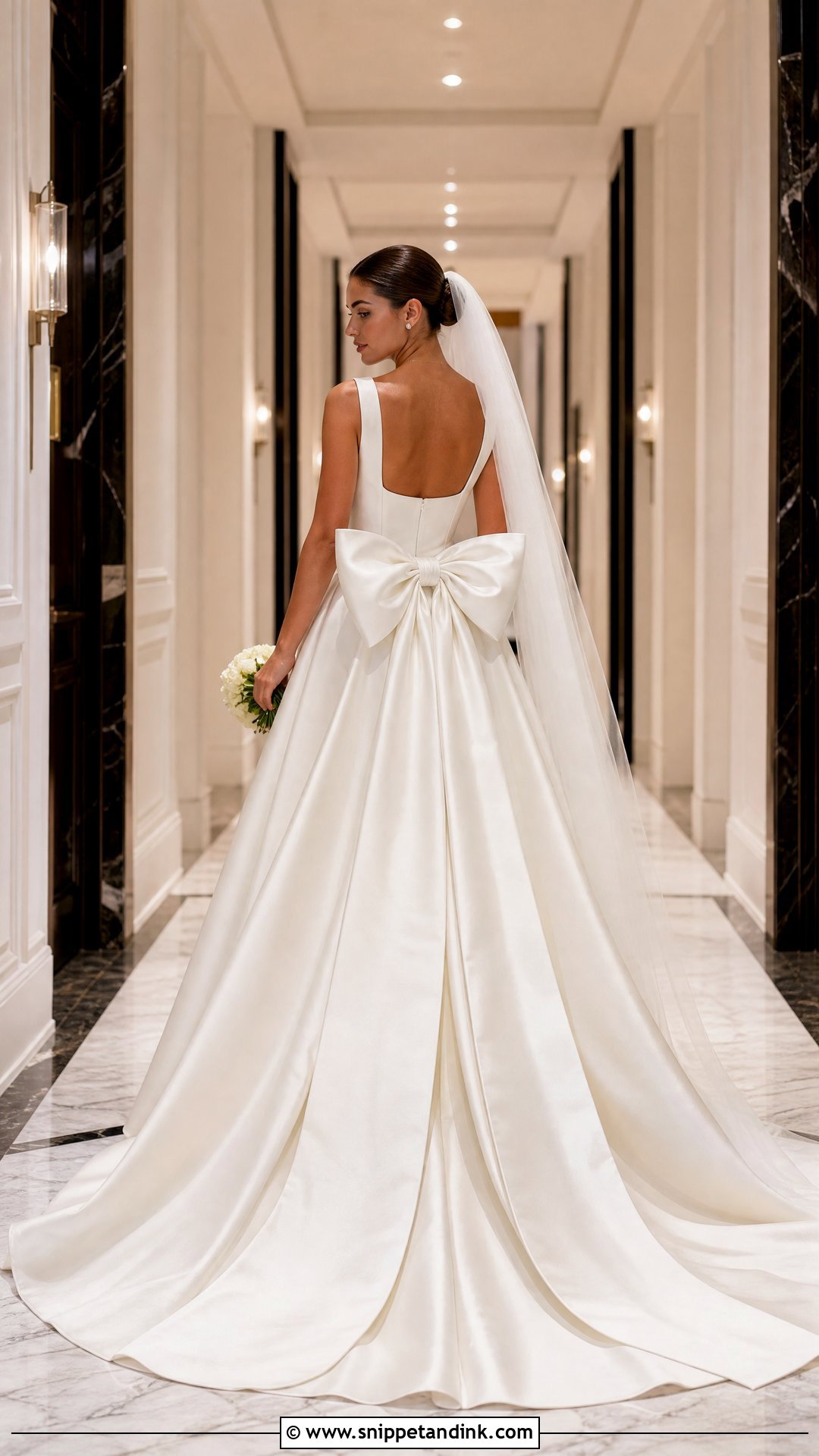
A bow at the back of the waist gives a plain satin or mikado gown one confident focal point, with the tails running down into the train. A clean strapless or square-neck bodice keeps the balance. Pearl studs, a sleek bun and pointed ivory heels finish it, along with a compact bouquet. Place the veil above the bow or let it end before it; lace layered over the bow hides the very thing you chose. Indoor ceremonies, hotels and formal estates suit this gown. Ask whether the bow detaches, because removing it often makes bustling simpler and gives you a quieter reception look.
16. Drop Waist Wedding Dress With Cathedral Train
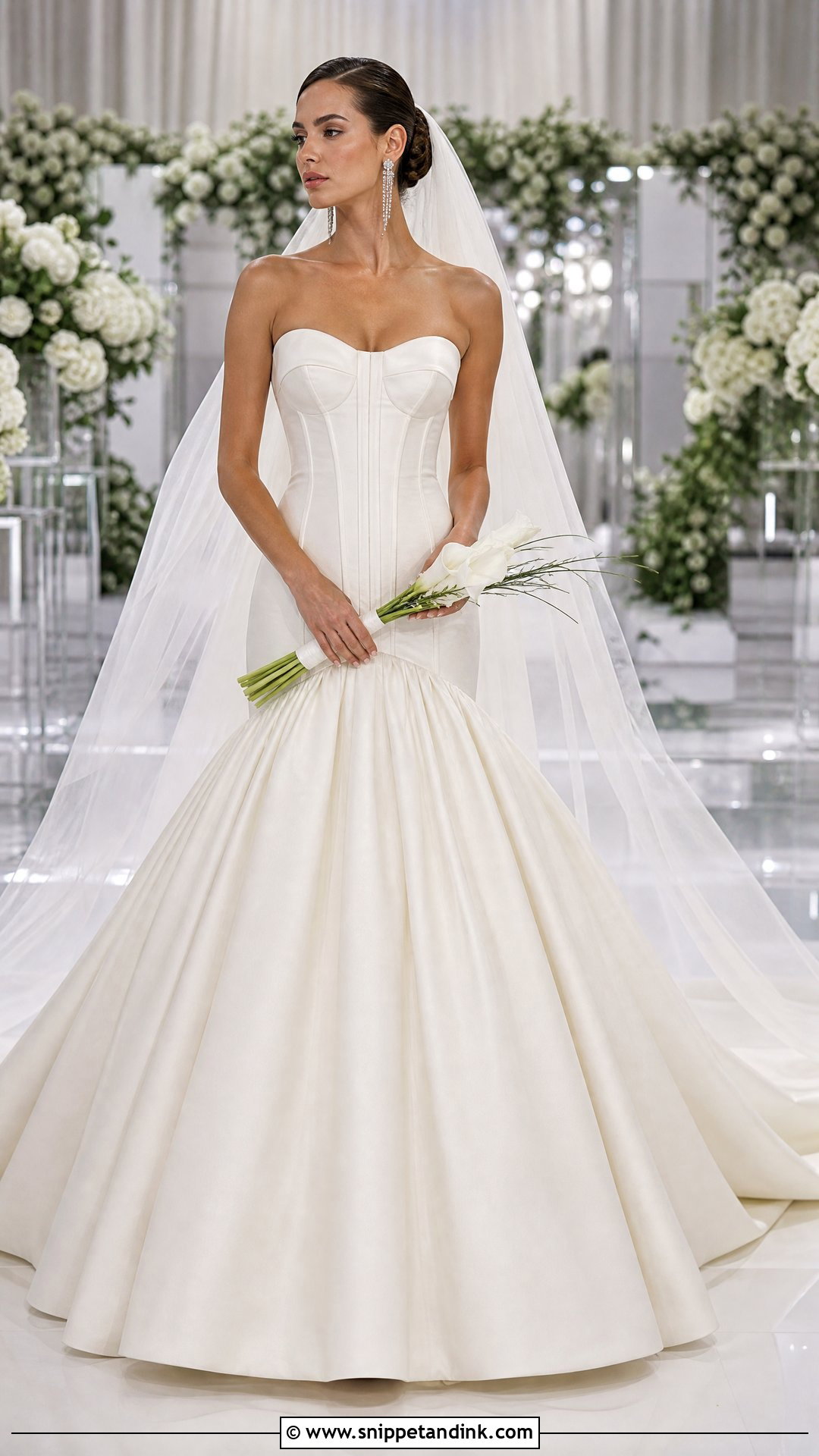
A drop waist carries the fitted bodice past the natural waist before the skirt opens, which lengthens the torso and leaves lots of room for a cathedral train. Crisp satin, mikado or layered tulle defines that transition clearly. Long earrings, a smooth veil and platform or block heels hidden under the skirt suit it, with a slender bouquet against the width. It often comes with corsetry, big volume and detachable pieces. My warning: the fitted section ends at the hips, so it’s the first place to crease or ride up when you sit. Sit, bend and walk at every alteration appointment.
17. Plus Size A-Line Wedding Dress With Long Train
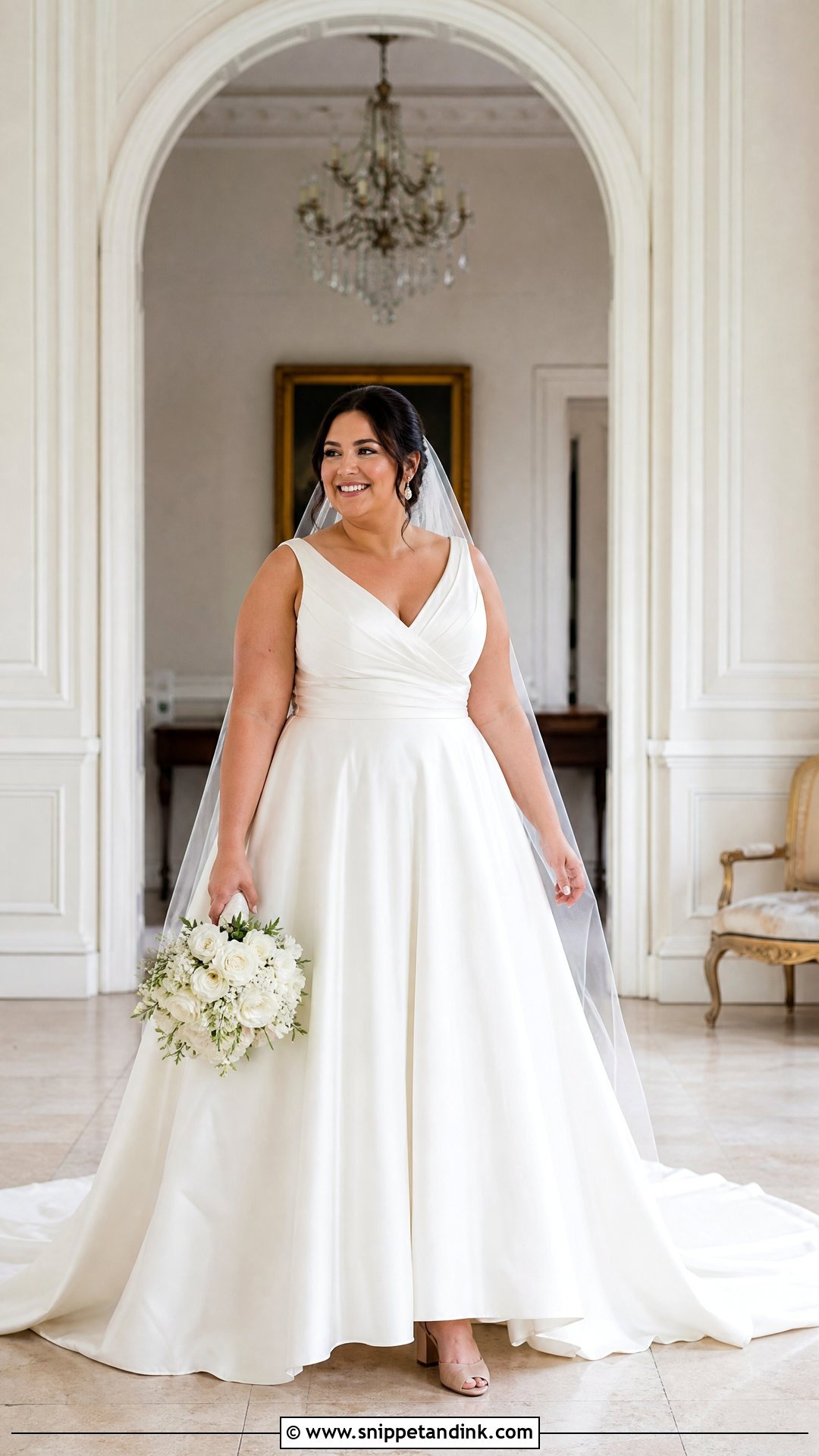
Support starts inside the gown: cups in the right place, comfortable boning, and straps or sleeves that feel secure without digging in. From there, a softly gathered A-line skirt falls away from the waist into a chapel or cathedral train. Add a fingertip veil, drop earrings and stable block heels. Hold the bouquet a little below the waist so the neckline shows in photos. Shop by fit, never by the number on the label. I always ask the salon whether the sample can be clipped accurately and whether the ordered gown will keep the same neckline, lace placement and train proportions.
18. Petite Wedding Dress With Detachable Long Train
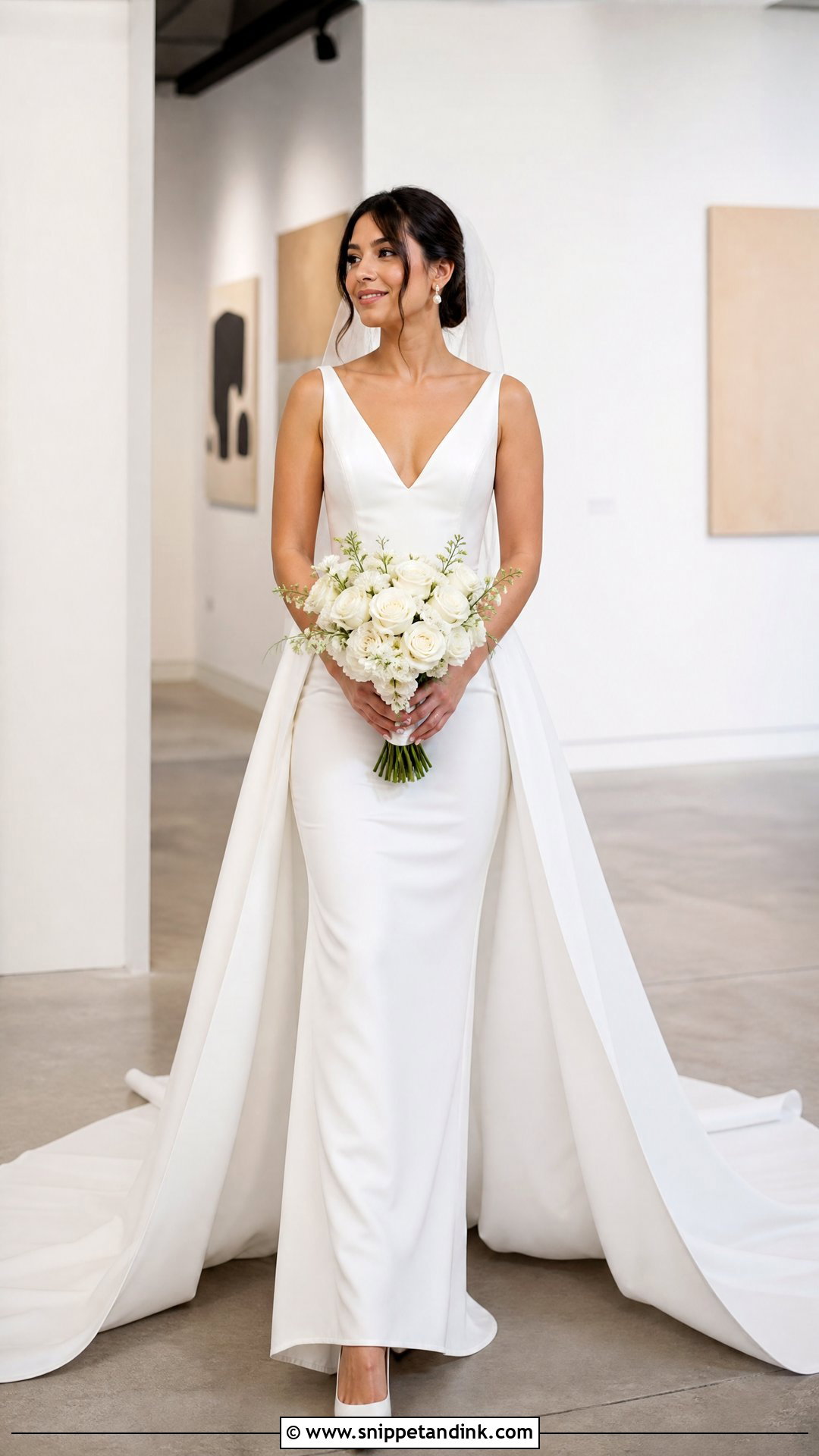
Petite brides can carry a big train if the dress underneath stays narrow. A fitted sheath, column or slim A-line keeps your frame visible, and a detachable train at the natural waist adds length for the ceremony without permanent bulk. A V-neck or an unbroken vertical seam lengthens you further. Pointed heels, small earrings and a bouquet scaled to your height suit it, and the veil can go if the train already gives enough movement. Heavy hemming on a petite frame can move the flare point and lace placement, so I’d ask about custom proportions before ordering.
19. Boho Lace Wedding Dress With Long Train
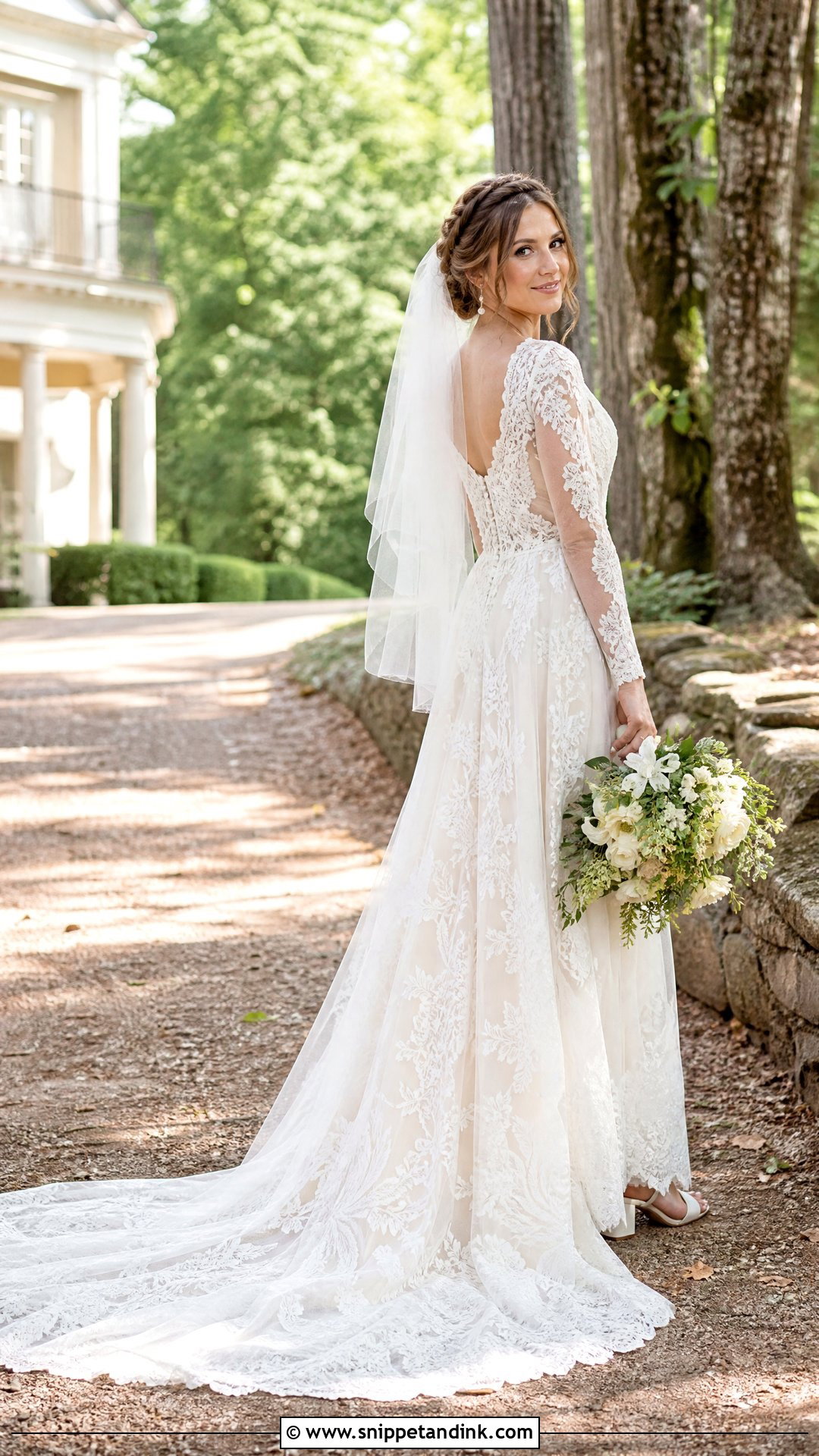
A boho lace dress with a long train needs fabric with a soft drape, otherwise the train sits stiff behind you like a board. Crochet-style lace, botanical motifs or embroidered tulle over a comfortable lining, a gently fitted bodice and an A-line skirt let the long train to trail naturally. A loose braided updo, small gold or pearl earrings and low block heels suit uneven ground, with white flowers and textured greenery in the bouquet. Skip crystals and elaborate veils. Outdoors, a train loop or bustle is essential, and someone should arrange the fabric before photos; grass stains and burrs collect fast.




20. Minimal Silk Wedding Dress With Royal Train
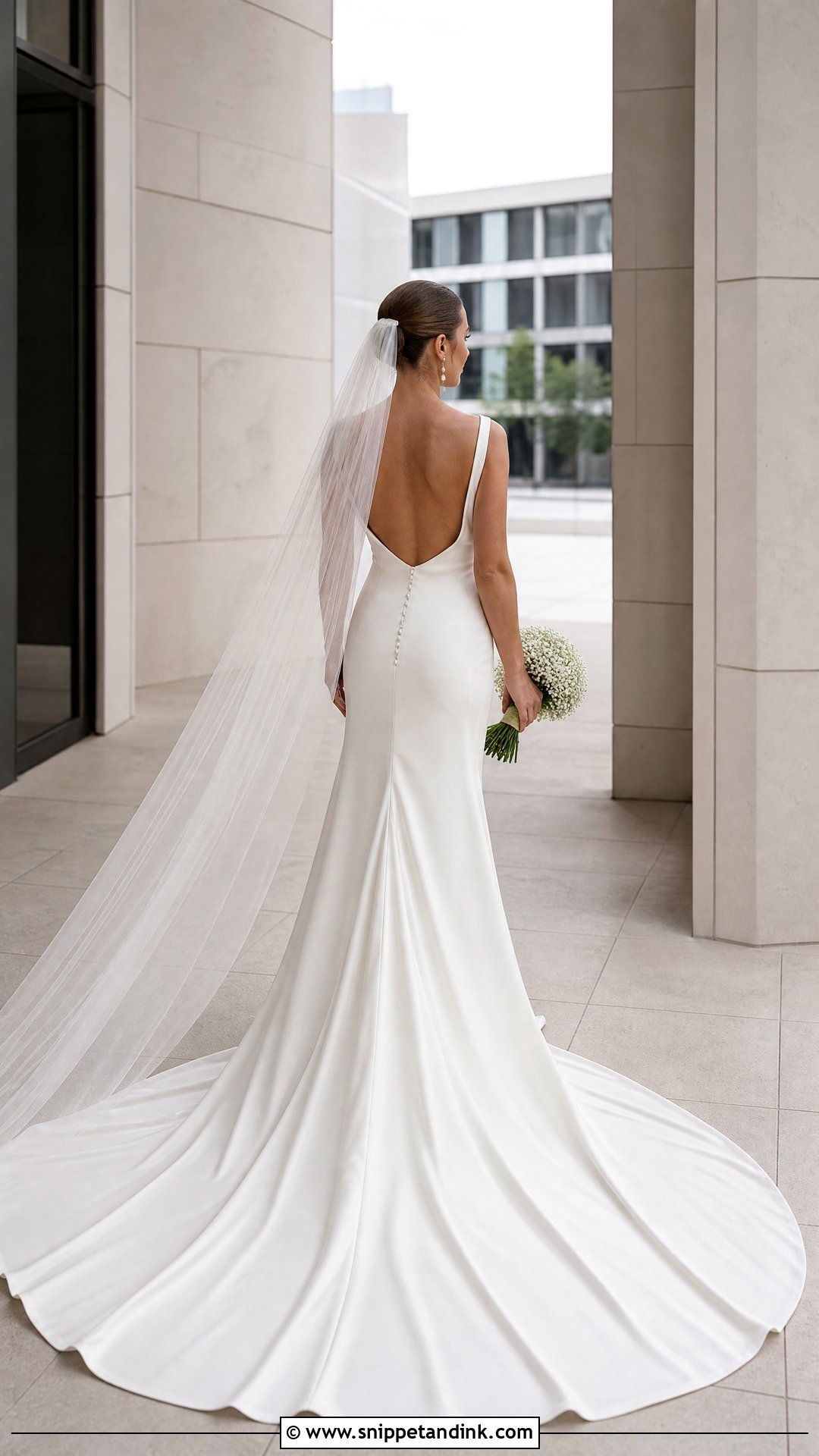
A royal train needs no lace or beading if the construction is precise. A bias-cut column, structured A-line or clean ball gown in fluid silk, with a low back and an uninterrupted train, gets its effect from the cut alone. Sculptural earrings, a polished bun and sleek ivory pumps are enough. A plain veil can run just past the train, or go entirely to keep the line modern. Carry a compact, rounded bouquet. Silk creases and shows water marks easily, so I lay a clean sheet under the train while the bride gets ready and keep drinks well away. A well-planned bustle protects it at the reception.
Over, Under or Ballroom: Bustle Styles and Who Ties Them
Once the ceremony and portraits are done, the train has to go up. The bustle style depends on the fabric and how many feet you’re lifting, so I discuss it at the first alteration appointment, not the last.
- Over (American) bustle: hooks or buttons lift the train up onto the back of the skirt. Quick to do and suits lace and appliqué, since the detail stays on show.
- Under (French) bustle: ribbons tie the train up underneath the skirt, giving a soft, layered back. Popular on satin and plain fabrics.
- Ballroom bustle: the train is lifted all round so the skirt hangs at floor length, almost as if there were no train. The neatest for dancing, but it usually needs more attachment points.
- Wrist loop: a simple loop to hold the train in your hand. Fine for sweep and chapel trains, tiring with anything heavier.
Teaching the bustle and moving on the day
Bring the person who’ll do your bustle to the final fitting so the seamstress can show them in person. Numbered or color-matched ribbons make it far easier in a dim corridor with an audience. During the ceremony, ask someone to straighten the train once you stop at the front. To turn, step forward in a gentle arc rather than spinning on the spot, and never step backward in a long train, because you’ll stand on it.
Plan the Train Around the Aisle You Actually Have
A long train makes a dress feel ceremonial, covered in lace or completely plain. Match its length to the venue and to how you plan to spend the reception, and weigh up fabric, weight, width, bustle design and how the veil sits over it before you commit. A detachable train solves the dramatic entrance and easy dancing in one go. Fittings matter more with a train than without, because every extra foot of fabric pulls on the bodice. Compare the silhouettes, necklines and fabrics above, then pick the one you can walk, turn and sit in without needing help each time.
You'll Like These Ideas:





Leave a Reply