
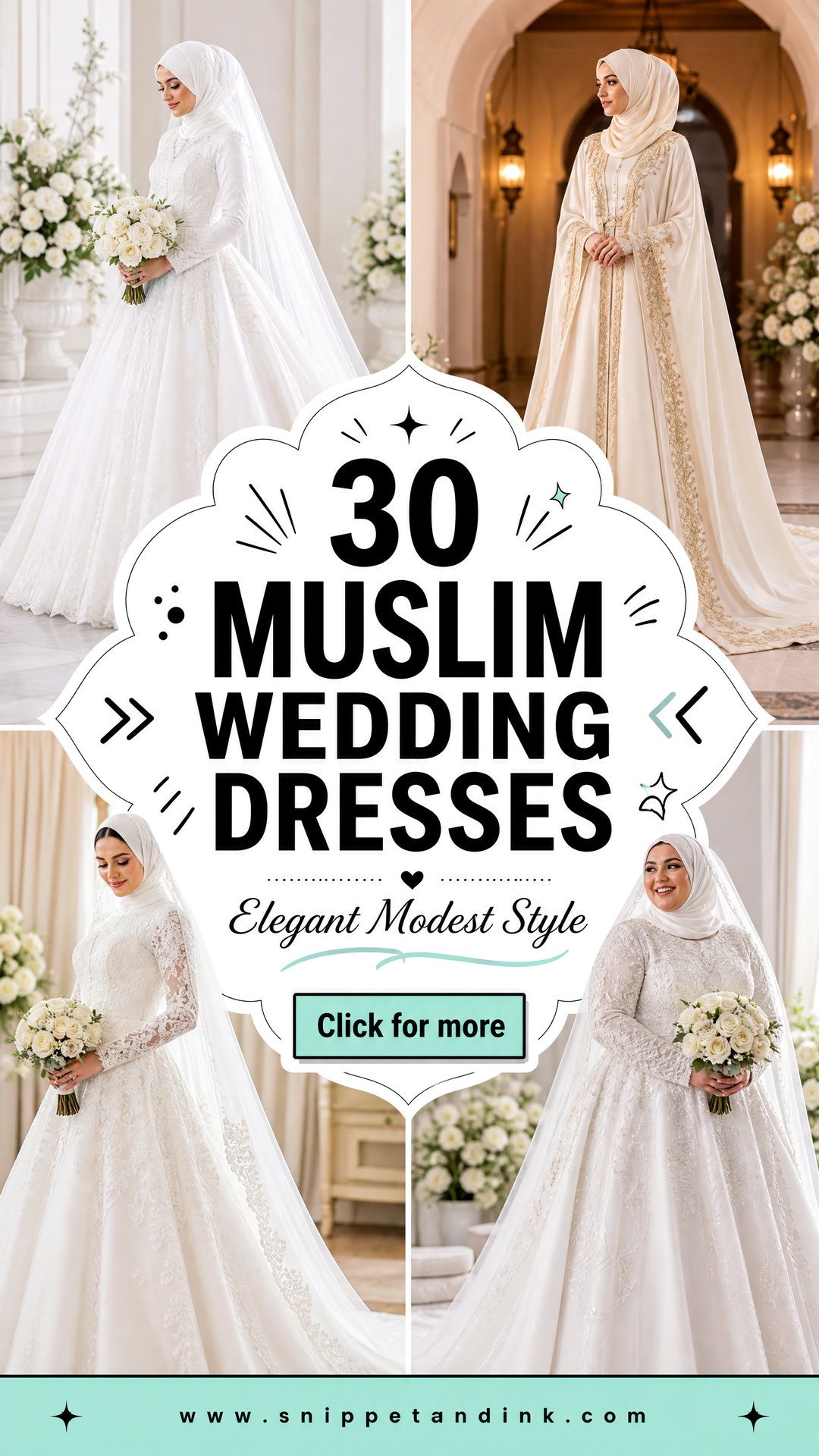
Modest bridal wear has grown far beyond the one or two covered gowns a shop used to keep at the back. Satin gowns with lace sleeves, capes, embroidered abayas, kaftans and South Asian and Arab cultural pieces all appear below, in white, gold, blush and deeper shades. What I look at with every bride is the same set of questions: does it cover the way she needs, will it still be comfortable in hour six, and does it work with her hijab rather than against it? Each of the thirty dresses here comes with my answer to those questions.
Running a Bridal Appointment When You Wear Hijab
Many mainstream bridal shops still carry mostly strapless samples, so a modest bride can spend an appointment trying dresses she’d never wear as they are. A little preparation changes that. When I go shopping with a bride, I phone the shop first and ask how many covered or sleeved samples they have, and whether they can show gowns that come with optional sleeves or a matching jacket.
What to bring to the fitting room
- The hijab you plan to wear, or one in the same fabric and color, plus your usual underscarf and pins.
- A fitted long-sleeve top in a skin-neutral shade, so you can judge a strapless sample as if sleeves were added.
- Shoes at the height you’ll wear on the day.
- One trusted person rather than a crowd; too many opinions make it harder to hear your own.
Ask whether the shop has a private fitting room or a female consultant if that matters to you; most will arrange it if you ask when booking. And ask how long the gown takes to arrive. Made-to-order bridal gowns commonly take several months, before alterations, so leave room for sleeve and neckline work on top of that.
1. White Muslim Wedding Dress With Hijab
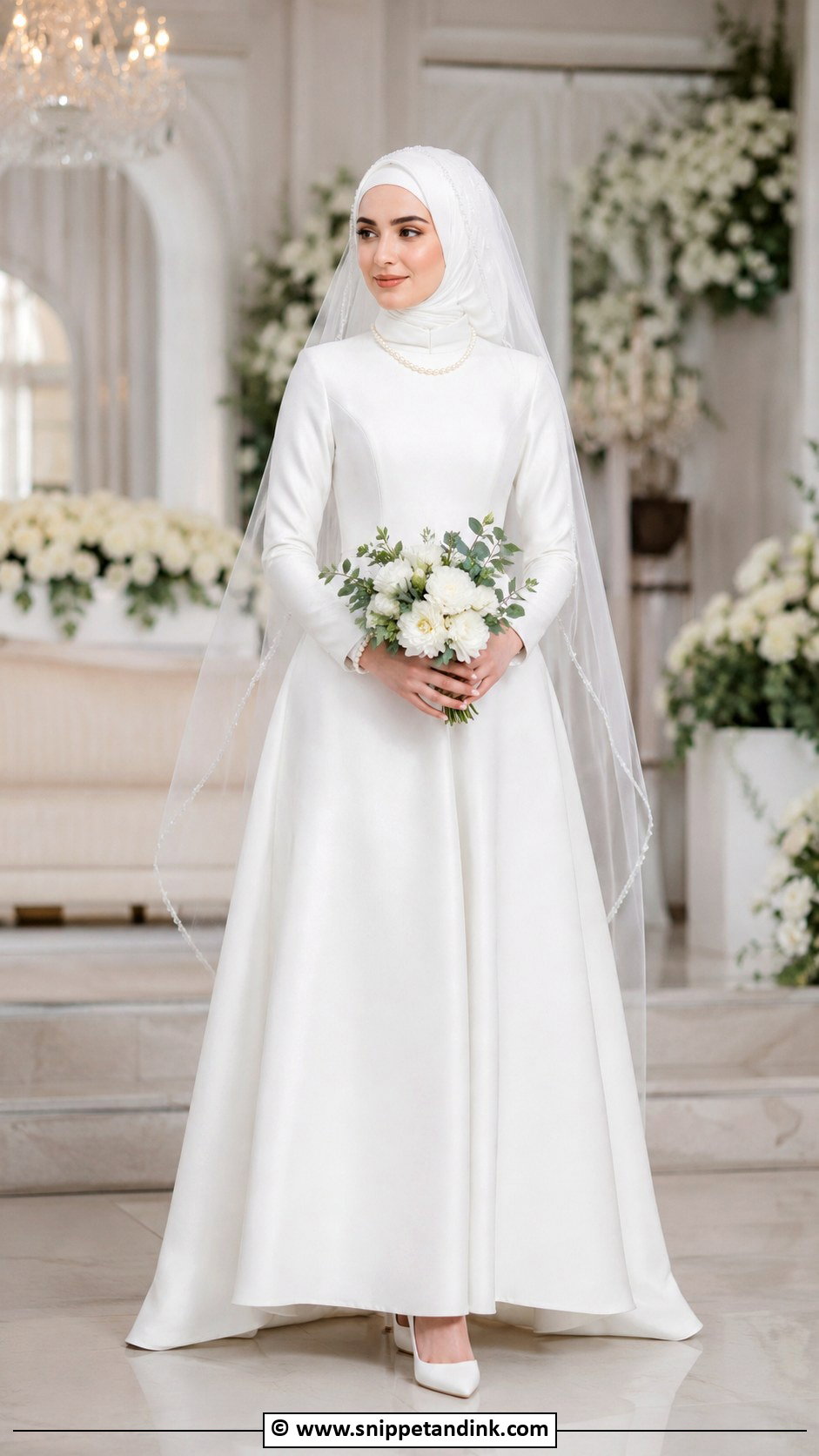
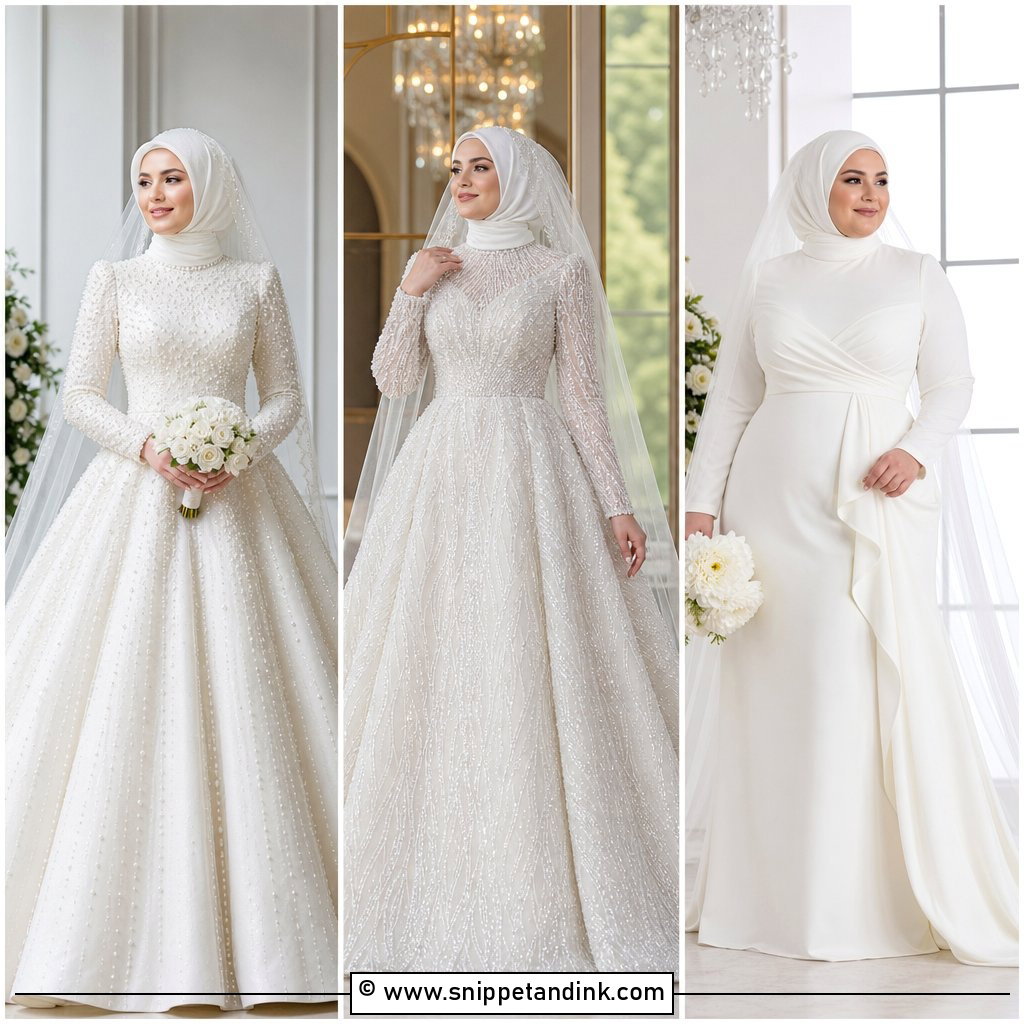
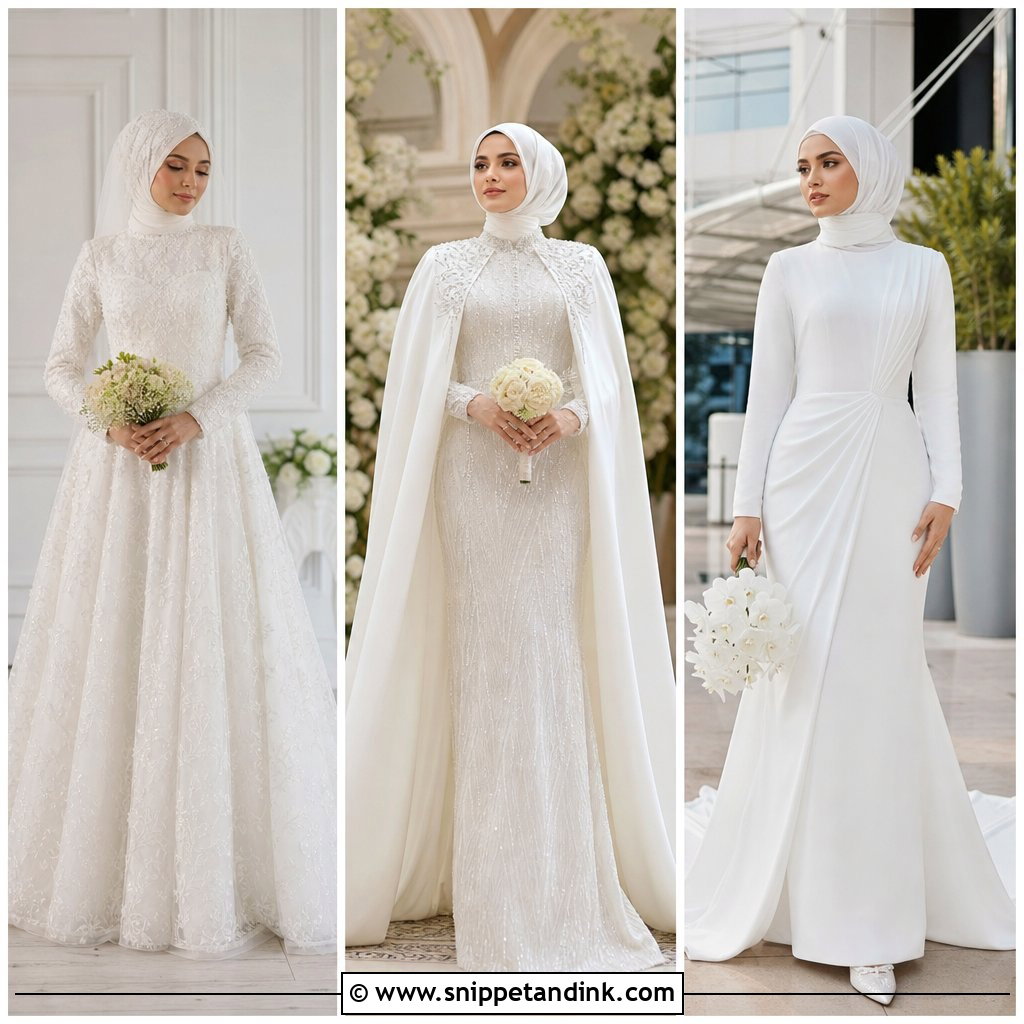
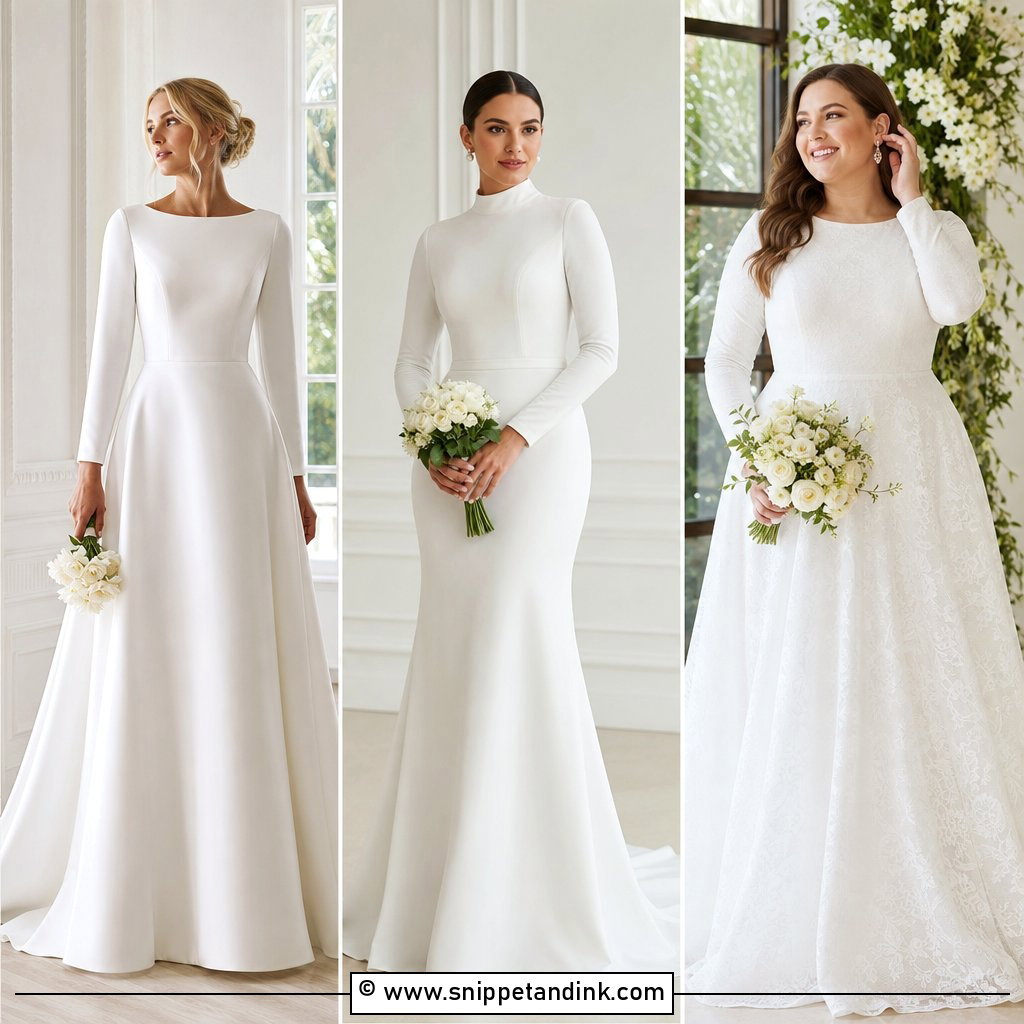
White with a matching hijab is the classic, and it’s also the most demanding to get right, since every fit flaw shows. I’d look for long sleeves, a high neck, a softly shaped bodice and a skirt that skims rather than clings. Satin reads sleek, lace and chiffon romantic, crepe modern. A matching white hijab and a sheer veil give the bridal outline; a delicate tiara over the hijab, pearl pins and closed-toe heels finish it. Nikah, civil ceremony or formal reception, it fits them all.
2. Ivory Lace Muslim Wedding Dress
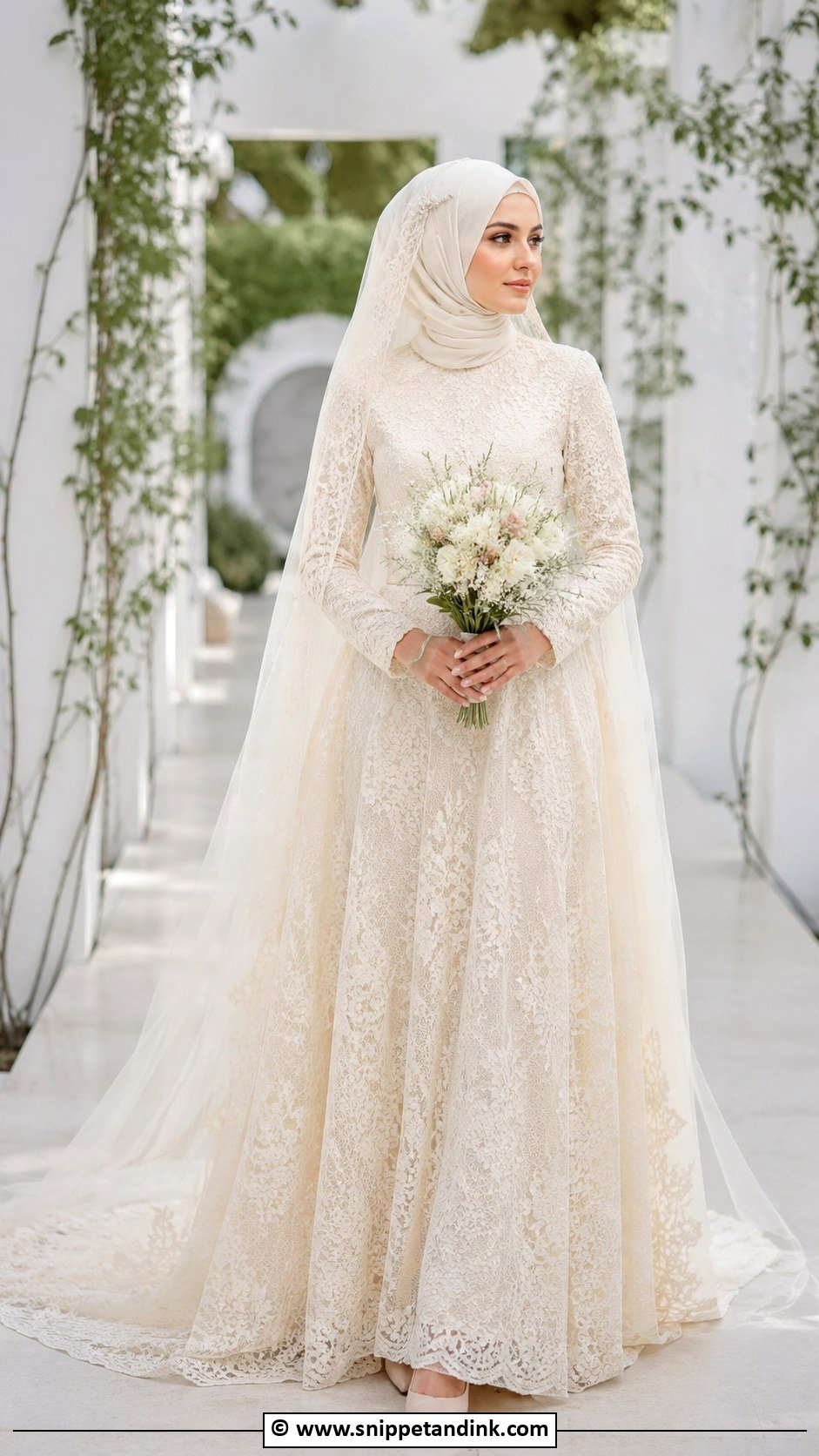
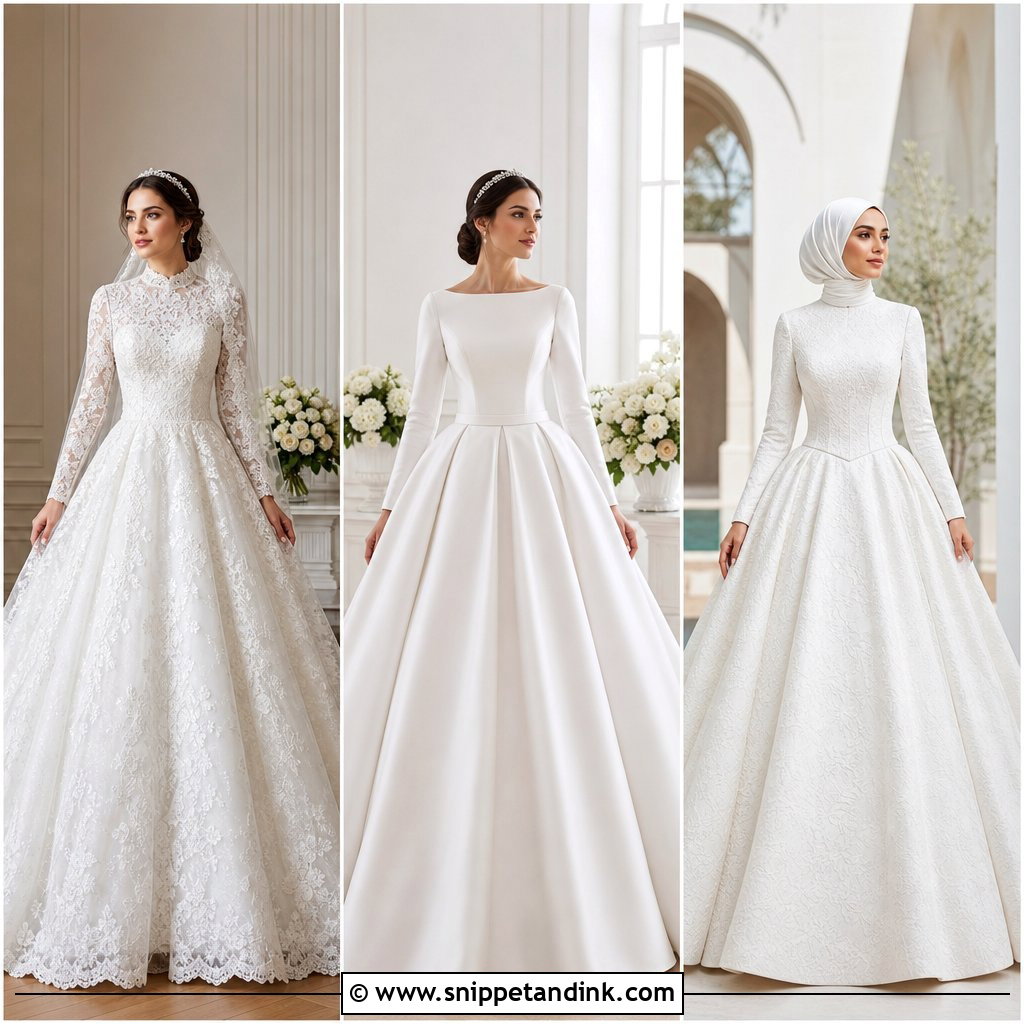
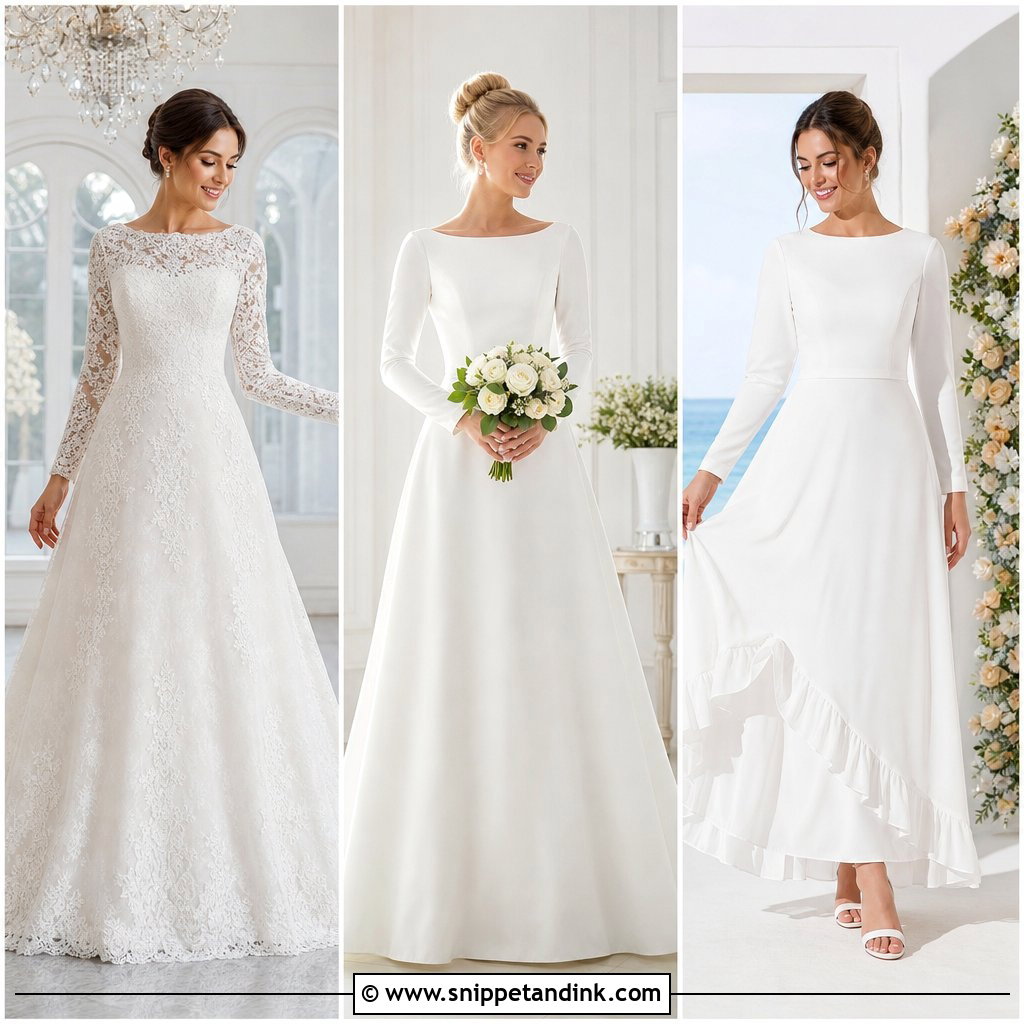
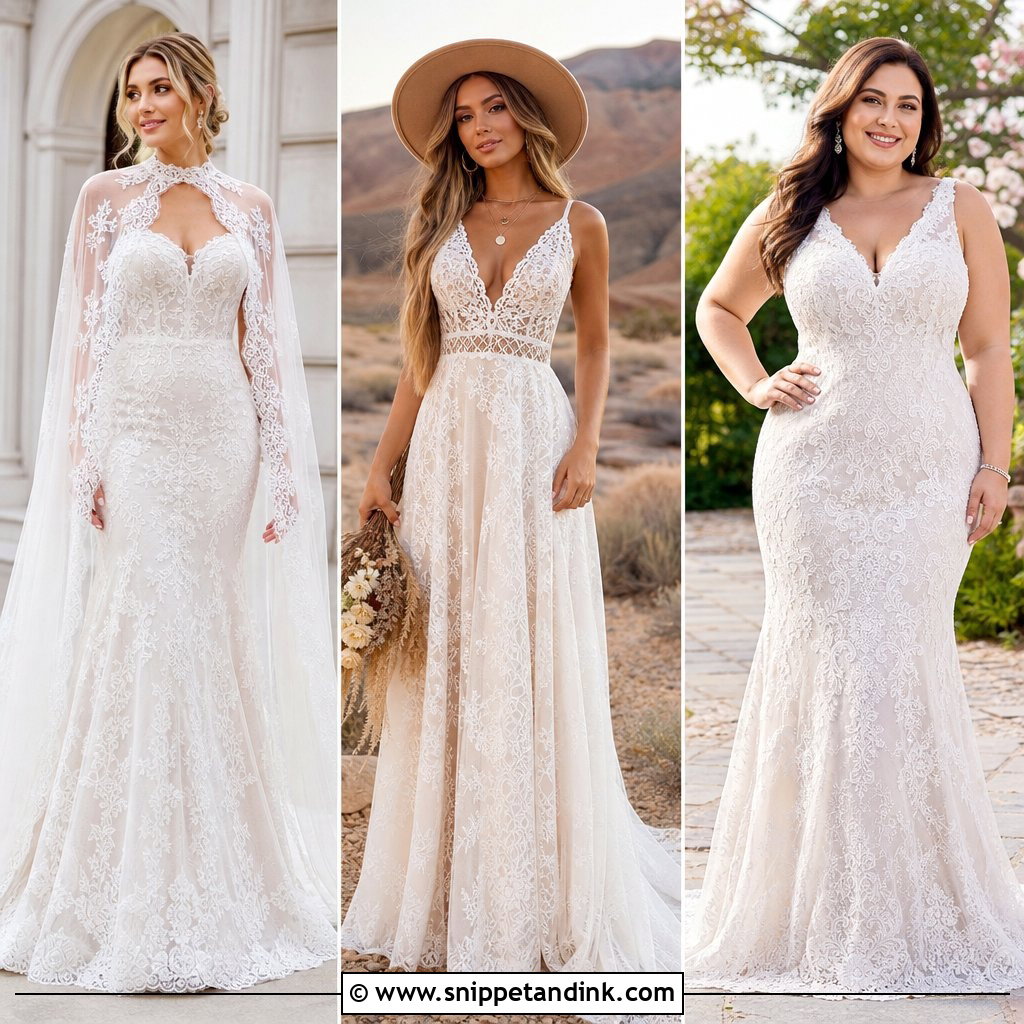
With ivory lace, the texture is the whole point, so the pattern deserves a close look before the cut. Refined florals, scalloped edges or a touch of beadwork read well at a distance; busy lace can look like noise in full-length photos. Ask for a lined long sleeve so coverage holds in flash. An ivory chiffon hijab or a lace-trimmed veil ties it together. If the lace is heavy, I’d stop at pearl pins, a slim bracelet and neutral heels, and it suits indoor ceremonies and garden venues alike.
3. Satin Muslim Wedding Dress With Long Sleeves
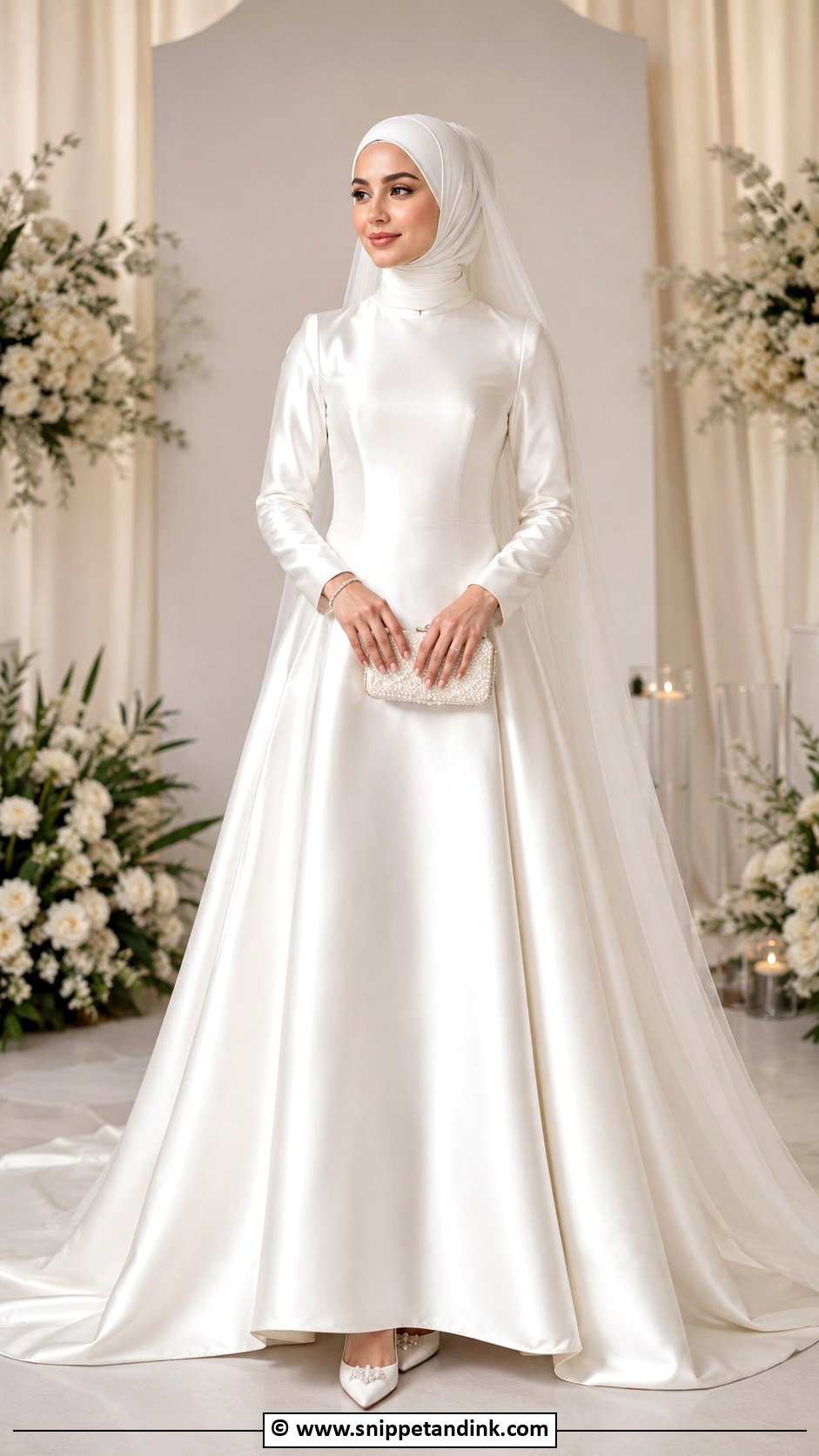
Satin reflects light, so even a plain silhouette looks formal in it. A high-neck A-line is the safe, flattering choice: covered on top, moving through the skirt. For a modern look, pair it with a structured satin hijab in the same shade, a clean veil, pointed heels and a small pearl clutch. The thing I tell satin brides is to sit carefully: smooth the skirt under you each time, or the lap creases show in every seated photo. Minimal detail suits it best.
4. Modest Ball Gown Muslim Wedding Dress
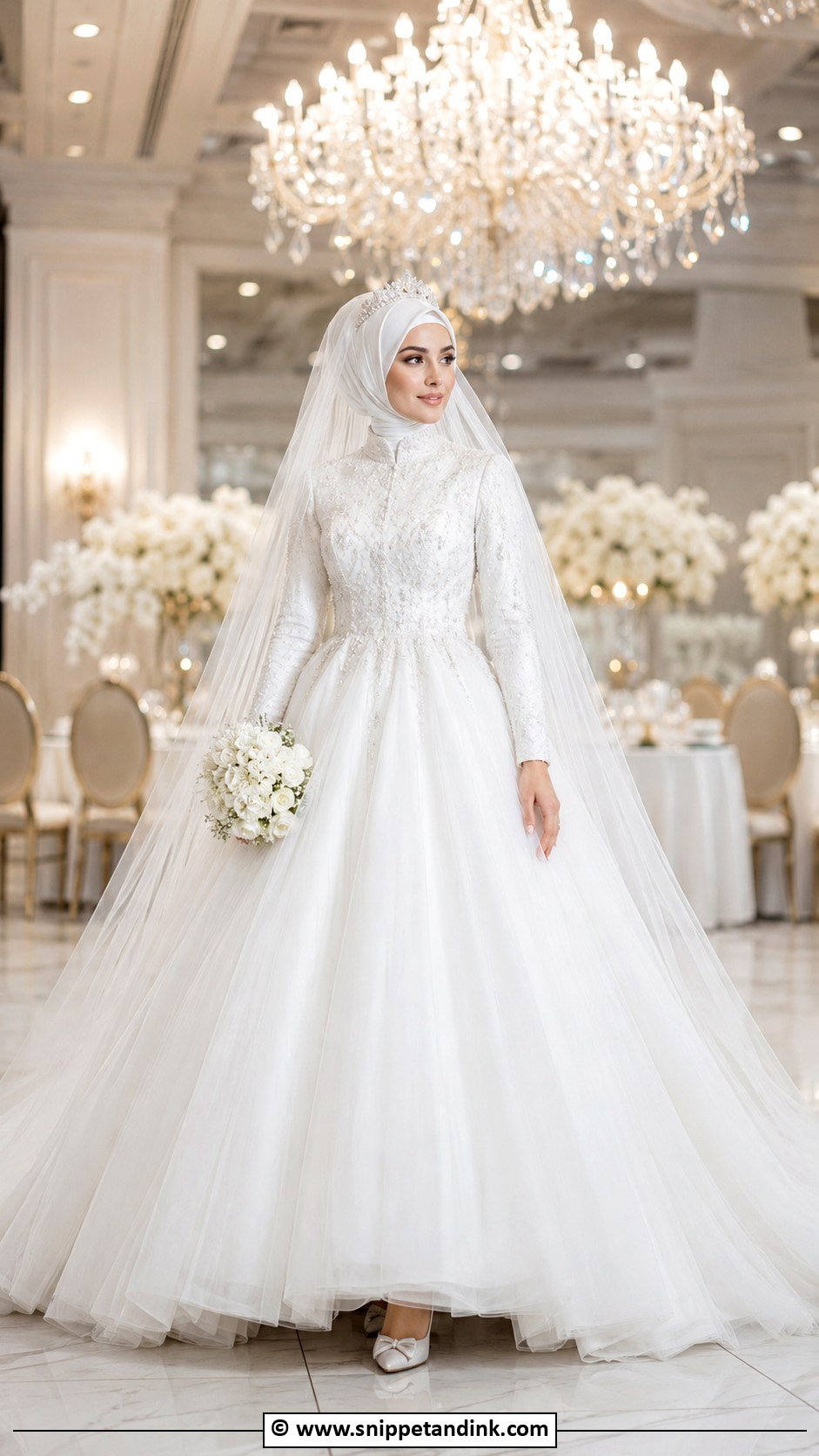
A ball gown gives you the grand entrance with full coverage, but the volume has to come from the right place. Tulle and organza give lift without much weight; mikado and layered satin are heavier and hold a sculpted shape. A fitted inner lining keeps the bodice in place so the sleeves don’t twist. Pair it with a smooth hijab, crystal pins and a long veil, and keep the heels comfortable, because you’ll be carrying that skirt through a hotel or banquet hall all night.
5. A Line Muslim Wedding Dress With Veil
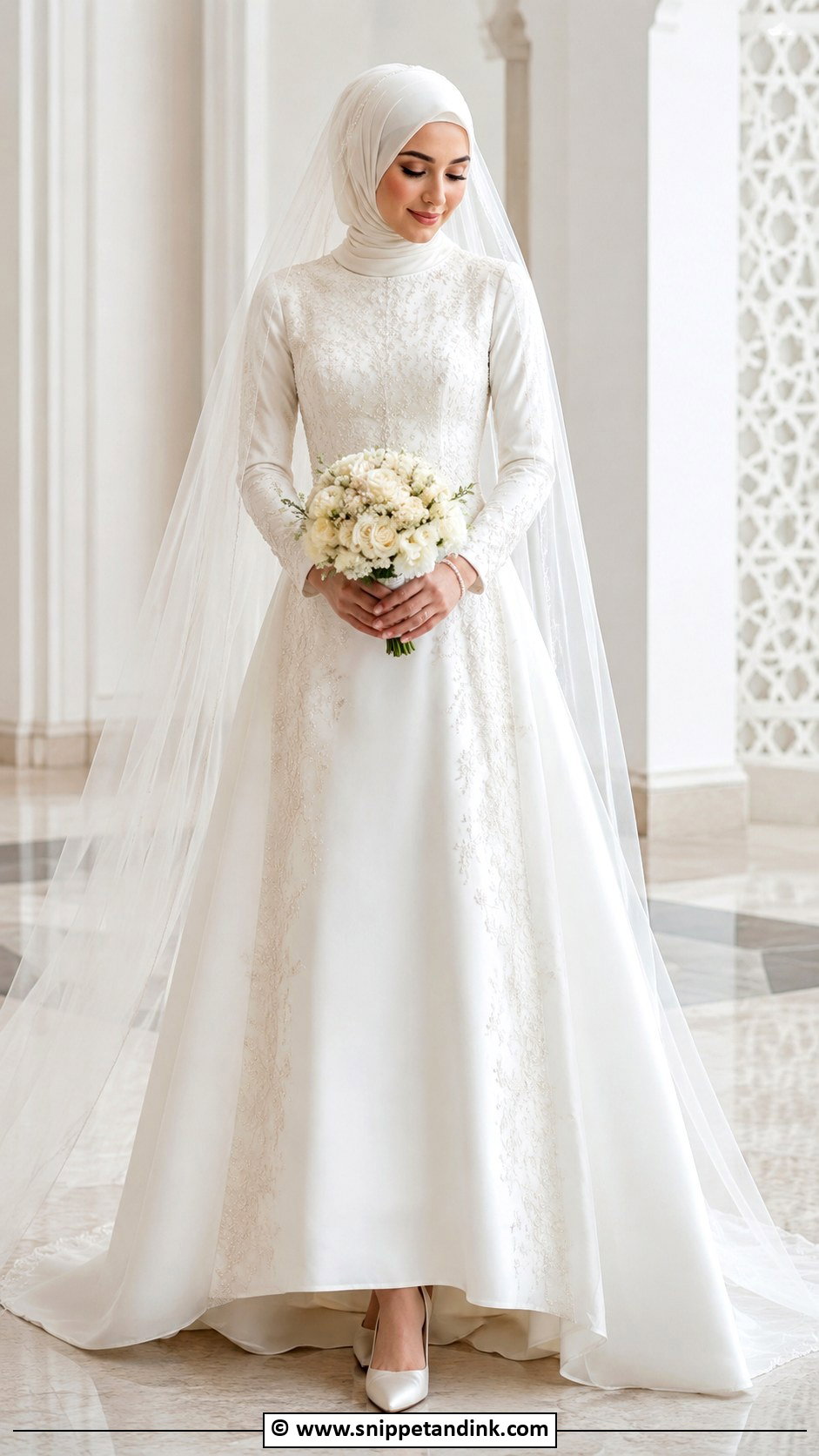
An A-line flatters most body types because it flows from the waist without gripping anywhere. Long sleeves, a covered neckline and soft embroidery at the bodice or cuffs keep it bridal. A matching hijab under a sheer veil completes it. Keep it plain with satin heels and pearl jewelry, or add a beaded belt if you want the waist defined. If I had to name the most versatile shape on this list, from a mosque ceremony to a formal reception, it would be this one.
6. Muslim Wedding Dress With Cape
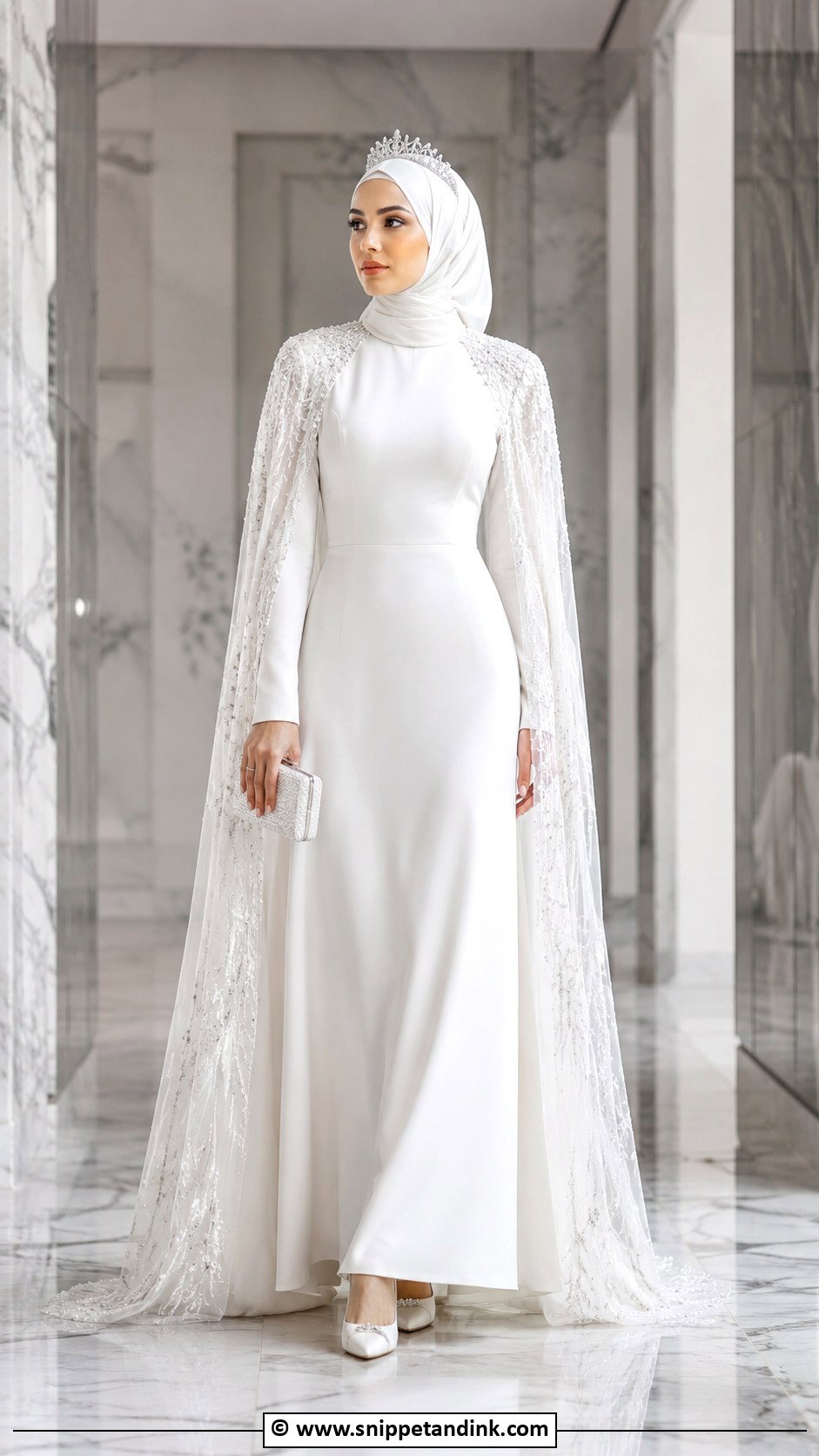
A cape can replace the veil or sit over a simple gown for extra movement, and it covers the arms and back without a fitted jacket. Start with a long-sleeve sheath, A-line or soft ball gown, then add a sheer embroidered cape falling from the shoulders. I check how the cape attaches before anything else: a cape held only at the neckline pulls on the hijab when it catches the wind. A sleek hijab, crystal headpiece and simple heels keep the outline clean.
7. Bridal Abaya Muslim Wedding Dress
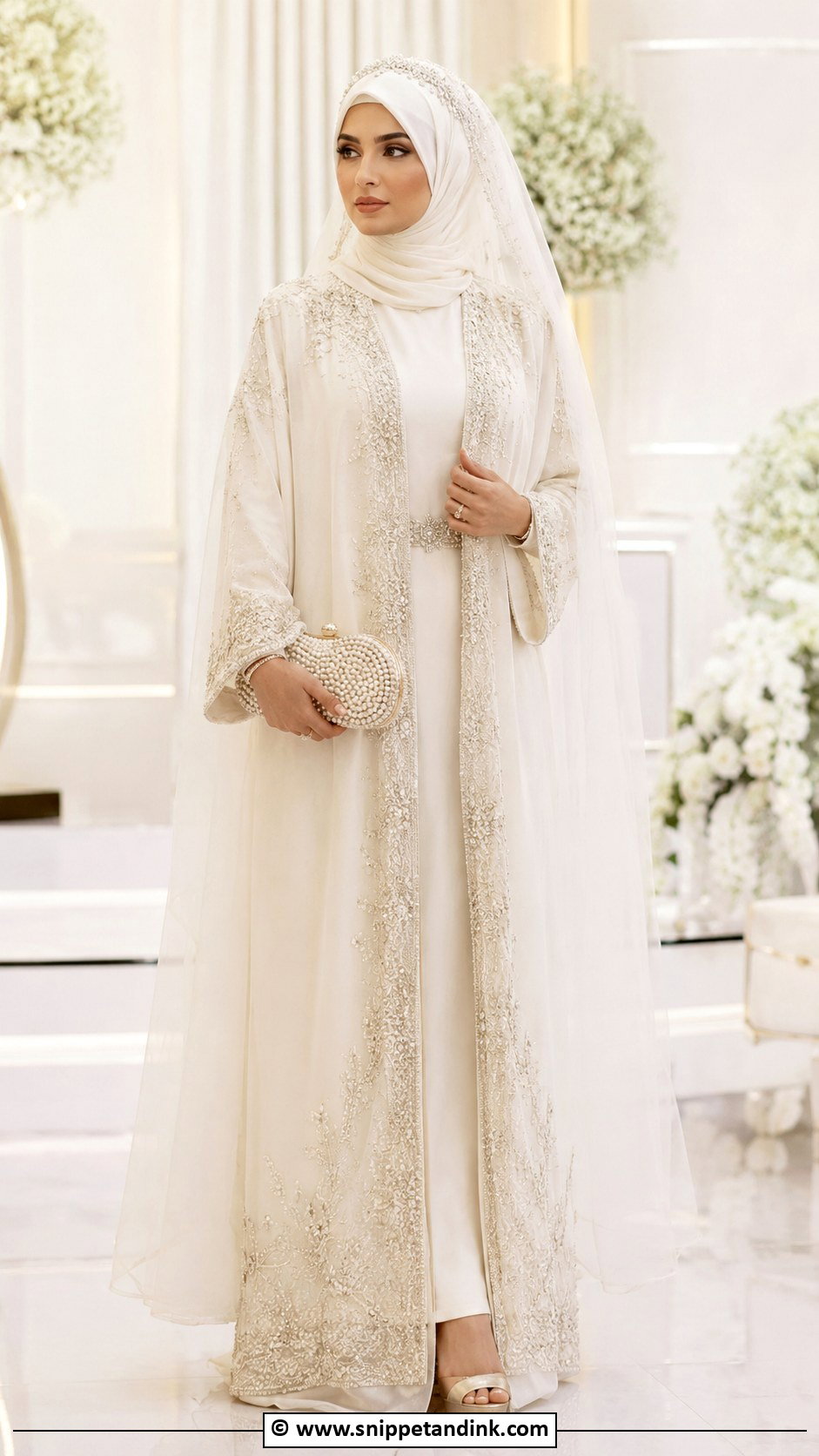
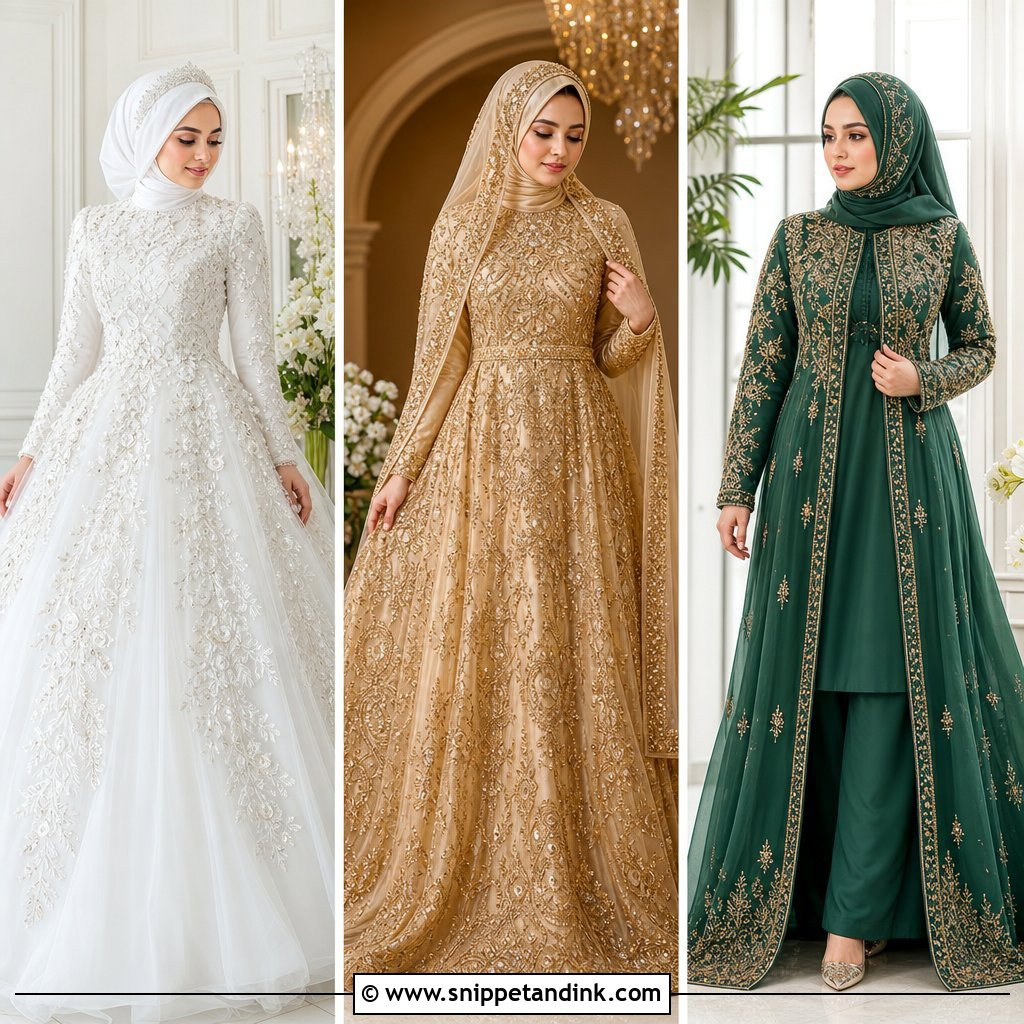
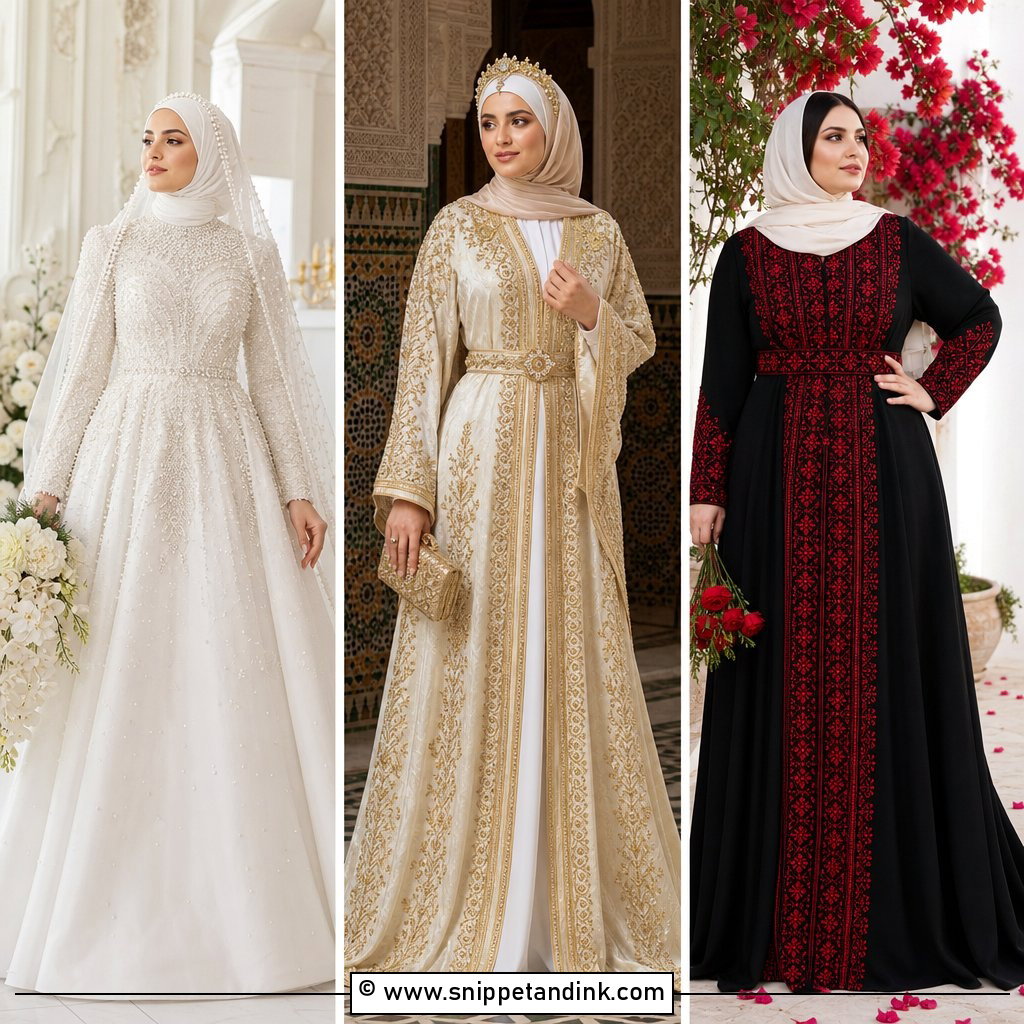
A bridal abaya Muslim wedding dress puts the coverage into the outfit’s shape, so there’s nothing to tug or adjust through the day. Embroidery, pearls, lace or beading usually run along the sleeves, front opening and hem. Wear it over a matching inner dress for a layered finish, and check that the front opening sits closed when you walk; some need a hidden hook at the waist. Ivory, champagne, white, blush and soft gold all read bridal. A matching hijab and long veil, metallic heels and a small clutch complete it for a nikah or mosque wedding.
8. White Bridal Kaftan Muslim Wedding Dress
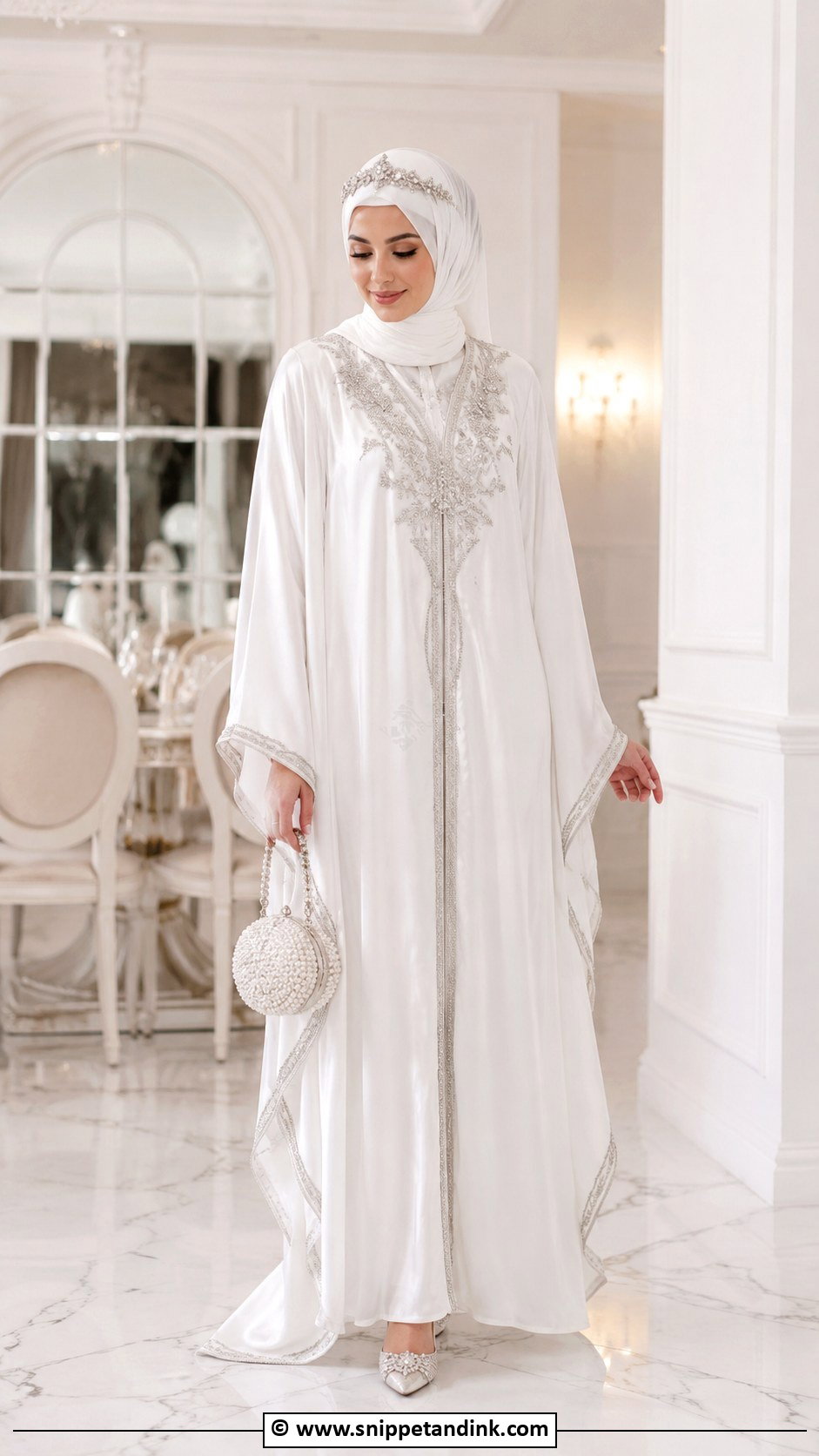
Kaftans are loose, long-sleeved and decorated around the neckline, cuffs and center panel, which means full coverage with easy movement. Choose white, ivory or pearl-toned fabric for a classic effect, or silver and gold embroidery for something more festive. Because the shape is relaxed, I wrap the hijab close to the face to give the outfit a defined top. A jeweled headband over the hijab, embellished heels and a small structured bag finish it without overwhelming the gown.
9. Moroccan Muslim Wedding Dress
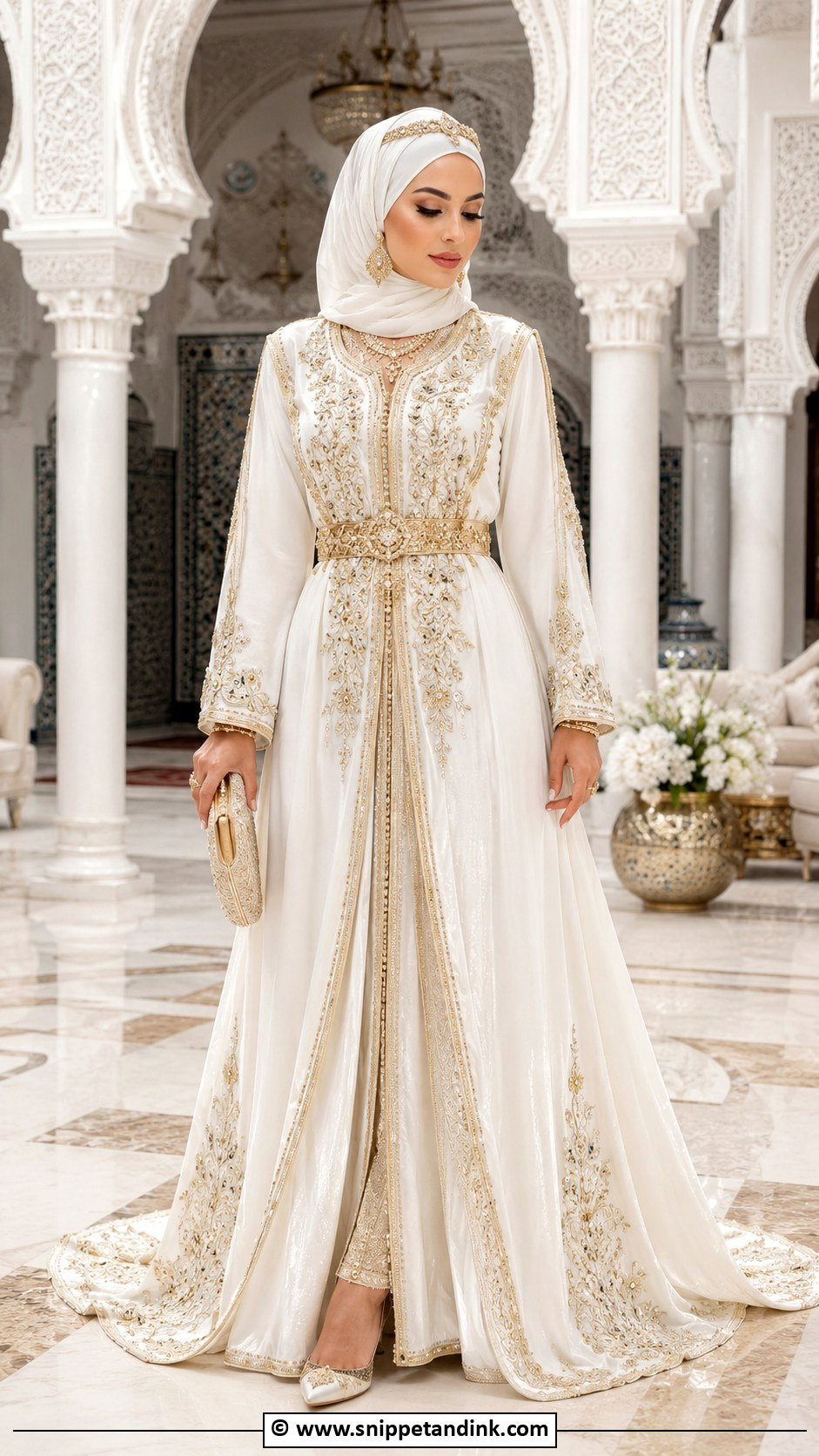
A Moroccan dress usually means a luxurious kaftan or takchita, with layered fabric, ornate embroidery and a defined belt. White, gold, emerald, burgundy and ivory all suit a wedding. The sleeves and flowing shape are naturally modest, while the belt gives structure without making it fitted. Moroccan brides traditionally change outfits several times through the night, so if you’re planning that, keep the hijab style one you can re-pin quickly. Gold jewelry and embroidered heels complete each look.
10. Pakistani Muslim Wedding Dress
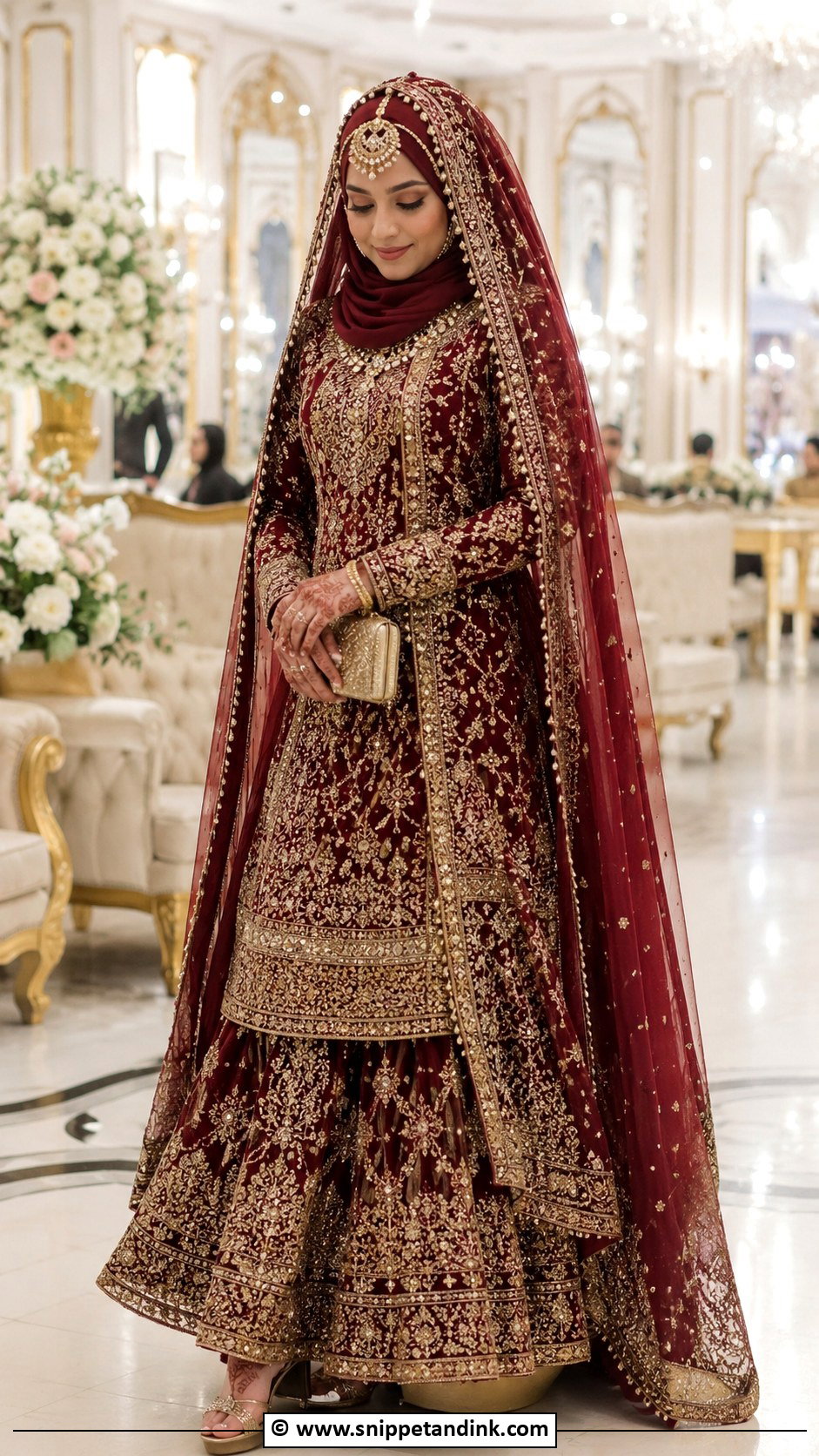
Pakistani bridal wear is all about presence. A long kameez with a lehenga, gharara or sharara creates a modest, festive outfit. Red, maroon, gold, ivory, blush and emerald are traditional, and pastels have become common for a softer look. Choose full sleeves, a longer top and a dupatta styled over the hijab. Zardozi, threadwork, sequins and pearls add depth, and weight, so I always have the bride carry the dupatta for a few minutes at the fitting to see how it sits on the head. Traditional jewelry, embellished heels and a small clutch finish it.
11. Indian Muslim Wedding Dress
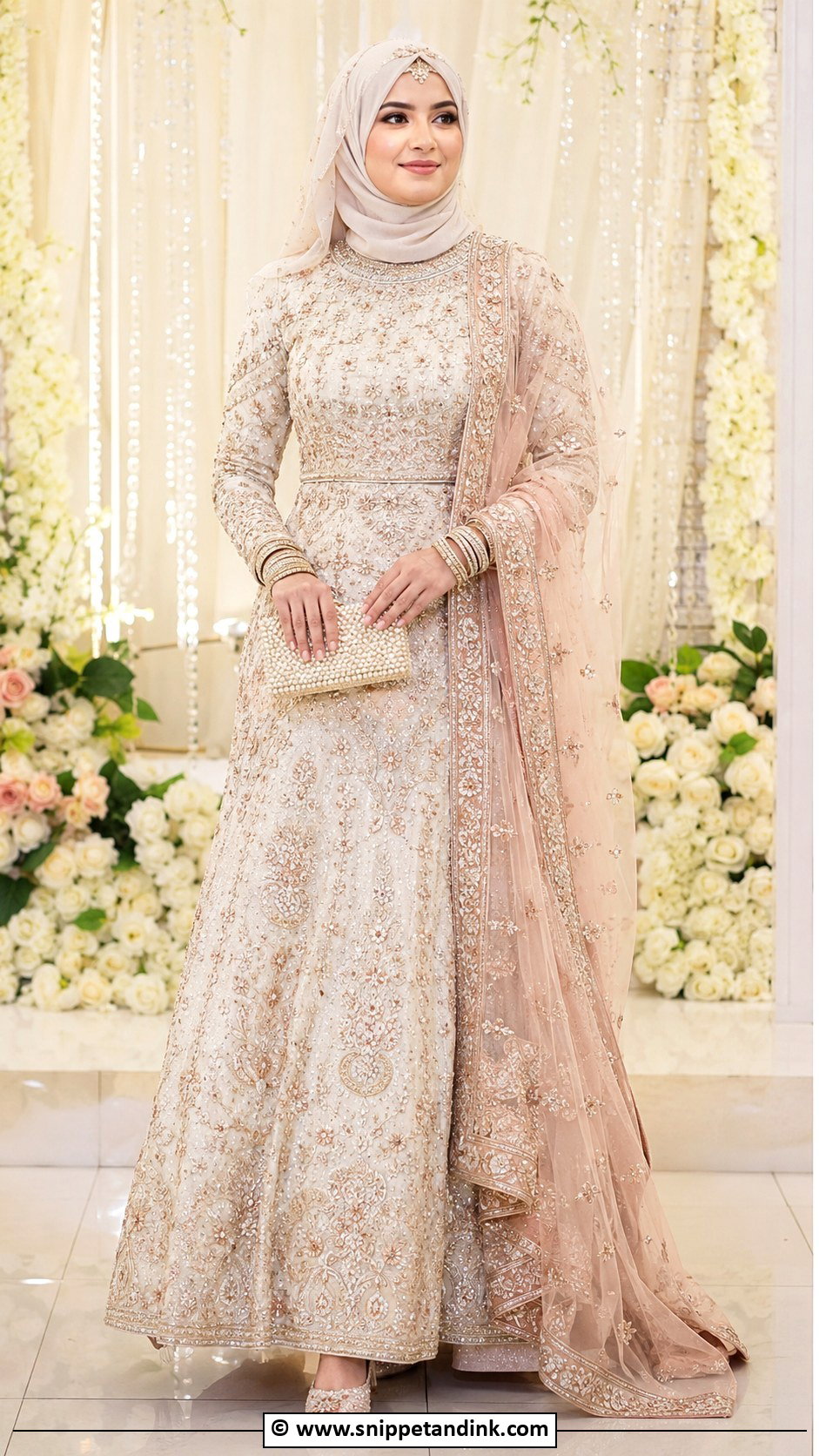
An Indian Muslim bridal outfit is usually a long-sleeve lehenga set with a high-neck blouse and a flowing dupatta. Deep red, rose gold, ivory, mint and champagne all suit different moods. The blouse should cover fully, and I’d ask for it to be cut a few centimetres longer than standard so it meets the skirt when you raise your arms. Style the dupatta over a matching hijab or drape it across the shoulders, then add bangles, bridal earrings and embroidered heels.
12. Red Muslim Wedding Dress
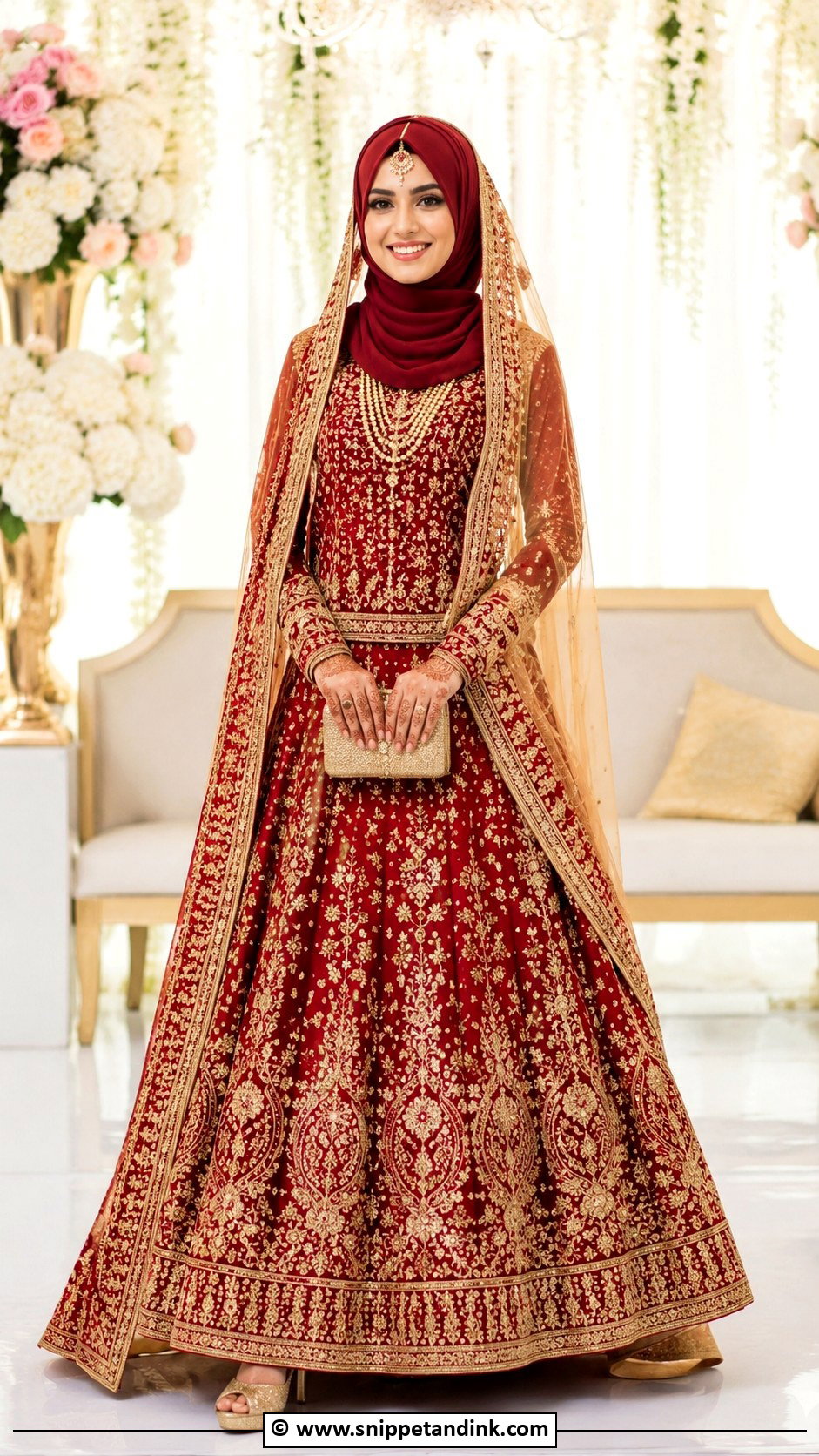
Red is the traditional bridal color across many South Asian and some Middle Eastern celebrations, and it needs a modest shape to balance its strength. A red embroidered lehenga, long gown or kaftan with full sleeves all work. Gold embroidery is the classic partner, while maroon and ruby read softer and more mature. A red or gold-toned hijab under a matching dupatta gives full coverage. I match the lipstick to the red of the outfit in daylight, because a slightly different red near the face is the first thing people notice in photos.
13. Champagne Muslim Wedding Dress
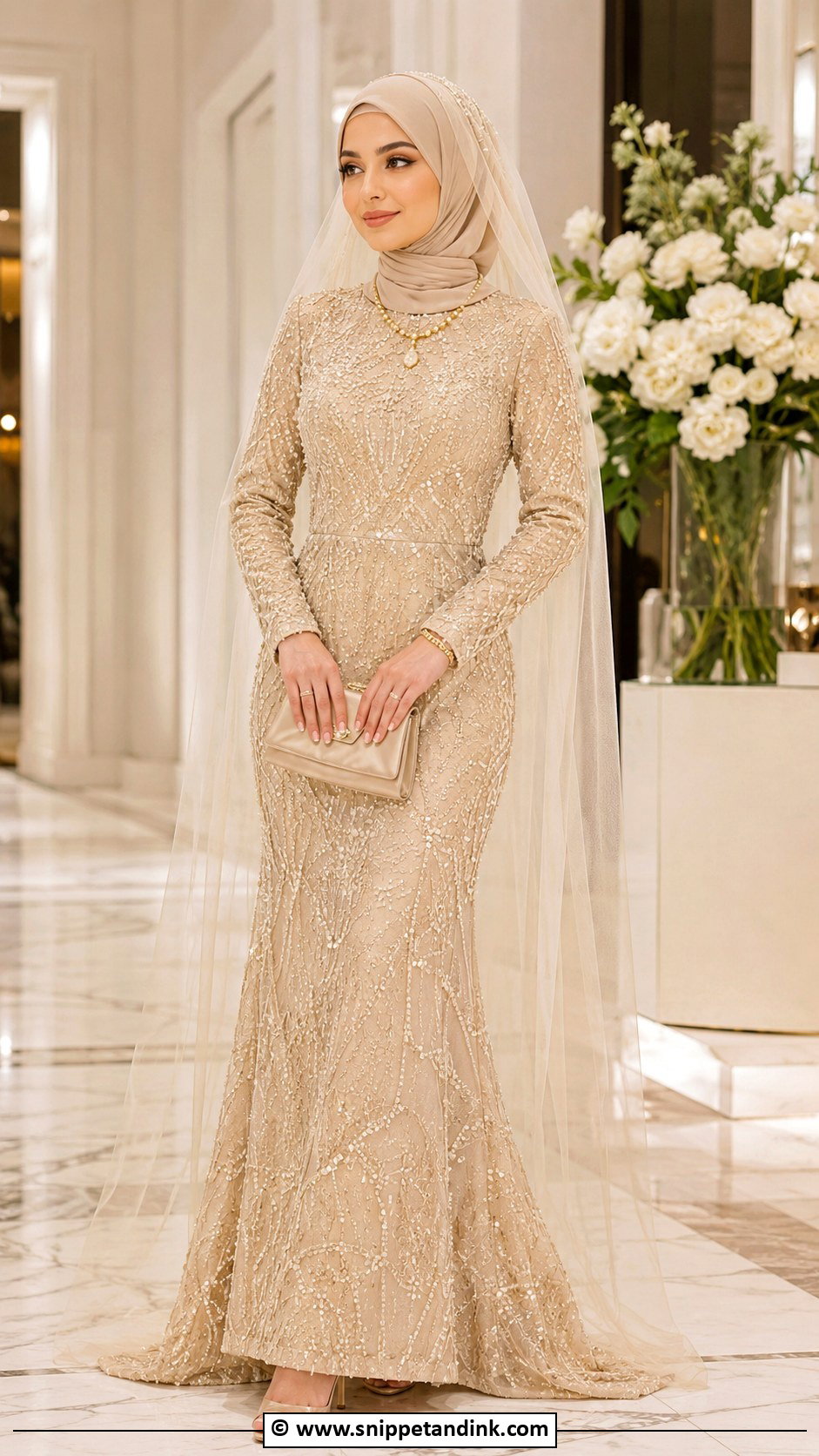
Champagne is less stark than white but still unmistakably bridal, and its warmth flatters many skin tones. A long-sleeve gown, abaya or kaftan with subtle beadwork, satin panels or lace suits it. A champagne hijab keeps the color story smooth, while a sheer ivory veil adds soft contrast. Gold or pearl accessories and nude or metallic heels finish it. It looks best in warm evening light, so for hotel receptions it’s one of my first suggestions.
14. Blush Muslim Wedding Dress
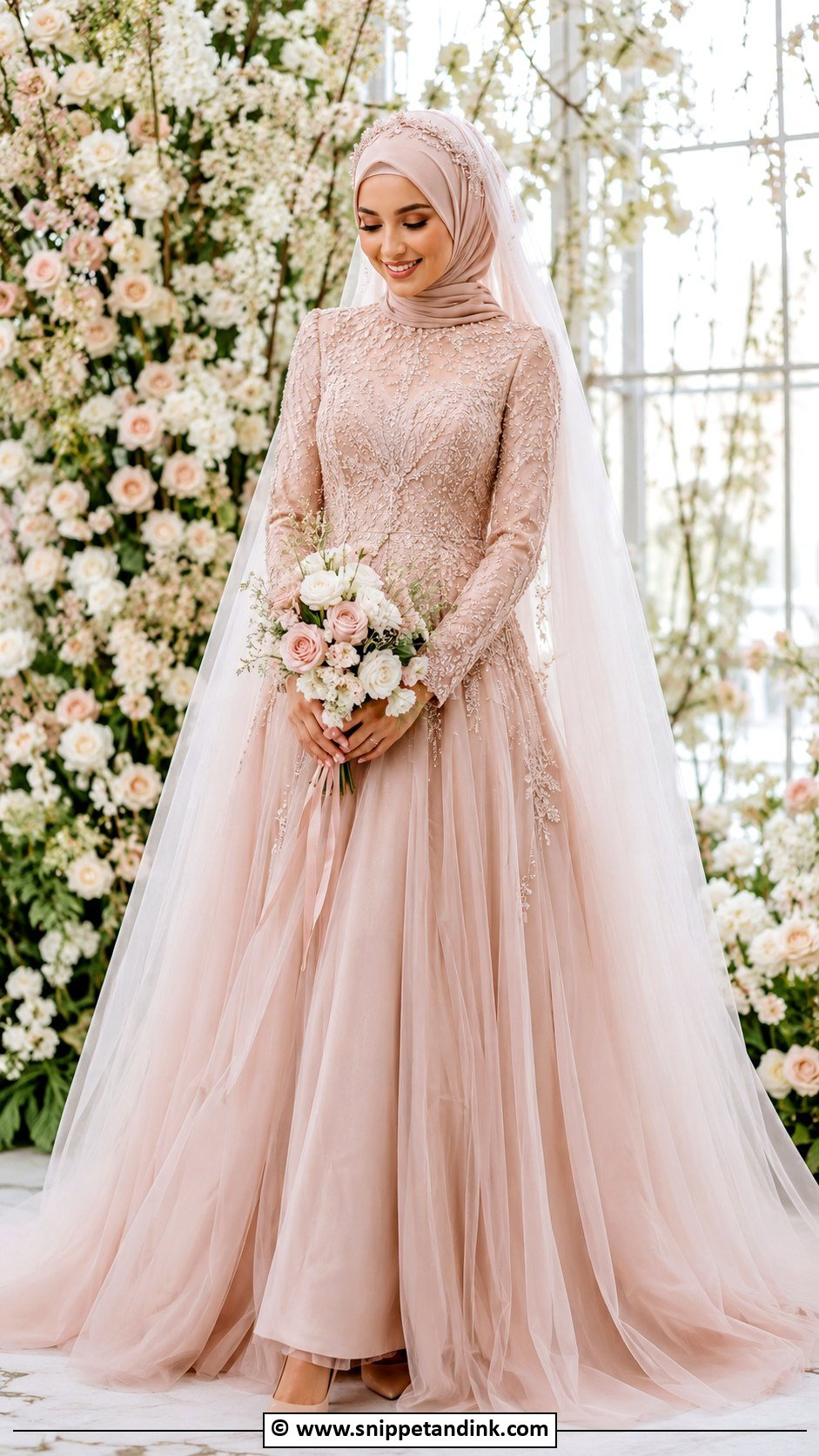
Blush works in tulle, chiffon, satin or embroidered net, and the fabric changes the color more than you’d expect: net reads lighter, satin deeper. A long-sleeve blush gown with a high neck and a matching hijab looks modest and soft. Add an ivory veil or pearl headpiece for a more bridal finish, then rose gold accessories and nude heels. I keep makeup in warm neutrals with blush, since pink makeup on a pink dress can turn the whole look sugary. Spring, garden and daytime weddings suit it best.
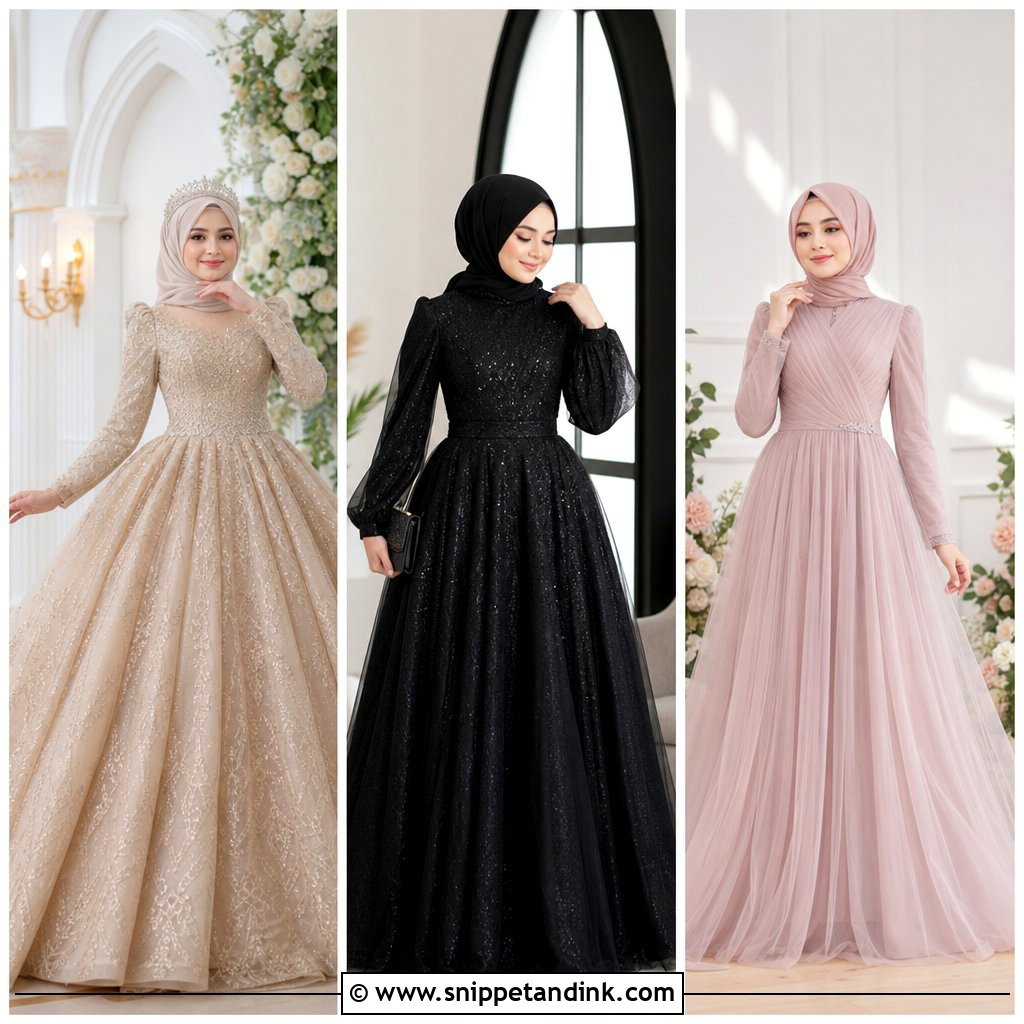

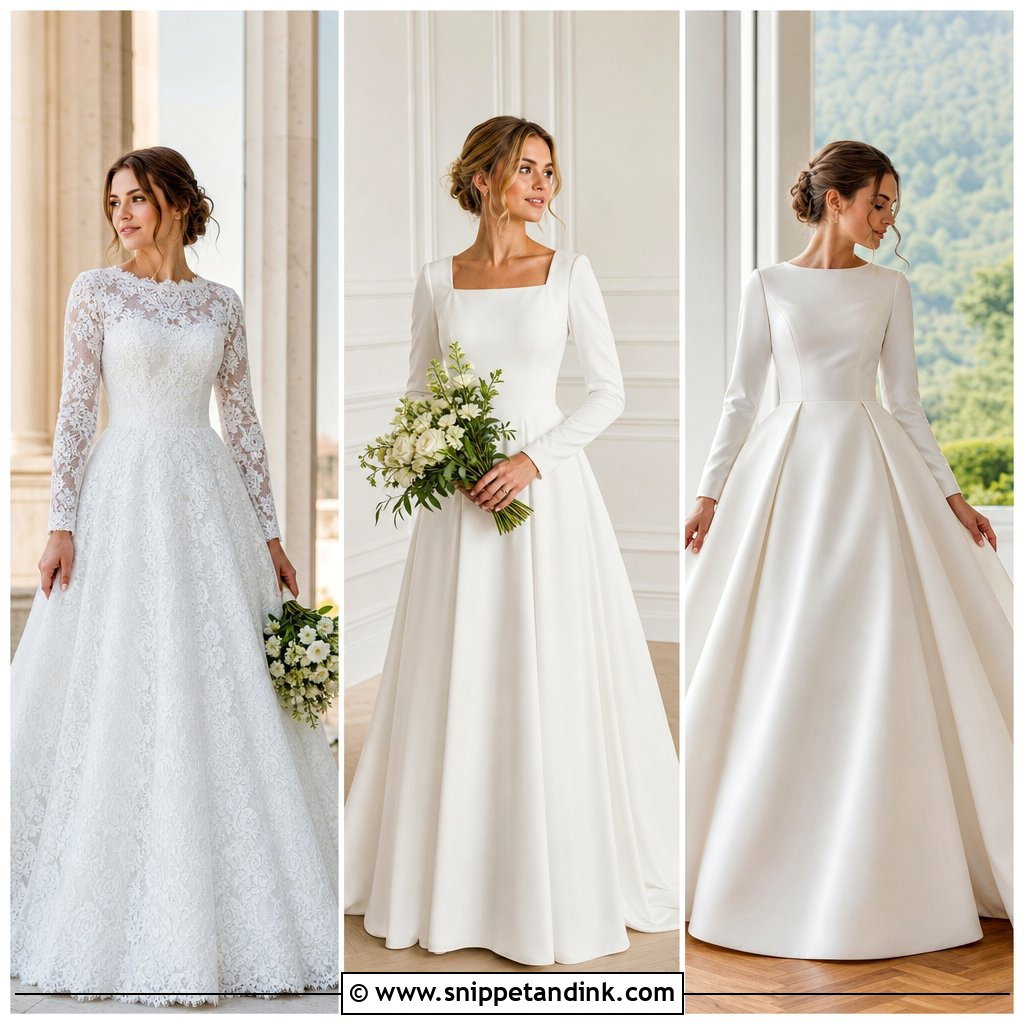
15. Gold Muslim Wedding Dress
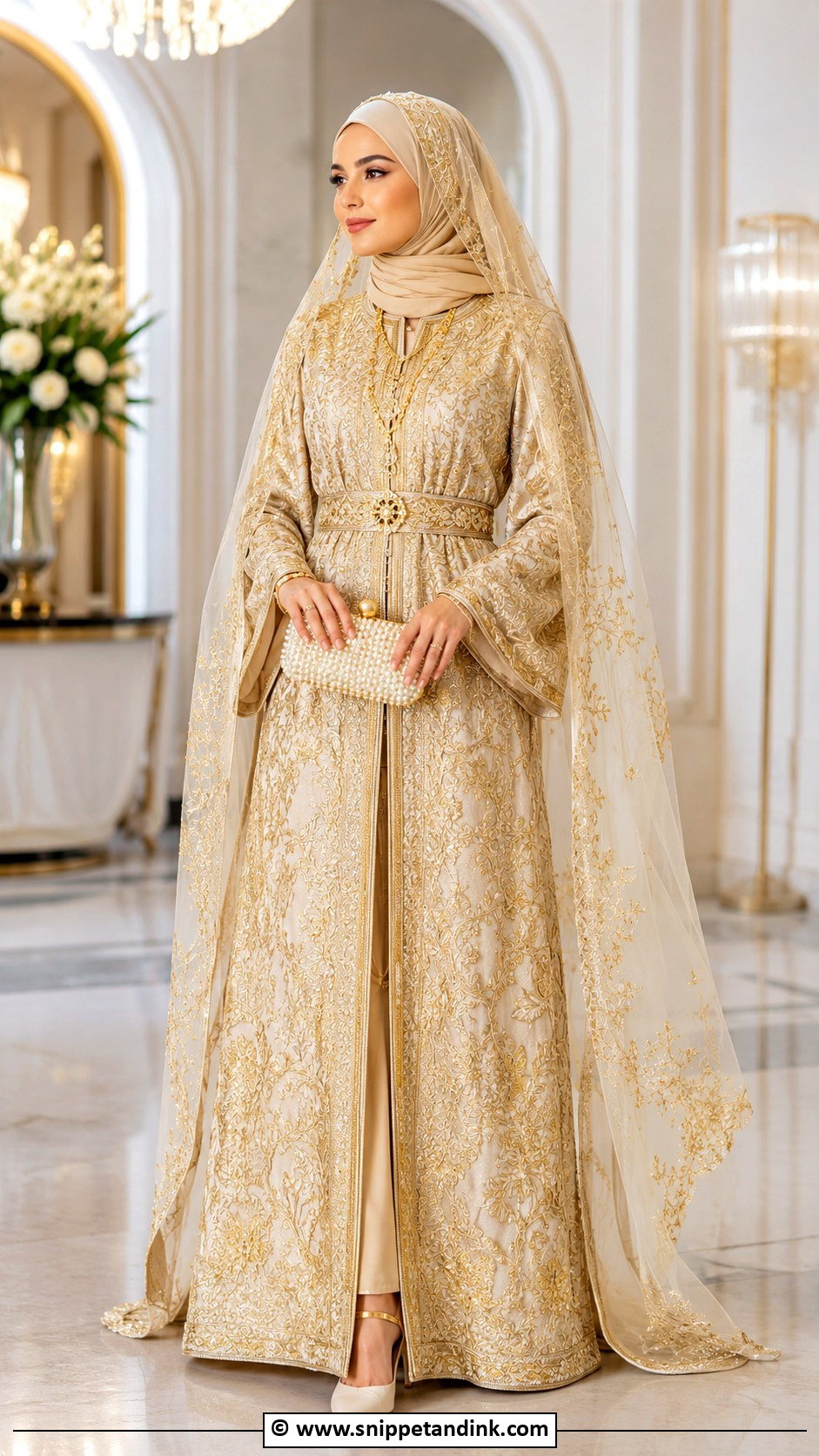
Gold shines at evening celebrations, and the shade decides whether it looks elegant or overwhelming. Soft champagne gold, antique gold and pale metallic gold are the most flattering. A long-sleeve gown, kaftan or embroidered lehenga with a matching hijab and a simple veil is enough, since gold already carries a lot of presence. Keep jewelry refined; cream heels, a pearl clutch or delicate bangles finish it. Under warm reception lighting it glows without looking brassy.
16. Simple Nikah Muslim Wedding Dress
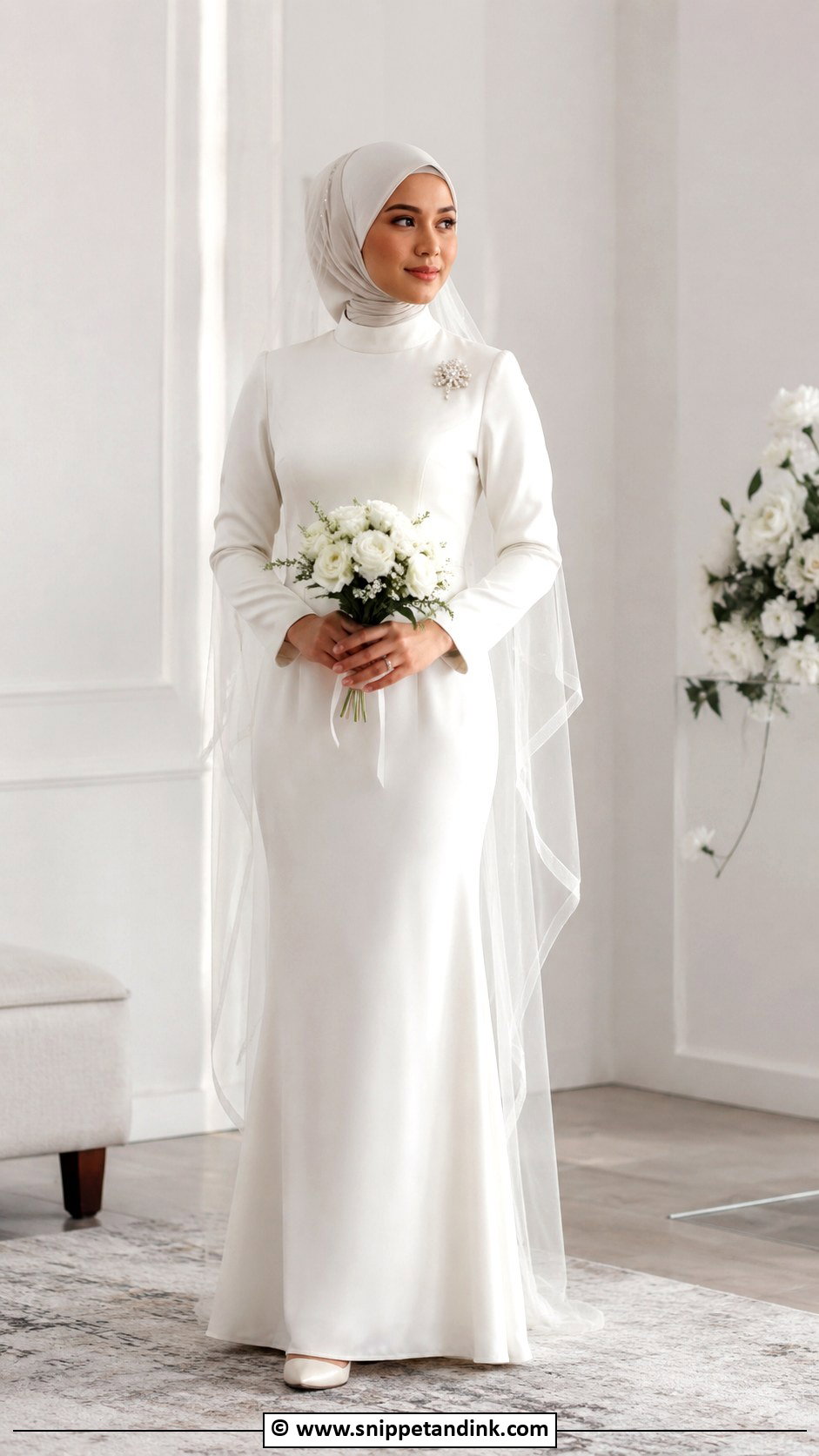
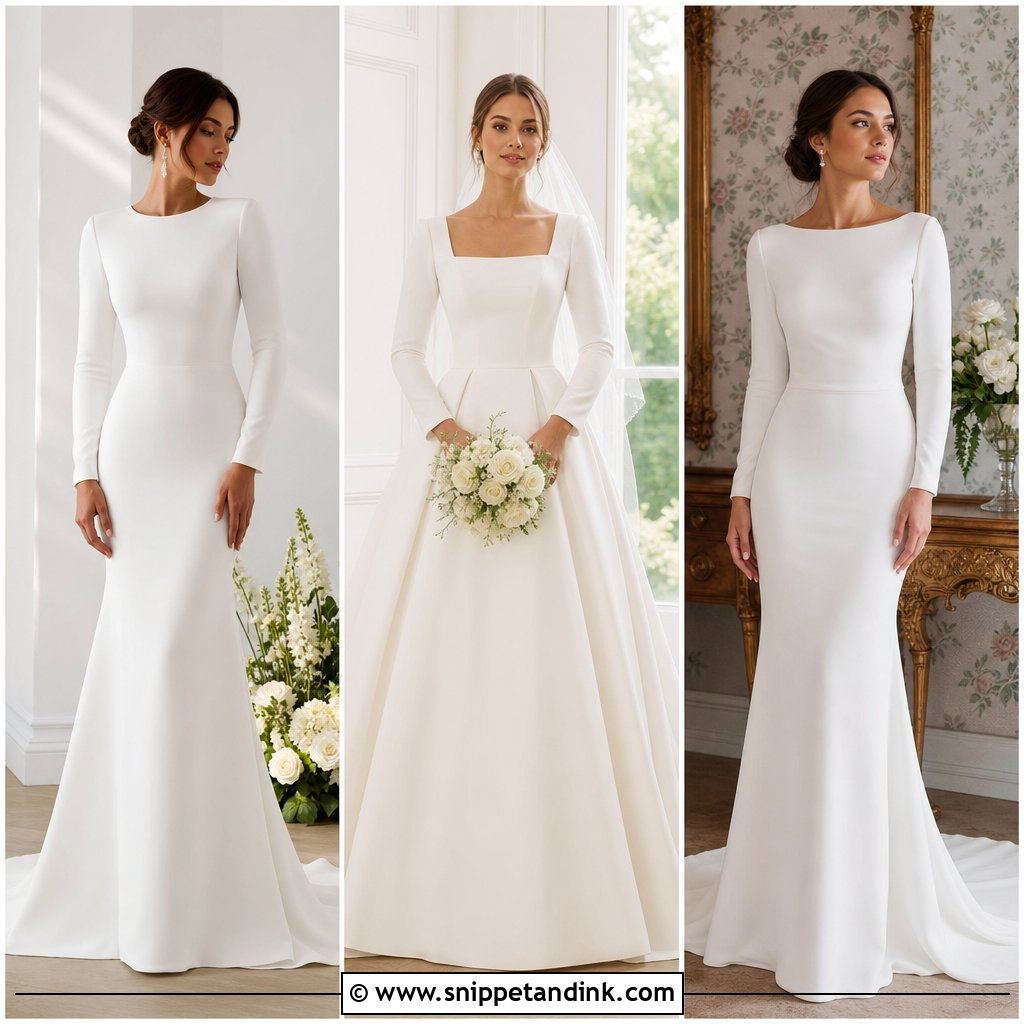
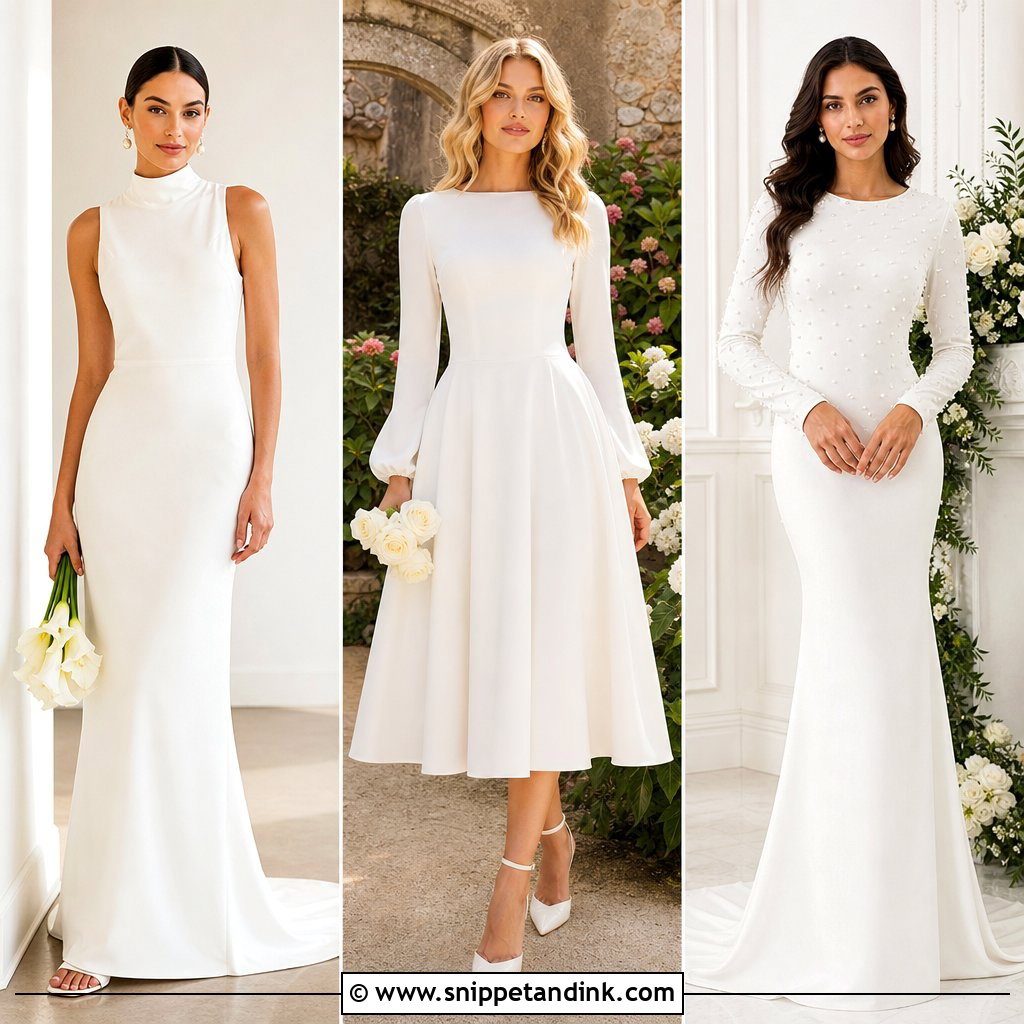
A simple nikah dress suits a mosque ceremony, home gathering or small family celebration. Choose a clean long-sleeve dress in white, ivory, cream or soft beige; crepe, chiffon and satin look polished without decoration. A matching hijab, lightweight veil and simple shoes complete it, and a pearl brooch, delicate bracelet or small bouquet adds a bridal touch. I like this outfit most when the ceremony itself is meant to be the focus, because nothing in the dress competes with it.
17. Luxury Muslim Wedding Dress
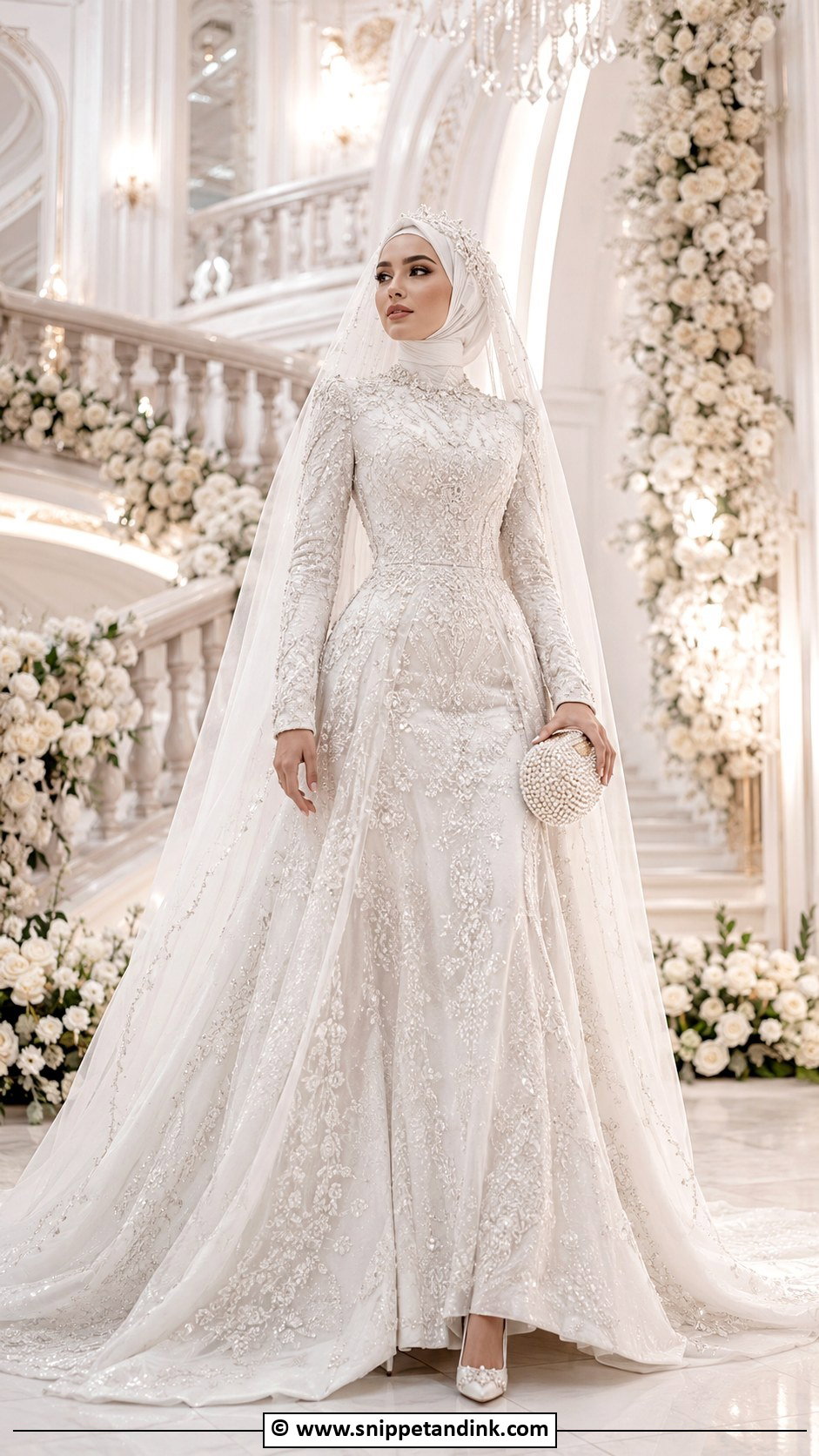
Luxury in a modest dress shows in the fabric and handwork, not in how much is on it. Hand embroidery, pearl beading, layered tulle, structured satin or fine lace should look expensive without being busy. A high-neck gown with long sleeves and a flowing skirt gives presence. When I assess a high-end gown, I turn the sleeve inside out: clean finishing and real lining are what separate quality from a good photograph. A custom hijab, cathedral veil and careful jewelry suit grand venues and formal receptions.
18. Modern Muslim Wedding Dress
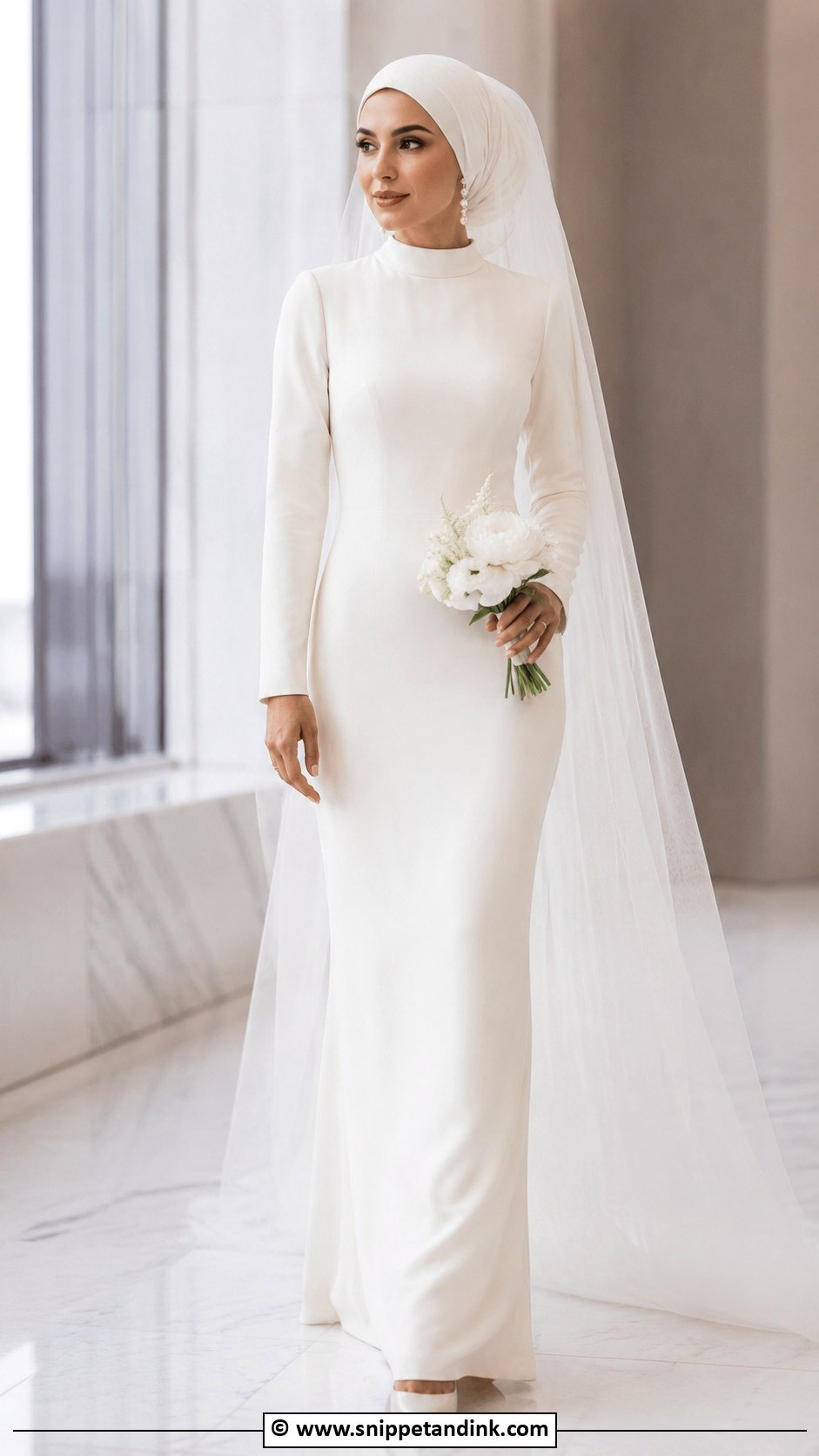
Modern modest gowns rely on structure: crepe, satin sleeves, smooth high necks and small architectural details such as a folded collar or a sculpted cuff. A bodice fitted but not tight, over an A-line or column skirt, looks sleek and stays modest. Pair it with a neatly wrapped hijab, a long plain veil and sculptural pearl or crystal pieces. White, ivory and champagne keep it crisp. Crepe forgives very little in fit, so budget for tailoring; it suits city weddings and contemporary venues.
19. Turkish Muslim Wedding Dress
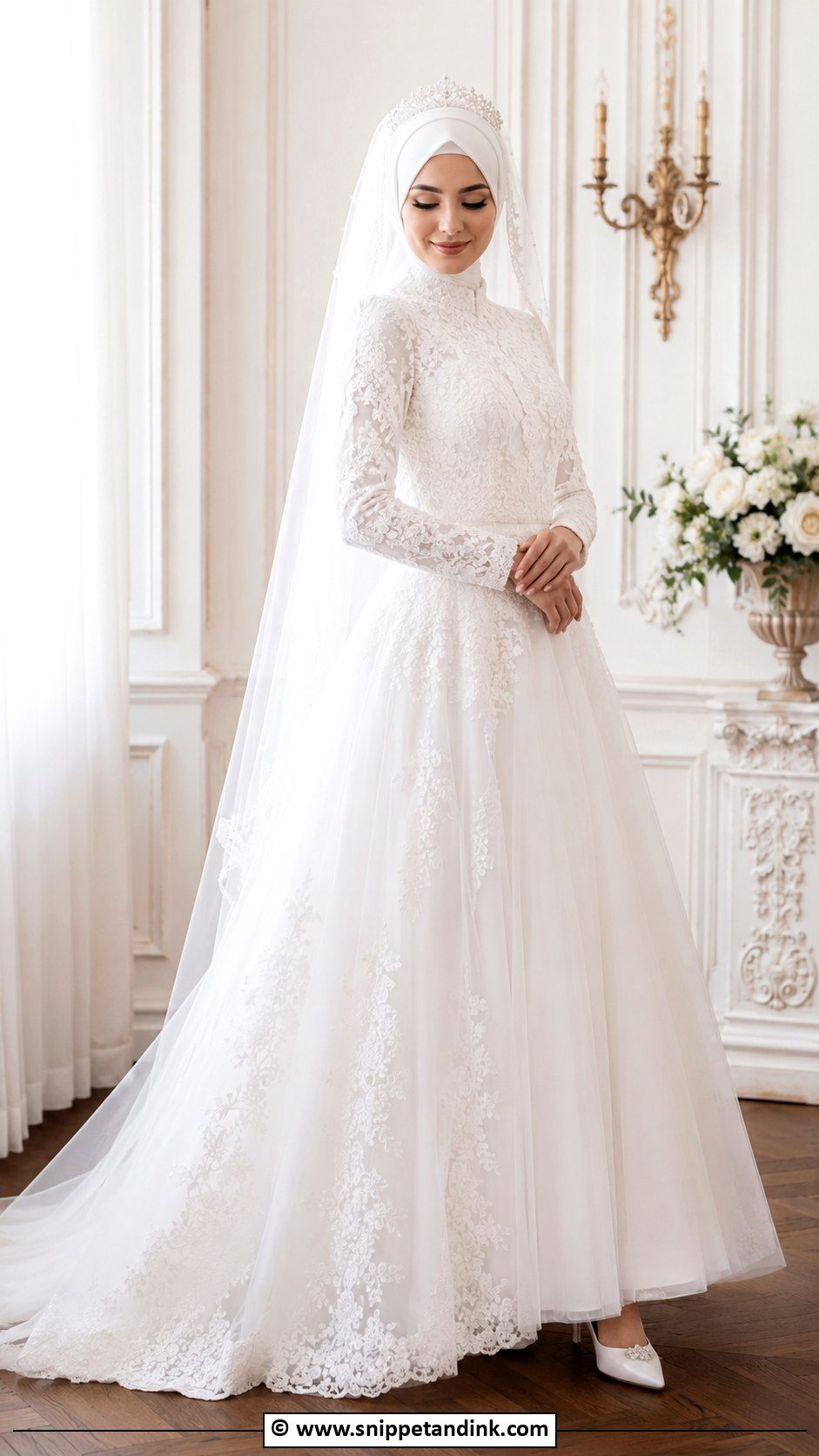
Turkish-inspired bridal looks lean romantic: high necks, long lace sleeves, soft skirts and delicate veils, without heavy volume, which keeps them comfortable for long days. Choose a lace or satin gown in white or ivory with a smooth hijab and a veil that flows from the crown. A subtle tiara, pearl pins or crystal headpiece completes the look. To stop the tiara shifting, I secure it through the underscarf rather than the outer hijab. It’s formal enough for a reception and soft enough for a nikah.

20. Arab Muslim Wedding Dress
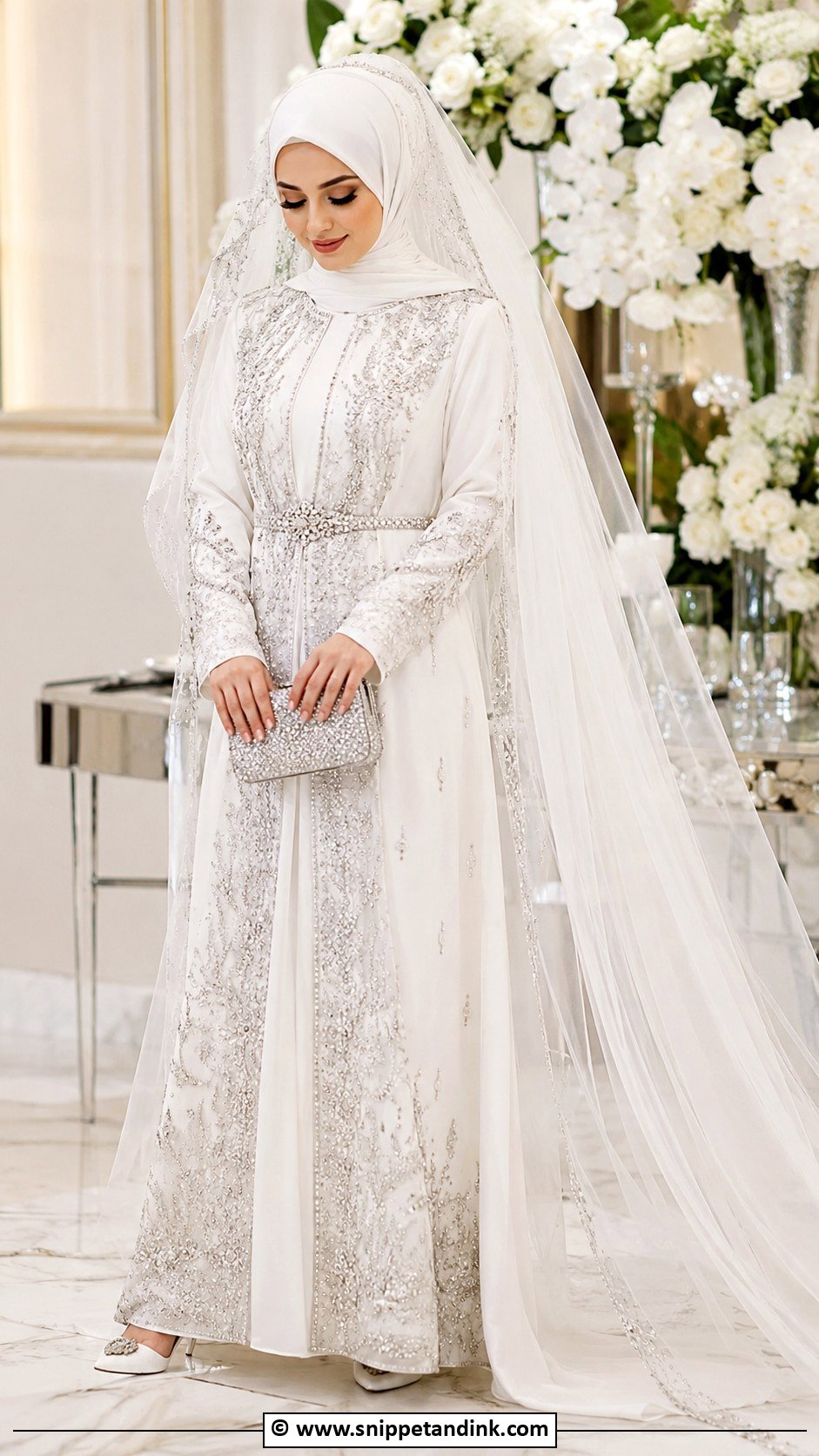
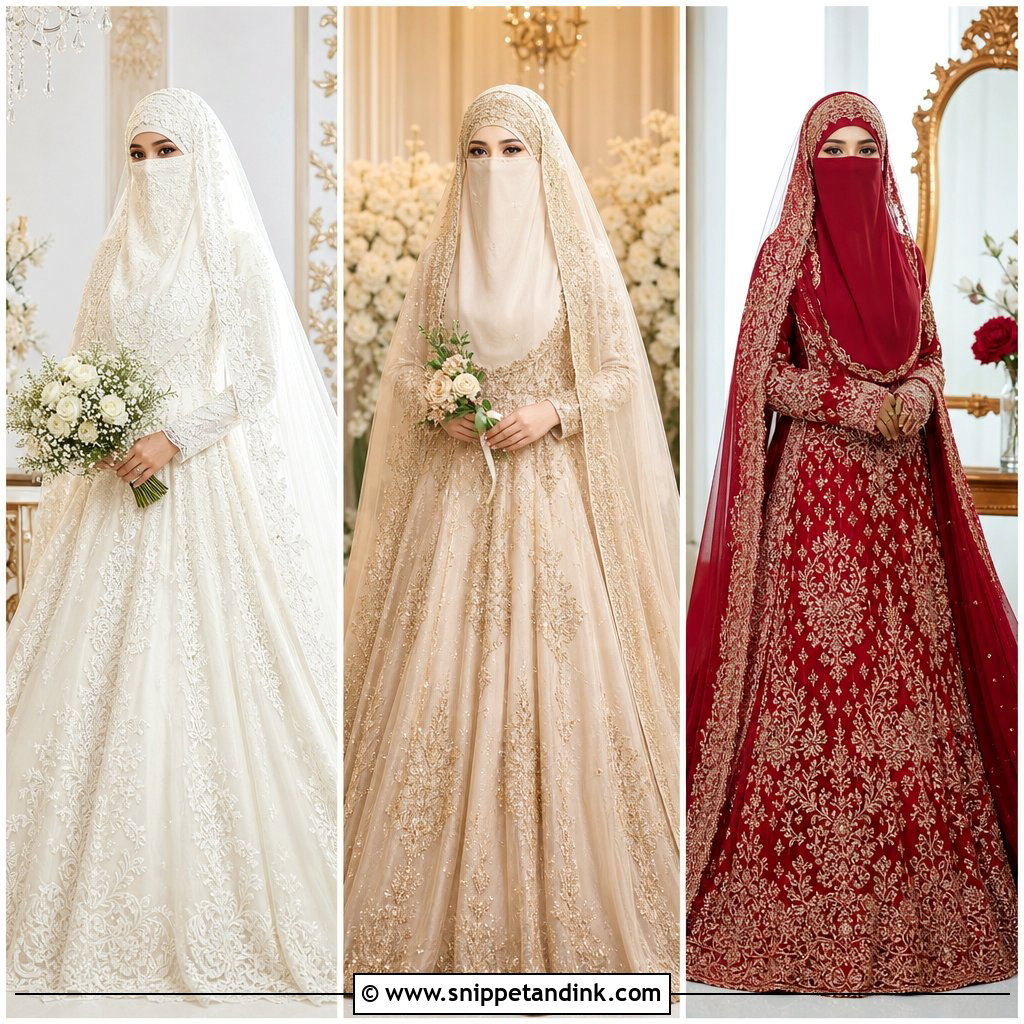
Arab bridal dresses can be glamorous and fully modest at once. Many brides choose an embellished abaya gown, a beaded kaftan or a long-sleeve dress with a dramatic veil. White, ivory, silver, champagne and gold are popular because they look ceremonial. The silhouette can be loose or softly structured, depending on comfort. A matching hijab keeps it cohesive, and a jeweled belt or ornate headpiece adds celebration detail. Heavy belts and headpieces add up, so I’d try the full set together for an hour before the day.
21. Lace Sleeve Muslim Wedding Dress
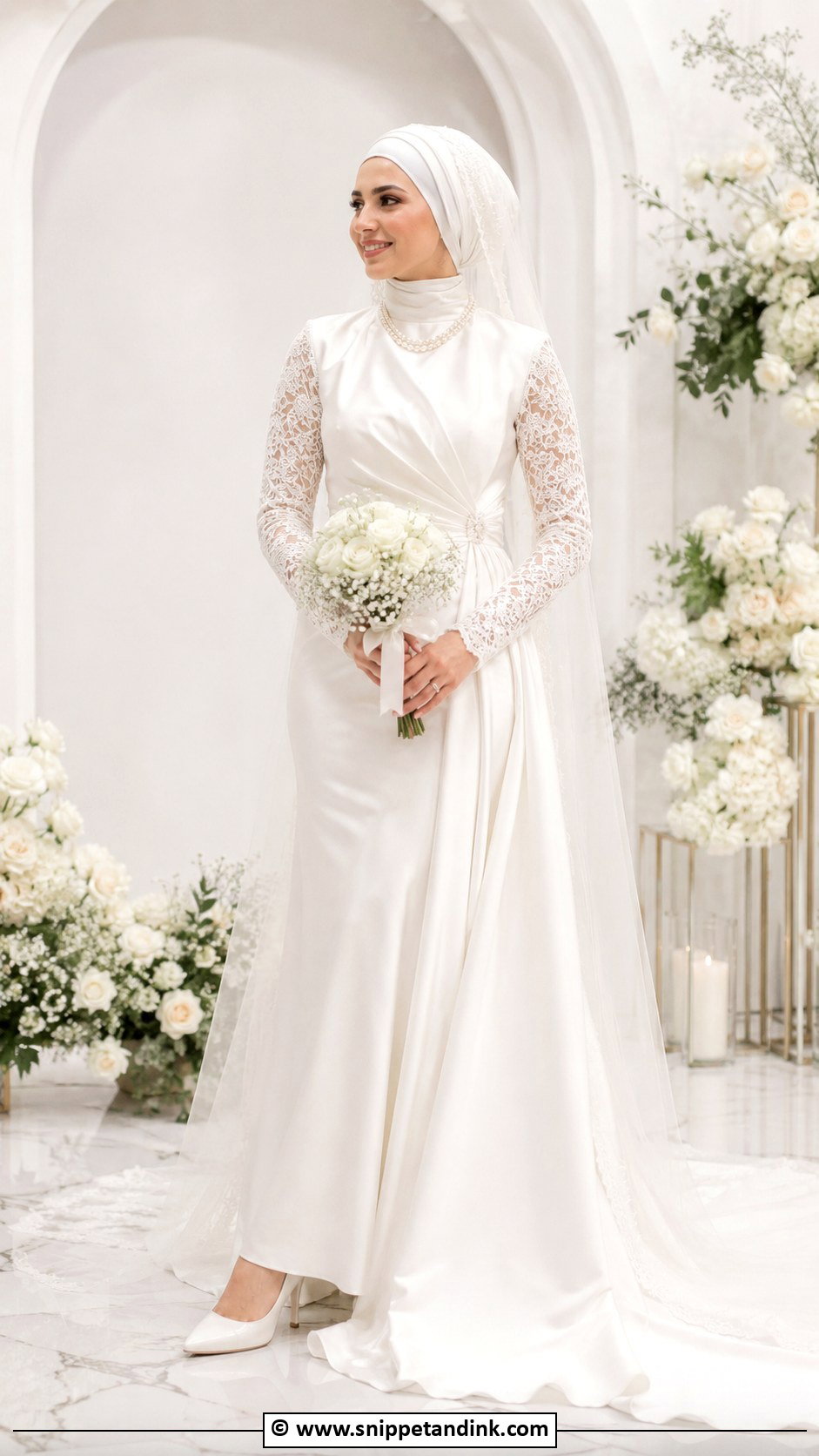
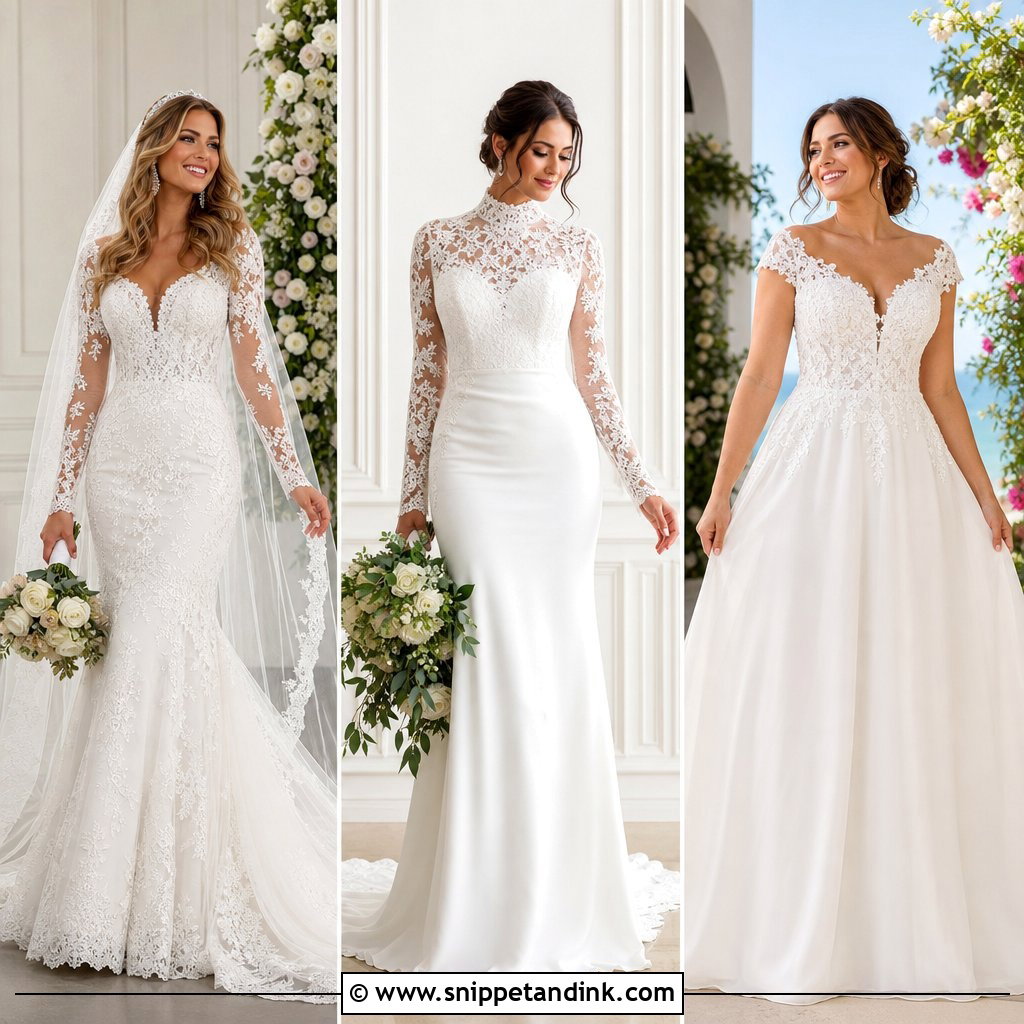
Lace sleeves add detail without covering the whole gown in embellishment, and they keep the arms modest. Fully lined sleeves give complete coverage; unlined ones need a fitted modest inner top. The rest of the dress can be satin, crepe, chiffon or tulle. Pair it with a matching hijab, soft veil and pearl accessories. I like the lace pattern repeated lightly at the neckline or hem so the sleeves don’t look borrowed from another dress.
22. Pearl Muslim Wedding Dress
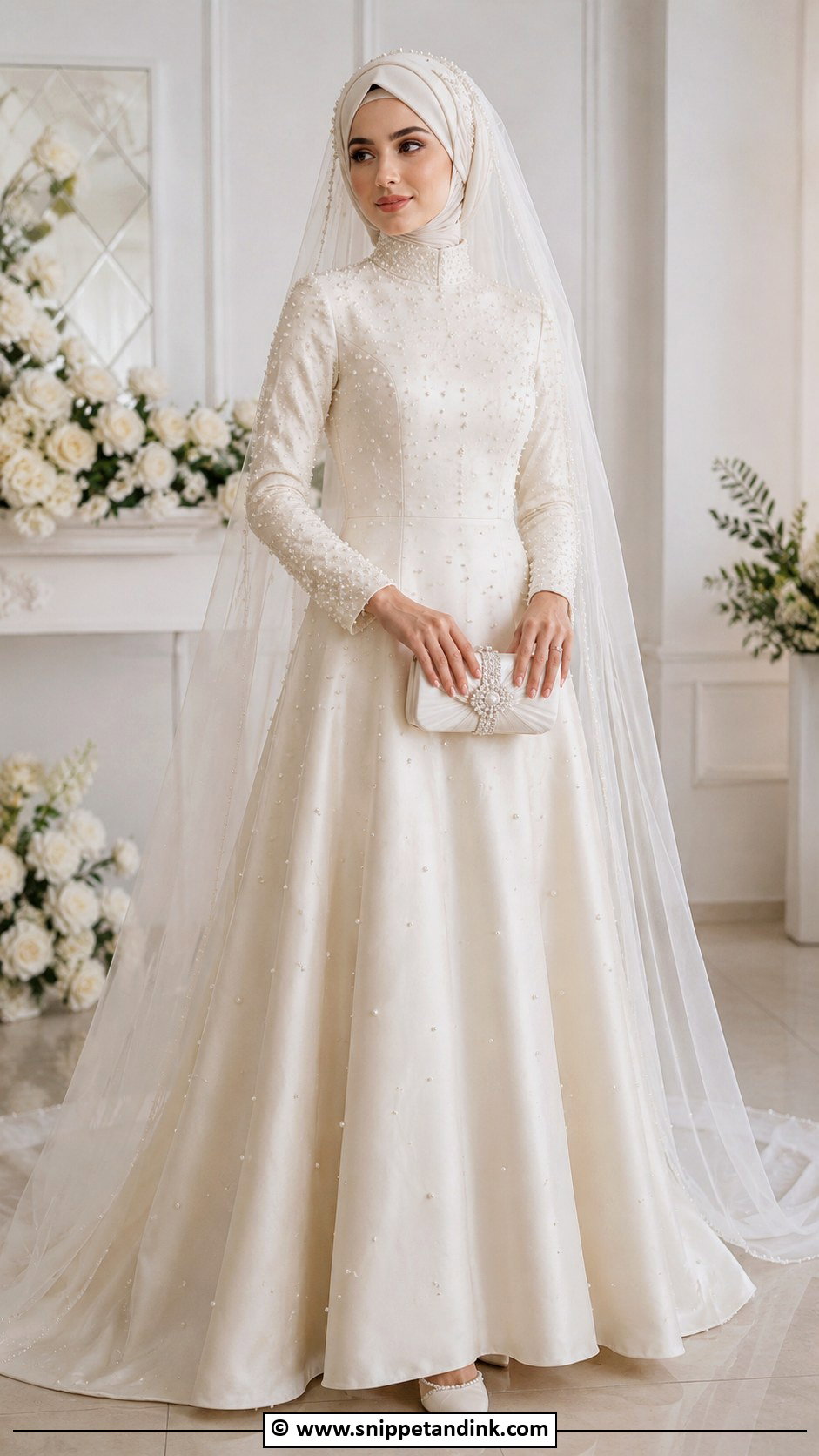
Pearls can be scattered across the bodice, placed along the sleeves or added around the veil and hijab. On a white or ivory gown with long sleeves and a high neck, they show up clearly without heavy sparkle. Pearl hijab pins, simple heels and a satin clutch keep it cohesive. Check how the pearls are attached: sewn individually, they survive hugs and car doors; glued, they tend to pop off by the reception. Indoor ceremonies and bright photography suit this detail.
23. Embroidered Muslim Wedding Dress
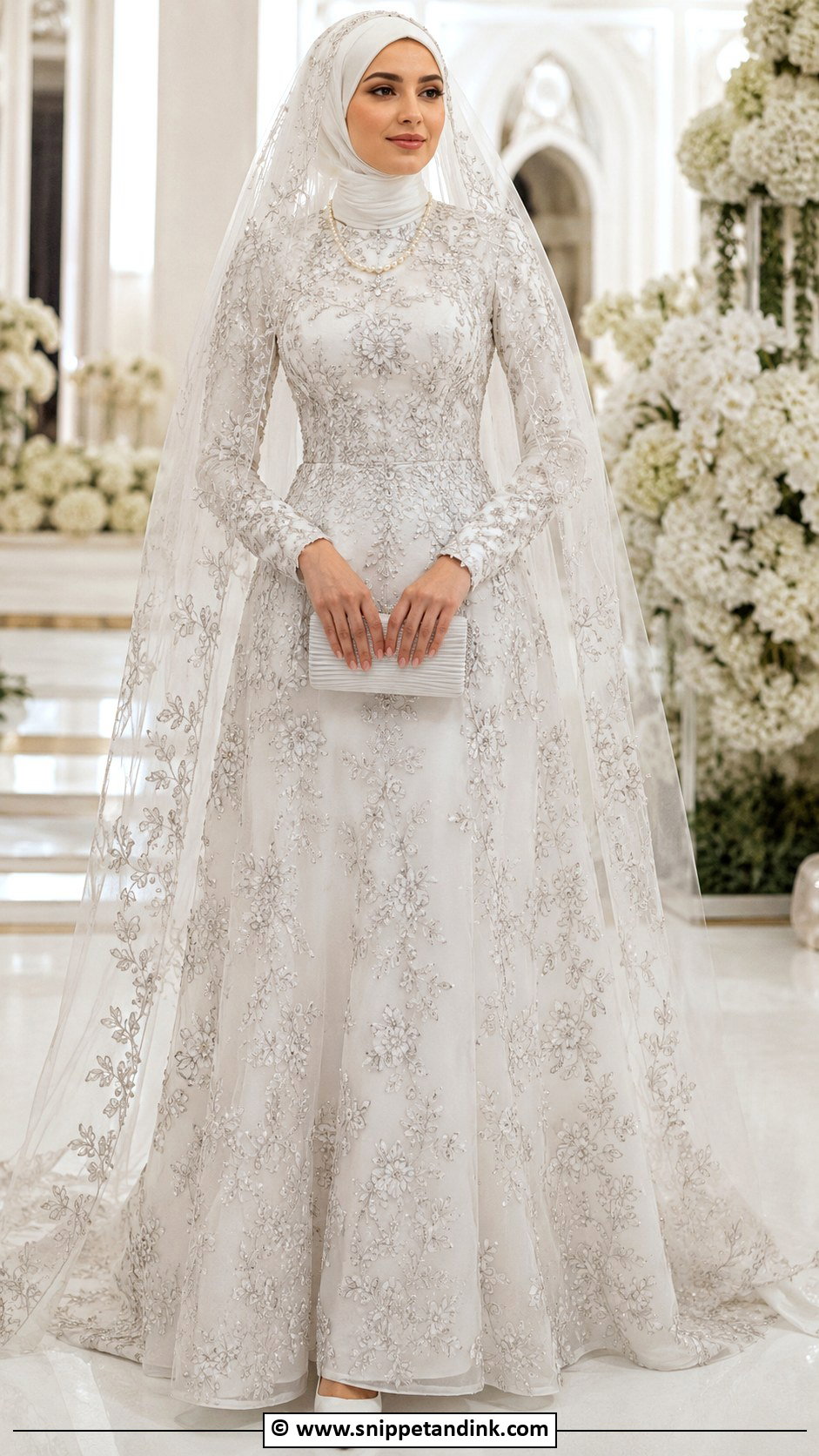
Embroidery can be floral, geometric, traditional or modern, depending on your culture and taste. A long-sleeve gown, lehenga or abaya worked across the bodice, sleeves and hem looks rich. Ivory thread gives a soft effect, silver a cool one, gold a warmer traditional feel. A plain hijab balances the detail, and an embroidered veil makes it more formal. If the dress is heavily worked, I keep the shoes and jewelry simple so the handwork stays the focus.
24. Tulle Muslim Wedding Dress
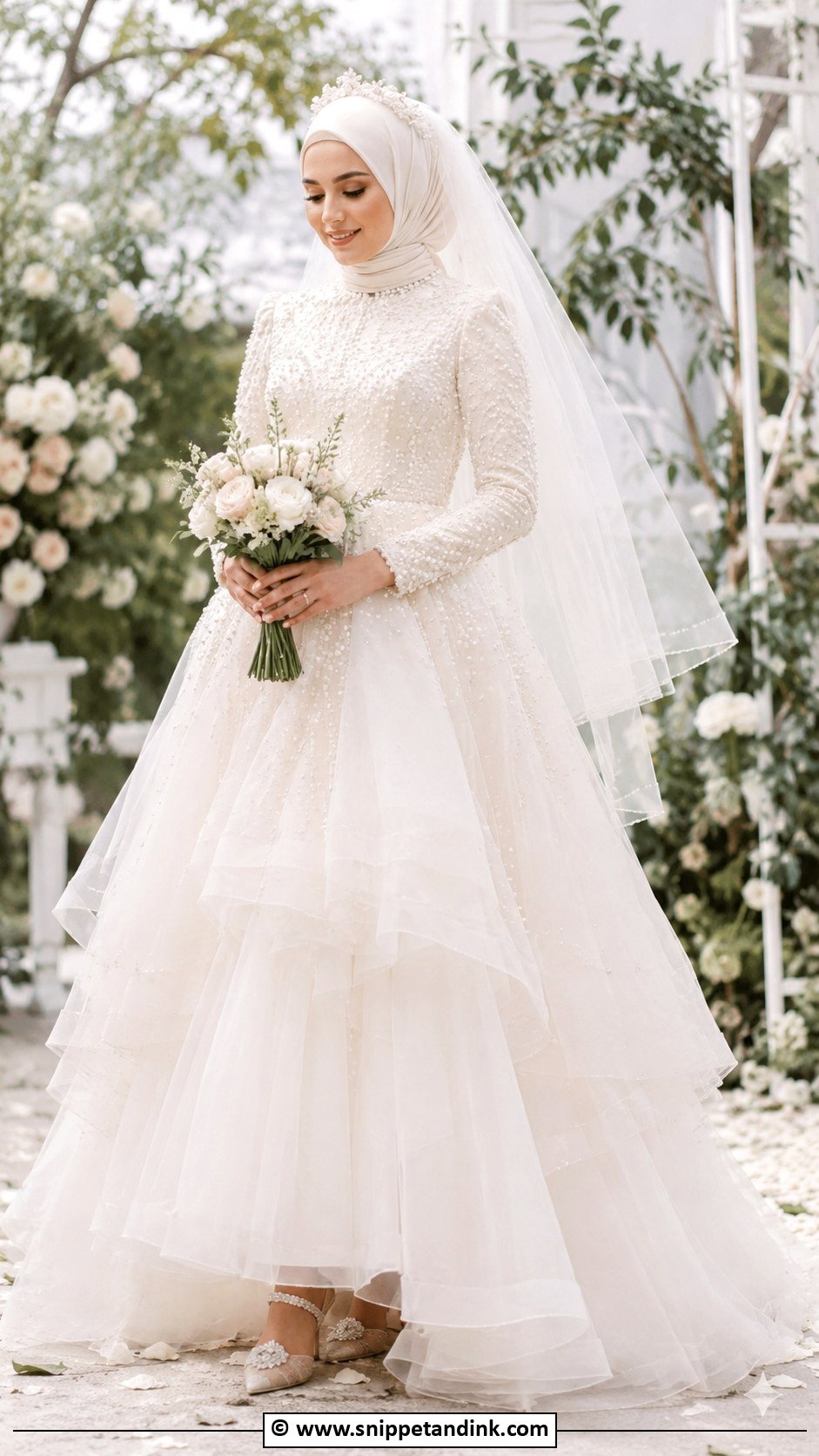
Tulle adds volume without stiffness, so it’s an easy fabric to move in. Choose a lined long-sleeve gown with a high neck and a layered tulle skirt; embroidery, pearls or lace appliqués add detail while keeping it airy. A smooth hijab under a sheer veil keeps it polished. Soft ivory, white, blush and champagne all suit tulle. The underlayers flatten in a car or under a seated bride, so I give the skirt a shake and a quick steam before the entrance.


25. Chiffon Muslim Wedding Dress
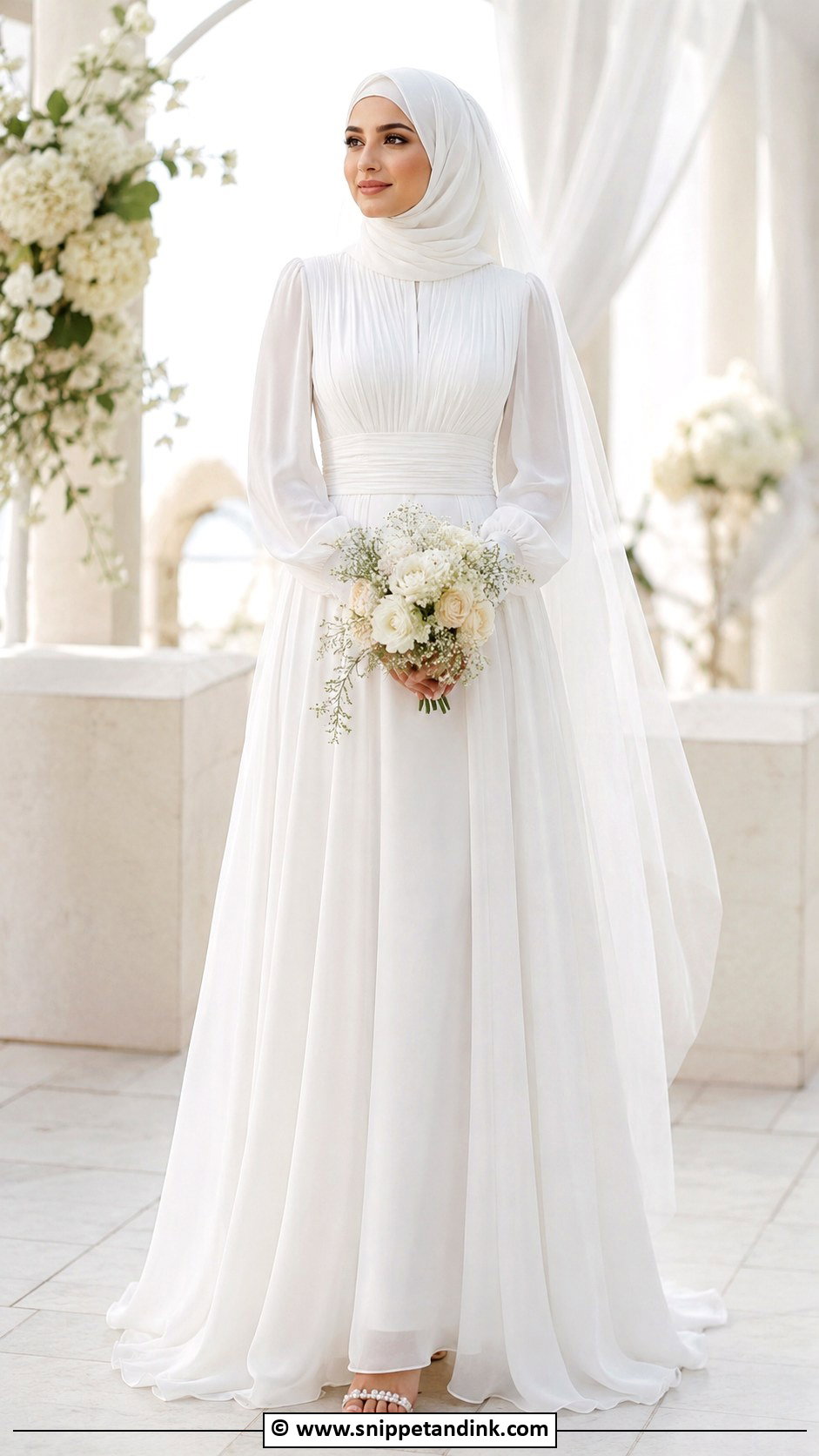
Chiffon drapes softly, which suits A-line gowns, layered dresses, kaftans and empire waists. Full sleeves, a lined bodice and a high neck give comfortable coverage. A chiffon hijab in the same color and a simple veil complete it. It’s the fabric I suggest most for warm weather because it breathes. One caution: chiffon frays and snags easily, so keep bracelets with sharp prongs off the sleeves. Pearl sandals, closed-toe heels or soft metallic shoes finish the outfit.
26. Velvet Muslim Wedding Dress
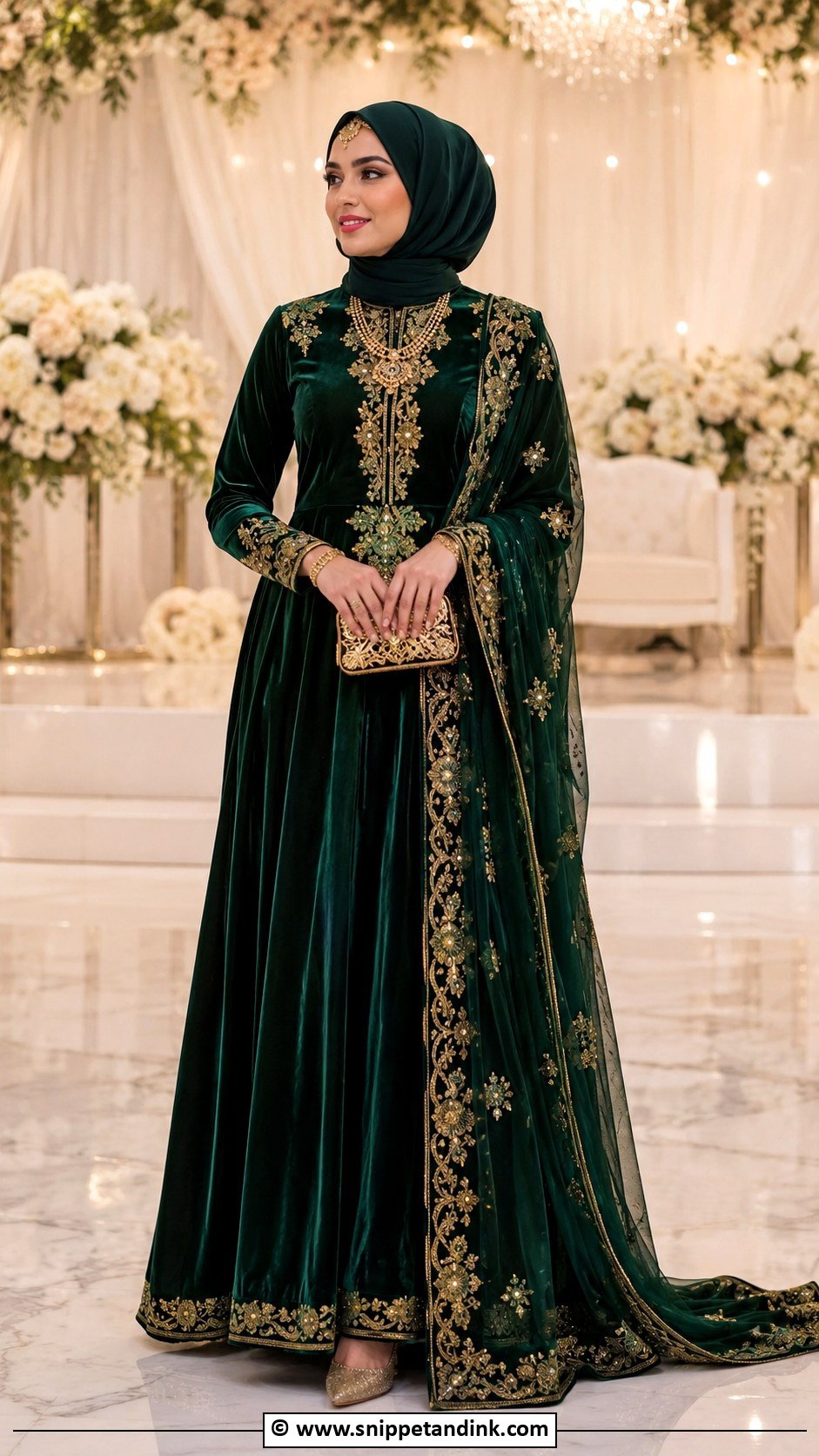
Velvet is rich and warm, for cooler seasons and evening celebrations. Deep red, emerald, navy, burgundy and ivory velvet all look regal styled modestly. A long-sleeve gown, kaftan or lehenga with gold embroidery gives a traditional bridal effect. Velvet is heavy and has a natural sheen, so the cut should be comfortable rather than tight. A matching hijab, embroidered dupatta and gold jewelry complete it, with closed-toe heels and a structured clutch. I’d avoid it entirely for an outdoor summer date.
27. Plus Size Muslim Wedding Dress
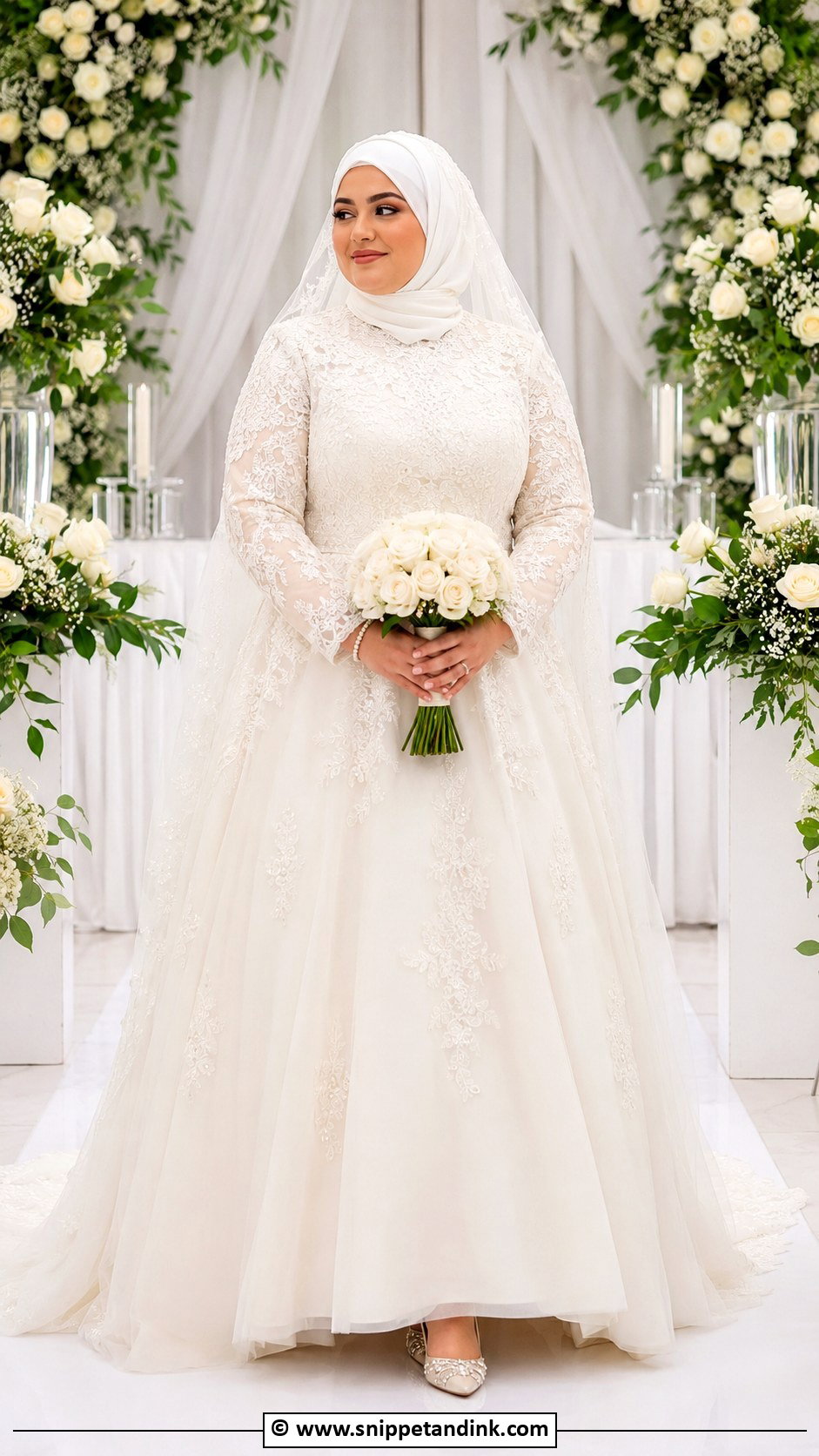
A plus size bride deserves a dress that supports her and moves with her. A-line gowns, flowing kaftans, empire waists and structured abaya gowns all give movement without clinging. Look for quality lining, full sleeves and a neckline that works with the hijab. Satin, crepe, chiffon and lace all flatter when tailored well; overly stiff fabrics can limit movement. I put the embroidery where you want attention, such as the cuffs, neckline or hem, and fit the upper arm carefully, since that’s where long sleeves most often feel tight.
28. Petite Muslim Wedding Dress
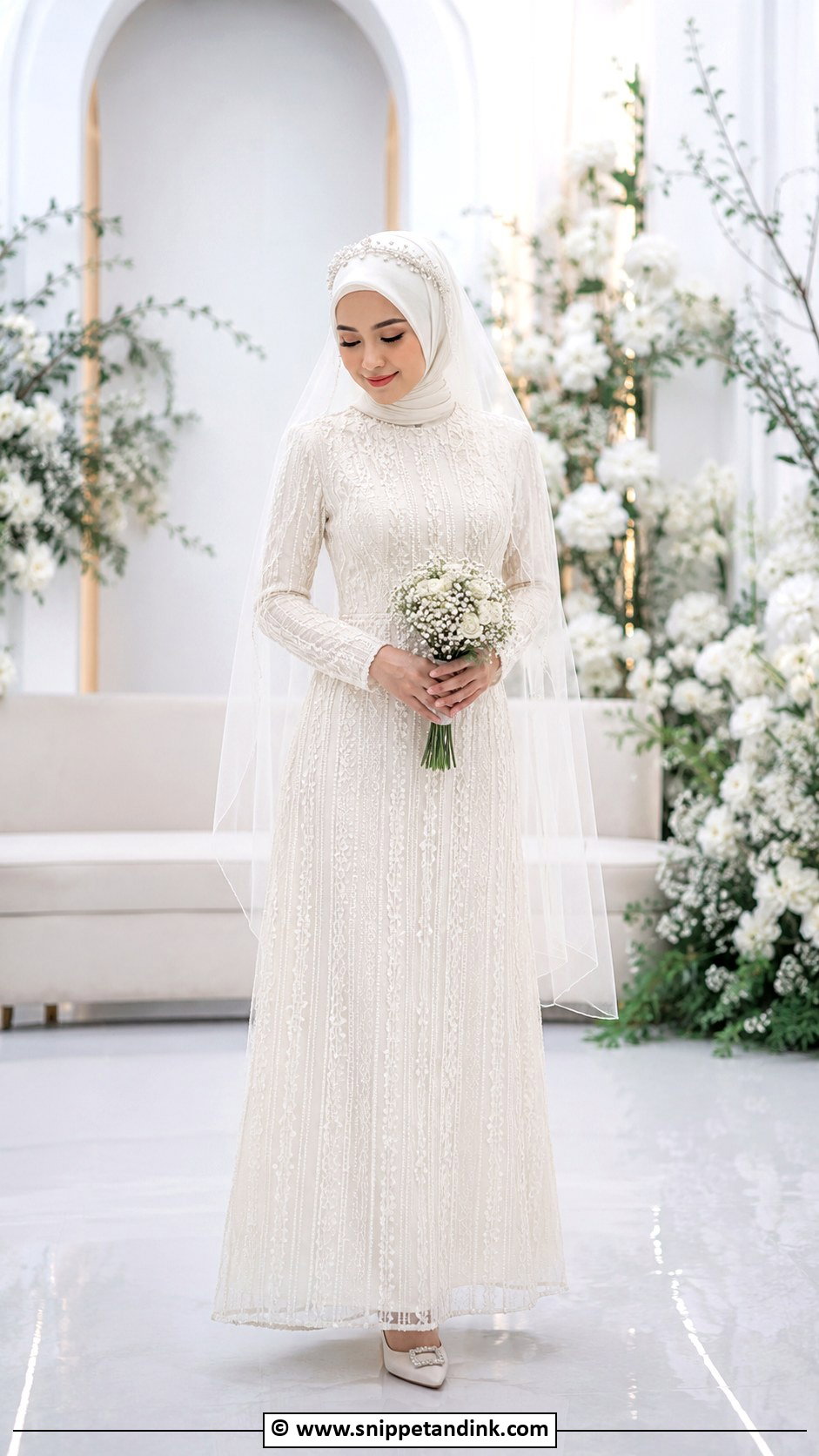
For a petite bride, the goal is length without being swallowed by the dress. A-line gowns, slim columns and lightly flared skirts usually beat heavy ball gowns. Vertical embroidery, a clean high neck and sleeves tailored exactly to the wrist all help. A hijab and veil in similar tones create one long line from head to hem. Bulky layers around the shoulders or waist shorten the frame. Pointed heels, a delicate headpiece and a small bouquet keep everything in proportion.
29. Winter Muslim Wedding Dress
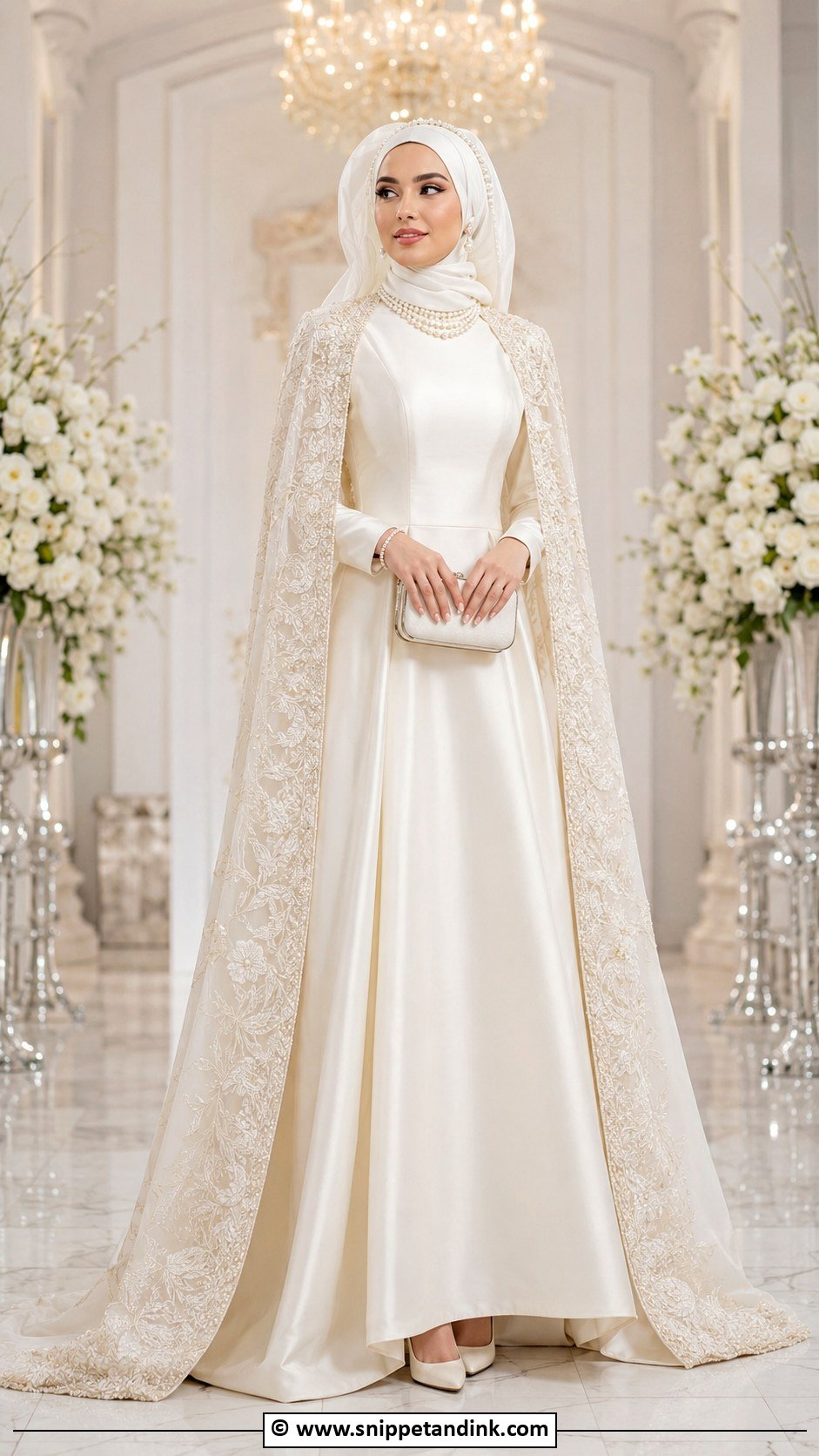
Winter weddings let you use fabrics that would be too hot in summer: satin, velvet, brocade, mikado and heavier lace. Choose a long-sleeve gown, abaya, or lehenga with enough structure to feel warm and formal. A lined hijab, embroidered shawl or matching cape adds coverage for the walk between car and venue. Ivory, champagne, deep red, emerald and gold all suit the season. Closed-toe heels, pearl accessories and a structured clutch complete it. Ask the venue about heating, because heavy fabric in a warm hall can be uncomfortable.
30. Summer Muslim Wedding Dress
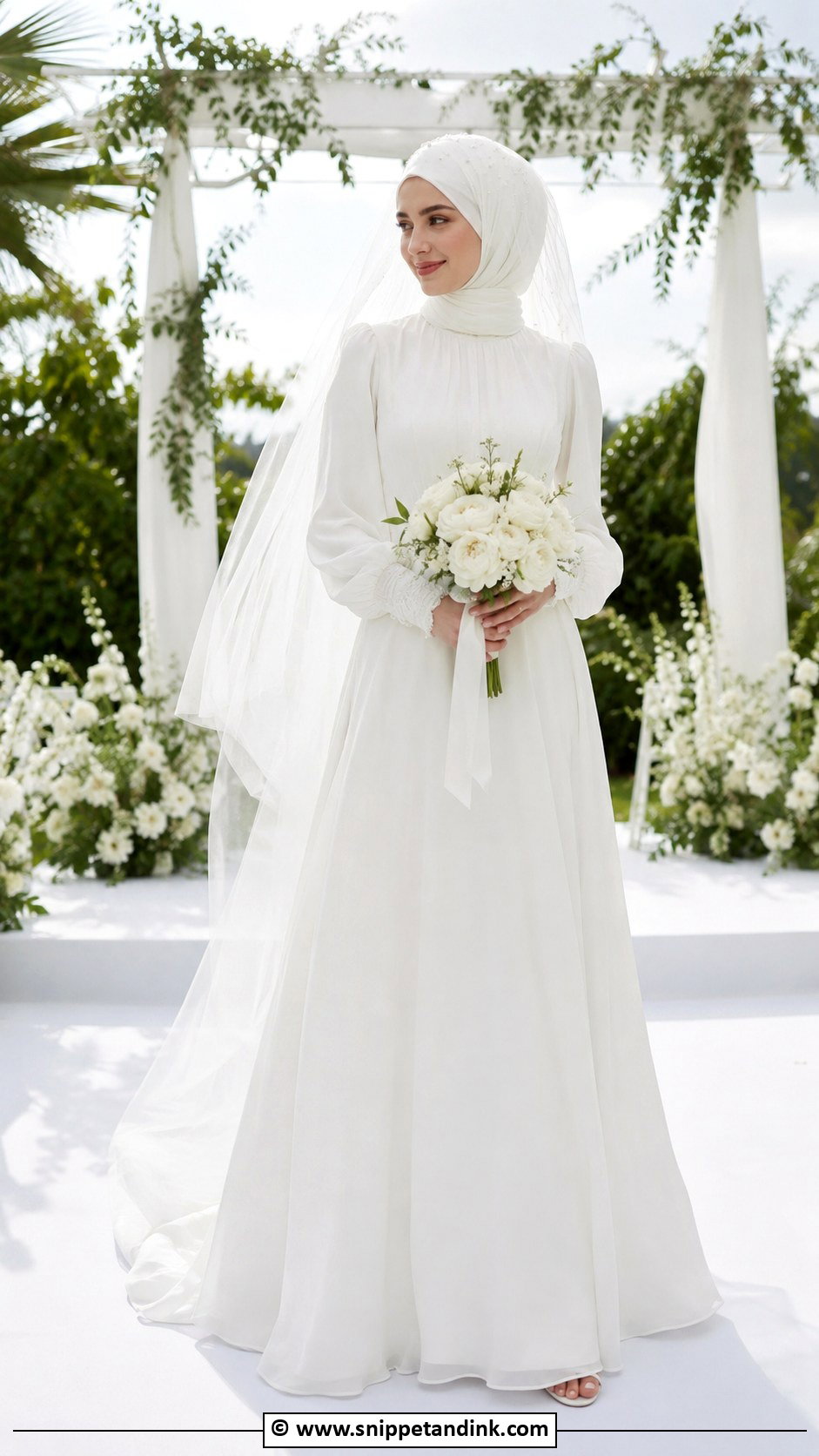
A summer dress has to breathe. Chiffon, lightweight crepe, soft tulle and organza beat velvet or thick satin. Choose a long-sleeve gown with breathable lining, a high neck and a flowing skirt. A chiffon or silk-blend hijab is far more comfortable outdoors than satin. White, ivory, blush, pale gold and soft blue all look fresh. Simple heels, pearl pins and a delicate veil keep it bridal. For outdoor portraits in heat, I schedule them for late afternoon rather than midday so you’re not wilting under the layers.
Caring for an Embroidered Dress After the Wedding
Most damage to a wedding outfit happens in the weeks after the wedding, when it’s left in a bag on the back of a door. Foundation on the hijab edge and inside the collar, food at the cuffs and dust at the hem all set over time.
- Get it cleaned within a few weeks by a cleaner who handles bridal and embellished pieces, and point out every stain, including makeup, which is oil-based.
- Don’t try to scrub embroidery or beading yourself; rubbing frays thread and loosens stones.
- Store heavily embroidered pieces flat in a box lined with acid-free tissue, with tissue folded into every crease. Hanging lets the weight of the beadwork stretch the shoulders.
- Keep velvet and lighter gowns hanging on a padded hanger in a breathable cotton garment bag, never plastic, which traps moisture.
- Check on it once a year and refold along different lines so creases don’t set permanently.
If you hope to pass the dress or dupatta down to a sister or daughter, I’d keep the matching hijab with it. Finding the exact shade again years later is almost impossible.
Seeing the Whole Outfit Before the Dress Is Ordered
The dress decision gets easier when you treat it as one complete outfit. Think about the ceremony setting, season, fabric, coverage, hijab style, veil, shoes and jewelry together. A simple nikah dress may suit an intimate gathering, while a ball gown, lehenga, kaftan or embroidered abaya fits a larger celebration. White satin, red embroidery, pearl tulle or modern crepe: whichever you choose should be modest in the way you need, comfortable and true to your own taste.
You'll Like These Ideas:





Leave a Reply