
Most of the modest brides I dress arrive with two lists: what the gown has to cover, and what they simply love. The work is getting both into one dress. Below are 20 complete looks with sleeves and higher necklines, from satin ball gowns to plain crepe columns and light chiffon for outdoor receptions, each with my notes on veils, shoes and the alterations I’d plan for. One thing I tell everyone early: modest and temple-ready are not always the same thing, so check the current requirements with your own temple before you pay a deposit.
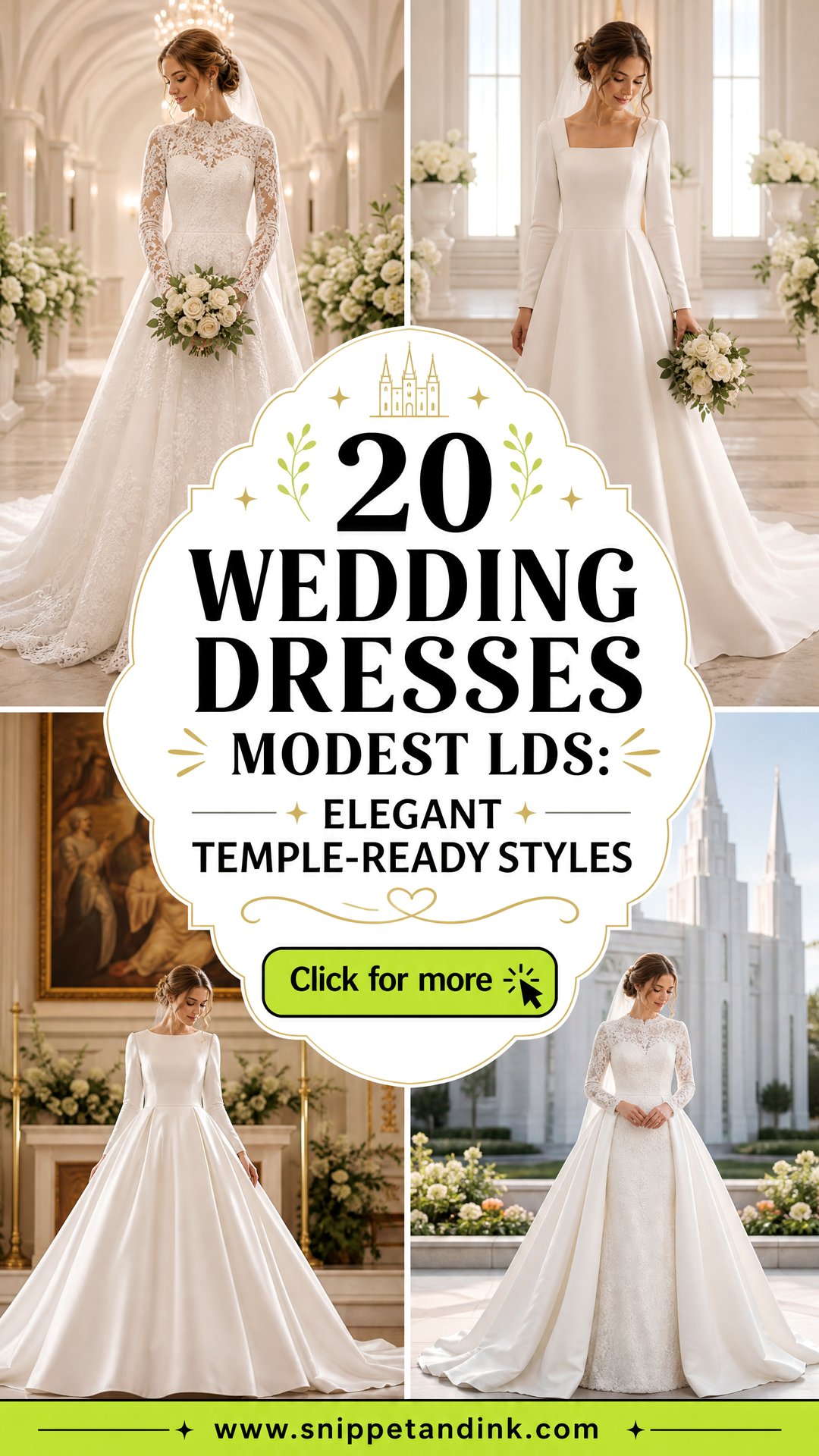
Bring Your Garments to the Very First Appointment
Many of the LDS brides I dress wear temple garments, and the most useful thing you can do is wear them to every appointment, from the first browse to the final fitting. A neckline that looks high on its own can still show a garment edge when you lean forward, and a sleeve that seems long enough may ride up past the garment sleeve once you lift your arms. Sample gowns are also usually clipped at the back to fit, which shifts where a neckline really sits. I’d rather find a gap in the first hour than at the last fitting.
The movements I check in every sample
- Lean forward as if hugging someone shorter than you.
- Raise both arms to shoulder height, then over your head.
- Sit on a low chair and stand again without pulling at the bodice.
- Turn your head over each shoulder if the neckline is high.
- Take a few stairs if the skirt is fitted below the hip.
If something shows, the gown isn’t automatically a no. A skilled bridal seamstress can close most of these gaps, which is covered further down.
1. Modest LDS Satin A-Line Wedding Dress
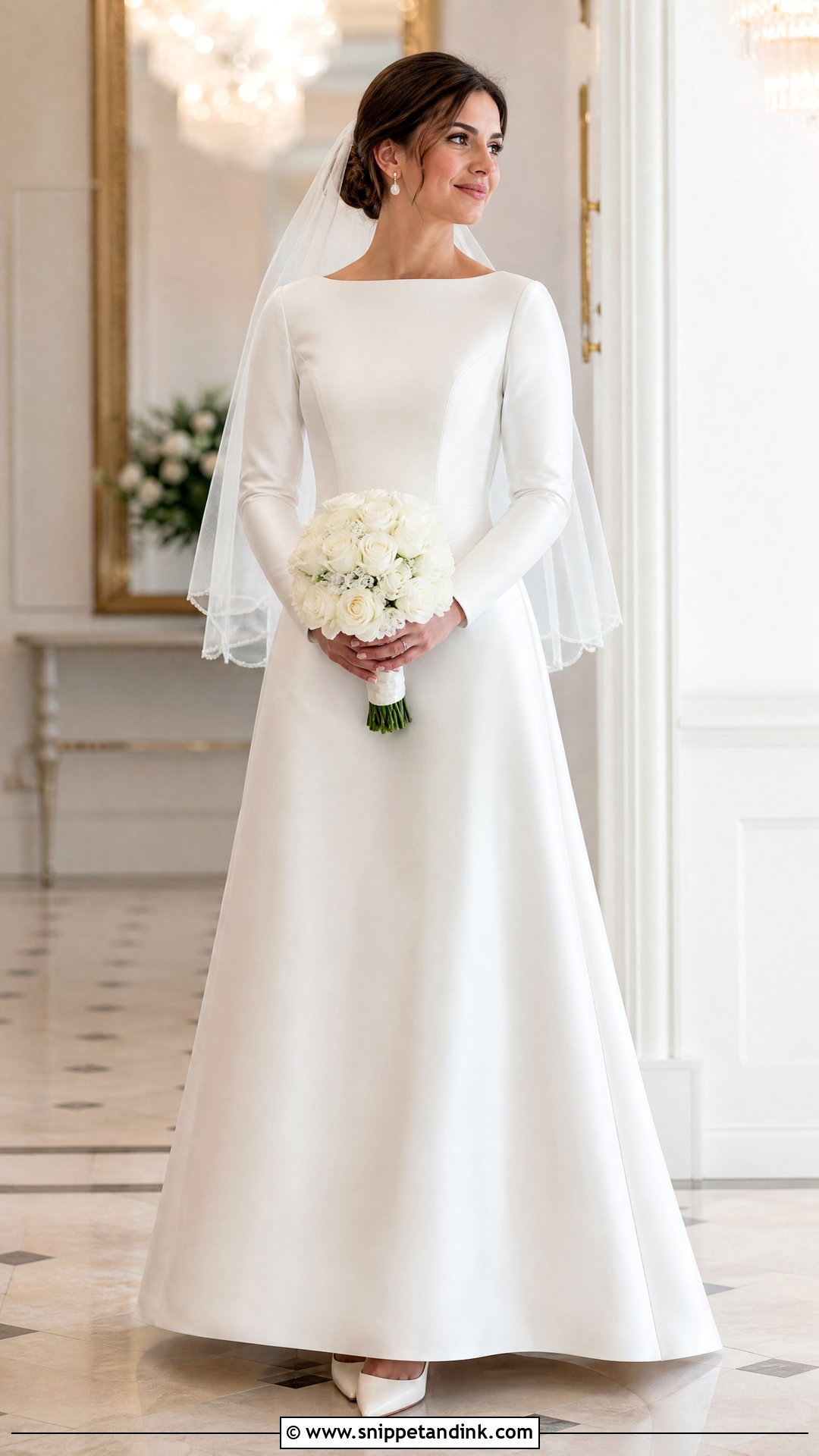
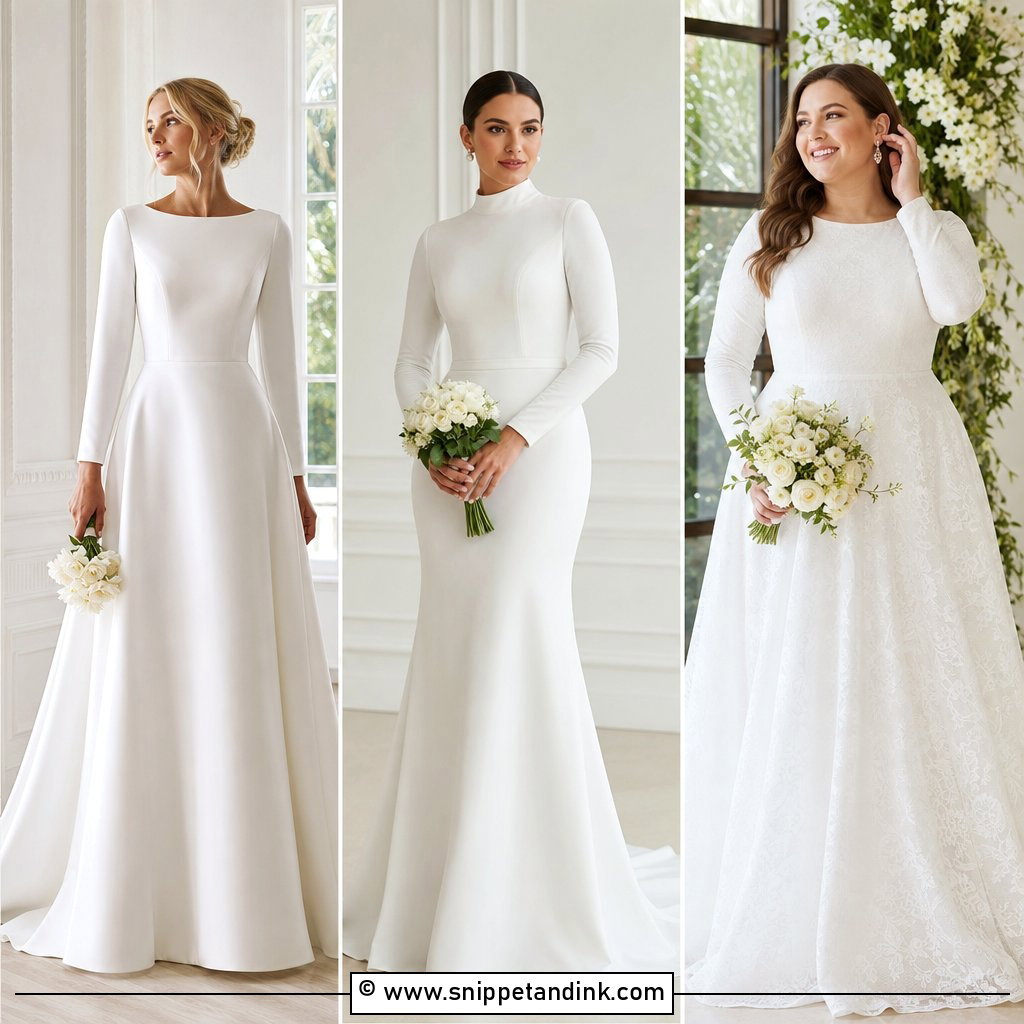
Satin A-lines are where I start most first appointments, because the skirt drops from the natural waist and leaves room to sit, walk and dance without the gown fighting you. Look for a fully lined bodice, a bateau neckline and three-quarter or long sleeves; covered buttons down the back give the plain fabric a little detail. Satin shows every crease from a car ride, so I keep a steamer close for this one. Pearl earrings, a fingertip veil, ivory pointed pumps and a small bouquet of white roses or peonies finish it. If there’s a train, ask for a bustle you can hook up quickly, and check whether it needs to come off for the ceremony.
2. Modest LDS Long Sleeve Lace Wedding Dress
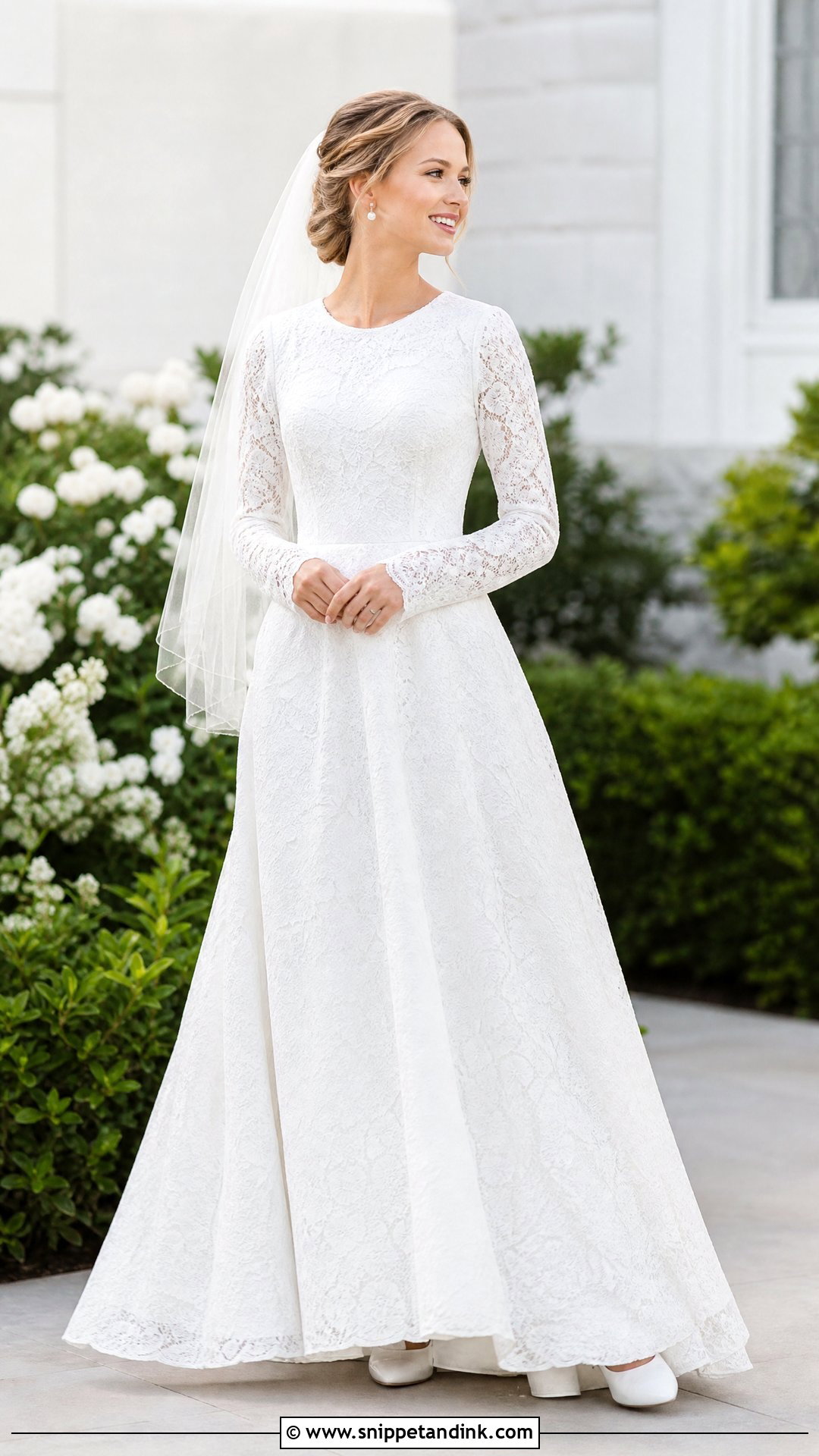
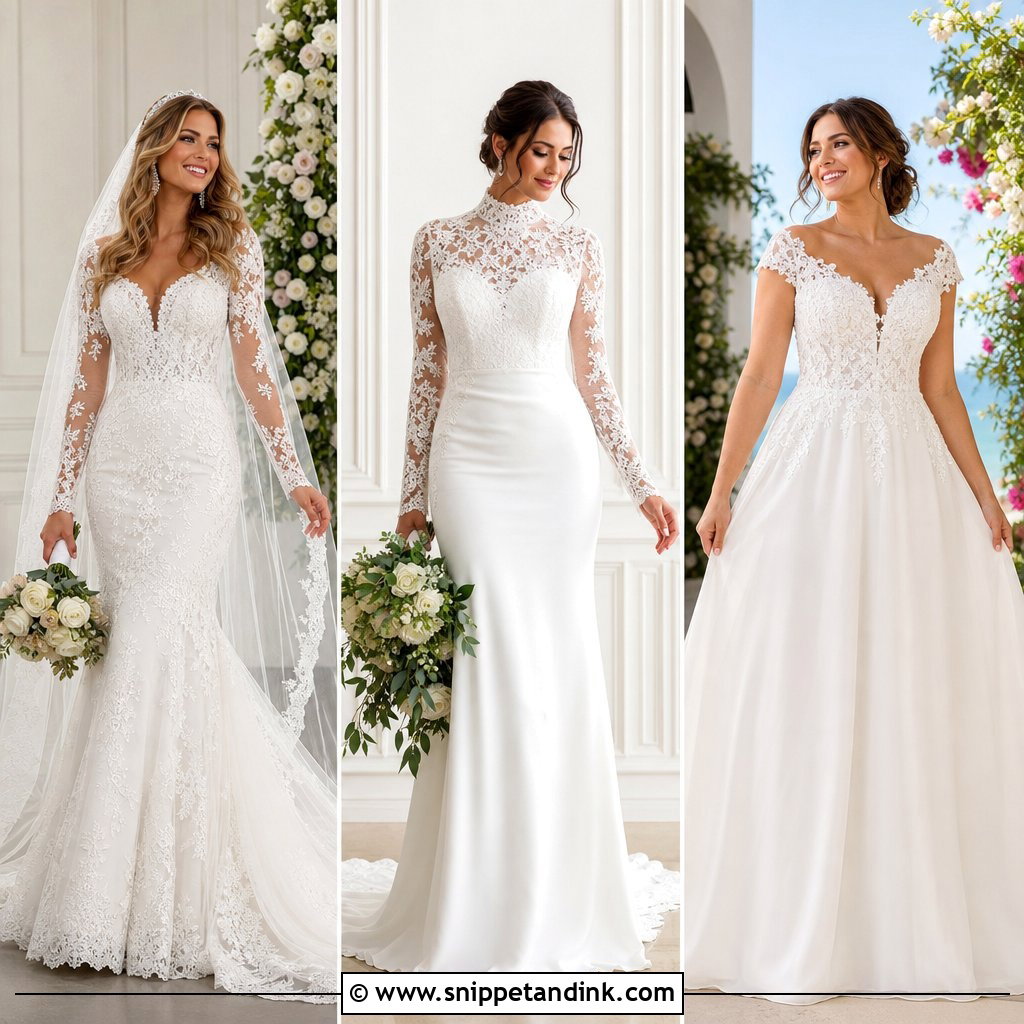
Lace gives a modest LDS wedding dress softness, but only when the bodice and sleeves are properly lined. The first thing I do with a lace sample is walk the bride to a window. Some laces and mesh backings look opaque under boutique lighting and turn see-through in daylight or under a flash. Once that test passes, a floor-length A-line with a high scoop neck, fitted long sleeves and scalloped cuffs is hard to fault. Keep the veil plain and chapel length so the pattern still reads through it, wear block heels for support under the fuller skirt, and carry a loose bouquet of white flowers with pale greenery.
3. Modest LDS High Neck Crepe Wedding Dress
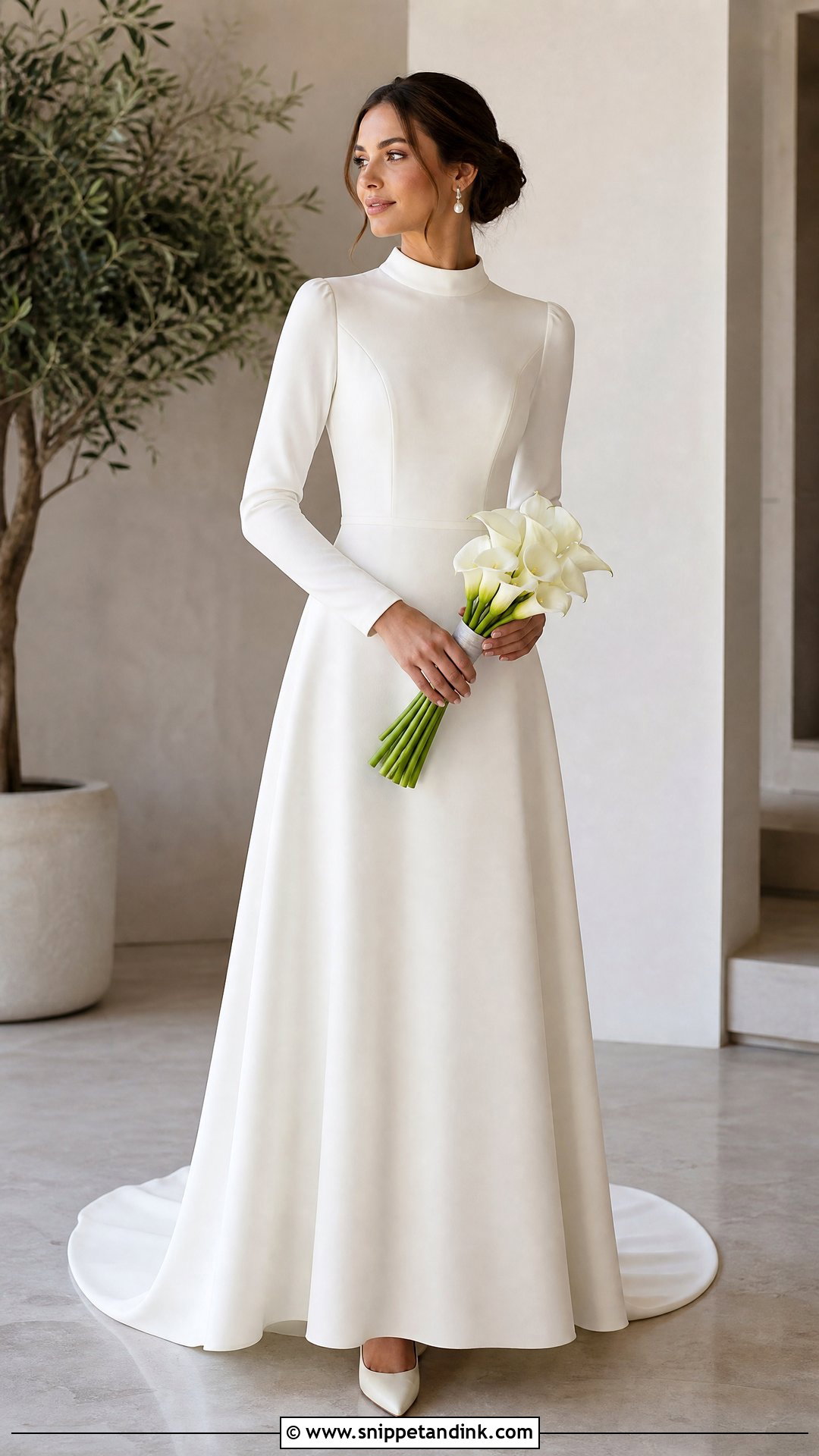
Crepe is for the bride who wants clean lines and nothing fussy. Weight matters more than cut here: a medium-weight crepe skims the body, while a thin one clings and shows every seam underneath. I’d pair a high neck and long sleeves with princess seams, a gently flared skirt and a row of covered buttons at the back. Low ivory heels, small pearl drops and a structured calla lily bouquet suit it. A narrow cathedral veil gives portrait drama; a shorter one is easier to move in. Have the hem set while you wear your actual wedding shoes, not a borrowed pair from the shop.
4. Modest LDS Square Neck Wedding Dress
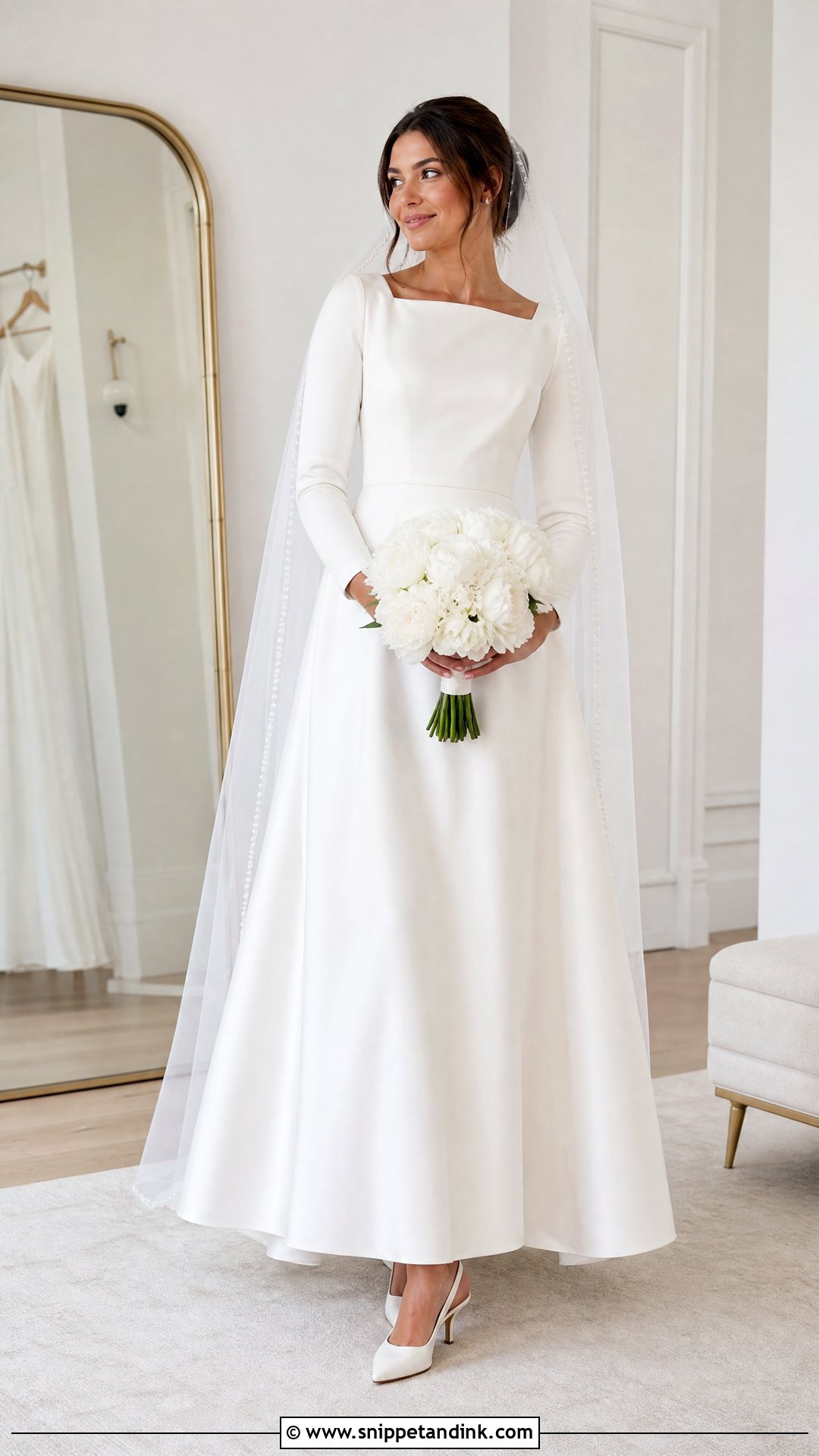
A square neckline only gives modest coverage if it sits high, and that’s harder to judge than it looks. Straight necklines tend to gape when you reach forward, because the corners have nothing to anchor them. So before buying, I have brides sit, hug someone and raise both arms in the sample. If the line stays flat, go for elbow-length or long sleeves, a fitted waist and a gathered A-line skirt in matte satin or mikado, which hold the square crisply all day. A slim waistband defines the waist without beading. Finish with a pearl-edged veil, small drop earrings, low ivory slingbacks and a rounded bouquet.
5. Modest LDS Satin Ball Gown Wedding Dress
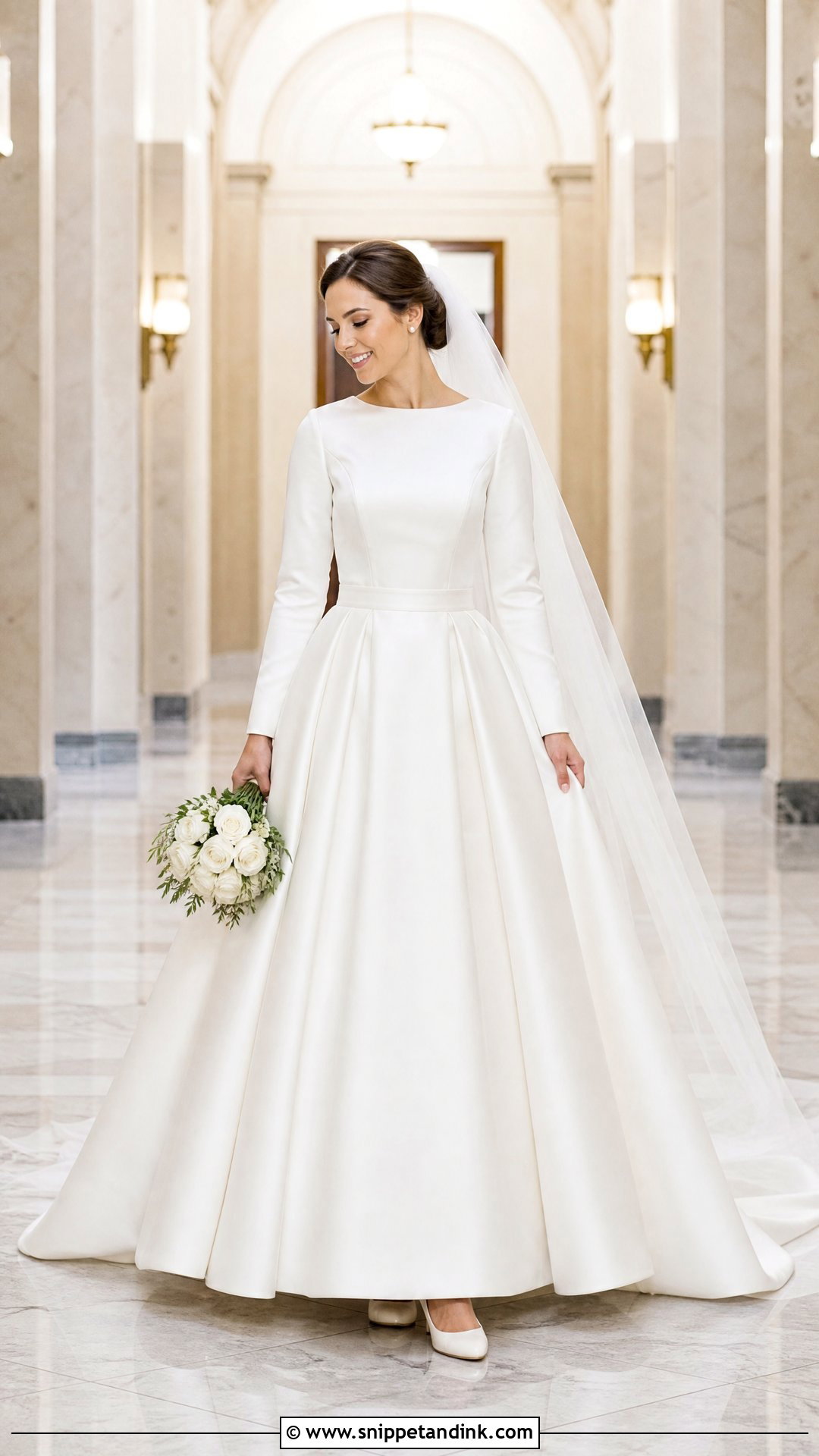
A satin ball gown is the most traditional statement on this list, and the heaviest to wear for a full day. I usually steer brides toward controlled pleats rather than layers of tulle, because pleats give volume with far less weight on the hips. The fitted long-sleeve bodice and high bateau neck need good interior structure, so the fit comes from boning and a waist stay instead of cinching. Fuller figures often do better with a slightly wider waistband and carefully placed princess seams. Keep the bouquet compact so it doesn’t hide the waist, wear block-heel pumps you can stand in for hours, and ask whether pockets can be added.
6. Modest LDS Boho Lace Wedding Dress
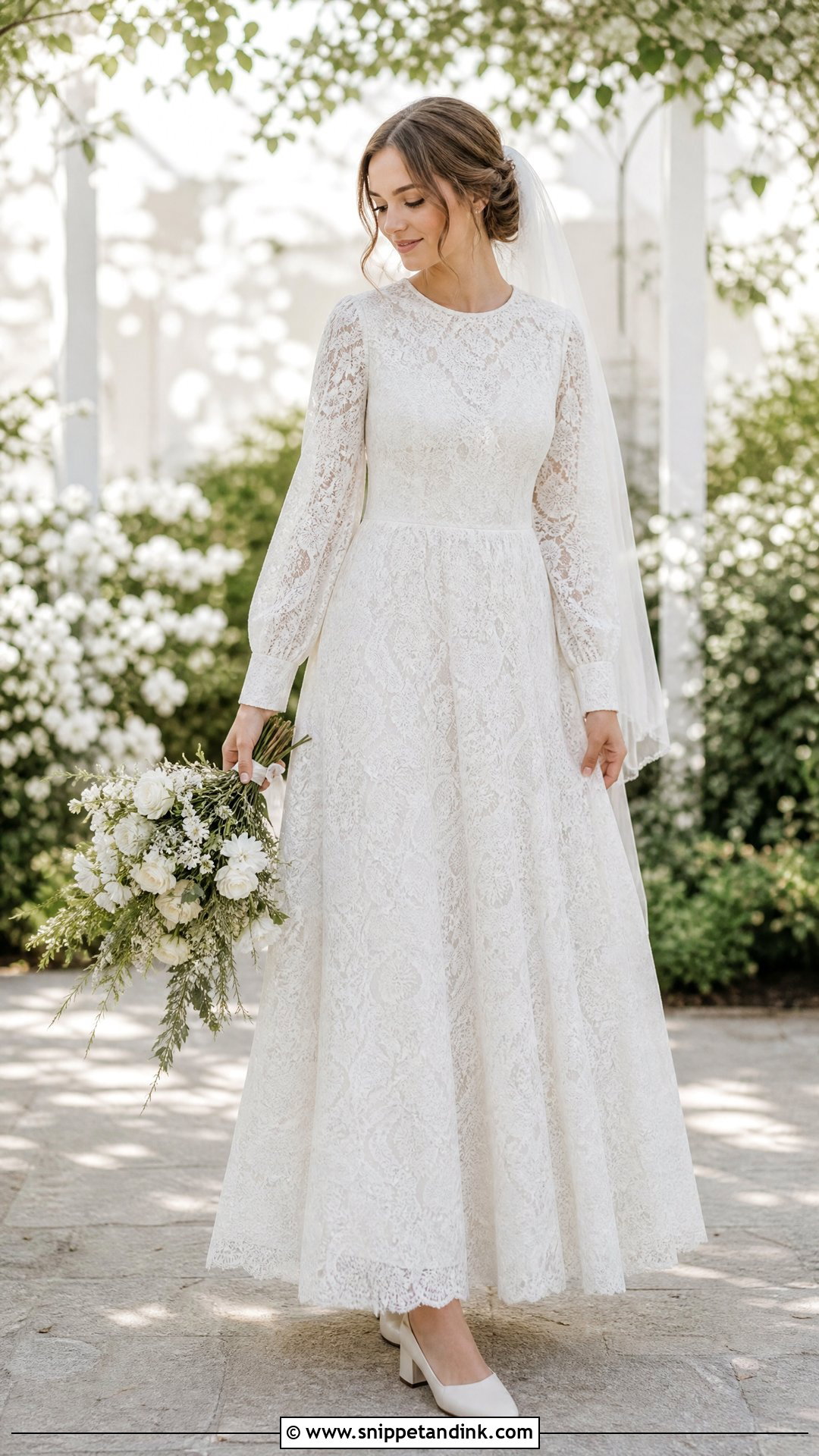
Boho lace drifts into nightgown territory quickly, so the silhouette has to stay defined. I’d look at an ivory A-line with lined floral lace, long bishop sleeves gathered into narrow cuffs and a high scoop neck over a chiffon or lace skirt. The cuffs matter more than they seem; without them, a bishop sleeve trails through the buffet. Low block-heel sandals or closed-toe pumps, a plain veil and a small floral comb are plenty, since the lace already carries the look. For a garden or field ceremony, have the hem set slightly off the ground so it doesn’t soak up grass stains and damp.
7. Modest LDS Mikado Princess Wedding Dress
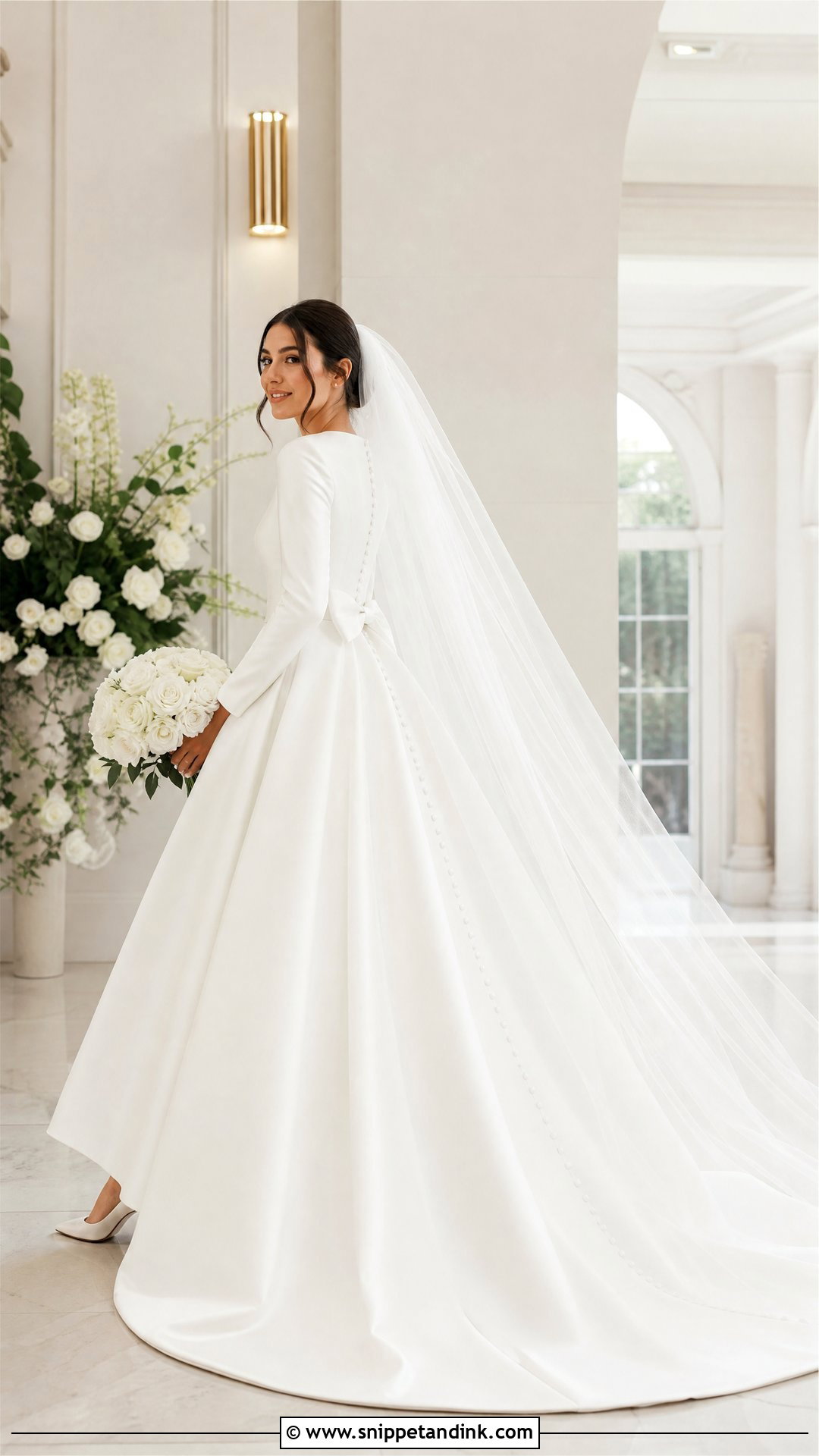
Mikado is a stiff, heavy weave, which is exactly why it suits a princess wedding dress: the skirt holds its volume on its own. A fitted bodice with a high rounded neck, long sleeves and a full skirt from the natural waist needs very little decoration, so covered buttons and a small bow at the back waist are enough. The trade-off is movement. Mikado has almost no give, and long sleeves cut too slim will stop you lifting your arms for a hug. Test that in the sample, then let your alterations specialist refine the shoulders, sleeve width and waist. A sheer plain veil, crystal studs, pointed ivory heels and white roses complete it.
8. Plus Size Modest LDS Wedding Dress
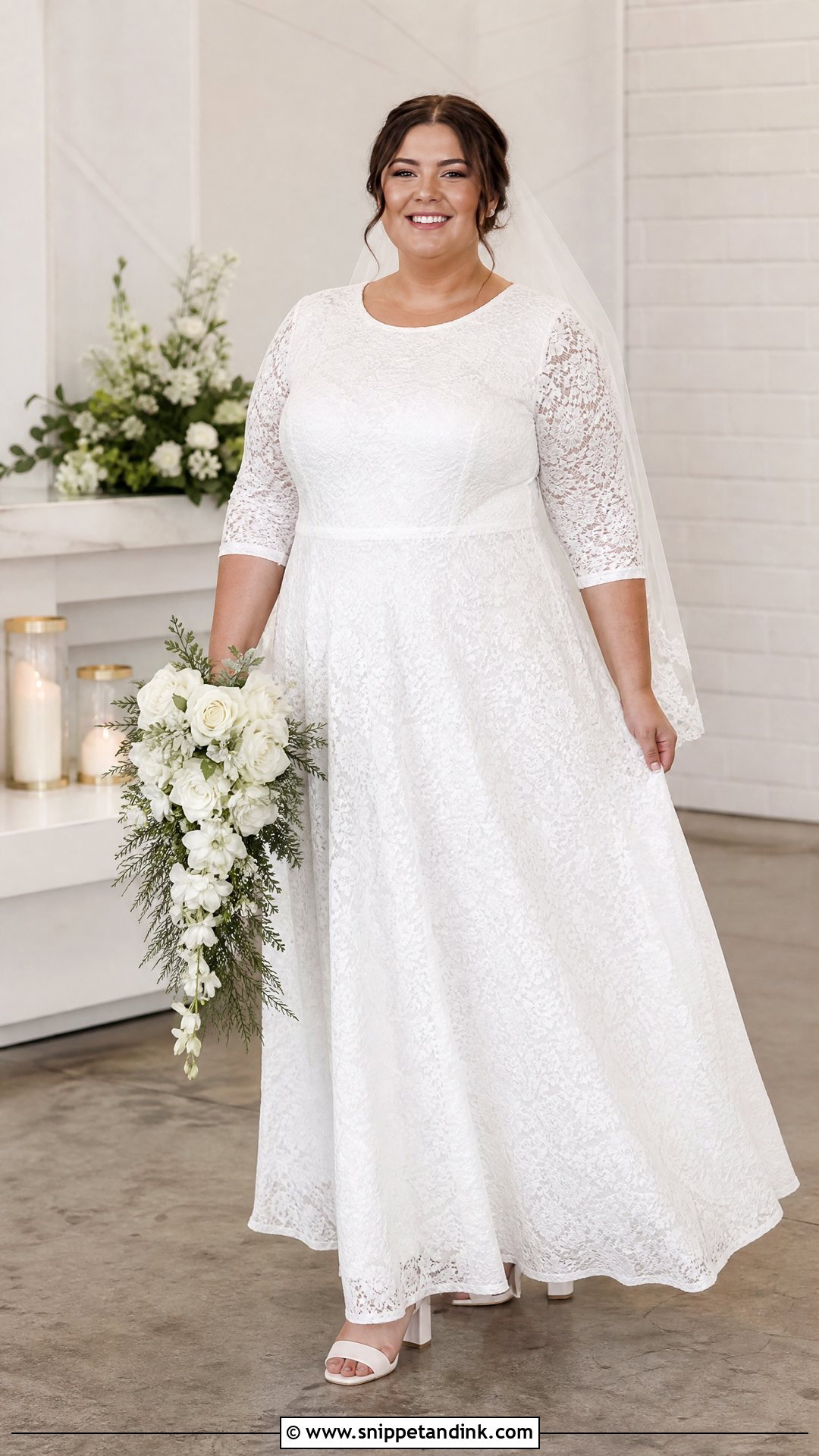
For plus size brides, support should come from the construction rather than from tightness. An A-line with a lined lace bodice, a high V or scoop neck, three-quarter sleeves and a flowing skirt is a dependable starting point, especially with princess seams and a built-in support system. I look for lace motifs that run vertically through the bodice, since horizontal bands cut the line. Order to your largest measurement and let the seamstress take in the rest; letting a gown out is limited by how much seam allowance it has. At fittings, sit, walk, raise your arms and turn. A soft tulle veil, pearl earrings, cushioned block heels and a medium cascading bouquet finish it.
9. Petite Modest LDS Wedding Dress
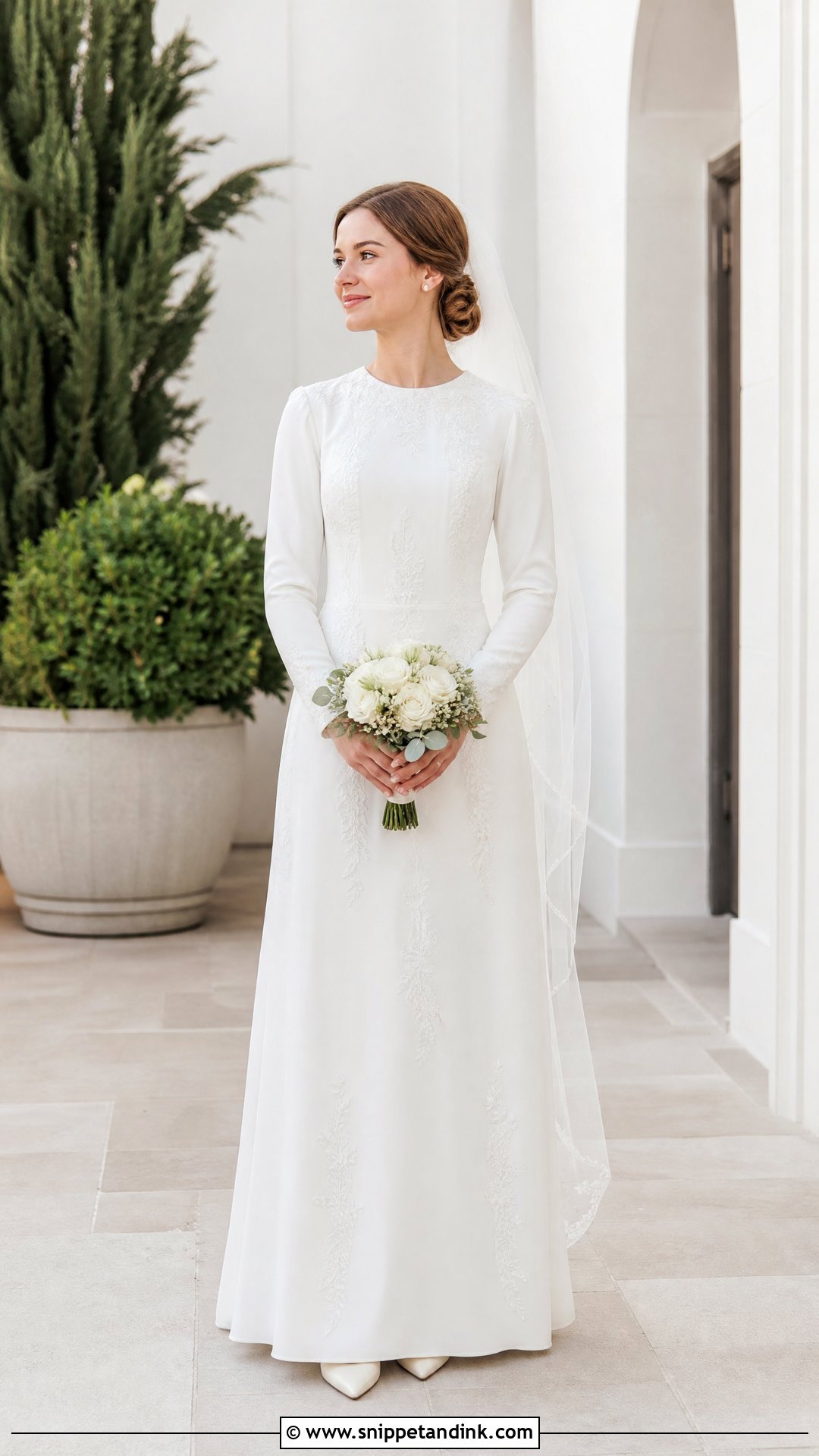
Petite frames get lost in wide skirts and oversized motifs, so I keep the line long and the details small. A slim A-line with a high neck, fitted long sleeves, a natural waist and light lace appliqués does that well. Ask whether the gown comes in petite sizing before you order. Shortening a standard gown only at the hem can slice through the lace placement and leave the waist and sleeve seams sitting too low, so the waistline, sleeves and shoulders usually need work too. A narrow fingertip veil, small earrings, pointed heels in a matching ivory and a compact bouquet keep everything in scale.
10. Modest LDS Mermaid Wedding Dress
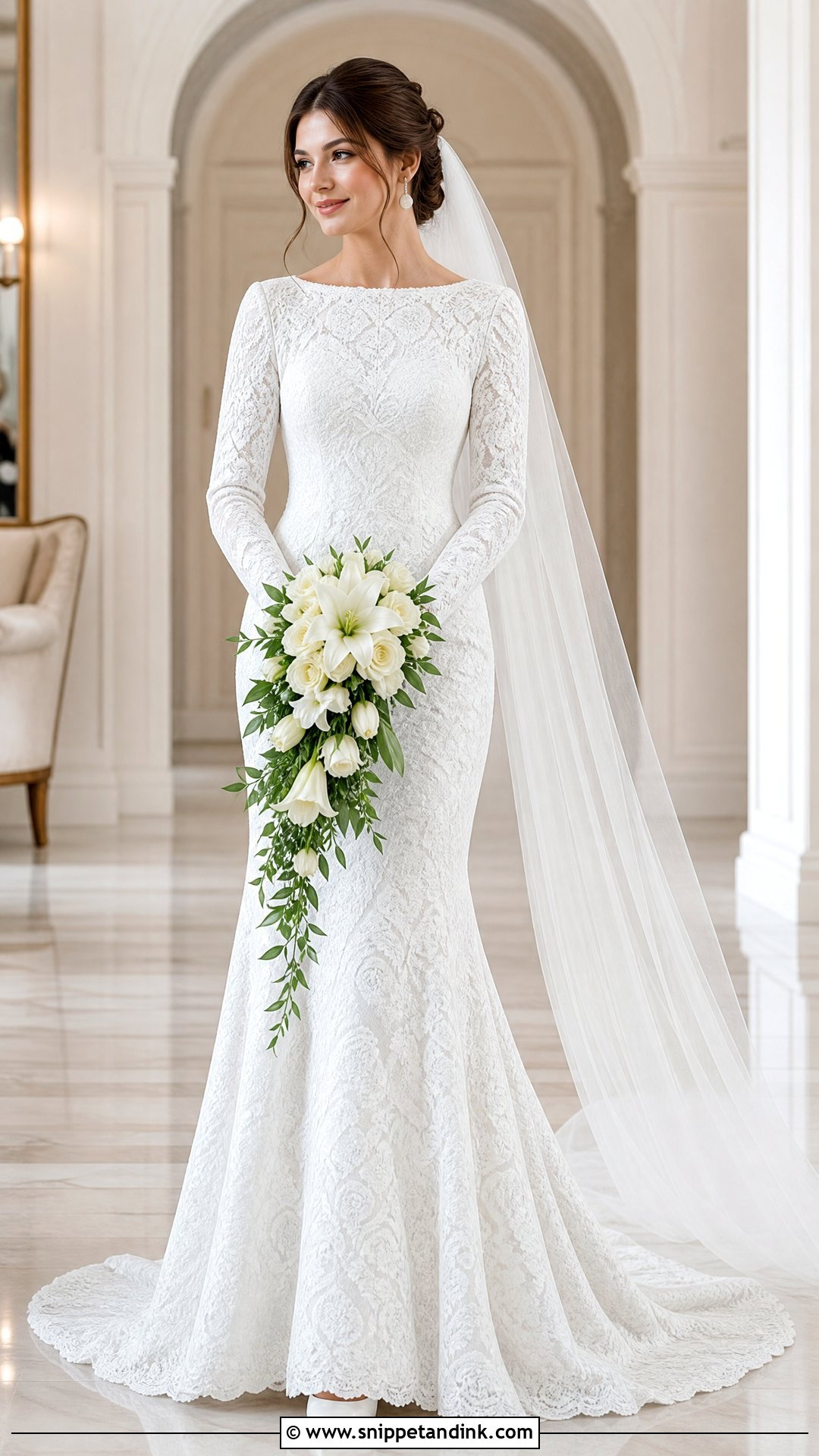
A true mermaid is tight to the knee, and most brides find it harder to sit and climb stairs in than they expected. A softer fit-and-flare that opens gradually around the knee gives the same shape with far more freedom. Keep the lace bodice fully lined with a high bateau neck and long sleeves, and wear a plain veil so the lace doesn’t look busy. Shapewear has to stay invisible under the lining and bearable for hours, so bring it to every fitting. Pearl drops, closed-toe heels and an elongated bouquet follow the vertical line. Practice stairs in the sample, and plan a bustle for the train once portraits are done.
11. Modest LDS Empire Waist Wedding Dress
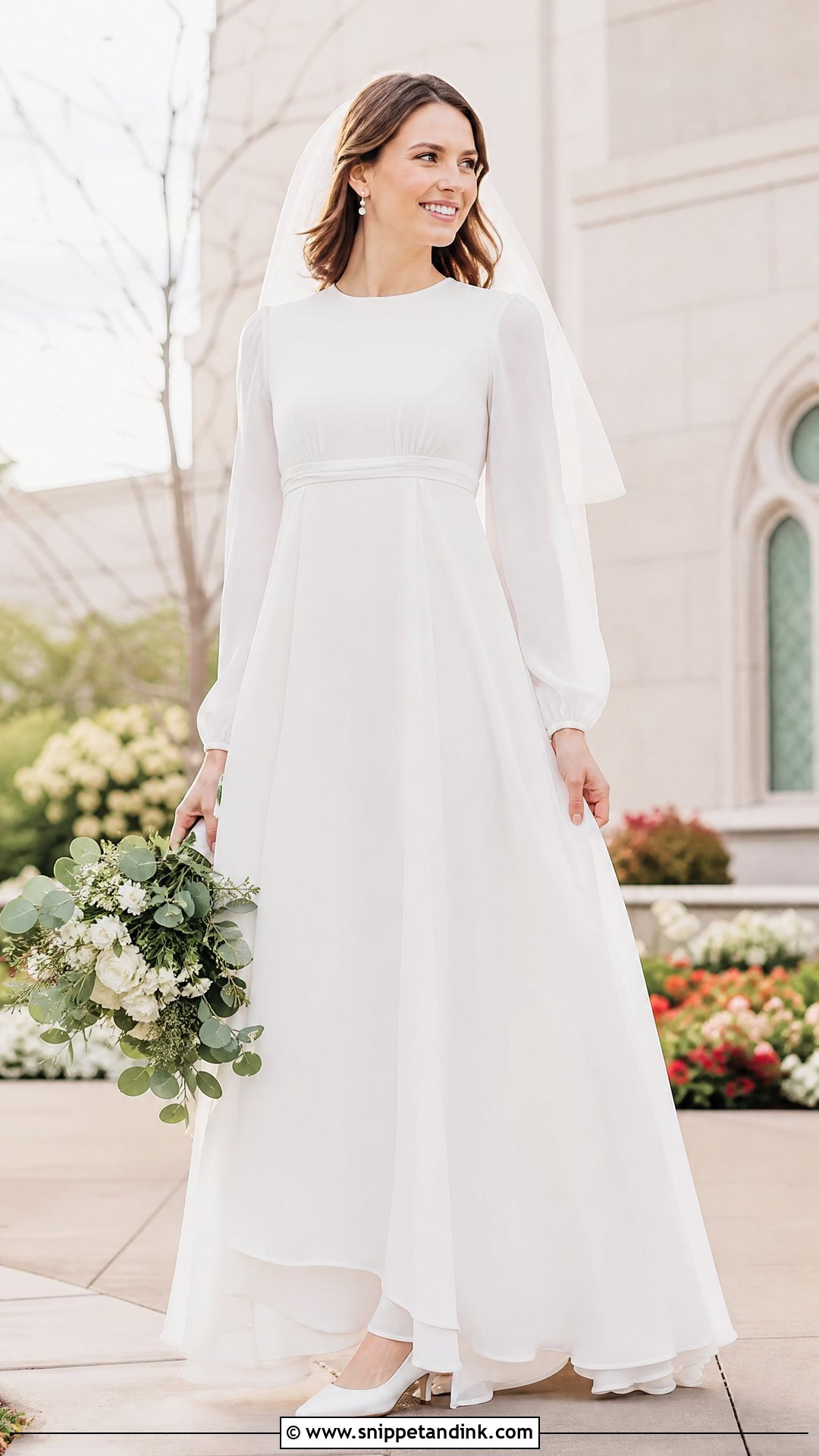
I suggest an empire waist often to pregnant brides, to anyone who doesn’t want a defined waist, and for hot-weather weddings. The seam sits under the bust and the skirt falls straight from there. Choose opaque chiffon with a lined high neck and long, plain sleeves, and check that the pleats lie flat instead of bunching at the front. A narrow ribbon at the seam adds a little definition. Low pumps, a shoulder-length veil, pearl earrings and a relaxed bouquet suit it. Chiffon is thin, so stand outdoors in direct sun before the wedding and add a skirt layer if light shows through. For a pregnant bride, I leave the final bust fitting as close to the date as the seamstress allows.
12. Modest LDS Mock Neck Wedding Dress
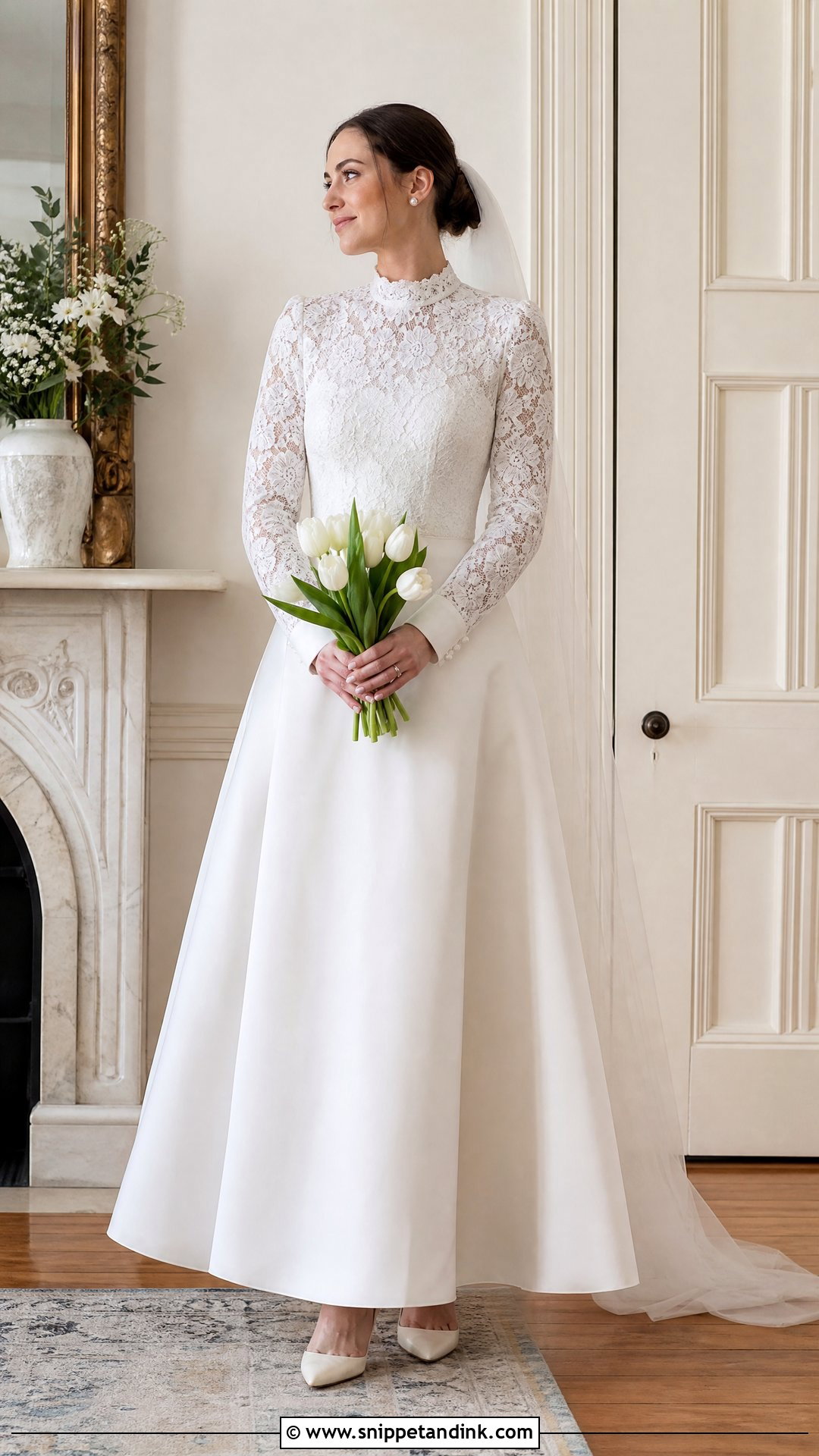
A mock-neck wedding dress carries a vintage feel with almost no accessories, which is its appeal. Choose a lined lace upper bodice, fitted long sleeves and a smooth crepe or satin A-line skirt, with covered buttons at the cuffs and back. The neckline is where fittings go wrong. Cut too snug, it pulls every time you turn your head, so I check it with the bride looking over each shoulder. Pearl studs, a veil anchored under a low bun, pointed ivory pumps and white tulips are all it needs. Skip a beaded veil; the beads snag on textured lace.
13. Modest LDS Minimalist Column Wedding Dress
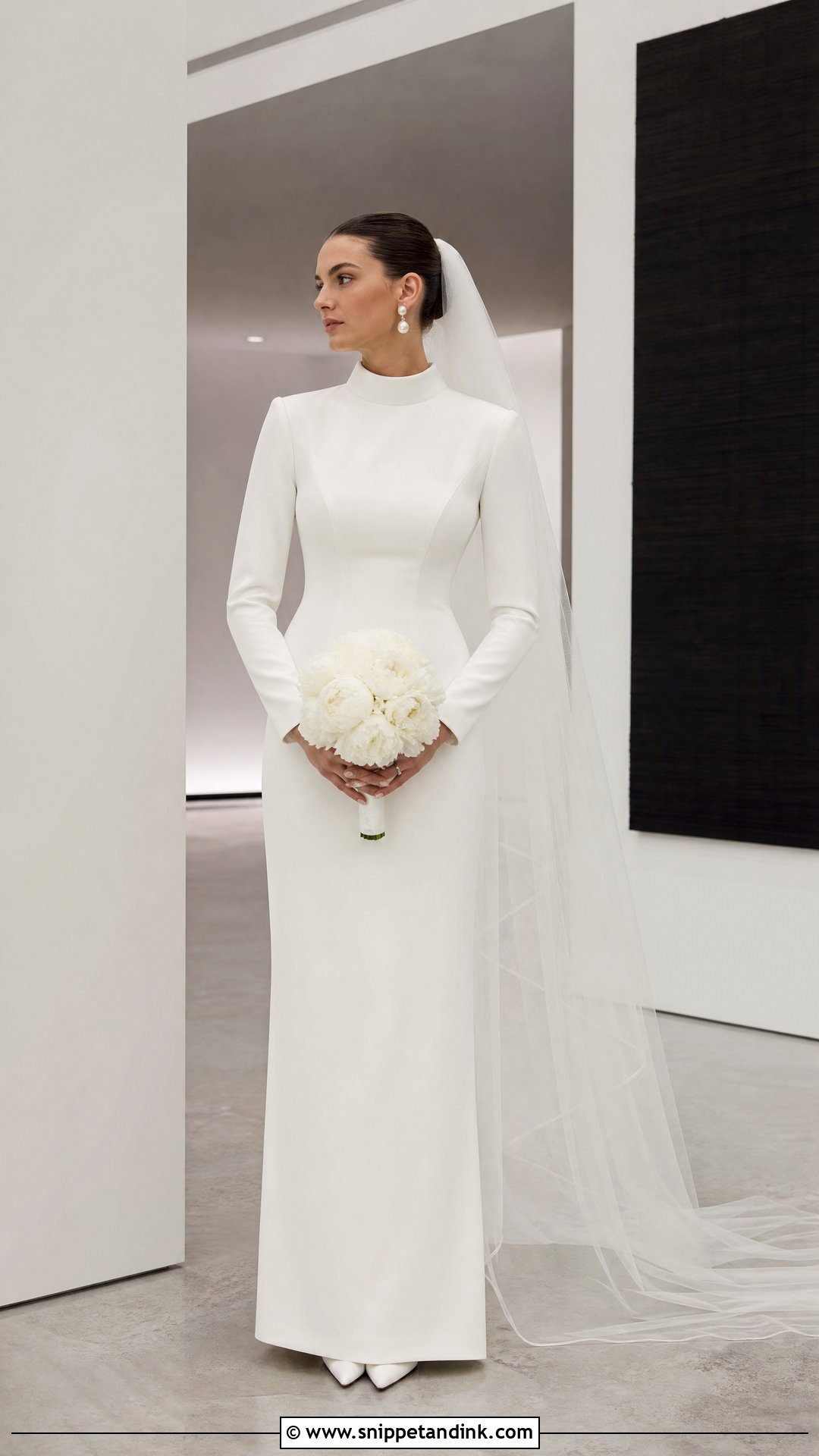
Some brides want no lace, no sparkle and no volume, and a matte crepe column is the honest answer. Choose a fully lined design with a high scoop neck, long sleeves and shaped waist seams, plus a straight skirt with a back vent or hidden pleat so you can actually walk. Plain fabric is unforgiving. Every seam of your shapewear and every crease shows, so smooth underlayers matter more here than with any lace gown. I ask the tailor to fit it closely through the shoulders and waist while leaving ease at the hips, knees and sleeves. Sculptural pearl earrings, a long plain veil, pointed pumps and a compact bouquet finish it.
14. Modest LDS Floral Appliqué Wedding Dress
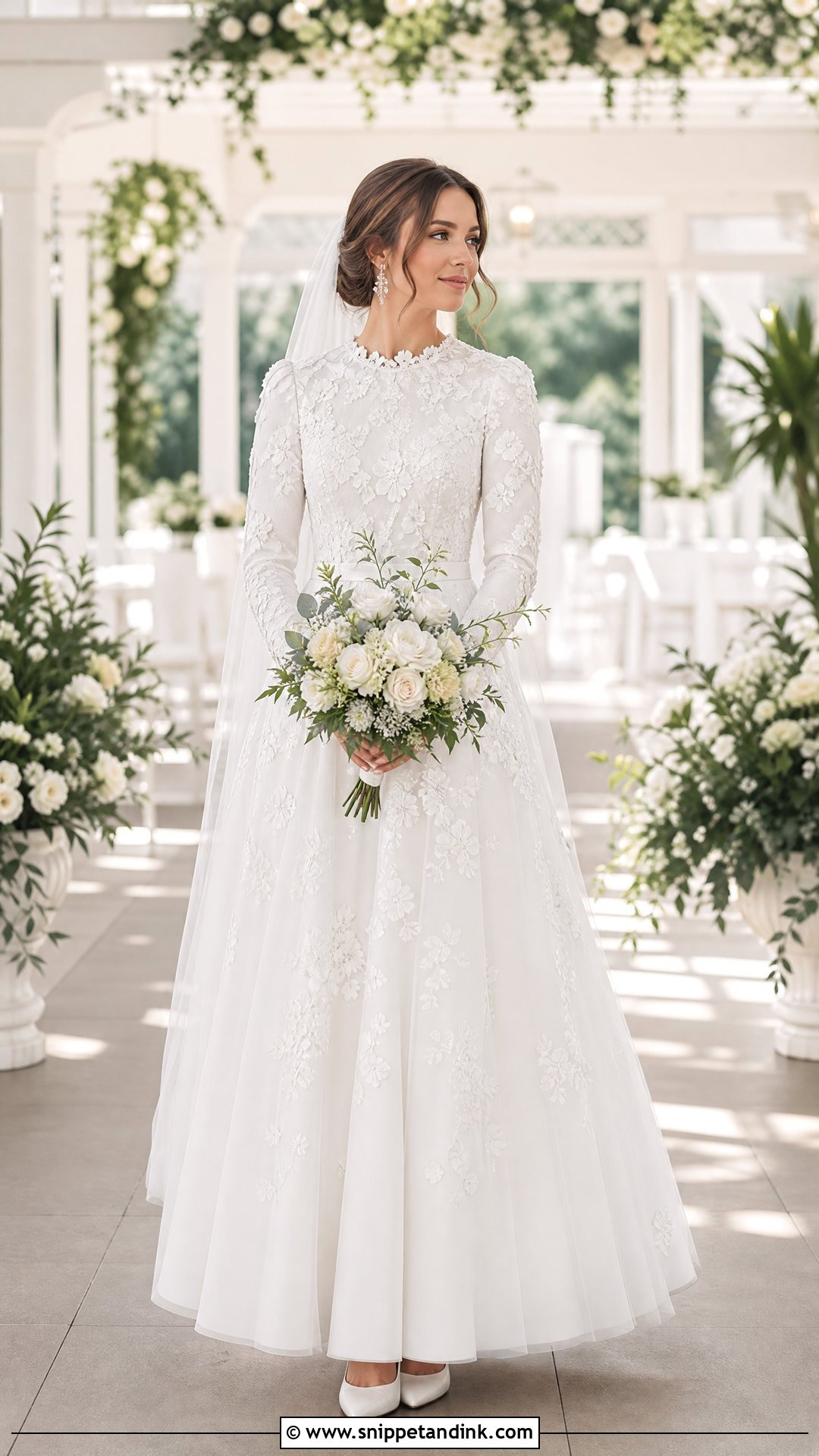
Floral appliqués turn a covered gown into the main event. Look for dimensional flowers placed thickly at the bodice and thinning into the skirt; that fade keeps them from swallowing you. Then run your hands over them. Raised petals and bead clusters near the sleeves and side seams rub the inner arms, and the friction builds over a long day. A seamstress can tack down loose pieces and add soft lining where embroidery meets skin. Keep the hair simple and the veil plain tulle, with small crystal earrings, satin pumps and a bouquet that echoes the appliqué flowers.
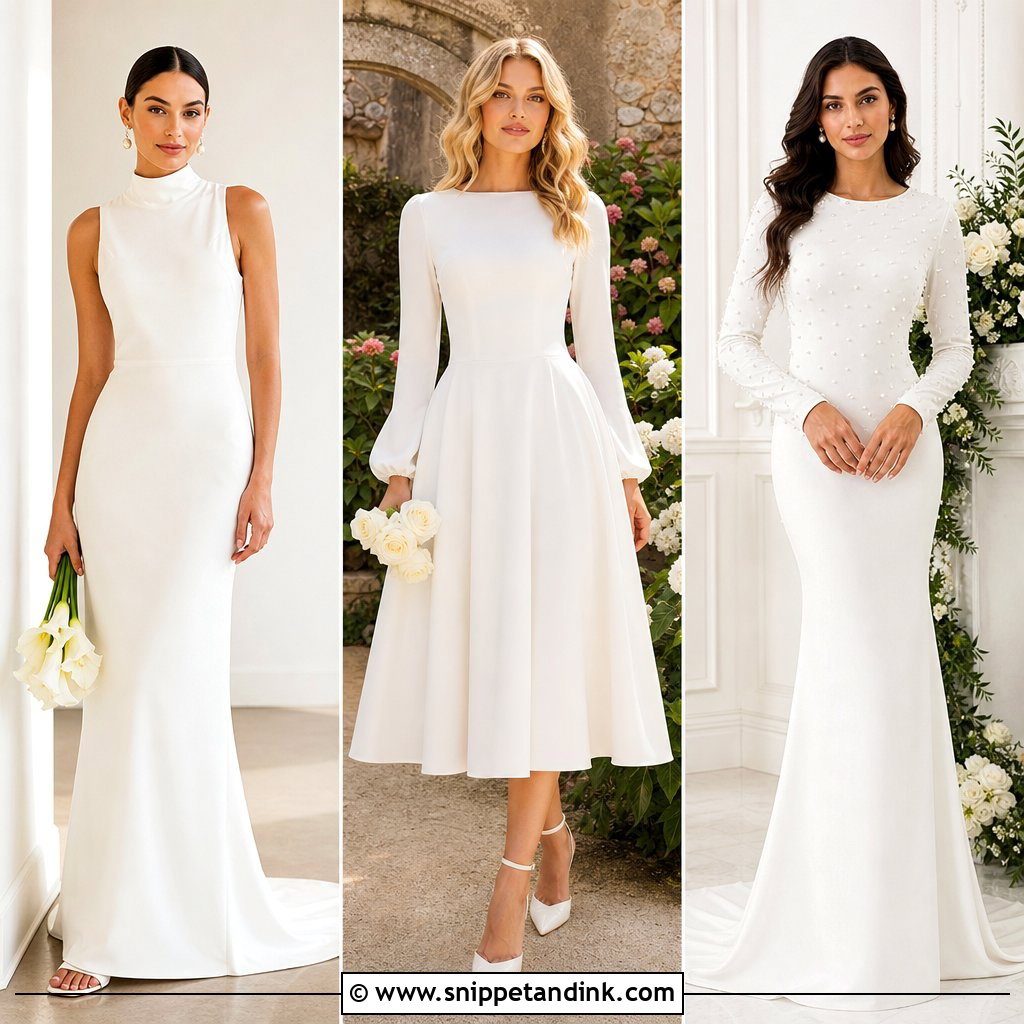
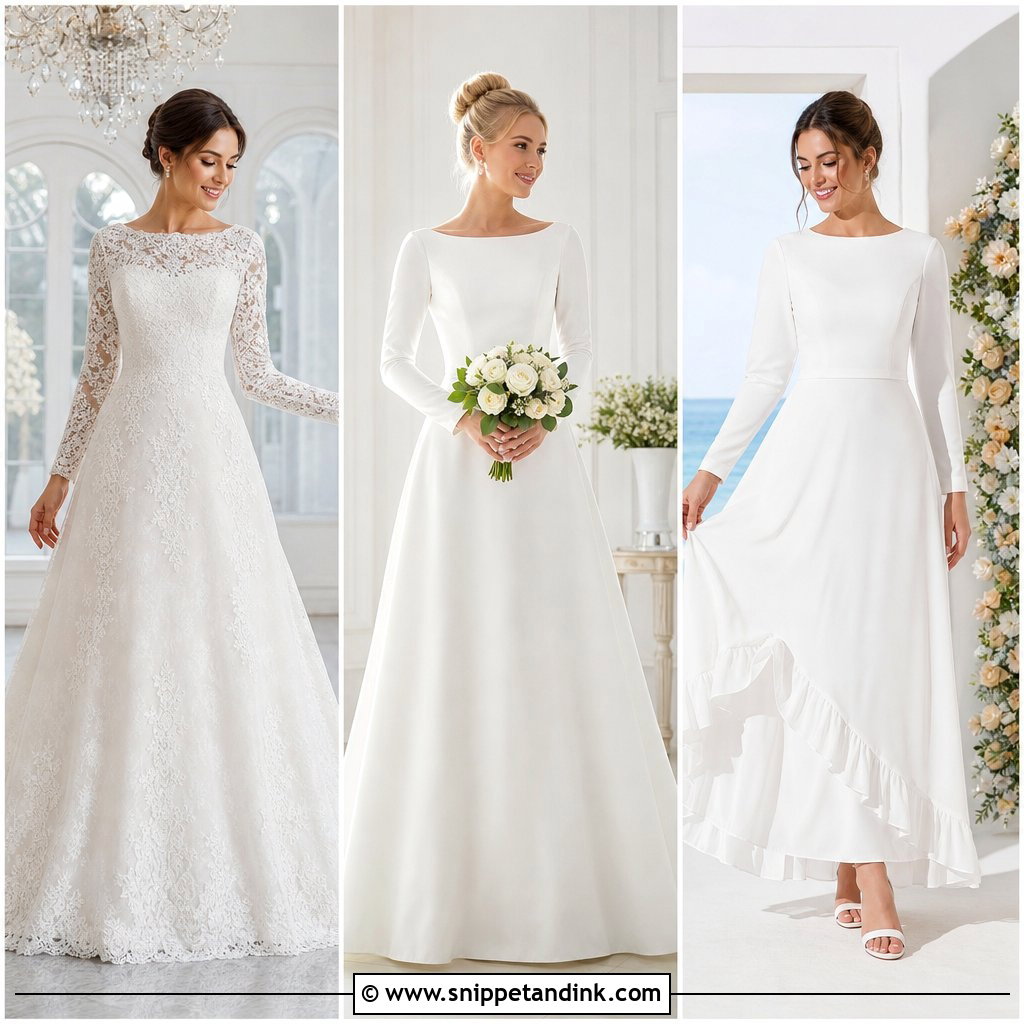
15. Modest LDS Bateau Neck Wedding Dress
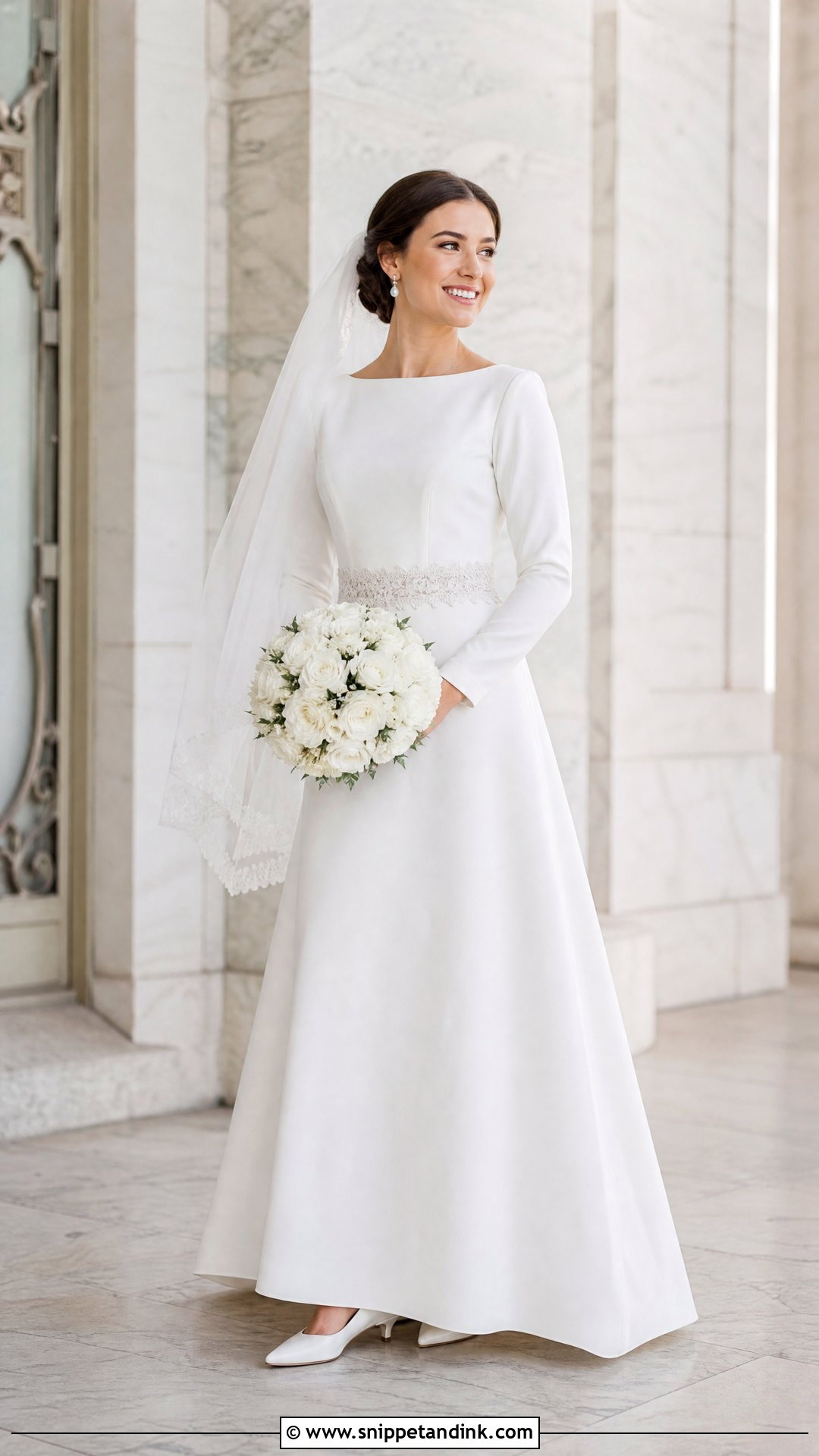
A bateau neckline runs almost shoulder to shoulder along the collarbone, which frames the face and needs no necklace at all. The catch is shoulder fit. Cut too wide, it slides toward one shoulder whenever you move, so ask your seamstress to secure the neckline while keeping room through the arms. Pick an opaque bodice, long sleeves and a closed back over a satin or crepe A-line skirt, perhaps with a narrow lace waistband. Pearl earrings, a mid-length veil, low pointed heels and a rounded white bouquet complete it.
16. Modest LDS Three Quarter Sleeve Wedding Dress
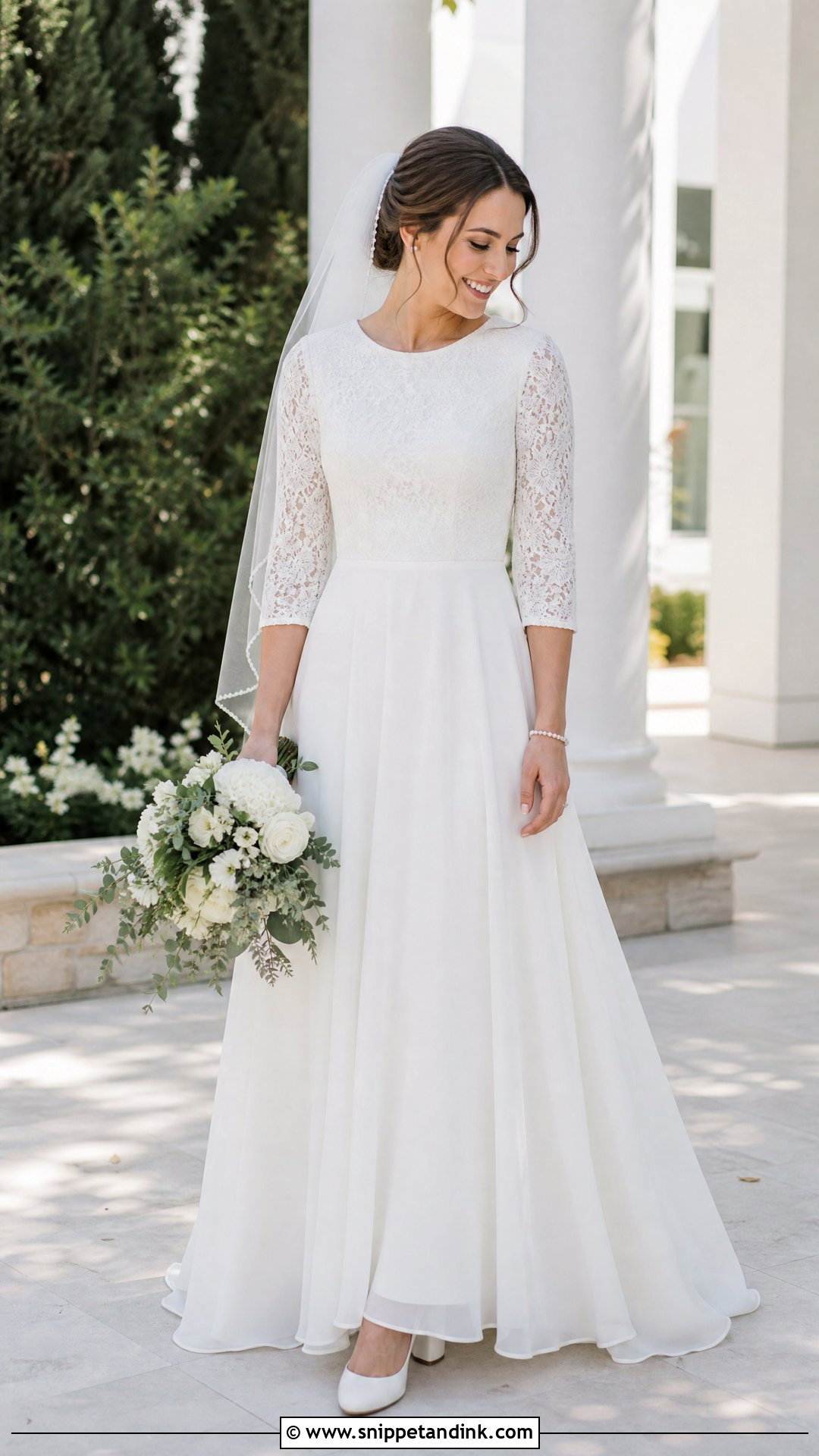
Three-quarter sleeves keep the wrists free, which matters more than people expect when you’re signing papers, eating and holding flowers. Choose an A-line with lined lace sleeves, a high scoop neck, a defined waist and a chiffon or tulle skirt; slim cuffs or a scalloped edge finish the sleeve neatly. A simple bracelet finally has room to show. Add stud earrings, closed-toe block heels, a fingertip veil and a loose bouquet with little greenery. If you’ll wear it for a sealing, confirm the sleeve length and every other detail against your temple’s current guidance before alterations. For portraits and the reception, it’s a strong, easy choice.
17. Modest LDS Puff Sleeve Wedding Dress
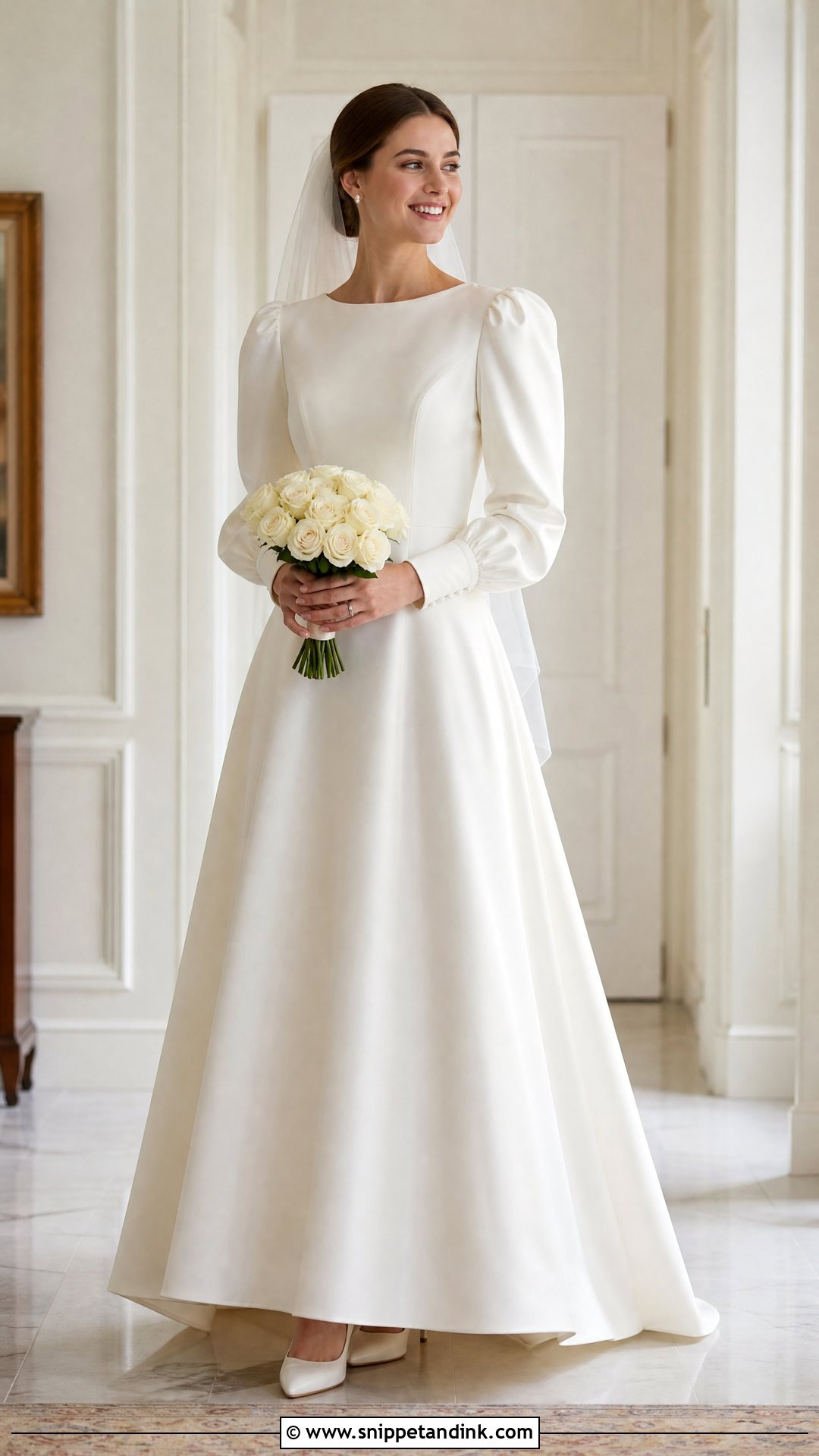
Puff sleeves tip from romantic to costume very fast, and volume decides which side you land on. I keep the puff controlled, and for broader shoulders I like it to start slightly below the shoulder point so it doesn’t add width. A high square or rounded neck, fitted cuffs and a smooth satin A-line skirt let the sleeves lead. Check that the lining breathes and that elastic or gathered cuffs don’t press into your arms after a few hours. Pearl studs, a narrow veil, ivory pumps and a neat bouquet of roses are plenty.
18. Modest LDS Detachable Overskirt Wedding Dress
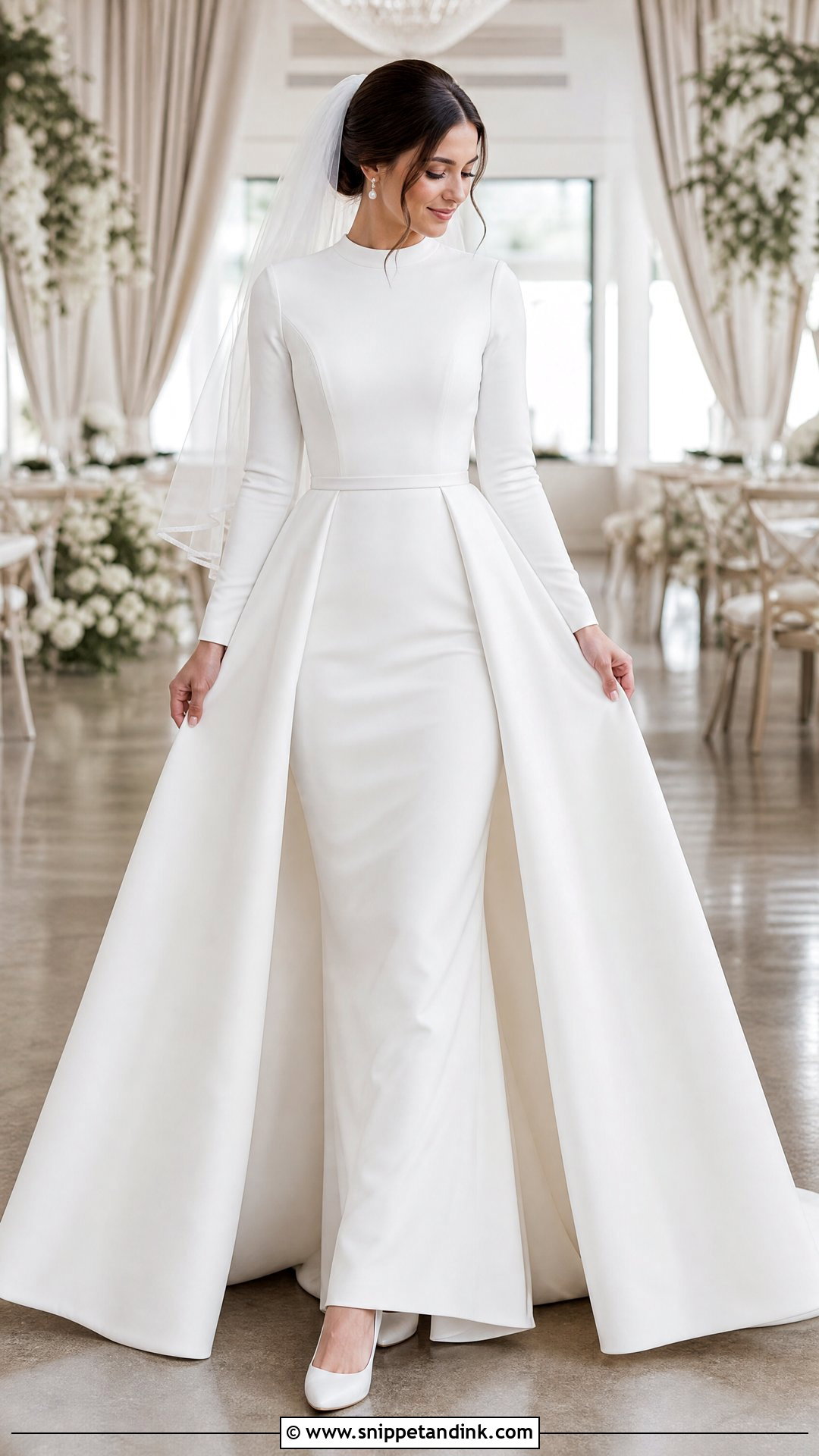
A detachable overskirt gives you two looks without a full outfit change. Underneath sits a fitted crepe gown with long sleeves, a high neck and a gentle flare; over it goes a full satin or tulle skirt for the ceremony and portraits, removed later for dancing. The join should sit at the natural waist under a slim belt or fabric band. Ask for an exact shade match, because two ivories from different fabrics can read quite differently once the skirt comes off in photos. Practice attaching and removing it at a fitting, give one helper that job on the day, and confirm both versions keep the coverage you want. Understated earrings, comfortable pumps and a medium veil suit both.
19. Modest LDS Button Back Wedding Dress
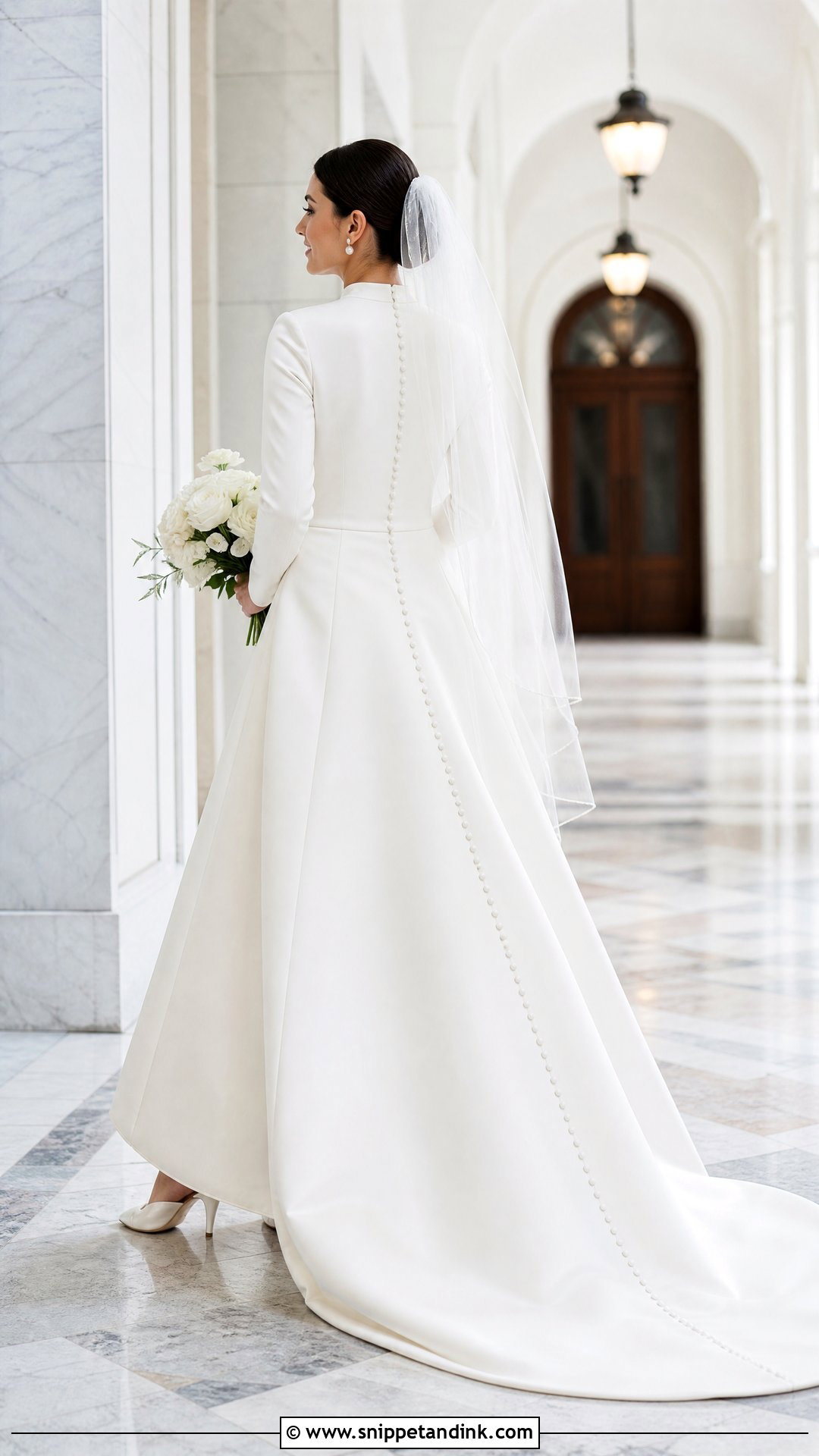
Covered buttons running from the upper back toward the train make a covered silhouette interesting from behind, and photographers love them. I always ask whether there’s a hidden zipper underneath. Without one, dressing takes a long time with a button hook, and the loops carry all the strain. Choose an A-line or fit-and-flare with long sleeves and a high neck, in satin for clean lines or lined lace for texture. A sheer veil that doesn’t hide the back, pearl earrings, ivory heels and a structured bouquet complete it. Have the loops reinforced, and ask someone to check the buttons after you’ve been sitting.



20. Modest LDS Chiffon A-Line Wedding Dress
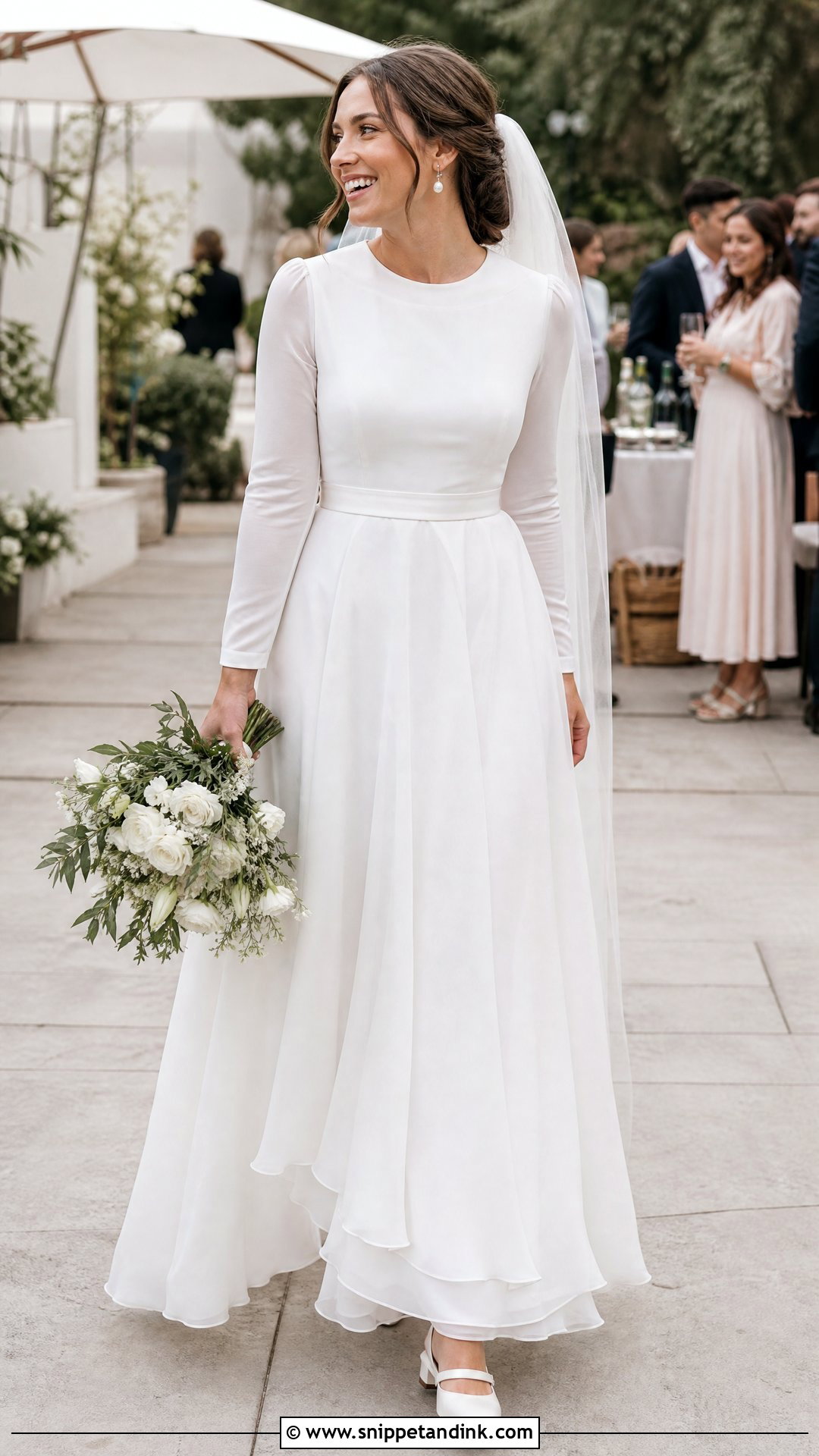
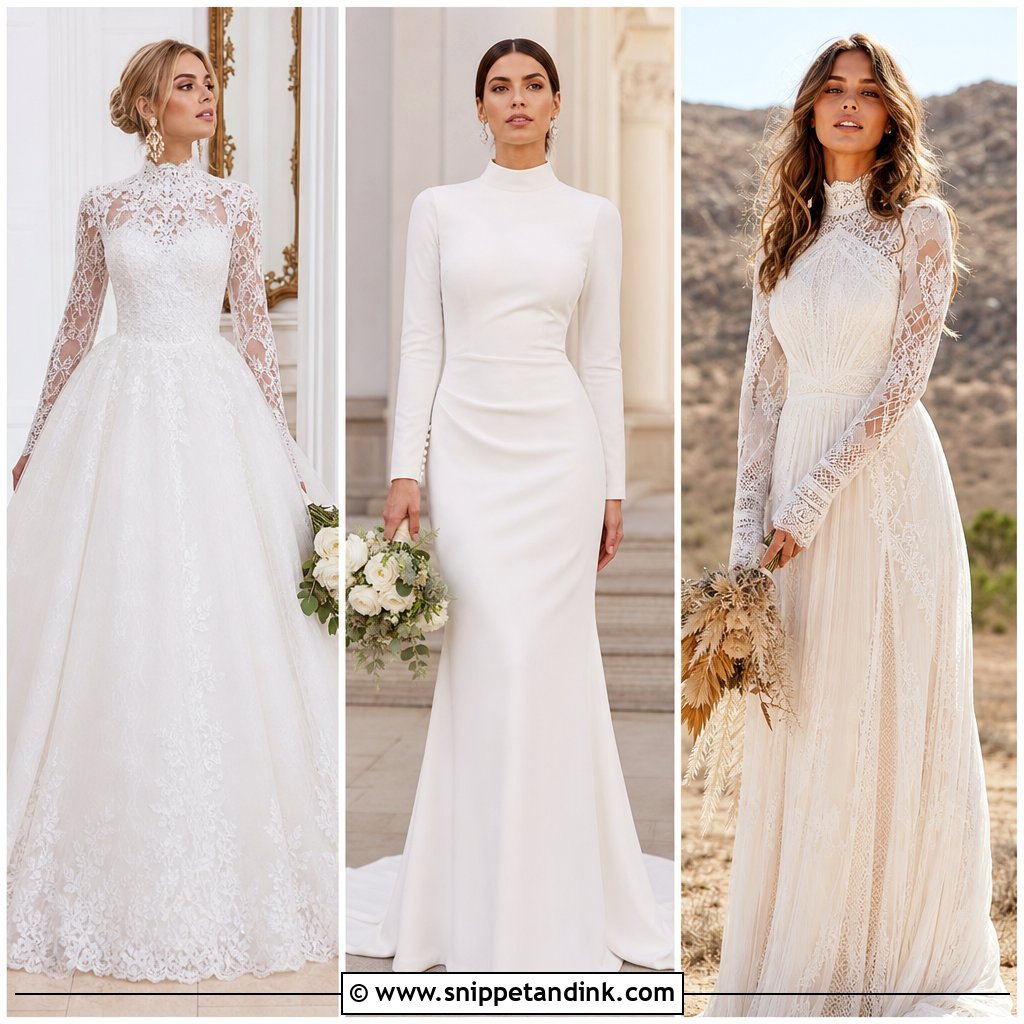
Chiffon is the lightest fabric here and the kindest in heat, but it’s also the one the wind plays with most. Choose a fully lined A-line with a high rounded neck, opaque long sleeves, a softly defined waist and a layered floor-length skirt; gentle pleats move without bulk, and a satin waistband sharpens the shape. Before the day, stand outside in it on a breezy afternoon and see how the skirt behaves. Low block heels, a light veil, pearl drops and a loose white bouquet suit it. Ask for a manageable hem and bustle, and steam it shortly before dressing, since chiffon creases easily but releases quickly.
Adding Coverage to a Gown That Isn’t Modest Yet
Plenty of brides fall for a strapless or cap-sleeve gown and assume it’s off the table. Often it isn’t. Many bridal designers sell matching sleeves, illusion tops or jackets for their own styles, and a good seamstress can add sleeves, raise a neckline with lining or fill an open back. How well it works depends on the fabric. Lace is the easiest to extend, because matching lace or tulle blends in, while satin and mikado are hard to match exactly, so additions there can look like additions.
- Ask the boutique whether the designer offers sleeves or a matching topper before you order.
- Get a seamstress to look at the gown and quote the work before you buy, not after.
- Allow extra time, since adding sleeves takes more fittings than a simple hem.
- If the designer sells extra fabric or lace, order it with the gown so the dye lot matches.
How the Gown Sits Under Ceremonial Clothing
If you’re being sealed after receiving your endowment, you’ll wear ceremonial clothing over your dress for the sealing itself, so the gown has to sit comfortably beneath it. Very full skirts, heavy beading at the shoulders and big puff sleeves make that layering awkward. A train is normally bustled or removed inside the temple, so a detachable train or a bustle that fastens quickly is worth planning from the start. Guidance can be updated over time, so confirm the details with the temple you’re using rather than relying on what a sister or friend did years ago.
Sleeves, Seams and the Sitting Test
Judge every silhouette here by coverage, comfort and fabric together. Satin and mikado give structure, while crepe, lace and chiffon soften the result. Shoes, veil, jewelry and hair should support the gown rather than compete with it. In every sample, sit, walk and raise your arms before you let yourself fall for it. Start alterations early, bring your real shoes and underlayers to each fitting, and if the dress will be worn at a sealing, check the current requirements before the final changes are made. The right one fits you properly and still feels like yours.
You'll Like These Ideas:








Leave a Reply