
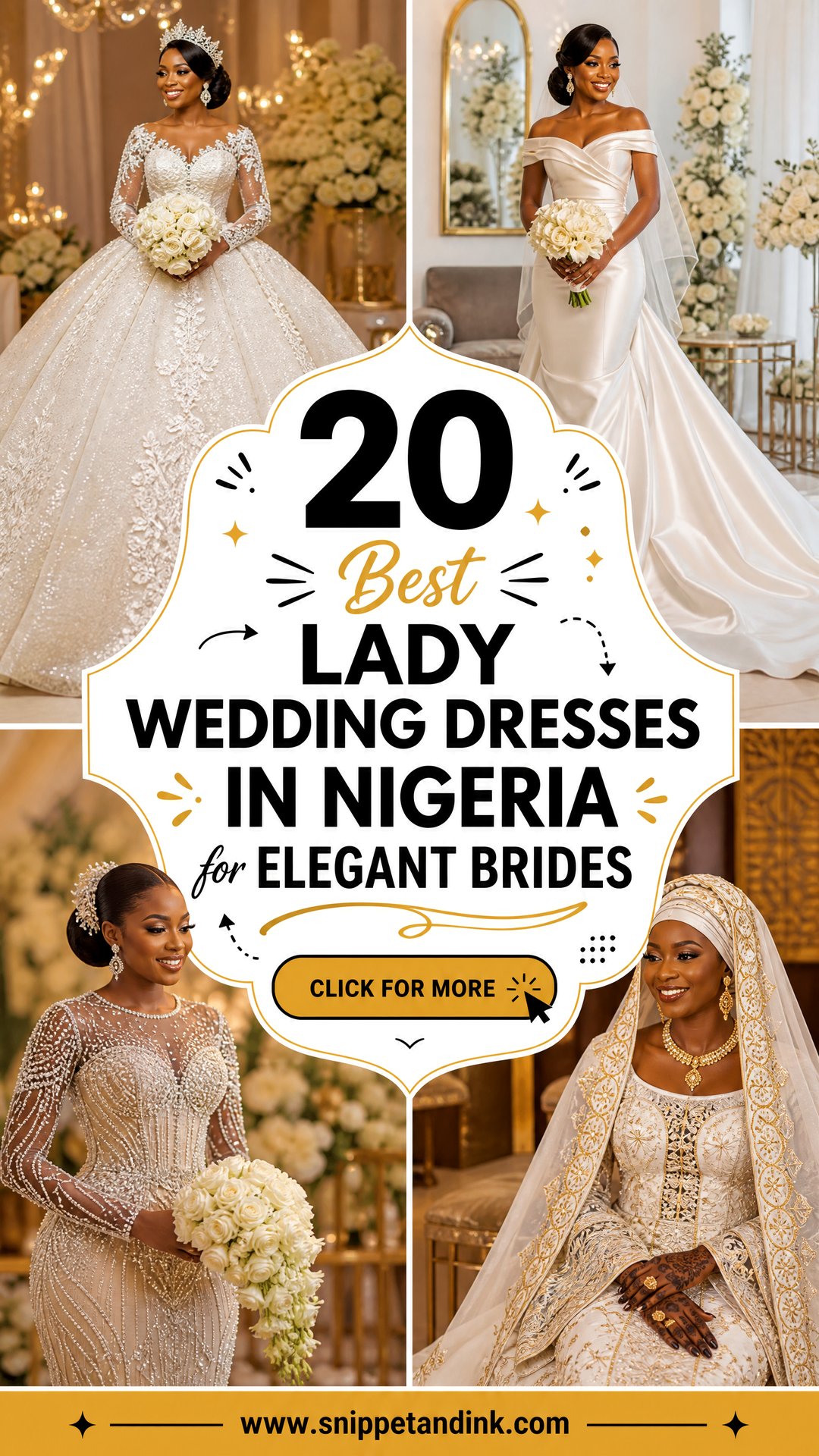
A Nigerian bride rarely wears just one dress. There’s often a traditional ceremony, a church or registry wedding and a reception, sometimes with a change in the middle of the party, so I plan the wardrobe as a set rather than as one gown. The looks below run from full white ball gowns and fitted lace to polished registry dresses and traditional attire from several regions. Corseted bodices, detachable trains, statement sleeves and beadwork are everywhere right now, but the thing I check first on every outfit is simpler: can you dance in it in the heat, and can someone get you out of it quickly?
Trad, Church, Reception and the Changes In Between
When I plan a Nigerian bride’s wardrobe, I write out the day as a timeline before we talk about any single dress. Each outfit has a job: the traditional ceremony honors the families, the white wedding is about the aisle and photographs, and the reception outfit has to survive hours of dancing.
- Allow at least 30 to 45 minutes for each change, longer if a gele has to be retied or coral beads removed.
- Ask the venue for a private changing room close to the hall, with a mirror and good light.
- Choose one calm helper who knows every fastening, hook and pin before the day.
- Bag each outfit with its own shoes, jewelry and accessories, labeled in order.
A detachable train or overskirt can cut one change completely, which is often the easiest way to win time back.
Fit the traditional outfit with everything on
A gele, an okuku crown or several strands of coral change how a blouse sits at the neck and shoulders. I won’t approve a traditional outfit until the bride has tried it with the full headpiece and beads in place, ideally with the gele tier or hairstylist there too. Wrappers also loosen as you sit and stand, so I ask for a hidden hook or an extra tie at the waist as insurance.
1. Ball Gown Wedding Dress
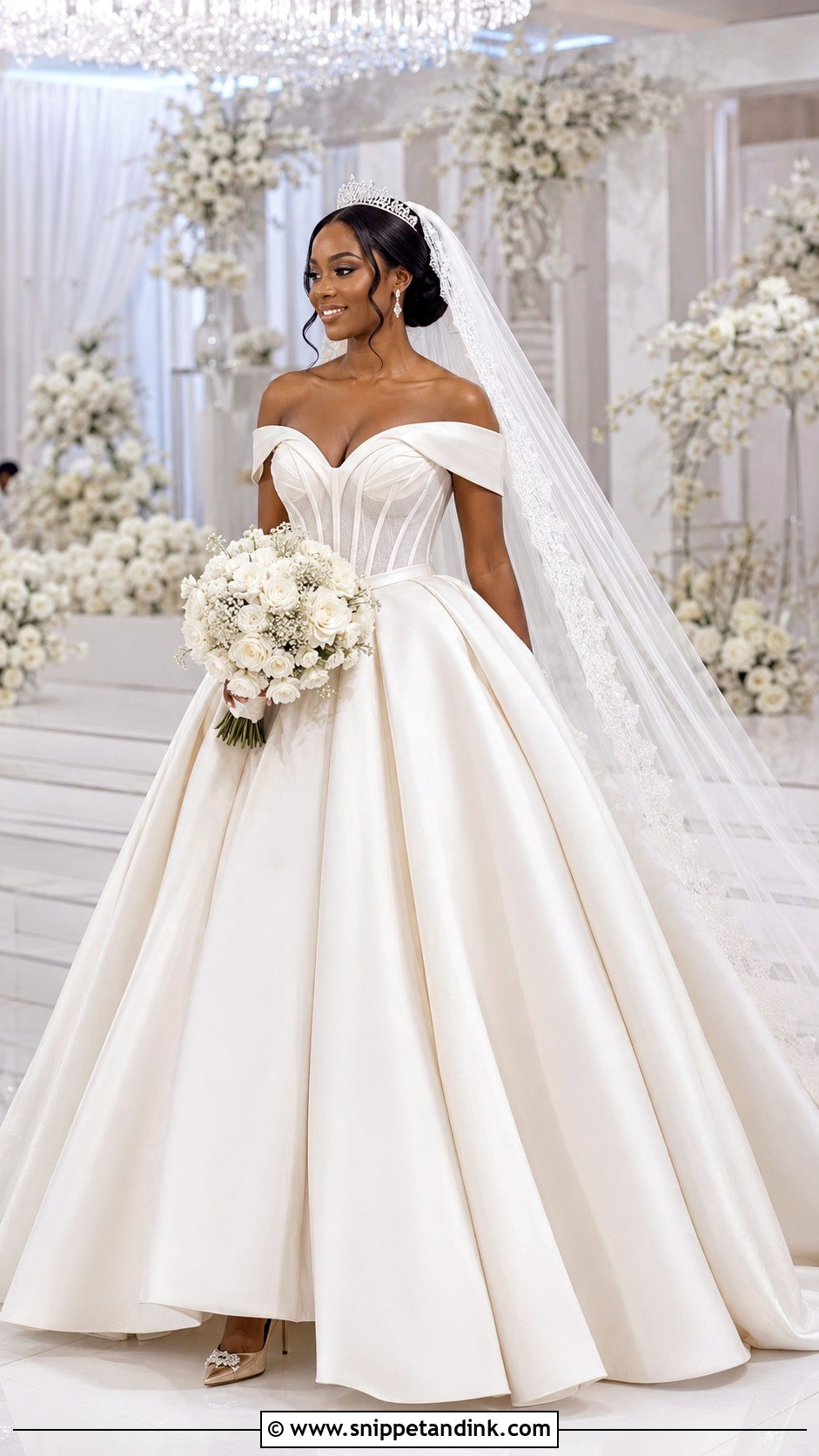
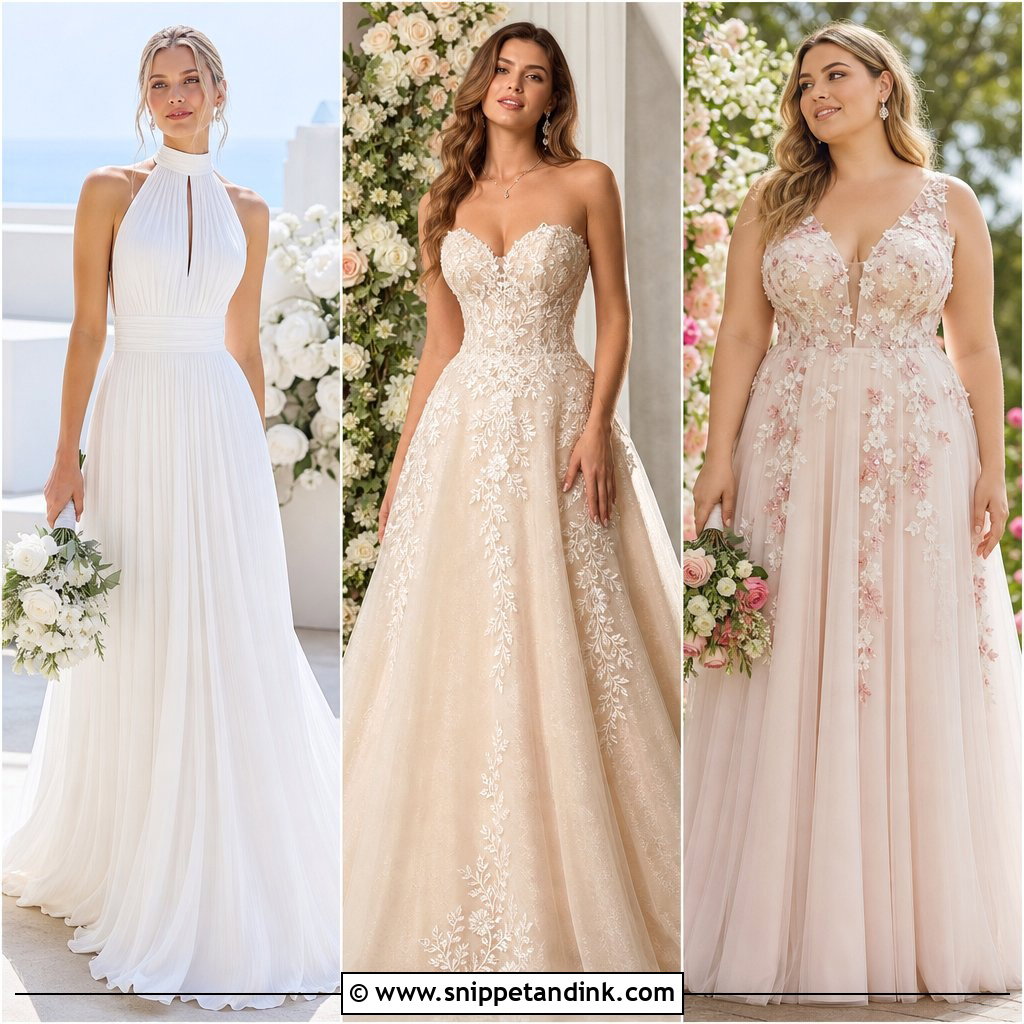
A ball gown makes the grand entrance a large Nigerian reception hall is built for. The structure lives in the corset bodice; the skirt, in Mikado, satin or layered tulle, just needs to be full enough to fill the aisle. I’d use pearl embroidery or placed crystals rather than sparkle on every inch, since a fully crystal-covered skirt gets very heavy by the evening. A cathedral veil, tiara, drop earrings and pointed heels complete it. Ask for a strong bustle so the train lifts after the ceremony. Petite brides can reduce the skirt volume, and curvier brides usually feel more secure with extra internal boning and wide supportive straps.
2. Mermaid Wedding Dress
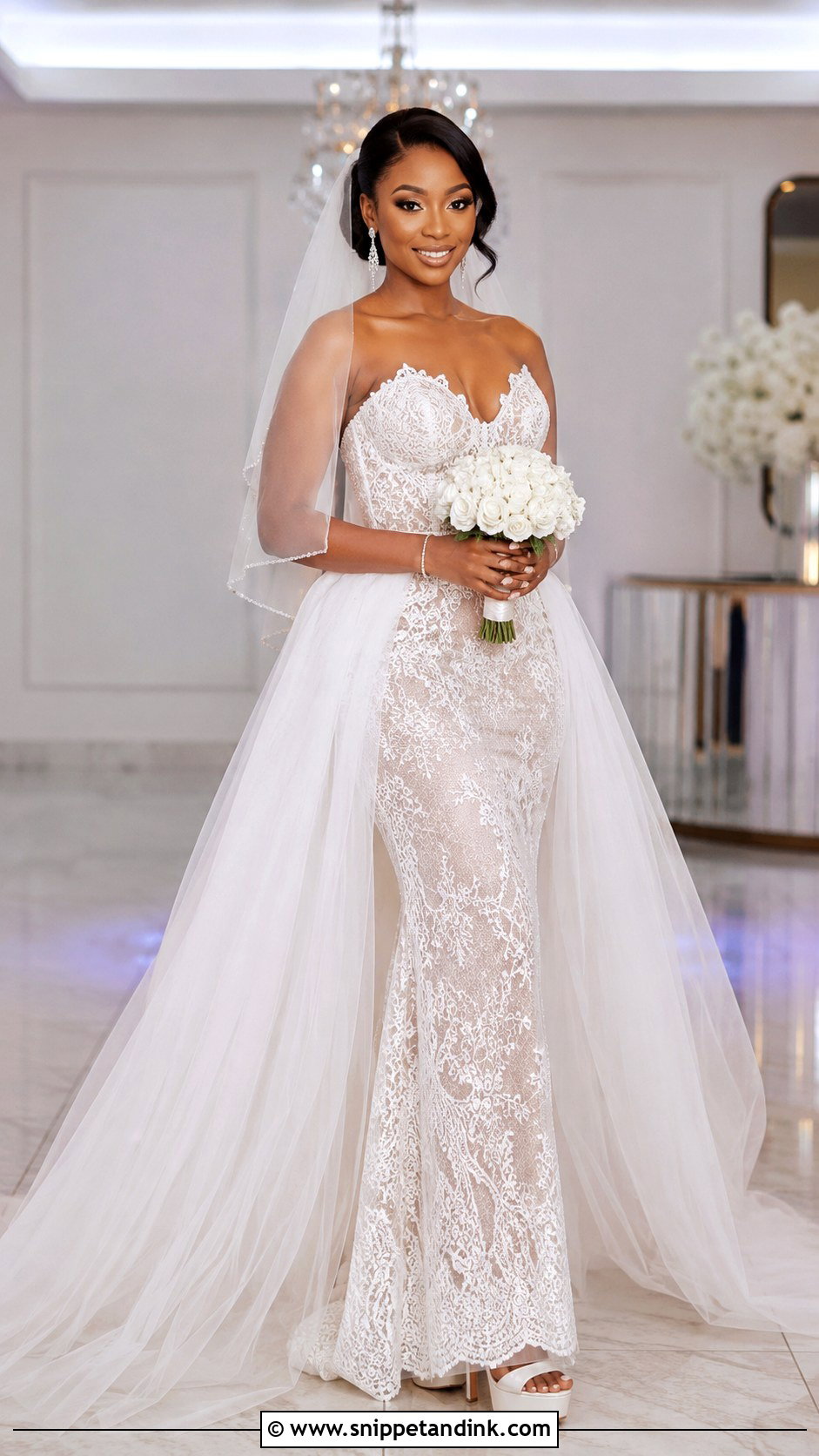
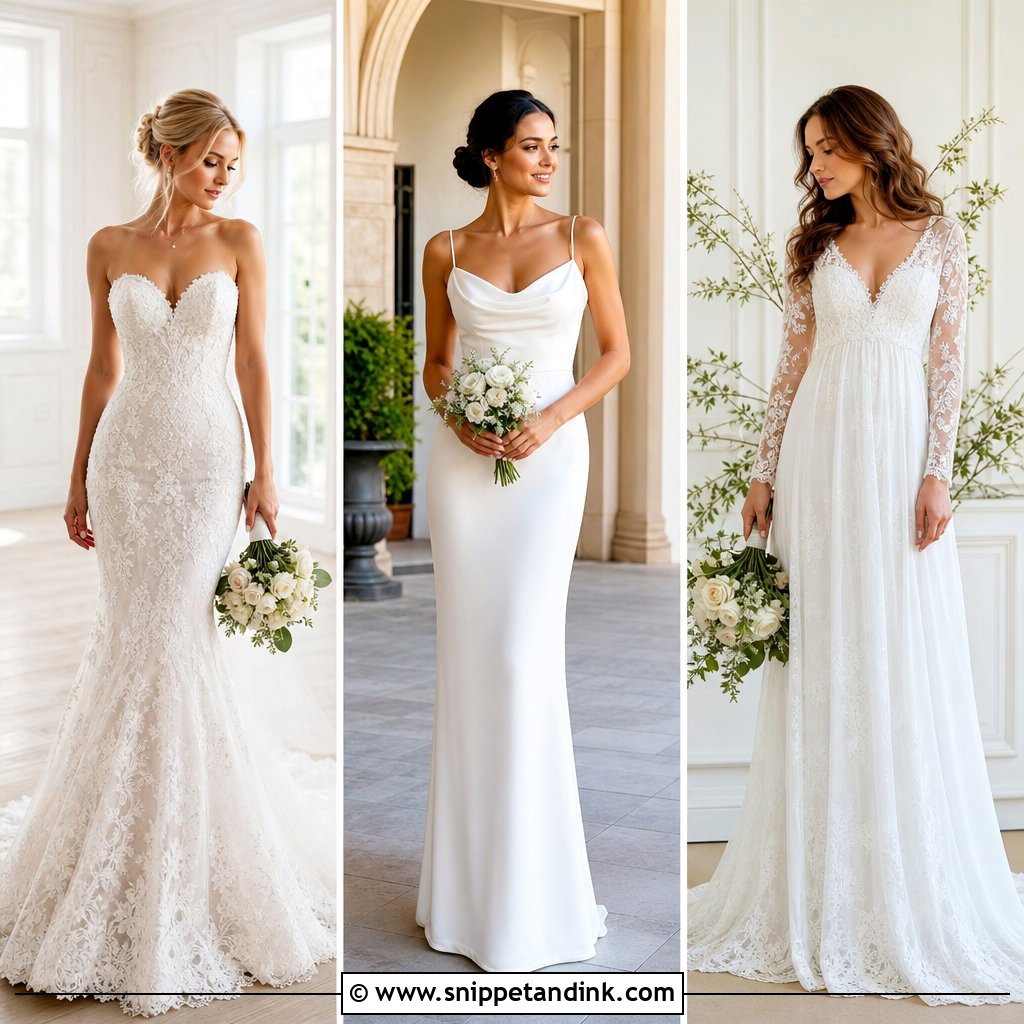
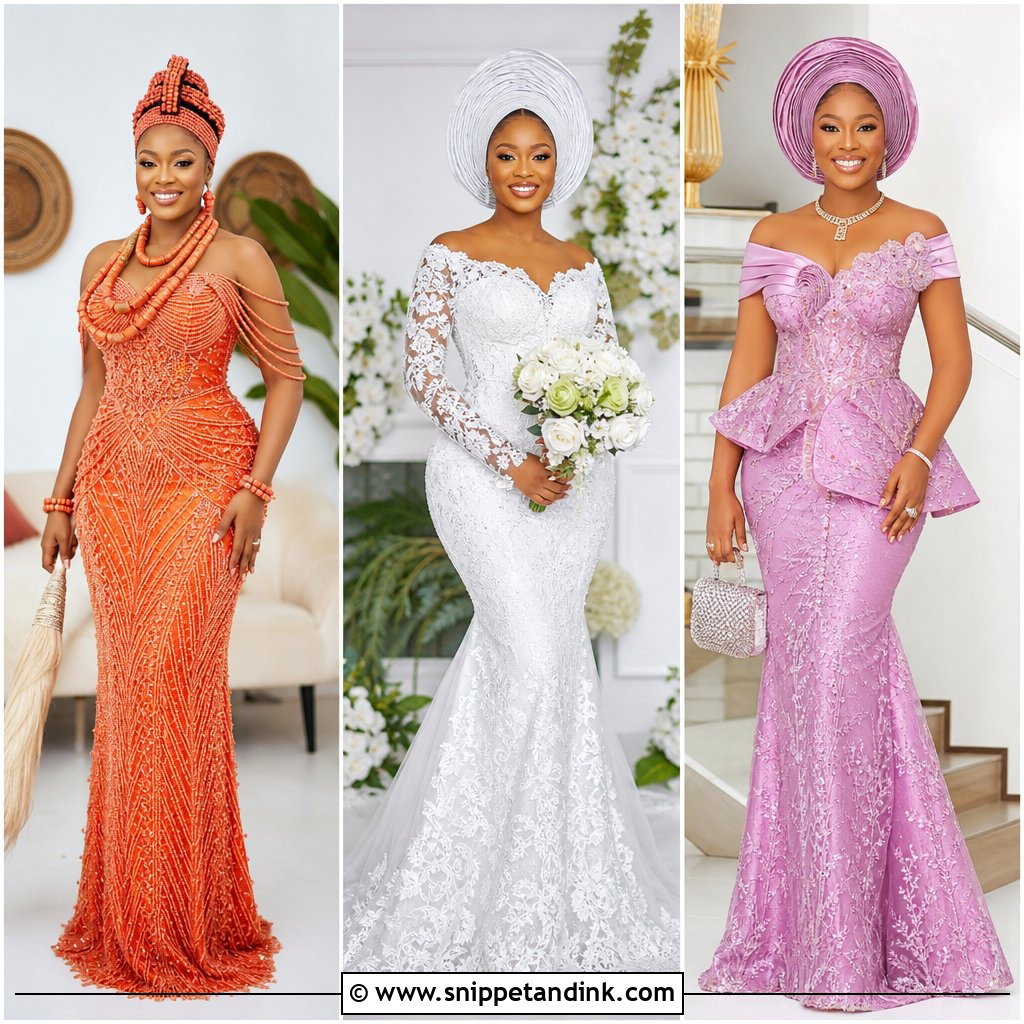
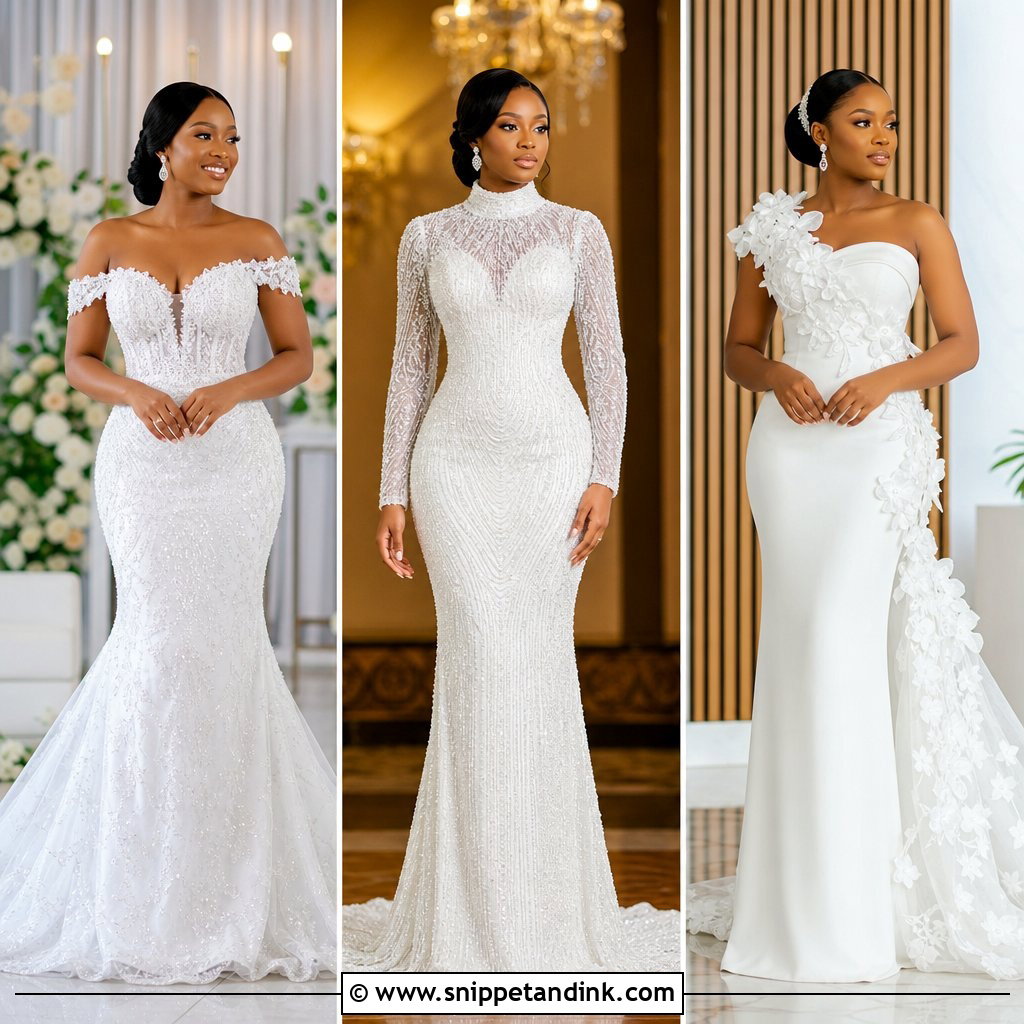
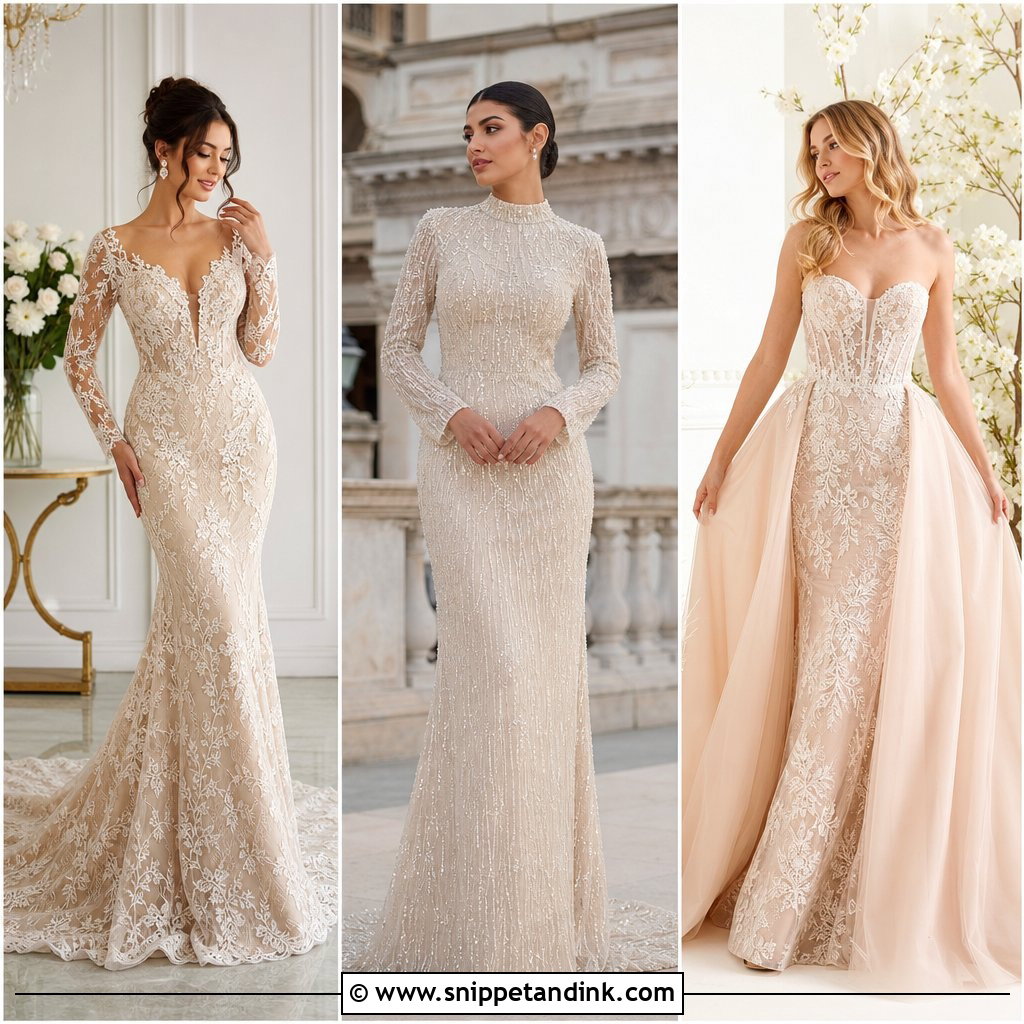
A mermaid gown fits close through the bodice, waist and hips and flares at or below the knee. The flare point is everything: set too low, you shuffle; a few inches higher and you can actually walk and dance. I check it by having the bride climb a step and sit on a low chair at the fitting. Stretch crepe, lace or structured satin hold the shape without feeling rigid. A fingertip veil, crystal earrings, a compact bouquet and platform heels for stability finish the look. A detachable overskirt gives drama for the entrance and reveals the fitted line later. Good seam placement creates definition on many figures, not just hourglass ones.
3. A-Line Lace Wedding Dress
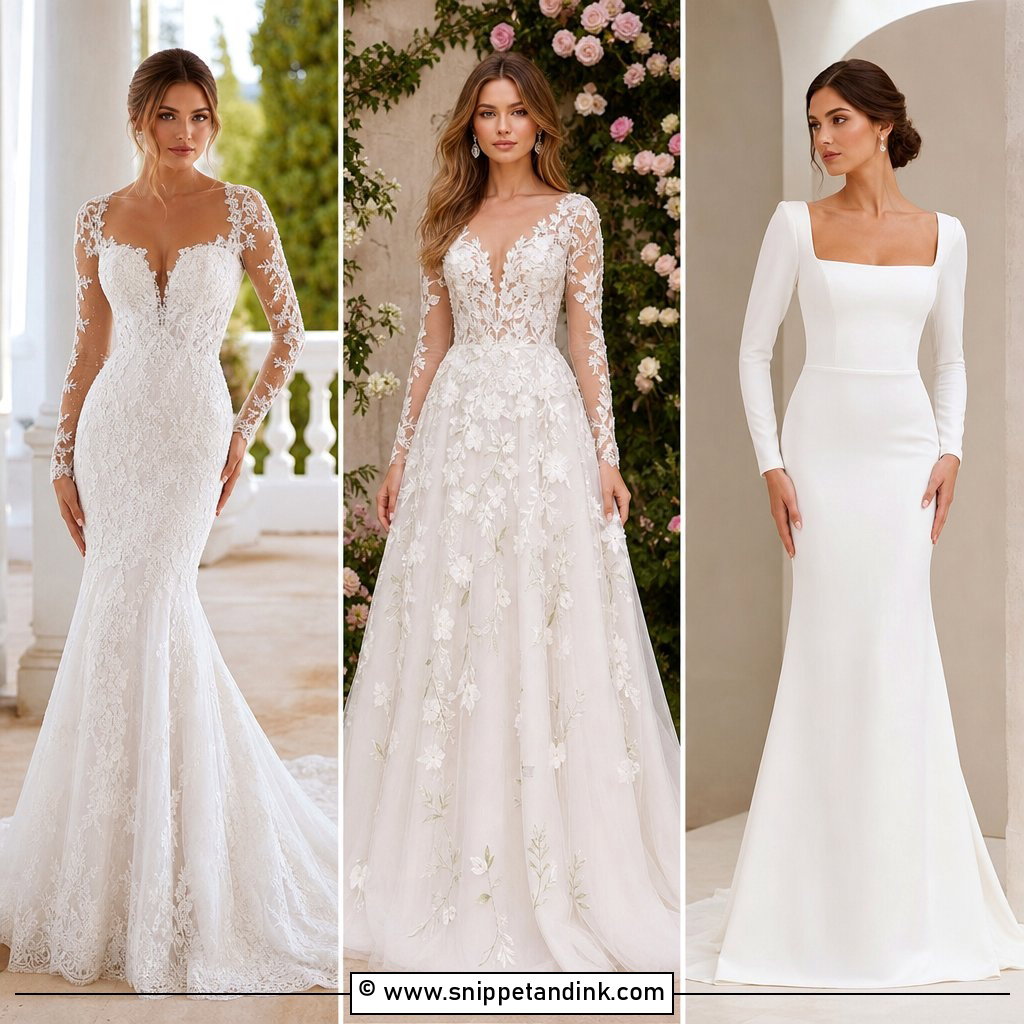
An A-line follows the torso and widens gently from the waist, which is why it suits almost every body type with very little alteration. I recommend it to brides who want movement without the weight of a ball gown, especially for an outdoor ceremony. Floral lace over a nude, ivory or champagne lining makes the pattern visible; lace over white lining can disappear in photos. A lace-edged veil, pearl studs, a delicate bracelet and block heels finish it. Lined sleeves and a higher back add coverage, and a defined waistband or light corset keeps the shape crisp through the reception.
4. Off-Shoulder Wedding Dress
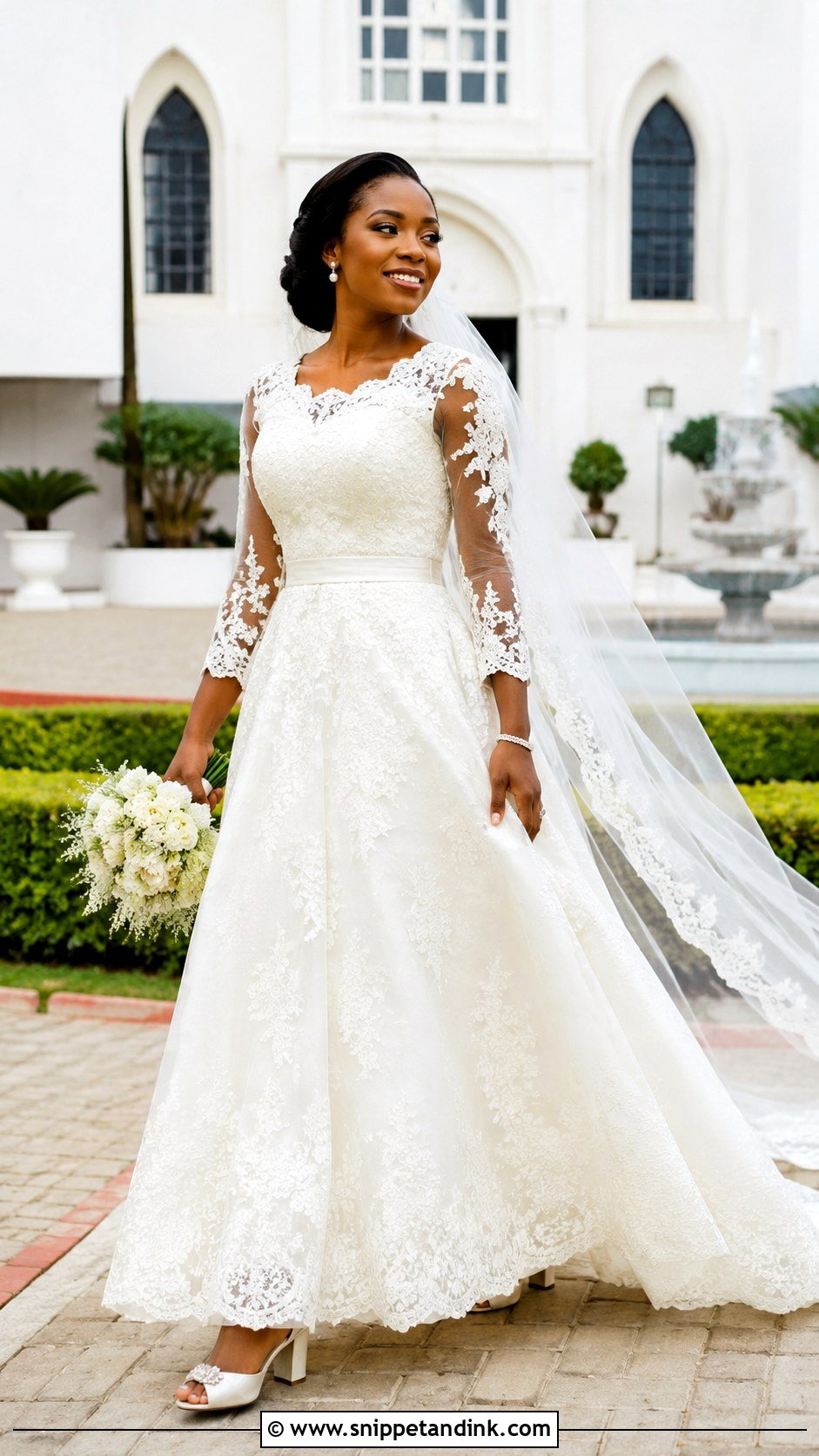
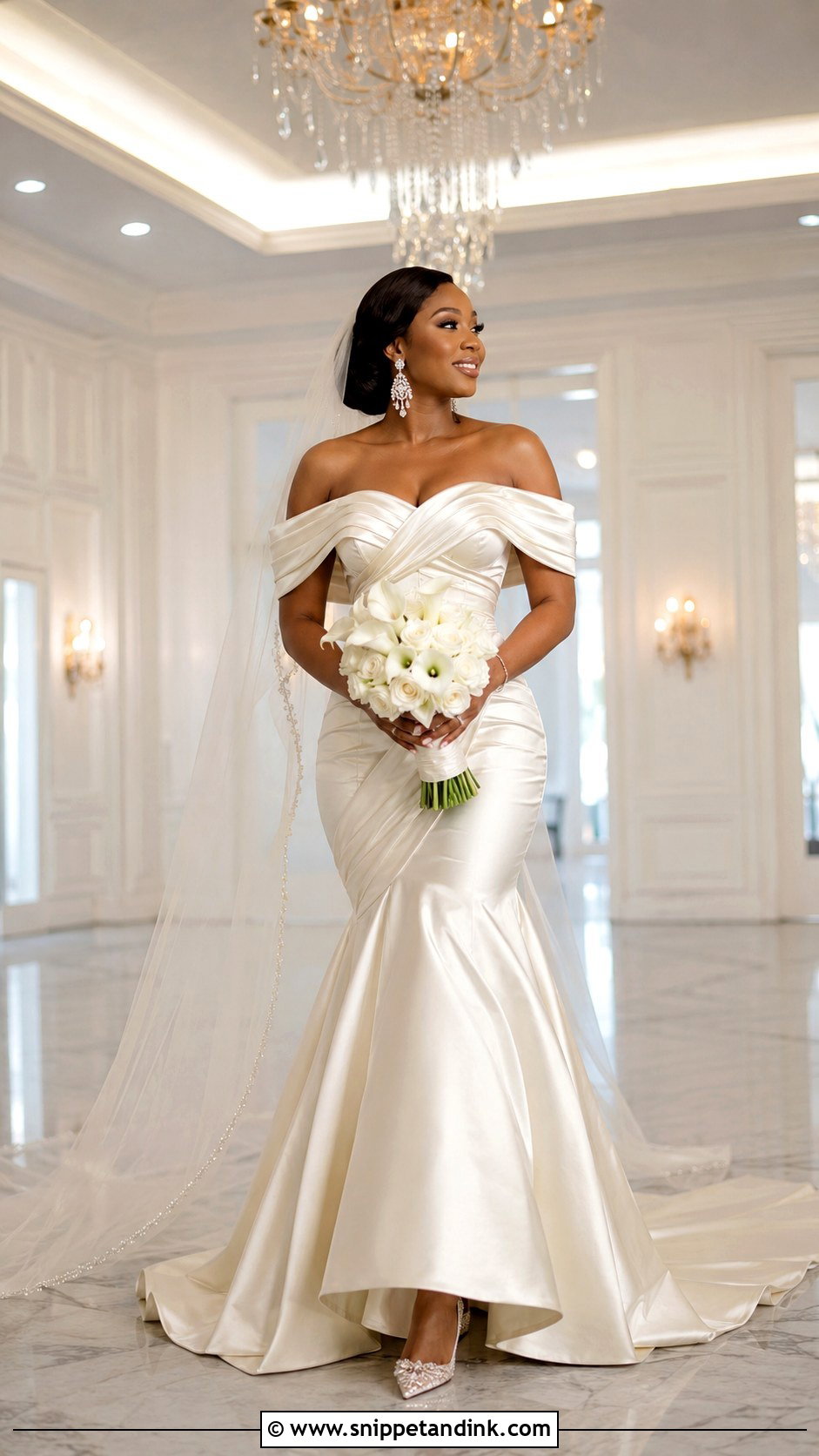
Off-shoulder necklines have one recurring problem: lifting your arms pulls the whole neckline down. The fix is internal boning and sleeve bands placed correctly on the upper arm, and I always ask the bride to raise her arms and sit before approving the fit. The neckline suits a fitted bodice over A-line, mermaid or full skirts. Draped satin bands look clean; lace or beaded sleeves are more decorative. An elegant updo shows the shoulders, with chandelier earrings, a simple veil and pointed heels. Skip a heavy necklace if the neckline already carries embroidery.
5. Long-Sleeve Wedding Dress
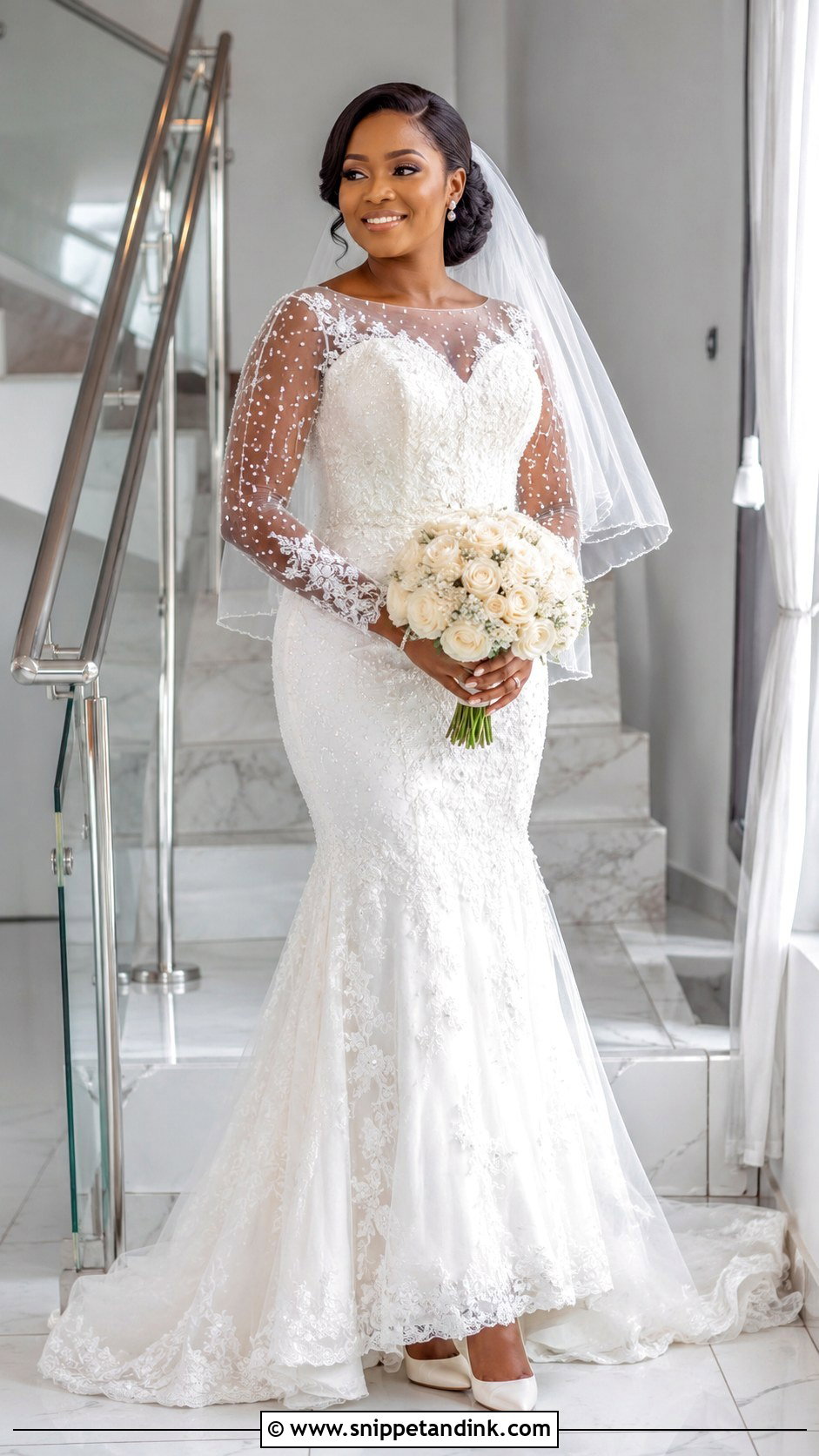
Long sleeves give coverage without losing glamour, but the fabric matters a lot in Nigerian heat. Lined crepe sleeves look sleek and modest; sheer illusion sleeves with lace, pearls or crystals look lighter and stay cooler. I’d choose lightweight mesh over layered lace for a warm afternoon. Make sure the armholes are cut high enough to lift your arms and the cuffs don’t pinch your wrists when you greet guests. Pair the sleeves with a fitted bodice and gently flared skirt. A low bun, pearl drops, satin pumps and a medium veil complete it. Detachable sleeves make the dress lighter for the reception.
6. Corset Wedding Dress
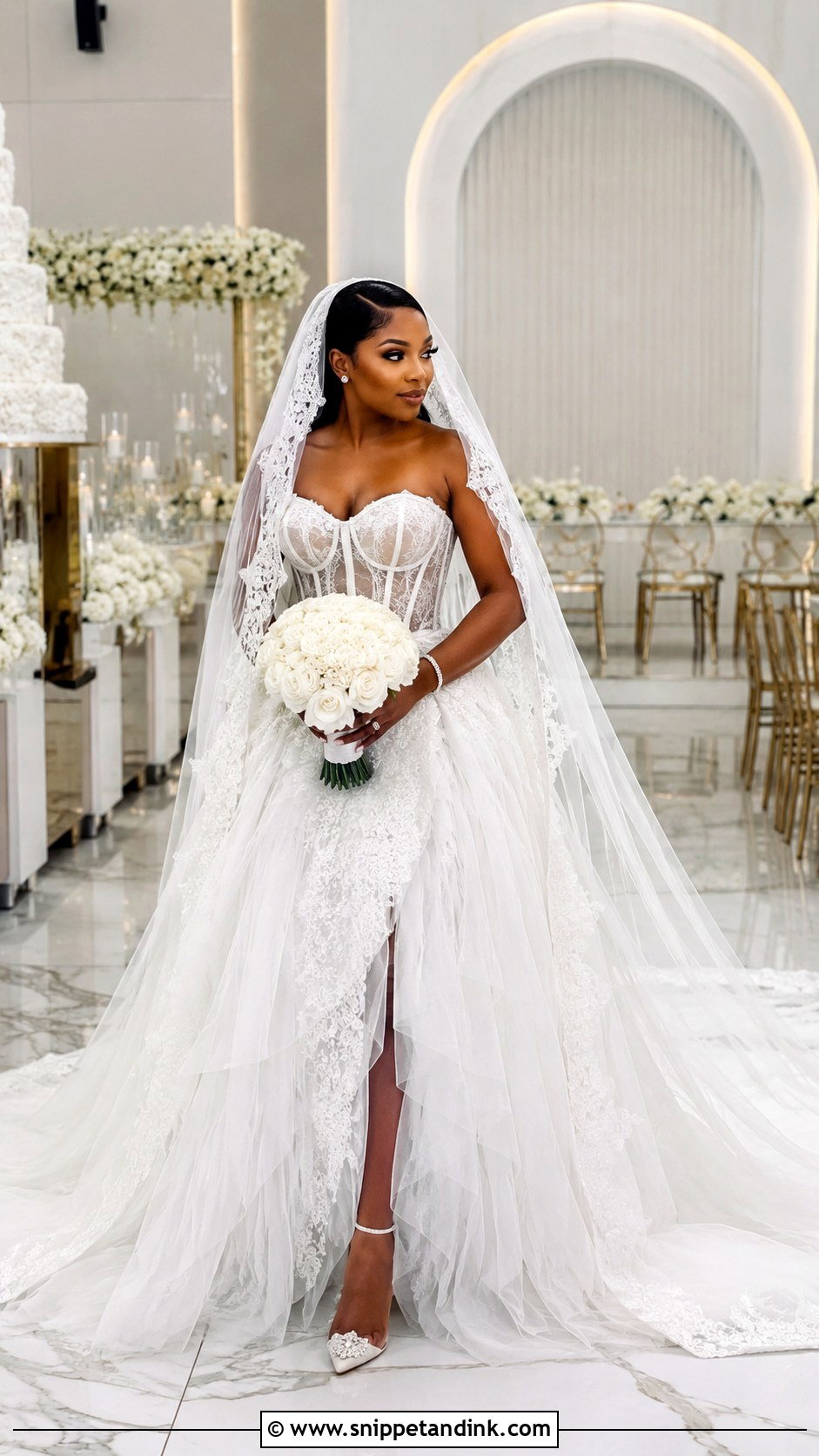
A visible corset gives a strong, defined waist, but good boning follows the body rather than squeezing it. I check bust support from the front, side and back, and I want the bride to breathe deeply and sit comfortably before signing off. Lace panels, pearl details and neatly finished cups soften the construction. It pairs with a soft tulle skirt, a fitted crepe base or a detachable train. A long veil, sparkling studs, a slim bracelet and heels matched to the gown’s undertone complete it. A properly finished lining stops the boning rubbing your skin over a long celebration.
7. Satin Wedding Dress
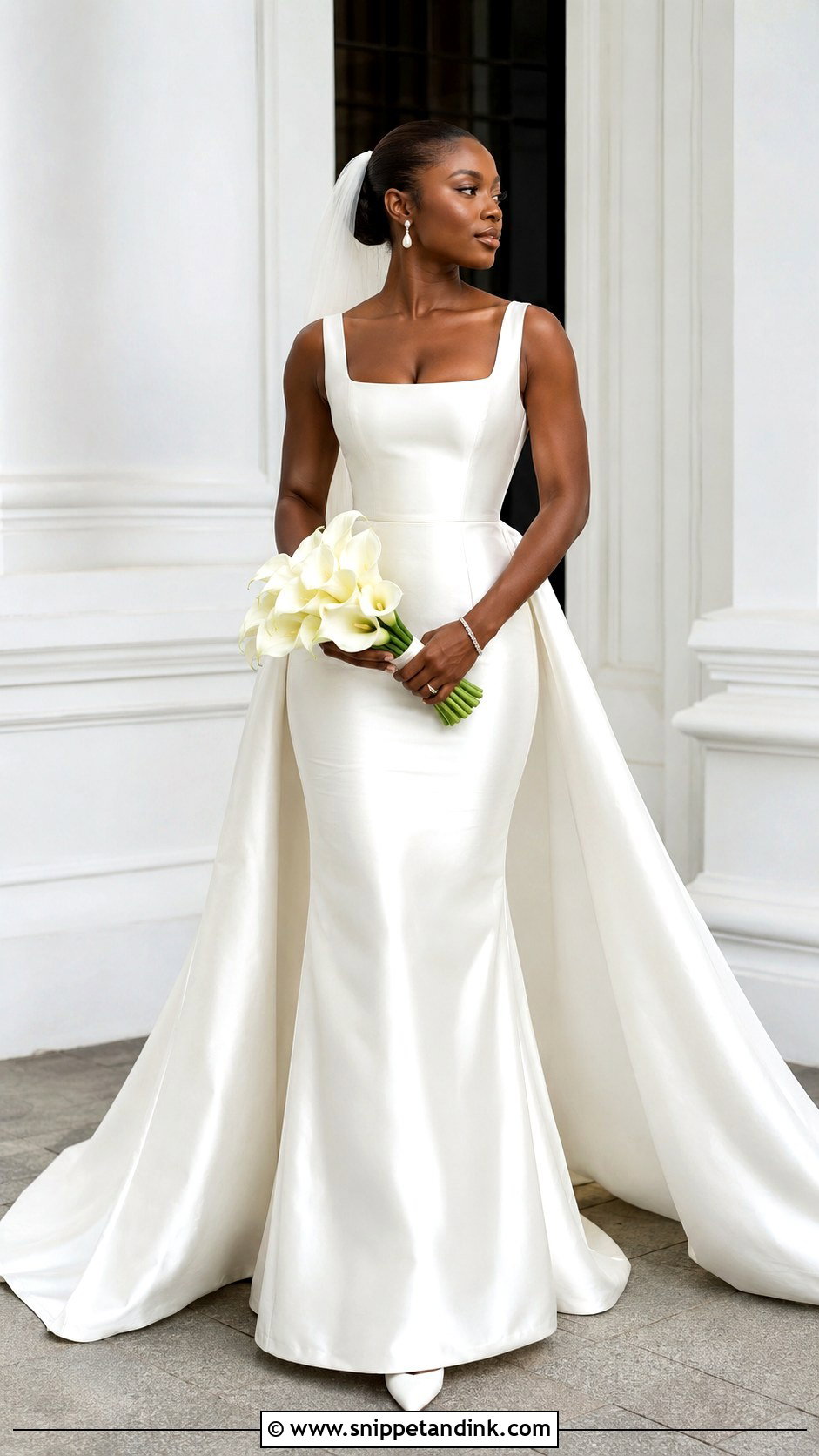
Satin shows every seam and every bump in your underwear, so I spend more time fitting a plain satin dress than a beaded one. Get the tailoring right and it looks expensive with no beadwork at all. A clean column, A-line or softly draped cut with a square neckline and covered back buttons works. Pearl earrings, a sleek veil, white pointed pumps and a structured bouquet complete it. Satin also creases when you sit, so expect some lines in later photos. A detachable satin train or oversized back bow adds drama. Ivory and soft white satin are easier to match with shoes, veils and different skin undertones than bright white.
8. Beaded Wedding Dress
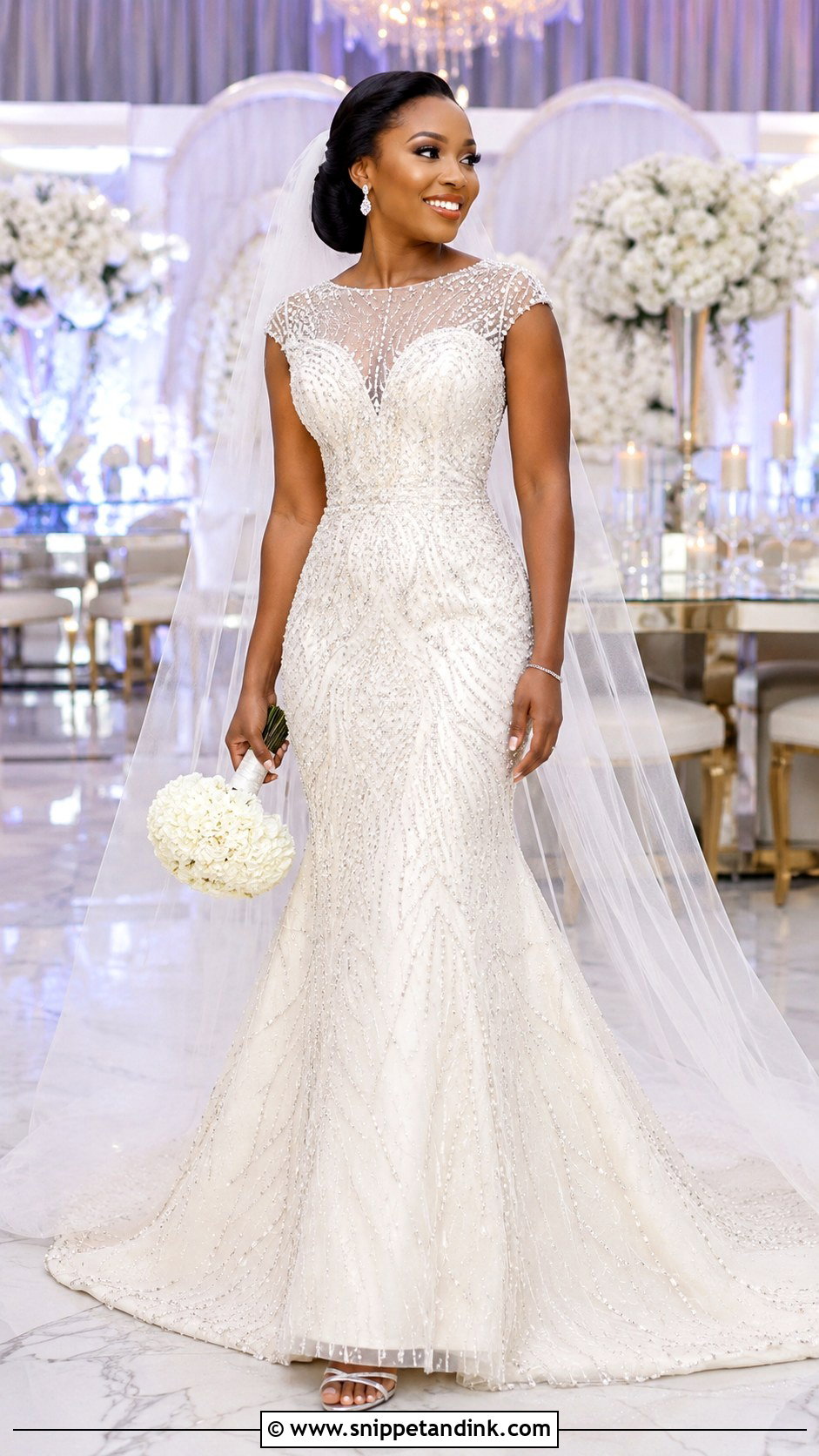
Beadwork suits the energy of a Nigerian wedding, but weight builds quickly. I’d concentrate crystals at the neckline, waist and train rather than covering the dress, which gives dimension without making it exhausting to wear. If the bodice is heavily decorated, keep the skirt clean. Understated earrings, a plain tulle veil, a small bouquet and stable metallic or ivory heels complete it. Run your hand over the bodice to check for loose beads and rough edges that can snag the veil. A lining under sheer areas adds coverage. And insist on a secure bustle, because a beaded train is hard to manage once the dancing starts.
9. Floral Appliqué Wedding Dress
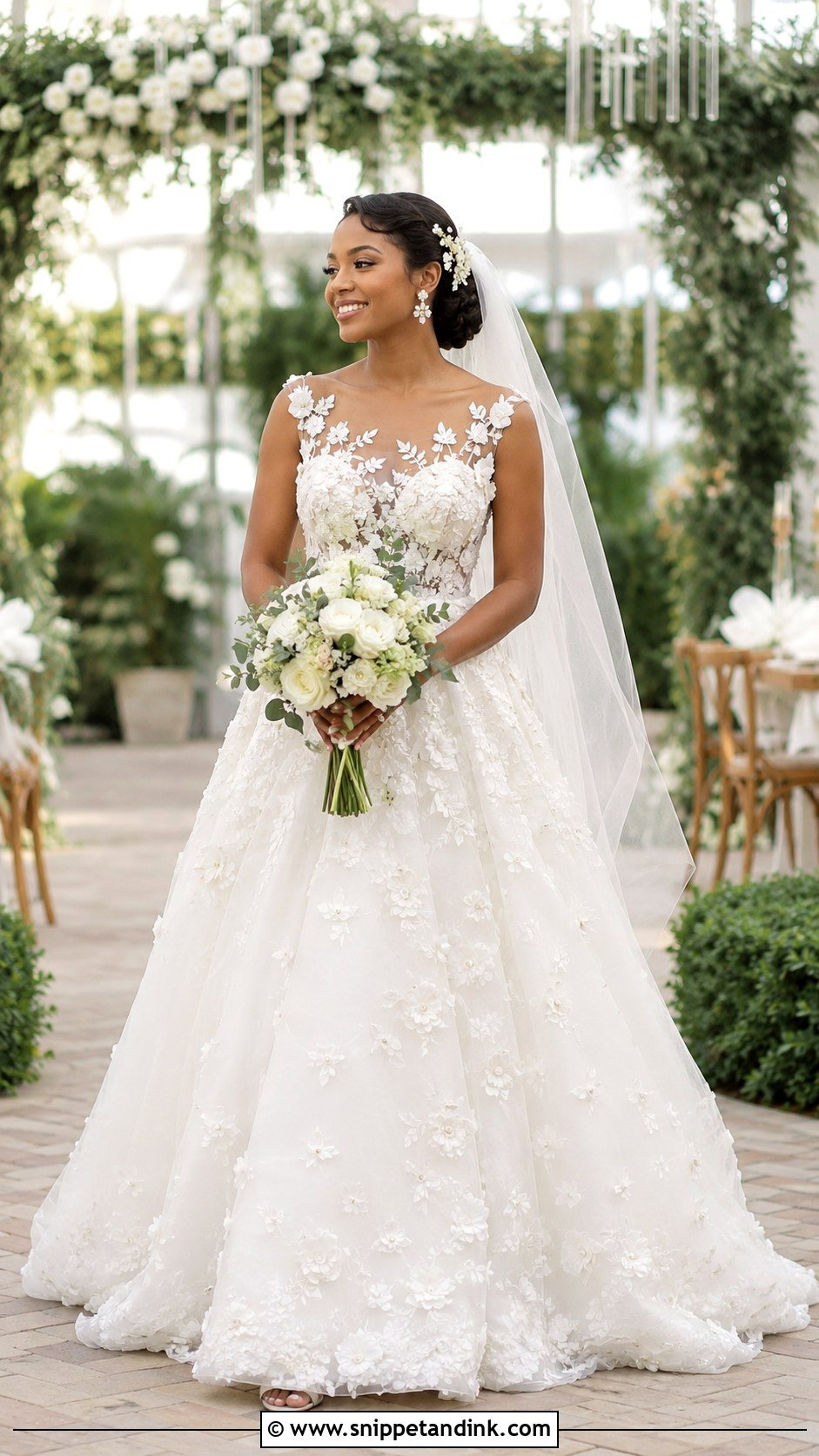
Raised floral appliqués add texture to a modern gown, but they need careful placement. I’d scatter them across an illusion neckline, bodice, sleeves and upper skirt, and check how they sit around the bust and waist at the fitting. Badly placed flowers add bulk where you don’t want it. An A-line or fitted silhouette keeps them visible. Floral hairpins, delicate earrings, a plain veil and minimalist heels finish it, without competing accessories. For an outdoor wedding, a fresh bouquet in similar flower shapes ties the look together.
10. Cape Wedding Dress
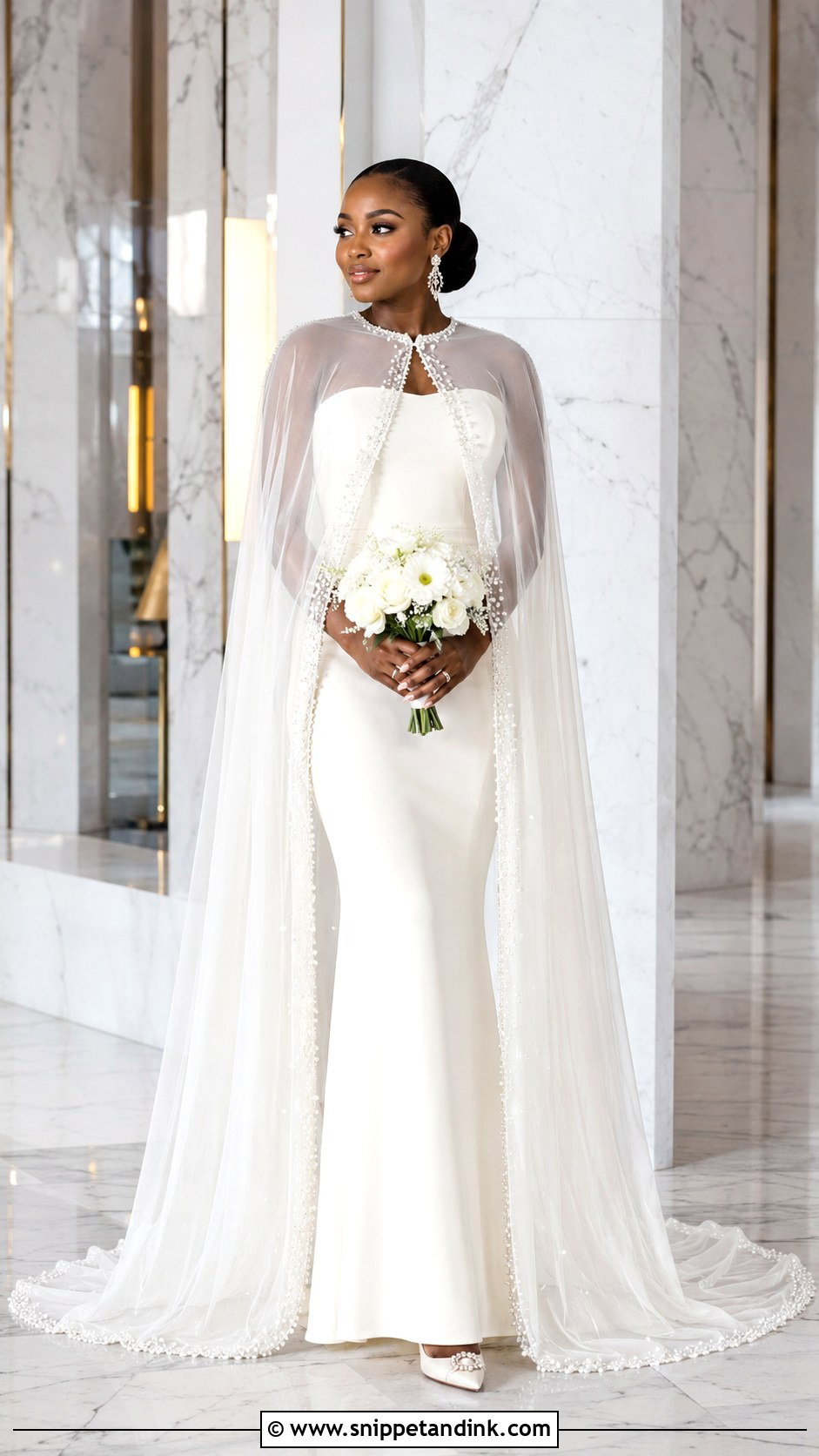
A bridal cape replaces the veil and gives an entrance real movement. Start with a streamlined crepe, satin or lace gown, then add a floor-length cape fastened neatly at the shoulders. The cape should be light enough to float and cut wide enough to fall behind the arms; a narrow cape pulls forward and tangles. Pearl edging, subtle embroidery or scattered crystals add detail. A polished bun, statement earrings, pointed heels and a compact bouquet complete it. Remove the cape at the reception for a simpler look. For more coverage, choose one with a high neck and sheer fabric over the shoulders.
11. Detachable Train Wedding Dress
A detachable train gives you two looks without a full outfit change, which saves time in a packed schedule. Start with a fitted mermaid, column or short dress, then attach a full overskirt or sweeping train at the waist. The attachment point is what I check most: it should be hidden under a belt, lace panel or decorated waistband, and simple enough that a bridesmaid can undo it in minutes without damaging the gown underneath. Lace, tulle and satin all work. Drop earrings, a fingertip veil, bridal heels and a structured bouquet complete the entrance look.
12. High-Neck Wedding Dress
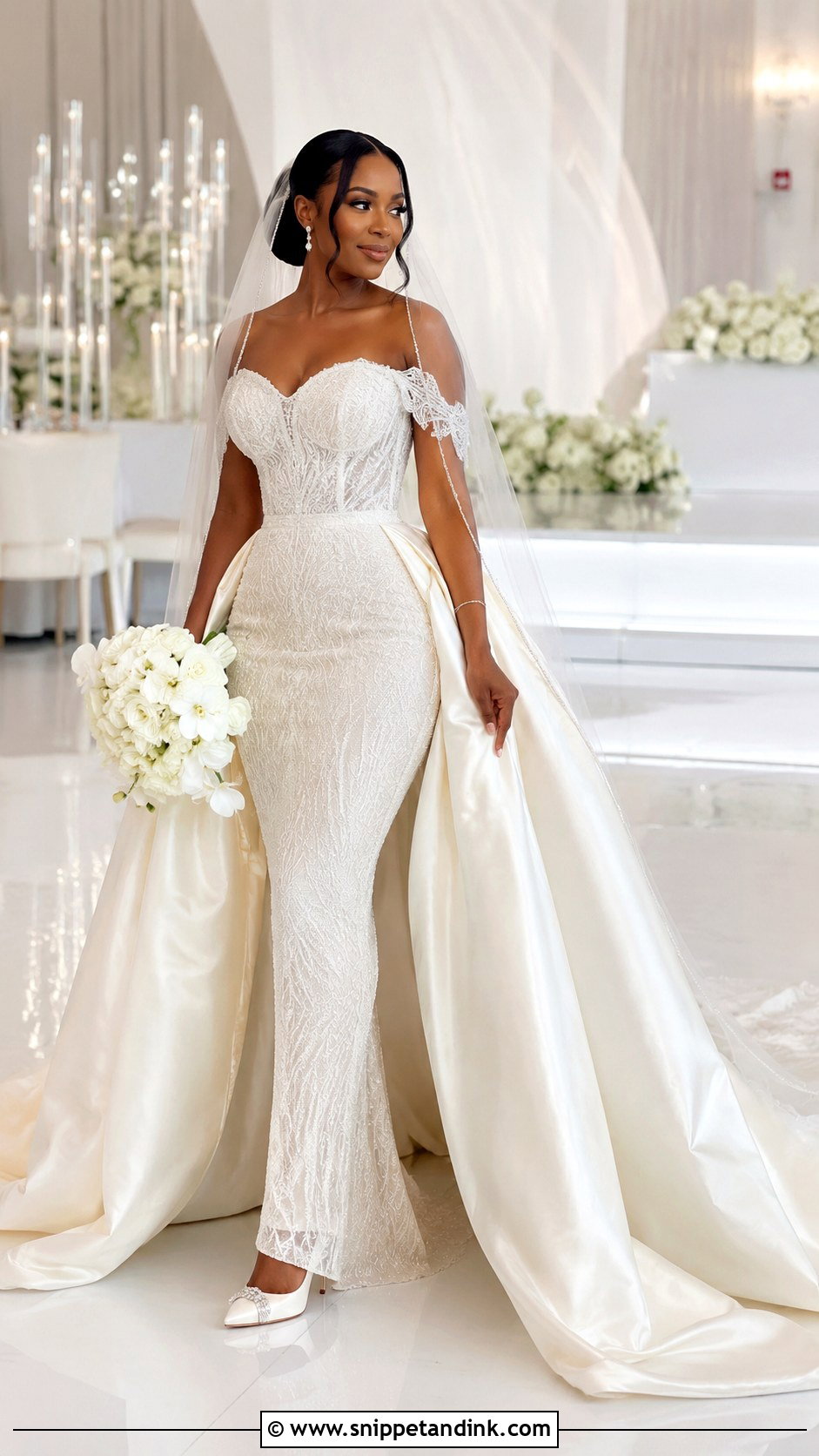
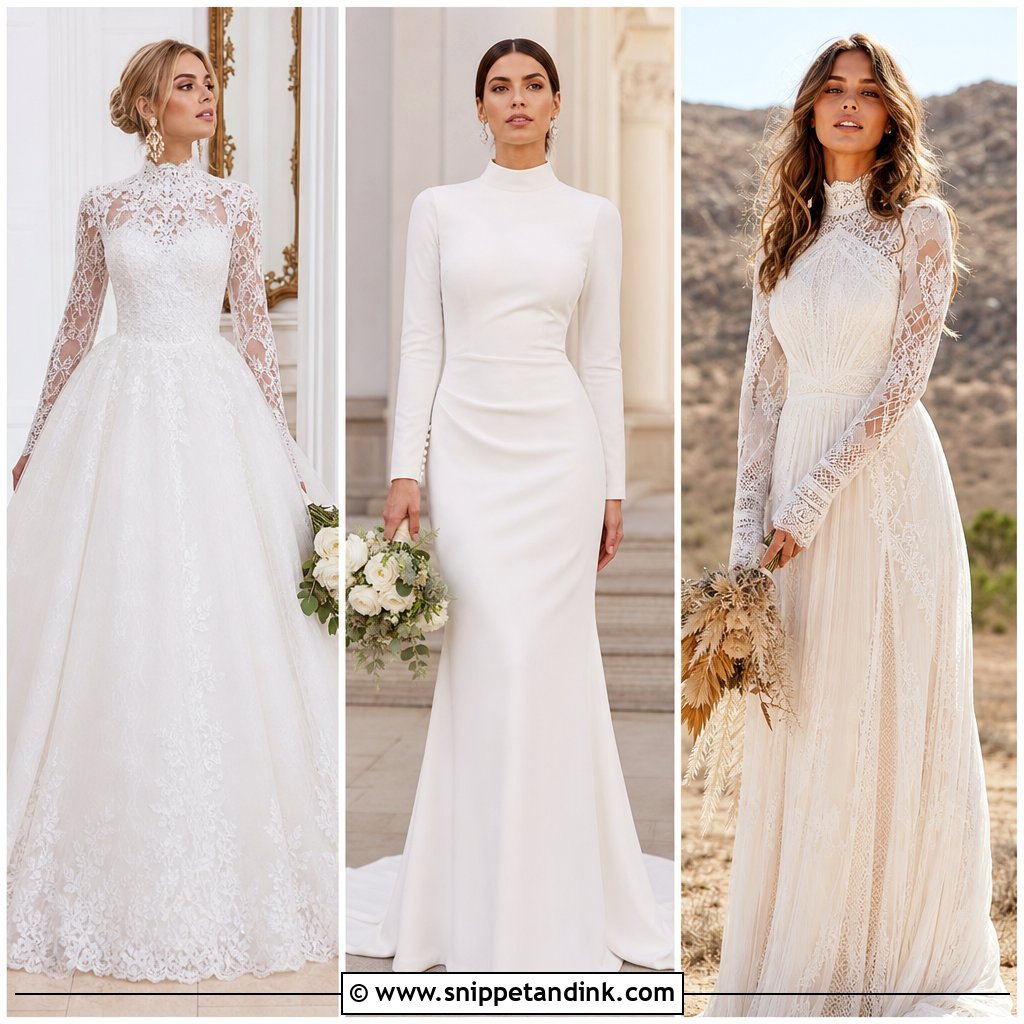
A high neck gives coverage and a long line through the upper body. Sheer lace over a lined bodice keeps it soft; structured crepe looks clean and modern. With long sleeves and an A-line skirt it reads modest, while a fitted skirt adds definition. I’d pay close attention to the collar: it needs enough ease to turn your head and swallow comfortably all day. Small pearl earrings, a smooth low bun, a lace-edged veil and closed-toe heels finish it. Skip a necklace. Breathable illusion mesh and a light lining help in warm weather.
13. Minimalist Registry Wedding Dress
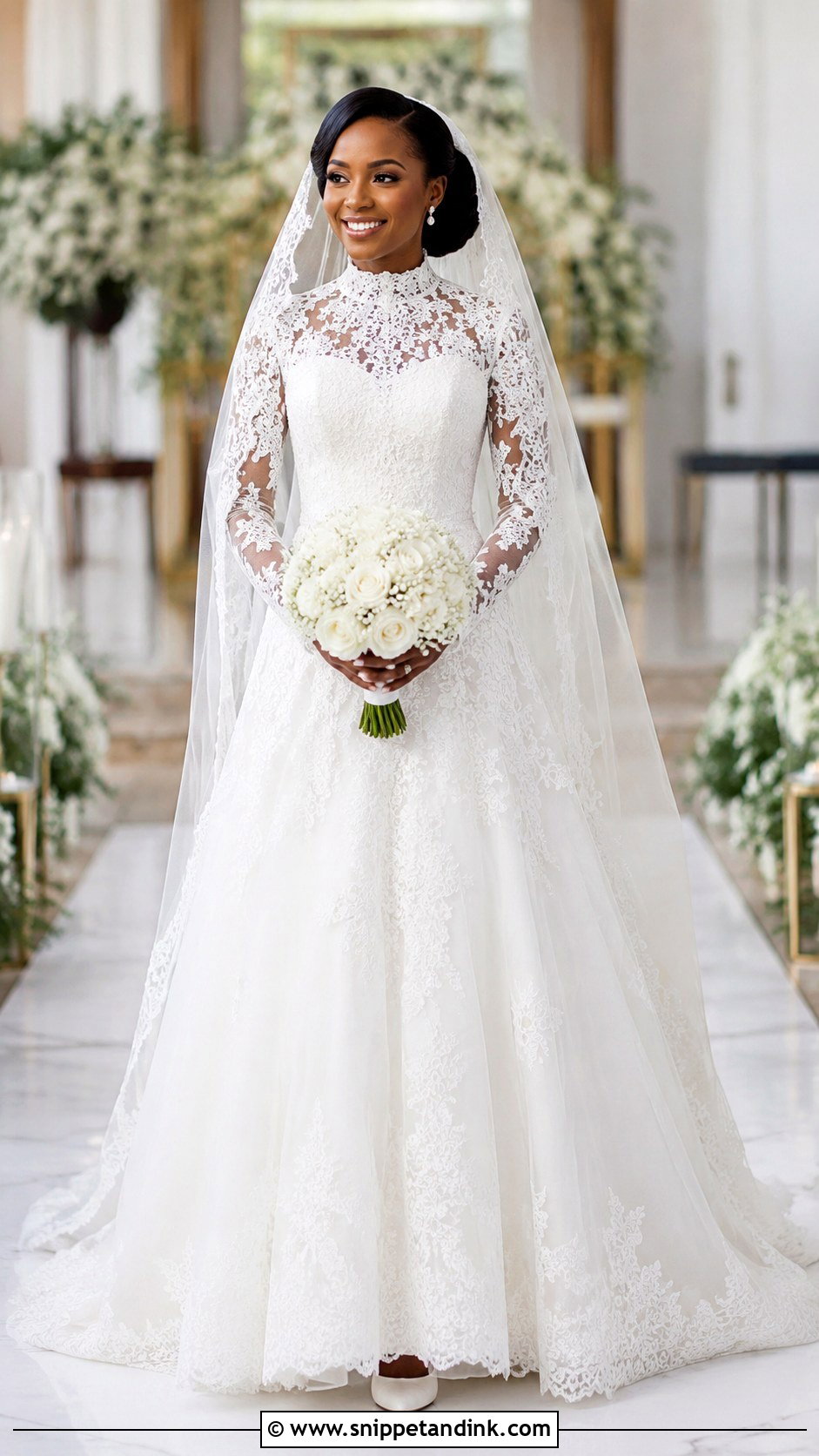
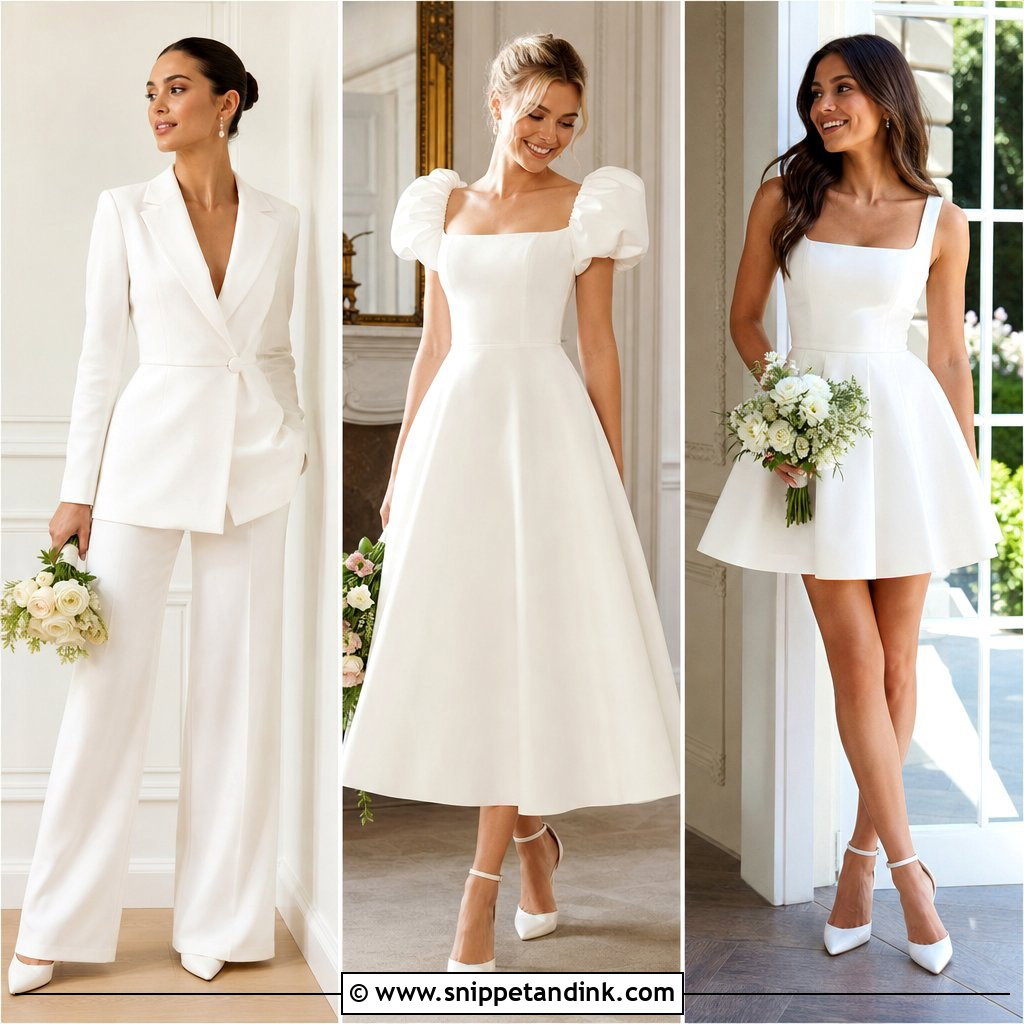
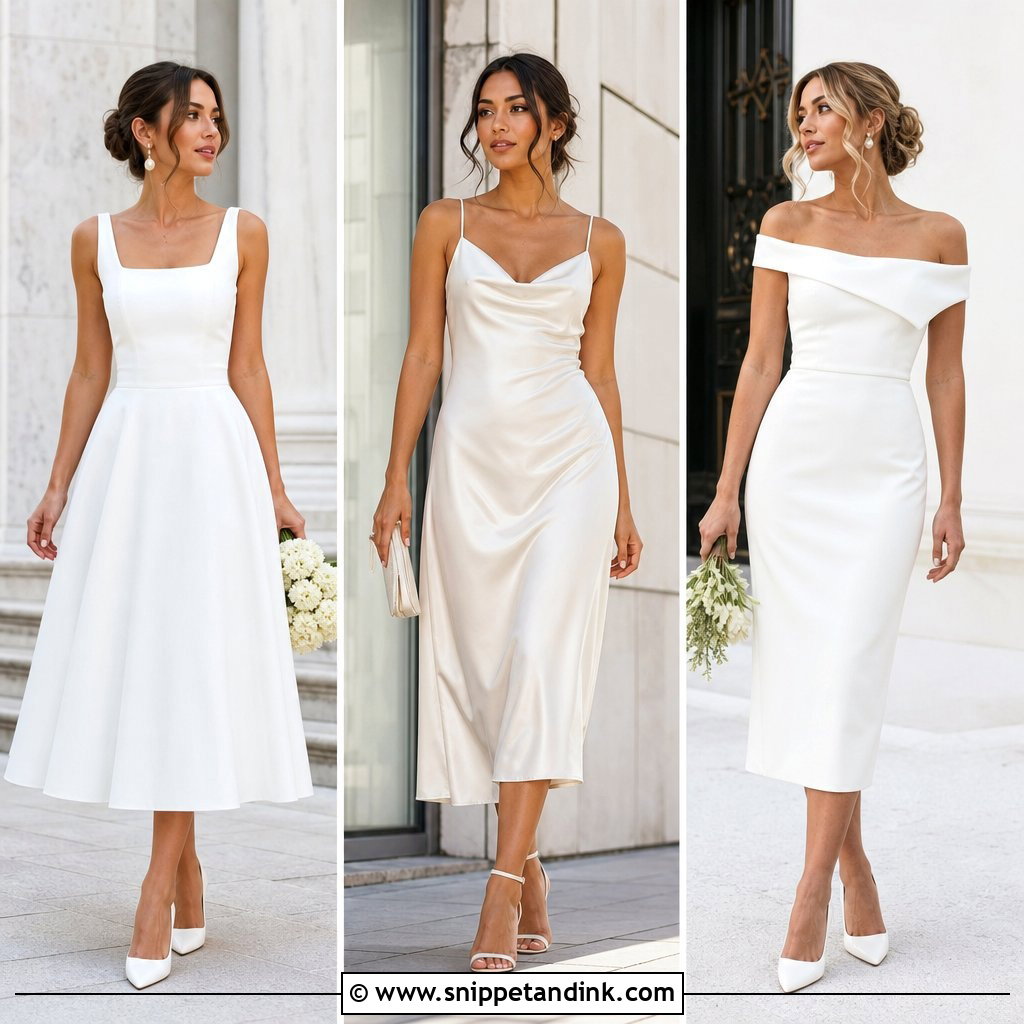
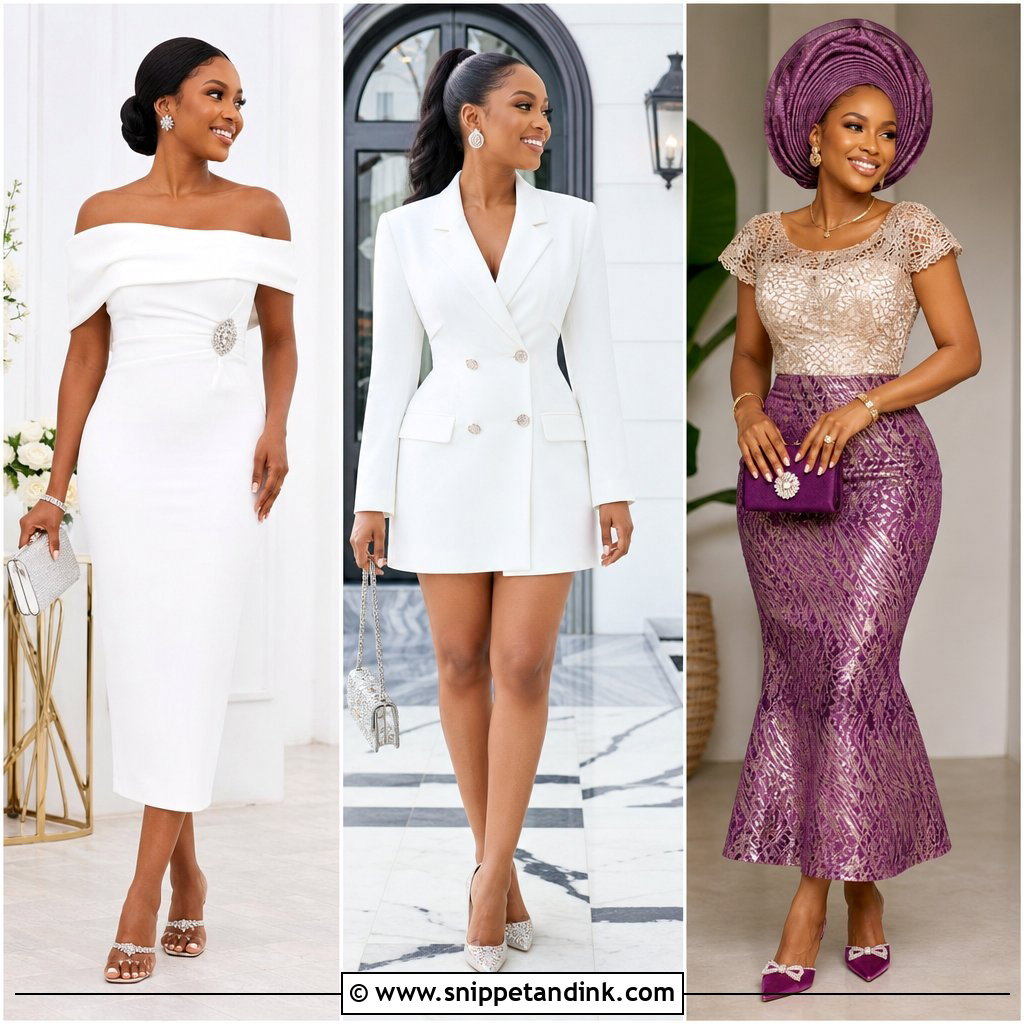
A registry ceremony suits a simple, tailored look. A white midi dress with a square neckline, defined waist and clean pencil or A-line skirt works well, with a lightweight blazer, pearl earrings, pointed pumps and a structured mini bag. I’d test the skirt by sitting at a desk, since you’ll sign papers in it. Crepe and satin hold their shape in photos and stay comfortable through travel and a small celebration afterward. A short veil or padded bridal headband adds drama. Registry brides in Nigeria now wear everything from gowns to jumpsuits and coordinated separates, so choose what feels like you.
14. Bridal Jumpsuit Wedding Dress
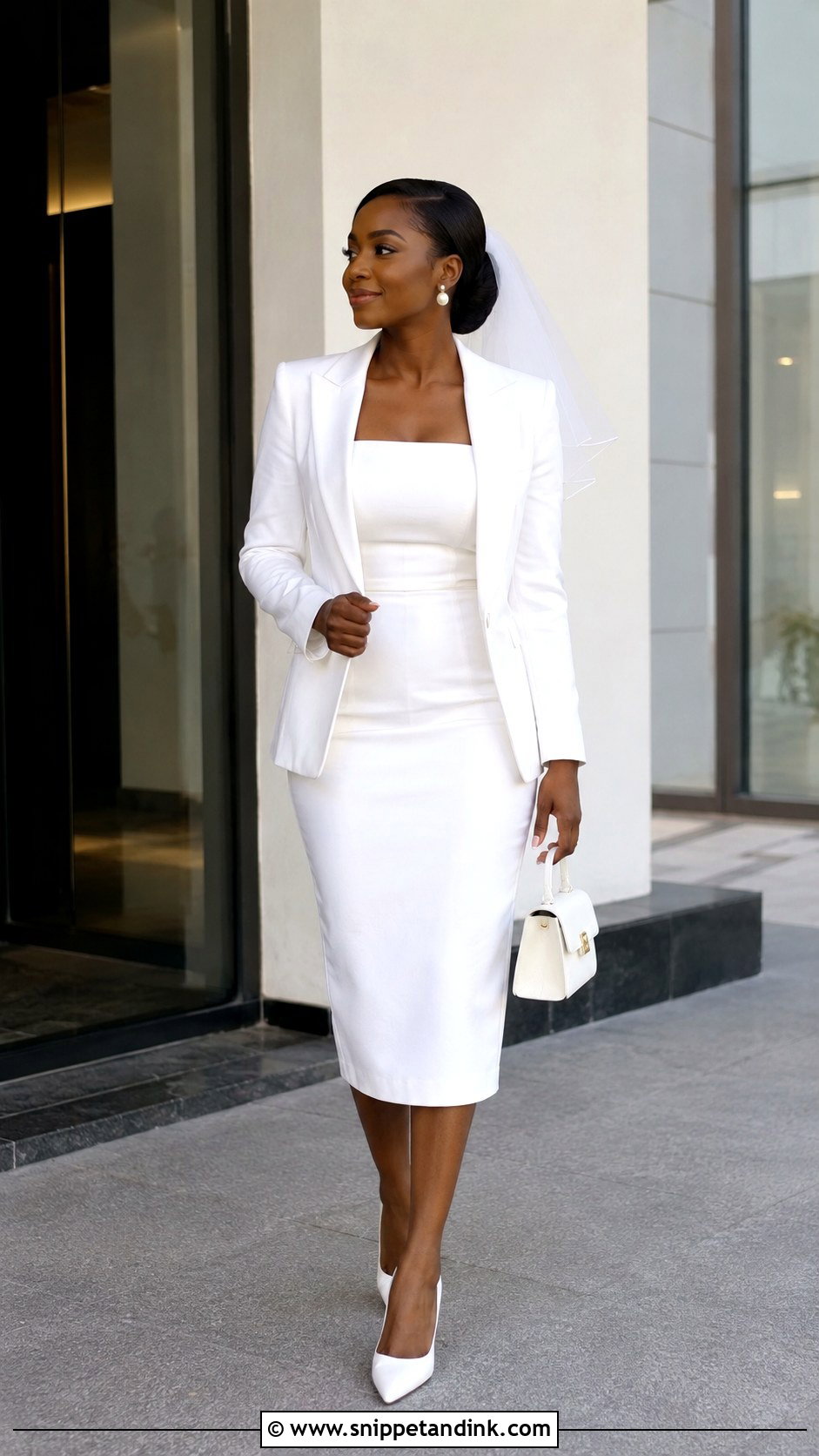
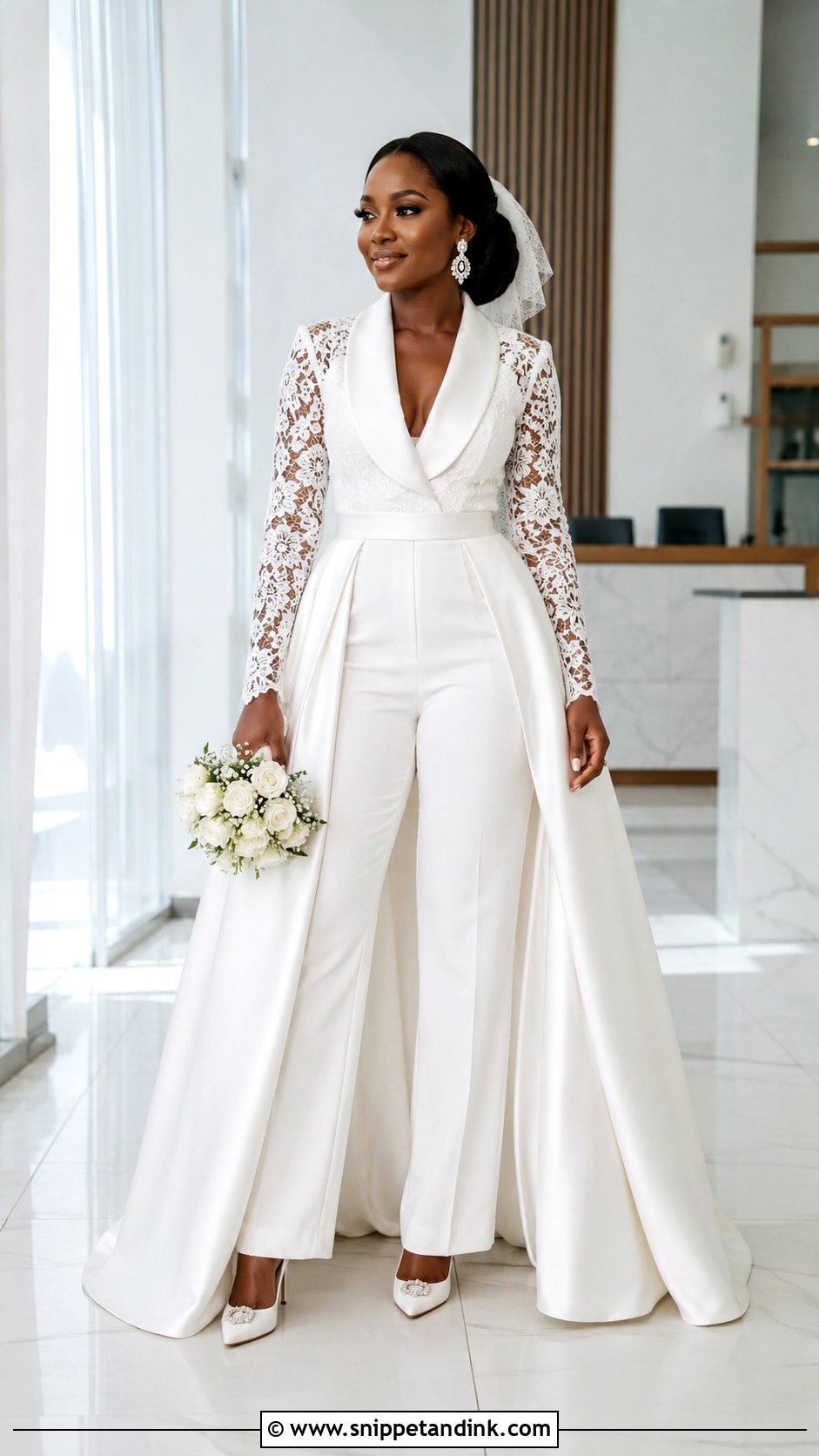
A white bridal jumpsuit can look every bit as ceremonial as a gown. A fitted bodice with wide-leg trousers creates a long line; satin lapels, lace sleeves or pearl detail make it bridal. A detachable overskirt adds drama for the entrance. Hem the trousers to your exact heels so they nearly reach the floor without catching. I always test the zip or fastening, because you’ll need to manage it in a bathroom alone. A fascinator or short veil, statement earrings and pointed heels complete it. A tailored blazer adds coverage for the formal part and comes off later.
15. Yoruba Aso Oke Wedding Dress
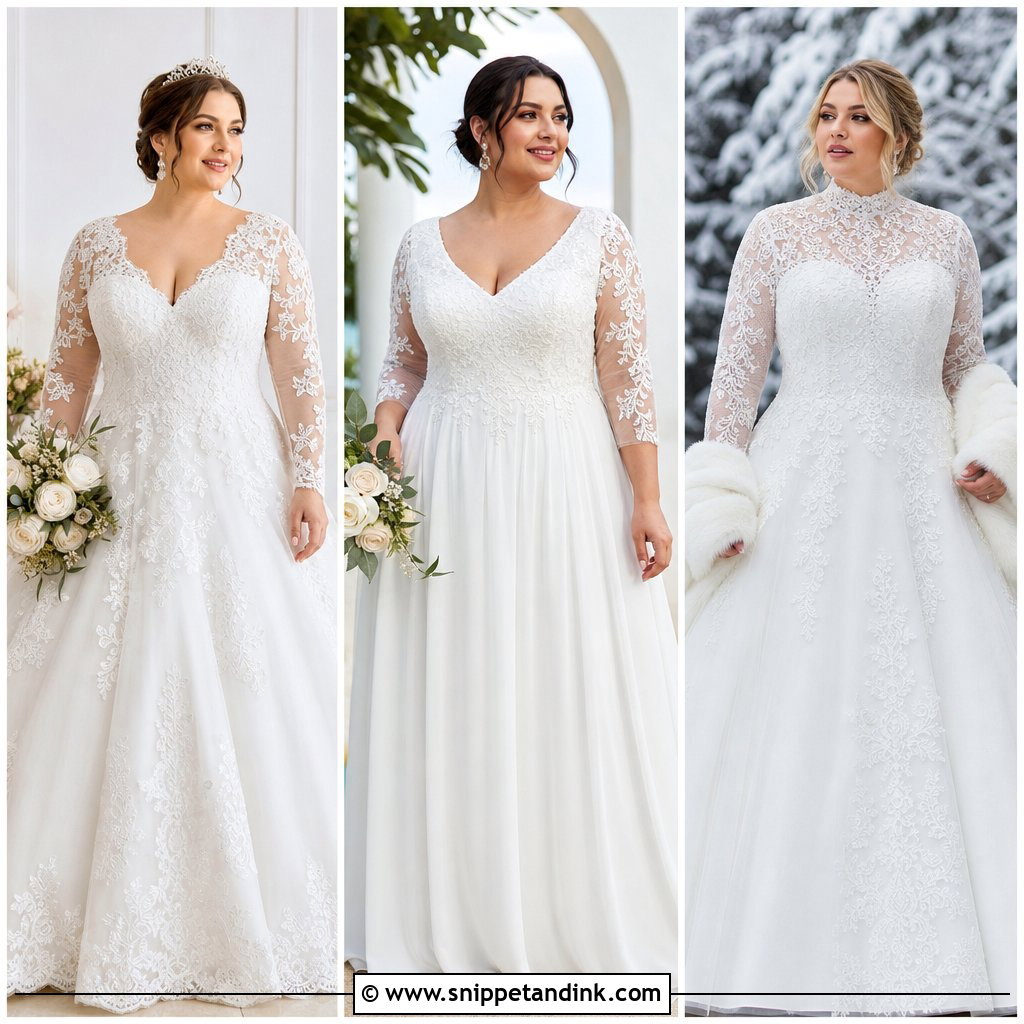
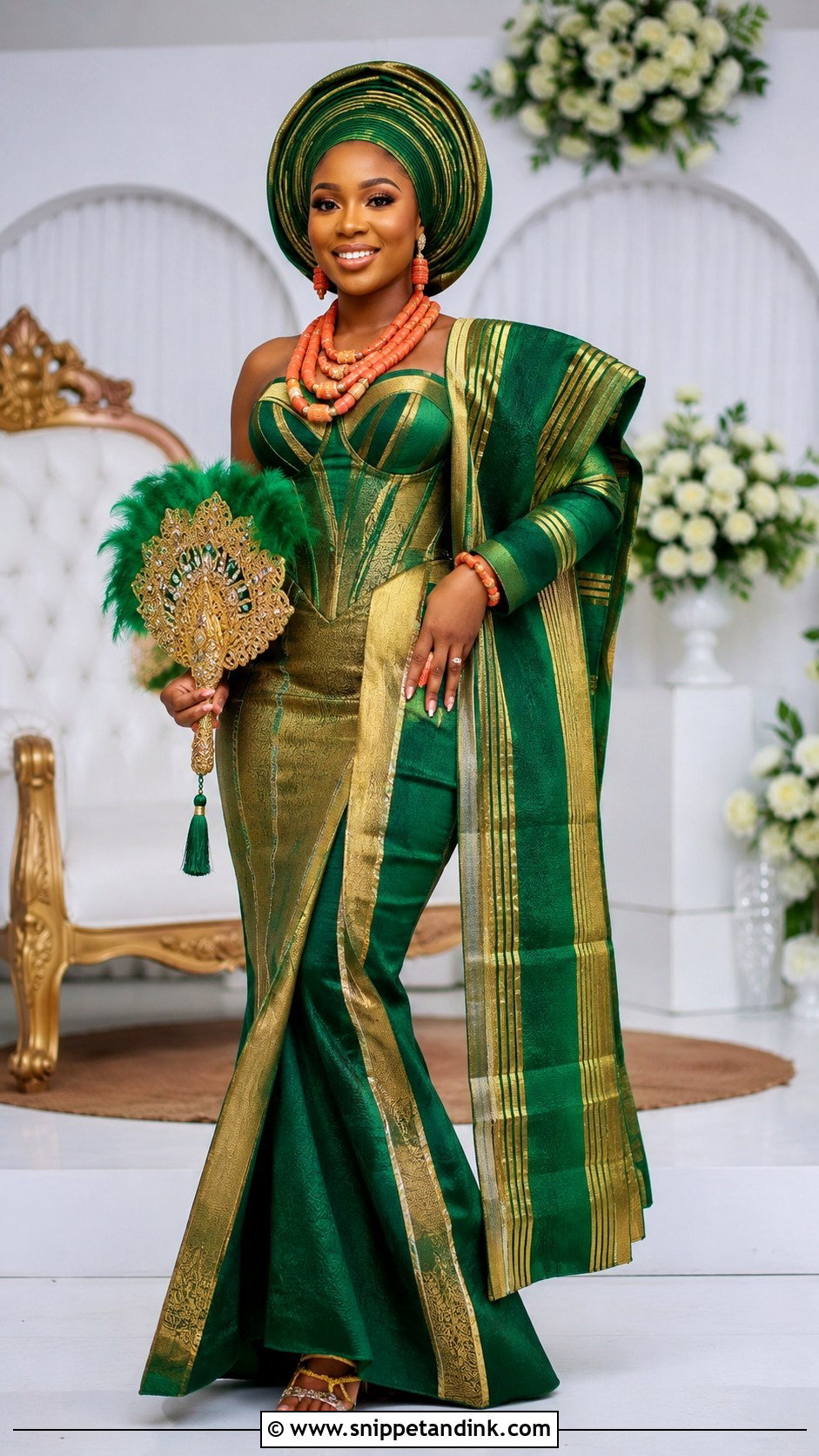
A Yoruba bride can wear traditional aso oke as an iro and buba set or as a fitted floor-length gown, finished with a gele and ipele. Aso oke is a stiff handwoven fabric, so it holds structure but doesn’t stretch; I’d allow extra ease at the bust and arms. Coral beads, metallic jewelry, a hand fan and matching shoes complete it. The colors are usually agreed with the groom’s attire and the family palette; emerald, burgundy, royal blue, champagne and gold all work. A corseted waist or sculpted sleeves can modernize the look. Do your fitting with the gele tied, because it changes how the neckline and shoulders read.
16. Igbo George Wedding Dress
George fabric or lace makes a rich base for an Igbo traditional bridal outfit, either as a wrapper and blouse or as a fitted gown with a flared hem. George is heavy, especially when embroidered, so I’d keep the blouse well supported and the wrapper tied securely. Layered coral beads at the neck and wrists, a beaded headpiece, a hand fan and coordinated heels complete it. Gold embroidery adds dimension to red, green, blue or wine. Some families include isi agu details where tradition allows. The finished outfit should honor heritage and still suit your preferred silhouette and coverage.
17. Edo Coral Bead Wedding Dress
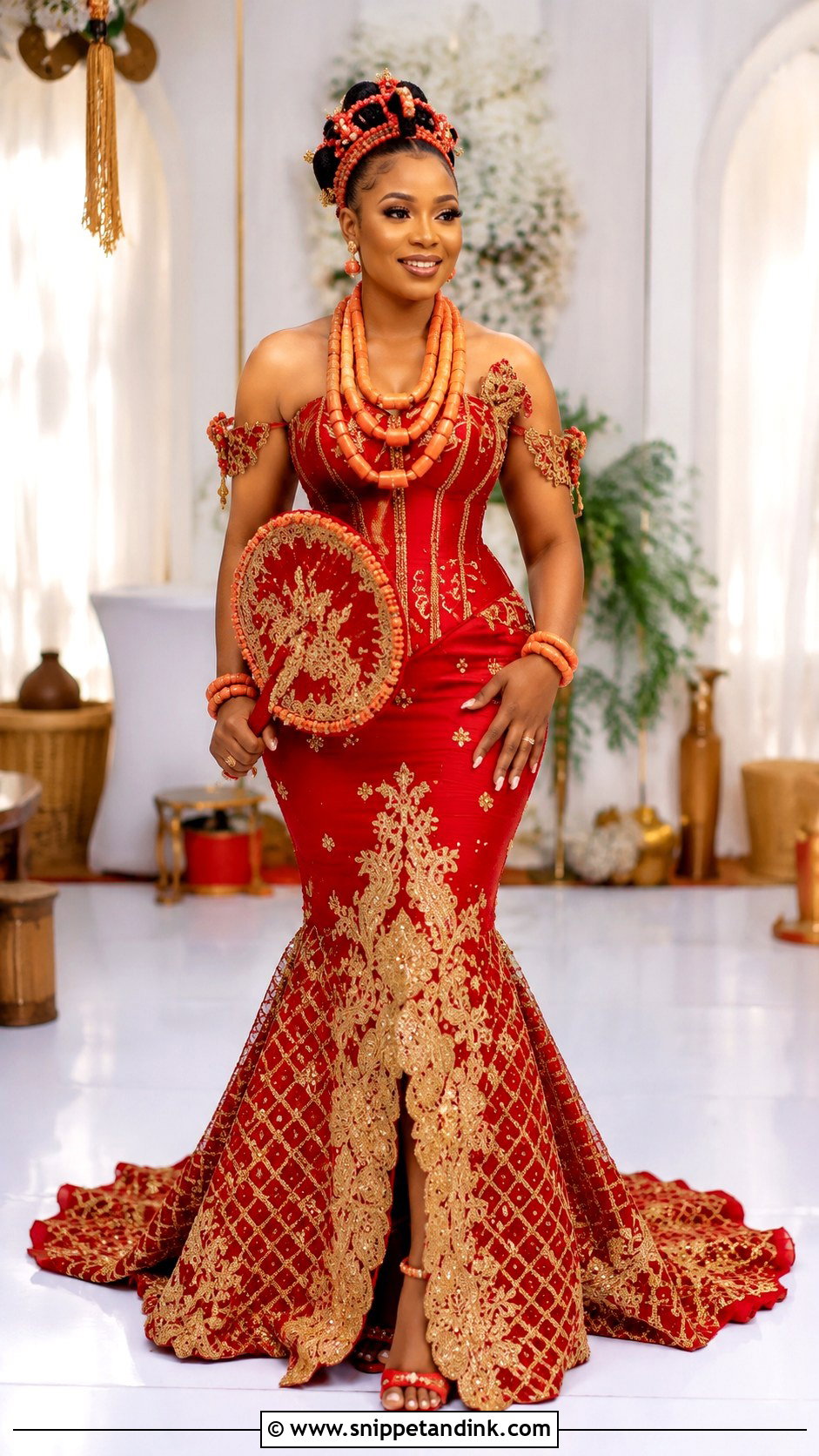
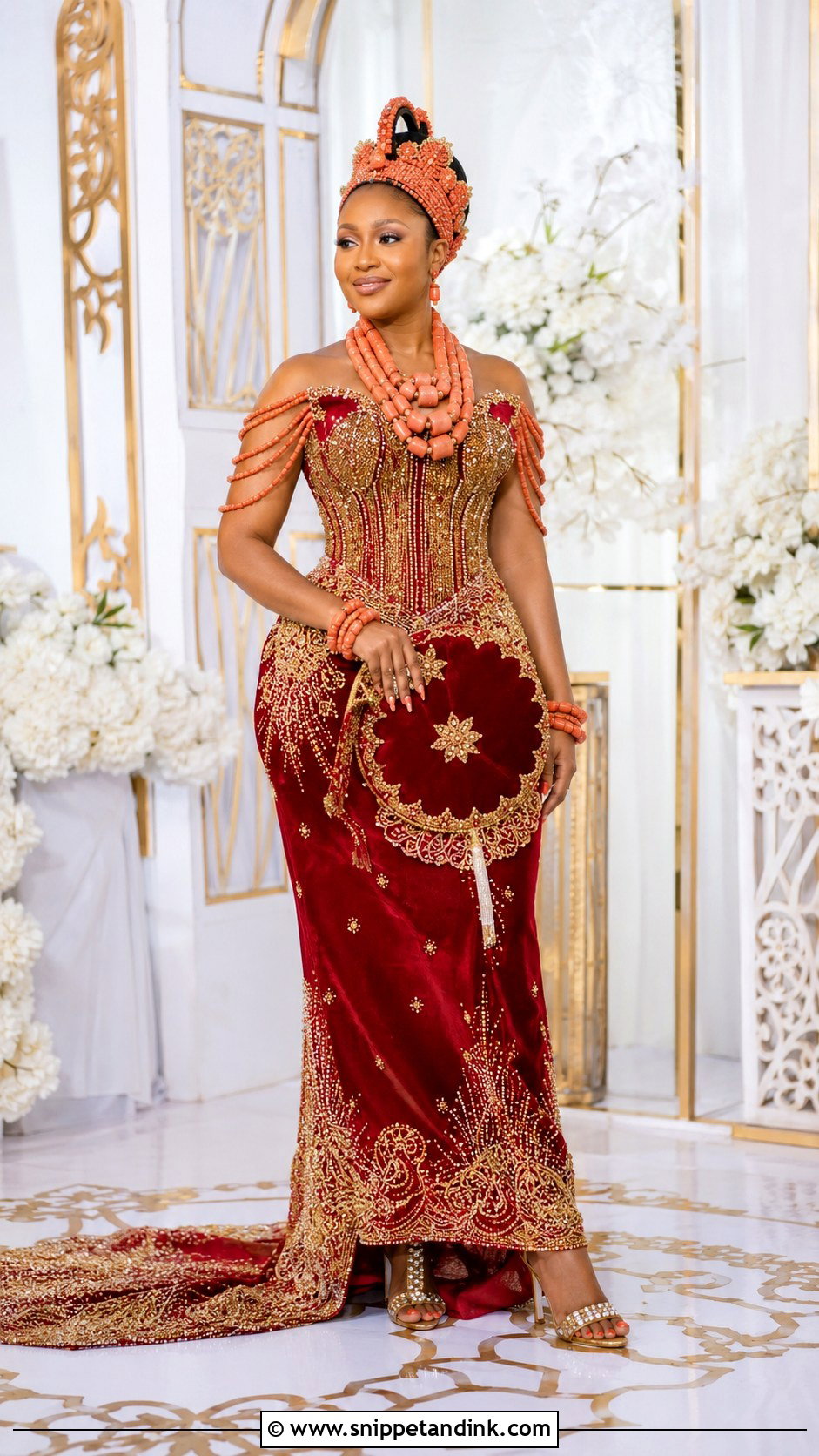
An Edo outfit crowned with coral beads is regal and also very heavy. The okuku coral crown, layered coral necklaces and wrist beads add real weight around your head and shoulders, so the dress underneath should fit securely and stay as light as possible. Choose a richly beaded lace or velvet wrapper and fitted blouse, or a corseted gown in red, gold, coral or another family-approved shade. A traditional fan, understated shoes and makeup that holds up next to strong colors complete it. I’d insist on a full fitting with the beads and crown on, with the hairstylist present, so balance and comfort can be checked together.
18. Hausa Embroidered Wedding Dress
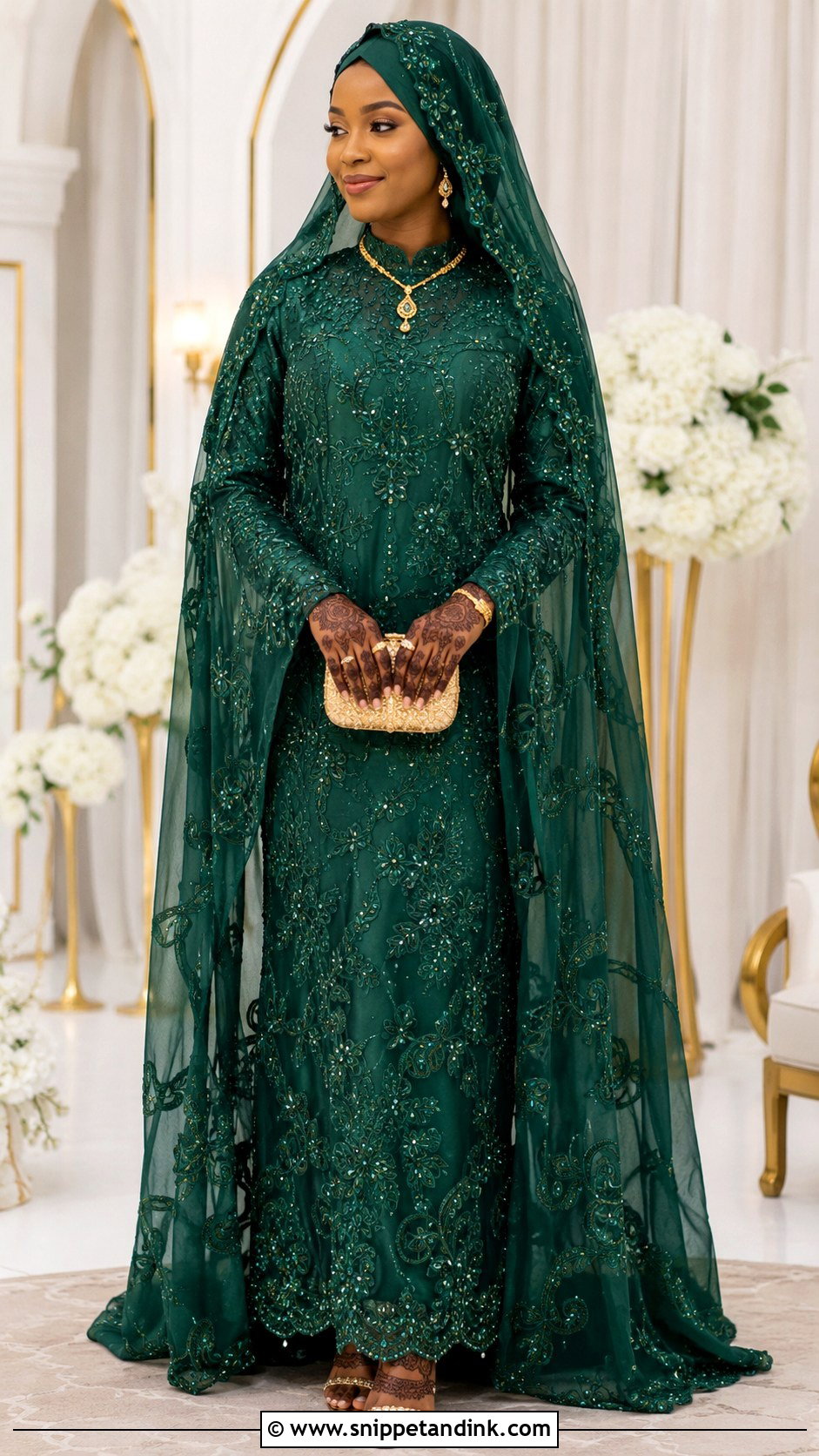
A Hausa bridal dress offers modest coverage and still looks luxurious. A flowing kaftan or abaya-style gown in lace, silk or another fluid fabric breathes well in the heat. Embroidery around the neckline, sleeves and hem adds richness without changing the line. Cream, emerald, dusty rose, royal blue and gold suit it, though family customs may guide the final choice. A coordinated veil or headscarf, gold jewelry, decorated heels and henna on the hands complete it. I’d work with a designer who understands modesty preferences and where embroidery should sit.
19. Tiv A’nger Wedding Dress
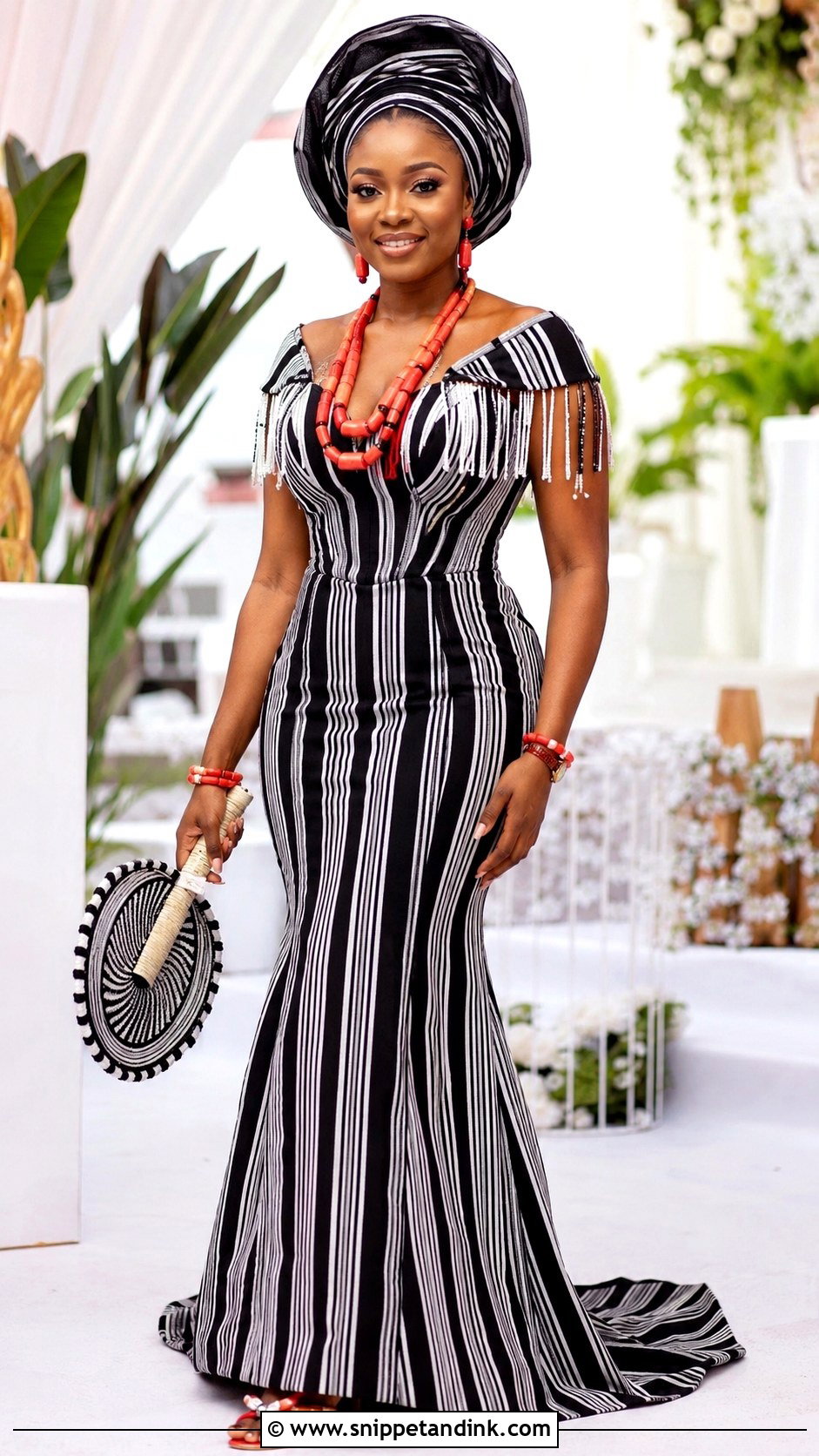
The black-and-white A’nger cloth makes a striking Tiv bridal outfit, worn as a wrapped two-piece or a floor-length gown. Stripes are unforgiving: if the tailor doesn’t match them across the seams, it shows immediately in photos. I’d ask to see the stripe layout before cutting. A fitted bodice with a gently flared skirt modernizes the shape while keeping the textile central. Traditional beads, a head tie or beaded headband, elegant sandals and a hand fan complete it. Red or coral accessories add color without distracting. Family guidance and a tailor familiar with Tiv clothing help keep it accurate.



20. Idoma Apa Wedding Dress
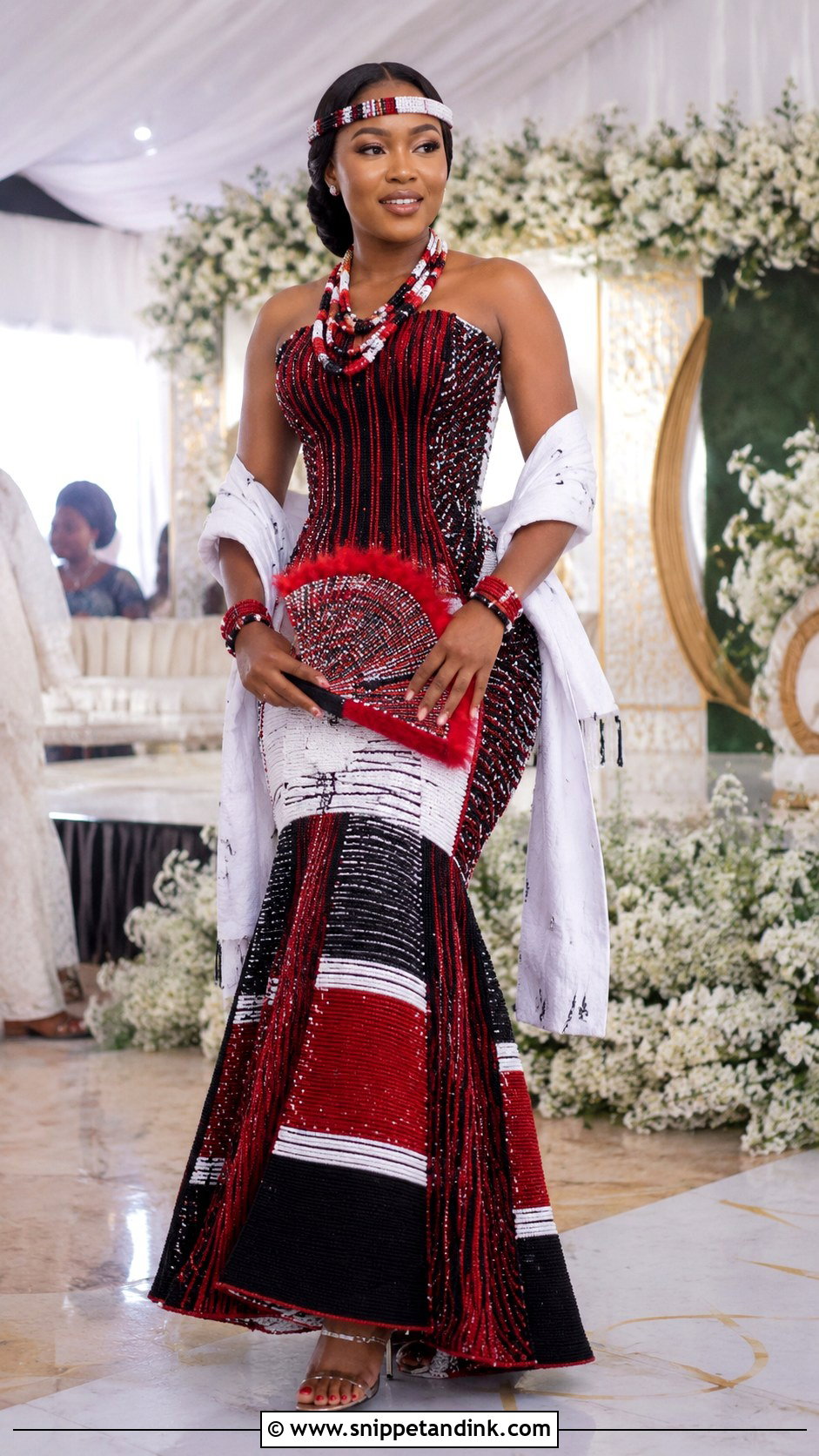
The red, black and white stripes of Idoma apa need clean seams to keep the pattern strong. The fabric can be wrapped as a skirt with a matching blouse, or tailored into a fitted gown that flares at the hem. Stripes also make every fitting issue more visible, so a slightly loose bodice looks crooked rather than relaxed. A solid-colored corset panel can add definition if it harmonizes with the textile. Beaded jewelry, a coordinated crown or headband, comfortable heels and a hand fan complete it. Talk to relatives about family expectations before the design is final.
Lace, Corsets and Coral in a Hot Hall
Heat is the factor I see underestimated most. A heavy lace gown with a full corset and a beaded train can feel fine in an air-conditioned fitting room and very different in a crowded hall when the power or the AC fails.
- Ask for breathable linings such as cotton or silk rather than polyester against your skin.
- Keep the heaviest beadwork for the outfit you’ll wear for the shortest time.
- Plan for traditional pieces, where gele, coral and heavy fabric stack up, to be worn mainly while seated.
- Give a bridesmaid a hand fan, blotting papers and a small towel for the dance floor.
I also tell brides to do at least one fitting in the afternoon, when the body is warmer and slightly fuller, so a corset that fits at 10 a.m. doesn’t feel tight by evening.
From Trad to Reception, One Wardrobe That Works Together
There’s room here for every kind of bride, from grand ball gowns and fitted mermaids to registry outfits and traditional attire. Start with the ceremony type, venue, weather, family expectations and how many changes you’ll make. Then pick silhouettes that let you walk, sit, greet guests and dance. Good tailoring matters more than any trend. Bring your actual shoes, veil, jewelry, headpiece and undergarments to fittings whenever you can. Minimalist, heavily beaded or rooted in heritage, each outfit should feel personal and let you celebrate without thinking about your dress.
You'll Like These Ideas:




Leave a Reply