
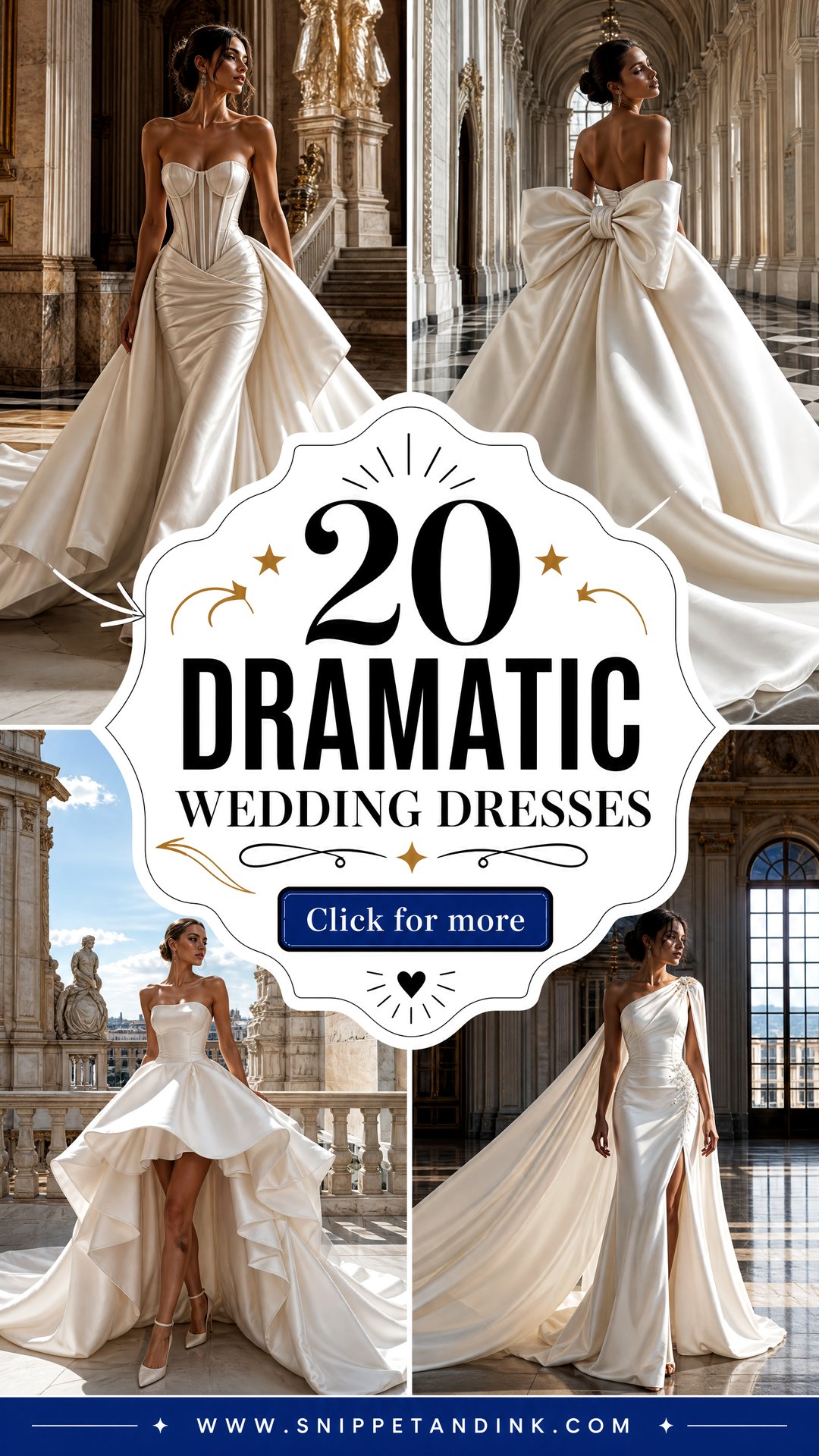
Big gowns are the ones I enjoy fitting most, and the ones that most often go wrong when the bride buys the picture instead of the dress. Below are twenty of the boldest shapes I see, from sweeping cathedral trains to boned corsetry, oversized bows and convertible pieces that change the gown between ceremony and party. For each one I’ve noted what I’d pair with it and what I check at the fitting, because drama only works when you can still walk, sit and hug people in it. Your venue, your height and how long you’ll be on your feet all decide which of these is yours.
Sizing the Drama to Your Room and Your Aisle
The first question I ask a bride who wants a big gown isn’t about fabric. It’s about the ceremony space. A cathedral train needs an aisle long enough to fully extend behind you, and a ball gown needs room between chairs. In a narrow registry office or a small chapel, a huge skirt brushes every guest on the way in and the train piles up instead of flowing.
Here’s how I match the type of drama to the setting:
- Grand ballroom or cathedral: this is where volume pays off. Full skirts, long trains and heavy satin all have space to read.
- Garden or lawn: lighter textures such as organza tiers, feathers or 3D flowers move well, but long trains collect grass stains and damp. A chapel length is kinder.
- Beach or sand: skip heavy satin and long trains entirely. A high-low hem or a cape gives movement without dragging.
- Small or modern venue: go for drama through shape or colour, such as a sculptural mermaid, a black gown or a single big bow, rather than width.
Height matters too. On petite brides I keep the volume starting lower on the skirt so it doesn’t swallow the torso. Taller brides can carry big shoulders, capes and very full skirts more easily.
1. Cathedral Train Ball Gown Wedding Dress
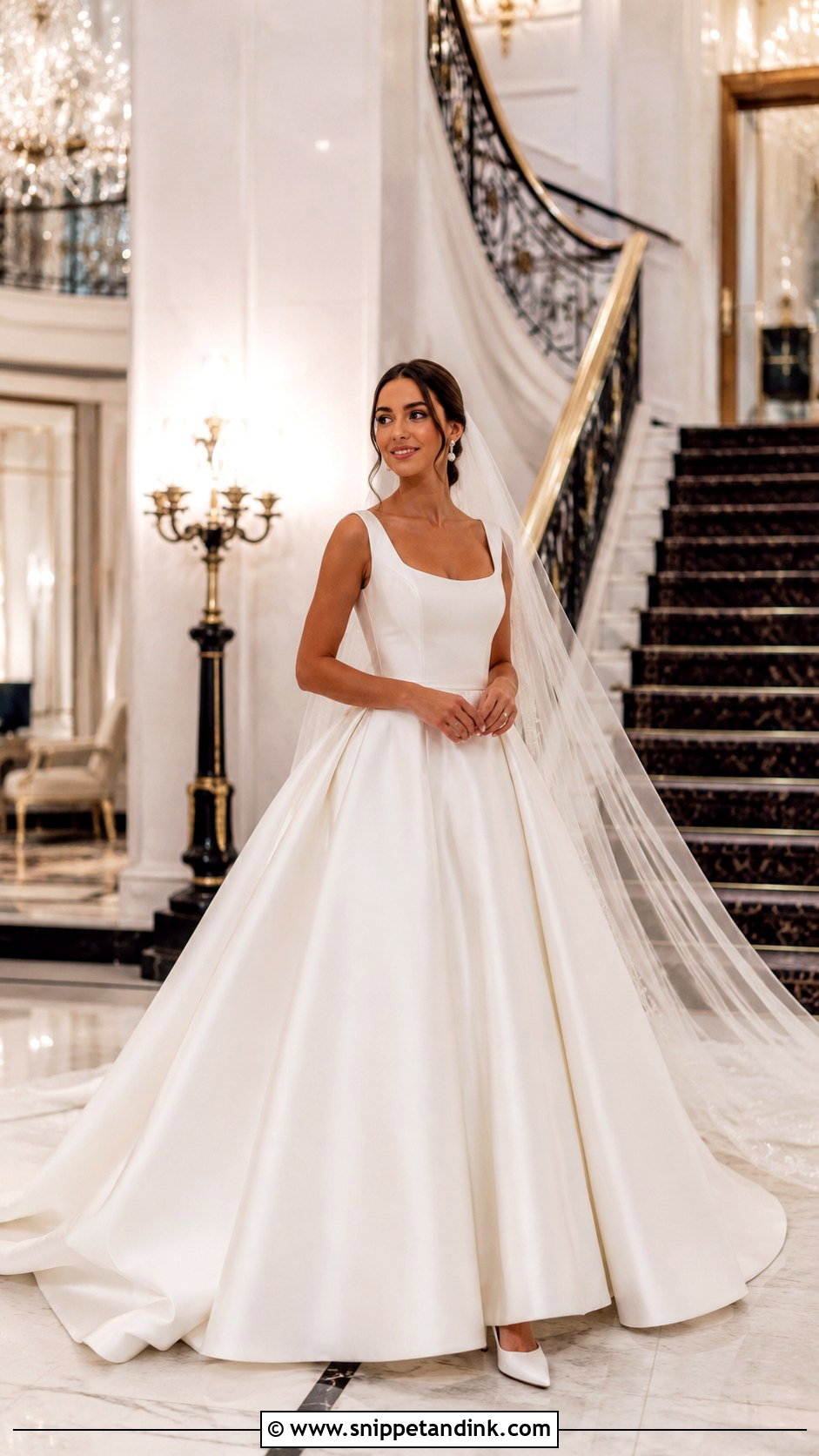
This is the shape that needs a long aisle and a high ceiling to make sense. I’d go for a boned bodice over a satin or mikado skirt, since both fabrics hold their volume without a cage of extra petticoats. Keep the surface plain and let the size do the talking: pearl drops, pointed ivory pumps, a cathedral veil and hair up in a bun so the neckline stays clear. The thing I insist on is a secure bustle. A cathedral train carries real weight, and a bustle sewn with only two or three points will pull loose by the first dance. Ask for one with enough anchor points to spread that weight.
2. Corset Basque Waist Wedding Dress
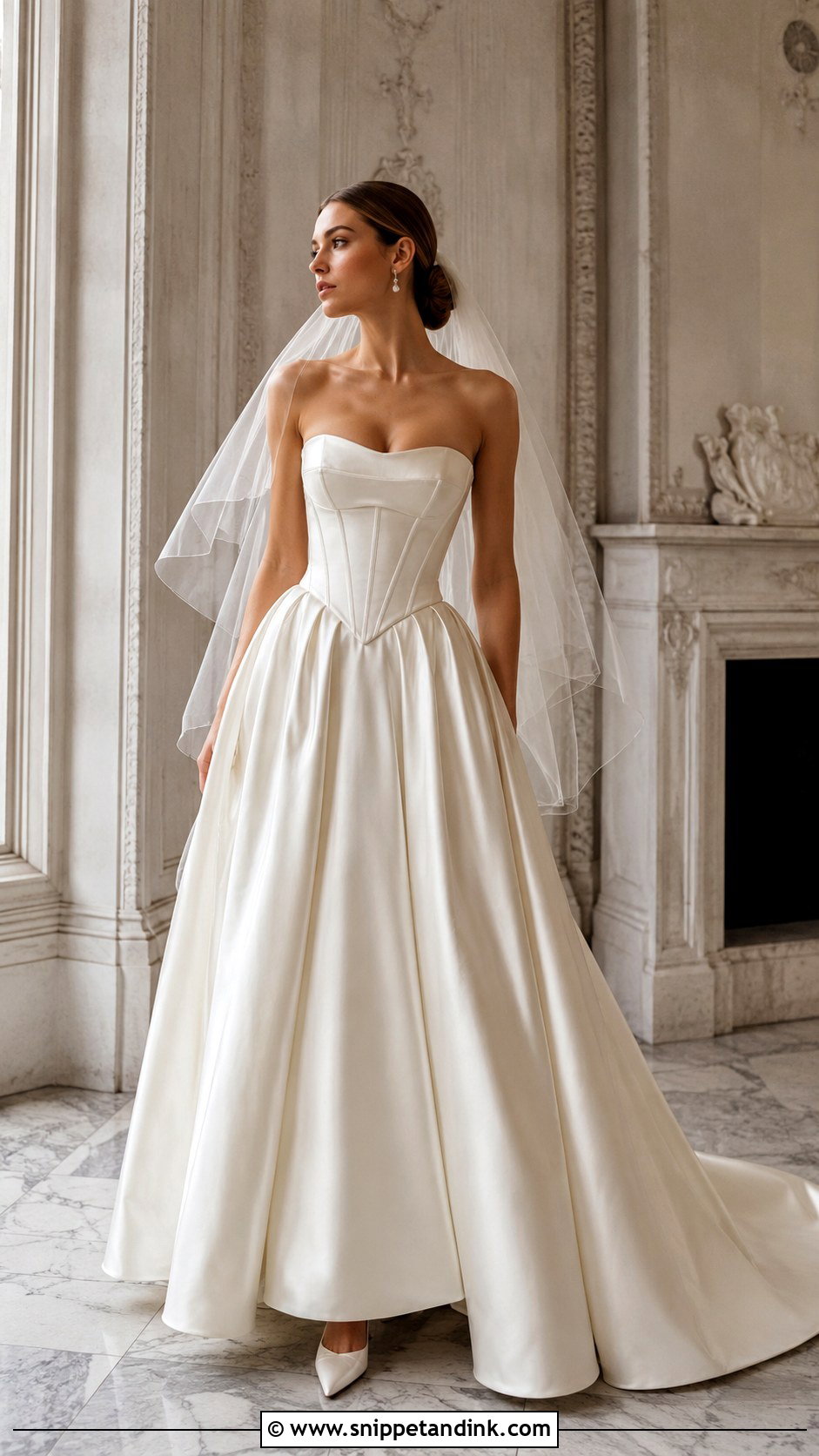
The dropped V at the front lengthens the torso and gives a clear waist even on brides with a straighter frame. Inside, I look for spiral steel boning rather than plastic, because plastic bones warp with body heat and start to show as ridges by late afternoon. Lace-up backs give the seamstress room to adjust on the day if your weight shifts after the last fitting. Satin heels, small crystal studs and a fingertip veil are enough; the bodice already does the work a necklace would. At every fitting, sit right down in a chair. The point of a basque digs in when you sit if it has been cut even slightly too long, and that is fixable only before the wedding.
3. Oversized Bow Wedding Dress
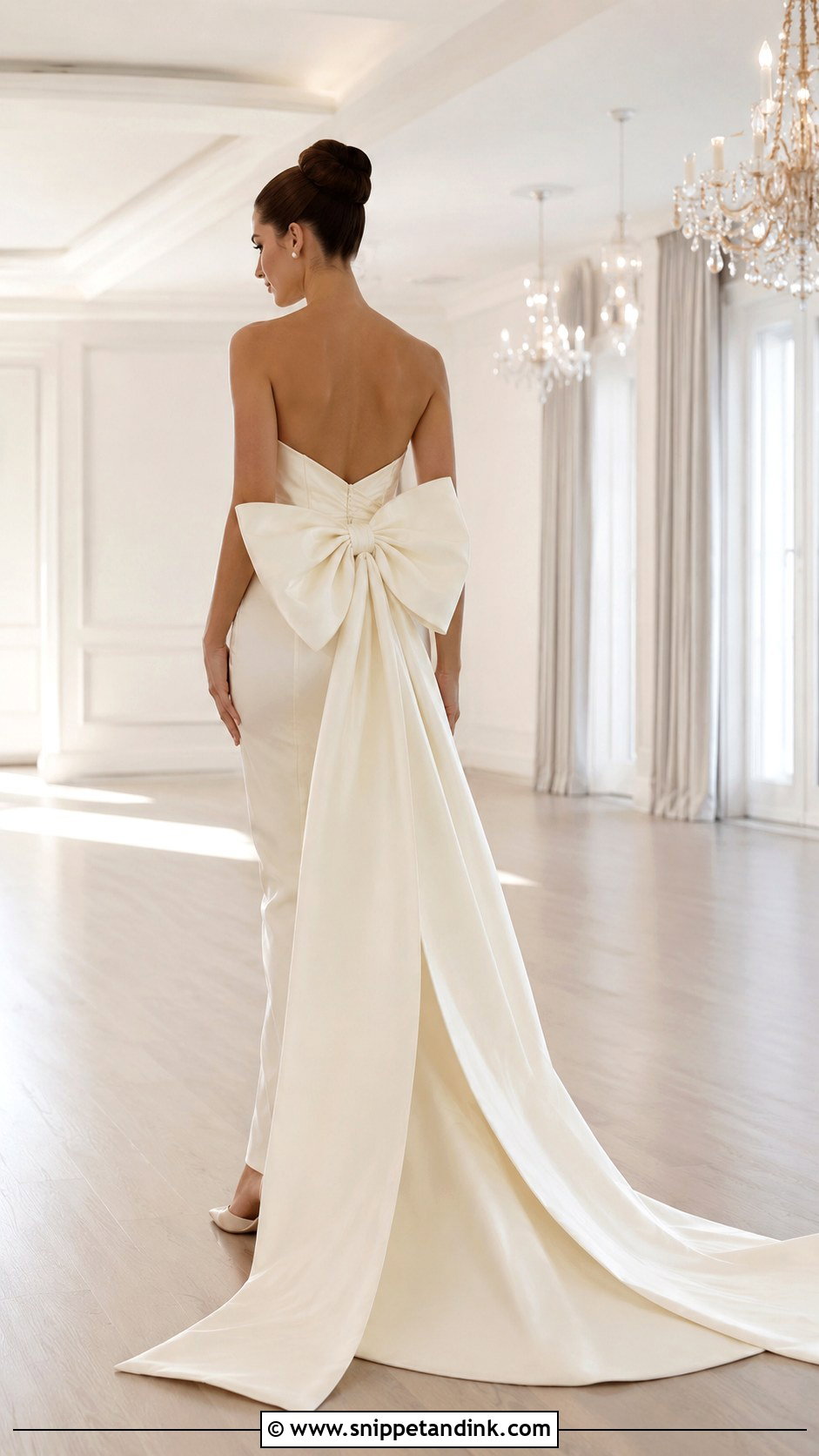
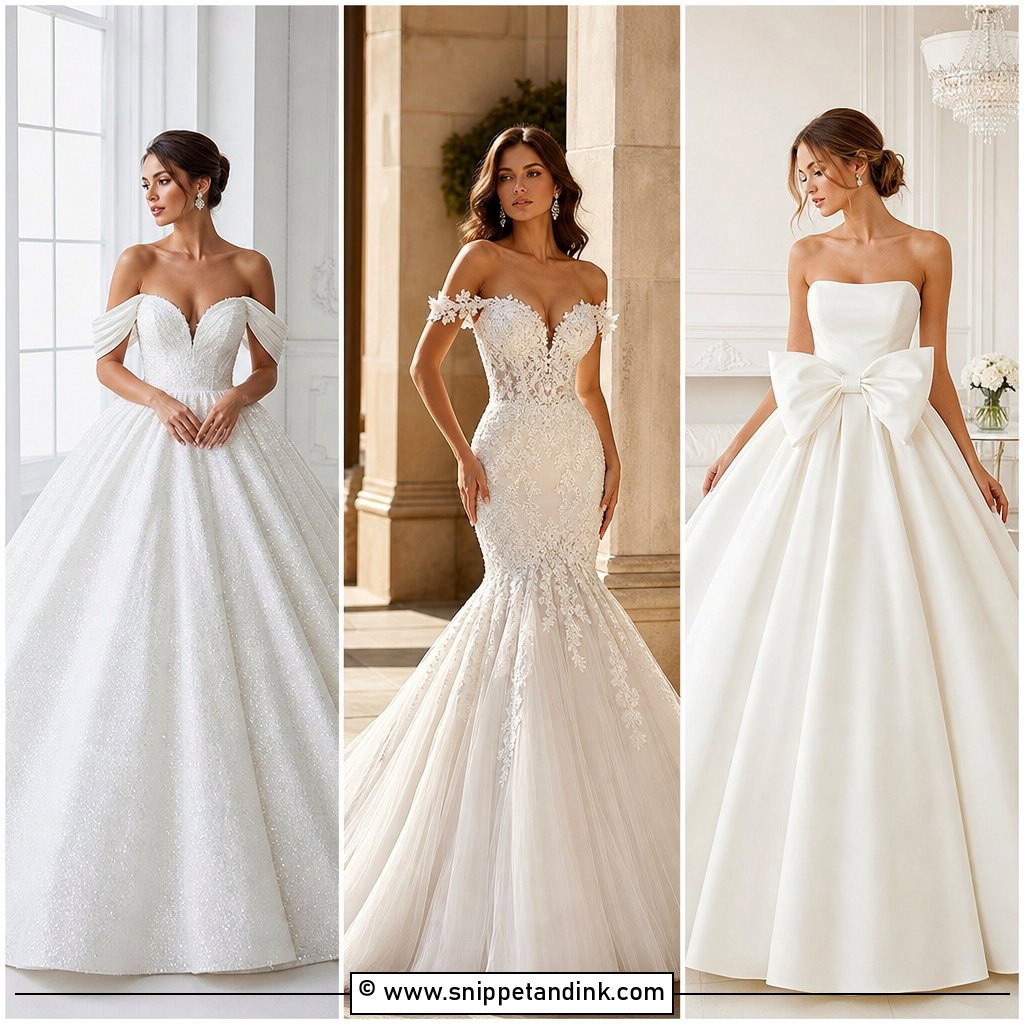
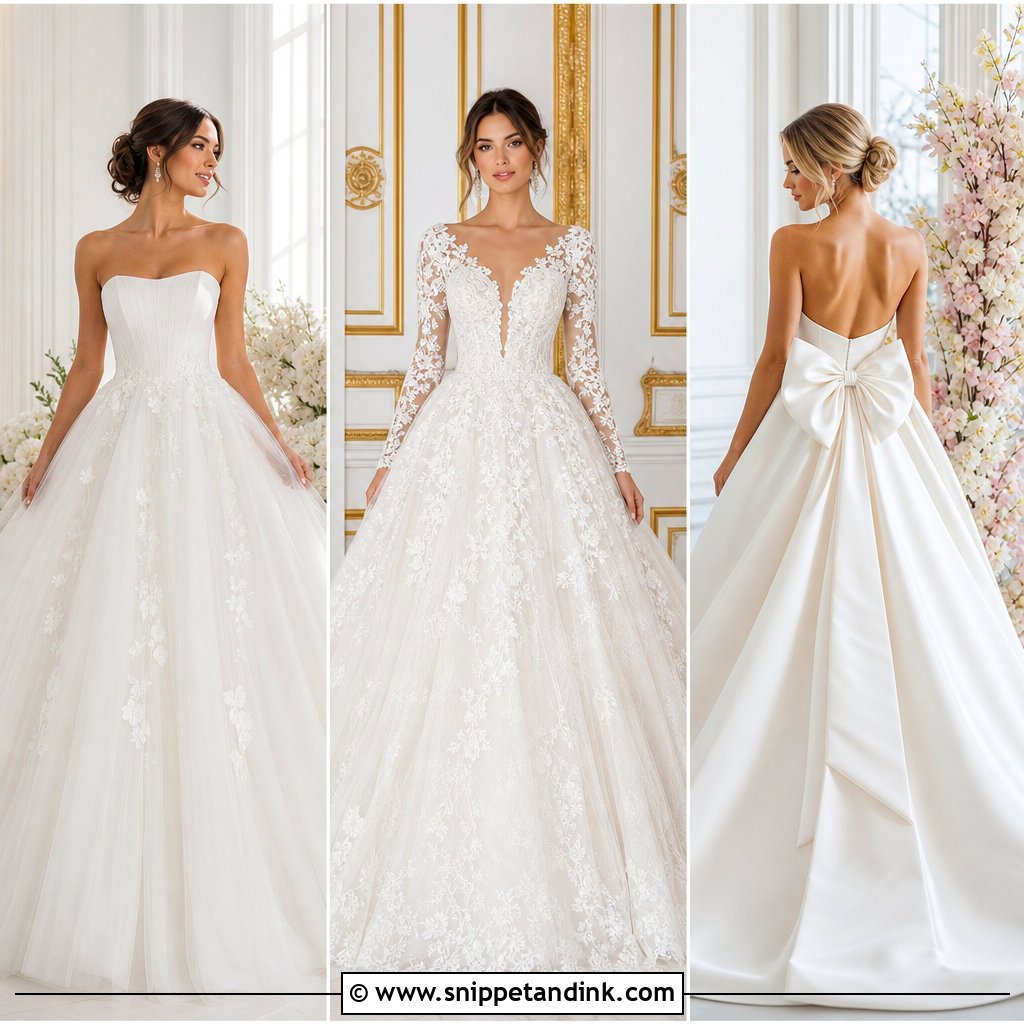
One huge bow is a single focal point, which is exactly why it works. I prefer it on a smooth satin gown with a fitted bodice and a modest flare, so nothing else fights for attention. Pearl studs, sleek heels and a compact bouquet keep the front quiet, and a bun or high ponytail lets the back bow show in the processional. Large bows are heavy: a satin bow with long tails can weigh as much as a small handbag hanging off two hooks. I always ask the seamstress to reinforce the attachment with a backing panel, and if it detaches, I have the bride practise removing it before the reception rather than discovering the snaps at 9 p.m.
4. Ruffled Tulle Ball Gown Wedding Dress
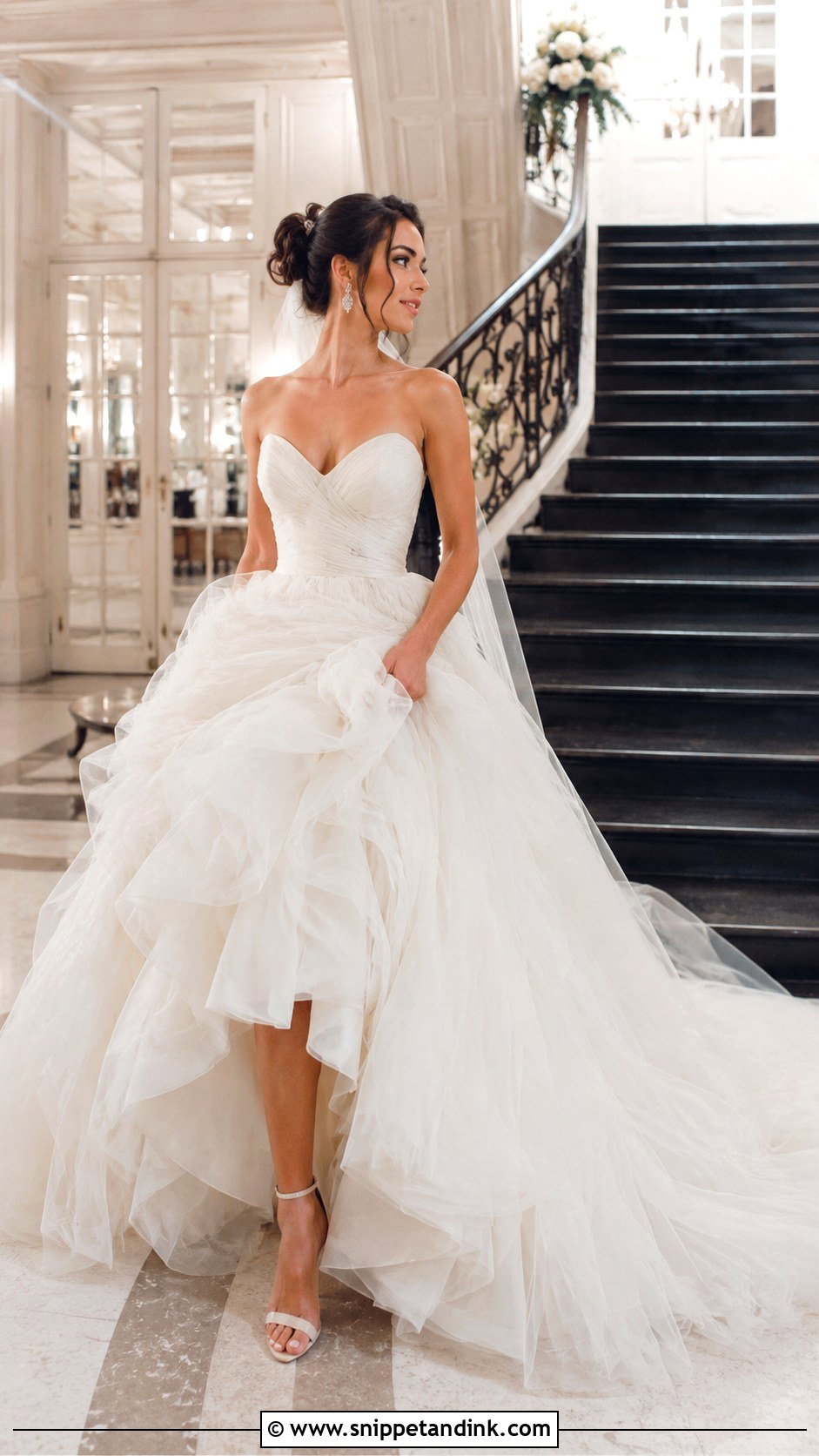
Graduated tulle ruffles add volume where it flatters if they start below the hip, leaving the bodice fitted and the waist easy to read. A sweetheart or gentle scoop neck sits well above all that movement. I’d keep the rest light: ankle-strap heels, crystal studs and a veil that falls behind the shoulders. Tulle catches on everything, from rough stone steps to the velcro on a photographer’s camera bag. Have the hem set so it just clears your actual wedding shoes, and walk a full lap of the fitting room in them. If your venue has gravel or grass, an extra centimetre of clearance saves the bottom ruffle from turning grey.
5. Feathered Wedding Dress With Train
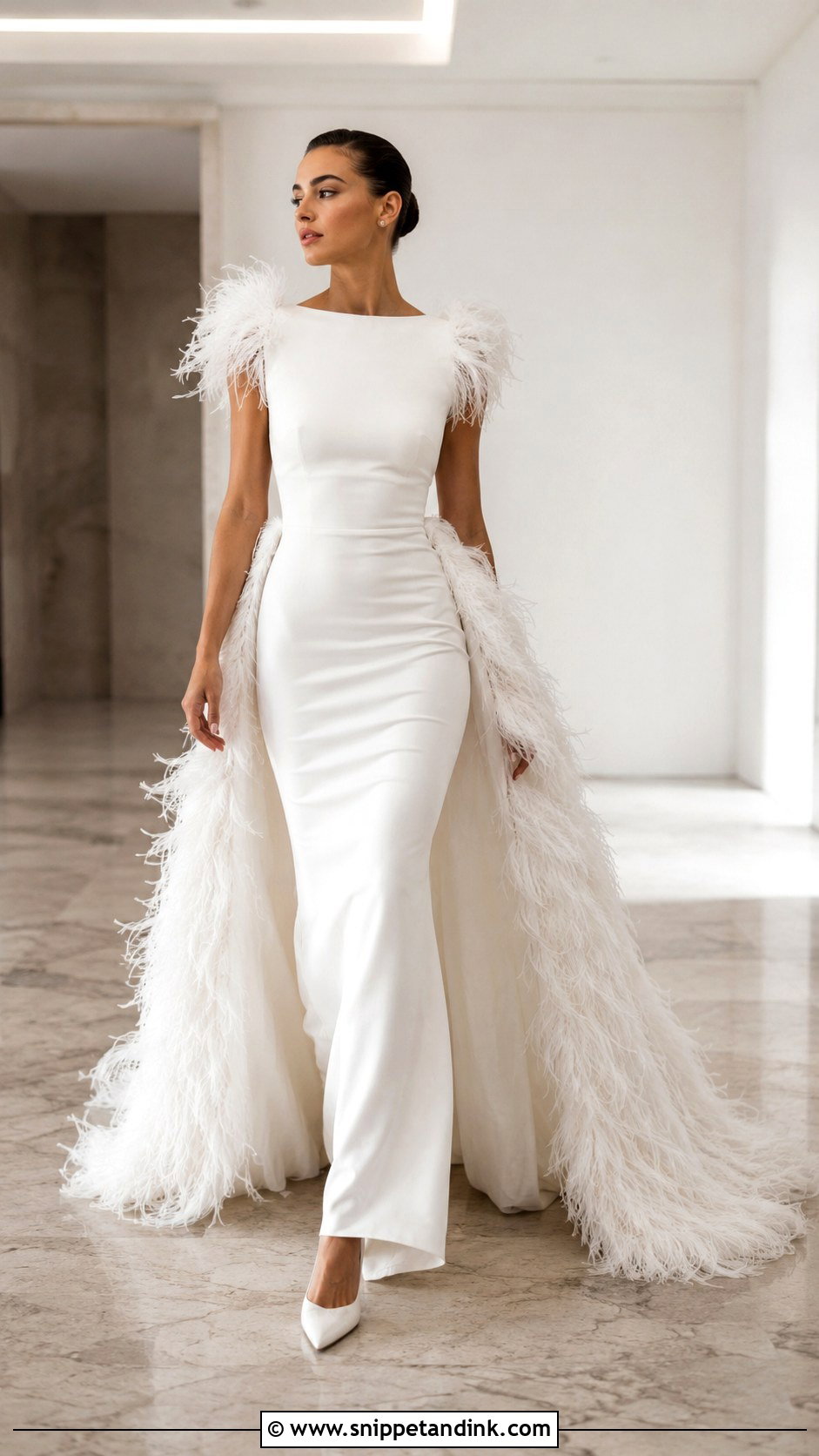
Feathers move with every step, which makes them one of the liveliest finishes on camera. I steer brides toward feathers at the neckline, the hem or a detachable train rather than a fully covered gown, which can read as costume. A crepe or satin base under the trim keeps the whole thing clean. Pointed pumps, small studs and slicked-back hair are all it needs. Ostrich and marabou both shed, so I shake a sample hard at the appointment and look at what lands on a dark jacket. Ask how the gown should be stored too: feathers crush in a standard garment bag and need room, or tissue between the layers.
6. 3D Floral Wedding Dress
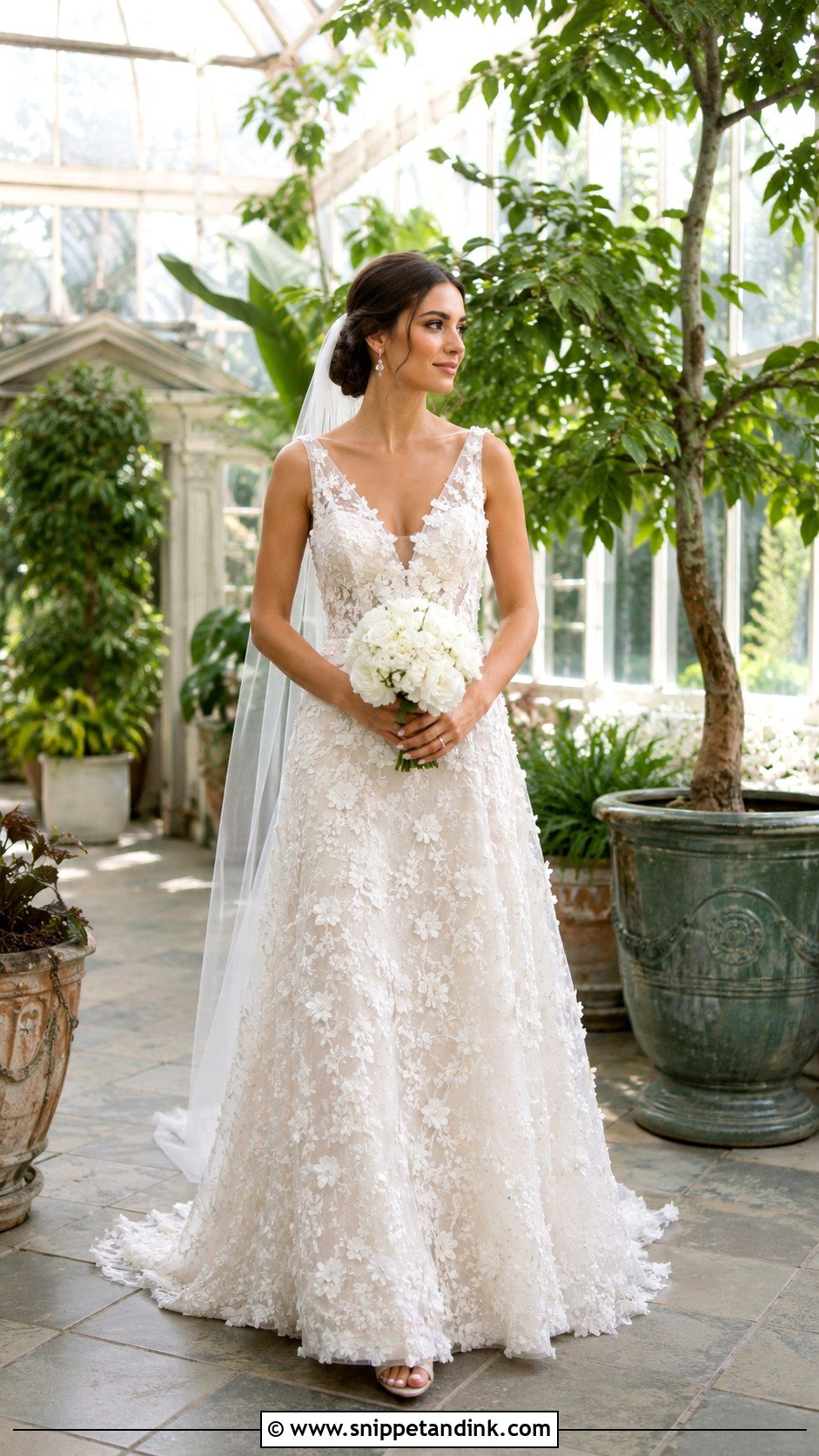
Three-dimensional flowers give depth that flat lace can’t. The placement I like best starts dense at the bodice and thins out down the skirt, which defines the waist and keeps the hem light. Choose a plain tulle veil and a smallish bouquet so the appliqués aren’t buried under real flowers. I check every seam where an appliqué crosses it: if the gown is taken in, those flowers need to be lifted and re-stitched by hand, and a rushed alteration leaves them puckered. This style sits most naturally in a garden or greenhouse, where the petals echo what’s around you.
7. Crystal Beaded Wedding Dress
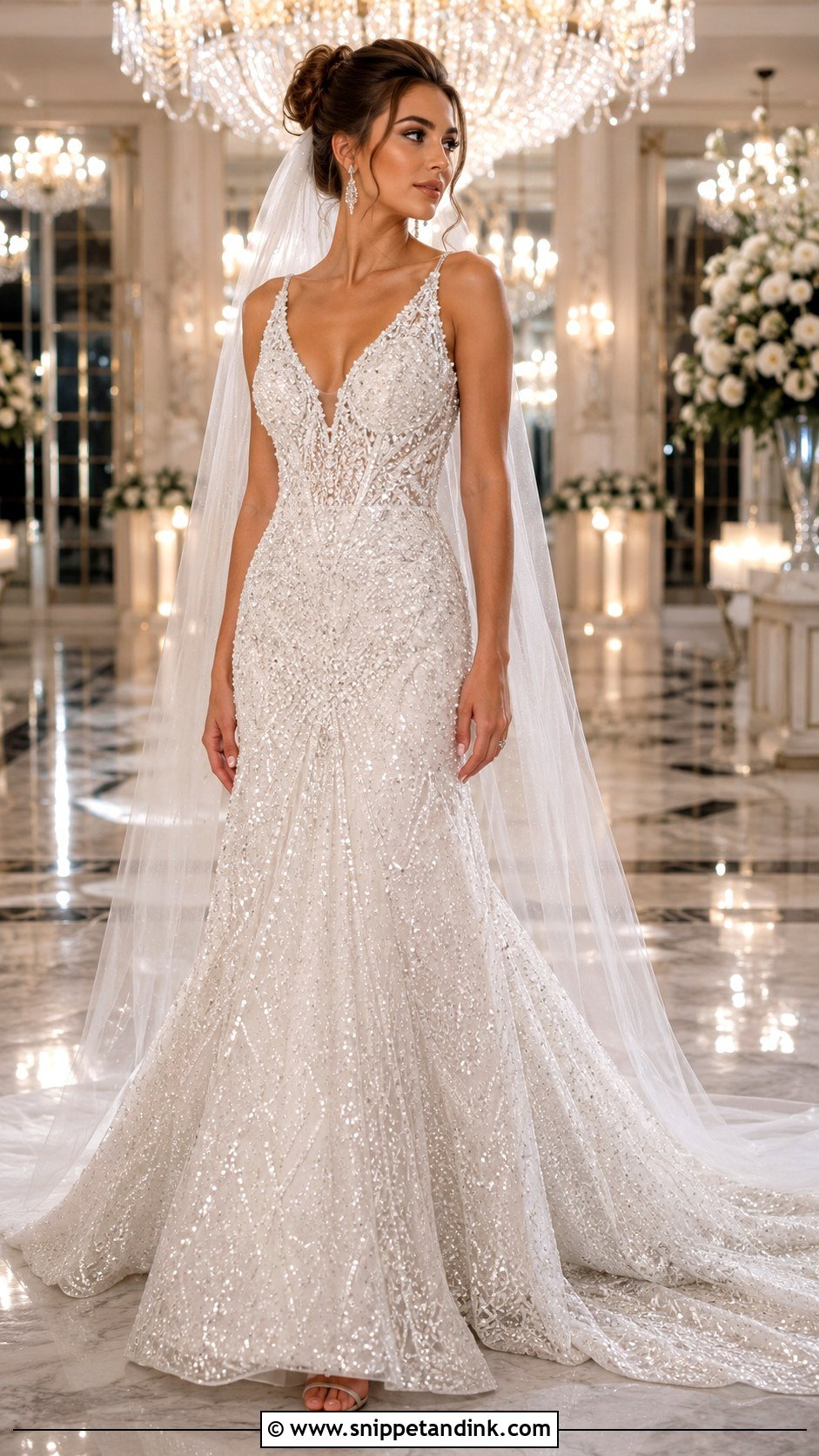
Beading catches light from every angle, so this is the gown for an evening reception with candles and uplighting. Look for heavy beading at the bodice that scatters out across the skirt; a column, A-line or ball gown all carry it. Silver earrings, metallic sandals and a sheer plain veil are plenty. Hair goes up if the neckline or shoulders are beaded, otherwise strands catch in the stones. Beaded fabric is genuinely heavy, and I’ve watched a train drag a bodice backwards on brides who were fitted without straps. Check the internal support, make sure the bustle points are reinforced, and leave the jewelled clutch at home because it snags crystals off the skirt.
8. Long Sleeve Lace Ball Gown Wedding Dress
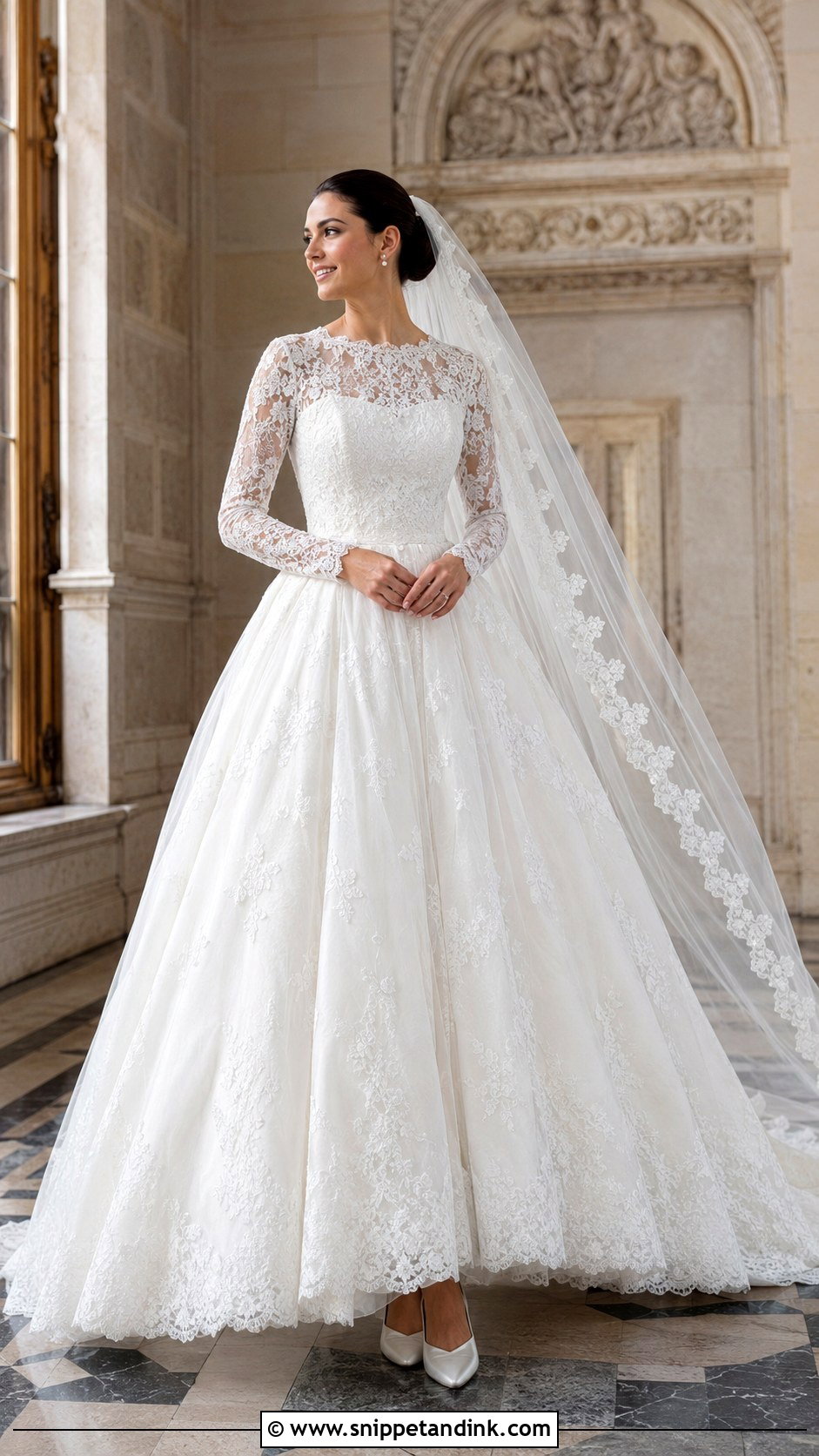
Fitted lace sleeves on a full skirt is about as regal as bridal gets, and it’s the version I suggest most for winter or for religious ceremonies that ask for covered arms. Sleeves need to fit close but bend at the elbow; hold your bouquet at chest height at the fitting and see whether the lace pulls across your back. A lined bodice reads traditional, while a few sheer panels show off the lace pattern. Pearl earrings, closed satin pumps and a lace-edged veil with related, not identical, motifs finish it. Watch the cuffs, which snag on bracelets and bouquet ribbon. The balanced proportions suit petite, tall and curvy brides alike.
9. Detachable Overskirt Wedding Dress
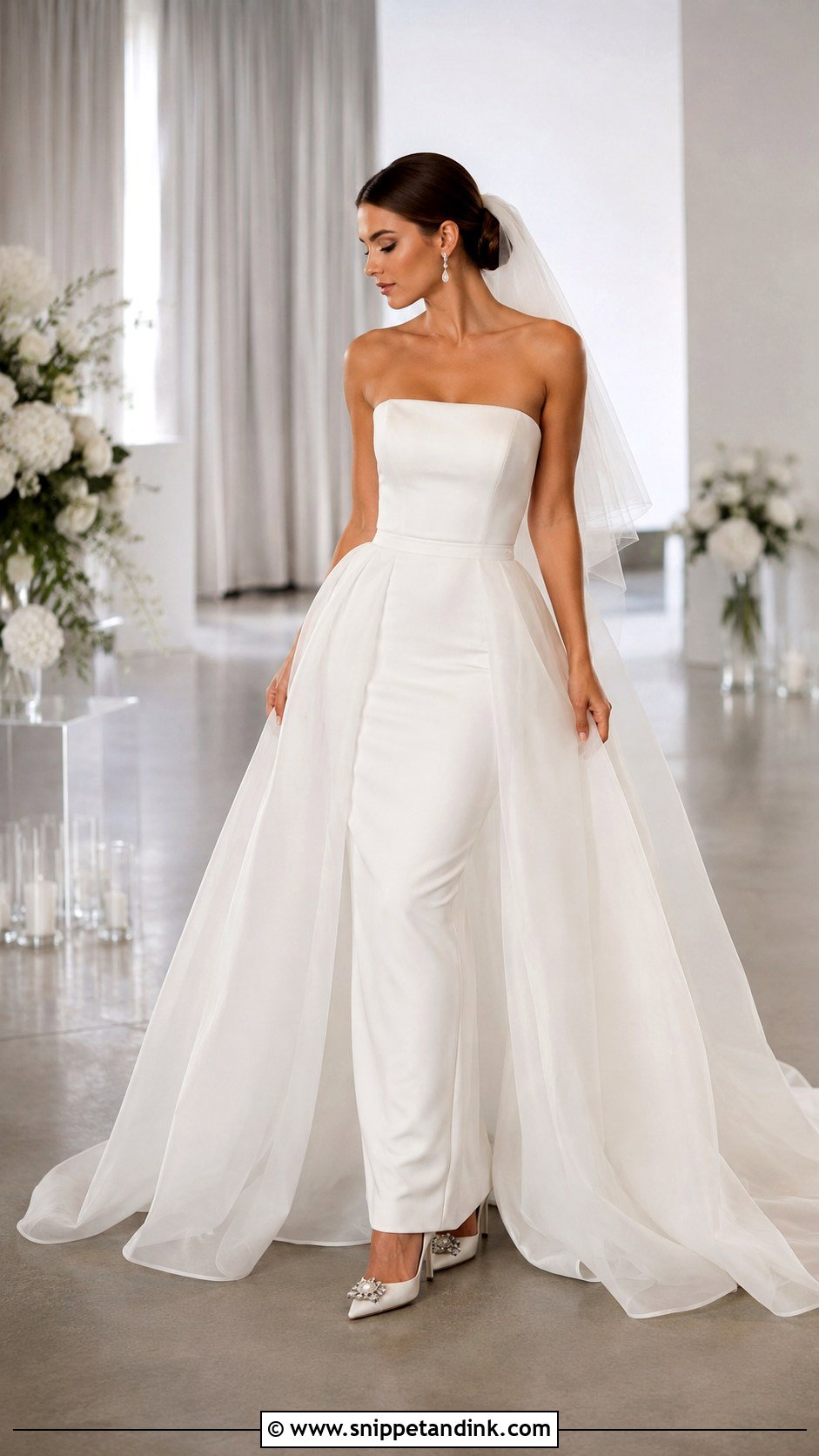
An overskirt gives you two looks without a full change. You walk in under a sweeping tulle, satin or organza layer, then unhook it after portraits to reveal a slim column or mermaid underneath for the party. The waistband of the overskirt should lie flat and disappear from the front and sides; if it bulges at the fitting, it will bulge in every photograph. Keep the veil fingertip length so it doesn’t tangle with the closure. My one firm rule: practise taking it off with the person who will actually do it on the day, ideally twice. Hooks and hidden snaps are fiddly when you’re tired, and nobody wants a five-minute struggle in the corridor.
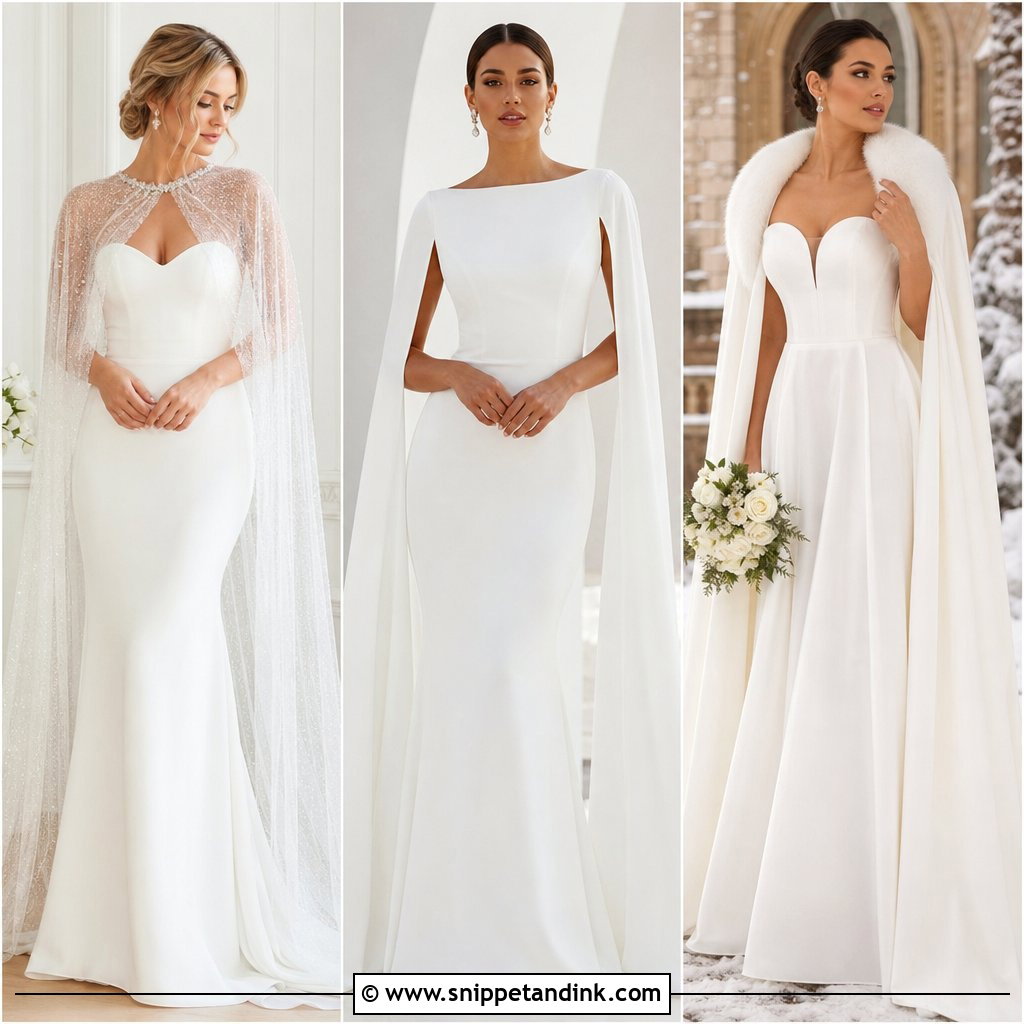
10. High Neck Wedding Dress With Cape
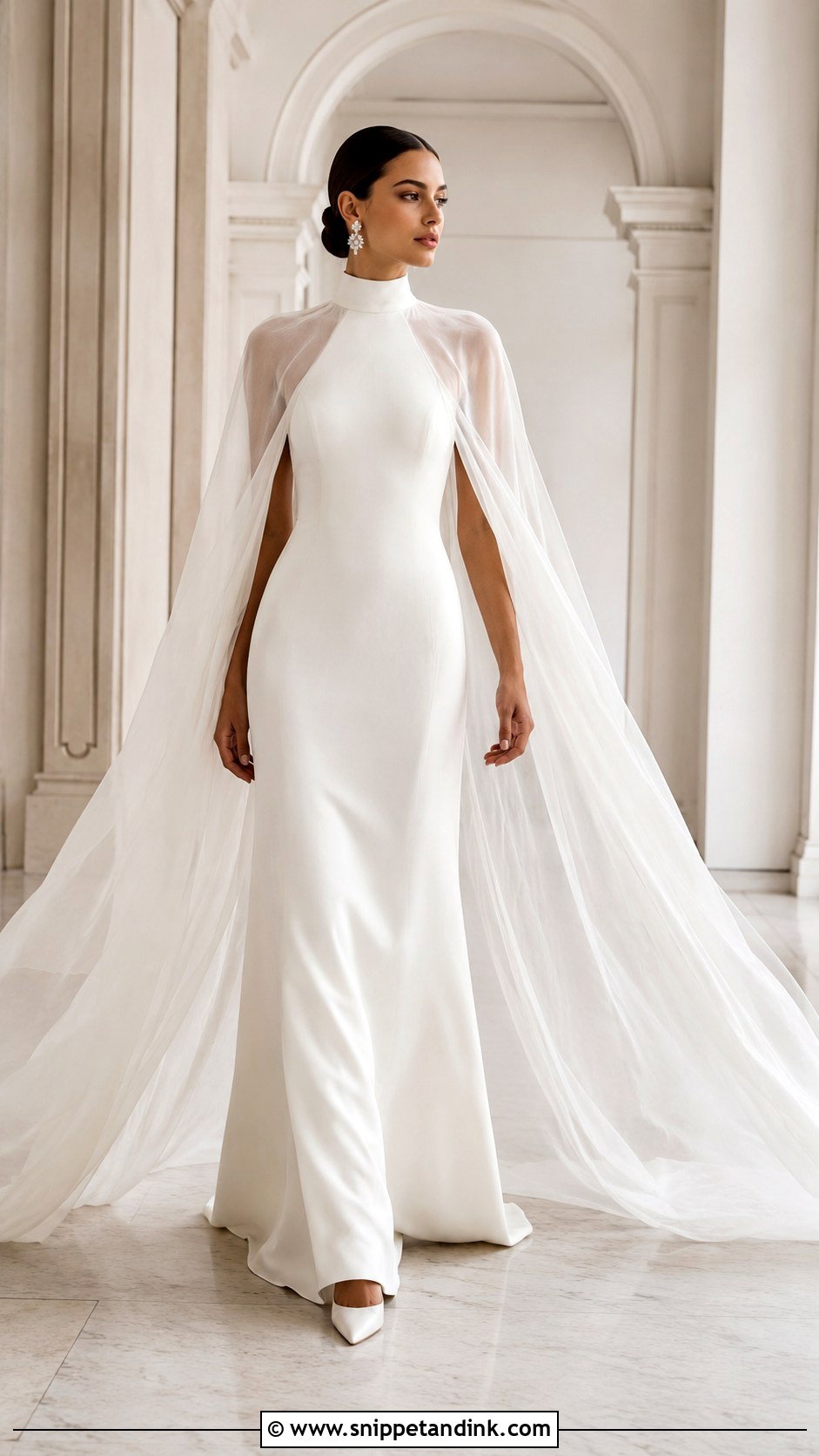
A high neck plus a cape gives full coverage and a lot of movement from the back. A crepe column or structured A-line under a sheer cape is my favourite pairing, and a chapel or cathedral-length cape can stand in for a veil entirely. Statement earrings and a sleek low bun suit the closed neckline; a necklace has nowhere to sit. The attachment matters most. I prefer a cape that clips at the shoulder seams with small hooks or snaps, because one that ties at the neck tugs on the hairstyle every time it’s removed. Choose the lightest fabric you can if you’ll wear it through the ceremony and portraits.
11. Black Ball Gown Wedding Dress
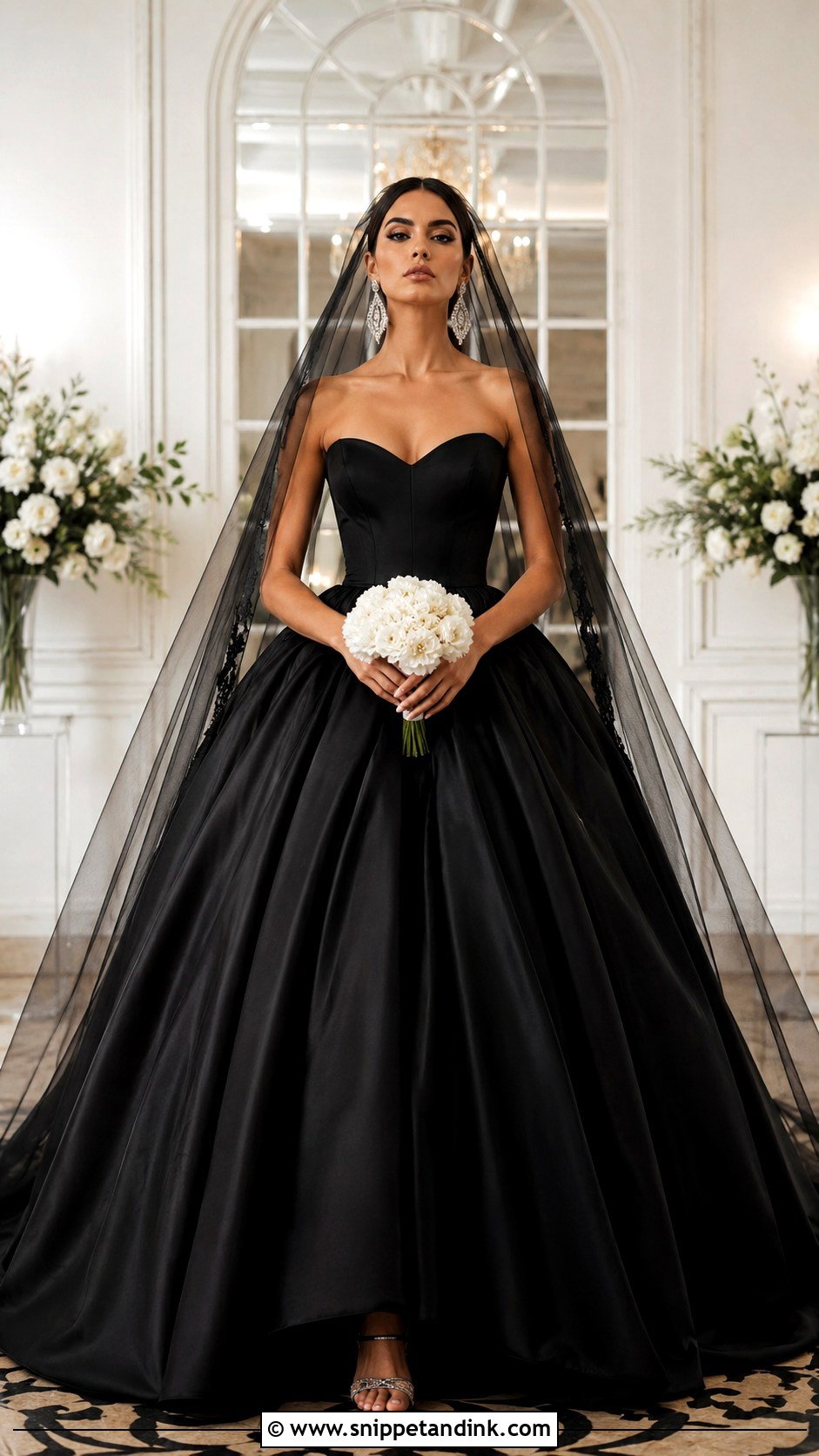
Black bridal has moved from rare to regular, and it rewards texture. Satin, layered tulle or embroidered lace all give a dark gown depth so it doesn’t photograph as a flat silhouette. I’d pair a fitted bodice and full skirt with crystal earrings, black or metallic heels and white or muted flowers for contrast. A sheer black veil is the bolder route; an ivory one softens it. The check I always ask for is a photo test: take pictures in daylight and under warm indoor light, because some black fabrics turn brown or show every dust mark under flash. It suits brides who already dress like this; on someone who doesn’t, it can feel like a costume.
12. Red Wedding Dress With Full Skirt
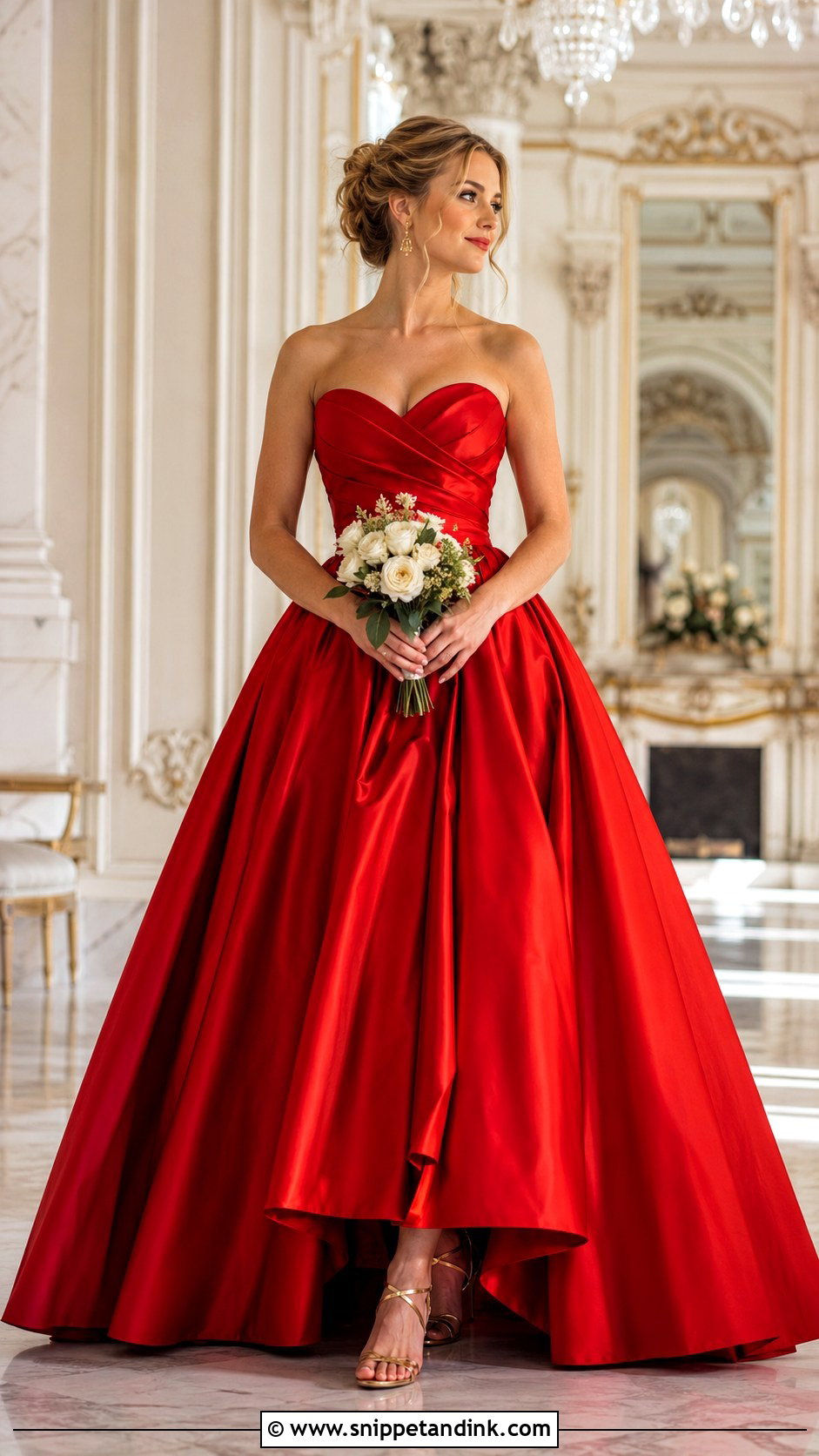
A red wedding dress keeps the grand bridal outline while changing the whole mood of the room. Ruby, scarlet and burgundy behave very differently against skin, so I hold fabric swatches under your chin by a window before anyone orders. A structured bodice and full satin skirt show the colour cleanly. Metallic heels, simple gold earrings and a neutral, compact bouquet stop the outfit from turning into a colour clash. Before pale accessories go anywhere near it, rub a damp white cloth on an inside seam allowance. Some red dyes transfer, especially on a hot day, and a pink-stained veil can’t be undone.
13. Sculptural Mermaid Wedding Dress
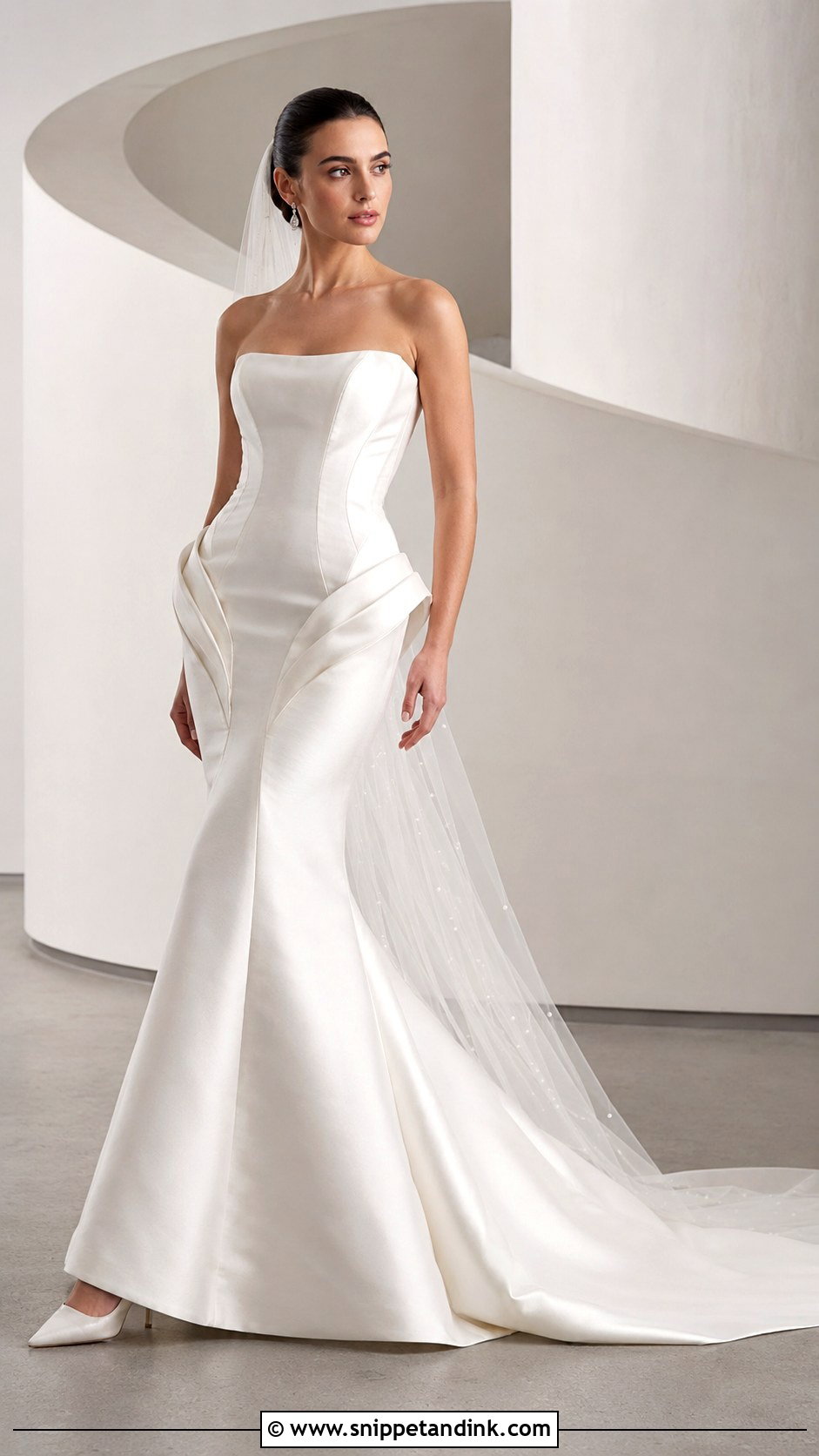
A sculptural mermaid wedding dress hugs the body, then opens into a defined lower skirt and train. The drama comes from seams, folded satin and draping rather than beading. Pair it with pointed heels, modern earrings and a narrow veil set under a smooth bun. Shapewear can help, but it has to be fitted with the gown on, because a seam line under fitted satin shows instantly. In alterations I have brides sit and take long strides; if the knee flare sits too low, you’ll shuffle all day. Ask for a bustle that keeps the folds intact when the train is lifted.
14. Off Shoulder Satin Ball Gown Wedding Dress
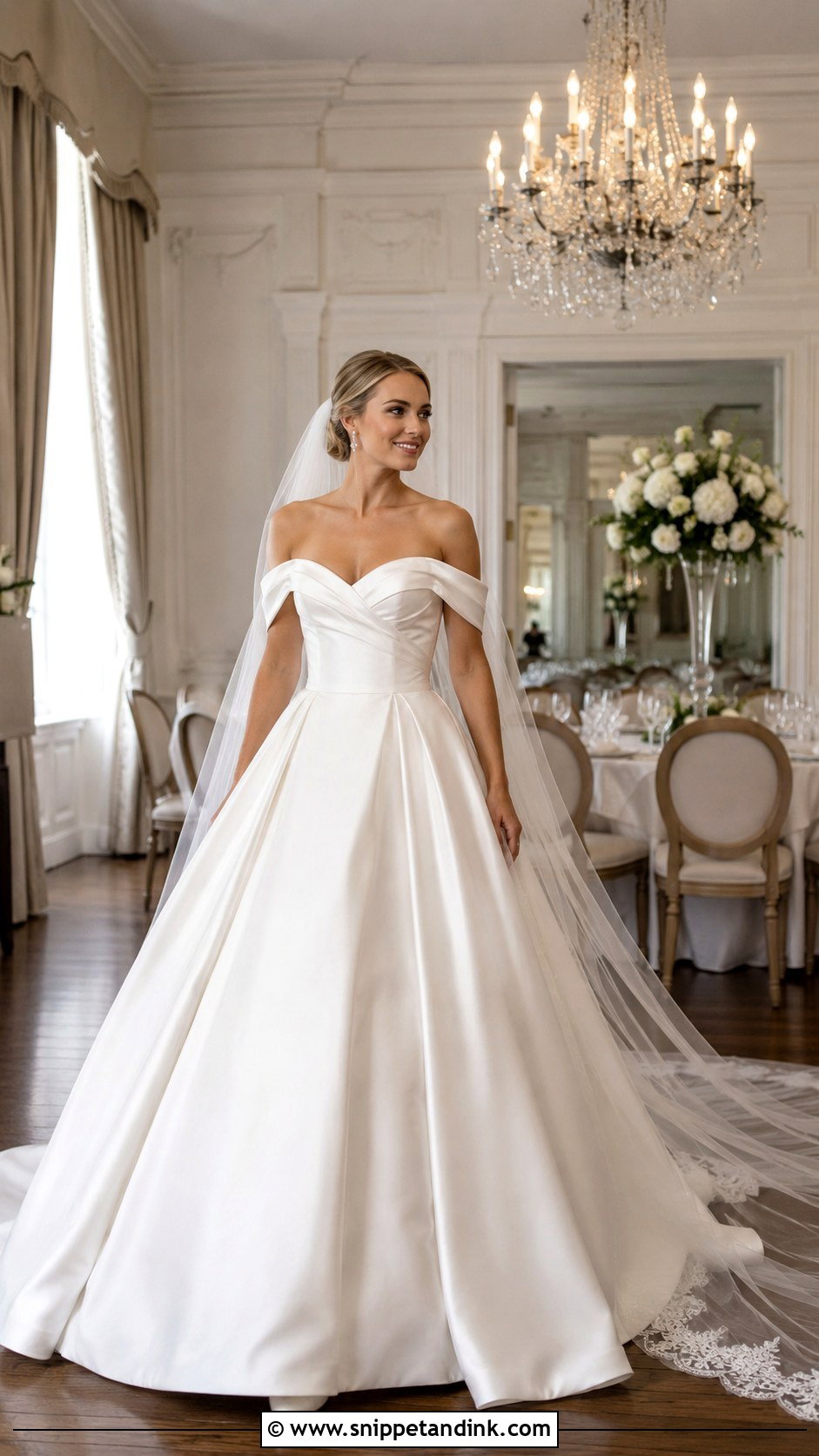
The off-shoulder sleeve should be decoration, not support. I look for a bodice with its own internal structure so the gown stays up on its own and the sleeves just rest on the arms. Satin or mikado gives a smooth surface that lets the skirt’s volume read clearly. A short necklace or pearl drops, closed heels and a long plain veil all suit it, and swept-back hair keeps the shoulders on show. At the fitting, reach forward as if to hug someone and raise your arms to shoulder height. If the sleeves cut in or ride up, they need adjusting now; fashion tape is a backup, never the plan.
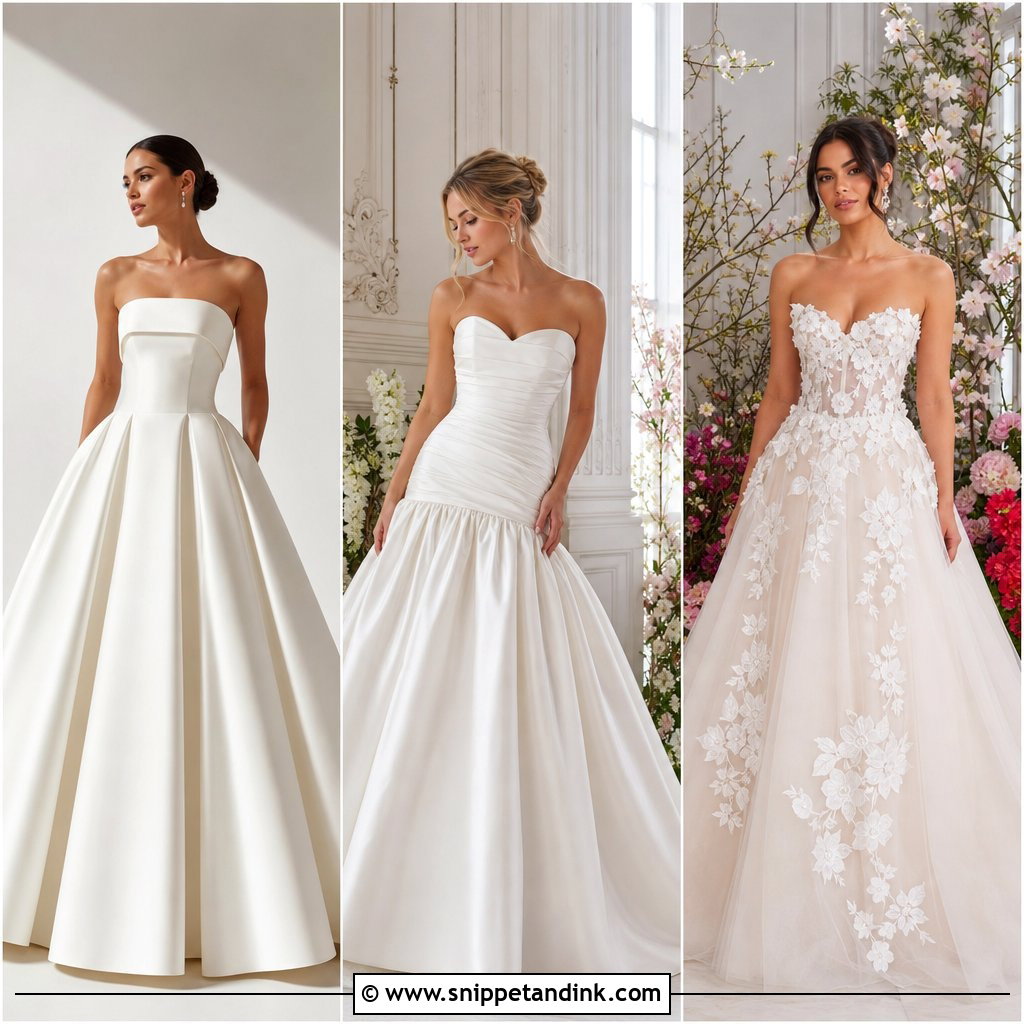

15. Drop Waist Wedding Dress With Full Skirt
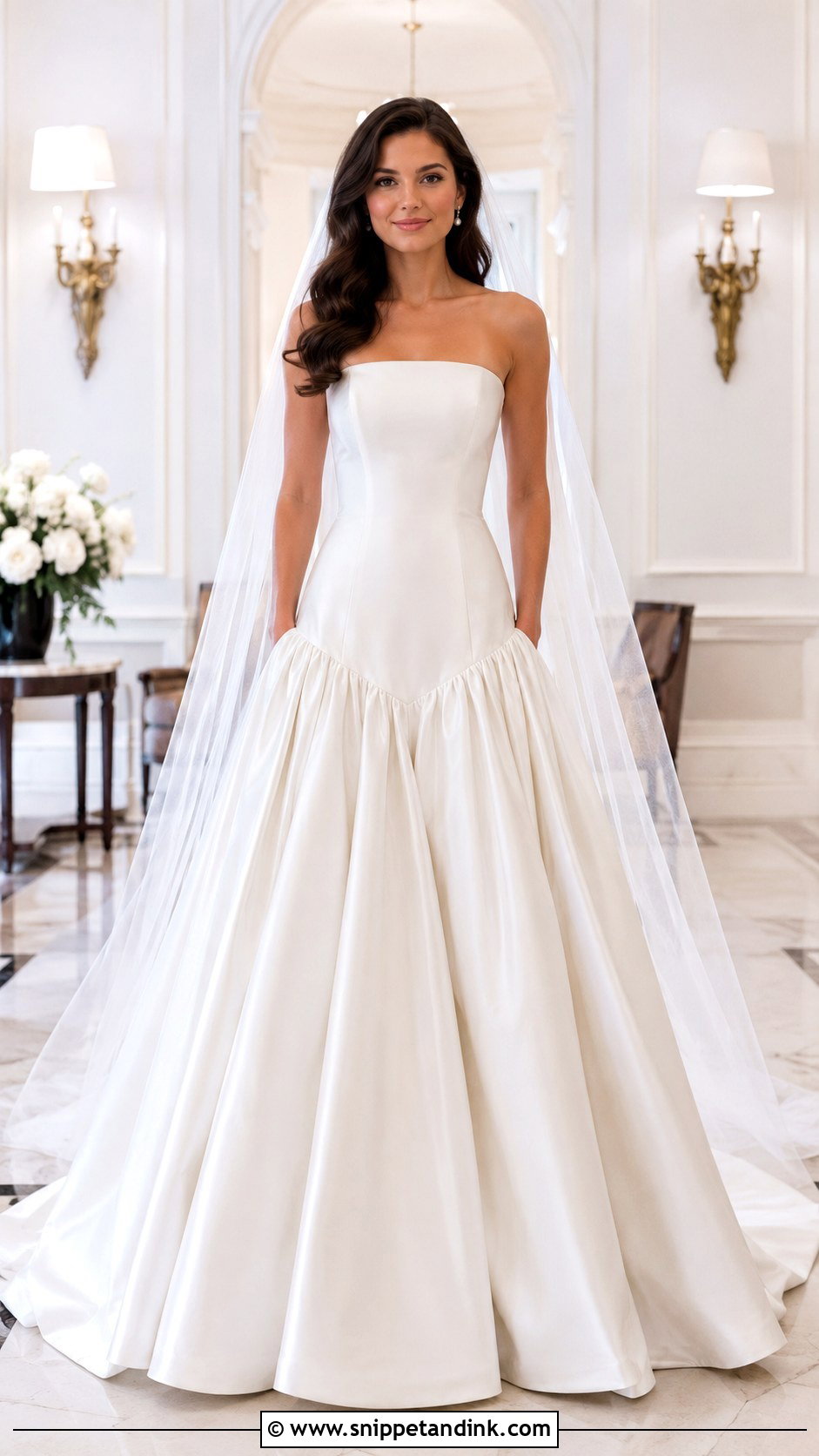
Moving the waist down to the hips gives a long torso line that feels part vintage, part modern. It’s an unforgiving cut, though. If the seam sits a couple of centimetres off, the bodice wrinkles across the hips, and on a petite frame the skirt can start too low and shorten the legs. I always have the drop point marked on the body at the first fitting rather than trusting the size chart. Platform heels hidden under the skirt help with proportion, and a chapel veil and soft bun complete it. Sit down at every appointment to see whether the lower bodice pinches.
16. Tiered Organza Wedding Dress
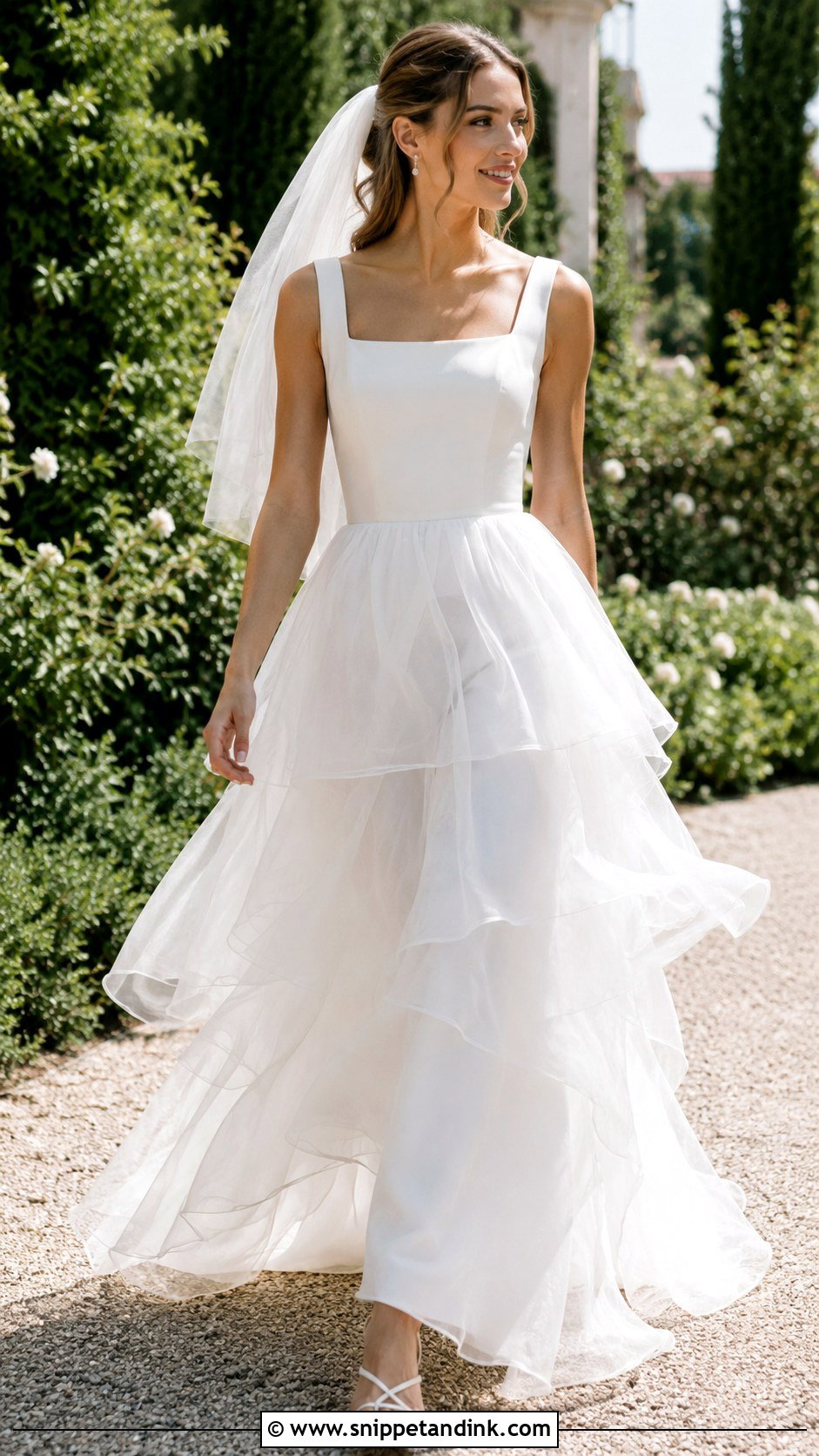
Tiers of organza give volume that looks light rather than solid, which suits brides who find satin ball gowns heavy. I like wide, well-spaced tiers over a strapless or square-neck bodice, finished with delicate sandals, small drops and a shoulder-length veil. A half-up style keeps the neckline open. Organza creases sharply and doesn’t relax on its own, so travel day matters. I have the gown steamed professionally once it’s at the venue and hung from a high hook, never folded on a bed. Ask for the hem to clear the floor slightly too, since the cut edges of organza fray fast when they drag.
17. Pearl Embellished Wedding Dress
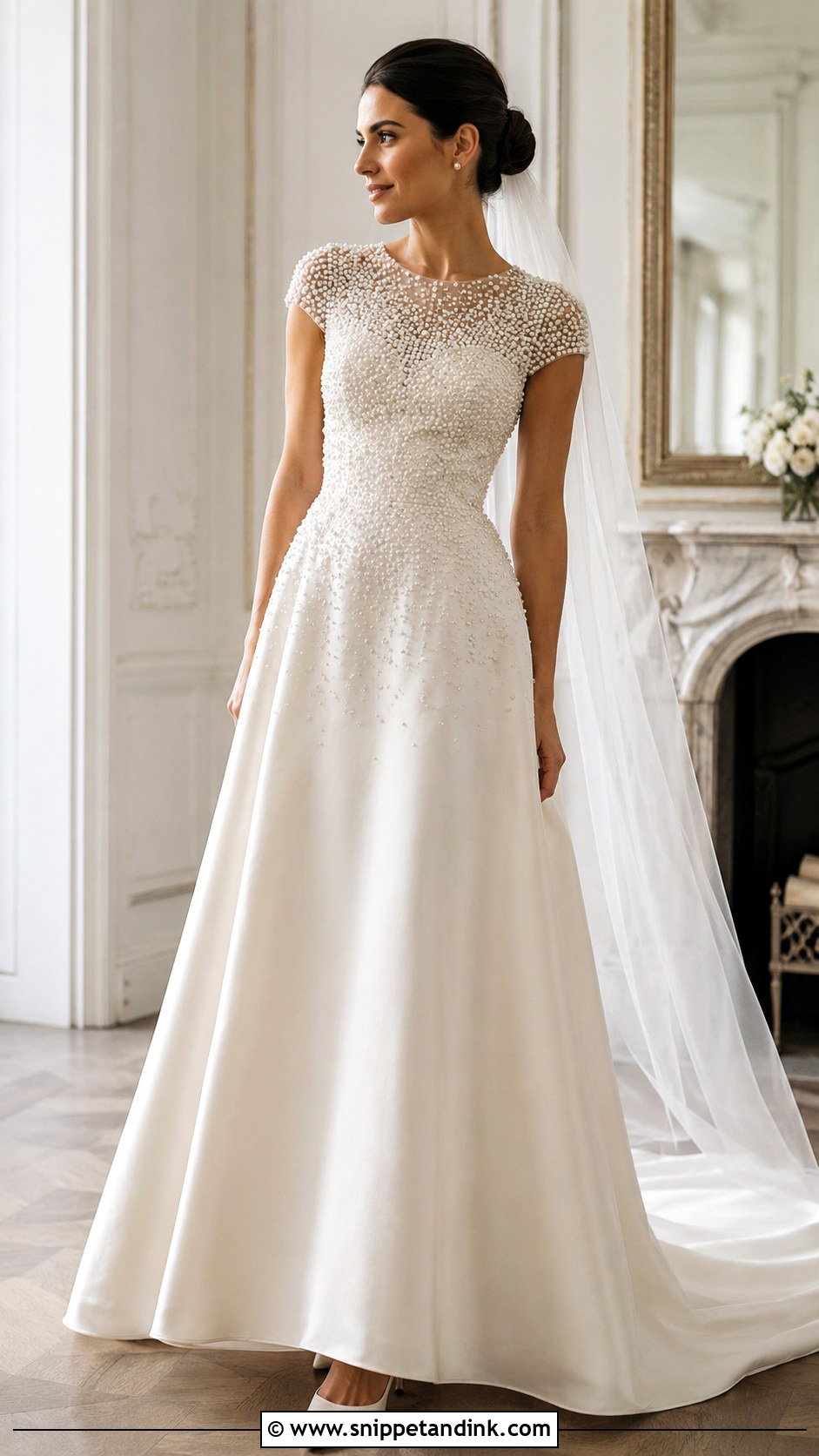
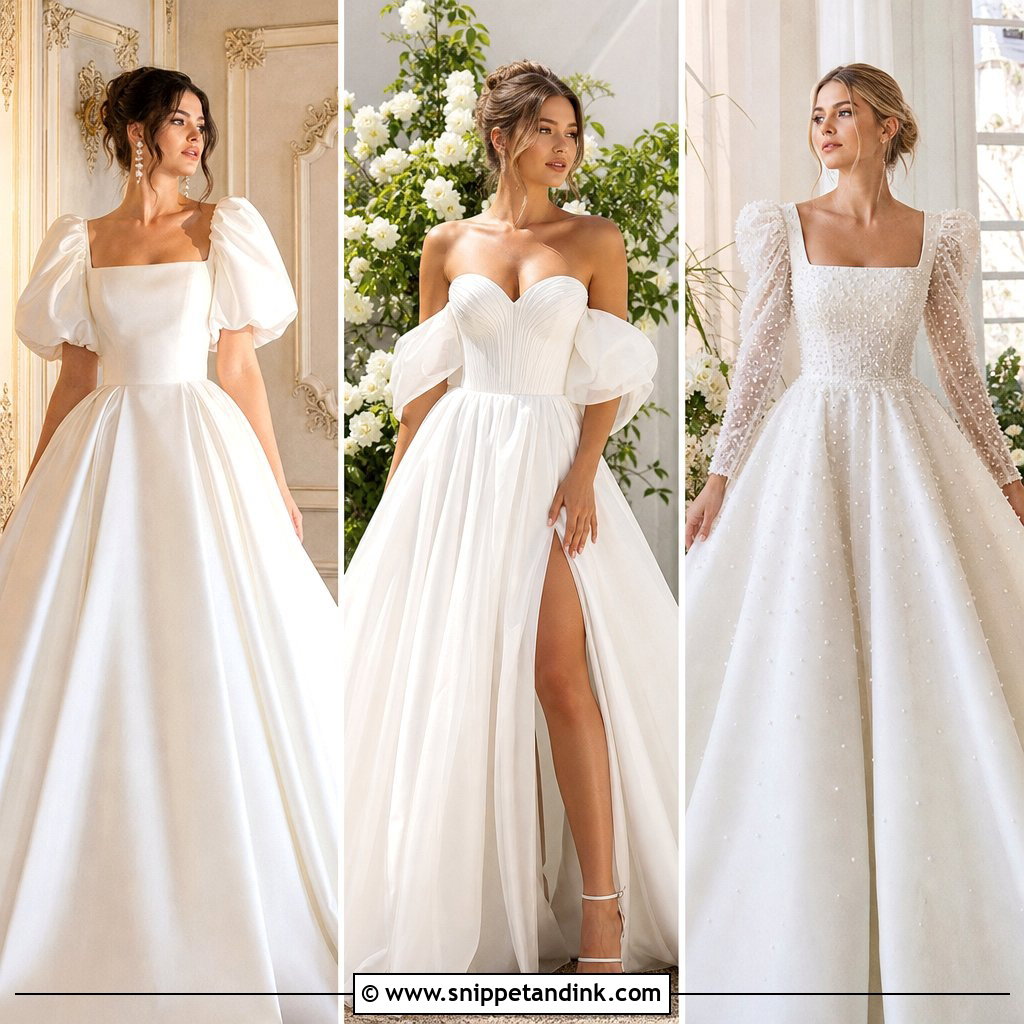
Pearls give a soft sheen that suits daylight as well as candlelight. I prefer them dense around the neckline, corset or sleeves and sparse across the skirt so the gown stays manageable. Because the embellishment already behaves like jewellery, I’d stop at pearl studs and a plain-edged veil rather than layering necklaces and bracelets on top. A smooth chignon stops hair catching on raised beads. Pearls are usually sewn on in long runs of thread, and one broken stitch can drop a whole line. Check for loose threads at the last fitting, and pack a needle with matching thread in the emergency kit.
18. High Low Wedding Dress With Train
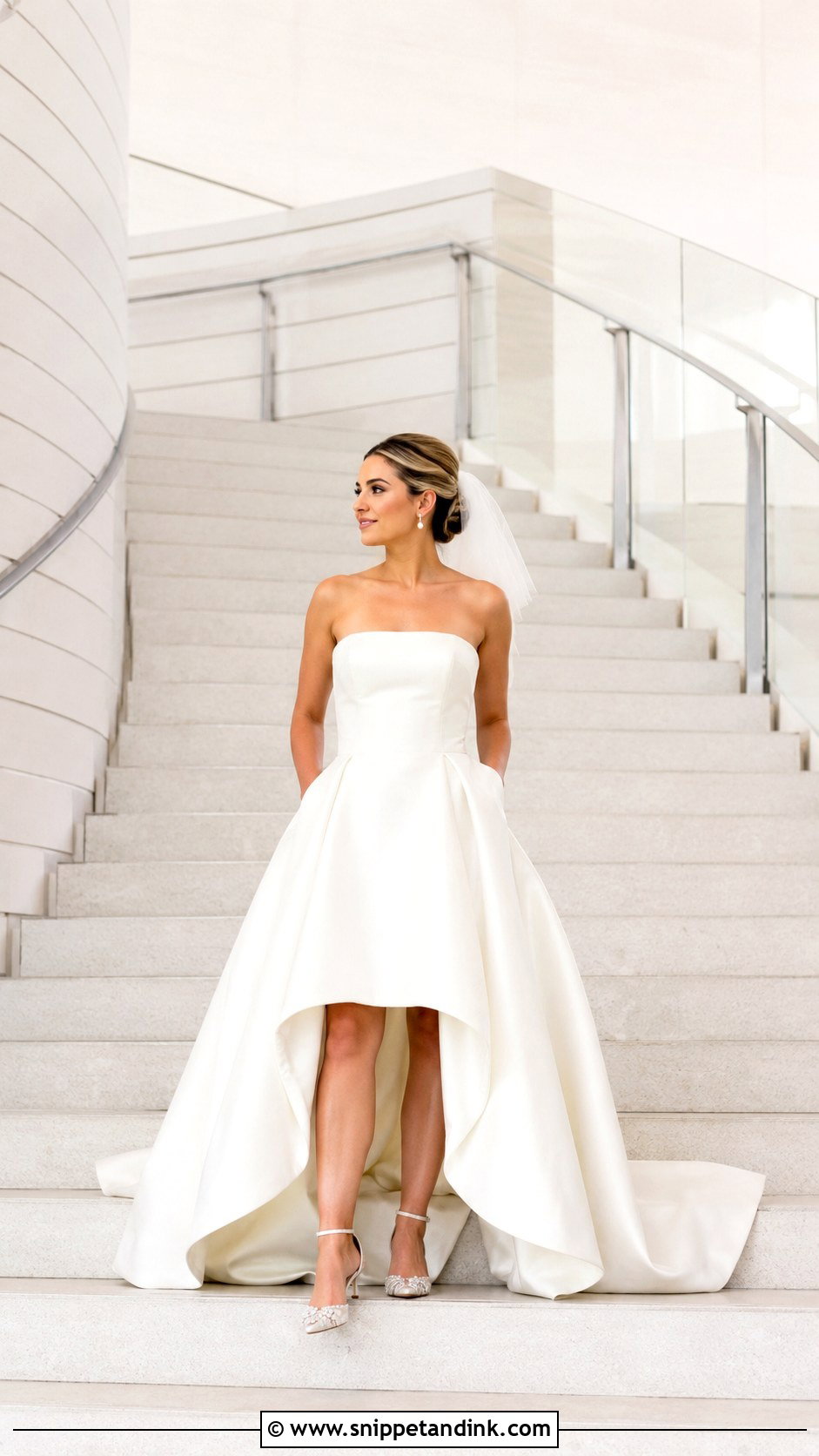
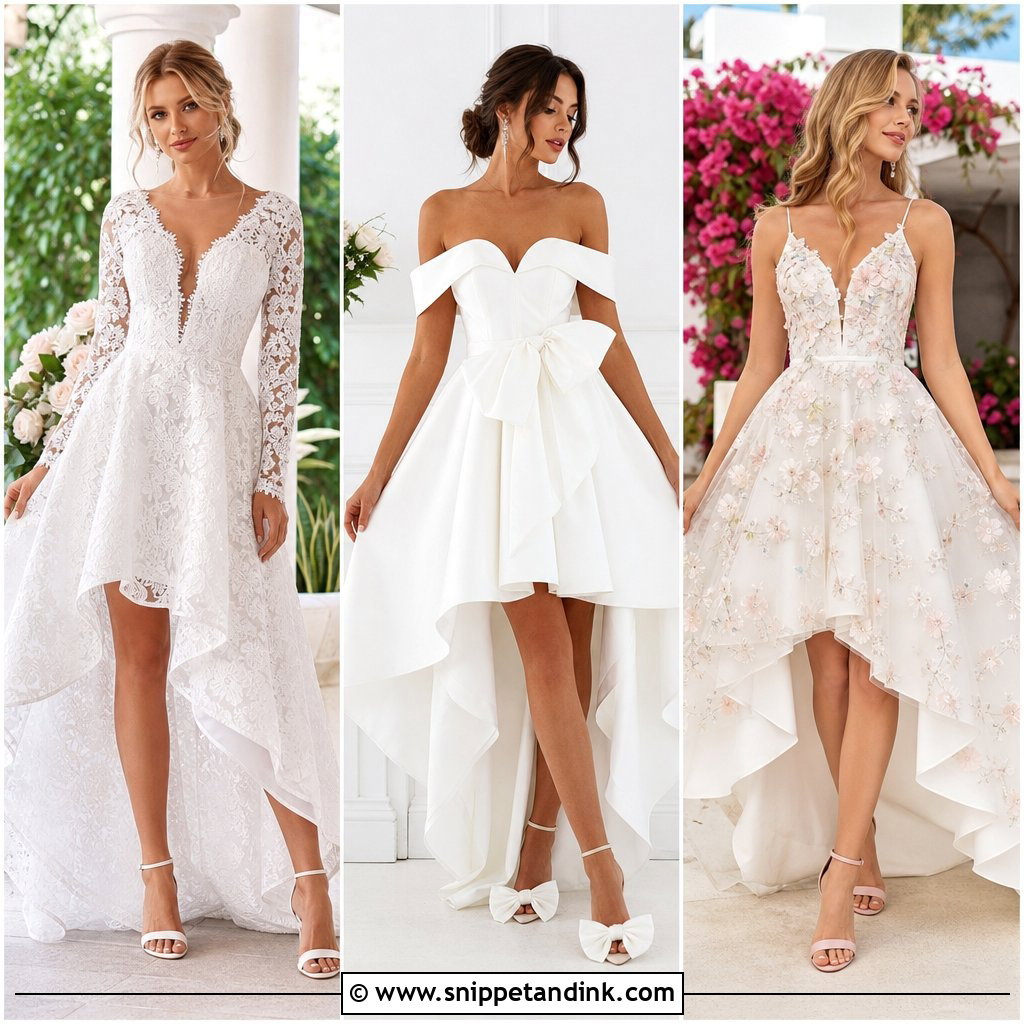
The short front shows off your shoes while the back still sweeps behind you like a formal gown. That means the shoes become part of the outfit, so I’d budget for a pair you love and can stand in for hours: embellished pumps or a strong ankle-strap heel. A gradual slope from front to back looks deliberate; a steep jump can look unfinished. Keep the bouquet narrow so the hemline is visible in photos, and choose a short veil. The train still needs a proper bustle. I also check the front hem at the fitting in the actual shoes, because a heel change of even two centimetres alters where that hem lands.
19. One Shoulder Wedding Dress With Cape
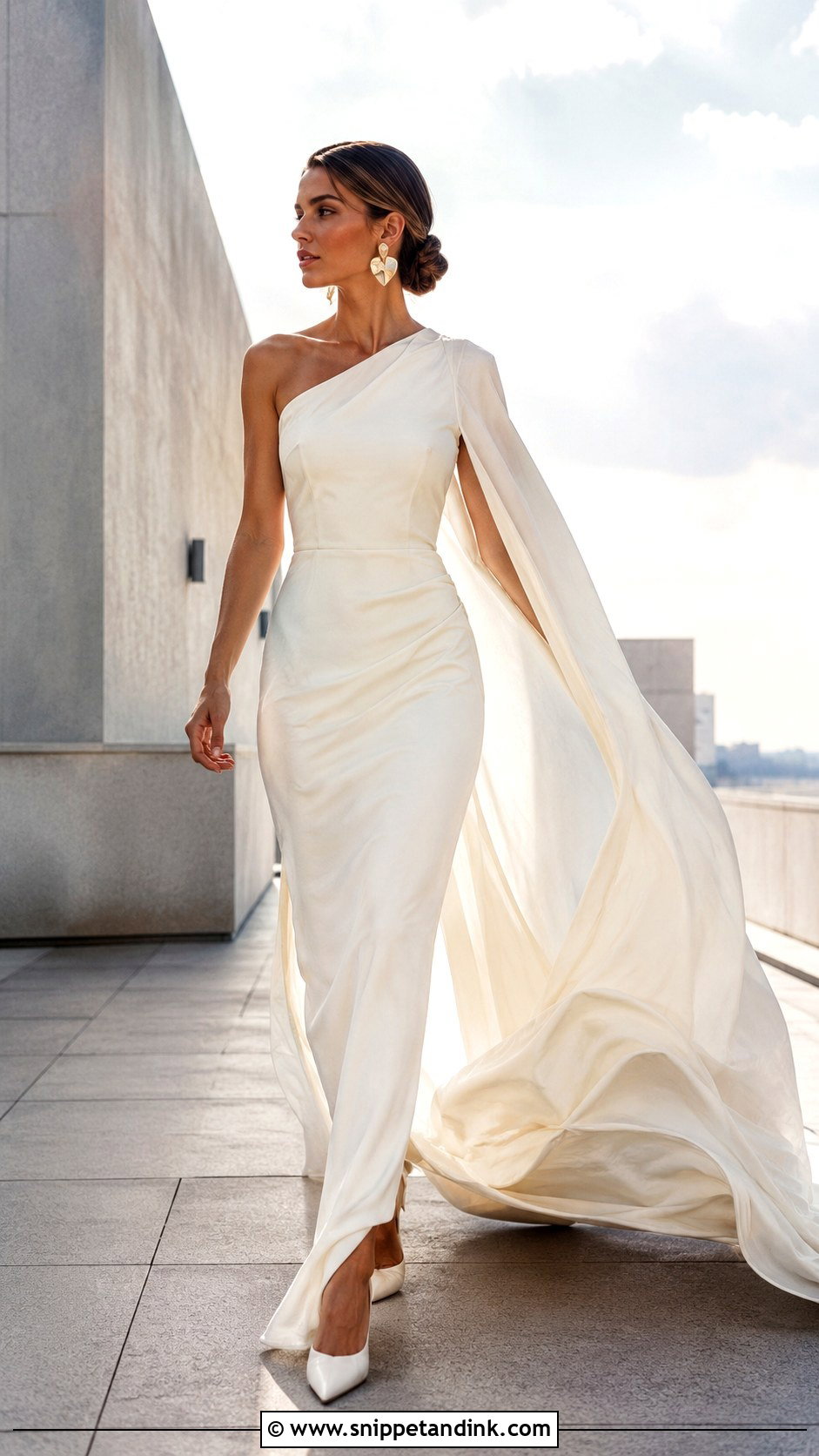
One bare shoulder and a cape trailing from the other makes a clean asymmetric line from every side. A fitted column or slightly flared gown suits it best, with the opposite side kept completely plain. A single sculptural earring on the bare side, sleek heels and a low side-parted bun are all you need, and I’d drop the veil because it fights the cape. Beaded or embroidered capes weigh more than they look, and all that weight hangs from one shoulder seam. I ask for a wider attachment point there and have the bride turn and pose a few times so we can see how the fabric falls.


20. Metallic Champagne Wedding Dress
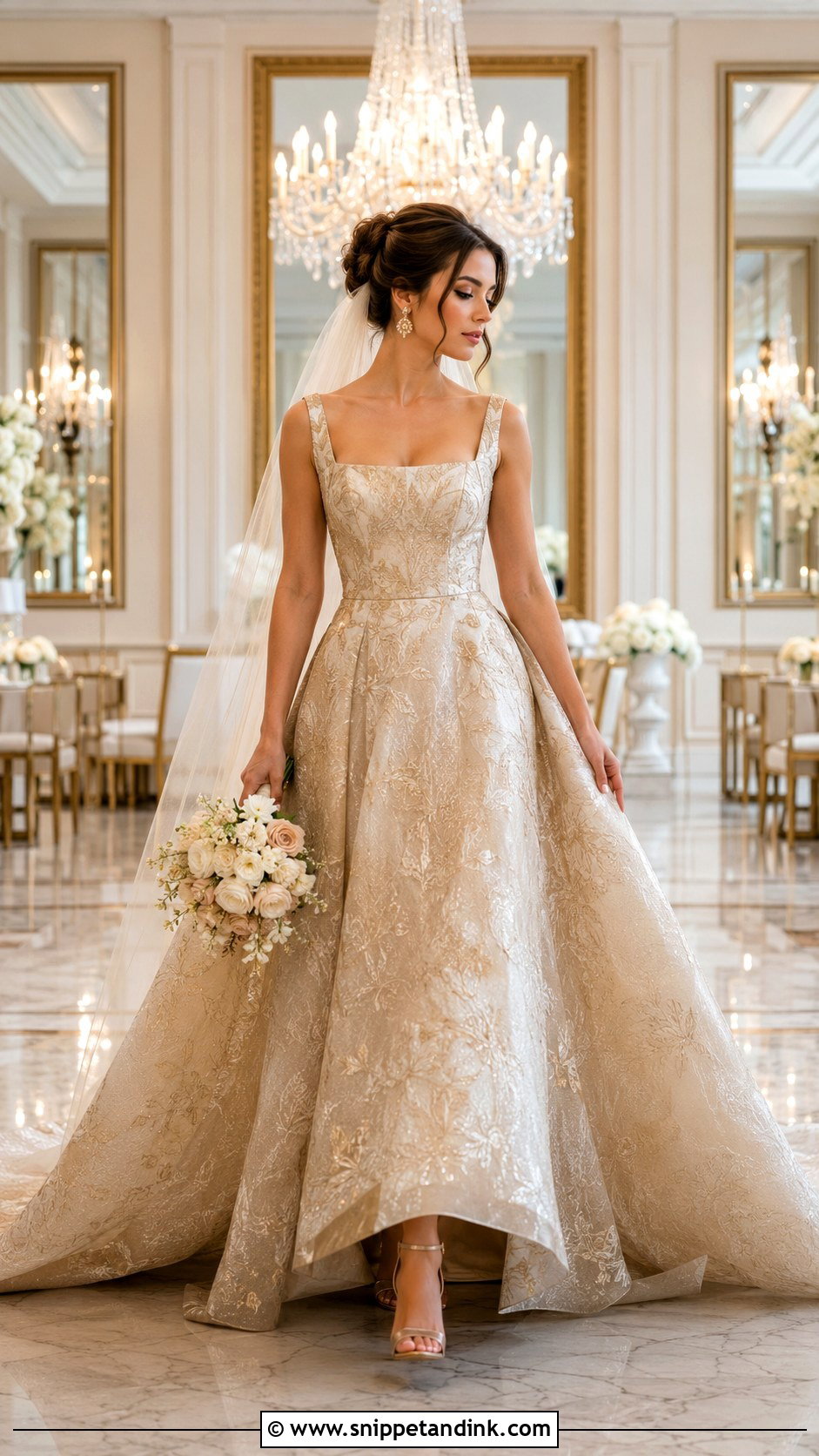
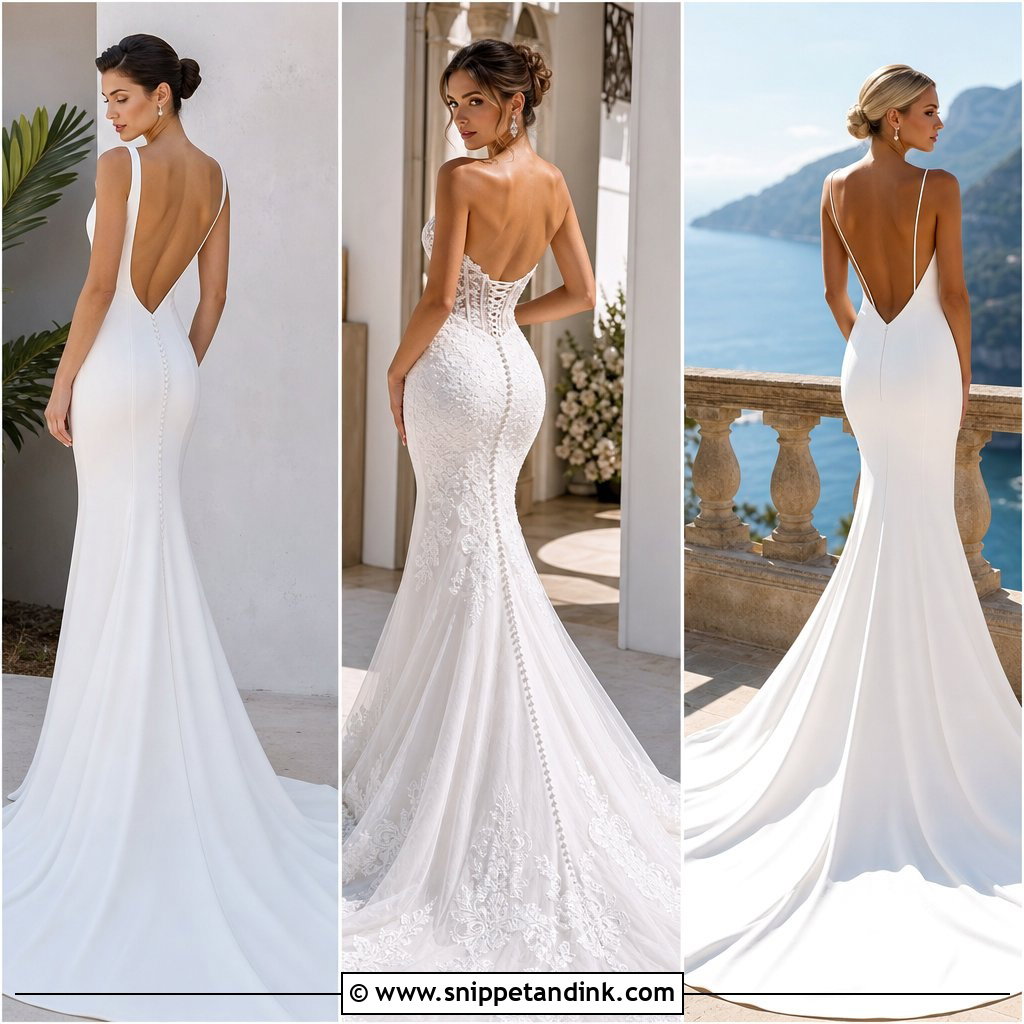
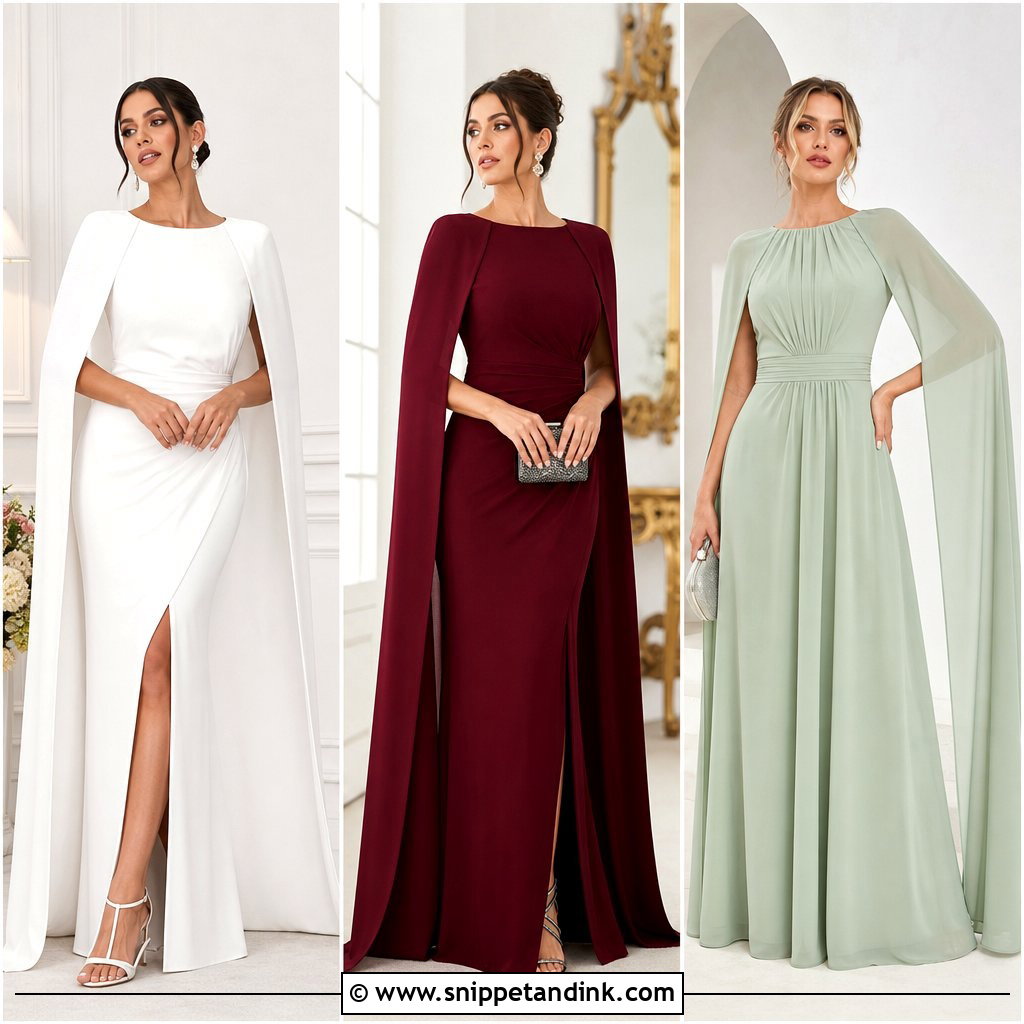
Champagne shimmer is softer than bright white and warmer on most skin tones. Gold-thread embroidery, reflective organza, sequined tulle or lustrous satin all deliver it, and a ball gown or fitted A-line gives the fabric enough surface to catch the light. Champagne heels, warm metallic earrings and a sheer neutral veil keep everything in the same family, with pale flowers to match. Metallic fabric is the one I always photograph in three settings: window light, flash and the venue’s own lighting. Under some warm bulbs it can go greenish or brassy, and that’s worth knowing before the order is placed.
Ordering a Statement Gown Early Enough for Proper Alterations
Structured and heavily decorated dresses take longer at every stage. Many designer gowns are made to order and can take several months to arrive, and timelines vary a lot by brand and season, so I’d start shopping nine to twelve months out if you want one of these styles. That leaves a cushion if a delivery runs late.
Alterations on these gowns are slower than on a simple slip dress. Taking in a beaded bodice means removing and replacing beads by hand, and a feathered or appliquéd hem has to be shortened from the top or waistband so the trim isn’t cut. I plan for the first fitting about two to three months before the wedding, with two or three appointments after it and a final pick-up a week or two out.
What to bring to every fitting
- The exact shoes you’ll wear, because hem length depends on heel height.
- Your wedding-day bra or shapewear, since a corset fits differently over different layers.
- The person who will bustle the train or remove the overskirt, so they learn it with the seamstress watching.
Getting Through Doorways, Cars and the Bathroom in a Big Skirt
These are the moments nobody photographs and every bride with a large gown worries about. For the car, sit down backwards on the seat first, then swing your legs in, and have someone gather the train onto your lap before the door closes. A larger car or a van saves a lot of crushed tulle.
For the bathroom, I tell brides to face the toilet rather than sit forward, then gather the skirt up from behind in big handfuls. A friend helps, and so does a slip with a drawstring-style gathering skirt sold for exactly this. Practise once at home in the gown if you can. Doorways are easier if you turn slightly sideways and lead with the shoulder. With a bustled train, let your helper check it after each of these moves, because that’s when the hooks most often slip.
The Dramatic Gown Is the One You Can Still Dance In
The biggest or most embellished gown isn’t automatically the most dramatic one. The dress that works is the one that has impact and still lets you walk, sit, pose and dance without someone holding your train all night. Bring your real shoes and underwear to every fitting, test every detachable piece with the person who’ll handle it, and pick accessories that support the gown’s strongest feature. Satin, organza, flowers, feathers or a cape, the right choice is the one that fits your room and your stamina as well as your taste.
You'll Like These Ideas:




Leave a Reply