
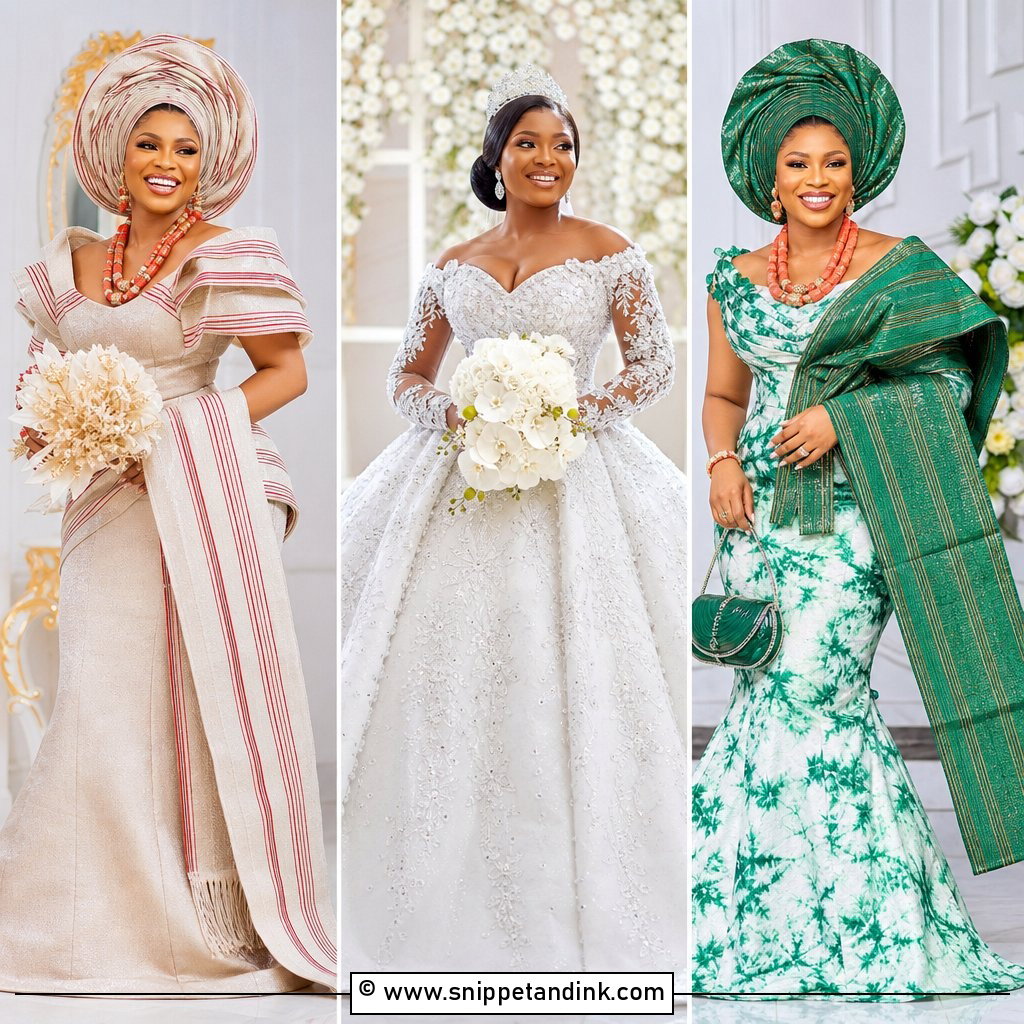
The white gown is the moment a Nigerian wedding builds toward, and brides here aren’t shy about wanting it to be big. Sculpted mermaids, regal ball gowns, capes, pearls: the international bridal shapes are all here, cut with the drama and finishing Nigerian brides expect. Current bridal coverage highlights lace, corsetry and full skirts, and those are exactly the requests I hear most in the fitting room. What I add to every conversation is the practical side. The dress has to support your body, suit the venue, hold up in photographs and still feel comfortable when the reception is in its fifth hour. Below are twenty complete looks, romantic, modest, minimal and grand, each with the one thing I’d check before saying yes.
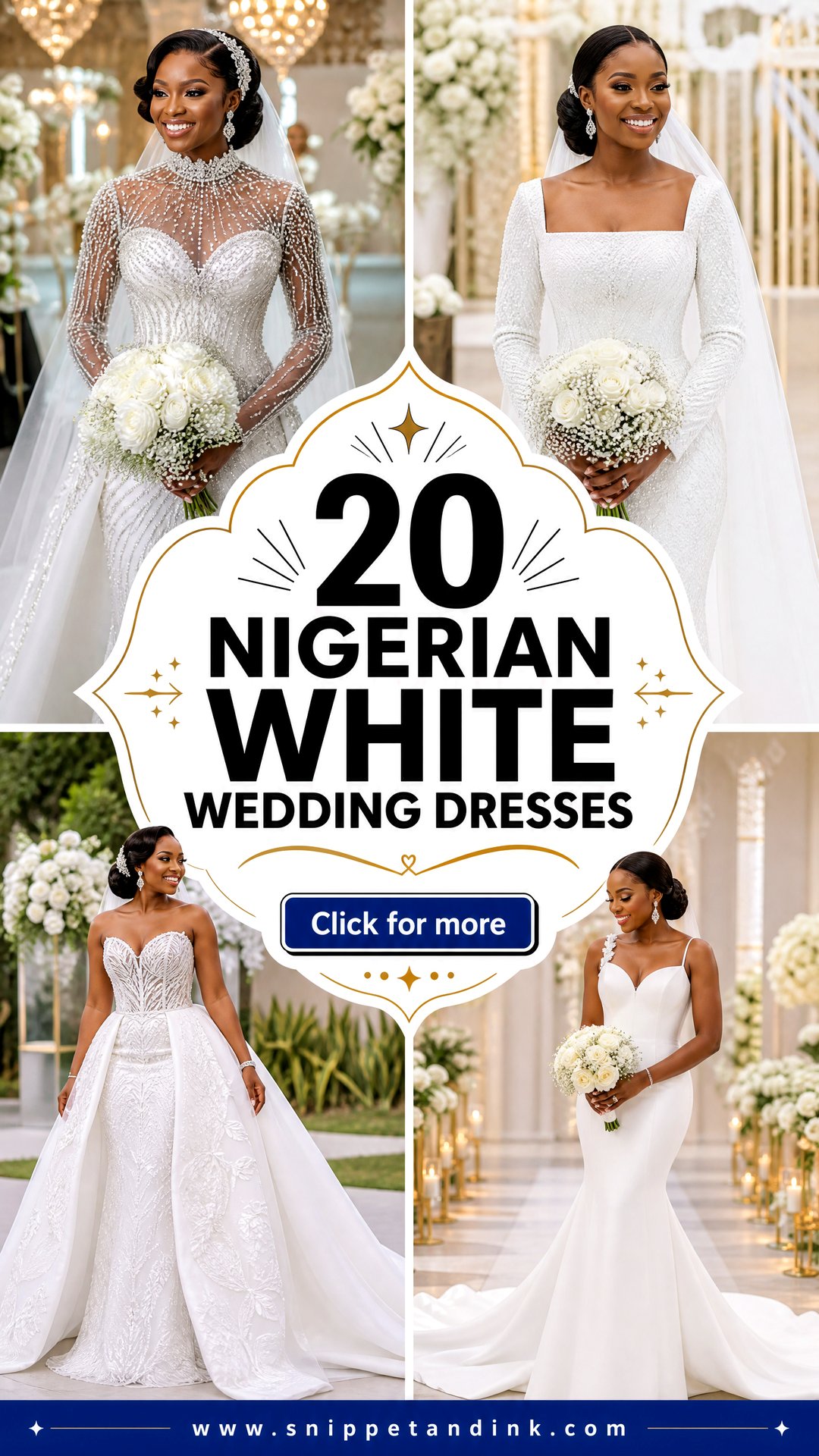
Ivory, Diamond White or Bright White Against Your Skin
“White” covers a surprising range of shades, and the difference shows most against skin and in flash photography. Before I talk silhouette with a bride, I hold a few swatches near her face in daylight.
- Bright or optic white is the coolest shade. It can look crisp and striking on deep skin, but under strong flash it sometimes blows out, losing lace detail in photos.
- Diamond or soft white has a hint of warmth and is the easiest shade for most skin tones. It keeps texture visible on camera.
- Ivory leans cream. It’s warm and flattering on many complexions, but next to a bright white bouquet or tablecloths it can look slightly yellow.
- Champagne or nude linings under white lace change the overall shade. Judge the finished combination, not the lace on its own.
Check swatches both in daylight and under warm indoor lighting similar to your reception hall. Then tell your photographer which shade you’re wearing so they can expose for it.
1. Nigerian White Lace Mermaid Wedding Dress
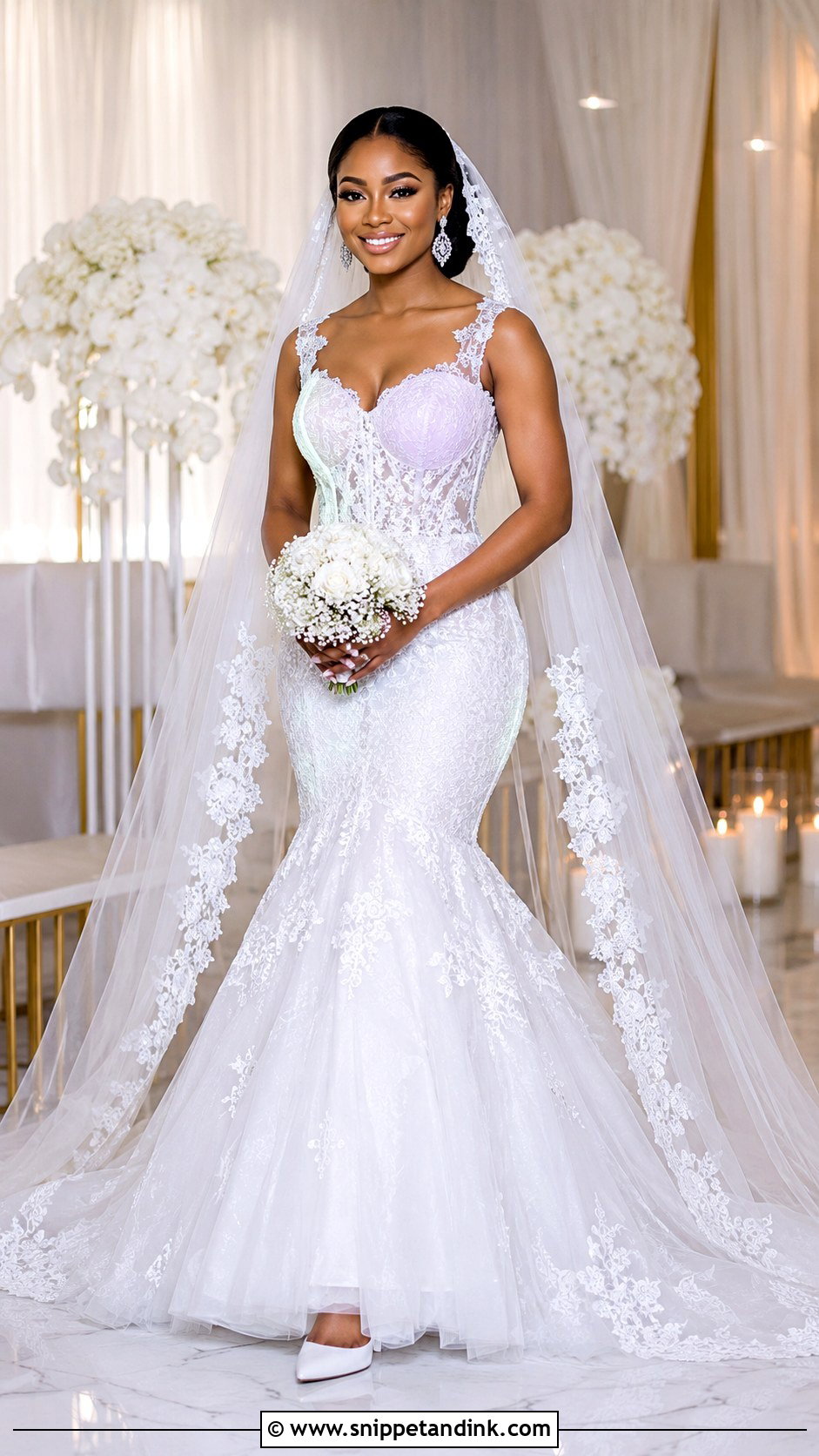
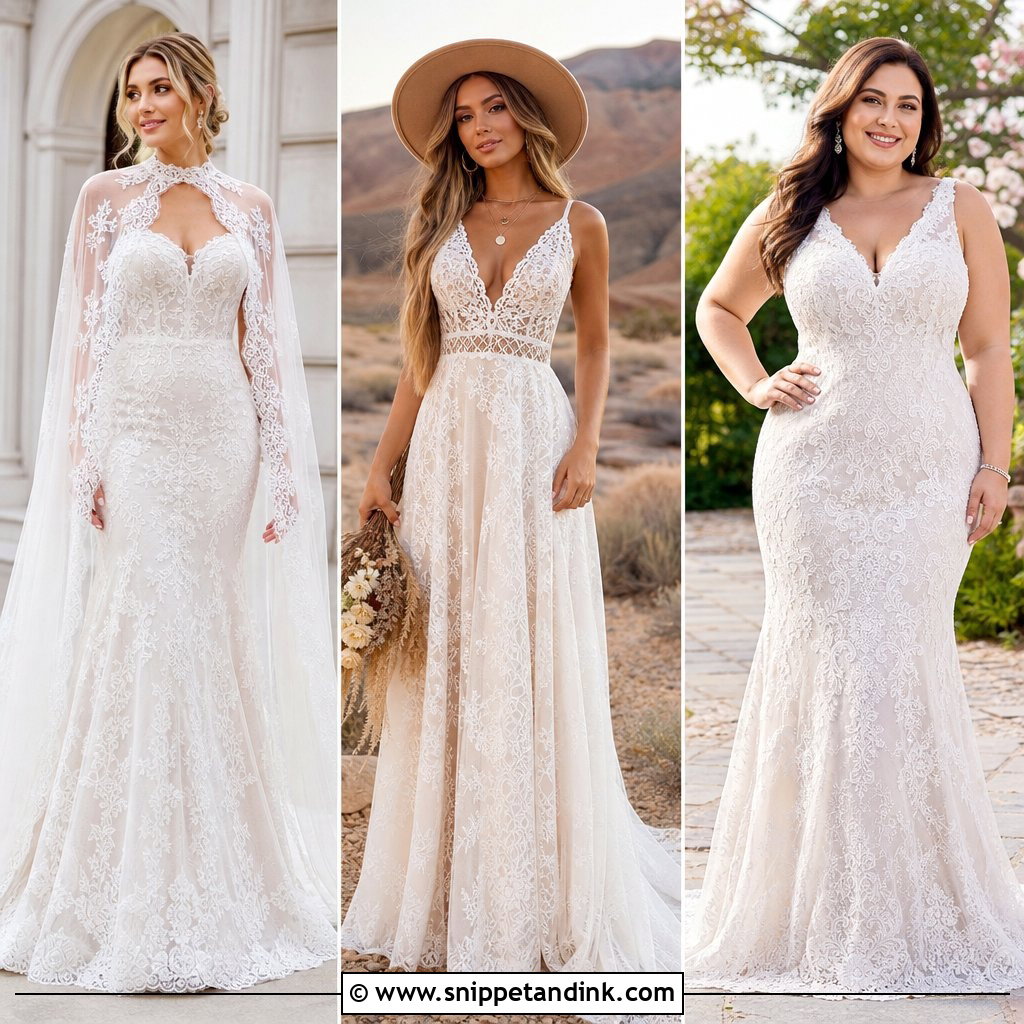
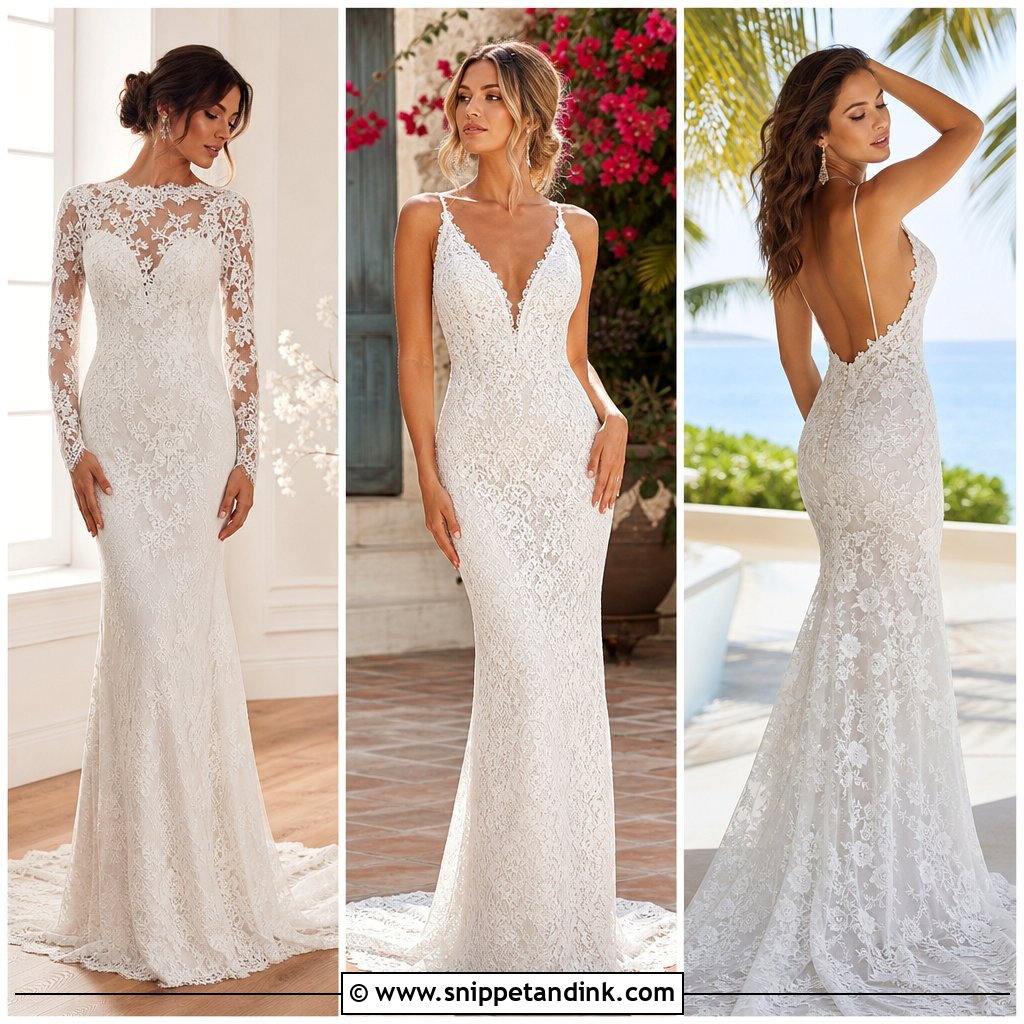
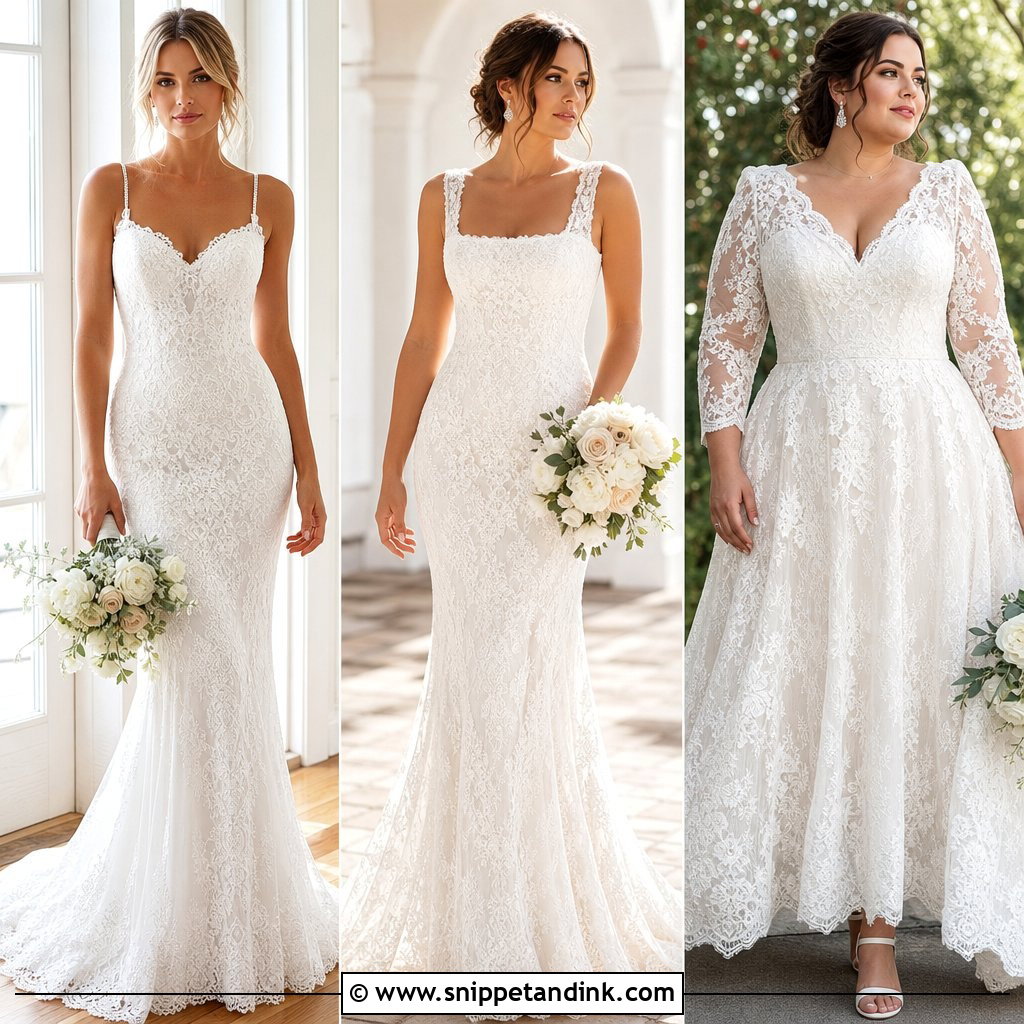
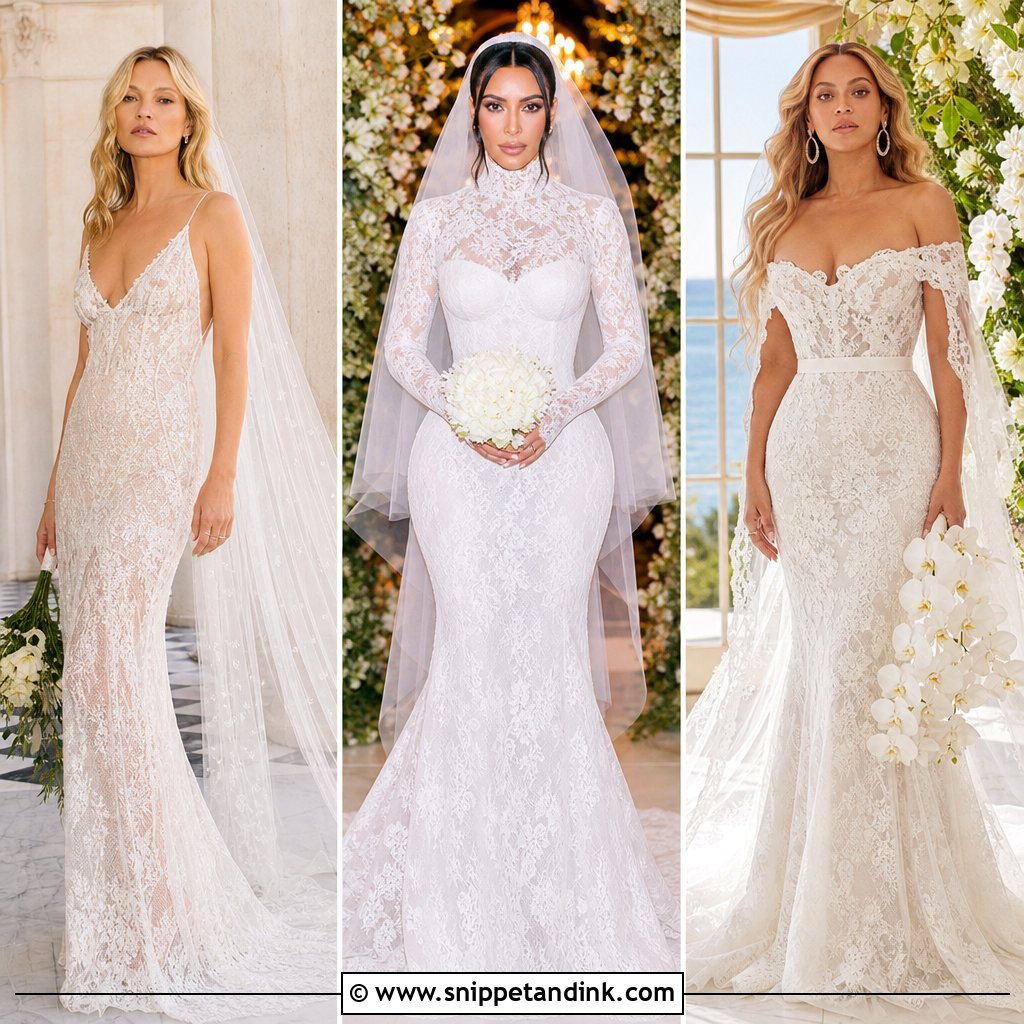
Boning makes the lace mermaid work. Placed well, it supports the bust, sets the waist and smooths the hips so the lace lies flat instead of rippling. I like floral appliqués running from the bodice down into the skirt, which keeps the decoration feeling connected rather than stuck on. A flared tulle hem gives movement without hiding the figure. Cathedral veil, crystal drops, a compact white bouquet and pointed satin pumps. If you plan to dance, have a bustle built for the train; a mermaid train trailing on the floor will be stepped on within minutes. Sit and walk in the gown at every fitting until you can do both without thinking.
2. Nigerian White Corset Ball Gown Wedding Dress
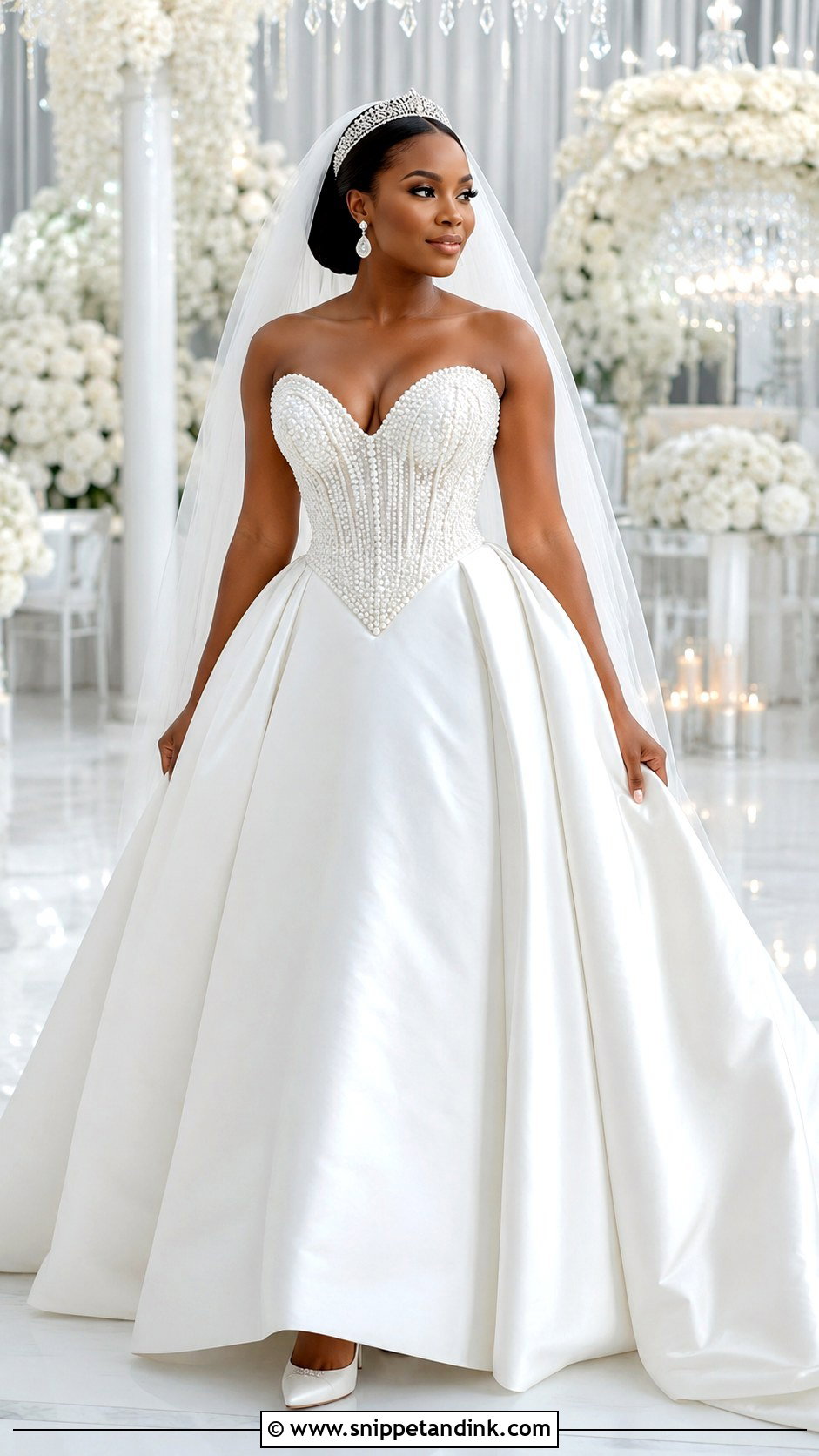
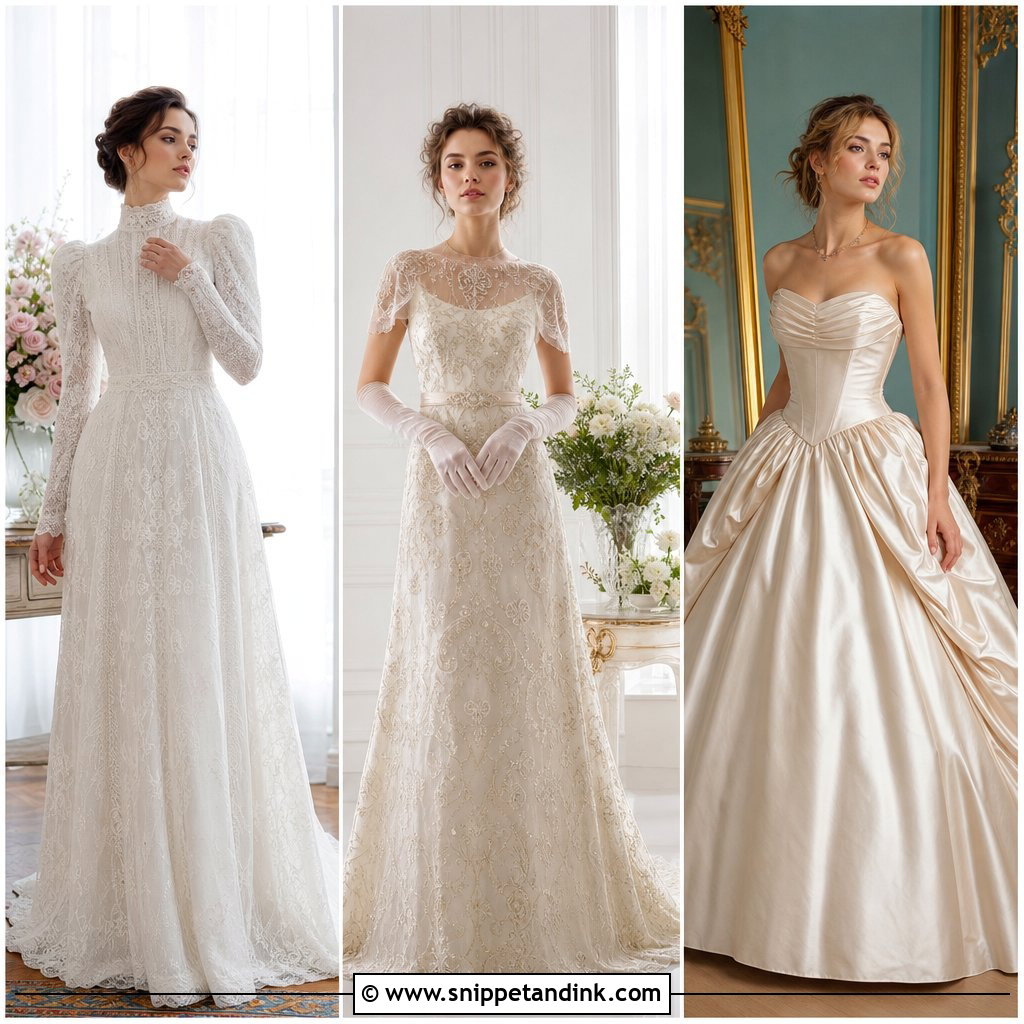
A corset ball gown is the royal-entrance option, and the corset should create shape without anyone hauling on the laces. A curved neckline frames the shoulders. Mikado, satin or layered tulle all hold a full skirt, though mikado gives the crispest outline in photos. A scattering of pearls across the bodice adds richness. Wear it with a sparkling tiara, a long plain veil, pearl studs and closed ivory heels, with a low bun to anchor the headpiece. Ask the designer to carry the skirt’s weight on a waist stay inside the gown. That inner band takes the load off your shoulders and bust, and you’ll feel the difference after a long ceremony.
3. Nigerian White Off-Shoulder Wedding Dress
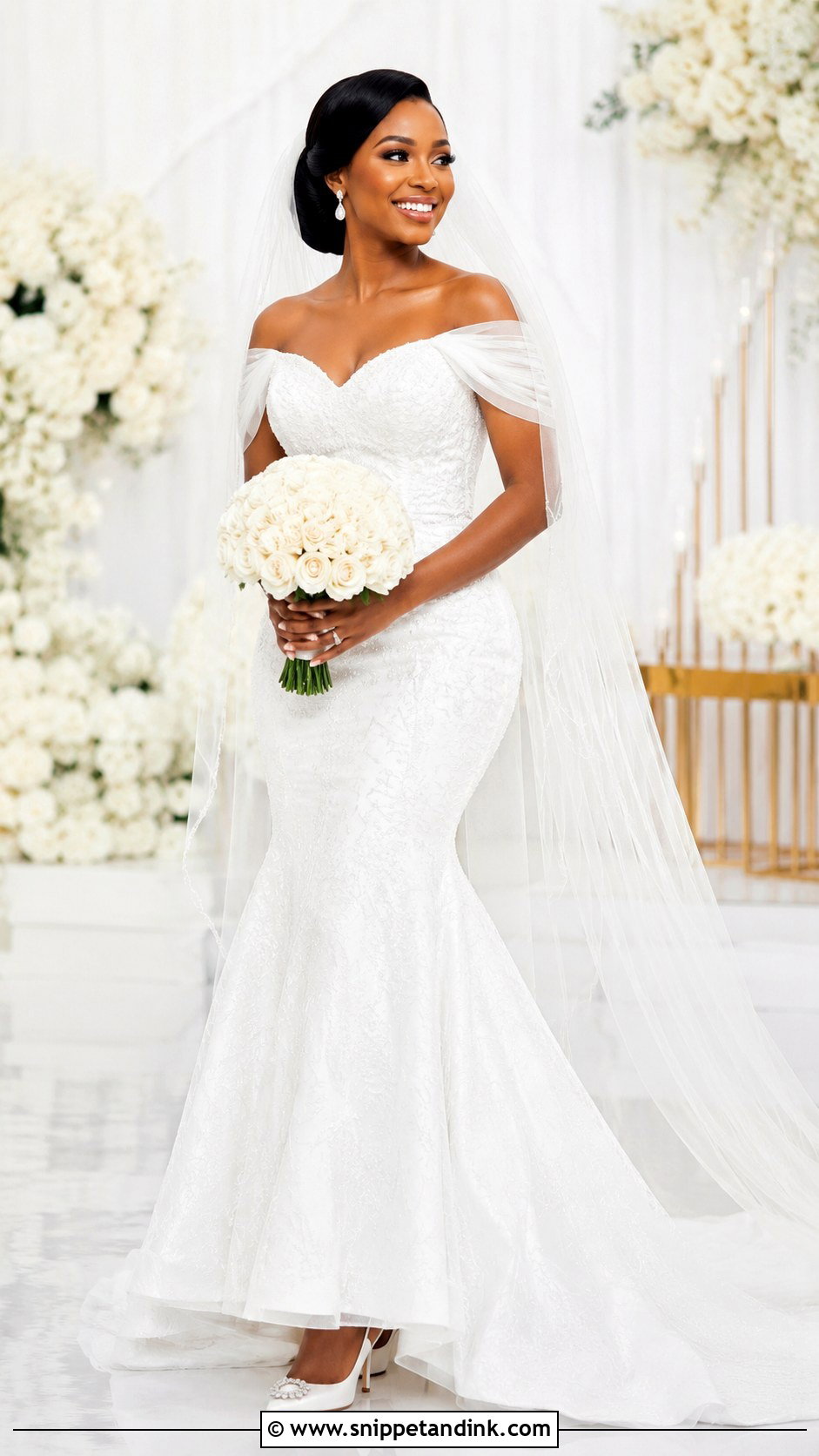
Off-shoulder sleeves frame the face and collarbone, and they suit a trumpet, an A-line or a full princess skirt. The construction is everything. An internal corset plus elasticated or gripper-lined sleeve bands keep them in place when you raise your arms to hug or dance; without them, you’ll spend the night pulling the sleeves back up. Delicate necklace, teardrop earrings, a sleek bun and a sheer veil anchored under the hair. White slingbacks and a rounded bouquet. If the sleeves are heavily beaded, drop the necklace. Walk around the fitting room and look at the back in a second mirror; off-shoulder lines often sit unevenly at the back first.
4. Nigerian White Long Sleeve Lace Wedding Dress
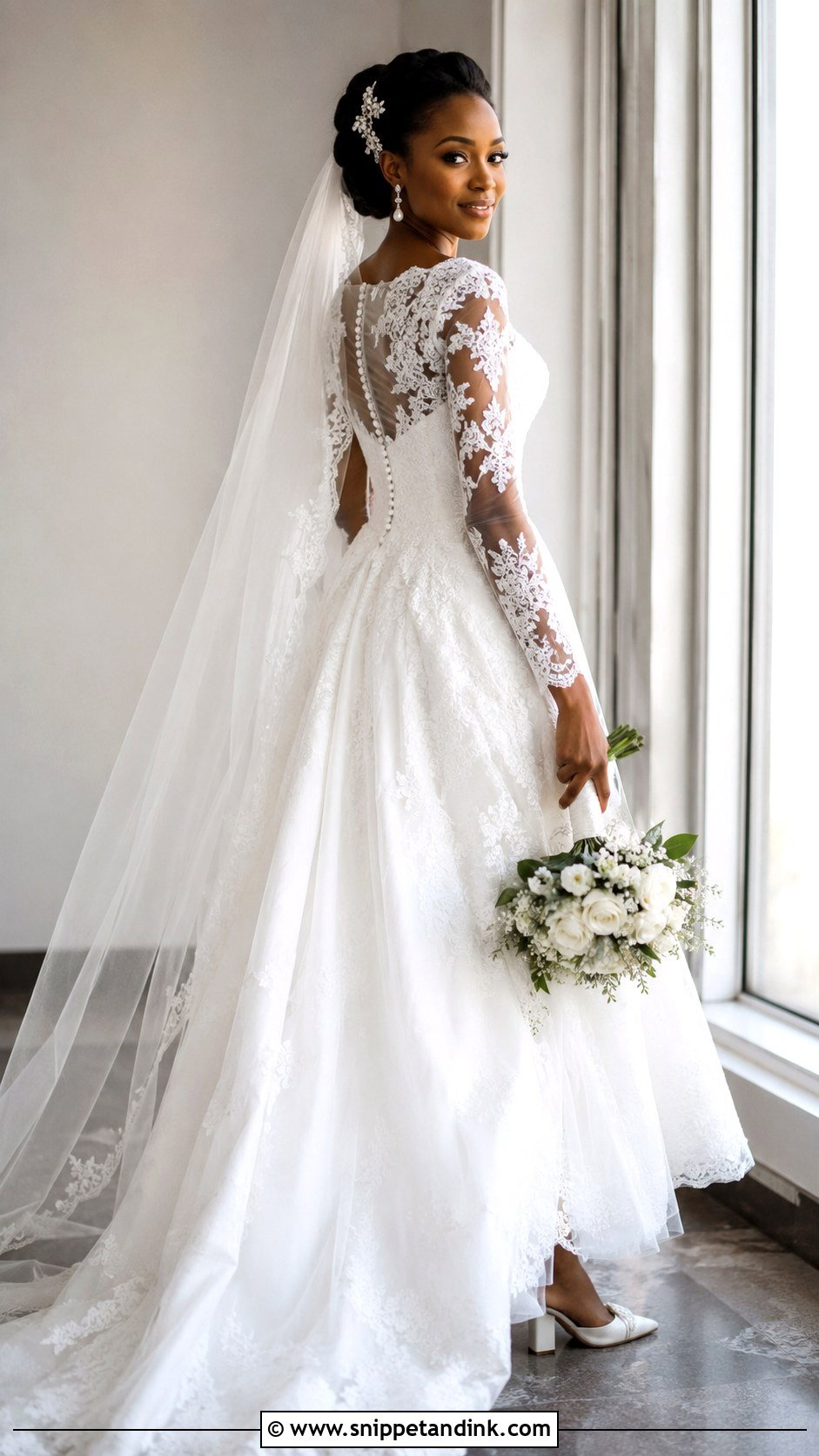
Lace sleeves are where I spend most of my time with skin-tone matching. Illusion mesh only floats if it nearly disappears against your arm, so bring the mesh swatch outdoors and compare it in daylight; shop lighting flatters everything. A fitted bodice with an A-line skirt and covered buttons down the back is a classic shape. Pearl earrings, a soft cathedral veil, comfortable block heels, and a bouquet of white with green. For a warm-weather wedding, ask for lighter lace and breathable lining. The cuffs should let you move your hands freely to sign the register and hold the bouquet. A neat updo shows off the neckline and back.
5. Nigerian White Beaded Wedding Dress
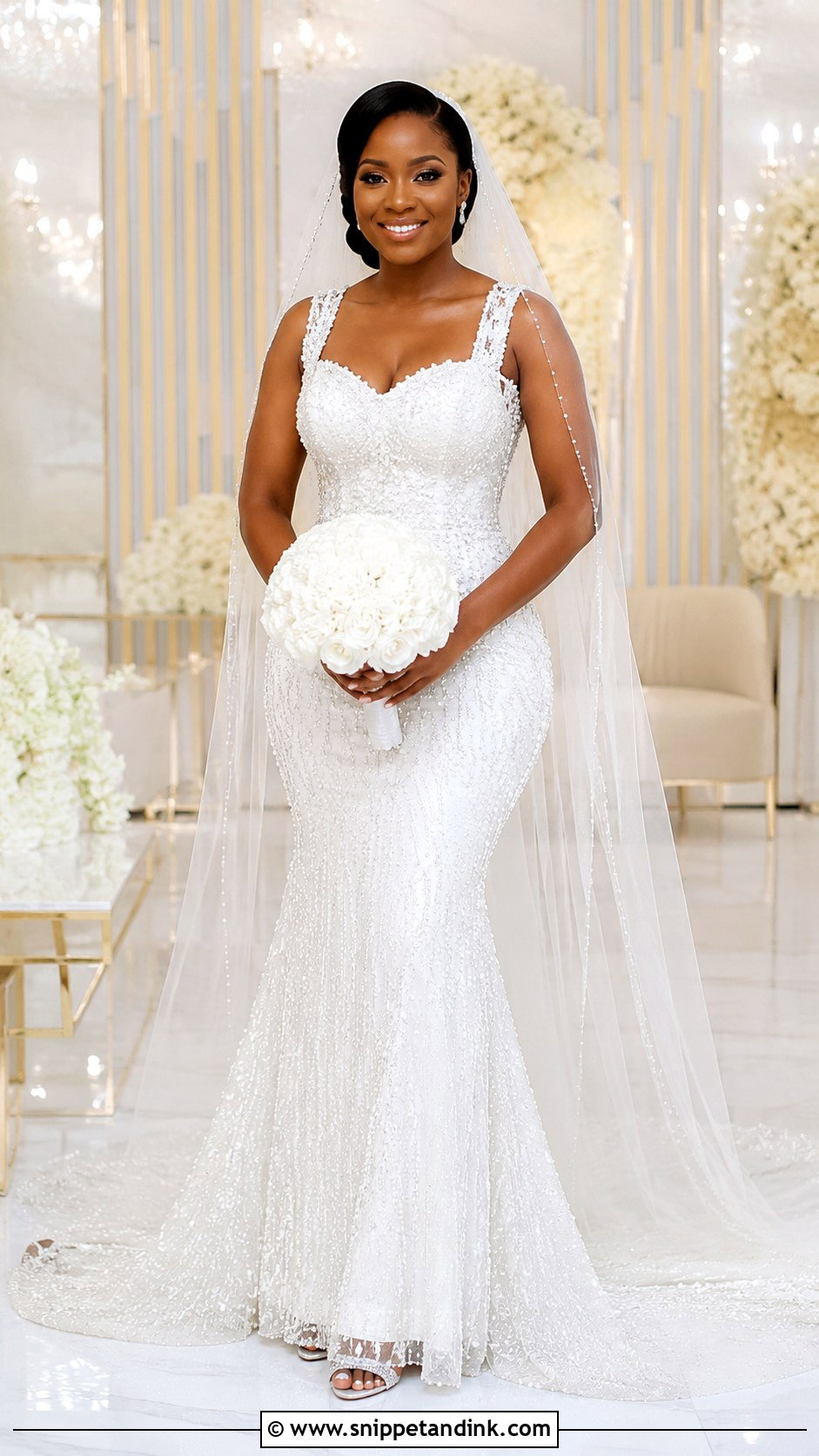
Beading is heavy, and where it sits matters more than how much there is. I concentrate it at the neckline, waist and upper skirt, which shapes the figure and keeps weight off the hem, where it would drag and snag on the floor. A fitted trumpet is a good base for crystals, pearls and sequins. Simple studs, metallic-white heels, a fingertip veil and a small structured bouquet; no big necklace if the neckline is already decorated. Supportive straps and solid internal construction stop the bodice sagging under the weight. A wrist loop and a bustle make the beaded train manageable once dancing starts.
6. Nigerian White Satin A-Line Wedding Dress
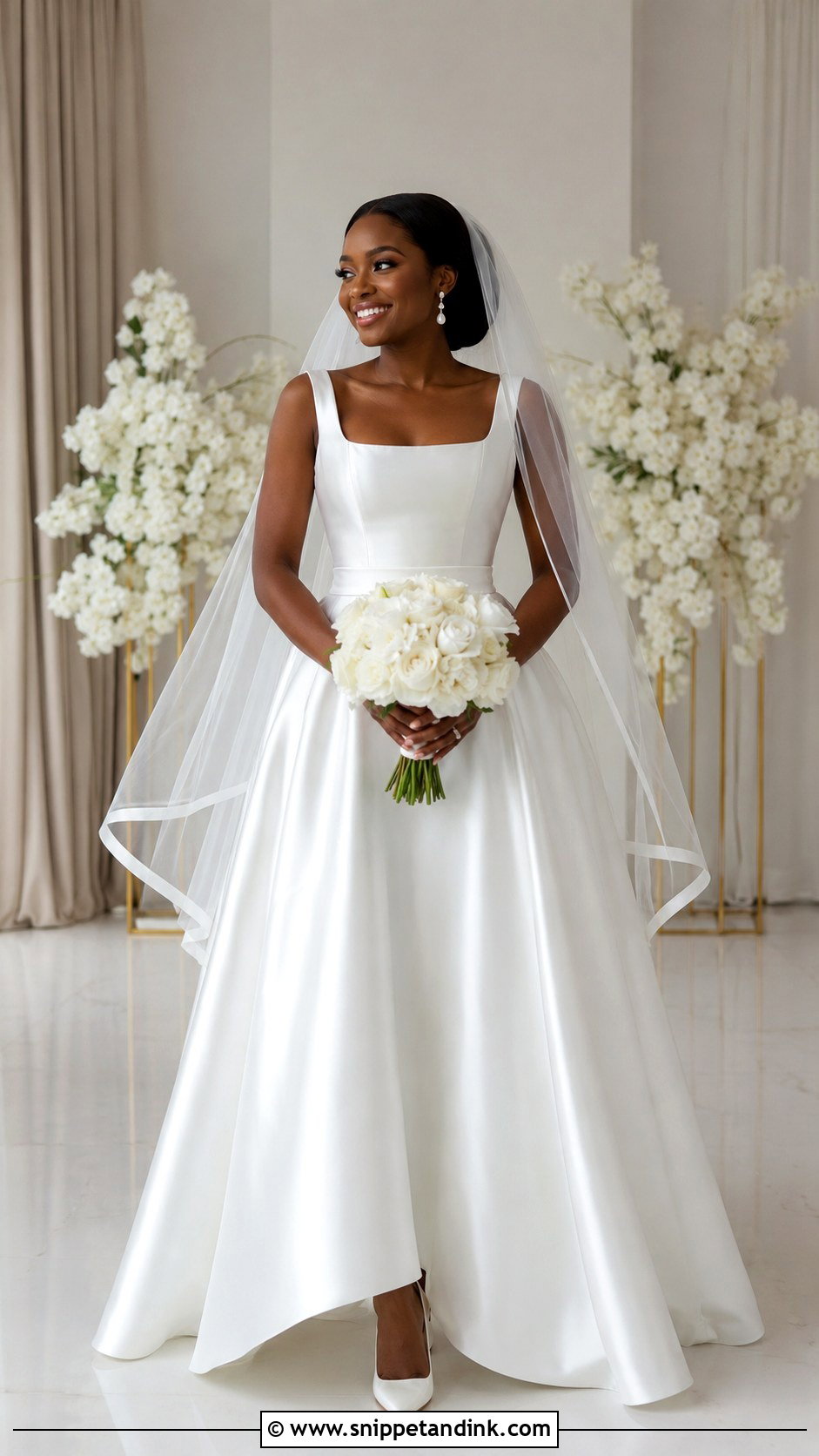
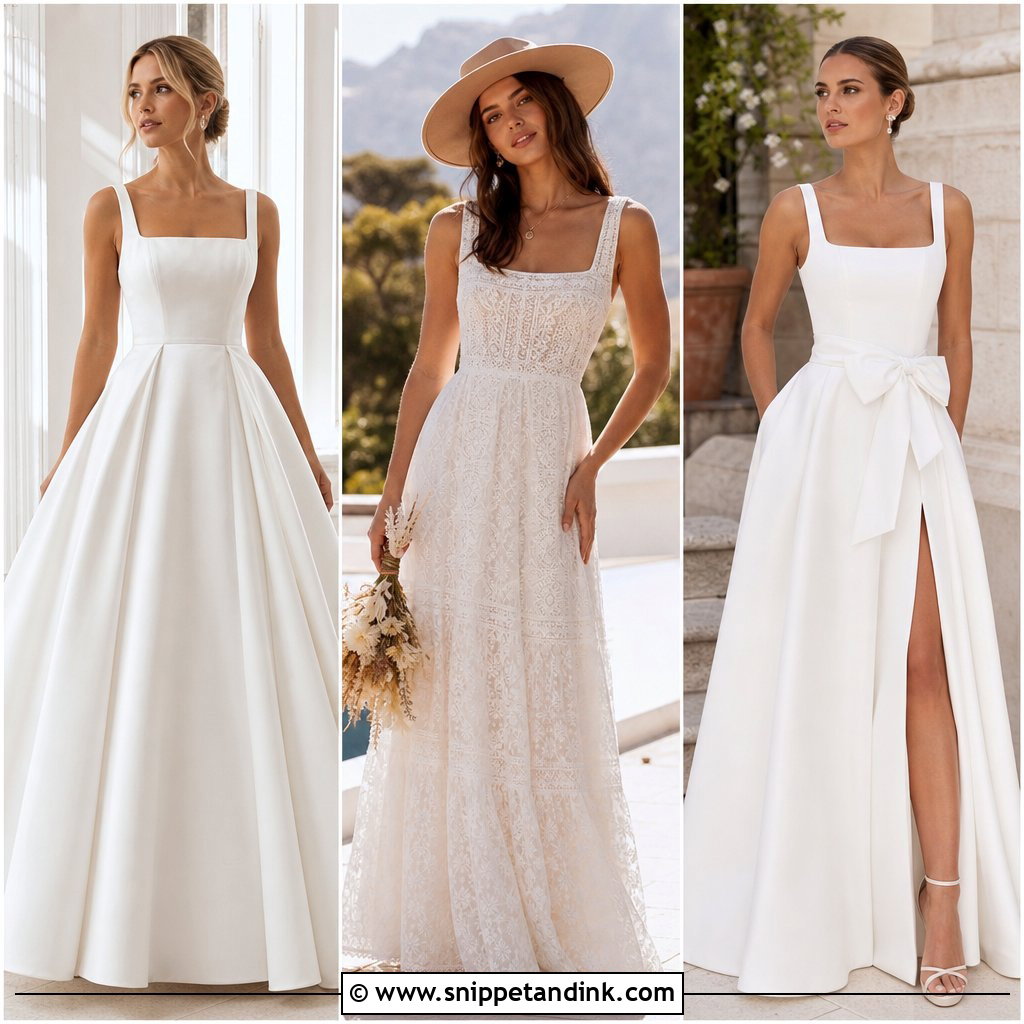
There’s no decoration to hide behind on a satin A-line, so precise seams, a level hem and an exact waist are the whole design. A fitted bodice widens gently from the waist and gives room to move. Square neckline, wide straps and a low V back for something modern. Pearl drops, a long veil edged in satin, pointed pumps and a neat white bouquet; a small top-handle bag for reception essentials. Satin creases the moment you sit, especially across the lap, so book professional steaming on the morning and avoid sitting in the car on a crushed skirt. Spread it out around you instead.
7. Nigerian White Princess Ball Gown Wedding Dress
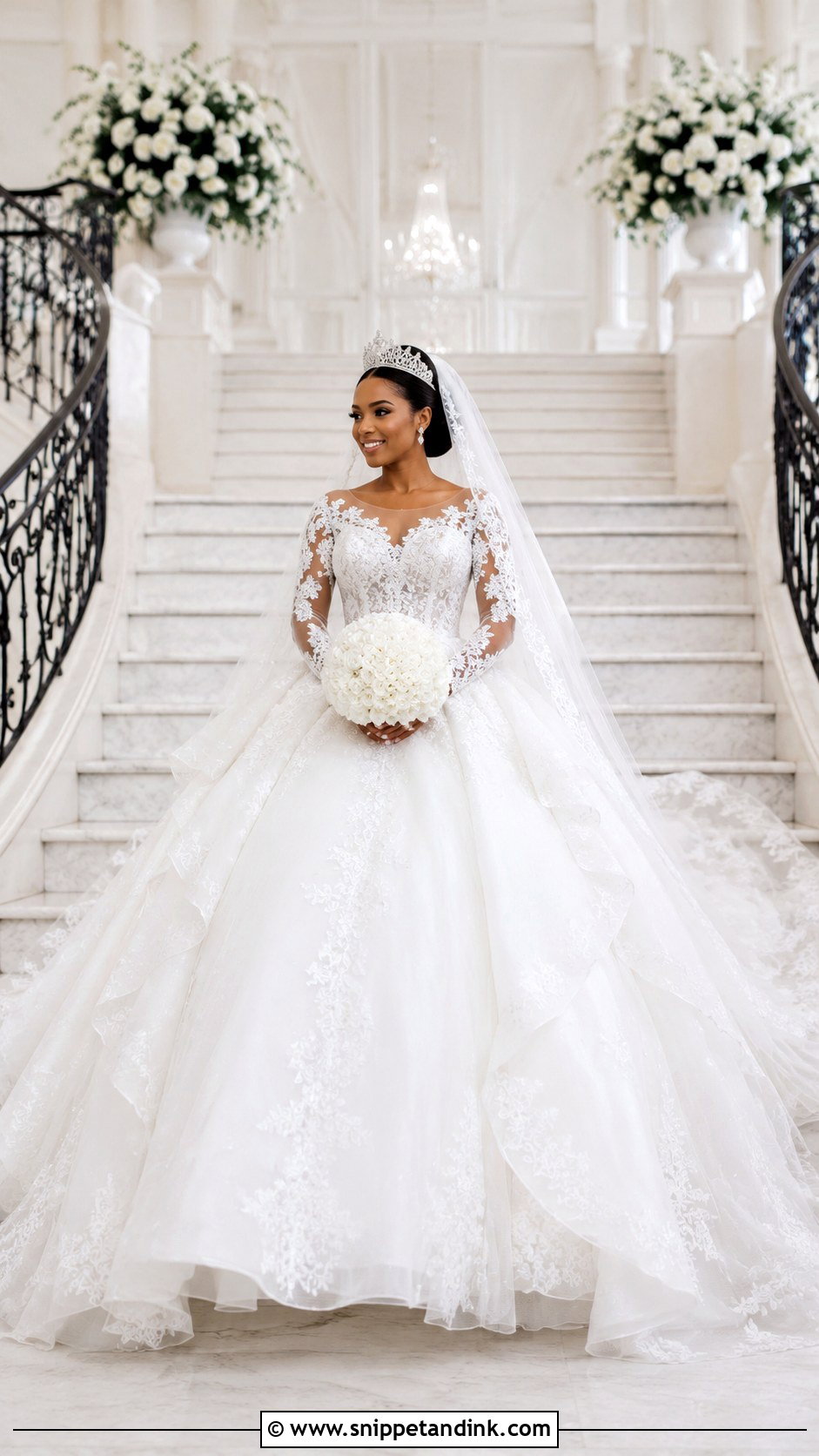
Few dresses own the aisle like a princess ball gown with a fitted bodice and sweeping skirt. Layered tulle over a structured underskirt gives fullness without the weight of satin. Lace appliqués around the bodice, scattered lightly down the skirt, link the two halves. Crystal tiara, cathedral veil, studs and hidden platform heels, with a rounded bouquet to echo the skirt. On petite brides I raise the waistline slightly and control the volume so the skirt doesn’t swallow them; taller brides can carry a longer train. Most important of all, the bodice must be built to carry the skirt, so it doesn’t drag downward through the evening.
8. Nigerian White Cape Wedding Dress
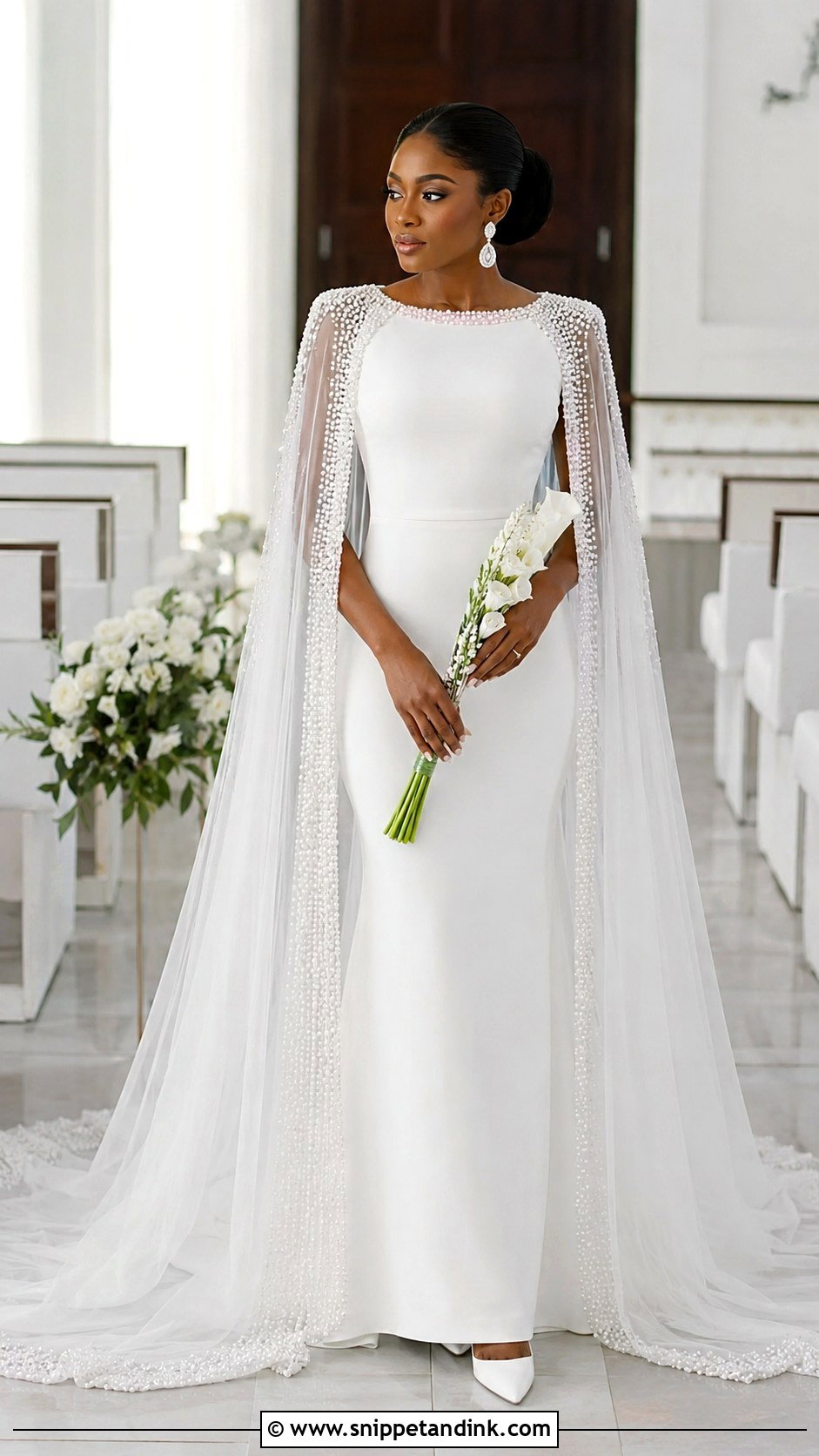
Clean gown, dramatic cape: that’s the formula. Start with a fitted crepe, satin or mikado dress, then add a detachable cape in tulle or light organza. Pearl edging, floral appliqués or a few crystals bring grandeur without burying the silhouette. Sleek low bun, statement earrings, pointed heels, narrow bouquet. If the cape has its own train, you don’t need a veil as well. Two looks in one: covered for the ceremony, streamlined for the reception. At the fitting, reach forward as if taking a ring. A cape fastened too tightly at the shoulders restricts your arms and drags the neckline back.
9. Nigerian White High Neck Wedding Dress
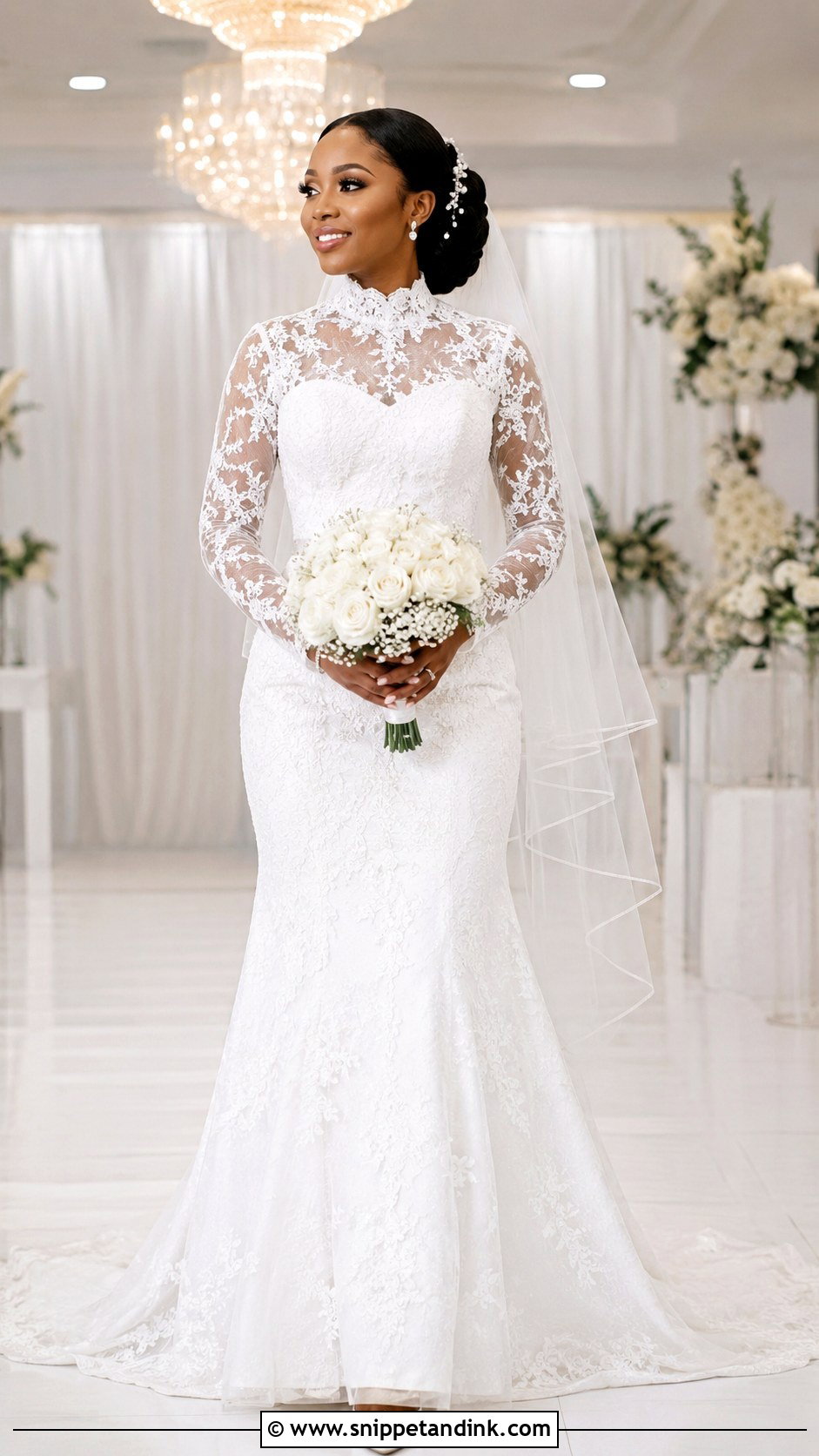
Coverage without stiffness is what a high neck should give you: sheer lace on top, an opaque sweetheart lining underneath for definition. Pair it with a flowing A-line or gently flared trumpet. Smooth bun, pearl hairpins, small earrings and a long veil set under the bun. Closed-toe heels and no necklace, since the neckline is already the feature. A high collar that’s even slightly tight will bother you every time you turn your head, so I check it with the bride turning side to side and looking down, the way she will when signing. Lightweight lace at the neck and arms keeps you cooler.
10. Nigerian White Strapless Basque Waist Wedding Dress
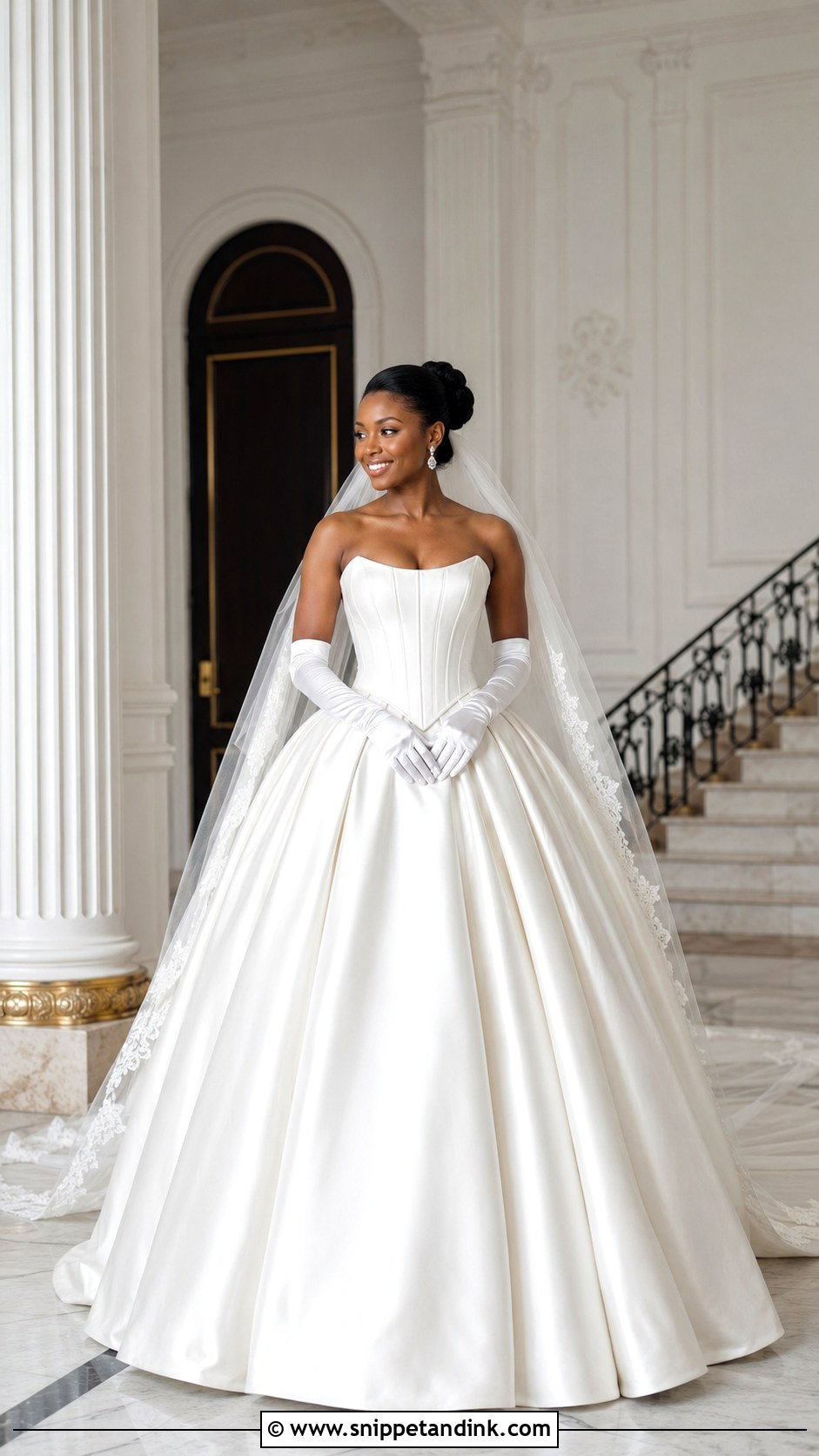
Strapless plus a basque waist gives classic volume with a sharp, defined line. The point of the waist lengthens the torso and leads smoothly into a full satin or tulle skirt. I’d choose a curved or scooped neckline over a deep cut; strapless bodices are only as secure as their top edge is snug. Structured cathedral veil, crystal earrings, a polished updo, concealed platforms. Long satin gloves for the ceremony, off for the reception. The corset must hold without you hitching it up, so ask for a reinforced waist and a closely fitted neckline. If you’re adjusting it at the final fitting, it isn’t finished.
11. Nigerian White Pearl Wedding Dress
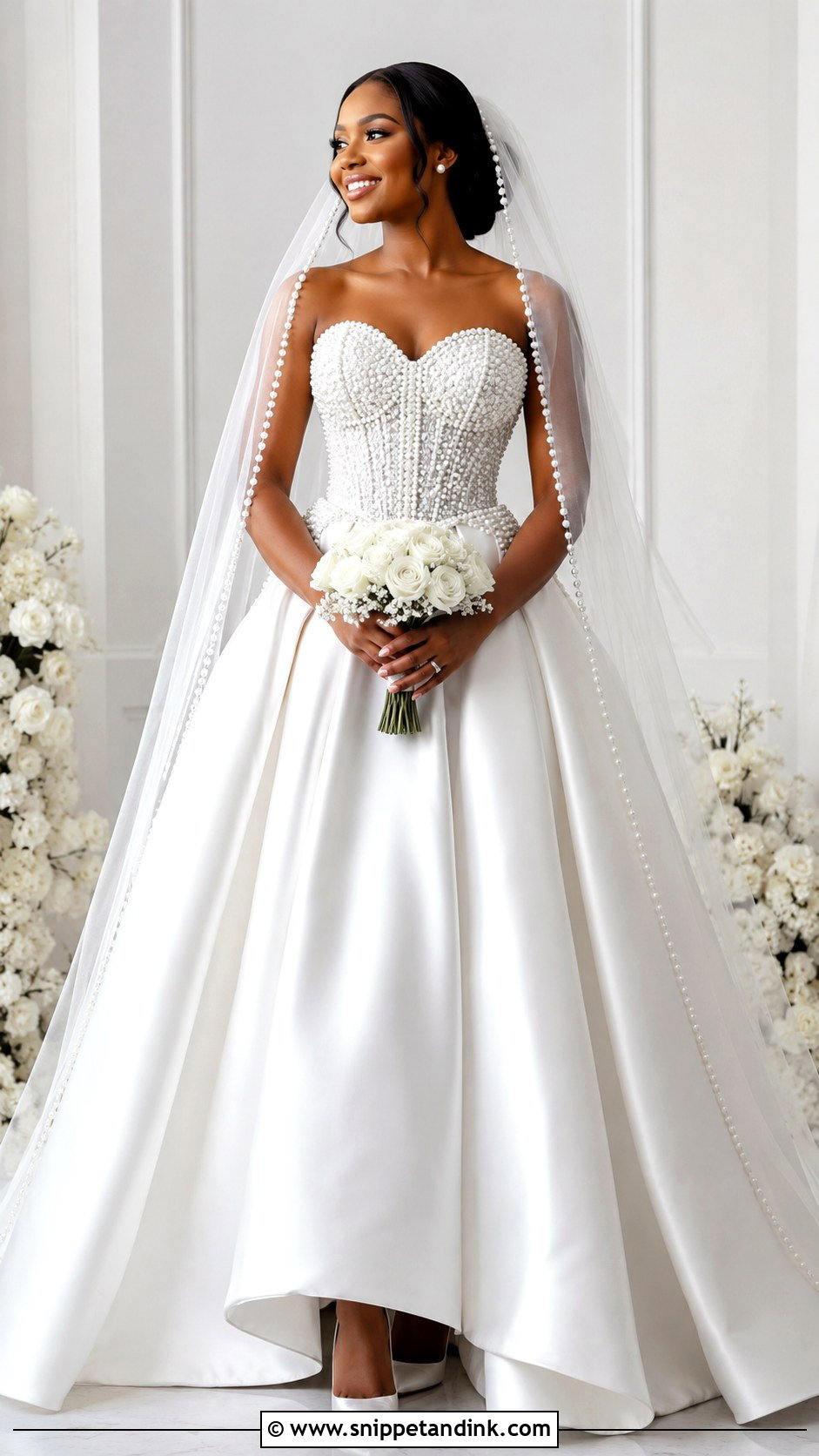
Graduated pearls on a corseted bodice look rich against a plain mikado skirt, where the texture can stand out. Scattered pearls on illusion sleeves give lighter coverage. Pearl studs, a pearl-edged veil, satin pumps and a simple bouquet, with understated hair so the pearls aren’t competing. Pearls are sewn on individually, and the ones at the underarms and waist get rubbed all day. Give each area a gentle tug at the final fitting. Sit back in a chair too, because raised pearls at the back of the bodice can press uncomfortably during a long service. Placed thoughtfully, they look wonderful up close.
12. Nigerian White Floral Appliqué Wedding Dress
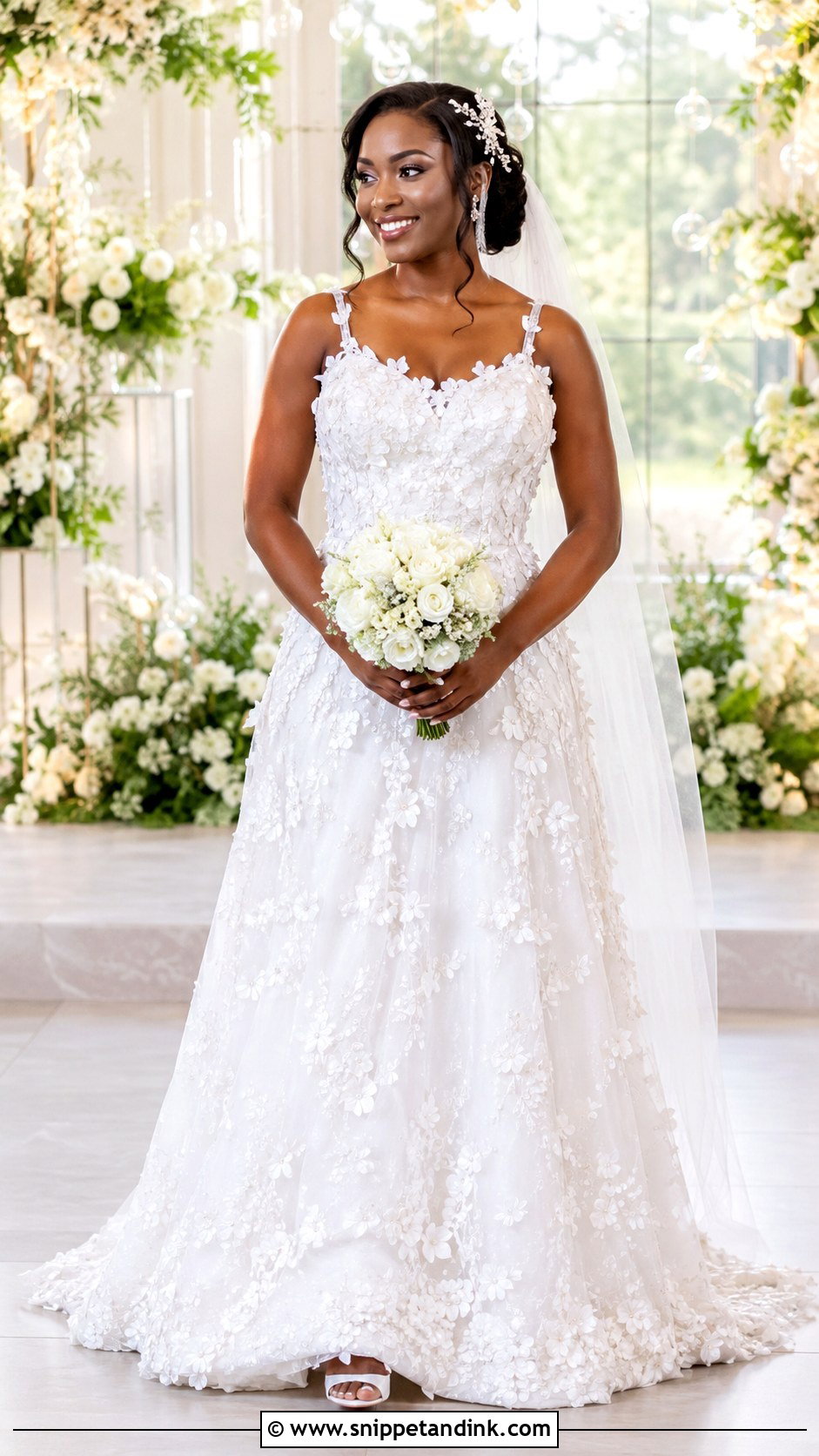
3D florals give a white gown a garden feel. Larger flowers across the bodice, smaller motifs trailing down an A-line or ball gown skirt. A nude lining under white flowers adds depth; full white lining gives more coverage. Floral hairpins, delicate drops, a sheer veil and simple white heels. A compact bouquet, so it isn’t fighting the texture of the dress. Appliqués near the waist need to bend with you; a stiff, glued flower at the waistline will crush or lift the first time you sit. Removable floral straps or sleeves let you change the look between ceremony and party.
13. Nigerian White Square Neck Wedding Dress
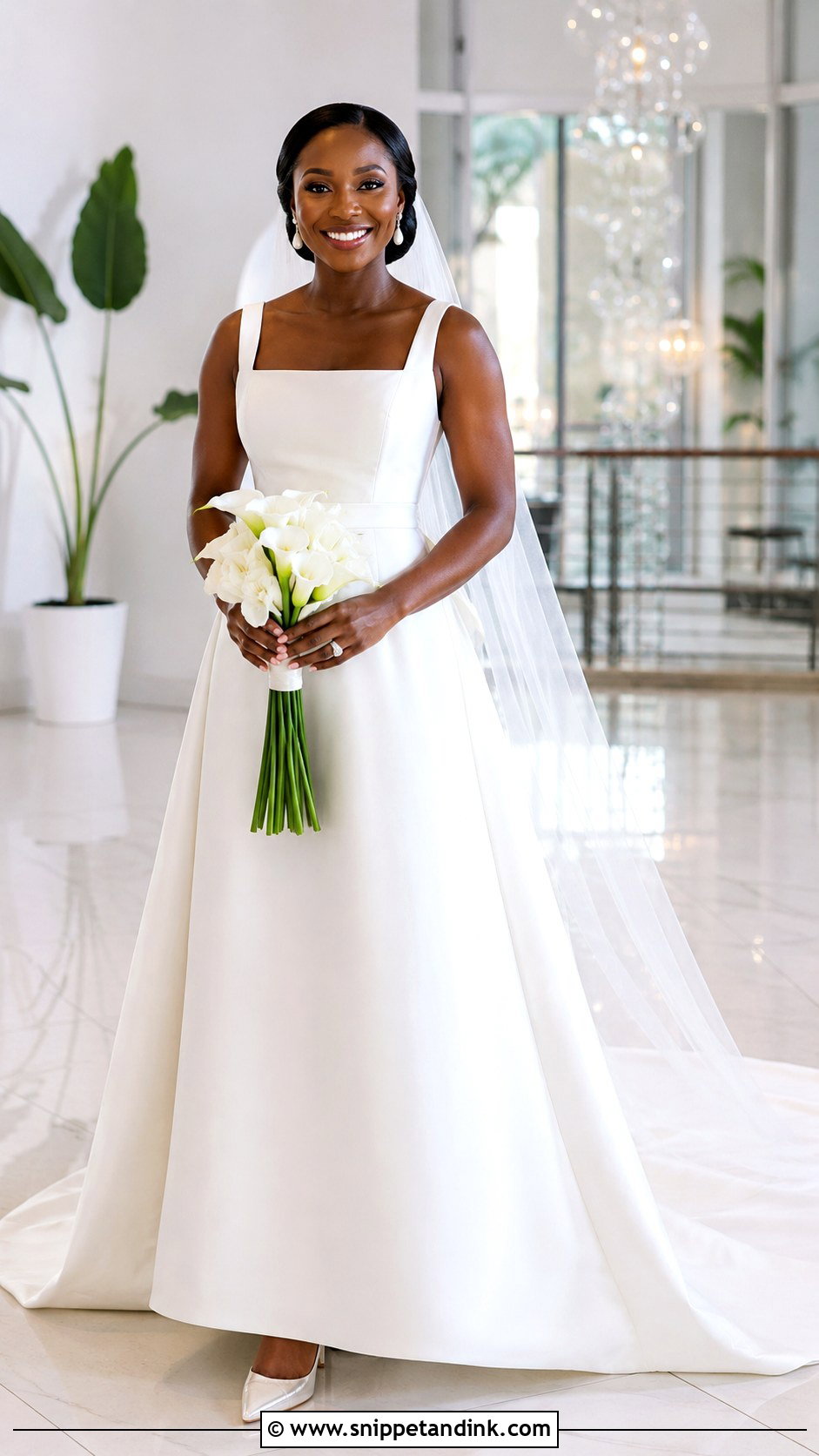
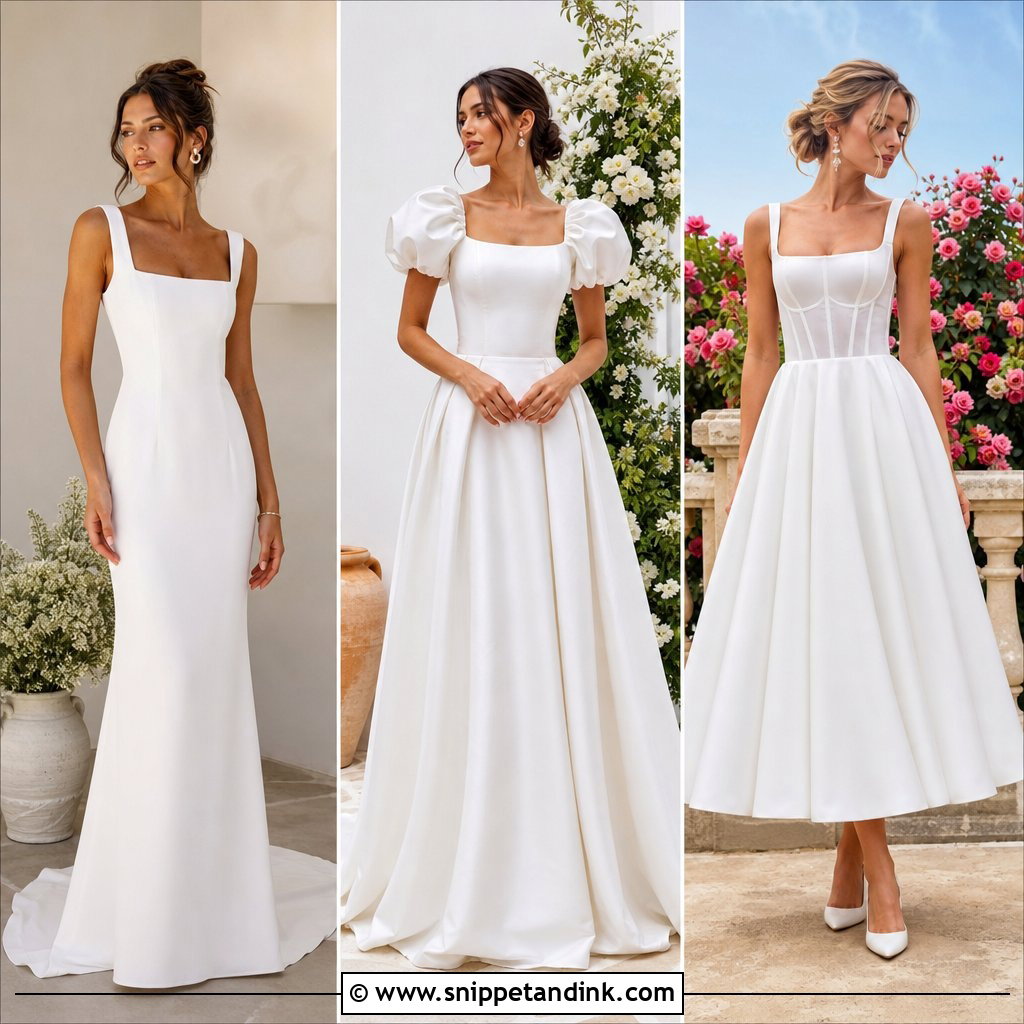
A square neckline gives a crisp frame to the collarbone. With wide straps, it’s one of the few bridal necklines that works with a proper supportive bra, which brides with a fuller bust usually appreciate. Fitted waist, flowing satin A-line. Pearl drops, a smooth cathedral veil, pointed ivory shoes and a long-stemmed bouquet. A low bun or soft pulled-back style shows the neckline. Covered buttons from back bodice to train add detail. The square corners must lie flat. If they lift or gape when you move, sit or lift your arms, they need to be refitted before you approve the dress.
14. Nigerian White One-Shoulder Wedding Dress
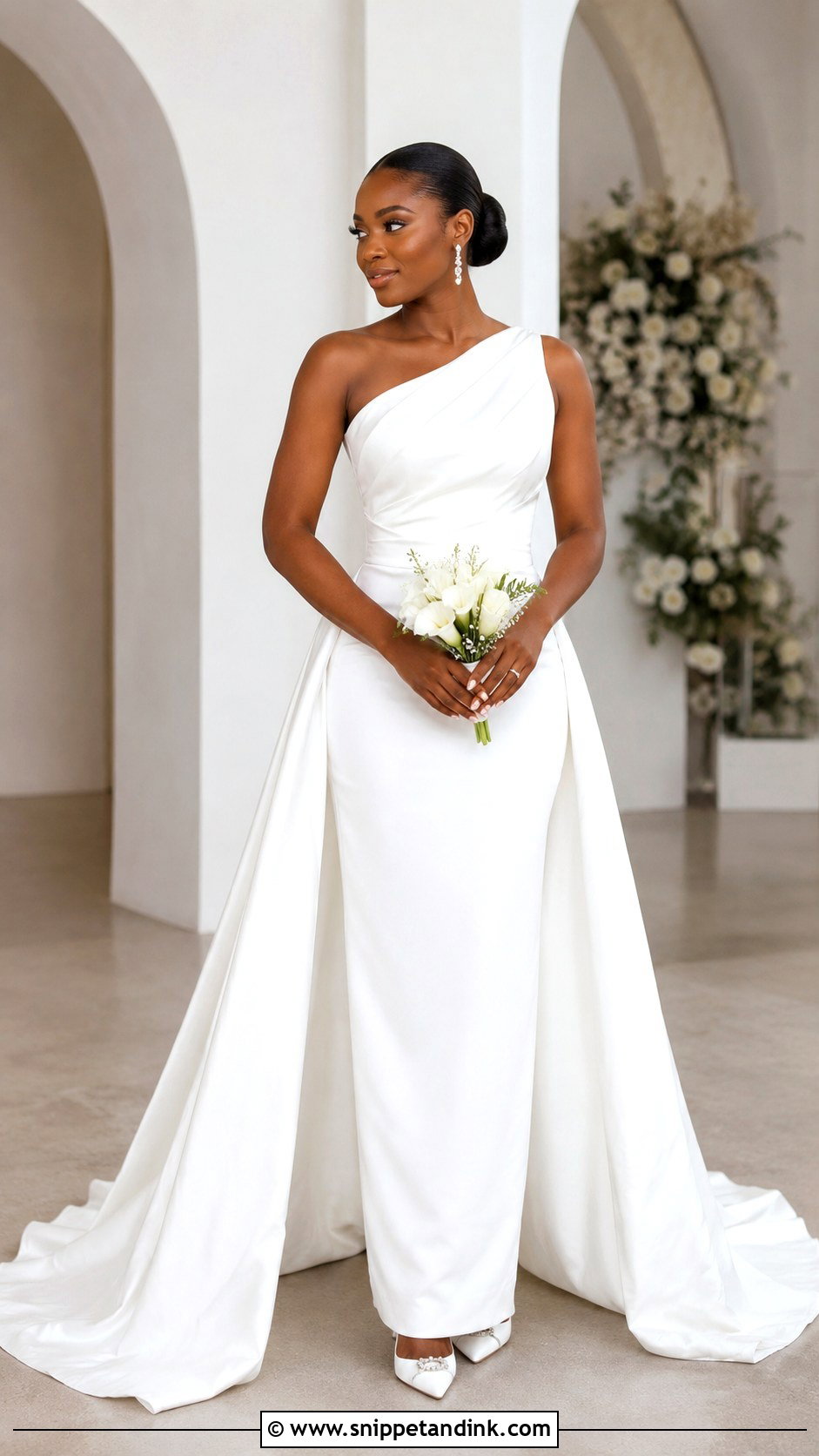
One shoulder, no fuss: draped satin or crepe creates smooth lines across the bodice and falls cleanly over the figure. Choose a column, gentle mermaid or structured A-line skirt. One statement earring or a pair of small crystal drops, sleek bun, pointed pumps and a minimal bouquet. A detachable side train adds ceremony volume. No necklace; it would cut across the diagonal. The single strap carries more weight than it looks, so internal corsetry and a strap that’s anchored firmly into the bodice stop the gown from tilting as you move.

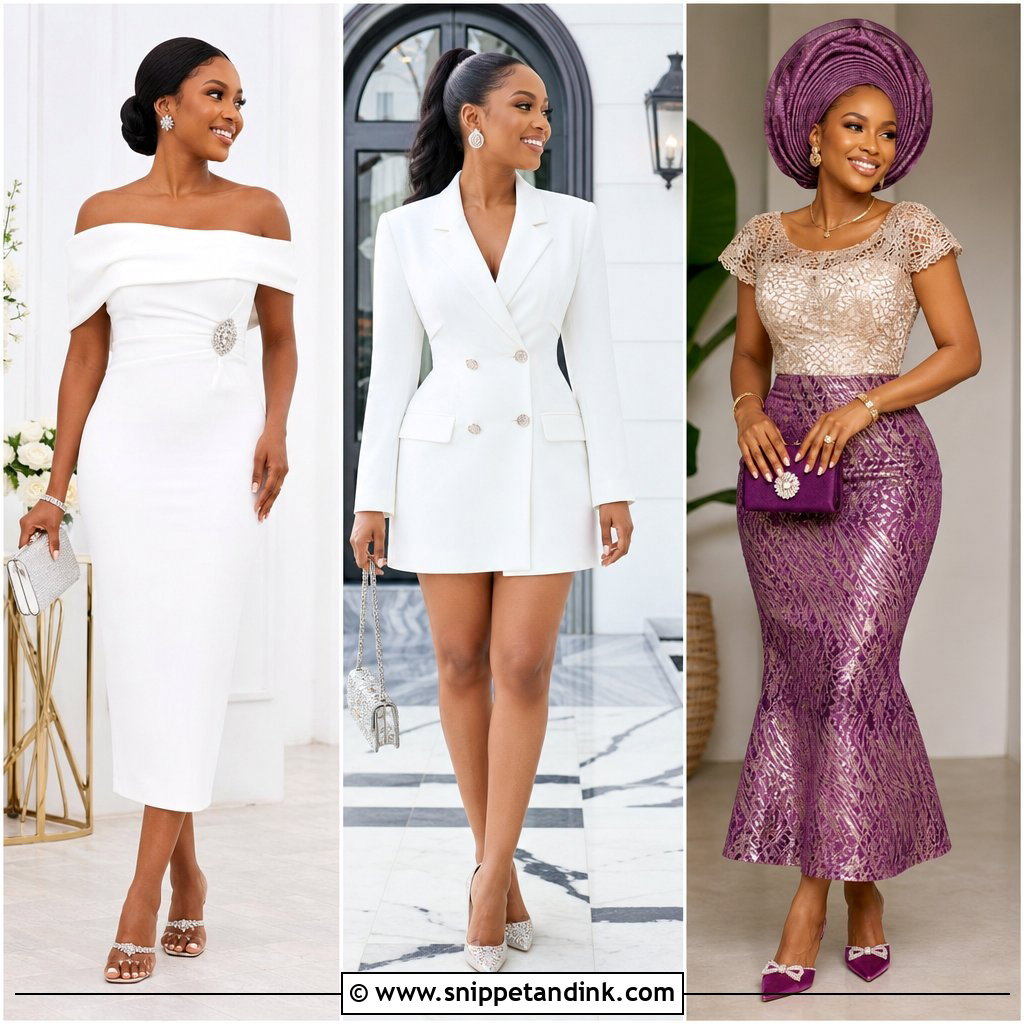

15. Nigerian White Detachable Overskirt Wedding Dress
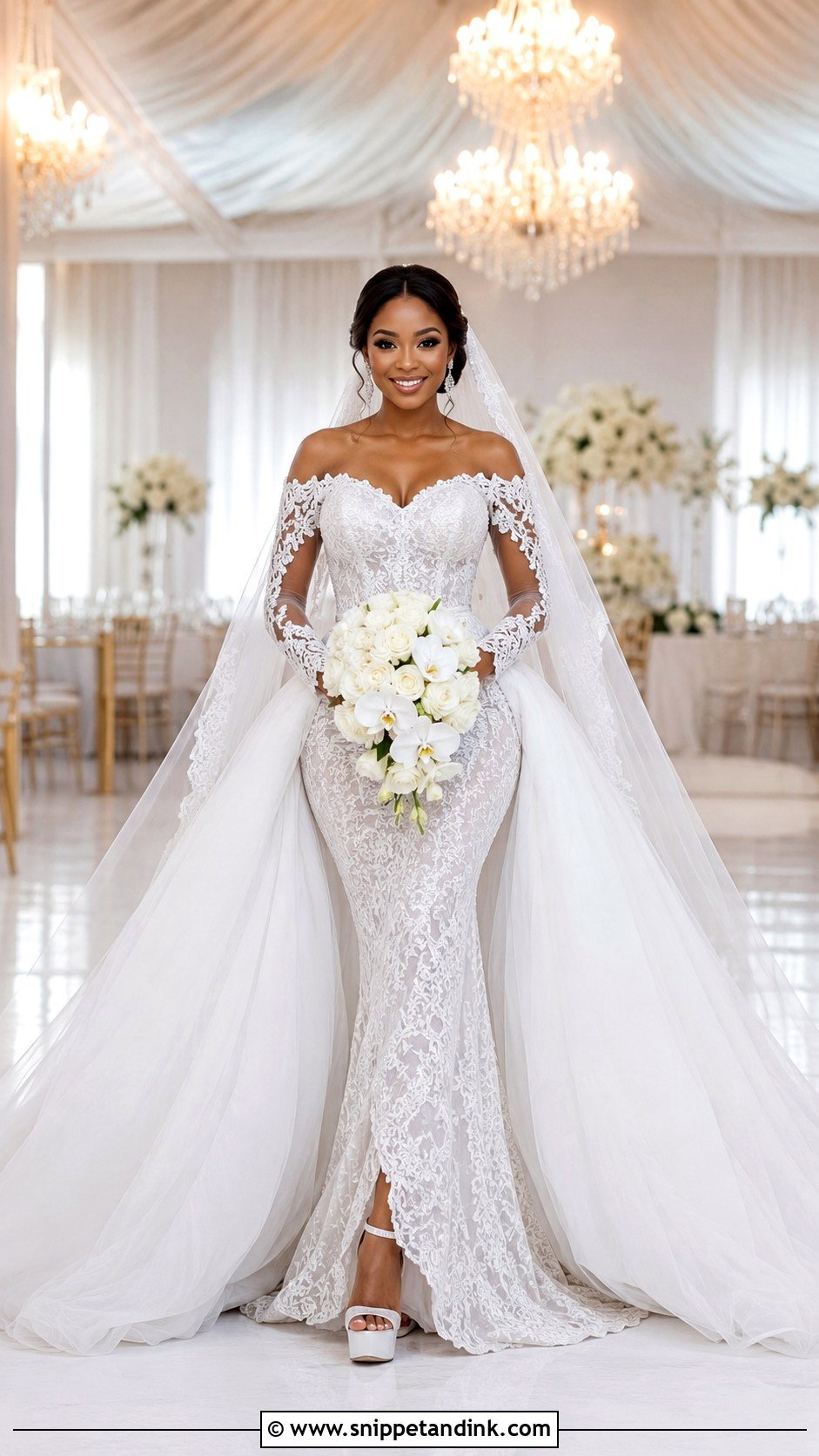
A detachable overskirt gives you a dramatic ceremony gown and a practical reception dress in one. Underneath, a fitted lace or satin mermaid; over it, a full tulle or mikado skirt. The join sits at the natural waist and hides under a belt, appliqués or covered fasteners. Cathedral veil, crystal earrings and platforms for the ceremony; shorter veil or a jewelled hair piece after the change. Ask for a bustle on both layers. Then practise removing the overskirt with the helper who’ll do it, so it comes off over your feet, not over your hair and makeup.
16. Nigerian White Modest A-Line Wedding Dress
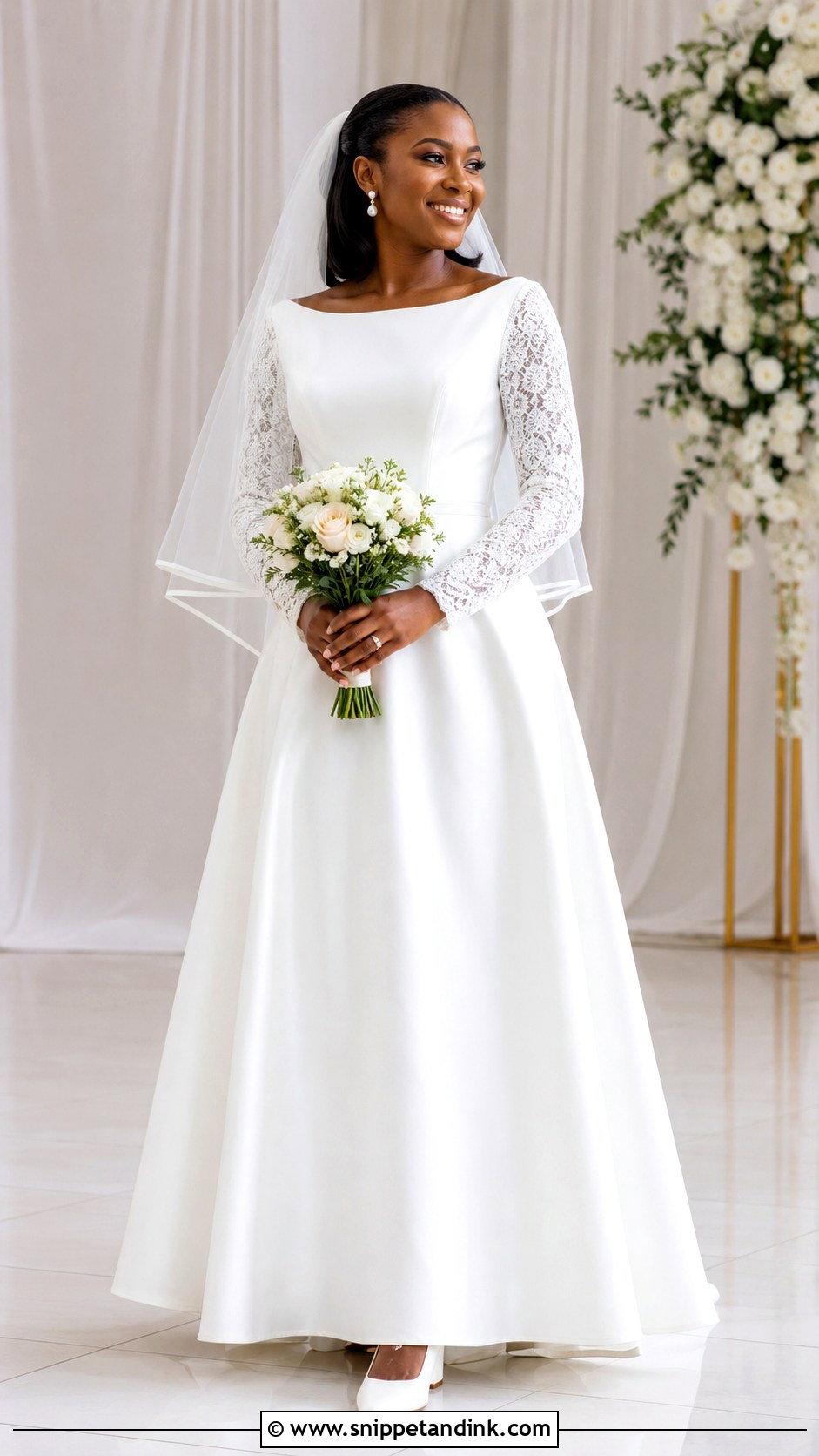
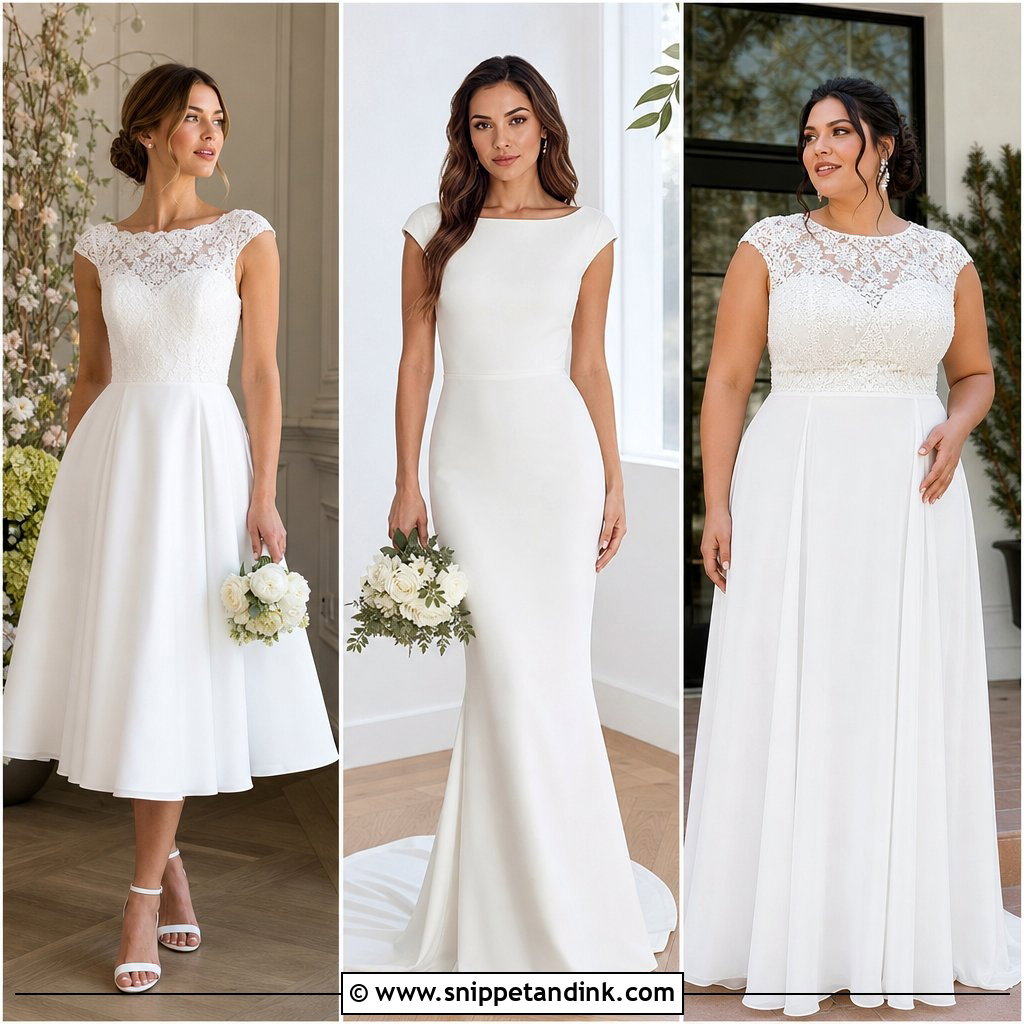
Modest doesn’t have to mean heavy. A softly structured bodice with a bateau neckline, lined lace sleeves and a natural waist, over a chiffon, organza or light satin skirt that moves without too much volume. Shoulder-length veil, pearl earrings, closed block heels and a compact bouquet. Covered buttons on the sleeves and back are a traditional touch. Breathability matters with full coverage, so I check the sleeve lining fabric, not just the outer lace. The gown should skim the body, never grip it. Fully covered gowns show tightness more than anything else.
17. Nigerian White Crepe Mermaid Wedding Dress
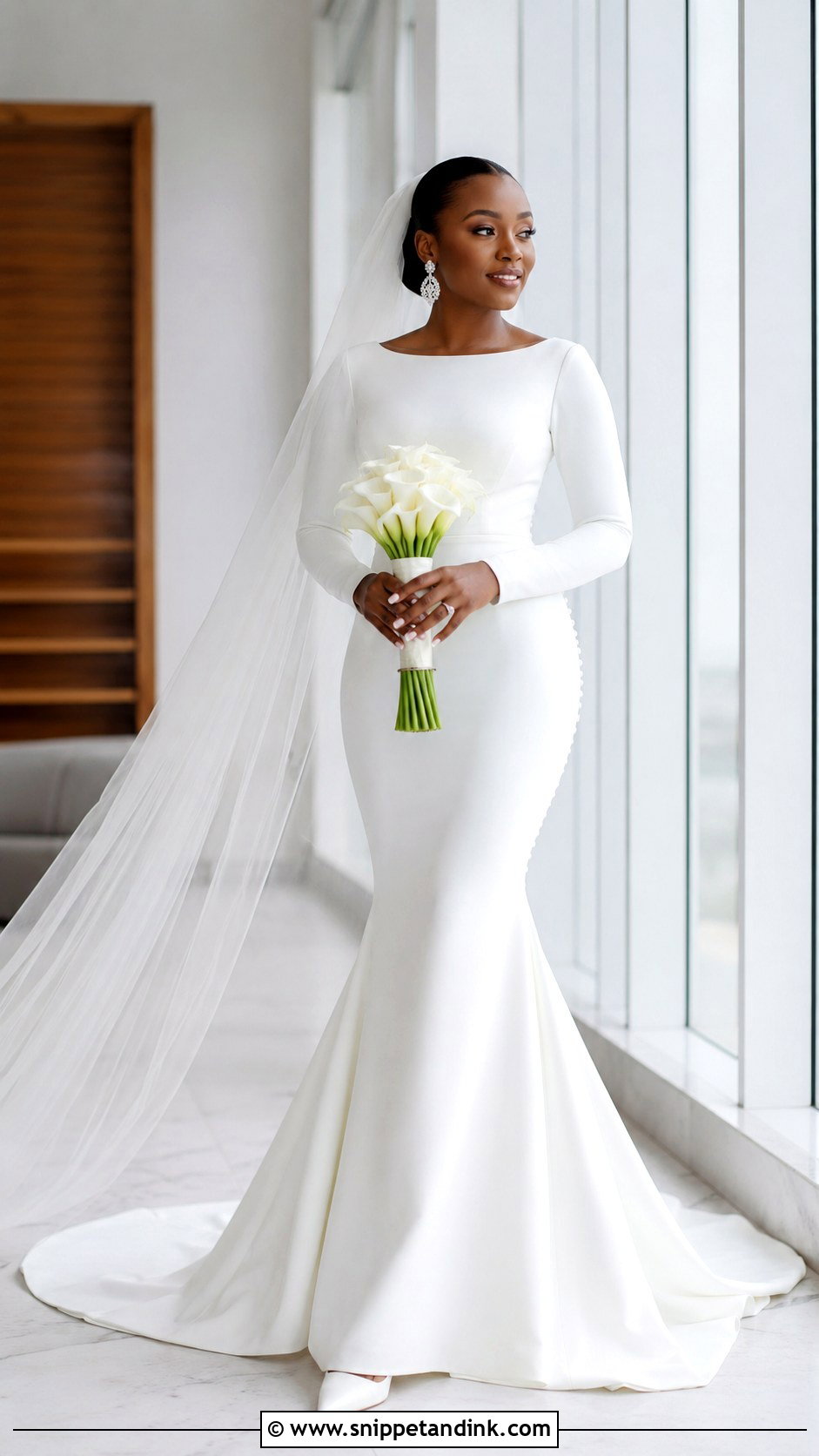
Crepe mermaids feel modern and quieter than the heavily embellished options. The fabric follows the body closely, so lining quality and tailoring are critical. Long fitted sleeves, a bateau neckline and covered buttons running toward the train. Sculptural earrings, a low bun, pointed white pumps and a plain cathedral veil, with a long narrow bouquet to echo the line. Crepe shows every undergarment edge. Bring the exact shapewear and shoes to every fitting, or the final alteration will be wrong. The skirt should open around the knee without shortening your stride; a removable train adds drama if you want it.
18. Nigerian White Ruffle Wedding Dress
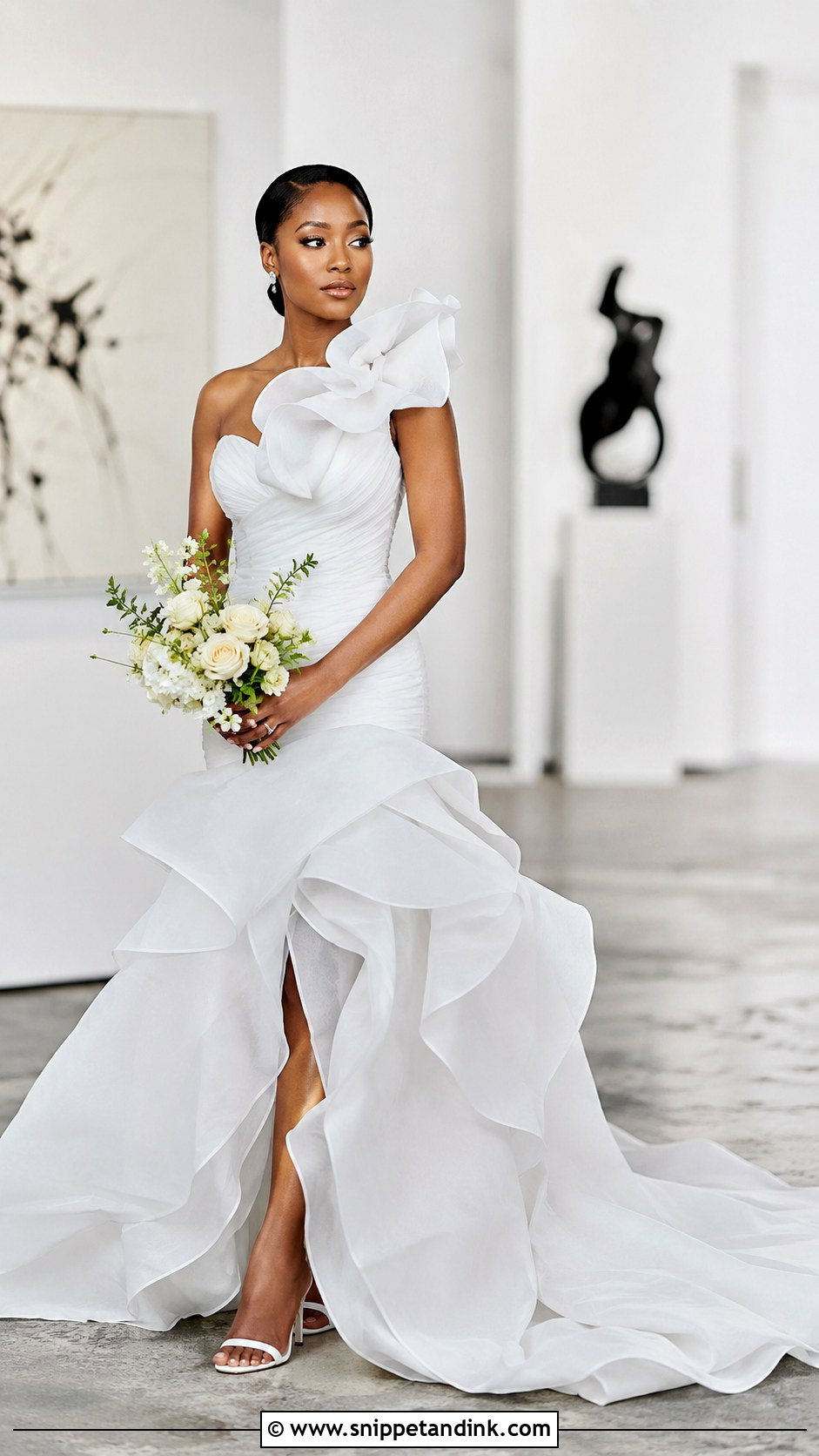
Ruffles need one clear home. An asymmetric shoulder ruffle, a tiered organza skirt or a dramatic ruffled train, but not all three. Keep the fitted bodice fairly simple. Small earrings, sleek hair, minimal heels and a neat bouquet. A plain veil balances the texture, though with a huge ruffled train you may want no veil at all. Organza and tulle give volume without weight. Organza ruffles crush when packed and when you sit, so check how they recover at the fitting, and hang the gown with room around it the night before so nothing gets flattened.
19. Nigerian White Court Wedding Dress
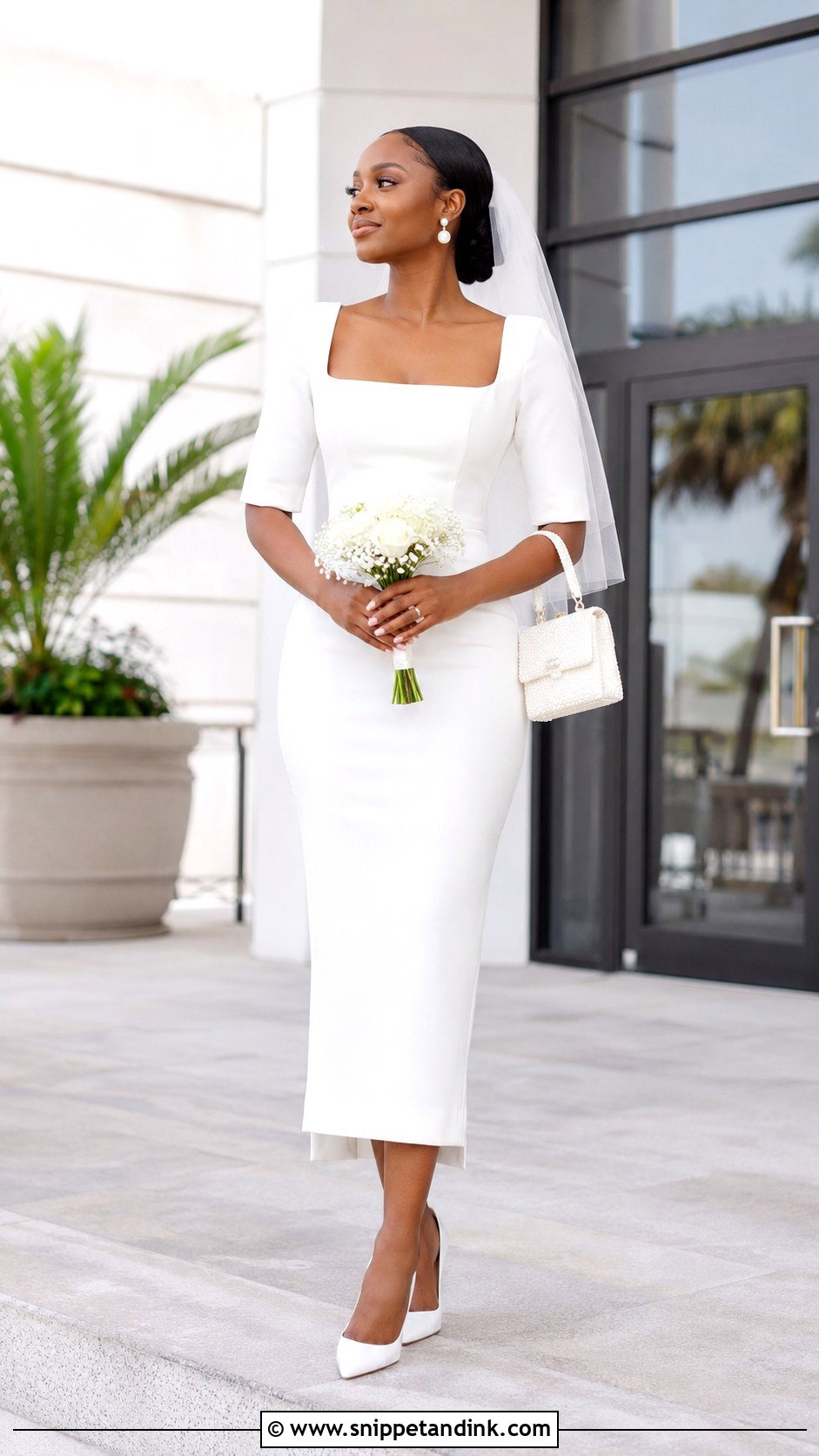
For a registry or civil ceremony, a tailored midi is my usual suggestion. A structured sheath with a square neckline, elbow sleeves and a back slit, in white crepe, satin or jacquard with enough body to hold its shape. Pointed pumps, pearl earrings, a small top-handle bag and a short veil or sculptural hairpiece. A compact white bouquet keeps it bridal. A white tailored jumpsuit works with the same styling for brides who prefer trousers. Minimal designs show every seam, so alterations need to be precise. Registry offices are often small and busy, so a dress you can sit, sign and climb steps in is a real advantage.



20. Nigerian White Reception Wedding Dress
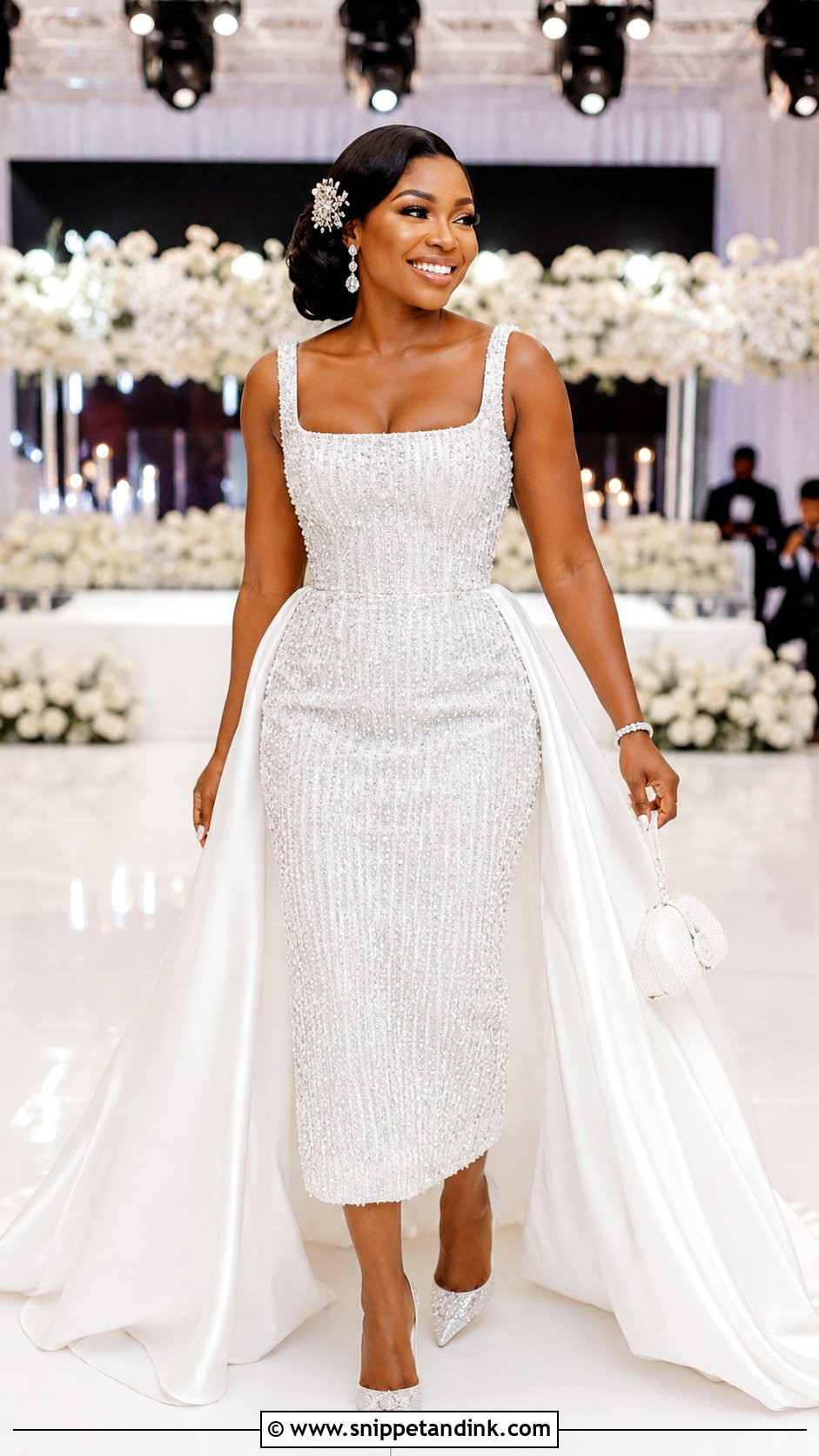
Your reception dress should still say bride while letting you dance properly. A fitted midi, a mini with a detachable train, or a light beaded column all work. Secure neckline, supportive bodice and a hem that won’t catch under your shoes. Sparkling pumps, statement earrings, a jewelled hair accessory and a small wristlet. Swap the long veil for a short bow veil, or go without. I like carrying one detail over from the ceremony gown, pearls, lace or satin, so the two looks belong together in the album. Dance in it at the fitting. If you’re checking the neckline after a few steps, choose something else.
The Morning Of: Getting a White Gown From Hanger to Aisle Clean
Most damage to a white gown happens in the few hours before the ceremony, not during it. A calm dressing plan protects it.
Order of dressing
Finish hair and most of the makeup first, wearing a front-opening robe. Step into the gown rather than pulling it over your head, with a clean scarf or muslin over your face if anything must go over the hair. Do the final lipstick last, once the gown is fastened.
The car and the venue
- Lay a clean white sheet across the car seat and floor. Dust and old upholstery dye transfer easily to white.
- Sit on the back of the skirt, gathering the front onto your lap, so the visible part doesn’t crease.
- Have one person in charge of the train between the car and the aisle, and keep it off wet ground or red earth.
- Pack a small kit: white chalk, a stain pen, safety pins, clear thread and a needle, and blotting papers.
Keep food and coloured drinks away until the ceremony photographs are done. A small red stain on white shows in every portrait taken afterwards.
One Gown, Twelve Hours and Every Angle Photographed
The right gown balances your taste, solid construction and the amount of drama the day calls for. Mermaids show curves, ball gowns bring volume, A-lines move gracefully. Capes, overskirts, pearls, lace and appliqués personalise it from there. Go to every fitting in your wedding shoes and underwear, and test the dress walking, sitting and lifting your arms. Think about the venue, the climate, the photographs and how long you’ll be wearing it before you decide. Modest, minimal, glamorous or regal, any of these twenty can be the starting point for a gown you feel sure of.
You'll Like These Ideas:





Leave a Reply