
How Low the Back Can Drop Before Support Gets Tricky
The first question I ask a bride who wants an open back is not about style. It’s where her bra band sits. A standard band crosses the back a few inches below the shoulder blades, and any opening that stops above that line lets her wear a low-back or convertible bra with almost no fuss. Once the opening drops past it, support has to come from inside the dress or from adhesive products, and that changes which gowns are realistic.
Three depths, three support plans
- Mid-back openings and keyholes: a low-back longline bra or a convertible style with the straps removed usually covers you.
- Openings to the waist: cups sewn into the lining, often with a little boning at the side seams, do the lifting. This is a seamstress job and should be booked at the first fitting.
- Plunges below the waist: you’re relying on precise fit through the ribs and hips, plus tape or adhesive cups. These suit smaller busts and brides who are comfortable checking themselves through the night.
Try every option before deciding. Stand with your arms raised, bend as if picking up a dropped earring, and sit in a hard chair. If a strap edge or cup shows at any point, it will show in photos too.
1. Satin Slip Open Back Wedding Dress
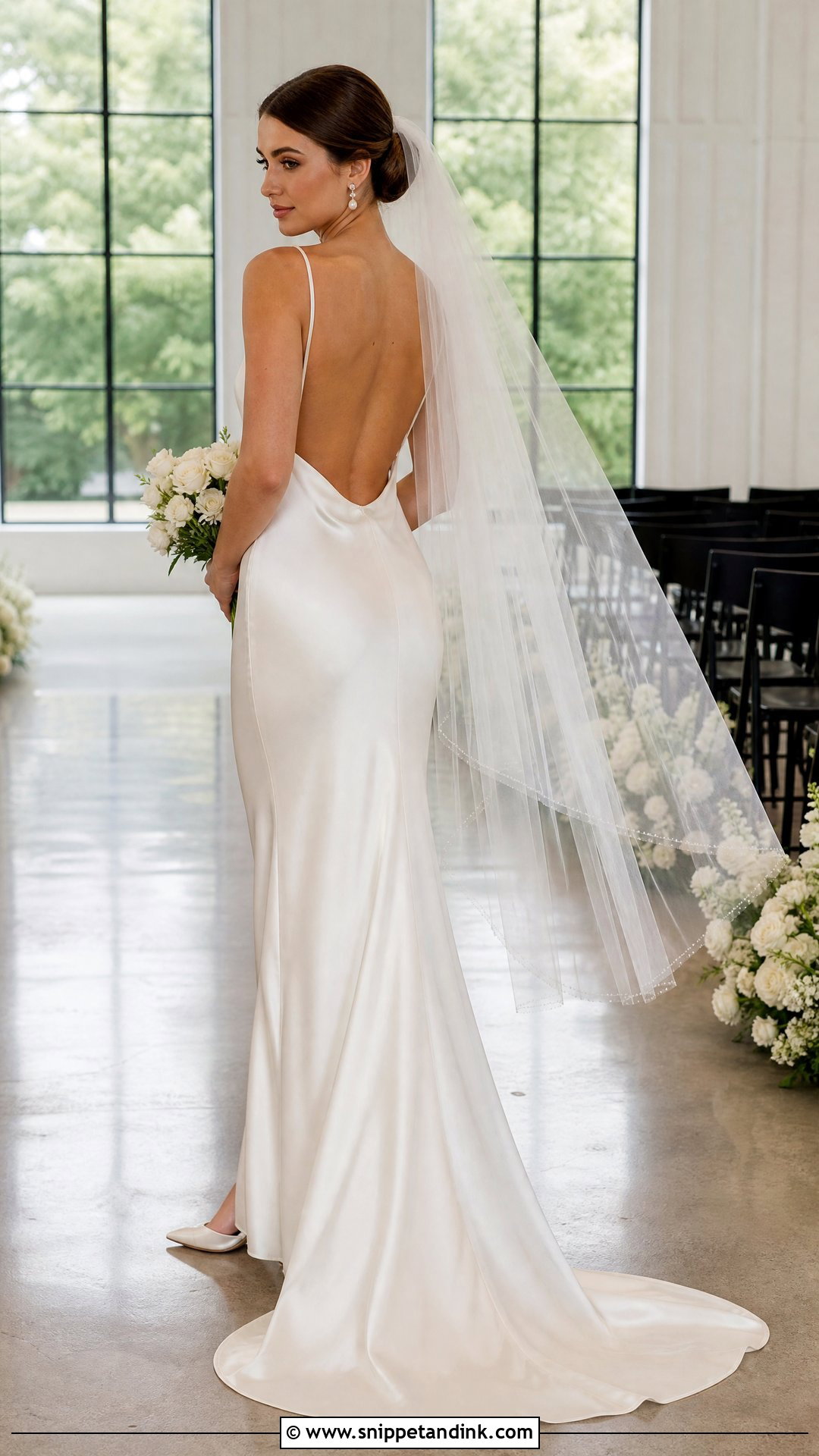
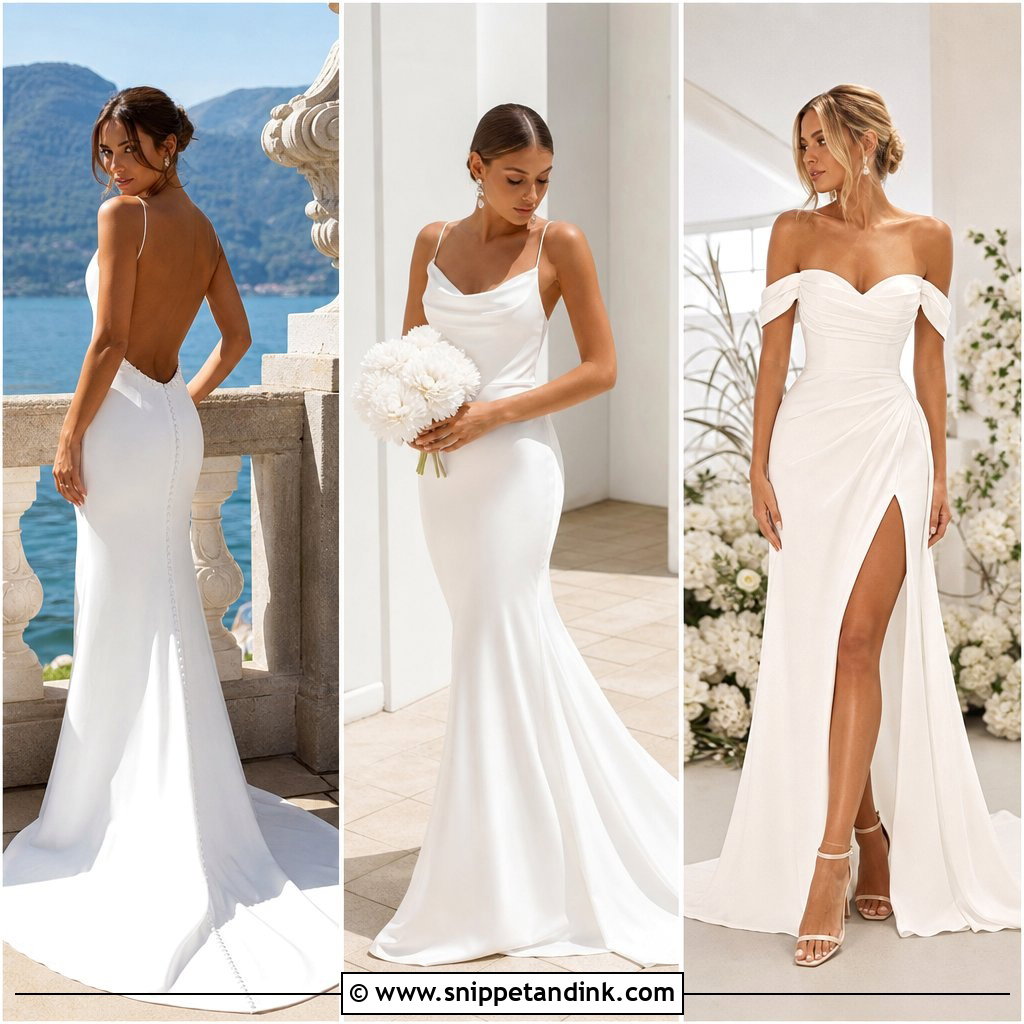
Bias-cut satin is the most honest fabric in a bridal salon. Because it is cut on the diagonal, it stretches over the hip and stomach and shows exactly what is underneath, so I put brides in it with their own undergarments before anything else. Thin straps, a draped neckline and a low back are all the design it needs. Pearl drops, pointed ivory heels and a small structured clutch keep it clean, and a neat low bun leaves the back on view while still holding a fingertip veil comb. If you need more lift than the straps give, ask your seamstress about cups stitched into the lining rather than relying on tape alone. It reads best at modern venues and small warm-weather ceremonies, where the plainness feels intentional.
2. Crepe Sheath Open Back Wedding Dress
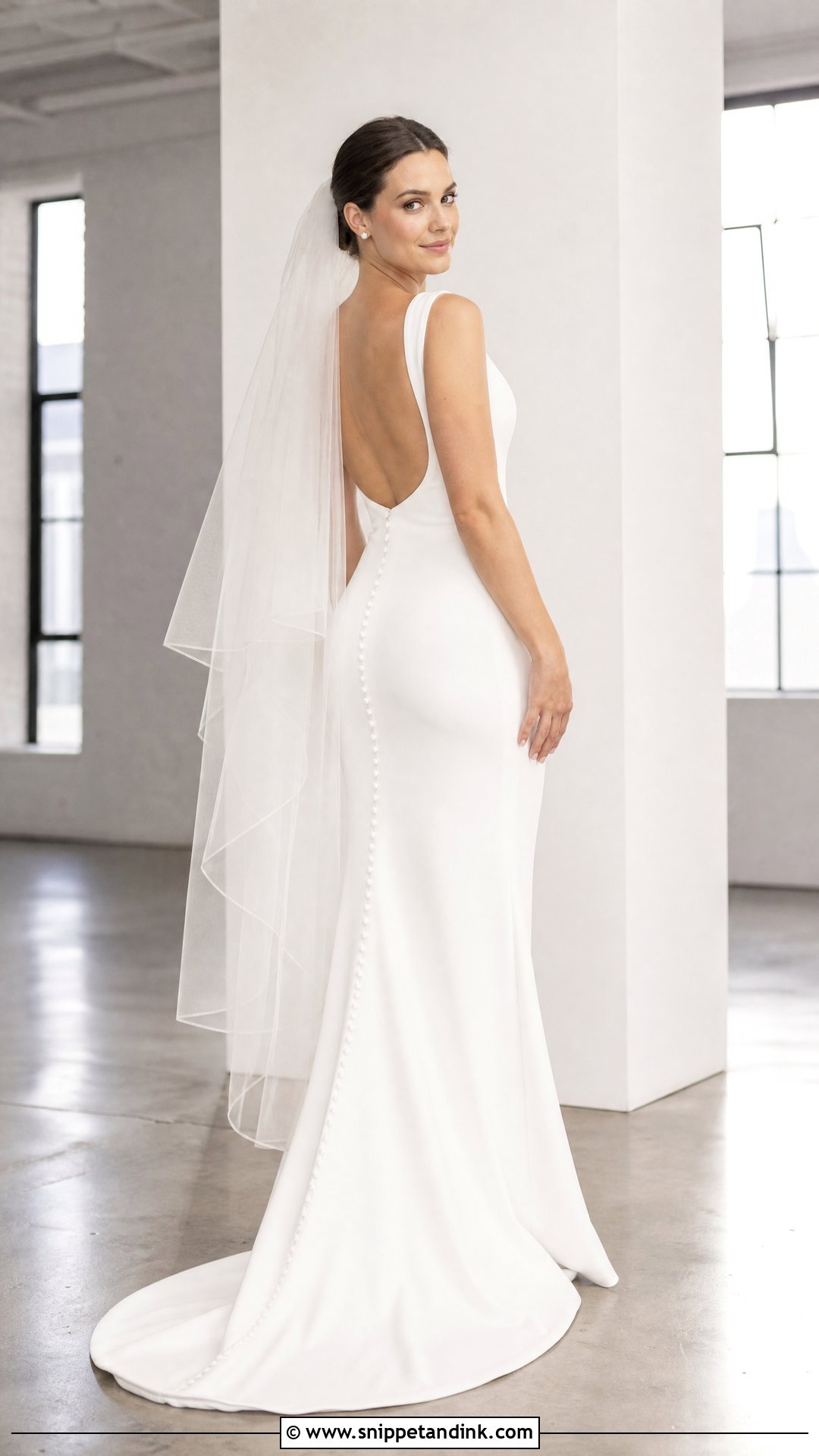
Crepe has enough weight to hold a sheath shape without boning, which is why it looks so tidy on a hanger and so strict in a mirror. Wide shoulder straps, a fitted waist and a back opening that stops above the natural waistline give you a polished line. A row of fabric-covered buttons is the only decoration I’d add. Small diamond studs, closed-toe pumps and a single-layer veil finish it, and a French twist shows the back from every side. The catch is that crepe reveals every seam and elastic edge beneath it, so wear the exact bra and knickers you plan to marry in at each fitting. City ceremonies and loft venues suit it well.
3. A-Line Open Back Wedding Dress
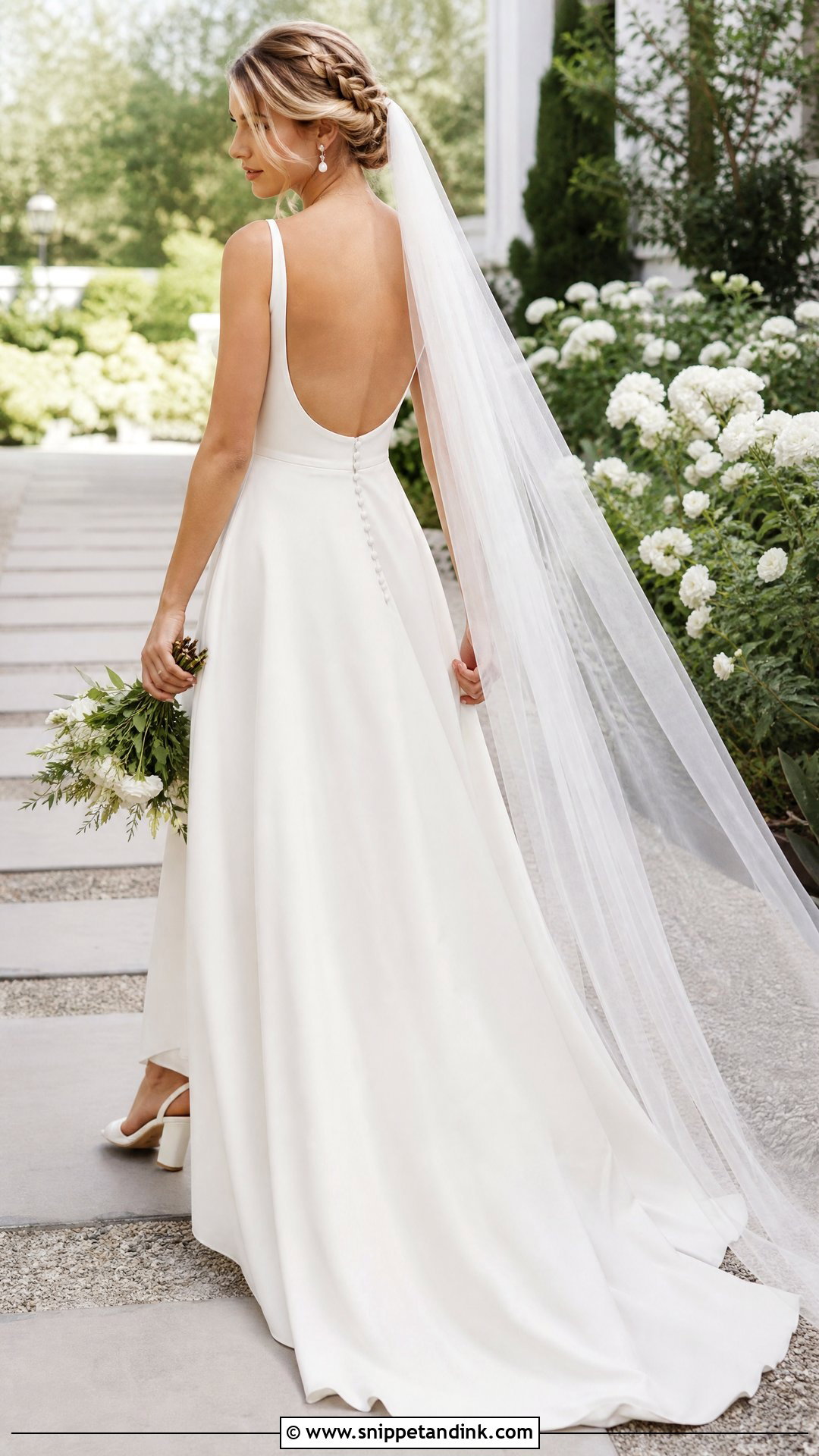
An A-line skirt is my default suggestion for a first-time open back, because the width at the hem balances the bare skin above and you can walk, sit and climb steps without thinking. Keep the bodice simple, with a rounded back and broad straps, and let the skirt fall in chiffon, satin or lightweight mikado. Delicate earrings, block heels and a chapel veil with a plain cut edge are plenty. A braided bun adds a little texture while keeping the neckline clear. At the fitting, sit down and lift both arms above your head: if the back edge pops away from your skin, it needs taking in before the final pressing.
4. Halter Open Back Wedding Dress
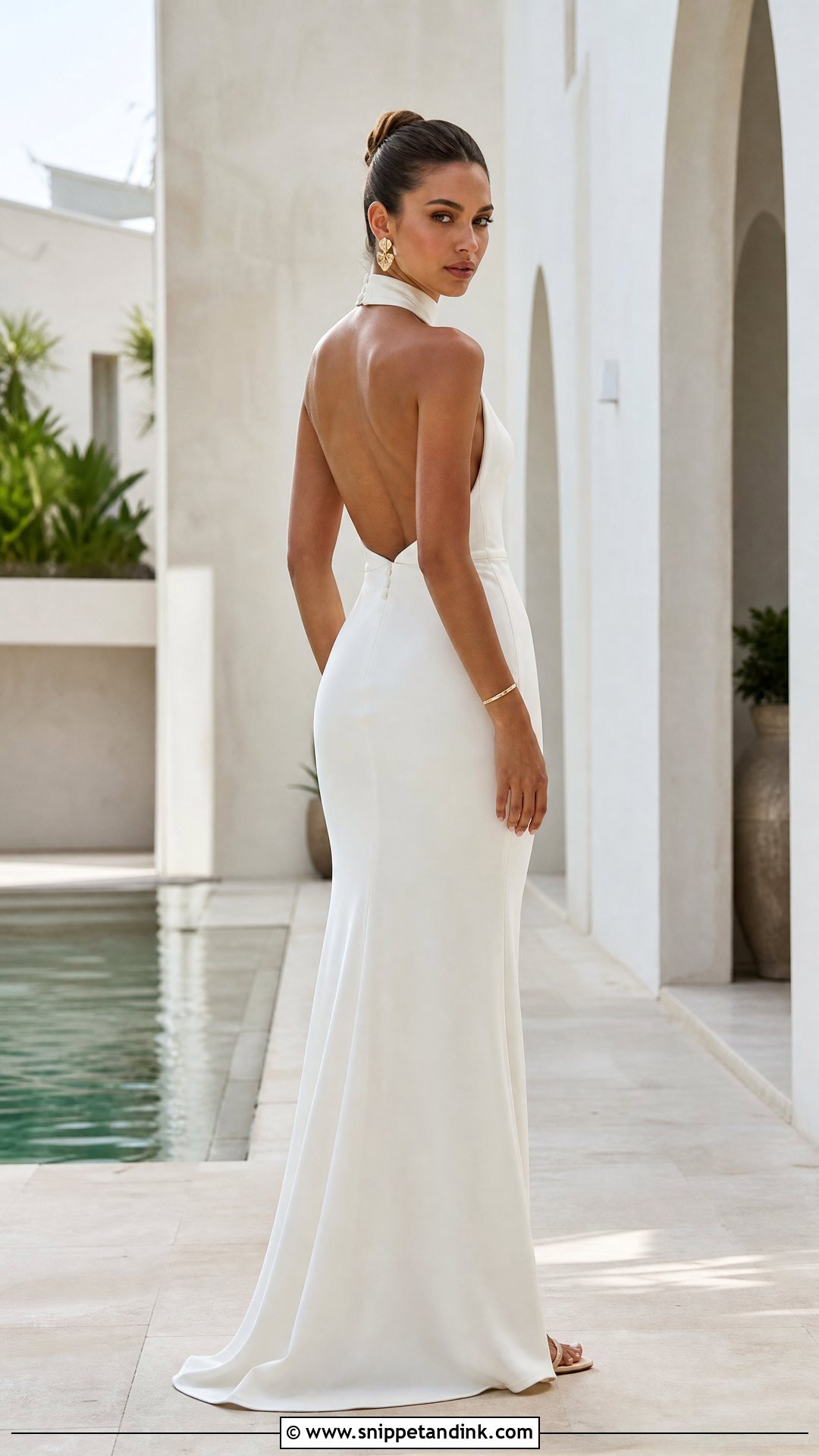
A halter neck does two jobs: it covers the front completely and it pulls every eye toward the shoulders and spine. I like it in matte crepe for a modern finish or silk satin when the bride wants a little sheen, over a column or softly flared skirt. Skip the necklace, since the neckline is already doing that work, and wear sculptural earrings, a slim bracelet and minimal pointed sandals instead. Hair belongs up, in a high bun or sleek ponytail. The detail I always check is the neck strap tension; too tight and you’ll have a headache and red marks by the speeches. Destination weddings and summer venues with strong architecture show it off.
5. Cowl Back Wedding Dress
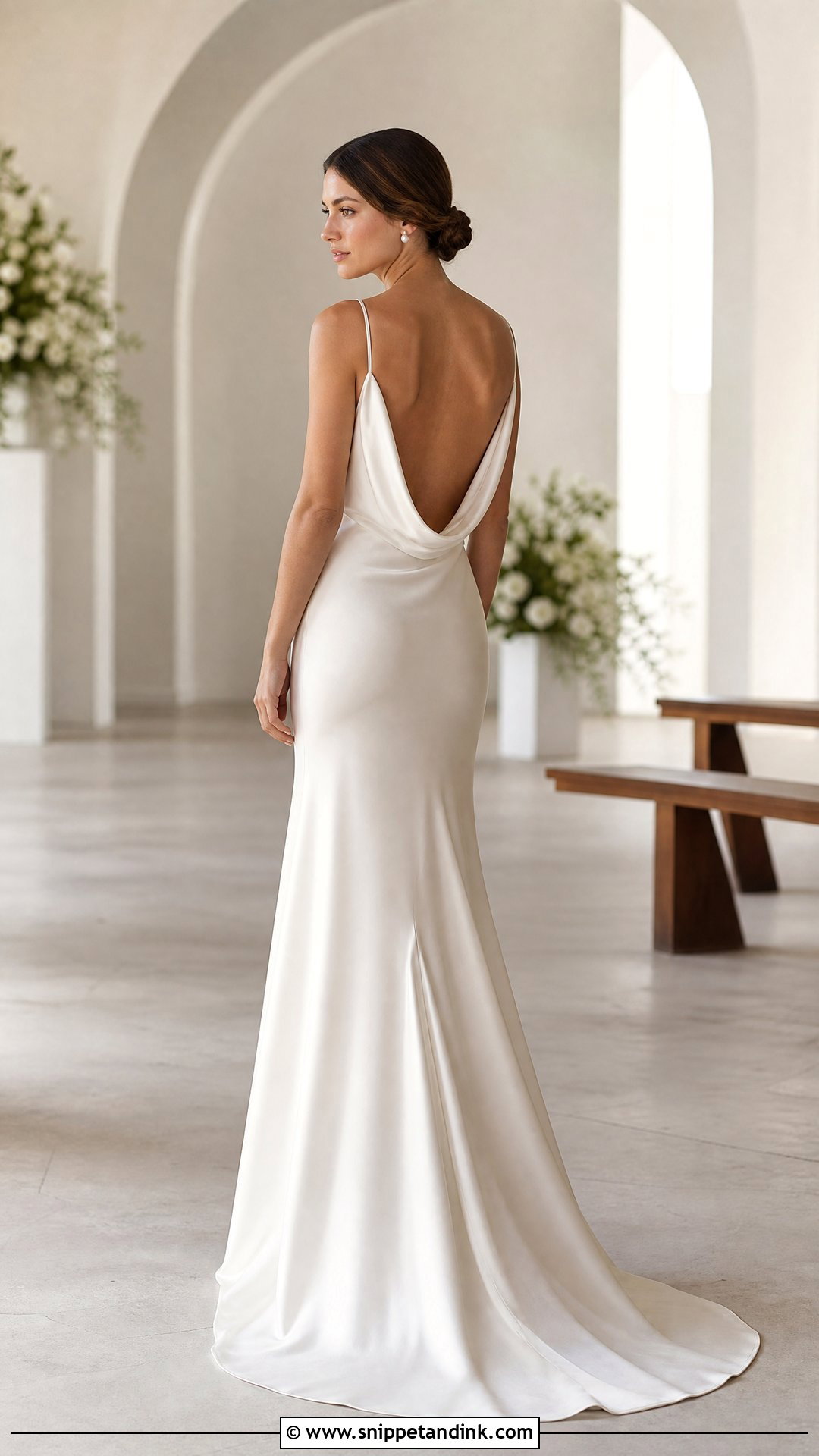
A cowl only drapes properly in a fluid fabric, so I steer brides toward silk or a soft satin for a cowl-back gown and away from anything stiff. The folds need a plain front, narrow straps and a straight or lightly flared skirt so nothing competes with them. Pearl studs, slingback heels and a compact bouquet sit quietly alongside. A low side bun or tidy updo reveals the drape. Avoid a heavily embellished veil, which fights the folds for attention. During alterations, watch how the cowl sits when you bend forward to hug someone; a cowl cut too generously can slide lower than you’d like, and a small weight or tack inside fixes it.
6. Square Neck Open Back Wedding Dress
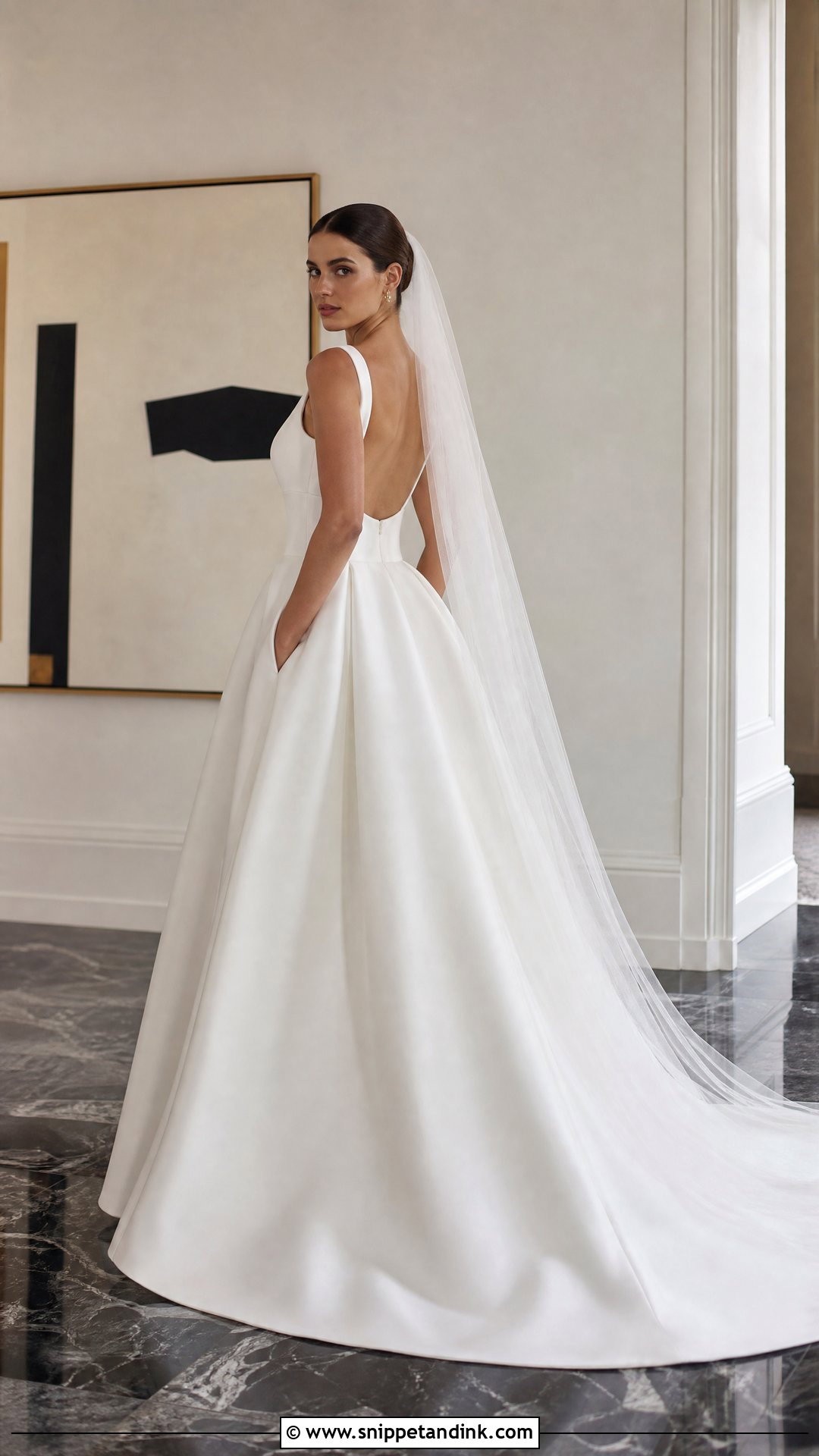
Square necklines depend on straps that sit exactly where they should, and that’s the first thing I pin at a fitting. Satin or mikado defines the geometry best, with substantial straps, a fitted bodice and a low square or softened back. Short drop earrings, a narrow veil and ivory pumps match the crisp shape, and a centre-part bun mirrors the symmetry. If you want more coverage, keep the back opening several inches above the waist instead of chasing a plunge. Strap length is the whole story here: a quarter inch out and the front neckline gapes when you lean in. Formal venues and daytime ceremonies suit this one.
7. Long Sleeve Open Back Wedding Dress
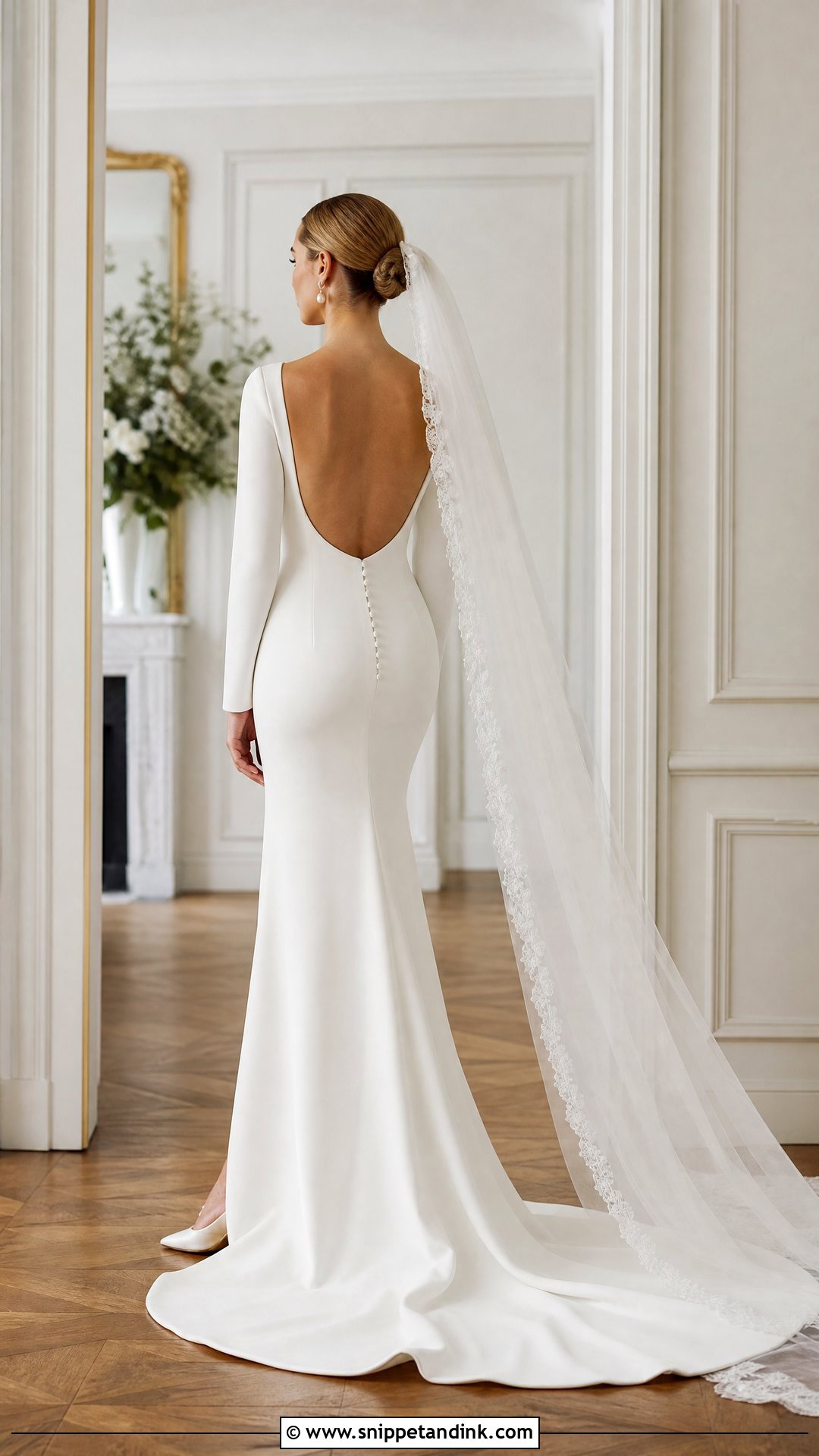
Covered arms with a bare back is a contrast that suits brides who feel exposed in strapless styles. Keep it simple: fitted crepe sleeves, a boat or jewel neckline and a deep rounded back over a slim skirt or restrained A-line, so the whole thing doesn’t turn heavy. Pearl earrings, pointed pumps and a plain cathedral veil make it formal. A textured bun shows the back and softens the sleeves. Have the sleeve head checked for range of movement; tight crepe sleeves can stop you hugging anyone above shoulder height. For outdoor photos in cold months, a removable wrap keeps you warm between shots. It sits naturally in autumn, winter and early spring.
8. Strapless Open Back Wedding Dress
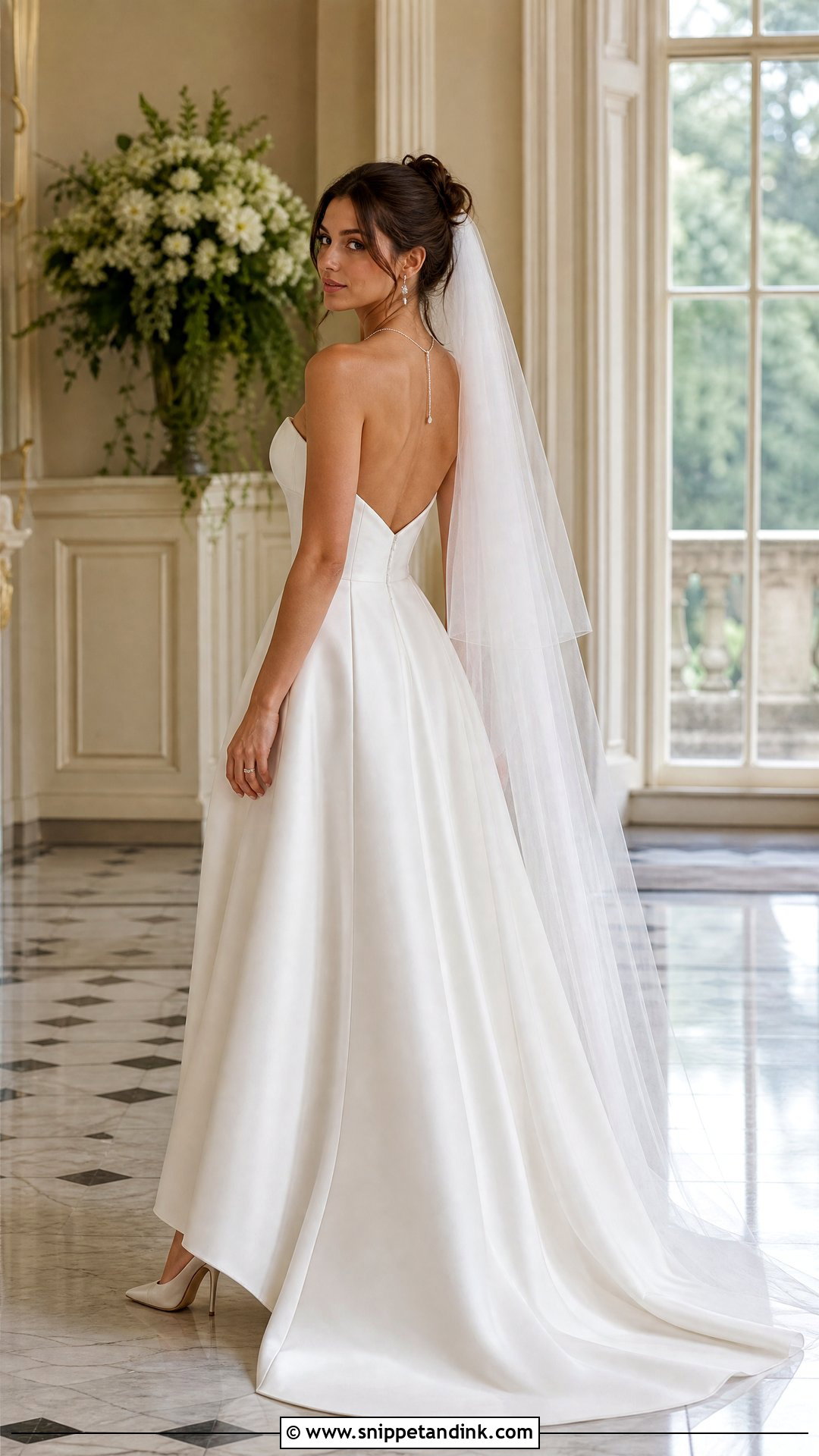
A strapless bodice with a dipped back only works if the support is built in, because nothing is holding it up but the boning and the fit at your ribs. When I assess one, I look for spiral boning, sewn-in cups and an inner waist stay that fastens separately. A clean corset bodice with a straight or softly curved neckline and a simple skirt in matte satin or mikado keeps its shape for a long day. A short pendant, small earrings and a sheer veil are enough. Hair can go into a soft bun or half-up. Before you sign off, walk, sit and do a gentle dance in it; if you find yourself tugging the top edge up, it isn’t fitted tightly enough at the ribcage.
9. Spaghetti Strap Open Back Wedding Dress
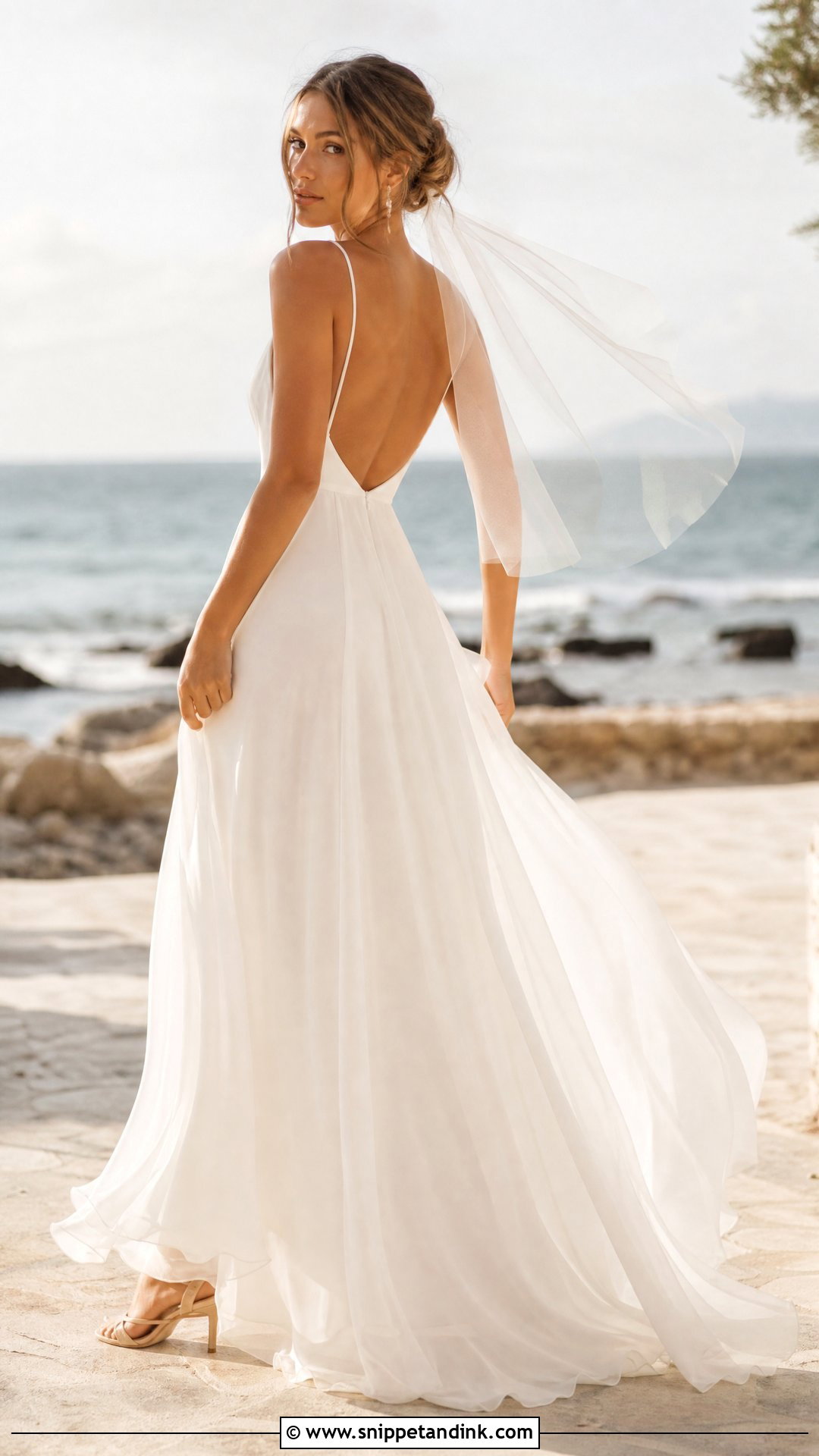
Spaghetti straps frame an open back delicately, but they carry no structure, so this style suits a smaller bust or a gown with support hidden in the lining. Chiffon, crepe or satin with a gentle V-neck and a skirt that falls from the hips keeps it relaxed. Fine chain earrings, strappy ivory sandals and an almost invisible veil match the mood, along with a loose chignon and a few face-framing pieces. Adjustable straps are worth asking for; thin straps stretch slightly through a day of wear and a bodice that fitted at noon can slip by evening. Beach ceremonies and gardens are its natural setting.
10. Scoop Back Wedding Dress
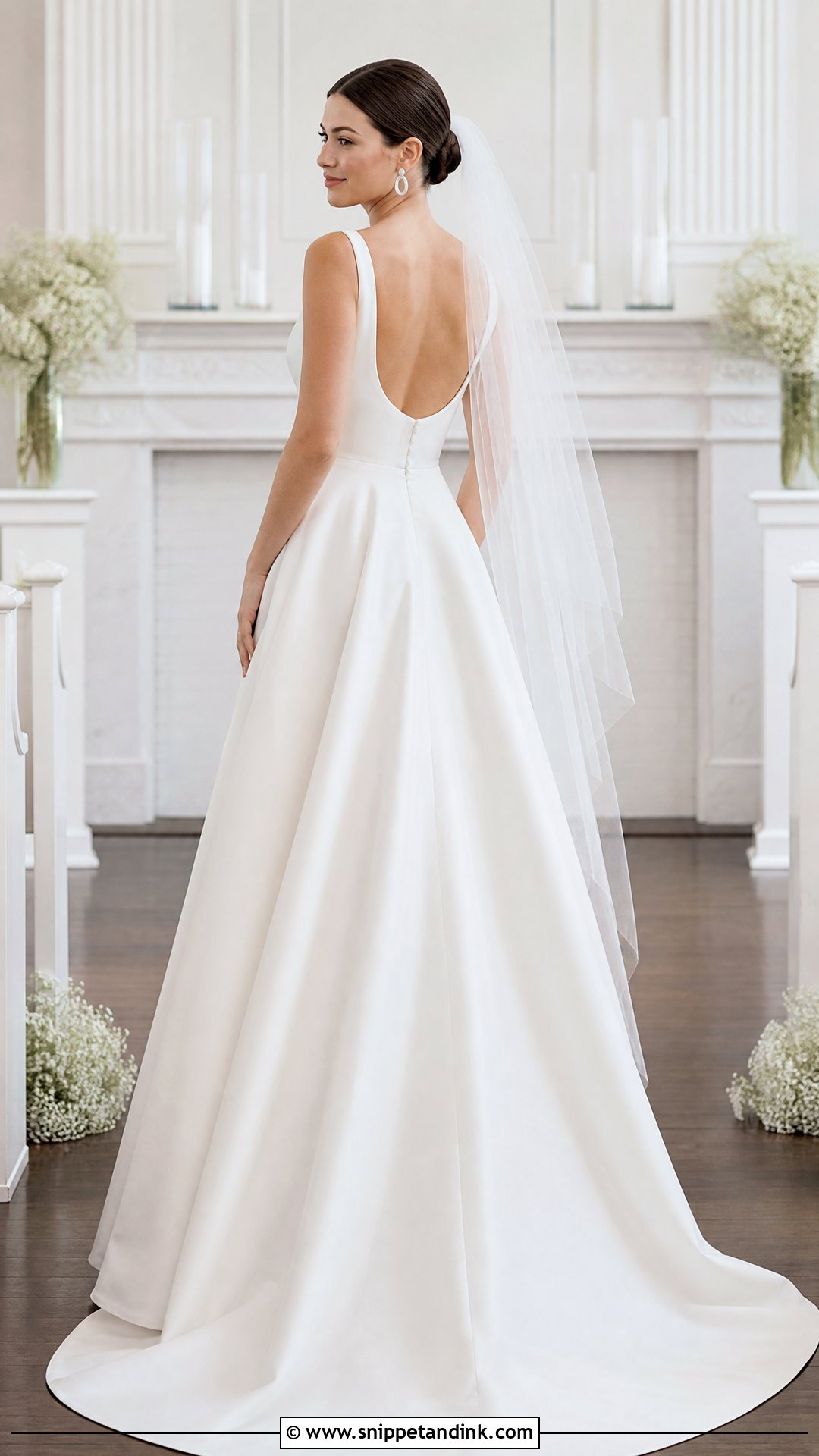
A scoop-back gown is gentler than a sharp V and, in my experience, easier to fit, because a curve follows the shoulder blades instead of fighting them. The opening can sit at mid-back for coverage or dip toward the waist for something bolder. Pair a simple scoop front with wide straps and an A-line or column skirt. Oval earrings, low block heels and a single-tier veil anchored beneath the updo complete it, and a compact one-flower bouquet echoes the rounded lines. Check that the back edge hugs your skin rather than rolling outward; a rolling edge usually means the facing needs understitching. Traditional, outdoor and modern venues all suit it.
11. V-Back Wedding Dress
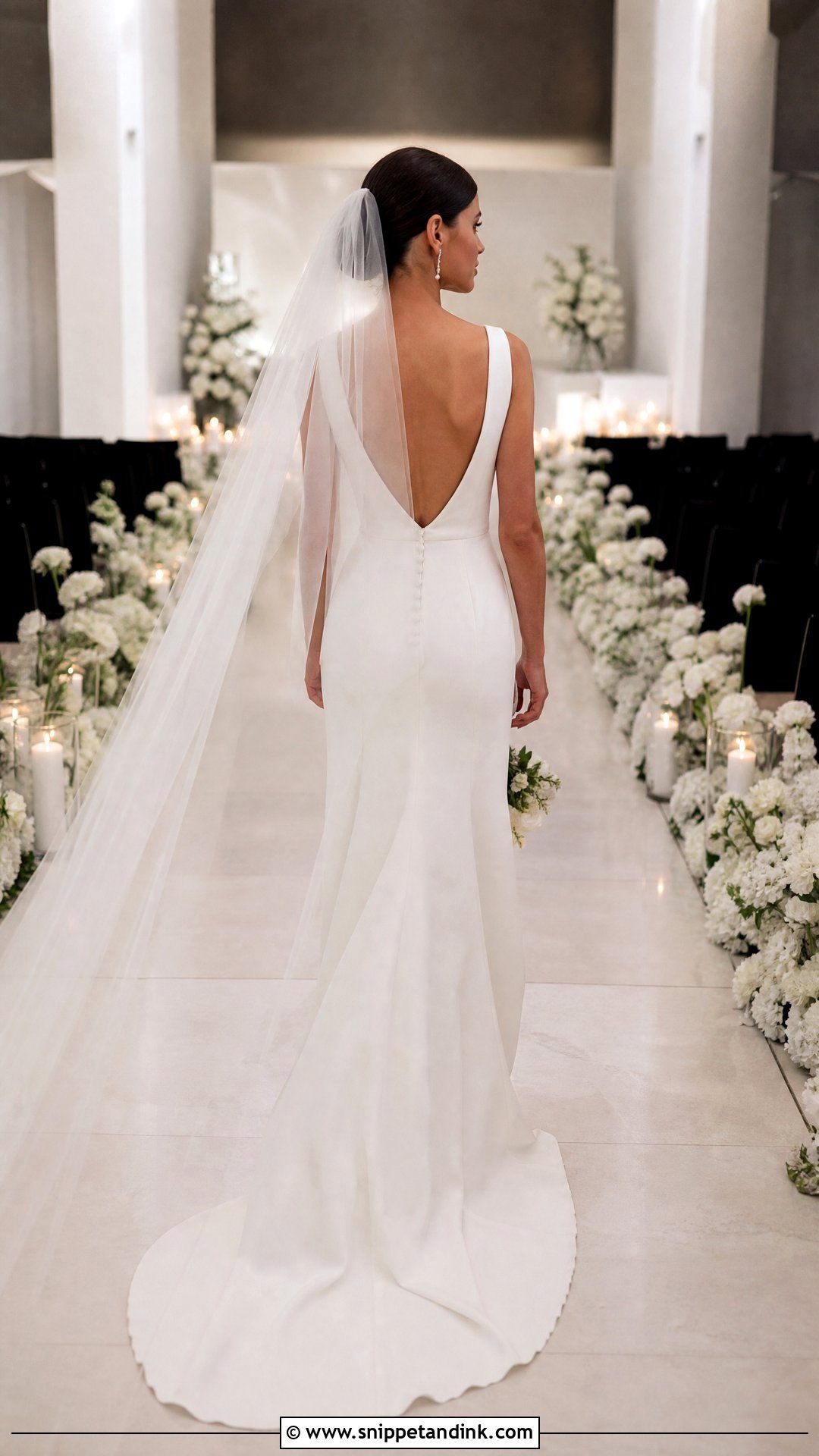
A V-back draws one long line down the spine, which lengthens the whole figure from behind. Balance it at the front with a matching V or a bateau neckline if you want coverage. Crepe gives softness, satin gives sheen and mikado holds the shape crisply. Slender earrings, a smooth low bun and a veil on a narrow comb keep the line uninterrupted, and pointed shoes extend it. How deep to go depends on your support needs; past the bra band, you’re relying on cups and tape. I always ask the tailor to secure the shoulder seams with stay tape, since a deep V puts strain on them every time you reach forward.
12. Keyhole Back Wedding Dress
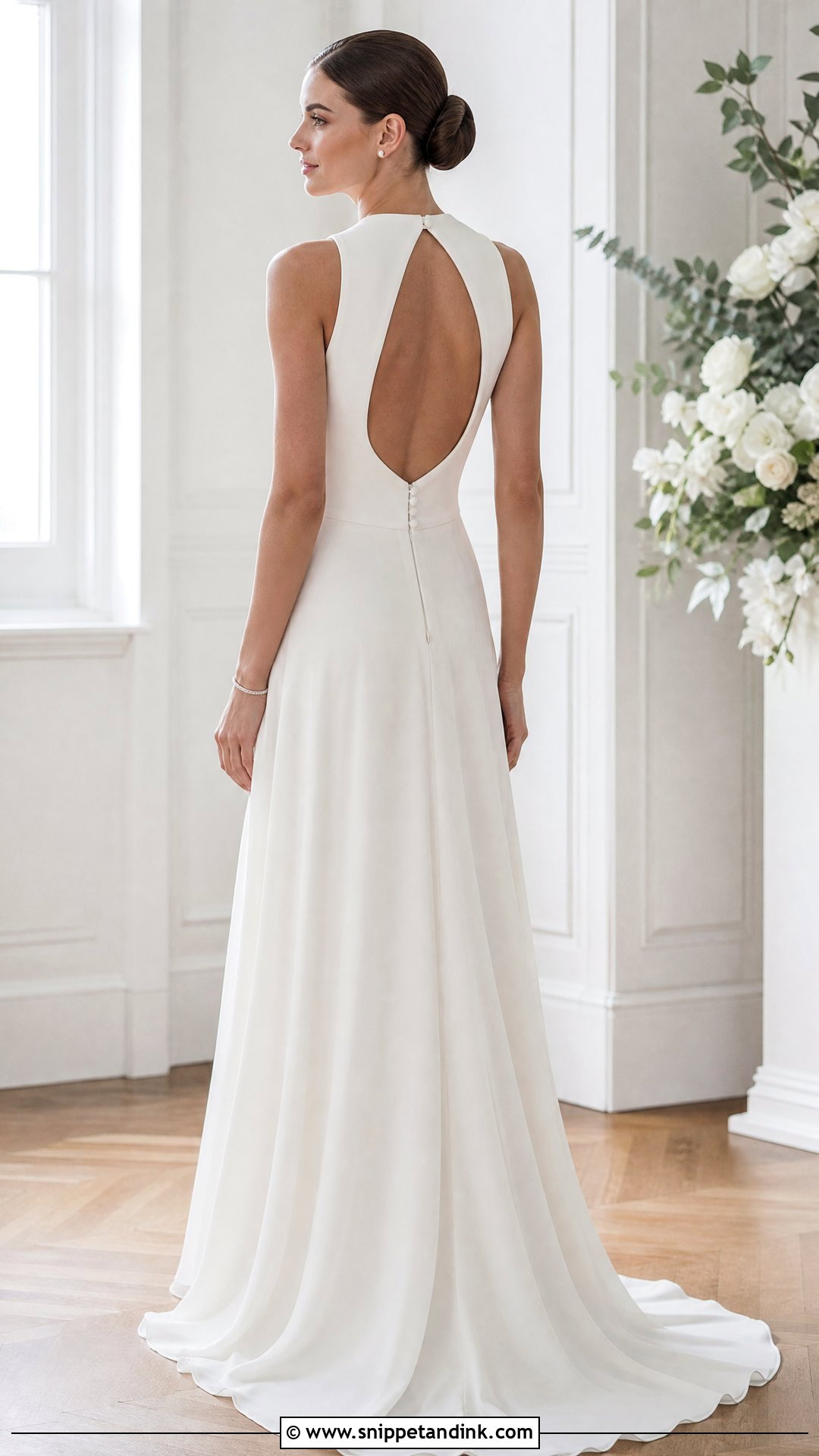
Not every open back needs to reach the waist. A keyhole gives a small glimpse of skin while the shoulders and sides stay covered, so it’s the style I suggest for religious ceremonies or brides who want a bra they already own to work. Choose a high neckline, a teardrop or oval keyhole and one button at the nape. Fitted crepe reads modern; a chiffon A-line softens it. Studs, a narrow bracelet and classic pumps are enough, and the bun should sit above the opening, never over it. That single button and loop take strain all day, so test it while turning your head and lifting your arms.
13. Illusion Lace Open Back Wedding Dress
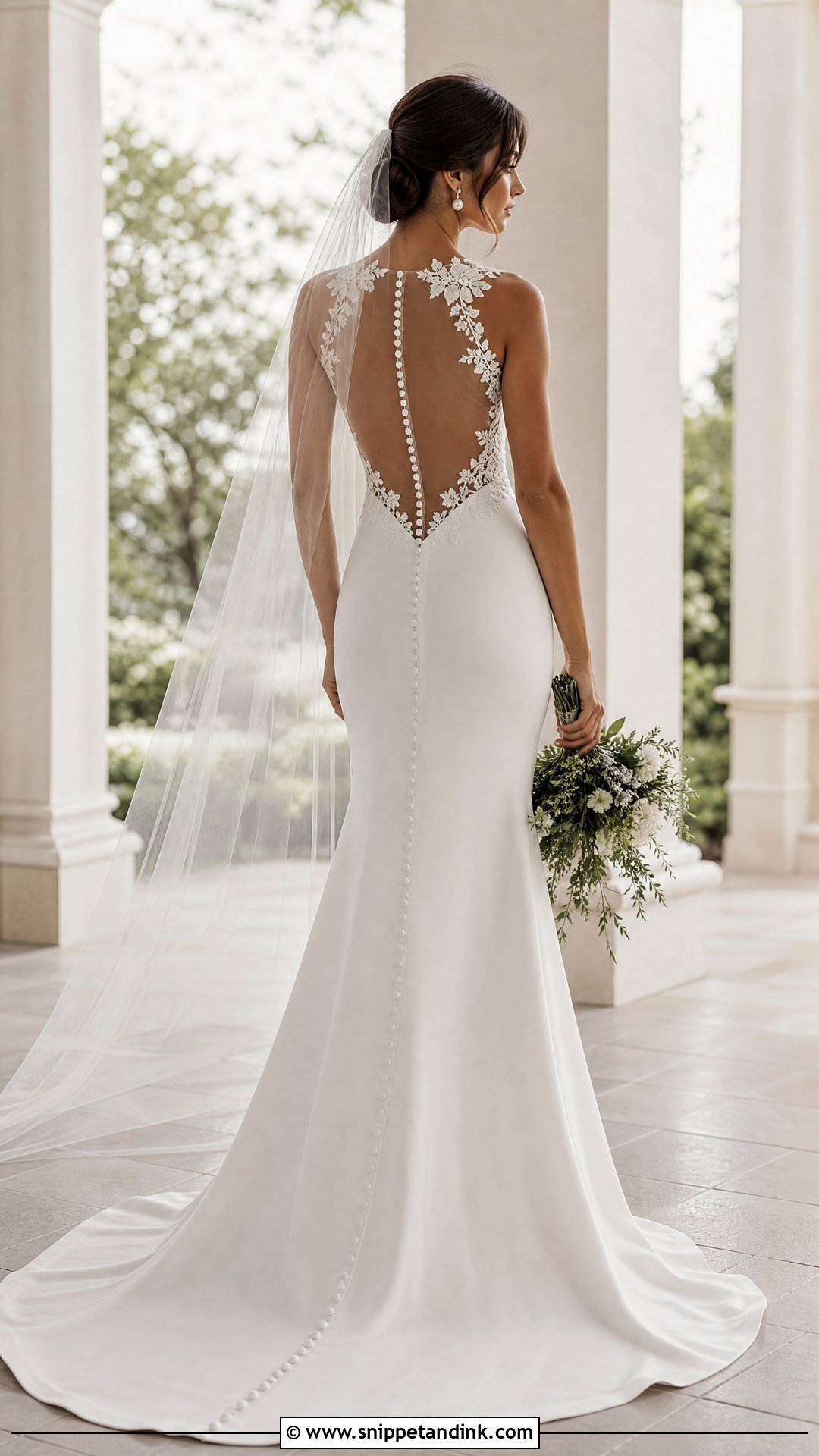
An illusion back looks bare from a distance while the mesh quietly holds the bodice in place. For a simple version, ask for lace placed only along the edges, not dense appliqué or heavy beading. A plain crepe skirt, a modest neckline and covered buttons running toward the train keep it calm. Tiny pearl earrings, closed-toe heels and an untrimmed sheer veil finish it, and a low bun leaves the panel visible. The make-or-break detail is the mesh colour. Hold swatches against the skin on your back in daylight, because a shade that matches your arm can look grey or pink across the shoulder blades.
14. Cap Sleeve Open Back Wedding Dress
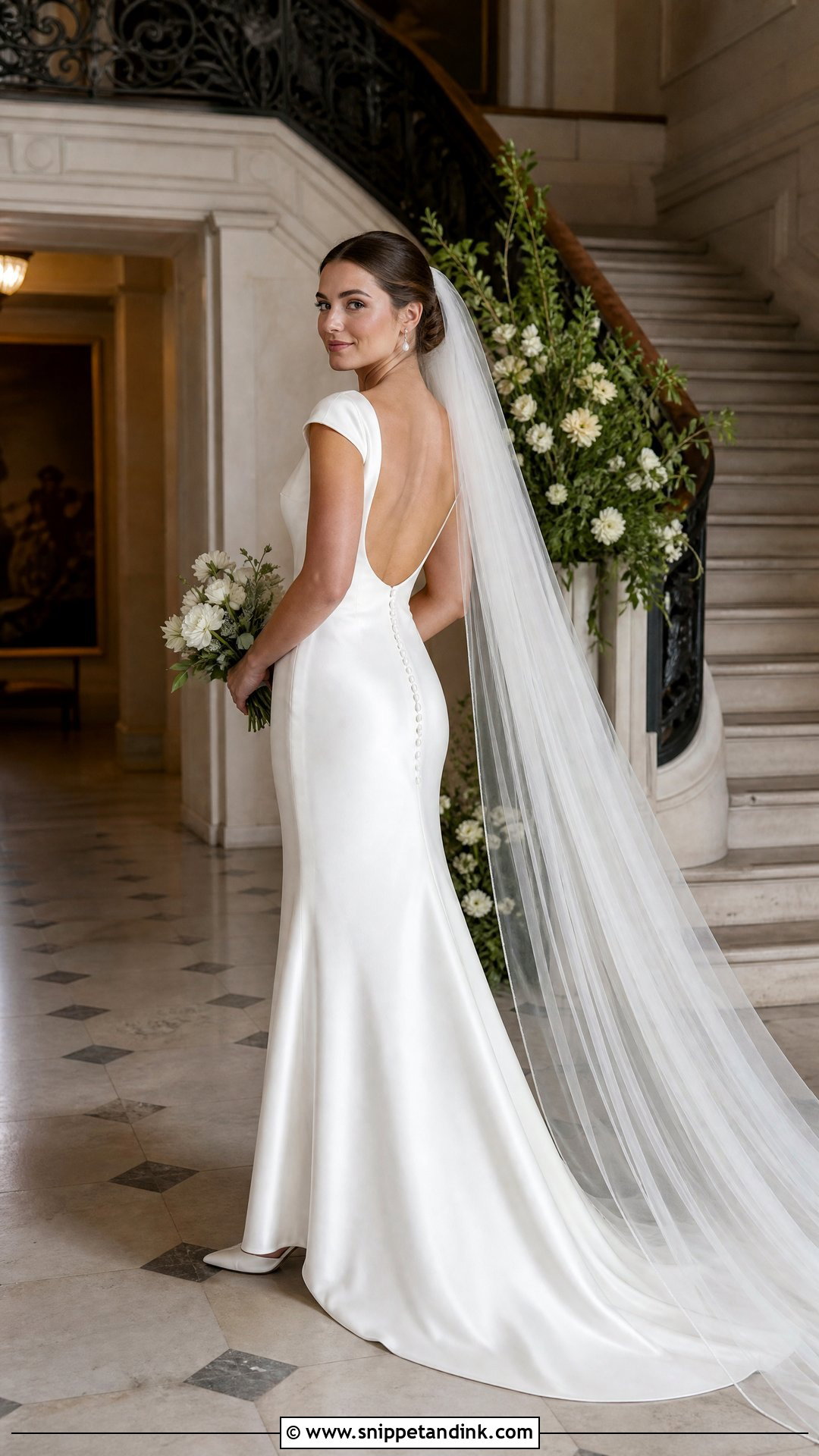
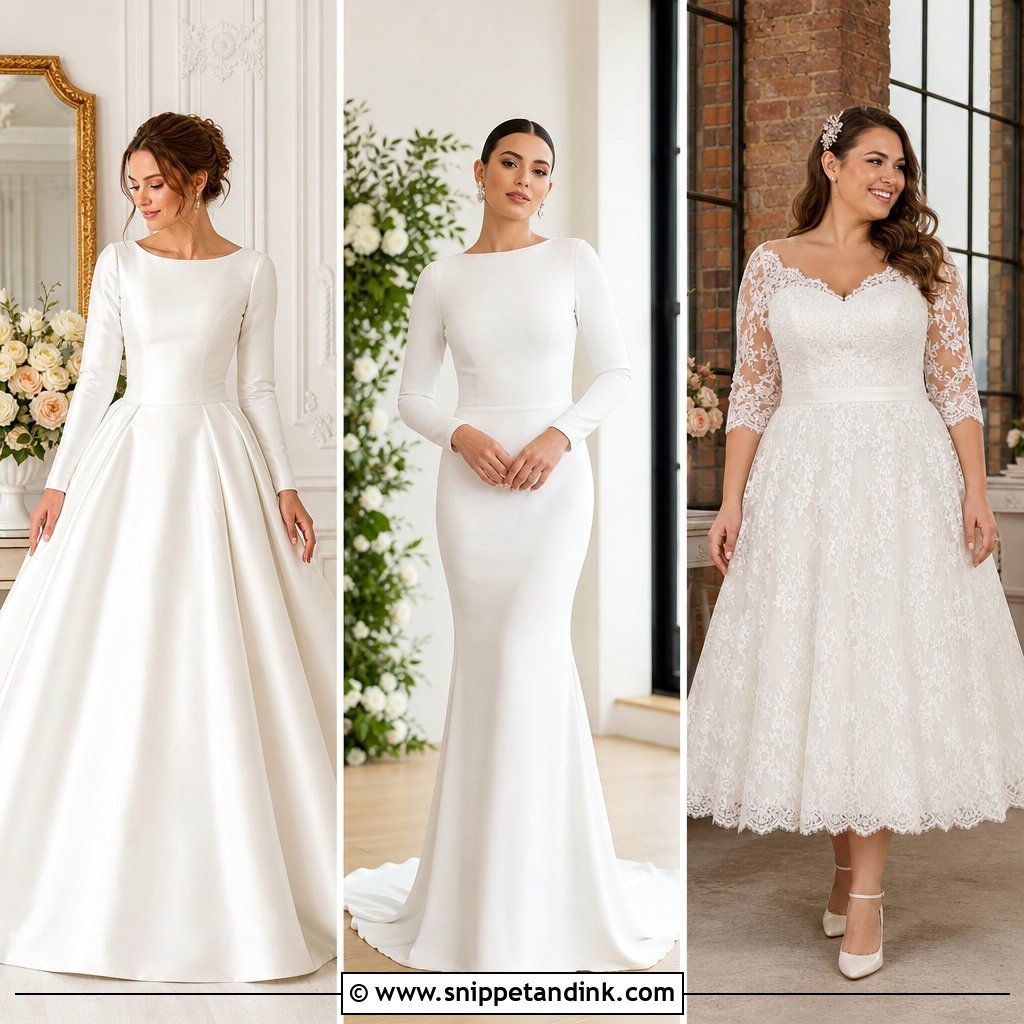
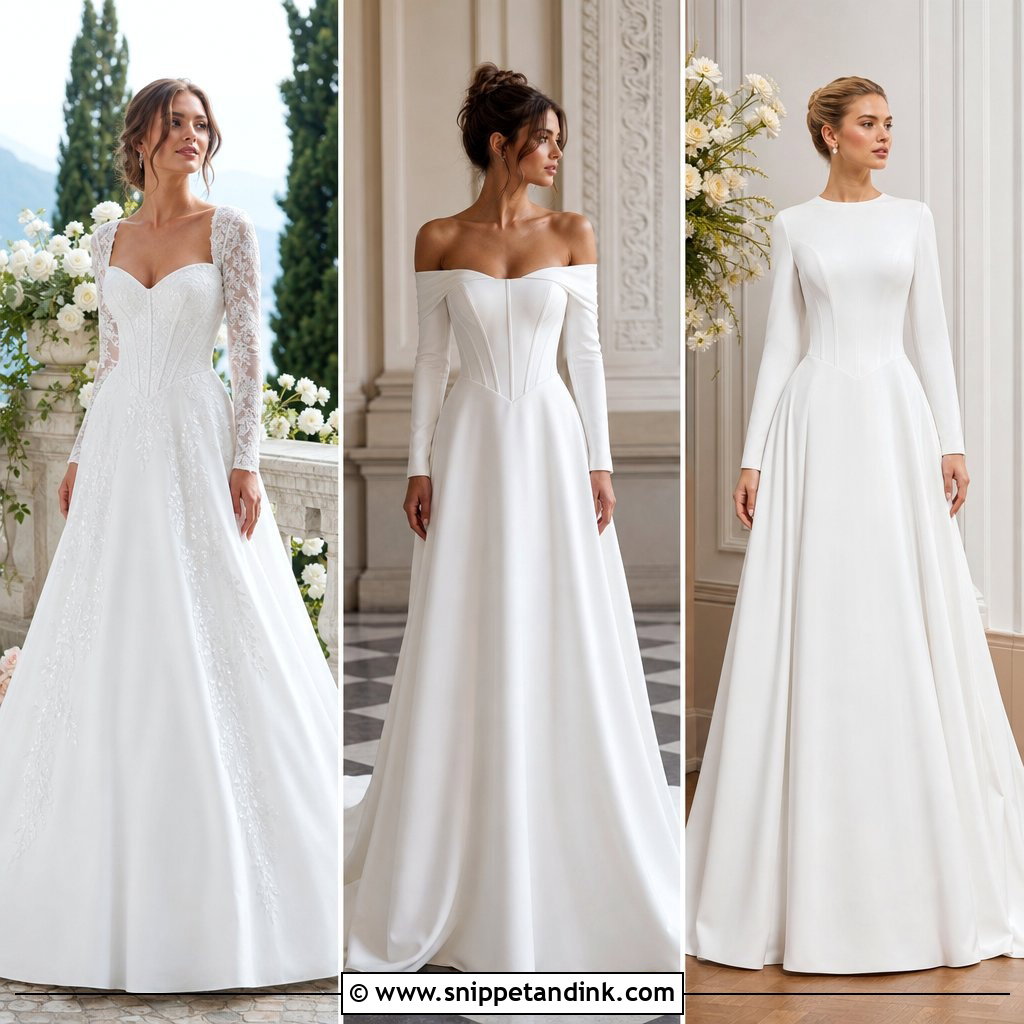
Cap sleeves give the shoulder a little cover and make an open back feel less exposed. I like them in plain crepe or satin on a fitted bodice with a rounded back that ends near the natural waist, over a softly flared skirt. Petite drop earrings, kitten heels and a narrow chapel veil sit well with it, as does a polished bun or a tucked-under bob. The sleeve opening is where problems hide: if it’s cut snug, you won’t be able to raise your arms to hug guests or throw the bouquet. Garden ceremonies and historic venues suit the slightly old-fashioned softness of it.
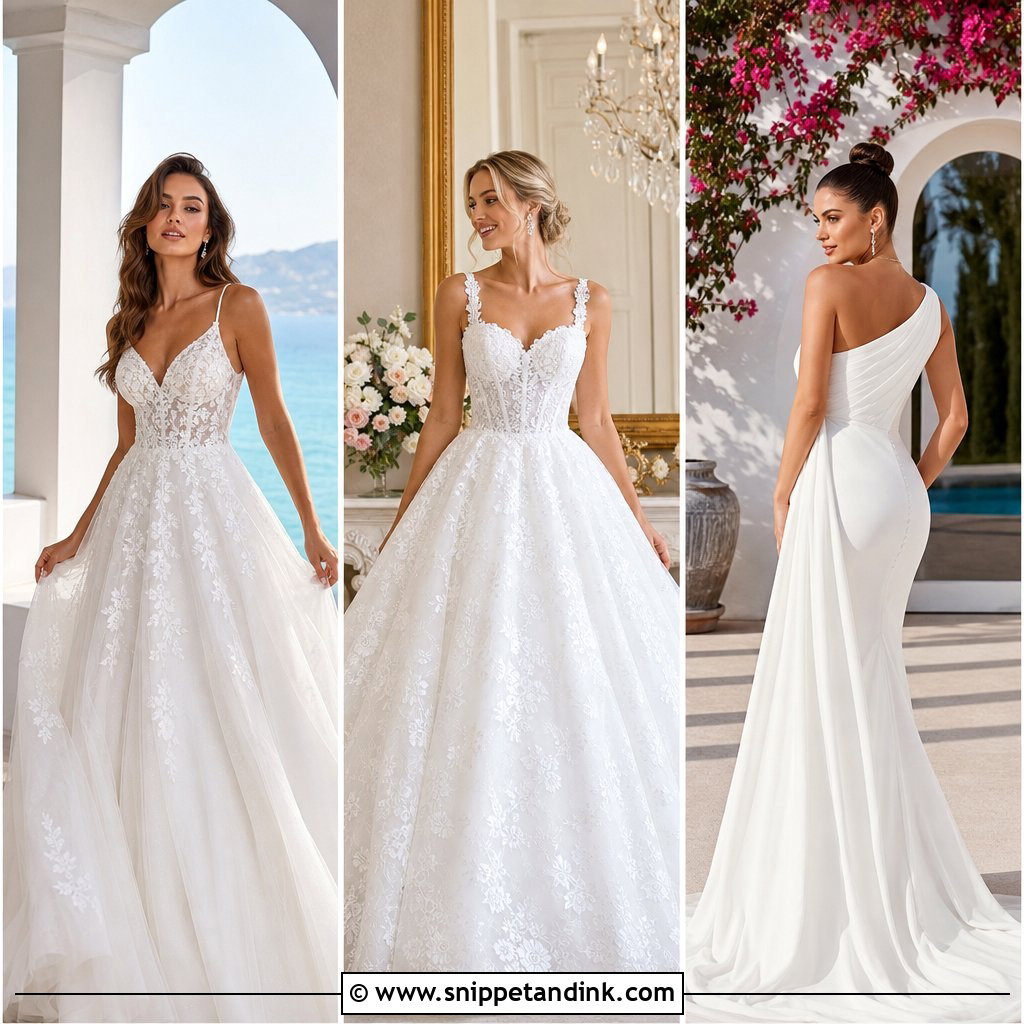
15. Boat Neck Open Back Wedding Dress
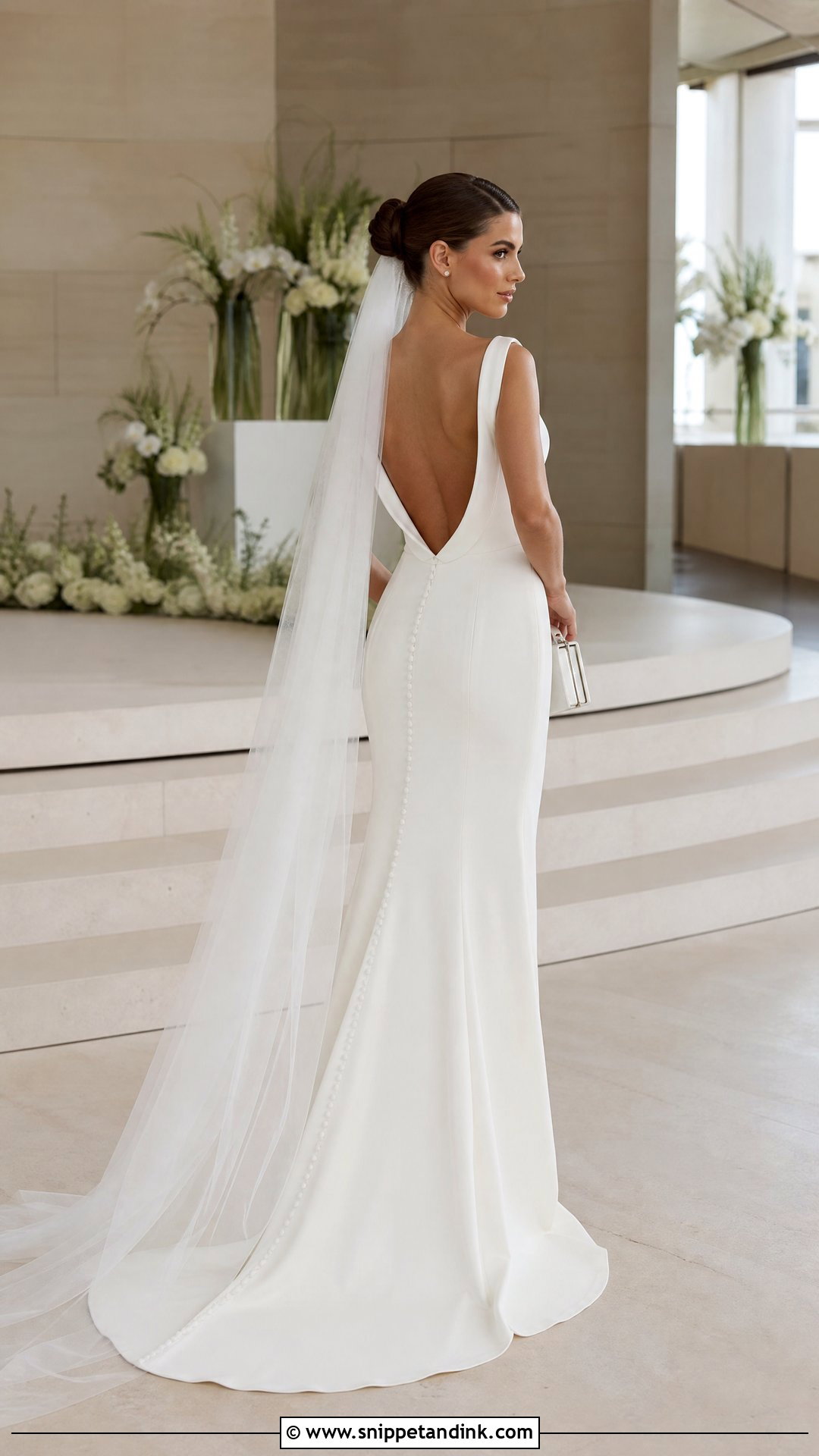
From the front, a boat neckline looks almost reserved, so the reveal of a low back as you walk past is all the more dramatic. Sleeveless or short-sleeved crepe, matte satin or lightweight mikado works, over a slim column skirt with a short train. Crystal studs, a structured mini bag and pointed pumps match the clean lines. Wear your hair fully up and set the veil beneath the bun so the neckline stays visible. Because a boat neck rests right at the shoulder points, even a slight difference between your shoulders shows, and a good seamstress will adjust each side separately.
16. Mermaid Open Back Wedding Dress
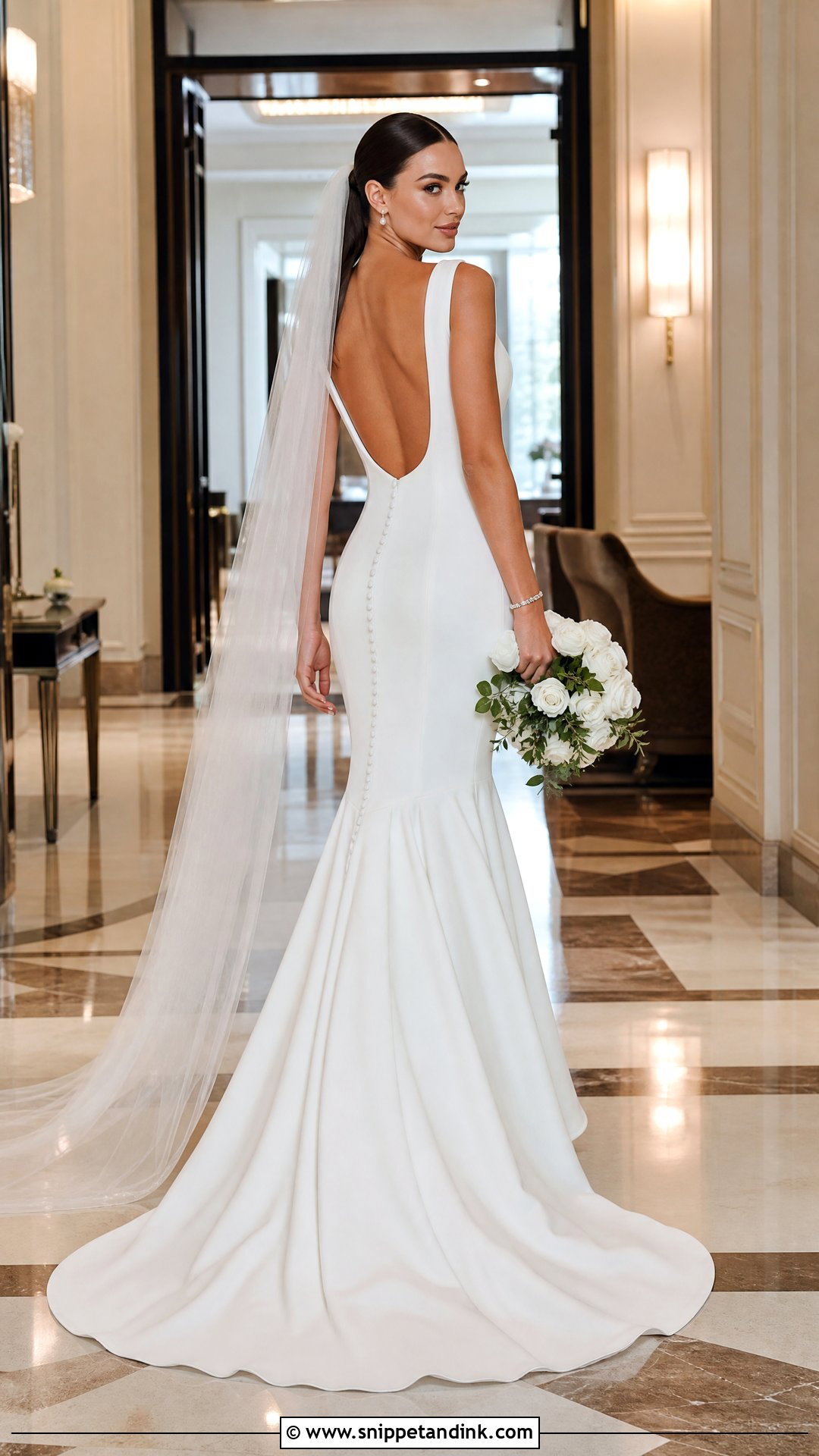
With a mermaid cut, the silhouette provides all the drama, so I keep the fabric plain: smooth crepe, a supportive bodice, a rounded or V back and a skirt that flares from the knee. Small earrings, a slim bracelet and pointed heels are all it needs, plus a long plain veil that follows the train. An updo or sleek ponytail keeps the back clear. Practise stairs and sitting at your first fitting, not your last, because the knee flare is where a mermaid restricts you most. If the flare starts too low, you’ll shuffle down the aisle. Formal ballrooms and evening ceremonies at hotels suit it.
17. Column Open Back Wedding Dress
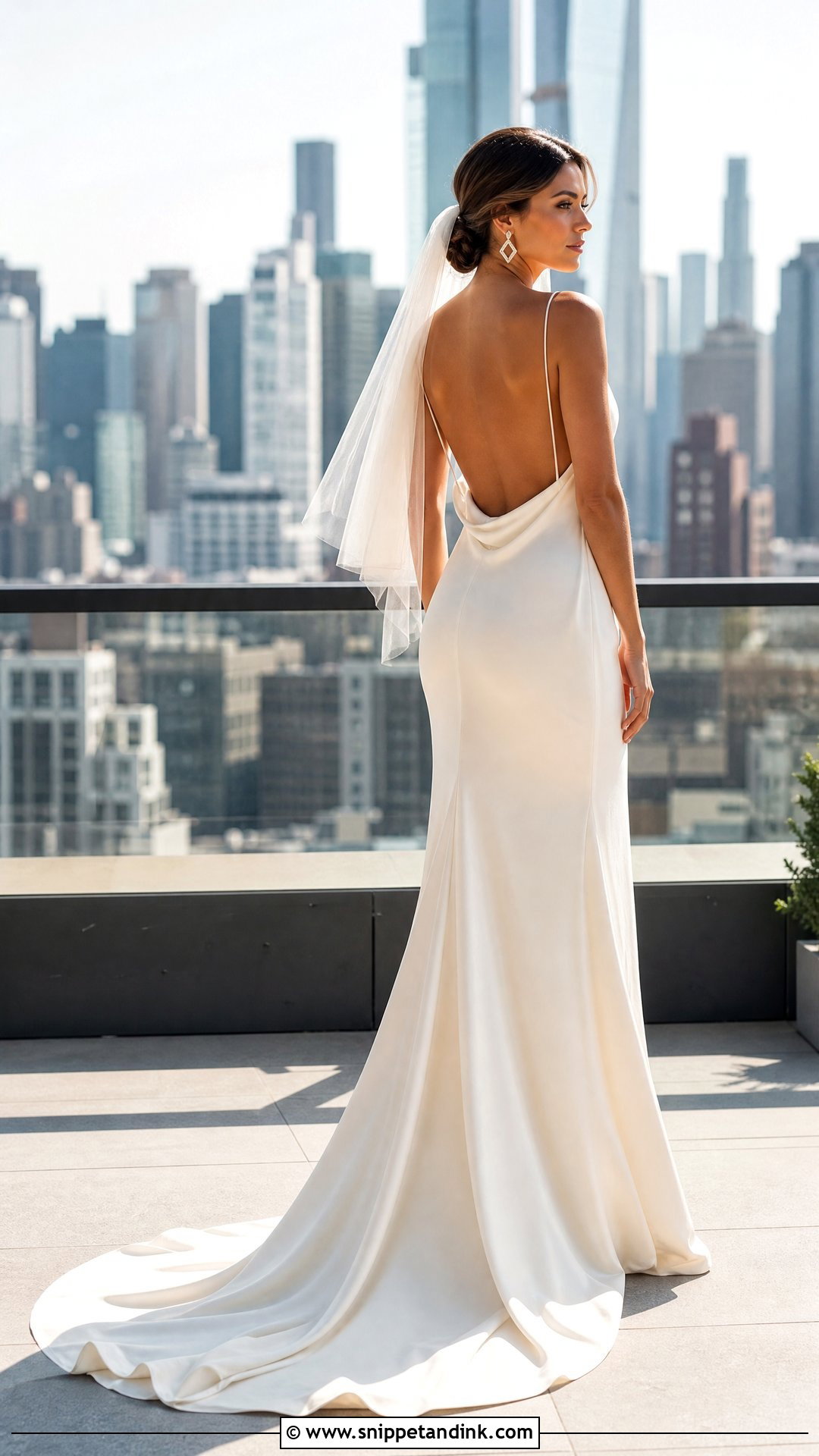
A column falls in one straight line from shoulder to floor, which makes it light to wear and quick to move in. Choose a softly draped bodice, narrow straps or covered shoulders and an open back balanced by a small sweep train. Silk satin moves fluidly; crepe gives a smoother matte surface. Geometric earrings, minimal sandals and a short veil or hair comb, with a low knot at the nape, keep it polished. With so little volume to hide anything, smooth undergarments and precise alterations matter more here than in any other cut. Courthouse ceremonies, rooftops and small destination weddings are where I see it work best.
18. Tea Length Open Back Wedding Dress
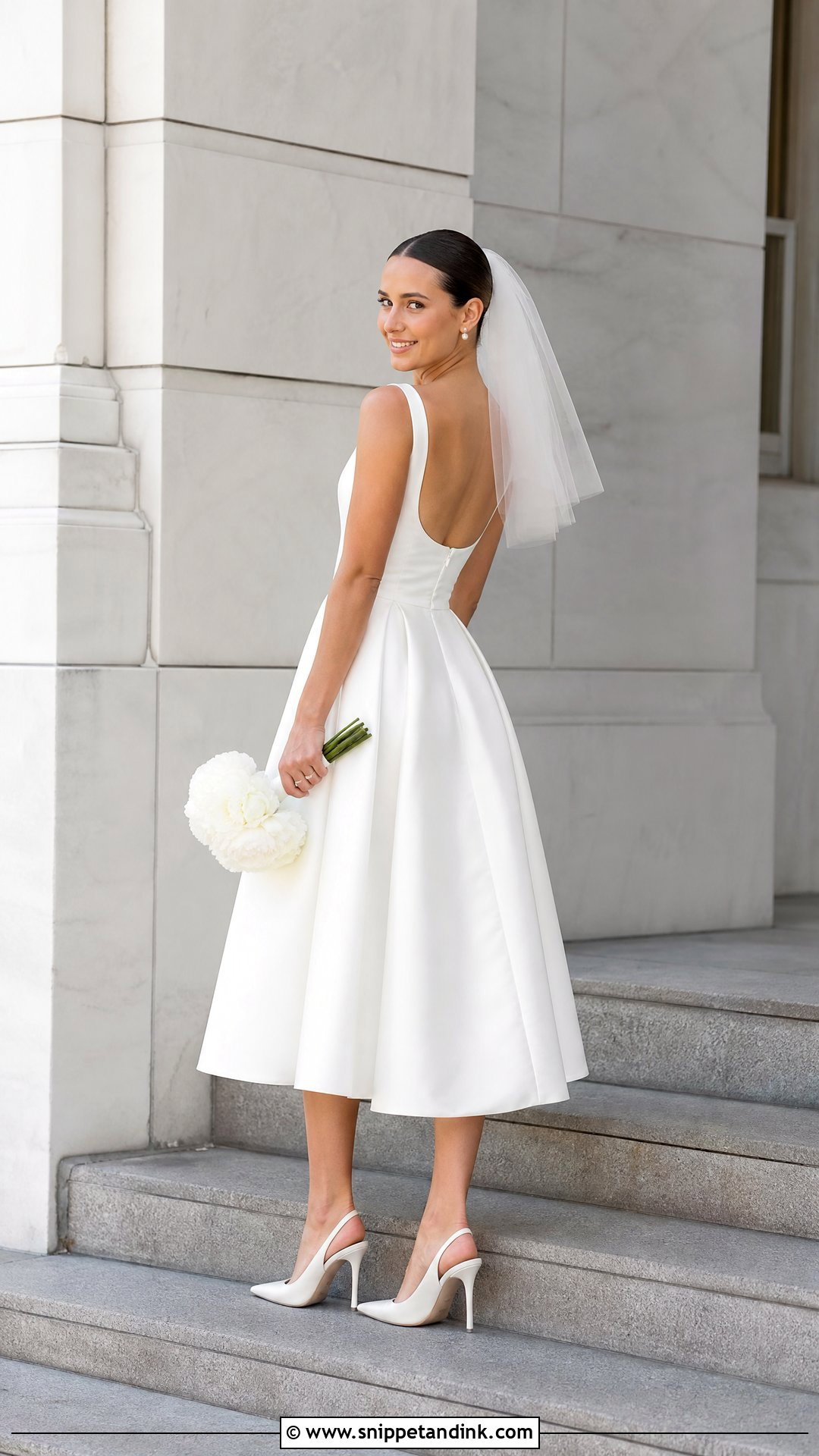
Tea length has a playful, vintage feel, and the open back keeps it from looking like a party dress. A structured bodice with wide straps and a mid-back scoop, in plain satin or mikado, holds the shorter skirt in shape. Your shoes are fully on show, so choose them first: slingbacks, simple pumps or a refined block heel. Pearl studs and a birdcage or short plain veil keep the proportions right, and a neat bun shows off the back. Hem length must be set with the actual shoes on, since an inch of heel changes where the skirt lands on your calf. Daytime receptions and courthouse weddings suit it.
19. Bow Back Wedding Dress
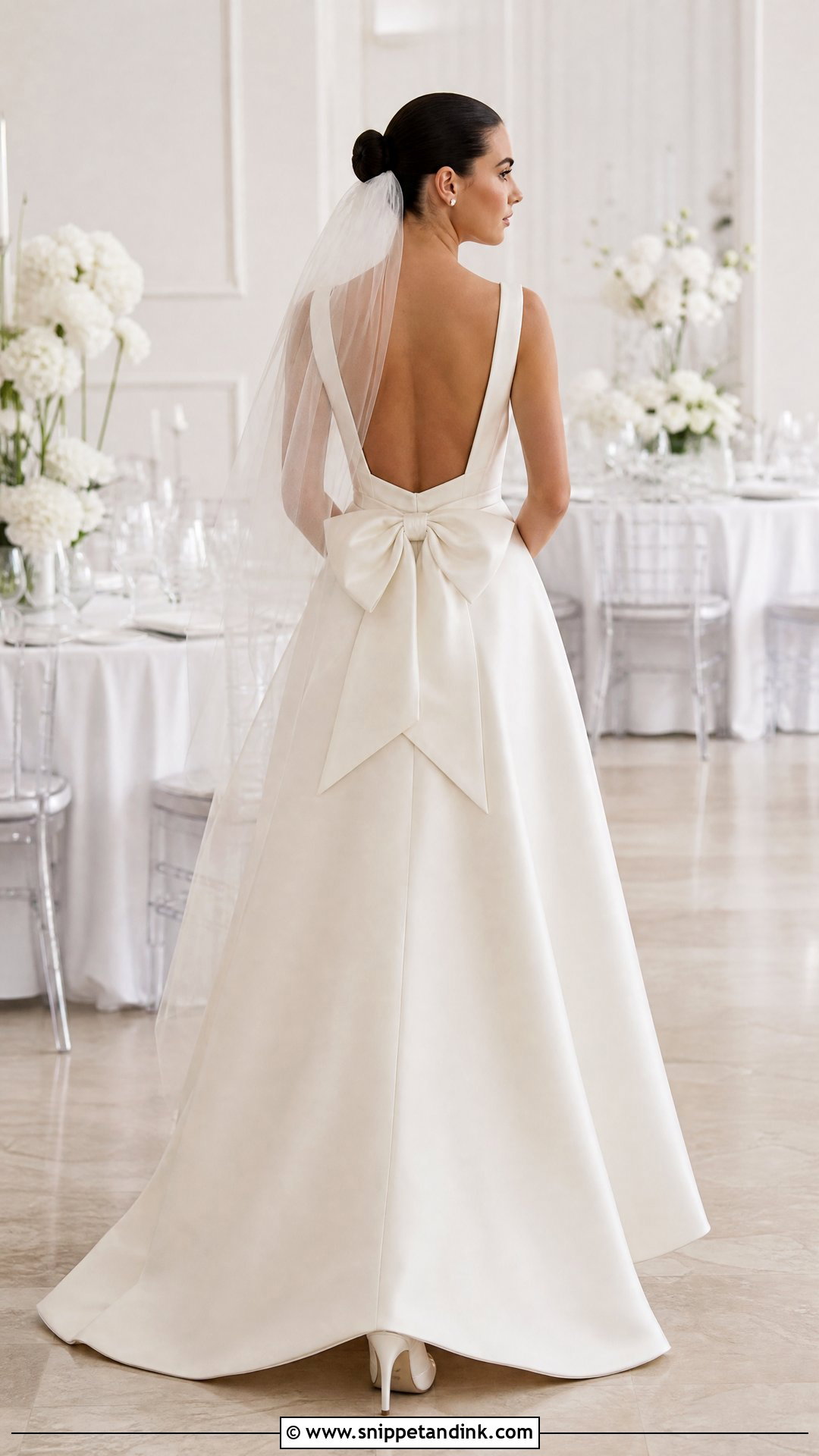
A bow lets a simple gown carry one decorative note without becoming fussy. I’d pick clean satin or mikado with a low square back and a structured bow at the waist, kept medium in size so it frames the opening instead of covering it. A straight neckline and A-line skirt give it a classic base. Stud earrings, pointed pumps and a plain veil you can take off after the ceremony keep things quiet, as does a smooth updo. Ask whether the bow detaches. Large satin bows crush when you sit through dinner, and a detachable one can be removed for dancing and steamed back into shape later.
20. Open Back Wedding Dress With Train
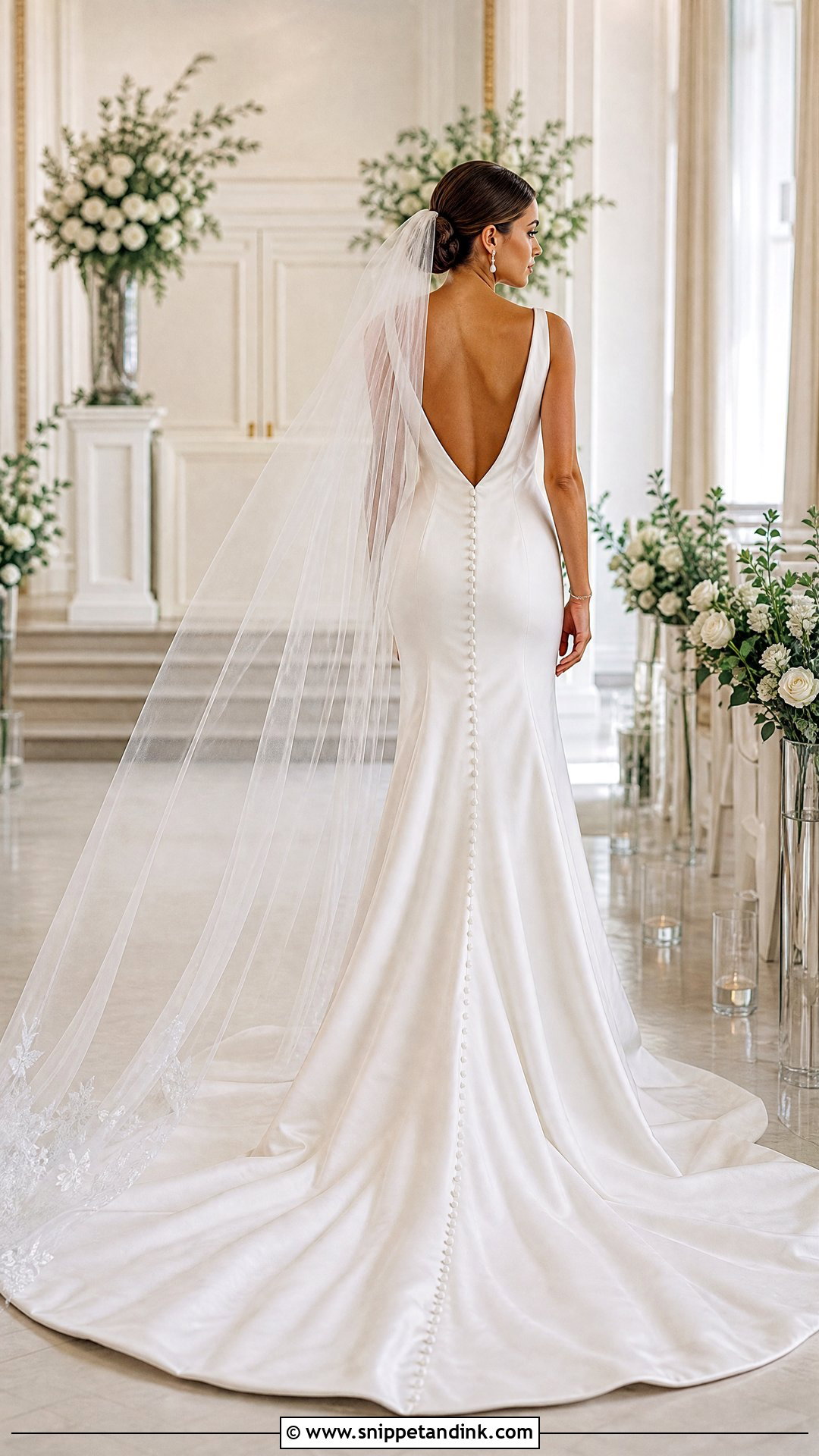
Here the impact comes from length rather than sparkle. A fitted crepe or satin bodice with a deep but secure back flows into a chapel train, and covered buttons can trace a line from the opening down to the hem. Pearl drops, comfortable pumps and a plain cathedral veil for the ceremony complete it, with a high or low bun to keep the back clear. Insist on a sturdy bustle. A train gets stepped on constantly once guests are close, and a weak bustle point tears away from the seam by the second dance. Make sure the aisle is wide enough before you commit to the length.
The Fittings Where an Open Back Gets Fixed
Open backs are less forgiving at the seamstress than almost any other style, because the edge of the opening rests directly on skin and every small mismatch shows as a gap. Most brides need two or three fittings, with the first roughly two to three months before the wedding. Alteration timelines vary by shop and season, so ask when you buy the dress.
What I bring to each appointment
- The exact shoes, so the hem and posture are right.
- The final undergarments or adhesive cups, never a placeholder bra.
- A friend with a phone to film you walking away. You can’t see your own back, and video shows gaping that a mirror misses.
- The veil or comb, to check it sits below the opening rather than across it.
Ask the seamstress to check the edge in three positions: standing tall, slumped as you would be at dinner, and leaning forward. A gap that only appears when you lean usually means the back needs taking in at the side seams, not at the opening itself.
Skin, Tan Lines and Body Makeup on a Bare Back
With an open back, your skin becomes part of the outfit, and guests will see it for hours as you stand at the altar. Strap marks from summer tops take weeks to fade, so switch to strapless or racerback styles once you’ve chosen the dress. If your back is prone to breakouts, start a gentle routine well ahead of time instead of trying a new treatment the week before.
Self-tan and body makeup both transfer onto ivory fabric, particularly where the edge of the opening rubs as you move. Apply them a day or two before rather than that morning, let everything set completely, and press a clean tissue against the skin before dressing. If it comes away coloured, it will mark the lining.
Matching the Back Opening to the Way You Move
A satin slip feels relaxed, while structured crepe, mikado or a long train looks more formal. If coverage matters, keyhole, illusion and shallow scoop backs give you the effect with far less worry about support; deep V-backs and low cowls are bolder and need more planning underneath. Whatever you choose, bring your wedding shoes and undergarments to every appointment, then sit, walk and raise your arms in front of the mirror. Keep the jewellery restrained, wear your hair up, and choose a veil that falls beside or beneath the opening so the back you picked stays on view.
You'll Like These Ideas:










Leave a Reply