
Ordering a Lengha Early Enough for Two Fittings
Most of the trouble I see with lengha outfits comes from time, not taste. A made-to-order lengha with hand embroidery usually takes somewhere between two and four months from the boutique, and that’s before alterations. I ask brides to order early enough that the blouse can have at least two fittings, because blouses are where nearly every problem shows: gaping at the back, straps that slip, hooks that pull.
- Order the outfit about four to six months before the wedding if it’s custom, longer in peak season.
- Book the first blouse fitting once the fabric is ready, wearing the bra you’ll wear on the day.
- Hold the second fitting three to four weeks out, with your shoes, so the hem is cut to the right height.
- Do a full dress rehearsal a week before, including the dupatta pins and the jewelry.
How heavy is too heavy?
A heavily embroidered bridal skirt can weigh several kilos, and that weight hangs from your waist all evening. I’d rather a bride wear a slightly lighter skirt she can sit, eat and dance in than a heavier one she can’t wait to take off. At the trial, wear it for an hour, not five minutes. If the waistband is digging in or the can-can scratches your legs, ask for a softer lining or one fewer net layer. Both are simple fixes before the wedding and impossible ones on the day.
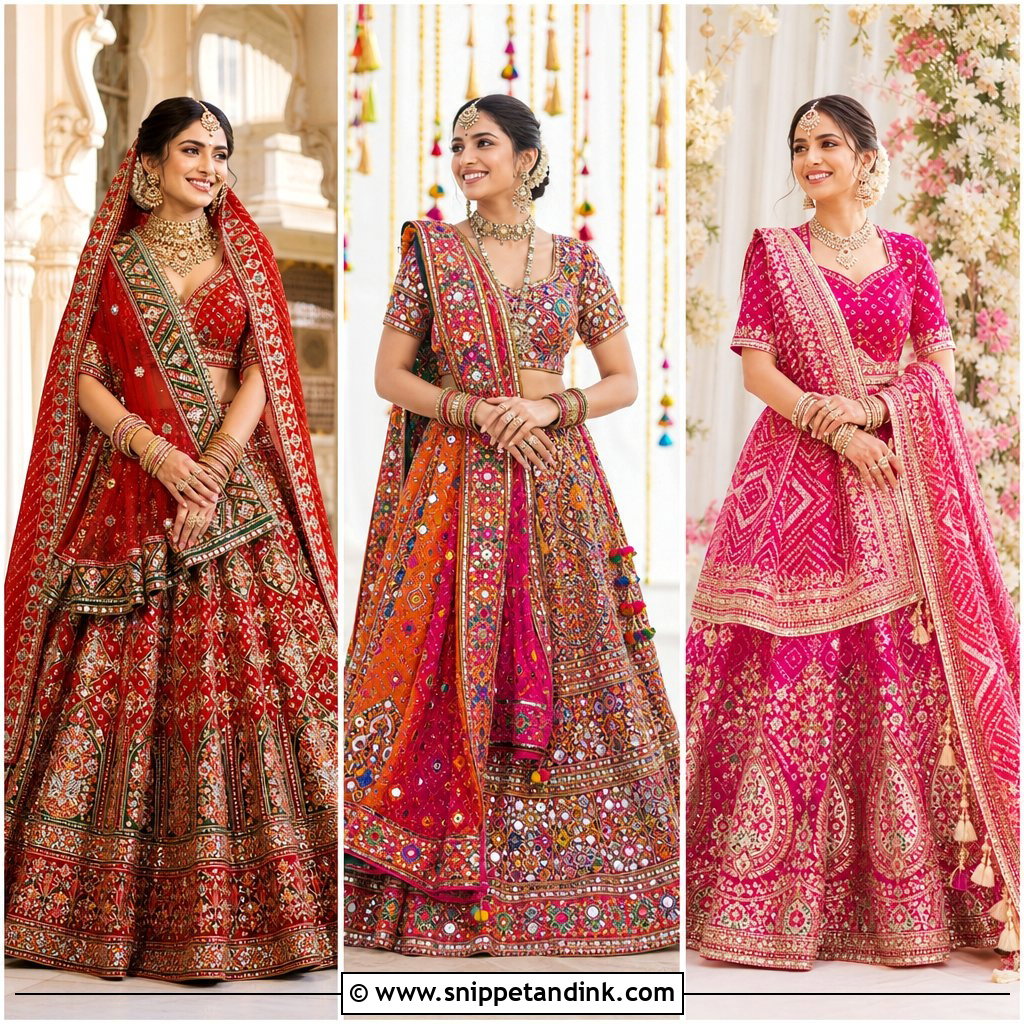
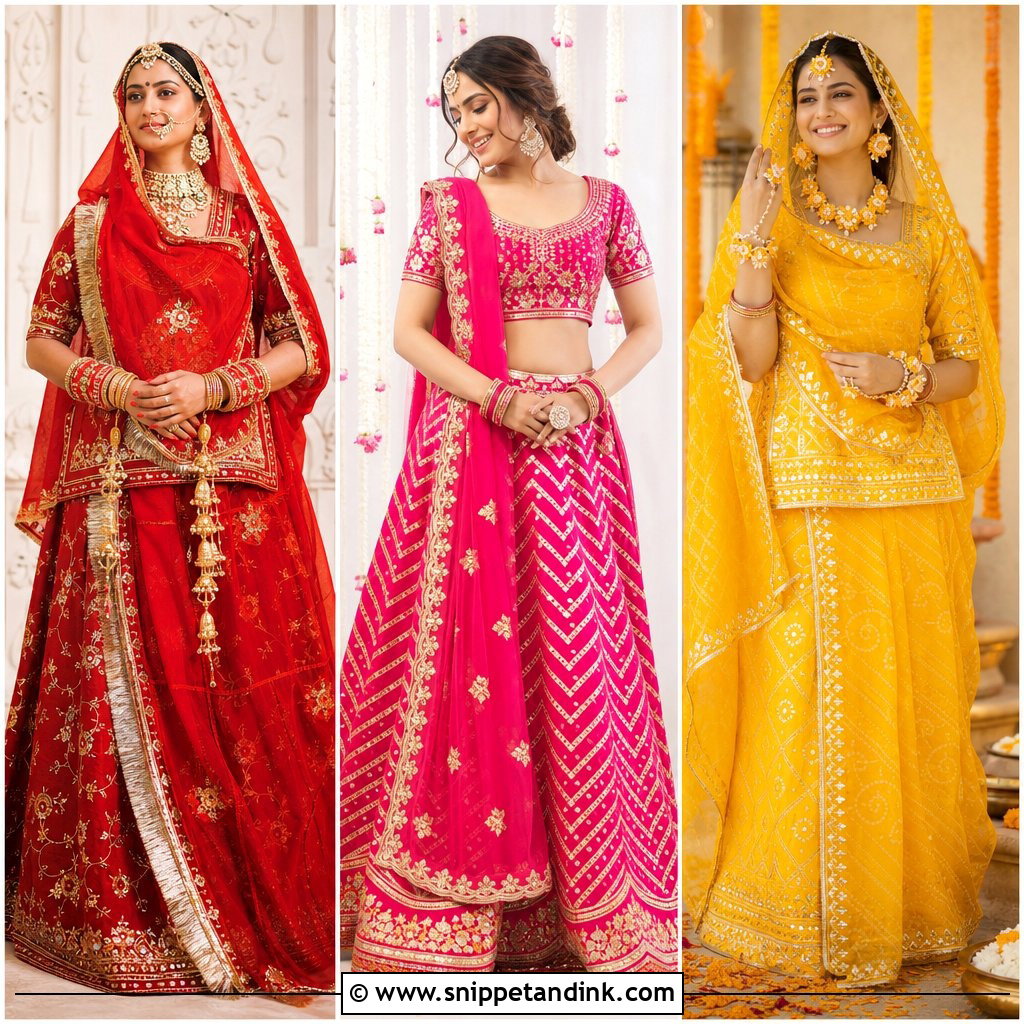
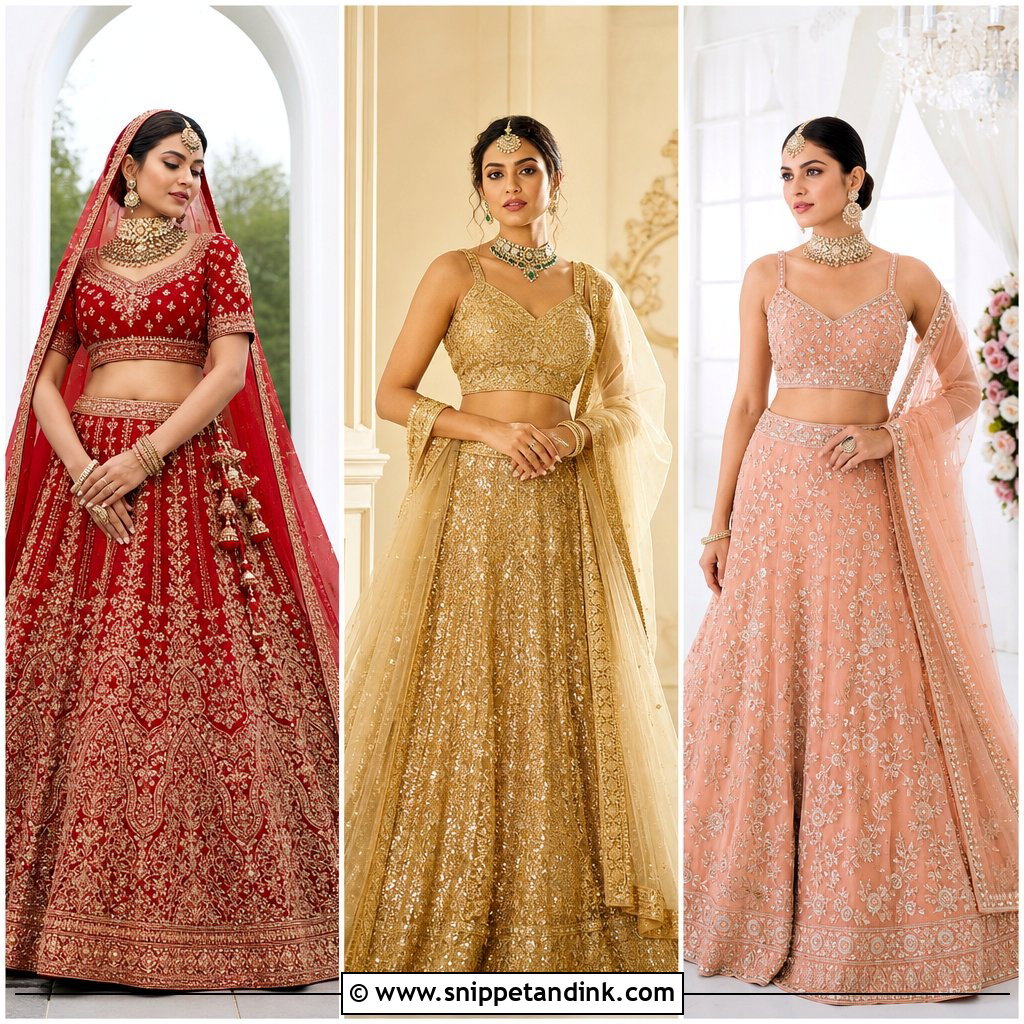
1. Red Bridal Lengha With Double Dupatta
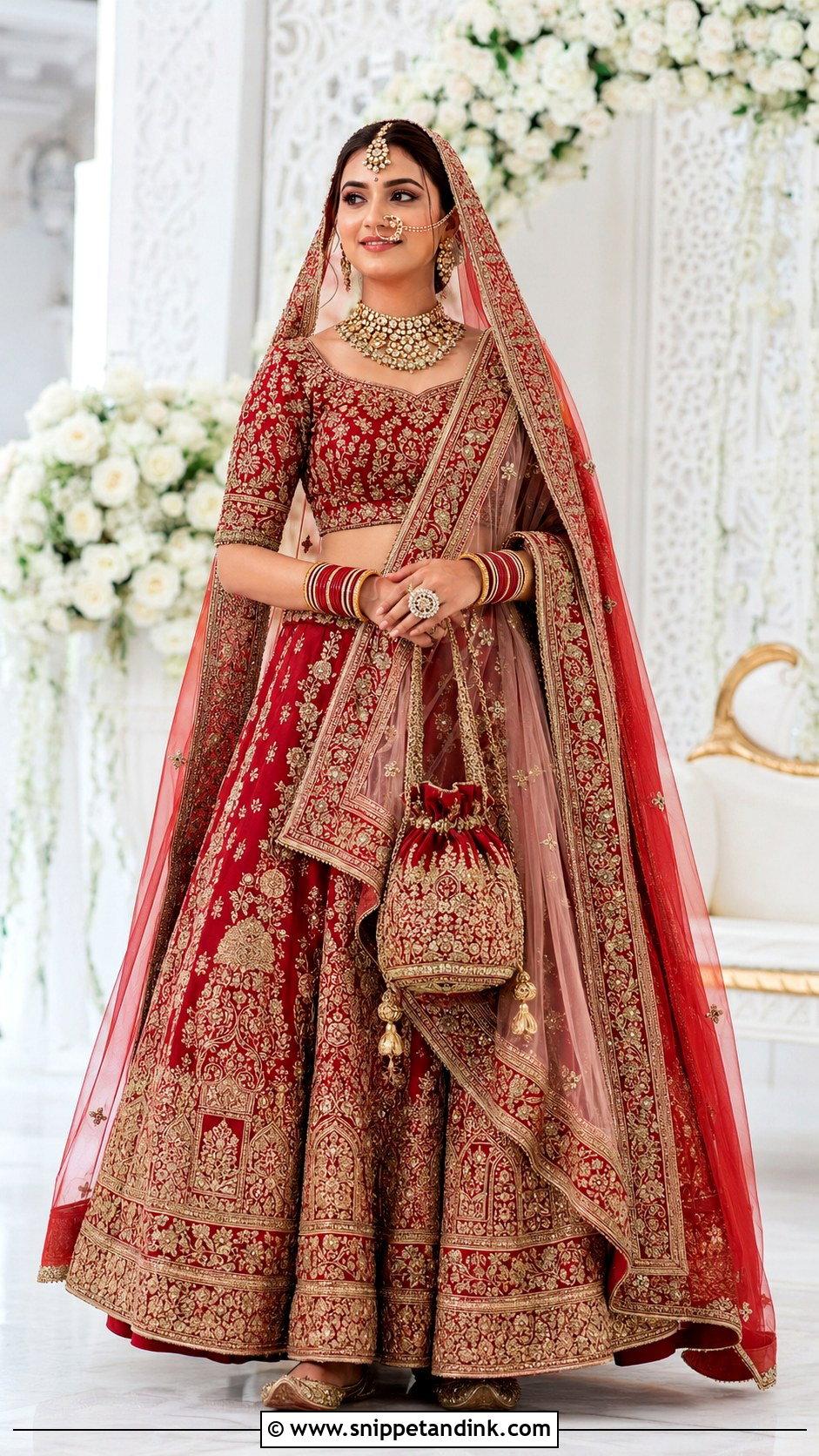
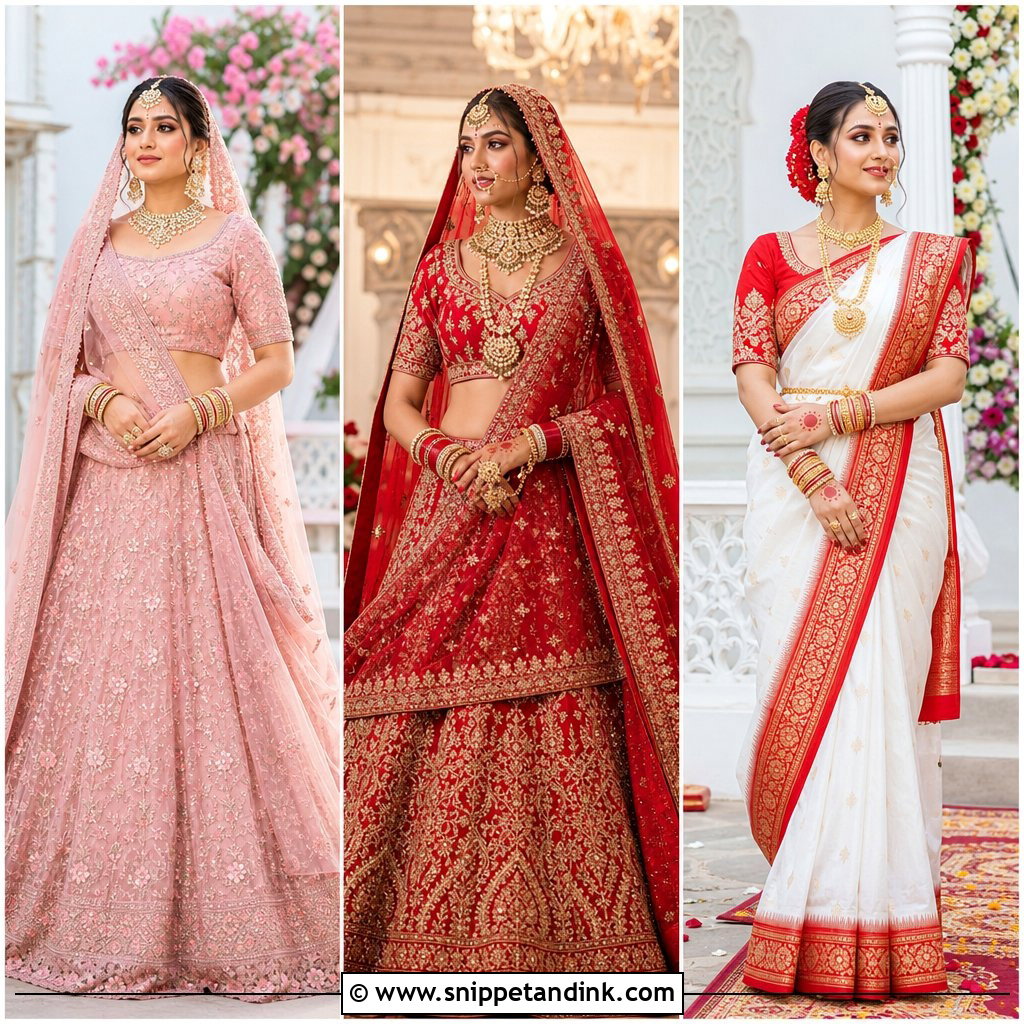
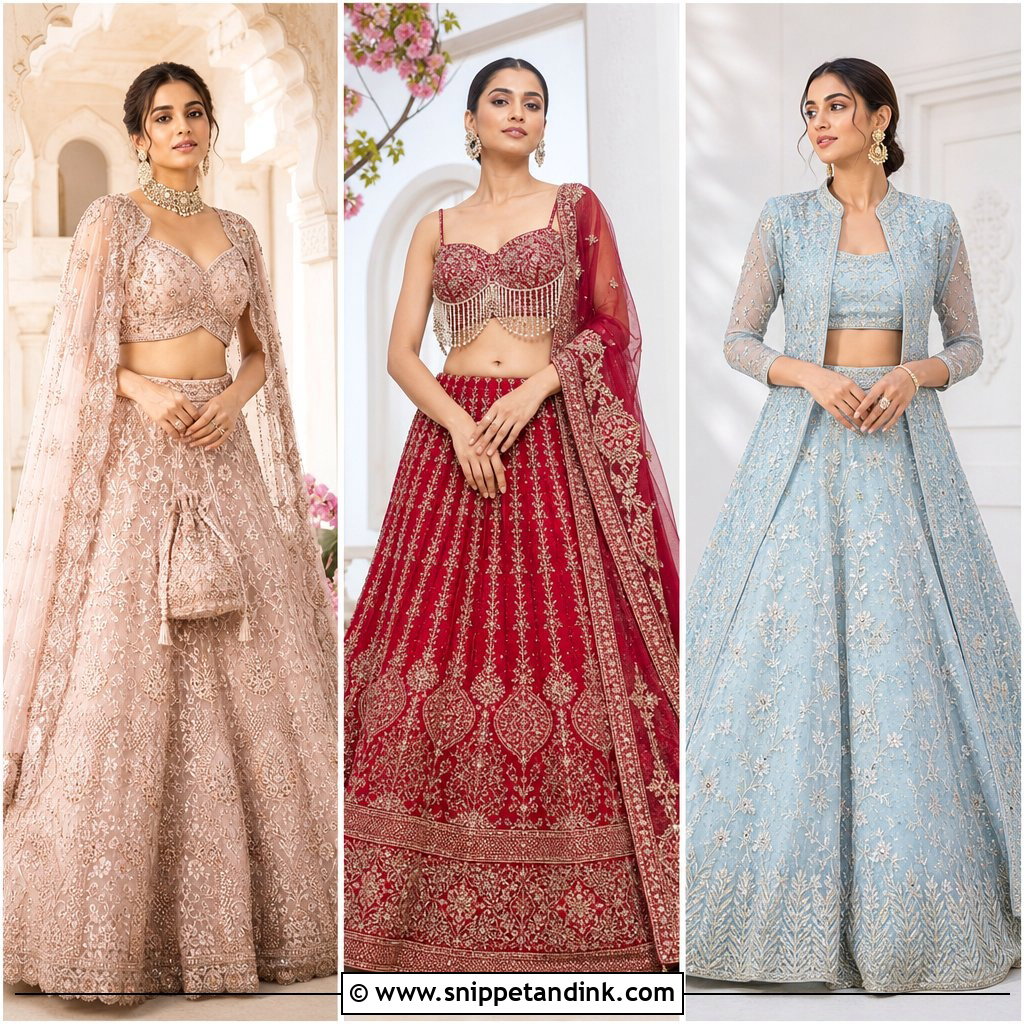
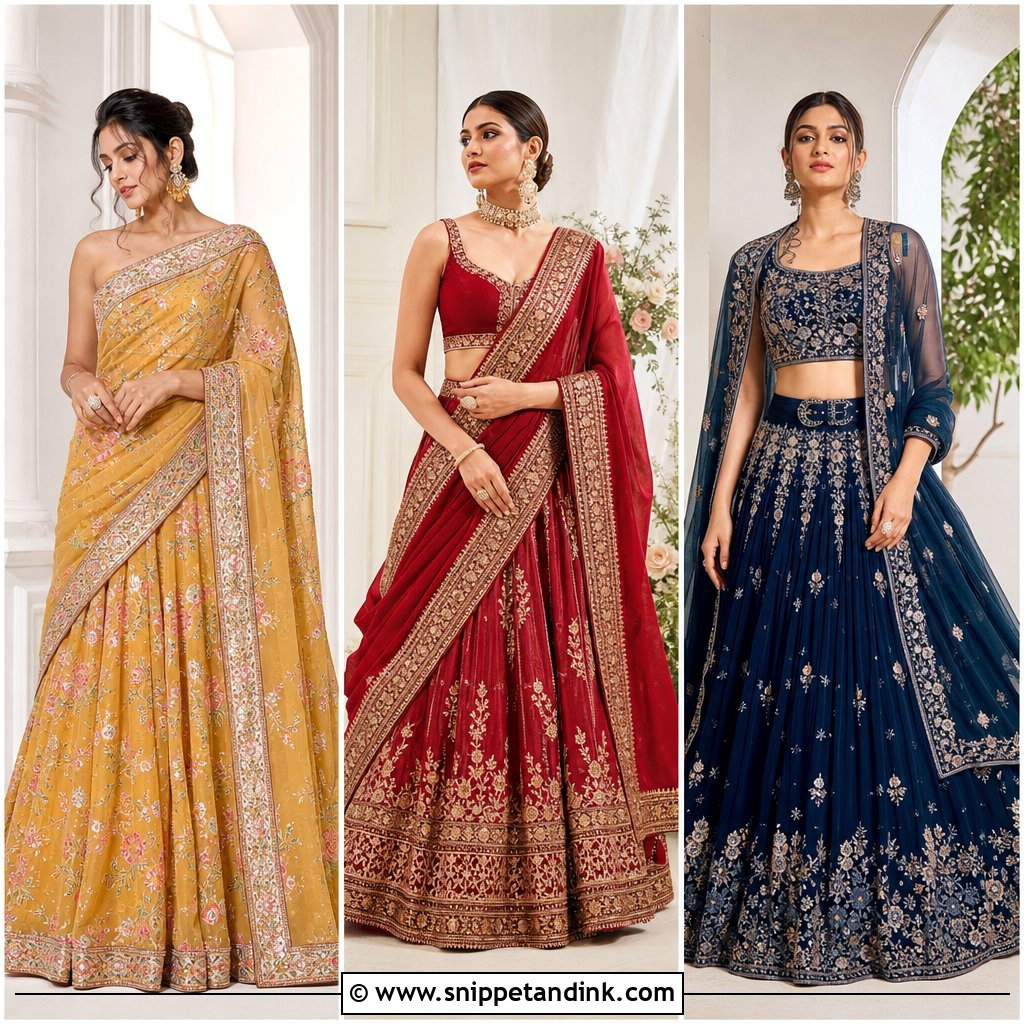
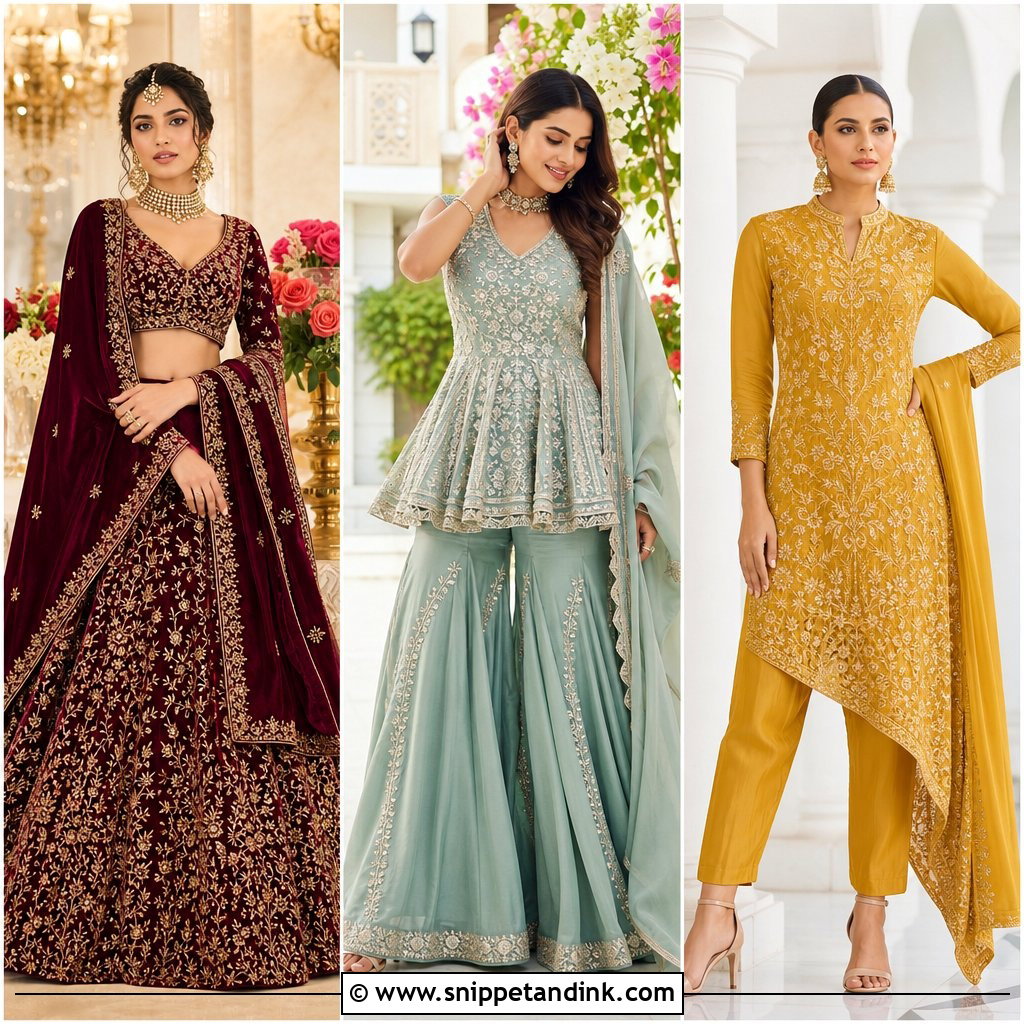
Red is still the colour most families picture, and a paneled or A-line skirt carries gold zari, dabka or floral embroidery without bunching at the waist. I pair it with a fitted blouse and elbow-length sleeves, because a longer sleeve hides the arm-lift strain that heavy skirts put on the blouse seams. The double dupatta is where most of the work happens: the head drape should be the lighter of the two, pinned at the crown and behind each ear, while the shoulder dupatta is anchored at the blouse strap and again at the waist so it never drags the skirt sideways. Kundan, matching earrings, bangles and a maang tikka finish it. Wear cushioned gold platforms or embroidered juttis, keep the hair in a low bun with a few face-framing pieces, and if the skirt is densely worked, carry a plain red or antique gold potli rather than another embroidered piece.
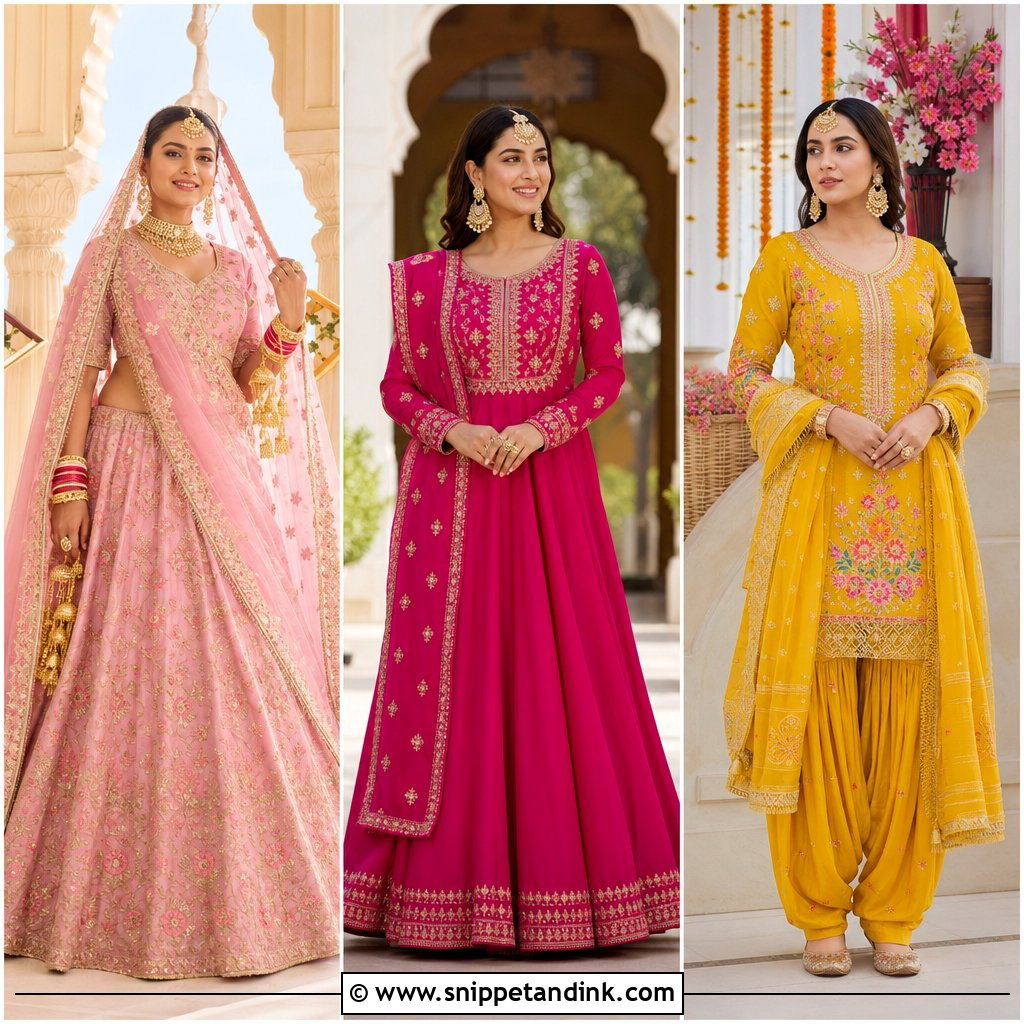
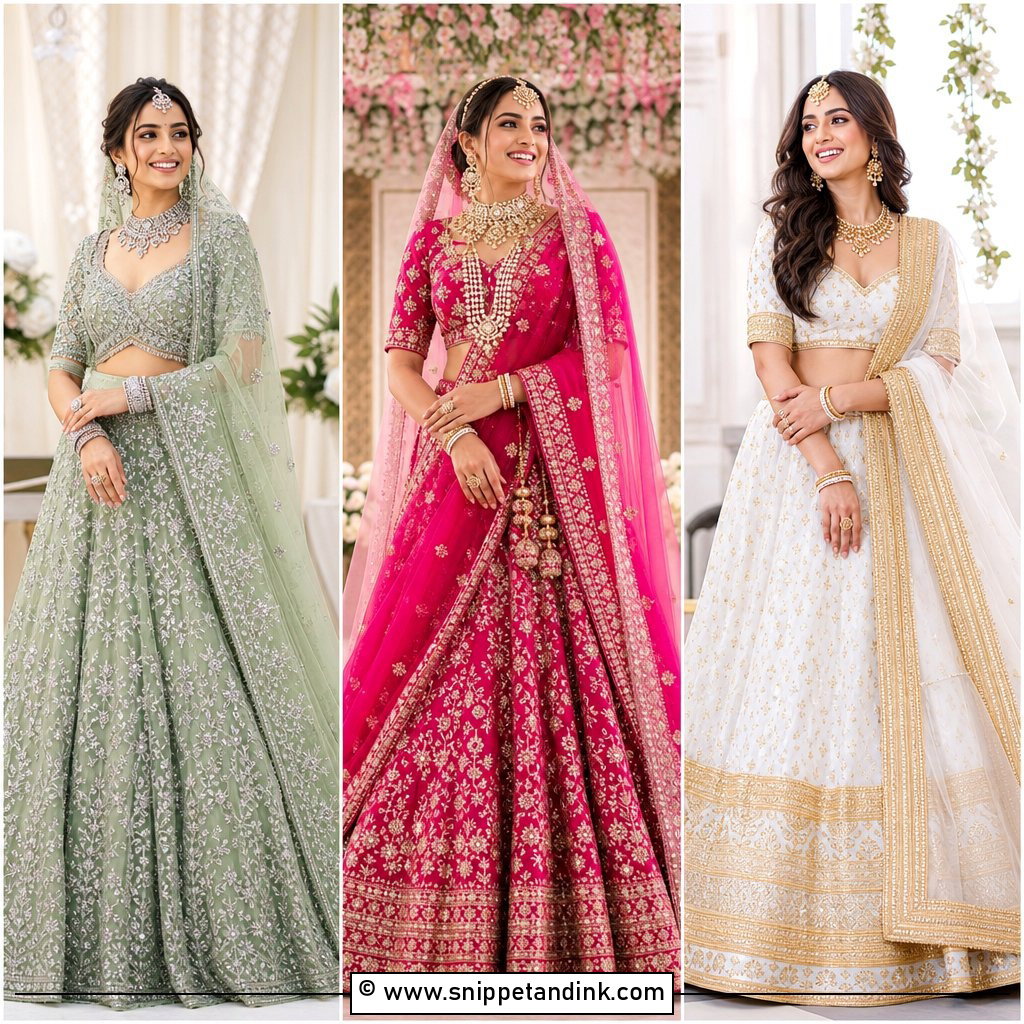
2. Blush Pink Floral Lengha
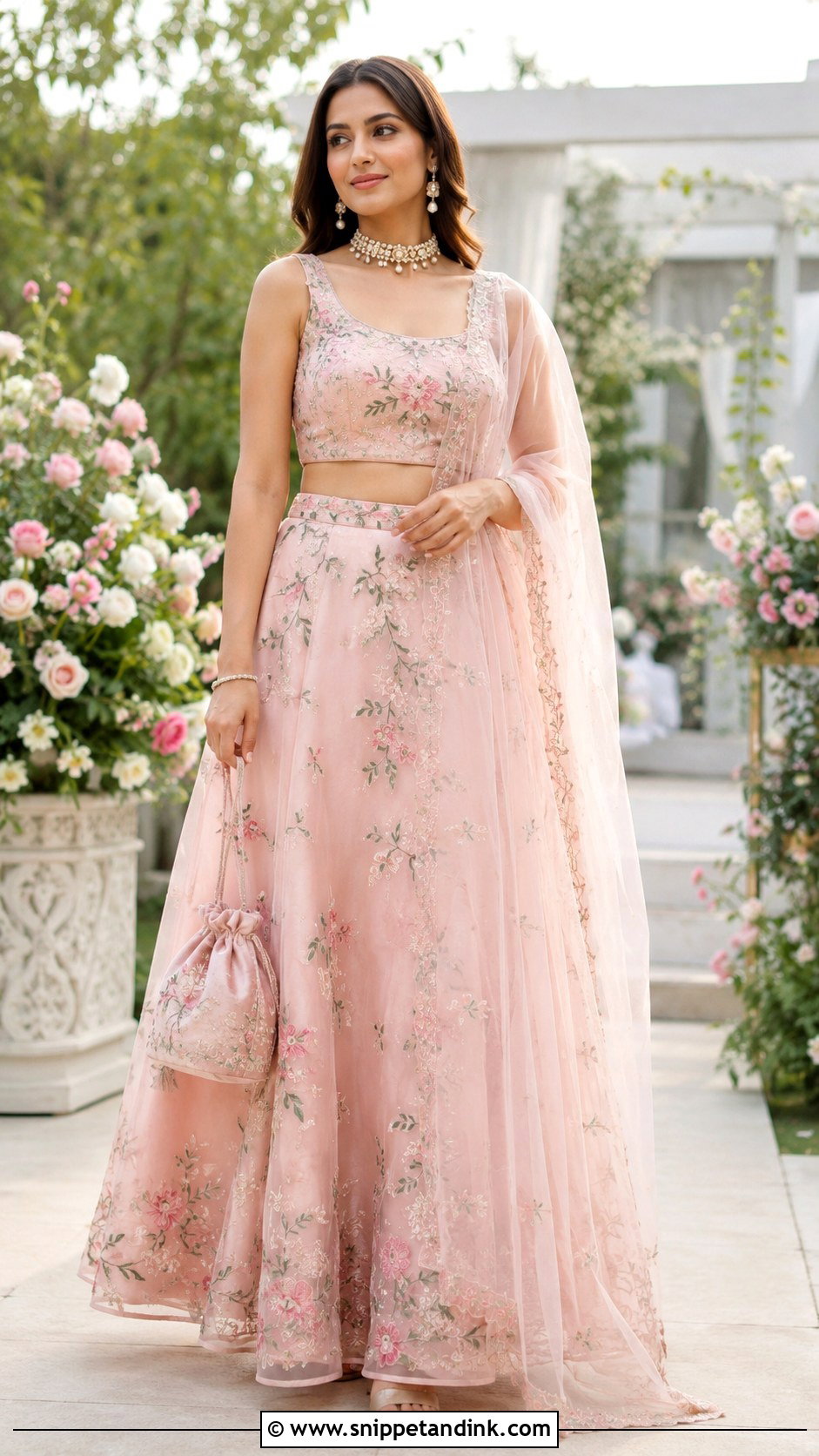
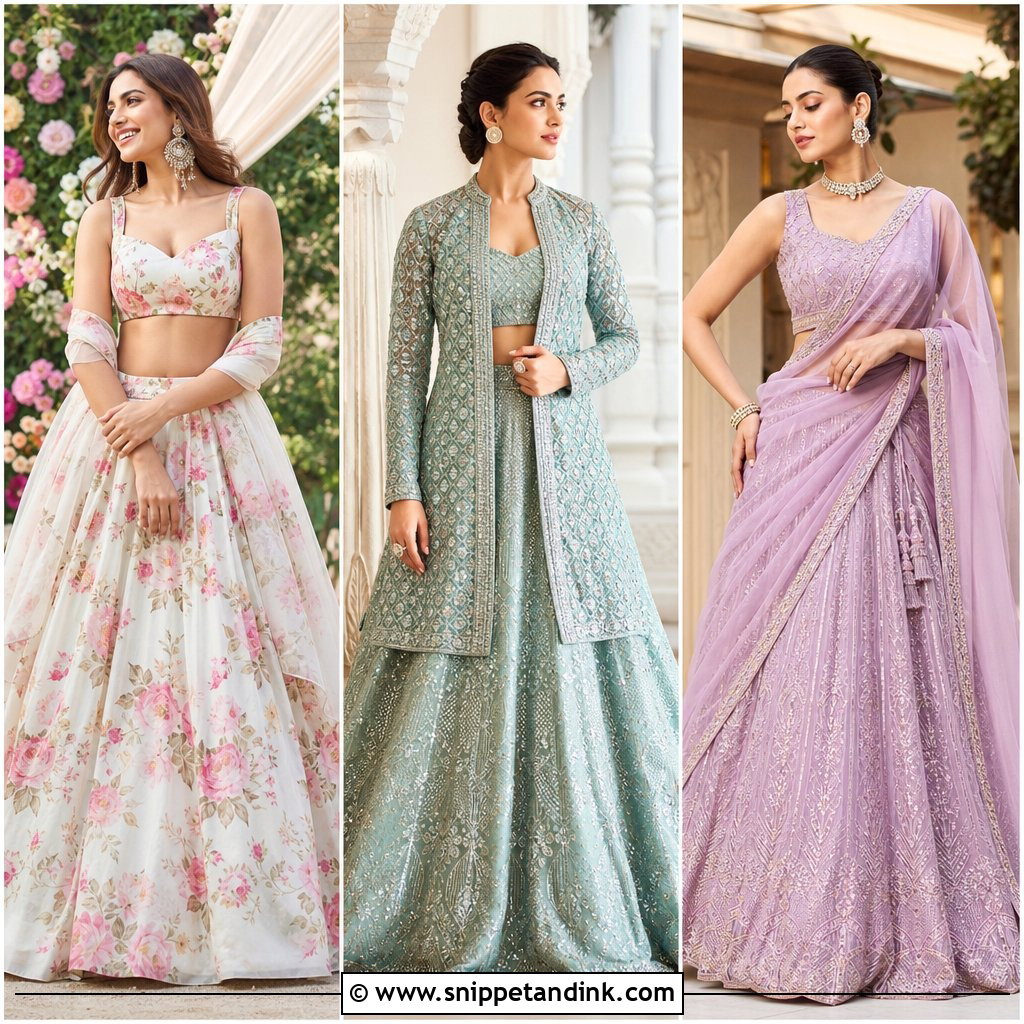
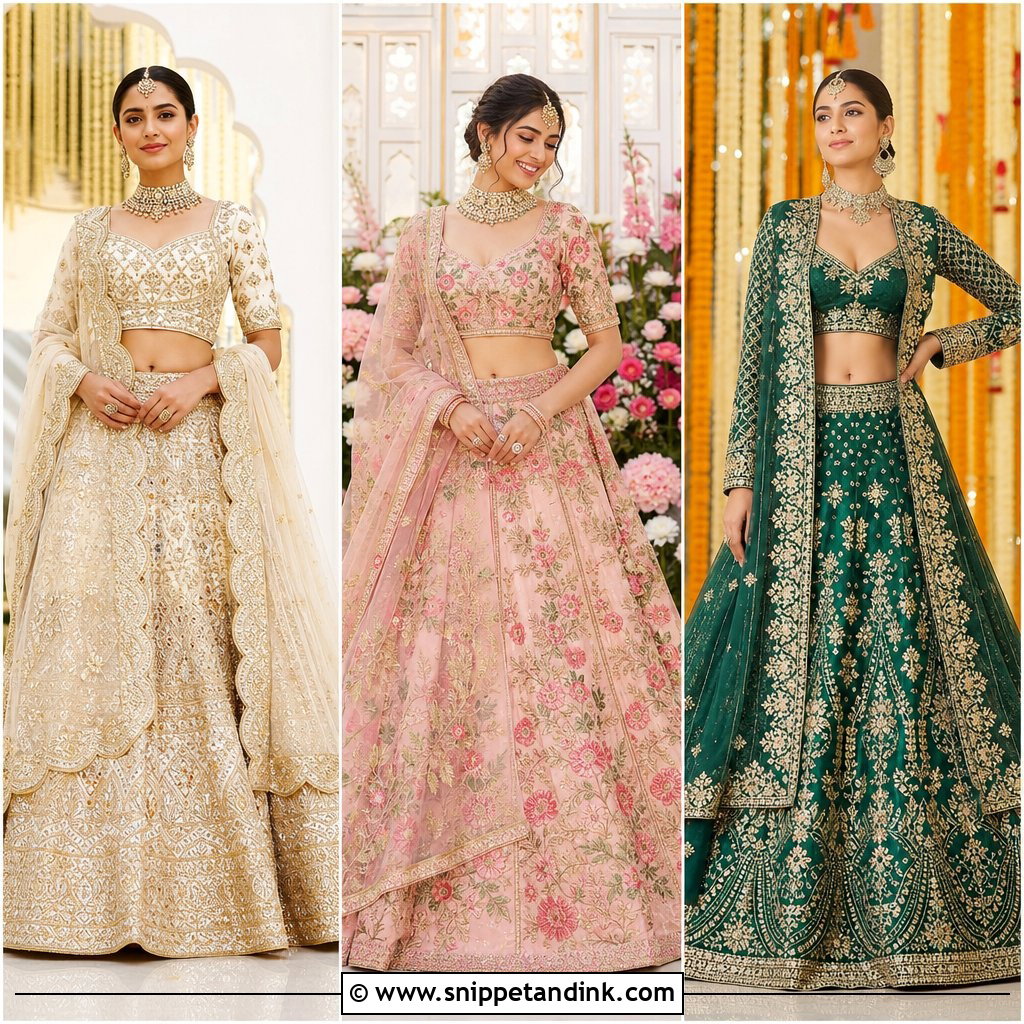
Blush with threadwork flowers in peach, sage and ivory is one of the easiest daytime outfits I dress, and it works just as well for an engagement or a bridesmaid. Organza or georgette keeps it light. The catch with pale pink is the dupatta border: a wide one cuts the outfit in half visually, so I look for a narrow edge and a sheer body that moves. A matching scoop-neck blouse, pearl drops, a delicate choker and a small satin potli are enough. Nude block heels carry the colour down and are kinder on the feet over a long afternoon. Loose waves or a relaxed braided bun suit it, and the makeup should stay muted, with a soft pink lip, so it doesn’t fight the embroidery.
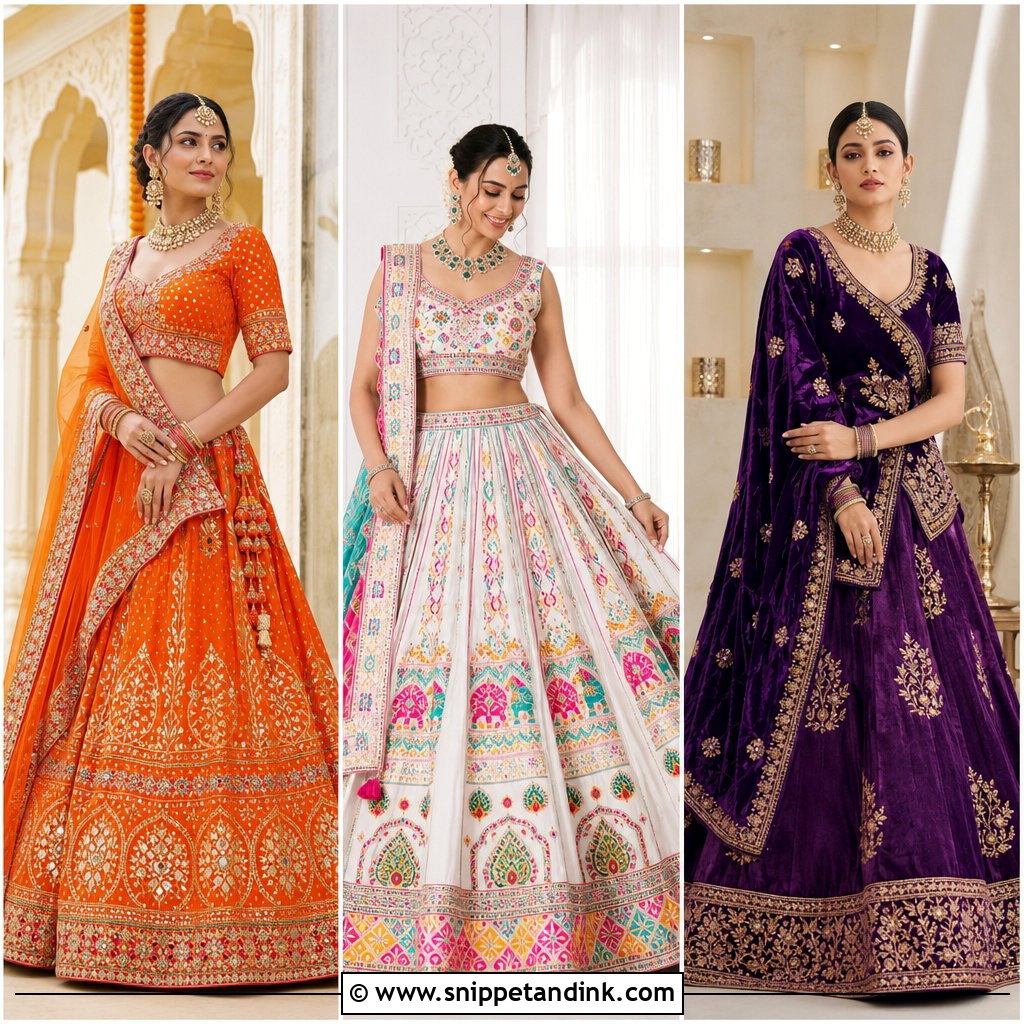
3. Mirror Work Sangeet Lengha
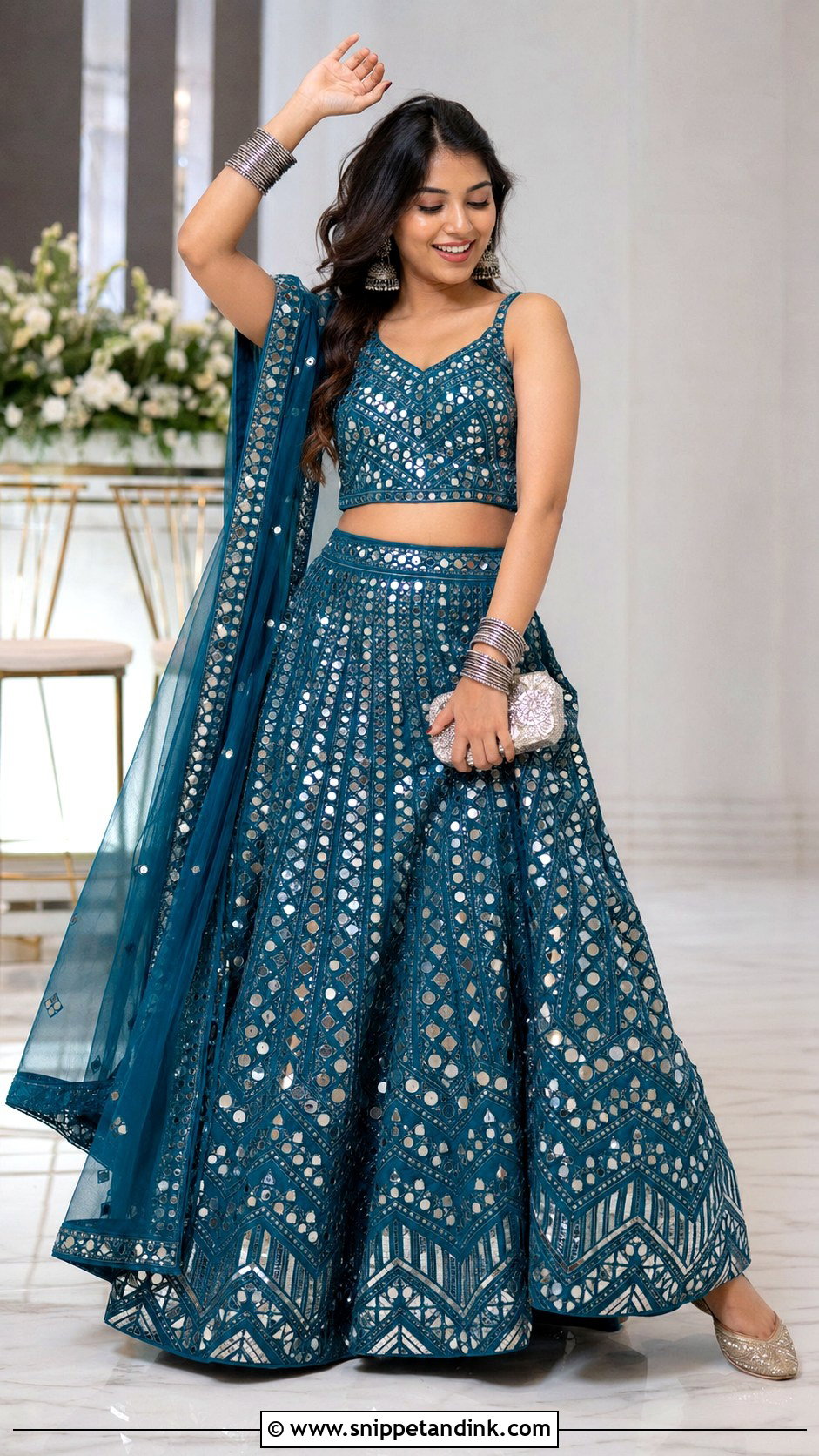
Dancing changes everything about how an outfit should be built, which is why a mirror work sangeet lengha needs a lighter, flared skirt in teal, fuchsia or midnight blue. Real mirror work is heavier than it looks, and the small glass pieces catch on net dupattas, so I keep the dupatta short and pin it at the shoulder and the hip. The blouse can repeat the mirror pattern, but only lightly. Oxidized silver earrings, stacked bangles and a compact clutch are plenty. Block heels, wedges or padded juttis depend on the hem length; a high ponytail or long braid keeps hair off the neckline. I always ask the bride to sit, walk and turn in the full outfit before the night, because hook closures open under arm movement more often than anything else.
4. Yellow Haldi Lengha
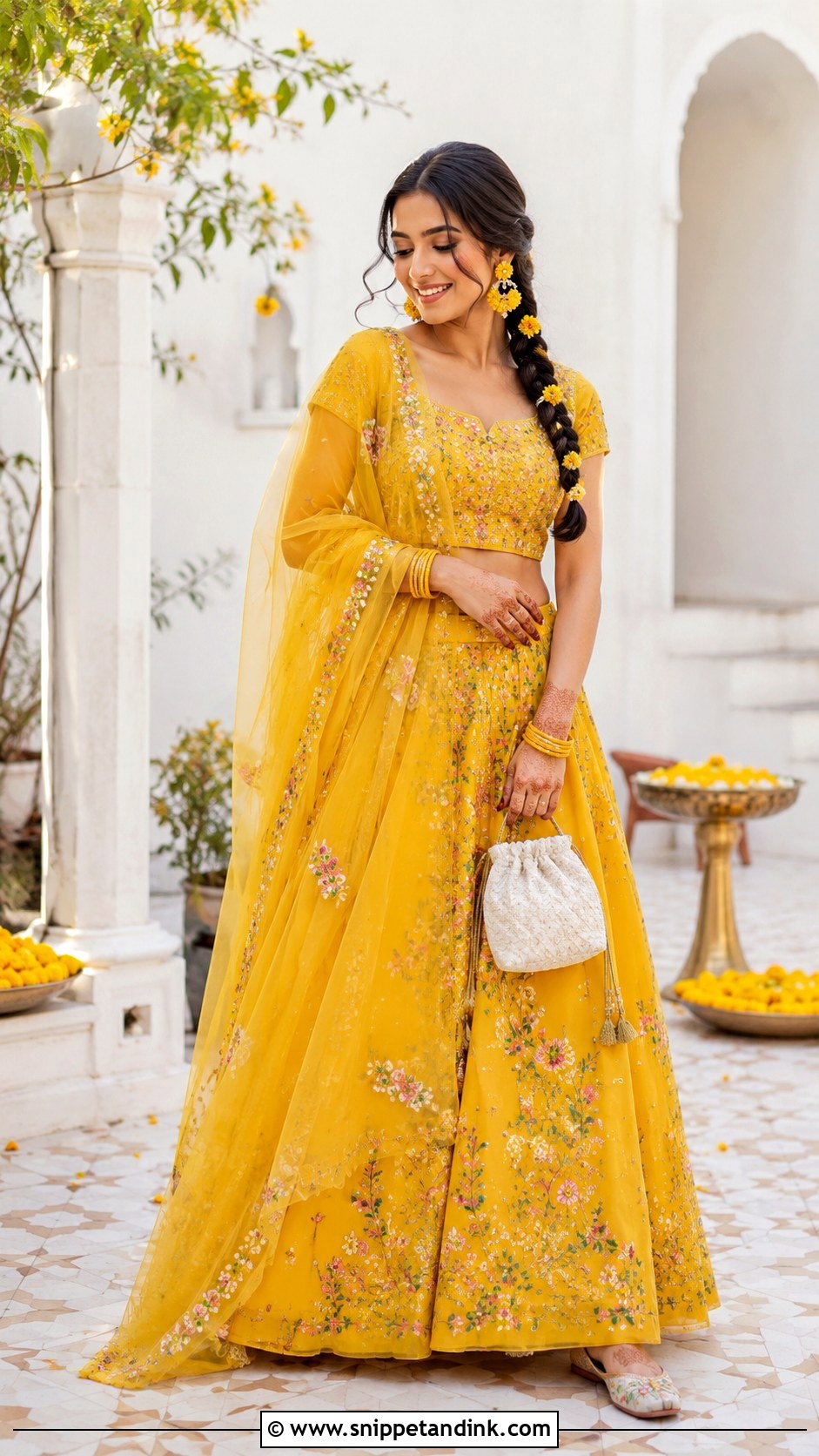
Haldi is the one function where the outfit will almost certainly get stained, so I steer brides away from anything precious for a haldi celebration. Bright yellow cotton-silk, georgette or chanderi with restrained floral embroidery does the job. Turmeric paste sets into silk quickly and rarely comes out completely, which is another reason I’d avoid heavy zari here. A sleeveless or short-sleeve choli is cooler, and an organza dupatta pinned across one shoulder stays out of the paste. Floral earrings, simple bangles and a small potli in yellow, white or green are enough. Flat juttis help you move between ceremonies, a braid or compact bun with floral accents keeps hair tidy, and a longer blouse with a square neck gives more coverage if you want it.
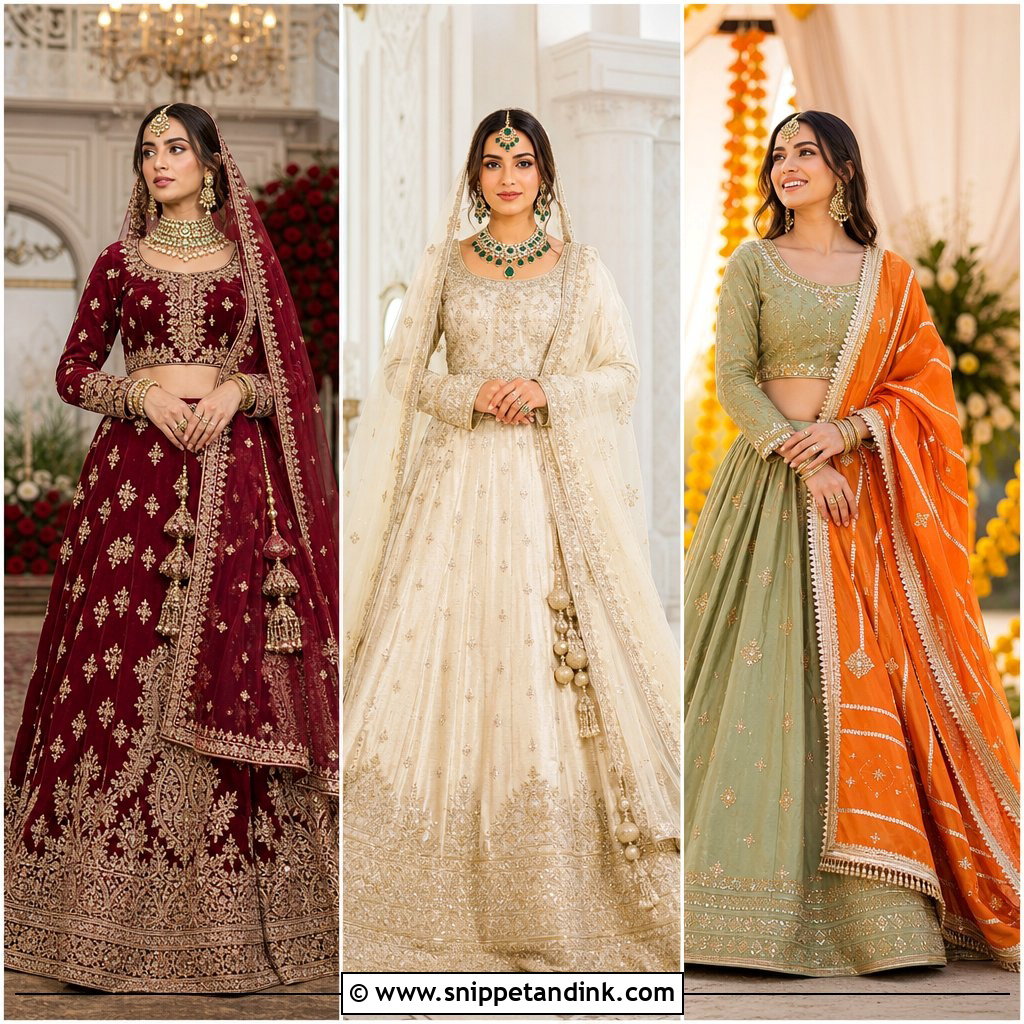
5. Green Mehndi Lengha
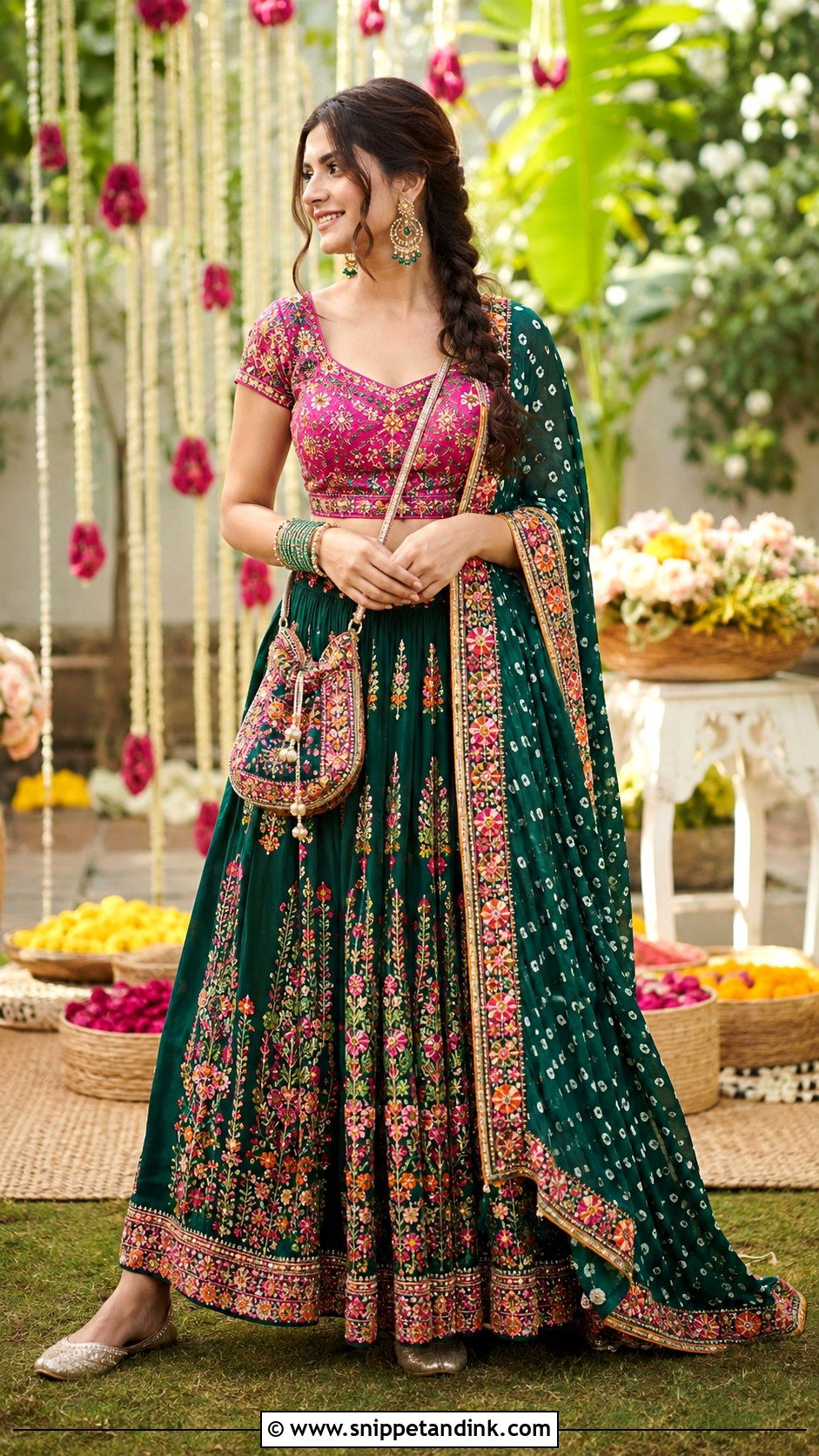
Green ties in naturally with the mehndi itself. Emerald reads regal; lime, mint and leaf green feel lighter. I like a printed or embroidered skirt against a contrasting blouse in pink, orange or gold, with a bandhani dupatta bringing in pattern so nothing needs heavy embellishment. Think about your hands here: while the paste dries you can’t adjust a dupatta or hold a bag, so pin the dupatta fully before the artist starts and use a crossbody potli or wristlet. Statement earrings, glass bangles and metallic juttis finish it. A side braid or half-up style stays controlled, and if the skirt is full, keep the blouse clean rather than adding volume everywhere.
6. Ivory Pearl Lengha
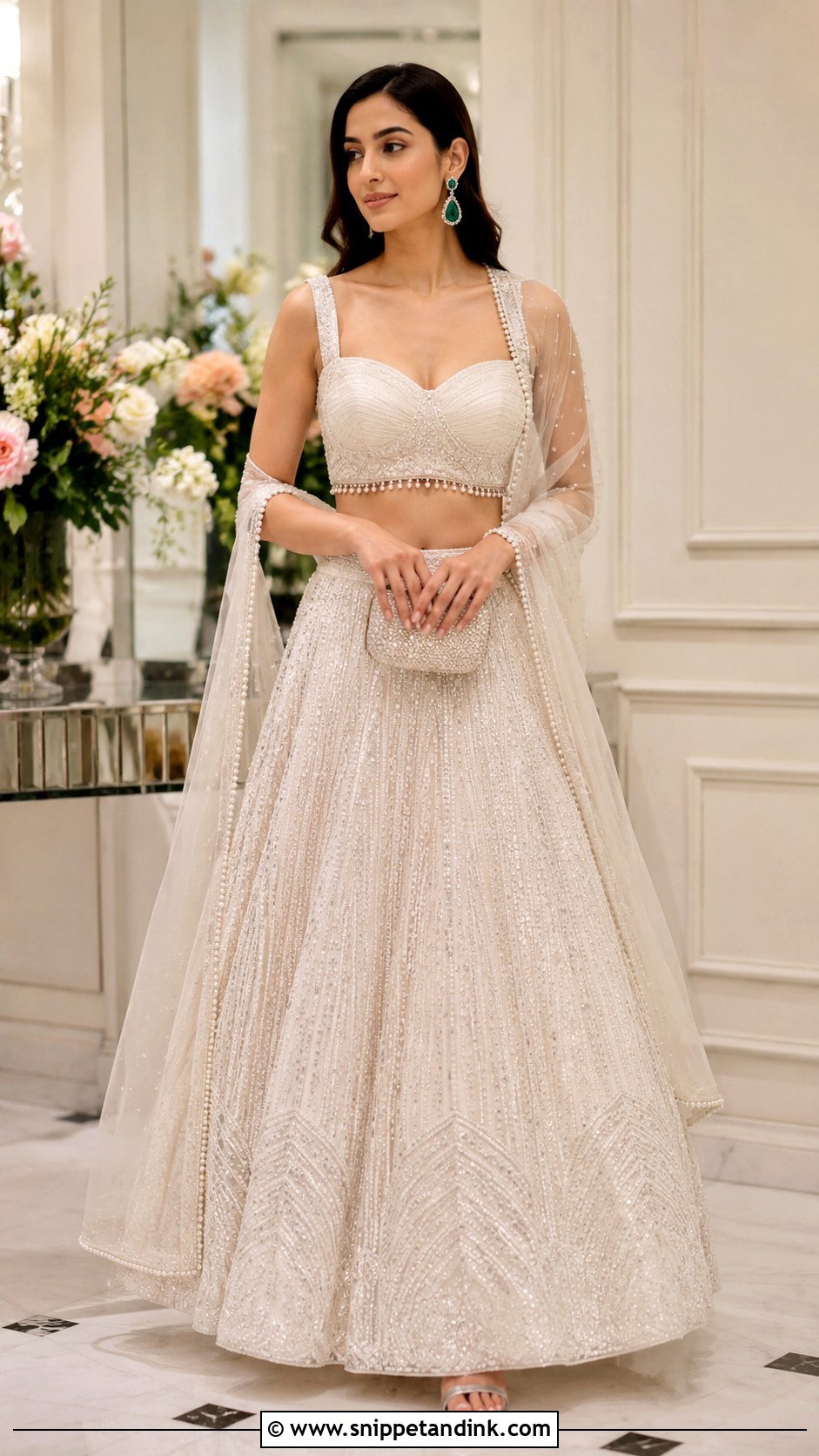
Ivory with scattered pearls and fine sequins suits an engagement, reception or formal family evening. Tonal embroidery matters more than contrast here. A structured blouse in the same shade gives one long, unbroken line, and a sheer dupatta with a pearl-trimmed edge can drape loosely over the arms. If you want colour, one pair of emerald, ruby or sapphire earrings is enough; otherwise stay with pearls and clear stones, silver heels and a beaded clutch. A sleek bun or brushed waves keep it refined. The honest problem with ivory is that it can photograph flat under strong flash, so I look for texture you can see from across a room, such as raised threadwork or a slightly heavier pearl density at the hem.
7. Black Sequin Reception Lengha
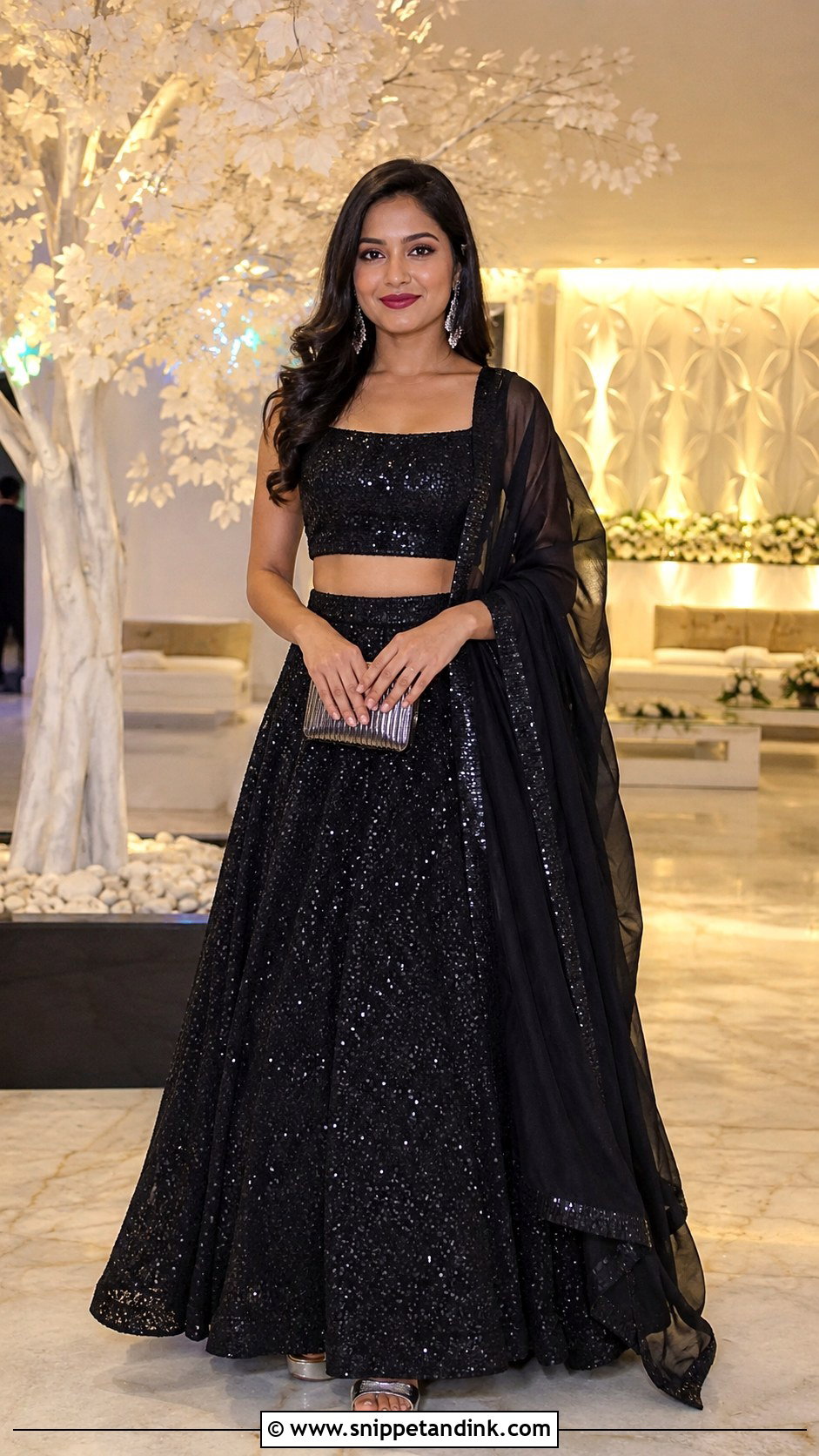
Black sequins are for an evening reception indoors, and they need control. Linear beadwork or scattered sequins read expensive; an all-over sequin skirt can look like a costume once the lighting goes warm. Choose full-sleeve, one-shoulder or square-neck depending on how much coverage you want, and keep the dupatta plain black with a narrow border. Silver drops, one cocktail ring and a compact metallic clutch are all the accessories it can take. Some families still avoid black at weddings, so I check with the bride about the older relatives before we commit. Pointed heels look sharpest, though platforms are steadier under a long skirt. Polished waves or a low ponytail, a berry lip and softly defined eyes keep the mood sleek.
8. Royal Blue Velvet Lengha
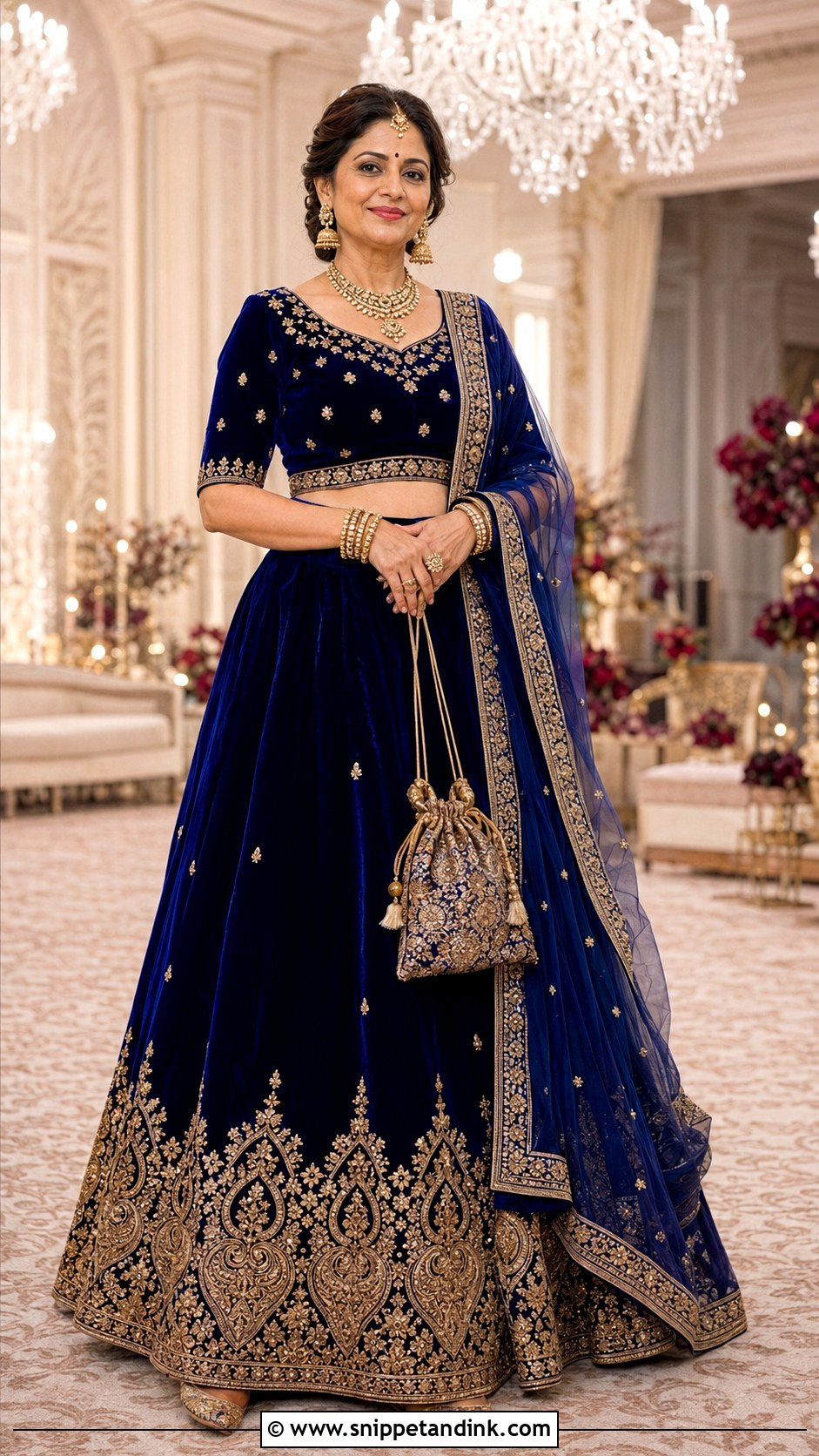
Velvet has a depth no other fabric gives, and royal blue is where it shows best. It belongs at a cool-weather wedding or a formal evening, because velvet holds heat and a summer marquee will be uncomfortable within an hour. I like a paneled skirt with antique gold embroidery concentrated at the hem, an elbow-sleeve blouse, and a net or organza dupatta so the whole outfit doesn’t feel dense. Traditional gold earrings, a medium necklace, embroidered juttis and a small gold potli are enough. A center-parted bun or side-swept waves suit the colour. Velvet already carries visual weight, so keep the can-can moderate and don’t stack a huge skirt with a heavy blouse and a heavy dupatta.
9. Lavender Organza Lengha
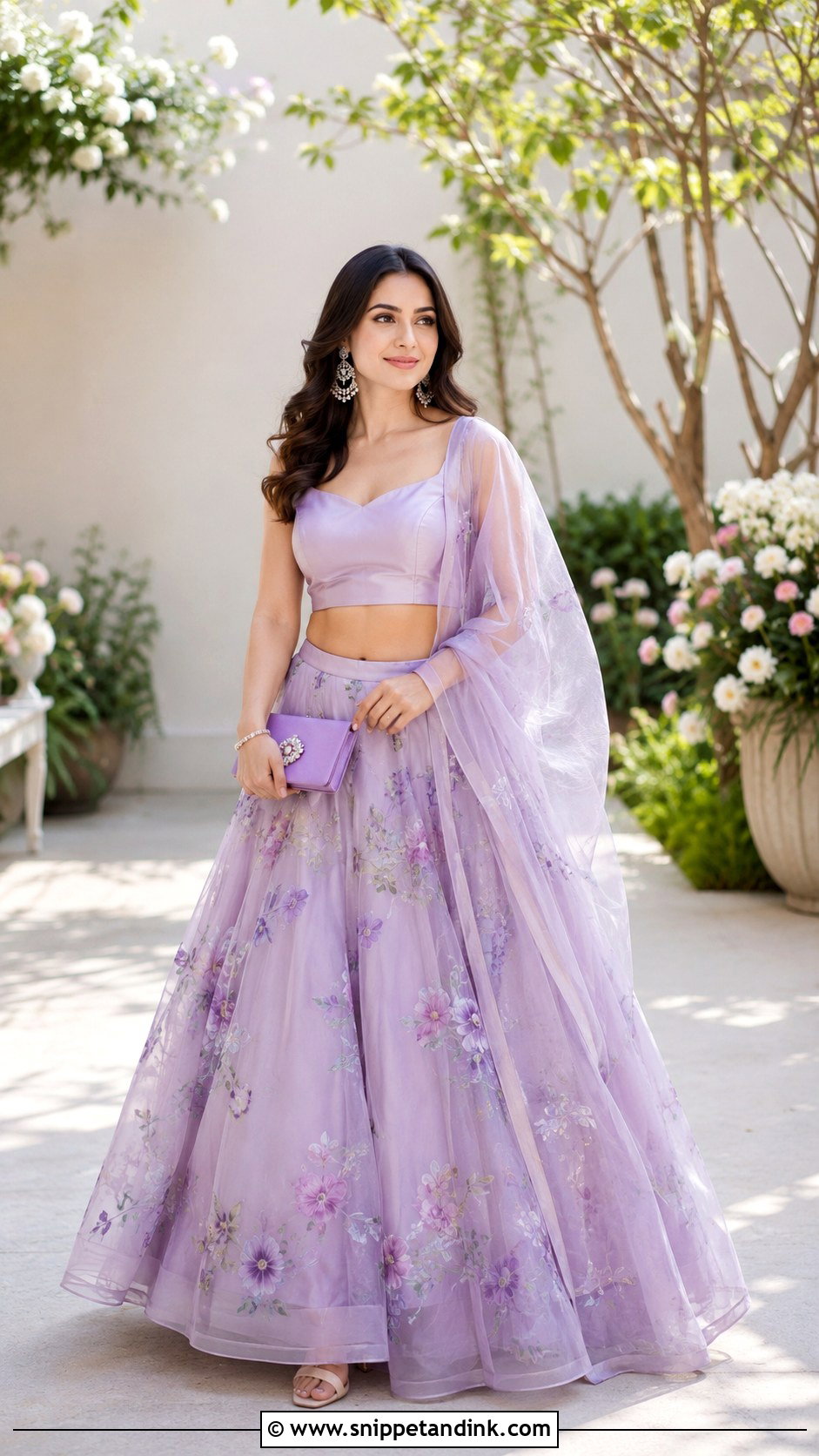
Lavender organza is the outfit I suggest for daytime when a bride wants something contemporary. A softly flared skirt with delicate embroidery or 3D florals, a raw silk or satin blouse for a little texture contrast, and a sheer dupatta over one arm so the skirt stays visible. Silver earrings, a crystal bracelet and a pearl or lilac clutch, with nude or transparent-strap heels, keep the palette light. Loose curls and luminous makeup suit it. The trade-off is skin tone: lavender can wash out some complexions, especially in shade. If it does, I keep the skirt and dupatta pastel and move to a deeper violet blouse or add a berry lip.
10. White Chikankari Lengha
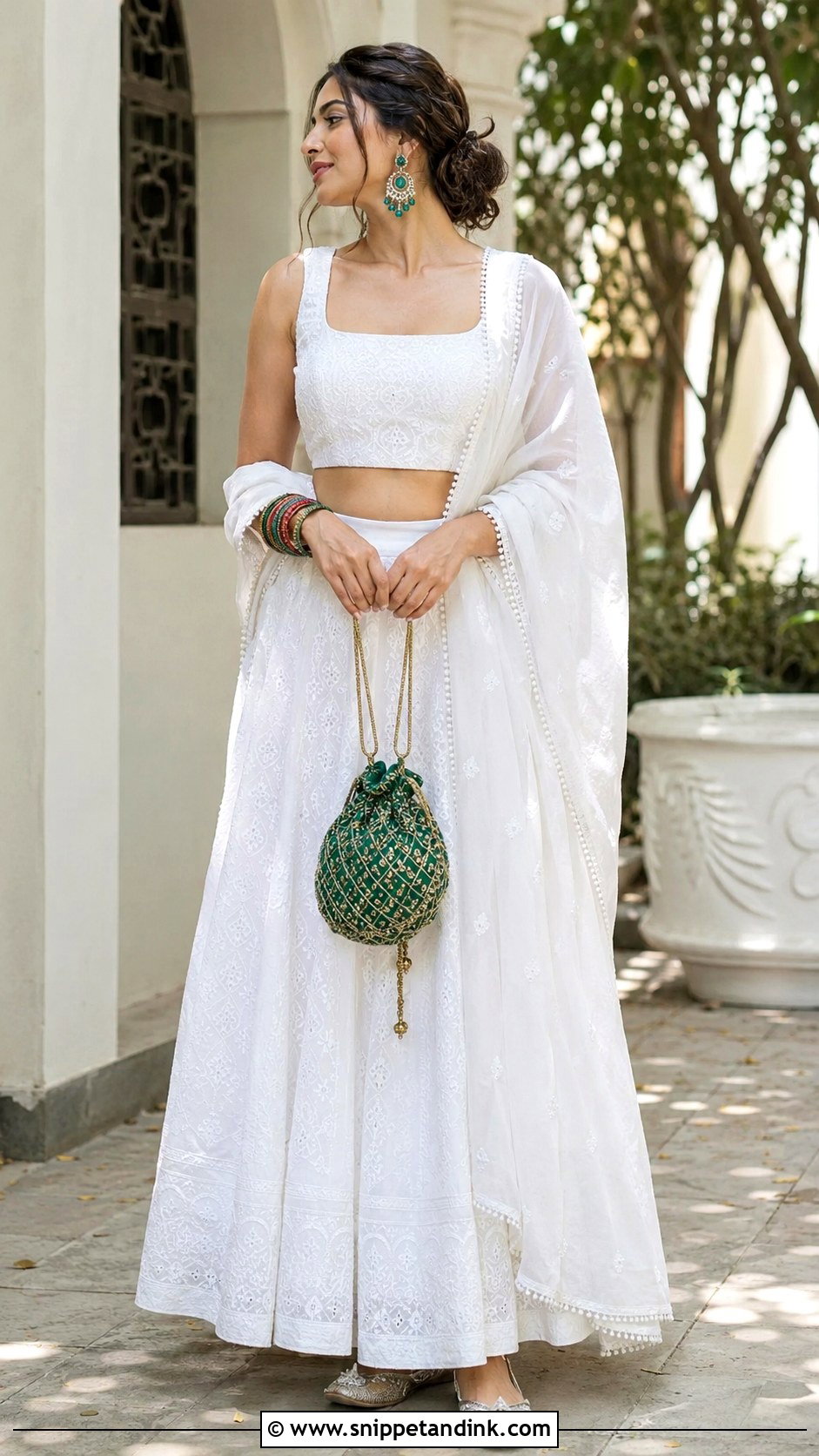
Chikankari is hand embroidery from Lucknow, and the tonal white-on-white work gives a lengha texture without colour. Cotton is the most breathable base, while georgette and organza drape better. I always check the lining before anything else: white chikankari has open shadow-work stitches, and under bright event lights or a camera flash, an unlined or thinly lined skirt becomes see-through. Add a matching blouse with a defined neckline and a dupatta edged in tiny pearls or silver trim. Emerald earrings or a bright potli bring contrast; all-white accessories feel more minimal. Metallic juttis or silver block heels, and a textured bun or braid, finish it. Look at it in daylight and indoors before the day.
11. Bandhani Silk Lengha
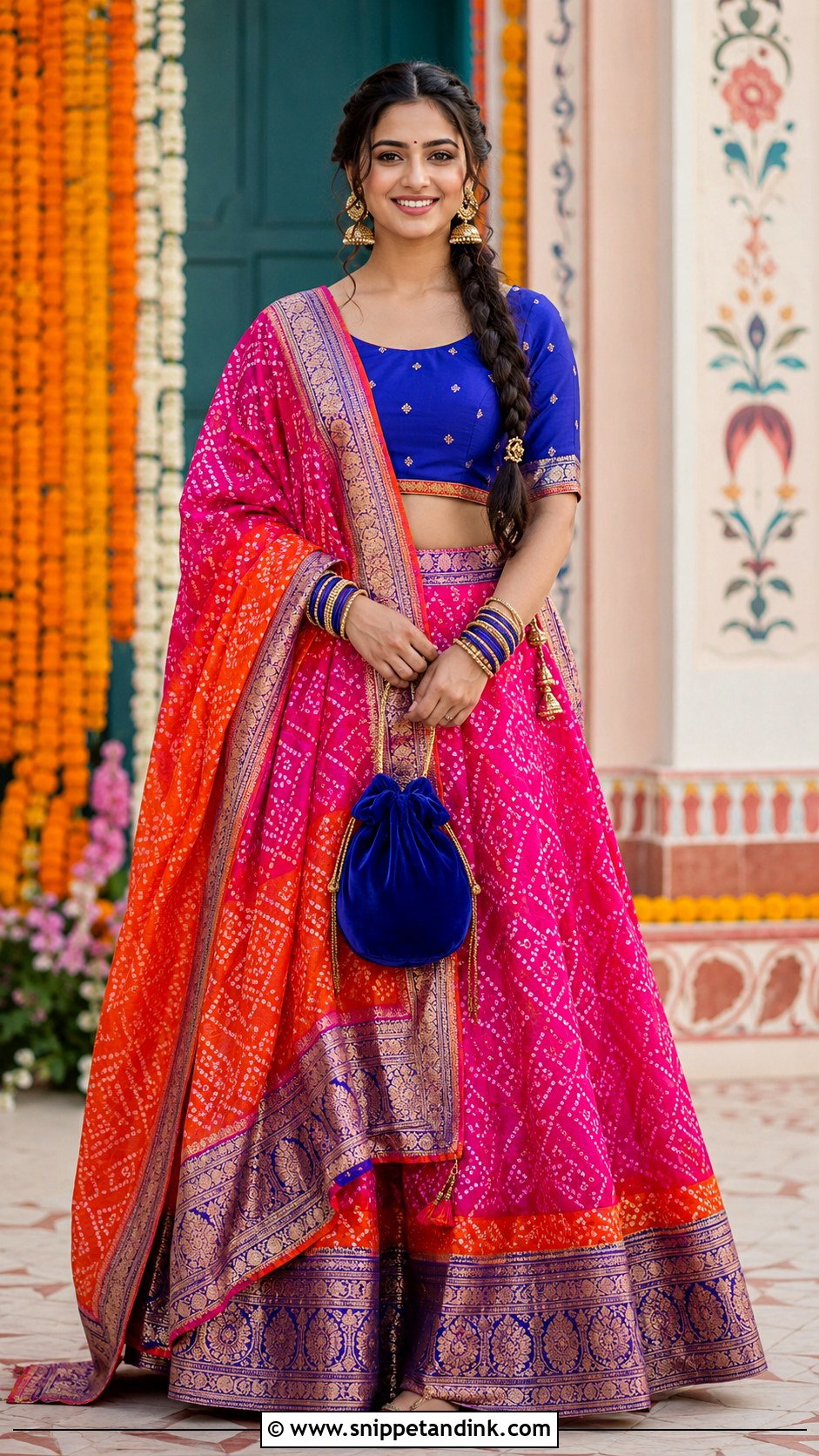
Bandhani is tie-dye, and those tiny raised dots are part of its charm, so the outfit around it should stay calm. A red, pink, orange or green bandhani silk lengha looks freshest with a solid contrasting blouse; a short raw-silk blouse in blue or mustard is my usual pick. Give the dupatta a simple border so the patterns don’t compete. Gold jhumkas, stacked bangles and embroidered juttis feel natural, and a plain velvet potli in one colour from the skirt pulls it together. A long braid or neat bun suits the classic mood. One practical note: genuine bandhani can bleed if it gets wet, so keep it away from water at an outdoor function.
12. Banarasi Brocade Lengha
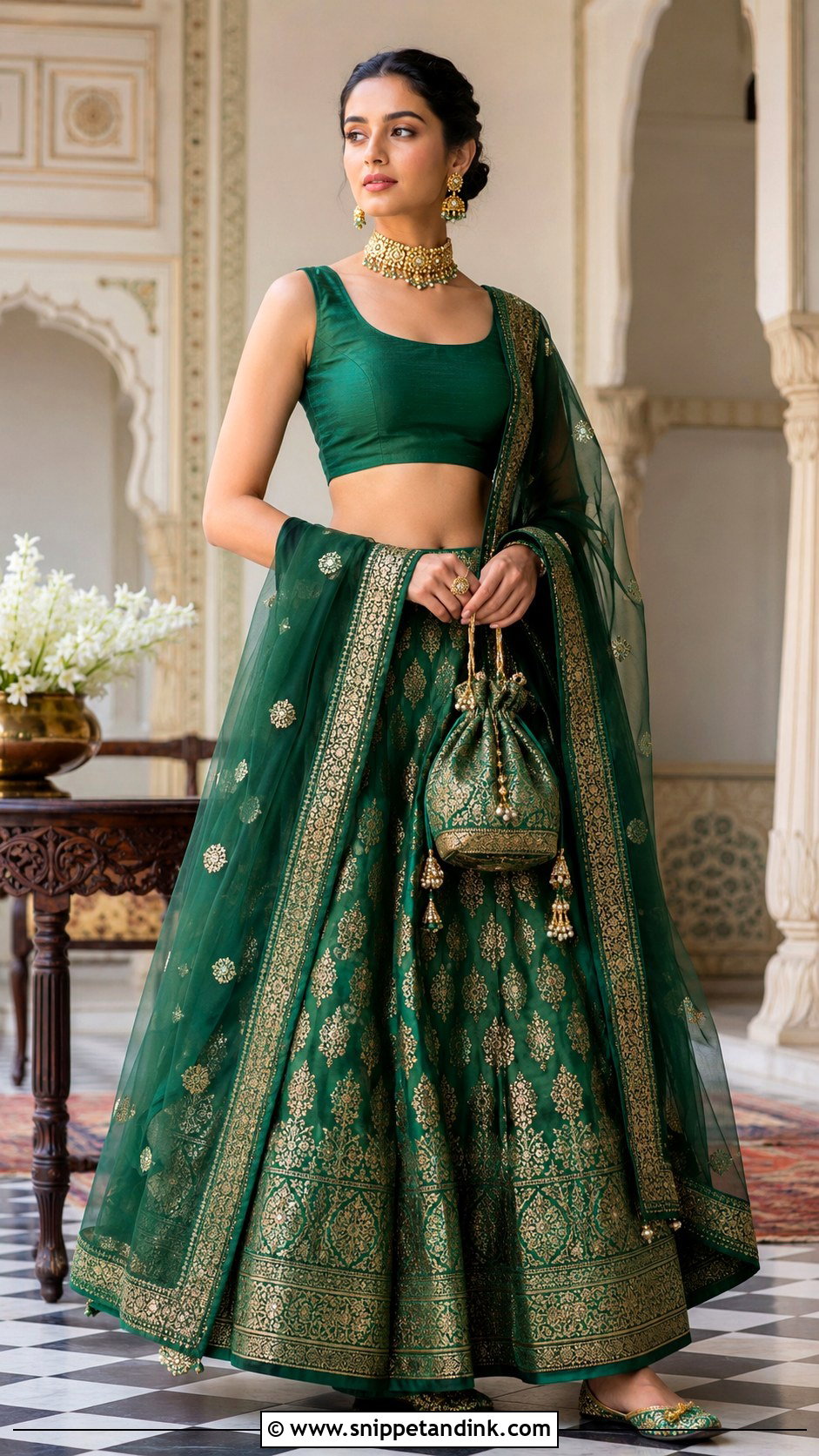
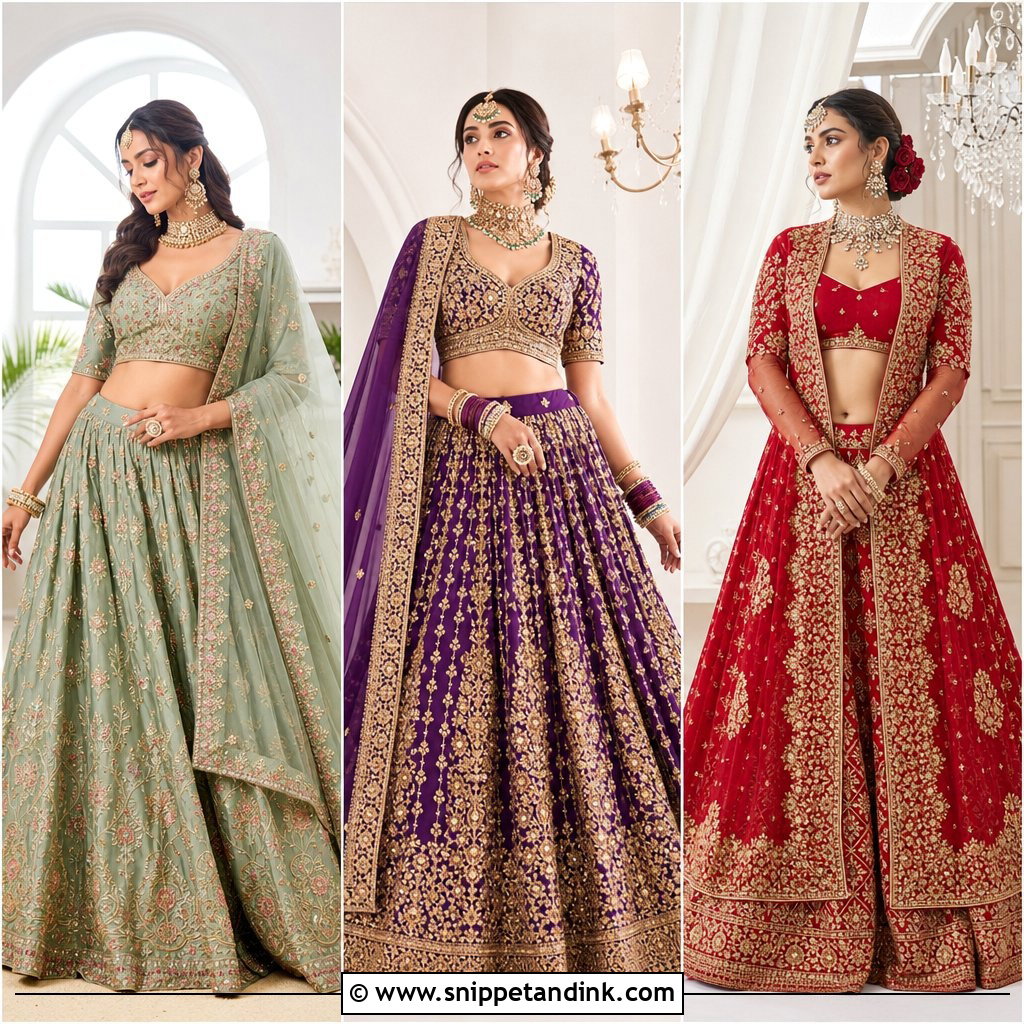
Banarasi brocade gets its richness from the weave itself, so you don’t need layers of surface work. Magenta, emerald, red or deep purple with gold motifs all look rich. Brocade is stiff and holds its own shape, which means I usually reduce the can-can, sometimes to a single layer, and the skirt still sits full. That also makes it easier to walk and sit in. A plain silk blouse in the base colour or a contrast shade, and a lighter dupatta in organza, tissue or net, let the skirt lead. Traditional gold earrings, a choker, brocade juttis and a small box clutch finish it. A low bun or smooth braid keeps the line clean.
13. Jacket Lengha Set
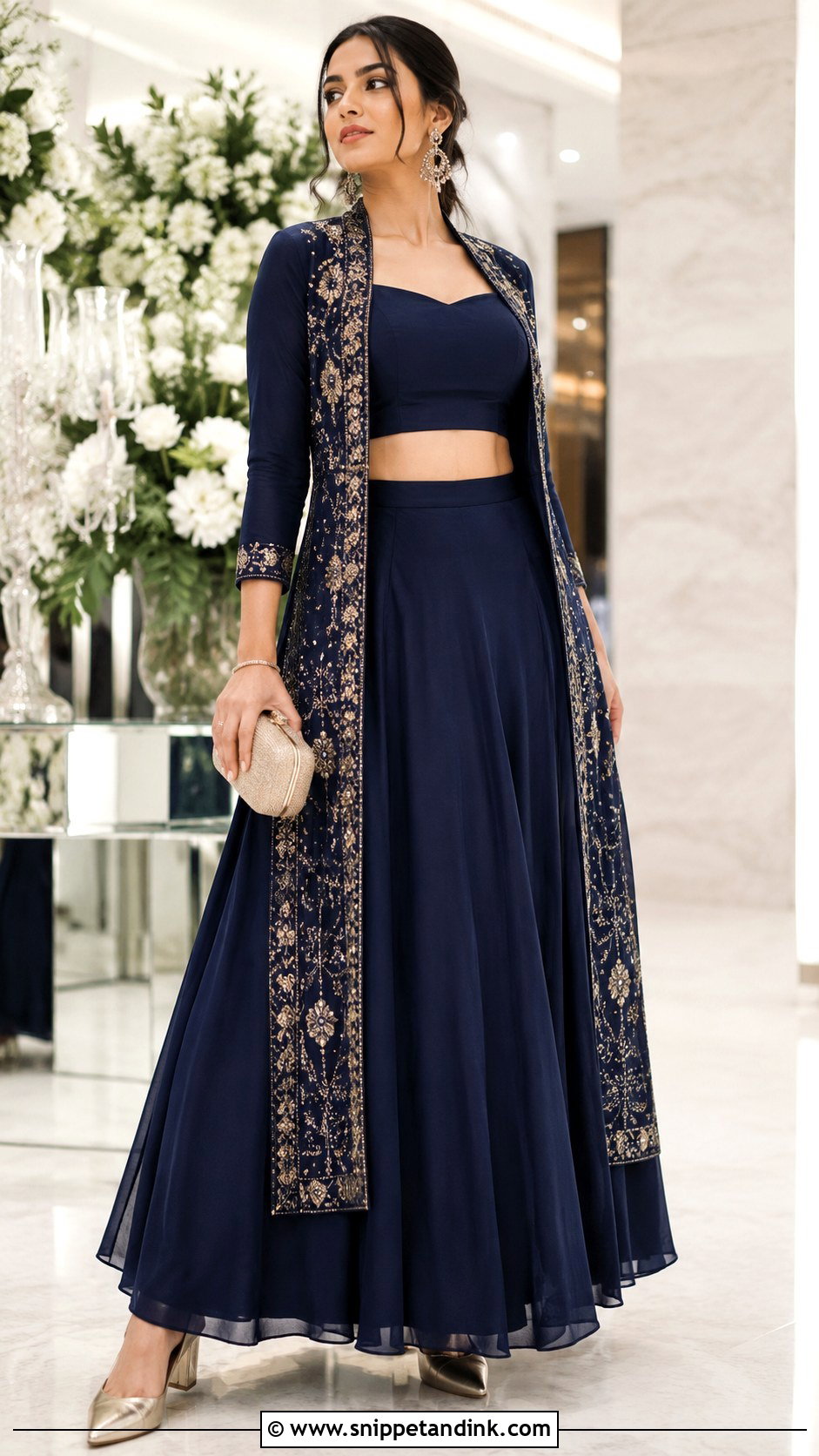
A long embroidered jacket over a simple skirt and blouse gives coverage and a modern line in one move. I like it falling just below the knee, worn open to show the waist or fastened at the neck for structure. It can go without a dupatta, which brides at busy receptions appreciate. Statement earrings, a sleek bracelet and a small clutch keep attention on the jacket; pointed block heels or embellished flats work underneath. A straight ponytail or smooth bun suits it. I’d be careful with this one on petite brides: dense embroidery and a long hem can swallow a small frame, so ask for side slits and lighter work on the jacket body.
14. Cape Sleeve Lengha
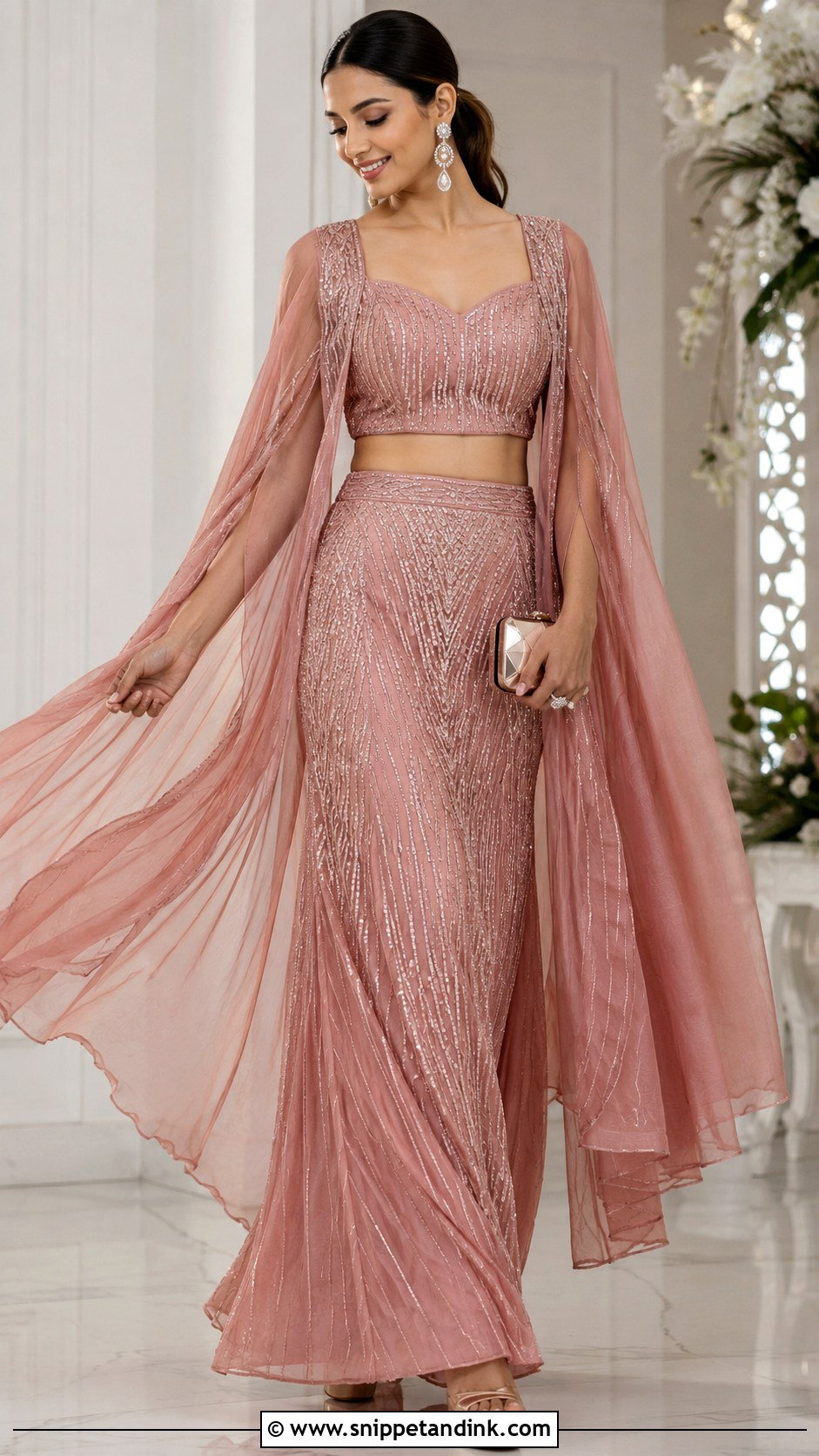
With a cape sleeve lengha, the sheer fabric attached to the blouse takes the place of a dupatta, which is easier to manage at a sangeet or reception. A streamlined skirt with scattered beadwork works well under it. Because the cape already frames the shoulders, I skip the necklace and use drop earrings, a statement ring and a polished clutch. Metallic platforms give height and stability. A low ponytail or sleek bun keeps the cape visible. At the fitting, raise both arms and hug someone: if the cape pulls the blouse across the back, it’s cut too narrow and needs more width before the day.
15. Peplum Blouse Lengha
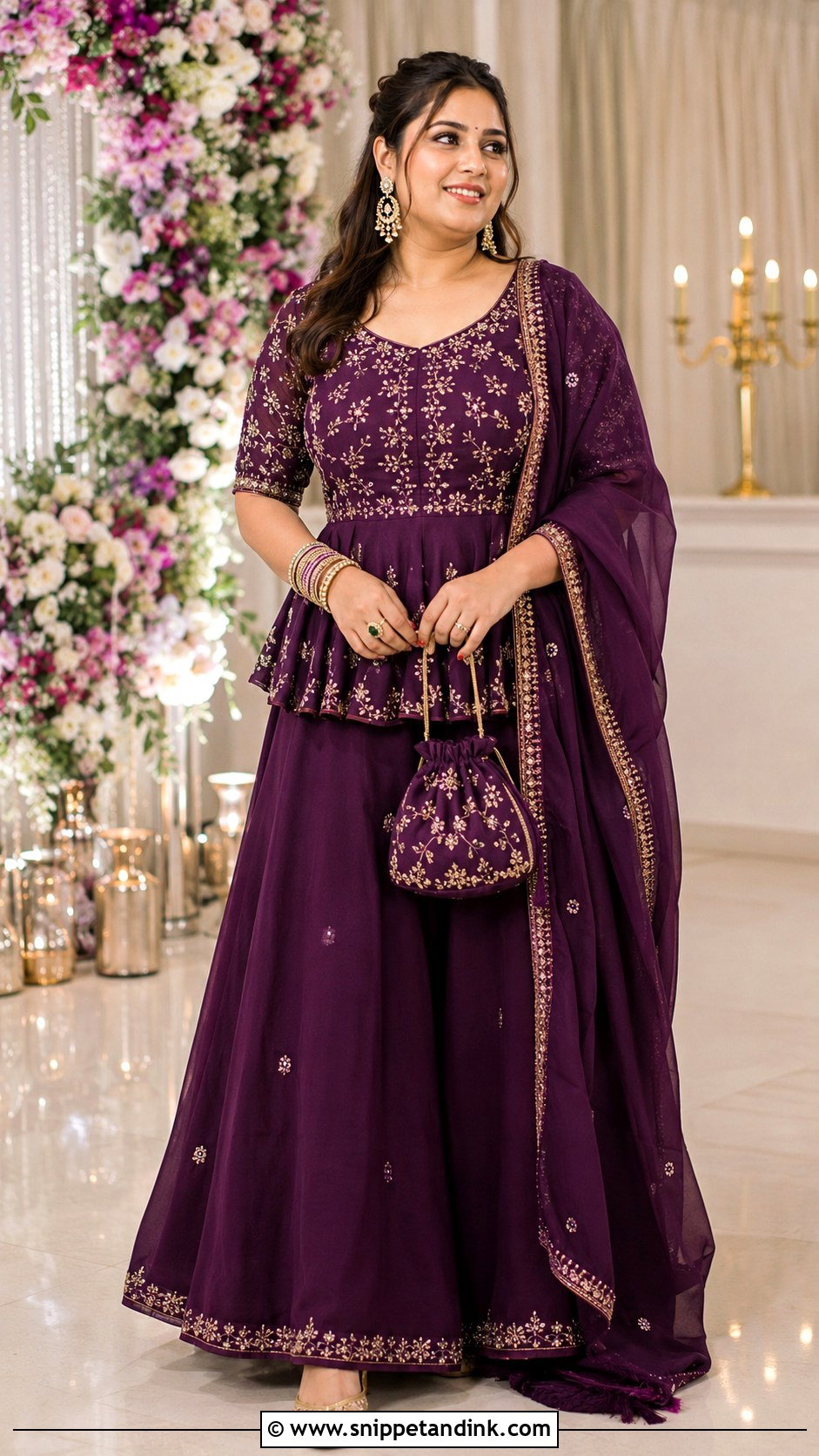
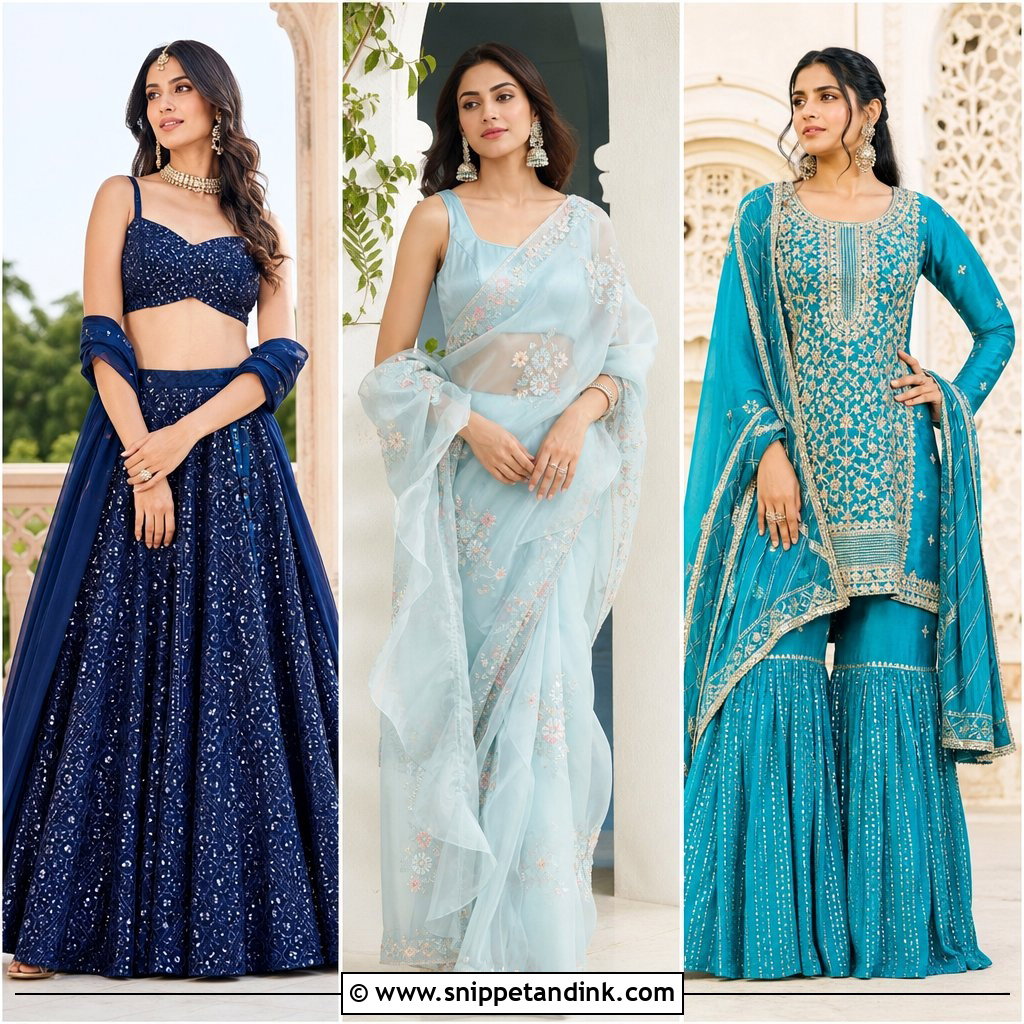
Peplum blouses give waist coverage and shape, but only if the length is right. The flare should finish above the widest part of the skirt; any lower and the two layers bunch every time you sit. Fit it closely through the shoulders, let it flare at the natural waist, and pair it with a clean A-line skirt rather than a heavily gathered one. A soft dupatta over one shoulder keeps tradition without hiding the blouse. Medium earrings, stacked bangles, a compact potli and heeled juttis or platforms are enough. An updo or half-up style keeps the eye at the neckline. Ask your tailor to soften the interfacing if the peplum feels stiff, because a rigid flare sticks out in side-profile photos.
16. Corset Blouse Lengha
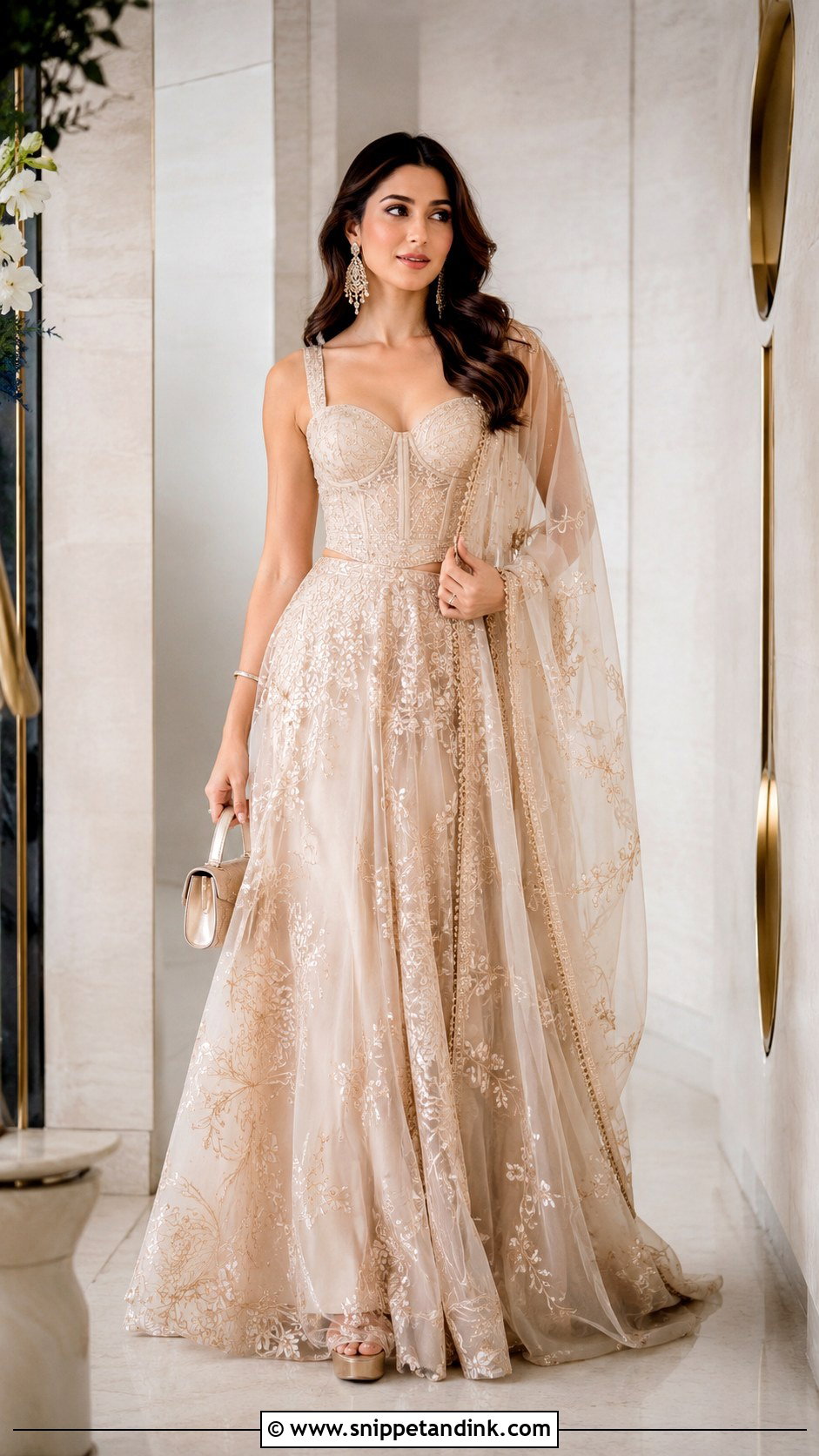
Corset blouses suit a fashion-forward celebration outfit, with a structured top against a flowing skirt. Construction is everything here. I look for internal boning, wider straps or detachable sleeves, and I always have the bride sit and eat a little during the fitting. A corset sized only to look tight will dig in after dinner. A solid corset modernizes an embroidered skirt; a beaded one gives a plain satin or organza skirt interest. Drape a light dupatta from the elbows or pin it over one shoulder. Chandelier earrings, a slim bracelet, a structured mini bag and platform heels finish it, with brushed waves or a sleek ponytail.
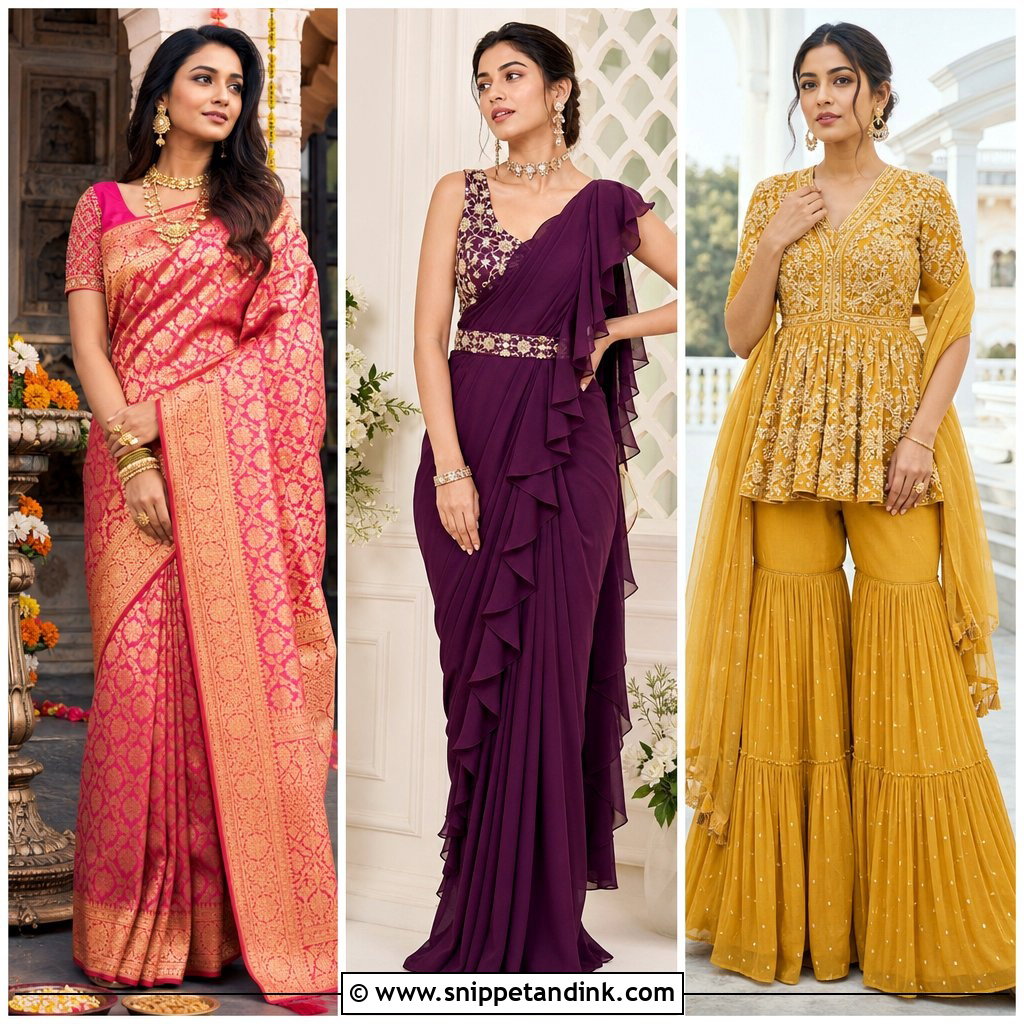
17. Draped Saree Lengha
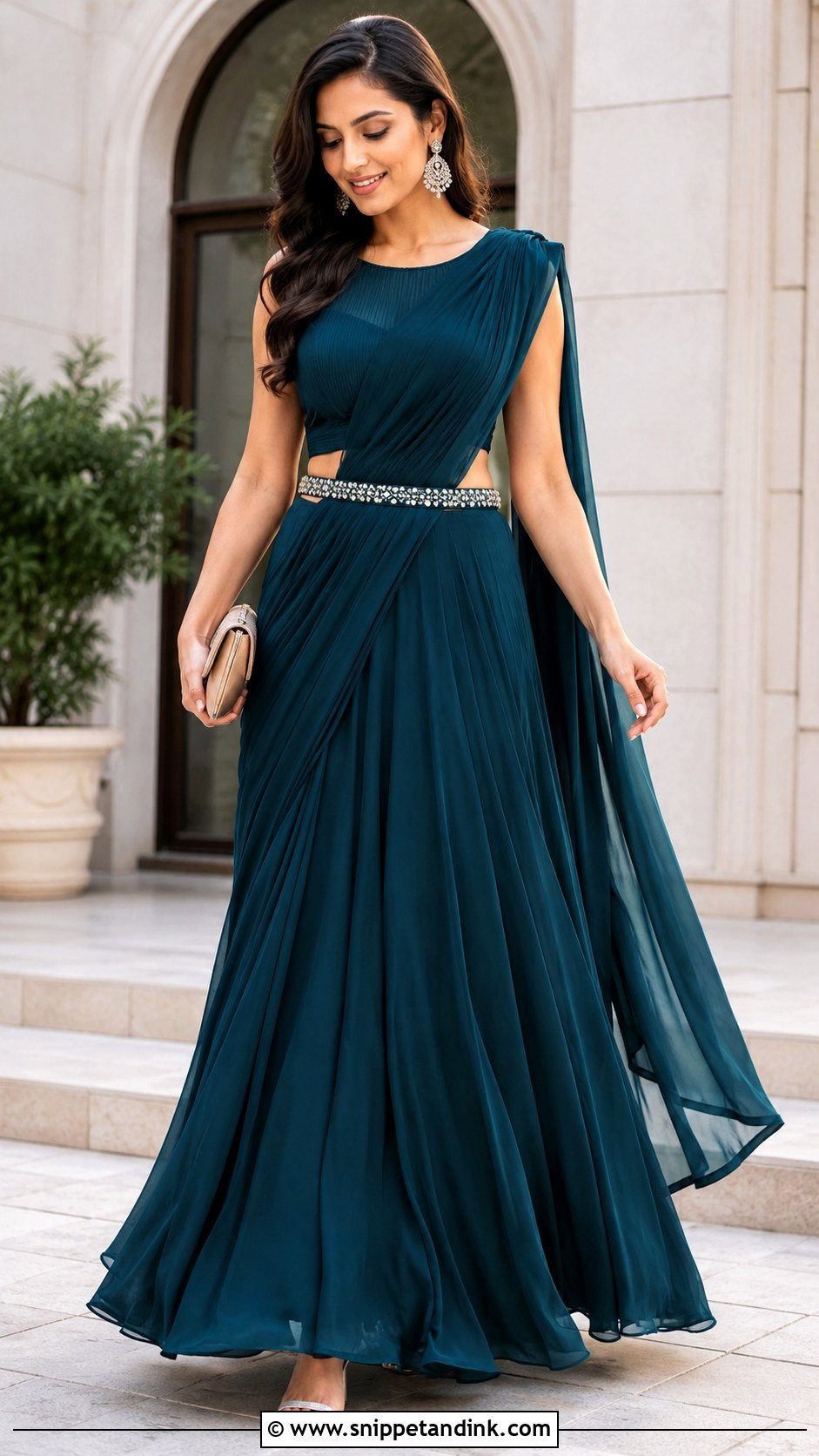
Can’t decide between a saree and a lengha? A draped saree lengha puts a pre-stitched pallu on a flared skirt, so you get the drape without hand pleating. It only falls properly in fluid fabric such as georgette, crepe or satin; stiff silk makes the pallu sit out from the body. A blouse in the same shade keeps the line continuous, and a waist belt holds the pallu in place. Statement earrings, a slim clutch and heeled sandals are enough, with a side-parted bun or soft waves. Check the pallu length in your shoes: if it reaches past your hand or nears the floor, it will get stepped on during the pheras or the first dance.
18. Plus Size A-Line Lengha
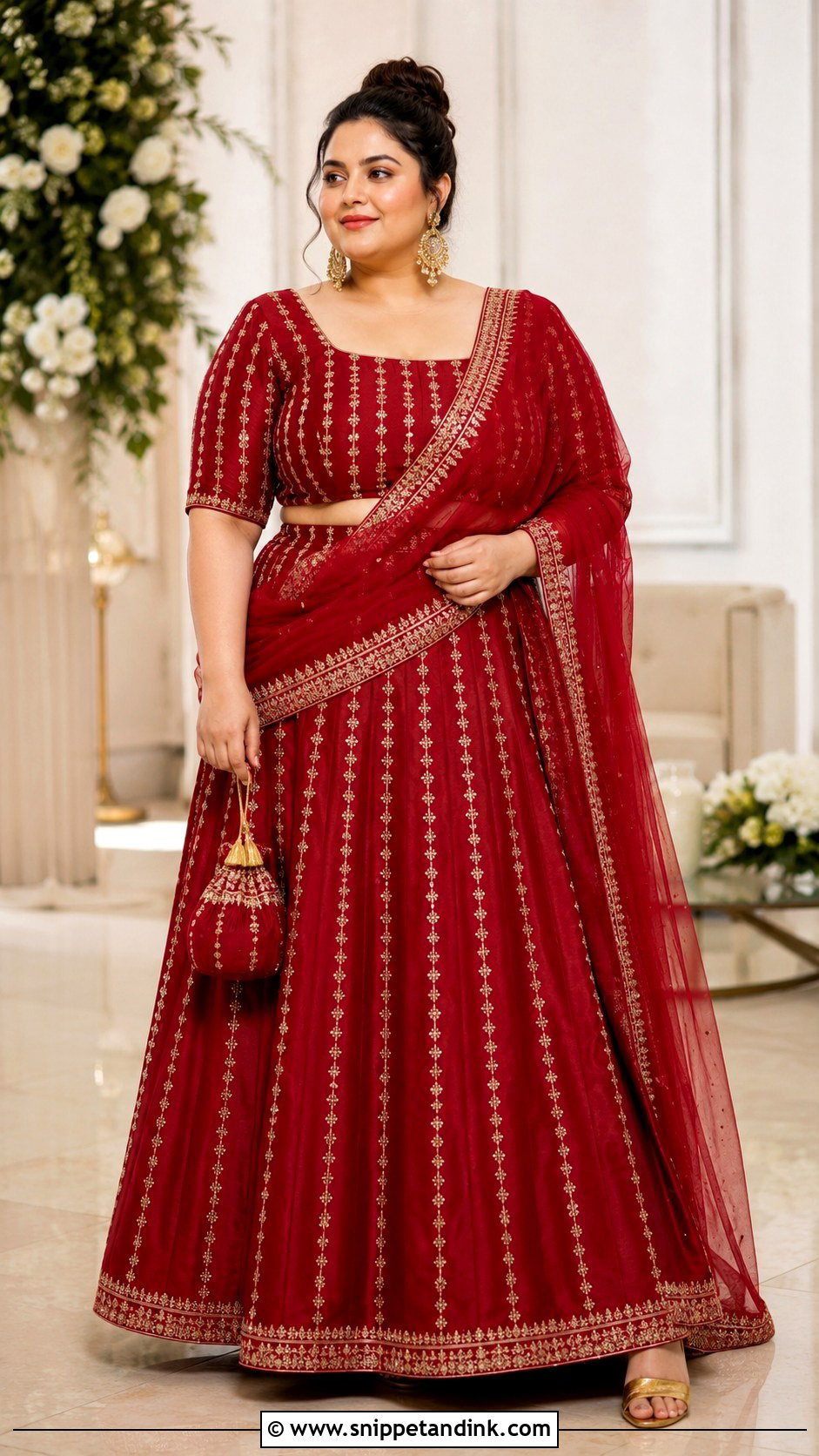
For plus-size brides, the A-line is a good starting point because it can be tailored precisely, not because it hides anything. What I check first is the waistband: it should sit securely at your natural waist, with no gathering stacked at the midsection and enough structure that it doesn’t roll when you sit. Vertical embroidery and evenly placed motifs give a clean line, and a defined border finishes the hem. V-neck, square or scoop blouses all work; choose the sleeve you like. Drape the dupatta diagonally over one shoulder, add statement earrings, supportive block heels and a medium potli, and wear a high bun or side-swept style. Comfortable armholes matter more than any colour rule.
19. Modest High Neck Lengha
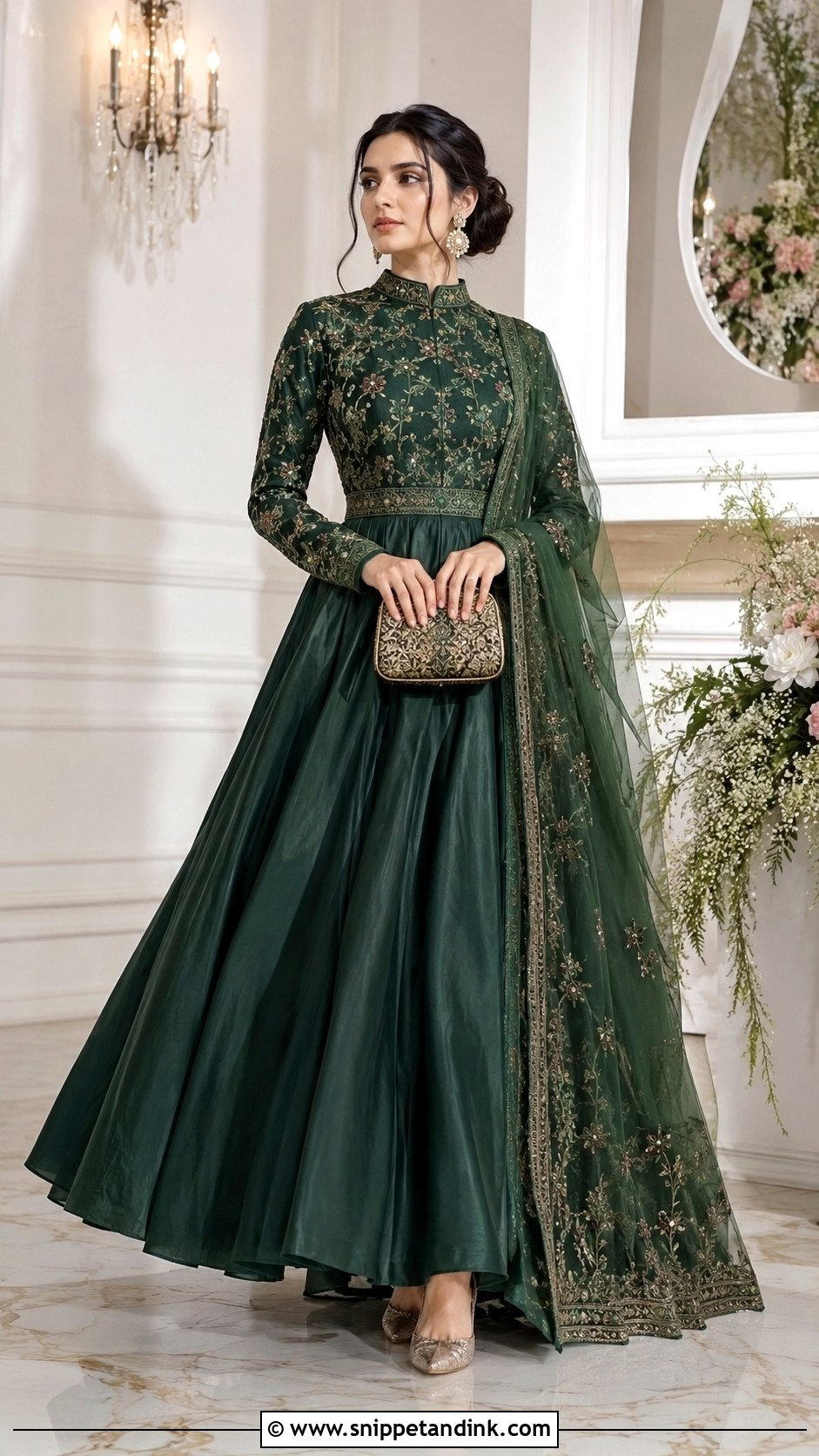
High necklines can look sophisticated rather than covered up when the detail sits in the right places. I put the embroidery along the collar and cuffs of a full-sleeve blouse and keep the skirt flowing in georgette, silk or organza. A light dupatta from one shoulder leaves the front work visible. Skip the necklace entirely; a jewel neckline with a necklace on top looks crowded and the clasp rubs the collar. Statement earrings, a ring, an embroidered clutch and closed-toe heels or juttis finish it. A low bun or neat ponytail keeps hair off the collar. If the blouse is heavily worked, keep the skirt moderate.
20. Minimal Monochrome Lengha
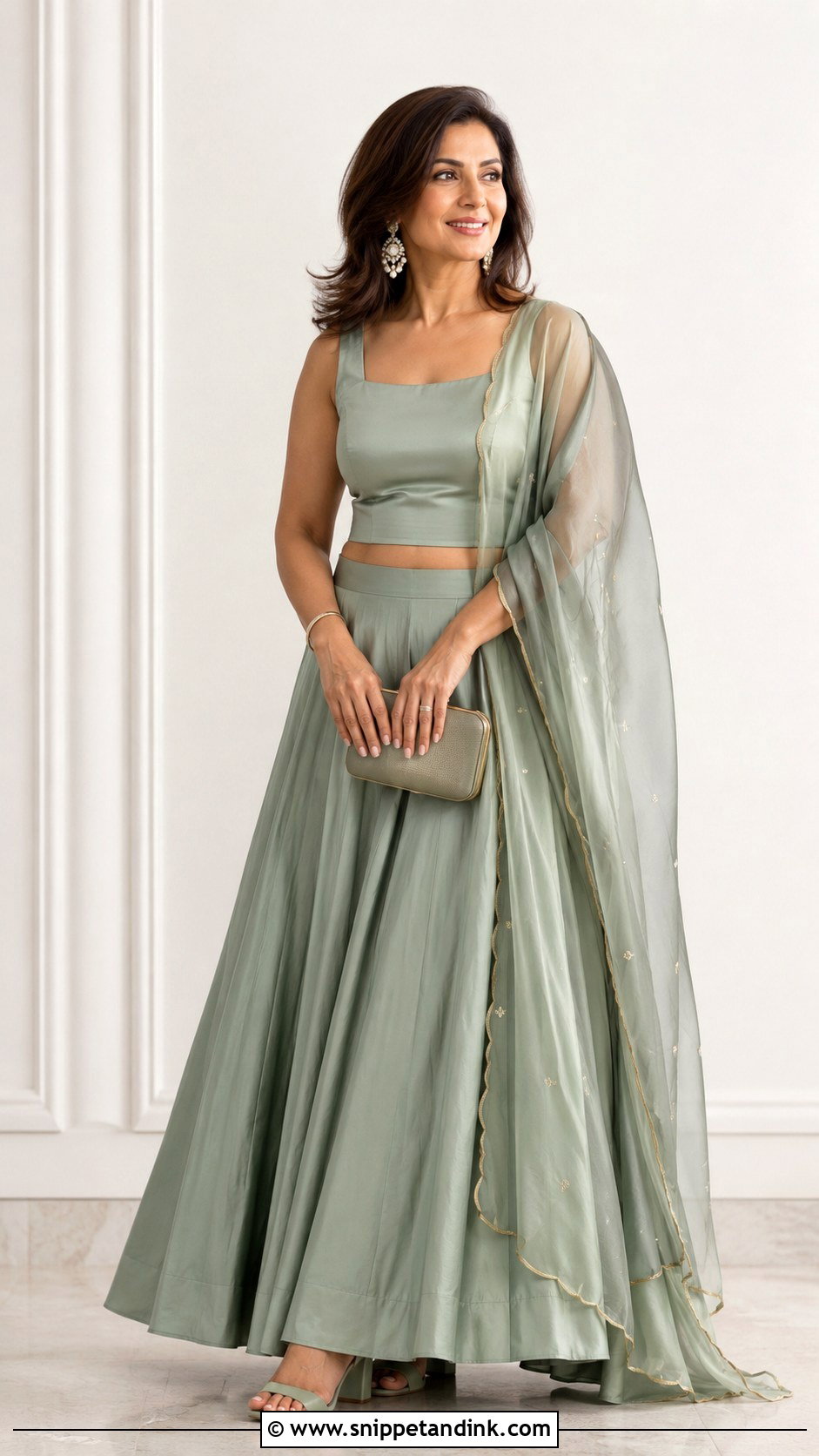
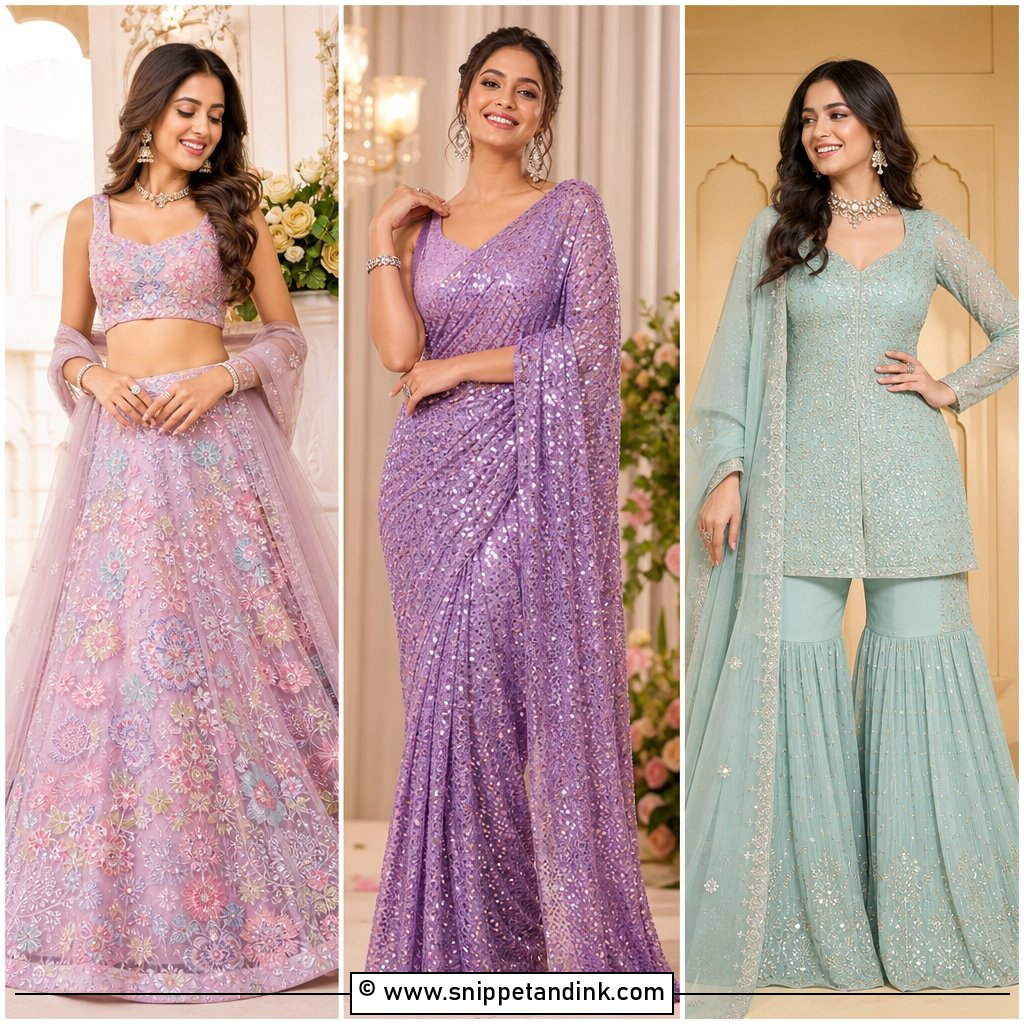
Sometimes one colour makes the strongest impression. A minimal monochrome lengha carries a single shade, such as dusty rose, sage, navy, plum or champagne, through blouse, skirt and dupatta for a long, clean line. Without heavy embroidery, the tailoring has nowhere to hide, so precise fit, pleats or a narrow beaded border do the work. A square or boat-neck blouse, the dupatta loose over one shoulder, sculptural earrings, a slim bracelet and a tonal clutch are all it needs, with shoes in the same family. The risk is flatness. I solve it by mixing two textures in the same colour, satin with organza for example, so the light catches differently.
Storing Zari, Velvet and Mirror Work After the Wedding
A lengha that cost months of hand work deserves better than a plastic garment bag in a hot cupboard. Plastic traps moisture, and metallic zari tarnishes in damp air, so I wrap the skirt, blouse and dupatta separately in soft muslin or an old cotton saree.
- Air it for a day before storing, inside out, out of direct sun, so sweat and perfume can evaporate.
- Have it cleaned only by a dry cleaner who handles bridal embroidery; home washing loosens beads and mirrors.
- Never spray perfume directly onto zari or sequins. It speeds up tarnish and can leave marks on silk.
- Refold heavy pieces every few months along different lines so the fabric doesn’t crack at the creases.
- Store velvet flat or rolled, never hung, because its own weight leaves permanent marks in the pile.
Before you put it away, check the hem for loose threads and the blouse hooks for strain, and have them fixed now. A lengha that’s ready to wear again is far more likely to be worn again, whether at a sibling’s wedding or altered into something new.
Fabric Weight Decides More Than Colour
Every outfit here is built on the same few decisions: how heavy the fabric is, how well the blouse is tailored, what’s on your feet and how the dupatta is pinned for the way you’ll actually move. Red bridal, bandhani, mirror work, a high neck or a single colour can all be right. Let jewelry follow the neckline instead of covering the embroidery, and pick the colour and shape you feel confident in rather than following body-type rules. Get the fit and the weight right, and you’ll forget you’re wearing it by the second hour.
You'll Like These Ideas:


Leave a Reply