
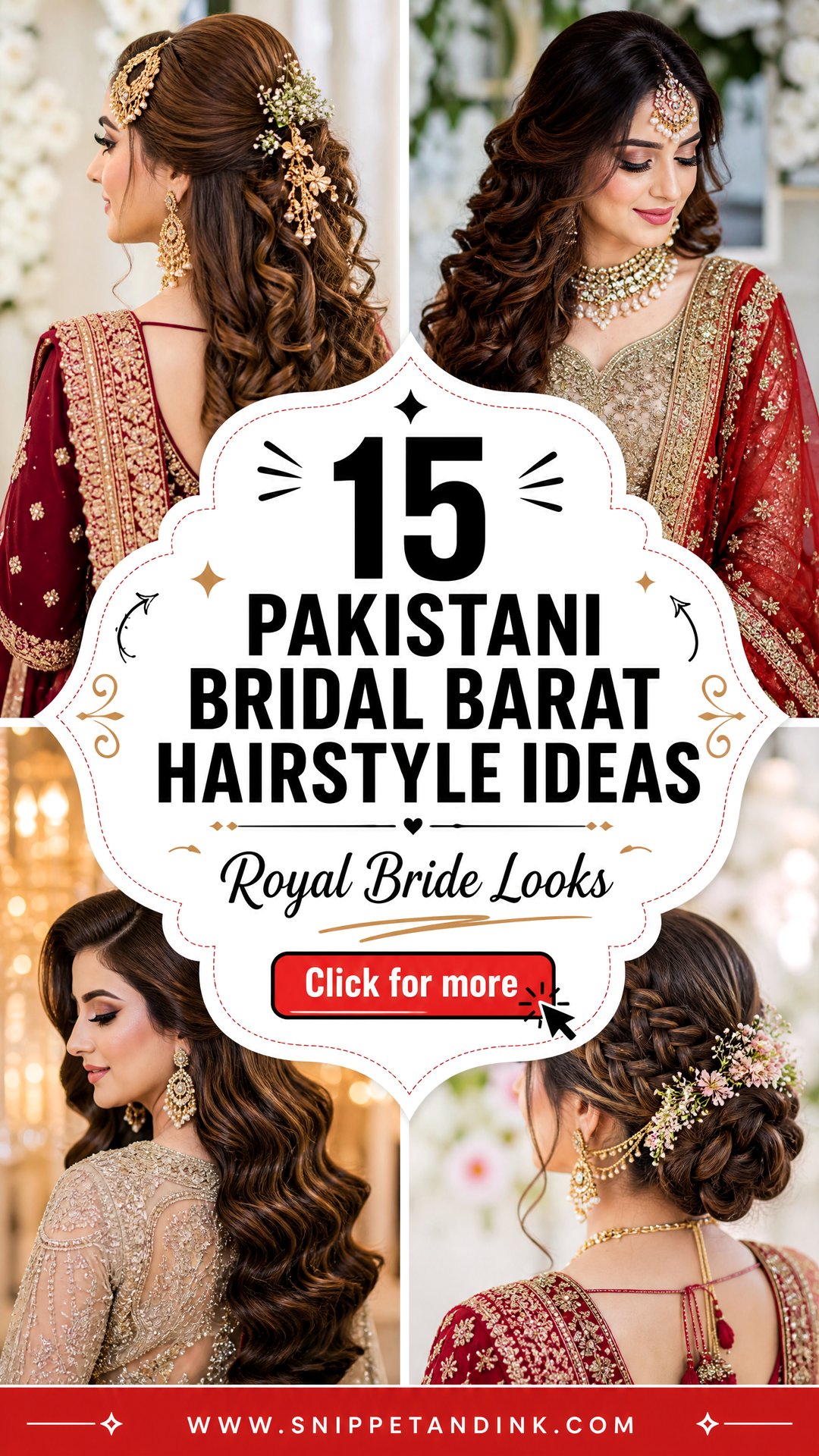
On a barat day the hair is doing three jobs at once. It has to hold a dupatta that may weigh more than you expect, carry a tikka, matha patti or jhumar without sliding, and still look like you after hours of photos and greetings. Barat outfits are almost always heavier than mehndi or walima looks, so I build barat hair with more structure underneath than any other function. Buns, paranda braids, waves and dupatta-friendly updos all appear below, and each one can be adjusted for your face, your jewelry, your neckline and how much hair you actually have.
How Heavy Is Your Dupatta? Start There
Before I look at a single inspiration photo, I ask the bride to bring her dupatta, or at least tell me what it’s made of and how much work is on it. A light net dupatta and a fully embellished one need completely different hair underneath, and that one detail rules out half the styles on any list.
Light net or chiffon
Almost everything is open to you, including open curls and Hollywood waves. I still pin a small firm base at the crown, because even a light dupatta slides on silky hair.
Heavily worked or double dupatta
Stick to buns, chignons and braided buns. The pins need a dense anchor, and loose hair gets crushed. With two dupattas, I set the head dupatta first and keep the bun low, so the second one drapes without dragging the whole style backwards.
Also tell me where your matha patti or jhumar will sit. Their hooks need a pinned section to clip into, and planning that at the trial saves a lot of rearranging on the morning.
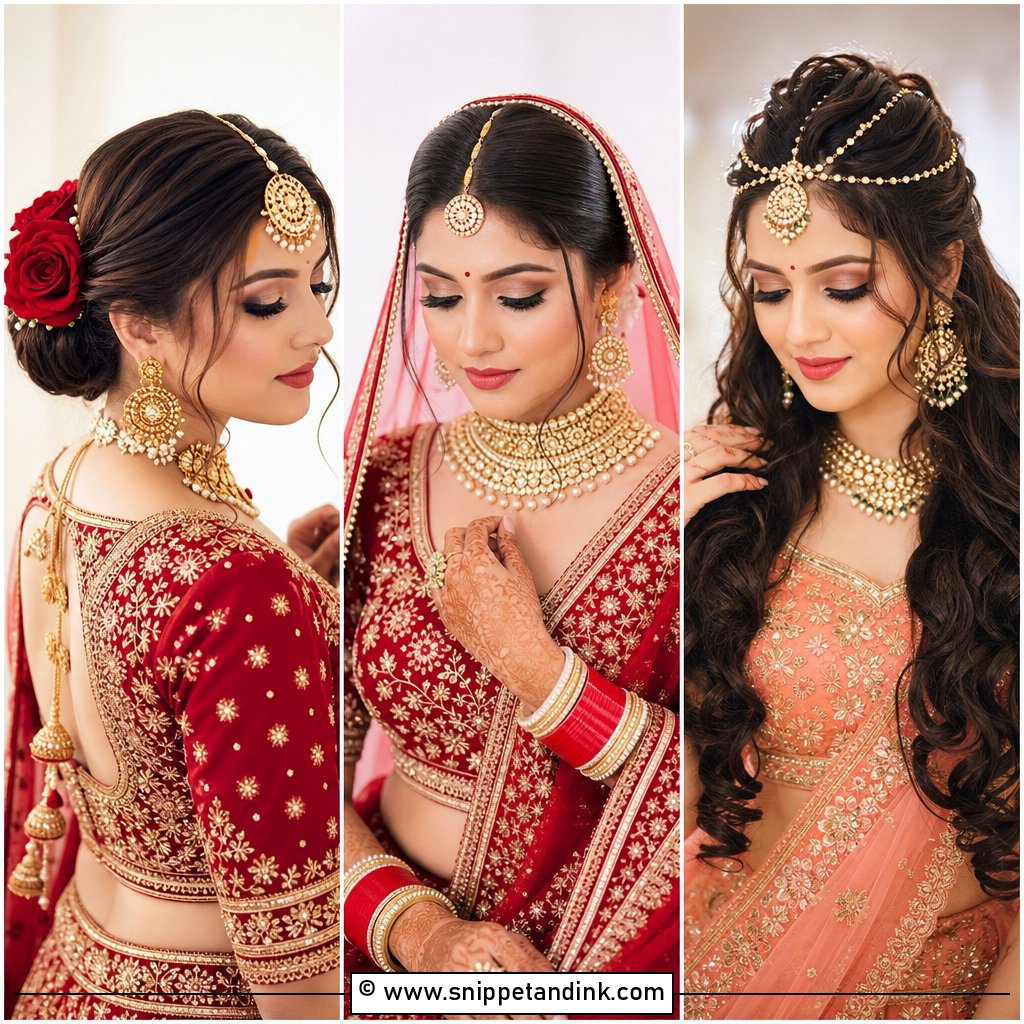
1. Pakistani Bridal Low Bun With Dupatta
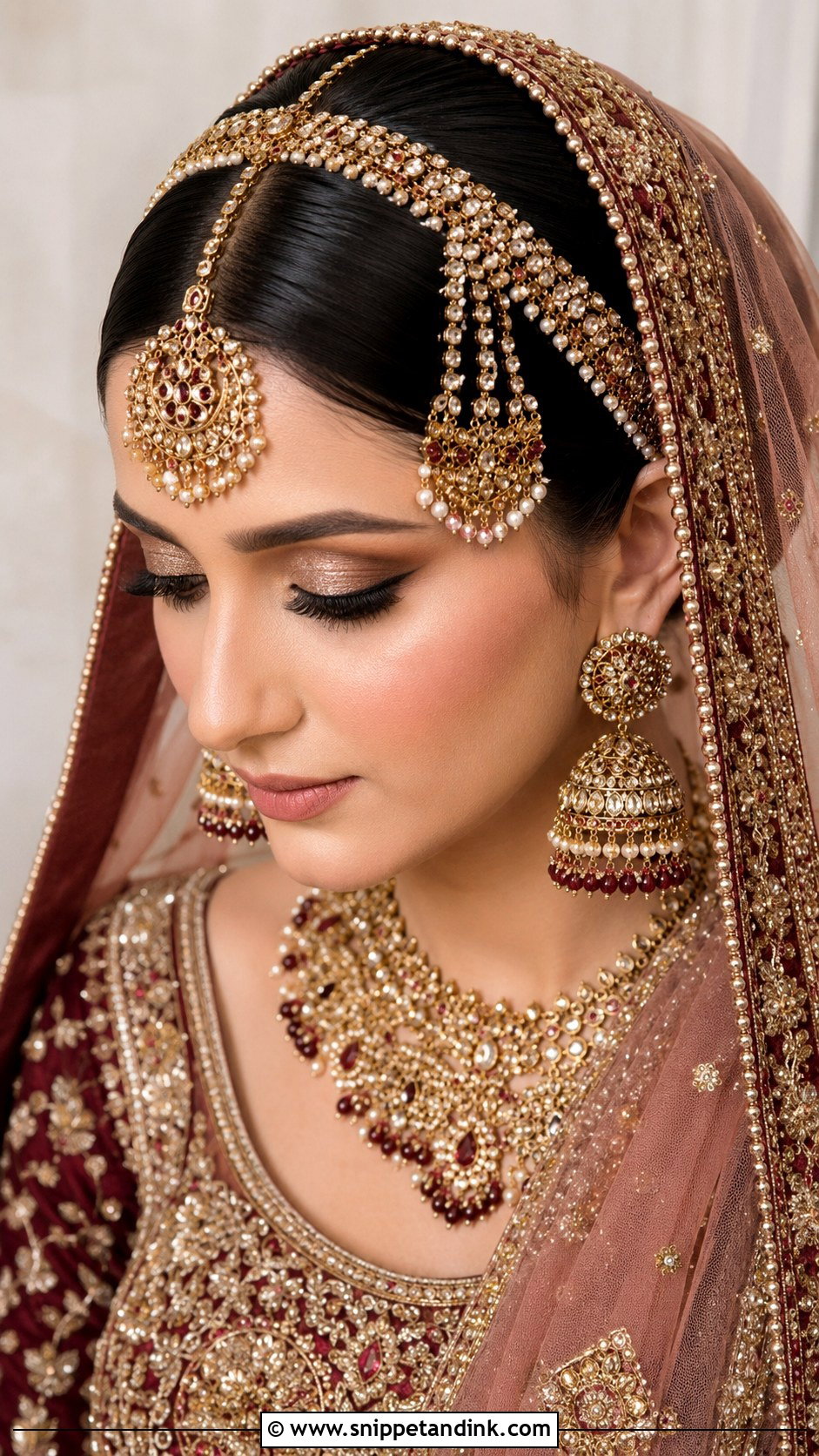
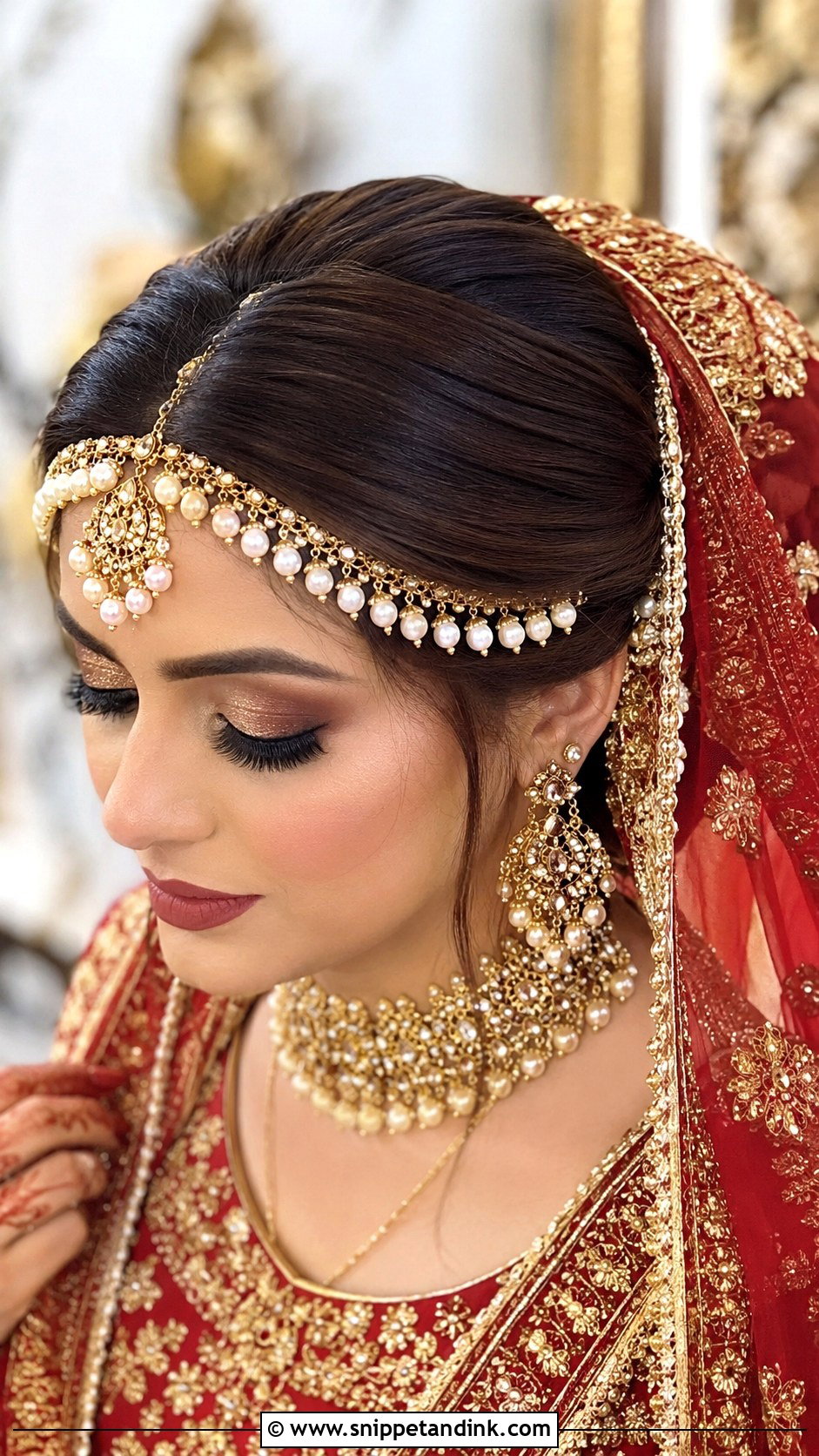
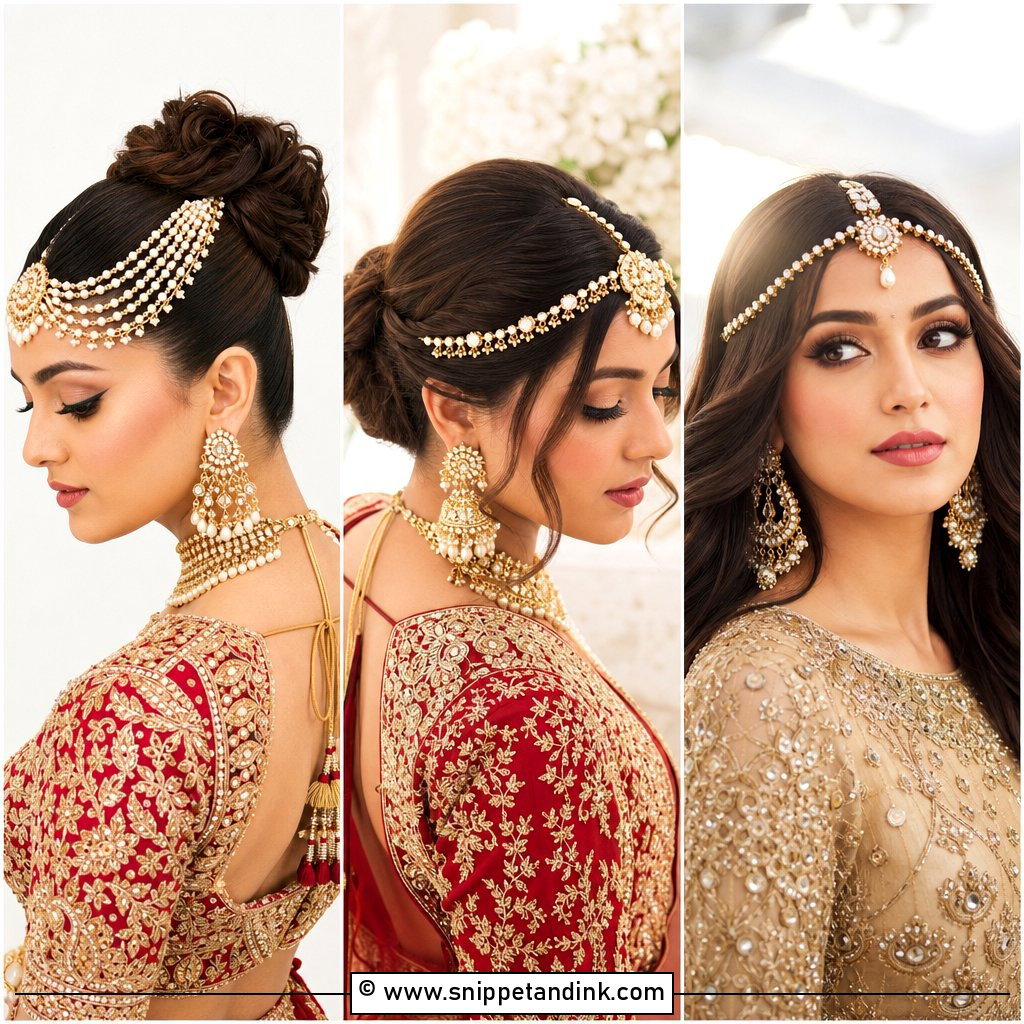
If a bride can’t decide, I usually start her here. A low bun sits right at the nape, so the dupatta pins go into solid hair instead of tugging at the scalp, and it leaves room above for a matha patti or jhumar and heavy earrings with a traditional red or maroon bridal lehenga. I keep the crown smooth with a little volume behind it, and the bun firm but not stiff. A middle part is the classic choice. On a round or square face, I shift it a touch off center, which softens the jaw line in front-on photos.
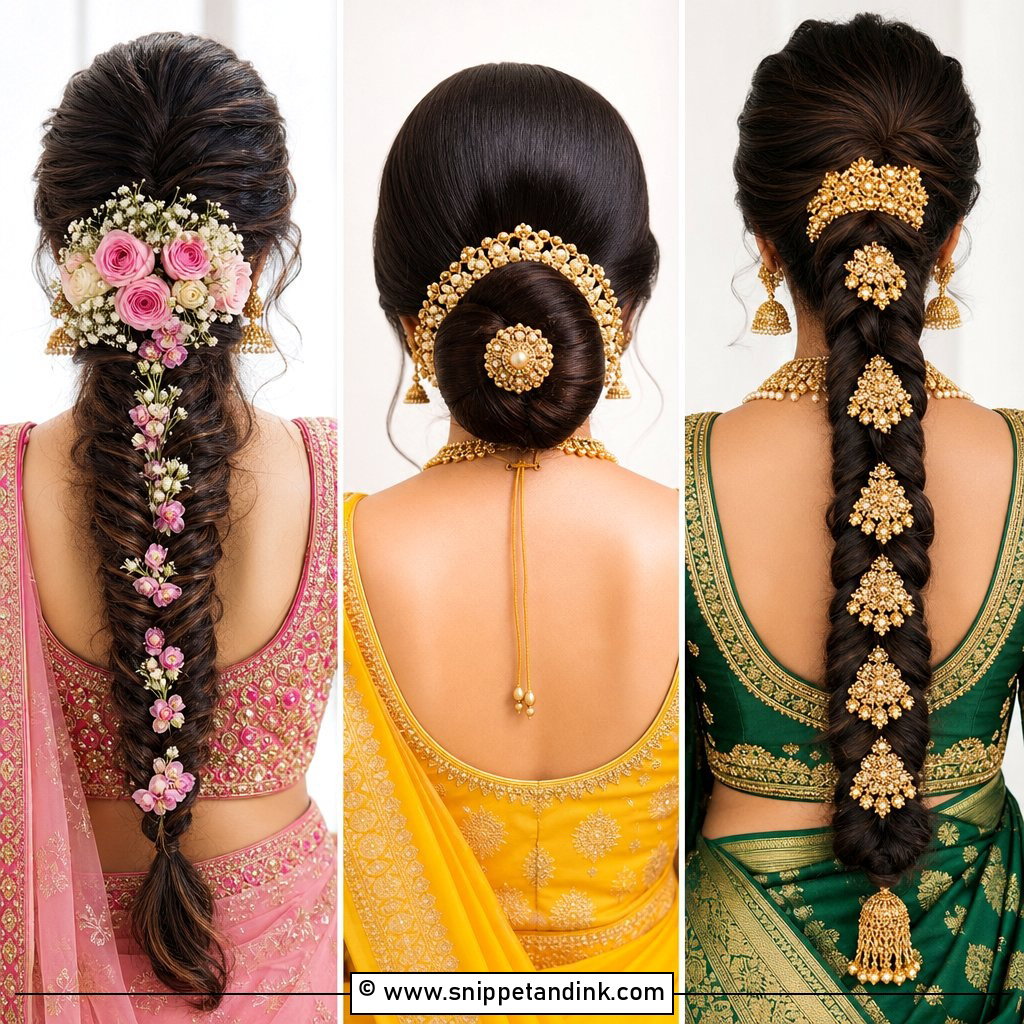
2. Pakistani Bridal Sleek Bun With Matha Patti
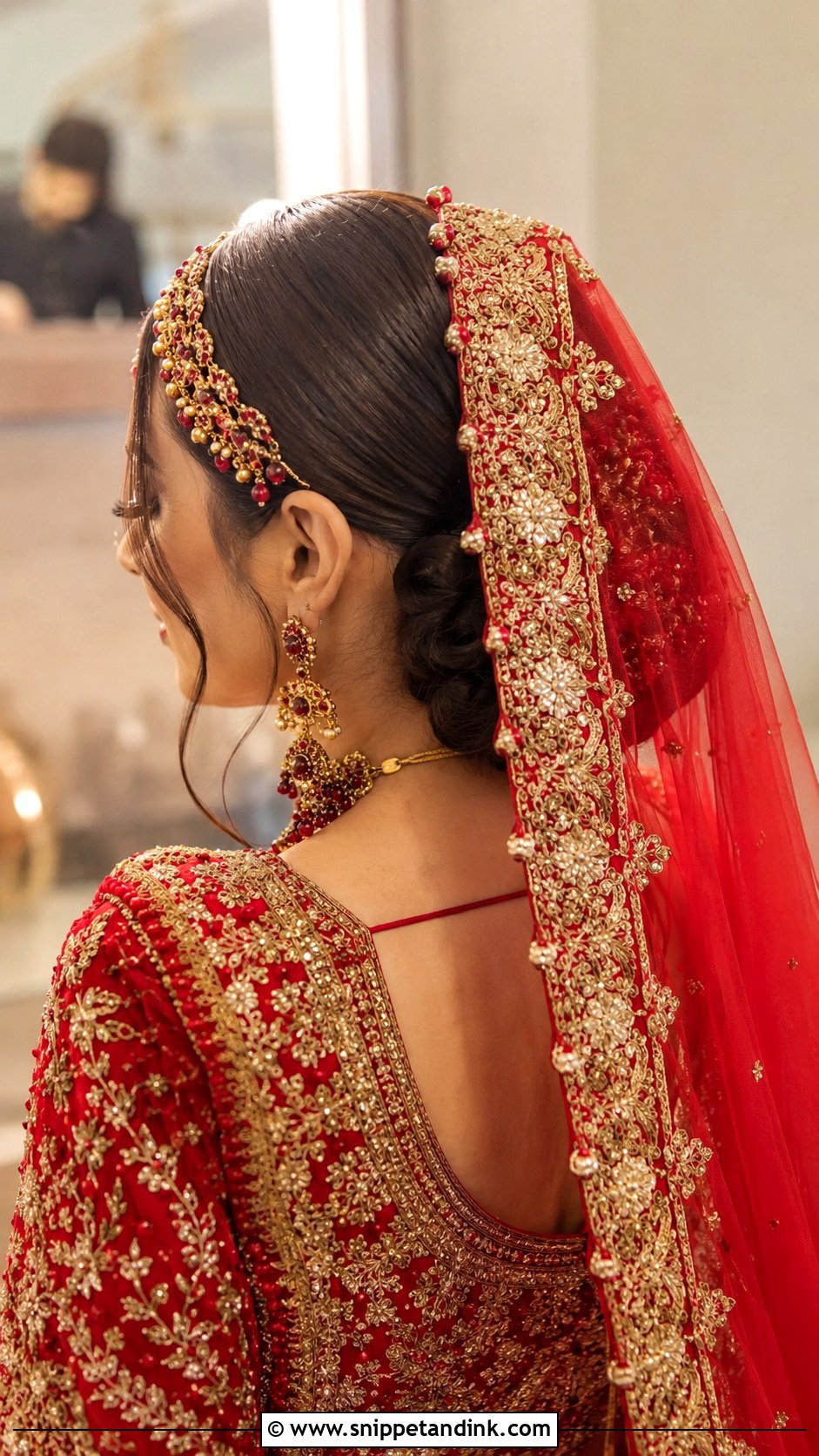
The sleek bun gives a royal barat look by doing almost nothing, so the jewelry becomes the detail. The hair is smoothed close to the head, which makes a matha patti sit flat and read clearly in photos. With a heavily embroidered neckline or a double dupatta, I’d pick this one, because there’s no loose texture for either to catch on. The bun can sit low or a little higher, depending on how the dupatta will be set. One warning: a scraped-back shape shows every gap at the hairline, so if your edges are thin, ask for a soft sweep at the temples instead.
3. Pakistani Bridal Gajra Bun
Fresh jasmine adds a scent that guests notice as you pass, which no other accessory does. A Pakistani bridal gajra bun starts with a smooth or gently full base, then the strands of jasmine are wrapped around the bun and pinned through the thread, not the flowers. Gold jewelry and red bridal wear sit naturally with it. A full wrap looks traditional; a half circle on the lower edge looks more current. The flowers start to brown at the edges after a few hours in a hot hall, so I always ask for the gajra to arrive refrigerated and go in last.
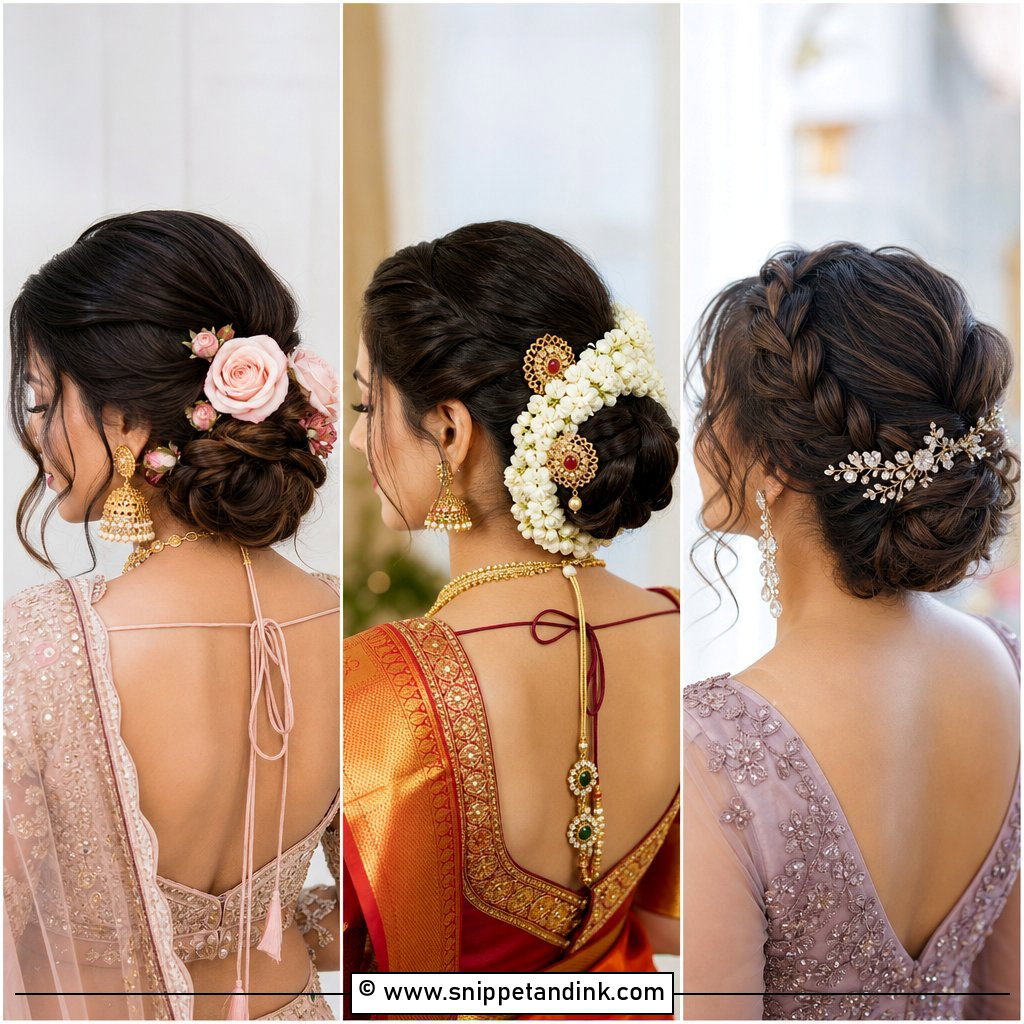
4. Pakistani Bridal Side Bun
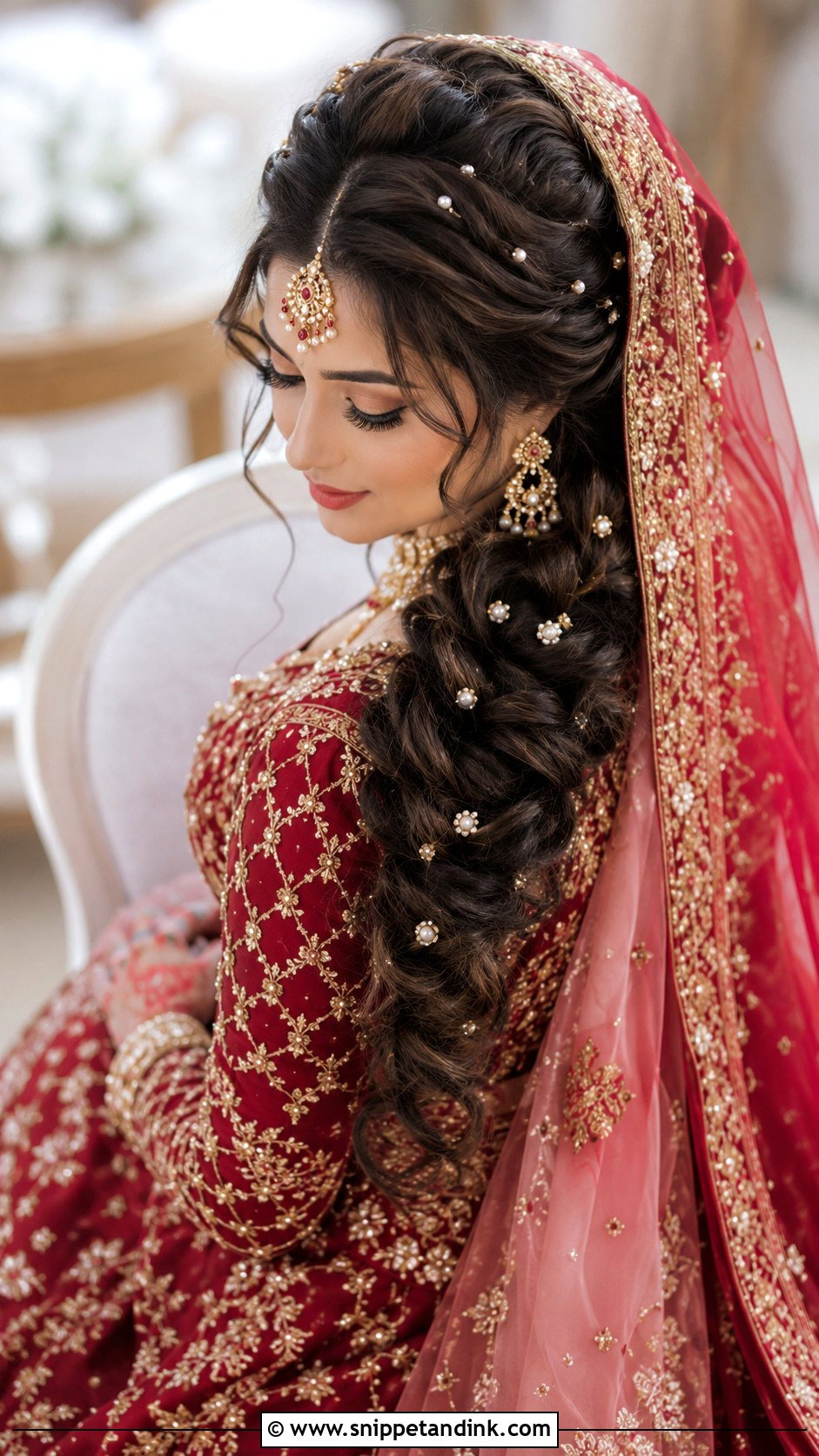
Moving the bun slightly to one side changes the whole silhouette. It opens space for a passa or jhumar on the opposite side and lets heavy jhumkas show without competing with the hair. The top can stay sleek or carry soft waves at the crown. This is the style I suggest most to brides with layered hair, because the shorter pieces tuck neatly into an off-center bun where they’d poke out of a centered one. Decide the side at the trial, with your jewelry on.
5. Pakistani Bridal Chignon
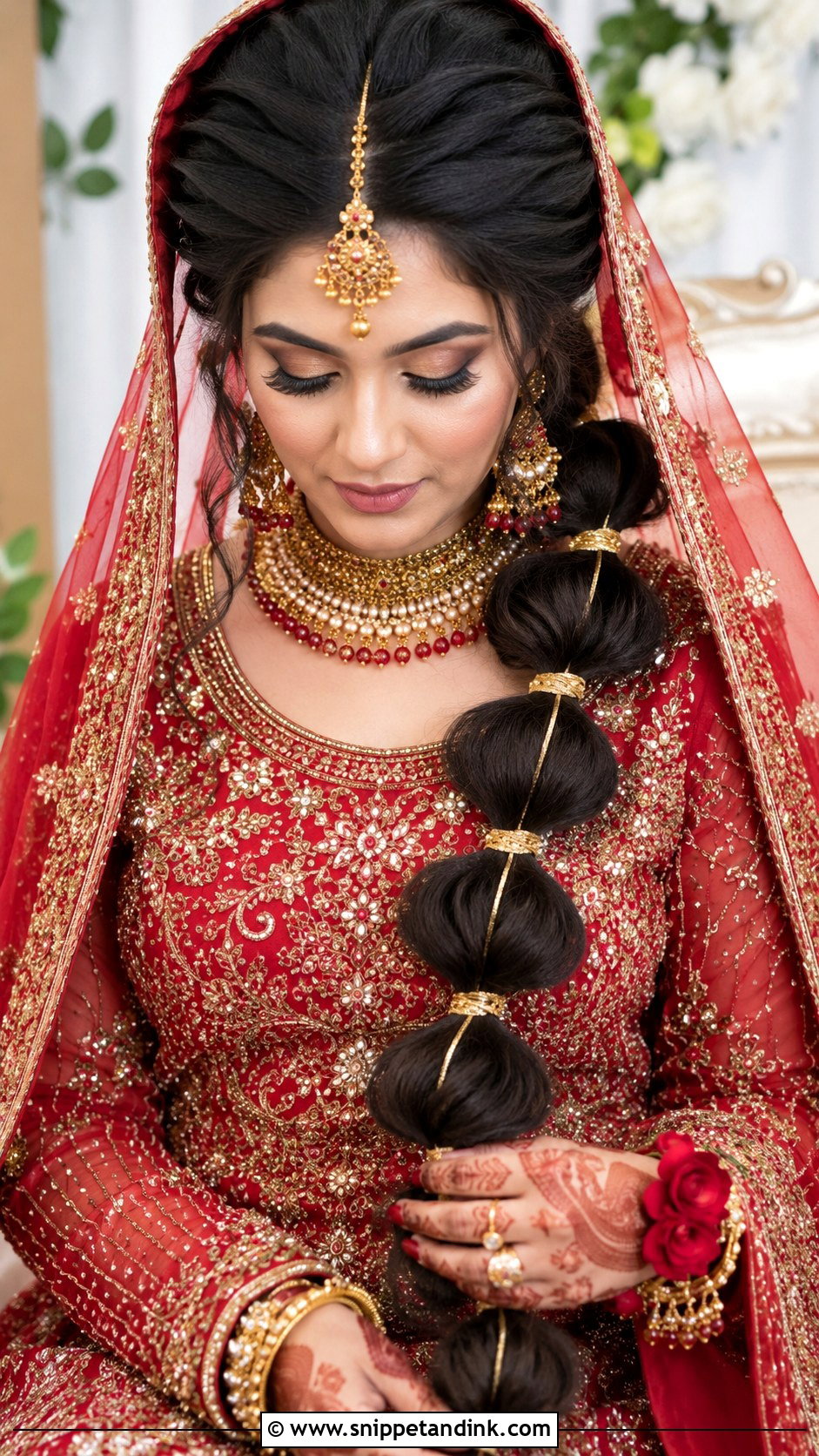
A chignon sits lower than a regular bun and is twisted and tucked rather than wound round, so it looks slimmer and more sculpted from the side. That narrow profile is useful with a heavily worked dupatta, because the fabric drapes cleanly over it instead of bunching on a round shape. I pin it tightly into the base, then add soft height at the crown so the head doesn’t look flat under the dupatta. With a matha patti or center tikka, the side angle is where it really shows.
6. Pakistani Bridal Long Braid With Paranda
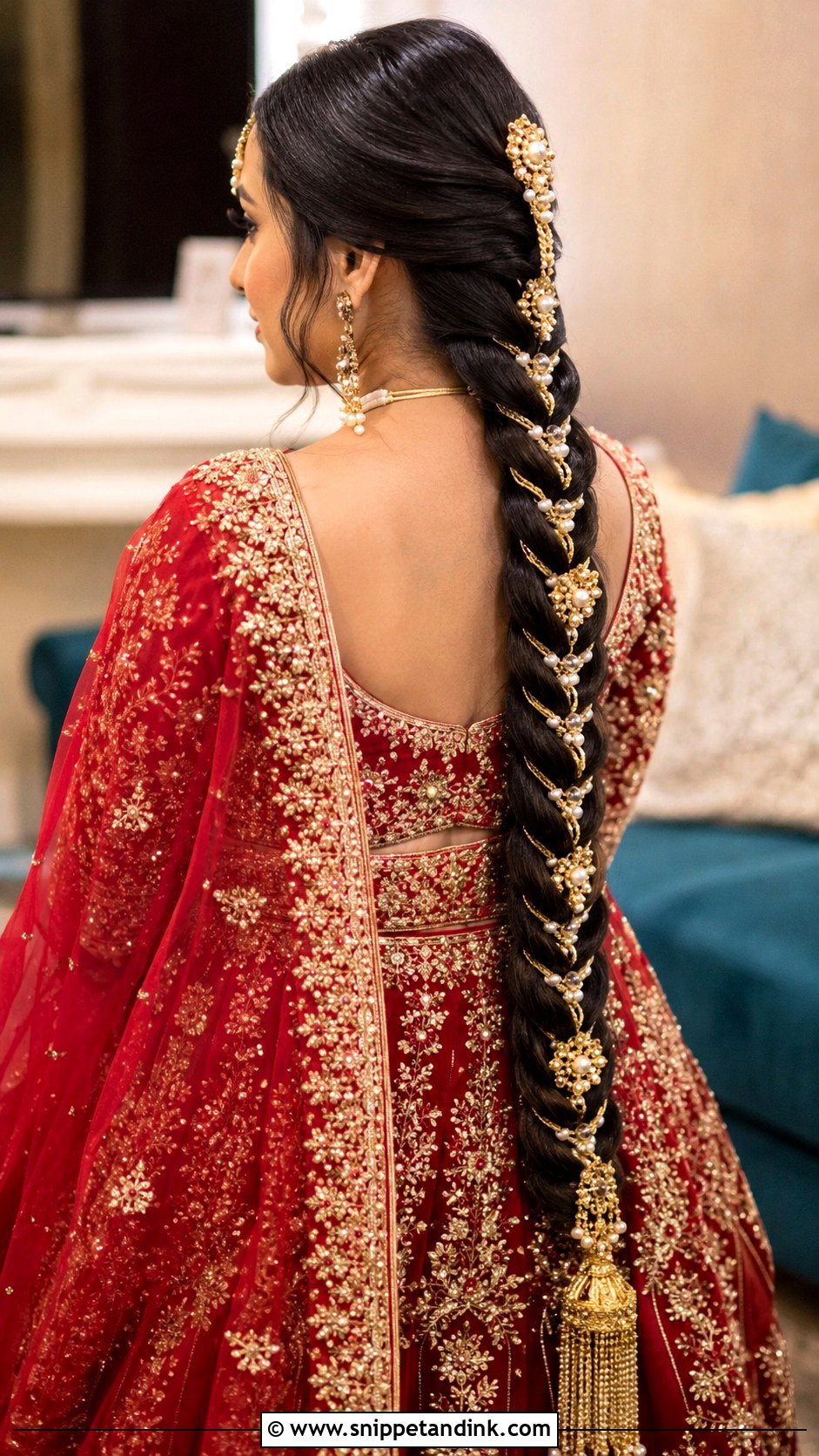
Of everything here, the long braid with paranda is the most rooted in Pakistani bridal tradition. Most brides need extensions to give the braid real length and thickness, and I color-match them under daylight, not salon light. The paranda goes on at the end, chosen to pick up a color or the gold work in the lehenga. The dupatta must be set a little higher or draped so the braid shows, which needs agreeing before the day. Pearls, small flowers or gold thread woven through make it richer, and it moves as you walk in a way no bun can.
7. Pakistani Bridal Fishtail Braid
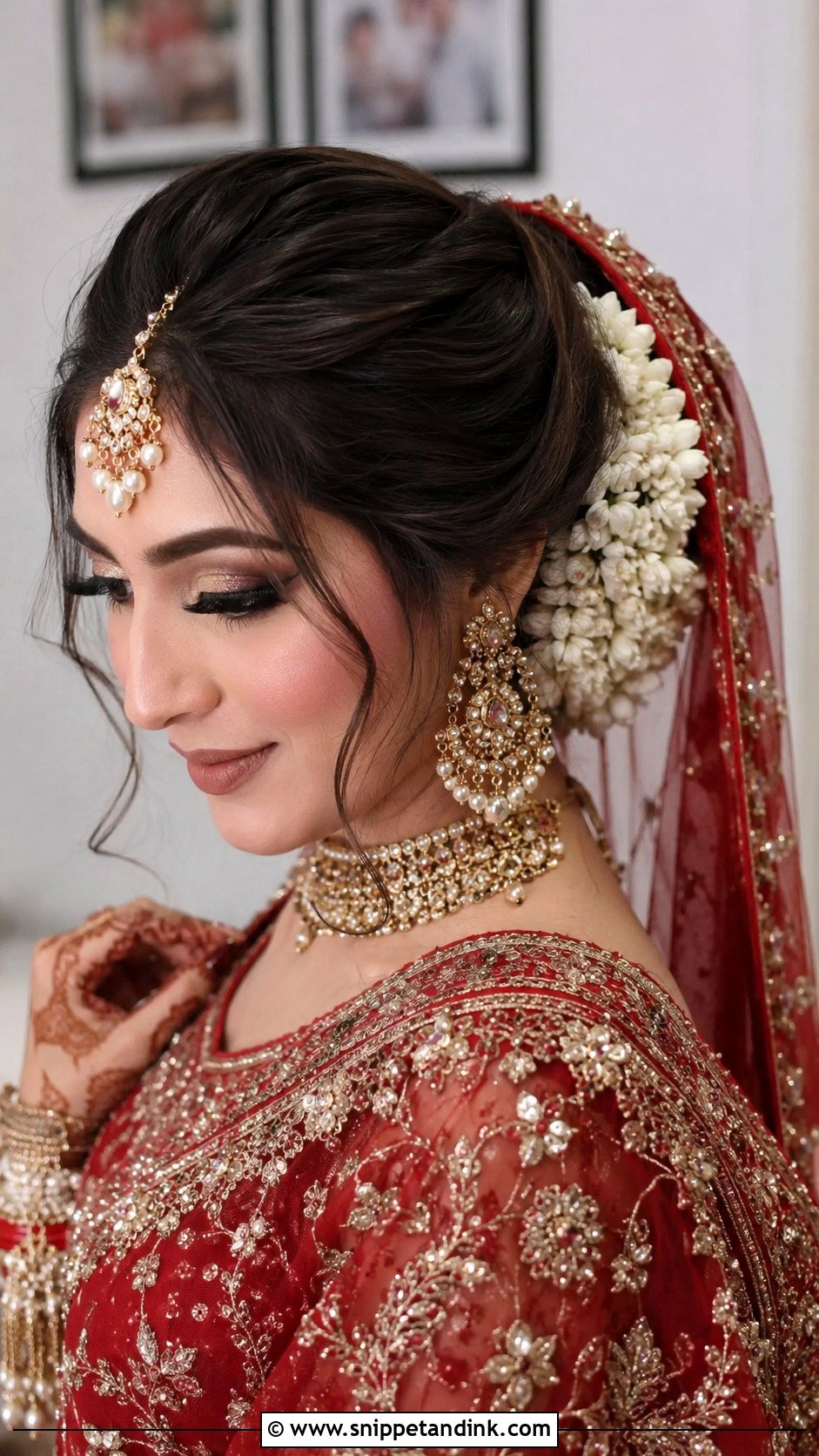
Fishtail is softer and more detailed than a classic three-strand braid, though less traditional. It only reads clearly on thick hair or extensions; on fine hair the tiny sections blur into a flat rope from more than a few feet away. I braid it down the back, or over one shoulder if the dupatta drape leaves space. Tiny pearls or hair jewels slot neatly between the sections. Keep the front smooth, or the whole look drifts toward casual.
8. Pakistani Bridal Bubble Braid
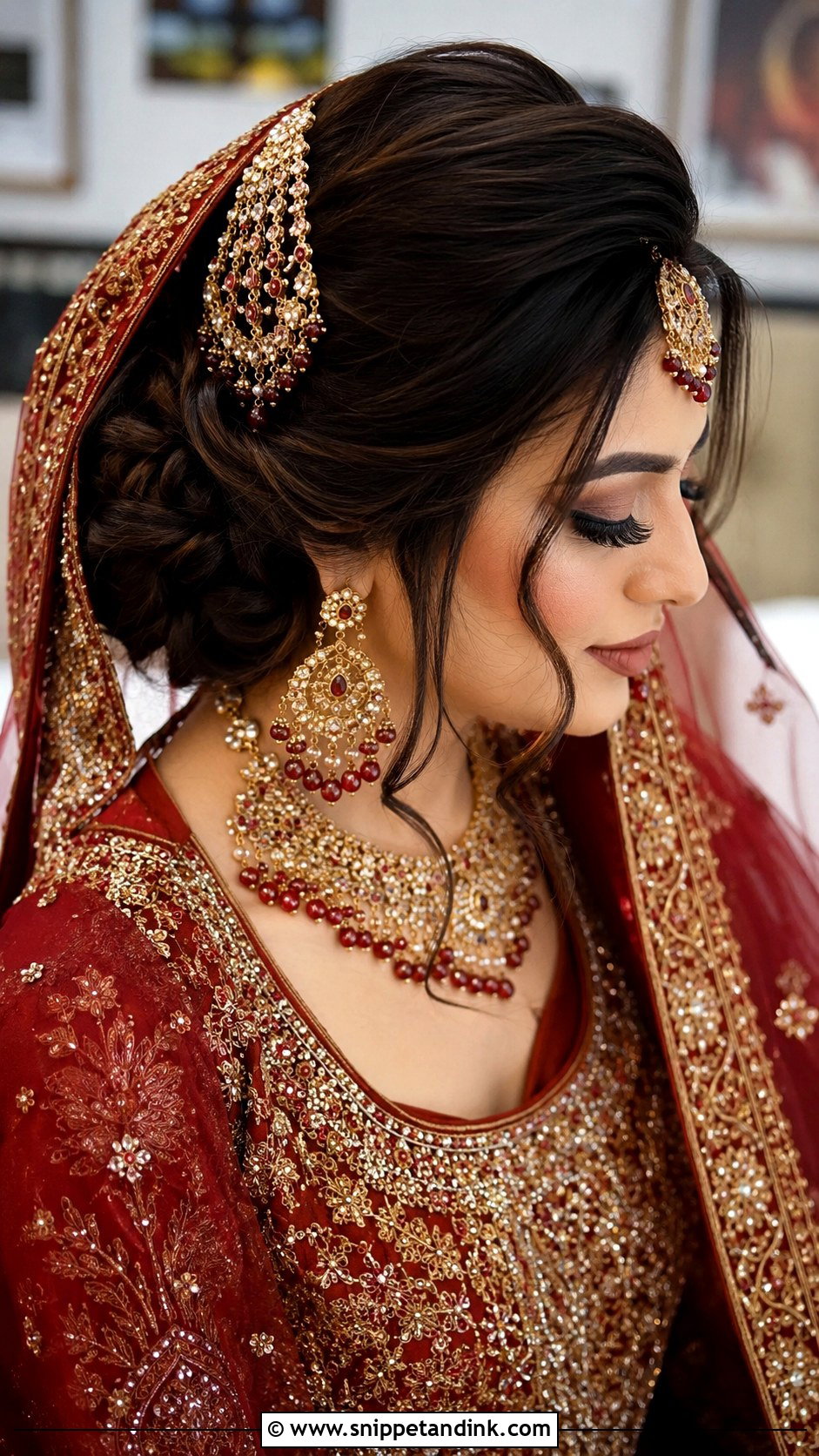
A bubble braid is the most current shape on this list. The hair is tied off in sections down its length, and each section is eased wider into a rounded bubble, which gives enough presence to match a heavy outfit. It needs long hair or extensions. I wrap each tie with gold thread or a pearl cuff to hide the elastics. The top can be sleek and center-parted to keep it bridal. My honest note: it can look like a trend in ten years’ time in a way a paranda braid never will, so think about the album, not just the day.
9. Pakistani Bridal Half Up Half Down Hair
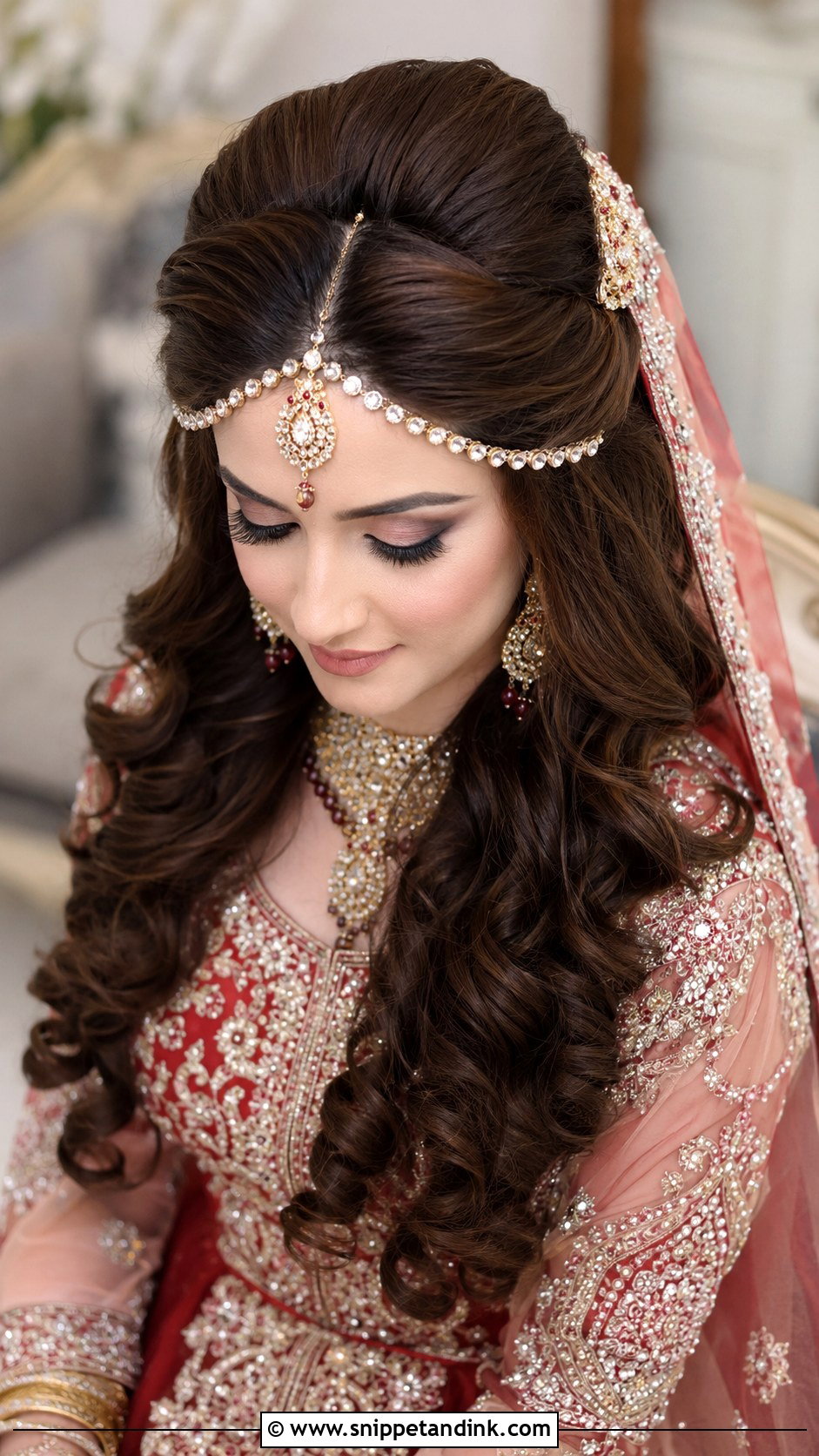
Half up gives you open hair below with a pinned base above for the tikka and the dupatta pins. That top section is the whole structure, so I tease lightly at the root and anchor it into a small hidden ponytail before anything goes on top of it. The lengths fall in curls or waves, ideally on long, thick hair or with extensions. Center-part it for tradition or sweep it to one side. Barat events run long, so I curl tighter than the final look and let the curls relax into shape over the evening.
10. Pakistani Bridal Open Curls
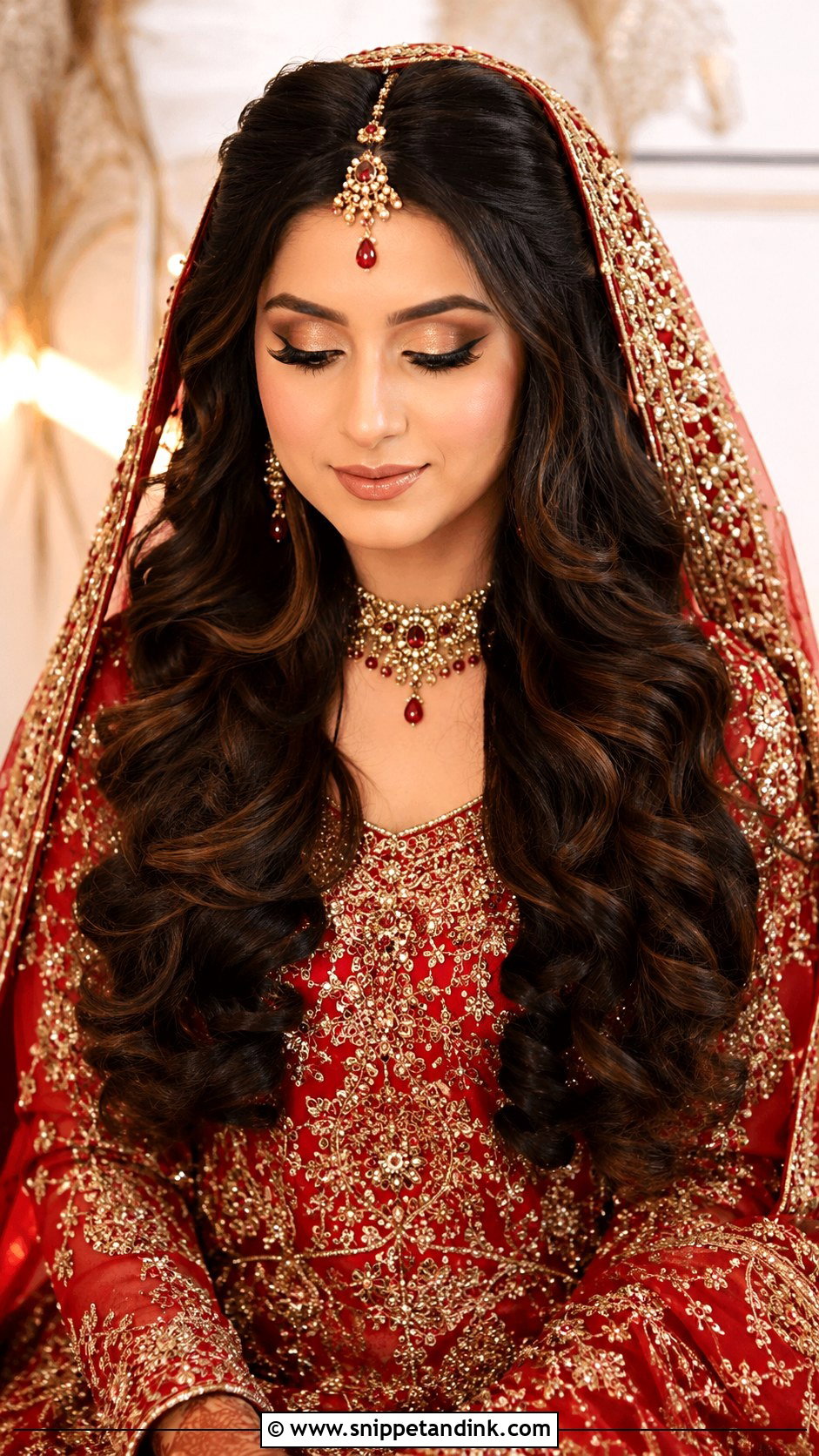
Open curls only work when the dupatta is light. A heavy, embellished dupatta pressed onto loose curls flattens them within the first hour, and they never recover. With a lighter net or chiffon dupatta, though, you get visible length and volume in every photo. I brush the curls into a polished shape, not loose and messy, and build a small teased base with hidden pins at the crown so there’s something firm for the dupatta to grip. A center part with tikka keeps it traditional.
11. Pakistani Bridal Hollywood Waves
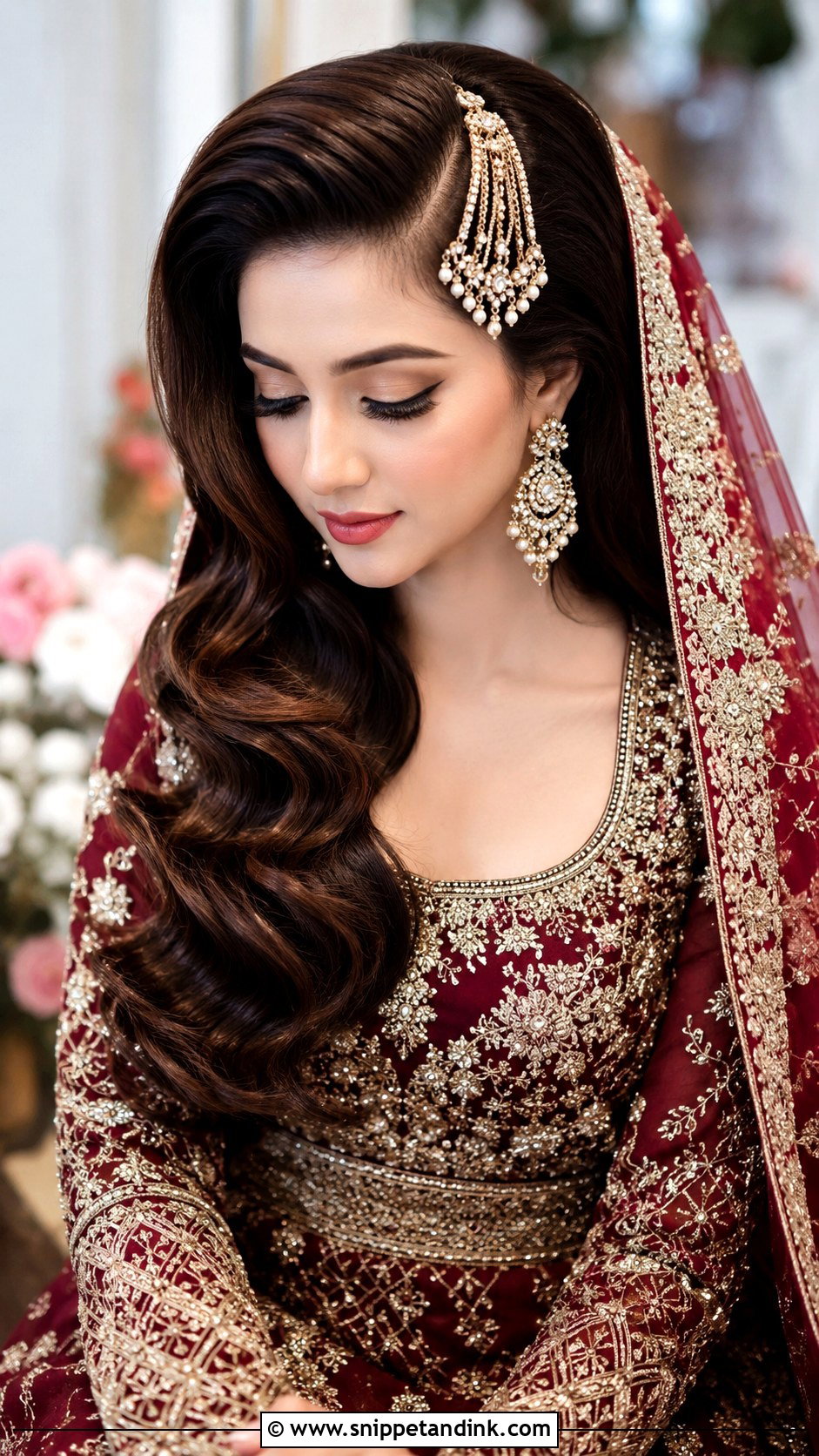
Hollywood waves are open hair at its most controlled. Every curl goes in the same direction and is brushed into a single glossy wave, which suits a side part, a passa and a one-sided dupatta drape. The setting does the work here: I clip each wave as it cools, then use a firm setting spray and secure pins at the crown where jewelry pulls. They need visible space to make sense, so a lighter dupatta or a modern cut of outfit suits them far better than a heavy traditional drape.
12. Pakistani Bridal Crown Braid Bun
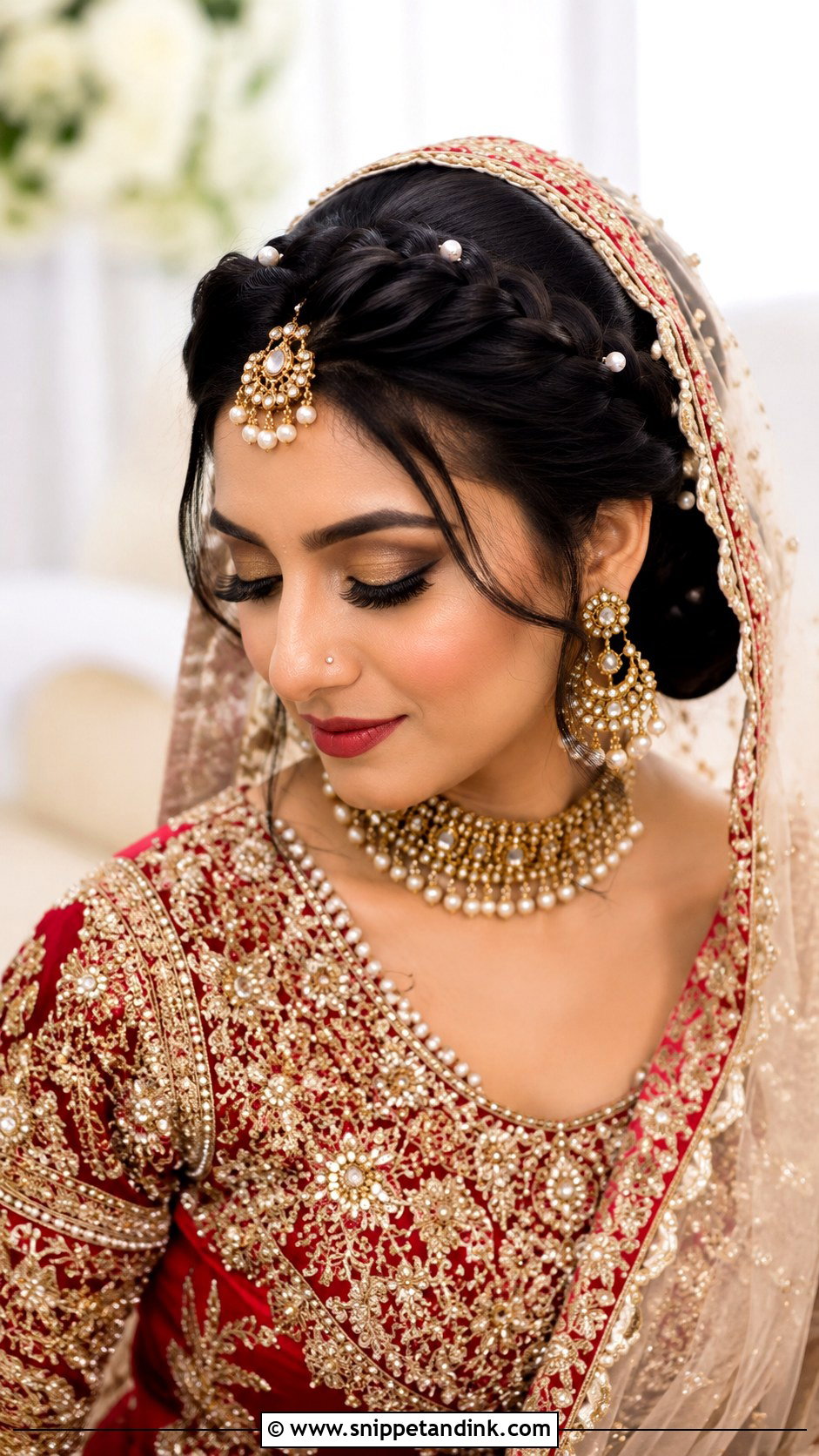
A braid running near the crown or hairline and blending into a low bun gives texture around the face with the security of a bun. It’s what I’d suggest if a plain smooth front feels too severe on you. The braid also helps frame the matha patti, giving the side chains something to rest against so they don’t slip forward. Small pearls tuck into the braid. It needs thick hair or extensions, and a dupatta set slightly behind the hairline so the braid isn’t hidden.
13. Pakistani Bridal Twisted Low Bun
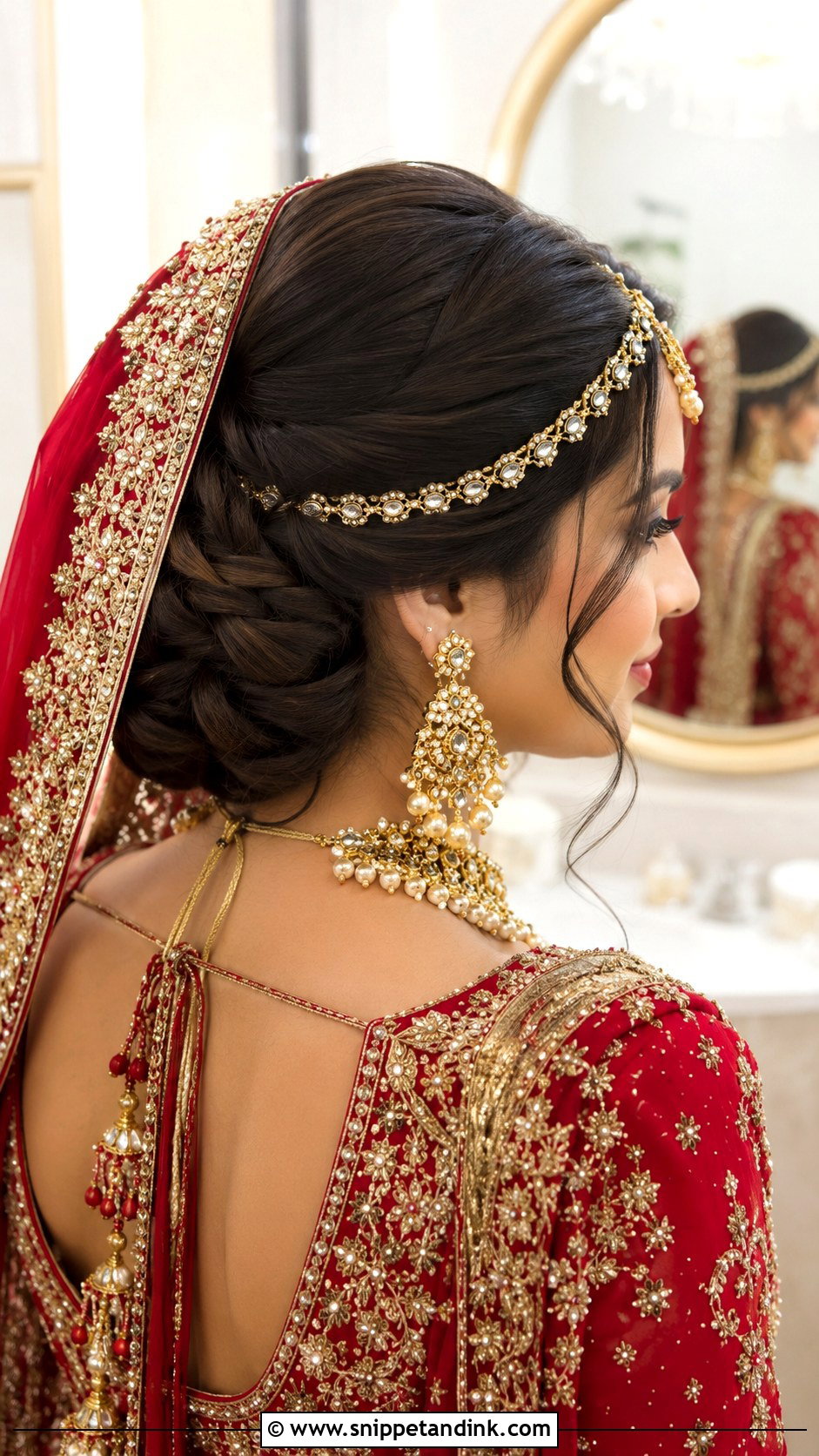
Twisted sections wrapped into a full shape at the nape give the bun soft detail without any mess. Center tikkas, matha pattis and dupattas pinned at the crown all sit easily with it. If your hair is medium length, I fill it out with a bun pad or a few extension pieces. The twists matter most from the side, so I angle them toward the camera position for close-up portraits, which is easy to plan once you know where the stage photos will be taken.
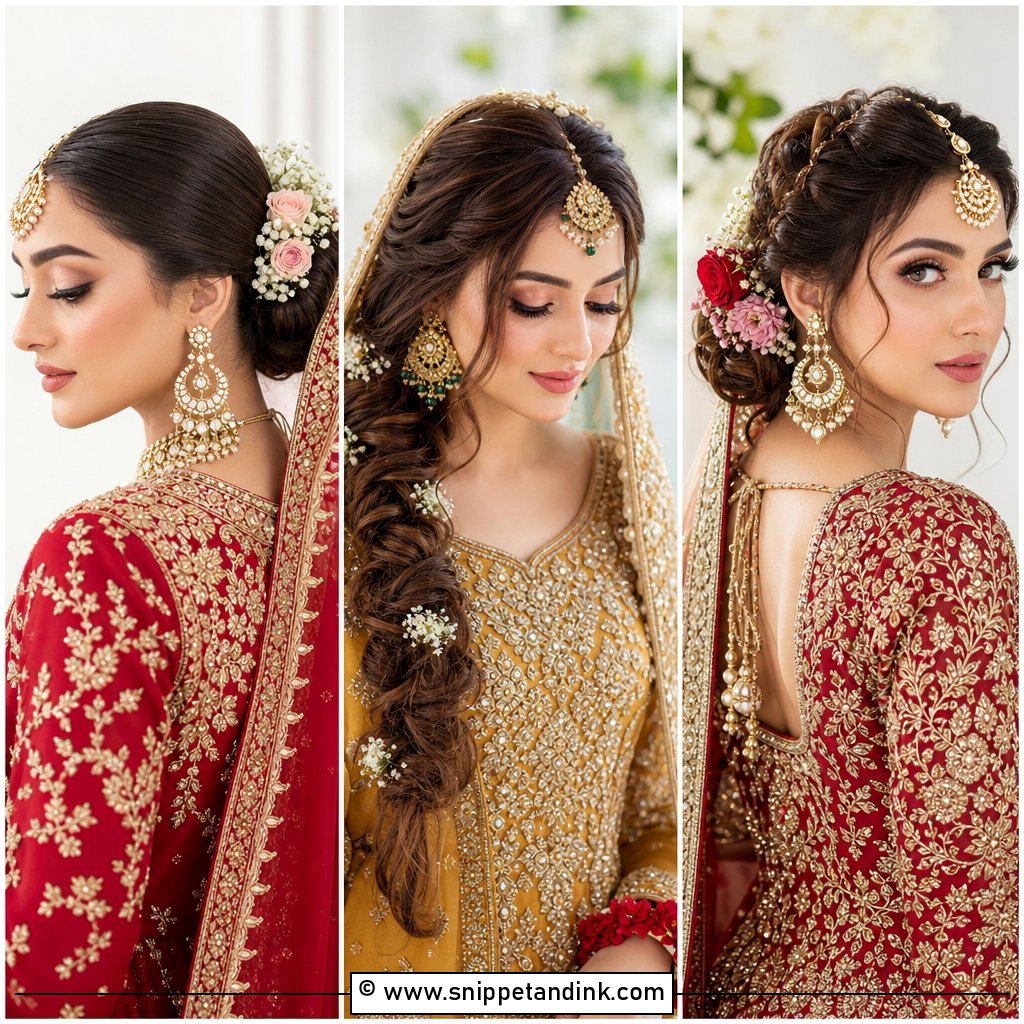
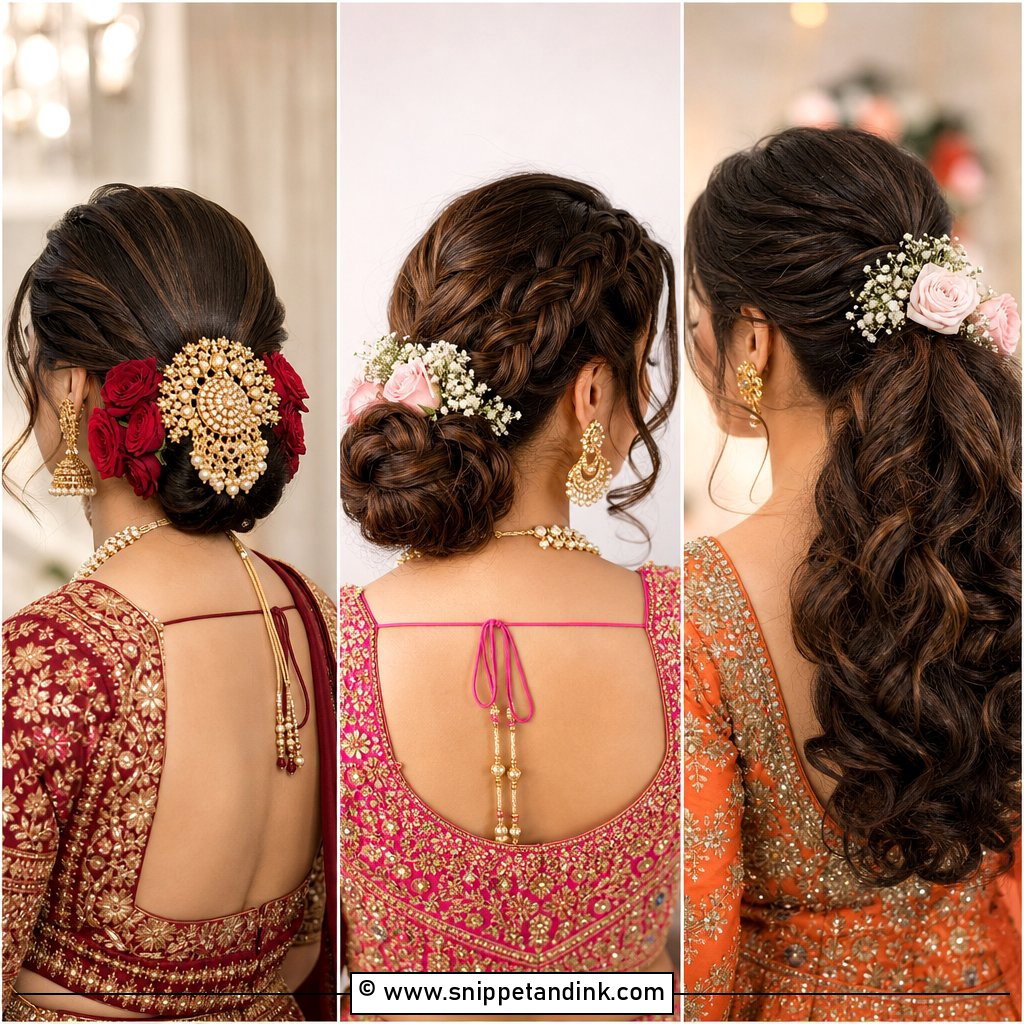
14. Pakistani Bridal High Bun With Volume
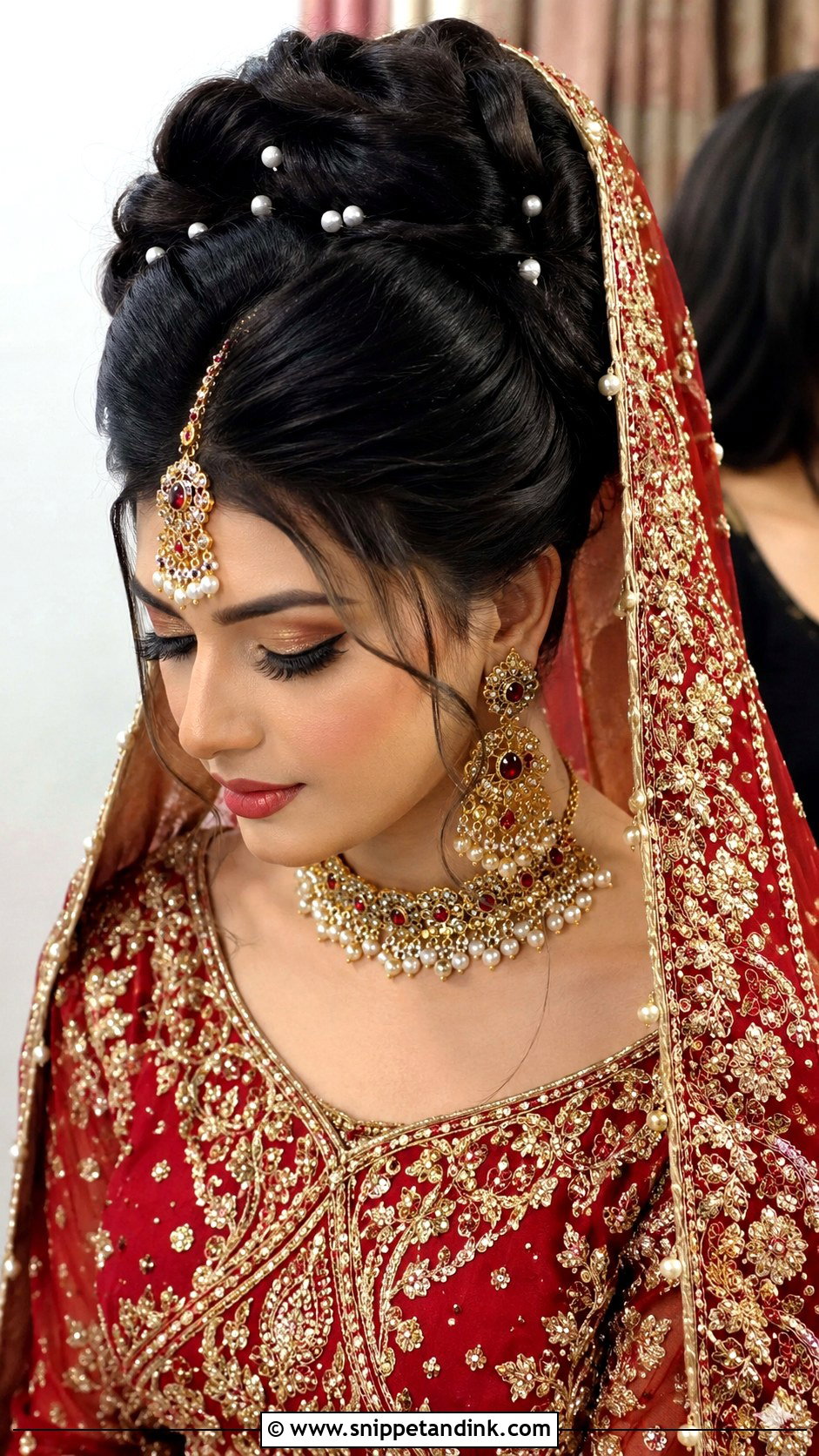
A high bun adds height, and height balances a large lehenga, a long dupatta and statement jewelry that might otherwise swamp a petite bride. It also lets the dupatta sit higher on the head without flattening the hair underneath. The catch is comfort. A high bun carrying dupatta weight pulls at the scalp, so I never build it tight, and I pin the dupatta into the bun itself rather than the hair around it. Pearl pins or a neat ring of gajra finish it.
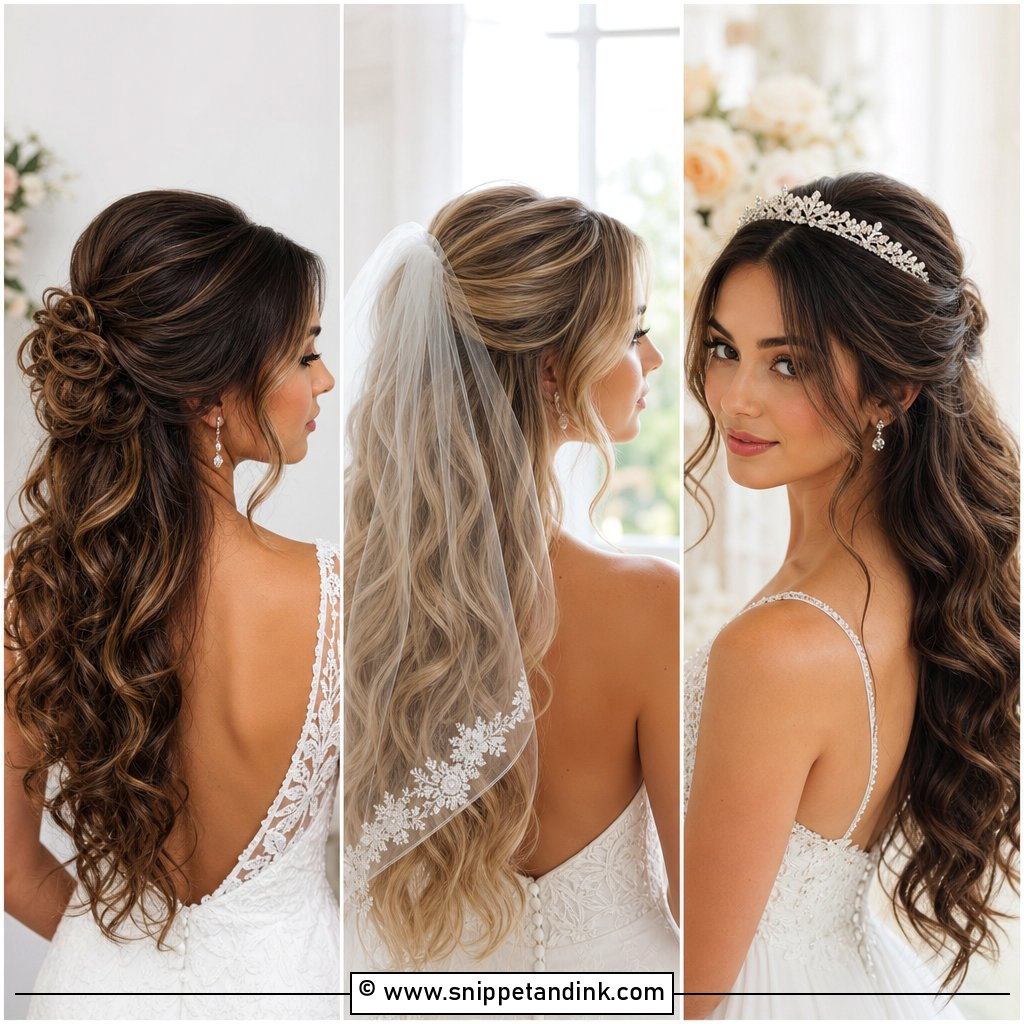
15. Pakistani Bridal Braided Bun
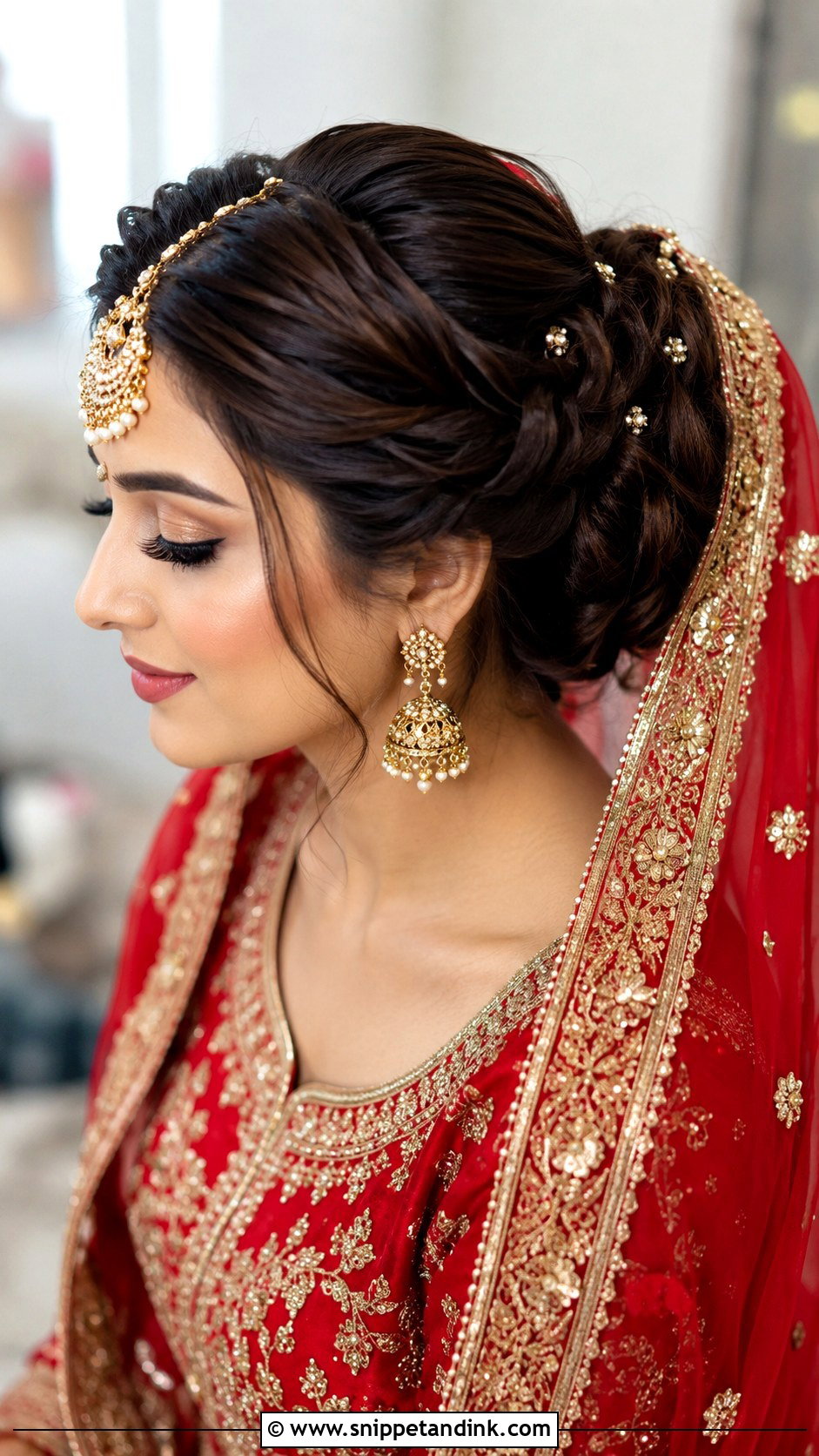
Braiding the hair first and then wrapping the braid into a bun gives visible texture and a very firm base. It’s more decorative than a plain bun and still carries a heavy dupatta, which makes it one of the longest-lasting styles I do. Traditional jewelry looks clean against it because the face stays open. Small gold pins, pearls or a soft floral ring around the bun add detail that shows in both front and back photos.
Hair, Makeup, Dupatta: Which Comes First on Barat Day
Barat mornings run late more often than not, and the order of work decides whether the hair survives. My usual sequence goes like this, though your salon may adjust it.
- Hair washed and fully dried the day before; clean but slightly lived-in hair grips pins better.
- Makeup first, so no powder or setting spray lands on finished hair.
- Hair built and set, with the base for the dupatta and jewelry hooks placed deliberately.
- Outfit on, then jewelry, then the dupatta set and pinned last.
- Gajra or fresh flowers added just before you leave.
Dupatta setting alone can take a long while with a heavy drape, so leave real time for it rather than squeezing it into the last ten minutes.
Rukhsati Night and Taking Out Fifty Pins
Nobody warns brides about the end of the night. A barat style can hold dozens of pins, teased sections and setting spray, and pulling at it while tired is how hair snaps. Take the dupatta pins out first, then the jewelry, then work through the hair from the bottom up, feeling for pins with your fingers. Don’t brush teased hair dry. Work a little oil or conditioner through the knots, let it sit, and comb gently from the ends before washing.
Your Dupatta and Jewelry Decide Half of It
A barat hairstyle has to support the whole bridal look, not just look good on its own. Weigh up your dupatta, where your jewelry sits, your face shape, your neckline and how long the day will be. Sleek buns read classic; paranda braids feel the most traditional; open curls and waves suit lighter dupattas. Braided buns, chignons and twisted low buns give you the most hold. Take your saved looks, your actual dupatta and your jewelry to a trial, because those three together tell your stylist far more than photos alone.
You'll Like These Ideas:



Leave a Reply