
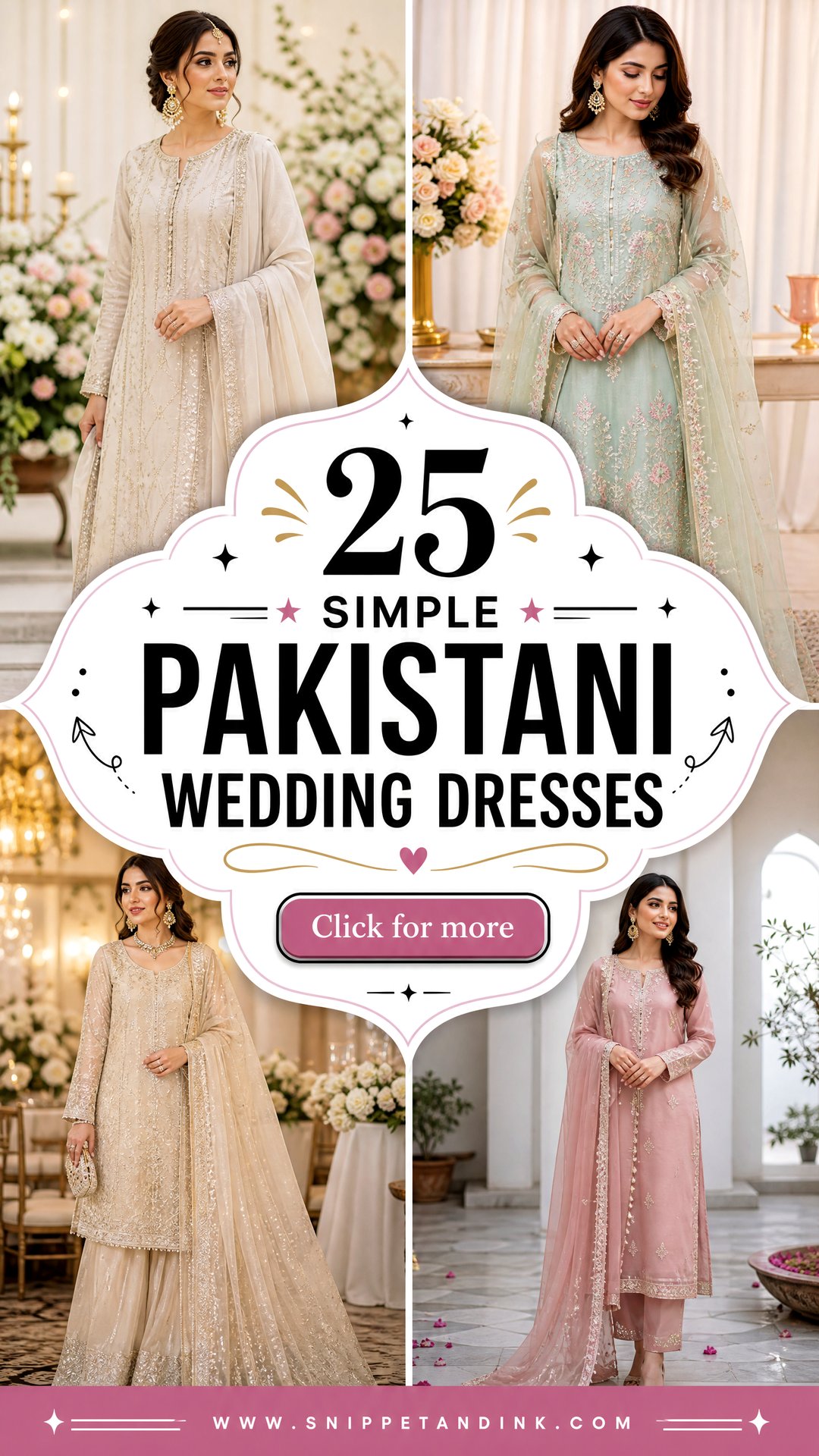
Not every outfit at a Pakistani wedding needs to weigh as much as the bride’s. Sisters, cousins, mothers and guests, and plenty of brides at their smaller functions, want something festive they can sit, eat and dance in for hours. The pieces below rely on clean tailoring, lighter fabrics like organza, chiffon and raw silk, and small finishing details such as gota, zari borders, pearls and kiran trim. Under each one I’ve noted what I look at first when a client brings it to me.
How Much Embroidery Suits Your Role at the Wedding
The same simple suit can be exactly right for one person and wrong for another, depending on where you stand in the wedding. I dress clients by role first and by color second.
The bride at her smaller functions
Nikah, mehndi and dholki are where a bride can go simple and save the heaviest outfit for the barat. Give each look one focal point, such as a worked dupatta, a heavy border or a single strong jewelry piece, and keep the rest calm.
Sisters and cousins
You’ll stand beside the bride in most photos, so coordinate with her palette rather than copying it. Mid-weight embroidery is right. Choose pieces that survive dancing, carrying trays and running errands, because that’s the reality of a sister’s wedding week.
Mothers and aunts
Rich color, refined work, and fabrics that don’t crumple after long stretches on the stage. A shawl or a dupatta with some weight to it hangs gracefully and keeps you warm under air conditioning.
Guests
Light embroidery, no red, and nothing that could be mistaken for bridal. If you’re unsure of the dress code, ask the family. It’s a normal question, and they’ll be glad you did.
1. Simple Pakistani Nikah Dress
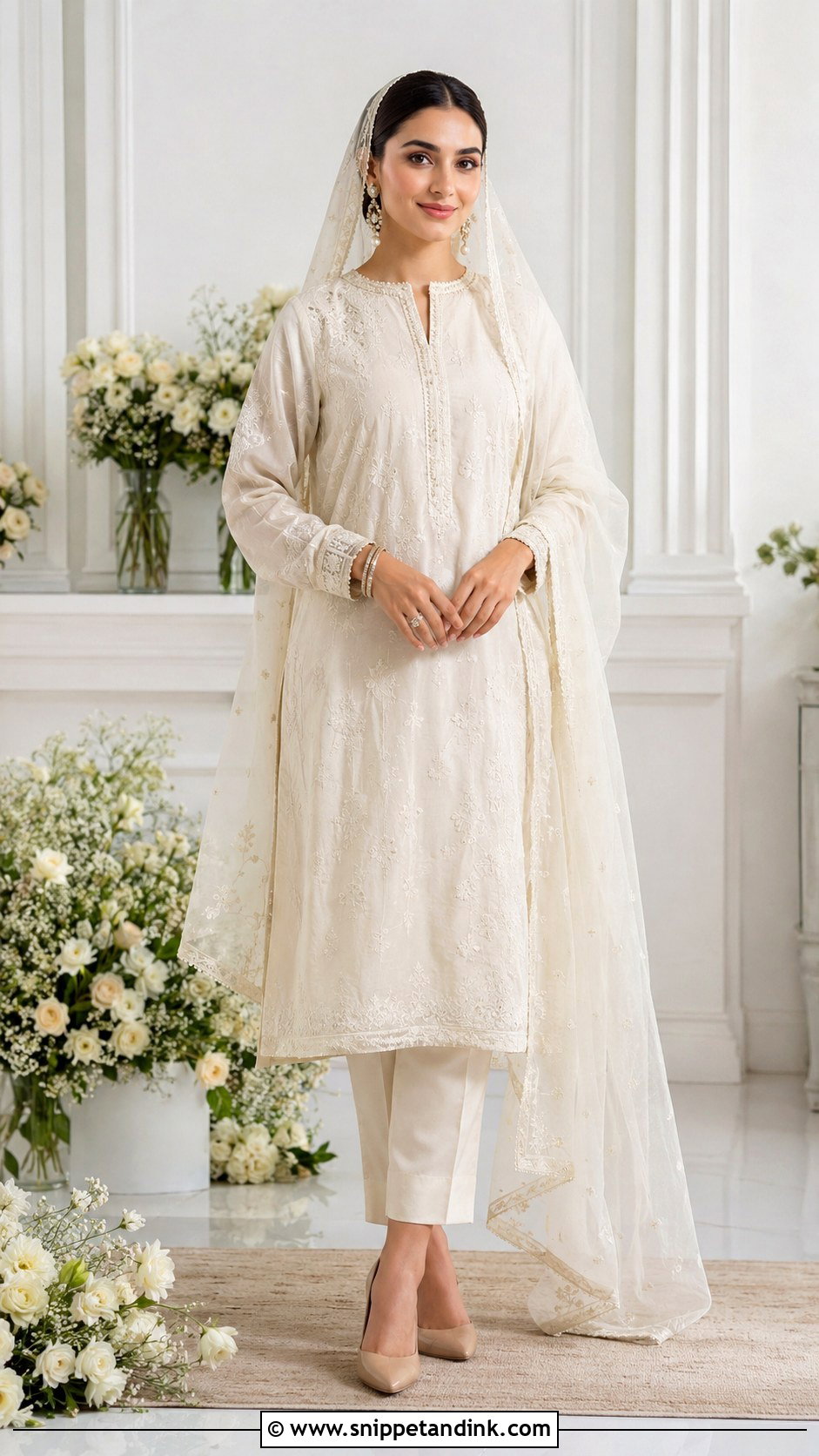
For a nikah I start with the dupatta, because it sits over your head for the most photographed part of the day. A sheer organza one with a scalloped border frames the face and slips less than chiffon. Underneath, a straight long kameez in ivory, champagne or blush with light pearl work, worn with cigarette pants or a soft sharara, is enough. Keep the jewelry small, a tikka and pearl studs, so nothing snags the dupatta.
2. Simple Pakistani Lehenga Dress
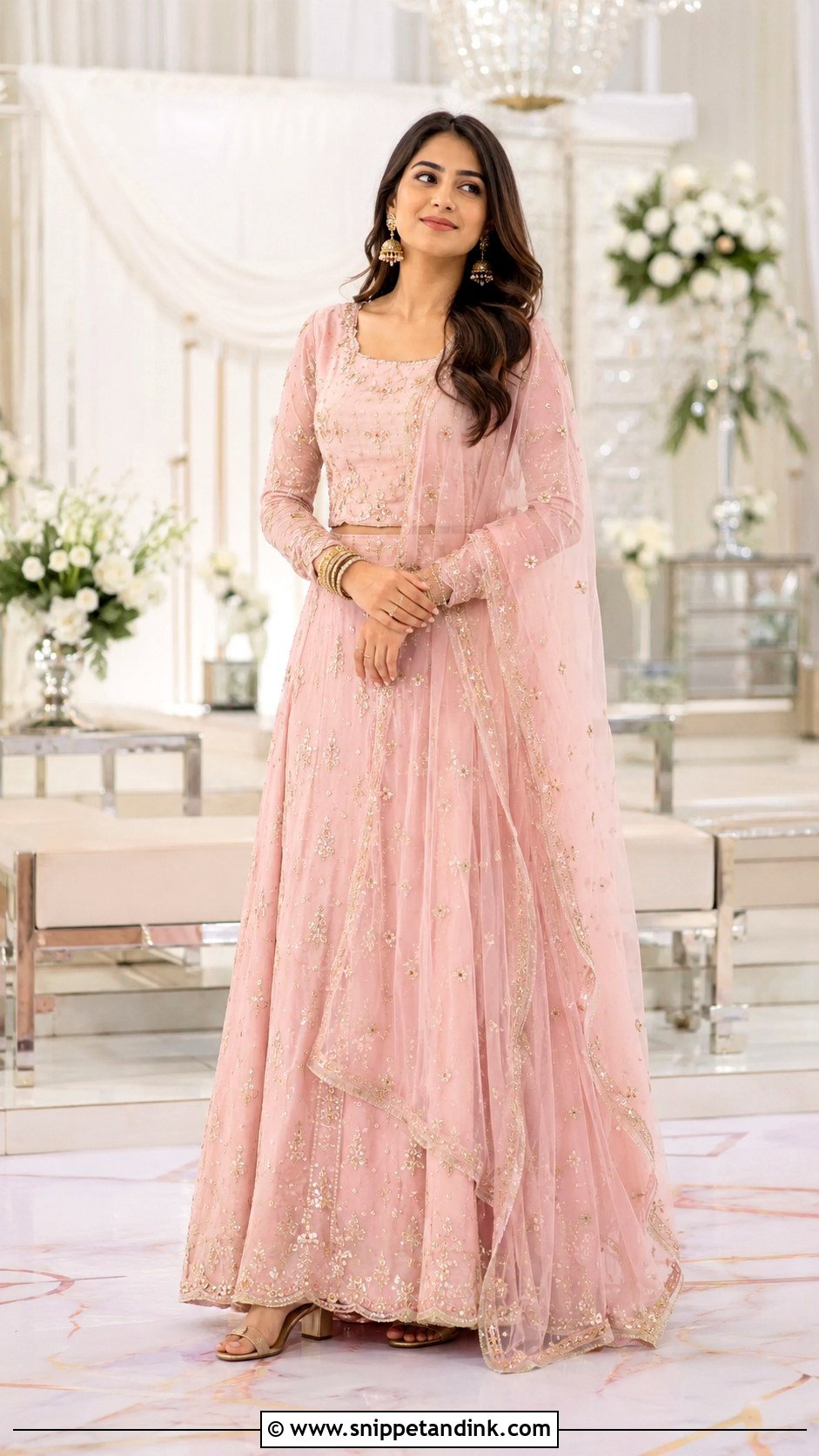
A simple Pakistani lehenga dress gives you the bridal shape without the bridal weight, as long as the skirt fabric is light. Raw silk holds a flare by itself; chiffon and organza need a can-can or a firm lining to stand out. Small bootis or a thin border are plenty. Mint or powder blue suits daytime, while maroon or emerald with a little gold carries an evening, and block heels will save you through hours of greetings.
3. Simple Pakistani Sharara Dress
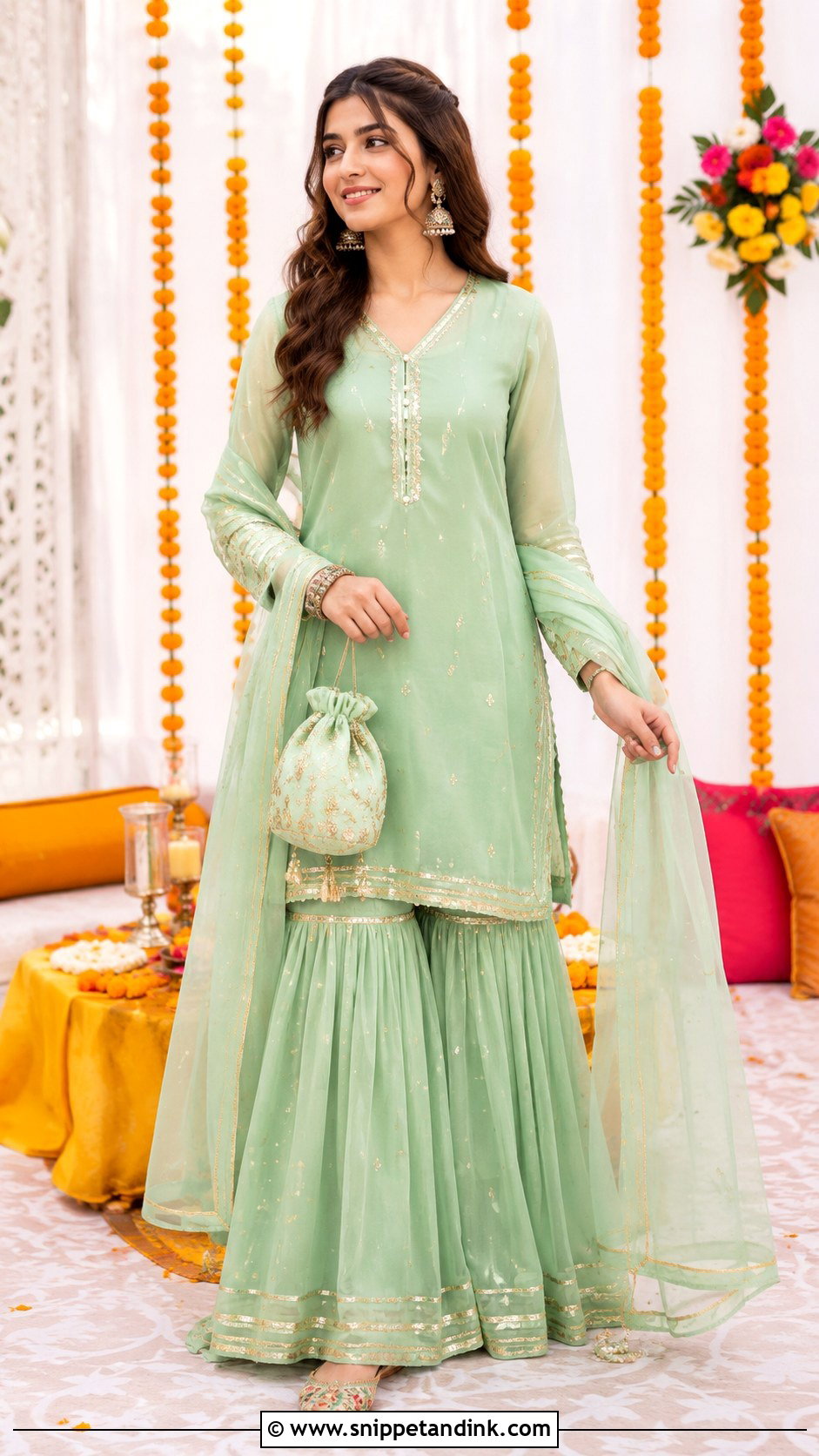
Shararas swallow fabric, which is exactly why the kameez on top should stay clean. A short or mid-length kurti with a little lace, gota or mirror work balances all that volume. Georgette and chiffon shararas swing nicely, while raw silk ones look more formal but crease at the knee if you sit for long. I keep shararas for mehndi, dholki and daytime lunches, with khussas and a small potli.
4. Simple Pakistani Gharara Dress
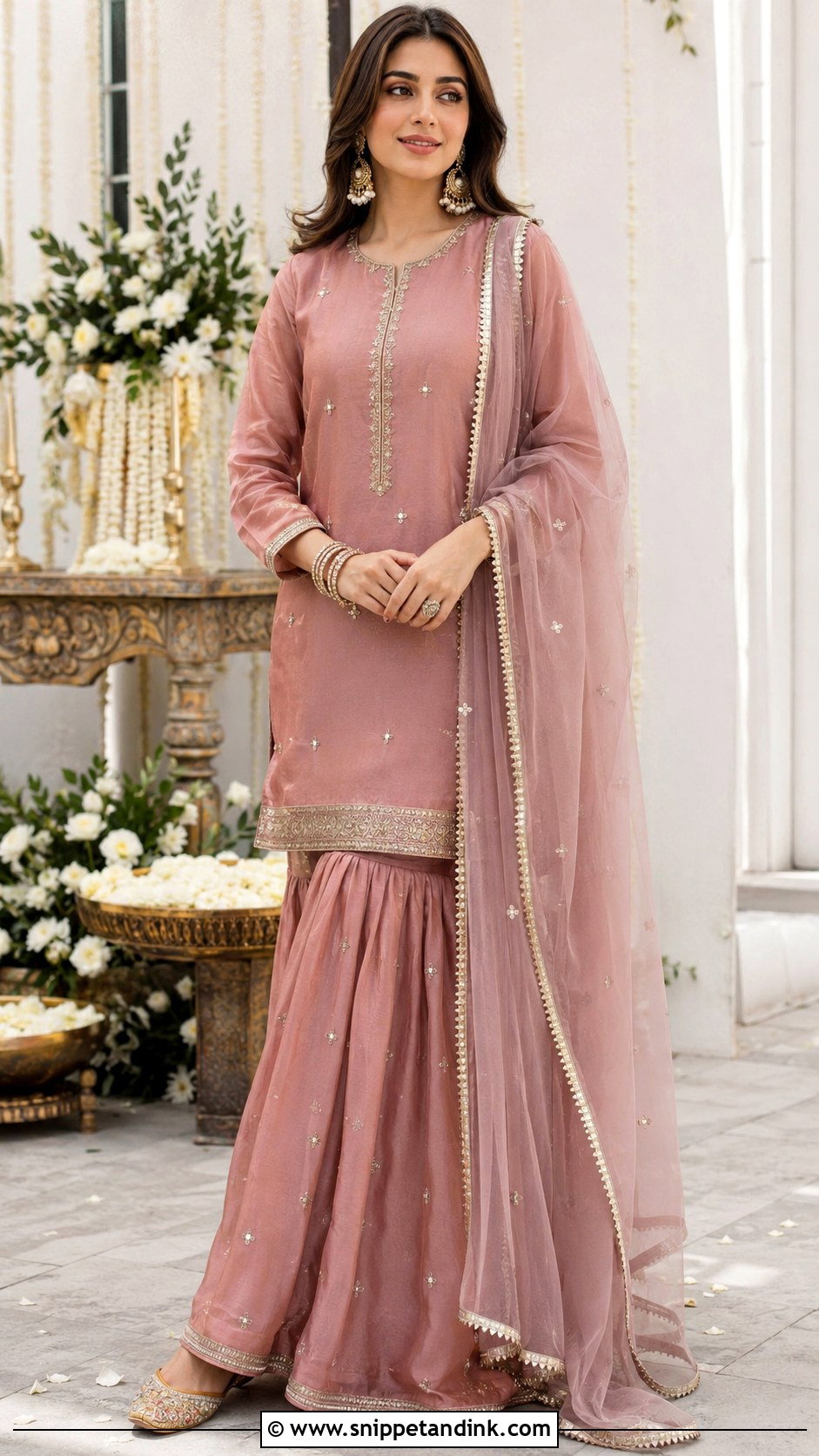
The gharara’s defining detail is the gathered band at the knee, often covered in gota, and it’s the part that needs the most careful tailoring. Cut it too tight above the band and sitting cross-legged becomes impossible. A straight shirt with light zari at the neckline and a dupatta edged in kiran is the traditional pairing. Tea pink, sage and dusty rose show off the gota without looking loud.
5. Simple Pakistani Maxi Dress
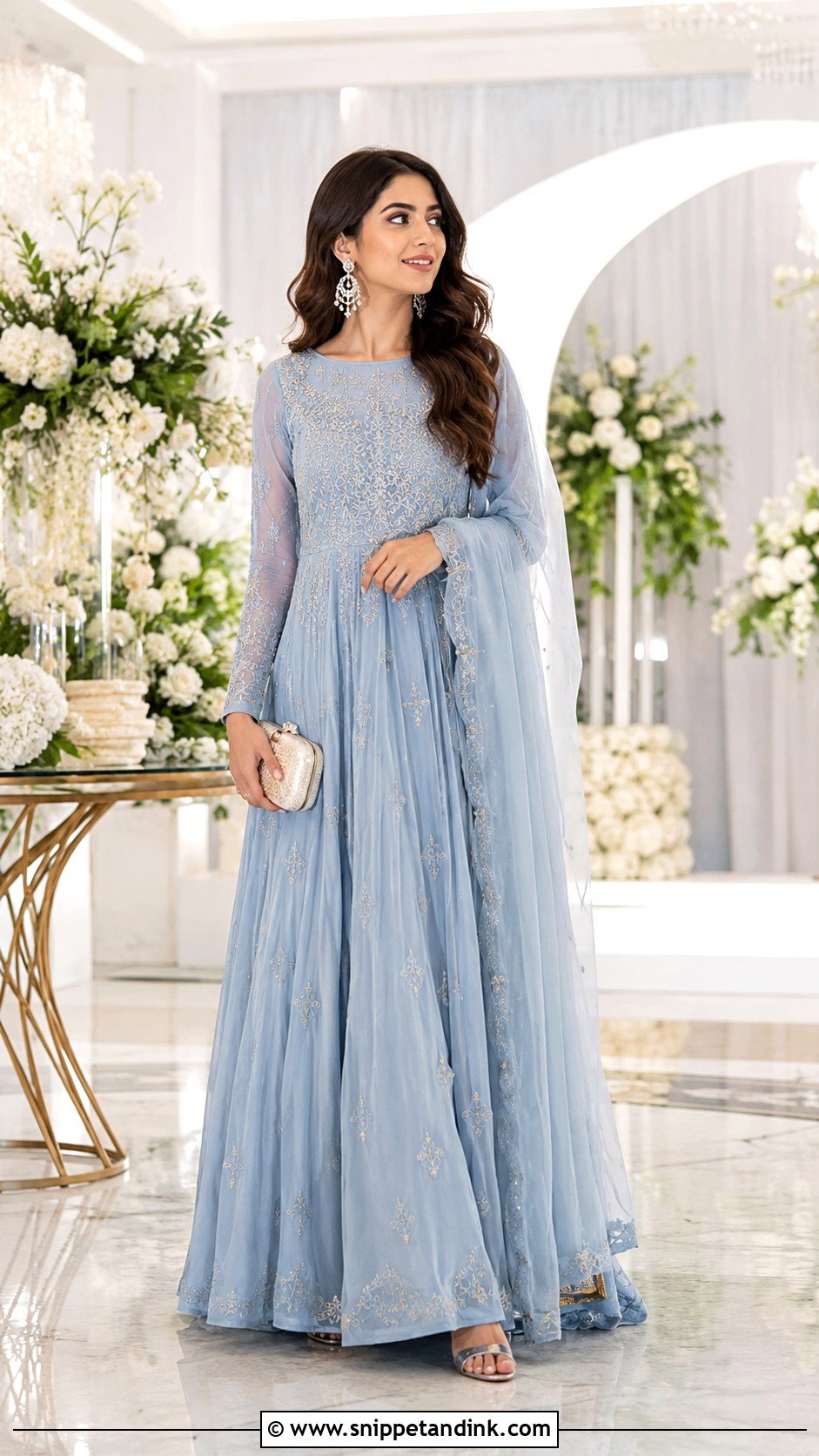
Maxis are easy to wear and easy to overdo. My preferred version has a lightly defined waist and soft embroidery only at the bodice, sleeves and hem; a heavy flare on top of heavy fabric starts to look like a costume. Net and georgette fall better than stiff silk at a walima. To make it read more formal, go for a jewel tone rather than adding embroidery.
6. Simple Pakistani Anarkali Dress
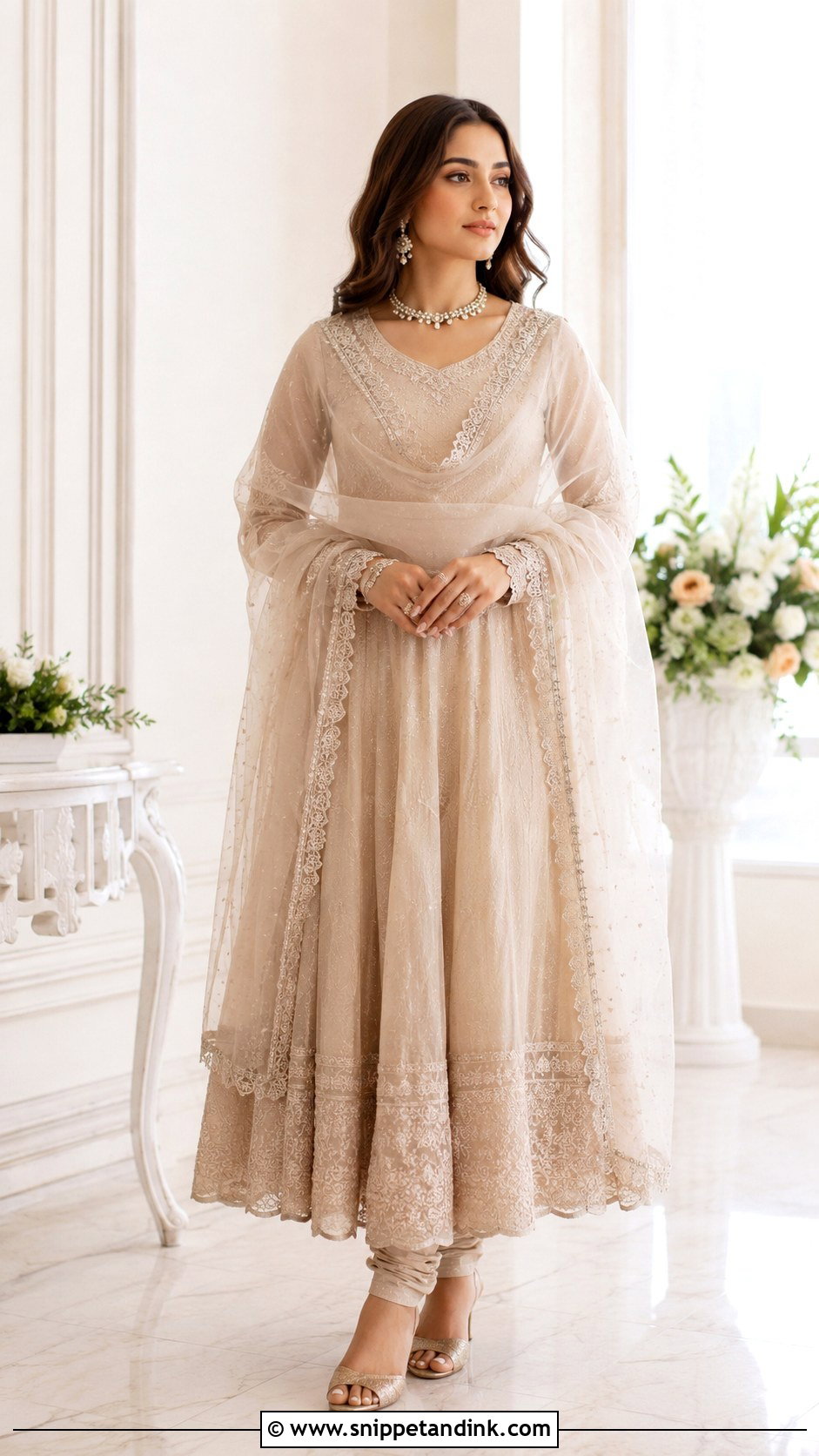
Anarkalis flatter so many figures because the seam sits high, just under the bust, and the skirt falls freely from there. The fit at that seam is everything, so check it sitting down, not just standing at the mirror. Chiffon or cotton net keeps it light, and churidar pants give a neat finish at the ankle. Draping the dupatta across both shoulders is the traditional way, and it stops the dupatta sliding off one side all night.
7. Simple Pakistani Peplum Dress
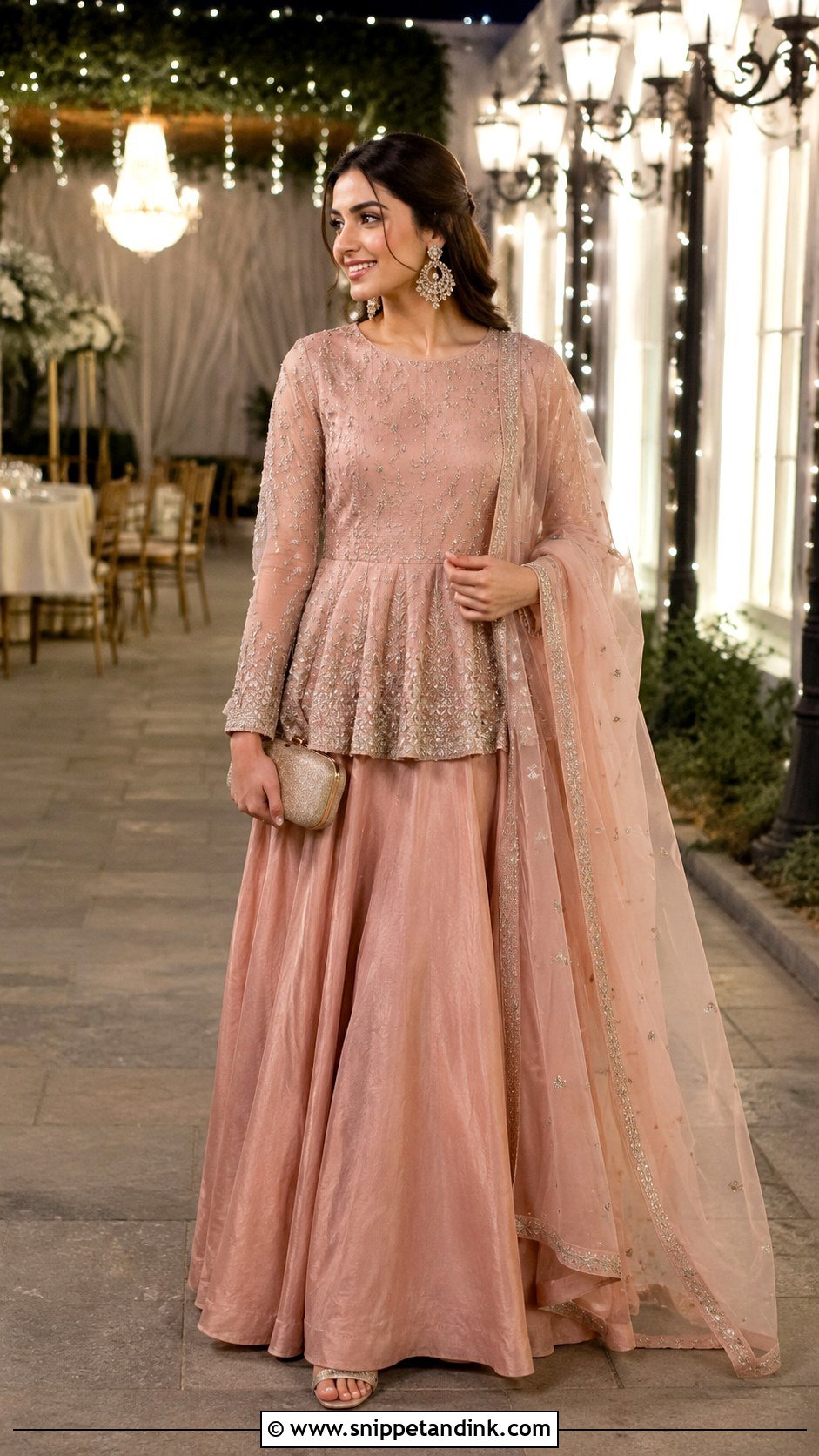
Peplums look modern partly because they’re structured, so raw silk and organza work far better here than limp chiffon. Keep the embroidery to the neckline, cuffs and the edge of the flare. Pair it with cigarette pants for an engagement dinner or a sharara for mehndi. If you’re short-waisted, ask for the peplum seam to sit a touch lower so it doesn’t cut you in half.
8. Simple Pakistani Long Shirt Dress
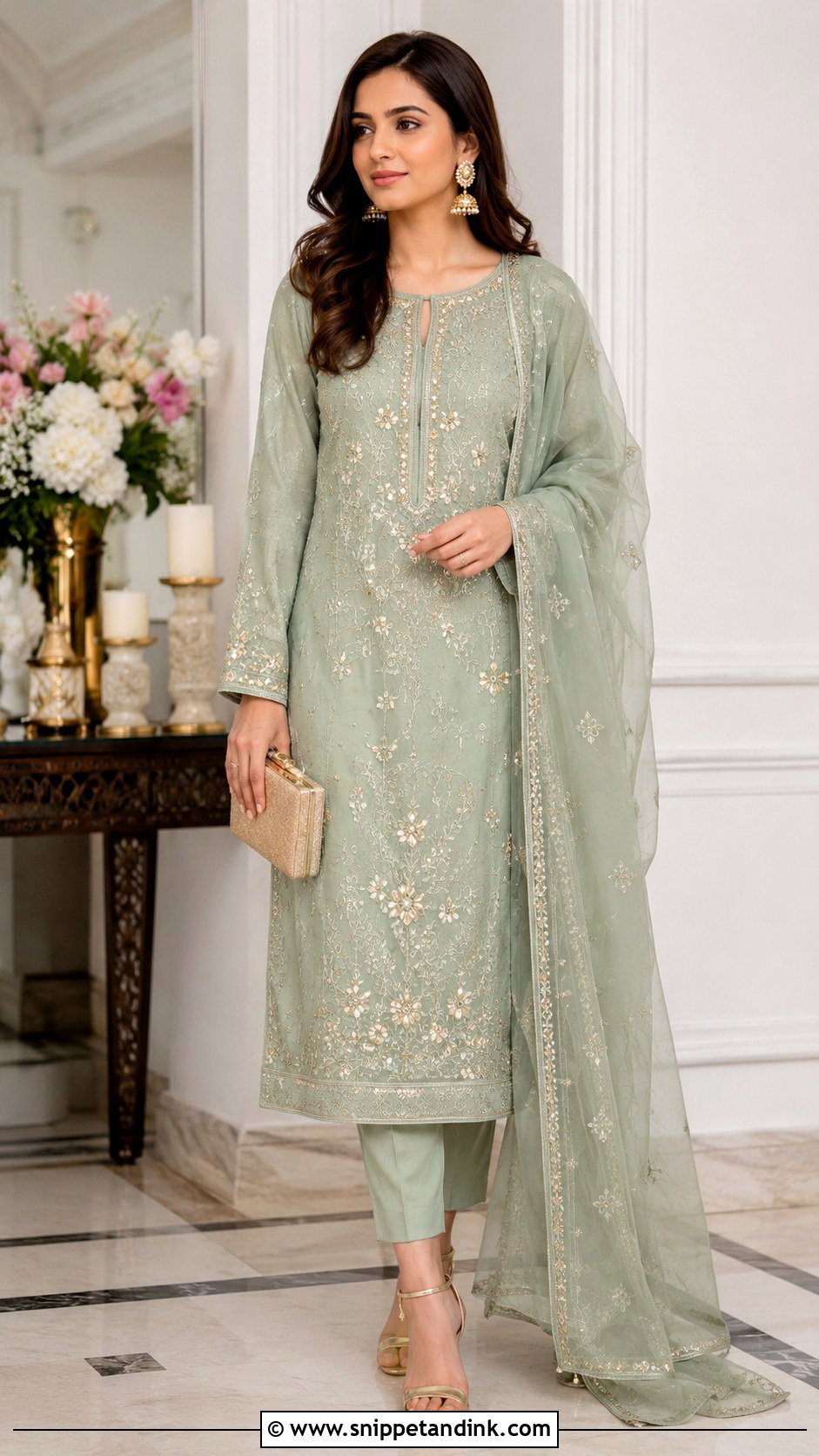
If I had to name one outfit to rewear across a whole wedding season, it’d be a long shirt dress. A straight or slightly flared kameez with fine embroidery at the neckline and side slits goes with cigarette pants by day and a plain sharara at night. Those slits are what let a long shirt move, so have them cut to start just below the hip, where they won’t gape when you walk.
9. Simple Pakistani Organza Dress
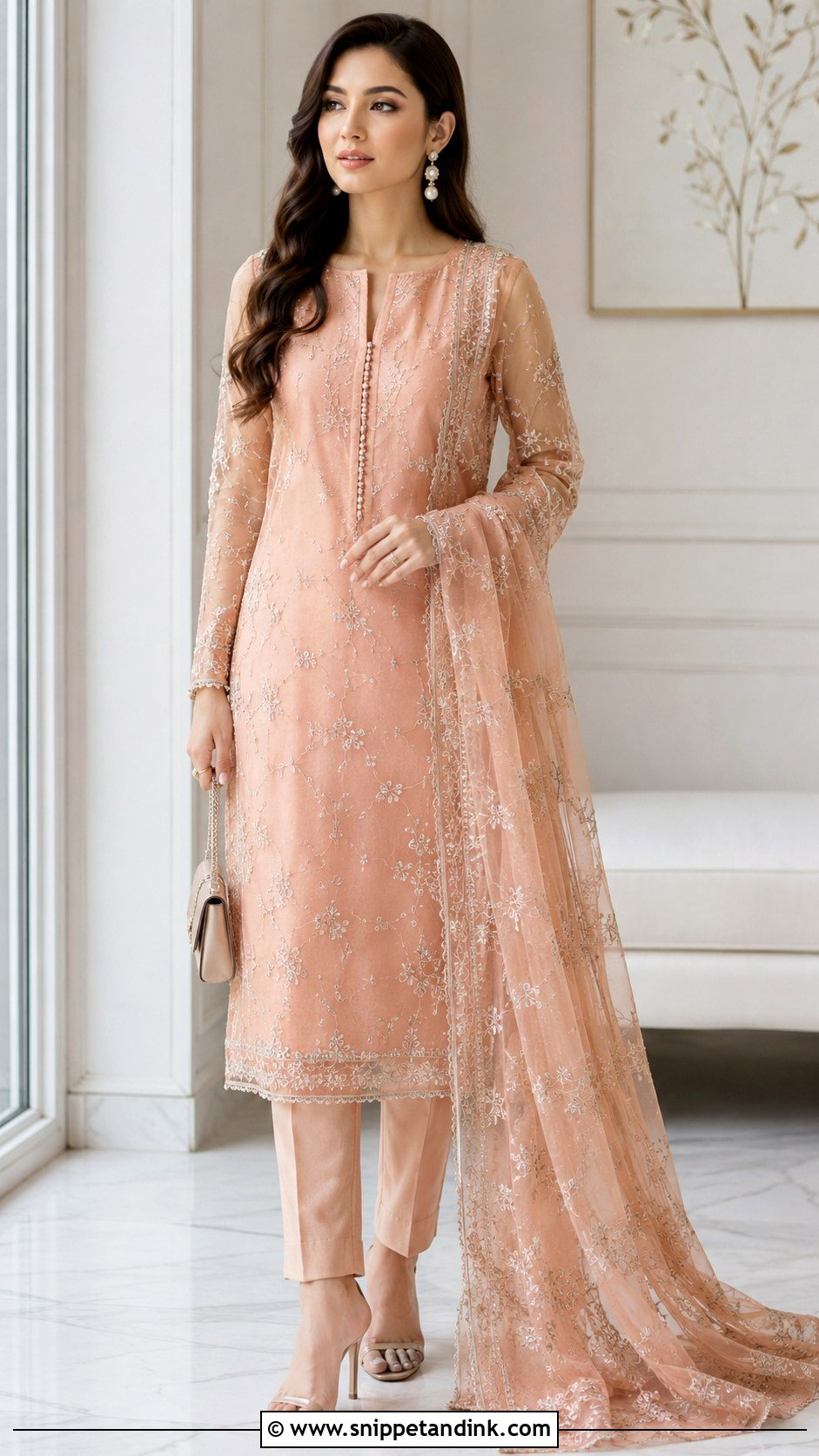
Organza is crisp and sheer and shows everything beneath it, so the lining is part of the design, not an afterthought. Ask for a soft cotton or silk lining in the same shade, and choose pearl buttons or a slim border over heavy work, which can pucker the fabric. It also creases sharply. Steam it rather than ironing, and hang it up the night before.
10. Simple Pakistani Chiffon Dress
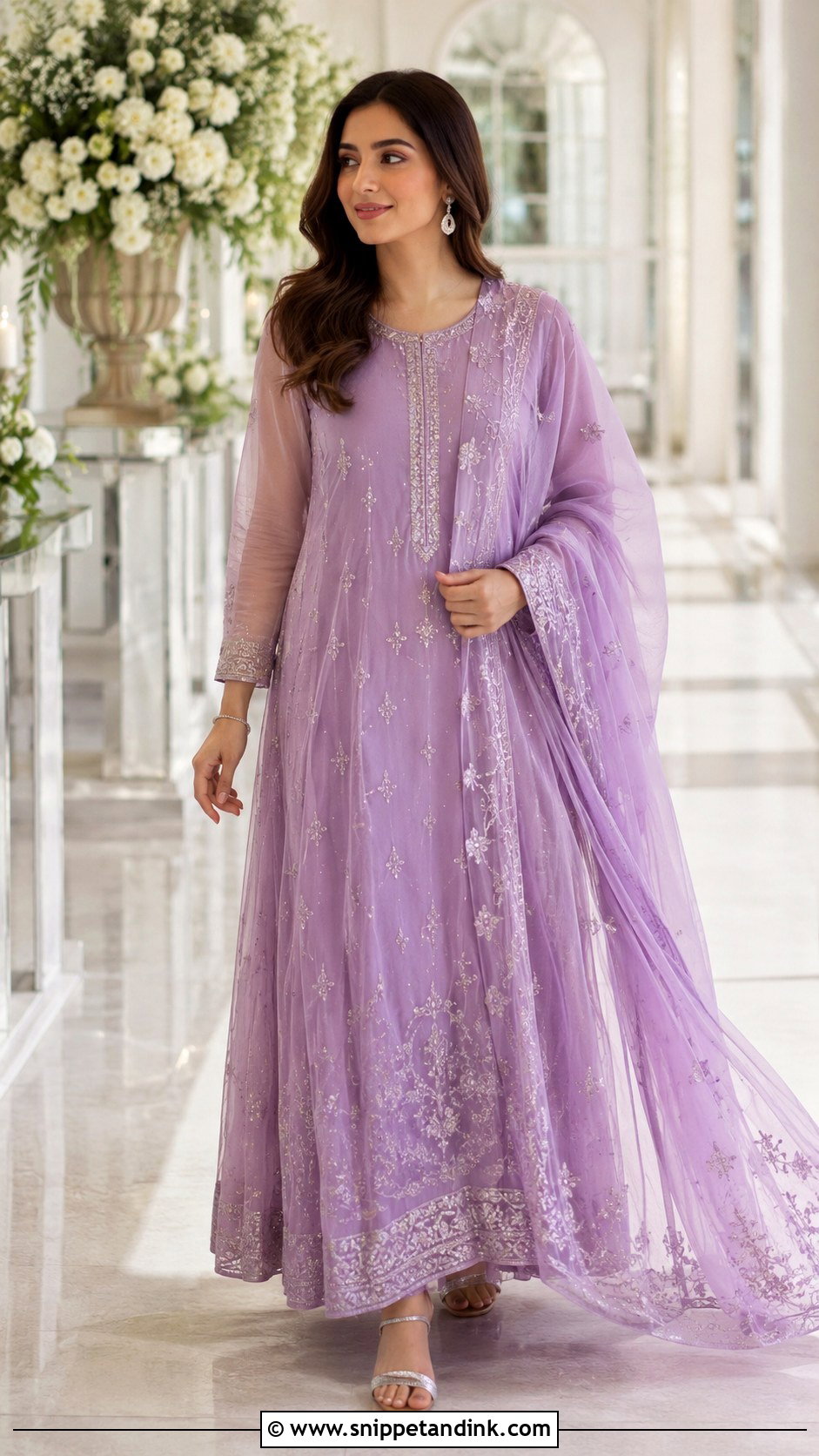
Chiffon is my first suggestion for a summer wedding because it breathes and falls softly. It also clings and turns see-through, which makes a slip lining non-negotiable. Light thread embroidery or a scattering of sequins suits it; dense work drags the fabric out of shape. Wear pastels in daylight and deep green or navy after dark.
11. Simple Pakistani Raw Silk Dress
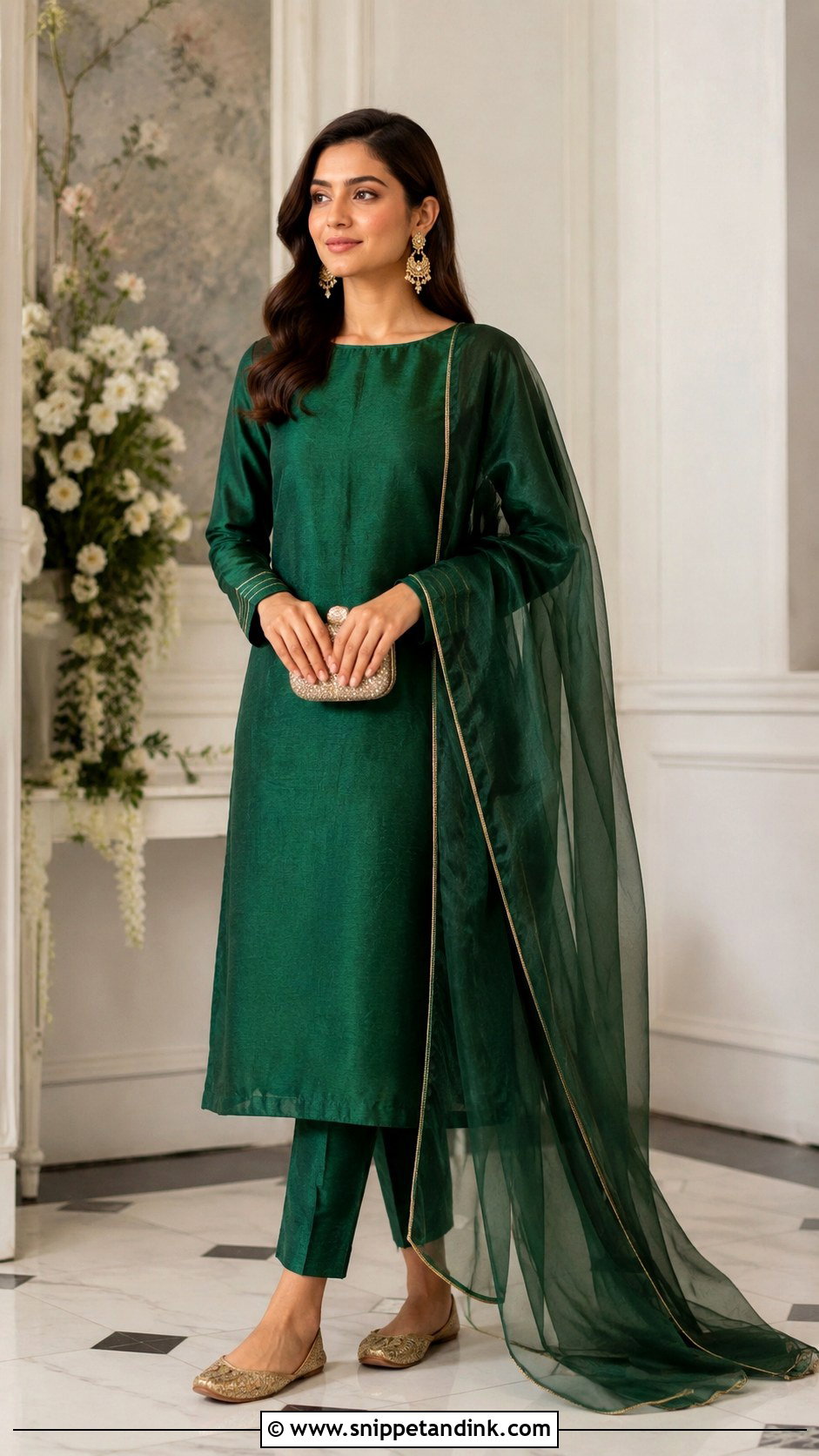
Raw silk has a slubby texture that reads as formal on its own, which is why a raw silk dress needs so little embroidery. A straight shirt, cigarette pants and an organza dupatta is about as polished as simple gets. Know its weak spots, though: raw silk water-spots easily and creases at the elbows and lap. Emerald, rust and champagne look richest in it.
12. Simple Pakistani Velvet Dress
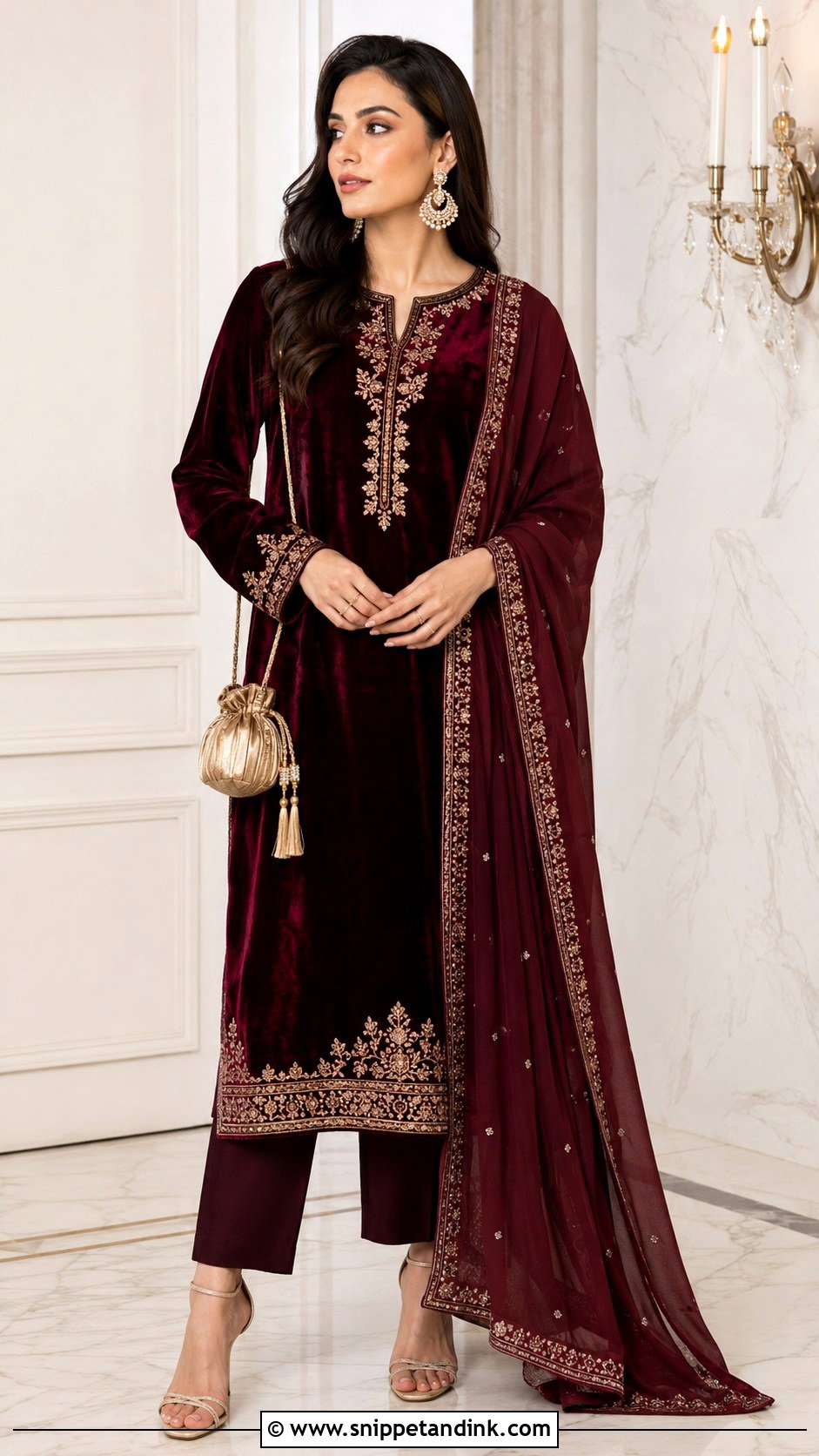
Velvet is my answer for winter weddings in chilly halls. Its pile catches light, so even a little gold at the neckline looks generous. Balance the weight with raw silk trousers and a chiffon or organza dupatta rather than piling a velvet shawl on top. Hang it for travel, because folding crushes the pile and those marks need steam to lift.
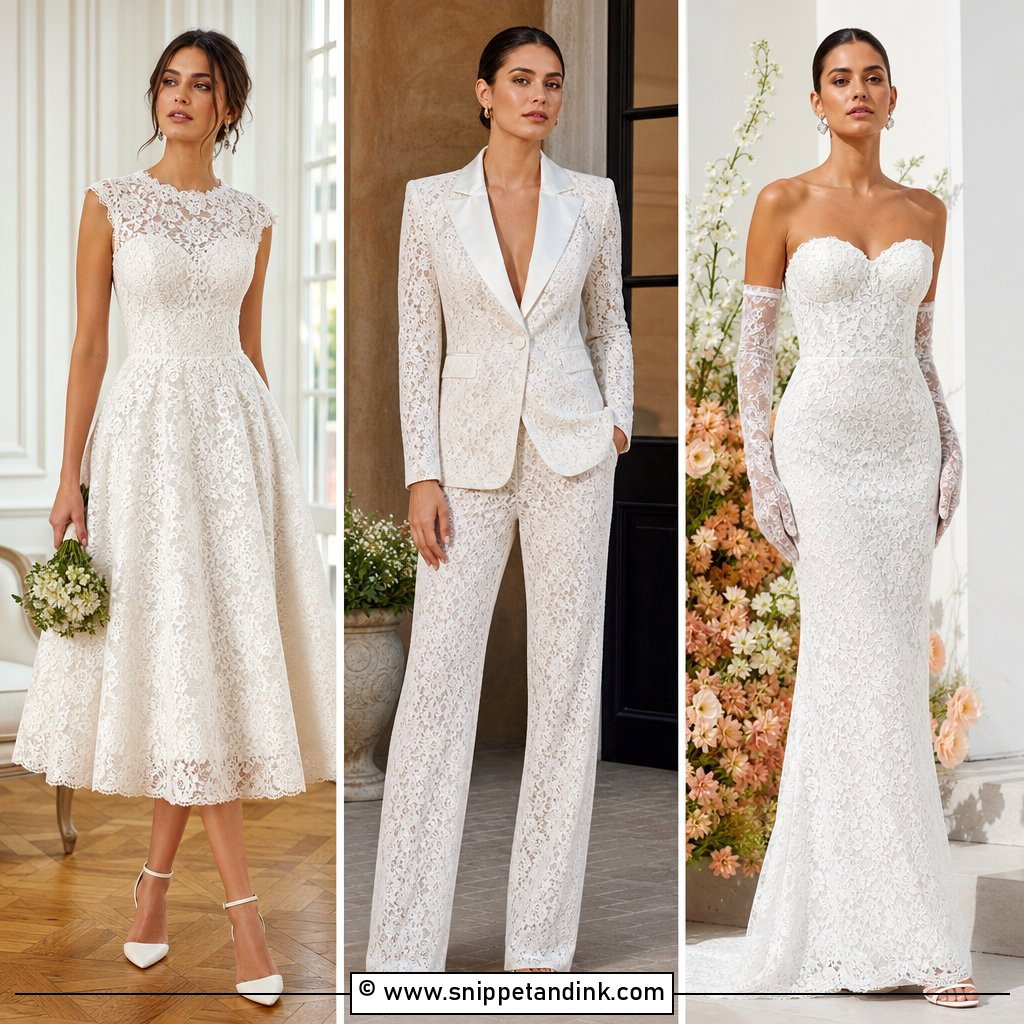
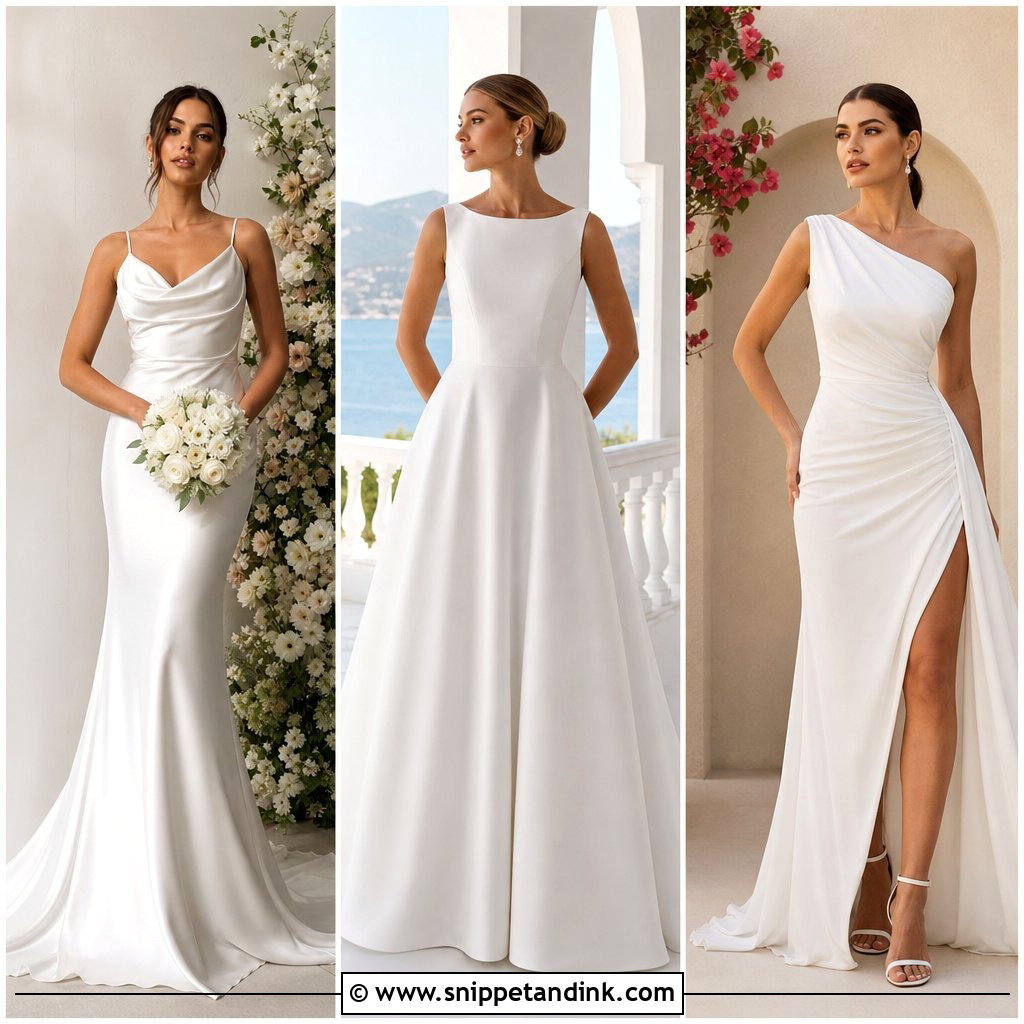
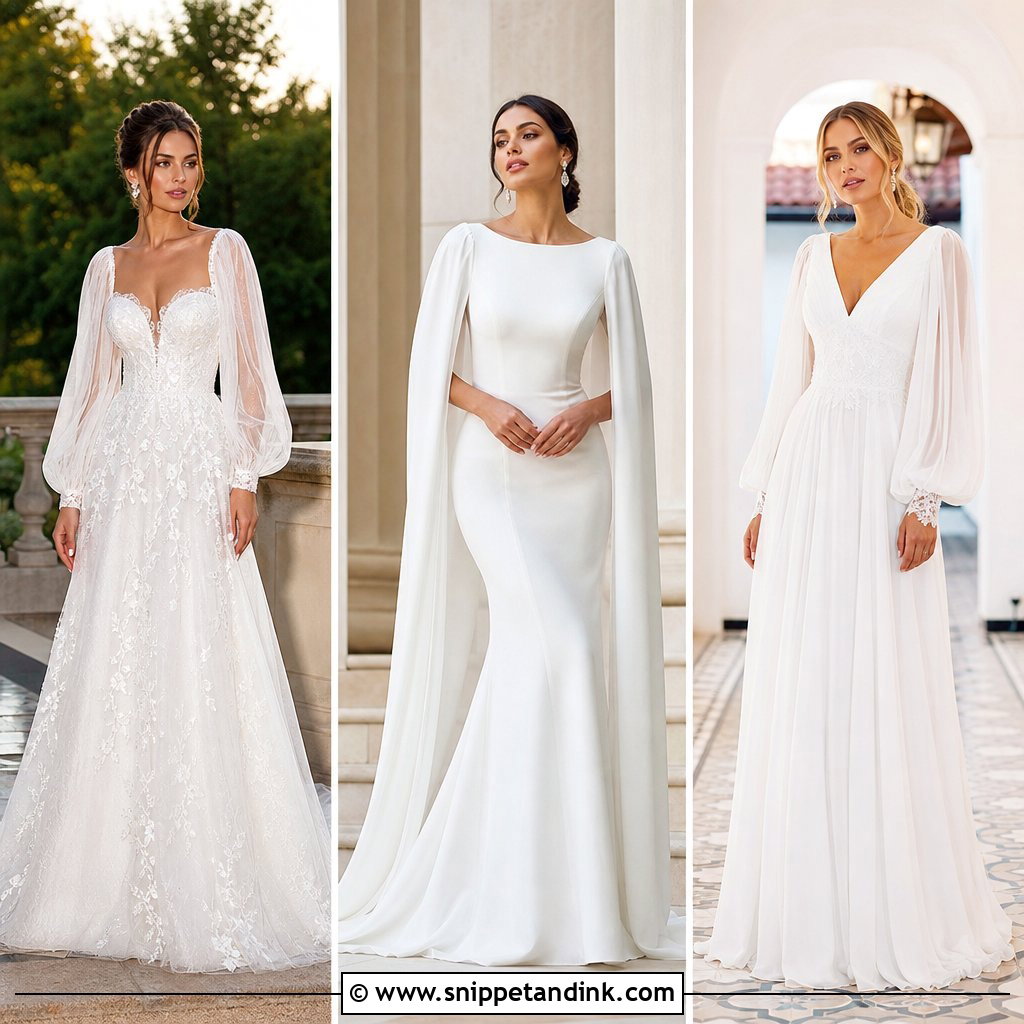
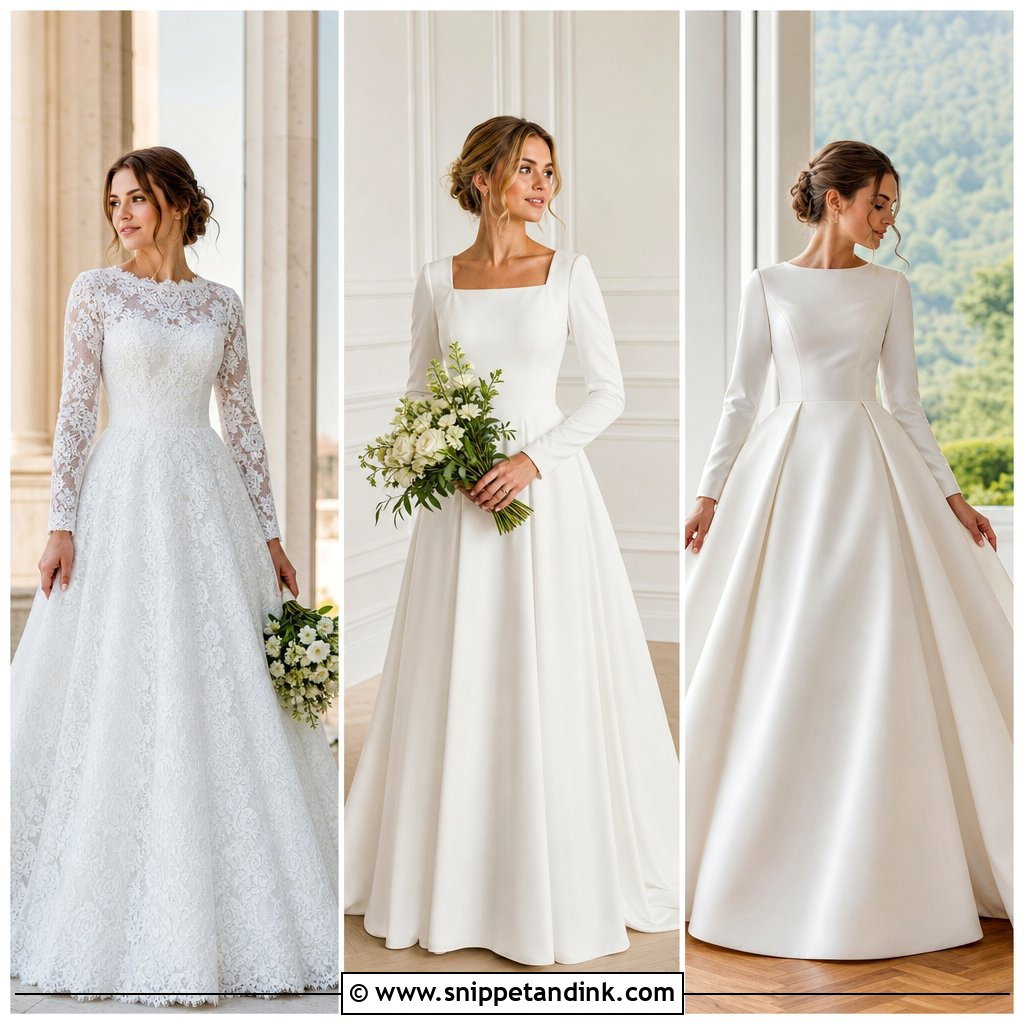
13. Simple Pakistani White Wedding Dress
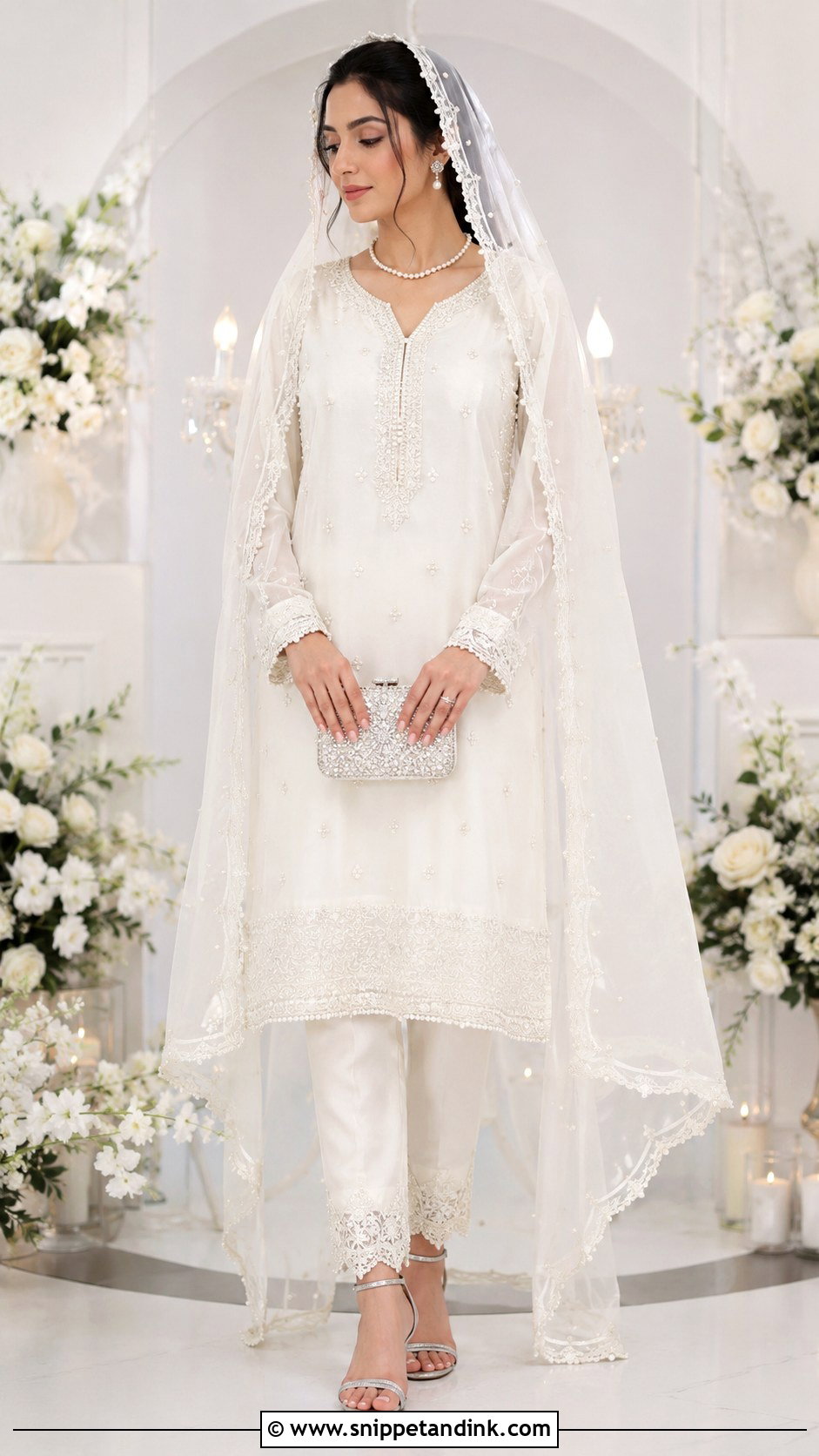
Plain white can look unfinished at a wedding, so I always add one warm element: silver thread, beige embroidery or pale gold at the edges. Pearl work suits it best. The dupatta does most of the formal work here, so choose one with lace or a scalloped border. And keep white well away from the mehndi table, since fresh henna stains it for good.
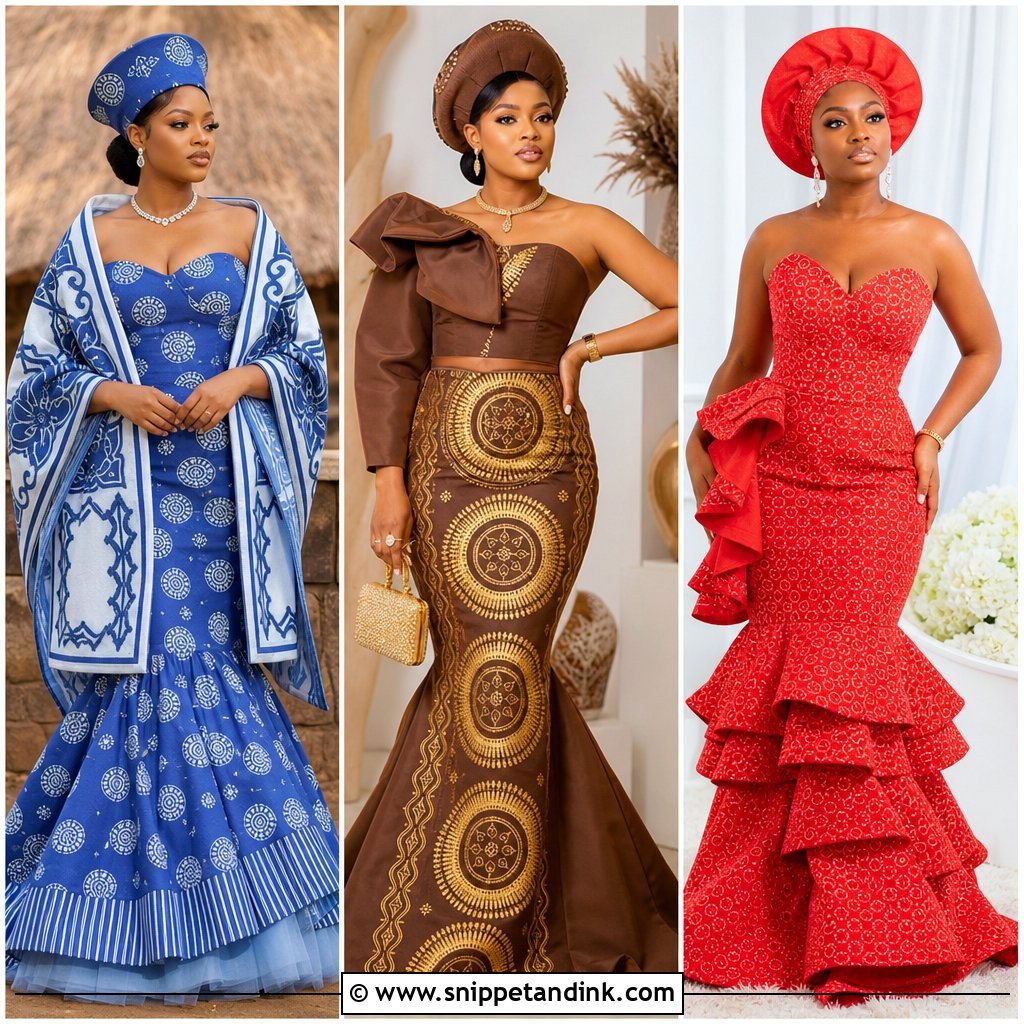
14. Simple Pakistani Red Wedding Dress
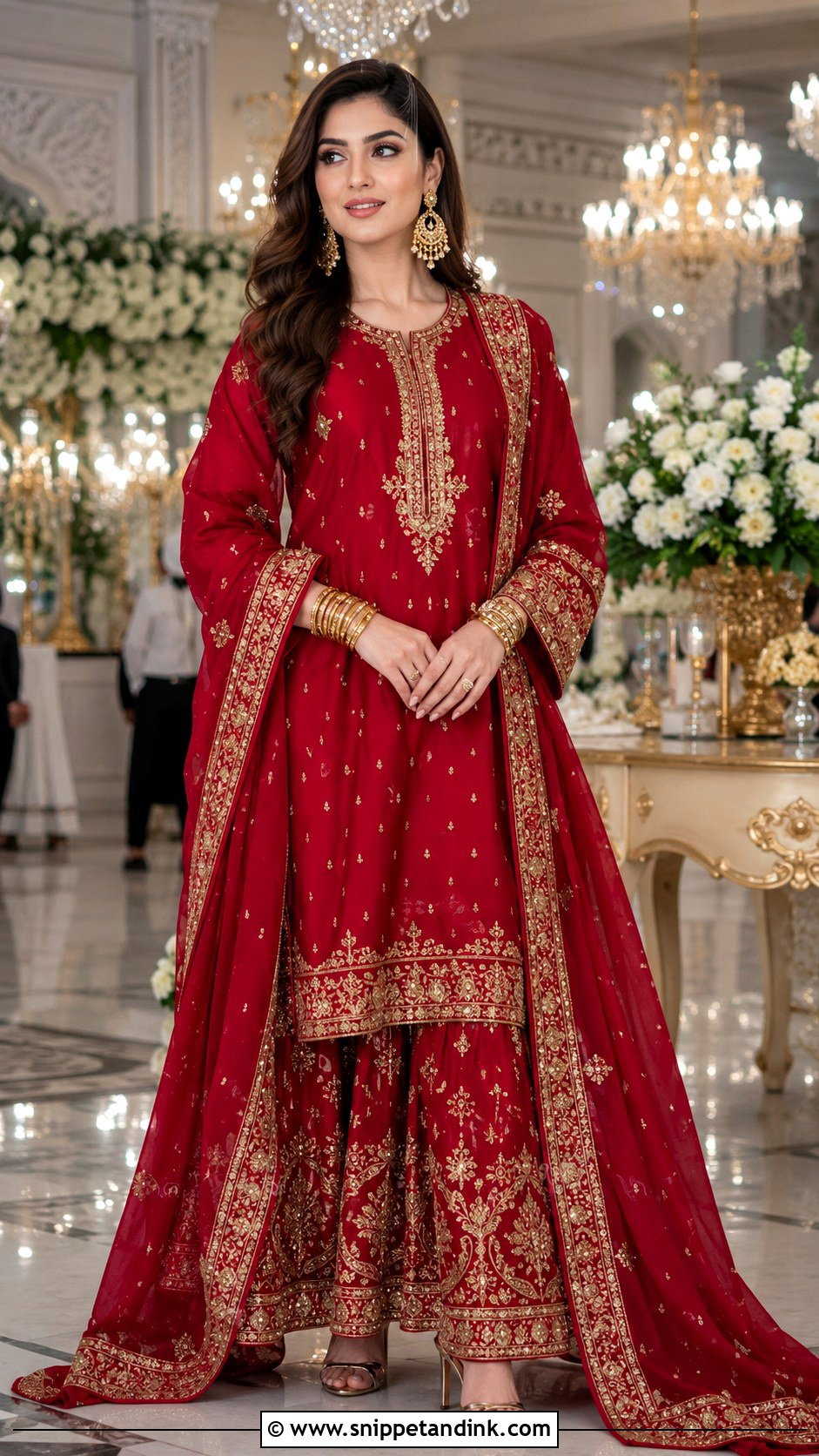
Red carries real meaning at a Pakistani wedding, so I’d only suggest a simple red outfit to the bride or a very close relative. Deep red and maroon read classic for a barat, while brighter tomato reds feel lighter in mood. Keep the gold embroidery to the neckline, sleeves and border and let the color carry the outfit. With a shade this strong, small jewelry is enough.
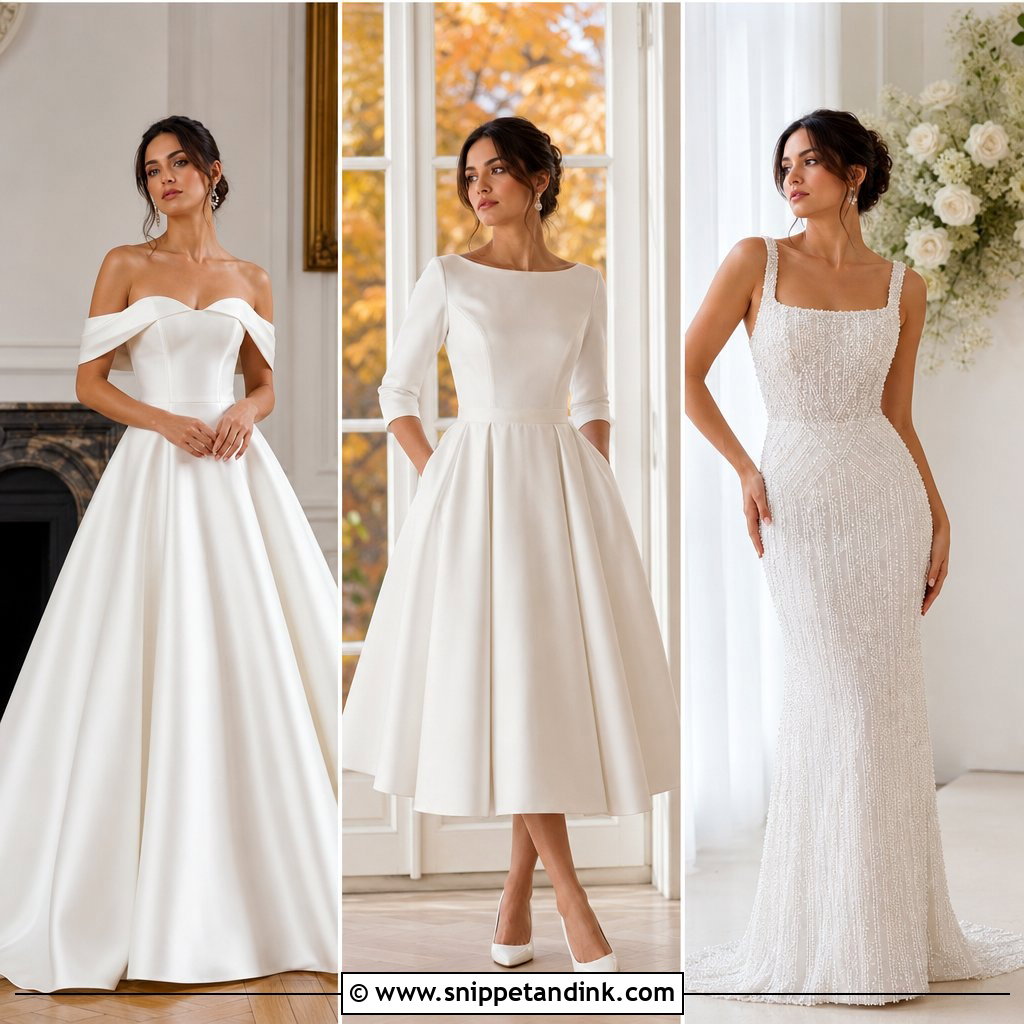
15. Simple Pakistani Pastel Wedding Dress
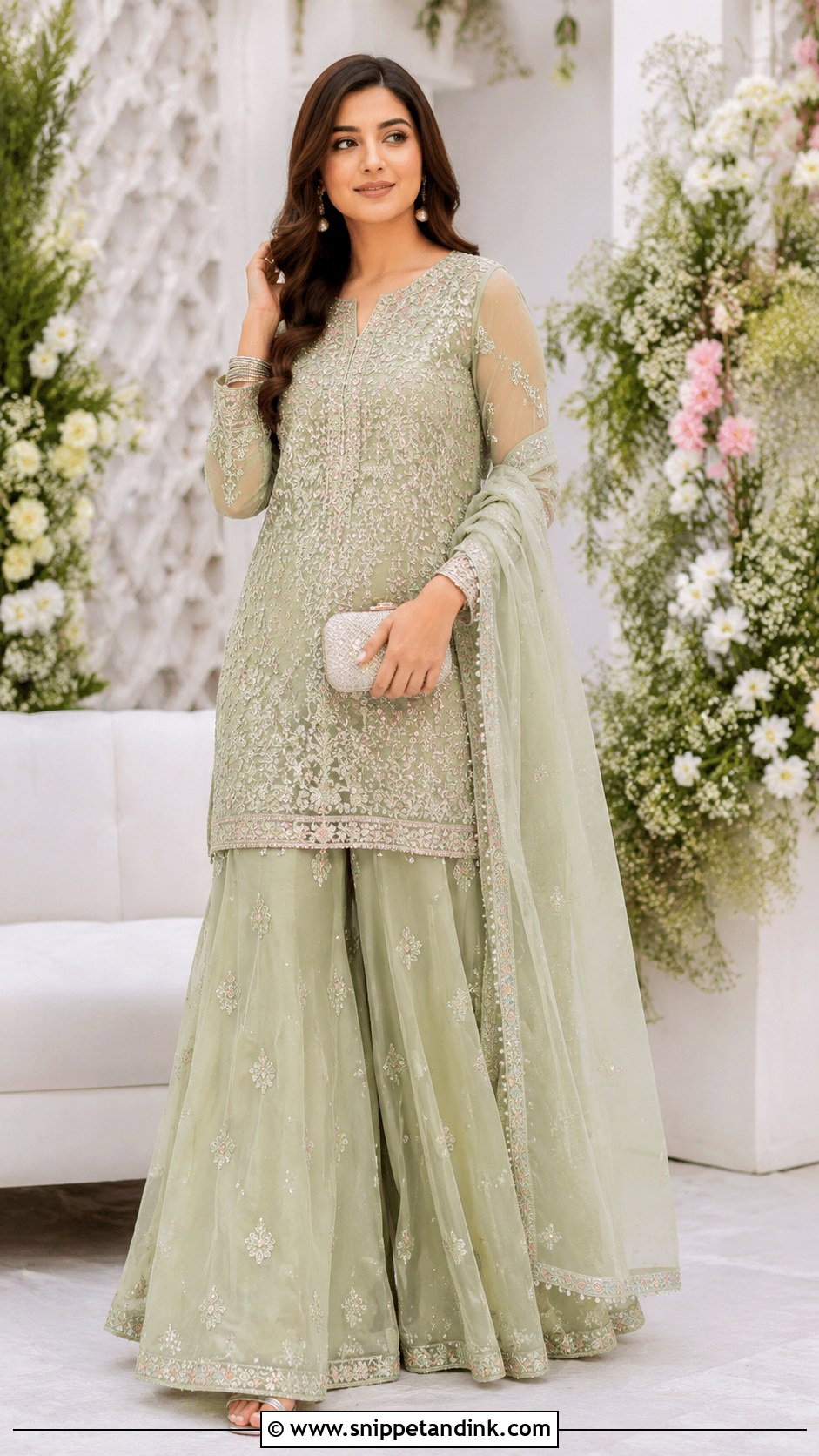
Pastels can vanish in photos, especially in strong daylight, so I add texture instead of more color: an organza dupatta, embroidered sleeves or a lightly worked border. Blush, lilac, pistachio and champagne all work. Do your makeup trial with the outfit on, because very pale shades wash out the face unless the cheeks and lips carry some warmth.
16. Simple Pakistani Mehndi Dress
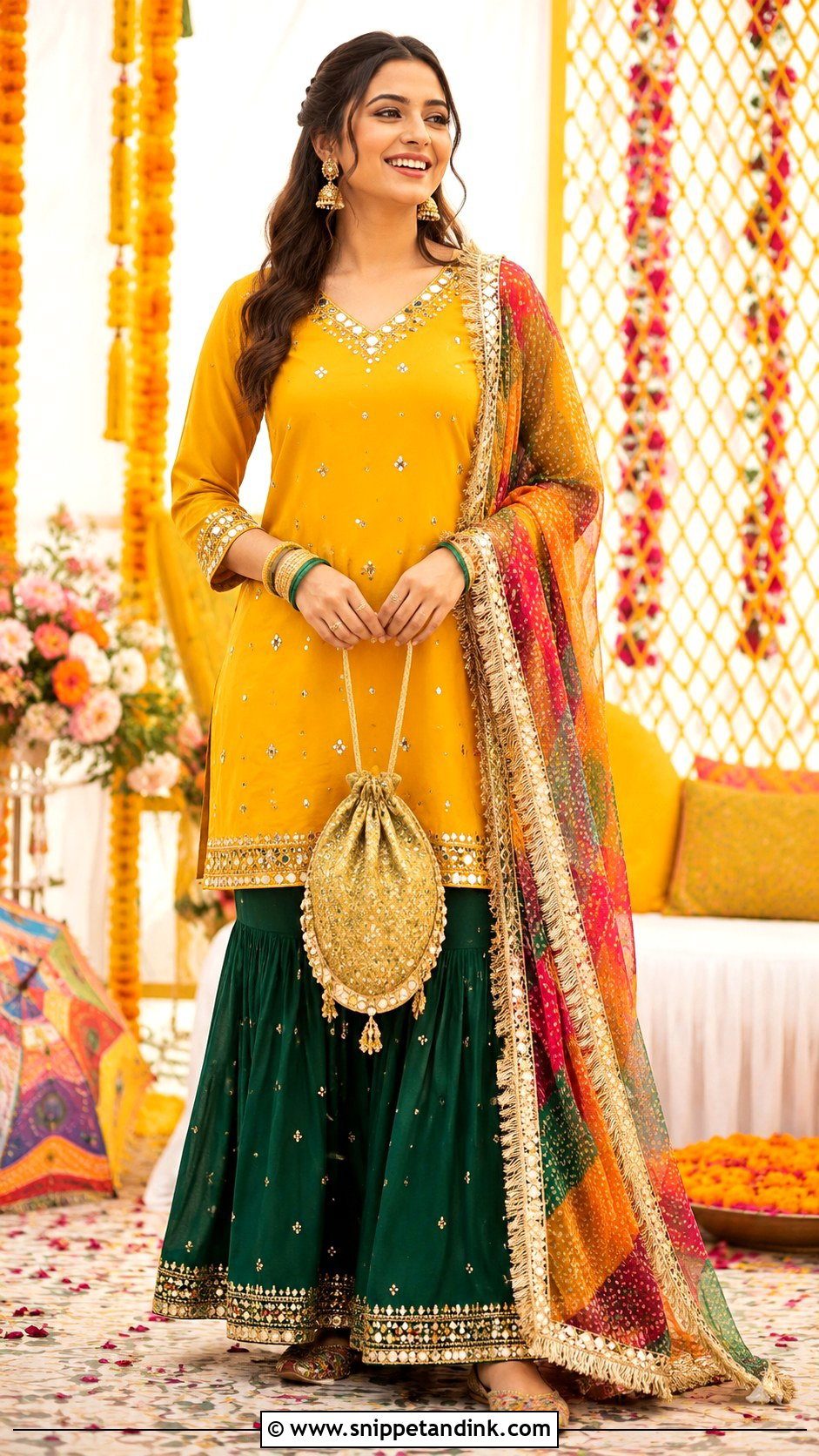
Mehndi dressing is about movement and color. A short kurti with a sharara, a long shirt with tulip pants or a light lehenga set all let you dance. Yellow, mustard, green and pink are the traditional palette, and a bit of gota or mirror work gives sparkle without weight. If you’re having henna applied that night, wear sleeves that are short or roll up easily, since wet paste stains fabric.
17. Simple Pakistani Walima Dress
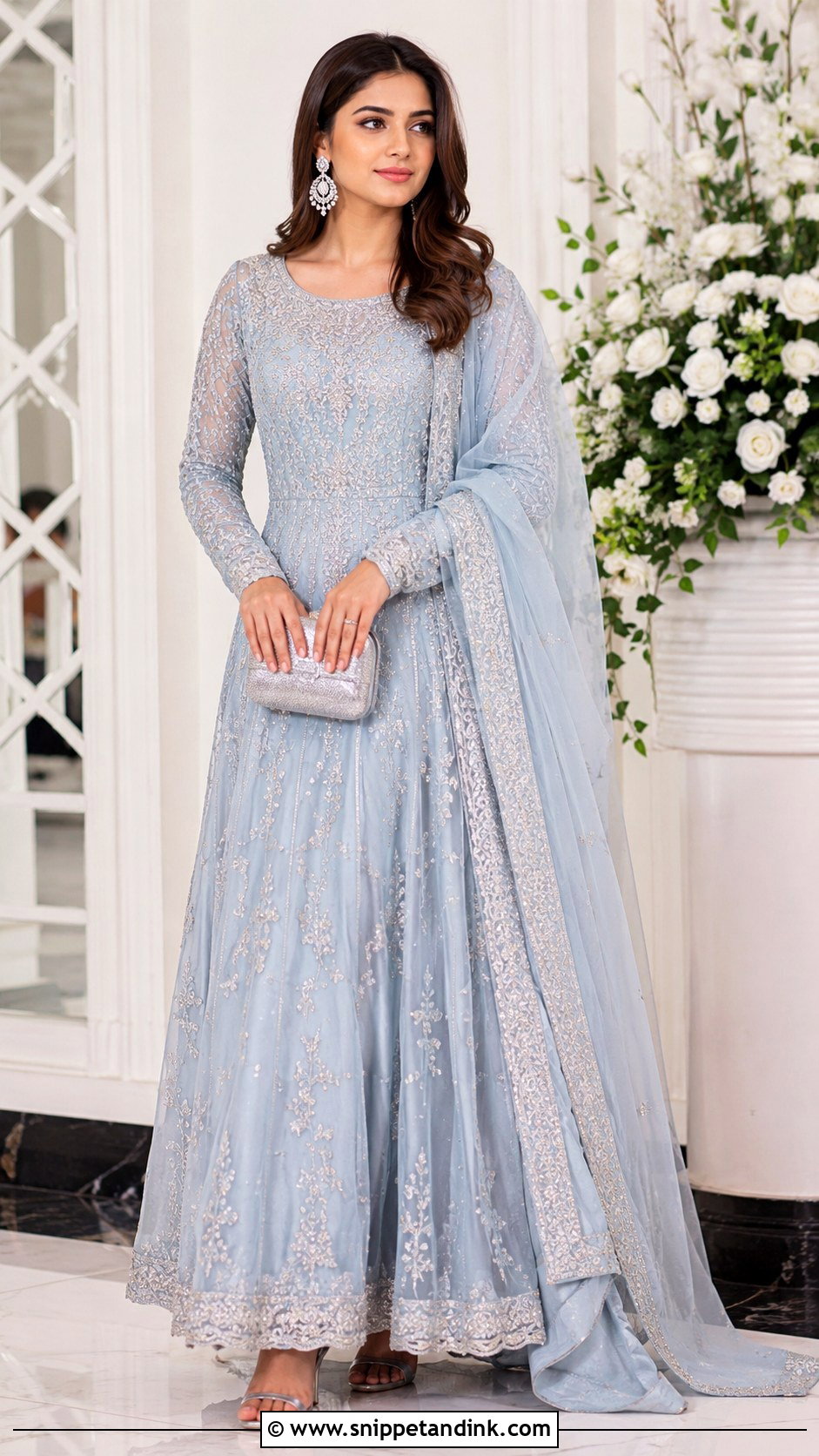
Most families want walima outfits to feel calmer than the barat, and soft colors do that job: ice blue, silver, lavender, dove gray. A maxi, pishwas or gown-style dress with silver, pearl or tone-on-tone embroidery suits the mood, with a light dupatta over one shoulder. I lean toward silver threadwork here because it photographs well under hall lighting without the glare gold sometimes gives.
18. Simple Pakistani Barat Dress
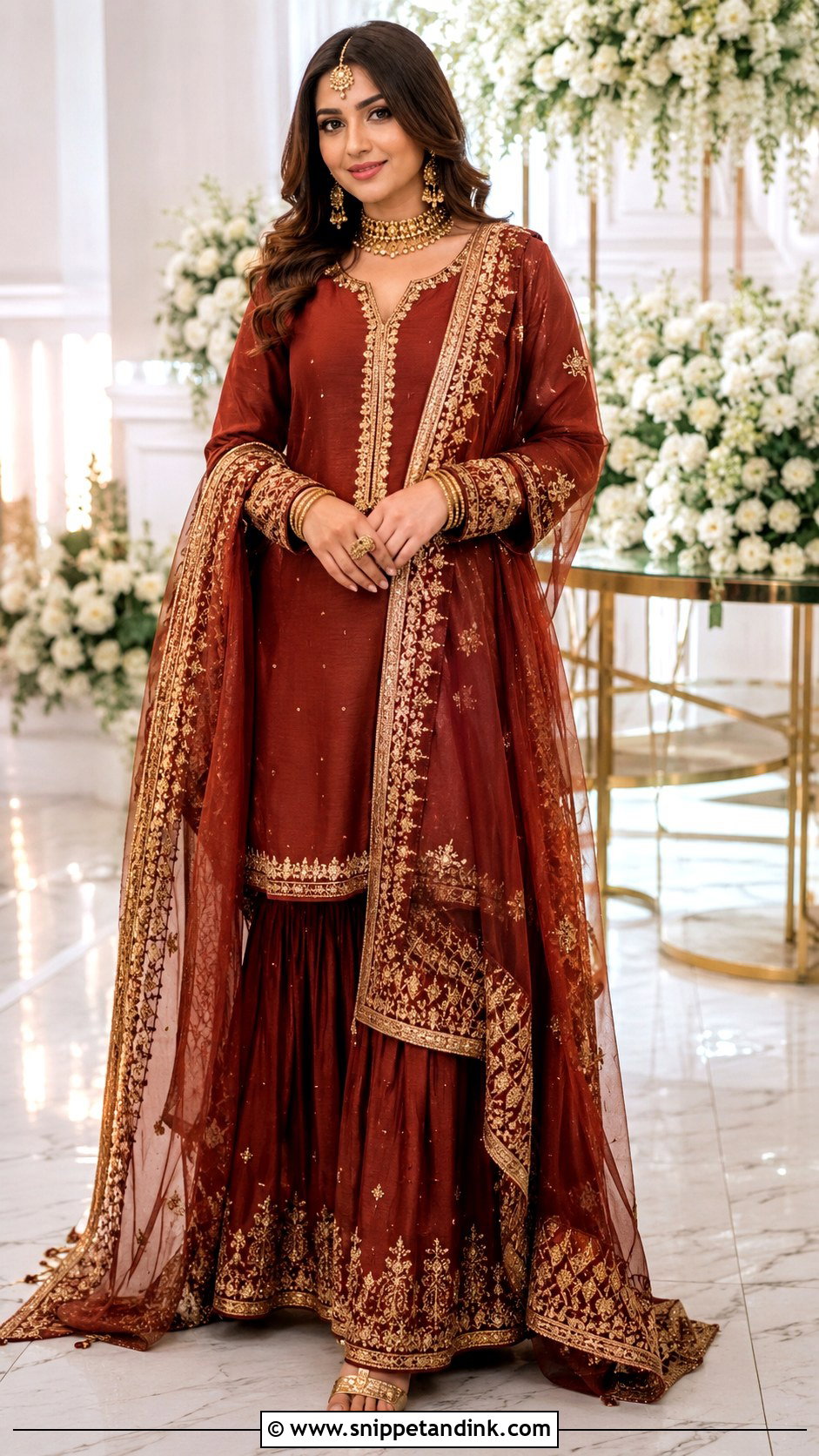
A simple Pakistani barat dress still has to look formal in photos, so put the embroidery where cameras look: border, neckline, sleeves and dupatta. If the dress itself stays plain, a dupatta with a heavy border can carry the bridal effect on its own. Structured fabrics like raw silk hold a lehenga’s shape without extra layers. Kundan jewelry and metallic shoes complete it.
19. Simple Pakistani Wedding Guest Dress
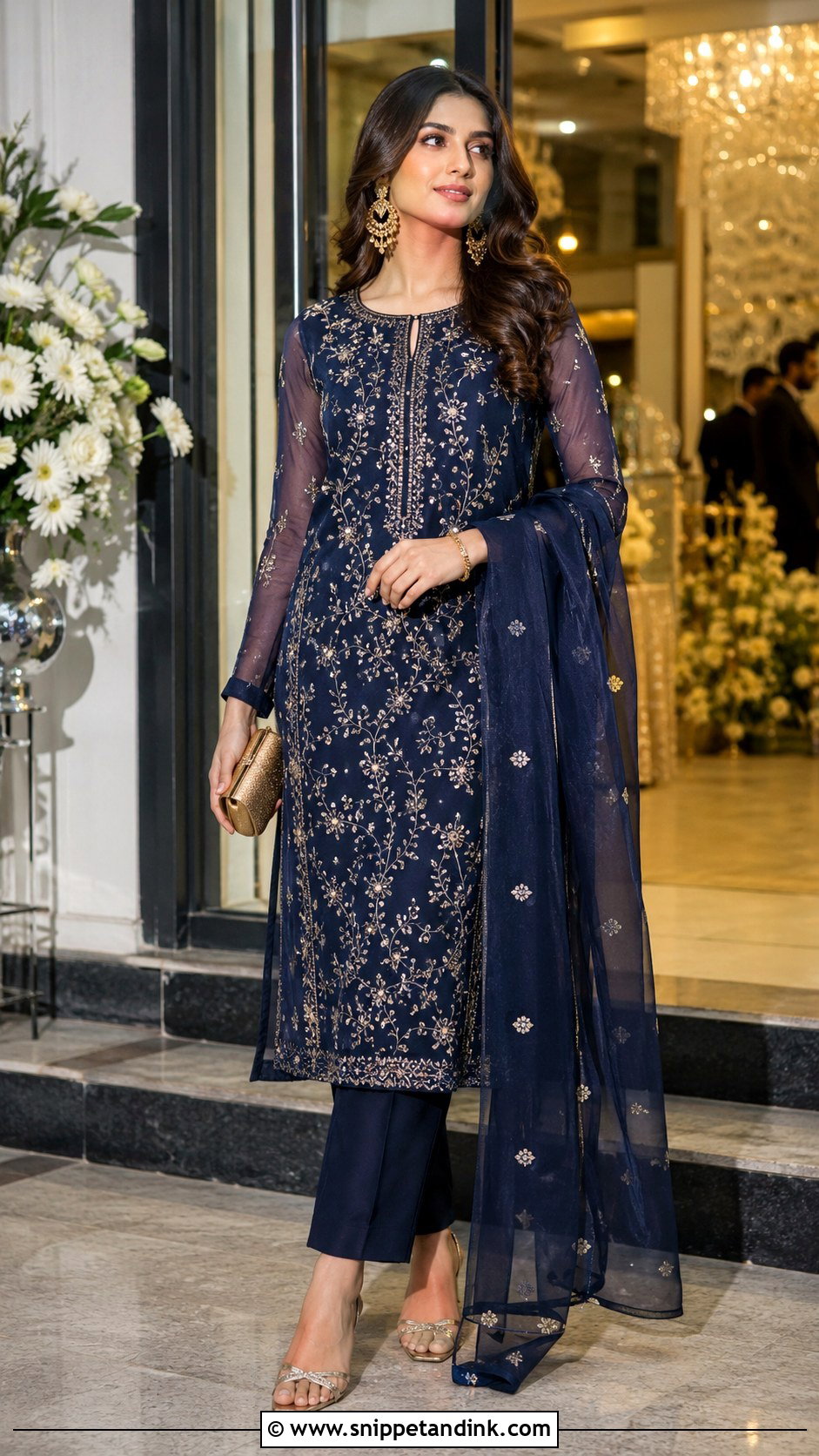
The guest rule I give everyone: stay a step quieter than the bride’s family. A long embroidered shirt with trousers, a chiffon maxi or an organza kurta with silk pants is enough. Skip red and heavy bridal work unless you’re close family. Jewel tones belong to the evening, pastels and neutrals to the day, and a dupatta that stays put lets you actually enjoy yourself.



20. Simple Pakistani Dress With Dupatta
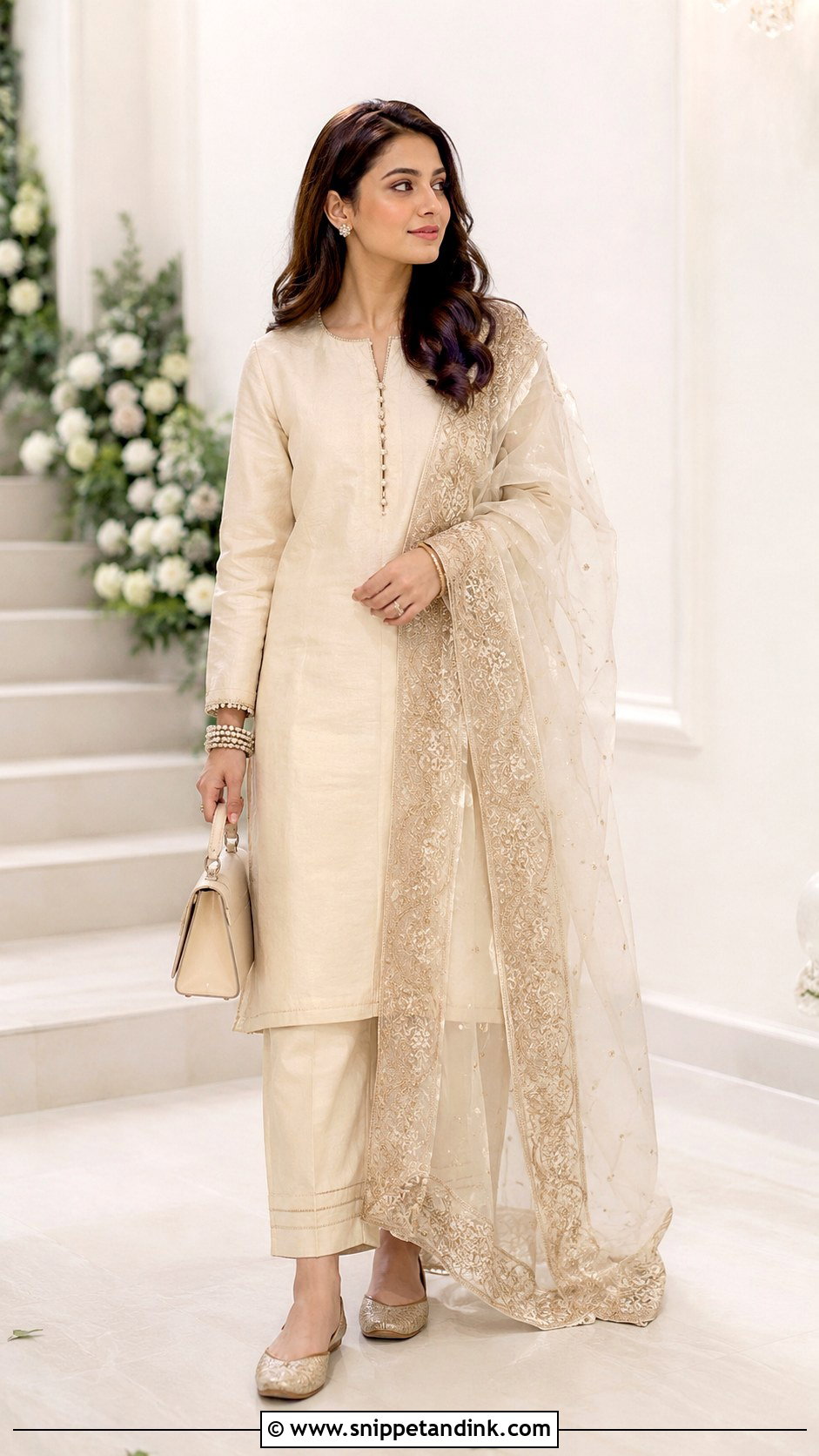
A good dupatta can turn an everyday suit into a wedding outfit. An embroidered organza, chiffon or net one with kiran edging or a thin border lifts a plain raw silk kameez immediately. The drape changes the mood: both shoulders feels modest, one shoulder looks modern, and over the head is right for the nikah. On chiffon, use a small safety pin at the shoulder, or it will slide all evening.
21. Simple Pakistani Kurta Trouser Dress
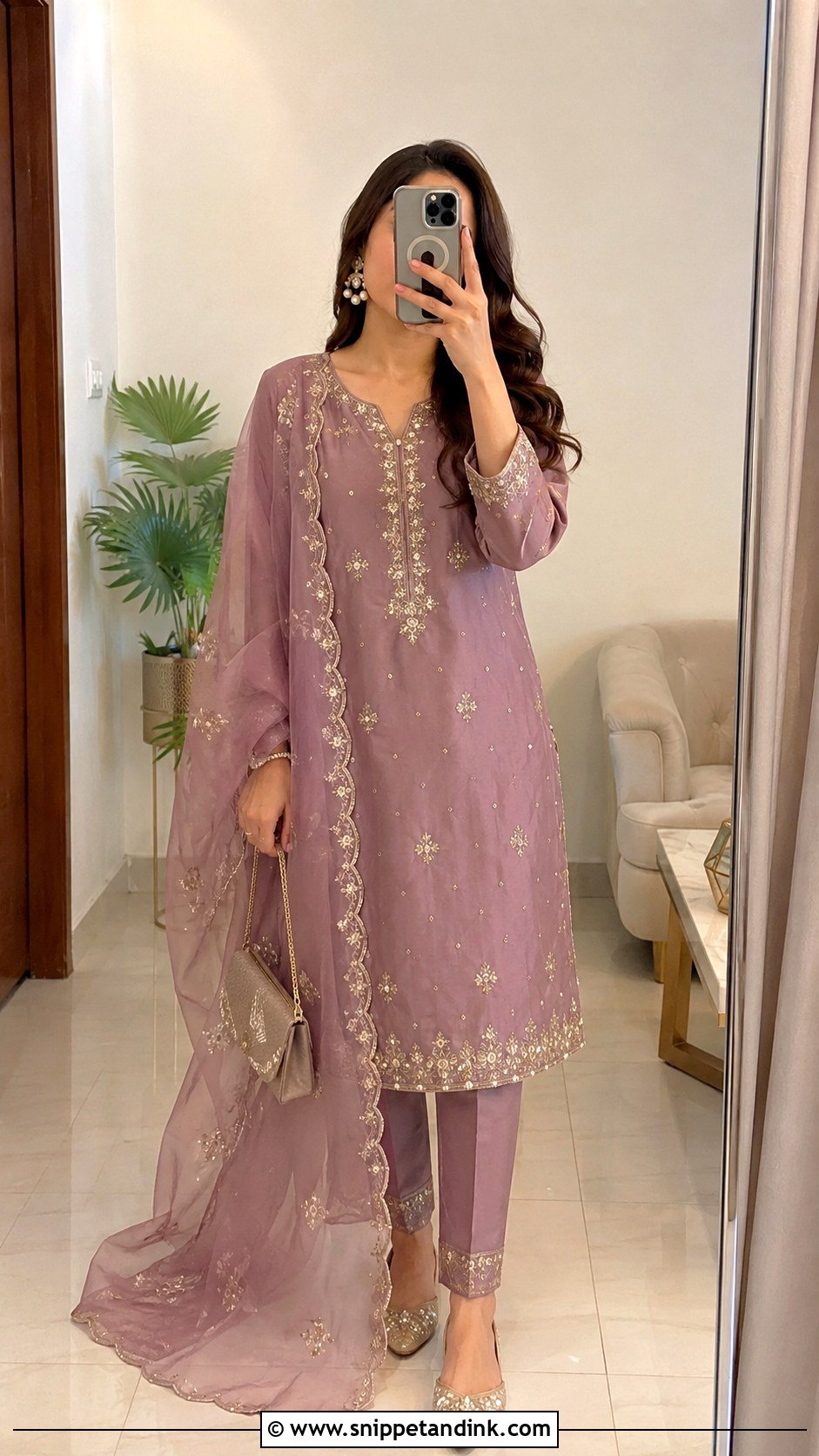
For dholkis and small home functions, a well-cut kurta and trousers is what I reach for. The tailoring has to be sharp because there’s nothing to hide behind: shoulders seated correctly, sleeves the right length, trousers that don’t bag at the knee. An organza dupatta and embellished khussas make it wedding-ready. Cream, sage and mauve versions rewear easily at dinners afterward.
22. Simple Pakistani Pishwas Dress
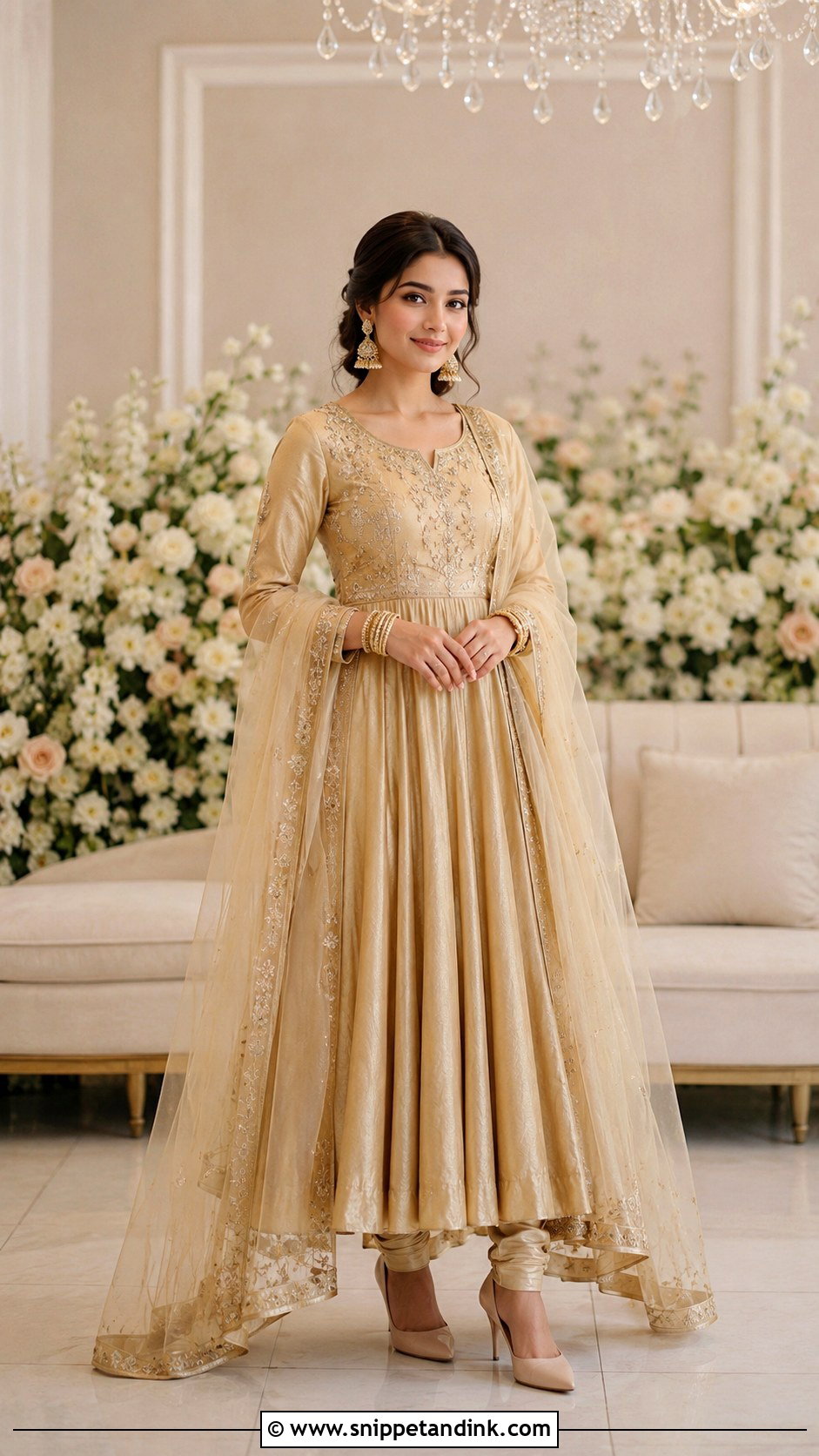
A pishwas gives you the swing of a lehenga in one piece. The fitted bodice must be well lined, and the flare should open right at the waist seam. Chiffon and net move more, silk holds its shape better, and churidar underneath keeps the ankle tidy as the skirt swings. With no waistband to dig in, it’s one of the more comfortable picks for a long event.
23. Simple Pakistani Two Piece Dress
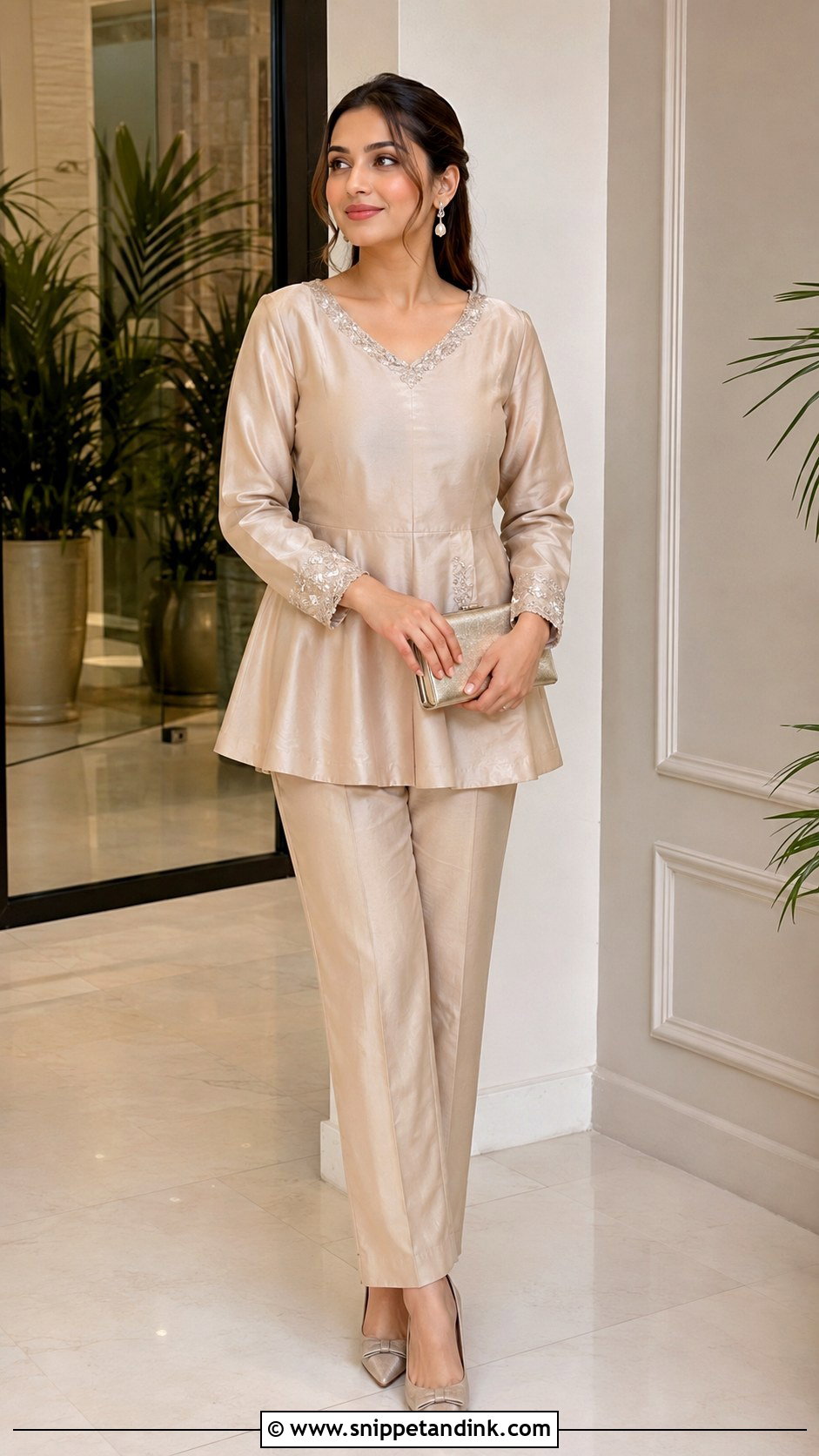
A two-piece skips the heavy dupatta, so the fabric has to carry the formality alone. Raw silk, jacquard and embroidered chiffon can do that; plain lawn can’t. Keep the embroidery to the cuffs, neckline and hem. I’d still tuck a light dupatta into your bag, since some families expect one and you’ll want it for the nikah or a mosque.
24. Simple Pakistani Three Piece Dress
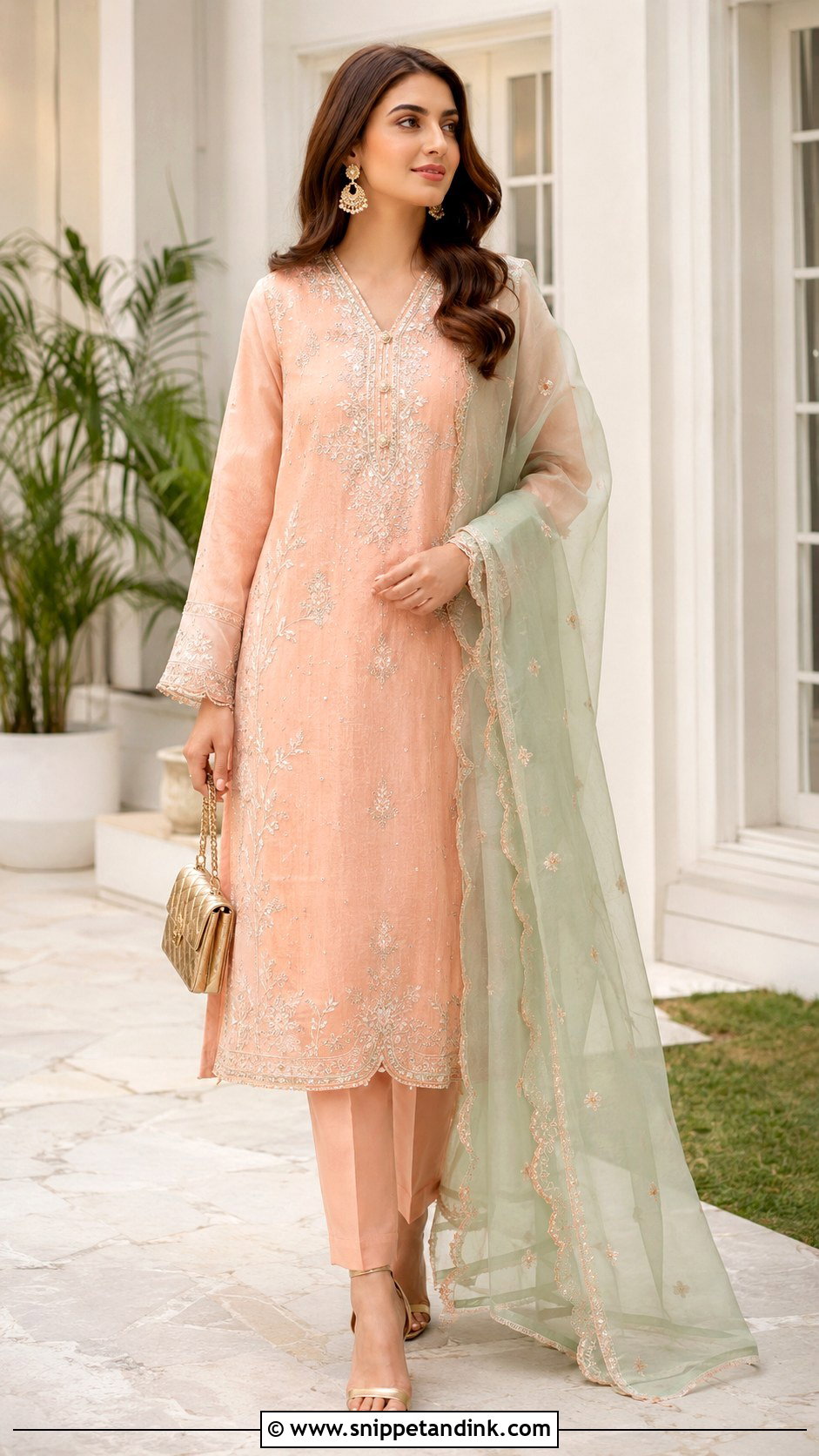
Three-piece sets are the easiest to get right because the shirt, trousers and dupatta were designed together. Many come unstitched, so the cut is yours to choose: straight for a tall frame, A-line or slightly flared to balance wider hips. A contrast dupatta can freshen the same set for a second function. Get them to your tailor early, because wedding-season queues are long.


25. Simple Pakistani Mother Of The Bride Dress
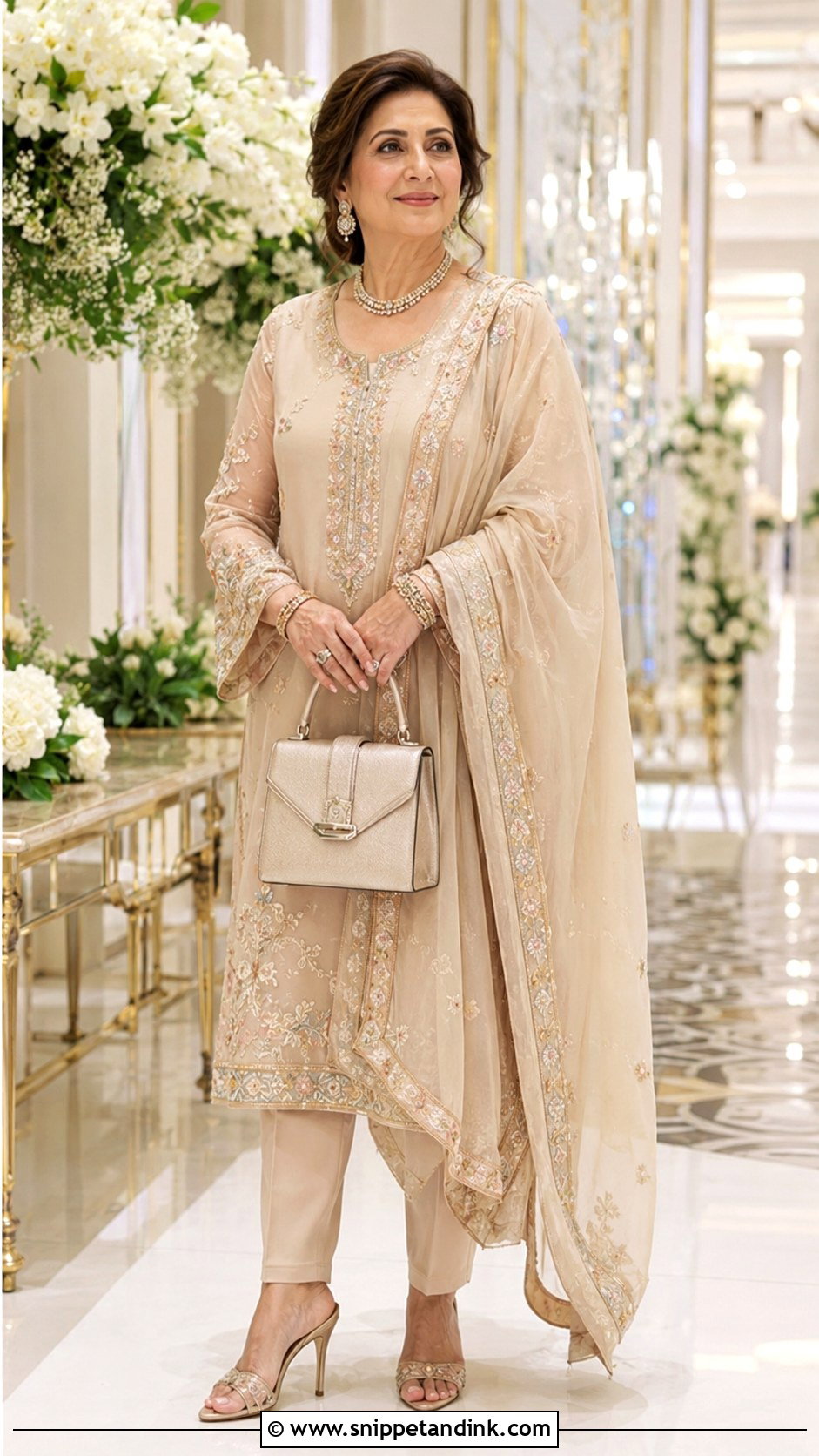
Mothers of the bride spend the day standing, greeting and coordinating, so comfort comes first when I dress them. Long shirts with straight pants, chiffon maxis or soft gharara sets in champagne, mauve, teal or navy look dignified without competing with the bride. Avoid stiff fabrics that crease badly when you sit on the stage. A matching shawl helps in an air-conditioned hall, and low heels are a mercy by midnight.
Carrying Three Outfits Through a Wedding Week
Most families wear something different to every function, and those outfits travel back and forth between home, salon and venue. A little packing discipline keeps them looking new until the walima.
- Hang organza, raw silk and velvet in breathable fabric garment bags. Plastic traps moisture, which can dull zari and tarnish metallic gota.
- Take a handheld steamer. Organza creases, velvet crushes and raw silk wrinkles at the lap, and all three respond to steam far better than to an iron.
- Pack a small pouch with safety pins, a needle and matching thread, double-sided fashion tape and stain wipes. A loose dupatta border is the repair I make most often on the day.
- Carry shoes in their own bag, so heels and buckles don’t snag chiffon or net on the way.
When the week is over, air each outfit before putting it away. Wrap embroidered pieces in clean cotton or muslin with tissue between the folds, and refold them every few months so the creases don’t set and crack the zari.
Plain Fabric, Good Fit, the Right Dupatta
Fit, fabric and the dupatta do most of the work in every outfit above; embroidery is the last layer, not the first. A plain raw silk suit with a good organza dupatta can look more expensive than a heavily worked set that doesn’t fit. Dress for the function and for your role in it, try everything on with shoes and jewelry before the day, and you’ll spend the wedding enjoying it instead of fixing your clothes.
You'll Like These Ideas:







Leave a Reply