
Emerald is one of the few bridal colors I can hold up against almost any skin tone and trust, which is probably why it keeps coming up at fittings for Pakistani bridal wear. Below are twenty emerald outfits for the nikkah, mehndi, baraat and walima, from heavy lehengas and farshi ghararas to shalwar kameez and a few gowns. With each one I’ve noted what I’d pair it with and where it tends to go wrong once you’re actually wearing it. Read them with your own events in mind, because the outfit that works for a seated nikkah is rarely the one you want on a dance floor.
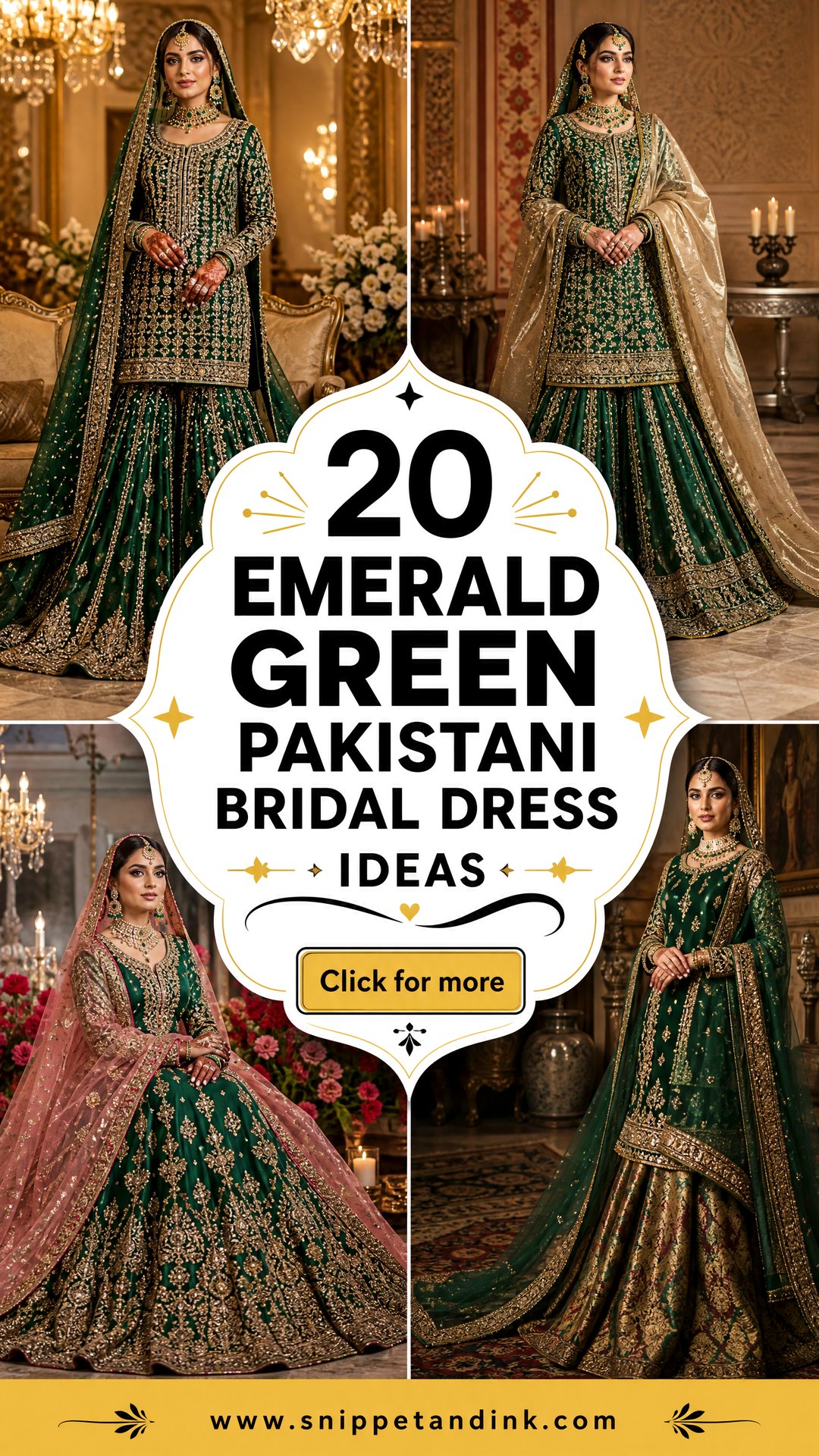
Bottle, Jade or Forest Green Next to Your Skin
Emerald isn’t one color at a fitting. The same name covers a bluish bottle green, a brighter jade and an olive-leaning forest shade, and they behave differently against skin. Cooler, bluer emeralds tend to suit fair and olive complexions with pink undertones, while warmer greens with a touch of yellow usually sit better on golden and deeper brown skin. The only reliable test is to hold the fabric under your chin without makeup and see whether your face looks brighter or greyer.
Fabric changes the shade too. Velvet and raw silk deepen it, net and organza lighten it, and tissue adds a sheen that can tip it toward teal. So I always ask for a swatch of the actual fabric, not a phone photo of the finished outfit.
- Look at the swatch by a window in daylight and again under warm yellow bulbs, since most halls and marquees are lit warm.
- Take a quick flash photo of it on your phone. Very dark bottle green can turn almost black in evening flash photos, which matters for a night baraat.
- Check the embroidery thread against the base. Antique gold flatters deep greens; bright yellow gold can look brassy on them.
- If you’re wearing emerald at more than one event, vary the shade or the metal so the photos don’t blur together.
1. Emerald Green Bridal Lehenga With Gold Embroidery
Antique gold is the pairing I reach for first with emerald, because the dull gold sinks into the green instead of glaring off it under hall lights. Ask for zardozi, dabka and nakshi on a structured raw silk blouse, and keep the densest work in a wide border so the skirt isn’t loaded evenly from waist to hem. An evenly heavy lehenga drags at the waistband all night, and you feel it most when you stand up from the stage. A sheer net dupatta with a scalloped gold edge goes over the head and across one shoulder. Polki, a centered matha patti, stacked bangles and embroidered khussas finish it; a few rubies in the necklace add contrast if you want some. Keep the makeup luminous rather than heavy so the handwork stays the focus.
2. Emerald Green Bridal Gharara With Short Kurti
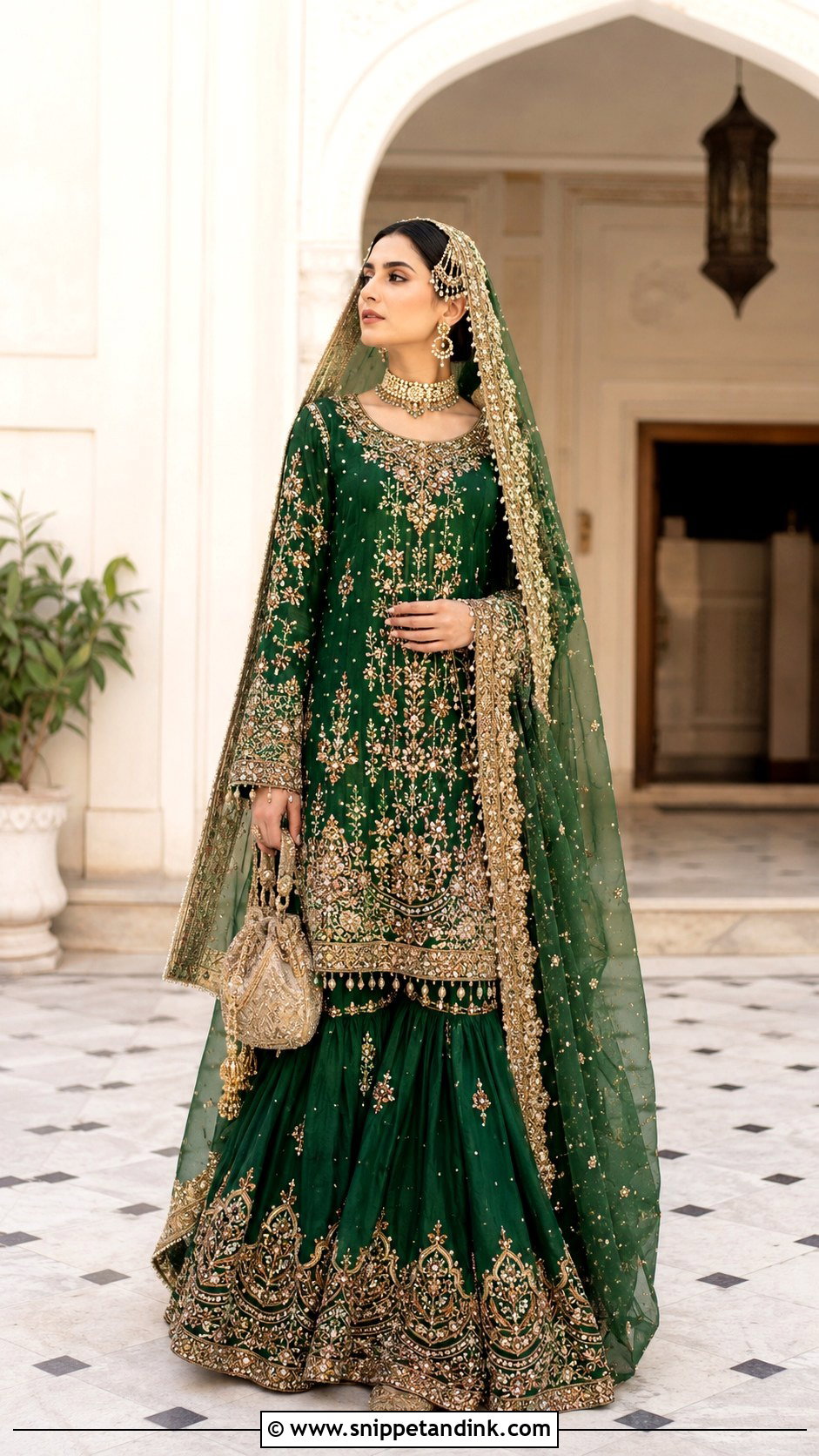
The gharara is the silhouette I see brides fall for and then struggle in, because the knee joint has to sit exactly at the knee. If it lands even a little low, the flare starts too late and you shuffle. Have it marked at a fitting while you wear your actual shoes, then let the gold borders emphasize that joint. A fitted mid-length kurti in cotton net or raw silk, embroidered at the neckline, sleeves and hem, keeps the top half calm, and a tissue or organza dupatta with scattered motifs stops it all from feeling dense. Add a side jhumar, a pearl-and-kundan choker, matching earrings and a small gold potli. Pointed khussas sit neatly under the wide hem, and this is an easy outfit to carry through a long nikkah.
3. Emerald Green Pishwas With Gold Churidar
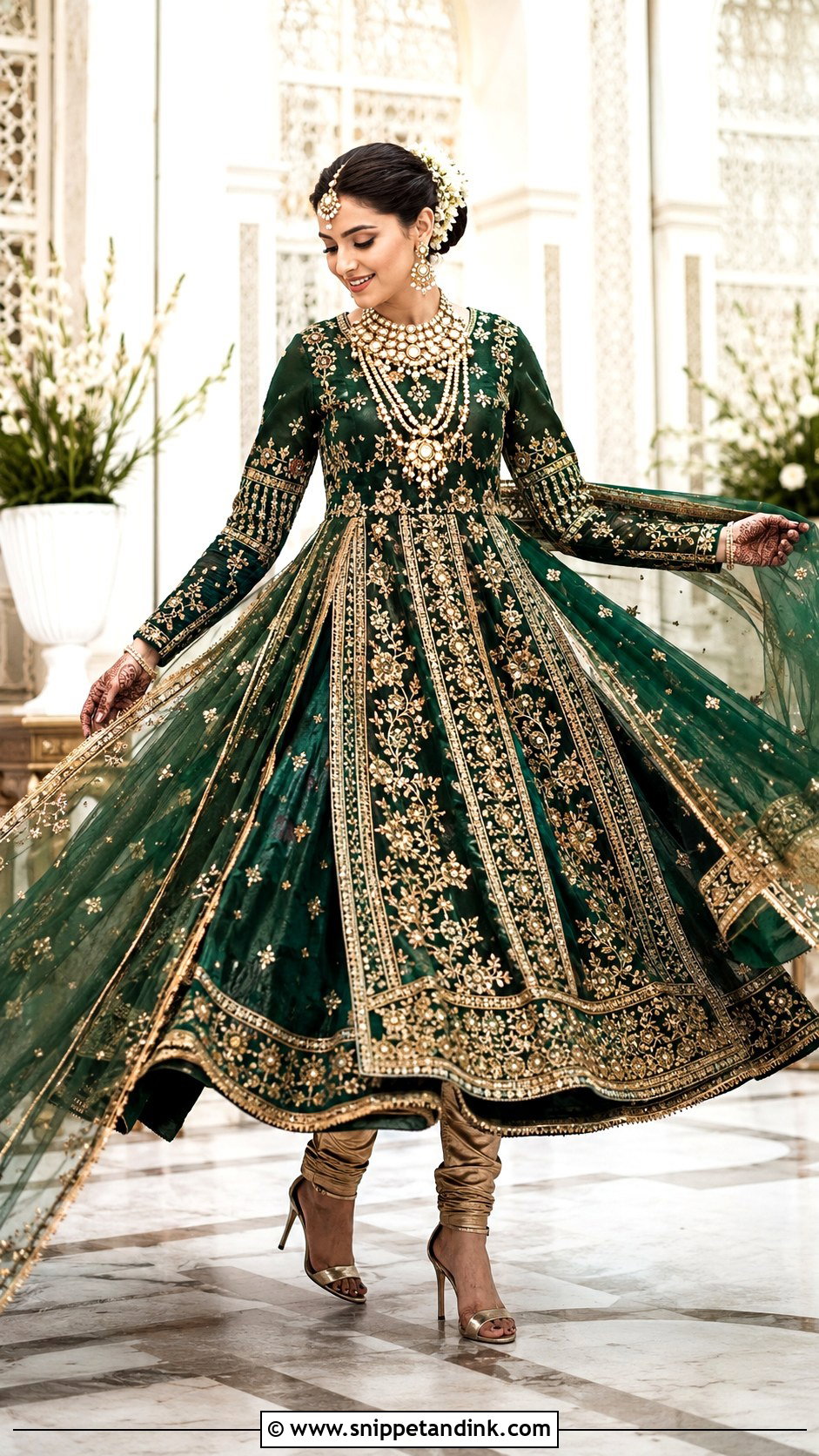
A pishwas lives or dies by its panel count. More panels mean more swing when you turn, but they also add weight at the hem, so I ask the maker to run fine tilla along the panel seams and save the heavier border for the last few inches. Pick a floor-length cut with a fitted bodice and full sleeves, worn over a gold churidar that only shows when you walk. A light net dupatta with a narrow edge can cover your head without hiding the neckline. A layered kundan necklace, small jhumkas, a delicate teeka and metallic heels keep it light, and a low bun with fresh white flowers suits the movement. Ask your photographer for at least one slow turn.
4. Emerald Green Velvet Bridal Lehenga
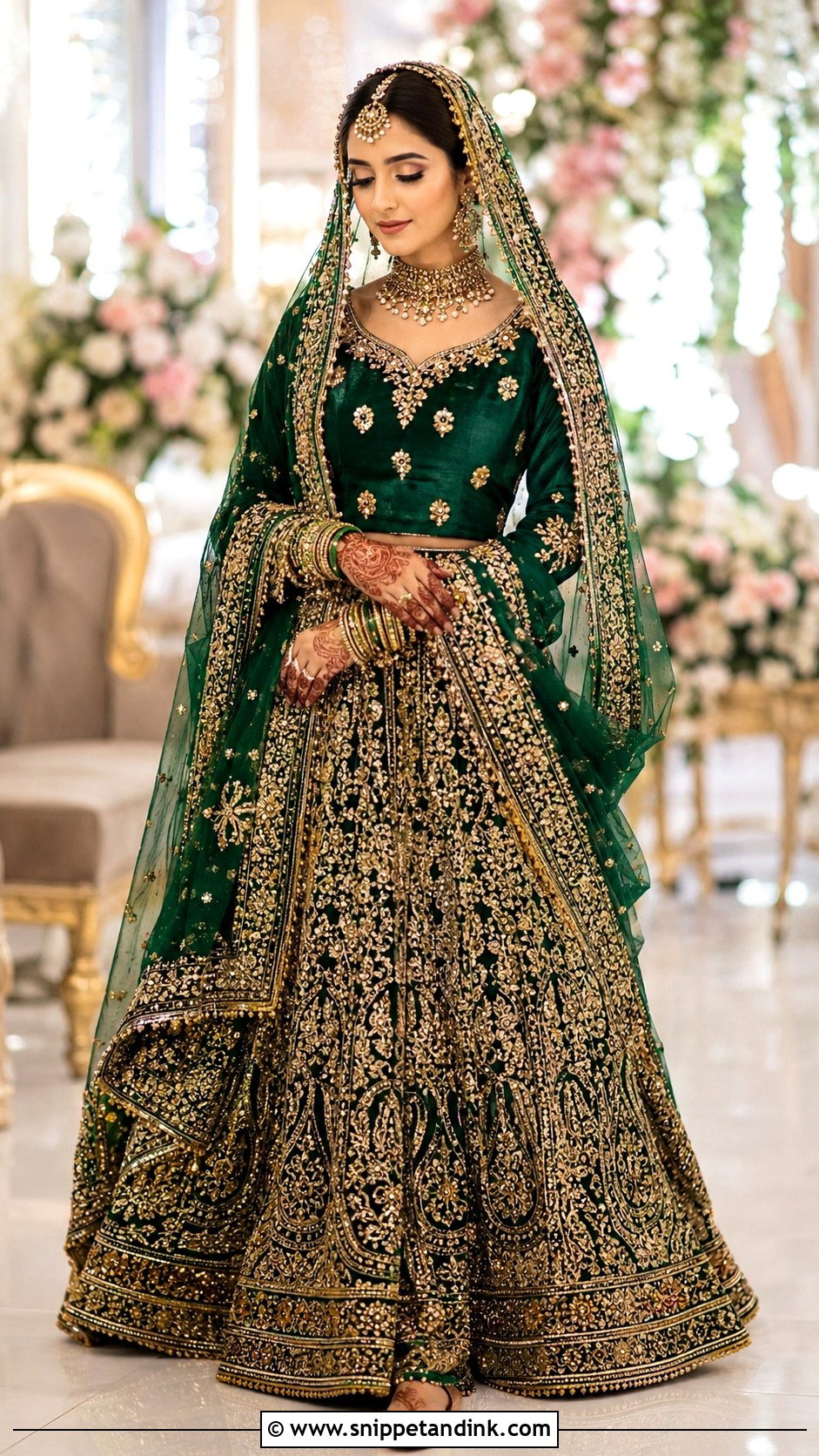
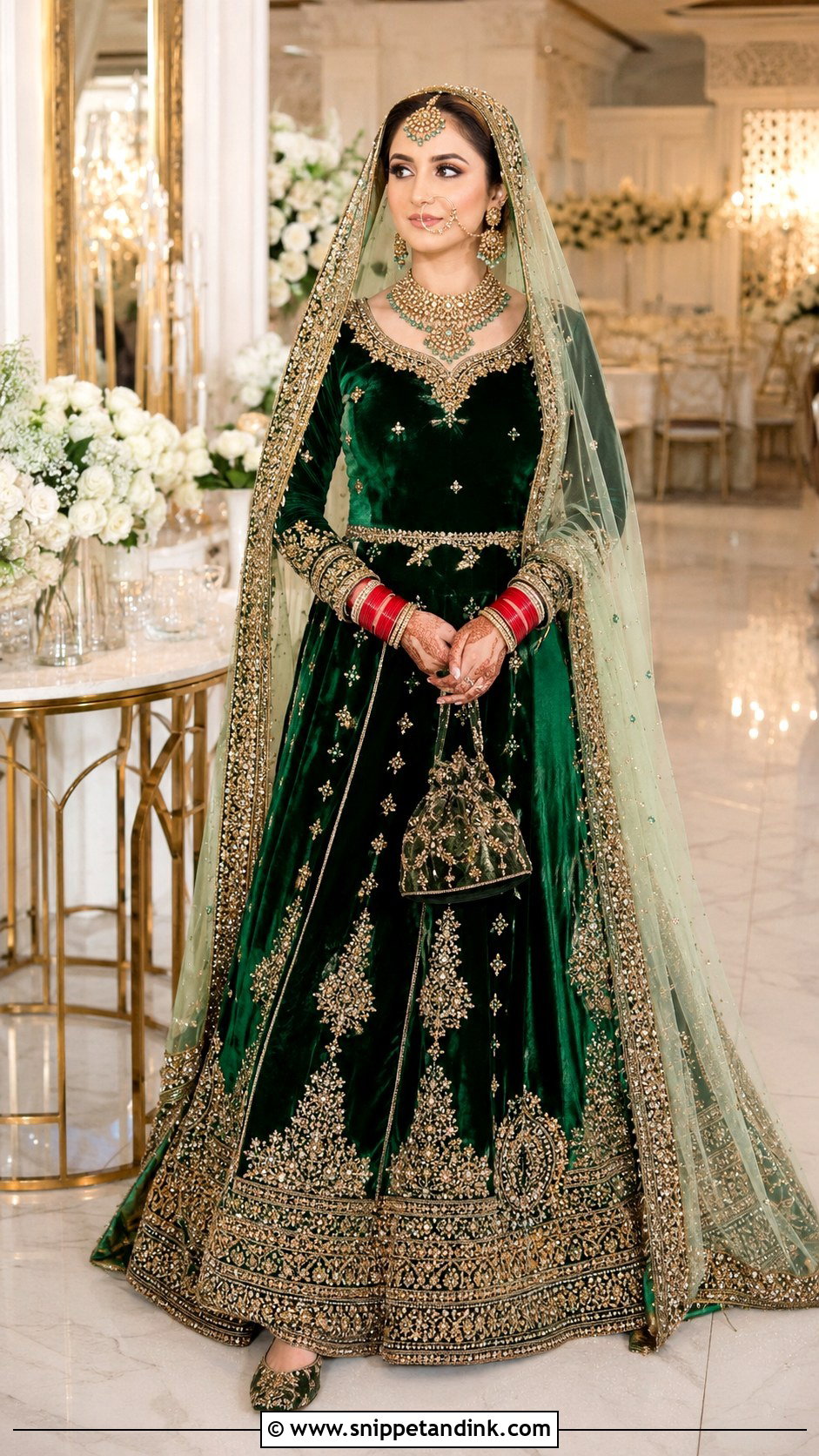
Velvet deepens emerald almost to bottle green, so it belongs in winter and in the evening, where the pile catches warm light. The catch is heat: a velvet blouse with sleeves in a crowded marquee gets warm fast, which is why I keep it to elbow length with a modest neckline. Pair it with a raw silk or velvet skirt carrying spaced gold motifs and a substantial border, and resist covering every inch, since velvet already reads rich on its own. A lightweight net dupatta over the head, falling onto one arm, stops the outfit from turning heavy. Polki, deep red bangles, a traditional nath and velvet khussas suit an evening baraat in a formal winter venue.
5. Emerald Green Bridal Sharara With Long Kameez
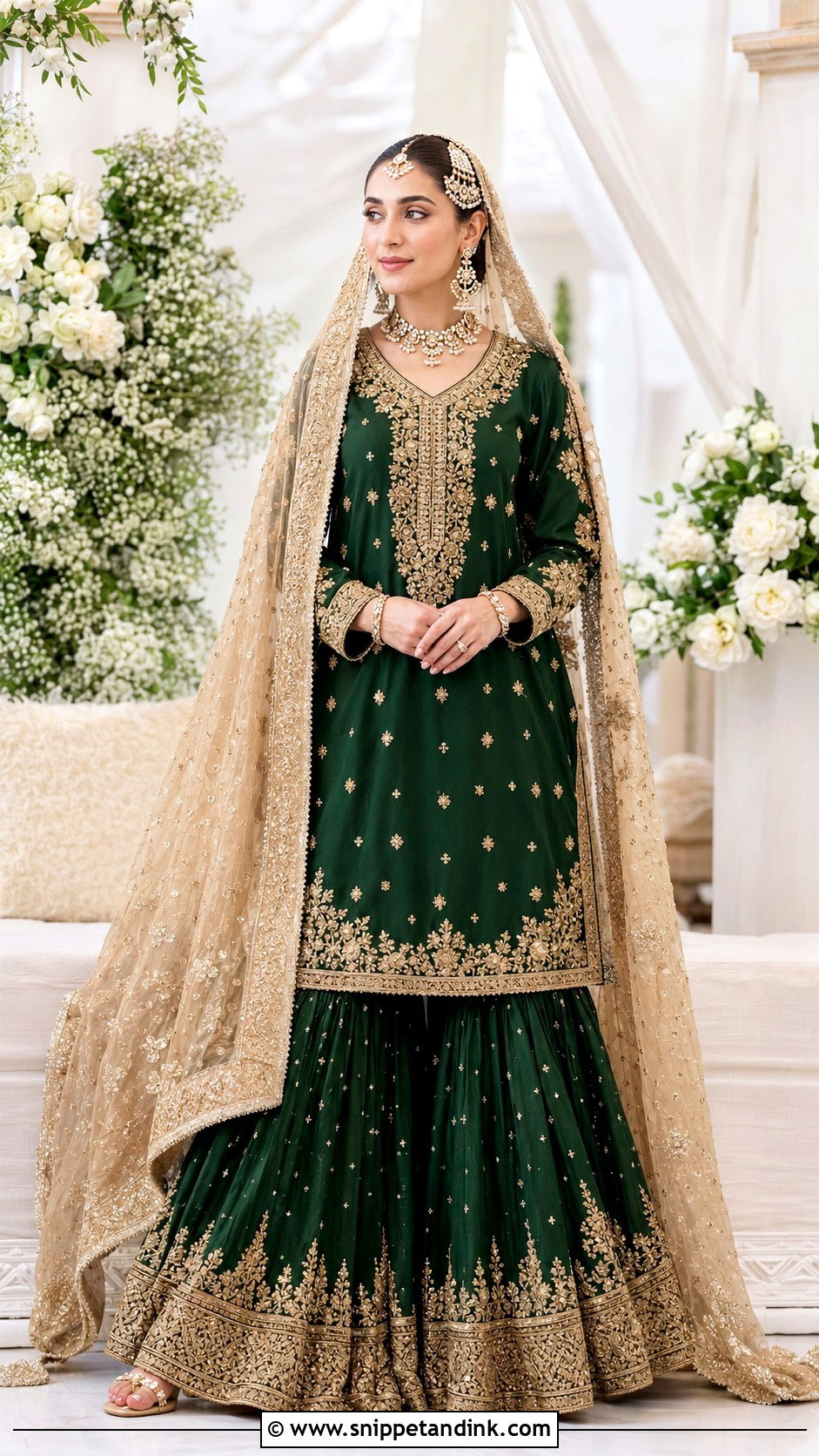
Comfort is the real argument for this one. A sharara with a knee-length kameez gives you full coverage and plenty of movement, and you can sit cross-legged on a floor cushion without fighting a can-can. I’d concentrate the gold on the neckline, cuffs, side slits and hem, then keep the upper sharara light and widen the decorative panels toward the floor so the weight sits low. A champagne dupatta with an emerald border softens it near the face. Pearl-and-polki jewelry, a side passa, gold bangles and embellished sandals complete it, and a sleek center-parted bun keeps the earrings in view for a nikkah or a smaller family function.
6. Emerald Green Anarkali With Antique Gold Work
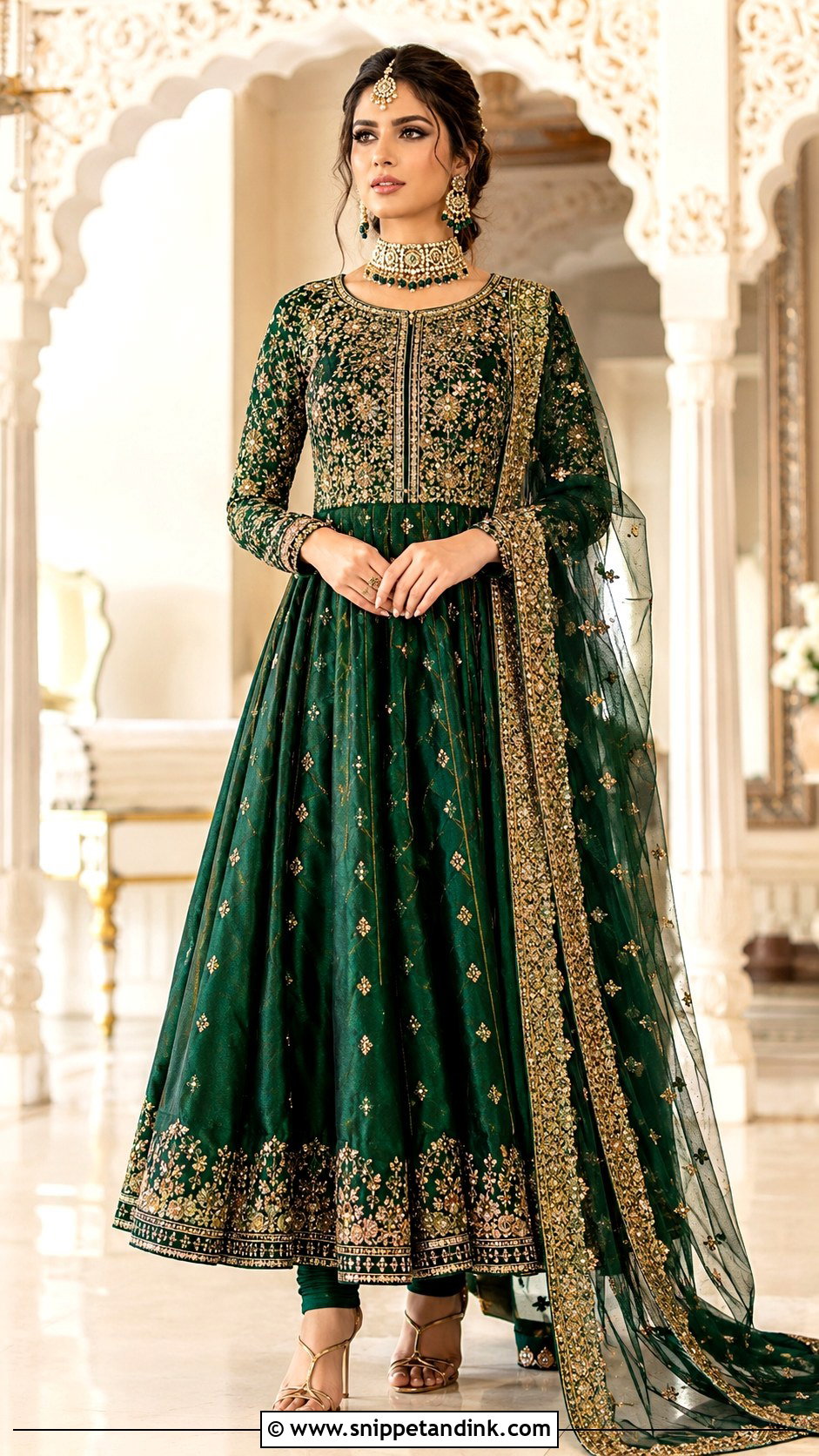
An Anarkali works on more figures than almost anything else here, because one unbroken vertical line from shoulder to hem makes you look taller. The fit point to watch is the waist seam: if it sits too high it reads as maternity wear in side profile, so I pin it at your natural waist while you’re standing straight. Choose silk, chiffon or cotton net with antique gold that’s densest at the bodice and fades toward the hem. Full embroidered sleeves suit cooler weather and a modest ceremony. Wear it with a narrow churidar and a sheer dupatta over the head and one forearm, plus a kundan choker, a small teeka, gold heels and a braided or soft low bun.
7. Emerald Green Farshi Gharara With Tissue Dupatta
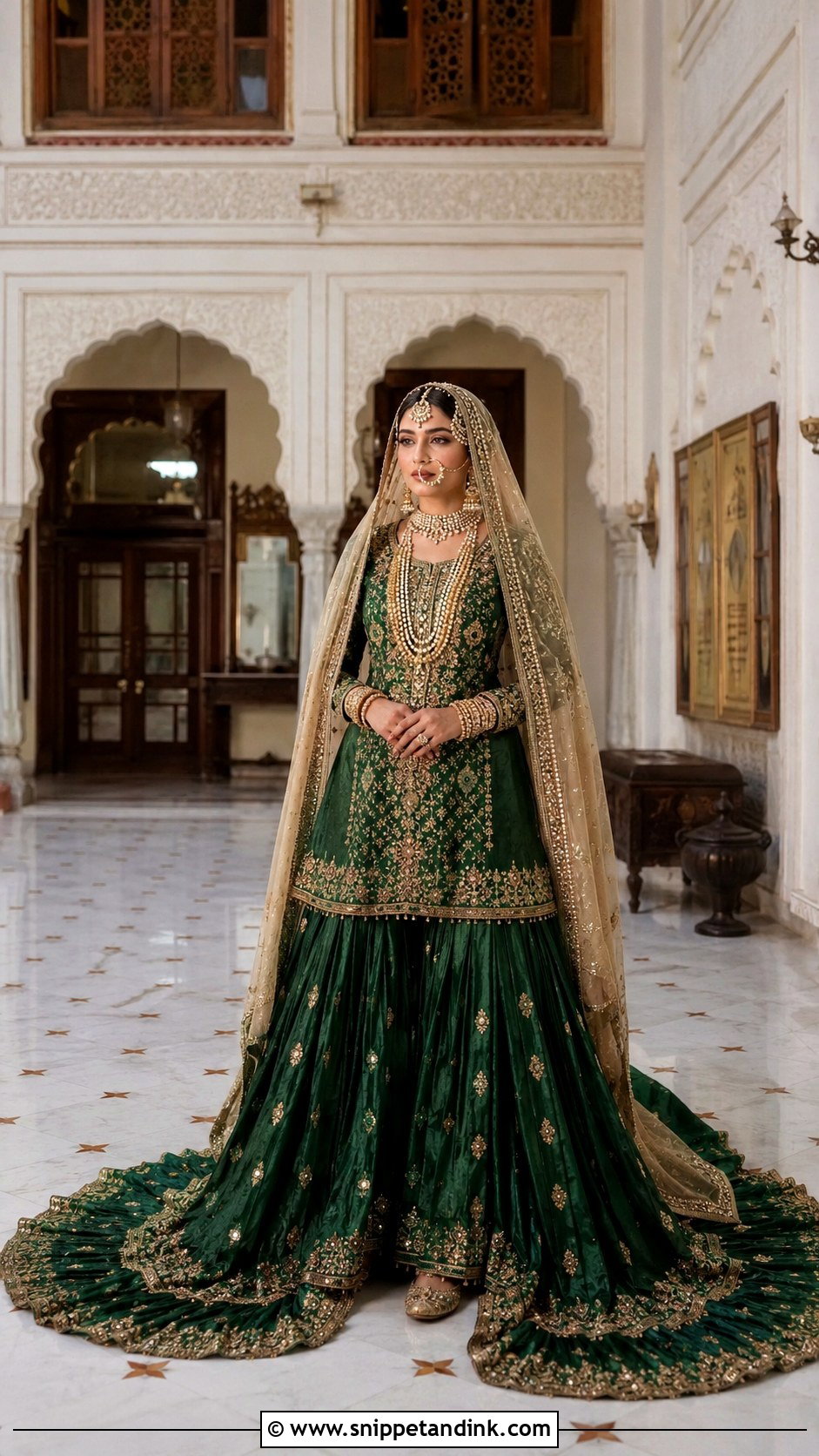
Nothing on this list is grander than an emerald green farshi gharara, and nothing needs more handling. The flare trails behind you, so raw silk or jamawar is worth the money because it holds its shape on the floor instead of collapsing. Someone in your family should be assigned to lift and settle the hem every time you stand, sit or turn on the stage. Pair it with a structured short kurti in zardozi, kora, dabka and resham, a pale gold tissue dupatta, a broad polki choker, layered pearls, a jhumar, a nath and khussas. The length must be cut to your height in the shoes you’ll actually wear. Save it for a seated nikkah or a portrait session, not a long walk across a garden.
8. Emerald Green Bridal Gown With Silver Embroidery
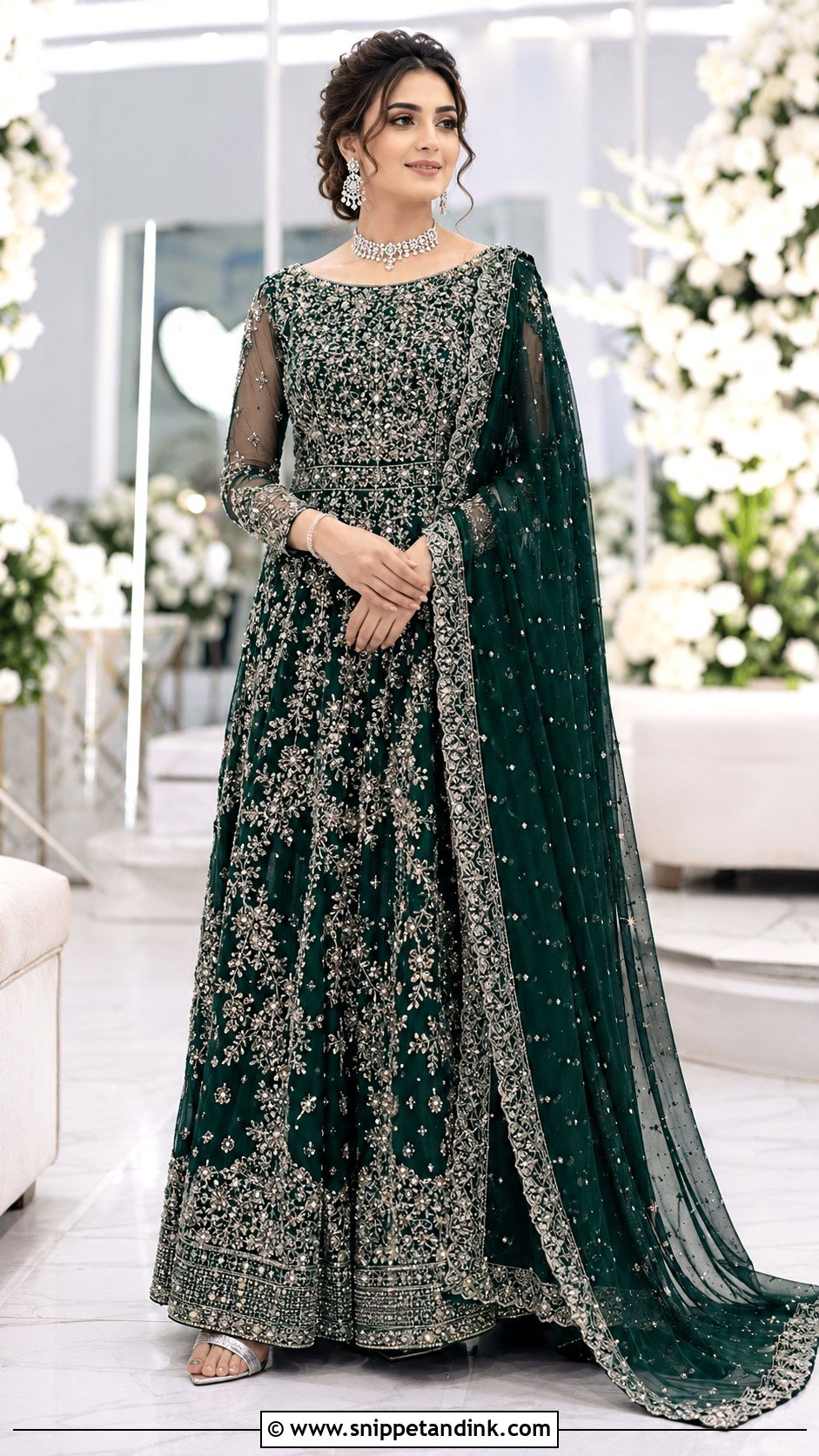
Silver on emerald gives a cooler, brighter outfit than gold, and it’s my usual suggestion for a walima when the baraat was heavy antique gold. Ask for silver threadwork with pearls and a little crystal, but keep sequins restrained; too many and the gown flashes white in phone photos. A fitted bodice with a boat or high round neck, a softly flared skirt and sheer full sleeves with embroidered cuffs give the shape. A matching dupatta edged in silver goes over the head or pinned at the shoulders. Finish with diamond-look jewelry, pearl drops, a slim bracelet and silver heels, and keep the makeup in cool rose tones so it agrees with the metal.
9. Emerald Green Peplum With Bridal Sharara
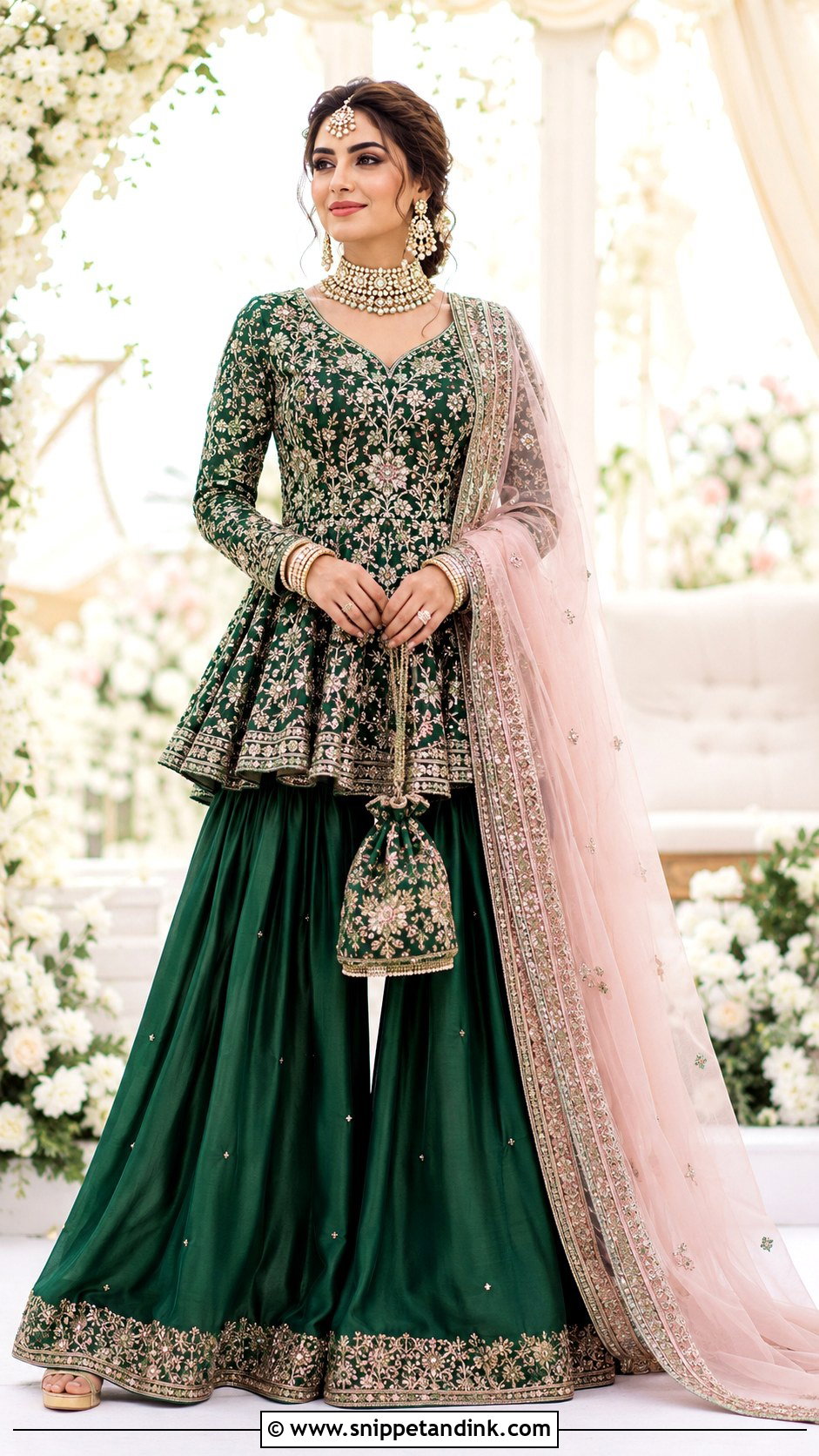
The peplum looks young and lively, but it’s unforgiving about where your waist actually is. If the flare starts even slightly above it, the top looks boxy over the hips, so I’d have the peplum seam fitted last, once everything else is settled. Vertical embroidery on the bodice lengthens you, and a silk sharara with gold borders and enough volume balances the shorter top. A blush or soft peach dupatta adds contrast; repeat that tone in a few stones in the jewelry or the potli so it looks planned. A polki choker, drop earrings, a teeka and gold platforms hidden under the sharara suit a mehndi or nikkah where you’ll be up and moving.
10. Emerald Green Angrakha With Bridal Lehenga
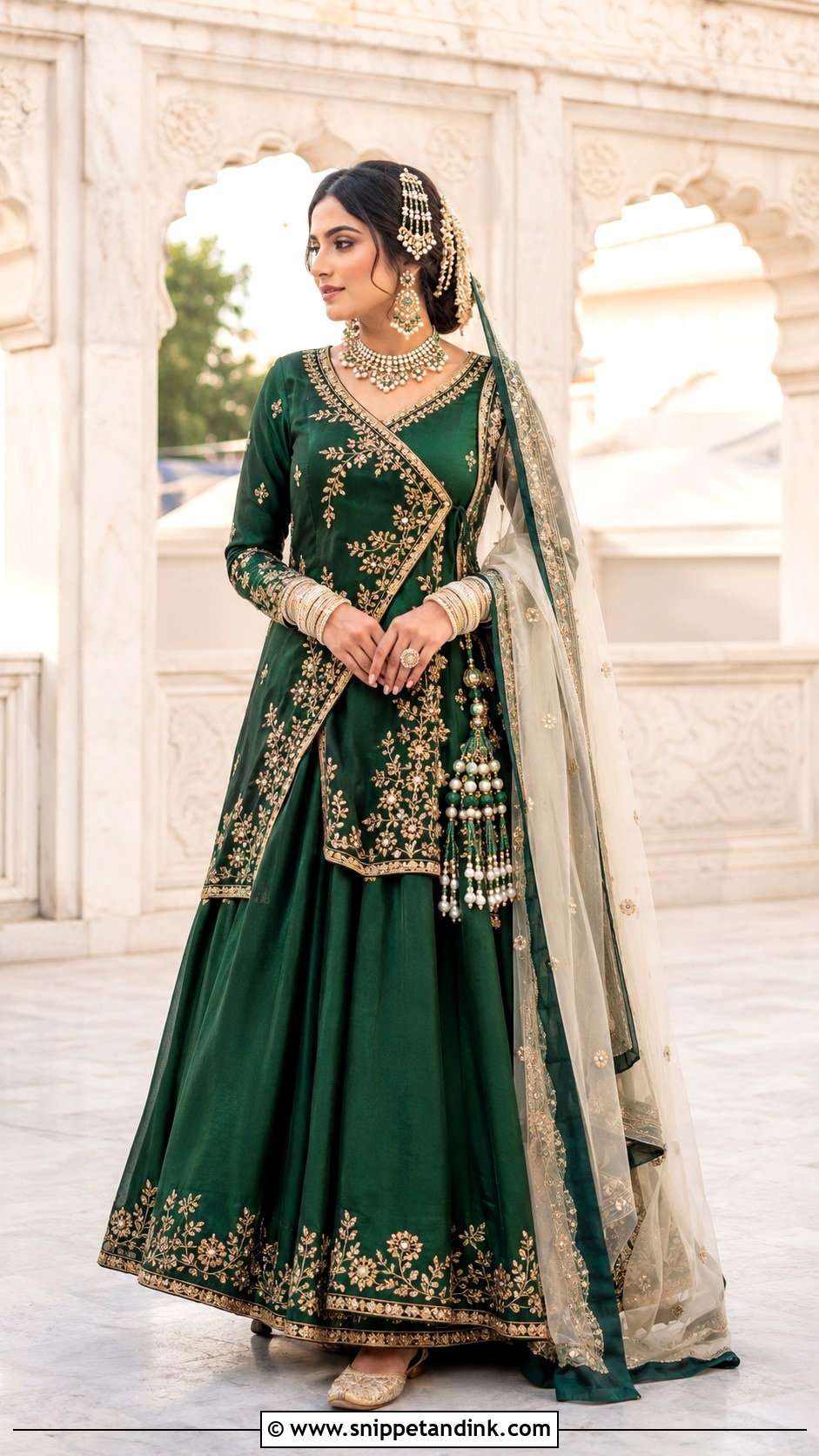
The wrap front is what sets this one apart from a standard choli. A longer angrakha with an asymmetric closure, tassels and gold tracing the neckline and overlapping panels sits over a matching raw silk lehenga with a broad border. The tassels need watching: heavy metal ones pull the overlap open when you sit, so I ask for light thread tassels with only a small bead at the end. An ivory dupatta with emerald edging brightens the area around your face. Pearl-and-kundan jewelry, a side jhumar, ivory bangles and gold khussas give a Mughal feel with more coverage than a short blouse.
11. Emerald Green Jacket Lehenga With Bridal Dupatta
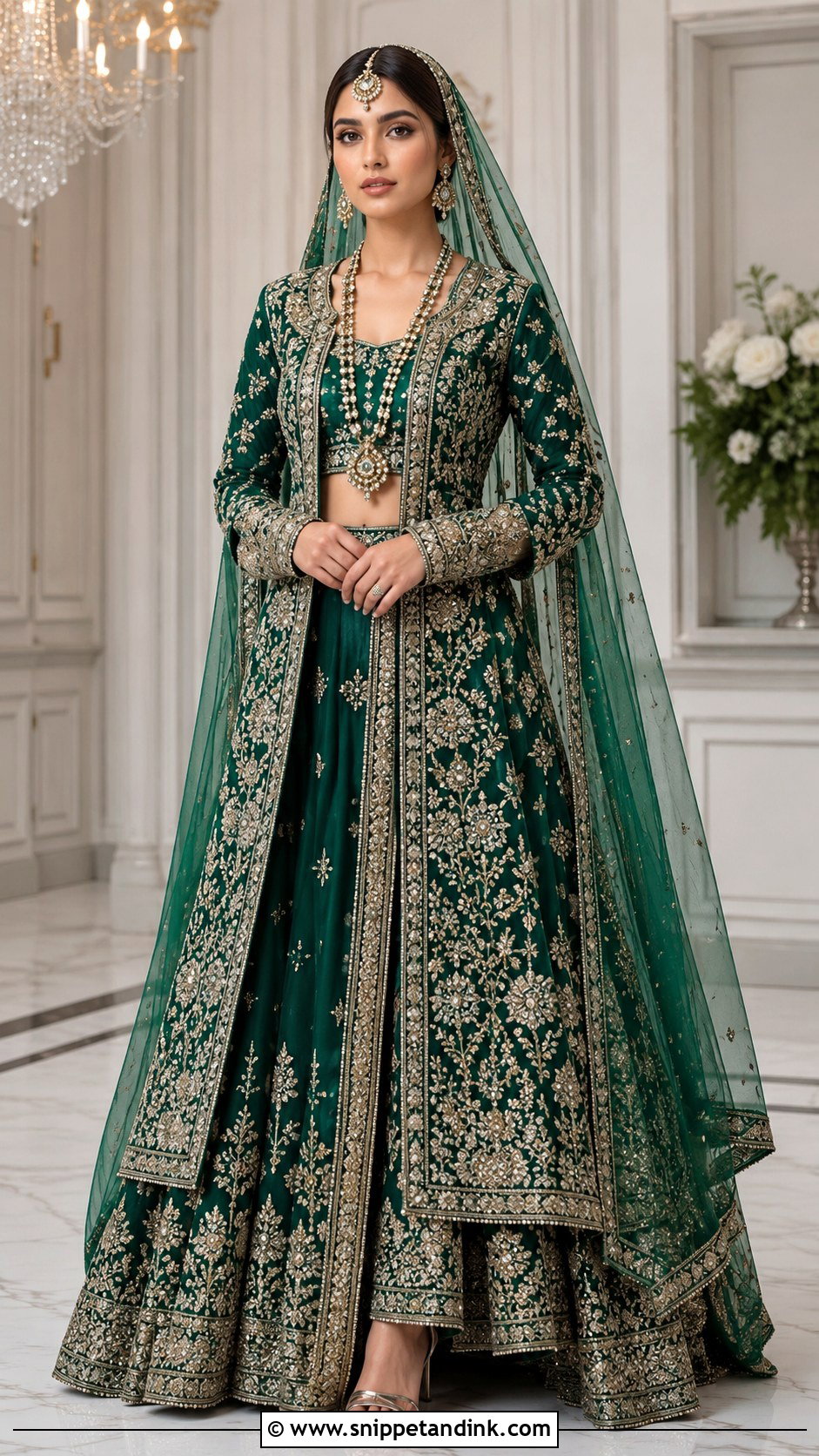
A long front-open jacket adds height and is the warmest option here for a winter evening. It should reach below the knee and fall open over a simple blouse, with the dense gold kept to the shoulders, front edges, cuffs and hem while the lehenga stays lighter. The fitting point is the shoulder: a jacket this long hangs from it, and a seam that’s even slightly wide makes the whole thing slide back all night. Pin a sheer green dupatta over your head so it doesn’t hide the jacket front, and add a long kundan necklace, a teeka and metallic heels. A slim embellished belt under the jacket defines the waist if you want it. It needs a spacious indoor venue so the full length can be seen.
12. Emerald Green Bridal Shalwar Kameez With Gota Work
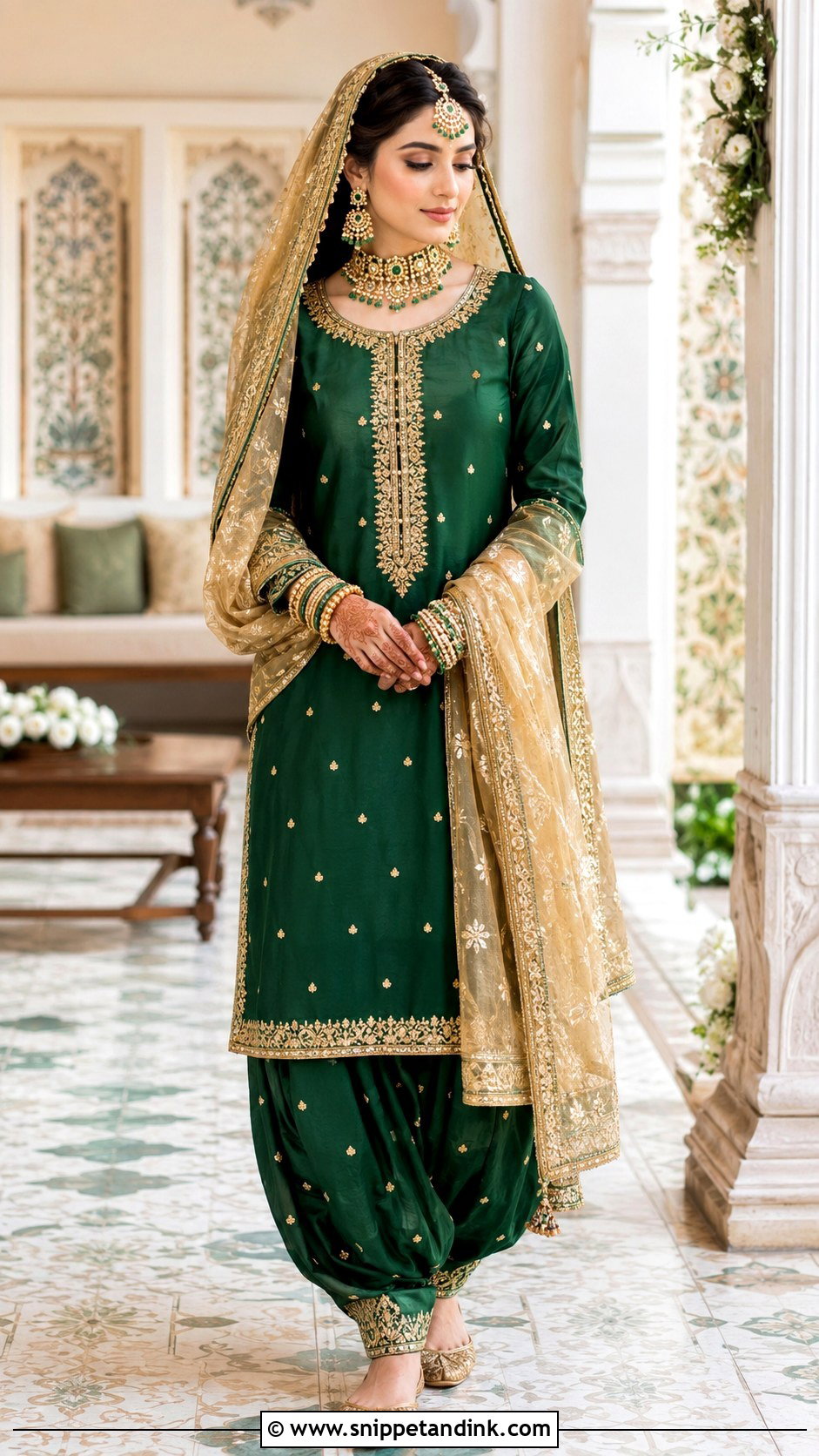
A bridal shalwar kameez can look every bit as ceremonial as a lehenga if the fabric earns it. I’d choose raw silk for the kameez, straight-cut with side slits and real gota, zardozi or lappa work, because a thin fabric makes this silhouette look like a daytime suit. The full shalwar needs controlled volume through the leg and embroidery at the cuffs. A gold tissue dupatta with emerald borders over the head, the second end on your arm, is what makes it bridal. Add a choker, jhumkas, a small teeka, stacked bangles and pointed khussas. It’s also the outfit here you’re most likely to wear again, which matters for a nikkah or reception.
13. Emerald Green Front-Open Gown With Lehenga
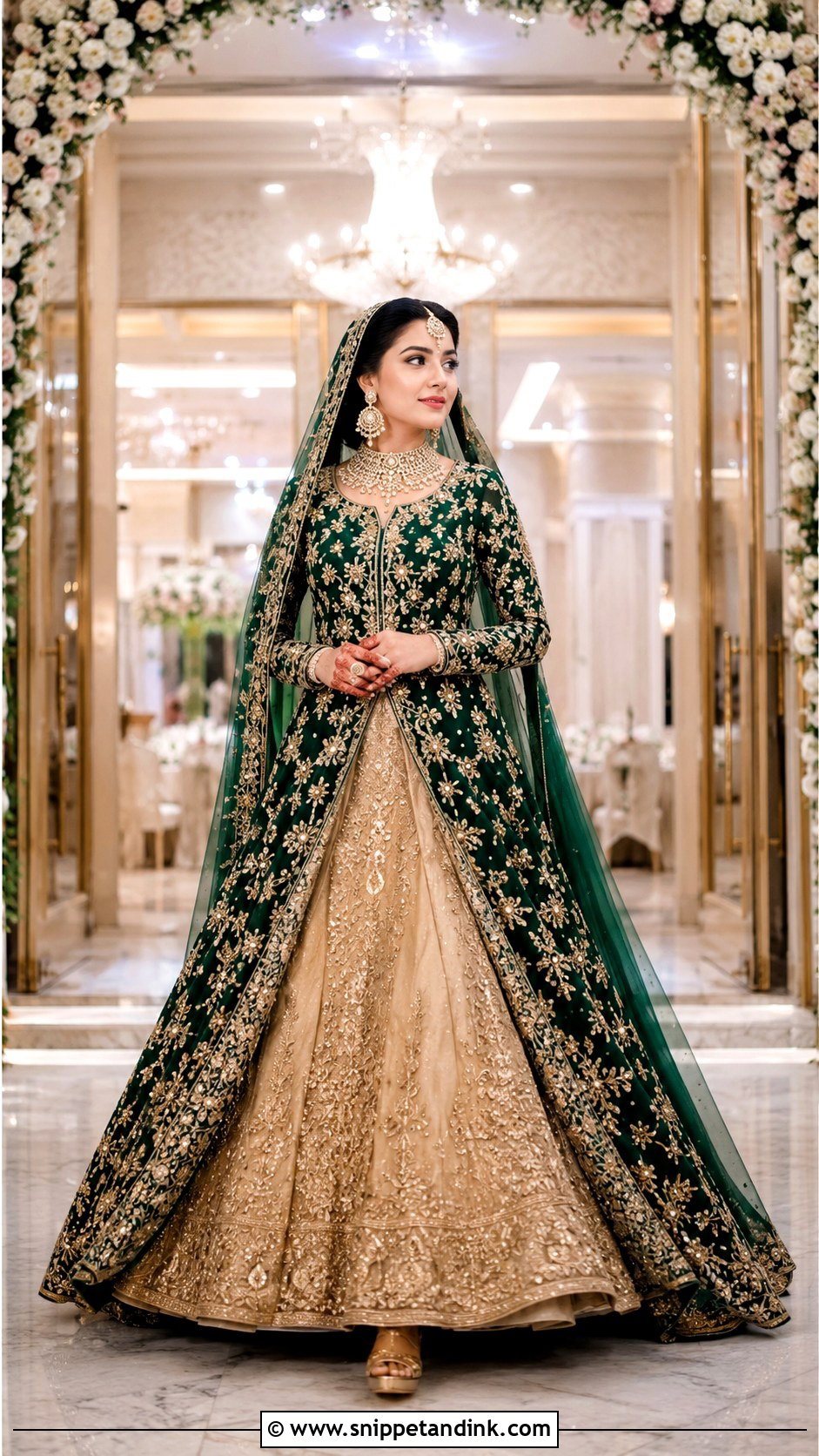
Layering a front-open gown over a lehenga gives you gown coverage with lehenga movement, and the gap between the two layers is what shows up in photos. The outer gown needs a fitted bodice, full sleeves and a skirt that opens from the waist, framed in gold at the neckline, front edges and hem. Under it, a lighter emerald or champagne lehenga with scattered motifs. Watch the combined weight at the waist, since two skirts stack up quickly; I’d ask for the inner lehenga in a lighter fabric. A matching net dupatta, a polki collar, statement earrings and gold heels finish it, with a sleek hairstyle that leaves the neckline alone. Good for a walima or an evening nikkah.
14. Emerald Green Bridal Lehenga With Red Dupatta
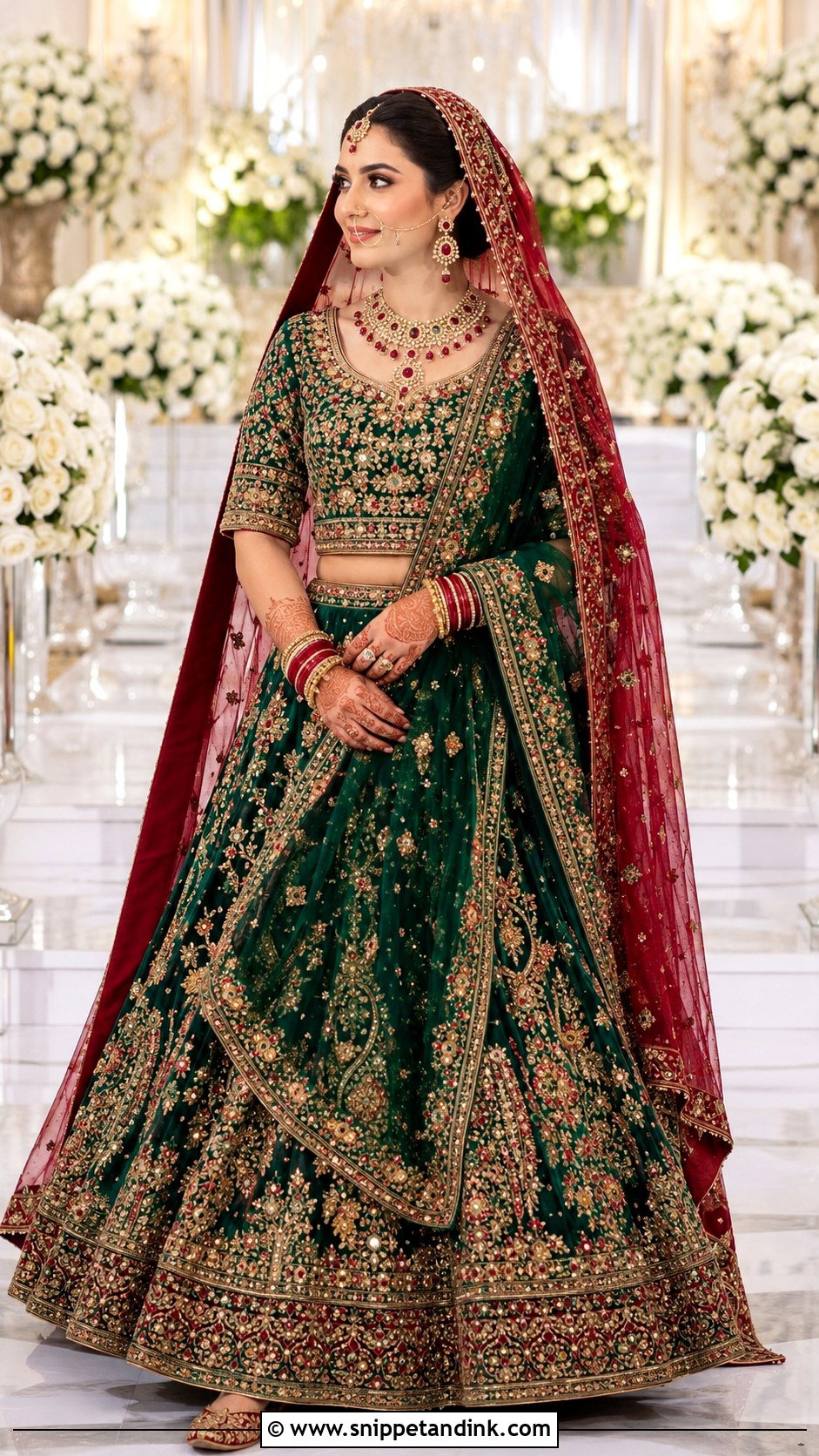
Emerald and bridal red together is bold, but it’s also how a bride wears the traditional red near her face while green carries the outfit. Start with an emerald raw silk lehenga and blouse in antique gold, then add a deep red net dupatta with a gold border and enough transparency to show the green underneath. A second, lighter emerald dupatta across one shoulder makes it a double-dupatta look. The thing I insist on is small red accents in the embroidery itself, otherwise the red dupatta looks borrowed from another outfit. Ruby-and-kundan jewelry, a nath, red-and-gold bangles and embroidered khussas suit a baraat.
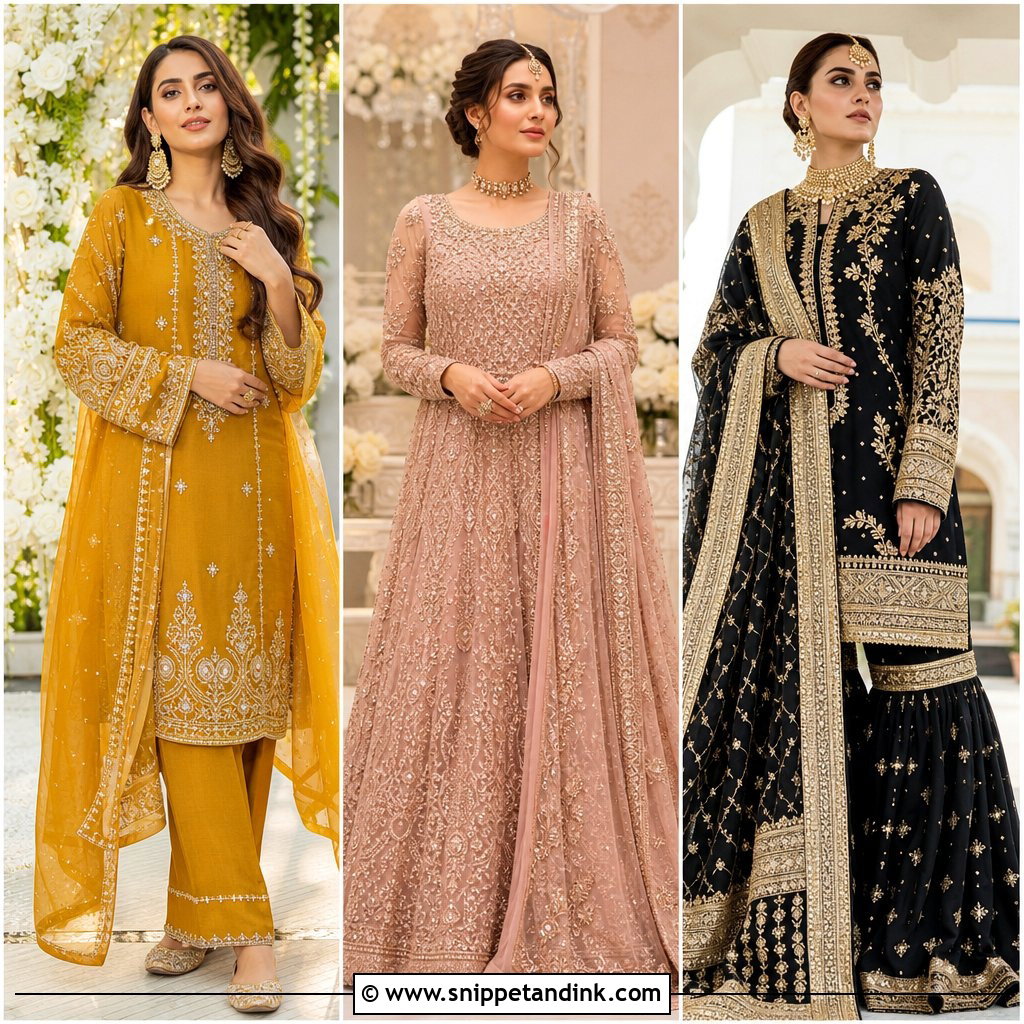


15. Emerald Green Bridal Lehenga With Blush Dupatta
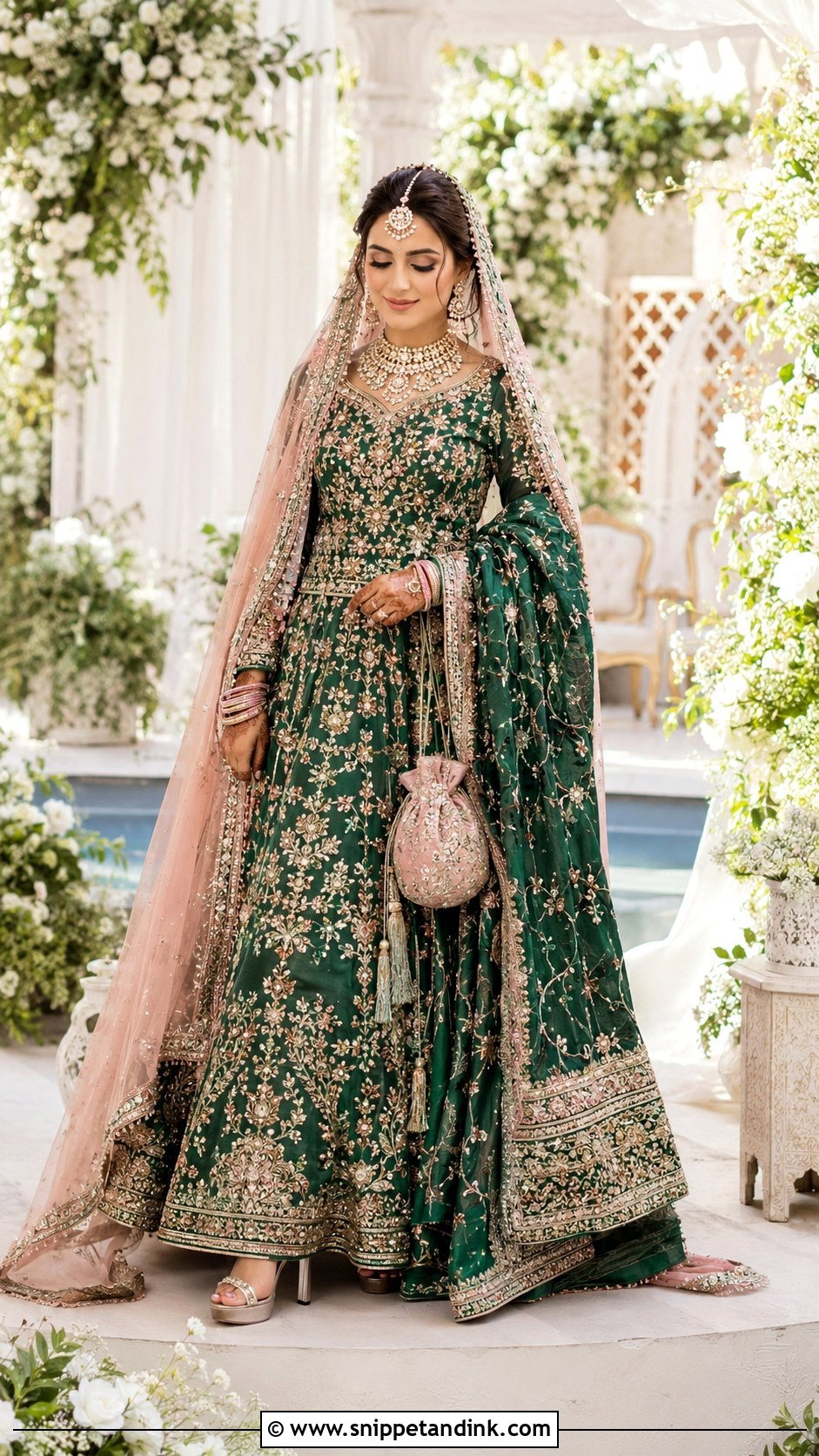
Blush over the head softens deep green more than any other accent I’ve tried, because the pale pink bounces light back onto your skin. Choose a deep green lehenga with champagne gold embroidery and a fitted blouse, then put the blush net dupatta on your head and a second emerald one across a shoulder. One warning: some blush nets turn grey-beige under warm hall bulbs, so check the swatch in both daylight and lamp light before you commit. Pearls and pale pink stones in antique settings tie the colors together. Add a teeka, medium earrings, blush bangles, a small potli and champagne heels, and keep the neckline clean enough to frame the necklace. Daytime nikkahs and garden venues suit it best.
16. Emerald Green Bridal Pishwas With Mirror Work
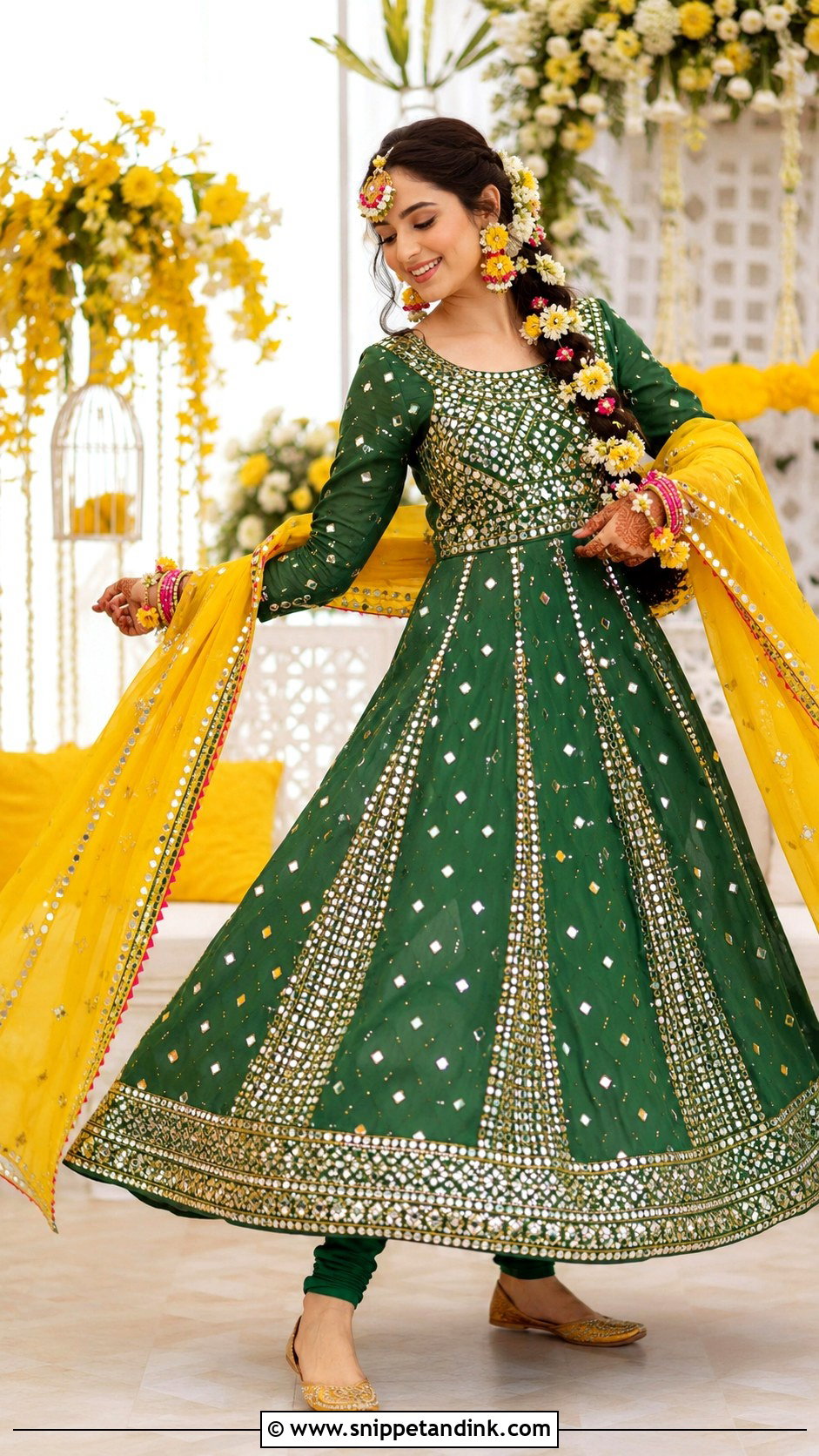
Mirror work belongs at a mehndi, and an emerald green pishwas carries it well. Before buying, run your hand over the mirrors: well-made pieces are secured with a dense thread surround, and loose ones will drop off on the dance floor. Keep the heavier work on the bodice and space the motifs on the panels so they catch light as you move. A fitted churidar and a light yellow, lime or fuchsia dupatta give it a festive contrast. Floral jewelry or a light kundan set, colorful bangles, a small passa, gold khussas and a long braid with fresh flowers suit the mood. Hem it at ankle length so you can dance without stepping on it.
17. Emerald Green High-Neck Bridal Gown
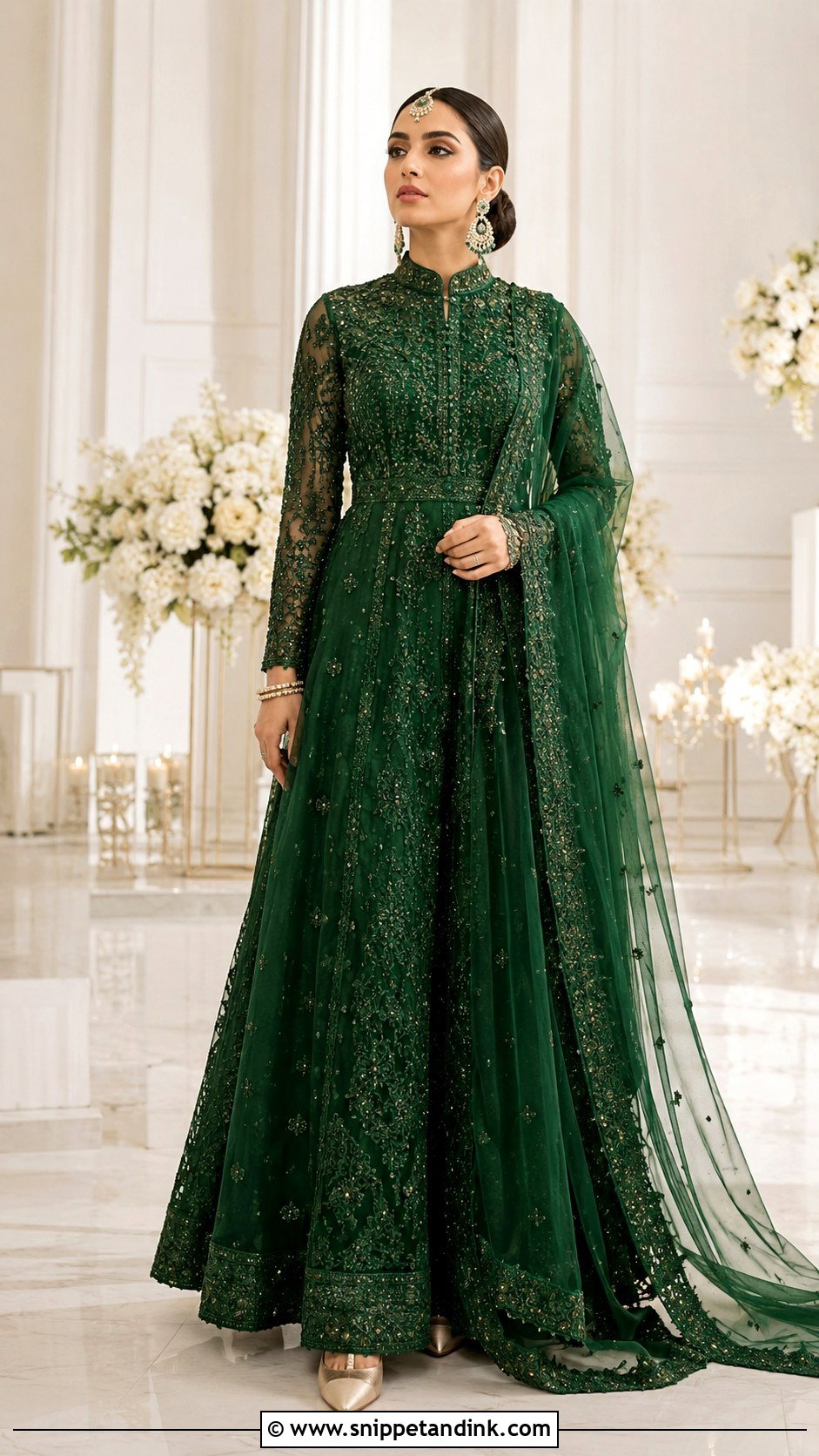
With a high neck, the collar is your jewelry, so the most common mistake I see is a heavy necklace fighting the embroidery. Skip it and wear statement earrings, a centered teeka and stacked bracelets instead. Ask for a fitted bodice with full sleeves, embroidery around the collar, shoulders, waist and cuffs, and a soft A-line skirt with scattered gold or champagne motifs. Have the collar fitted while you turn your head side to side; a stiff, tight band is miserable by the third hour. A sheer dupatta with a narrow border, metallic closed-toe heels and a sleek low bun keep it understated for a formal walima or reception.
18. Emerald Green Bridal Lehenga With Ivory Blouse
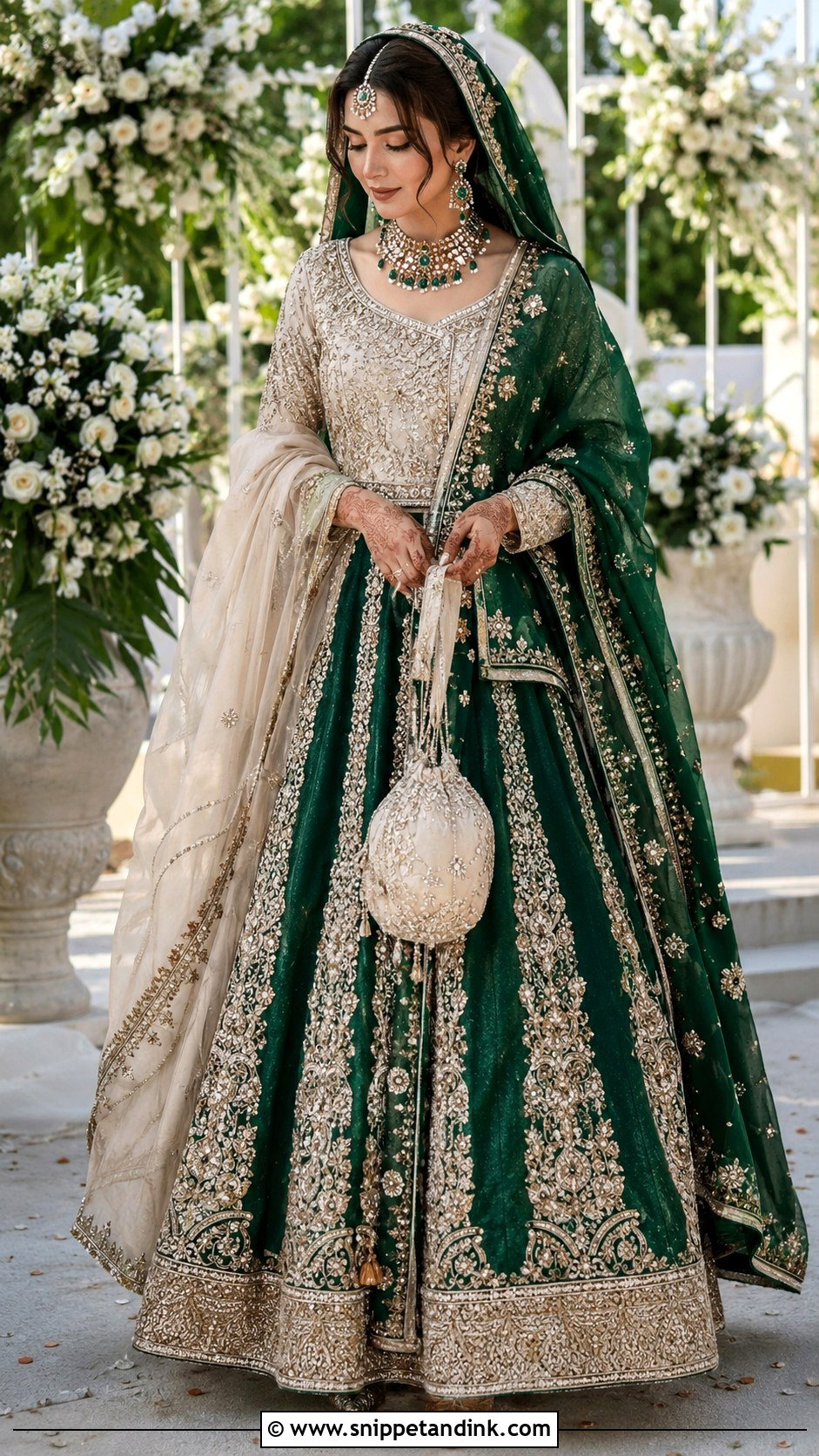
Putting ivory on top is a lighting trick as much as a style choice. An ivory raw silk choli worked in emerald thread, gold zardozi, pearls and small sequins throws daylight up toward your face, so this is the outfit I’d suggest for an outdoor daytime event. Pair it with a full green lehenga whose border repeats the ivory and gold. Keep an emerald dupatta on your head so green stays dominant, and rest a second ivory drape on one arm if you like. Ivory raw silk marks easily, so keep makeup wipes and a lint roller well away from the blouse once you’re dressed. Pearl-and-polki jewelry, emerald drops, an ivory potli and gold heels finish a nikkah or walima look.
19. Emerald Green Bridal Kurta With Jamawar Lehenga
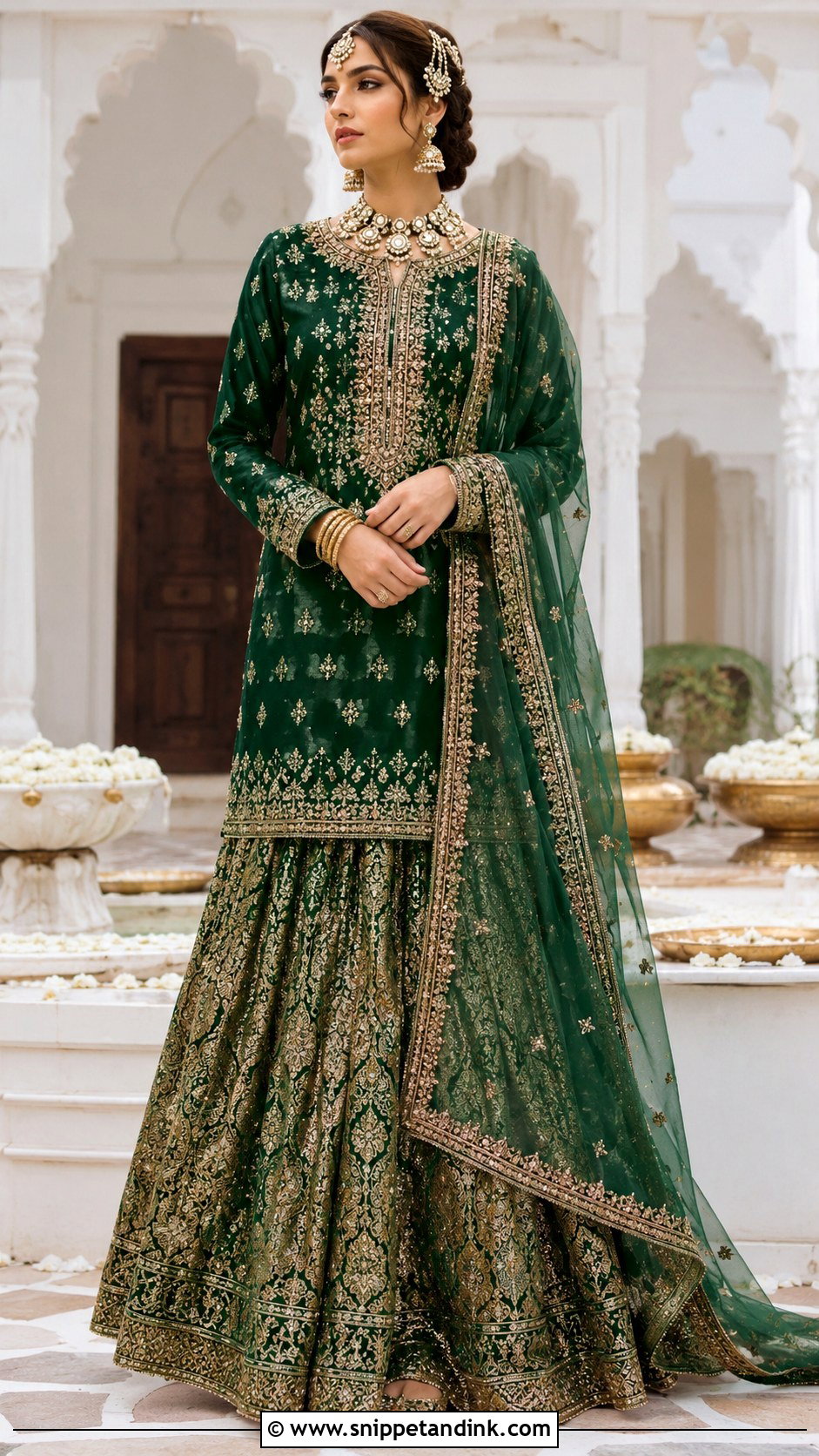
Jamawar does the decorating for you. A woven gold-and-green skirt has texture built in, so the knee-length emerald kurta on top only needs gold at the neckline and hem. I’d ask for the lehenga with a controlled flare and a finished velvet or raw silk border, since jamawar edges fray if they’re left raw. A sheer emerald dupatta with small motifs keeps the weave visible, and polki, jhumkas, a side passa and antique bangles keep it heirloom in feel. Embellished khussas are the comfortable choice under it. The longer kurta also gives you graceful coverage while keeping the volume a formal Pakistani bridal outfit needs.

20. Emerald Green Bridal Lehenga With Cape Dupatta
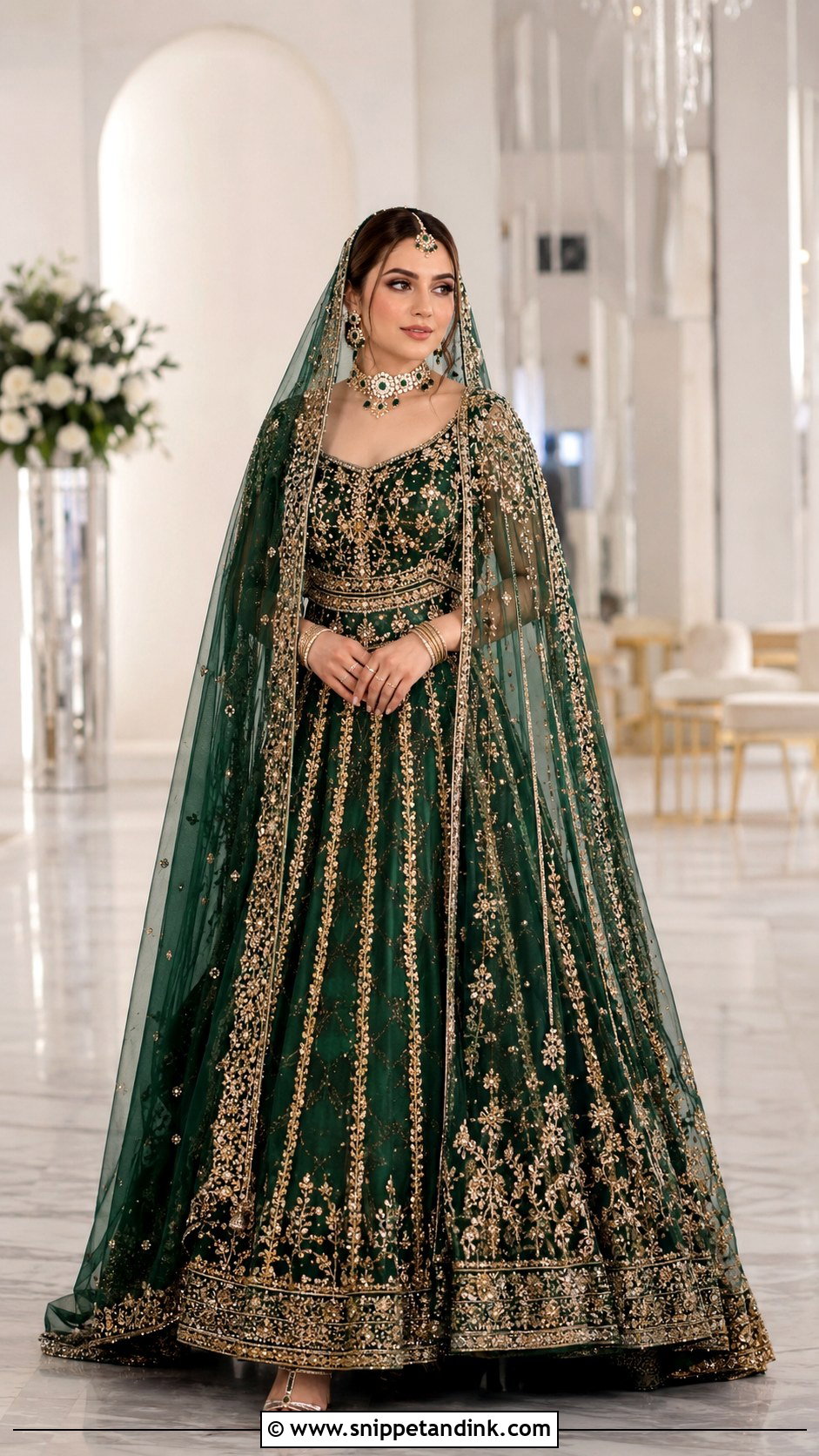
A cape dupatta pinned at the shoulders frees your arms and gives a veil-like line from behind, which is why modern brides like it for a walima or reception. The cape should fall to the floor or stop just above the lehenga hem, and I’d have it stitched or hooked to the blouse rather than safety-pinned, because pins pull the shoulder seam when you hug people. Pair it with a modest blouse and a structured lehenga with vertical gold work and a broad hem. If the ceremony calls for head covering, add a separate light dupatta for that part. A statement choker, drop earrings, slim bangles, metallic heels and a sleek bun or soft waves keep it clean from every angle.
Hem, Sleeve and Dupatta Weight Get Settled at the Fittings
Most heavy Pakistani bridal outfits are made to order, and handwork like zardozi and dabka takes time, so the earlier you order, the more fittings you can fit in before the wedding. I’d plan for at least two. The first sets the shape; the second, close to the date, catches any change in your weight and settles the hem.
Bring the real things to the final fitting. A hem marked in flat sandals will be wrong in heels, and a neckline can’t be judged without the necklace that sits in it.
- The exact shoes you’ll wear, so the hem is marked at the right height.
- Your main necklace and earrings, to check the neckline and collar height.
- The dupatta, pinned the way it will be worn, so you can feel how much it pulls at your head and shoulders.
- A chair. Sit, stand, raise your arms and turn. A blouse that only works while you stand still will split or ride up at the stage.
If the dupatta feels heavy at the fitting, it will feel twice as heavy at hour four. Ask for a lighter net with the border kept narrow, or have the main dupatta pinned to the blouse rather than resting on your head.
Putting the Outfit Away So the Gold Stays Bright
Metallic thread tarnishes when it meets moisture, perfume and plastic, so the way you pack the outfit after the last event decides how it looks in ten years. Spray perfume before you dress, never onto the embroidery, and let everything air out flat for a day before you fold it.
- Take stained or sweaty pieces to a dry cleaner who handles bridal handwork, and say it’s zardozi before they touch it.
- Wrap each piece in soft white cotton or muslin. Plastic garment bags trap moisture and yellow the gold.
- Lay acid-free tissue between embroidered layers so the metal work doesn’t rub against itself.
- Refold along different lines every few months, because permanent creases form on heavy work left in one shape.
- Keep it in a dry cupboard, with a few silica gel sachets if your home is humid.
One Color Across Four Events, Held Together by Tailoring
Emerald gives you a way to keep Pakistani wedding tradition and still look like yourself. The lehengas, ghararas, pishwas, gowns and shalwar kameez above each suit a different event, season and level of embellishment, so start from the ceremony and venue rather than the photo. Gold reads classic; silver, ivory, blush and red each shift the mood. Then spend your energy on tailoring, because sleeve length, hem placement and dupatta weight change how any of these outfits looks and feels. Wear coordinated jewelry, shoes you can stand in, and makeup that agrees with the green, so you can move through every event without thinking about your clothes.
You'll Like These Ideas:








Leave a Reply