
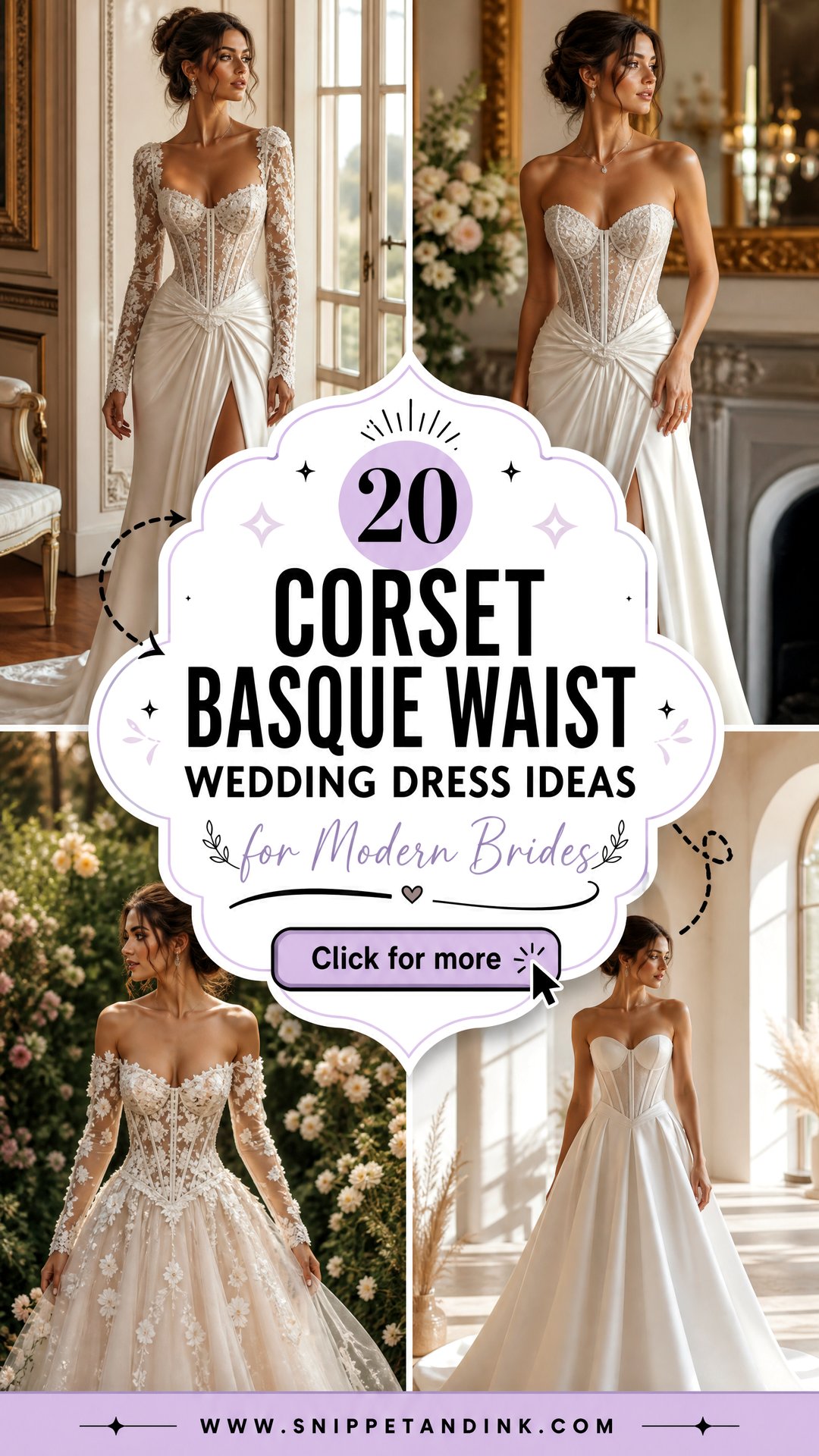
A basque waist is the seam that dips into a V or a soft U below your natural waist, and on a boned bodice it does two jobs at once: it defines the waist and makes the torso look longer. The shape is centuries old, but current gowns make it in satin, lace, tulle, sheer boning, 3D florals and very plain finishes, and it’s showing up across bridal right now. Depending on neckline and skirt, it can look regal, vintage or modern. The twenty versions below run from ballroom to garden, and for each one I’ve added what I’d actually look at in the fitting room.
Which Torsos a Dropped V Flatters, and Which It Fights
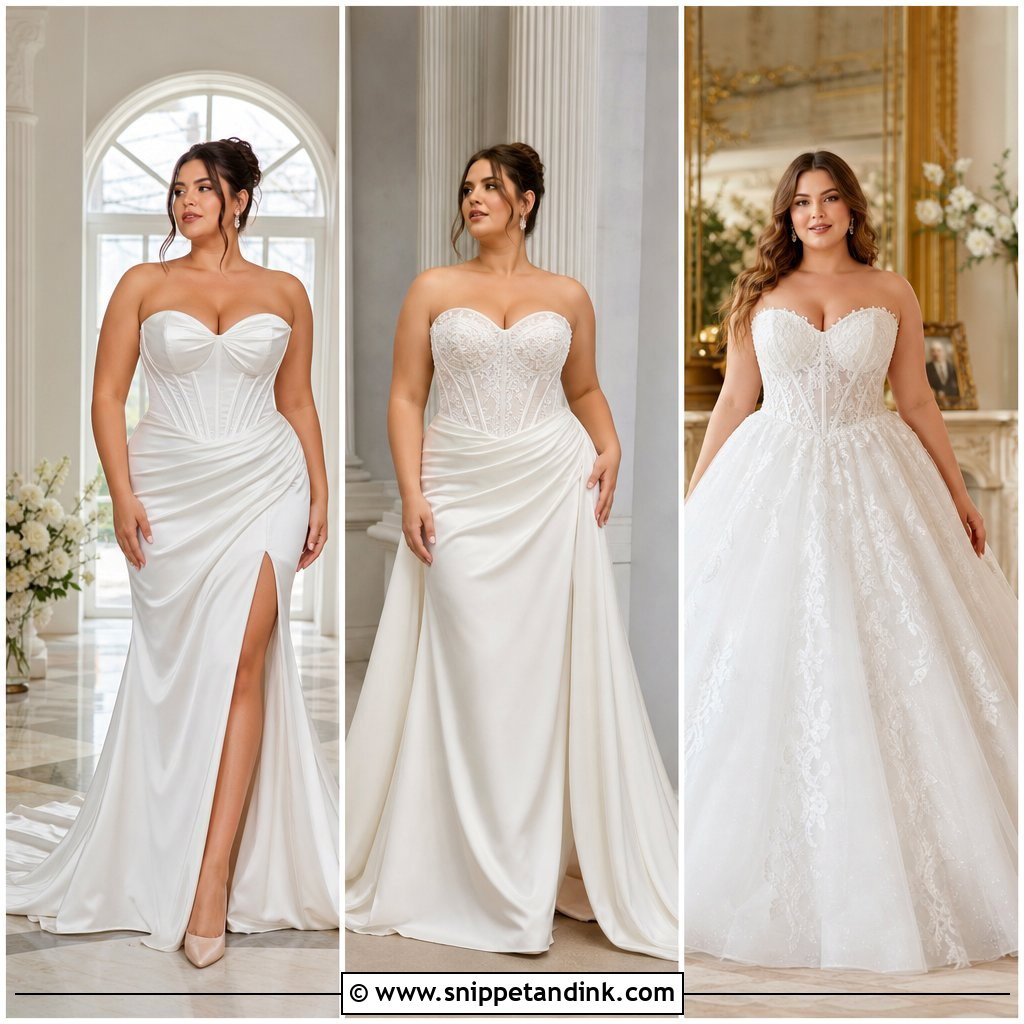
A basque point draws the eye downward toward the centre, so it lengthens and narrows the middle. That is why it flatters so many figures, but the depth of the V is what makes it work or not.
- Short torso or petite: a shallow U or a small V sits better. A deep point can end too close to the hips and make the legs look shorter.
- Long torso: a deeper V looks balanced, and you have room for it.
- Pear-shaped: the skirt starts lower and falls over the hips, which is very flattering.
- Softer tummy: the V can smooth the lower stomach, as long as the bodice has strong boning at the centre front.
When I fit one, I mark where the point lands on the body while the bride sits. If it digs into the top of the thigh, it’s too long for her, however good it looks standing. Moving the point up by a couple of centimetres is a routine alteration and changes how the whole dress feels.
Try at least one natural-waist gown in the same shop, in the same fabric if you can. Seeing the two side by side in one mirror tells you more in a minute than any body-shape chart. Some brides find the dropped line instantly right; others feel it pulls their proportions down, and that instinct is usually worth trusting.
1. Satin Corset Basque Waist Wedding Dress
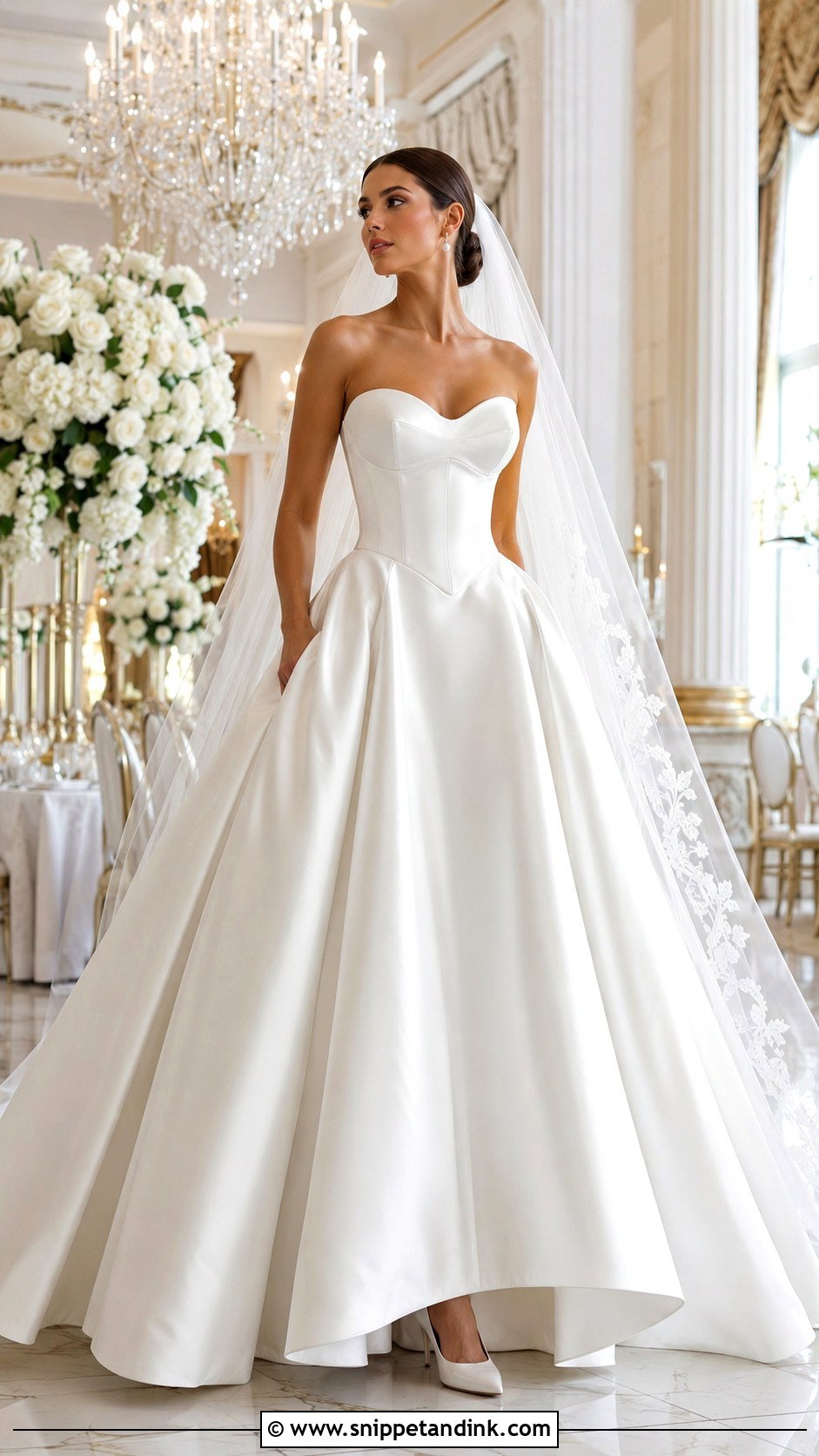
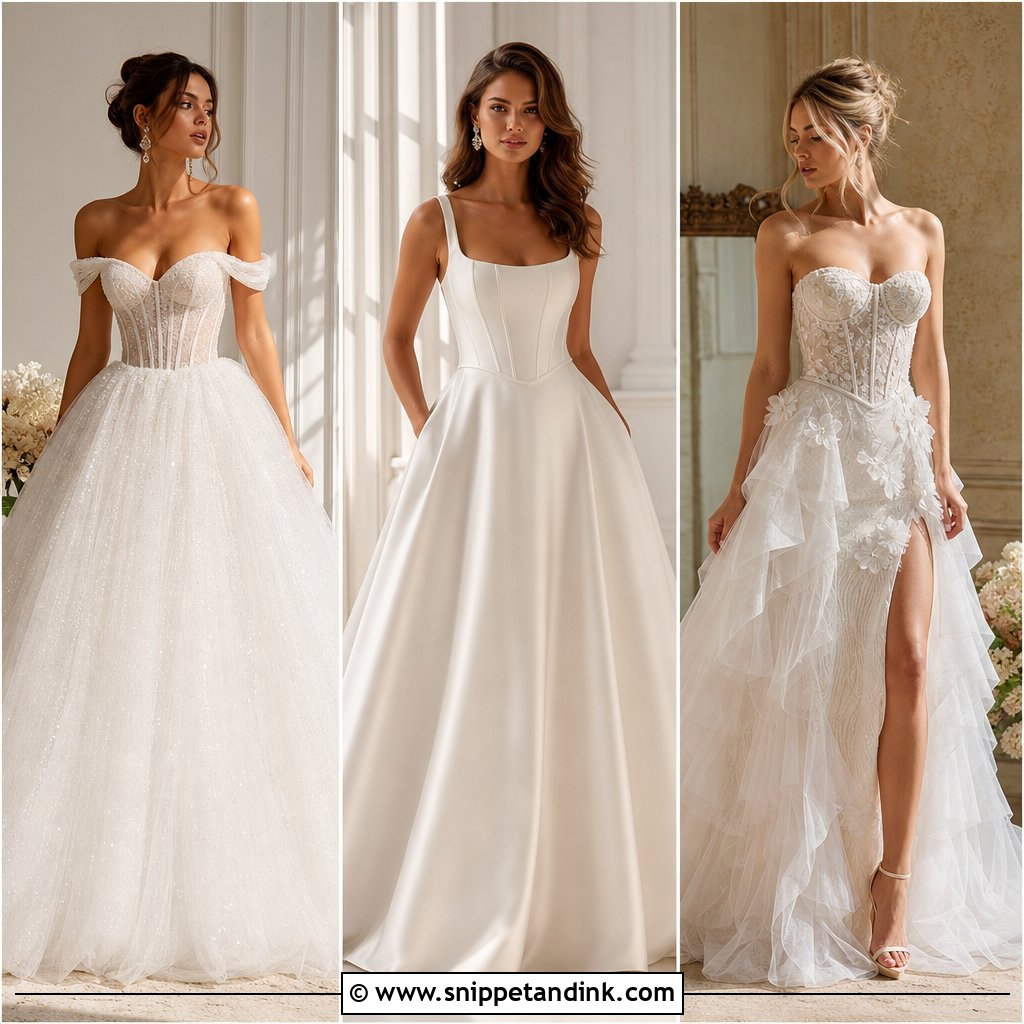
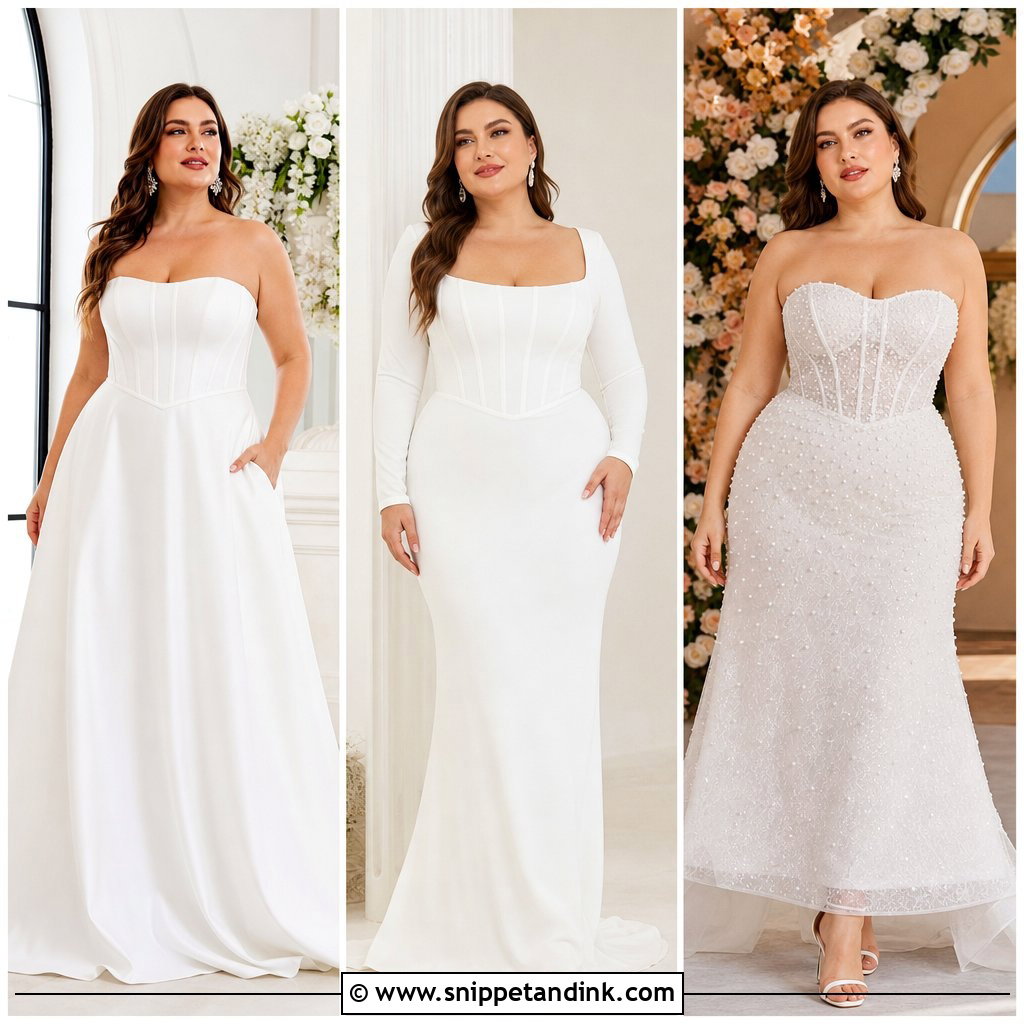
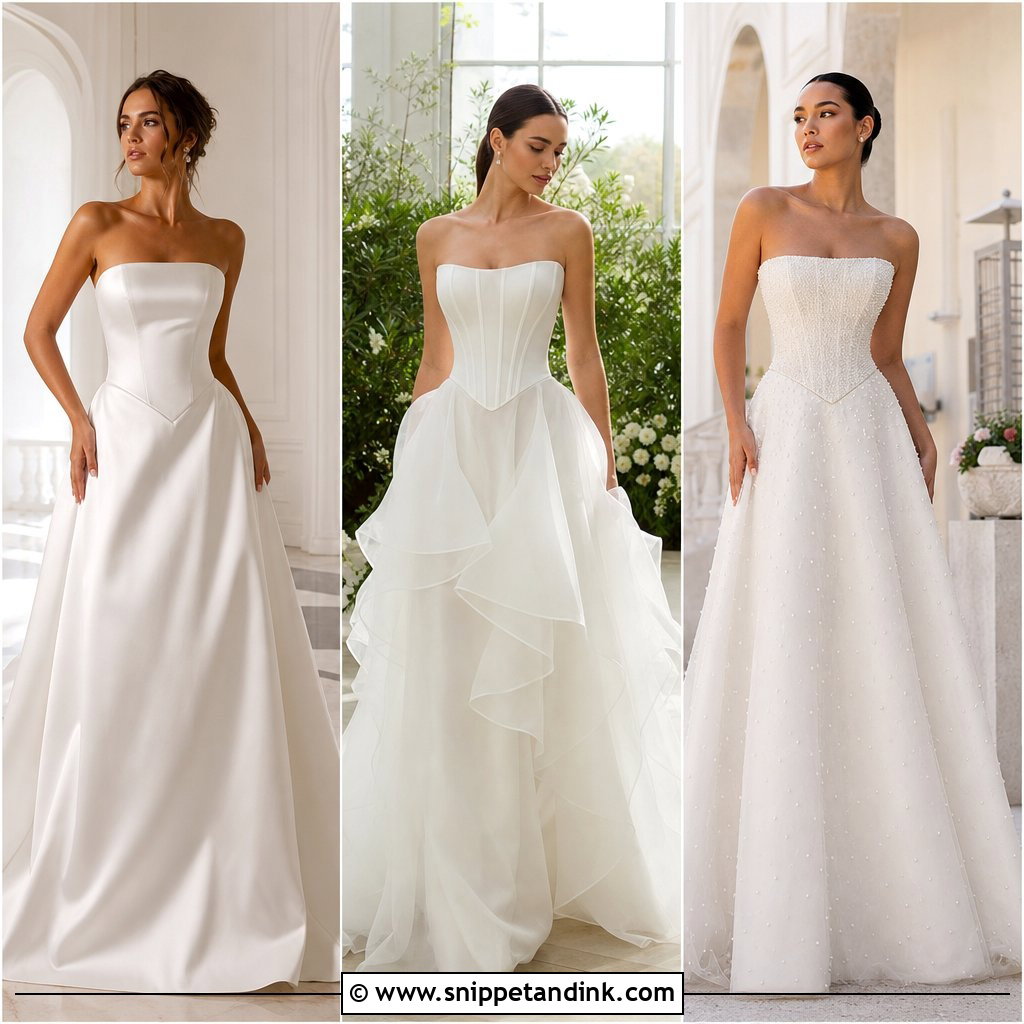
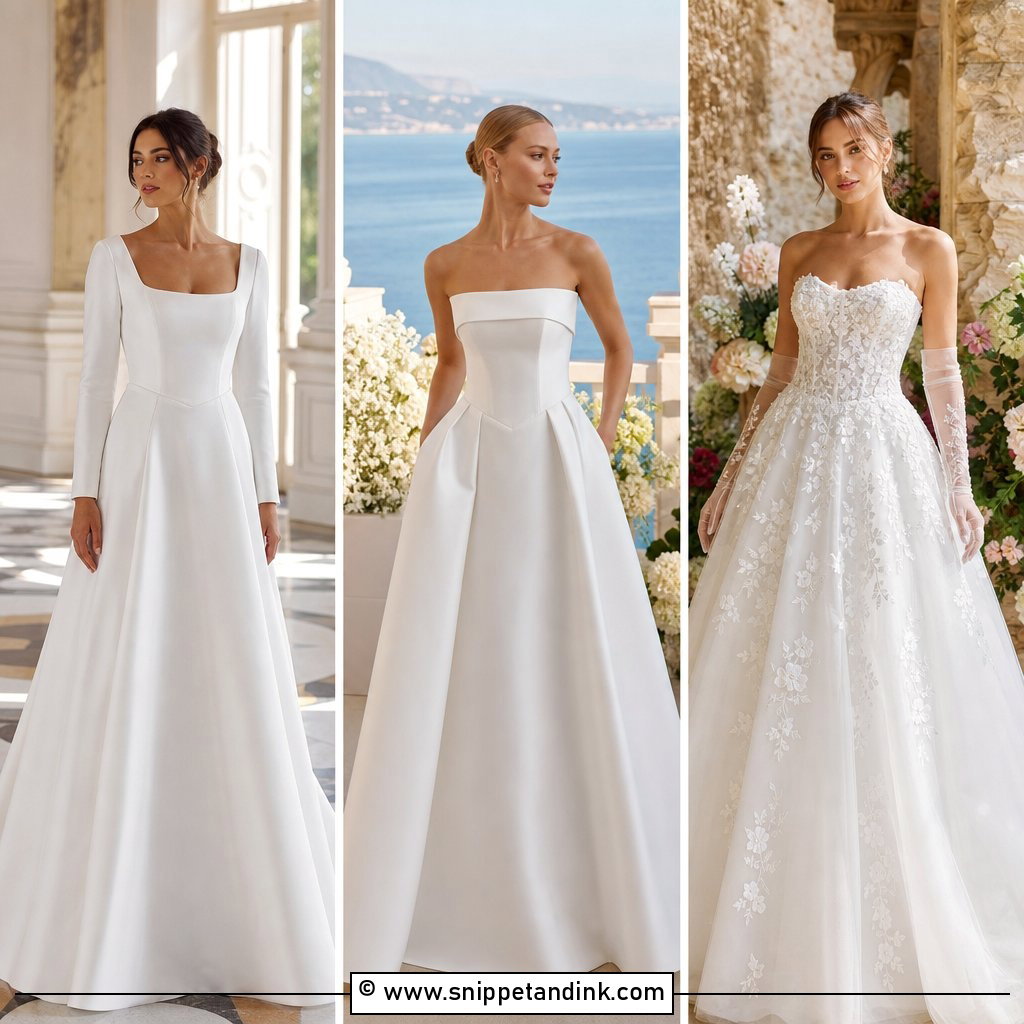
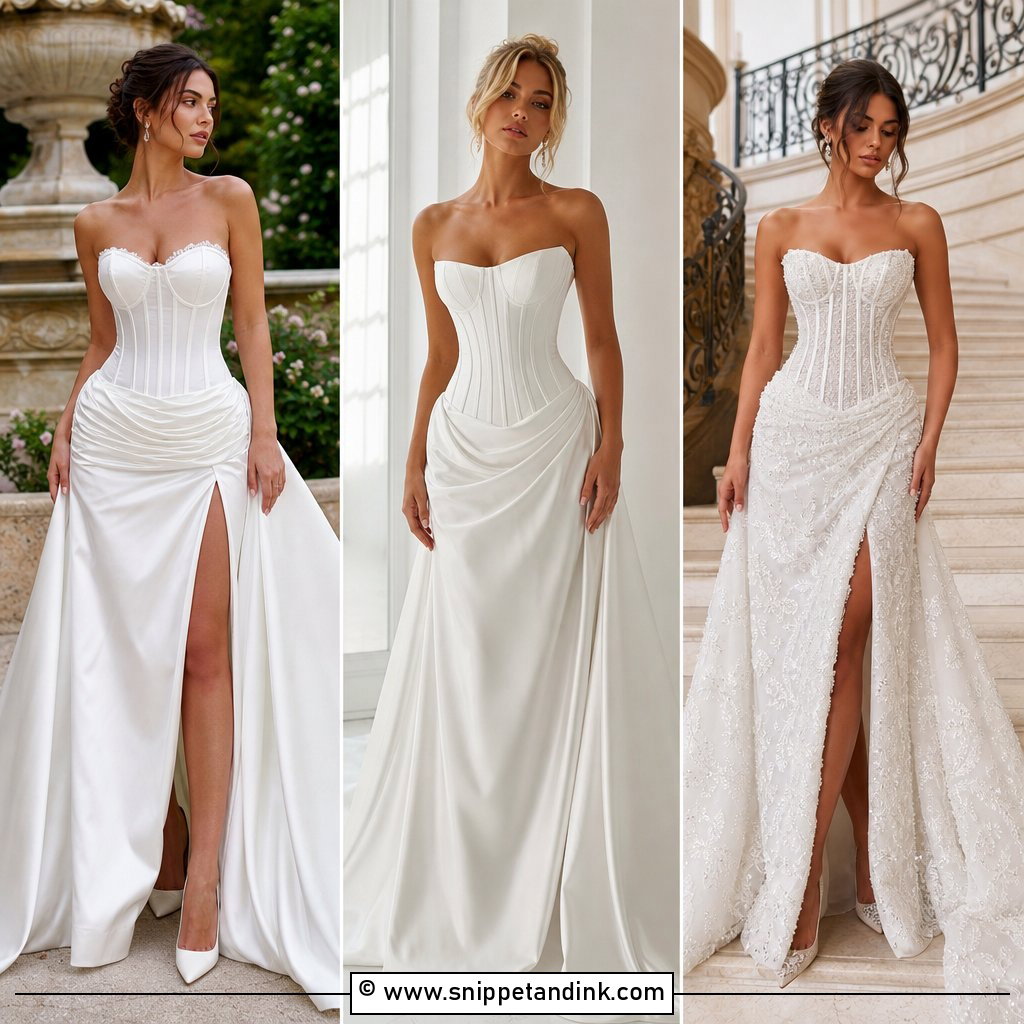
Satin shows off a basque point better than any other fabric because there’s nothing on its surface to distract from the seam lines. A strapless bodice with visible seams, a softly scooped neckline and a full ball gown skirt is the classic version. Pearl drops, ivory pumps and a raw-edge cathedral veil are enough, and a sleek low bun keeps the bodice in view. Satin is unforgiving, though. Any pucker where the point meets the skirt shows as a shiny ripple, so I check that seam under a bright light before signing off alterations.
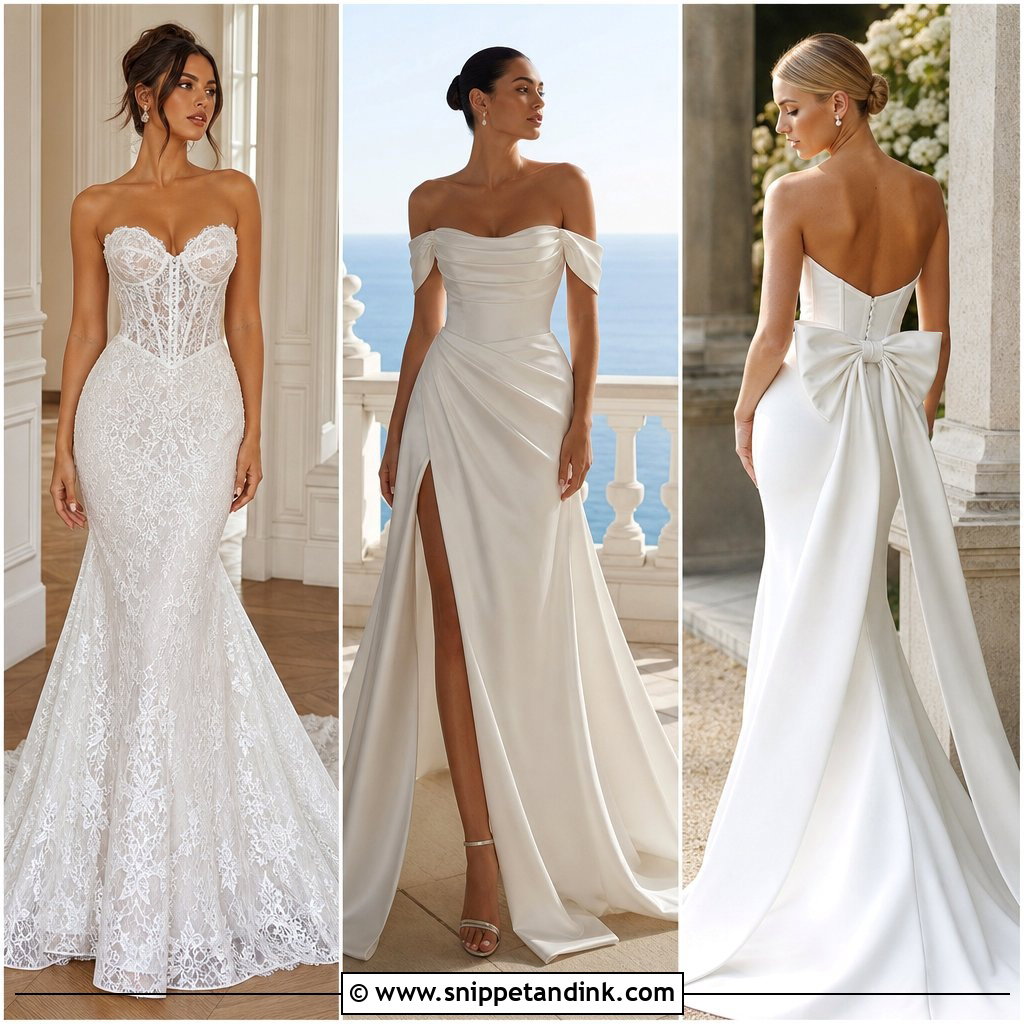
2. Lace Corset Basque Waist Wedding Dress
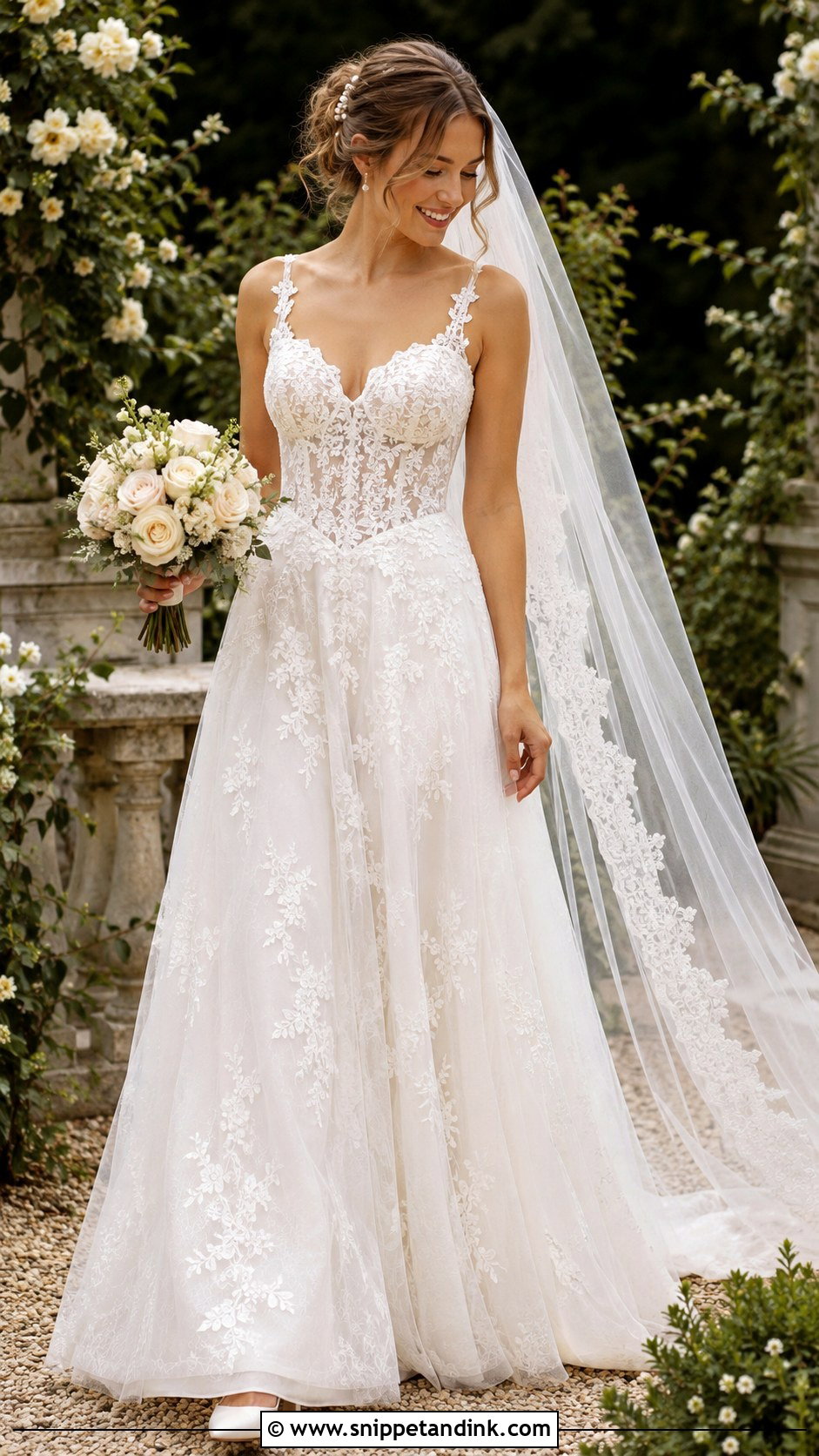
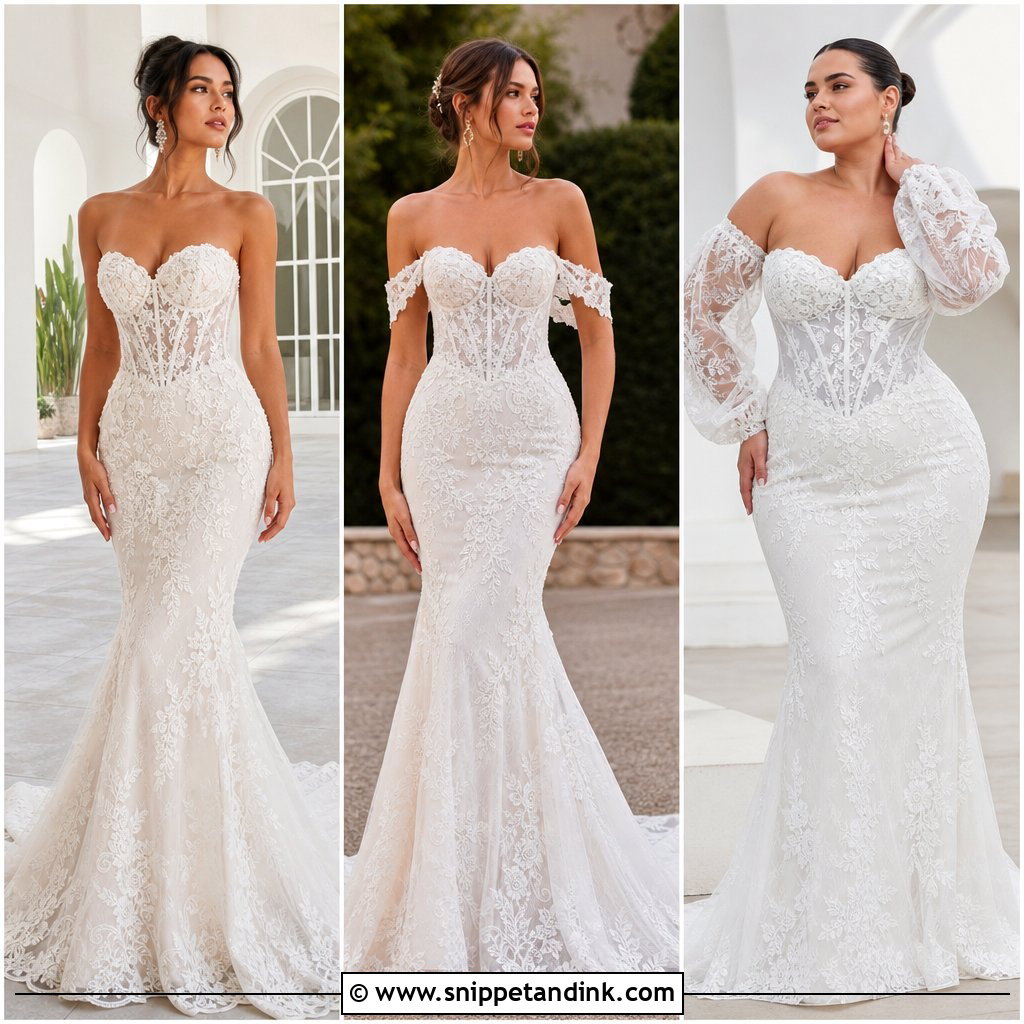
Lace takes the edge off a corset’s hard lines. A floral lace bodice with a clear basque point over an A-line in matching lace or layers of airy tulle is the romantic version. A sweetheart neck softens it, and straps make a long day easier. Pearl pins, small studs and a fingertip veil with a narrow lace border finish it. The fiddly bit for the dressmaker is the point itself: lace motifs need to be cut and lapped around the V, not just sewn across it, or the pattern breaks in an ugly line. Ask to see how they’ll handle it.
3. Strapless Corset Basque Waist Wedding Dress
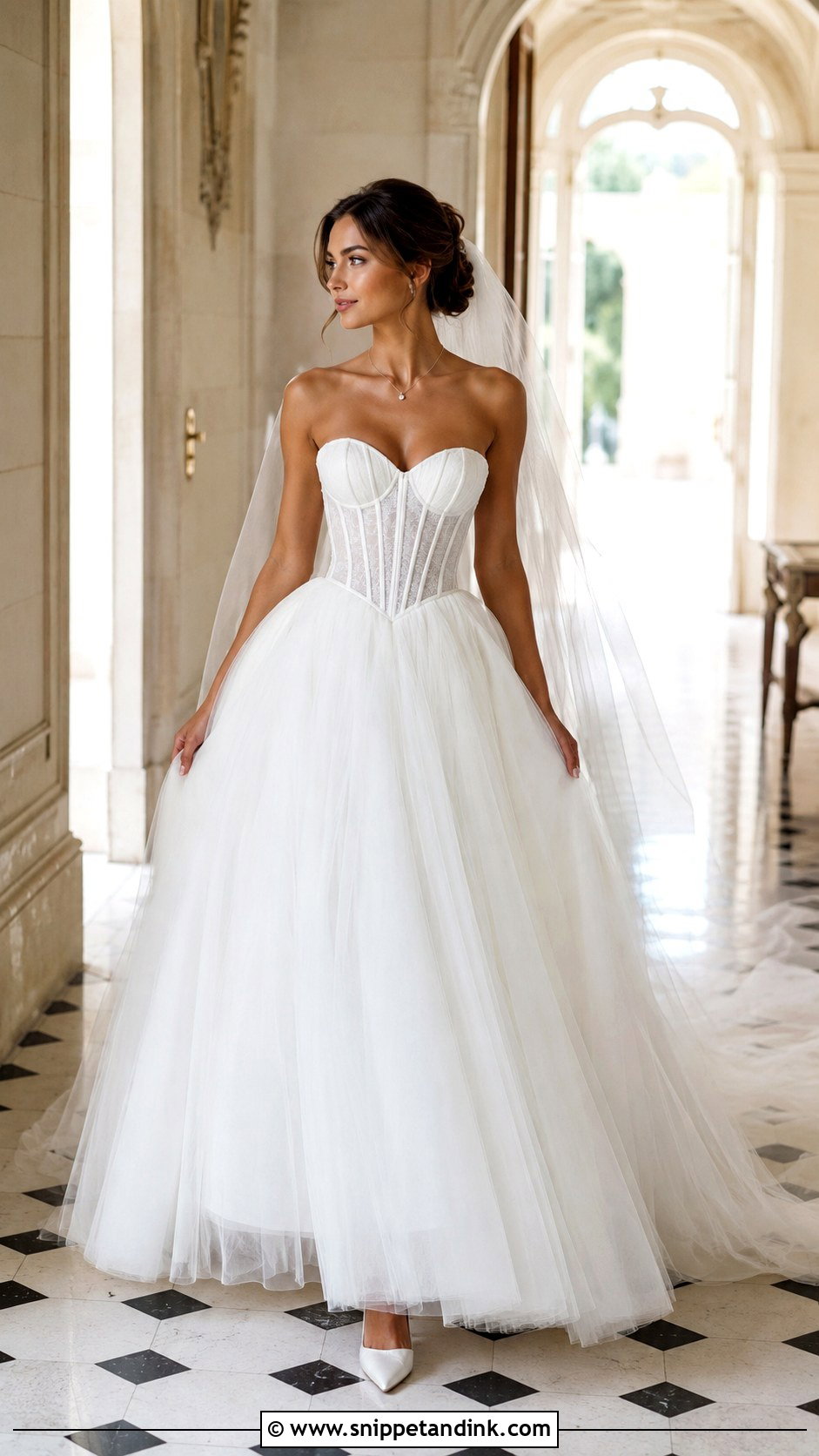
Strapless shows the shoulders and collarbone fully, so all the holding has to come from inside. I want internal boning, a firm back closure and a top edge that sits flat without cutting in. A full tulle skirt gives classic drama; a slim A-line is lighter. A short pearl necklace or a single pendant depends on how bare you want the neck. Pointed satin heels and a long sheer veil balance the open shoulders. A quick test: bend forward as if to pick something up. If the top edge gapes, it needs taking in.
4. Off Shoulder Corset Basque Waist Wedding Dress
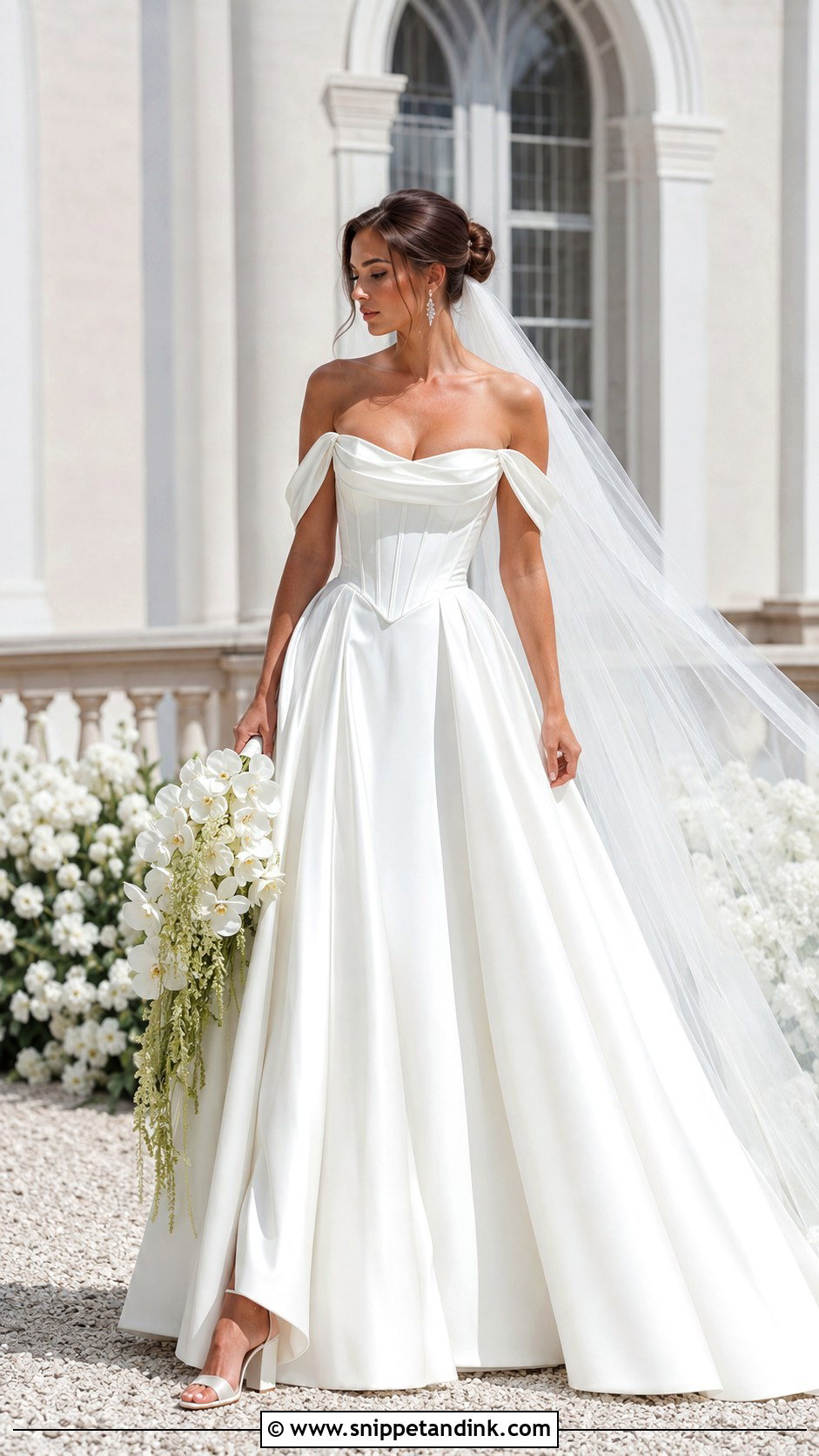
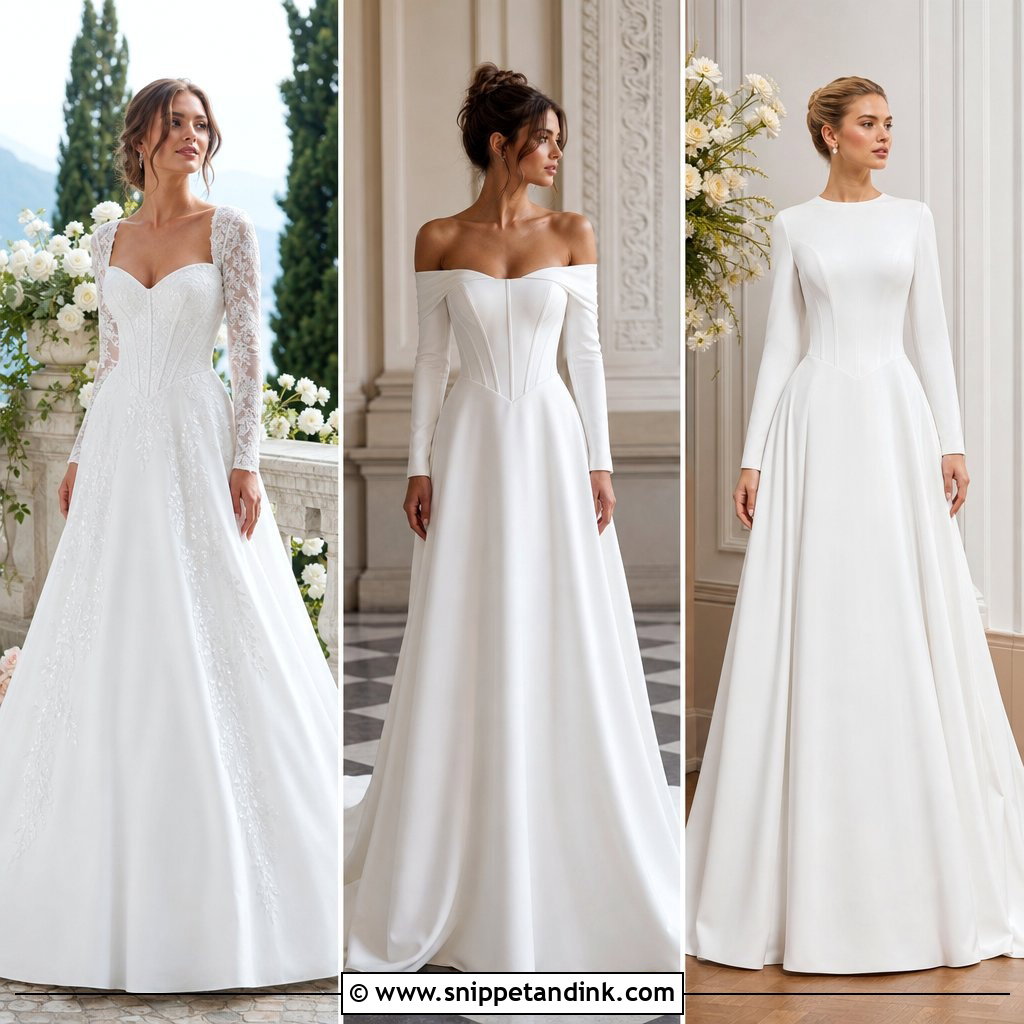
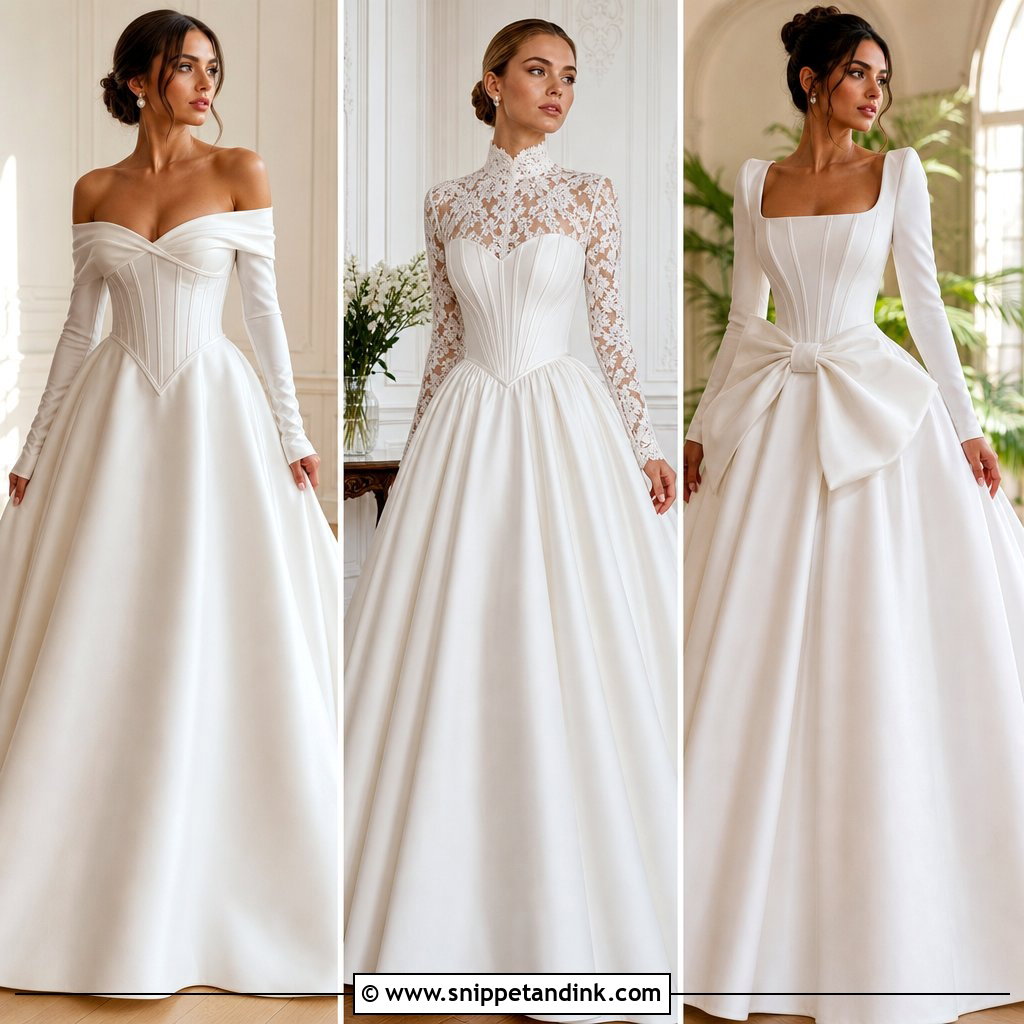
Off-shoulder sleeves frame a basque bodice from above while the point frames it below. Draped satin bands look regal; lace or tulle is softer. A ball gown skirt is traditional, an A-line easier to move in. With the neckline doing so much, keep jewellery to crystal studs. I’d attach a medium veil under a low bun so the shoulders stay visible. The bands must let you lift your arms. I watch for that during the hug test, because tight bands leave red marks that show in close-up portraits.
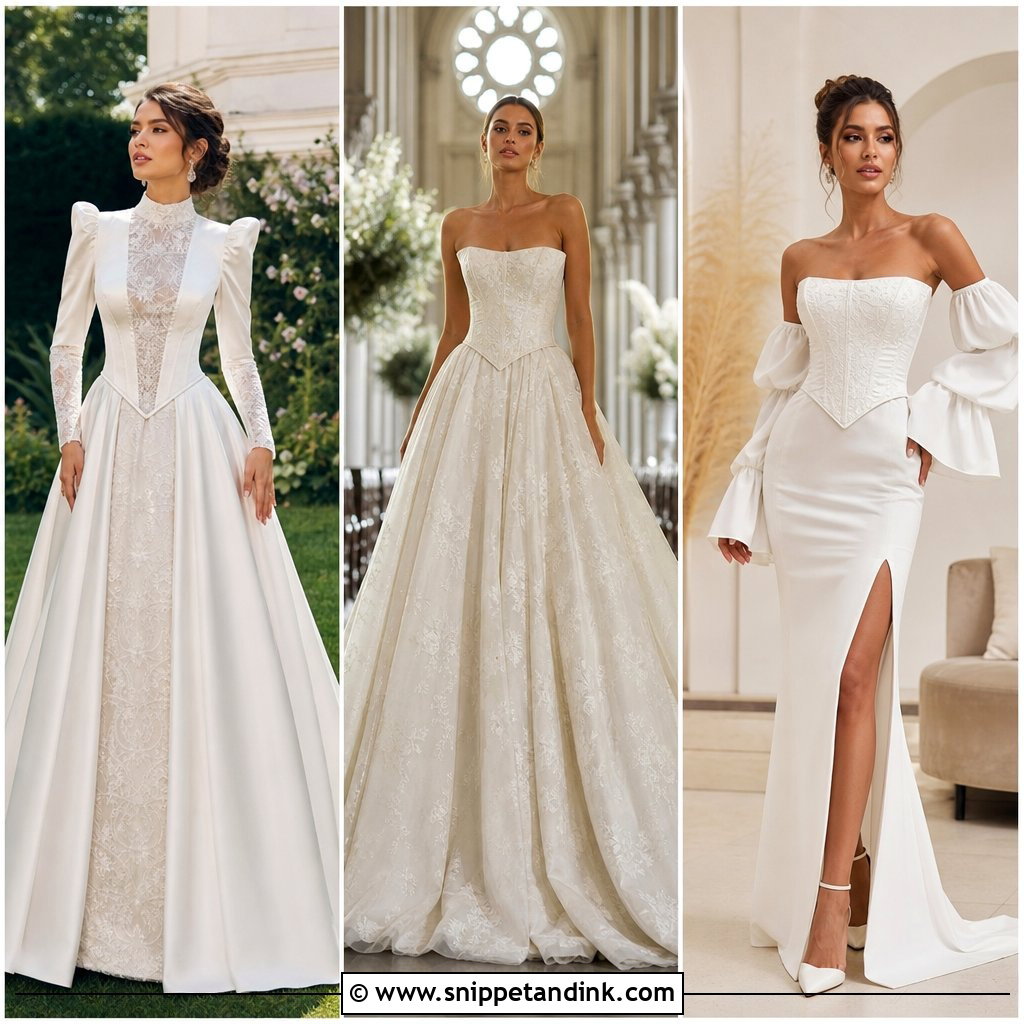
5. Long Sleeve Corset Basque Waist Wedding Dress
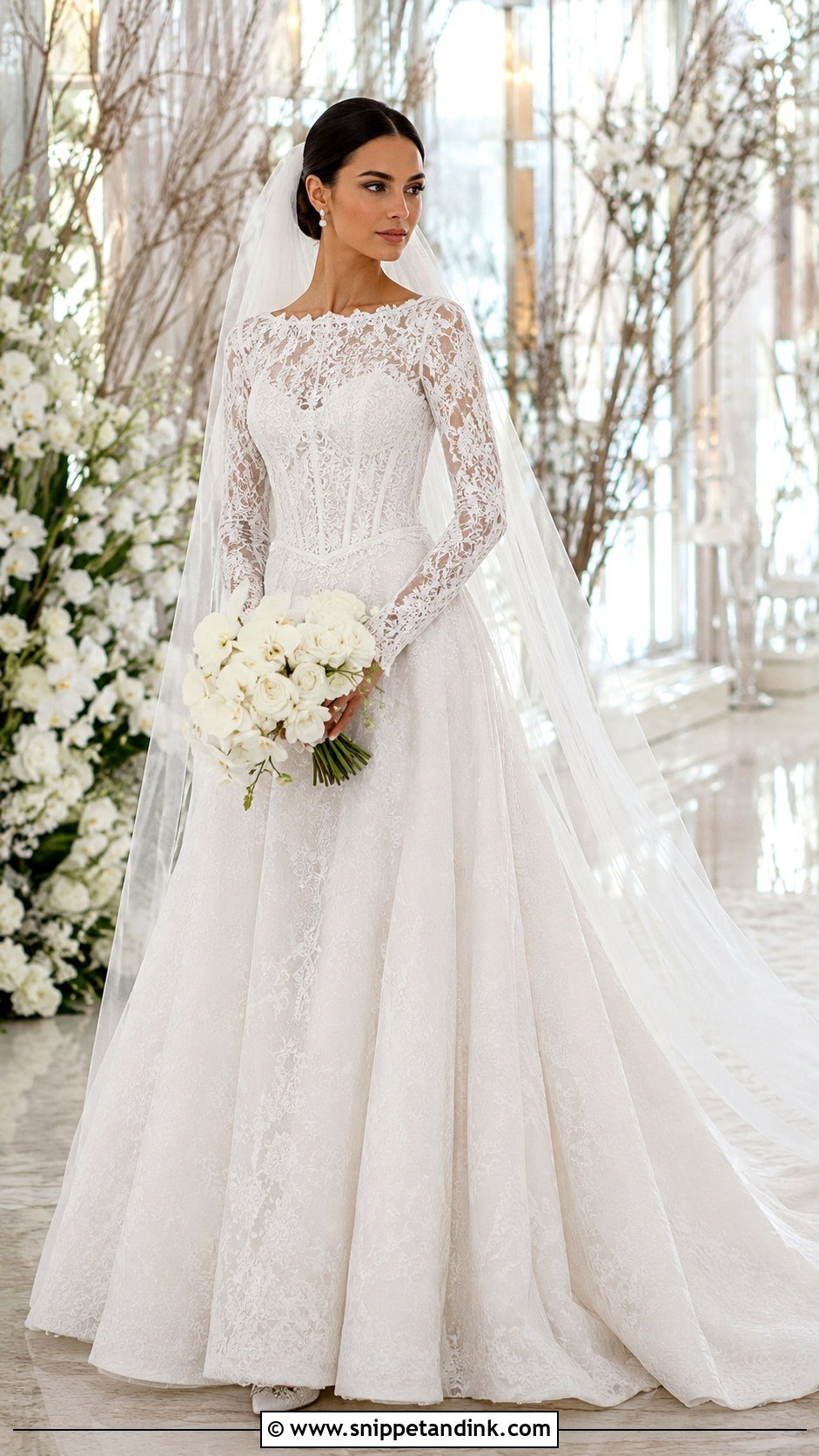
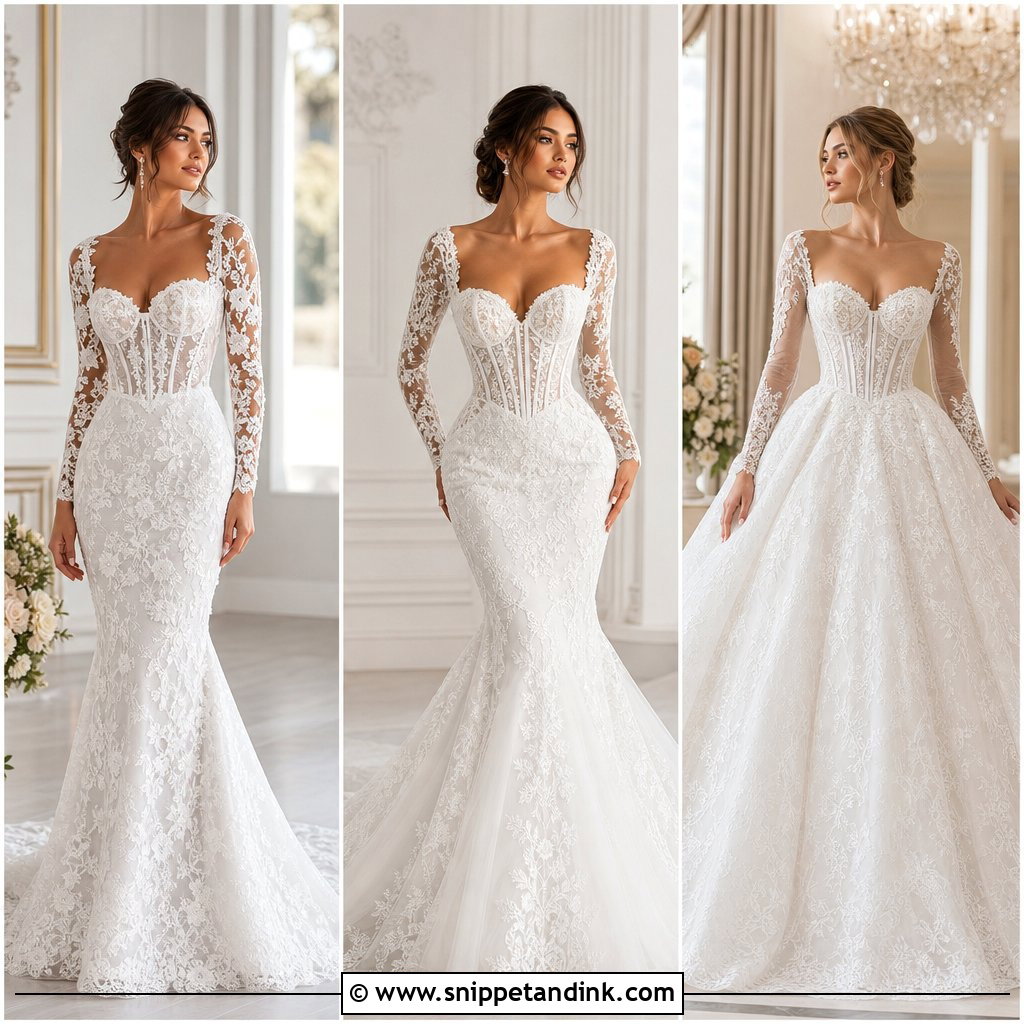
Long sleeves add coverage without hiding the waist shape, which is the whole reason to choose a basque point. Sheer lace sleeves feel light; fitted crepe or satin ones look modern. The boning can show through sheer fabric or be fully covered. An A-line with a chapel train keeps the gown from feeling heavy. Pearl earrings, a low chignon and closed-toe heels suit cooler months. Sleeves set into a corset need extra room at the armhole. I’d raise your arms above your head at the fitting; if the bodice lifts, the armhole is cut too high.
6. Sweetheart Corset Basque Waist Wedding Dress
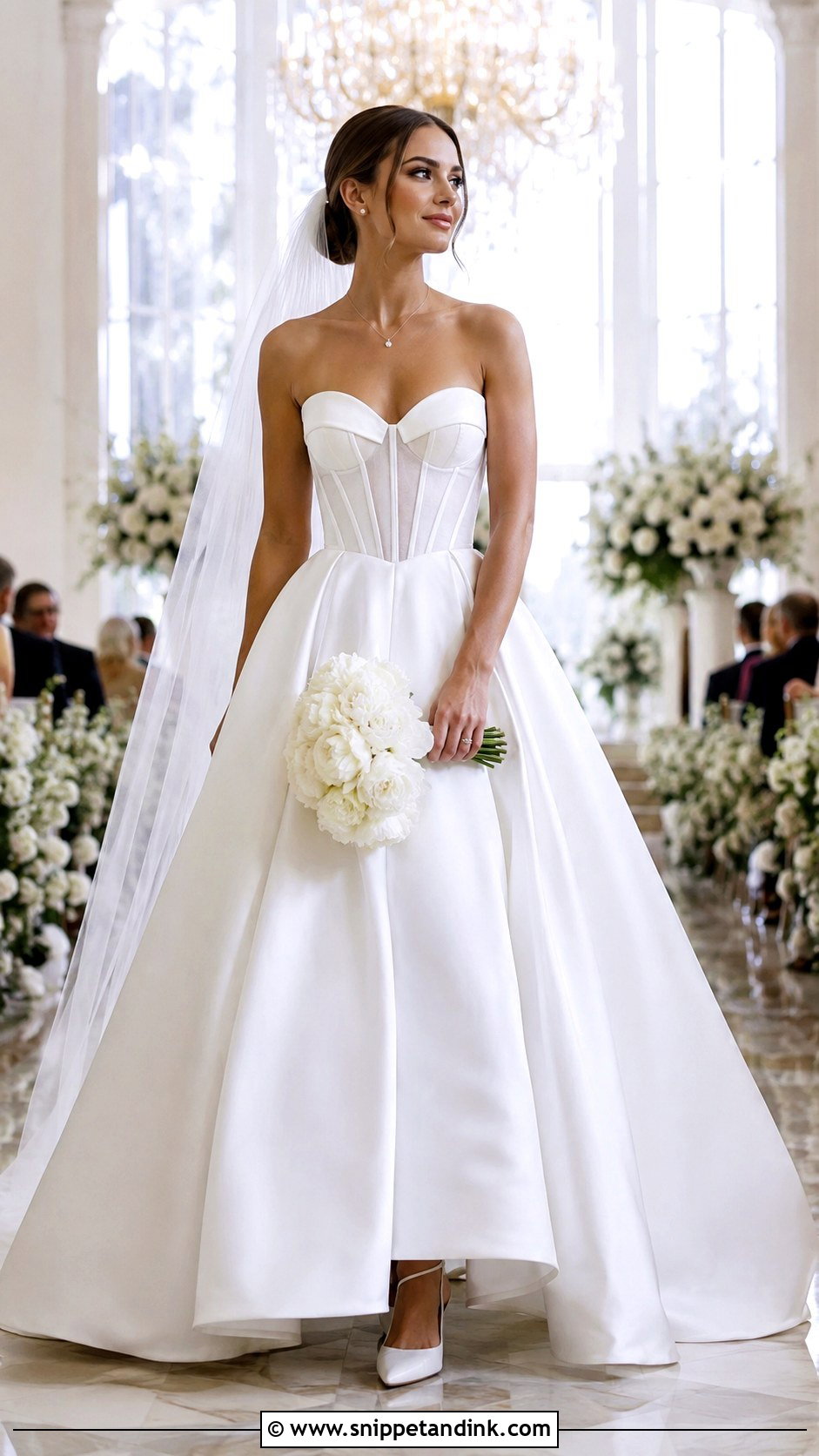
A sweetheart neck curves down into the centre, and the basque point curves down at the waist, so the two shapes echo each other. Smooth satin is classic; embroidered lace adds texture. The cups should support you comfortably, and the boning should let you breathe and sit. A full skirt emphasises the hourglass shape; a soft A-line is quieter. A fine pendant and pearl earrings are plenty. If you’re fuller in the bust, ask for the sweetheart dip to be shallower than the sample. A deep dip can shift when you move, and a gentle curve keeps you covered.
7. Square Neck Corset Basque Waist Wedding Dress
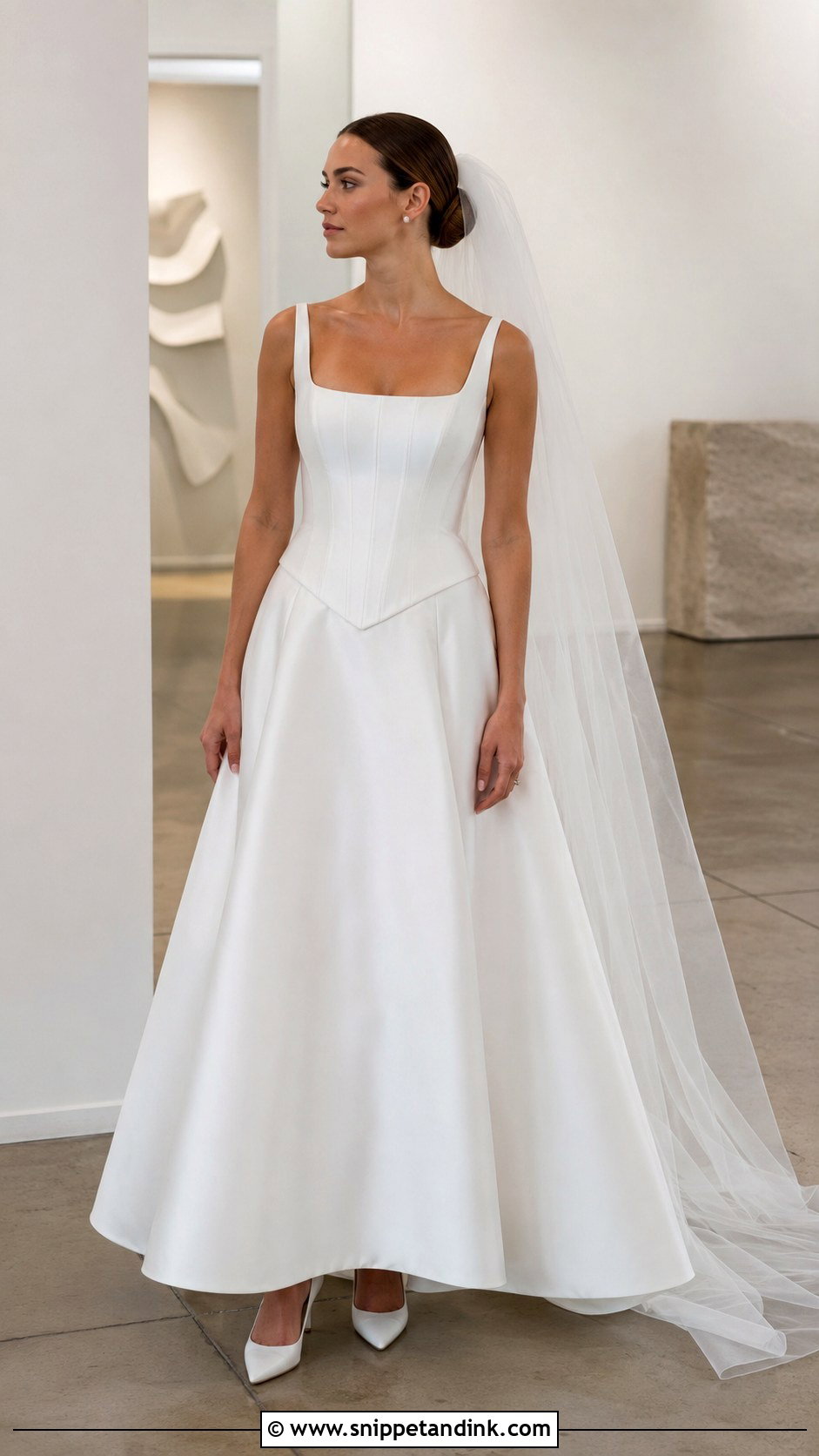
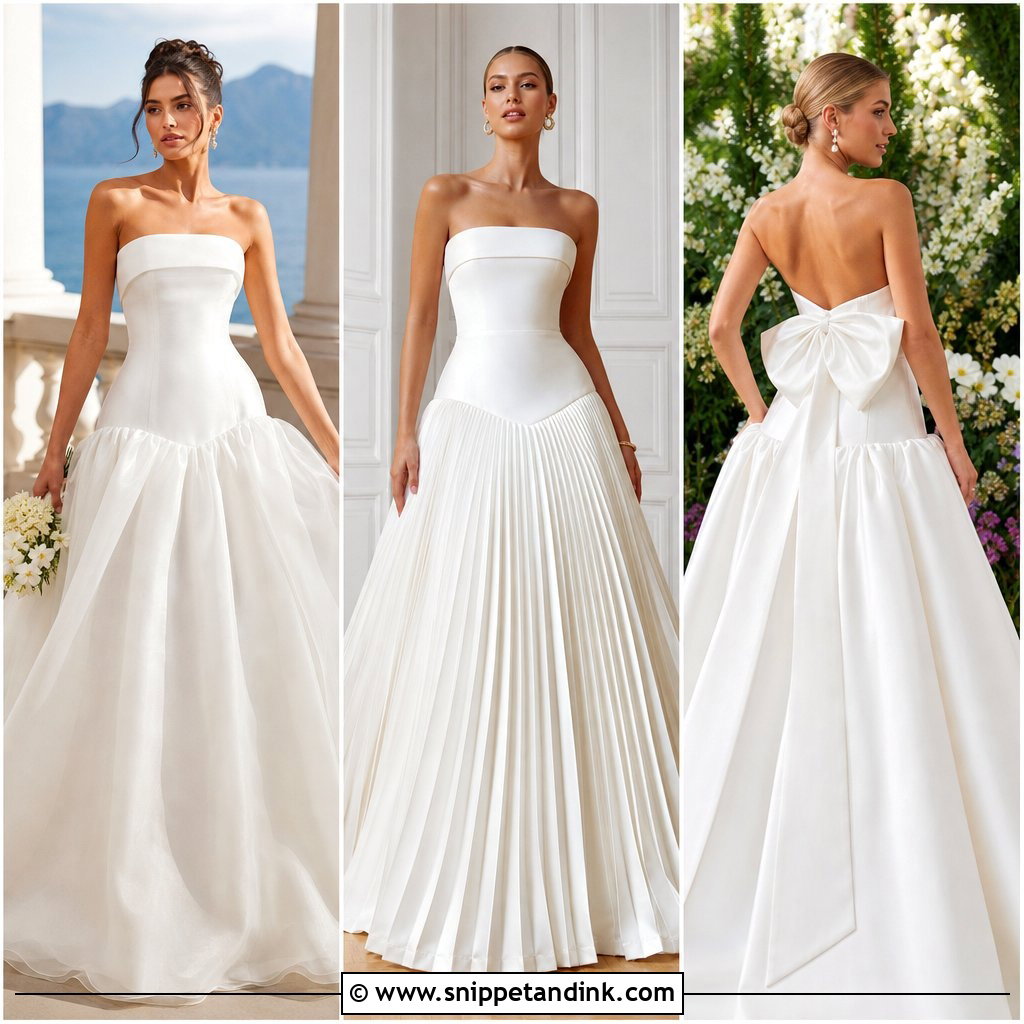
A square neckline gives the old basque shape a crisp, current line. Wide straps or short sleeves add support and run clean across the shoulders. Matte satin, mikado and structured crepe show the architecture best. A gently flared A-line keeps it streamlined; a pleated skirt adds volume. A smooth bun and a plain cathedral veil or short blusher suit it better than an ornate veil. The two angles together, square at the top and V at the waist, look very graphic. I’d keep the fabric plain so those lines stay the point.
8. Scoop Neck Corset Basque Waist Wedding Dress
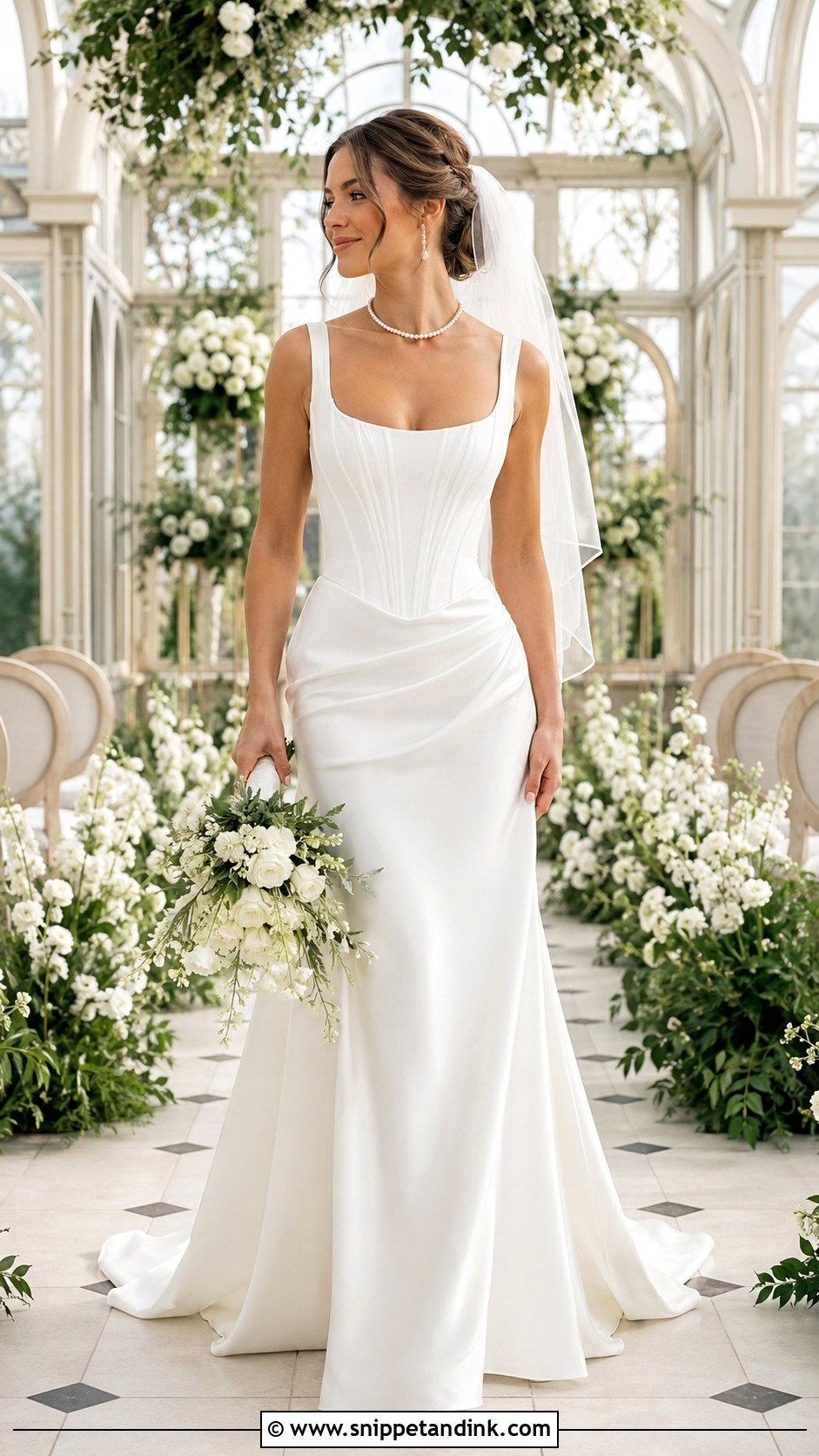
A scoop neck is gentler than a sharp sweetheart or a plunge, and on a basque bodice it keeps curves while the waist stays defined. Look for a neckline that sits securely across the bust, with wide straps, thin straps or a strapless inner foundation. Fluid satin moves; tulle is more traditional. A single-strand pearl necklace sits right inside a scoop. Low heels and an elbow-length veil keep it easy to wear. Scoops can gape on smaller busts, so ask for a slightly higher curve or a hidden elastic along the edge.
9. Cat Eye Corset Basque Waist Wedding Dress
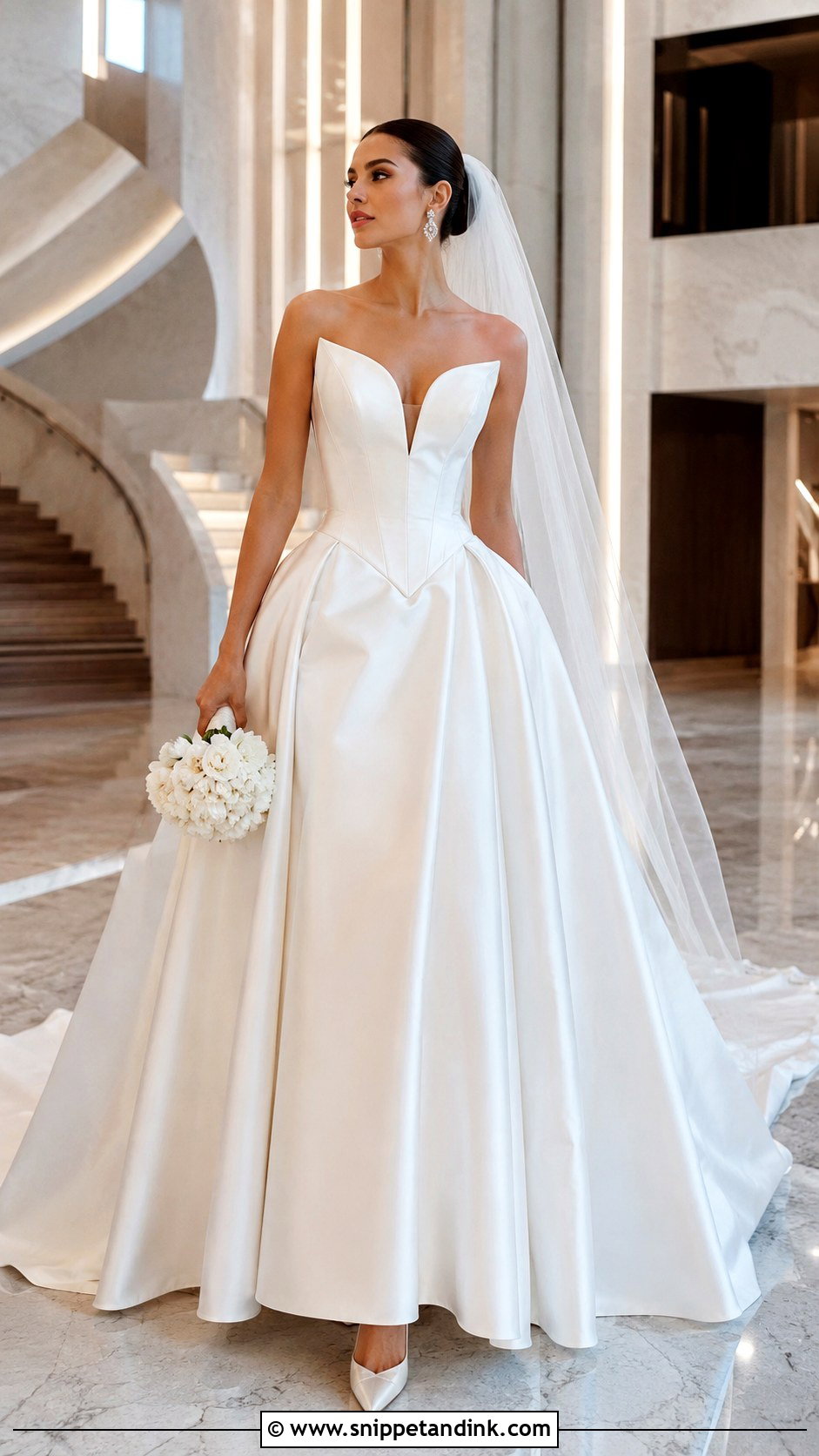
A cat-eye neckline rises into small points at the outer bust, and with a deep basque waist, the bodice becomes all strong diagonals. It’s a couture shape. Balance it with a smooth satin ball gown or organza that moves. Skip the necklace, which fights the neckline; crystal drops and a sleek bun are enough. Those little points are the tailoring challenge. They need boning or interfacing to stay upright and they must match exactly on both sides. It’s made for editorial-style wedding photography and big formal rooms.
10. Sheer Corset Basque Waist Wedding Dress
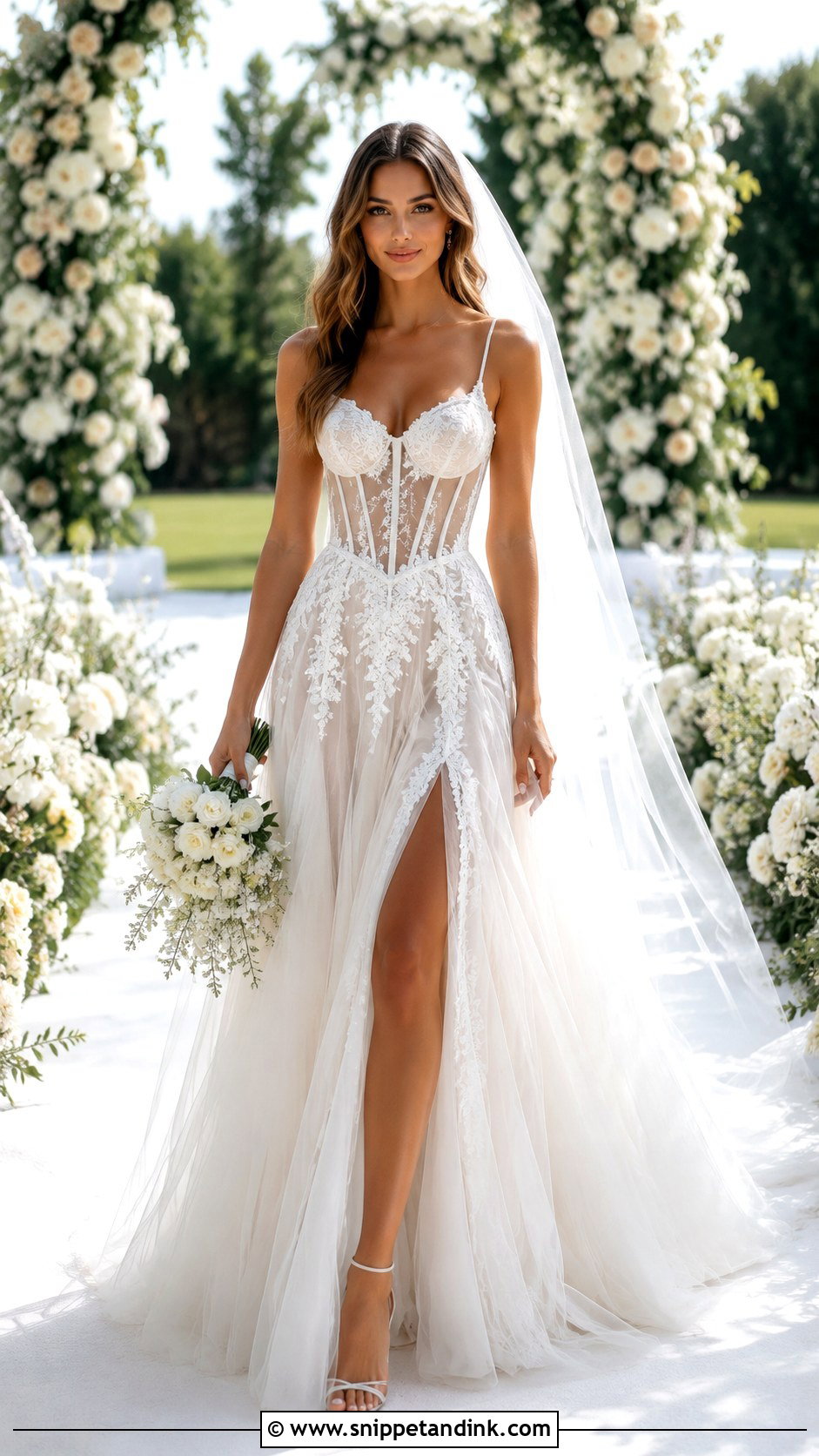
A sheer bodice turns the corset’s construction into decoration: the boning, seams and lined cups all show. Lace appliqués give coverage where you want it. A soft tulle ball gown contrasts with that precise bodice. Keep the rest delicate: crystal studs, thin heels, an almost invisible cathedral veil, and a loosely gathered bouquet. Under a flash, sheer fabric shows more than you expect, including the colour of your skin through lining. I always look at sheer bodices in daylight and with flash photos before the last fitting. Bright conservatories and gardens suit this one.
11. Floral Corset Basque Waist Wedding Dress
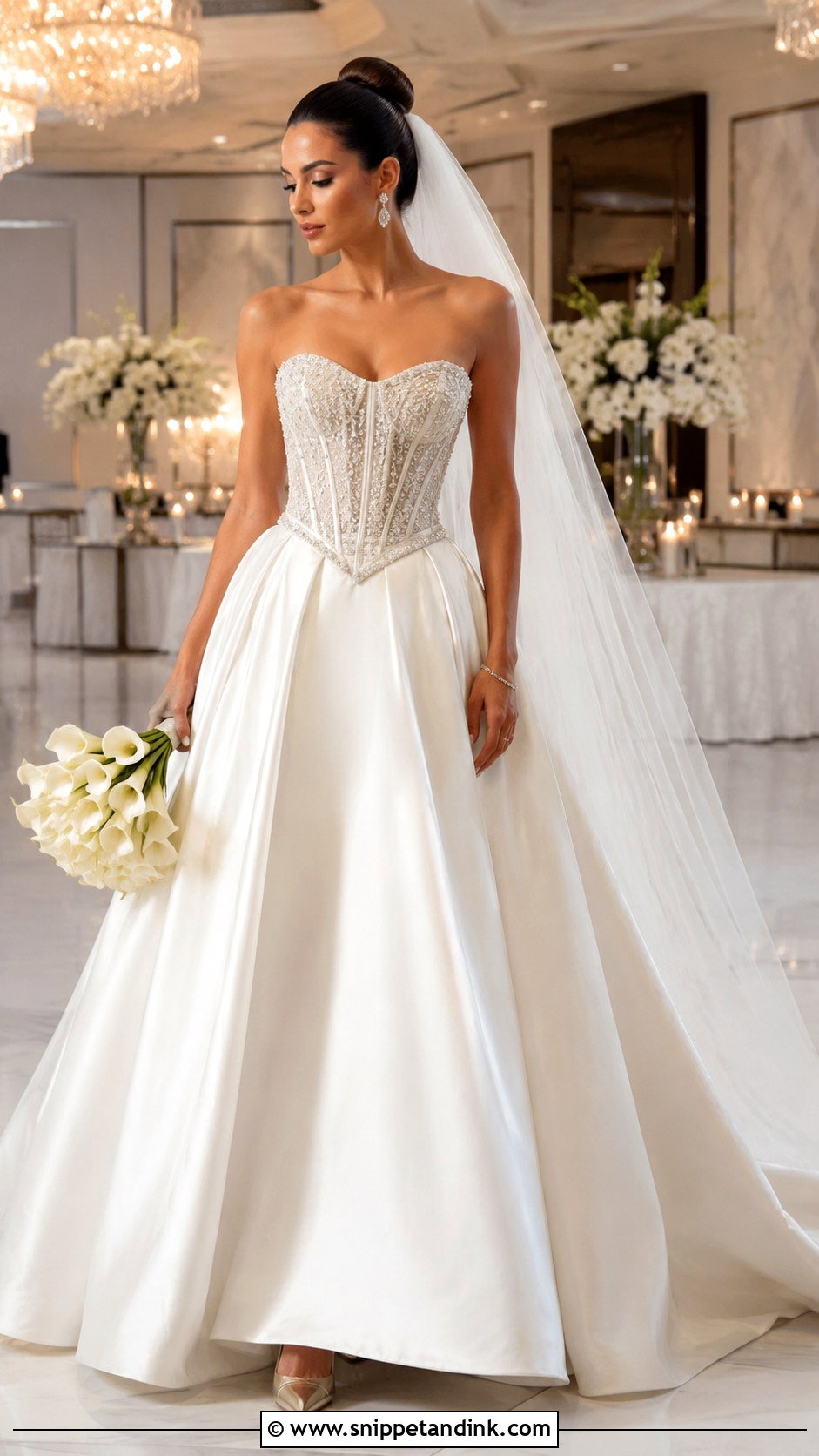
Flowers concentrated on the bodice and scattered down a tulle A-line soften the basque structure and draw the eye to the waist. A strapless or softly curved neckline lets the florals stand out. Simple ivory sandals and a veil with a few matching appliqués near the edge tie it together. The bouquet is where this goes wrong. A bouquet full of the same flower as the dress turns into a blur in photos. I’d pick different flower shapes with lots of greenery for contrast. It’s best for spring and summer.
12. Beaded Corset Basque Waist Wedding Dress
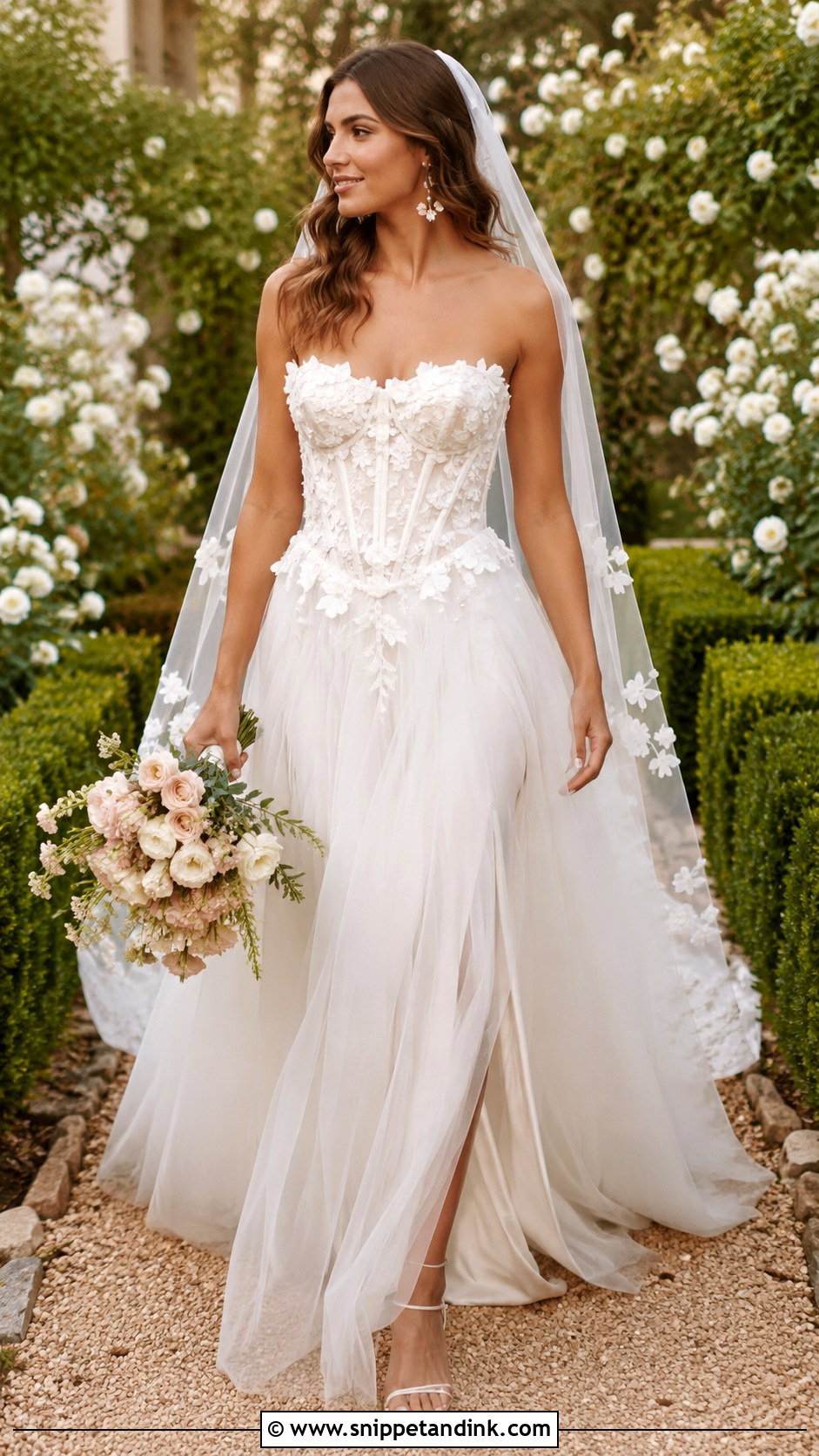
Fine beads and crystals give controlled sparkle to a structured basque bodice. A fully beaded bodice looks balanced over a plain satin, crepe or mikado skirt. If you want more shine, ask for beading that thins out down the skirt rather than covering it. Crystal earrings and metallic or ivory heels finish it, with a plain tulle veil. Heavy beading weighs the bodice down, and on a strapless dress that weight pulls the top edge forward. I check how much a beaded bodice weighs in the hand and add support accordingly.
13. Pearl Corset Basque Waist Wedding Dress
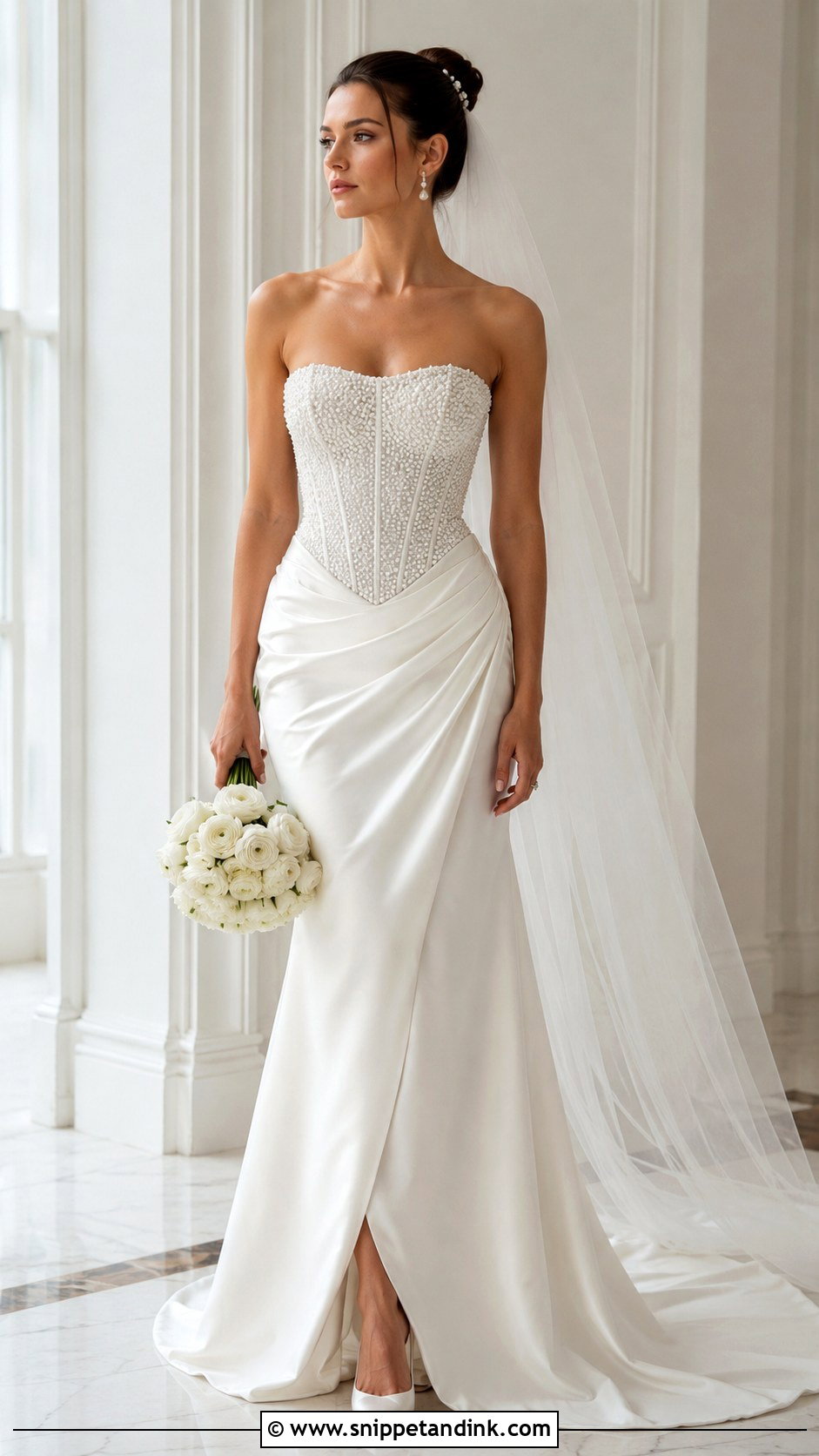
Pearls make sculpted corsetry feel softer and more traditional. Scattered pearls, pearl-trimmed seams or small clusters along the basque line all work. A smooth satin skirt lets the texture show without clutter. Pearls in the earrings, hair and shoes are tempting, but I’d pick two places at most. A plain-edged fingertip or chapel veil suits it, with a sleek updo. Pearl clusters along the waist point catch on a lace veil or a bouquet ribbon, so try both against the dress at the fitting.
14. Mikado Corset Basque Waist Wedding Dress
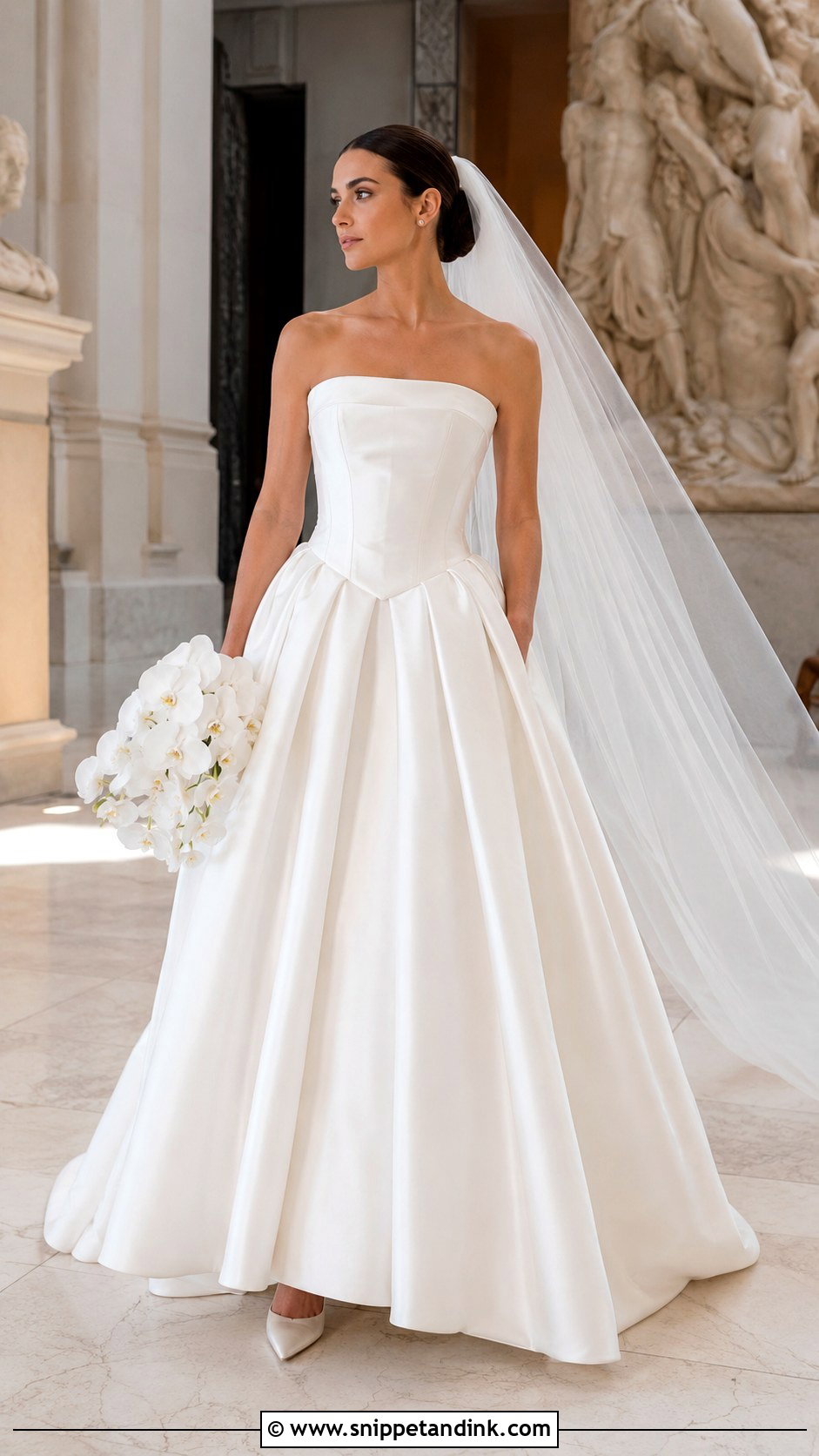
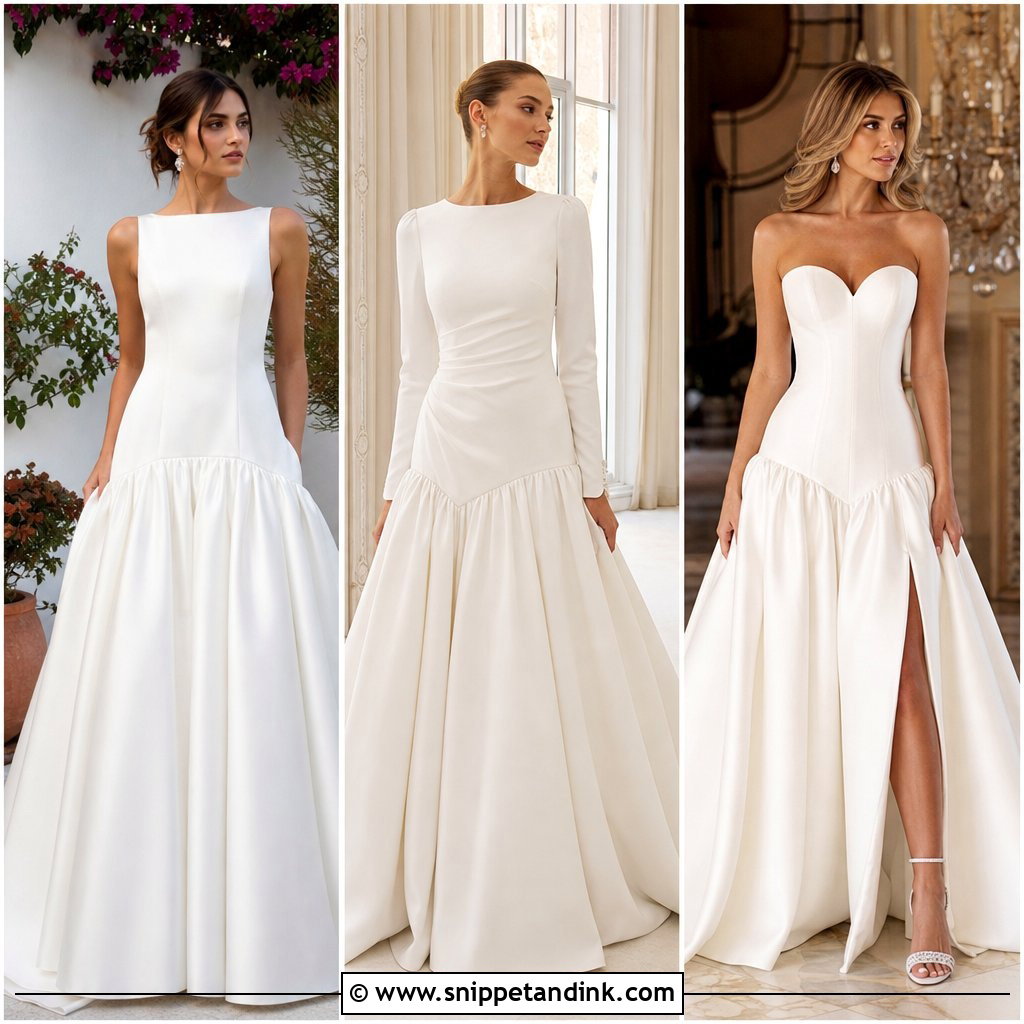
Mikado has enough body to make a basque point look razor sharp and to hold pleats and volume without decoration. A strapless bodice with a deep V and a full skirt with practical hidden pockets is a good modern take. Diamond studs, a smooth cathedral veil and polished pumps are all it asks for. A low bun suits its simplicity. The downside: mikado creases sharply when you sit, and those creases show across the lap in photos. I’d steam it on the morning and ask the photographer to take standing portraits before the ceremony. It suits ballrooms, museums and formal estates.
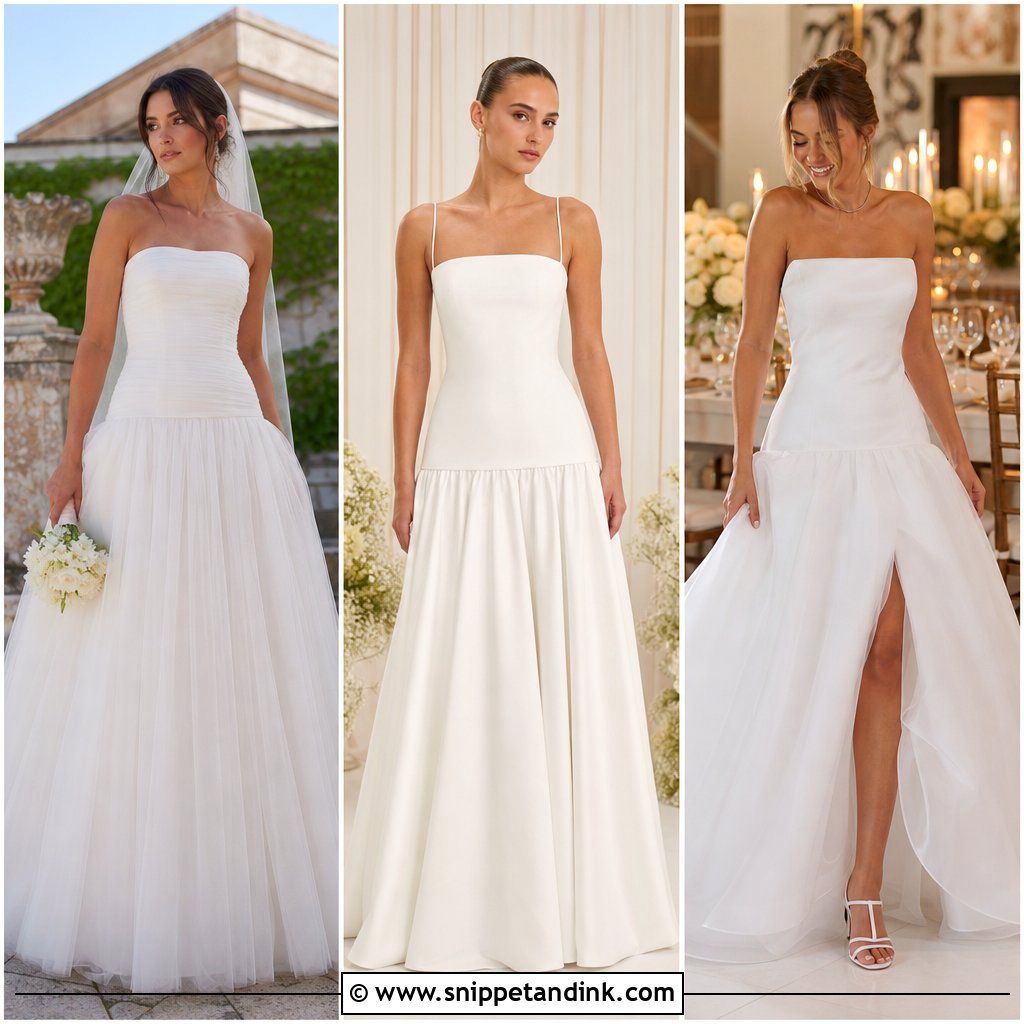
15. Tulle Corset Basque Waist Wedding Dress
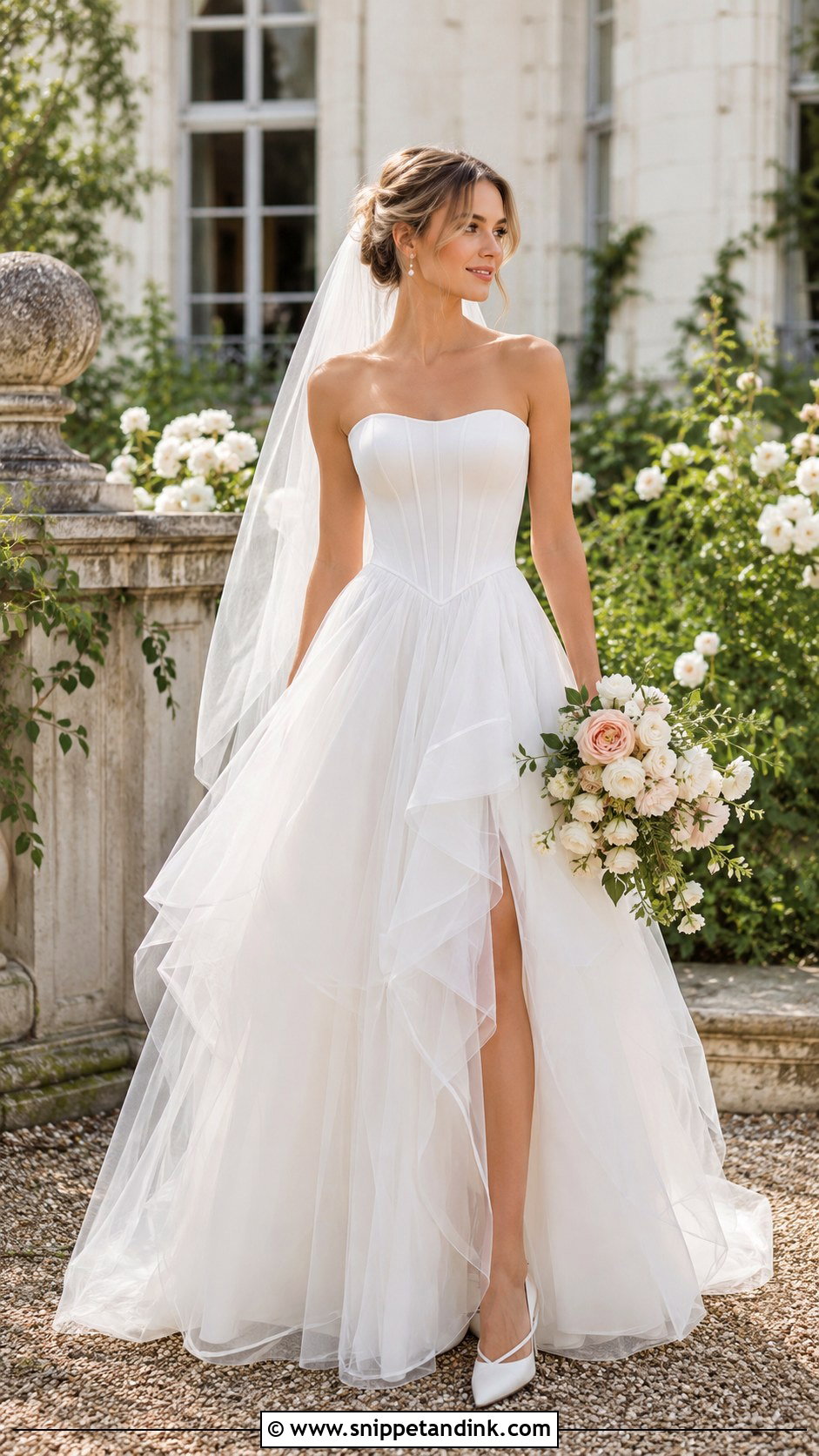
Layers of tulle keep a big skirt light under a firm basque bodice, so the gown doesn’t feel rigid. A smooth bodice looks modern; lace-covered feels romantic. Horsehair braid in the hem gives the tulle movement and holds its edge. Slim-strap heels and a chapel veil that blends into the train suit it, with a soft bun. Tulle snags easily on rough venues, so watch out for stone floors, brick and garden benches. Ask for an extra layer or two at the hem as a buffer. You get volume without weight here, which matters on a long day.
16. Corset Basque Waist Wedding Dress With Bow
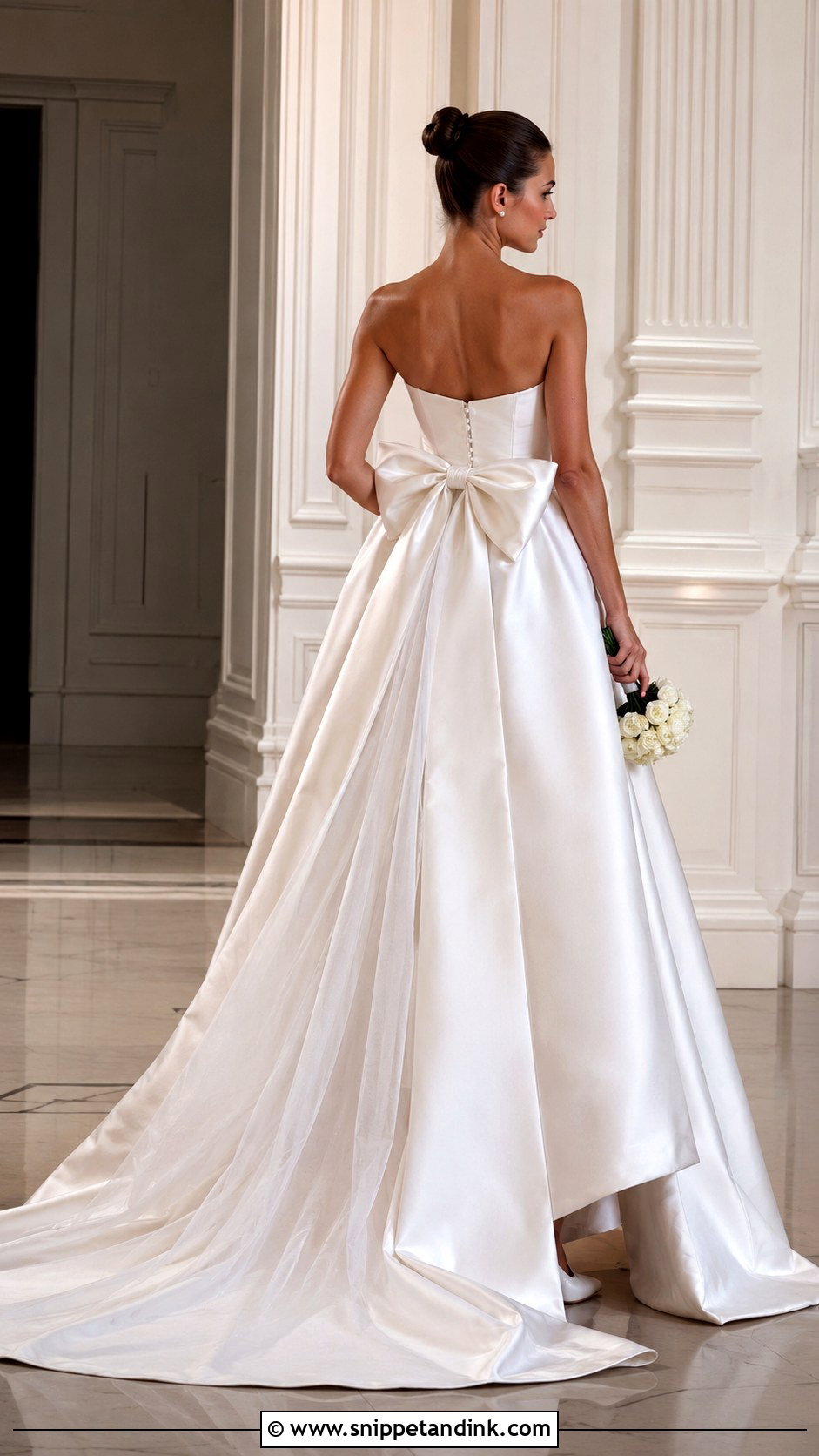
A bow at the back adds some playful formality to a structured gown. At the waist it defines the back; with trailing panels, it adds movement and can sometimes detach. Satin or mikado keeps the bow crisp; organza is lighter. Pair it with a clean strapless bodice and a full A-line. Pearl studs are all the jewellery you need. Wear a high bun and attach the veil underneath it so the bow isn’t hidden. The bow’s knot often ends up exactly where your back meets the chair, so check how it sits at the fitting.
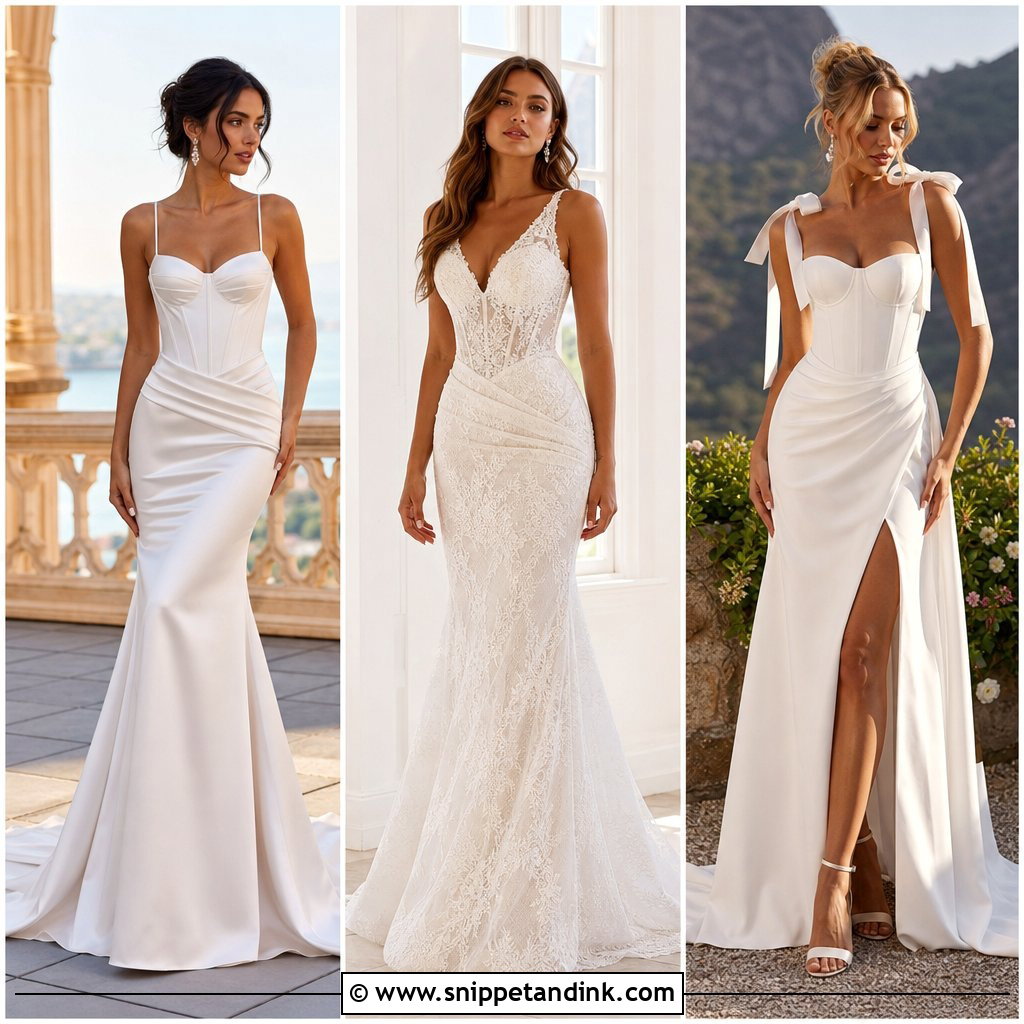
17. Corset Basque Waist Mermaid Wedding Dress
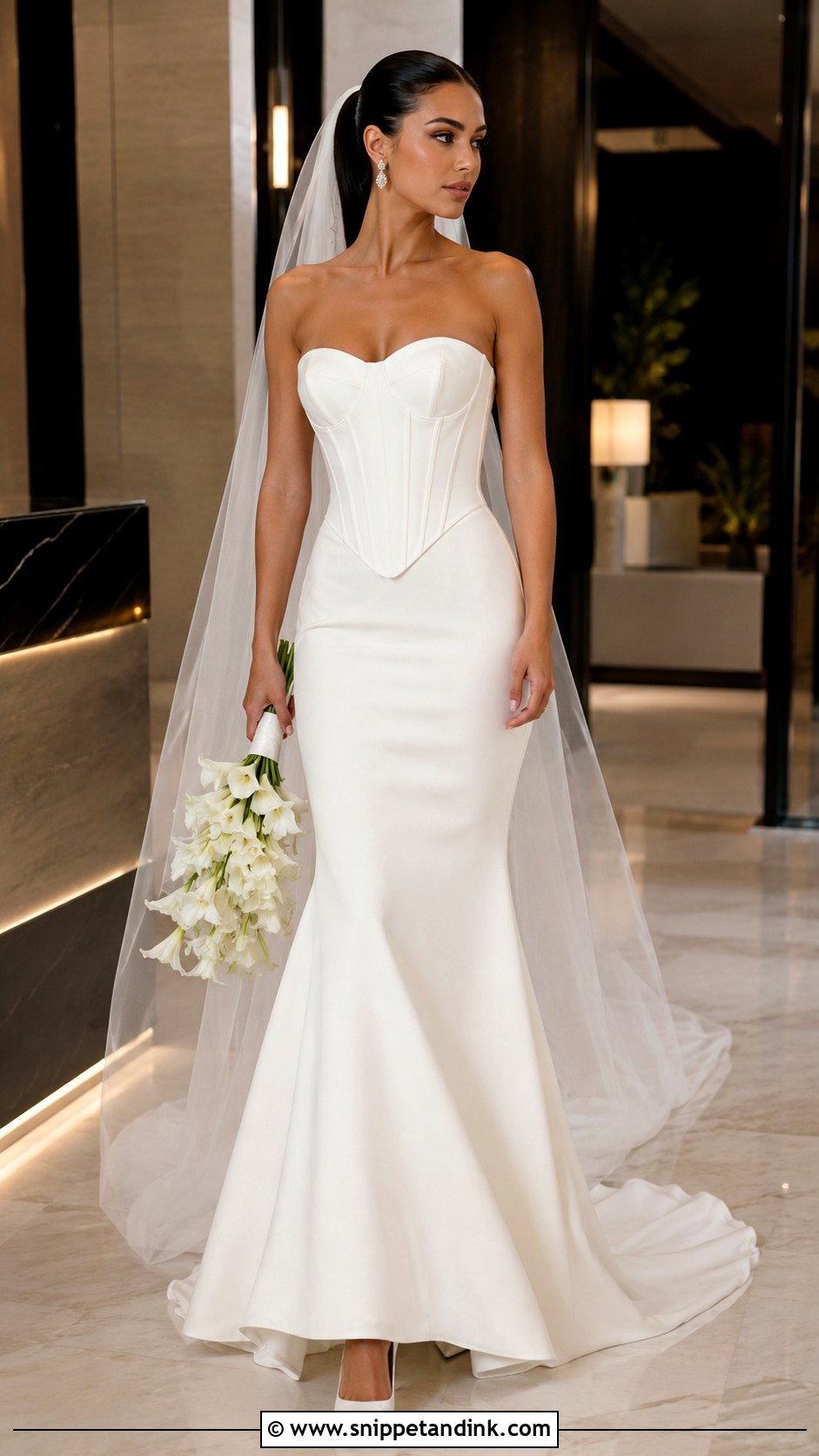
A mermaid skirt makes the basque line continuous: the point leads into a skirt fitted through the hips that flares near the knees. Stretch crepe is comfortable; satin is more dramatic. A strapless folded neckline or thin lace straps both work. Drop earrings and a long veil that reaches past the train finish it. The point and the mermaid fit make it hard to sit for long, so take strides and sit down at every fitting. A narrow bouquet held to one side shows the waist; a wide one hides it.
18. Corset Basque Waist A Line Wedding Dress
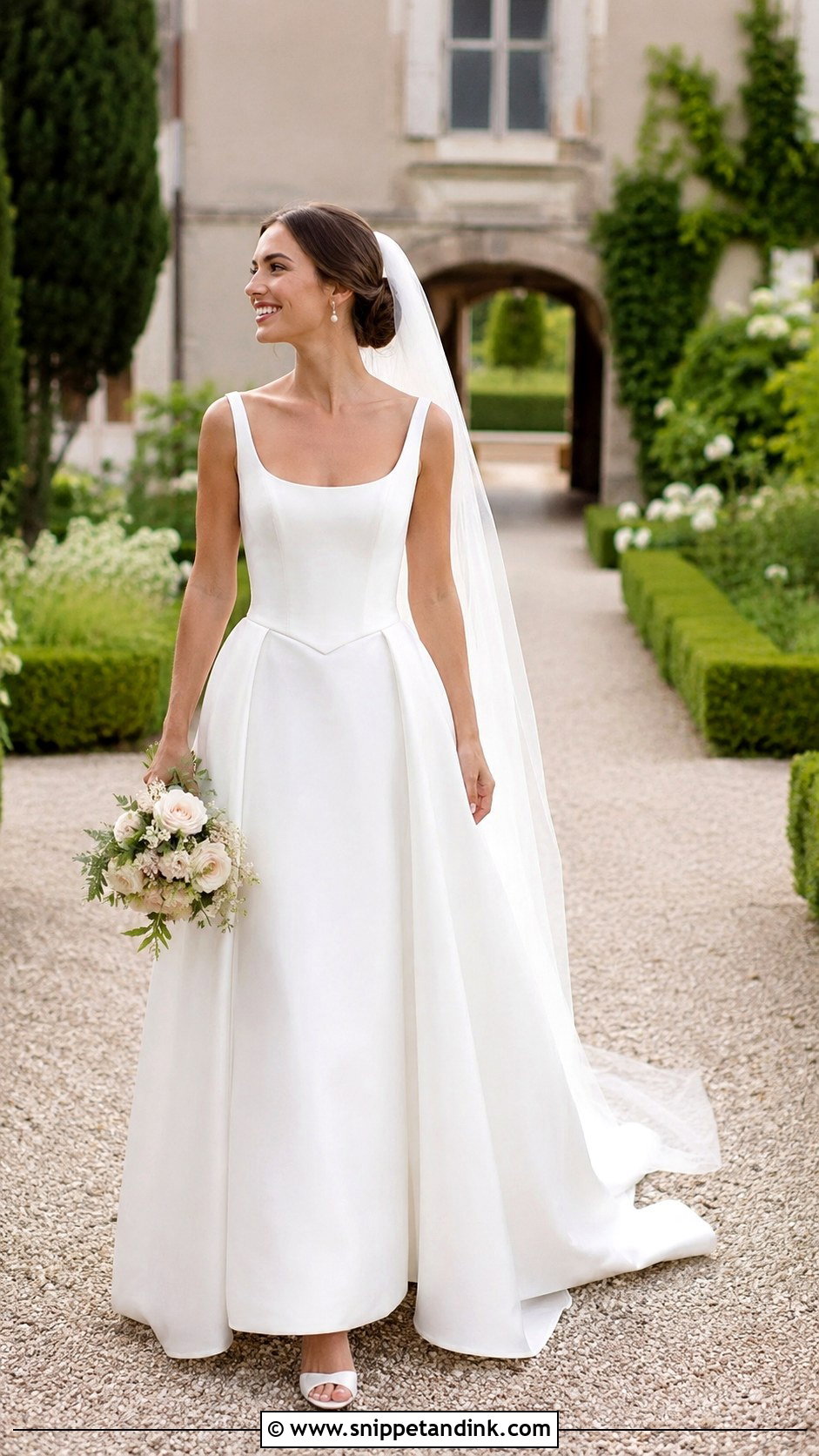
An A-line skirt is the easiest way to wear a basque waist. It flows out from the point without full ball gown volume, so walking and dancing are comfortable. Satin is clean, lace is romantic, light organza suits destination weddings. A sweetheart or scoop neck repeats the soft lines. Mid-height block heels and a chapel veil complete it. I usually suggest this when a bride loves the bodice but dreads carrying a huge skirt all day. A loose bouquet of roses and greenery adds texture without covering the waist.
19. Minimalist Corset Basque Waist Wedding Dress
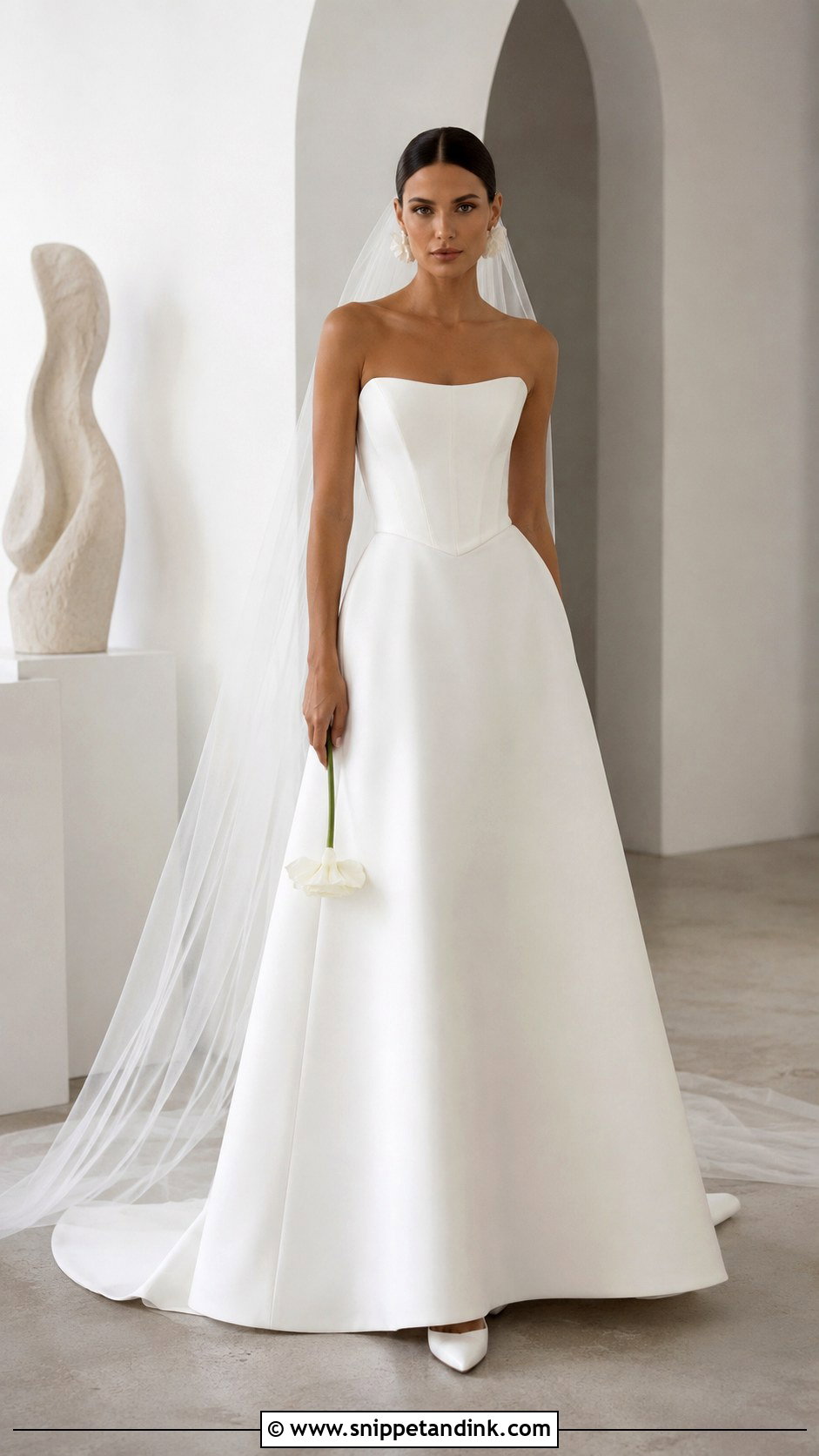
A minimalist basque gown has nothing to hide behind, so the tailoring has to be perfect. Look for matte crepe, silk satin or smooth mikado, with construction hidden inside. A straight or softly curved strapless neckline lets the point lead. A plain A-line or restrained ball gown with a long train adds quiet drama. Sculptural earrings and a sleek centre-parted bun suit it. On plain fabric, boning channels can show as faint lines, so I’d ask for them to be interlined. A single-stem bouquet suits galleries and city venues.
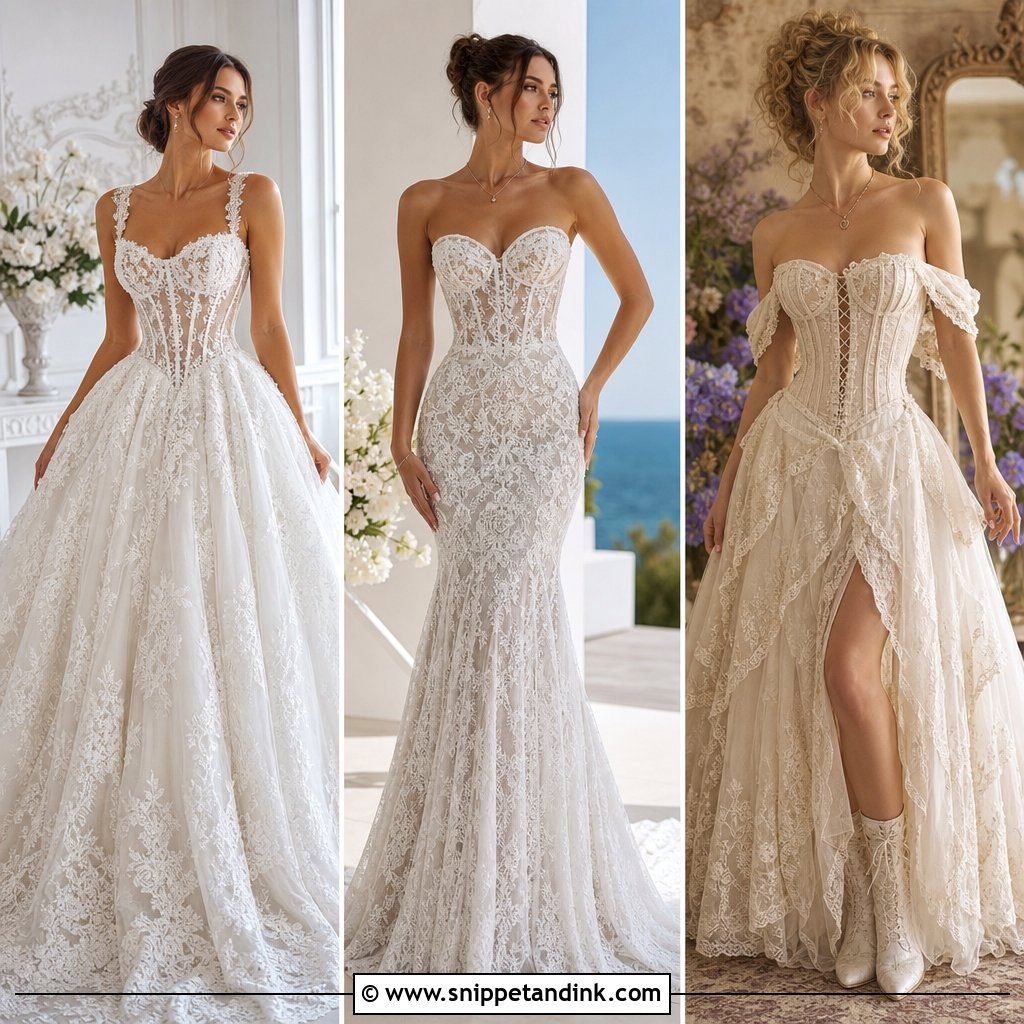

20. Vintage Corset Basque Waist Wedding Dress
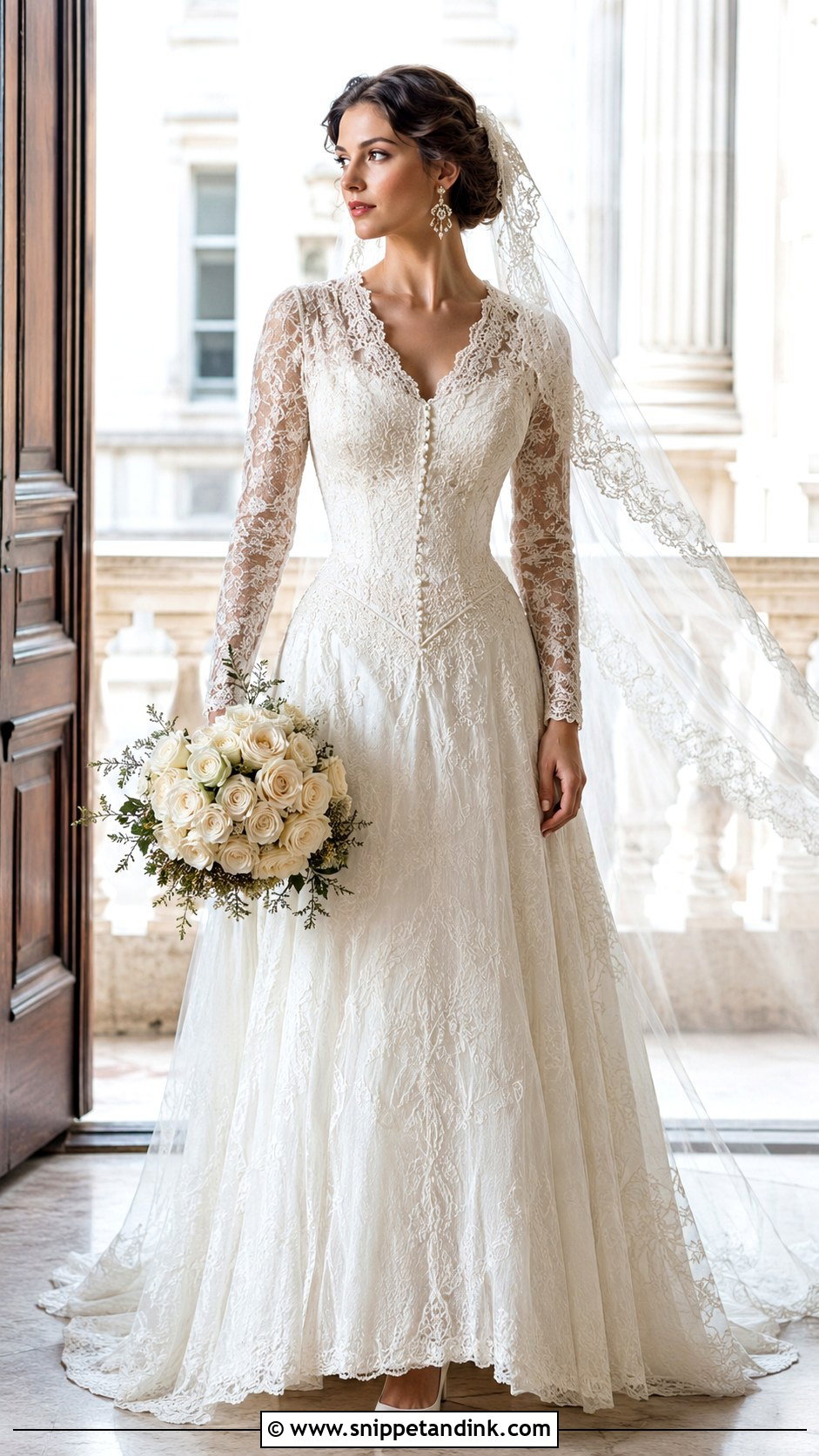
The basque waist feels at home in vintage looks because it comes from historical dress. Choose corded lace, embroidered tulle, covered buttons and a soft point rather than a very deep V, which looks more theatrical. Long illusion sleeves or off-shoulder lace straps add romance, and an A-line keeps it wearable. Antique-style drops and a lace-edged veil suit it. Covered buttons down the back look wonderful and take a long time to fasten, so ask for a hidden zip beneath them. It fits historic homes, libraries and old estates.
Holding the Bouquet So the Point Still Shows
The most common way to hide a basque waist is the bouquet. Held at belly-button height with both hands, it covers the exact spot the dress was chosen for. Hold it lower, around the hip bones, and slightly to one side for portraits. A narrower, trailing arrangement shows the waist better than a big round one.
Sitting is the other moment to watch. A boned point can fold or lift when you sit, which shows as a crease across the lap. Good construction puts a stiffer bone right at the point to keep it flat. At the reception, sit slightly forward on the chair rather than leaning back. When you stand, smooth the point down with your palm before photos; it takes a second and keeps the line clean.
Does the Point Sit Where Your Body Bends?
A basque waist works across very different looks. Satin and mikado make it crisp and regal; lace, tulle, pearls and florals soften it. Neckline, sleeves and skirt volume decide whether it reads minimalist, vintage or glamorous. At fittings, pay attention to bust support, boning comfort, torso length and movement, not only to how it looks in the mirror. Bring your shoes and underwear every time. Then pick the version that suits your venue and how you want to feel by the end of the night: supported, comfortable and like yourself.
You'll Like These Ideas:




Leave a Reply