
Without sleeves, everything on a gown has to work harder: the neckline, the straps, the bodice construction underneath. That’s why sleeveless styles cover such a range, from structured satin ball gowns to light beach chiffon and short reception dresses. Current collections lean toward sculpted bodices, square necklines, Basque waists, one-shoulder cuts and detachable overskirts. As you look through these 20, keep an eye on three things I check at every fitting: where the straps sit, how the bust is supported, and how heavy the fabric is for your venue and season.
Will You Need to Cover Your Shoulders at Any Point?
Before you fall for a strapless gown, find out two things: whether your ceremony venue expects covered shoulders, and how cold it gets once the sun goes down. Some churches and religious venues ask for it, and an evening garden reception can turn chilly fast. Neither rules out a sleeveless dress. It just means planning a layer from the start, so it matches.
- A bolero or shrug in the same fabric covers shoulders for the ceremony and comes off for the reception.
- Detachable sleeves or an illusion topper keep the gown’s line and can be ordered from many designers.
- A sheer cape fastens at the neck and works over most necklines, including halters.
- A cashmere or faux fur wrap suits a winter evening and photographs well outdoors.
Bring the cover-up to your fittings. Fabric layers change how the bodice sits, and a bolero that’s too tight at the arm pulls the gown’s top edge out of place.
1. Strapless Satin Ball Gown Wedding Dress
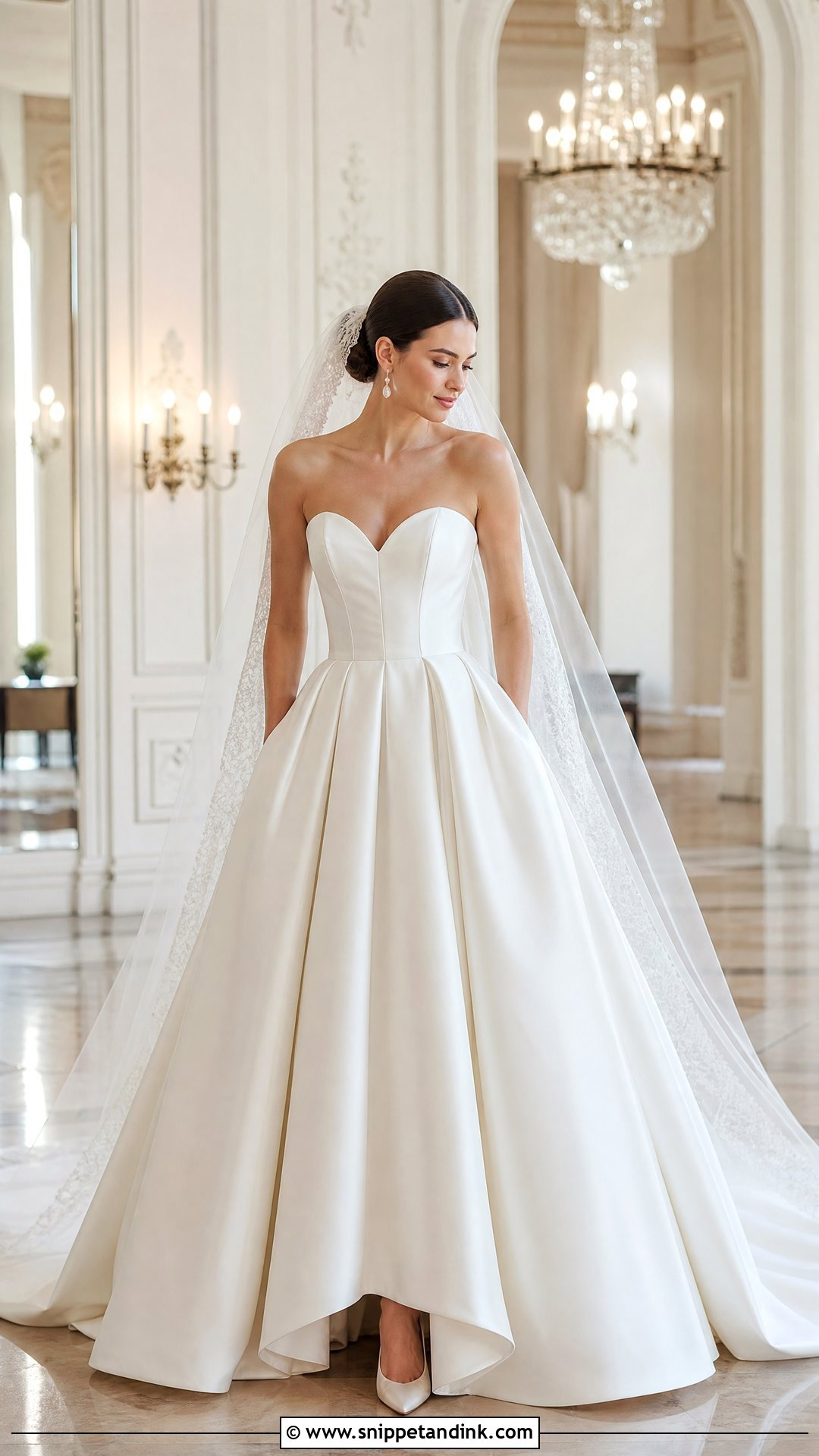
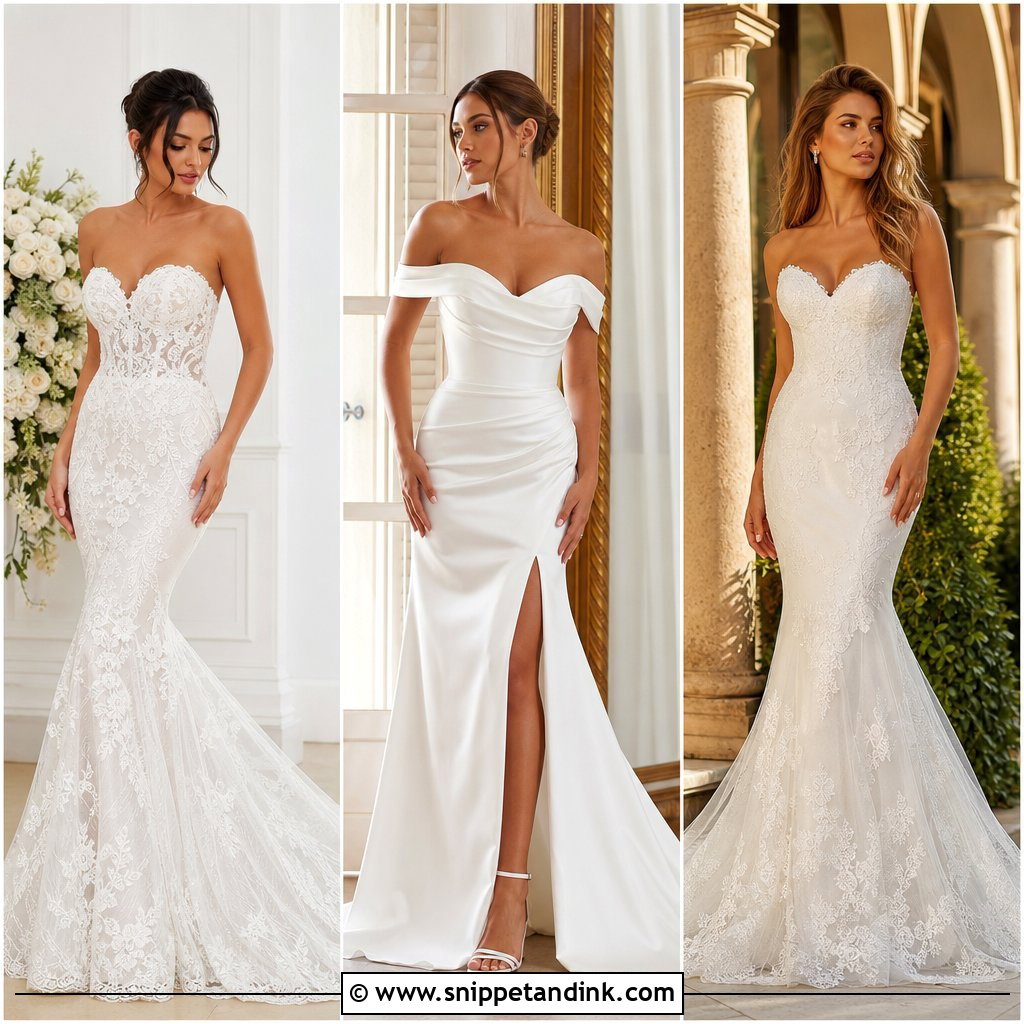
A strapless satin ball gown is the classic, and it lives or dies on what’s inside the bodice. Internal boning and a waist stay should hold the dress up from your ribs, so you aren’t hitching it every few minutes. A curved sweetheart reads romantic; a straight top edge looks more architectural. Formal ballrooms, hotels and grand indoor rooms suit the full skirt. Pointed ivory pumps, pearl drops, a cathedral veil with a plain edge and a low chignon keep the neckline clear. At alterations, raise your arms over your head. If the top edge drops more than a little, the bodice needs taking in at the sides.
2. Sweetheart A-Line Sleeveless Wedding Dress
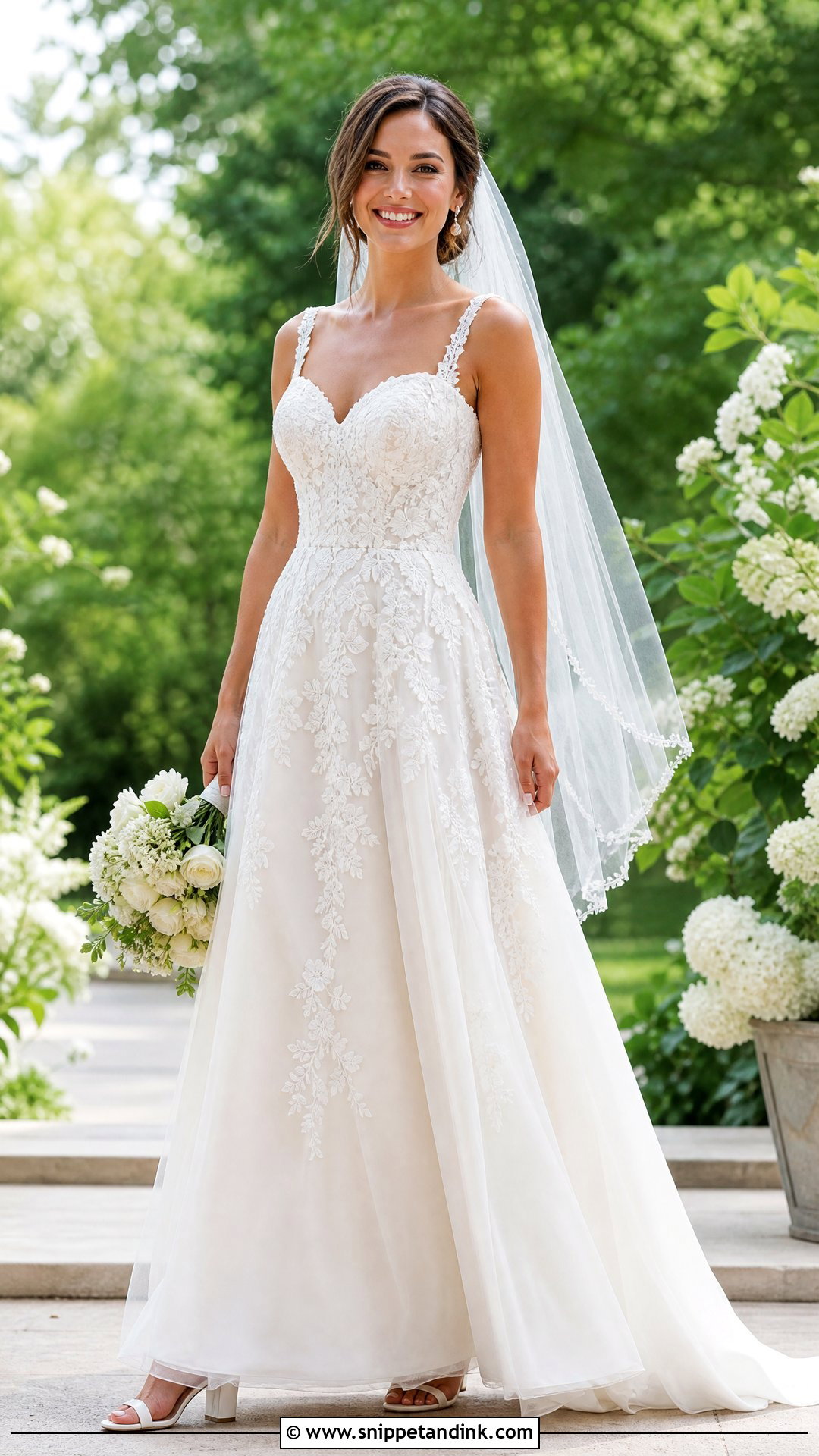
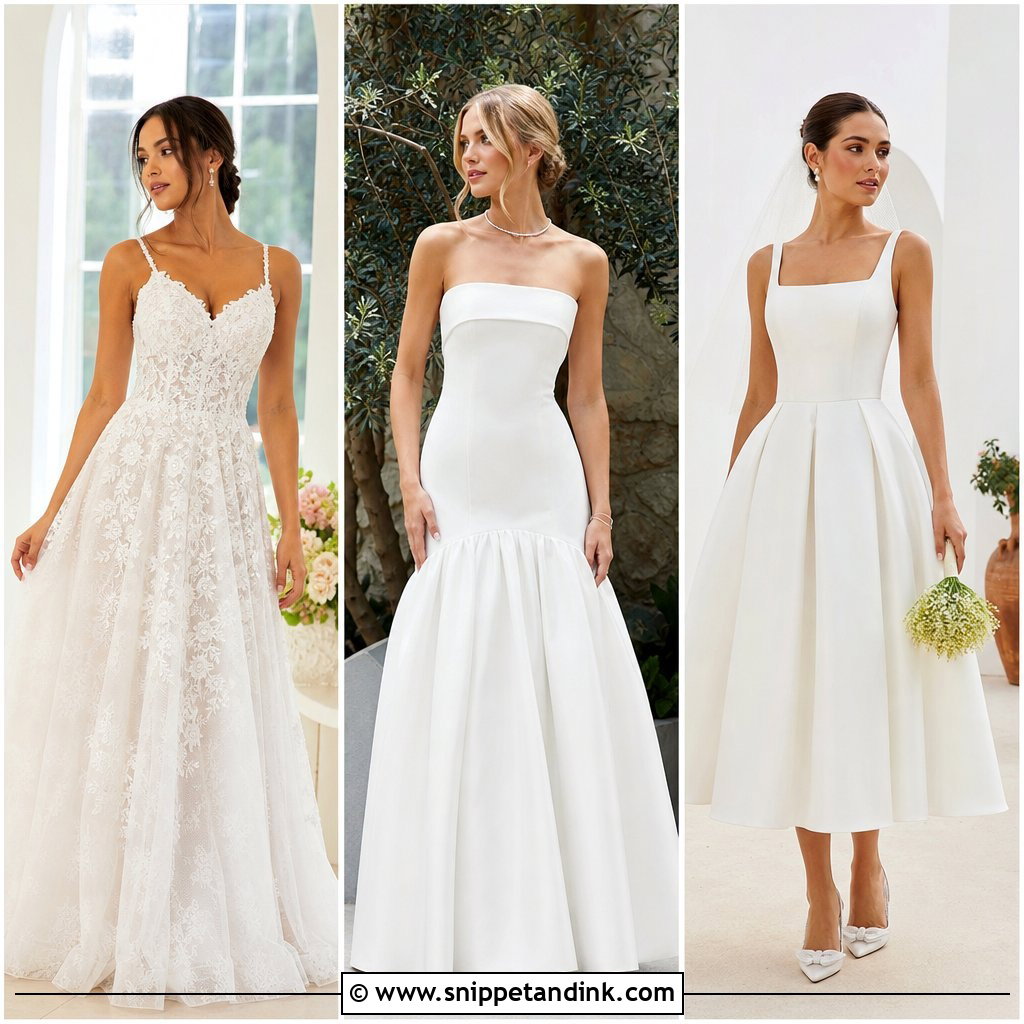
A sweetheart A-line wedding dress gives you shape without the weight of a ball gown, and it’s one I recommend often for garden and estate venues. The strap choice changes more than people expect. Wider straps carry real support; spaghetti straps are mostly decoration, so the bodice has to do the work alone. Lace appliqués add texture without tipping into ornate. A fingertip veil, crystal earrings, block heels and a compact bouquet finish it. Have strap length adjusted to the quarter inch, because a loose strap drags the sweetheart curve down with it.
3. Square Neck Satin Wedding Dress
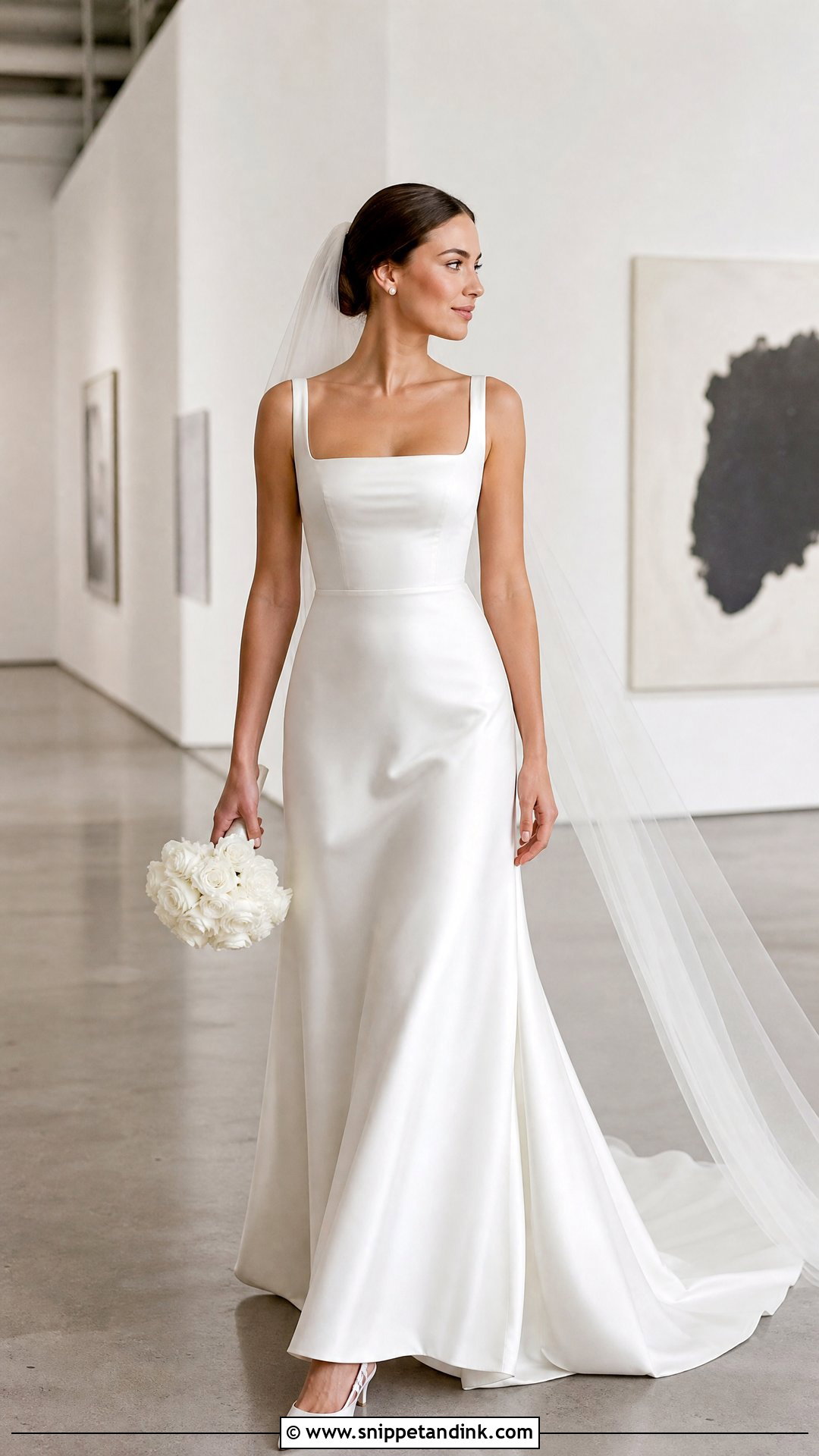
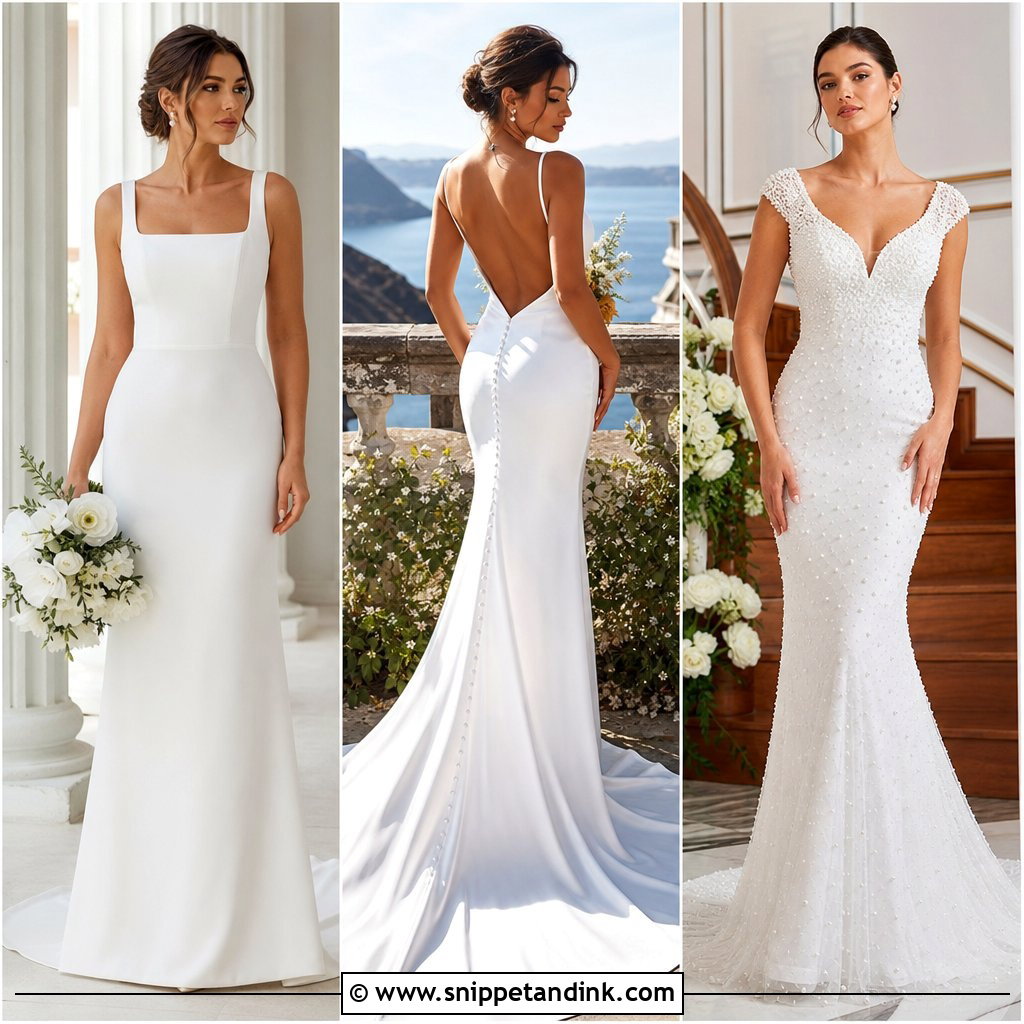
Square necks look current and still feel classic. On a fitted satin bodice with supportive straps, over an A-line or softly flared skirt, the straight line shows off the collarbone well. Matte satin keeps it quiet; a lustrous satin catches flash and reads more dramatic in photos. Pearl studs, a sleek low bun, pointed slingbacks, a chapel veil and a small structured bag for the reception are all it needs. Armholes are the weak spot on this one. When they’re cut too large, the side of the bust shows every time you reach, so I have them fitted with your arms moving, not resting.
4. Halter Neck Crepe Wedding Dress
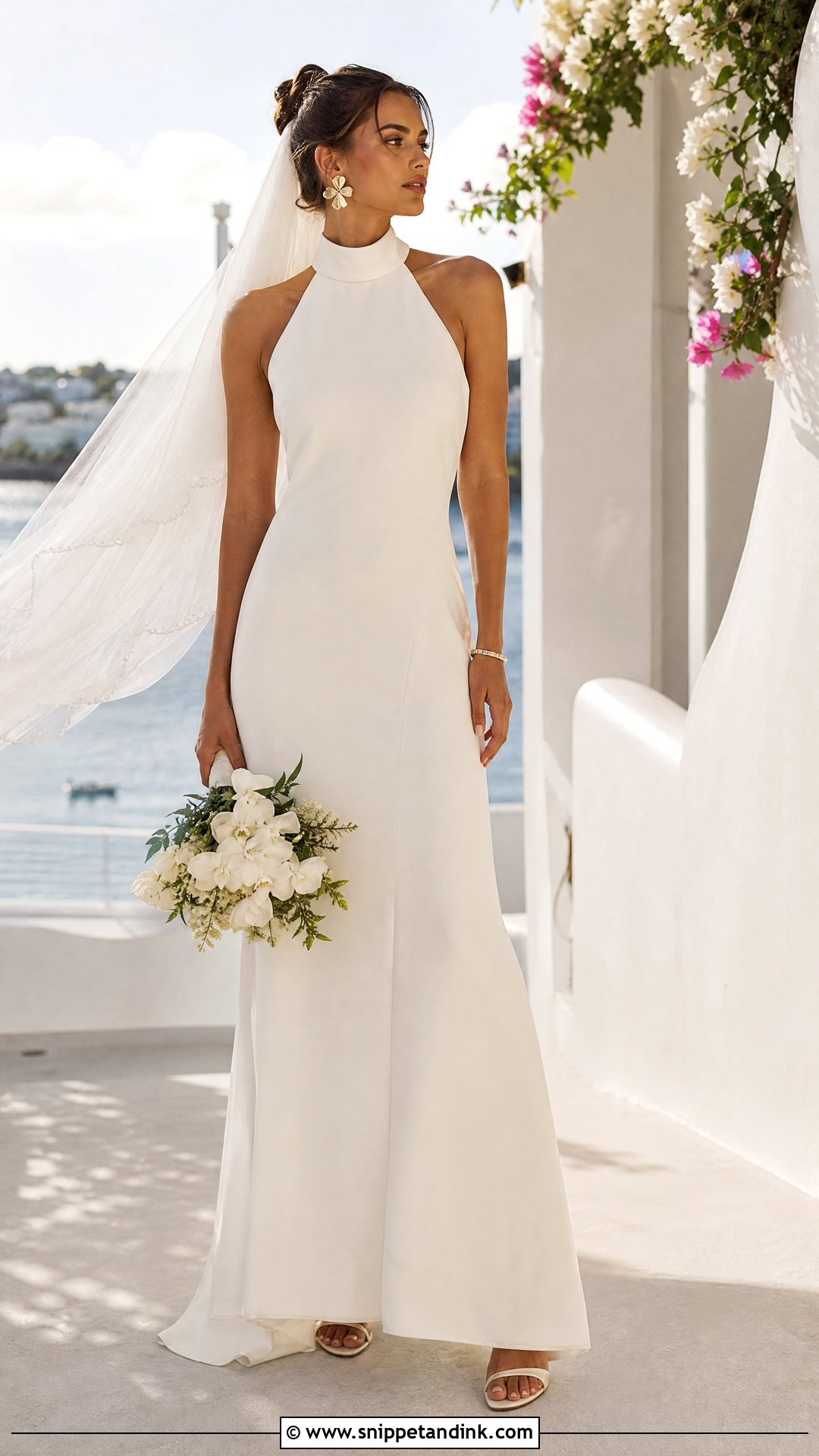
A halter neck crepe wedding dress draws one long line from the neck to the hem, best in a column, sheath or gentle fit-and-flare. A draped halter softens it; a high one is sharper. Since the neckline does the talking, keep to an updo, sculptural earrings, slim heels, a simple bracelet and a plain veil. Rooftops, modern resorts and destination weddings suit it. The neck strap should finish the look, not hold you up. If it’s carrying the bust, you’ll feel it in your neck within a couple of hours, so ask for sewn-in support in the bodice.
5. V-Neck Lace A-Line Wedding Dress
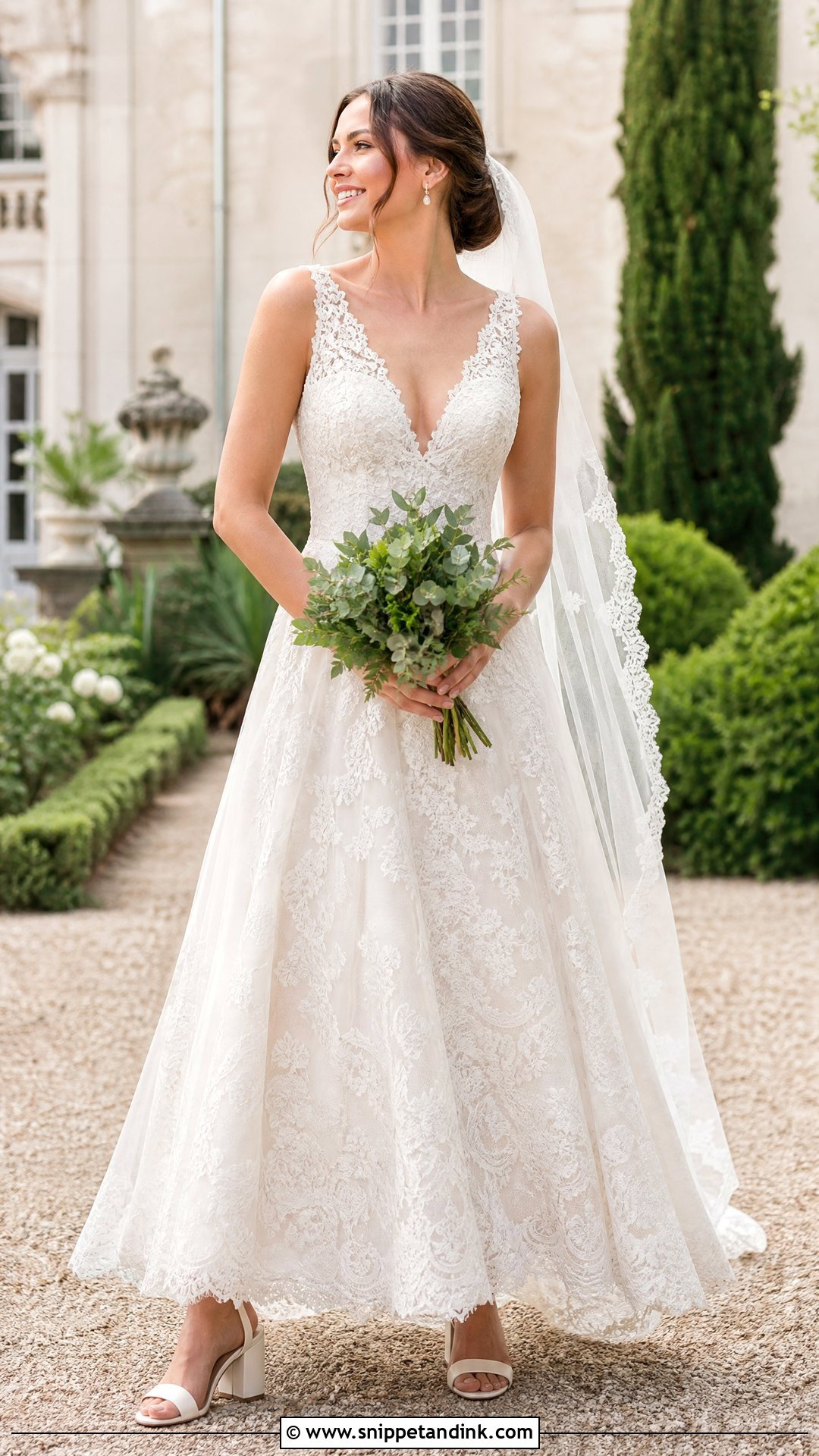
Lace and a V-neck give you detail without heaviness. Wide lace straps add coverage, and if the V is deep, an illusion insert keeps it secure. The A-line skirt moves easily all day. I’d pair it with a lace-edged veil, small pearl earrings, ivory block heels, a loose low bun and a bouquet with soft greenery, which suits vineyards, gardens and rustic venues. When you shop, look at the side seams where lace panels meet. On a well-made gown the motifs are matched or hand-appliquéd across the seam; on a cheaper one they’re simply cut off, and it shows in close-ups.
6. Scoop Neck Mikado Ball Gown Wedding Dress
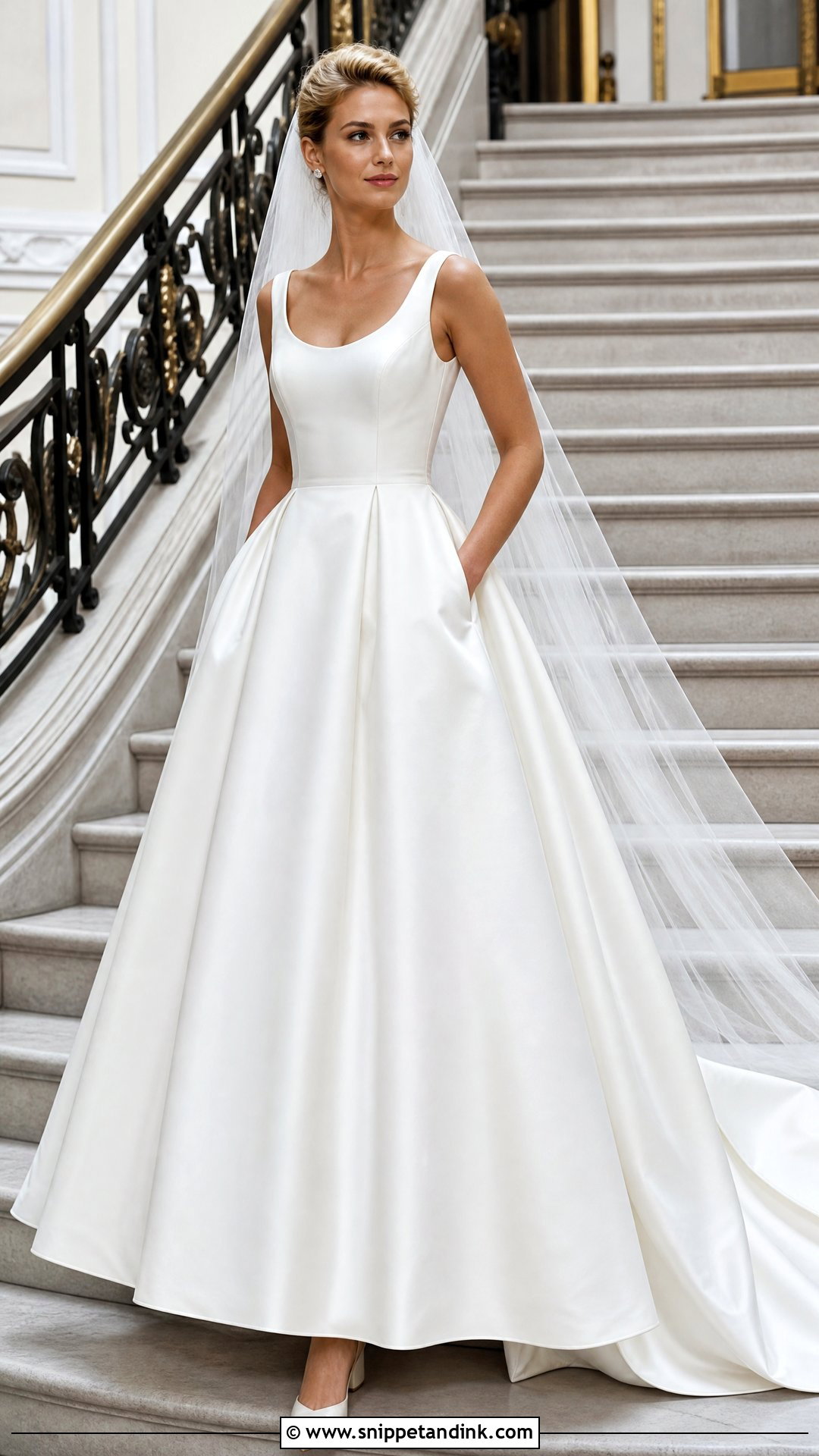
Mikado has enough body to hold pleats on its own, so a scoop neck ball gown in it keeps its shape without layers of petticoat. Wide straps support the bodice and balance the volume below. A natural waist feels traditional; a dropped waist lengthens the torso. Crystal studs, a smooth bun, pointed pumps and a long veil with subtle edging finish it, and hidden pockets are a quiet bonus. The fabric’s stiffness is the trade-off. Climb stairs and sit in the sample before you commit, and plan a bustle that’s easy to manage once the reception starts.
7. One-Shoulder Column Wedding Dress
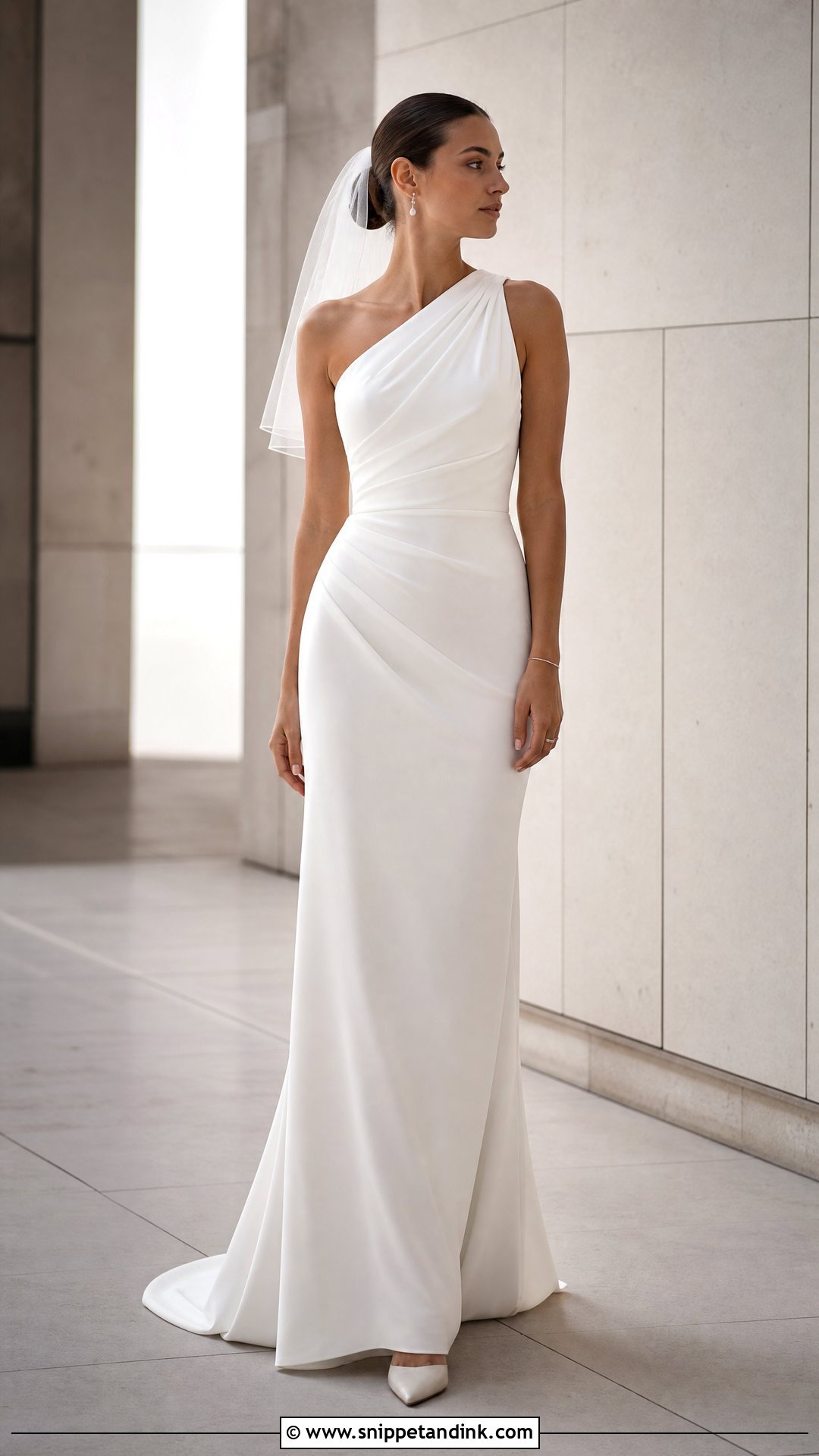
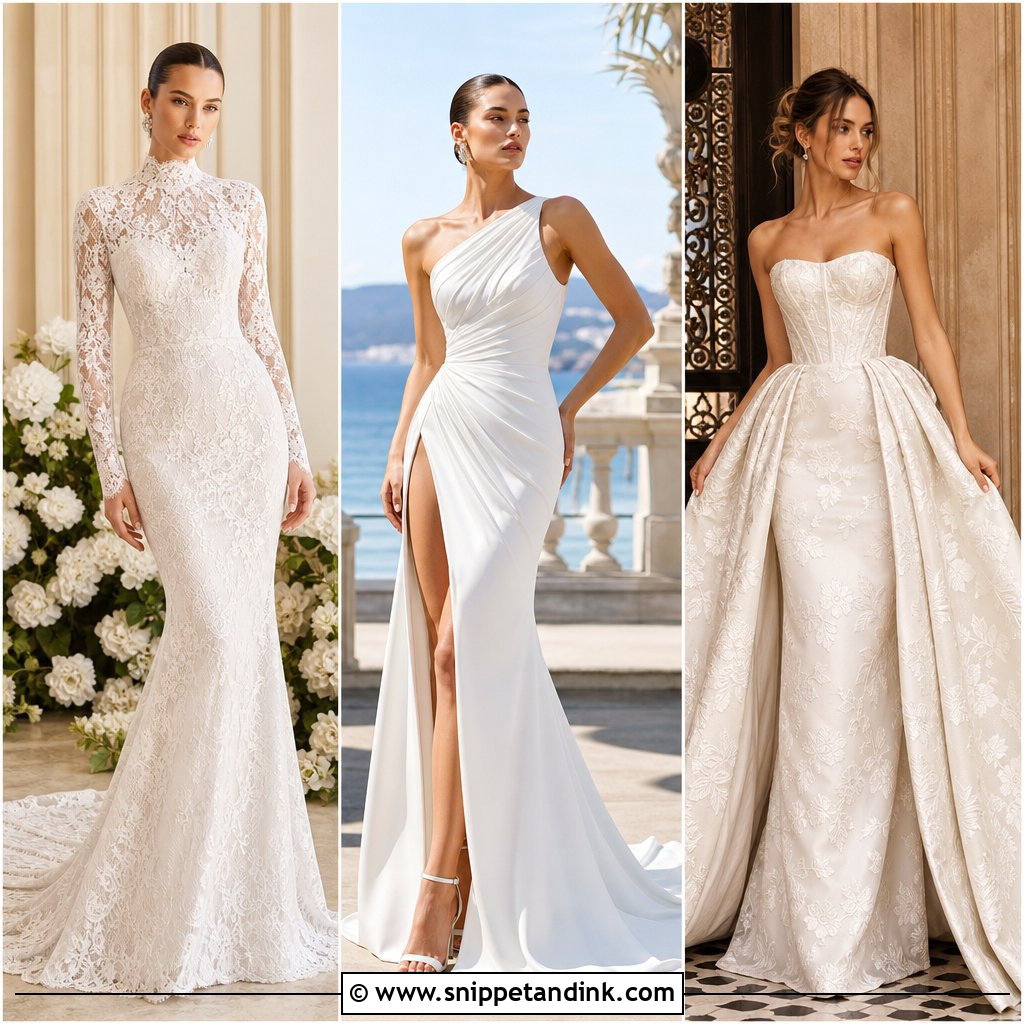
One shoulder, one clean column. The asymmetric neckline gives the interest, so draped crepe, satin or soft jersey can stay plain. Set the hair on the side away from the strap, either a sleek ponytail or a low bun, with a short veil anchored beneath it. Understated drops and metallic or ivory heels are enough; a necklace fights the diagonal. Modern hotels, coastal venues and architectural spaces suit it. At the fitting, check that the bodice stays level when you raise the bare arm. One-shoulder gowns tend to slip on the open side, and a strap cut too tight to compensate will dig into your shoulder.
8. Spaghetti Strap Slip Wedding Dress
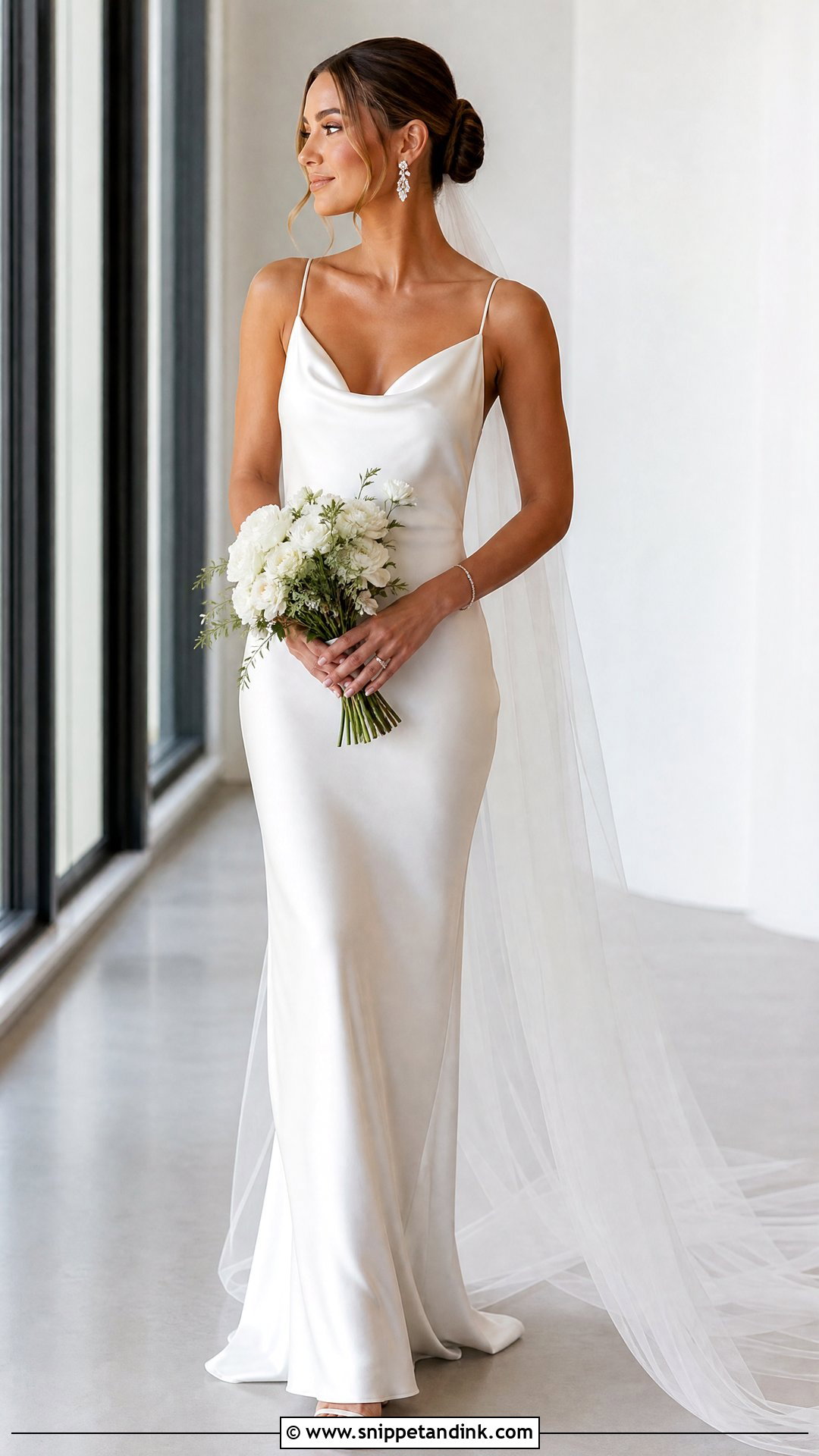
Silk or satin slips catch the light along every curve, which is exactly why fabric quality and tailoring matter so much here: there’s nowhere for a flaw to hide. A cowl neck softens the line, while a straight neckline gives a cleaner 1990s-inspired finish. Slim sandals, small diamond or crystal earrings, a delicate bracelet and a sheer chapel veil suit it, with a polished bun or loose waves. Smooth, edge-free underwear or built-in cups are non-negotiable, since bias-cut satin shows every edge. I ask for a little extra ease at the hips so you can walk and dance without the skirt riding up.
9. Sleeveless Mermaid Wedding Dress
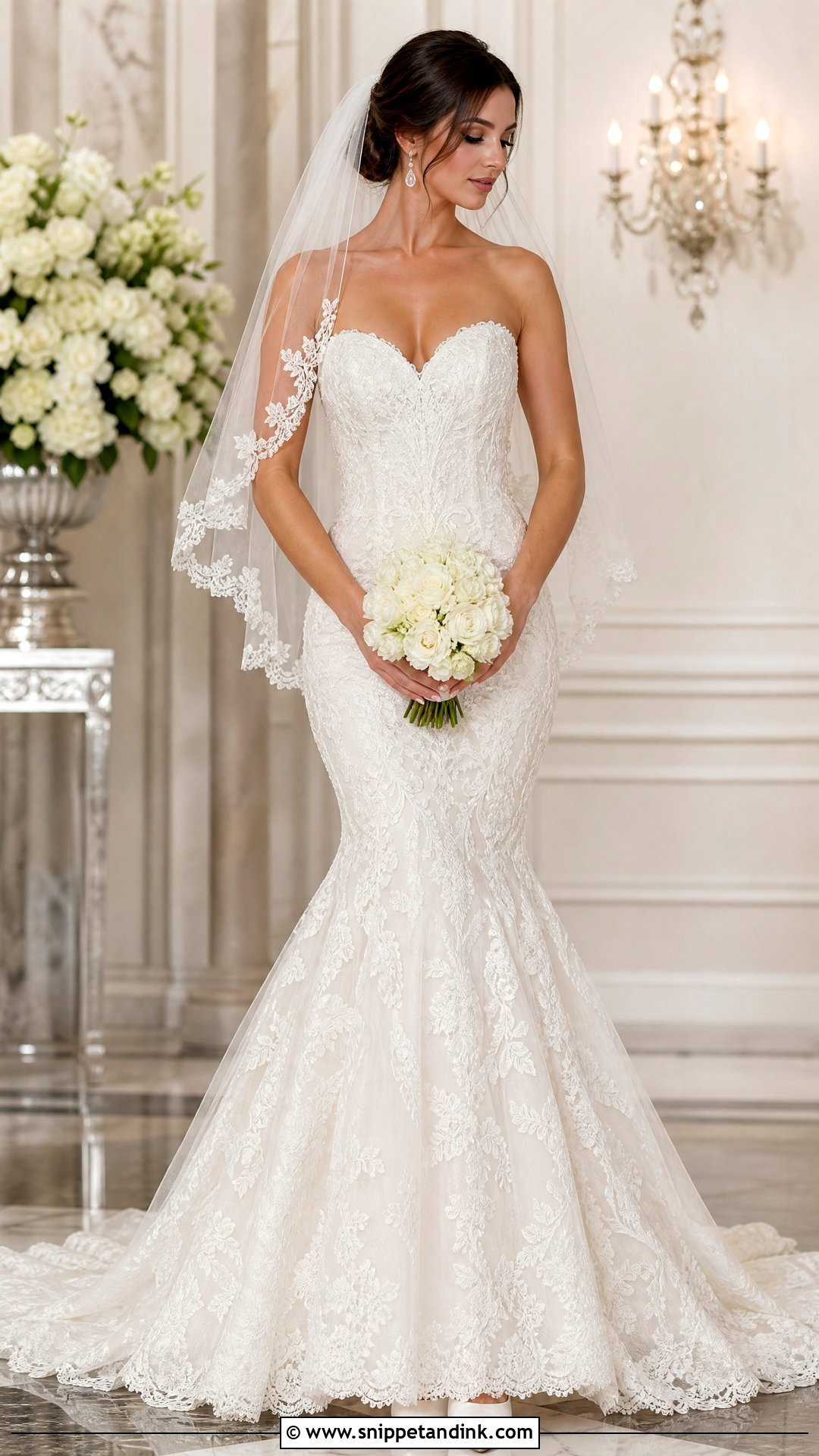
The mermaid hugs to the knee, then flares. Structured satin sculpts; lace softens. A sweetheart, V or square neck personalizes the top half. Add a fingertip veil, drop earrings, closed-toe heels and a compact bouquet held low enough not to cover the bodice. The narrow part of the skirt is what you’ll notice all day, so take normal-length steps at the fitting and sit down properly. If the fabric pulls across the hips when seated, ask whether the flare can start a little higher. You’ll want a secure bustle once the dancing starts, and a formal venue where that flared hem has room to spread.
10. High Neck Sleeveless Wedding Dress
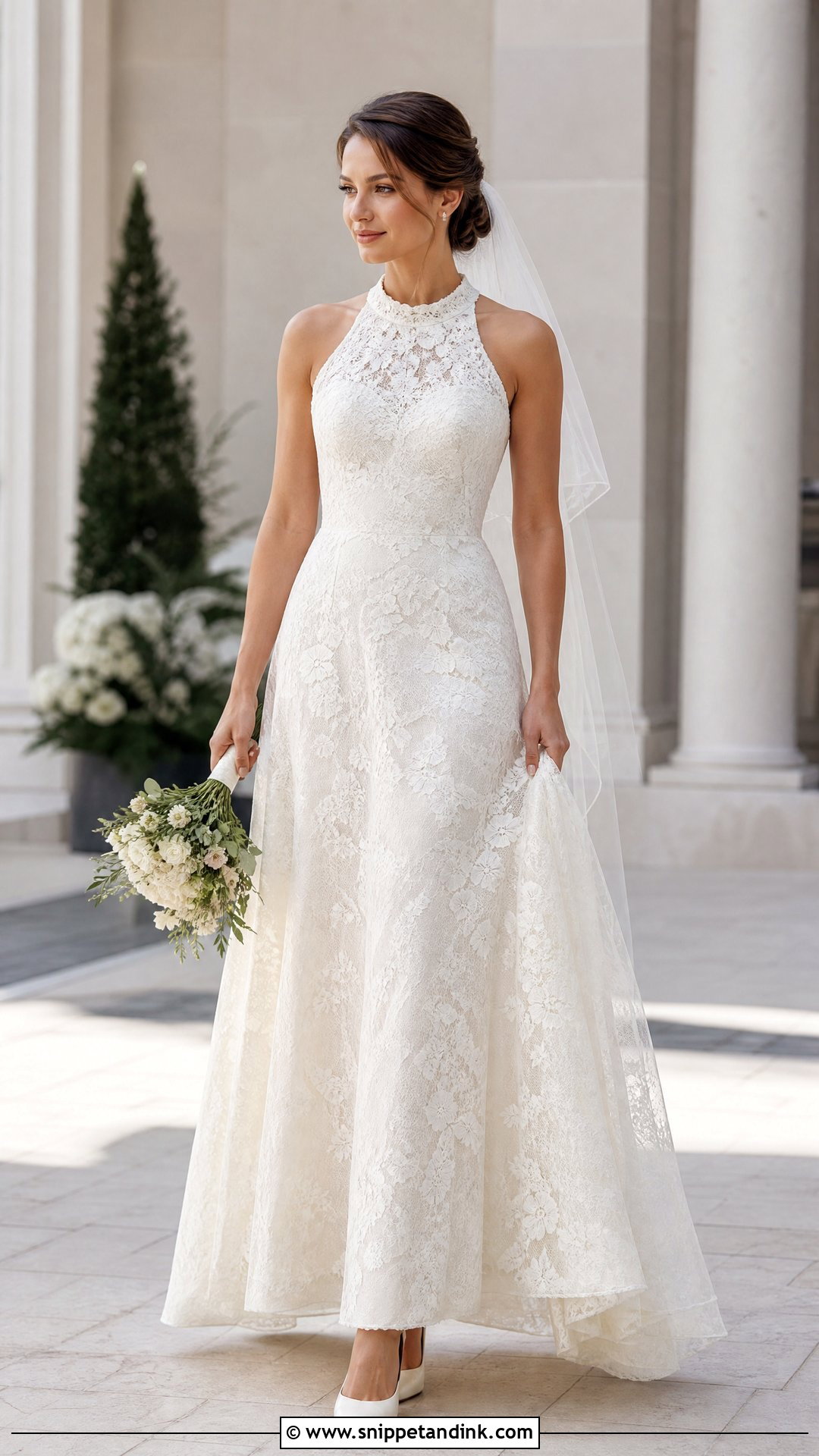
A high neck with bare arms is an interesting balance: covered chest, open shoulders. Plain crepe makes it sleek, floral lace makes it romantic; a column skirt streamlines and an A-line adds movement. Wear an updo that shows the neckline, small earrings, pointed pumps and a veil set low at the back. No necklace. For a fuller bust, don’t count on the high neck to hold anything in place. You still need structure inside the bodice, or the fabric pulls flat across the chest and gaps at the armholes. Check the collar and armholes for rubbing during alterations.
11. Basque Waist Strapless Wedding Dress
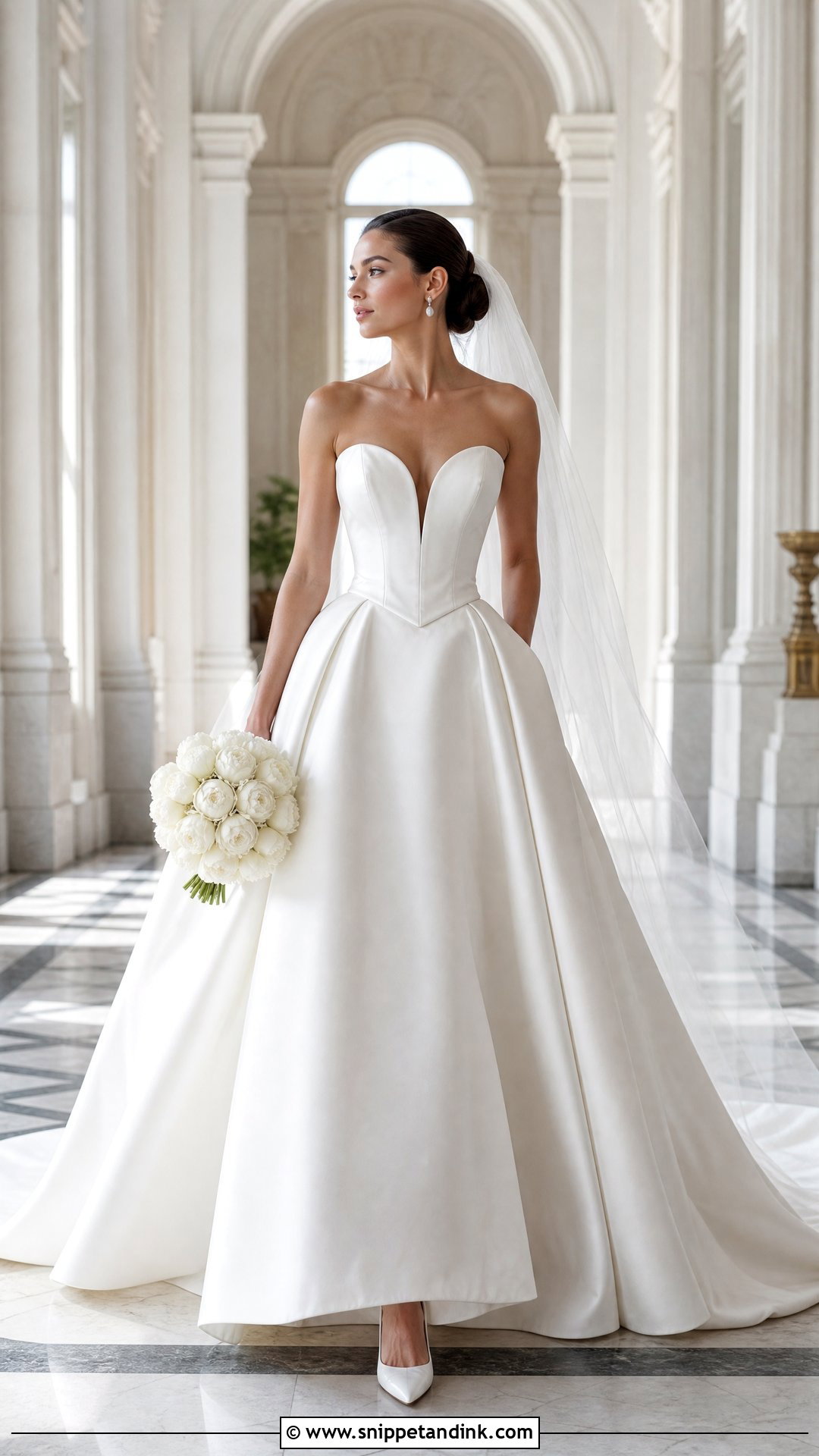
A Basque waist dips into a V below the natural waistline before the skirt opens, which lengthens the torso and gives a full skirt a smooth start. Satin, taffeta and mikado hold that point best; a lace-covered bodice softens it. A cathedral veil, pearl or crystal earrings, satin pumps, a chignon and a simple bouquet that leaves the waist visible finish the look. Because the bodice runs long, it has to follow your body closely. I check that the point sits dead center and doesn’t fold up when you sit, and the boning should support you without making it hard to take a full breath.
12. Tea-Length Sleeveless Wedding Dress
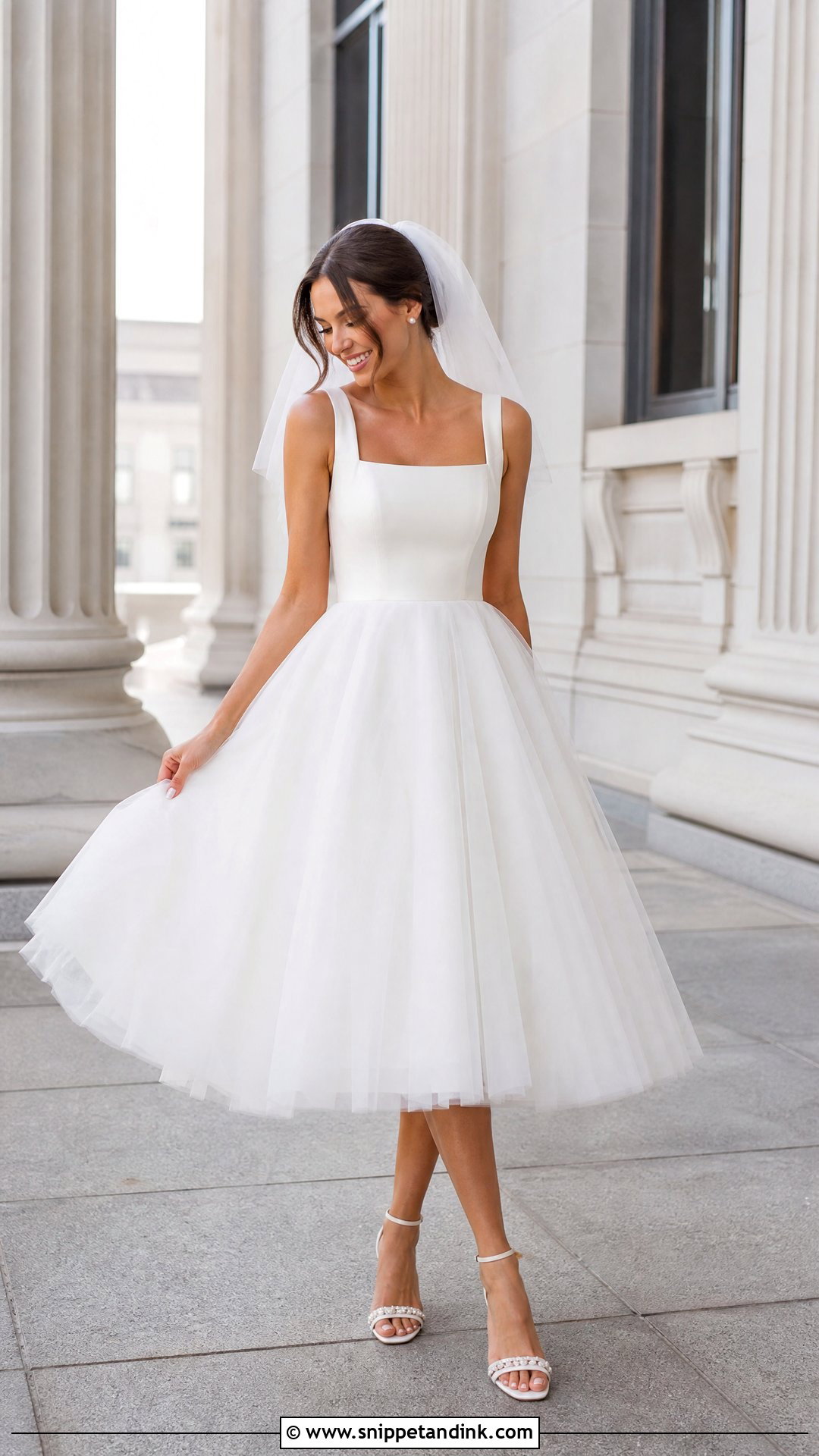
Tea length falls between the knee and ankle, which means your shoes are part of the outfit. A fitted bodice with a square, scoop or sweetheart neck over a softly flared skirt is the usual shape; satin tailors it, tulle makes the skirt bounce. Pointed pumps or embellished ankle straps, pearl earrings, short gloves if you like them and a birdcage or fingertip veil suit courthouse ceremonies, daytime receptions and small venues. Hem position is everything at this length. Petite brides usually look better with a hem just below the knee than at mid-calf, so I have the seamstress pin two or three heights and look in a full mirror.
13. Sleeveless Mini Wedding Dress
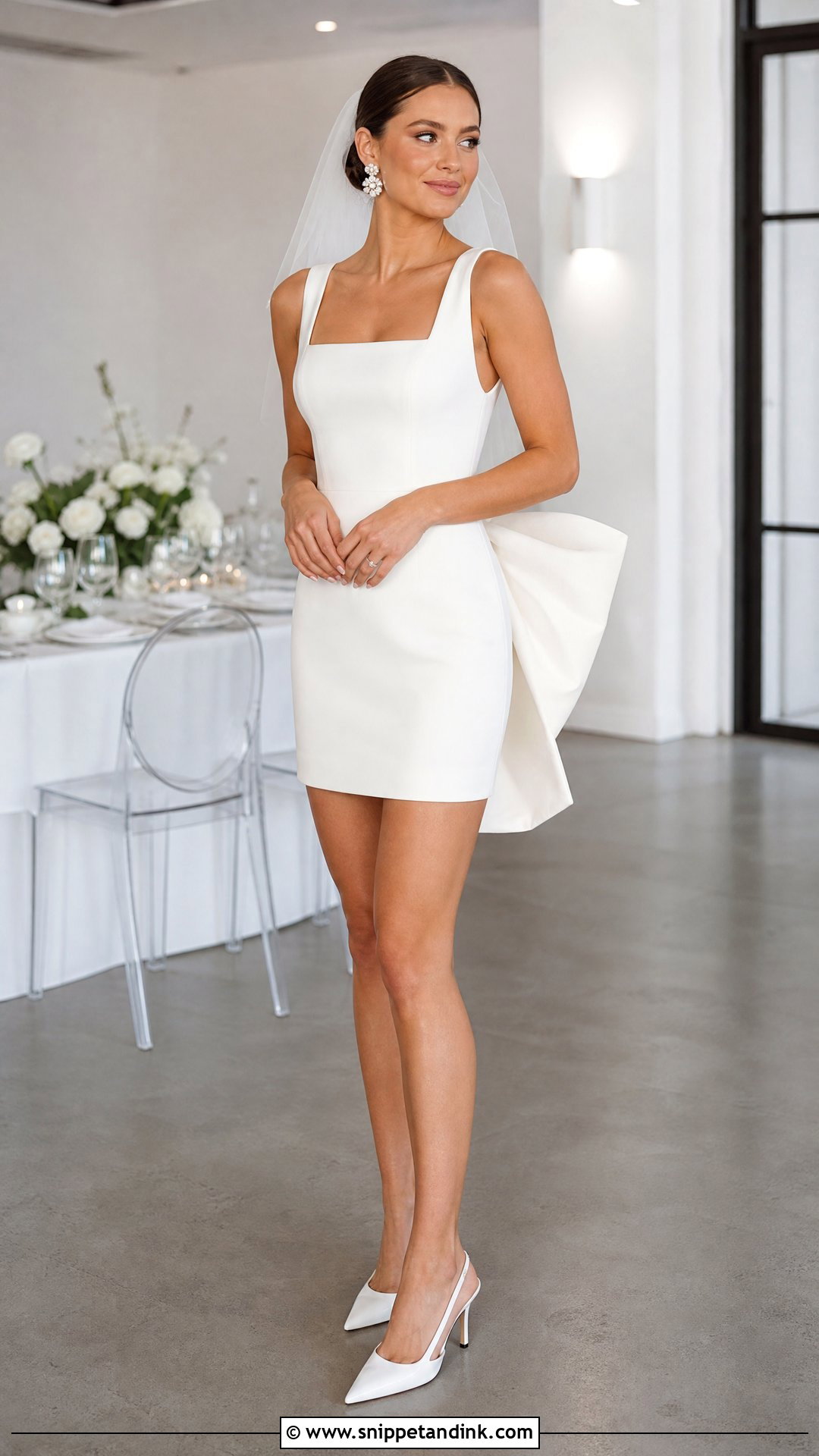
A short dress for the civil ceremony or the reception change is a fun choice, and it needs more polish than you’d think to read bridal rather than party. A structured A-line mini looks crisp; fitted crepe is sleeker. Details do the work: a square neckline, an oversized back bow, pearl trim or a detachable overskirt. Pointed pumps, slingbacks or refined ankle-strap sandals, statement earrings and a short veil keep it festive. Sit and dance in it before you commit. If you’re pulling the hem down, it’s too short, and built-in shorts are worth asking about.
14. Backless Satin Wedding Dress
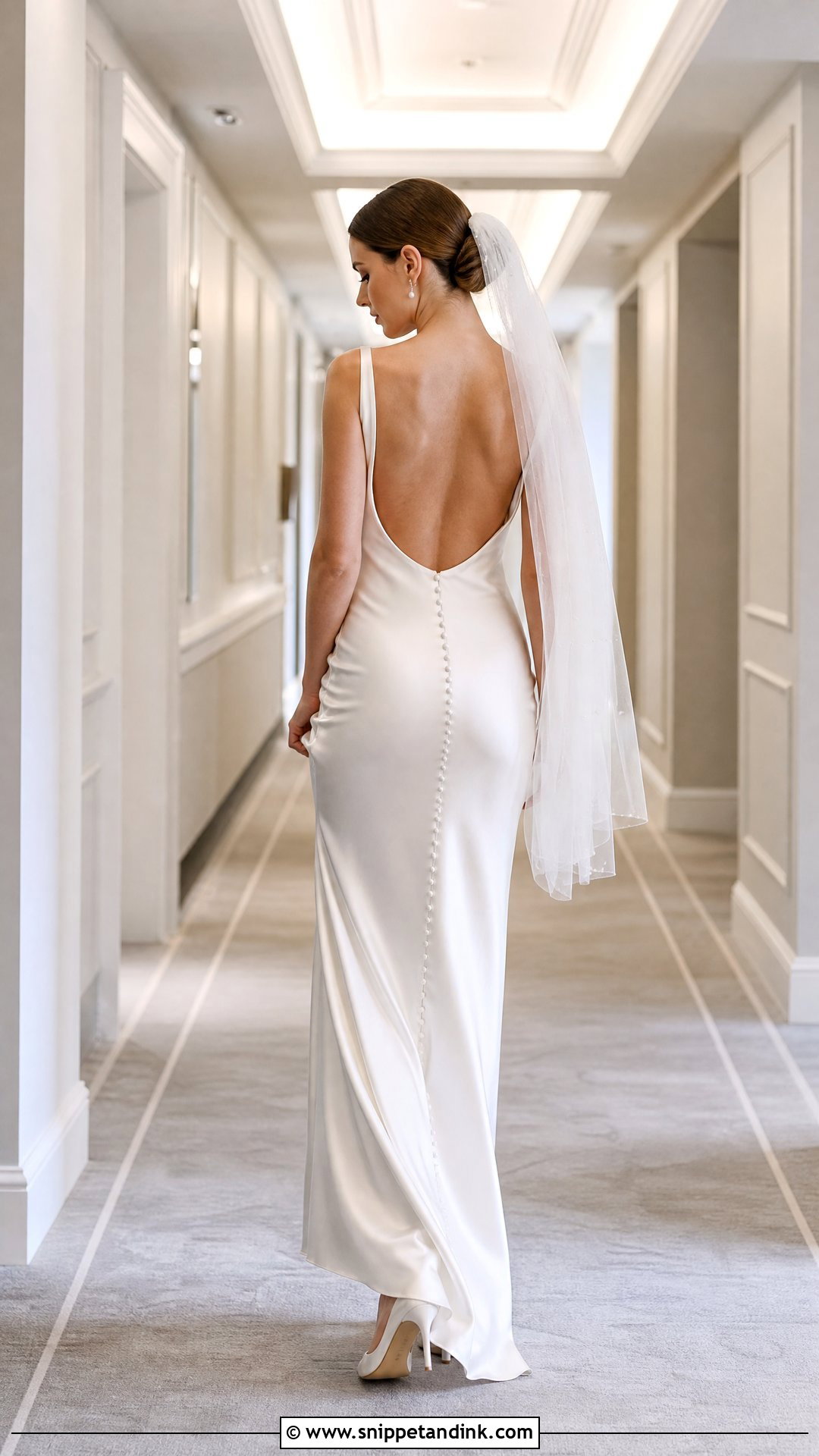
From the front, a backless satin gown looks almost plain. Then you turn, and the low scoop, open V or draped back does everything. A column or fit-and-flare keeps the focus on the fabric. Wear a low bun, a fine back-drop necklace, slim earrings, pointed heels and a sheer veil that doesn’t hide the back. Support is the puzzle, since a normal bra will show. Bridal cups sewn into the lining, fashion tape or engineered internal support are the usual answers. Move every direction at the fitting; the back edge should stay flat against the skin, and a row of covered buttons can frame the opening.

15. Floral Appliqué Tulle Wedding Dress
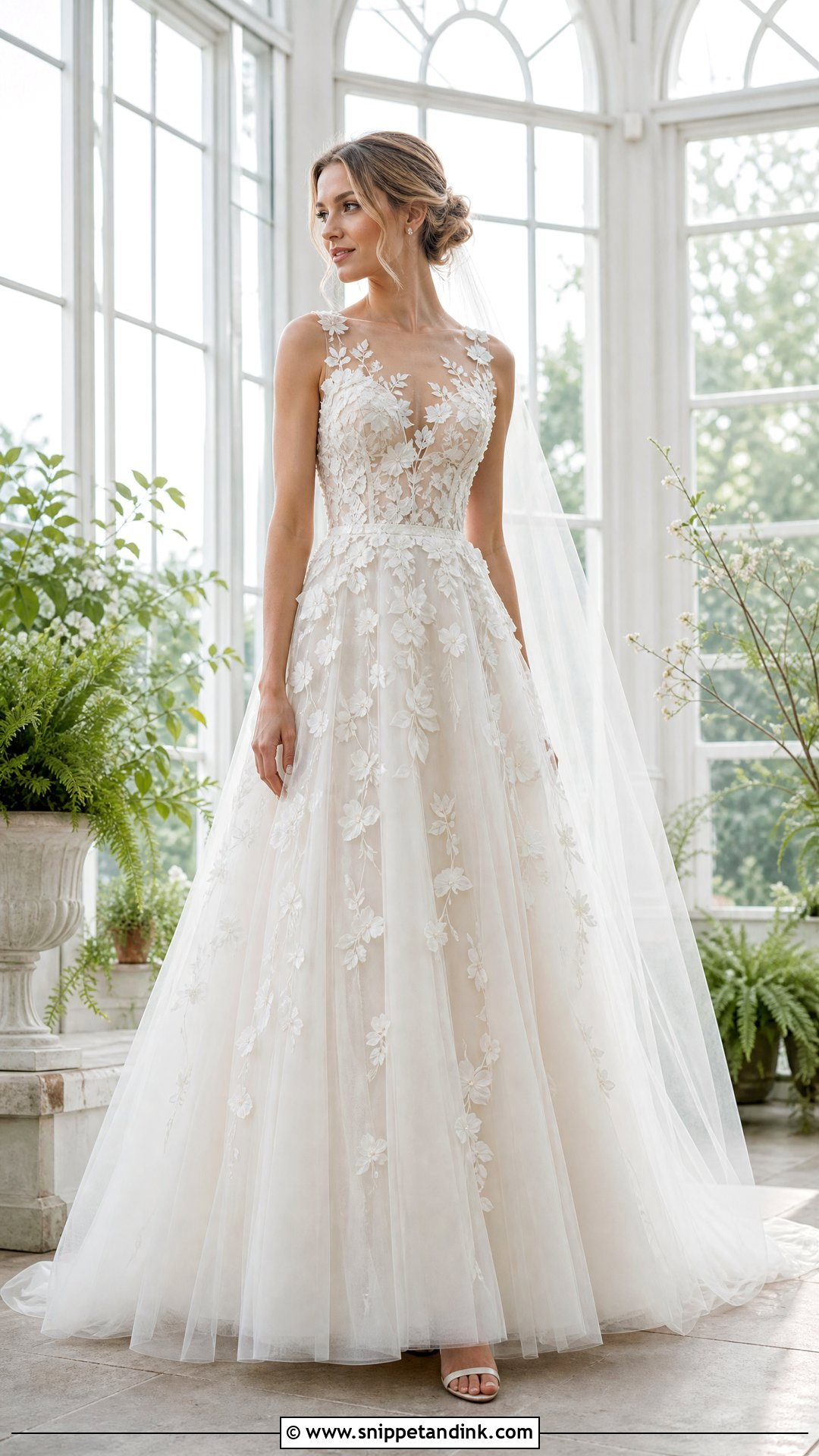
Tulle with three-dimensional flowers has movement and depth. The flowers can cover the bodice, scatter down the skirt or gather at the waist for a quieter effect. An illusion neckline with wide straps gives more support; a fine V-neck feels airier. Keep everything else simple: studs, soft waves or a low textured bun, ivory heels and a plain tulle veil. Gardens and conservatories suit it. Raised petals snag on rough chair fabrics and catch on each other, so I ask the seamstress to stitch down every loose flower before final alterations, not after.
16. Pearl Beaded Sleeveless Wedding Dress
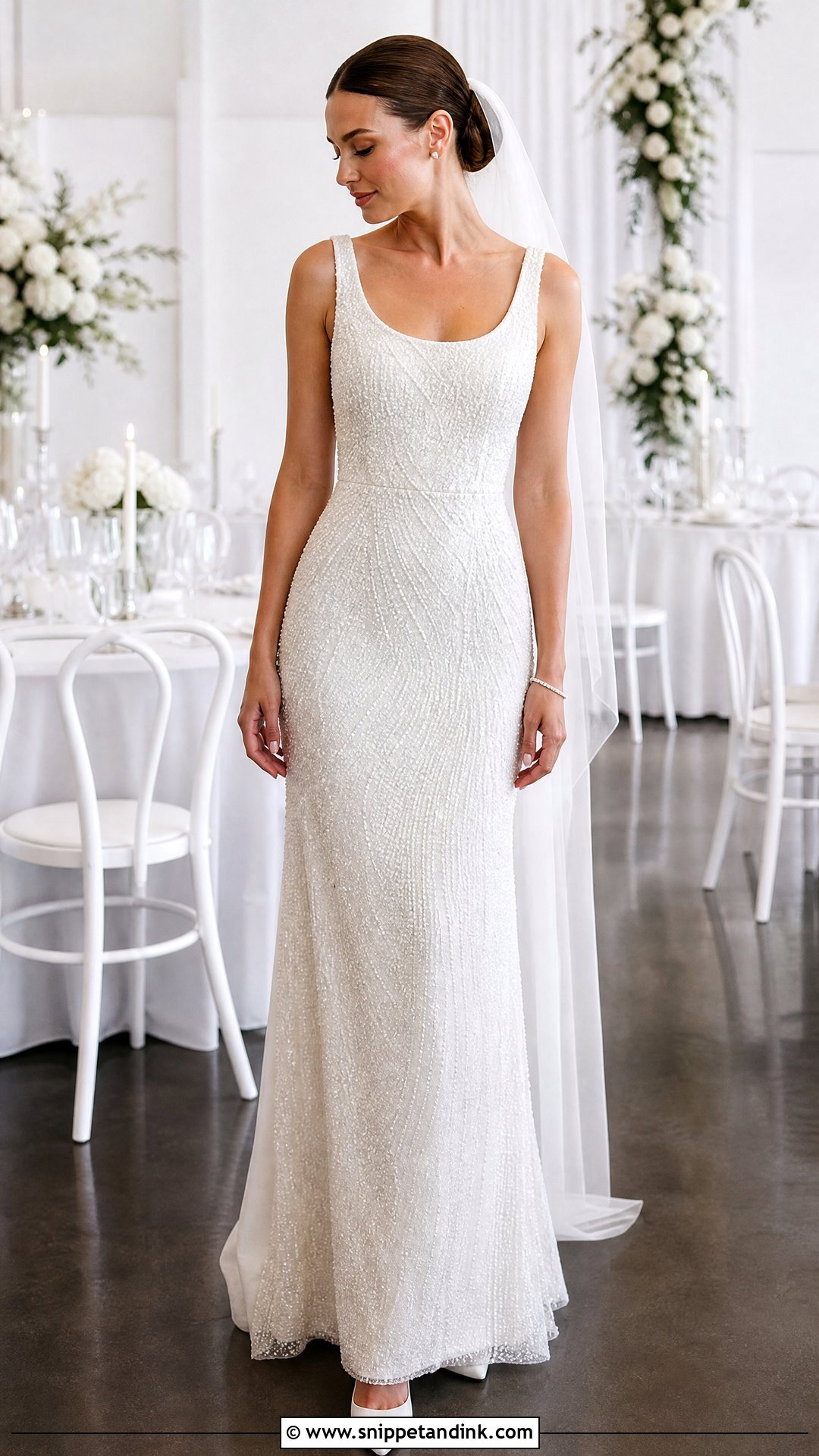
Pearls give a soft glow rather than the hard sparkle of crystals. A pearl-covered sheath feels glamorous; beaded tulle over an A-line is lighter. A scoop or square neckline keeps the design balanced. With beading that heavy, I’d pick plain satin heels, pearl studs, a smooth bun and an unembellished veil, plus one clean element like a simple clutch so the look doesn’t feel matched head to toe. Beaded gowns shed. Check for loose threads before the day and keep a needle, matching thread and a few spare pearls in your kit. Good lining stops the beadwork scratching your skin.
17. Chiffon Sleeveless Beach Wedding Dress
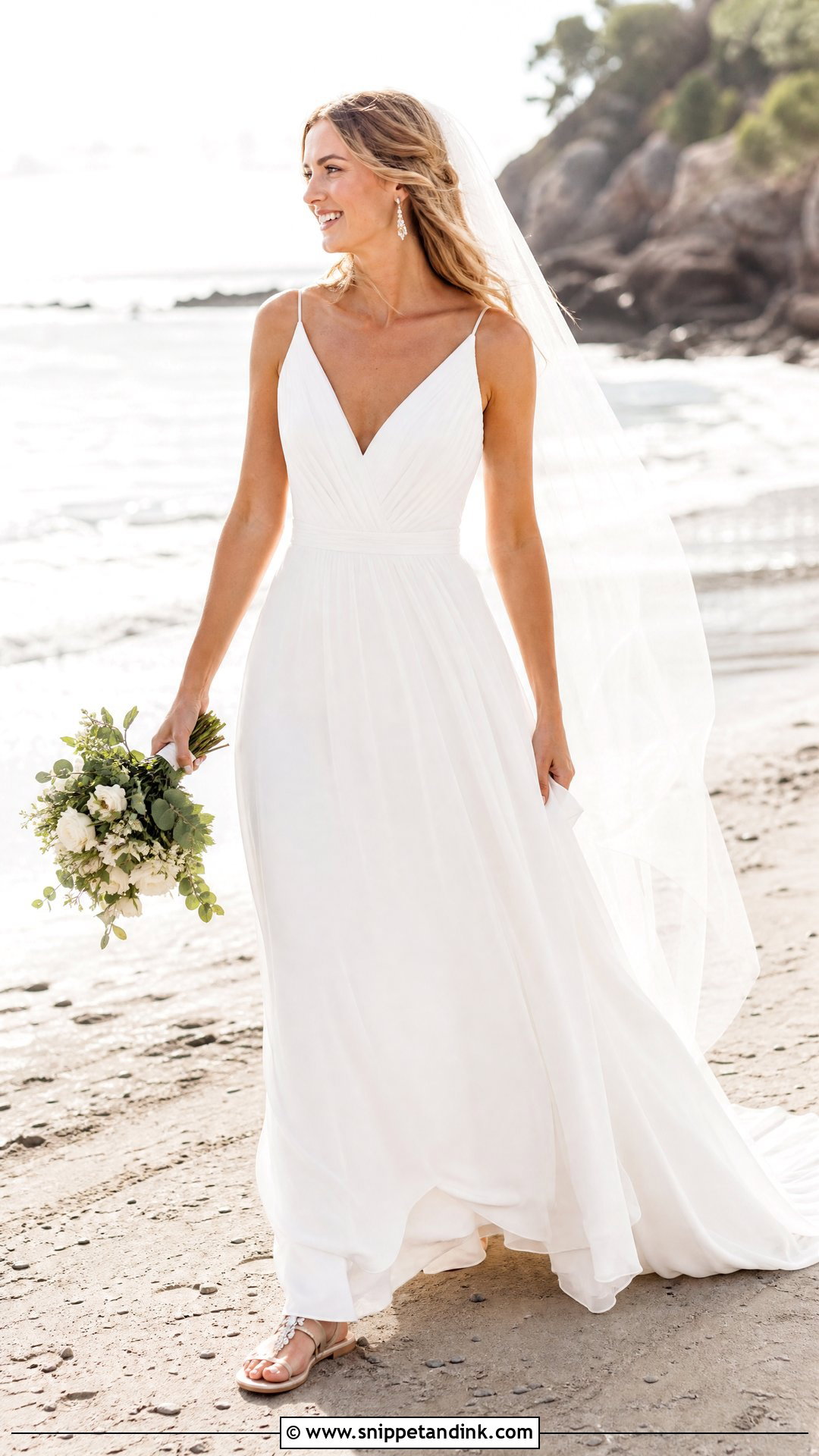
Chiffon is light, breathes well in heat and moves with the breeze, so it’s my usual answer for a beach. Choose an A-line or empire shape with a light lining that doesn’t cling, and let a V-neck, narrow straps and soft pleating give the shape instead of boning. Flat embellished sandals, delicate earrings, loose waves and a light veil pinned firmly under the hair work on sand. Keep the train short; a long one drags sand and needs a complicated bustle. Skip layered petticoats, which trap heat. Set the hem with the exact shoes you’ll wear, and stand in bright sun to make sure the lining covers you from every side.
18. Draped Crepe Sleeveless Wedding Dress
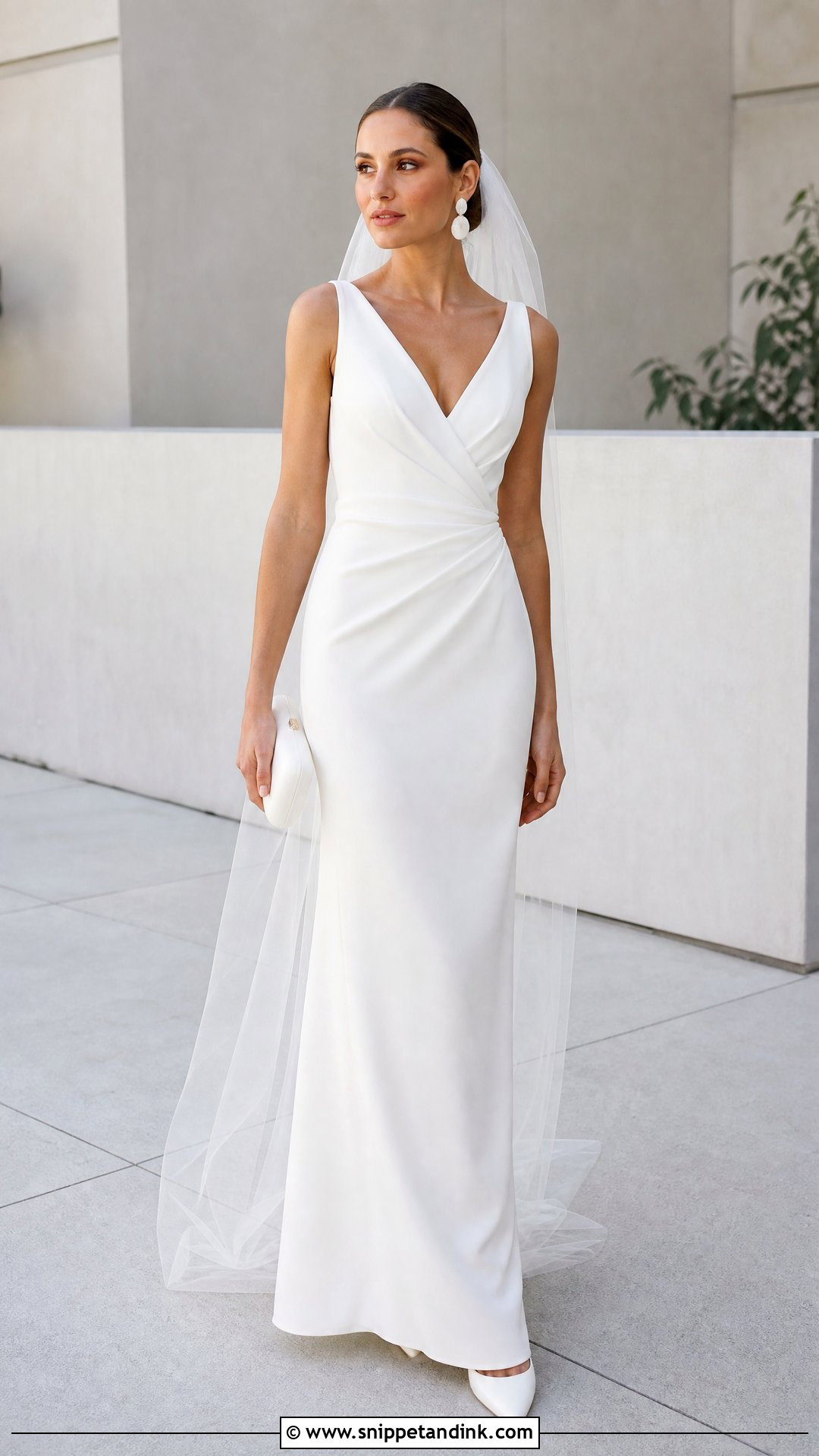
Draped crepe is forgiving and comfortable. Ruching across the waist adds definition, and diagonal drapes give a plain column some movement. A wide-strap V-neck offers more support; an asymmetric neckline looks more modern. Sculptural earrings, a smooth clutch, pointed heels and a clean-edged veil are enough. Drape should hang, not strain. Fitted too tightly, the folds flatten out and the effect disappears, so I ask the seamstress to adjust the draping last, after all the structural changes. Smooth underwear and well-placed cups keep the crepe smooth. Urban venues and modern spaces suit it.
19. Sleeveless Wedding Dress With Detachable Overskirt
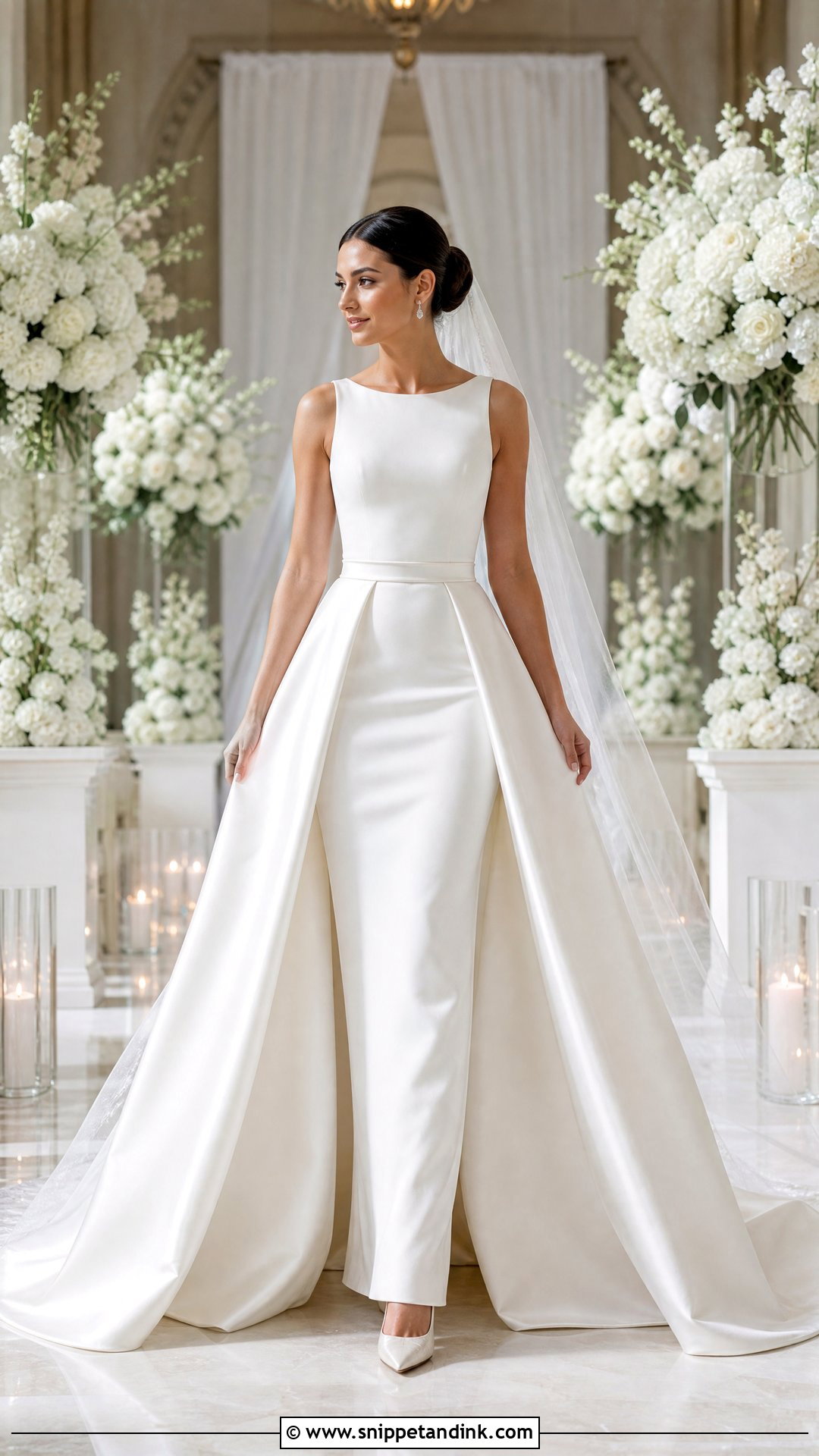
With a detachable overskirt, one sleeveless gown becomes two looks. Underneath, a fitted sheath, mermaid or mini; on top, a full satin or tulle skirt for the ceremony, removed for the reception. Pair the formal version with a long veil, refined earrings and pointed heels, then switch to a shorter veil or bolder earrings once the skirt comes off. The waistband should blend into the dress instead of reading as a belt. Fastenings must be secure but quick for someone else to undo, and somebody needs a plan for where that big skirt goes afterwards, a garment bag and a hanger at least.
20. Drop Waist Sleeveless Wedding Dress
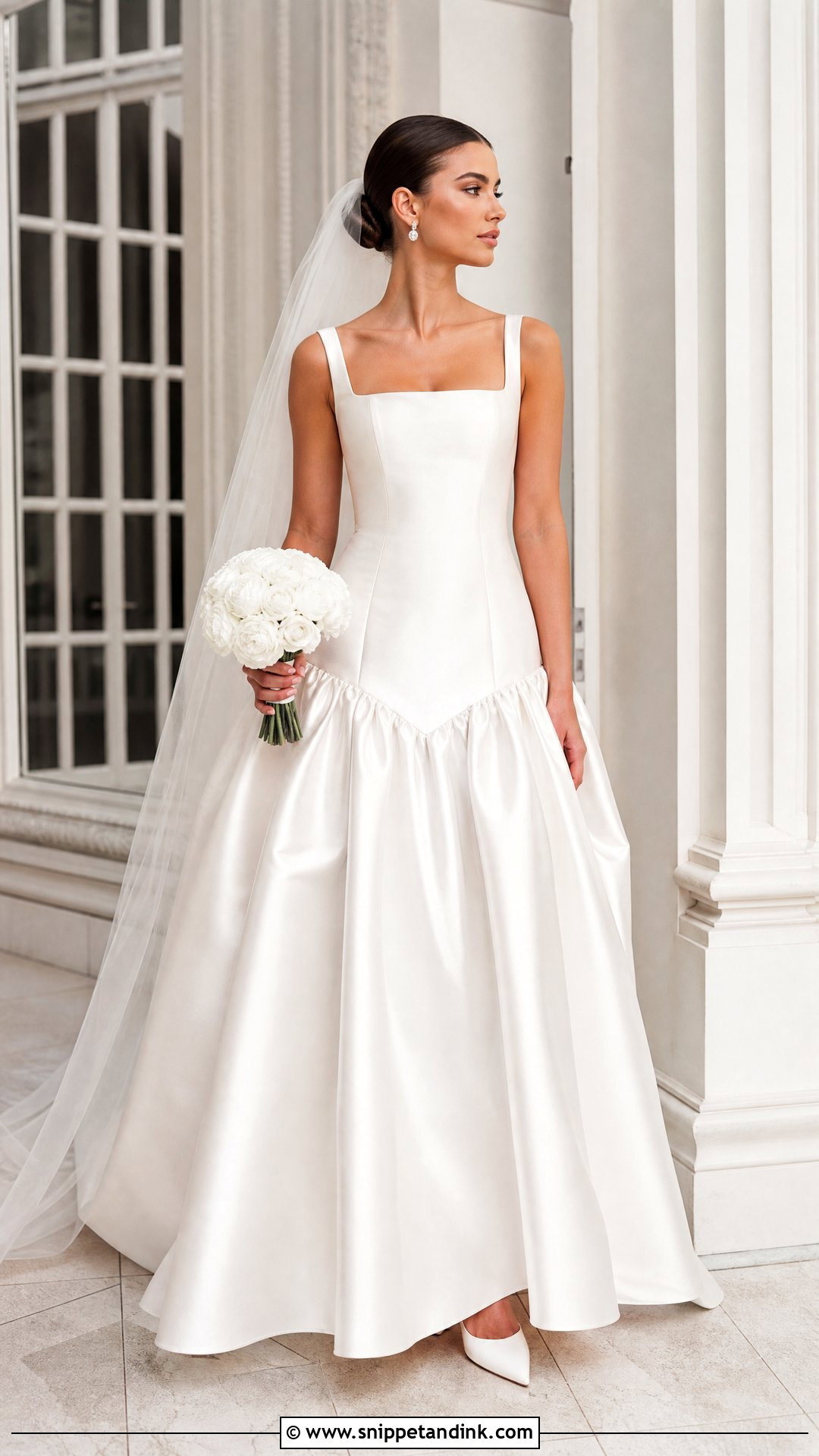
A drop waist carries the bodice below your natural waist before the skirt opens, giving a long, sculpted torso and a fashion-forward shape. A square or scoop neck suits the long bodice, and supportive straps hold the structure. Satin or mikado gives the skirt volume. Add pointed pumps, simple earrings, a sleek bun, a long sheer veil and a compact bouquet so the waist construction stays visible. Exactly where the skirt starts changes your proportions a lot, so this is a gown where the fitting decides everything. Sit and bend at each fitting; the long bodice should stay smooth and never press into your hips.
Spray Tan, Deodorant and Other Things That Mark a Sleeveless Gown
Bare arms and a bare back mean more skin touching the dress, and ivory fabric picks up everything. Most of the marks I deal with on wedding mornings are avoidable.
Tan
Get a spray tan two or three days before, not the night before, and rinse it as your tanner instructs. Freshly applied tan transfers onto satin and silk where the fabric rubs, especially at the armholes and the upper edge of a strapless bodice. Wear dark clothing until you dress.
Deodorant and makeup
Use a clear deodorant and let it dry fully before the gown goes on. Body makeup and highlighter on shoulders look fine but rub onto straps, so set them with powder. Step into the dress rather than pulling it over your head whenever the style allows, and hold a scarf over your face if it has to go over.
Sweat and heat
Silk and lighter satins show damp patches at the waist and underarms. If you’re marrying in summer, ask your seamstress about adding thin underarm shields to the lining; they’re invisible from outside and save the fabric.
Bare Arms, Secure Bodice
Sleeveless gowns go romantic, minimal, dramatic or playful depending on the neckline, fabric and silhouette. Start with the shapes that make you feel supported, then think about the season, venue, train, shoes, veil and how much embellishment you want. Whatever you choose has to stay put while you walk, sit, hug and dance. Ask someone to photograph you from the front, side and back at appointments, since each angle shows different fit problems. And set aside money for professional alterations. Even the simplest sleeveless dress depends on exact strap length, smooth armholes and a well-finished hem.
You'll Like These Ideas:









Leave a Reply