
Most brides who tell me they want something classic but modern mean the same thing: a shape their grandmother would recognize, with one detail that clearly belongs to now. The A-line, the ball gown and the slim column are still the backbone of bridal design. What changes is the neckline, the way fabric is draped, whether a layer comes off, and how cleanly the gown is tailored. That mix works in a ballroom, a garden or a small city ceremony. When you compare gowns, look at fabric and movement before you look at decoration, and think about how the whole outfit will feel at hour eight, not only in the mirror. Here are the pairings I reach for most.
Telling a Lasting Shape From a Passing Detail
When a bride worries that her dress will look dated in twenty years, I ask her to separate the gown into two parts: the frame and the trim. The frame is the silhouette, the waist placement and the fabric. The trim is everything that could be removed, swapped or restyled. Frames age slowly. Trim is where fashion moves.
- Frames that have stayed bridal for decades: the A-line, the ball gown, the sheath or column, a natural or slightly raised waist, and smooth satin, crepe or Mikado.
- Details that tend to date a dress fastest: heavy glitter, very sheer bodices with dense placement, extreme cutouts and color washes in the skirt.
- Details that are modern but easy to edit later: capes, detachable sleeves, removable skirts, bows and statement straps.
My rule of thumb is one modern element on a classic frame. Two can work if one of them comes off. If you love three trend details at once, that is fine too, just know that the photos will place your wedding in its year, and decide whether that bothers you.
1. Strapless Satin Ball Gown Wedding Dress
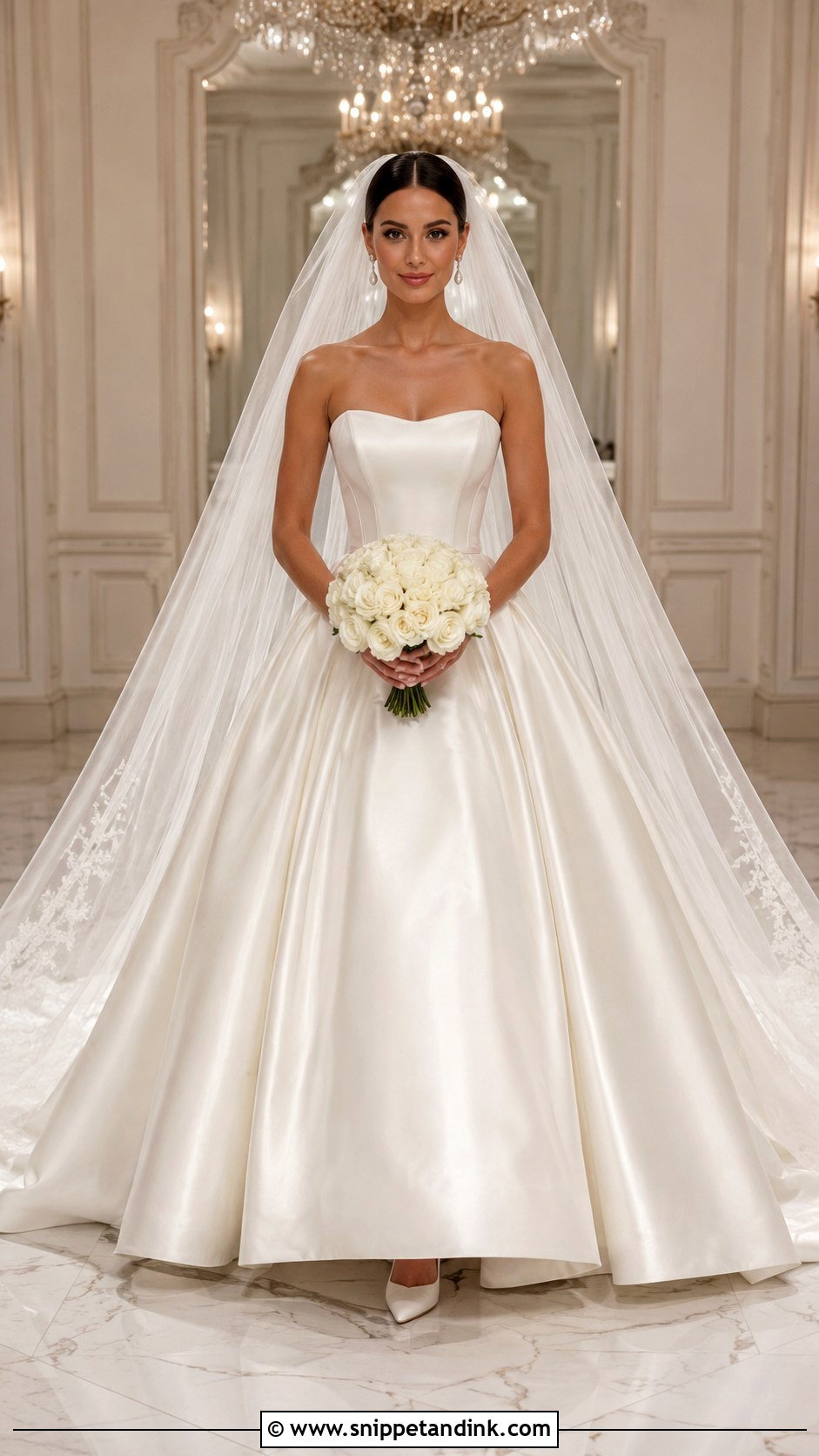
A strapless satin ball gown lives or dies by its bodice. I check the boning and the inner waist stay before anything else, because a strapless top that relies on tightness alone will slide down by the speeches. The neckline should curve gently over the bust, with a smooth satin or Mikado skirt given volume by box pleats instead of beading. Pearl drop earrings, pointed ivory pumps and a cathedral veil edged in a slim satin ribbon finish it, with a sleek bun or French twist so the neckline stays clear. Carry a compact bouquet of white roses or calla lilies. For a church that asks for covered shoulders, a removable satin wrap or fitted bolero solves it.
2. Square Neck A-Line Wedding Dress
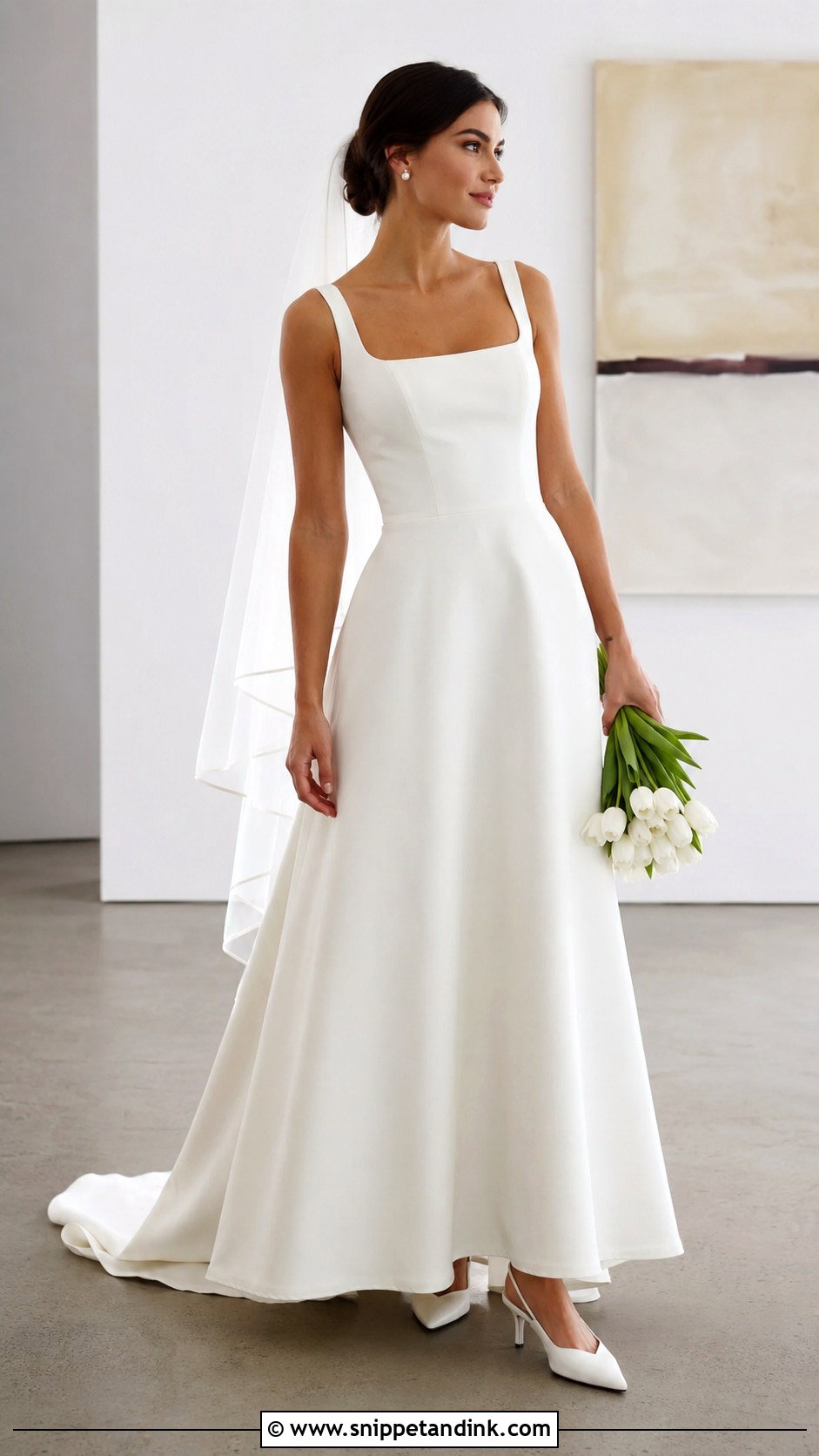
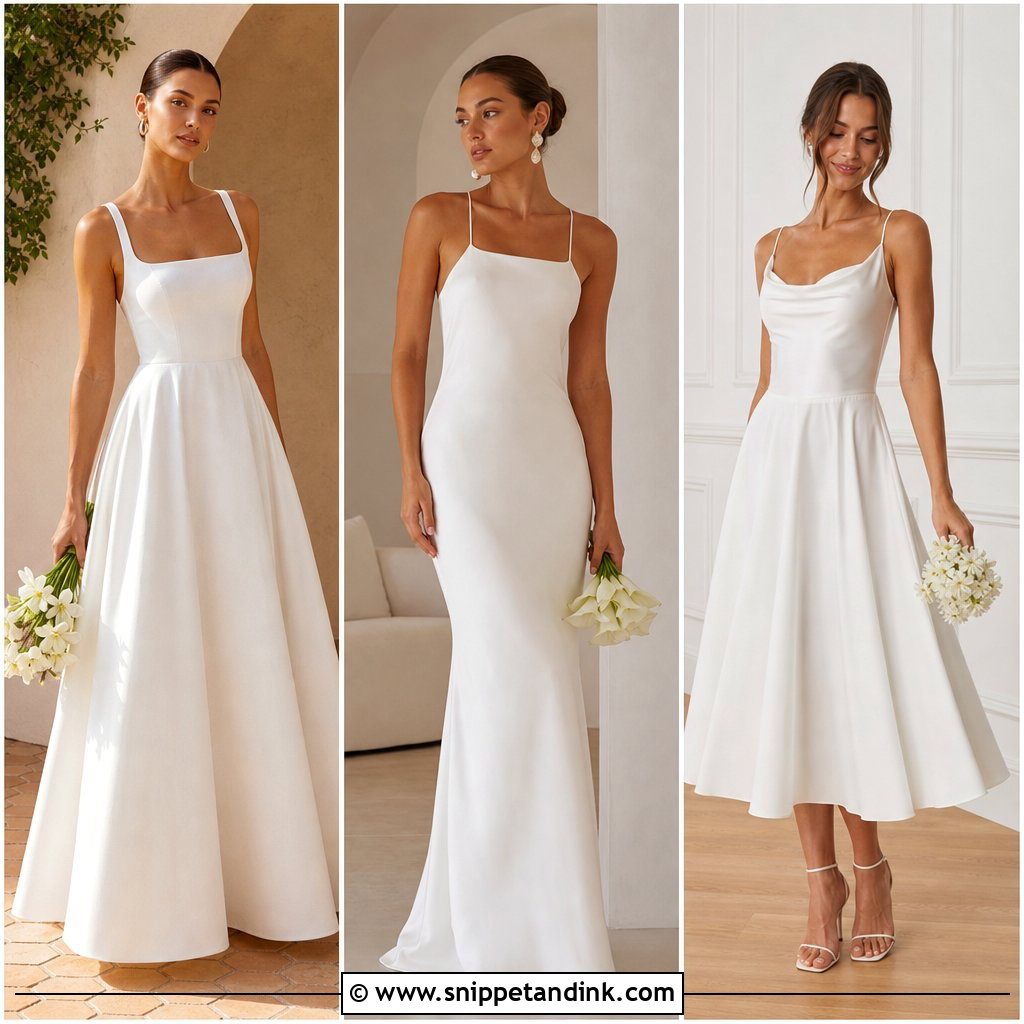
The square neck is one of my favorite modern details on a traditional A-line, mostly for practical reasons. Wide straps carry the weight of the bodice far better than spaghetti straps, so the dress stays where you put it. Matte crepe keeps it understated, satin makes it formal. The skirt should glide over the hips without clinging. I’d pair it with a low chignon, small pearl studs and a fingertip veil tucked under the hair, plus pointed slingbacks. White tulips with greenery add texture without fighting the clean neckline, and the whole look sits naturally in a gallery, an estate or any bright room.
3. Long Sleeve Lace Wedding Dress
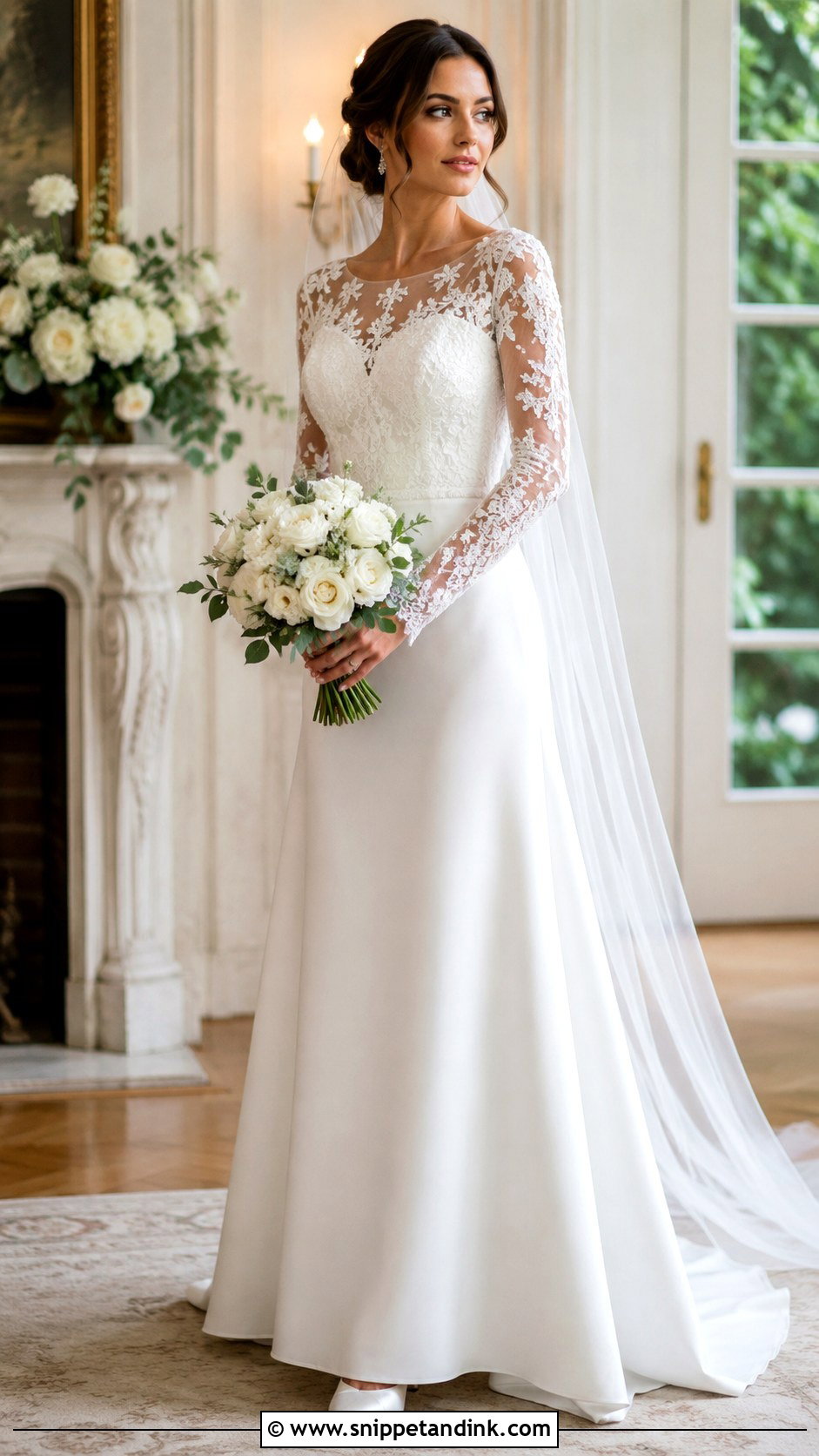
Lace sleeves are where tradition comes in, so I like the rest of the gown to stay plain. Fitted illusion sleeves, a defined waist and an A-line or softly flared skirt are the base. A modern contrast comes from an unlined neckline, a clean crepe skirt under a lace bodice, or an open back. Closed-toe satin heels and small diamond or crystal earrings are enough jewelry. Choose a chapel veil with a plain edge; lace on lace gets busy quickly. A relaxed updo keeps the shoulder lace visible, and a loose bouquet of white flowers finishes it. Check the sleeve color against your skin in daylight before you order.
4. Off Shoulder Mikado Wedding Dress
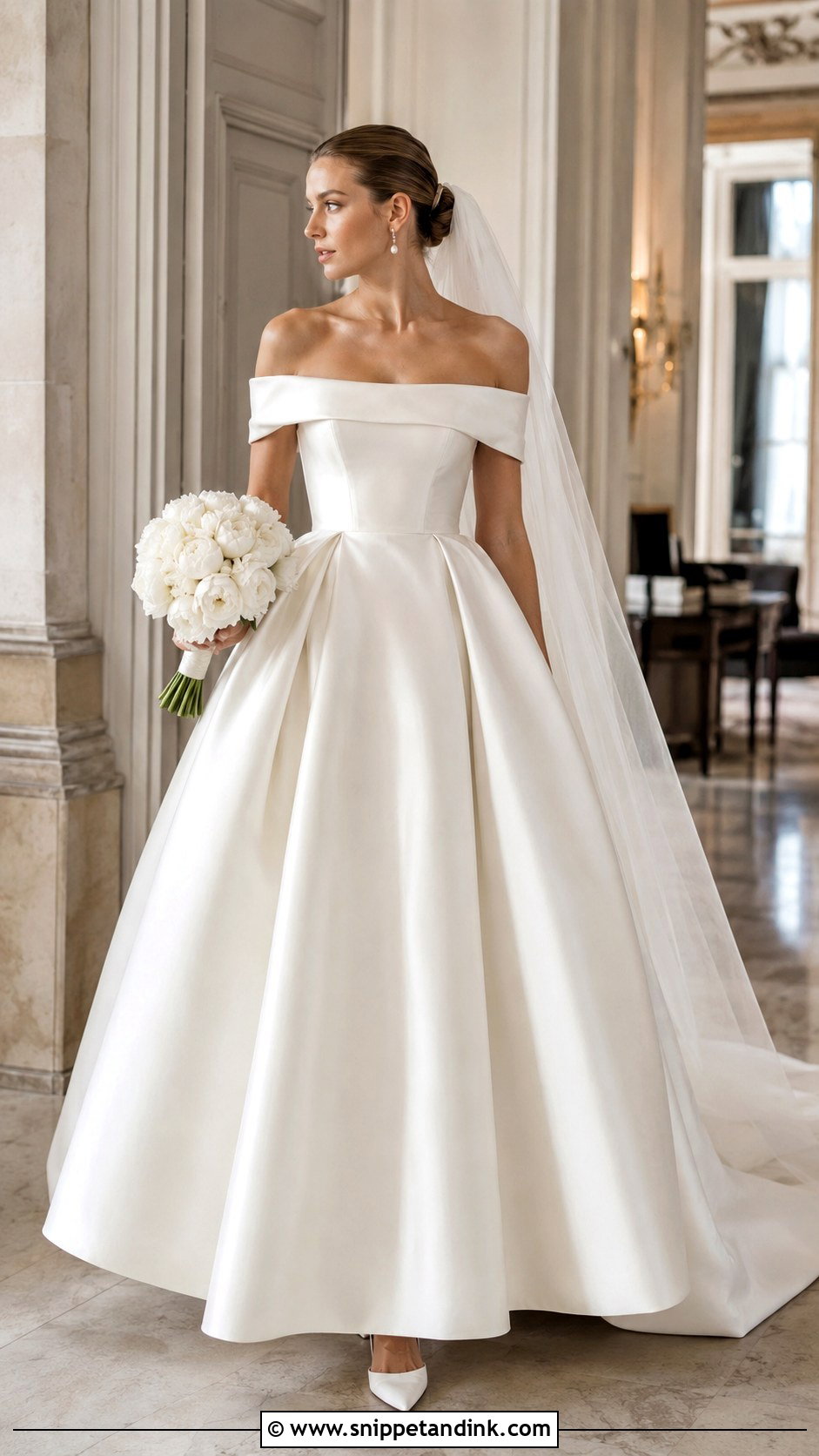
Mikado is the fabric I suggest when a bride wants volume without layers of tulle. It’s heavy and crisp, so it holds a ball gown or A-line skirt and a defined train on its own. Off-the-shoulder folded bands or slim draped sleeves show the shoulders, but they also limit how high you can lift your arms, so test a hug at the fitting. A short pearl necklace, studs, ivory pumps and a long plain veil from a polished bun keep the focus on the fabric. Detachable off-shoulder straps let you switch to a strapless bodice later. Peonies or garden roses suit the scale of the skirt.
5. Silk Slip Wedding Dress
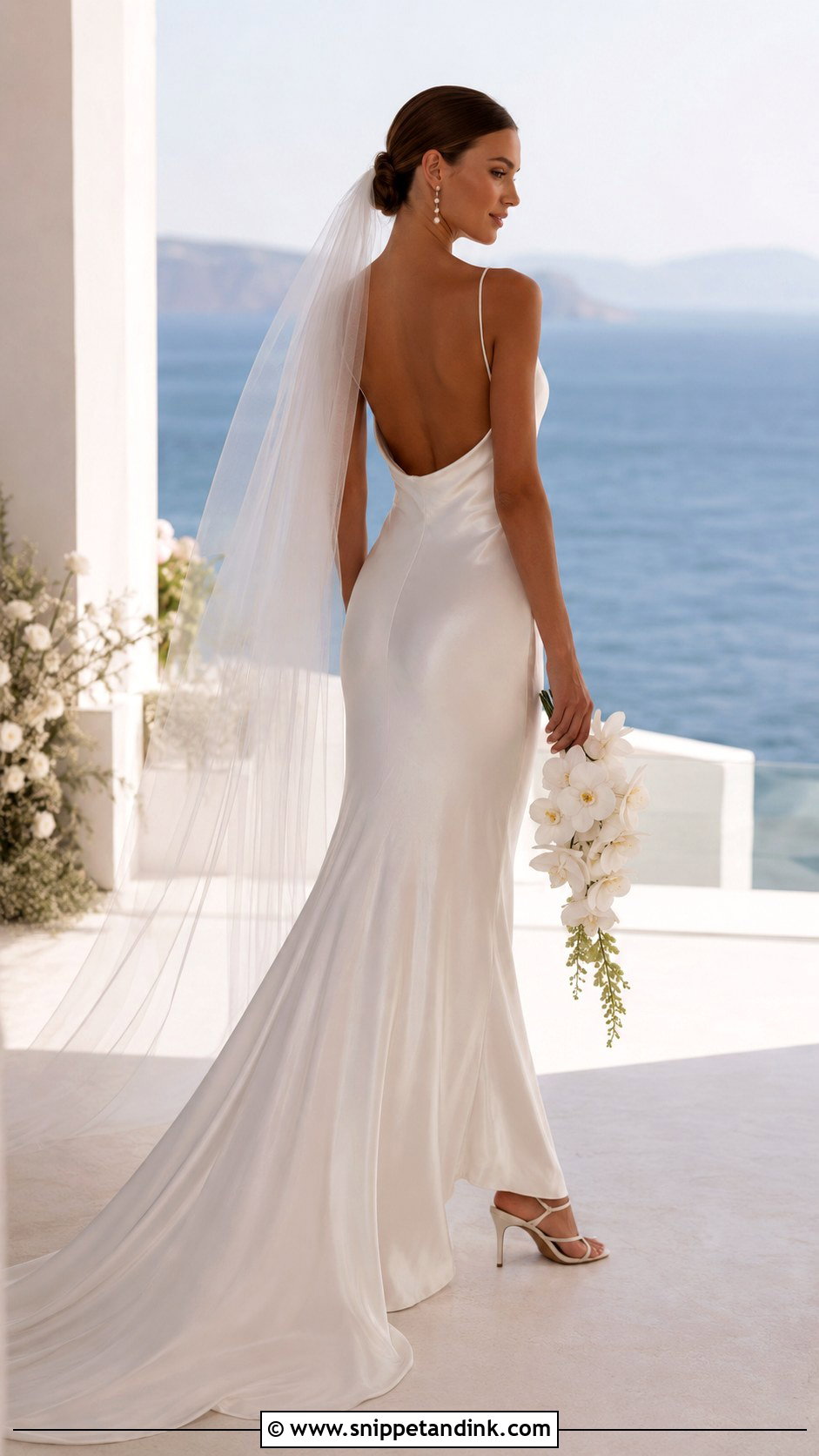
A silk slip is the most honest dress on this list. It shows exactly what’s underneath it, which is why I spend more time on undergarments for this gown than any other. Bias-cut silk should skim, not cling, so choose a draped or clean V-neck, narrow straps and a low back that still sits securely, then test smooth, edge-free shapewear or none at all. Pearl earrings, minimal strappy heels and a sheer floor-length veil keep it quiet, with a smooth low bun or waved bob. Add a tailored ivory coat or a light silk cape if the evening turns cool, and carry orchids or long-stemmed calla lilies. It suits a formal ceremony as well as a coastal or city venue.
6. High Neck Crepe Column Wedding Dress
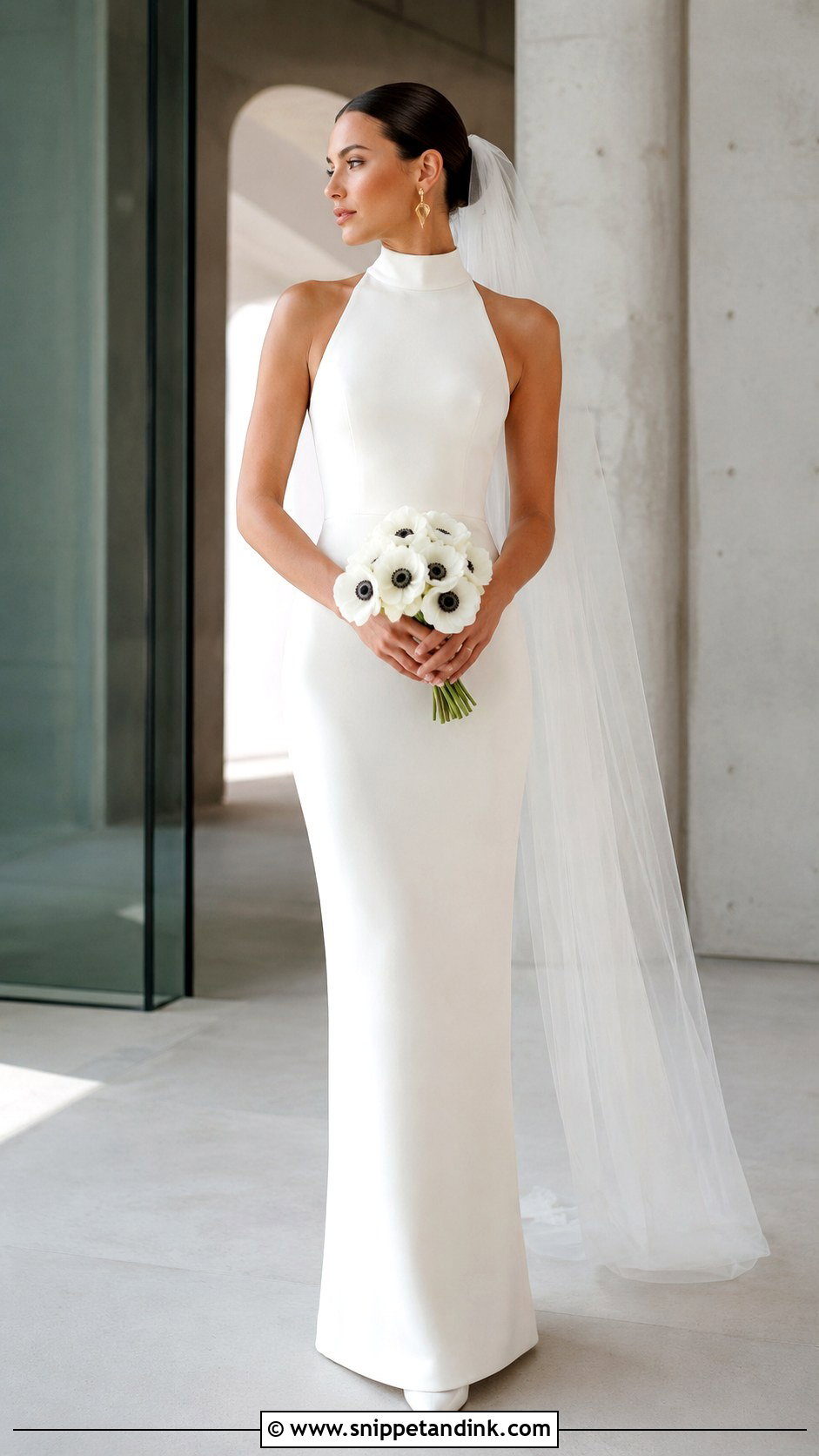
Coverage without heaviness is what a high-neck crepe column does best. Precise seams matter here, since a sleeveless crepe bodice shows every wobble in the stitching. The fit should be close but leave room to breathe and sit, with a narrow skirt dropping straight to the floor. An open back or a line of covered buttons gives interest from behind while the front stays bare. Sculptural gold earrings, pointed pumps and a sleek veil set under a bun complete it, and I’d leave off the necklace. White anemones or tulips suit the narrow line, especially in a museum, rooftop or modern building.
7. Basque Waist Ball Gown Wedding Dress
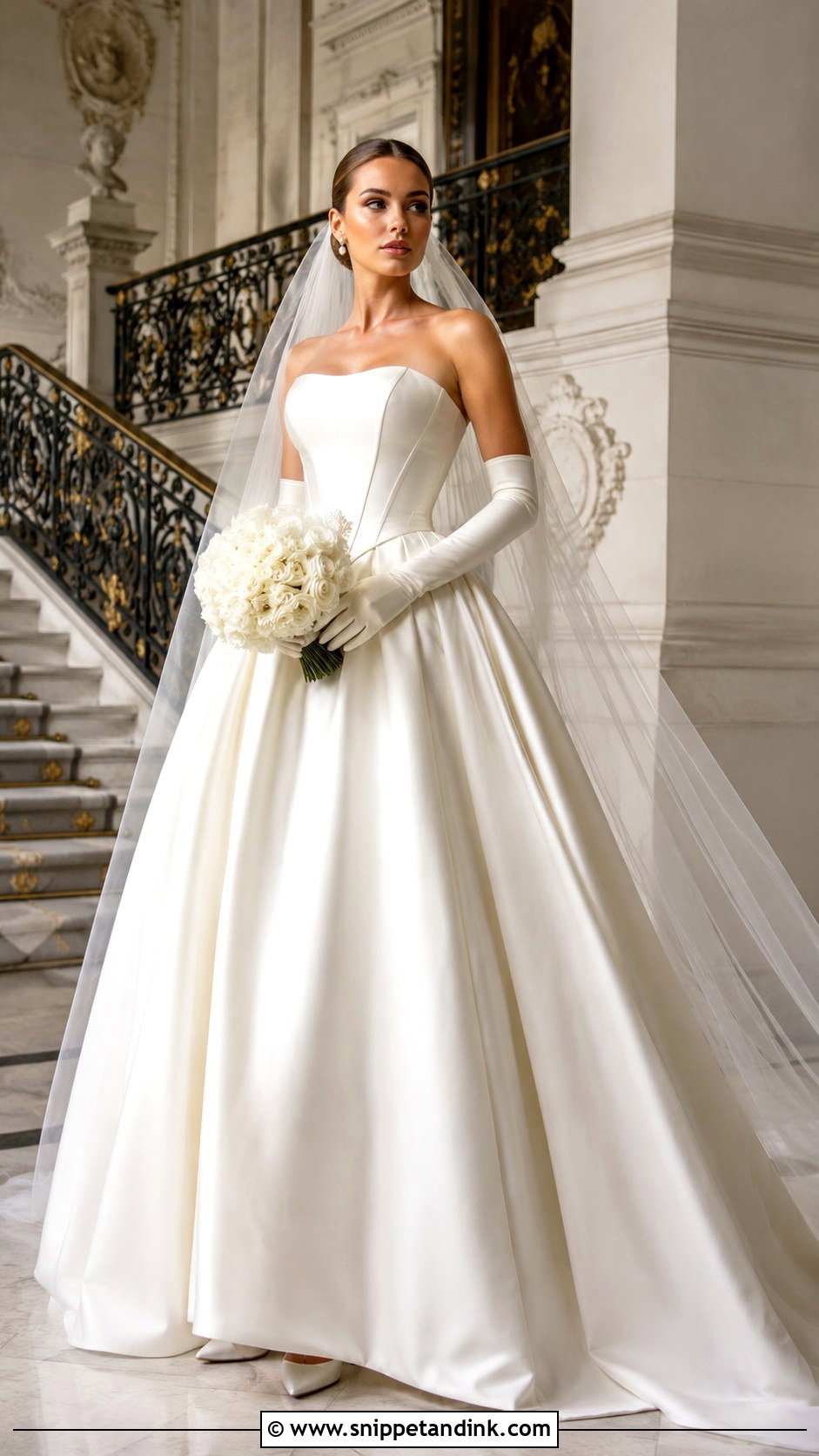
A basque waist dips into a point below the natural waistline, and on a ball gown it makes the torso look longer and the skirt fuller. Look for a structured bodice that ends in that point before meeting a full satin or Mikado skirt, under a straight strapless neckline. Visible corset seams show off the construction. I like to style this wedding dress with elbow-length gloves, pearl button earrings and classic pointed heels. If the train is a showpiece, go without a veil, or keep a plain cathedral one. A smooth updo and a rounded bouquet of white roses fit the formality. Tailoring is critical, because that point must follow the torso without pinching when you sit.
8. Scoop Neck Fit And Flare Wedding Dress
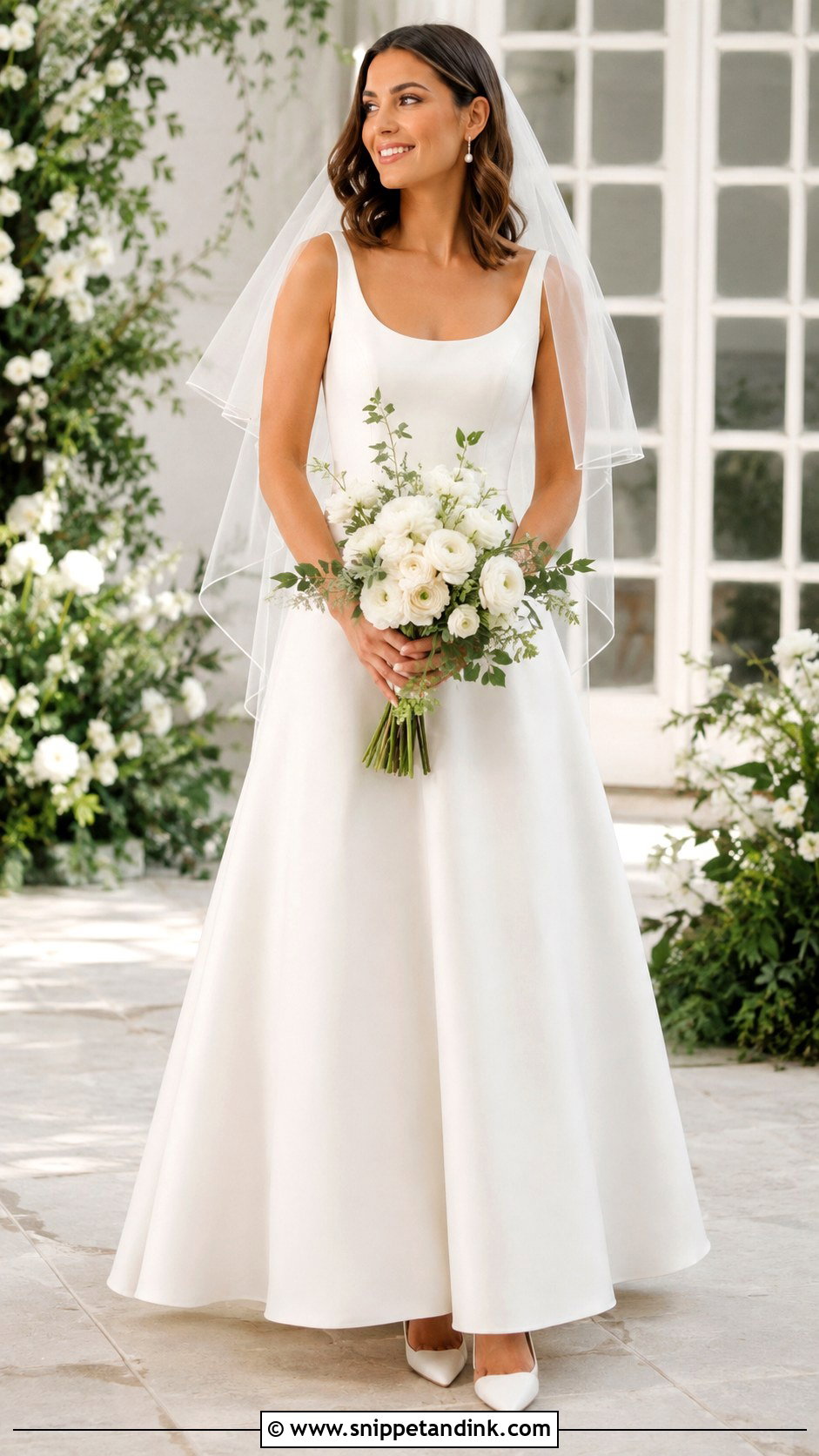
Not everyone wants a sharp or deep neckline, and a scoop is the gentler answer. On a fit-and-flare, the flare starts higher than on a true mermaid, so you can still walk at a normal pace. Stretch crepe looks clean; satin with covered buttons is more formal. Pearl drop earrings, a slim tennis bracelet and pointed slingbacks are plenty. If the back has a low scoop or buttons, a shoulder-length veil keeps it on show. Polished waves or a loose bun and a bouquet of white ranunculus and foliage complete a comfortable, balanced look.
9. Boat Neck Wedding Dress With Sleeves
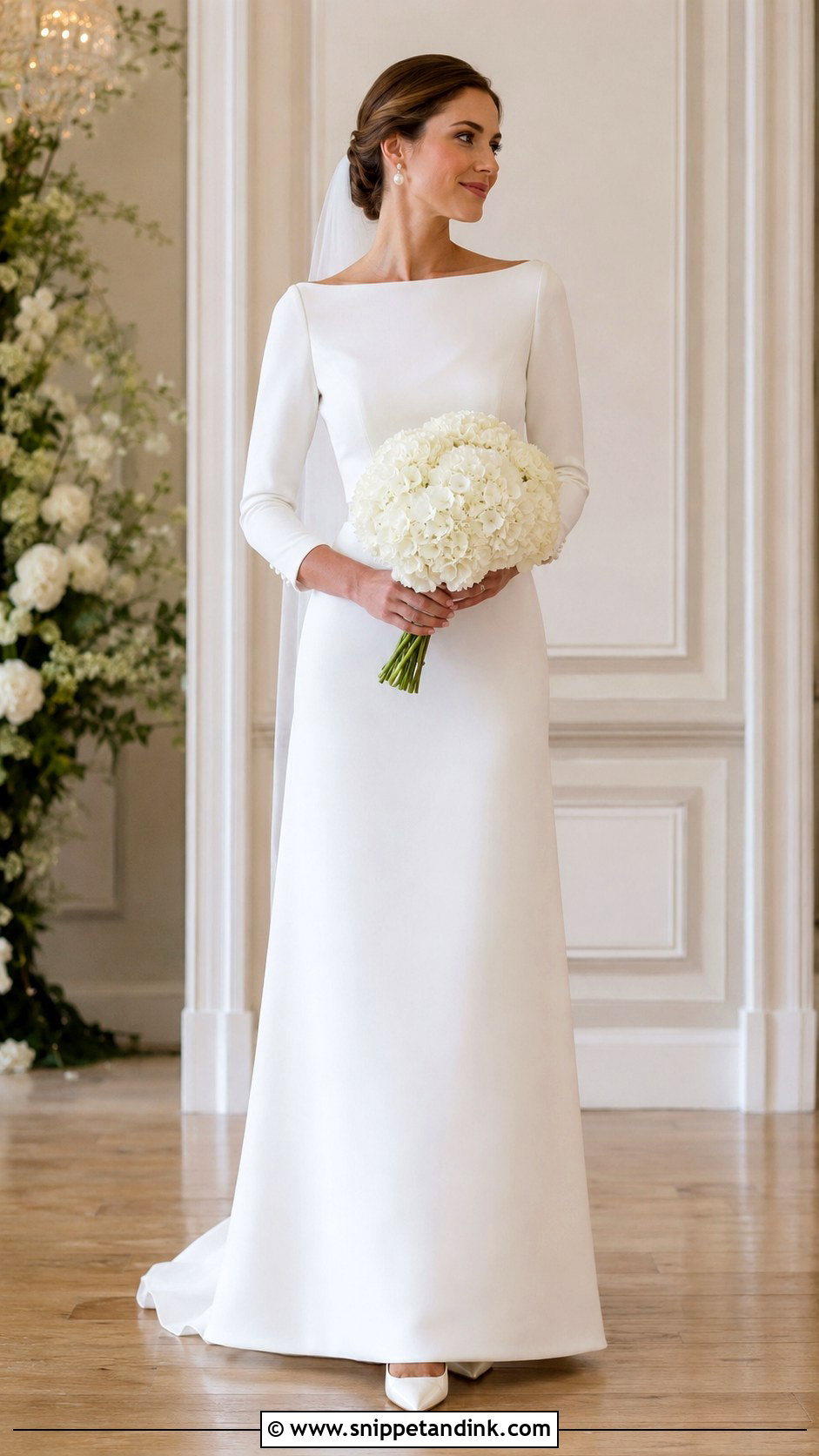
A boat neck wedding dress with sleeves draws a wide line across the collarbone, and in smooth crepe it looks calm and confident. Three-quarter or full-length fitted sleeves both work. I usually suggest a slim A-line for ease, with a detachable train for ceremony drama. Pearl studs, low satin pumps and a simple veil under a neat chignon are all it needs; skip the necklace, since the neckline already draws a strong horizontal line. A structured bouquet of white roses or hydrangeas keeps the polish. Small extras like a shallow V-back, covered buttons or narrow cuffs add detail without changing the shape. Make sure the sleeve caps are set right, or the wide neckline will slip when you reach.
10. Sweetheart Corset Wedding Dress
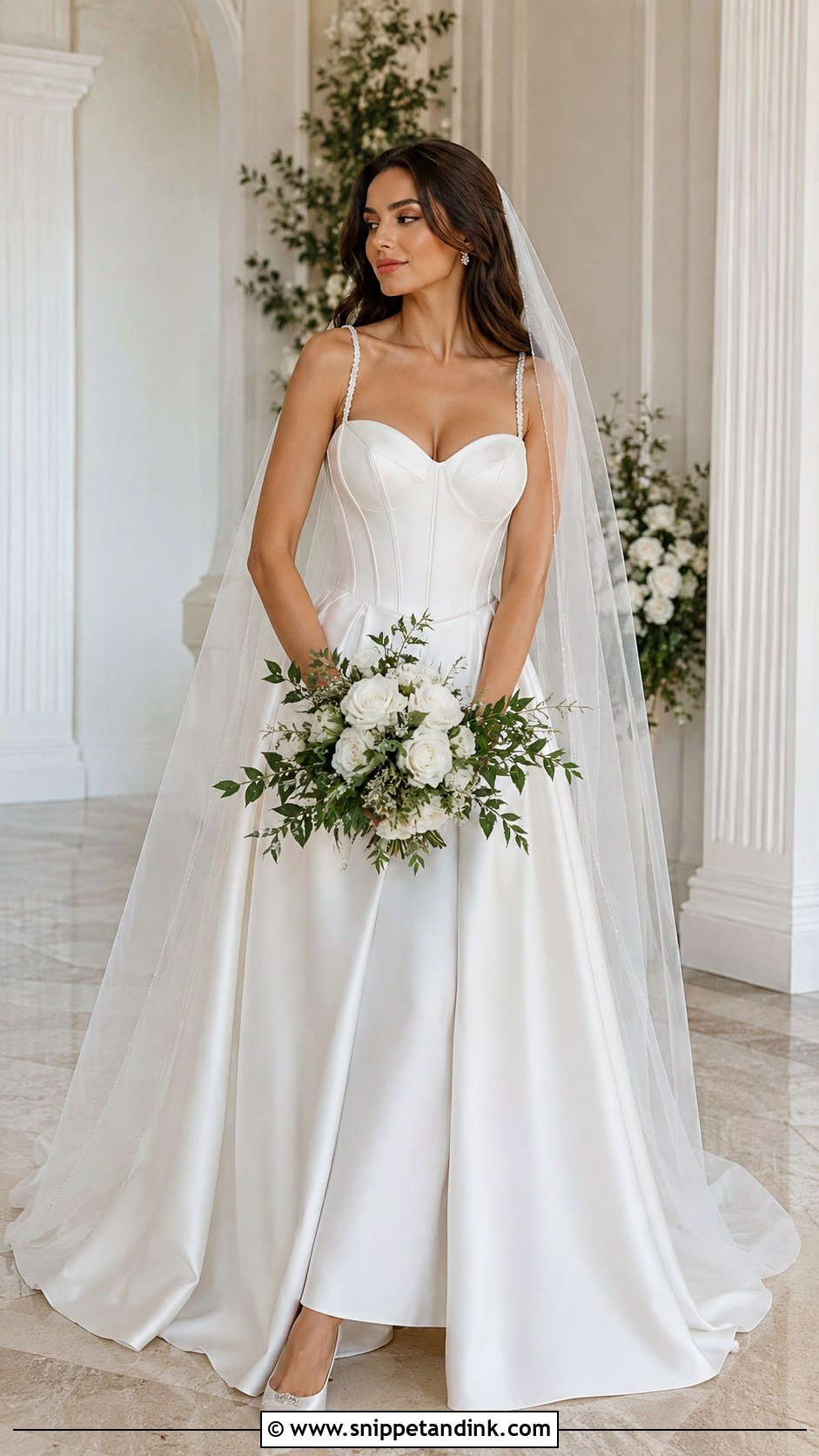
Corsetry has come back in a big way, and the version that ages best is the clean one. A sweetheart corset with internal boning, shaped cups and a softly dipped neckline should support you through structure, never through squeezing. If you can’t take a full breath in it at the fitting, it’s too tight. Pair the bodice with a smooth satin A-line skirt or a lighter layered tulle. Detachable straps let you change the feel between ceremony and reception. Crystal studs, a fine bracelet, pointed satin pumps, a long sheer veil and a low bun soften all that structure, with white roses and delicate greenery in hand.
11. Minimalist Cape Wedding Dress
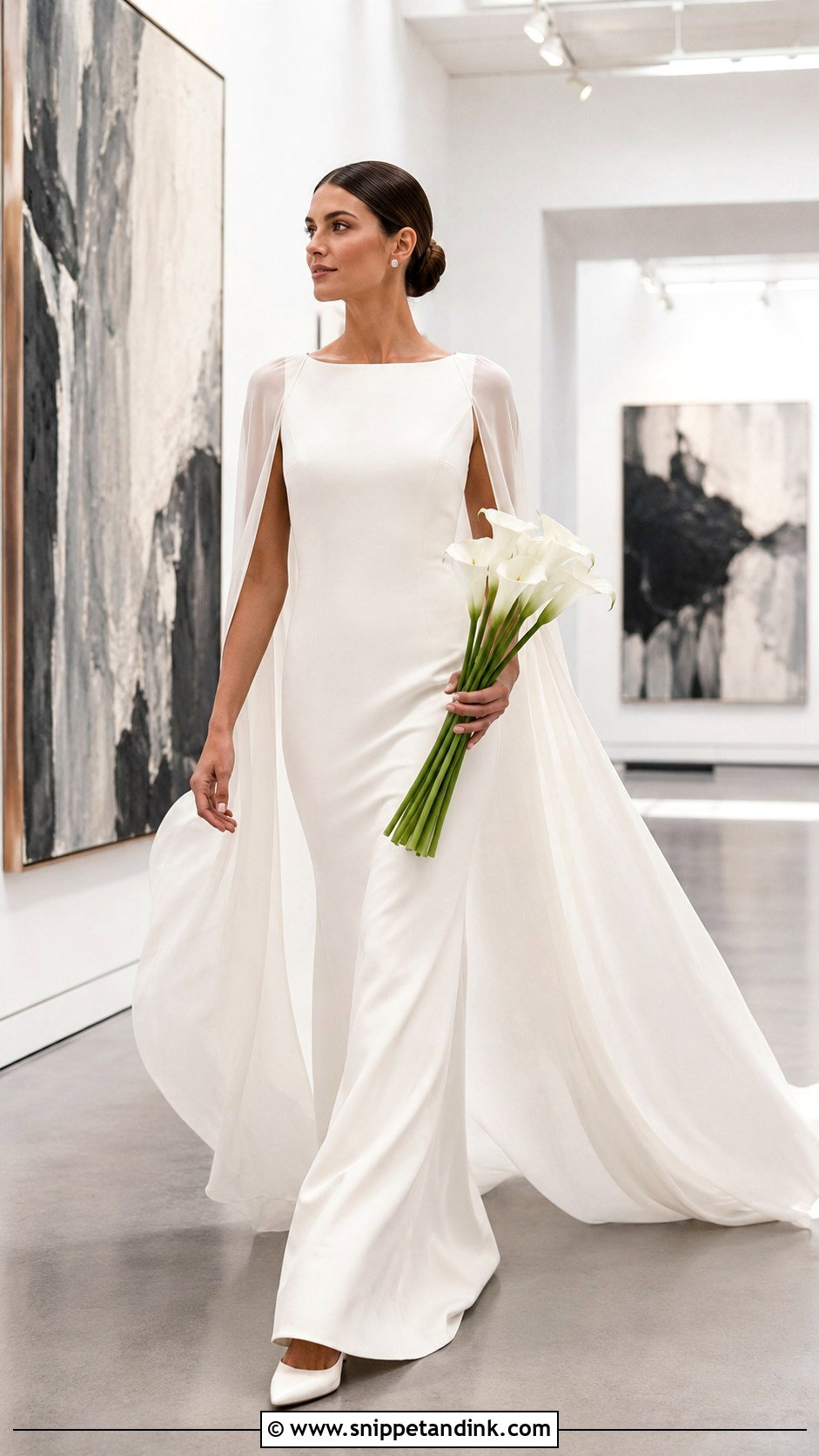
A cape gives you movement and length without a long train to manage. Start with a clean column or A-line in crepe, satin or silk, then add a sheer shoulder cape, a floor-length chiffon one or a structured capelet fastened near the neckline. Removing it after the ceremony reveals a sleeveless gown, which also helps if the room gets warm. I’d skip the veil, since the cape already gives you length. Small diamond earrings, pointed pumps and a smooth low bun keep it sleek, and calla lilies or orchids repeat the long lines. Outdoors, chiffon catches the wind, so expect some movement in photos.
12. Pearl Embellished Wedding Dress
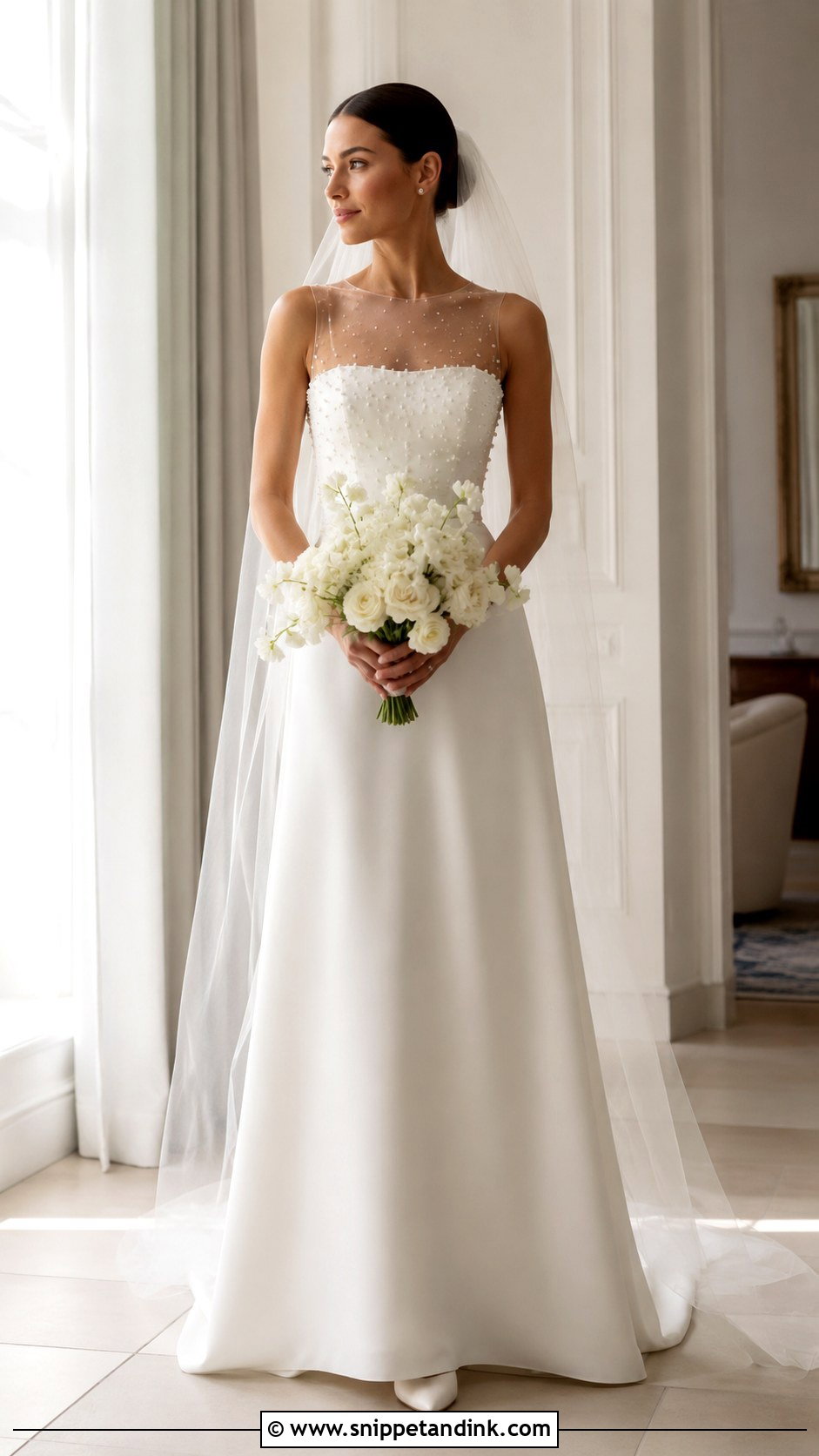
Pearls change a simple dress quickly, so less goes a long way. I prefer them gathered at the neckline, sleeves or bodice of a clean A-line, column or draped gown, with a plain crepe skirt underneath. Scattered over sheer fabric, they add depth without glitter. Ask how they’re attached: stitched pearls survive a long day, glued ones can drop. Pearl studs, plain satin heels and a sheer veil with little or no edging are enough, and stacking pearl accessories on top only competes with the gown. A smooth bun or side-parted waves and a bouquet of sweet peas, roses or tulips suit the light glow.
13. Floral Applique A-Line Wedding Dress
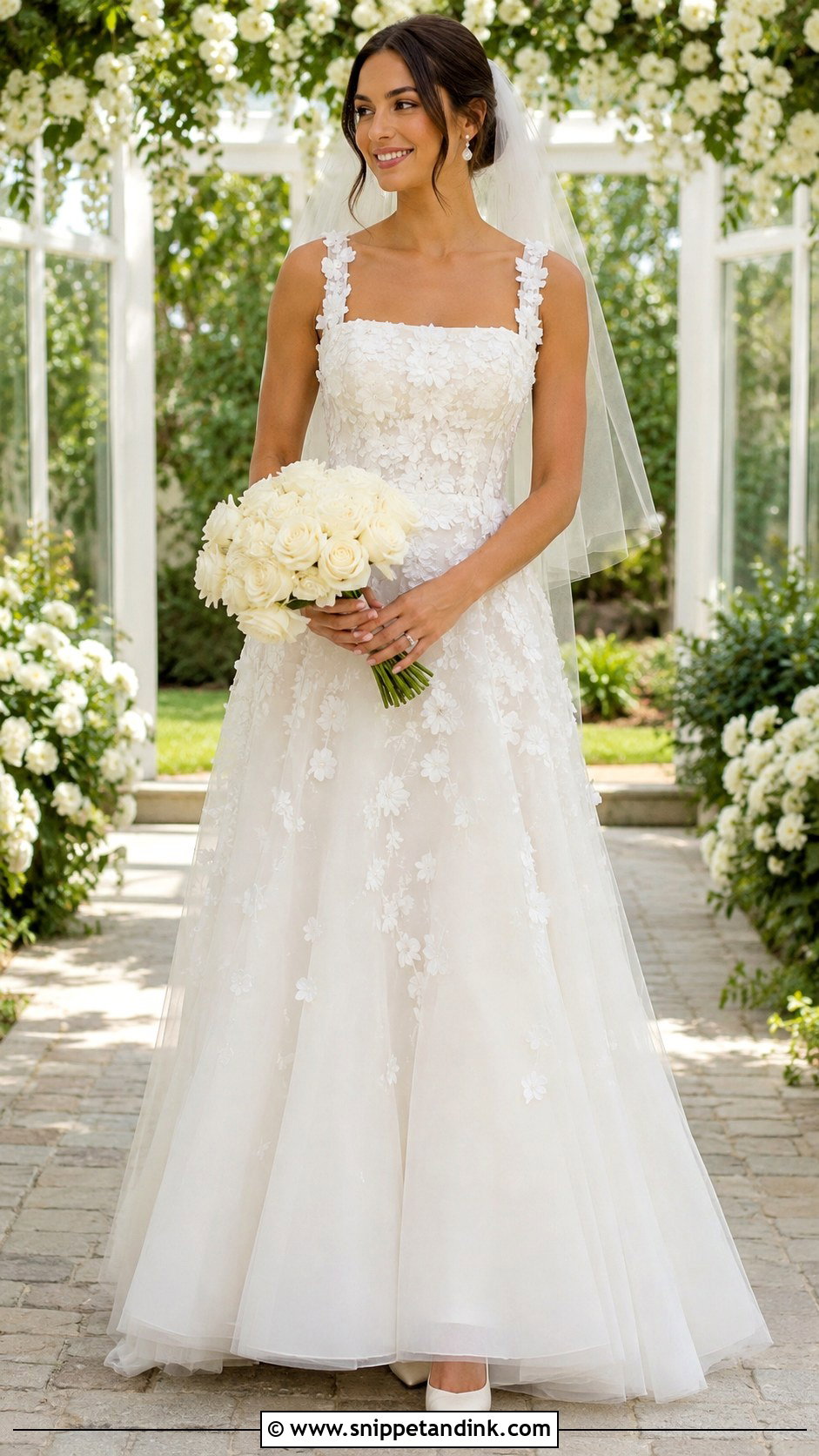
Three-dimensional flowers bring romance, and the A-line keeps it grounded. The placement I trust most starts dense on the bodice and thins as it moves down the skirt, so the eye travels up toward your face. A square, scoop or strapless neckline gives the texture a clean frame. Simple pearl earrings, satin pumps and a plain fingertip veil are enough, with soft waves or a loosely pinned updo. Keep the bouquet to one white or ivory flower. If the gown has colored embroidery, repeat just one soft shade in the flowers. Watch large appliqués at the hip; they can catch on each other when you sit.
14. Draped One Shoulder Wedding Dress
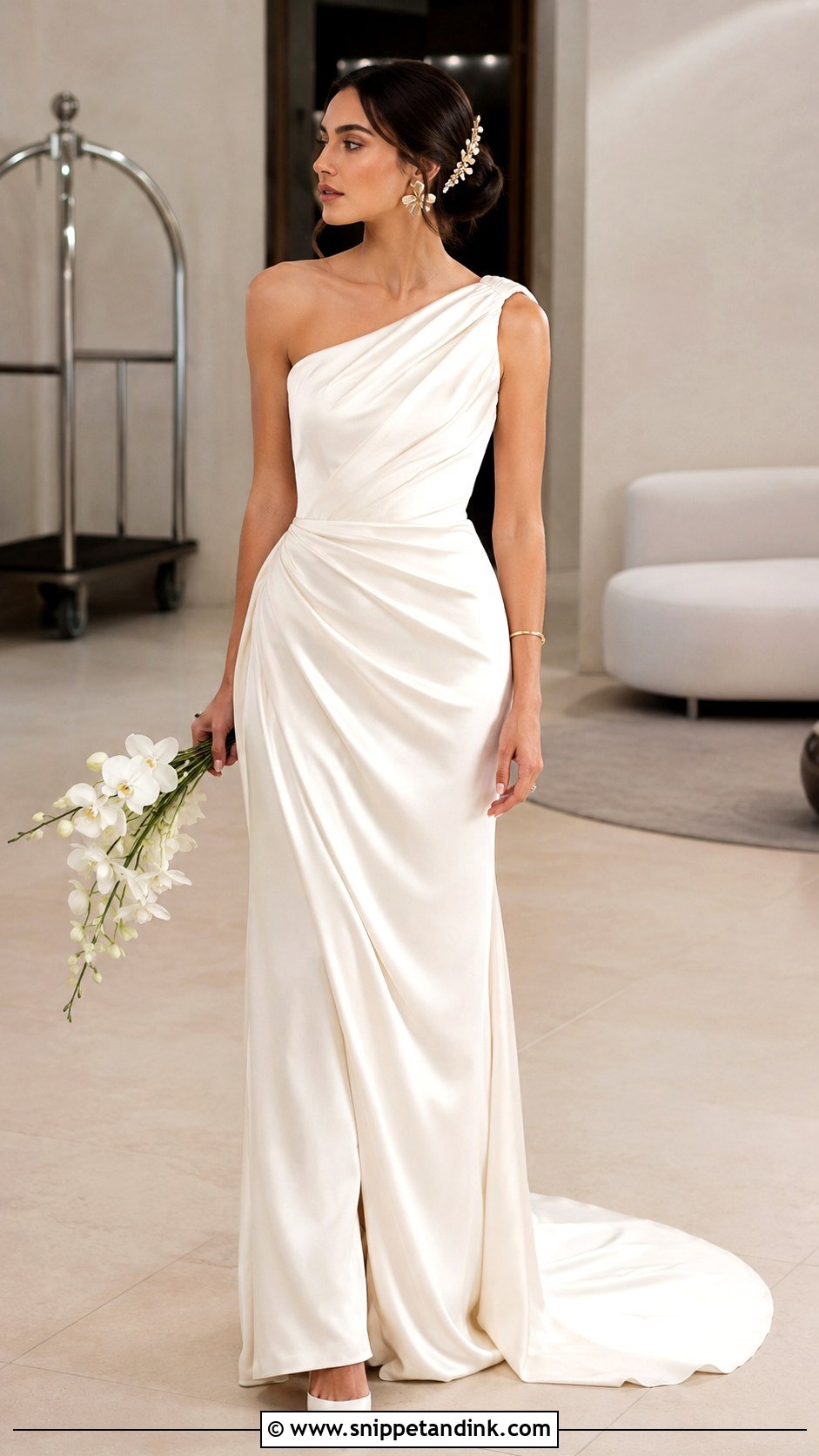
One shoulder gives asymmetry while keeping a graceful, classical feel. Soft satin, silk or crepe should gather neatly across the bodice and fall into a column or gentle A-line. The test I insist on is lifting the bare arm overhead, because a poorly anchored single strap pulls the whole bodice sideways. One sculptural earring or a quiet pair of studs balances the neckline, with a thin bracelet on the opposite wrist and pointed ivory heels. A veil tends to fight the draping, so a sleek bun with a decorative comb is my usual swap. Carry long stems low, below the waist, to keep the shoulder line clear.
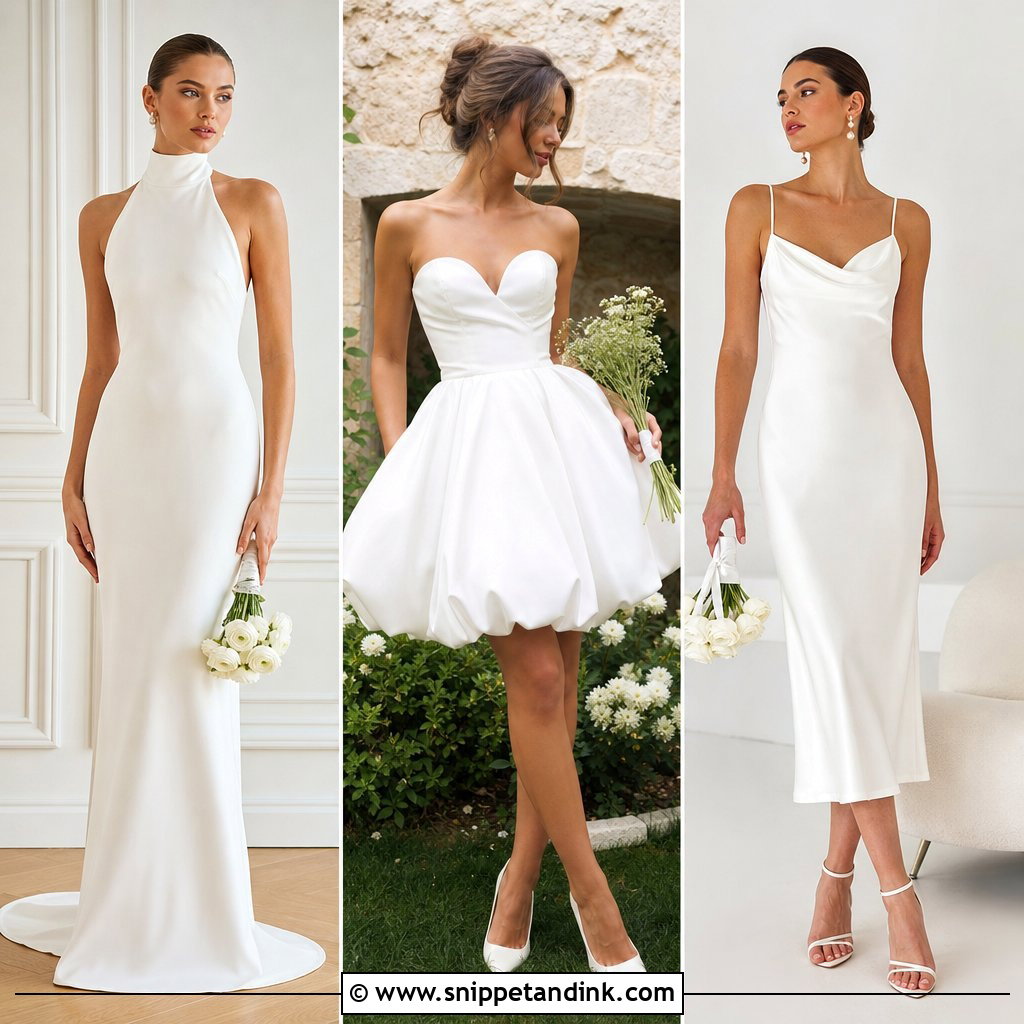
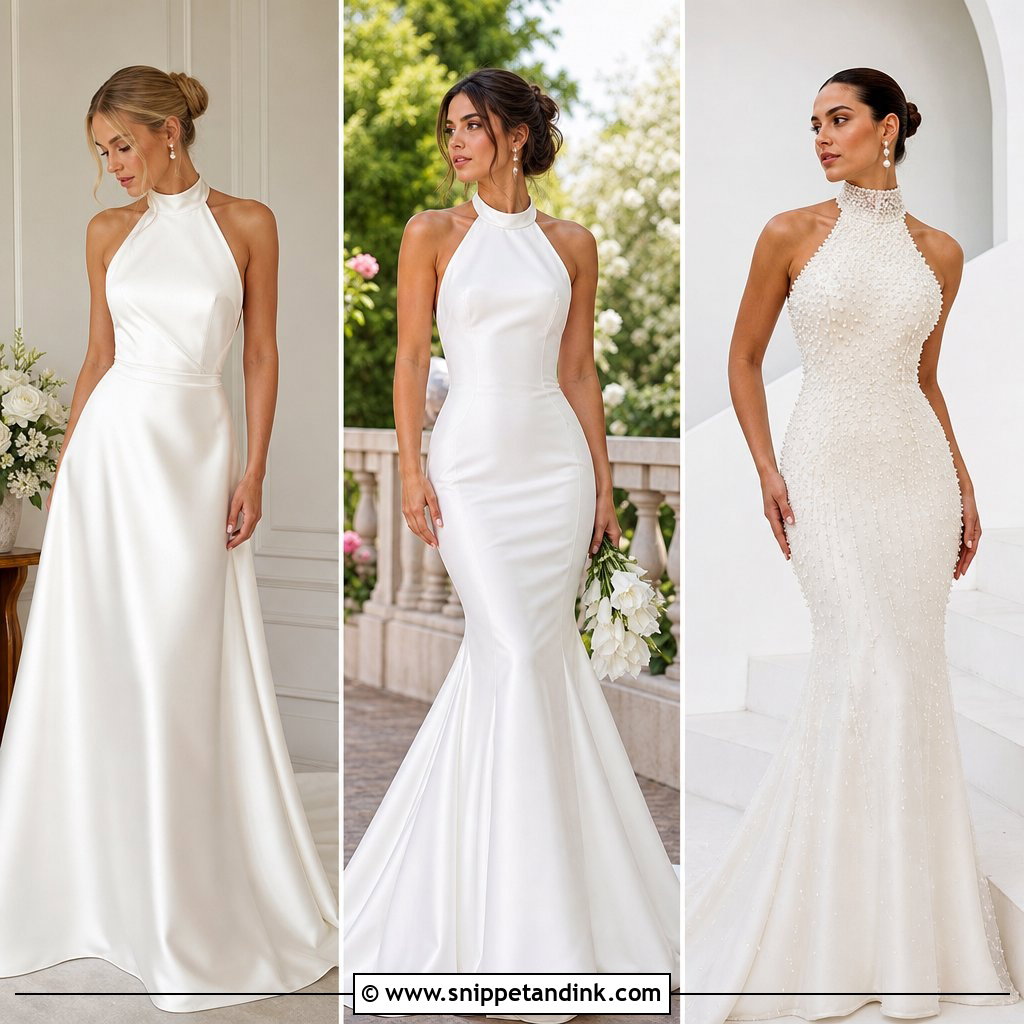
15. Halter Neck Satin Wedding Dress
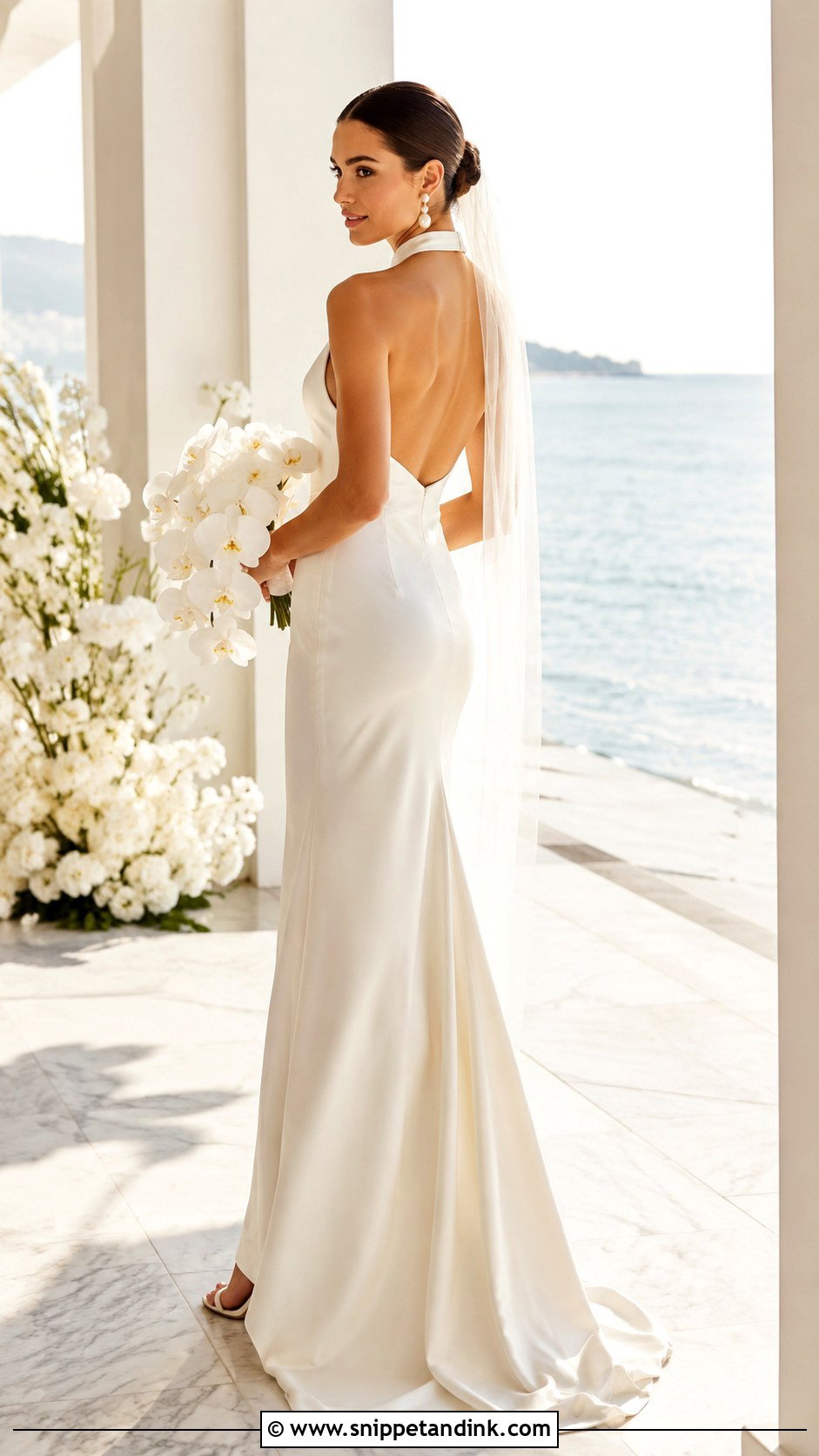
A halter pulls attention up to the face and shoulders and makes the whole figure look taller. A high halter feels tailored; a softly gathered one moves more. The low back is the reward, over a column, bias-cut or gently flared skirt. Wear your hair up so the neckline shows, choose pearl drops or small sculptural earrings, and skip the necklace. Pointed pumps or minimal strappy heels, a slim veil set under the bun so the back still shows, and orchids, tulips or calla lilies finish it. One honest note: a halter tie or clasp rests on the back of your neck all day, so wear it for at least an hour at a fitting before deciding.
16. Drop Waist Wedding Dress
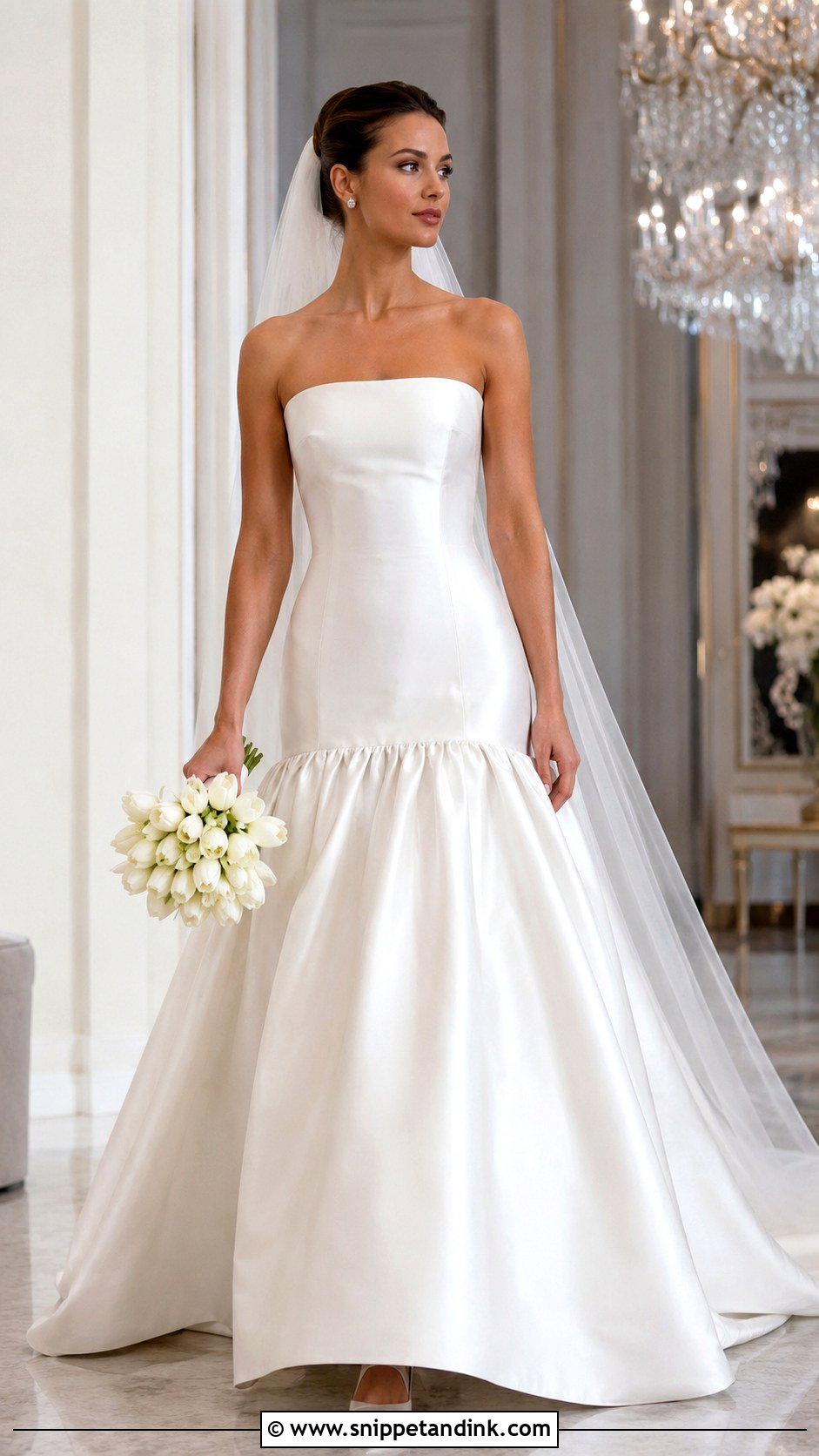
A dropped waist lengthens the bodice and opens into the skirt around the upper hip. It’s dramatic, so clean satin and little decoration keep it composed. I’d only recommend it to brides who’ve tried it on and sat down in it, because the long fitted bodice feels very different from a natural waist when you bend. Supportive seams, a straight, scoop or soft curved neckline, pointed satin shoes, small crystal earrings and a long plain veil all suit it. A polished updo keeps the proportions in check, and a compact bouquet won’t hide the waistline the way an oversized one would.
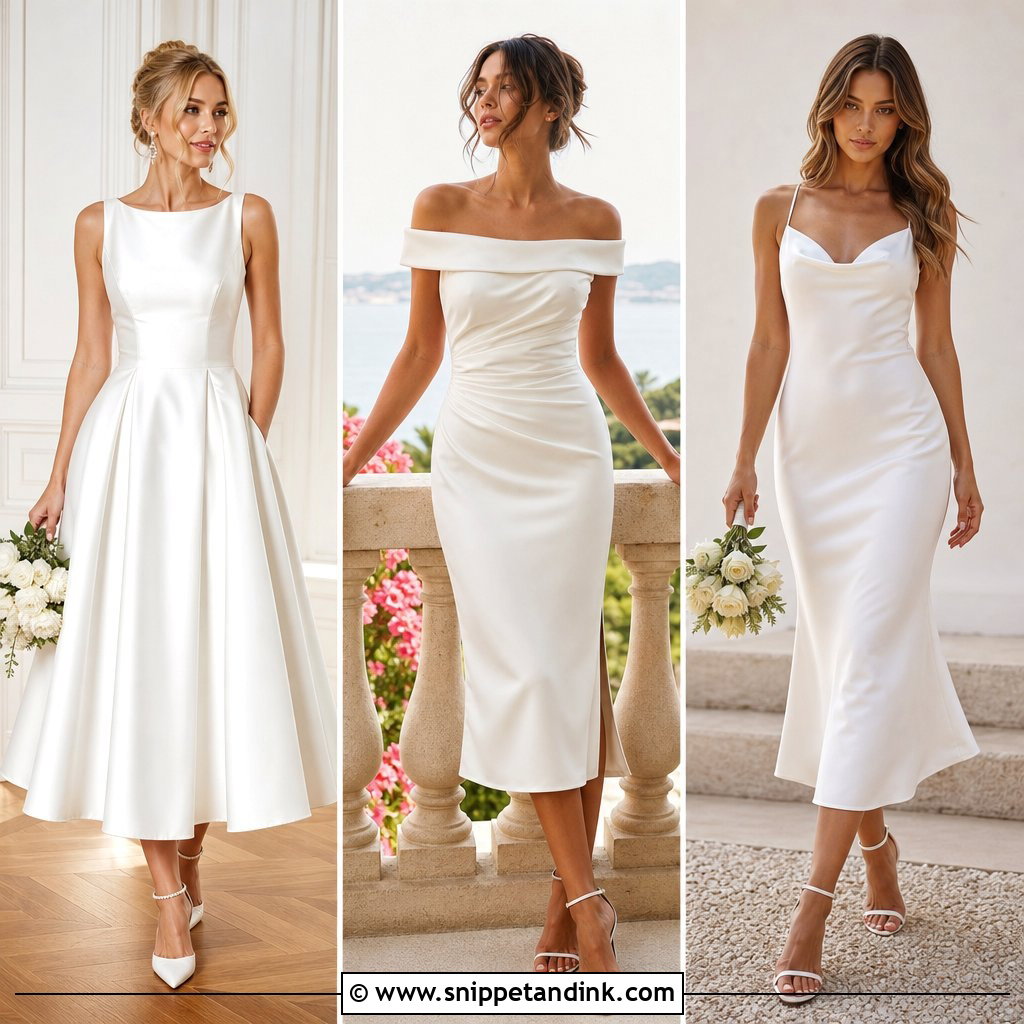
17. Tea Length Wedding Dress
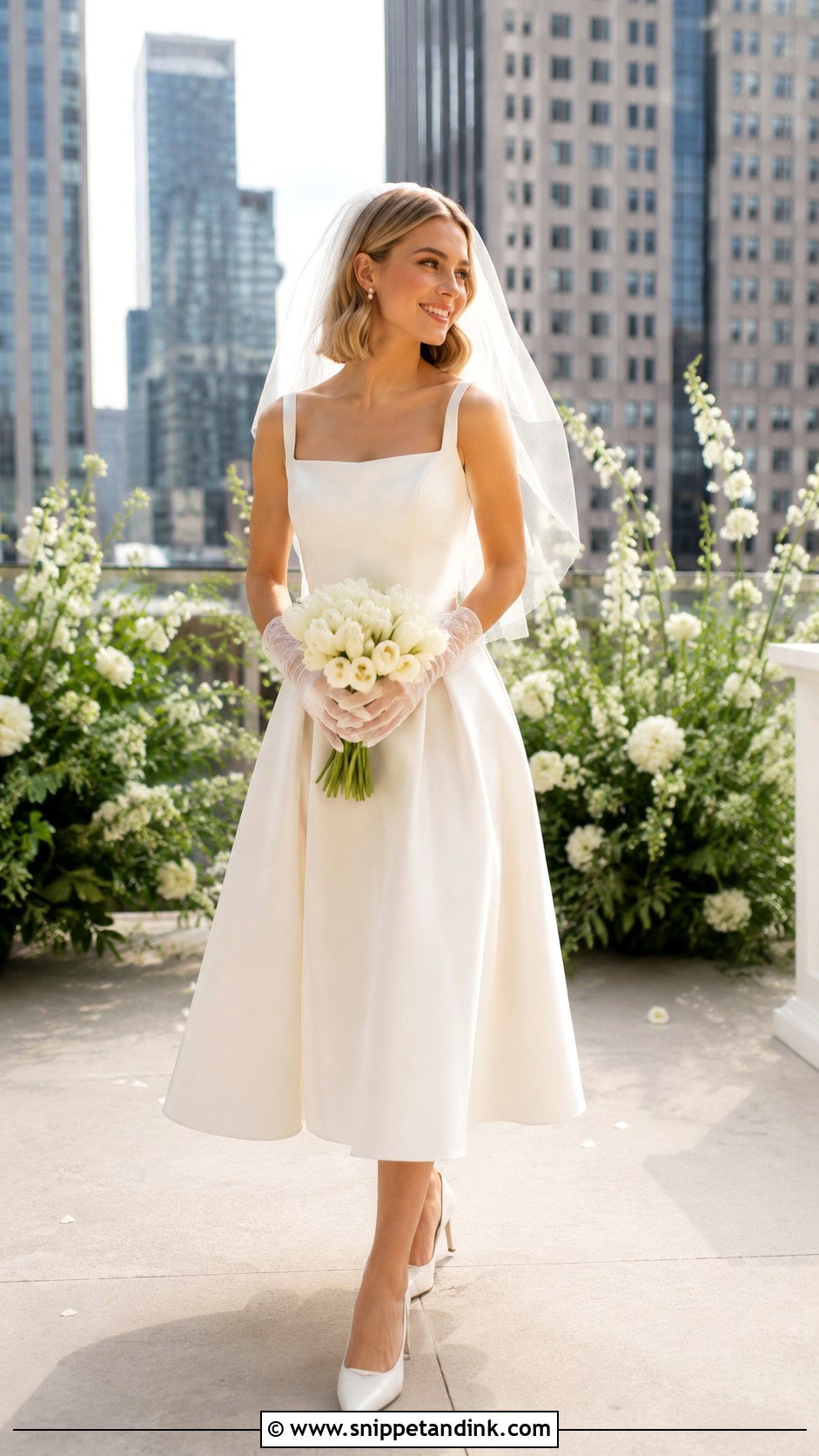
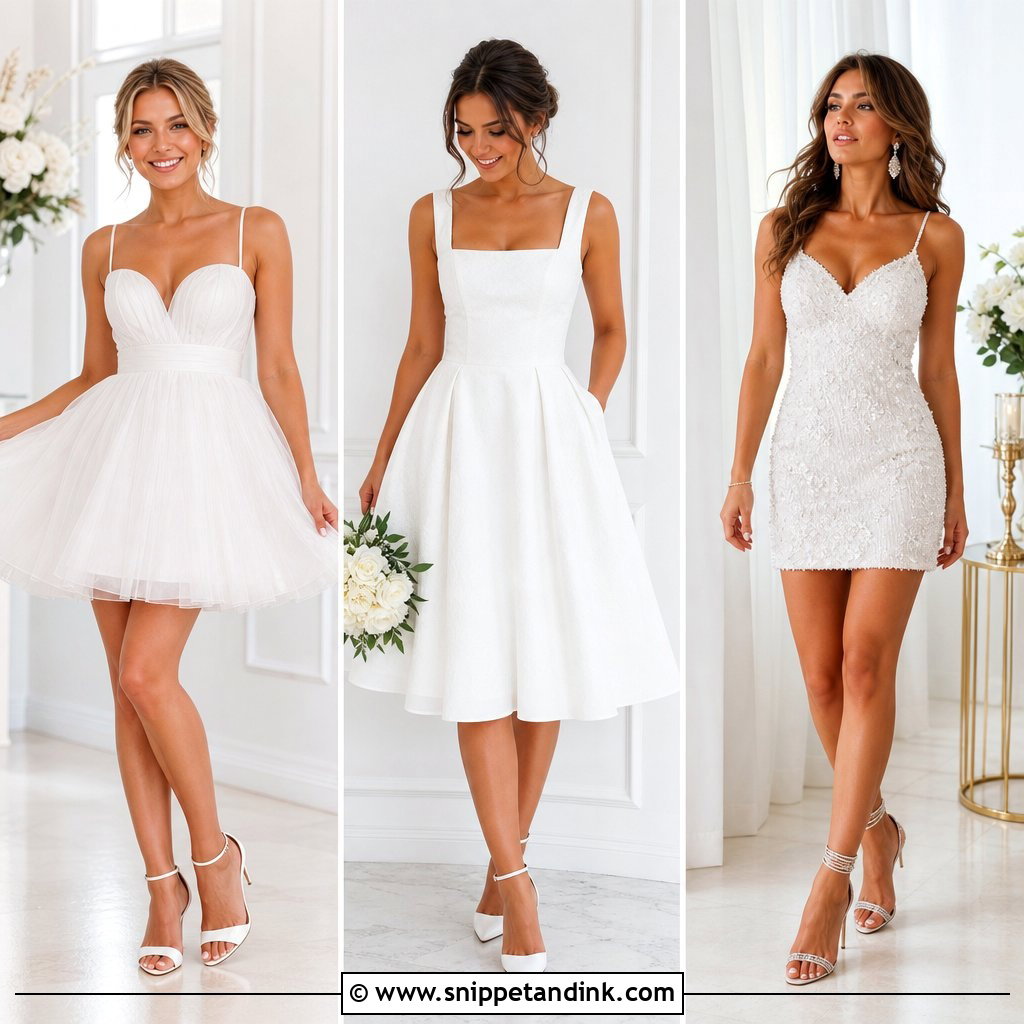
Tea length has a vintage root and a very practical modern use: you can walk, dance and climb stairs without lifting a hem. The skirt ends between knee and ankle, so the shoes become part of the outfit. Satin, Mikado or floral jacquard gives the A-line enough body to stay crisp. Pointed slingbacks, low block heels or ankle-strap pumps all work. Pearl studs, short gloves and a shoulder-length veil add polish, and a smooth bun or waved bob matches the shorter shape. A small bouquet of tulips or roses keeps it in scale for a city ceremony, a daytime wedding or a restaurant reception.
18. Bridal Mini Wedding Dress With Long Veil
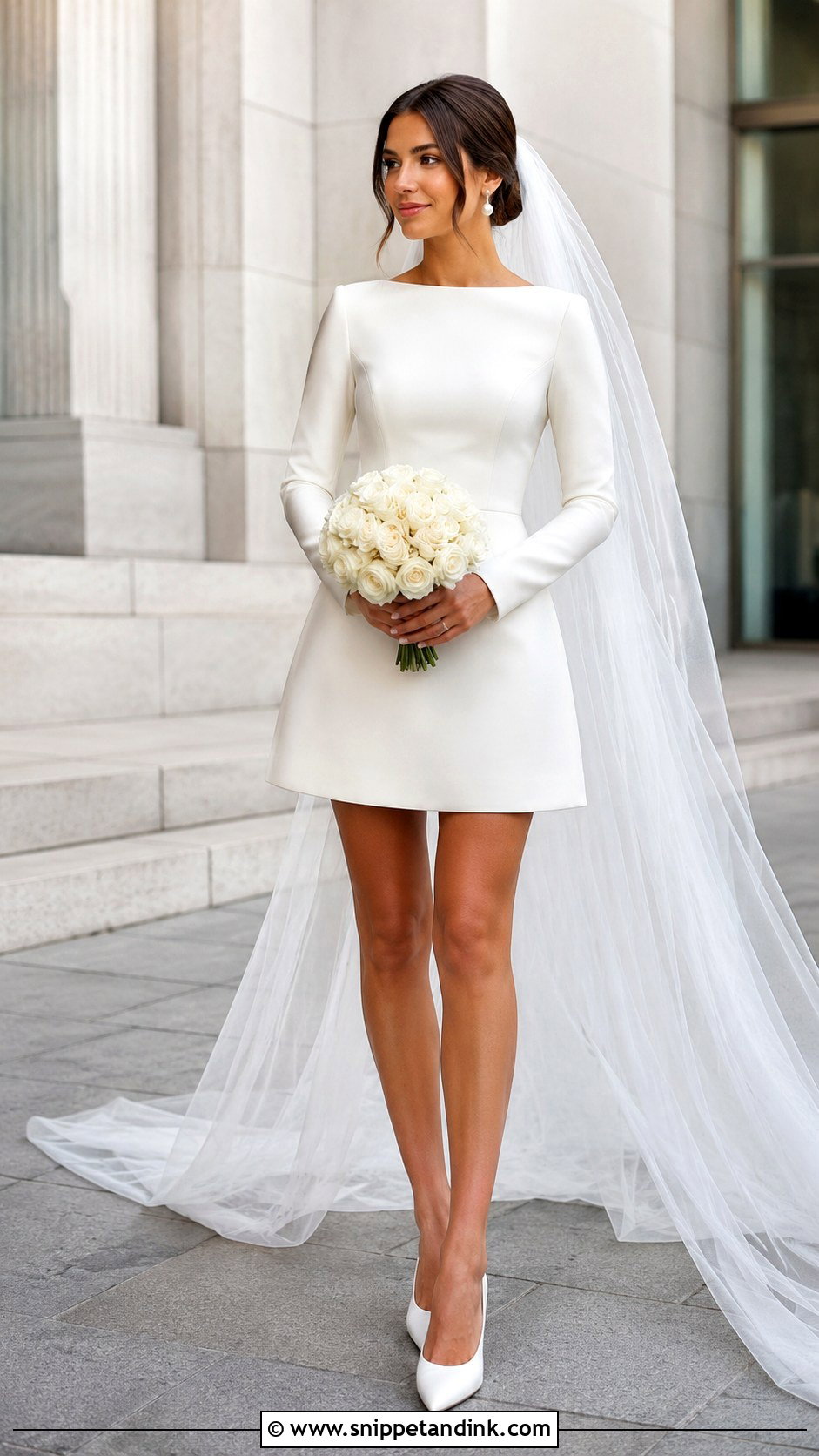
A short wedding dress still reads bridal if the fabric and tailoring are serious. A structured A-line, shift or fitted sheath in satin, crepe or textured jacquard, with a bateau neck, long sleeves or a structured square neck, keeps the hemline formal. Then the floor-length veil does the ceremony work. That contrast is the whole point. Pointed pumps, pearl earrings, a neat bun or smooth shoulder-length waves and a small rose bouquet keep it balanced. I often suggest this to couples marrying at a courthouse or planning a reception change, and to brides who would rather show their shoes than hide them.
19. Two Piece Wedding Dress With Full Skirt
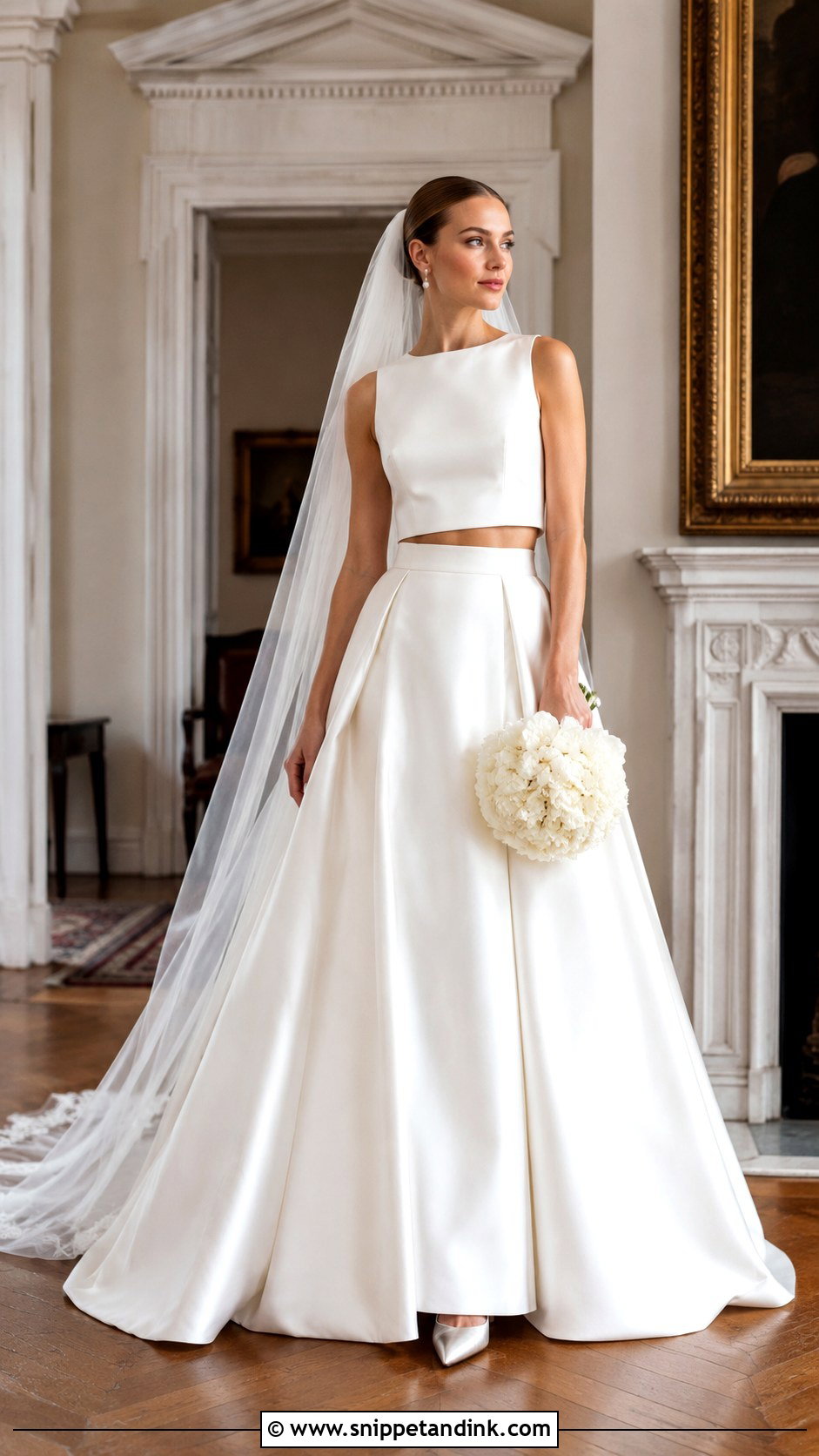
Separates are the most flexible gown on this page. Pair a structured satin crop top or a corset-style bodice with a high-waisted A-line or ball gown skirt. I want the pieces to overlap or show only a narrow line of skin, and the fabric and white to match exactly, because two slightly different ivories look like a mistake in photos. Pearl earrings, pointed heels, a sheer cathedral veil, a smooth low bun and a rounded white bouquet keep it classic. After the ceremony, swap the skirt for tailored trousers or a shorter skirt and the same top gets a second outfit.

20. Mermaid Wedding Dress With Detachable Sleeves
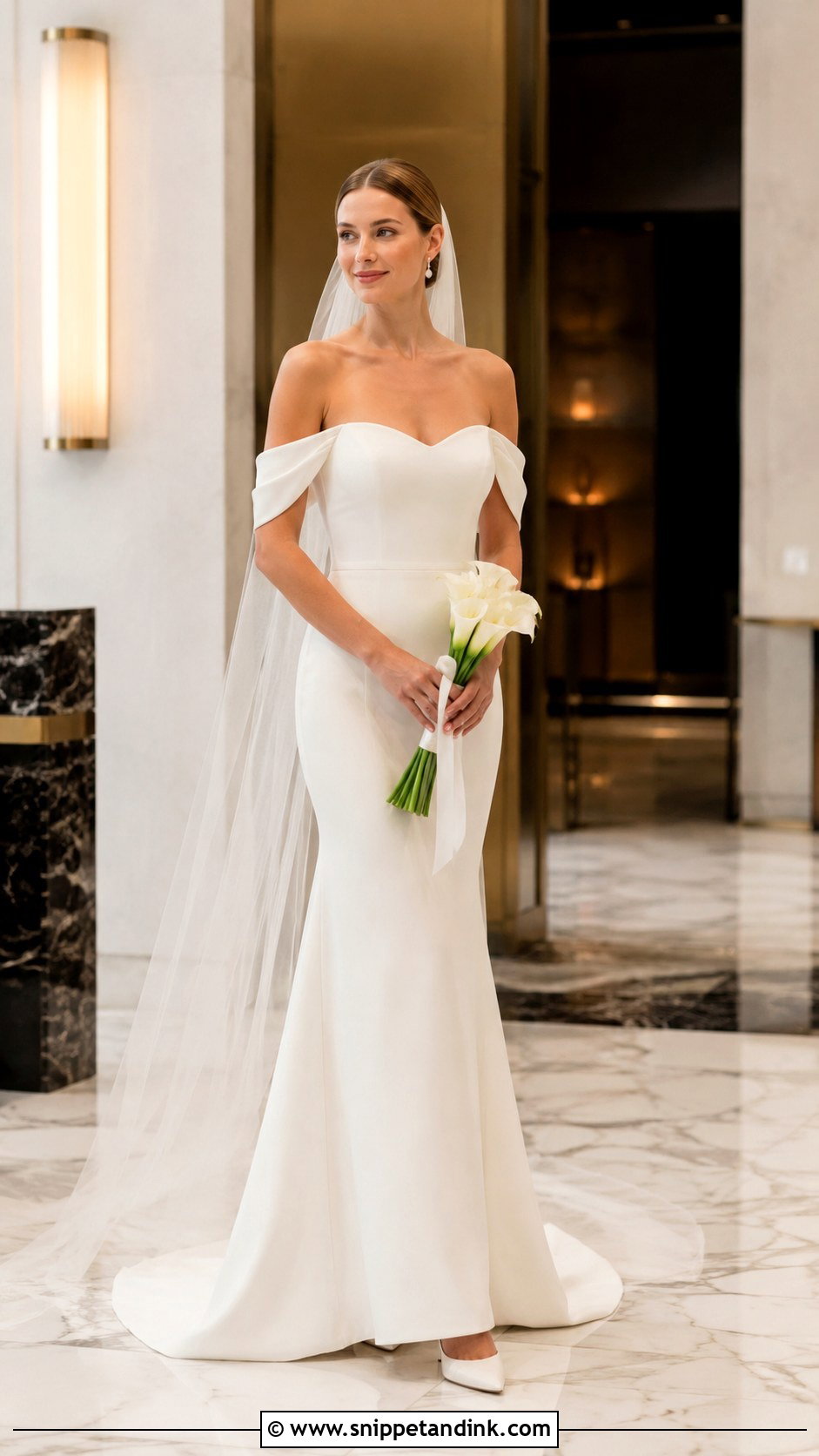
Detachable sleeves make a mermaid far more wearable. Start with a strapless or sweetheart bodice fitted through the waist and hips, with the flare beginning near the knee. Crepe looks minimal, satin richer. Off-the-shoulder or fitted illusion sleeves cover you for the ceremony and come off for the party. Pearl drops, pointed pumps, a plain chapel veil, an updo and a slim calla lily bouquet suit the fitted line. I always ask brides to take a few real strides and sit at the fitting, because a flare set too low traps the knees.
Rehearse the Quick Change Before the Day
Several of these gowns have pieces that come off: capes, sleeves, a second skirt, straps. They are wonderful, but only if the switch takes minutes, not half of the cocktail hour. Treat it like a costume change and plan it.
- Learn how each piece attaches. Snaps and hooks are quick; buttons and ties need a second pair of hands.
- Choose one person to do the change and have them practice at your final fitting, not on the day.
- Decide where the removed piece goes. A labeled garment bag with tissue keeps a cape or skirt from creasing while you dance.
- Check hair and veil placement after the switch. Off-shoulder sleeves and capes can drag on pins as they come off.
How Long the Whole Process Usually Takes
Many made-to-order gowns take several months to arrive after you order, and alterations need their own block of time after that, usually with two or three fittings. Timings vary a great deal between designers and seamstresses, so ask both for their real dates before you commit. I encourage brides to start trying on around a year out if they can, and to treat anything under six months as a rush. In that case, sample gowns or ready-to-wear pieces become a smart route rather than a compromise.
Which Version of You Should the Dress Look Like?
Every gown here starts from a shape bridal fashion has used for generations and adds one current detail. A satin ball gown feels fresh with a square neckline; a slim column becomes memorable with draping, pearls or a removable cape. Look at each dress from the front, the side and the back, and move in it the way you’ll move on the day. Let the shoes, jewelry, hair, veil and flowers support the gown, not compete with it. The right choice usually looks like a dressed-up version of the clothes you already reach for, and it should feel like yours.
You'll Like These Ideas:











Leave a Reply