
Shopping for a wedding dress at a midsize should open doors, not close them. The gowns below run from classic ballroom to relaxed beach, and what they share is good engineering. When a bride walks into my fitting room, I’m less interested in her size than in three questions: where does the support come from, where does the waist seam sit, and how does the skirt move? Wider straps, adjustable lacing, well-placed seams and breathable linings fix most of what people blame on their bodies. Shoes, jewelry, the veil and the alterations then pull the whole outfit together. Each of the twenty looks below comes with the detail I’d check first.
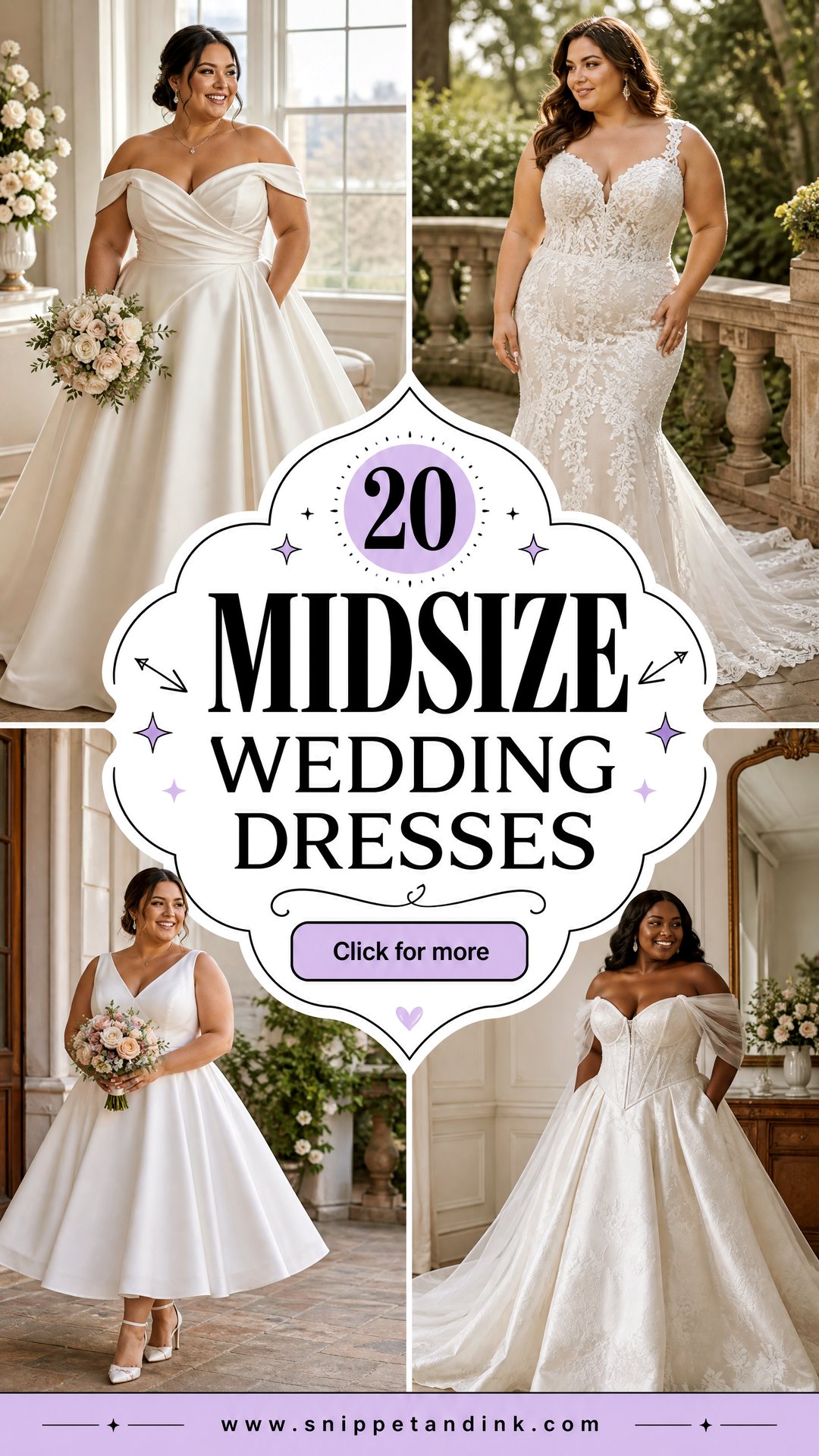
Holding Up a Fuller Bust Without Giving Up a Low Neckline
The question I hear most from midsize brides is whether they can wear a V-neck, a sweetheart or a backless gown without a strapless bra. Usually they can, as long as the support is built into the dress. That support comes from a few places, and knowing them helps you read a gown on the hanger.
- Sewn-in cups: a seamstress shapes and places them for your bust, so nothing slides or shows at the neckline.
- Power mesh or a corset base: a firm inner layer that carries the weight, letting lace or sheer fabric float on top.
- Boning along the side seams: spiral or flexible boning bends with you, while stiff plastic bones tend to dig and warp.
- Strap width and placement: a strap set slightly inward and an inch wider can do more than any bra.
If you love a plunging neckline, ask whether it can be raised a little or backed with a sheer mesh panel in your skin tone. From a few feet away it reads as open, and up close it keeps everything where it should be. Bring your own best-fitting bra to the first appointment either way. It gives the consultant a fair picture of the shape the dress needs to hold.
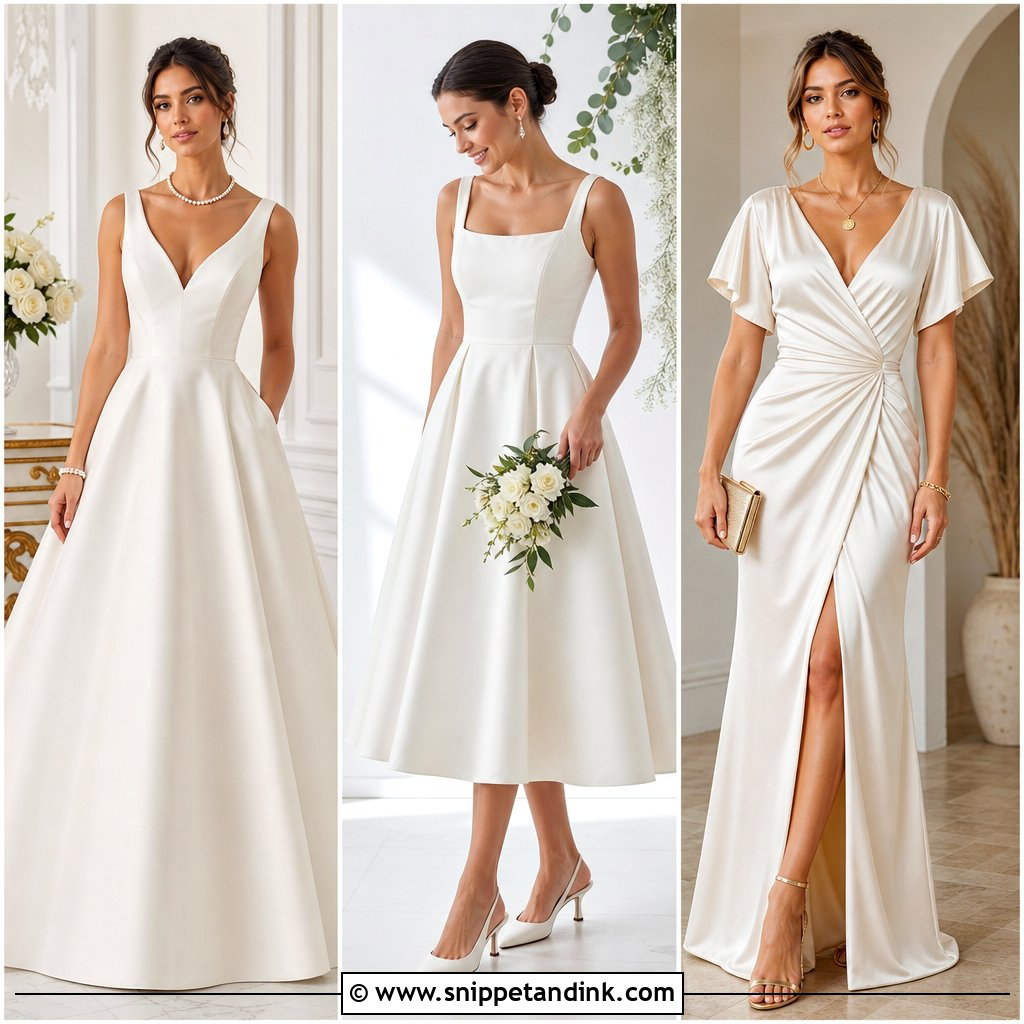
1. A-Line Lace Midsize Wedding Dress
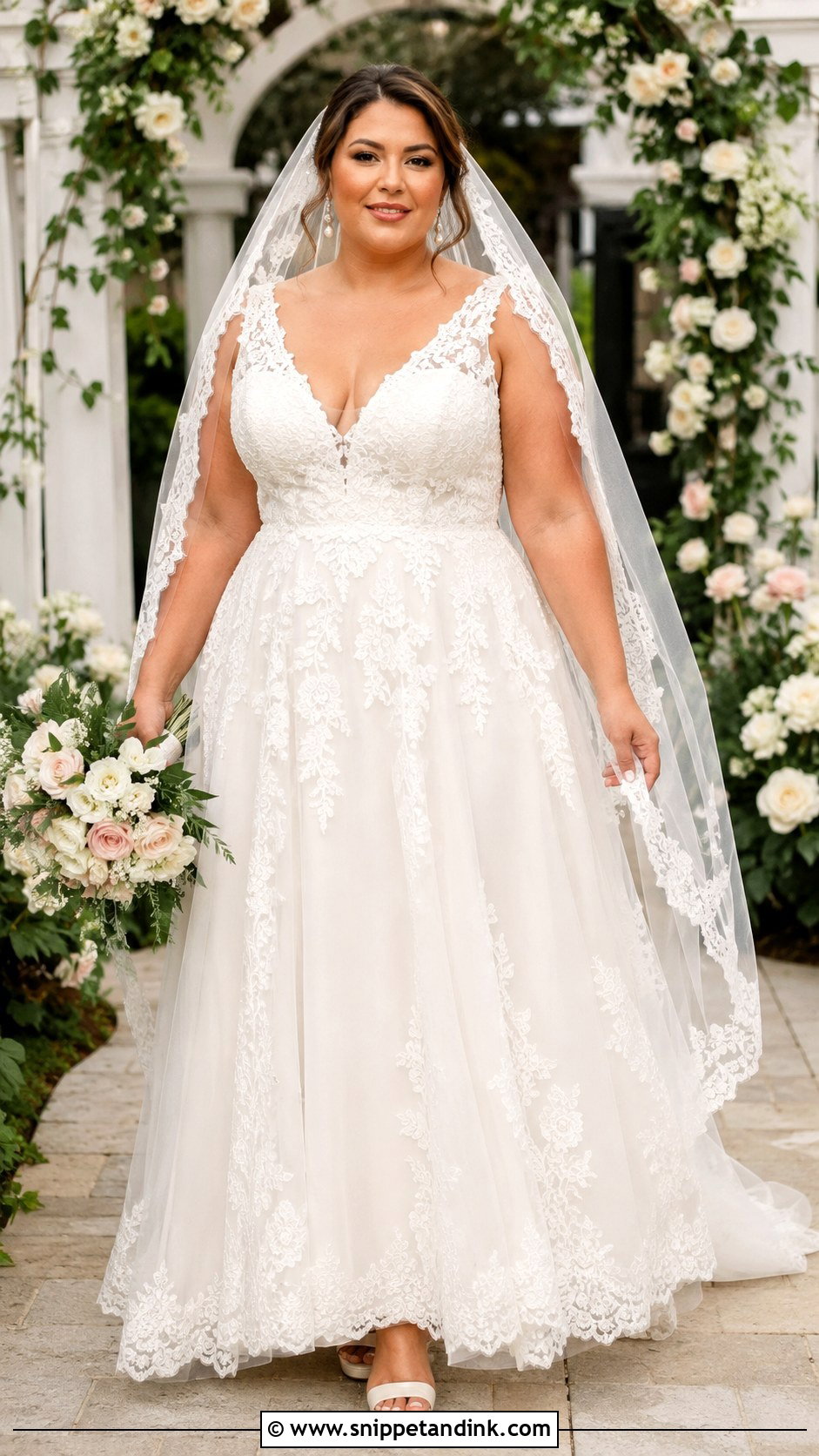
Lace on an A-line gives you romance without a heavy skirt. I look for a fitted bodice, a clear waist and lace that continues softly down the skirt rather than stopping in a hard line at the hip. A V-neck opens up the upper body, and medium straps carry the weight. Pearl drops, ivory block heels, a lace-edged fingertip veil and a low bun finish it. Ask your seamstress to fit the straps and the waist as two separate jobs. Shortening straps alone lifts the waist seam too, and then the bodice pulls.
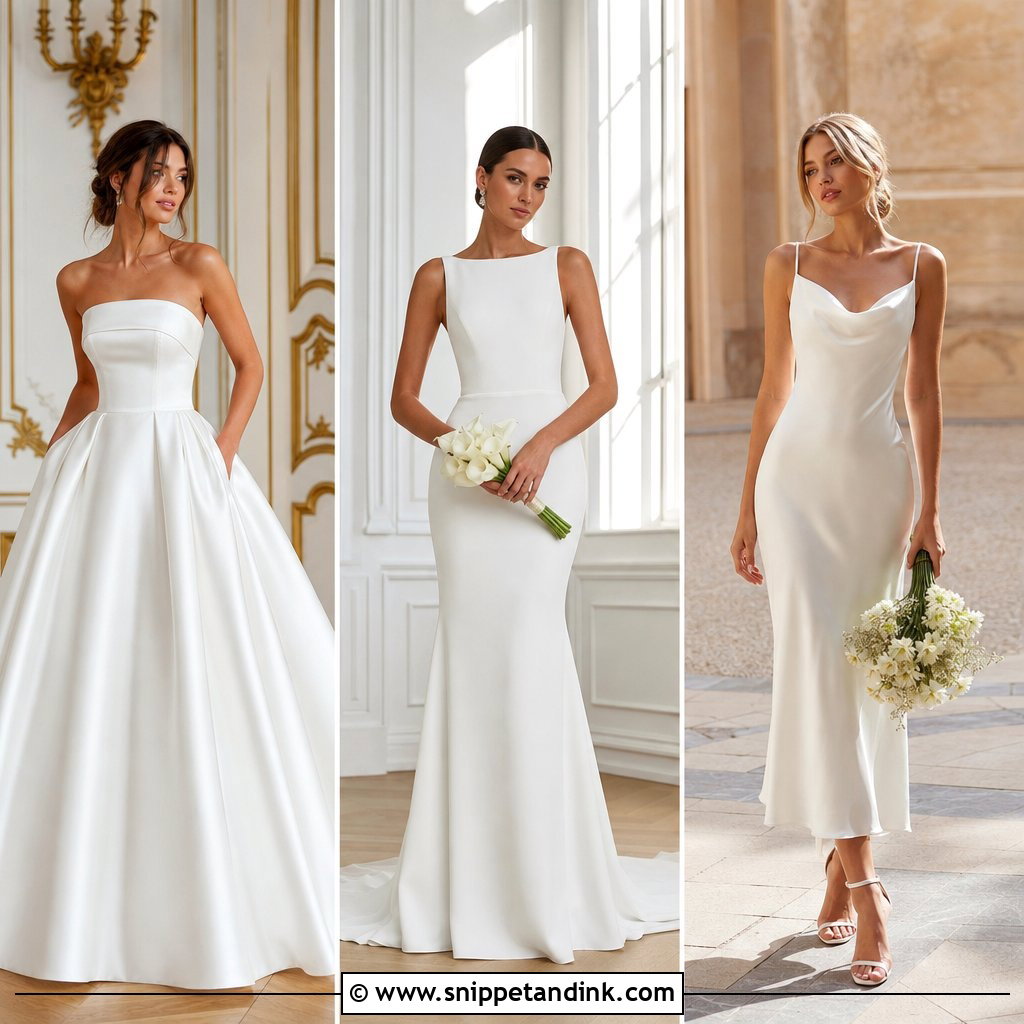
2. Satin Ball Gown Midsize Wedding Dress
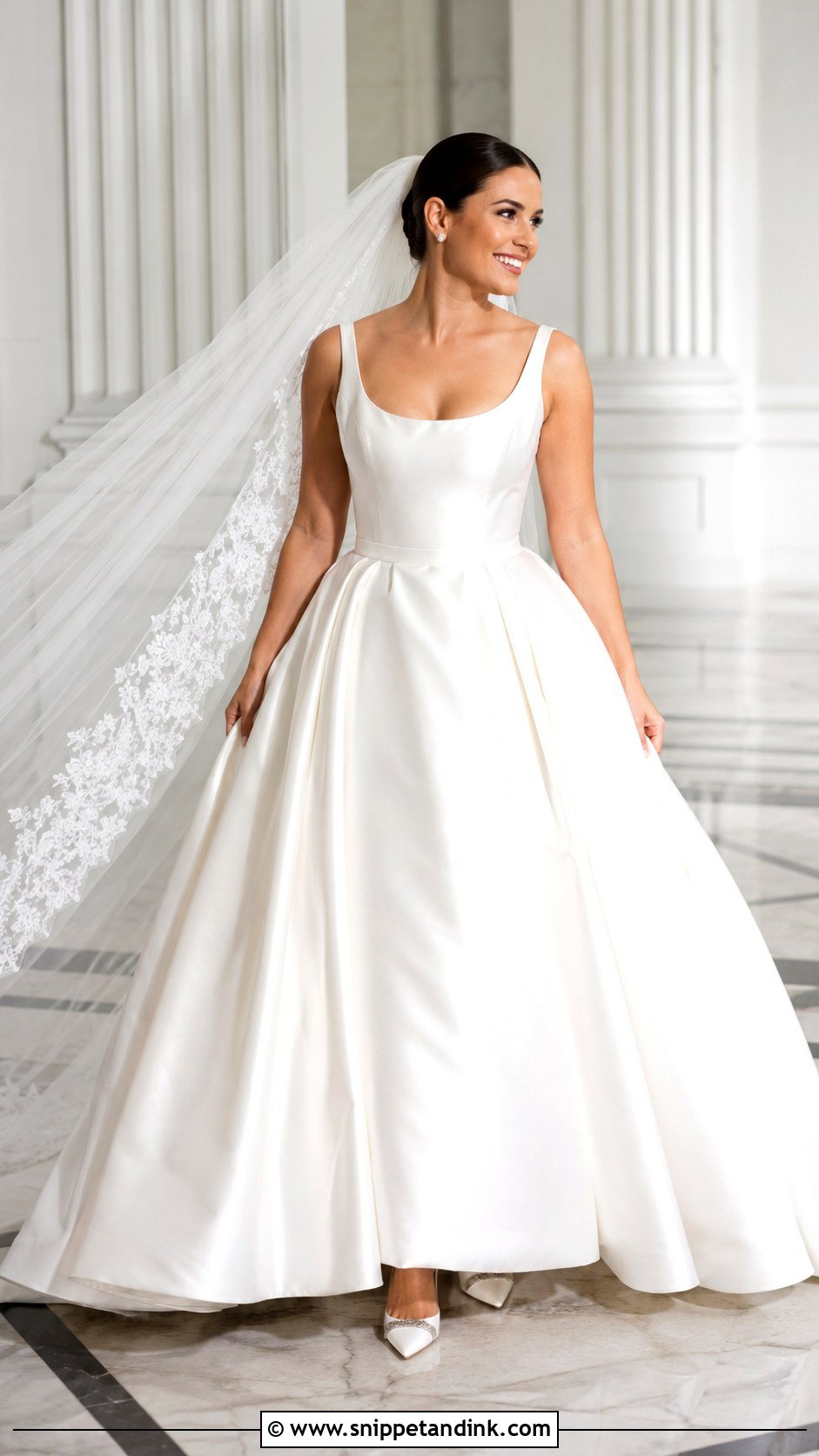
Smooth ivory satin, a sculpted bodice and a skirt that sweeps the floor: a satin ball gown makes its point with almost no decoration. All that skirt also leaves your legs plenty of room. The support has to come from inside, so check for boning, cups and a waist seam that rests at your natural waist. A soft scoop or sweetheart neckline balances it. I’d keep accessories to a cathedral veil, crystal studs and pointed heels under the hem, with a structured updo. Satin creases the moment you sit in a car, so have it steamed on the morning and spread the skirt out across the back seat on the way. Ask for a bustle you can fasten in a minute.
3. Long Sleeve Crepe Midsize Wedding Dress
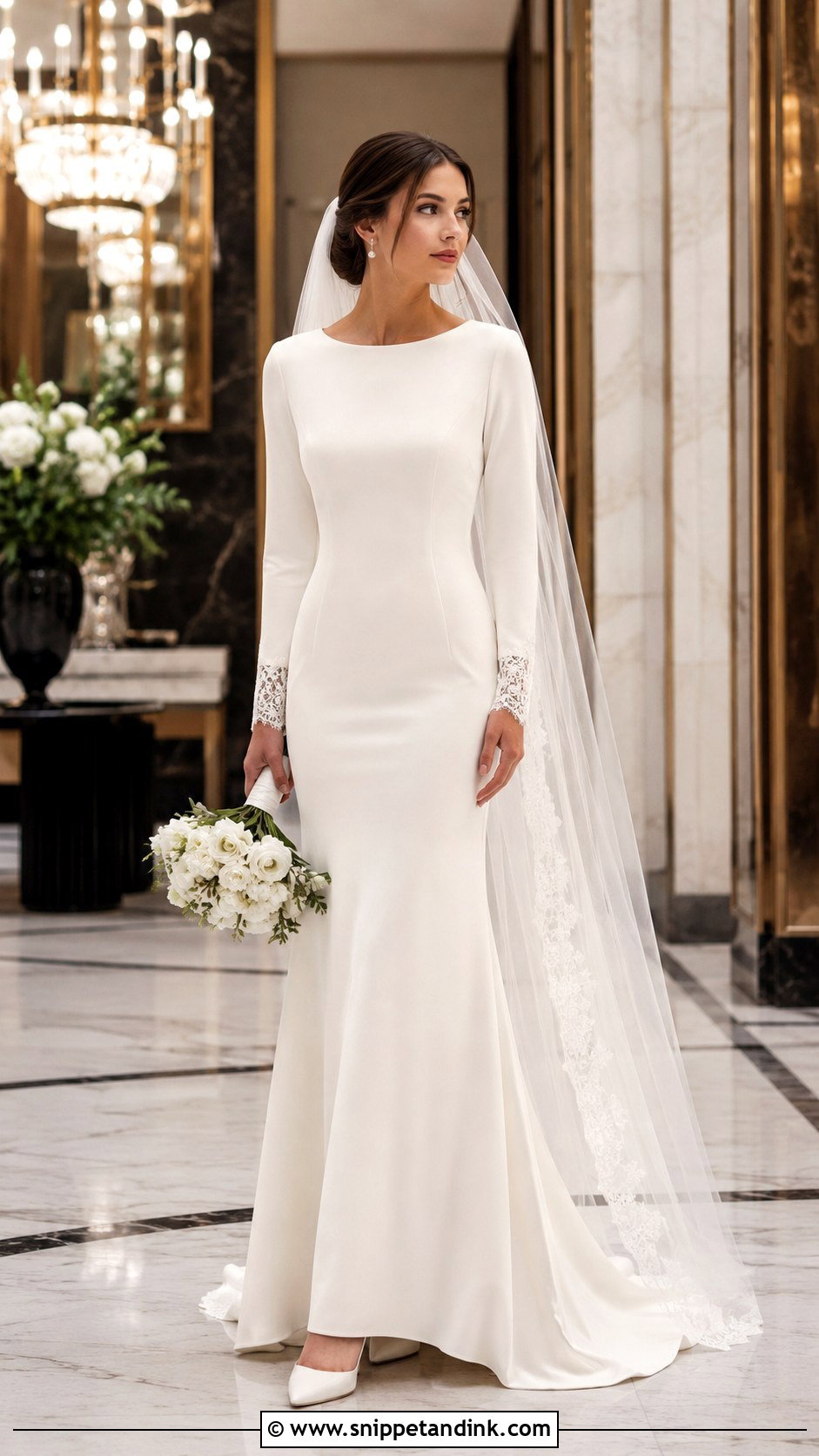
Crepe sleeves are made for cool weather and formal rooms. Go for medium-weight crepe, heavy enough to drape and not cling. Princess seams, a defined waist and a gently flared skirt give clean lines from every side, and a few sheer lace panels at the cuff or back add contrast without fuss. Pearl earrings, a low chignon, ivory pumps and a long plain veil suit it. Long fitted sleeves are where I see the most complaints, because the armhole is usually cut too low and every arm lift pulls the whole bodice up. A seamstress can raise the armhole or add a hidden stretch panel. Test it by hugging someone.
4. Off-Shoulder Midsize Wedding Dress
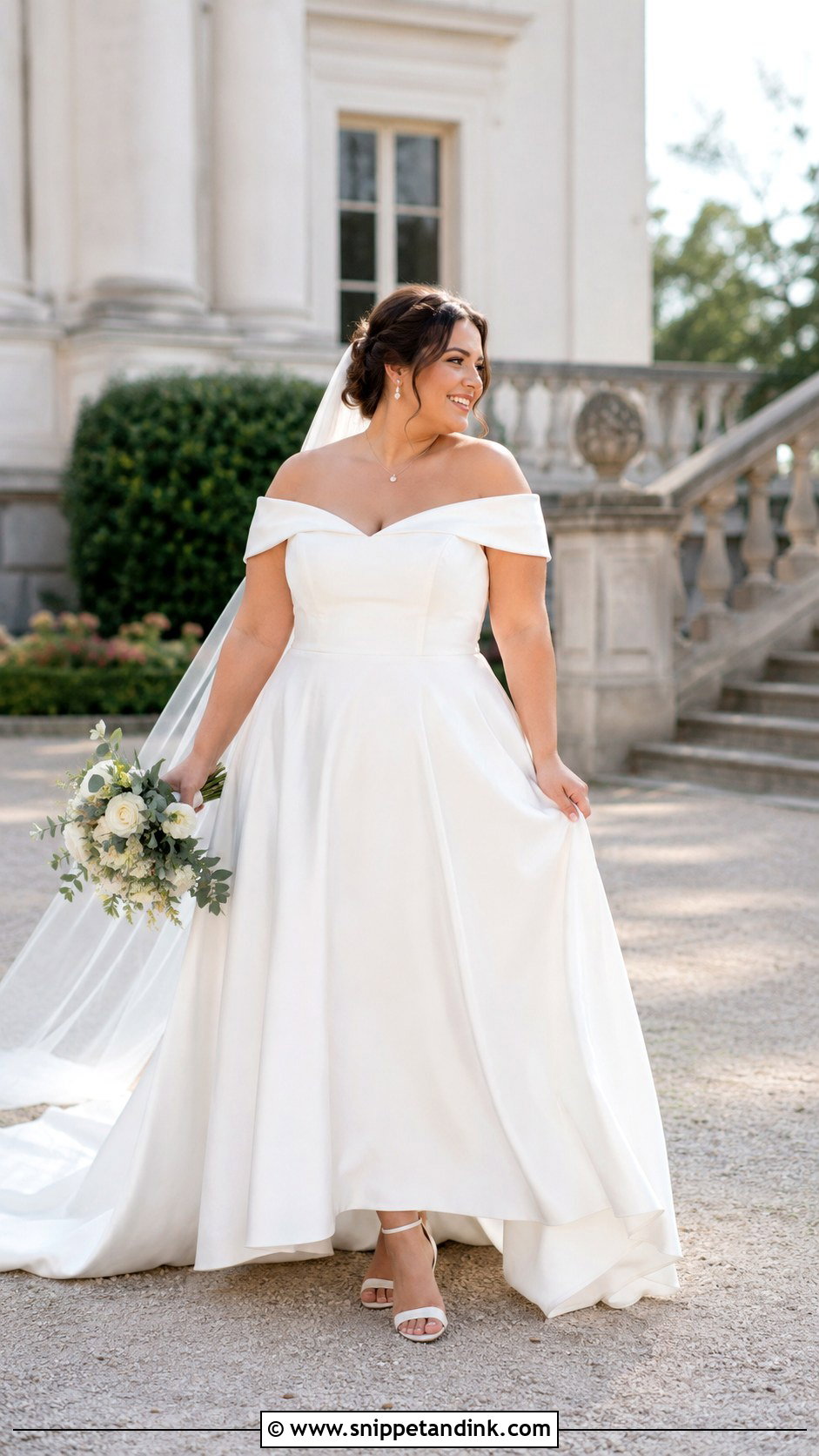
If you want a neckline that frames your face, off-shoulder does it best. The catch: the band needs a structured bodice anchoring it, or you’ll spend the day pushing it back up. A folded satin band or a lace-trimmed edge sits neatly over an A-line or fit-and-flare skirt. A fine pendant, drop earrings and a gathered veil tucked under a loose updo finish it, with closed-toe block heels for stability. In the fitting, sit, dance a few steps and lift your arms. If the sleeves slide down your arm, ask for clear silicone tape or a small strap hidden inside the band.
5. Square Neck Midsize Wedding Dress
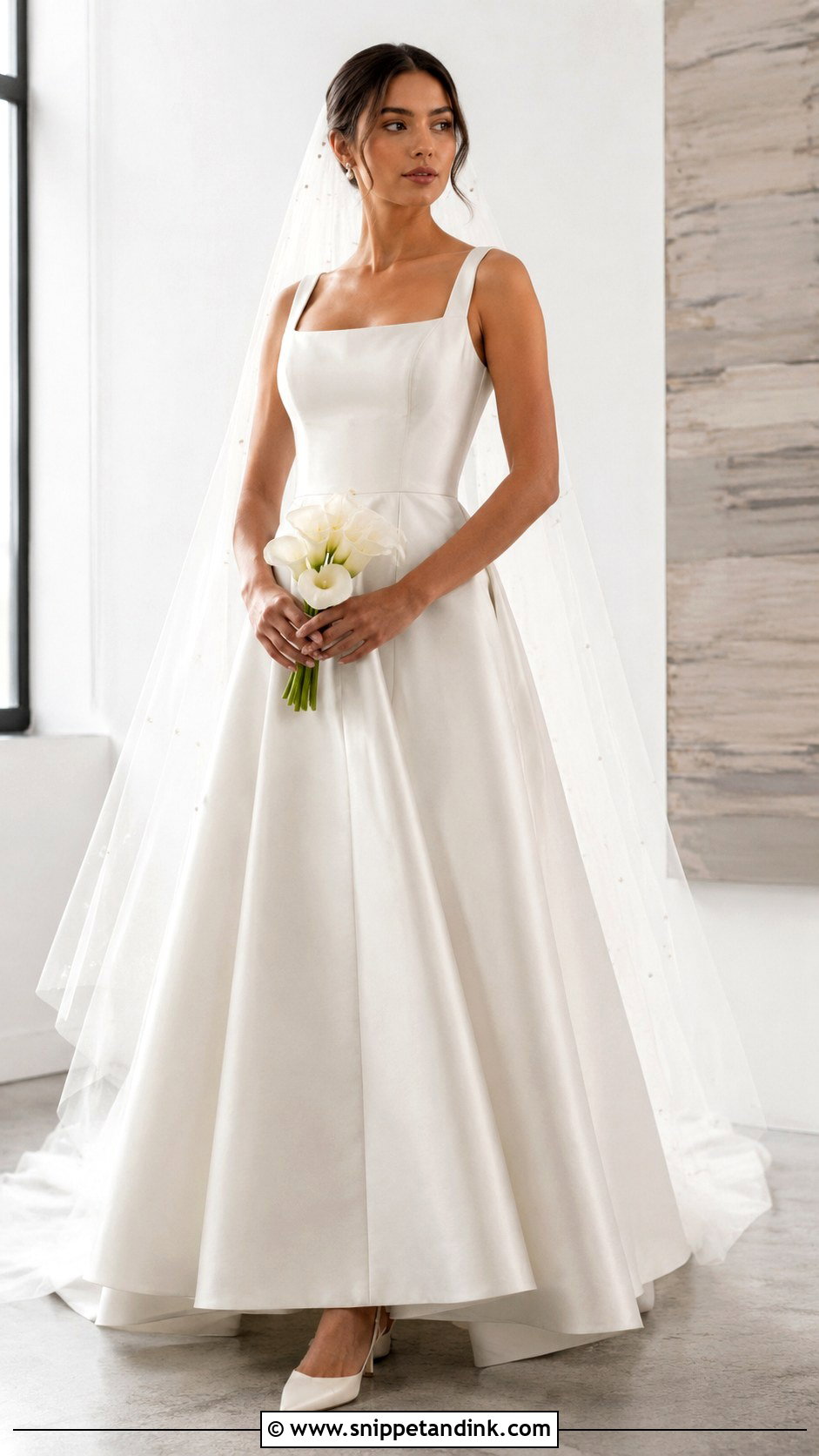
A square neckline shows off the collarbone and gives the bodice a strong, clean frame. Pair it with wider straps, supportive seaming and a softly shaped A-line skirt. Matte satin, mikado, or structured crepe all hold the straight lines this neckline depends on. Pearl studs, a sleek bun, ivory slingbacks and a narrow-edged chapel veil keep it modern. I usually skip the necklace altogether. The fault I see most often with this cut is gapping at the top corners of the bust. A tailor can reshape the cups and shorten the straps, and that small job decides whether the neckline looks sharp or sad. It suits hotels, galleries and city venues.
6. Corset Bodice Midsize Wedding Dress
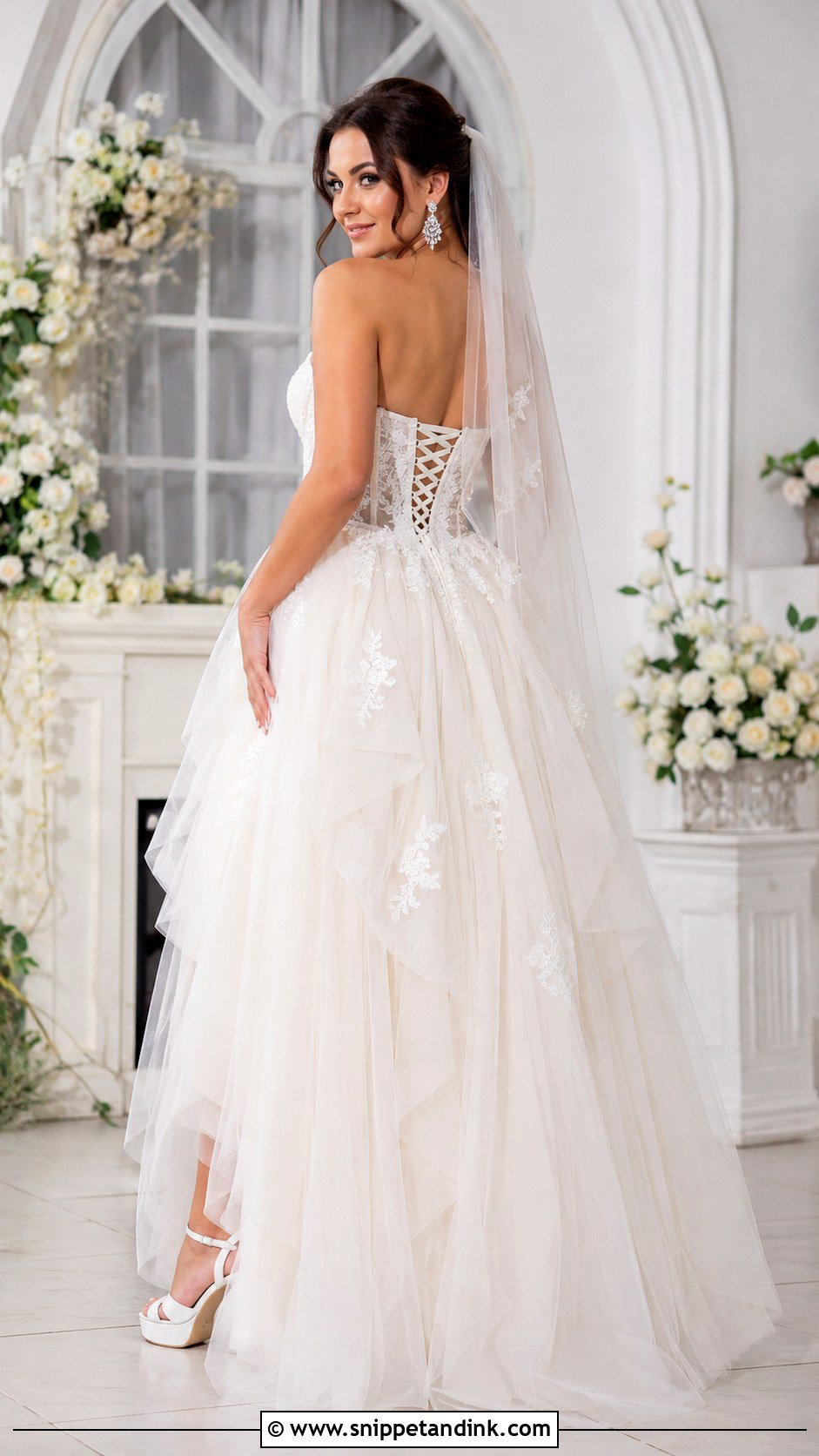
A corset bodice is the most adjustable support in bridal wear, which is why I like it for brides whose measurements shift. Look for flexible boning, a smooth lining and a lace-up back that tightens evenly from top to bottom. It should hold you firmly while still letting you breathe and sit. A flowing tulle skirt balances the fitted top, and a few floral appliqués soften the visible corsetry. Crystal earrings, a sheer fingertip veil, ivory platform sandals and loose waves or a half-up style keep it relaxed. Teach one person how to lace it, and do it at the last fitting rather than on the morning. Then eat something and dance in it before you sign off.
7. Fit-and-Flare Midsize Wedding Dress
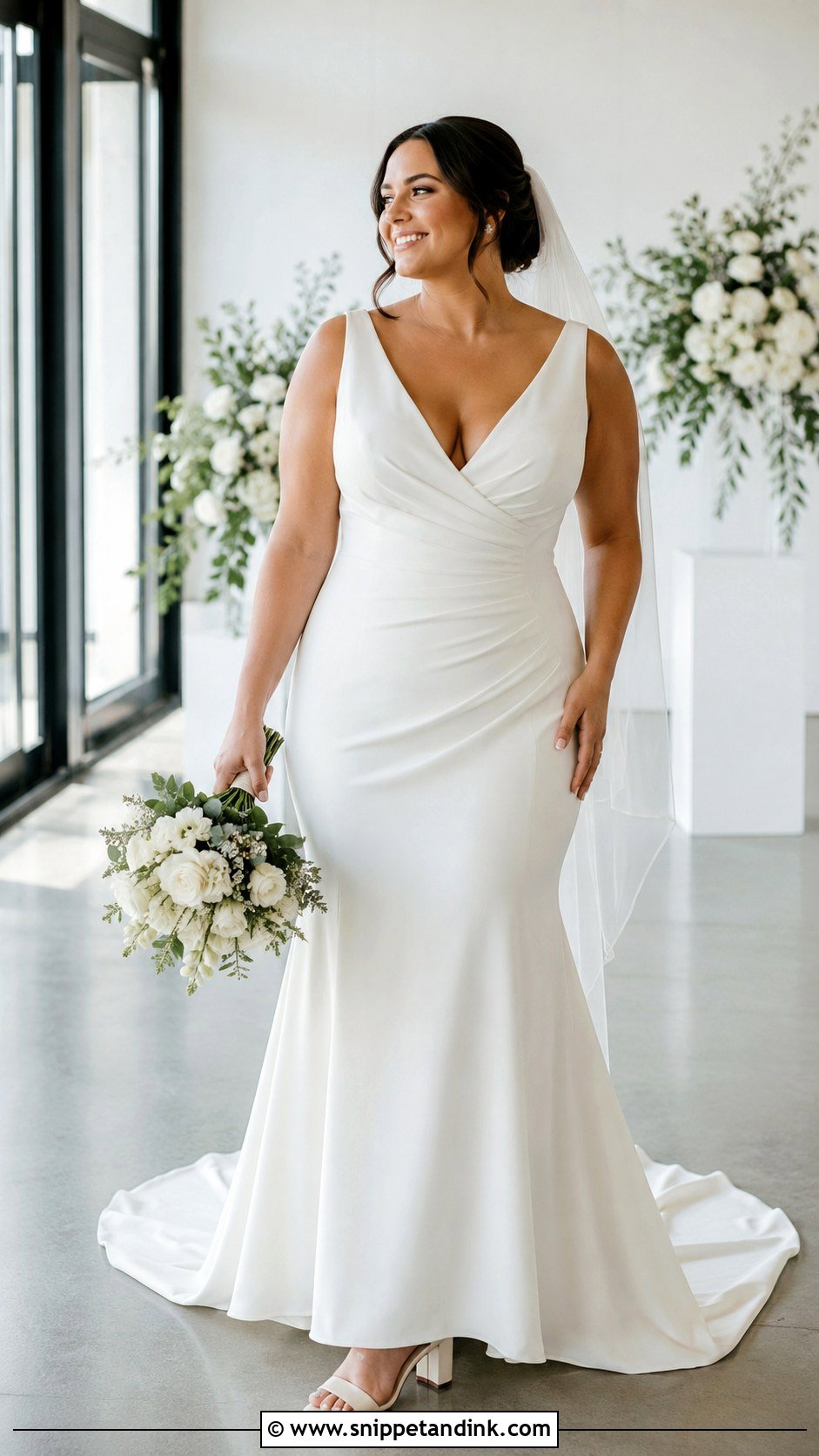
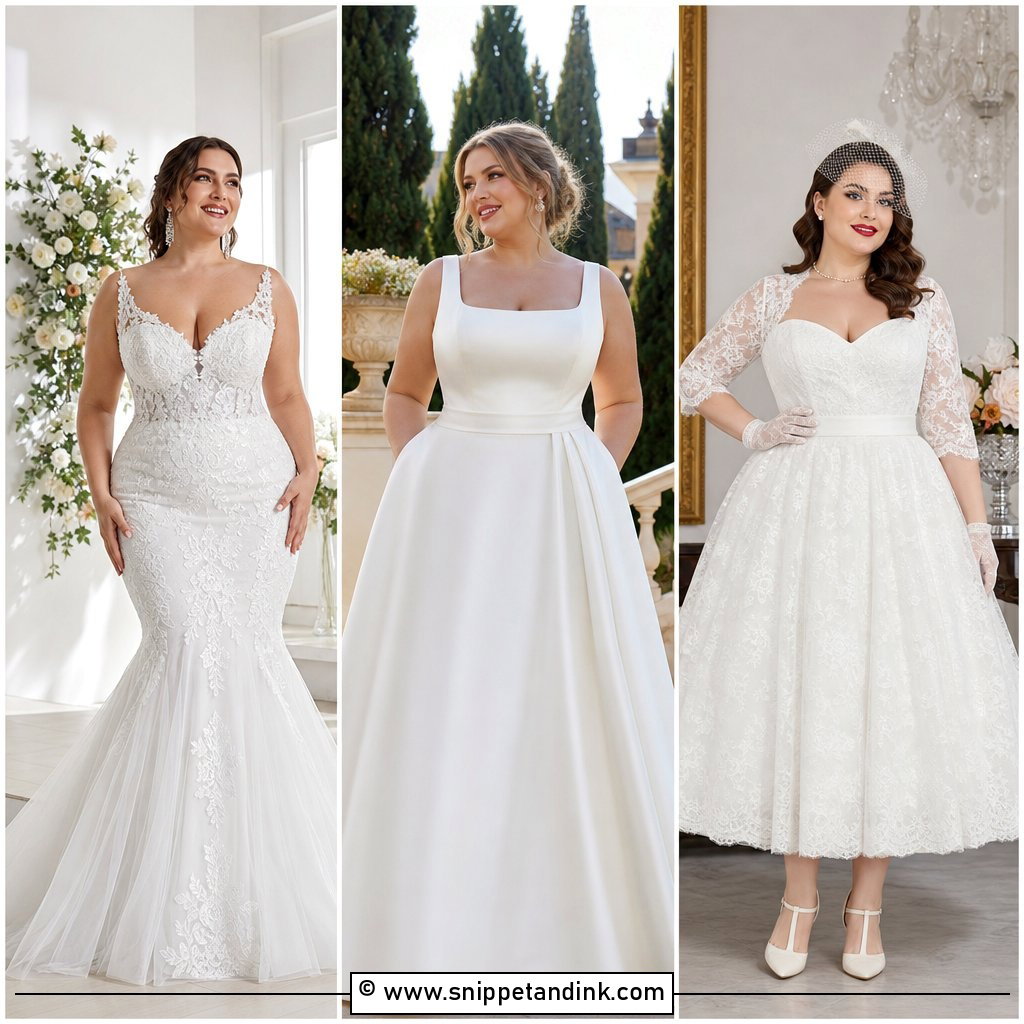
Think of a fit-and-flare as a mermaid that lets you walk. It follows the waist and hips, then opens into a skirt you can manage. Stretch crepe or lined lace keeps the shape while giving when you sit. I’d choose a supportive V-neck bodice, wider straps and a flare that starts around mid-thigh. A sheer veil, sparkling studs and steady block heels finish it. Many brides wear light anti-chafe shorts underneath, though that’s a personal call. The real test is sitting. If the hip line wrinkles or pulls across the thighs when you’re seated, the dress needs letting out.
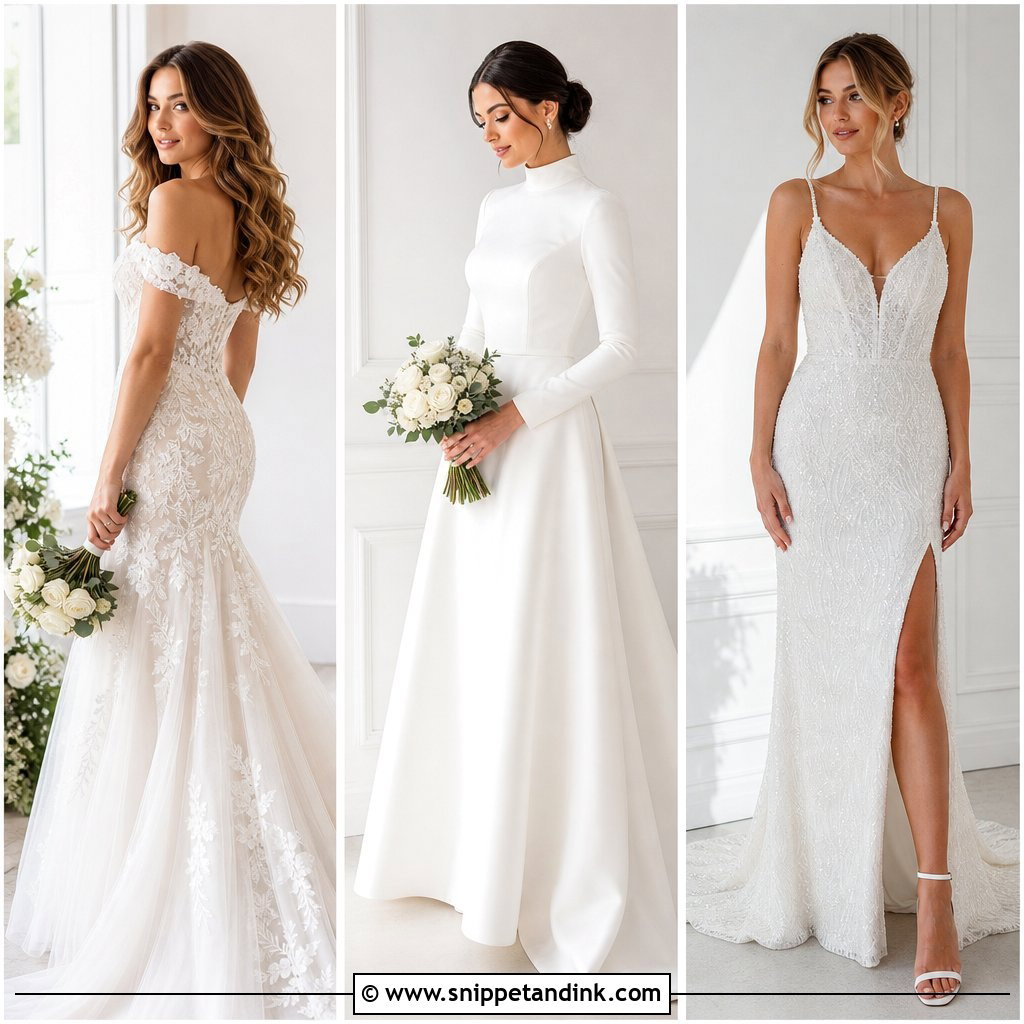
8. Mermaid Lace Midsize Wedding Dress
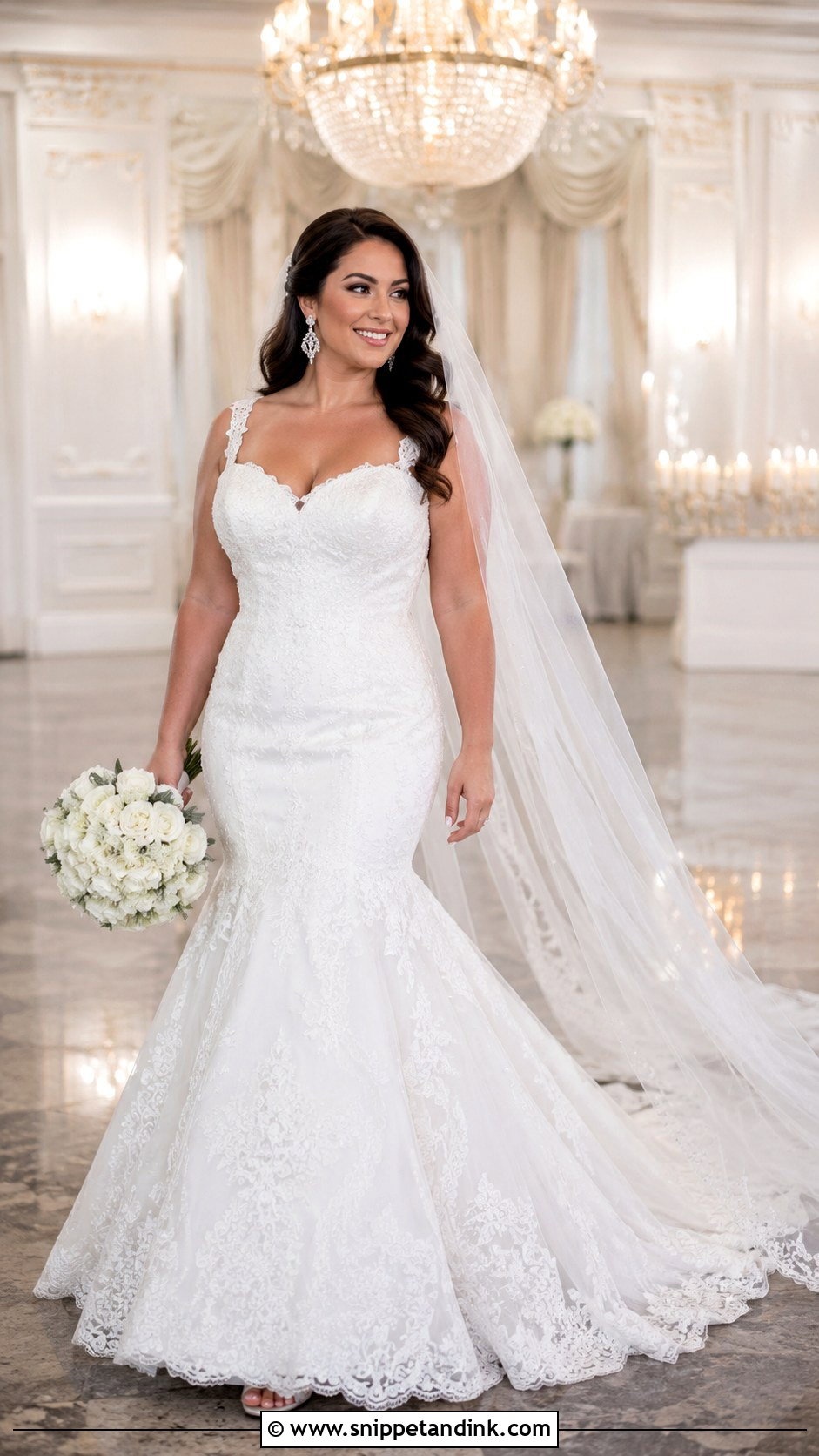
A lace mermaid with a long train is pure drama. It hugs the torso, hips and thighs and flares near the knee, so the lace needs a little stretch and the lining should feel soft against your skin. A sweetheart neckline with detachable straps gives support without breaking the sculpted shape. Statement earrings, a smooth side part, ivory heels with cushioned insoles and a long sheer veil complete it. A low flare shortens your stride a lot. Practice walking and turning at home in the gown, and ask for a bustle with several attachment points, because a lace train is heavy once it’s lifted.
9. Empire Waist Midsize Wedding Dress
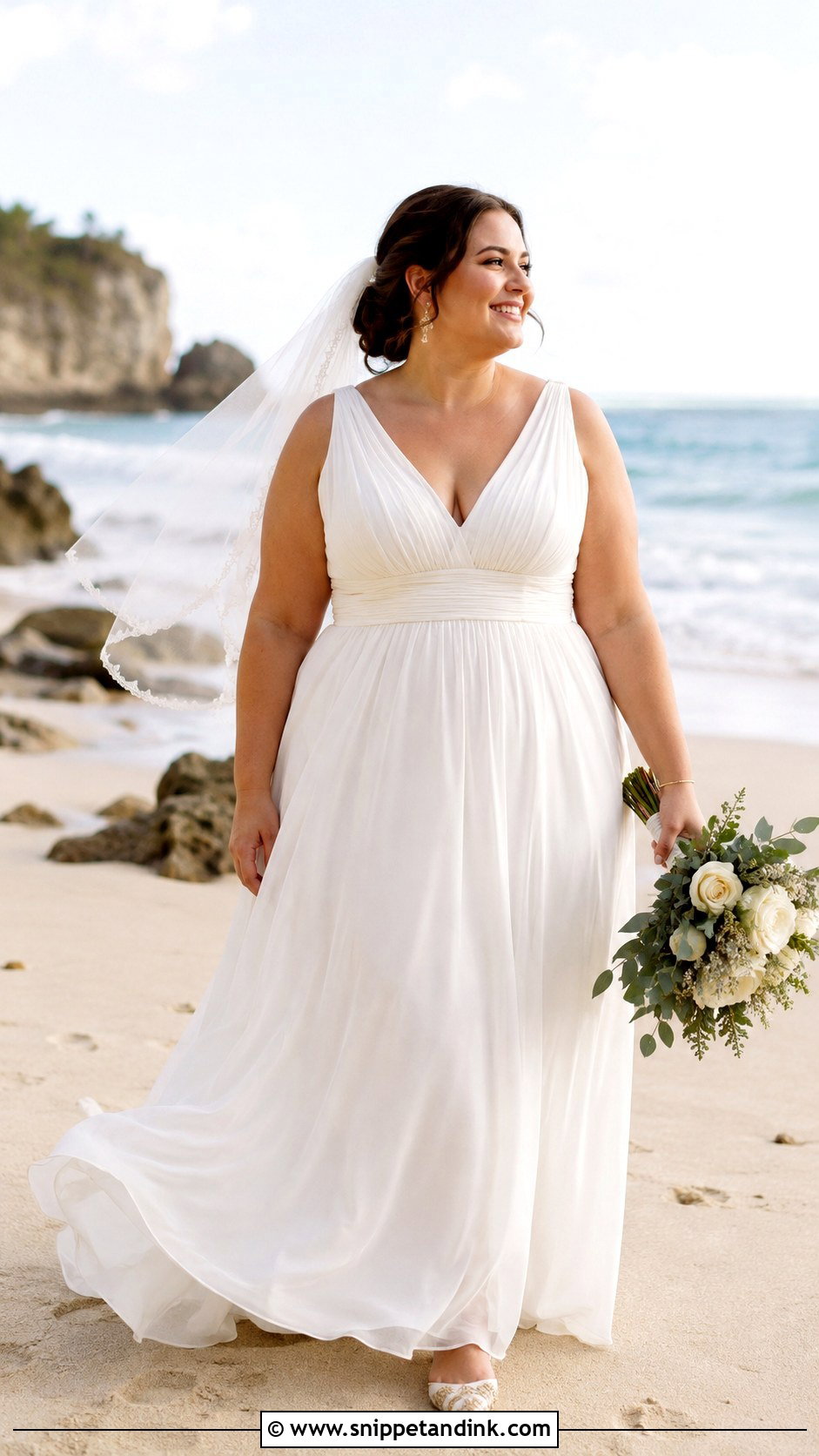
Chiffon falling from an empire waist is about the lightest thing you can wear down an aisle. The skirt starts below the bust, so nothing presses at the waist. Choose a bodice with real cups, supportive straps and a little ruching to keep the fabric smooth. If a deep V feels exposed, a seamstress can add a sheer modesty panel. Gold earrings, embellished flats, a narrow chapel veil and a braided updo suit the soft movement. Hold the skirt up to daylight in the shop. Single-layer chiffon goes see-through in sun, so make sure the lining is opaque and still breathable. On a beach or at a destination wedding, it’s the one I’d pack.
10. Tea-Length Midsize Wedding Dress
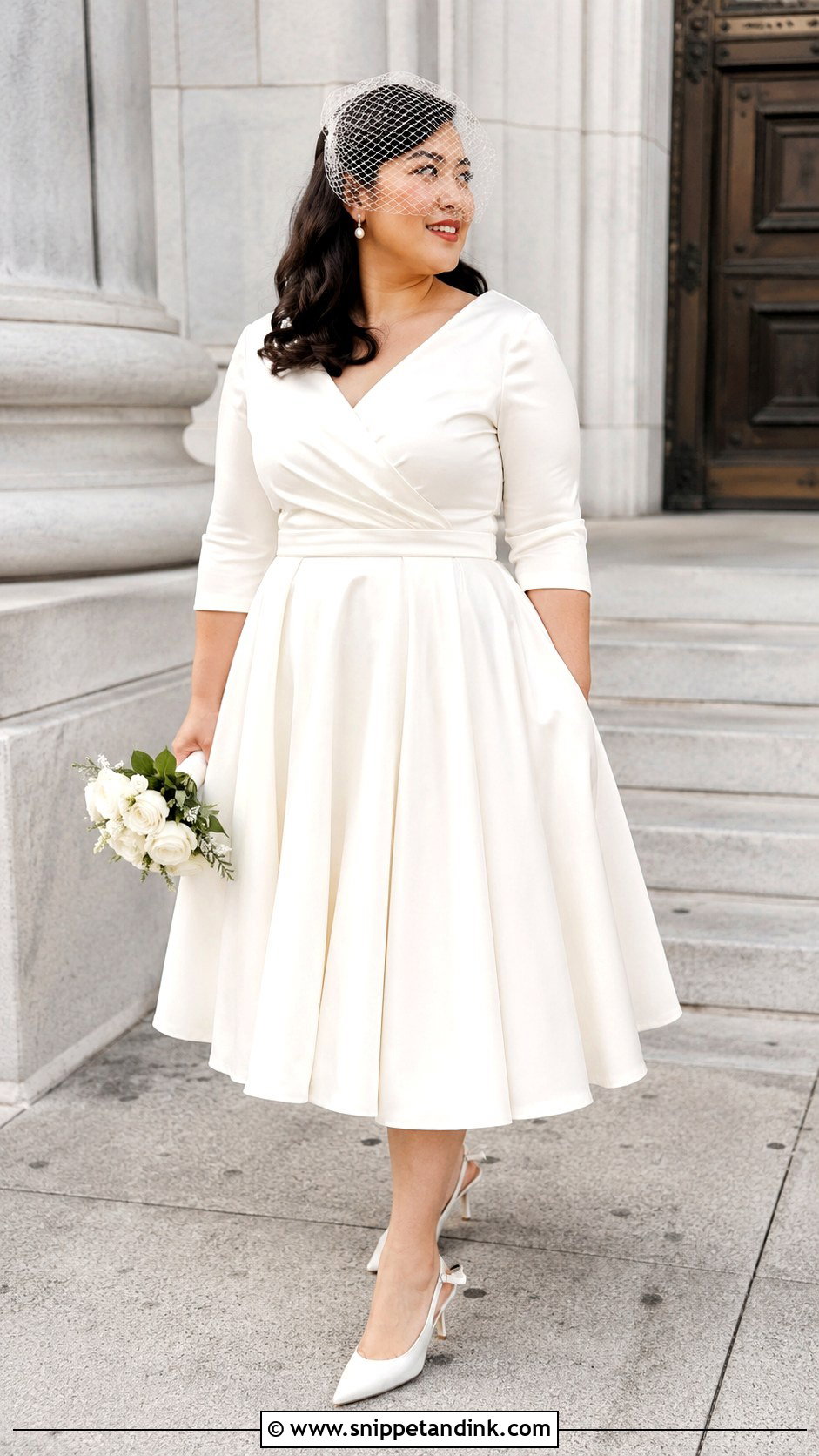
Tea-length belongs at a courthouse or a relaxed daytime party. The hem sits between knee and ankle, so your shoes become half the outfit. I like a wrap or structured bodice over a softly flared skirt. Ivory slingbacks, pearl earrings and a short birdcage veil give it a vintage feel; pointed flats and a plain headband make it modern. Have the hem set with your final shoes on, because an inch either way changes the proportions. A smooth waist seam and pockets are both worth asking for. You get the celebration without the weight, train or formality of a full gown.
11. Simple Slip Midsize Wedding Dress
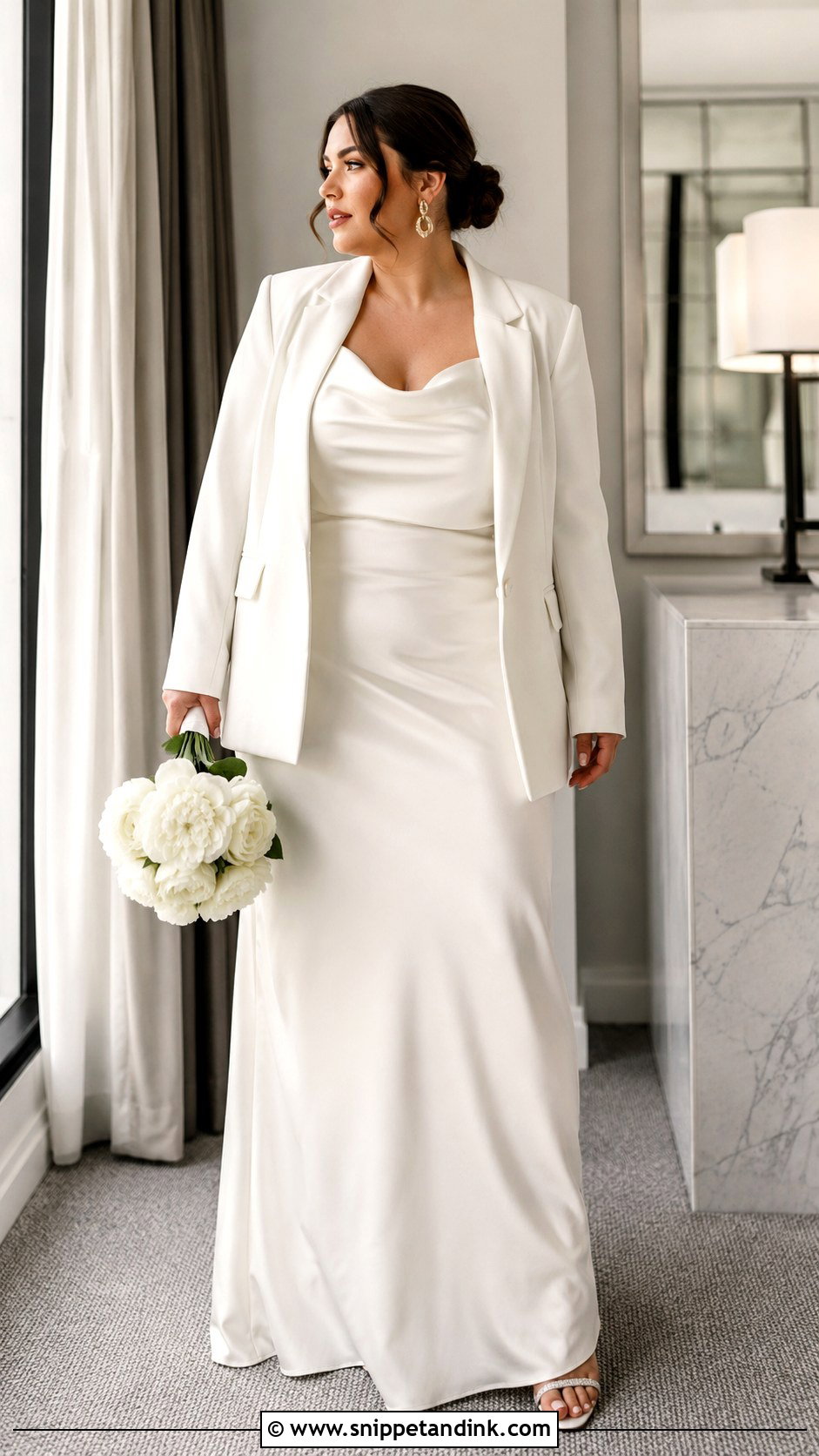
An ivory slip gown looks simple and is anything but simple to fit. Thin satin catches on every seam beneath it, so I steer brides toward heavier satin cut on the bias, which skims rather than clings. Adjustable straps, a soft draped neckline and a low but secure back give room to personalize. A tailored ivory blazer works over it for the ceremony or cooler evening photos. Sleek sandals, sculptural earrings and a low ponytail finish it. Laser-cut, no-line underwear helps, though comfort should decide. Because there’s nothing to hide behind, the hem and bodice have to be exact.
12. Boho Chiffon Midsize Wedding Dress
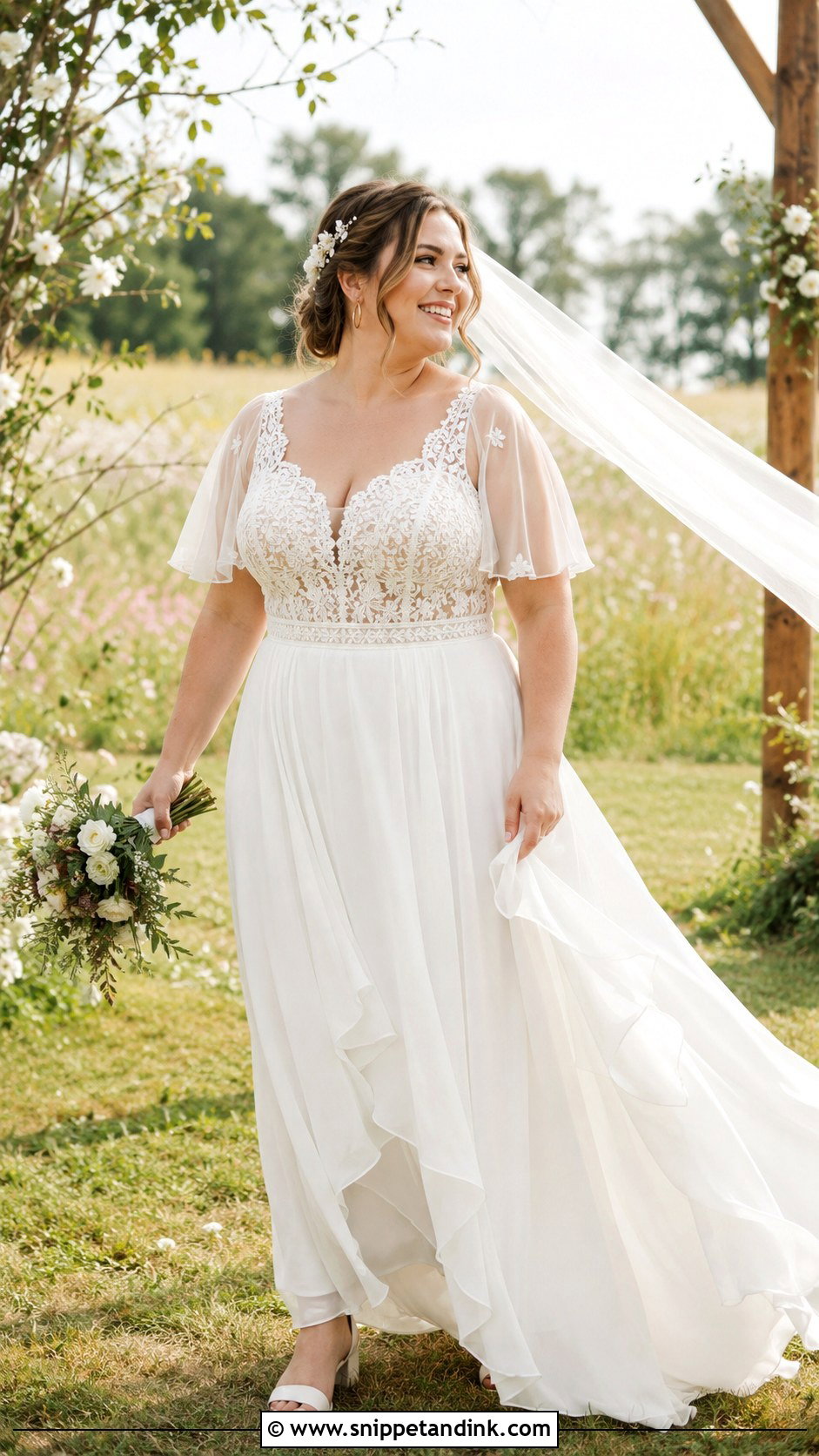
Boho dresses look relaxed, but the ones that stay comfortable outdoors are quietly well built. Look for a lined lace bodice, secure straps, a defined waist and light sleeves that don’t pin the arms. A loose A-line skirt makes walking on grass or sand easy. A floral comb, small hoops and ivory block-heel sandals suit it, with a soft tulle veil or a short cape for movement. Skip the long train at rough venues. Gravel shreds tulle and grass stains lace in one walk. Choose something that clears the ground by a hair once bustled.
13. 3D Floral Midsize Wedding Dress
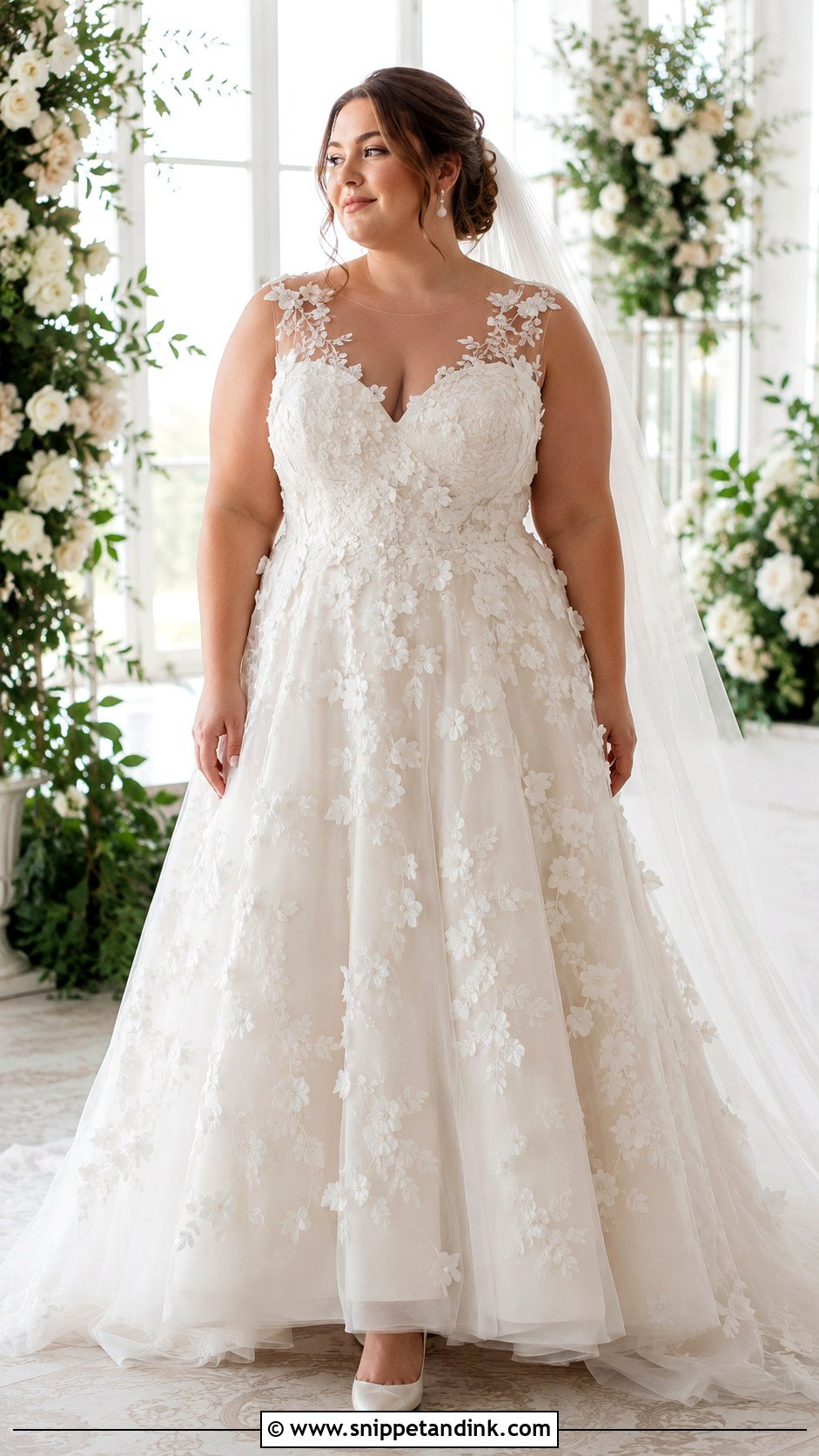
Dimensional flowers turn a classic shape into the whole story. I like them concentrated on the bodice and scattered down an A-line skirt, which ties the dress together without crowding it. A sheer neckline over a lined sweetheart base gives coverage and support. Pearl earrings, ivory pumps, a plain cathedral veil and a neat updo let the flowers stay visible; a patterned veil would fight them. After alterations, check every appliqué near the underarm, since moved seams sometimes leave a stiff edge against the arm. This midsize wedding dress belongs in a garden venue or a spring wedding.
14. High Neck Midsize Wedding Dress
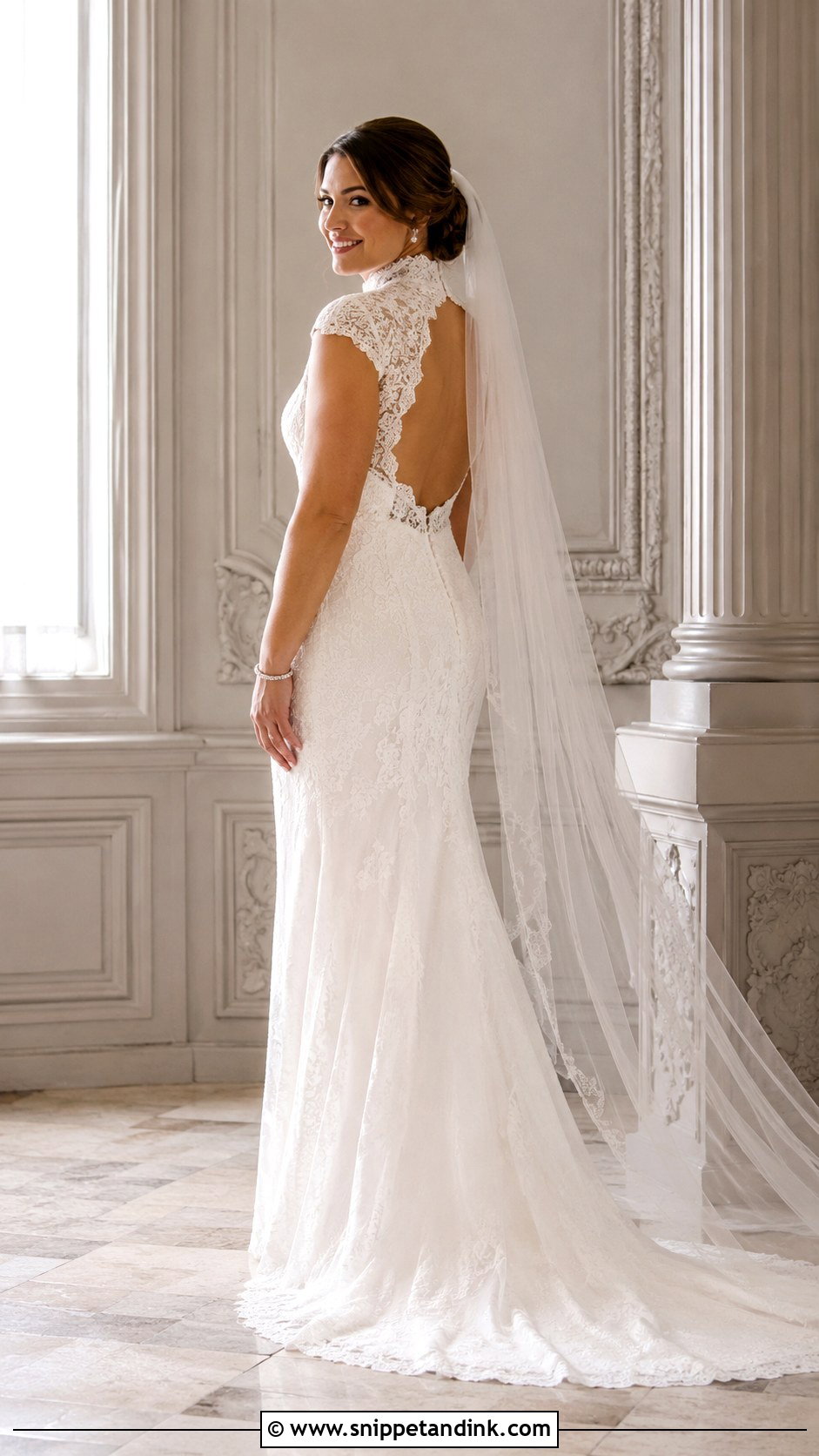
A high neck gives full coverage and still reads as dramatic, especially with clean vertical seams. Lace at the collar and shoulders softens it, while an opaque fitted bodice handles support. Balance the closed front with an open back, cap sleeves or a soft skirt. A low bun keeps both neck and back on view. Small crystal studs, a bracelet, ivory heels and a veil placed under the bun finish it; a necklace has nowhere to go. Turn your head side to side in the sample. A collar that rubs in a five-minute appointment will leave a red mark by evening. It fits formal ceremonies and historic buildings.
15. Cap Sleeve Midsize Wedding Dress
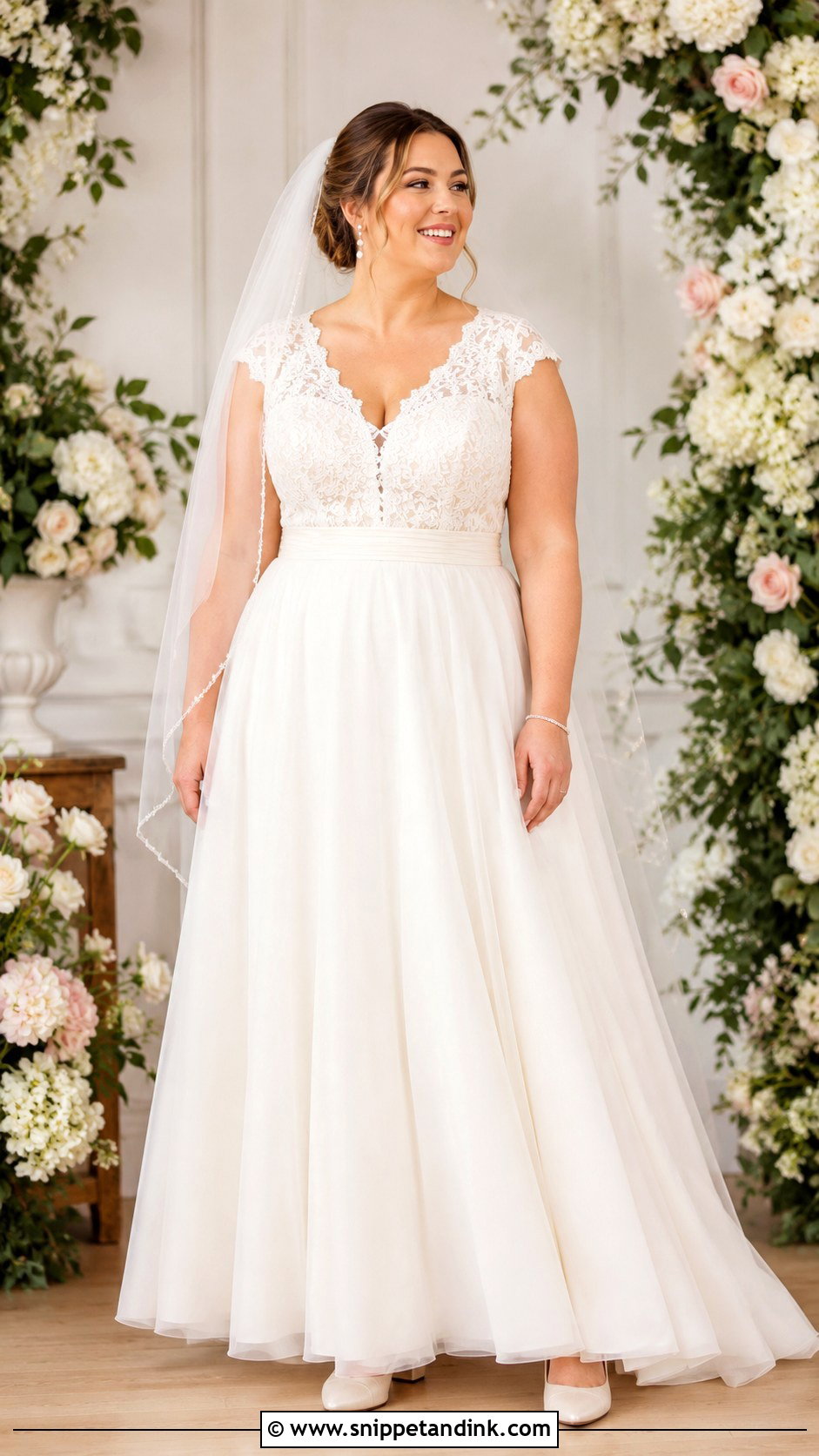
Cap sleeves cover the very top of the shoulder and nothing more. Paired with a lace bodice and a softly structured A-line, they read classic. The sleeve should continue naturally from the neckline; if it cuts straight across the upper arm, it will dig in. A shallow V, a defined waistband and good inner support keep the dress secure. Pearl drops, a fine bracelet, ivory block heels, a fingertip veil and soft waves or a low twisted bun suit it. Reach forward as if signing the register. If the sleeve pulls tight across the back of the arm, a tailor can recut the opening.
16. Basque Waist Midsize Wedding Dress
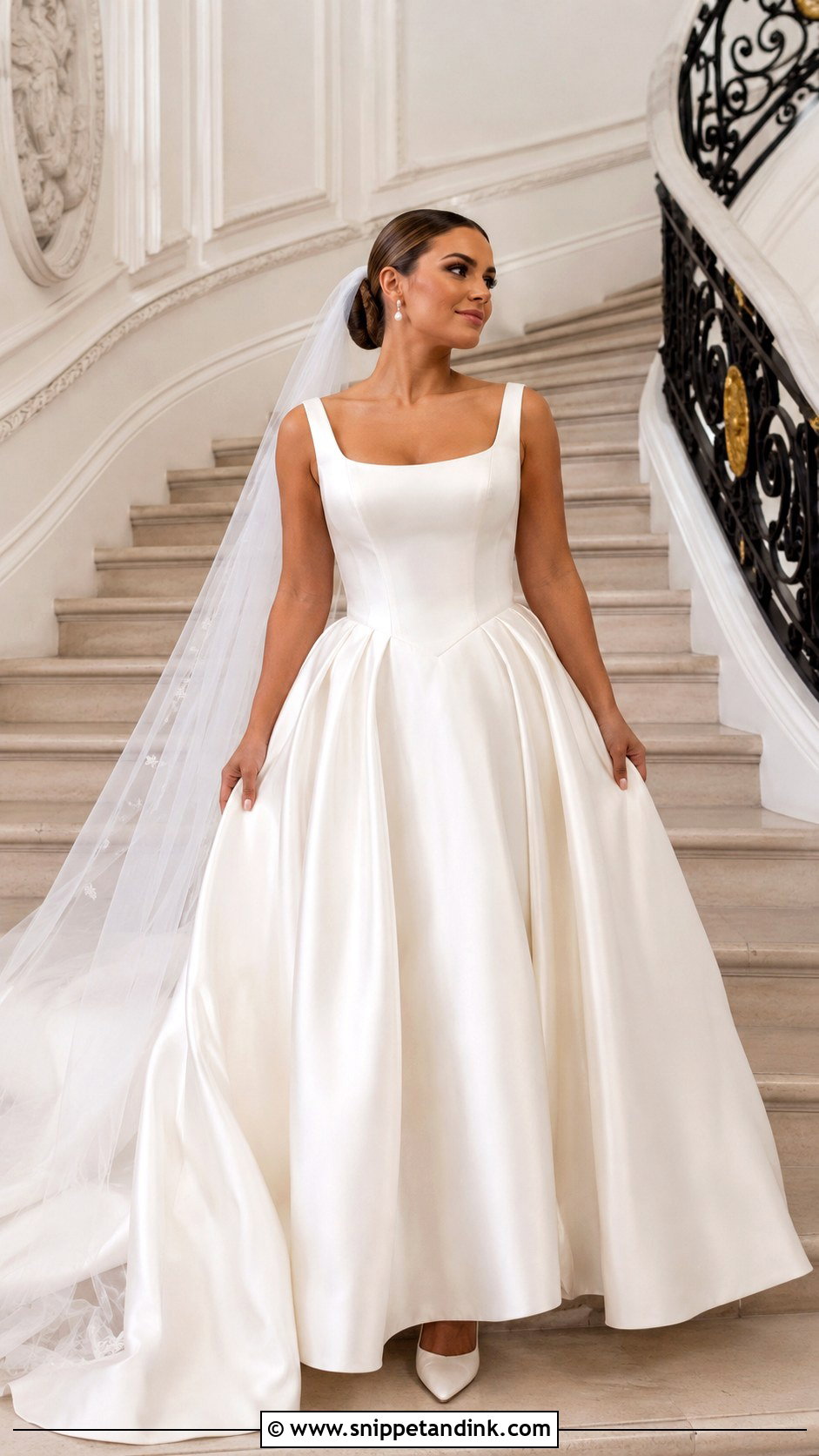
The basque waist dips to a gentle point at the front, and on a satin ball gown or full A-line it’s one of the most flattering seams in bridal design. Curved seams and boning that follow your shape matter here; straight bones jab at the hip when you sit. A scoop neckline and wide straps balance the dramatic waistline. Pearl button earrings, pointed pumps, a long veil and a polished bun are all it needs. Leave the belt off, because it cuts straight through the point. Sit down during alterations to test the bodice length. If the point pushes into your lap, it needs shortening.
17. One-Shoulder Midsize Wedding Dress
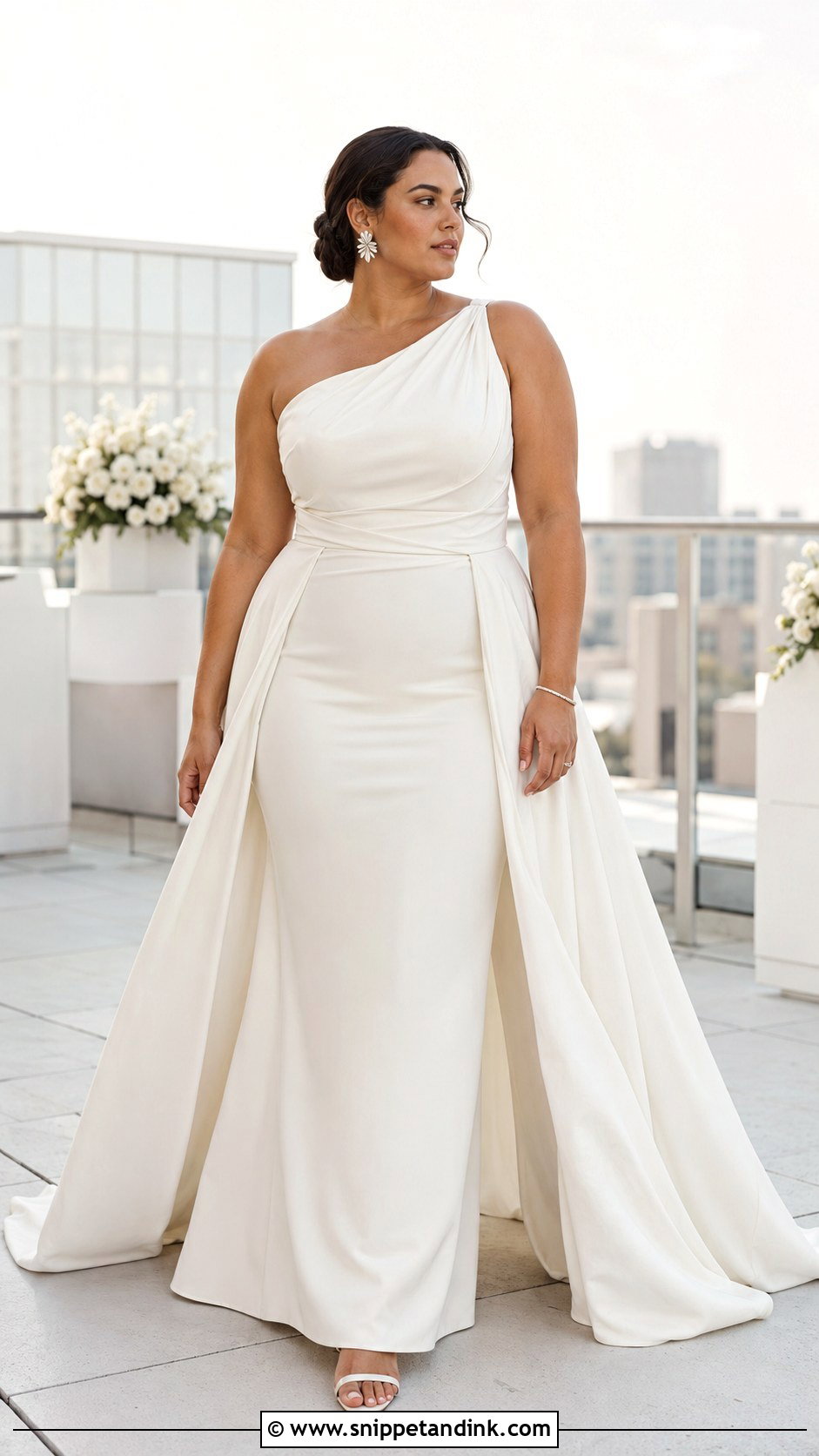
An asymmetrical neckline turns a plain gown into an event. A one-shoulder bodice needs internal boning and a side closure to stay balanced, because all the weight hangs from one point. Draped crepe or smooth satin suits the sculptural line. A straight or softly flared skirt works, with a removable overskirt if you want more volume for the ceremony. One statement earring on the bare side, a sleek low bun, ivory sandals and a minimal bracelet are enough. A long veil tends to compete with the shoulder, so I’d often swap it for a small comb. Rooftops and galleries suit it.
18. Detachable Sleeve Midsize Wedding Dress
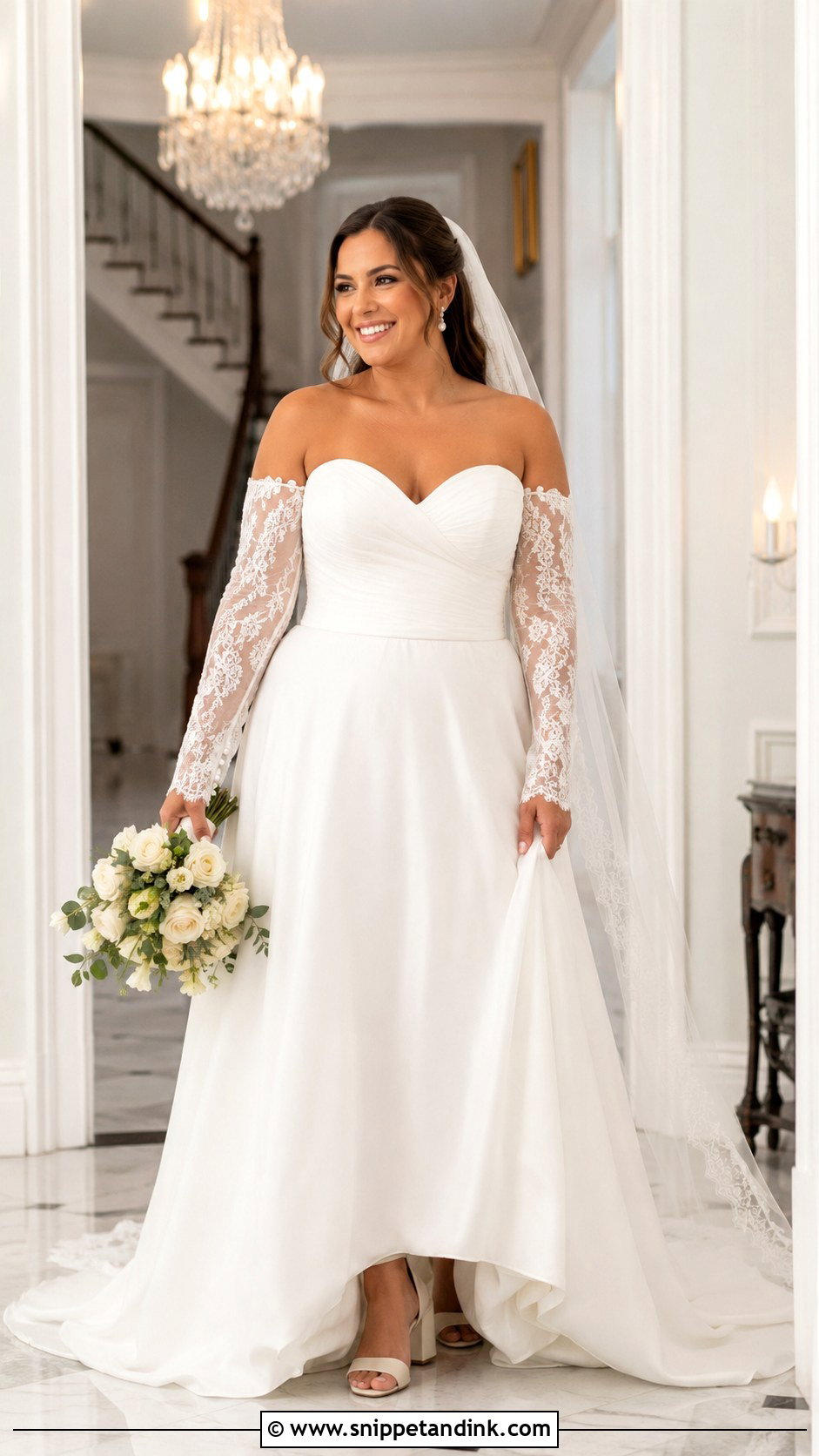
Detachable sleeves give you two looks from one dress. Start with a strapless or sleeveless A-line with a structured bodice and its own internal support, since the sleeves won’t hold anything up. Sheer lace sleeves go on for the ceremony and come off for the reception. Look at how they fasten; tiny buttons or hooks sit flatter than elastic. A chapel veil, pearl earrings and ivory block heels suit the first look, and a sparkly comb replaces the veil for the second. Practice every fastener at the final fitting with the person who’ll help you change.
19. Cape Sleeve Midsize Wedding Dress
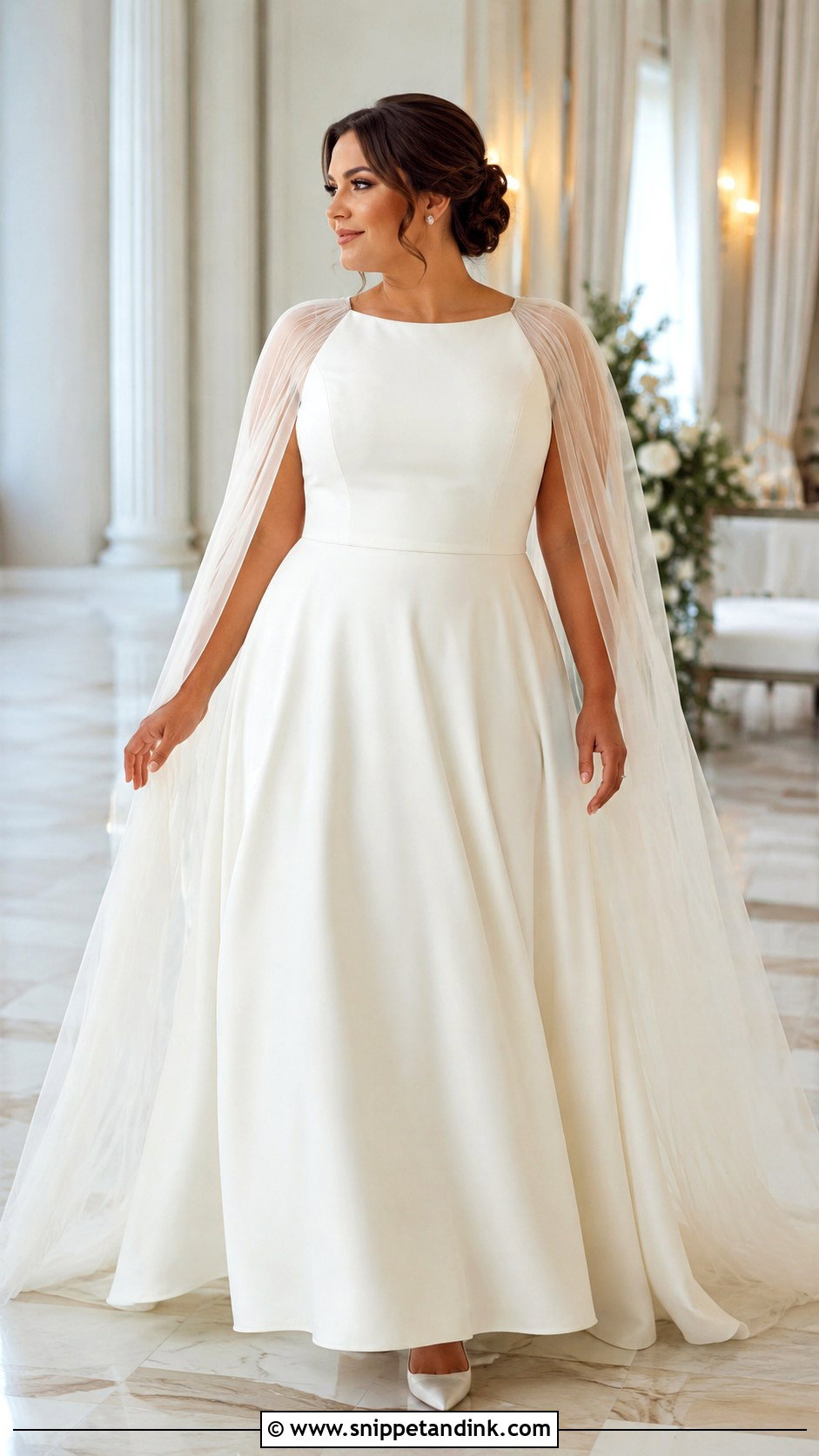
A cape adds coverage and movement while leaving the dress shape untouched. I’d pair a simple crepe column or A-line with a light cape attached at the shoulders, in sheer tulle, chiffon or fine lace. Keep the cape a little shorter than the train so the two don’t tangle as you walk. Crystal studs, an updo and closed-toe ivory heels finish it; the veil is optional because the cape already does the work from behind. Check the attachment points carry the cape’s weight evenly, otherwise it drags the neckline back. A removable cape gives you a second look after portraits.


20. Courthouse Midi Midsize Wedding Dress
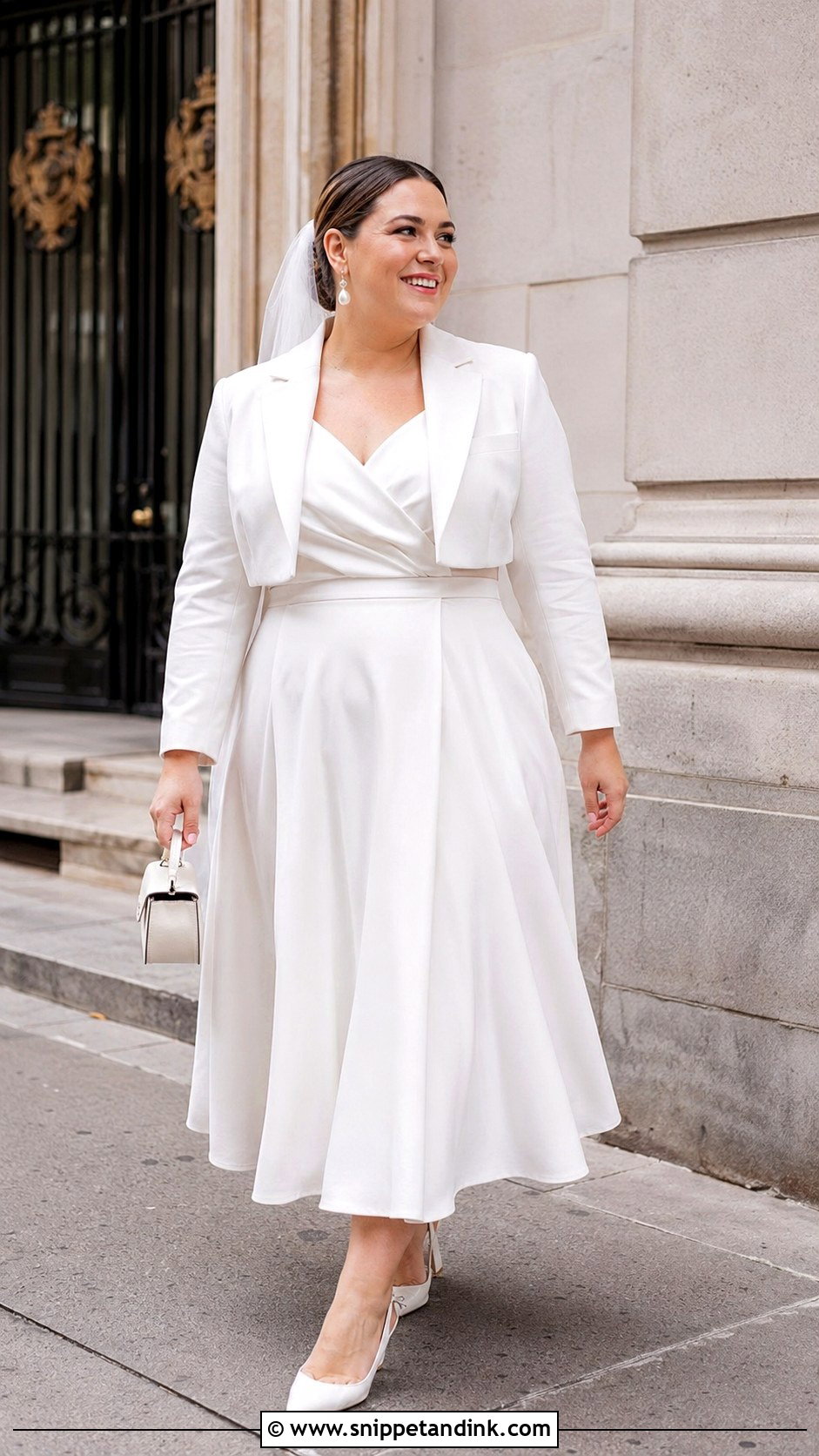
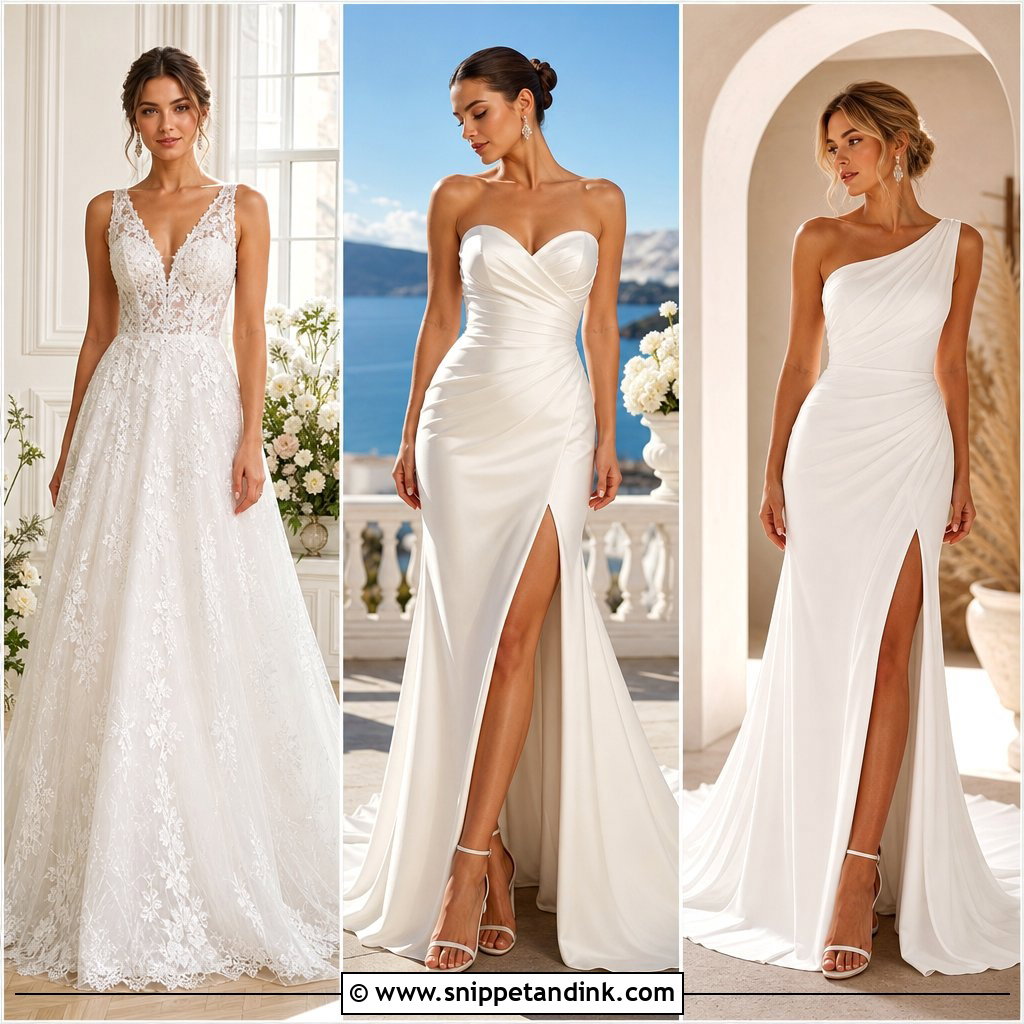
A courthouse wedding needs an outfit that feels special while you walk city streets. An ivory midi with a wrap bodice, defined waist and soft flare in structured crepe or satin does that well. Add a cropped blazer, pearl earrings, pointed slingbacks and a small top-handle bag. A padded headband or short veil makes it clearly bridal. Pack flats if you’ll walk between locations. Wrap bodices can shift when seated, so sit down in it and check the skirt stays put. You’ll also wear it again, which is a rare thing in bridal.
Heat, Chafing and Twelve Hours in a Fitted Dress
A dress can fit perfectly at the last fitting and still be uncomfortable by the first dance. Most of that comes down to heat and friction, and both are easy to plan for.
Under the skirt
Thigh chafing is common in long gowns because heavy skirts trap warmth. Light anti-chafe shorts or a stick of anti-friction balm on the inner thighs solve it for most people. Put the balm on before you step into the dress, not after, so none of it lands on the lining.
Around the bodice
Boned bodices hold warmth against the ribs. Ask for a cotton or other breathable lining where the dress touches skin, and in summer sit in the shade between photos rather than standing in direct sun. Underarm seams are the other hot spot. A dab of balm there stops lace and beading from rubbing.
A small bag for whoever is helping you
- Safety pins and a needle threaded with ivory cotton.
- Clear double-sided fashion tape for necklines and straps.
- Blotting papers and a fan for a hot ceremony.
- Blister bandages for shoes, and a pair of flats for late in the night.
Trust How It Moves, Not the Tag
No single shape suits every midsize bride. A flowing A-line, a satin ball gown, a slip, a mermaid or a short courthouse midi can all be right, depending on your venue and how you like to move. What matters is the construction inside the dress, fabric you’re comfortable in and alterations made for your proportions. Bring your shoes and underwear to each fitting, then sit, walk and dance before you approve it. Judge the dress by how you move in it, not by the tag.
You'll Like These Ideas:




Leave a Reply