
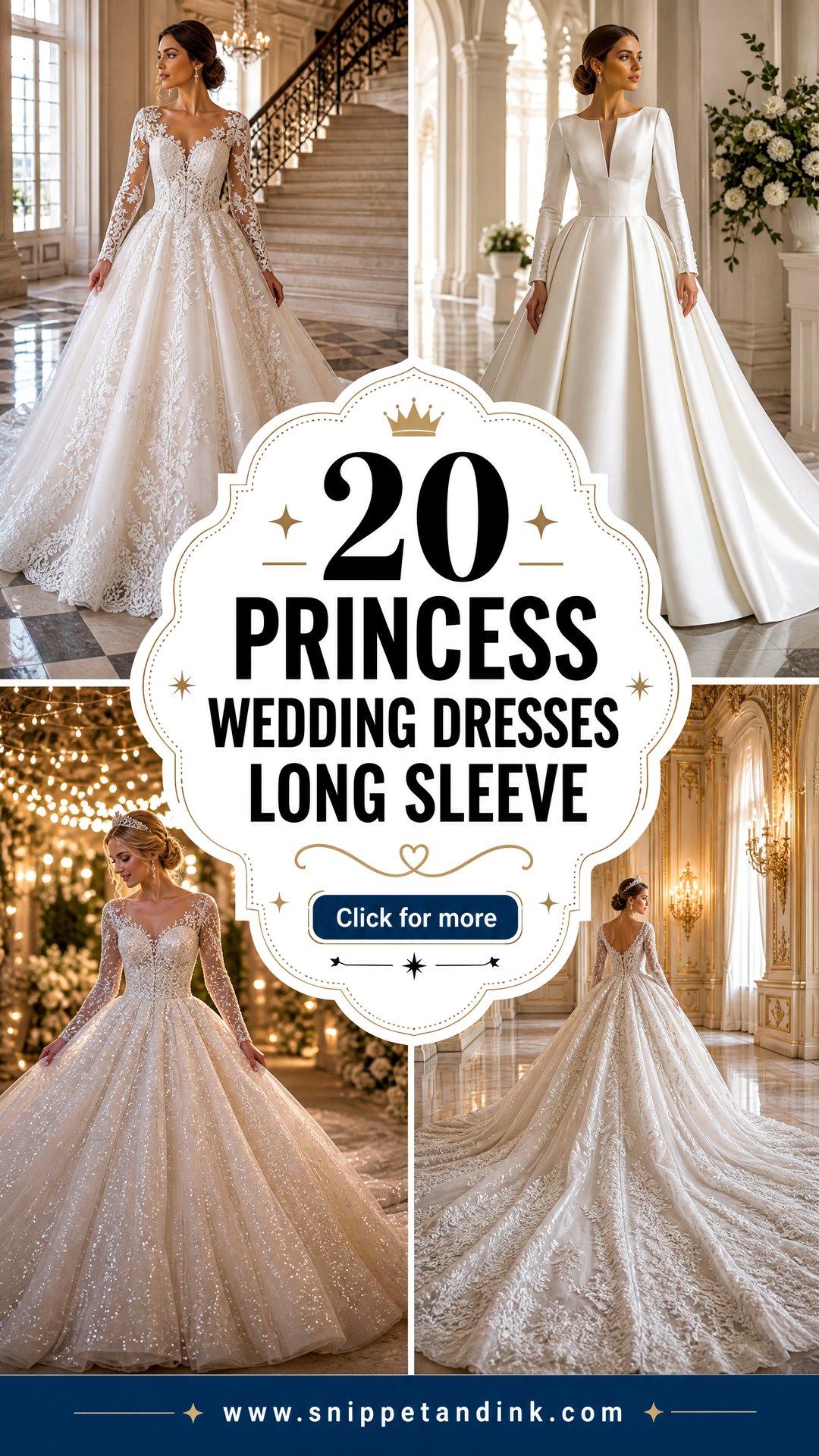
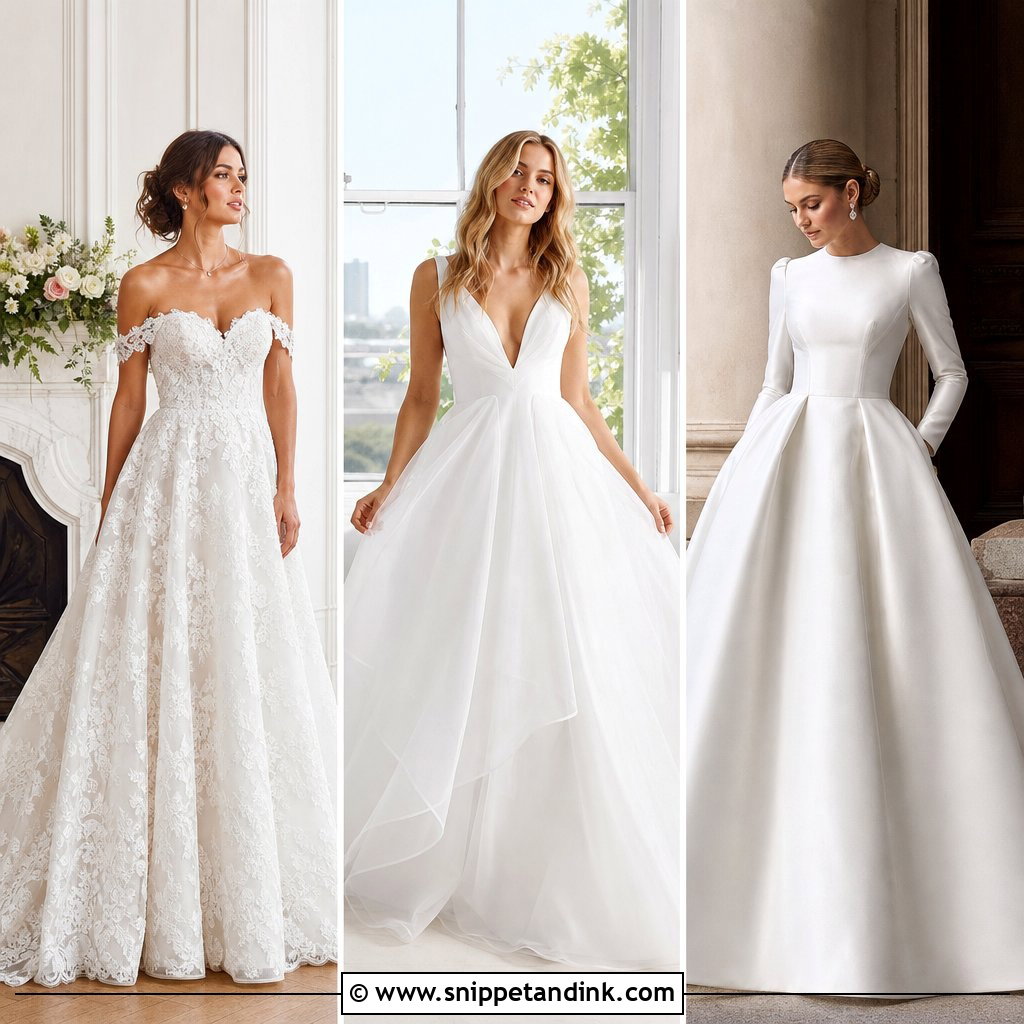
A princess skirt and a long sleeve pull in opposite directions. The skirt wants width and movement, while the sleeve asks the upper body to stay close, clean and fitted. When the two are balanced, you get one of the most regal bridal outlines there is. When they aren’t, the bride spends the day tugging at her cuffs. The gowns below cover lace, satin, tulle, beading, corsetry and illusion work, and I’ve noted with each one what I would pair it with and what I’d check at the fitting. Full skirts, heirloom-inspired lace, sheer mesh and dimensional flowers are all still showing up in bridal collections, so none of these will feel dated by the time you wear one.
Testing a Long Sleeve Before You Fall for the Skirt
Most brides judge a ball gown in the mirror from the front, arms down. That’s the one position you’ll barely hold on the day. A sleeve is cut into the armhole at a specific angle, and if that angle is wrong the whole bodice rises when you reach for anything. I run every sleeved gown through a short routine before we discuss alterations.
- Hug test: wrap both arms around someone taller than you. The bodice should stay put and the seams shouldn’t pull across your back.
- Bouquet hold: bend your elbows and hold something at waist height for a full minute. Tight lower sleeves start to ache here first.
- Cuff check: the hem of the sleeve should land at or just past the wrist bone. Longer cuffs end up in the cake and on the dinner plate.
- Sit down in the full skirt. Watch whether the sleeve fabric bunches at the inner elbow and whether lace mesh stretches open over the knuckle of the elbow.
Stretch lace and soft illusion mesh forgive a lot. Satin, mikado and crepe forgive almost nothing, so with those fabrics I’d book the extra sleeve fitting rather than hope it settles.
1. Lace Princess Wedding Dress With Illusion Sleeves
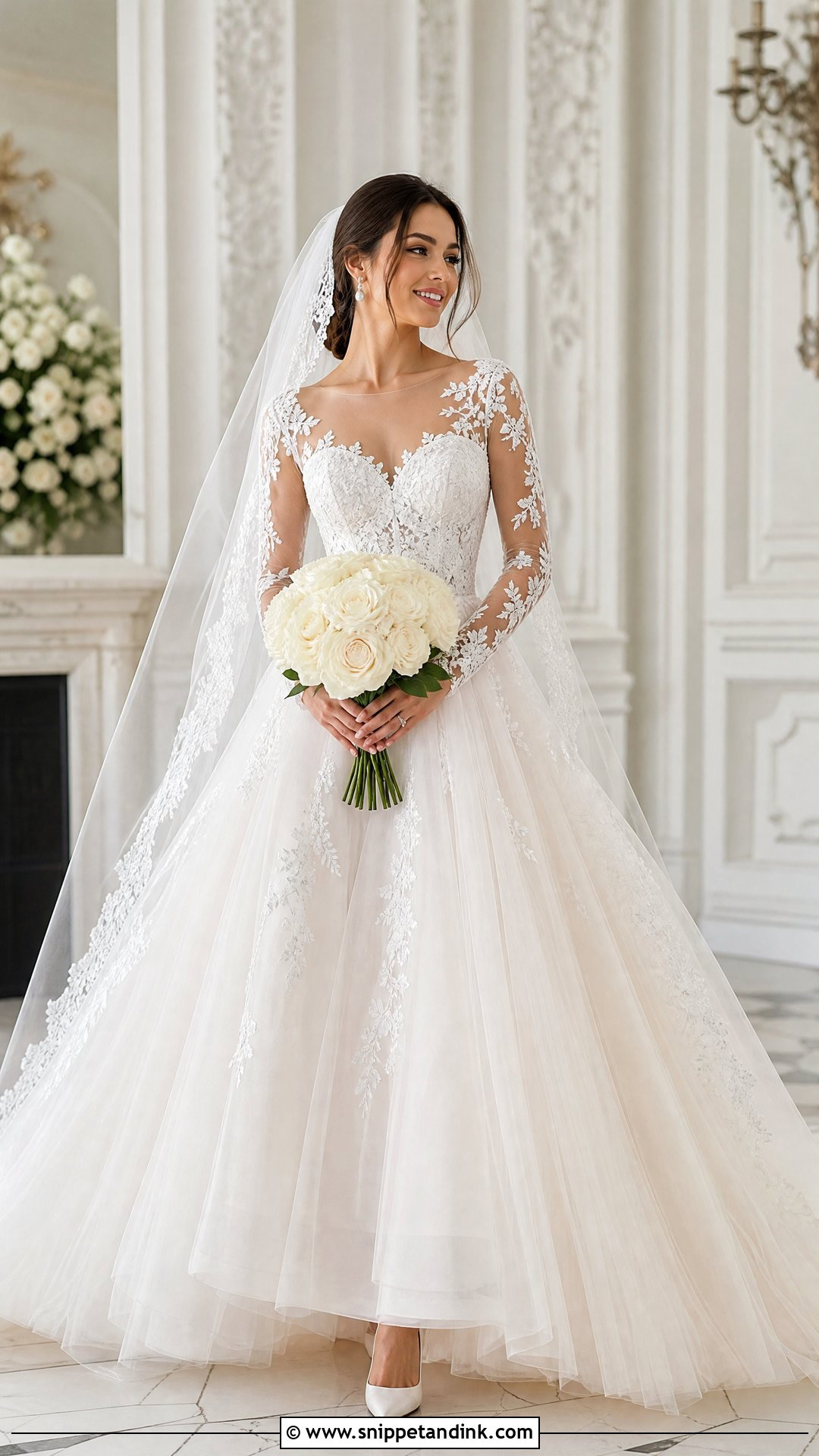
Illusion sleeves are the gentlest way into long sleeves, because the mesh carries the lace without adding bulk to the arm. The detail I look at first is the mesh colour. Ivory or white tulle sitting on deeper or warmer skin reads as a grey film in photos, so I ask the seamstress to match it to the bride’s skin before anything else. Under the fitted lace bodice, a layered tulle skirt keeps the weight low enough to dance in. Pointed ivory pumps, pearl drops, a lace-edged fingertip veil and a loose bunch of white roses finish it without crowding the appliqués.
2. Satin Princess Wedding Dress With Fitted Sleeves
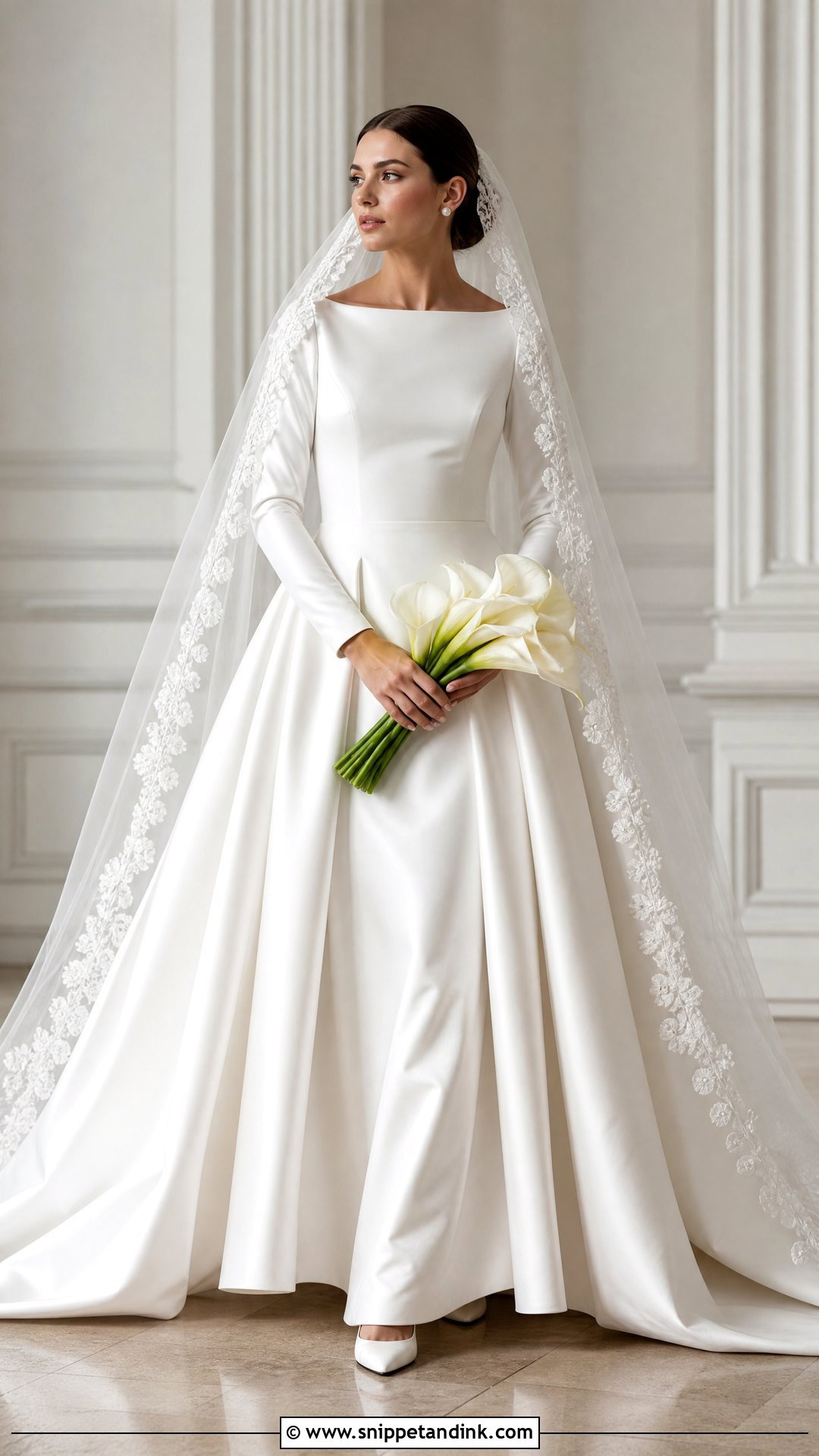
Satin is honest fabric. It shows every seam, every ripple from a badly cut sleeve, and every line from the wrong bra, which is why I’d only send a bride toward it if she trusts her seamstress. A fitted satin sleeve also creases at the inner elbow within the first hour, so expect soft folds there in candid shots. A bateau neckline steadies the volume of the skirt and frames the face well. Keep the rest quiet: pearl studs, a plain cathedral veil, closed satin heels and a tight posy of calla lilies. This one belongs in a ballroom or an old stone building, where the sheen has something to answer to.
3. High Neck Princess Wedding Dress With Lace Sleeves
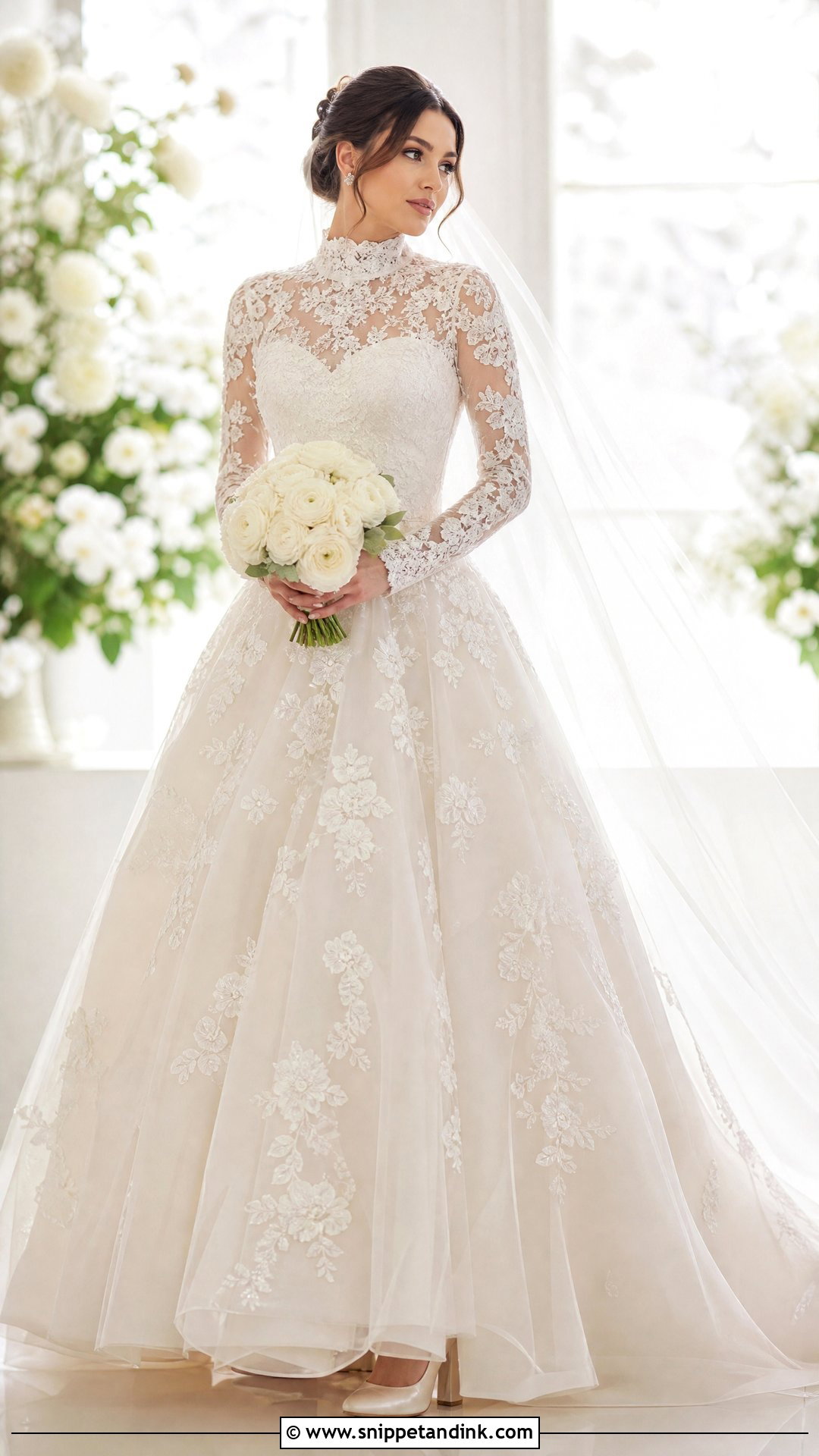
Brides who choose a high lace neck usually want to stop thinking about their neckline altogether, and this gown lets them. I’d make sure the torso has a soft opaque lining while the sheer lace runs up the throat and down the arms. Lace that buttons closed at the nape needs a half-size of ease, or it tugs every time you look down at your bouquet. Skip the necklace entirely. A low bun with a long plain veil pinned underneath, crystal studs, ivory block heels and a round ranunculus bouquet carry the rest, and a fine bracelet or family ring is all the extra jewellery it can take.
4. Off Shoulder Princess Wedding Dress With Long Sleeves
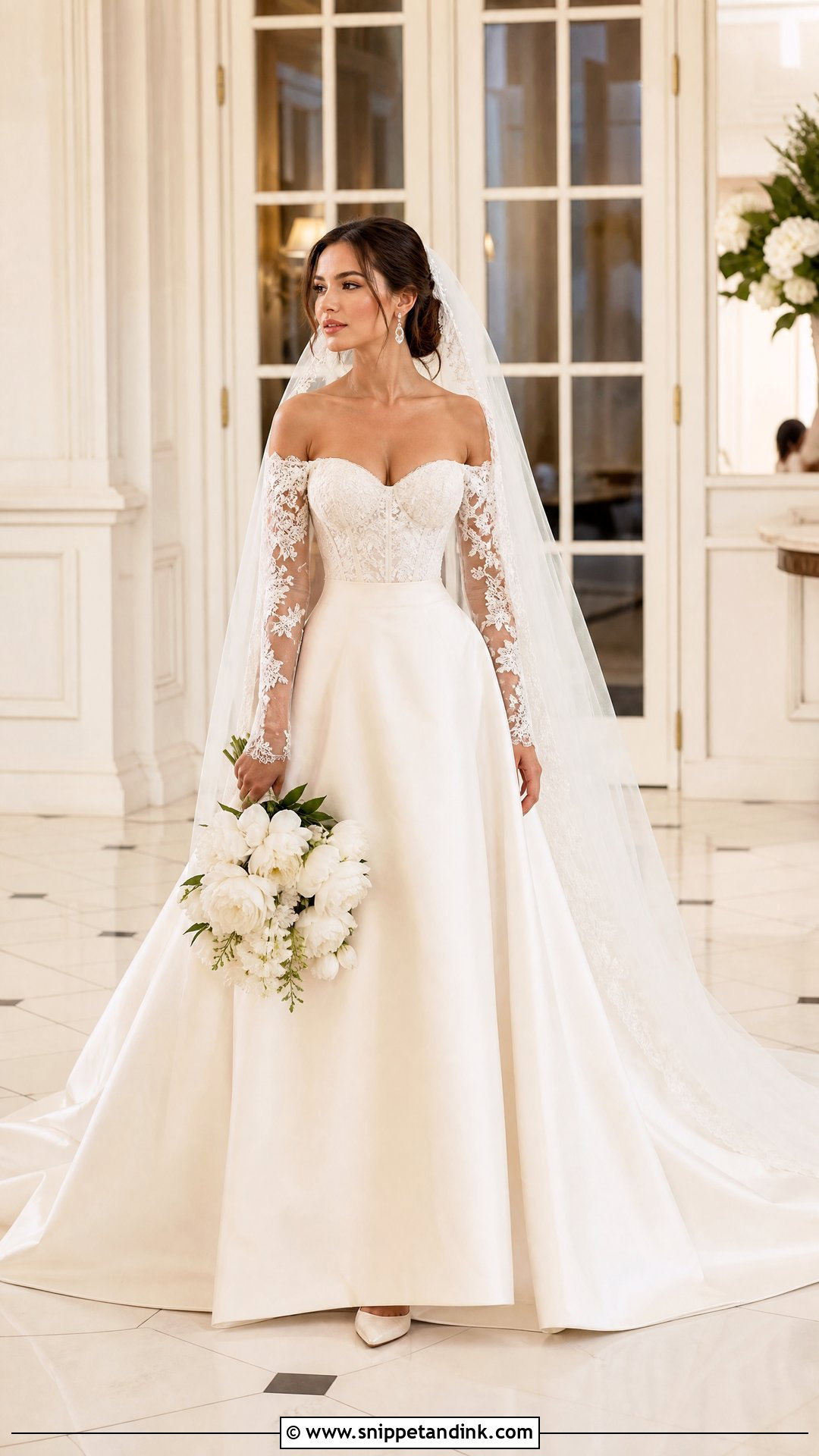
Here the shoulders do the talking, and the sleeves have a harder job than they appear to. An off-shoulder neckline with a full-length sleeve pins your arms lower than you’d expect, so I always ask the bride to raise both hands as if hugging someone taller. If the bodice lifts or the sleeves dig into the upper arm, the sleeve is anchored too tightly to the corset. Lace along the neckline and a sculpted satin or mikado skirt keep the proportions right. Add a fine pendant, teardrop earrings, a chapel veil, low ivory pumps and loose white peonies, and practise sitting before the final fitting.
5. Beaded Princess Wedding Dress With Sheer Sleeves
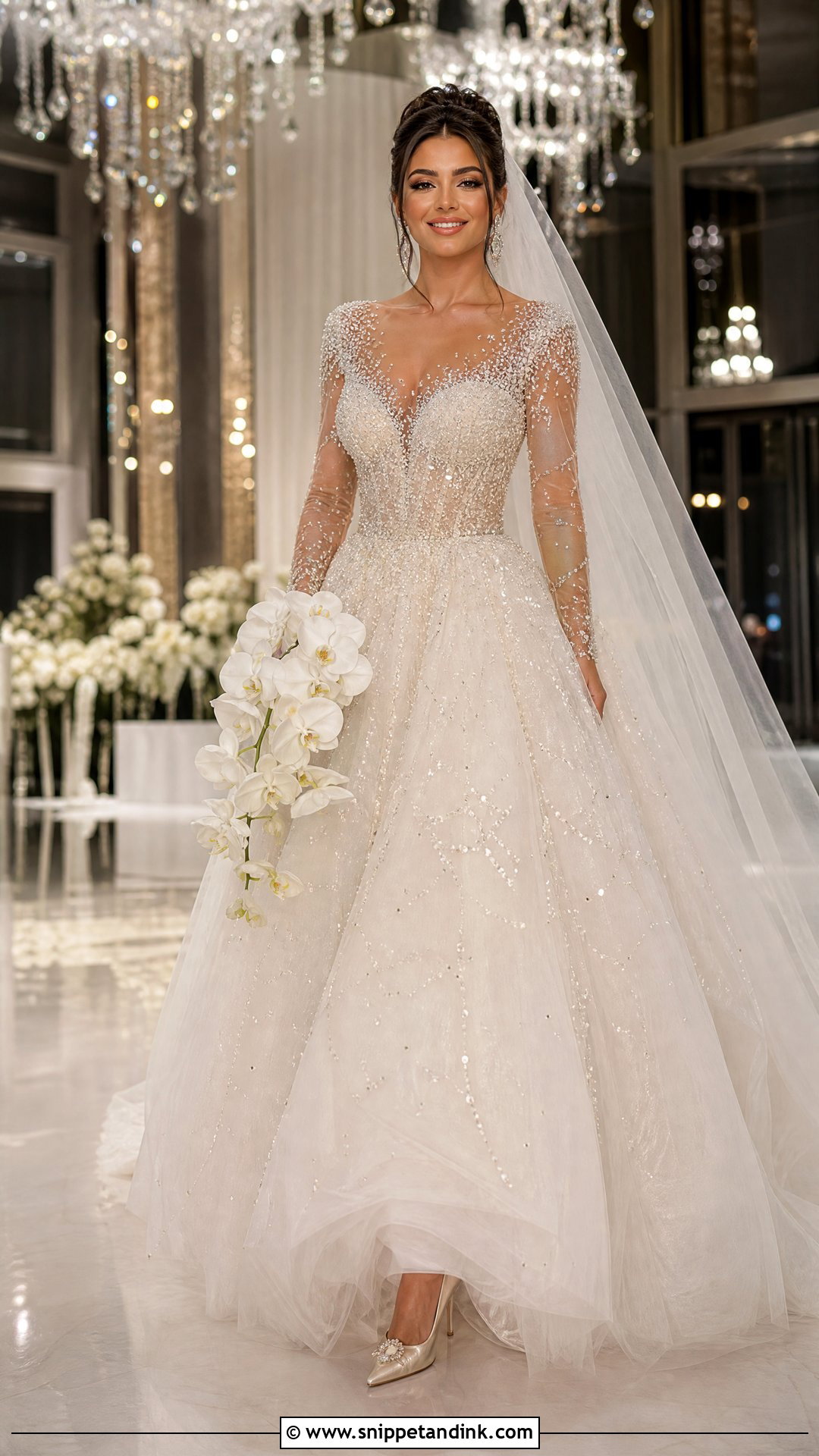
Beading carries an evening ceremony because it reacts to candlelight and low lamps in a way plain fabric can’t. I prefer it concentrated on the bodice and sleeves, thinning out into the tulle skirt, so the gown doesn’t feel like armour. Before you buy, turn the sleeve inside out. Beads stitched through to an unlined sleeve scratch the inner arm all evening, and that is one of the most common complaints I hear after a wedding. Crystal earrings, metallic ivory heels, a plain cathedral veil and white orchids suit it, with hair swept back off the shoulders so it doesn’t catch on the stones.
6. Mikado Princess Wedding Dress With Button Sleeves
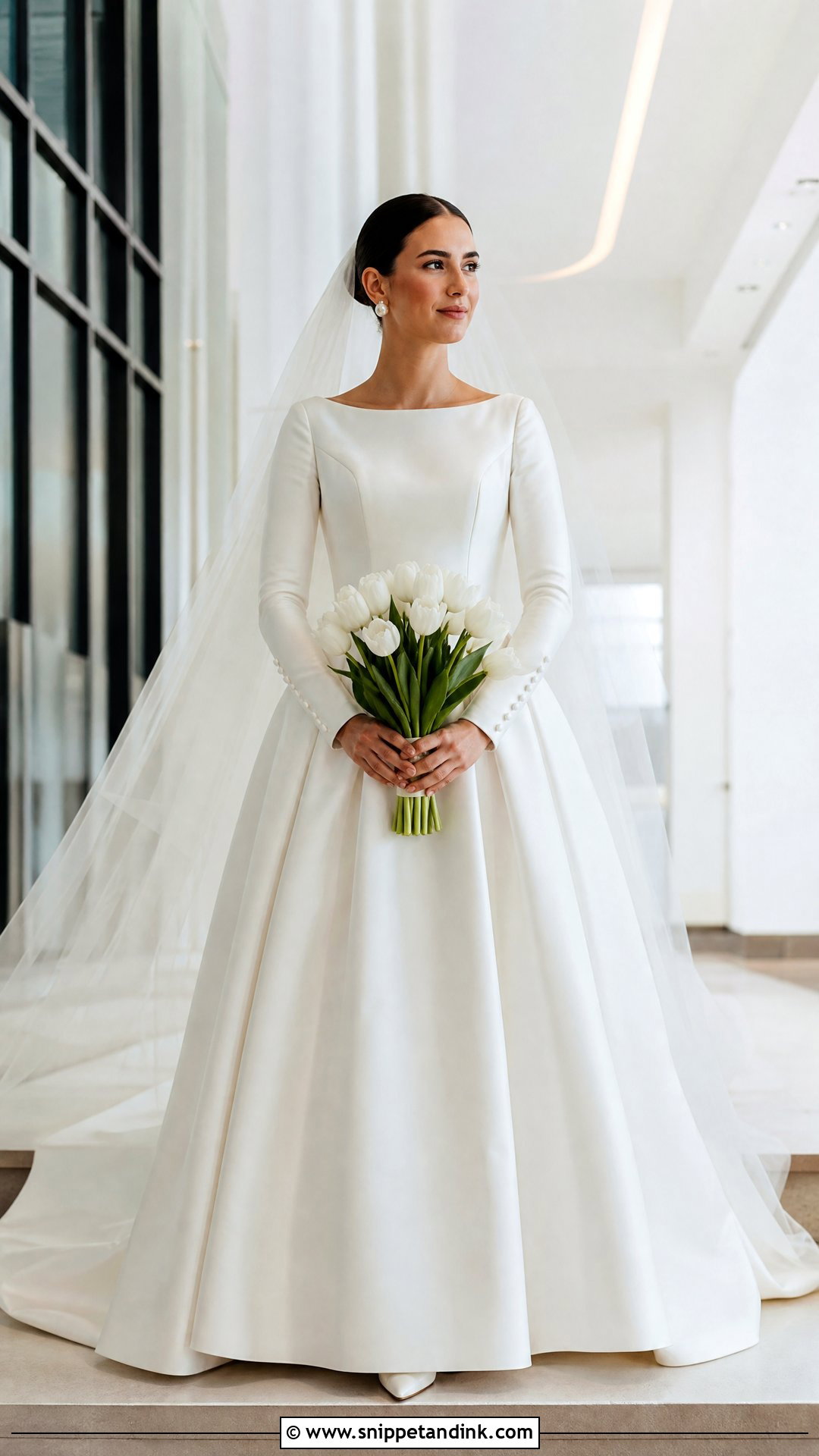
Mikado has enough body to stand on its own, which means the skirt gets its volume from pleats instead of petticoats. Box or wide knife pleats hold their shape all day and the dress stays lighter than a tulle ball gown of the same width. The flip side is that mikado forgives nothing at the shoulder, so cuffs that bunch at the wrist or a sleeve that pulls across the back will look like a mistake. Covered buttons from cuff to back seam, sculptural pearls, pointed heels, a clean cathedral veil and white tulips keep it modern. The proportions carry this gown, not ornament.
7. Floral Princess Wedding Dress With Appliqué Sleeves
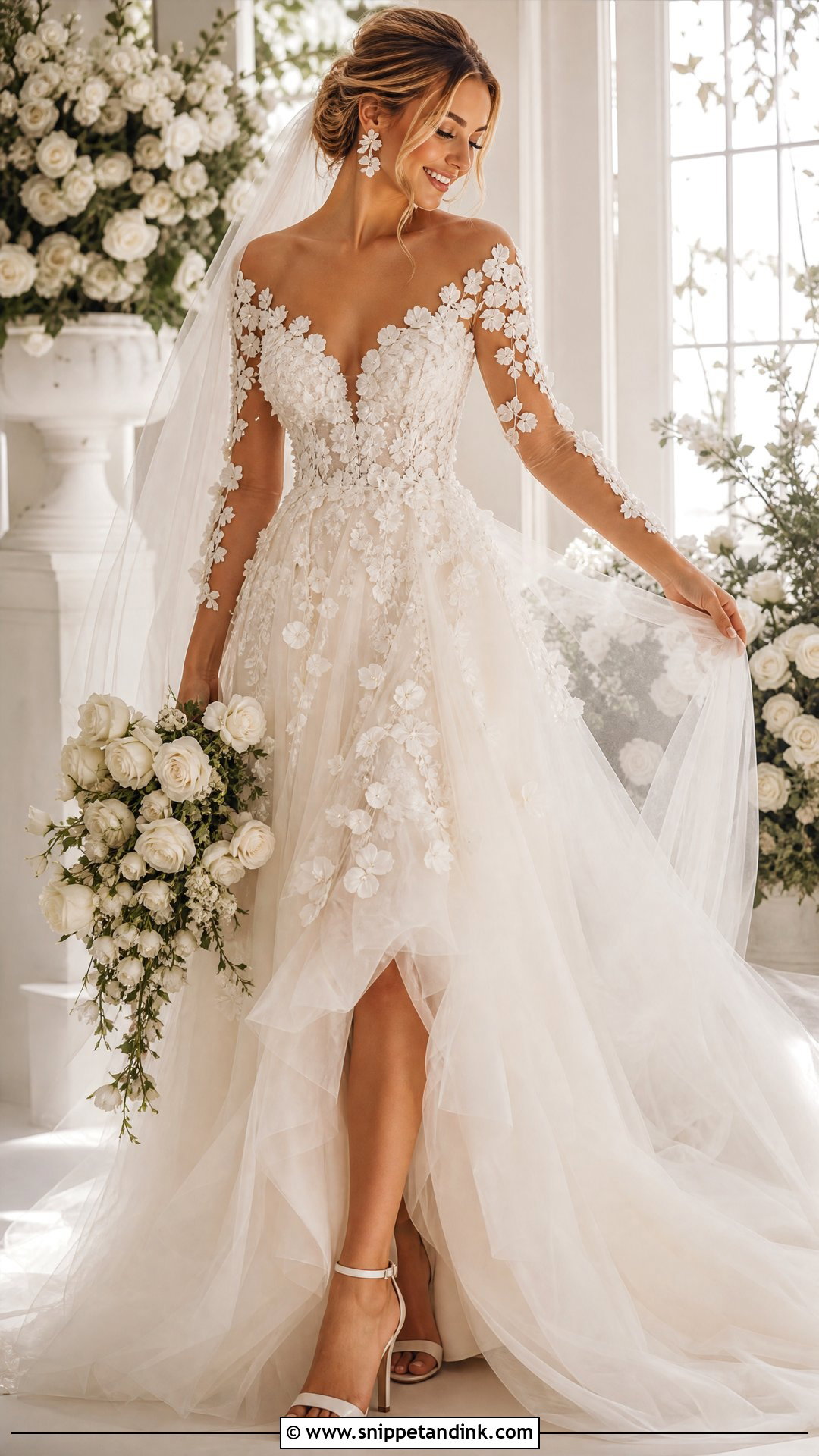
Raised petals catch on everything. That’s the first thing I test with a 3D floral gown: drape the veil over the sleeve and lift it off again. If the tulle snags, ask for a softer veil edge or move the comb lower. The flowers should be heaviest at the bodice and upper sleeve and grow sparse toward the hem, which keeps a petite bride from disappearing under them. Small floral studs, a sheer fingertip veil, ankle-strap heels and sweet peas with garden roses sit alongside the appliqués without copying them, with a low textured bun to finish.
8. Square Neck Princess Wedding Dress With Long Sleeves
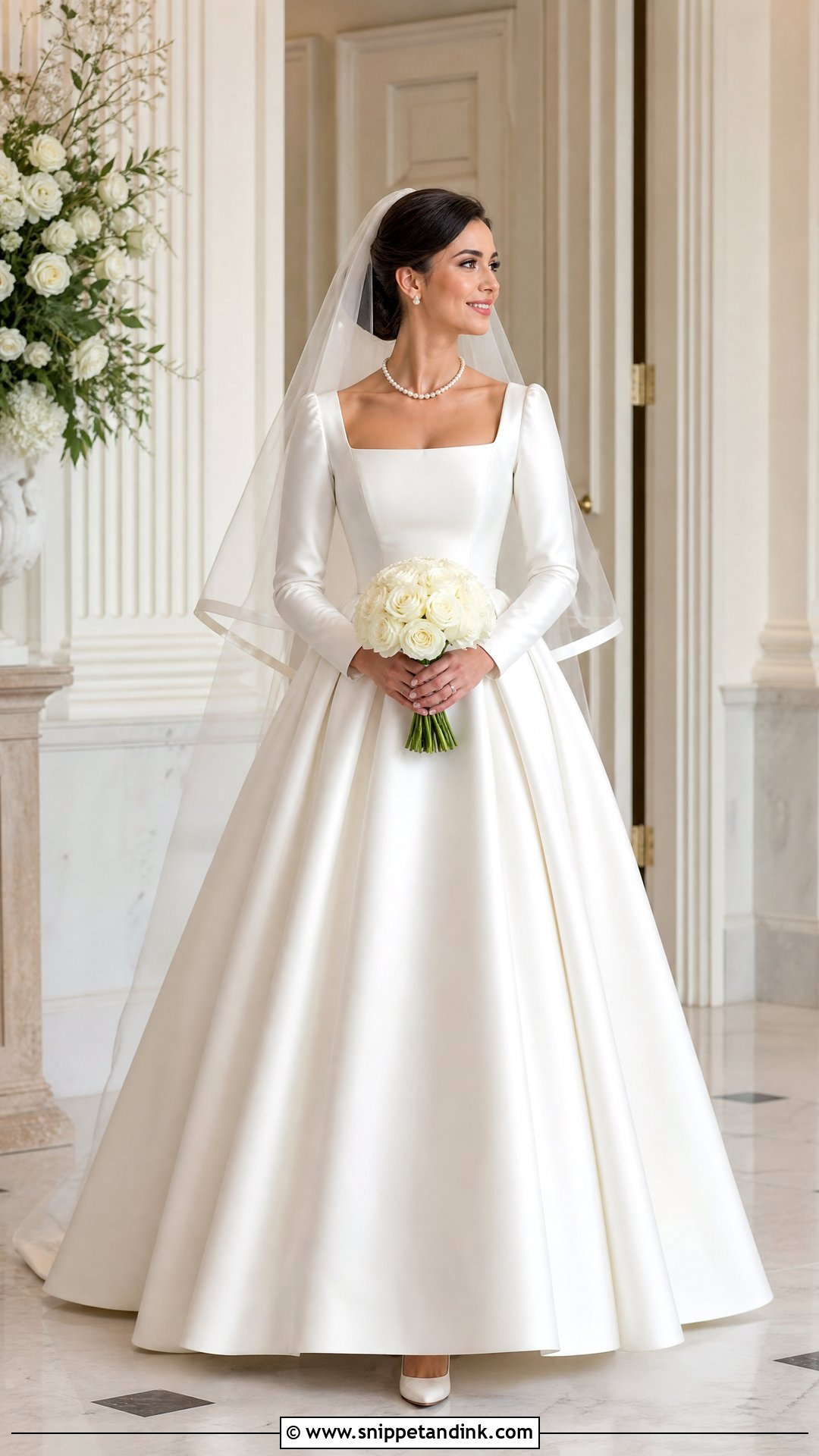
A square neck gives the collarbone a frame and brings a full ball gown slightly forward in time. Its weakness is the corners. If the bodice isn’t boned properly, the corners pull inward or gape when you lean, and once you notice it you’ll see it in every photo. I check that the neckline lies flat while the bride bends to sign the register. Smooth fitted sleeves and either a satin or plain tulle skirt work here. A short pearl necklace, pearl-and-crystal earrings, closed pumps, a long veil with a narrow satin edge and a neat white rose bouquet keep it tidy.
9. Sweetheart Princess Wedding Dress With Lace Sleeves
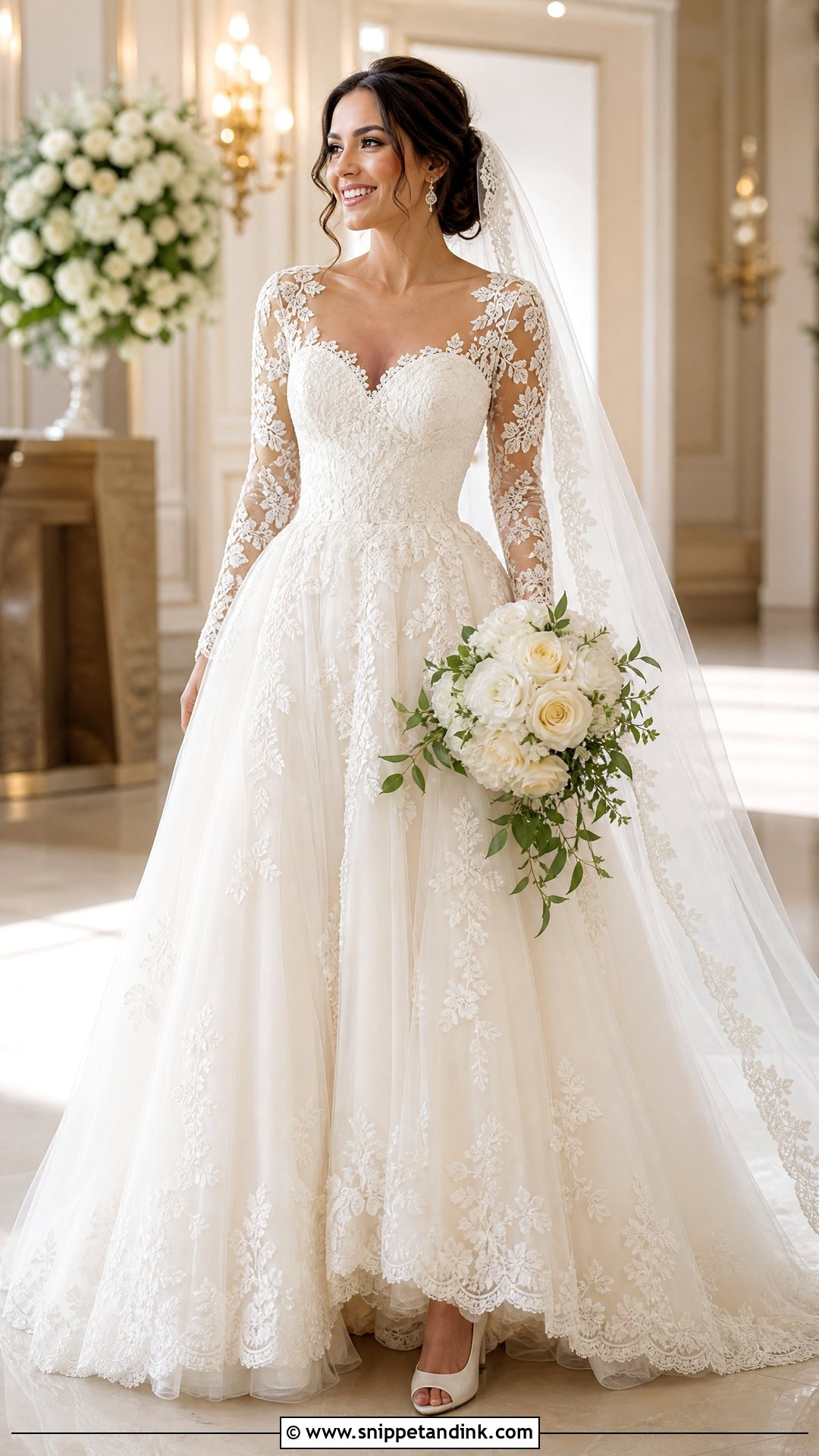
Plenty of brides want a sweetheart and sleeves at once, and illusion mesh lets you have both. The curve of the bodice sits under sheer net that continues into long lace sleeves, so you keep the shape with extra support. The sweetheart dip should follow your bust line. Too high and it flattens you, too low and the mesh shows above it as a strange window. A corseted waist with appliqués at the hip bridges bodice and skirt. Pair with a fine pendant, pearl earrings, a lace-trimmed chapel veil, moderate ivory pumps and a loose mix of roses, lisianthus and eucalyptus.
10. Corset Princess Wedding Dress With Detachable Sleeves
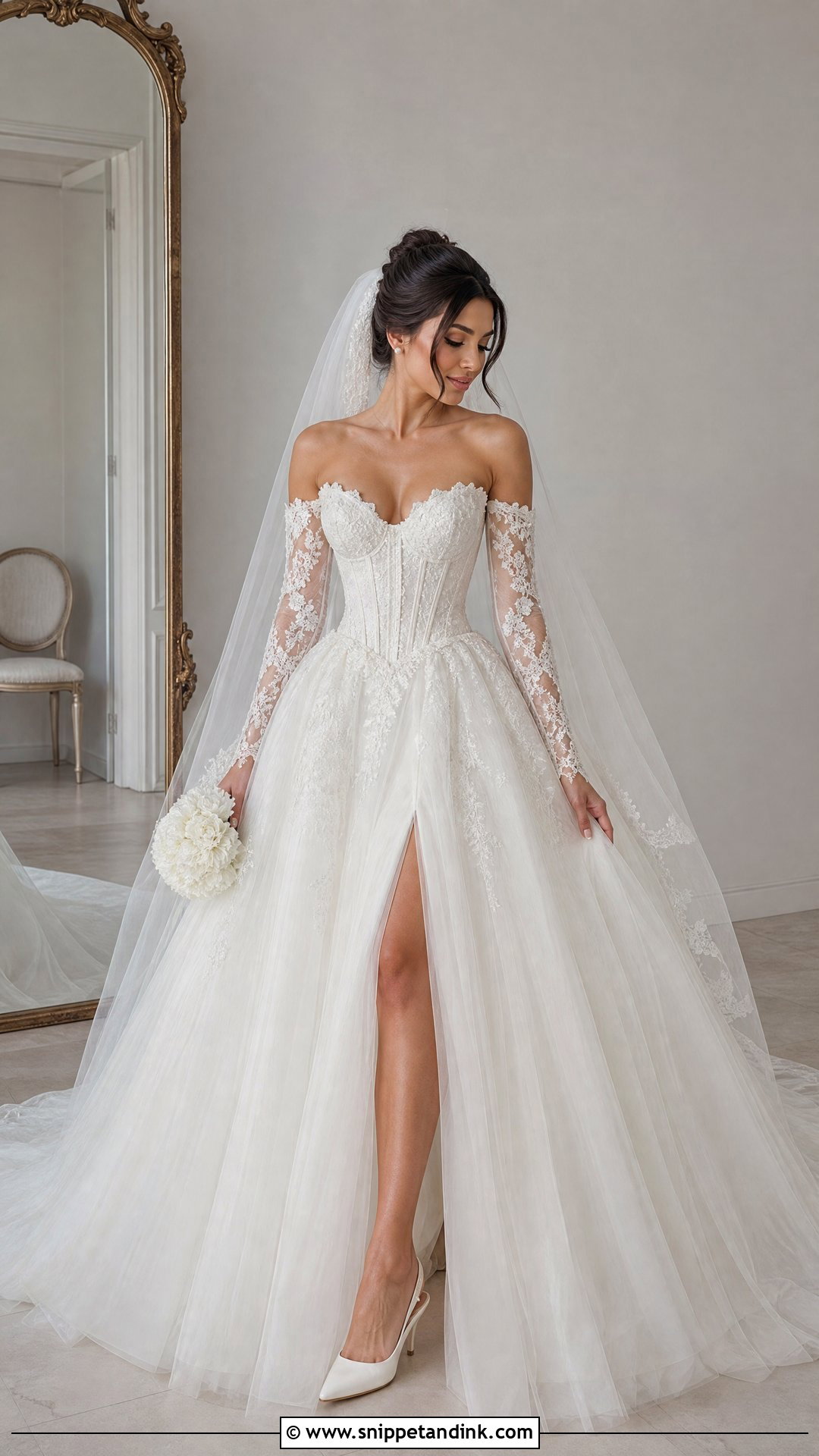
Detachable sleeves solve the ceremony versus dance floor problem without a second dress. The sleeves usually fasten at the armhole with tiny snaps, hooks or a fine elastic loop, and that is where they fail. I ask brides to bring them to every fitting, put them on, take them off and put them on again, because if the fastening shows or slips on day one of alterations it will on the wedding day too. Matching lace or appliqué mesh makes them look built in. Start with a cathedral veil and pearl earrings, then unclip the sleeves for the reception. Slingbacks and a structured bouquet suit both versions.
11. Vintage Princess Wedding Dress With Juliet Sleeves
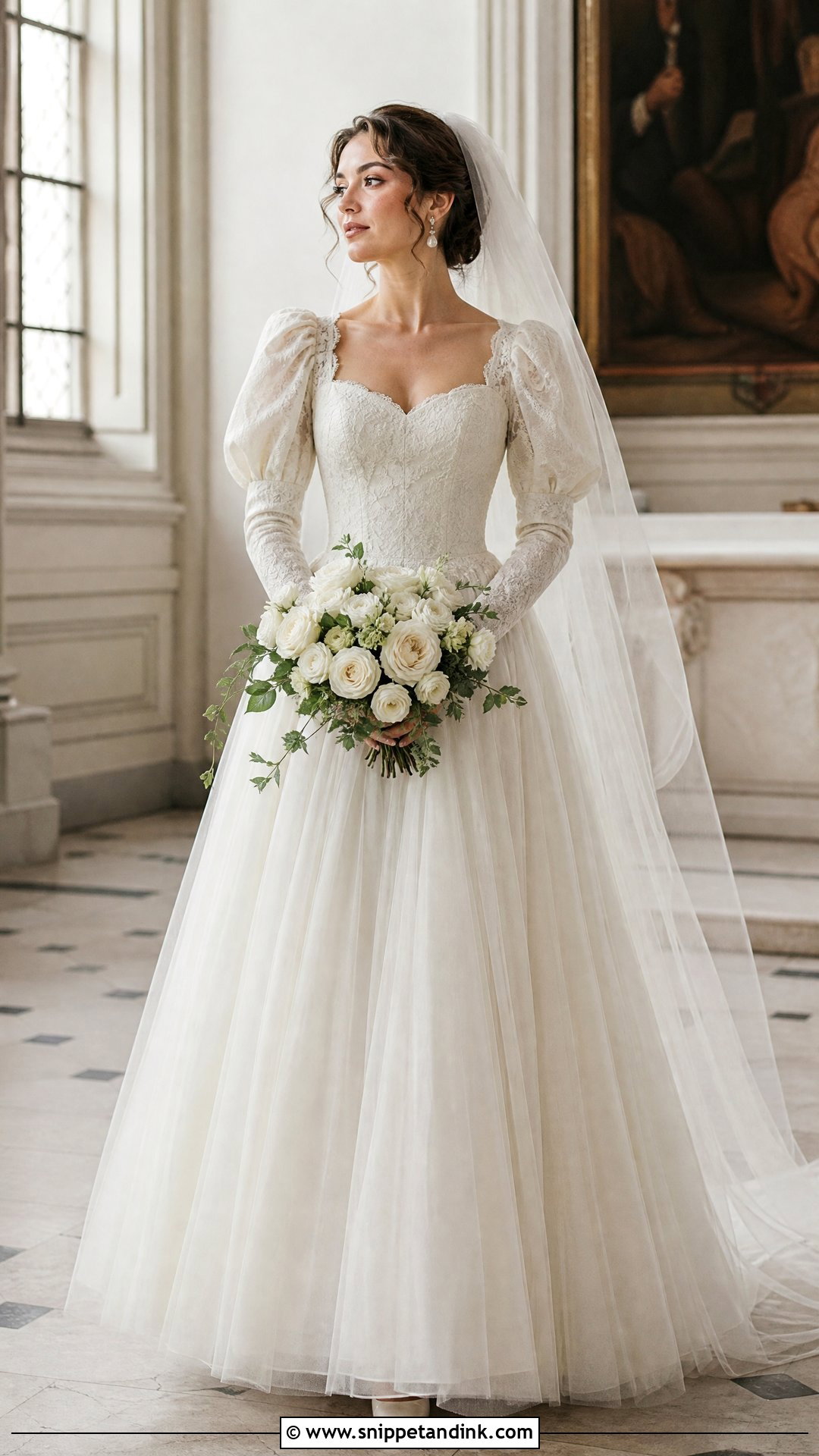
Juliet sleeves puff gently at the top and then fit closely to the wrist, so the shoulder line becomes the focal point. A modest V-neck stops that puff from widening the upper body. The lower sleeve is where I find problems: it’s often cut tight enough that bending the elbow to hold a glass becomes a struggle, so ask your seamstress to let it out a little at the elbow if you feel any pull. A lace bodice and a soft tulle or silk organza skirt suit this sleeve. Pearl drops, rounded ivory shoes, a chapel veil under a soft updo and garden roses keep it nostalgic without tipping into costume.
12. Minimalist Princess Wedding Dress With Crepe Sleeves
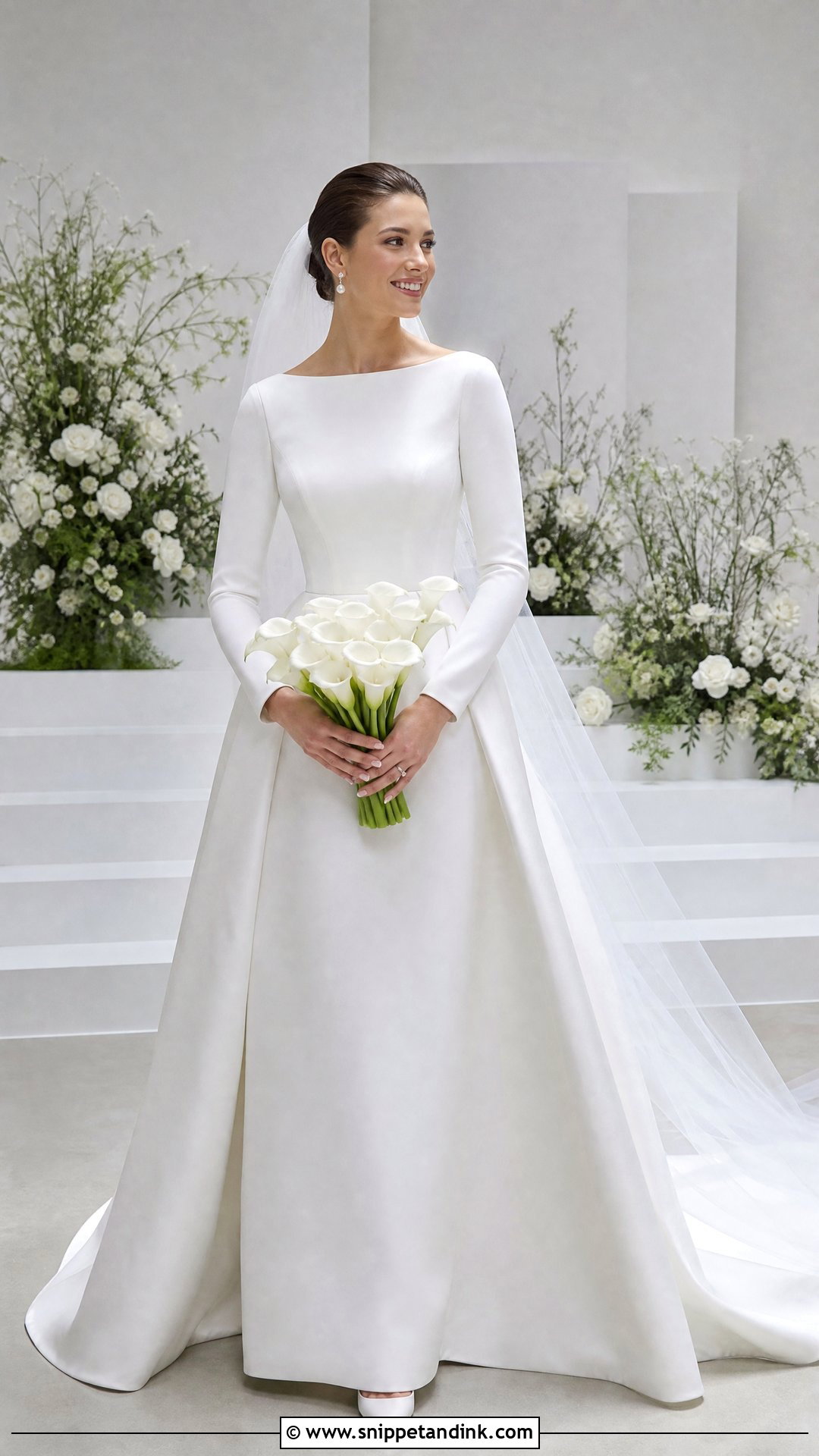
Minimal doesn’t have to mean small. A smooth crepe bodice and fitted crepe sleeves over a clean satin or mikado skirt still give you a full princess outline. With no lace or beading to distract the eye, every seam is on display, so seam placement and the exact length of the cuff matter more here than in any other gown on this list. I’d keep the neckline simple and the accessories sharp: sleek pearls, pointed pumps, a plain cathedral veil, a structured mini bag for portraits and anthuriums or callas with barely any green. It’s still a traditional princess wedding dress in outline, just stripped back.
13. Modest Princess Wedding Dress With Full Lace Coverage
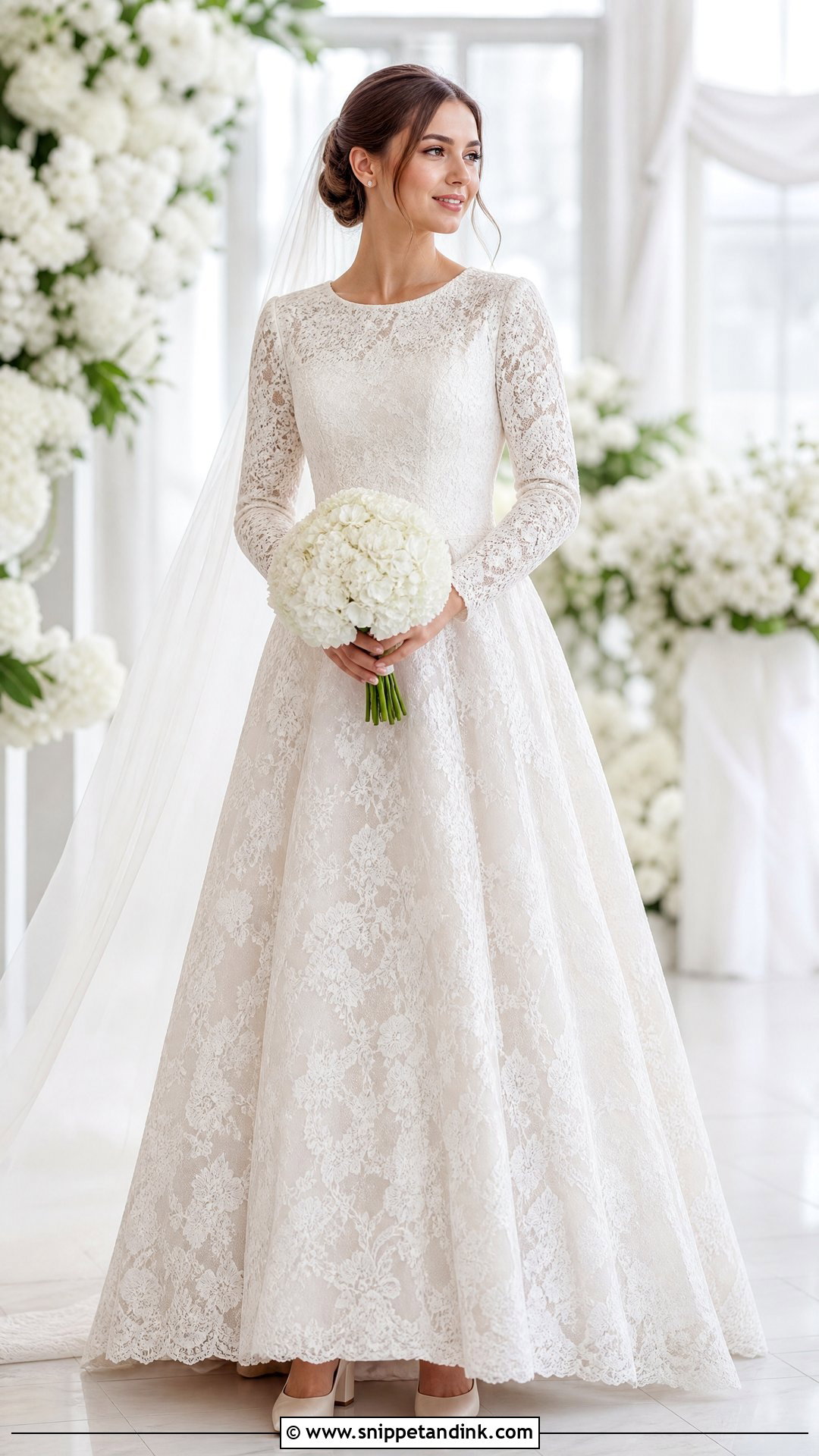
Full lace coverage done well should not feel like a heavy dress. Ask for an opaque lined bodice and sleeves lined to the wrist, but insist on a breathable lining such as cotton or a soft lightweight net rather than polyester, because a covered gown traps heat quickly. Leave enough ease at the elbow to lift your arms during the first dance. The lace on the wide tulle skirt holds the interest, so stop at pearl studs. Ivory block heels, a long veil on a plain comb, and hydrangeas with roses scaled to the skirt complete it.
14. Winter Princess Wedding Dress With Velvet Sleeves
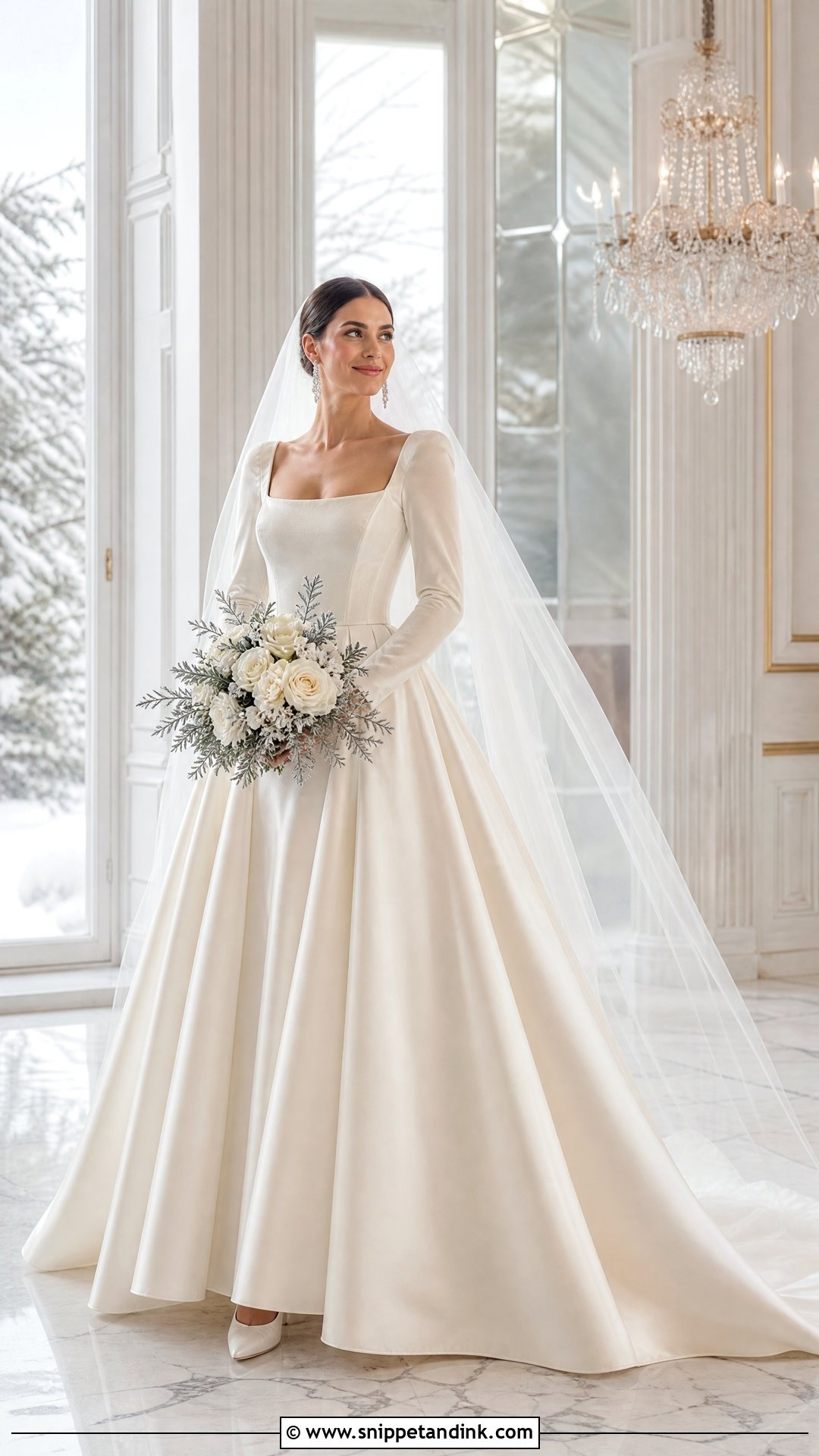
Velvet sleeves are the most practical answer to a winter wedding with a cold church and a hot reception room. Pair them with a structured velvet bodice and satin skirt, or set them against smooth mikado for a quieter contrast. Stick to ivory or soft white velvet; a creamier tone will look yellow next to bright white tulle. Velvet also crushes where it’s pressed, so don’t sit in the car with your arms folded on the way to the ceremony. Crystal earrings, closed pumps, a long clean-edged veil and white roses with anemones and silvery greenery round it off.

15. Glitter Tulle Princess Wedding Dress With Long Sleeves
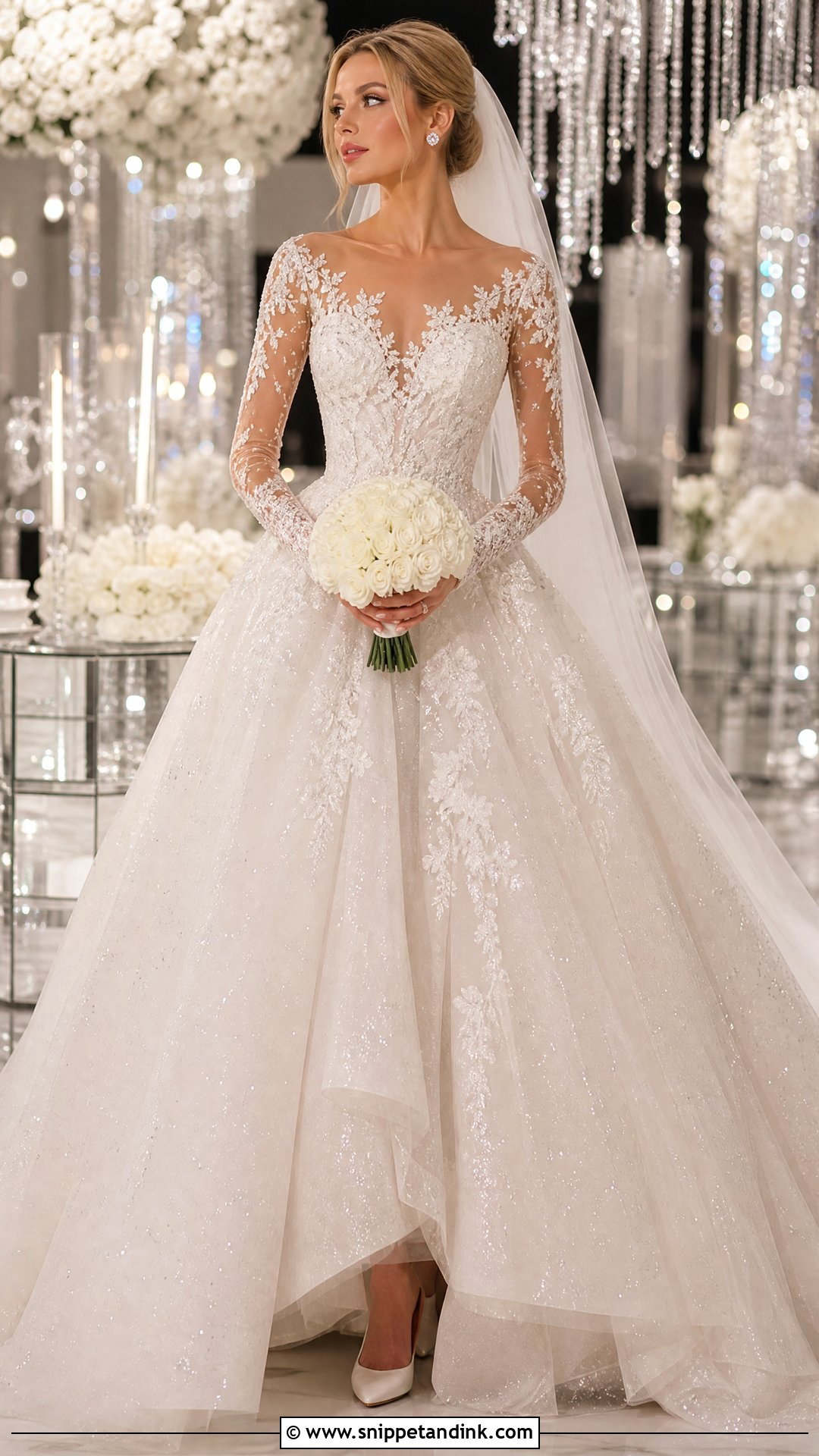
Glitter tulle shows its best side in motion, as the skirt swings and catches light. I check two things before a bride commits. First, that the sparkle is even across the layers rather than clumped in patches. Second, that it doesn’t shed: rub a corner against a dark sleeve and see what comes off, because cheaper glitter ends up on your groom’s suit and the car seats. A fitted lace bodice and sheer sleeves balance the shimmer. Keep the accessories plain with crystal studs, ivory pumps, an untrimmed tulle veil and a compact white rose bouquet, and wear your hair off the sleeves.
16. Basque Waist Princess Wedding Dress With Lace Sleeves
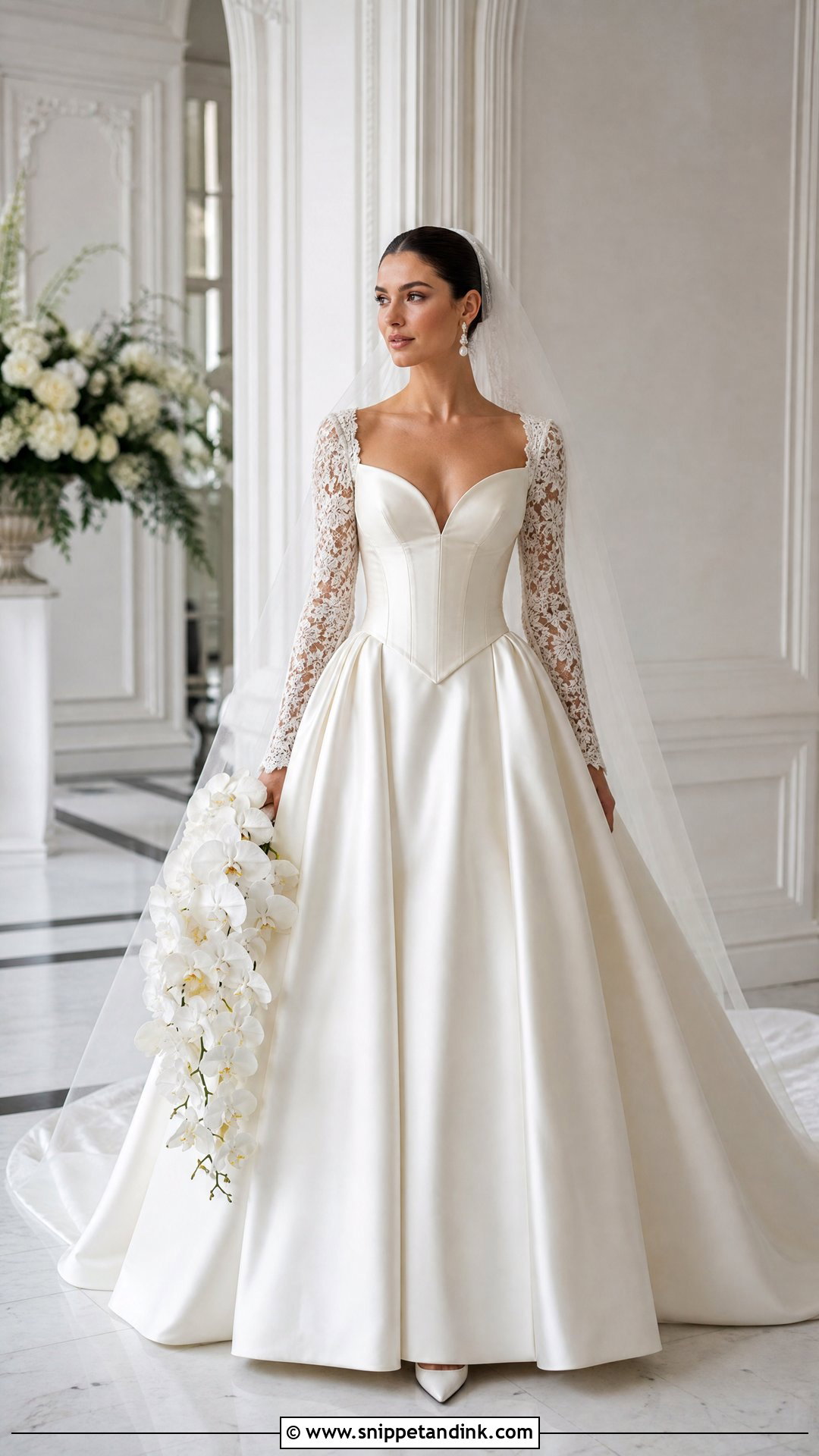
A basque waist dips into a point at the centre front, which lengthens the torso and gives the gown that storybook royal line. The construction has to be right. A poorly boned point digs into the hip bones the moment you sit, so I ask brides to sit through a full five minutes at the fitting. Fitted lace sleeves and a portrait or scoop neck soften the structure. The skirt should start smoothly at the hips without a shelf. A long veil, pearl drops, pointed shoes and a cascading orchid and rose bouquet repeat the vertical line of the waist.
17. Drop Waist Princess Wedding Dress With Sheer Sleeves
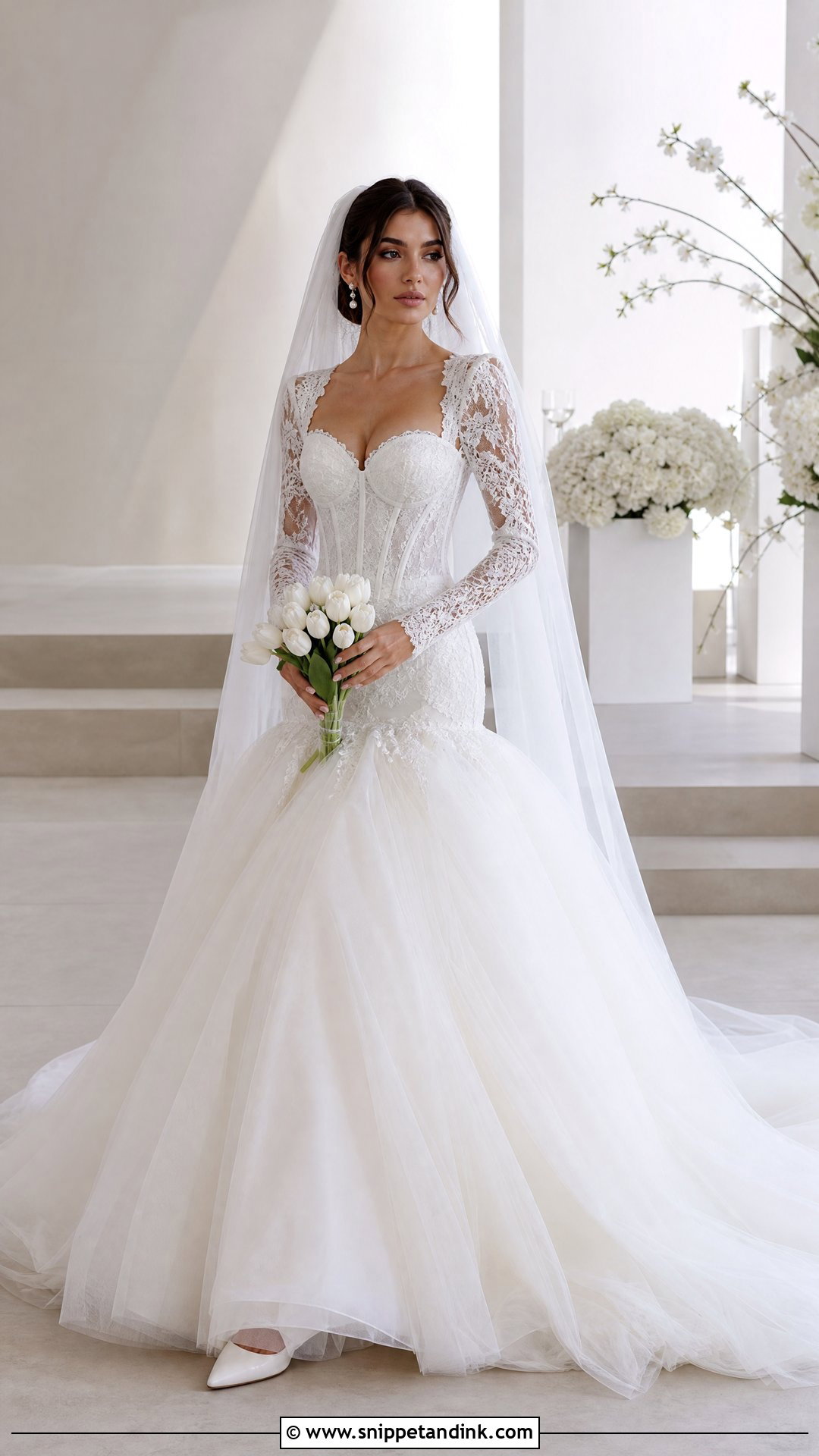
A drop waist holds the fitted shape past the natural waist, so the skirt opens lower and the torso looks longer. It suits tall and long-waisted brides most easily. If you’re shorter in the body, the volume starting at the hip can shorten your legs, and I’d try it on before buying from a picture. Climb a few steps and sit at the fitting, because the bodice now rests on the hips. Flexible boning helps. Sheer lace sleeves, a curved neckline, pearl-and-crystal earrings, satin heels, a chapel veil beneath a polished bun and simple tulips suit it.
18. Royal Princess Wedding Dress With Cathedral Train
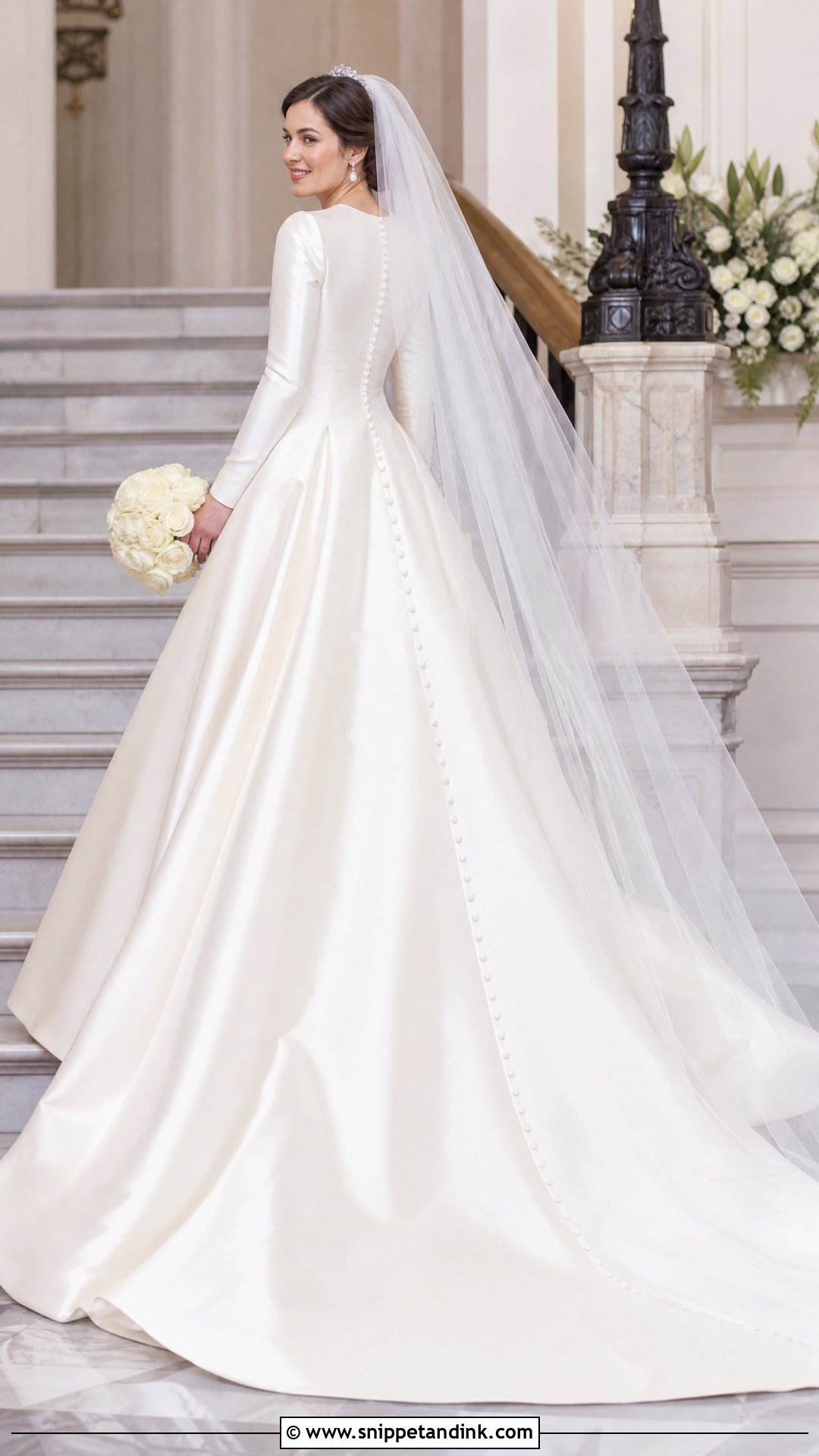
A cathedral train is the moment every guest turns around for, and the hours after it are where planning matters. You’ll need a bustle, and on a skirt this full I prefer a French or under-bustle with several ribboned points so the weight is spread out. Ask the seamstress to number the ties and teach whoever will help you, because doing it in a dim corridor for the first time is rarely successful. Buttons down a long-sleeve satin or lace bodice draw the eye toward the train. A cathedral veil, pearl earrings, satin pumps and a formal white rose bouquet are plenty; skip bold jewellery.
19. Blush Princess Wedding Dress With Floral Sleeves
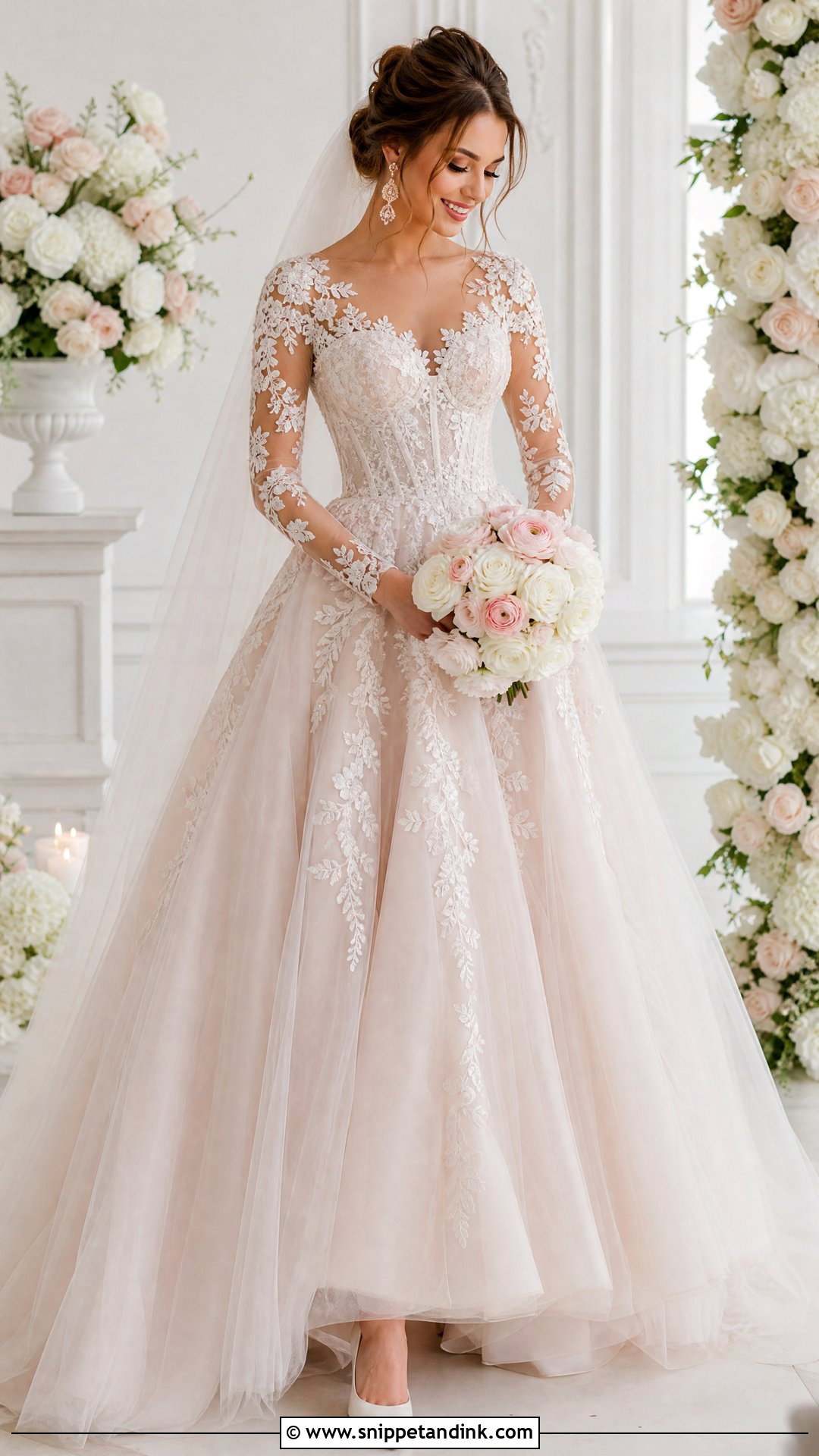
Blush lining under ivory lace makes each appliqué easier to see, because the flowers stand out against a warmer base. The risk is the shade itself. Bridal-shop lighting is warm and kind, so I always take the gown or a swatch to a window and look at it against the bride’s skin in daylight, where some blushes turn peach and others look grey. A corset bodice, ivory tulle skirt and floral illusion sleeves suit the lining. Rose-gold earrings, neutral ivory pumps, a soft-white plain veil and ivory roses with pale pink ranunculus pull the colours together.


20. Plus Size Princess Wedding Dress With Supportive Sleeves
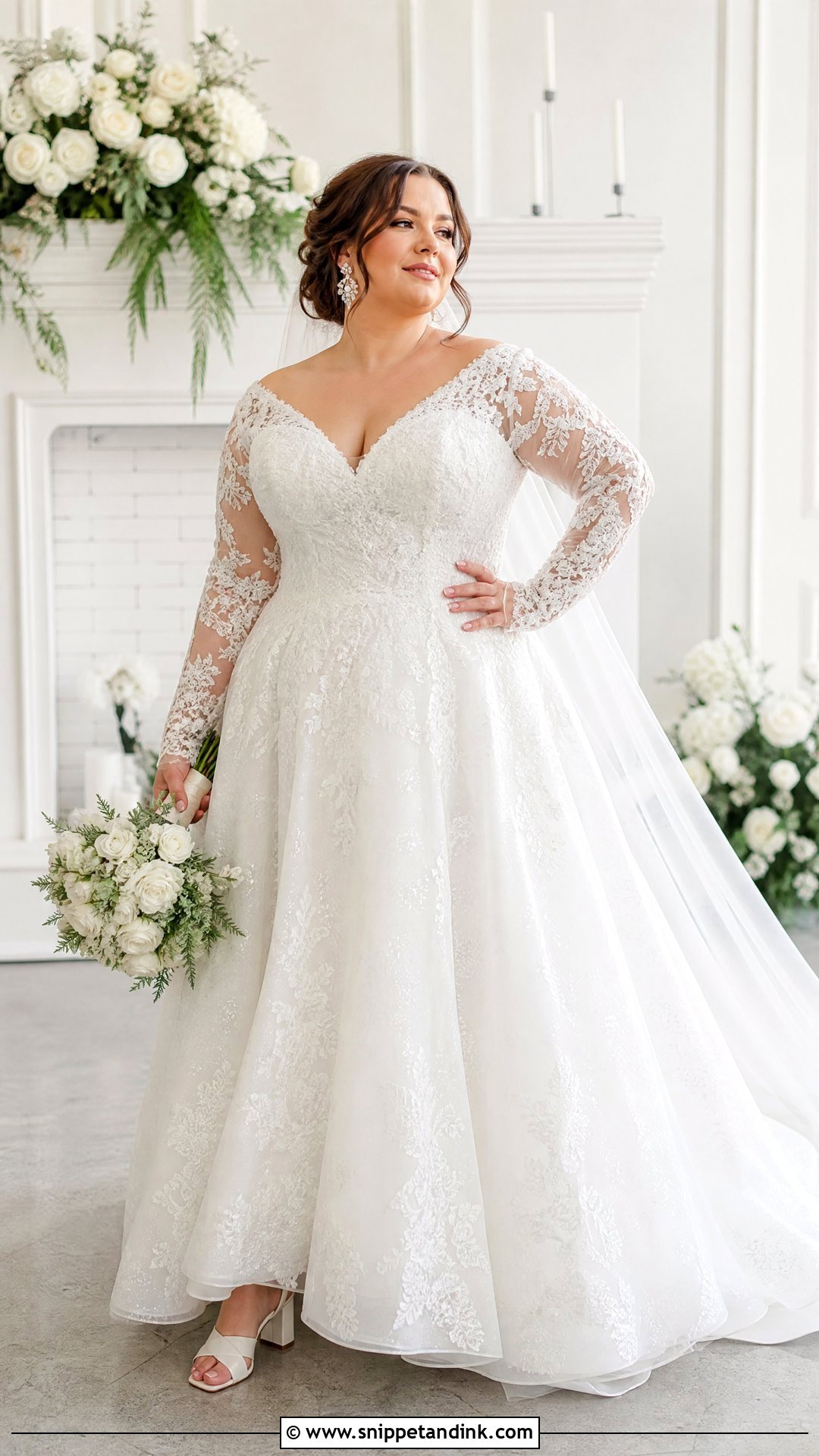
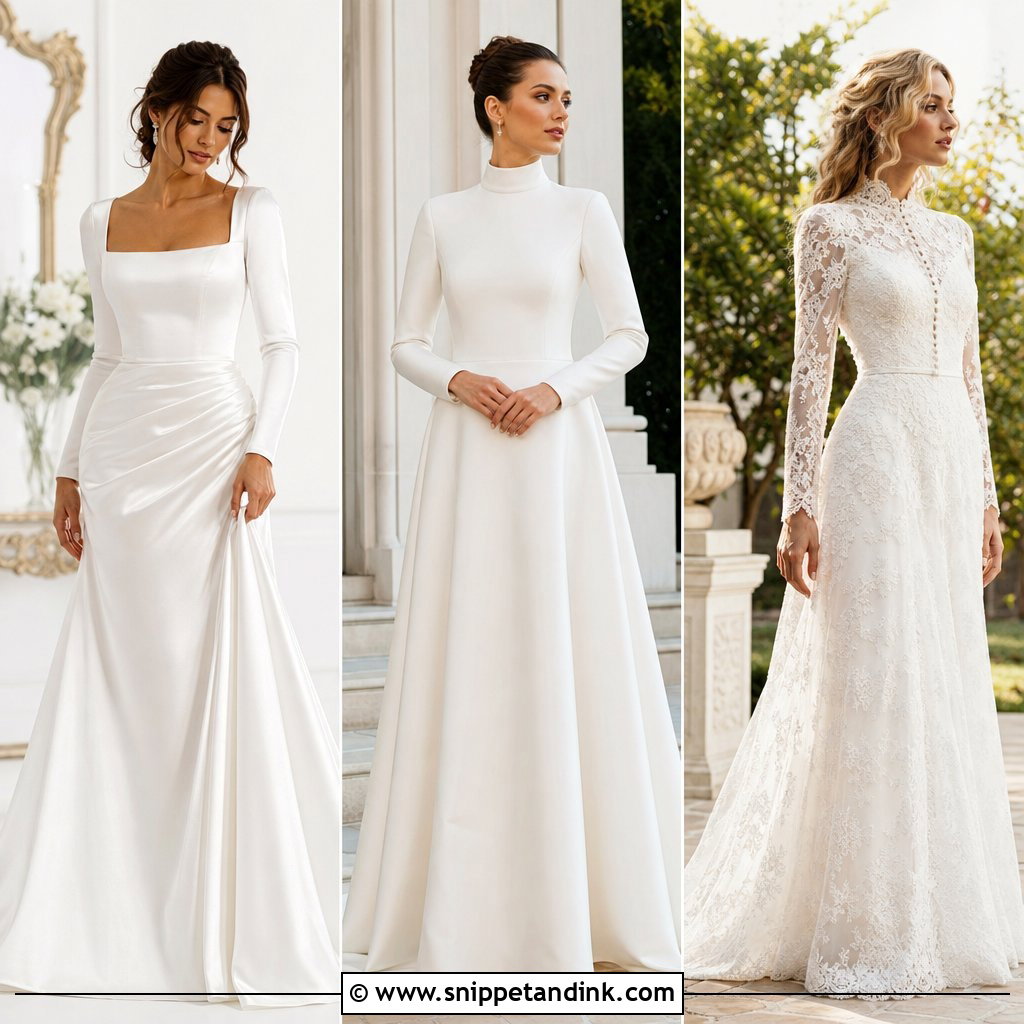
A beautifully constructed princess gown for a curvy bride starts with what’s inside the bodice: flexible boning, a firm waistband and a built-in bust structure. Sleeves are where plus-size gowns most often go wrong. Many are cut from a straight sample pattern, so they’re tight at the bicep and loose at the wrist. Ask for the sleeve to be graded to your arm, with enough room to raise it fully. An A-line or gathered ball gown skirt slides over the hips, and the neckline depends on the coverage you like. Supportive block heels, statement earrings, a light chapel veil and a mid-sized bouquet keep things proportioned.
A Realistic Order and Alteration Timeline
Sleeved ball gowns usually take longer than strapless ones, simply because there’s more fabric to adjust. Many bridal shops quote several months for a made-to-order gown to arrive, and timings vary a lot by designer, so ask before you sign anything. As a working rule, I like brides to order around nine months to a year out.
What happens at each fitting
The first fitting, often two to three months before the wedding, deals with the bodice and waist, since the sleeves hang from them. Sleeve length and width come next, once the shoulder is settled. Hemming always comes last, and only in the shoes you’ll actually wear. Bring the right bra or shapewear to every appointment, or the fit will shift by the next one.
Warm rooms and heavy skirts
A full skirt and long sleeves together hold a lot of heat. For a summer date, I’d look at illusion mesh or unlined lace sleeves and ask whether the petticoat can lose a layer of tulle. For winter, velvet or lined satin earns its keep in a cold church, though the reception room will still be warm once dancing starts. A small kit with blotting papers, a fan and fashion tape helps either way.
Sleeves That Still Let You Hug Everyone
A long-sleeve princess gown is right when it looks grand from the back of the church and still lets you move like yourself up close. Lace gives you the romance, while satin, mikado, velvet and crepe give a cleaner line, and the neckline, waist point and train length change the whole outline. At each appointment, walk, sit, turn and lift your arms, then look at the gown by a window and in phone photos from a few angles. Let the accessories follow the dress, not compete with it. Get the fittings right and you’ll end up with a gown that feels elegant, personal, and unforgettable from every direction.
You'll Like These Ideas:







Leave a Reply