
A dress on a hanger tells you very little. What I want brides to picture is the whole person: the gown with the veil, the shoes, the hair, and the venue around it. Bridal shapes right now range from corset bodices and drop waists to sculptural satin, soft lace, minis and detachable pieces, and almost all of them can look classic or modern depending on how they’re styled. Below are the silhouettes and details I see most in fittings, with what each one asks of the person wearing it, because the gown you’ll love most is the one you can move, sit and breathe in.
Nine to Twelve Months Is Not an Exaggeration
Most bridal gowns are made to order after you choose them, so the clock starts earlier than many brides expect. Timings vary between designers and shops, but this is the rough shape I plan around:
- Start trying on gowns around nine to twelve months before the wedding.
- Order once you’ve decided. Production commonly takes several months, sometimes longer for heavily detailed designs.
- Begin alterations about two to three months before the date, with two or three fittings.
- Collect the gown in the last few weeks, after a final fitting with your shoes and undergarments.
Shorter timelines are possible with sample dresses, off-the-rack gowns or rush orders, though rush production often costs extra. If your wedding is less than six months away, I’d tell the shop on the phone before your first appointment so they pull dresses you can actually get in time.
What I ask brides to wear to the appointment
Nude, smooth underwear and a strapless bra if you have one, plus a pair of shoes near the heel height you expect to wear. Bring a small group. Two or three people whose opinion you trust is plenty; a crowd usually makes the decision harder.
1. A Line Bridal Wedding Dress
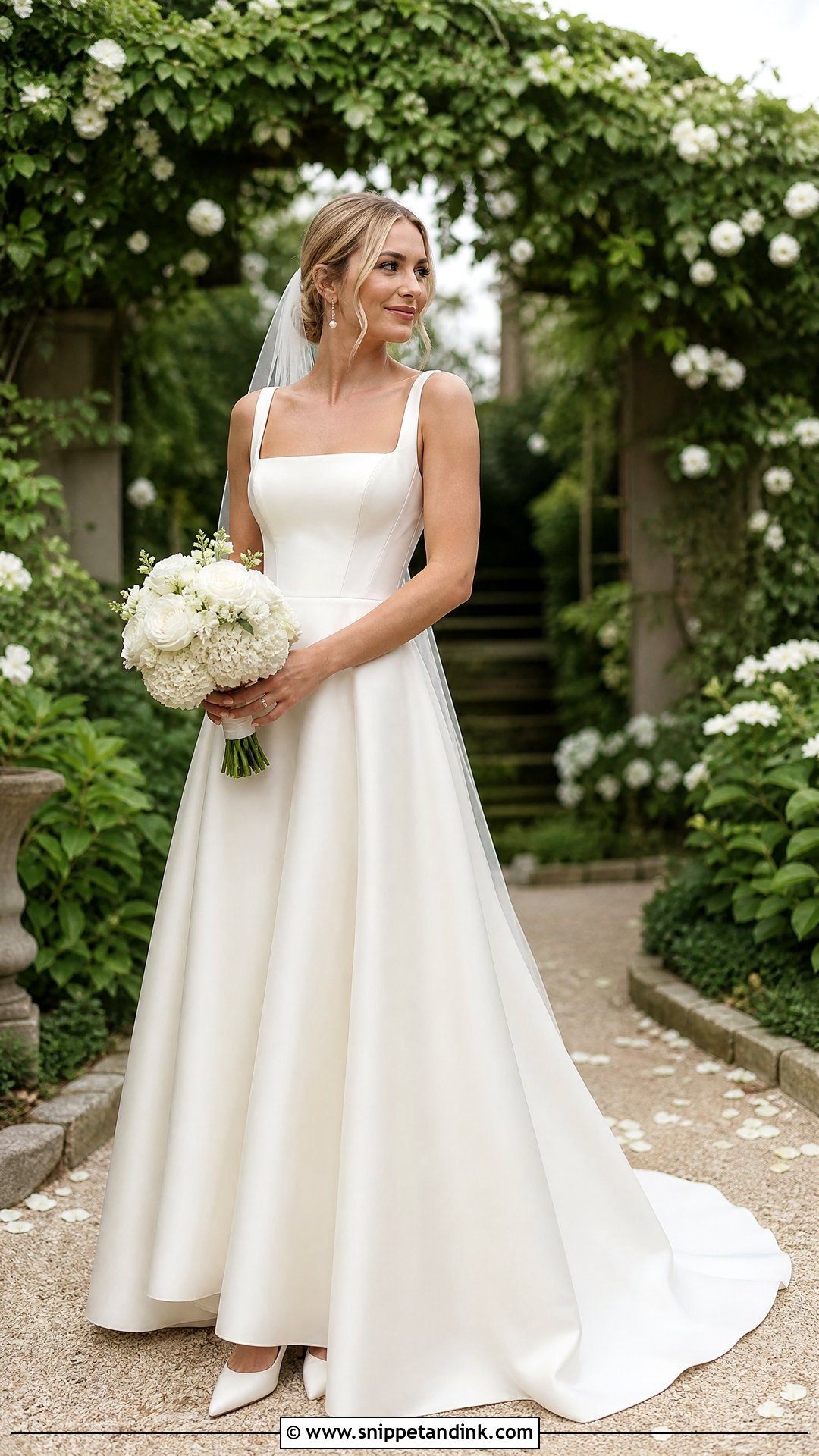
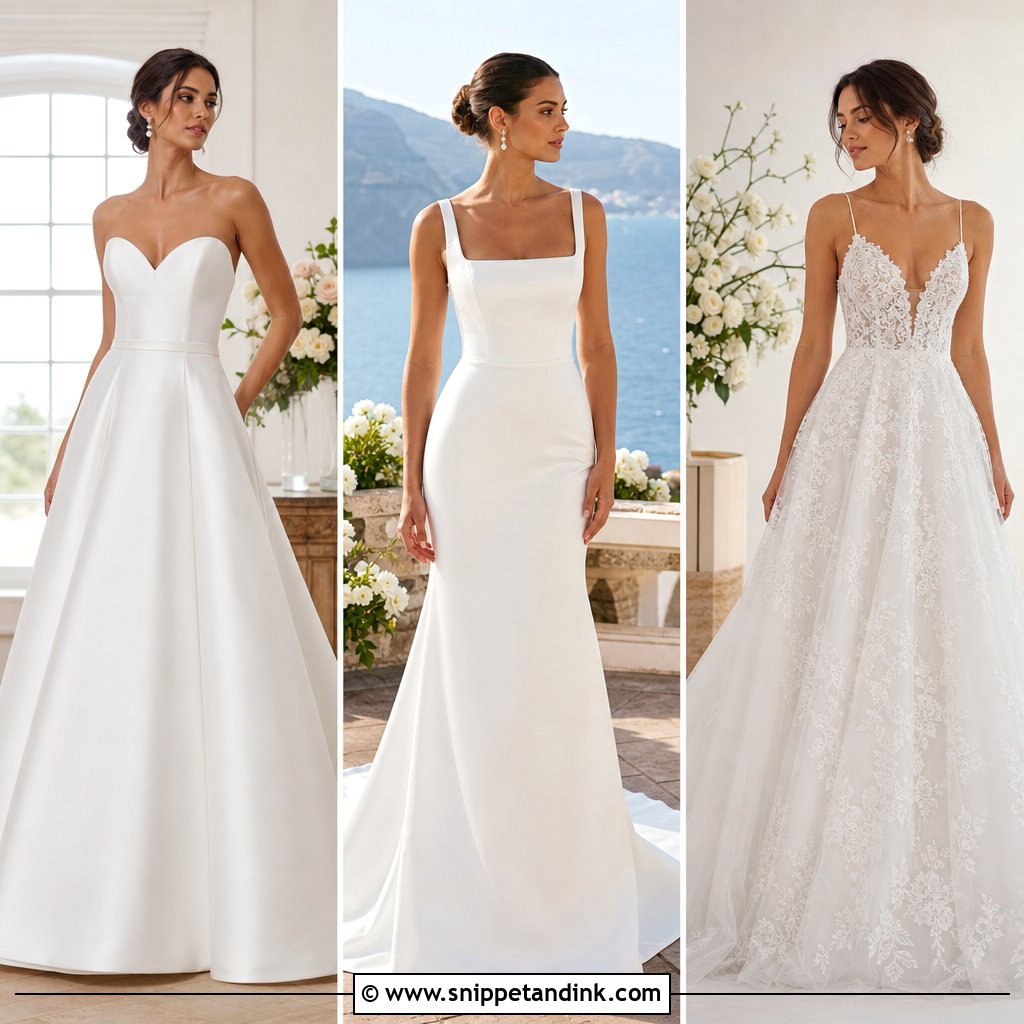
If a bride walks in unsure, an A-line is usually the first dress I hand her. It fits through the bodice and widens gently from the waist, so it skims the hip rather than clinging, and it suits nearly every body and venue. Satin makes it clean, lace makes it romantic, tulle makes it light. Accessories follow the neckline: a sweetheart can carry a fine necklace, a heavily beaded bodice wants nothing at the throat.
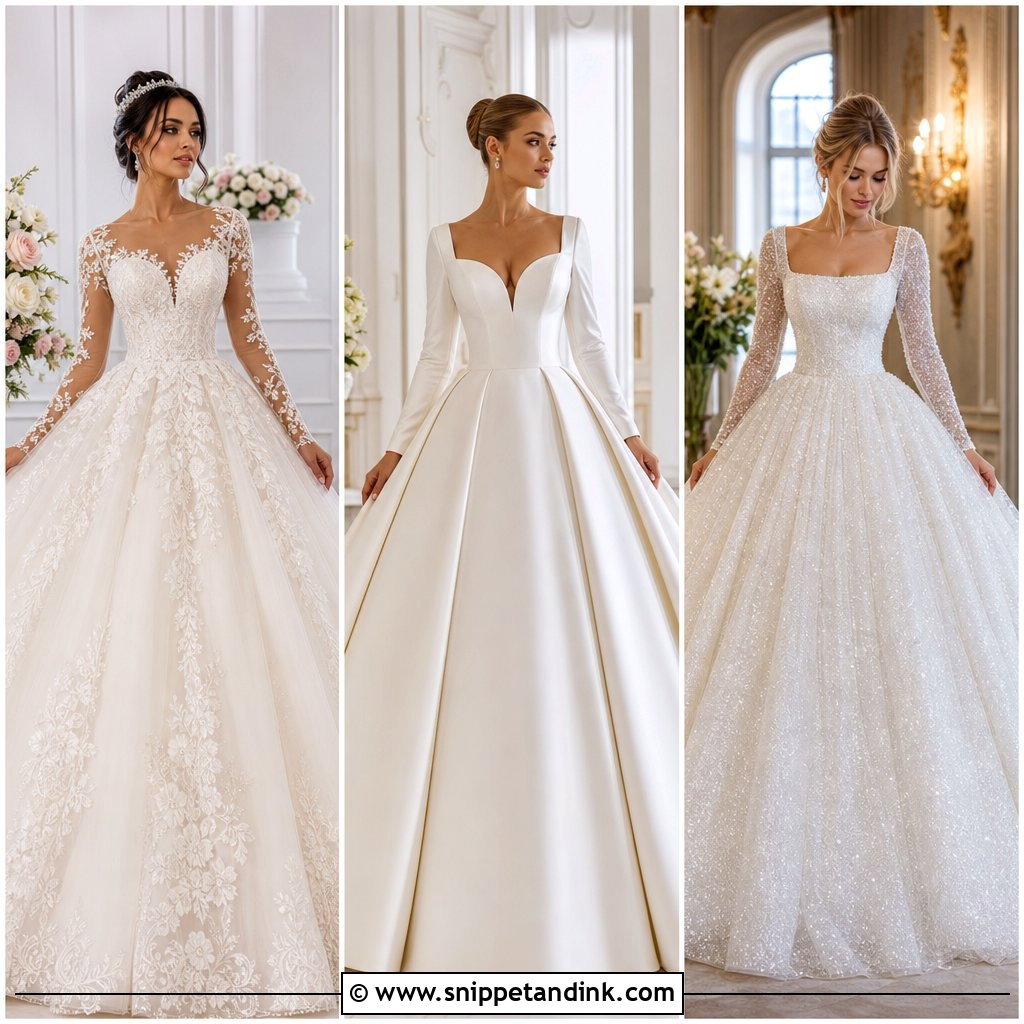
2. Ball Gown Bridal Wedding Dress
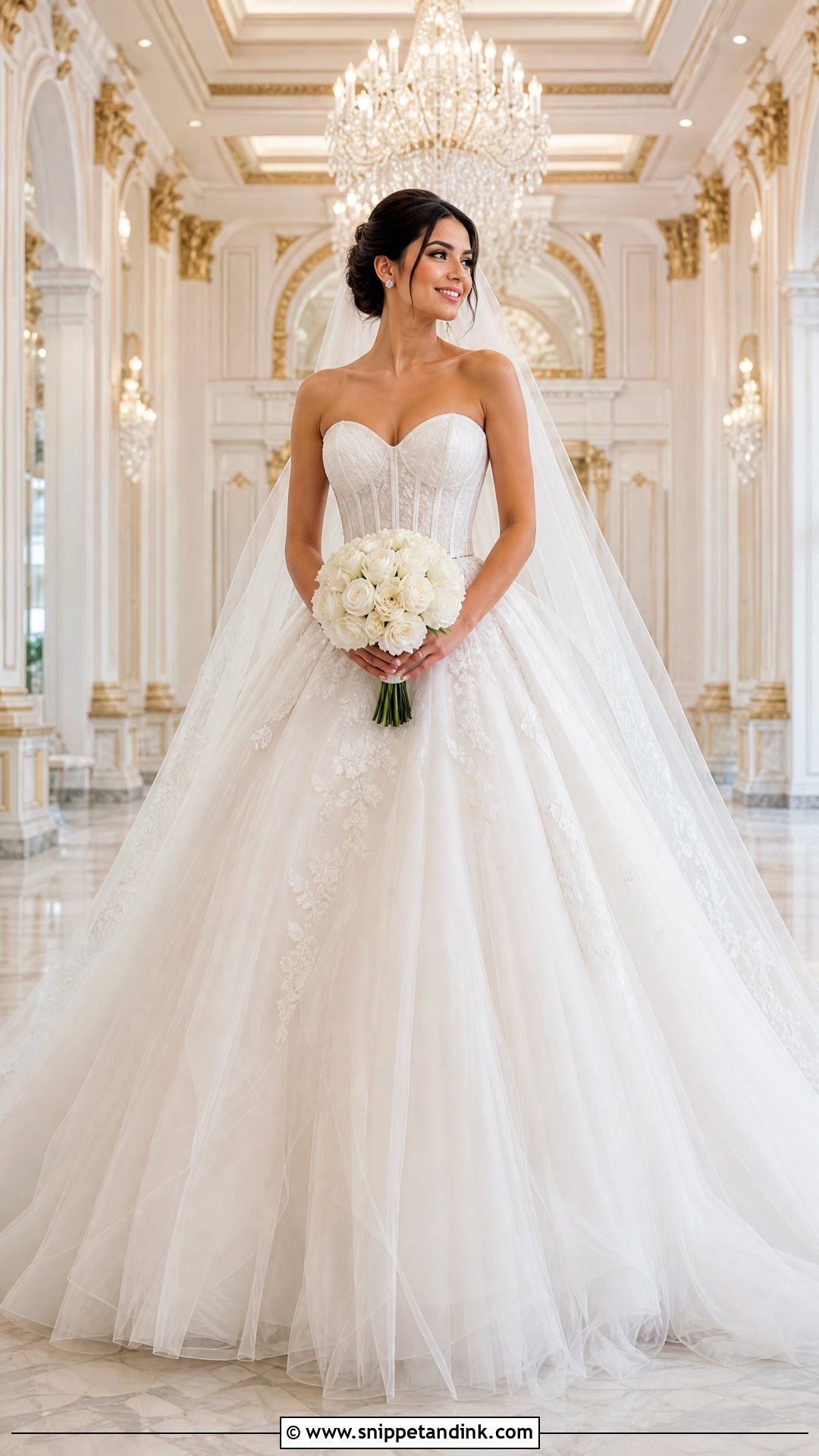
Nothing gives a princess-style bridal moment quite like a ball gown, with its fitted bodice and full skirt built from layers of tulle, organza or satin. It belongs in ballrooms, estates and long aisles. Weight is what nobody warns you about. A full skirt can be heavy by evening, so I ask how the gown feels after twenty minutes standing, not two. A structured corset carries some of the load, and hidden comfortable heels are a kindness under all that volume.
3. Mermaid Bridal Wedding Dress
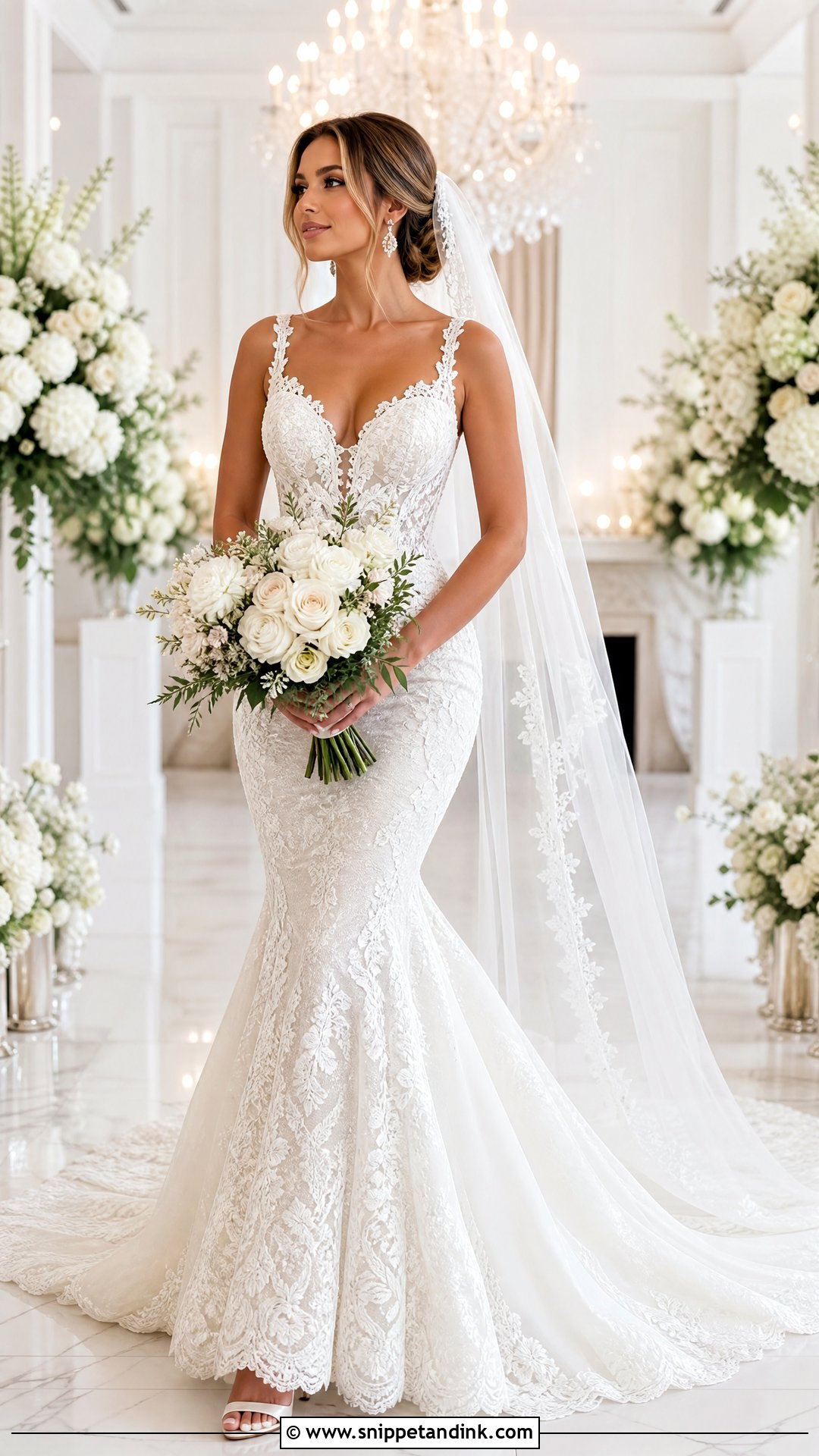
A mermaid bridal wedding dress hugs the bodice, waist, hips and thighs, then flares near the knee. Where that flare starts decides everything. Too low and you’ll shuffle; a touch higher and you can walk and dance. Crepe, lace, satin and beaded fabric all suit it. In fittings, I ask brides to sit, climb a step and do a few dance steps before we finalise anything. Slim heels and simple jewellery keep the attention on the shape.
4. Strapless Bridal Wedding Dress
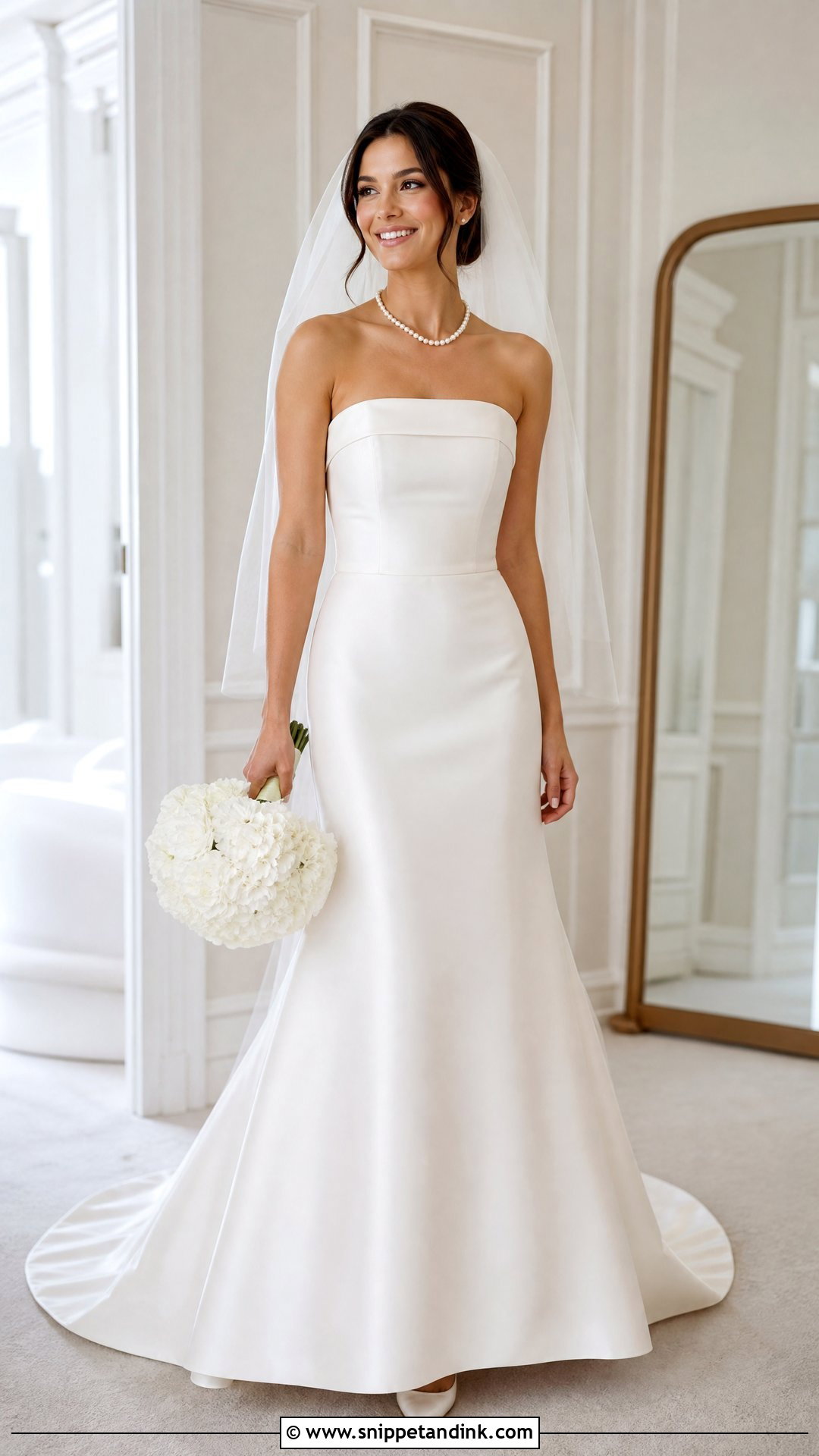
Strapless bodices show the shoulders and collarbone and are easy to accessorise, from a choker to statement earrings. The question I always ask: does it stay up when you raise your arms to hug someone? Good strapless gowns rely on internal boning and a waist stay, not on tightness at the top. A long veil balances the open neckline, and a removable wrap or sheer gloves help in cooler months.
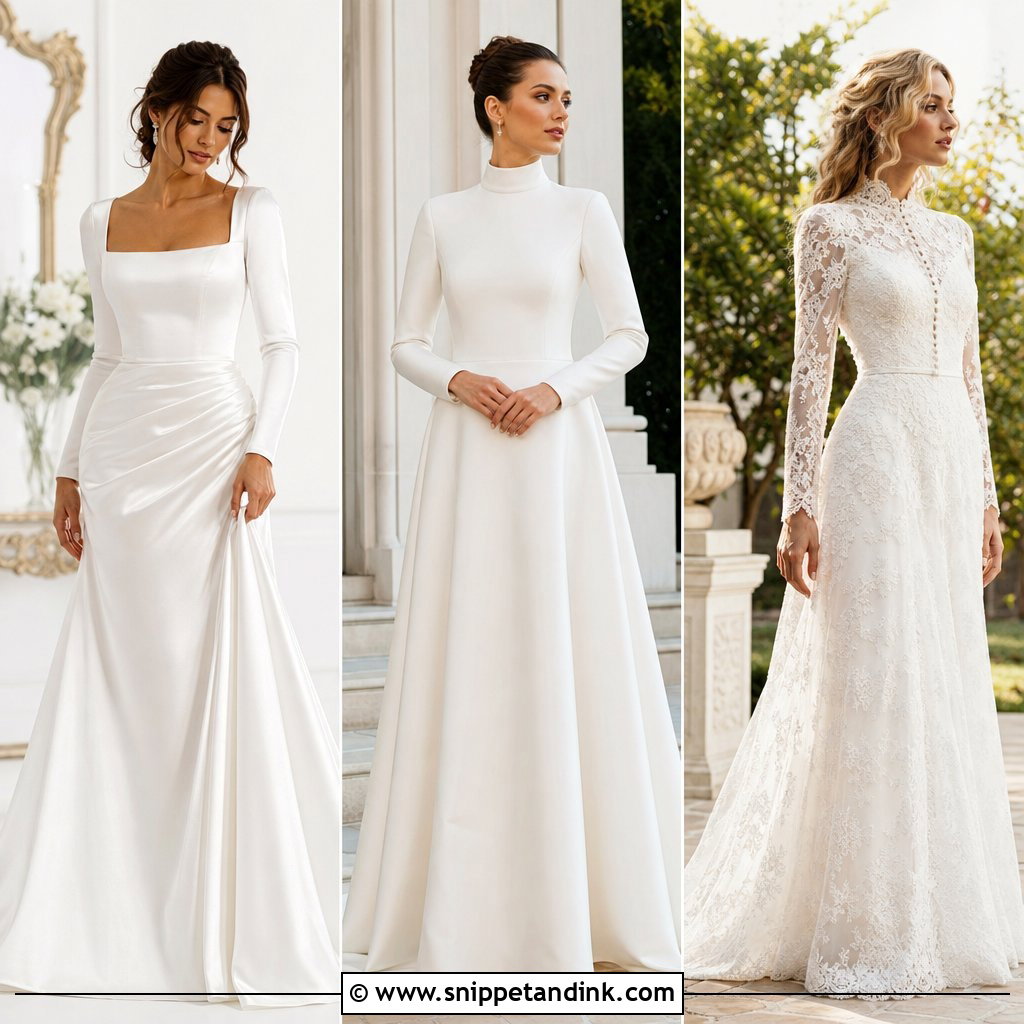
5. Long Sleeve Bridal Wedding Dress
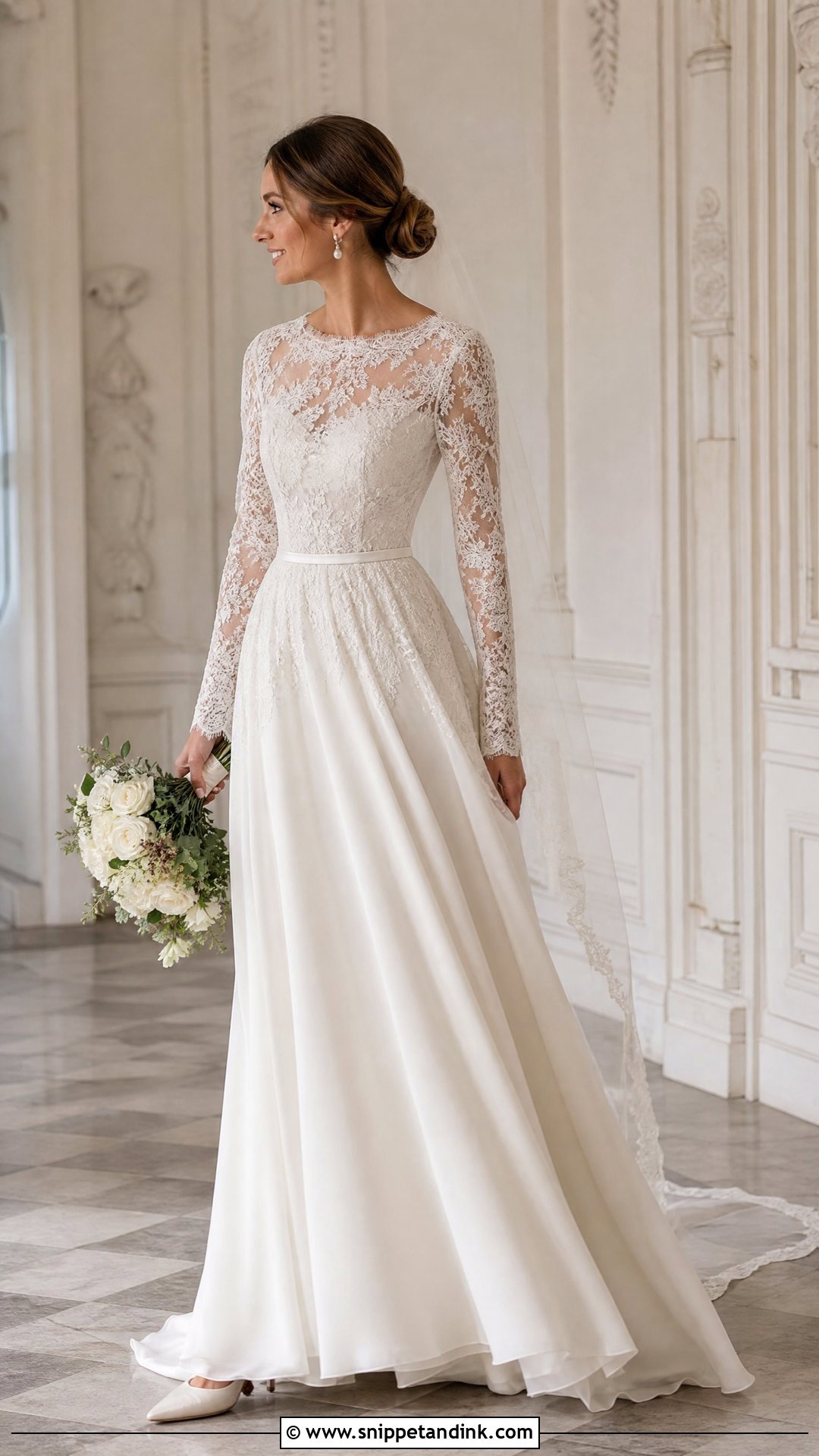
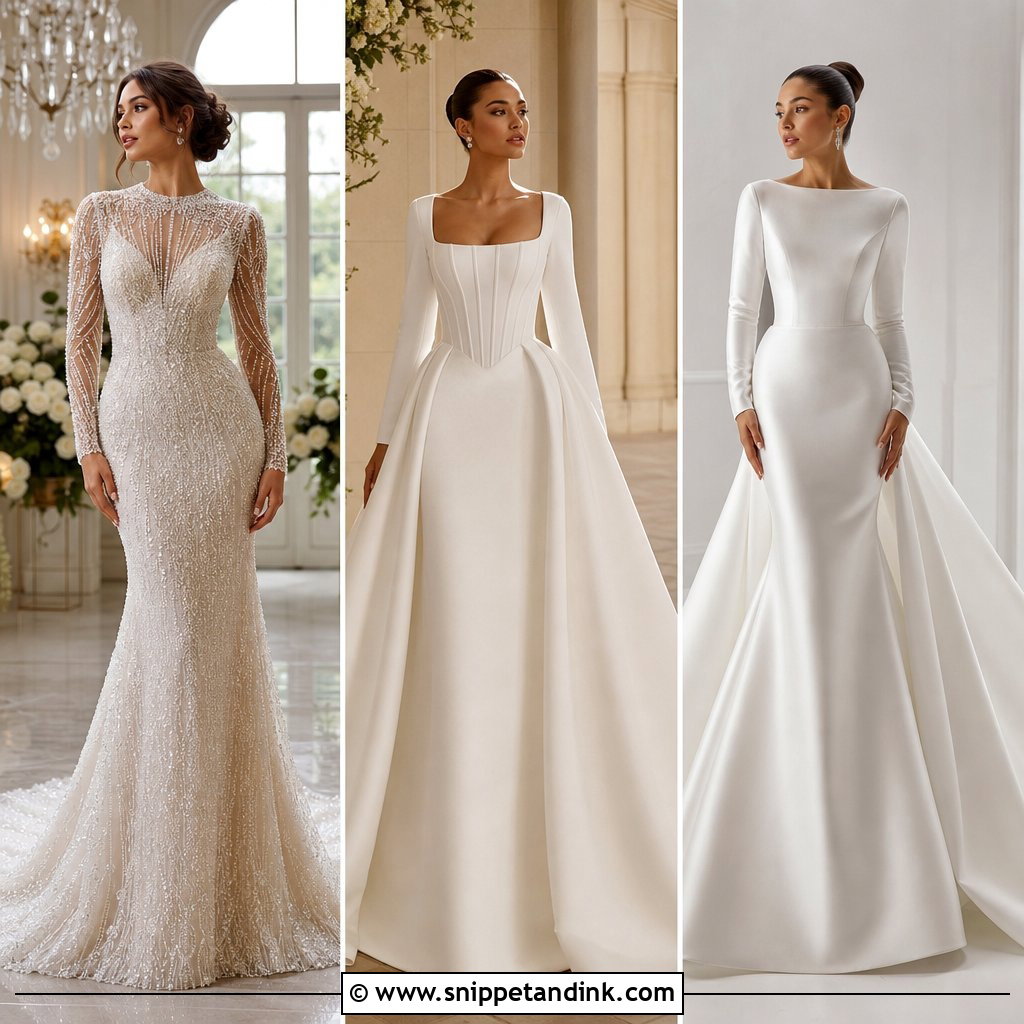
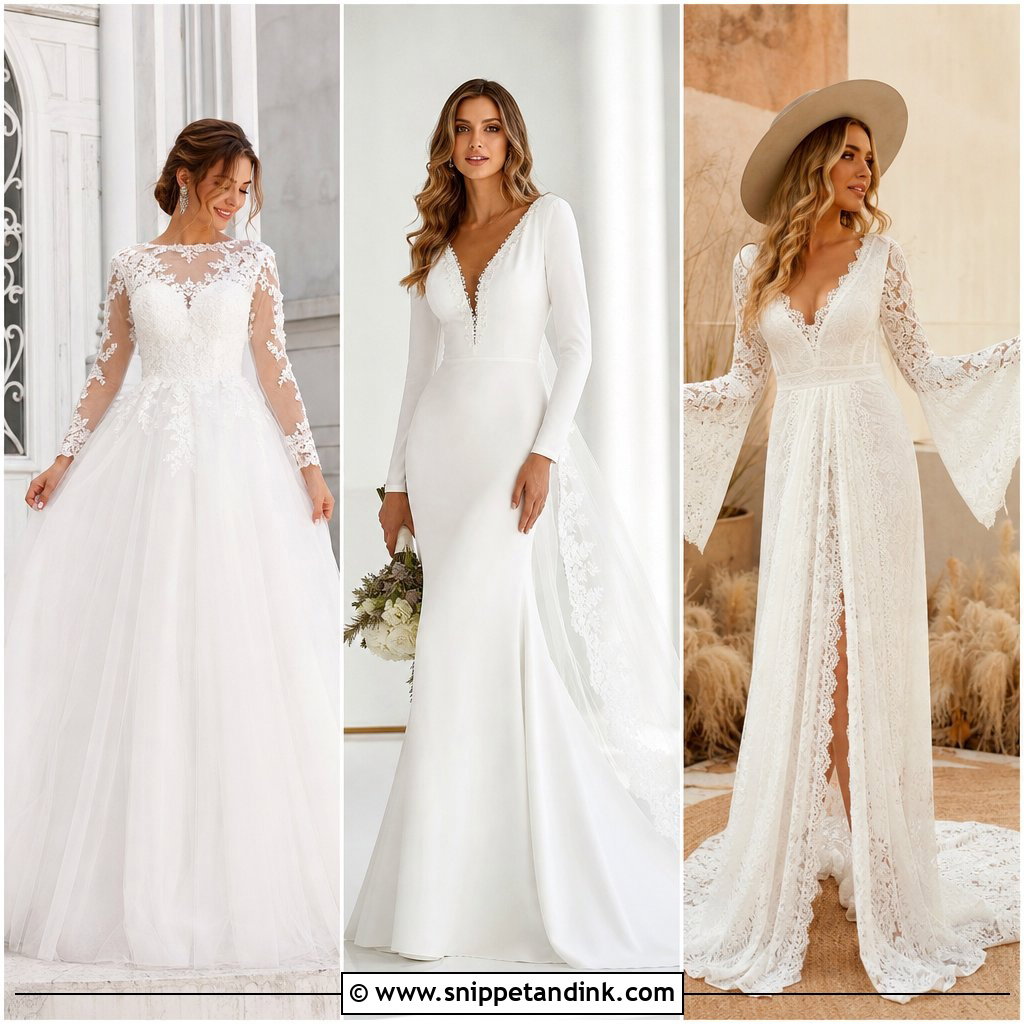
Long sleeves bring coverage and a quiet formality. Fitted crepe sleeves look sleek, illusion lace romantic, and puff sleeves slightly vintage. Raise your arms at the fitting. A sleeve set too tight at the armhole means you can’t lift a glass or hug comfortably. They feel natural in fall and winter, and sheer lace keeps them light enough for spring. Choose a low bun so the sleeve detail and shoulder line stay visible.
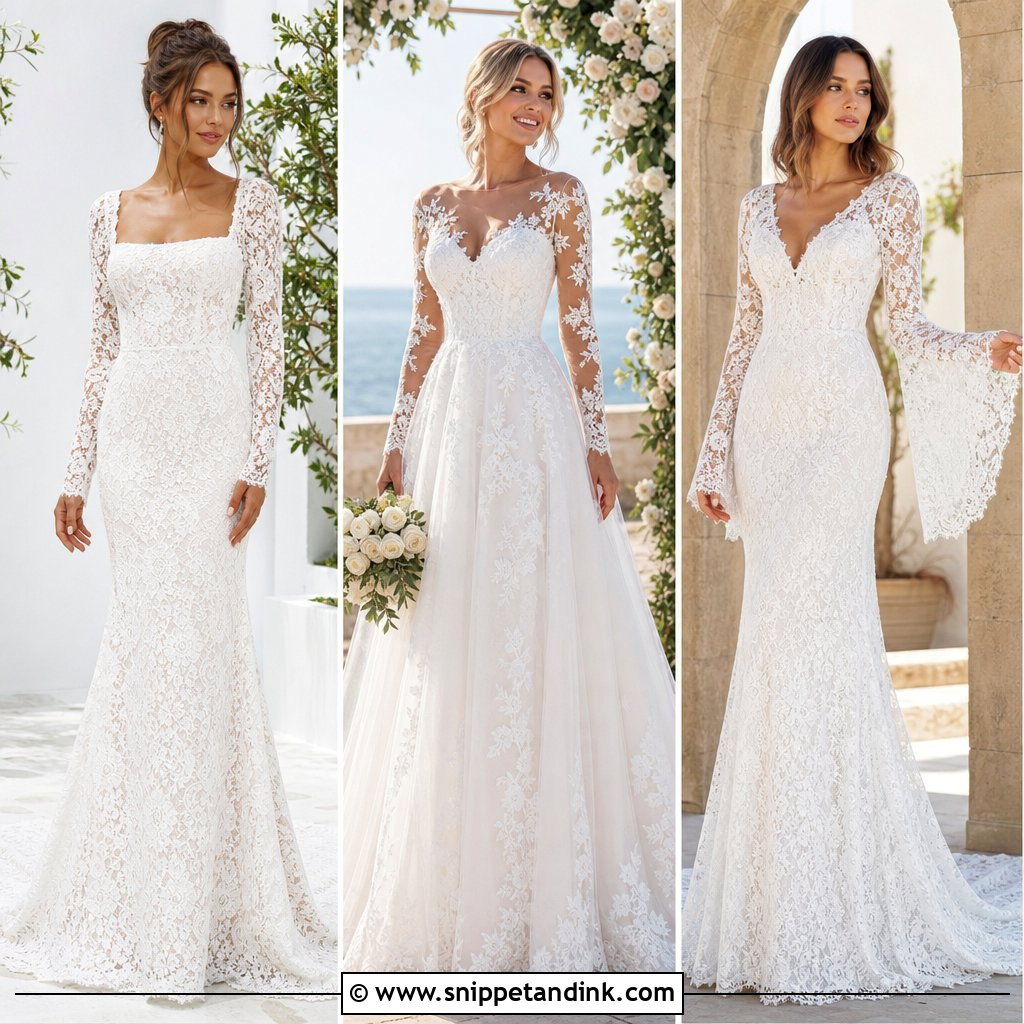
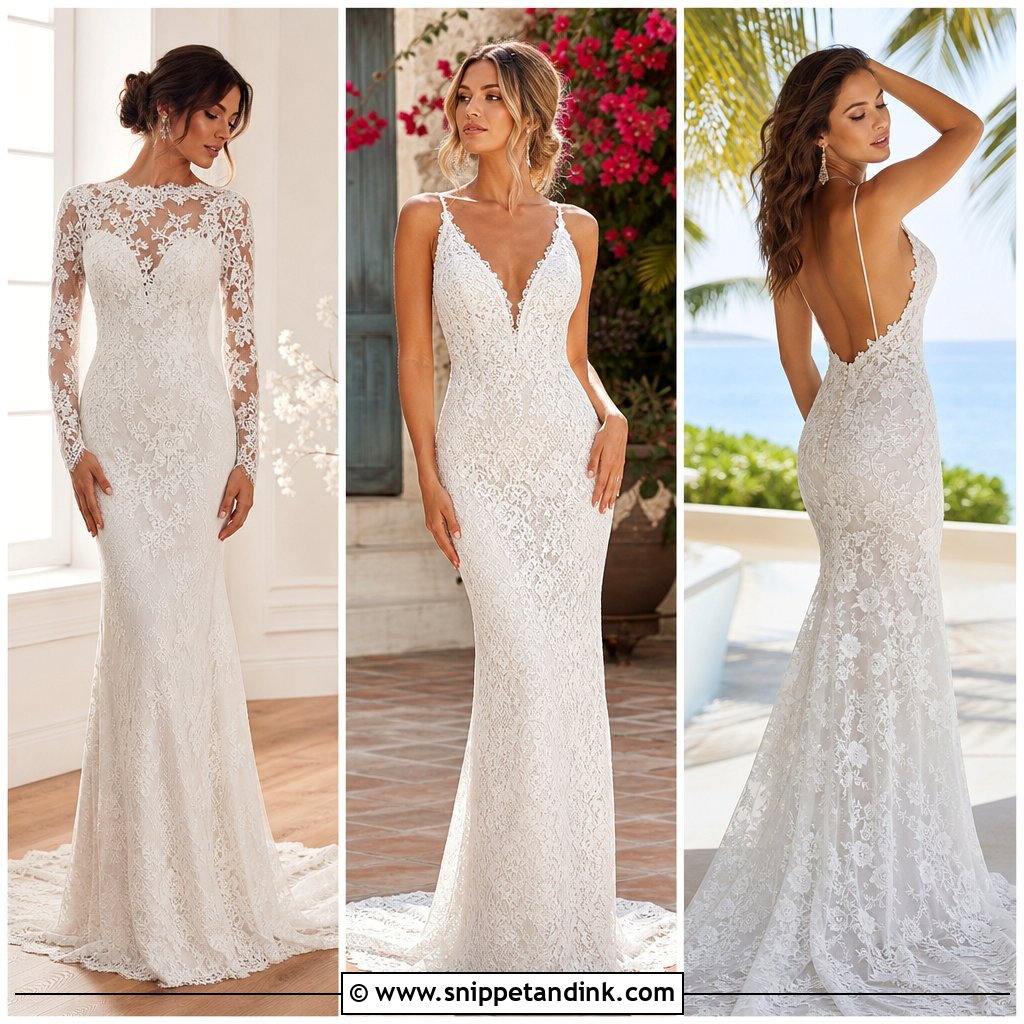
6. Lace Bridal Wedding Dress
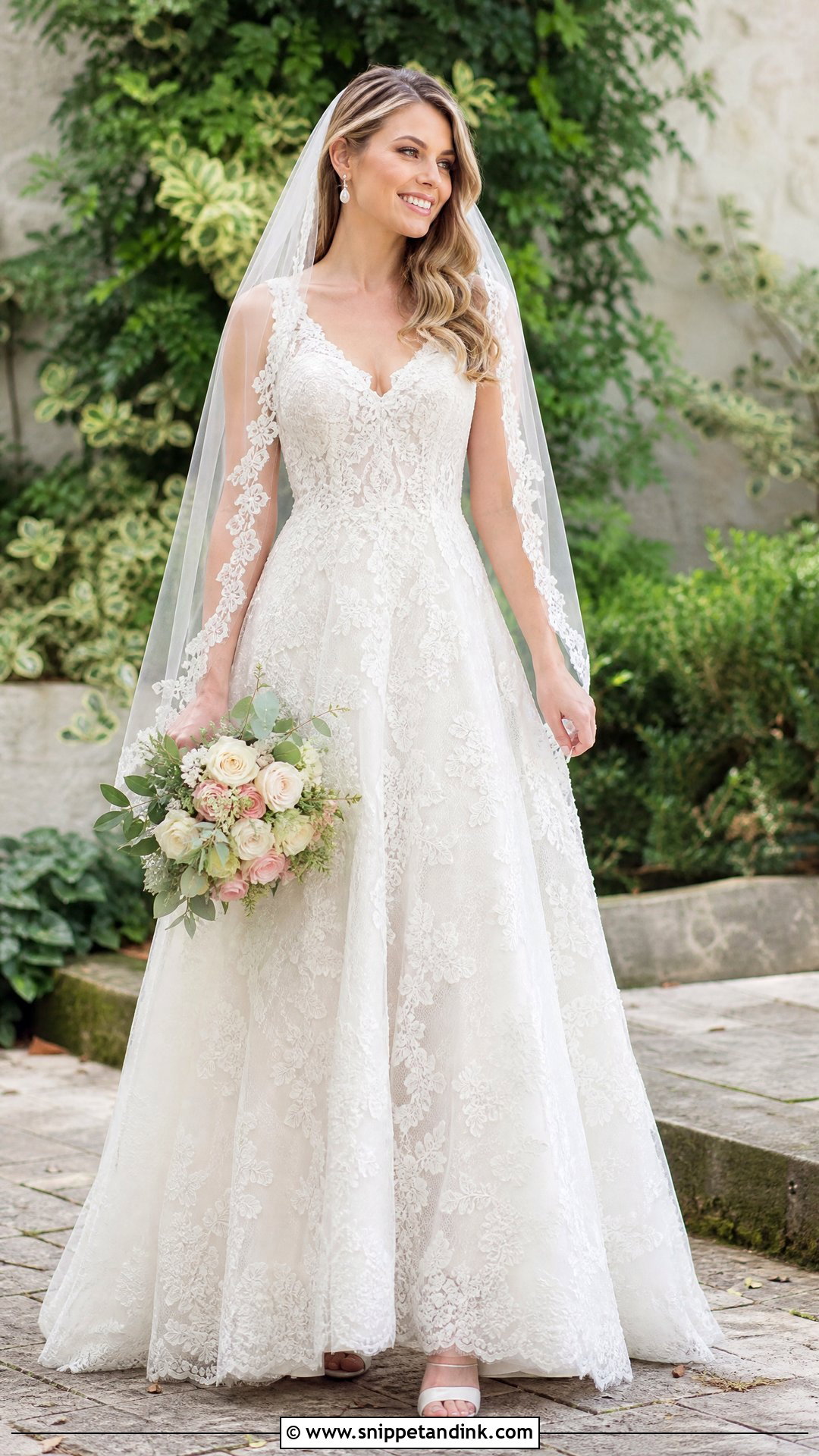
Lace can be classic, boho, vintage or modern; the pattern and the cut decide which. A fitted lace gown reads dramatic, while an A-line lace gown feels gentle. Ask about lace quality. Good lace has a soft hand and clean edges, while cheaper versions feel stiff and scratch under the arm by evening. Bold patterns want minimal jewellery; delicate lace can take a hair comb. It suits gardens, historic estates and coastal ceremonies.
7. Satin Bridal Wedding Dress
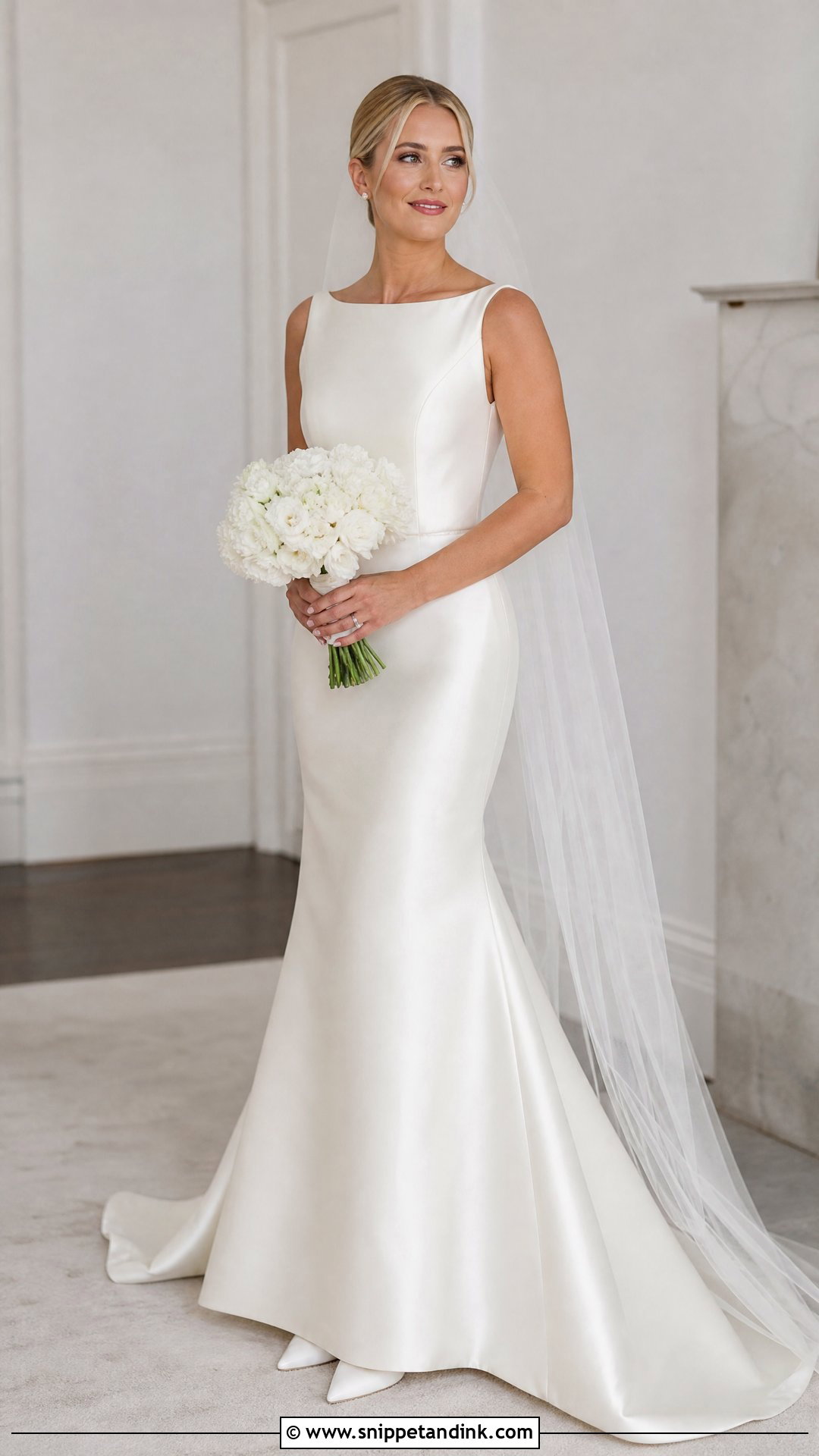
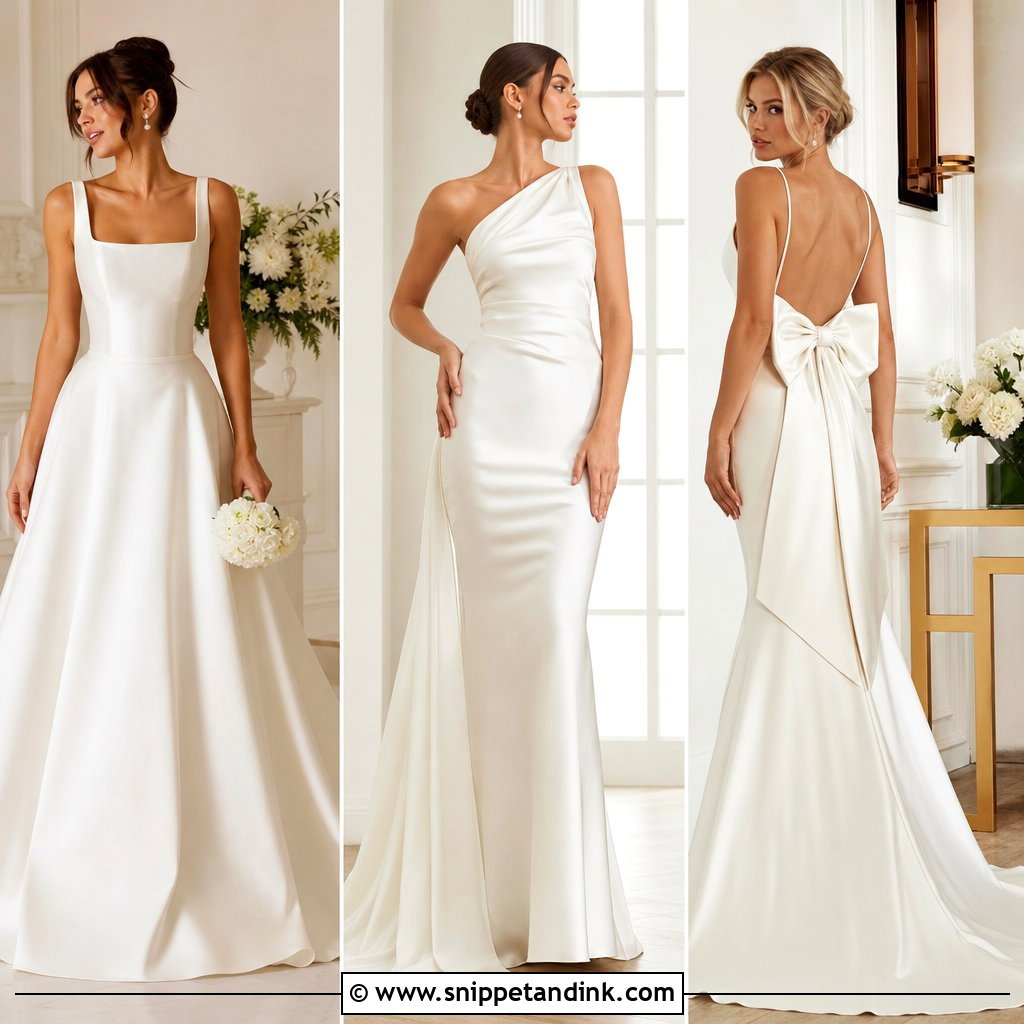
Satin is the fabric that looks most expensive and forgives least. A satin A-line feels classic; a satin slip feels modern. It shows every crease from a car ride and every pull at a tight seam, which is why the fit needs a little ease and the gown needs steaming on the morning. With satin’s natural shine, I skip sparkly accessories and go for pearl studs and a smooth veil.
8. Simple Bridal Wedding Dress
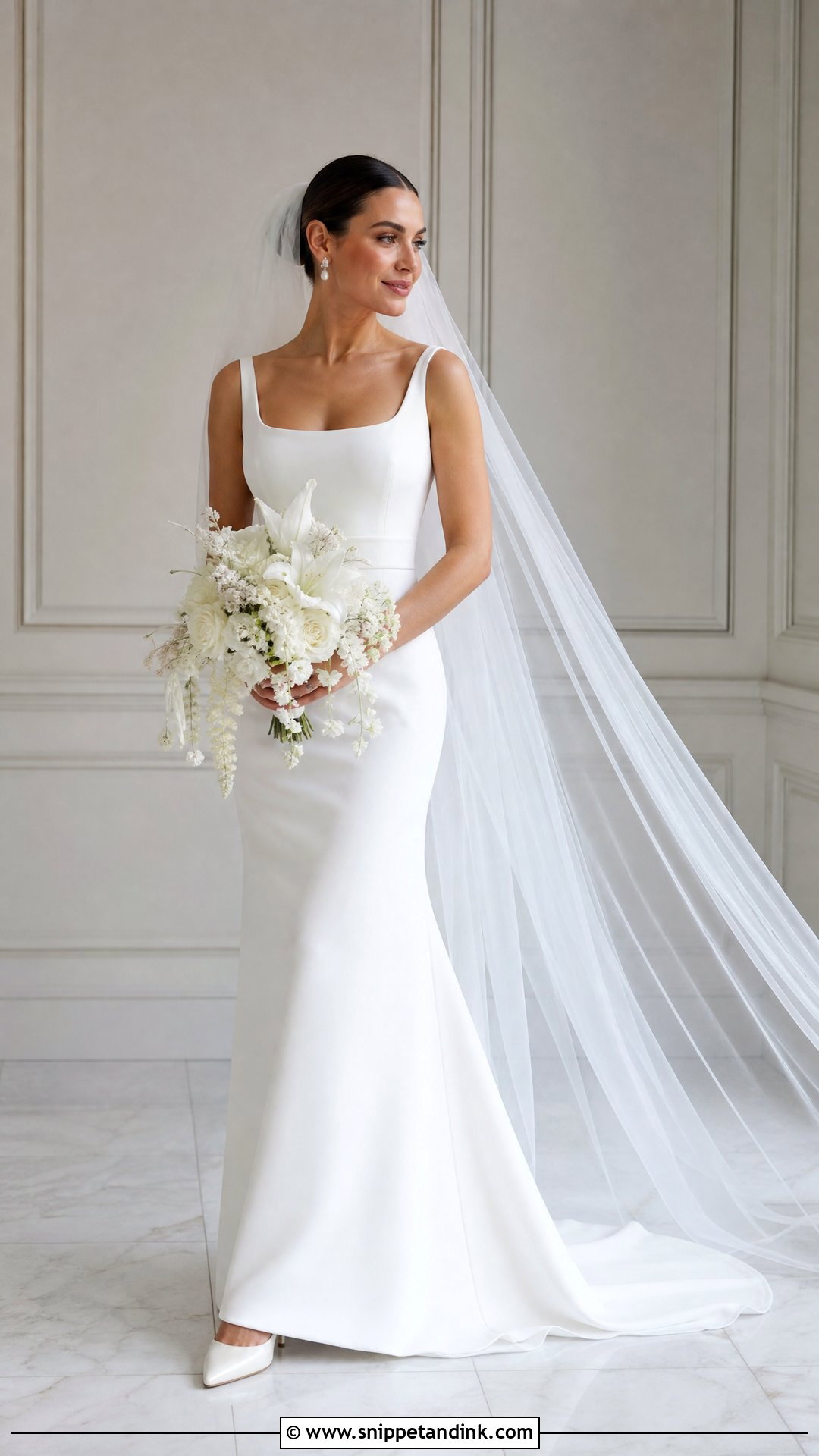
A simple bridal wedding dress puts all the pressure on fit and fabric. Crepe, satin, mikado and silk-style weaves give clean lines; column, sheath, A-line and square-neck shapes all suit it. Plain gowns are the ones where I check hems and seams most closely, since there’s no lace to distract the eye. The upside is room to play: gloves, a bow veil or a statement bouquet can change the mood entirely.
9. Corset Bridal Wedding Dress
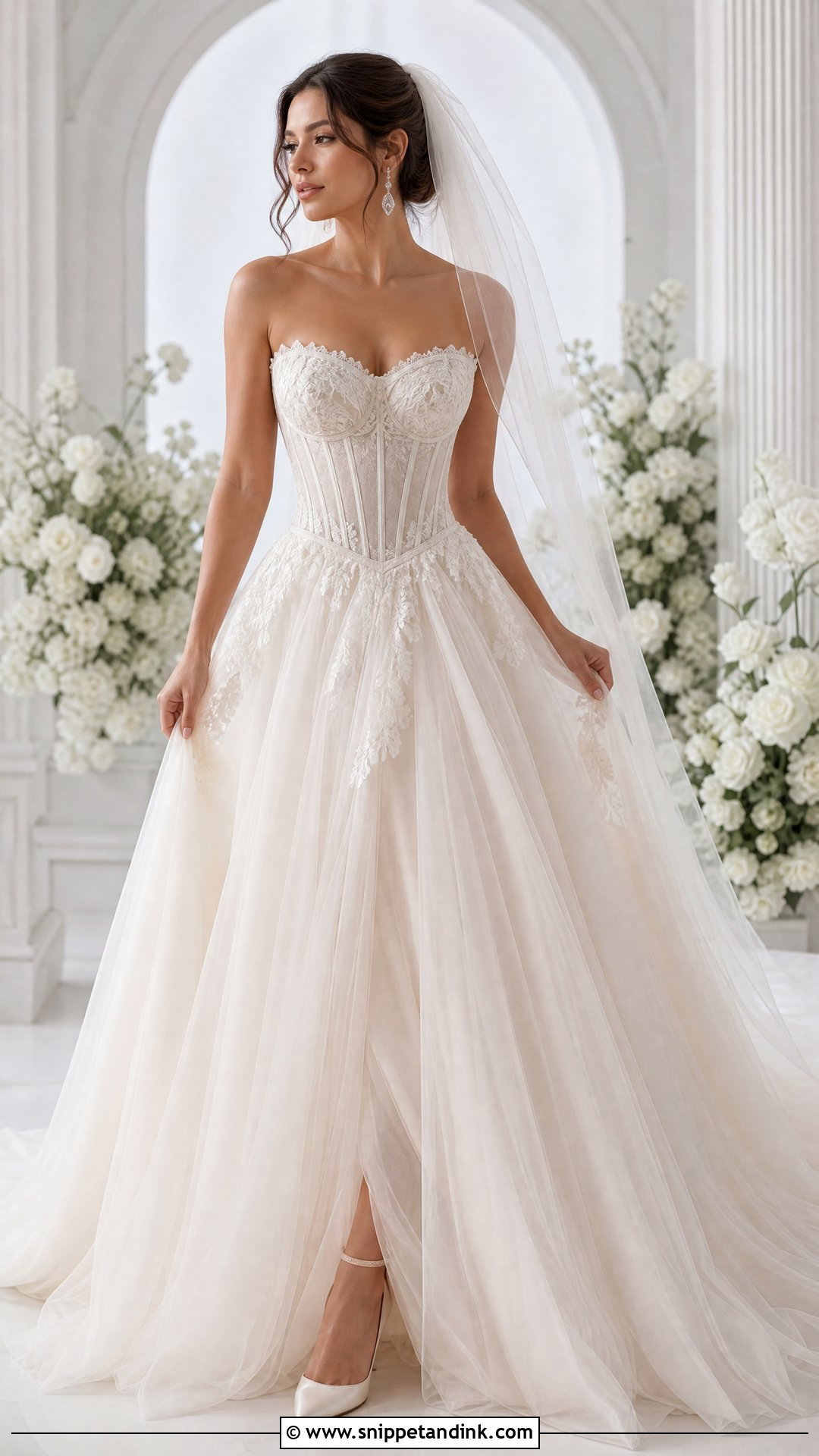
Corsets are back for a reason. Visible boning and lace-up backs shape the waist and give a lot of support, so you’re not tugging at the bodice all day. They pair with a ball gown skirt, a mermaid or a soft A-line. Fit the corset with the exact undergarments you’ll wear, and sit in it. Boning that’s too long digs into the hip when you’re seated for dinner. Let lace or beadwork on the bodice be the feature, with soft waves or an updo.
10. Off Shoulder Bridal Wedding Dress
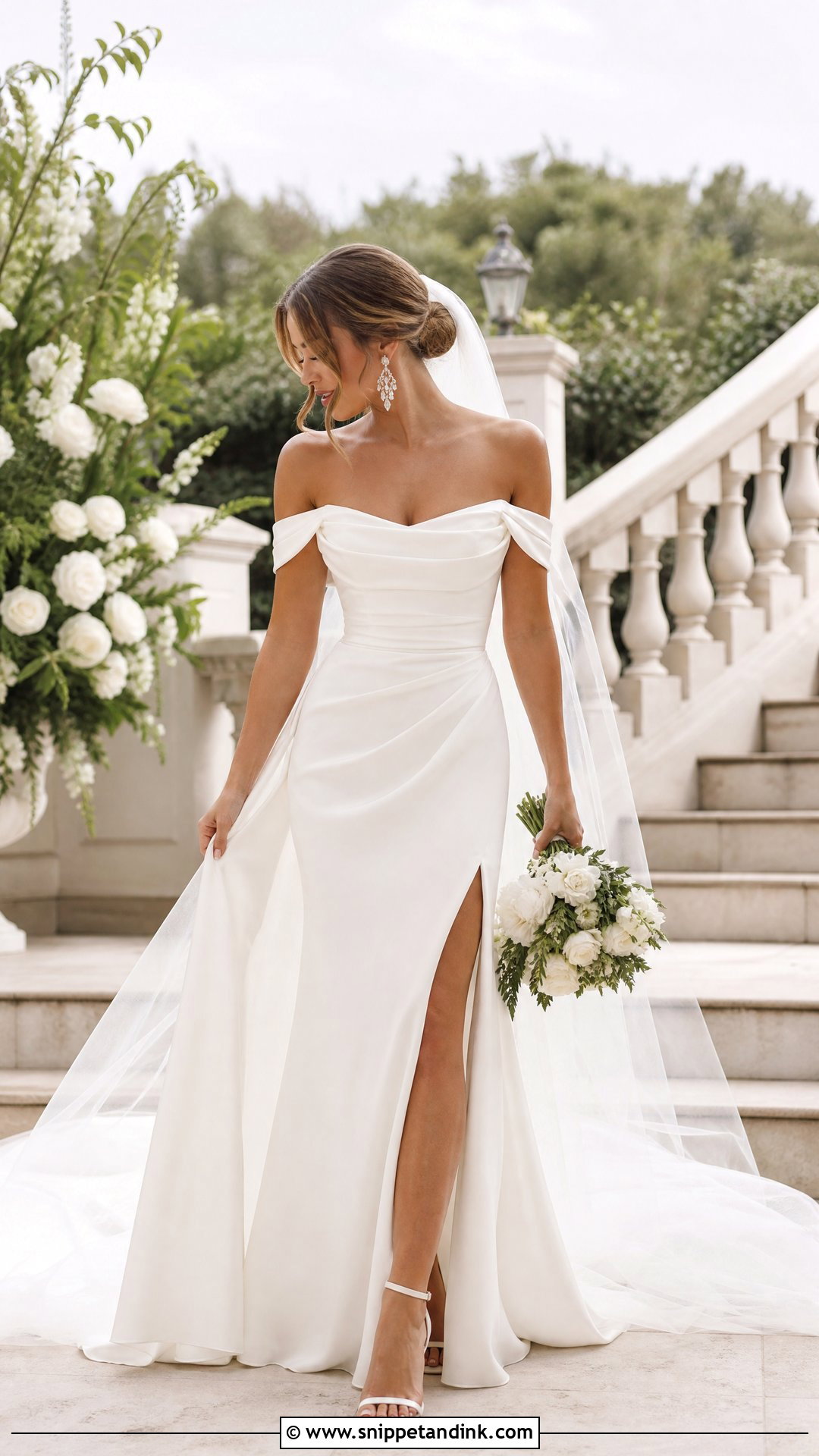
Off-the-shoulder necklines frame the shoulders and collarbone softly. They come on fitted, A-line, ball gown and sheath shapes. The practical issue is arm movement, since a band across the upper arm limits how high you can lift. I’d do the hugging test and the bouquet-toss test at the fitting. Chandelier earrings often look better than a necklace here, with a low bun to keep the neckline open.
11. Square Neck Bridal Wedding Dress
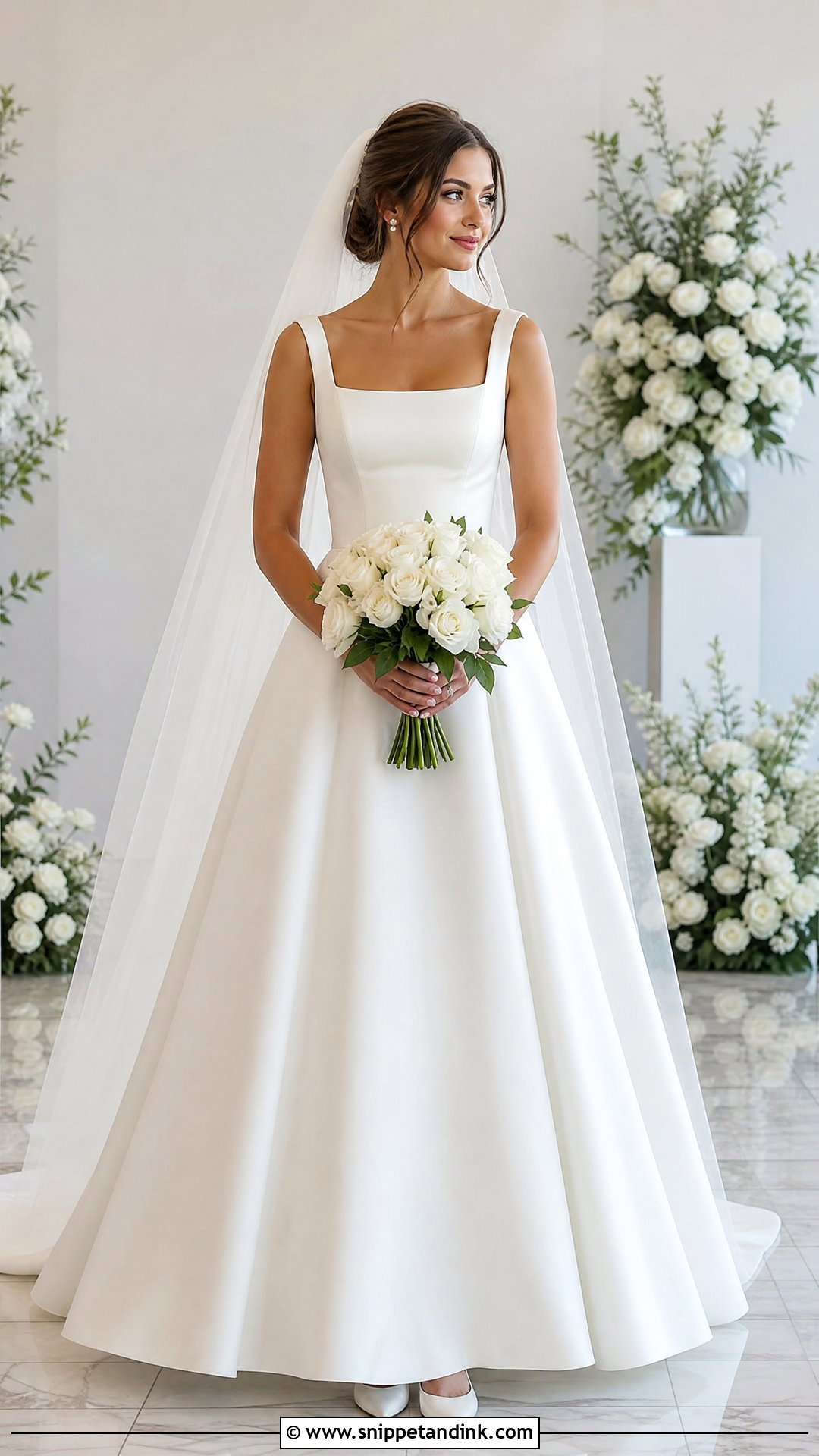
Square necks are flattering and structured without looking severe. They frame the collarbone in satin, crepe, lace or mikado. Wide straps show best with a low bun or half-up style. It’s a neckline I often suggest when someone wants modest coverage but feels a high neck is too much. Pearl studs and a soft veil are plenty.
12. Drop Waist Bridal Wedding Dress
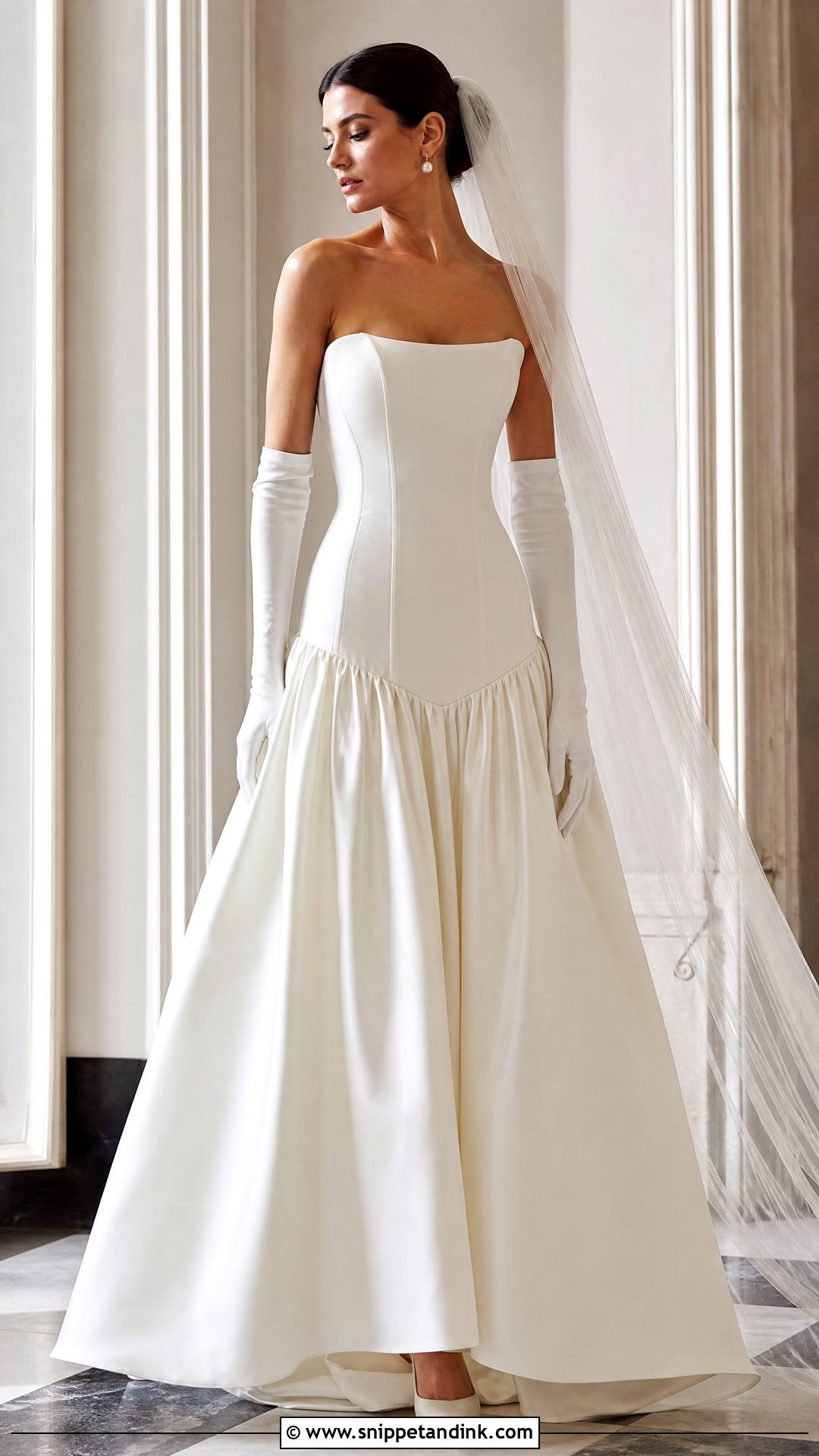
A drop waist bridal wedding dress lowers the waistline below your natural waist and lengthens the torso before the skirt flares. It’s a fashion-forward shape and an honest warning goes with it: it depends on precise fit. If the waist seam sits in the wrong place, it shortens your legs instead. A structured bodice gives support, and a soft tulle skirt keeps it romantic. Sleek gloves and a long veil finish it.
13. Sheath Bridal Wedding Dress
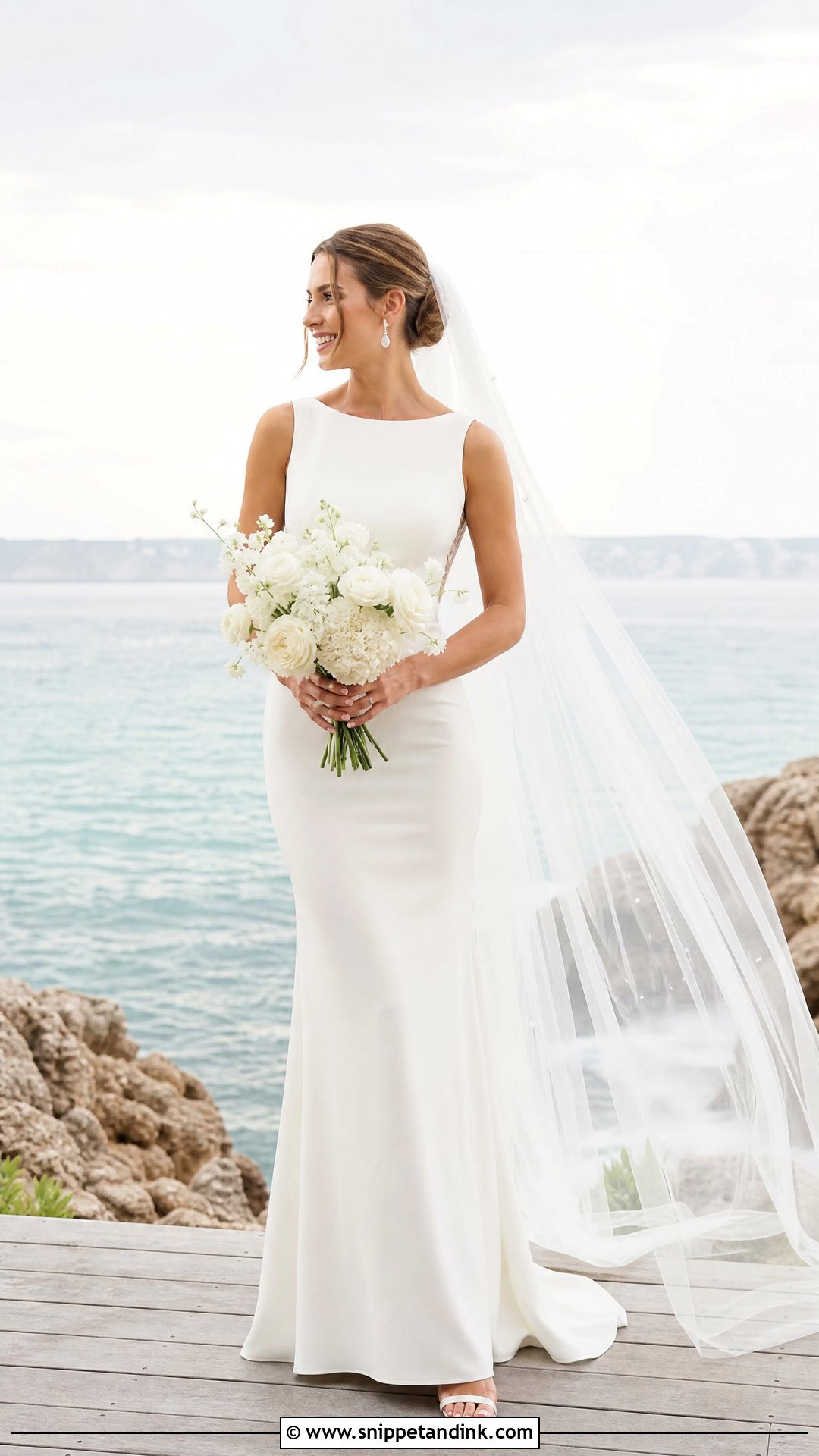
Sheaths follow the body in one clean line without much volume, so they’re light to wear and easy to travel with. Beach, destination and courthouse ceremonies suit them. Crepe looks smooth, lace soft and satin polished. Because the line is so close, alterations matter. A small pull at the hip shows in every photo, and the hem should clear your shoes while standing in them. Slim heels and delicate jewellery suit it.
14. Slip Bridal Wedding Dress
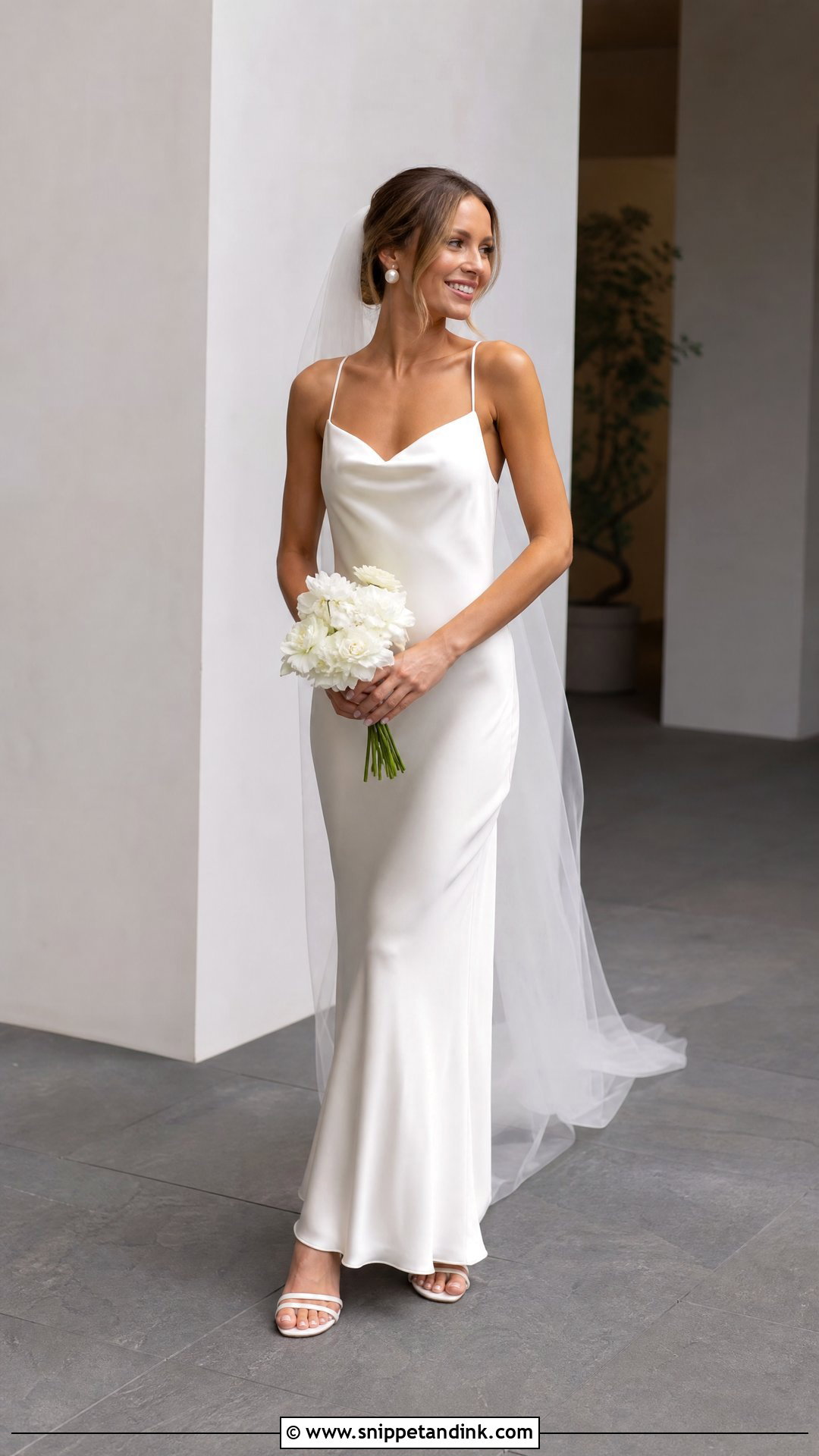
A slip dress drapes and skims the body on thin straps, usually in satin or silk-style fabric. It looks quietly glamorous and is honestly one of the hardest gowns to wear well. Bias-cut fabric shows everything underneath, so choose smooth, no-line underwear and try it on with them. Strappy heels, pearl earrings and a sheer veil keep it simple; a tailored blazer or wrap handles cooler evenings.
15. Tea Length Bridal Wedding Dress
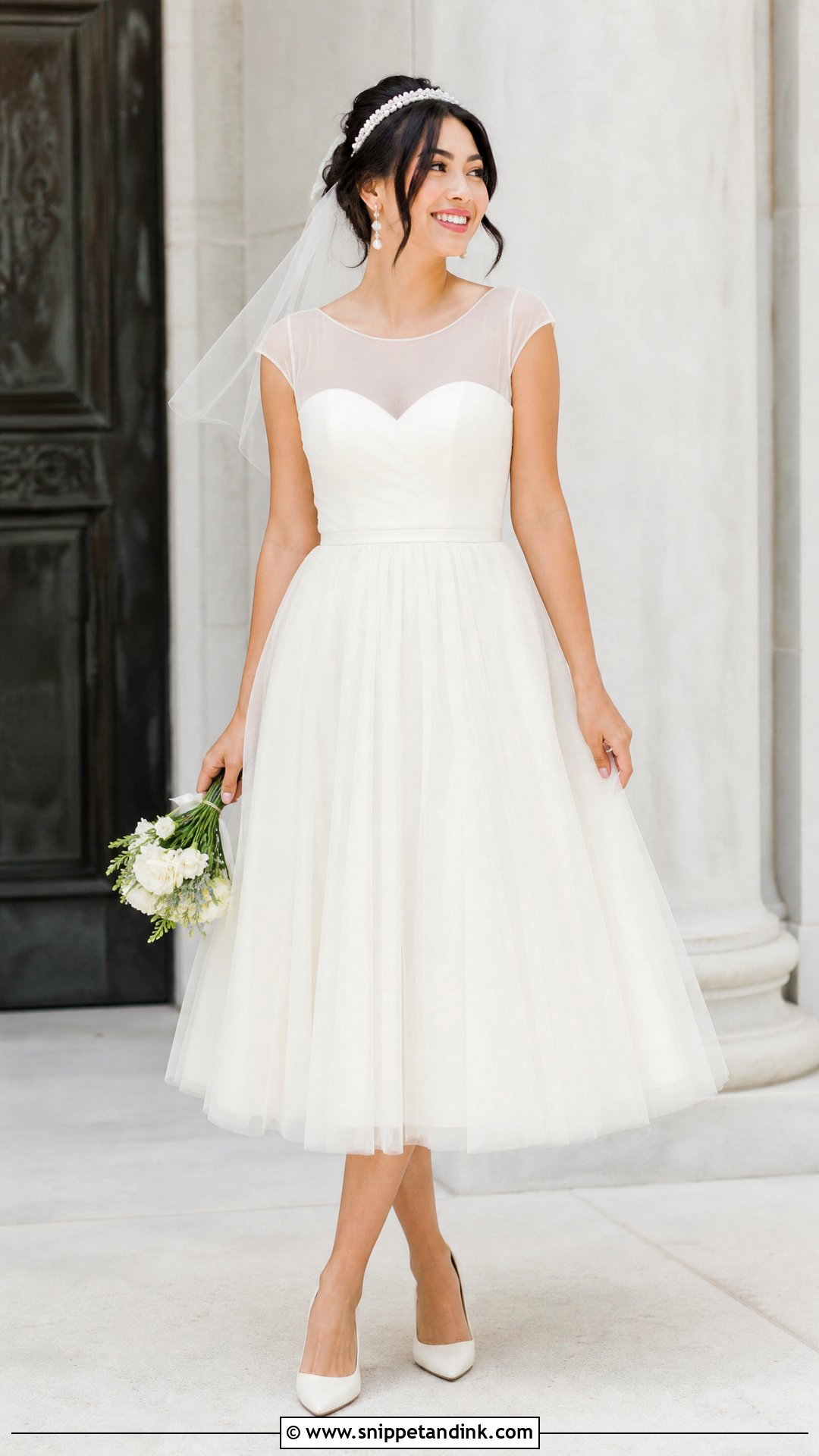
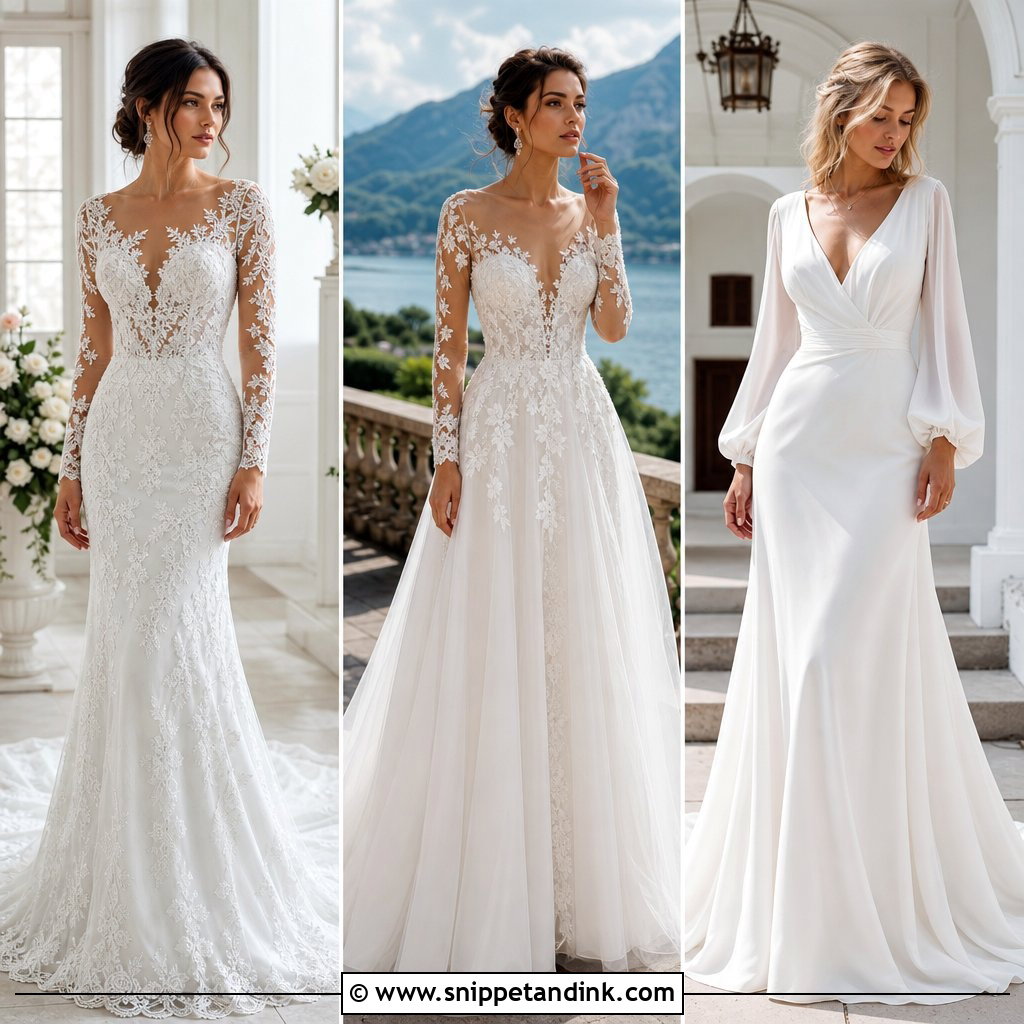
A tea length bridal wedding dress falls between the knee and ankle, so your shoes become part of the outfit. Choose them with as much care as the dress: pointed pumps, ankle straps or elegant flats. Lace, satin, tulle and organza all suit it. A short veil, pearl headband or small bow brings out the retro feel. It’s easy to move in, which makes it a happy choice for garden ceremonies and brunch receptions.
16. Mini Bridal Wedding Dress
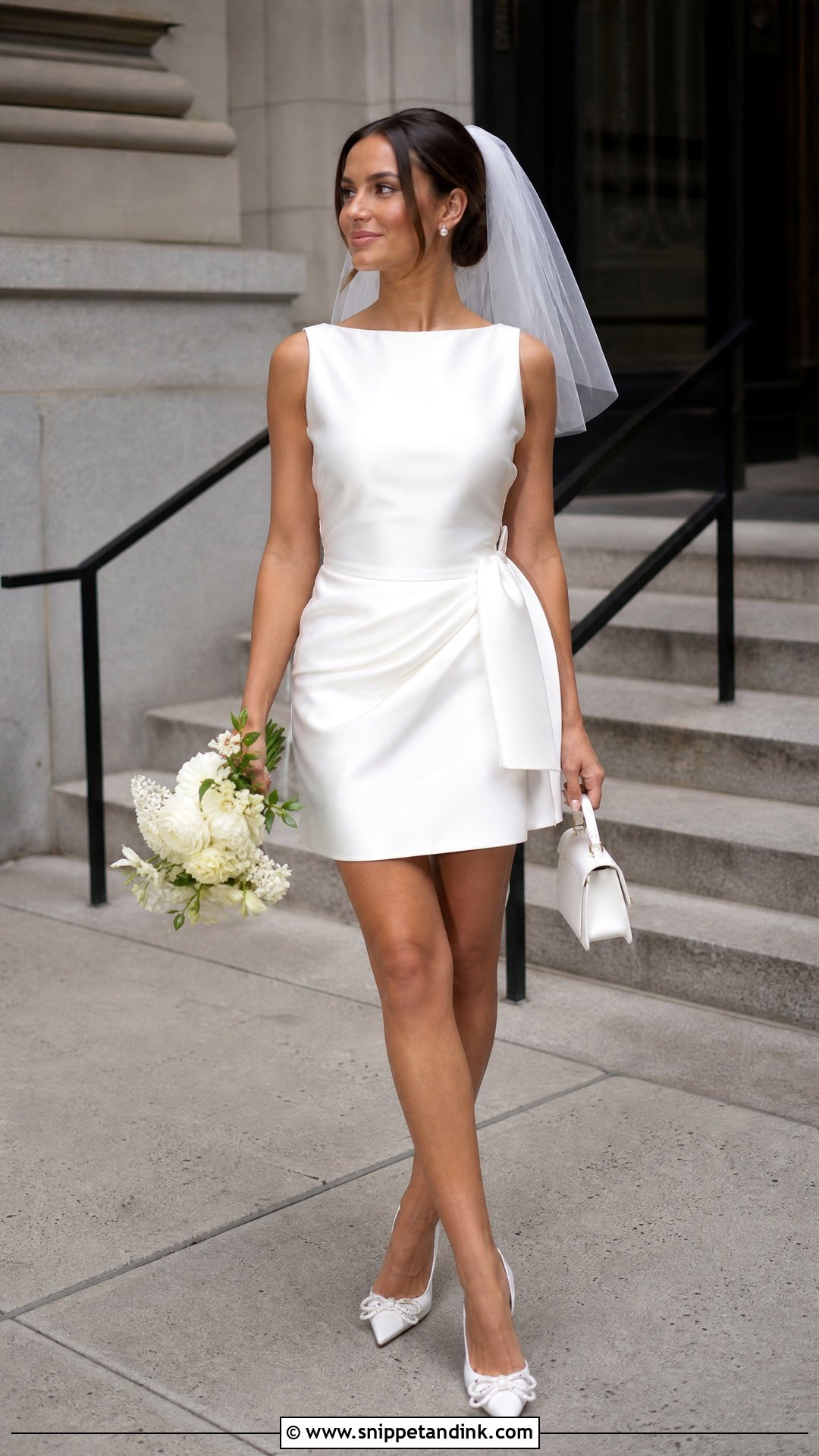
Minis are fun as a second look, an elopement or a courthouse dress. Satin keeps them sleek, lace adds romance, and feathers or bows make them playful. Proportion is the main styling choice: a short hem balances best with a covered or structured top. Statement heels and a short veil keep it bridal, and sheer tights or a tailored jacket add coverage. Nothing on this list is easier to dance in.
17. High Neck Bridal Wedding Dress
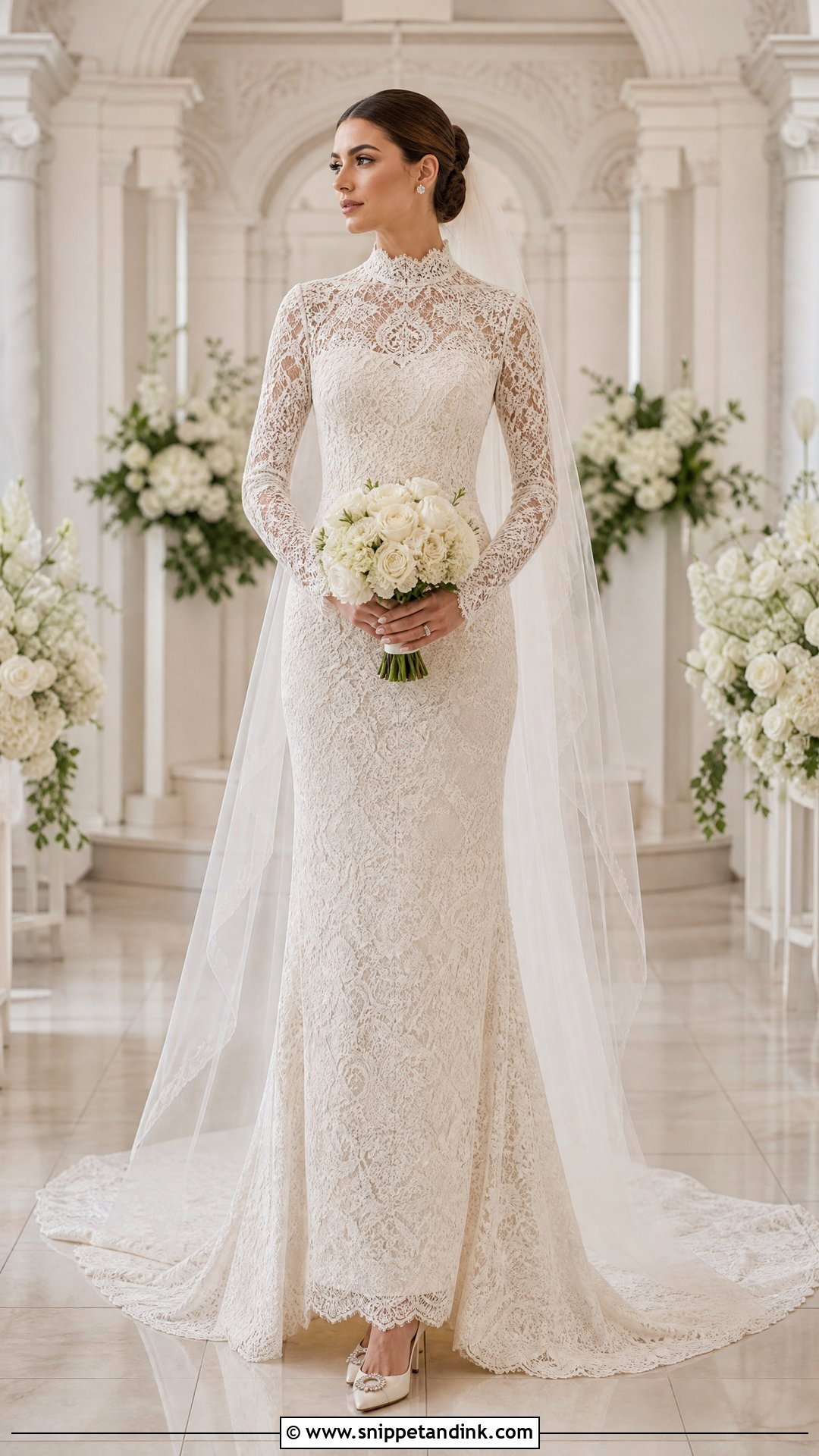
High necks offer coverage and a lot of quiet poise in lace, crepe, satin or illusion fabric. They suit formal weddings and winter ceremonies. Stud earrings and a sleek updo let the neckline lead, so skip necklaces entirely. Check the collar while you look down and turn your head. A stiff high collar can rub the jaw or push up against the chin during a long day.
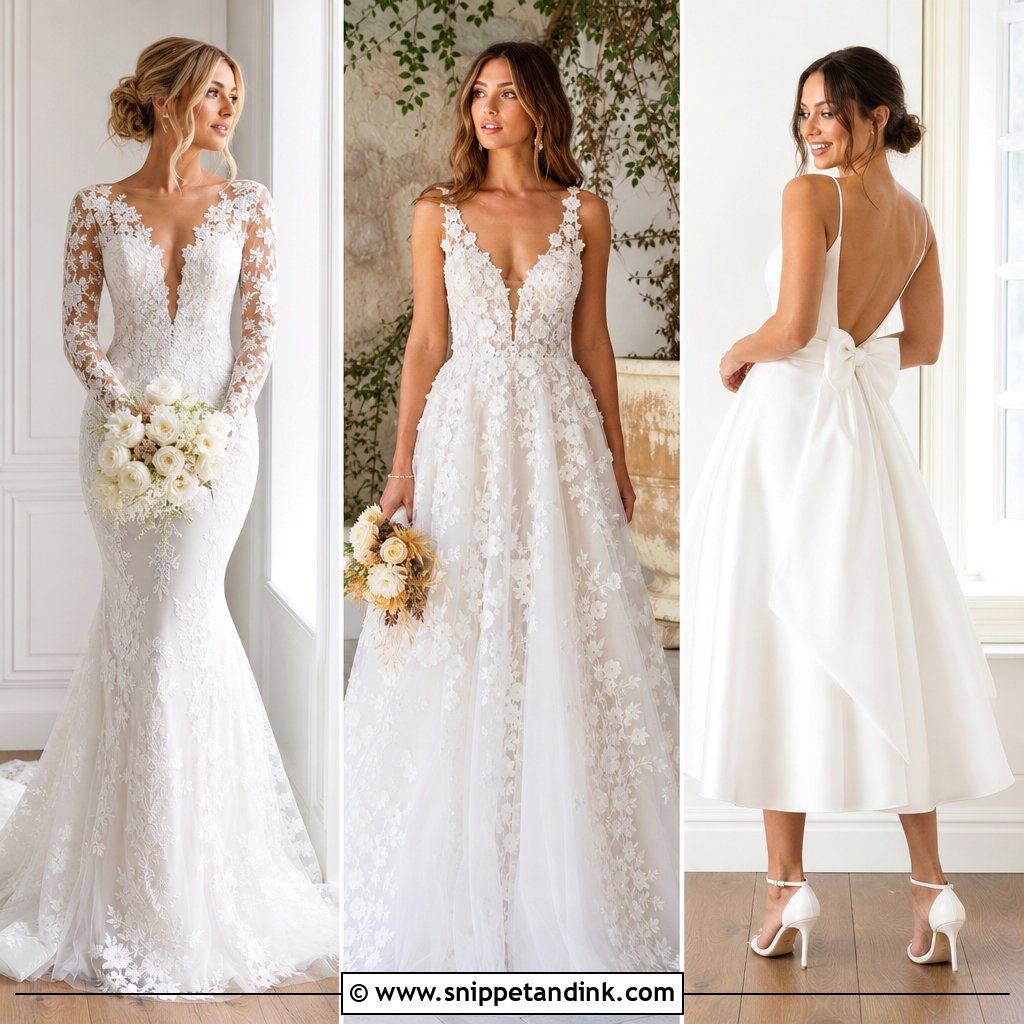
18. Floral Bridal Wedding Dress
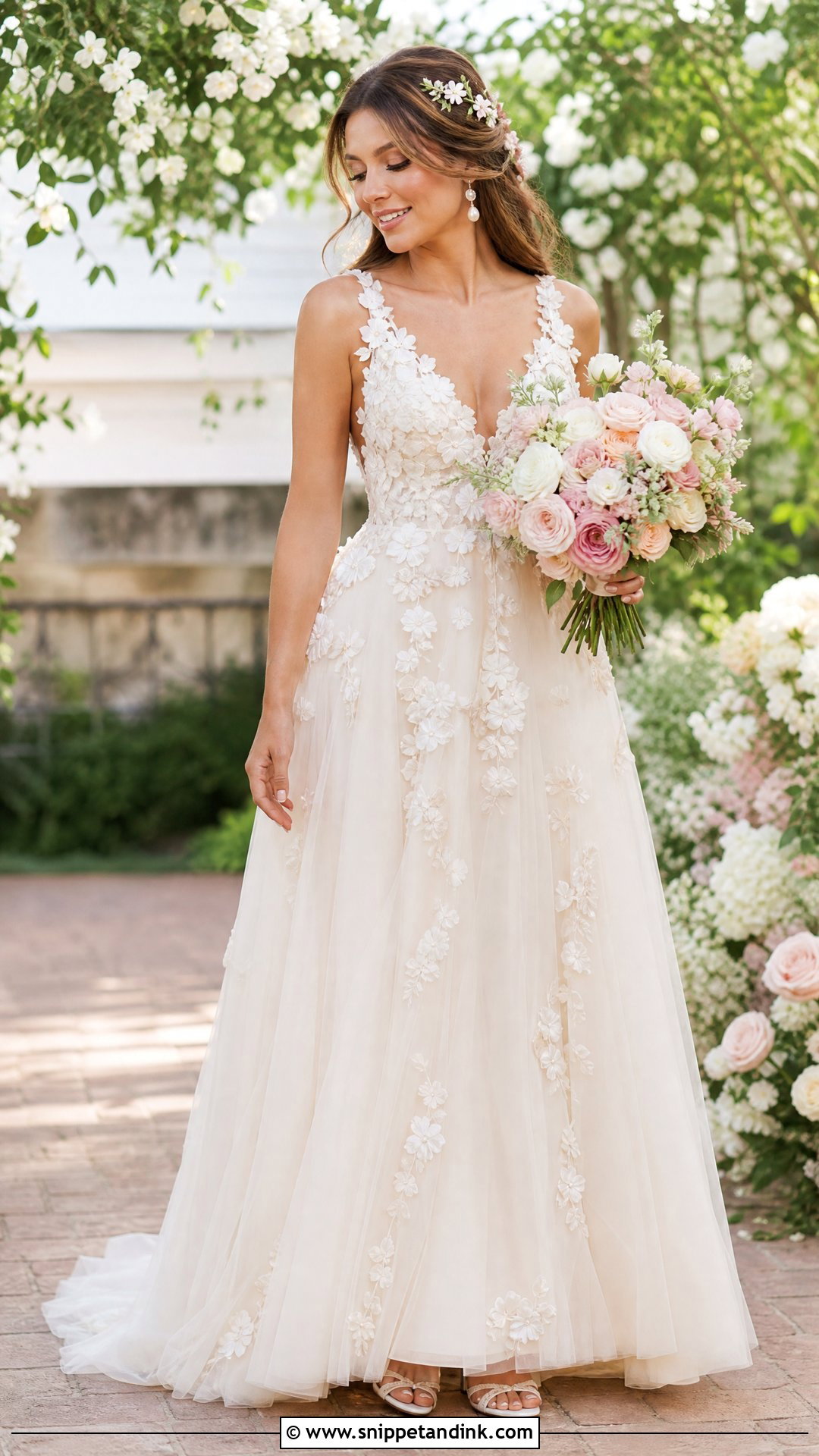
Florals can come as lace patterns, embroidered vines, 3D appliqués or a subtle print. They feel at home in spring, in gardens and at outdoor ceremonies. With raised 3D flowers, keep the veil plain so it doesn’t snag and hide them. I’d also suggest the florist knows about the dress, because a bouquet that repeats the same flowers can look deliberate, while clashing shapes look busy.
19. Beaded Bridal Wedding Dress
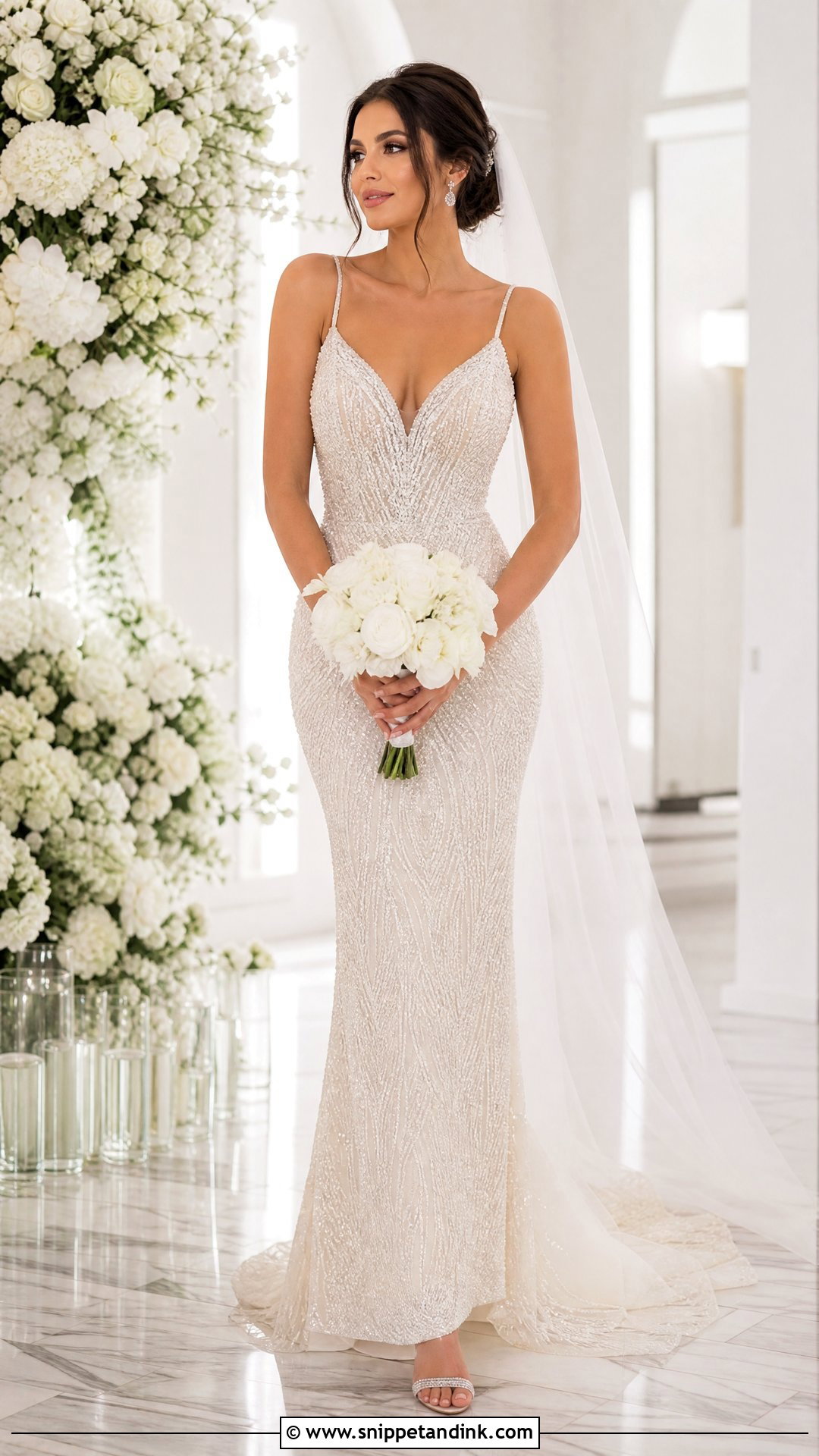
Beading catches every bit of light, from a scattered sprinkle to a fully beaded gown. It shines at evening weddings, hotels and formal venues. Heavily beaded fabric weighs more than people expect and can scratch the inside of the arm, so I check underarm seams carefully. Keep jewellery minimal and hair sleek; with this much detail, the dress already does the sparkling.

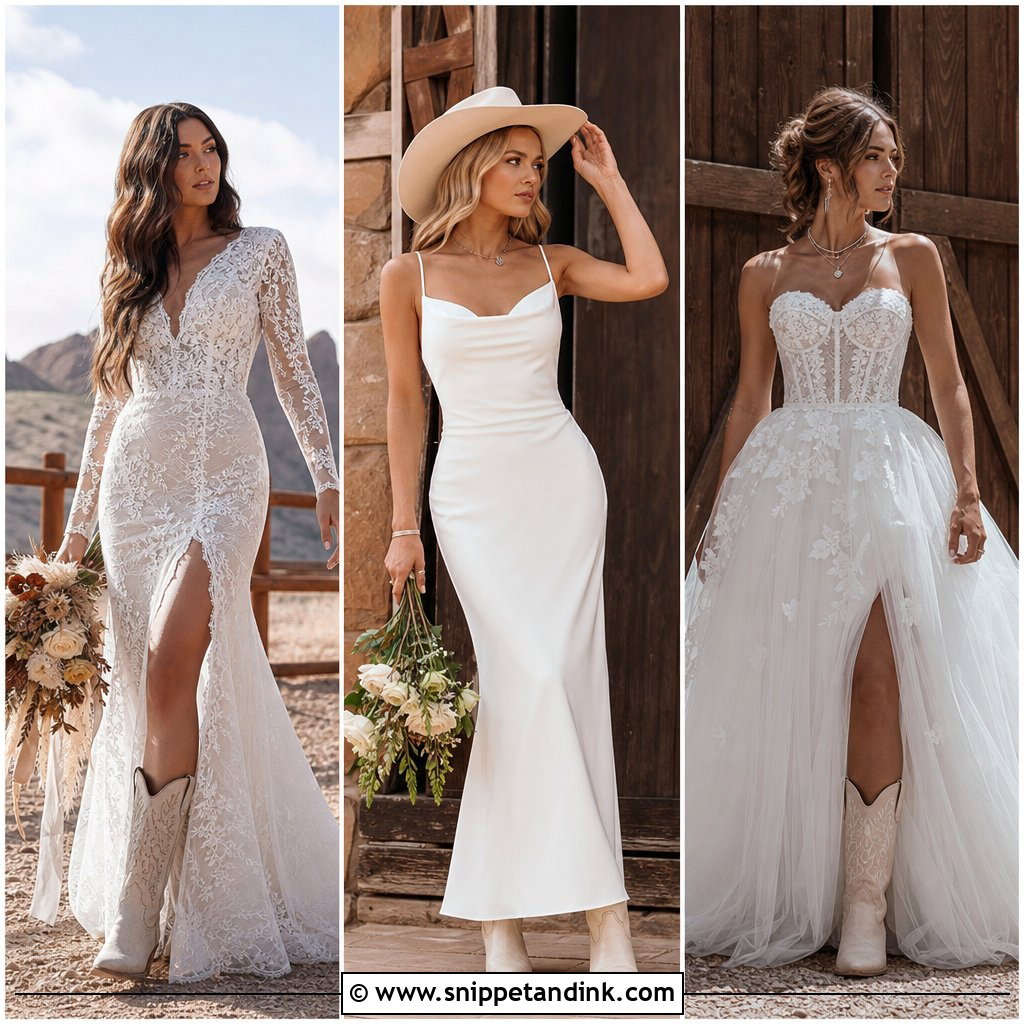
20. Boho Bridal Wedding Dress
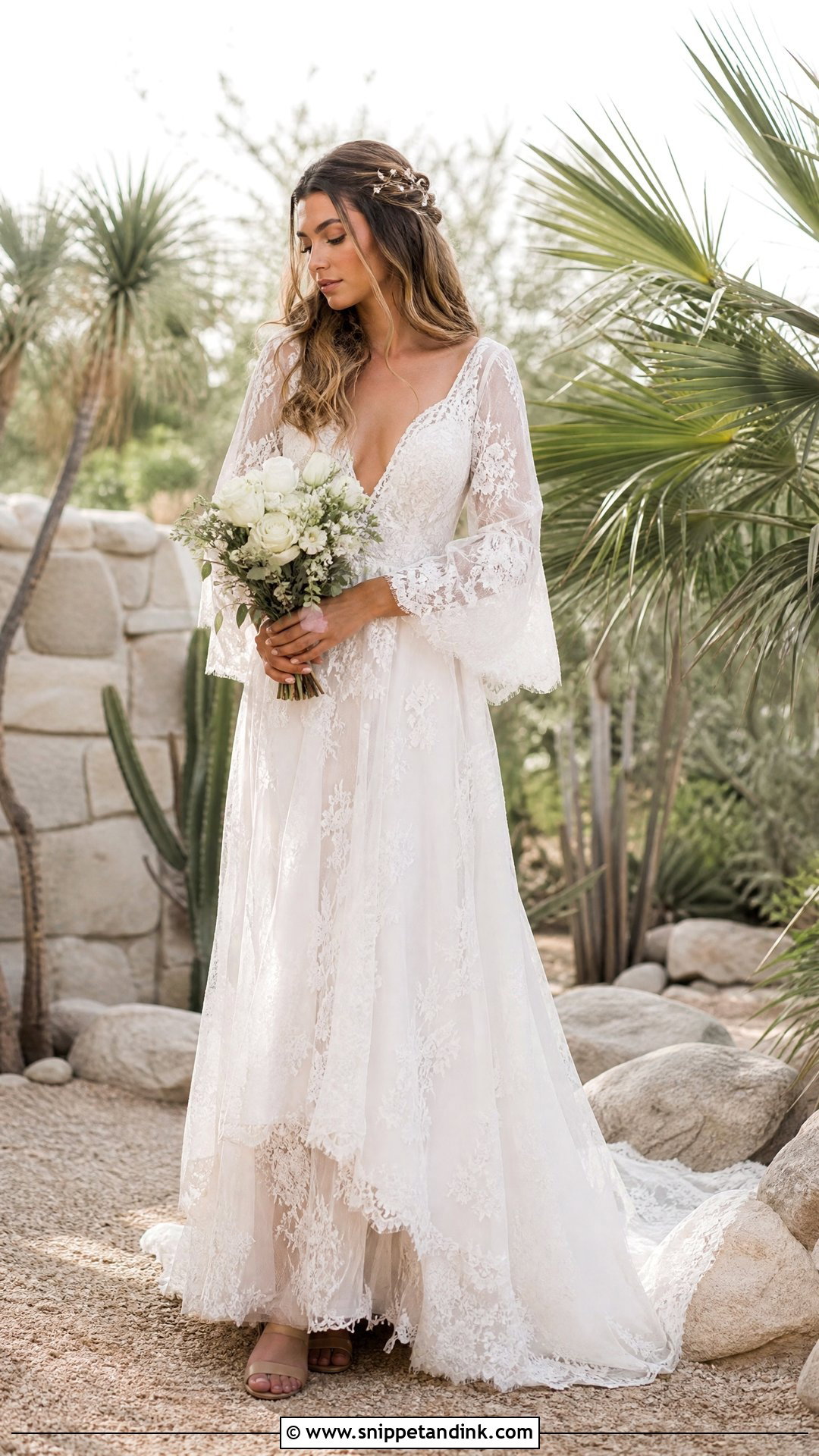
Boho gowns feel relaxed and natural, with soft lace, flowing sleeves, light skirts, open backs or gentle embroidery. Desert, beach and garden settings suit them. Choose footwear for the ground: block heels or bridal sandals on grass and sand. Earthy, minimal jewellery and loose waves finish it. A lightweight veil or cape adds movement, but anything long outdoors will collect leaves, so consider a shorter length.
21. Vintage Bridal Wedding Dress
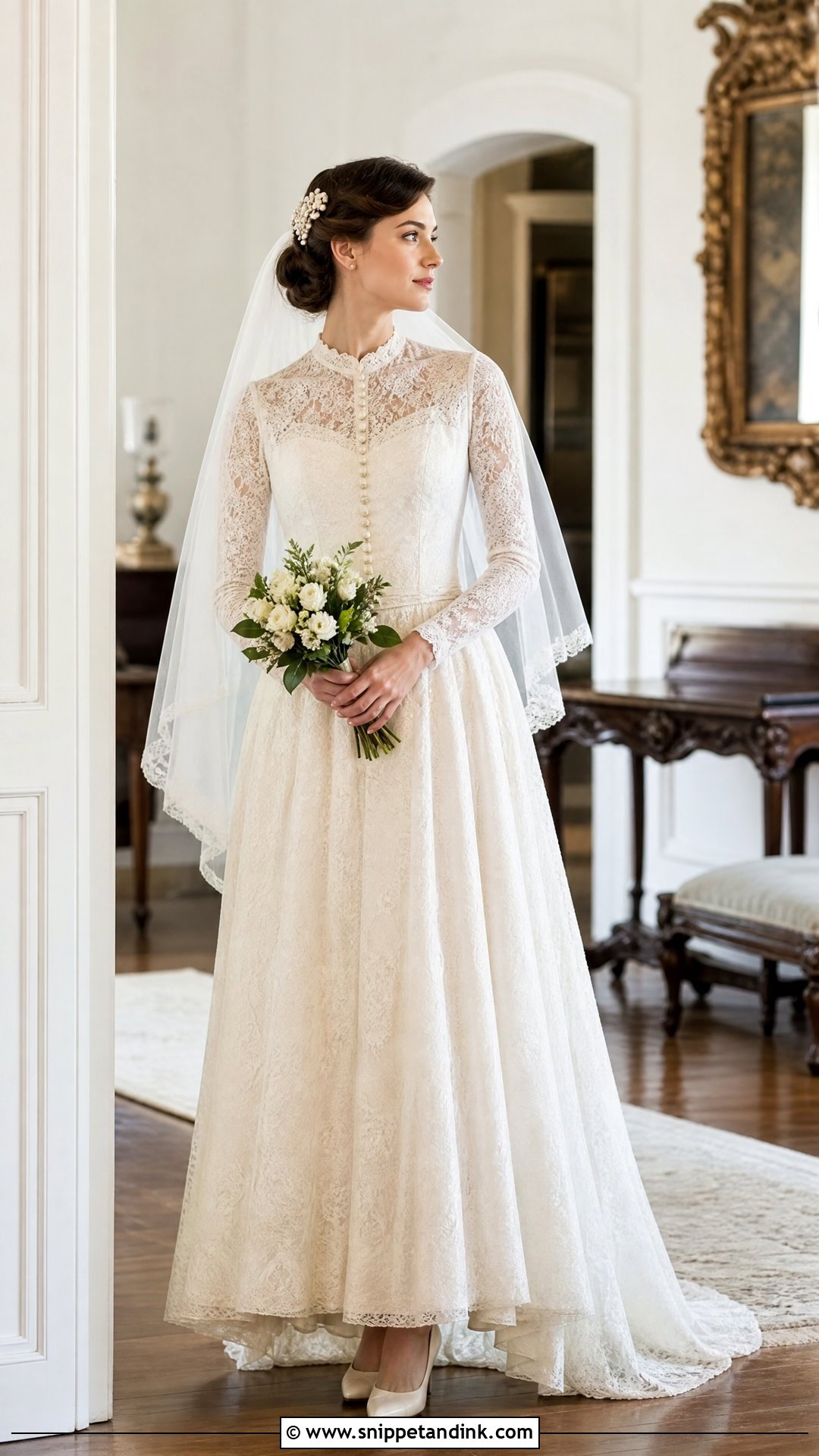
Vintage gowns bring old-world charm: lace sleeves, high necks, tea-length hems, satin buttons and beading. Some brides wear true vintage, others a new gown with vintage details. With a true vintage or heirloom dress, take it to a specialist for cleaning and alterations early, as old fabric can be fragile and seams may need reinforcing. A pearl comb, classic pumps and polished makeup suit the mood.
22. Modern Bridal Wedding Dress
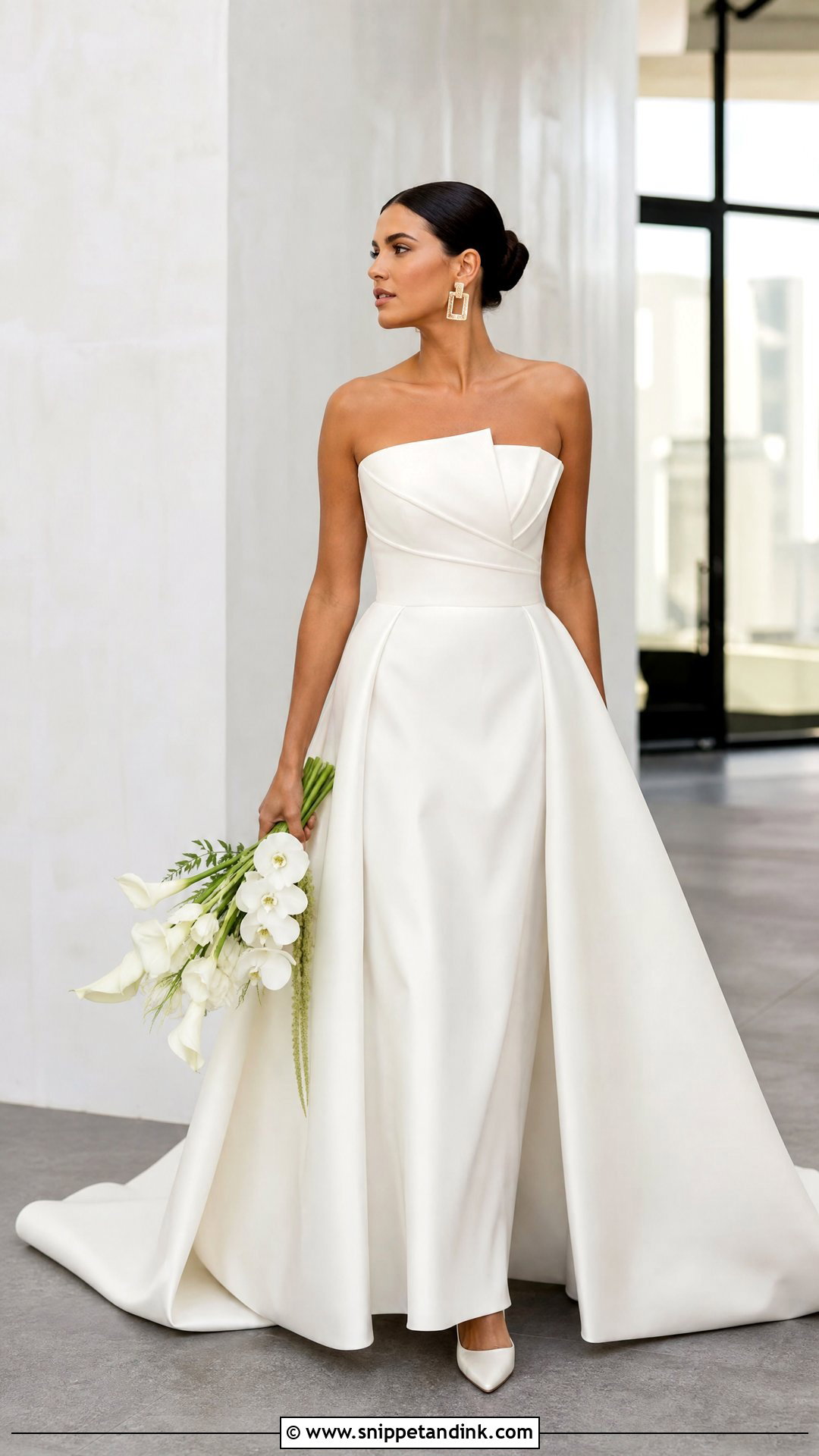
Modern gowns lean on structure: square necks, sculptural bodices, asymmetric draping, sharp seams. City venues, galleries and rooftops show them off. The fabric has to be firm enough to hold those lines, so expect mikado, heavy crepe or structured satin. Geometric earrings and a sleek bun suit it, and a short veil, a cape veil or no veil at all keeps it current. An architectural bouquet finishes it.
23. Champagne Bridal Wedding Dress
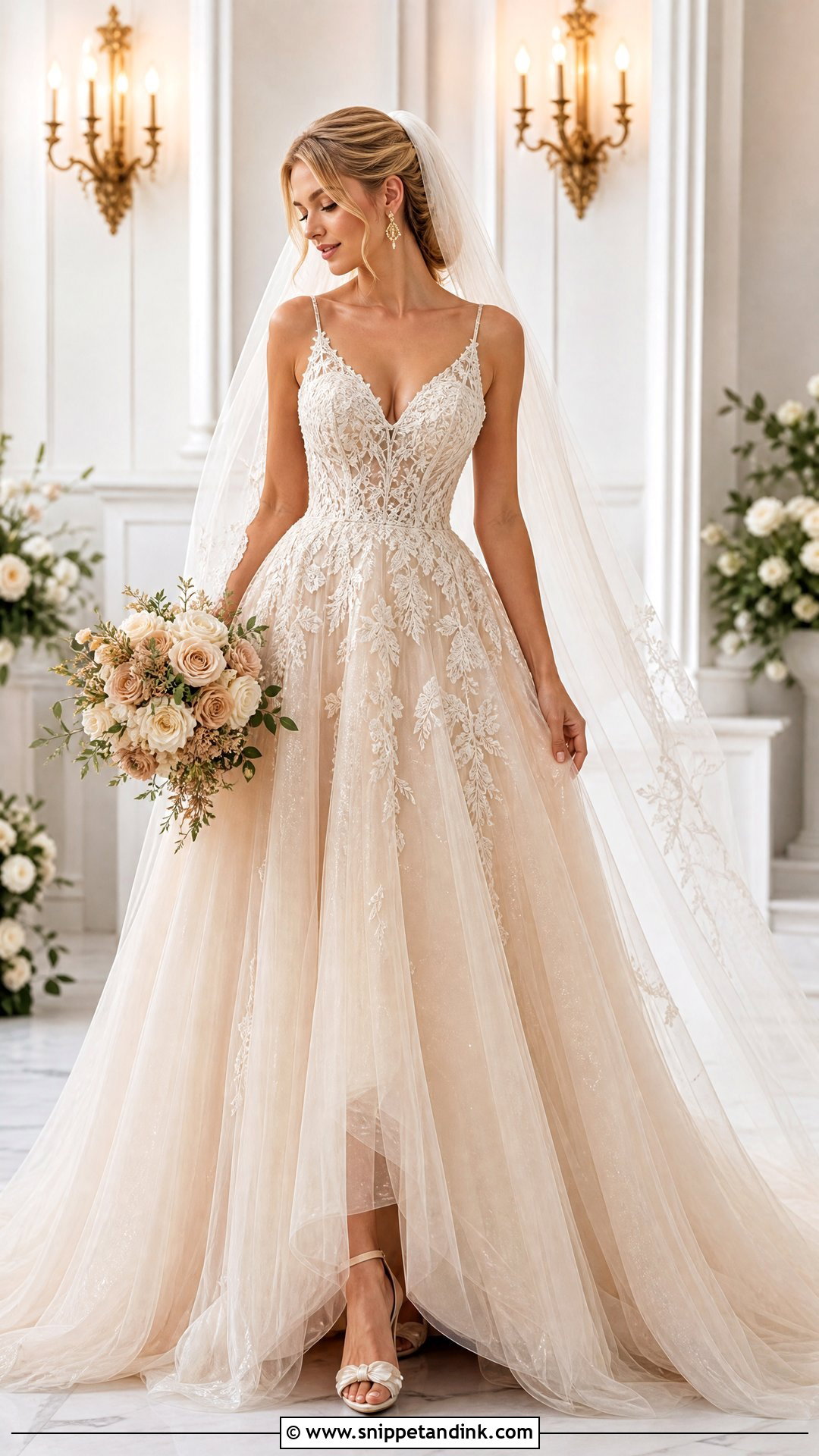
Champagne sits between ivory and beige and adds warmth to lace, tulle, satin and beading. It looks especially soft in candlelight and autumn settings. One thing I always point out: match your veil and accessories to the gown’s undertone. A bright white veil next to champagne makes the dress look darker than it really is. Nude or ivory heels and gold-toned jewellery keep everything in the same family.
24. Detachable Train Bridal Wedding Dress
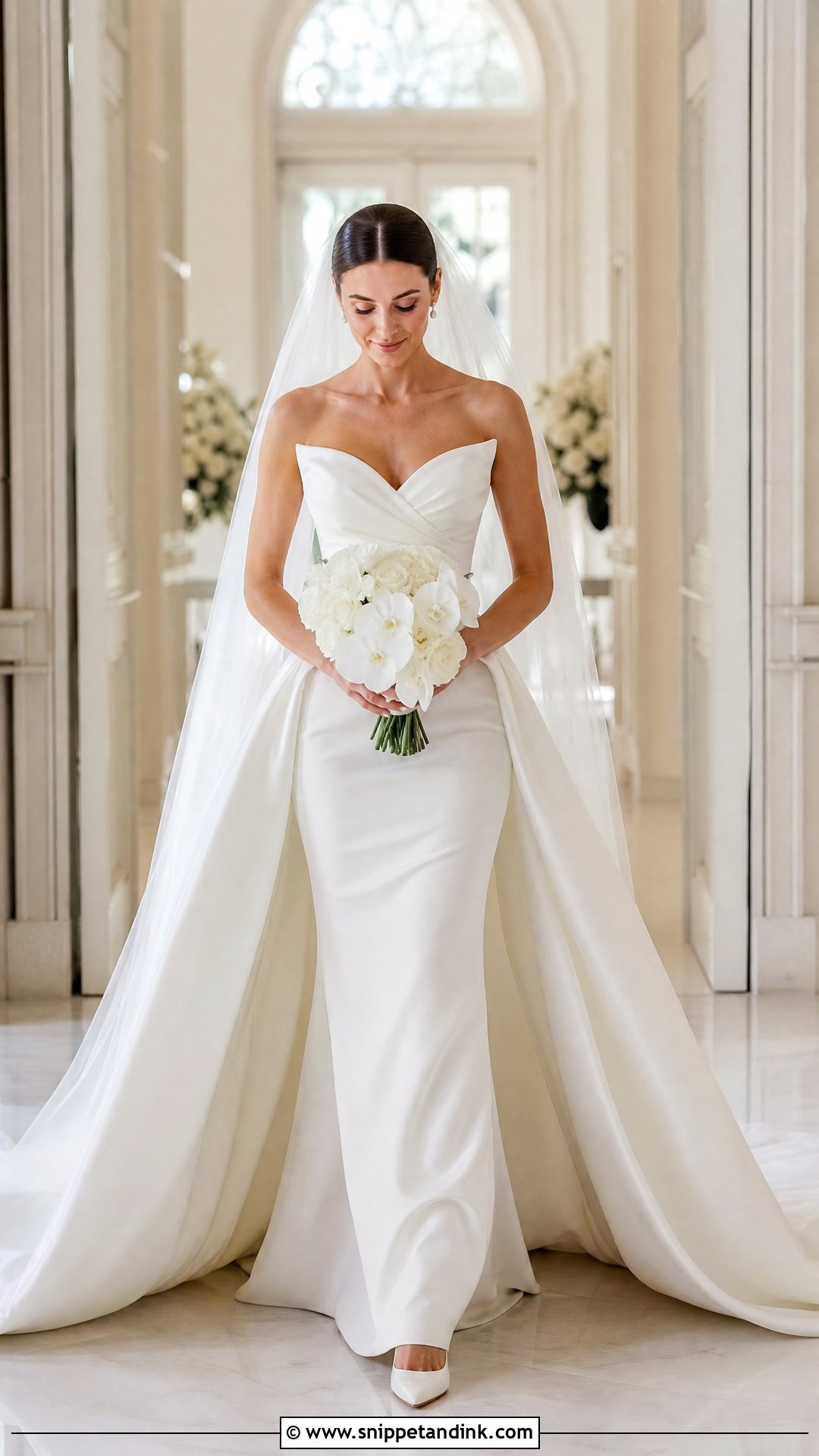
A detachable train gives you the ceremony entrance and then frees you for the reception. It can attach at the waist, shoulders or back. Take it off after the formal photos and you have a sleeker dress for the evening without a second gown in the budget. Ask how it fastens and practise removing it once with whoever will help. Hidden snaps release cleanly, while tiny buttons take time in a busy room. Secure heels and simple jewellery suit both versions.


25. Bridal Wedding Dress With Cape
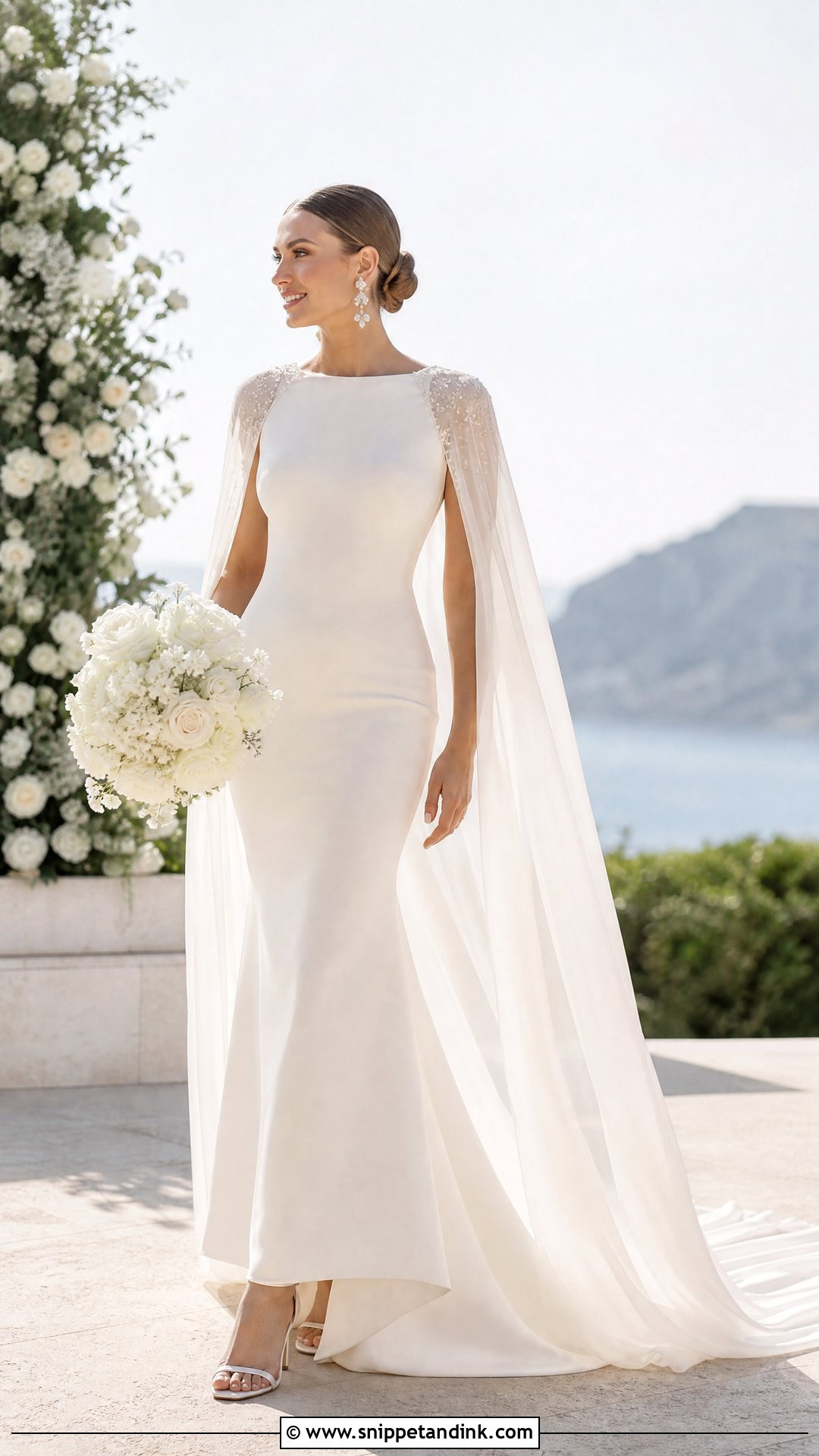
A bridal wedding dress with cape works as a veil alternative or simply as drama. Capes can be sheer, lace, beaded, detachable, short or cathedral length. They do the most for simple gowns: a sheer cape over clean crepe feels modern, while a lace cape over a fitted gown feels romantic. Check how a cape interacts with your hair, since a high updo can catch on a cape fastened at the neck. Skip necklaces if the cape is detailed at the collar.
The Gown After the Last Dance
Before any of that, though, plan for the day itself. I keep a needle threaded in ivory, a few safety pins, fashion tape and clear nail polish for stopping a ladder in tulle. A bustle loop that snaps mid-reception can be pinned discreetly from the inside in a minute, so give a small kit like this to whoever is helping you dress.
A wedding dress usually comes home with grass on the hem, a sticky patch of champagne and makeup at the neckline. Some stains, especially sugar from drinks, are invisible at first and turn yellow or brown months later. That’s why I’d have it cleaned within a few weeks rather than leaving it in a bag over winter.
Use a cleaner experienced with bridal fabrics, and point out any spills you remember. For storage, I’d fold the gown with acid-free tissue in an acid-free box, kept somewhere cool, dark and dry. Long-term hanging pulls a heavy gown out of shape at the shoulders, and plastic bags can trap moisture. If you plan to sell, re-wear or pass the dress down, good storage is what keeps that option open.
A Gown Should Pass the Sitting Test Too
The gown you’ll remember well is the one you didn’t have to think about once you put it on. Silhouette, fabric and neckline each change how a dress feels to wear, not just how it looks: an A-line or ball gown, a slip or mini, a corset, a cape, lace, satin, champagne. Think about your venue, your season and how you want to move, then test the dress by sitting, walking and lifting your arms. The right gown is the one that leaves you calm, comfortable and fully yourself.
You'll Like These Ideas:









Leave a Reply