
A grand wedding dress isn’t only about volume. In the fitting room, the gowns that feel grand are the ones where skirt, veil, shoes and hair agree with each other and with the room you’ll marry in. A full ball skirt, a sculpted bodice, heavy lace, statement sleeves or a long train can each carry the look, but rarely all at once. Structured satin and Mikado give clean volume; layered tulle, dimensional appliqués and beadwork read softer. Ball gowns and structured A-lines belong in ballrooms, historic estates and other big rooms where a narrow dress would look lost. Below are twenty complete bridal looks, from regal to modest, each with what I’d pair it with and what I’d check at the fitting.
A Big Gown Needs a Longer Runway Than You Think
Structured gowns are usually made to order, and production alone often takes four to six months, longer for some designers or heavily beaded pieces. That’s why I tell brides to start shopping nine to twelve months out if they want a ball gown. Rush orders exist, but they narrow your choices and often carry a fee.
- Nine to twelve months before: shop, compare fabrics in person, and order.
- Around three months before: the dress arrives and you book alterations.
- Two to three months before: first fitting, with your real shoes and undergarments.
- Final fitting, a few weeks out: confirm the bustle and teach your helper.
Why the size on the tag will look wrong
Bridal sizing runs smaller than everyday clothing, so most brides order a size or two above what they normally buy. Salons order to your largest measurement and take the rest in, because a seamstress can remove fabric far more easily than add it. Ignore the label and trust the tape measure.
1. Satin Ball Gown Wedding Dress
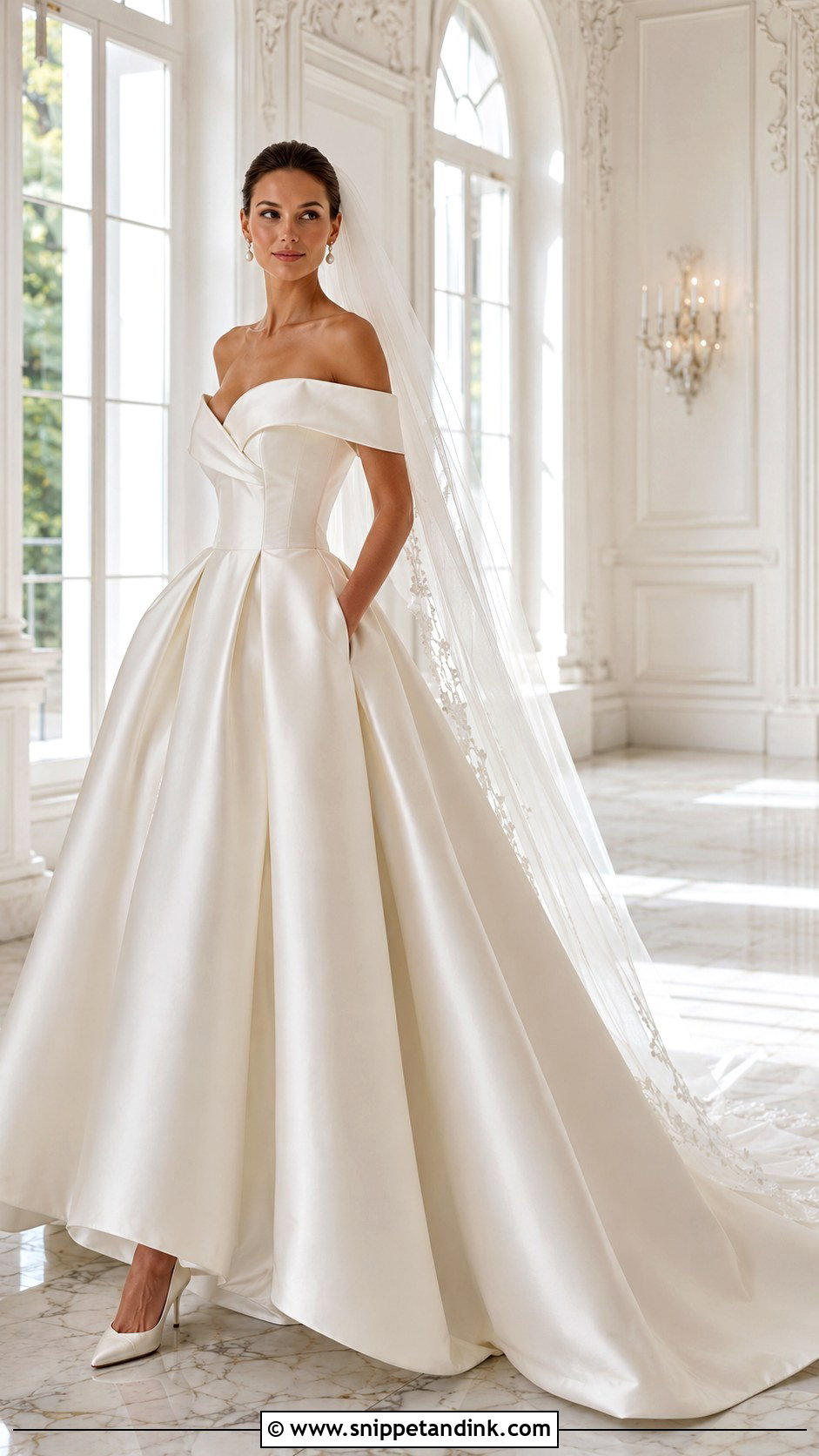
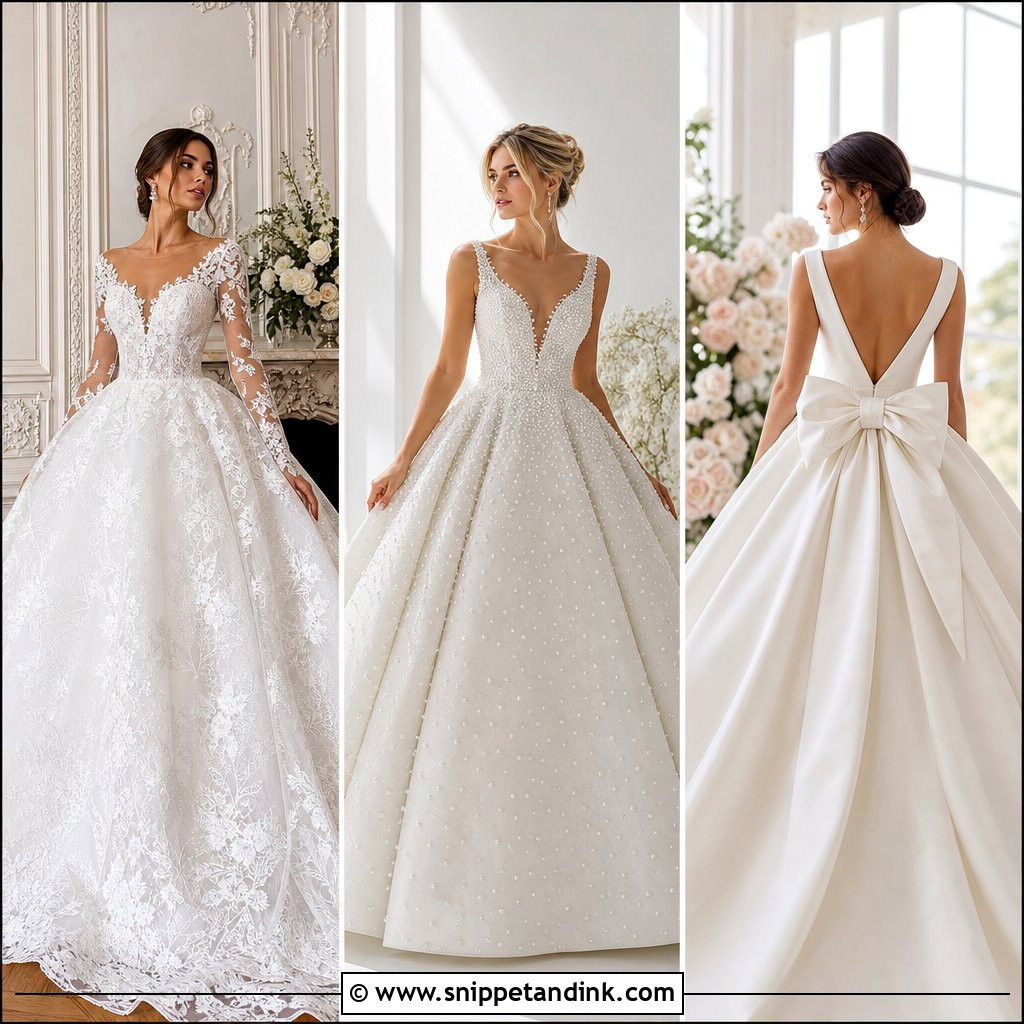
Satin ball gowns are the ones brides most often come back to after trying everything else. A fitted bodice with a softly curved neckline and a skirt that holds its shape on its own is all the structure you need, and ivory satin bounces light around a ballroom without any beading. I’d add a cathedral veil, pearl drops and pointed satin pumps, with a sleek low bun that gives the veil comb something solid to grip. Ask for pockets. Hands in pockets is the most natural pose you’ll find for relaxed portraits. Plan the bustle at your final fitting, because a satin train dragged through a reception collects every footprint.
2. Long Sleeve Lace Ball Gown Wedding Dress
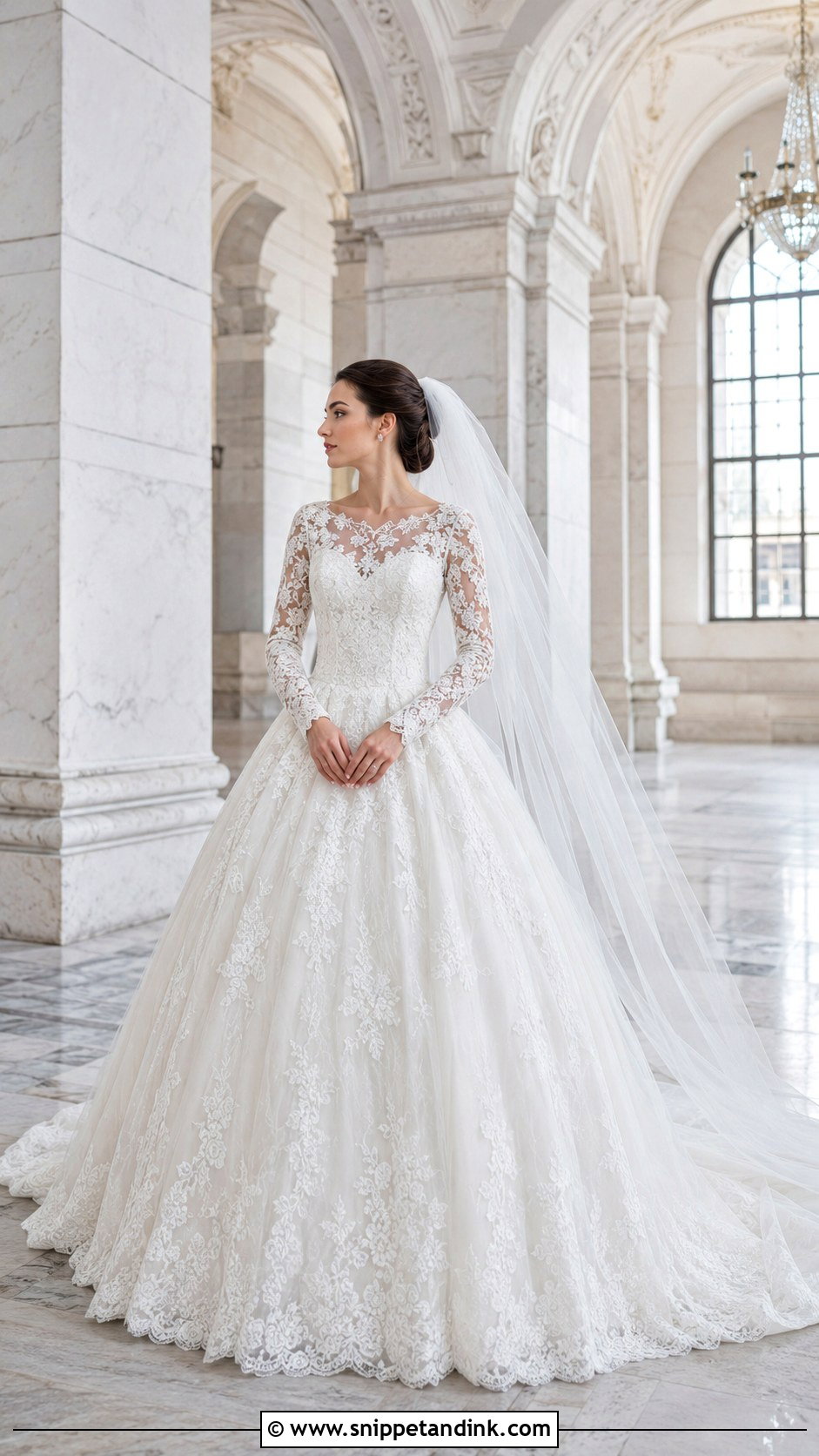
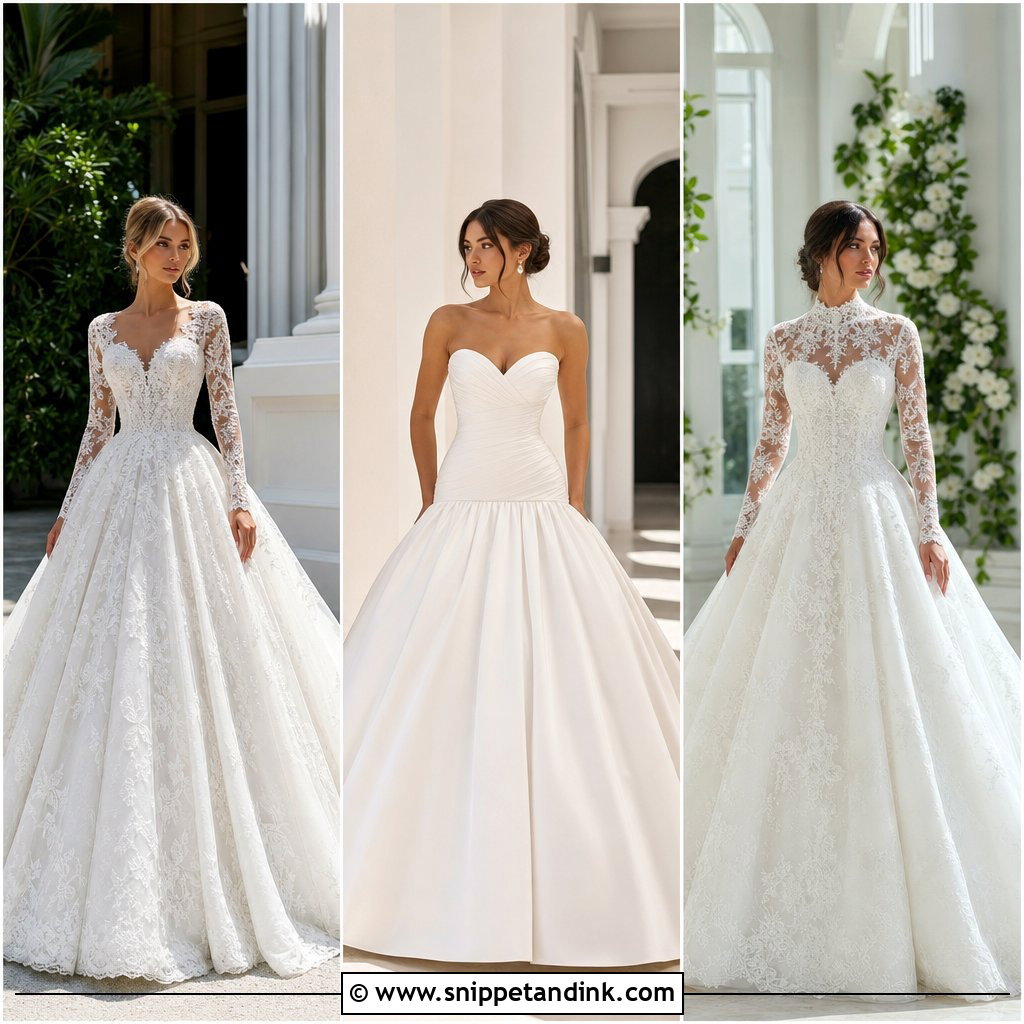
Long lace sleeves cause the most regret I see, usually because they were fitted with the bride’s arms hanging at her sides. Ask the seamstress to pin them while you hug someone and lift a glass. When the fit is right, a defined waist with lace motifs continuing into the skirt and an illusion neckline give coverage that still looks light at the shoulders. Keep the cathedral veil plain; laying lace over lace hides the pattern you paid for. Crystal studs, closed-toe heels and a gathered chignon finish it. For cold weather, an ivory cape covers you for outdoor portraits and comes off easily once you’re inside.
3. Off Shoulder Mikado Wedding Dress
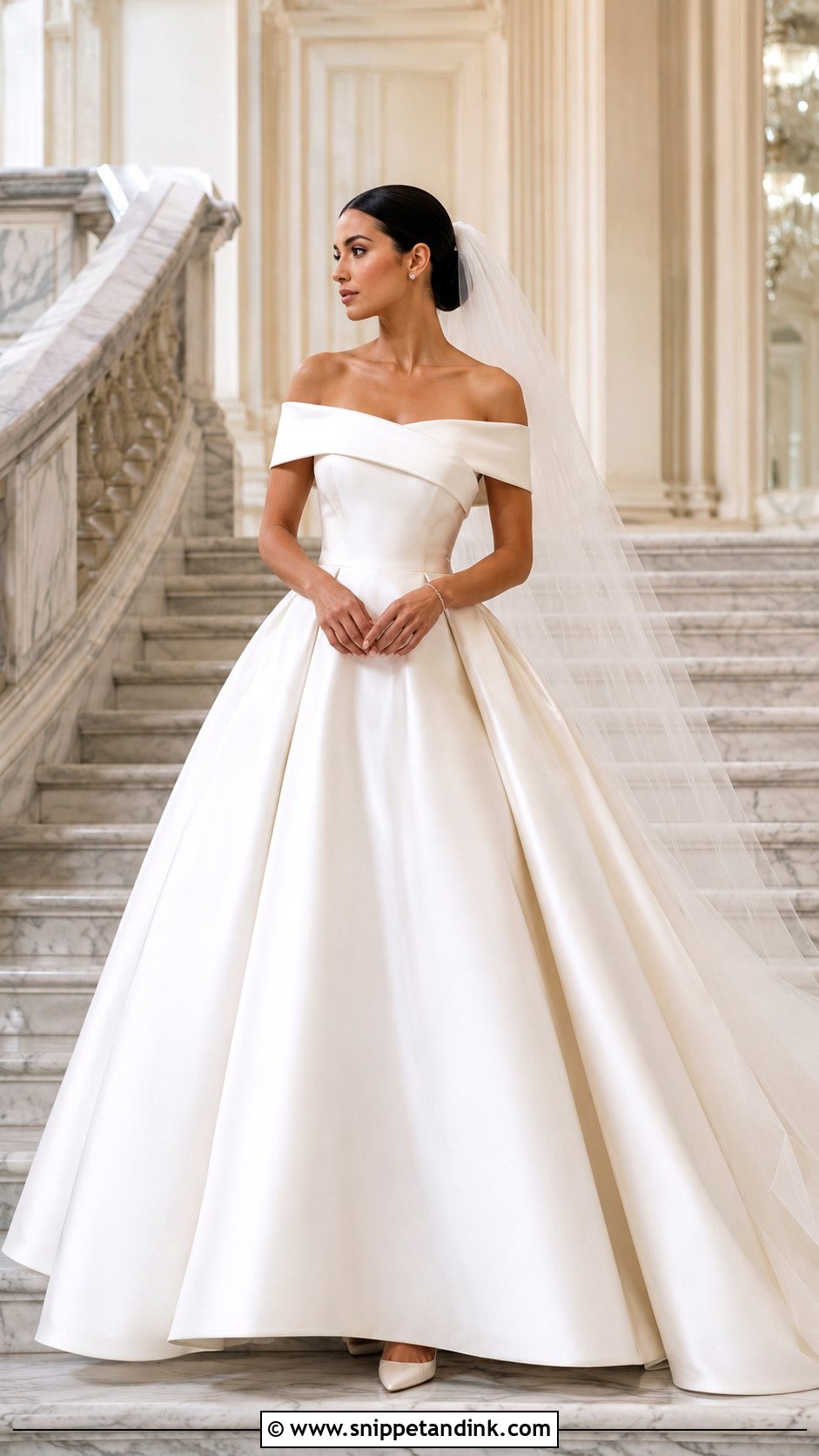
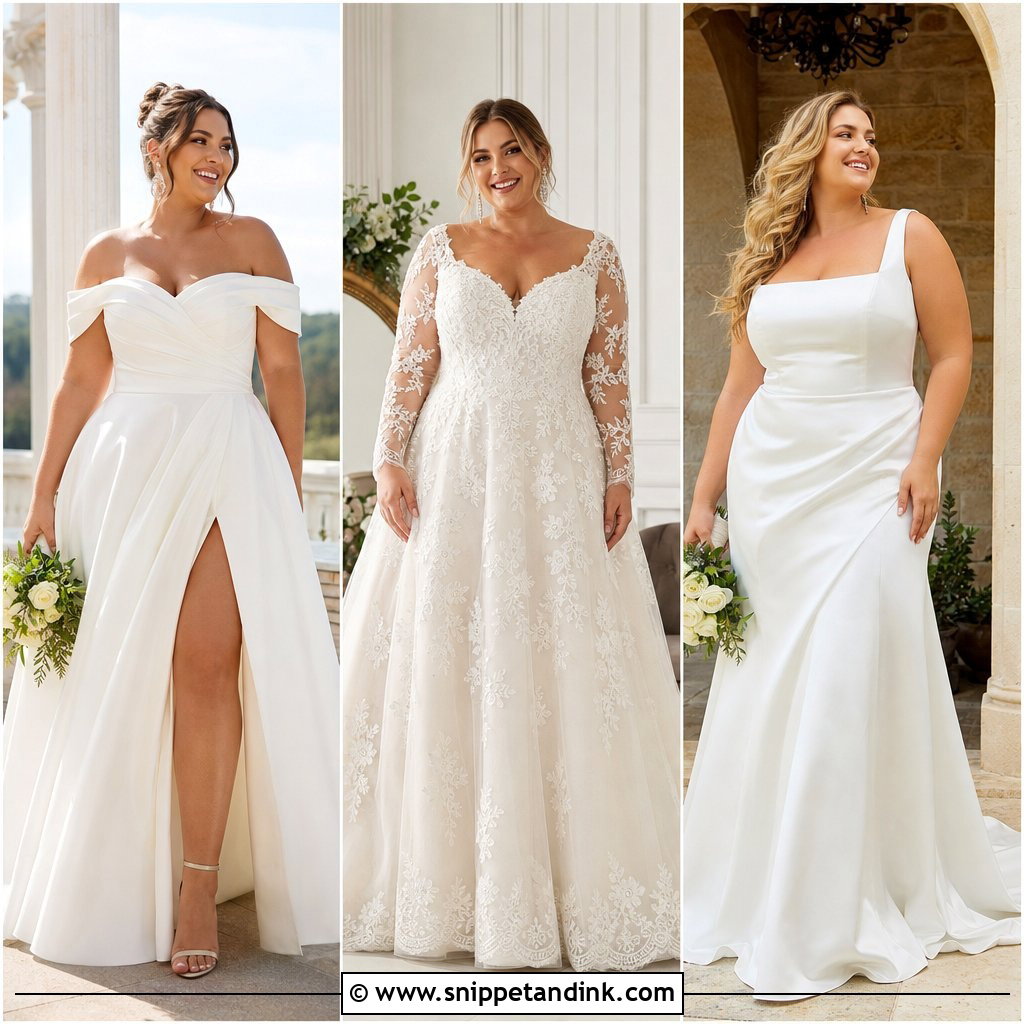
Mikado is stiff enough to stand away from the body, which is why an off-the-shoulder Mikado gown looks grand without a single bead. Look for a folded neckline with real support behind it, a fitted waist and crisp pleats in the skirt. The weak point is that neckline: off-shoulder bands creep down when you hug, so test it at every fitting with your arms raised. A structured updo shows the shoulders, while a smooth cathedral veil, stud earrings and a tennis bracelet keep the rest clean. Mikado does crease where you sit, so expect soft lines across the lap by the reception. They relax once you’ve been standing a while.
4. Beaded Tulle Princess Wedding Dress
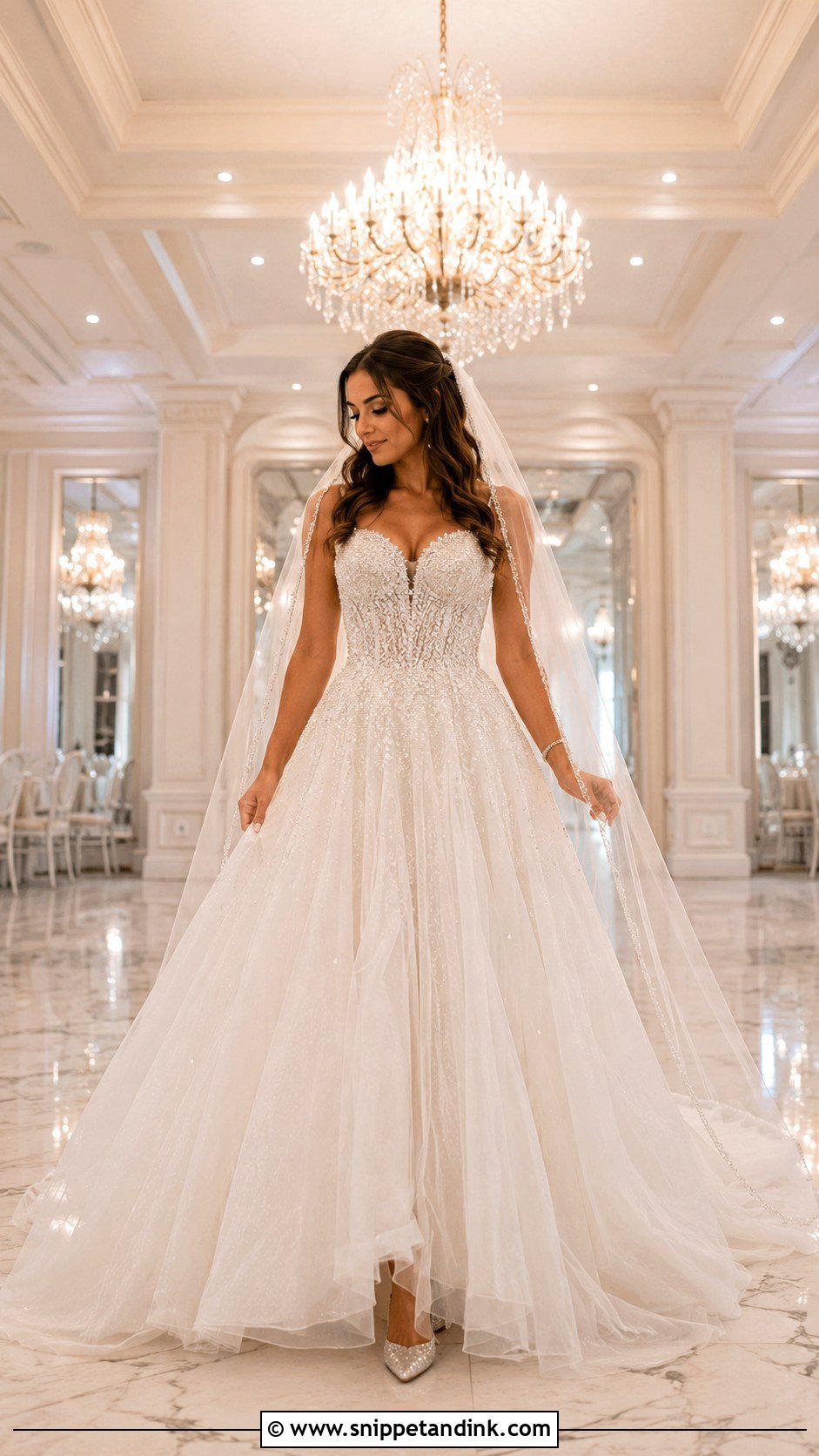
Beaded tulle is the princess look most brides picture, and the trick is keeping the weight up top. Put the crystals, pearls or sequins on the bodice, then let a skirt of plain layered tulle float when you walk. A natural waist gives all that volume a clear starting point. Choose a sheer fingertip or chapel veil without its own embellishment so the bodice stays the focus, and keep hair in soft waves or half-up. Tulle snags on stone steps, bark and rough carpet. Look at the floors at your venue and plan to lift the hem for any portraits on gravel or old stone.
5. Basque Waist Corset Wedding Dress
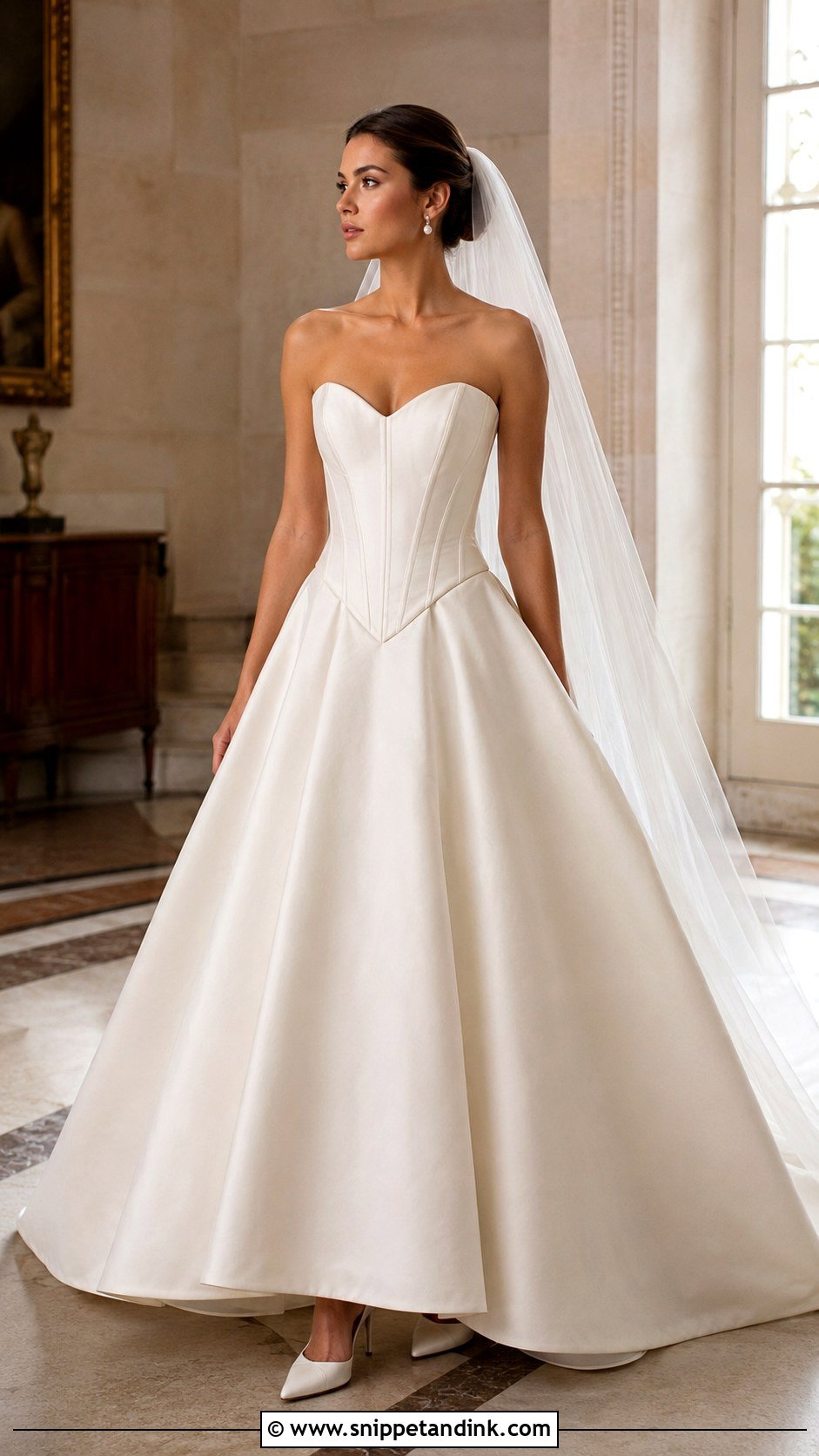
A Basque waist corset gown lengthens the torso by dropping the waist into a point below your natural waistline, and that point has to sit dead center or the whole dress looks crooked. This is a construction-led silhouette, so spend your budget on fitting at the bust, waist and hips rather than extra trims. Matte satin keeps it clean; embroidered fabric adds decoration. A long plain veil, pearl earrings, slim pumps and a smooth bun keep the bodice visible. Ask about box pleats instead of gathers at the waist, since they lie flatter under a pointed basque. You should be able to sit and take a full breath in the corset.
6. Square Neck A-Line Wedding Dress
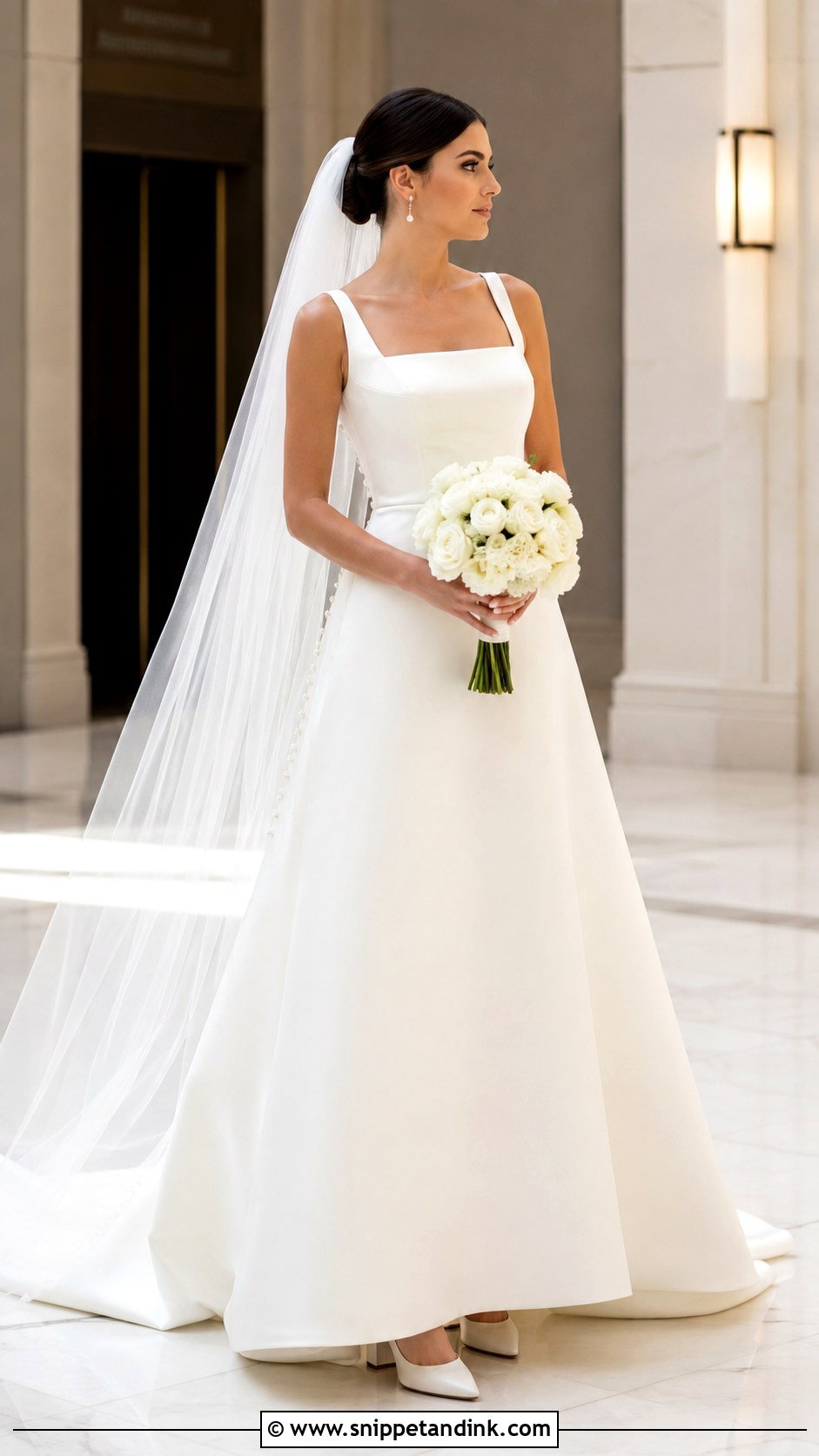
A square-neck A-line is grand in a more controlled way. The neckline frames the collarbones and the skirt flares without the width of a ball gown, which matters if your aisle is narrow or the venue has tight doorways. Substantial satin, Mikado or heavy crepe hold their shape and stay crisp at a distance in a large ceremony space. Finish with a chapel veil, pearl-and-crystal earrings, block-heel pumps hidden under the hem and a center-parted chignon. Detachable long sleeves solve the problem of a covered religious ceremony followed by a warm reception. Covered buttons down the back give guests something to look at during the vows.
7. High Neck Lace Wedding Dress
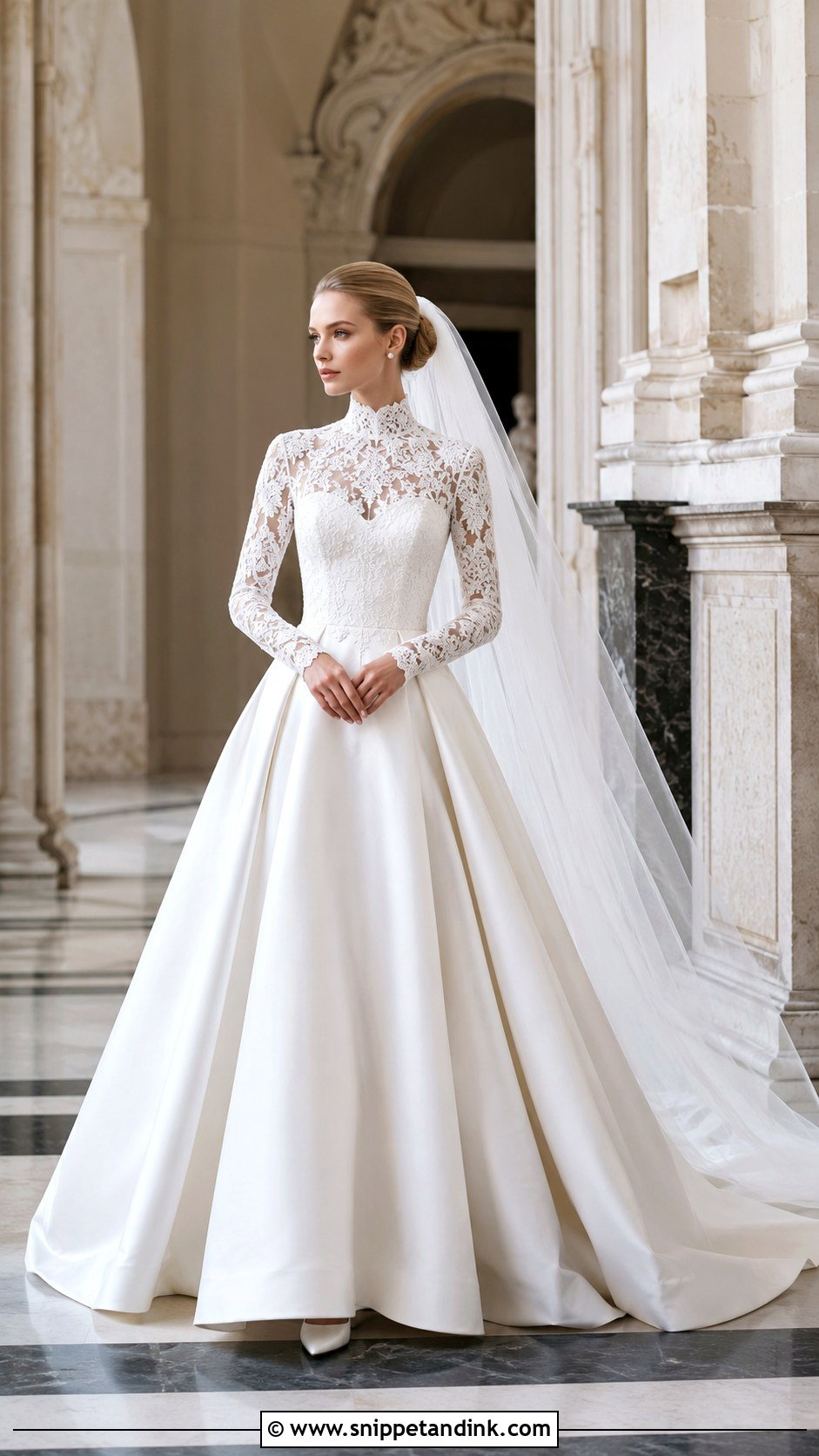
High necklines change your hair and jewelry plan more than any other neckline. With lace at the throat a necklace has nowhere to go, so I keep it to small diamond or pearl studs and put the hair up in a structured bun so the collar shows. Choose a lined or softly illusion neck and balance the fitted lace bodice with a full satin or layered tulle skirt; long sleeves make it more formal for a cool-season ceremony. Attach the cathedral veil beneath the bun, not on top, or it covers the lace. Before you commit, turn your head side to side in the mirror. Some collars fold or rub along the jaw, and that’s easy to soften if it’s caught early.
8. Strapless Wedding Dress With Bow
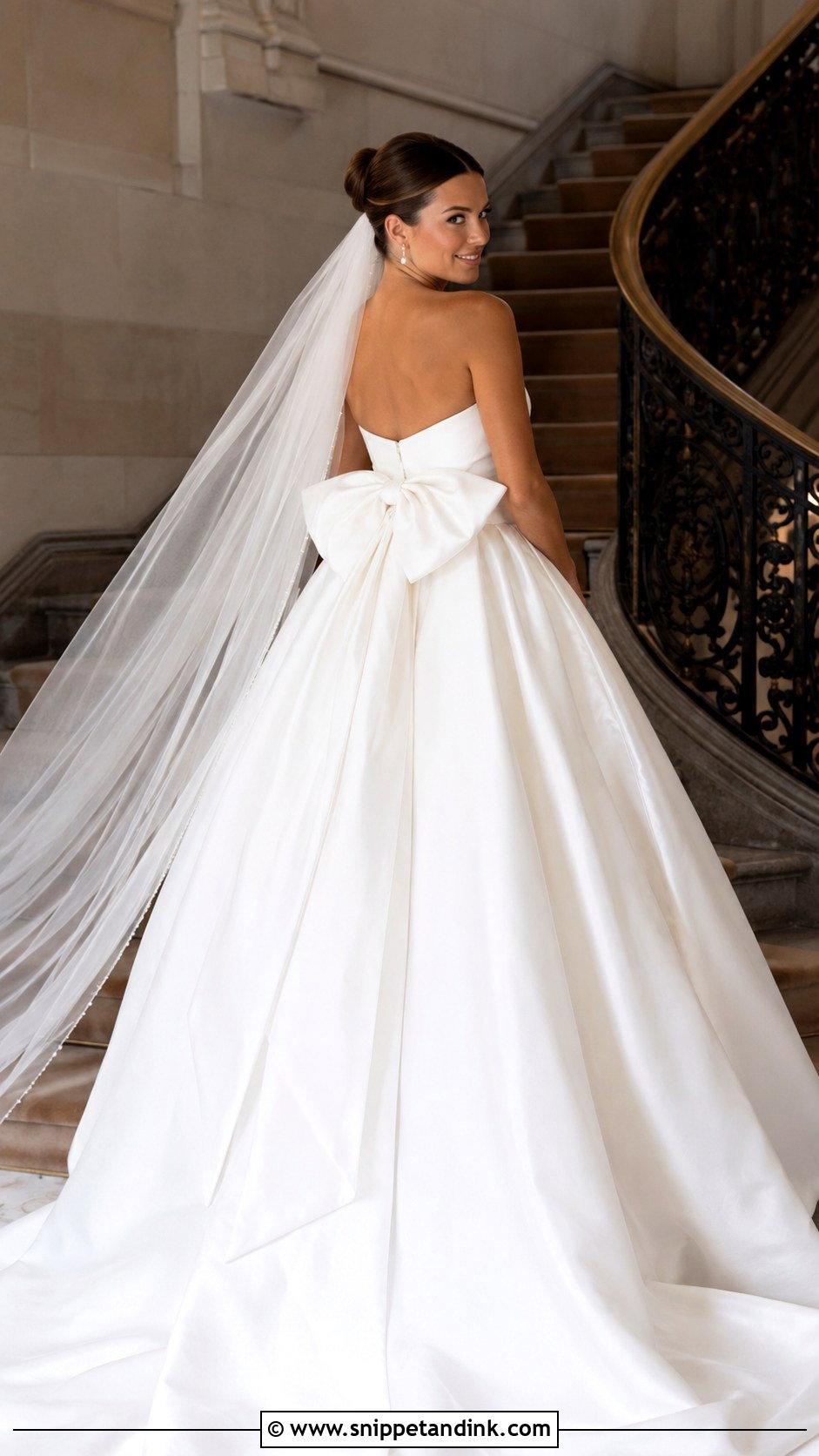
One bow, placed well, does more than three. On a structured strapless bodice with a full satin skirt, choose the back waist, the shoulder or the base of the train, then keep the veil sheer enough that the bow’s shape shows through. Pearl button earrings, satin pumps and a French twist keep everything else quiet. Strapless bodices only hold when the internal structure is right, so do your sitting test with the veil on, since its weight pulls backward. A detachable bow gives you a simpler dress for dancing.
9. Floral Appliqué Wedding Dress
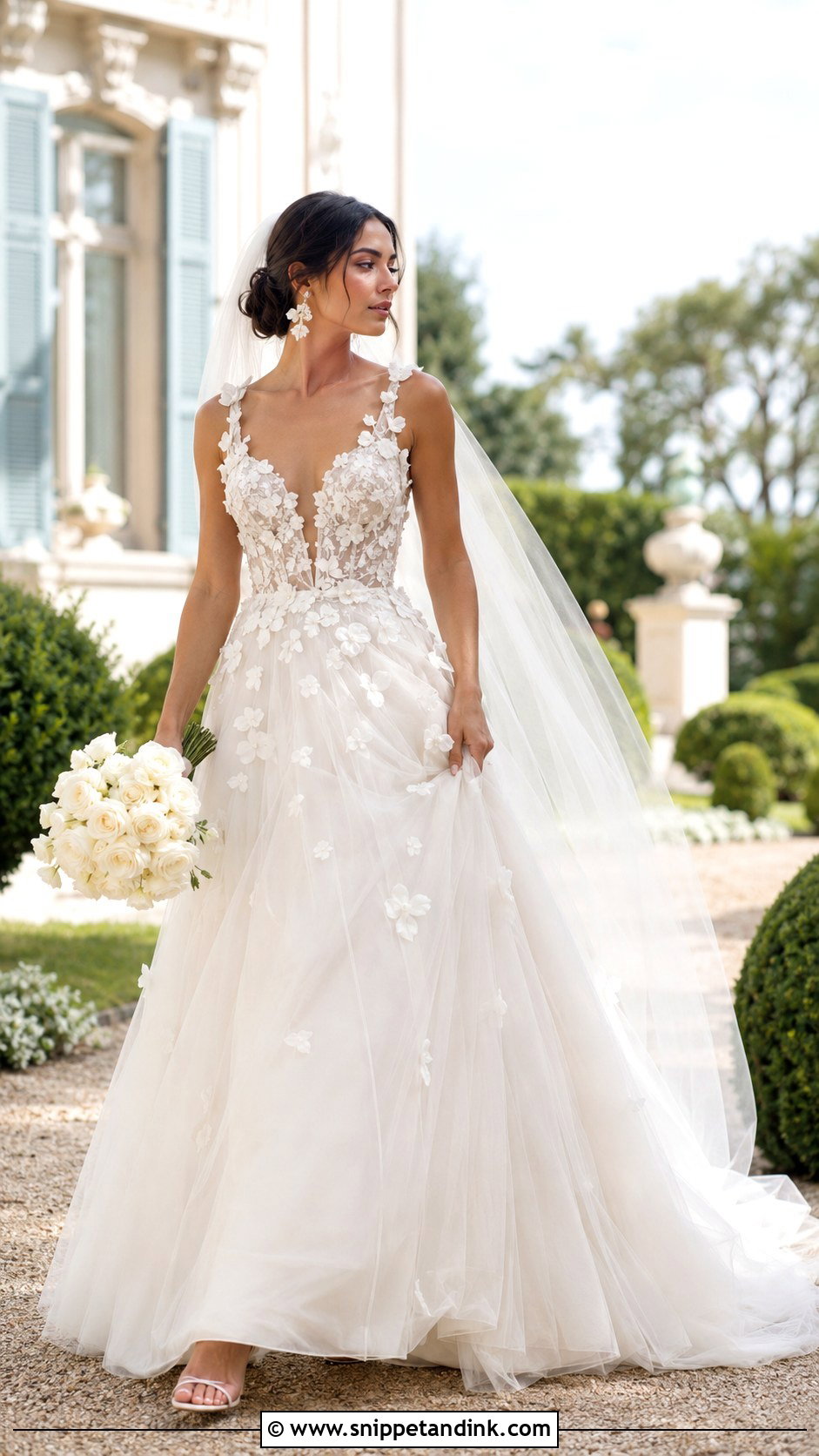
Appliqués look best when they seem to have grown there: dense on the bodice, then thinning out across a tulle A-line or ball gown skirt. Even coverage everywhere flattens the effect. Pair them with a plain raw-edge veil, small floral earrings and ivory heels, and keep the bouquet to one flower variety so it doesn’t compete. Raised appliqués near the underarm rub over a long day. Mention it at the fitting; moving or removing a motif is routine work for a good seamstress. A soft updo with a few loose pieces suits estate, garden and conservatory weddings.
10. Pearl Embellished Wedding Dress
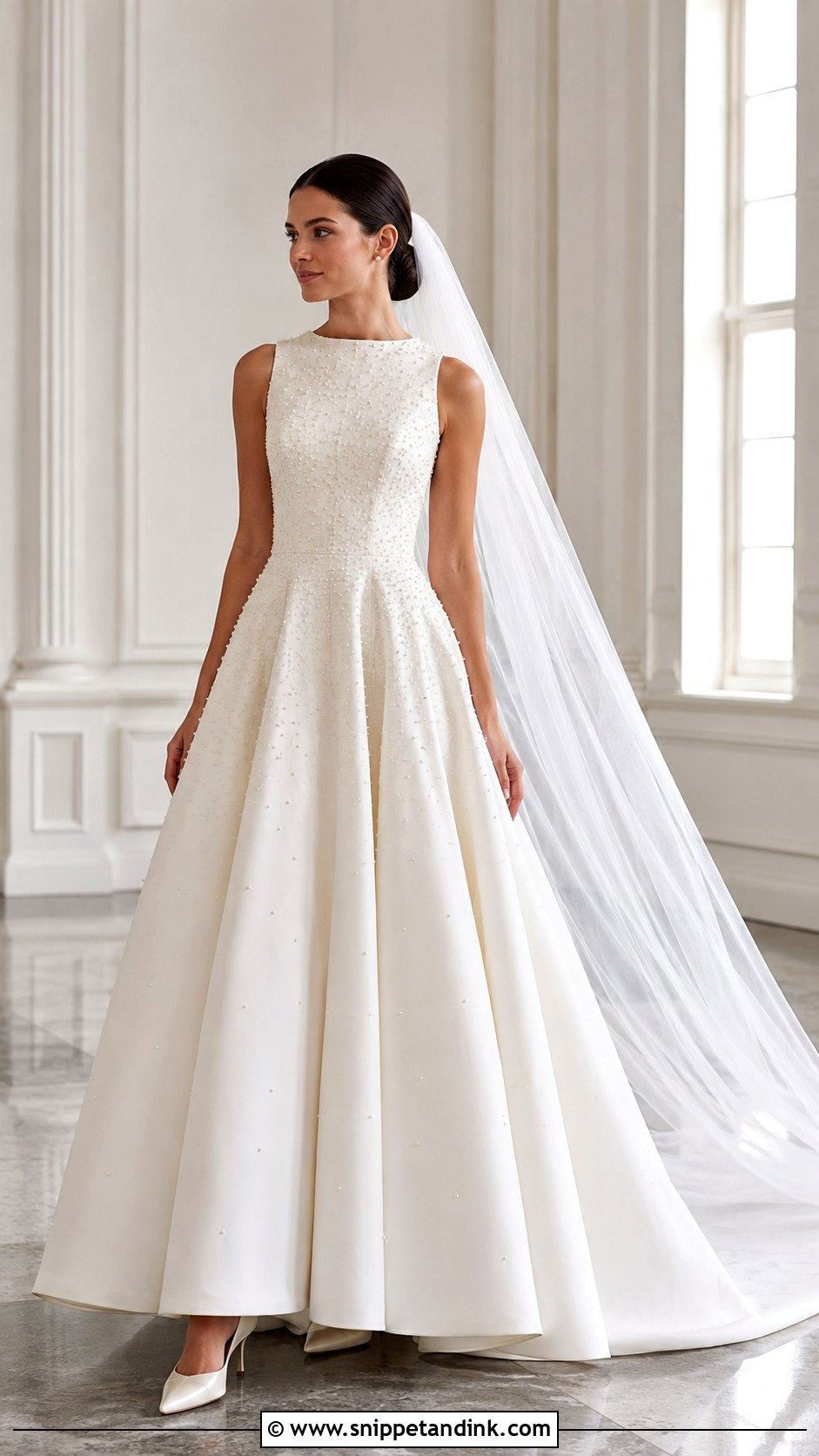
Pearls glow where crystals flash, so they read softer in candlelight and close-up portraits. Concentrated at the neckline, corset seams or upper skirt, they look modern when scattered and opulent when dense. With that much pearl on the gown, a big pearl necklace tips into matching-set territory, and simple studs are enough. Add a plain cathedral veil, satin pumps and a neat low bun. Pearl straps and sleeves can press into skin, so wear the dress for a full hour at a fitting before you decide. At the reception, a smooth satin clutch breaks up all that texture.
11. Wedding Dress With Detachable Overskirt
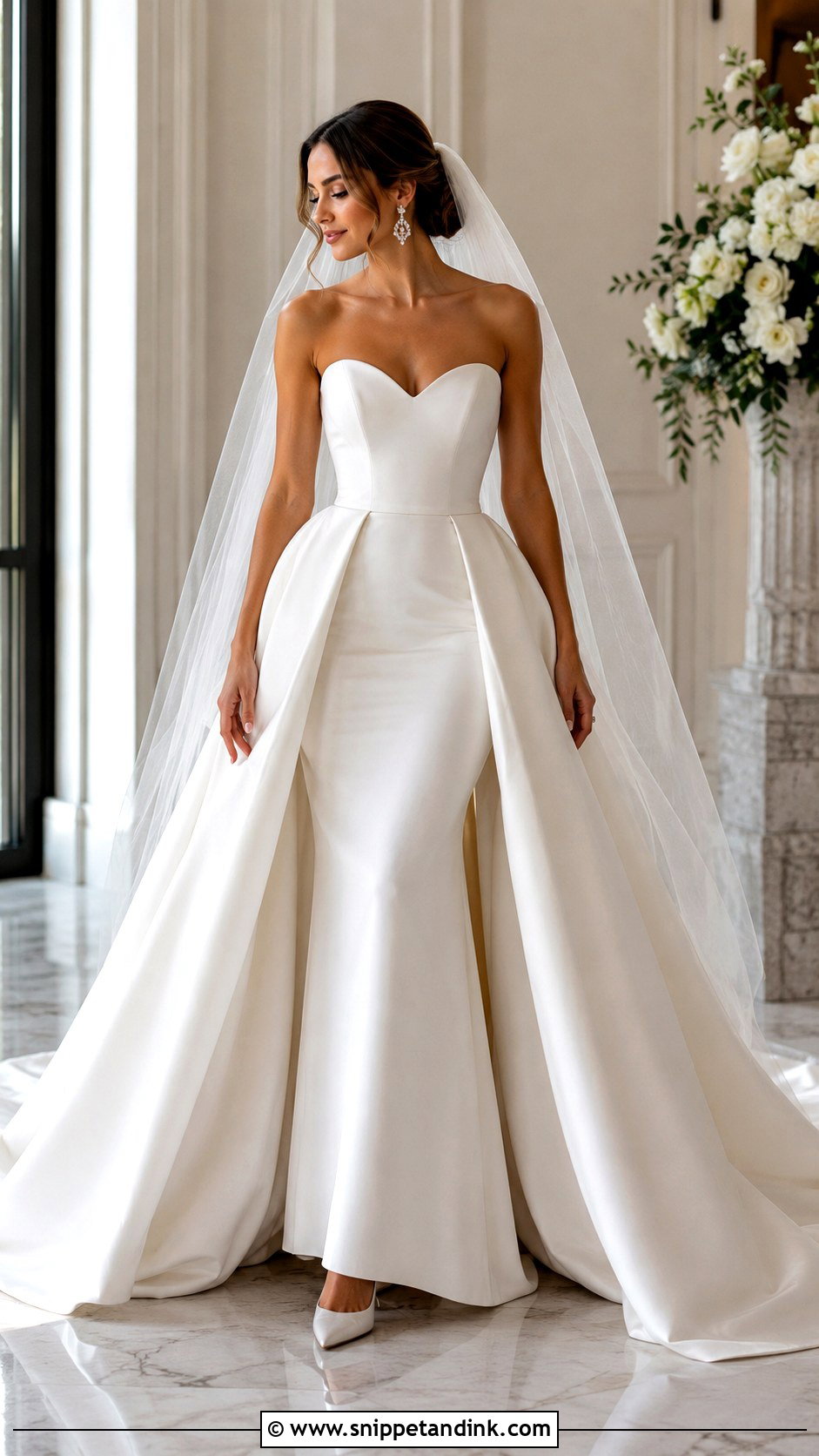
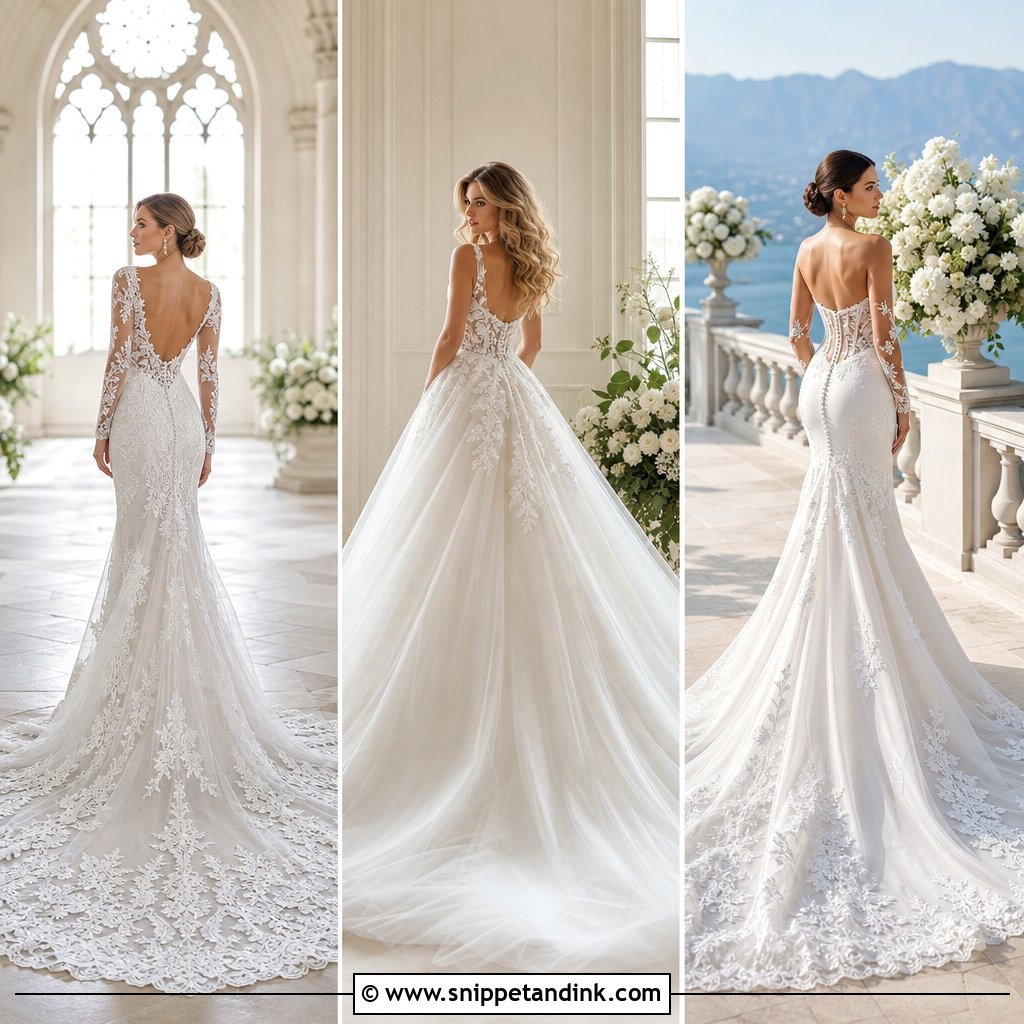
A fitted dress with a detachable overskirt gives you ball-gown volume for the ceremony and a sleek fit-and-flare or column for the reception, without buying a second dress. The overskirt must match the base gown’s fabric and undertone exactly; ivory over diamond white looks like a mistake in daylight. Wear it with a chapel veil, drop earrings and pointed pumps, then switch to statement earrings or a thin belt after the change. Ask for hooks or snaps that sit flat under the waistband. Practice the removal with whoever will help you, so it takes a couple of minutes and doesn’t pull at your hair.
12. Wedding Dress With Bridal Cape
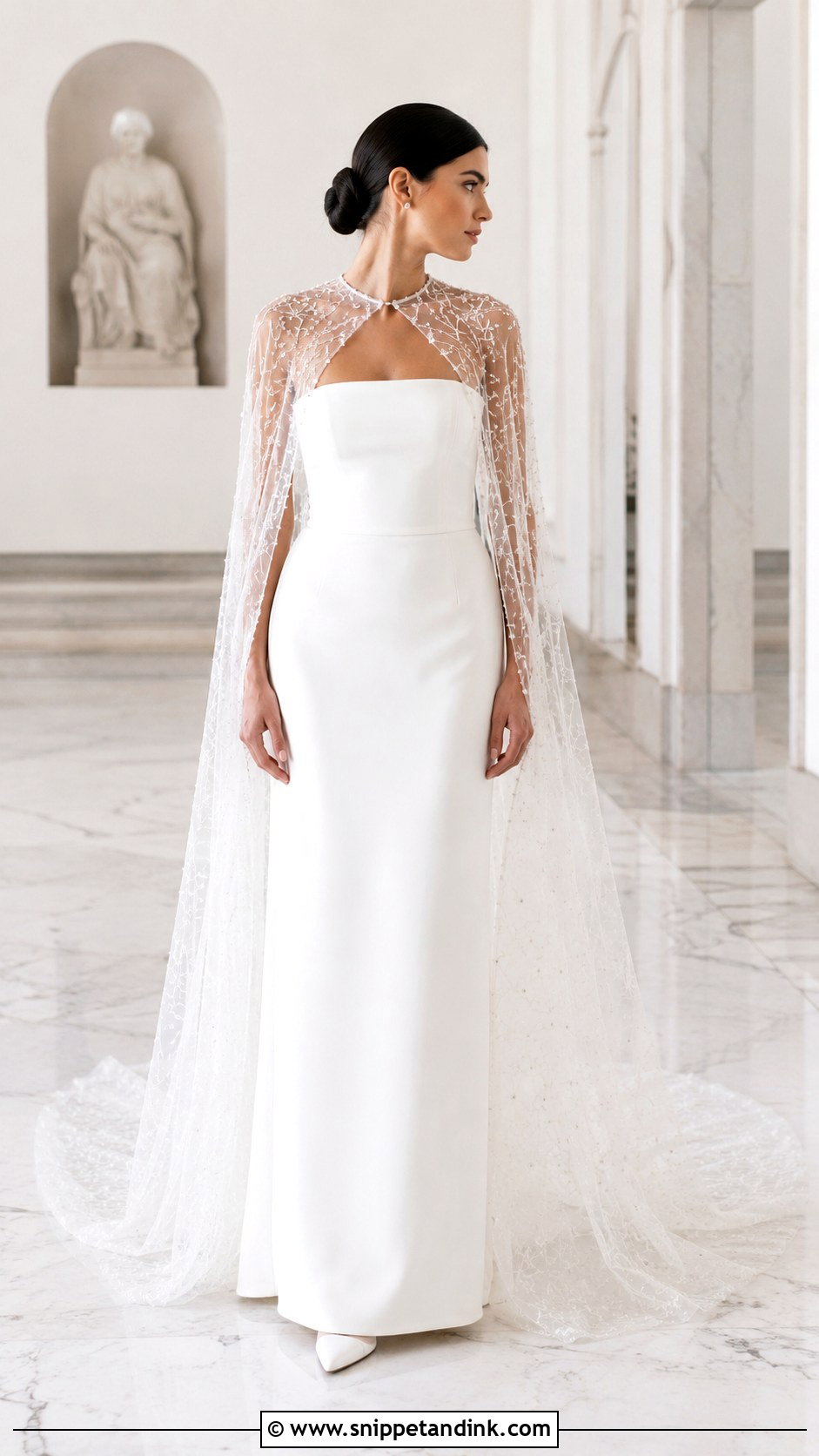
A floor-length cape is the easiest way to make a simple satin or crepe gown feel ceremonial. Strapless, square-neck and long-sleeve bases all take one, with sheer tulle running from the shoulders into a train. Embroidered edges look romantic, and a plain cape looks more modern. I usually tell brides to skip the veil with a long cape, since the two fight for the same space down your back and tangle when you turn. Crystal studs, pointed heels and a low sculpted bun finish it. Check that the shoulder fastenings hold firmly but release quickly, because most brides want the cape off by the first dance.
13. Cathedral Train Wedding Dress
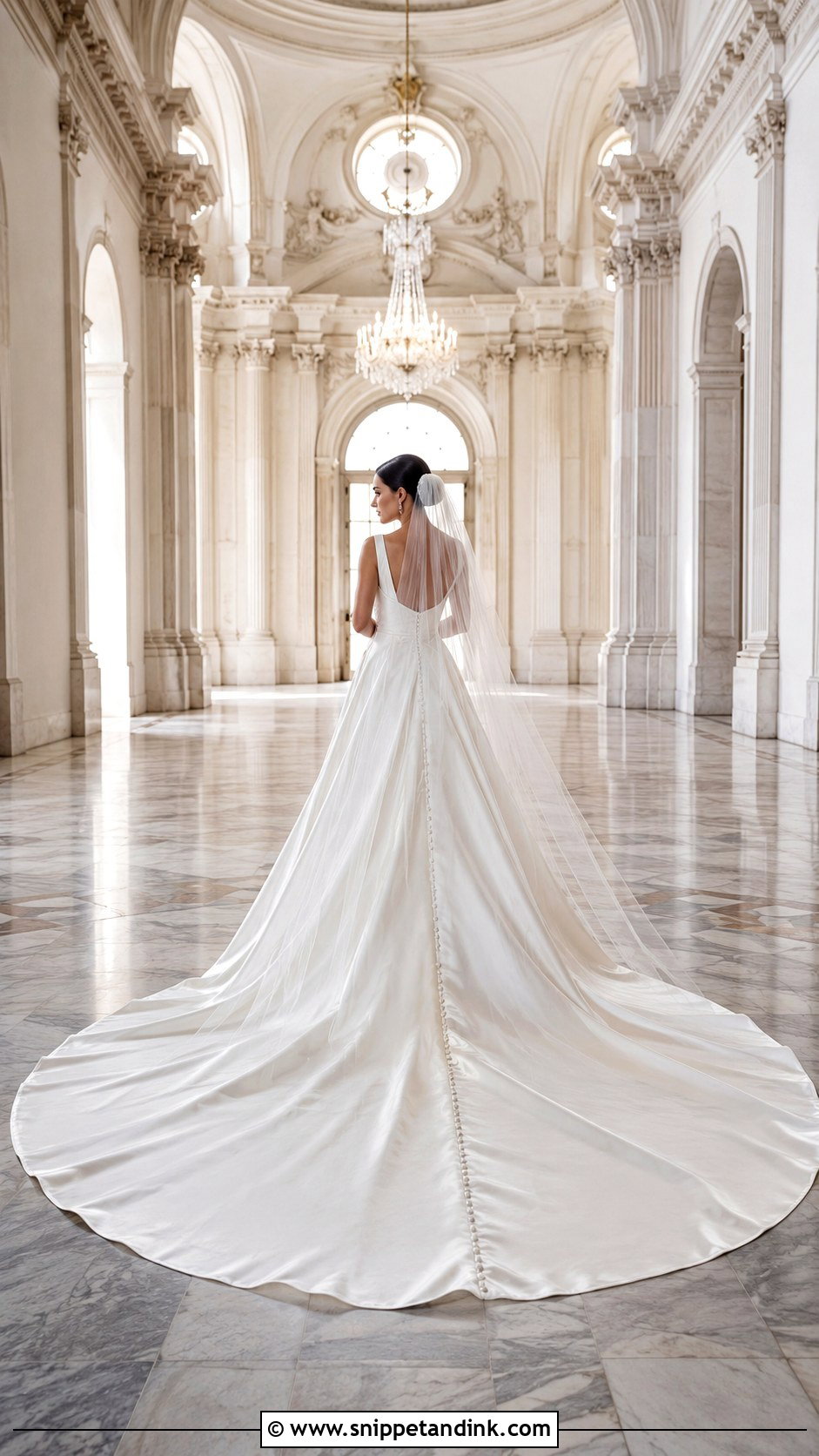
A cathedral train makes the back of the dress the main event, and it needs a silhouette with enough structure at the waist to carry the length. Lace edging is traditional; smooth satin gives a cleaner sweep. A cathedral veil should reach the end of the train or slightly past it, anchored in an updo strong enough to take the weight. Long trains look superb in big rooms and turn into a liability on stairs, narrow aisles and crowded dance floors. Ask for a strong bustle with clearly marked loops, and teach one person how it works at your last fitting.
14. Jacquard Ball Gown Wedding Dress
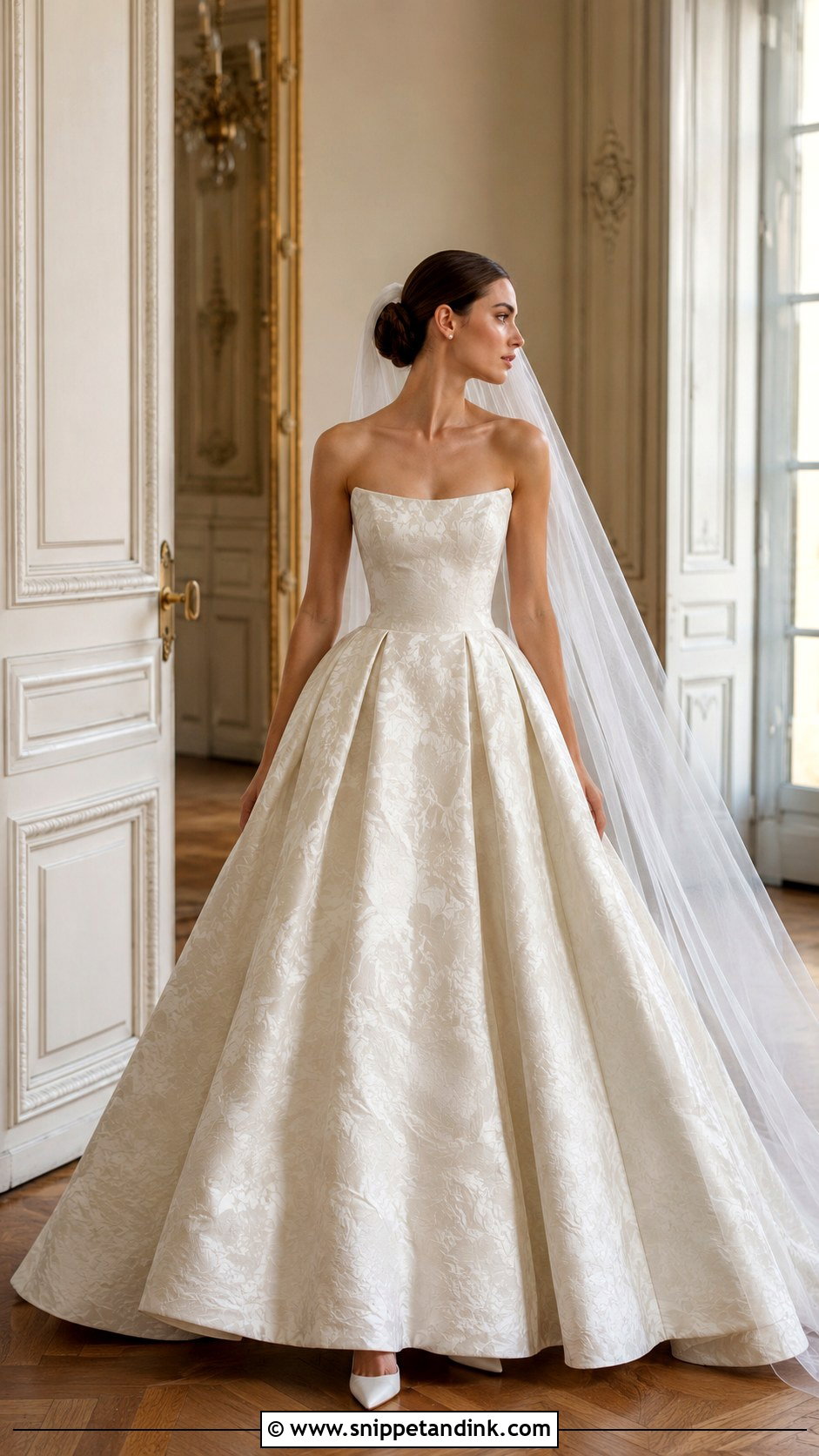
Jacquard gets its richness from pattern woven into the cloth, so it needs no beading at all. Choose a floral or abstract jacquard in ivory, soft white or champagne, cut with a strapless scoop neck, fitted waist and box-pleated skirt so the weave shows across flat panels. A plain veil, pearl earrings and satin pumps keep the accessories quiet, and a simple bouquet avoids fighting the pattern. Woven jacquard is noticeably warmer to wear than tulle, which you’ll feel at a summer ceremony in a hot room. It’s at home in historic estates and hotels with decorative interiors, where the texture holds its own.
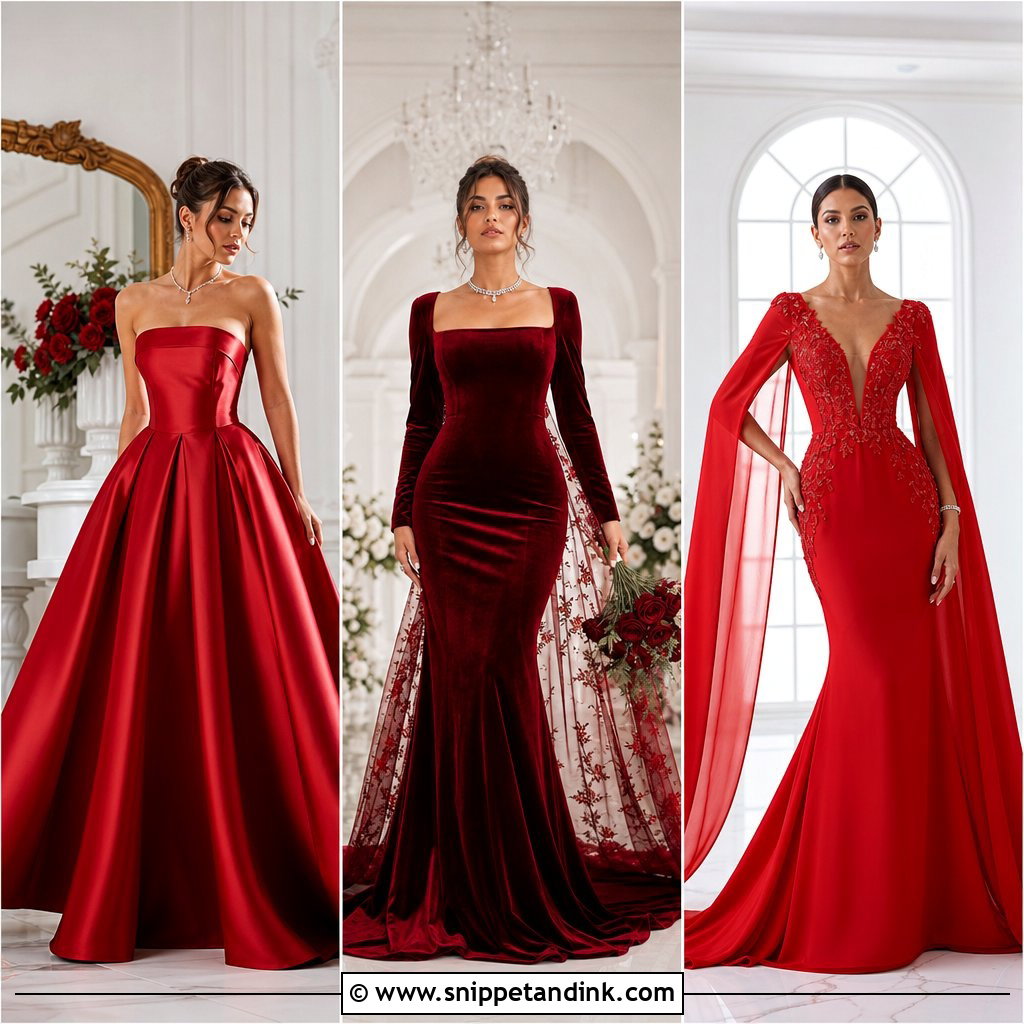
15. Minimalist Grand Wedding Dress
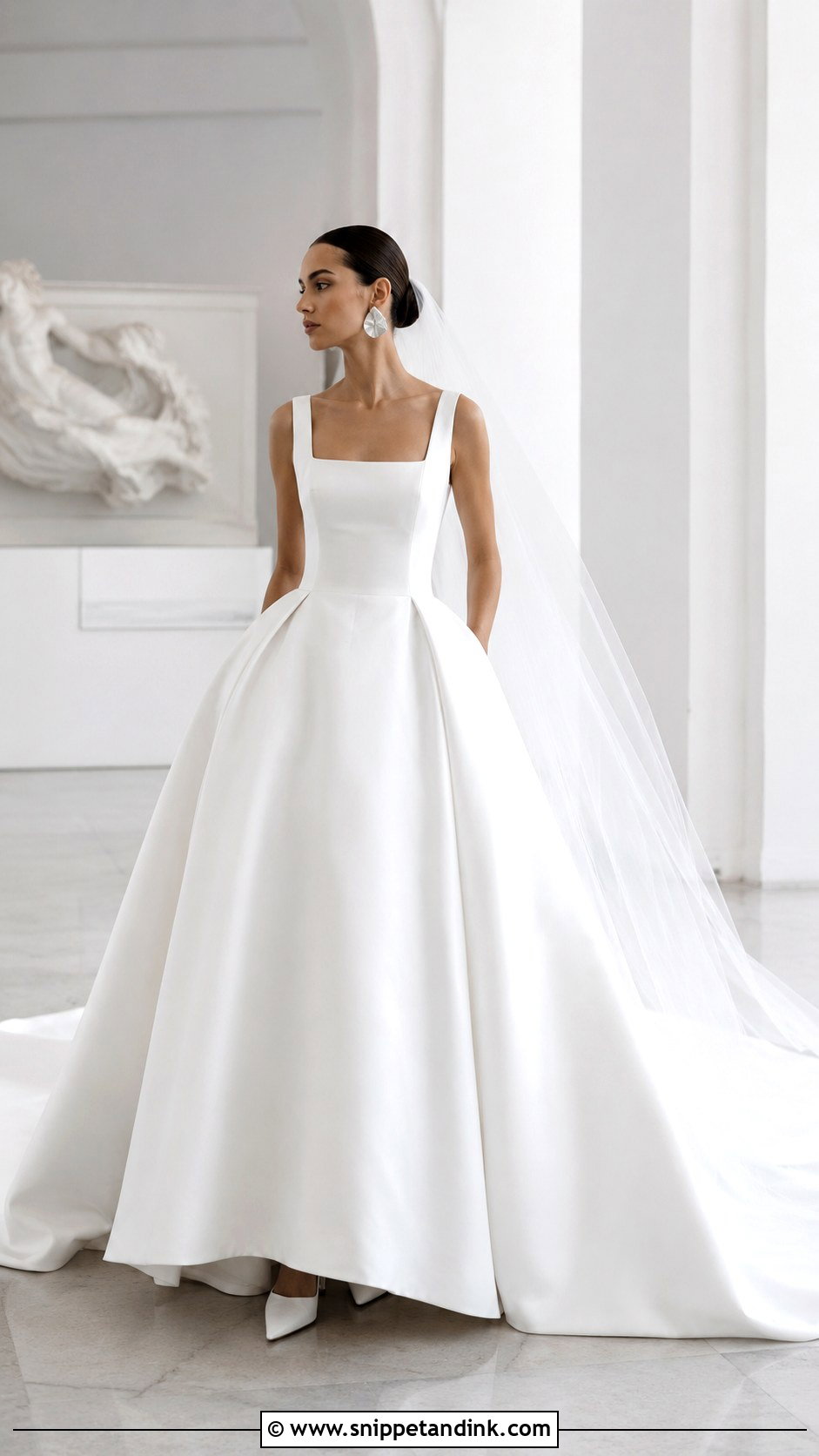
Grand doesn’t have to mean decorated. A clean ball gown or structured A-line can make the same impact through scale and tailoring, with a defined neckline, precise seams and a chapel or cathedral train. The fabrics I’d shortlist are satin, Mikado, and crepe, because they hold their structure without help. Pair the gown with a plain long veil, sculptural earrings and pointed white pumps, plus a sleek center-parted bun. With no embellishment to distract, every pucker shows. Insist on a professional press close to the day, and hang the dress where it won’t be crushed against other clothes.
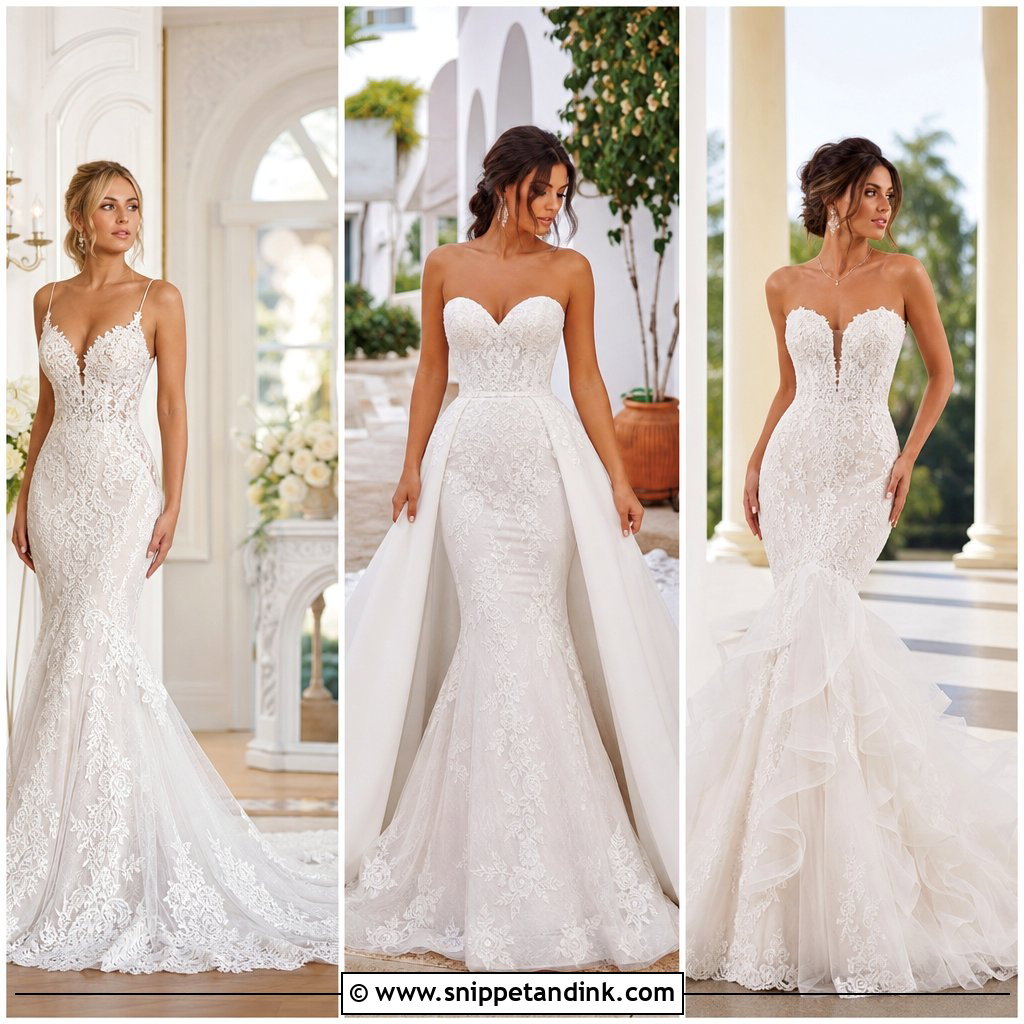
16. Mermaid Wedding Dress With Overskirt
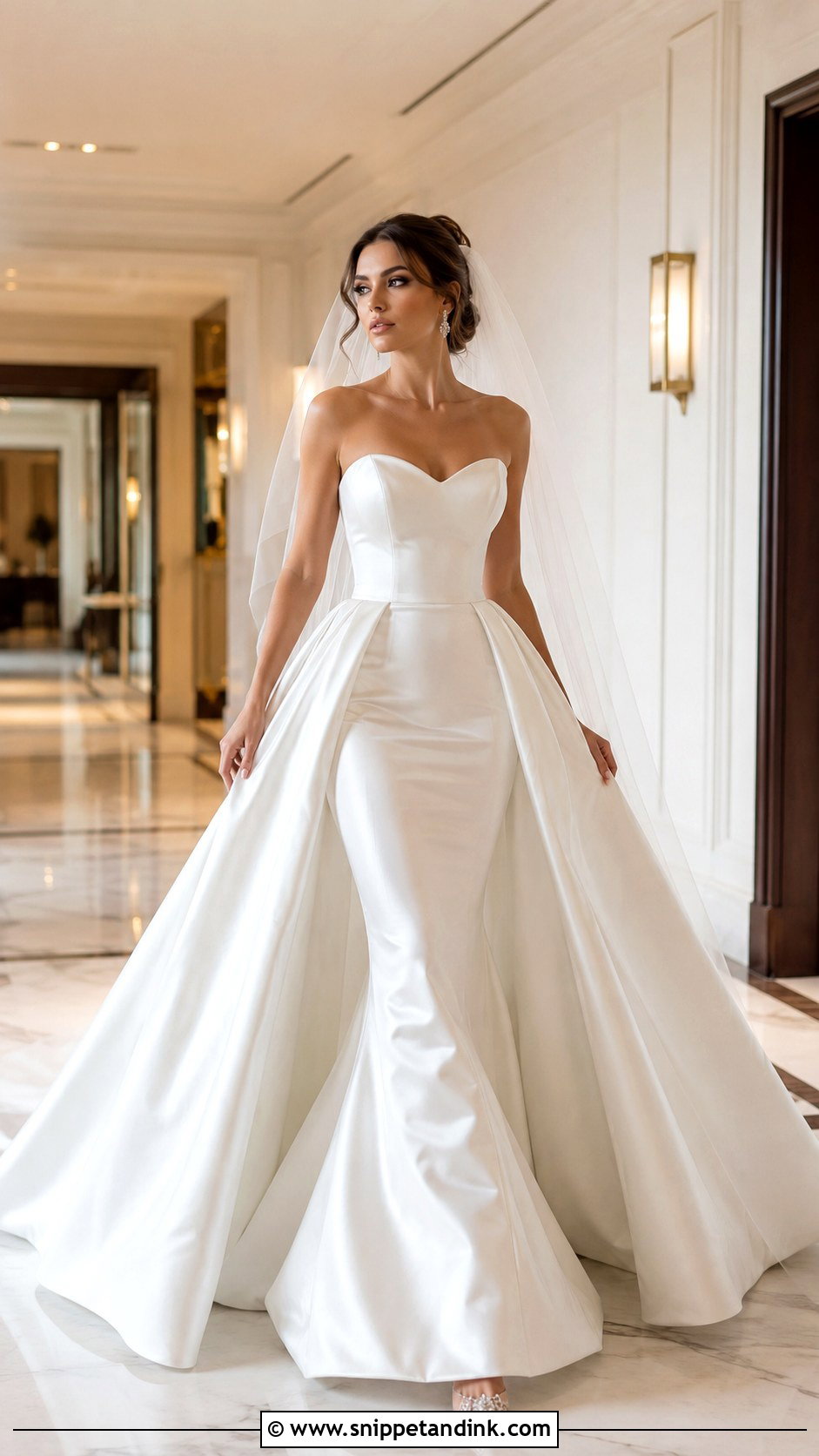
Mermaid plus overskirt is the most practical way to wear two very different silhouettes. The base dress follows the body through the hips and flares near the knee, and the overskirt attaches at the natural waist for ceremony volume. Satin looks dramatic, lace softer. A chapel veil, sparkling earrings and stable pointed heels finish the ceremony look, with an updo to balance the volume. The fitting detail that matters most: the flare has to sit low enough to let you climb stairs, and the overskirt waistband has to lie smooth over the fitted hips. Walk in both versions at the fitting.
17. Blush Ball Gown Wedding Dress
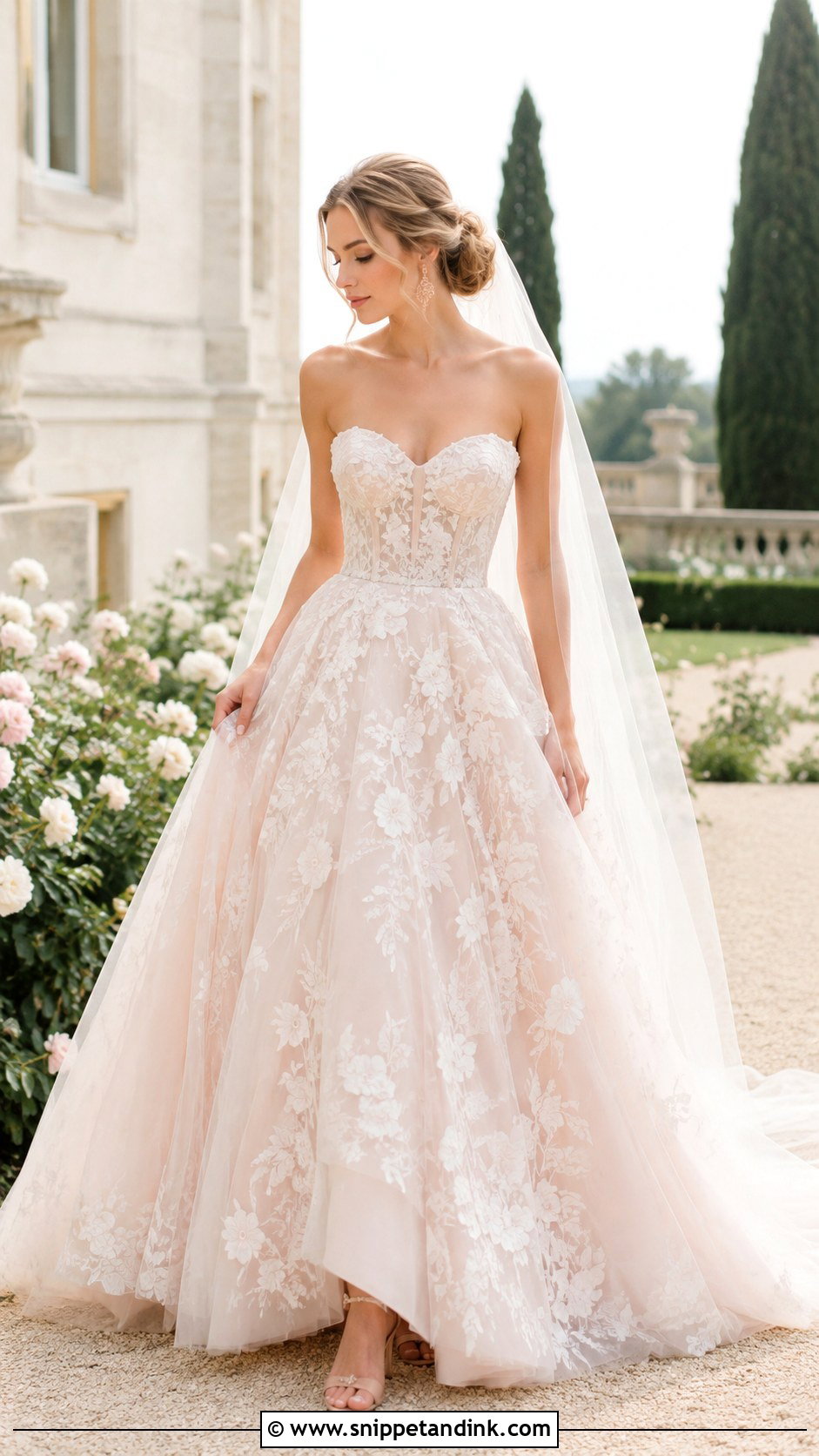
Blush is subtler than it looks on the hanger. Most blush gowns are pale pink lining under ivory tulle or lace, so the color shifts with the light: nearly white outdoors, noticeably pink under warm indoor bulbs. View it in both before buying. A structured bodice and full skirt keep it formal, with a soft ivory veil, rose-gold or neutral crystal earrings and champagne heels. Rosy makeup suits it, but don’t match everything to the dress. A loose low bun or polished waves feel right in garden estates and ivory-and-green ballrooms.
18. Plus Size Ball Gown Wedding Dress
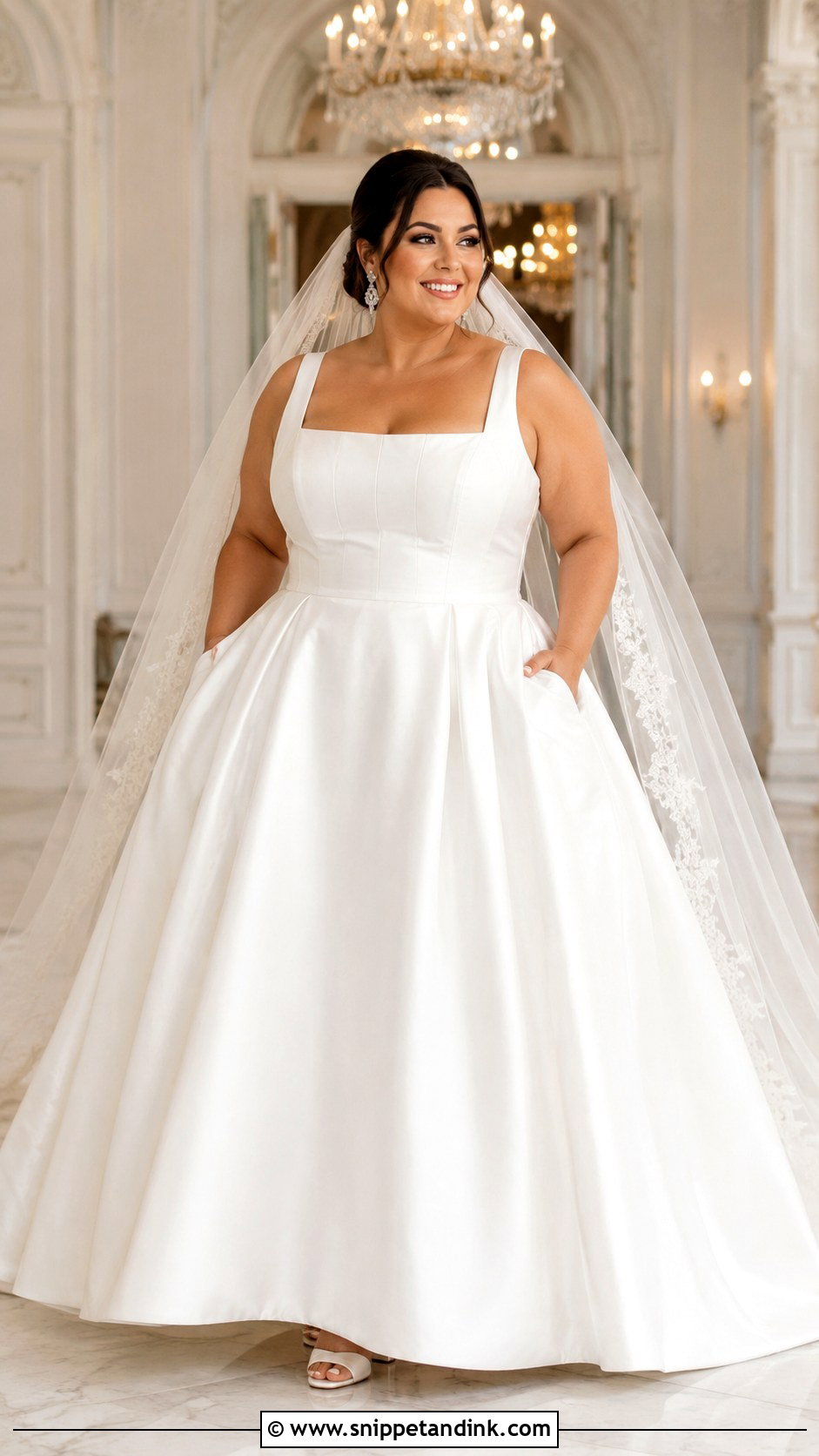
Support decides everything in a plus size ball gown. I look for internal boning, wide-set straps or sleeves, and a waistline placed where you feel comfortable rather than where a size chart puts it. A full skirt in Mikado, satin, organza or layered tulle creates the dramatic shape on any body. Pick the neckline you actually love and let the seamstress make it secure. Block heels give a steadier base under a heavy skirt. Alterations matter more than the number on the label, and many boutiques can raise a neckline, add straps or adjust sleeves if you ask when you order.
19. Modest Long Sleeve Wedding Dress
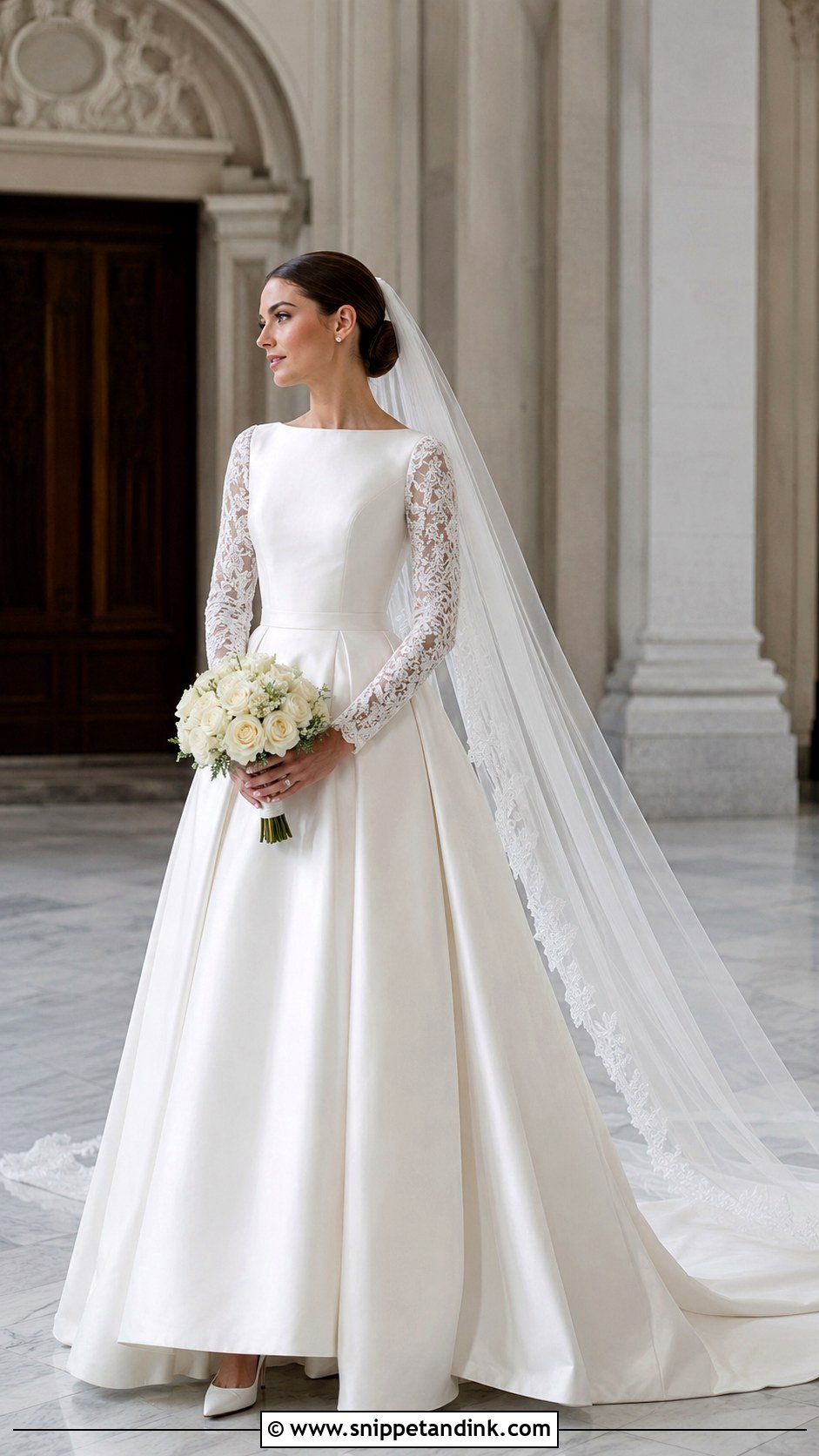
Modest grand gowns are a construction challenge more than a style one. A bateau, jewel or high illusion neckline with long sleeves needs proper lining, comfortable armholes and some give in the sleeve, or you’ll spend the day with your arms pinned to your sides. Satin looks regal; lace sleeves add texture. Keep decoration to one area, such as covered buttons or lace cuffs. A cathedral veil, pearl studs and closed-toe pumps complete it, and a smooth low bun gives the veil a secure base. Test the sleeves sitting, reaching and hugging your family before the final alteration.
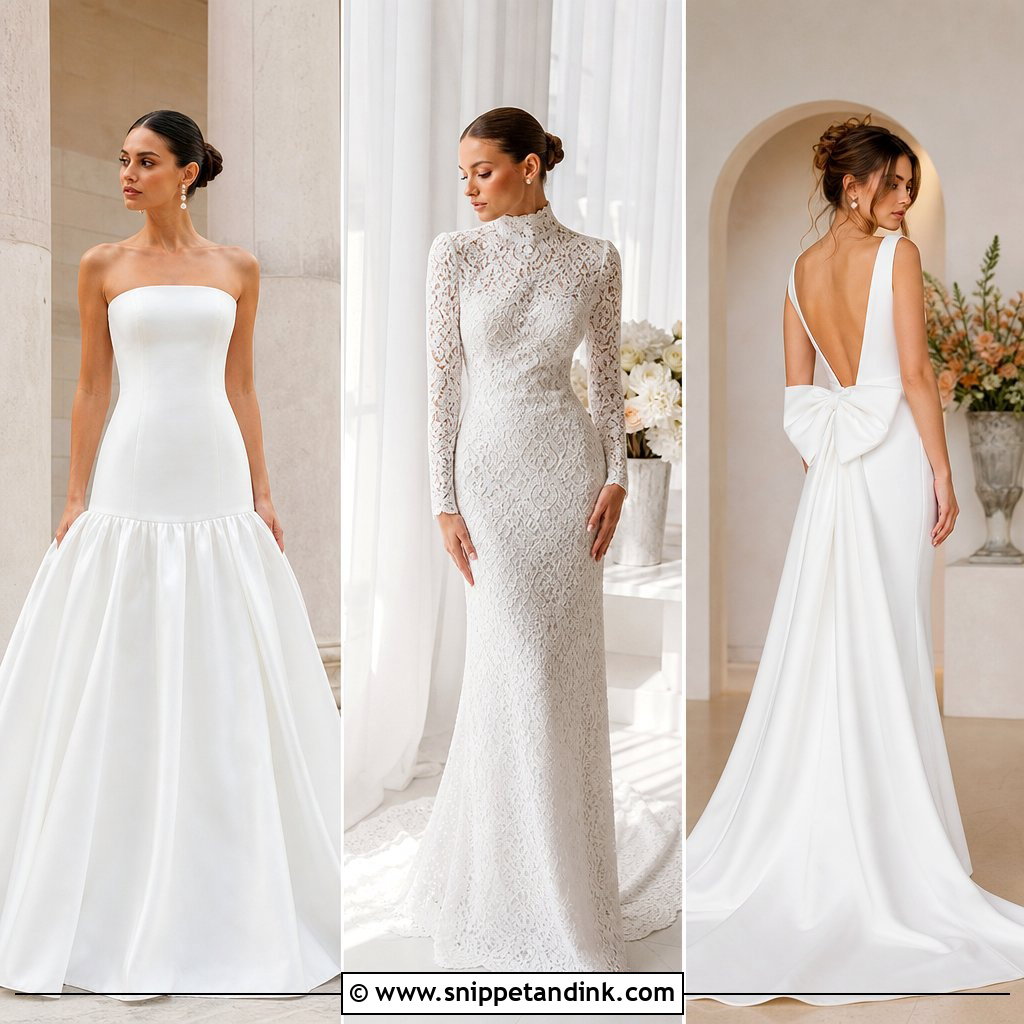

20. Black And White Wedding Dress
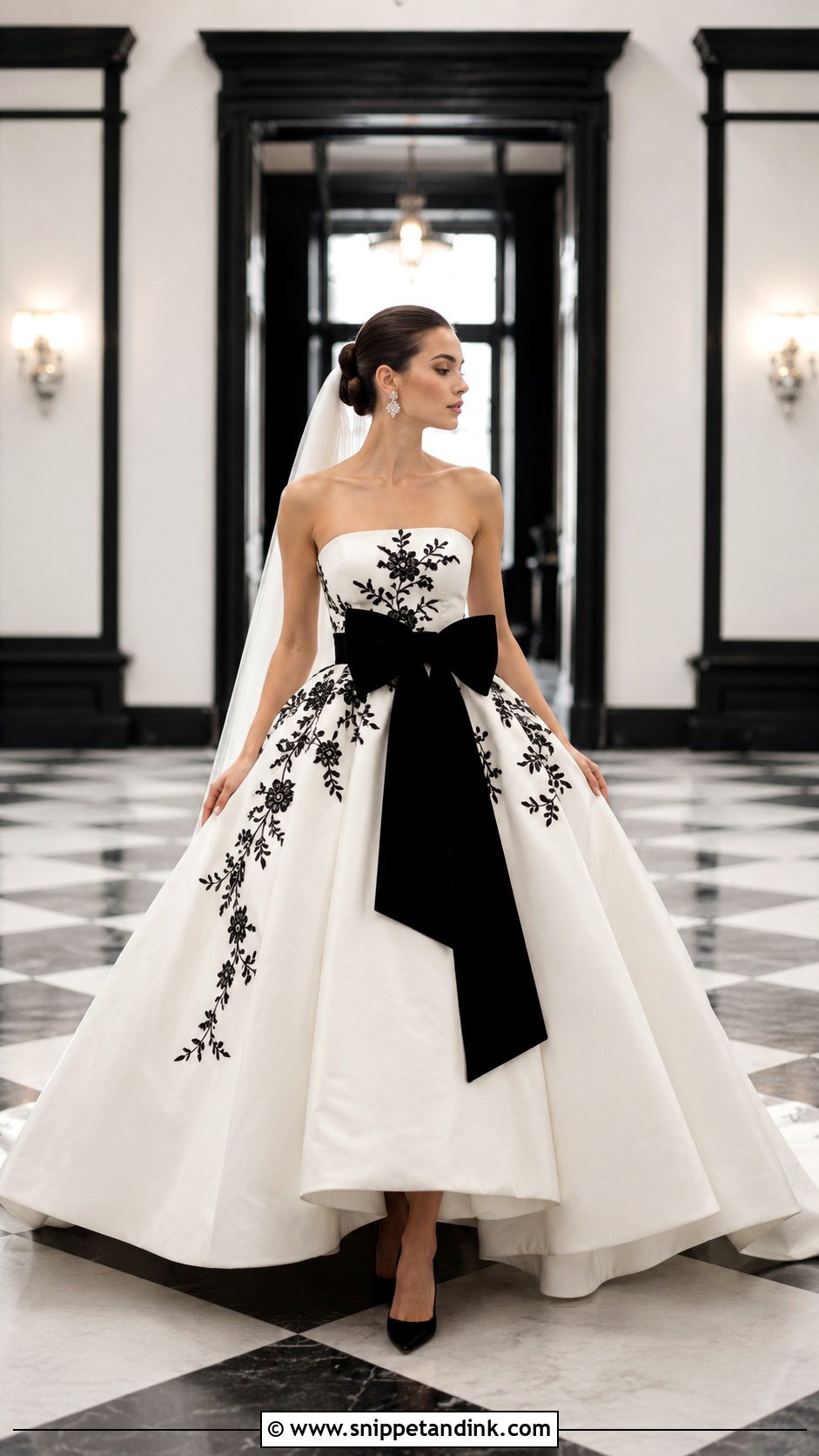
Black on a wedding dress works when it’s limited. Start with an ivory ball gown or structured A-line, then add black in one or two places: a velvet waist bow, embroidered appliqués, gloves or a narrow neckline trim. Go further and the eye stops reading it as bridal. A plain ivory veil, black pointed pumps and crystal earrings keep it sharp, and a sleek bun suits the mood. With black embroidery, I’d steer the florist toward mostly white flowers and dark green foliage. Black against ivory is a hard contrast for a camera, so let your photographer see the dress early and check the exposure on it.
Does Your Venue Have Room for the Train?
A grand gown has to get through doors, down stairs and into a car before anyone sees it at the altar. I ask brides to walk the venue with the dress in mind, ideally before ordering. These are the questions worth answering:
- How wide is the aisle once chairs are set? A full ball skirt needs clear space on both sides of you and your escort.
- Are there stairs to the ceremony, the stage or the photo spots? Long trains and stairs need a helper.
- Is the floor carpet, polished stone, grass or gravel? Each treats a hem differently.
- Will you travel seated in a car between locations? A big skirt needs a vehicle with a wide back door.
The bustle deserves its own rehearsal. Ask the seamstress to show your chosen helper, not just you, because you won’t see the back of your own dress. Color-coded ribbons or thread on each hook make it quicker in a dim reception room, and a train left down past the first hour will be stepped on more than once.
Grandeur Comes From Proportion, Not More Beading
A statement wedding dress can be modest, minimal, colorful or covered in appliqués, so start with the silhouette you can move in and the room it has to fill. Build the rest around it: a veil or cape, shoes you can stand in, jewelry that leaves the neckline alone, and hair that holds the veil. At fittings, pay attention to fabric weight, train length, sleeve movement and the bustle. The right dress is the one you stop thinking about by the second hour of the reception.
You'll Like These Ideas:




Leave a Reply