
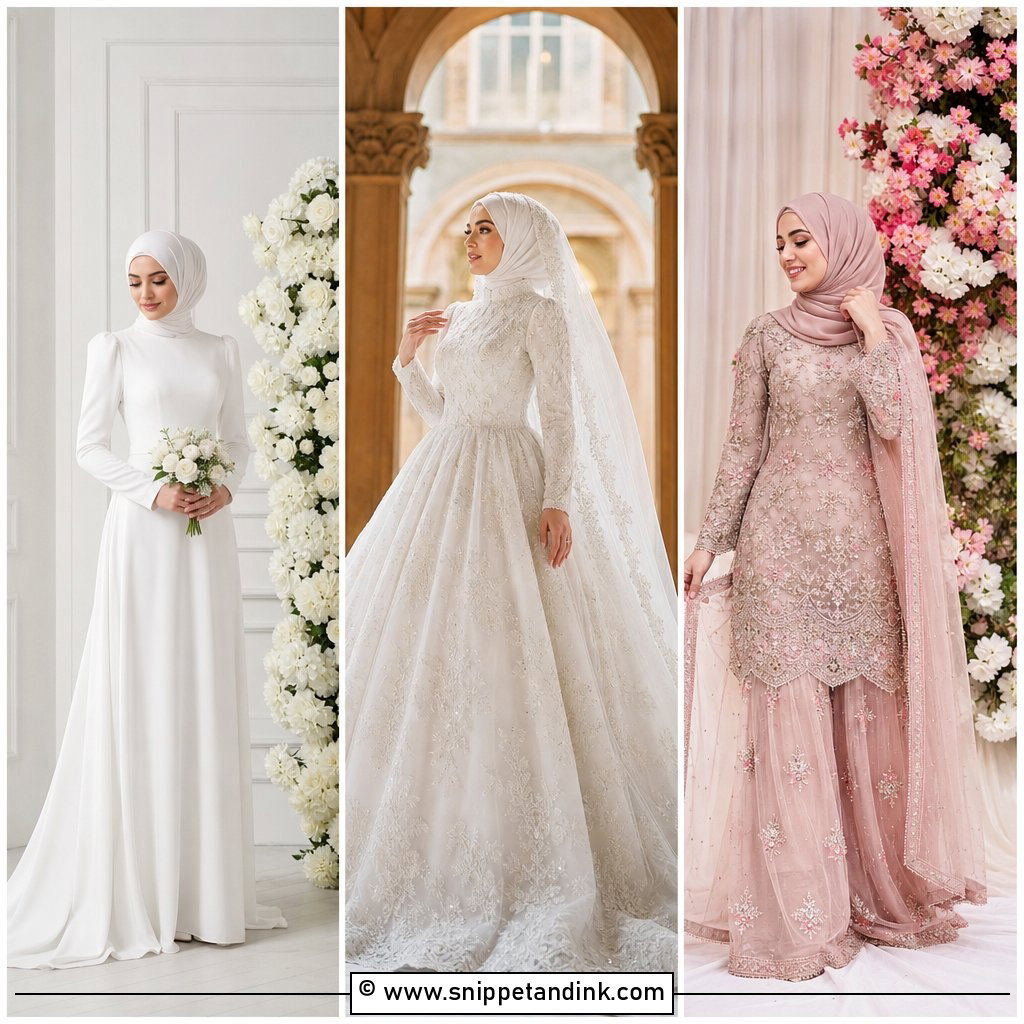
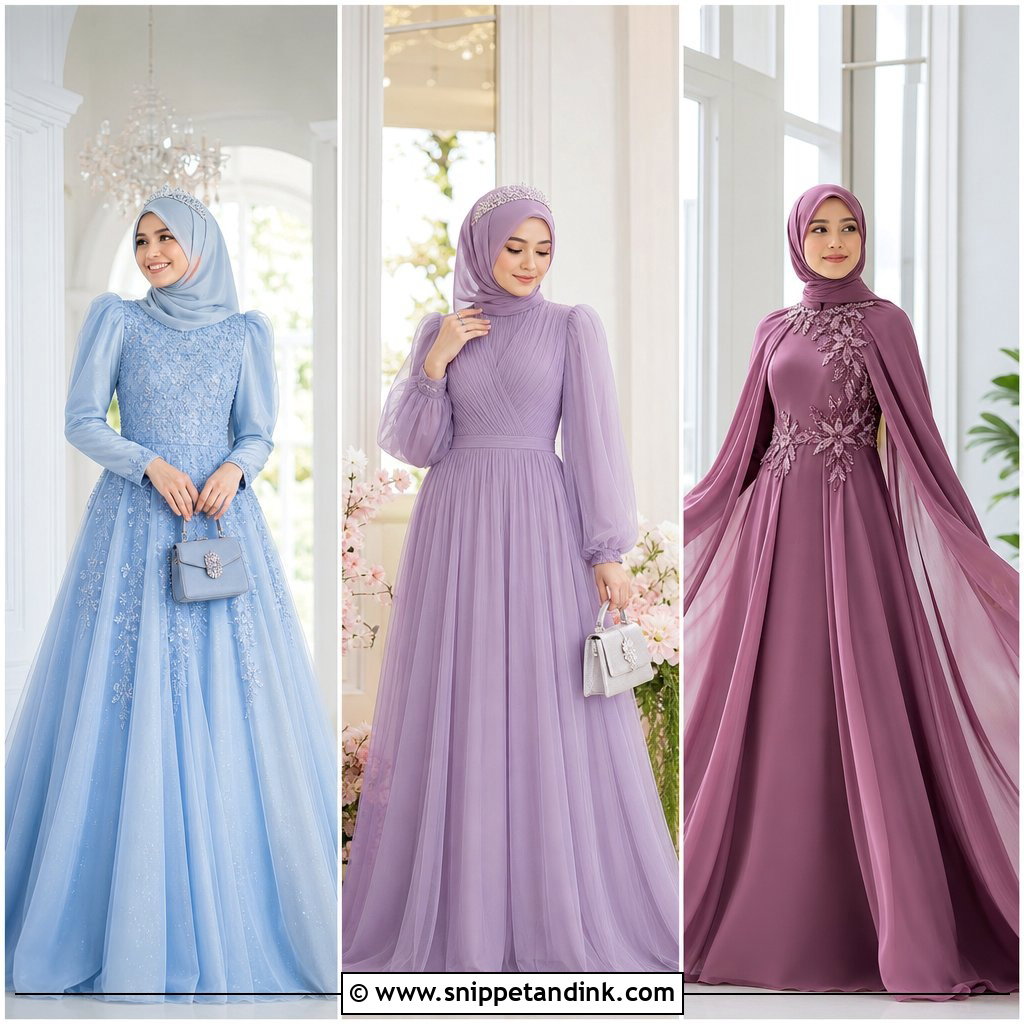
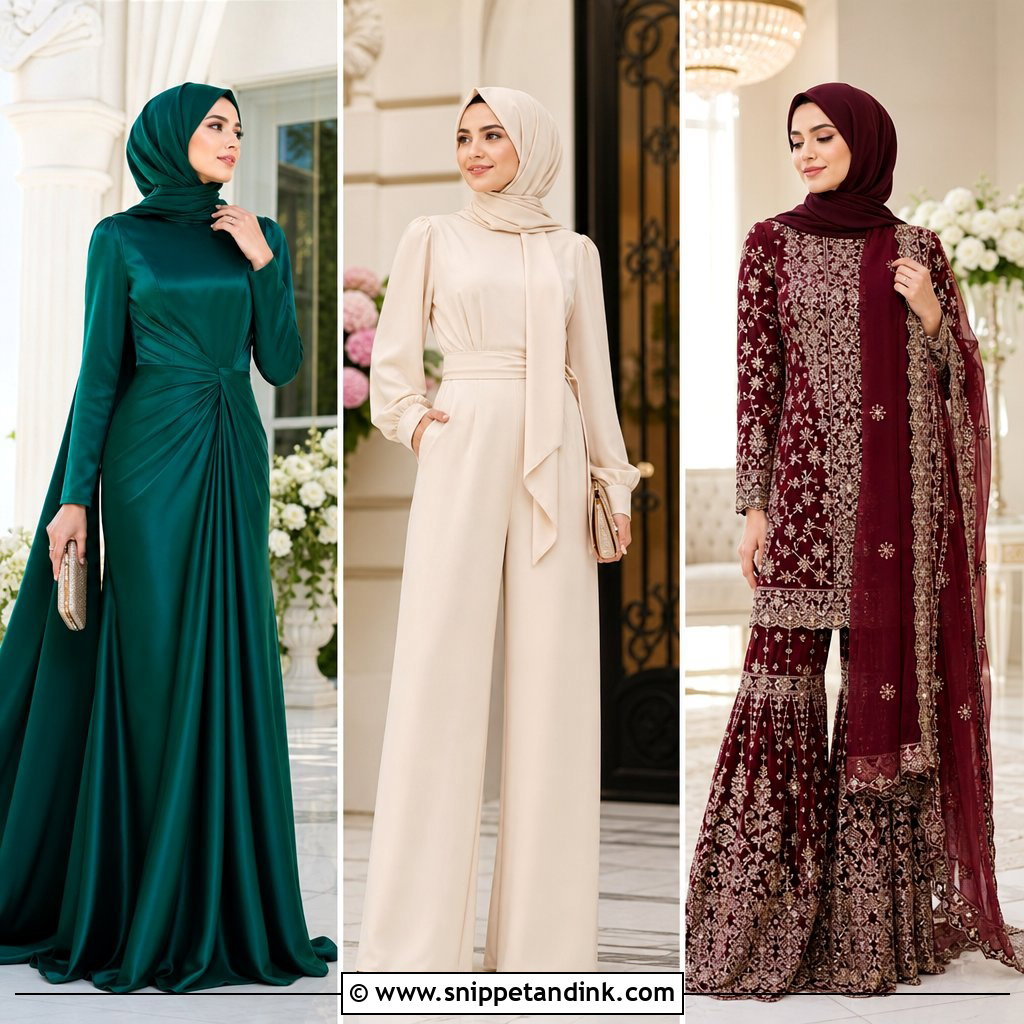
Modest bridalwear has never meant plain bridalwear, and the gowns below show why. Each one is styled as a complete outfit: full coverage, a fabric chosen for how it behaves, and coordinated hijabs worked out in advance. Lace, basque waists, pearls, appliqué and detachable layers all adapt well to modest dressing once you know where the problems hide. In my fittings the gown itself is rarely the hard part. The hard part is opacity under flash, a neckline that meets the hijab cleanly, and sleeves you can actually lift your arms in. Keep your venue, your family’s traditions and the season in mind as you look through them.
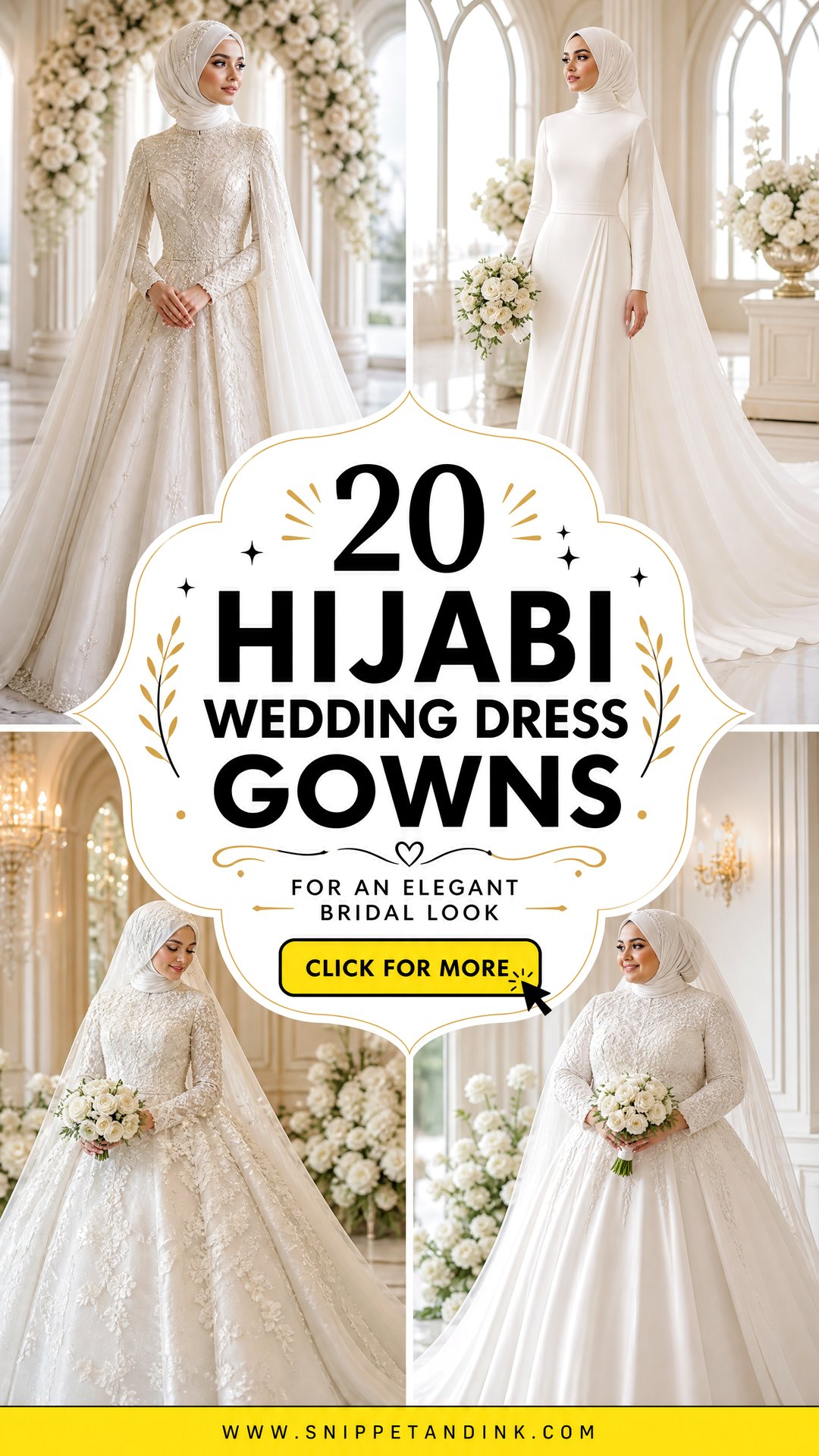
Turning a Standard Bridal Gown Into a Fully Covered One
Many of the dresses you’ll fall for in a boutique are sold strapless or with sheer illusion panels. That doesn’t rule them out. A good share of the modest brides I dress end up in a gown that was altered, and the work usually falls into a handful of predictable jobs.
- Sleeves, added in matching fabric or lined lace. Ask at the order stage whether the designer sells extra lace, because matching it months later is the hardest part of the whole job.
- A higher neckline, made with an inset panel or a fitted bodice layer worn over the dress. On a heavily boned bodice, a separate layer often sits cleaner than cutting into the original.
- Lining behind lace skirts, sleeves and backs, so nothing shows when the flash goes off.
- A closed back, using a fabric panel set under a keyhole or low scoop.
Order early. Made-to-order gowns commonly take several months to arrive, and coverage changes add fittings on top of the usual hemming and taking in. Tell your seamstress the full plan at the first appointment, not the last, so she can source fabric while there’s still time.
When a Gown Isn’t Worth the Alterations
If more than half the bodice would need replacing, the cost and the risk usually outweigh starting with a dress that already has sleeves and a high neck. Heavily beaded tulle is also hard to rework, since every new seam has to be beaded by hand to match the rest.
1. Satin Ball Gown Hijabi Wedding Dress
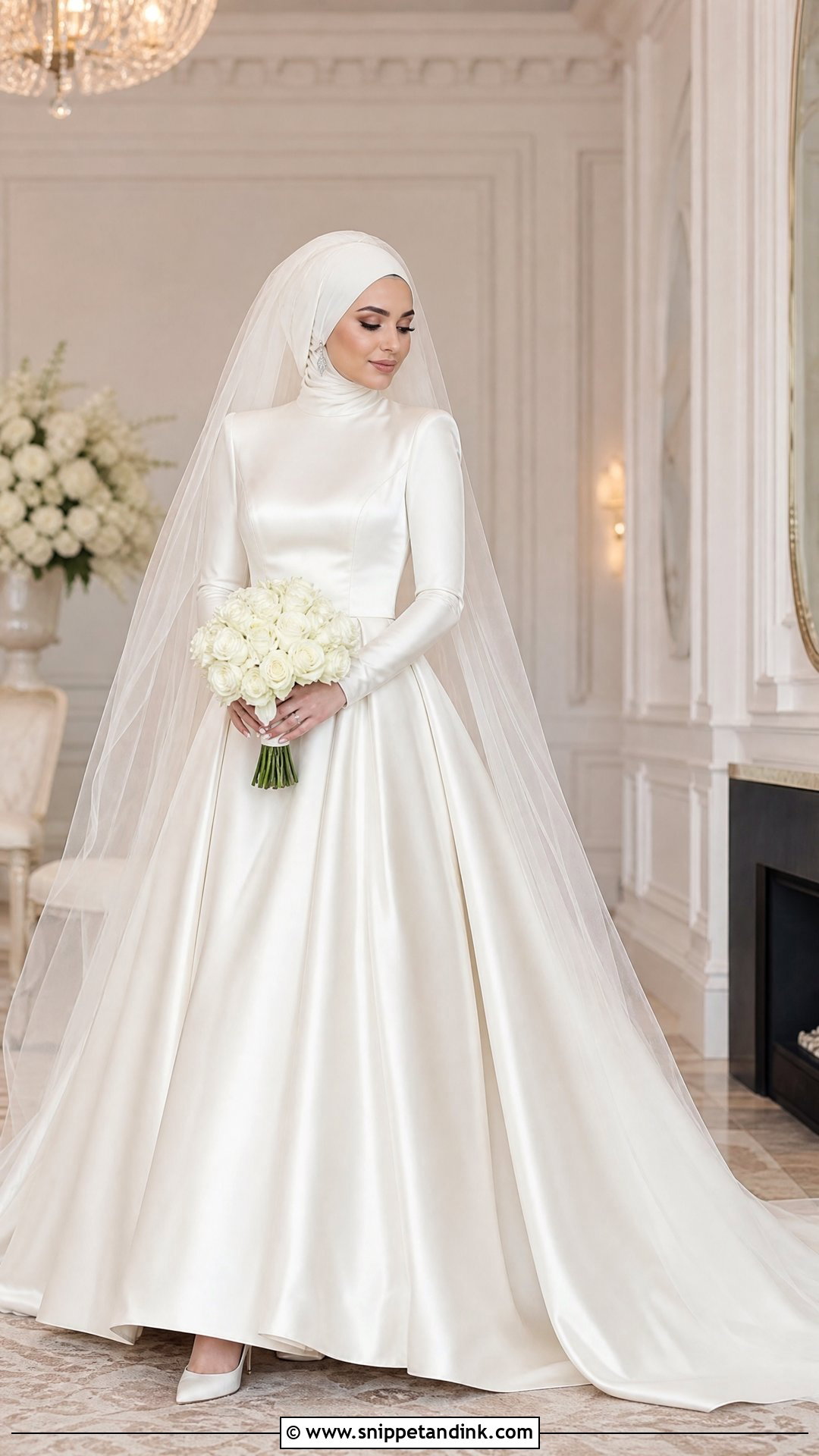
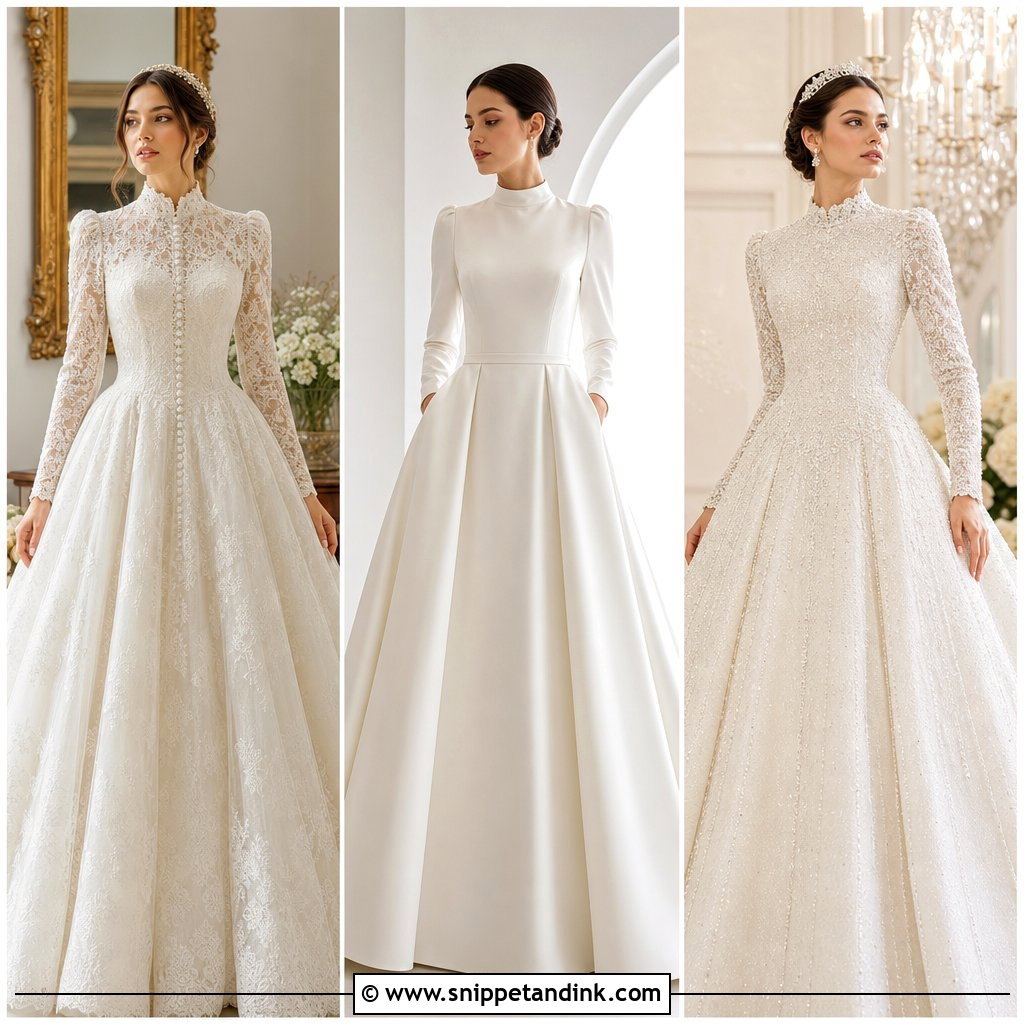
Satin is unforgiving, which is exactly why I like it on a ball gown with a clean bateau neckline. Ask for an opaque ivory or soft white with a structured bodice, fitted long sleeves and a generously gathered skirt; the volume does the work, so beading becomes optional. Match the satin hijab to the gown’s undertone, not just its color name, because two ivories can sit a shade apart under ballroom light. I anchor a cathedral veil behind the hijab at the crown so the neckline stays visible. Any ripple across a satin bodice catches the light, so do the final fitting in your exact undergarments. Pointed ivory pumps, pearl drops and a compact rose bouquet finish it for a hotel or formal ballroom.
2. Lace A-Line Hijabi Wedding Gown
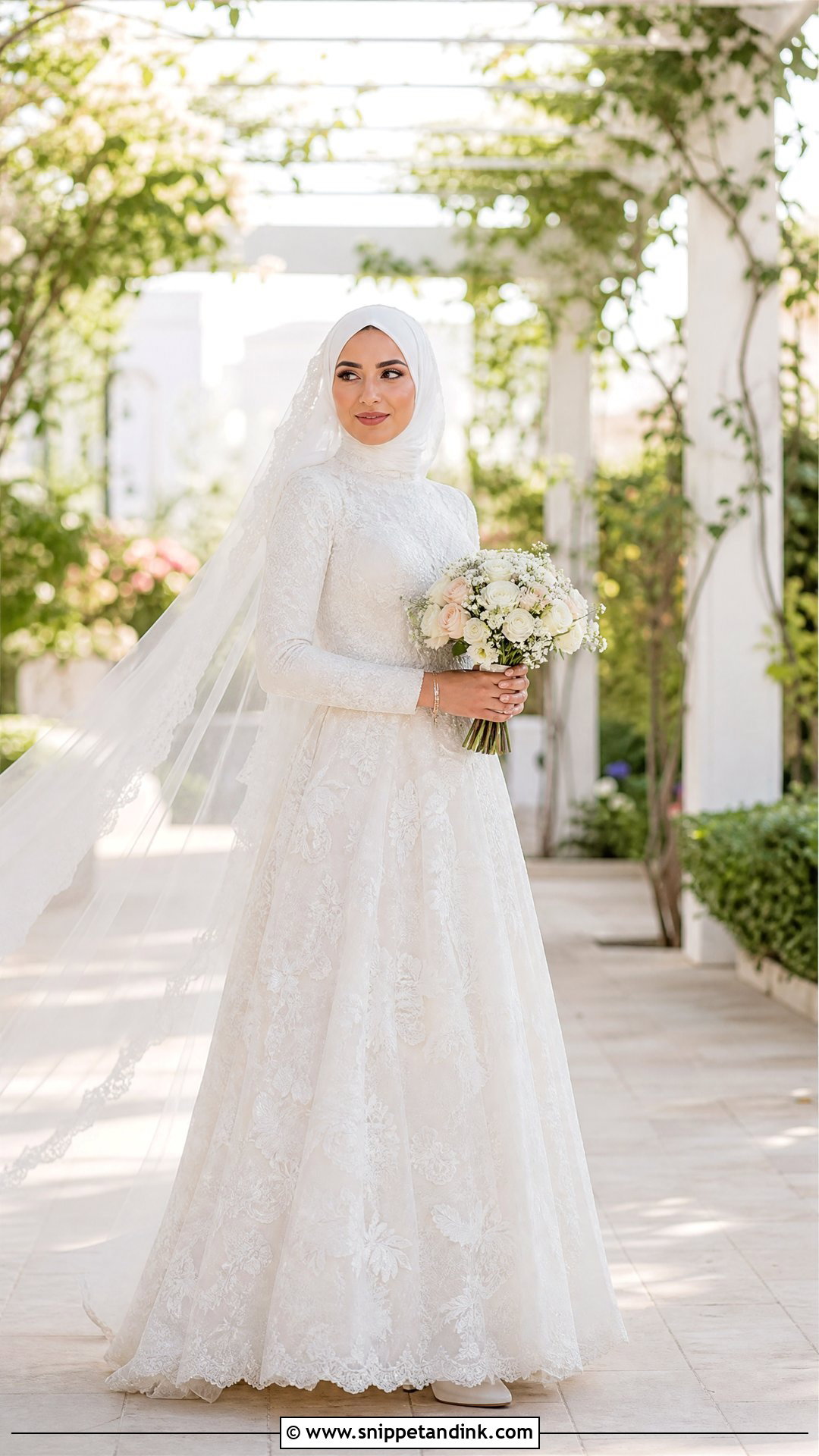
An A-line skirt is the most forgiving shape I fit, and floral lace over it adds romance without stiffness. The detail I check first is the lining. It has to run under the sleeves, shoulders and back too, because lace on its own shows skin the moment a camera flash hits it. A slightly raised waist lengthens the line, and covered buttons add interest quietly. Match a plain chiffon hijab to the lining color rather than the lace, so two textures don’t compete around your face, and wear a fitted undercap so the wrap stays put through every hug. Closed-toe block heels, a lace-edged veil and a small pearl bracelet suit a garden or a daytime hall in spring or early fall.
3. Pearl High-Neck Hijabi Wedding Gown
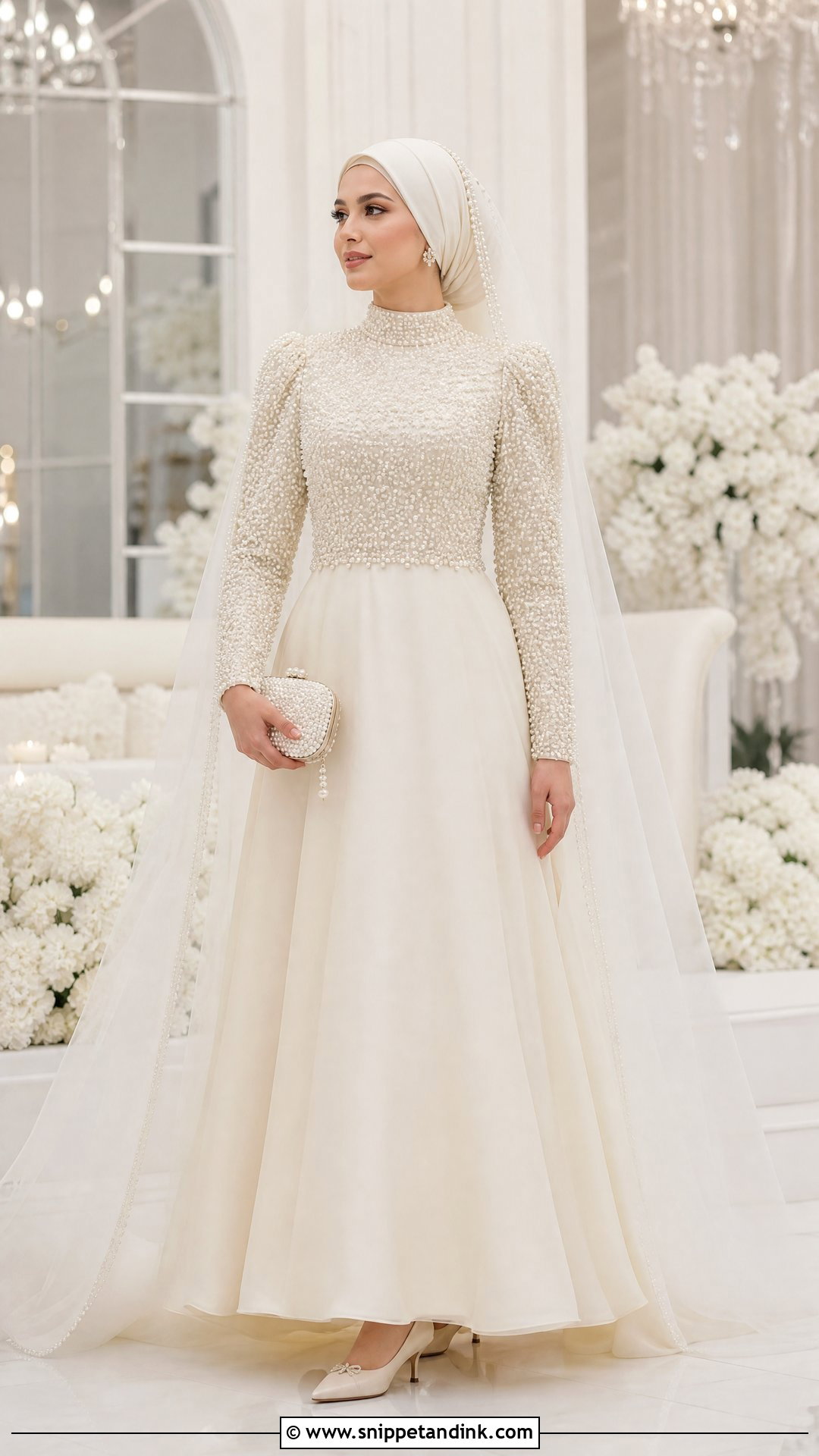
Pearls add weight in quantity, and on a high neck that weight matters. I prefer designs where they cluster on the bodice and sleeves, then thin out toward the skirt. The dress reads as luminous rather than armored, and the collar doesn’t drag forward through the day. A soft A-line or princess skirt balances the decorated top half. A matte chiffon hijab in matching ivory gives the pearls something plain to sit against, and if your veil carries pearls as well, keep that border narrow. Ivory kitten heels, a pearl clutch and simple crystal studs are plenty. Bright indoor rooms show the detail best.
4. Cape Sleeve Hijabi Wedding Gown
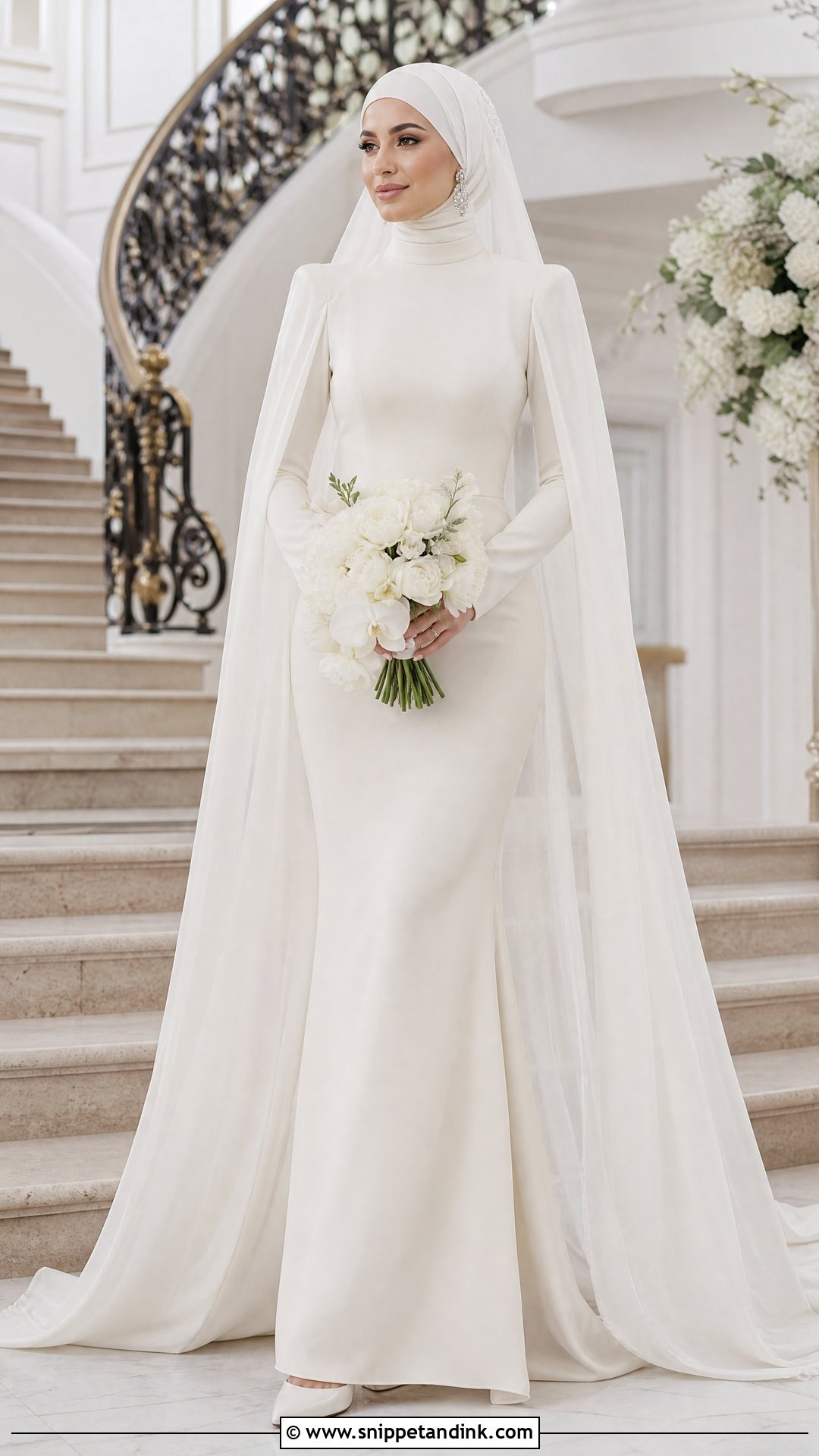
A detachable cape gives you a grand entrance without the weight of a ball gown, and it comes off when you need your arms back. Start from a long-sleeve crepe or satin A-line with a high neckline, then add a chiffon cape that falls from the shoulders into a soft train. The attachment points are where I spend fitting time: snaps or hidden hooks at the shoulder seam hold better than buttons, and they don’t tug the hijab when the cape swings. Set the veil beneath the cape attachment so the two layers can’t tangle. Skip big necklaces, since the cape already frames your shoulders.
5. Basque Waist Hijabi Wedding Gown
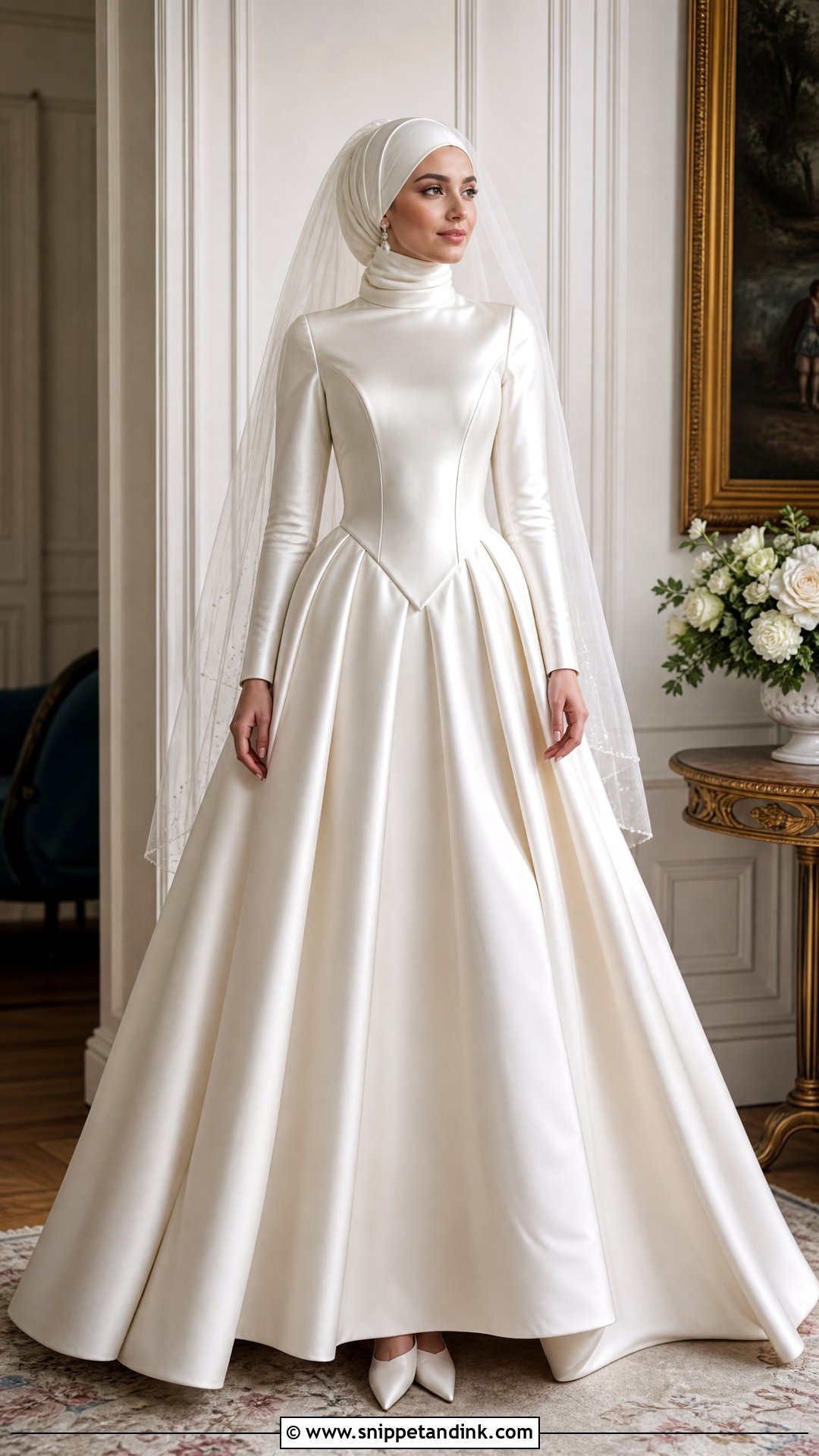
A basque waist dips into a shallow V at the front, which lengthens the torso and makes the skirt look fuller beneath it. For full coverage I’d choose a structured satin bodice with a high neckline, full-length sleeves and no exposed boning or sheer panels. Sit down in it at the fitting. A basque point cut too low digs into the stomach during a long seated nikah, and that’s an easy alteration if you catch it early. Add a full pleated skirt, a smooth satin hijab, a fingertip veil and pointed pumps. The construction usually defines the waist on its own, so a belt is rarely needed. Estates and traditional ballrooms suit it.
6. Detachable Overskirt Hijabi Wedding Gown
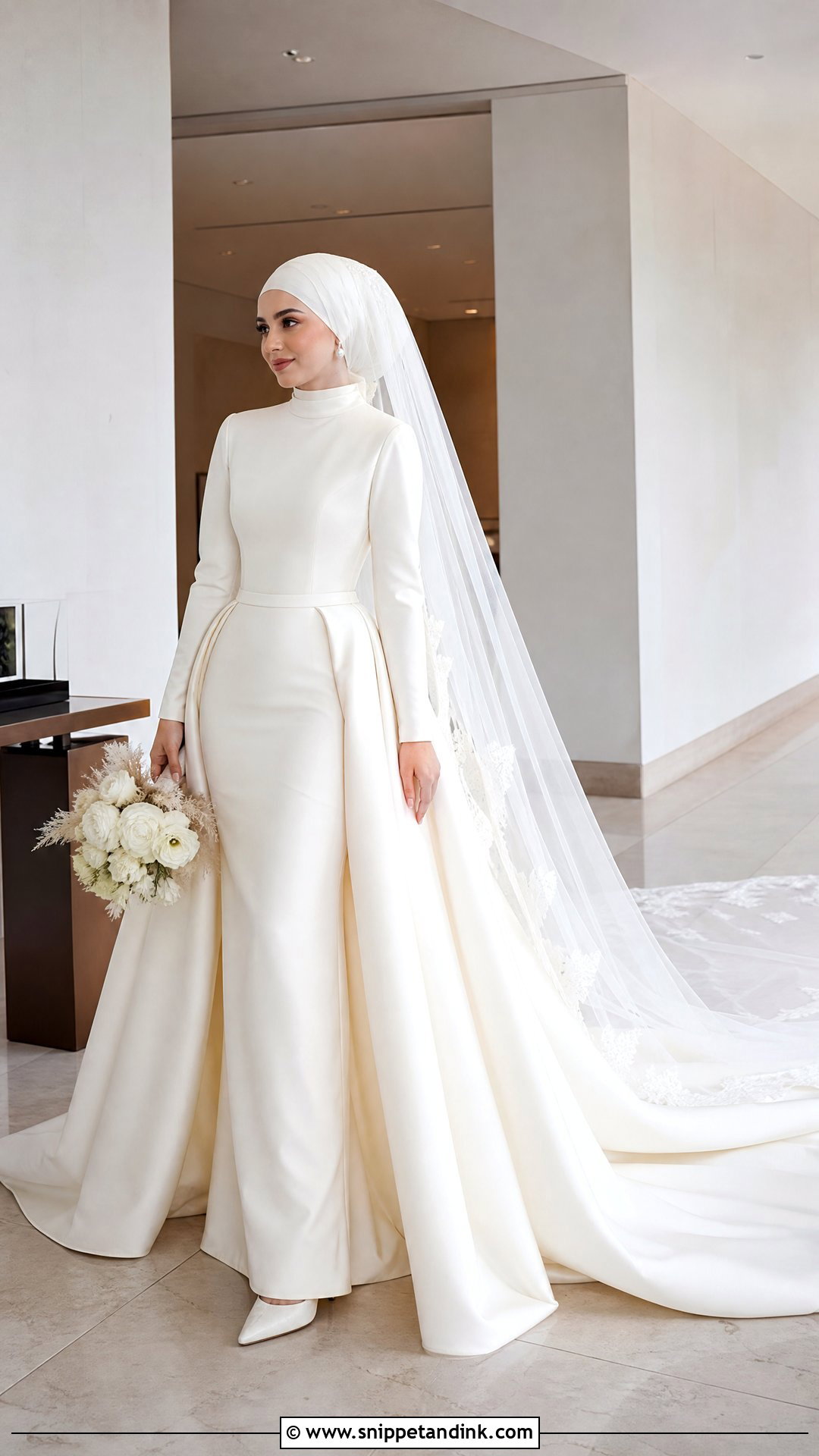
Would you like a dramatic ceremony gown and a lighter reception look without buying two dresses? A detachable overskirt is the answer I give most often. The base should be an opaque long-sleeve A-line or a softly tailored column, with a full satin or tulle overskirt fastened at the waist for volume and a sweeping train. After the ceremony it comes off for walking and dancing. Practice the removal with whoever will help you on the day, because hooks hidden under a waistband are fiddly in a crowded room. The attachment should lie completely flat under a narrow band. A matching chiffon hijab, a plain cathedral veil and understated earrings keep attention on the change.
7. Minimalist Crepe Hijabi Wedding Gown
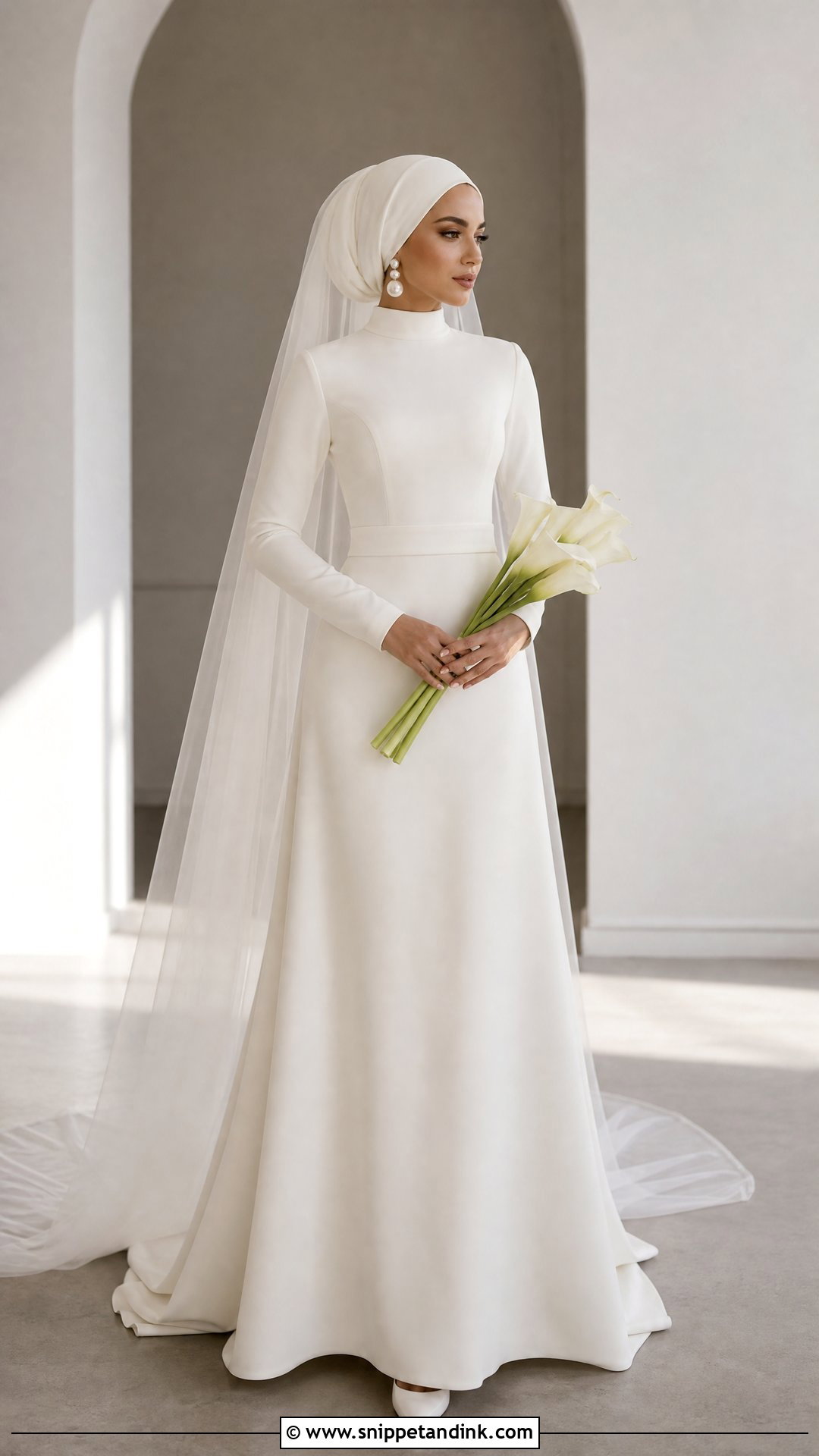
Crepe hides nothing, so a minimalist gown lives or dies on its tailoring. I look for a high round neckline, fitted long sleeves, a defined waist and a fluid A-line skirt in medium-weight, fully lined crepe. Anything thinner clings at the hip and shows every line of your underlayers. Wrap a matching matte hijab simply, with as few pins as you can manage, so nothing interrupts the clean shape. A long plain veil gives the ceremony its drama, and taking it off reveals the modern cut underneath. Pointed ivory heels, sculptural pearl earrings and calla lilies suit it. Bring your intended underlayers and shoes to every single fitting with this one.
8. 3D Floral Hijabi Wedding Gown
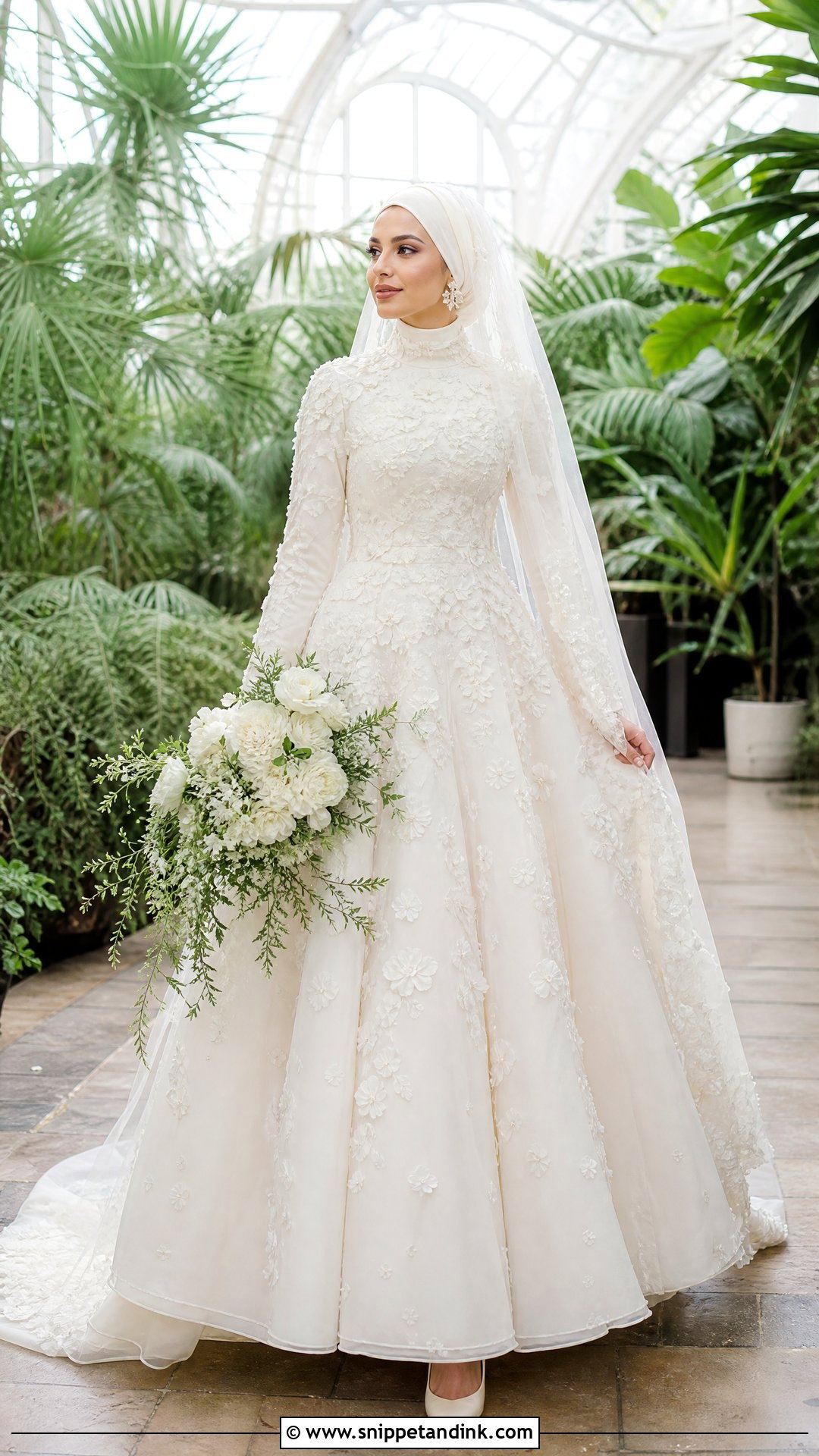
Dimensional flowers give a hijabi wedding gown texture you can see from across a room. Look for an A-line with opaque long sleeves and appliqués placed across the bodice, cuffs and upper skirt, spacing out toward the hem so the decoration doesn’t swamp the shape. One thing I always test: raised petals at the collar can snag a chiffon hijab and pull threads, so I keep the densest flowers below the collarbone. A plain hijab and a veil with only a few matching appliqués at the edge avoid overload. Low ivory heels and a loose white bouquet suit conservatories and spring gardens.
9. Beaded Princess Hijabi Wedding Gown
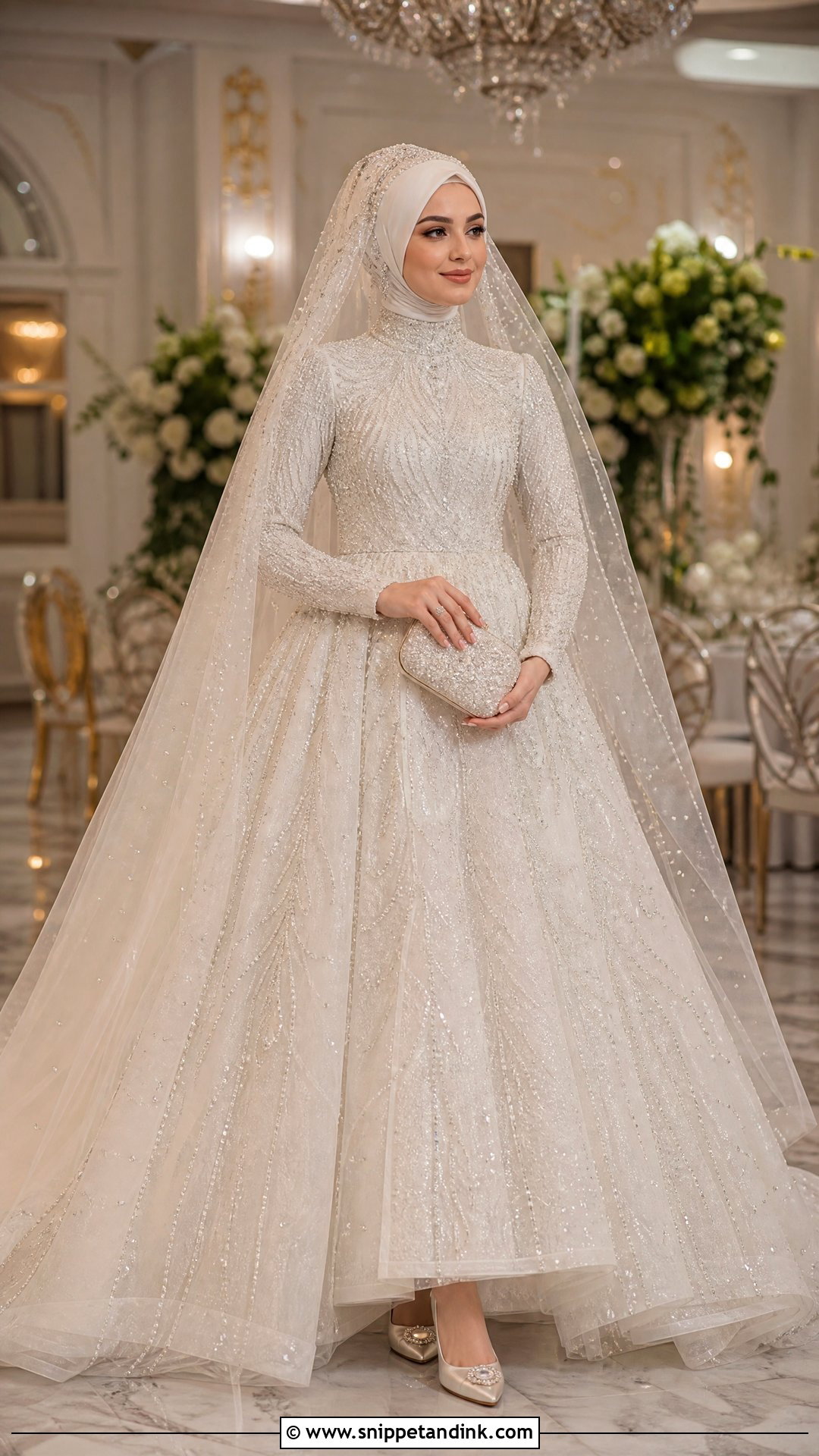
Dense beadwork is heavy, so a beaded princess gown needs a supportive inner structure or the skirt sags by the reception. I’d concentrate the heaviest beading at the waist and cuffs, where the bodice can carry it, and let lighter scattered crystals float over the lined tulle skirt. Beaded cuffs also scratch, so ask for the inside of each sleeve to be faced with lining. A smooth ivory hijab, a long veil with a narrow beaded border, crystal earrings and metallic ivory pumps finish it. Skip the necklace and keep the bouquet simple. This one belongs in a hotel ballroom or at an evening ceremony.
10. Pleated Chiffon Hijabi Wedding Gown
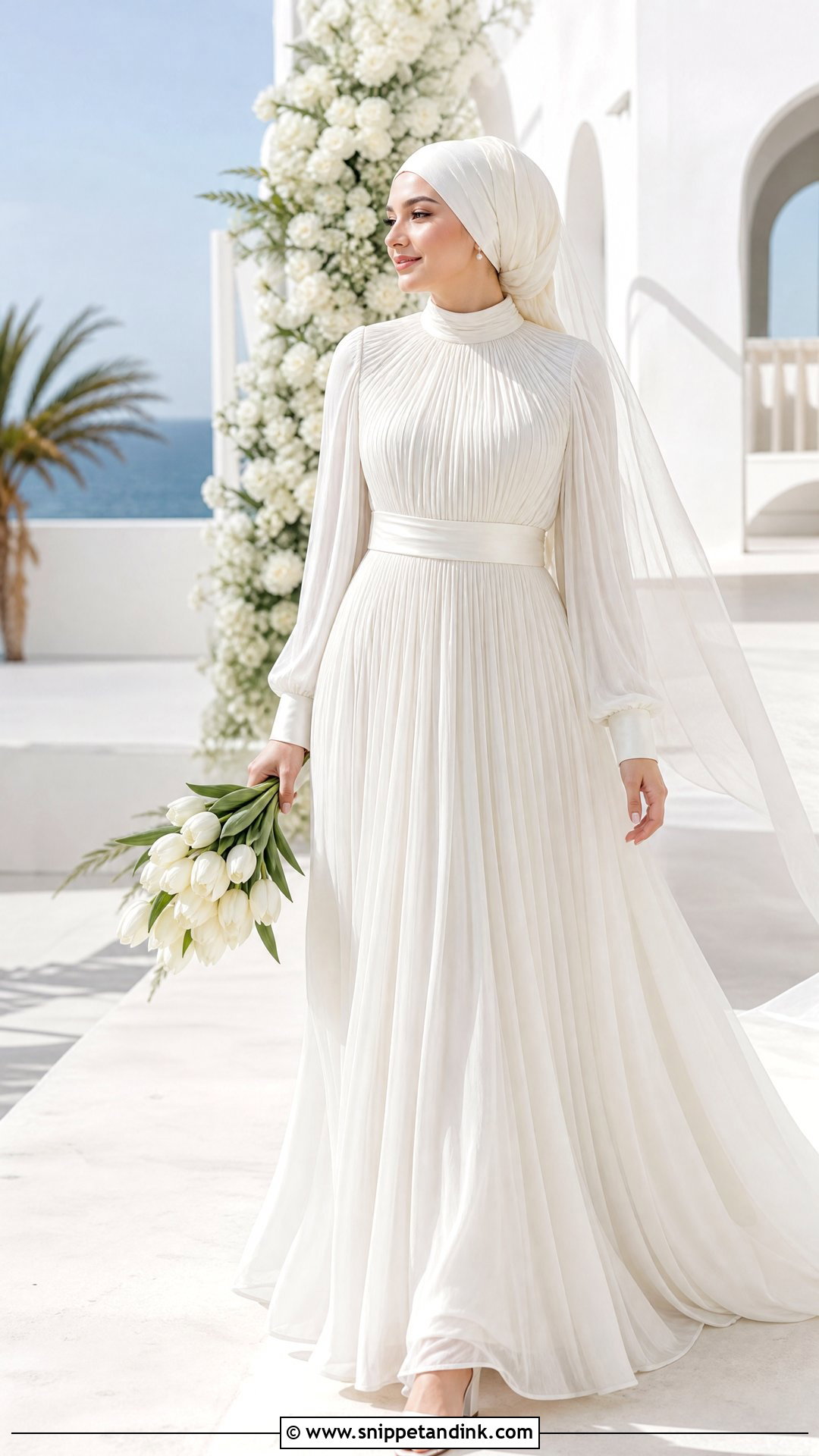
Chiffon is the coolest fabric on this list to wear, and pleats give it shape without stiffness. Look for a high gathered neckline, a softly blouson bodice, fitted cuffs and a pleated floor-length skirt, with a satin waistband for a little contrast. The risk is transparency. Strong sun and a photographer’s flash both see straight through a single chiffon layer, so I hold every panel against a window during the fitting. Wrap a same-shade chiffon hijab lightly and add a narrow veil, low block heels and pearl studs. Warm-weather nikahs and destination ceremonies are where it earns its place.
11. Ottoman-Inspired Hijabi Wedding Gown
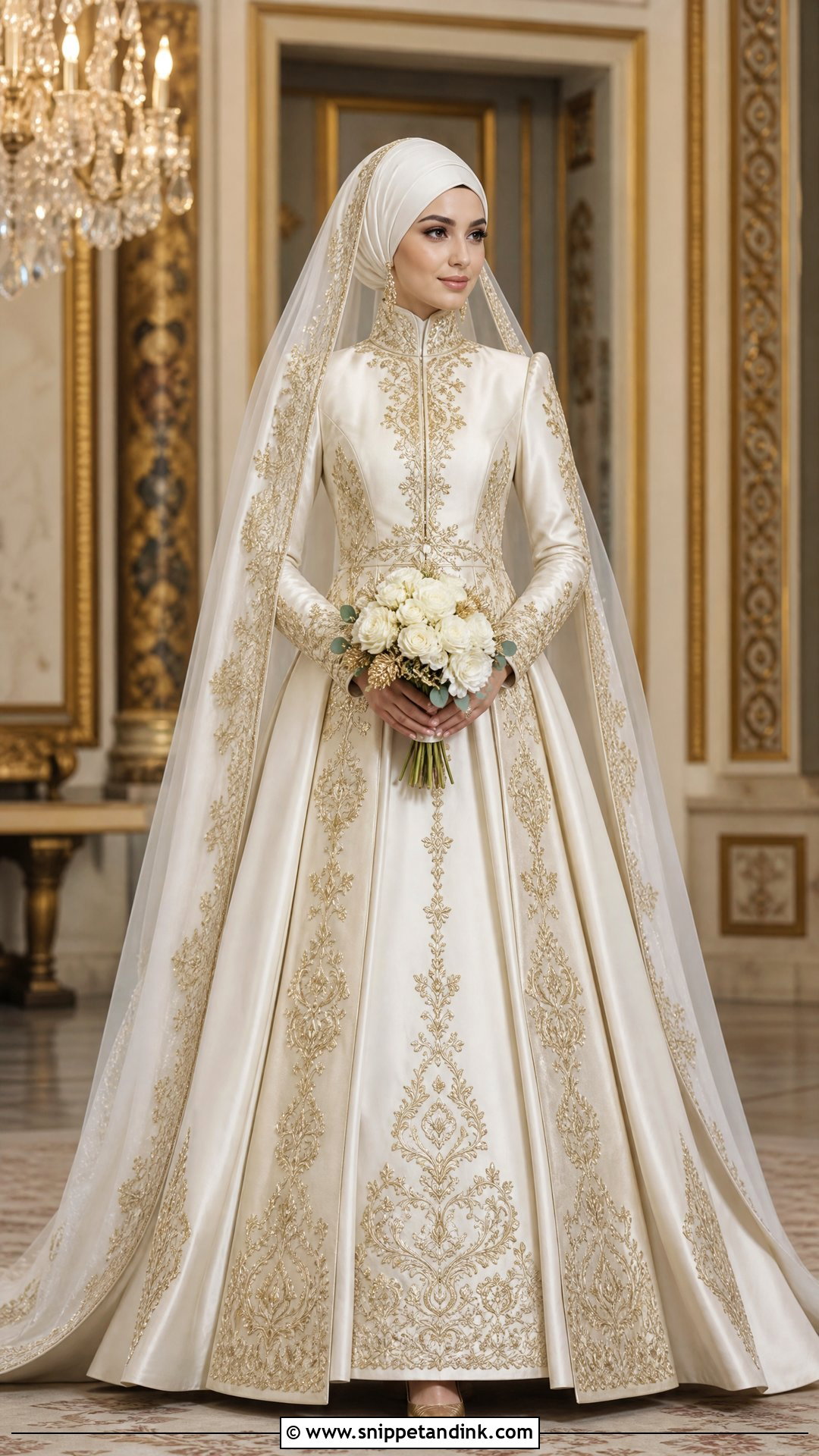
Ottoman-inspired bridalwear is about structure and metallic embroidery: a high collar, long sleeves, and gold or silver work along the bodice, cuffs, waist and hem. A gently flared skirt lets that border show as you walk. Metallic thread is stiff, so I check the collar against the hijab before anything else. A tall embroidered collar can push fabric forward under the chin unless the hijab is pinned a little looser at the neck. Keep all the metalwork in one color family. A draped satin hijab, an embroidered veil fixed behind the crown and pointed metallic shoes suit a historic venue, and a removable embroidered cape adds ceremony to the entrance.
12. Bridal Abaya Hijabi Wedding Gown
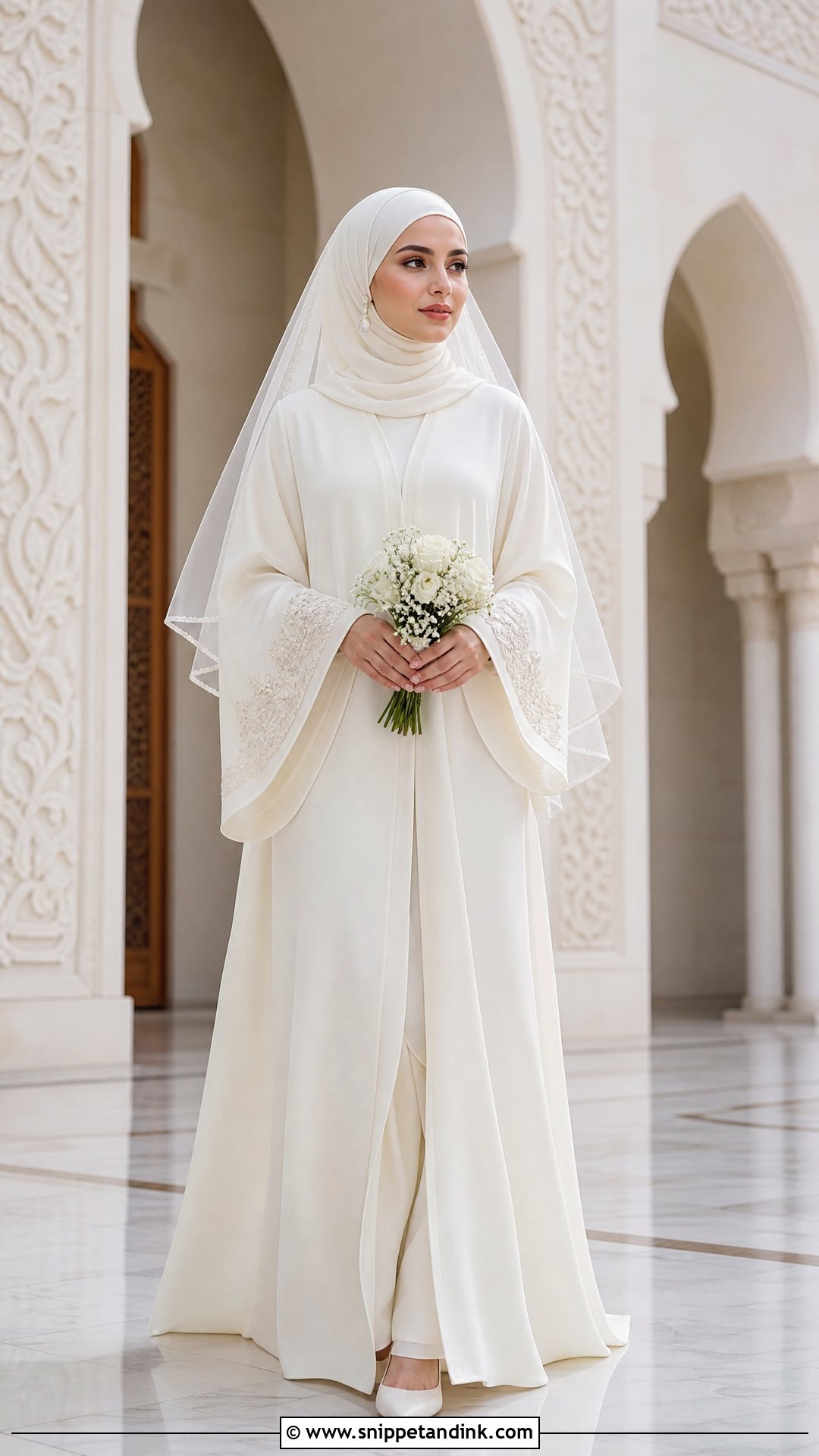
A bridal abaya gives fluid coverage and a quiet, dignified line. Choose a closed ivory abaya in crepe, satin or layered chiffon with a high neckline and wide lined sleeves. Wide sleeves are where opacity fails first, because they lift every time you raise a hand, so the lining matters there more than anywhere. A matching inner dress stops the outer layer from shifting. Delicate embroidery at the cuffs and front opening adds definition, and a narrow embellished belt is entirely optional. A soft chiffon hijab, a shoulder-length veil, pointed flats and pearl earrings suit a mosque ceremony or an intimate nikah.
13. Modest Mermaid Hijabi Wedding Gown
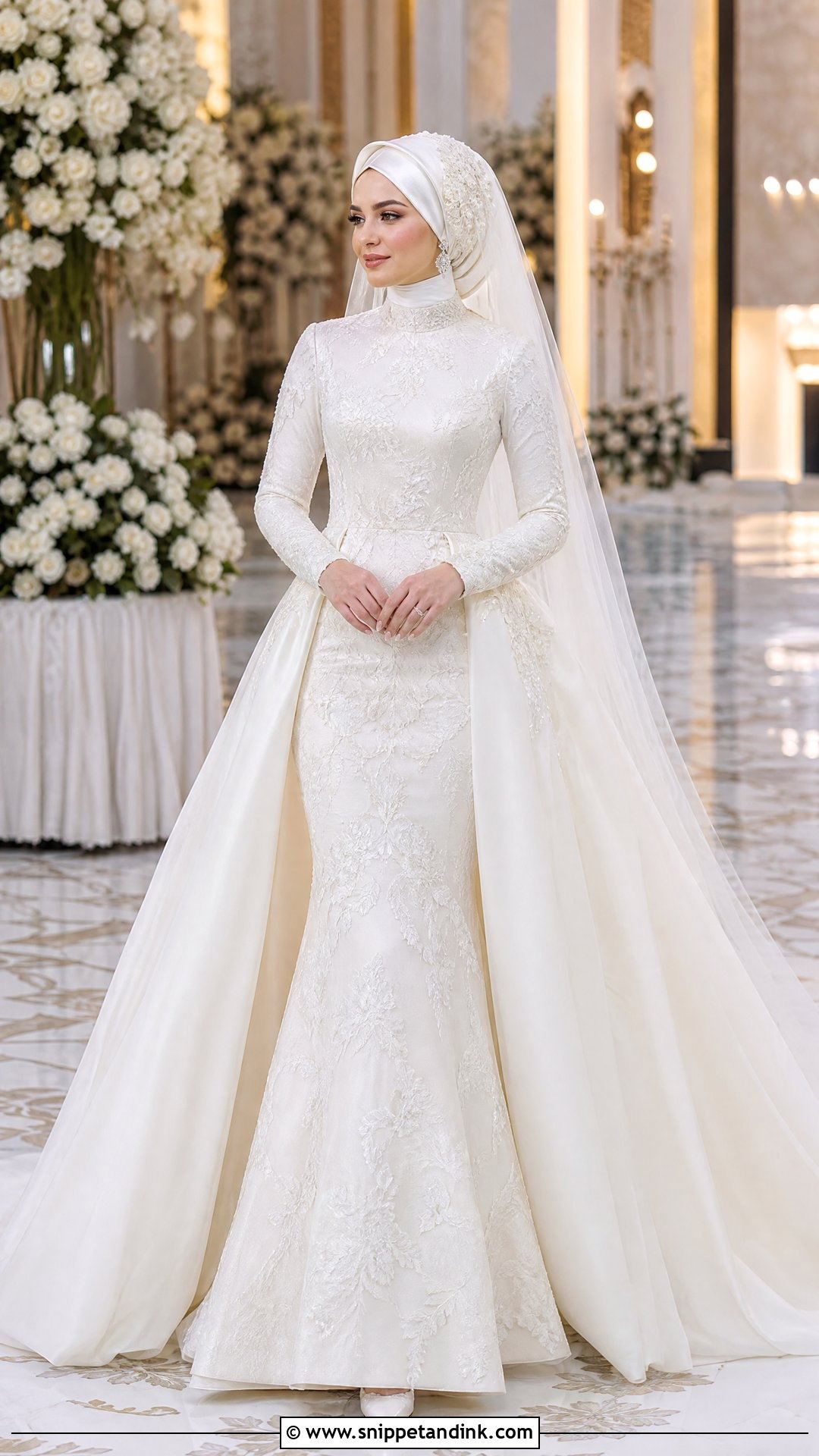
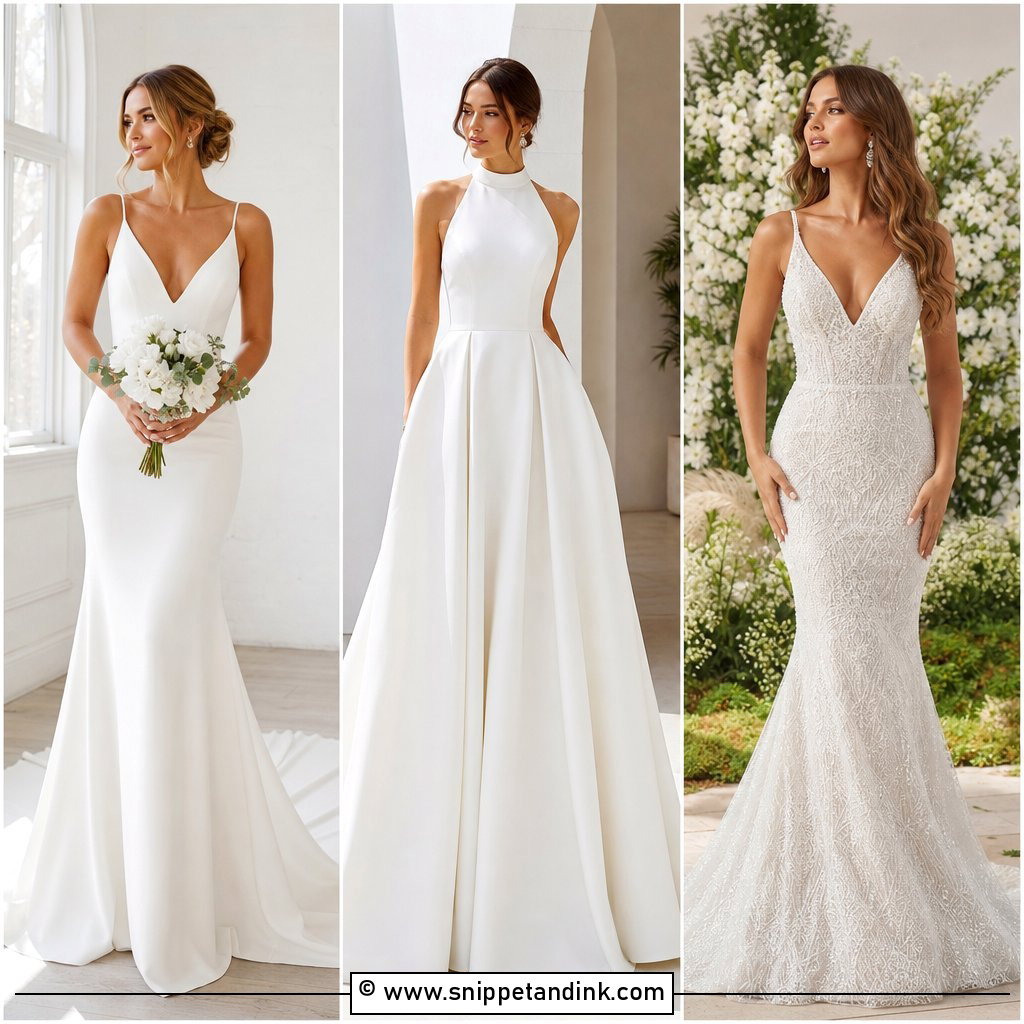
A mermaid shape can work for modest dressing if the fit stays gentle. I’d ask for a fully lined gown with a high neckline and long sleeves, in a fabric with enough body to skim rather than grip, flaring a little above the knee instead of at it. Thin fabrics cling and reveal underlayers in this silhouette more than in any other. Vertical lace appliqués lengthen the line, and a detachable overskirt adds coverage for the ceremony itself. At fittings, sit, walk and climb a few stairs. If you can’t take a normal stride, the flare needs to come up. A plain satin hijab, a long veil and closed-toe pumps complete it.
14. Tiered Tulle Hijabi Wedding Gown
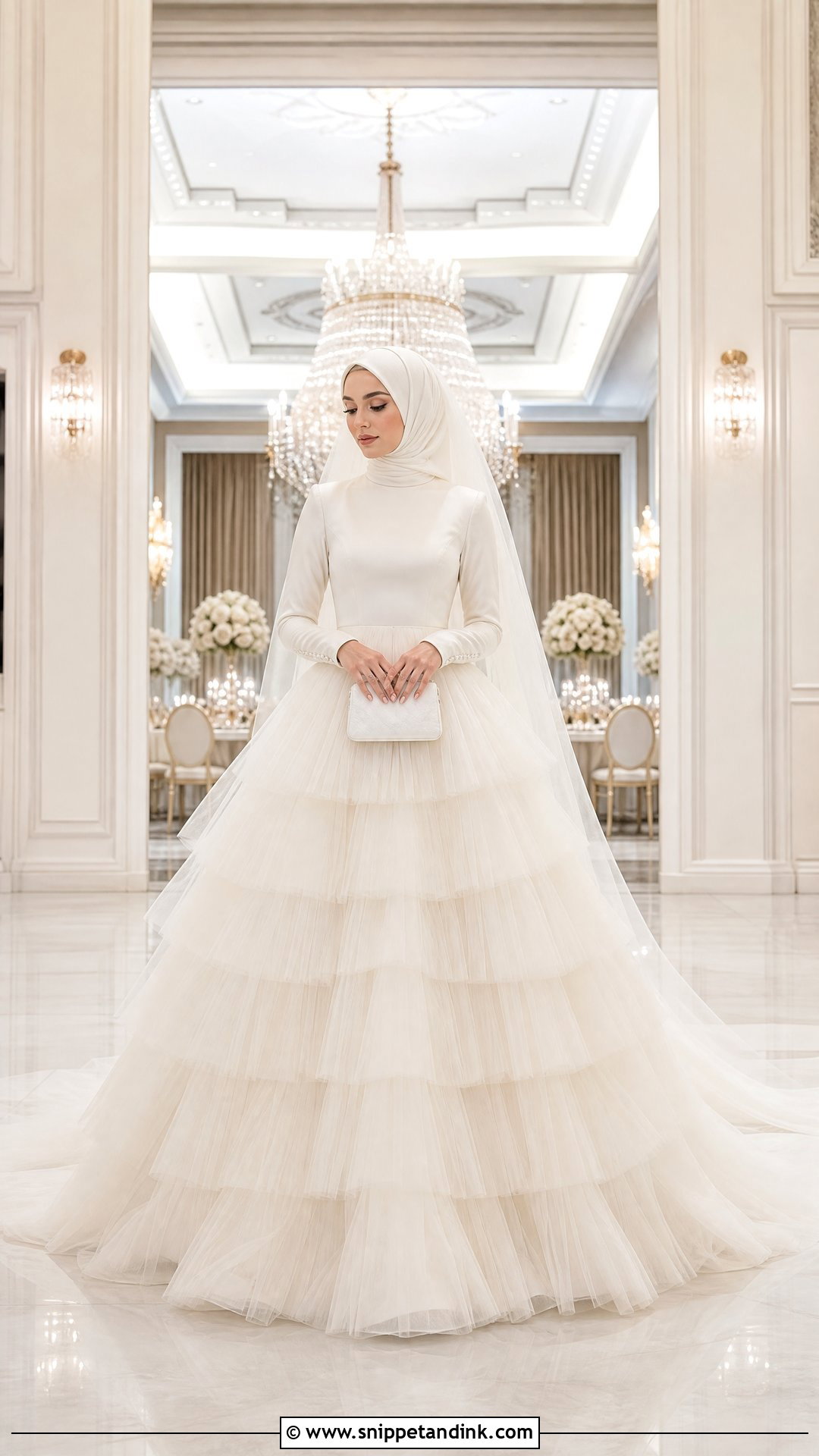
Tulle tiers move when you walk, which is why they look as good in the room as they do in photos. Pair an opaque satin bodice, high neckline and fitted sleeves with a tiered skirt starting at the natural waist. Soft gathers read romantic; crisp tiers read modern. Keep the bodice plain so the skirt stays the focus. Tulle flattens in a car and loses volume in humid air, so for a long day I ask for a stiffer crinoline layer underneath. Add a matte chiffon hijab, a plain cathedral veil, crystal studs and ivory platforms hidden under the hem. Big ballrooms give it the room it needs.

15. Pakistani Embroidered Hijabi Wedding Gown
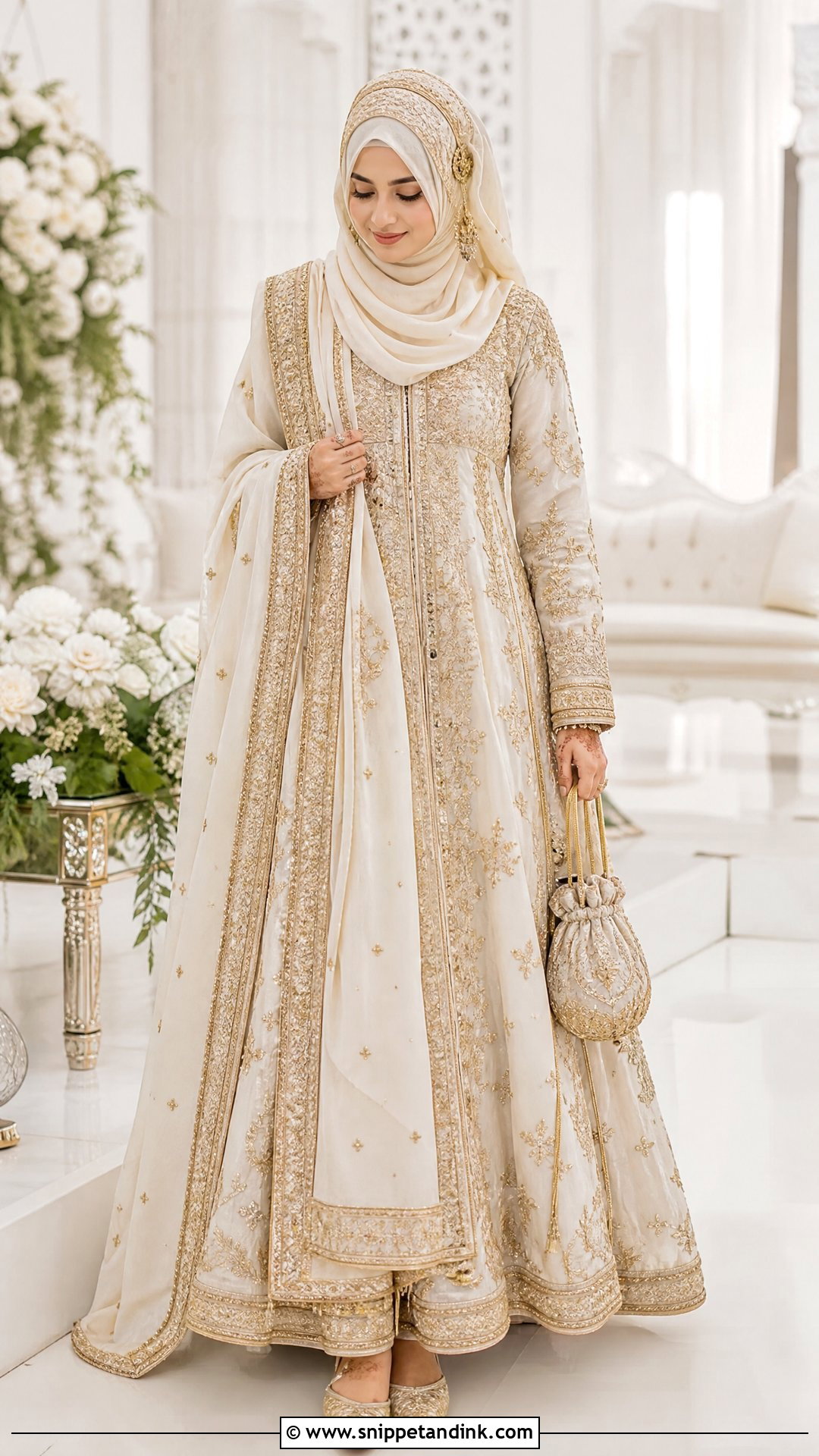
A Pakistani-inspired wedding gown brings real craftsmanship into a fully modest silhouette. The usual base is a floor-length peshwas or Anarkali with long sleeves, a covered neckline and embroidery in gold, silver or tonal thread, in ivory, deep red, champagne or blush. Hand embroidery and heavy dupattas add serious weight, and the dupatta is where I see most of the trouble. Draped over the hijab, it needs its own pins into the undercap or it drags the wrap backward by mid-evening. Keep it clear of the face. Traditional earrings, embroidered khussa and a small potli bag let family heritage show in every part of the outfit.
16. Champagne Hijabi Wedding Gown
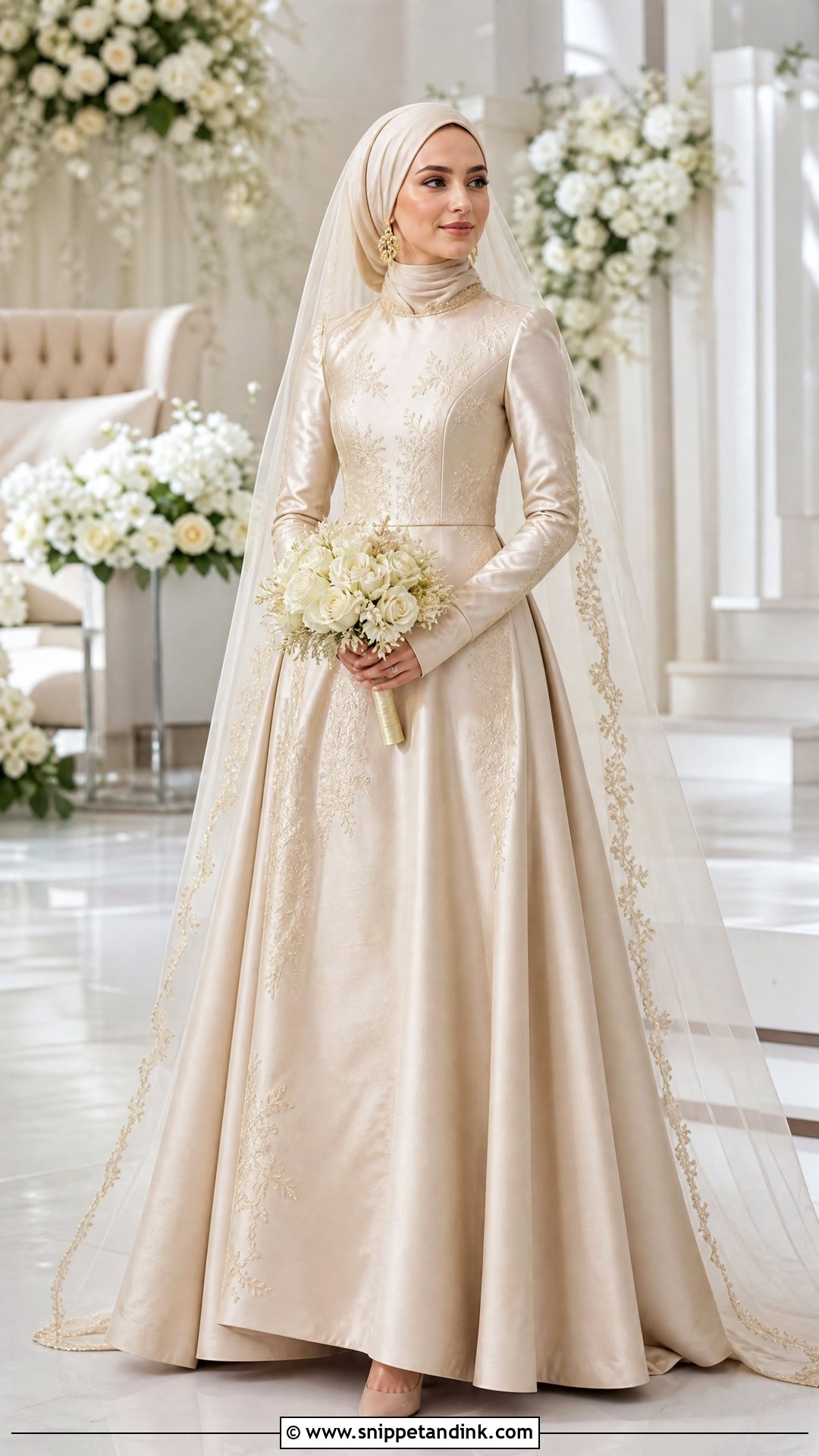
Champagne warms the bridal palette without leaving it. My starting point is a long-sleeve satin or tulle A-line with a high neckline and subtle gold embroidery; against the slightly deeper base, ivory lace and pearls look more dimensional. Match the hijab to the gown’s undertone instead of reaching for a lighter shade, which reads as a mismatch right next to your face. Look at the whole outfit by a window and again under warm indoor bulbs before you commit, because champagne can drift toward beige or grey depending on the light. An ivory veil with a narrow gold edge and nude closed-toe heels suit an autumn hotel or a cream-and-gold room.
17. Blush Hijabi Wedding Gown
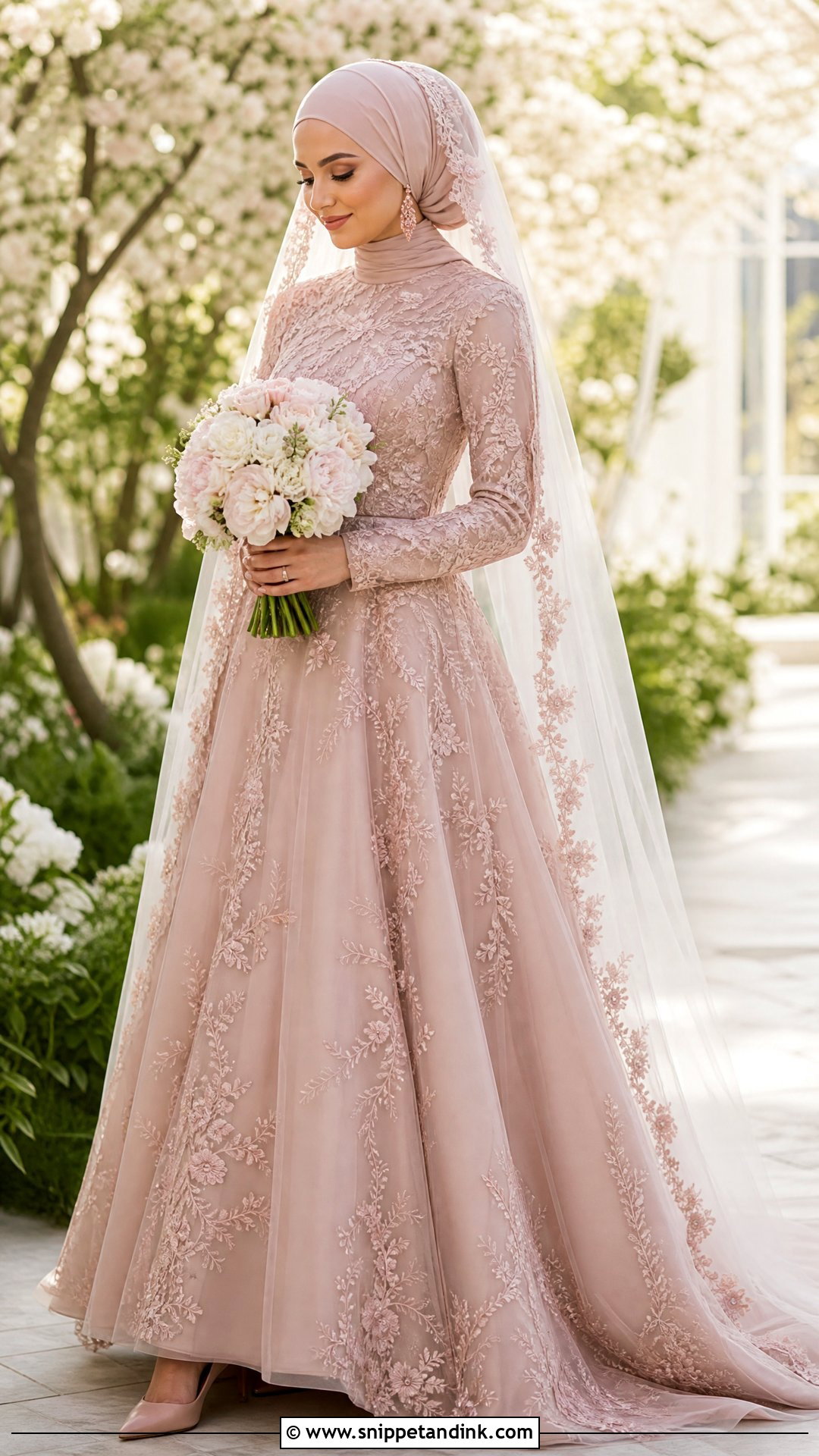
Blush gives you color while staying clearly bridal. Look for a dusty blush or pale rose A-line with an opaque lining, long sleeves and a high neckline, with tonal embroidery or tiny pearls for interest. The hijab is the real decision. A matching blush blends in, light ivory gives gentle contrast, and a blush-edged veil can tie the two together. Pinks are where I see clashes most often: peach, mauve and cool rose undertones fight each other, so hold every pink piece against the gown in daylight, flowers included. Nude pumps and rose-gold earrings suit spring gardens.
18. Plus-Size Hijabi Wedding Gown
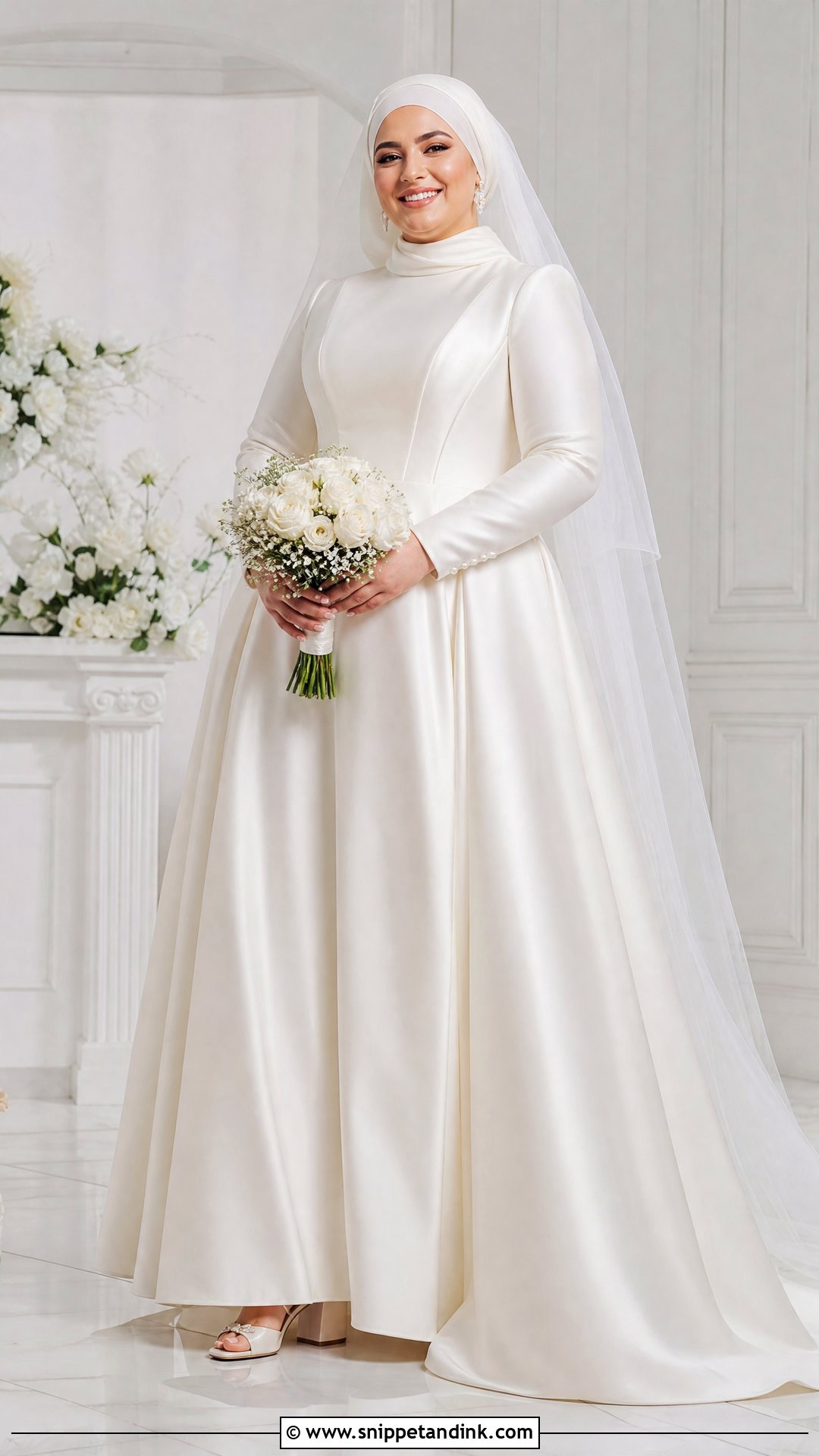
With plus-size brides I put support and movement ahead of everything else. The combination I trust is a structured high-neck bodice, supportive long sleeves and an A-line skirt flowing from the natural waist, with princess seams shaping the fit so you aren’t relying on tight shapewear. Opaque crepe, satin or lined lace holds its structure and photographs evenly. Sleeve width is the alteration people forget: ask for enough ease at the upper arm to hug someone and raise a glass. Try samples in your size where the shop has them, and bring your undergarments, undercap and shoes to each fitting. A lightweight hijab and block heels keep a long day comfortable.
19. Winter Velvet Hijabi Wedding Gown
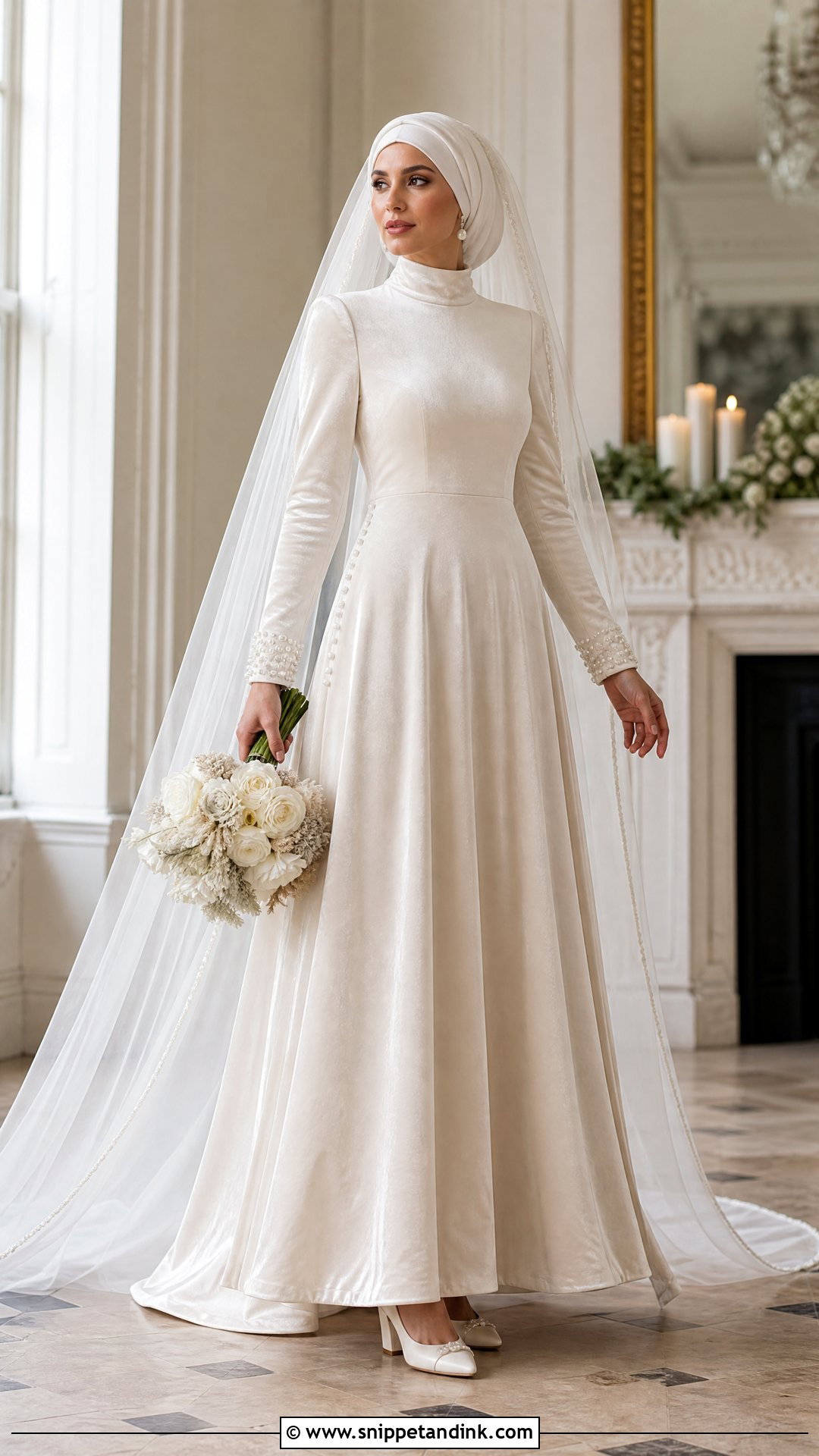
Velvet is heavy and warm, a gift at a winter ceremony and a problem in a packed, heated hall. I’d choose ivory, cream or pale champagne with a high neckline, long sleeves and a softly flared skirt, keeping embellishment to pearl cuffs or covered buttons, since the pile already carries visual weight. Velvet also crushes where you sit. Steam it on the morning and have the train bustled before dinner. A satin hijab gives a welcome change of texture against the pile. Add a lined cathedral veil and closed-toe block heels, and ask the venue how warm they keep the room before you commit.
20. Simple Nikah Hijabi Wedding Gown
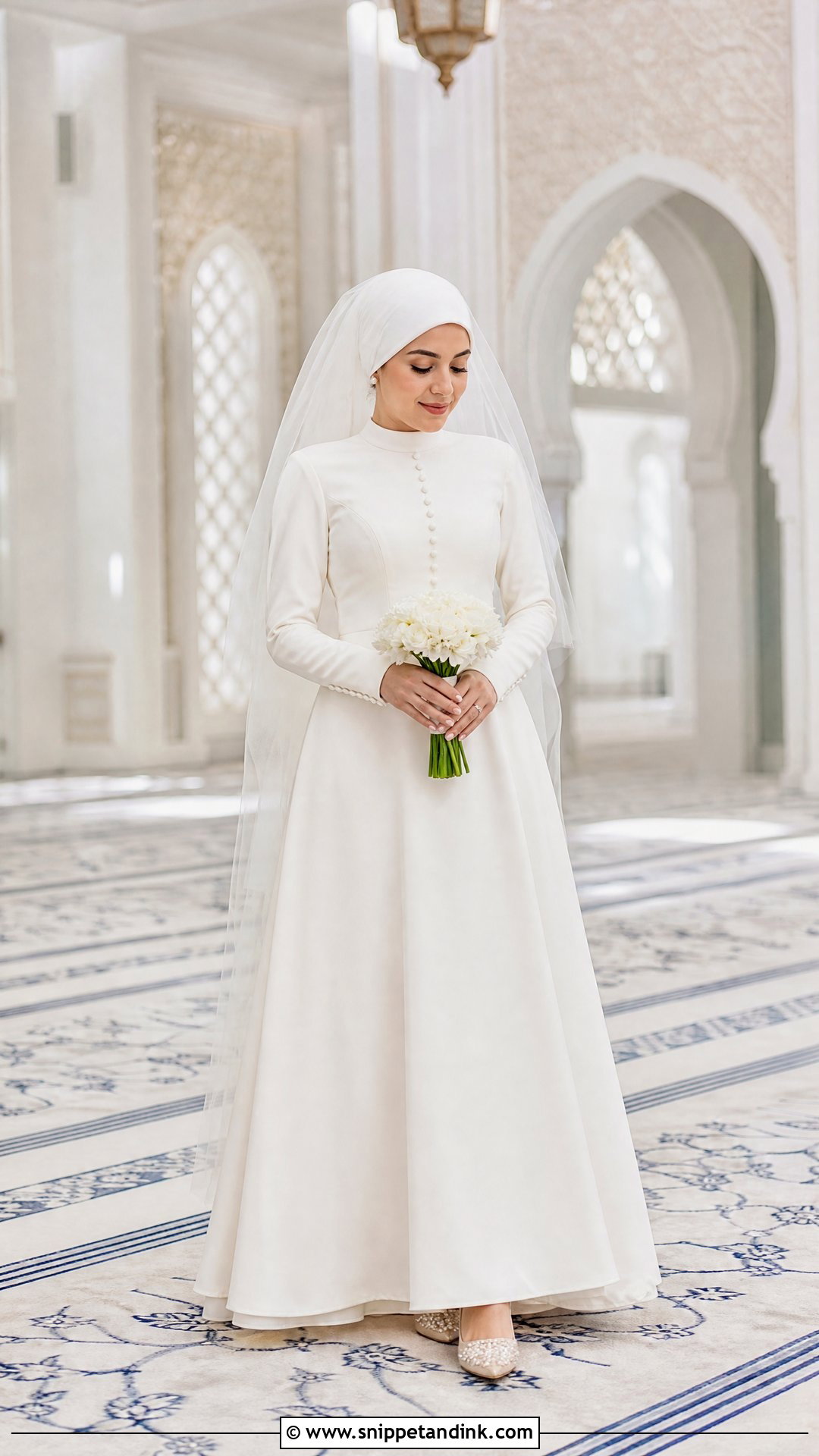
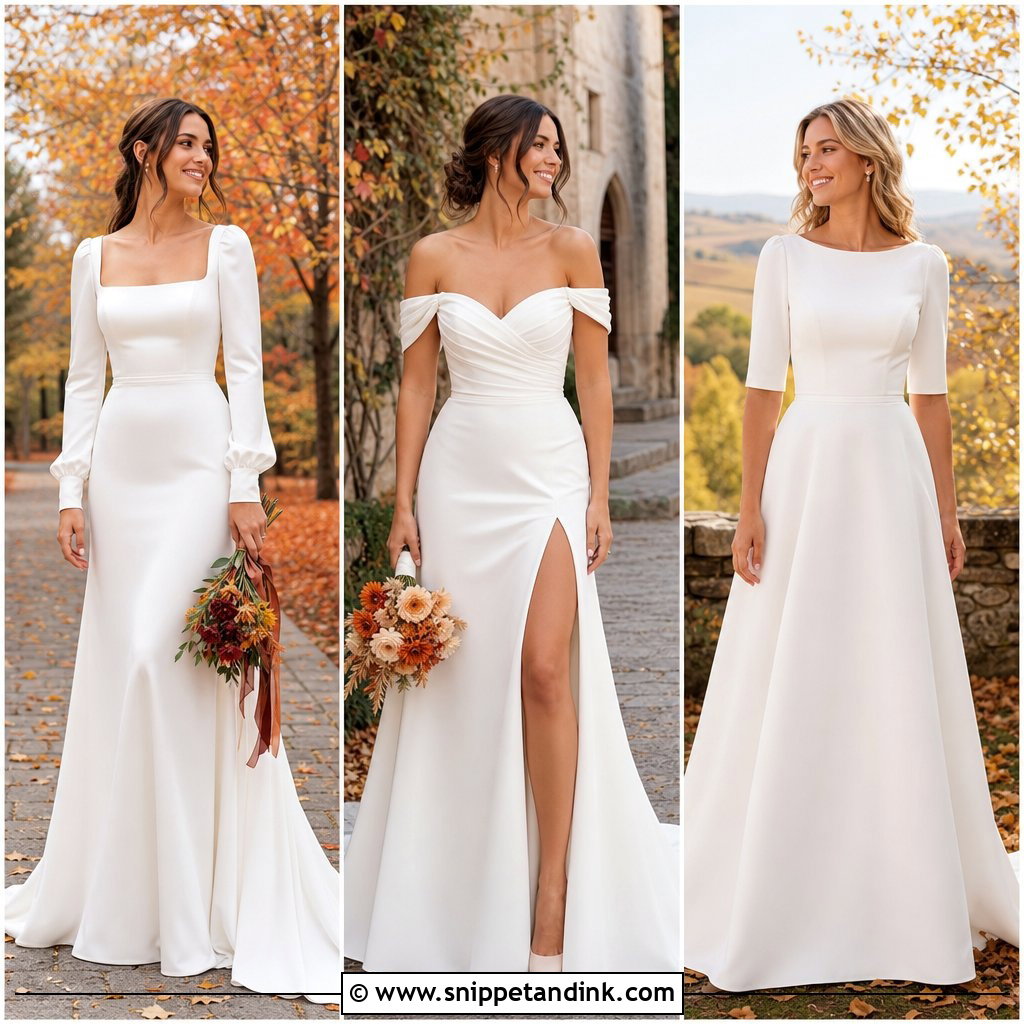
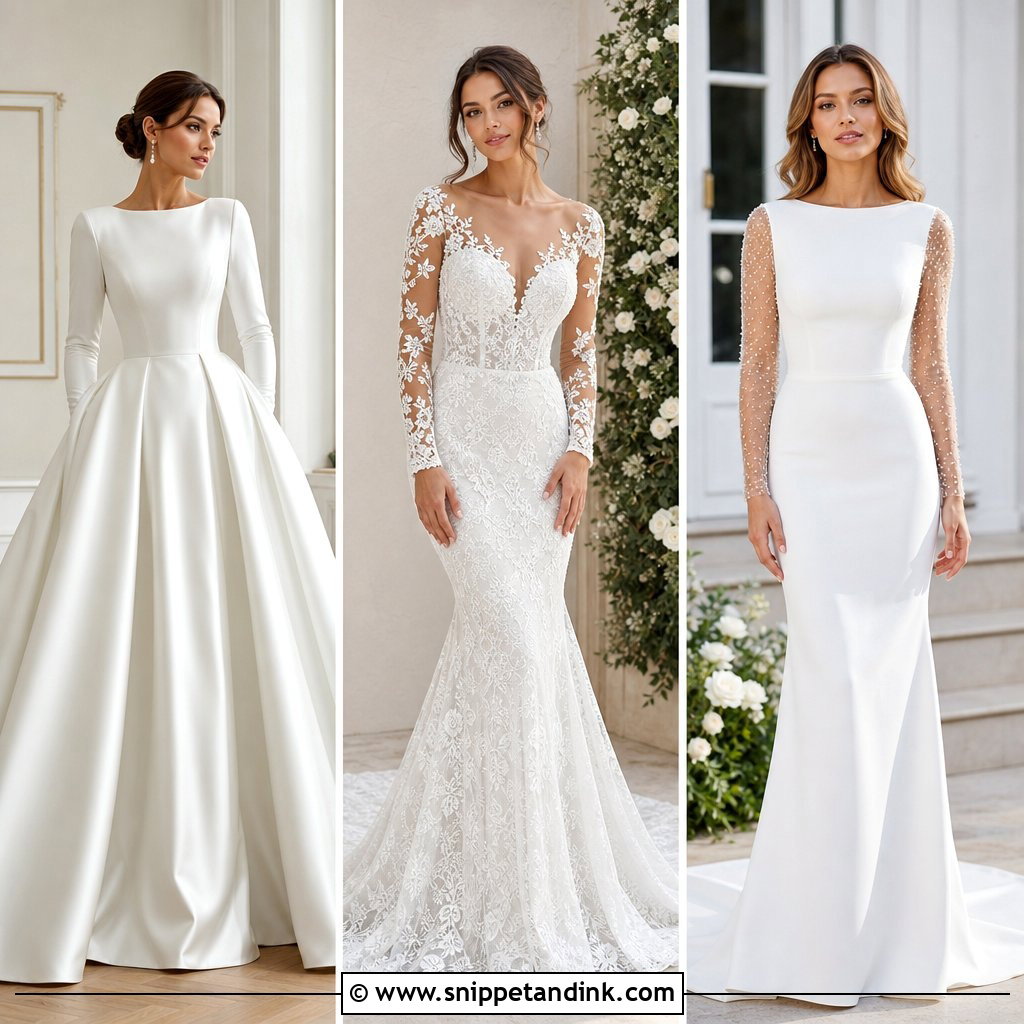
An intimate nikah needs a dress you can sit in, rise from and greet relatives in for hours without fuss. A simple ivory A-line with an opaque high neckline, long sleeves, covered buttons and a lightly gathered skirt does exactly that. Crepe, matte satin or lined chiffon stay comfortable on a chair or a floor cushion. A matching chiffon hijab with a short veil or a small pearl headpiece at the back keeps the head light. Cultural detail can come in through embroidered cuffs or a family accessory. Low heels or embellished flats work in a mosque, at home or in a small restaurant.
Wudu, Prayer and Dinner in a Long-Sleeved Gown
Many wedding days include a prayer, and a gown that looks right standing still can be awkward when you need to wash and kneel. I plan for that at fittings rather than leaving it to the day.
Fitted cuffs closed with a row of buttons or a hidden zip at the wrist let you push the sleeve up for wudu and fasten it again neatly. A sleeve sewn tight from shoulder to wrist won’t move at all, and you end up soaking the lace. For kneeling, a bustle that lifts the train off the floor matters more than most brides expect. Soft satin folds under you far more easily than stiff layered tulle, which is worth knowing before you settle on a skirt. Do one practice run in the full gown at your last fitting.
Pins That Hold Until the Last Guest Leaves
Pin the hijab into a grippy undercap, never into the hijab fabric alone, and anchor a long veil with a comb set into that cap so its weight can’t drag the wrap backward. Give a few spare pins and a small hand steamer to whoever helps you dress, and show her where each pin goes.
One Last Fitting With Everything On
Coverage, tailoring and the ability to move are what I judge every hijabi gown on; personality arrives through the details you add. The range here runs from understated nikah dresses and cultural gowns to lace, ball gowns and convertible designs. Whichever way you lean, check every panel for opacity, sleeves and back included, in daylight and under flash. Then wear the hijab, veil, underlayers, shoes and accessories together before you approve the final alterations. Your own modesty preferences set the rules, not a formula from a catalog.
You'll Like These Ideas:





Leave a Reply