
A traditional bridal outfit carries more than style. It tells your family where you come from, and it has to work through rituals that may involve sitting on the floor, bowing, walking seven circles or kneeling for a tea ceremony. That’s the part I focus on when I help a bride with a cultural outfit: how it moves, how long it takes to put on, and what happens to it after six hours. Red lehengas, silk sarees, qipao, hanbok, kimono, kaftans and embroidered gowns all appear below, each with notes on fabric, jewellery, shoes and the practical details people find out too late. Use it to see what each tradition involves, then talk to your family about the version that is right for yours.
How Long Getting Dressed Actually Takes in a Traditional Outfit
This is the thing brides underestimate most. A wrapped or draped outfit isn’t put on in ten minutes like a gown with a zip. Someone has to dress you, and that time comes before hair and makeup are finished.
- Saree draping: a skilled draper may be quick, but a heavy silk or a nauvari drape needs longer, plus pinning the dupatta and jewellery.
- Lehenga with dupatta over the head: the dupatta is pinned after the jewellery and hair, so it’s the last step.
- Kimono: a shiromuku needs a professional dresser and plenty of time for the layers and obi.
- Gele: a practised tier works fast, but a stiff Aso Oke gele may need a second attempt.
I build the schedule backwards from the time you need to be ready and add a buffer of at least half an hour. Do one full dress rehearsal at a trial, with the same person who will dress you on the day.
Bathroom breaks need the same planning. Draped and wrapped outfits can’t simply be unzipped, so agree in advance who comes with you, and eat and drink something before the dressing starts rather than halfway through it.
1. Red Bridal Lehenga
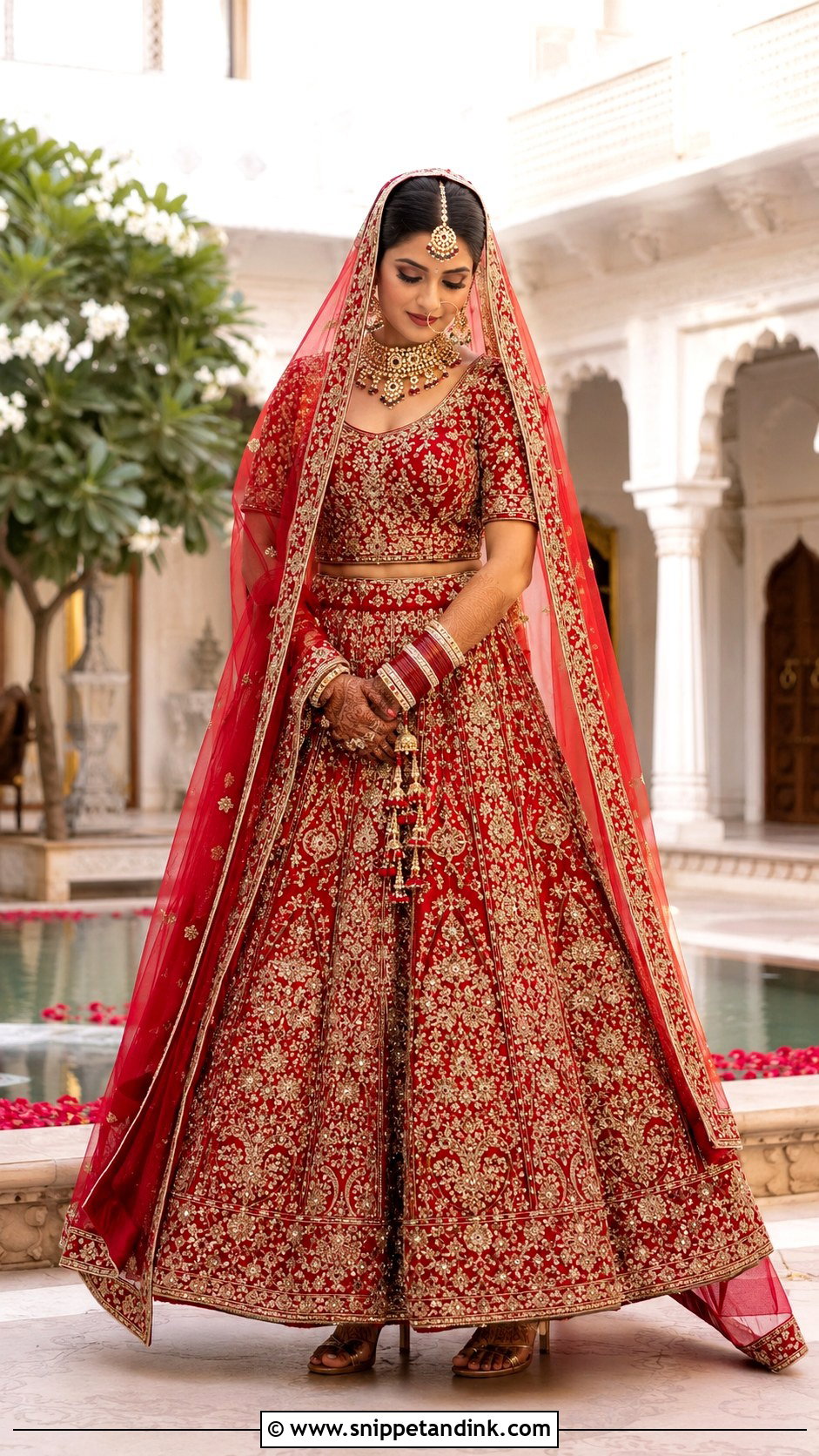
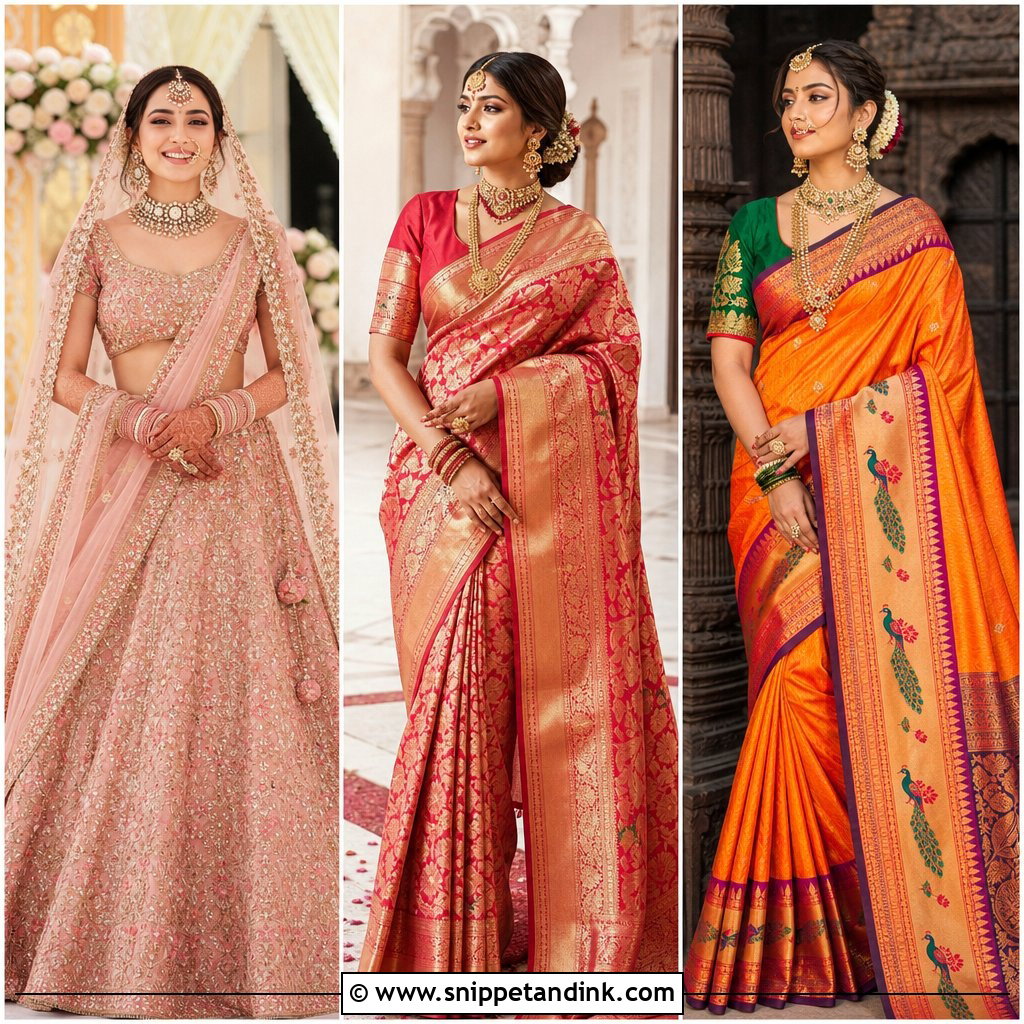
A red bridal lehenga is still the outfit most North Indian brides picture first. Zardozi, gota, sequin and thread embroidery give different finishes: zardozi is raised and heavy, gota is flatter and lighter. That weight matters, because a fully worked lehenga can be genuinely tiring by the pheras. I always ask brides to wear the skirt for an hour at the final fitting. A dupatta over the head needs pinning at the crown and the shoulder. Gold jewellery, from a choker and long necklace to a maang tikka and bangles, completes it. Block heels or wedges under the skirt are far kinder than stilettos, and nobody sees them anyway.
2. Banarasi Silk Saree Bride
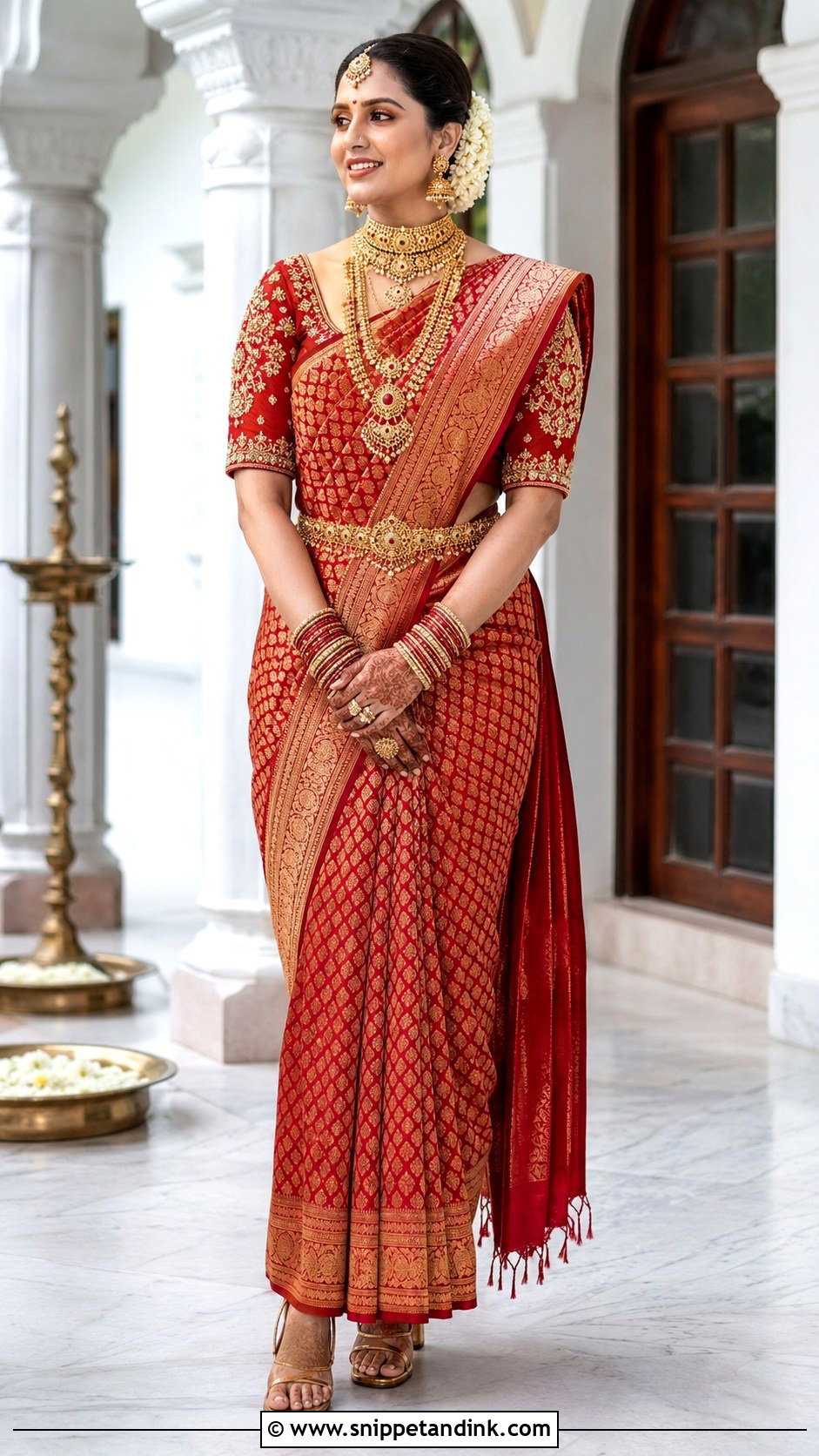
Banarasi silk is woven, not embroidered, so the pattern is part of the fabric and the saree drapes more softly than a heavily worked lehenga. Deep red, maroon, emerald, rani pink and gold are the classic shades; ivory and pastel Banarasi look more modern. A richly embroidered blouse balances the weave, and a kamarbandh holds the pleats flat at the waist. I suggest it to brides who want heritage without the weight of a full lehenga. Real zari catches the light in small sharp points rather than a flat shine, which is one way to spot a good weave in person.
3. Kanjeevaram Saree Bride
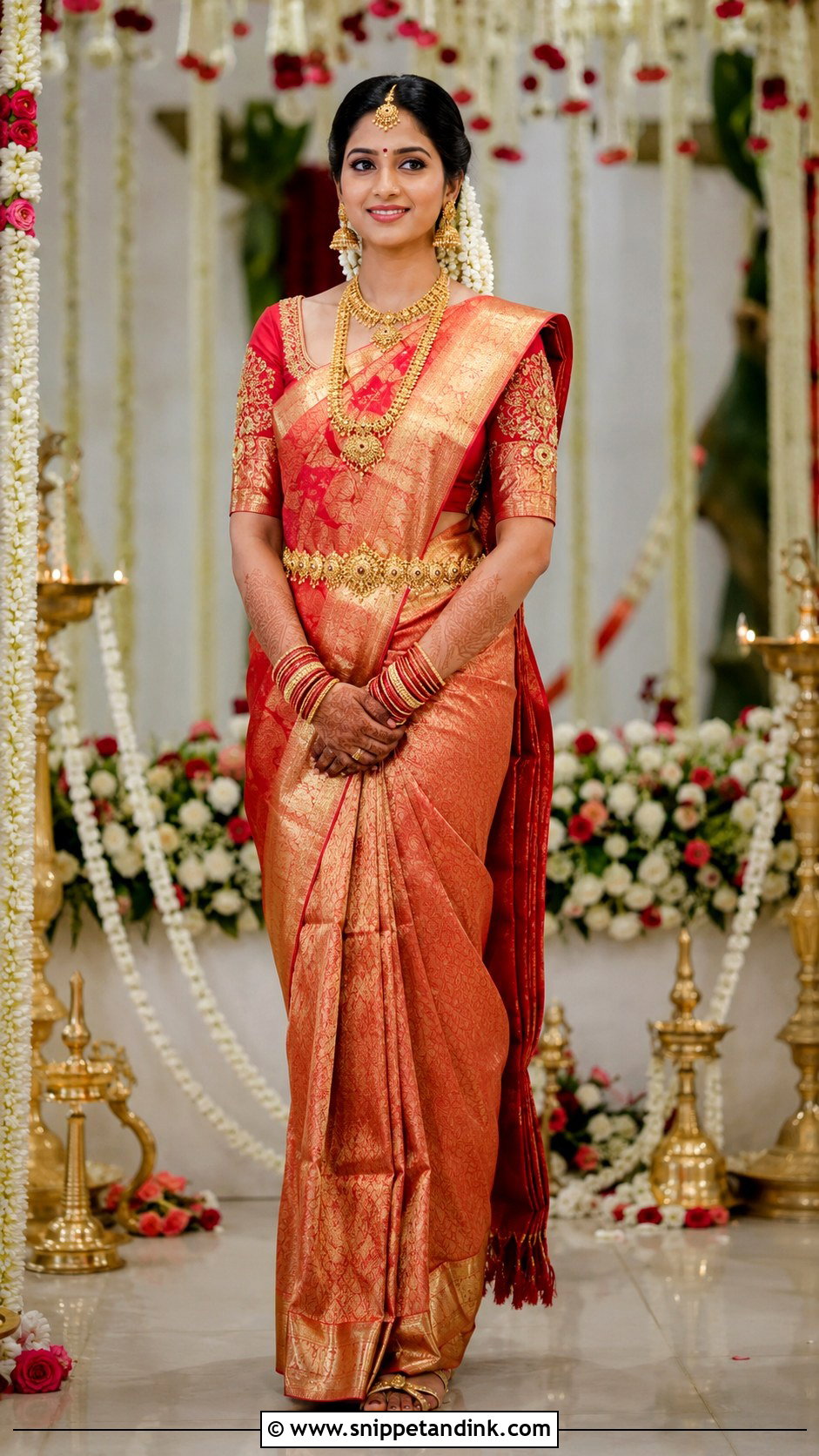
For a South Indian wedding, the Kanjeevaram is the outfit. The silk is thick and the borders are often woven separately and interlocked, which is why a good one feels heavy and stiff when new. Classic pairings include red and gold, green and gold, purple and gold, or ivory and gold. Temple jewellery, layered necklaces, jhumkas, bangles and a matha patti finish it, and a long braid wrapped in fresh jasmine is traditional. The blouse can be plain silk or worked at the sleeves. One thing I warn about: Kanjeevaram pleats are bulky, so the draper needs to make fewer, wider pleats or the front stands out stiffly.
4. Bengali Bridal Saree
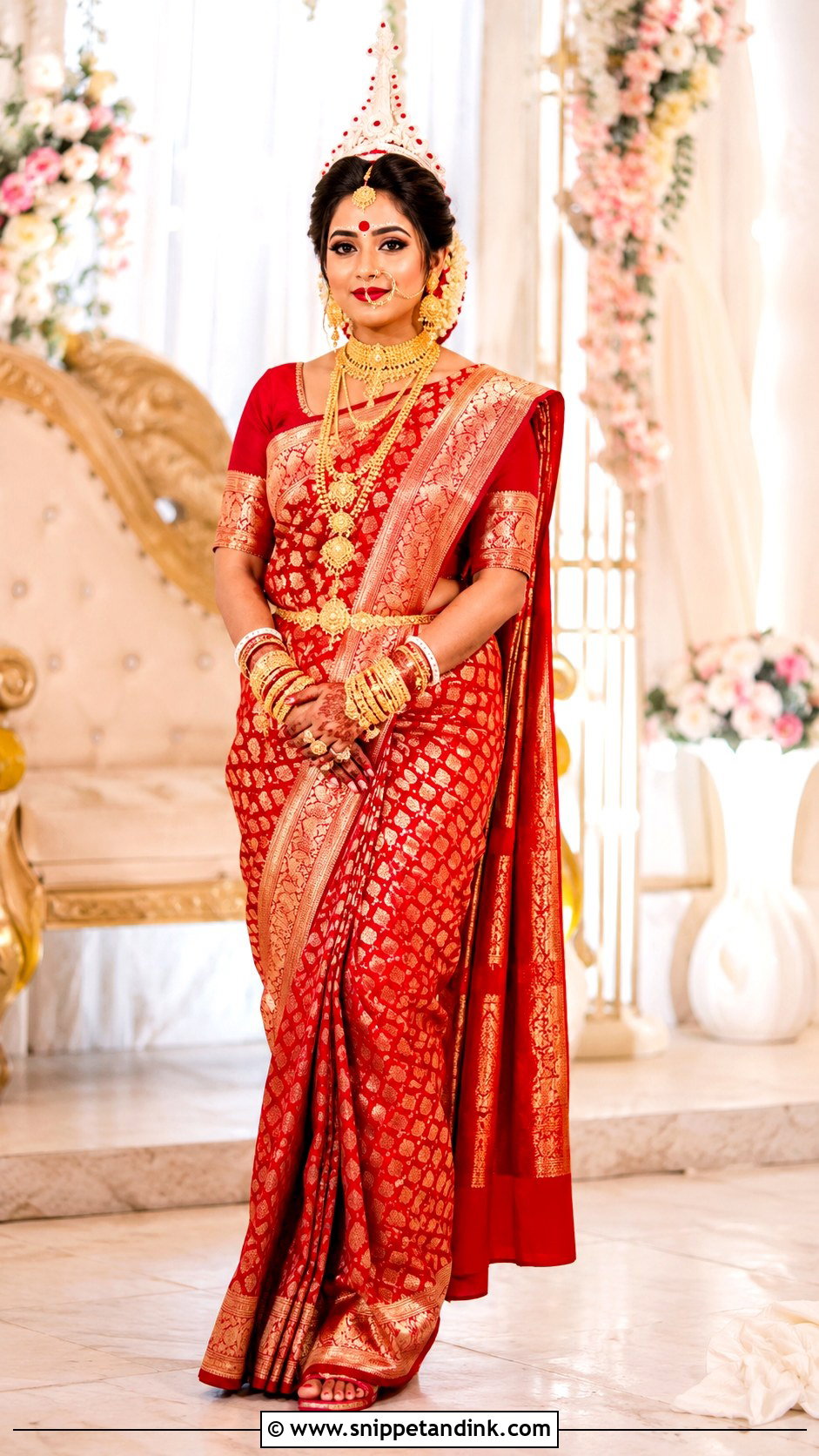
The Bengali bride is recognisable at a glance. A red Banarasi with gold motifs is the usual choice, draped in the traditional Bengali style with the pallu brought over the shoulder. The details that make it Bengali are the shakha and pola, white conch-shell and red coral bangles, a large red bindi with sandalwood dots on the forehead, alta on the hands and feet, and the white shola mukut. Heavy gold jewellery and a bun complete it. The sandalwood design is drawn on the day, so leave time for it in the makeup schedule.
5. Maharashtrian Paithani Saree Bride
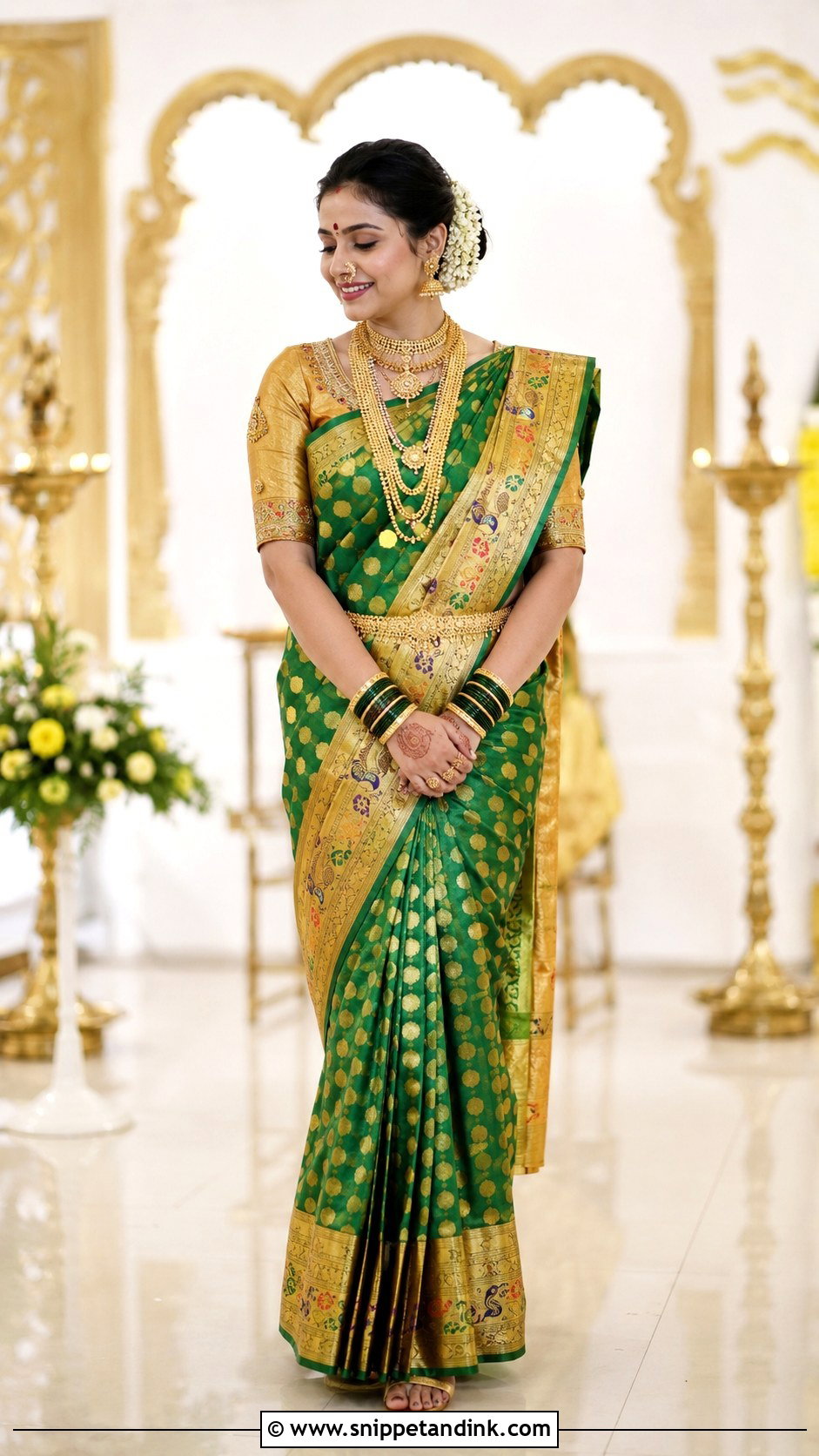
A Maharashtrian Paithani saree bride look centres on the Paithani itself: rich silk, peacock and lotus motifs, and a heavy gold border and pallu. Green, purple, yellow, red and magenta are popular. Many brides wear it in the nauvari drape, nine yards tucked between the legs, which gives freedom to walk and sit but takes a practised draper. Green glass bangles, a nath, a crescent bindi and layered gold jewellery complete the outfit. A neat bun with flowers keeps it traditional. The pallu shows off the most work, so ask the photographer for a shot that captures it.
6. Rajasthani Bridal Lehenga
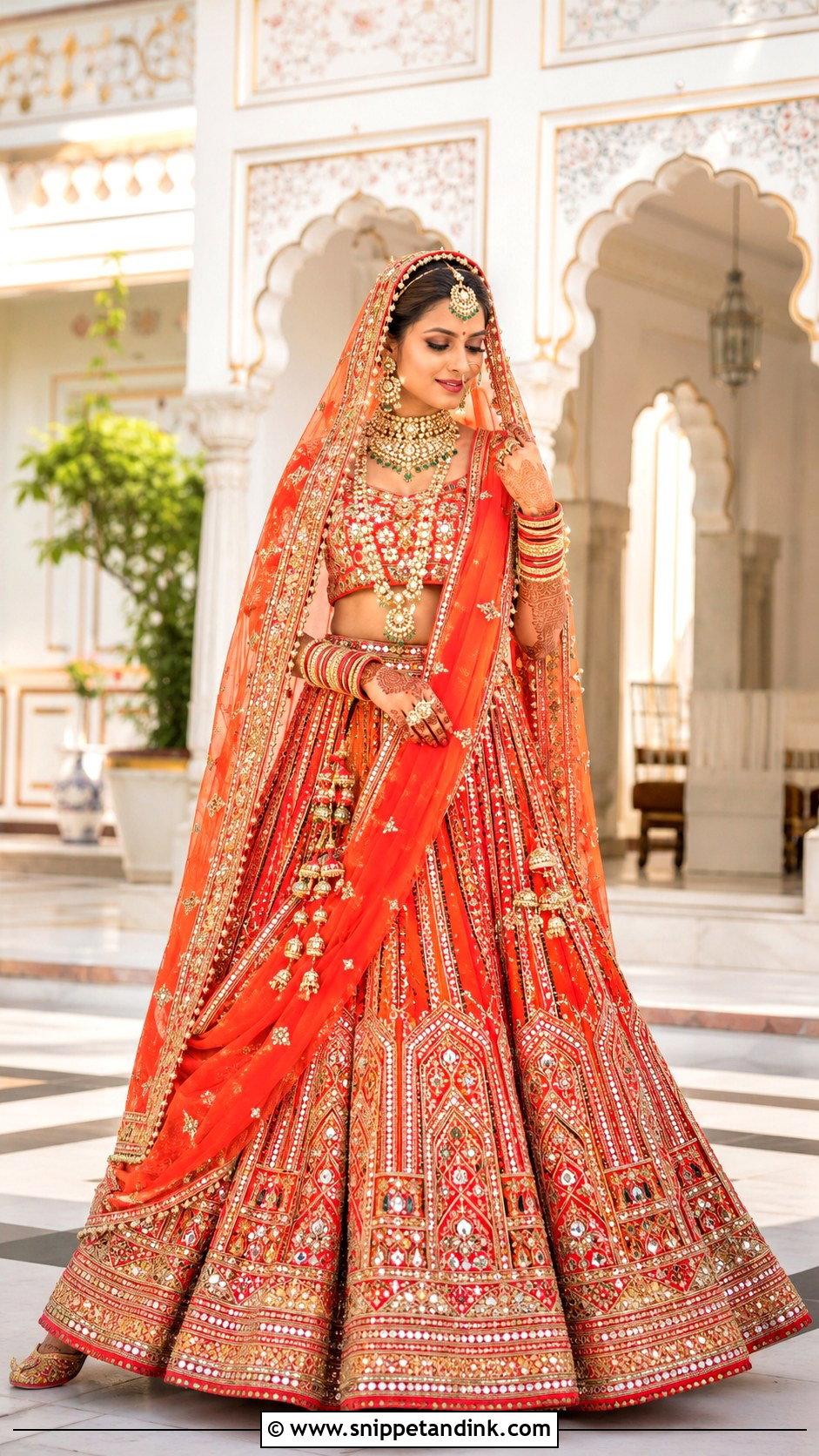
A Rajasthani bridal lehenga brings together mirror work, bandhani, gota patti and bright colour: red, orange, fuchsia, yellow or deep green. The dupatta goes over the head as a ghoonghat, so it needs to be sheer enough to see through. The borla, a round maang tikka, is the signature piece; a choker, long necklace, bangles and anklets follow. I’d suggest juttis or low block heels, since Rajasthani skirts are often very full and you need to feel the ground. Middle-parted hair in a bun keeps the borla sitting straight.
7. Gujarati Panetar Saree Bride
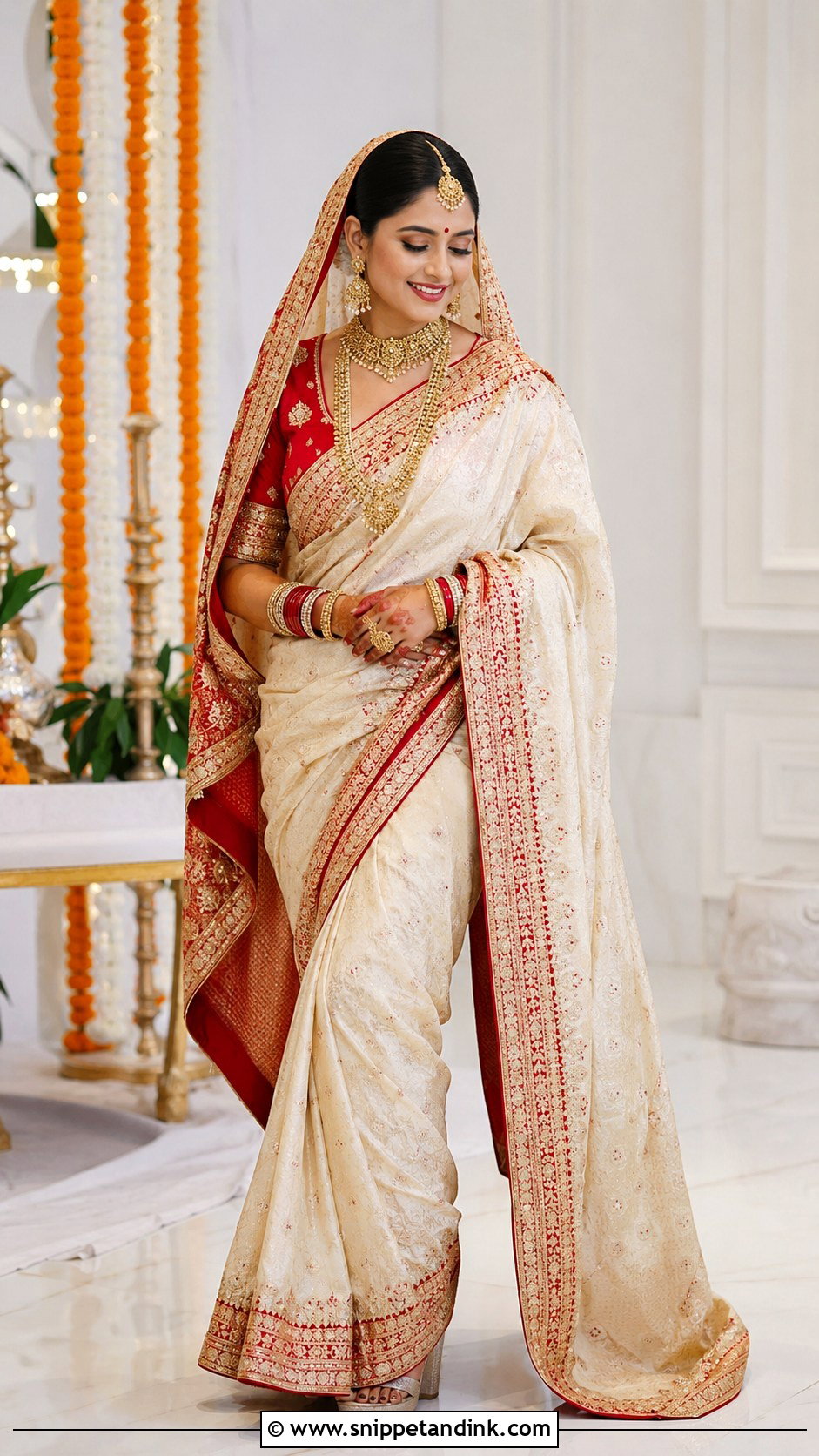
The Panetar is a white or ivory saree with a red border, traditionally given to a Gujarati bride by her maternal uncle and worn for the wedding ceremony. Some brides later change into a red gharchola from their in-laws. Pair the Panetar with a red blouse, traditional jewellery, bangles and a maang tikka, and drape the pallu over the head in the Gujarati seedha-pallu style, with the pallu brought to the front. Gold sandals or wedges keep it comfortable. White silk shows every mark, so I keep a stain pen in my kit for any sindoor or haldi that lands on it.
8. Pakistani Bridal Sharara
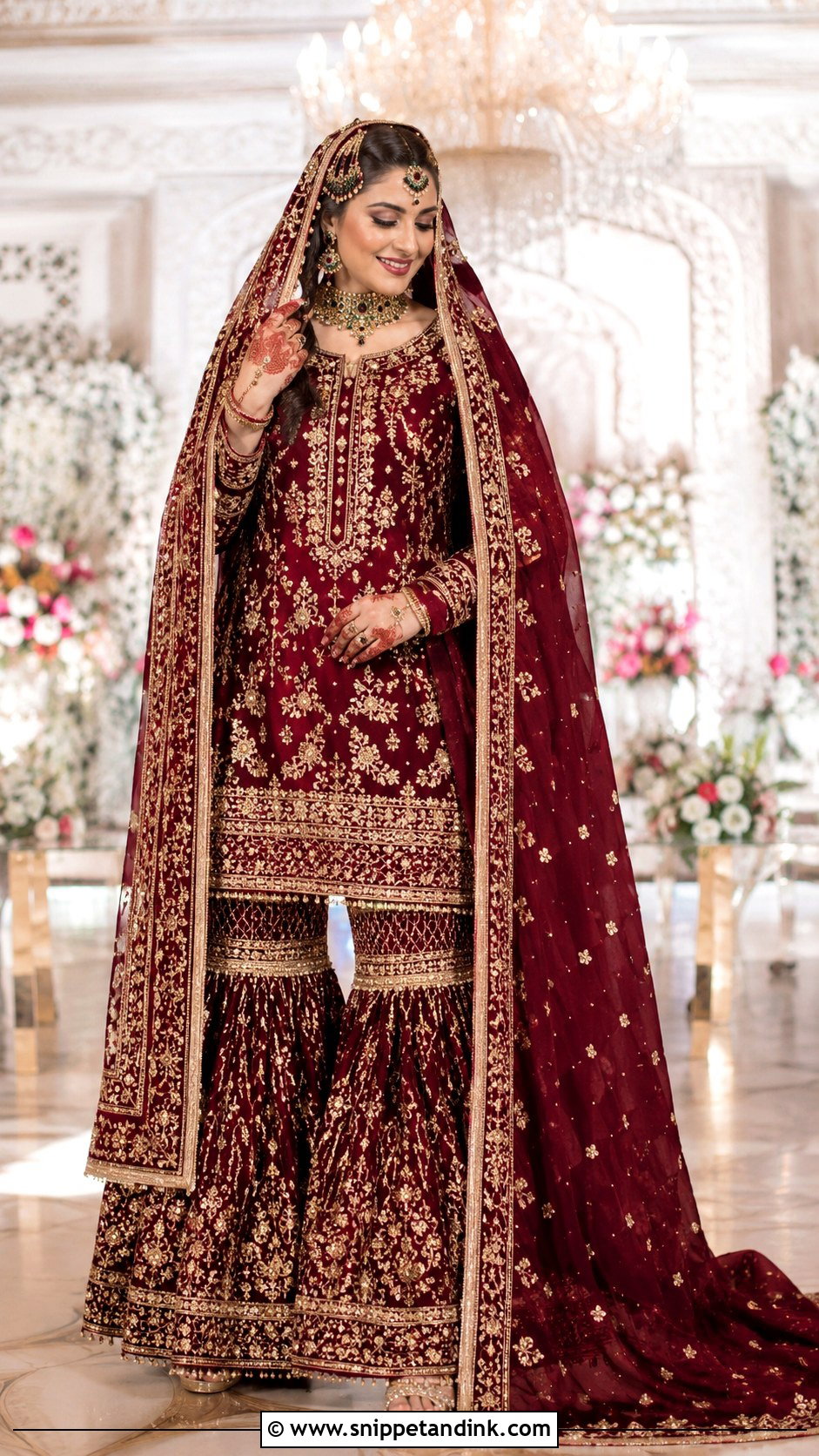
The Pakistani bridal sharara is all about the wide, flared pants and a dupatta heavy with handwork. A short or mid-length kameez sits over the top. Deep red, maroon and rust are classic; gold, blush and champagne are more recent. Dabka, tilla, gota, pearls and sequins each give a different finish. The dupatta is often the heaviest piece, so I pin it at three points minimum. A passa, maang tikka, choker, long necklace and bangles complete it. Pointed khussas are easier than heels under that much fabric, and a soft bun or side-parted waves finish it.
9. Pakistani Bridal Gharara
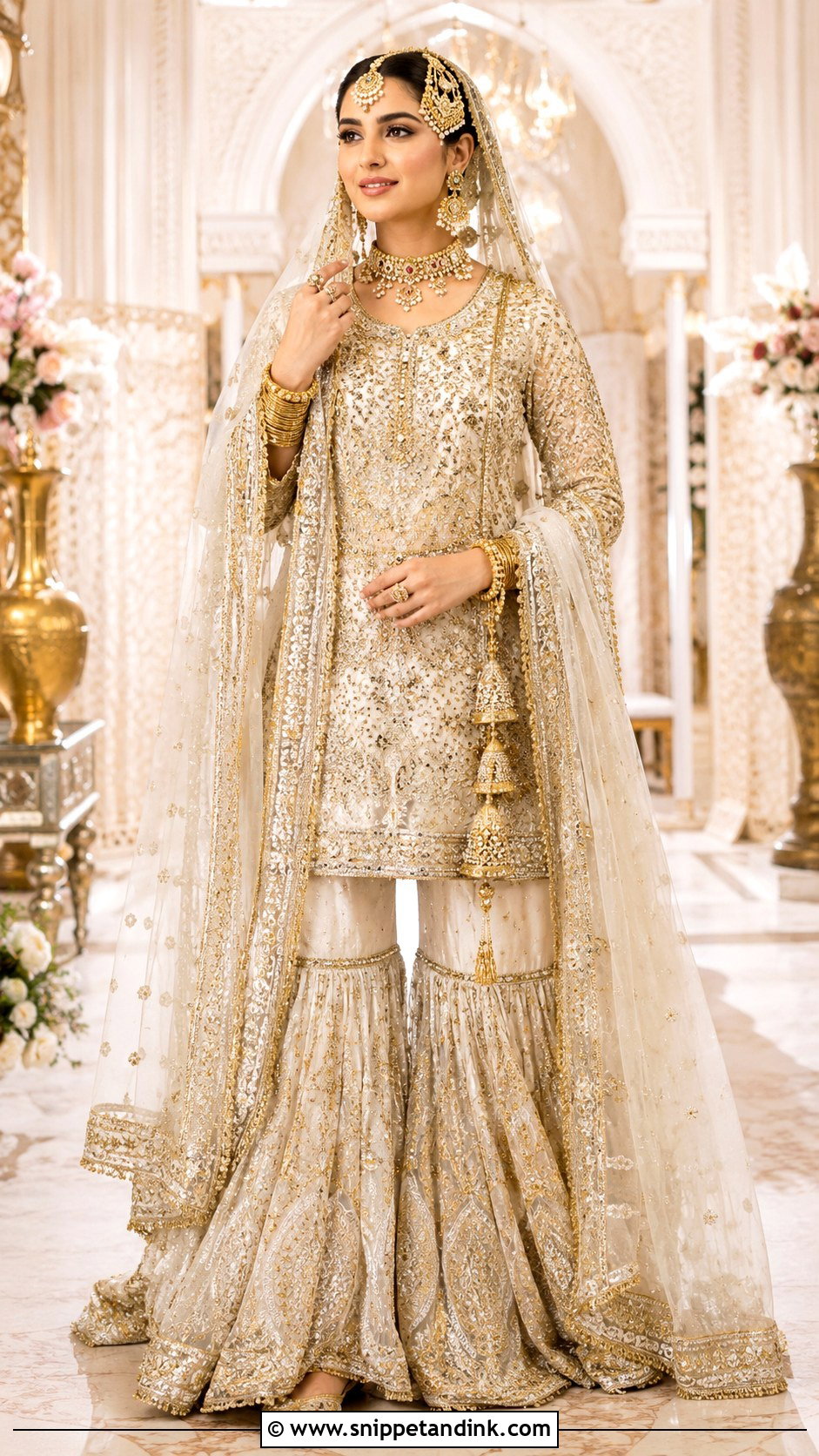
The gharara is fitted to the knee, then flares out, with the knee joint often covered by a band of embroidery or gota. It’s an older, more vintage silhouette than the sharara. Pair it with a short kameez and a dupatta over the head or shoulders. Jamawar, tissue, silk and organza give depth. Deep red and maroon are traditional; ivory, gold and soft pink feel lighter. The knee joint needs to sit exactly at your knee, which off-the-rack pieces often get wrong. A passa, jhumkas, layered necklaces and embroidered khussas complete it.
10. Anarkali Bridal Suit
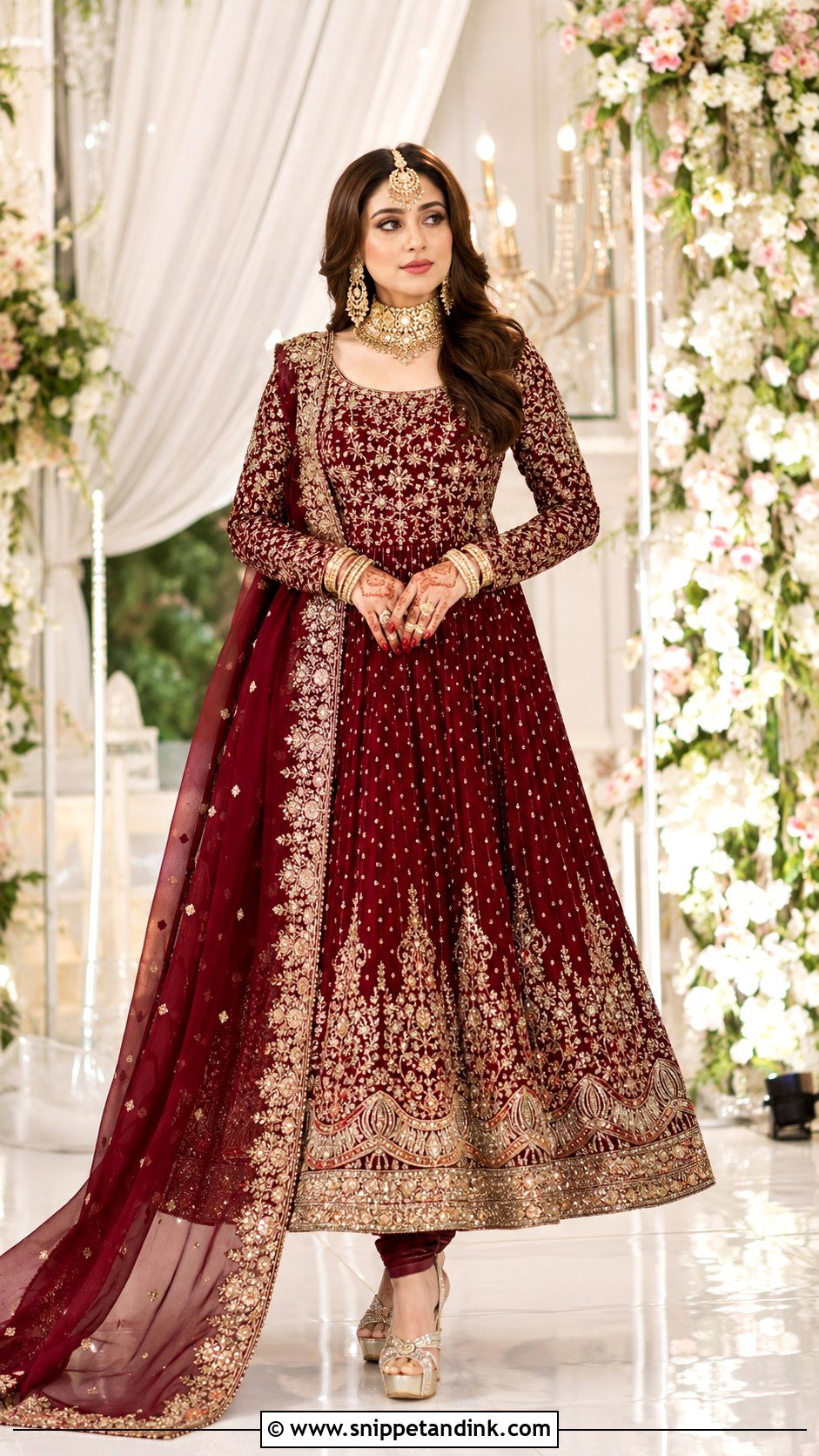
An Anarkali is the easiest traditional outfit to move in. The long flared kurta looks like a gown but lets you walk freely. For bridal wear, heavy embroidery on silk, velvet, net or georgette gives the right finish. Churidar pants and an embellished dupatta complete it. Red, wine, emerald, ivory, blush and gold all suit a ceremony. I’d make sure the flare starts at your natural waist or just under the bust, because that’s what makes it flattering on so many figures. A choker, long necklace and maang tikka finish it.
11. Ivory Bridal Lehenga
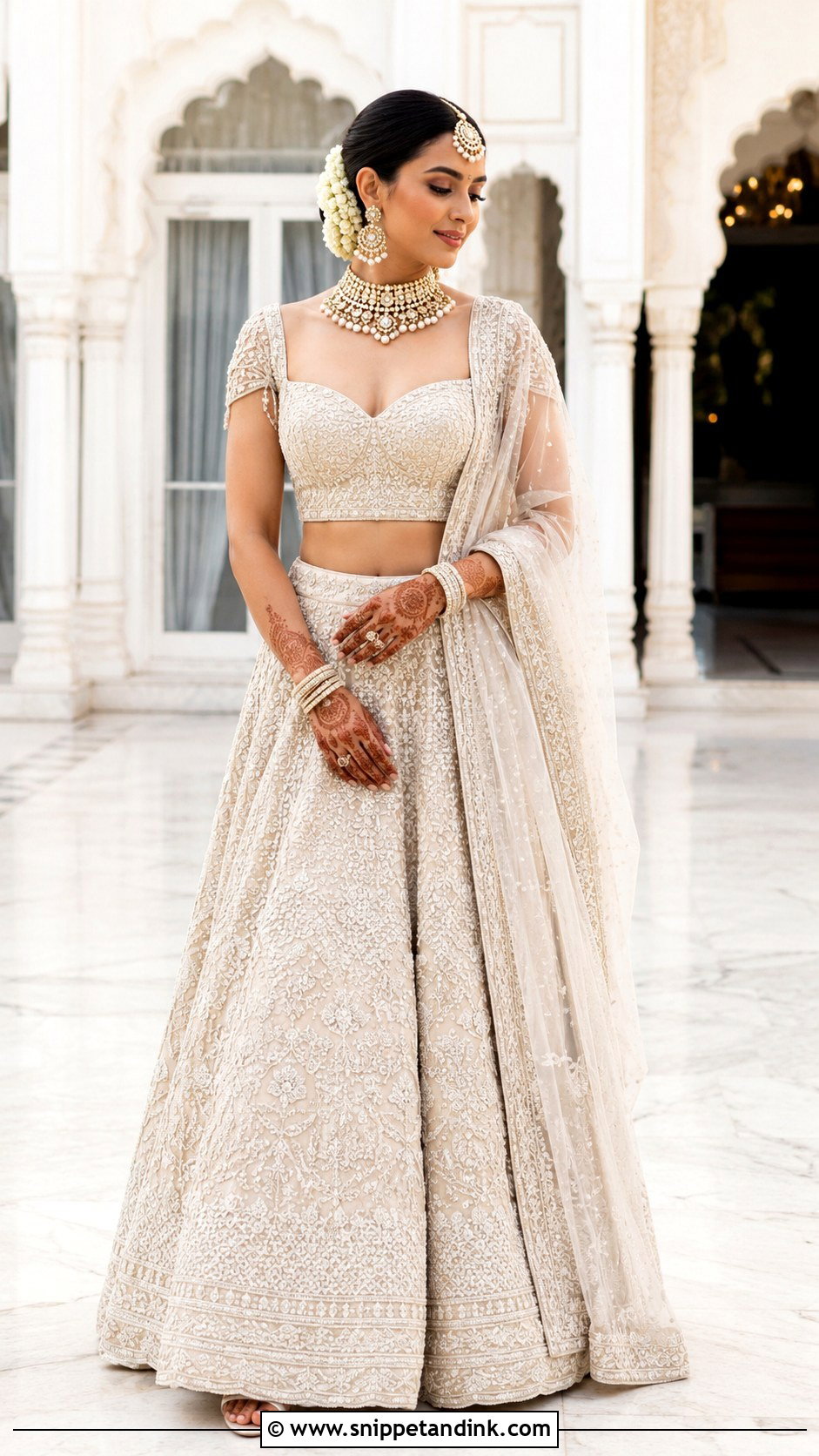
Ivory lets the jewellery lead. With a soft base of ivory, cream or pearl, and gold, silver or champagne threadwork, you can wear far heavier polki, kundan or gold pieces than you could on red. A structured blouse and a sheer dupatta keep it refined. Ivory is a real colour decision in some families, as white can signal mourning in parts of South Asia, so I’d raise it with your parents early. Nude or ivory heels, a sleek bun or soft waves, and floral hair accessories suit it.
12. Pastel Bridal Lehenga
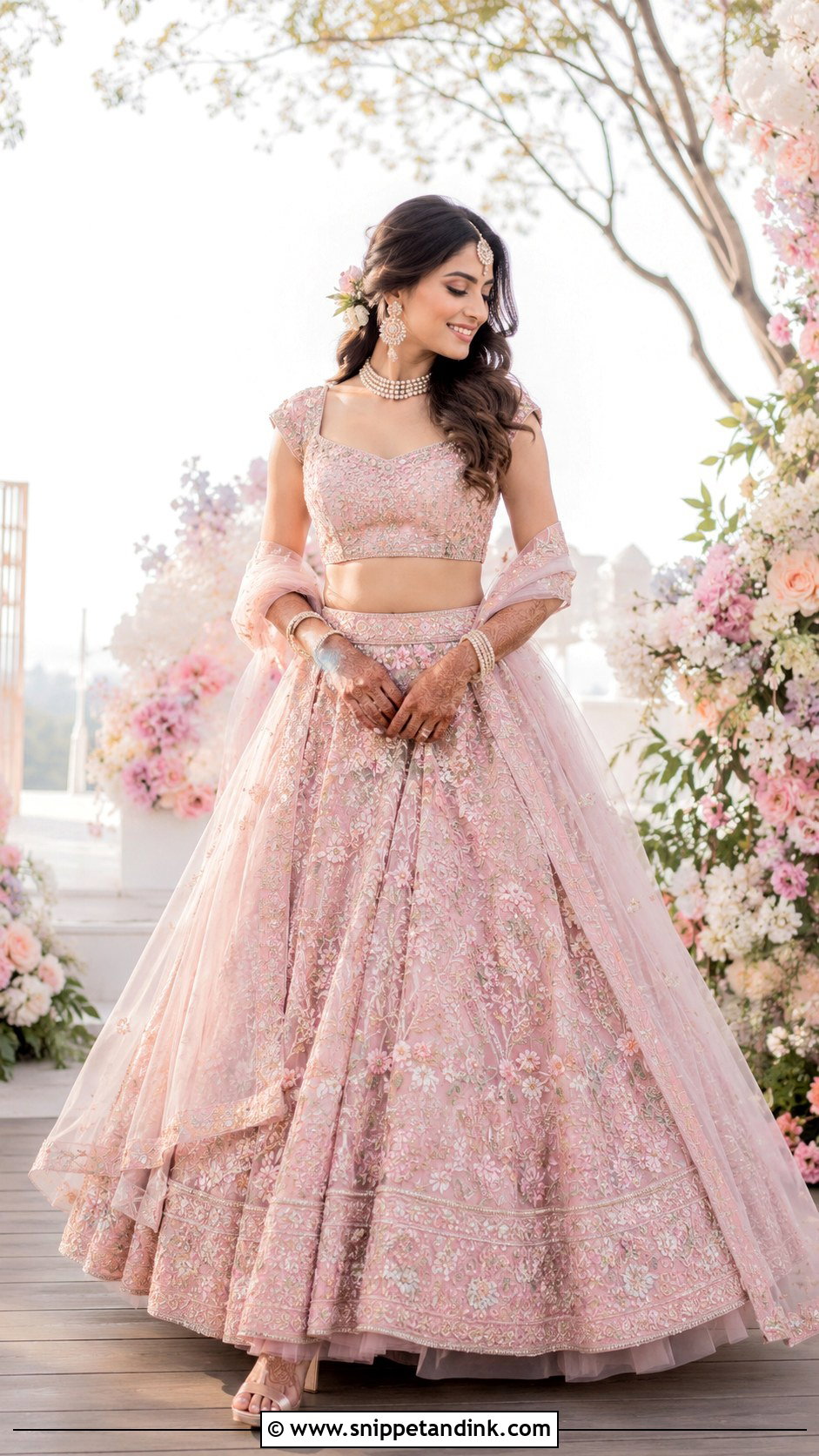
Pastels suit daytime ceremonies and outdoor weddings, where natural light flatters soft colour. Blush, mint, powder blue, lavender, peach and champagne are popular. Delicate embroidery, mirror work, pearls or floral motifs keep a pastel lehenga bridal; without them, it can look like a guest outfit. Diamond-style pieces, pearls, kundan or rose gold suit pastel better than heavy yellow gold. Under strong evening lights, pastels can wash out, so think about when the main photos will be taken. Fresh skin, soft eyes and a pink or nude lip complete it.
13. Velvet Bridal Lehenga
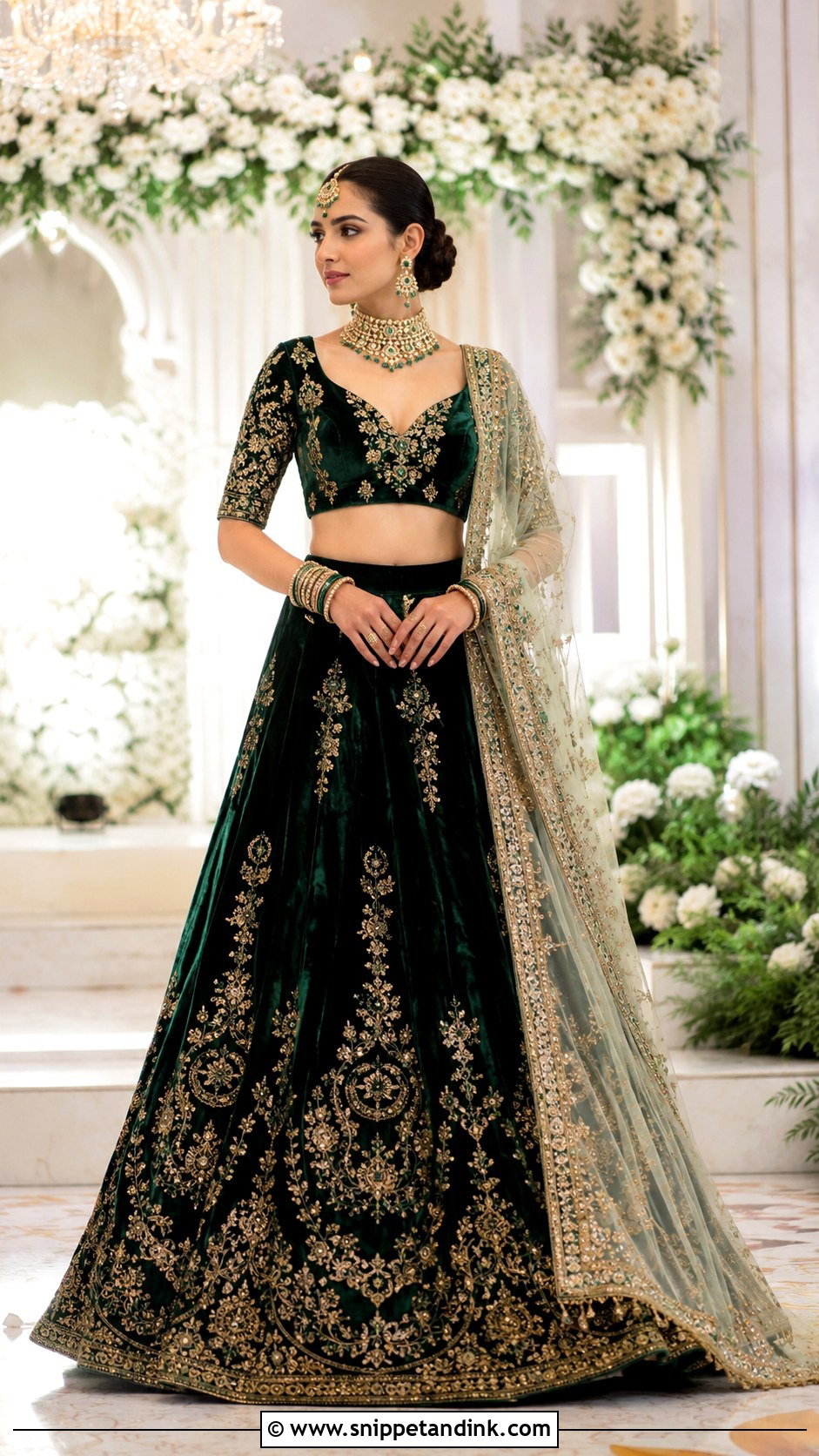
Velvet belongs at winter evening ceremonies. Deep maroon, emerald, navy, plum and blackened red are richest in it, and gold zardozi or antique work shows up well against the pile. Velvet lehengas are heavy and warm, so a lighter net or organza dupatta keeps the outfit from feeling like a blanket. The pile crushes where you sit, which shows as lighter patches in flash photos. Standing portraits help. Gold, kundan or polki jewellery suits the depth of colour, and block heels support the weight of the skirt.
14. Gold Bridal Saree
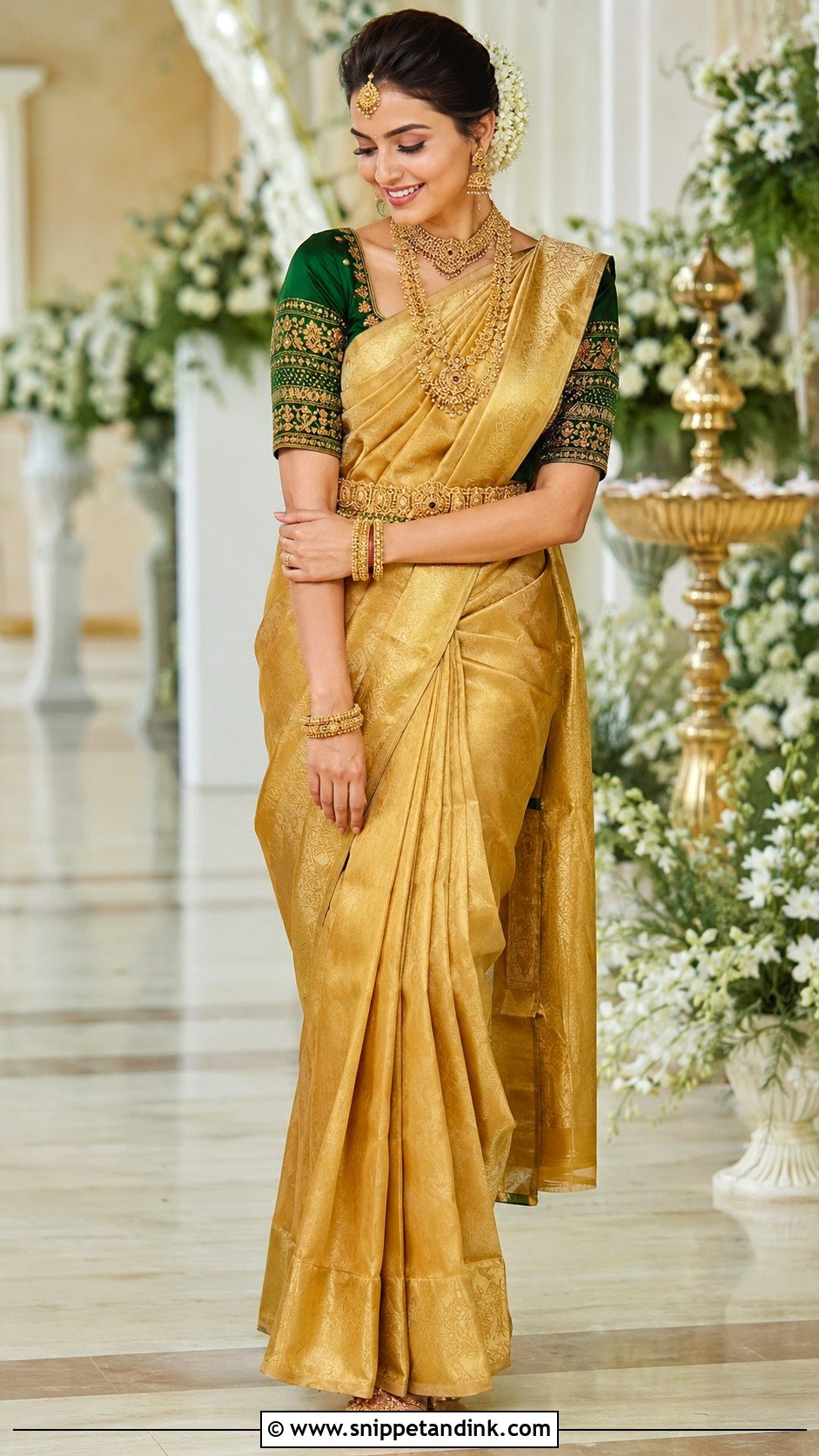
A gold saree reflects light around the face and looks bright in any setting. Silk, tissue and brocade all work; tissue is the lightest and most see-through. Wear it monochrome with a gold blouse or add contrast with red, green, maroon or ivory. Temple jewellery, kundan, pearls and antique gold each change the mood. A waist belt holds the drape. One practical note: tissue creases easily and doesn’t steam out as well as silk, so it needs to be hung, not folded, before the day.

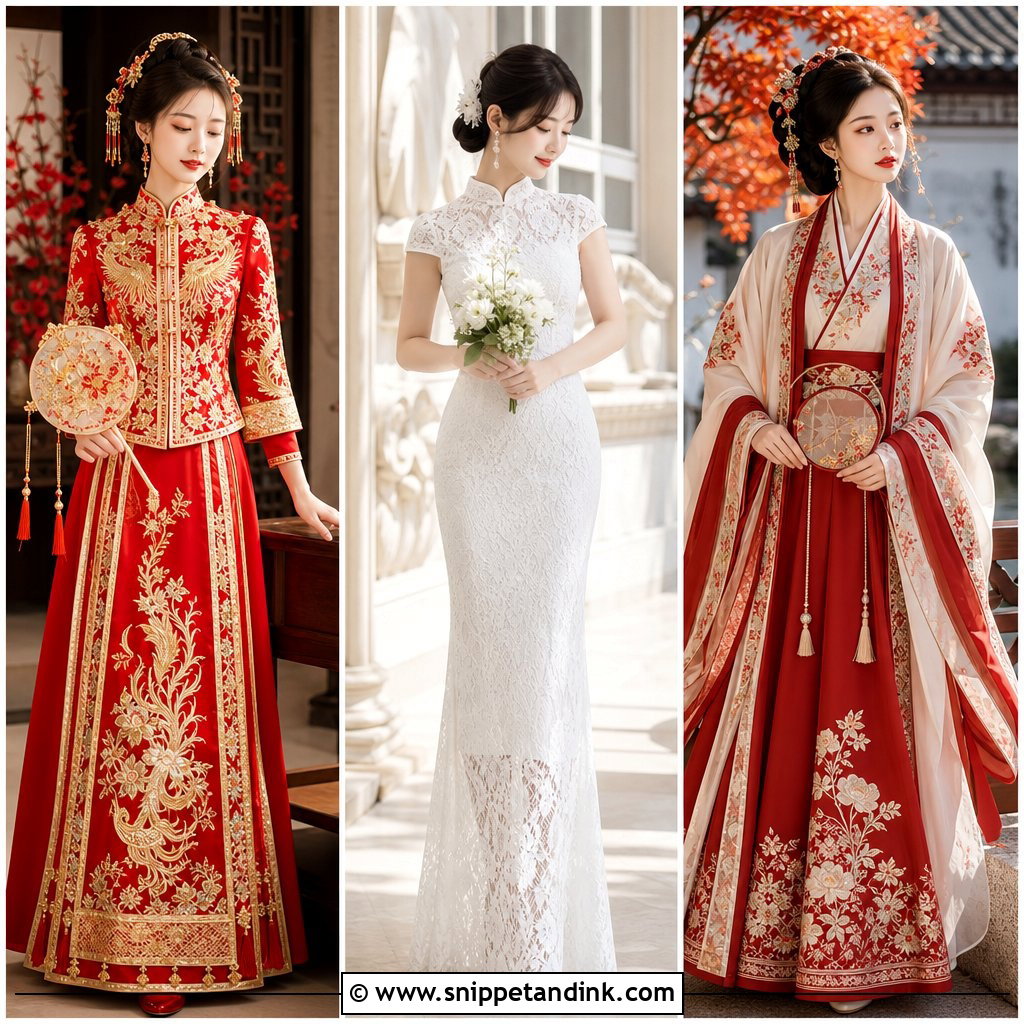
15. Qipao Bridal Dress
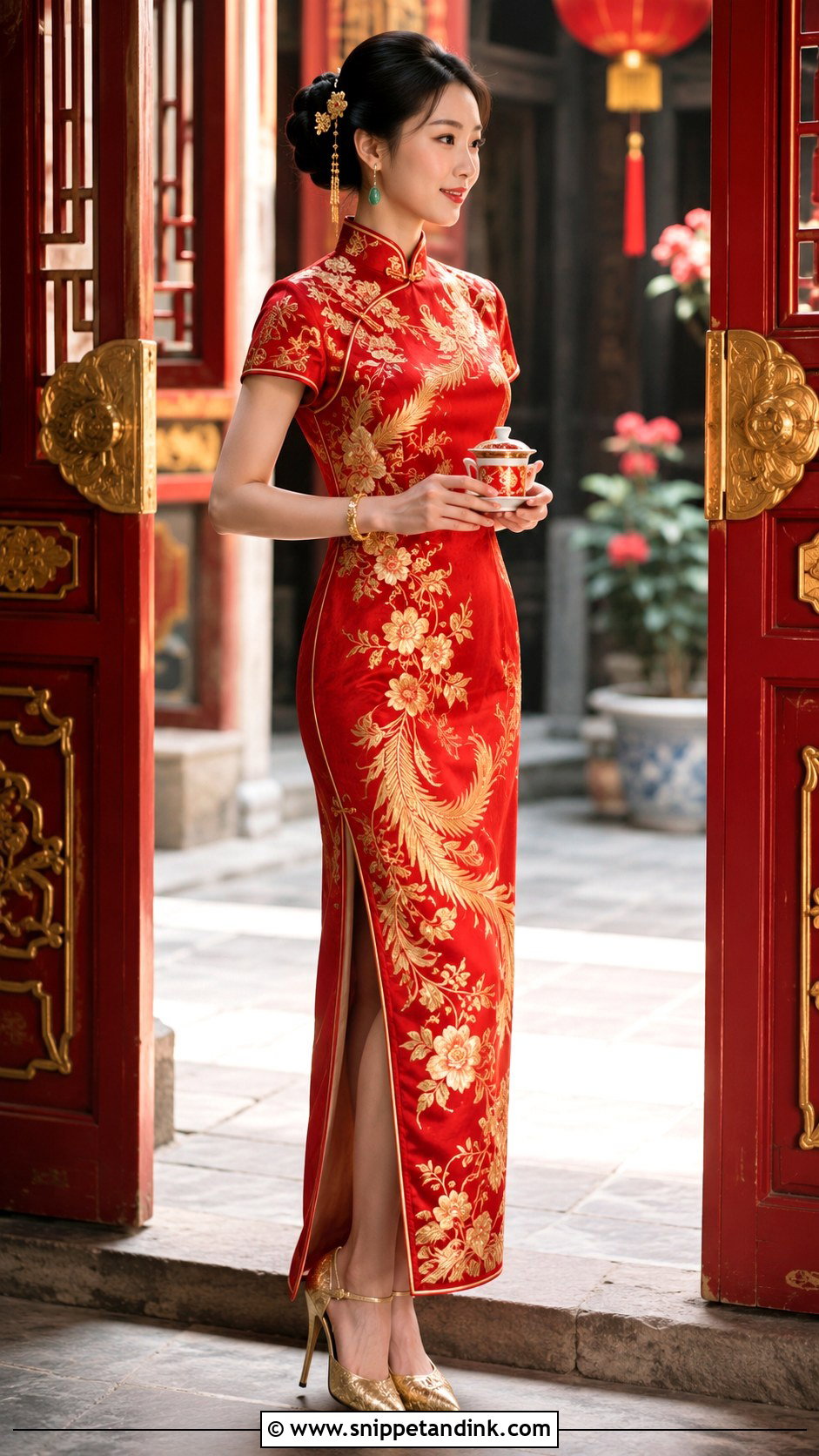
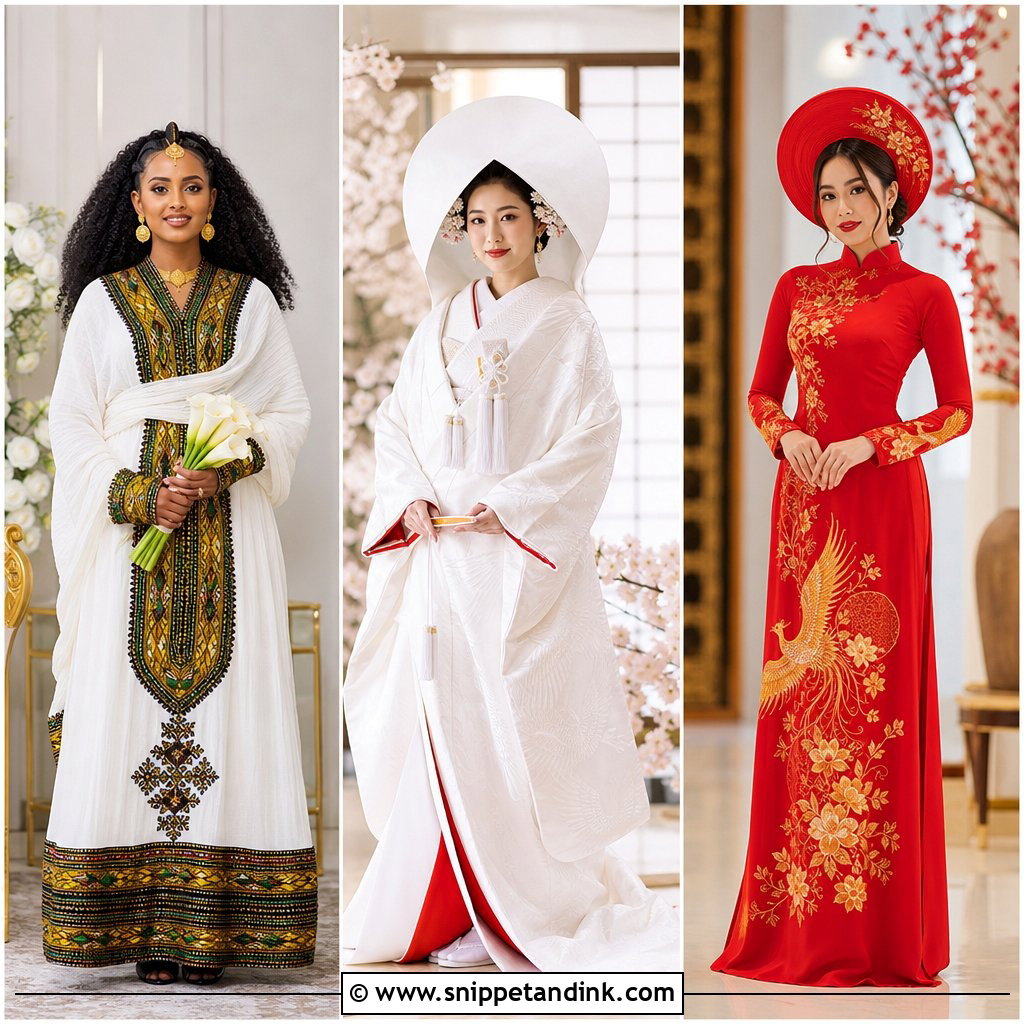
The qipao is often worn for the tea ceremony or as a reception change rather than the main ceremony. Red is the classic colour, with gold embroidery, phoenix and dragon motifs, flowers or brocade. A traditional qipao has a high mandarin collar, a fitted cut and side slits. Because it’s so close-fitting, the slits need to be high enough to kneel for the tea ceremony, so practise kneeling in it at the fitting. Gold jewellery, jade earrings and a sleek bun with hairpins suit it.
16. Red Bridal Ao Dai
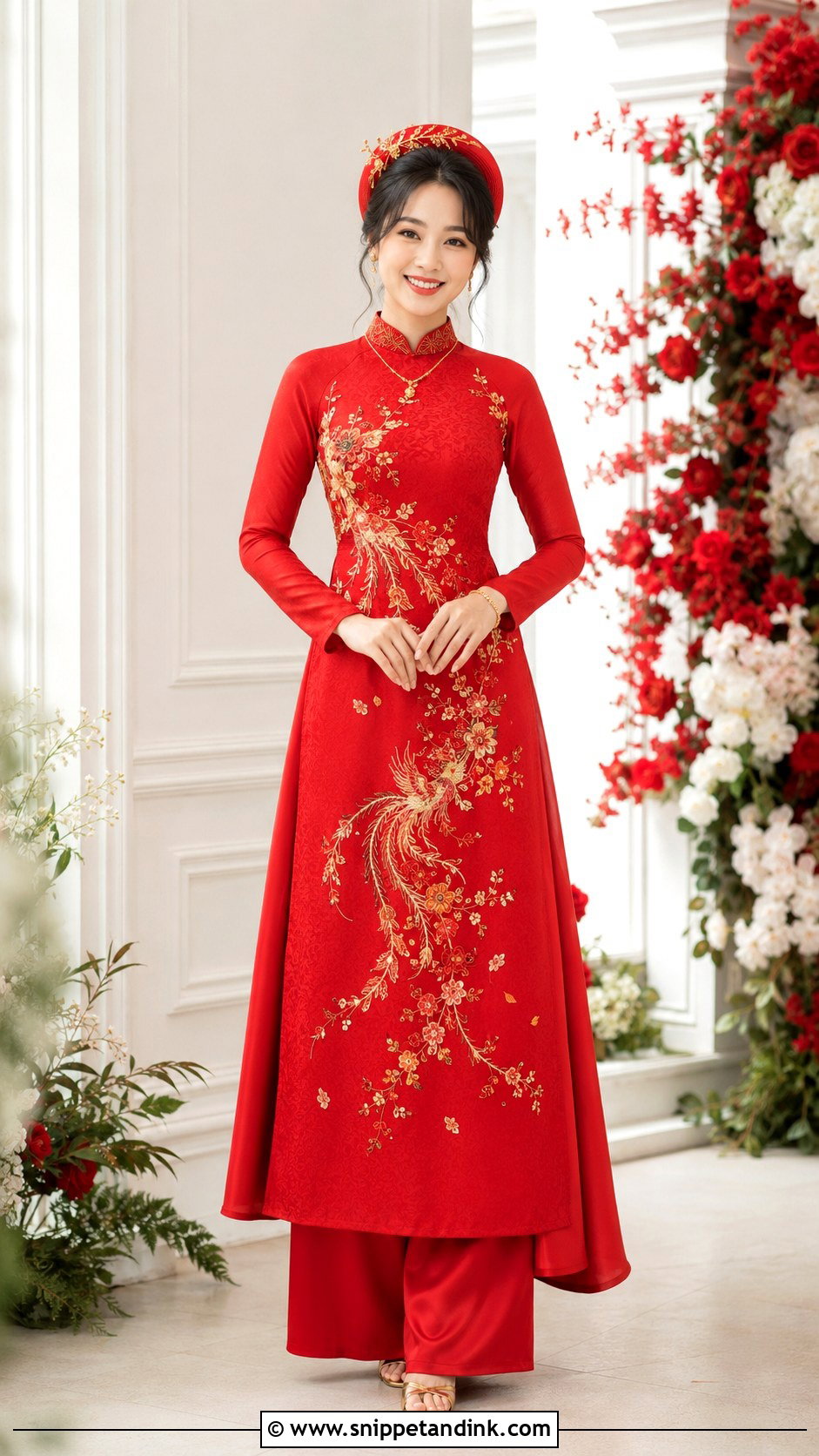
The ao dai is a long fitted tunic split to the waist at the sides, worn over loose trousers. For a Vietnamese wedding, red and gold are classic, and the bride often wears a khan dong, a round traditional headpiece. Ivory, pink and pastel versions are also seen. Embroidered silk, brocade or lace suit it. The fit is close through the bust and waist, so it’s usually tailored to measurements. Matching trousers, gold heels and refined jewellery complete it. The trouser hem should nearly touch the floor in your heels.
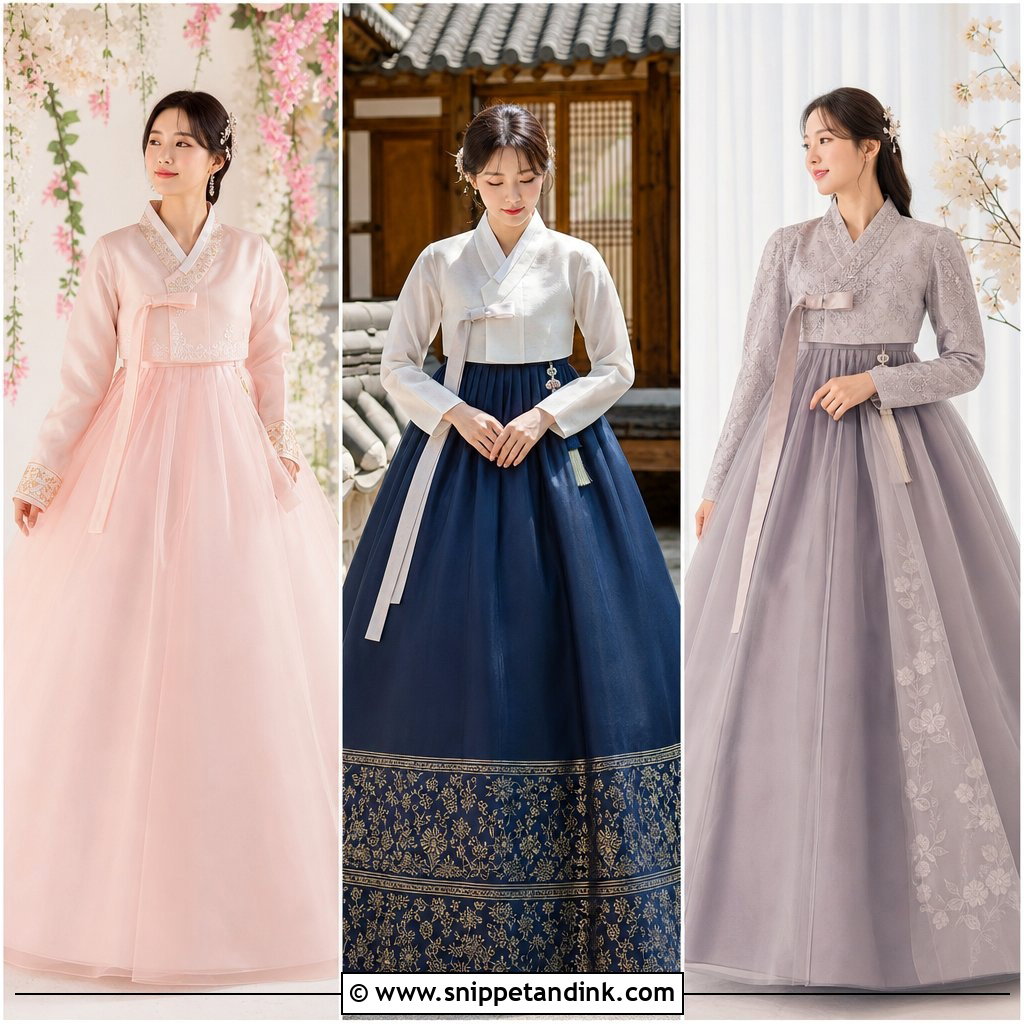
17. Korean Hanbok Bride
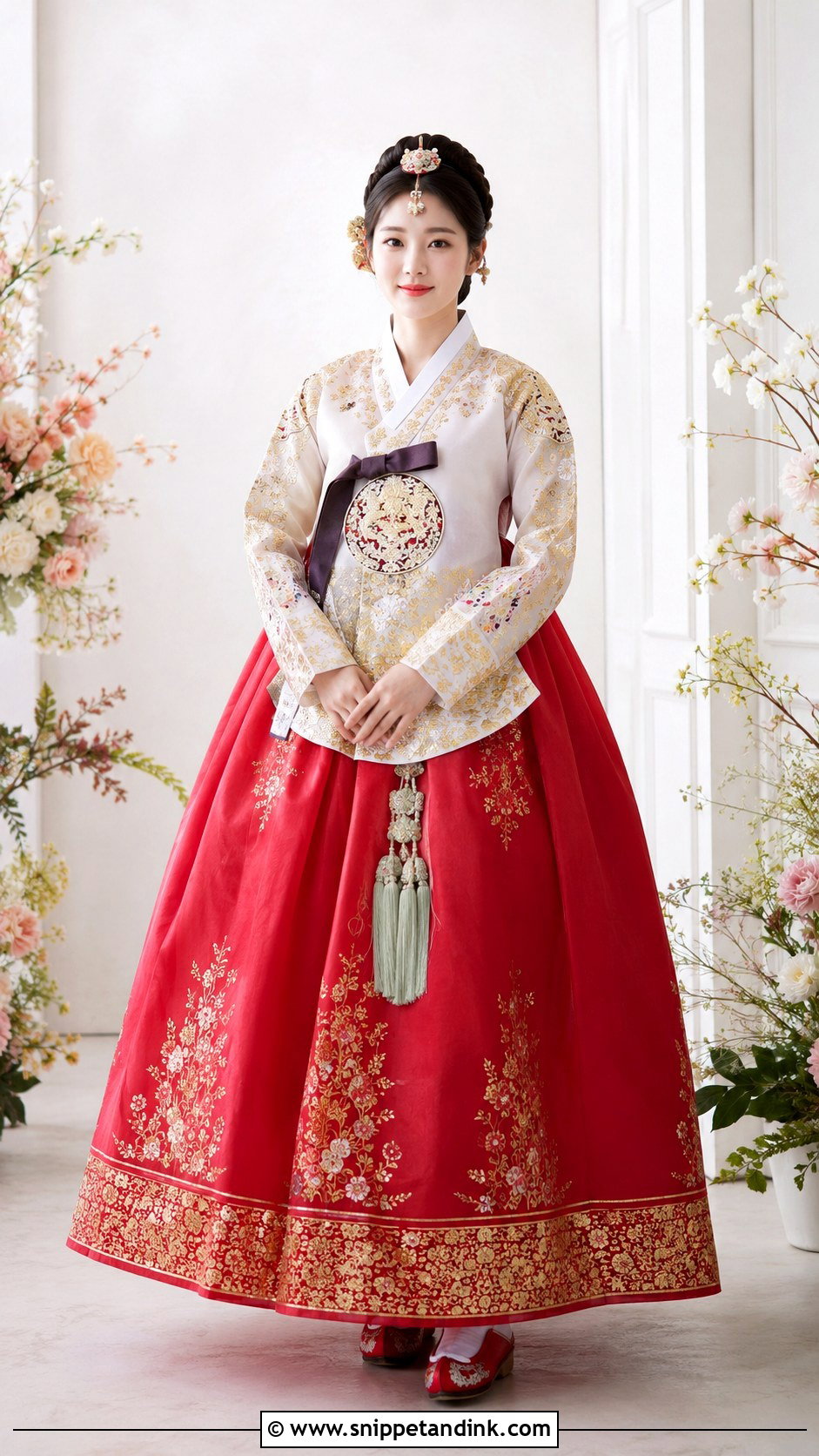
A hanbok has a short jacket called a jeogori and a full, high-waisted skirt called a chima that forms a soft bell. For the traditional pyebaek ceremony, brides often wear an even more formal wonsam or hwarot, a ceremonial robe, over it. Red, blue, pink, green and yellow appear, with embroidery. Keep jewellery minimal; the silhouette does the work. A neat updo or low bun suits it, sometimes with a ceremonial headpiece. The chima is wrapped high under the bust, so it’s comfortable to wear and easy to sit and bow in.
18. Japanese Shiromuku Kimono Bride
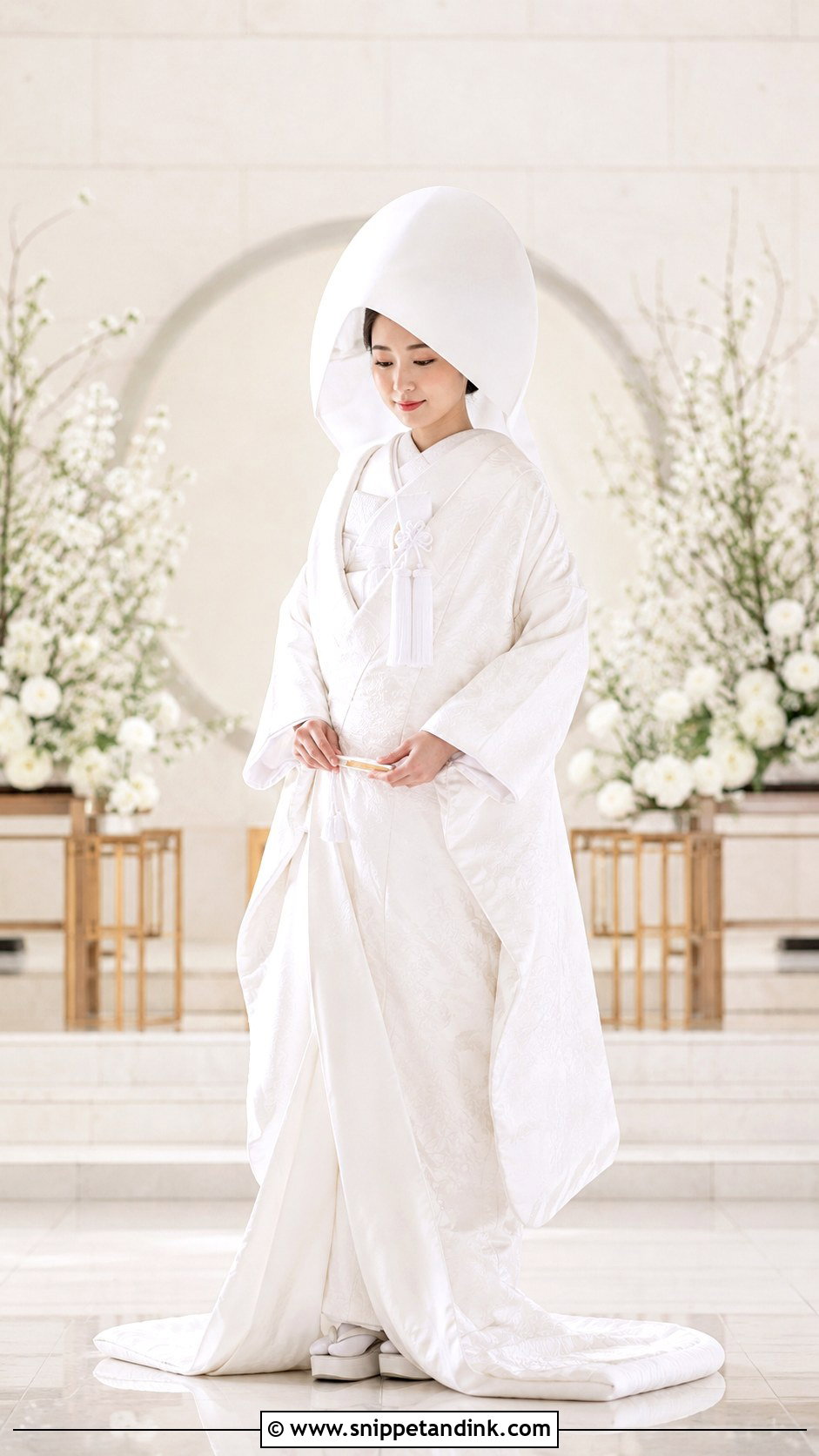
A Japanese shiromuku kimono bride look is all white: layered kimono, an obi, traditional footwear, and either a wataboshi hood or a tsunokakushi headpiece. The white symbolises purity and a readiness to take on the new family. Dressing a shiromuku is a specialist job with several layers and an obi tied tightly, and it takes a professional dresser. Movement is limited, so plan for small steps and help with stairs. Makeup is polished and soft, with hair set to fit under the headpiece.
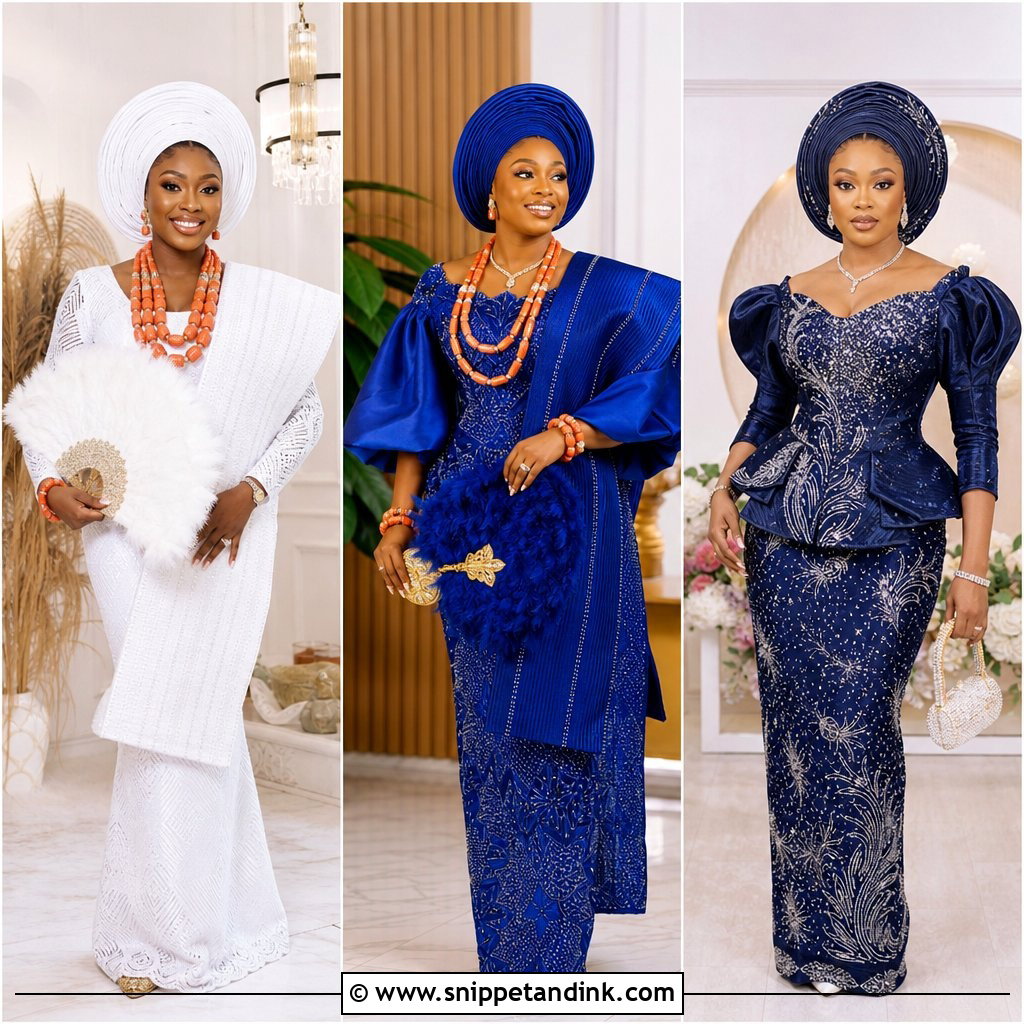
19. Nigerian Aso Oke Bride
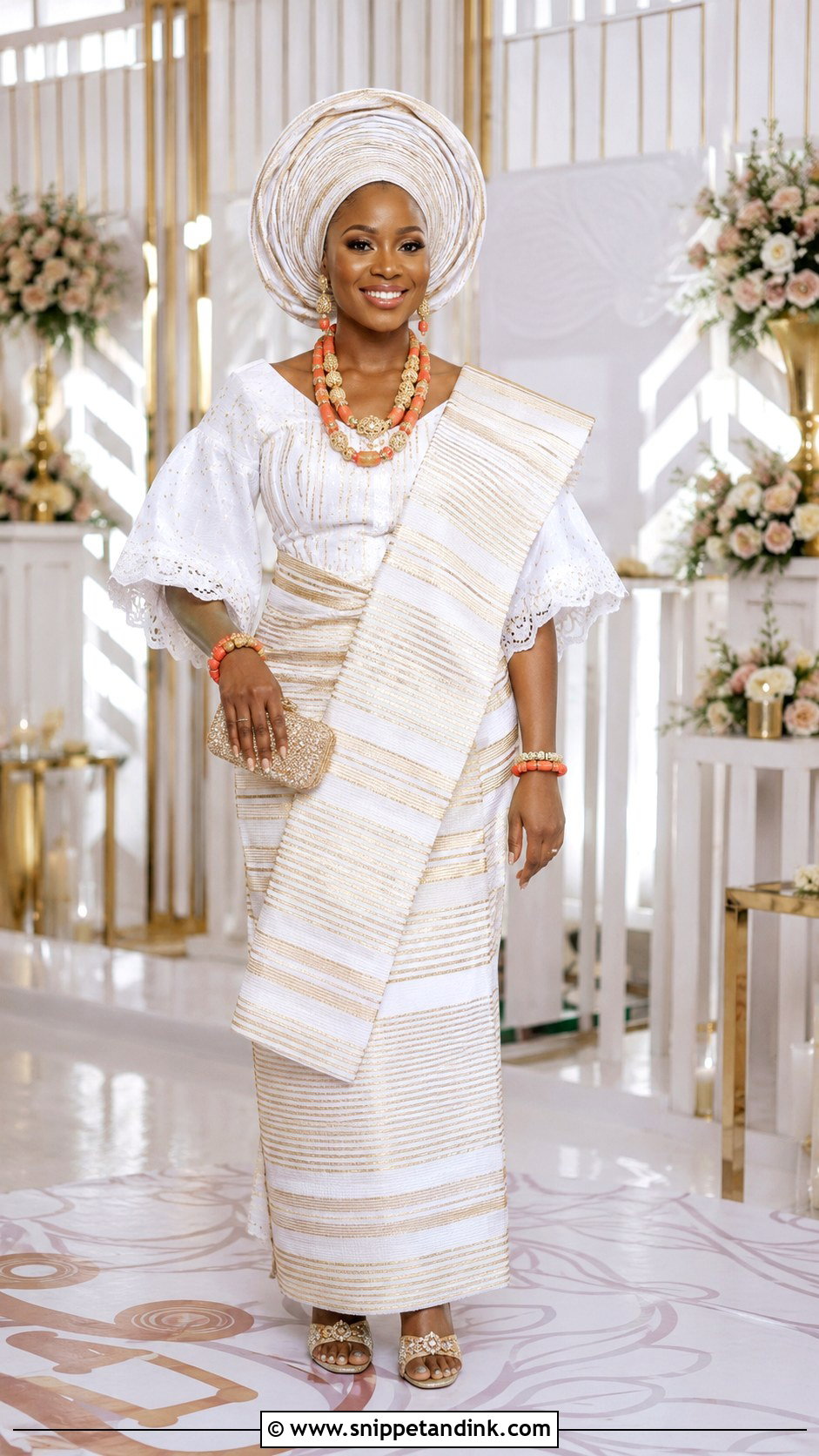
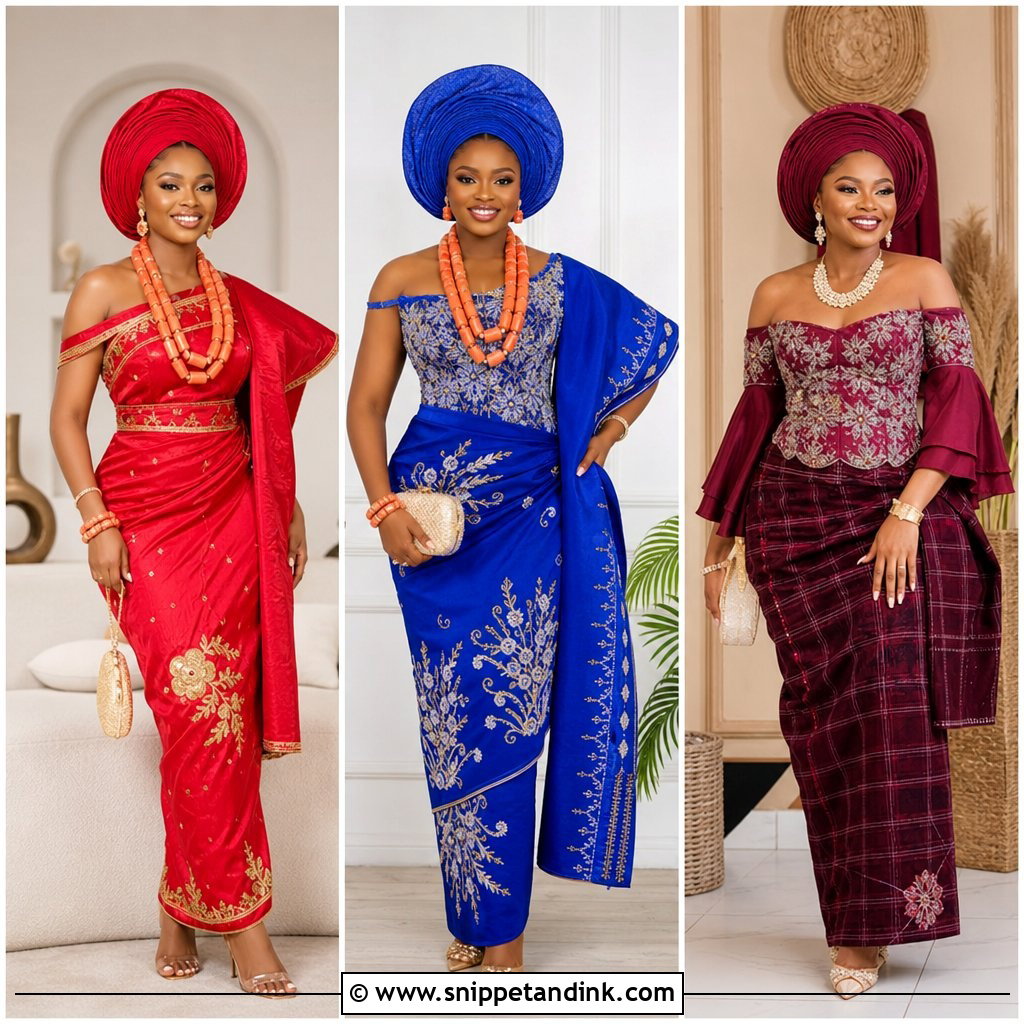
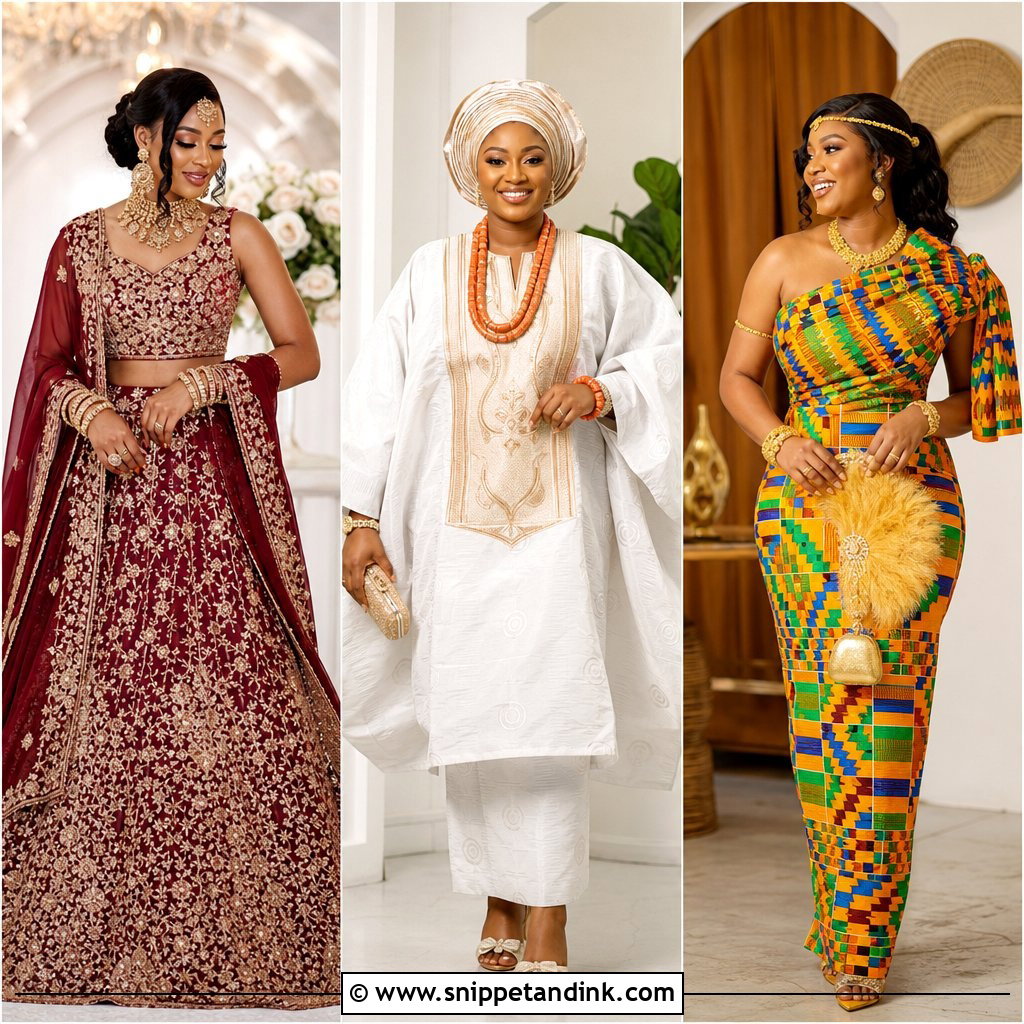
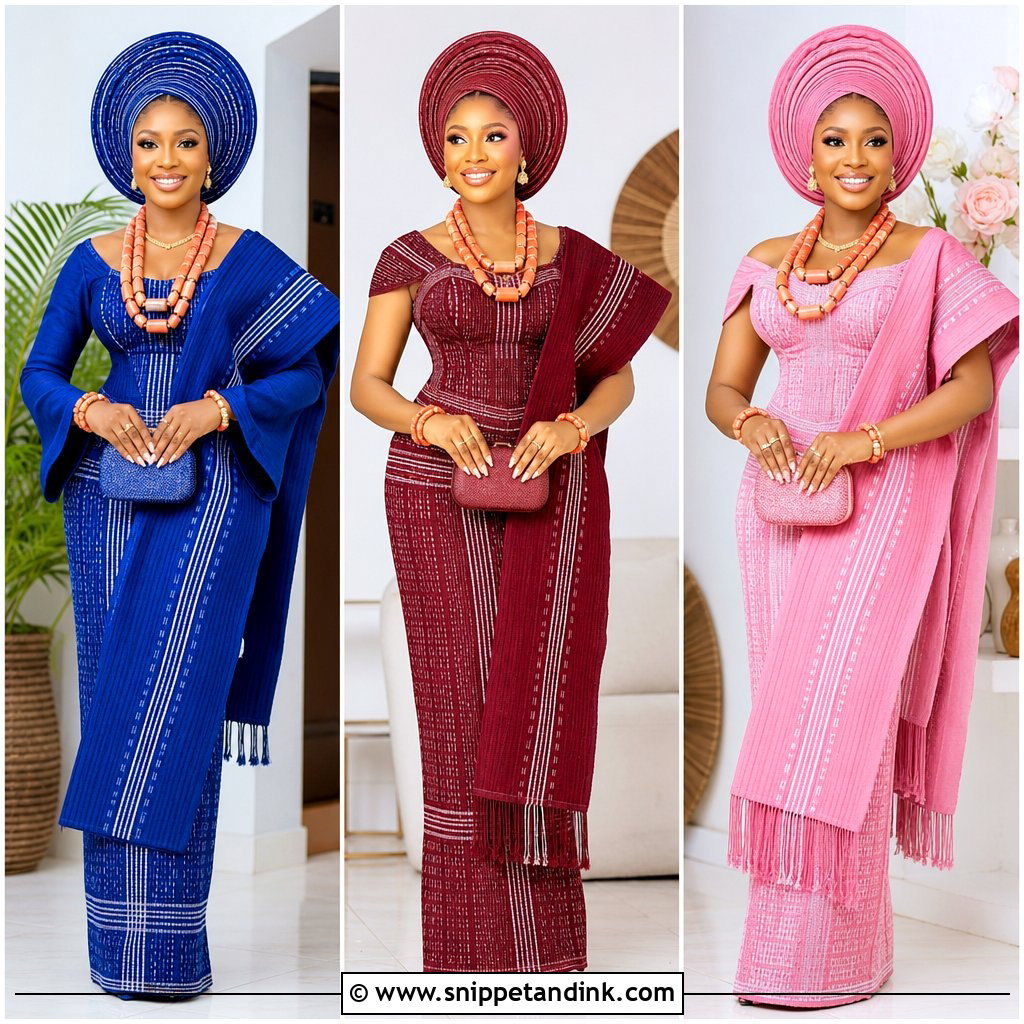
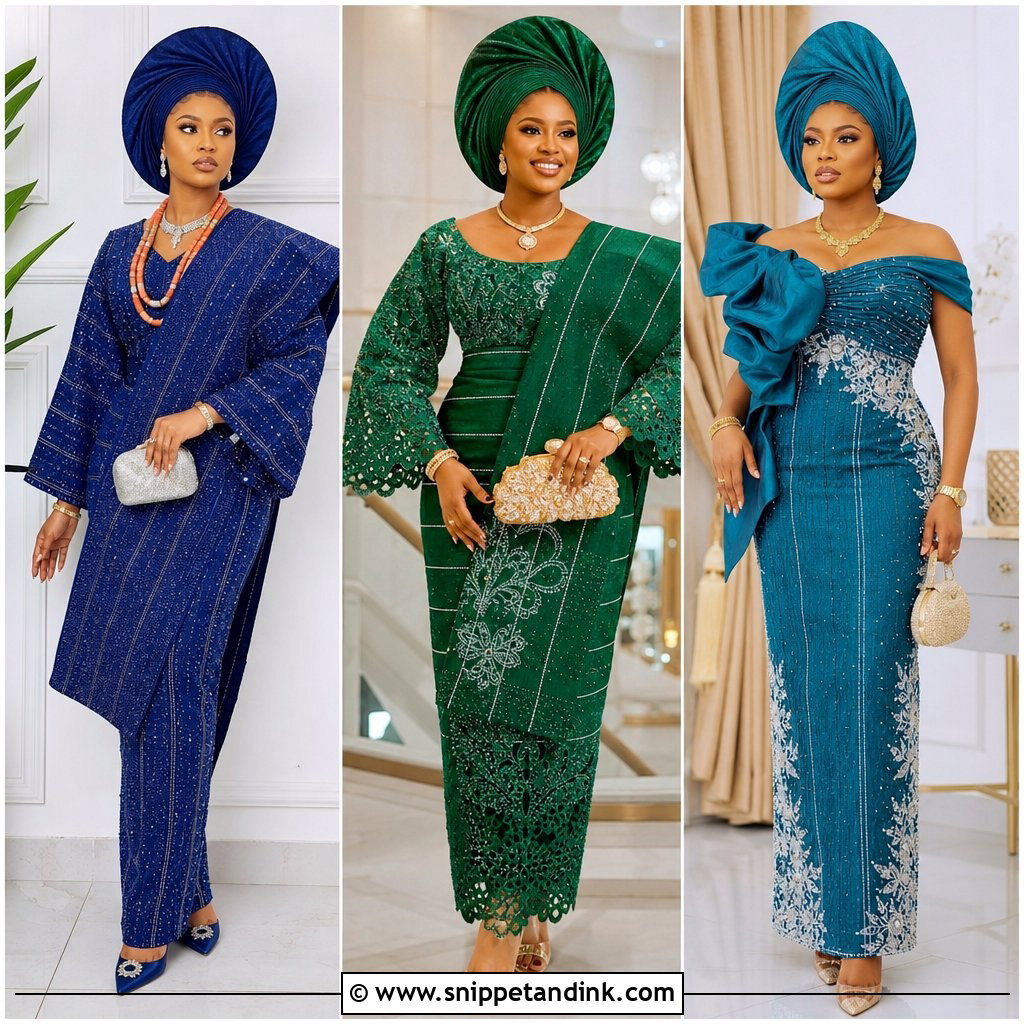
A Nigerian Aso Oke bride look is built from hand-woven Aso Oke cloth: a fitted blouse, a wrapper or skirt, a gele headwrap and an ipele draped over the shoulder. White, gold, coral, emerald, burgundy and royal blue are popular. Aso Oke is stiff, which is why a gele made from it holds such sculptural shapes; it also means the wrapper needs careful tying so it doesn’t stand away from the hips. Coral beads, gold jewellery and statement earrings complete it. Book a gele tier who’s practised on Aso Oke, because the stiffness makes it harder to shape.
20. Moroccan Bridal Kaftan
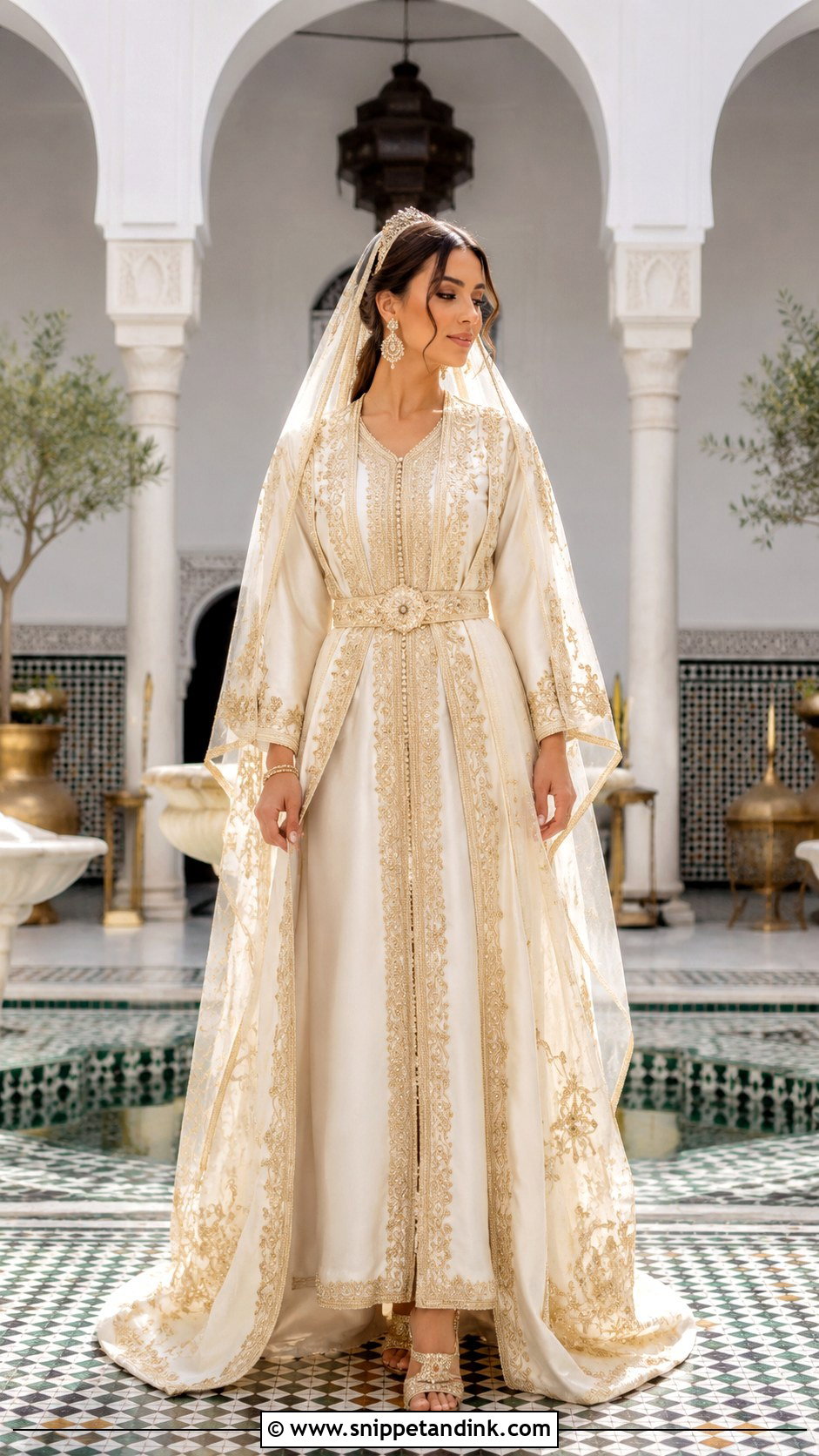
A Moroccan bridal kaftan is long, flowing and heavily decorated with embroidery, sfifa trim and a structured mdamma belt at the waist. White, gold, emerald, royal blue, burgundy and pastels are popular. Many Moroccan brides change several times during the night, so the kaftan is one of a series rather than the only outfit. It skims the body instead of clinging, which makes it comfortable for long celebrations. Embellished heels, statement earrings and bracelets suit it, and a matching veil or cape adds drama for the entrance.
21. Turkish Bindalli Bride
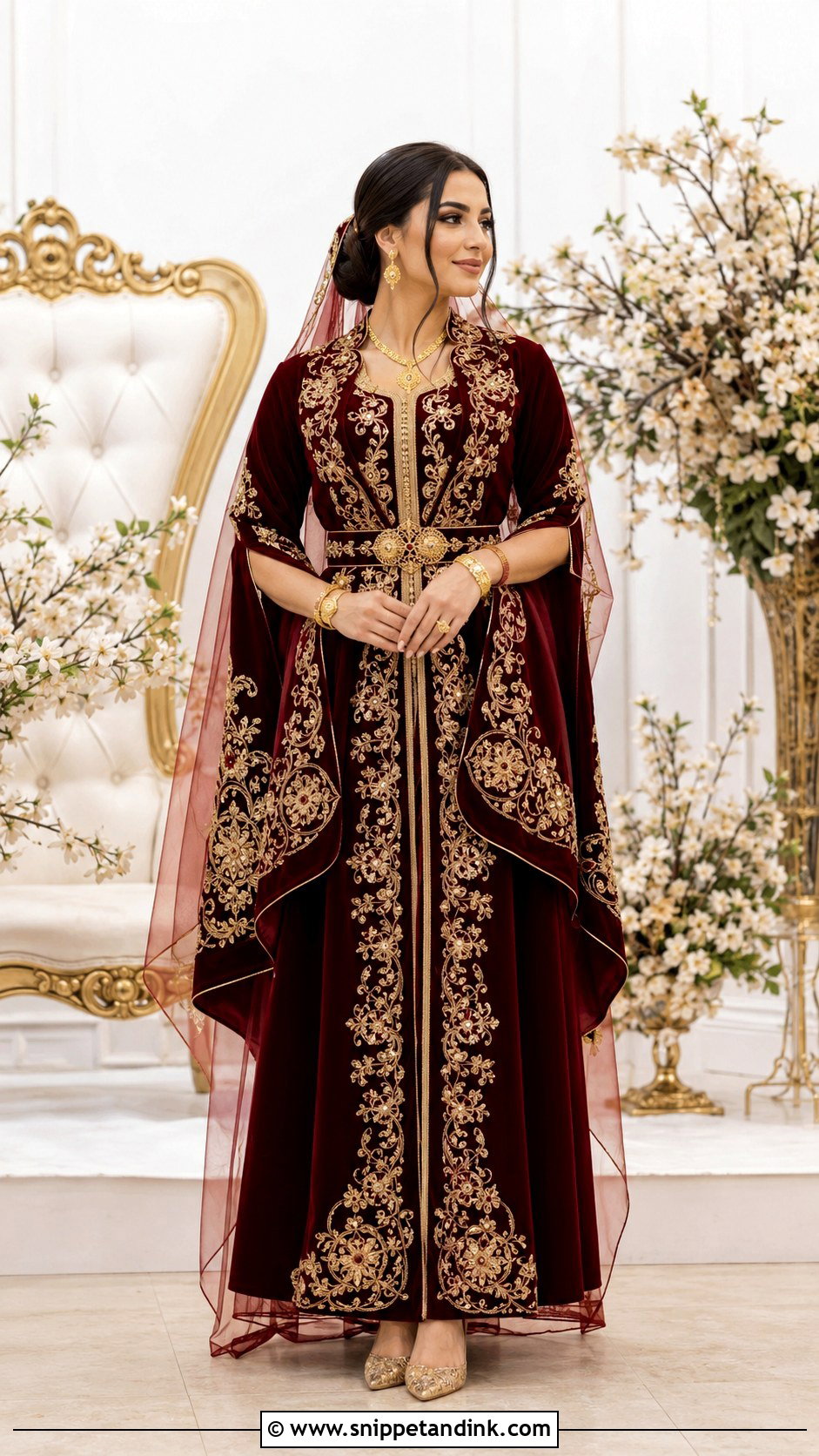
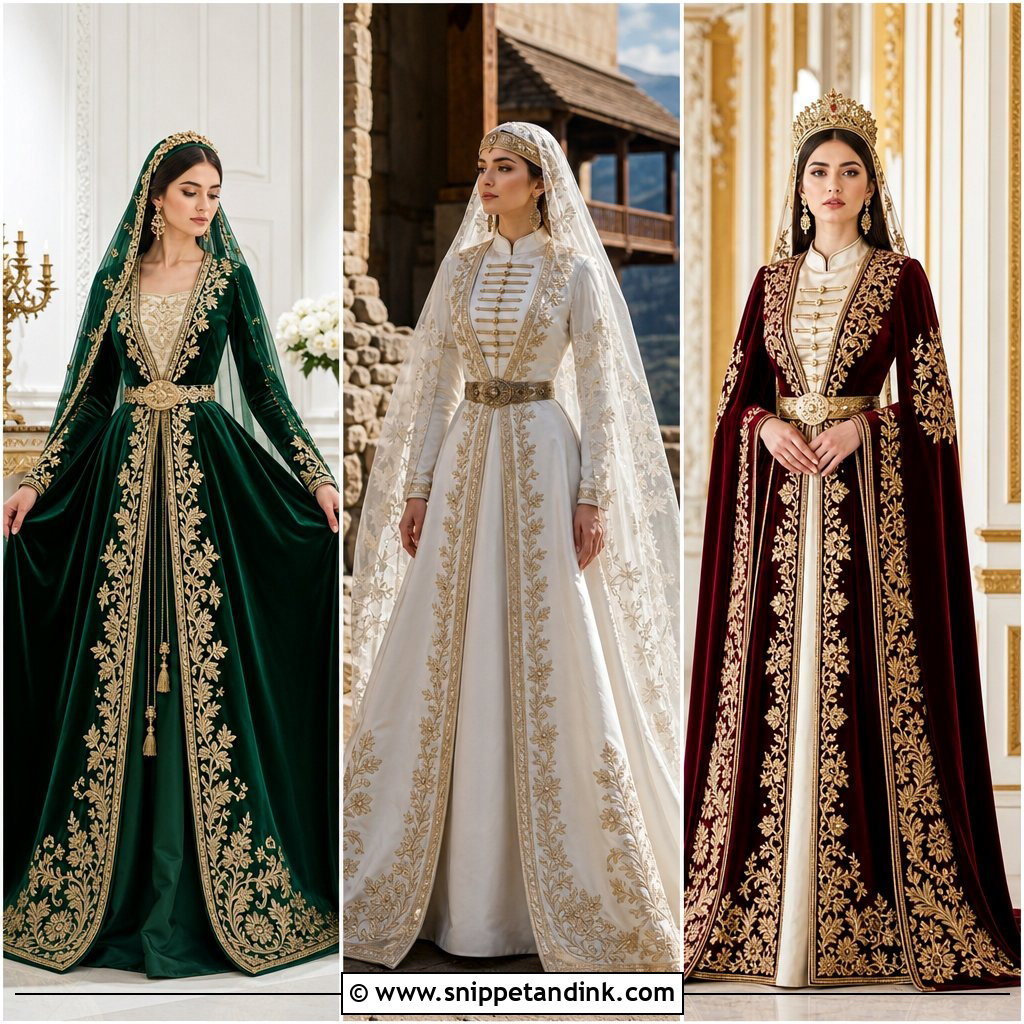
The bindalli is a velvet dress, usually deep red, burgundy, navy, emerald or purple, embroidered in gold. It’s traditionally worn at the kına gecesi, the henna night before a Turkish wedding, often with a red veil over the face. Long sleeves and a full shape make it feel ceremonial. Velvet is hot, so for a summer henna night I’d look for a lighter velvet or a lined version that breathes. Gold jewellery and soft makeup with defined eyes keep it balanced, and traditional slippers are easier than heels if you’ll be seated on cushions.
22. Filipino Maria Clara Bride
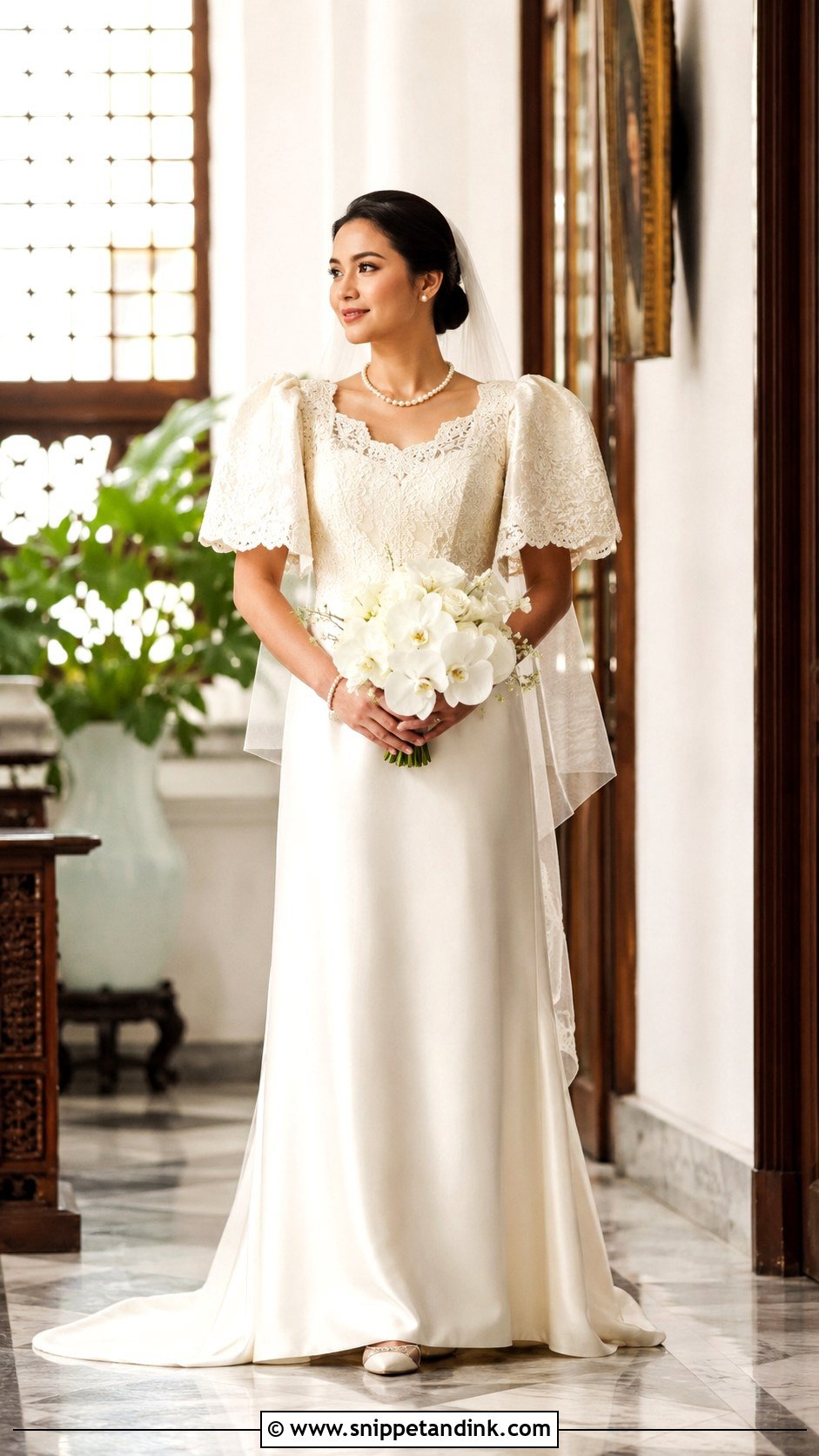
The Maria Clara gown takes its look from the traditional baro’t saya: a sheer blouse with wide sleeves, a long skirt and often a panuelo, a folded shawl, over the shoulders. The terno sleeve, stiff and butterfly-shaped, comes from the same family of Filipino dress. White, ivory, champagne and cream suit a wedding. Piña or jusi fabric is sheer and delicate, so it needs gentle handling and creases easily. Pearl jewellery, a low bun and a veil or floral hairpiece complete it.
23. Thai Traditional Bridal Dress
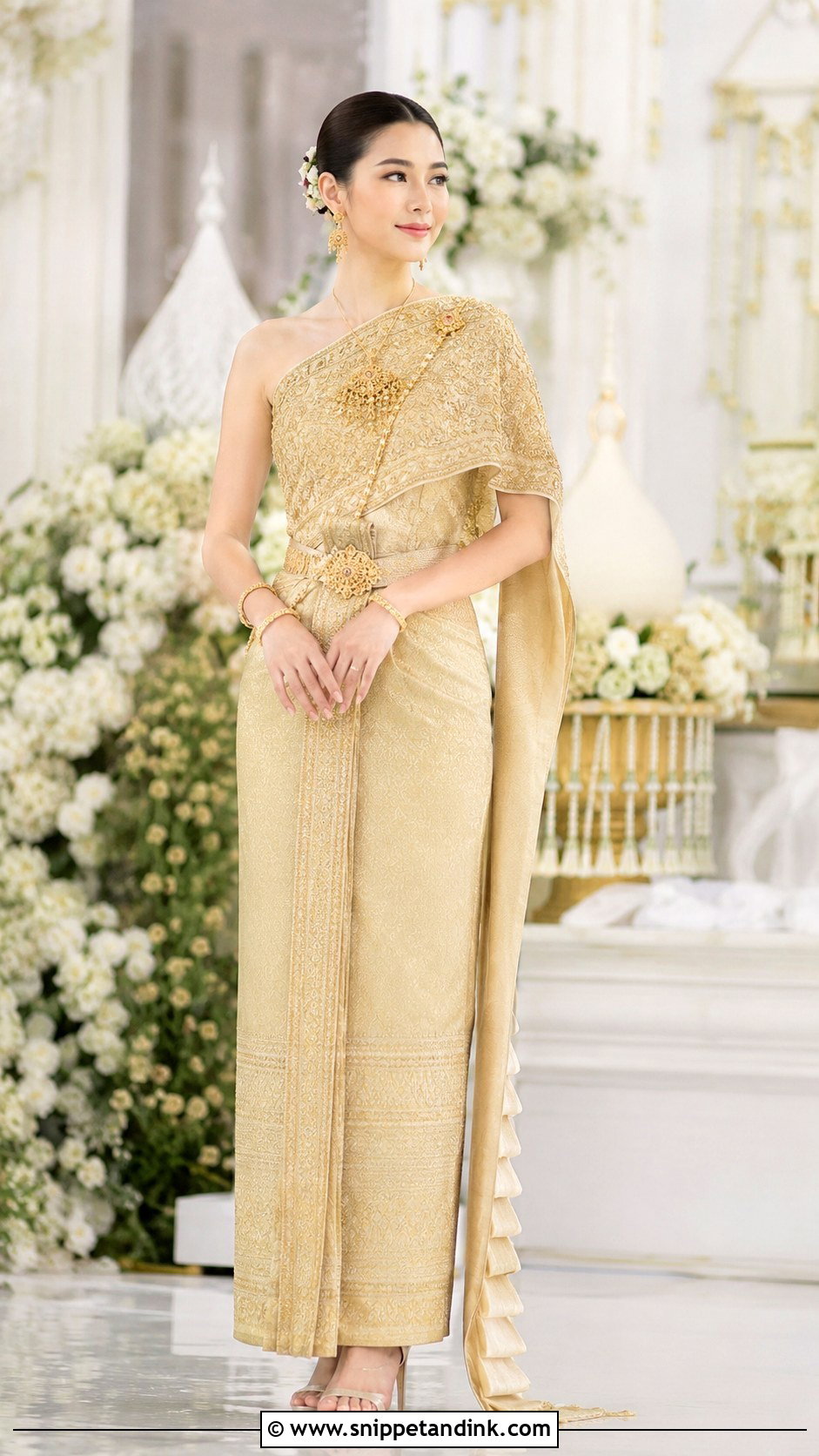
A Thai traditional bridal outfit, the chut thai, usually pairs a fitted silk skirt with a sabai, a draped shawl across one shoulder. Gold, ivory, blush, silver and pastel tones are popular; deeper jewel colours are more dramatic. The sabai is pinned in place and relies on good posture to sit right, so tailoring and a practised dresser matter. Gold jewellery, a gold belt, delicate heels and a sleek updo complete it. Thai silk is quite stiff, so it holds the draped folds neatly.
24. Mexican Embroidered Bridal Dress
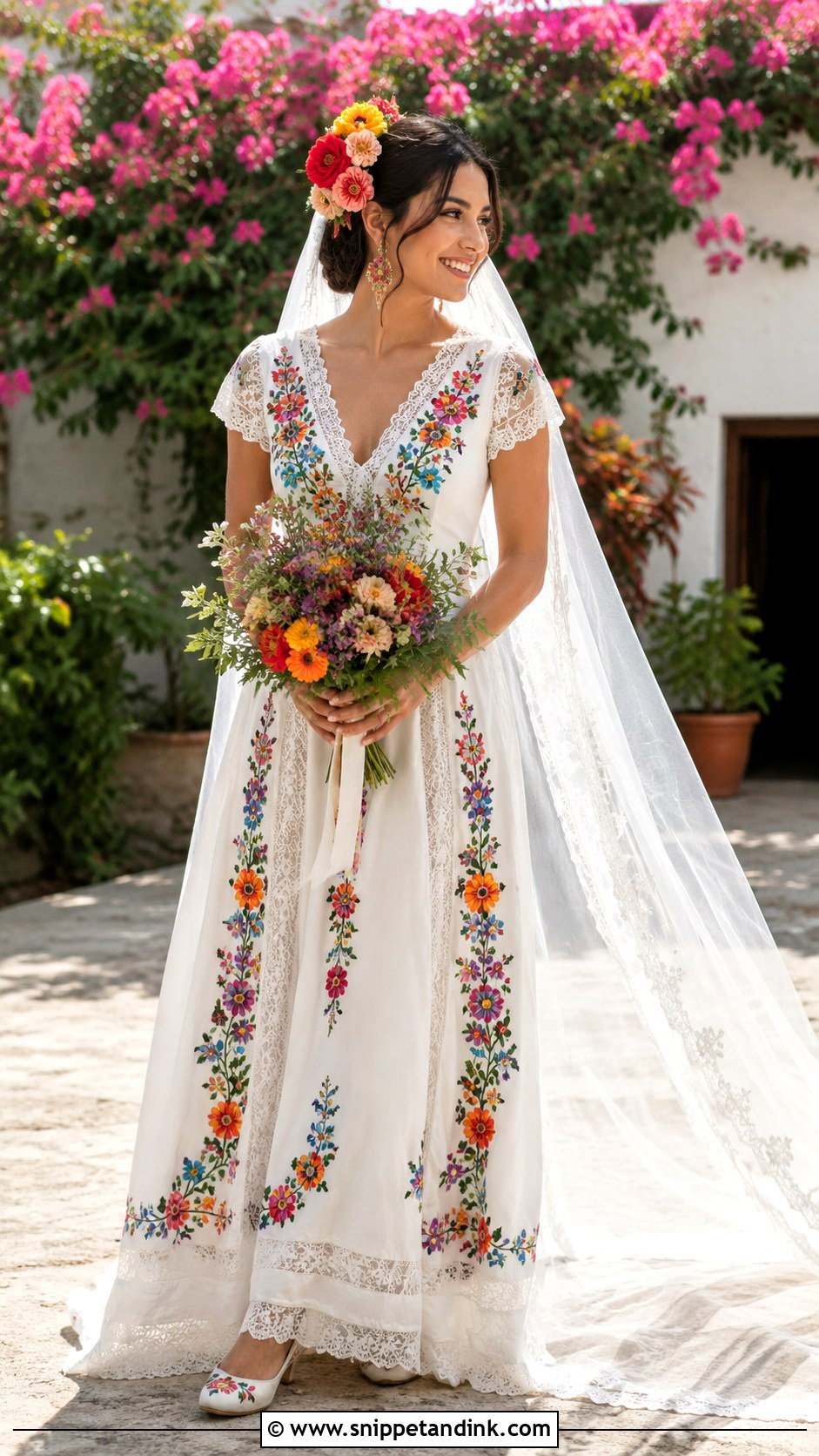
Mexican embroidered dresses draw on many regional traditions, from the floral embroidery of Oaxaca to the Tehuana’s velvet huipil. For a wedding, a white or ivory dress with floral embroidery, lace or traditional textile accents is common. The silhouette can be flowing, fitted at the waist or full-skirted. Hand-embroidery takes a long time, so order early if it’s custom. Comfortable heels or embroidered flats, statement earrings and a floral hairpiece complete it. A long veil adds a classic touch while the colour keeps it personal.
25. Native Inspired Bridal Dress
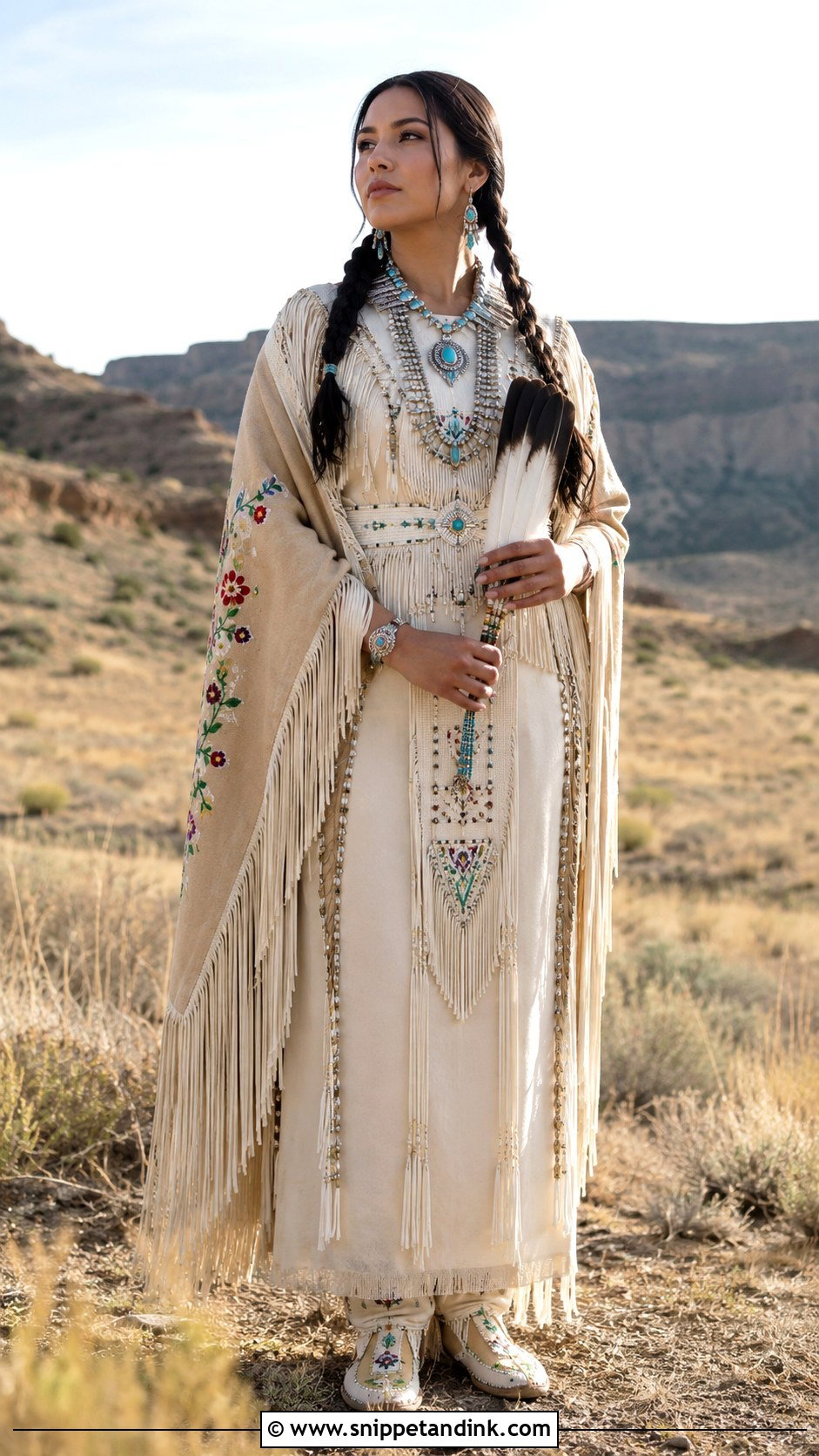
A Native inspired bridal dress needs respect and real connection. The right look depends on the bride’s nation, family traditions and the guidance of her community, not a general idea of what Native dress looks like. It may include a handmade dress, ribbon work, beadwork, woven details, moccasins, meaningful jewellery and a shawl. I’d always start by asking family elders or a community maker, and commissioning from a Native artist rather than buying mass-produced pieces. Hair may be braided or styled as the bride’s heritage guides.
Wearing Your Mother’s Saree or an Heirloom Piece
Many brides want to wear something that belonged to their mother or grandmother. It’s a lovely gesture, but old textiles need careful handling.
Check it months ahead
Unfold it in daylight and look along the old fold lines. Silk often splits along them, and old zari can tarnish or become brittle. A specialist textile restorer can stabilise weak areas, but that takes time, so look early.
Alter the blouse, not the saree
A new blouse can be made to fit you while the heirloom saree stays uncut. For a lehenga or gown, ask the tailor to take in seams rather than trim them, so the piece can be let out again for the next bride in the family.
After the wedding
Have it professionally cleaned, then store it wrapped in clean cotton or muslin, away from plastic. Refold it along different lines every few months to stop the fabric weakening in the same place.
Honouring the Tradition and Still Being Able to Move
Every outfit here comes from a long history of family and craft. Whether you choose a red lehenga, a silk saree, a qipao, a hanbok, a kimono or a kaftan, the right one should feel meaningful and wearable for the hours of ritual ahead. Fit, fabric, jewellery and shoes all matter, but so does asking how the outfit has to perform: kneeling, sitting on the floor, bowing or dancing. Many brides personalise traditional clothing with a lighter fabric, an heirloom piece or a modern drape. Bring your family into that decision early.
You'll Like These Ideas:






Leave a Reply