
A handmade wedding gown lets you decide everything: the shape, the cloth, the fit and the small details that mean something to you. The designs below cover classic silhouettes, current bridal shapes and the construction choices behind each one, from beginner-friendly to properly demanding. You can work in satin, lace, crepe, chiffon, tulle, organza, or linen, depending on how much structure you need. The habit that saves the most heartache is simple. Sew a full toile first and test every seam, closure, neckline and support layer in it. Then practice the fiddly techniques on scraps, especially lace appliqué, boning, rolled hems and invisible zips, before they go anywhere near the real fabric.
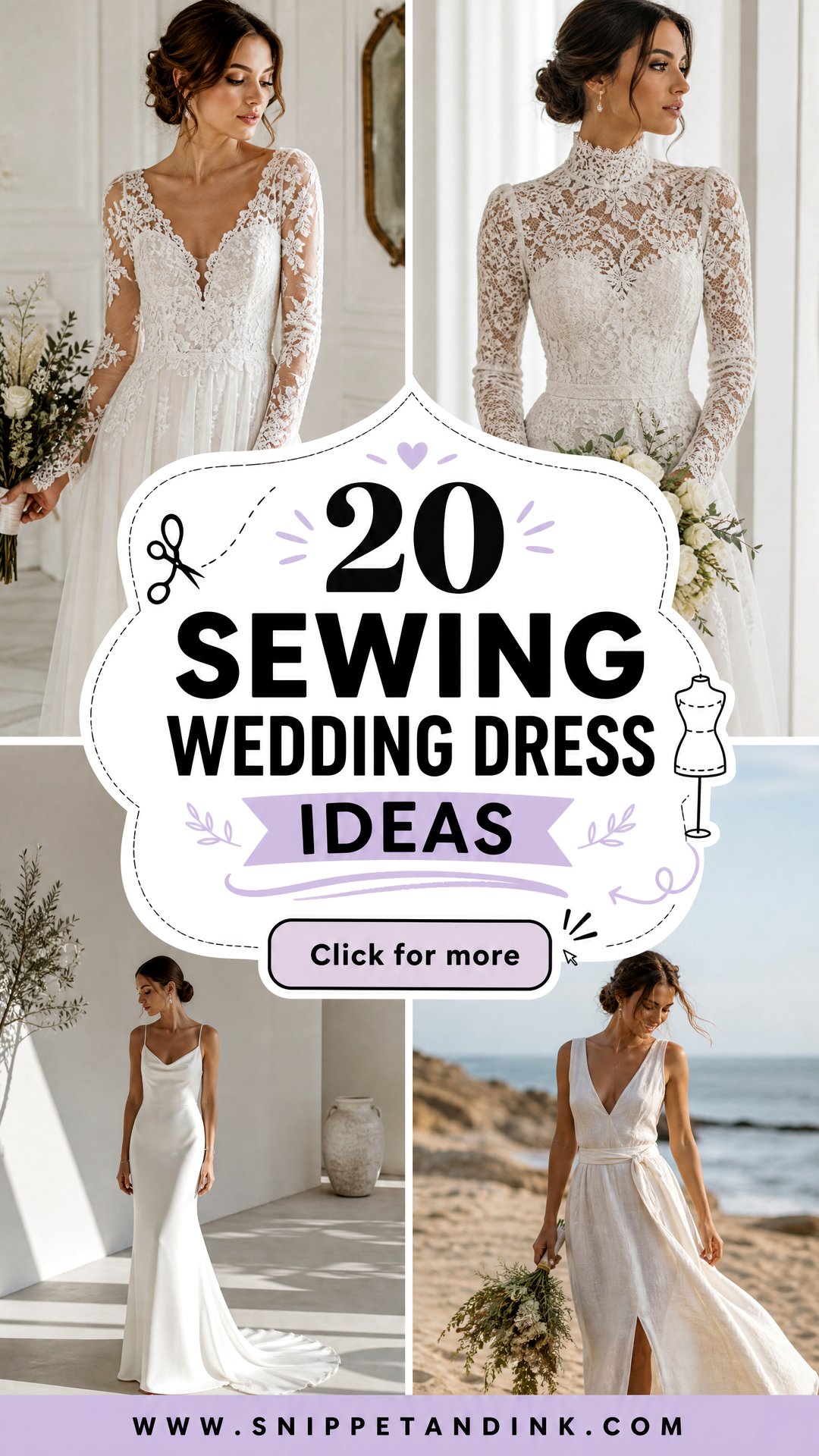
Which of These Twenty Suits Your Sewing Level?
The fastest way to an unfinished dress is choosing a design two skill levels above where you are. Here’s how I’d sort the list below, based on how much fitting, support and hand work each one asks for.
Comfortable for a confident dressmaker
The A-line satin, square neck crepe, tea length, chiffon empire waist and linen beach dress. One area to fit, familiar techniques, and fabric that tolerates a second attempt.
A real stretch
The lace sleeve, cowl slip, off shoulder, long sleeve satin, overskirt, one shoulder, minimalist column, tiered tulle and puff sleeve gowns. Each adds one tricky element, whether bias cutting, sleeve fitting or invisible support.
Couture-level projects
The strapless corset, basque waist, appliqué tulle, high neck lace, open back lace and vintage lace dresses. They need internal structure, lace matching or many hours of hand stitching. Worth it if you’ve made fitted, lined garments before and have months, not weeks.
1. A-Line Satin Wedding Dress
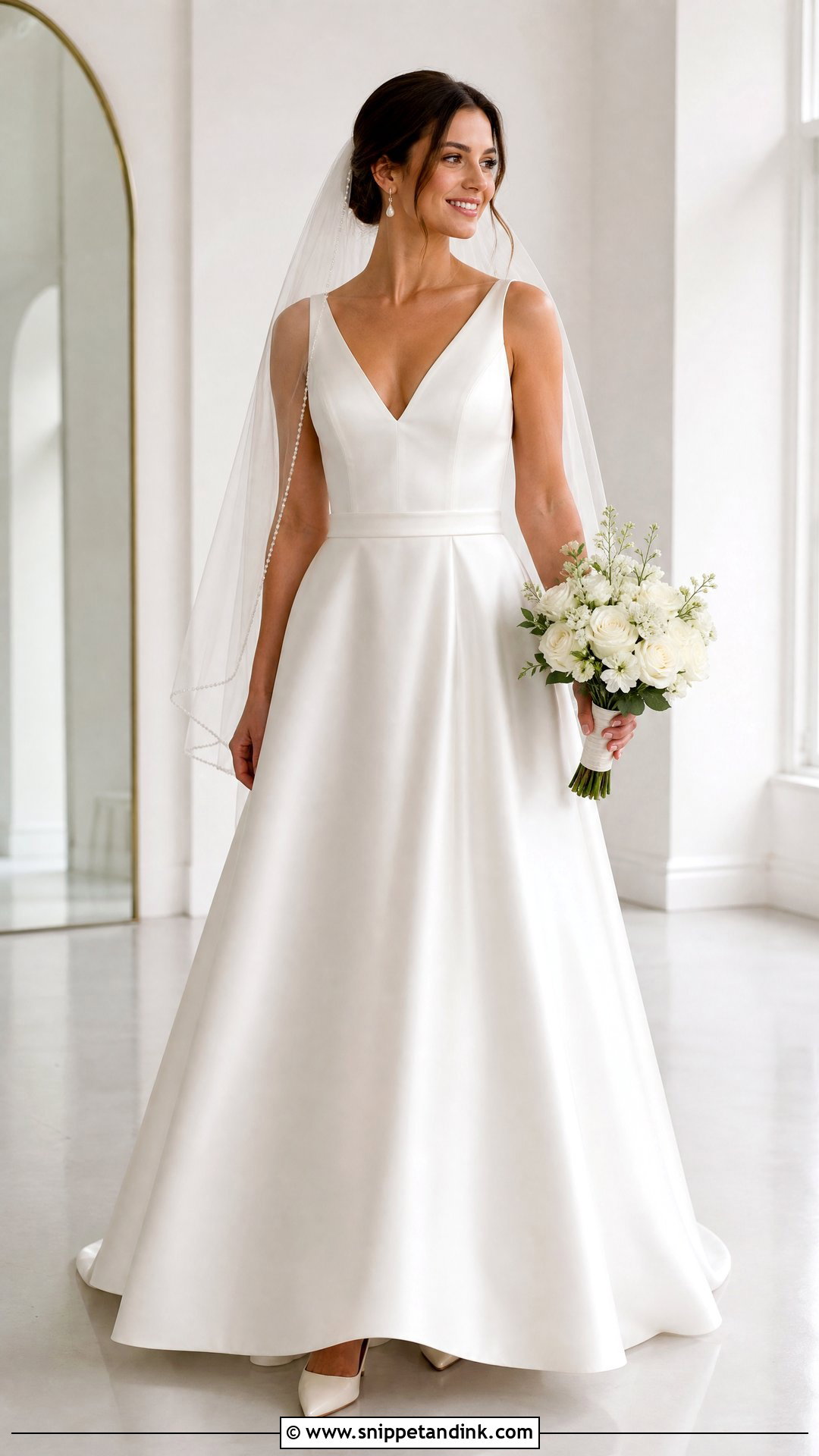
Most first-time bridal sewists I talk to land on an A-line satin, and it’s a sensible choice. The bodice fits, then the skirt widens gently from the waist, so there’s only one area that needs precise fitting. Pick a medium-weight satin with enough body to hold the shape without bulk. Princess seams are easier to adjust through bust, waist and hip than darts. Add a soft lining, a waist stay, an invisible zip and, if you like, horsehair braid at the hem for a crisp flare. A V or square neck keeps it classic, styled with a fingertip veil, pearl earrings and ivory pumps. Satin magnifies puckered seams and wavy hems, which is the whole reason to toile first.
2. Lace Sleeve Wedding Dress
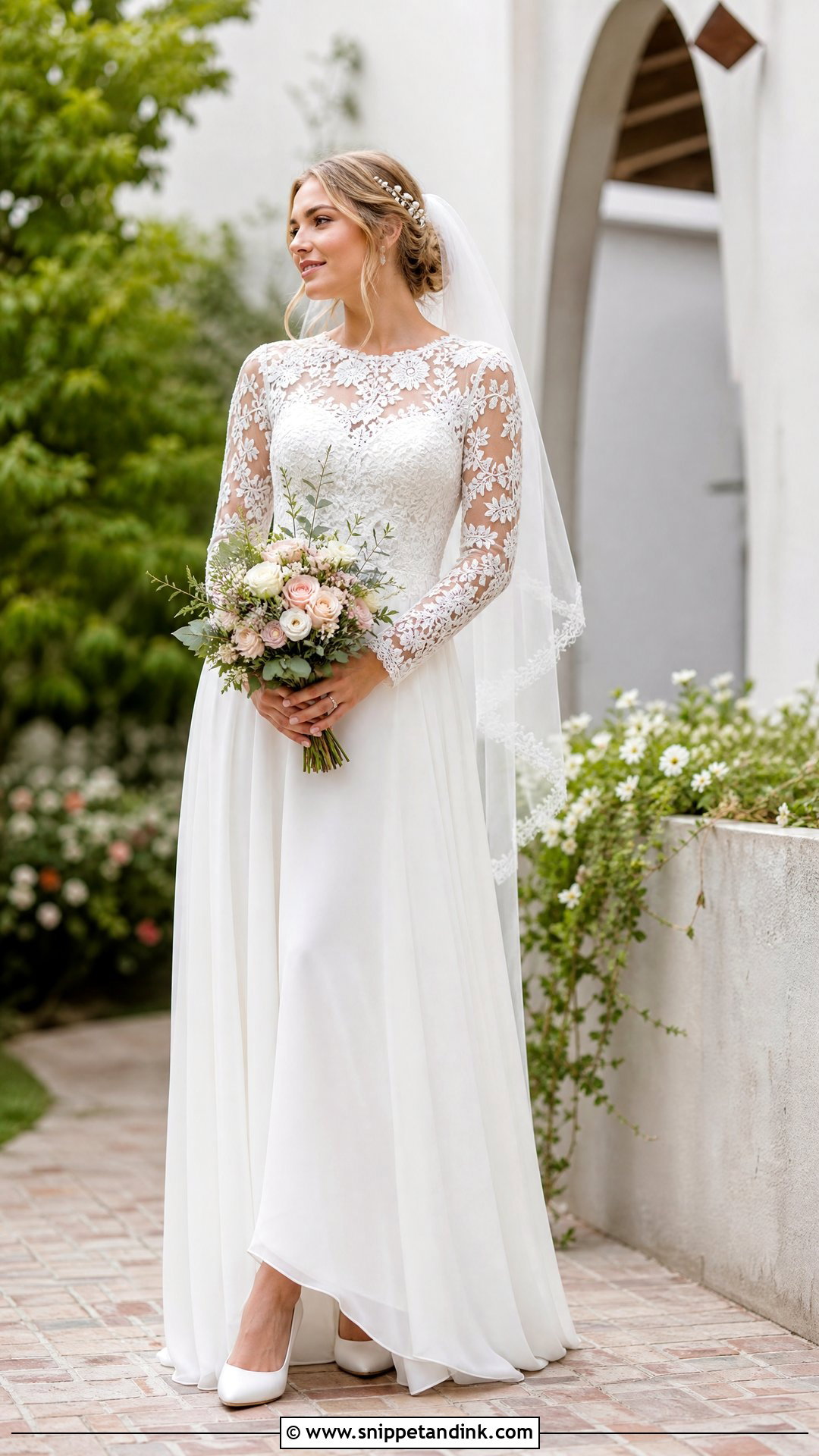
Lace sleeves give arm coverage and soften the look. On a lined fitted bodice, set sleeves cut from soft stretch lace or light embroidered tulle; stretch lace is far kinder to a home sewist because it forgives a slightly tight armhole. Match the big motifs across the shoulder seams and use the finished lace edge at the cuffs. A chiffon or crepe skirt keeps the gown light. Stabilize the neckline with narrow organza strips so it doesn’t grow while you handle it. A low bun, pearl pins, a chapel veil and closed-toe heels finish it. I always rub the lace on the inside of my wrist before buying. Stiff embroidery or beading that scratches there will scratch your arms all day.
3. Strapless Corset Wedding Dress
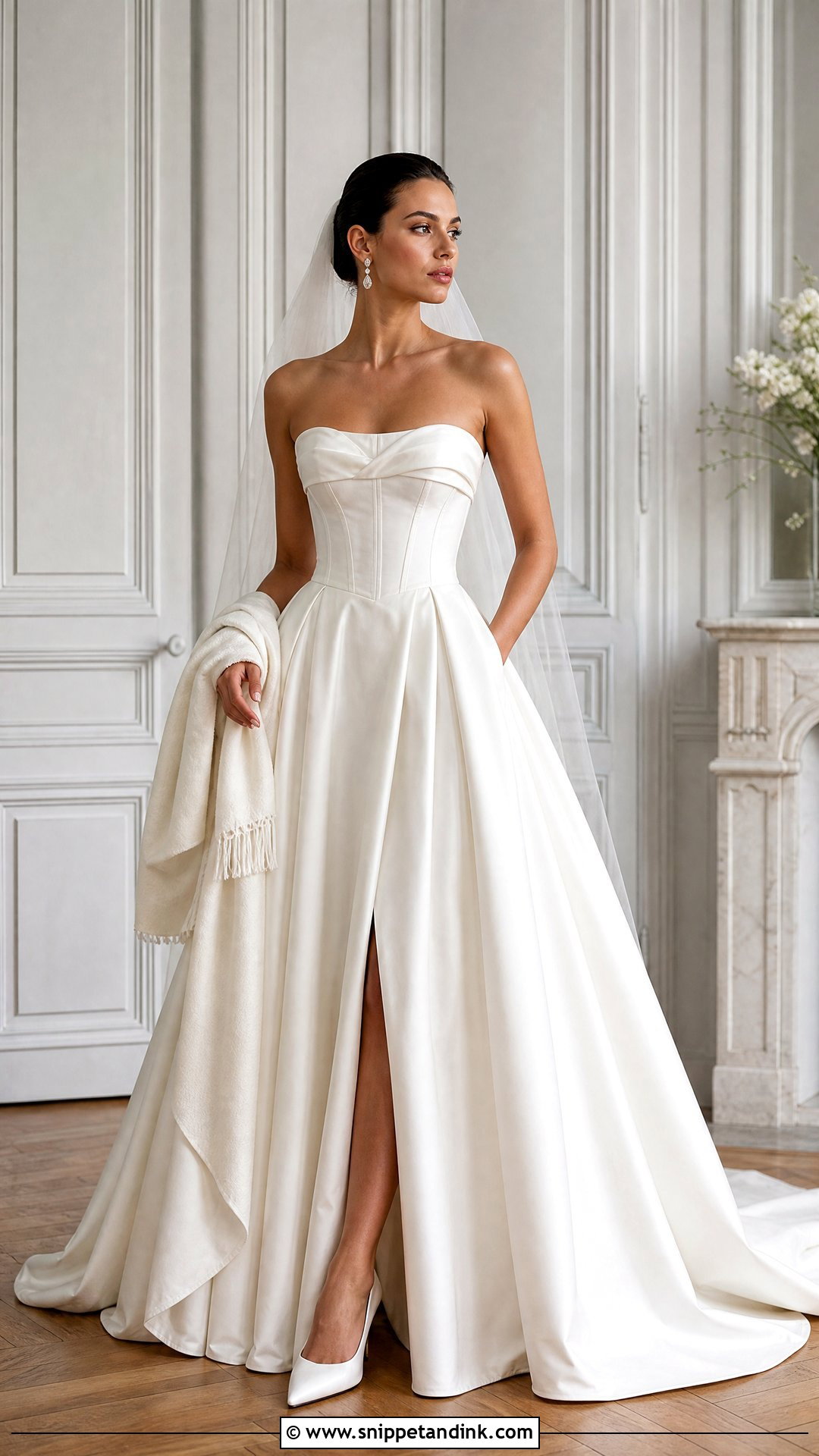
A strapless corset is engineering more than dressmaking. The foundation is coutil or a tightly woven cotton, covered with satin, mikado or lace. Spiral steel bones go on the curved seams, flat steel where you need rigid support, and a waist stay takes the load so the neckline doesn’t have to. A gathered or pleated full skirt balances the shape. A simple veil, drop earrings, satin pumps and a detachable wrap for cooler moments. I’d sew at least two fitting samples before the final cut. The top edge should sit snug against you with no pinching, no collapsing when you bend and room to breathe through dinner.
4. Square Neck Crepe Wedding Dress
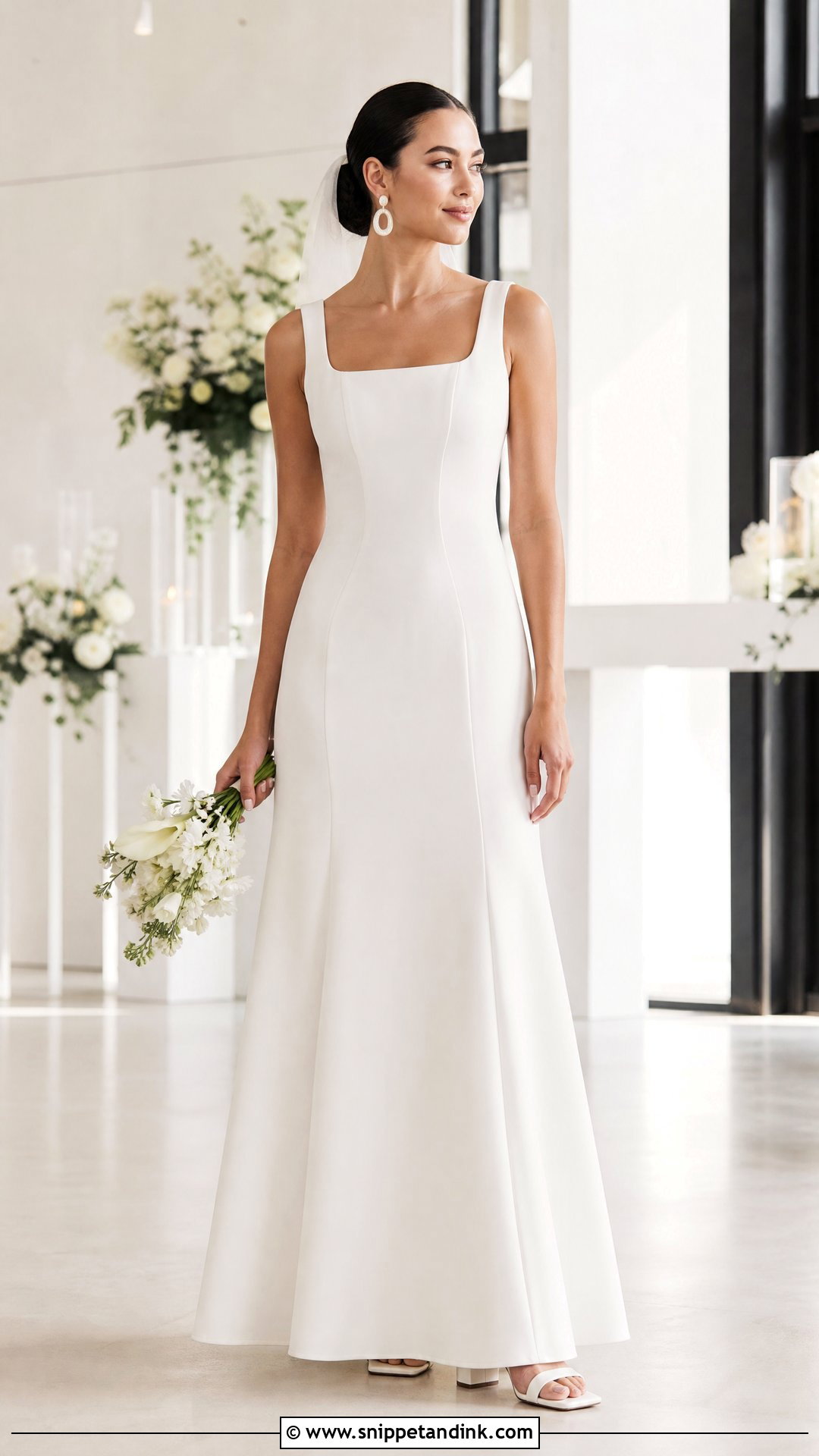
Square necks look modern in crepe, and they test your precision. Choose a medium-weight bridal crepe dense enough not to show what’s underneath. A princess-seam bodice into a softly flared skirt gives one clean line. The corners are the hard part: staystitch them, reinforce with a small square of light interfacing and clip right to the stitching, or they’ll pucker. Wide straps add support; fitted sleeves add coverage. A sleek bun, short veil, sculptural earrings and ivory block heels. Underline the bodice if your crepe feels thin, and press through a cloth because crepe shines easily. It suits someone who likes accurate fitting more than embellishment.
5. Floral Appliqué Tulle Wedding Dress
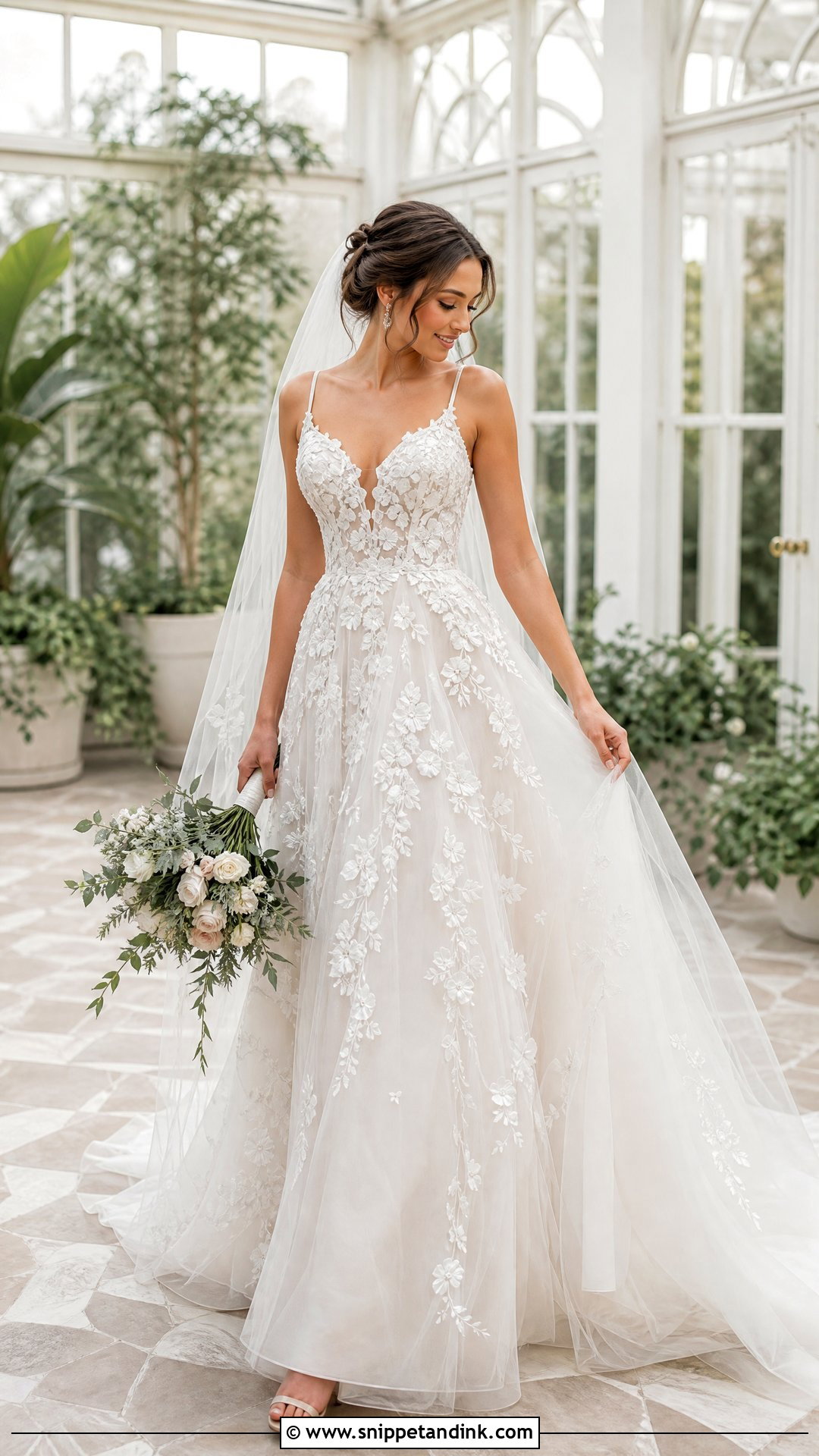
Appliqué over tulle is where patient hand sewing turns into the feature of the dress. Make a supportive satin or crepe underdress, then lay soft tulle over the bodice and skirt. Place the flowers with the gown on a dress form so you can judge the balance from all sides. Hand-stitch each appliqué around its edge with fine matching thread, tiny stitches every few millimetres. Cluster them on the bodice and scatter them down the skirt. A plain chapel veil, delicate earrings and neutral heels. Keep motifs clear of zip teeth and seam allowances; where one has to cross a seam, take it off, sew the seam, then stitch the motif back across it.
6. Basque Waist Ball Gown Wedding Dress
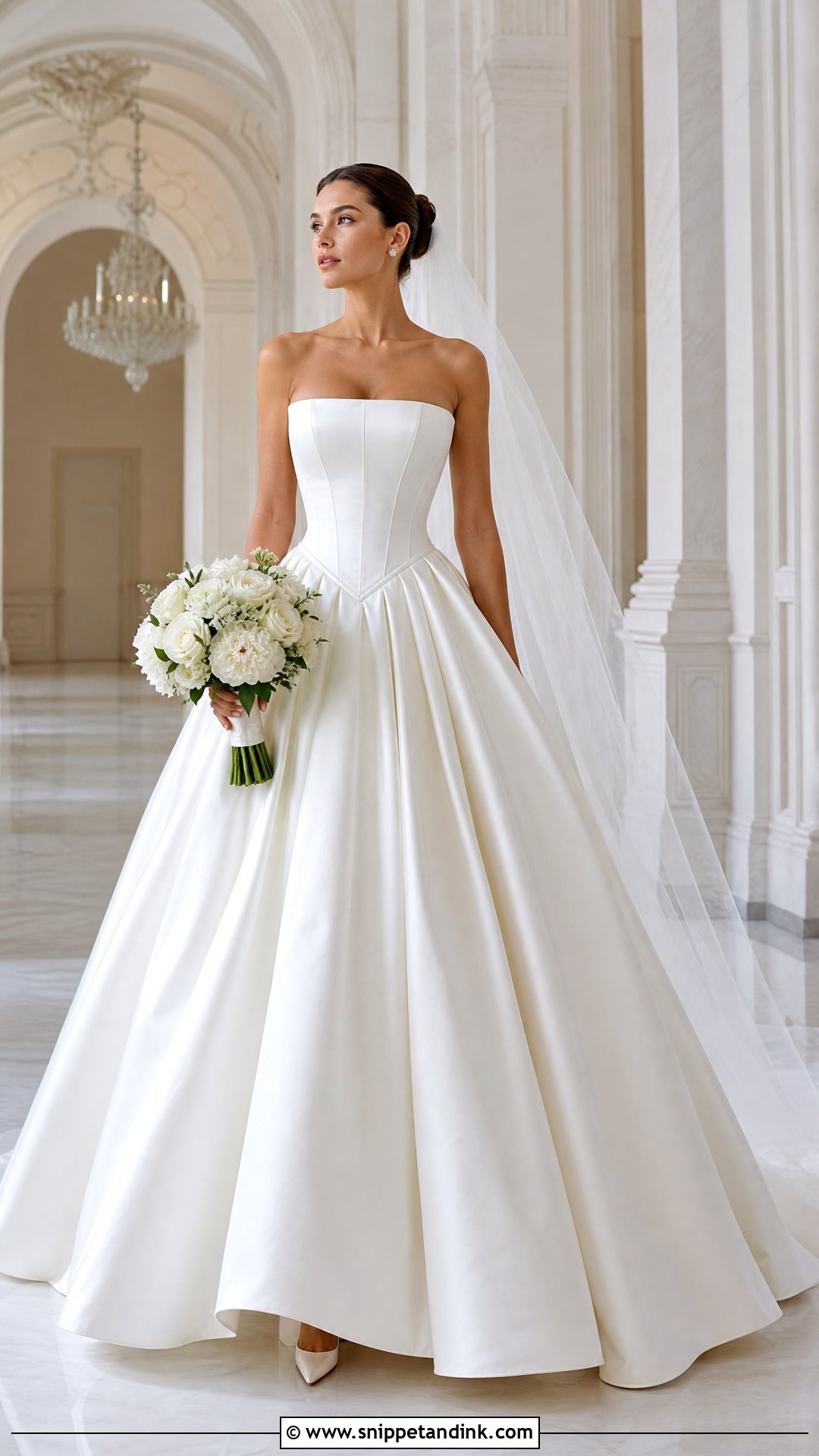
A basque waist ball gown drops the bodice to a point below the waist, then releases a big skirt. That point needs accurate pattern matching and a lot of support: princess seams, boning, a waist stay and a firm lining. Mikado, duchess satin or taffeta holds the architecture; fluid fabrics won’t. I pleat the skirt into the waist seam rather than gathering it, because gathers pile up at the point and blur it. Mark the center point on every layer before assembly, sew the corner slowly, clip and reinforce. Style it with a long veil, stud earrings, satin pumps and a structured bouquet.
7. Cowl Neck Slip Wedding Dress
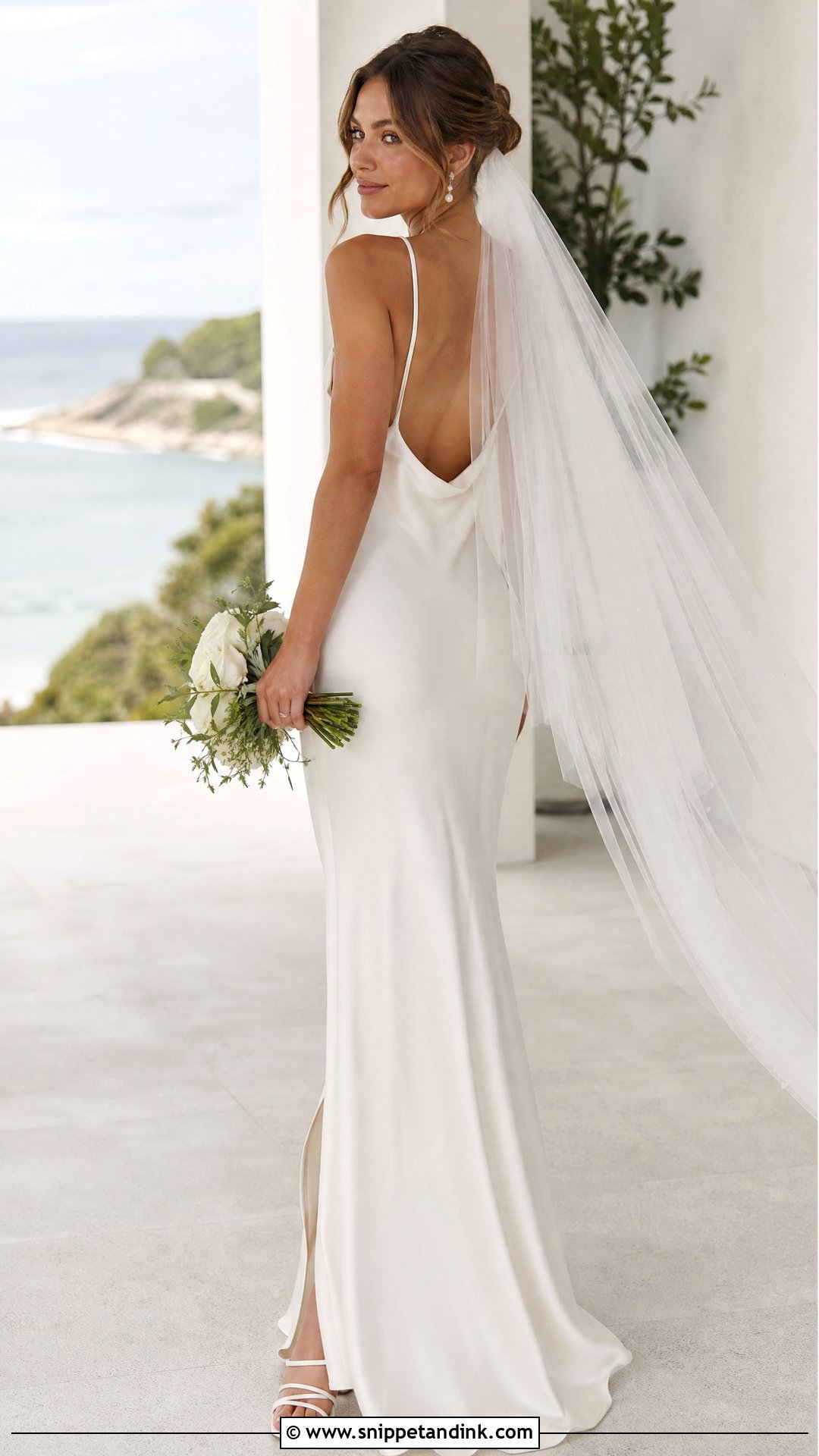
The cowl slip is for a bride who wants to move freely and doesn’t mind a dress that’s honest about what’s underneath. Silk charmeuse, crepe-back satin or a good satin alternative gives the drape. Cut the front on the bias, hang it overnight, then correct the hem. Narrow straps, a low back and a gentle flare keep it sleek. Line it lightly and let the lining move independently rather than stitching the layers together everywhere. A sheer shoulder veil, minimal earrings and strappy ivory shoes. Use lots of weights when cutting, never stretch the fabric as you sew, and finish with French seams to keep bulk down.
8. High Neck Lace Wedding Dress
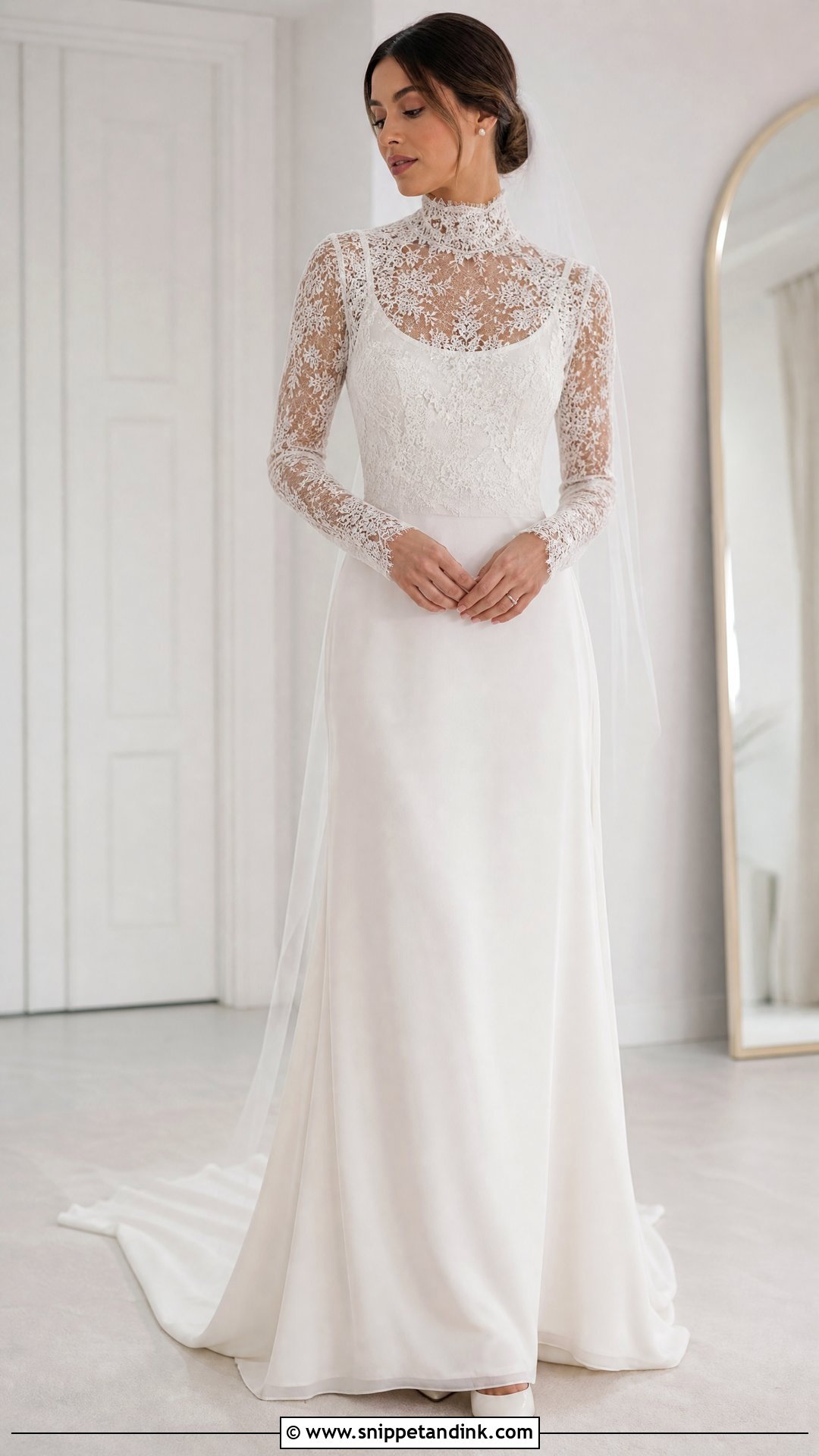
For coverage with detail, a high neck lace gown puts a fitted underlayer beneath a detailed sheer overlay. Fine corded lace, Chantilly-style lace or embroidered tulle works for the outer bodice and sleeves. A sweetheart or scoop lining underneath lets the lace pattern show across the upper chest. Finish the neck with a narrow bias strip, a scalloped border or hand-trimmed motifs. Below, choose a fitted crepe skirt or a fuller organza one. Pearl studs, a plain veil, pointed pumps and a low bun. At the toile stage I have the bride turn her head side to side; a collar a few millimetres too high rubs the throat all day.
9. Tea Length Wedding Dress
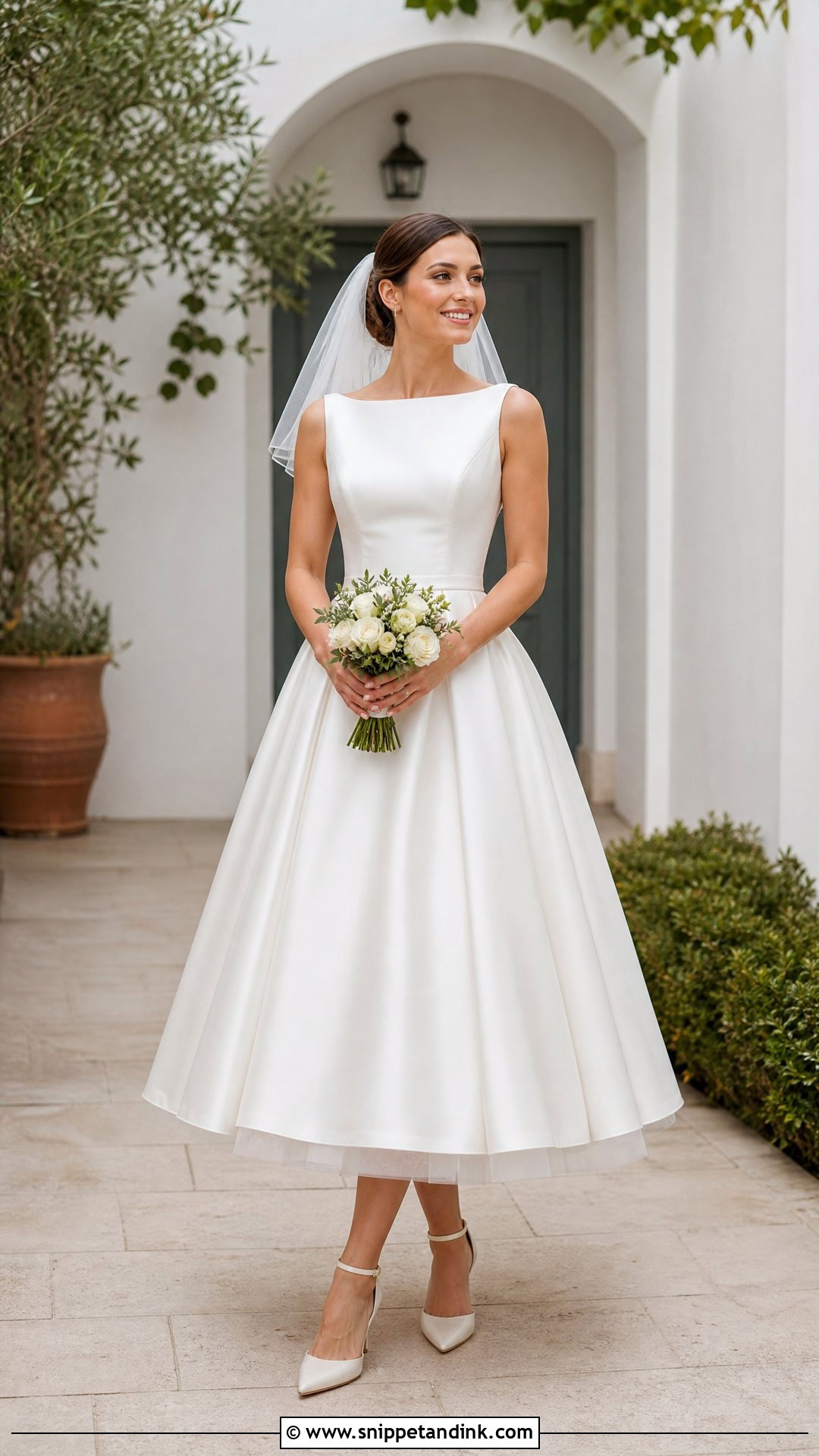
Tea length is playful, and it makes your shoes part of the outfit. Sew a fitted bodice at the natural waist and add a circle, box-pleated or softly gathered skirt that ends between knee and ankle. Cotton sateen, silk dupioni, mikado or a light brocade all have the structure for it. A net petticoat adds fullness. A bateau neck or short sleeves suggest vintage without becoming costume. Ankle-strap heels, a short veil and small earrings. Because everyone sees this hem, level it on the bride wearing the exact shoes and petticoat, then finish with bias binding or a narrow facing rather than a bulky turn-up.
10. Chiffon Empire Waist Wedding Dress
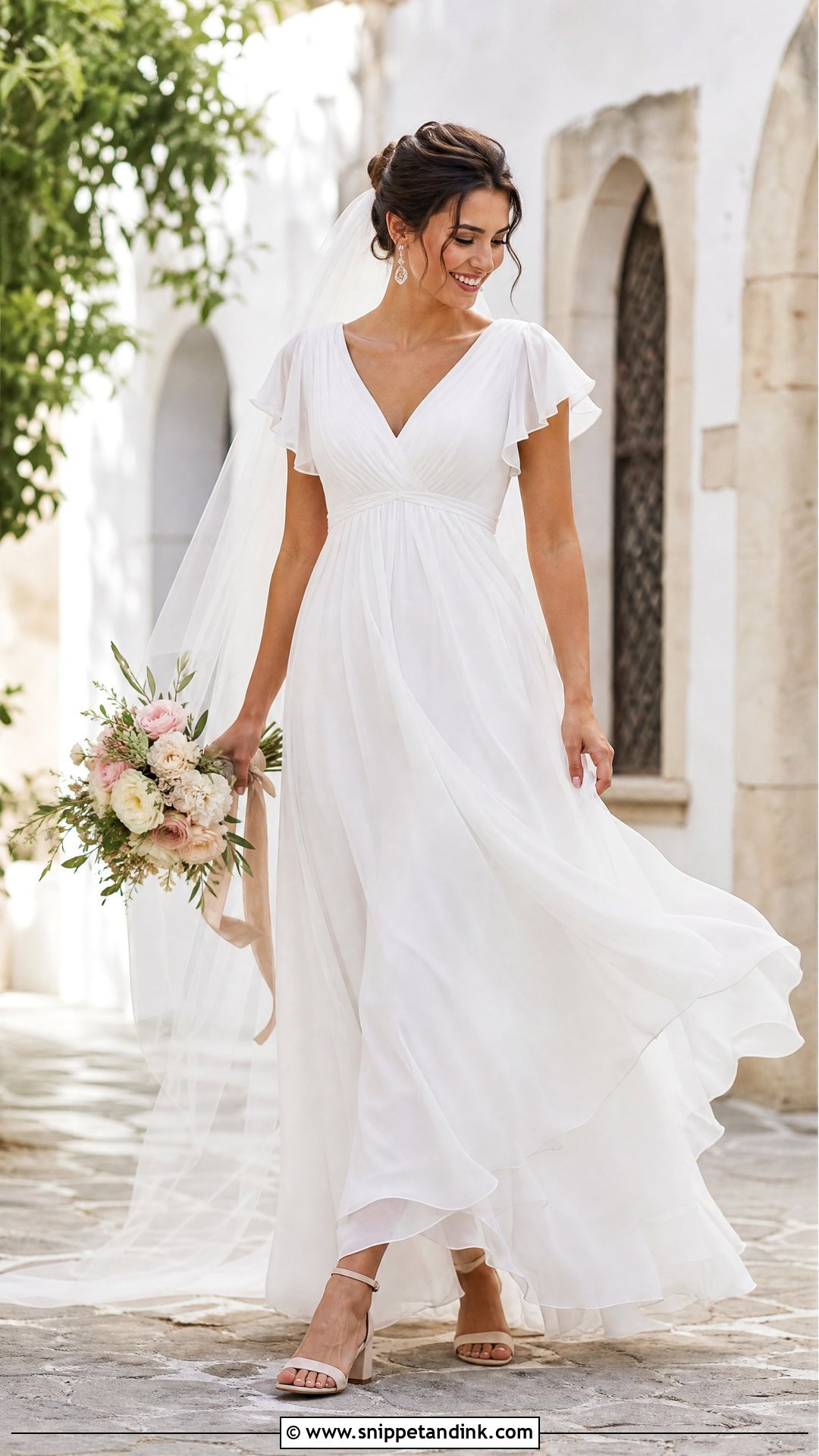
An empire waist puts the seam just under the bust and lets the skirt fall loose, which makes it one of the most comfortable gowns to wear and one of the more forgiving to fit. Build a stable underdress, then add one or more chiffon layers on top. Gathered bodices, flutter sleeves or soft shoulder ties suit the shape. Chiffon shows its seam allowances, so use French seams or very narrow serged edges. Cut it single layer over tissue paper. A light veil, delicate drops, low block heels and a loose garden bouquet complete it. Hang the finished dress for a full day before marking the rolled hem.
11. Off Shoulder Wedding Dress
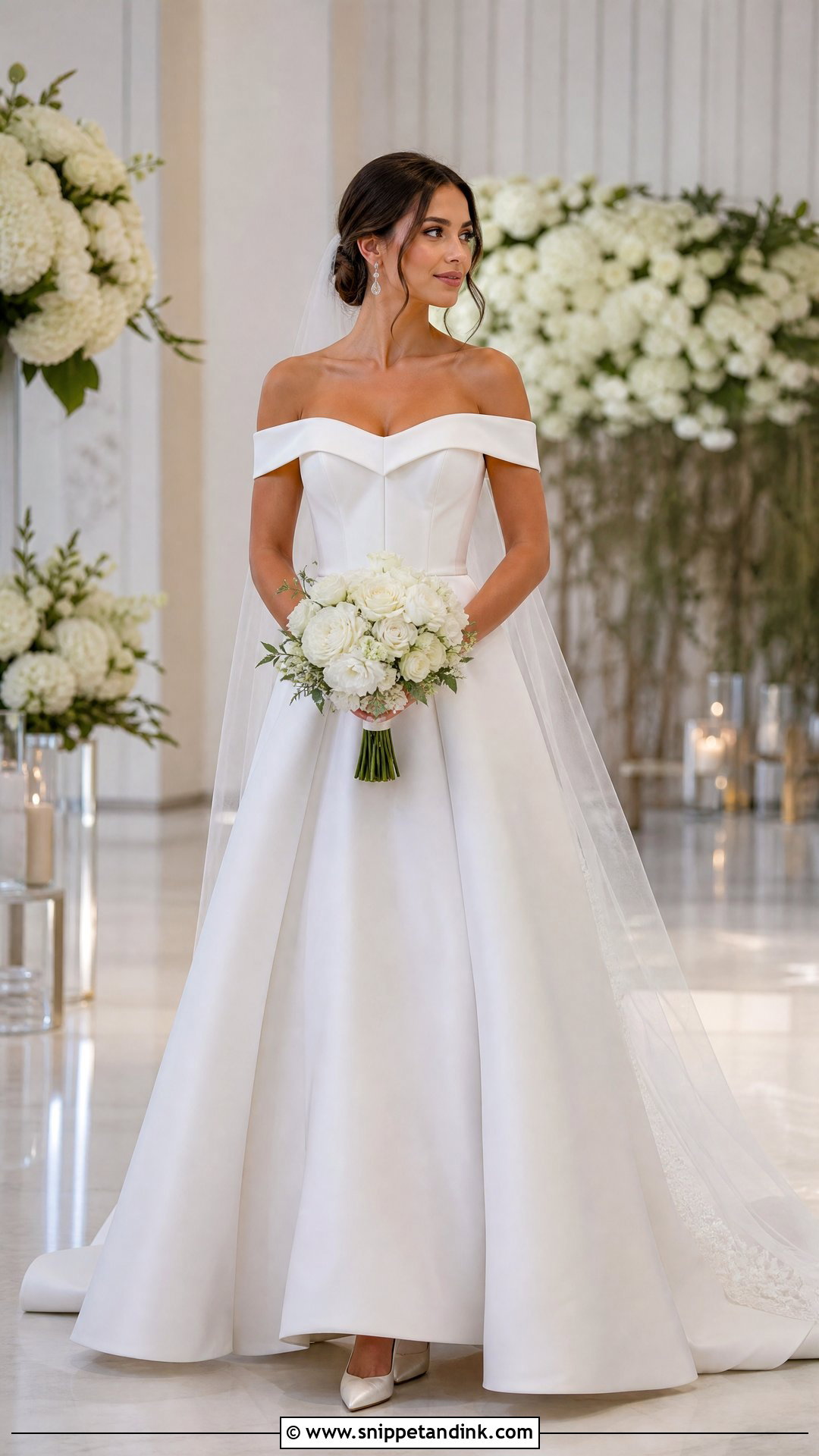
Off-the-shoulder gowns fail when the neckline is asked to hold the dress up. Build a boned fitted bodice that stays put on its own, then add the folded satin band, draped crepe or lace around the shoulders as decoration. A trumpet skirt is sculpted; an A-line is easier to walk and sit in. A low updo, a fine necklace, drop earrings, a long veil and pointed heels. Lift your arms and sit down at every fitting. I like the band attached with concealed elastic or a few small anchor points, so it can move slightly while the bodice underneath stays firm.
12. Long Sleeve Satin Wedding Dress
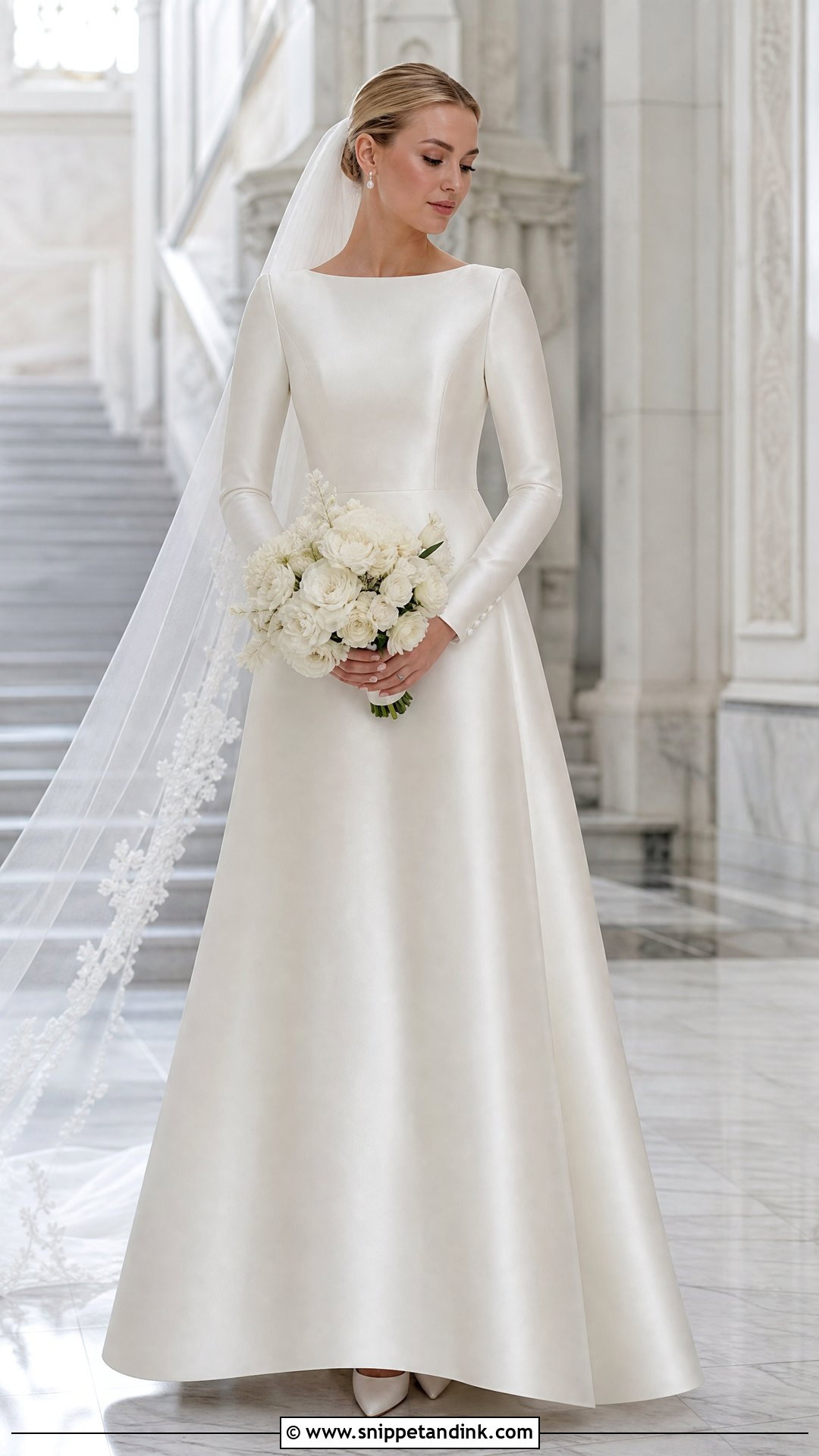
Long satin sleeves suit cooler months and formal venues. Silk satin, duchess satin or a matte bridal satin, depending on how much shine you want, over a fitted bodice with a clean bateau neck and an A-line or column skirt. Use a two-piece sleeve pattern; it bends at the elbow the way an arm does, where a one-piece sleeve pulls. Add a vent, covered buttons or a tiny invisible zip at each cuff. Underline with silk organza if you need more body. A cathedral veil, pearl earrings and closed-toe pumps. Reach forward and hug someone in the toile; sleeves that look perfect standing still are often too tight in motion.
13. Detachable Overskirt Wedding Dress
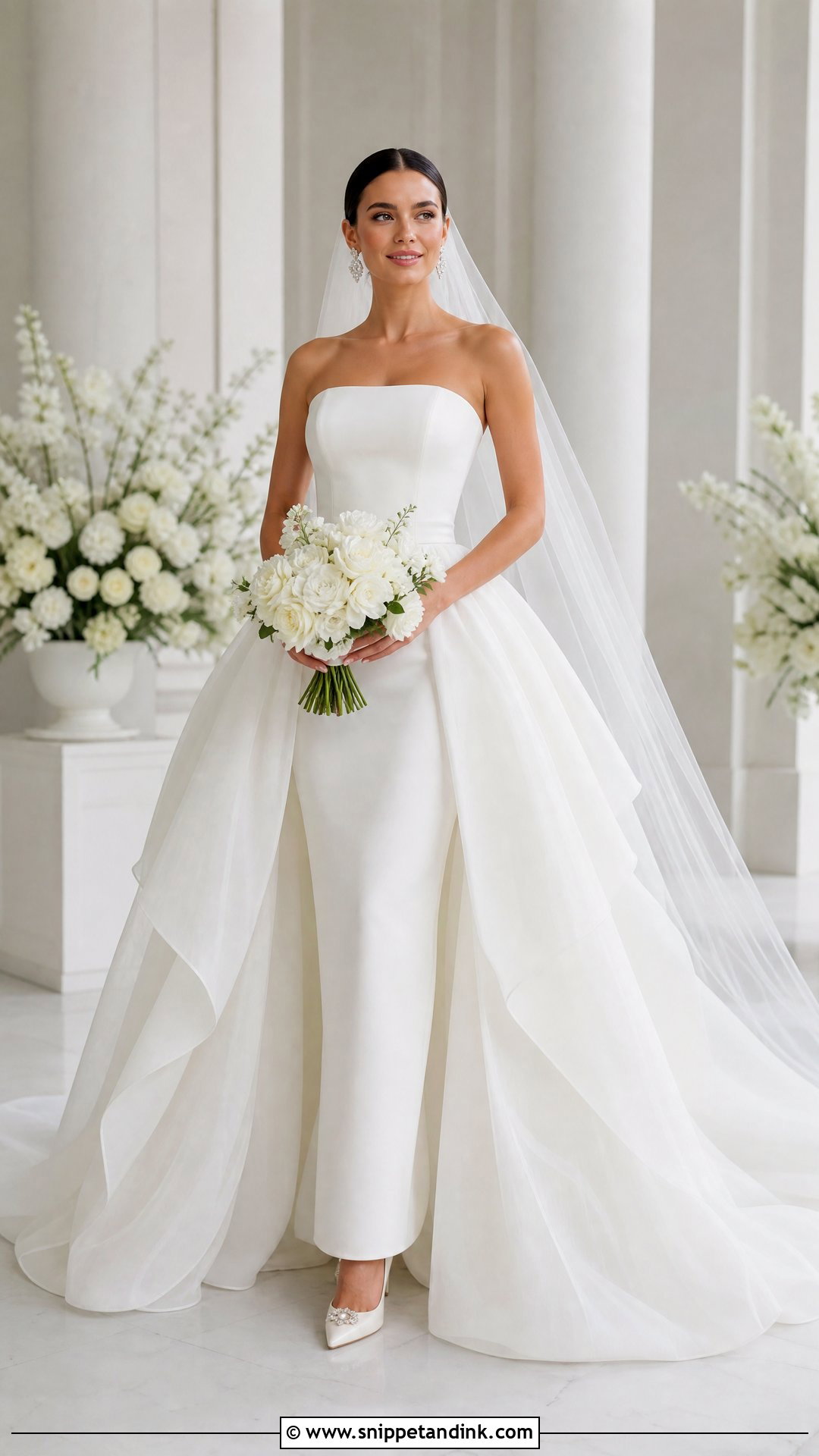
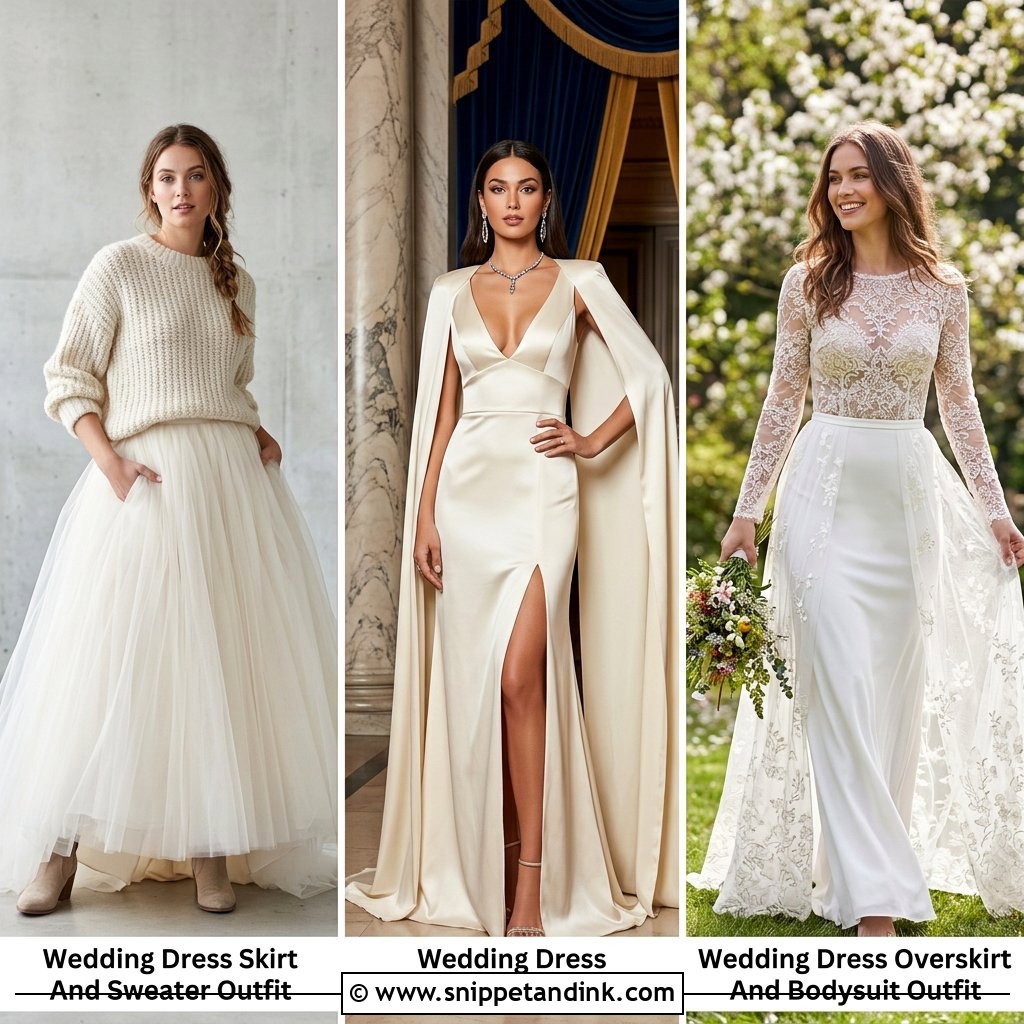
An overskirt gives two looks from one foundation. Make a fitted crepe, lace or satin column that you’d be happy wearing alone, then build the overskirt in organza, tulle, mikado or satin, fastened at the natural waist with hidden hooks, snaps or a concealed band. Pleats give controlled fullness; gathered tulle is softer. A long veil, sparkling earrings and formal pumps for the ceremony, and a lighter, freer dress after. I’d load-test the fastenings: hang the overskirt from the base dress on a form for a few hours and look for twisting, sagging, exposed hooks or strain on the base fabric.
14. Open Back Lace Wedding Dress
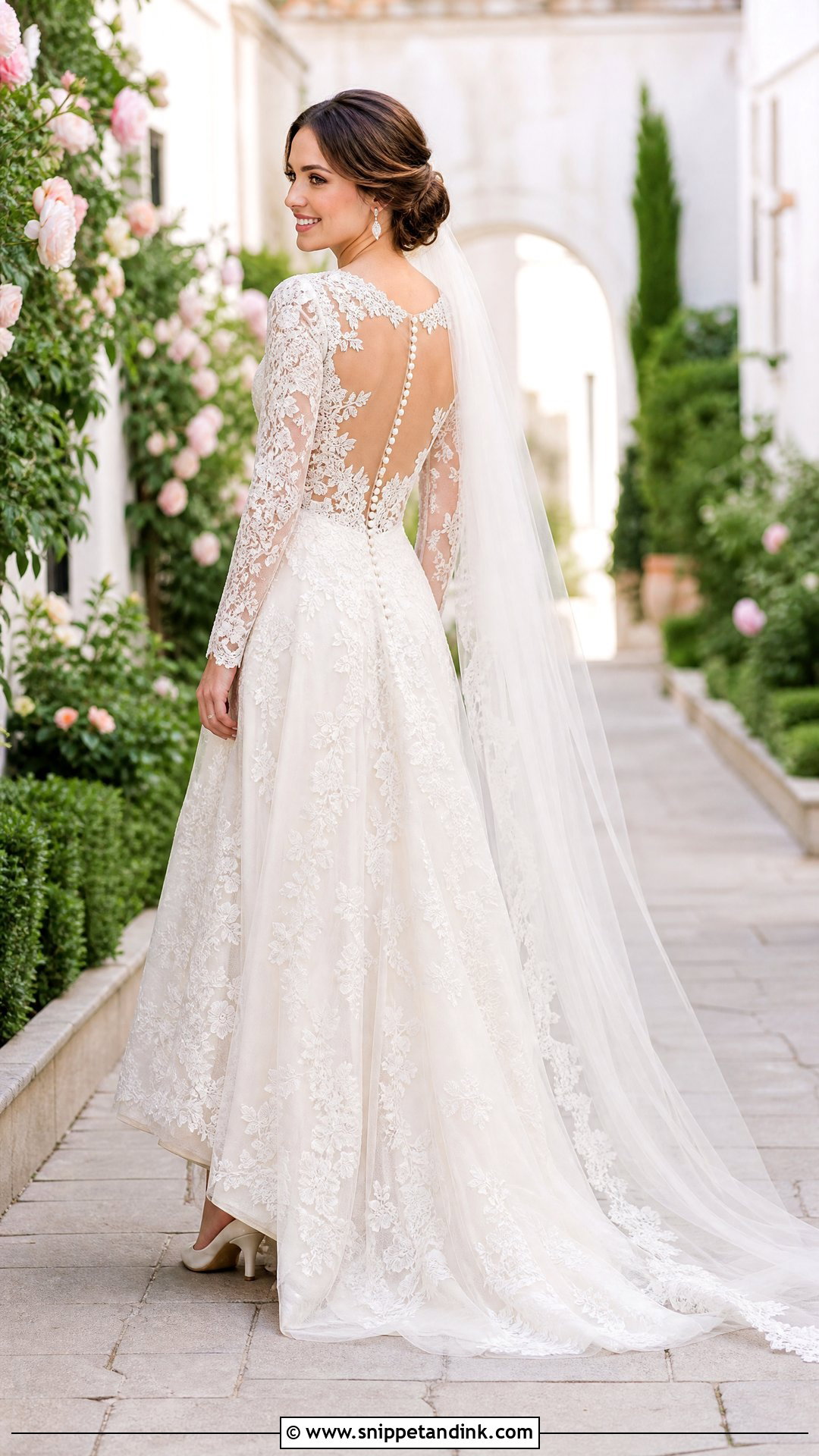
An open back gives the gown a second front. Start with a fitted bodice that has firm side seams and a correctly placed waist, because with no back to anchor it, the sides do the holding. Fill the opening with sheer lace or illusion tulle if you need more support. Covered buttons look traditional; narrow satin ties softer. Balance it with an A-line skirt, fitted sleeves or a high front. An updo, a veil set above the opening, delicate earrings and low ivory heels. Stabilize the back edges with organza tape or clear elastic so they lie flat, and check in daylight that no cup, bone channel or seam allowance shows.
15. One Shoulder Wedding Dress
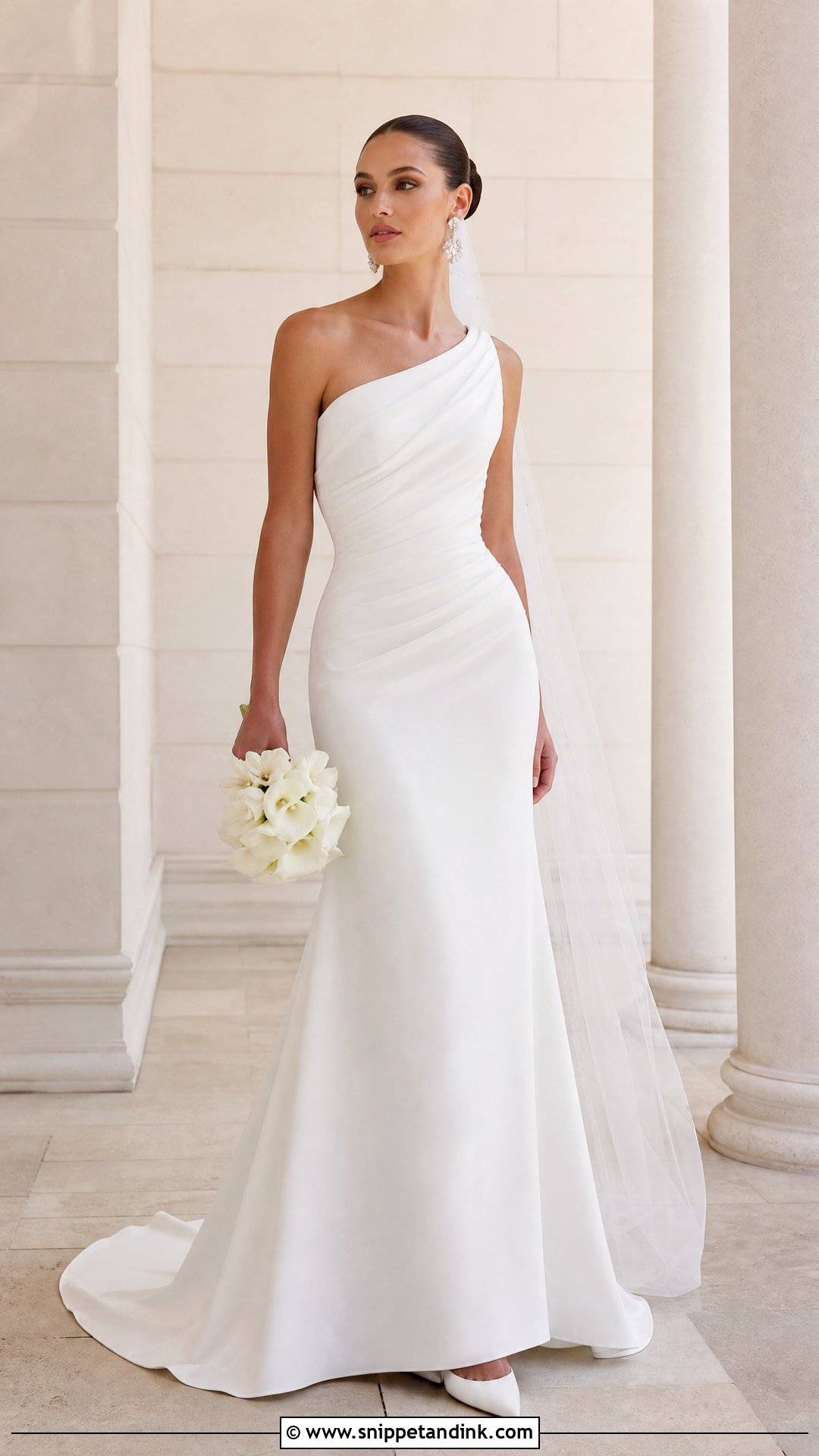
One shoulder is modern and leaves room for creative draping. Medium-weight crepe, satin or silk faille holds the asymmetric neckline and keeps the skirt smooth. The single shoulder can’t carry the gown, so build the bodice over a fitted, supported foundation. Diagonal pleats across the torso pull the eye to the waist. A column skirt is minimal; a flared one adds balance. Statement earrings, sleek hair, pointed pumps and a simple veil set behind the shoulder line. In the toile, twist and sit to check for gaping, and use stay tape and careful underlining to keep the bare-side edge clean.
16. Vintage Inspired Lace Wedding Dress
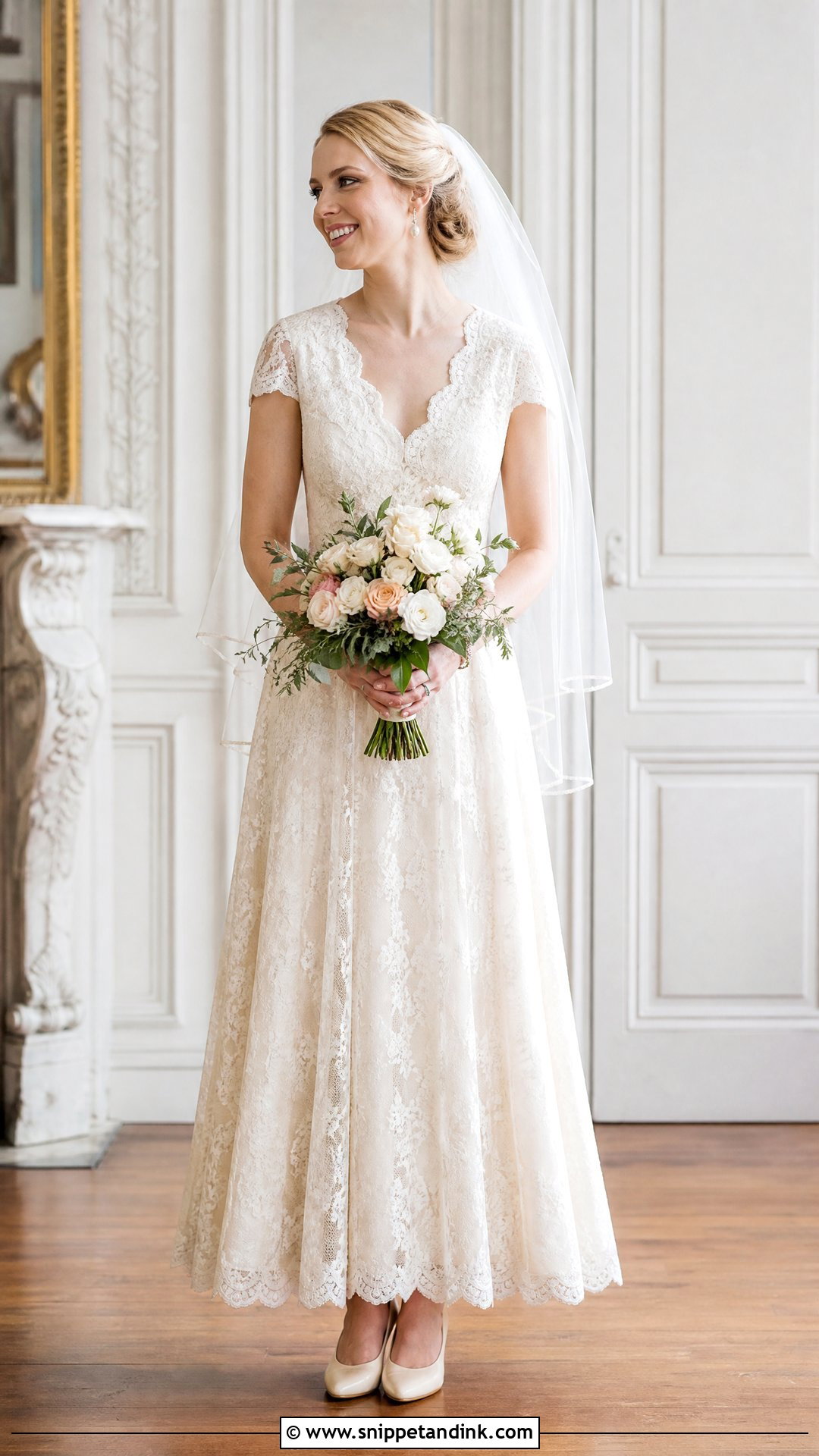
Vintage-inspired lace works best when you resist adding every period detail at once. A fitted lace bodice, natural waist, covered buttons and a softly gathered skirt is plenty. Ivory lace over a champagne, blush or cream lining shows the pattern much more clearly than white on white. Short sleeves, a modest V or a scalloped bateau neck fit the mood. Finish the insides with rayon seam binding or a light lining. A fingertip veil, pearl earrings, rounded pumps and a hand-tied bouquet. Hand-baste the important seams before machining, since layered lace shifts under the presser foot and distorts the motifs.
17. Minimalist Column Wedding Dress
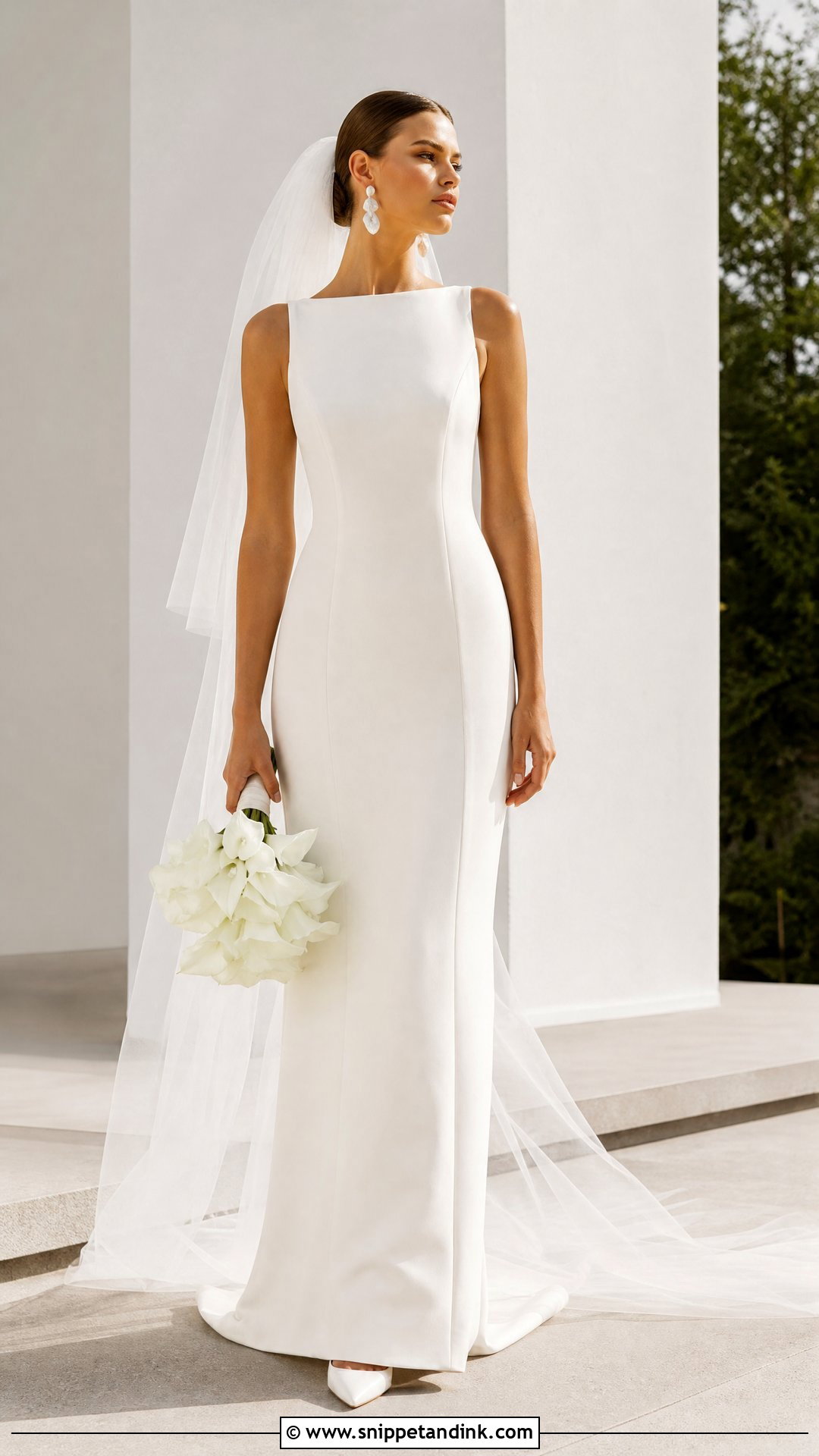
There’s nowhere to hide in a minimalist column, so fit and finishing carry the whole dress. Use a substantial crepe, matte satin or silk faille that skims without clinging. Vertical princess seams or well-placed darts do the shaping. Add a back slit, kick pleat or slight flare so you can walk. A high boat neck, narrow straps or a simple scoop all suit the line. Sculptural earrings, a sleek veil and pointed shoes. Sample every seam finish and pressing setting on a scrap first. Underlining stops ripples and improves opacity, and a full lining lets the dress slide over you instead of catching.
18. Tiered Tulle Wedding Dress
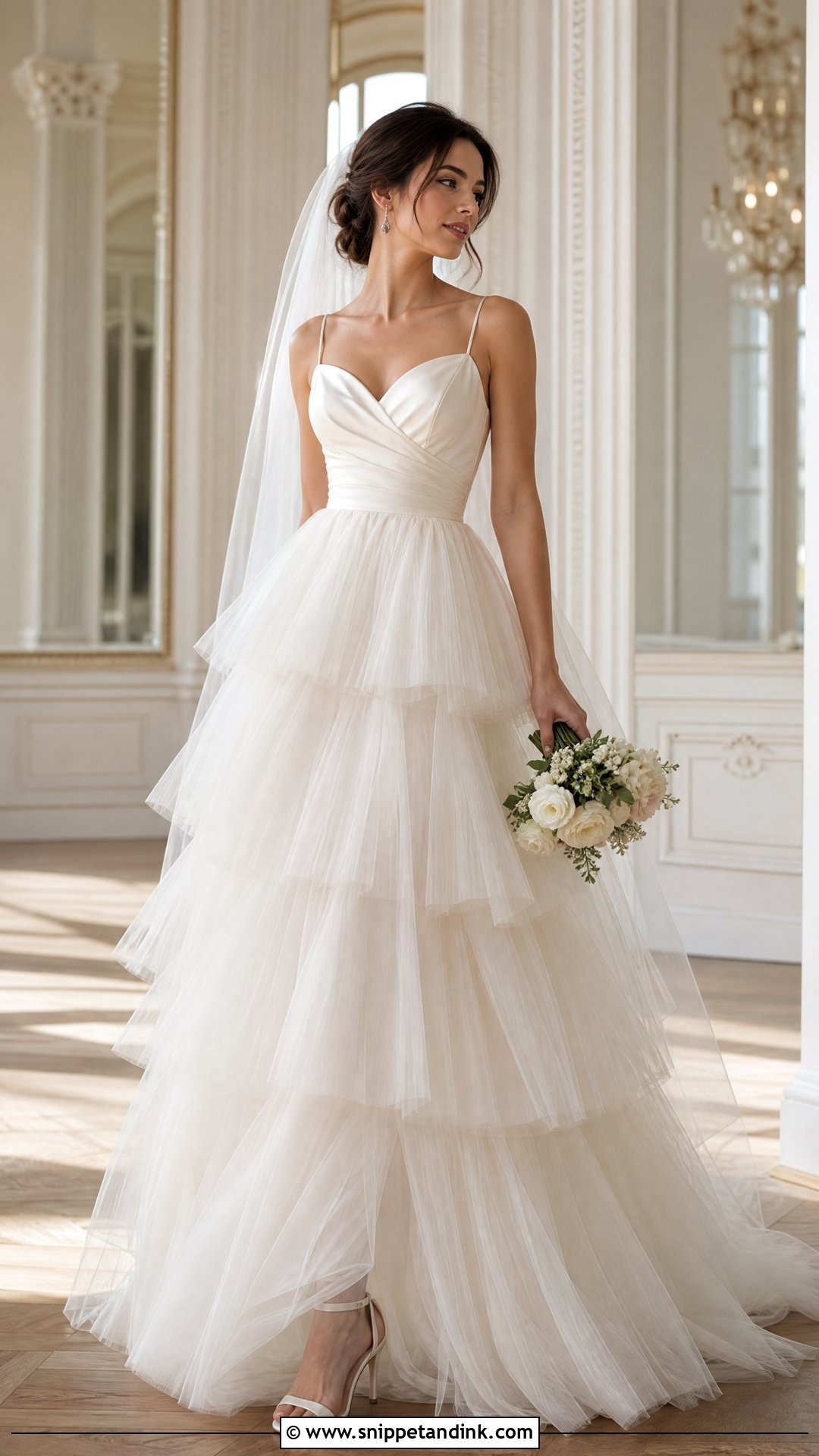
Tiered tulle gives drama with very little weight. Make a fitted bodice in satin, lace or embroidered tulle, then sew graduated tiers onto a stable lining. Soft bridal tulle floats; stiffer net stands out boldly. Cut each tier accurately and spread the gathers evenly so no section bunches. Hide the joins with extra tulle, lace trim or a few appliqués. A simple veil, delicate earrings and satin heels. Long tulle edges wander under scissors, so a rotary cutter and a long ruler make life easier. Label every tier the moment it’s cut; once you have six identical strips of white net, nobody can tell them apart.
19. Puff Sleeve Wedding Dress
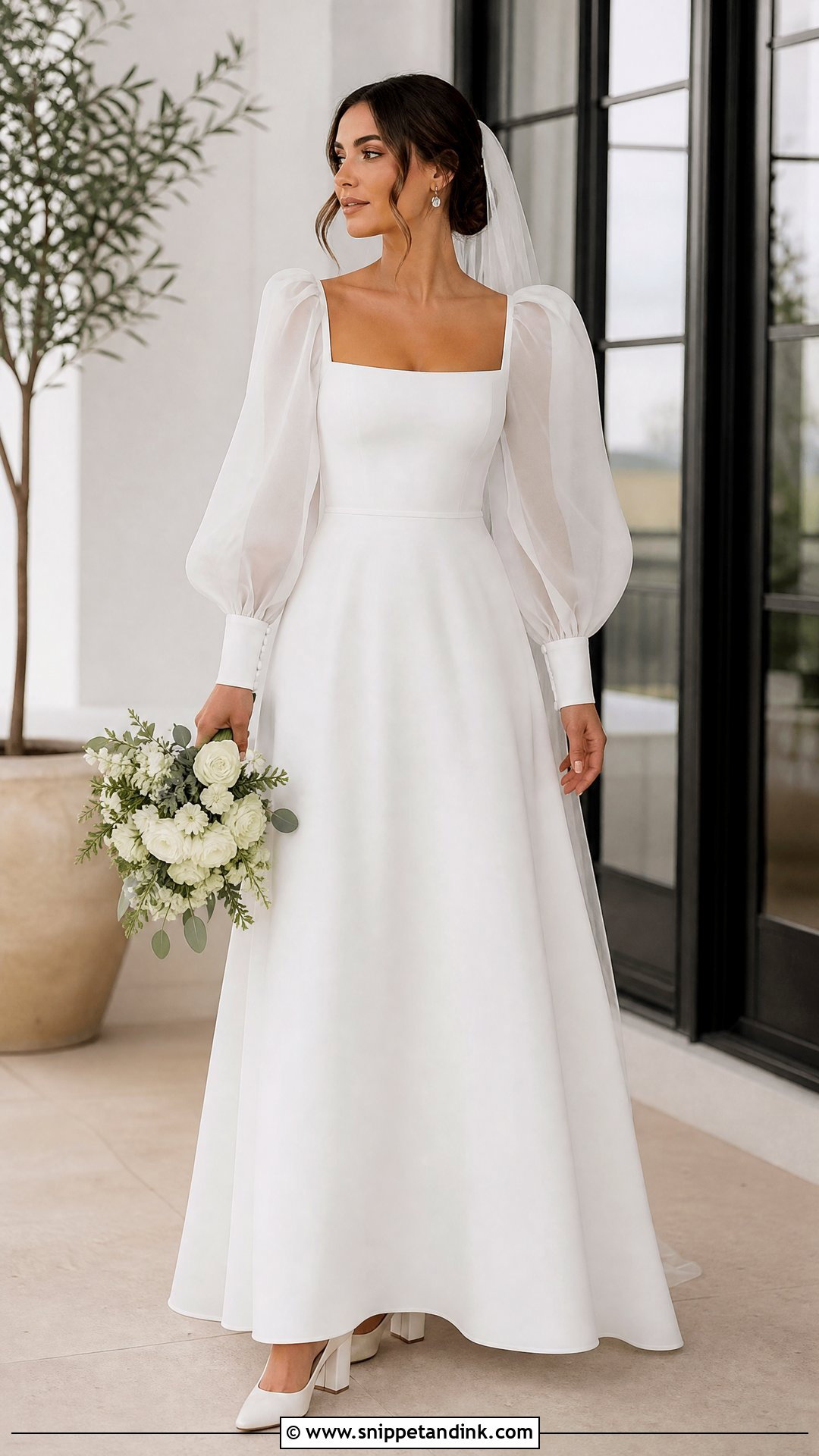
Puff sleeves add volume at the shoulders, which makes the waist look smaller by contrast. Sew the main gown with a fitted bodice and an A-line or column skirt, then add organza, tulle or light satin sleeves. A gathered cap is soft; pleats give a crisper shape. Keep the wrist fitted, or stop the sleeve above the elbow, to control the volume. Concealed snaps make them detachable for a second look. A simple veil, small earrings and block heels. Support a dramatic puff with organza underlining or a sleeve head. I judge the scale in the toile, in a full-length mirror, before you cut the real thing.
20. Linen Beach Wedding Dress
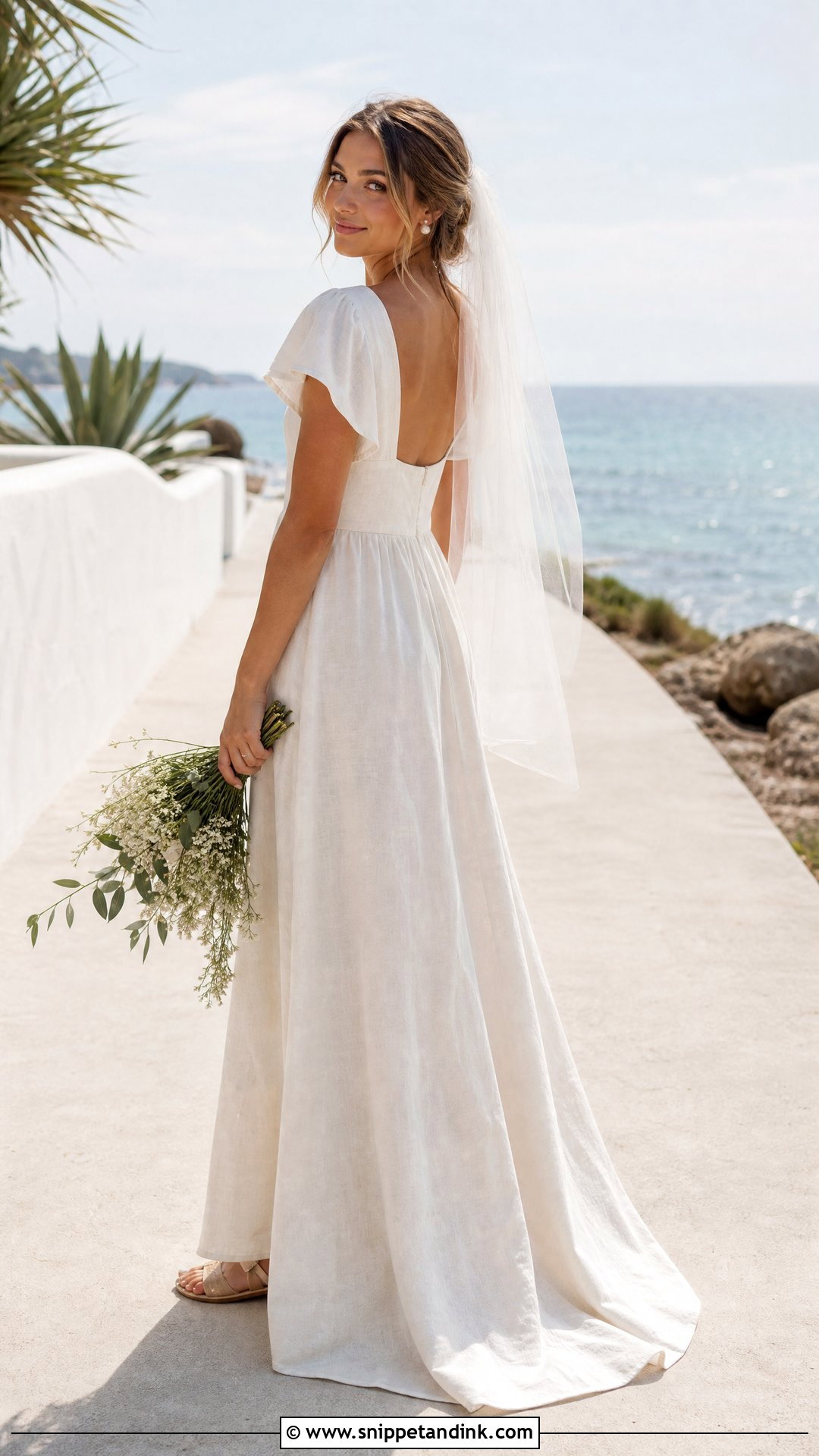
Linen is cool, breathable and right for a relaxed outdoor wedding, provided you accept a little texture. Washed linen, linen-viscose or a light linen-silk blend drapes better and creases less sharply than crisp pure linen. A simple bias-cut gown, an empire dress or a relaxed A-line lets the weave show. Narrow straps, flutter sleeves or a low square back depending on coverage. French seams or bias binding inside. A light veil, pearl studs, flat sandals and a loose bouquet. Prewash the fabric the way you’ll clean it later, because linen shrinks, and line it with something equally breathable such as cotton voile.
Needles, Thread and Feet for Slippery Bridal Fabric
A domestic machine handles bridal fabric well once it’s set up for it. Most puckering and skipped stitches come from the wrong needle, not the wrong machine.
- Fit a new, sharp microtex needle for each project; a fine size for chiffon and silk, a slightly heavier one for satin and mikado.
- Use a good polyester or silk thread that matches the fabric’s shade, and test it on a scrap first.
- Shorten the stitch slightly and lower the presser foot pressure if your machine allows it, so fine fabric doesn’t drag.
- Sew sheer seams over a strip of tissue paper and tear it away after; it stops the fabric being swallowed into the needle plate.
- Keep a separate, clean pressing cloth and iron soleplate. One mark of old starch on ivory silk is very hard to remove.
Between the last stitch and the wedding
Hang the finished gown on a padded hanger using its inner loops, covered with a clean cotton sheet or breathable bag, away from sunlight. Wash your hands before every handling, and steam out any travel creases on the morning rather than days ahead.
Why the Plainest Seams Matter Most
A handmade gown works when what you want to make matches the skills you have, the support inside is sound and it stays comfortable all day. The designs here go from beginner-friendly shapes to detailed pieces for experienced dressmakers. Whatever you choose, start early and sew at least one full toile before you touch the bridal fabric. Wear your real underwear and shoes at every major fitting. Test seam finishes, iron settings, closures, embellishment and hems on leftover fabric. Leave time for adjustments instead of rushing the last stage. A wedding dress doesn’t need endless decoration. Good fabric, a precise fit and clean finishing will make a gown that’s entirely yours.
You'll Like These Ideas:


Leave a Reply