
Keeping a gown zipped in a garment bag is one way to protect it, but not the only way. Remade carefully, its lace, satin, tulle or beading can become something you put on again. The usual routes are shortening the hem, separating bodice and skirt, adding color, stripping back the bridal details, or recutting the fabric into a new silhouette. Before anything is cut, I want the gown professionally cleaned and looked over by a tailor who can judge its construction and how much usable fabric it really holds. The ideas that follow run from anniversary dresses to separates you can mix with what’s already in your wardrobe.
Your Body Now Versus the Bodice Then
The first thing I do with a gown someone wants to rewear is have them put it on with the bra they’d actually wear under the new piece. Bridal bodices are cut close, and how much a tailor can change depends on what’s hidden in the seams.
Taking in is easy, letting out is not
Most gowns can be taken in by a size or more without trouble. Letting out is different. Seam allowances on bridal wear are often narrow, lace seams are frequently trimmed right back to the motif, and satin can show old stitch holes where a seam has moved. If you need more room, ask about these instead:
- A lace-up corset back in place of the zip, which gives some adjustment either way.
- Side panels or gussets in a matching fabric, hidden under the arms or behind lace.
- Turning the bodice into an open jacket or bolero that doesn’t need to close at all.
A mother’s or grandmother’s dress
Inherited gowns bring two extra problems. Older fabric can be weaker than it looks, especially along the fold lines where it was stored, so gently tug a seam allowance before planning heavy alterations. Vintage sizing also ran smaller and shaped the waist differently, so judge the dress with a tape measure, not by the number on the label.
1. Repurposed Wedding Dress Cocktail Dress
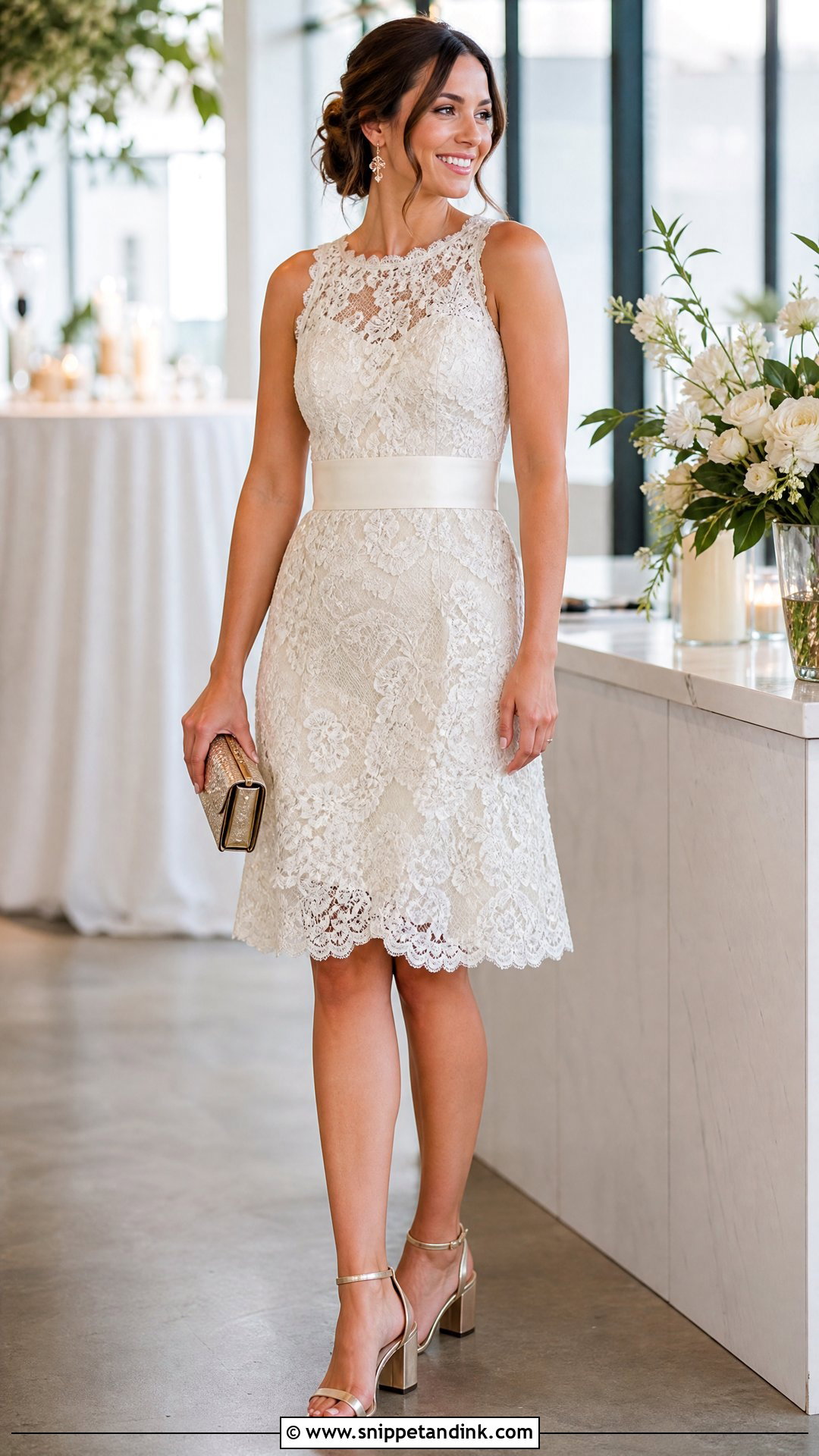
Cocktail length is where most people start, because it changes the gown least and gets worn most. The tailor shortens the skirt to just above or below the knee, and the useful question is where to cut: you want the hem to land in a section of lace or embroidery worth keeping, not across the middle of a motif. The fitted bodice can stay, though heavy boning, big bows or extra appliqués often come out for a cleaner line. A defined waistband helps if the shape still reads bridal. Ivory gives a monochrome look; navy, burgundy, green or blush makes the original far less recognizable.
2. Repurposed Wedding Dress Tea-Length Dress
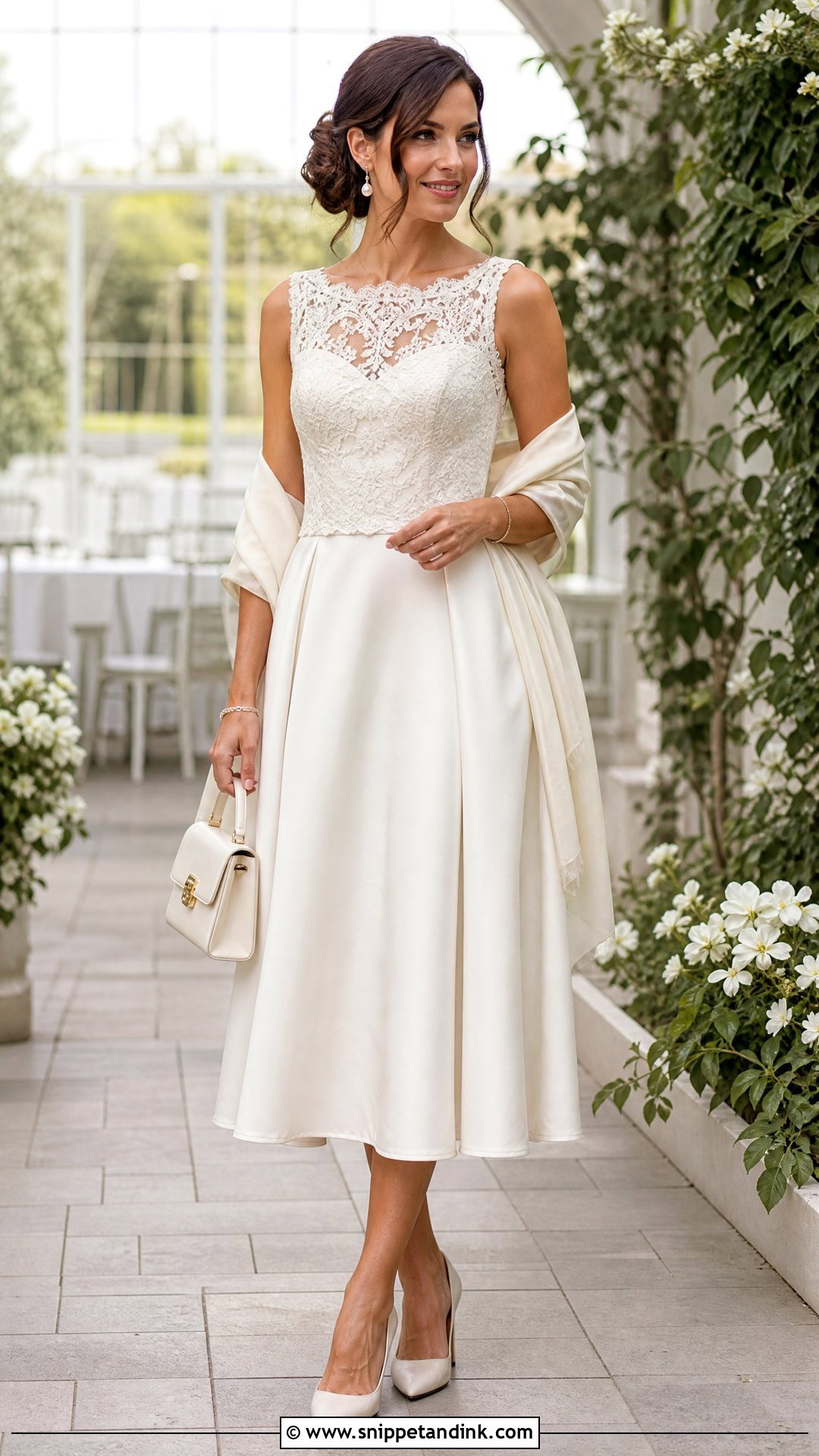
Full skirts, layered organza and structured satin are the fabrics that suit tea length, because they hold a shape between knee and ankle instead of hanging limp. The hem gets shortened, then the underlayers are thinned so the volume is controlled rather than bell-like. On the bodice, sleeves can come off, embellishment can be reduced, or a high neckline can open to a soft scoop. If the gown has vintage details, keep them. Stripping an older dress back to plain satin usually loses the very thing that made it worth remaking.
3. Dyed Repurposed Wedding Dress Evening Gown
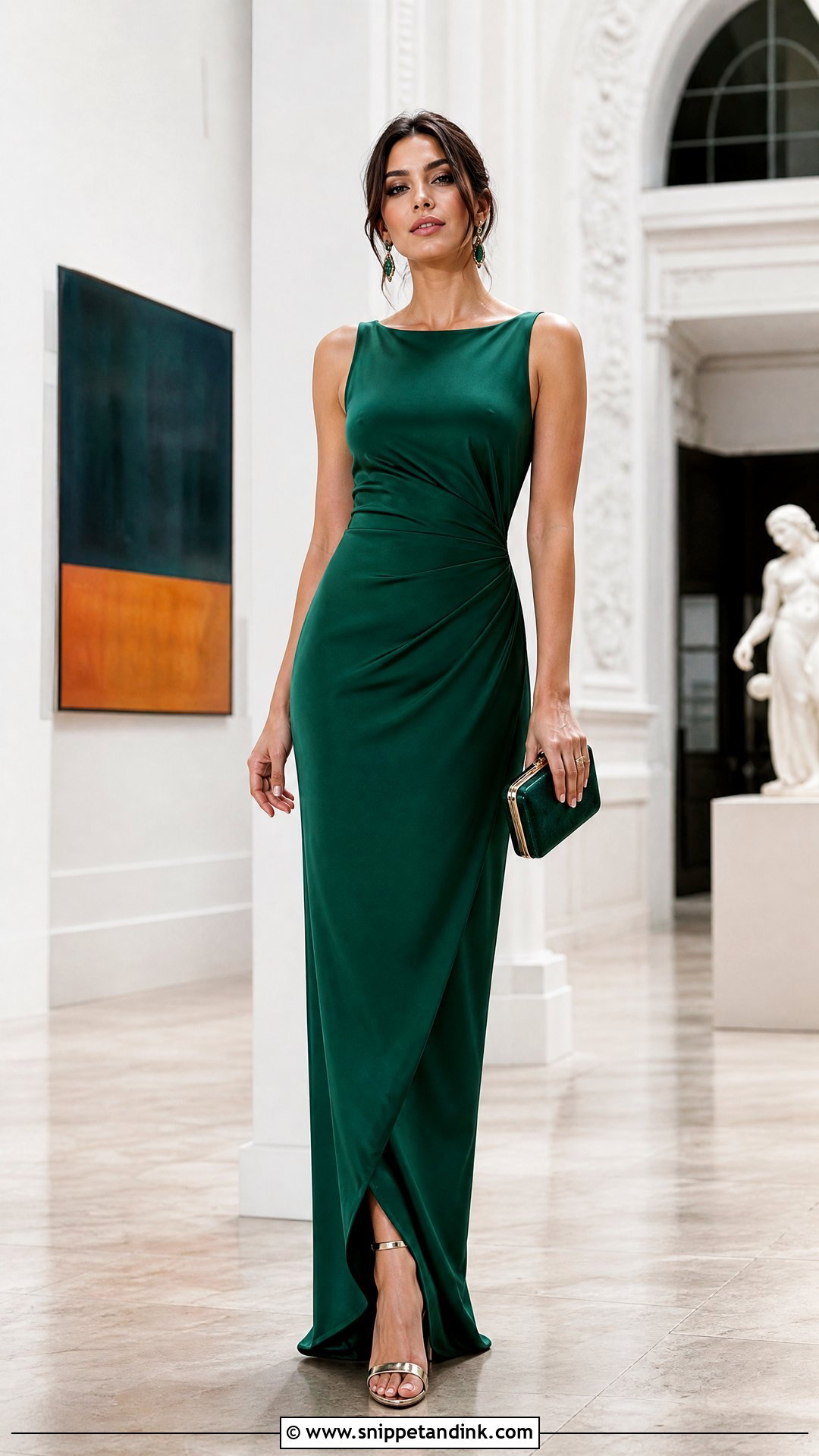
Color changes the identity of a dress while leaving its silhouette alone. Deep blue, emerald, plum, black and soft gray all push a gown toward evening wear. The catch is that satin, polyester, silk, lace and thread absorb dye at different rates, so a textile specialist should test an unseen section before the whole dress goes in, and you should expect ivory thread or polyester lace to stay lighter than the body. Take off the obviously bridal parts, such as a train, veil loops or dense white appliqués, before dyeing so nothing comes out half-tinted. A navy gown with midnight-blue shoes and silver jewelry works for galas and formal dinners.
4. Repurposed Wedding Dress Midi Dress
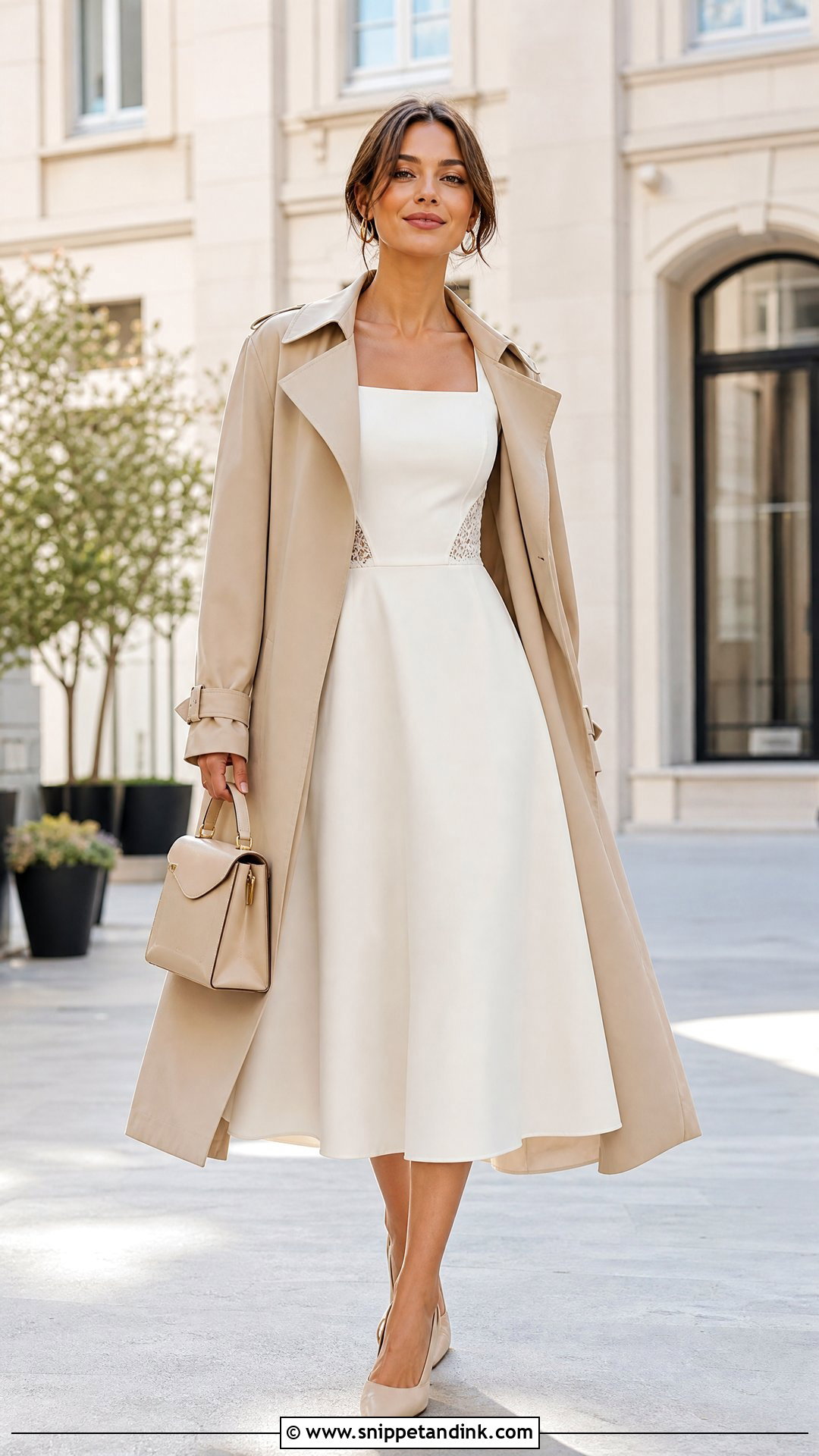
Mid-calf is the length I find people genuinely rewear, since it passes at a lunch and at a formal party. Shorten the gown and pull out the excess petticoats; with them left in, the skirt swings like a bell instead of moving with you. A simple A-line or column is far easier to wear again than a heavily structured bridal shape. A dated neckline can become a square, bateau, V or sleeveless finish, and lace can stay at the neckline or waist as a quiet reminder. Slingbacks and a trench coat take the finished midi to daytime parties, formal luncheons and anniversary events.
5. Repurposed Wedding Dress Mini Dress
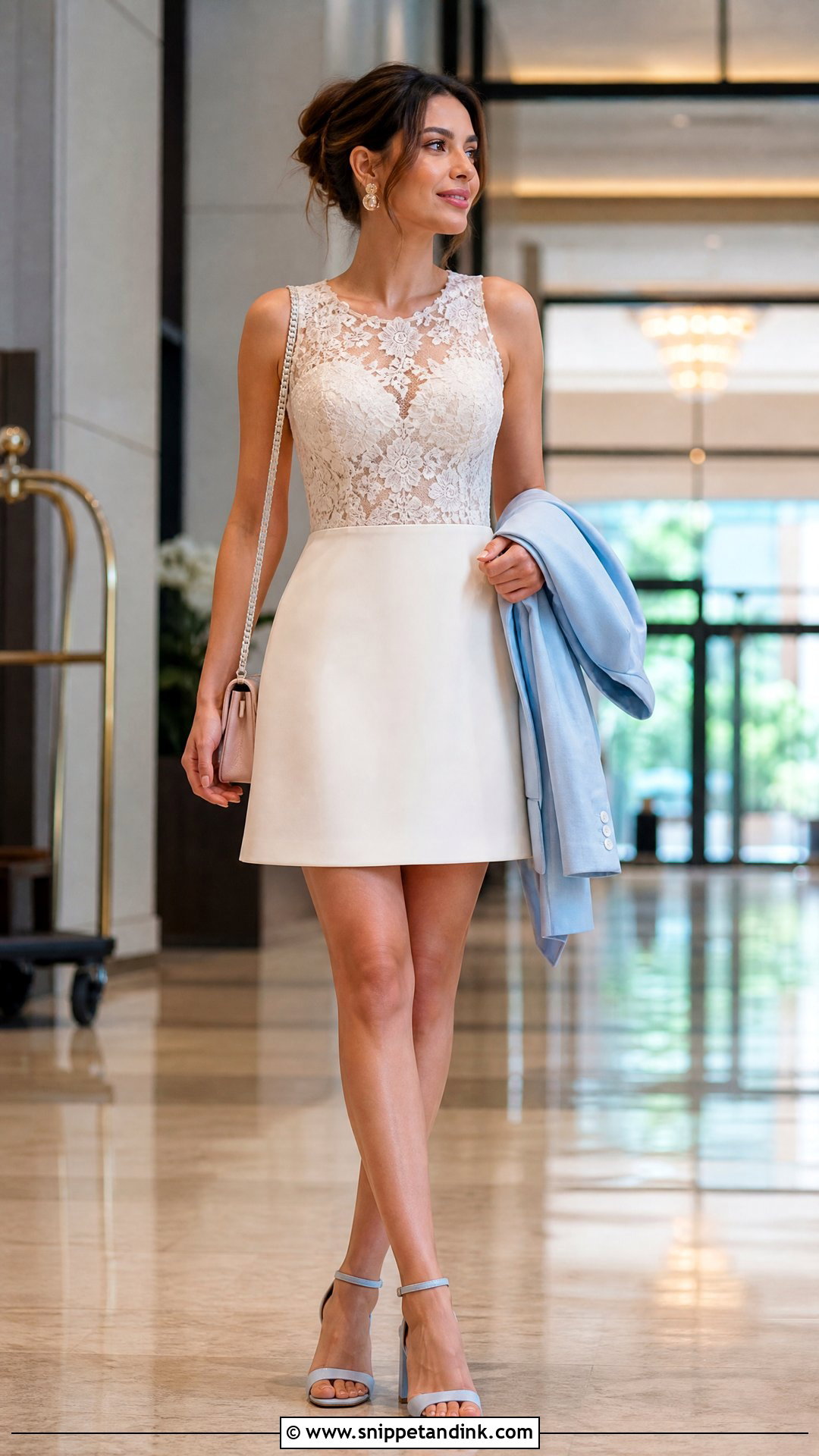
A mini only works if the bodice fits well and has details worth saving, since the bodice is now most of the dress. Shorten the skirt, reduce the layers and settle on a straight, A-line or softly flared hem. Long lace sleeves balance a short skirt with coverage; a sleeveless bodice looks more contemporary. Sit down in it at the fitting. A mini cut from a gown with stiff petticoat layers rides up more than you’d guess. Low block heels and a colored belt or tailored jacket move it toward birthday parties and engagement celebrations.
6. Repurposed Wedding Dress Two-Piece Set
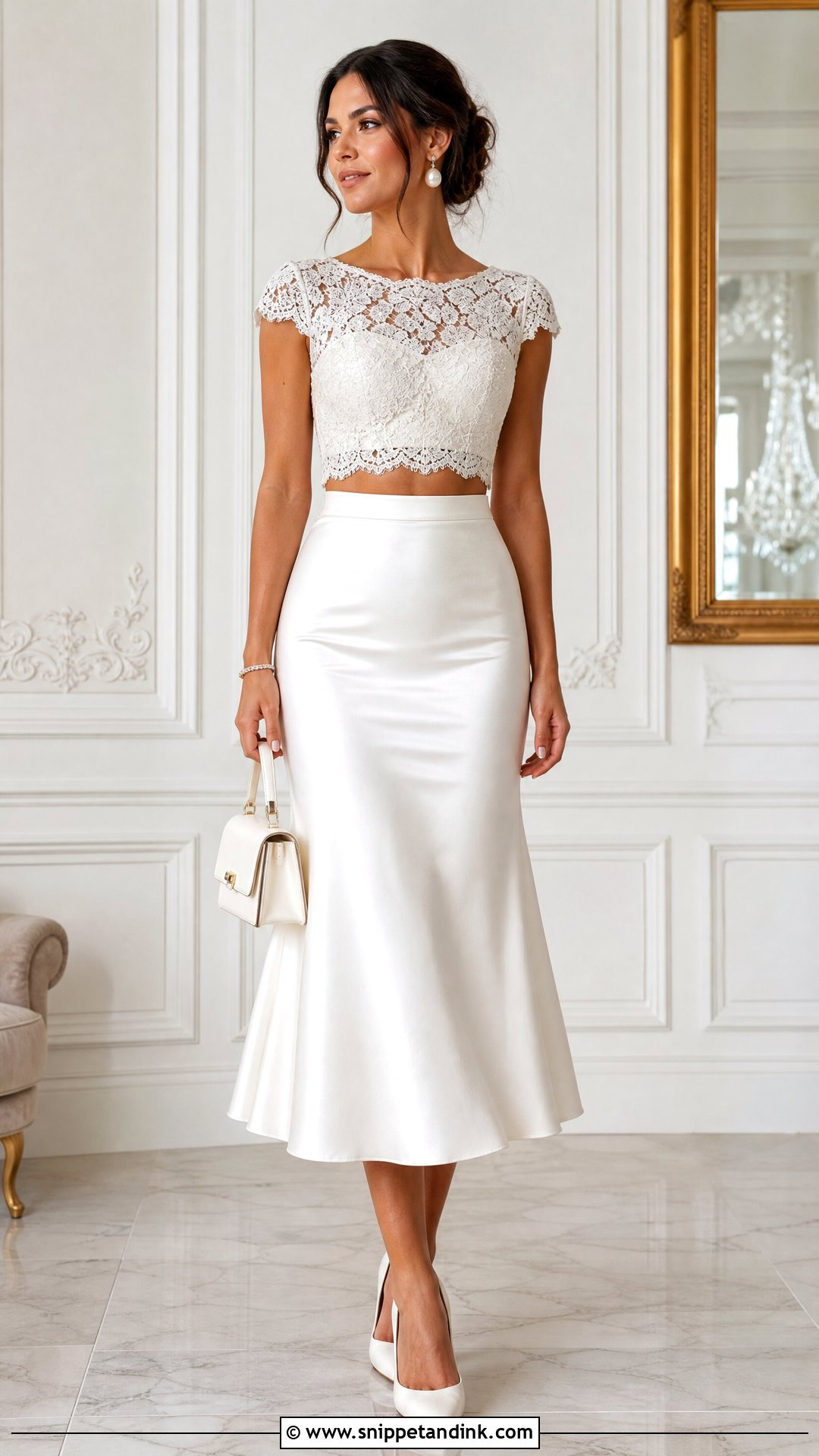
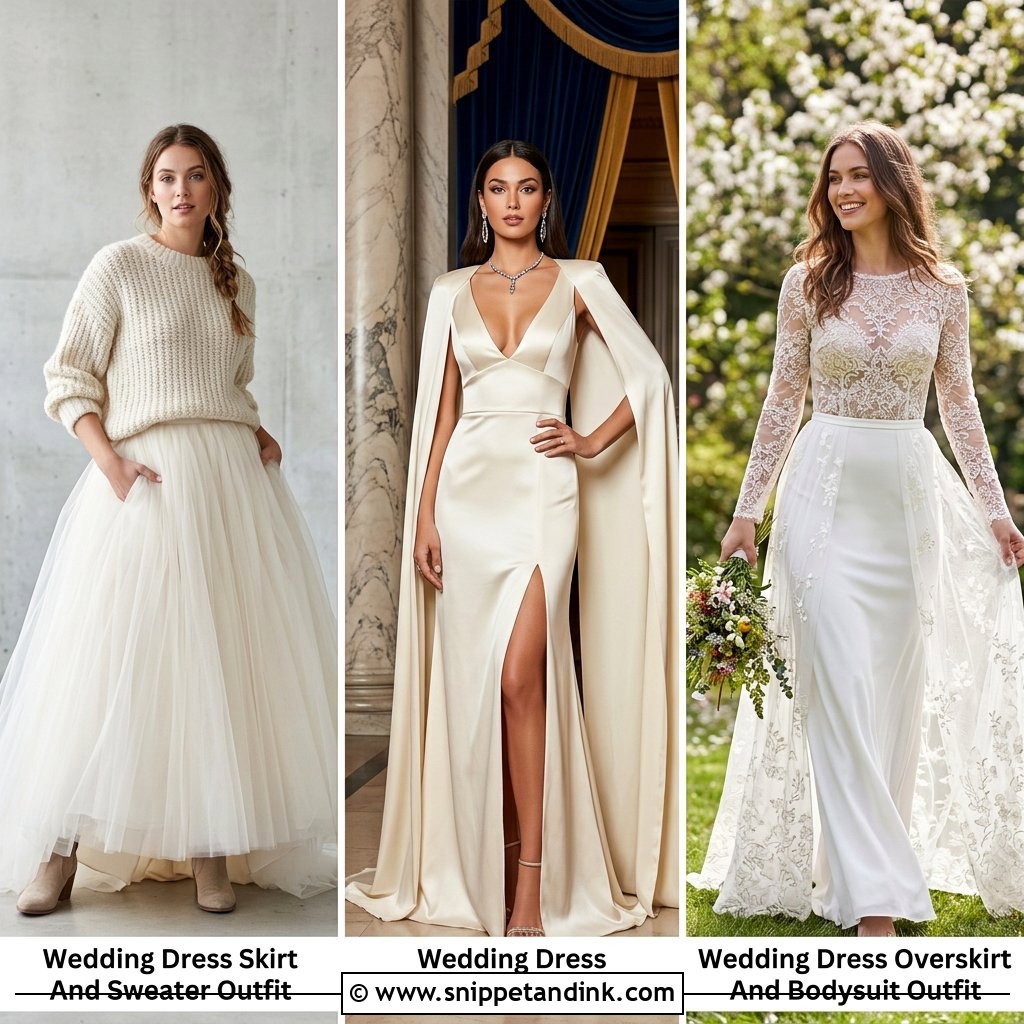
Separating bodice and skirt gives you two pieces to wear together or apart. The tailor finishes the old waistline, adds secure closures, and the skirt usually needs a new waistband once it’s detached. When the pair will be worn as a set, I ask for a small overlap where top meets skirt, because a gap that looks fine standing opens up the moment you reach or sit. Lose the train and extra underskirts so the bottom half moves easily. Later the top goes with tailored trousers and the skirt with a fine-knit sweater, which gives far more combinations than another one-piece formal dress.
7. Repurposed Wedding Dress Jumpsuit
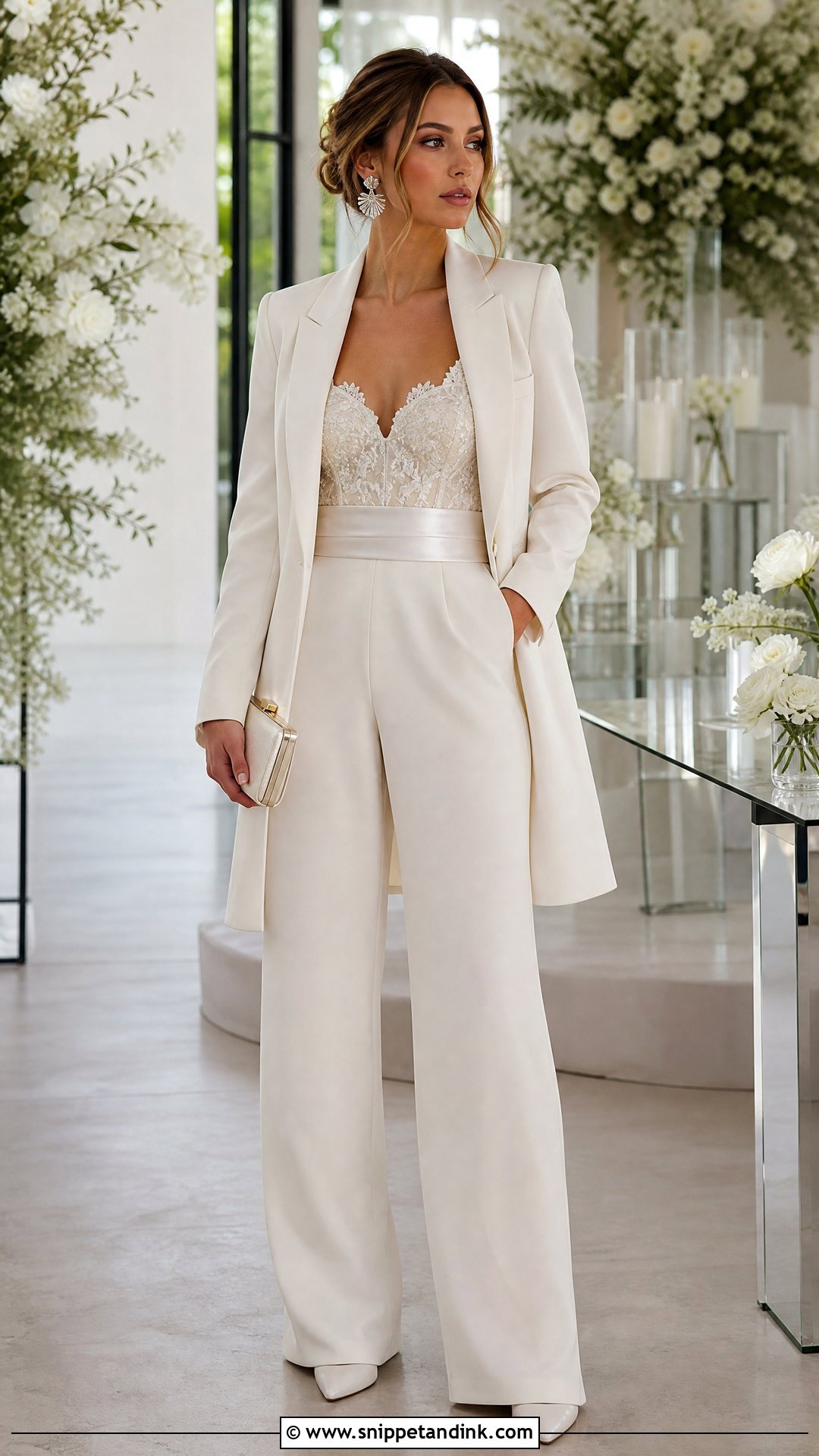
A jumpsuit needs a lot of usable fabric. The bodice can usually be kept while the skirt is recut into wide or tapered trouser panels. If the original material is too delicate for pants, which is often true of thin satin and anything sheer, combine the bodice with a closely matched crepe or satin. Matching is harder than it sounds. Ivory comes in dozens of shades, so take the bodice along when you buy the new fabric and compare them in daylight. A defined waist hides the join, and one small lace panel can stay for sentiment while dense embellishment goes.
8. Repurposed Wedding Dress Pantsuit
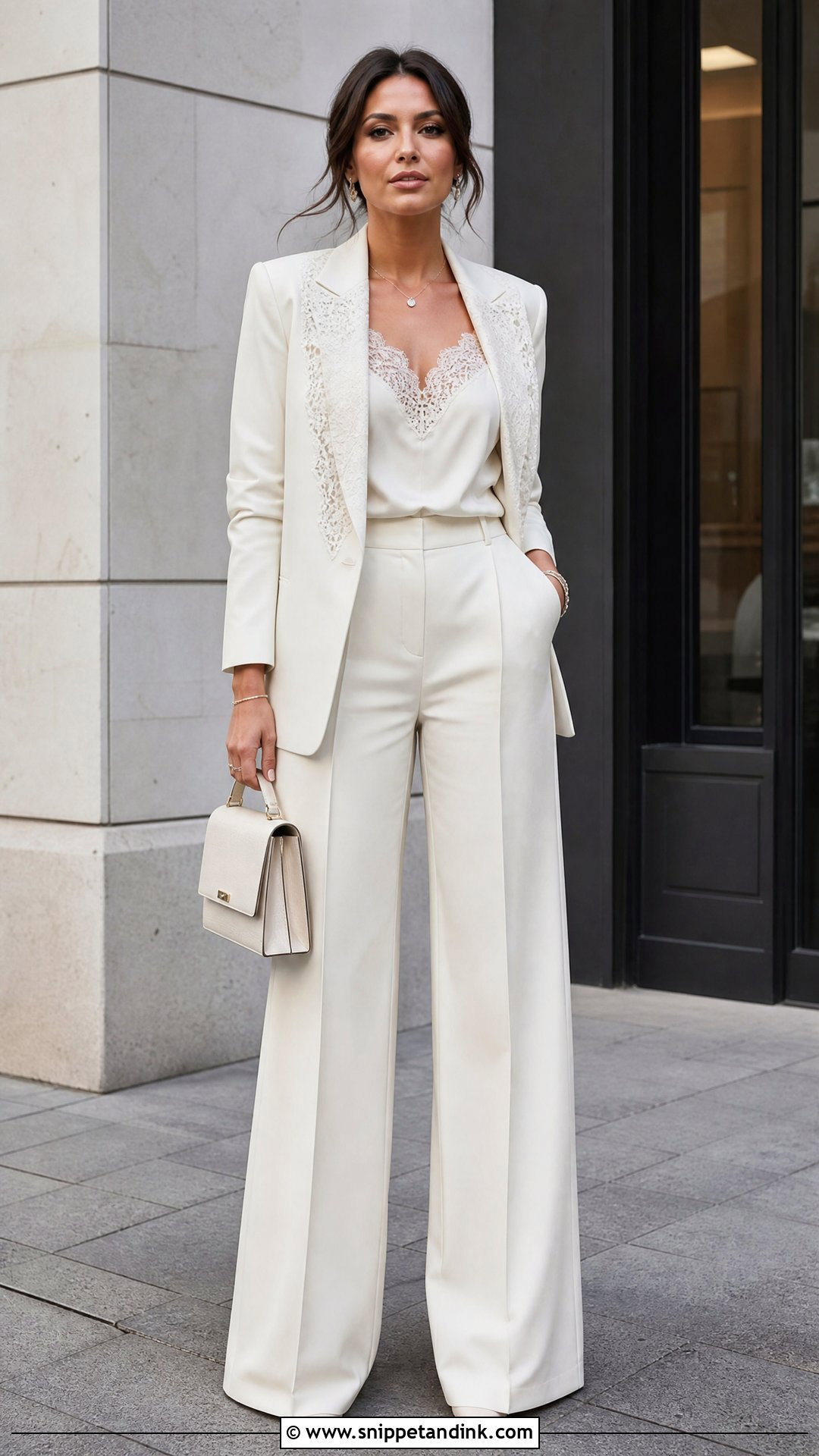
When there isn’t enough material for a whole outfit, a gown can still contribute meaningful details to a tailored pantsuit. Lace from the sleeves or bodice can face the lapels, cover buttons, edge the cuffs or become a camisole worn underneath. The suit itself can be ivory, cream, pastel or a stronger color. This is the route I’d suggest for an inherited gown that doesn’t fit, because nobody has to rebuild a dress around a different body. Wide-leg trousers soften it and straight legs streamline it; loafers by day, pointed heels at night.
9. Repurposed Wedding Dress Lace Top And Trousers
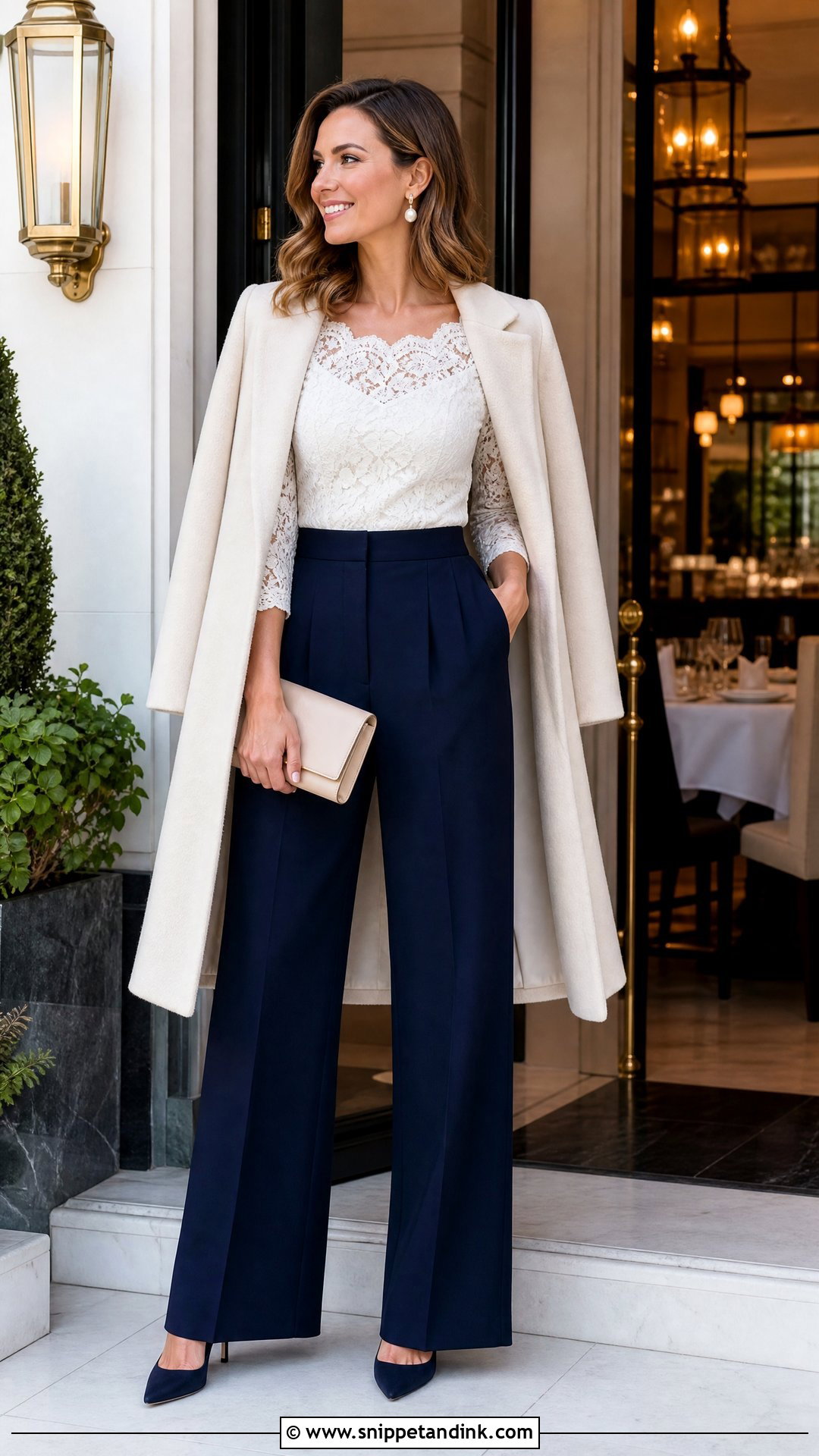
Lace from a wedding dress makes a fine blouse, and the scalloped edges are the part to protect. A good tailor plans the pattern so those finished scallops land at the sleeves, neckline or hem, because cutting lace anywhere else leaves a raw edge that needs binding. Add lining only where coverage is needed. A concealed zip or the gown’s own covered buttons down the back keep a sentimental detail. Cream trousers make it tonal; black, navy or burgundy add contrast. It’s a good use for a gown with a damaged skirt and a sound bodice.
10. Repurposed Wedding Dress Satin Camisole Outfit
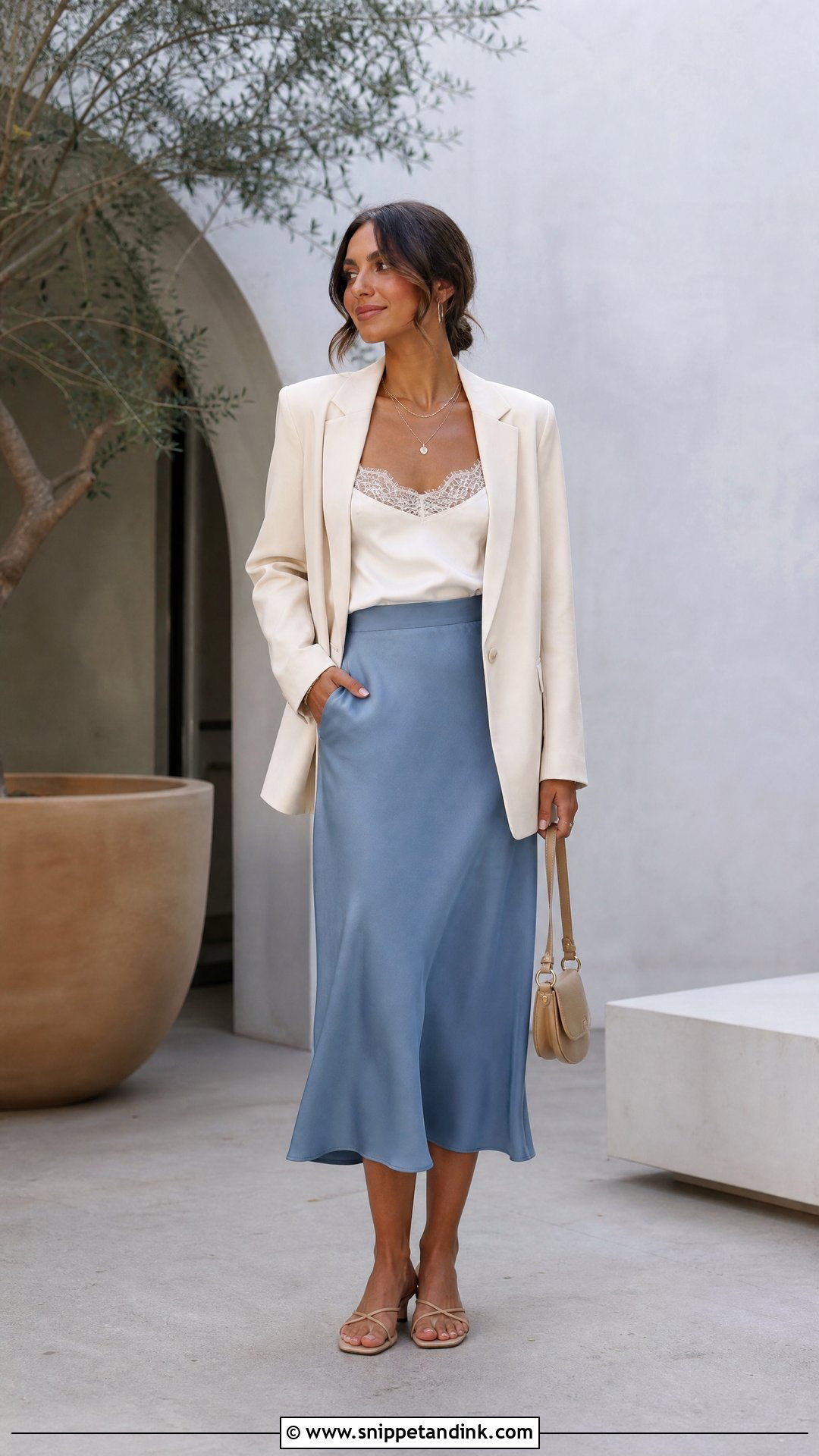
Plain satin from a minimally embellished gown recuts into a camisole with very little waste. A bias cut drapes softly, but it clings and shows every seam underneath, so anyone wanting a smoother look should go for a lined, straight-cut version. Use the original lace sparingly at the neckline or straps. On its own, satin can read as sleepwear, which is why a tailored blazer and a flowing midi skirt matter here. Because a camisole uses so little fabric, the rest of the gown stays free for other projects.
11. Repurposed Wedding Dress Corset Top Outfit

A structured bodice is already most of the way to a corset top. Remove the skirt carefully, finish the lower edge, and add a supportive back closure if needed; a lace-up back also allows a little adjustment. Heavy beadwork can be edited and appliqués moved to restore symmetry. Fit is the whole job. Without the weight of a skirt pulling down, a bodice tends to ride up, so the tailor may add a waist stay inside to anchor it. Black wide-leg trousers give drama, while cream or soft gray stays quieter.
12. Repurposed Wedding Dress Peplum Top And Skirt
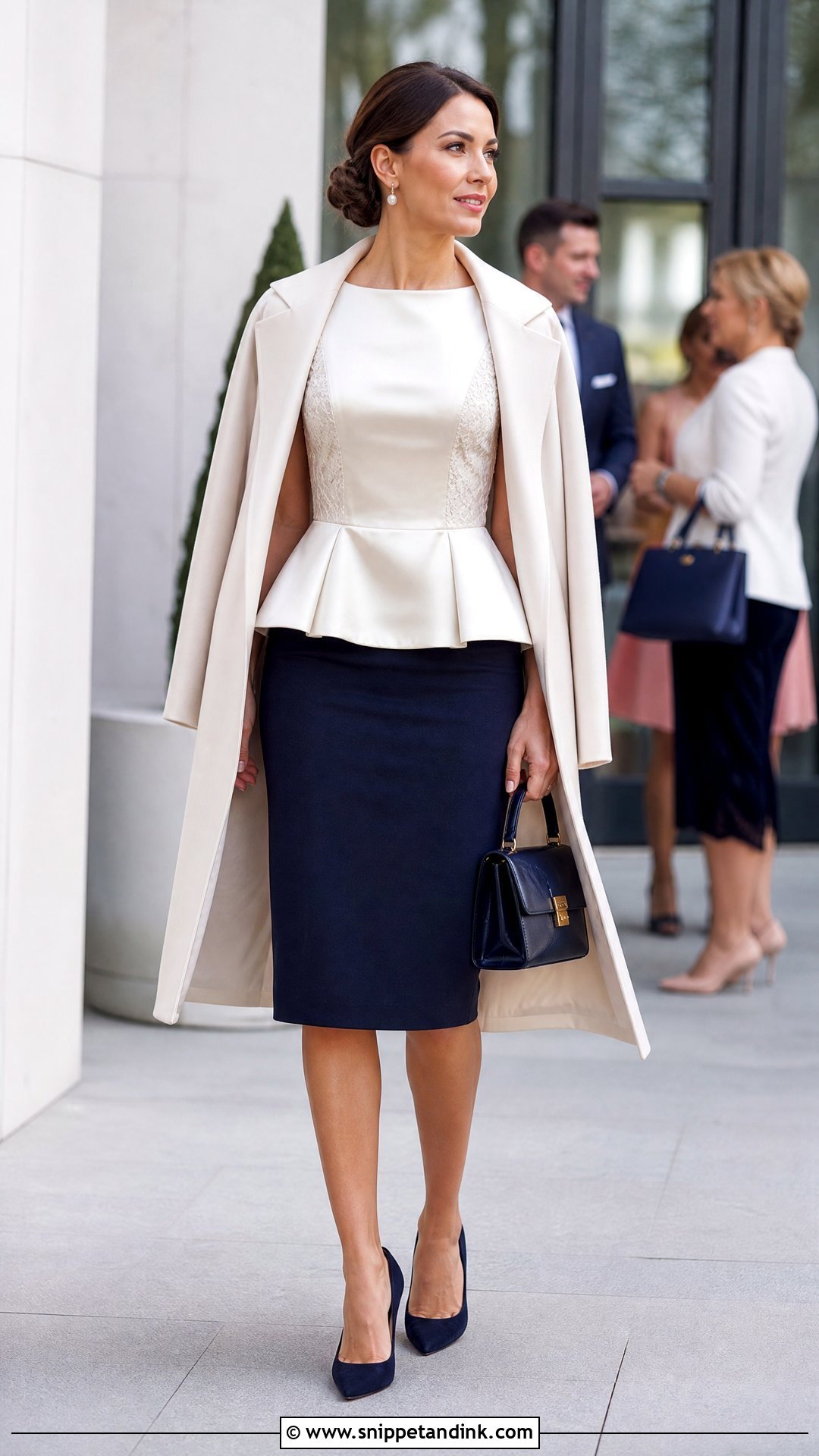
A fitted bodice becomes a peplum top when the tailor cuts the flare from the original skirt and joins it at a clean waist seam. Balance that volume with a streamlined pencil skirt, made from the gown if there’s enough yardage or from a contrasting fabric if not. Stiff fabrics like mikado hold a peplum out crisply. Soft satin lets it droop, which some people like and some don’t, so ask to see a test flare pinned on. Navy, black, dusty blue or muted rose accessories reduce the bridal feeling for formal daytime events.
13. Repurposed Wedding Dress Tulle Skirt Outfit
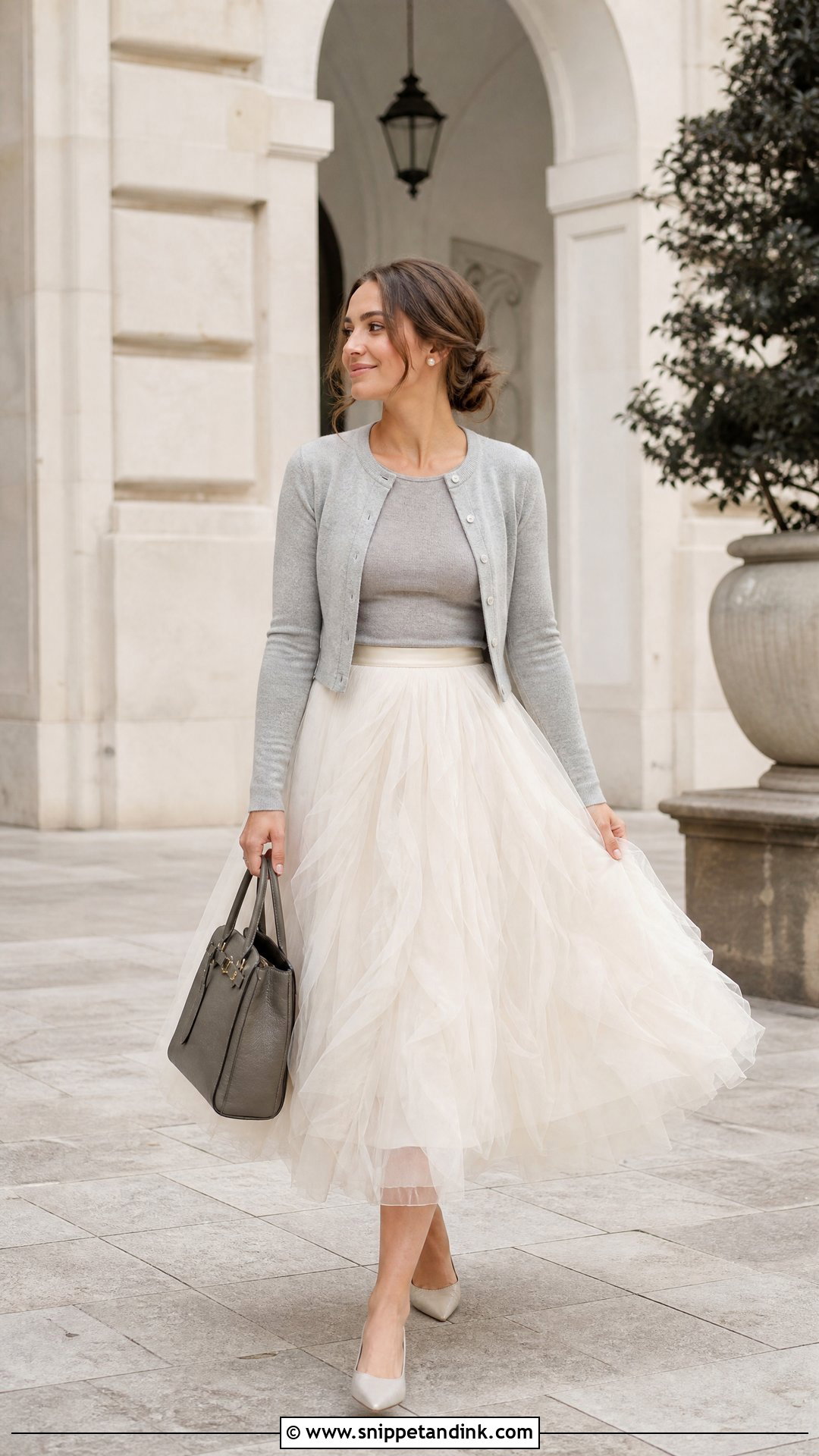
Tulle layers make a midi or ankle-length skirt once the train is gone and the volume is cut back. Attach them to a comfortable new waistband and add a soft lining, since bare tulle against tights or skin is scratchy and slightly see-through. Tulle also snags on rough knits, velcro and bag hardware, so pair it with a smooth fitted knit or cropped cardigan. A black, navy, gray or pastel sweater makes it read as occasion wear rather than bridal. A few original lace appliqués near the hem keep the connection when the bodice no longer fits.
14. Repurposed Wedding Dress Statement Skirt Outfit
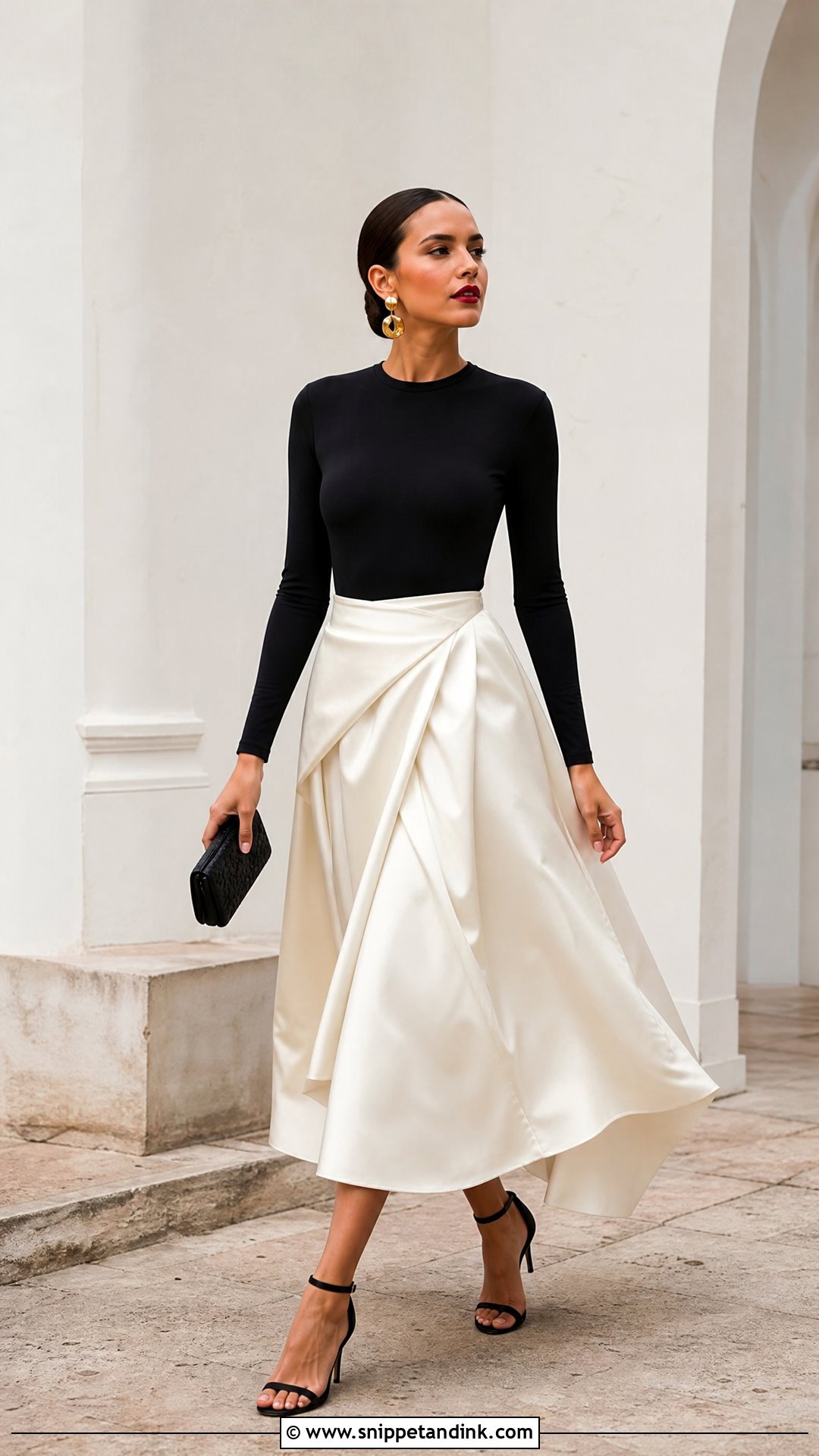
Satin, mikado and brocade gowns have the body for a statement skirt. Recut the original into a clean A-line, pleated midi or full-length shape, dropping the train and unnecessary underskirts, and add a sturdy waistband and discreet closure so it stands without the old bodice. Heavy fabric drags on a waistband, so I ask for a petersham facing inside rather than a thin band that rolls over. A fitted black bodysuit or fine knit makes the bridal fabric look intentional. If the skirt has embroidery, keep everything else plain so the handwork stays visible.
15. Repurposed Wedding Dress Lace Jacket Outfit
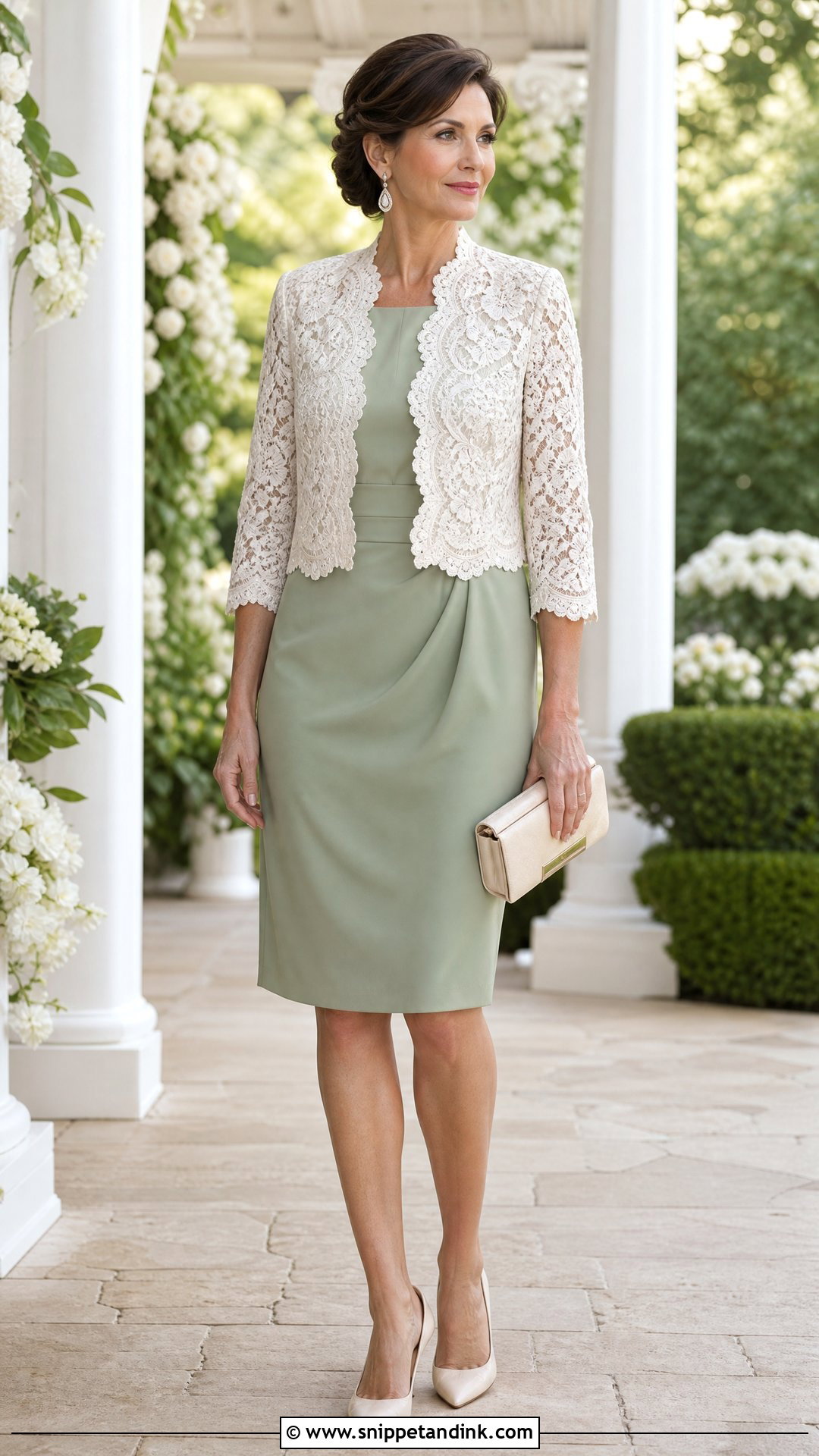
Lace sleeves, overlays and bodice panels can be rebuilt into a cropped jacket or bolero, with the scalloped edges kept along the cuffs and front opening. A light lining adds structure without hiding the pattern. Wear it over a simple sheath in navy, blush, sage or charcoal so the lace stands out. I recommend this when a gown has plenty of lace but can’t be resized, since a jacket doesn’t need to fit closely. It also keeps the sentimental fabric near the face, where it shows in every photo.
16. Repurposed Wedding Dress Cape Outfit
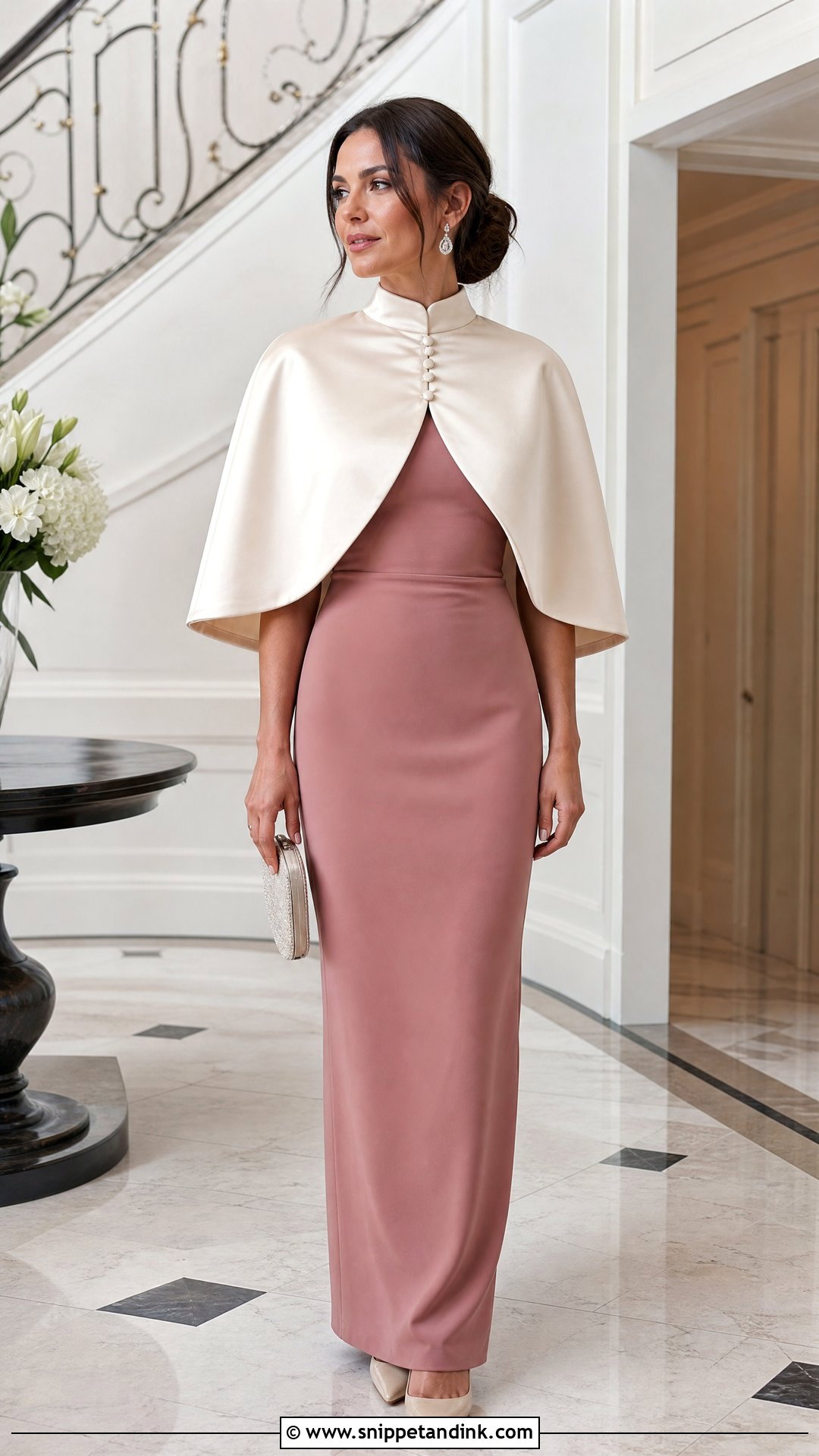
A wide skirt gives large uninterrupted panels, which is exactly what a cape needs. Satin makes a structured cape; chiffon, lace or organza make a lighter capelet. Covered buttons, embroidery or a strip of the original trim at the neckline carry the recognizable detail. Light organza catches every breeze, so a waist-length capelet is easier to manage outdoors than a long one. A colored column dress underneath keeps the outfit from reading as bridal. This suits gowns whose bodice is too complicated to alter comfortably.
17. Repurposed Wedding Dress Slip Dress
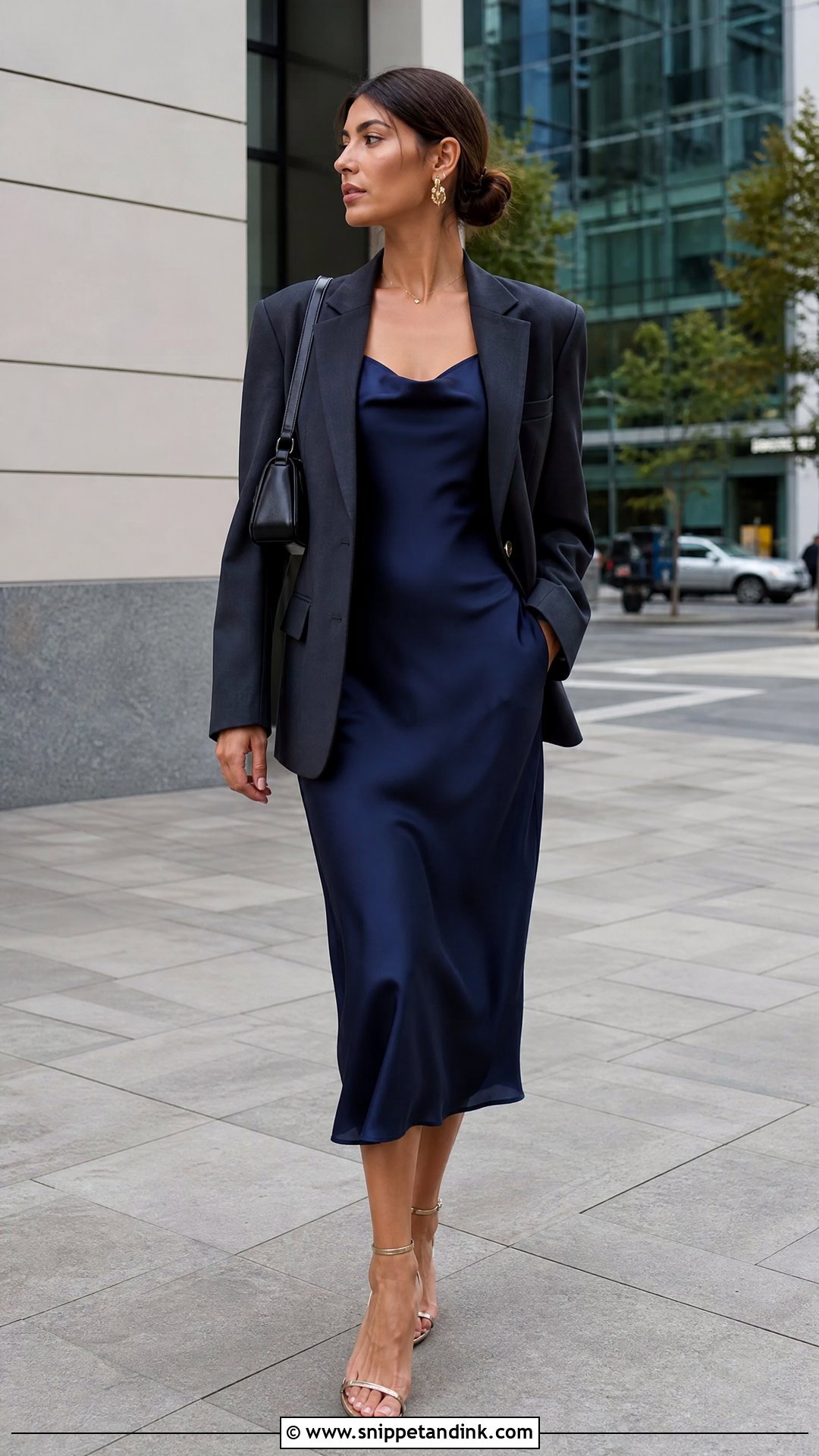
Long, uninterrupted satin panels with little boning, beading or heavy appliqué are what a slip dress requires. Remove the train, simplify the lining and adjust the neckline for coverage. Narrow straps look minimal, wider ones support better, and anyone who needs a bra will want the wider version. The dress can stay ivory or be professionally dyed navy, dusty rose, olive or charcoal. Satin shows bra lines and creases readily, so try it on with the underwear you’ll actually wear. An oversized blazer gives the fluid shape some structure.
18. Repurposed Wedding Dress Wrap Dress
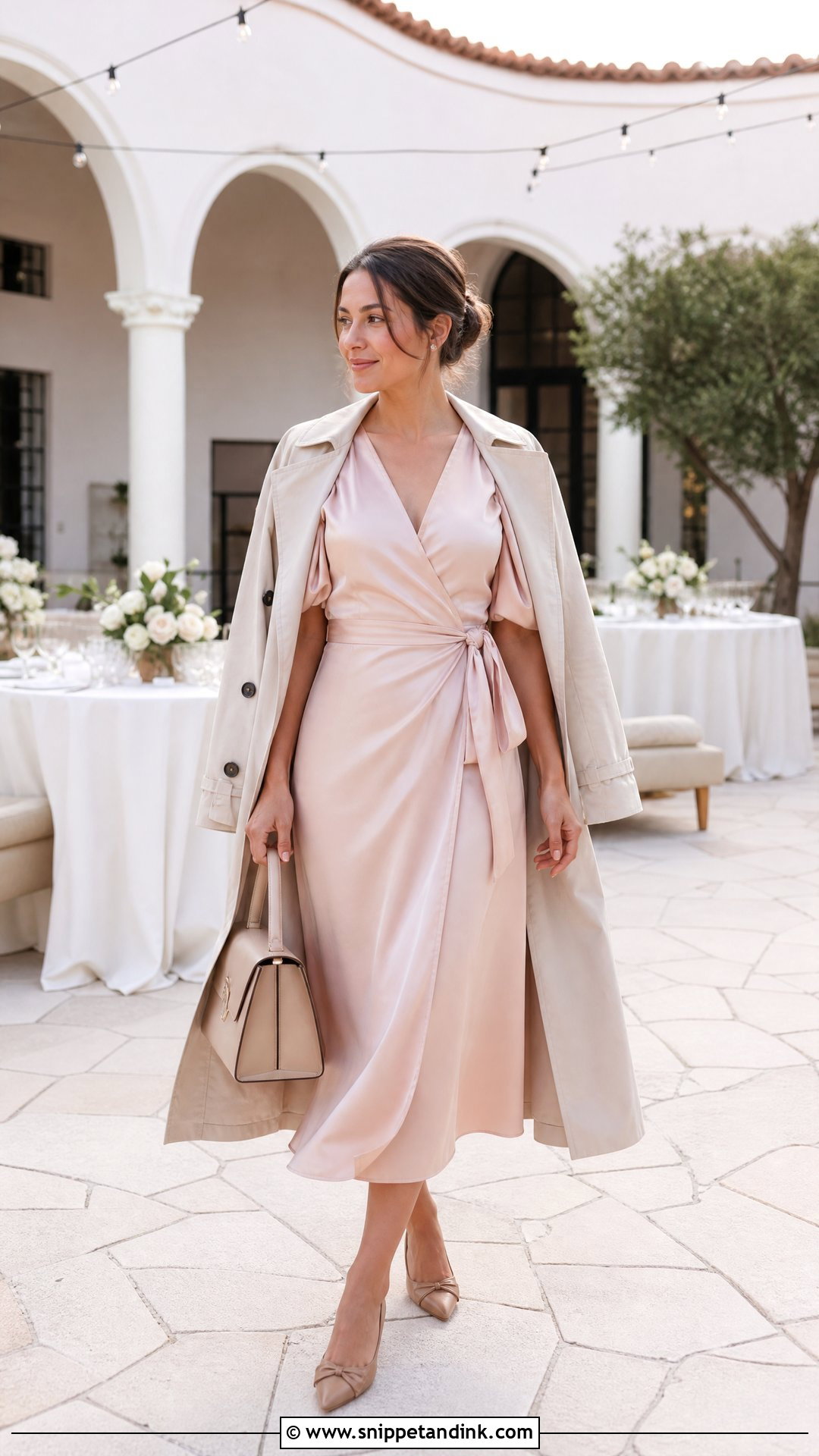
A wrap dress has one real advantage over most remakes: the tie adjusts, so it copes with modest changes in fit over the years. Satin, crepe, chiffon and soft lace overlays all move well in this shape. If yardage is short, the tailor may combine skirt fabric with a coordinating fabric for the underlap or lining. Ask for a midi hem, gently shaped sleeves, a secure waist tie and a hidden snap at the bust so the neckline doesn’t gape. Muted color makes it more versatile, though ivory works with contrasting accessories.
19. Repurposed Wedding Dress Shirt Dress
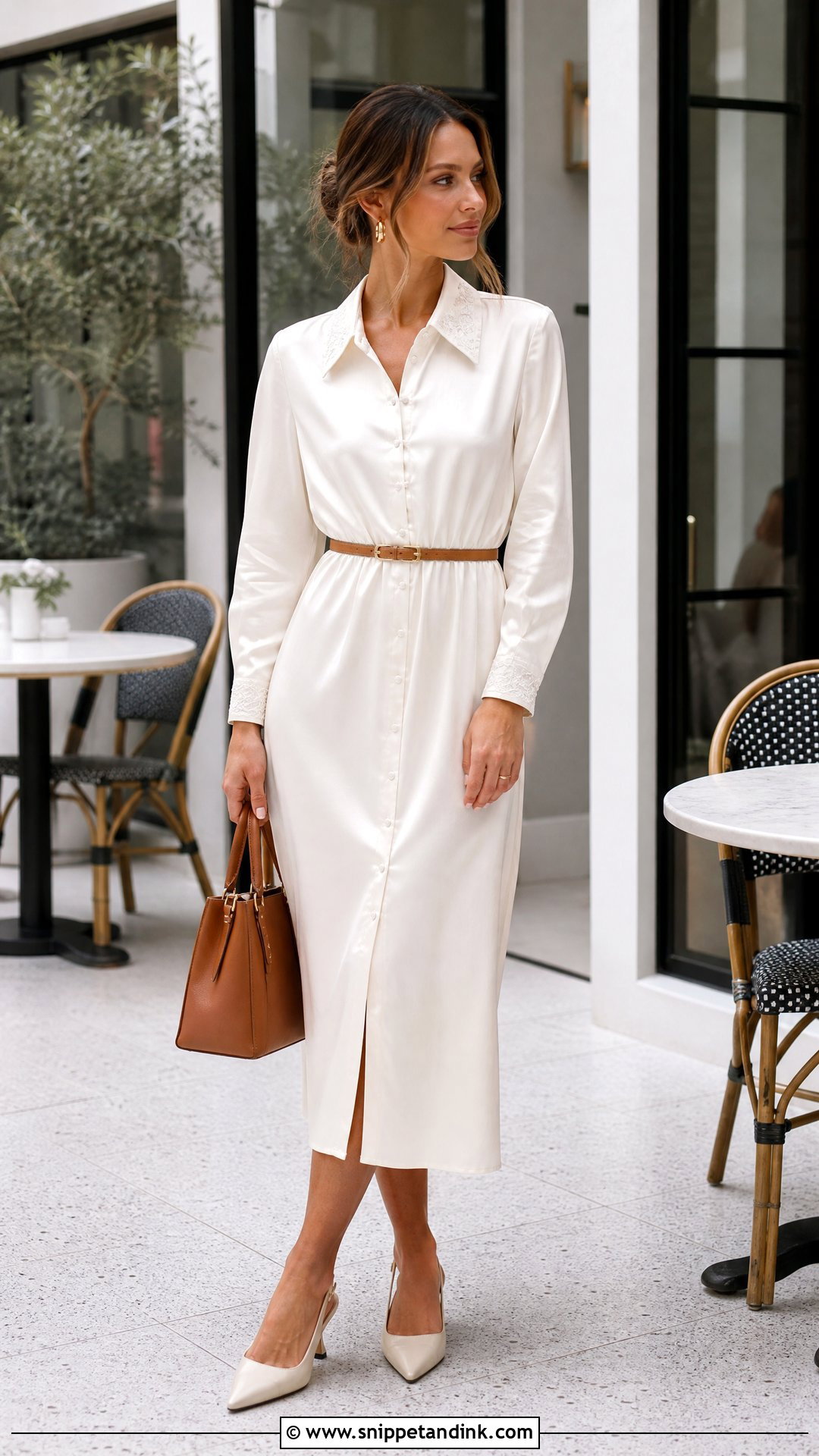
Could a formal gown become an easy button-front dress? With careful reconstruction, smooth satin or structured fabric can be shaped into a shirt dress, with the original covered buttons down the front or at the cuffs and lace as a collar insert or narrow sleeve detail. Buttonholes are the tricky part. Satin frays at the slit, so the placket needs interfacing and a test buttonhole on a scrap first. A defined waistband stops it looking shapeless, and a colored belt with slingbacks breaks up the ivory for lunches and showers.
20. Repurposed Wedding Dress Off-Shoulder Midi Dress
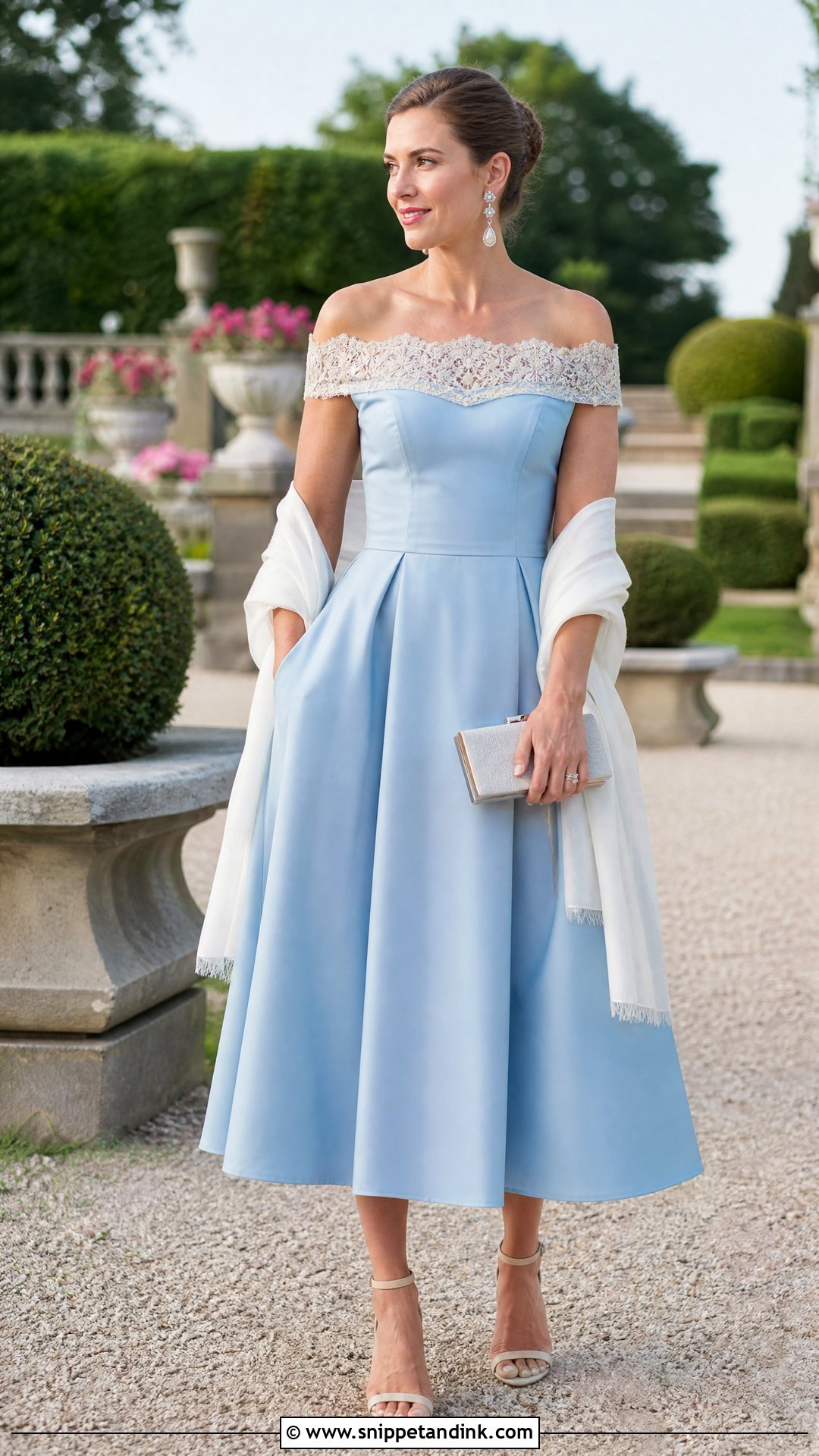
An off-shoulder midi is how I’d update a gown with a high, dated or very covered neckline. The tailor lowers and reshapes the bodice, uses lace from the sleeves to form a soft band around the shoulders, then shortens the skirt to mid-calf and reduces the volume. Lowering a neckline takes away support, so the internal boning and bust structure have to be checked, and a strip of silicone grip inside the band stops it sliding. Test the fit standing, sitting and walking. Ivory reads as an anniversary dress; a pastel or jewel tone is a bigger change.
21. Repurposed Wedding Dress One-Shoulder Dress
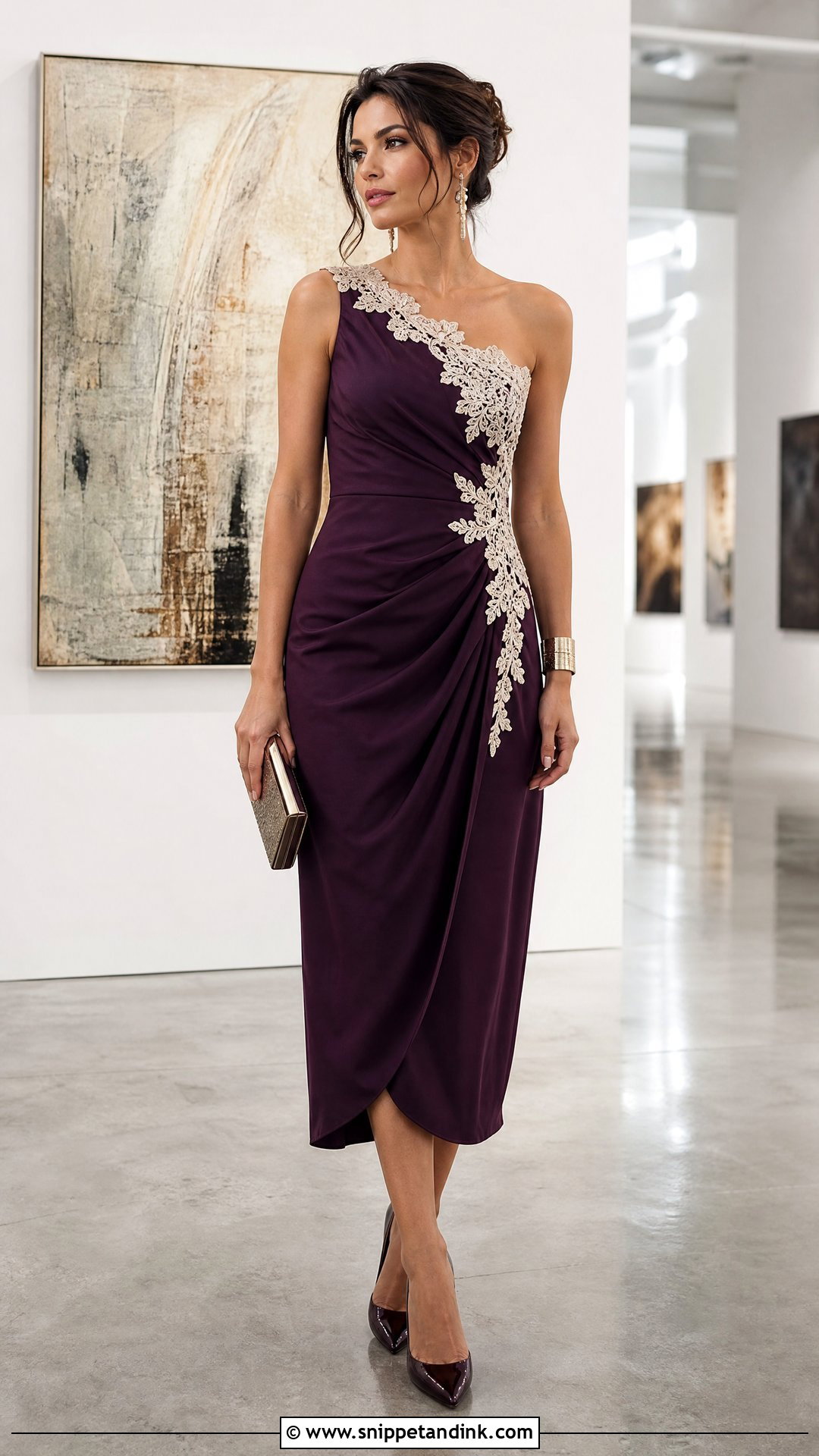
Asymmetry is a clever rescue when one sleeve or one side of the bodice is damaged, yellowed or impossible to restore: that side simply gets cut away. The tailor rebuilds the neckline and moves lace appliqués around the remaining shoulder so the finish looks deliberate. A straight midi or softly draped full-length skirt balances the bodice. Expect real pattern work, because a one-shoulder bodice relies on a single strap and snug side seams to stay put. Keep earrings small and let the neckline lead.
22. Repurposed Wedding Dress Vow Renewal Dress
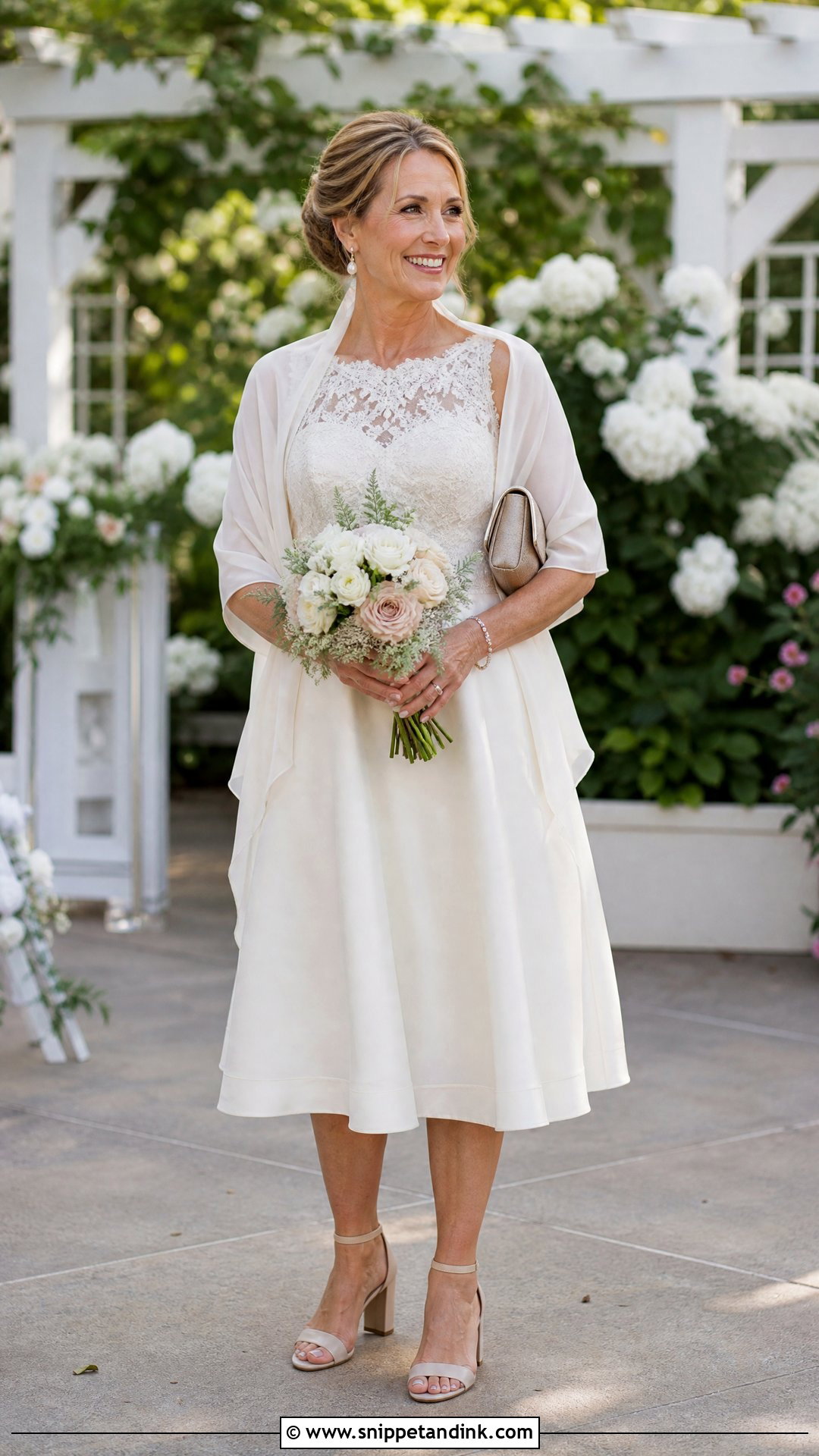
For a vow renewal, the gown can be simplified and worn again without looking identical. Shorten the train, reduce the skirt, remove heavy sleeves or reshape the neckline. A tea-length or flowing midi is comfortable in most settings. Keep one feature, such as the lace bodice, the covered buttons or the embroidered waistband, as the thread back to the first wedding. This keeps the dress whole as clothing instead of dividing it into smaller projects, which matters a great deal to some couples.
23. Repurposed Wedding Dress Formal Skirt Set
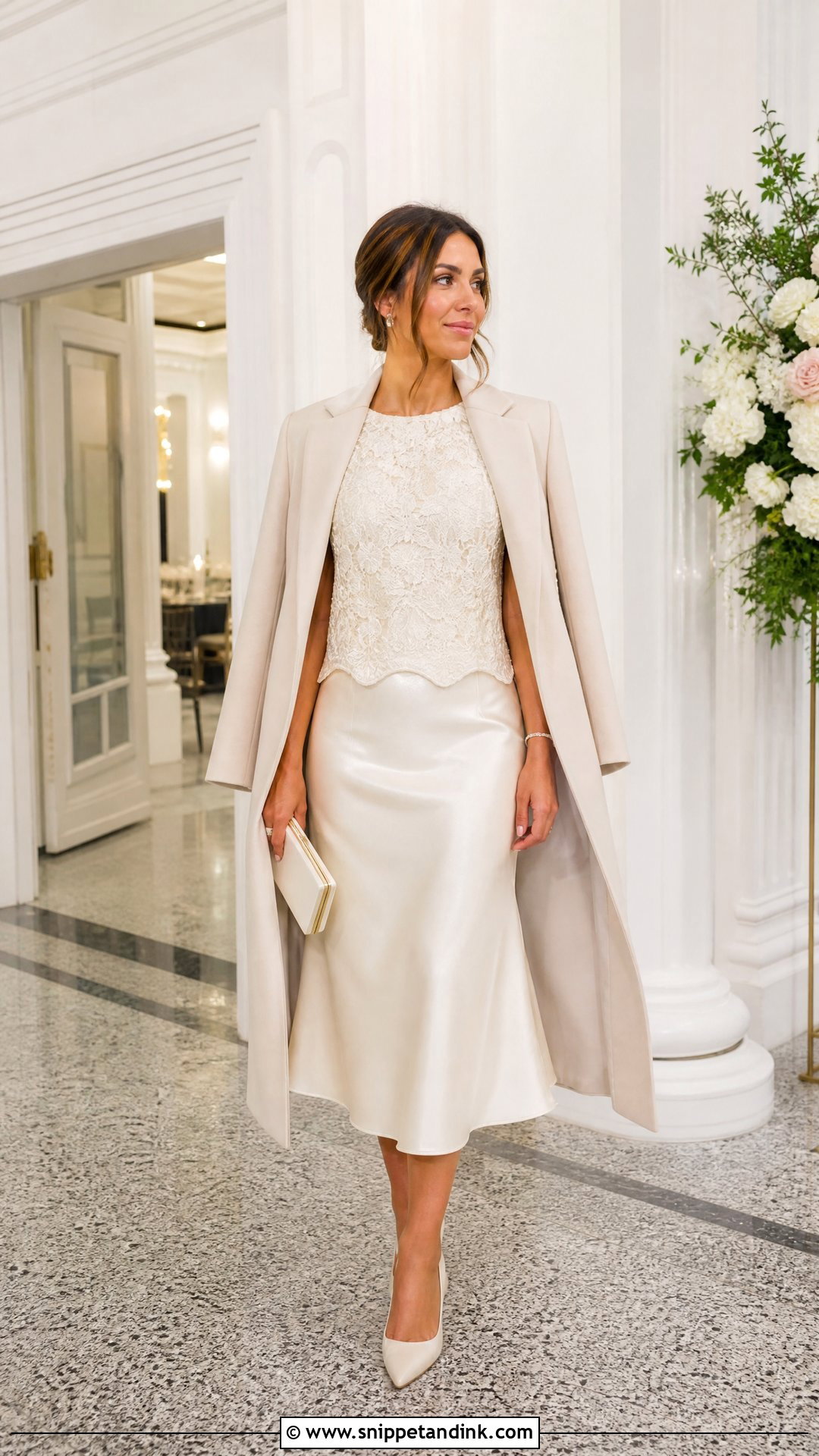
A formal set gives more coverage than a crop top while keeping the flexibility of separates. The bodice becomes a waist-length shell or sleeved top, and the skirt is rebuilt on a clean waistband with less fullness. The two can show a sliver of waist or meet for a dress-like line. If you’re dyeing, dye both pieces in the same bath; separate batches rarely match exactly. Later the top works with trousers and the skirt with knitwear. It’s an efficient choice when the gown already fits reasonably well but needs a more practical format.
24. Repurposed Wedding Dress Prom Dress
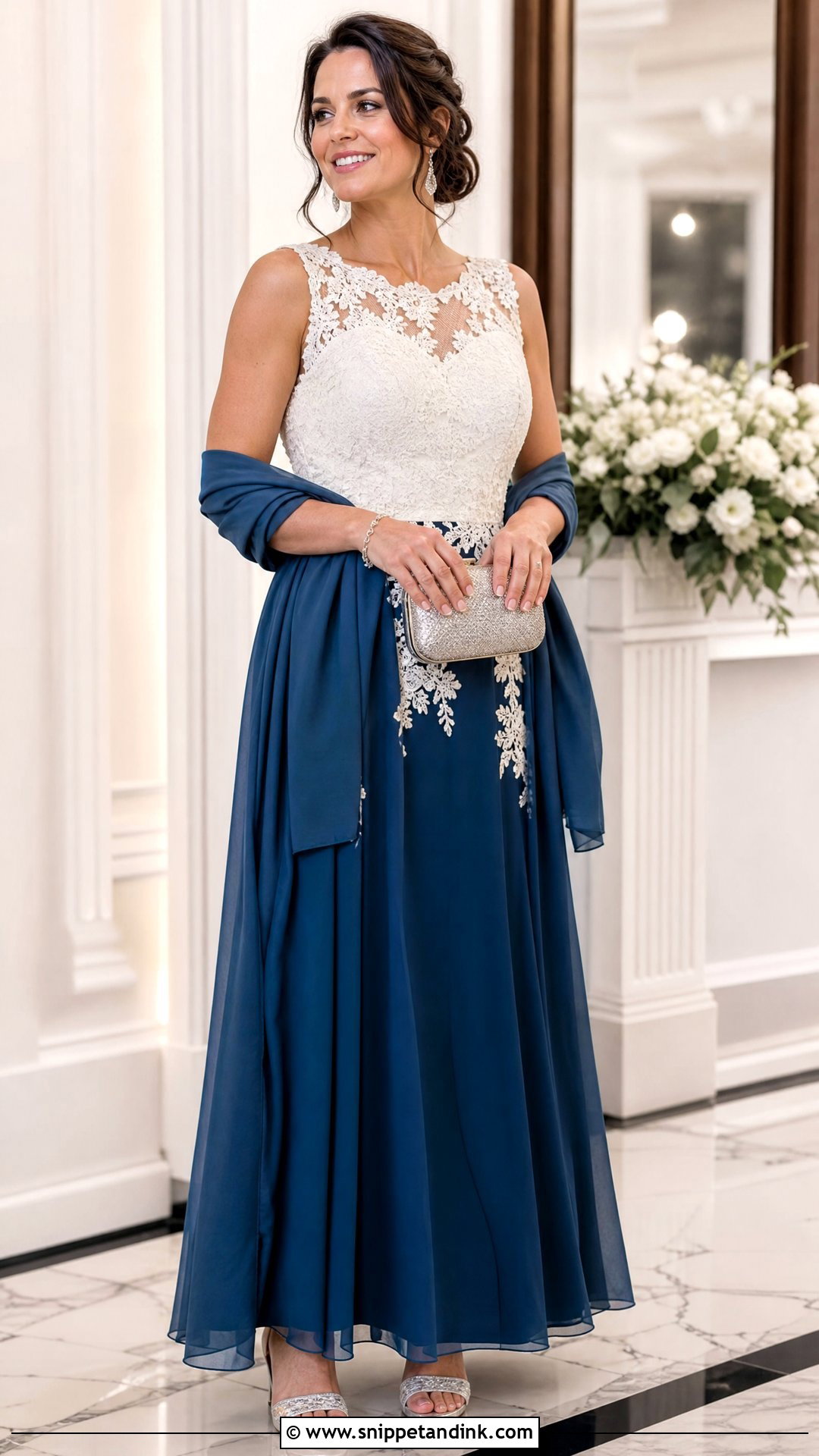
An older gown can become a prom dress for a daughter, relative or family friend. The bodice gets tailored to the new wearer, and the dated details go: oversized sleeves, extra skirt volume, an old-fashioned neckline. A colored waistband or professional dyeing lets her make it her own. My advice is to let the wearer lead on the design and keep one or two family details, such as lace appliqués or covered buttons, rather than crowding in every original feature. Comfortable formal shoes matter more than usual, because prom means hours of dancing.
25. Repurposed Wedding Dress Anniversary Outfit
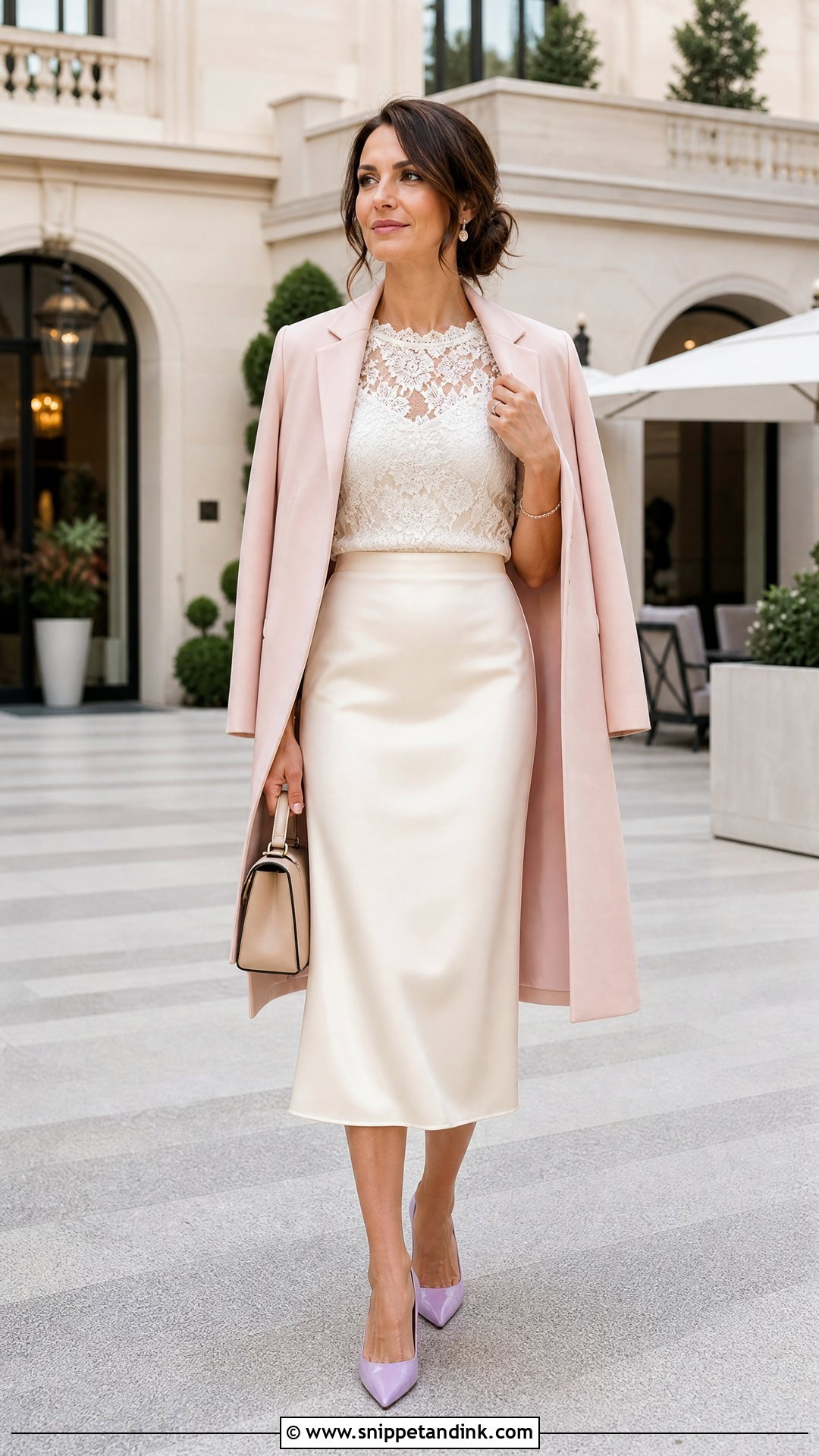
An anniversary outfit can draw on several parts of the gown at once: a fitted top from the bodice, a midi skirt, a jacket made from the lace sleeves. Worn together, two transformed pieces keep the gown’s character. For quieter sentiment, wear one remade piece with clothes you already own, such as a lace top with black trousers or a satin skirt with a cashmere sweater. Prioritize comfortable tailoring, with enough ease at the waist to sit through a long dinner, so the outfit comes out year after year.
Satin and Lace Need Different Care Once They’re Everyday Clothes
A remade gown gets worn, sat in and spilled on in ways the original never was. A few habits keep it looking right for years.
- Steam rather than iron. If you must press, put a cloth between iron and fabric and use a low setting; polyester satin goes shiny or melts at high heat, and silk satin water-spots.
- Put on deodorant and perfume, then let them dry before you dress. Both mark satin under the arms and are hard to shift.
- Hang light pieces on padded hangers. Fold anything heavily beaded in acid-free tissue instead, because the weight of the beads stretches fabric on a hanger.
- Store everything in breathable cotton bags, not the cleaner’s plastic, which traps moisture and speeds yellowing.
Blot spills rather than rubbing them, and get the piece to a cleaner who handles bridal fabric soon after. Lace snags most at the cuffs and hem; a small pulled loop can usually be eased back through from the wrong side with a needle, so never snip it. Clean dyed pieces on their own the first time, in case any color moves.
Sketch, Price and Confirm Every Cut
The remakes that work balance sentiment, wearability and respect for the original gown. You might keep the silhouette as a shorter dress, split it into separates, add color or reuse selected lace in something new. Before deciding, inspect the fabric and settle which details matter most to you. Then talk to a tailor or designer who has handled bridal construction, delicate textiles and embellishment. Ask for sketches, discuss costs and confirm every planned cut before work begins. A thoughtful redesign turns a garment worn once into something that comes out for anniversaries and family milestones.
You'll Like These Ideas:


Leave a Reply