
Dressing the bride’s sister is a job with two halves: you need to look like family in every group photo, and you need to be able to work. Over four functions you’ll greet aunties at the door, hold the bride’s dupatta on the stage steps, chase the photographer and dance at the mehndi, so I always plan these outfits around movement first and colour second. The other rule I hold to is distance from the bride: a different shade, a lighter embroidery load and less jewelry than hers. Pakistani wedding wardrobes give you a natural spread to work with, from ghararas for the mehndi and pishwas for the nikkah to lehengas for the baraat and gowns for the walima. Below are twenty complete looks, each with the detail I’d check before you commit to it.
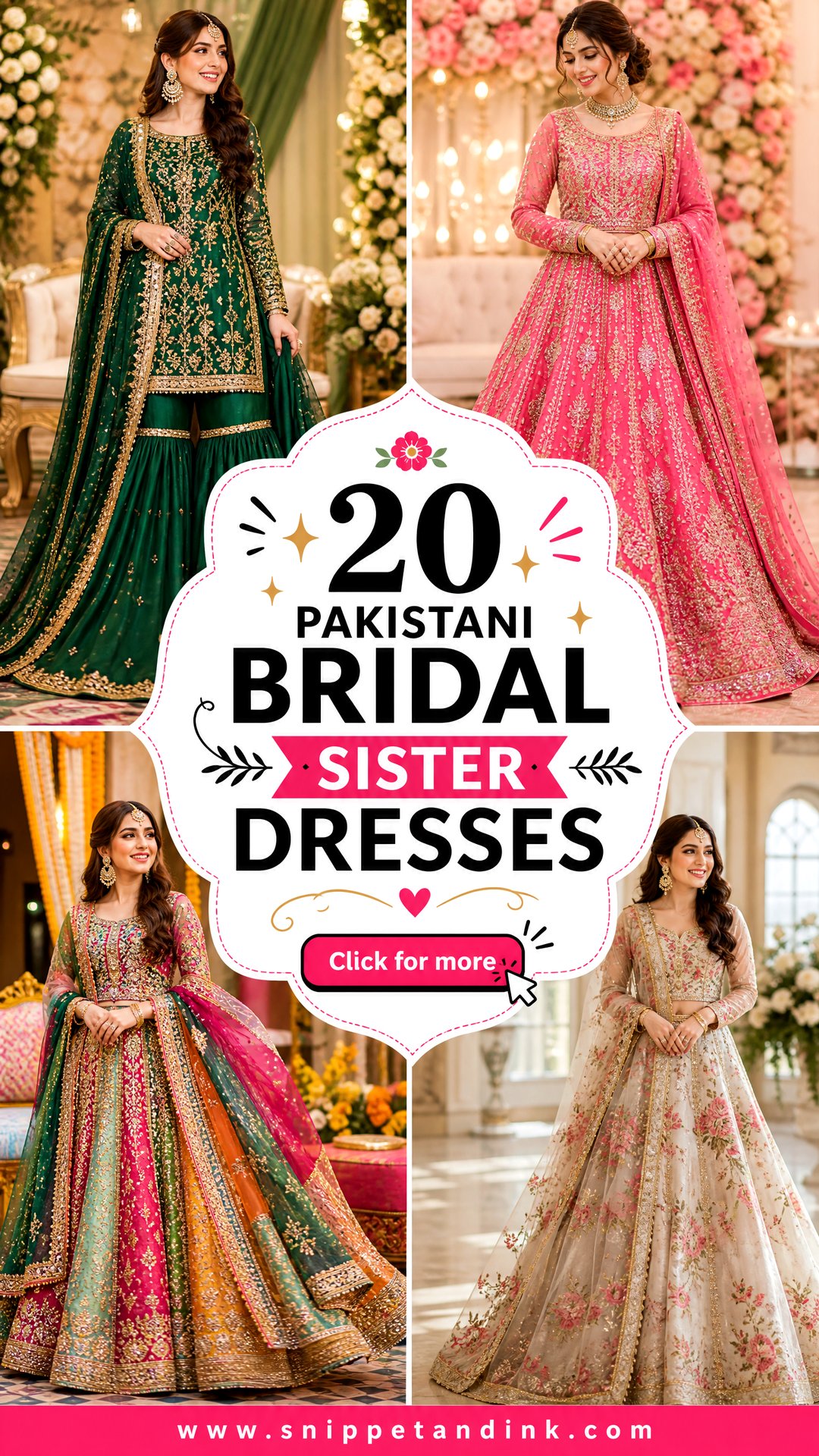
Planning a Sister’s Wardrobe Across Mehndi, Nikkah, Baraat and Walima
I start every sister’s plan with the bride’s four outfits written in a row, colour and embroidery weight for each. Your outfits get slotted in beside them, one function at a time, so that nothing clashes and nothing copies. It takes ten minutes and saves the awkward moment of discovering you’ve both chosen deep red.
- Mehndi: brightest colour, lightest embroidery, and a hem you can dance in. This is where ghararas, shararas and pishwas belong.
- Nikkah: softer colours and more coverage. Confirm whether the bride is in white, ivory or a pastel before you choose anything pale.
- Baraat: your richest outfit, but still a clear step below the bride in embellishment and jewelry.
- Walima: often the most formal and modern of the four, which makes it the natural home for gowns, maxis and jacket lehengas.
Then think about timing. Stitched Pakistani formalwear with handwork usually needs several weeks with a tailor or designer, and peak wedding season stretches every queue. I’d place orders well before the first function and leave room for at least one fitting, because a blouse or kameez that’s slightly off can take a week to correct when the tailor is busy.
If budget is tight, re-use is fine. A plain churidar, one pair of khussas and a gold jewelry set can serve two or three functions, while the kameez and dupatta change the look each night.
1. Pakistani Bridal Sister Yellow Gharara
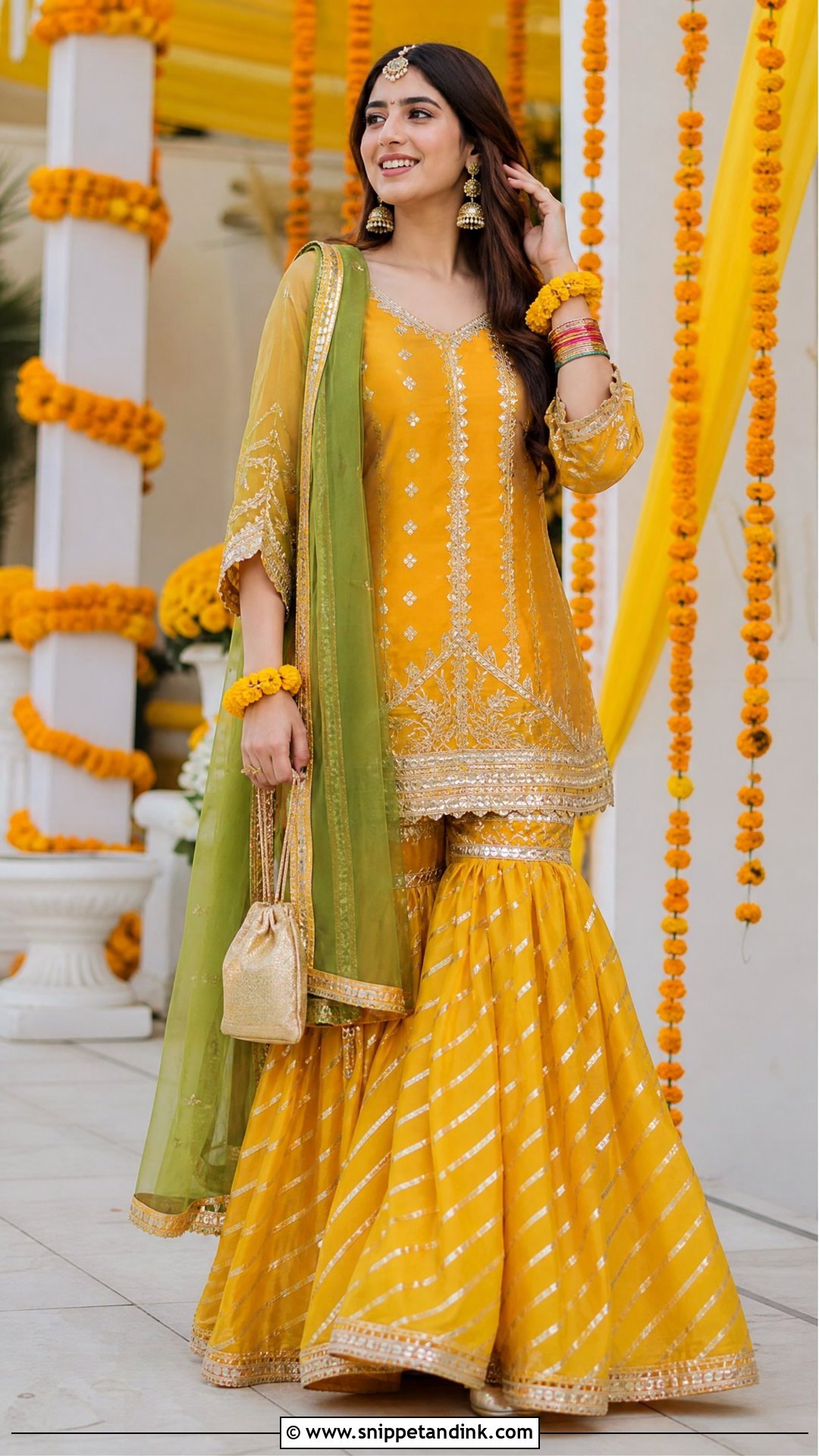
A yellow gharara is the classic mehndi choice for a sister, and it earns that place because the flare moves so well when you dance. Keep the short kameez to gota, mirror or thread work; heavy zardozi on a mehndi outfit just weighs you down on the floor cushions. Mustard and marigold read richer on camera than lemon, which can wash out under warm string lights. I pin an organza dupatta in green or pink over one shoulder so both hands stay free for the thaals and the dholki. Khussas, glass bangles, small jhumkas and a light tikka finish it. One warning: if the bride is also in yellow, go a full shade deeper or switch to a multicolour dupatta so the two of you don’t merge in the stage photos.
2. Pakistani Bridal Sister Green Sharara
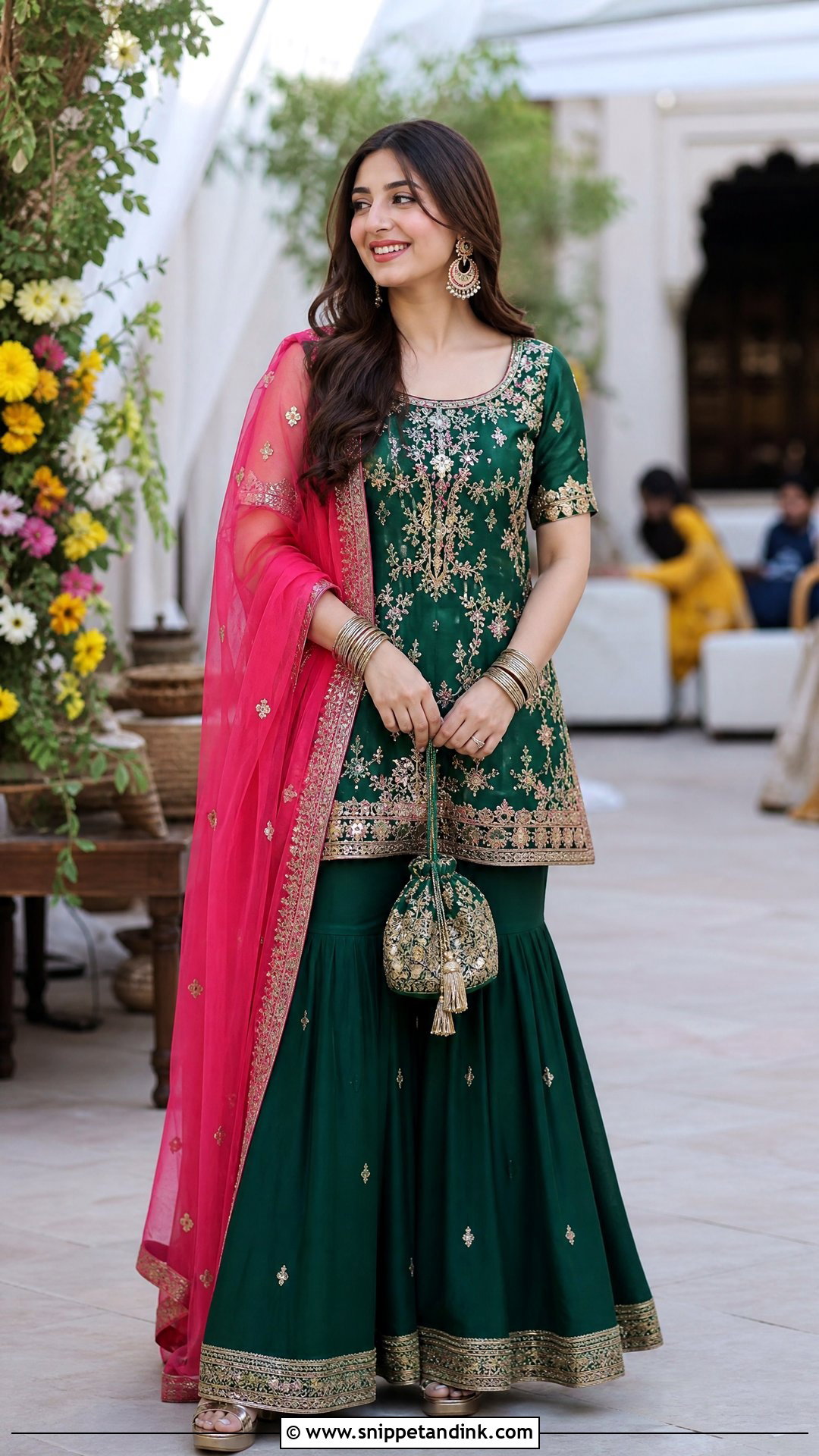
Green sharara sets look festive without trying, but the fit of the short shirt matters more than the embroidery. Wide sharara legs pool at the ankle, so I have them hemmed to just brush the top of the shoe you’ll actually wear, not a guessed heel height. Emerald looks formal; parrot green and lime feel younger and suit a dholki. A pink or orange dupatta brings the mehndi contrast, and metallic khussas or low block heels keep you steady while dancing. Add statement earrings, stacked bangles and a small potli. If your family has agreed on a green palette, this is the outfit that lets you stay in it while wearing a different silhouette from your sisters.
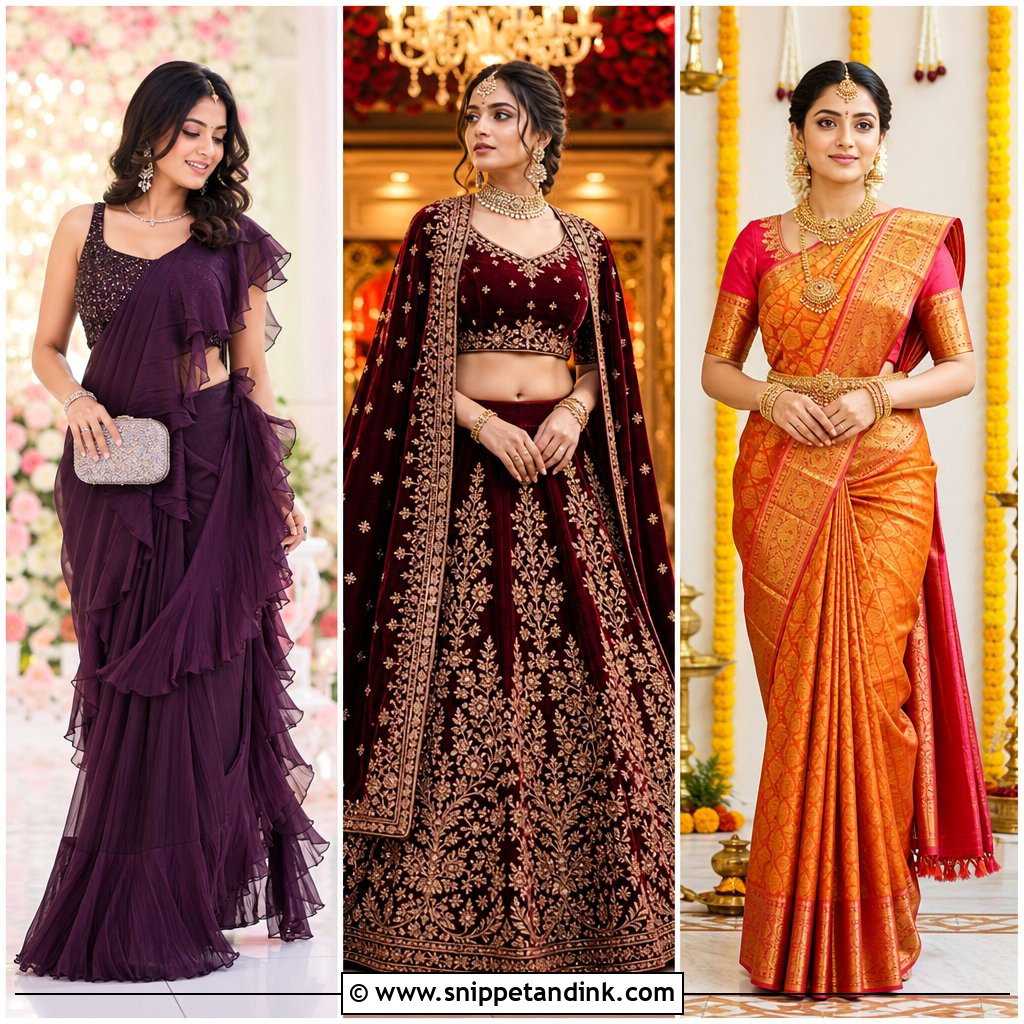
3. Pakistani Bridal Sister Pink Lehenga
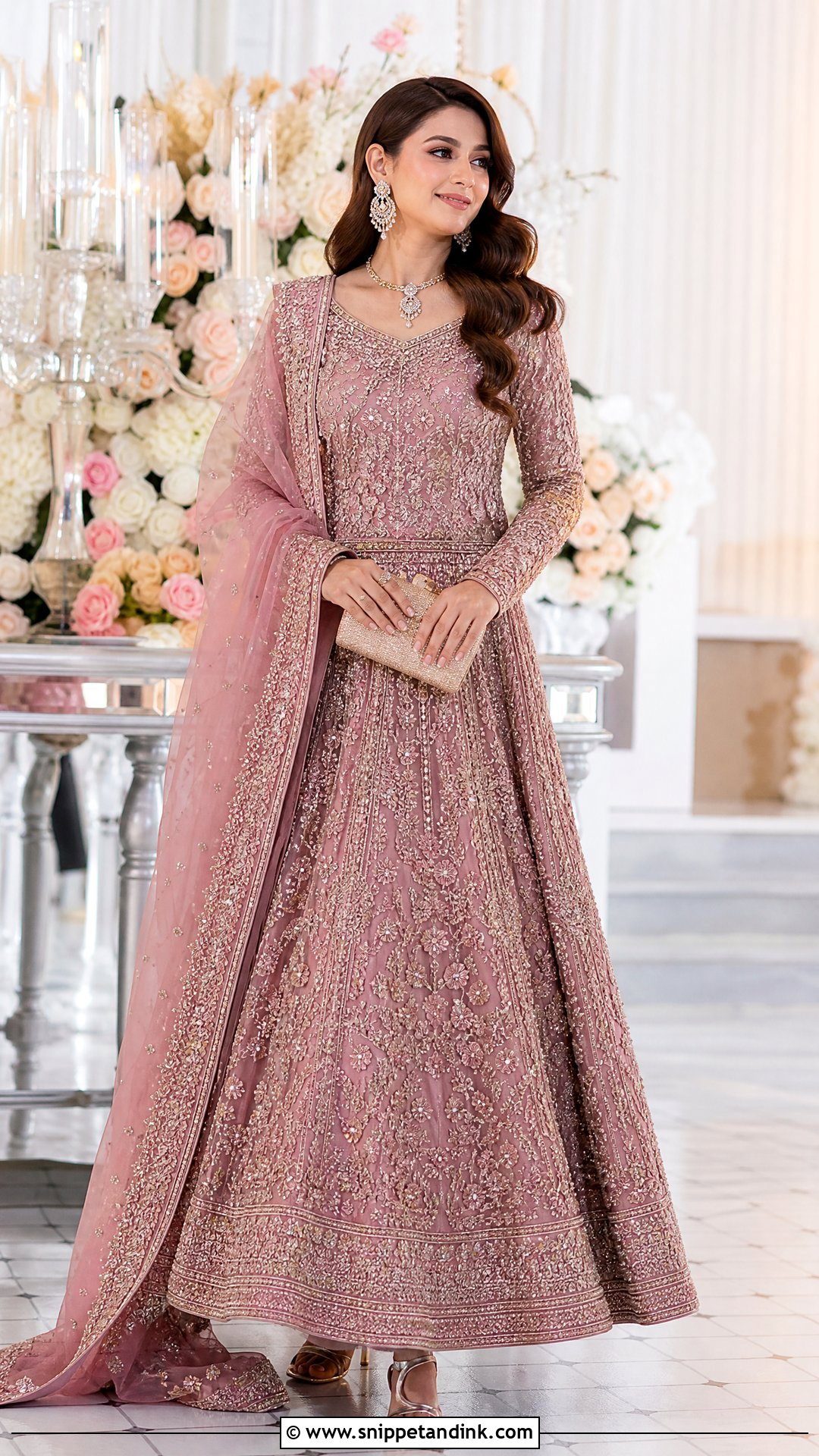
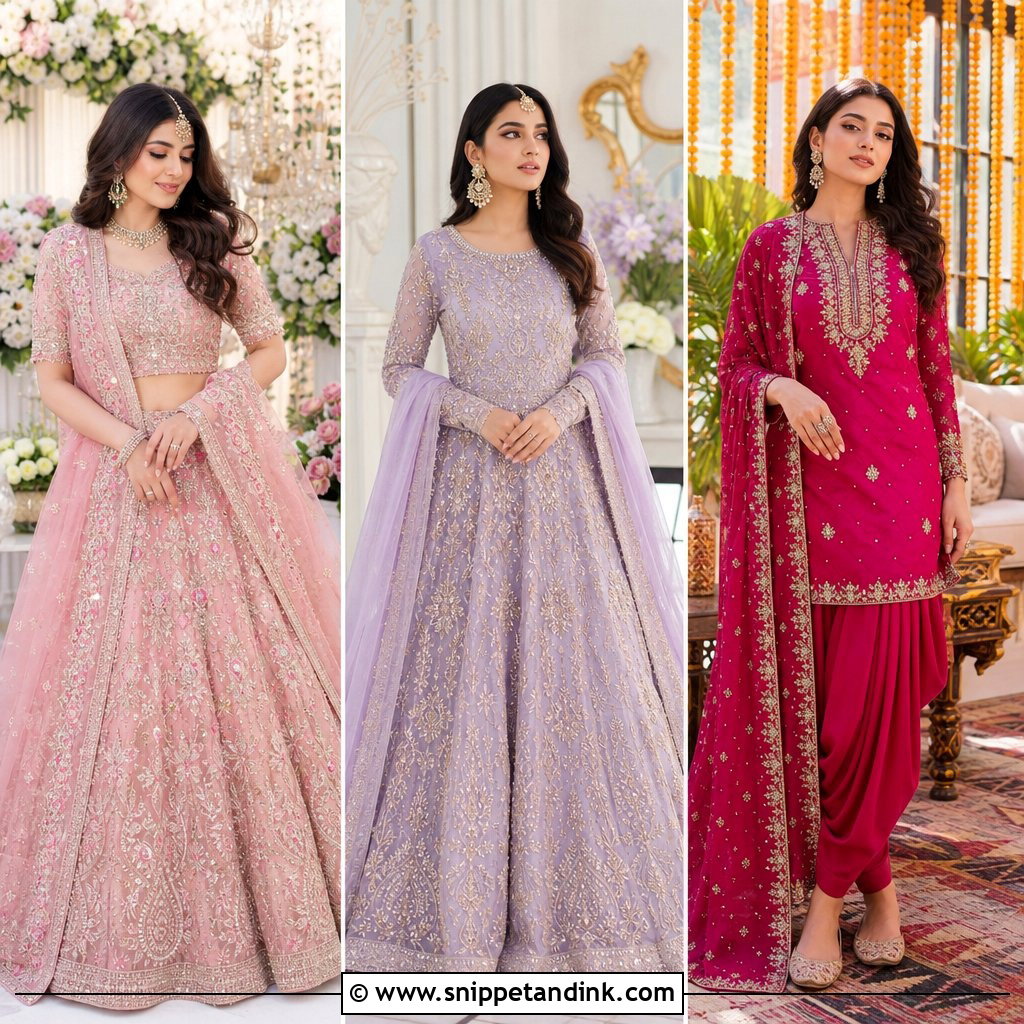
Pink lehengas are easy to love and easy to get wrong next to a bride. Dusty rose and blush suit a daytime event; fuchsia and magenta come alive after dark. The blouse is where I spend the fitting time: you’ll be lifting your arms for hugs and photos all night, so ask the tailor for a little extra ease across the back and a sleeve that doesn’t bind at the armpit. Embroidery at the waistband and hem gives shape without making the skirt heavy. An organza or chiffon dupatta with a finished border sits well over one shoulder or both arms. Crystal earrings, a fine necklace and a structured clutch are plenty. If the bride is in a heavy pink lehenga, hold a fabric swatch against hers before you buy, because two pinks a shade apart look like a mistake in photos.
4. Pakistani Bridal Sister Orange Pishwas
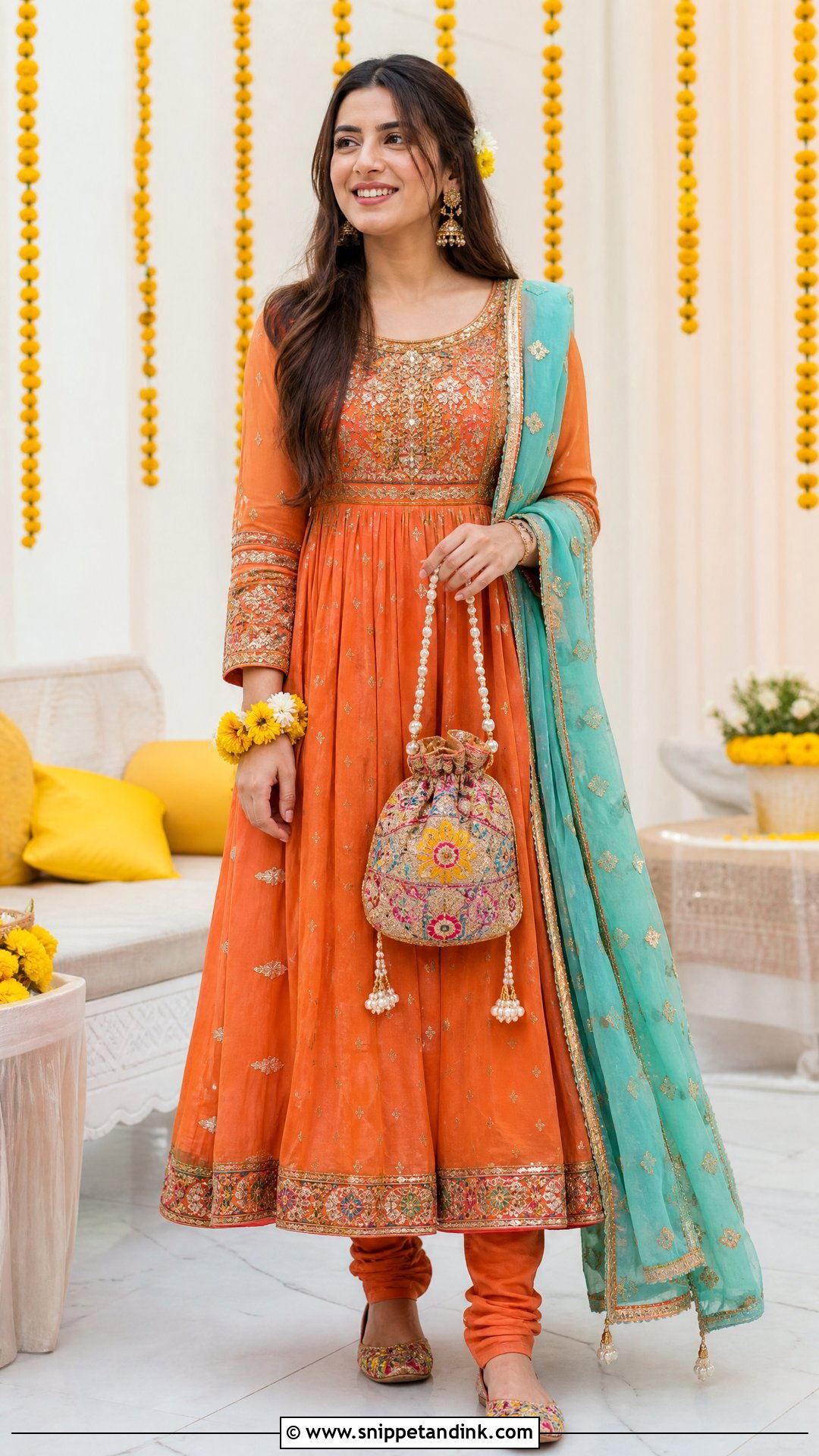
A pishwas flares from a fitted bodice, which makes it one of the most comfortable sister outfits for a mehndi or mayun. Tangerine is bright, rust is calmer, and peach-orange suits daylight. I like the work concentrated at the neckline and sleeve border so the long skirt can swing freely. Straight trousers or a churidar underneath make stairs and stage steps easier. A turquoise or pink dupatta gives contrast, and gold jhumkas, bangles, khussas and a small potli complete it. The hem is the thing I watch: a pishwas cut to the floor will catch under your heel on every staircase, so stop it a finger’s width above the ground.
5. Pakistani Bridal Sister Multicolor Lehenga
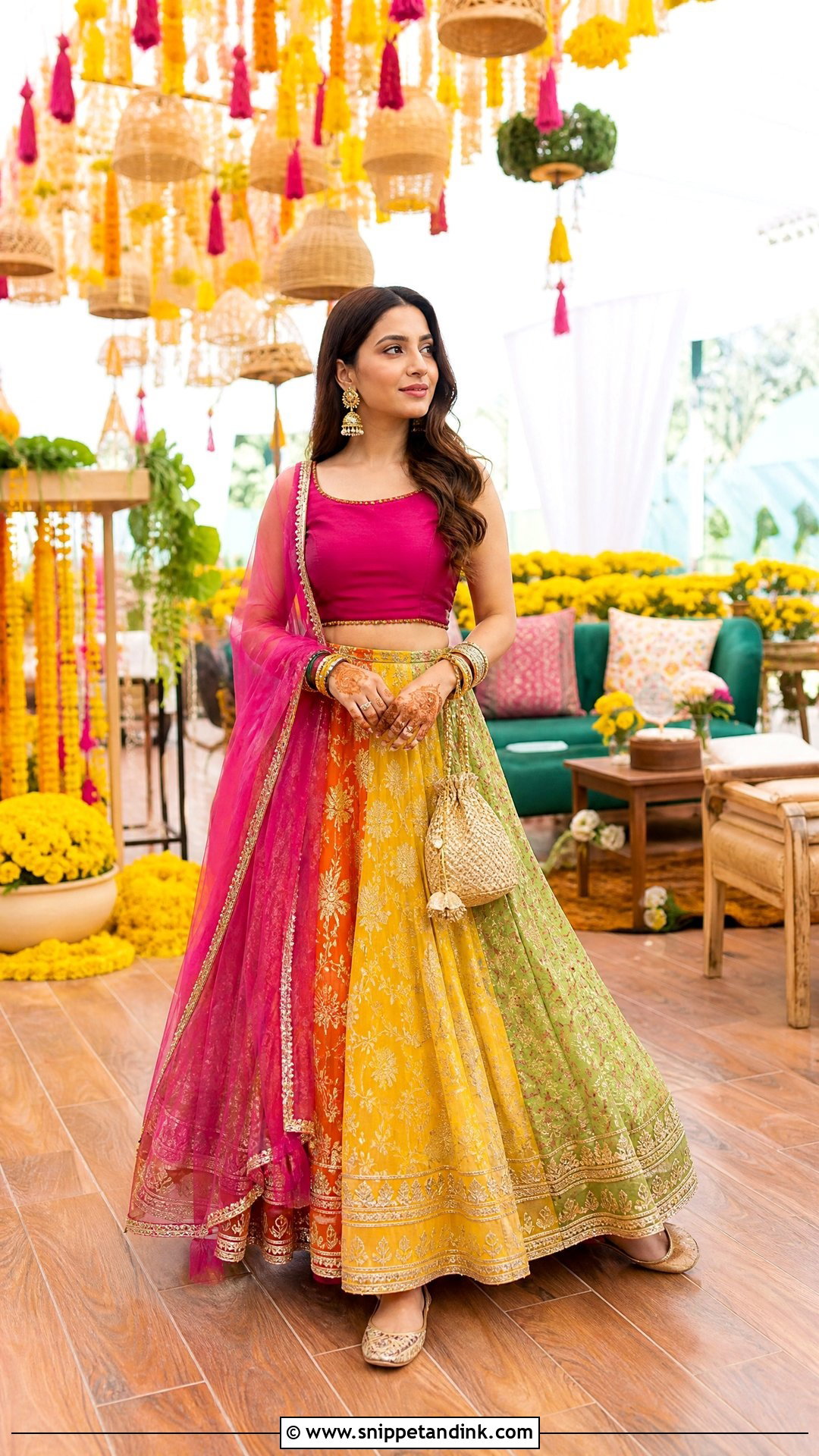
When the mehndi calls for colour, a multicolor lehenga carries it on its own, with no need for heavy embellishment. Look for balanced panels or floral motifs in pinks, oranges, yellows and greens. My fix for keeping it from looking busy is a solid blouse pulled from the quietest colour in the skirt. A light net or organza dupatta with a narrow border keeps attention on the lehenga. Metallic khussas, gold earrings and a few bangles are enough jewelry. Keep the hair sleek or softly waved; flowers and parandas on top of a printed skirt start to compete. It also lets sisters and cousins coordinate from one shared palette while each wears a different piece.
6. Pakistani Bridal Sister Ivory Anarkali
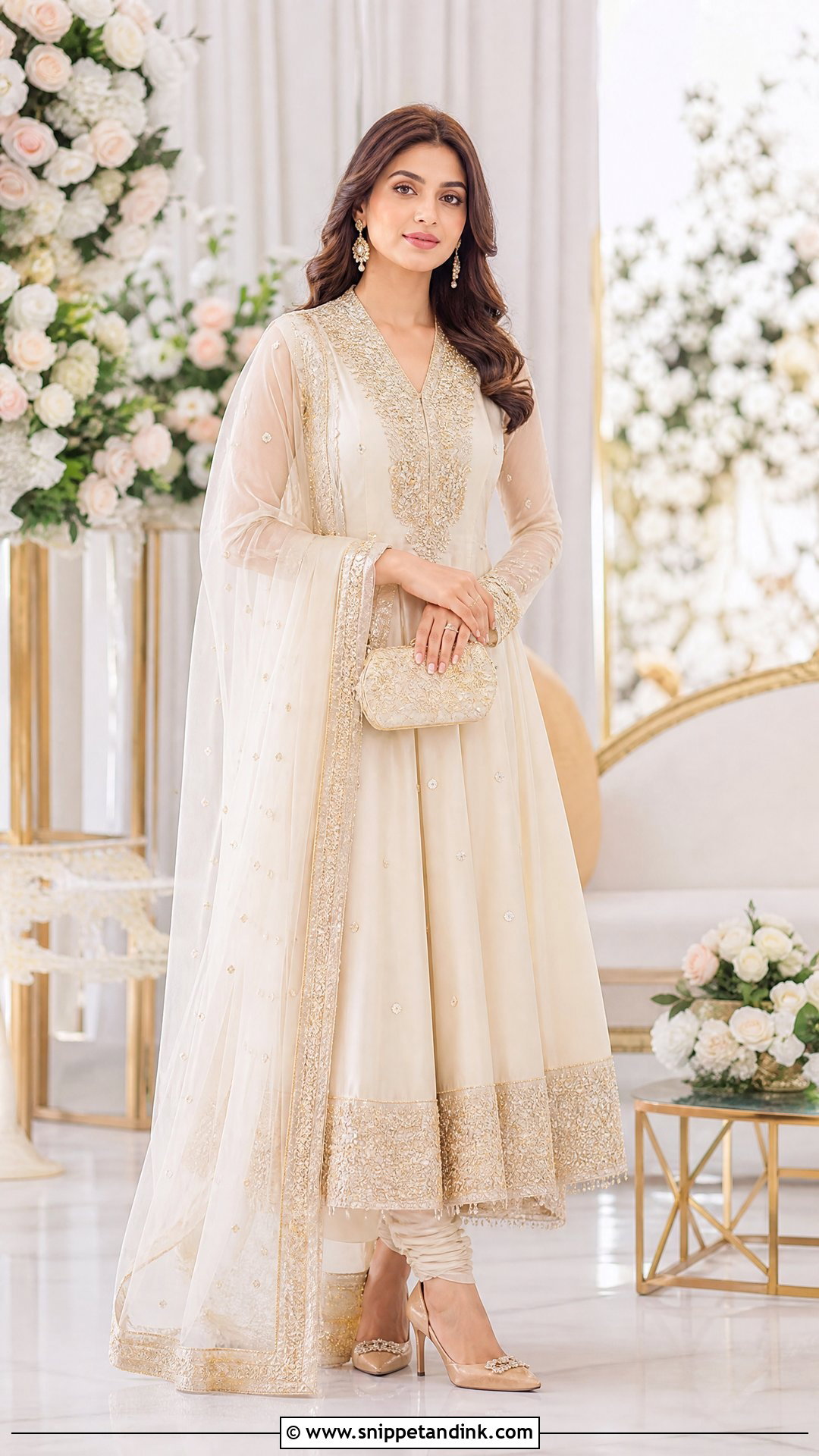
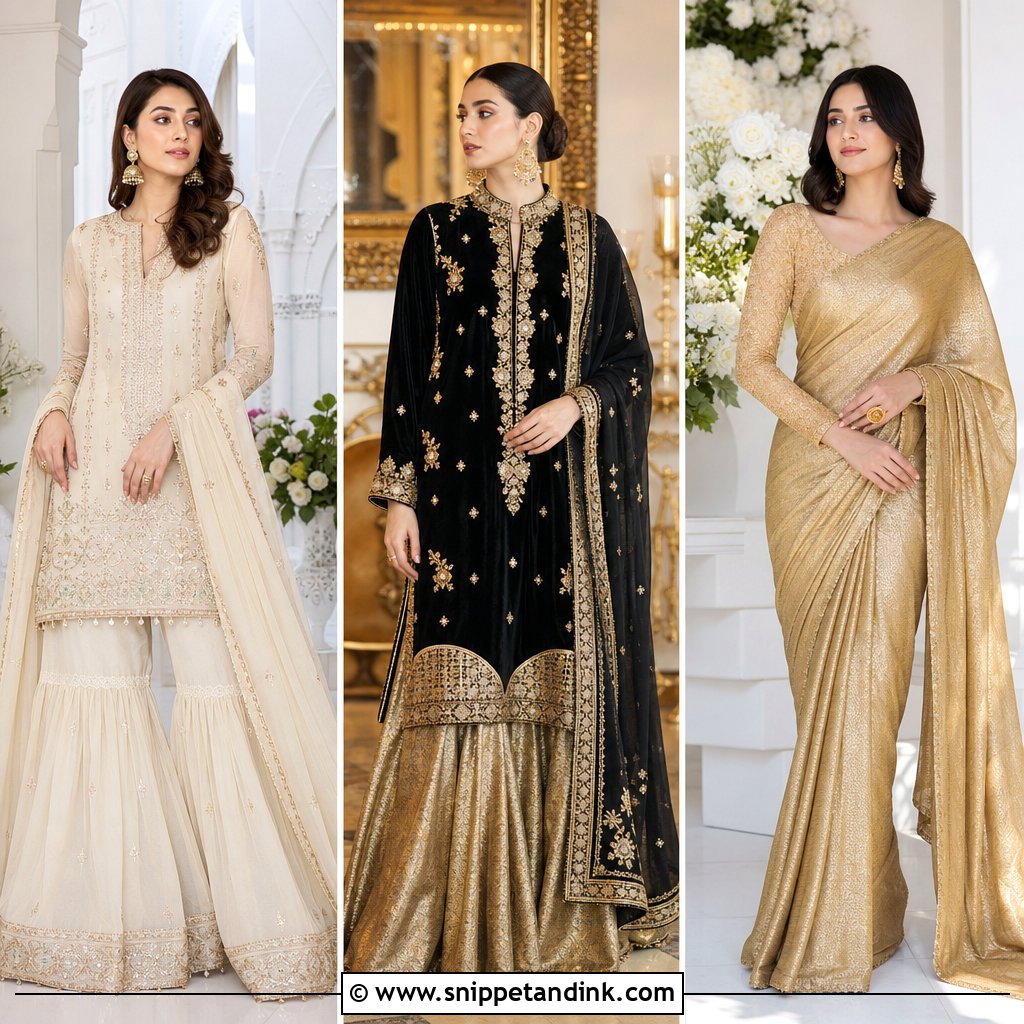
Ivory Anarkalis are graceful at a nikkah, but this is the one outfit where I insist on a phone call with the bride first. If she’s wearing white or ivory, you switch to champagne, pale gold or powder blue, no discussion. If she isn’t, choose ivory worked in gold, pearl or pastel thread around the bodice, sleeves and hem so it still reads festive rather than plain. A gentle flare is comfortable for hours of greeting guests. Wear it with churidar and a sheer bordered dupatta, then add champagne heels, pearl studs and a small embellished clutch. Soft pink makeup and a neat low bun suit the calm palette.
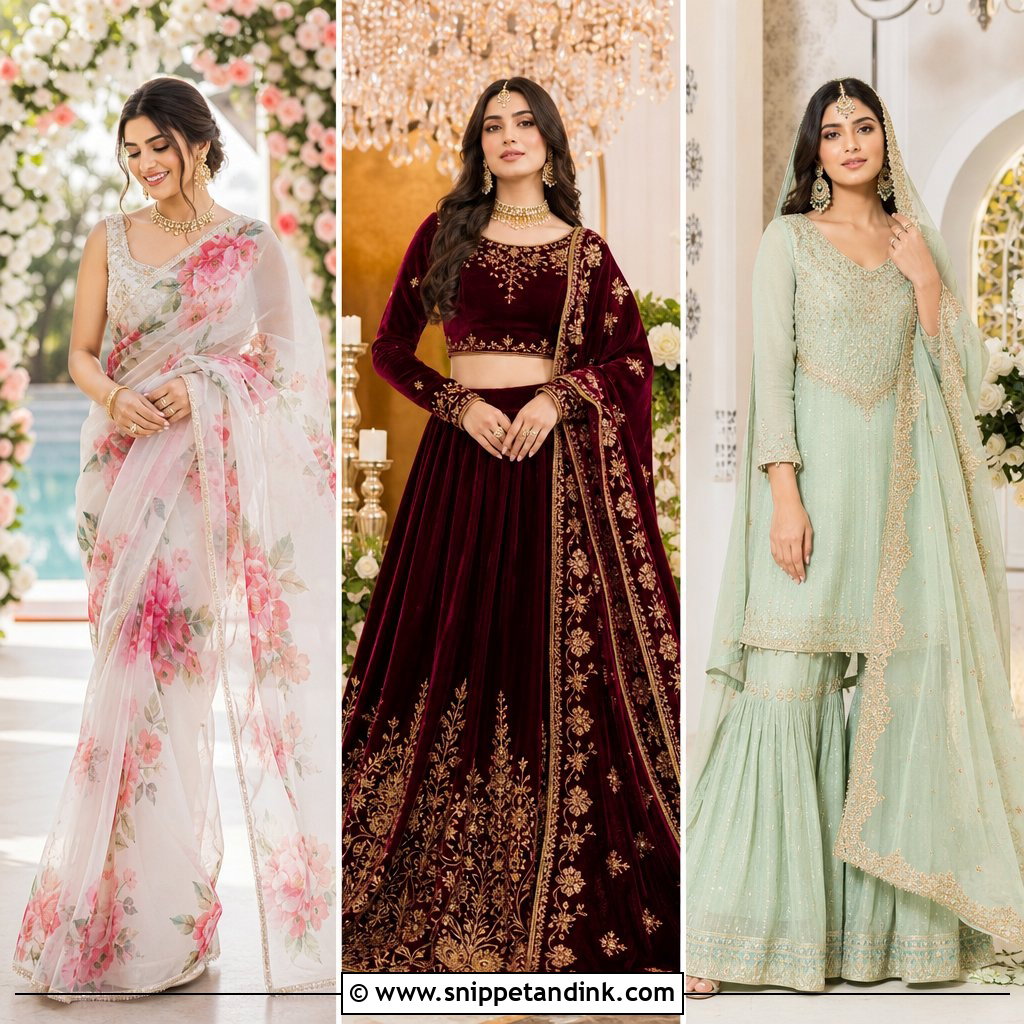
7. Pakistani Bridal Sister Pastel Blue Pishwas
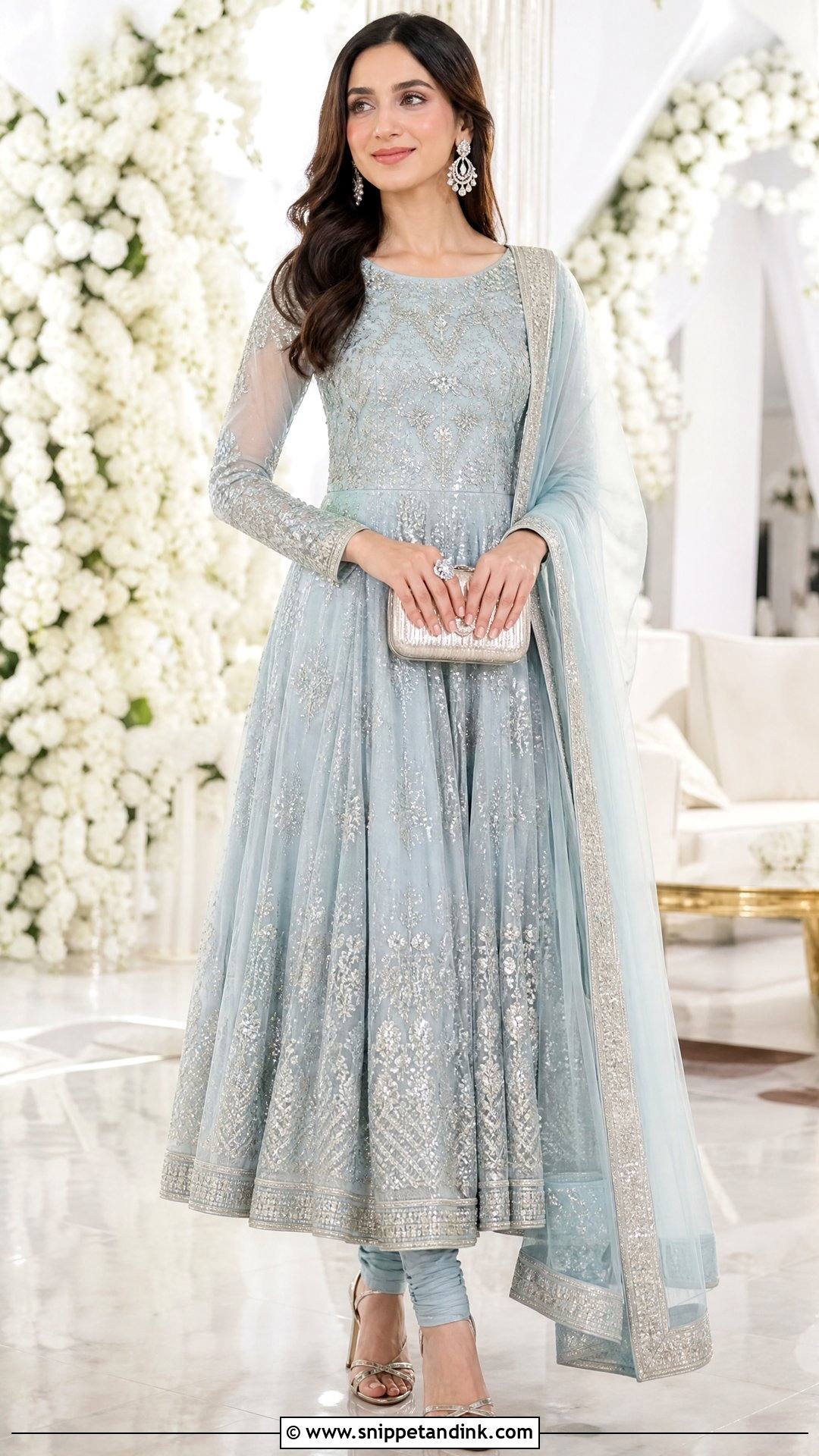
Pastel blue is fresh at a daytime nikkah or walima, and silver threadwork or pearls give it light without tipping into bridal territory. A floor-length pishwas with a controlled flare is my pick here, since a very wide hem in a pale colour shows every footprint by the end of the night. Pair it with a matching churidar and a sheer, silver-edged dupatta settled over one shoulder. Crystal earrings, silver heels, one ring and a compact clutch keep the colour story tight. A soft bun or a half-up style works, and cool-toned makeup with a rosy cheek sits naturally against blue. For contrast, a pale pink dupatta is the only extra I’d add.
8. Pakistani Bridal Sister Lavender Maxi
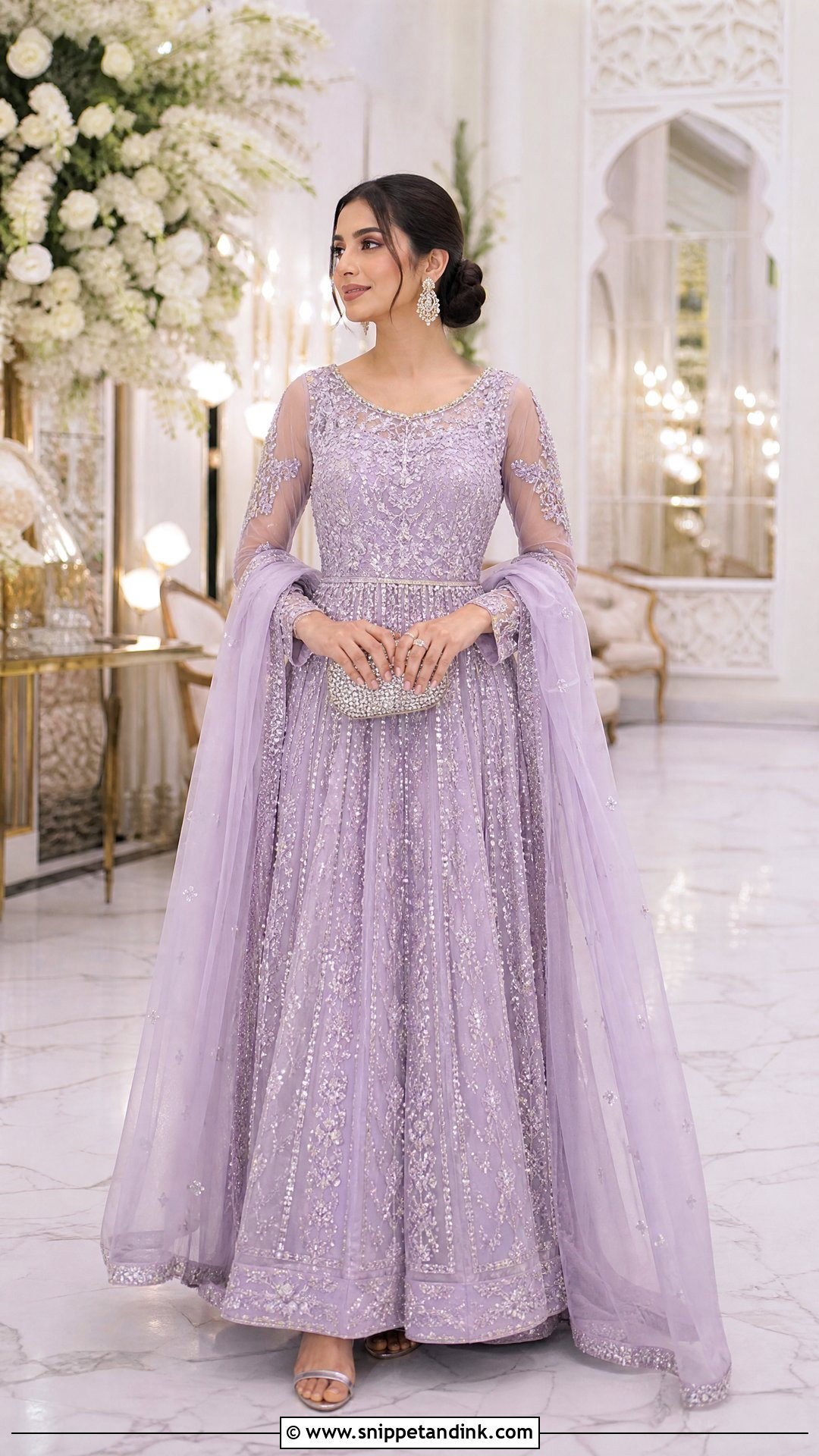
A lavender maxi gives you softness and modest coverage in one piece. Look for a defined waist, full or three-quarter sleeves and work concentrated across the neckline and bodice in silver, pearl or tonal lavender. Lavender changes colour more than most pastels under warm hall lighting, often going slightly grey, so I always check the fabric under yellow light before ordering. A light net dupatta can be worn over the arms, on one shoulder or over the head for the ceremony. Add silver sandals, chandelier earrings and one slim bracelet. Stay in the lilac, mauve, silver and soft grey family for accessories rather than adding contrast.
9. Pakistani Bridal Sister Powder Pink Gharara
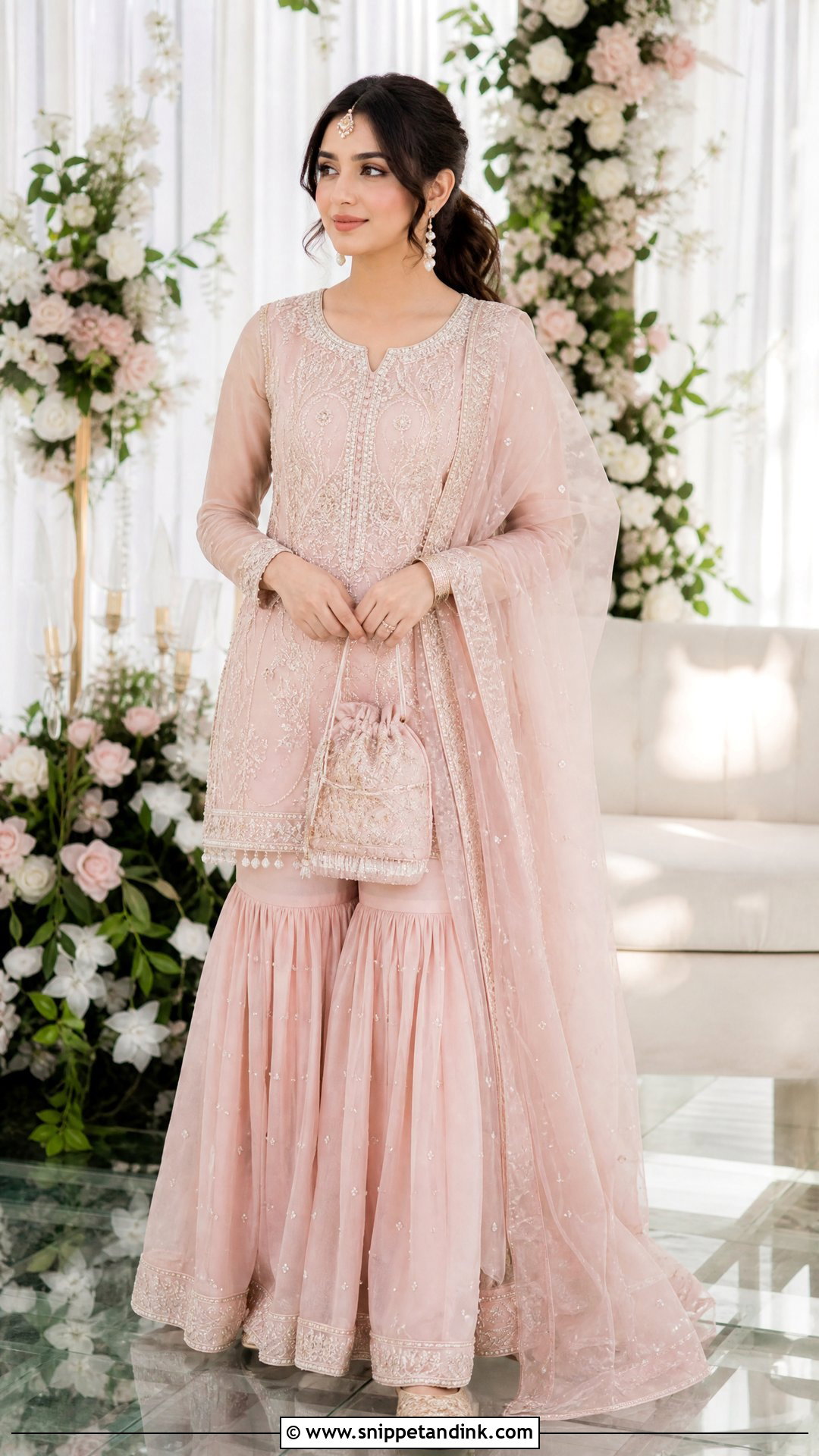
Powder pink takes on a traditional feel in a gharara. I’d keep the short kameez to pearls, fine thread or small florals and let the gharara carry a little more work at the knee joint and hem, which is where the eye lands when you walk. A sheer organza dupatta with embroidered corners needs pinning at one shoulder, otherwise it slides on smooth fabric. Pearl drops, a small tikka, metallic khussas and a pale potli finish the outfit. For makeup, rosy cheeks, defined eyes and a neutral pink lip hold up in daylight photos. A side-parted bun keeps your face open to the camera. It sits well at a daytime nikkah or an engagement where the family prefers polish over drama.
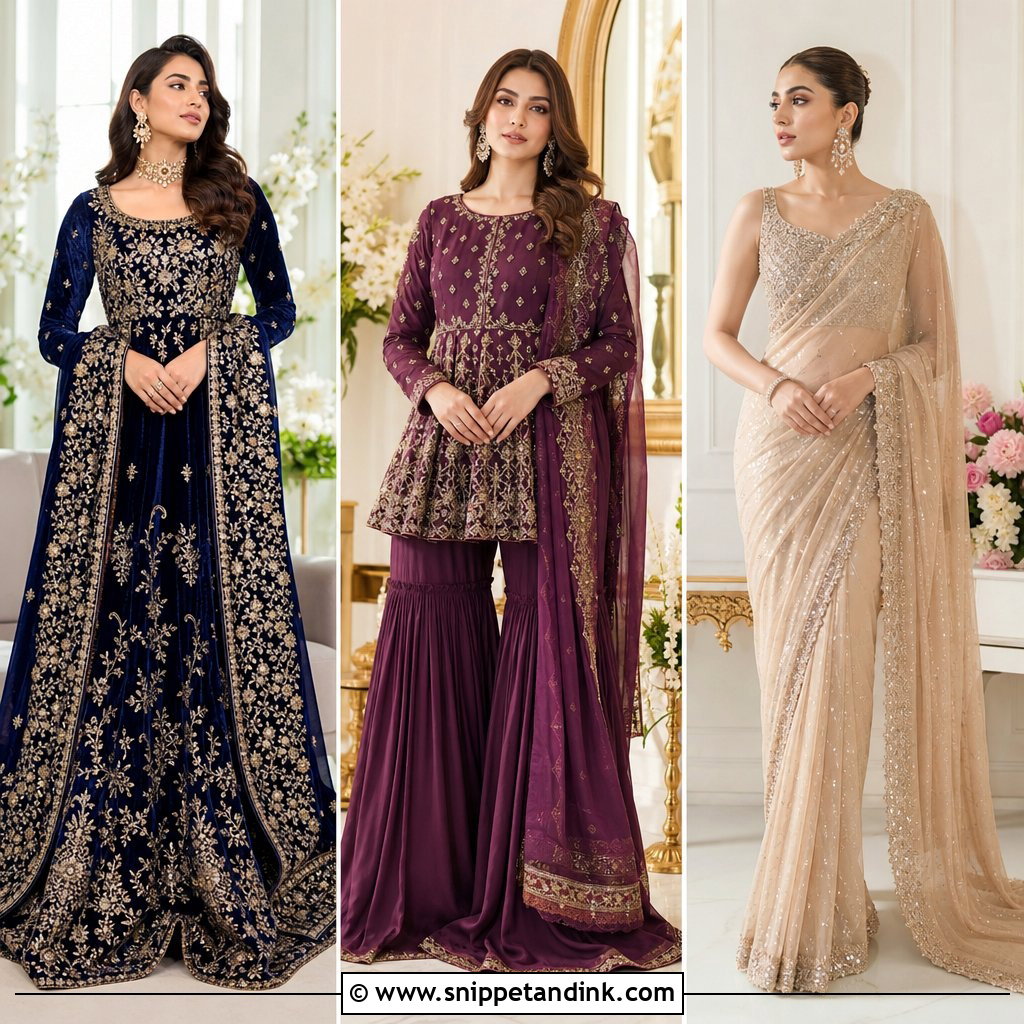
10. Pakistani Bridal Sister Champagne Saree
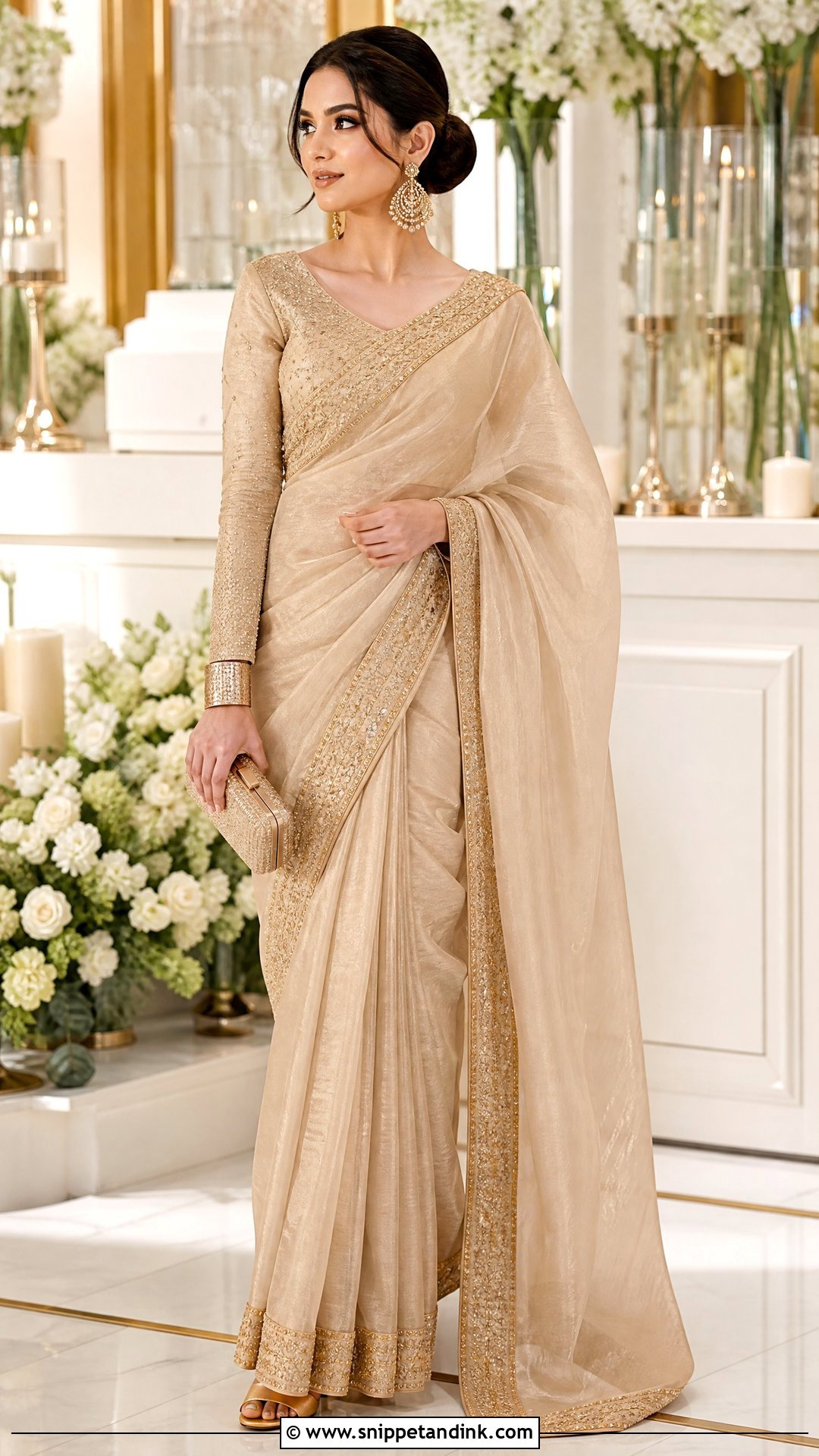
A champagne saree is the sister option for anyone tired of flared hems. Tissue, silk, chiffon and organza all drape differently: tissue holds crisp pleats, chiffon falls soft but slips, so I pin chiffon pleats at the waist and shoulder before you leave the house. Get the blouse properly fitted with a sleeve that supports, because you’ll wear it for six or seven hours. Gold heels, statement earrings, a cuff and a box clutch complete it. One caution I give every time: champagne can photograph almost ivory under flash. Check the bride’s palette, and if hers is pale, bring in bronze, rose gold or deep green through the blouse or border.
11. Pakistani Bridal Sister Red Angrakha
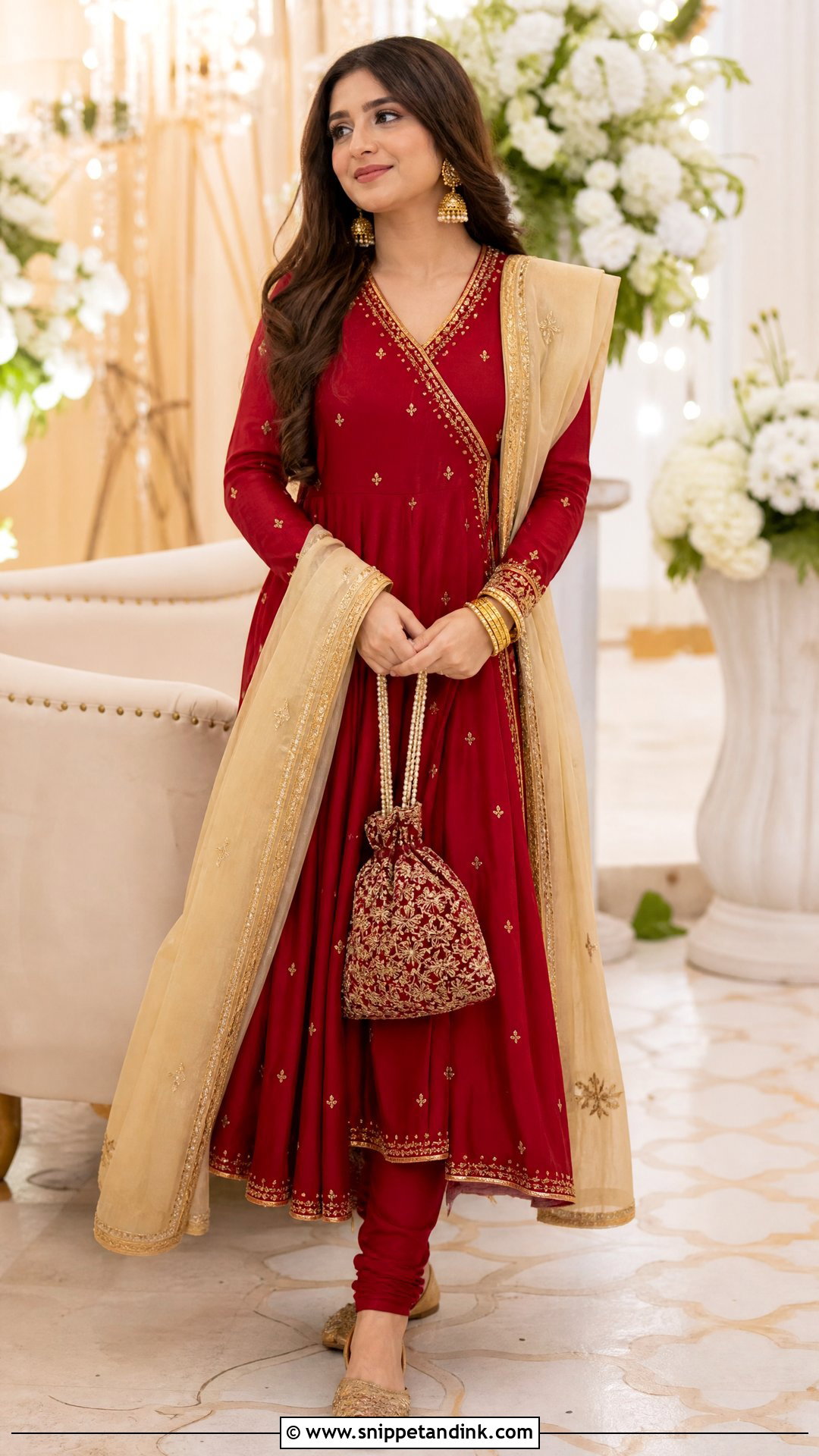
Red is possible for the bride’s sister, but only with care. An angrakha helps because its wrap bodice and side tie look nothing like a bridal lehenga. Go for ruby, brick or deep coral rather than the bride’s exact red, with gold edging and restrained embroidery. Wear it with churidar and a contrasting beige, green or blush dupatta, then gold khussas, jhumkas, bangles and a small potli. A centre-parted low bun gives the flowing shape some structure. I’d keep this one for a smaller function and hold it against the baraat outfit before you buy; at the baraat itself, red on the sister almost always reads as competing.
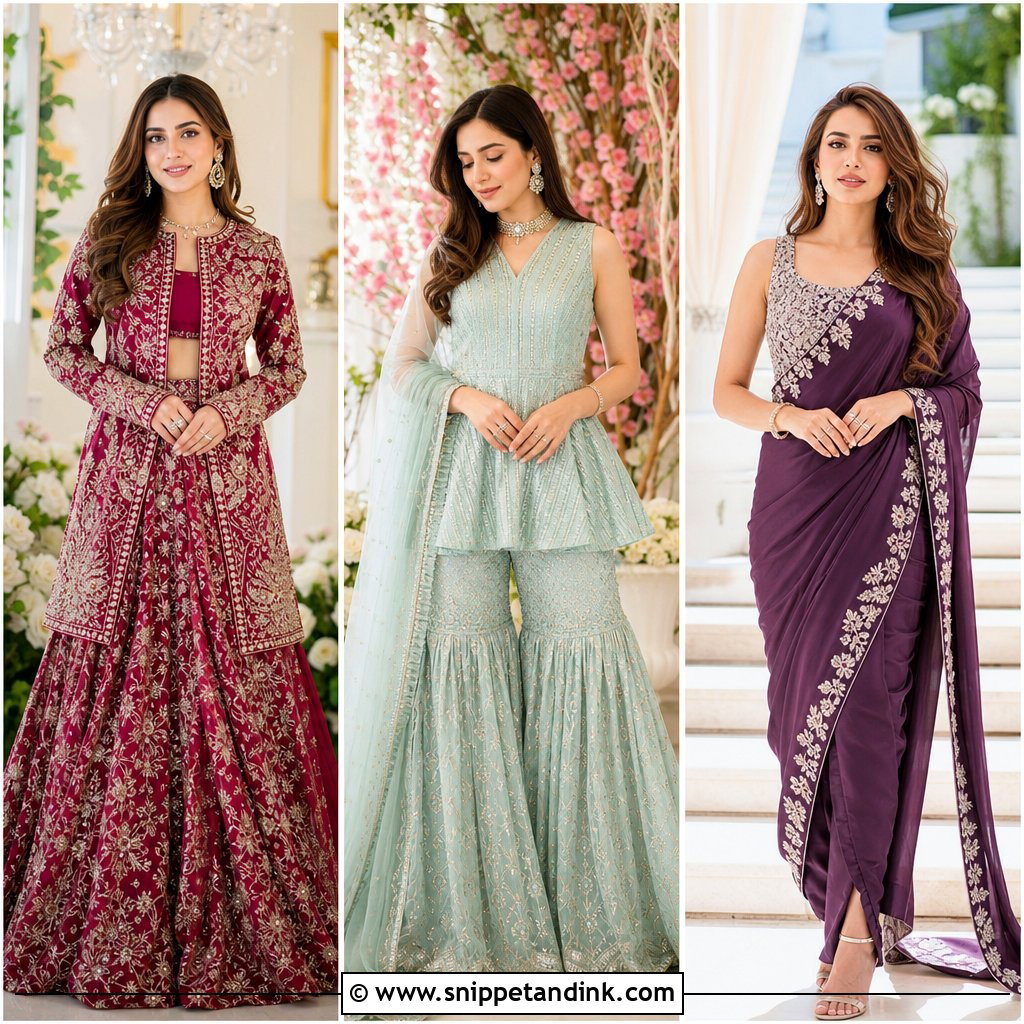
12. Pakistani Bridal Sister Maroon Lehenga
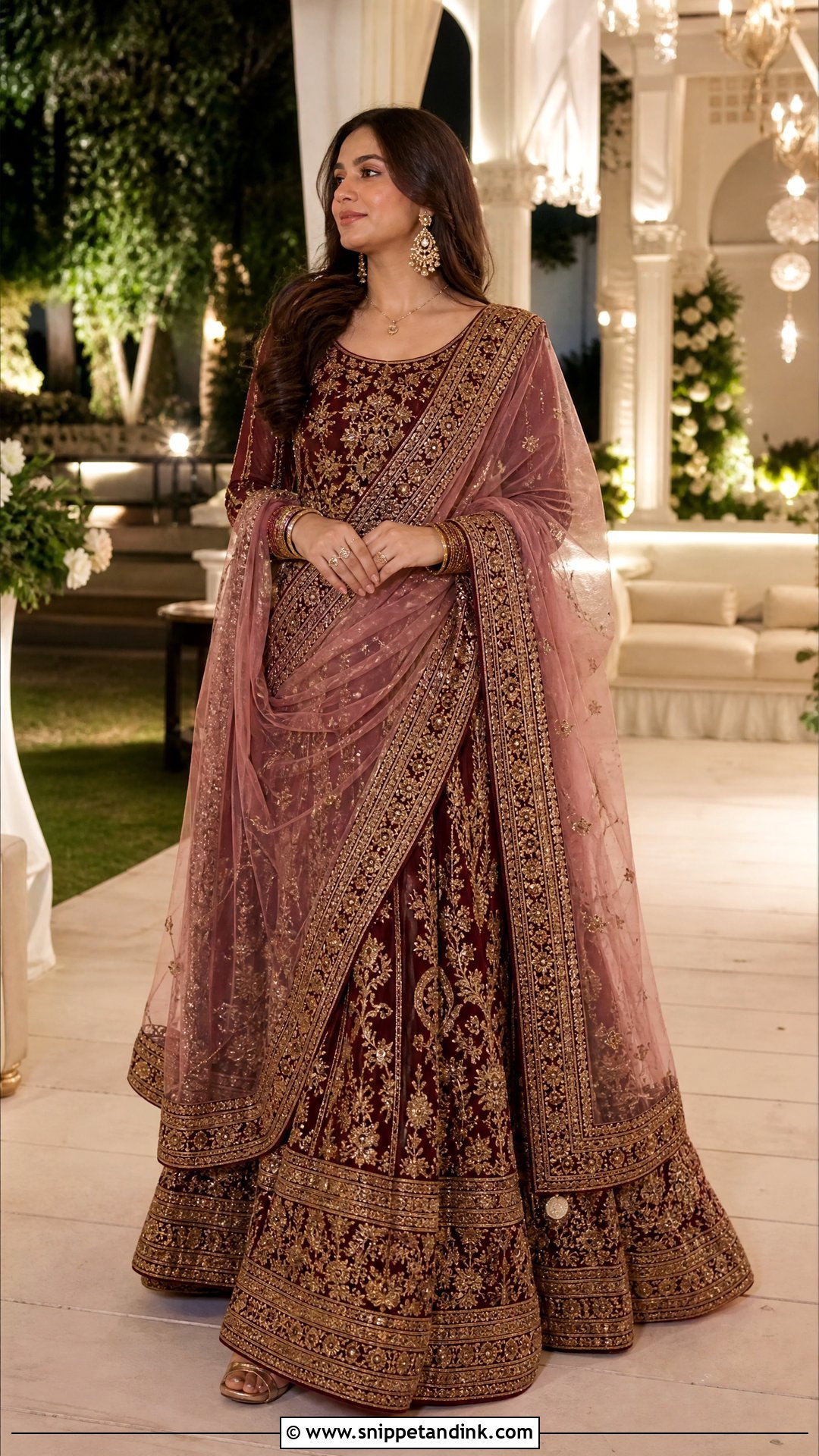
Maroon gives an evening baraat depth without bright colour. Choose antique gold, bronze or muted copper embroidery and a matching blouse with proper support. A beige, dusty pink or maroon dupatta softens the base. Draped across the torso it looks formal; over one shoulder it lets you move. Antique gold earrings, a coordinated necklace and comfortable block heels finish it. Maroon sits close to bridal tradition, so I strip out anything that signals bride: no long train, no second dupatta, no full set of heavy jewelry. The outfit should look important and still a step lighter than hers.
13. Pakistani Bridal Sister Navy Blue Gown
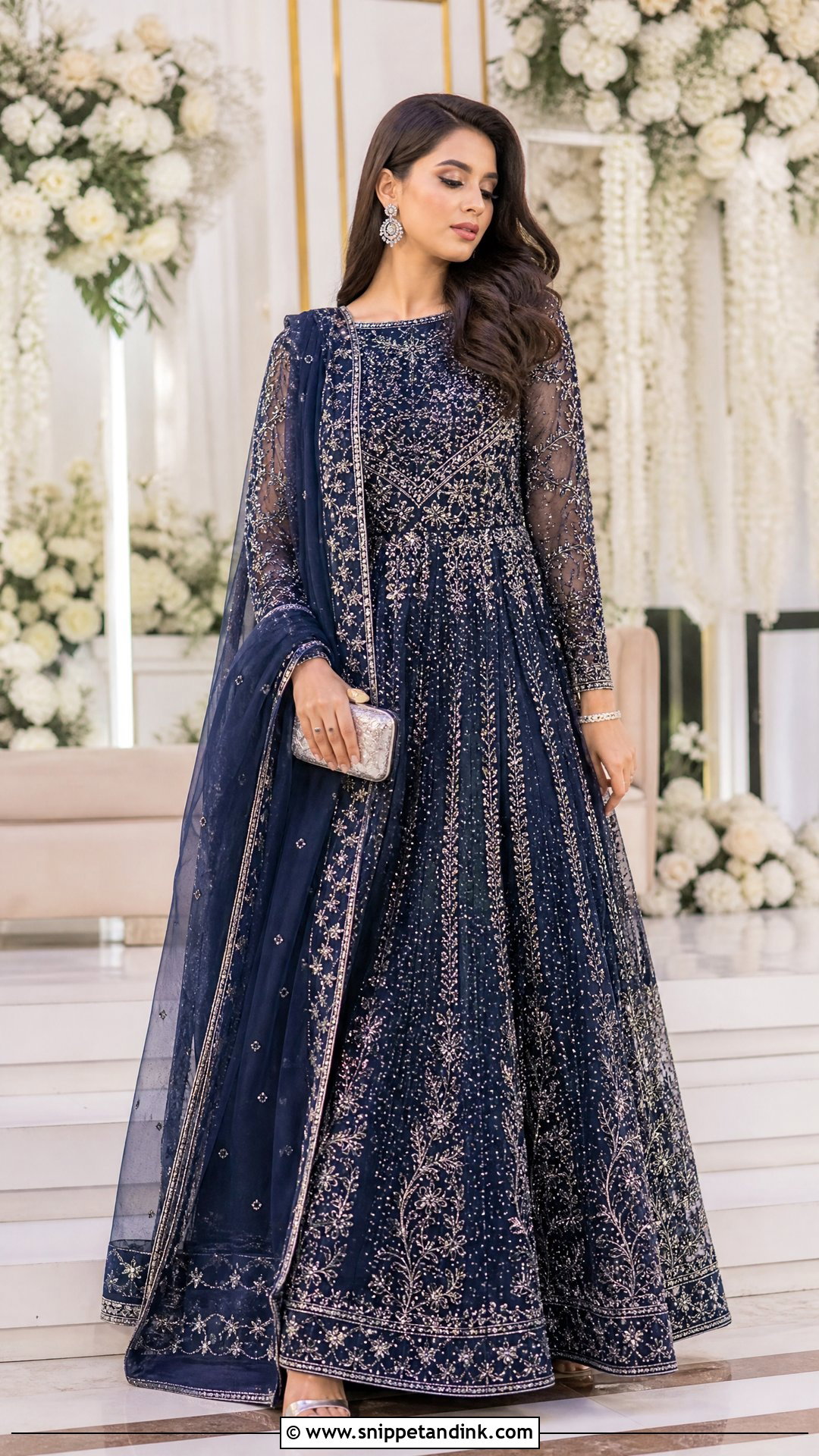
Navy is a strong walima colour, and it photographs well against the pale decor most reception halls use. In a flowing formal gown, put the silver embroidery, crystal or tonal beadwork at the bodice and sleeves. Floor length looks dramatic, but walk the hem in the shoes before the event; dark fabric hides a hem that’s too long until you trip on it. A light net dupatta secured on one shoulder is optional. Silver heels, crystal earrings and a metallic clutch keep it polished. Smooth waves or a sleek low bun show the neckline, and defined eyes with a rose or mauve lip balance the depth of the colour.
14. Pakistani Bridal Sister Emerald Green Lehenga
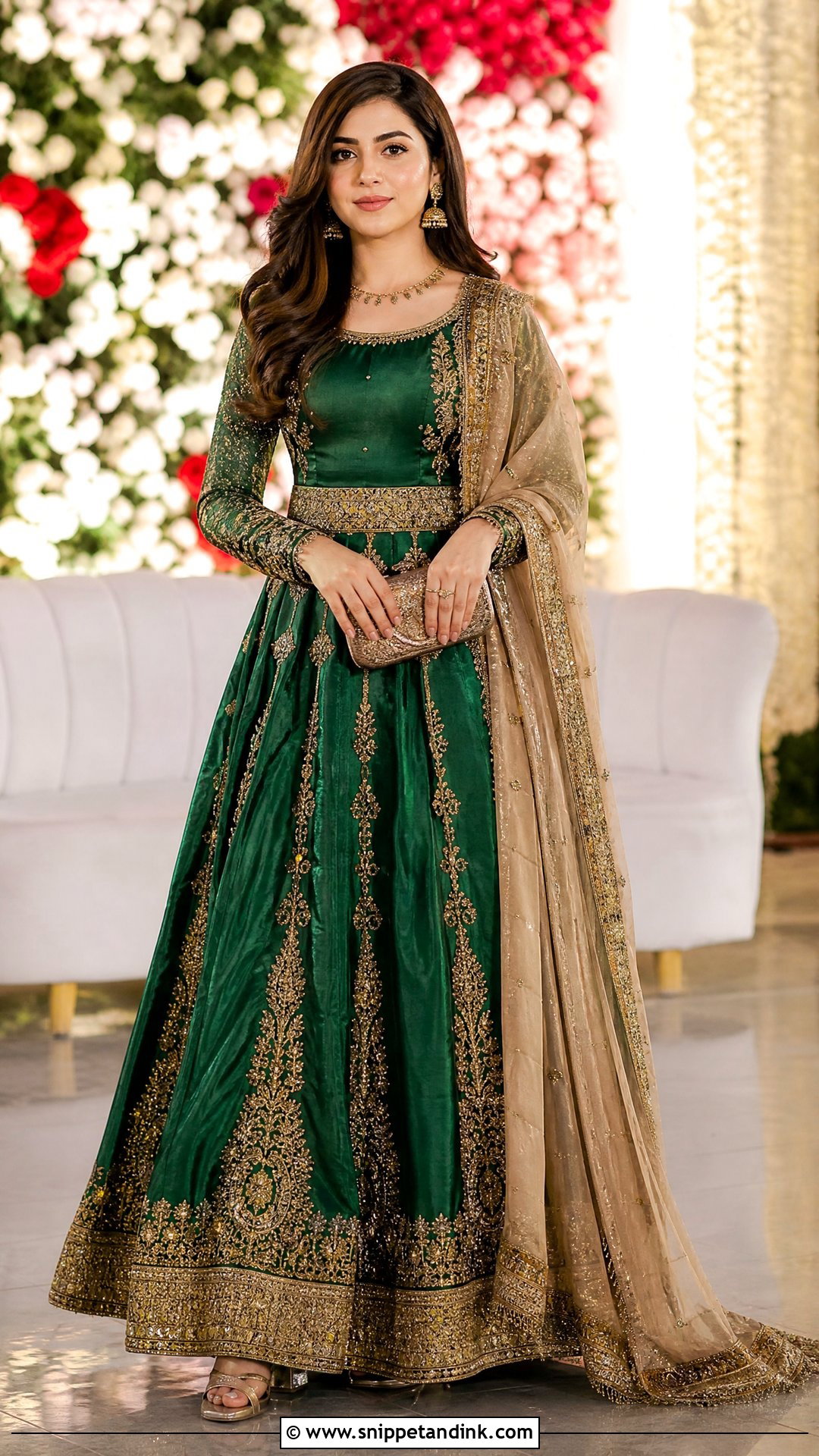
Emerald is one of my favourite sister colours because it sits beside almost any bridal shade. Against red, pink, ivory or gold it coordinates without ever looking matched. Build it on a moderately flared lehenga with antique gold at the waistband and border, and a fitted blouse with sleeves. A matching or champagne dupatta softens the dark green; pin it, since you’ll be pulled into a dozen photos and family duties. Antique gold earrings, a fine necklace, green bangles and low metallic heels complete it. A small embroidered potli holds the essentials. A low bun with a clean centre part suits it best.
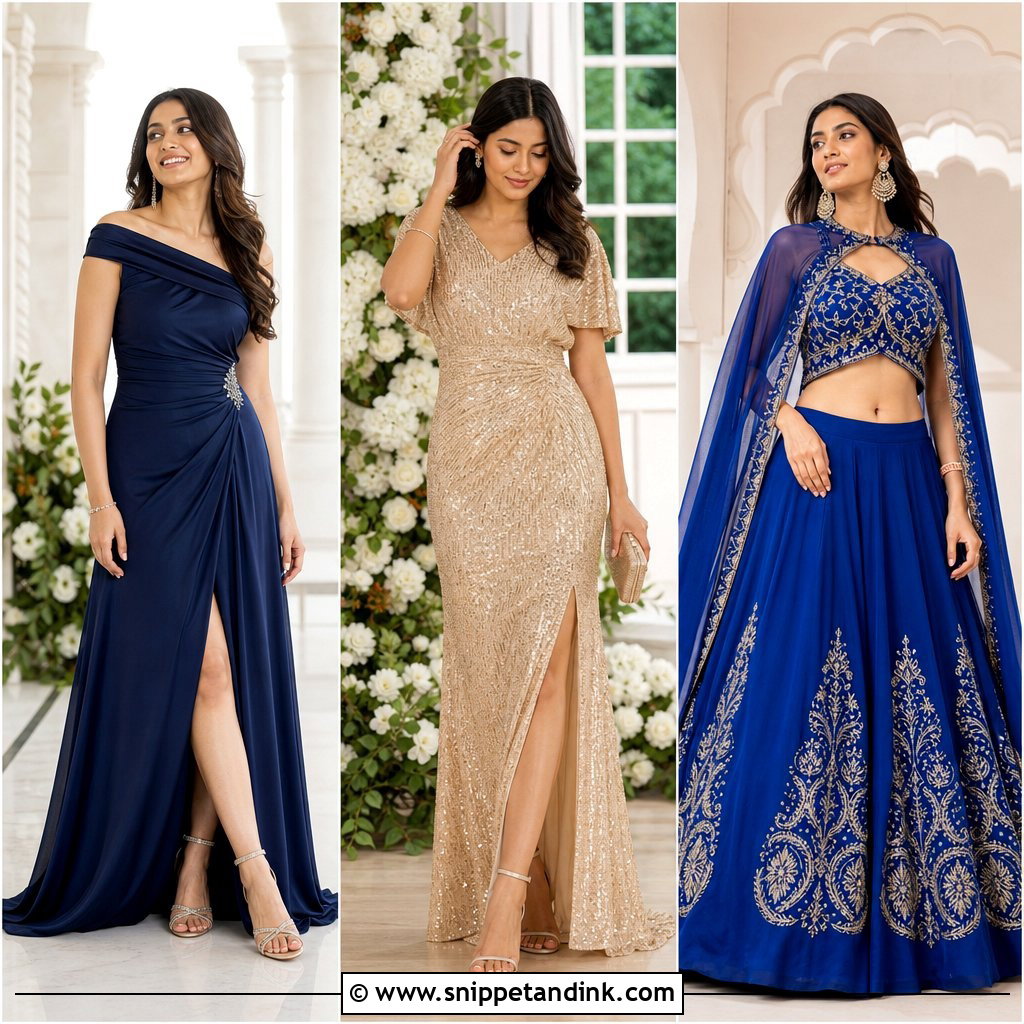
15. Pakistani Bridal Sister Black Velvet Sharara
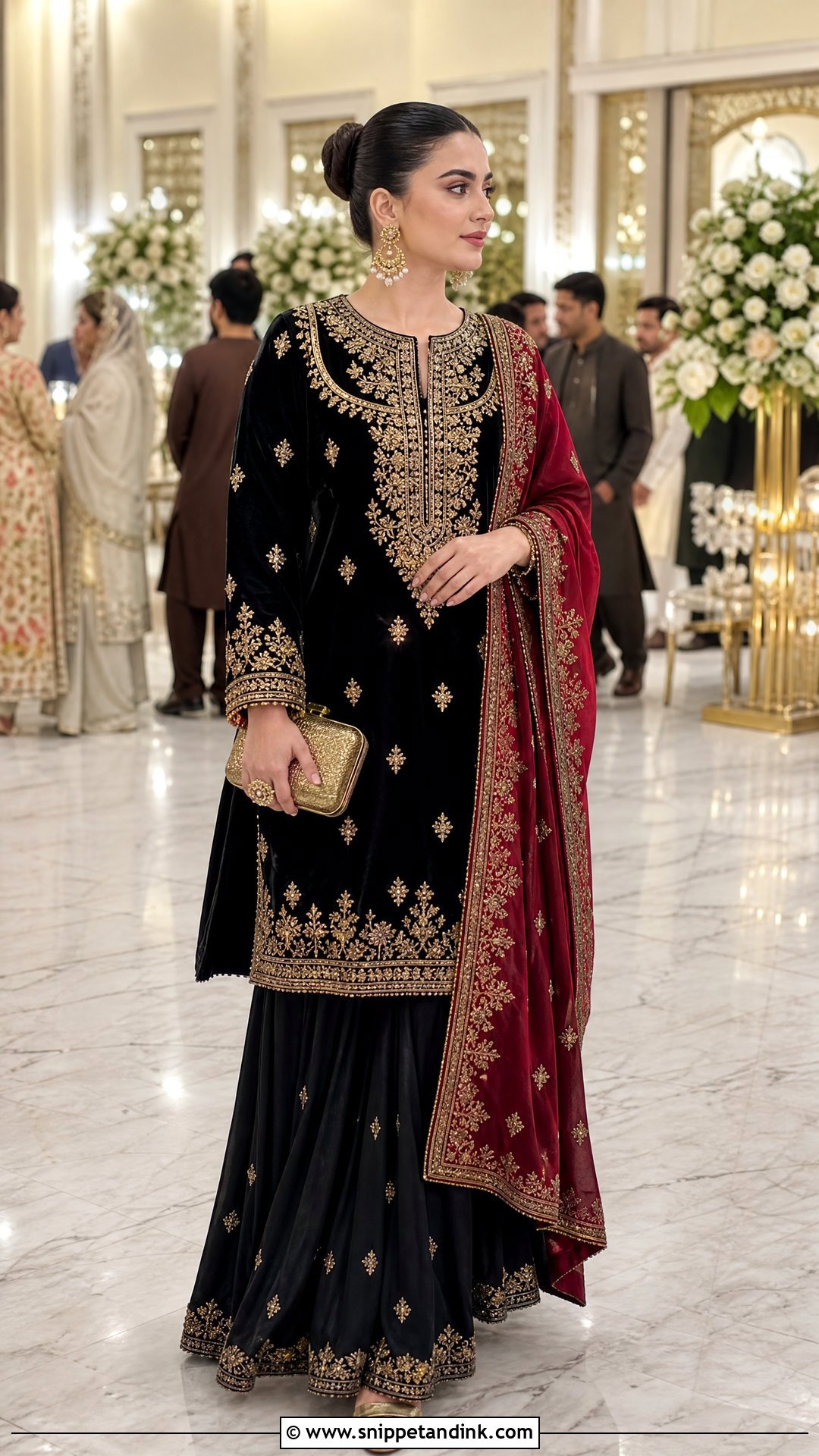
Black velvet looks refined at a winter wedding, though some families still avoid black at celebrations, so ask before you commit. Pair a fitted velvet kameez with a sharara in black, charcoal or black and gold, with zardozi-style detail at the neckline, cuffs and hem. A deep red, emerald or antique gold dupatta keeps it from looking flat in photos, because velvet absorbs light. Gold earrings, one cocktail ring, an embroidered clutch and stable block heels are enough. Velvet already has visual weight, so I keep jewelry to two pieces at most. It’s an indoor evening outfit; in a warm marquee or daytime sun, velvet becomes unbearable within an hour.
16. Pakistani Bridal Sister Gold Jacket Lehenga
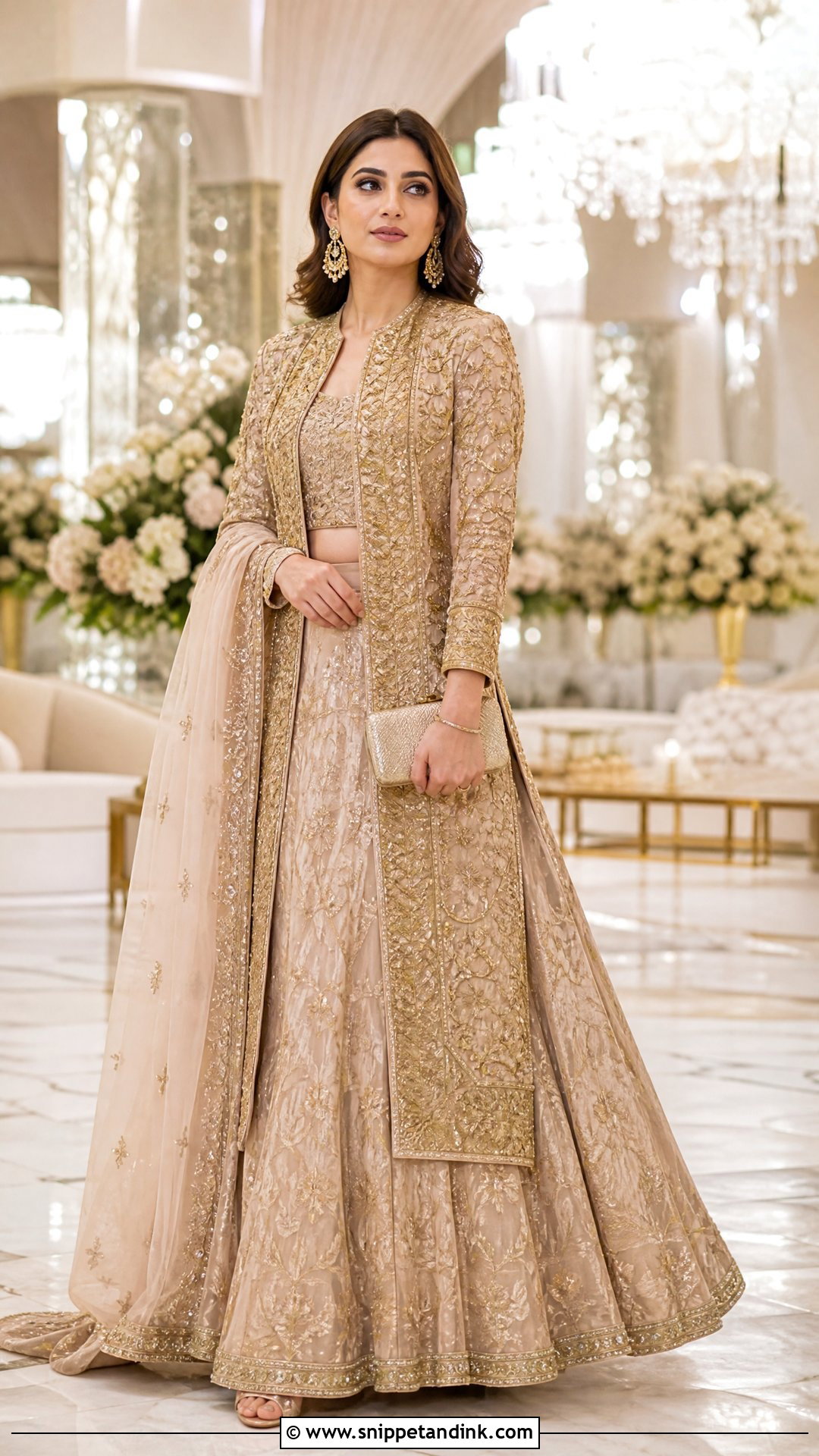
A gold jacket lehenga solves the dupatta problem for sisters who spend the night greeting guests. Start with a flowing lehenga in champagne, muted gold or beige, then a fitted blouse and an embroidered long jacket that does the work a dupatta would. If you still want a dupatta, carry a very light net one over one arm. Neutral heels, drop earrings and a structured clutch finish it. A sleek ponytail or low bun keeps the jacket collar visible. The thing I watch is gold on gold: brushed, antique and shiny metallics clash quickly, so match the jewelry to the jacket’s embroidery thread. It suits a walima or formal reception and gives full coverage.
17. Pakistani Bridal Sister Teal Peplum Sharara
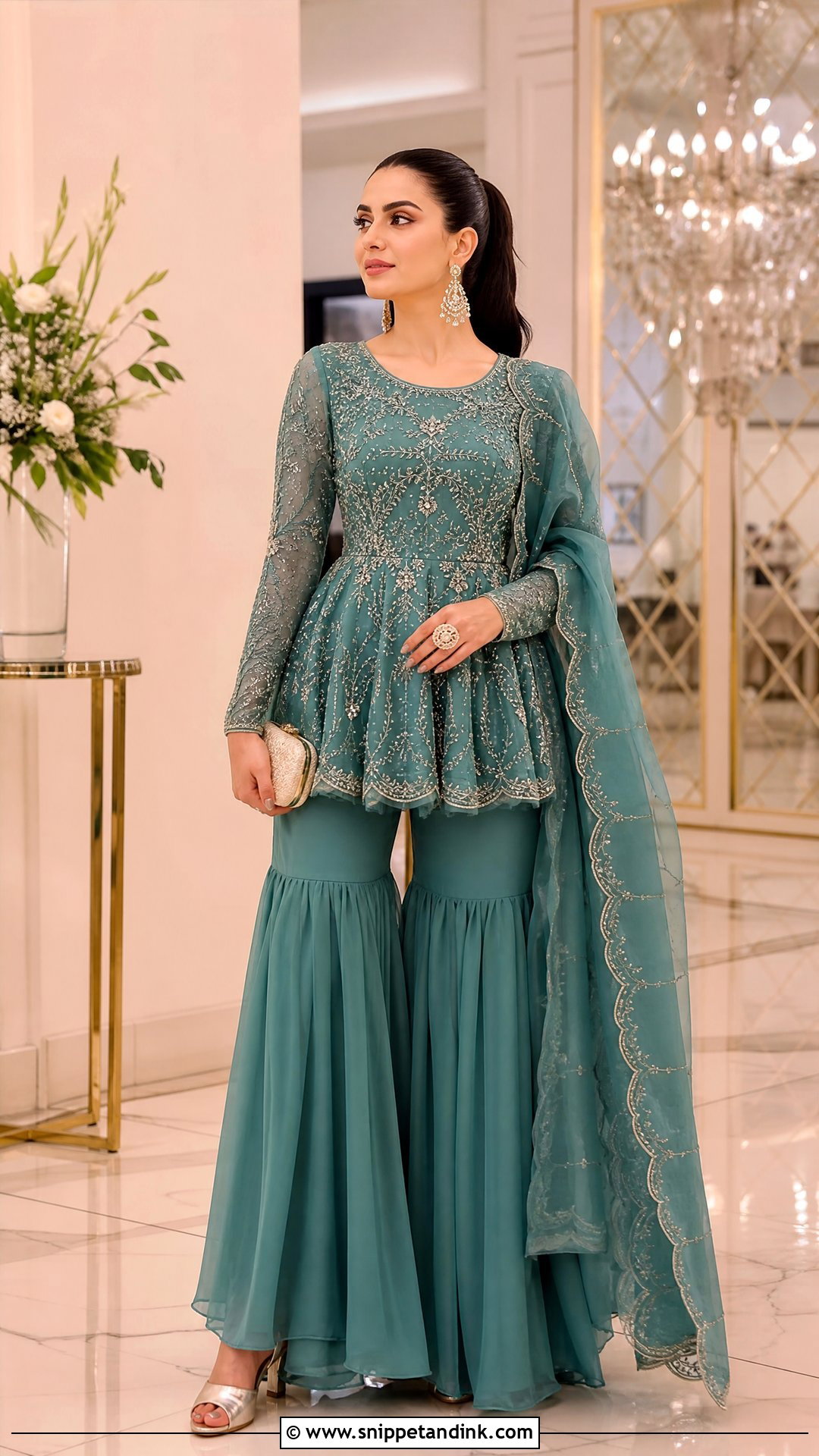
A teal peplum and sharara combination has a sharp, modern shape that still reads as Pakistani formalwear. The peplum has to sit smoothly at the natural waist; if it rides up when you sit, the flare looks crumpled in every seated photo, so try sitting down at the fitting. Put silver, gold or tonal work around the neckline, sleeves and peplum edge. A sheer matching dupatta with a narrow border tucks behind one shoulder. Metallic heels, chandelier earrings and one statement ring complete it. Teal is rich without echoing bridal reds or ivories, which makes it safe at a baraat or walima. Keep the sharara short enough for stairs.
18. Pakistani Bridal Sister Plum Long Shirt Lehenga
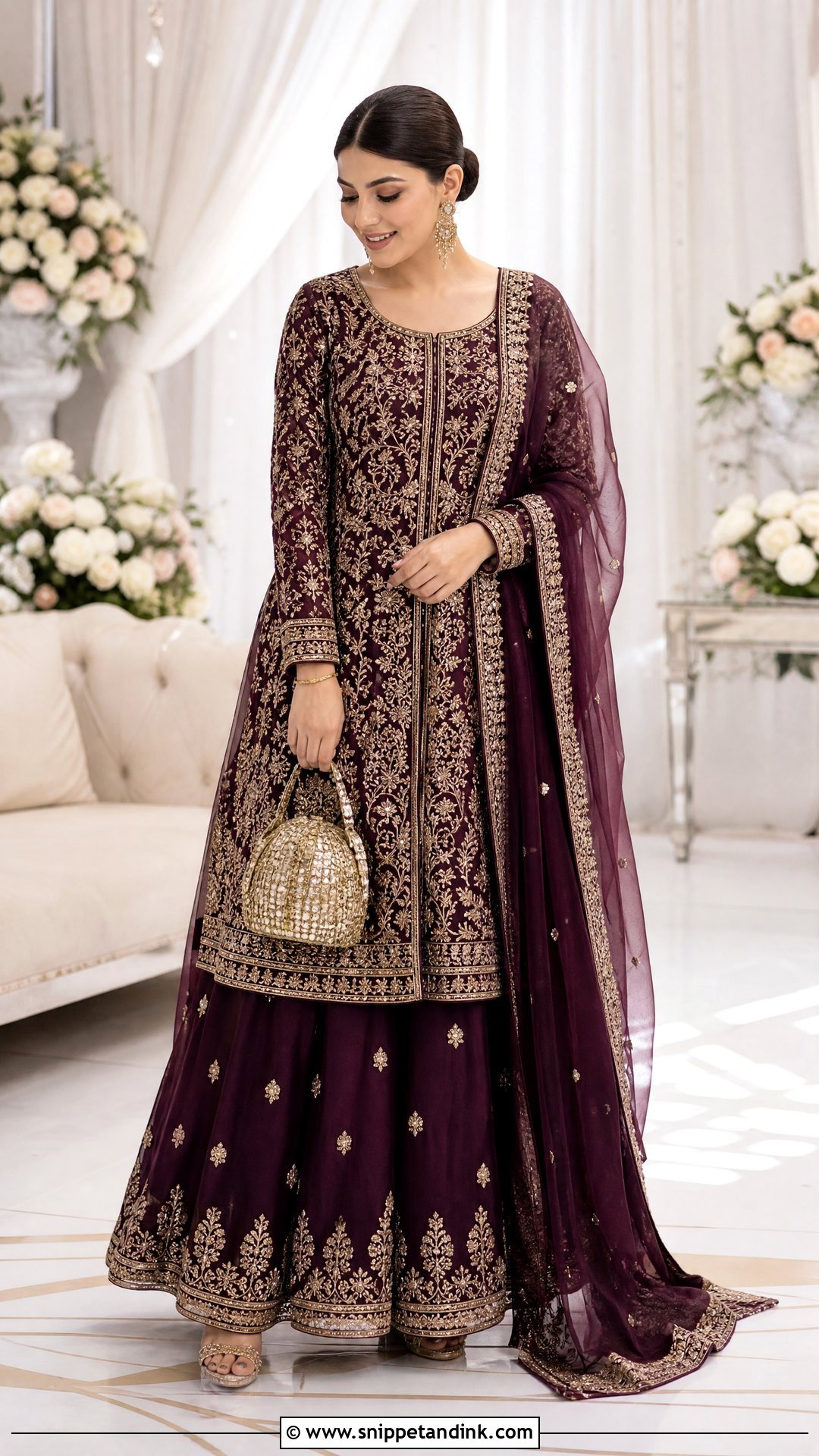
Deep plum in a long embroidered shirt over a coordinated lehenga is the outfit I suggest to sisters who don’t want a cropped blouse. The long shirt gives coverage and a clean vertical line, and the skirt adds volume below without emphasis at the waist. Antique gold, silver or mauve embroidery suits plum better than multicolour work. A sheer plum dupatta over one shoulder keeps it tonal; a muted gold one lifts it. Low heels, drop earrings, a slim bracelet and a small embellished bag are enough. Soft curls or a neat low bun keep the mood formal for a baraat or walima.
19. Pakistani Bridal Sister Silver Gray Maxi
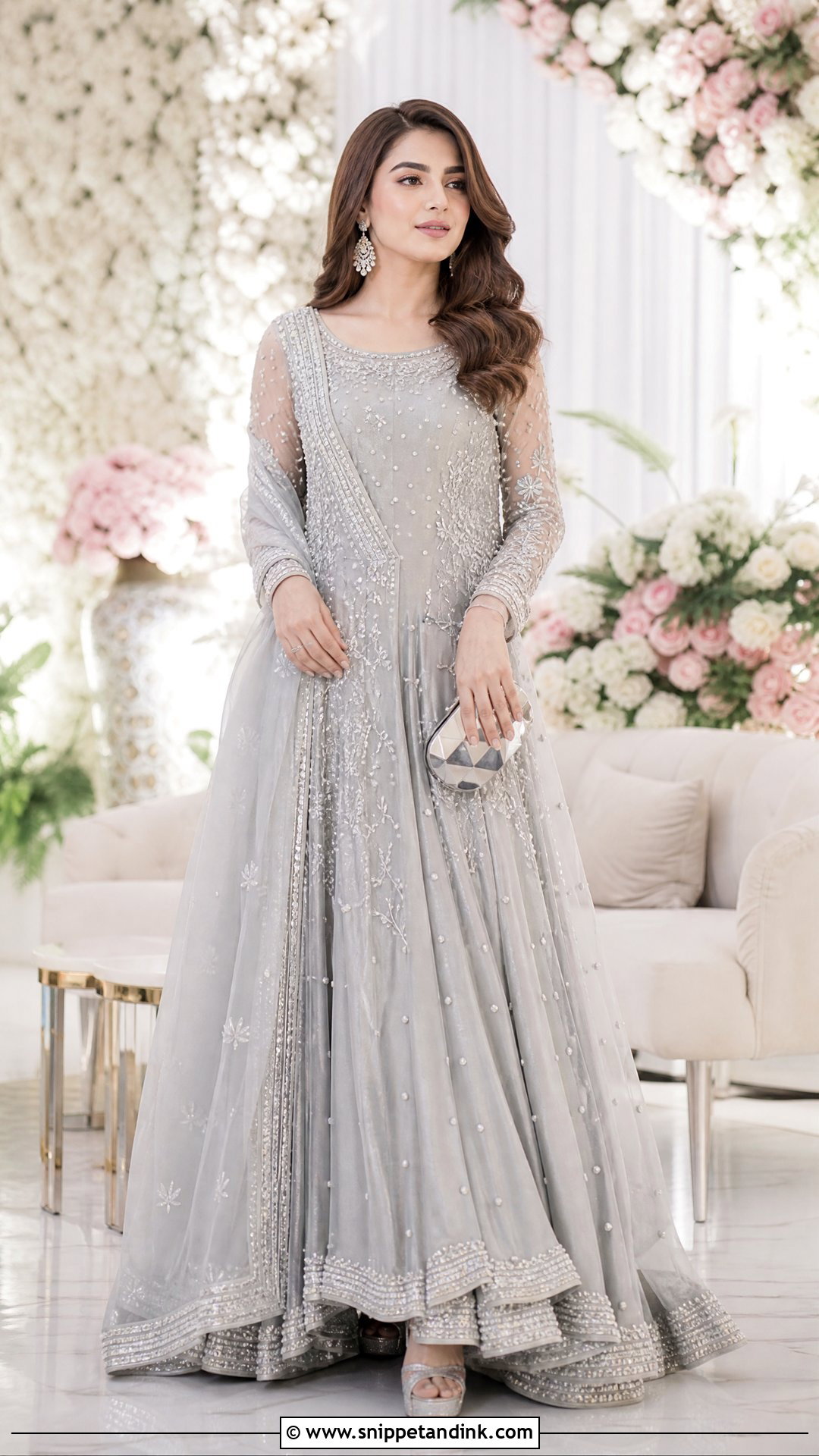
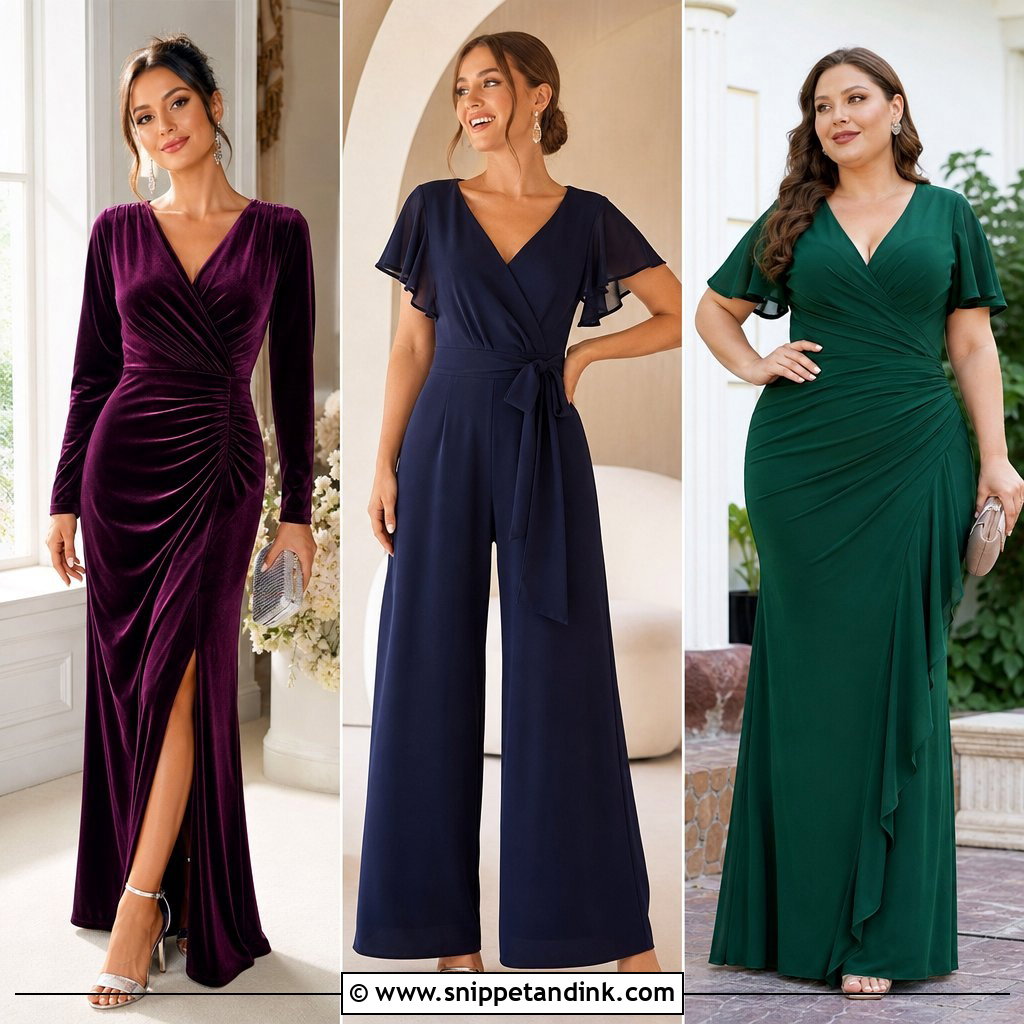
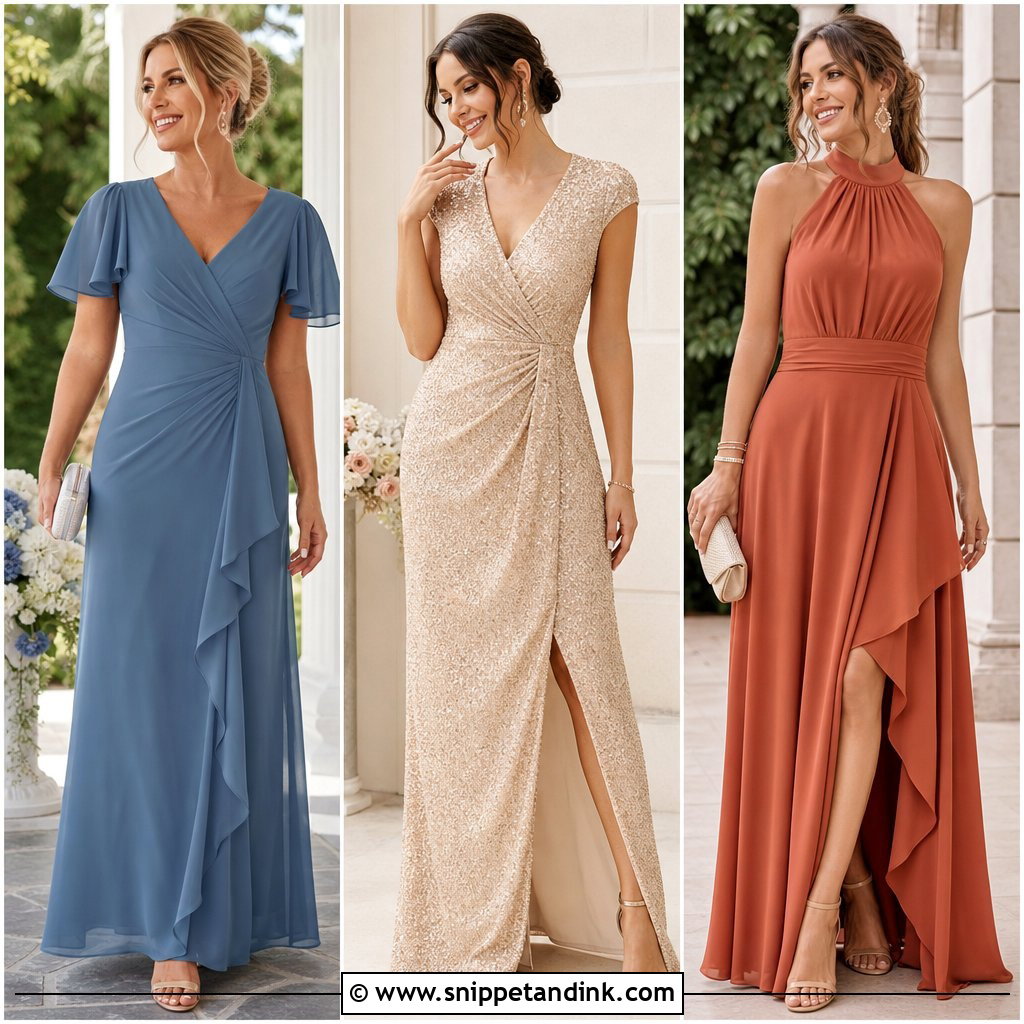
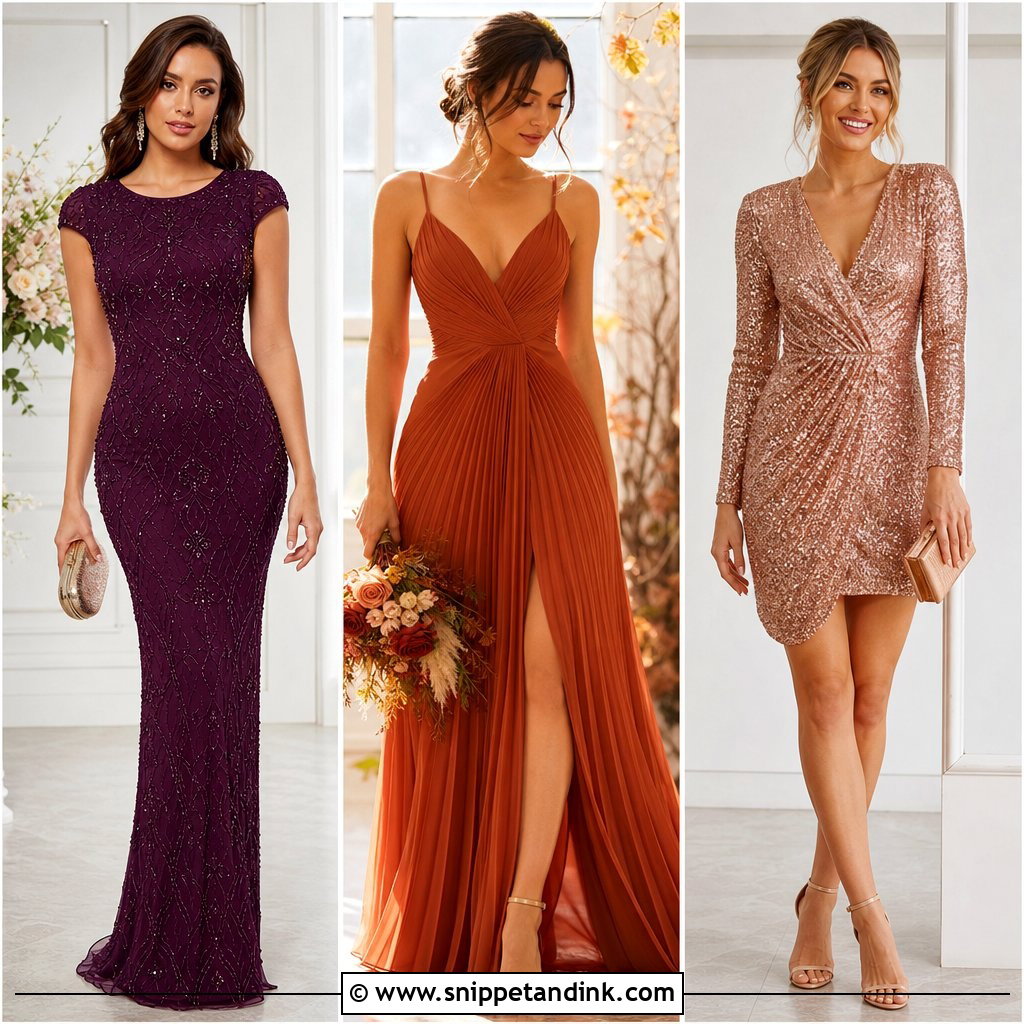
Silver-gray is understated, and that’s exactly why it works at a walima where the bride is often in pastels. Choose net, chiffon or organza with a fitted top and a smooth skirt, and let pearl, crystal or tonal silver embellishment sit at the neckline and waist while leaving clear fabric elsewhere. Gray can drain the face in photos, so I always add warmth near the skin: mauve lipstick, a pink blush or a pale blue accessory. Silver heels, crystal earrings and a mirrored clutch complete it. A sleek bun makes it more formal; soft waves relax it.
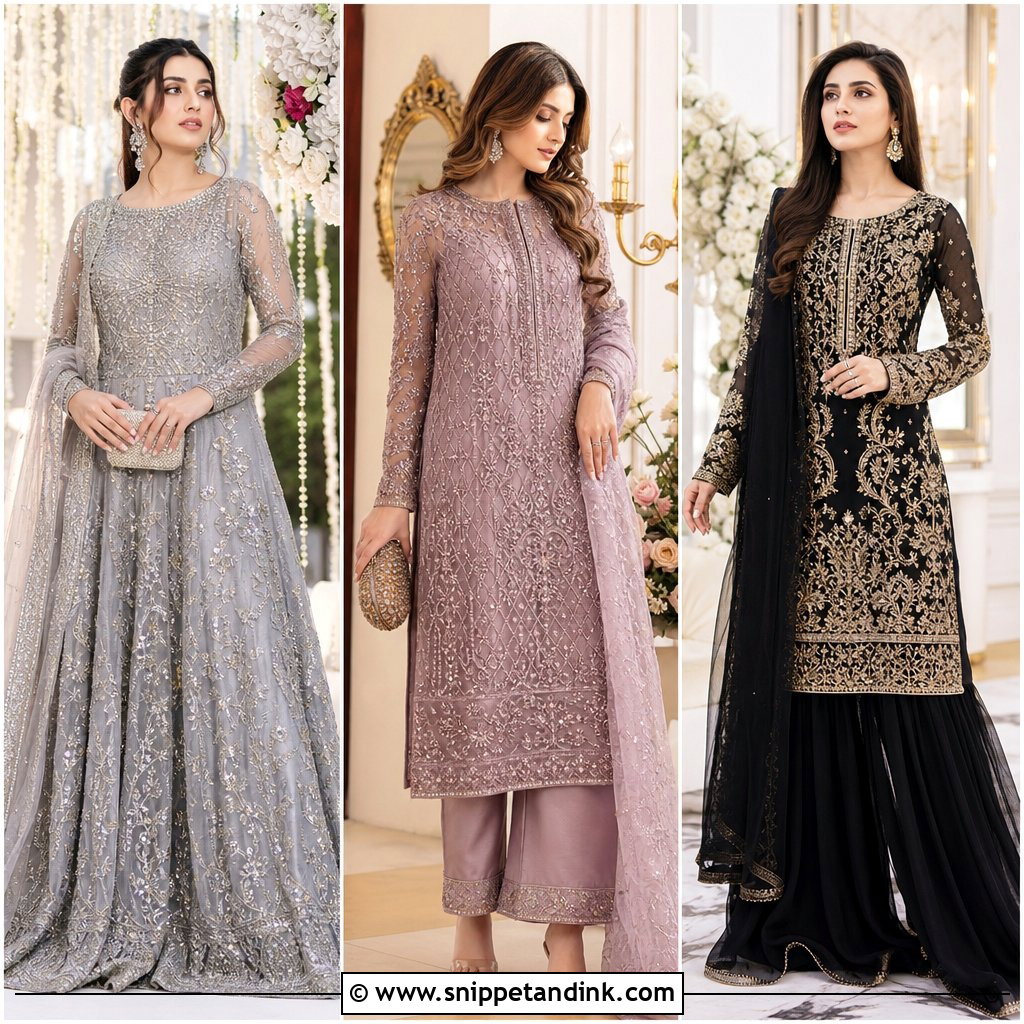
20. Pakistani Bridal Sister Floral Organza Lehenga
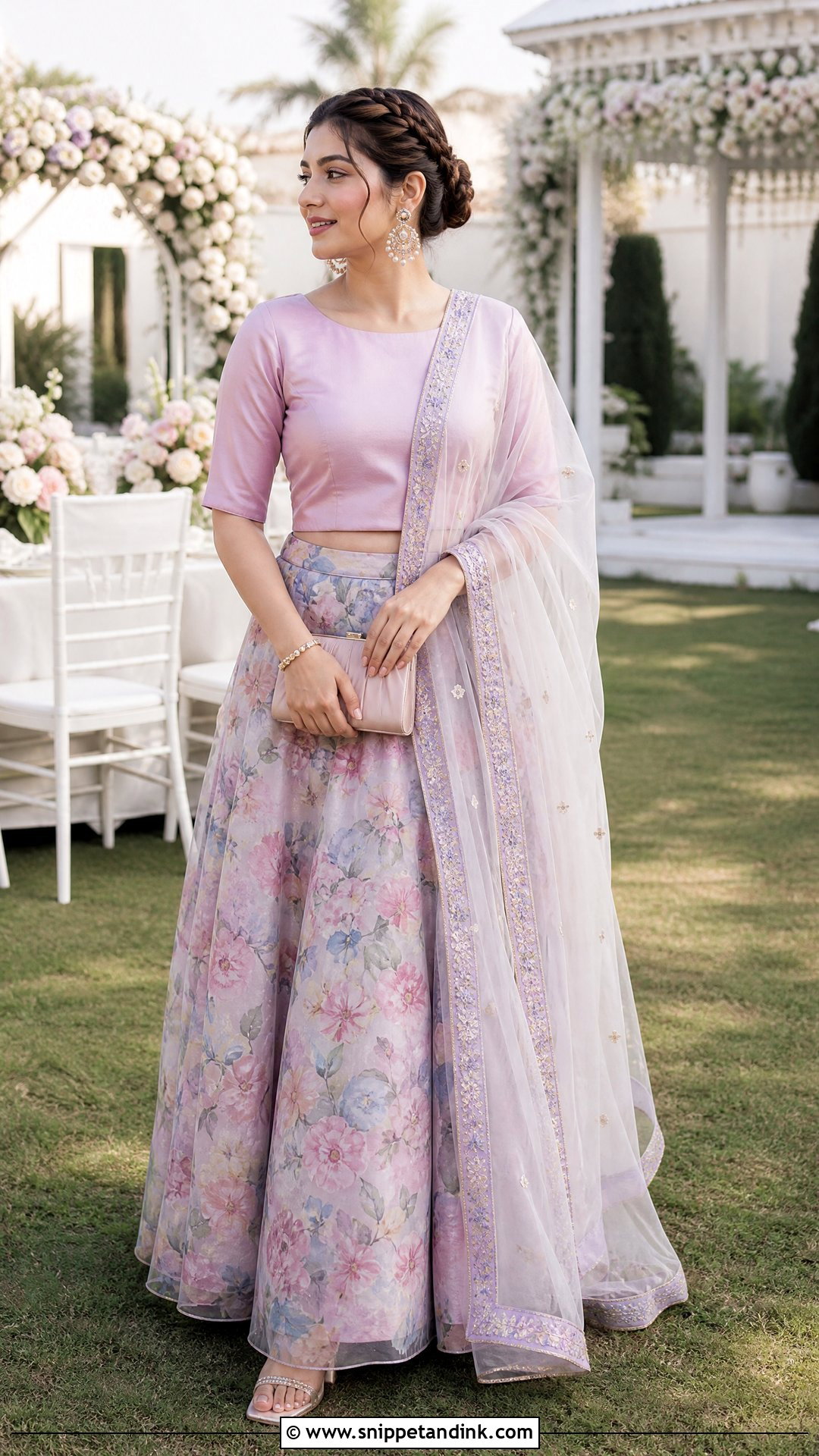
A floral organza lehenga is the lightest outfit on this list, and it suits a daytime nikkah or an outdoor event. Choose embroidered or printed flowers in a controlled pastel palette and repeat one shade in a solid blouse. A sheer organza dupatta with a narrow border keeps everything airy. Organza does hold creases, so I hang it the night before and steam it rather than ironing directly on the embroidery. Pearl earrings, a delicate bracelet, a pastel clutch and block heels or embellished sandals finish it. Soft curls or a braided bun suit the fabric. Keep the jewelry small; the print is already doing the talking.
How a Sister’s Dupatta Stays Put Through the Rukhsati
The sister’s dupatta does more work than anyone’s. It gets caught on chairs, stepped on during the rukhsati and pulled sideways in every group hug. My fix is boring but reliable: two small safety pins at the shoulder seam, pinned through the bra strap or blouse lining rather than the outer fabric, so nothing shows and nothing tears. On net and organza I add a third pin at the back of the waistband.
What goes in the sister’s potli
- Spare safety pins and a few bobby pins for both you and the bride
- A small fashion tape strip for a gaping neckline or loose blouse edge
- Blotting papers and your lip colour
- A folded pair of flat sandals for the drive home
- Tissues for the rukhsati, which almost nobody remembers
After the wedding, don’t leave heavy outfits on hangers. Embroidered lehenga skirts and ghararas stretch at the waistband under their own weight. Fold them with a muslin or cotton cloth between the layers so zari and sequins don’t snag, and store them away from plastic, which traps moisture and can tarnish metallic thread.
Four Functions, One Sister, and the Bride Still Front and Centre
Every outfit here comes back to the same test: can you hug, dance, climb stage steps and stand in forty group photos in it, and does it stay a clear step behind the bride? Mehndi colours, refined nikkah pieces, rich baraat lehengas and polished walima gowns all pass if you plan them together. Check the bride’s colours for each function, think about the venue and the weather, and choose draping you can pin and shoes you can stand in for hours. Within those limits, wear what feels like you. Your outfits will show up in the family albums for decades, next to hers.
You'll Like These Ideas:


Leave a Reply