
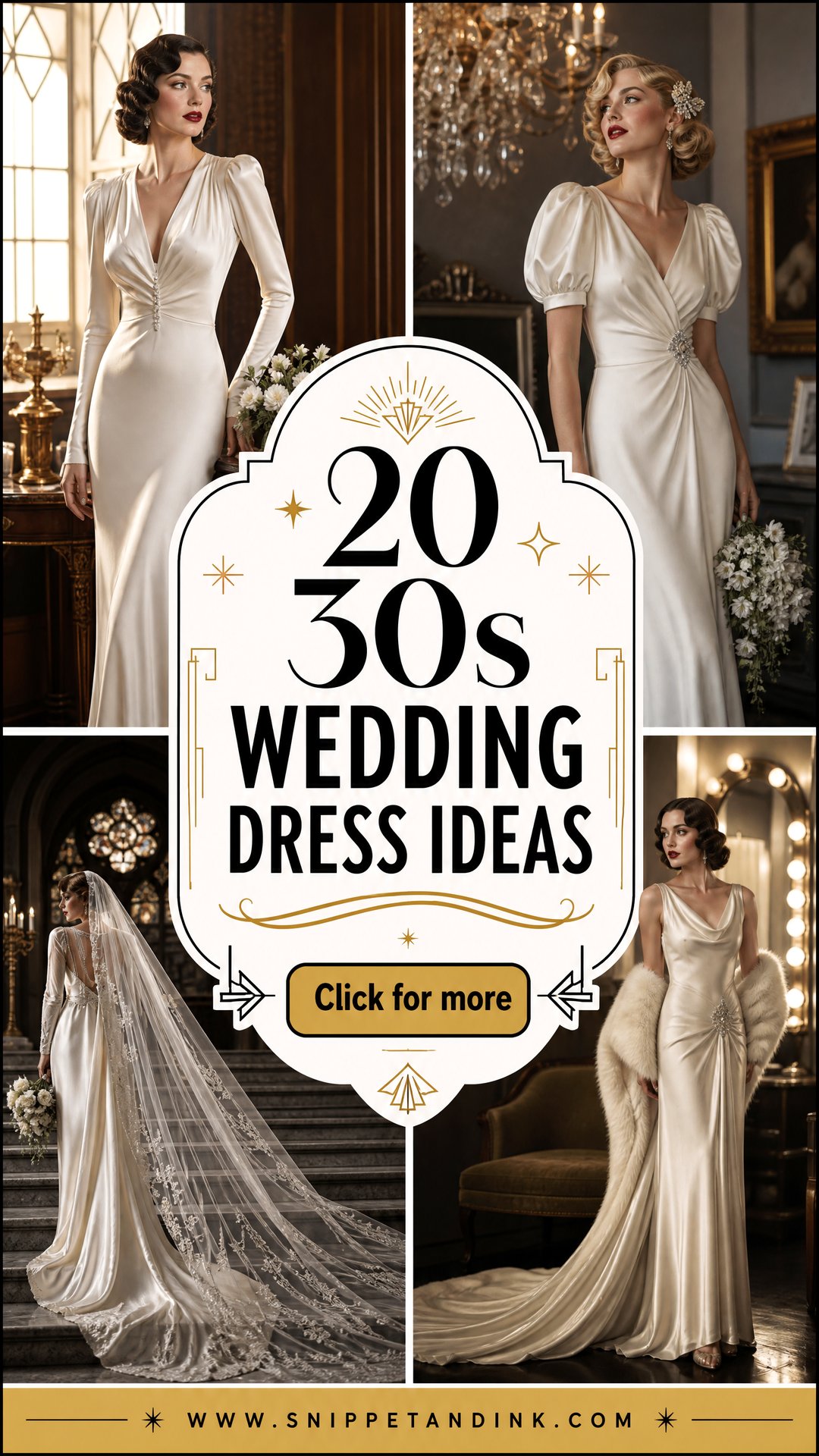
If structured corsets and stiff tulle leave you cold, the 1930s are worth a long look. Old Hollywood glamour came from fabric cut to follow the body: bias-cut satin, a natural waist, graceful sleeves and long skirts that moved rather than held a shape. Art Deco beading, draped backs, covered buttons and dramatic veils gave each gown its character. You can wear a true vintage piece or a modern dress built on the same lines, and I’ll point out where each one tends to struggle. Keep the shoes understated, the pearls small and the waves soft, so the gown stays in charge.
What a Bias Cut Shows, and What to Wear Underneath
Most of the gowns below are cut on the bias, meaning the fabric runs diagonally across the body. That diagonal gives satin and silk their slight stretch and that pour-over-the-hips drape. It also means the dress hides nothing. A visible knicker line or the edge of a bra band will show in every photograph.
At the first fitting I ask brides to bring the exact underwear they plan to wear, then we decide on support. Options that tend to work with these cuts:
- A full-length slip in a smooth, matte fabric, which lets the satin glide instead of clinging.
- Bonded or laser-cut briefs with no elastic edge, in a shade close to your skin rather than white.
- Bust cups sewn into the gown itself for low backs and cowls, so there’s no bra to hide.
- Light smoothing shorts if you want them, as long as they end mid-thigh where the skirt flares away.
Bias-cut fabric also drops as it hangs. A good seamstress lets the gown hang for at least a day before marking the hem, and you should store it folded flat rather than on a hanger in the final weeks, or it may grow longer than you were fitted.
1. 1930s Bias Cut Satin Wedding Dress
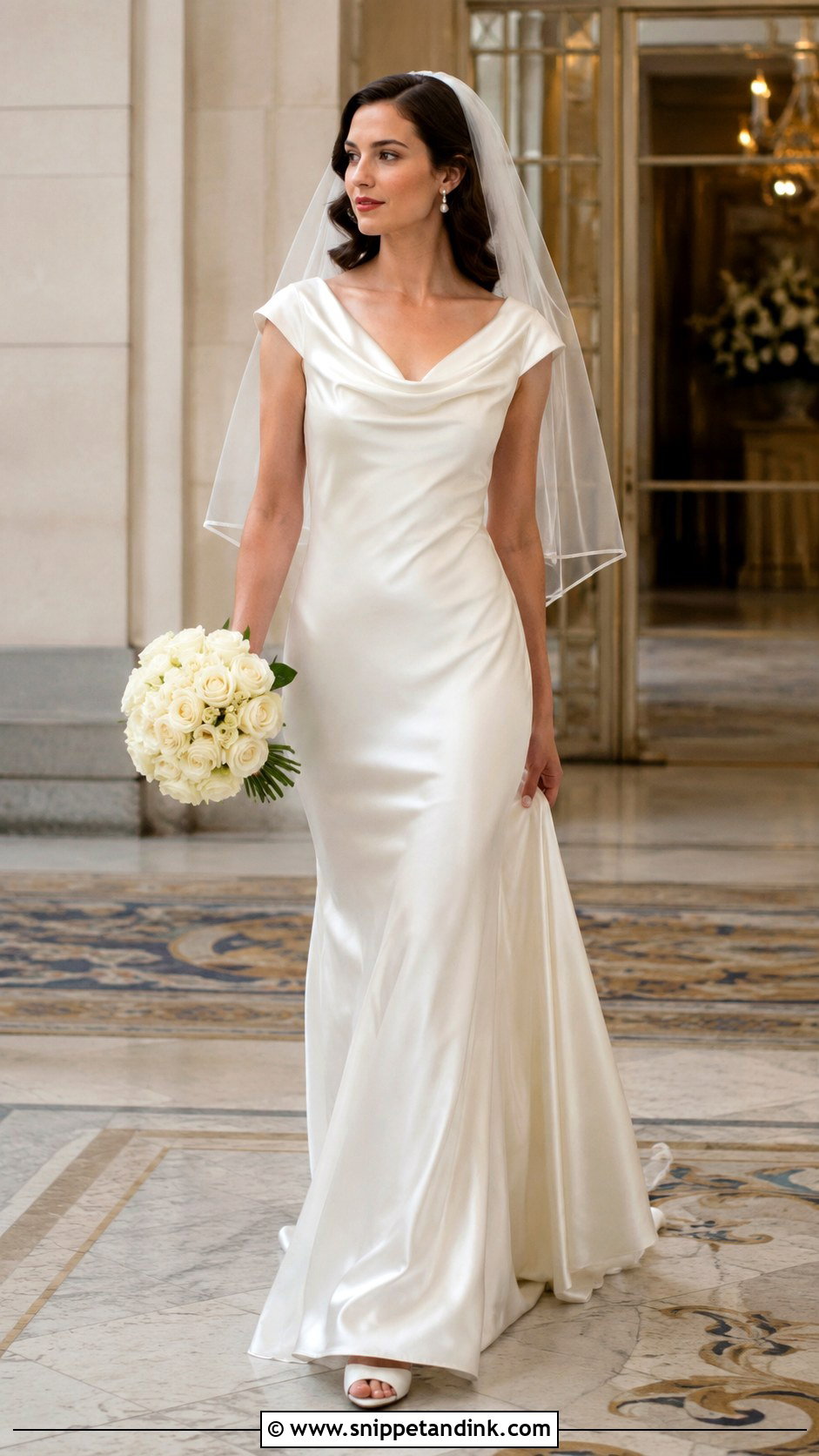
Satin cut on the bias stretches slightly and settles over the hips, which is what gives 1930s bridal fashion its liquid look. Ivory, soft white or pale champagne all work, with a fitted waist and a gently flared floor-length skirt. A shallow cowl softens the face, and small cap sleeves keep the line neat. I always warn brides that this cut is honest: it shows every undergarment seam, so the slip and shapewear matter as much as the dress. Ivory peep-toes, a small pearl clutch, drop earrings and a fingertip veil keep the lines clear. Side-parted waves and a compact bouquet of roses or calla lilies finish it.
2. 1930s Long Sleeve Crepe Wedding Dress
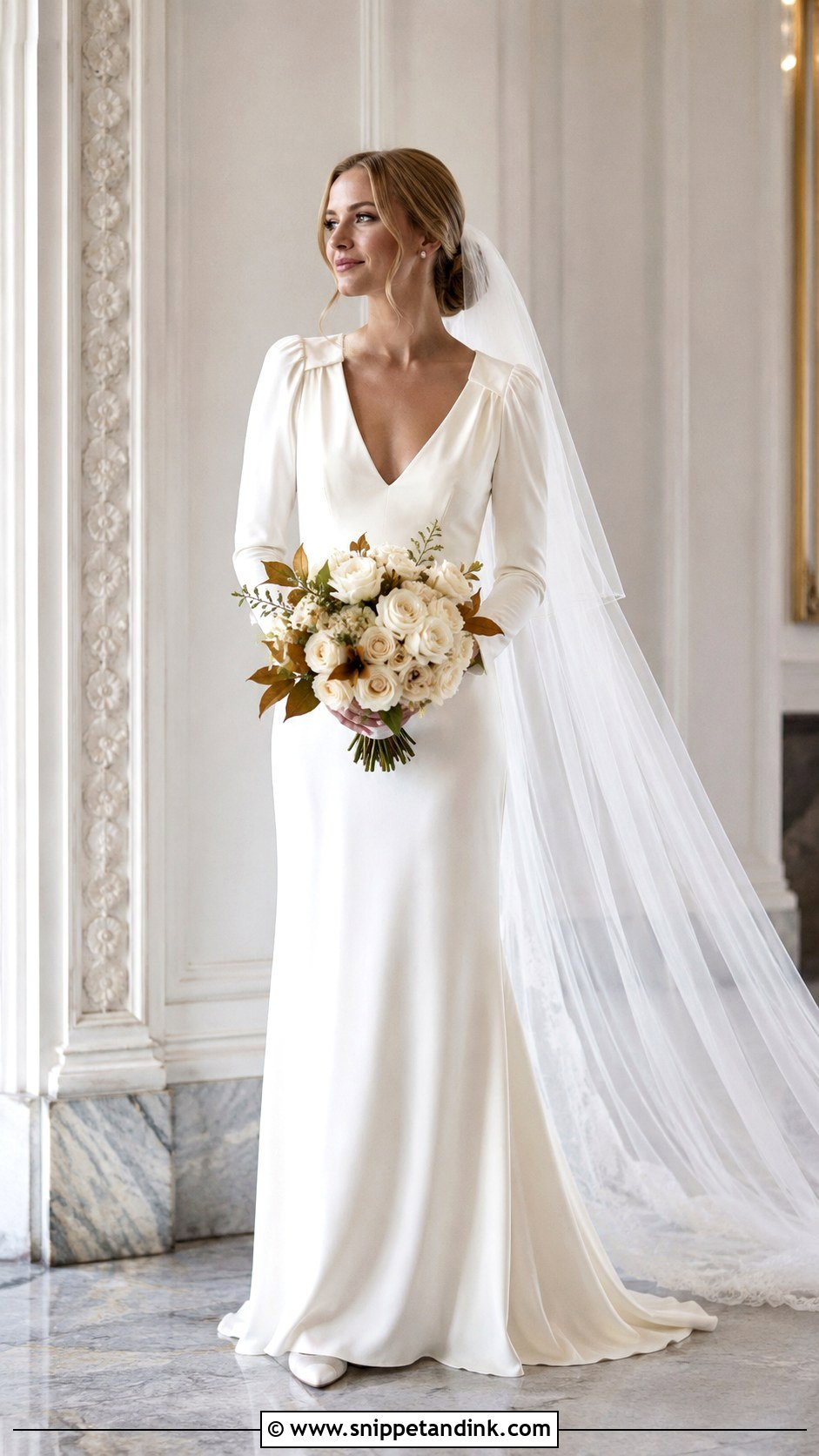
Crepe has a dry, matte surface, so it reads vintage without tipping into costume. Choose a fitted ivory crepe gown with long sleeves, a natural waist and a softly sweeping skirt; a V-neck lengthens the upper body, and gathered shoulders nod to the decade. I’d pick this one for a bride who wants coverage and still needs to move, since crepe has a little give and doesn’t crush the way satin does when you sit. Low block-heel pumps, a structured satin clutch, pearl studs and a narrow bracelet are enough. A simple cathedral veil, a low twisted bun and cream garden roses carry it through almost any season. For more coverage, ask for a lined bodice and wrist-length sleeves closed with covered buttons.
3. 1930s Cowl Neck Silk Wedding Dress
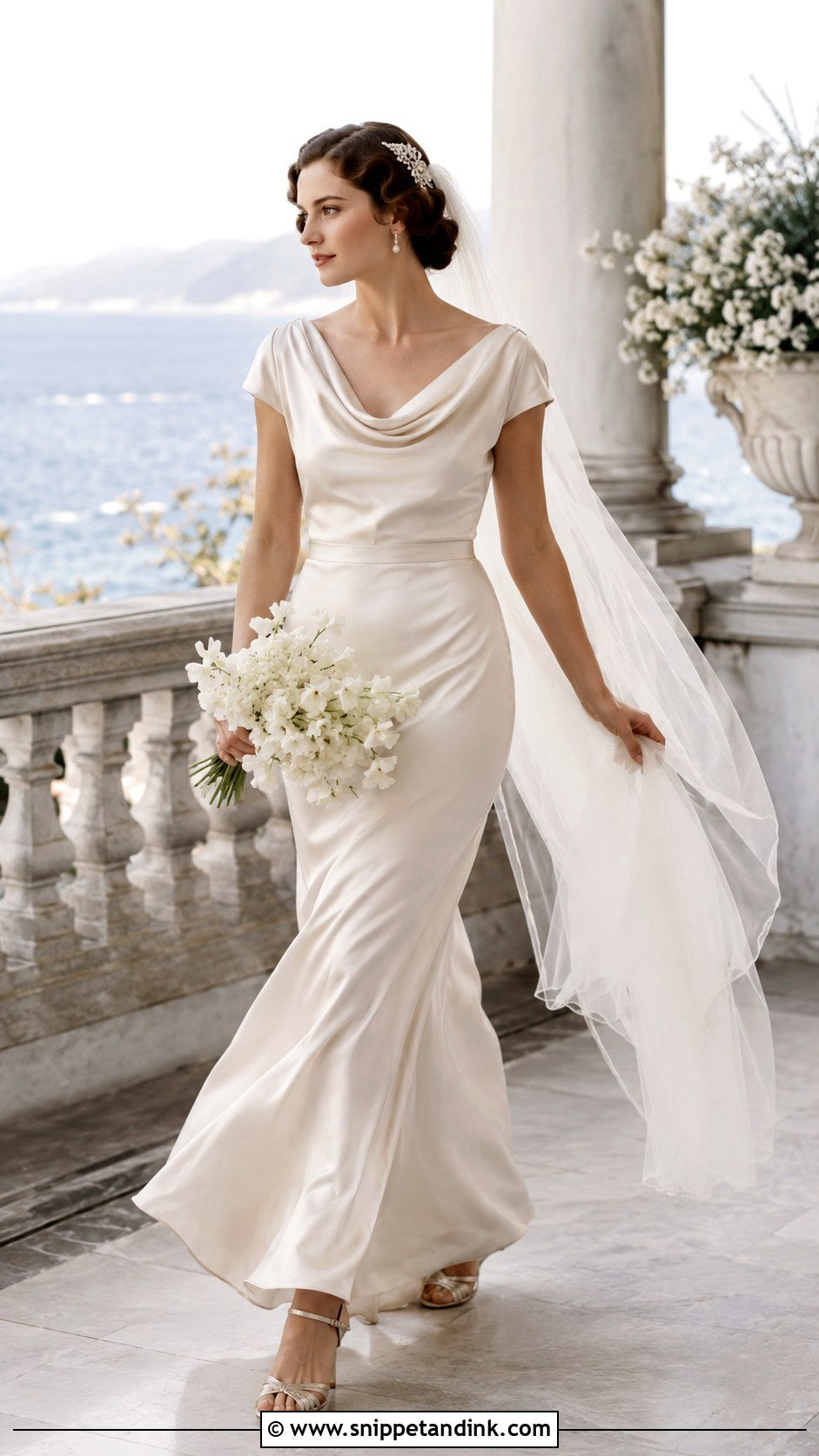
Silk moves with every step down the aisle, and a cowl neck wedding dress uses that movement to frame the collarbone in soft folds. Look for floor-length silk with a defined natural waist, narrow straps or short sleeves and a lightly draped skirt. Cowls are sensitive to fit: too much fabric and the folds sag forward when you bend to sign or hug, so I have brides lean over at every fitting and we pin the drape accordingly. Champagne metallic sandals, pearl drops and a slim Art Deco bracelet suit it. Choose a sheer shoulder-length veil, brushed waves tucked behind one ear, a jeweled comb and loose sweet peas. Indoor evening, coastal and intimate ceremonies suit it best.
4. 1930s High Neck Lace Wedding Dress
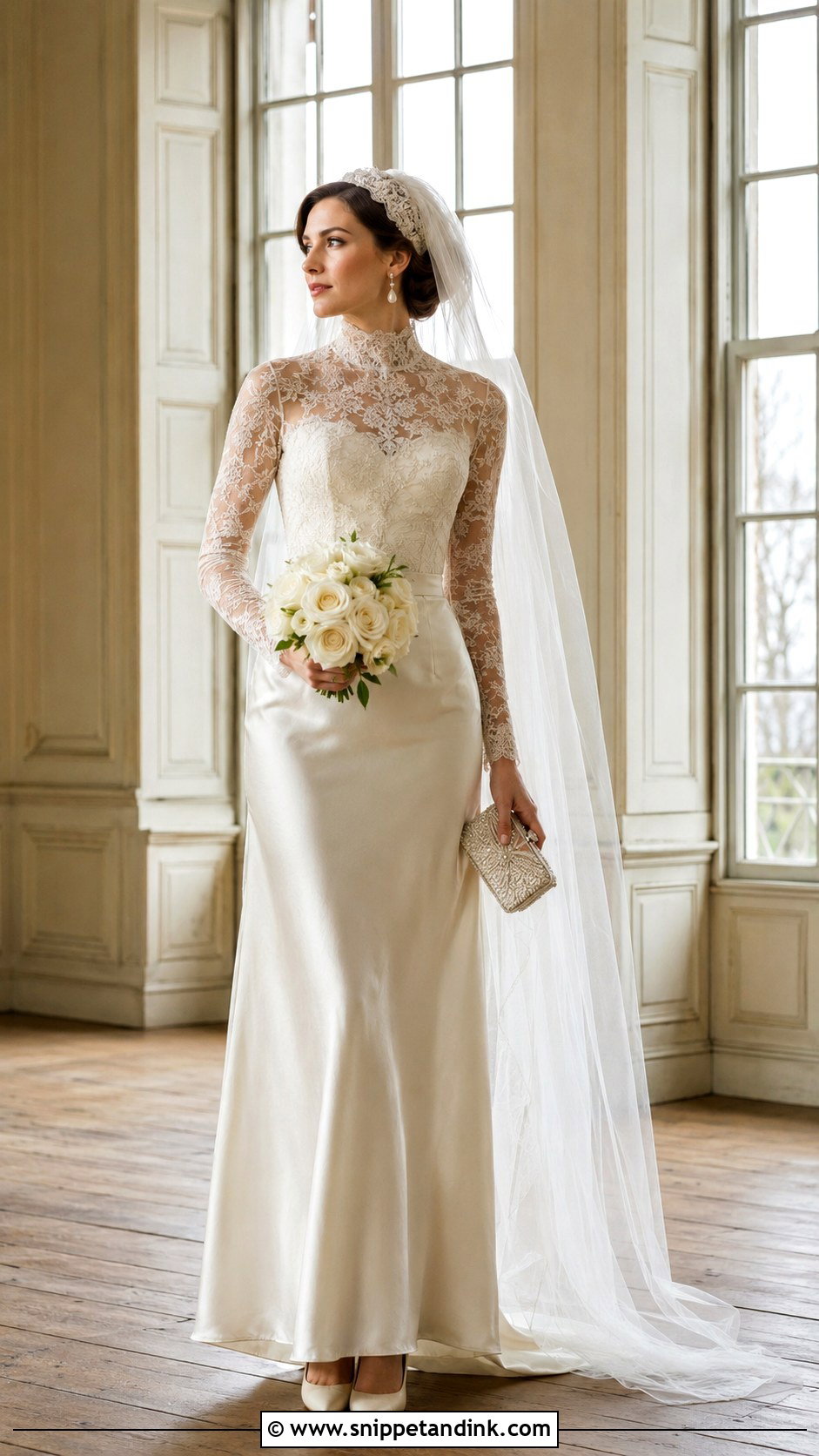
High-neck lace is about the craftsmanship, so let it be the only busy thing on the gown. A fitted lace bodice with long sheer sleeves over a smooth satin or crepe skirt keeps the balance right. The neckline is where I’m fussiest: a high lace collar needs to sit just off the throat, because one that touches will feel tight by the speeches and wrinkle when you turn your head. Closed-toe ivory pumps, pearl earrings and a small beaded bag are enough. A Juliet cap veil sitting close to the head and flowing behind the shoulders makes the vintage reference obvious. Pair it with a neat low bun and a narrow bouquet of roses with trailing greenery for fall, winter or early spring.
5. 1930s Puff Sleeve Wedding Dress
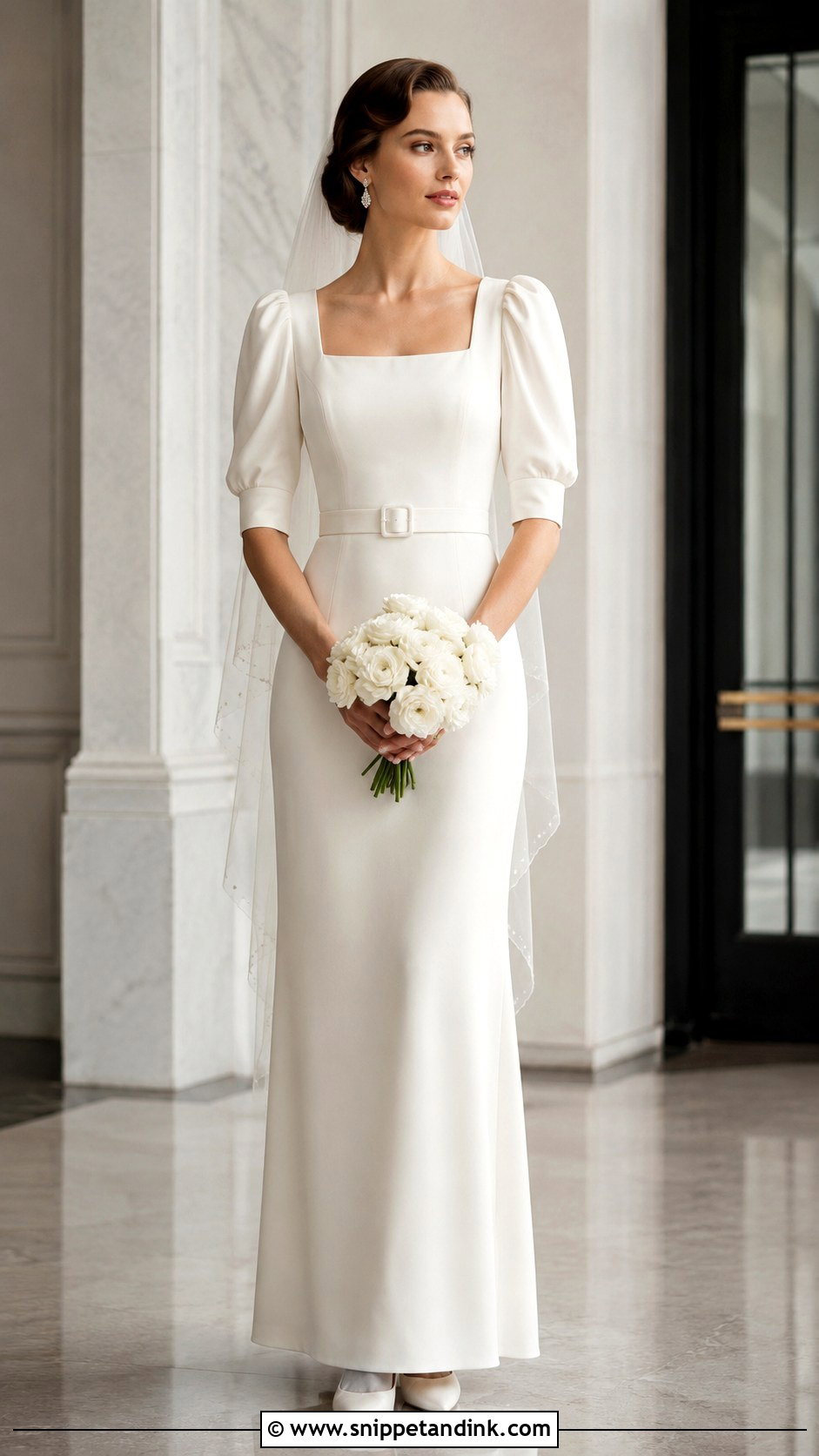
Puff sleeves add structure to a narrow 1930s line, but scale is everything. Go for ivory crepe or matte satin with a square neckline, fitted waist, slim skirt and sleeves that taper below the elbow. Oversized shoulders push the look toward costume; a modest gather at the sleeve head is truer to the decade. Almond-toe pumps, a structured mini bag and small crystal earrings keep the rest quiet. Set a plain tulle veil beneath a low bun so the sleeves and neckline stay visible. If the gown needs more waist definition, a slim belt with a period-style buckle helps. A rounded bouquet of white ranunculus suits formal and city venues.
6. 1930s Low Back Column Wedding Dress
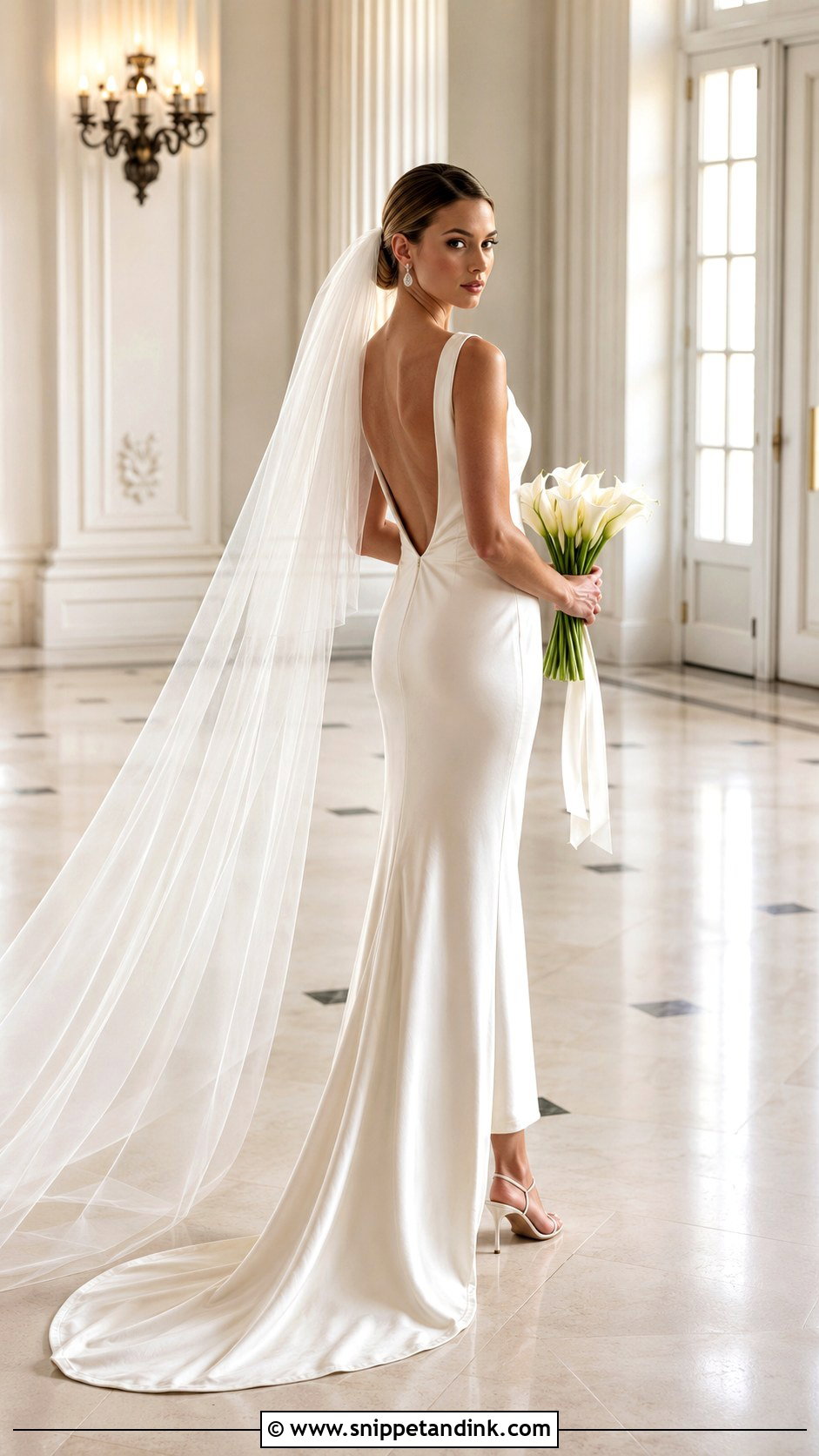
The front stays plain; the back does the talking. Choose fluid ivory satin with a high bateau or softly draped neckline, a natural waist and a back that dips into a rounded or V shape. Low backs fail when the bodice relies on luck to stay up, so I ask for clear elastic or a hidden strap inside the back edge, plus bust cups sewn in, before anything else is decided. Keep accessories restrained: pearl studs, a fine bracelet, satin slingbacks. A long sheer veil frames the back without hiding it, and side-swept waves or a low chignon keep the hair out of the way. Carry long white calla lilies.
7. 1930s Cape Sleeve Wedding Dress
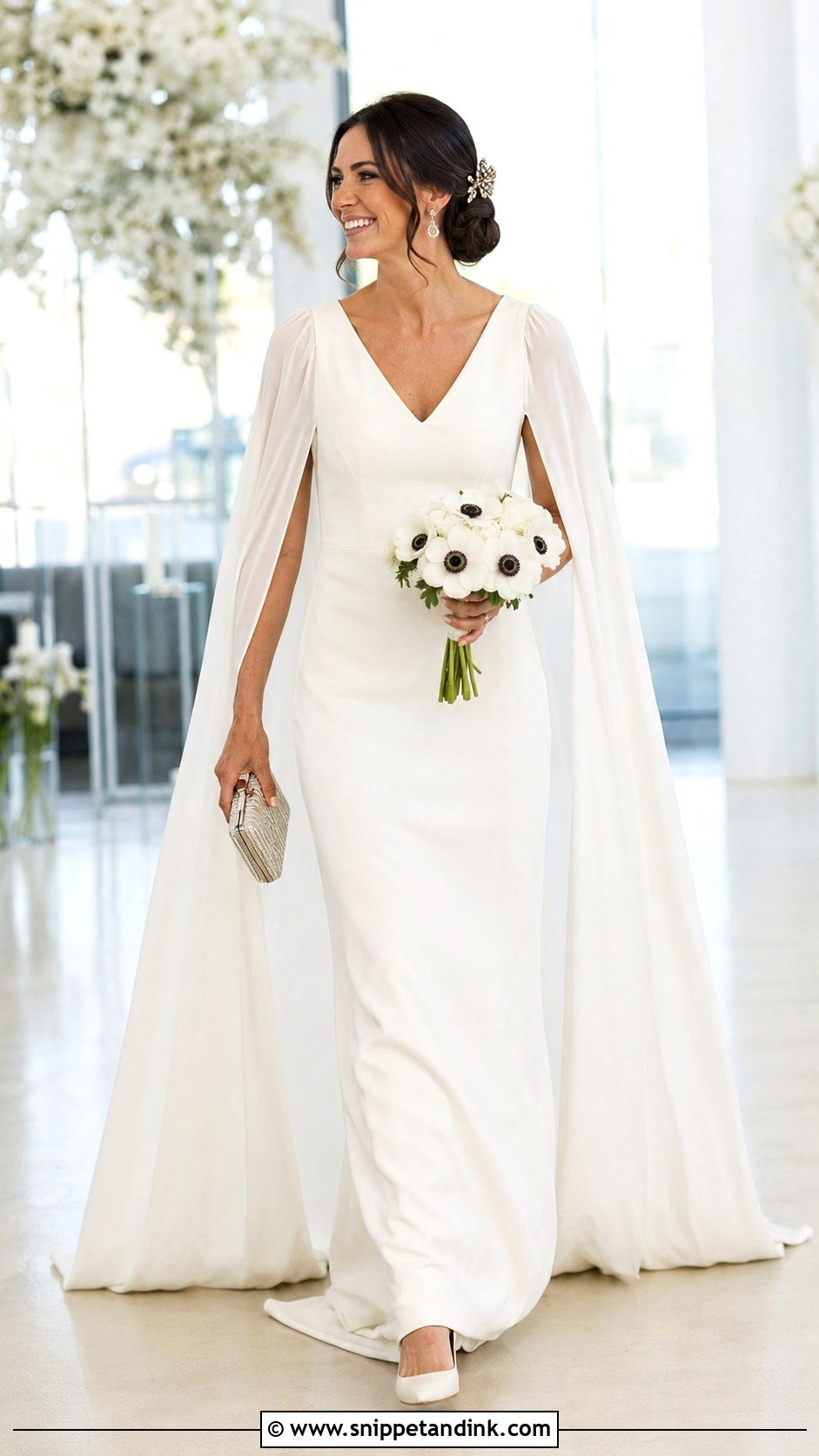
Cape sleeves give coverage and movement with none of the tight arm a fitted sleeve can bring. Start with a slim ivory crepe gown, a modest V-neck, a defined waist and a floor-length skirt; the chiffon capes fall from the shoulders and float behind you. Because the cape already adds volume at the shoulder, a short veil or just a decorative comb is usually enough, and I’d skip a cathedral veil here entirely since the two layers tangle. Simple ivory pumps, crystal drops and a narrow metallic clutch. A low waved bun keeps the neckline clear, and white anemones with pale greenery complete it.
8. 1930s Tea Length Wedding Dress
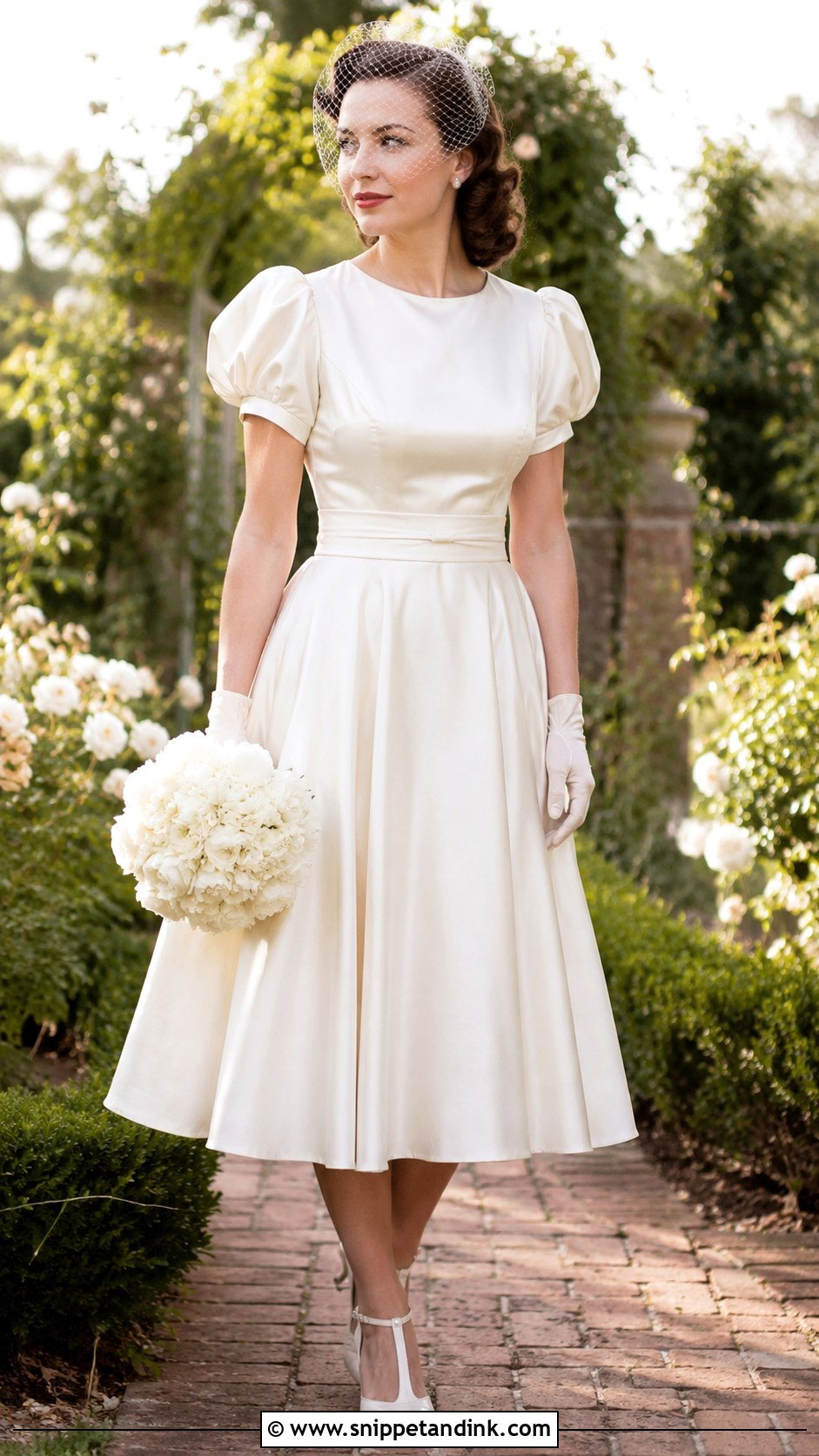
Tea length shows your shoes and lets you walk anywhere, which makes it one of the most practical gowns in this collection. Pick ivory satin or lace with a fitted bodice, natural waist and a skirt between knee and ankle; slightly puffed sleeves or a neat high neckline add period character. The shoes become part of the outfit, so T-strap heels, rounded pumps or Mary Janes in ivory or gold are worth choosing carefully. Short gloves, pearl earrings and a small structured handbag fit the era. A birdcage veil or compact floral headpiece keeps the proportions right. Finger waves and a rounded bouquet finish a courthouse, garden or daytime wedding.
9. 1930s Art Deco Beaded Wedding Dress
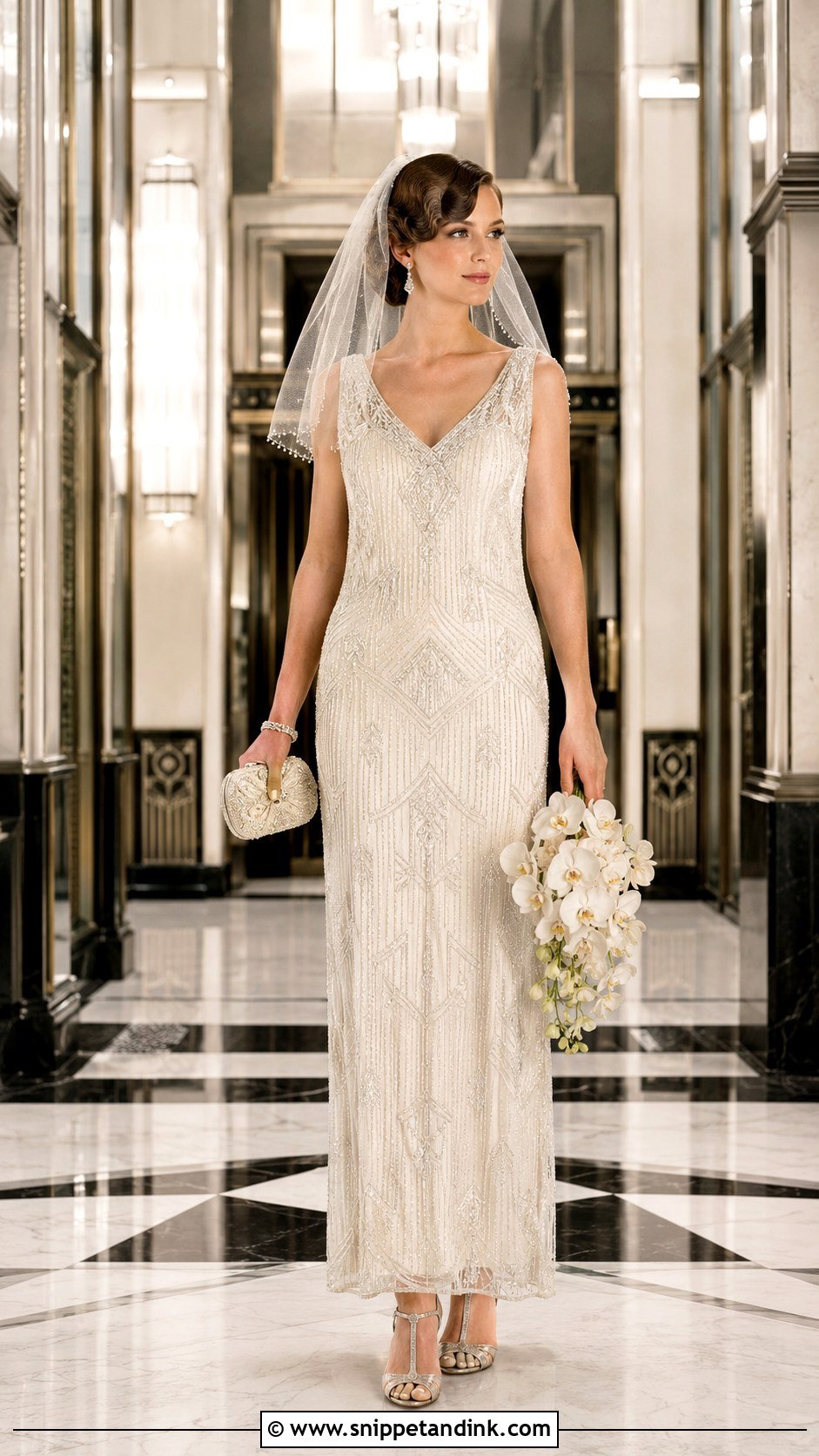
Geometric beading turns a slim gown into Art Deco. Keep the dress floor-length, slim and fitted at the natural waist, with crystal or pearl work placed around the neckline, shoulders or waist rather than all over. Beading adds real weight, and on a bias or slim cut it can pull the fabric downward, so I check whether the embellished areas are backed with a stabilising layer. Metallic T-straps, a beaded clutch and slender drop earrings are plenty; skip a necklace if the bodice is already decorated. A sheer fingertip veil, side-parted waves and a narrow arrangement of white orchids soften the sparkle. Ballrooms and historic hotels are its natural setting.
10. 1930s Champagne Silk Wedding Dress
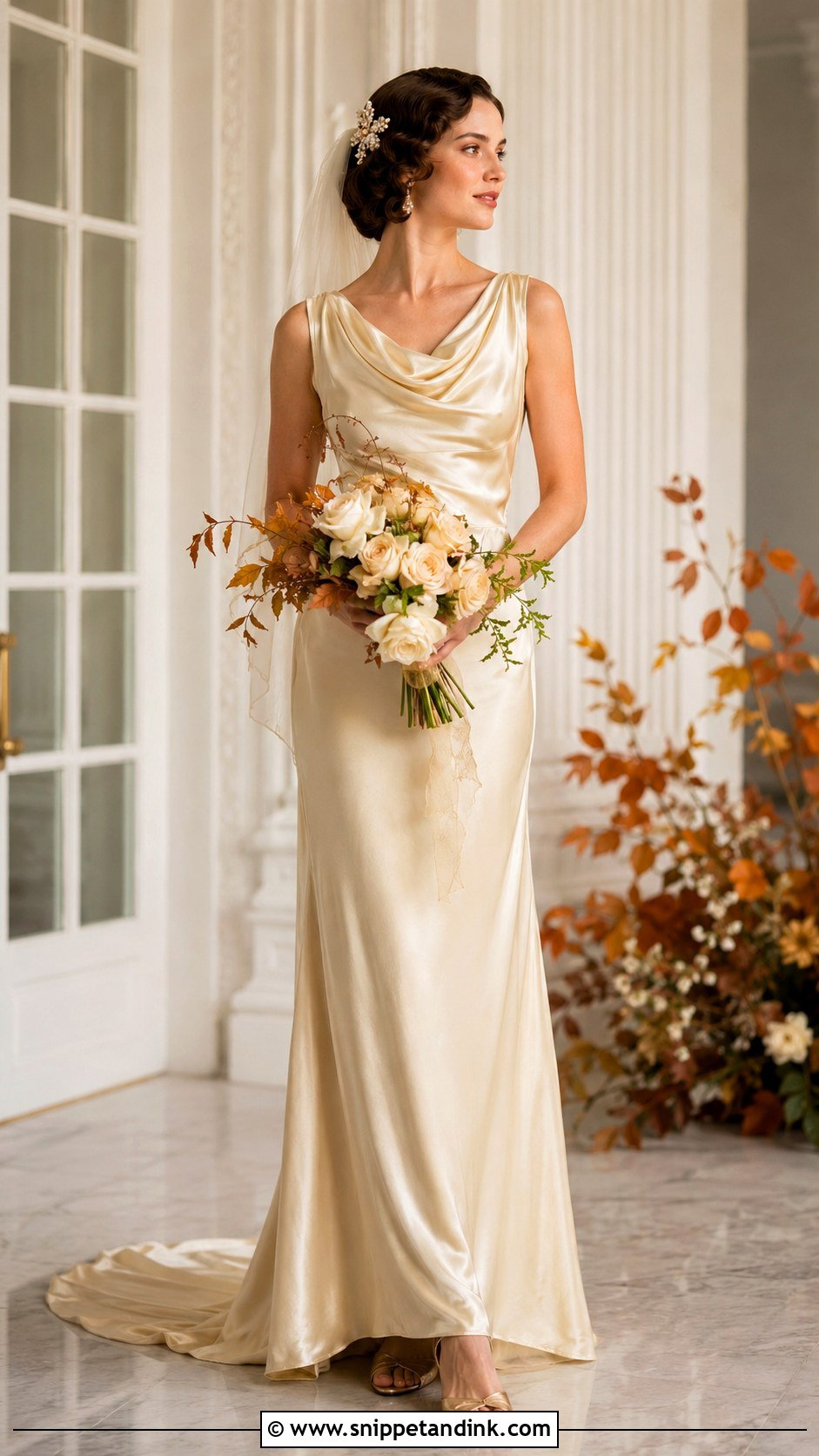
Champagne silk is warmer than bright white and kinder to many skin tones under evening light. Choose a bias-cut silhouette with a softly draped neckline, shaped waist and subtle train. Accessories in ivory, antique gold or soft pearl will blend with the fabric: gold slingbacks, pearl-and-crystal earrings, a small satin clutch. I like an ivory veil over champagne for a little contrast that keeps it clearly bridal. Brushed waves with one side pinned back by a decorative comb, plus cream roses, white orchids and pale greenery, complete the look. It suits evening celebrations, autumn weddings and venues with classic interiors.
11. 1930s Ivory Rayon Wedding Dress
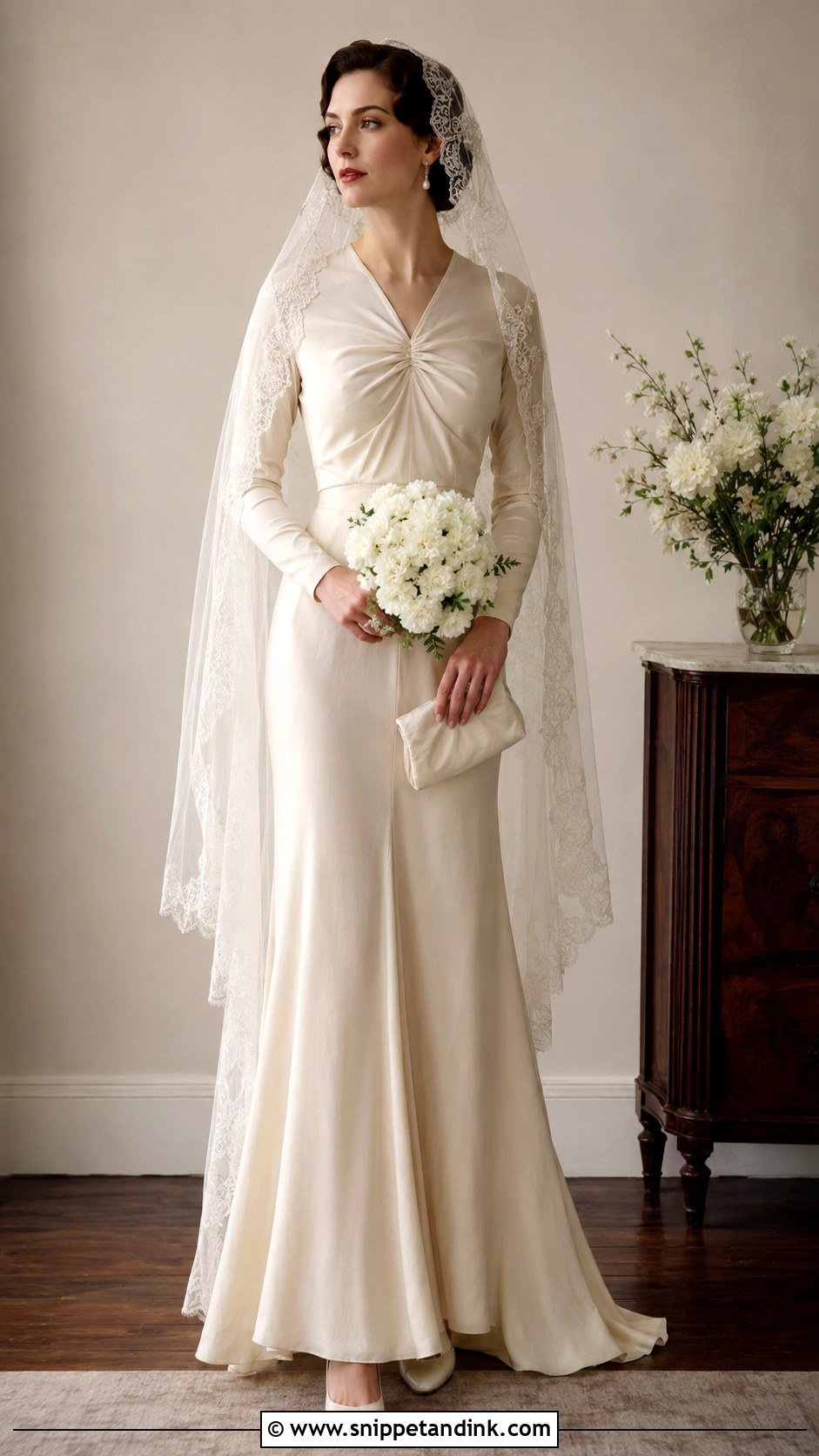
Rayon was one of the fabrics of the decade, and it still drapes softly for far less than silk. Look for a long dress with a gathered bust, fitted natural waist, slender sleeves and a skirt that falls close before widening near the hem. Rayon creases readily and shows every line underneath, so I always try it under daylight and room light with a smooth full-length slip. One more caution for vintage pieces: old rayon can shrink if it gets wet, so keep it away from rain and spills. Closed-toe pumps, small pearl earrings, a fabric-covered clutch and a lace-edged veil suit its quiet character. Pinned waves and white carnations or roses add an era touch.
12. 1930s Button Back Wedding Dress
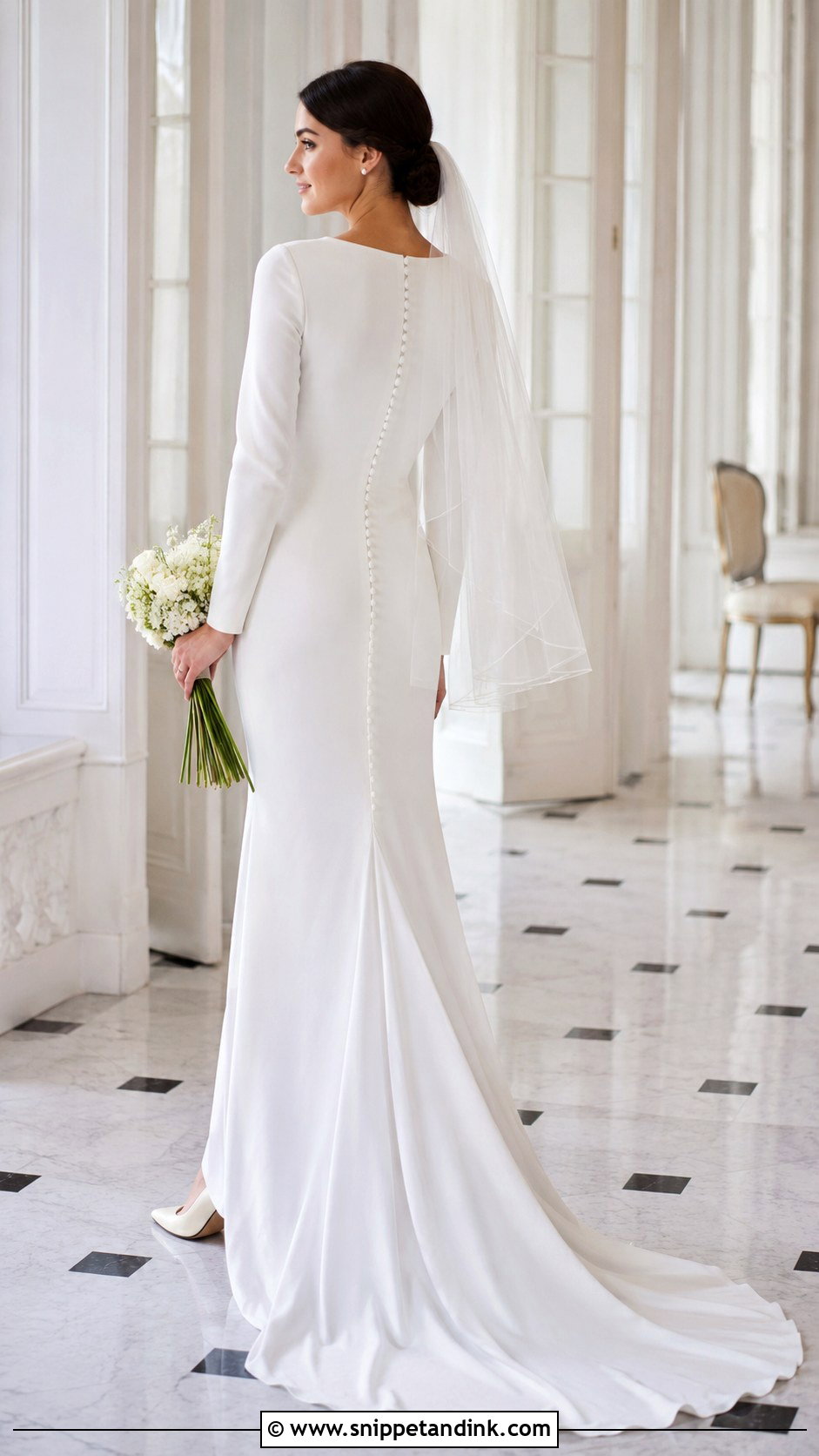
A long row of covered buttons gives the processional something to look at. Select ivory satin or crepe with long fitted sleeves, a high or softly rounded neckline and buttons running from the neck to the waist or into the skirt. Keep the front plain. Real buttonholes take a long time to fasten, so I’d ask for elastic loops and a hidden zip beneath, which keeps the look and cuts dressing time down to minutes. Ivory pumps, pearl studs and a fine bracelet are enough. Set a sheer veil beneath a low bun so the buttons stay visible, and bustle any long train for the reception. Finish with a narrow bouquet of white roses and greenery.
13. 1930s Cathedral Veil Wedding Dress
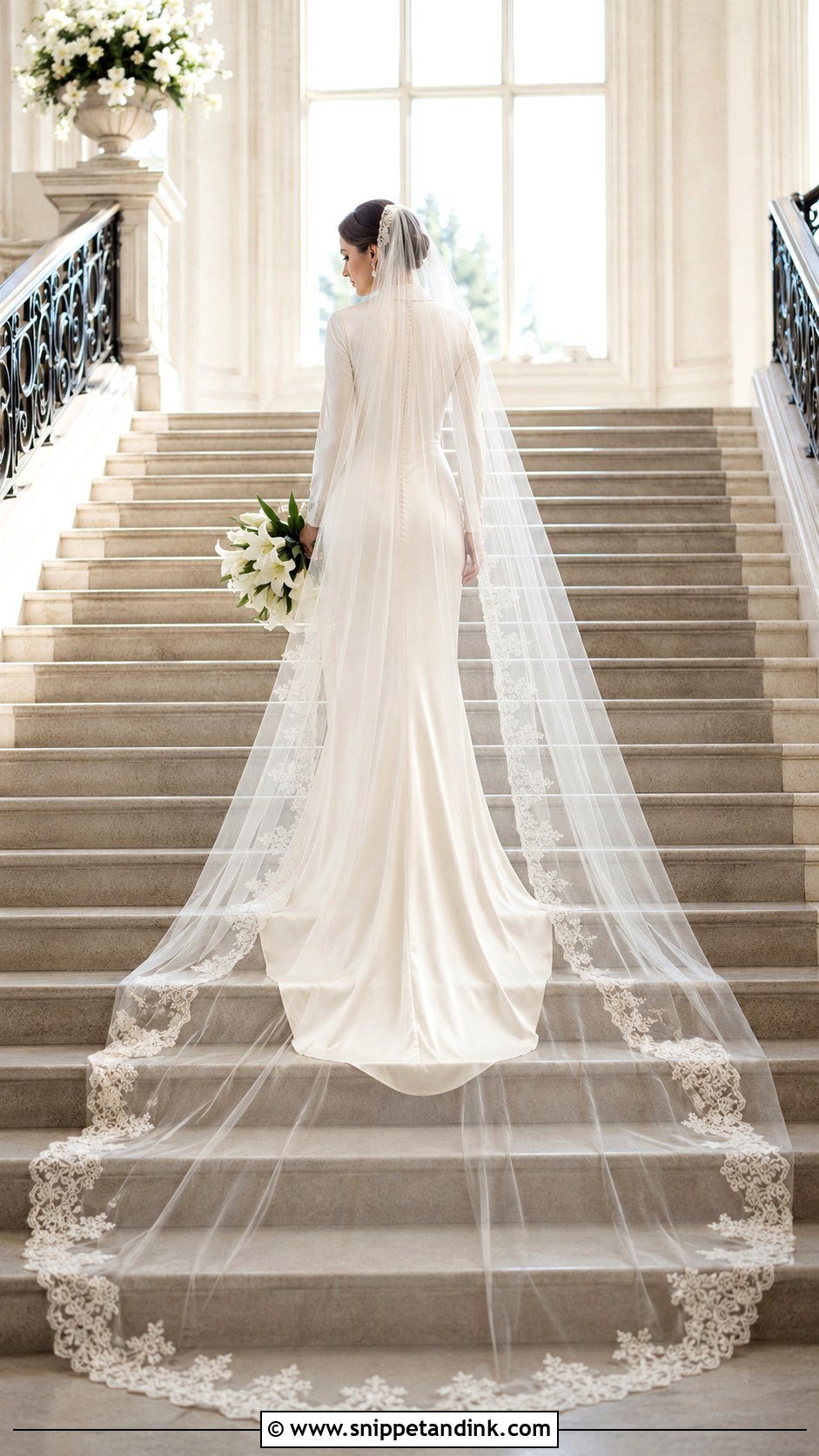
Here the veil is the drama, and the dress stays simple: ivory satin, a fitted waist, a long skirt and a modest train. A lightweight cathedral veil with a lace edge or scattered embroidery should echo the gown rather than compete. Length needs room, so walk the ceremony space before choosing. A cathedral veil in a narrow aisle or a short room bunches behind you instead of trailing. Closed-toe heels, pearl drops and a small satin clutch keep the mood formal. Anchor the comb into a low chignon or beneath a headpiece, depending on the height you want. A structured bouquet of white lilies or roses balances the length; grand staircases and large rooms make the most of it.
14. 1930s Juliet Cap Veil Wedding Dress
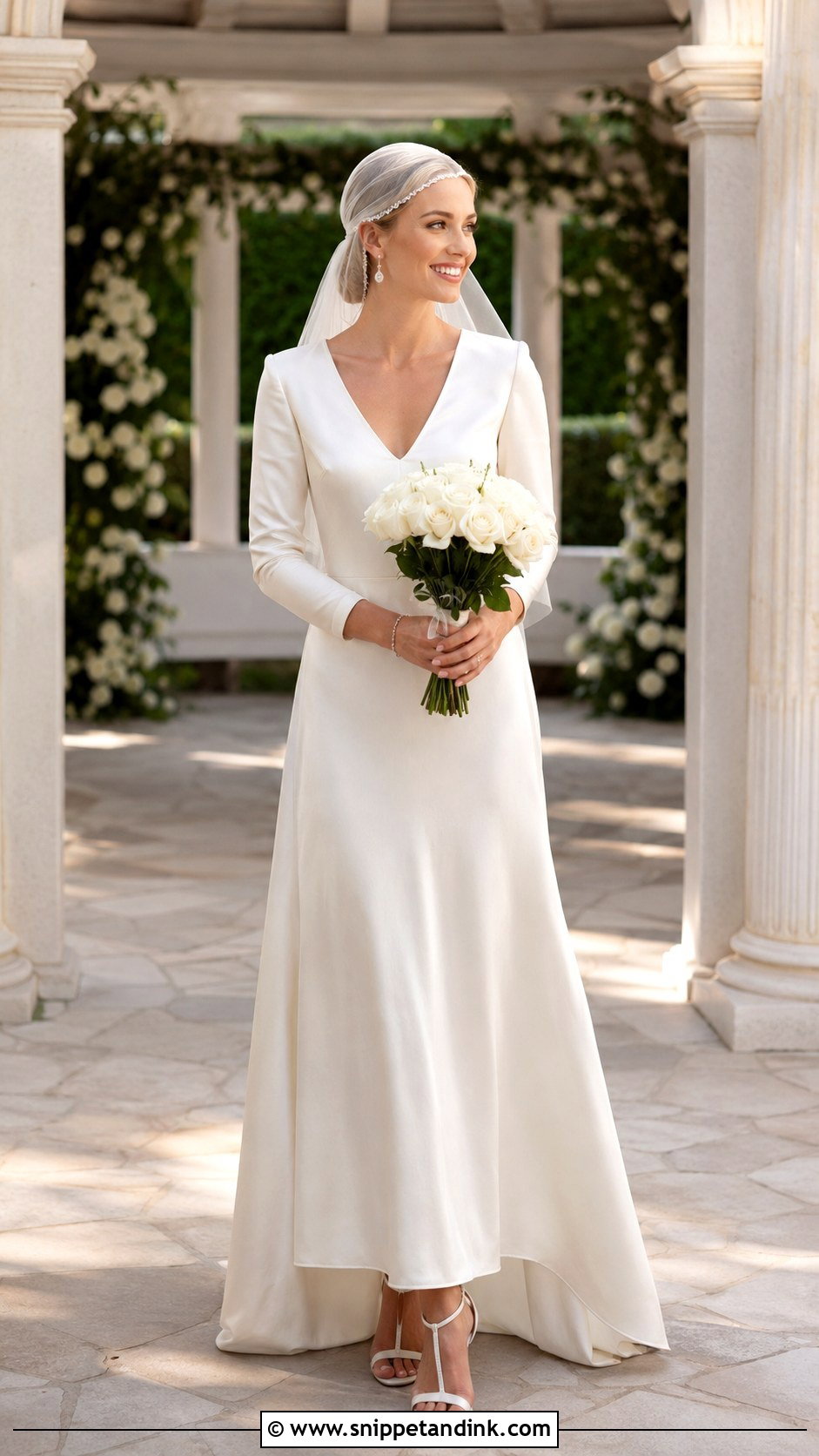
A Juliet cap frames the face and signals vintage within a second. Pair it with a slim ivory silk gown with long sleeves, a soft V-neck and a gently flared skirt. Choose a cap with minimal lace, pearl accents or light embroidery so it sits neatly on the crown. I’d style the hair first and fit the cap over it at the trial, since smooth pinned waves or a compact low bun under the cap change how far down the forehead it sits. Ivory T-straps, small drop earrings and a narrow bracelet are all you need. Roses and fine greenery suit it. You get an unmistakable 1930s note without a heavily embellished gown.
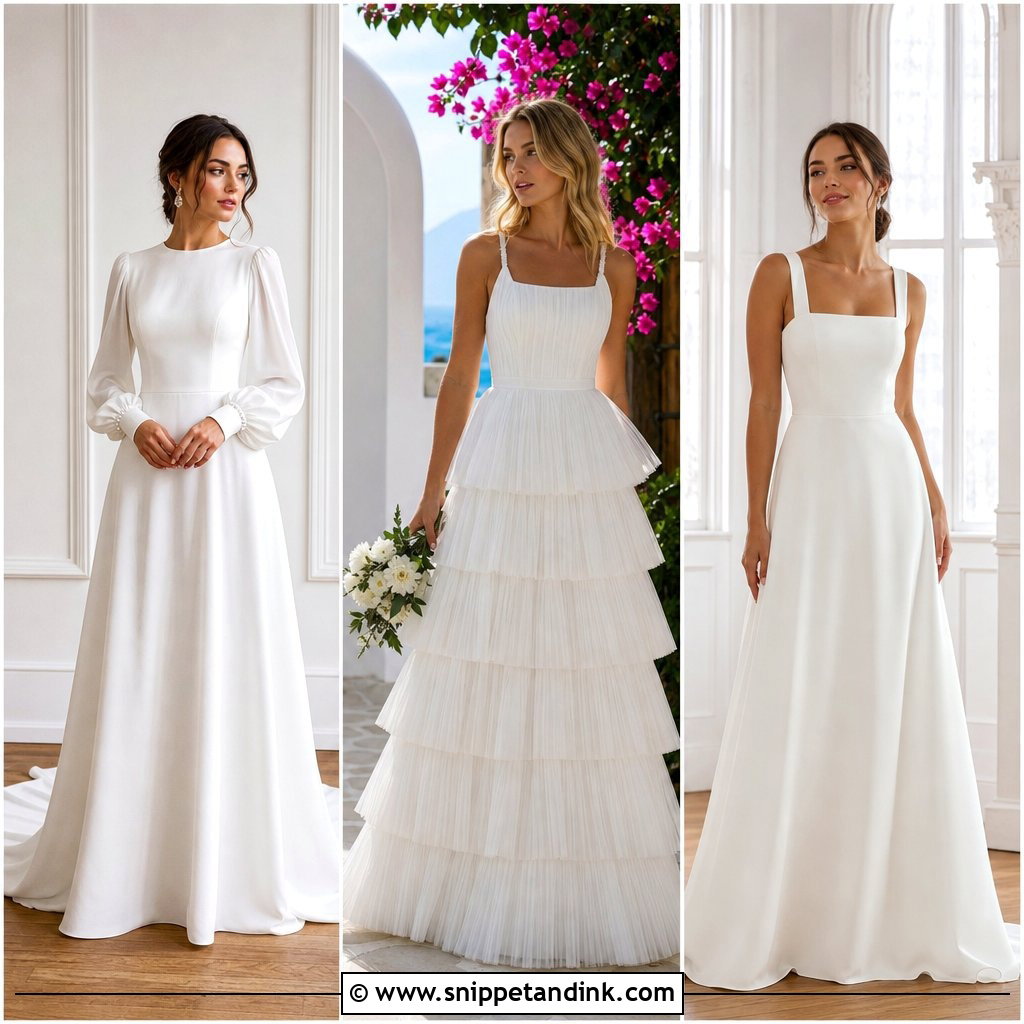
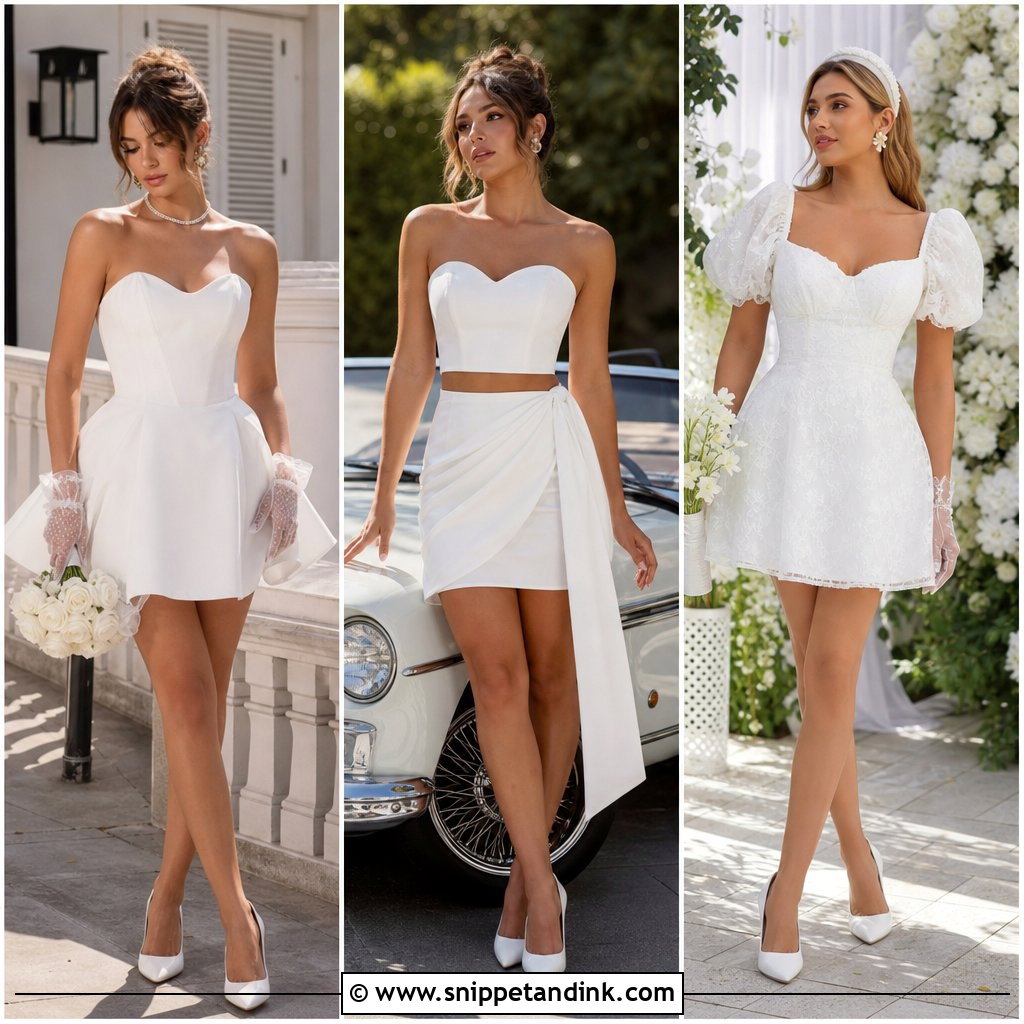
15. 1930s Courthouse Wedding Dress
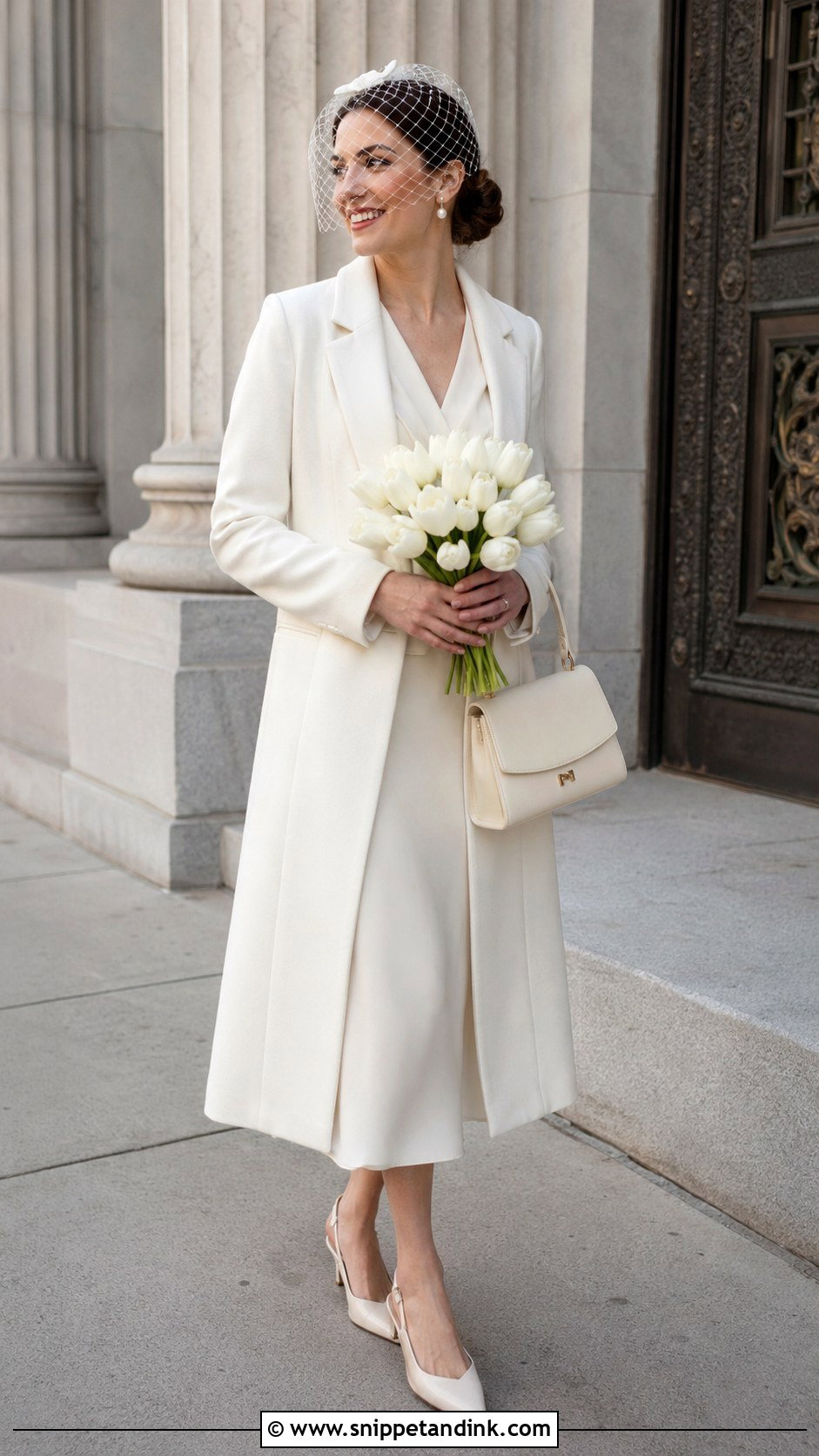
Courthouses mean hallways, lifts and city pavements, so the dress has to be special and easy. A midi-length ivory crepe gown with long sleeves, a fitted waist and a softly draped neckline is a strong 1930s base. Add low T-strap heels or comfortable slingbacks, a structured handbag and pearl earrings, plus a small birdcage veil that won’t catch in doors. In cooler weather a tailored cream coat works, and I make sure the dress hem sits slightly below the coat hem so it doesn’t look like the coat is the outfit. Soft side waves and white tulips carry you to portraits and lunch with no change.
16. 1930s Winter Velvet Wedding Dress
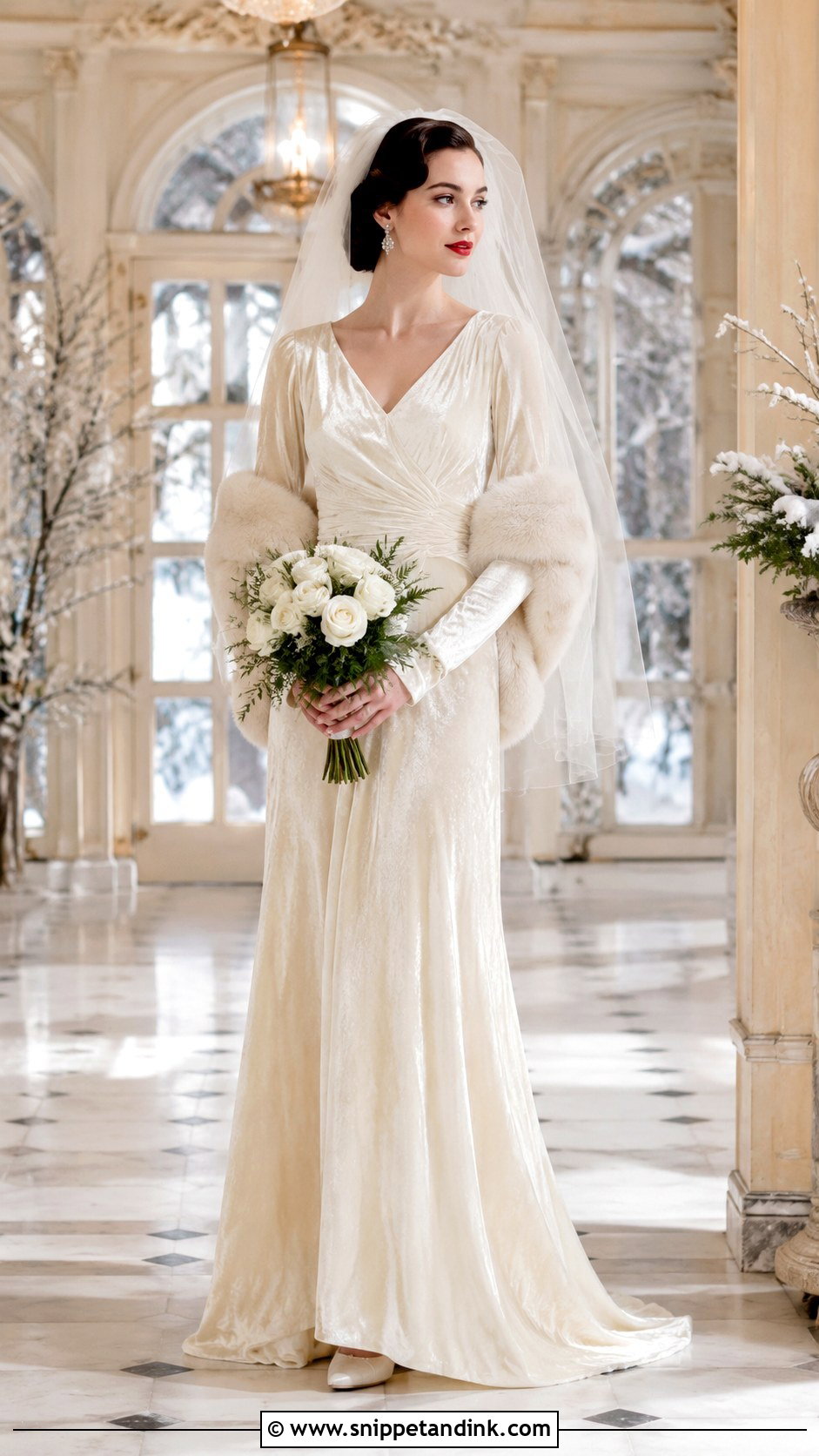
Velvet brings warmth and depth for winter, though it is heavy, and heavy fabric pulls down from the shoulders over a long day. Choose ivory, cream or pale champagne velvet with a fitted natural waist, long sleeves and a floor-length skirt. A modest V-neck or gentle drape keeps the bulk away from the face. Ask the seamstress to press it only from the wrong side, as an iron on the face flattens the pile and leaves shiny patches. Closed-toe satin pumps, crystal earrings and a structured clutch work well. Add a light faux-fur wrap for outdoor photos and take it off indoors. A fingertip veil, a low waved bun and white roses with deep green foliage finish it.
17. 1930s Garden Lace Wedding Dress
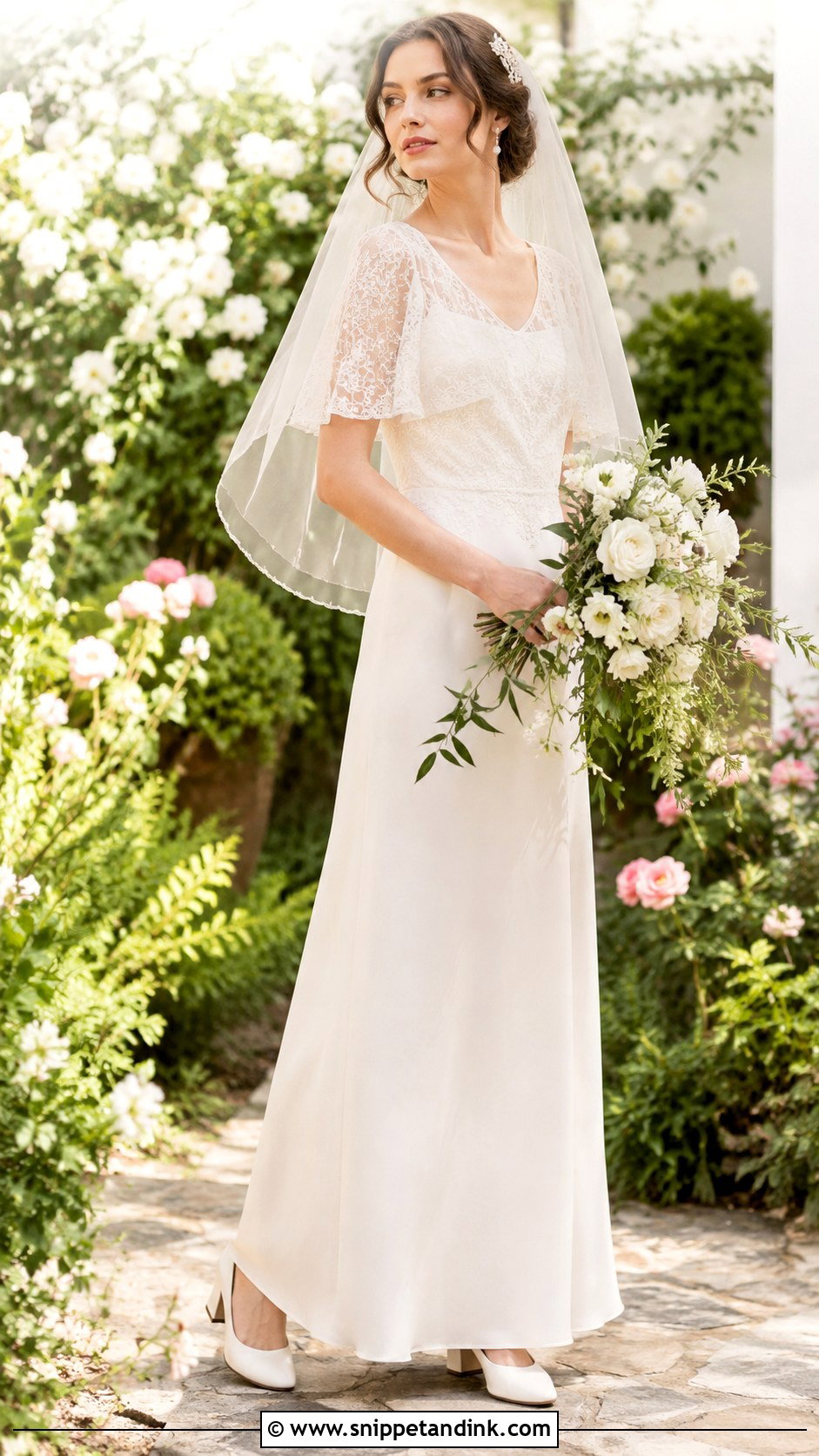
Lace feels at home in a garden, and here it sits on a fitted bodice with fluttering short sleeves over a flowing chiffon or crepe skirt. The natural waist keeps it faithful to the decade and comfortable through a long afternoon. Shoes matter more than usual on grass: low block heels or dressy flats keep you steady, and stilettos sink. Chiffon hems pick up grass stains quickly, so I usually have the hem taken up a little for an outdoor ceremony. Pearl earrings, a small fabric clutch and a light fingertip veil are enough. Loose side waves with a floral comb above one ear, plus roses, sweet peas and greenery, suit spring and daytime receptions.
18. 1930s Plus Size Draped Wedding Dress
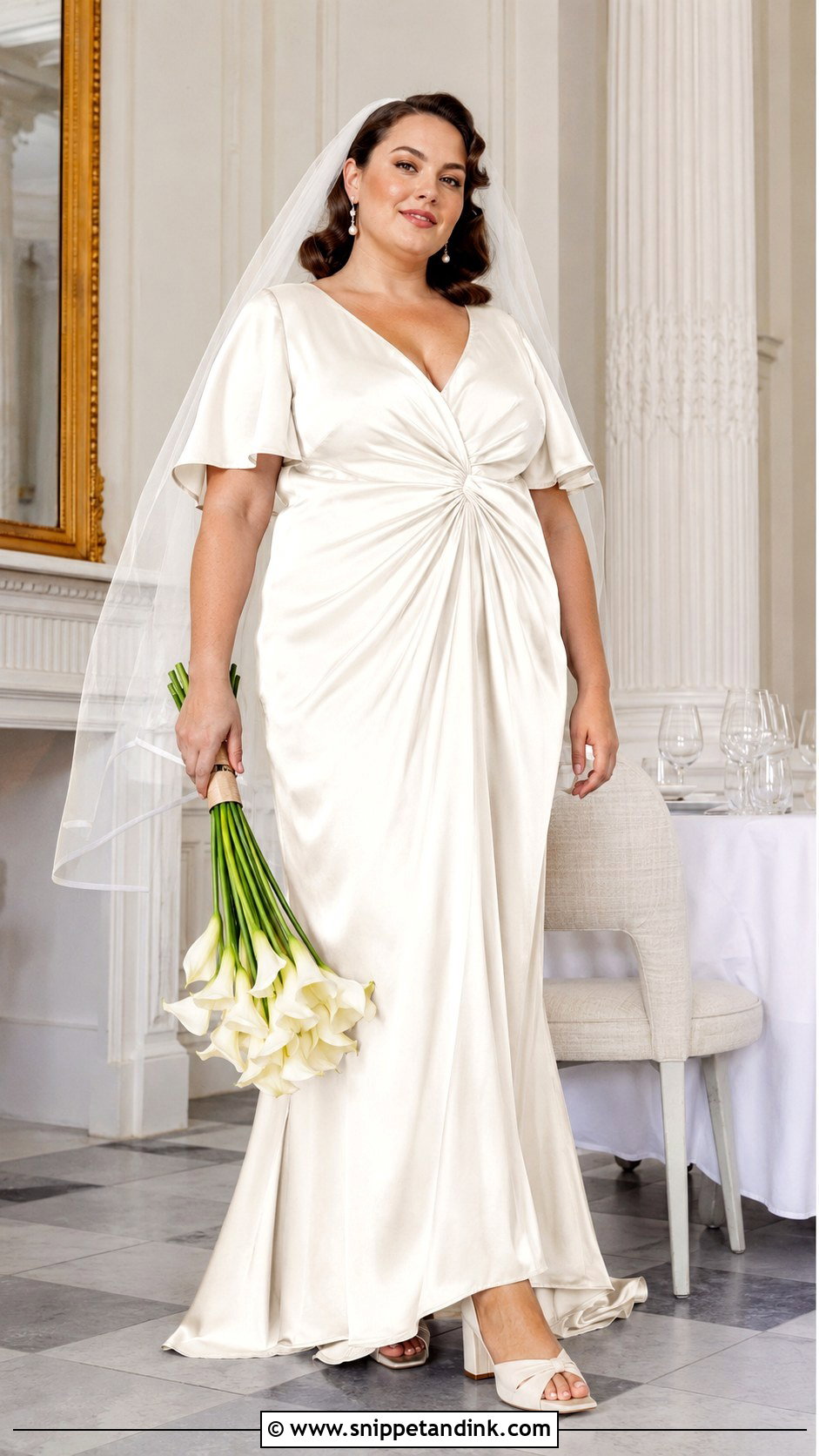
Draped satin gives smooth movement and adjustable definition at any size, provided the structure underneath is right. Look for a supportive inner bodice, a soft V-neck, a gathered waist and a skirt that skims the hips before widening toward the floor; flutter sleeves or fitted long sleeves both work. Alterations are essential, because bias-cut fabric shifts as it settles on the body. I’d have the gown hung for a day before the hem is marked. Comfortable block heels, pearl drops and a structured clutch suit it. Let the veil fall from a low bun so it doesn’t add volume at the shoulders, and carry long calla lilies to keep the line vertical.
19. 1930s Modest Wedding Dress
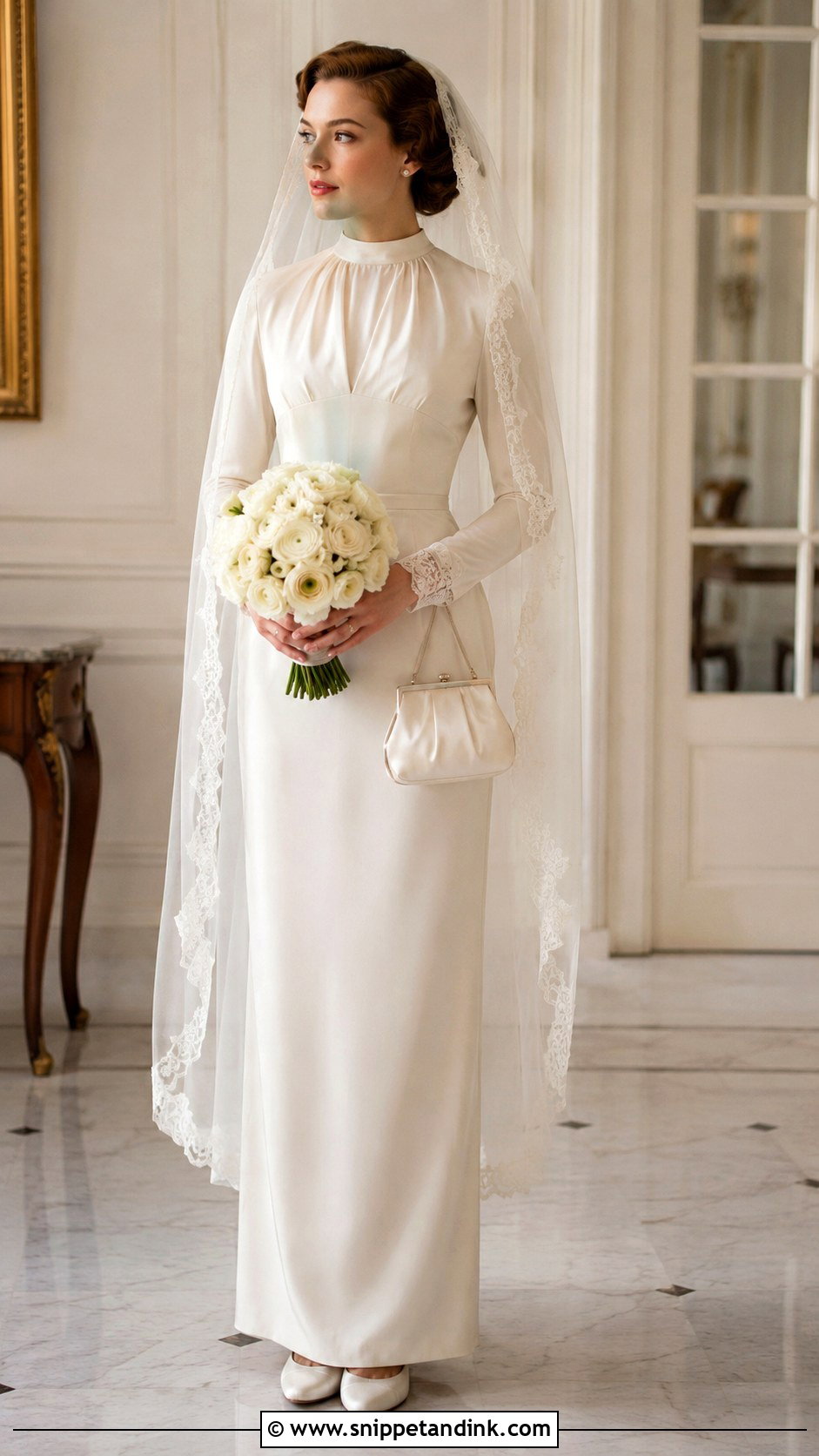
Full coverage and a graceful line can absolutely coexist. Choose ivory crepe with a high neckline, long fitted sleeves, a defined natural waist and a flowing floor-length skirt; sheer lace at the shoulders or cuffs adds detail while keeping skin covered. With so much fabric, fit through the shoulders and upper arm decides comfort. I check that you can lift your arms to shoulder height without the whole bodice rising. Closed-toe pumps, pearl studs and a small satin bag are enough, with no large necklace. A lace-edged veil over a smooth low bun suits the covered neckline, and a structured bouquet of cream roses and ranunculus finishes it.

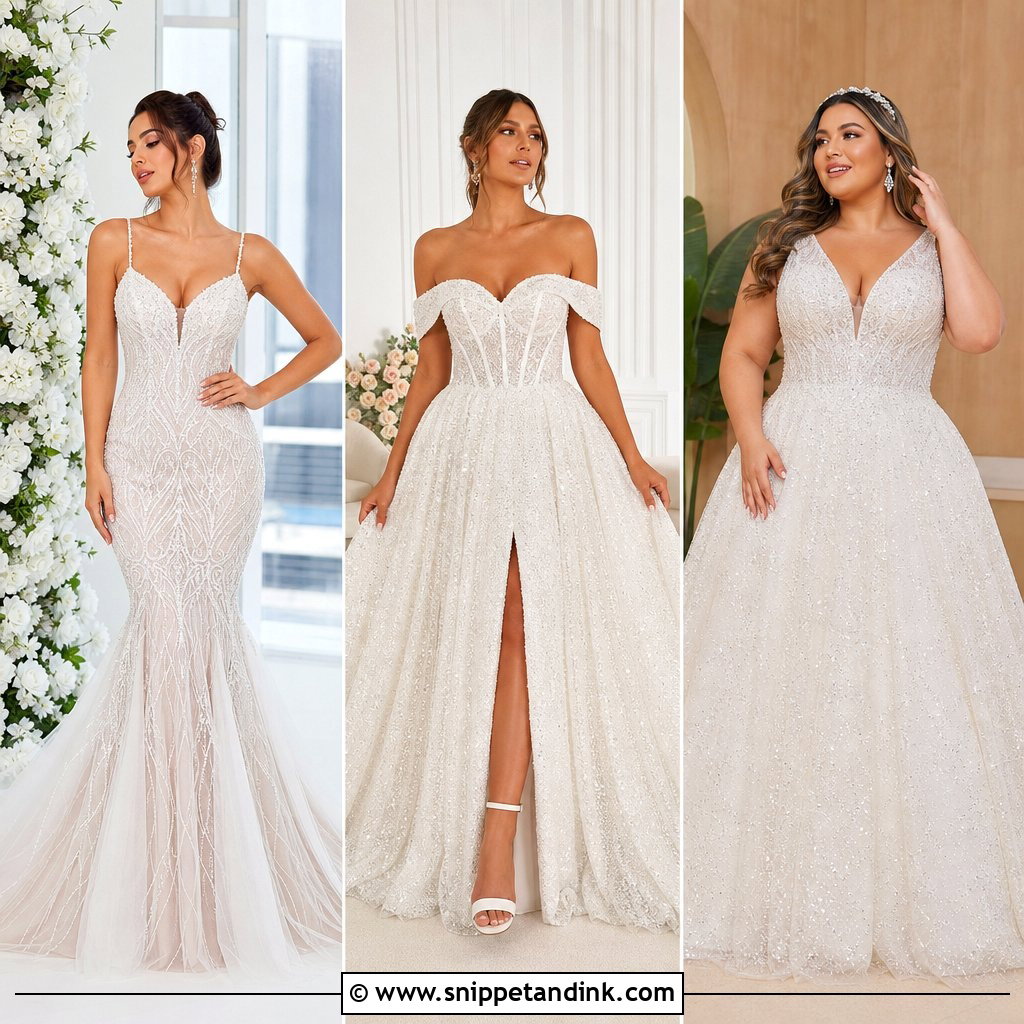
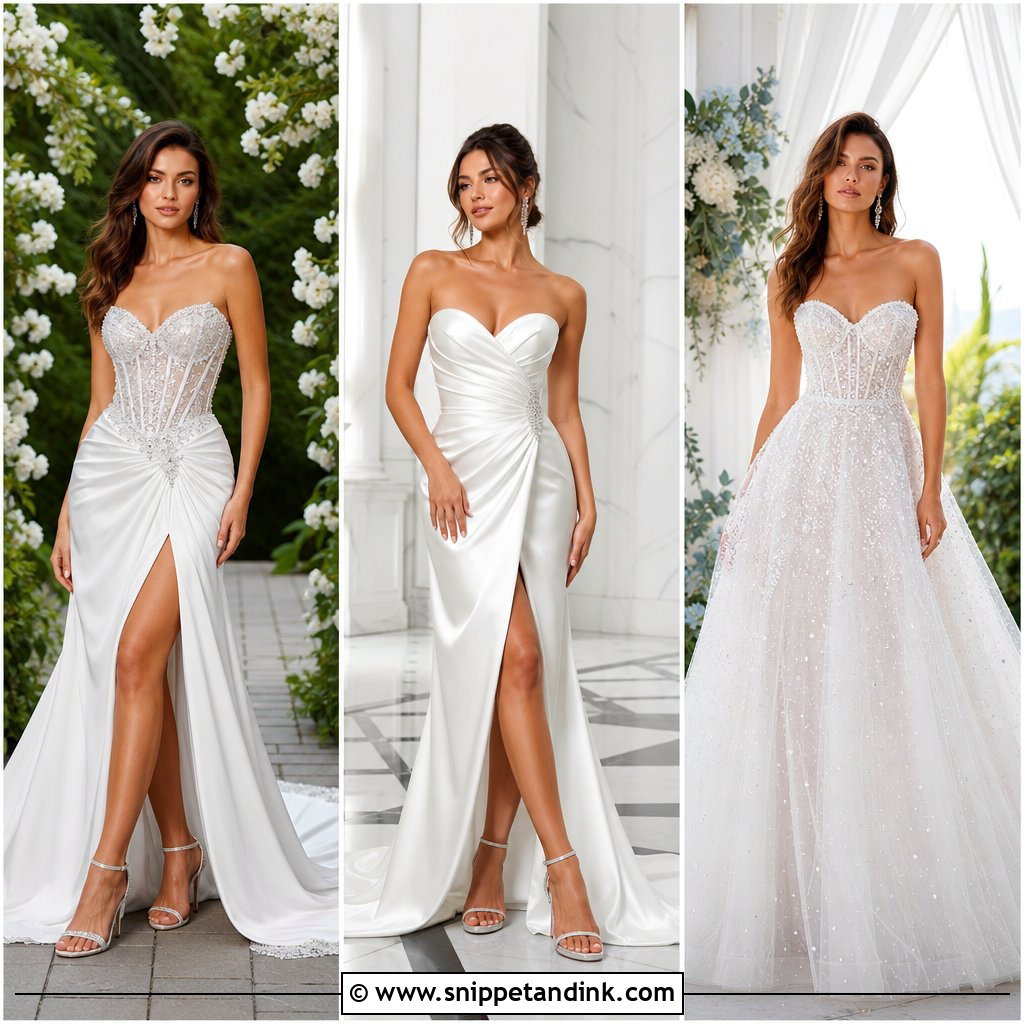
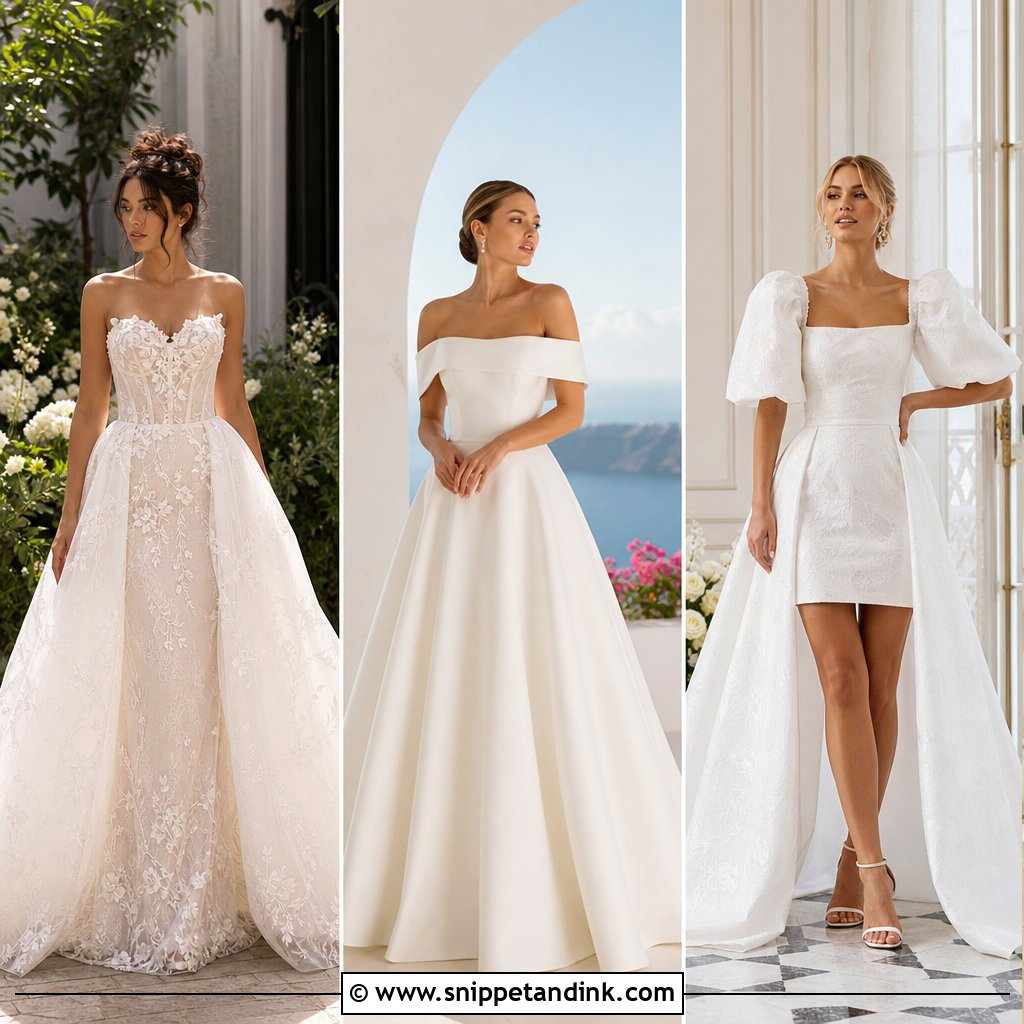
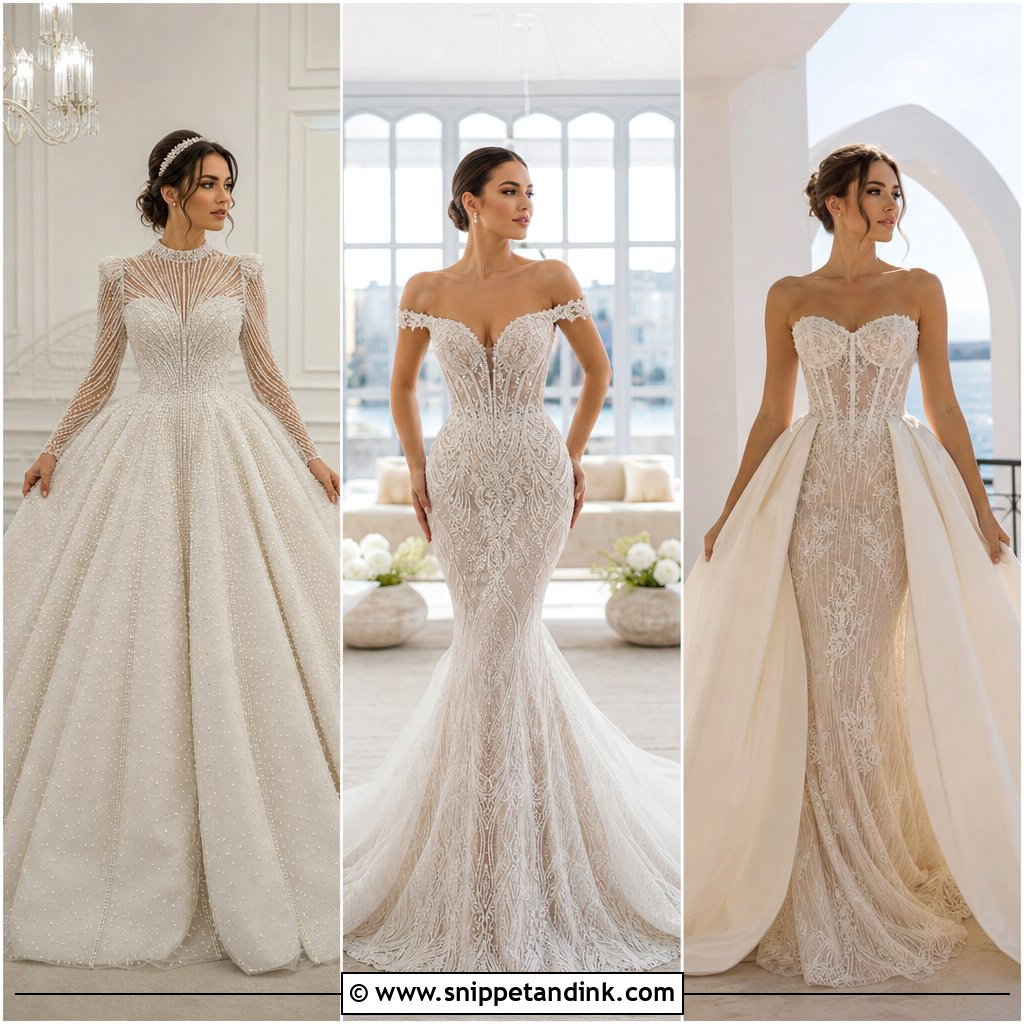
20. 1930s Old Hollywood Wedding Dress
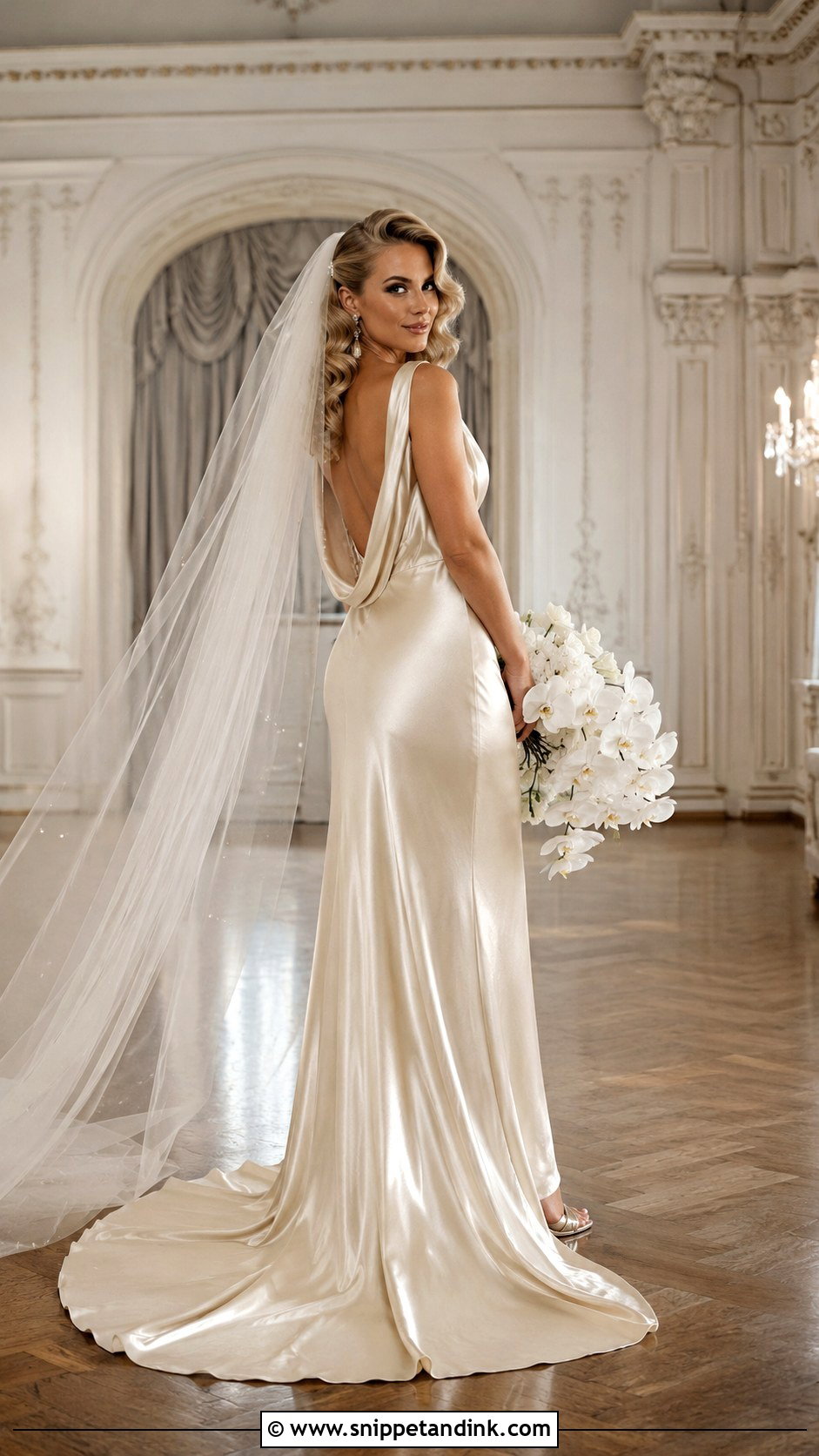
Go all the way: liquid satin, a fitted waist, a draped neckline, a low back and an elegant train. Ivory or champagne catches the light while staying bridal. Liquid satin marks easily, so I keep a lint roller and a clean white cloth in the kit and steer brides away from dark-pigment self-tan for the week before. Metallic peep-toes, crystal drops and a small beaded clutch suit it. Wear a sheer cathedral veil for the ceremony, then remove it to show the back. Glossy side-parted waves, defined lashes and a rich rose lip complete the period face, with white orchids or calla lilies in a narrow bouquet.
Wearing an Original 1930s Gown Without Ruining It
A real dress from the decade is a thrilling find, and also a delicate one. Here is what I look at before I let a bride fall in love with a vintage piece.
Check the fabric before the fit
Hold the silk up to daylight and look along old fold lines and under the arms. Silk weakens with age and can split along those lines, often called shattering, and no seamstress can mend it invisibly. Yellowed patches can sometimes lift with specialist cleaning; brown spots and underarm marks usually don’t.
Ignore the size, trust the tape
Sizing has changed a great deal since the 1930s and the original label tells you little. Measure the bust, natural waist, hips and back length against your own, and remember that bias gowns can only be taken in modestly. Letting one out is rarely possible, as old seam allowances were narrow.
When a reproduction is the smarter choice
If you’ll dance for hours, marry outdoors or simply worry about damage, I’d suggest a new gown cut from a period-style pattern. You can wear the original for portraits only, or keep it for display, and nobody at the reception will know the difference.
Bias Satin, Soft Waves and Your Own Version of the Decade
What makes a 1930s gown work is the fluid line, the right accessories and one or two vintage details that feel like you. Bias-cut satin, graceful sleeves, covered buttons, draped necklines and shaped veils all bring the decade into a modern wedding. Start with the silhouette you feel most comfortable in, then let shoes, jewelry, hair and flowers follow its lead. An original antique dress isn’t required. A well-tailored modern gown captures the same mood with better support and far less worry about fragile fabric. Understated or glamorous, it should feel natural and unmistakably yours.
You'll Like These Ideas:


Leave a Reply